Category: Opinion

  • The day Larry Krasner’s office was put on trial — by his own prosecutors

    The day Larry Krasner’s office was put on trial — by his own prosecutors

    There were so many jaw-dropping moments in U.S. District Court Judge Paul S. Diamond’s courtroom on Thursday that it is hard to know where to begin.

    For starters, I had a stint covering courts in the mid-2000s, and have never seen a courtroom packed with so many lawyers — including lawyers representing lawyers — for a hearing in an exoneration case. An overflow room was needed to handle the rapt onlookers.

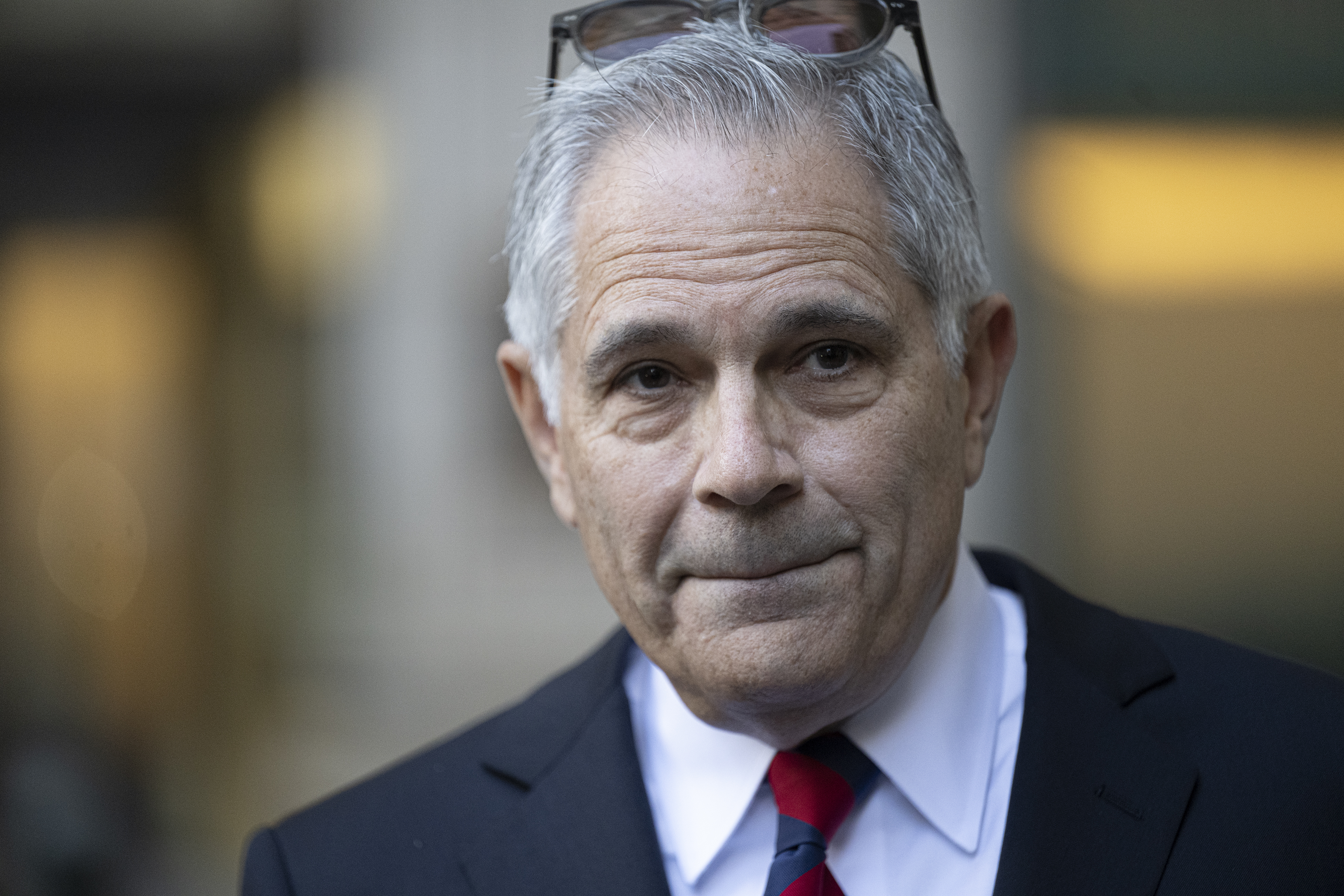
    The hearing grew out of efforts by Philadelphia District Attorney Larry Krasner’s office to overturn the conviction of Dennis Johnson, who was found guilty of second-degree murder in the 2007 shooting of a man at a North Philadelphia convenience store. While Johnson’s future was ostensibly on the line, it quickly became clear that so was Krasner’s.

    By the end of the day, the future for both men looked bleak.

    While Johnson was in court with his attorneys, the hearing focused on the machinations within Krasner’s office.

    The office has already run into a heap of legal trouble over previous efforts to overturn other convictions or reduce sentences, mainly for those convicted of murder.

    Federal courts have disbarred and suspended prosecutors in Krasner’s office for lying to the court. The state Supreme Court found more lies and, in an unprecedented move, appointed the state attorney general to review future efforts to undo prior convictions.

    So essentially, Krasner’s office now has a court-appointed babysitter because it can no longer be trusted.

    It was easy to see why after three prosecutors — who still work for Krasner — provided damning testimony about their own office’s sloppy handling of efforts to vacate Johnson’s conviction. They accused Krasner of conduct that bordered on paranoia and cover-up, and painted a picture of an office that seemed less focused on the pursuit of justice than on shielding itself.

    Katherine Ernst, the chief of training in the law division, went first, followed by colleagues Steven Wildberger, an assistant district attorney in the appeals unit, and David Napiorski, the head of the law division.
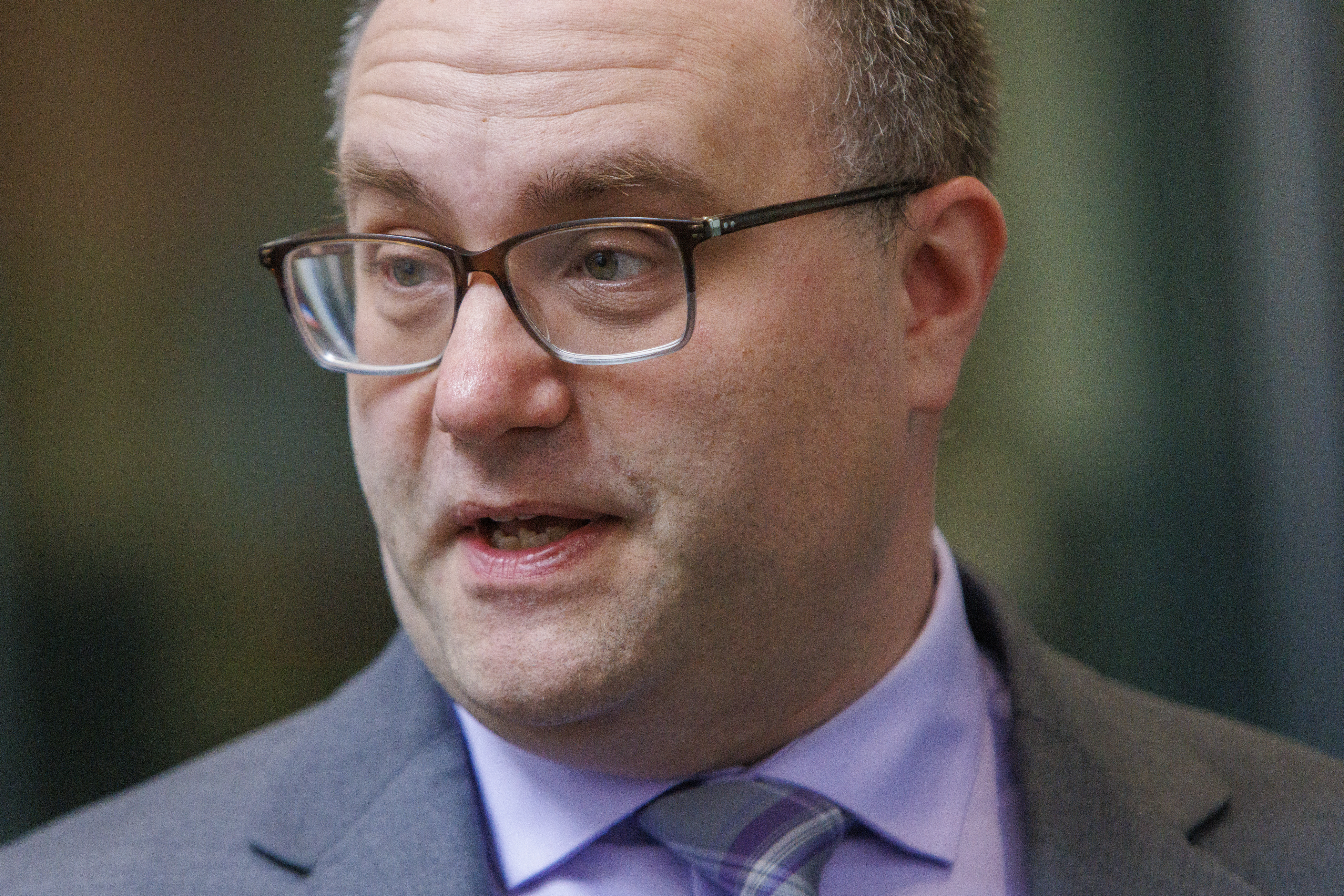
    David Napiorski, the head of the law division in the Philadelphia District Attorney’s Office, testified that Krasner eschewed his official email account and “always prefers oral, in-person conversations.”Alejandro A. Alvarez / Staff Photographer

    They came with receipts, providing meeting times, memos, and emails documenting conversations with Krasner about how to handle errors in court filings by the DA’s office related to an attempt to undo Johnson’s conviction.

    Krasner did not respond to a request for comment, but in an earlier filing his office said the prosecutors were “ill informed.”

    The three prosecutors provided alarming testimony detailing how Krasner avoided using his official office email and threatened them.

    “DA Krasner typically didn’t use that email,” Ernst said about his office email. “He wouldn’t check it. And so, if you wanted to email him, then you typically had to email his private address.”

    Napiorski backed that view: “He always prefers oral, in-person conversations.”

    In late June, after the three prosecutors drafted a memo to Krasner detailing the office’s conflict of interest in handling the Johnson matter, he responded with an email sent from the account of his chief of staff, Jennifer Lin, which began, “This response is not from Jen Lin, it is from Larry Krasner.”

    At another point, Wildberger testified that when they presented Krasner a letter turning the Johnson case over to the state attorney general, he went “apoplectic.”

    “He said something about having already told us not to bring him printed-out material, things in writing,” Wildberger said.

    ‘Paraguay’

    The prosecutors pushed for the attorney general to take over, because their self-interest had become a focus rather than the merits of the case. In their view, they had conflicts, and so did Krasner.

    But Krasner wanted to hire an outside lawyer to handle the matter, and repeatedly resisted efforts to turn the case over to the state Office of Attorney General, or OAG.

    Ernst testified that Krasner “hated” everyone in the OAG. Wildberger said Krasner “referred to the Office of the Attorney General as Paraguay” and “the people that work there as Nazis.”

    Adding to the drama was the fact that the attorney questioning Ernst and Wildberger was John Boscia, a senior deputy attorney general in the OAG.

    To clarify, Boscia asked Wildberger, “So that the people from the OAG’s office were escaped Nazis who had gone to Paraguay?”

    “That’s my understanding,” Wildberger responded.

    All three prosecutors testified that throughout the internal discussions, Krasner remained adamant about retaining control of the case in order to “protect the office” — a phrase that came up more than two dozen times during the hearing.

    At one point, Judge Diamond asked if Krasner’s reference to “protect the office” meant “protect himself?”

    “I think that was probably part of it,” Napiorski said.

    In another twist, Thomas Gaeta, the DA’s civil litigation supervisor, was involved in some of the internal discussion, yet he handled the brief and mild cross-examination of his colleagues on Thursday.

    The roots of the DA’s conflict began after Johnson appealed the verdict, claiming his defense attorney was ineffective.

    In 2022, then-Assistant District Attorney Jaclyn Mason filed a document that agreed with the arguments made by Johnson’s attorneys at the Pennsylvania Innocence Project, and that his conviction should be overturned. According to the document Mason signed, the detective’s testimony in Johnson’s trial was improper and had “tipped the scales” toward a conviction.

    But this spring, following an order from Diamond, Ernst and some of her colleagues reviewed the case. Ernst said she found multiple errors in Mason’s motion and confronted her.

    Ernst and her colleagues urged Mason to fall on her sword for the office, take responsibility for the errors, and withdraw the motion. Napiorski said he told Mason he had done something similar in a different exoneration case that blew up.

    Profiles in courage.

    ‘Reluctantly but loudly’

    The main hero in what is shaping up to be an unraveling of Krasner’s mass exoneration scheme appears to be Mason.

    Her dramatic testimony in Diamond’s courtroom last month provided a window into the lack of independent investigation by Krasner’s office into the wrongful conviction claims. (Mason also appears to have provided some backbone to the three prosecutors who testified on Thursday.)

    Mason explained that she had only been on the job a few months in 2022, and had largely taken directions from her supervisor, Matthew Stiegler, who she said told her if Johnson’s claims were good enough for the Innocence Project, they were good enough for him.

    In the meeting with the prosecutors, Ernst recounted that Mason said, “This is all Matthew Stiegler’s fault.”

    Mason told her colleagues that Stiegler should have to sign the withdrawal motion, as well. Apparently, that was not an option. Instead of going along with the plan to take all the blame, Mason resigned on June 2.

    In a two-page resignation letter addressed to Krasner, Mason wrote that she had limited experience with federal habeas law when she was hired. Yet, the first two cases Stiegler assigned to her “involved complicated cases where he determined that it was appropriate to concede habeas relief.”

    Mason said she “trusted” Stiegler, but later learned about a mass exodus of prosecutors when he oversaw the federal litigation unit.

    Mason said Stiegler had “worked closely with the Innocence Project and the Federal Defenders on the [Johnson] case, deeming it worthy of a concession with little independent investigation.”

    Therein lies the problem when it comes to reviewing past convictions. Under Krasner, the prosecution and defense are largely on the same team.

    Mason added that Stiegler reviewed several drafts of the concession she filed in the Johnson case, but did not sign his name to it. Mason ended by writing that she “reluctantly but loudly” resigned.

    After Mason quit, all three prosecutors testified that Stiegler hatched a plan to manage the fallout. He suggested combing through Mason’s past cases for errors and claiming she was a rogue operator.

    Ernst testified that Stiegler asked to meet and told her, “Mason purposely inserted the false facts into the response.” Ernst explained that Stiegler wanted to make it seem as if any mistakes in the case were “100% [Mason’s] fault and 0% his fault.”

    Krasner was on board with Stiegler’s plan, according to Ernst, who recounted a conversation with the district attorney.

    Krasner said Stiegler “gave me this really good idea,” Ernst testified. “I think that we should go through Ms. Mason’s cases, say that this was a pattern by her, and then file something with the court saying that.”

    Why the deference to Stiegler is unclear. He has come and gone from Krasner’s office three times and remains a lightning rod. Stiegler now oversees the Conviction Integrity Unit, a departmental name fast becoming an oxymoron.

    Stiegler sat in the front row of Judge Diamond’s courtroom on Thursday as the other prosecutors testified about his role and reputation with the office.

    Wildberger testified that in the meeting with Mason and the other prosecutors, he told her, “You’ll find no Matt Stiegler apologists here.” He later explained that Stiegler “was not well liked” and had chased away many prosecutors.

    The internal drama and legal troubles have roiled Krasner’s office. Ernst testified that many frontline prosecutors were “angry” at Krasner for what happened to Mason. Wildberger said he had “lost faith in the administration of the Philadelphia District Attorney’s Office.”

    Amid the discussions over whether to tell the court about the errors in the Johnson case came another bombshell.

    Ernst testified that Napiorski warned her Krasner had threatened “to fire anyone who tells the judge about this.” She added that Wildberger clarified Krasner didn’t use the word fire, but said that “there would be consequences.”

    Early on in the proceeding, Judge Diamond signaled his take on the emerging testimony.

    “If what they say is true, potential wrongdoing abounds,” Diamond said. “There’s a question of whether perjury was committed, subornation of perjury was committed, criminal conspiracy was committed, and obstruction of justice was committed.”

    The hearing is scheduled to continue on Tuesday. It is unclear what the judge will do next.

    I left the courthouse thinking about the Watergate hearings and, in particular, a March 1973 meeting in which White House counsel John Dean warned Richard Nixon about a “cancer” on the presidency.

    Has something similar metastasized in Krasner’s office?

  • When it comes to sportswashing, Trump is off to the races

    When it comes to sportswashing, Trump is off to the races

    Donald Trump seemed genuinely happy last Sunday as he waved the green flag to start the Freedom 250 Grand Prix, the first IndyCar race in the nation’s capital. Whether you regarded the event as crass exploitation or a rousing sports presentation, it certainly wasn’t surprising.

    Way before he became a politician, the president was an entertainer.

    Trump made cameos in movies, headlined his own reality TV show, The Apprentice, and organized high-profile boxing matches and MMA fights at his casinos. He owned the Miss Universe pageant and a football franchise of the short-lived USFL, brought in Michael Jackson to the grand opening of his Trump Taj Mahal in Atlantic City, and he even “fought” in wrestling bouts himself.

    As a journalist based in Berlin, I’ve done a great deal of reporting over the past decade about the global tilt to the political right. What Trump has done as president, especially in his second term, echoes what autocrats around the world do to boost their public image.

    The race was already the final event of Trump’s attempt to commandeer America’s Semiquincentennial festivities under the Freedom 250 banner. But just in case it wasn’t clear who the star was, the military flyover and the presidential limousine cruising down Pennsylvania Avenue before the race made it obvious. The president was also front and center (it was coincidentally his birthday, after all) when he used the South Lawn of the White House to host a mixed martial arts event on June 14.

    It seems fitting that, just like Trump’s family businesses have no problem taking large amounts of money from the leaders of authoritarian nations like Saudi Arabia and the United Arab Emirates — including $2 billion to a private equity firm founded by son-in-law Jared Kushner and $500 million for the Trumps’ crypto ventures — the president would also take to their sportswashing playbook.

    Both the Saudi government and the UAE have used sports and entertainment to improve their global reputation and distract from allegations of human rights abuses and repressive policies.

    Trump’s supporters may argue that the president’s great race wasn’t much different from the high-profile sporting contests that are held in European capitals — and they would be right, up to a point. A crucial difference is that most of those European events have historical and communal aspects to them that are very different from the spectacles Trump is setting up left and right.

    The Monaco Grand Prix, for instance, was first held in 1929, during a time when European motor sports were gradually turning professional. In the years leading up to the first race in the principality, other famous European circuits like Monza, the Nürburgring, or Spa-Francorchamps had held their first races, so it was fitting for the time.

    The Tour de France has been held since 1903 and was founded as a marketing ploy for a French sports paper. The first tour consisted of only six stages, ended in a small suburb of Paris, and developed steadily over time to become the global phenomenon we know today. Formula E races are held in world capitals, but in restricted spaces like former airports or fairgrounds.

    Trump’s Freedom 250 Grand Prix had more in common with the Azerbaijan Grand Prix in Baku.

    A former member state of the Soviet Union, Azerbaijan had been ruled autocratically by former Azerbaijani KGB head Heydar Aliyev since 1993. Shortly before his death in 2003, he had his son take over in an election described as fraudulent by independent observers. Ilham Aliyev has been ruling the country ever since — and has implemented a thorough sportswashing strategy for more than a decade.

    Baku has hosted European Football Championship games and has been a sponsor of Spain’s Atlético Madrid. For the grand prix, the country pays 40 million to 50 million euros per year to Formula One — all while freedom of speech is highly restricted, journalists are being jailed, and there’s a gap — in both income and equity — between the shiny capital of Baku and the rural areas filled with subsistence farmers.

    With the ongoing war in the Middle East, the Jeffrey Epstein issue still looming, and the cost of living continuing to rise thanks to his bad policies, Trump may believe he can paper over the cracks with a checkered flag.

    After all, if the people can’t afford bread, Trump’s happy to give them circuses.

    Wim Orth is a journalist with WELT in Berlin and an Arthur F. Burns fellow at The Inquirer.

  • How to give up your car (sometimes), save money, and save the planet

    How to give up your car (sometimes), save money, and save the planet

    If you have ever considered giving up your car, now is the time.

    There’s the price of gasoline, which has shot up by more than 35% since President Donald Trump launched the war against Iran in February. Even if you never start the ignition, simply owning a car will now set you back an average of $8,000 a year in insurance, maintenance, and loan payments.

    And those are just the immediate costs. As a major source of greenhouse gases, cars contribute significantly to climate change, which is already pushing up the price of food and everyday purchases.

    So, let’s say you’re ready to ditch your money pit on wheels. Then what?

    I’ve been struggling with this question since I moderated a panel this spring with Sarah Goodyear and Doug Gordon, the duo from the popular podcast The War on Cars, who just published a rousing call to arms, Life After Cars: Freeing Ourselves from the Tyranny of the Automobile. The event, held at the capacious Resurrection Philadelphia church in Center City, was sponsored by Philly Bike Action and 5th Square Advocacy, two groups dedicated to promoting alternatives to driving.

    Resurrection’s sanctuary was packed — with the converted. When Goodyear and Gordon asked the audience who had traveled to the event by car, only a few sheepish hands went up.

    While their book does a great job of detailing the ways cars “ruin everything,” there is little in it to help the car-dependent kick the habit. The problem is, most people have no idea where to start.

    Even in the Philadelphia region, which has better-than-average transit and cycling infrastructure, the prospect of living without a car can seem a little like trying to swim without arms and legs. How will you take the kids to sporting events, look after elderly parents, and buy groceries without a vehicle? Our local transit services — SEPTA, NJ Transit, and PATCO — don’t serve every nook and cranny of the region and don’t run as frequently as they should.

    Like everything else in America these days, the debate over the role of cars in our daily lives tends toward extremes. Philadelphia urbanists can sometimes come off as unsympathetic, as if they expect people to go cold turkey and swap their vehicles for bikes and SEPTA. Meanwhile, the pro-car lobby keeps insisting, against the evidence, that the car-free life is not practical outside a few transit-rich neighborhoods, like Center City.

    But who says it has to be all or nothing?

    ‘Habituate walking’

    My advice: Keep your car — for now, at least — but look for opportunities to get around by other means. Walk to the grocery store. Ride a bike to dinner at a nearby restaurant. Think of these excursions as a trial run. Once you feel comfortable, take the train or bus to work. You may never give up your car permanently, but you will save a bundle on gas and maintenance, reduce congestion, and boost your step count.

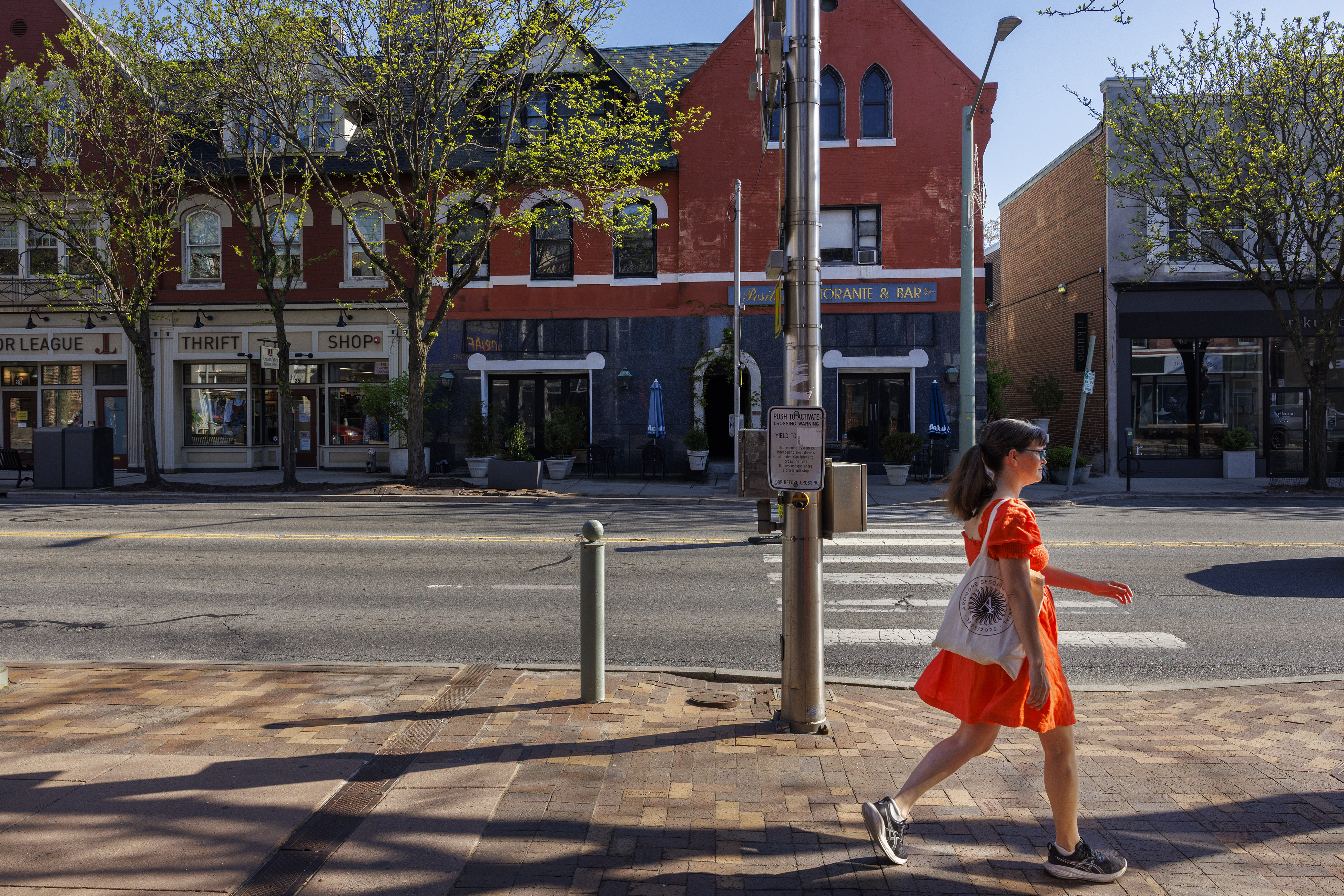
    That’s how Jane Murray started weaning herself from the car. The Ardmore resident, who now runs a popular Instagram account called @Janewalksardmore, first began taking long walks as a way to experience her Main Line town on a deeper level. To give shape to her Instagram project, she decided to visit every block in Ardmore and document her travels.

    Jane Murray walks along Lancaster Avenue in downtown Ardmore, as part of a project to to walk every street in the Main Line town.Alejandro A. Alvarez / Staff Photographer

    The more she walked, the more comfortable she felt leaving her car at home. She now wheels a “granny cart” to Trader Joe’s, a 15-minute walk from her house. Not long ago, she hopped a SEPTA bus to meet friends for quizzo in a pub a few towns away. At the end of the night, she took an Uber home.

    Murray’s kids still have to take a bus the four miles to their middle school and she drives them to distant sporting events, but makes a conscious effort to “habituate walking” into her routine. Before leaving the house, she checks her transit apps to see if she can get to her destination without driving. Sometimes, she mixes it up: When she’s running errands, she’ll drive part of the way, then walk the last few blocks. Her Instagram has inspired her neighbors, who pepper her for tips about safe walking routes.

    A mobility menu

    Living in America without a car is often portrayed as a hardship, something that people on the margins are forced to endure. But, for me, living without a car has been a joy.

    I didn’t know what to expect when I impulsively decided to get rid of my aging clunker 30 years ago after being presented with an expensive repair bill. Before then, I had rarely taken taxis or splurged on Amtrak to visit family in New York. Since I would no longer have to pay for car insurance, I promised to allow myself those indulgences. My husband and I were living in Center City, which certainly made our experiment more doable. (I should mention that I was pregnant at the time. I took a taxi to and from the hospital.)

    Besides saving a lot of money, not having a car has liberated me in ways I never could have imagined. Bike lanes were virtually nonexistent in Philadelphia in the ’90s; today my bicycle is my main form of transportation. Thanks to the city’s mostly flat terrain, I can easily cycle to interviews and events in far-flung neighborhoods. My ride is equipped with side baskets, allowing me to do my grocery shopping by bike. When my destination is beyond biking distance, or when I have to look presentable, I’ll take SEPTA or reserve a Zipcar from the local car-sharing company. In a pinch, I can always summon an Uber, a Lyft, or a taxi. I still walk a lot, and it’s no exaggeration to say I run into people I know on every outing.

    The key here is to think of mobility as a menu of options, rather than a car/no-car binary. While low-speed electric bikes have made it easier to cover long distances, not everyone can, or wants to, bike. Even transit can be daunting for a novice. The fear of crime also deters some people from using SEPTA, even though serious incidents have fallen dramatically in the last decade.

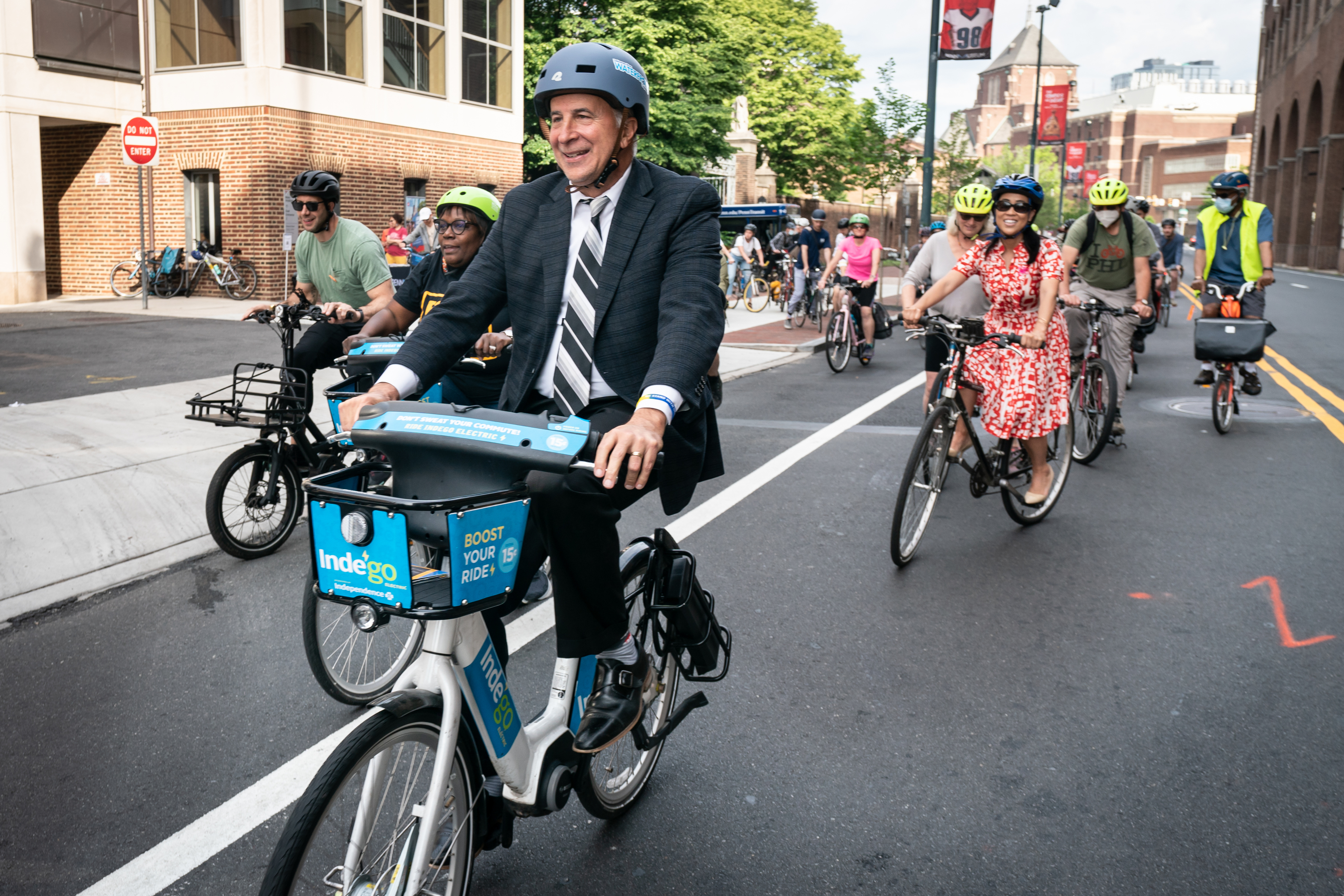
    In 2022, Councilmember Mark Squilla (center), former Eagle Connor Barwin, Councilmember Kendra Brooks, and Councilmember Helen Gym took part in a Bike to Work Day event sponsored by the Bicycle Coalition of Greater Philadelphia to promote cycling as a means of transportation.JESSICA GRIFFIN / Staff Photographer

    Eden MacDougall vividly remembers his trepidation when he started commuting from Langhorne, in Bucks County, to Temple University on SEPTA’s Regional Rail. “I kept thinking, how will I know it’s my stop?”

    By the time MacDougall graduated in 2022, he was a super-commuter. To get to his new job at Mastery Charter School, where he is an AmeriCorps reading instructor, he had to use three forms of transportation: He started his day by biking two miles from his home to the Langhorne station. After taking a SEPTA train to Fern Rock, he changed to the Broad Street subway, getting off at Erie. The trip took an hour and 45 minutes, but MacDougall, who never learned to drive, loved it. “I’d open up my book and read the whole way.”

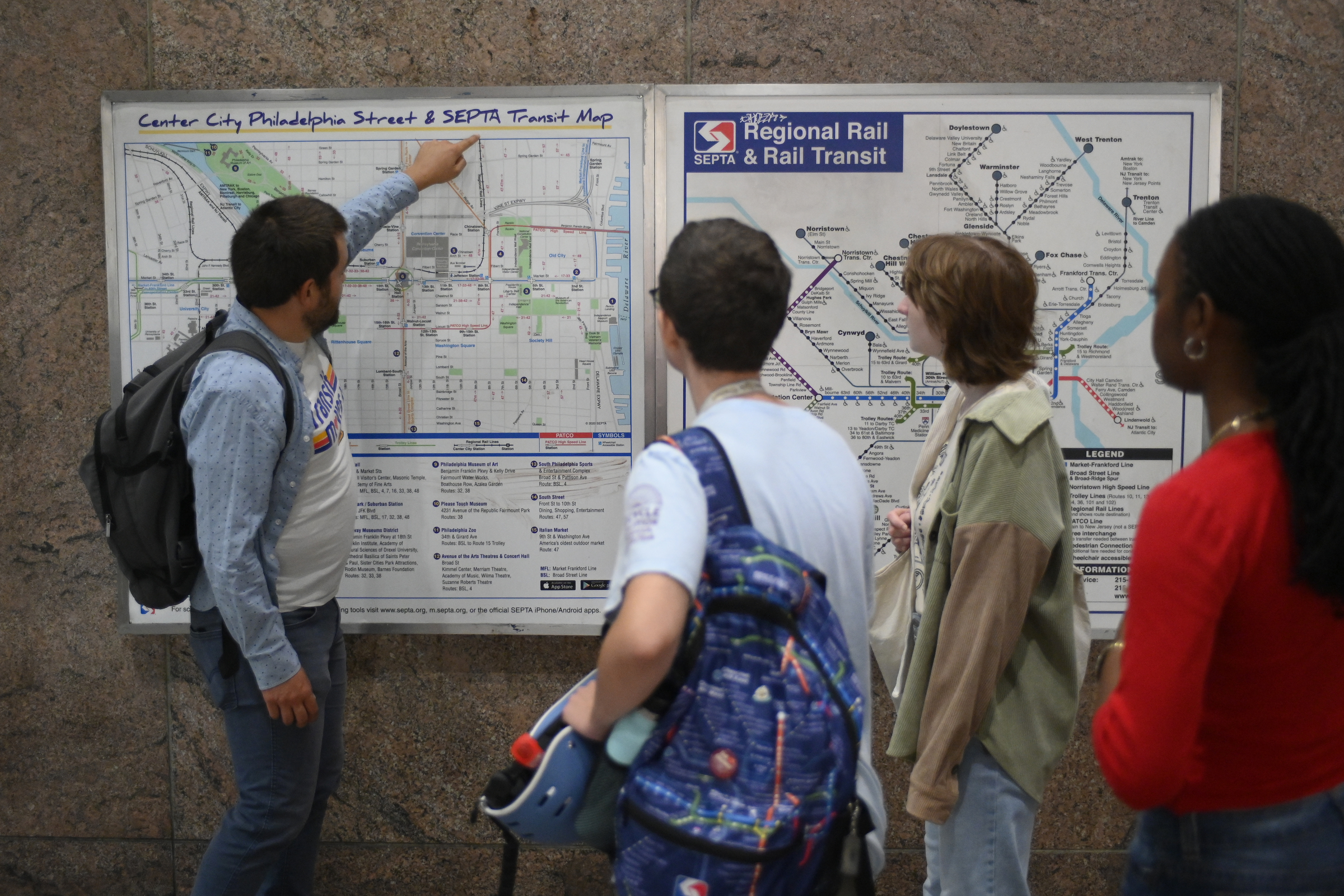
    Stephen Bronskill, coalition manager for Transit Forward Philadelphia, shows incoming Temple University students how to navigate SEPTA during a tour organized at the start of the new semester. Bastiaan Slabbers / For The Inquirer

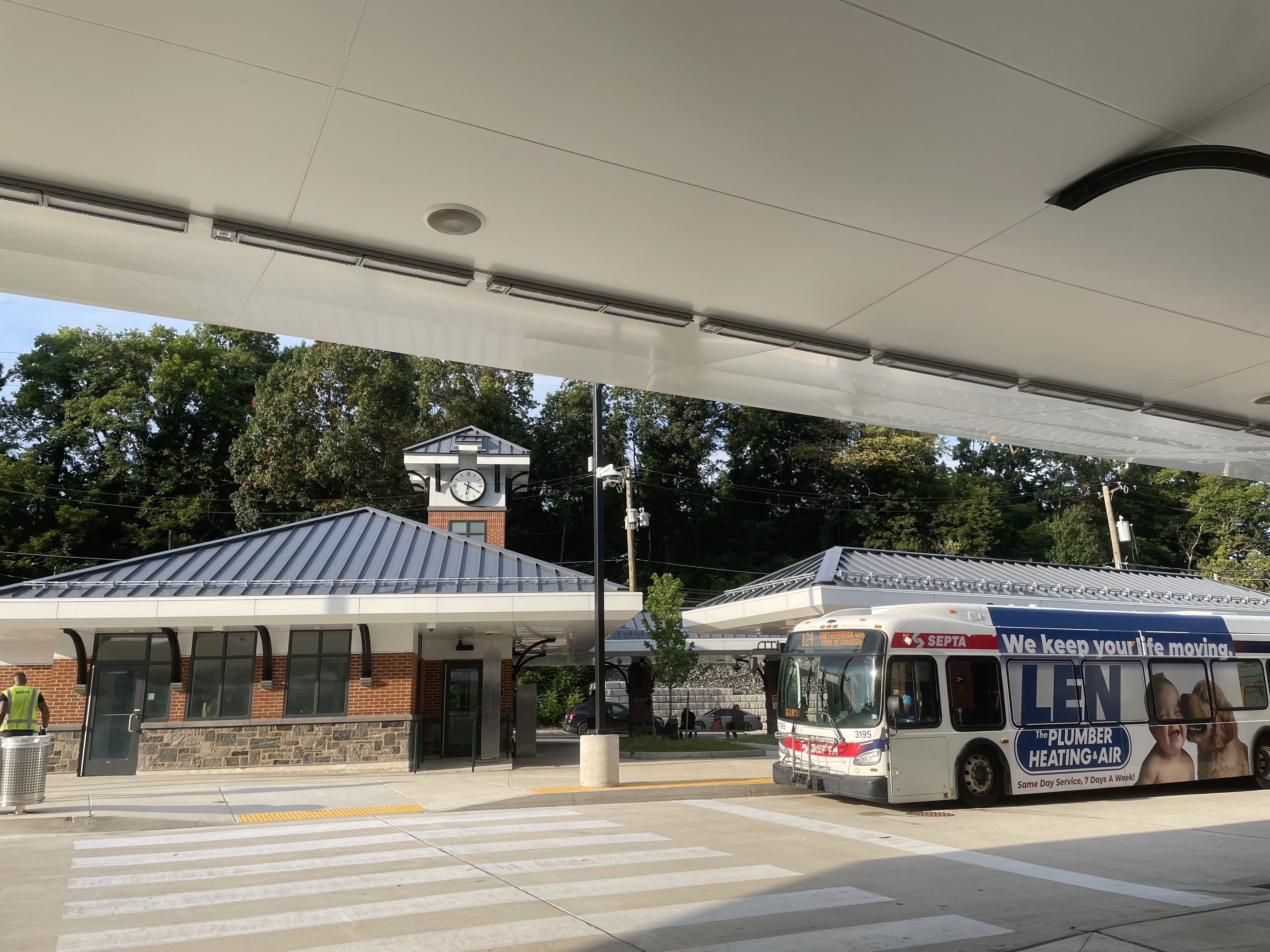
    Now he lives in Philadelphia and volunteers as an instructor for Transit Forward Philadelphia and the Bicycle Coalition of Greater Philadelphia, which run Saturday tours to help people feel more confident riding SEPTA. Although the events provide practical advice, like how to use a transit app, they’re intended to be fun excursions. MacDougall recently shepherded a group from Roxborough to the Clark Park farmers market, showing them how to change from the Route 9 bus to a West Philadelphia trolley. Along the way, the group got to see SEPTA’s efficient new Wissahickon Transit Center on Ridge Avenue, where 11 bus routes converge.

    The two groups, which have been lobbying the state legislature to help SEPTA secure much-needed state funding, started the Saturday tours as an extension of their advocacy work. They believe the exposure to SEPTA’s system can help reset public perceptions.

    SEPTA’s new Wissahickon Transportation Center on Ridge Avenue in Manayunk is a major upgrade for the city’s bus riders. The sprawling, $50 million station opened in January 2026 and allows 5,000 passengers a day to switch between 11 bus lines. (photographeed Aug. 2026)Inga Saffron / For The Inquirer

    “People had a lot of negative experiences during the pandemic,” Julio Rodriguez, the Bicycle Coalition’s policy director, told me. So, when SEPTA announced it was implementing its long-awaited schedule changes this summer, the transit advocates saw a chance to change the conversation.

    Helping SEPTA boost ridership isn’t their only goal, however. Because they believe fewer cars will make Philadelphia a safer, more livable city, they’re organizing similar outings to get people comfortable with bike commuting.

    Changing habits

    Even while these advocates are gaining adherents, many skeptics remain convinced people will never give up their cars.

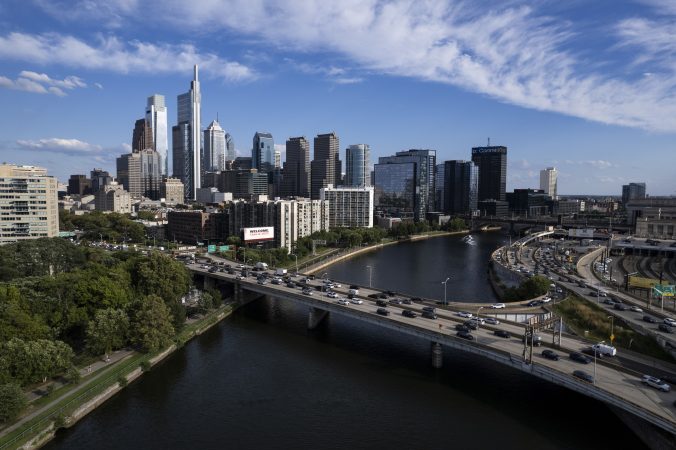
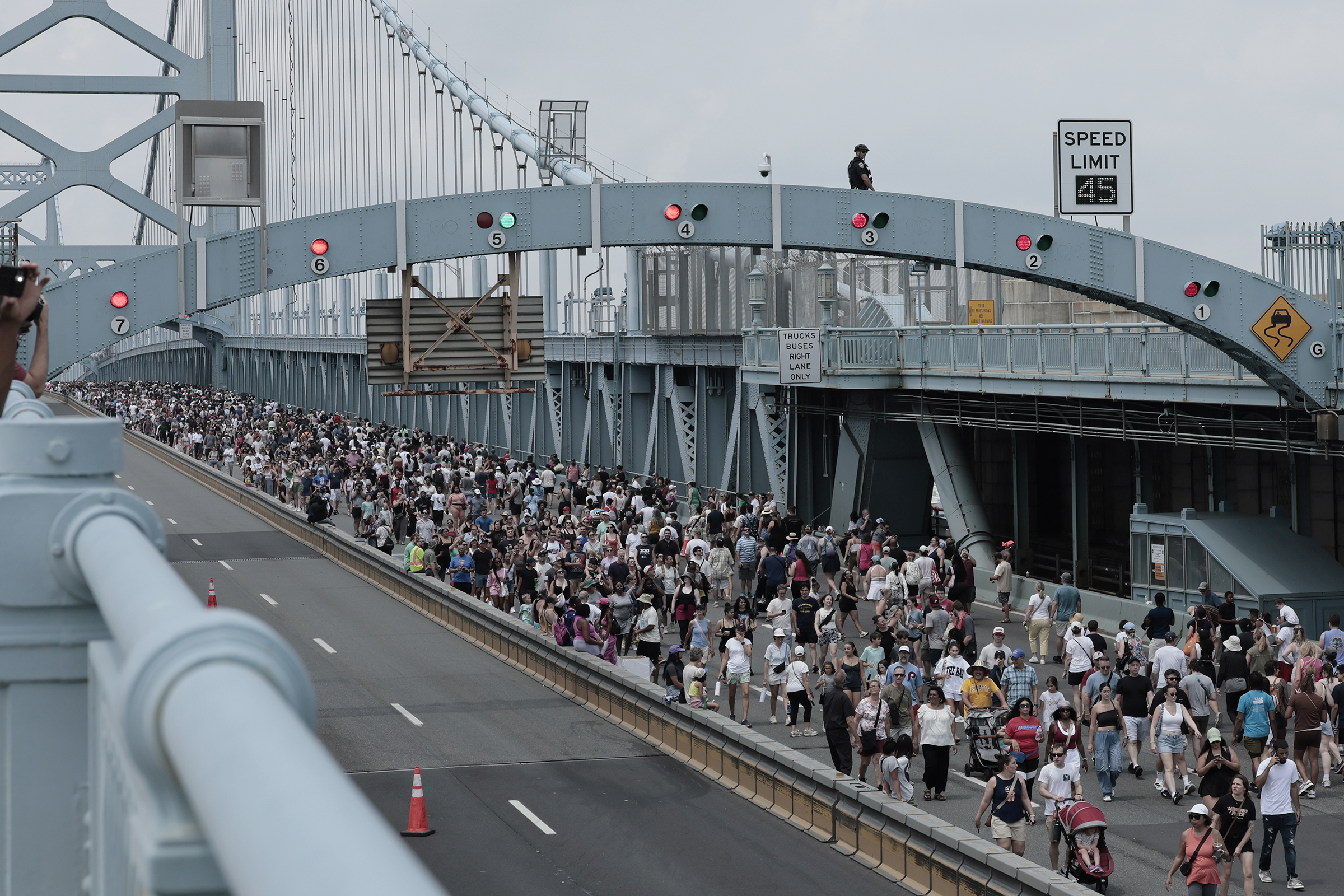
    But the public’s cheerful response to this summer’s car-free celebrations around Philadelphia suggests that habits can change. Almost 600,000 people converged for World Cup watch parties at Lemon Hill in Fairmount Park during the 39-day FIFA Fan Festival — even though parking was banned. After the games ended, I saw hundreds of people streaming along the Schuylkill River Trail to 30th Street Station, a distance of 1.5 miles. Thousands took transit, rode bikes, or walked to the Ben Franklin Bridge to celebrate its centennial in July.

    Thousands of people took transit, biked, or walked on July 11 to parade across the Ben Franklin Bridge to celebrate the 100th anniversary of its opening.Elizabeth Robertson / Staff Photographer

    For people who switch to alternative forms of transportation, the payback is immediate. But Philadelphia and the region also have much to gain from having fewer cars racing through the streets: cleaner air, less noise, more casual social encounters with neighbors, and less wear-and-tear on infrastructure

    The impact on climate change is a different story. Individual actions can only do so much to slow the dramatic shifts in global weather. It’s also a frustrating chicken-and-egg situation. People won’t see car-free living as truly feasible until there is intensive government investment in transit, bike infrastructure, and pedestrian safety.

    Until that happens, carry a fare card, sign up for car-share, install a transit app on your phone — and don’t forget to wear a helmet.

  • Letters to the Editor | Aug. 31, 2026

    Letters to the Editor | Aug. 31, 2026

    We need vaccines

    As a physician, my first response to your essay prominently displayed on the op-ed page with the headline “Why we need vaccines” was to laugh. But then the realization set in — how sad it is that this op-ed had to be written at all.

    Reading that piece makes you realize the size of the nation’s health literacy gap. Vaccines have a 230-year record of effectiveness and safety. They have saved hundreds of millions of lives. The misinformation surrounding them — disseminated largely by MAGA Republicans and their acolytes — has harmed this country immeasurably. How sad it must be to imagine that the parents of an unvaccinated child who dies of measles, a completely preventable disease, think to themselves, “Well, at least he didn’t have a vaccine complication.” You don’t need a college degree to know that vaccines are an invaluable part of modern healthcare. It’s been part of mainstream medicine ever since Edward Jenner developed the smallpox vaccine in 1796. For people to turn their backs on them now begs the question: How did we get here?

    Steven Barrer, Huntingdon Valley

    Woke — and proud

    I totally agree with Jenice Armstrong: In this day and age, with what we know about science, including sexuality, why should anyone be shamed for being woke? Fifty years ago, we either did not fully appreciate the inequities in employment, the oppressive environments in which women worked, the contribution of pollution to the destruction of the environment, the limited opportunities for people with disabilities, the continuum of sexual biology, and the insidious ways racism persisted among our society … or we didn’t know how to change them.

    But I — like a lot of other Americans — am certainly awake now.

    The principles of diversity, equity, and inclusion are about being kind and fair. It’s about helping people who have been denied opportunities during those years we were asleep. How can anyone be against that?

    P.S. No one wants to defund police.

    Beverly Moskowitz, Philadelphia

    Imagination Library

    I was very pleased to see the article explaining Dolly Parton’s program that gets books in the hands of babies, toddlers, and children under the age of 5. However, the article didn’t detail some important aspects of this 31-year-strong, genius idea.

    The 332,411,218 age-appropriate books that have been distributed so far have had a statistically significant and lasting effect on young learners’ scholastic and life outcomes. So much so that in many cases, whole states, including Delaware, have opted to fund the program for every child in their state.

    Philadelphia, and indeed the whole state of Pennsylvania, should use this moment in time to gift our children the love of books and learning.

    Liz Kory, Plymouth Meeting

    Join the conversation: Send letters to letters@inquirer.com. Limit length to 150 words and include home address and day and evening phone number. Letters run in The Inquirer six days a week on the editorial pages and online.

  • Four years after Nick Elizalde’s death, I’m rooting for Roxborough football

    Four years after Nick Elizalde’s death, I’m rooting for Roxborough football

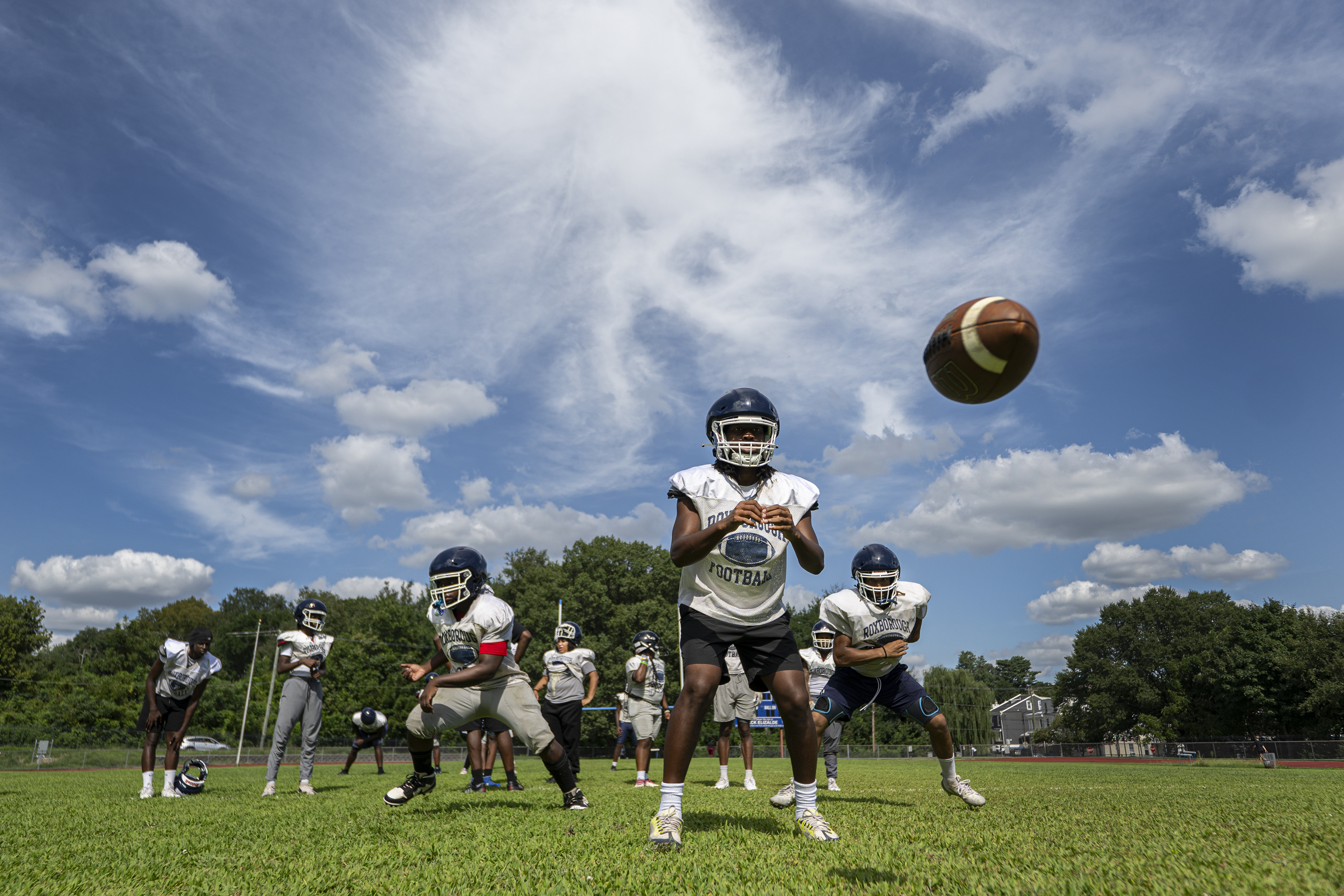
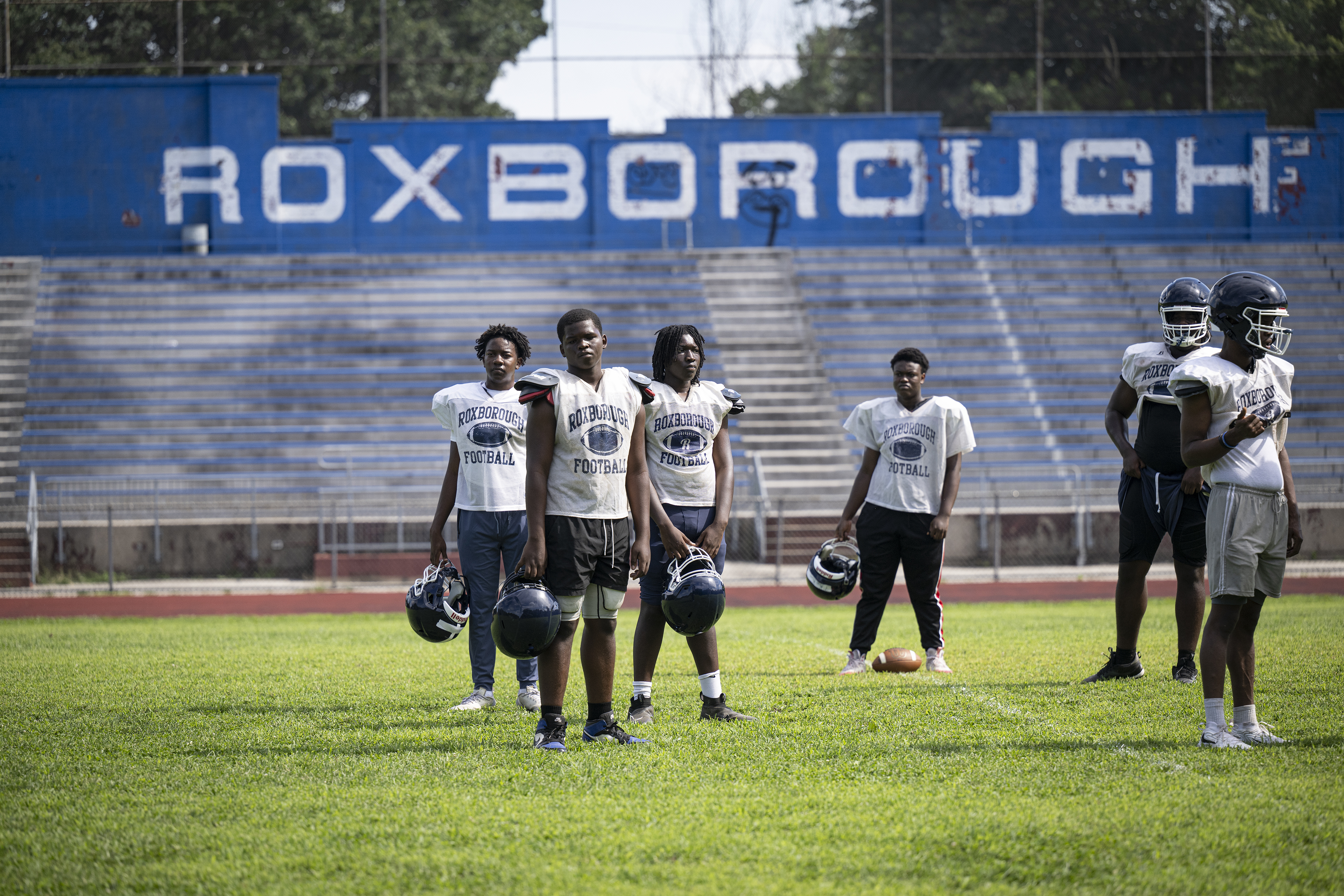
    School is back in session, and a fresh high school football season is underway, so foot traffic has picked up on the sidewalk on Pechin Street that separates the locker room at Roxborough High School from its dusty, weathered, 87-year-old football stadium.

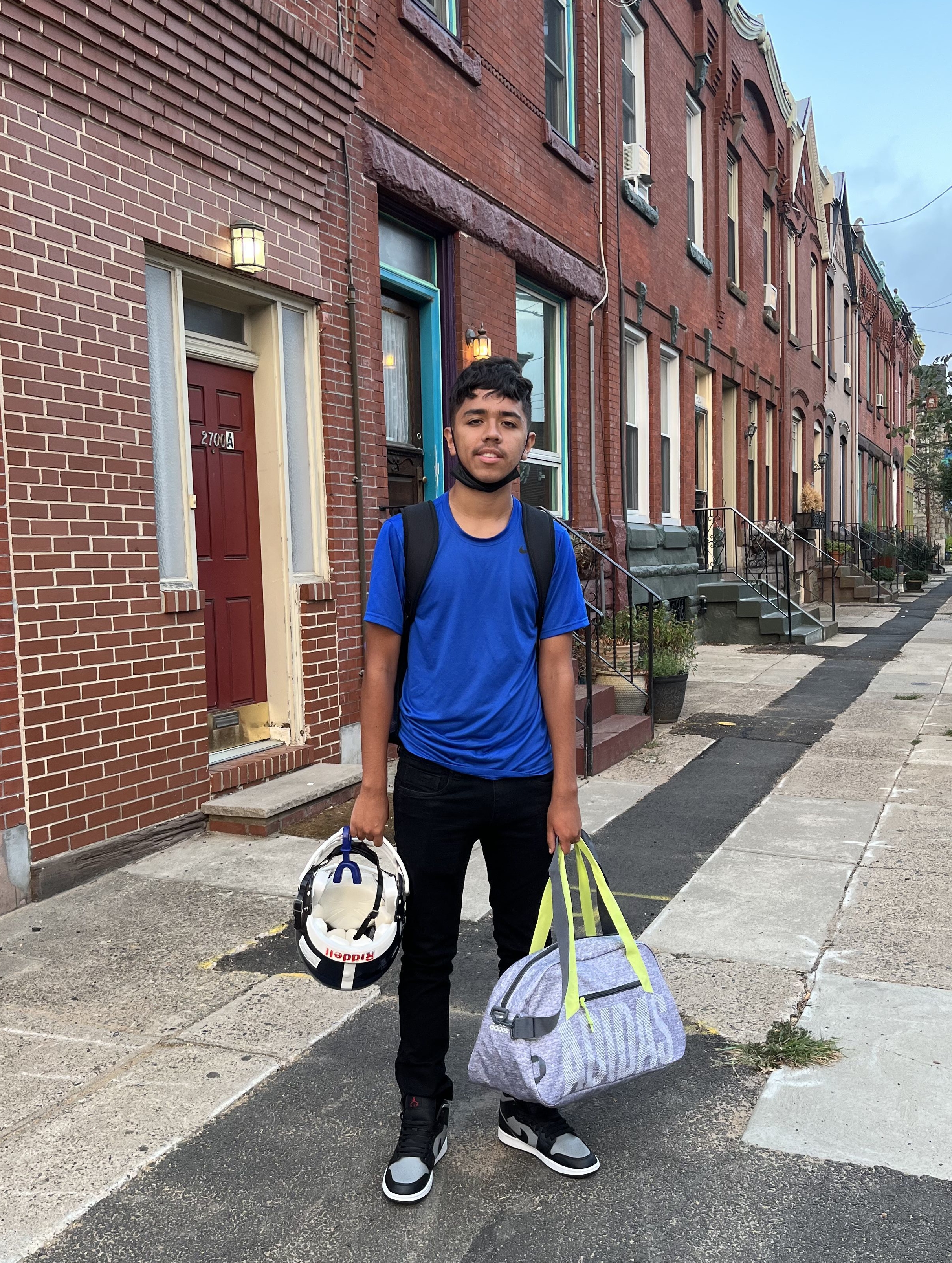
    At least twice a day, down a short hill along that stretch of sidewalk to practice or a game and back up, players and coaches pass a well-tended bronze memorial for Nick Elizalde, the 14-year-old freshman who had only started playing football at Roxborough four years ago.

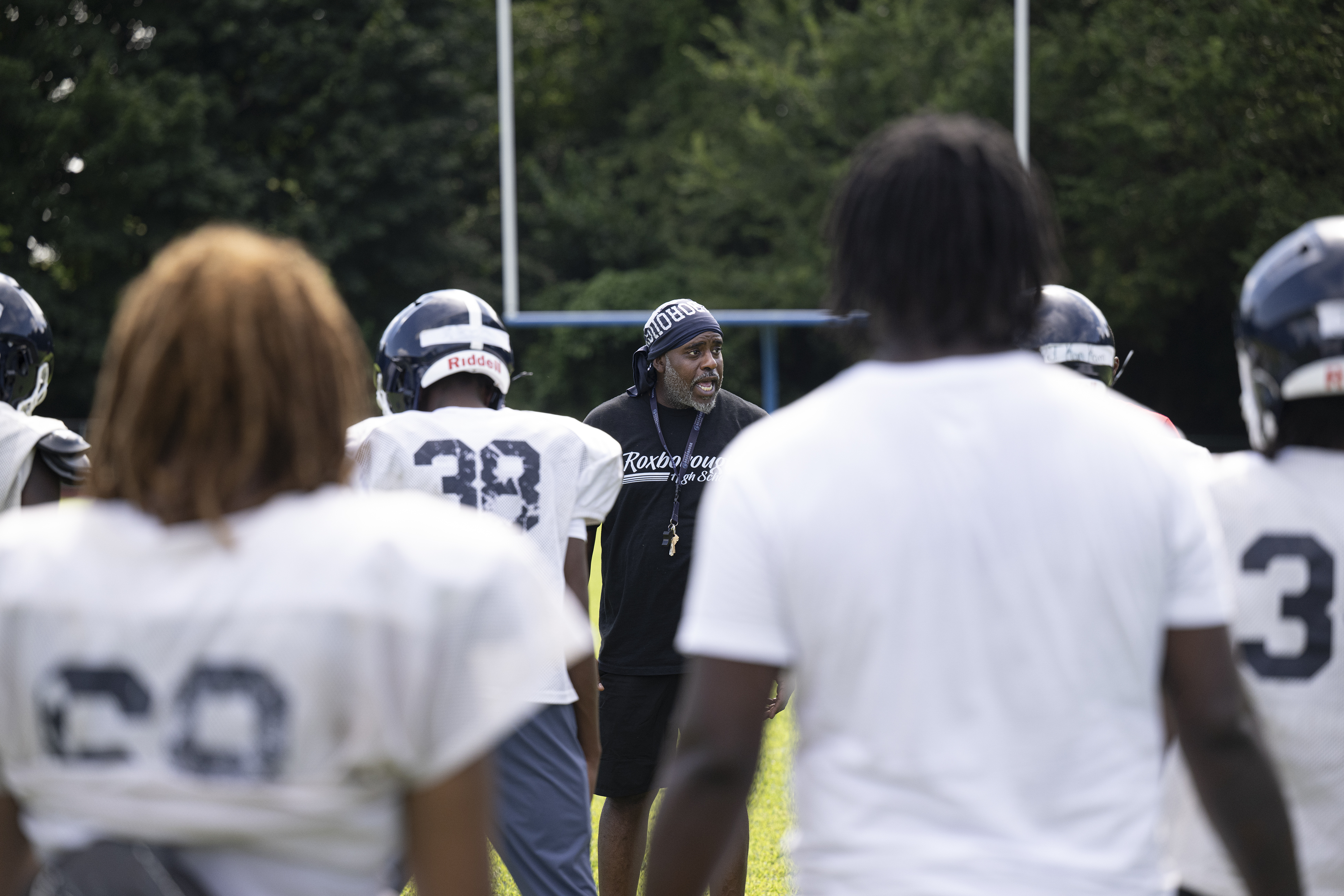
    “Quiet kid, wasn’t very outspoken. But he was starting to open up and become more social,” Marc Skinner, the 47-year-old head football coach at Roxborough, told me before practice last week. “Then we ran into that tragedy.”

    Yes. That tragedy. The memorial is roughly at the spot where Nick was gunned down when five shooters fired more than 60 bullets toward a group of football players following an afternoon scrimmage on Sept. 27, 2022. Skinner, then an assistant coach, was there.

    But none of the 35 or so members of the current Roxborough football team were there because they all were in junior high school. Two captains, senior defensive end Zaid McDonald and senior quarterback Javon Jones, said they certainly know about Nick even though they never got a chance to meet him.

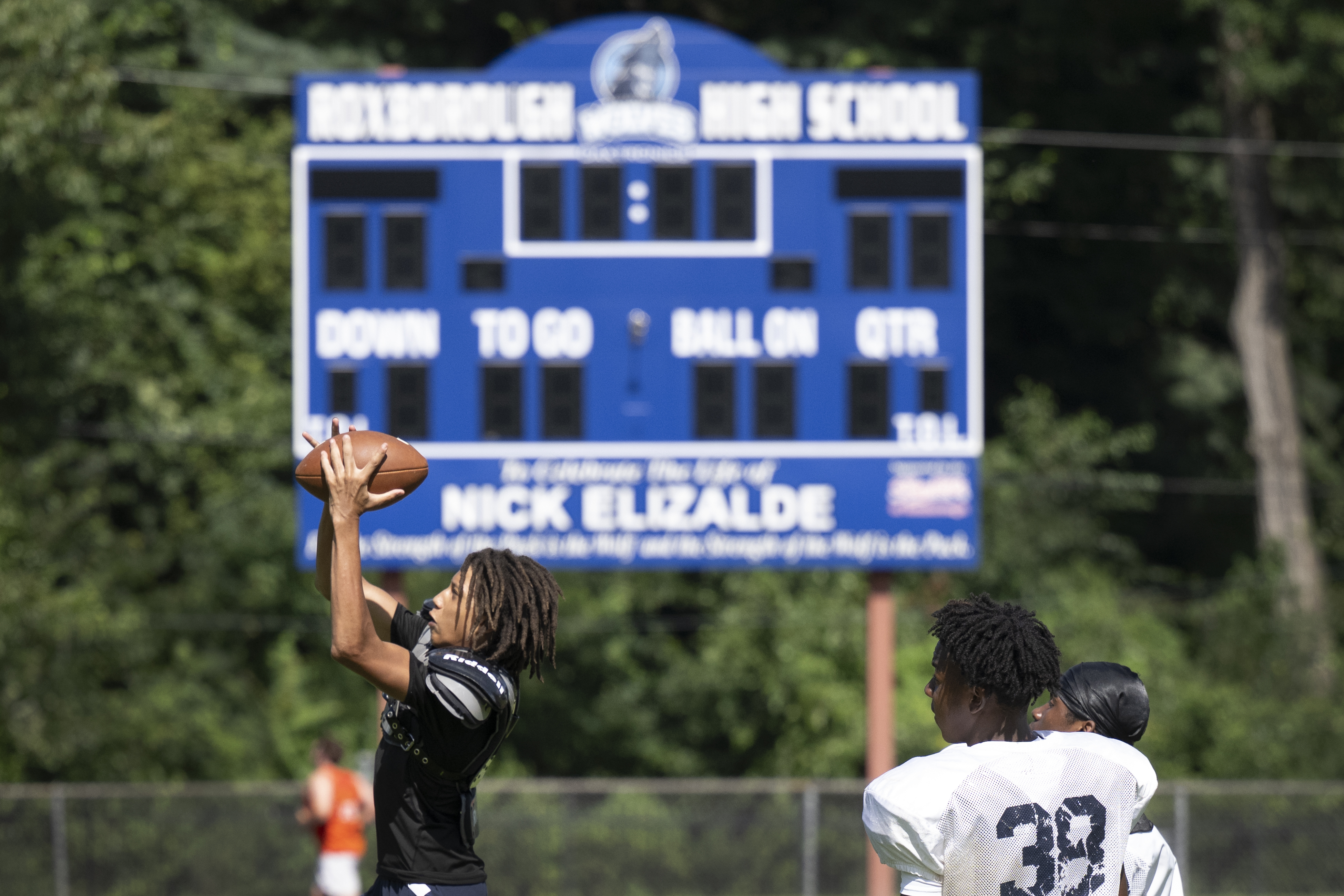
    There is a new mural with a large “62” — Nick’s jersey number — at the back of the school, and a new scoreboard at the field celebrating Nick. Skinner said he was planning to put No. 62 stickers on the players’ navy-blue helmets before Friday’s season opener.

    Roxborough High School football players gather for on-field drills during an after-school practice Aug. 21 at Nick Elizalde Stadium.Jose F. Moreno / Staff Photographer

    But make no mistake: The Roxborough Wolves are excited about their chances this season. Last year’s team won four of its 11 games, and the first winning season in seven years feels within reach. As Jones said of the 2025 season, “I feel like we got better as the season went on.”

    McDonald would add, smiling, “Playing for Roxborough — oh, you really got to work, because not everyone is on the same level.”

    Of 571 high school football teams in Pennsylvania, Roxborough ranked 514th entering the season, according to the MaxPreps ratings website. But the Wolves, like the 570 other teams, will start each game this fall with a 0-0 score and a fighting chance.

    And I, for one, hope to be at as many Roxborough games as I can. I live a 20-minute walk from the stadium, and as someone who both played and then wrote about high school football way back in the day, the competition is as spirited and ferocious here as anywhere. Really.

    It is just that the backdrop is a little different. Games tend to be played Friday after school. Admission is free. Seats in the 2,100-seat grandstand, with a fence still separating Roxborough fans from visiting fans, are easy to find, because 100 people, tops, might show up. There is a dance team on occasion, but there are no lights, no refreshment stand, no press box, no programs, and no marching bands. The patchy grass gridiron is lined only every 10 yards.

    Roxborough football coach Marc Skinner leads his team during practice on Aug. 21. Of the Wolves’ 4-7 record last year, one player said, “I feel like we got better as the season went on.”Jose F. Moreno / Staff Photographer

    How some things have changed. The Academies at Roxborough High School, the full name of the stately, 102-year-old institution on Ridge Avenue in Northwest Philadelphia, has an enrollment of only about 600 students, less than one-third the school’s size in 1972.

    The stadium, built for $300,000 by the Works Project Administration, opened on Oct. 7, 1939, for a 14-0 Roxborough victory over Olney. About 3,000 showed up, The Inquirer reported. It was Roxborough’s first game in the Philadelphia Public League.

    The very next year, a full-out riot broke out after players from Roxborough tangled with players from Simon Gratz during a 33-0 Roxborough victory, with many fans joining in. Three Philly cops were needed to help the two flustered head coaches break up the melee.

    Roxborough won Public League titles in 1957 and 1963, but it had become an also-ran in recent years. A Thanksgiving Day game against Roman Catholic ended in 2018 because Roxborough had not won since 1991, and lost each of the last 14 games by three touchdowns.

    Skinner, who became the head coach in 2023, said turnout for football slipped during the pandemic and after the shooting, with a few potential opponents telling him they’d rather not play at Roxborough. The besieged 2022 team won its only game 11 days before the shooting.

    Each of the 35 or so members of the current Roxborough football team was in junior high school when Nick Elizalde was fatally shot four years ago following a scrimmage at the school.Jose F. Moreno / Staff Photographer

    “We have kids from different walks of life, and we’re bringing them together to do something they thought they could never do,” Skinner said.

    A year after the shooting, the school changed its nickname from Indians to Wolves. The wolf was Nick Elizalde’s “spirit animal”: For the strength of the pack is the wolf, and the strength of the wolf is the pack, reads an inscription under his name on the new scoreboard.

    Kristin Williams Smalley, the principal at Roxborough, told me two years ago that the school had been considering a new nickname, and she said: “The mascot was not necessarily named to honor him. It just happened that all of the stars aligned, and the wolf was selected.”

    But the name change helped to reset, or refocus, the football program, Skinner said. Because of suspensions and academic ineligibility, Roxborough had only 17 players for a game last year against Olney. But the Wolves stuck together, played hard, and lost by only 22-7.

    “Upon further reflection, the wolf is the perfect mascot to represent the Academies at Roxborough High School,” Williams Smalley said. “Wolves are complex, highly intelligent animals who are caring, playful, and above all devoted to family. That is who we are!”

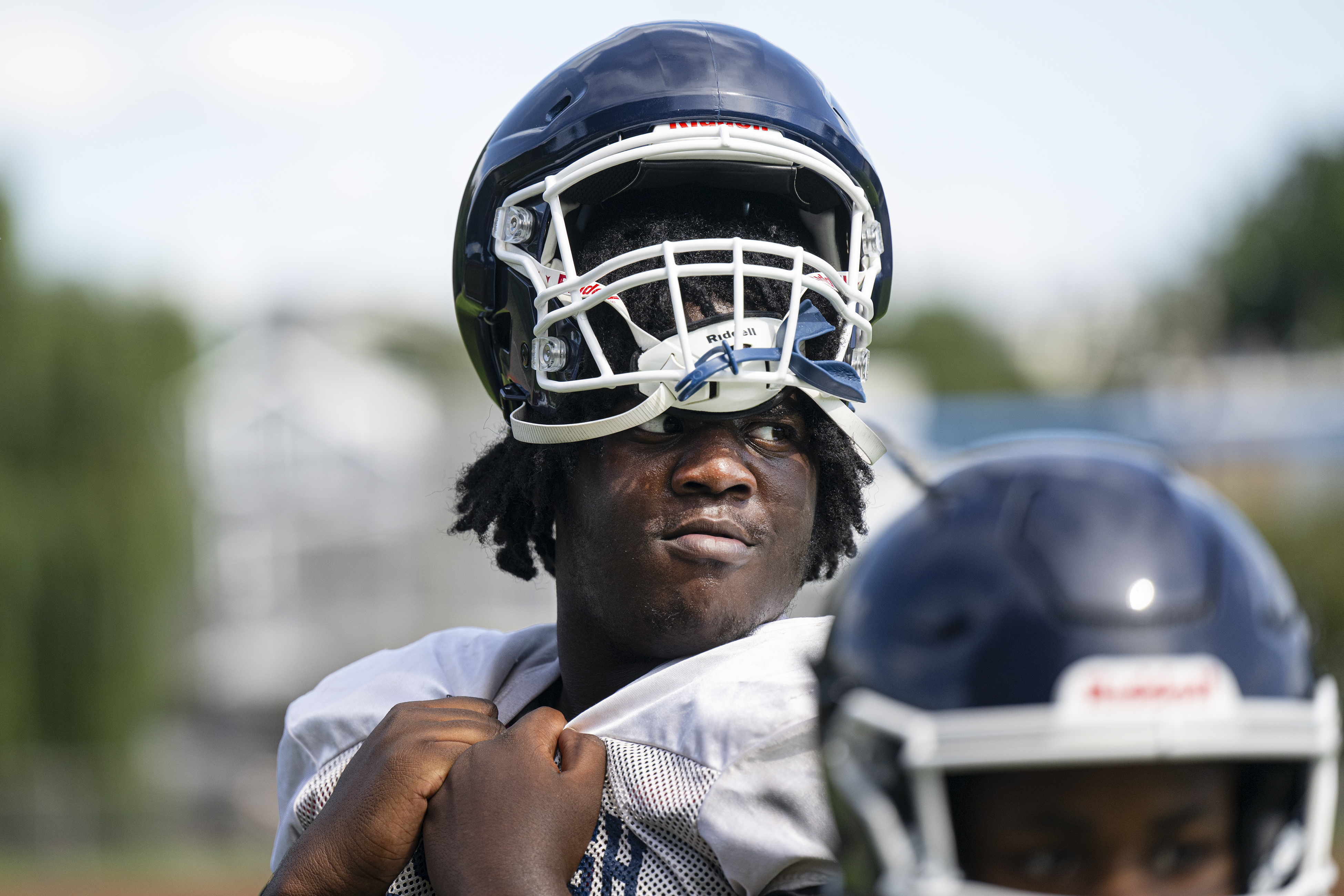
    Roxborough football player Domenick Washington, a defensive tackle, looks on during practice on Aug. 21.Jose F. Moreno / Staff Photographer

    The best high school football players don’t have to stay close to home anymore. The best scholastic player in Pennsylvania last year was Joey O’Brien, a wide receiver and safety from La Salle College High School, the state Class 6A champs. O’Brien, now a freshman at Notre Dame, played for the Roxborough Eagles youth program. Skinner never met him.

    He and his small staff will do the best with who shows up. These Wolves have worked hard, and together, during the offseason, he said, but there are still a few students each year who only decide to join the football team after school starts. Skinner brings them on. Nick was a student at Saul High School, but because it doesn’t have any athletic teams, he played for Roxborough.

    The players on this team were too young to be around, but the coaches and many former players did know him, and could recall that awful afternoon in 2022. It needs to be remembered, but as Skinner says, “We just try not to dwell on it.”

    So, click-clacking on their cleats, the players trudge up and down that hill on Pechin Street, past the site of the shooting. Four other teenagers were wounded on that awful day, and six people were arrested in connection with the shooting. The memorial to Nick serves as a reminder that the impact of gun violence is not so far away.

    Nick Elizalde, 14, waiting for the bus before his first day of ninth grade at Walter B. Saul High School in August 2022. Because Saul doesn’t have its own athletic teams, Nick played for Roxborough. Meredith Elizalde

    “We’re trying to keep our eyes open in the hope that our children are not involved in anything bad,” said Skinner, who is a member of the “climate staff” that keeps order at the school.

    Students come from all over the city: Zaid McDonald is from Germantown, and Javon Jones is from North Philadelphia. Each would love to go on to play college football, but the opportunity would come at a small school if it did, and Jones said he would go to trade school if it did not.

    But football is there for at least the next three months. A winning season and the playoffs are possible, just as they are for any of the state’s other 570 teams. And that is all any high schooler can ask for. Go see for yourself some Friday afternoon. Watch kids play football with joy.

    Dave Caldwell lives in Manayunk and covered sports for The Inquirer from 1986 to 1995.

  • The invisible volunteers who help keep democracy running

    The invisible volunteers who help keep democracy running

    They’ve been called the “most important people in running an election” by Secretary of the Commonwealth Al Schmidt, yet even as interest in election security has skyrocketed after Donald Trump’s persistent false claims of voter fraud, their jobs seem to be hidden in plain sight.

    Unlike the grifters and sycophants who help feed the president’s Big Lie and earn millions of social media followers, make frequent TV appearances, and are showered with adulation by the White House, the roughly 45,000 volunteers across Pennsylvania who are essential to ensuring elections happen fairly, smoothly, and efficiently are rarely recognized for the work they do.

    No wonder poll workers are in short supply — in the commonwealth and across the nation. A Brookings Institution report said that about half of all election officials found it either very or somewhat difficult to find enough workers.

    As someone who worked in elections before becoming a journalist, I’m hardly surprised. Running the polling booths is neither glamorous nor convenient. Voting starts promptly at 7 a.m. on Election Day and continues until 8 p.m. With prep and closing work, a shift can take up to 16 hours for some. In Philadelphia, doing your part to help preserve democracy can earn you up to $295. Elsewhere, compensation tends to be much less.

    In Pennsylvania, the job comes with an additional wrinkle. Our poll workers are elected. Across roughly 1,700 divisions in the city of Philadelphia alone, neighbors are asked to choose a judge of elections and inspectors. The judge then appoints a clerk, and either the city commissioners or the election board finds a voting machine operator. If the judge fails to show, the first voters may be asked to hold a curbside election to pick a successor.

    It is all somewhat delightfully antiquated even as it can contribute to Election Day delays.

    Recently, Philadelphia’s election officials sought to stem the shortage of poll workers. City Commissioners Omar Sabir, Seth Bluestein, and Lisa Deeley joined Schmidt to honor some of the city’s poll workers — and ideally recruit others at a rally in the City Hall courtyard, complete with pizza, pretzels, and water ice.

    Student poll worker India Nakai, 17, a Girard College senior, told the audience she was motivated to serve her community and see what happens behind the scenes, even though she isn’t old enough to vote herself yet. At the other end of the spectrum was another kind of senior, honoree Gwendolyn Clay, 74, who has been working the polls for 51 years.

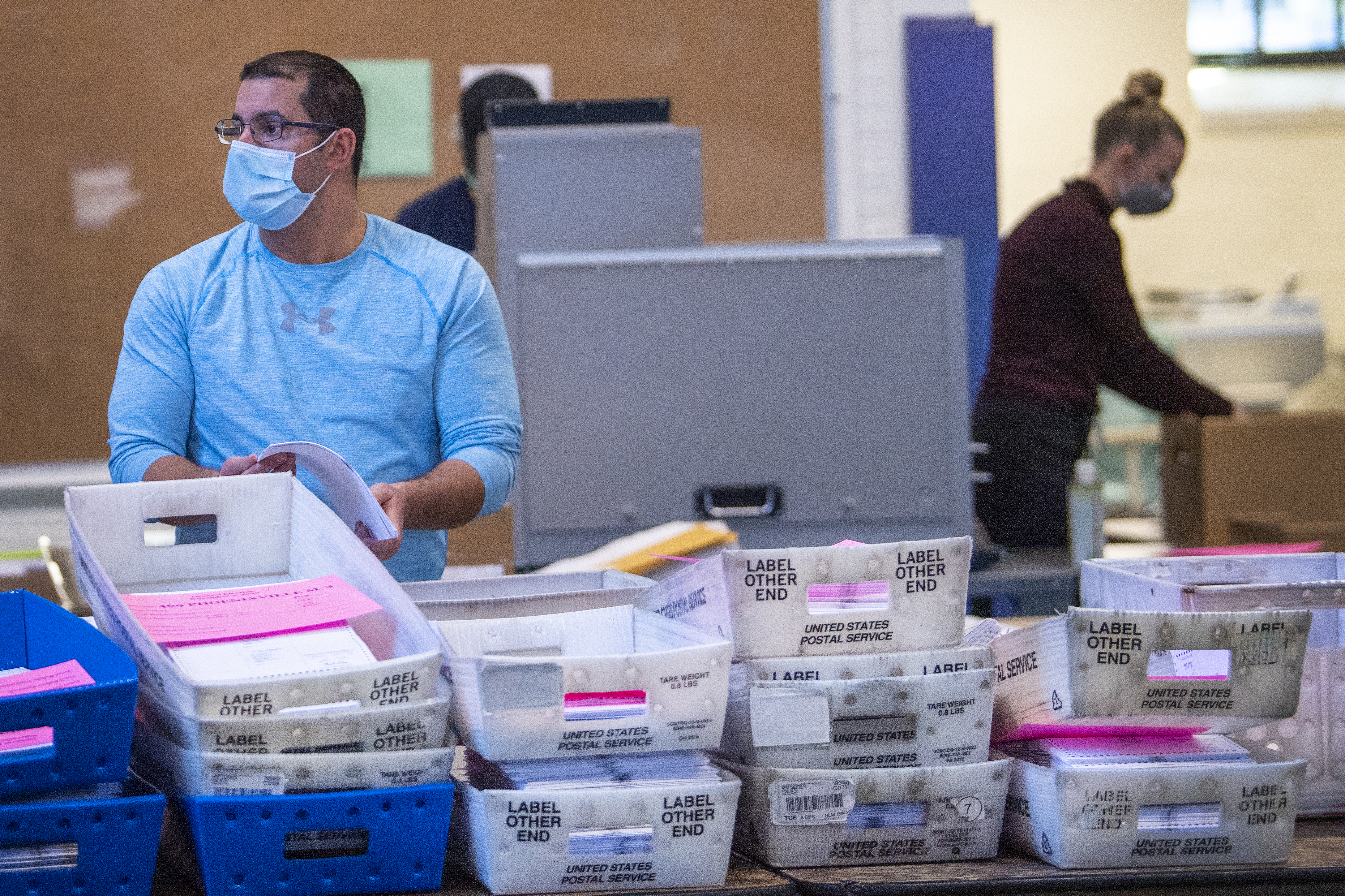
    Their dedication to public service and commitment to helping their neighbors reminded me of the people who signed up to help count ballots during 2020.

    I was there at the Pennsylvania Convention Center, where — despite the pandemic and the threats of armed agitators who believed Trump’s false claims of fraud — scores of Philadelphians showed up every day to help tally the unprecedented flood of mail-in ballots.

    Vote counters zealously followed the law, erring on the side of strict interpretation and removing ballots for even minor and inconsequential errors like a missing date or an absent secrecy envelope.

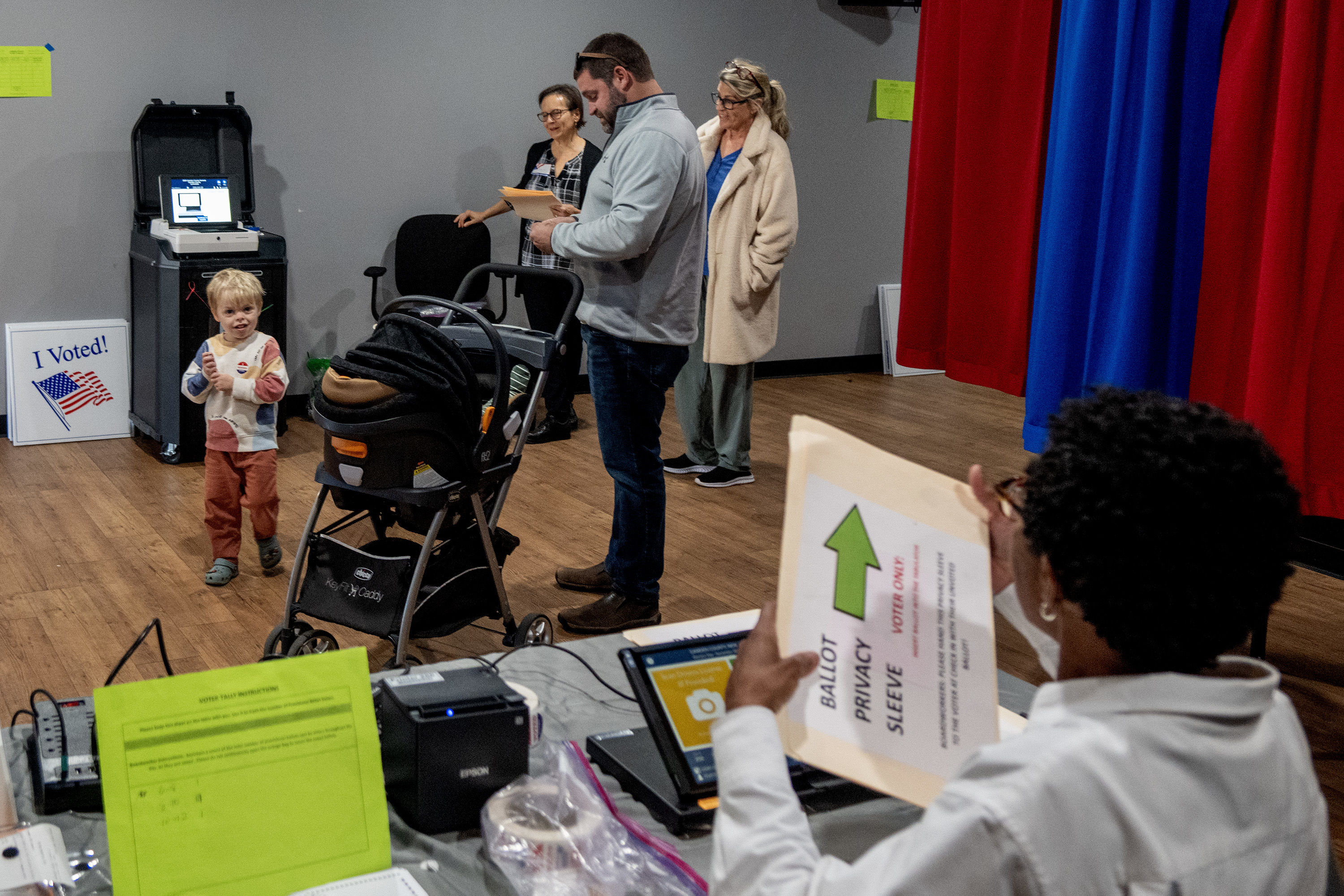
    Poll worker Janice Masud-Paul (seated) speaks with 4-year-old Weston after his father, Bob Comfort, voted in the Erlton Fire House on Route 70 in Cherry Hill on Election Day last year.Tom Gralish / Staff Photographer

    Elections, and democracy itself, depend on this kind of selfless dedication.

    Unfortunately, people like Clay and Nakai, who are willing to do essential but usually thankless work, are becoming rarer. And it’s not just staffing the polls that has seen recruitment challenges.

    Service organizations like the Elks, Kiwanis, and Rotarians once built and maintained parks and memorials, but are now in the midst of rapid decline. Veterans from the wars in Iraq and Afghanistan are less likely to join VFW or American Legion clubs, and more and more Americans are spending their days alone.

    Traditional, neighborhood-based churches have been supplanted by regional megachurches, with paid full-time staff replacing the volunteers and part-timers who once taught Sunday school and led worship.

    Across society, genuine connection is being eroded. It has been replaced by communities of outrage.

    The election-denying hordes are just one facet of this phenomenon. Instead of toiling away for hours in service of their fellow citizens, members of an outrage community must simply “like,” “reply,” or “repost” sentiments that align with their own half-baked suspicions. The actual factual record rarely matters, replaced by the wisdom of the algorithmic mob.

    Communities of outrage now exist for nearly every major facet of life, and every national news story. They allow participants to live in a world reconstructed to fit their belief system, with all the inconvenient facts smoothed away.

    School shootings like Sandy Hook are dismissed as false flags. Disappointing election results are attributed to fraud. People across the ideological spectrum increasingly believe antisemitic conspiracy theories, which blame every complex societal problem on Jewish people. Climate change is either denied or blamed solely on corporations, with no acknowledgment of who is buying all the gas, using artificial intelligence, or purchasing legions of plastic junk to fill our homes.

    Collective action to fix societal woes becomes impossible when individuals can no longer agree on what’s happening in the first place. As the internet has become a haven for everyone’s petty grievances, a society built on online outrage is a miserable one. At the turn of the century, roughly 70% of Americans reported being satisfied with the direction of the country. Today, that number sits at 25%.

    It is up to us as individuals to choose differently.

    Outrage artists will continue to peddle lies as long as we are willing to click on them. Outrage communities will keep growing as long as real communities continue to shrink. Filling a vacant seat on an election board won’t fix this problem overnight, but it is a step in the right direction.

    The more we strive to follow the example of service-minded people like Nakai and Clay, the closer we’ll be to creating a society we can be proud of.

  • Straying from the herd | Editorial Cartoon

    Straying from the herd | Editorial Cartoon

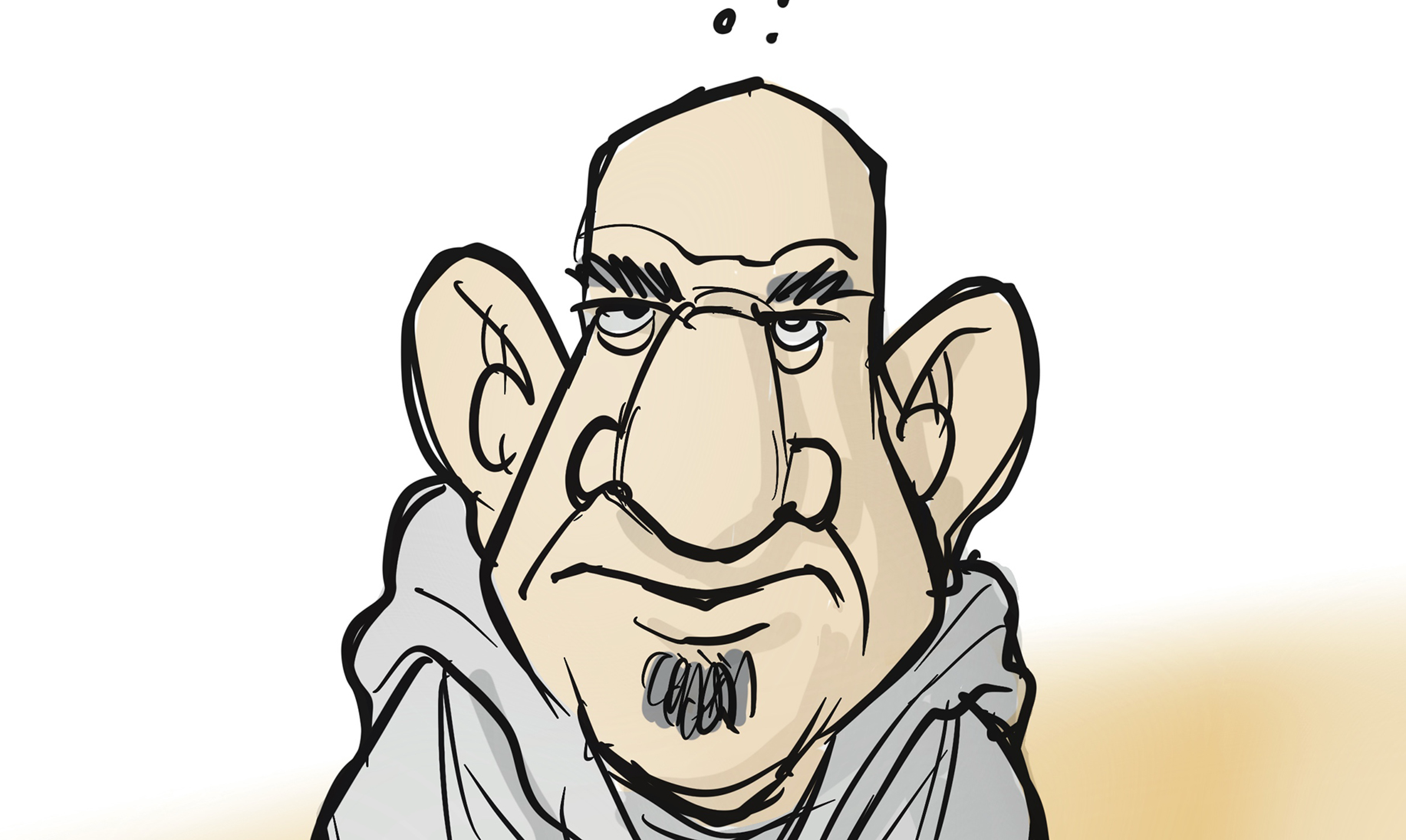
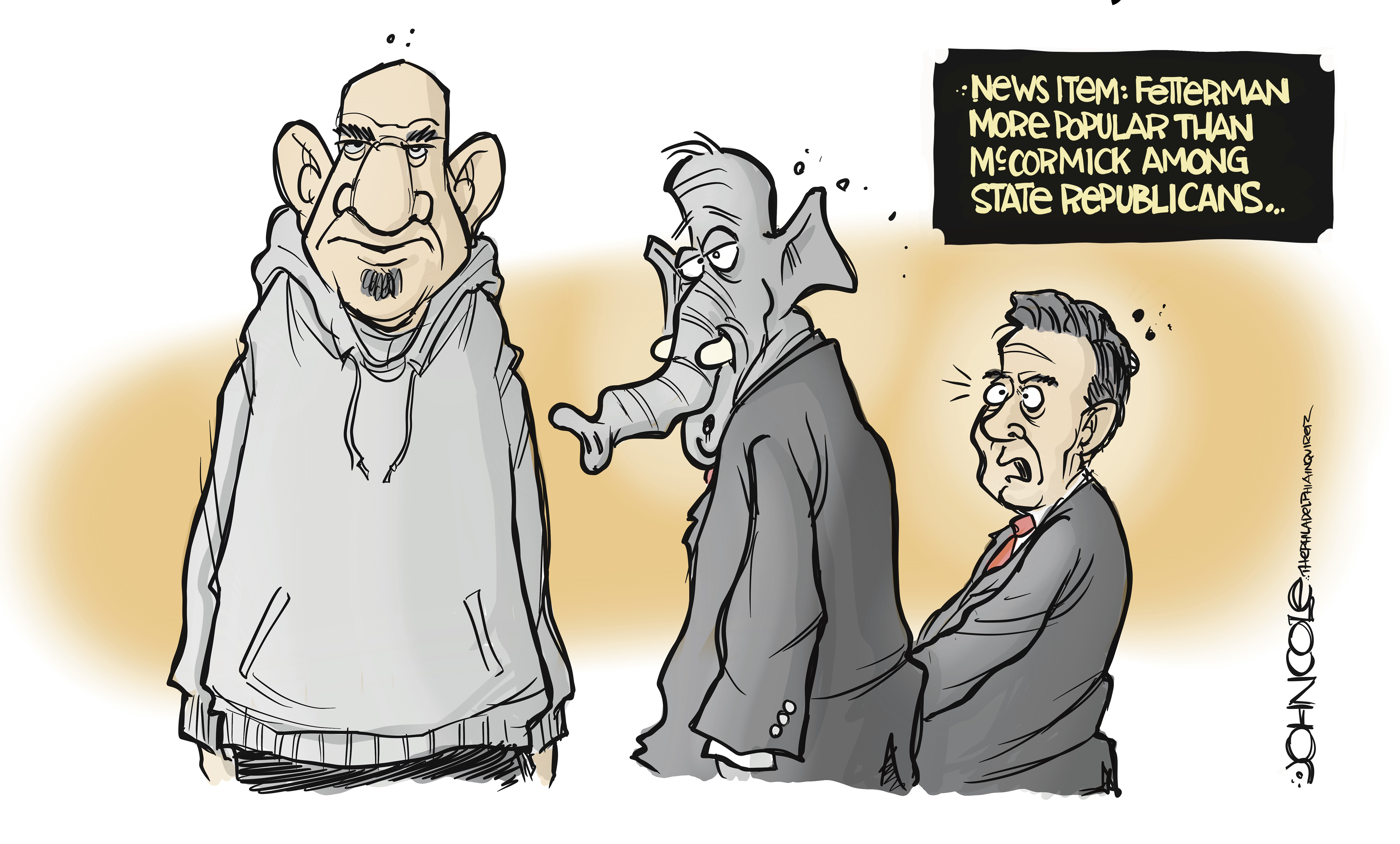
    John Cole spent 18 years as editorial cartoonist for The (Scranton) Times-Tribune, and now draws for various statesnewsroom.com sites.

  • Letters to the Editor | Aug. 30, 2026

    Letters to the Editor | Aug. 30, 2026

    Mailing it in

    I don’t understand the U.S. Supreme Court. Justices are appointed for life and cannot be fired. So why do they undermine the Constitution by toadying to Donald Trump’s every insane whim? What hold does he have to make them so subservient?

    Their latest decision that Trump can withhold mail-in ballots from states that have not bowed to his outrageous demand of supplying voter rolls is deranged. As someone who doesn’t own a car, the mail-in ballot is a great convenience for me. And Pennsylvania has been wise enough not to supply our state’s lists since the federal government, according to the Constitution, has no control over elections.

    I wonder if they can be impeached. After all, they did present an incomplete view about upholding the precedent of Roe v. Wade.

    Susan M. Wendt, Norristown

    Dolly’s memory

    To me, and many others, those who make it their mission in life to spread joy, love, comfort, and knowledge often seem invincible, as Dolly Parton did.

    The news of her passing is a sobering reminder that our time on earth is limited, and tomorrow isn’t promised.

    Times are interesting, to say the least. But if people from all walks of life can agree today that Parton made the world a better place, then perhaps we aren’t as divided as we initially thought.

    May her memory be a blessing.

    Evan Grollman, Highland Park

    Admission of failure

    By announcing the U.S.’s aggressive efforts to harm Iran’s economy, President Donald Trump has effectively admitted that our military campaign has failed to achieve any of its alleged goals. There has been no regime change. The Strait of Hormuz remains unusable. Iran’s nuclear program — allegedly destroyed last year — remains as viable as ever. The president’s desperate efforts to enlist other countries in this new attempt to defeat Iran economically say to the world that our ill-conceived military incursion has failed, and we are desperately looking to other countries to support our attempt to find some way to succeed against Iran. It is abundantly clear that the U.S. has only one viable remaining option to try to save face: declare victory and move on to something else. Stop wasting billions of American taxpayers’ money on a failed mission that clearly was not thought through and will not succeed.

    Ben Zuckerman, Philadelphia

    Join the conversation: Send letters to letters@inquirer.com. Limit length to 150 words and include home address and day and evening phone number. Letters run in The Inquirer six days a week on the editorial pages and online.

  • Trump’s putting his thumb on the mail-in ballot scale. The Supreme Court is letting him.

    Trump’s putting his thumb on the mail-in ballot scale. The Supreme Court is letting him.

    There are those who would argue that Donald Trump poses the greatest threat to American democracy we’ve ever seen from a sitting president. However, with its decision to allow Trump’s executive order on limiting the use of mail-in ballots to move forward, the U.S. Supreme Court has surpassed him.

    The Constitution clearly gives states, and not the president, the primary authority to administer elections. Congress has secondary authority, but only under emergency conditions. That means the president’s executive order, which directs various federal departments to impose rules on mail-in balloting if it is “feasible” and “lawful,” is more than a cynical attempt to save Republicans from losing congressional seats. His executive order is blatantly unconstitutional.

    Yet, in a ruling that seems bizarre on its face, the Supreme Court has decided, with a crucial midterm election just weeks away, that Trump’s executive order does not interfere with the states’ authority “‘to create and enforce a legal code’ for elections.”

    That’s nonsense. In my view, and in the opinion of 56 former judges who submitted an amicus brief to the Supreme Court, Trump’s order is all about interference. Changing rules just weeks before mail-in ballots are set to be sent to voters is an exercise in chaos. It is designed to hamper voting in blue states whose cities are filled with African American voters and others who tend to cast ballots for Democrats.

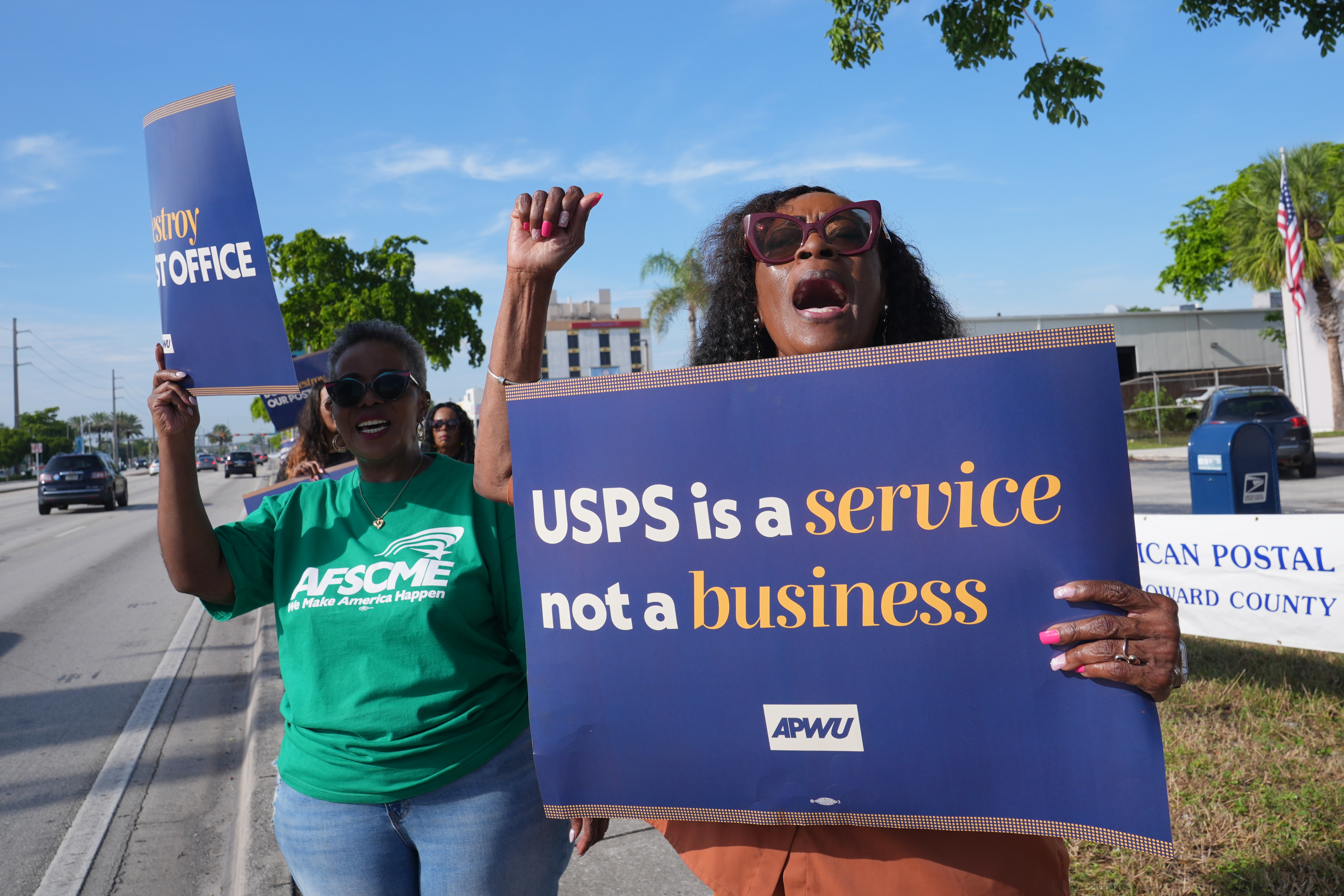
    Joy L. Jackson (right) and Ketha Otis demonstrate against proposed changes to the U.S. Postal Service and President Donald Trump’s executive order regarding mail-in ballots in Miami Gardens, Fla., last month.Marta Lavandier

    Voter suppression is the apparent goal, and the Supreme Court has played an outsized role in helping the Trump administration to get there. Even now, as the U.S. Department of Justice petitions U.S. District Judge Indira Talwani to reverse her nationwide injunction on Trump’s executive order, the Supreme Court looms in the background, ready to further erode democracy.

    Of course, the threat posed by the court is about more than just one ruling. It is about the justices’ pattern of acceding to the whims of a president who seems to view the Constitution as a suggestion, rather than the law.

    In 2024, the court shocked legal observers by ruling in Trump v. the United States that presidents have broad immunity from criminal prosecution for official actions they take while in office. And just a week ago, the court allowed construction of the president’s legally dubious $400 million ballroom to continue while lower court appeals play out, knowing the ballroom will likely be near completion by the time the courts catch up.

    Still, the Supreme Court, whose 6-3 conservative majority includes three justices Trump nominated to the bench, does not have the last word on his policies. In America, the people have the final say. That’s why this latest gambit to cripple mail-in voting is so dangerous, and it is why the Supreme Court must be held accountable.

    The people must sit in judgment of a president who starts a war that results in skyrocketing gas prices and American loss of life. The people must sit in judgment of a president who demolishes half of the White House without congressional approval. The people must sit in judgment of a president who wrecks the economy with illegal tariffs, and the people must sit in judgment of a president whose immigration crackdown costs American citizens their lives.

    Polling has already indicated that Trump, whose 33% approval rating represents his all-time low, could drag his party down in the upcoming midterm elections. But as a seasoned politician once told me, the only poll that matters is the one that takes place on Election Day. Trump understands this truth, and he is trying to put his thumb on the scales. That’s to be expected, but he should not have the Supreme Court’s help.

    At its best, America’s highest court should be apolitical, driven both by the letter and the spirit of the law. It should serve as a check on the worst instincts of politicians, and as a guardrail against tyranny. This court has failed on all those fronts, and has instead allowed itself to be driven and shaped by conservative ideology. It has fallen so far that it has seemingly been co-opted by those who would stop Americans from exercising their most basic freedom — the vote.

  • ICE cannot survive past the Trump administration

    ICE cannot survive past the Trump administration

    Another day, another video on social media featuring U.S. Immigration and Customs Enforcement agents behaving badly.

    Sometimes they act like bullies, intimidating goons trampling the Constitution. Other times they show they’ve learned nothing from their deadly encounters in Minnesota and Texas, using excessive force and putting people in harm’s way.

    And every time, my blood boils at the rampant thuggery on display.

    I abhor facile slogans, but as more and more incidents pile up, this one’s an easy call: Abolish ICE.

    Smash it up. Close it down. Dismantle it. It shouldn’t be too hard, since it’s already been broken by President Donald Trump and his GOP allies in Congress, who have flooded the agency with billions of dollars and a mission directive that rewards lawlessness and recklessness.

    Under Stephen Miller, the architect of the administration’s anti-immigrant policies, the goal is mass arrests and deportations, no matter the cost. A June 2025 post by the president on Truth Social made it explicit: “ICE Officers are herewith ordered, by notice of this TRUTH, to do all in their power to achieve the very important goal of delivering the single largest Mass Deportation Program in History.”

    This has led to the foreseeable consequences that are playing out on America’s streets and inside immigration detention centers. The stories of abuse are so common, their number so overwhelming, that I don’t see how the agency survives.

    This should not be interpreted as a call for nonexistent borders or unfettered immigration. Having spent much of my life in and around southwest Texas, I count myself among those who have a particular appreciation for the importance of humane, rational, and consistent immigration policies — but, by almost any measure, we’re getting none of the above from ICE as it’s currently formulated.

    And it’s not just me or the usual left-leaning advocates who are questioning the national framework on immigration. Nearly three-quarters of Americans believe immigration is a good thing for our country, and most people prefer widening paths to citizenship rather than increasing enforcement efforts.

    The prospect of doing away with ICE does not garner nearly as much support from undecided midterm voters, with just 21% of them saying in a recent poll that they favored eliminating the agency.

    As I’ve written about how the administration is demonizing immigrants, I’ve heard from conservative readers who say the media is doing the same to ICE, casting it as the worst of the worst and inevitably forcing a critical look at its future.

    To answer the question of what the agency might look like in the years to come — or if it should even continue to exist at all — I reached out to a few people who may know ICE better than nearly anyone else: those who’ve worked inside it.

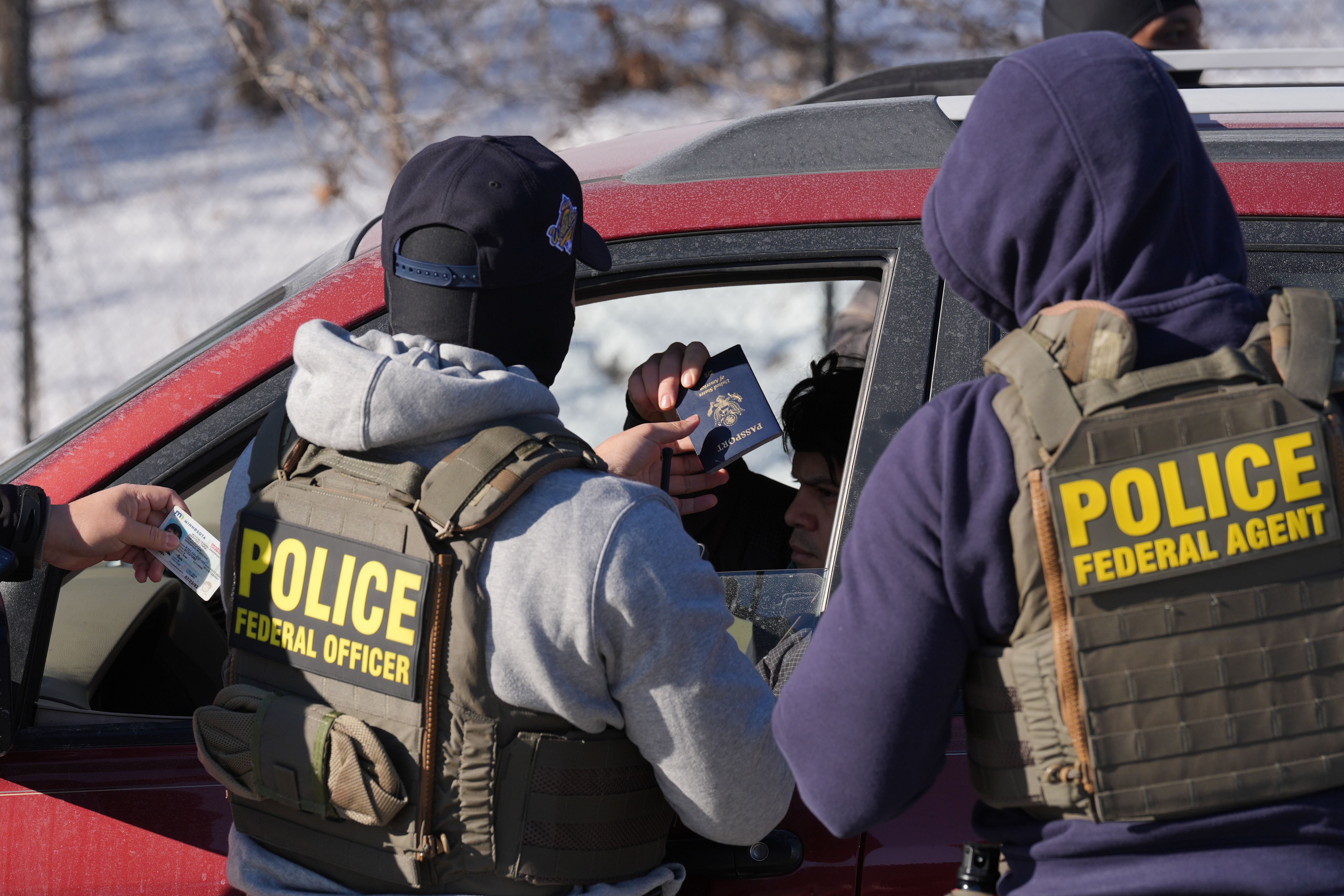
    Federal agents make a traffic stop on a U.S. citizen in Minneapolis in January.Adam Gray

    Changing tactics

    I put the question of ICE’s future and how its agents are regarded to Jason Houser, who spent his government career at the U.S. Department of Homeland Security and is a former ICE chief of staff. The Afghanistan combat veteran told me it starts and ends with leadership.

    “The tactical and operational guidance and directives from the administration are putting ICE officers in a place to be demonized,” he said. “There’s a lot of authority and power in law enforcement, and the way that power is being used by this administration for the first 18 months has been disjointed, punitive, shortsighted, and targeted at the most vulnerable communities.”

    While the behavior of some agents is inexcusable, and they should be held accountable, the agency is ultimately an instrument wielded by those in power.

    For example, some of the same agents who are being maligned today were redeployed to Del Rio, Texas, in 2021 to help humanely and safely process almost 16,000 mostly Haitian immigrants who were living in substandard conditions in a makeshift border camp, Houser noted.

    How ICE is operating today cannot be separated from the administration’s demands.

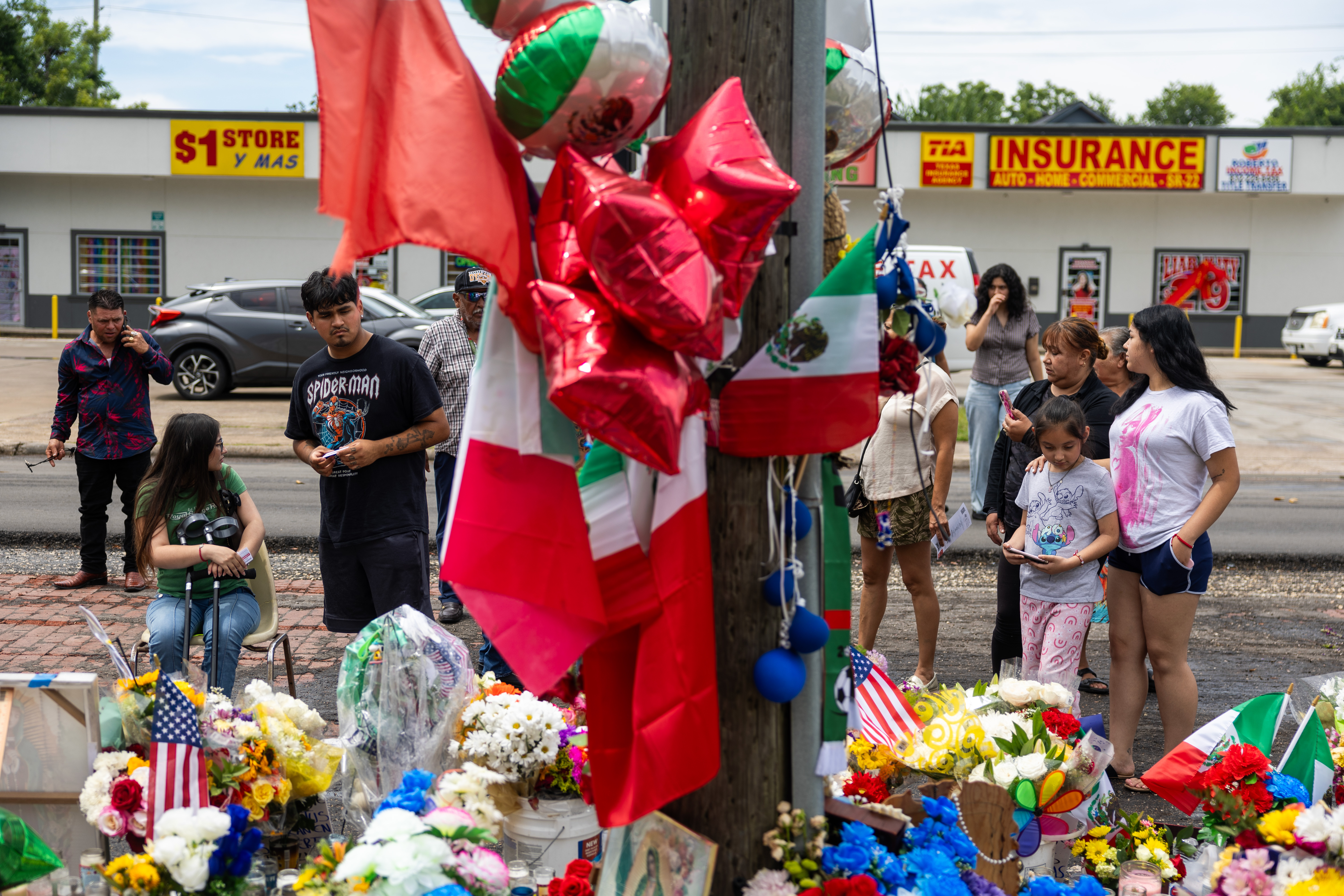
    Some of the worst examples of abuse by ICE agents have come during vehicle stops, including the July killing of Lorenzo Salgado Araujo in Houston. Agents have been captured on video in high-speed pursuits, cutting off cars, and smashing windows.

    Before Trump returned to office, the agency rarely engaged in these kinds of tactics, let alone used them to target noncriminal immigrants, said Joe Sifuentez, who worked for ICE until he retired in 2020.

    “If it’s a bad guy in that vehicle, we have a judicial warrant, we stop them. Then we can break that window and drag that person out of the vehicle,” he said. “But that’s not what’s happening now.”

    While the president campaigned on mass deportations, many voters believed the government would focus on immigrants with serious criminal records. Increasingly, that is not the case, with most people being detained only charged with violating civil immigration laws.

    And in trying to fill a reported White House quota of 2,000 arrests a day, federal agents are engaged in random sweeps and racial profiling that put people at risk.

    “I’m concerned that one of my loved ones could get pulled over tomorrow,” Sifuentez said. “God only knows what can happen.”

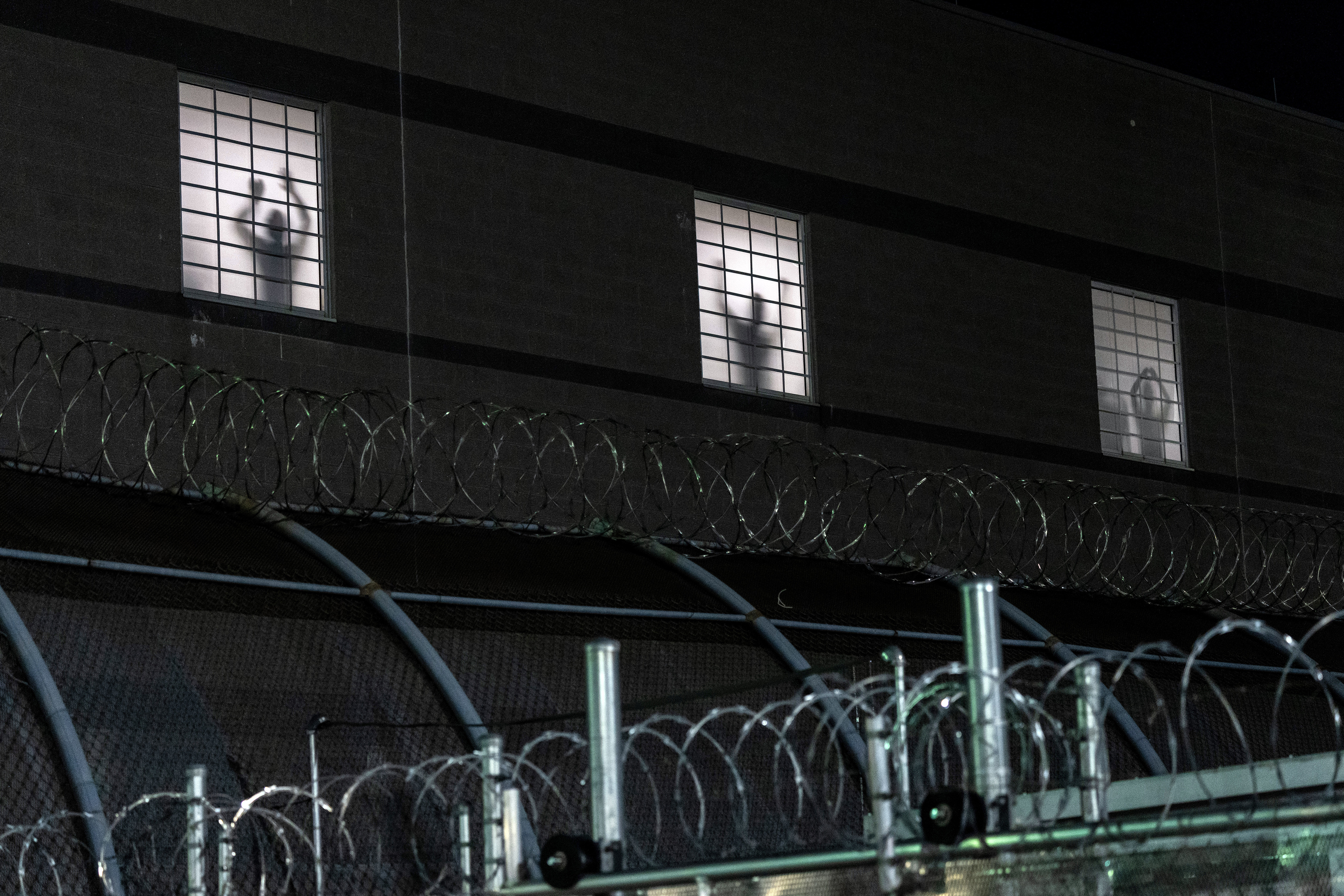
    Detainees stand at windows at the Delaney Hall immigration detention center in Newark, N.J., in May, as demonstrators gather outside.TODD HEISLER

    Bad math

    The Republican-controlled Congress has given the administration more than $150 billion for immigration enforcement. The question is what taxpayers are getting in return. It isn’t increasing public safety, the former officials I spoke with said.

    Houser pointed to a recent report by the DHS Office of Inspector General that found that as ICE shifted priorities toward immigration enforcement, its efforts to combat fentanyl trafficking declined. From fiscal years 2024 to 2025, the report said, fentanyl investigations decreased by 24%, investigative hours spent countering fentanyl decreased by approximately 30%, and fentanyl seizures decreased by almost 40%.

    It’s not just drug trafficking investigations that are falling by the wayside over Trump’s misplaced priorities. ICE agents descending on a Home Depot or a Walmart to fulfill their arrest quotas fail to target the kinds of criminals the agency should be focused on.

    “Real sex predators, convicted rapists, murderers, aren’t just hanging out at a Starbucks on a Tuesday, right? They’re not at the corner, walking their kids to school,” Houser said.

    Mass arrests also put people in detention who do not have a final order of removal. These are immigrants who are going through the system and would generally be allowed to walk free until they had exhausted their legal options. Instead, the administration is deciding to hold them without bond for what can be an indeterminate amount of time.

    Sifuentez, who oversaw ICE’s national fugitive operations program and detention facilities, told me that even under regular circumstances, detention is extremely challenging. As the government works to not only increase the number of such facilities in the country, but also how many people these places hold, the situation is bound to get worse.

    “When I was in Atlanta, I oversaw a facility with 2,000 detainees. That in itself was very difficult to oversee and keep your staffing levels intact,” he said. “What do you think it’s going to be like when you ramp it up to 10,000?”

    Already, there have been more than 50 deaths in detention since the start of Trump’s second term, with the detention fatality rate hitting a two-decade high.

    “You’re going to see more suicides. You’re going to see more people die of health conditions. You’re going to see more both mental and physical stress that leads to horrific outcomes,” Houser added. “It’s just math.”

    Lorenzo Salgado Araujo, a 52-year-old Mexican immigrant, was fatally shot by ICE agents in Houston in July. A makeshift memorial took shape at the site where he was killed.ANTRANIK TAVITIAN

    Abolish ICE

    If ICE is being used to indiscriminately terrorize communities, and ignore constitutional protections while disregarding its public safety charge, what is the point of its continued existence? Even if you see it as a tool, if it can be abused so readily and so thoroughly by an out-of-control executive, wouldn’t the cause of sensible and coherent immigration policy be better served by replacing it?

    Neither of the former officials I spoke with would endorse the call to abolish ICE, and perhaps their experiential knowledge of the agency’s complexity would keep them from ever embracing what can feel more like a facile bit of political sloganeering than anything else. After all, activists have long called to eliminate the agency, rightly underscoring the need for accountability over the lives that have been destroyed by detention and deportation — but they hardly ever offer realistic or politically viable alternatives.

    Indeed, as long as we are a nation of laws, there will be the need for enforcement. In humanitarian terms, whatever agency takes ICE’s place will be judged harshly under those same standards, but exist it must.

    Still, Sifuentez, until recently a lifelong registered Republican, said that at the very least ICE should be renamed and its functions divided among other agencies.

    “Everybody in America should be very concerned about what’s going on,” he said. “This isn’t about politics. This is about what’s right and what’s wrong, and what’s going on is wrong.”

    For his part, Houser stressed that we need migrants in this country, and we need public safety. Immigration enforcement is difficult, nuanced work and should be entrusted to those who have the highest level of training and expertise.

    “No matter what the structure and organization of the bureaucracy is, there’s going to be immigration enforcement, and it needs to be handled with professionalism,” he said. “Remembering that 95% of individuals who are coming to this country want the American way of life, and that’s something to be embraced.”