Category: Opinion

  • Letters to the Editor | Sept. 7, 2026

    War on voting

    The Inquirer’s Aug. 30 editorial and column by Solomon Jones do an excellent job of detailing the ways the U.S. Supreme Court is attempting to undermine our elections. The conservative justices have already gutted the Voting Rights Act, so it should be evident at this point that they know exactly what they are doing and whom they are trying to aid. The Constitution clearly gives control over elections to the states and to Congress, not to the president and the U.S. Postal Service. Yet, instead of definitively striking down as unconstitutional Donald Trump’s executive order that would prevent voters from receiving their mail ballots, the Supreme Court lifted a stay put in place by a lower court.

    If the president can unilaterally change how we vote within months of an election, then our right to vote is not secure. Without that right, those in power have no reason to listen to the people — placing their other rights, their assets, and ultimately their freedom at risk. In the Jim Crow South, African Americans were deprived of their right to vote and thus could be persecuted. Now, this mentality is being extended to the entire country and to everyone who is not on board with the Republican agenda.

    As someone who hasn’t missed an election in 38 years, I encourage everybody to do whatever is necessary to vote, as there are powers working feverishly to take that vote away.

    Bill Fanshel, Bryn Mawr

    . . .

    The far-right president of the United States is actively interfering with our nation’s electoral process. He is illegally demanding that all states send him their voter rolls, lists containing personal sensitive data, so he can compile a list of “eligible” voters. And he instructs the U.S. Postal Service not to deliver mail ballots to voters living in states (run by Democrats) refusing to turn over voter rolls. Our Constitution specifically grants control of elections to the states, with congressional oversight. It does not grant such power to the president.

    The U.S. Supreme Court did not rule on the constitutionality of Donald Trump’s executive order, but in essence said the plan can go forward while the court thinks about it. Meanwhile, in 10 weeks, we will have perhaps the most important election in our lives, with mail ballots being sent out soon. The aim of Trump and his party is to suppress as many Democratic-leaning voters as possible, and to cause massive confusion and chaos. The fight is not over, as voting rights lawyers will be in court doing everything possible to allow every eligible voter to cast their ballot.

    Dave Posmontier, Elkins Park

    . . .

    None of my professional accomplishments prior to retiring can compare to how personally rewarding I find supporting free and fair elections. My experience includes processing mail ballot applications, helping with the verification of voting equipment and software, confirming returned ballots against state and department mailing records, and opening and counting mail ballots on Election Day. I passionately believe that the falsehoods and misinformation about fraud and noncitizens voting propagated by the president and other individuals are inherently false. I am proud to support my county’s elections staff, whom I’ve seen to be dedicated to their responsibility to support representative democracy, although they are often underappreciated by the voters they serve.

    On July 16, the president and the U.S. Department of Homeland Security claimed there were nearly 16,000 noncitizens on the Nevada voting rolls. When DHS was pressed on this number by state officials, it could only find 185. Similarly, Pennsylvania was reported to have more than 14,000 noncitizens on the rolls. Why should we believe the narrative this administration puts forth? The U.S. Supreme Court recently had an opportunity to prevent an executive order from being implemented that would make mail voting cumbersome. Instead of addressing this issue in advance (as multiple lower courts had), the conservative majority decided their best course of action was to wait until after a disaster had occurred, reasoning that no state had been harmed yet by the order. Using this logic, I suppose the most proper course of action I should take upon seeing a small, unsupervised child crossing a busy street would be to take no action until a vehicle strikes the child. The court missed an opportunity to defend democracy.

    William L. Hutt Jr., Brookhaven

    Broken system

    The overall need for mental health care has surged significantly post-pandemic, yet according to a 2024 survey, about 34% of psychologists and 45% of psychiatrists do not accept health insurance. For a private-pay psychiatrist, evaluations typically cost $300 to $500, and standard sessions range from $100 to $300. Enter Lindsay Clancy, a married mother of three and a former labor and delivery nurse. Described by her coworkers as compassionate, kind, and an advocate for her patients.

    Months following the birth of her third child, Clancy recognized a change in her mental health. She had the courage to share those terrifying thoughts with her husband and parents. She called a crisis hotline, went to an emergency room, voluntarily checked herself into a psychiatric hospital, and took the medications prescribed. Clancy, advocating for herself, did all of this because she did not want to harm herself or her children. She desperately wanted to get well and was unknowingly caught in a mental health care system strained by provider shortages and understaffed clinics. Compassion for Lindsay, not conviction.

    Kathy Carroll, Wayne

    Job skills

    I just realized in trying to explain to someone why Donald Trump acts as though the laws and the Constitution don’t apply to him. He thinks he was elected to be owner of USA Inc., instead of president of the United States. As an owner, his goals are to make as much money as he can for himself and his family. Making deals with heads of state that allow him to build hotels, resorts, golf courses, and other ventures to enrich himself is the goal. Preserving peace through alliances, developing fair trade, protecting our citizens’ welfare, following international laws and treaties, and upholding the Constitution is the job of the president. Will someone please read Trump his job description?

    Susan R. MacBride, Philadelphia

    Ride on

    On behalf of Virginia’s Blue Ridge TWENTY28, I would like to extend our sincere thanks to Philadelphia for an extraordinary weekend of professional cycling. As a team director — and someone fortunate enough to have experienced this iconic race in years past — it was incredibly meaningful to return and see world-class women’s racing back on these historic roads. The caliber of competition, the challenging course, and the history behind this event make a Philly result something every rider is proud to put on her résumé.

    An event of this magnitude does not happen without tremendous community support. We are grateful to the city’s law enforcement and public safety personnel for keeping the course and athletes safe, and to the organizers, staff, and volunteers whose countless hours produced such an exceptional event. We would also like to extend our sincere appreciation to AmeriGas for its support in making the return of this iconic race possible.

    Most importantly, thank you to the people of Philadelphia. We recognize the inconvenience that comes with closed streets and greatly appreciate your patience — but even more, we thank you for coming out in droves to cheer. Philadelphia has always held a special place in American cycling. We were honored to be part of its history, thrilled to be part of its future, and we cannot wait to return in 2027.

    Giana Chilcott, director, Virginia’s Blue Ridge TWENTY28

    Join the conversation: Send letters to letters@inquirer.com. Limit length to 150 words and include home address and day and evening phone number. Letters run in The Inquirer six days a week on the editorial pages and online.
  • In a deeply divided nation, remembering a time of unity | Editorial

    In a deeply divided nation, remembering a time of unity | Editorial

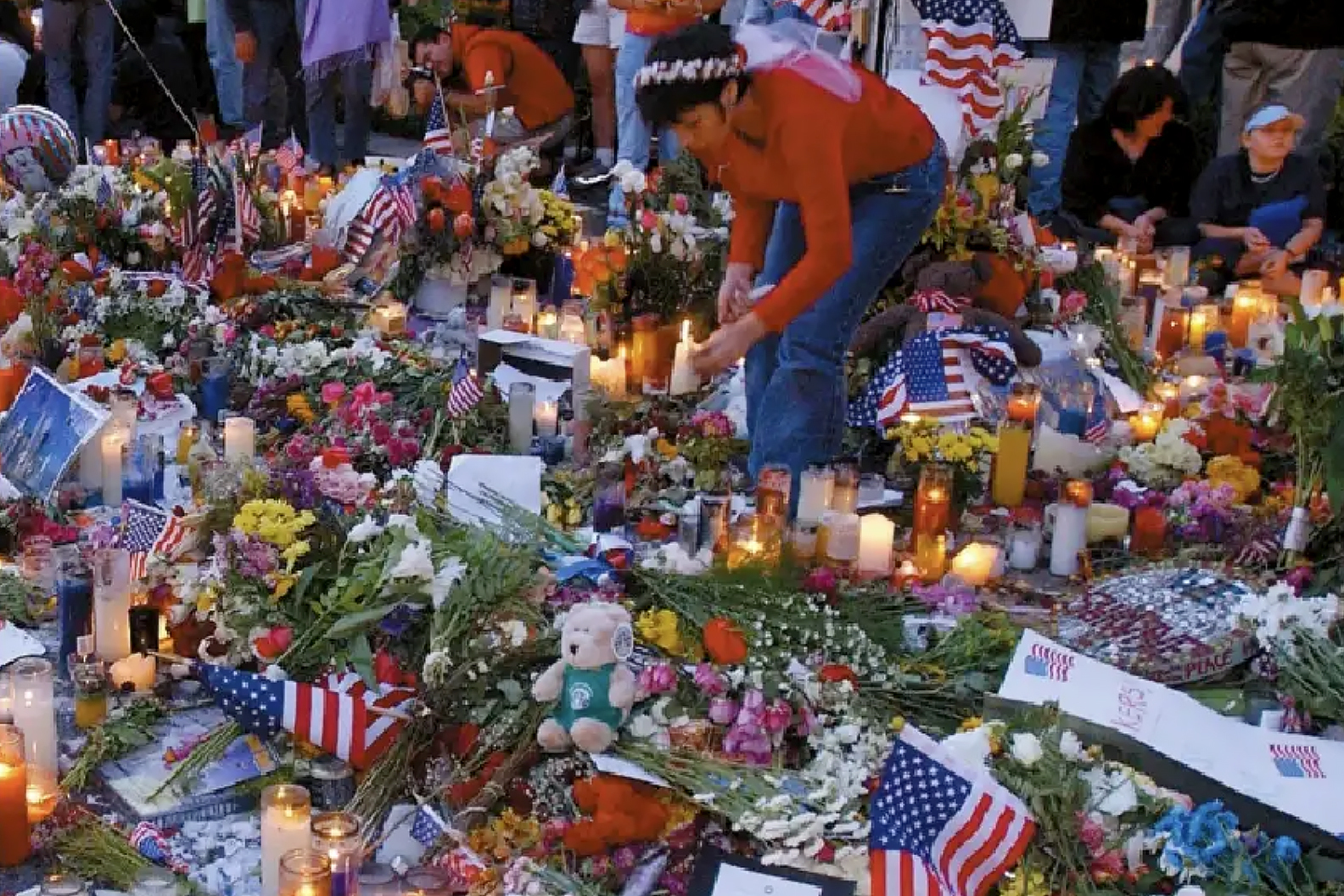
    It is as important to remember what happened after the Sept. 11, 2001, terrorist attacks as it is to recall the nearly 3,000 lives lost, dozens of buildings mangled or destroyed, and the millions of prayers said in response to what many believed could never happen to the most powerful nation in the world.

    In the immediate aftermath 25 years ago, this country became unified across income, religious, and racial lines in a manner it had not shown since imperial Japan’s despicable aerial attack on Pearl Harbor in 1941. But in both instances, there was shameful xenophobic backlash. The Japanese suffered internment. The anti-Muslim rhetoric and actions continue to this day.

    Just as undeniable was that unity after the attacks — including President George W. Bush’s words that “Islam is peace” — helped blunt prejudice.

    Black people, white people, Christians, Jews, Muslims, Republicans, Democrats, the rich, the poor, citizens and new arrivals — they all saw themselves as Americans on 9/11. We found common ground in using the nightmare that had just occurred as the impetus toward a greater sense of community.

    That spirit of togetherness was a reminder of just how important the word united is in calling our country the United States of America. The 9/11 attacks made it easier to see why we as a nation must not let our differences be exploited by calculating entities looking for ways to weaken our resolve.

    A quarter century later, the U.S. is much different in that respect.

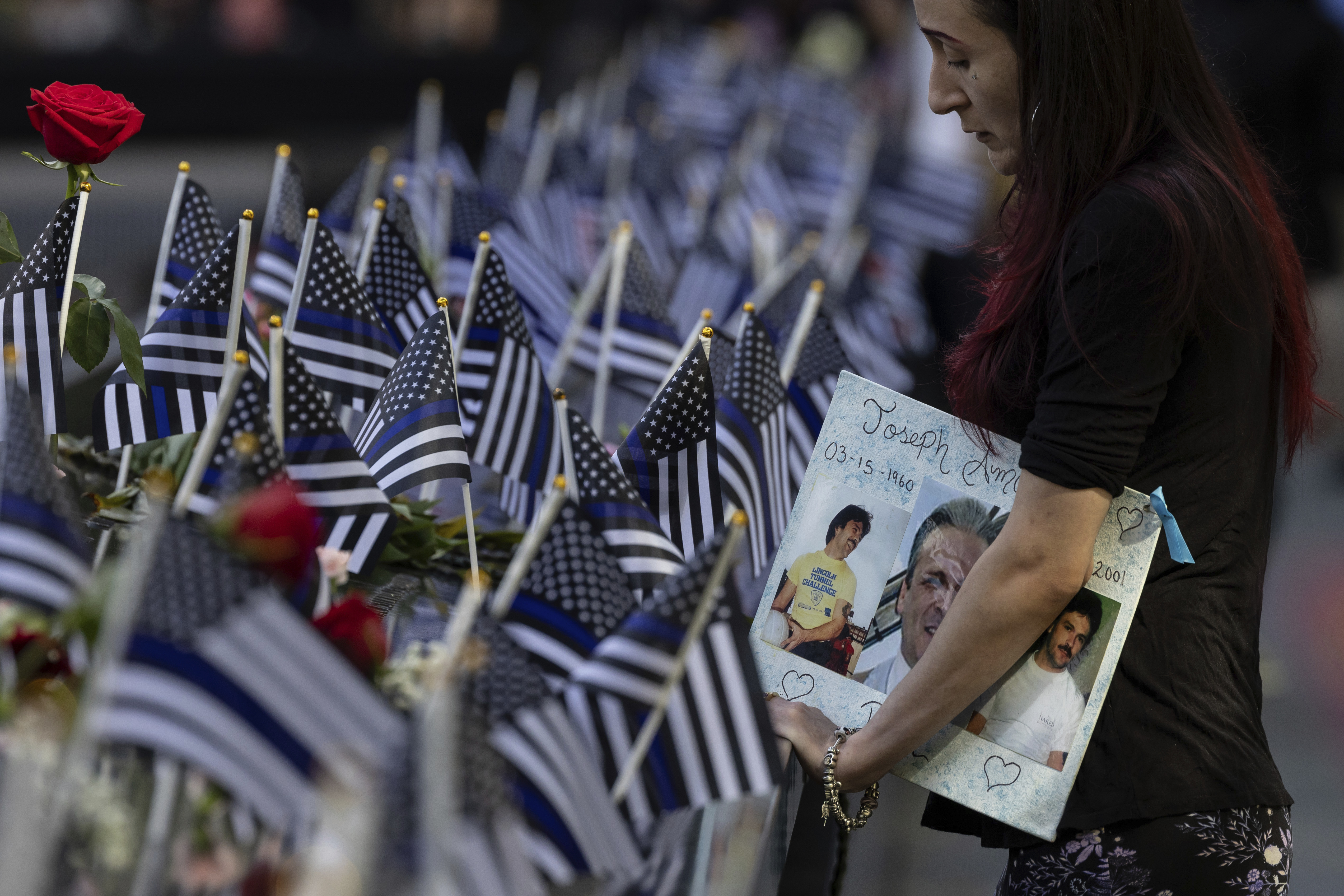
    Mercedes Arias stands by the name of her father, Joseph Amatuccio, on the south pool during the 9/11 memorial ceremony on Sept. 11, 2024.Yuki Iwamura

    Our current leadership prefers sowing seeds of division instead of reaching past political, economic, religious, social, and ethnic distinctions to help Americans of every station and persuasion work together for our common good.

    Instead of trying to unify, this nation’s current leaders decided it was more important to wage war with Iran and argue with our allies. Iran may one day develop a nuclear weapon, they said. Dismissing that Russia and China already have that capability and, unlike militarily feeble Iran, have delivery systems to reach our shores.

    Washington also decided to overthrow Venezuela’s despotic president to seemingly gain control of its oil reserves, and has made threats against Cuba and Greenland. It’s hard to believe the same Donald Trump who is now so eager to use military force once promised that if reelected, “we will have no more wars, no more disruptions, and we will have prosperity and peace for all.”

    Are we supposed to forget the president said that? Is he playing games with the American public? Is he distracting our attention by waging wars that lack clear goals, abruptly destroying historic settings like the White House Rose Garden, and putting unqualified people in charge of public health, public safety, and national security?

    So much is going on that too little attention has been paid to all the money changing hands amid the clamor.

    President Donald Trump attends a cabinet meeting at the White House in May.Jacquelyn Martin

    Trump’s personal wealth has increased by a staggering $2 billion since he took office, much of it in cryptocurrency holdings. Investors in these schemes have lost about $3 billion as the currencies’ value continues to decrease, but many see their losses as the price to get the president’s ear.

    As Trump continues to be Trump — more engaged with building monuments to himself and posting aggrandizing AI slop on social media — everyday Americans struggle to make ends meet because of his policies. Although the cost of his mindless tariffs and needless war goes beyond the high prices people are paying at the pump and the checkout line, it is emblematic of the president’s complete abandonment of the American people.

    While Trump counts bitcoins, our healthcare system continues to undergo dramatic changes that have allowed insurance companies to acquire hospitals, doctors’ offices, pharmacies, and otherwise take control of this nation’s medical institutions.

    The president’s draconian immigration policies haven’t really solved the problem. There will always be people seeking a better life who will do anything, legal or illegal, to cross the border or stay past their visas’ expiration. That’s because despite its faults — and Trump’s best efforts — the United States remains the land of opportunity, even if dwindling.

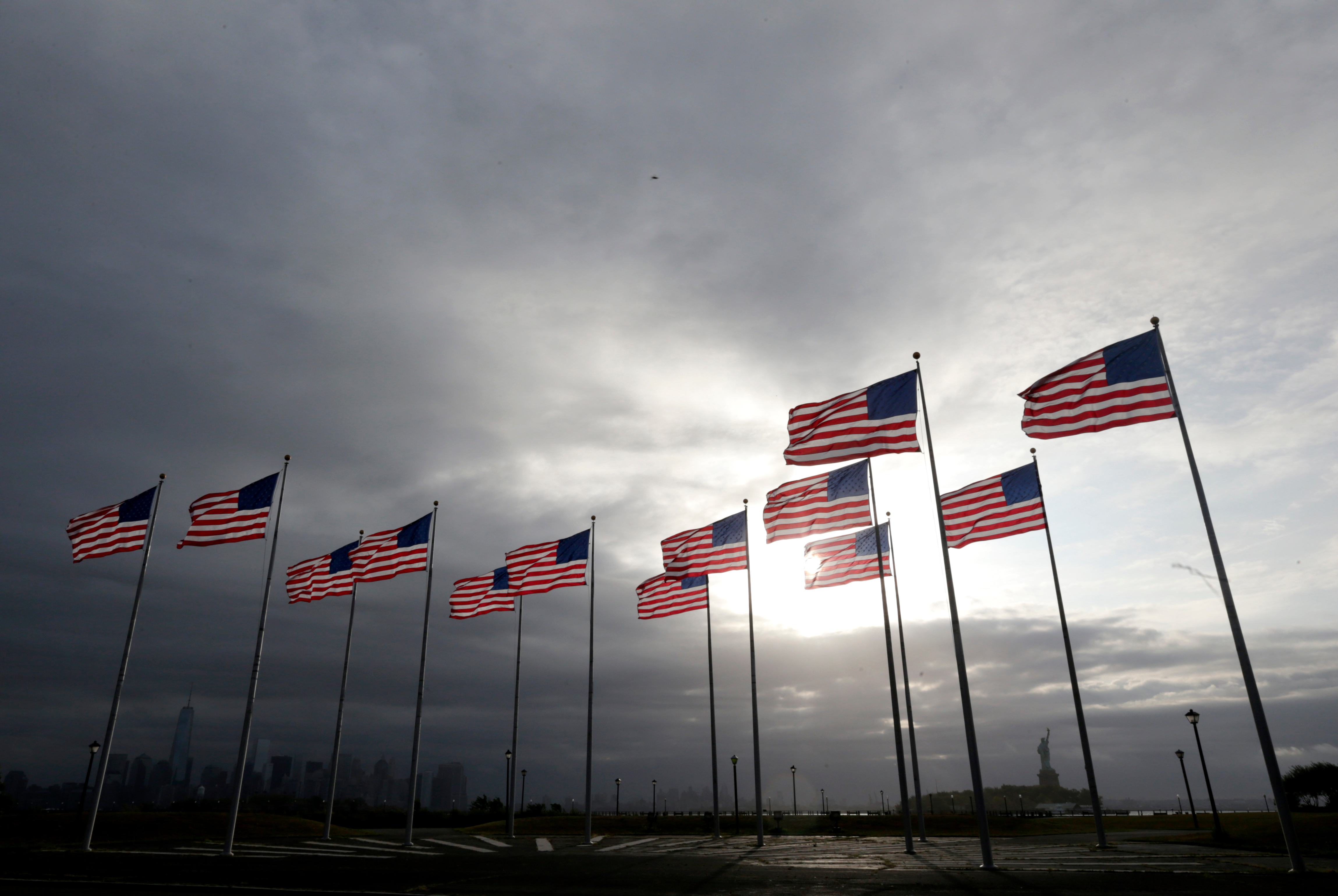
    Thirteen United States flags representing the 13 original colonies are seen at Liberty State Park with 1 World Trade Center (bottom left) and the Statue of Liberty (bottom right) in the background, in Jersey City, N.J.Julio Cortez

    America’s problem isn’t immigrants, most of whom have no criminal intent; it’s the lack of an effective system to better manage border crossings and adjudicate the cases of people who may have lived here illegally for years but otherwise committed no crimes.

    Effective immigration reform almost occurred 20 years ago, when the so-called Gang of Eight senators, including now-Secretary of State Marco Rubio, supported a bipartisan bill written primarily by Republican John McCain and Democrat Edward Kennedy that would create a 10-year registered provisional immigrant status for eligible illegal residents who paid fines and back taxes to eventually obtain permanent legal residency.

    This country also needs innovative equal opportunity ideas to replace the diversity, equity, and inclusion programs now considered reverse discrimination by federal judges. But instead of addressing that issue, the president and his enablers choose to demonize trans people, crack down on speech they disagree with, and abandon civil rights enforcement — all while embracing economic and tax policies that favor the rich.

    None of these issues will be resolved with leaders who seem to thrive with our nation as divided as it is now.

    It shouldn’t take another 9/11 to bring us closer as Americans. But as we seek a greater sense of community, let’s remember that day and what Todd Beamer was heard saying after he and fellow passengers aboard the hijacked United Airlines Flight 93 realized they had no alternative but to forget their differences and act: “Are you ready? OK, let’s roll.”

    It’s time for us to fight together for each other, too.

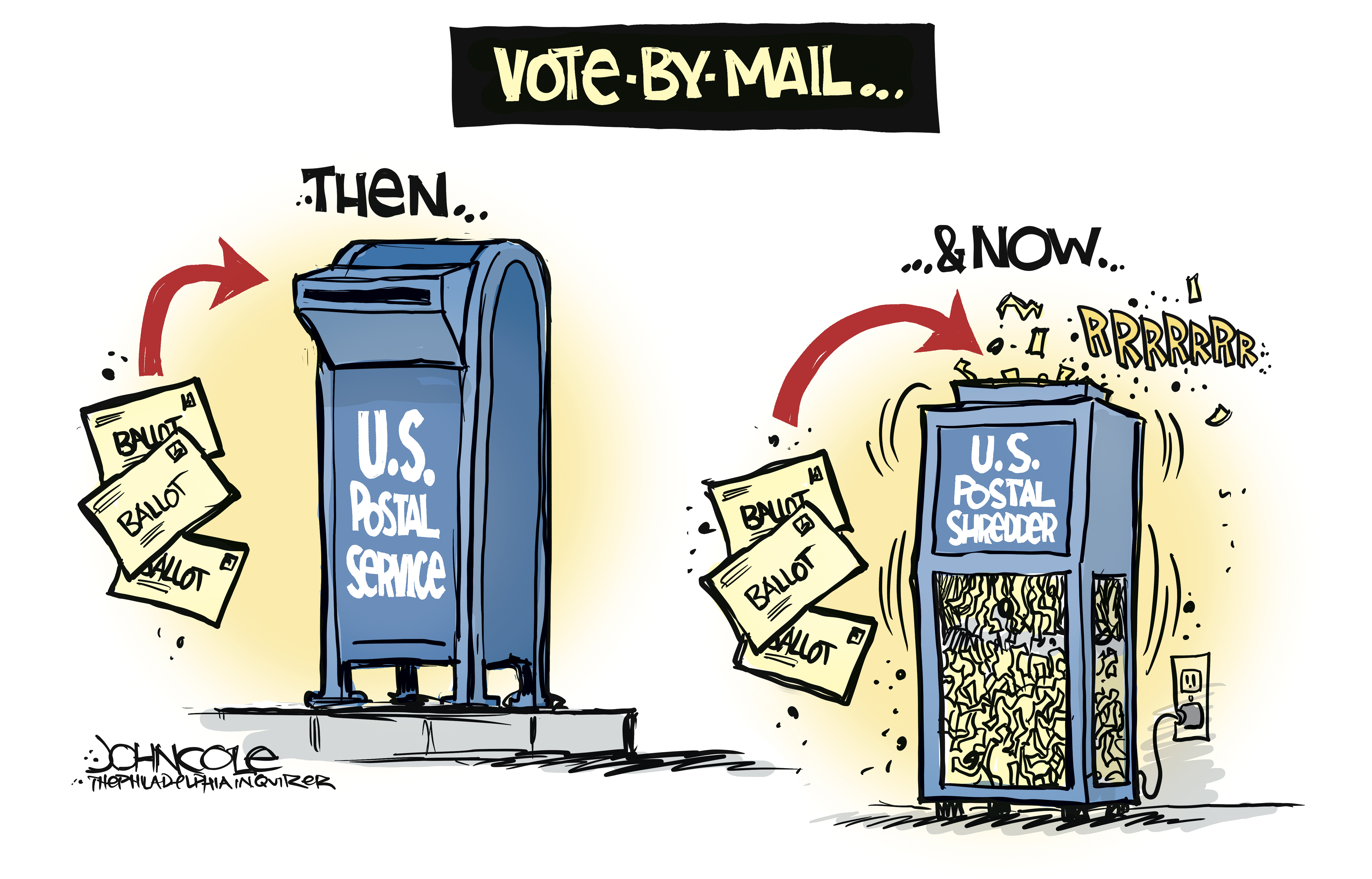
  • P.S. You’re disenfranchised | Editorial Cartoon

    P.S. You’re disenfranchised | Editorial Cartoon

    John Cole spent 18 years as editorial cartoonist for The (Scranton) Times-Tribune, and now draws for various statesnewsroom.com sites.

  • Crestmont is the product of American racism and Black survival

    Crestmont is the product of American racism and Black survival

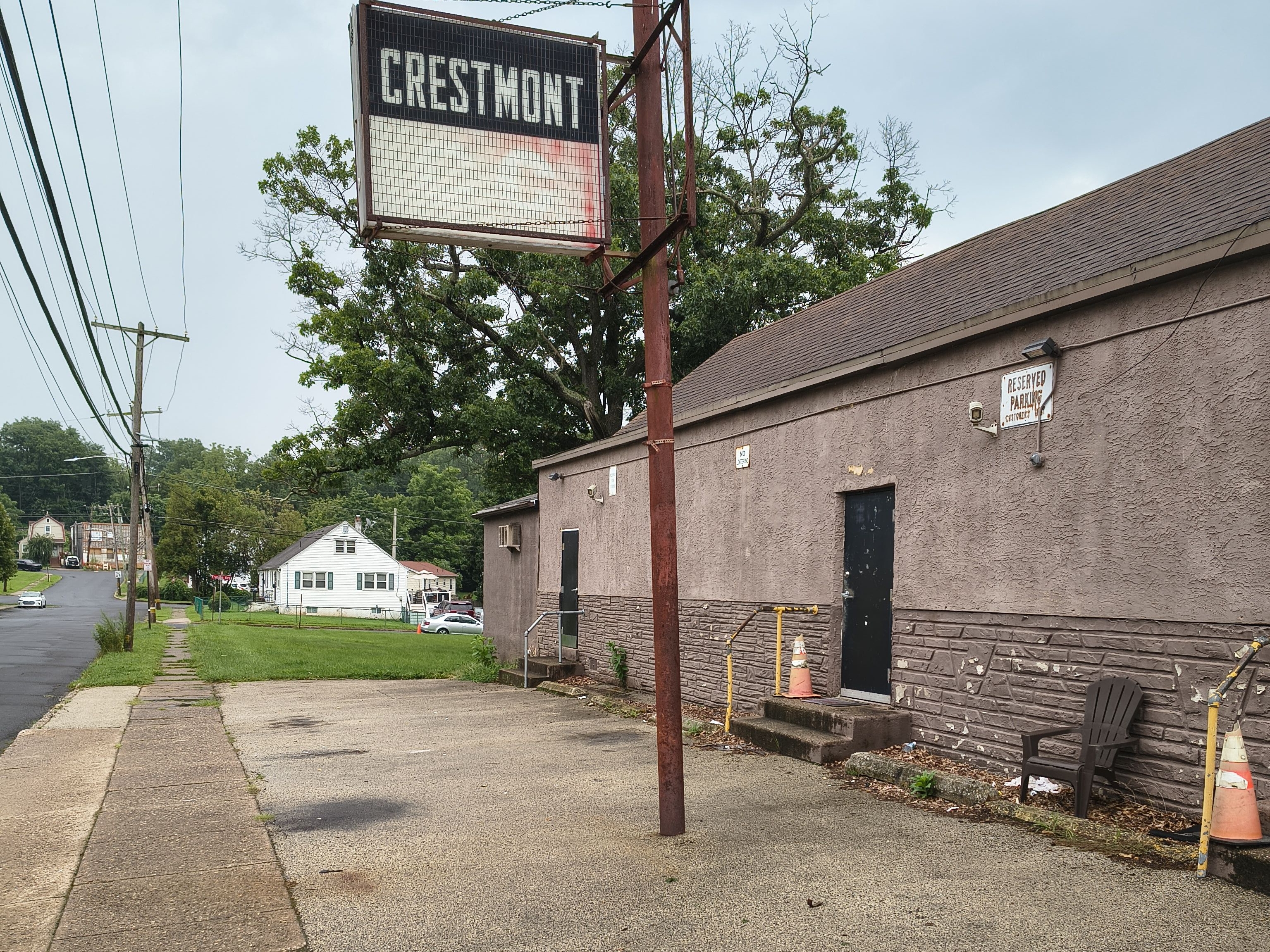
    Before you can understand Abington Township’s historically African American unincorporated community of Crestmont, you have to understand Willow Grove Park.

    Not the mall with that name, but the Willow Grove Park that predates it: One of the largest and most famous amusement parks on the East Coast.

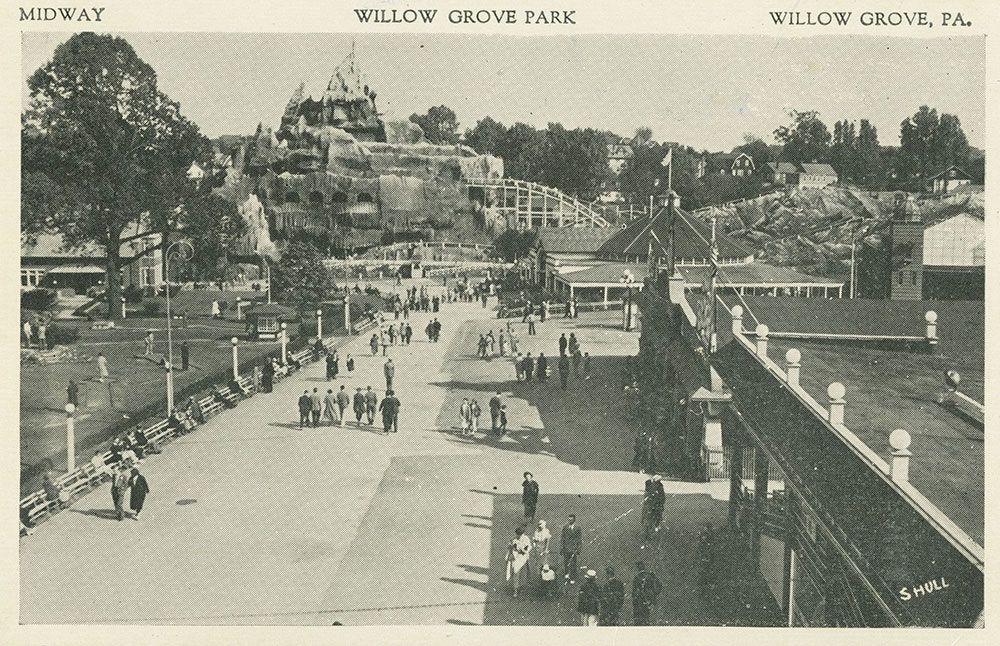
    It opened in 1896, built by the Philadelphia Rapid Transit Co. It had roller coasters, a lake, restaurants, concerts, a massive music pavilion, and crowds pouring in.

    It shaped the entire local economy and brought thousands of people out to the suburbs every week. A place like that needed labor. Real labor. Constant labor. And that’s where Crestmont’s story begins.

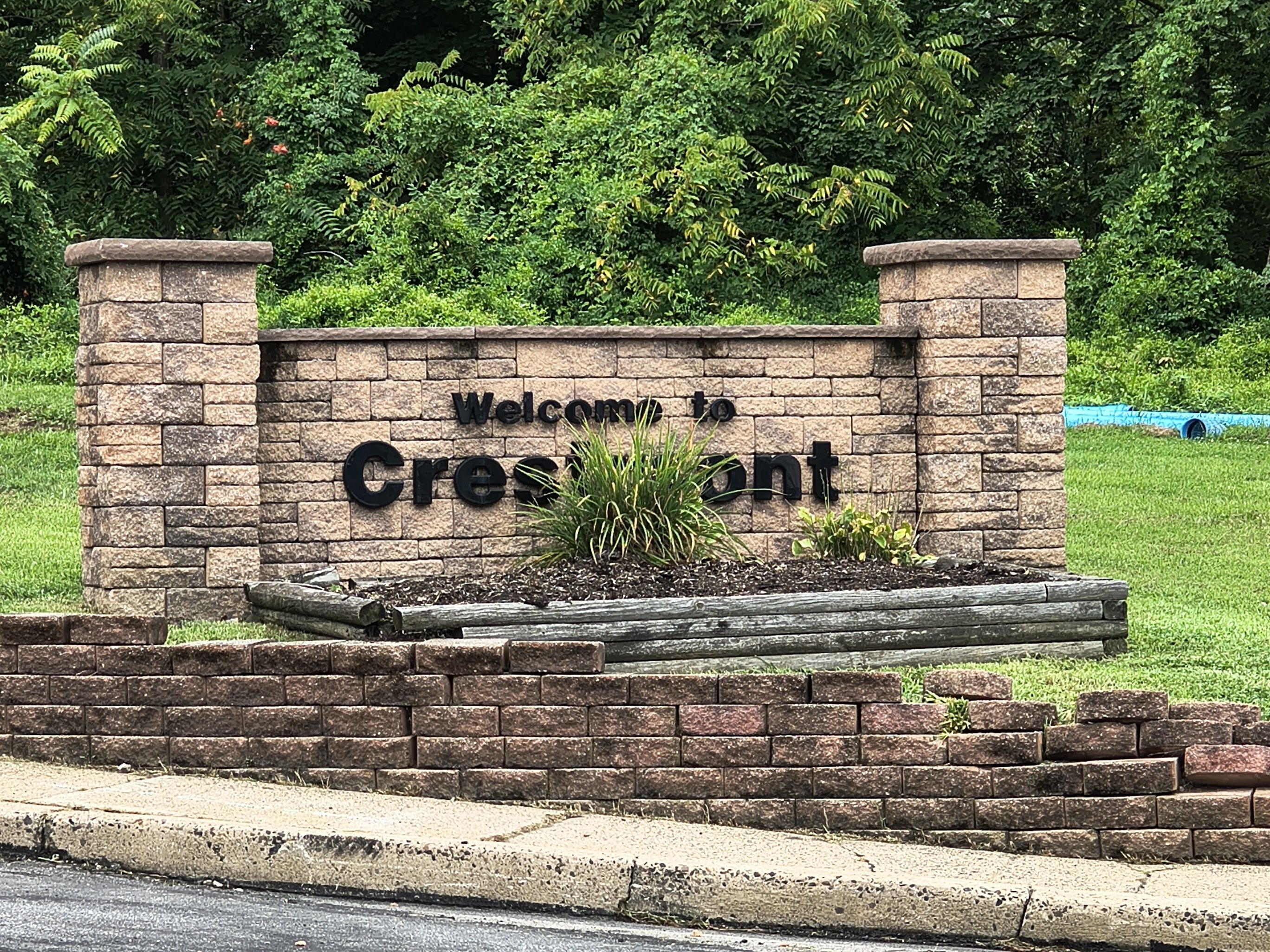
    The “Welcome to Crestmont” sign sits directly across from the Willow Grove Mall.DJ Atkins

    I didn’t grow up in Glenside or Willow Grove. I came out here for work, almost 15 years ago, and eventually I moved here. Eight years living in these suburbs gives you time to notice things, to ask questions, to wonder about the layout of the place. And one question kept coming back to me: Why is Crestmont, a mostly Black community, sitting right in the middle of overwhelmingly white suburbs?

    If you know the area, you know exactly what I mean. Roslyn, Glenside, Willow Grove, Abington … they’re all majority white, and have been that way for generations.

    Then suddenly, right next to the Willow Grove Mall parking lot, there’s Crestmont.

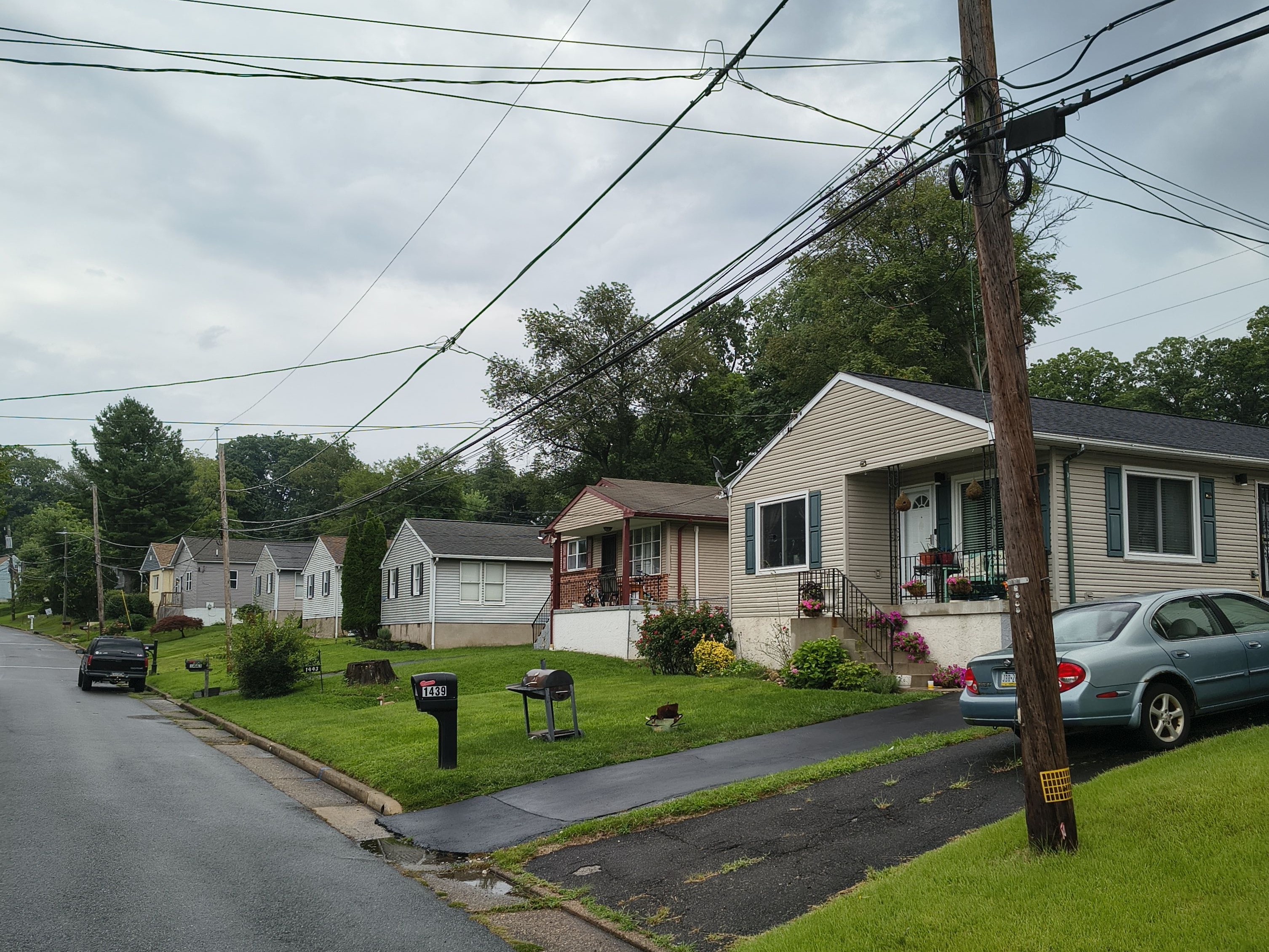
    Houses closer together. A different feel. A different history. A different story.

    Crestmont’s density, the layout, the architecture, the vibe, the community identity — all of it comes from early working‑class development, limited access to loans, limited access to improvements, township decisions, generational continuity, racial boundaries, economic exclusion, and the strength of the people who lived there, writes DJ Atkins.DJ Atkins

    I started talking about Crestmont to people who grew up here. I started learning about Willow Grove Park, looking at the geography, thinking about the era, and the truth became impossible to ignore.

    It’s a truth all of us need to hear, because it shows exactly how racism shapes the places we live.

    Willow Grove Park opened only 31 years after slavery ended. That was the same year Plessy v. Ferguson legalized segregation. Old newspaper coverage, township references, and public history written about the park all describe a large-scale operation with ties to the trolley company, township officials, police, contractors, and local business owners.

    A machine like that needed workers who could show up every day, early, late, and in all seasons. Black workers came to fill Willow Grove Park jobs and stayed because the work kept coming. In line with what the public record shows, people with long family histories in Crestmont talked to me about how common it was for their relatives and neighbors to all work at the park.

    A vintage postcard showing the Willow Grove Park midway. Willow Grove Park opened in 1896; it was closed in 1975 and demolished a year later.Courtesy of D.J. Atkins

    But many of those workers didn’t have cars, and walking through certain neighborhoods wasn’t safe. Black people weren’t welcome. Renting was restricted, and loans for home purchases were denied. Still, the workers needed to live close. Close to the park, close to the trolley line, close to the commercial strip that fed the park.

    Exactly where Crestmont is.

    Once a few Black families moved in, the neighborhood took shape. Word spread. More families followed. White buyers stayed away. Black buyers were directed toward the same area. The lots stayed small. The houses stayed close. The community grew through necessity, connection, and resilience.

    People who grew up here remember the tensions between high schoolers. They remember buying packaged goods in Crestmont because they couldn’t get them elsewhere. They remember the social boundaries. They remember how Crestmont stood out from the surrounding suburbs. None of that is random. It’s the long-term result of how the neighborhood began.

    Crestmont exists because Willow Grove Park existed. Segregation created the boundary. The park created the need. Together, they created the neighborhood.

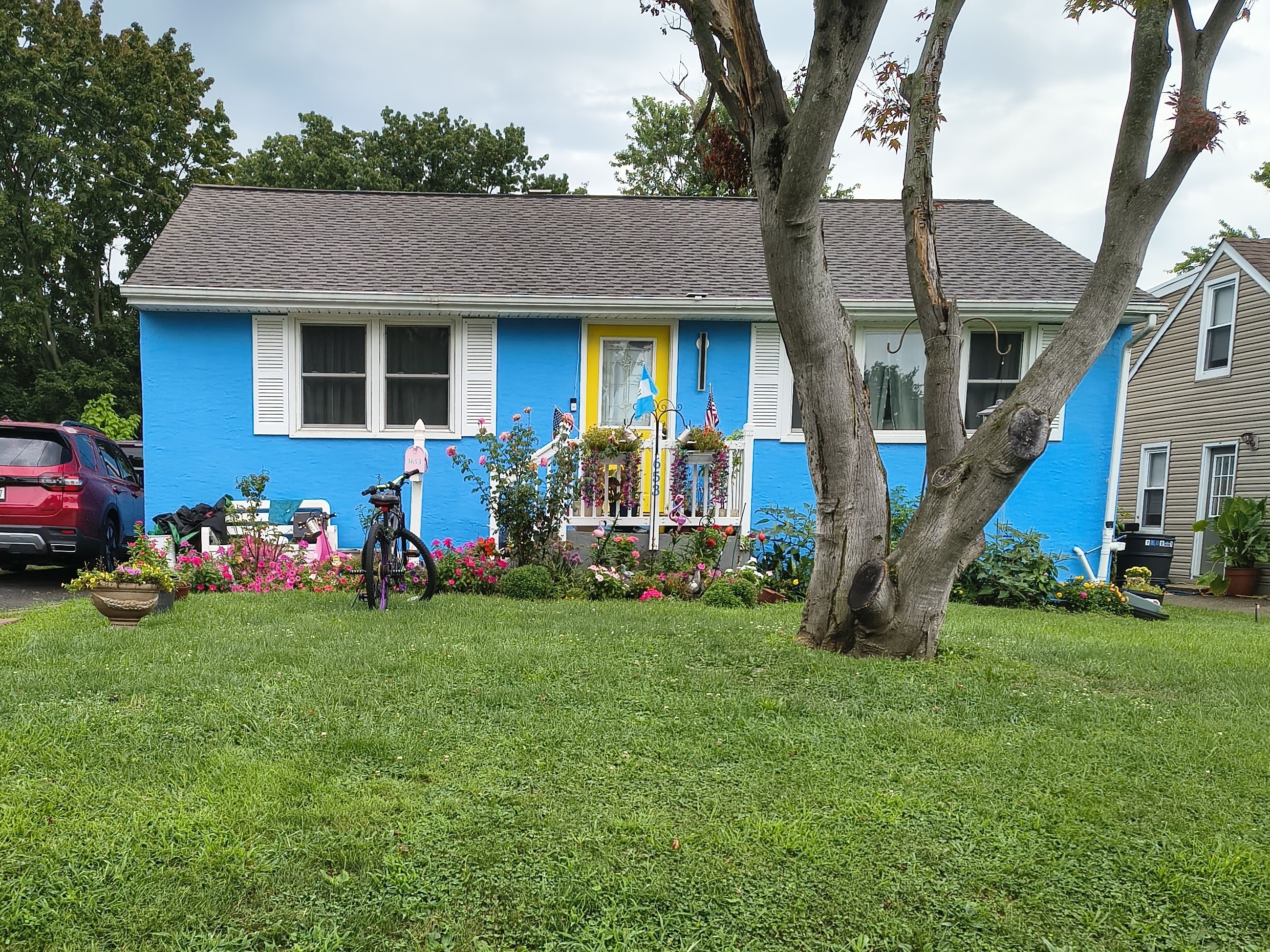
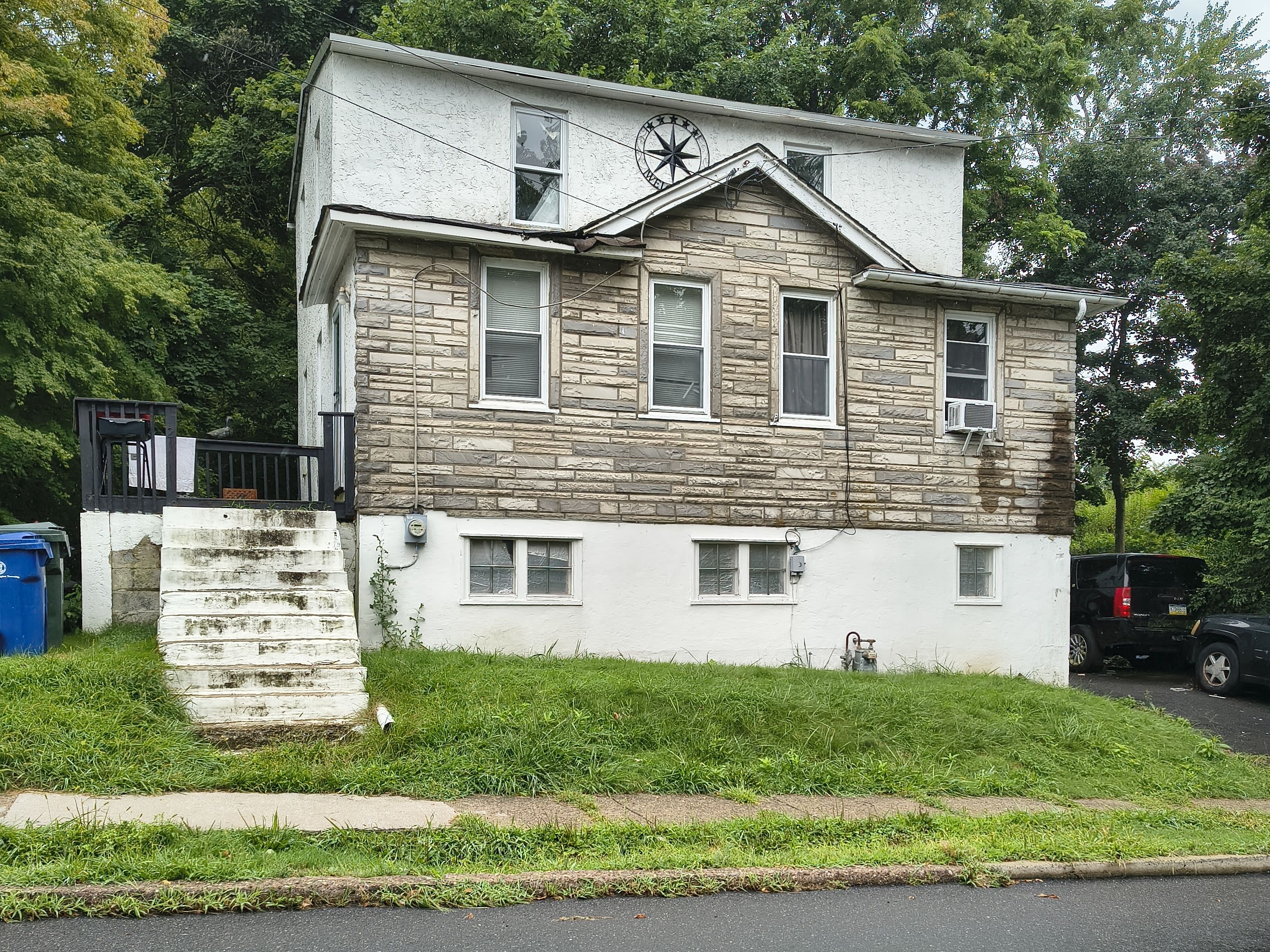
    One of the homes in Crestmont, photographed in 2026.DJ Atkins

    Crestmont isn’t unique.

    Across the country, Black neighborhoods formed near major employers because segregation blocked housing everywhere else.

    In Ardmore, Black families lived near the railroad and the estates they worked in. In Bryn Mawr, the Black neighborhood grew beside the service corridors of the Main Line mansions. In Atlantic City, Black workers lived near the Boardwalk hotels they kept running. In Pittsburgh’s Hill District, Black families settled near the steel mills and rail yards. In Baltimore, Black neighborhoods formed beside the shipyards and factories.

    Wherever a big employer needed labor, and wherever white neighborhoods refused to open their doors, a Black community formed in the one pocket where the pressure made it possible — and they look the way they do today because of their origins.

    One of the homes in Crestmont, an unincorporated community in Abington Township that owes its existence to Willow Grove Park and to housing segregation in the surrounding communities.DJ Atkins

    Crestmont’s density, the layout, the architecture, the vibe, the community identity — all of it comes from early working‑class development, limited access to loans, limited access to improvements, township decisions, generational continuity, racial boundaries, economic exclusion, and the strength of the people who lived there.

    It’s not a mystery. It’s not random. It’s not accidental. It’s a product of American racism and Black survival.

    People around here know Crestmont. But they don’t necessarily know its origin or see in it an example of how racism shapes geography and how Black communities build life anyway.

    Once you see that, you can’t unsee it.

    DJ Atkins is a Philly‑area DJ, radio host, and cultural writer. He also works in poetry, blending storytelling, music, and community history in his creative work.

  • Letters to the Editor | Sept. 4, 2026

    Letters to the Editor | Sept. 4, 2026

    Honest work

    Labor Day is often seen as the unofficial end of summer — a long weekend for barbecues and family gatherings. But before enjoying the day off, we should remember the people whose work makes our daily lives possible. As a mail carrier, I see this every day. Behind every functioning neighborhood are workers who quietly keep life moving, including teachers, nurses, first responders, sanitation crews, farmers, and caregivers. Many work early mornings, late nights, and holidays. We often notice their work only when something goes undone.

    As an Ahmadi Muslim, I was taught that serving others is an essential expression of faith. That value guides me on my route every day. Labor Day reminds us that our nation was not built by famous names alone, but by ordinary people willing to work, serve, and contribute — often without recognition. This Labor Day, let’s take a moment to thank those who keep our communities running. Every honest worker deserves our respect.

    Farid Ahmad, Easton

    Walk the walk

    Inga Saffron’s column about being car-free or car-light was interesting and positive. We moved here in 2021 to eventually be car-free as we aged and are car-light now. We have volunteered with Save Our Train to keep the Chestnut Hill West line running. We take all forms of SEPTA and appreciate very much what is available. But I have to wonder how much continual advocacy transit, in all forms, has with our City Council and with our state representatives. Do Council members and their staff take transit, bike, or walk to work frequently? If not, it should be a requirement. If they had, maybe the new work on Broad Street would have been more thoughtful for pedestrians and bicyclists. Same question for Mayor Cherelle L. Parker and her staff. Perhaps she could take a page from New York’s mayor. The same goes for our state representatives. Our elected officials need to make it possible for people of all ages to get out of cars. If they only know a car-centric life, how do they effectively advocate for transit?

    Liese Sadler, Philadelphia

    More like Daffy

    Recently leaked information from the Pentagon reveals that leaders of the U.S. European Command, the U.S. Pacific Command, and the U.S. Southern Command, along with the Navy’s top admiral, all formally disagreed with the administration’s Iran war conduct and planning. Troops and vessels are unevenly distributed, critical munitions are running out, and even homeland defense is weakened. This revealing show of no-confidence is a point when serious, competent civilian leadership should make a rational and considered about-face.

    At a time when the more than 1.3 million people in active-duty service look to their commander in chief for strong, coherent leadership, this will assuredly not be happening. Over the weekend, Donald Trump instead reposted on his Truth Social account a meme showing a troop of rifle-toting Trump-like geese guarding his newly named “Lake America” from the Canadians, titled “Protected by Donald Ducks.” It is beyond shocking that while in violent war, our president, so frustrated and infuriated by his own incompetence, will simply hide in this absurd renaming fantasy for amusement. This is who we have in the dangerous real world where the rest of us live.

    Joseph B. Baker, Honey Brook

    Join the conversation: Send letters to letters@inquirer.com. Limit length to 150 words and include home address and day and evening phone number. Letters run in The Inquirer six days a week on the editorial pages and online.
  • Neighbors struggle against a decade-plus of South Philly sinkholes | Shackamaxon

    Neighbors struggle against a decade-plus of South Philly sinkholes | Shackamaxon

    Welcome to Shackamaxon, a weekly politics column focused on what’s happening at City Hall and in Harrisburg. It is named for the place where the Lenape chiefs would meet to conduct the people’s business, which is now known as Penn Treaty Park.

    This week’s edition covers sinkholes, the embrace of “slopulism,” the ongoing struggle over the future of the Cecil B. Moore Library branch, and the loss of a venerable museum.

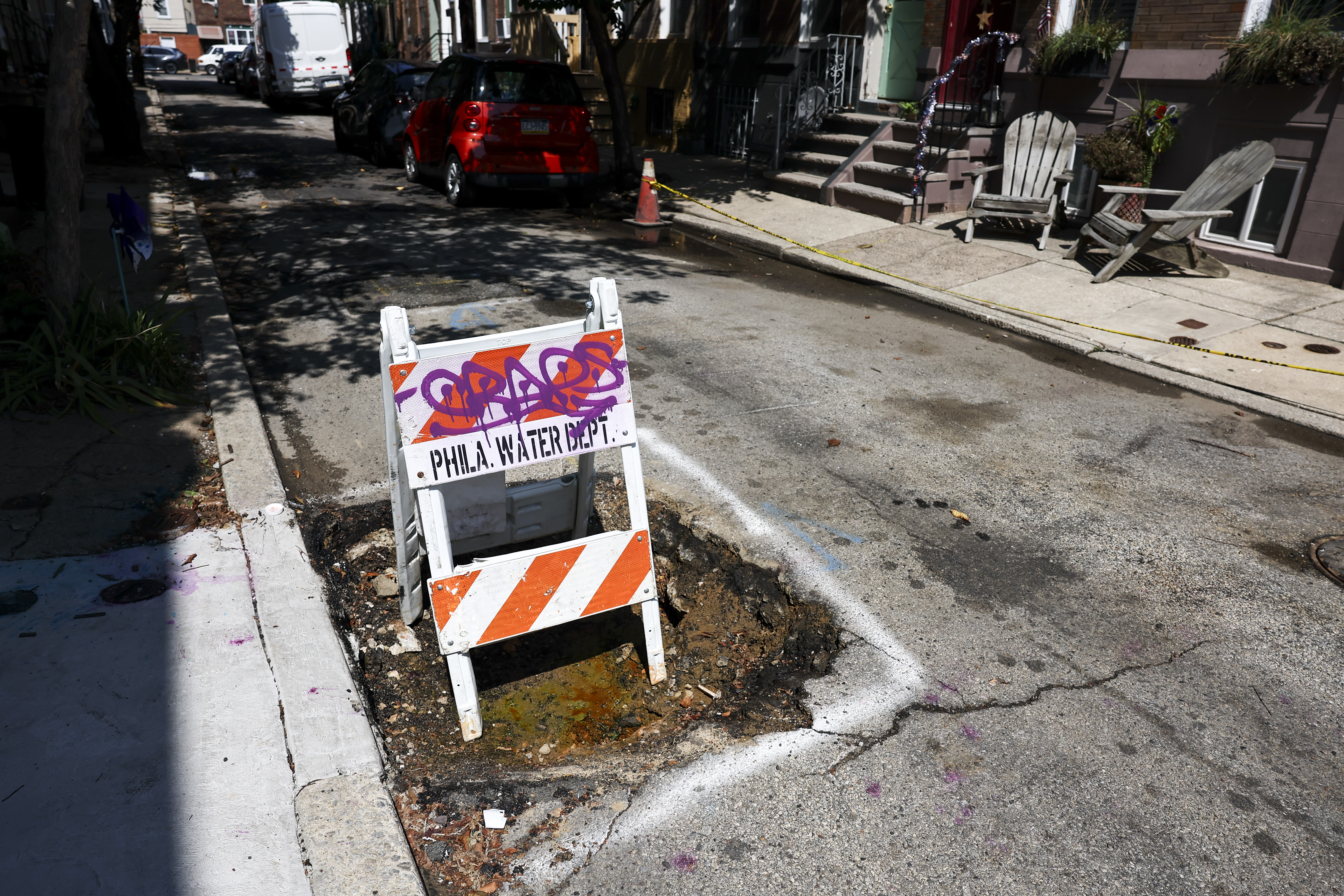
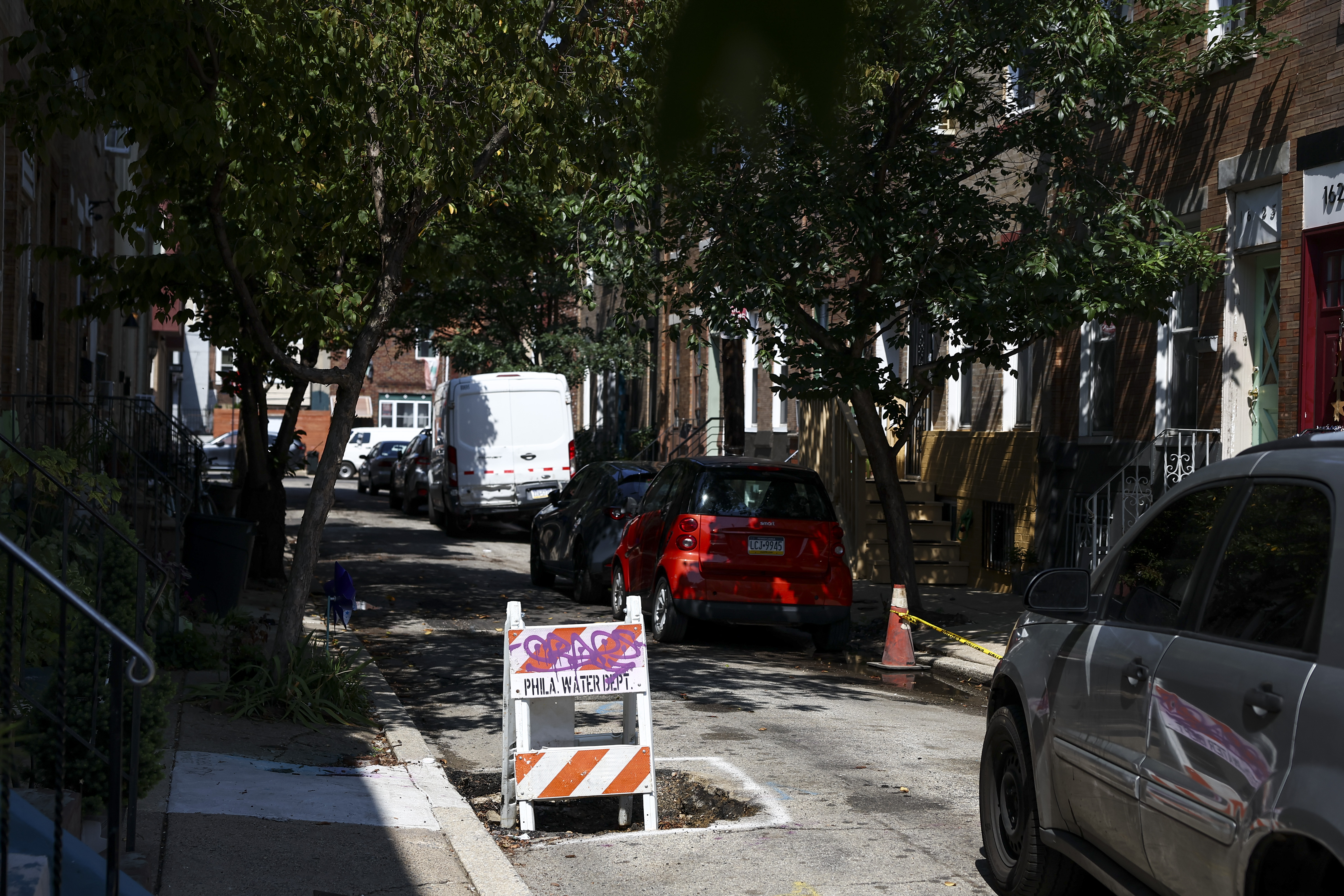
    Signage marks a hole in the road on the 1600 block of South Lawrence Street on Tuesday. Neighbors have been complaining about the street’s integrity for more than a decade.Monica Herndon / Staff Photographer

    Sinkhole street

    How long does it take for a 311 request to be resolved? For residents of the 1600 block of South Lawrence Street, it has been 13 years — and counting. In the meantime, city officials have repeatedly ignored their emails and offered excuses.

    It all began with a 2013 complaint about road instability. According to residents, their block once hosted a factory, which means that when their homes were built and their street was initially paved, it had to be filled in. Their concern is that, over time, this fill may have eroded, leading to the repeated formation of sinkholes and putting their buried utility pipes at risk.

    Given that one of the neighbors who contacted me, Tim Dunn, is a civil engineer, I would say this is a credible worry.

    While the city paid to fix three water laterals after the main broke, the neighbors believe three or four additional laterals were damaged and should have been covered, too. They also report that the laterals the city replaced experienced issues almost immediately. The block is scheduled to be repaved next year, and if underlying problems remain, the effort could be futile.

    You would think that would lead officials at the city’s Streets and Water Departments to investigate. But until this week, that wasn’t the case.

    The neighbors have compiled a timeline, complete with notes and evidence, of their efforts to get the departments to take their concerns seriously. Councilmember Mark Squilla, who represents the street, confirmed their account. Even he had trouble getting emails answered about this situation.

    Out of 36 requests from Squilla or residents for help or information, 19 went unanswered. Adding insult to injury, the neighbors told me the city has repeatedly deployed no parking signs, only to not send anyone to do any work. This was perceived as an intimidation tactic.

    When I reached out to the city to get their side of the story, they said they are now on top of the situation. On Tuesday, after my initial outreach, they finally sent a sewer operations team to investigate exactly what is happening underground.

    Changes in how we get around and how we shop have had an impact on our streets. When these homes were built back in the 1920s, cars were rare in Philadelphia. The most popular model, Ford’s famous Model T, weighed up to 1,500 pounds. People increasingly use SUVs and heavy-duty trucks as their daily rides, putting strain on roads created without them in mind. The total weight rating for a loaded Amazon delivery van can be almost 10,000 pounds. This is part of why Mayor Cherelle L. Parker proposed a “pothole tax” on deliveries.

    More money, however, would not fix what went wrong on South Lawrence Street. If existing communication and coordination issues aren’t resolved, residents will understandably see the pothole tax as yet another cash grab from City Hall.

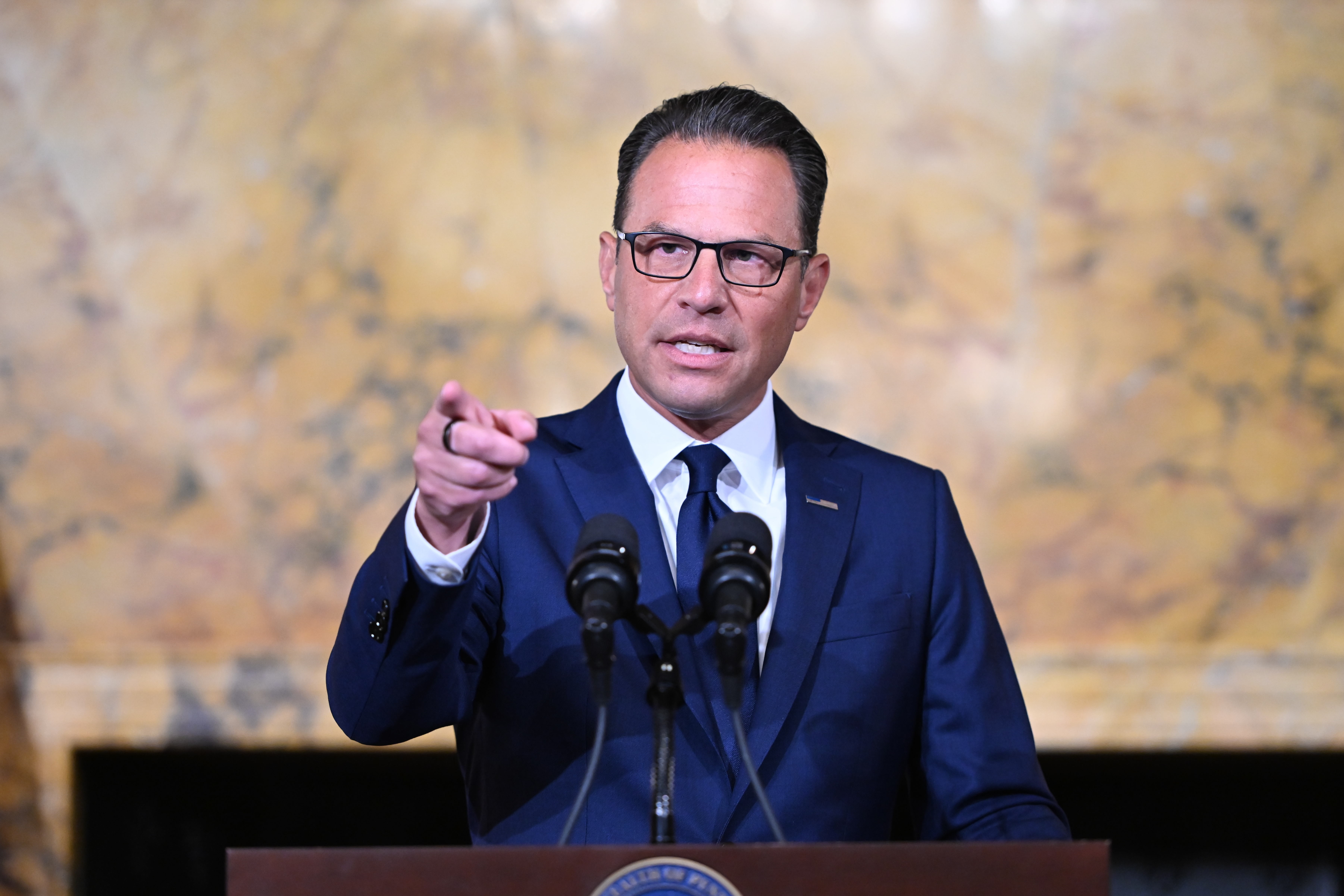
    Pennsylvania Gov. Josh Shapiro speaks during a news conference at the state Capitol, Aug. 18.Marc Levy

    Shapiro’s slopulism

    One of the most frustrating parts of post-pandemic politics is the rise of “slopulism.” Short-form videos make it easy to build support for ideas that pander to our biases but are either not factual or impractical. From inciting claims about voter fraud to the idea that we can “just make transit free,” no one wants to read the boring evidence when there’s a cool, colorful video that tells them what they want to hear.

    Gov. Josh Shapiro, a dedicated performer in the TikTok and Reels sphere, has embraced slopulism before. During his 2022 gubernatorial campaign, he promised to pursue “gas tax rebates,” an idea that would have depleted the state’s reserves and disproportionately sent cash to wealthier households. Mercifully, it doesn’t seem to have come up since he won.

    While Shapiro’s critics will often say that the Ambitious Abingtonian watches the polls like a hawk, he’s mostly avoided relapsing into slopulism as governor. At least, until recently.

    First came his about-face on data centers. Now he’s indicated support for a ban on automatic license plate readers known as Flock cameras.

    There are real concerns about their misuse. Many feel uncomfortable with a private company like Flock Safety playing such a big role in law enforcement, and there have been troubling instances of police officers using the devices to stalk ex-romantic partners. Guardrails must be established.

    At the same time, automatic license plate readers and other cameras have become an essential law enforcement tool. They can help identify stolen cars, track shooters after an incident, find hit-and-run drivers, and ensure detectives get the right perpetrator. While a spokesperson made clear that the governor’s statements were not meant as an endorsement for any particular piece of legislation currently before the General Assembly, Shapiro must ensure whatever restrictions are placed on the technology don’t curtail the important gains in reducing violence and solving crimes.

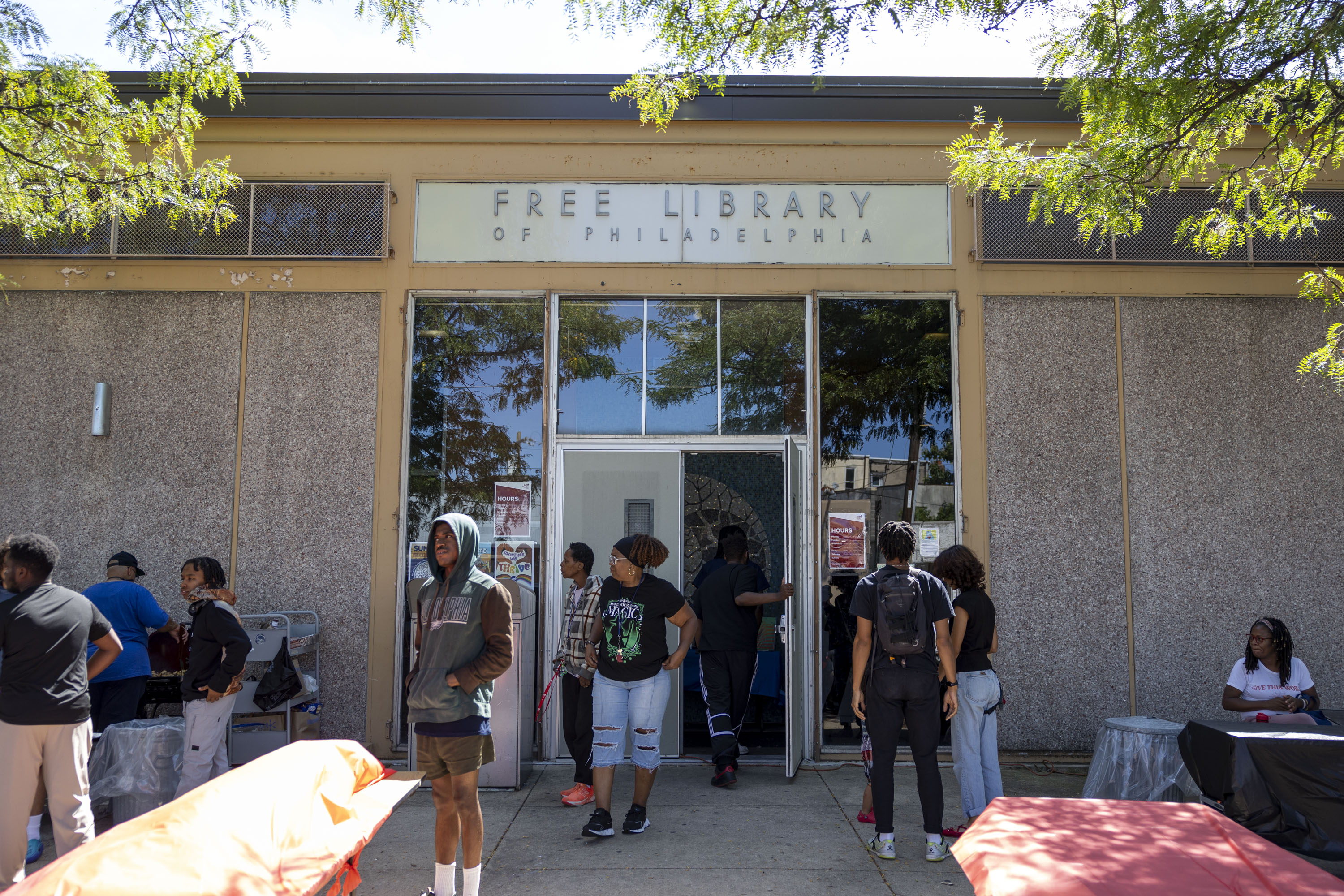
    People in the community come out for a meeting and cookout to discuss the funding and renovations for Cecil B. Moore Library on Aug. 29.Tyger Williams / Staff Photographer

    Limited library

    One politician who can’t be accused of following the polls is Jeffery “Jay” Young, City Council’s quarrelsome contrarian. After years of conversation, Young has agreed to allow renovations at the Cecil B. Moore Library in North Philadelphia to move forward. There’s just one big problem: His plan is only a fraction of what neighbors had asked for.

    Instead of adding a teen space, a private study room, new computers, and other physical improvements for which proponents had raised $8 million, the library will get a bare-bones approach. Young prefers building a new library and has so far been unwilling to reconsider that vision.

    Residents, for their part, are passionate and organized about saving their original plan. Sadly, councilmanic prerogative, the tradition that keeps Council members from second-guessing each other’s decisions, gives neighbors next to no recourse to stop Young.

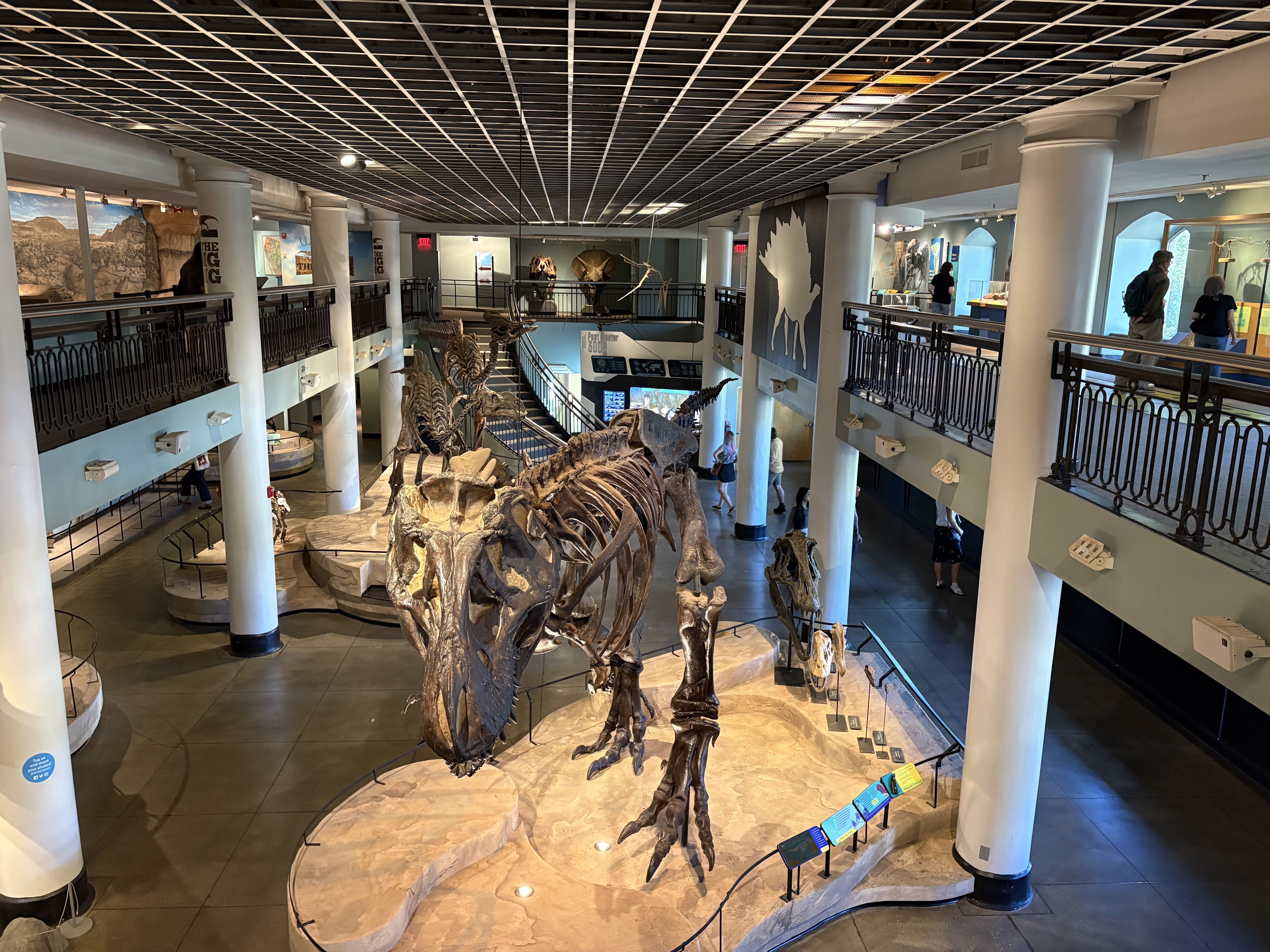
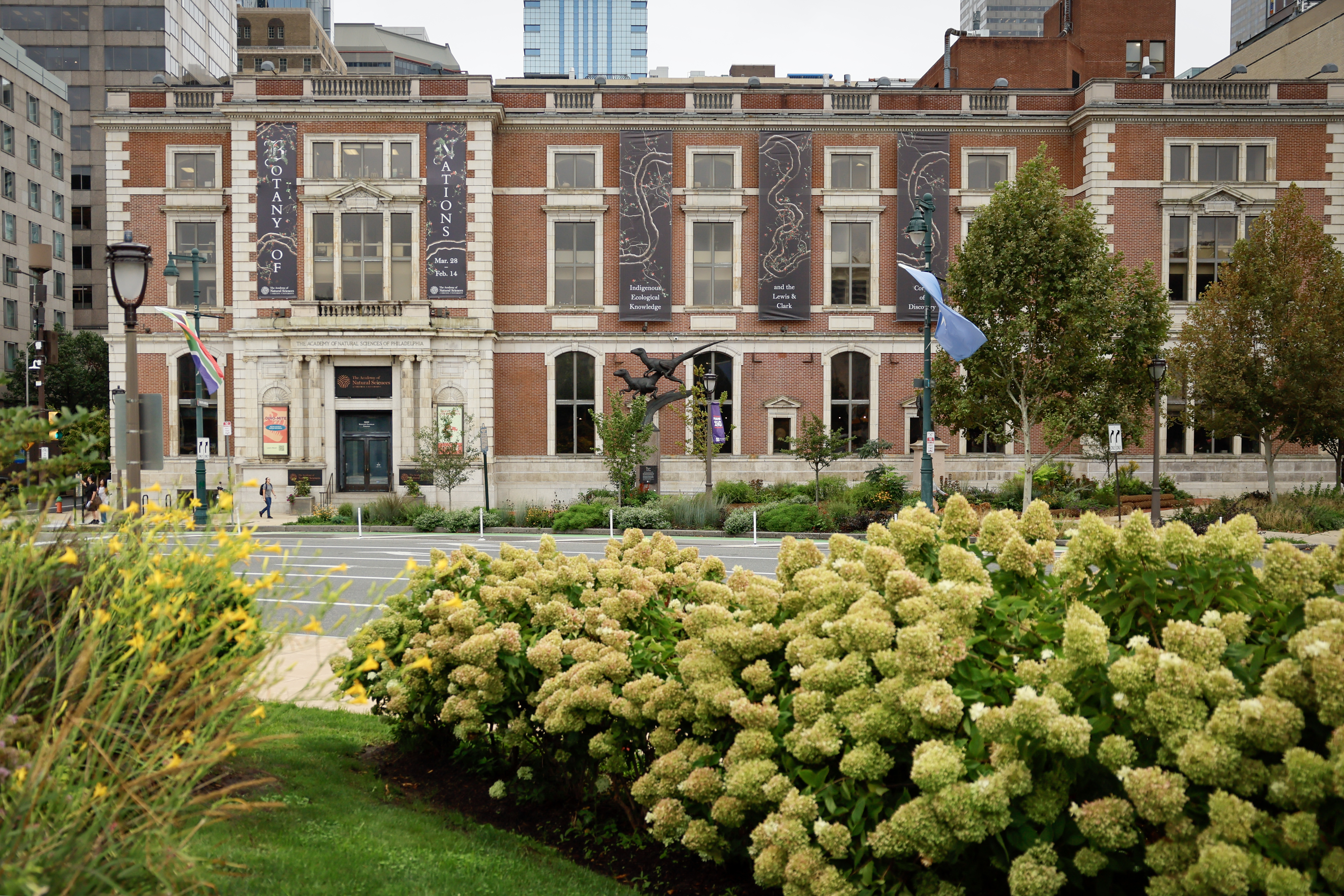
    The Dinosaur Hall at the Academy of Natural Sciences’ museum.Peter Dobrin

    Use it or lose it

    Since 1828, the Academy of Natural Sciences’ museum has offered visitors a glimpse into the planet’s living past. Like many Philadelphians, I have gawked at the massive, reconstructed Tyrannosaurus rex many times. The museum, however, has announced it may go the way of the dinosaurs.

    This set off a firestorm of criticism of both the Academy and Drexel, its partner. How could they do this to us? Why don’t we have more time? Did anyone ask for help?

    Almost in response, longtime civic leader and former Mayor Ed Rendell lieutenant David L. Cohen revealed that he had been trying to save the Academy for some time — and was close to a deal to keep the Academy in the city, even if the museum closes.

    While his efforts are welcome, this closure and the financial struggles at the Philadelphia Museum of Art are a reminder that a critical part of keeping these illustrious institutions around is showing up.

    After all, declining ticket sales and attendance are a running thread in this post-pandemic world. As much as the ornate stone buildings these collections reside in suggest permanence, they can and do close when support is not offered. I’ll include myself in saying that all of us need to appreciate and utilize the tremendous legacy past Philadelphians have left behind before it is gone.

  • Closing a 200-year-old institution will wound both the city and science

    Closing a 200-year-old institution will wound both the city and science

    When I committed to attending Drexel University at 17, I was excited for many reasons.

    Drexel is a fantastic school for science and engineering. It’s in a vibrant and central part of the city. It was near enough to my parents that I could take SEPTA to visit them on the weekends. And at that time, in 2014, it had recently become affiliated with the Academy of Natural Sciences.

    That meant, as a Drexel student, I could flash my blue-and-yellow ID and be granted instant free access to the Academy museum, one of the coolest places I’d ever been.

    As a kid, I dug around in the mock archeology site where replica bones were buried under sediment; I learned to gingerly dust them off to avoid damaging fossils. I marveled at the Tyrannosaurus rex at the entrance with bones bigger than my whole body. I felt the humidity rush over my skin as I walked into the butterfly exhibit, where I learned how caterpillars build cocoons, how they must struggle to emerge unaided from their chrysalises so they properly develop their wings, and how wonderful it feels to see a butterfly with wings the size of soft pretzels land right at your feet or — if you were lucky — on your raised arm, goosebumps and all.

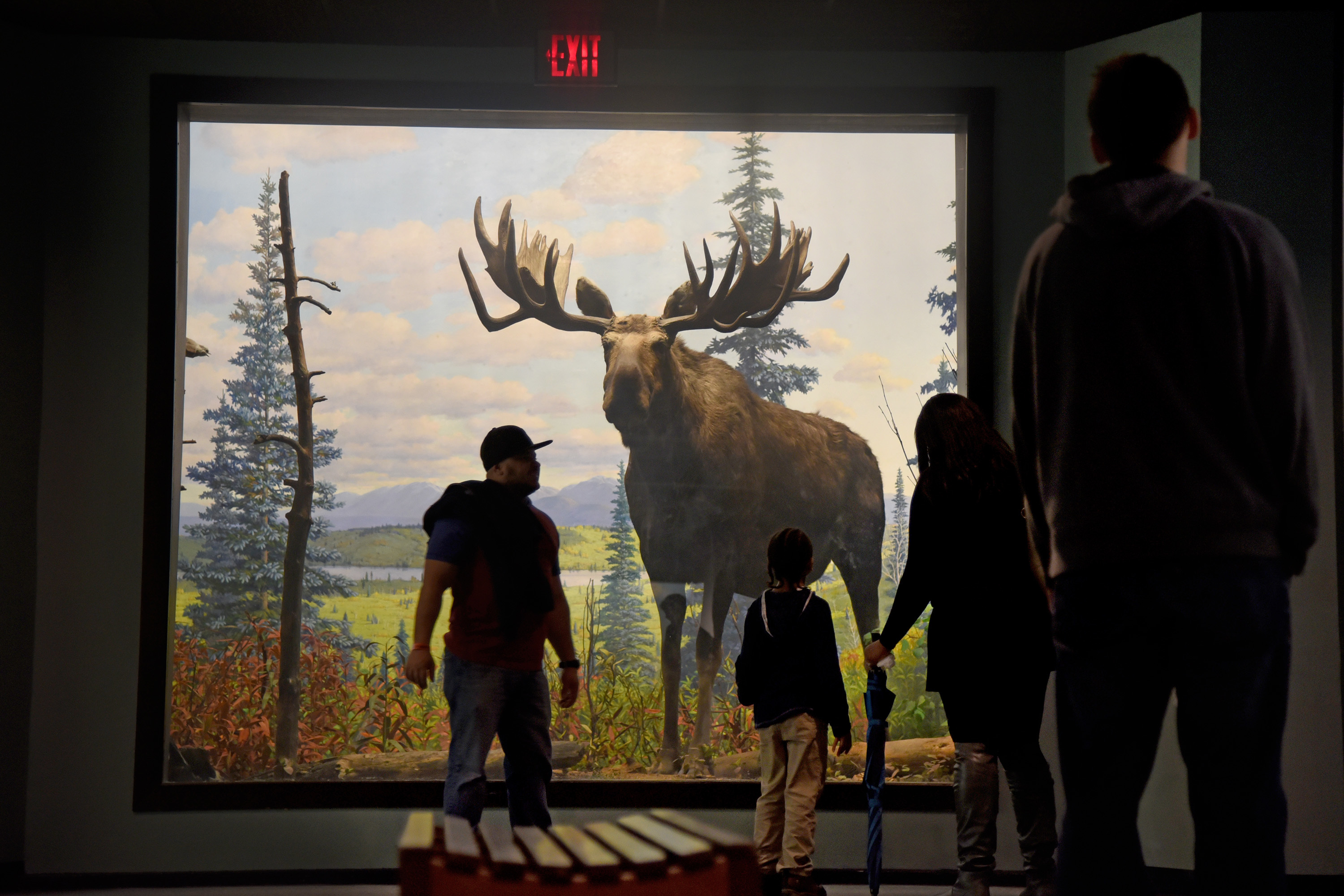
    Visitors look over the moose diorama at the Academy of Natural Sciences in 2018. Drexel University has announced that the museum will close at the end of the month because of high costs and dwindling attendance.Tom Gralish / Staff Photographer

    When you expose a child to science, you open a door to a new universe. In almost 200 years in the city, the Academy museum achieved something extraordinary and rare: It got kids (and adults of all ages) excited about dinosaurs and insects and animals from faraway places. It taught thousands of visitors about their connection to the natural world. It inspired generations of science-curious people to don lab coats and hiking boots and advance our understanding of what surrounds us.

    I’m no exception. My work now as a science journalist consists, in large part, of helping other people understand the wonders of science. I credit the Academy with helping me understand those wonders first — back when I was just a kid with a magnifying glass, an insatiable curiosity, and a terrific natural history museum accessible to my family by the regional train.

    The Academy of Natural Sciences is scheduled to close at the end of the month unless Drexel University finds a way to save it, writes Gina Vitale.Elizabeth Robertson / Staff Photographer

    Like many others, I felt my stomach sink to see the news that the museum would close at the end of this month.

    If we lose the Academy museum, we don’t just lose the fossil-digging pit and the grand hall of dinosaurs. We lose one more way to introduce Philadelphia’s kids to science. We lose future ecologists and conservationists and people working to save a warming world. We shut one more door to that magnificent universe.

    I’m thankful Drexel is committed to the stewardship of the Academy’s collections, even if the museum closes. Recent reporting indicates that Drexel may have a chance to help preserve or reestablish the museum in some way.

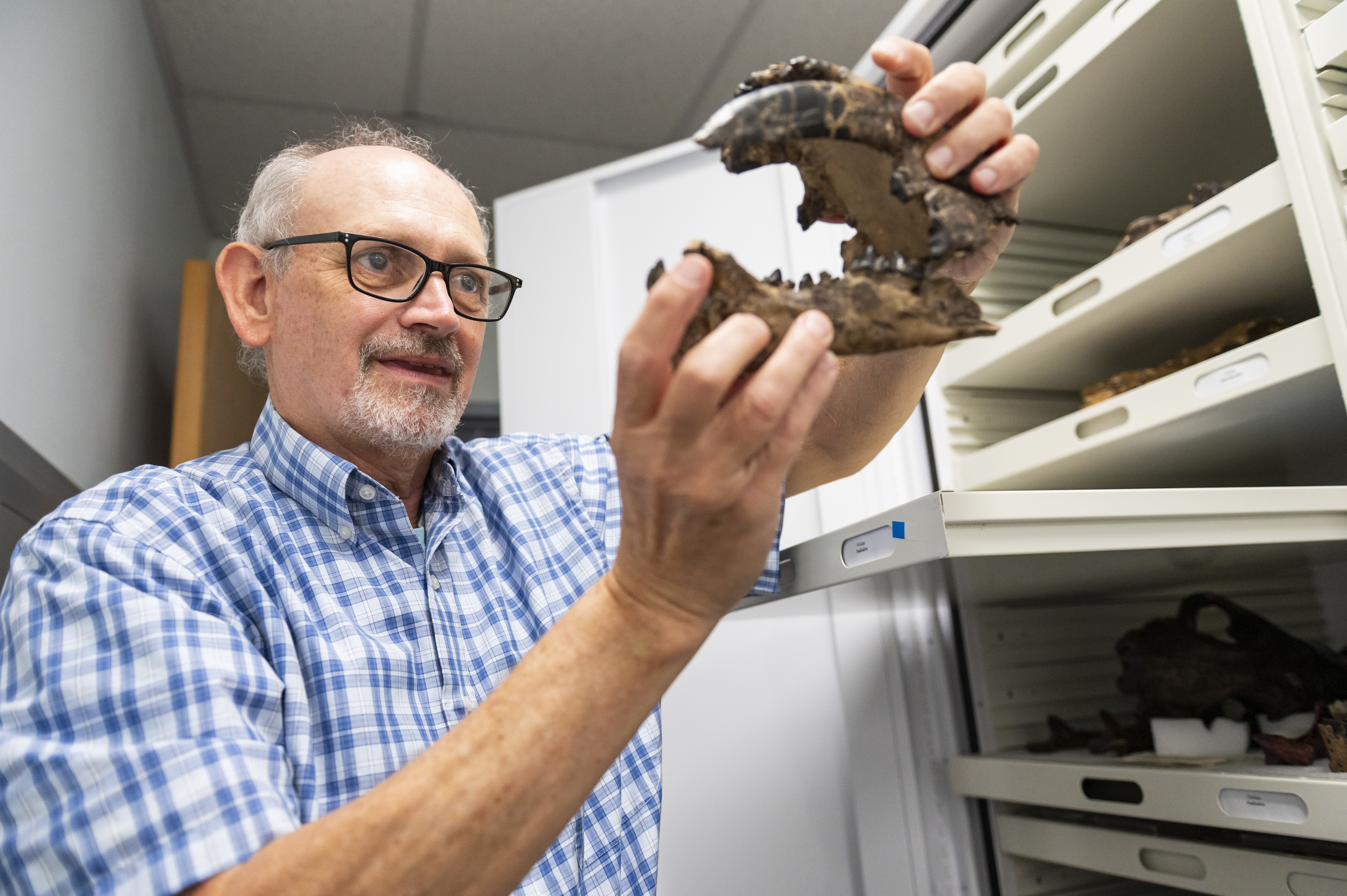
    Ned Gilmore, the collection manager for vertebrate paleontology, holds up the mouth of a Smilodon gracilis, a type of saber-toothed tiger, at the Academy of Natural Sciences last month.Allie Ippolito / For The Inquirer

    When I was a student, I loved that my university supported an institution like the Academy — the oldest natural history museum in the United States. I can think of no better thing to do for the city and for future Drexel students than for the university to help find a way to preserve this incredibly special museum in Philadelphia.

    If they do that, they won’t just have my gratitude. They’ll have the thanks of current and future science enthusiasts throughout the city, and along the tracks of the regional trains.

    Gina Vitale is a journalist and writer who grew up in Greater Philadelphia.

  • I spent the night at ground zero on 9/11. I’ve lived the trauma ever since.

    I spent the night at ground zero on 9/11. I’ve lived the trauma ever since.

    I have been faking it for 25 years. Not about the people and issues that matter to me. Not my work or anything like that.

    But in the way everyone tells you to “fake it till you make it.” Get up. Go to work. Act like you’re doing fine when you’re not, hope nobody notices, and hope you’ll eventually get better.

    When I got to ground zero late on Sept. 11, 2001, nothing felt real. Therapists have since explained that I may have slipped into what they call a dissociative state, and it was frightening.

    I hadn’t exactly lost my grip on reality, but I felt detached, like I was living in a movie, feeling uncertain about what was real and what wasn’t.

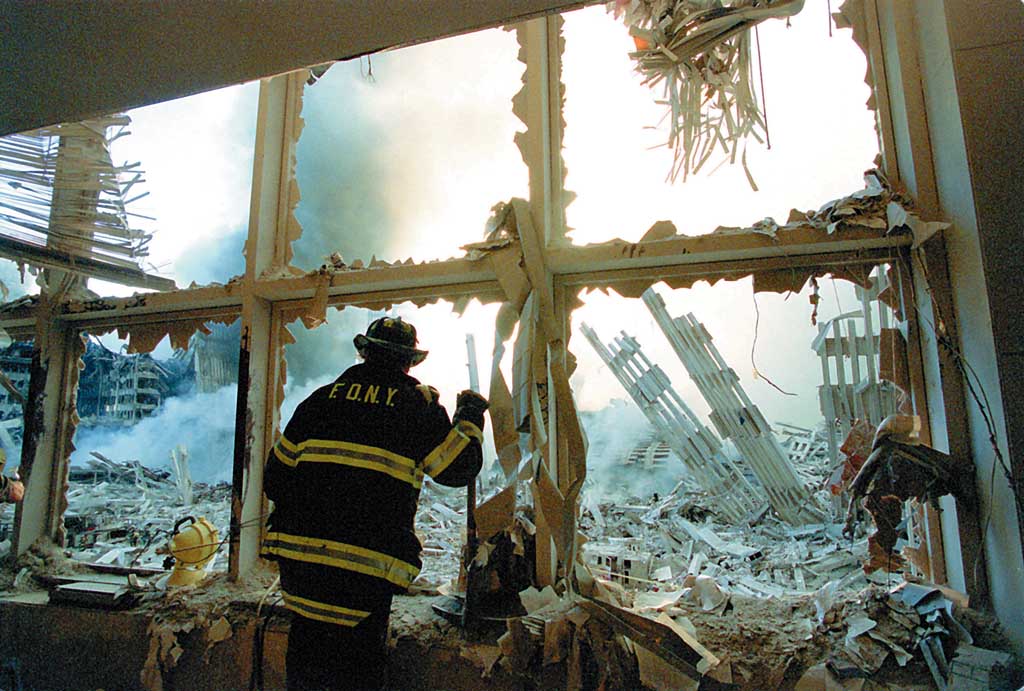
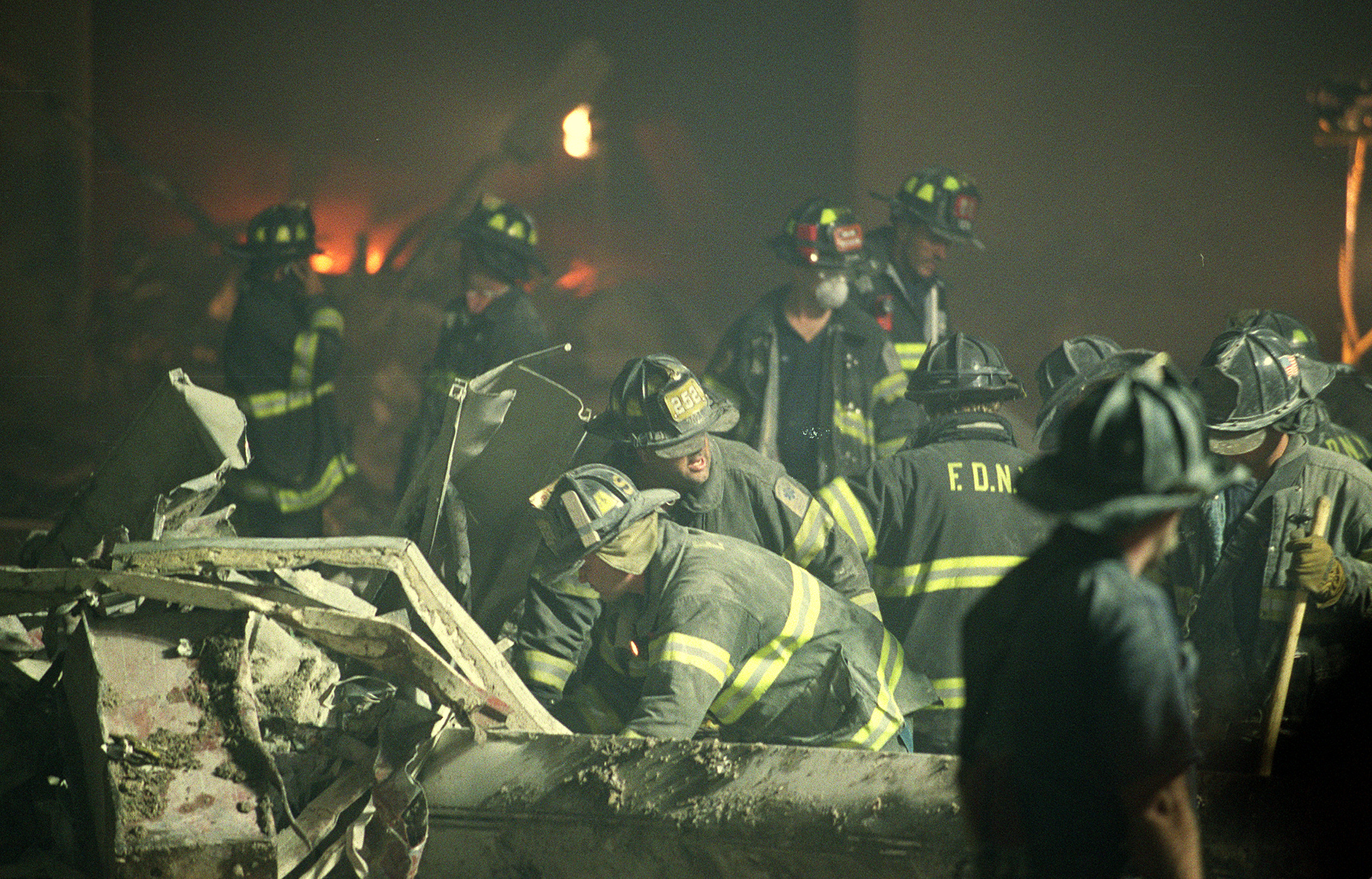
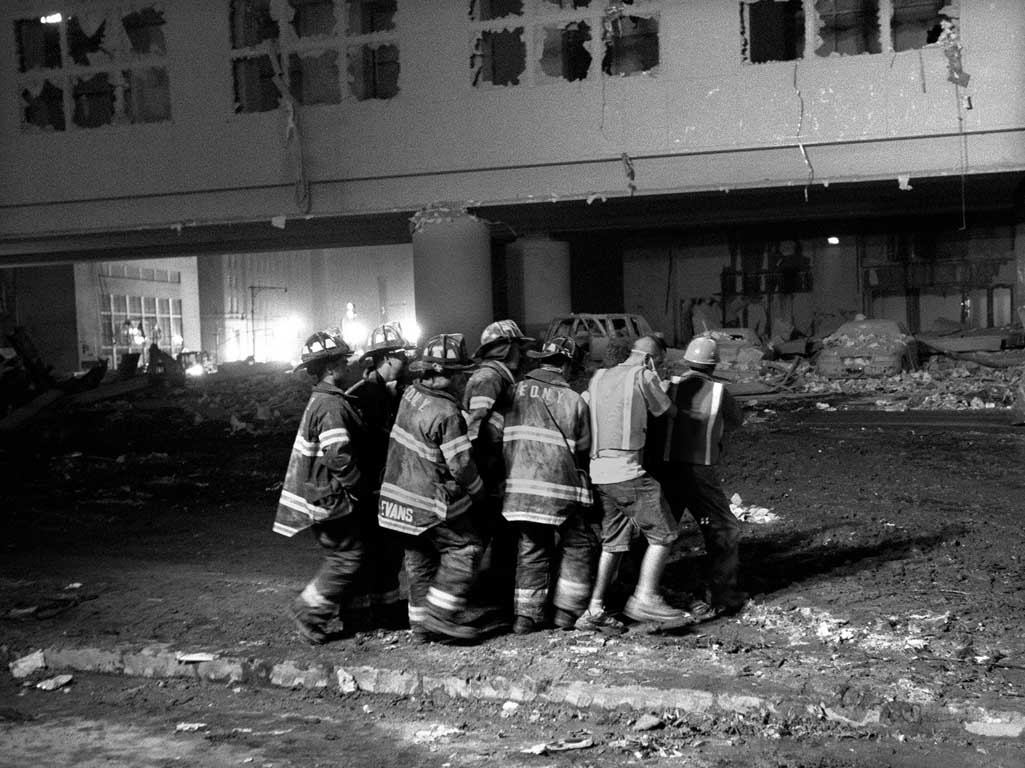
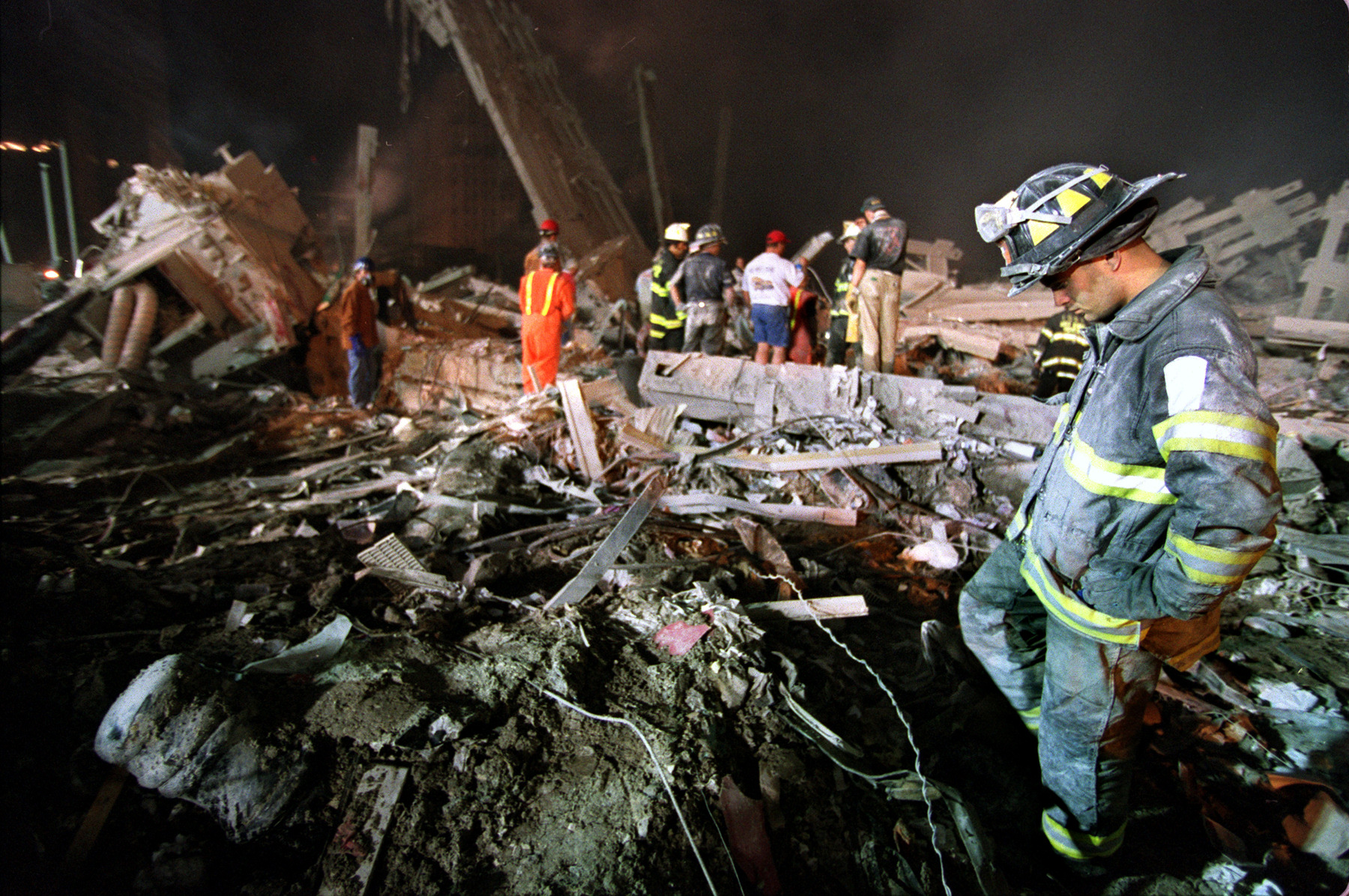
    A New York City firefighter looks out onto the collapsed World Trade Center on the morning after the attack of Sept. 11, 2001. Chronicling the devastation there has haunted the author over the years.

    I managed to keep taking pictures, leaning into the parts of myself that were still working, as I have in some ways every day since.

    My friend and colleague Chris Brennan, the reporter with whom I had gone to the scene for the Daily News, later wrote about our journey together and the early aftermath.

    A harrowing aftermath

    The next 18 months were the worst for me, filled with flashbacks, nightmares, extreme insomnia, memory blackouts, mood swings, and broken relationships.

    Serendipitously, a psychiatrist wrote to me in early 2003 about acquiring some of my photographs for instructional use. She also sensed what I was going through, and provided the treatment I needed to get the most crippling symptoms under control.

    But that wasn’t the end of the story. Far from it.

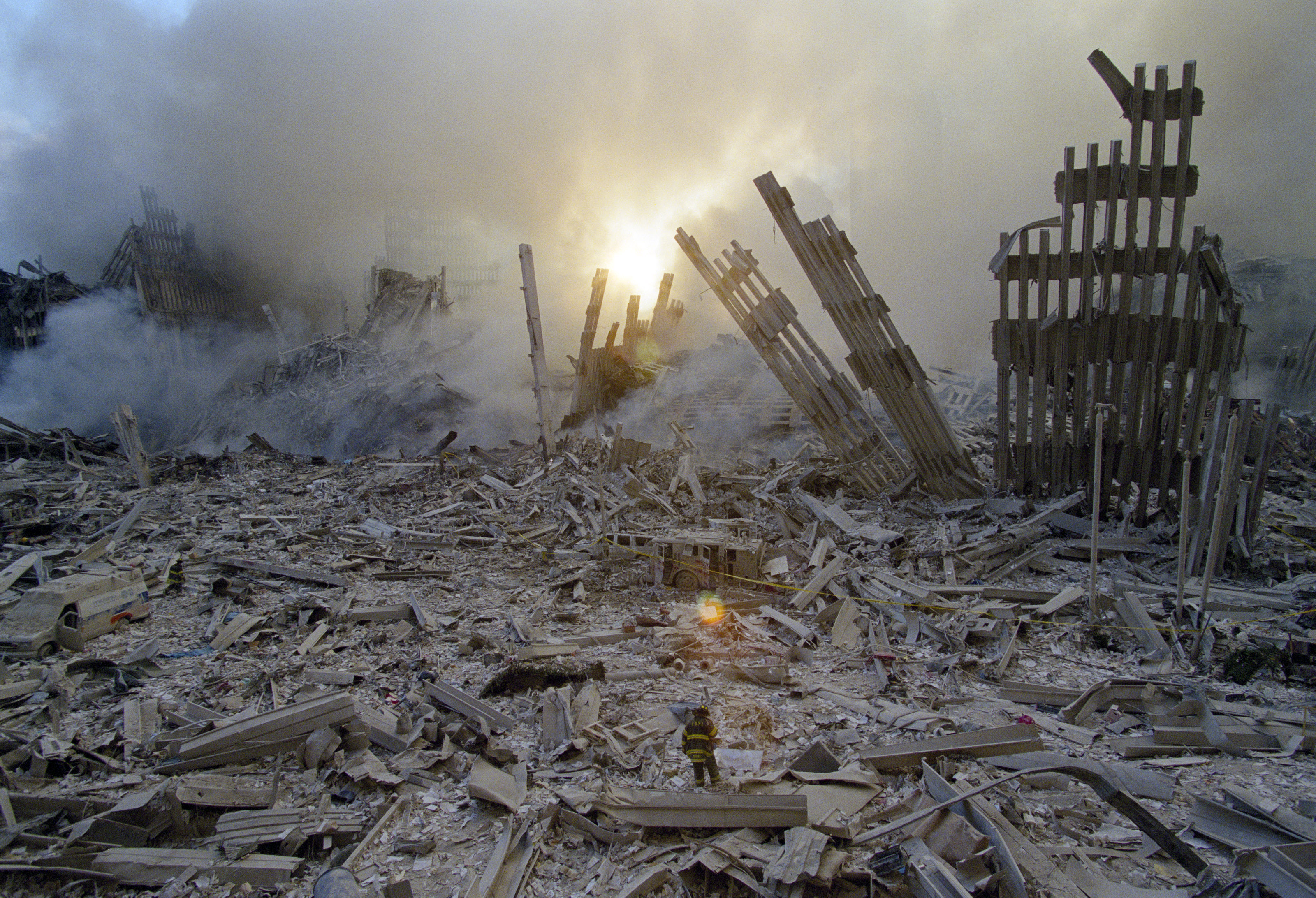
    New York City firefighters sift through the rubble of the World Trade Center on the evening of Sept. 11, 2001.Jim MacMillan

    From the outside, what followed looks almost ridiculously good: a career filled with fellowships, faculty appointments, and even a Pulitzer Prize in 2005 for my photographs from the war in Iraq.

    I had accompanied U.S. troops on hundreds of combat missions over the course of a year, feeling indestructible following my initial recovery, but then some new and old symptoms emerged, and I needed more care when I got back. I got better again, although I still overreact when startled.

    One of my pictures from 9/11 went on to have a remarkable life of its own. The New York Times wrote about the time it toured alongside some of the great artworks of the 20th century. My alma mater, Tufts University, hung it in a gallery next to a Picasso.

    Looking back now, it feels painfully obvious that I have also spent the past 25 years stockpiling accomplishments as if to prove I was OK, probably to myself as much as anyone else.

    We talk a lot in the news about surviving terrible events and their immediate aftermaths. And we love stories of recovery. But we don’t talk much about the long tail of trauma.

    Our traumatic pasts aren’t so easily fooled. There is no unseeing what we have seen.

    Rescue workers carry a body from the ruins of the World Trade Center to a temporary morgue at the heavily damaged Dow Jones Building in the early morning after the Sept. 11 attack.

    I still have occasional nightmares and persistent phobias that seem obviously related to things I saw at ground zero.

    And random reminders can bring me back there in every sense. The smoke and rubble appear behind my eyelids in an instant. I can hear the sounds and taste the dust. My breath deepens, and my skin crawls again.

    Giving back

    Most of the time I am completely fine. Sometimes I get triggered, and I’ve got my hands full again for a couple of days or a couple of weeks. I had a bad year not so long ago.

    Living my best life takes maintenance, just as I imagine countless people quietly manage other long-term health challenges.

    Since 2006, I have also spent a lot of time studying and teaching students and journalists about trauma. Giving back has felt both cathartic and critical to maintaining my well-being.

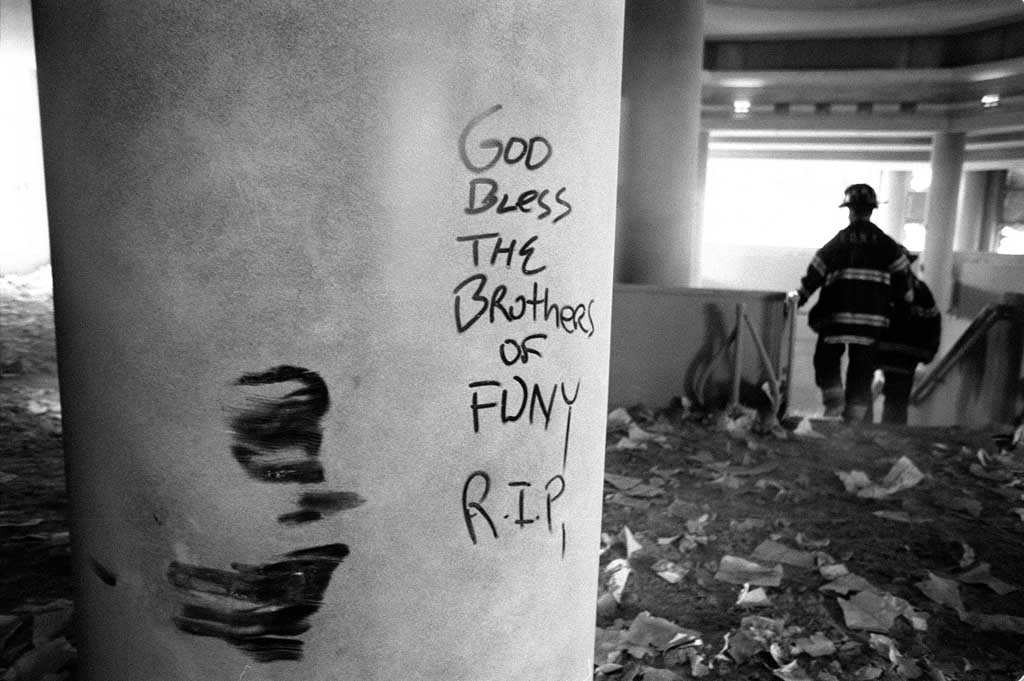
    A message is scrawled in ash on a column inside One Financial Center, adjacent to the World Trade Center ruins at ground zero.Jim MacMillan / Staff Photographer

    I have spoken previously about covering the Oklahoma City bombing, Hurricane Katrina survivors, violent demonstrations in American cities, and endless gun violence in Philadelphia.

    But while journalists and other first responders are frequently invited onto stages for these conversations, most people carrying trauma will never get the spotlight.

    Domestic violence and other crimes can alter lives without ever making the news. Trauma can accumulate alongside structural violence, from racism and concentrated poverty to overpolicing and mass incarceration.

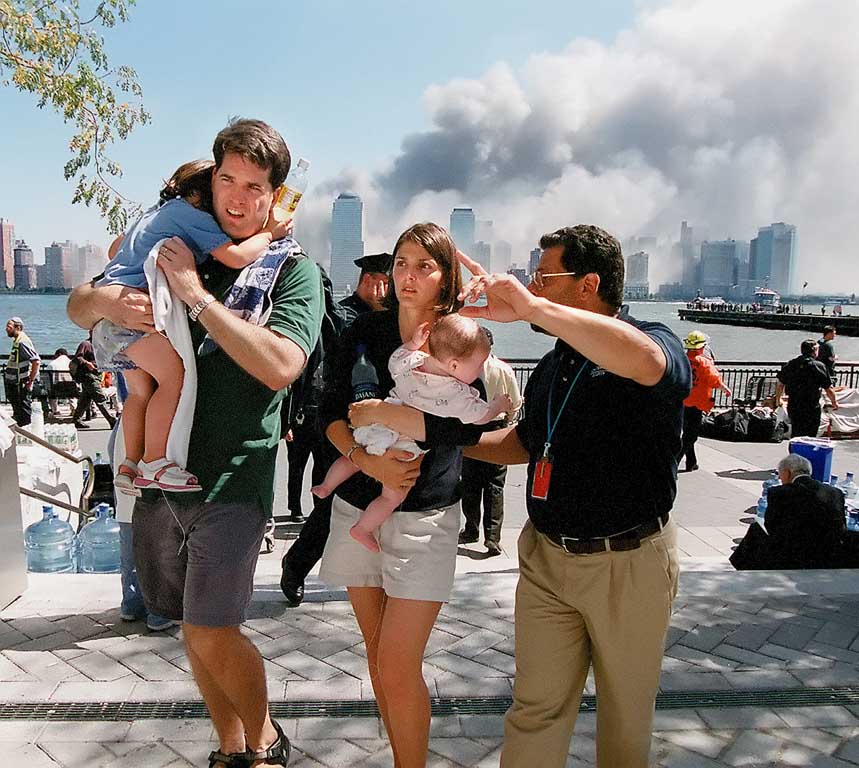
    Rescued from Lower Manhattan, a family lands in Liberty State Park in New Jersey hours after the attack on the World Trade Center. The trauma from that day lives on for survivors and witnesses.

    Communities most vulnerable to trauma are often the least likely to have access to the kind of care that helped me endure.

    Too many are left to carry their burden alone, while resources seem perpetually overstretched, and horrifying headlines keep coming at us with relentless frequency.

    If nobody is coming to save us, we’ll need to get better at taking care of one another, now more than ever.

    I’m no clinician, but I can tell you what I needed: Listen when people tell you about their struggles. Don’t turn up the heat or ask when they’re going to get over it. Ask what they need, ask how you can help, and help them find more support.

    A New York City firefighter surveys the wreckage of the collapsed World Trade Center on the evening of Sept. 11, 2001.Jim MacMillan

    I recently moved to Ireland, where my grandparents were born, thinking I might have one more chapter to write in my career and that, for once, I might step away from all the trauma.

    Instead, every new relationship and opportunity seems to be leading me back to the same work: helping journalists stay safe and healthy while reporting responsibly on survivors.

    The distance has also helped me see more clearly what I’ve carried all these years, and what we can’t fake.

    Jim MacMillan spent 17 years as a photojournalist at the Daily News. His photographs from ground zero now reside in the Special Collections Research Center at the Charles Library at Temple University, and one was acquired last year by the National September 11 Memorial and Museum. He founded the Philadelphia Center for Gun Violence Reporting in 2019 and served as its director until June.

  • Living in an exhausted, morally distressed nation

    Living in an exhausted, morally distressed nation

    This is not us.

    This is not the America we thought we were. As nurses, we’re sensitive to negative shifts in compassion and empathy. Almost two years of multiple, relentless attacks on America’s core values have left us morally distressed.

    It is not like us to set a weekly quota of arresting 2,000 of our law-abiding neighbors seeking asylum in the United States. It’s not like us to propose spending $20 million in taxpayer dollars on a device that will allow immigration agents to deliver painful electric shocks to any human being. It’s not like us to put those without criminal records in jails and provide them with less than adequate medical care that has now resulted in the deaths of at least 50 innocent human beings.

    Values out of whack

    As a nation, our actions are out of alignment with our values.

    We are overwhelmed by the constant barrage of toxic messages and distressful events that shape our sense of who we are as a society and negatively affect our physical and mental health. We have seen, and some have personally experienced, the horrific public health impact of the resurgence of preventable diseases and deaths from measles, a disease that had been eradicated from the U.S.

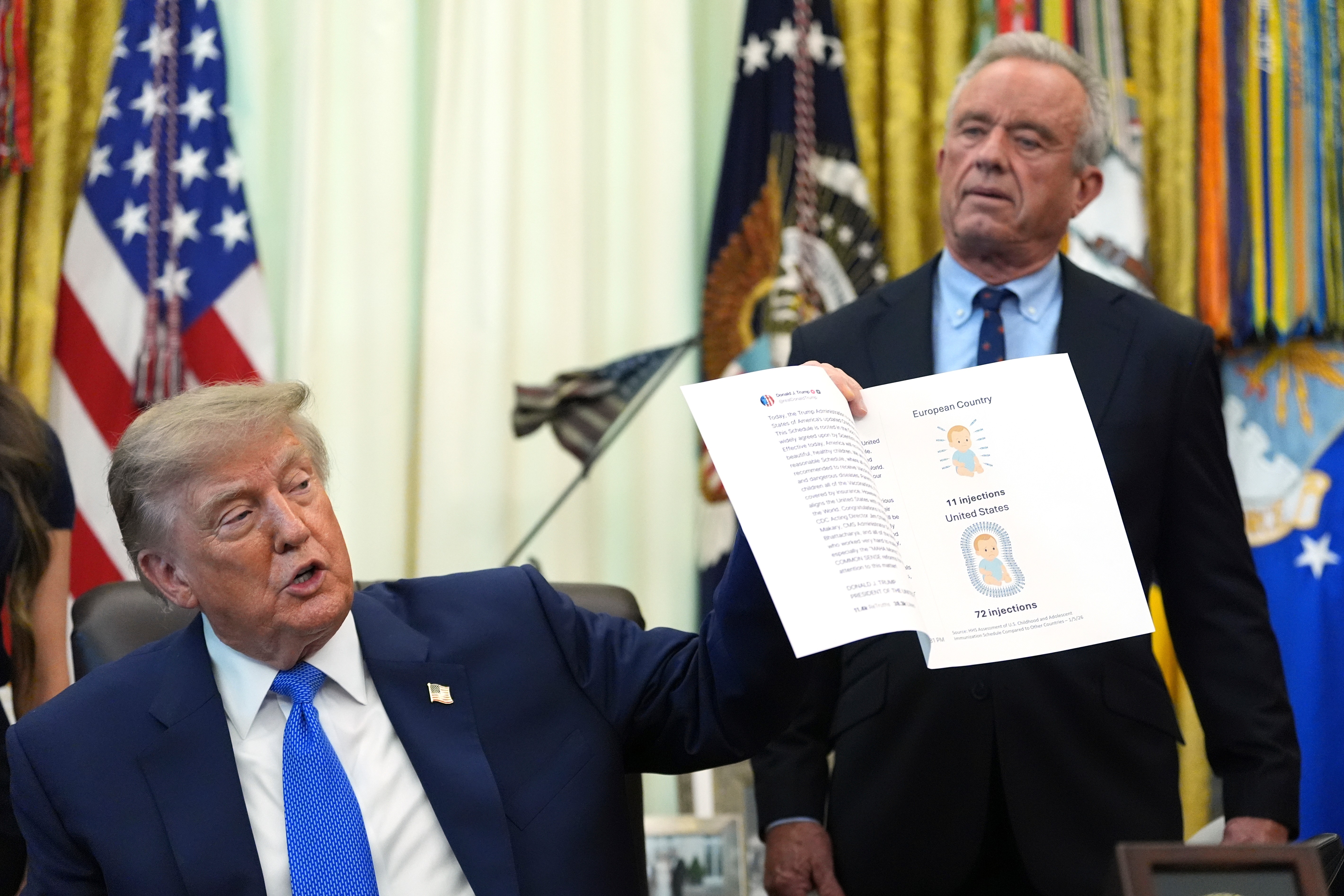
    As nurses, we have seen how words are used to evoke false beliefs. We have never seen a “vat” of solution injected into any person — let alone an infant, as President Donald Trump recently claimed about the childhood vaccination regimen. We have witnessed the fear and confusion of parents related to the mixed messages coming from non-pediatricians about the value of childhood vaccinations. Why change the vaccination schedule without evidence?

    We see reductions and disinvestments in essential research funding that will hurt Americans waiting for scientific breakthroughs. Discouraging the next generation of investigators threatens our standing as a global leader in research innovation.

    President Donald Trump and his former press secretary Karoline Leavitt at the White House earlier this year. Both have brought a new level of coarseness and personal denigration to official public discourse.Tom Brenner

    We experience ourselves the rising costs of life’s necessities, such as food, housing, and healthcare. And we endure public coarseness and disgraceful conduct among those elected to represent us, increasingly characterized by contempt and by labeling those with whom they disagree as “radicals,” “socialists,” “fascists,” or worse.

    These developments are not mutually exclusive, and they represent a troubling sign for a country where trust in the values of public institutions and in government leaders and workers is being eroded by outright lies and a lack of mutual respect. In 2025, only 17% of Americans trusted the government to do “what is right.”

    Moral distress occurs when one’s values are constrained because of institutional, social, political, or other barriers.

    The concept is often applied to healthcare workers, such as nurses. For example, moral distress has been widely documented when nurses are unable to deliver a treatment they know is best because of restraints imposed by the healthcare system in which they work.

    Repeated experiences of moral distress often lead to a sense of disillusionment, disengagement, moral outrage, burnout, and apathy. When this moral distress and resulting harm is experienced by a broad swath of the general population, we call this civic moral distress.

    So what can we do?

    We know respectful dialogue instead of derision advances collaborative agendas and builds solid coalitions. We know public health is key to the prevention of disease. We know respect for the dignity of our fellow humans has nothing to do with their age, race, gender, political ideology, or immigration status. We know a lack of basic healthcare leads to emergency room visits and higher costs. We know the average citizen is not being heard by those who represent them to address the broader societal and moral problems at home and feels powerless to change any of it.

    Don’t be disillusioned

    There are no easy antidotes to civic moral distress. Experts coalesce around key principles, grounded in a foundation of trust, that could move us from a morally distressed nation to one characterized by moral strength and integrity.

    For everyone: Be kind, be truthful, perform one random act of kindness every day, care for your neighbors. For newspapers: Publish one issue a week that focuses on local community issues. For all government officials: Don’t break everything just because you can; stay in your lane and do not make healthcare recommendations out of your area of expertise.

    For all Americans: Do not be disillusioned.

    Advancing this agenda will require significant moral courage. Failing to do so will further erode our society, our humanity. And although civic moral distress is our current reality, it need not be our future.

    Connie M. Ulrich is a registered nurse and professor of nursing and of medical ethics and health policy at the University of Pennsylvania School of Nursing. She is a Hastings Center Fellow. Mary D. Naylor is a registered nurse and professor of gerontology and nursing at Penn’s School of Nursing. Martha A.Q. Curley is a registered nurse and professor of pediatric nursing at Penn’s School of Nursing.

  • Pennsylvania measles deaths are the cost of poor public health leadership | Editorial

    Pennsylvania measles deaths are the cost of poor public health leadership | Editorial

    The two recent measles-related deaths in Lancaster County, including that of a newborn, were the first in Pennsylvania in 35 years. Sadly, as vaccination rates decline across the commonwealth and the country, they will likely not be the last.

    The deaths occurred amid a major measles outbreak in Lancaster that has sickened nearly 400 people. Nationwide, the number of cases grew to a 35-year high.

    In normal times (a.k.a. before Donald Trump), federal and state government officials would work together to contain the outbreak, protect the public, and use the incident to urge residents to get vaccinated.

    But under Trump, all issues are political. Someone must lose so he can win. Rather than lead and unite, the president and his minions divide and misinform.

    Gov. Josh Shapiro did what any responsible public official would do. He traveled to Lancaster General Health’s Women and Babies Hospital to express empathy, support the local community, and urge the public to get vaccinated.

    “We hope, and we pray, that those deaths will be the last,” Shapiro said. He underscored, “This illness and death from measles is completely preventable.”

    Initially, state officials did not provide details about the two people who died in order to protect their privacy.

    Lancaster County Coroner Stephen Diamantoni, a Republican elected official who is also a physician, said the newborn tested positive for measles, but died from a ruptured spleen. State health officials clarified that they define a “measles-associated death” as one in which measles was present, even if it is not the immediate cause of death.

    That provided an opening for others to stir the misinformation sphere.

    Robert F. Kennedy Jr., the dangerously unqualified head of the U.S. Department of Health and Human Services, rushed right in, claiming on social media that Shapiro’s administration may have “fabricated” the deaths, and wrongly commenting in an interview on C-SPAN that “they cannot find any measles deaths in Lancaster County.”

    To be sure, Pennsylvania health officials should have been more forthcoming in sharing information about the patients’ ages, causes of deaths, and reasons for being unvaccinated.

    The lack of details “created fertile ground for conspiracy theories to thrive,” said Paul Offit, a physician at Children’s Hospital of Philadelphia who heads the hospital’s Vaccine Education Center.

    Offit explained that measles can cause an enlarged spleen to become fragile, which can lead to rupture. He added that he learned from state health officials that the patients who died in Pennsylvania would have lived if they were not infected with measles.

    Bottom line: Measles played a role in the deaths.

    It is frustrating and sad that so much energy is needed to convince the public that vaccines work. Vaccines are tested, proven, and settled science. The most effective way to stop the spread of measles is to get vaccinated.

    Indeed, measles was declared eradicated from the United States in 2000. Thanks to vaccines, other viruses such as mumps, rubella, and chickenpox were either eliminated or reduced by as much as 99%.

    But measles has made a comeback in recent years as vaccination rates have declined. Pennsylvania is among the states with the most cases, and public health officials fear more outbreaks.

    The drop in vaccination rates is due in large part to the spread of misinformation across social media in recent years. That misinformation has been amplified by Trump, the king of conspiracy theories, witch hunts, and any other form of quackery that gets attention and plays to a crowd’s worst fears.

    In a cynical political deal to win over so-called Make America Healthy Again voters, Trump appointed Kennedy, who is not a doctor, to oversee HHS.

    Beyond his famous family name, Kennedy is best known for spreading misinformation about vaccines and promoting debunked claims about autism. He was a leading vaccine skeptic — and attention seeker — during the pandemic.

    From his powerful perch, Kennedy has upended vaccine policy. As a result of his anti-science agenda, the country is getting sicker.

    The sooner America’s leaders return to promoting evidence-based science and public health, the safer and healthier we will be.