Who could have imagined, as we sat glued to the screen watching ash-covered victims frantically flee the falling World Trade Center towers, that the type of terrorism threatening us 25 years later would turn 9/11 on its head.
On that terrible day, Americans stood united against the assault, political rhetoric cast aside in the horrific moment. New York Mayor Rudy Giuliani, later to become a MAGA mouthpiece, became “America’s mayor” as he projected a message of calm resolve in news conferences held amid the ruins.
Nearly the entire world joined the United States in opposition to al-Qaeda, a multinational terrorist organization that murdered 3,000 men and women of many different nationalities in the twin towers attack. President George W. Bush, in perhaps his finest hour, reassured a shocked nation and built a multinational coalition to fight al-Qaeda.
Our NATO allies immediately volunteered for a war in which many of their brave soldiers died — including Canadians and Danes, whose armies President Donald Trump so frequently now insults.
That sense of unity, which impelled Americans to comfort strangers and inspired solidarity from allies and adversaries alike, has long since dissipated in the wake of forever wars and populist discontent. A divisive, America First president seems to delight in fomenting hatred between people of differing beliefs and ethnicities – and treating long-time allies like enemies.
What the Trump administration is doing is opening the door to a new breed of lone wolf terrorists, inspired by the internet. Such radicalized individual acts have primarily been carried out by right-wing and jihadist attackers over the past years, according to detailed studies, although the low level of violent left-wing incidents has risen in 2025, in reaction to Trump policies.
But the president and his team have worked hard to dismantle the very agencies and have fired the FBI agents and U.S. Department of Justice prosecutors that handle terrorism cases. Elite counterterrorism and counterintelligence units have been gutted by hundreds of firings and resignations. At the U.S. Department of Homeland Security alone, more than 1,300 counterterrorism specialists have been axed or reassigned to work on border enforcement and deportations, or to search for nonexistent voter fraud.
What’s so stunning is that, just before the start of the current endless Iran war, with the White House still claiming Tehran is the leading sponsor of international terrorism, FBI Director Kash Patel specifically sacked about a dozen members of an elite Washington-based unit specializing in stemming threats from Iran within our country. Why? Because the agents had been involved in investigating Trump’s retention of classified documents at Mar-a-Lago after he ended his first term.
When asked in March by the New York Times whether Americans needed to worry about possible terrorist reprisals by Iran inside the U.S., Trump retorted: “I guess. Some people will die.”
Trump’s blindness is worse than the noncooperation between the FBI and the CIA in 2001 that led them to ignore clues to the monthslong presence of the 9/11 terrorists on U.S. soil. This is the willful blindness of our government to potential terror attacks by an Iranian regime that has every reason to strike in the near term.
Add to that the president’s constant incitement of his followers against so-called leftist networks, declaring “antifa” to be a dangerous terror organization. Only problem: There is no such organization; antifa is a catch-all term for loose groups across the country who declare themselves to be anti-fascist.
Compare that to the white supremacist massacre of 11 Jewish worshipers at the Tree of Life Synagogue in Pittsburgh during Trump’s first term, or the deadly truck attack by an Islamist on New Year’s Day 2025 in New Orleans. Yet Trump consistently, and determinedly defying statistics, declares domestic terrorism to be the work of the so-called left.
Such incitement is a cover story for attacking political criticism from any front, and inspires potential right-wing terrorist attacks against Trump’s political opponents. Never forget that it was right-wing terrorists who called for the murder of Vice President Mike Pence when they attacked the U.S. Capitol, who murdered two Minnesota lawmakers, and who nearly killed Paul Pelosi, then-House Speaker Nancy Pelosi’s husband.
Meantime, the president dispatches federal agents who could be thwarting real terrorism to instead threaten election officials and potentially midterm voters. Ditto for menacing noncriminal immigrants with violence and sometimes death.
As for state-run terrorism, Trump’s self-declared friend, Vladimir Putin, has embarked on a campaign against NATO allies, including dropping drones near airports such as the one in Leipzig, Germany, recently.
“We are the daily target of hybrid warfare,” said the German interior minister last month. The International Institute for Strategic Studies this summer tallied 144 drone incidents across 13 countries in less than two years, with Russia as the main culprit. And that doesn’t include the assassinations Moscow has conducted against former dissidents living in England and Germany and many arson and sabotage attacks across Europe.
And while you may think you have read much about the deliberate Russian destruction of civilian markets, malls, schools, universities, and cathedrals in Ukraine, you are probably unaware of the worst.
Just one example: In the city of Kherson, just across the river from Russian positions, Russian drone pilots play a game they call “human safari” and brag about it on their Telegram channels. It means getting a hapless vegetable seller in their sights, chasing him as he tries desperately to escape, and then finally killing him.
This is not warfare. It is deliberate terror, Nazi-style, to try to demoralize Ukrainians into surrendering their sovereignty.
And so, as we remember 9/11, as we repudiate the terrorist attackers, and recall the human error by U.S. officials that led to the deaths of 3,000 innocent souls, we should give serious thought to the Trump administration’s choices and rhetoric that open the door to more terrorist assaults.
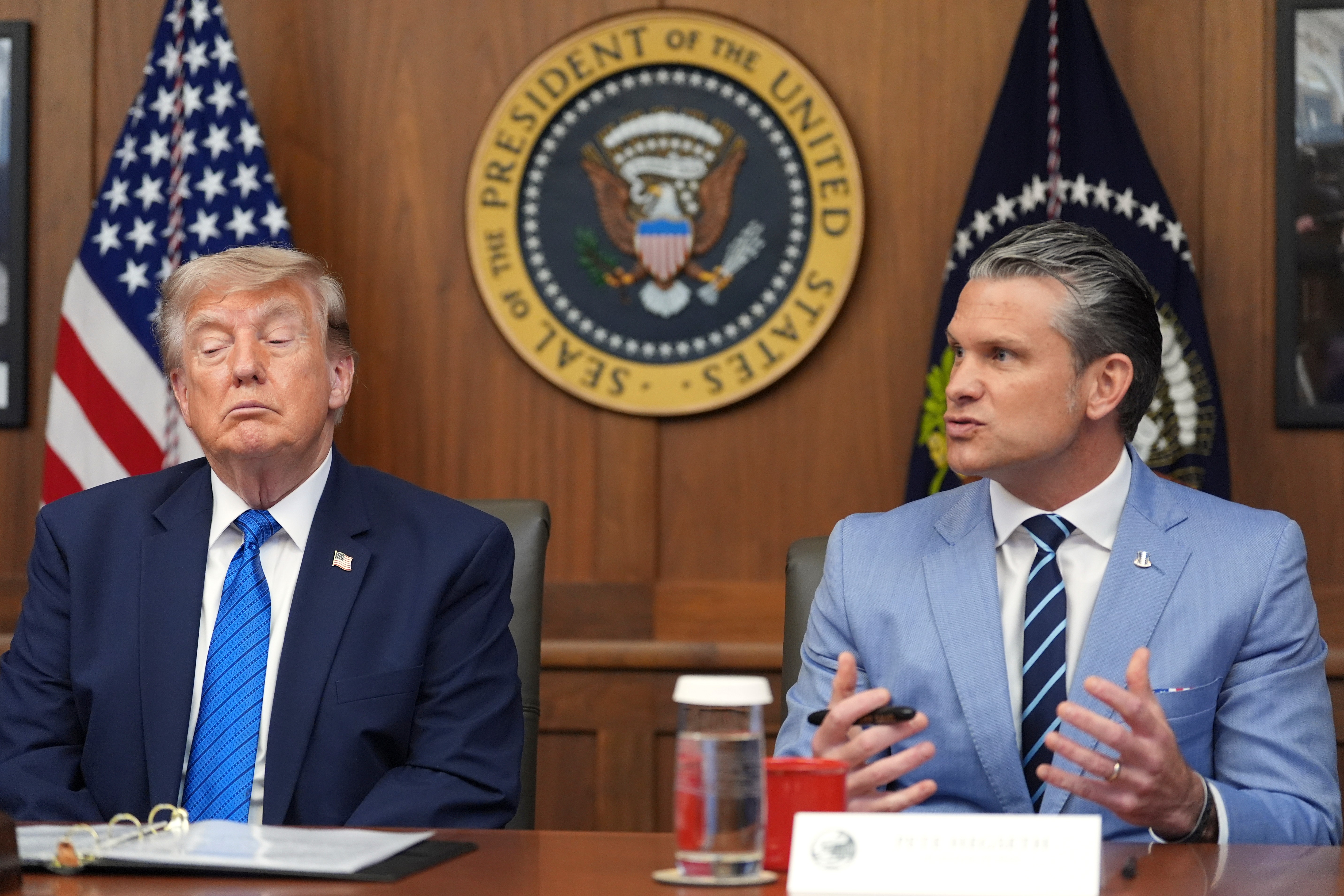
Trump has refused to attend the 9/11 ceremonies in New York City, reportedly because he wouldn’t be allowed to make a speech. Instead, he will bloviate at the Pentagon alongside his “Secretary of War” Pete Hegseth, who is contributing to the president’s security blindness that exposes Americans to potential harm.
Shame on them for endangering the country by refusing to learn the lessons of that terrible day.
Historically, the process of gaining a presidential pardon started with a formal application to the U.S. Department of Justice, which was then reviewed and presented to the president for consideration. And those who sought pardons typically had to wait until a president’s final year in office to receive one.
Apparently, that process has been thrown out the window by the current administration, which started rolling out pardons the first day it took office and hasn’t stopped since.
The Justice Department — back when it was an agency that actually administered justice — thoroughly investigated Dougherty, presented its case in court, and won a conviction against him. Even after being found guilty by a jury of his peers — and admitting his guilt during sentencing — Dougherty tried just about everything he could to avoid going to jail and repaying his debt to society.
Well, Dougherty found a sympathetic ear in the Trump administration and got the president to commute his sentence. For months now, Congress has been investigating whether “pay-to-play” has had a role in any of Trump’s pardon decisions, and I hope someone looks closely at this case, too.
In any event, the presidential pardon process needs to be reformed, because there is no doubt it is being misused and abused.
Susan Thompson, Media
. . .
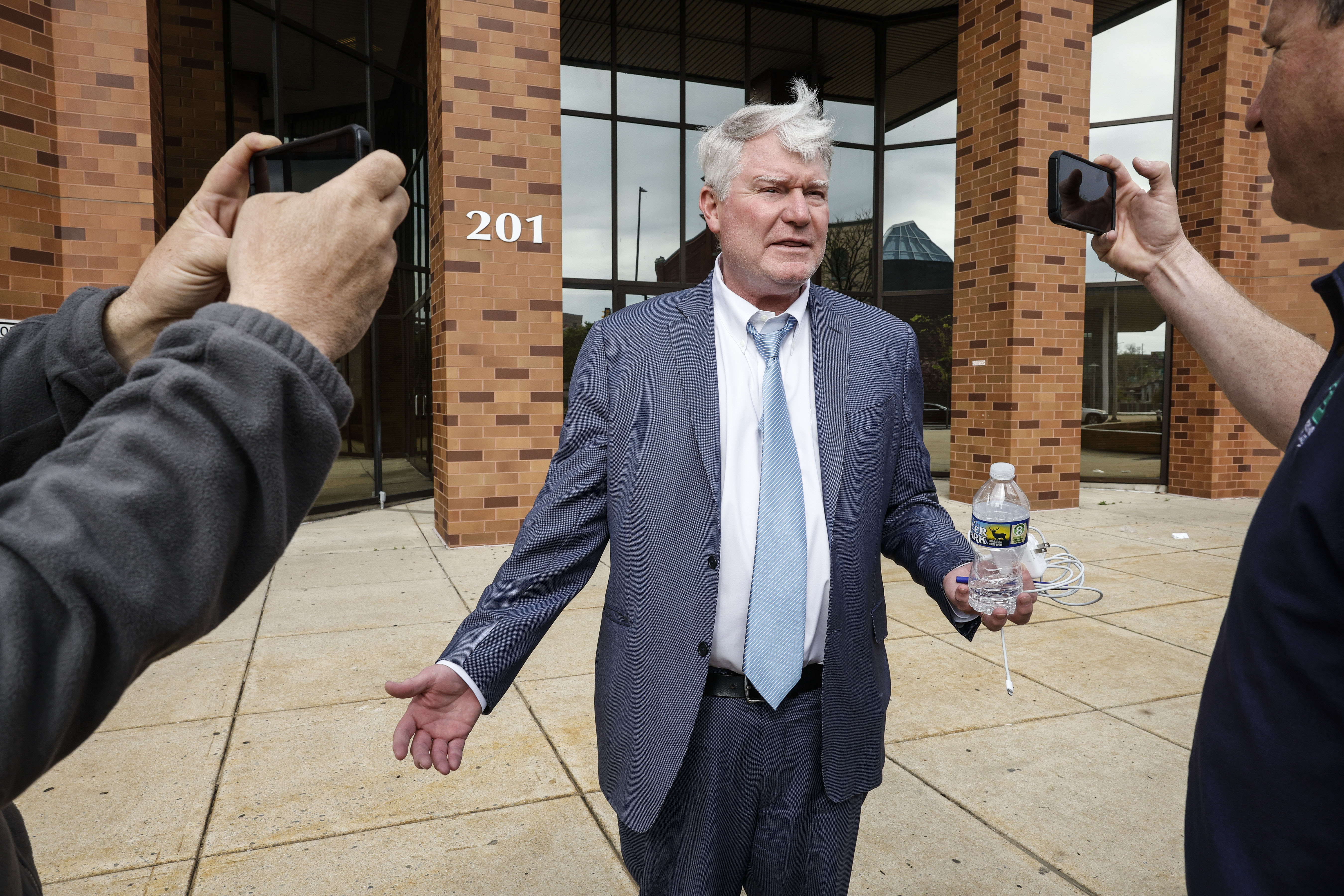
Donald Trump commuted John “Johnny Doc” Dougherty’s sentence because he’s apparently the type of leader the president can truly respect: Dougherty was found guilty of bribing an elected official and embezzling a large sum of money from the labor union he led, Local 98 of the International Brotherhood of Electrical Workers (IBEW).
Rather than a “magnificent gesture of compassion,” as Dougherty’s lawyers called it, Trump’s action was a slap in the face to the union Dougherty defrauded and which he will now not have to repay. Dougherty’s background as a political power broker likely entered into the commutation decision at least as much as the medical condition Dougherty says his wife has. Other federal inmates likely have ill family members, too, but they have to remain behind bars because they can’t afford a lawyer or don’t have political connections.
When commuting the sentence, Trump could have left intact the $1.6 million Dougherty was ordered to pay as restitution. But he chose not to, likely as a form of respect from Mar-a-Lago Don to a Philly don.
Trump treats commutations and pardons like party favors for the rich and powerful, the only Americans with whom he feels a kinship other than the seditionists who did his bidding on Jan. 6, 2021.
Stewart Speck, Ardmore
Choose peace
As I watch the news each day, I find myself asking a painful question: When did human life become so easily sacrificed in the name of power, politics, territory, or revenge?
From Gaza and Ukraine to Sudan, Yemen, and other places suffering from conflict, innocent people continue to pay the highest price for decisions made by those far removed from the battlefield. Families lose parents. Children lose their homes and schools. Communities are destroyed, and millions are forced to flee in search of safety.
As an Ahmadi Muslim living in Philadelphia, I believe deeply that the sanctity of human life must come before political allegiance. My faith teaches me to reject hatred and to pray and work for peace. But peace cannot simply mean the absence of headlines about war. It must mean children can sleep safely, families can remain together, people can practice their faith without fear, and every human being is treated with dignity.
We must also be careful not to become selective in our compassion. A Palestinian child matters. A Ukrainian child matters. A Sudanese child matters. An Israeli child matters. A Yemeni child matters. Every innocent life matters. We do not have to agree on politics to agree that innocent people should not be killed. We do not have to share the same religion to recognize another person’s humanity.
Philadelphia has a proud history of religious freedom and diversity. From here, we should raise our voices — not for one people against another, but for justice, mercy, and peace for all people. Our politicians, our religious leaders, and our communities should demand diplomacy before destruction, humanitarian assistance before indifference, and accountability when civilians are harmed. The international community must not allow suffering to become something we simply scroll past on our phones.
We cannot bring back those who have already died. But we can refuse to accept more bloodshed as inevitable. As Americans and as human beings, we should demand better.
Madeel Abdullah, Garnet Valley
Collective immunity
As you point out in your article delineating the differences between the mandates for the COVID-19 vaccine during the pandemic and the guidelines for the measles vaccine being discussed now, the situations are very different.
As a pediatrician for 40 years, and as someone old enough to remember the miserable 10 days I spent being sick with the measles, let me add that if some people are unable or unwilling to look past the anti-scientific jargon being pushed on the internet and by Robert F. Kennedy Jr. and others, then — for the sake of all the infants who are too young to be vaccinated and all of the children who can’t be vaccinated because of medical conditions — mandates need to be put in place to protect us all through a vaccine that has a 50-plus year safety record.
Public health means just that — protecting you, me, our loved ones, and all people.
Barbara Gold,Philadelphia
Cultural crisis
Philadelphia is forgetting itself, and the signs are plain. In 2018, the Philadelphia History Museum closed; now, the Academy of Natural Sciences is closing its museum. Our city is losing its great public spaces where history, culture, and science can be experienced. Soon, both collections will be in a location that is inconvenient to access.
Are we to become a city that claims tradition and yet has no soul? Who is to blame? Ourselves. We decided to sit in, stay home, and opt for something flashier than dinosaur bones, butterfly gardens, and petrified insects.
We need to prioritize our collective traditions and culture, our museums and artistic heritage, and the way we do professional sports, before it is too late. If we continue on this trajectory, we will lose our character and identity and become an amorphous blob adjacent to I-95, passing from New York City to Washington, D.C.
How about, instead of desperately rallying to save a museum by appealing to billionaires and corporate bailouts, we rise and support them? Donate to them. Join them. Wake up, Philadelphia.
Christopher Czyzewski, Philadelphia
Museum memories
My first job in Philadelphia to help pay for art school was working at the Academy of Natural Sciences. It turned out to be one of the great privileges of my life. As the lowest worker on the totem pole, I laid out its magazine, Frontiers. In the process, I had the privilege of meeting the scientists who were traipsing the world, studying the water, the land, the vegetation, and the animals that make planet Earth such a beautiful, complex place. They brought back artifacts and plant material that the museum’s energetic staff used to teach visiting Philly school kids who don’t get to see much green and hardly ever get to touch a dinosaur bone. In addition, their colleagues in the museum and in the astonishing, treasure-packed library worked hard to let the rest of us know how precious and miraculous our life on Earth is.
With the Academy’s abrupt closing, Philadelphians and our children will be less educated about and inspired by our natural world. It breaks my heart.
P.S. If they’re trying to unload things, I’ll gladly take the stuffed emu that used to stand tall next to my drawing board at the Academy.
Signe Wilkinson, cartoonist, Philadelphia
The writer,a winner of the Pulitzer Prize, spent 35 years as an editorial cartoonist at The Inquirer and the Daily News.
Join the conversation: Send letters to letters@inquirer.com. Limit length to 150 words and include home address and day and evening phone number. Letters run in The Inquirer six days a week on the editorial pages and online.
It may be hard to remember in today’s polarized political climate, but there used to be a time when members of Congress — and even Democratic and Republican presidents — would work across the aisle to approve important pieces of legislation.
And there was no way around it.
Until Newt Gingrich came up with his Contract with America in 1994, Republicans had been the minority in the House for 40 consecutive years, making partnering with Democrats unavoidable. Gingrich, then the House minority whip, elevated local races to the national stage, crushing the former conservative Democratic stronghold in the South and flipping it for Republicans. The new GOP platform also moved the focus away from compromise to a more confrontational approach.
This brutalization of partisan politics has reached a new nadir under President Donald Trump. His hateful rhetoric and frequent attacks on Democrats have made it nearly impossible for members of both parties to constructively work together.
Meanwhile, with the midterm elections around the corner, the parties themselves seem to be fracturing.
For the GOP, Trump’s own MAGA candidates are having to deal with increasing competition from traditional Republicans after the president’s laundry list of failures — a war of choice in Iran, soaring gas prices, and a rising cost of living — continues to grow.
Add to this the Silicon Valley billionaire crowd and the MAHA movement that was brought in by former Democrats Robert F. Kennedy Jr. and Tulsi Gabbard, and you get a party disagreeing on basic ideals. For Democrats, the Democratic Socialists of America are trying to radically change the societal landscape and are pulling the party to the left more than many pragmatic centrists would like.
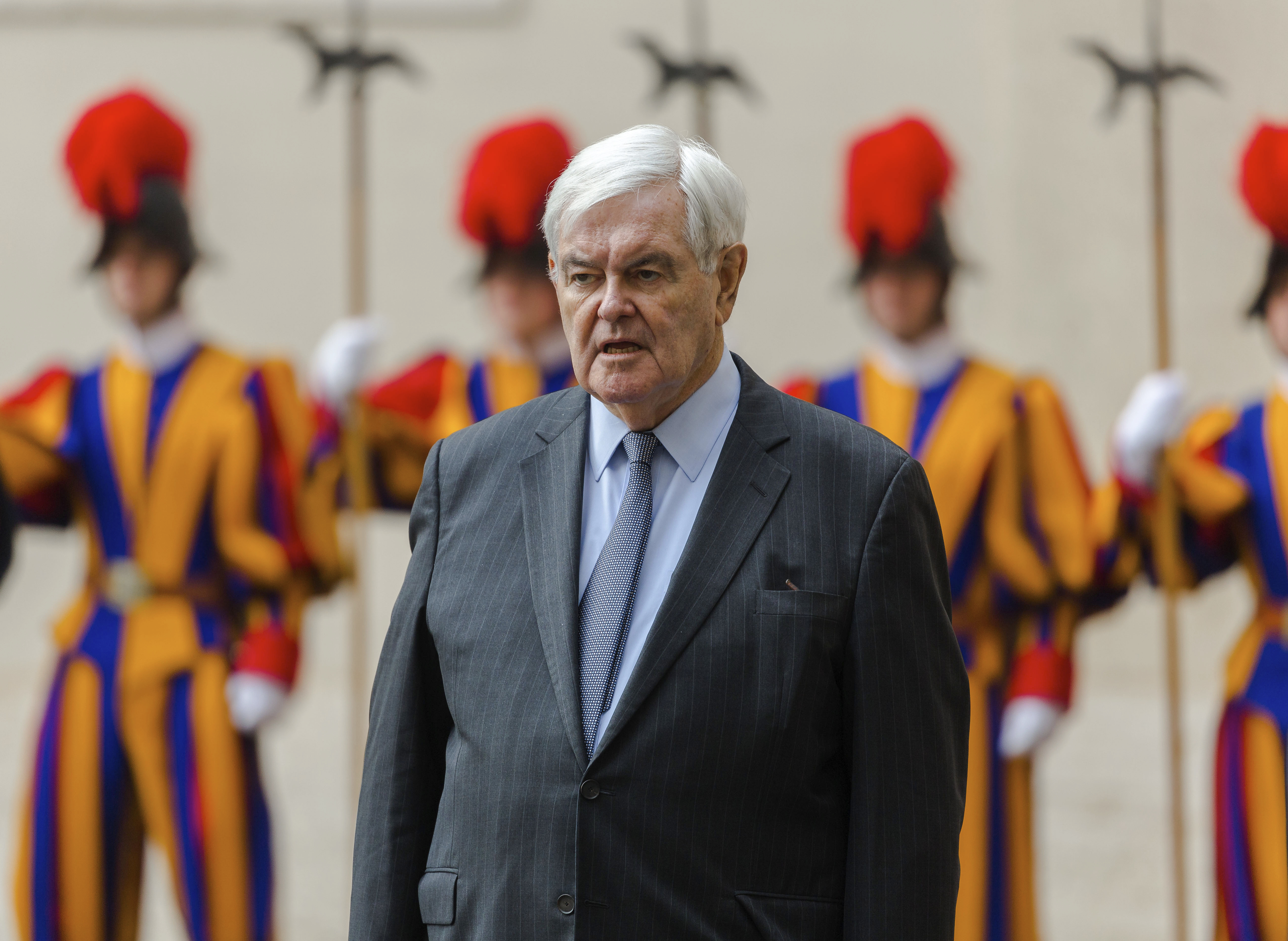
Former House Speaker Newt Gingrich stands as he waits for an audience with Pope Francis in 2020. Gingrich swept away four decades of Democratic House rule with the “Contract with America” in 1994.
With many voters tired of political division that gets nothing accomplished, yet strongly divided themselves over what issues they value most, the U.S. should consider whether the big tent politics of the past are still relevant, or whether it’s time to move beyond a two-party system.
In Europe, countries like France and Great Britain have already undergone this shift.
In Germany, where I’m from, there was a strict three-party system after World War II, with the Liberals often serving as power brokers between Conservatives and Social Democrats. In 1983, the Greens made it into the federal parliament, or Bundestag, paving the way for the first real left-wing coalition between Social Democrats and Greens in 1998.
Through the coalition, the Greens were able to negotiate a gradual end to nuclear power. The party also introduced incentives for investments into renewable energy as well as an ecological tax on fossil fuels — along with taking the first step toward marriage equality for gay couples.
After German reunification, the successor of East Germany’s state party united with a separatist movement of the Social Democrats, forming another strong contender left of the established spectrum that put heavy societal pressure on the introduction of a minimum wage, rent freezes in metropolitan areas, and a renewed focus on subsidized and public housing.
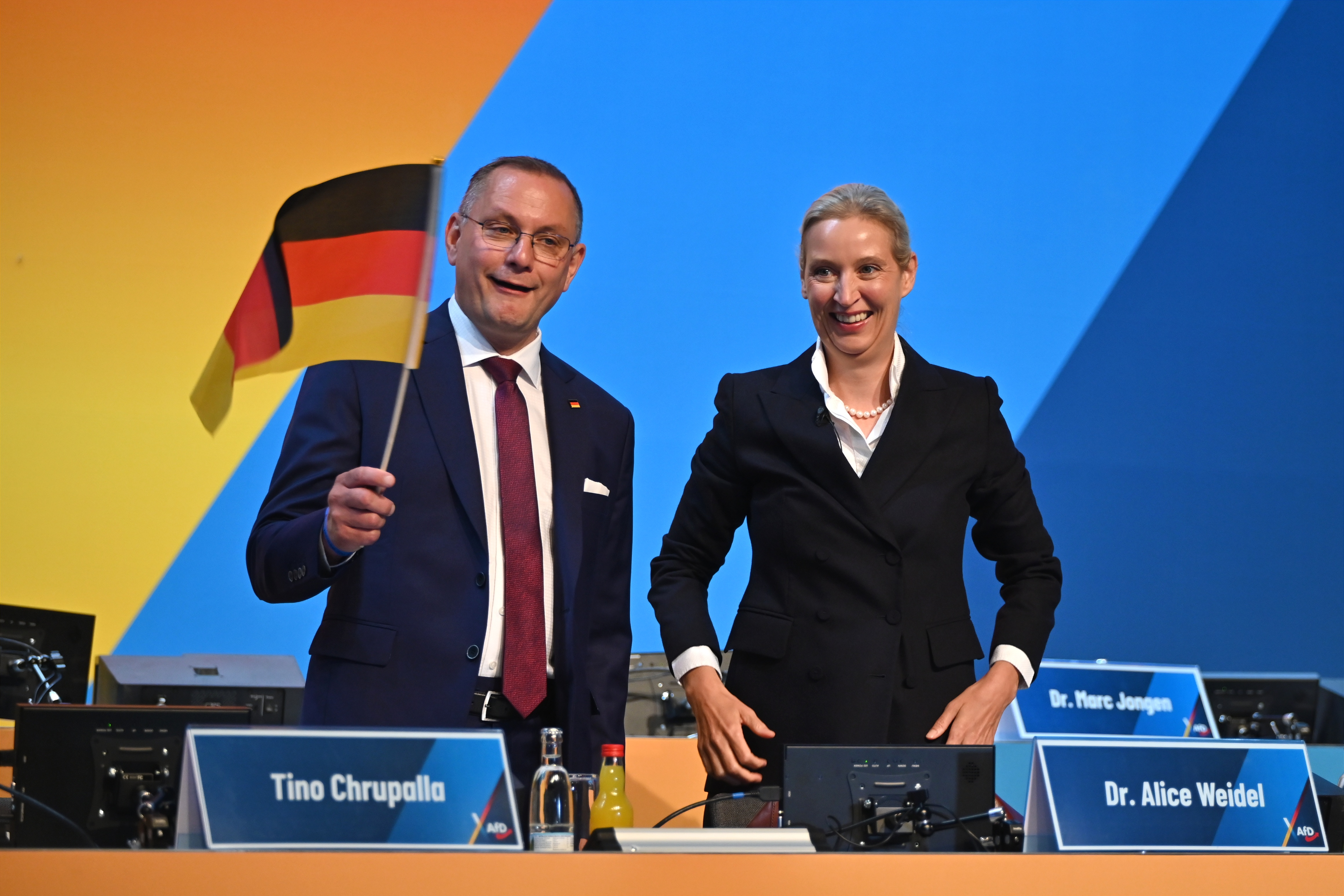
Most recently, the Alternative für Deutschland, or AfD, keeps shaking up the system with its MAGA-influenced right-wing approach, being especially successful in the German east and being on track of having its first prime minister at the state level this fall. Even without a majority, the AfD’s growing electoral gains have already led to stricter border security and asylum policies by the other parties.
Alice Weidel (right), group leader of the Alternative für Deutschland, and Tino Chrupalla, chairman of the AfD, attend the AfD party convention at the Erfurt Exhibition Centre in Erfurt, Germany, in July.Katharina Kausche
There are currently five major parties represented in the Bundestag, while many smaller parties are involved in local governments across the country. Those are a lot of options for a country just short of 85 million people.
Meanwhile, in the U.S., there are 350 million people coming from all walks of life and facing a host of local issues that often get lost in the push for nationalized politics. Having multiple parties would give voters more choices and solve problems more effectively while weakening polarization.
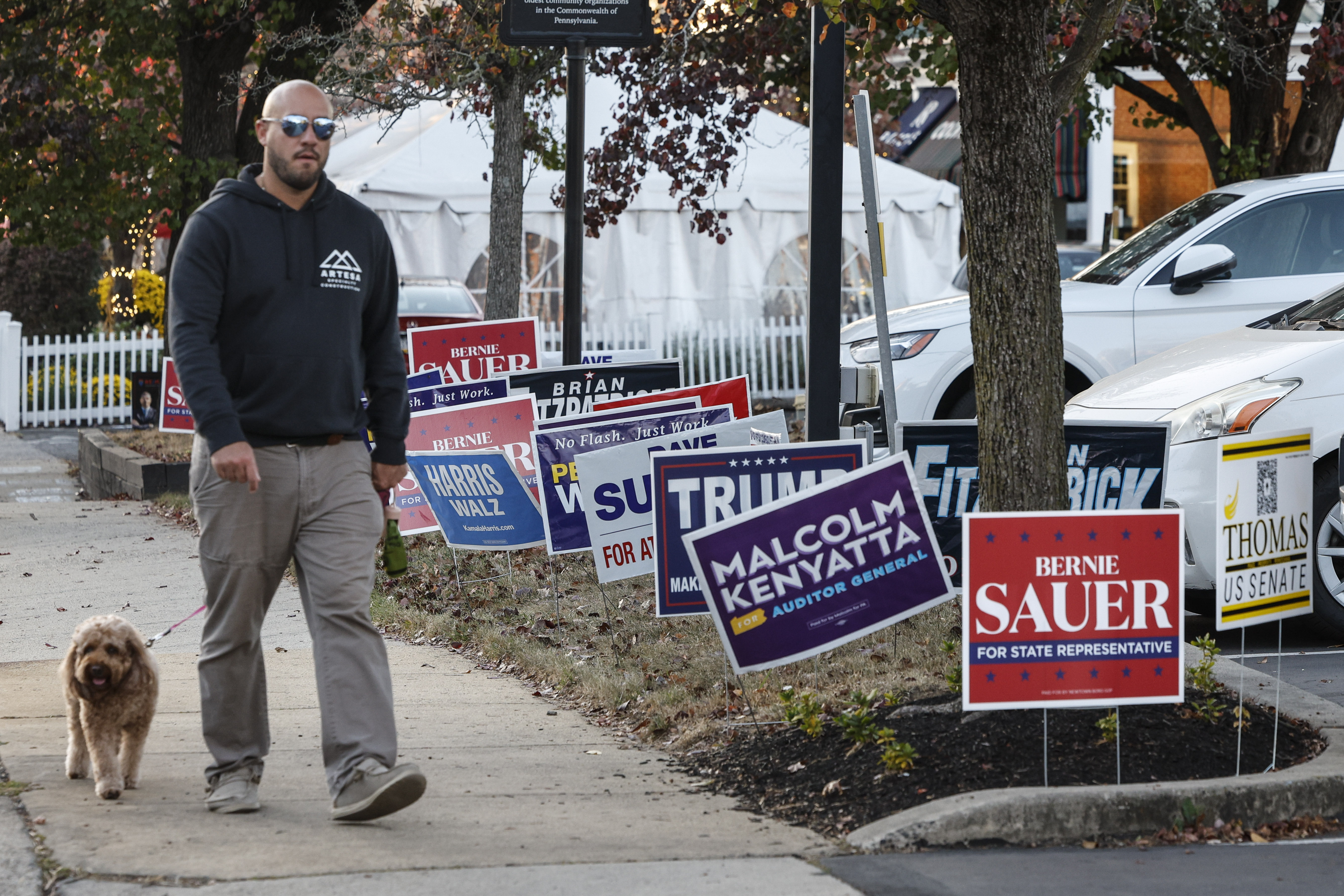
For example, here in Pennsylvania, environmentalists and proponents of Big Tech could compromise over data center regulations that protect communities while still making way for artificial intelligence development. Progressive Democrats and union-backed Republicans like Brian Fitzpatrick and moderate Rob Bresnahan could work out solutions for the structural changes of the former coal and steel regions of the state.
Of course, having more than two parties wouldn’t magically solve all problems, but it could broaden democratic competition and debate, give minorities more of a voice, and even help the GOP and the Democrats come together.
Yes, there would be fewer people under their respective tents, but the major parties would be able to focus on their own raison d’être again, since it’s impossible to stand for something when you’re trying to stand for everything.
The United States is a huge country with impressive diversity — it’s time to have a party system that reflects this.
Wim Orth is a journalist with WELT in Berlin and an Arthur F. Burns fellow at The Inquirer.
For anyone who noticed I was gone, I’m back. It was a weird two weeks of flex time — half vacation, including jaunts to a couple of Jersey Shore points (see below) and an OG family reunion in the Hudson Valley, and half working on my biggest investigative reporting project in several years. It’s coming very soon. Stay tuned.
On the 25th anniversary of 9/11, anti-Islamic hate is getting worse
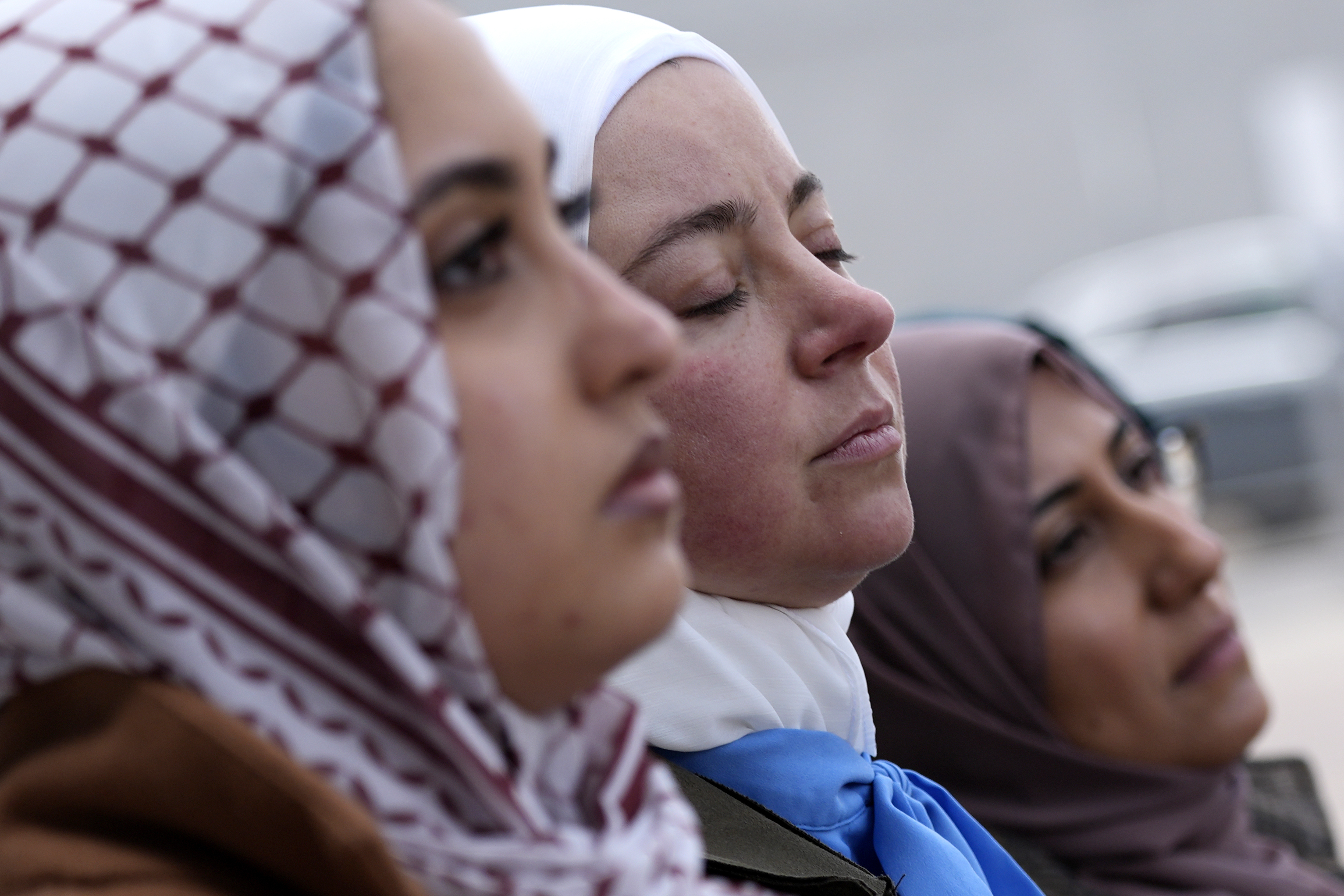
Amina Barhumi (center), the advocacy and policy lead of the Muslim Civic Coalition, prays with members of the Council on American-Islamic Relations outside the Will County Courthouse in Joliet, Ill., where a jury found defendant Joseph Czuba guilty of murder and hate crime charges in February 2025.Nam Y. Huh
The footprints of the World Trade Center’s twin towers are now a memorial attached to a well-attended museum. Osama bin Laden is dead, and the last U.S. combat troops finally left Afghanistan five years ago. But there is one thing that spiked immediately after the attack and never really went away.
In fact, anti-Islamic hate is a bigger force in our politics than it ever was. Republicans, desperate to cling to power in an election when all the cards — including another “dumb war” in the Middle East and sky-high gas prices — are stacked against them, are frantically waving the bloody shirt of 9/11 and the Islamophobia it inspired.
You can see it in Lower Manhattan, where the man who was New York City’s mayor in 2001, Rudy Giuliani, is now saying that the idea of the current mayor — Zohran Mamdani, the first Muslim American to hold the post, who was only 9 years old on the morning of the attack — attending the 9/11 memorial ceremony “offends me.” His comments were part of a bigger racist diatribe that somehow tied Mamdani to a Muslim plot aimed at “taking over certain parts of America and certain parts of Europe.”
You can see it in Michigan, where a wave of anti-Muslim hate has surged after an Islamic doctor and public health expert, Abdul El-Sayed, won the Democratic primary for U.S. Senate. This includes events like “the Christian Crusader March” organized by the Donald Trump-pardoned Jan. 6, 2021, insurrectionist Jack Lang, which flooded the city council of majority-Muslim Dearborn with anti-Islam placards and even a Nazi flag.
And you can read all about it when a sitting congressman like Tennessee’s Andy Ogles has no problem taking to the cesspool of Elon Musk-owned X last March to write that “Muslims don’t belong in American society.” The fact that the fanatically pro-Trump Ogles lost his GOP primary a couple of months later could have been a warning to his fellow Republicans to dial it back, but few seem to have gotten the memo as Sept. 11, 2026, arrives.
To be clear, I don’t believe Islamophobia is the only permanent scar from the day the United States was attacked by four planes and their 19 hijackers who were followers of bin Laden’s Islamist brand of extremism. It’s been five years — although it feels like yesterday — since the 20th anniversary of the attacks, when I wrote that the fear and loathing of the 9/11 aftermath hadn’t evaporated but instead metastasized.
I could write that exact same column today … so I won’t. The role the attack played in pointing America toward fascism hasn’t changed, but it is striking after five more years that while many overt symptoms of a 9/11 hangover have subsided over the years, the virus of Islamophobia has only grown more persistent.
Prejudice toward Muslims existed, of course, yet it exploded after the attacks on the World Trade Center, the Pentagon, and the fourth jetliner that crashed in Shanksville, Pa., in ways both large and small.
Large: On Sept. 15, 2001, a Dallas-area neo-Nazi killed a Pakistani immigrant working in a convenience store — the same day a Sikh native of India was also murdered at a Mesa, Ariz., gas station by a man who believed the victim was Muslim. Smaller but not insignificant: Islamic schoolchildren from coast to coast were bullied and slurred by classmates who called them “terrorists” or just “Osama.”
At the highest levels of the U.S. government, there was schizophrenia. Many recall that the president, George W. Bush, visited the Islamic Center of Washington, D.C., to insist that U.S. Muslims “love America as much as I do,” had no connection to the foreign extremists, and that “Islam is peace.”
Less well-remembered is the federal operation that targeted thousands of Muslims and South Asians — especially men under the age of 45 — in the weeks immediately after the attacks. They were detained, interrogated, fingerprinted, or subjected to deportation proceedings.
In a new piece, the “war on terror” historian Spencer Ackerman chronicled how agents went through a Brooklyn neighborhood known as Little Pakistan, dropping cards under doors with instructions such as: “This is the FBI. This is the INS. This is the NYPD. We need to talk. I have questions. Call me. ASAP.” It’s believed that thousands found the post 9/11-climate so hostile that they left Little Pakistan … and the United States.
Islamophobia has managed to both persist and change over the last quarter century. Certainly one can’t imagine Trump going to a mosque and acknowledging that Islam is a peaceful religion; the man who entered national politics by calling for — and partially enacting — a “Muslim ban” just last month labeled Democratic candidates in the midterms as “jihadists.” Today, the fish stinks from the head, and those middle-school punks who called their classmates “terrorists” are all grown up and running for office in November.
To some extent, it’s one step up and one step back for American Muslims. The stunning success of Mamdani, who’s more popular than ever after eight months in City Hall, and the rise of El-Sayed and other mostly progressive young Muslim American politicians is a next chapter of immigrant success that seems to have rattled the ancient U.S. hierarchies around race and religion.
But mostly it feels like Republicans — seeing that the crowd doesn’t want to hear the new stuff like the Iran war or data centers — have reverted to playing the hits, like railing against “men in women’s sports” in a desperate bid to get an unearned encore.
That’s pathetic yet predictable, but one thing I find appalling is that a news media that ought to know better keeps going along with this malarkey. That includes grilling every Democrat who appears on TV about what they think about a Turkish American Twitch streamer named Hasan Piker, even as most voters have never heard of Piker while some subjects of these inquisitions have never met him.
Last week, CBS News — purchased by a pro-Trump billionaire who put the over-her-head conservative opinion writer Bari Weiss in charge — ran one of the most irresponsible pieces of journalism I’ve ever read, implying there was something sinister about El-Sayed’s anodyne early 2020 social media comments that America should take the coronavirus seriously because it had killed (at that time) as many people as died on 9/11. One CBS staffer told the website Status that the dubious hit piece on El-Sayed was “shameful,” adding, “The racism is overt.”
The staffer was being kind.
Someday — hopefully in my lifetime — there’ll be a U.S. president who won’t only call Islam a religion of peace, but will also stop dropping bombs on Muslim countries. Until then, demagogues are going to demagogue, but the media needs to be calling out the racists, not empowering them. If we keep giving in to our worst instincts, then — as folks used to say 25 years ago — the terrorists will have won.
Yo, do this!
One reason my two-week hiatus passed so quickly was that I immersed myself (and thus finished too quickly, perhaps) in this month’s riveting audiobook, Housewives of the Underground: The Untold Story of the Women Who Made the JFK Assassination Our Most Enduring Mystery by the Atlantic writer Kaitlyn Tiffany. The book tells the story of how the majority of Americans came to doubt the Warren Commission’s official story of John F. Kennedy’s 1963 murder in Dallas through the persistence of very average citizens — including the three middle- or nearing-middle-age women of the 1960s at the center of Tiffany’s compelling narrative. This is not “another Kennedy assassination book,” but rather a robust and much-needed tale about regular folks successfully challenging their government to do better that resonates in the Trump era.
I did somehow find time to make the short drive (90 minutes from Center City Philadelphia) to Long Branch, N.J., for a Bruce Springsteen pilgrimage centered on a visit to the new and impressive Bruce Springsteen Center for American Music. It was just our luck that our tickets were for the day afterthe Jersey rock icon stunned fans with a surprise visit there (and also popped on stage that night at Asbury Park’s Stone Pony). But the collection of artifacts — amplified by a film and listening booths, and illuminating not only Springsteen’s 60-year career, but the artists from soul, country, and early rock ‘n’ roll who inspired a legend — is well worth the trip. Augment the day, as we did, with a trip to Asbury Park’s revived boardwalk and a drive-by of Bruce’s childhood homes in nearby Freehold. Bonus: Springsteen’s remarkable “Land of Hope and Dreams” show that wrapped up his 2026 tour at Philadelphia’s Xfinity Mobile Center in May was recorded for a full-length film that begins streaming Wednesday!
Ask me anything
Question: Given the current outbreak of measles in Pennsylvania and the start of the school year, how long will it be until the first case of polio is diagnosed? — @mcsween66.bsky.social via Bluesky
Answer: Hopefully a long time, or never, although polio has not been completely eradicated and there was a case earlier this year in Rockland County, N.Y. (here’s a good explainer of how that happened and what it means). Experts are right to be worried if low U.S. vaccination rates persist. But right now I’m more worried about something else that your question hints at: a stunning lack of information about the measles outbreak in Lancaster County, which seems to have caused two deaths, and which I know much more about from reading an article in the Atlantic than from our public health officials. At the core of this seems to be the politics of a Democratic governor in Josh Shapiro and a Trump-y GOP, including the elected county coroner in Lancaster County as well as in Washington. Public health is way too important to get tangled up in political spin.
What you’re saying about …
My question from late August about transgender politics in the November election drew a spirited response from readers, most of whom agree with me that Democrats should openly embrace transgender rights and not either run away or equivocate on the issue. The most passionate response came from Zoë Sparks, a transgender woman, who wrote it would be best for Dems if they “stood up boldly, made it an issue of civil rights, pointed out that history, statistics, science, and medicine are all on our side and MAGA has only fake history, fake statistics, pseudoscience, and quack medicine in their favor …” But Arlene Stach argued that it’s commonsense politics to support keeping transgender athletes who were born with male biology out of women’s sports. She wrote, “If the Democrats think this will win for them, they are mistaken!”
📮 This week’s question: The passage of Labor Day means it will be Election Day in what will feel like the blink of an eye. Democrats seem all but certain to gain at least the handful of seats needed to retake the House, but the Senate is up for grabs. Do you think Dems will win at least 51 Senate seats, and why? What are the key races? Please email me your answer and put the exact phrase “a Democratic Senate” in the subject line.
Backstory on the mysterious masked men of Dover
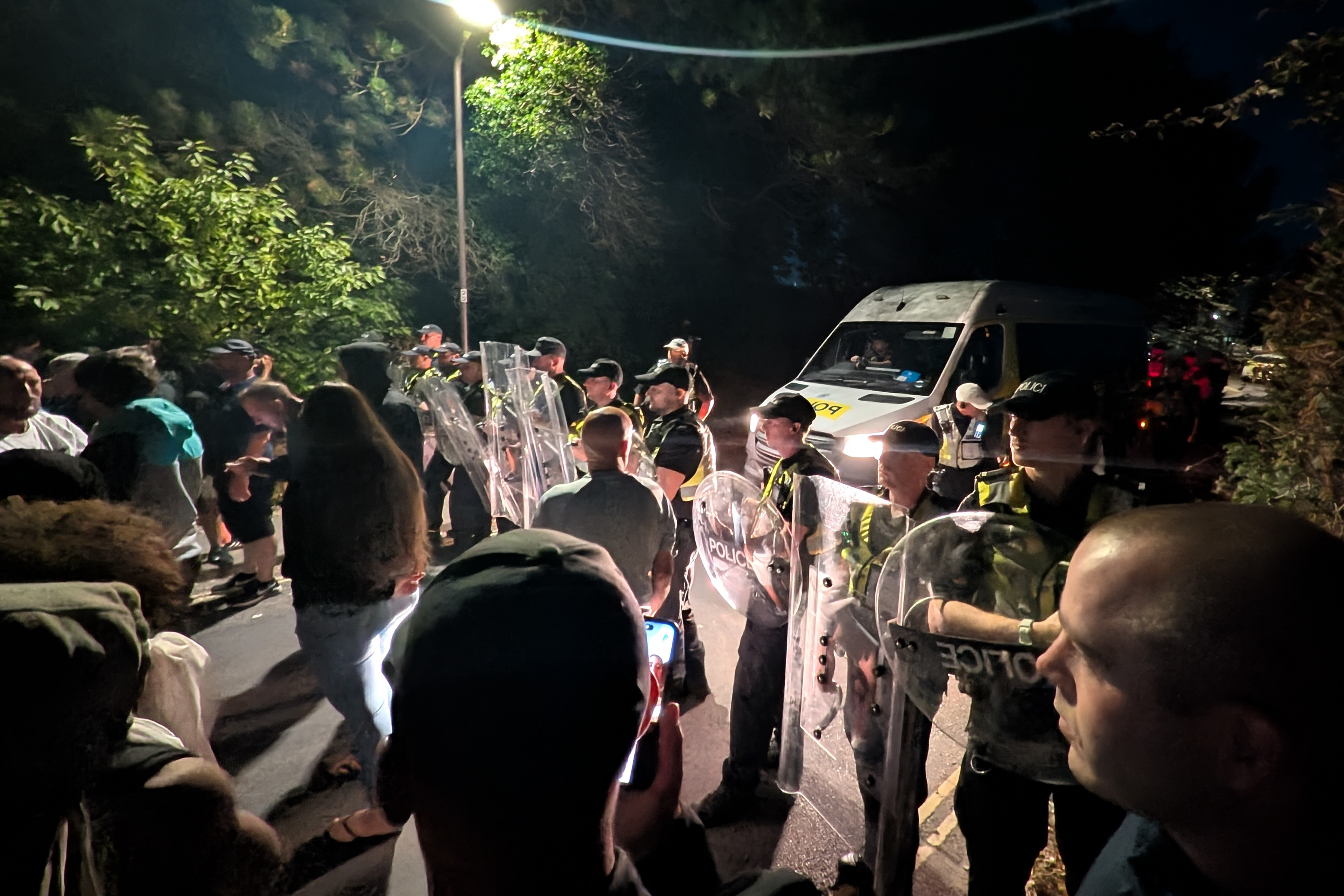
Police officers form a line to block protesters near Eastney Beach, in Portsmouth, England, on Sunday.PA
The myth that nothing ever happens on Labor Day weekend was punctured repeatedly in 2026, including the gruesome Miami crash of a cargo jetliner that killed five people on the ground and an armed man lunging at Ohio Democratic gubernatorial candidate Amy Acton at a campaign event. But the weekend’s most puzzling and arguably most alarming news was barely covered on American television: the sudden appearance in two British port cities — Dover and Portsmouth — of hundreds of black-clad, right-wing male protesters, their heads covered in balaclavas, there to cause chaos and protest the arrival of migrant boats.
The mysterious men — eventually tied to a self-proclaimed Christian group called the Patriot Platform, led by a former associate of the anti-Islamic, far-right political activist Tommy Robinson — attempted to block lifeboats carrying migrants from landing, and also tried to blockade their buses once on shore, while snarling local traffic as Dover’s famed white cliffs loomed in the background. The protests were a dramatic public illustration of the rising tide of right-wing reaction — much of it xenophobic rage over refugees — that has increasingly roiled politics in the United Kingdom, posing a threat to the milquetoast, inept Labour government.
But, in the spirit of the U.K.’s most famous fictional detective Sherlock Holmes, the real mystery along the British seacoast was the dog that did not bark. Although police did eventually restore order in the two port cities, the authorities were painfully slow to respond to such a large-scale civil disturbance, and few or no arrests were made. That’s in stark contrast to the frequent images over the last year of grandmothers and other peaceful, placard-carrying protesters getting dragged away by British bobbies when protesting for a free Palestine.
The reaction from the government of new Labour Prime Minister Andy Burnham was equally languid. A Burnham spokesperson, pressed by a reporter for a political response, would only call the shocking protests “an operational matter for the police to set out their response to the protests on the ground. So I will leave them to respond to that.” Winston Churchill, who (despite his many flaws) famously promised to fight fascists “on the beaches,” must have been spinning in his grave.
Speaking of Nazis, the protests and the sudden police embrace of pacifism coincided with a regional victory in a battered former industrial corner of eastern Germany for the extreme right AfD (Alternative for Germany) Party, the unholy heirs to Adolf Hitler’s legacy. This weekend’s echoes of Western Europe’s failed appeasement of the Nazis in the late 1930s are almost as troubling as the thuggish extremism itself. The coddling needs to end, or else we are condemned to repeat the absolute worst of our past.
What I wrote on this date in 2016
The protests in South Dakota, led by its Indigenous people, against the Dakota Access oil pipeline that erupted in the late summer of 2016 were a peak moment of 2010s political activism, and a lost cause (the pipeline opened the following year, after Donald Trump became president) that was totally worth fighting for. On this date 10 years ago, I was crusading — also unsuccessfully — for the Pennsylvania State Employees’ Retirement System (PSERS) to drop its roughly $192 million investment in the pipeline owner. I wrote, “Pennsylvania doesn’t have a great track record of environmental leadership — but there’s no reason why that history can’t be altered.”
I’ve mentioned it before in this space, but no one has done more to keep the tradition of the great American sports columnist alive than The Inquirer’s Mike Sielski. Last week he published a remarkable — and remarkably timely — deep dive into the case of a then-19-year-old from Pennsylvania Amish country whose addiction to online sports gambling and social isolation led him to make a bomb threat against the U.S. Open tennis tournament. The case was hardly an isolated incident, but the hallmark of an alarming trend: the growing number of threats not just against major sporting events but individual athletes, as more and more people — especially vulnerable young men like the one Sielski chronicles here — get addicted to the ubiquitous, heavily advertised betting sites. The piece is a reminder that great storytelling doesn’t need to be a dying art — but also that in-depth journalism requires time and your support. You provide that — and get some great reads in return — when you subscribe to The Inquirer.
By submitting your written, visual, and/or audio contributions, you agree to The Inquirer’s Terms of Use, including the grant of rights in Section 10.
We have never had so many ways to speak. Yet rarely has speaking felt so fraught.
A defining feature of this moment in history is its extraordinary capacity for speech. Social media offers direct pathways to audiences. Generative tools can now help us refine our own voices. The barriers to speaking have never been lower.
But the expansion of our ability to speak has not necessarily strengthened the conditions for free expression or led to more meaningful exchange. The same technologies that connect us to vast audiences also keep us within communities of shared views. And even as avenues for expression have multiplied, many Americans feel less certain that they can speak freely.
Just 54% say they feel “very” or “mostly” free to express their political views without government interference or punishment. Asked to think back 10 years, 72% said they had felt that free. Looking ahead 10 years, only 42% expect to. While some among us may feel this more or less acutely than others, the pessimistic outlook holds across a host of different demographic and partisan groups.
There may be more ways to speak than ever, but Americans are increasingly uncertain about participating in our nation’s public conversation. This should alarm us all.
The First Amendment protects our right to speak, but free expression also depends on venues where people can actually use that right. In recent decades, we have invested enormously in technologies that increase the quantity of expression while neglecting the places — whether civic institutions, public spaces, or so-called third places — where we cultivate social trust. The spaces where constitutional rights grow into habits of forthrightness, curiosity, listening, and mutual respect; where we learn to recognize one another as participants in a shared civic life.
The First Amendment gives us the framework. It’s up to us to foster the spaces where it comes to life.
Critical infrastructure
Our civic institutions are part of the critical infrastructure of free expression. They create opportunities for discovery and encounters that enrich our understanding. Museums invite us into the complexity of the past, revealing the stories, context, and perspectives that give history texture and meaning. Universities bring competing ideas into conversation and subject them to scrutiny, an aspiration that has always been messier in practice than in principle. Libraries give us the freedom to follow our curiosity, pursue knowledge on our own terms, and venture beyond the familiar. Where they still exist, local newsrooms surface stories that might otherwise go untold.
None of these institutions gets it right every time. But their value lies partly in creating environments that welcome people in while making room for the friction that meaningful inquiry inevitably produces: disagreement, challenge, surprise, and sometimes a change of mind.
The same technologies that connect us to vast audiences also keep us within communities of shared views.
The information economy generated enormous investment in the technologies that have reshaped our civic life. But investment in the institutions that help us make sense of these changes has not kept pace.
Philanthropy has an important role in this work. It can invest where markets won’t and governments can’t. It can absorb the risk that comes with genuine experimentation in new approaches to civic learning and engagement. It can identify and bring to scale emerging, community-led models that renew the institutions, relationships, and face-to-face experiences that remain essential to democratic life, even as more of our lives move online. And it can help institutions lower barriers and welcome new audiences.
A new partnership between the National Constitution Center and Knight Foundation is one effort to put these ideas into practice. On Wednesday, the center will host its inaugural First Amendment Day, inviting visitors to explore our expressive freedoms through history, conversation, creativity, and civic engagement. They will have opportunities to exercise their own rights, encounter the perspectives of others, and join conversations about the changing landscape of speech being shaped by new technologies. Later that evening, Govs. Josh Shapiro (D., Pa.) and Spencer Cox (R., Utah) will discuss free expression and civic dialogue at the Kimmel Center. And to ensure this special programming is available to as many people as possible, admission is free to all.
The goal is not simply to teach what the First Amendment says, but to practice the culture it makes possible.
Philadelphia has a rich history of civic discourse and debate. It is here that these ideas took root. The Civic Decade ahead, as we celebrate the 250th anniversaries of the Constitution and the Bill of Rights, offers us a chance to invest anew in our institutions of self-government. Building a culture of free expression should be part of that work.
We have more ways to speak than any generation before us. We must be just as ambitious about nurturing the spaces that remind us not to take our First Amendment rights for granted.
Julie Silverbrook is the chief content and learning officer of the National Constitution Center. John Sands is vice president of information and society at the John S. and James L. Knight Foundation.
Like every American who lived that fateful day, I can vividly remember where I was on Sept. 11, 2001.
I was in the middle of chairing a hearing as a city civil service commissioner when my administrative assistant burst into the room. She told me a plane had hit the World Trade Center in New York. I postponed the hearing immediately.
But unlike millions of Americans who were frozen in place watching the heartbreaking visuals of the second plane hitting the second tower, I was already on the phone with the Philadelphia Police Department, the Philadelphia School District,and the Human Relations Commission.
I knew there would be an immediate backlash against the Arab and Muslim American community.
Like every other minority community in this country’s history, our community knew too well the playbook that isdeployed following a tragedy. The provocations from talking heads on television, the incendiary questions expedited by the broader 24/7 media landscape, even the inflammatory comments made by elected officials —the very people who weresupposed to protect us.
I could see it coming. In America, we always search for an enemy to blame, and sadly, on Sept. 11, 2001, Arab and Muslim Americans were the ones unfairly blamed.
In those first few days, thanks in part to our partners in law enforcement and our wider community outreach, we managed to head off the worst of it for the Arab and Muslim American community in Philadelphia. We had some threats and attacks on stores, and some people were targeted with violence. But even thoughthat was horrific and traumatizing, in comparison to others, inPhiladelphia our community was surprisingly fortunate.
Across the country, Arab American businesses and mosques were literally burned to the ground. Arab Americans were arrested, and some were held for a long period of time without charge. Other Arab Americans —and those perceived to be Arab — faced targeted violence and,horrifically, a few people were murdered.
These serious hate crimes and attacks by both lone actors and, sadly, also the government, were widely underreported by the media, then and now. Our community still feels that pain every day.
We weren’t even given the time to mourn the tragedy ourselves,including the many victims on 9/11 who themselves were Arab and Muslim Americans.
While our country mourned the thousands dead in New York, we as Arab Americans also had to mourn our place in American society,which has never recovered. It was the way the country changed after 9/11 that has been so difficult for our community. It was a transformation that hit every American, but it felt targeted at us.
The response to 9/11 fundamentally shifted what the U.S. stood for. We were dragged into two devastating wars, first in Afghanistan, and then in Iraq. Those conflicts took hundreds of thousands of innocent Afghan and Iraqi lives and thousands of our own soldiers.
Then came the Transportation Security Administration, a government organization that utilized racial profiling in what never once felt like “random” checks.
The Patriot Act expanded government spying into the private lives of all Americans, but particularly Arab and Muslim Americans, who faced extraordinary government surveillance.
Other law enforcement agencies followed, with their own prejudiced practices, especially the New York Police Department, whichstarted sending undercover agents into mosques to record worship services. Their “Demographic Unit” went to gatherings, restaurants, and clubs to survey the community. They made lists of our businesses and started infiltrating student groups.
On top of that, the federal government started the NSEERS program, forcing thousands of men visiting the U.S. from Muslim-majority countries to be fingerprinted and registered like criminals. No terrorists were found among those profiled.
We also now know the extent to which the government used torture against mainly Arab and Muslim prisoners at black sites, and most notoriously at Guantánamo Bay. We now know that many of those prisoners were innocent and had nothing to do with 9/11, let alone al-Qaeda. That didn’t stop theCIA and its contractors, all of whom escaped justice for their role in the torture program, from using waterboarding and extraordinary rendition on these prisoners, all while denying their basic rights.
After 9/11, if you were Arab or Muslim, there was no such thing as being innocent until proven guilty anymore.
Even now, more than a dozen men are still sitting in Guantánamo Bay without ever facing a trial, due in part to the very torture program the government once tried to say was necessary.
And in the decades since, some things have gotten worse.
There continue to be travel bans targeting people from predominantlyArab and Muslim nations.
Groups in places like Texas are trying to ban Sharia law — a grotesque, Islamophobic distortion that pretends Sharia is a legal system challenging the Constitution rather than a set of guidelines for moral and ethical conduct in a religious context.
And attempts to silence and censure Arab American voices, particularly on issues like Palestine, continue at universities, corporations, and state capitals across the country.
It hasn’t all been dark, though.
The pressure our community has faced since 2001 has made us stronger in a lot of ways. It forced us to build real, lasting ties with our religious allies, especially our Jewish and Christian neighbors. That’s how the Interfaith Center of Philadelphia got its start.
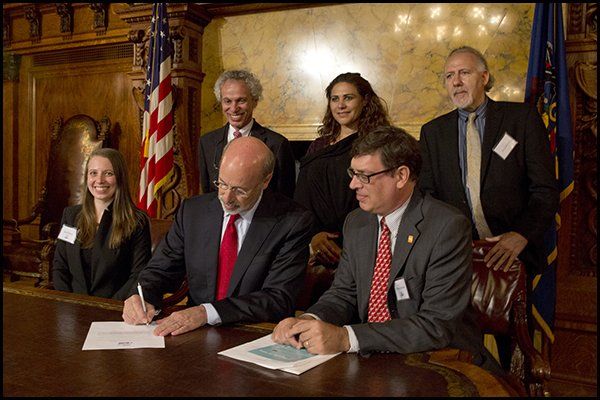
The author (seated at right) watches Gov. Tom Wolf sign “The Pledge to Combat Bigotry,” a public commitment to speak out against bigotry toward Muslims and Arabs, in Harrisburg on Sept. 30, 2015.Courtesy of Marwan Kreidie
It solidified our political presence, too.
Now, we have more leaders than ever standing up for our inclusion in the city and the state. Many elected leaders have rallied to support us, and our community has the greatest number of people elected to local, state, and federal offices we’ve ever seen.
By working together with allies to make the U.S. freer, and toprotect the importance of what it means to be an American citizen, Sept. 11 showed the resilience of our community.
I could not be prouder of that.
Twenty-five years ago, even as those terrorists tried to break us, and others inside our own country tried to divide us, America prevailed.
We nearly lost our democracy on that fateful day, as our democratic system was hijacked in the name of “security.” But we, as Americans, came together.
And today we must continue to live the words of the great Benjamin Franklin: “Those who would give up essential liberty, to purchase a little temporary safety, deserve neither liberty nor safety.”
Marwan Kreidie teaches political science at West Chester University and is the executive director of the Philadelphia Arab-American Development Corps.
With Labor Day passed, the sprint is on to Election Day.
But unlike in prior years, when voters looked to candidates for answers on the economy, taxes, healthcare, and foreign policy, the biggest question is whether the United States will hold a free and fair election and certify the winners.
That’s because President Donald Trump is doing everything he can to cast doubt on the electoral outcome or possibly reject the results — if the Democrats win control of either or both chambers of Congress.
Of course, if the Republicans retain control of the House and Senate, well, then never mind. Under that scenario, the Trump-led effort to gerrymander congressional districts, seize ballots, suppress mail voting, curtail voter access through executive orders, gut election security agencies, send federal agents to the polls, and other efforts will have resulted in a “perfect” election.
But if the Republicans lose either the House or Senate, brace yourself for chaos.
This should not surprise anyone who endured Trump’s relentless efforts to overturn the 2020 presidential election that culminated in the Jan. 6, 2021, insurrection. Recall that he was criminally indicted for that ugly plot against the will of the people.
Hundreds of insurrectionists — inspired by Trump’s repeated election lies — were charged with or convicted of crimes related to that violent day that will forever be a stain on American history.
Trump freed them all on his first day back in office, including those who attacked police officers. He also pardoned several key election deniers who worked on his behalf, including disgraced former New York Mayor Rudy Giuliani, election dirty trickster Roger Stone, and many others.
Sadly, 2020 may just be a warm-up compared with 2026.
This time around, dozens of county officials in charge of elections in key states like Virginia, Ohio, and Nevada are election deniers.
Pennsylvania is home to more election deniers in office than any other state in the country, according to a recent report by the States United Democracy Center, a nonpartisan organization dedicated to free, fair, and secure elections.
The report found 86 election deniers in the Pennsylvania General Assembly, including nearly half of the state Senate and a third of the House. Many played a role in efforts to subvert the 2020 contest.
Voters have an opportunity to remove the election-denying tumor from the body politic on Nov. 3, when all the state House members and half the state Senate in Harrisburg are on the ballot.
The same goes for Congress. Several Pennsylvania representatives who are election deniers are also on the ballot, including Dan Meuser, Scott Perry, Lloyd Smucker, John Joyce, Guy Reschenthaler, Glenn “GT” Thompson, and Mike Kelly.
The entire Republican congressional delegation — including U.S. Rep. Brian Fitzpatrick — voted for the so-called Safeguard American Voter Eligibility (SAVE) Act.
U.S. Sen. Dave McCormick (R., Pa.) has been one of the biggest champions of the legislation, along with Trump. Yet, despite Trump’s relentless pressure campaign, there was not enough support in the Republican-controlled Senate to pass it.
The measure is dead for now. But the best way to secure future elections is to vote out the election deniers.
Until then, the next few months before and after the election will be a major stress test for election integrity across the country.
With no real accountability for his past un-American actions, Trump is more emboldened to do whatever it takes to keep Republicans in control. (He has a strong partner in the conservative majority on the U.S. Supreme Court that has actively dismantled voting rights and handed Trump broad immunity from his crimes.)
Trump is not acting out of allegiance to GOP members running for office. He cares only about retaining his own power. Like Humphrey Bogart in Casablanca, Trump sticks his neck out for nobody — least of all his loyal MAGA voters.
The president fears that if Democrats take control of the House or Senate, there will be investigations into his rampant corruption, which includes self-dealing schemes that enabled him to make more than $2 billion during his first year back in office.
GOP lawmakers have also done little to nothing about affordability issues, the failed war in Iran, deportation abuses, and the U.S. Department of Justice’s upending of the rule of law.
For those fed up with the direction of the country under Trump, there is only one answer: Vote the bums out.
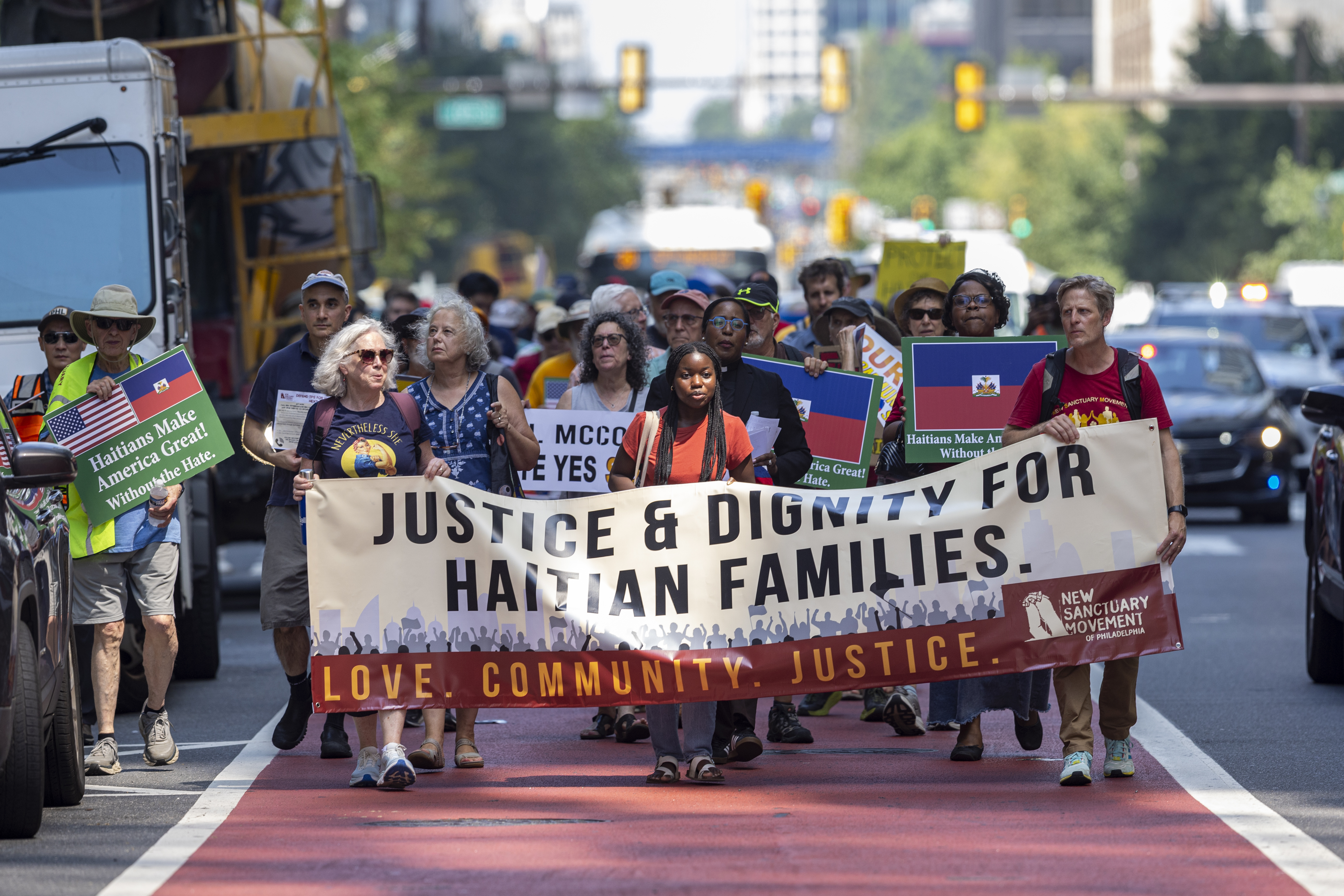
It was through tears and outrage that I read about Pierre Damas Bel, a 20-year-old Haitian college student who had to wear an ankle monitor after his Temporary Protected Status was terminated. As a result of feeling deep humiliation and shame, and then having to suffer bullying by his insensitive classmates, he died by suicide. It was so heartbreaking to read how cruel immigration authorities were by not removing the monitor after he begged them to do so.
Here was a young man who was completely integrated into the American way of life, doing everything right, and living the life any aspiring American student would be living. He was an honors student, played soccer, and joined JROTC. He hoped to become a doctor. Instead, he had his heart ripped out by Donald Trump’s cruel racist policies. There is and never was any “migrant crisis” in this country. It is all a manufactured racist fantasy created by Trump, who has not been shy about his contempt for people of color. The president has blood on his hands and is directly responsible for what happens to any of the 350,000 Haitians who wait to be sent back to a politically volatile and gang-ridden country where they could be kidnapped or killed.
Judy Rubin, Philadelphia
Who’s targeted?
When I hear that U.S. Immigration and Customs Enforcement is targeting the “worst of the worst” among undocumented immigrants in this country, I think of murderers, rapists, child molesters — people who clearly should be taken off the streets and deported. A recent letter by reader Mark Fenstermaker chided the media for failing to recognize the success of ICE in removing dangerous criminals from our communities. He points to a list maintained by the U.S. Department of Homeland Security of more than 40,000 aliens arrested by ICE, which is literally entitled “Worst of the Worst.”
I looked at that list, and it includes many people whose only crime is joyriding, illegal reentry, or some other civil immigration violation, all nonviolent and noncriminal offenses. Furthermore, the ICE list is of people arrested, not necessarily tried and convicted after due process hearings. A recent article noted that ICE has arrested more than half a million people during Donald Trump’s second term, and nearly 40% do not have a criminal record. Under Trump, armed and masked ICE agents have little oversight or accountability, and their credibility is further tarnished when they violently arrest immigrants who have lived and worked in our communities for years or even decades without criminal offenses.
It would be interesting to see the percentage of Americans who not only disagree with the Trump administration’s actions, but are actually embarrassed by the chaos of the last year and a half. From the election fraud claims of the 2020 election, to the Jan. 6, 2021, riot in the U.S. Capitol and the pardoning of the rioters, to the killing of more than 200 people in the Atlantic and Pacific Oceans suspected of being drug smugglers. If these people had been captured and found guilty in a court of law, their punishment would have been prison, not death. The war with Iran is the latest example.
President Donald Trump has done some good things. He has closed the borders and eliminated the one-cent coin. Unfortunately, with his pledge to deport criminals, he has also deported those who are not criminals, uprooting families and creating more chaos within the immigration process. I have talked to several people who are true Trump supporters and some who are not. It seems to me we have two sets of facts for the same event. We have Trump facts and reality facts. We have met the enemy, and he is us.
Ken Biles, Douglasville
Join the conversation: Send letters to letters@inquirer.com. Limit length to 150 words and include home address and day and evening phone number. Letters run in The Inquirer six days a week on the editorial pages and online.
When I moved into my Philadelphia home 10 years ago, I bought a used wingback chair and put it on the top floor of my “trinity”; the heat of summer chased upward from the cooler floors below.
I sat in that chair and read Walt Whitman: A Lifeby Justin Kaplan. As I read, I turned my chair toward the east-facing window, toward Camden’s Mickle Street, where Whitman spent his final years. Despite being in ill health after a stroke, he would travel by ferry the short distance to bustling Philadelphia and speak to large audiences of admirers. He was already a literary celebrity by the time he lived there in the 1870s and 1880s.
Fast-forward to 2016, to me sitting in a too-warm house, new to Philadelphia, feeling a bit of magic in those quiet moments. My proximity to the ghost of Whitman in the warmth of my top floor made me nostalgic for a time before air-conditioning, when writers wrote in pencil on any scrap of paper they could find.
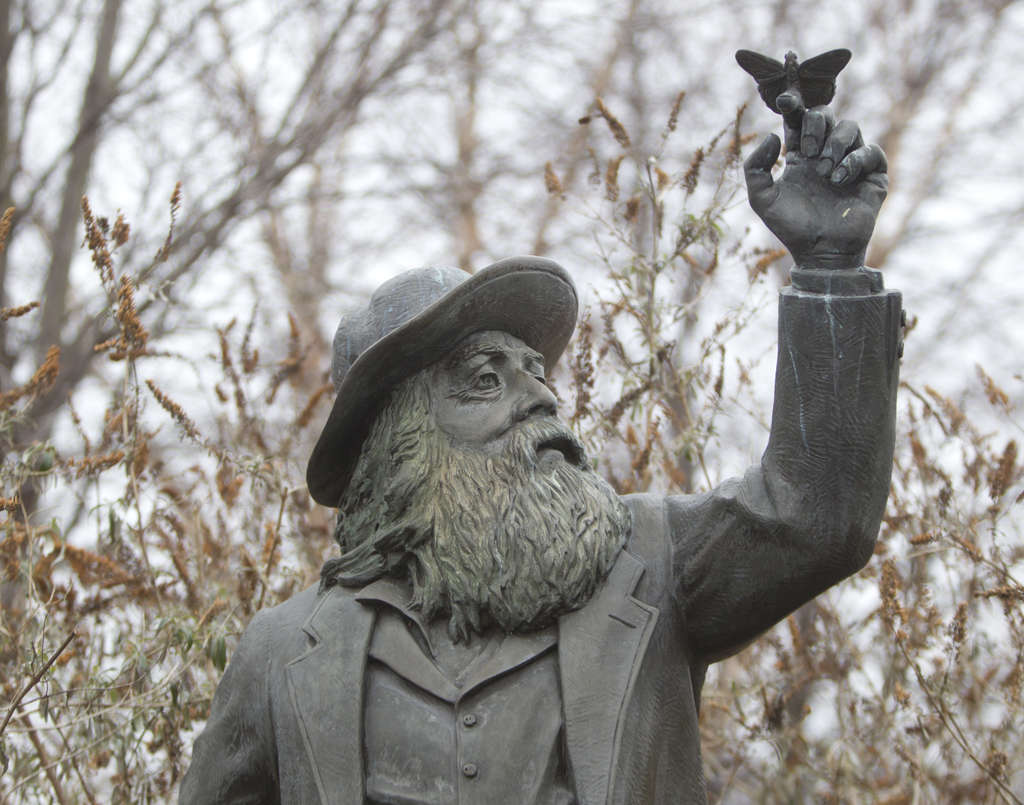
A statue of Walt Whitman at the Camden Children’s Garden. In his last years, the poet, who lived in Camden, frequently came to Philadelphia to read. ED HILLE / Staff Photographer
But I’d like to talk about the 20% of people she points to who are not only readers, but whose reading “accounted for more than 80% of all books read last year.” She quotes Leah Price of Rutgers University, who says that reading has become a niche hobby, like stamp collecting, and those who engage in it spend more time reading each day than they did two decades ago.
Deep reading
In the United States, 20% of the population — that’s one in five people — consider themselves readers, and most of these consider themselves deep readers. While it’s useful and important to look at the negative implications of the downward trend in reading, I suggest we also look at this situation in another way.
If fewer people are reading more deeply, more comprehensively, more robustly, more passionately, then there is optimism masked in this otherwise pessimistic data. And this is reflected in my own life, and the lives of people in the community I inhabit.
Walt Whitman was the 19th century’s version of an influencer. He enthusiastically promoted Leaves of Grass, his magnum opus he revised numerous times over the course of his life. He was shameless when it came to advertising his own work, and he was convinced of his own skill.
While he was often criticized for this, in today’s social media world full of personalities happy to call themselves influencers, he would fit right in. TikTok’s BookTok and Instagram’s Bookstagram — lively and prolific subsections of these platforms — feature well-read figures who have gained significant followings to show what they are reading, talk about it with an interested audience, and tie their identities to literature and to the pure joy of reading.
One doesn’t have to be a social media star to influence others to read. Readers are influencers whether they try to be or not, and their influence can create communities or even microcommunities of readers. This is not mass reading culture — as Horowitch says, those days may be over — but it is something else. It is the emergence of an ecosystem in which reading is central, a chosen activity around which people identify.
Reading groups
The Rosenbach Museum and Library offers one example of this shift, where we have begun investing more seriously in reading courses. The Rosenbach holds one of the world’s great collections of the written word, from rare books to original manuscripts. Reading courses are taught by experts, usually university instructors, and extend over one hour or several months.
The data are compelling: In 2017, we offered between two and four courses a year on books such as Moby-Dick and Ulysses. Around 2018, we expanded the program dramatically, offering 17 courses, the largest number in our history. By 2025, we were offering 40 courses, nearly 70% of which sold out.
These aren’t large courses. We generally have between 15 and 45 people attending them, both on-site and online. The main idea, though, is that people discuss books with one another, and we give them the forum and a group leader to facilitate the conversation. Since then, we’ve also added ongoing book clubs and livestreamed literary talk shows about everything from Dracula to The Hobbit to works by Jane Austen.
As the Rosenbach has seen an uptick in interest in our reading courses, we have simultaneously watched humanities programs disappear from universities due to lack of enrollment. While that is disappointing, we also see evidence that there is a hunger for reading as an extracurricular pursuit. We hear from course participants that reading simply makes life more meaningful, and they enjoy reading and discussing books together, in a community. Maybe hunger for something that has become a bit more elusive isn’t such a bad thing.
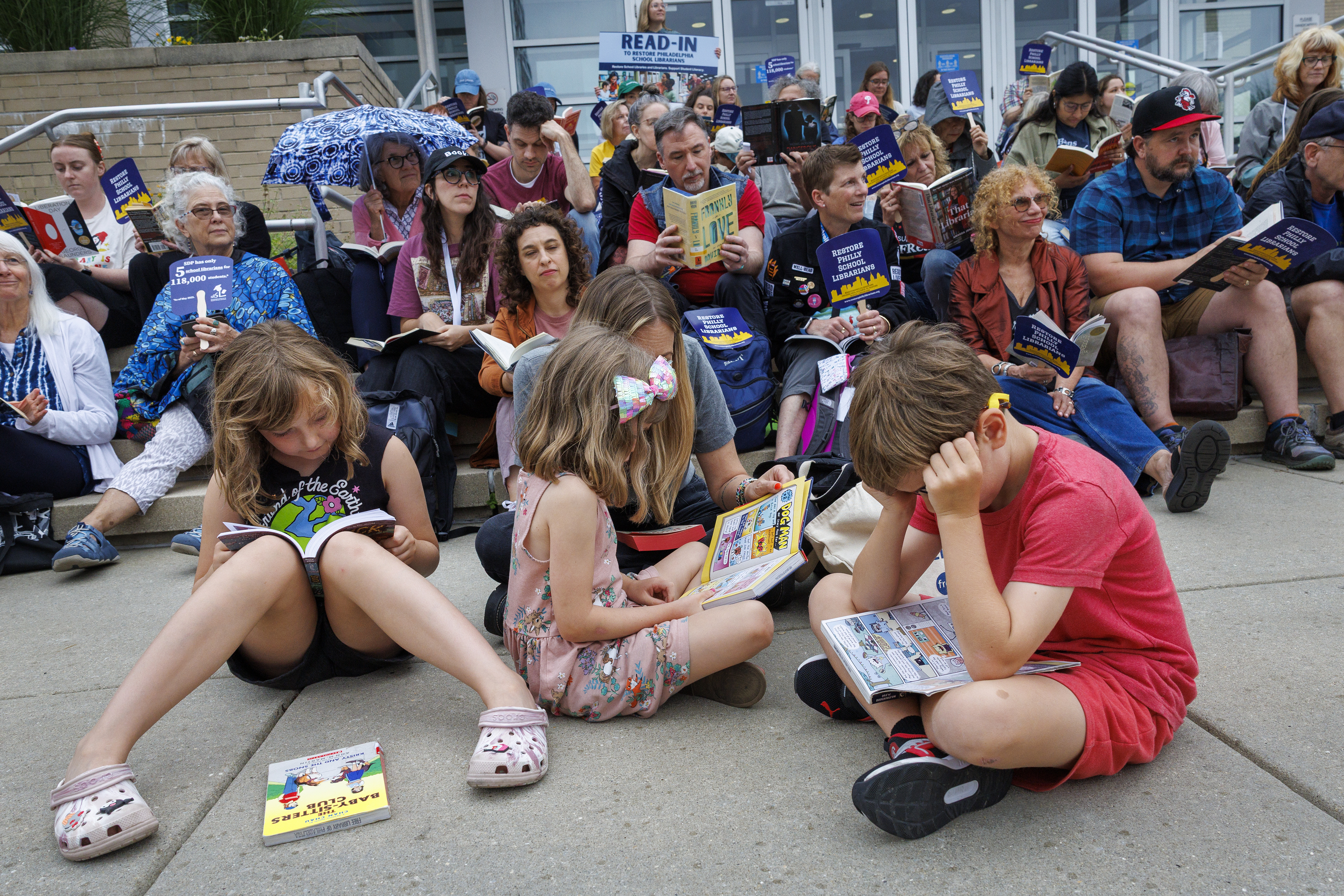
Children and adults hold a “read-in” on the steps of the Philadelphia School District’s building in 2025 to call attention to the sorry state of libraries in city schools. Alejandro A. Alvarez / Staff Photographer
One woman who takes our courses wrote, “The world is in a dark place right now and I find a place of refuge in Rosenbach courses.” This sentiment has been echoed by numerous other course participants, especially over the last five years.
New ways to read
People like this participant are the 20%, and they are the very ones we need to nourish. They are responsible for the interest in programs like the Rosenbach offers, the resurgence of bookstores across the country, and the popularity of BookTok and Bookstagram. They are forging communities that may not be wide, but they are very deep.
When Whitman traveled across the Delaware to Philadelphia to speak, hundreds of people — the stalwarts, the loyal fans — gathered to listen. That audience is our 20% today. They are the people who would have gotten dressed, trundled down the street to sit — or potentially stand — in a room with no air-conditioning, to listen to the aging poet.
The fact is that the future of reading may not look anything like the past. It may belong to smaller communities, devoted individuals, and institutions that bring people together around books. It may look like a group of friends who trundle down the street to read Whitman at a Rosenbach reading course.
If all that’s true, our task is not to lament the loss of a mass reading culture. Our task is to nourish the people who are still reading, and to create places where others can discover why they should.
Kelsey Scouten Bates is the John C. Haas Director of the Rosenbach.
It’s also true that American feminism has too often minimized the unique needs of Black women.
And while I don’t pretend to comprehend the various intricacies of Black womanhood, I do understand that among the duties of Black manhood, one of them looms larger than most.
We must stand up for our women.
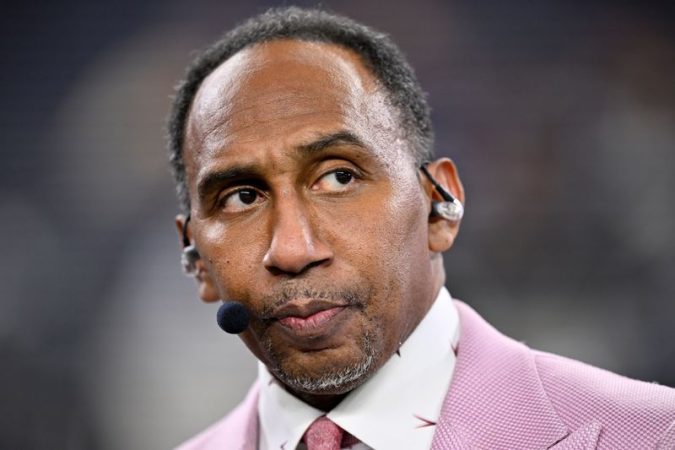
In recent months, it’s become increasingly clear that some of our most prominent men have spent far too much time doing anything but that. In fact, national figures like ESPN analyst Stephen A. Smith have been rightly castigated for their inordinate criticism of Black women, including former Vice President Kamala Harris, U.S. Rep. Jasmine Crockett, and journalist Joy-Ann Reid.
But the call to protect and defend Black women is not just about Smith and his cutting criticism of national figures. It is also about the Black men I have watched cast boulders at the first female mayor of Philadelphia.
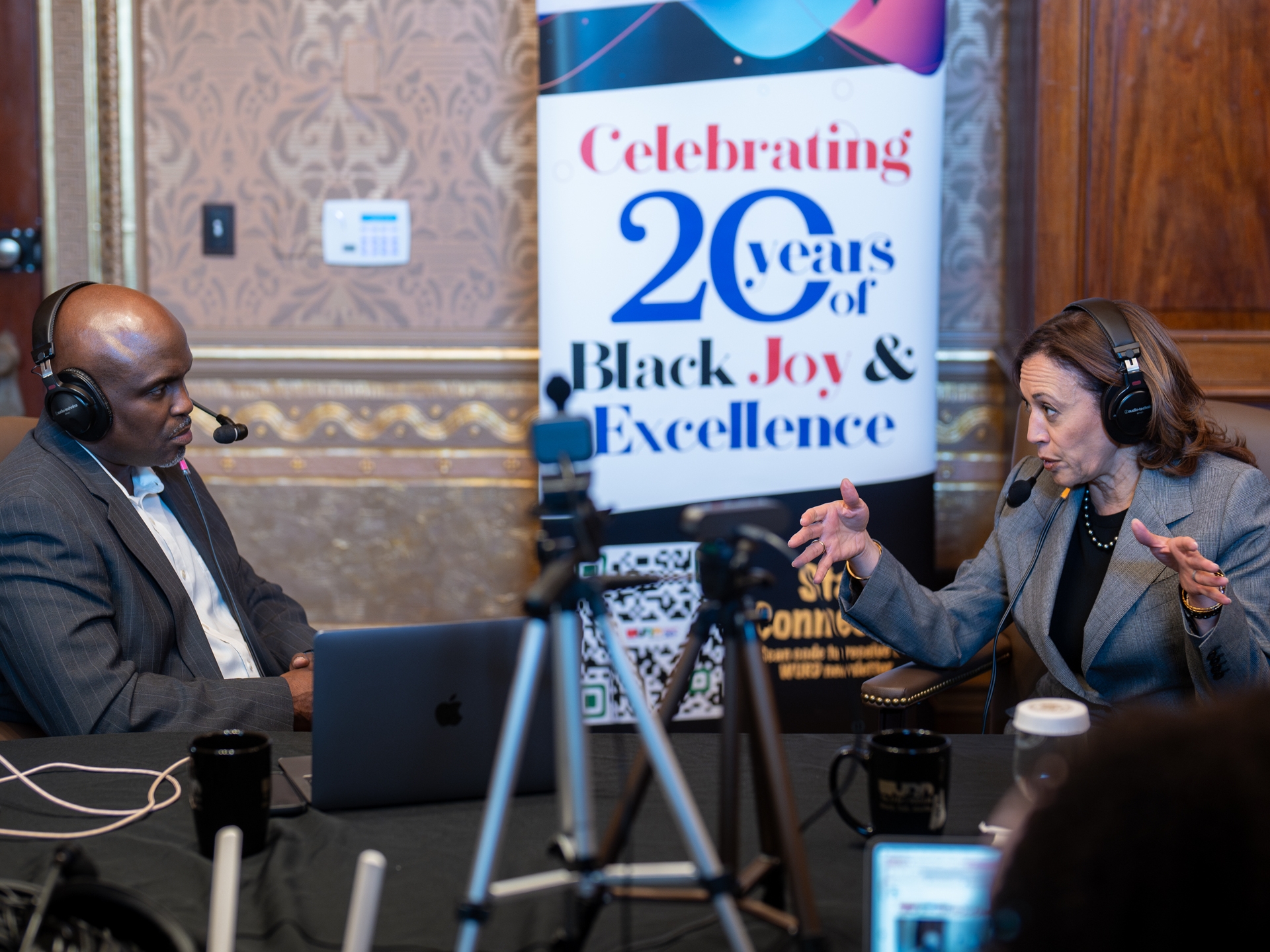
Solomon Jones interviews Vice President Kamala Harris during his radio show on WURD in February 2024. Harris has been a target of Stephen A. Smith’s barbs.Lawrence Jackson
As a matter of full disclosure, I have known Cherelle L. Parker for more than 20 years. As neighbors, we’ve watched each other’s children grow up. And while I don’t agree with her on every policy or political priority, I respect her because she has always been the same steady person, the same tenacious fighter, the same Black woman I met so many years ago.
On this point, I will not waver, whether the Black woman in question is Michelle Obama, or Parker, or Miss Dot from 25th and Oxford.
This does not mean there will never be disagreements between us. It does not mean arguments will never happen.
In truth, disagreement is a normal and healthy aspect of any functioning relationship. It is when those disagreements spin into hateful diatribes and rhetorical violence that we lose ourselves in the chaos.
This is not the time for abject pettiness, for a crabs-in-the-barrel mentality, or for fomenting discord under the guise of holding leaders accountable.
After watching 300,000 Black women lose their jobs in just a few months after the Trump administration’s cuts in the federal workforce, we have to know that sisters are under attack, and we must act accordingly.
That means standing beside them as they lead in communities.
It means standing in front of them when they are under attack.
It means standing behind them when they need someone to push them forward.
Black men understand, in ways others simply don’t, that Black women are stronger than they look, more vulnerable than they seem, and more beautiful than they know.
When they present all that to the world, the totality of their power can be intimidating — especially for those who harbor insecurities of their own.
But as the husbands, brothers, and sons of these strong women, we cannot afford to see them as competitors.
We must see them as partners, because in these uncertain times, when racism removes its hood and stands boldly in America’s streets, Black men and women can ill afford to turn on one another.
We must instead turn toward one another, and face the slings and arrows of this world together.