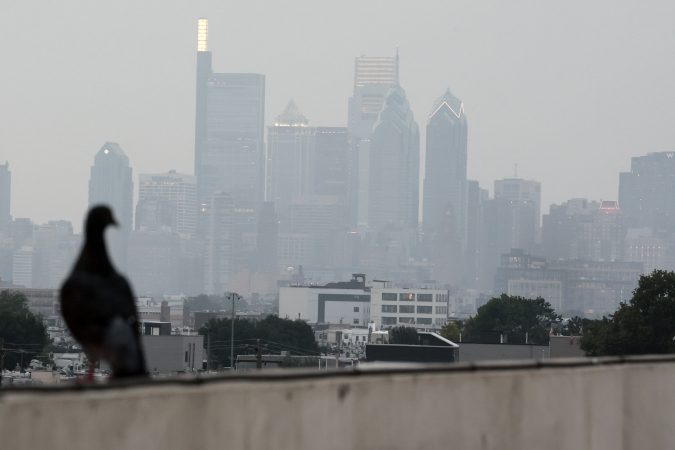
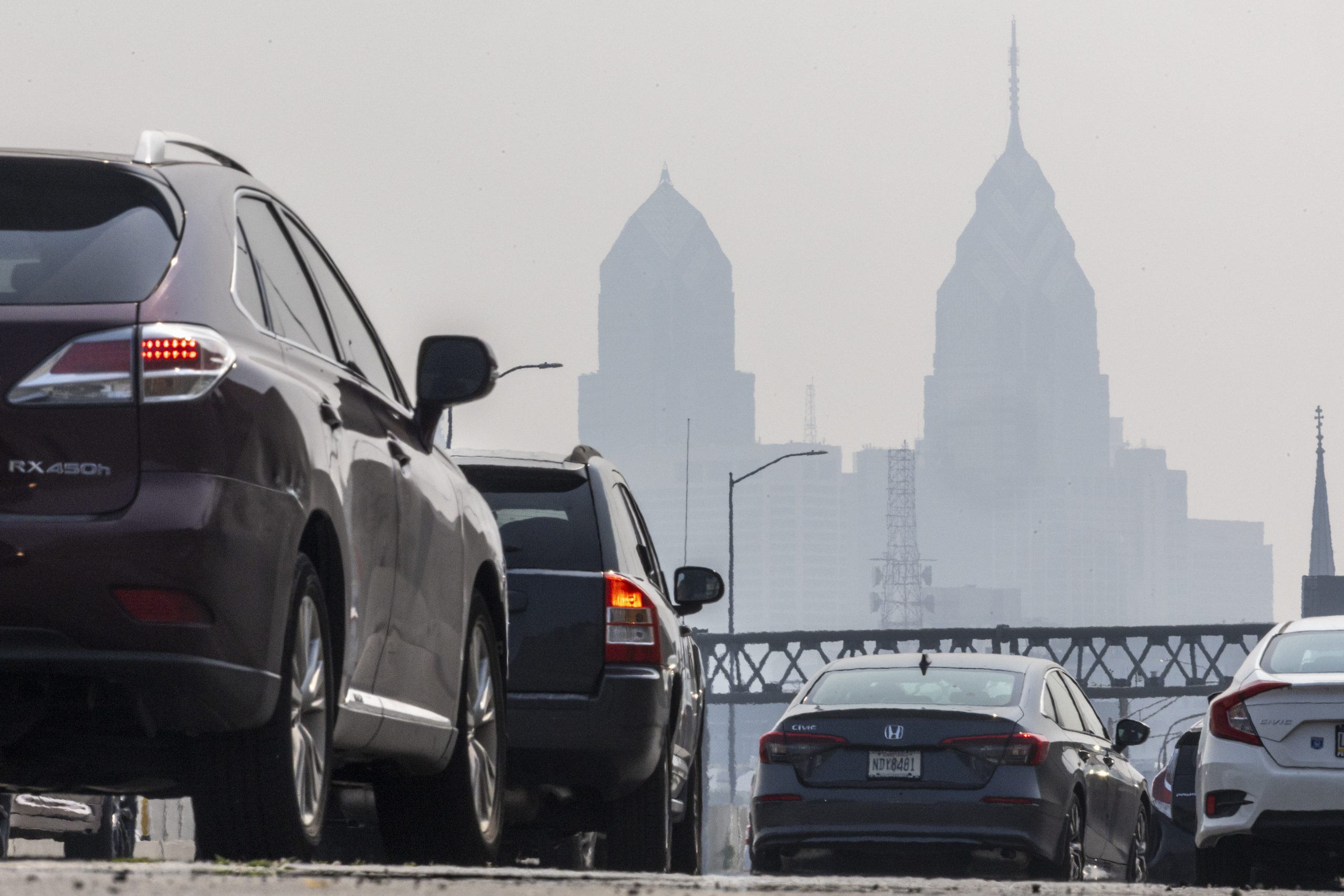
Waking up to hazy skies and an eerily orange sun can feel more like a scene from an apocalyptic science fiction movie than reality. Yet, Philadelphians did just that earlier this month.
Smoke from the Canadian wildfires has made its way to the East Coast and, along with it, an Air Quality Index, or AQI, reading that came close to 300 across the region. For context, when the AQI reaches over 50 it can affect folks with asthma and other respiratory illnesses. The general public will start experiencing symptoms and negative health impacts when the AQI hits 150. An AQI in our area of 300 is as uncommon as it is dangerous.
This isn’t the first time Philadelphians have contended with the impacts of wildfire smoke during the summer months, but what’s occurred this month stands out from summers past. The last time the AQI reached similar levels was during a series of fires in Quebec in June 2023, with the AQI soaring over 400.
For East Coasters, this is a relatively new and infrequent phenomenon, but the West Coast has been contending with real life impacts of wildfires for much longer. I experienced them for the first time while living in the Bay Area. I was there in September 2020, on the day when the smoke was so thick it blocked out the sun, making the afternoon look like the middle of the night. The thought of that day still haunts me.
In the aftermath, I felt scared, frustrated, and filled with dread. When I eventually found the words to describe the experience, it was like a light bulb went off. The gauzy skies finally made the abstract concept of “climate change” into something very, very tangible and undeniable. It’s hard to deny that we’re in the midst of a climate crisis when the crisis shows up on your doorstep.
There’s a term for this awareness of and emotional response to the environment in dire crisis — “climate grief.” In the coming days, Philadelphians may experience this grief firsthand for the first time. Climate grief manifests itself differently for everyone, and feelings of anger, hopelessness, dejectedness, and even confusion are all totally normal. What’s important is how we navigate these feelings, both as individuals and a community.
There are small things we can do to protect ourselves and our family when the AQI hits triple digits. We can try to limit our exposure to bad air quality, but let’s be realistic — we all have jobs or classes to go to, kids to pick up, or errands that can’t wait.
Wearing an N95 mask is the best way to protect your health, along with the health of your kids and even pets.
You can join an environmental and community advocacy organization, like Philly Thrive, to fight back against harmful policies and corporations.
You can also reach out to your elected officials in the state and federal government and demand that they prioritize laws that protect our health and environment.
As the smoke clears, please don’t let the memory slip away or give up on fighting for our community. As a city, we’re gritty, steadfast fighters and we do not easily forget being wronged. Now is the time to act, show up for the environment, and show the world what Philadelphia is really made of.
Erin Fitzgerald is a native Philadelphian who currently works as a communications strategist and environmental advocate.
Congress has every right to investigate the government’s response to the COVID-19 pandemic.
It should ask difficult questions about the origins of the virus, school closures, public health restrictions, research oversight, masking guidance, and the government’s changing messages to the public. More than a million Americans died, businesses closed, families suffered, and trust in public institutions was badly damaged.
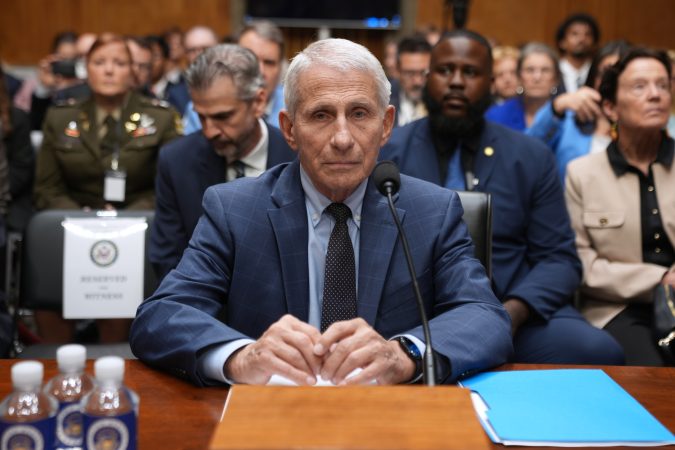
But what is now happening to Anthony Fauci as he appears before the Senate Homeland Security and Governmental Affairs Committee at the U.S. Capitol on Wednesday no longer looks like a good-faith effort to learn from those failures.
It looks like political persecution.
Fauci, appearing under subpoena before the committee chaired by Sen. Rand Paul (R., Ky.), invoked his Fifth Amendment right against self-incrimination and declined to answer questions.
His critics immediately treated that decision as proof of guilt.
It is not.
The Fifth Amendment does not protect only guilty people. It protects anyone who reasonably fears that their words may be used against them in a criminal prosecution. That protection is especially important when the person asking the questions has already spent years accusing the witness of crimes and demanding that they be imprisoned.
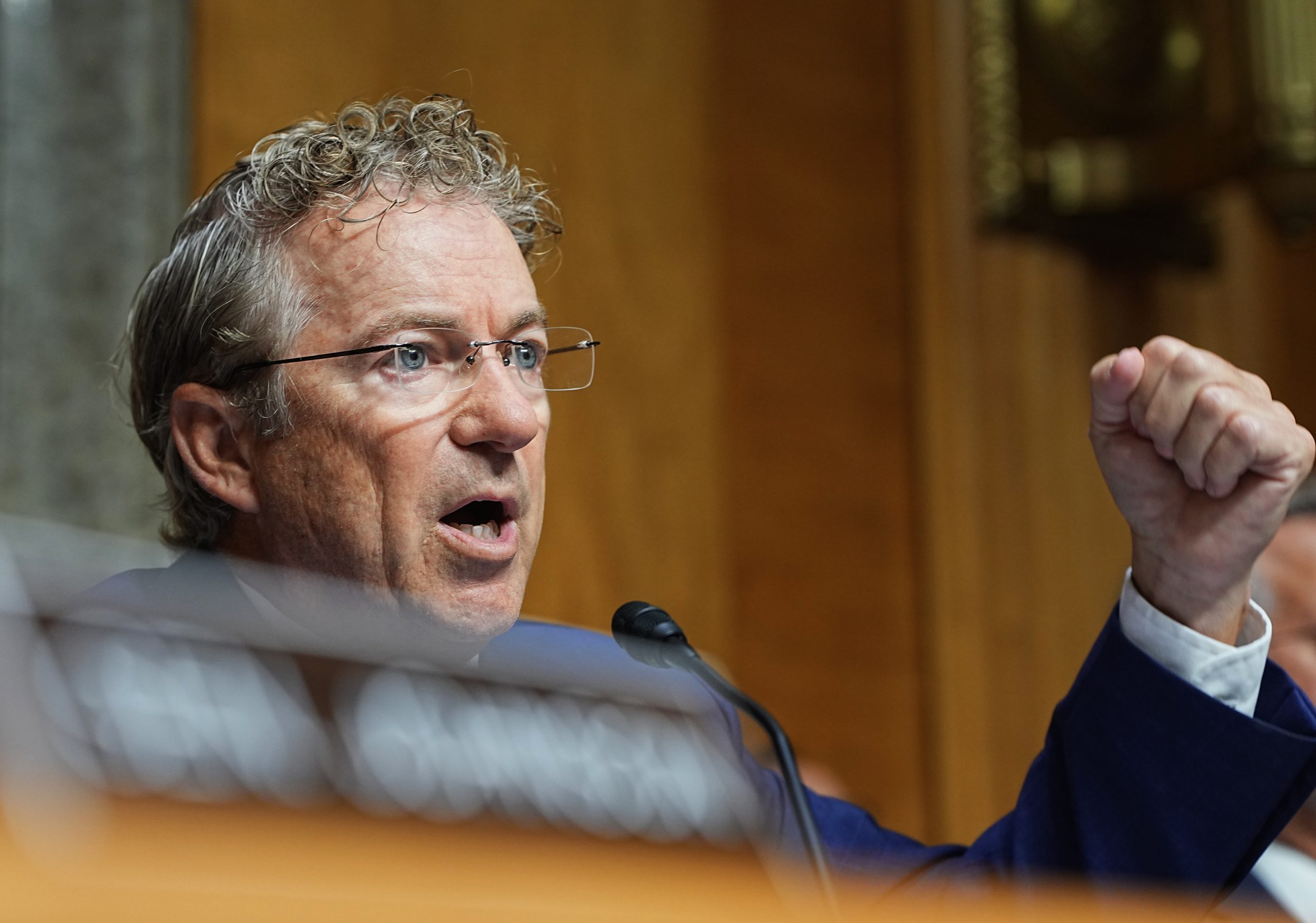
Sen. Rand Paul (R., Ky.), Senate Homeland Security and Governmental Affairs Committee chairman, speaks at the start of a hearing with Anthony Fauci, the former director of the National Institute of Allergy and Infectious Diseases, on Capitol Hill on Wednesday.HAIYUN JIANG
Paul has not approached Fauci as a neutral investigator. He has repeatedly accused him of lying to Congress and called for his prosecution. Under those circumstances, Fauci had every reason to believe the hearing was not simply intended to gather information. It was also intended to create a criminal referral, a damaging headline — or both.
There is a difference between oversight and a trap.
Fauci has testified before Congress many times. He has answered questions about the National Institutes of Health, coronavirus research, government funding, and the still-unresolved debate over whether COVID-19 emerged naturally or through a laboratory-related incident.
Republicans are entitled to challenge his answers. They are entitled to criticize his judgment. But they should not be permitted to announce that he is guilty, threaten him with prosecution, and then place him under oath in the hope that some minor difference in wording can be turned into a new criminal allegation.
The release of more than 1,100 pages of Fauci’s pandemic-era notes shortly before the hearing only strengthens the appearance of a coordinated political campaign.
Those notes reportedly show that Fauci and other scientists privately considered several possible explanations for the virus’s origin.
Of course they did.
That is how science works.
In the early months of the pandemic, scientists were working with limited and rapidly changing information. They considered competing theories, debated evidence, and revised their conclusions as new facts emerged.
Scientific uncertainty is not evidence of dishonesty.
Considering a laboratory origin in private did not require Fauci to publicly declare that theory proven. Nor does changing one’s position as evidence develops amount to perjury or a cover-up.
The journals also reveal Fauci’s private criticism of Donald Trump. Republicans may find those comments offensive, but criticizing a president is not a crime.
Fauci’s real offense in the eyes of the MAGA movement appears to be that he sometimes contradicted Trump publicly.
Trump wanted optimism. Fauci warned of danger.
Trump wanted the country reopened. Fauci warned about transmission.
Trump promoted claims before strong evidence supported them. Fauci attempted, sometimes imperfectly, to return the discussion to science.
That made him a political enemy.
None of this means Fauci should be beyond criticism. His decisions should be examined. The government’s masking guidance, vaccine messaging, school closure recommendations, and oversight of research funding all deserve scrutiny.
But an honest investigation begins with open-minded questions.
This one began with a verdict.
The broader danger goes far beyond Fauci. Scientists and career public servants are being warned that if their professional judgment conflicts with the political needs of a president, they may face years of investigations, public attacks, and threats of prosecution.
That will not produce better science. It will produce fear and silence.
The next pandemic will require experts willing to speak honestly, revise their conclusions, and tell a president when he is wrong. A government that punishes experts for delivering unwelcome information will eventually be left with people who say only what political leaders want to hear.
Fauci is not infallible. But political disagreement is not a crime. Scientific uncertainty is not perjury. And invoking the Fifth Amendment is not a confession.
Michael A. Gottesman is a lawyer and the founder of the New Jersey Public Education Coalition.
Imagine sitting down in a restaurant and having every item on the menu listed as “market price” — and not being able to learn exactly how much anything costs until after you’ve placed your order.
For restaurateurs, that kind of business model would probably put someone out of business.
For healthcare providers, it’s not only the norm, but it’s also one of the primary reasons so many Americans struggle with medical costs.
Healthcare may be the only entity in which a service is rendered without the user of that service knowing what it will cost them. As a retired physician, I’ve seen how this lack of price transparency can take many forms — all of which are harmful and unfair to consumers.
Facility fees are a prime example of lack of transparency. These are added costs charged by hospitals for services provided there. This information is rarely conveyed to patients, and most patients are unaware of them.
In one specific case, a patient was asked if he wanted his arthroscopic surgery to be done on a Wednesday or a Friday.
The difference was not simply a difference in dates. It was also a difference in locations, as the Wednesday procedure would be done at the hospital, while the Friday procedure would be done at an outpatient surgery center.
The difference in cost was approximately $11,000 because of the facility fees at the hospital. If the patient had a 50% coinsurance policy, they would have had to pay more than $5,000 extra if they chose Wednesday over Friday. How many patients know to ask about this potential added expense?
We must insist that these government mandates regarding price transparency be appropriately enforced. Furthermore, the ruling must be expanded to include any independent facility that provides any type of healthcare, such as a lab or imaging center. Patients have a right to know what things cost before they buy.
Government mandates regarding price transparency must be appropriately enforced, Mark Lopatin writes.Dreamstime / MCT
Facility fees must be removed to reduce the wide variability in costs at different types of facilities. Medicare has a policy in place to address neutral-site payments, but it only applies to certain services. This must be expanded to include all services and all insurers. Furthermore, this policy must be simplified and made readily available to patients in easy-to-understand language.
Hidden prices are also an issue in the pharmaceutical industry. The U.S. Department of Health and Human Services issued a ruling in 2019 requiring pharmaceutical companies to disclose costs in their direct-to-consumer ads.
Predictably, a lawsuit was filed by the pharmaceutical industry opposing this. The end result is that even today, pharmaceutical advertisements make only vague references to expected costs, and there are often multiple exclusions that make patients ineligible to get drugs at a reduced price.
One unique strategy to address some of the cost and transparency issues would be the increased use of direct primary care (DPC), which removes middlemen such as insurers and pharmacy benefit managers from the healthcare transaction.
Without middlemen taking their cut, patient costs come down. Patients who use DPC are able to get discounted posted rates on medications and testing, and they know in advance what their charges will be. Not surprisingly, the insurance lobby is opposed to this model because it restricts its control of the healthcare dollar.
Although affordability and price transparency are huge issues, we must keep in mind that there are many other variables that limit access to healthcare. Having insurance coverage does not eliminate long waits to see physicians or get imaging studies.
Delays can occur for a variety of reasons, such as physician shortages, administrative burdens, and increased patient demand. Efforts to address costs and clarity in prices unfortunately do not address these other issues.
Thus, as the midterms approach, we must consider all of the variables affecting access to healthcare. We repeatedly hear that healthcare is too expensive, but rarely do we hear anyone come up with any concrete strategies to lower healthcare costs.
Affordability is indeed a huge problem that must be addressed, but candidates must realize that access to healthcare is a much bigger issue. Addressing price transparency more strongly would be a good place to start any fixes.
Now all we need are legislators with the guts and determination to fight for patients against those who seek to exploit them for profit motives.
Mark Lopatin is a retired rheumatologist, a healthcare advocate, and the author of “Rheum for Improvement.” He speaks out regularly against forces that seek to compromise patient care in exchange for control of the healthcare dollar.
A pending FCC broadcast license review now targets eight ABC television stations owned and operated by the Walt Disney Co. — among them WPVI Philadelphia, known to most viewers as 6abc. It has been said that “all politics is local.” Here in Philadelphia, this truism has applied with growing frequency to clear and present threats to the First Amendment — recently in our public parks and monuments, and now on our airwaves.
In 1934, years before the advent of commercial broadcast television, the Federal Communications Commission was established by an act of Congress to help govern the burgeoning American radio industry.
Among its roles, the FCC now regulates the granting of broadcast licenses, controlling which television stations can or cannot access a finite spectrum of public airwaves. Both by law and by long-standing precedent, broadcast license review is typically an independent, pro forma exercise. Before the current administration — under 14 previous presidents, seven Democrats and seven Republicans — the television licensing process had been largely nonpartisan, and operated in the public interest.
In fact, the need for broadcasters using public airwaves to operate broadly in the public interest is the very definition by which the FCC is meant to grant television station licenses. The FCC is required to renew a broadcast license if it finds that “the station has served the public interest, convenience, and necessity.” Philadelphia’s 6abc and its 55-year-old Action News programming embody this principle.
Unfortunately, under President Donald Trump, the FCC has become — unabashedly — a partisan attack dog rather than the guardian of the public interest.
On May 29, the FCC launched the first stage of a potential challenge to the licenses of ABC-owned and operated stations around the country, including 6abc, Philadelphia’s leading local news broadcaster and a strong pillar of our community. The FCC ordered eight ABC stations — in New York, Los Angeles, Chicago, Houston, San Francisco, Raleigh-Durham, N.C., and Fresno, Calif., as well as Philadelphia — to submit renewal applications years before their original renewal dates, which range from 2028 to 2031.
This is just one of many fronts in a long-running battle between the Trump administration and a broad array of independent media that has cost the American news industry time, money, and, too often, operating independence at a moment of extraordinary need for a free press. The challenge to ABC broadcast licenses has its most recent origins in the political harassment of late-night talk show host Jimmy Kimmel and the daytime program The View, each periodically critical of the president and other government officials on both sides of the aisle.
FCC Chairman Brendan Carr is the administration’s front man in the ABC case. Carr, you may recall, tried to intimidate ABC, its affiliate stations, and Kimmel some months ago, referring, like a mob boss, to “doing it the easy way or the hard way.” This license renewal harassment, which will cost Disney shareholders millions in legal fees, is presumably the “hard way.”
By law, the government’s filing allows public comment for either renewal or denial of ABC’s licenses. You can make your views known, quickly and easily, here: FCC Submit an Express Comment. Responses to the request for comments are due by Wednesday.
We in Philadelphia know that 6abc is an especially inappropriate target for accusations of not operating in the public interest. The station is a longtime ratings leader for news programming serving a geographically broad and politically diverse footprint. It has, for decades, produced consumer interest, investigative news, and community-oriented programming that speaks truth to power of all stripes.
At the Lenfest Institute for Journalism, of which I am chief executive, we have worked with 6abc on nonpartisan election coverage (Every Voice, Every Vote) and on fundraising for Philadelphia-area residents in need (Philly Gives). Executives at 6abc have always offered their help, their production skills, and their unrivaled broadcast audience for free — in the public interest.
This month, we celebrated America’s national freedom and independence, born here in Philadelphia. Let it not be a summer in which Philadelphia’s leading local television broadcaster is, with impunity, threatened with the loss of its right to broadcast freely and independently.
Jim Friedlich is CEO and executive director of the Lenfest Institute for Journalism, the nonprofit, noncontrolling owner of The Inquirer. @jimfriedlich
Last month, the city commissioners certified the results of 2026’s primary election — another safe, secure, and accurate election, one whose results Philadelphians can trust.
But those results highlighted an obvious flaw: Most of our neighbors didn’t show up to vote.
The 2026 primary turnout numbers tell a story of silence in which there should be a vibrant force of civic engagement:
Turnout citywide was just 22.3% — a drop from four years ago, whose 23.6% turnout was already nothing to brag about.
When you don’t include the three top-performing wards — the vaunted 9th, 22nd, and 50th Wards, which comprise the Northwest corner of the city — the citywide average drops even further, to just 20.4%.
Ward 7 saw the lowest turnout in the entire city, with fewer than 6.5% of registered voters casting a ballot.
There are always logistical hurdles to voting, including language barriers, childcare, and rigid work hours, and my office at the Philadelphia City Commissioners works tirelessly every day to tear those barriers down. We’ve made progress, but clearly, there’s still work for all of us to do.
If everything in your neighborhood, your school, your block is exactly how you want it, fine, sit this one out.
If not, there are a few things you can do — and you don’t need to wait until November.
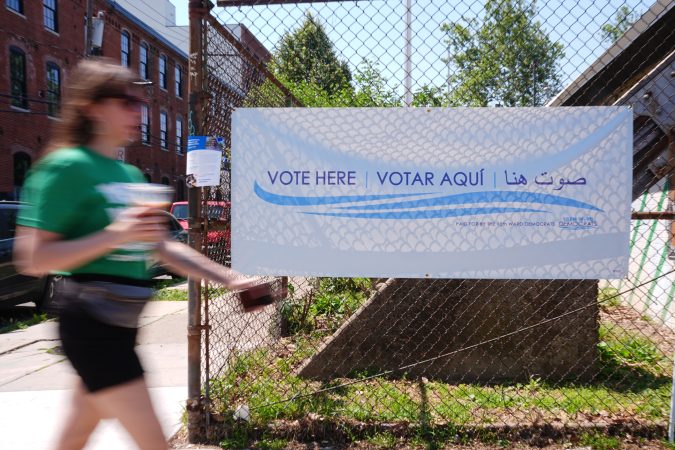
This month marks the kickoff of “Between the Ballots: No Days Off for Democracy,” a citywide outreach initiative designed to bring voter education, election services, poll worker recruitment, and civic engagement opportunities directly into Philadelphia neighborhoods during the summer. The next event in the series will take place on Tuesday at the 3rdDistrict satellite office at 4029 Market St., and will include food, family fun, community resources, and more.
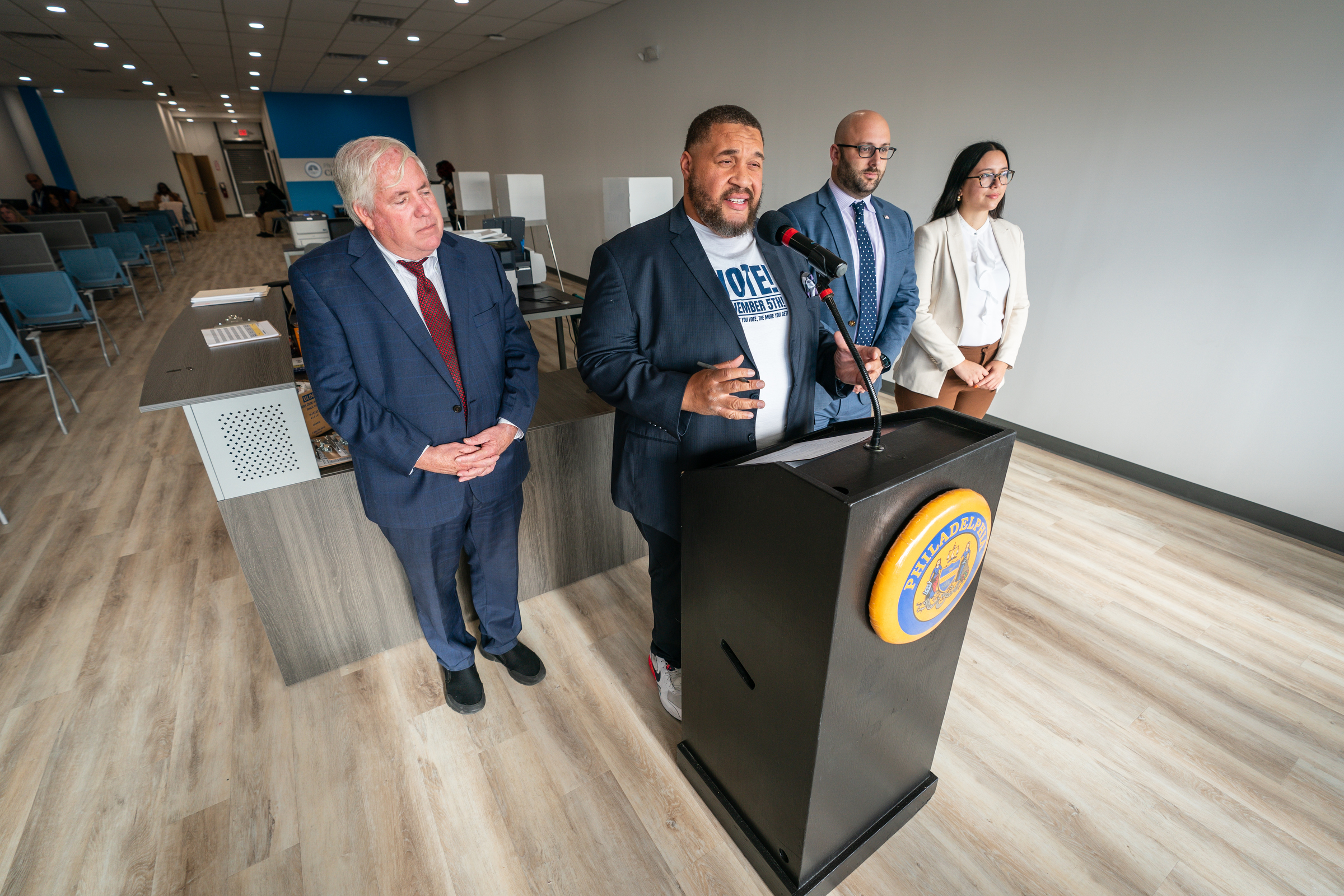
We made significant strides when we opened satellite election offices in every City Council district in the city, and now we’re giving everyday Philadelphians even more reasons to engage with those offices any time of the year, not just when there are votes to cast.
Philadelphia City Commissioner Omar Sabir speaks at the opening of the 10th permanent satellite election office, located at 6420 Frankford Ave., in October 2024.Jessica Griffin / Staff Photographer
Philadelphia has lots of ways to get involved. Our Election Academy, which launched this past spring in partnership with the nonprofit Committee of Seventy, invited registered voters from every corner of the city into our satellite election offices and our Northeast election warehouse to see exactly how voting machines are secured, tested, and audited. No taking our word for it. You can watch it happen. The program was a great success, so much so that we will continue these public sessions through the fall.
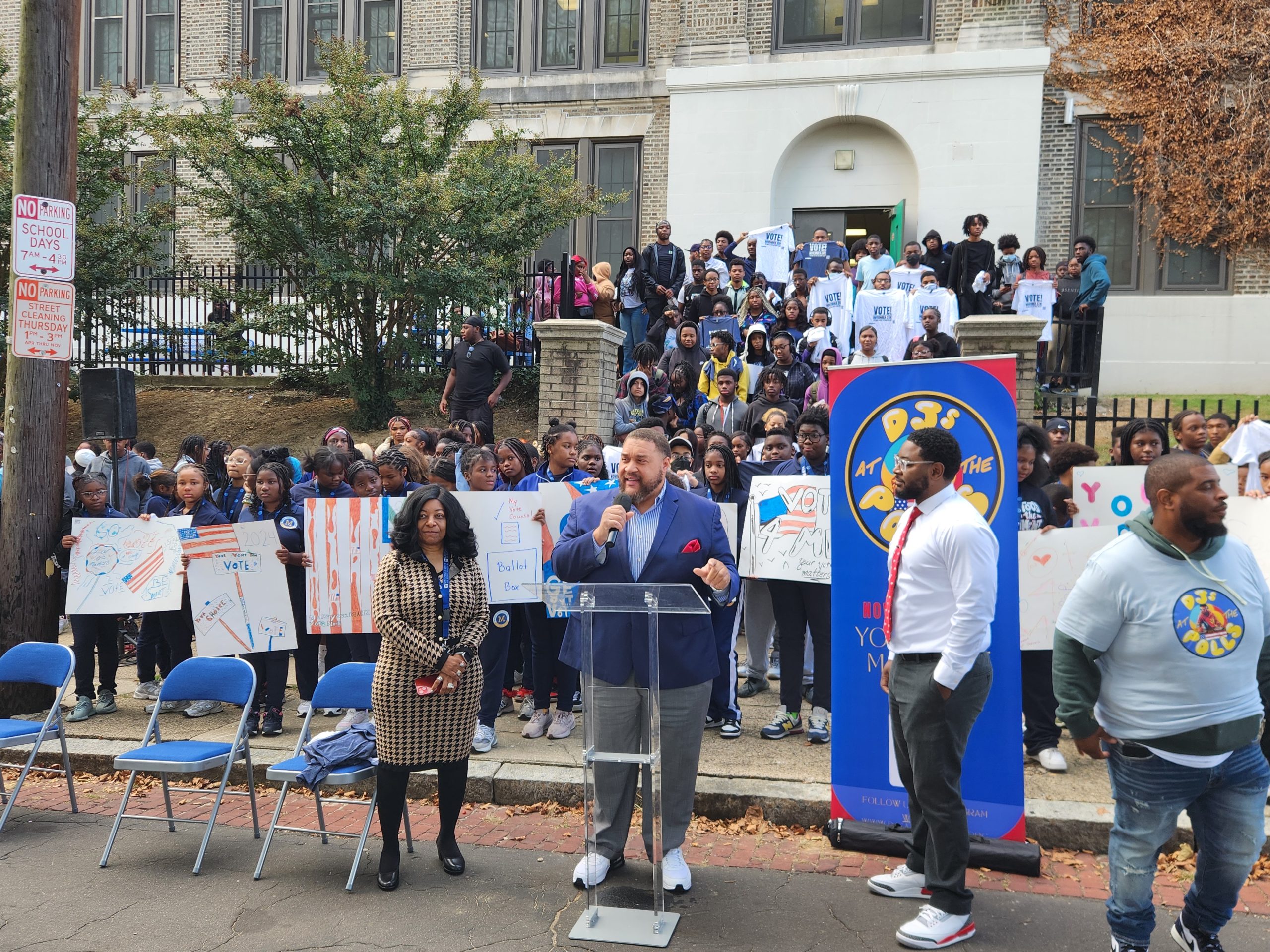
Philly Rises is our initiative to engage youth, recruiting students who are ready to make their voices heard.
Philadelphia City Commissioner Omar Sabir rallies Parkway West High School students to get involved in the general election in November 2024.Jesse Bunch
The Involved at 17 program allows high school seniors to serve as poll workers, giving them a front row seat to the election process and paying them to do it.
Regardless of age, education, or income, voters cannot expect change if they don’t participate.
Political noise is louder than ever, and the resulting fatigue is real. But as we’ve seen time and again, in Philadelphia and around the country, the only thing louder is the voice of voters and their power, which has always mattered and always will.
Disengaging from local races is consequential for everyone: If you choose to sit out, you’re opting not to weigh in on everything from school board decisions and zoning matters to property taxes and what development does or doesn’t happen in your neighborhood.
Do you really want someone else making those decisions for you?
Two hundred and fifty years ago, Philadelphia didn’t sit on the sidelines. We’re not about to start now.
Omar Sabir is the chairman of the Philadelphia City Commissioners, a three-member bipartisan board of elected officials responsible for voter registration and election administration for the city of Philadelphia.
When Herman Welker came to Washington in 1951, he had what seemed to be the ideal résumé to become a man of influence.
The Republican senator from Idaho was an unwavering conservative — a former prosecutor and World War II veteran — whose opinion counted on matters including war, national security, and U.S. Supreme Court seats.
But Welker’s path to power and prominence — serving as a close ally and faithful wingman to Republican Sen. Joe McCarthy in his abusive, power-hungry, and attention-seeking campaign to root out American communists — undid him in a single term. Welker, known in the Senate as “Little Joe from Idaho,” was implicated in another senator’s blackmail-driven suicide. When McCarthy faced censure in the Senate, Welker tried to delay, dissuade, and, according to accounts at the time, bully others out of officially expressing their disgust.
Welker lost his seat in the next election, then, after a brief illness, died.
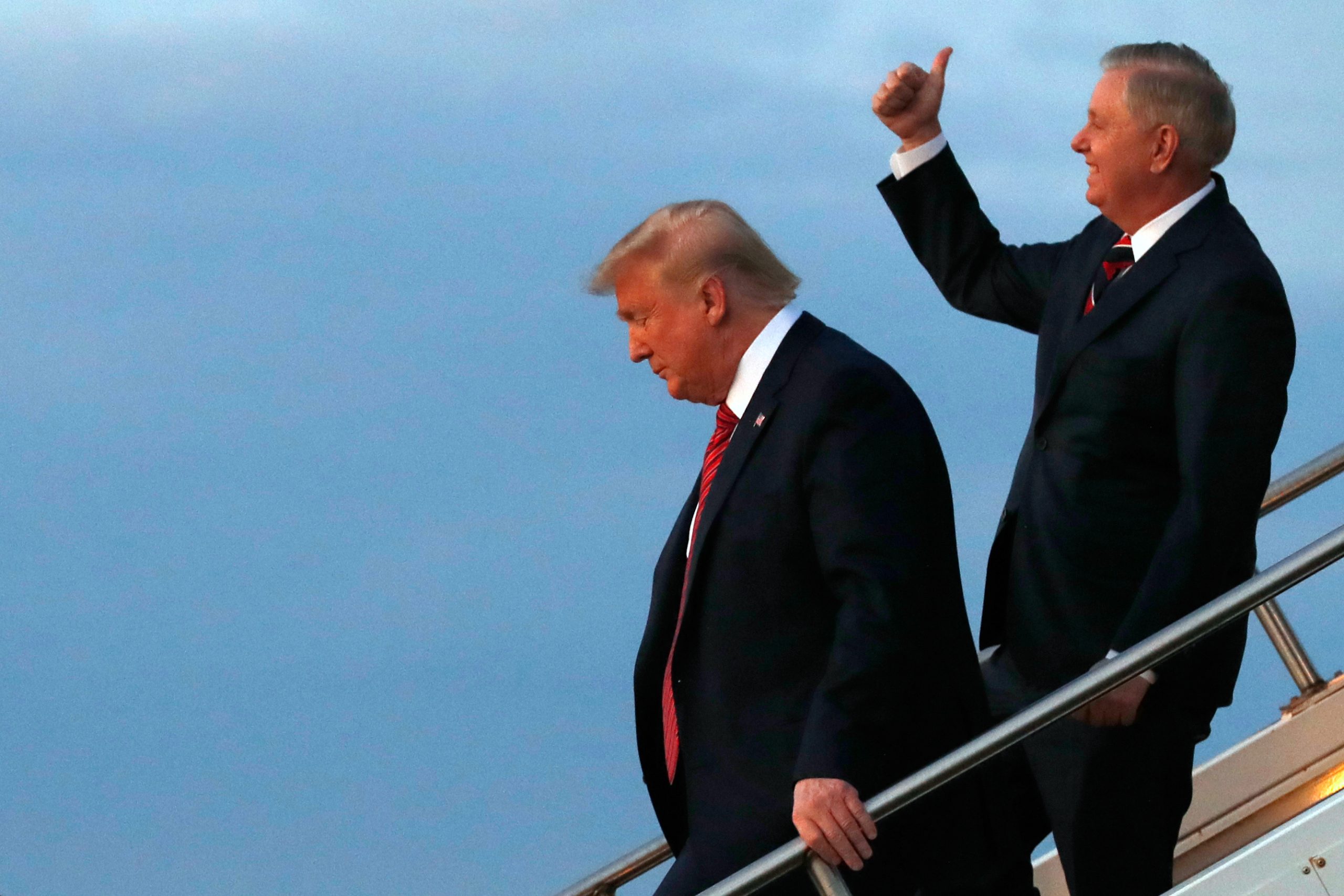
That’s the thing about influence attained through a grand bargain with those who wield power in ways that defy the law, norms, and anything approaching restraint: It requires a grasp of time and mortality few humans can reliably claim. Which is precisely the risk Sen. Lindsey Graham, a lawyer and a veteran of the wars in Iraq and Afghanistan, ran until his sudden death this month.
Unlike Welker, Graham transformed in full public view from a man who was once one of Donald Trump’s most strident and vociferous critics into a dependable MAGA workhorse in Congress.
Now, Graham’s legacy will be forever bound up with that of the 47th president, who took pains to tell NBC News that his faithful wingman’s death would be a “big blow” to the passage of the SAVE America Act.
In 2015, Sen. Lindsey Graham described Donald Trump as a bigot. Much changed over the next decade, Janell Ross writes.Jacquelyn Martin
In 2015, Graham was a third-term senator from South Carolina vying for the Republican presidential nomination — a field that included more than a dozen others — en route to being crushed by Trump.
Graham, for his part, described Trump as a bigot, interested in anti-American policy, and a malignancy that, if nominated, would destroy the GOP.
Given that, when Graham offered his pithy prescription for America in a December 2015 appearance on CNN, I wasn’t exactly surprised.
“You know how you make America great again?” he said. “Tell Donald Trump to go to hell.”
It was a riff on the recycled bit of American political sloganeering that Trump had pushed into the zeitgeist, again. Trump’s vision was to make America more like it was in the past: less diverse, more exclusionary, with group suspicion as public policy, and strict racial and gender hierarchies governing national life.
In 2015, Graham’s position on Trump seemed clear and immutable. He told reporters he did not vote for Trump in 2016. Then, Trump won the election, and Graham spent most of the decade since transforming into one of the president’s most steadfast defenders.
There was a brief interregnum, a wobble of sorts on Jan. 6, 2021. After Trump supporters invaded the U.S. Capitol, Graham gave a speech. On the Senate floor, Graham seemed to point the finger of responsibility directly at Trump.
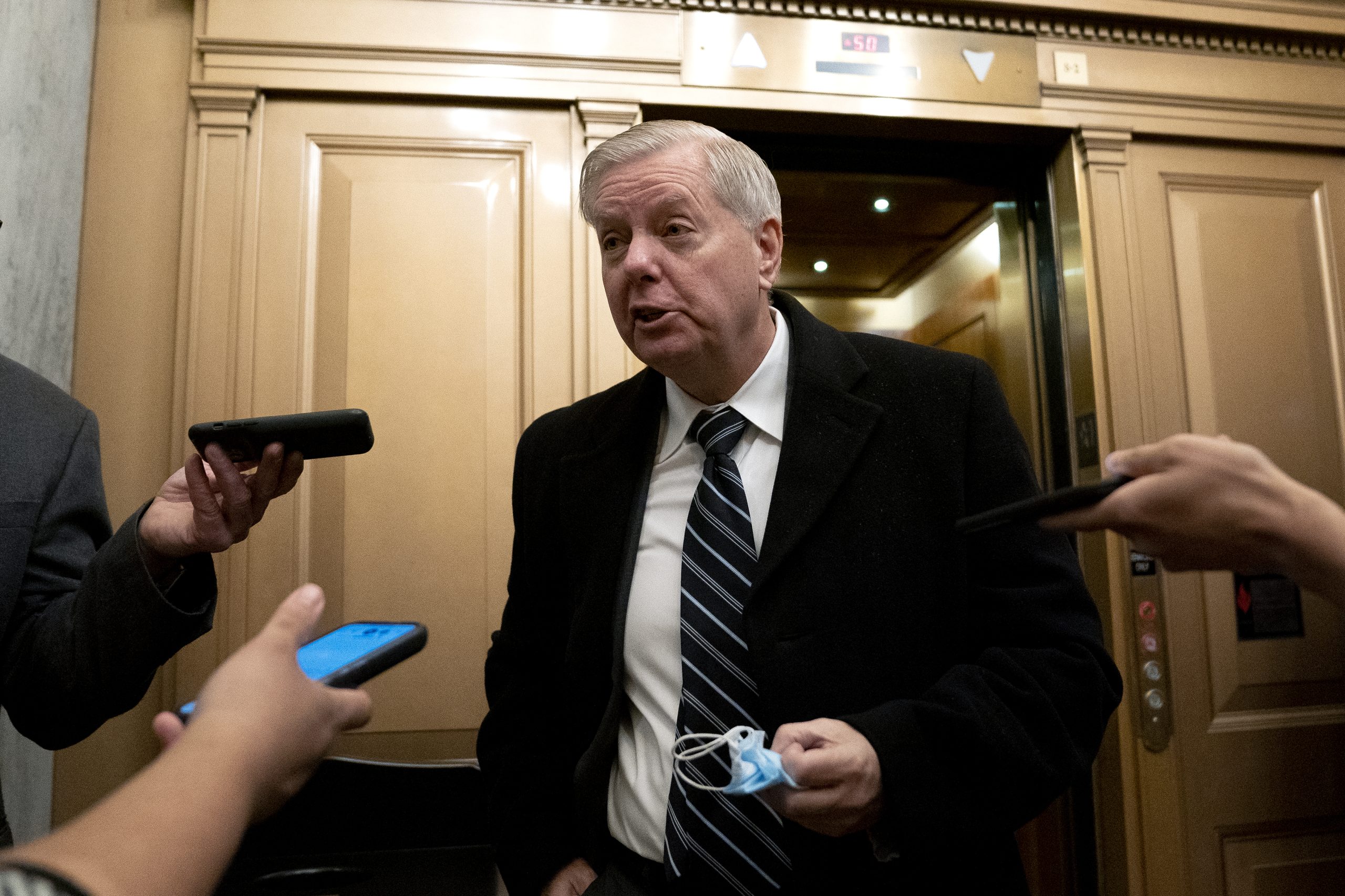
Sen. Lindsey Graham (R., S.C.) speaks with reporters during the second impeachment trial of former President Donald Trump in February 2021 at the U.S. Capitol Building.Stefani Reynolds
“Trump and I, we’ve had a hell of a journey,” Graham said. “I hate it to end this way. Oh my God, I hate it. From my point of view, he’s been a consequential president. All I can say is count me out. Enough is enough.”
But Graham, converted MAGA bannerman and, his critics say, Trump-era opportunist, soon returned.
Graham’s devotion to Trump was so sweeping and so sudden that the more conspiracy-minded have embraced the idea that Graham was the victim of blackmail or controlled by some sort of kompromat.
In death, Graham’s defenders — a group that, in these contentious times, notably includes Republicans and Democrats — have described his Trump transition as pragmatic, even admirable; what a skilled legislator must do.
Graham, they say, managed, in the final days of his life, three substantive foreign policy victories. He hammered out the details of a Russian economic sanctions bill Trump has said he will sign. He secured U.S. approval for Ukrainian strikes in Russia. And with these agreements, Graham effectively shored up NATO and its fundamental goal of staving off world war. Of course, all of that is contingent upon a mercurial president remaining uncharacteristically disciplined and consistent.
Sen. Lindsey Graham (R., S.C.) with President Donald Trump at a rally in Charlotte, N.C., in March 2020.DOUG MILLS
And therein lies the public lesson for us all. Time can and will run out. Redemption arcs, periods of public reconsideration, and book-tour explanations are not guaranteed.
Entirely honest assessments of the dead are rare. Many will offer familiar strings of superlatives, words of admiration, mutual respect, and sympathy — perhaps in the hope that those sentiments will be reciprocated when their time comes.
Others might just say our passing was a “big blow” to one of their pet projects.
Ultimately, though, our actions and associations will speak unvarnished truths about us long after we are gone.
Visit the block where Welker lived in Washington, D.C. Today there is not so much as a plaque. There’s just a Marriott.
Janell Ross is a former senior correspondent at Time magazine who frequently writes about race, politics, and identity.
Toward the end of Six— inwhich the six wives of Henry VIII reweave their stories of divorce, beheadings, death, and survival into a celebration of 21st-century girl power —the protagonists wondered whether by repeatedly recounting the horrors of their experiences, they were inadvertently platforming the patriarchy.
In recounting the stories of the harm he had inflicted, had they inadvertently made him the main character and axis of their lives? Was he still shaping their identities? Who were they without Henry?
I often wonder the same about racism. Are we feeding the monster of white supremacy and racism when we choose not to ignore it? When we decide to tell and retell our personal experiences of it?
See what you think.
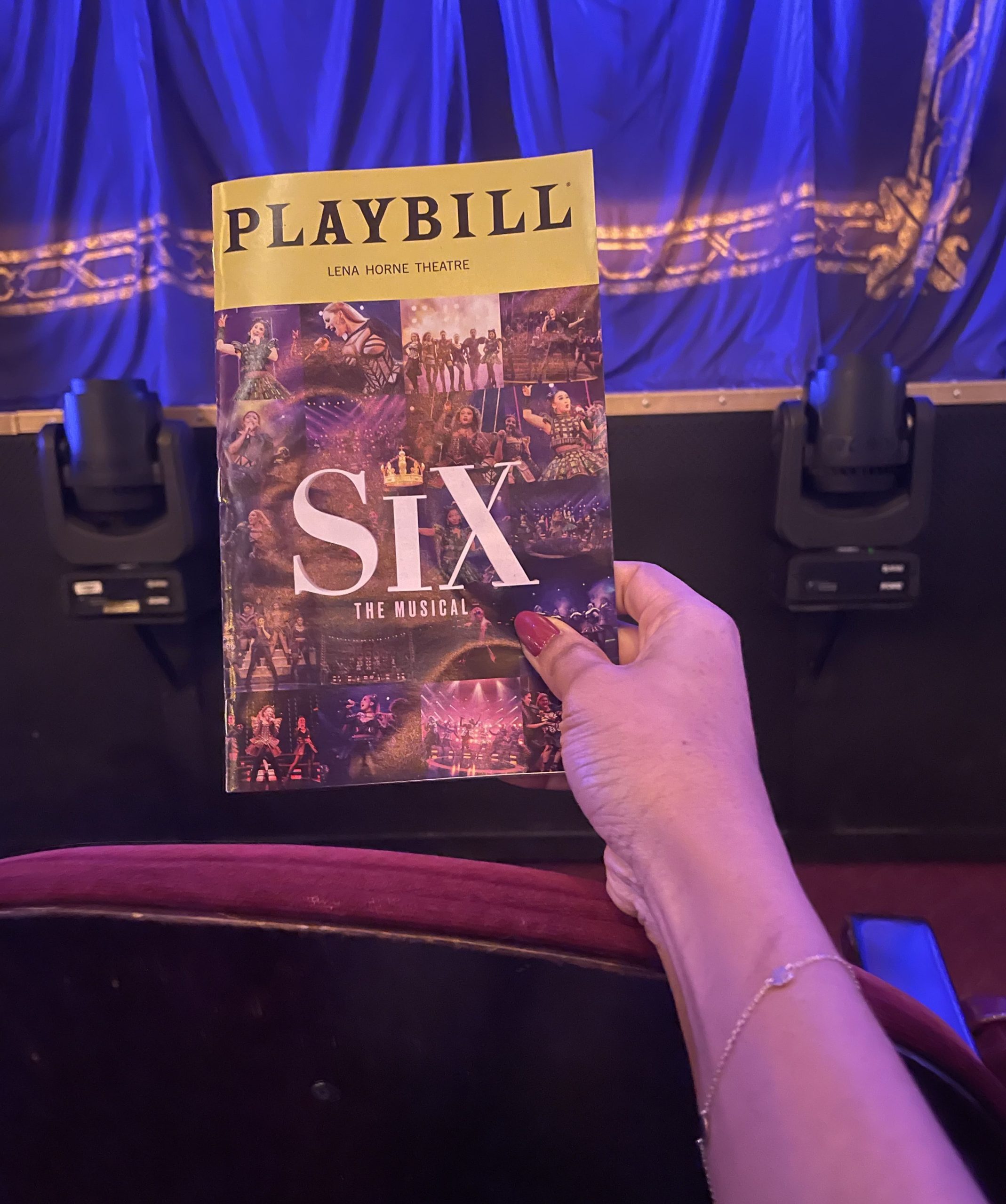
Ifeoluwa M. Olawole holds the playbill for the musical “Six” which she recently traveled to New York to watch during its Broadway run.Courtesy of Ifeoluwa M. Olawole
My sister and I love Broadway, so earlier this year we went to the musical as part of a birthday trip she planned for me.
As we sat, waiting patiently for the show to start, an older white lady sitting next to me turned and asked, “Are you also on Row A?” Her incredulity almost seemed obligatory.
I looked at her, my senses ringing the alarm. If you are Black, you probably know where this is going.
“What does that mean?” I asked the woman. I made sure my voice was calm and measured. I wanted to give her the benefit of the doubt.
“I want to know if you are also here,” she said, and pointed to our row.
“You can see us sitting here, can’t you?” I said, keeping my face neutral and unreadable.
Her voice buckled a bit, but again she insisted, “Are you sure you’re not in the wrong seat?”
“Why would we be in the wrong seats?” I held her gaze as I asked it.
Her voice started to quiver. “I just … but I just wanted to check.”
There is a pervasiveness to racism, to whiteness really, and how it imposes itself with vehement insistence. It demands — perhaps dares you — to define yourself as it defines you. But the moment you push back, it raises its hand in utter disbelief, armed with feigned innocence and wondering why you would be so offended.
My sister and I ended up having a phenomenal time at the show and in New York. When I talk about our trip to friends, family, and even acquaintances on Instagram, I don’t leave out this disrespectful incident.
Coincidentally, our experience happened a day before two of our best and brightest actors got called a racial slur on the world stage. Does recounting Michael B. Jordan’s and Delroy Lindo’s experience, or telling the story of my Broadway encounter, shift the main character of our stories?
What manner of insanity emboldens someone to doubt that two Black girls cannot afford front row seats at a Broadway show, and then to express that doubt to them? Who gets to decide who is expected to occupy certain spaces? What kind of audacity propels someone to assume we couldn’t possibly belong?
In the end, the very function of racism, as Toni Morrison put it, is distraction. It ruffles us (or at least tries to). It wants to squeeze out every iota of joy from us. It keeps us explaining over and over again why it’s devastating for two Black men to get called a slur in a room full of their peers — even if the intent was not malicious.
So, when that lady acted shocked to see Black girls in the front row, what it revealed was her own assumption about who is supposed to occupy spaces associated with art, pure, undiluted, transcendent art. It is rooted in a stereotype that “Black people don’t go to Broadway,” and comes from the same cultural logic that sees certain forms of enjoyment, art, joy, prestige as belonging only to a particular race or class.
And this is where I respond, because she couldn’t be more wrong. The problem with stereotypes, acclaimed writer Chimamanda Ngozi Adichie once said, isn’t that they are untrue; it is that they are incomplete.
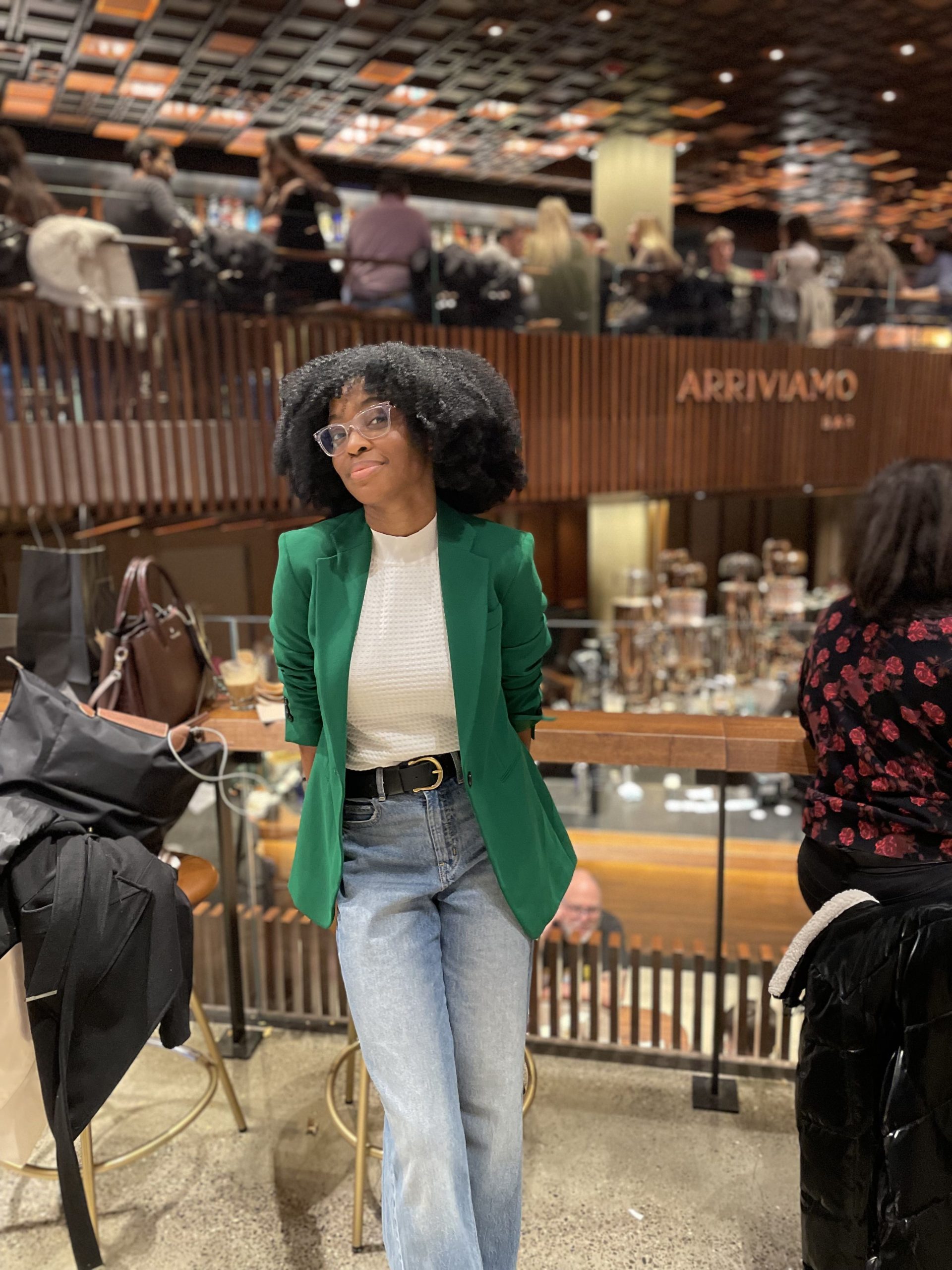
Ifeoluwa M. Olawole at the musical “Six” on Broadway.Courtesy of Ifeoluwa M. Olawole
In our intricate hair, in our swagger, in our style, in our diversity, we, ourselves, are art. Theater has never been foreign to us.
Performance traditions have always been central in African societies, such as in Nigeria, where storytelling, masquerade traditions, dance, poetry, and staged community performances have long been a part of public and cultural life. Even today, stage plays and live performances remain an important part of Nigerian culture.
Enslaved Africans did not arrive in the Americas without these artistic traditions. Performance and storytelling have endured among African Americans who have used these expressions for activism, for redemption and resistance, and for escapism since the era of slavery.
In much of the 19th century, one of the most popular forms of entertainment in America was minstrel shows, which involved white performers portraying Black people in a dehumanizing manner while stealing performance elements from Black acting troupes.
In 1821, William Alexander Brown founded the first Black theater in Lower Manhattan. And in the next century, the Harlem Renaissance marked a particular zeitgeist of African American creative expression across literature, arts, and performance.
Black audiences have participated in American theater for generations.
However, Broadway itself was historically segregated, culturally exclusionary, and increasingly expensive. During the Jim Crow era, for instance, Black theatergoers were often forced into separate or inferior seating sections.
In response, Black performers and audiences built their own theater ecosystems because mainstream venues excluded them. Even so, when white attendees came to see the shows, they were often “hostile, harassing the actors and rioting until the performances couldn’t go on.” Rather than arresting the disruptors, police would arrest the Black performers.
In 1993, when Washington’s Arena Stage attempted to expand the body of work it presented to make it more diverse, it lost many subscribers, with former subscribers calling the multiracial casting “disconcerting,” “distracting,” and even outright advocating for white supremacy.
Broadway has long skewed toward affluent audiences, with recent Broadway audience reports showing the average household income of Broadway attendees is over $250,000, making it inaccessible to many working- and middle-class people of all races. Broadway audiences are still disproportionately white — not because Black people devalue theater, but because Broadway has historically been marketed, priced, and culturally coded as an elite white space.
The easy thing, some might argue, would have been to laugh off that woman’s prejudice and shove it down into the same silence we have been forced to swallow for too long, where it festers into wounds carried across generations.
But silence relinquishes the power to define belonging to those who have always assumed it was theirs. As the protagonists of Six reclaim their stories from Henry VIII, so we must keep reclaiming ours from those determined to exclude us.
Ifeoluwa M. Olawole is a political scientist and writer. You can find more of her writing at www.themoderncedar.com and on Instagram @themoderncedar.
Last week’s air quality is brought to you by the fossil fuel industry.
To quibble about how much of the Canadian fires are due to human-caused climate change as opposed to poor forest management or normal climatic changes is to not see the fire for the trees. The fossil fuel industry has created human-made climate change, and it has won the war against it.
If your first reaction to this claim is to think the climate is always changing and that there is nothing out of the ordinary about the speed of current global temperature rise, that, too, was brought to you by the fossil fuel industry.
Since the 1970s, this industry has known about the impact of its products on climate. Rather than prioritize planet over profit, it chose to “manufacture uncertainty” about these impacts, fostering climate denial in order to delay government action that might otherwise address the problem.
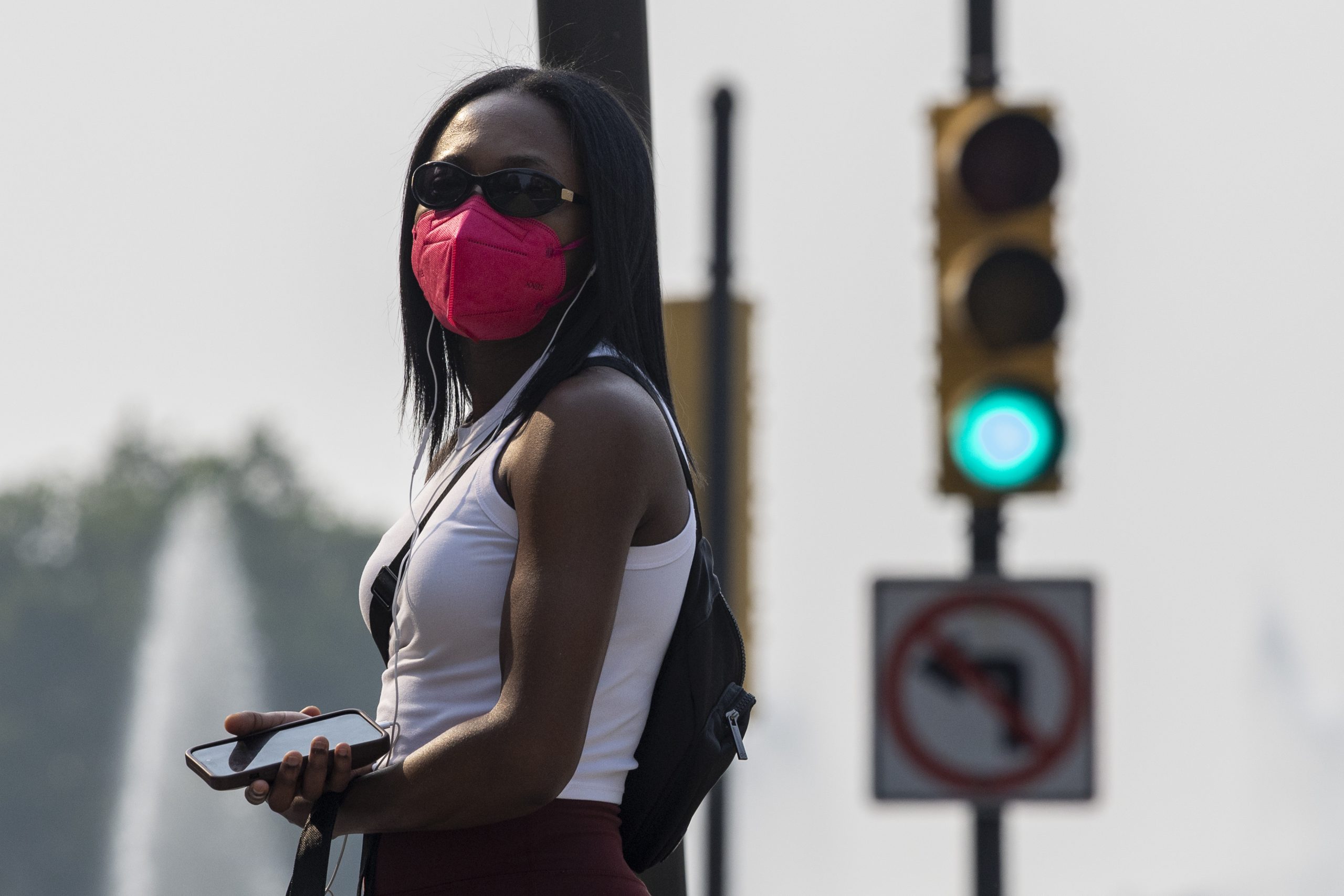
A woman wears a mask because of the smoke in the air from the wildfires in Canada on Friday in Philadelphia.Aidan T. Gallo / Staff Photographer
If thinking about the role of climate change in causing the fires that are to blame for last week’s haze makes you feel guilty about your own energy consumption, that guilt was also brought to you by the fossil fuel industry.
Most prominently, in 2004, British Petroleum funded a $250 million marketing campaign to introduce the public to the “carbon footprint calculator” while rebranding itself as a green energy company. This fostered widespread framing of the climate problem as something caused by individual lifestyles, a problem that could be solved by individual behavior changes such as recycling and the use of energy-efficient appliances.
The carbon footprint framing created and promulgated by the fossil fuel industry focused public concern on voluntary changes that could be made by individuals, rather than on regulation of the industry profiting from sustained use of planet-heating fuels.
That guilt you feel about your own energy consumption was put there to prevent your individual anger from turning into collective anger that could bring down the industry profiting from your fossil fuel consumption.
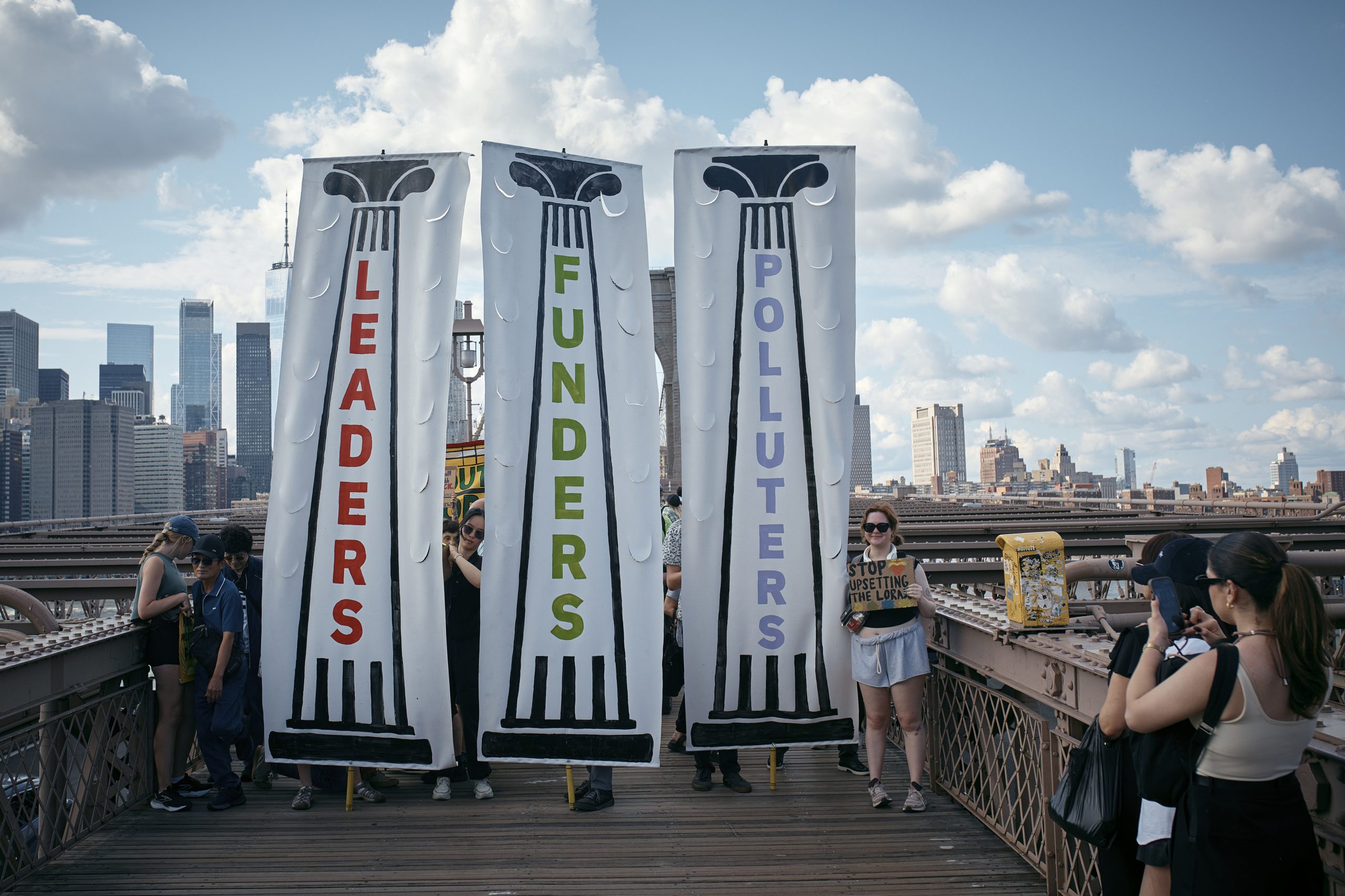
Protesters carry placards as they cross the Brooklyn Bridge in New York during a Youth Climate Strike march to demand an end to the era of fossil fuels in 2024. Andres Kudacki
But the industry isn’t just making you personally responsible for climate change; it’s using its immense economic power to influence political decisions shaping domestic automobile markets.
In contrast to many countries around the world that are benefiting from access to low-price, high-quality EVs manufactured in China — which will simultaneously diminish the cost of driving and its climate impact — the Trump administration is doing a solid for Elon Musk’s EV company by virtually blockading Chinese EVs from entering the U.S. domestic market through the use of 100% tariffs and related technology bans.
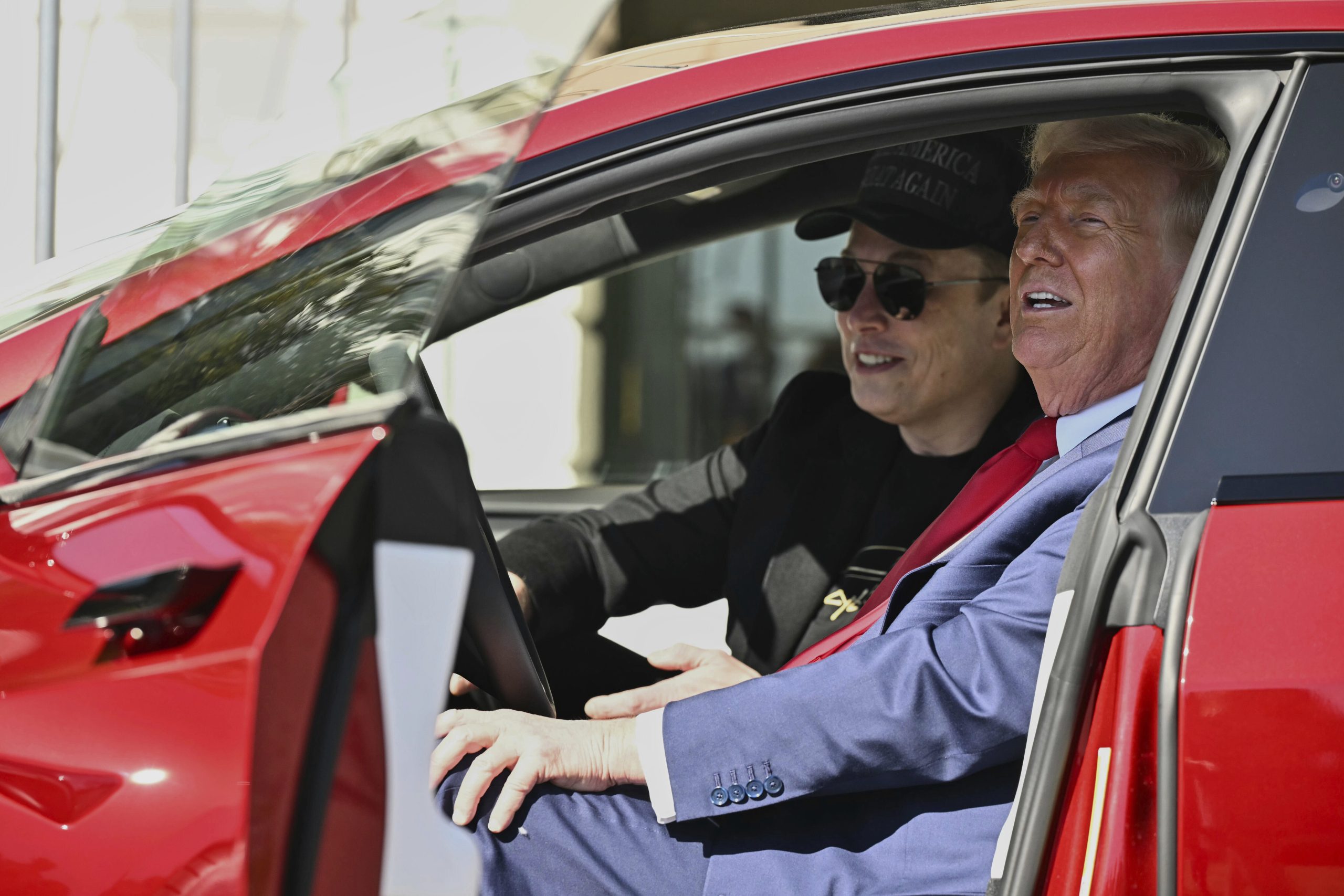
President Donald Trump and Tesla CEO Elon Musk speak to reporters as they sit in a red Model S Tesla vehicle on the South Lawn of the White House in March 2025. Uncredited
Effectively, this protects billionaire Musk’s domestic market dominance while keeping EV prices high enough to ensure Americans stay dependent on gas-powered cars.
It should come as no surprise that the fiscally savvy prime minister of Canada just pivoted to deliver a blow to the fossil fuel industry that President Donald Trump will never even try to land. In a reversal of its protectionist stance, Canada cut its 100% surtax on Chinese EVs down to a 6.1% tariff rate, allowing up to 49,000 Chinese EVs per year, conditioned on Chinese automakers’ investment in joint ventures with Canadian manufacturers.
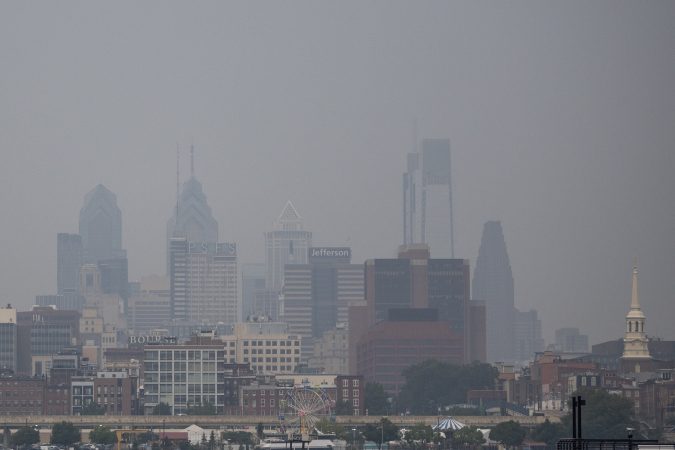
Hazy skies over the skyline caused by wildfires in Canada on July 17 in Philadelphia.Aidan T. Gallo / Staff Photographer
Access to affordable, high-quality EVs that diminish climate harms currently wreaking havoc on Canada is no consolation for all the humans and animals whose homes, habitats, and lives are currently being burnt to a crisp. But it reflects the behavior of a country that is still capable of doing something besides protecting the profits of its billionaire class.
If you want to do something that will save your bank account and your lungs, stop voting for political candidates who are bought and brought to you by the fossil fuel industry.
Breena Holland is an associate professor of political science and environmental studies at Lehigh University. Her research focuses on domestic environmental policy and air quality in the Lehigh Valley.
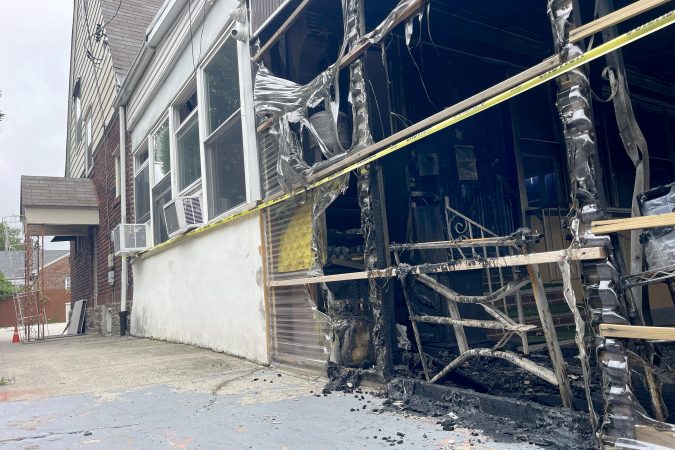
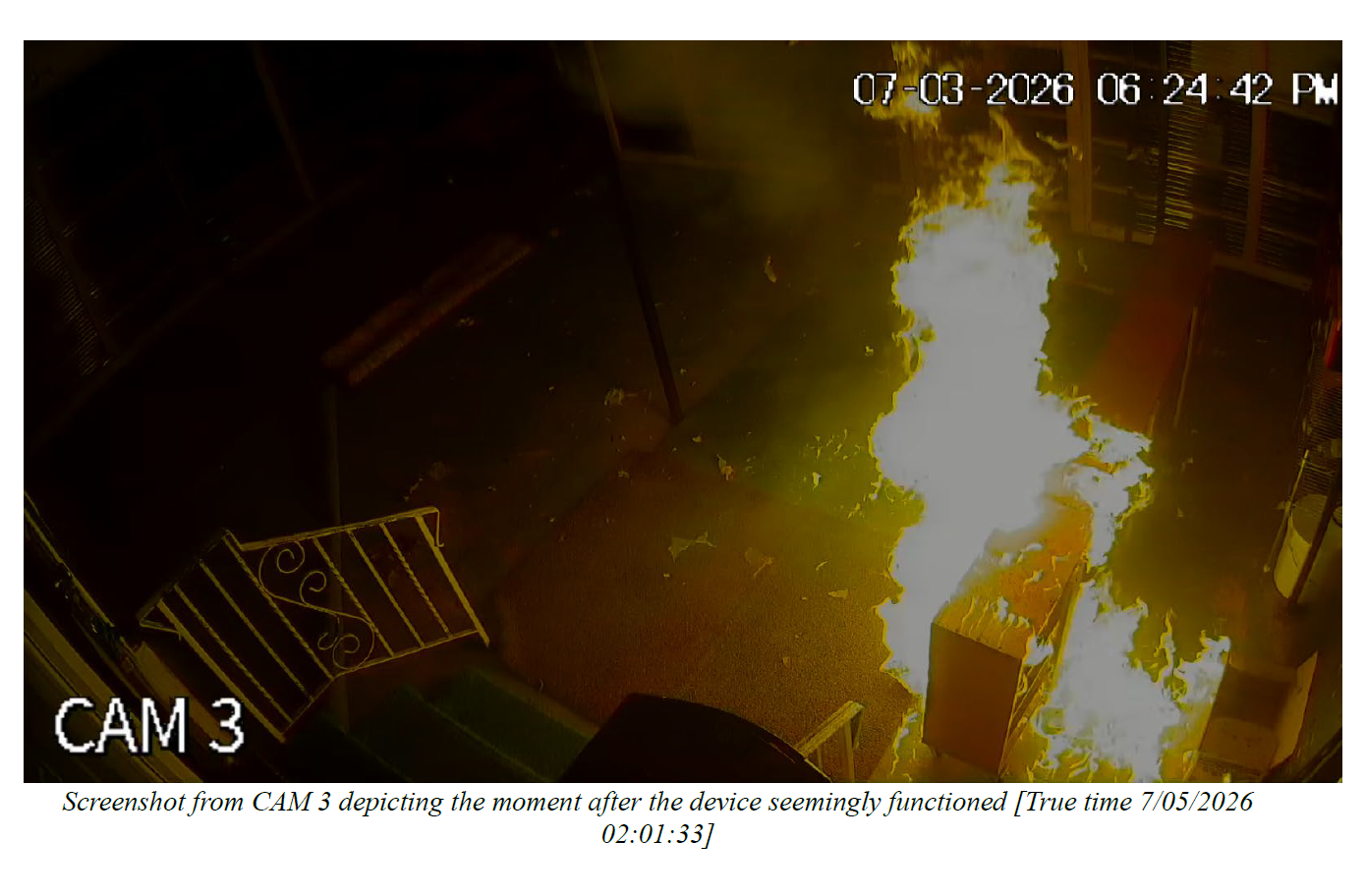
The same weekend America turned 250, I also watched a mosque burn in Northeast Philadelphia, a governor threatened with violence he’d already survived, and masked men march past the U.S. Capitol chanting “Reclaim America.”
None of it happened in the same city or involved the same people — and that is exactly why it matters.
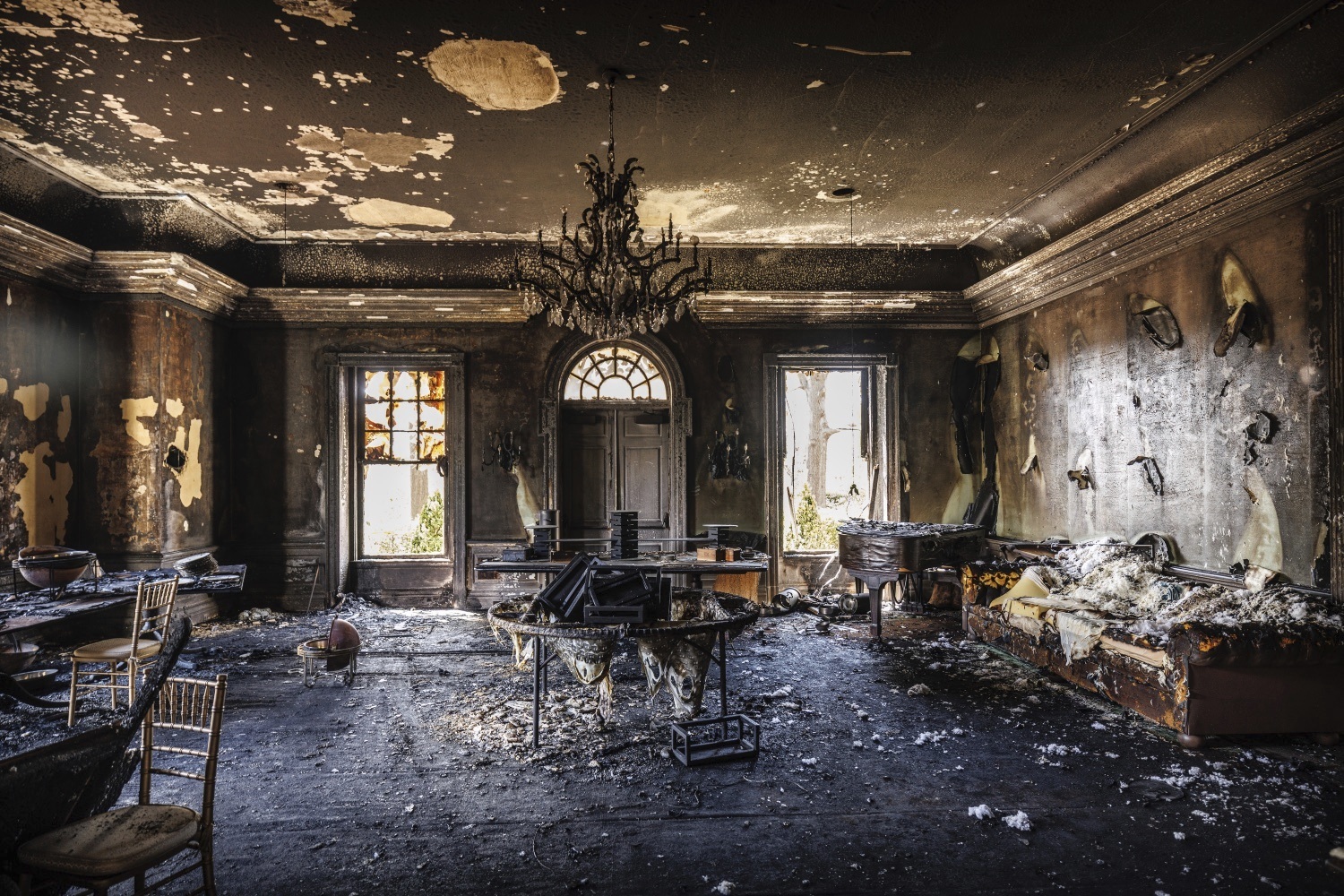
This image provided by Commonwealth Media Services shows damage after a fire at the Pennsylvania governor’s mansion while Democratic Gov. Josh Shapiro and his family slept inside on April 13, 2025, in Harrisburg, Pa.Commonwealth Media Services
Read that twice. A man was arrested for describing arson against a governor’s family as an act of sympathy.
On the National Mall, hundreds of Patriot Front members, a group the Anti-Defamation League calls the most visible white supremacist organization in the country, marched in coordinated uniforms, carrying Confederate flags, chanting about reclaiming a nation they insist belongs to them alone. They did this in broad daylight, on Independence Day, and walked away unbothered.
It doesn’t have to be this way. Pennsylvania has offered a glimpse of the right response to hate.
After mailers went out to Upper Bucks County voters attacking a Democratic candidate as the pick of the “corporate, Israel-first Democratic party,” alongside a photo of State Sen. Steve Santarsiero, who is Jewish, with an Israeli flag under his face, he called the language exactly what it was: “an antisemitic trope that falsely implies Jewish Americans are disloyal to the United States.” Republican Attorney General Dave Sunday agreed, as did State Rep. Dan Frankel (D., Allegheny) and State Sen. Judy Schwank (D., Berks), who called the mailers “unacceptable and dangerous.”
That’s what the response to hate should look like every time, not because it’s convenient, but because antisemitic hate speech is hate speech, and in the end, it is incumbent on all parties and political leaders to speak out.
Extremism doesn’t wait for permission from a party platform. It shows up as a firebomb thrown into a mosque, a slur hurled at a governor, matching uniforms marching past the Capitol, a hateful symbol that doesn’t disqualify a candidate.
The only real defense is what happened with the mailer in Bucks County: leaders naming it immediately, without waiting to see who it benefits politically to stay quiet.
I have spent my career watching people search for the loophole: this hate doesn’t count, this extremist isn’t really one of ours, this symbol was just a tattoo. There is no loophole. Hate doesn’t get a partisan exception, and neither does our responsibility to name it the first time we see it.
Here is what I’d ask, whatever you believe and whomever you vote for:
Condemn it the first time, not the 10th.
Refuse the whataboutism. “The other side does it, too” has never made anyone safer.
Show up for communities that aren’t yours. A mosque needs the same solidarity a synagogue would after an attack, and vice versa.
Report what you see. Silence is how patterns become normal.
This year marks 250 years of a promise: that all people are created equal.
That promise doesn’t come with a partisan carve-out. Leaders in Pennsylvania showed us it doesn’t have to. The question is whether we follow that example, or wait for the next arson, slur, or tattoo before it finally matters.
Andrew Goretsky is the senior regional director for ADL Philadelphia.
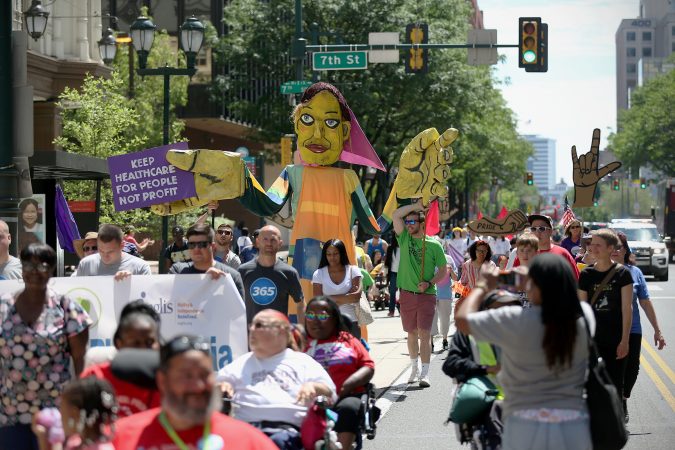
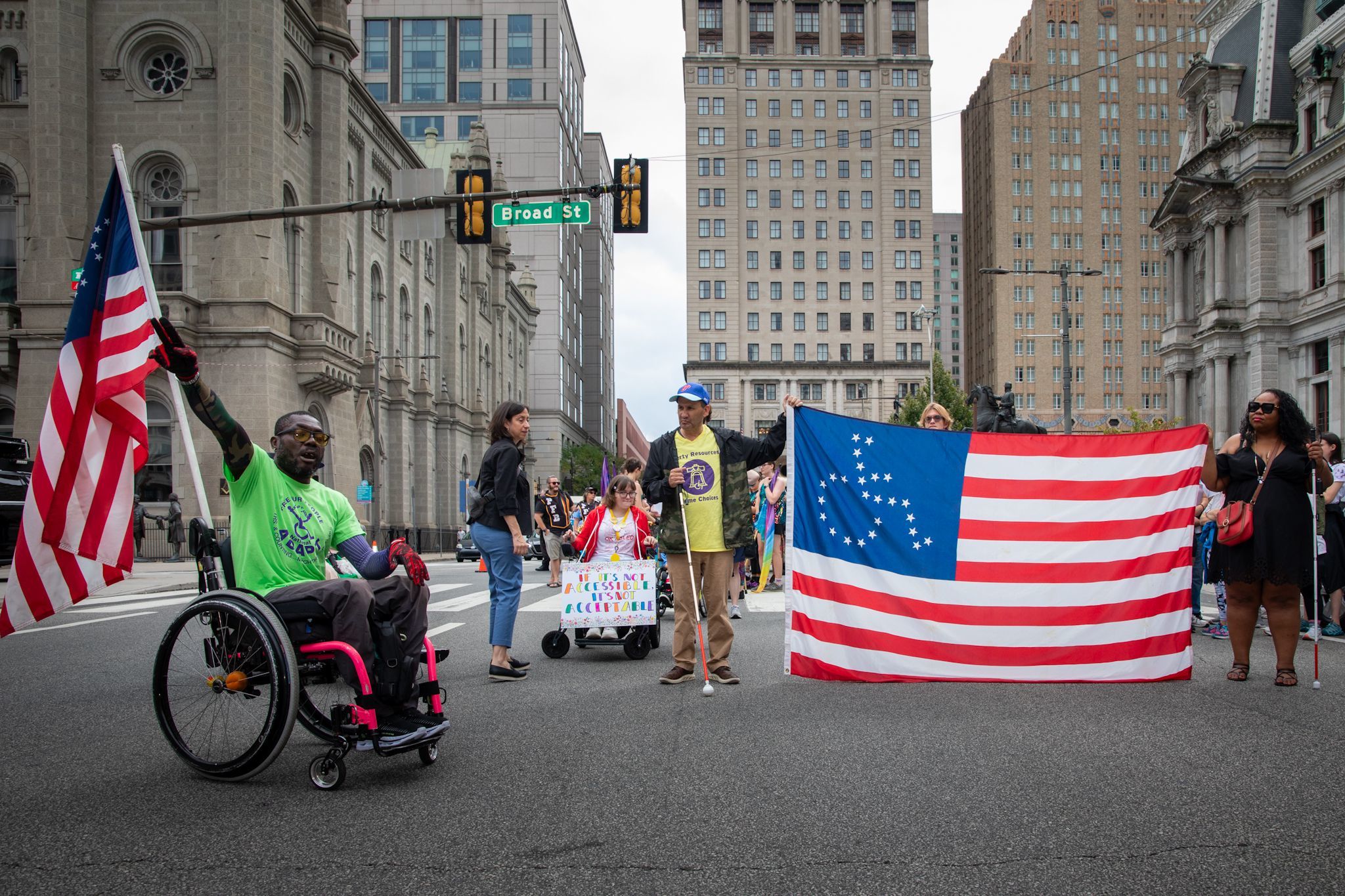
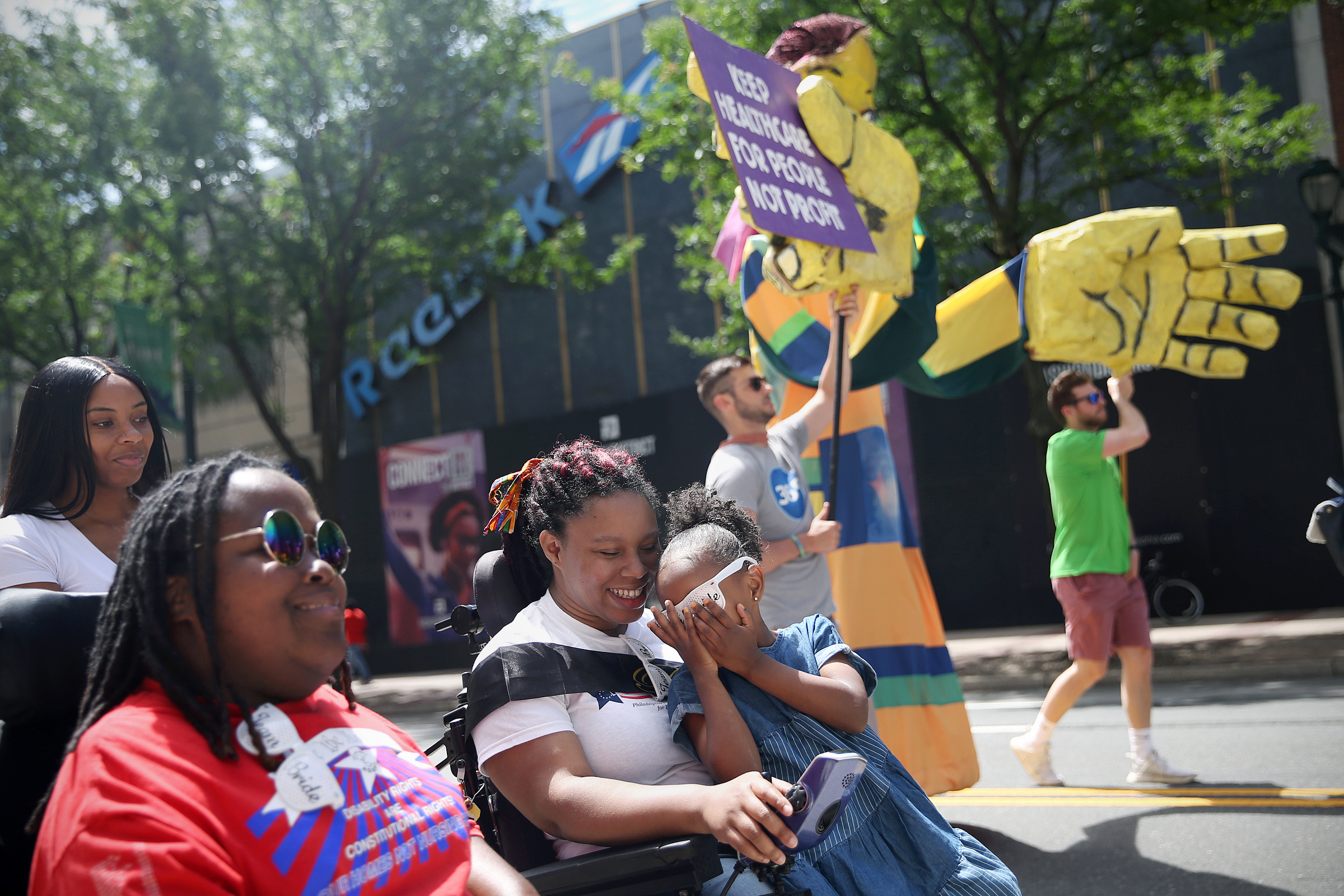
A few Saturdays ago, I ventured down to the Ben Franklin Parkway to attend and volunteer at Disability Pride Philly. This parade and festival launches more than a month of celebrations: July marks Disability Pride Month, honoring the Americans with Disabilities Act’s passage on July 26, 1990.
To some, “disability pride” sounds like an oxymoron, or a niche idea that may not touch them. As a person with multiple disabilities, I can tell you that disability pride matters more than you might think.
Accessible education, technology, rehabilitation, and civil rights protections let me live fully integrated into my workplace, community, and family. I hold a master’s degree and a doctorate. I do research on overlooked and unexamined issues that affect pediatricians and their patients. I live the life I choose, in the home I choose, with the job, hobbies, and community that I choose. These may seem like obvious rights for anyone to have. They are not.
Disability Pride Philly chose this year’s theme with precision: “We Belong Here and We’re Here to Stay.” This theme could not be more urgent or timely.
For most of American history, society separated people with disabilities like me from their families, schools, workplaces, and communities and placed them in institutions. Institutionalization confines children and adults with disabilities to restricted residential settings, cut off from family and community.
Disability pride rests on one central argument: Whomever you are, regardless of your body, mind, or circumstances, all of us deserve dignity, choice, joy, and freedom. In this photo from 2024, Tony Guyatory Brooks leads the Disability Pride March.Jay Outhier
Disability pride rests on one central argument: Whomever you are, regardless of your body, mind, or circumstances, all of us deserve dignity, choice, joy, and freedom. The disability rights movement spent generations fighting for laws to guarantee this. Those legal protections now face a coordinated challenge.
On June 18, the U.S. Department of Justice’s Office of Legal Counsel released a memo that claims the U.S. Supreme Court’s landmark 1999 decision in Olmstead v. L.C. did not require states to provide services in community settings rather than institutions. That interpretation contradicts 27 years of court decisions, federal enforcement, and disability rights advocacy grounded in the principle that unnecessary segregation of disabled people violates federal law.
The memo did not appear in a vacuum. Six states pursue active litigation in Texas v. Kennedy, a case that seeks to strip federal disability protections.
Two days before the memo dropped, the U.S. Department of Education announced plans to shift key disability and civil rights offices — including the Office for Civil Rights — out of Education and into other agencies. For Pennsylvania, where young people with disabilities make up a substantial share of the student population, this transfer reaches beyond bureaucratic reshuffling. It will affect families, schools, and students across the commonwealth.
A common assumption links these actions: home and community-based services cost too much, stretch too thin, or prove too difficult to sustain. When community supports seem unavailable, institutions get framed as the responsible alternative. But this scarcity did not arise on its own; it was manufactured.
Pennsylvania itself shows a different way.
Over decades, Pennsylvania moved steadily away from institutional settings and toward community integration.
When leaders invest in home and community-based services, people thrive. Earlier this year, the Shapiro administration announced that Pennsylvania cut its emergency waiting list for intellectual disability and autism services by 31%, and reached the lowest direct support professional vacancy rate in more than a decade.
The Pennsylvania Developmental Disabilities Council also supported innovative housing initiatives that help people with disabilities live in their communities rather than institutions. Several Pennsylvania counties expanded access to home and community-based supports, allowing more than 42,000 Pennsylvanians to receive services in their homes and communities; some counties eliminated their emergency waiting lists entirely.
These successes happened because Pennsylvania chose to fund home and community-based services. They matter nationally because they expose a flaw at the heart of the federal argument. Researchers document what they call the “Olmstead effect”: states that invest in home and community-based services see fewer people confined to institutions or at risk of landing in one.
Disability stands alone as the one minority group designation that anyone can join at any point in life, so this issue may eventually touch all of us. Aging, illness, and injury make disability part of the human experience. The policies behind community living, accessible education, and civil rights protections reach beyond abstract legal debates. They determine whether you, me, and the people we love can live independently, participate in our communities, and exercise meaningful choice over our own lives.
Domonique Howell (center) and her daughter, Rylee, 5, take part in the annual Disability Pride Parade along Market Street in Center City in, 2019. TIM TAI / Staff Photographer
This July, Disability Pride Month offers a concrete ask: learn about the disability rights movement and the policies that make community life possible. Speak up when these hard-won rights come under threat. And when policymakers claim that community inclusion costs too much or seems unrealistic, remember Pennsylvania’s example: When we invest, inclusion works.
Hannah Anderson is a writer and researcher and the founder of Learning Design Collective LLC. She lives with multiple disabilities, including vision and hearing impairment.