President Donald Trump and his appointees are obstructing the free press. Calling reporters the enemy of the state; suing newspapers that publish things he doesn’t like; demanding that television stations fire hosts; arresting and serving reporters with subpoenas — the attacks are real and often successful.
It’s hard to know what to do to protect freedom of the press, but in the Delaware Valley, there is a clear, straightforward action we can take to fight Trump’s censorship.
The Federal Communications Commission (FCC) is trying to exert control over which news gets on the air by threatening to withdraw the broadcast licenses that are required for stations to transmit their signals over the airwaves. Locally, it is reviewing the license held by WPVI, or 6abc.
Why ABC stations? Trump has long tried to force the Disney-owned company (which also owns the ABC network) to pull two shows that have been critical of him and his administration: The View and Jimmy Kimmel Live! — which both air on WPVI.
Unlike other attacks on the media, this one we can stop.
The FCC must seek “community input” before arriving at any decision about the fate of WPVI’s broadcast license. You can tell the FCC to stop attacking the free press by clicking here and filling out the one-page form. Take time to tell the Trump administration and the FCC that freedom of the press is a foundational principle.
A free press was so important to our “Founding Fathers” that it was listed in the First Amendment of the Bill of Rights: “Congress shall make no law respecting an establishment of religion, or prohibiting the free exercise thereof; or abridging the freedom of speech, or of the press; or the right of the people peaceably to assemble, and to petition the Government for a redress of grievances.”
Disney and WPVI are not perfect. There is plenty not to like, but the solution to the problem of corporate-controlled news is to break up the corporate giants, not to replace them with other corporate giants that will support Trump.
It’s unbelievable that those conservatives who so often talk about the original intention of the Constitution are silent as Trump destroys the constitutionally mandated freedom of the press.
It is appalling.
And too often, we can do nothing to support the free press under attack. This time, we can.
Lance Haver is the consumer reporter for the Philadelphia Hall Monitor, a worker-owned news service supported by the Lenfest Foundation. Lance@LanceHaver.com
How does democracy and civic life play out, and what is it like to be a citizen?
This question was posed to former mayoral and gubernatorial candidate Sam Katz by Andrew Ferrett, the director of In Pursuit: Philadelphia and the Making of America. The three of us had been collaborating for years on documentary history films produced by Katz’s company, History Making Productions. But despite his experience as a newsmaker, Katz had categorically refused to be interviewed himself.
In September 2024, when we finally convinced Katz to move to the other side of the camera, we were in the final editorial phases of In Pursuit. This was going to be a legacy project, we argued, your voice is needed (he had enjoyed a front-row view of Philadelphia civic life since the 1960s).
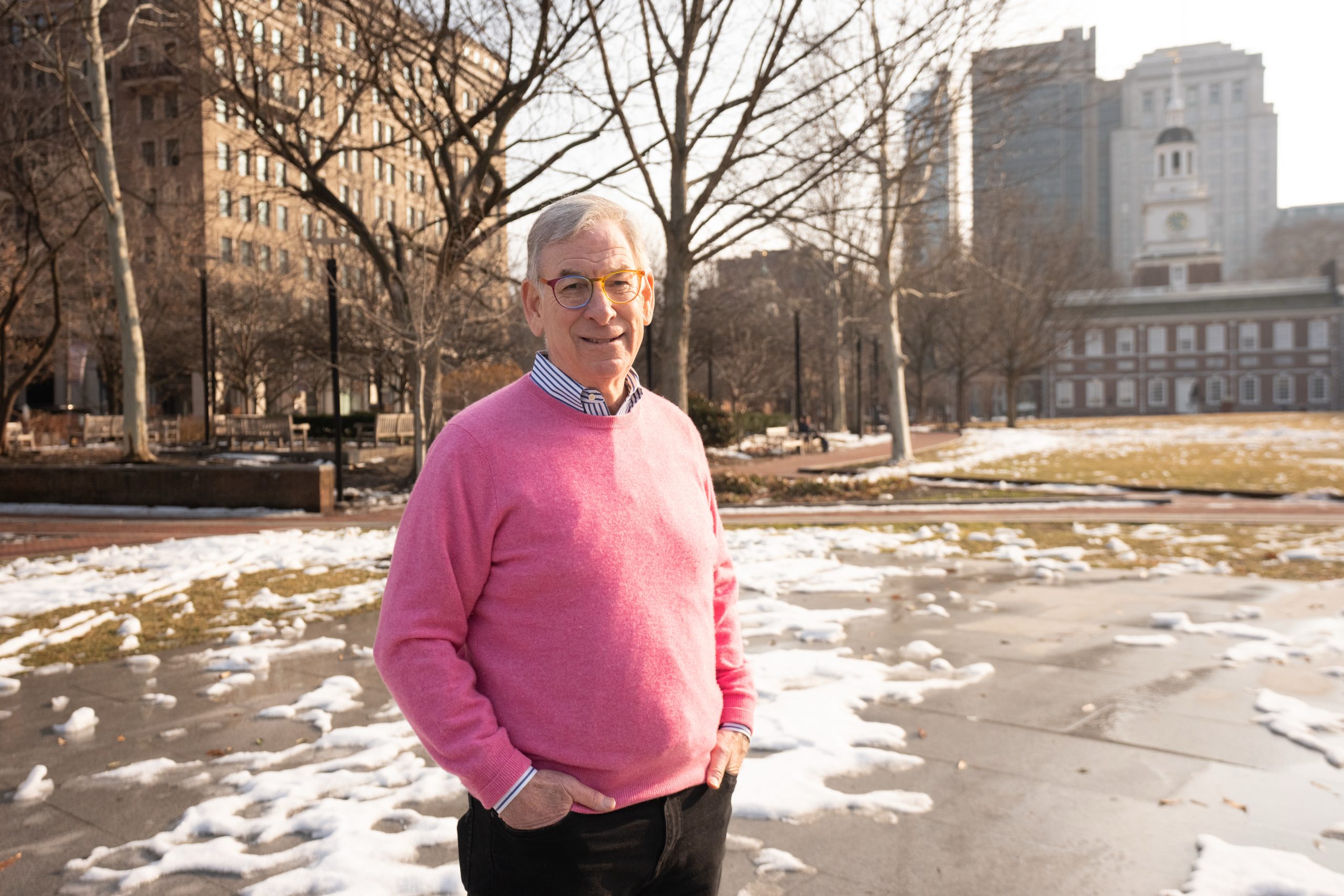
Sam Katz at Independence Hall in Philadelphia, Tuesday, Feb. 17, 2026.Jessica Griffin / Staff Photographer
“I would say that the most important job of a citizen, it’s to vote,” he began. We’d brought our crew up to a Fitzwater Street roof. The wind was blowing Katz’s peach tie; the skyline glinted behind him. “And in the sense of the use of the word democracy, even in its Greek origins, the only place where people could practice democracy was through voting.”
I recalled Katz’s remarks on democracy when I heard that President Donald Trump, taking another step to try to control November’s midterm elections (as The Inquirer argued recently), had fired the two remaining Democratic members of the federal Election Assistance Commission, and that the last remaining Republican member, Christy McCormick, had resigned.
The EAC was created in 2002 as a pro-democracy measure after the contested 2000 presidential election. As a bipartisan commission, it has set standards for voting machines, mail-in ballots, and cybersecurity. A U.S. Supreme Court ruling on June 29 overturned over a century of precedent, giving the president power to fire members of federal commissions like the EAC for political reasons and appoint loyalists.
Vacating the EAC won’t keep the midterms from happening in November, but it’s one more act in what former U.S. Reps. Richard Gephardt and Timothy Wirth call a “rolling coup.”
The firing of the commissioners was “deeply concerning in light of President Trump’s relentless efforts to try to interfere in elections,” said Michael Waldman, the president and chief executive of the Brennan Center for Justice at the New York University School of Law, the New York Times reported.
The dangers are real, as much to American democracy as to the spirit and meaning of citizenship, as Katz defines it. In Pursuit, a 10-part series being released throughout 2026, makes the consequences clear.
And yet, voting as a practice of democracy has almost always been threatened. In 1838, as Episode 4 of the series brings into dramatic focus, a new Pennsylvania Constitution determined that Black men, free men and landowners otherwise, no longer had the right to vote. Were no longer citizens.
In 1871, a year and a half after the 15th Amendment to the U.S. Constitution gave all Black men the franchise, a revanchist movement led by Philadelphia congressman and Speaker of the House Samuel Randall and his disciple, 4th Ward boss William McMullen, resulted in the murder of Black men trying to vote in the mayoral election, including civil rights leader Octavius V. Catto.
Episode 6 opens with Susan B. Anthony and a group of organized suffragists seizing the podium during the 100th anniversary reading of the Declaration of Independence, demanding what the 15th Amendment never delivered: women’s right to full citizenship (it would take another 44 years).
“I believe that I understood what citizenship meant from a very early age,” Katz continued. “My grandmother was legally blind. And so from the time I’m a young person, I took her to the polling place to vote.”
This familial joy, this right and responsibility, this tiny and also enormous act: it’s what defines our ability to be American. Lily Yeh, the founder of North Philadelphia’s Village of Arts and Humanities and an immigrant from Taiwan, says in Episode 10 of In Pursuit: “It reflects democracy and the essence I feel of America, which is most dear. One person, one vote.”
This is what’s fundamentally under threat. It’s a strange thing, as a filmmaker, to watch reality imitating all this history.
Not long ago, I was a celebrated exiled writer, one of the most visible faces at City of Asylum Pittsburgh — a grassroots organization that helps endangered writers build new homes and new lives in Pittsburgh. Today, I am alone, unable to find a job, without health insurance, and, if I remain in this situation, I may soon be unable to pay my rent and find myself — God forbid — homeless.
My story begins in Algeria — the country that prompted Salman Rushdie and other writers to first establish the “parliament of writers” internationally in 1993 because of the alarming number of attacks on, and assassinations of, writers in the country in the ’90s during the civil war. This is the same country that had earlier welcomed the international Black Panthers, and many African liberation movements since its independence from France.
In 2015, I was the first Algerian to call for the legalization of same-sex marriage. I started speaking up on taboo topics, crimes against children, for example, and family laws that relegated women to second-class citizens and prioritized men in the family. In 2017, I was interrogated for hours about one of my novels, which highlighted the participation of the LGBTQ community in the war of independence against the French — another taboo topic.
In 2019, I broke the greatest taboo of all in Algeria, calling for the truth to be told about the 20,000 young men kidnapped during the civil war.
I was tried and sentenced to pay a fine for using humor to criticize the presidential elections in 2020, and then in 2021 I was interrogated for hours about two articles I had written: one in which I criticized the president, the other, a call to liberate “God” from politics.
I was already in the U.S. when I was sentenced, in absentia, to a year in prison in Algeria for those same articles.
I say escape because I chose myself, for the first time in my life. I chose to live. In 2017, PEN International contacted me and proposed that I get in touch with the International Cities of Refuge Network, a Norwegian organization that has a network of many cities of asylum around the world. In 2021, I got Artist Protection Fund funding, and through that, I got a fellowship with the City of Asylum Pittsburgh and Carnegie Mellon University.
City of Asylum welcomed me in Pittsburgh and gave me an important period of safety and opportunity. During this period, I taught Arabic and worked at Carnegie Mellon, where I also studied translation as part of the employee educational benefits while holding a fellowship there. These opportunities changed my life, and I am grateful for them.
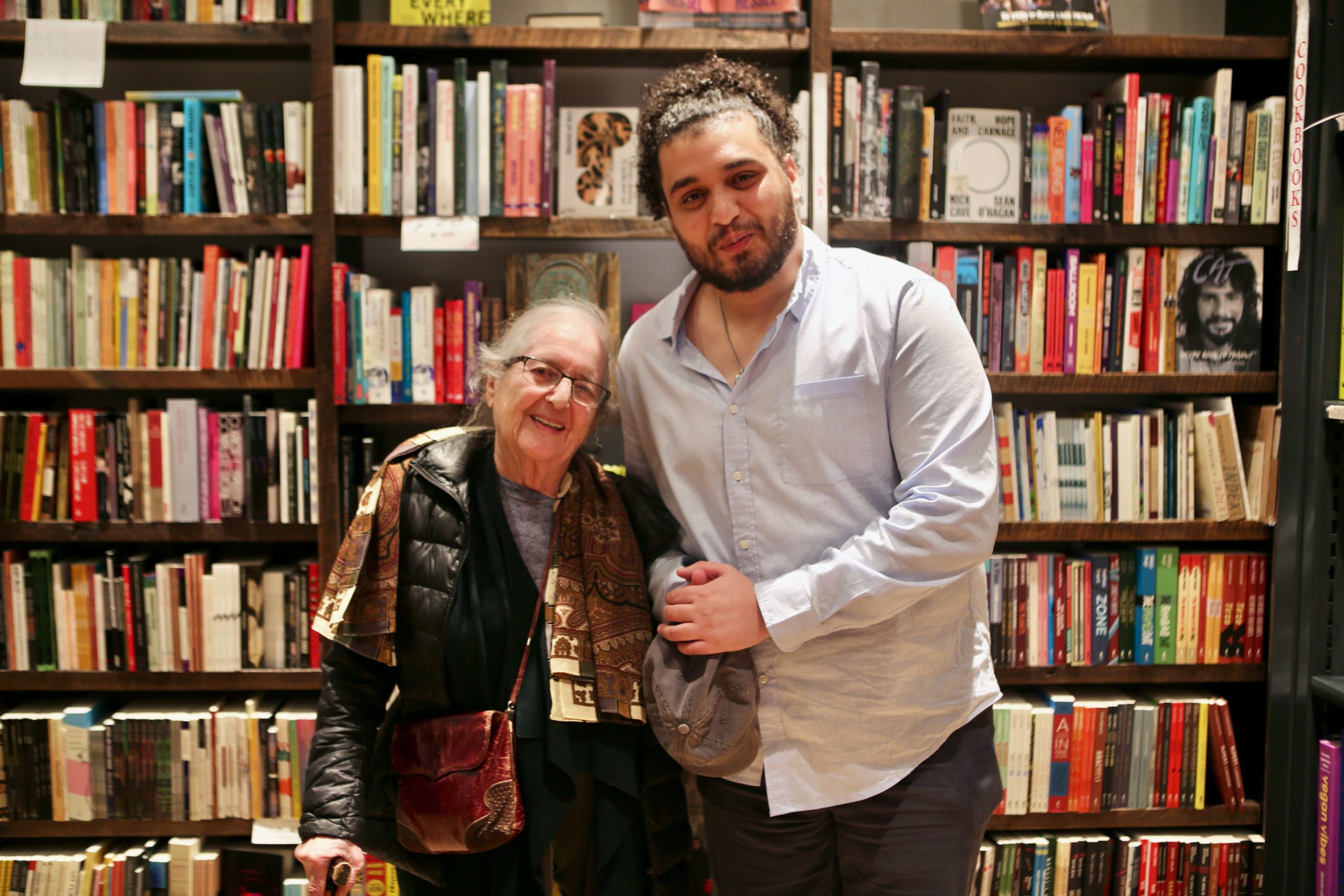
Elaine Moukhtefi with Anouar Rahmani in Pittsburgh in 2025. Moukhtefi — an American writer, translator, and activist — worked with Frantz Fanon in support of the anti-colonial Algerian National Liberation Front in the 1950s and ’60s. She helped welcome members of African national liberation movements, including Nelson Mandela and the international Black Panther members, to Algeria before she was forced to leave the country in 1974. Rahmani says that meeting her in Pittsburgh “was the most beautiful surprise in my life.”Courtesy of Anouar Rahmani
But eventually, as happens with fellowships, programs end, and the difficult question of what comes next begins.
Excitedly, I began applying for jobs related to my degrees and experience. When that didn’t pan out, I applied for translation jobs and positions requiring Arabic or French. I applied for work that matched my résumé, and for work that did not. Being an immigrant, I lowered my expectations and looked for work almost anywhere. To give you the full picture, I applied for cleaning jobs, including one cleaning hotel toilets in Pittsburgh.
I hoped to find anything that would protect me from the bitter winter cold and the eyes of racists. Above all, I wanted a job that would preserve my dignity and my life. I did not have many conditions. Any legal work would have been enough to begin my life again. But perhaps because of a curse, bad luck, or something beyond my ability to understand or predict, I was not successful.
Today, I live afraid, on the verge of homelessness, in debt, without health insurance, and without a passport because the Algerian Embassy will not renew mine. I do not know where to turn or what to do. All doors seem closed to me. And all that comes to mind is the applause of audiences at the many events where I was once a guest speaker, on days when I truly believed myself to be an “important” person. Now it seems like a joke.
Anouar Rahmani (left) and Kenya C. Dworkin y Méndez, from Carnegie Mellon University, in a public conversation and preview of Rahmani’s novel, “The End of the Third World,” at a City of Asylum Pittsburgh event in 2025.Courtesy of Anouar Rahmani
We do not matter much as immigrants. U.S. Immigration and Customs Enforcement hunts immigrants down, and politicians direct hateful rhetoric against us. We are labeled with the ugliest descriptions in the media. I am a queer immigrant from Algeria. I have become almost everything some politicians in this country hate.
After the Gaza War, many Arab and Muslim scholars and students spoke with me about their fears. When students were arrested during pro-Palestinian protests, many of us became afraid in a country that had promised us we would not need to be afraid again.
I am afraid. Do I have the right to say this? Or must I live within a diplomatic discourse that allows only gratitude to be expressed after a rescue?
I need to write about the difficult side of rescue, the “after the rescue” nobody speaks about.
This photo shows House Poem, a home painted by Huang Xiang, the first exiled writer in the City of Asylum Pittsburgh residency program, in December 2020. City of Asylum Pittsburgh is a nonprofit organization that is part of an international network of support to writers and artists threatened by a lack of freedom of expression in their home countries./ AP
My story is perhaps personal, but it is bigger than me. It is about exiles brought into this country with hope — who later discover how fragile their survival is. While we are often presented as examples of success, many exiles live in psychological, economic, and legal fragility and under indescribable pressure.
The danger for an exiled writer, scholar, or artist does not end simply because a fellowship ends. I do not doubt the sincerity of the people and the organization that brought me to America and sheltered me. I am not trying to blame my failures on it or on others. But I want us to reconsider the rescue model on which it is built and to work toward sustainable mechanisms of support.
Perhaps the end of a fellowship should be announced with the same energy as its beginning. When an exiled writer or artist arrives, organizations often use newsletters, social media, institutional networks, and public events to introduce the new fellow to a city. The arrival becomes news. But the departure, and the professional uncertainty that may accompany it, can happen almost silently. Why not use the same networks to announce that a fellowship is ending and that a writer, scholar, or artist is entering the job market? Visibility should not disappear precisely when it may be most vital to survival.
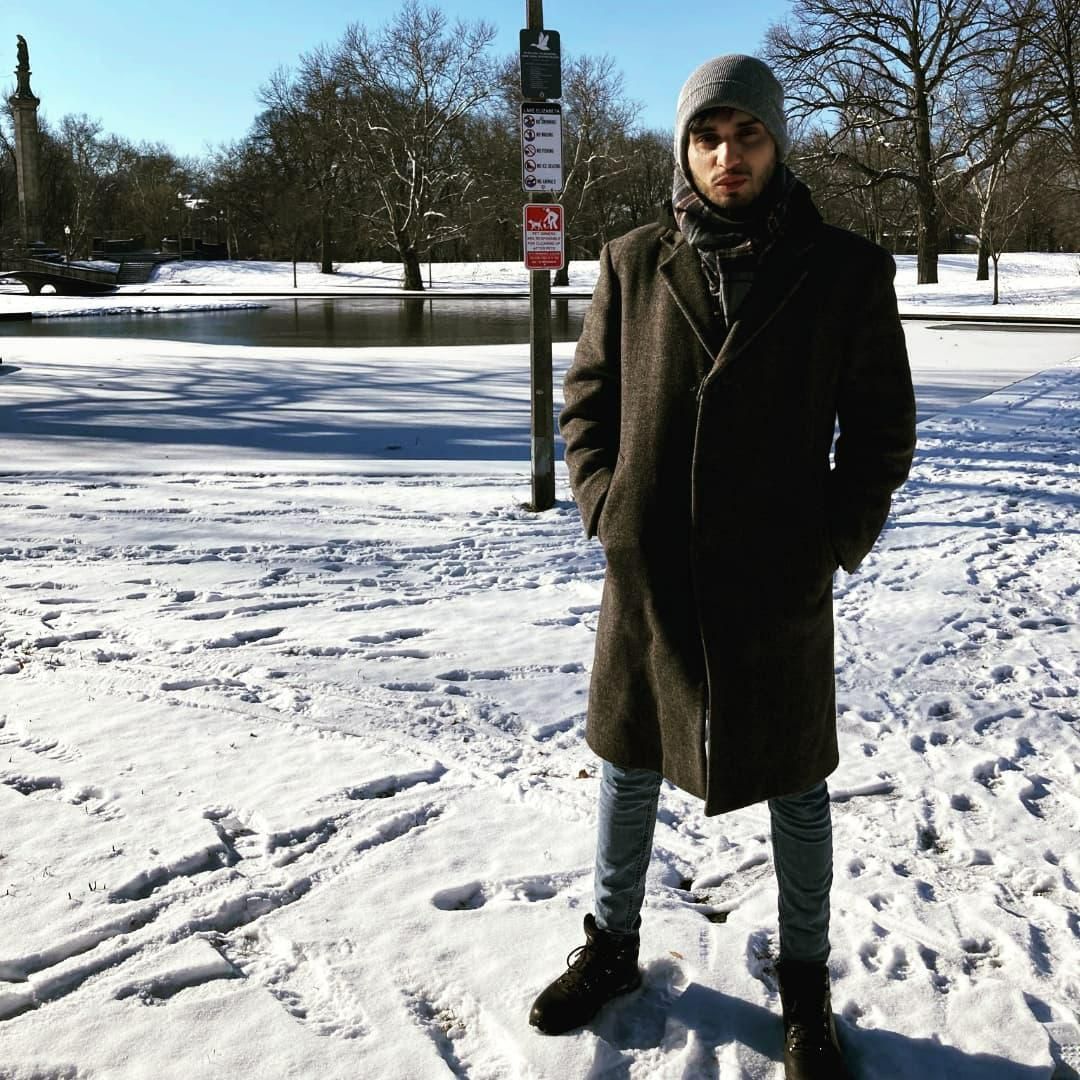
Snow welcomed the author when he first arrived in Pittsburgh as a City of Asylum and International Cities of Refuge Network fellow in January 2022.Courtesy of Anouar Rahmani
Host organizations can make introductions, advocate, and help open doors that are often inaccessible to a newcomer navigating a foreign labor market. Many exiles have advanced degrees, years of professional experience, and strong résumés. What they lack is access: knowledge of the hidden mechanisms of the local job market, professional references, institutional introductions, and networks capable of converting experience into employment.
Most importantly, the path toward employment after a fellowship should be treated as part of the fellowship. This work should begin even before the fellow arrives. What credentials may need recognition or supplementation in the host country’s labor market? What legal barriers to employment might exist? These questions should be asked from the beginning, revisited throughout the residency, and followed beyond its formal end.
I want to be clear about what I am saying. City of Asylum Pittsburgh helped me in many ways. I am not dismissing that assistance. The question is not whether individual people tried to help me. The question is whether the fellowship model itself is adequately designed for what happens after the fellowship ends.
What matters in the idea of rescue is not the moment of rescue itself, but the possibility of survival afterward. We do not want to remain symbols of rescue; we want to survive.
All of us want to be beings breathing under the sky — but not in fear that it is about to fall on our heads.
Anouar Rahmani is an Algerian novelist, writer, journalist, and internationally recognized defender of freedom of expression. Rahmani’s literary and public trajectory has positioned him as one of the most visible contemporary Algerian voices confronting censorship, religious and moral authoritarianism, and the criminalization of imagination.
In the days after Sept. 11, 2001, as the country reeled from the deadliest terrorist attack in modern American history, some inside the U.S. government asked whether refugee admissions should continue at all.
I was serving in government at the time, and I remember those debates well. The fear was real to all of us — even those of us working in national security. Across the national security community, officials were asking difficult questions: Could another attack be coming? Were there vulnerabilities in our immigration system? How could we protect the country while remaining true to our values?
President George W. Bush assigned the late Assistant Secretary of State Gene Dewey and me to help address those questions in the months after 9/11. Even in a moment of profound grief and uncertainty, we concluded that refugee resettlement remained both a moral obligation and a strategic asset. President Bush believed America could protect its security without abandoning its humanitarian commitments, commitments that have long defined our nation as a refuge for people fleeing persecution and violence.
Rather than dismantling the refugee program, we strengthened it, and over the years, empirical evidence has indisputably shown that refugees are a net positive for our country. The security measures developed in the years after 9/11 became the foundation for some of the most rigorous vetting procedures in our immigration system.
Looking back, I believe that decision made America stronger. Refugees have enriched our communities, strengthened our economy, served in our armed forces, and contributed to every aspect of American life. Just as importantly, our commitment to refugee protection sent a message to allies around the world that the United States would not abandon its values out of fear.
Security and compassion were not competing principles then. They are not competing principles now.
That is why it is so painful to watch what is happening today. Refugee resettlement was initially halted for almost everyone, and then access to the program was narrowed to a historic low and limited to white Afrikaners from South Africa. This radical change left thousands of approved refugees in limbo, including families who were cleared for travel to the United States, only to be told at the last hour that they would not be allowed to come after all.
At the same time, recent decisions affecting humanitarian protections, including the loss of Temporary Protected Status for many Syrians and Haitians, have left thousands more facing profound uncertainty and possibly large-scale deportation. Whatever one’s views on immigration policy, these changes represent a significant departure from America’s long-standing role as a place of refuge for people fleeing war, persecution, and political violence.
The consequences extend beyond those directly affected. They reshape how the world understands America’s commitments.
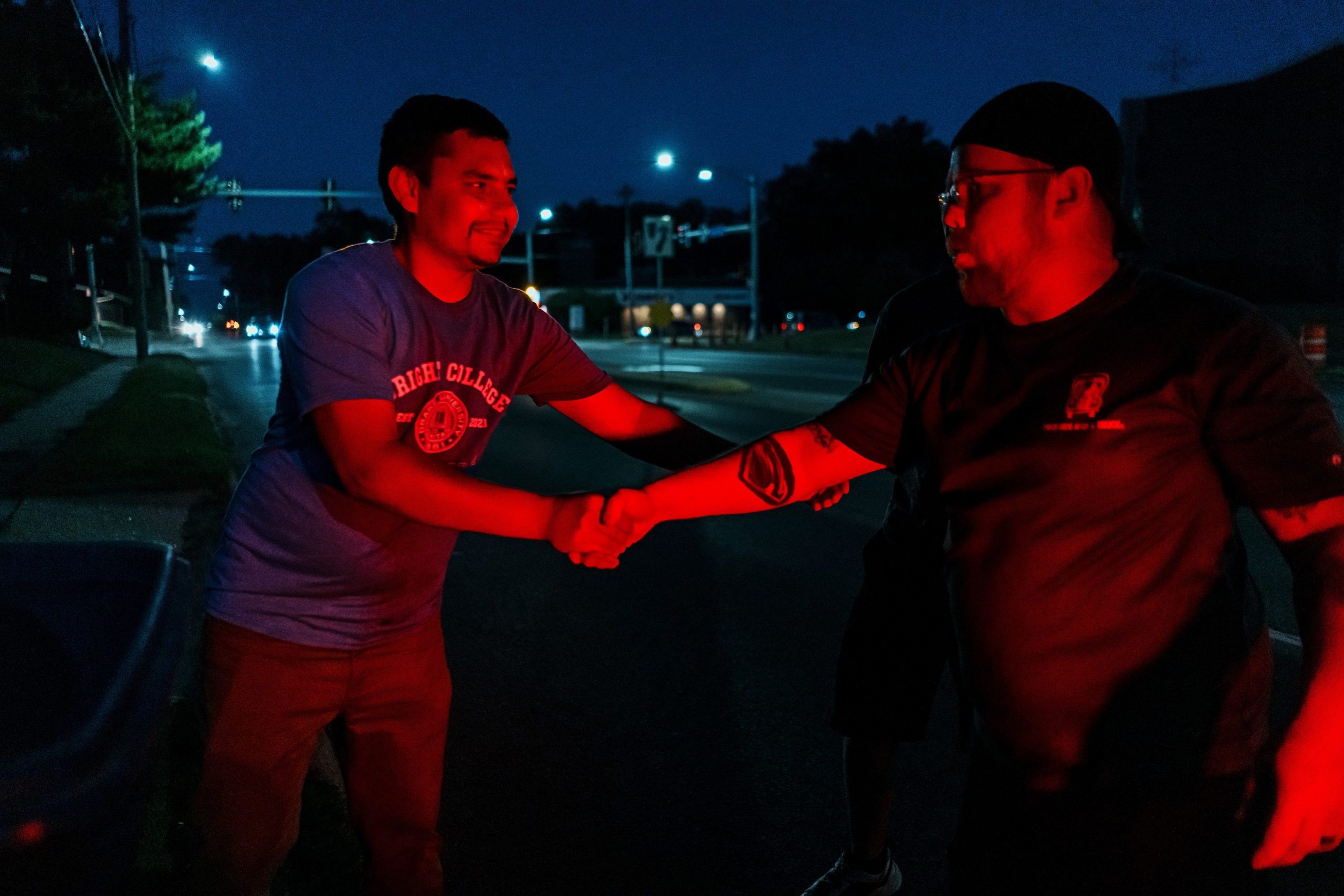
Shir Agha Safi, 30, (left) is thanked by a mover in Des Moines, Iowa, for his military service in Afghanistan.Marcus Yam / MCT
Nowhere is that more evident than in the case of our Afghan allies, who were gravely endangered when denied access to the program. Many Afghans risked their lives working alongside American soldiers, diplomats, aid workers, and intelligence personnel. Their service made them targets of the Taliban and other extremist groups. For decades, the United States asked these men and women to trust us. When we fail to honor our commitments to them, the consequences extend far beyond Afghanistan. It sends a message to future partners around the world that America’s promises may be temporary and its commitments conditional.
I am equally devastated by the retreat from U.S. leadership in lifesaving humanitarian aid abroad — a retreat reflected in the Organization for Economic Cooperation and Development’s (OECD) finding that American development assistance fell by nearly 57% in 2025, the largest reduction by any major donor in any year on record, even as conflict around the world drives displacement to record highs.
Our nation’s anniversary should be a time to celebrate refugees, immigrants, and those who came to this country with contributions. Instead, I watch it being scapegoated — used as a political symbol by people who have never sat across from a refugee family, never reviewed a vetting file, never seen what resettlement actually looks like on the ground.
I think of the families still separated, still waiting. I think of the engineers, first responders, agricultural workers, HVAC technicians, and construction workers who are not coming to fill jobs this country needs.
As president of the Jesuit Refugee Service and after more than three decades working on these issues at the U.S. Department of Homeland Security, I have interviewed, spoken with, and read about the horrors refugees have endured. Through their eyes, I have seen the worst of what people can do to one another. But I have also been deeply humbled by their accomplishments, their hope, and their love for the countries that took them in.
I think of Nam Loc Nguyen, the first Vietnamese boat person to receive U.S. citizenship — naturalized exactly five years to the day after he arrived. He built a career serving others. When Kabul fell in 2021, Nguyen and fellow Vietnamese Americans raised funds and opened their own homes to resettle Afghan families. Refugees helping refugees: gratitude paid forward across generations.
Forty-six years after the fall of Saigon, that commitment continues. Last year, Nguyen joined us at our JRS Advocacy Day to explain the importance of refugee admissions and humanitarian protection to congressional staffers, many of whom were not even alive on 9/11. Nguyen was there to bear witness to what resettlement made possible — not just for him, but for the families he has since helped welcome home.
I think of the Bhutanese community in Pennsylvania, one of the largest Bhutanese refugee communities in the country. During the COVID-19 pandemic, many Bhutanese refugees, alongside refugees from around the world, worked on the front lines as nurses, home health aides, and other essential workers. While much of the country stayed home, they cared for elderly Americans, staffed hospitals and nursing facilities, and helped hold communities together during a time of extraordinary uncertainty.
And I think of the dozens of refugees I have met who served in the U.S. military or with the U.S. military abroad, before they were even naturalized as citizens, who took up arms to defend a country that had not yet fully claimed them as its own.
As an American, I believe our country is stronger because of the refugees we welcome. They remind us that America remains a place of opportunity, renewal, and second chances.
For more than three decades, I have had the privilege of witnessing refugees rebuild their lives, raise families, serve their communities, and contribute to the nation that welcomed them. Many refugees are revitalizing rural America by refueling its economy and essential services. In a time when so many Americans have grown cynical about our institutions and our future, refugees often see something we sometimes forget: the enduring promise of the American dream.
They remind us not to give up on our country, or, more importantly, on one another. If refugees who have lost everything can still believe in this nation’s promise, so can we.
As our nation marks its 250th birthday, rather than relitigate the politics of 2025 or 2026, I hope we will remember something deeper about who we are.
Refugee resettlement has never been a one-sided act of charity. It has always been an exchange of hope, resilience, and shared responsibility.
At Jesuit Refugee Service, we see that truth every day. Refugees are not separate from the American story; they are part of it. They remind us that our nation is at its best when we keep our word, welcome those fleeing persecution, and remain confident enough in our values to extend a hand to others.
Kelly Ryan is the president of Jesuit Refugee Service USA. She is a former deputy assistant secretary of state for population, refugees, and migration, with more than three decades of experience across the U.S. Departments of Justice, State, and Homeland Security.
Having attended segregated schools in Birmingham. Ala., from 1959 to 1970, I know what a poorly funded public education system looks like. But I didn’t know my schools were being shortchanged until a federal court desegregation order closed all-Black Ullman High School in 1970, and I was reassigned to Ramsay High, which for most of its 60-year existence had been all-white.
Only a trickle of Black students began attending Ramsay in 1963, when Richard Walker became the first African American student there. But after Ullman closed, Ramsay abruptly went from being nearly 5% to about 50% Black. Both Black and white students experienced some serious culture shock as a result, but I don’t recall any major racial incidents during my one year on that campus.
What I do recall is that Ramsay’s books weren’t worn-out, hand-me-downs, that its science classes had enough working lab equipment for every student, and that its smaller student-teacher ratio made it easier for academically struggling children to get the attention they needed. In fact, to this day, I applaud all of my Ramsay teachers, including several reassigned there from Ullman.
My reminiscing about poorly funded schools was sparked by the Trump administration’s efforts to shut down the federal Department of Education, which has played a crucial role over the years not only in lessening the impact of past racism in America’s schools but otherwise ensuring adequate educational opportunities exist for all children, including those with financial or health disadvantages.
More Americans should be raising hell about what’s happening to the Education Department. But it’s hard to keep track of what to be upset about with this president. Every day, Americans are flooded by often inane news out of Washington that diverts their attention. So what if President Donald Trump has botched the repairs of the Lincoln Memorial Reflecting Pool? He messes up almost everything he touches.
The amount of news coverage given to that story was not only undeserved but a disservice. It also plays into the hands of Trump, who most likely would prefer to have people talking about algae in the Reflecting Pool instead of how much his ill-conceived war with Iran has cost in dollars and lives. The Iran war reminds me of a satirical movie released in 1997, Wag the Dog, in which a fictional U.S. president, after being caught trying to seduce an underage girl inside the Oval Office, fabricated a war in Albania to distract the American public from the sex scandal.
There’s nothing fake about our war with Iran. More than 3,600 Iranians and 4,000 people in Lebanon are believed to have been killed as a result of military attacks by our country and Israel. Thirteen U.S. service members and at least 39 Israelis have also died since the fighting began on Feb. 28. That’s why it’s so disheartening but necessary to question the war’s true intent.
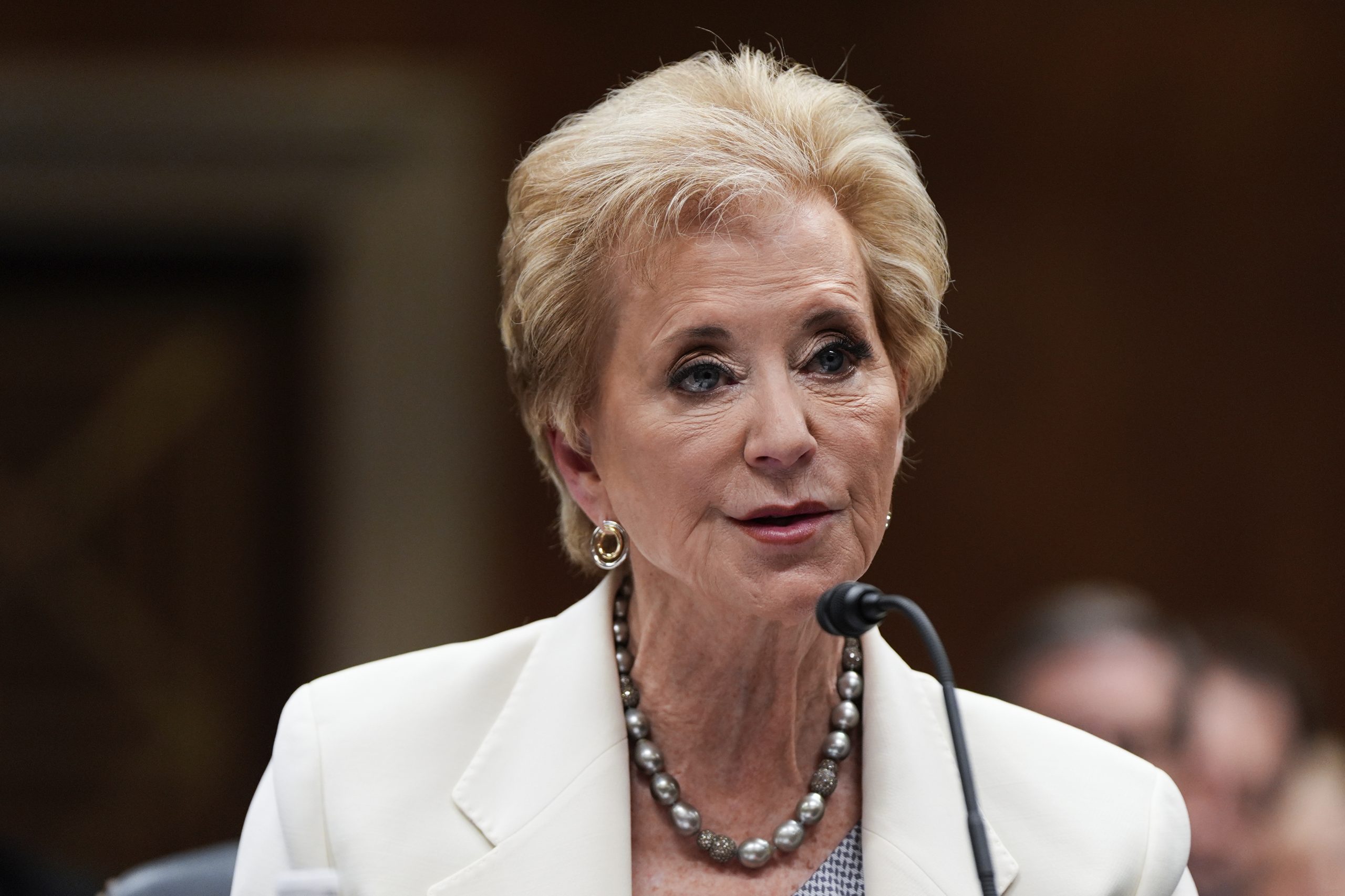
Harold Jackson writes that Education Secretary Linda McMahon is just as ill-equipped for the job as her predecessor, Betsy DeVos.Julia Demaree Nikhinson
“If we didn’t do what we’re doing right now, you would have had a nuclear war, and they would have taken out many countries,” Trump said while meeting with German Chancellor Friedrich Merz on March 3. Our president would have us believe he started the war because Iran, which wasn’t close to having nuclear attack capability, was a greater threat to America than Russia or China, which already have advanced nuclear weapons. Or North Korea, which is way closer than Iran to achieving that status.
I pray Trump isn’t employing a horrific Wag the Dog ploy to divert attention from a war that has cost thousands of real lives and billions of dollars. But whether it was his intent or not, the American public’s understandable focus on the Iran war and its ancillary impact on consumer costs such as the price of gasoline and food has allowed Trump to push forward some dubious goals that more Americans might otherwise have vehemently rejected.
That includes Trump’s ongoing dismantlement of the Department of Education, which he tried but failed to do during his first term. Trump appointed billionaire Betsy DeVos, who had no background in education, to be his education secretary in 2016 so she could cripple the department. His current education secretary, billionaire Linda McMahon, is just as ill-equipped for the job as DeVos, but she, too, seems hell-bent on finishing what her predecessor started.
McMahon earlier announced plans to transfer two of her department’s largest units, the Office of Elementary and Secondary Education and the Office of Postsecondary Education, to the U.S. Department of Labor, move the Office of Indian Education to the U.S. Department of the Interior, transfer responsibility for childcare access and a foreign medical program to the U.S. Department of Health and Human Services, and shift a foreign language education program to the U.S. Department of State.
Trump has never fully explained his zest to kill the Education Department, but it fits the states-rights attitude of some of his supporters, especially down South, who have long resented federal intrusion into how they run their public schools. Such resistance to federal involvement was about segregation when I was a child; today it’s more about encouraging vouchers and other programs that drain tax dollars and students from traditional public schools.
It’s not wrong to reassess the role the federal government plays in running local schools, but educating Americans’ children should remain a national priority — one that requires significant input from Washington to ensure some uniformity in educational opportunities and outcomes no matter where a family lives.
Congress passed the 1965 Elementary and Secondary Education Act with that in mind. Known as Title I, the law provides additional federal funding to schools with large numbers of students living in poverty. Changing Title I to a block grant program — without federal oversight — risks that the money won’t be spent where it is most needed. Misuse of taxpayer money led the Department of Health and Human Services to freeze access to more than $10 billion in block grants for California, Colorado, Illinois, Minnesota, and New York earlier this year.
The National Education Association warns that handing out block grants without clear restrictions would allow states to divert tax money to voucher programs — and essentially turn the clock back 60 years on education policy and progress. “While one would like to think that we can trust every state to do the right thing on behalf of all students, history tells us differently,” the NEA said. “States would not have to answer to anyone about whether or how they are following the law.”
As a product of the public schools in New Bern, N.C., population 34,000, McMahon should know better than to participate in any effort to divert taxpayer money from neighborhood schools. Public schools whose funding is based on enrollment lose money they can’t afford to lose when students using vouchers leave them. With less funding, public schools don’t get better. And children in families who, even with vouchers, can’t manage the logistics of getting a child to a supposedly better school outside of their neighborhood will be hurt.
Harold Jackson, who served as editorial page editor for The Inquirer from 2007 to 2017, was awarded the Pulitzer Prize for editorial writing in 1991 and retired from the Houston Chronicle in 2020. His memoir, “Under the Sun: A Black Journalist’s Journey,” was published by the University of Alabama Press.
On Sunday, the eyes of the world turn to New York for the World Cup final, capping a tournament set to beat the record for highest cumulative attendance in World Cup history.
The deeper story of this tournament isn’t playing out under the lights. It’s unfolding in the parking lots, transit hubs, and neighborhoods around the stadiums, where immigrant families are asking whether hosting the world’s game means being welcomed — or being watched.
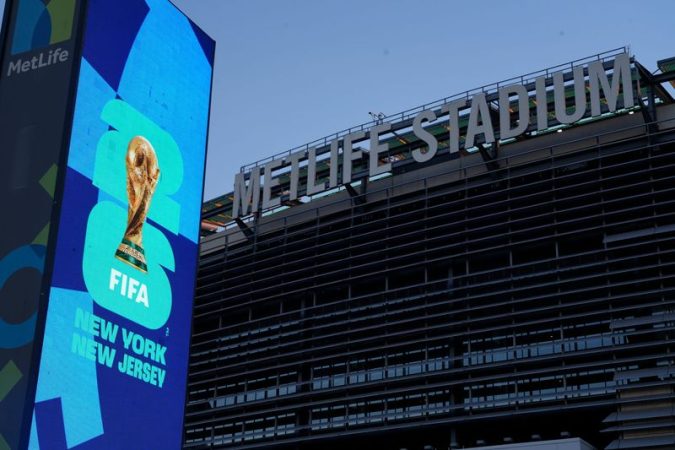
Fans of Senegal and France gather outside New York New Jersey Stadium in East Rutherford, N.J., on June 16. The deeper story of this tournament is unfolding in the parking lots, transit hubs, and neighborhoods where immigrants wonder if they are being watched by ICE, writes Debbie Almontaser.Hiroko Masuike
A recent poll conducted by Opinium for the transatlantic think tank Concordia Forum found that 45% of Muslims in the U.S. are often or always worried they or someone close to them will be affected by anti-Muslim violence. More striking still, over 39% said they avoid certain places out of safety concerns. Their fears will have been sharpened by two fatal shootings within a week by U.S. Immigration and Customs Enforcement agents — one in Maine, one in Houston. In both cases, neither man was the original target of the enforcement operation, and both leave behind grieving families.
This is what “enforcement” looks like under this administration: lethal, indiscriminate, and expanding.
Now Washington is bringing that same posture to New York. In advance of the final match, border czar Tom Homan has promised New Yorkers “more ICE agents than you’ve ever seen,” framing it as payback for New York’s sanctuary laws — local rules limiting how far city agencies help federal immigration enforcement. The surge is timed to a tournament that’s drawn millions of visitors, many from countries now targeted by expanded travel restrictions.
It is hard to read this as anything other than an attempt to punish New York for refusing to do Washington’s enforcement work for it.
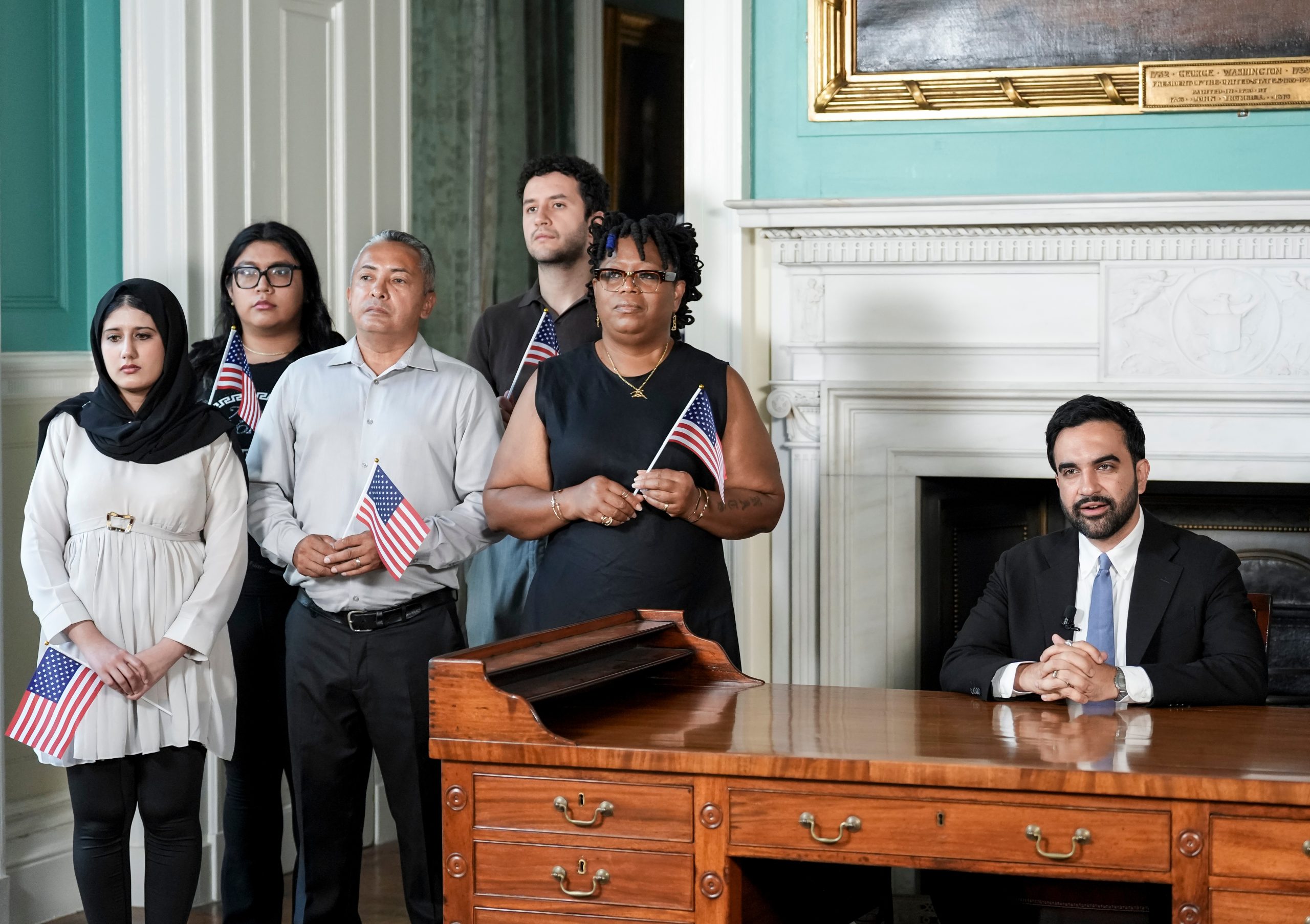
New York City Mayor Zohran Mamdani delivers an address from George Washington’s desk, surrounded by recently naturalized citizens, to commemorate America’s 250th anniversary on Friday, July 3.Anna Connors
New York has not backed down. Mayor ZohranMamdani has been unambiguous, calling ICE’s presence an attempt “to divide us” and noting that six U.S. men’s national team players are themselves immigrants. His administration has restricted New York Police Department cooperation with ICE, barred federal agents from city property without a judicial warrant, and has completed and published a citywide audit of every city agency’s dealings with federal immigration authorities — a level of transparency and follow-through most sanctuary cities never attempt.
That kind of institutional courage carries a cost, and I know exactly what it can look like up close. As an immigrant rights advocate in the weeks after 9/11, I saw this play out in my Brooklyn backyard on Coney Island Avenue, where thousands of Muslims were rounded up and detained and/or deported under the Bush administration. Washington is running the same playbook now, just at a much larger scale: manufacture a threat, attach it to an immigrant identity, and let the political pressure do the rest.
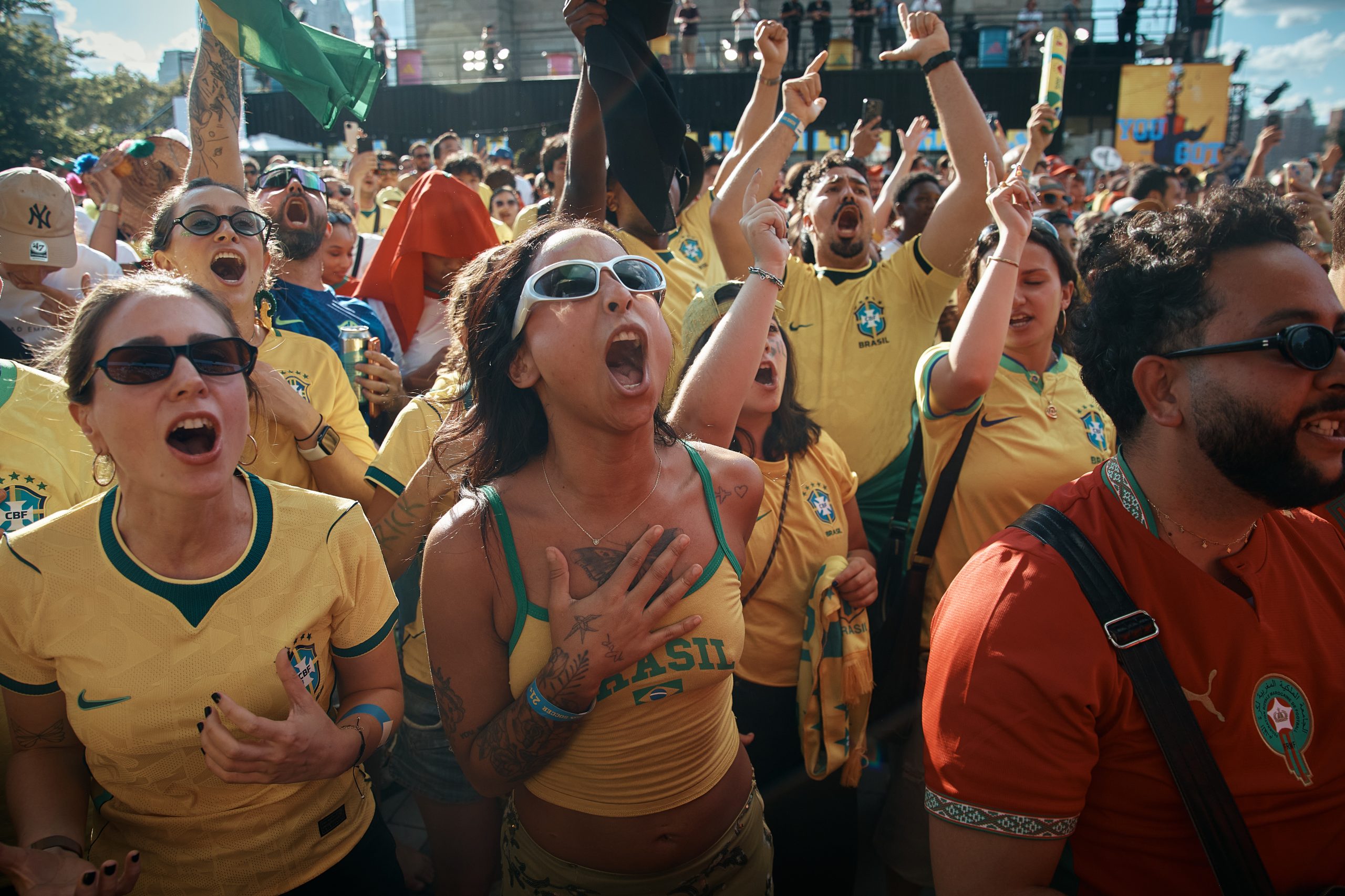
Brazil fans sing while watching the FIFA World Cup Group C match between Brazil and Morocco during a public watch party in New York’s Central Park on June 13.Andres Kudacki
That escalation doesn’t stop with the final whistle. Los Angeles hosts the Olympics in 2028, and Washington’s willingness to weaponize federal enforcement against a host city sets a precedent every future host will have to reckon with. Agents visibly stationed near Sunday’s Central Park watch party would send an unmistakable message about how far this administration is willing to go to undermine New York’s resolve in full view of the world.
New York’s sanctuary protections are real, and Mamdani has been consistent in defending them. Washington’s decision to turn a global celebration into a show of federal force against a city that has broken no law — a city that has only declined to do the federal government’s job for it — is the actual failure here. Call it what it is: retaliation, staged for an audience of billions. All eyes are on New York again — this time, waiting to see what Washington does next.
Debbie Almontaser is a Yemeni American educator with 25 years’ experience teaching in New York City public schools. She is a published author and motivational speaker, spending two decades advocating for Muslim and immigrant communities in New York. She is also the founding principal of NYC’s Khalil Gibran International Academy and CEO of Bridging Cultures Group.
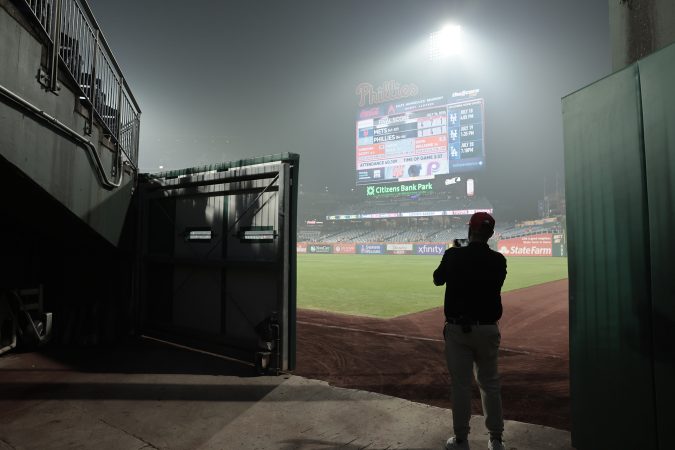
From I-95 in South Philly, the skyline was barely visible as we drove past empty stadiums and parking lots. The low visibility is due to a blanket of smoke from trees burning across Canada, a thousand miles away, a new — and deeply unwelcome — annual tradition here in the Northeast thanks to our rapidly changing climate.
We were on the highway because we happened to be driving our 2-year-old son to my parents’ home outside of Boston, and I felt deep relief to be taking his young lungs from an Air Quality Index (AQI) of 182 (“Unhealthy”) to merely 94 (“Moderate”).
As a pediatrician and parent who thinks a lot about the impacts of air pollution on children’s ability to breathe, it is an especially frightening moment.
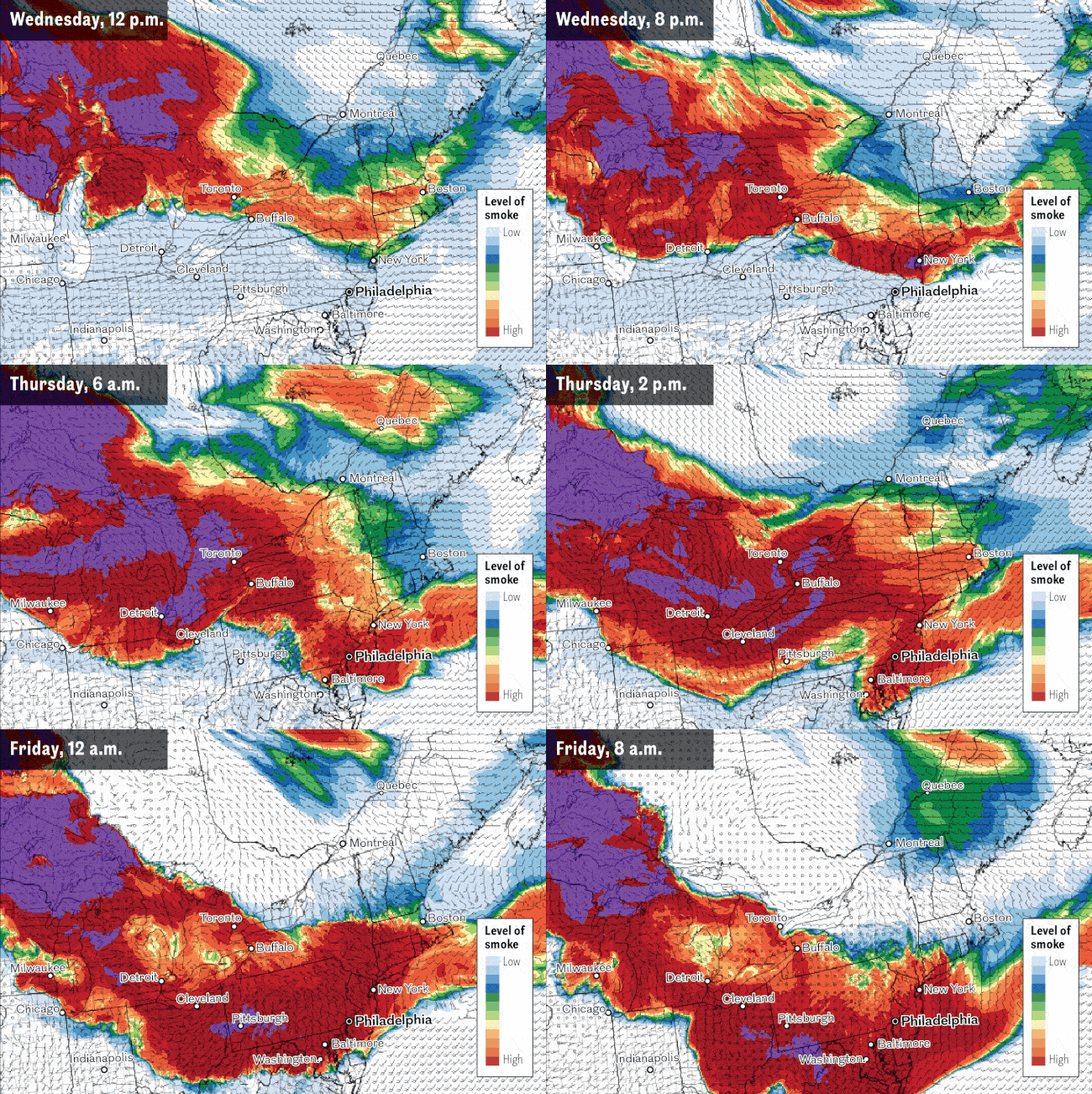
Near-surface smoke forecast in the Philadelphia area from noon Wednesday through Friday morning.John Duchneskie
It is also a maddening one for those who care about health or justice.
Air pollution causes enormous harm to human health. And yet, the Trump administration has made a concerted push to worsen American air quality by attacking antipollution policies and slashing funding for the agencies responsible for their enforcement.
Under direction from industry lobbyists, the administration — assisted by the conservative majority on the U.S. Supreme Court — is pushing aggressively to weaken the Clean Air Act, which is often identified as the piece of U.S. legislation that has saved the most lives.
At the same time, the administration is demanding a 50% cut in funding for the Environmental Protection Agency, which maintains airnow.gov, after dramatically cutting funding for weather and climate research at the National Oceanic and Atmospheric Administration last year.
These actions serve only political donors and wealthy shareholders, at the expense of communities and the environment.
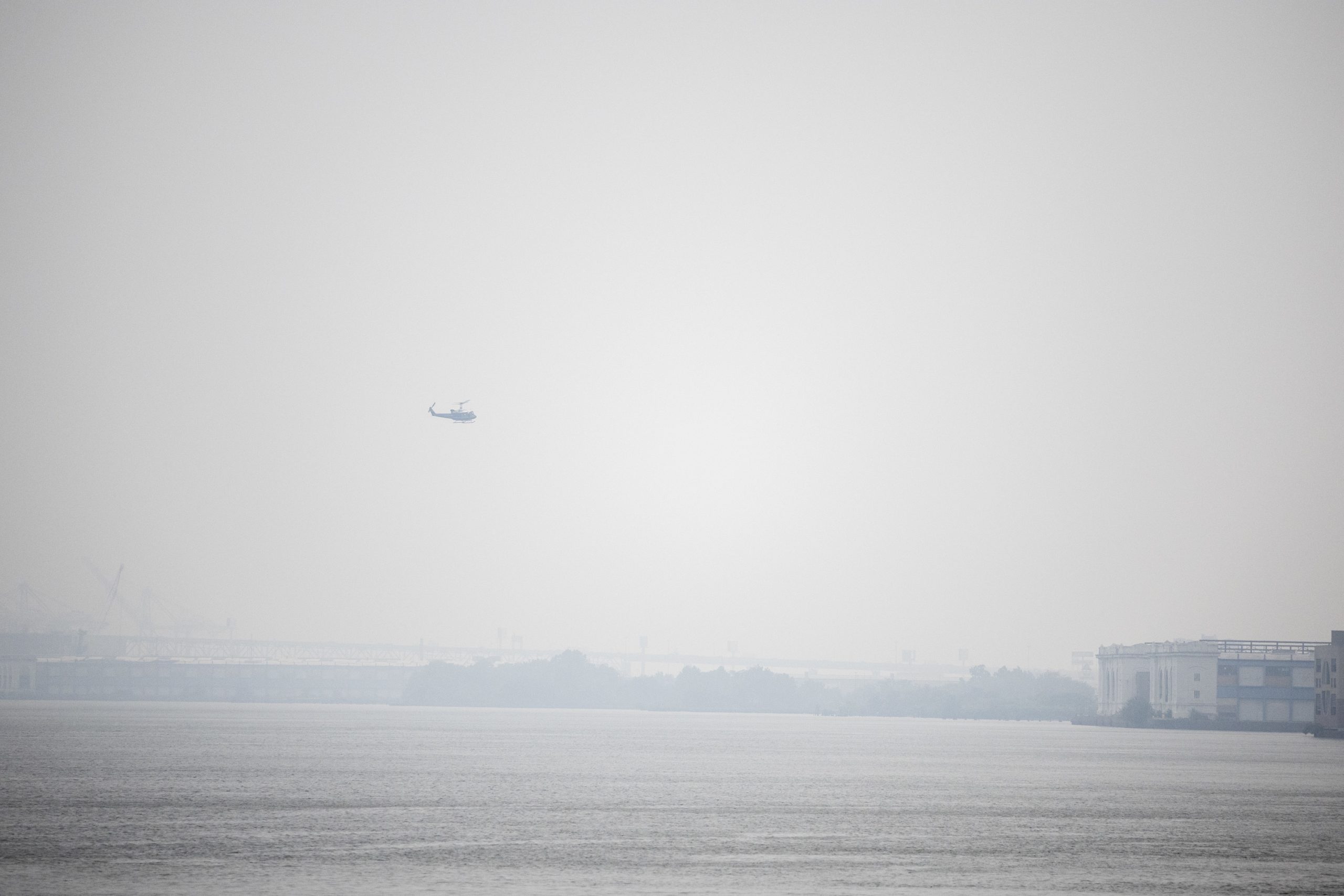
A helicopter is barely visible over the Delaware River blanketed with the wildfire smoke from Canada in Philadelphia on Thursday.Tyger Williams / Staff Photographer
In spite of the layers of smoke blocking out the sun, the injustices of the current moment are easy to see. I am lucky to be headed to clearer skies this weekend, but this is only one example of good fortune that is unavailable to many.
As temperatures climb above 90 degrees Fahrenheit for the fourth day in a row, after two other record-breaking heat waves this year, those without air-conditioning are forced to choose between sweltering with the windows closed and a house filled with smoke from faraway wildfires.
Communities with lower levels of air-conditioning are also more likely to be Black and Latino communities that have a higher heat burden from a lack of neighborhood trees and greenery and an excess of paved surfaces.
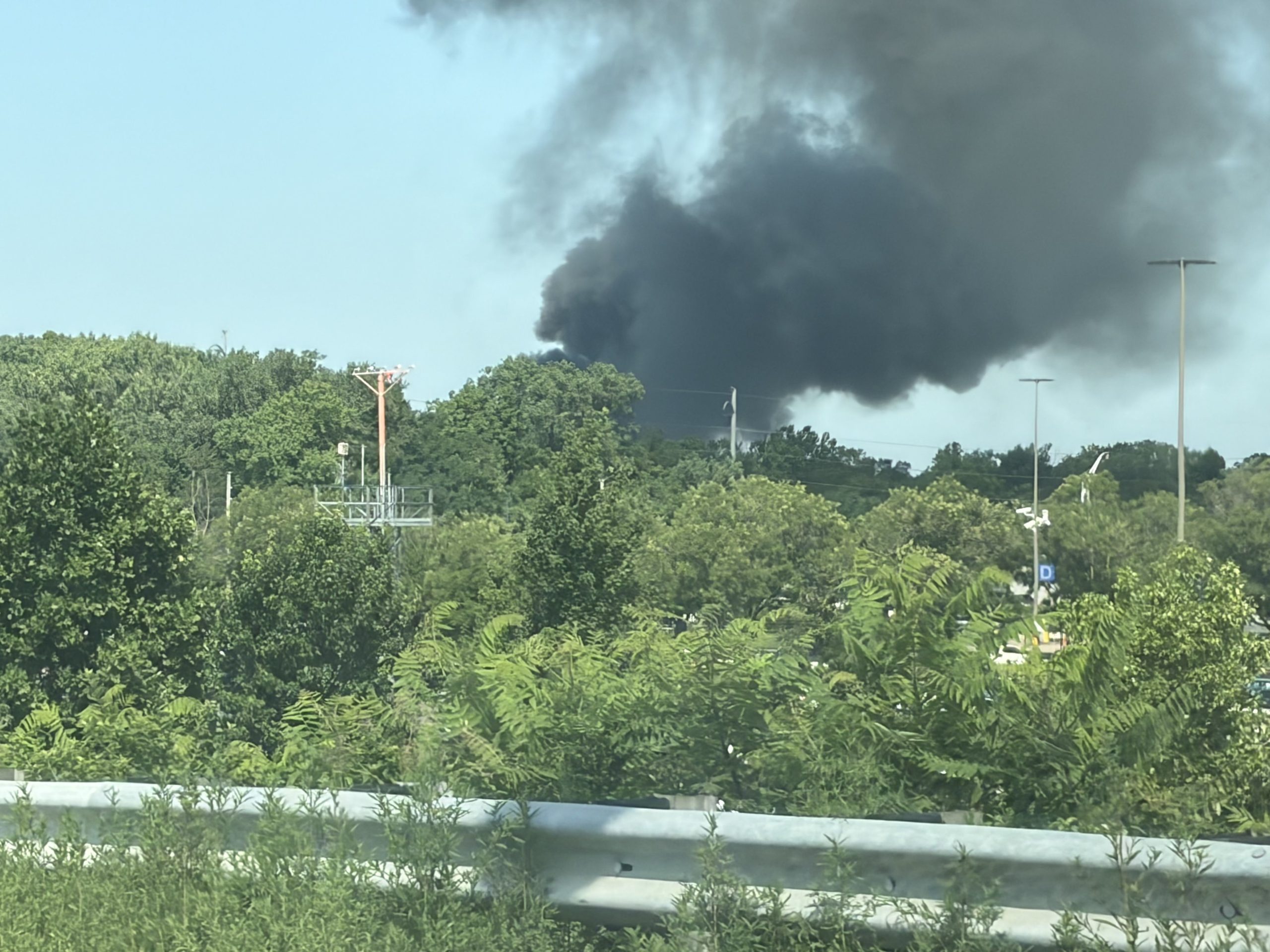
Add to this the ongoing burdens of polluting industrial infrastructure in these same areas — thrown into sharp relief by the scrapyard fire Wednesday within the environmental justice communities of Darby and Southwest Philadelphia — and it is an overwhelming assault focused on the health of our most vulnerable populations.
A view July 15 from I-95 of a large scrapyard fire in Darby Township, just outside of Philadelphia.Joseph DiStefano
It is past time to demand more of the elected officials who serve us. While the federal government and GOP majority in the state Senate have abandoned even performative interest in protecting the environment and its inhabitants, our city agencies must act.
Right now, Philadelphians can provide support for cleaner air in our region on several fronts.
Philadelphia Gas Works, our city-owned utility, is pushing to build an even larger liquefied natural gas plant in the Port Richmond neighborhood, where cancer rates are already among the highest in the city.
The City Planning Commission is discussing possible locations for new data centers, strongly considering Grays Ferry’s Bellwether District, in spite of the decades of pollution and associated diseases from the Philadelphia Energy Solutions gas plant.
And the city has just moved a step closer to renewing its contracts to incinerate its trash just a few miles down the highway from the scrapyard fire that poured smoke across the region this week.
All of these actions prioritize short-term costs over long-term benefits to citizens, neighborhoods, and the planet.
Whether you contact your mayor or City Council member, submit remarks online, or testify at a hearing, let our decision-makers know that this literal Code Red demands big ideas, difficult decisions, and dramatic action — before the city’s commitments to health and justice are as hard to make out as its skyline views.
Paul Devine Bottone is a pediatrician and father in Philadelphia.
I’m the CEO of Gaudenzia, one of Pennsylvania’s largest behavioral health nonprofits. We serve thousands of people in addiction and mental health treatment across the commonwealth. And for the past year, I’ve been restructuring this organization from the inside because the alternative was watching it slowly fail while pretending everything was fine.
We are not alone.
Across Pennsylvania, behavioral health organizations are quietly closing programs, losing staff, and reducing capacity. Not because they’ve lost their mission. Because the economics have changed faster than anyone could adapt.
Here’s what happened: In July 2025, the One Big Beautiful Bill Act cut $664 billion from state Medicaid budgets over the next decade. Pennsylvania’s behavioral health providers, most of whom depend on Medicaid for the majority of their revenue, absorbed that shock overnight.
Simultaneously, managed care organizations began holding budget allocations and, in some states, retroactively clawing back payments already made to providers.
Meanwhile, our workforce costs rose 30% to 40% in key roles. Behavioral health nurses now turn over at the highest rate of any nursing specialty: 22.8% annually. We’re competing for staff against hospital systems and telehealth platforms that offer sign-on bonuses we can’t match. From a fiscal standpoint, we’re also having to contend with Medicaid reimbursement rates that haven’t kept pace with inflation for a decade.
The math doesn’t work. And everyone in this field knows it. We just haven’t said it publicly. But I’m saying it now.
At Gaudenzia, we’ve responded by restructuring our leadership model, investing in staff training and accountability systems, consolidating programs that were no longer financially viable, and preparing for payer changes we could see coming. We chose to act rather than hope the old model would somehow start working again.
But individual organizations cannot fix a structural problem alone. What Pennsylvania’s behavioral health system needs is straightforward:
Rate adequacy. Medicaid reimbursement rates must reflect the actual cost of delivering care in 2026, not 2016. Every year the gap widens, another program closes. Another community loses access.
Payer-provider partnership. The system works when providers can plan and patients can stay in care. That requires contract stability, transparent rate-setting, and network adequacy standards that reflect real capacity rather than paper networks. When providers and managed care organizations operate as genuine partners, communities keep access and outcomes improve.
Workforce investment. Pennsylvania needs a behavioral health workforce pipeline that treats this field as the essential infrastructure it is, not an afterthought funded with whatever’s left after acute care gets its share.
I didn’t write this to complain. I wrote it because the people we serve — Pennsylvanians in crisis, in recovery, in the hardest moments of their lives — need organizations that are financially stable and structurally resilient enough to be here in five years.
Right now, that’s not guaranteed for many of us.
The CEOs I talk to know this. The boards know this. The frontline staff certainly know this. It’s time the public and our policymakers heard it directly from someone willing to put their name on it.
Behavioral health is not a luxury service. It is infrastructure. And infrastructure that is underfunded, understaffed, and destabilized does not slowly improve. It collapses.
We can prevent that. But only if we stop being quiet about what’s happening.
Deja Gilbert is the president and CEO of Gaudenzia Inc., a behavioral health nonprofit serving communities across Pennsylvania, Maryland, and Delaware.
As a former U.S. attorney with more than 18 years of experience prosecuting cases involving violent crime, organized crime, and public corruption in Philadelphia, I sought to follow the principle that the role of a prosecutor is to seek justice, not simply convictions, without using improper methods to secure a finding of guilt. This meant following well settled constitutional law requiring prosecutors and law enforcement to identify and turn over to the defense exculpatory evidence and material undermining the credibility of government witnesses prior to trial — no exceptions.
While people accused of crimes are entitled to a fair trial — not a perfect one — the outright failure of prosecutors and law enforcement to comply with the basic rules of fairness undermines public trust in our criminal legal system. More importantly, the failure — whether intentional or negligent — becomes tragic when an innocent person should not have been prosecuted and sentenced in the first place, because the case clearly pointed to another perpetrator who was not prosecuted.
Since 1989, according to the National Registry for Exonerations, more than 3,800 men and women have been exonerated across the U.S. (152 in Pennsylvania) in cases involving the problems just described. Conviction Integrity Units, which have been set up in district attorney offices across the country, including the Philadelphia district attorney’s office, play an important role in addressing the wrongful convictions of innocent people.
Recently, the Pennsylvania Supreme Court — with urging from the Pennsylvania attorney general’s office — issued a ruling that effectively gives the state’s top prosecutor veto authority in any post-conviction relief case in which Philadelphia’s district attorney determines that an innocent person has been convicted and sentenced to prison for a crime they did not commit.
While I am not in a position as the executive director for the Pennsylvania Innocence Project to comment on the animosity that appears directed at the district attorney, I do know from experience that some prosecutors and law enforcement officers conceal evidence (DNA and other lab test results, contradictory or inconsistent witness statements, evidence of benefits or rewards given to witnesses in exchange for testimony).
Some law enforcement officers use improper methods to coerce statements and false confessions out of people, andsome eyewitness identifications are faulty or the product of improper law enforcement influence.
Cooperating witnesses sometimes lie about the involvement of others to avoid responsibility for their own criminality.
And, finally,some criminal defense lawyers are ineffective at their jobs and have no business being in the courtroom when individual liberty is at stake.
If our criminal legal system is truly just, one should not fear looking back to make sure the right person has been held accountable. Victims also lose when prosecutors and police officers get it wrong while the real perpetrator of a crime remains free to victimize others within the community.
There are 67 elected district attorneys in Pennsylvania who are primarily responsible for prosecuting more than 90% of the serious violent crime cases committed within their counties. In Philadelphia County — where police and prosecutorial misconduct are historically known to have resulted in the convictions of innocent men and women — both the Supreme Court and the attorney general appear to support a world in which looking under the hood is a bad thing and needs to be curtailed.
There were exonerations before the current Philly DA, and there will be exonerations after the Philly DA eventually leaves office, because the unfortunate reality is that some prosecutors and law enforcement officers do not play by, or follow, the rules. I know, because during my tenure in the U.S. Attorney’s Office, my colleagues and I prosecuted more than our share of bad police officers who ignored their oath to follow and uphold the law.
While prosecutors, law enforcement officers, and the courts serve an important societal role in holding people accountable for crimes they have committed, they are not perfect.
When it comes to the innocent, we should not be afraid to look back in appropriate cases to make sure that the innocent do not suffer. Both the Supreme Court and Pennsylvania attorney general’s office need to remain mindful of the role of prosecutors and the importance of Conviction Integrity Units to ensure that justice ultimately prevails in our criminal legal system.
A few blocks and a few days apart, two of the same story: people showing up, in public, as exactly who they are.
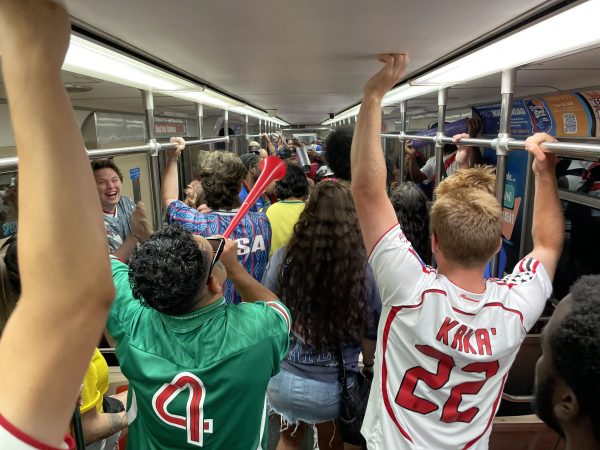
That’s what this World Cup summer has felt like across Philadelphia. Six matches at Lincoln Financial Field (or what was called Philadelphia Stadium for the tournament). A 39-day Fan Festival at Lemon Hill drawing tens of thousands a day. Northeast Philly, long home to one of the city’s largest Brazilian communities, turning into a sea of yellow jerseys. Africatown is filled with the flags of Ghana, Côte d’Ivoire, Curaçao. None of it required anyone to tone anything down.
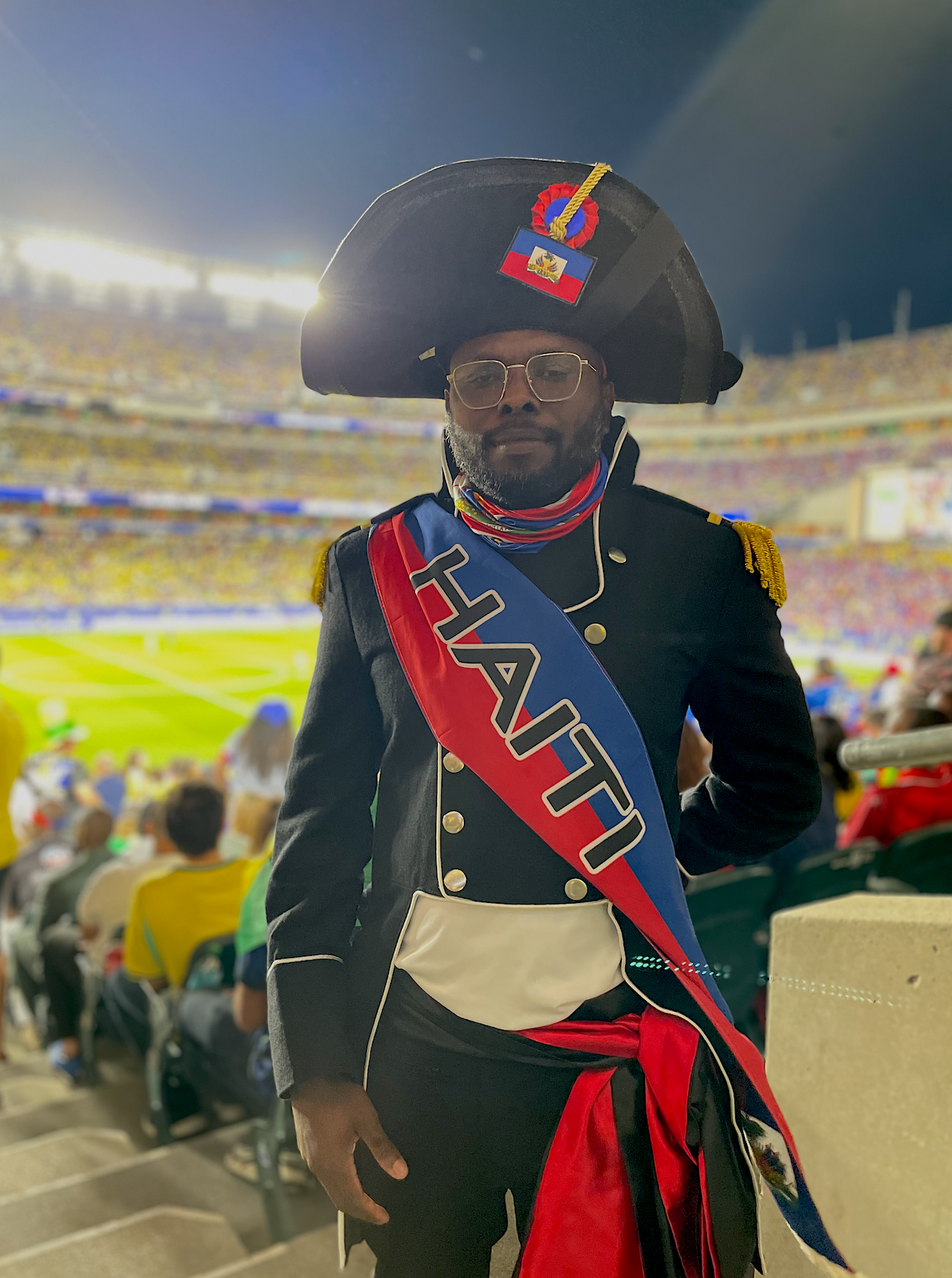
Maxence Jeanty, 41, a fan from Chicago arrived at the FIFA World Cup game at Lincoln Financial Field between Brazil and Haiti, dressed as Jean-Jacques Dessalines, the leader of the Haitian revolution.Kerith Gabriel / Staff
I’ve spent years thinking about what it costs people to make themselves “easier to hold.” I host a podcast called Immigrantly, and after more than 4 million downloads and conversations with guests from New York City Mayor Zohran Mamdani and political candidate Darializa Avila Chevalier to comedians Hari Kondabolu and Aparna Nancherla, the thing I hear most often isn’t about policy or politics.
It’s usually much simpler: First- and second-generation immigrants didn’t know they were allowed to be complicated. Allowed to hold two, three, four places inside themselves at once without apologizing for the seams.
I know that erasure personally. I was born in Pakistan and built my adult life in America, and for years I made myself legible in rooms that hadn’t asked me to. I told myself it was politeness. It took me well into my 30s to understand it was a choice I’d been making so often it stopped feeling like one.
Which is why this summer has been disorienting in some ways. On the one hand, the World Cup has allowed people to make their origin pride more legible publicly. On the other hand, visibility doesn’t necessarily mean safety, warmth, or belonging.
Philadelphia has spent 2026 rehearsing its own origin story — the run-up to the country’s 250th birthday, with a Round of 16 match on July Fourth itself, in the city where the Declaration of Independence was signed.
And at the exact same time, in the exact same city, thousands of people have been reminding us that America was never actually one thing. It was Curaçao and Ghana and Ecuador and Brazil and Haiti, all at once, all unbothered, in a city built by people who never stopped arriving.
Philadelphia Mayor Cherelle L. Parker joins fans of Mexico’s soccer team in a chant during the FIFA Fan Festival at Lemon Hill on June 11, the opening day of the World Cup.Jose F. Moreno / Staff Photographer
Mayor Cherelle L. Parker put it plainly after the festival’s opening weeks: The energy across the city, she said, reflected Philadelphia “at its best — welcoming, diverse, joyful, and proud.”
I believe she meant it. I also know that sentence is easy to say about a festival and much harder to sustain on an ordinary Wednesday, after the last match, after the Fan Festival tents at Lemon Hill come down and Kelly Drive goes back to being Kelly Drive.
That’s the question I can’t stop asking: What happens on July 20?
Because the pride on display this summer isn’t new. The Brazilian families in the Northeast, the West African community that fills Africatown, the Haitian, Ghanaian, and Ivorian Philadelphians who’ve been here for decades — they didn’t invent their culture for this tournament.
A Brazil fan waves his national flag before a FIFA World Cup Group C soccer match between Brazil and Haiti at Lincoln Financial Field on June 19. Jose F. Moreno / Staff Photographer
What the World Cup did was give them permission to bring it fully into public view, and give the rest of us permission to celebrate it instead of asking it to quiet down.
I think about the women I talk to through my work — the ones fluent in code-switching, who’ve spent decades reading a room and calibrating themselves to fit it. I want to point them toward Lemon Hill in July and say: Look at what happens when nobody has to shrink. Look at what this city sounds like when everyone’s whole self shows up at once.
The tournament will end. The flags will come down. Philadelphia will go back to being, simply, Philadelphia.
But the pride we’ve watched all summer doesn’t have to be seasonal. It doesn’t need a stadium or a festival permit.
It can be what a Tuesday looks like here, if we decide it is — a city that doesn’t just tolerate its immigrants during a global tournament, but actually wants to see them, unedited, all year long.
Saadia Khan is a Pakistani immigrant and mother, host of the podcast “Immigrantly,” a Columbia University human rights graduate, and creator of Belong On Your Own Terms, an app for multicultural individuals reclaiming their full identity. Find her work at immigrantlypod.com.