Category: Commentary

  • I’m a nurse who helps sexual assault survivors. Jane Doe’s texts from Cornell sound like what I hear in Philadelphia.

    I’m a nurse who helps sexual assault survivors. Jane Doe’s texts from Cornell sound like what I hear in Philadelphia.

    I am a sexual assault nurse examiner in Philadelphia. For the past 10 years, I have also studied how people heal after sexual harm, and I answer anonymous questions from survivors on Our Wave, a free online healing platform for people who have experienced violence. In both places, the question I hear most often is “Does this count?”

    Cornell University’s Jane Doe spent three weeks asking herself that question.

    Title IX records obtained by the New York Times show the sophomore, who says she was assaulted by multiple men at a fraternity house in October 2024, texting with some of the men she would later accuse.
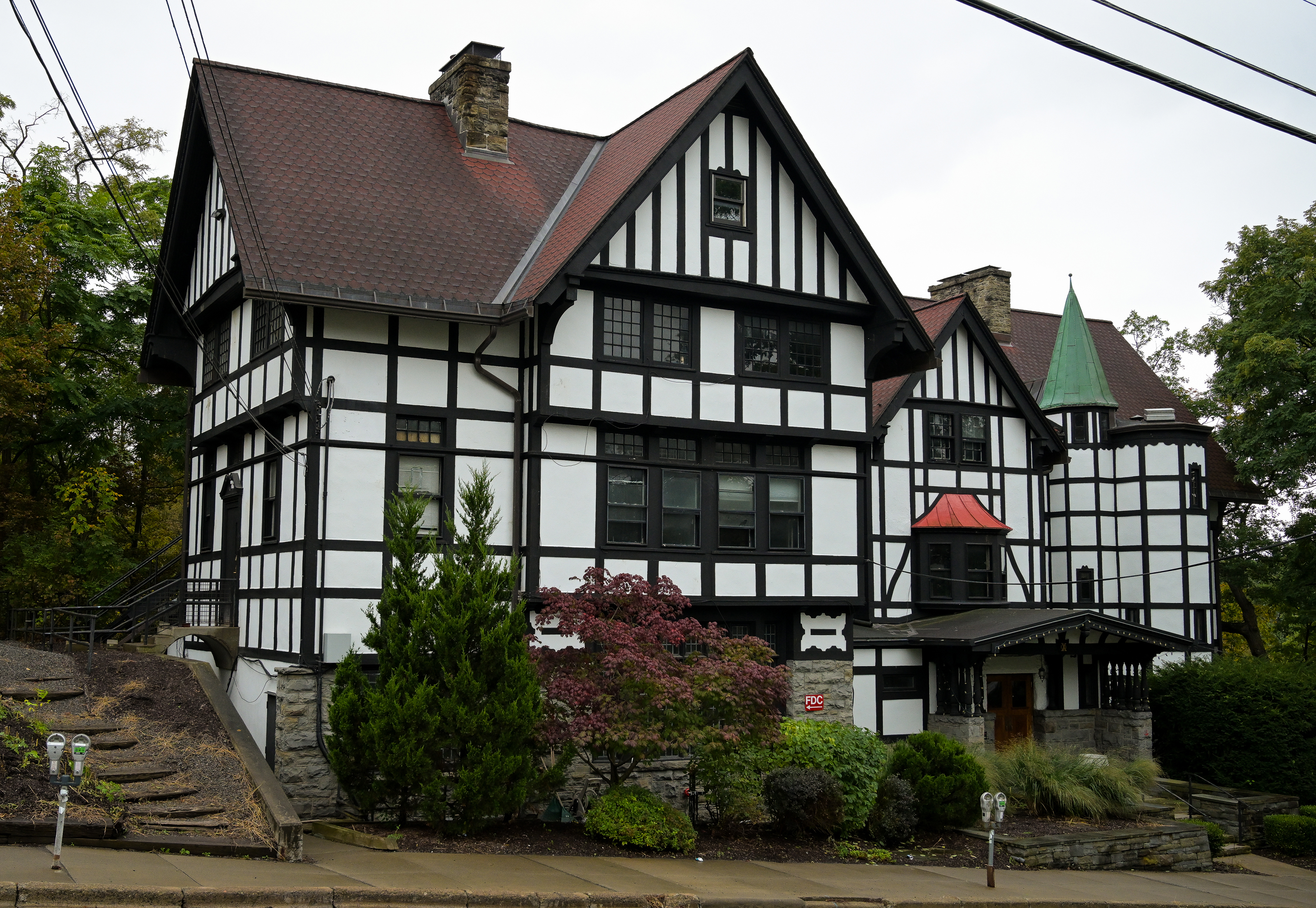
    The Chi Phi fraternity house at Cornell University in Ithaca, N.Y., where a Cornell student reported being gang-raped in 2024. A special prosecutor has recently been appointed by New York state to investigate the allegation.HEATHER AINSWORTH

    According to the Times, two days after the party, she reassured one of them that none of the sexual stuff was illegal. Two days after that, she wrote that her reputation was destroyed and that all she could do was sleep and cry. She later told investigators that things shifted when she read an anonymous post online. She said it was the first time she had heard anyone say “that I wasn’t a whore and that I was assaulted.”

    Those texts are now being used against her.

    The Tompkins County, N.Y., district attorney declined to bring charges in 2024. He has since said his office never saw the transcript of her police interview, in which she reportedly said she was certain she had been raped, and he has reopened the case. The New York attorney general is also reviewing how Cornell handled it.

    The legal process will decide what happened that night. As a nurse, I recognize the weeks that followed.

    Healing after sexual harm rarely starts with the word rape. My research has followed the healing journeys of survivors across the globe, including hundreds here in Philadelphia. Survivors have taught us that there are multiple pathways people may move through as they heal. Two of the earliest are normalizing, when violence feels like just what happens, and minimizing, when a survivor knows something was wrong but insists it wasn’t that bad.

    On campus, survivors often normalize and minimize because of what hookup culture has taught students to accept, so pressure, coercion, and sex with someone too drunk to consent can feel like just part of a night out.

    People move back and forth between these pathways for months or years, and each one helps them get through the day. But our systems tend to treat whatever a survivor says during them as the whole story.
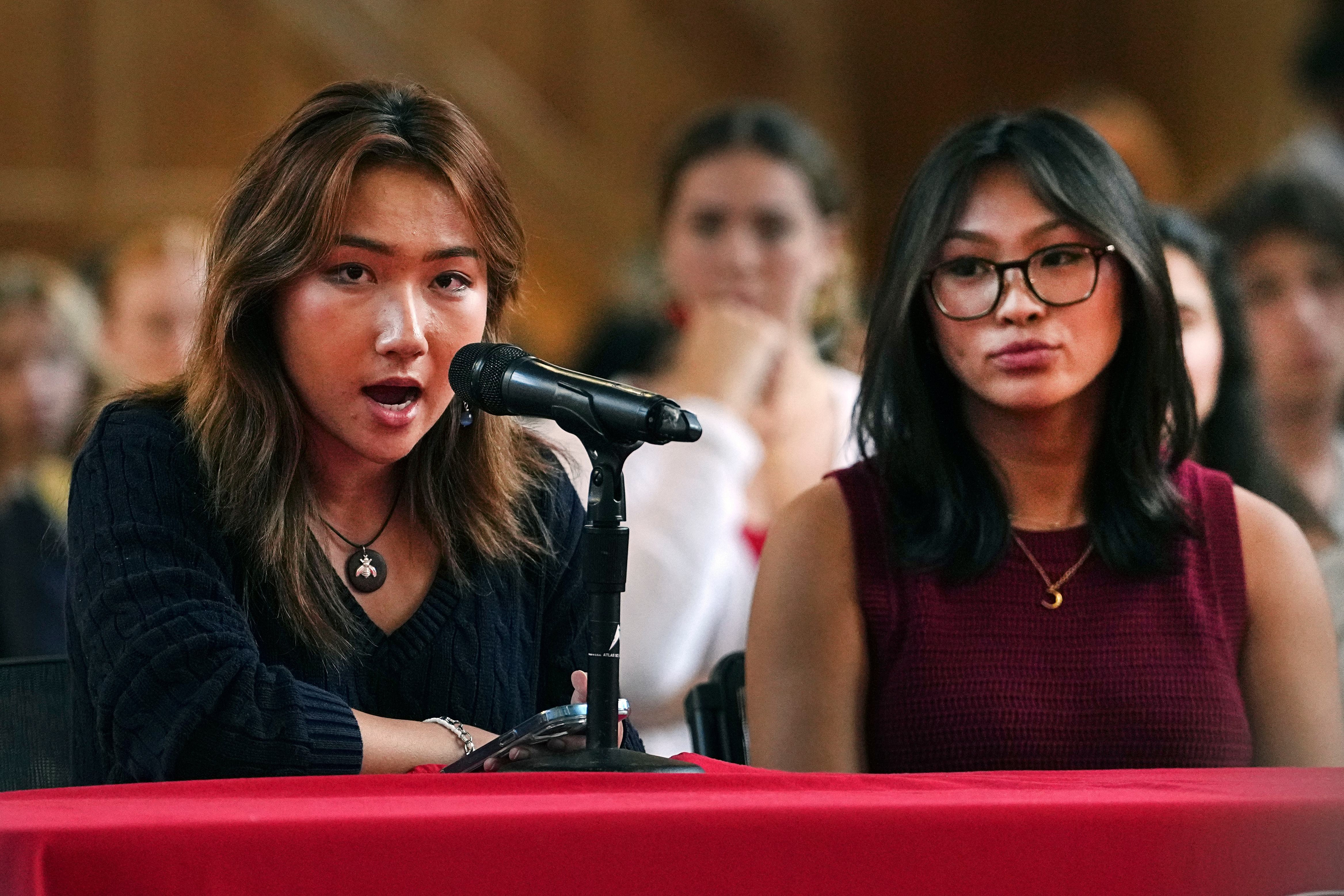
    Cornell University students and American Civil Liberties Union student chapter members Jane Wang (left) and Sophia Riley Sim speak about sexual violence on campus during a student assembly meeting at the university on Oct. 1.Matt Rourke

    I first saw this as a student working at the University of Michigan’s sexual assault center. Women who came in late at night almost never started with the word rape. They usually started with “I’m probably being dramatic but …”

    Jane Doe’s texts read like the normalizing and minimizing I have seen again and again in my research. Many survivors tell us they didn’t realize they had been sexually assaulted until after they had time to process. What helped survivors move forward was connection, and sometimes one supportive person was enough. For Jane Doe, it was a stranger online who finally called it assault. The way we respond to survivors really does matter.

    At Our Wave, where I direct research and survivor support, survivors share their stories so others can see themselves in them and make sense of their own experiences.

    The questions survivors send us show how often doubt comes first. When my team searched the nearly 1,000 questions submitted to our Q&A for the language of doubt, phrases like “does this count,” “am I being dramatic,” “it was my fault,” and “I froze,” we found it in about one in four.

    Survivors are everywhere, but we do not always recognize their experience as survival, and survivors do not always recognize it in themselves. Perhaps that is why so many people have been posting “I am Jane Doe” this week. They see themselves in her story.

    We ask survivors to make one big decision — whether to report — at the moment many are least able to make it. A survivor who is still minimizing what happened is not going to file a police report. She might read another survivor’s story at 2 a.m., ask an anonymous question, or come in for medical care and an exam, which she can have without going to the police.

    Survivors need a menu of options that meets them where they are in their healing journey. Some need anonymous support first, like a hotline or an online Q&A. Some need medical care and evidence collection now, with the decision about reporting saved for later.

    Some need a confidential campus advocate who won’t automatically open an investigation. Those who are ready need formal Title IX and criminal processes. And some want restorative options, in which the person who caused harm must take responsibility and face consequences outside the criminal legal system, such as losing campus housing or leadership roles.

    More options can also mean more accountability. In the Cornell case, with no criminal charges, the university’s process was the only accountability available. One woman in my research said she wished her school had “more teeth.” In my experience, survivors who know they have options are more likely to come back when they are ready.

    Philadelphia can lead on this.

    We have dozens of colleges and universities, including Temple, Penn, Drexel, and La Salle, and our city’s rape crisis center, WOAR, already offers a restorative justice program, although recent funding cuts have threatened its sustainability. As faculty adviser to Students Activists Against Sexual Assault at Temple, I know students here are ready for this conversation. Our campuses should build the full menu, and every student should hear that they don’t have to be sure it counts before they ask for help.

    Healing isn’t linear, and in my experience, naming isn’t, either. Jane Doe needed three weeks to find the word. That is common. To survivors who are still asking whether it counts, your story matters, and healing is possible.

    Together, we can create a more supportive healing world for survivors, one where people are still listening, and options are still open when they get there.

    Laura Sinko is an associate professor of nursing at Temple University’s College of Public Health, faculty adviser to Temple’s Students Activists Against Sexual Assault, a sexual assault nurse examiner in Philadelphia, and the director of research and survivor support at Our Wave.

  • Skill games funded my VFW post. Harrisburg’s inaction could close it.

    Skill games funded my VFW post. Harrisburg’s inaction could close it.

    In a matter of weeks, my Veterans of Foreign Wars post could be facing a decision none of us ever thought we would have to make: closing our doors.

    Not cutting back. Not shortening our hours. Closing.

    Think about that for a moment.

    A place built by veterans, sustained by veterans, and dedicated to serving veterans and our community could disappear because lawmakers in Harrisburg could not find a way to create a set of guidelines to govern skill games — the slot machine-like devices that everything from convenience stores to veterans posts like mine rely on for income.

    And I have one question for them: Why? Why, when there are ways to come up with a solution, would you allow organizations like ours to fail?

    VFWs, American Legions, volunteer fire companies, fraternal clubs, and small businesses across Pennsylvania are looking at their finances and making painful plans for what comes next if skill games go away.

    Back in June, the Pennsylvania Supreme Court gave state lawmakers 120 days to regulate skill games and help businesses and organizations stay open. With less than a month left, they have not acted.

    At our VFW, the revenue from skill games isn’t extra money sitting around waiting to be spent. It has become part of what allows us to keep the lights on, pay our bills, employ people, and continue serving our community.

    It isn’t just us at risk. Jim Brown, state commander of the VFWs, warns that a ban on skill games risks a vital revenue source for these organizations and threatens the survival of many VFW posts across the state.

    Senate Bill 1079, sponsored by State Sens. Gene Yaw and Anthony Williams, or House Bill 2213, sponsored by State Reps. Danilo Burgos and Jonathan Fritz, offers a path forward. They would responsibly regulate skill games and establish a $500 monthly fee per machine.

    That’s a compromise. The state gets revenue — $300 million a year. The games get regulated. And organizations like ours get a fighting chance to survive.

    So why can’t lawmakers get this done?

    I’ve heard the argument that veterans organizations, firefighters, and other nonprofits survived before skill games, so we should simply go back to raising money the way we used to.

    I would invite anyone making that argument to try it themselves.

    Could you go back five or 10 years and live on the income you made then while paying today’s bills?

    Could the state run today on the budget it passed 10 years ago (which notably was less than half of what the state budget is today)?

    We can’t chicken barbecue ourselves out of the coming budget hole. There aren’t enough dinners, raffles, bake sales, and pass-the-boot drives to replace the dependable revenue many organizations now receive from skill games.

    Our volunteer firefighters want to fight fires and keep protecting our communities. They do not want to be full-time fundraisers.

    What scares me most is that this doesn’t end at our front door. When a VFW loses revenue, the community loses revenue. We support food drives, local charities, and families who need a hand. Volunteer fire companies do the same while providing an essential public service.

    Will Harrisburg step in to support the Little League team? Will it help the food bank? Will it support the homeless veteran? Will it replace every donation that disappears when a VFW, American Legion, fire company, or Elks Club can no longer afford to give?

    That is the part of this debate I don’t hear enough about. The consequences don’t stop with the machines. They are far-reaching.

    They reach the bartender or club employee who loses a job. They reach the veteran who loses a gathering place and support system. They reach the firefighter whose organization loses revenue and struggles to find new volunteers.

    They reach every community organization that depended on donations from local clubs.

    Organizations are making plans right now. They are looking at layoffs. They’re deciding what expenses they can cut. They’re considering which donations and community programs they can no longer afford. Some, like us, are wondering whether they can remain open at all.

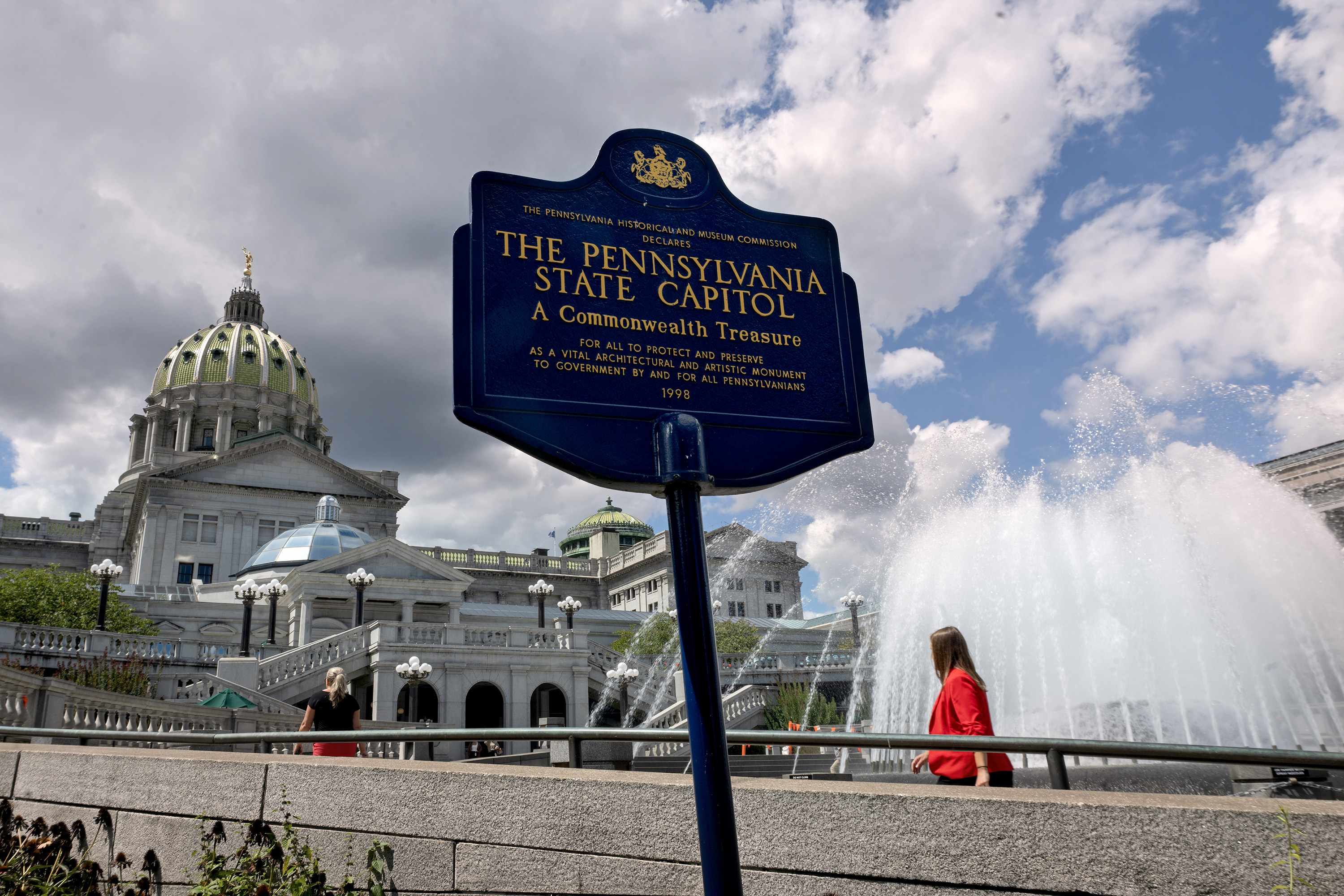
    The East Wing and Pennsylvania War Veterans’ Memorial Fountain at the main public entrance to the Pennsylvania Capitol on Commonwealth Avenue in Harrisburg. There is still time for legislators to pass legislation on skills games that allows for regulation and a path forward for the small businesses that depend on them, writes Rusty Miller.Tom Gralish / Staff Photographer

    Pennsylvania lawmakers have legislative days coming up. They have an opportunity to prevent a crisis.

    Lawmakers must pass legislation that regulates skill games and gives organizations a workable path forward. This would protect the jobs tied to these establishments. Protect veterans organizations and volunteer fire companies. Protect the community programs those organizations make possible.

    We have spent our lives believing that when our community needs us, we show up.

    Now we need our lawmakers to show up and do their job and find a solution.

    Rusty Miller worked for many years as president of a wireless construction company that specialized in all facets of cell site and switch construction, and retired in 2021. He has belonged to the Mechanicsburg VFW Post 6704 for 25 years.

  • 25 years later, the anthrax threat not only has not gone away — it may be worse

    25 years later, the anthrax threat not only has not gone away — it may be worse

    Twenty-five years ago this month, America was still reeling from the attacks of Sept. 11 when another, quieter threat arrived in our mailboxes.

    Letters laced with anthrax spores were sent to news organizations and members of Congress. The weaponized anthrax in those letters killed five Americans and sickened 17. And a nation already on edge confronted a terrifying new reality: Someone could use an invisible biological agent to attack Americans in their workplaces, in their homes, and through one of the most stalwart institutions in our society — the U.S. Postal Service.

    I remember those days vividly.

    I had only recently arrived in Washington to serve President George W. Bush as his homeland security adviser. The U.S. Department of Homeland Security was brand new, created in the immediate aftermath of Sept. 11, 2001. We focused on preventing and protecting Americans from other catastrophic terrorist attacks and events affecting our national security.

    Then came anthrax.

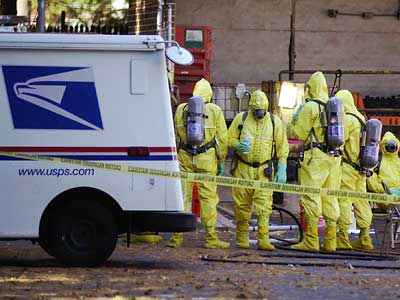
    FBI officials in protective suits prepare to enter the Chester home of anthrax attack suspects in 2001.DAN LOH / Associated Press

    Suddenly, the question was not how terrorists might hijack airplanes or attack buildings. We had to confront the possibility that a small amount of biological agents could create fear and disruption far beyond the physical damage it caused.

    That experience has stayed with me for 25 years.

    It is also why I, along with my colleagues at the Bipartisan Commission on Biodefense at the Atlantic Council, remain deeply concerned about the biological threats facing America today.

    In some respects, the threat remains the same. Bad actors still send white powder letters through the mail (some containing ricin) to threaten others, including elected officials like President Donald Trump and former President Barack Obama. In other respects, the challenge is more difficult than it was in 2001.

    Science has advanced dramatically. Biotechnology produces extraordinary breakthroughs in medicine, agriculture, and human health. And now we have artificial intelligence accelerating biology and every other field of science.

    AI can analyze enormous datasets, identify patterns, model structures, and assist with design at speeds that were unimaginable when those anthrax letters arrived in 2001.

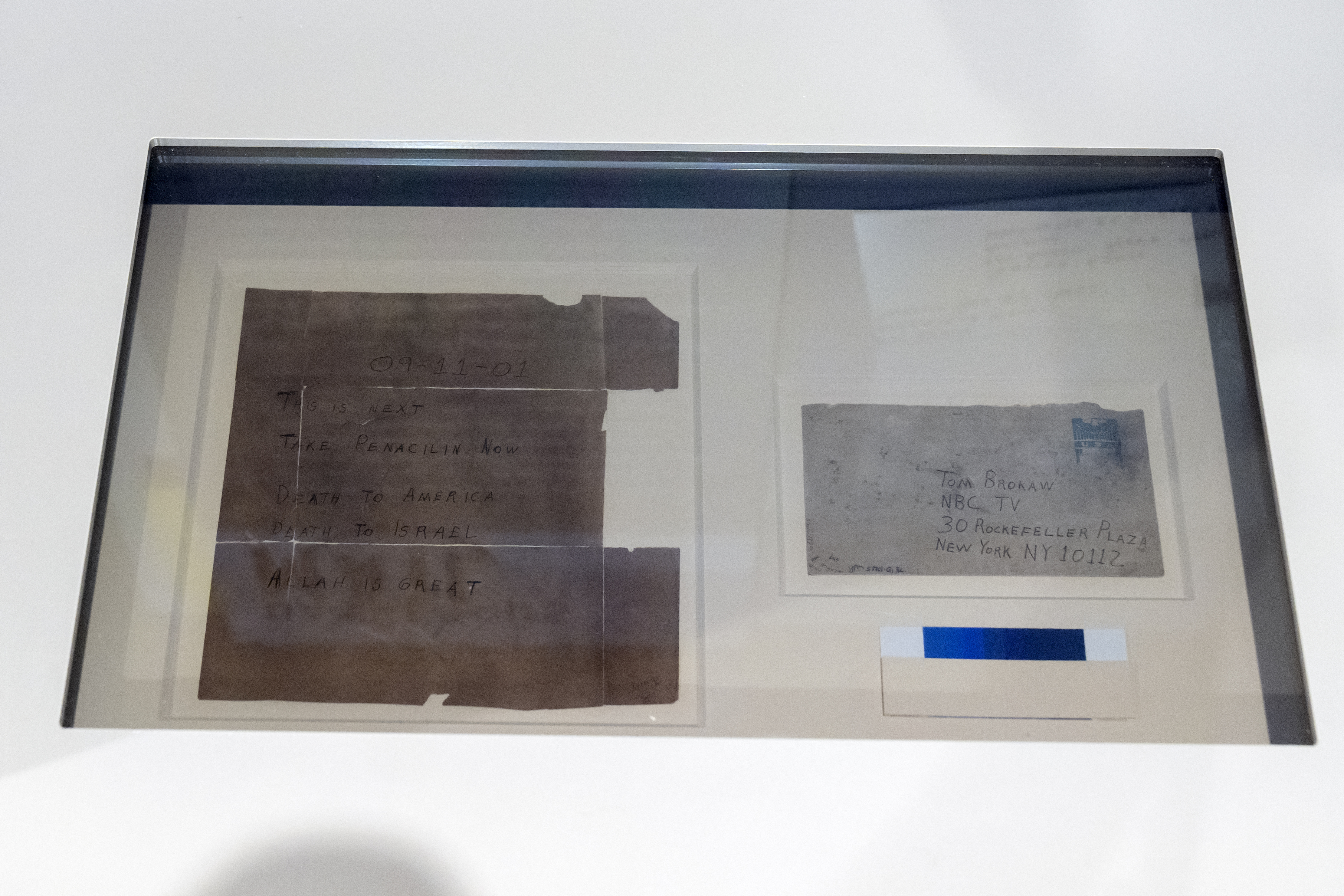
    A letter and envelope that were mailed as part of the anthrax mail attacks of 2001 are displayed at the Smithsonian National Postal Museum in July 2025 in Washington.Mark Schiefelbein

    The National Academies of Sciences has warned that AI-enabled tools can accelerate biological discovery and design while creating new opportunities for misuse. That should concern every American.

    The danger is not that an AI system will suddenly decide to manufacture a biological weapon on its own. The danger is that AI can lower the barriers that once separated a determined individual, terrorist organization, or hostile government from highly specialized biological knowledge.

    Fewer people, with less time and greater computational assistance, can now accomplish what once required teams of scientists, years of research, and enormous resources.

    That is the vulnerability we cannot afford to ignore.

    Our commission made artificial intelligence a major new priority in the Apollo Program for Biodefense precisely because the technology is changing both the offensive and defensive sides of biological security. Our latest issue brief released this summer warned that AI can compress timelines and make sophisticated biological capabilities more accessible, while also offering powerful new tools for surveillance, diagnostics, medical countermeasures, and attribution.

    The answer is not to stop AI or biotechnology. That would sacrifice enormous benefits to humanity.

    The answer is to get ahead of the threat.

    We need stronger safeguards around AI systems and biological design tools. We need better screening of synthetic DNA. We need dramatically improved disease surveillance to detect unusual outbreaks before they become national crises. We need to ensure federal, state, local, tribal, and territorial governments, academia, and industry are prepared to respond together.

    We need to recognize that biodefense is national defense.

    Twenty-five years ago, anthrax arrived in envelopes. We could see the envelope, but not the danger inside it.

    Tomorrow’s threat may be far less visible.

    It may emerge from a laboratory, criminal network, terrorist organization, or hostile nation-state, aided by technologies that did not exist when I started at the White House in 2001. Those possibilities should not paralyze us. They should motivate us.

    The lesson of those anthrax attacks is not simply that biological weapons are frightening. It is that threats that seem remote can become real with astonishing speed.

    I learned that lesson personally a quarter century ago.

    I have not forgotten it.

    Neither should America. Our responsibility now is to make sure that when the next biological threat emerges — whether natural, accidental, or deliberate — we are not looking backward and asking why we failed to prepare.

    Tom Ridge is cochair of the Bipartisan Commission on Biodefense at the Atlantic Council, part of the Scowcroft Center for Strategy and Security. He served as the first secretary of Homeland Security from 2003 to 2005, the first homeland security adviser from 2001 to 2003, and the 43rd governor of Pennsylvania from 1995 to 2001.

  • Hannah Gann’s deceit makes the work of Black and brown justice activists harder

    Hannah Gann’s deceit makes the work of Black and brown justice activists harder

    A few months ago, I attended a Black history workshop in the city with educator-activists from around the country. That’s where I met Hannah Gann. At the workshop, she shared with some and reiterated to others that she was Palestinian. She also claimed to be Black.

    No one questioned her. Even if one had doubts — and I did — it never crossed my mind that someone would lie about that.

    We’ve since learned she did, and has been telling falsehoods about her identity to her friends, family, fellow activists, and — worst of all — the students and families she taught at the Workshop School, a project-based Philadelphia School District high school.

    There will be some who’ll say Black and Palestinian activists should have known better. That they should have done their “research” on Gann to confirm who she said she was.

    It’s natural to wonder and ask why this happened, and where we, as a community of Black people, Palestinian people, and justice activists, go from here. It’s undeniable that the social justice issue of our day is the genocide taking place in occupied Palestine. That it is a genocide has been confirmed by numerous scholars of genocide as well as Israeli human rights organizations.

    Likewise, it is one of the most divisive issues of our day in this country. Not because calling it out is a lie. Rather, because naming it a genocide can be perilous, especially for the people Gann pretended to be a part of: Black and Palestinian communities.

    People have rallied around Macklemore after he was cut from musician Ed Sheeran’s tour for expressing his support for Palestinians in Gaza, but the numerous members of Black, Palestinian, and Muslim communities who have lost jobs or had their reputations ruined haven’t experienced the same kind of support.

    Gann’s deceit makes the work of Black and brown activists and truth-tellers even harder. She should have known that.

    If Gann had truly been committed to the justice movement, she would have known the troubling history of white infiltrators in Black organizations who attempted to sabotage the struggle for freedom. The most famous of these efforts was COINTELPRO. The response of the Racial Justice Organizing Committee and Philly Educators for Palestine, in their joint statement, is to consider her just such an infiltrator, and they’ve cut ties with her.

    Gann’s actions going forward will determine whether she can redeem herself. But it is not our responsibility to do that work for her. We shouldn’t even put her at the center of our discussions about this going forward. The individuals, the activist groups, and the students she’s betrayed belong at the center.

    We should ask how to support social justice activists and the work they do on behalf of oppressed and marginalized communities.

    We should ask how we can support the many students who’ve come through the doors of Gann’s classroom.

    We should ask how it is wrong to call for an end to the murdering of innocent people in the name of retribution.

    We should ask whether there is room for redemption in America for those who boldly declare that injustice anywhere is a threat to justice everywhere — just as there is for the perpetrators of injustice.

    As for white allies who wish to fight for justice, be like Ms. Rachel, not like Ms. Gann.

    Then maybe there’ll be enough room for redemption for the rest of us, persecuted simply for being true to ourselves, our people, and our native land.

    Rann Miller is an educator and freelance writer based in South Jersey. His “Urban Education Mixtape” blog supports urban educators and parents of children attending urban schools. urbanedmixtape.com @UrbanEdDJ

  • Throwing a lifeline to Philadelphia’s rich rowing history

    Throwing a lifeline to Philadelphia’s rich rowing history

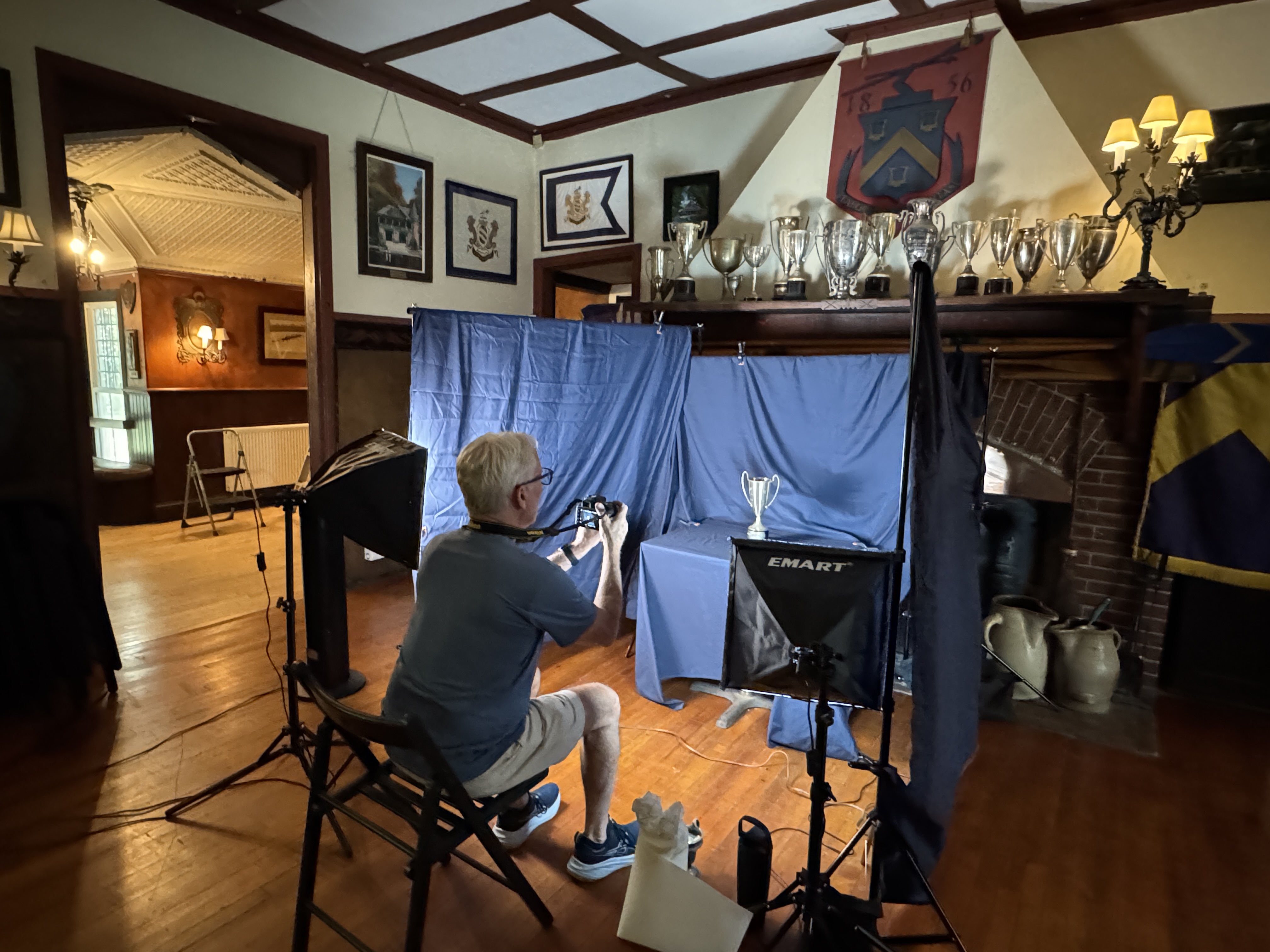
    Just as a physical museum is closing in Philadelphia, a new digital museum is opening. Oct. 1 is the launch date for the Rowing History Project, which will showcase the historic holdings of Philadelphia’s 160-year-old rowing clubs — a trove of trophies, banners, artwork, and documents that passersby on Amtrak and Kelly Drive can only imagine.

    But that’s not the only reason a small group of Boathouse Row historians volunteered to create this online-only museum. It was fear. Fear that the history of one of the city’s most iconic landmarks was vanishing along with stories about the traditions and culture of 19th-century Philadelphians. This, after all, is the place where Thomas Eakins rowed and painted, where Frank Furness left an architectural statement, and where a dynasty of Kellys (father, son, and daughter, Grace) propelled the city to international fame.

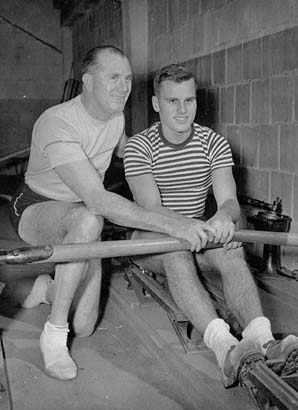
    John B. Kelly Sr. (left) gives a few pointers to his 18-year-old son, Jack Jr., in January 1946. Both father and son earned Olympic medals in rowing.Associated Press

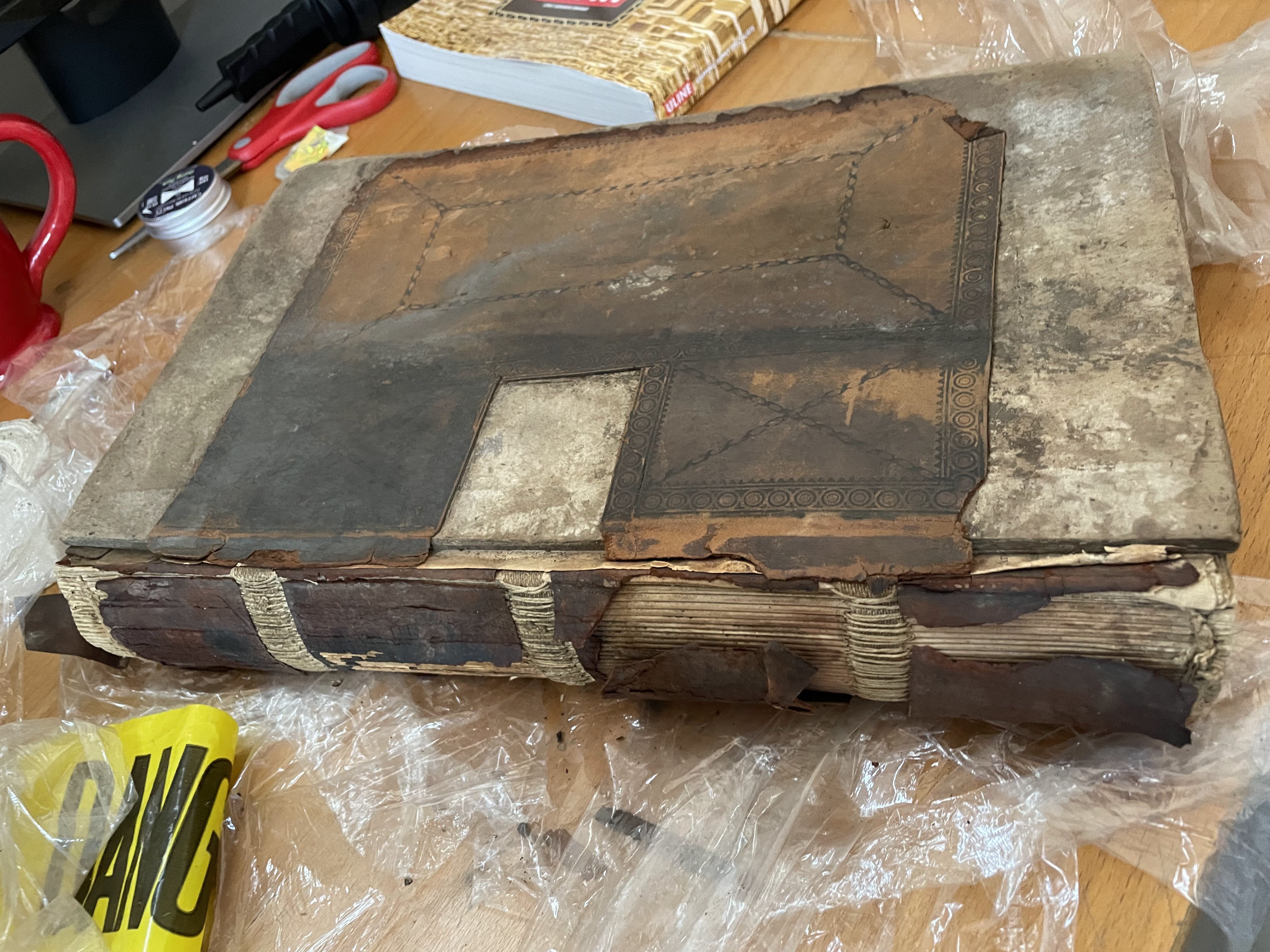
    I first worried about this impending loss of history a decade ago when I was writing a book about Boathouse Row. Sitting on my dining room table was a 19th-century minute book of the Vesper Boat Club that I had borrowed from a member who had taken it home because the club wasn’t caring for it. Its leather cover was split, and pieces were flaking off. Gently turning its pages, I read about the constant break-ins, rules about smoking, drinking, and women, and the obsession with uniforms, including the dress one: “dark blue cloth, naval officers’ pattern, with name of Vesper on front in gold bullion, block letter ½ inch in height.”

    Afterward, I carefully wrapped the disintegrating book in plastic wrap, not knowing what else to do.

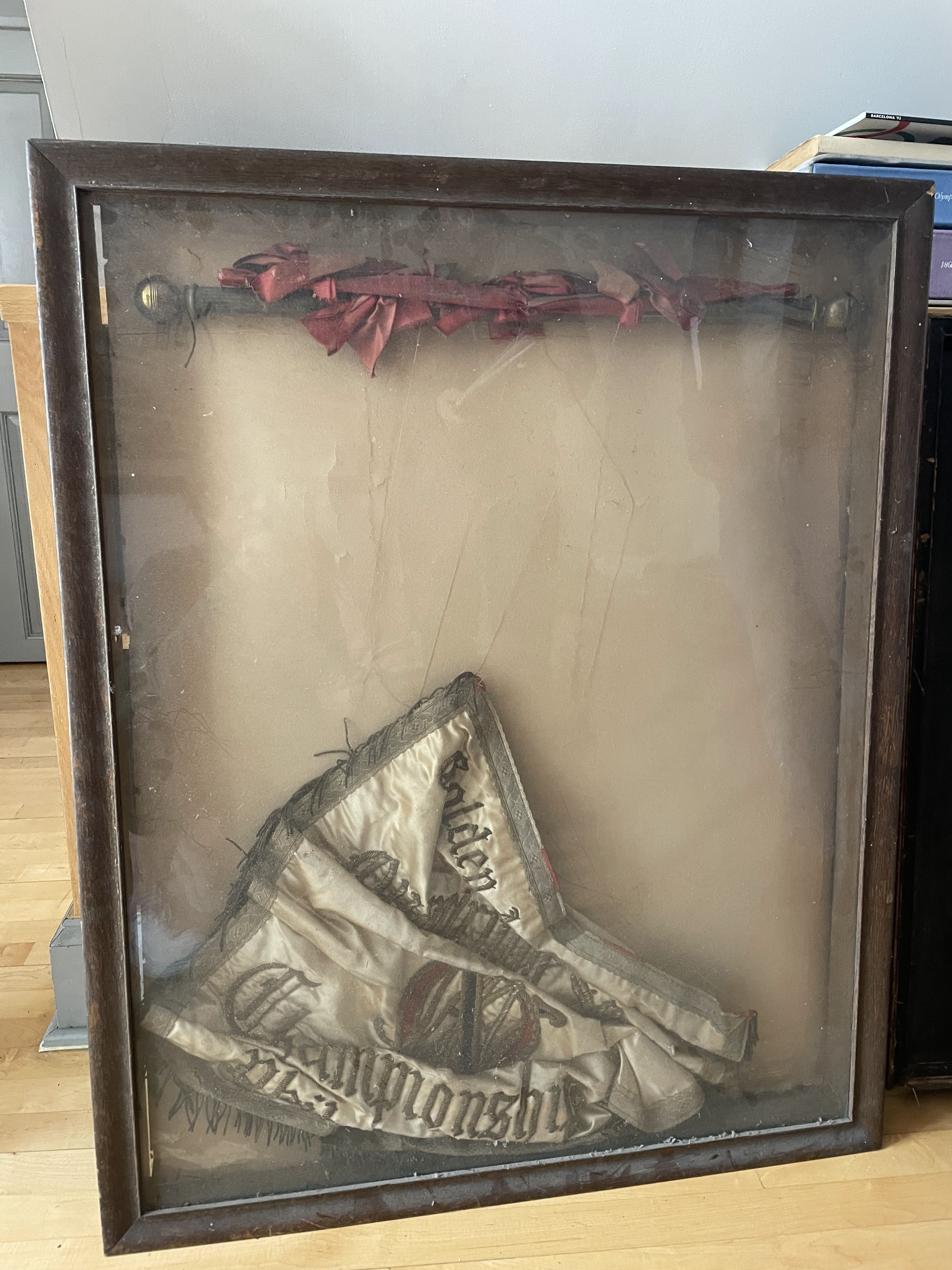
    A Vesper Boat Club minute book from the 1890s. After reading it, author Dotty Brown wrapped it in plastic wrap, fearful that it would deteriorate even further.Dotty Brown

    While some clubs have put their old documents in places like the Historical Society of Pennsylvania and the Independence Seaport Museum, others have crammed them under staircases and beside boilers while their members focus on winning races.

    The idea for the Rowing History Project emerged after COVID-19 canceled the 2020 Head of the Schuylkill Regatta (HOSR) — right when it was celebrating its 50th year. Instead, the HOSR pulled together a half dozen Boathouse Row history buffs to organize Zooms called “50 Years, 50 Stories.” The volunteers started meeting every Friday at 11 a.m., and over the years, their weekly planning sessions turned to the dire condition of the clubs’ artifacts.

    While the row could easily fill a physical museum, we watched as the prestigious River and Rowing Museum in Henley, England, shuttered and the Mystic Seaport Museum in Connecticut closed its rowing section.

    Then in 2023, architect and Vesper member Hilary Langer went into the bowels of his club to look at air handlers that needed replacement.

    “I couldn’t get to them because I discovered trophies, plaques — all the heavy stuff,” Langer said. “I was so scared. We were so focused on rowing and operating a very, very complicated operation with masters, lightweights, women, heavy weights, juniors, high schools, that all this stuff was forgotten and neglected. It would still be there if those units hadn’t needed replacement. That is a fact.”

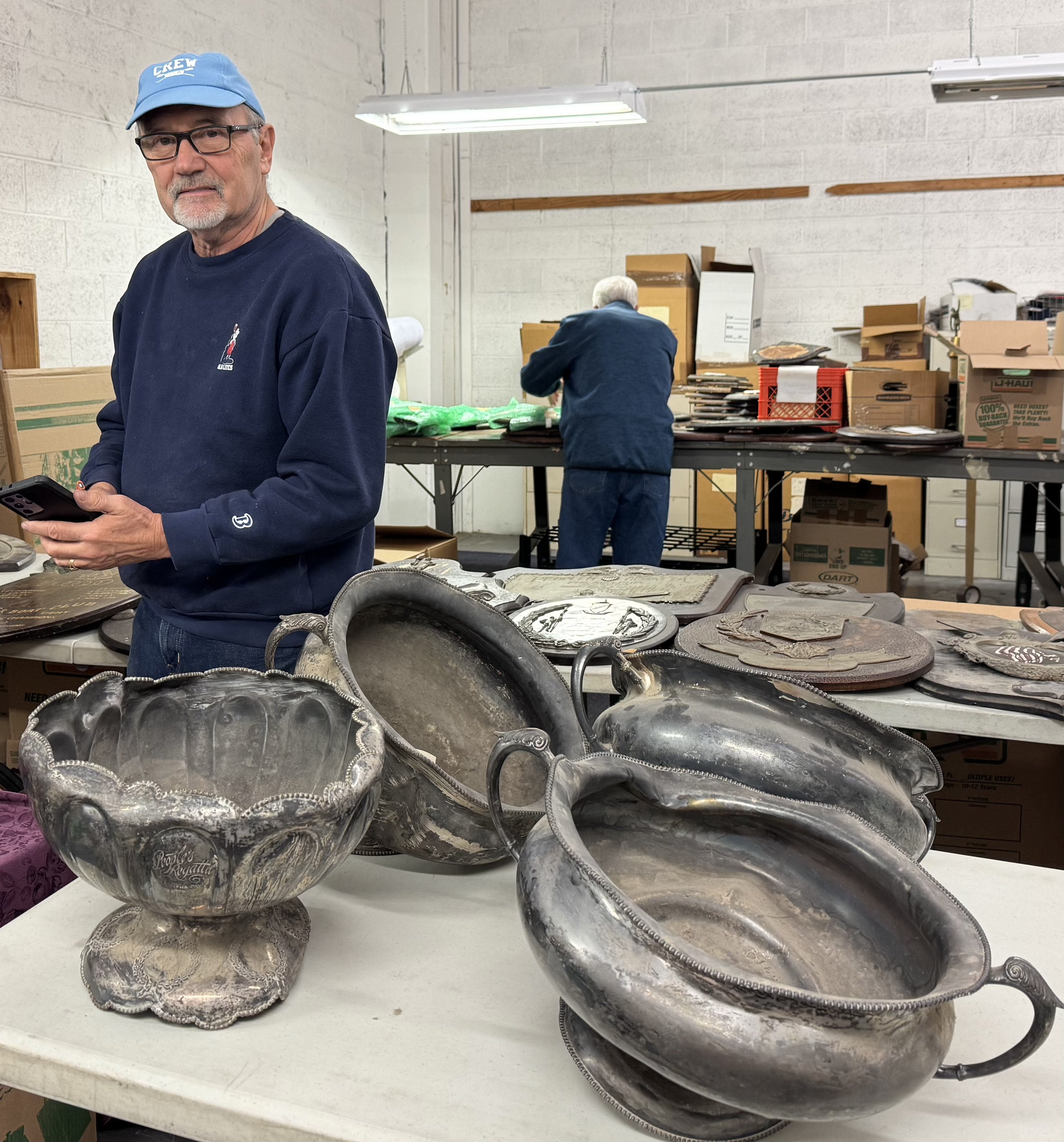
    Hilary Langer of the Vesper Boat Club sorts through damaged trophies, deciding what to keep, what to repair, and what to throw away. About 1,000 items were taken from the club to Boathouse Sports, a clothing manufacturer, which gave the club space.Dotty Brown

    After reaching into every cranny of the club, he pulled out 1,000 items, including the minute book that I’d covered in plastic wrap.

    That galvanized the HOSR group, which includes people with backgrounds in management and technology, not to mention the finish-line-driven spirit typical of rowers. We researched museum-style platforms and paid two professionals — an archivist and a webmaster — to help.

    Vesper’s collection became the “proof of concept,” and when the data for its holdings — photos, descriptions, condition, location, and more — were successfully uploaded, we raced to convince the rest of Boathouse Row to photograph and document its artifacts. The group held information sessions, created instructional videos, and hired a few library students to work with the boathouses. Some private collectors, including one with 3,000 rowing artifacts, are also joining the Rowing History Project as it evolves into an ever-larger museum.

    A moth-eaten banner retrieved from the attic of the Vesper Boat Club.Dotty Brown

    “What we wound up with is not a software program designed just for Philadelphia or Boathouse Row,” said Chris Doyle of the Pennsylvania Barge Club. “It’s intended as a national platform. Our big contribution is a national platform for rowing history.”

    Dotty Brown is a former reporter and editor at The Inquirer and the author of “Boathouse Row: Waves of Change in the Birthplace of American Rowing.” Visit the Rowing History Project at rowinghistoryproject.org.

  • Why do Pennsylvania elected officials want to take my family’s mineral rights from us?

    Why do Pennsylvania elected officials want to take my family’s mineral rights from us?

    Twenty-five years ago, my father handed me an envelope filled with documents. As he passed it to me, he said, “Now you’re in charge of the mineral rights.”

    Before my father, the envelope had been entrusted to my Uncle Peter, who, in turn, had received it from my grandmother. The contents represented everything our branch of the family possessed relating to mineral rights bequeathed by my grandmother’s great-grandfather, Jonathan Thorne.

    Jonathan’s estate plan reflected remarkable foresight. He instructed his executor to sell his land at a discount so he could retain the ownership of the oil, gas, and minerals beneath it for future generations. Each deed that went to the buyers of these properties included a clause showing they were purchasing only the surface property, and not the mineral rights.

    My father handed me that envelope in 2001, seven years before the Marcellus Shale boom. This is not a story with a happy ending about families passing down a legacy from hardworking forebears. Instead, it is something every Pennsylvanian should be shocked by and want to stop.

    We discovered that an out-of-state entity was making claims to our rights. It claimed to have purchased tens of thousands of acres of Pennsylvania mineral rights in 2000 for a total of $1. Their unwarranted claim was based on a distorted interpretation of a legal theory called “title washing.”

    Others, including the Proctor family, faced a strikingly similar predicament: They had retained their valuable mineral rights and followed the law, only to find that other groups were now claiming them.

    Like my family, the Proctors traced their ownership back generations. After preserving their mineral rights, most of their surface property ended up with the Pennsylvania Game Commission. The Game Commission knew through its own deeds and title research that it was buying only the surface. The mineral rights remained separate. Yet, 100 years after the fact, they sued the Proctors to try to take those rights — twice.

    In this 2008 photo, a drilling rig used to extract natural gas from the Marcellus Shale, located in the Washington County borough of Houston, Pa.Keith Srakocic

    The Game Commission, coincidentally, from rights it does own, is already one of the largest developers of shale gas in the state. It has a reserve balance of $500 million from drilling revenue. That is quite a war chest to sue families for the rights it doesn’t own.

    Last year, however, the Pennsylvania Supreme Court unanimously ruled in the Proctor family’s favor, confirming that they continued to own their mineral rights, even noting that the scheme “if not positively fraudulent, is at any rate an attempt to evade the law, to which the courts will lend no countenance.”

    That should have been the end of the story for all our families.

    Instead, Pennsylvania lawmakers quietly inserted a provision into an unrelated property tax bill that retroactively changed the law and effectively overturned the court’s decision. Late in the evening of Saturday, July 11, an amendment changing pre-1947 tax laws was introduced in the Senate. It passed the legislature and was quickly signed into law by Gov. Josh Shapiro the very next day.

    Stunningly, there were no hearings or opportunities for affected families to speak out. Pennsylvania taxpayers (and much of the legislature) had little opportunity to understand what the amendment even meant and what was at stake.

    Now the only way to assure rightful ownership is to go back to court and fight again, not only over property rights that were already settled, but also over whether a government can retroactively change laws to benefit certain parties and take property the Supreme Court had already ruled belongs to families like mine.

    That is deeply troubling.

    The Proctor family spent more than 10 years in litigation and won. Yet, lawmakers, the governor, and certain oil and gas interests decided that wasn’t the outcome they wanted. The Game Commission, in close coordination with those energy firms, started this fight. It lost. Families like ours should not have to spend the next 10 years relitigating.

    The General Assembly can undo this harm. It can reverse this retroactive change to tax laws and ensure these properties are not taken from families who have owned them for generations. If not, we are all targets of this wrongheaded move. If they are willing to rewrite property laws to effect transfers to the state, no one’s property is safe.

    What happened to my family is, I believe, unconstitutional. The litigation created by this secretive 24-hour rapid legislation approval process could end up costing Pennsylvania more than $1 billion if it is forced to reimburse families for property taken from them. That’s also not fair to state taxpayers.

    Pennsylvania can do better. We can protect resources, support responsible energy development, and safeguard public lands without sacrificing the basic principle that private property rights mean something.

    Jeff Sloan is a member of the Thorne family and lives in Berwyn.

  • Black and Jewish Philadelphians must rebuild an essential alliance

    Black and Jewish Philadelphians must rebuild an essential alliance

    Black and Jewish communities in America share a long history of supporting each other against hate and discrimination.

    Together, our people helped advance laws that challenged discrimination in housing, employment, and education. Together, we supported initiatives that helped move our country closer to its highest ideals.

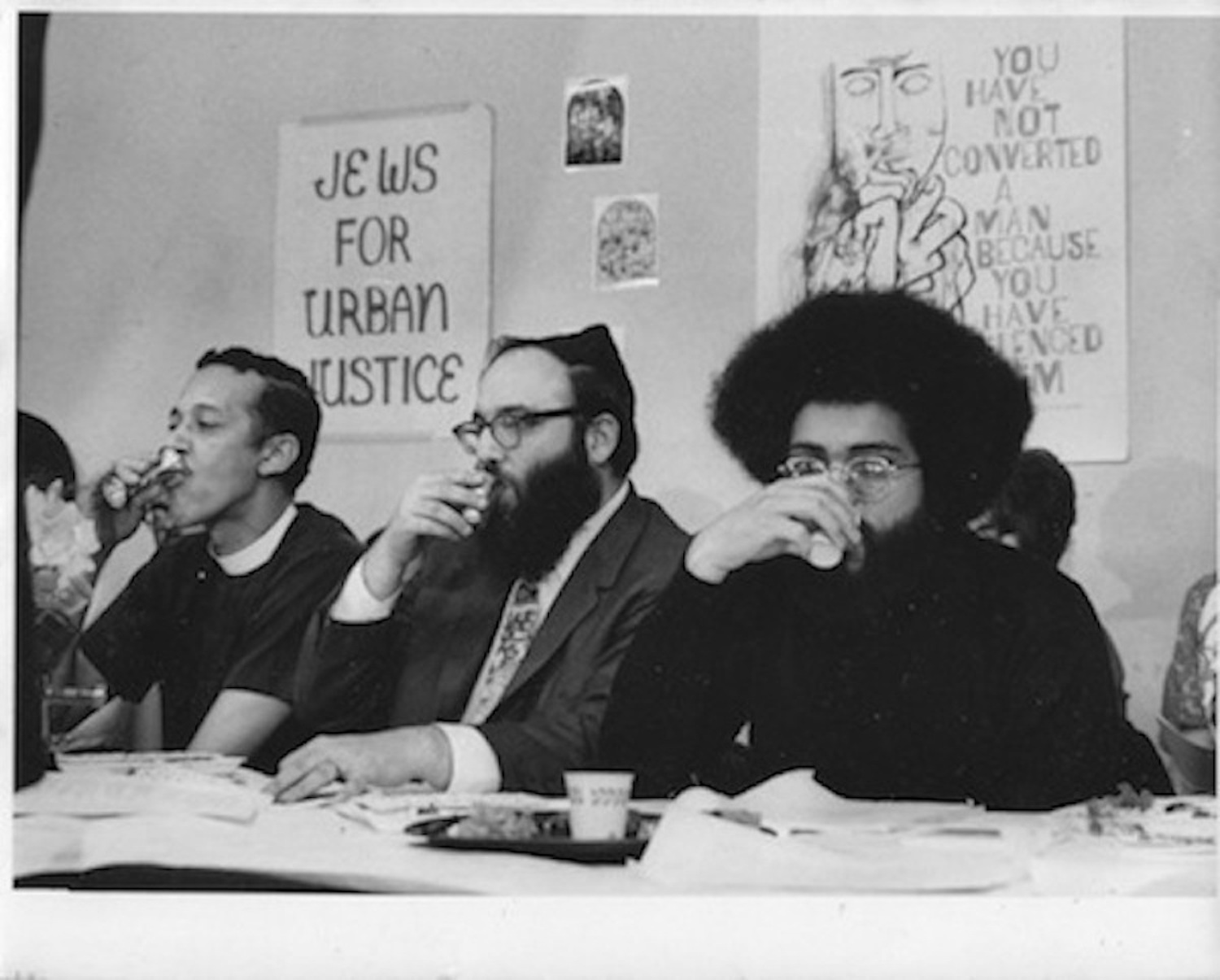
    Rabbi Arthur Waskow (center) with the Rev. Channing Phillips (left) and TV director Topper Carew (right) at the first Freedom Seder held in April 1969, at Lincoln Temple United Church of Christ in Washington, D.C.Courtesy of the family

    But in recent years, the relationship between the Black and Jewish communities has become strained, even as antisemitism and racism threaten us all.

    That is why the two of us — each a rabbi from the Main Line — recently went to Georgia, along with dozens of clergy from across the country, for the Atlanta Summit of Black Pastors and Rabbis. We gathered at the Temple, Ebenezer Baptist Church, and the King Center, locations that made us recall the accomplishments and the sacrifices of the Black-Jewish alliance. We came to explore what is required to rebuild the partnership now.

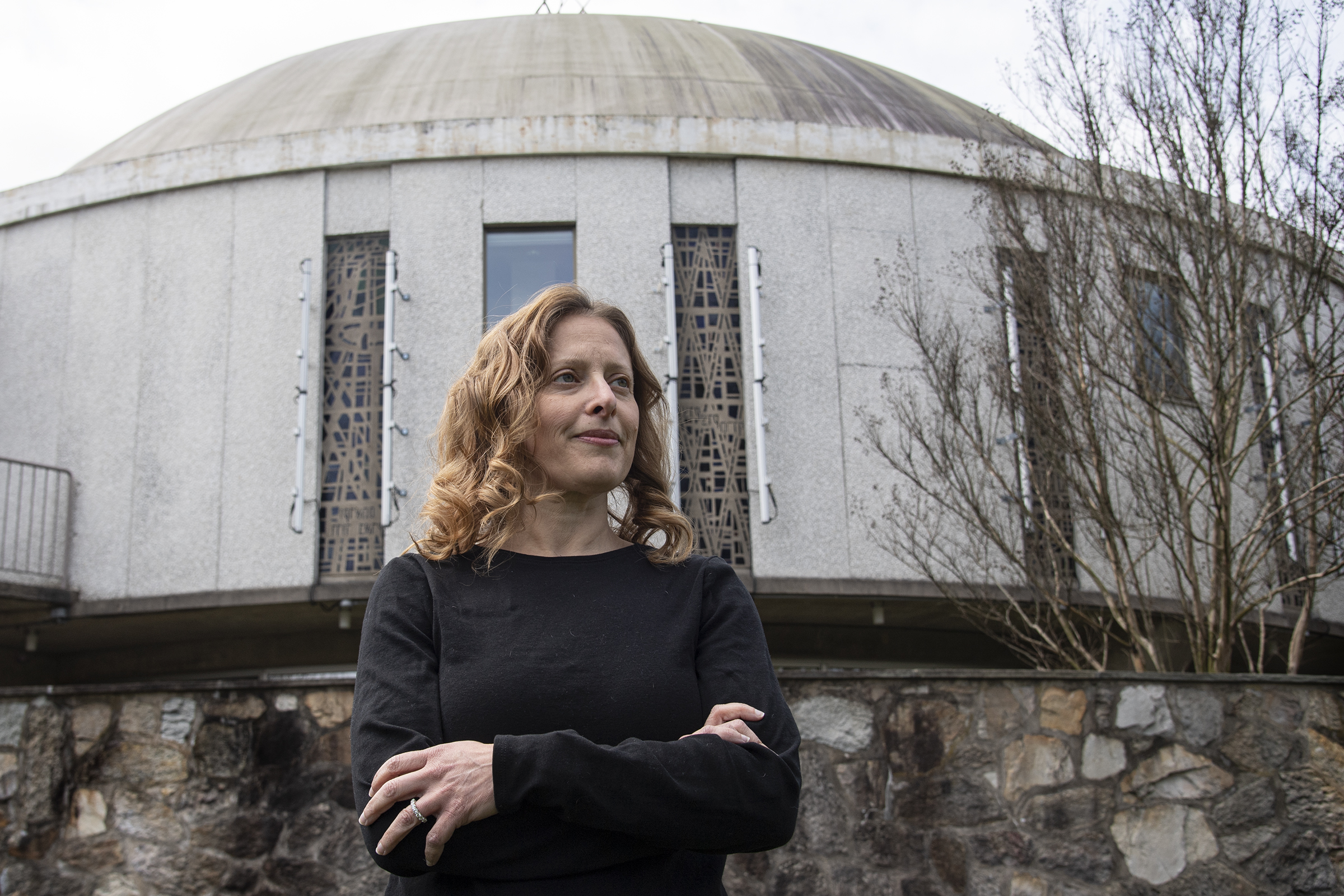
    Rabbi Geri Newburge stands outside The Main Line Reform Temple in Wynnewood in April 2020.JOSE F. MORENO / Staff Photographer

    As we experienced firsthand, the Black and Jewish communities do not always understand each other. Views on diversity, equity, and inclusion (DEI), Zionism, racial justice, power, and vulnerability can contrast sharply based on our personal experiences. But we were able to speak candidly about the times our communities had felt unseen or abandoned by each other.

    One exchange brought those differences into focus.

    Black participants described economic precarity following federal workforce cuts associated with the Department of Government Efficiency (DOGE) and attacks on DEI, particularly for Black women. Jewish participants spoke, in turn, of social precarity amid rising antisemitism. Hearing both made our shared responsibility clearer.

    Those conversations led to the understanding that Black and Jewish Americans need an agreement against abandonment. It is a simple but demanding idea: When your community is threatened, ours will not disappear. When disagreement becomes painful, we will not walk away. We will listen, speak honestly, and doggedly refuse to give up on our relationships.

    That does not mean we will see eye to eye on every issue. It means we will have the commitment to hear hard truths without turning disagreement into disdain.

    Speakers like civil rights organizer Eric Ward helped us to understand how the challenges are interconnected. As he explained, many people understand antisemitism to just be the hatred of Jews, but in reality, it is also a conspiracy theory about how society works. Because antisemitic conspiracy theories ignore the real roots of societal issues — such as socioeconomic inequality and structural oppression — and instead focus on tropes and pat narratives, they help sustain racism and authoritarianism as well, creating a toxic blend that threatens both Black and Jewish communities.

    The comments from Black Jews in attendance were, perhaps, most illuminating. Because they sometimes experience racism in Jewish spaces and antisemitism in Black spaces, their lives counter the perception of a neat division between “our community” and “theirs.” With their unique experiences, their voices must be central to the work ahead.

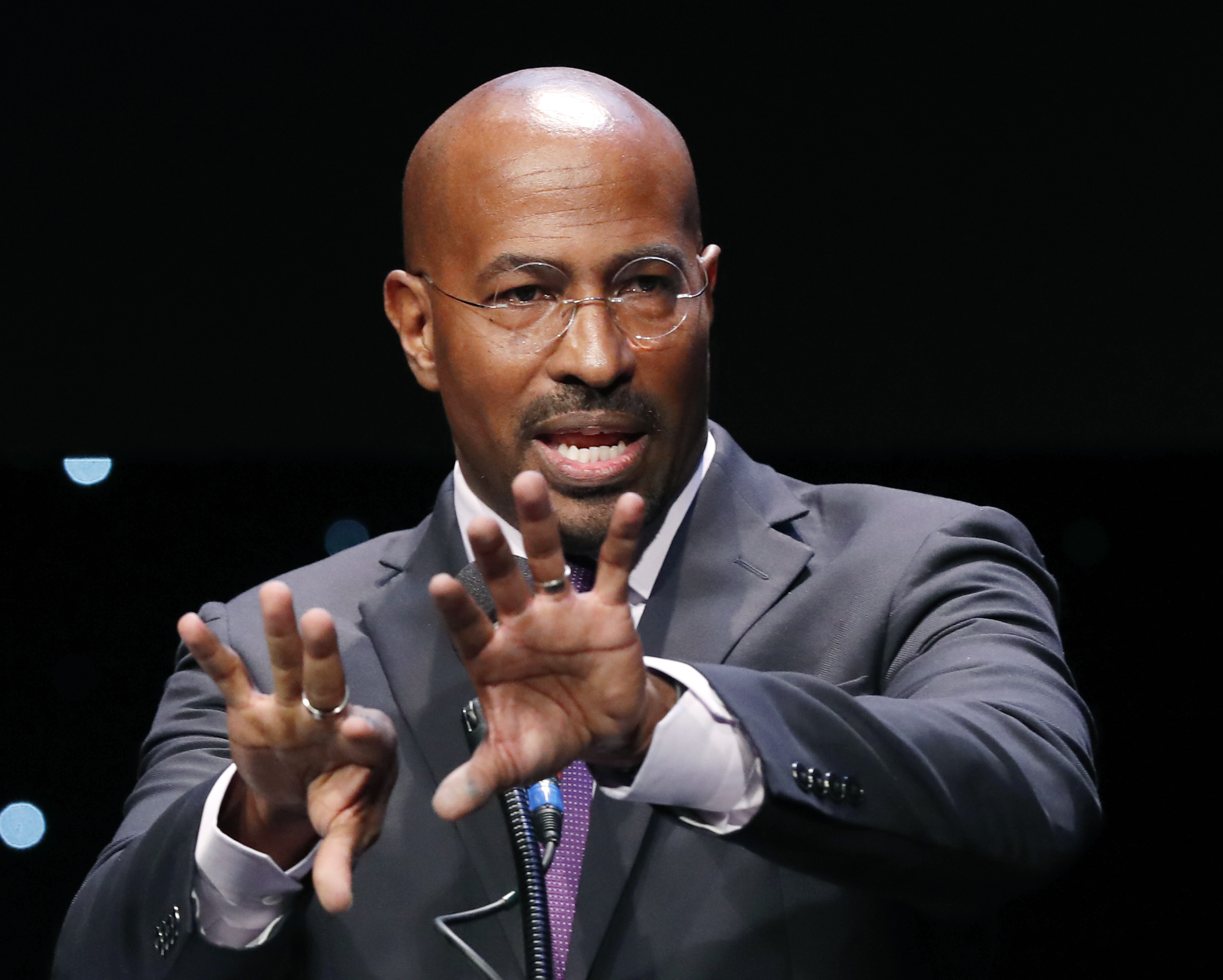
    Political commentator Van Jones told those gathered for the Atlanta Summit of Black Pastors and Rabbis that a Black and Jewish alliance today must harness the diverse strengths each community possesses.Kathy Willens

    Another speaker, political commentator Van Jones, cautioned that the alliance we are building cannot simply recreate the one from the 1960s. Back then, Jews were still reeling from the direct memory of the Holocaust, while Black Americans were still living under the restrictions of Jim Crow. That alliance grew from shared vulnerability, but the next iteration must harness the diverse strengths each community possesses today.

    Jones invoked the image of a relay runner receiving and passing a baton. Honoring the generation that came before, he said, means accepting responsibility for the next leg of the race.

    For us, that work begins right here in Greater Philadelphia.

    Rabbi Eric Yanoff serves Adath Israel on the Main Line in Merion Station.Courtesy of Eric Yanoff.

    We returned home committed to building and securing stronger relationships between the Black and Jewish communities before a crisis makes them necessary. We will come together with our colleagues in the Black Christian community and invite our congregations to learn from each other. We will create opportunities for shared study, worship, and community service. We will speak honestly about racism and antisemitism.

    Ultimately, we will build the trust that allows us to call on each other when our communities are hurting.

    Relationships require intention, humility, and time. They also require both communities to reject the idea that advocating for someone else diminishes our ability to defend our own people. We will not always see the world in the same way. But we can promise not to leave each other alone in it.

    Rabbi Geri Newburge serves Main Line Reform Temple-Beth Elohim in Wynnewood. Rabbi Eric Yanoff serves Adath Israel on the Main Line in Merion Station.

  • How Temple University failed my daughter on her first day of college

    How Temple University failed my daughter on her first day of college

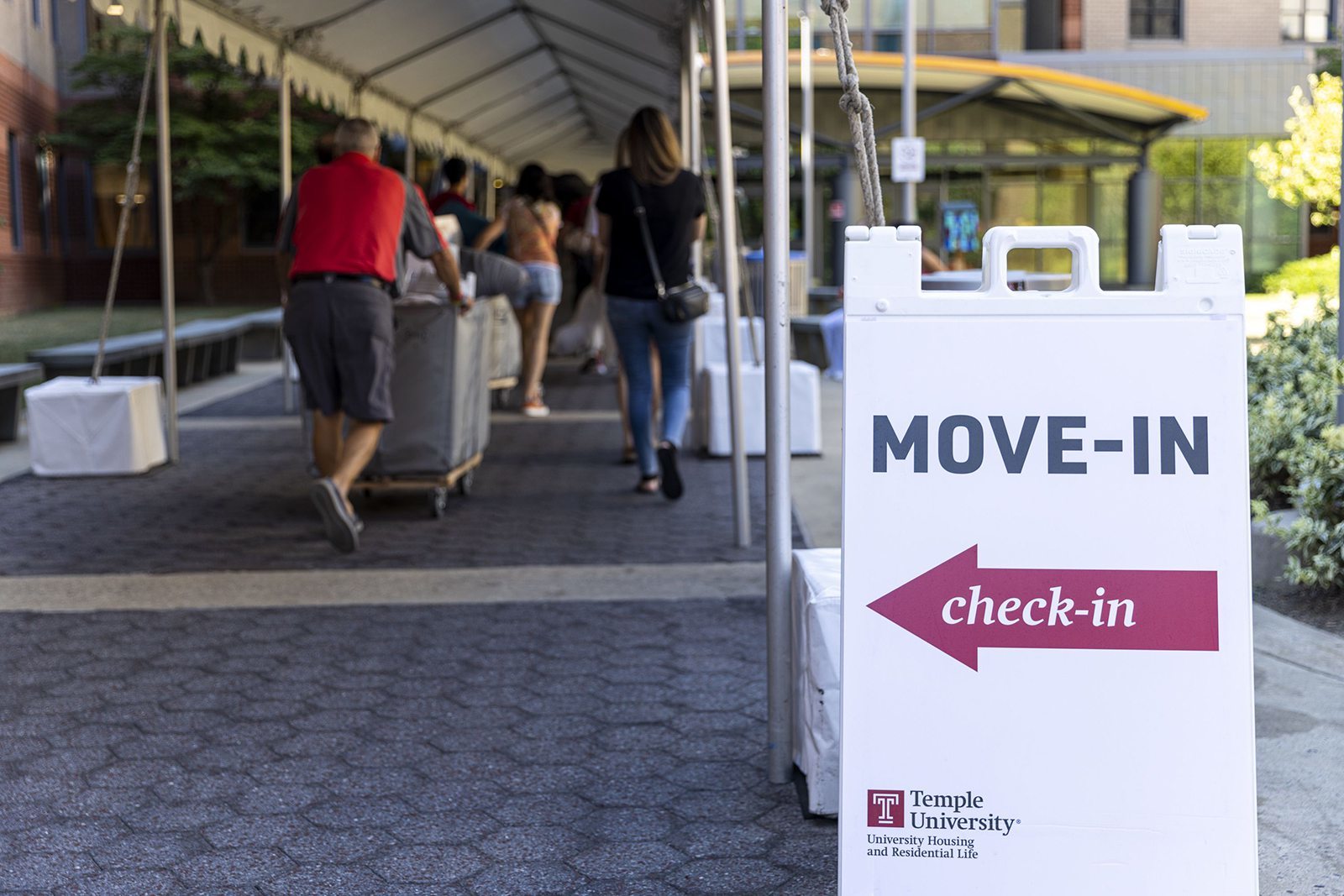
    Remember all those big feelings you had on move-in day as a college freshman? After a long summer, you probably arrived on campus ready to tackle dorm life fortified with new flip-flops, towels, and a duvet. Today held great promise — the start of a new you.

    My daughter recently enrolled at Temple University. Her move-in day was scheduled for the final week in August. I was proud, and she was excited. Yet, on our drive to campus, we discovered that something was wrong. She was somehow assigned to an all-male floor. How could this be?

    We contacted residence life and chatted with a well-meaning student who told us there was nothing she could do. Could we speak with her supervisor? Yes — another caring individual informed us that her hands were tied and that no other dorm rooms were available. How could this be possible? It was her first day of college.

    My daughter is transgender and autistic. Temple University assigned her to a male dorm section despite us working closely with intake counselors and disability resources to ensure a smooth and safe move to a gender-inclusive setting. Somehow, a form was missed that coordinates between the office that ensures students with special needs have the necessary supports and the residence halls that house our students.

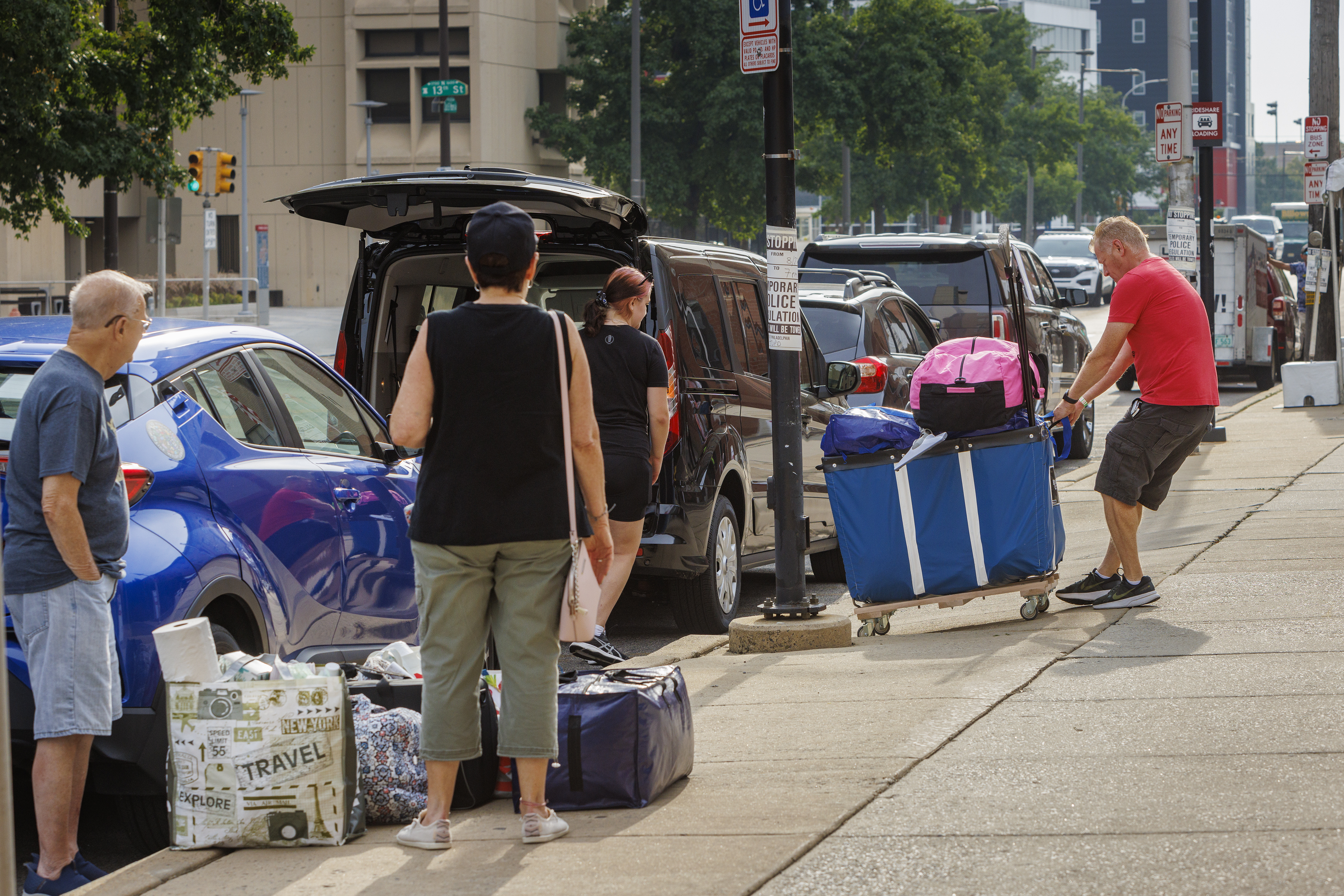
    Move-in day for Temple students living at 1300 Residence Hall at 13th Street and Cecil B. Moore Avenue in August 2023.Alejandro A. Alvarez / Staff Photographer

    We pulled up to her assigned dorm in a packed car for drop-off only to learn my daughter could not be accommodated.

    We drove home and unpacked the car. She moved back into her bedroom. It was devastating. There was a lot of crying.

    The following day, we were contacted by another staff member who informed us they had found a room for my daughter in a female suite. However, the floor was not gender-inclusive.

    My daughter would have to roll the dice and not disclose her gender identity.

    We asked what the contingency plan was if her roommates rejected her. There was no plan.

    We thanked the staff member and declined the offer. I sought assistance from many university administrators (president, provost, dean, heads of the disability resource center), none of whom responded.

    Fail.

    Full disclosure, I support the mission of Temple University as an alum, a donor, and tenured full professor in the College of Public Health. I am writing today not as a representative of the university, but as a concerned parent and member of the Philadelphia community.

    I am saddened (but not surprised) by how our move-in transpired.

    My daughter was collateral damage in an ongoing war for ever-higher enrollment numbers and was let down by an on-campus support system that has been weakened by extreme budget cuts.

    Like many American universities, student tuition dollars are integral to Temple’s survival. Student retention and enrollment are both down. The university is facing a well-publicized $25.5 million budget shortfall.

    Faculty, librarians, and support staff have been thinned to the breaking point. For example, many of my faculty colleagues in the College of Public Health recently learned that our salaries were to be cut by approximately 20%.

    This scenario is not unique to our institution. Indeed, a common cycle is at play.

    Tuition revenues fall in tandem with reduced enrollment and poor student retention. These deficits cause financial distress for the university. So administrators relax admissions and increase tuition in anticipation of a financial “sugar rush” that comes with more paying customers and a higher tuition rate.

    But many newly accepted students require complex psychosocial and educational supports, and those supports are now largely to be shouldered by a depleted faculty.

    Administrators cast instructors as friendly and approachable. Although this is a well-intentioned strategy, the teacher-student relationship is not based on casual friendship.

    As instructors, we are compelled to use a boilerplate syllabus template that addresses students using first-person language as if we are addressing them personally:

    Feel free to visit us during “drop-in” hours and discuss “anything you need to talk about.”

    That could mean anything from personal relationships, dating, intimate partner violence, parental neglect, trauma, financial insecurity, and concerns about immigration policies and enforcement (e.g., Will I be safe here?). Most of my faculty colleagues are not trained as clinical psychologists. Nor do we have sufficient expertise — or in-class support staff — to help students with complex learning disabilities in the context of large (and growing) classroom settings.

    When vulnerable students fail and/or withdraw, administration often attributes retention and enrollment dips to faculty — as justification for deeper cuts to classroom instruction and increases to a vast administrative framework.

    This cycle is continually baffling to us as teachers, because many of our institution’s most damaging reputational failures have originated in the boardroom rather than the classroom.

    I believe in Temple University and in its founder’s vision of a high-quality public education where students from all walks of life benefit from world-class scholars. The university has enriched my own life by providing the training I needed to thrive as a neuroscientist and clinical translational dementia researcher. My colleagues care deeply about the success and well-being of our students.

    Yet, many of us fear the university is losing its way.

    Unrelenting pressure for new revenue streams, expansion into costly real estate ventures, and lack of reinvestment in teaching and research are eroding the foundation of what makes us so special.

    My family experienced these failures up close on my daughter’s first day of college — when we learned there was no place for her here.

    Any educational system that fails its vulnerable students and families this badly needs oversight and reform. I hope we find it.

    Jamie Reilly is a professor in Temple University’s department of communication sciences and disorders.

    Editor’s note: An earlier version of this essay misstated the amount of Temple’s budget deficit; it is $25.5 million.

  • Pennsylvania wasn’t just the birthplace of democracy, it was a key inspiration

    Pennsylvania wasn’t just the birthplace of democracy, it was a key inspiration

    It’s been an extraordinary summer celebrating America’s 250th, but before we shift our focus from the events of 1776, we would direct the minds of our fellow Pennsylvanians to an earlier period — to the founding of the commonwealth, and to William Penn’s forward-thinking advocacy for religious and political freedom and his belief in democratic self-government. These ideas were central to his political philosophy and plans for the early government of Pennsylvania. They also found their way into the democratic experiment we steward today.

    Although Philadelphia played an important role in setting the stage for a stunning world event — the birth of American democracy — the city was more than just a geographically convenient location for the nation’s founders to gather.

    By the time of the revolution, Pennsylvania had become an important intellectual and economic center of the colonies, and the unique political culture and form of government established at its founding helped inform and inspire the development of American democracy, later embodied in the U.S. Constitution and Bill of Rights.

    As Pennsylvanians, we are the inheritors of this impressive and innovative political heritage, a legacy that should be an important point of civic pride and inspiration for local patriotism.

    Think about this: A decade after Penn arrived in America and began the work of establishing a refuge for religious dissenters, colonial Massachusetts accused nearly 200 individuals of witchcraft and executed 19 people. Massachusetts had a state religion until 1833; Pennsylvania never had a state religion.

    After the end of the short-lived Maryland Toleration Act, Pennsylvania became the only colony where the Catholic Church enjoyed ongoing, legally secure protection.

    Visitors look at historic artifacts as part of the Jewish America 250 celebration at Congregation Mikveh Israel in Center City in July.Monica Herndon / Staff Photographer

    And, of course, Pennsylvania is also home to the “Synagogue of the American Revolution,” Congregation Mikveh Israel, one of the oldest synagogues in the nation, dating to 1740.

    As historian Nicolas P. Miller observed, the success of colonial Pennsylvania was linked in the minds of many onlookers to the freedoms, particularly religious liberty, that its inhabitants enjoyed.

    To remind Pennsylvanians of our special birthright of religious tolerance, farsighted political liberties, and a long tradition of self-government that predate the nation, Poor Richards Charitable Trust, the William Penn Foundation, the Connelly Foundation, and the Syde Hurdus Foundation — in partnership with Drexel University’s Lenfest Center for Cultural Partnerships and the National Constitution Center — are presenting a new exhibit: “Pennsylvania’s Founding: How a City and a Colony Shaped America’s Civic DNA.”

    For the first time, this exhibit will bring together original versions of several of the most important artifacts that helped define the civic and political character of early Pennsylvania, and tell the story of how the founding of the commonwealth helped inspire American democracy.

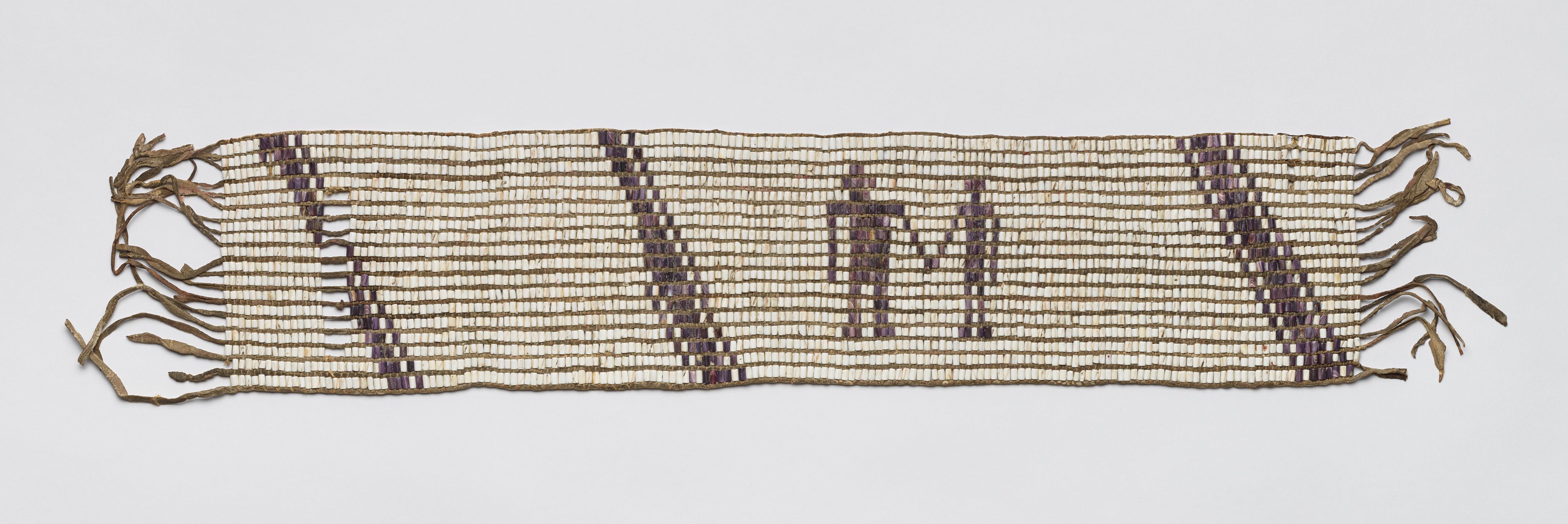
    Wampum belt, 1682, likely made by Lenape female artisans in the Delaware Valley. Atwater Kent Collection, From the Historical Society of Pennsylvania Collection

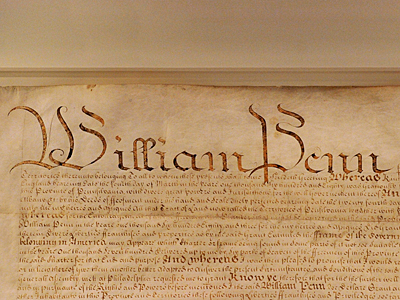
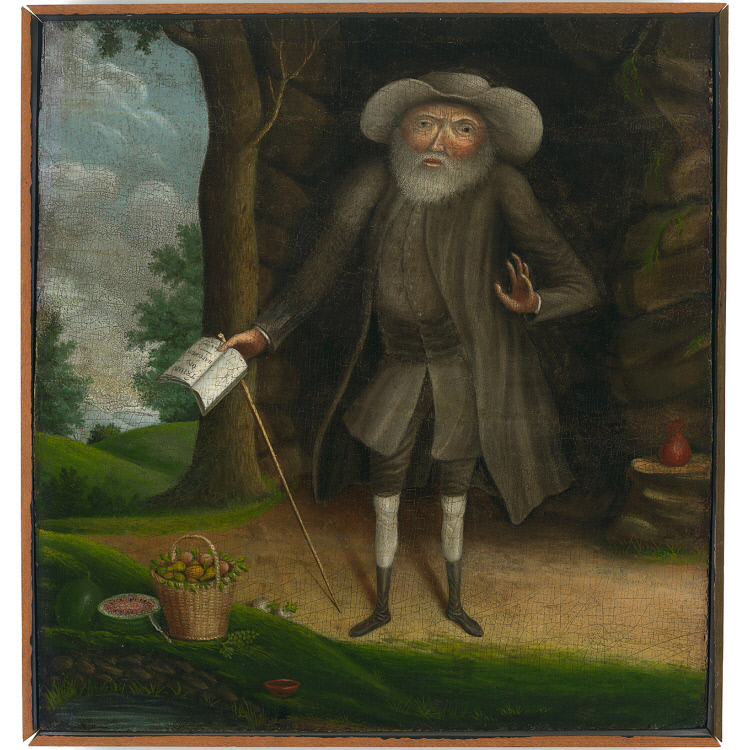
    They include the 1681 Pennsylvania Charter, signed by King Charles II, establishing the colony and granting Penn authority to govern; Penn’s 1701 Charter of Privileges, a framework of government for Pennsylvania until 1776, establishing religious freedom and other liberties and protections; a Lenape wampum belt given to Penn, associated with the 1682 Treaty of Shackamaxon, symbolizing a hoped-for moment of peace and cooperation; the 1696 Quaker Protest Against Slavery, one of the earliest in the Americas, and materials connected to early abolitionist Benjamin Lay; and other artifacts that clearly document Penn’s and Pennsylvania’s key contributions to the establishment of American democracy.

    Painting of abolitionist Benjamin Lay by William Williams at National Portrait Gallery of the Smithsonian Institution.National Portrait Gallery of the Smithsonian Institution.

    The exhibit will be on view to the public, free of charge, at the National Constitution Center from Sept. 30 through Jan. 3, 2027. Learn more here.

    So this fall, let’s continue the Semiquincentennial celebration. We encourage all Pennsylvanians to make a special pilgrimage to the National Constitution Center to see, understand, and remember our political heritage that is ours alone — a world-changing and invaluable inheritance of tolerance that we should continue to aspire to today.

    Tom Riley is the president of the Connelly Foundation. David Seltzer is a trustee of Poor Richards Charitable Trust. Shawn McCaney is the executive director of the William Penn Foundation.

  • Why RFK Jr. and Trump can’t be trusted on measles vaccine safety

    Why RFK Jr. and Trump can’t be trusted on measles vaccine safety

    A brouhaha recently broke out among Pennsylvania’s governor, the new head of the CDC, Health and Human Services head Robert F. Kennedy Jr., and various health agencies in the state about whether two infant deaths in Lancaster County, Pa., were caused by the measles. And now more measles-related deaths are further complicating the dispute.

    Two facts are important to keep in mind.

    One is that with a total of nearly 700 measles cases across 36 counties so far this year, maximum information from the Pennsylvania Department of Health about the deaths — particularly the deaths of the infants in Lancaster County — is needed in order to prevent further harm.

    And two, nothing the federal government has to say about measles is trustworthy.

    On Aug. 26, Kennedy told reporters, “We’re doing a better job than any country in the world at controlling the measles outbreak.” He made the same claim in congressional testimony earlier this year, arguing that measles is surging worldwide and the outbreak here is simply part of a global problem.

    It isn’t.

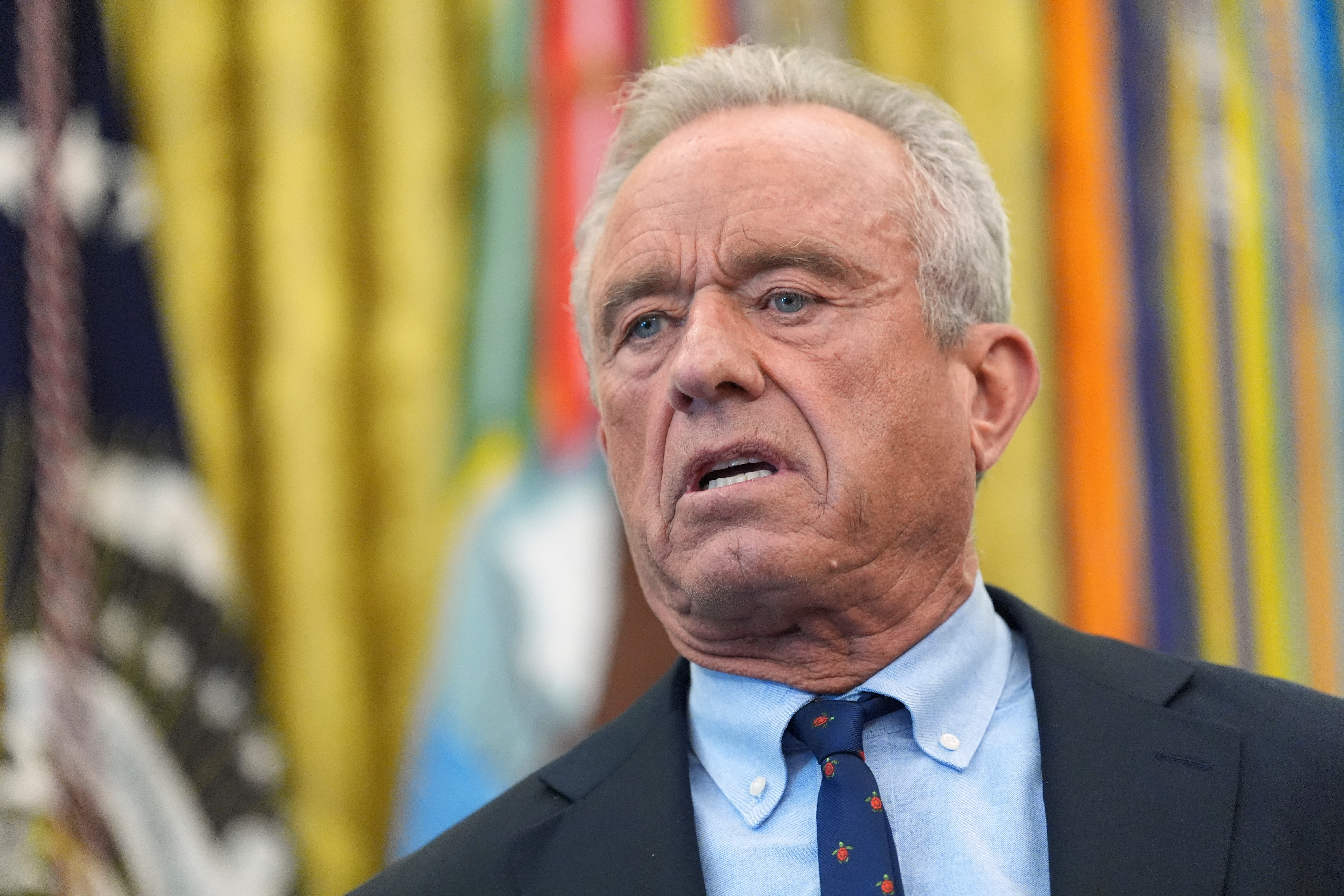
    Health and Human Services Secretary Robert F. Kennedy Jr. speaks during a meeting to sign an executive order about vaccines in the Oval Office last month.Jacquelyn Martin

    Kennedy is not telling the truth. His anti-vaccine efforts, along with President Donald Trump’s unhinged attacks on the measles, mumps, and rubella (MMR) shots — given in two doses to kids before entering kindergarten — have set off a 35-year high incidence of the disease in the U.S.

    What is causing the rapid return of measles is a never-before-seen decline in vaccination rates. This has led to an explosion in measles cases that is, contrary to Kennedy’s assertions, worse than in many other countries.

    Let’s look at the numbers.

    So what is going on elsewhere?

    The WHO European Region cut measles cases by 73% between 2024 and 2025. The U.S. saw an increase: 2,289 cases in all of 2025, and 3,294 already in 2026 — the highest number since 1991.

    Cases are falling in Canada and flat in the U.K. Furthermore, our rate of measles per million people is much higher than Japan’s or Australia’s.

    Why are we doing so poorly?

    Kennedy blames measles coming in from other nations. So does U.S. Rep. Byron Donalds, a Republican from Florida who is running for governor. He keeps pointing to “rampant illegal immigration” during the Biden administration for measles outbreaks.

    Those claims are based on misinformation and bigotry about foreigners.

    A total of 16 measles cases have been reported among international visitors to the United States, whereas 95% of U.S. cases this year are outbreak-associated — meaning they reflect domestic spread.

    Ninety-five percent of those cases occurred in unvaccinated or unknown vaccination status individuals.

    While some cases do have travel-related origins, the spread of measles is a domestic policy failure caused by falling vaccination rates. Other countries have tourists and immigrants, too — but only the U.S. is continuing to see rapidly increasing infection rates.

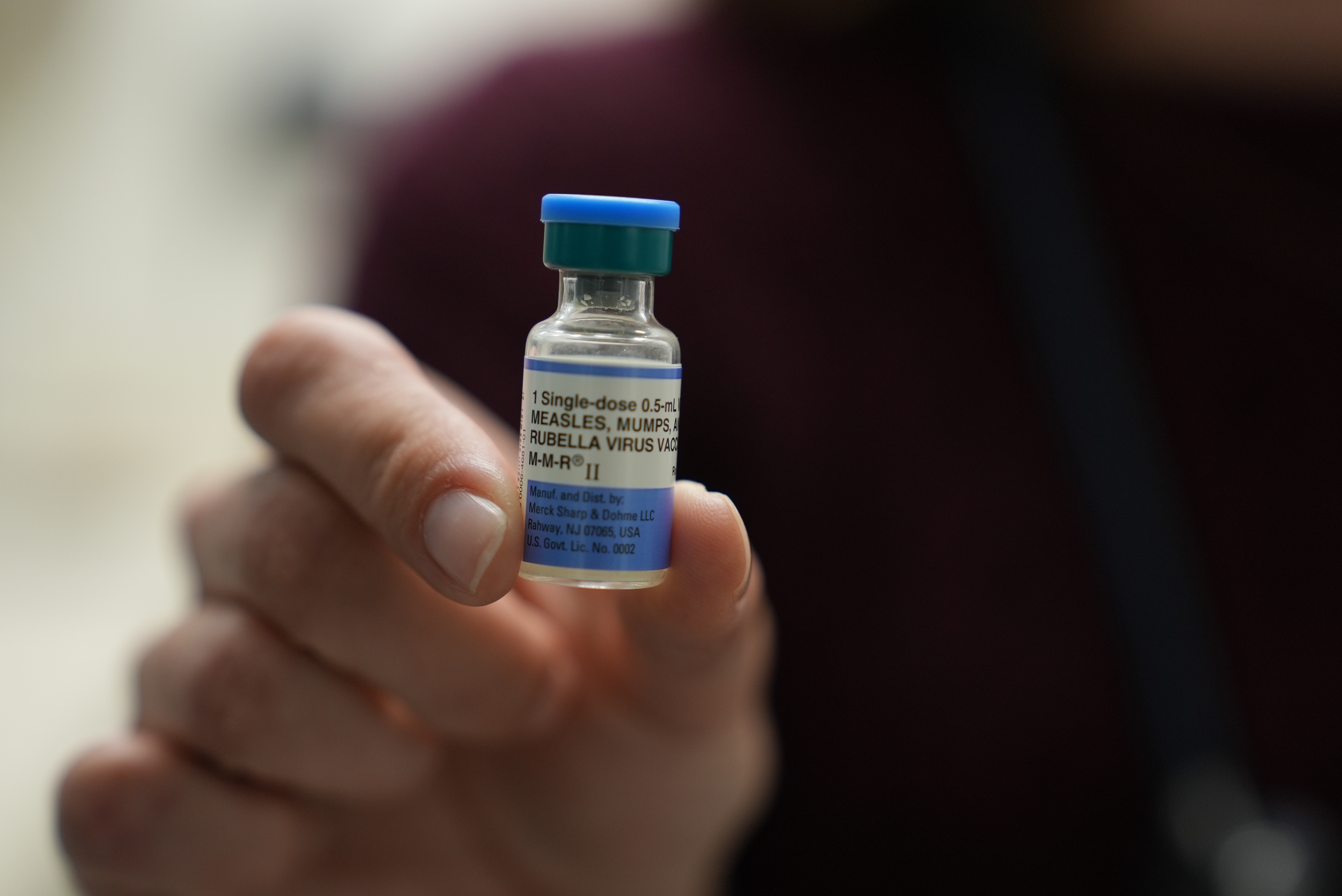
    Jessica Early holds a vial of the combination measles, mumps, and rubella (MMR) vaccine at Prisma Health Pediatrics in Greer, S.C., in March.Mary Conlon

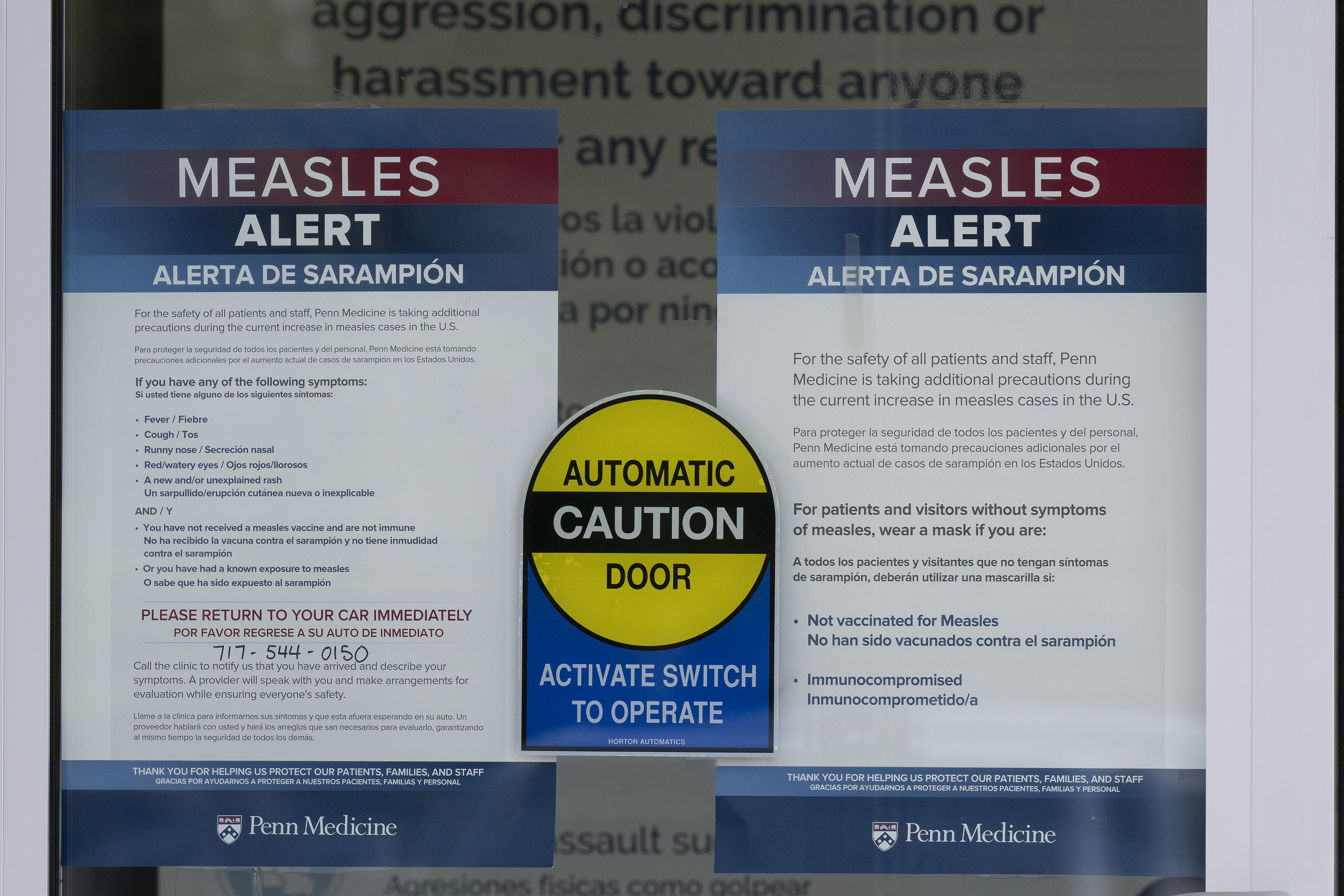
    In the United States, kindergarten MMR coverage has slipped from 95.2% to 92.4%, with vaccine exemptions at a record 4.2%. In some states, the coverage is as low as around 75% — creating perfect conditions for the spread of the highly contagious disease.

    Our national leaders keep pouring inaccurate fuel on the epidemic.

    They suggest autism is a risk from the measles vaccine, that the combined MMR vaccine is lethally dangerous, that kids get too many shots, and that the MMR shot is losing efficacy every year. None of that is true.

    What is true is that measles is a dangerous disease that can cause seizures, immune problems, pneumonia, deafness, or contribute to deaths. Each case can cost as much as nearly $60,000, including the public health response.

    We can’t fight this preventable plague using incorrect data, misinformation, and outright lies. America’s kids deserve so much better.

    Arthur Caplan is a retired professor of medical ethics, soon to be moving to Medford, N.J. Samuel Howard is an undergraduate student at the School of Humanities and Sciences at Stanford University.