Category: Commentary

  • Trump’s homelessness plan could revive forced psychiatric commitment

    Trump’s homelessness plan could revive forced psychiatric commitment

    For most of our nation’s history, involuntary psychiatric commitment operated with sweeping and often unchecked power: State hospitals confined people for years or even lifetimes based on such broad claims as mental illness and “moral defect,” often with little legal recourse.

    Public outrage over abuses in overcrowded asylums — dramatized most famously in the book One Flew Over the Cuckoo’s Nest — helped propel the patient’s rights movement in the 1960s and 1970s toward successful deinstitutionalization. A series of court rulings limited the state’s power to confine people against their will.

    Now that balance is shifting again.

    Last summer, President Donald Trump signed Executive Order 14321, which purports to address homelessness by greatly expanding involuntary psychiatric commitments and encouraging police to arrest people experiencing homelessness.

    The order — its constitutional validity remains in question — undermines decades of court precedent and removes judicial constraints to hold people in institutions. It could resurrect the old ways as a national standard without debate or congressional action.

    A sprawling facility recently built outside Salt Lake City already shows the trappings of a prison camp for people experiencing homelessness. This spring, the administration started legal guardianships for hundreds of veterans — some of whom are homeless — that could drive more of them into institutional care.

    And in a historic shift, federal officials are slashing millions of dollars in homeless grants across the country, including in Philadelphia and its suburbs, forcing a broad swath of nonprofits to curtail their efforts to house unhoused people. The Philadelphia Furniture Bank, which gave free furniture and mattresses to more than 22,000 people facing homelessness, became the latest casualty, announcing it would close on June 30.

    The Philadelphia Furniture Bank, which gave free furniture and mattresses to more than 22,000 people facing homelessness, is set to close June 30.Heather Khalifa / MCT

    Past presidents couldn’t make these changes — even if they wanted to — because our system empowers the states to set laws for involuntary commitments. Trump’s order would undermine that by ending consent decrees that aim to ensure stays are safe, ethical, and clinically appropriate.

    His order also seeks to incentivize confinement by directing federal agencies to green-light grants to towns and states that get people off the street and into institutions. And those receiving federal homeless services would have to undergo mental health care as a condition for those benefits.

    If enforced, this order would worsen the problems we have while creating new ones.

    We know a lot more about mental illness than in 1962 when Ken Kesey published Cuckoo’s Nest. At the same time, homelessness is growing in the U.S. An estimated 700,000 people live unhoused every night.

    Involuntary psychiatric treatment is sometimes necessary, but open-ended and inappropriate commitment harms patients and creates a moral indignity that can have a lifelong negative impact. And even when it is appropriate, our system tailors commitment lengths to people’s health needs, as the U.S. Supreme Court has affirmed several times. Most states limit the first court-ordered commitment to six months or less. Removing those limits would subvert the Supreme Court’s authority and abandon patients to the whims of unchecked administrators.

    Another problem: The order violates the Constitution by impinging on the state’s authority to direct health and safety, including civil commitments.

    Those with disabilities should be concerned about this, too. They have the right to live independently in their homes, with access to state-funded services. But this order would threaten that.

    Importantly, the order could also force clinicians to break their fiduciary responsibility to serve their patients’ best interests first by pressuring them to inappropriately confine homeless individuals who might not be seriously mentally ill.

    History shows many examples of the political misuse of psychiatric power. Soviet communists invented the diagnosis “sluggish schizophrenia” to justify the imprisonment of political dissenters. Vladimir Putin continues to use psychiatric excuses to shackle his critics. More recently, U.S. police used the contested diagnosis “excited delirium” to justify giving controlled substances to calm down people resisting arrest. The diagnosis has since been discredited.

    Our system is far from perfect. Too many seriously mentally ill people end up unhoused, imprisoned, or cycling in between. But the executive order risks turning clinicians into Soviet-style apparatchiks, who violate their ethics to make the system run.

    Federal policy should encourage the advocates who run safe consumption sites and syringe distribution efforts to keep people alive until they get help, because these efforts have been proven to work. But the president would levy civil or criminal charges against these caregivers.

    The executive order also dismisses efforts like Housing First, which give housing without requiring treatment or sobriety. These programs help make people more likely to improve their mental health and stay in housing.

    By contrast, arresting and confining people is associated with more death, illness, and misery.

    It may be politically appealing in some quarters to sweep up, institutionalize, and resettle unhoused people who are barely surviving with mental illness. But this approach was recognized long ago as inhumane and impractical.

    The time is now to build a real mental health care system to support the most vulnerable in our society. Instead of issuing retrograde executive orders, the Trump administration should invest real money to advance evidence-based interventions and policies.

    Dominic Sisti is a senior fellow at the Leonard Davis Institute of Health Economics and associate professor in the department of medical ethics and health policy at the University of Pennsylvania. He directs the Scattergood Program for the Applied Ethics of Behavioral Health Care at Penn.
  • The first CARE box shipped from Philly 80 years ago. The world still needs us.

    The first CARE box shipped from Philly 80 years ago. The world still needs us.

    Eighty years ago, in a city whose very name means brotherly love, someone packed a box. It held simple things like canned meat, dried milk, a little sugar, and was sent across an ocean to a stranger in a war-torn land who had next to nothing.

    That first CARE Package, shipped from Philadelphia in 1946, was not a political act or a diplomatic gesture. It was something older and simpler: an act of humanity, of one human being reaching out to help another.

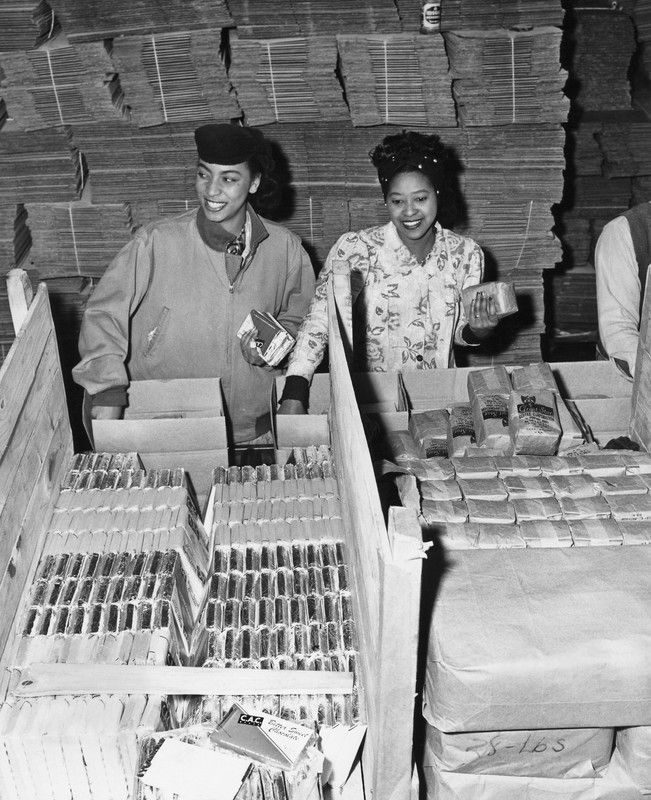
    Two women put items into CARE Package boxes at the main packing facility in Philadelphia in 1946.CARE

    Eighty years later, as the world again strains under the weight of conflict, displacement, and division, that first humble box from Philadelphia speaks to us from the past and asks us a question I believe America, as it turns 250, would do well to answer: Who are we willing to help?

    The story of CARE is like the story of America, rooted not in governments or grand institutions, but in citizens. In 1945, a few visionaries spearheaded the coming together of 22 American organizations, including labor unions, religious groups, and civic associations, with a straightforward conviction: that the people of a recovering Europe needed help, and that ordinary Americans could provide it.

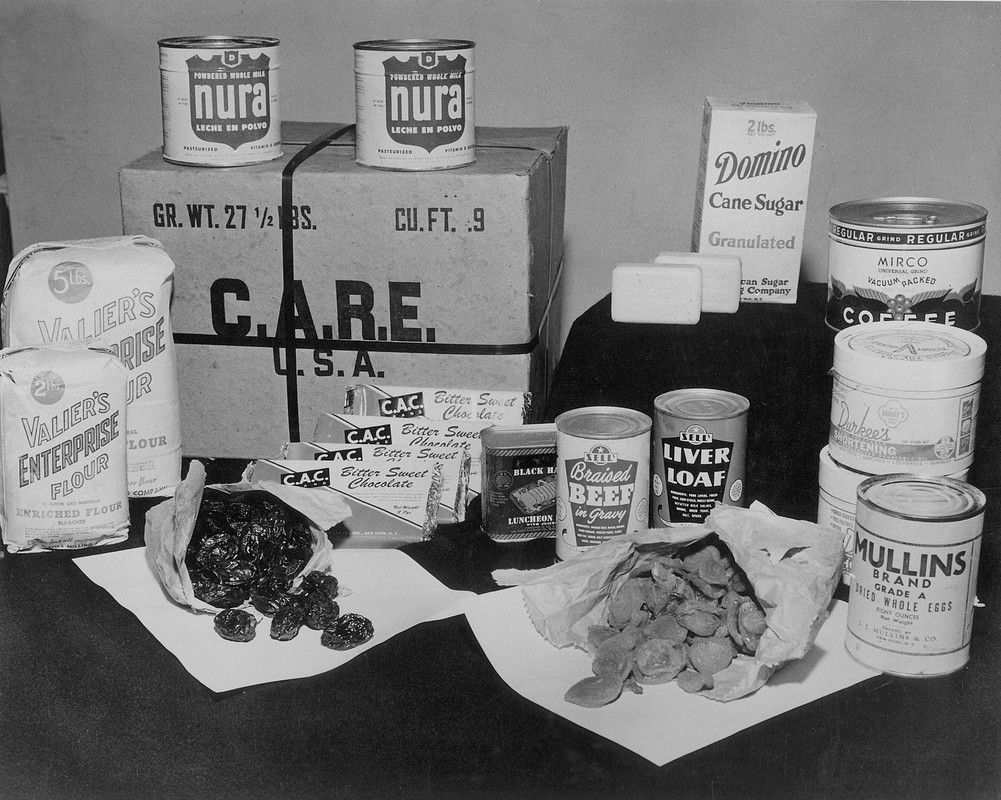
    The first packages shipped the following year contained U.S. Army surplus rations.

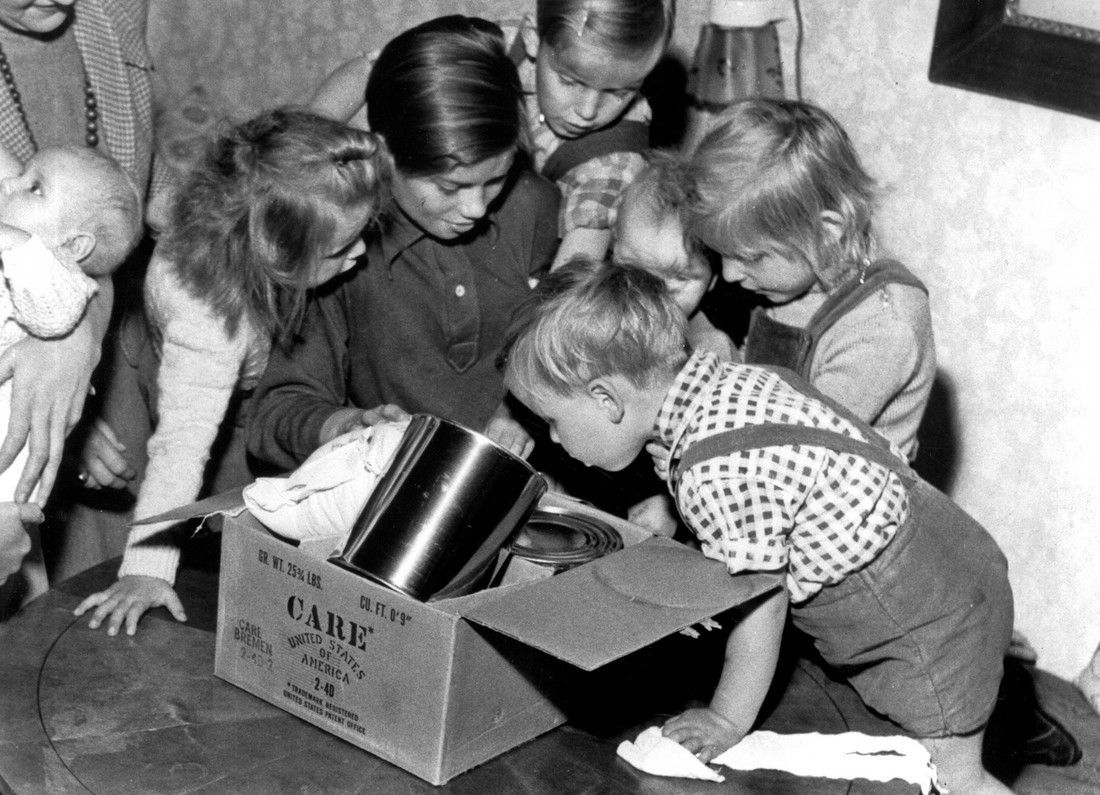
    In 1947, a typical CARE Package box contained five pounds of milk powder, seven pounds of cheese, five pounds of rice and five pounds of beans.CARE

    They were practical, even humble. But what they carried beyond calories was something no logistics manifest could capture: the message that someone, somewhere, was looking out for you, and had not looked away.

    Philadelphia was the perfect place for this altruistic effort to begin.

    William Penn founded this city on the radical idea that a community built on mutual respect and goodwill was not just a noble dream, but a practical one. Penn’s “Holy Experiment” was always about more than religious tolerance. It was a wager that people of different backgrounds, beliefs, and origins could build something together; that the ties binding a community need not be sameness, but shared commitment to one another’s dignity.

    The Quakers who shaped this city’s early character understood mutual aid not as charity, but as covenant. To care for a stranger was not exceptional. It was the baseline of a decent society.

    That spirit did not stay contained within Philadelphia’s borders, and it was never meant to.

    Today, CARE works in more than 100 countries, reaching close to 60 million people a year, the vast majority of them women and girls. The crises we respond to have changed in scale and complexity since 1946: protracted conflicts, climate-driven displacement, food systems pushed to the breaking point.

    But the fundamental logic of that first box has not changed at all. Resources and stability are not distributed equally across the world. Where they are lacking, people suffer unnecessarily. And where communities near or far extend a hand, lives change.

    What has changed is the urgency. At this moment, humanitarian funding has been dramatically cut in the United States and is under serious pressure globally, even as conflicts and disasters increase, and the need continues to grow.

    The architecture of international generosity Americans helped build in the postwar era — the one that began, in its way, with a box of rations shipped from this city — is being tested as it has rarely been tested before.

    The contents of a CARE Package box in 1956.CARE

    The question Penn posed by naming this place for “philos adelphos” is no longer abstract. It is operational.

    Philadelphians know something about the work of building community against the odds. This is a city that has long had to hold its founding ideals up against the harder facts of inequality, poverty, and injustice. A city that has chosen, again and again, to keep reaching.

    Our neighborhoods are full of mutual aid networks, food pantries, parishes, synagogues, mosques, and community organizations doing quietly what that first CARE shipment did 80 years ago: refusing to let distance — whether of geography or circumstance — become indifference.

    That local impulse and the global one are not separate. They are the same instinct, operating at different scales.

    When a Philadelphian volunteers at a community kitchen, they are practicing the same covenant Penn described and CARE embodies. When CARE delivers emergency food in Sudan or flood relief in Bangladesh or North Carolina, it is acting on the same principle that moved those 22 organizations in 1945 to pool their resources for strangers they would never meet.

    Polish citizens carry their CARE PACKAGE boxes home in a sleigh in 1948.CARE

    The circle of who counts as a neighbor has simply grown wider.

    This anniversary is worth marking, not for nostalgia’s sake, but because anniversaries are invitations to recommit.

    Eighty years on, the CARE Package has become a metaphor so common we barely notice it anymore. We send “care packages” to college students, to kids at sleepaway camp, to friends going through hard times, to soldiers deployed abroad. The phrase has traveled so far from its origins that most people don’t know it began with a specific act, in a specific city, in a specific moment of postwar reckoning with what humanity owed itself.

    I think it’s worth knowing. Because embedded in that origin story is a reminder that generosity is not a personality trait belonging to unusually kind individuals. It is a collective capacity: something communities build, sustain, and, when necessary, rebuild.

    Philadelphia built it once. CARE has carried it forward for eight decades. The need, today, is as real as it has ever been. So we return to the question that first box poses: Who are we willing to help?

    The answer, I believe, is easy: those in need, those we can. I think William Penn would agree.

    Michelle Nunn is the president and CEO of CARE USA.

  • AI firms should have to prove their products are safe for kids

    AI firms should have to prove their products are safe for kids

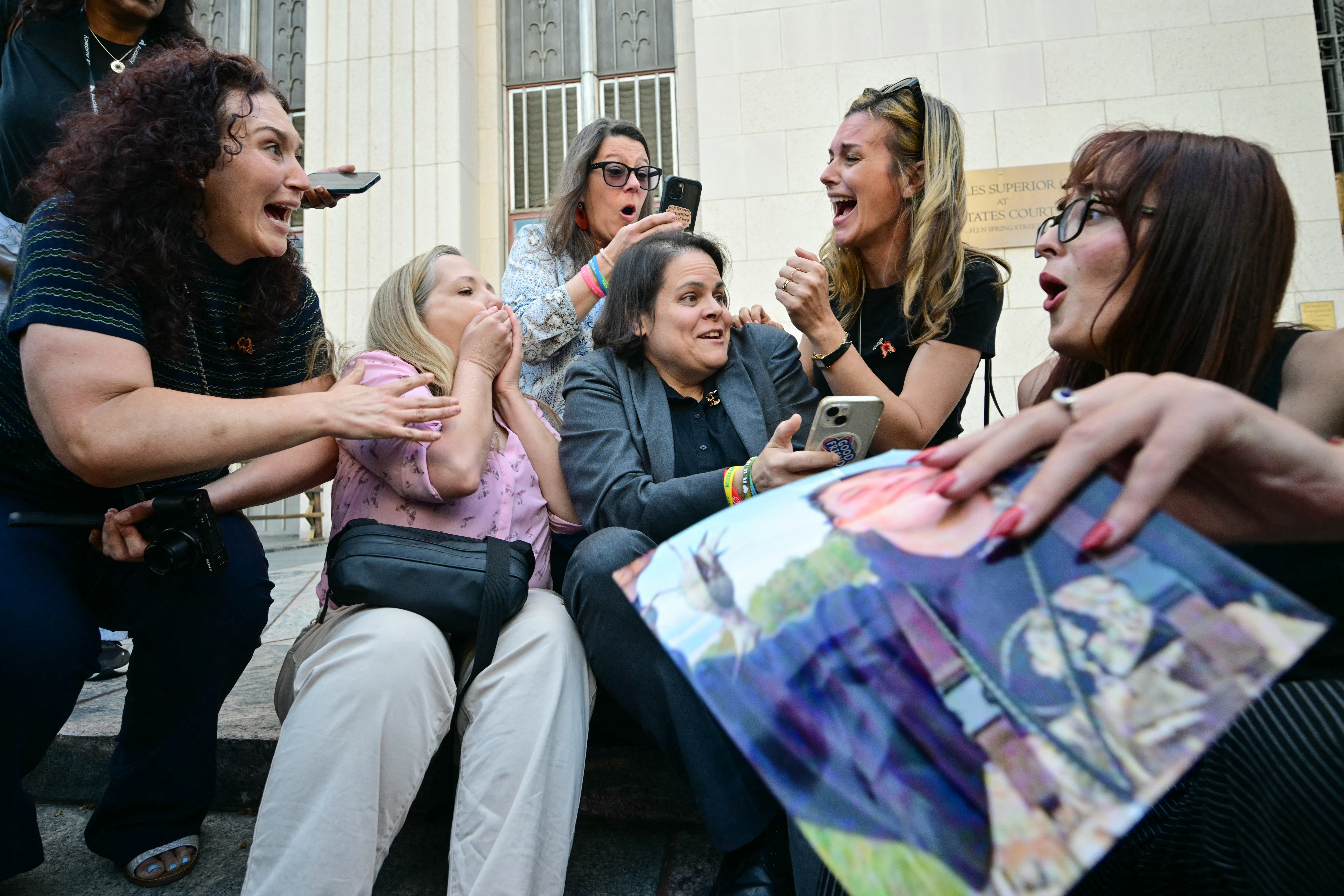
    Kaley sat in a Los Angeles courtroom this March while 12 jurors tried to calculate what her childhood was worth. They found Meta and YouTube liable for designing features that addicted her as a child, contributing to depression, body dysmorphia, and suicidal thoughts, and awarded her $6 million — half of it punitive, after deciding the companies had acted with malice.

    To set the compensatory half, one juror explained, they estimated what she might have earned over a lifetime, weighing “what she’s gone through and what job she would be able to hold down.” Both companies are appealing.

    The jury compensated Kaley for a diminished adulthood — for the person she would never become. That is the true cost of these platforms.

    The verdicts keep coming.

    In March, a New Mexico jury ordered Meta to pay $375 million for failing to protect children from sexual exploitation. In May, Meta, TikTok, Snap, and YouTube agreed to pay about $27 million to settle the first federal test case, brought by a Kentucky school district.

    Moving beyond content moderation

    The tide is turning against Big Tech, but we should not be celebrating.

    These verdicts arrive after children have already been irreparably harmed, and they do nothing for the children who will be harmed by whatever technology launches next. As new platforms capable of greater harm enter the market and are adopted at an accelerating pace, a reactive legal system is profoundly inadequate.

    Instagram took two and a half years to reach 100 million users. TikTok took nine months. ChatGPT took two. By the time a jury assigns liability, the product has already scaled past the reach of any remedy. Smartphones entered classrooms two decades ago, and Pennsylvania lawmakers are only now passing legislation.

    But to understand what is actually being taken, start with how a child’s mind develops.

    Humans have the longest childhood of any species on Earth. That stretch of dependence gives our mental capacities time to develop through specific experiences. But that window does not stay open forever. The neural pathways solidify. What doesn’t form in childhood may never form at all.

    So the more urgent question about any technology a child uses is not what it puts in front of them, but what it crowds out.

    Some technologies don’t just change how we live; they change who we are, writes AJ Ernst.Kiichiro Sato

    The average teenager now spends half their waking life looking at screens, and the number keeps climbing. That time has to come from somewhere.

    Sleep has fallen to the lowest level on record. Only one in four adolescents meets the recommended federal minimum for physical activity. Over two decades, face-to-face socializing has been cut in half.

    Yes, these platforms expose children to violence and predators, but the greater threat is the algorithms draining necessary developmental inputs.

    Kaley started on YouTube at 6, Instagram at 9, Snapchat at 11. She is 20 now and living with the consequences, but she became an adult before artificial intelligence reached the market. The next child will not be that lucky.

    I started teaching in 2009. My students made eye contact, talked to each other, and could hold their attention on a hard problem. By the end of that decade, they came in sleep-deprived and anxious, reaching for their phones at every moment. Earbuds in, eyes down.

    Now, I watch students reach for the answer before they think for themselves.

    AI and accumulating cognitive debt

    Some technologies don’t just change how we live; they change who we are.

    A car lets you travel farther; it does not make you incapable of walking. GPS goes a step further. Lean on it long enough, and your own sense of direction fades. But GPS takes only one skill. AI takes the rest. Offload your thinking to it, and the skills weaken. Offload it during childhood, and your capacity to think may never fully develop.

    We learn through struggle. Our survival depended on the ability to solve problems, synthesize information, and imagine new possibilities. Remove the struggle, and with it goes the growth the struggle produces.

    Students who lean heavily on ChatGPT show a sharp decline in cognitive effort and weaker memory retention — what Massachusetts Institute of Technology researchers call “cognitive debt.” A generation is offloading its thinking capacity, and with it, losing the stamina, curiosity, and desire for hard problems that only come from solving them yourself.

    AI does the same to the capacity for connection. AI companions are patient, compliant, never bored, never hurt, never inclined to push back. Nearly two-thirds of teenagers now use AI chatbots. Nearly one in five high schoolers has had a romantic relationship with an AI, or knows someone who has.

    But human relationships require struggle. A child who learns intimacy without friction will find it difficult to connect with a real person.

    This is why the conversation needs to move beyond content moderation.

    We already know how to handle products that endanger human health. We do not let a pharmaceutical company ship a drug and promise to fix the lethal side effects once the bodies turn up. We require proof of safety first, through years of testing, because we decided that corporate speed does not outrank human life.

    For the systems now shaping the developing brain, we decided the opposite.

    The man building the most powerful of them has said so plainly. The best way to make AI safe, Sam Altman has written, is “by iteratively and gradually releasing it into the world, giving society time to adapt and coevolve with the technology.” The adapting is done by users. Many of them are children. Do we want him experimenting on the minds of children?

    Prove the product is safe

    The fix is not complicated.

    Make companies prove their products are safe for developing brains before release, the way we make drug companies prove it before the pill reaches the shelf. Put the burden of proof where it belongs — on the trillion-dollar firm, not on the 10-year-old.

    The objection to this shift is that a slowdown will hand the future to China.

    But this year, Beijing moves to bar AI companies from offering virtual companion and intimate relationship services to anyone under 18. China has decided the best way to compete for the future is to protect the people who will inherit it.

    There is progress at home.

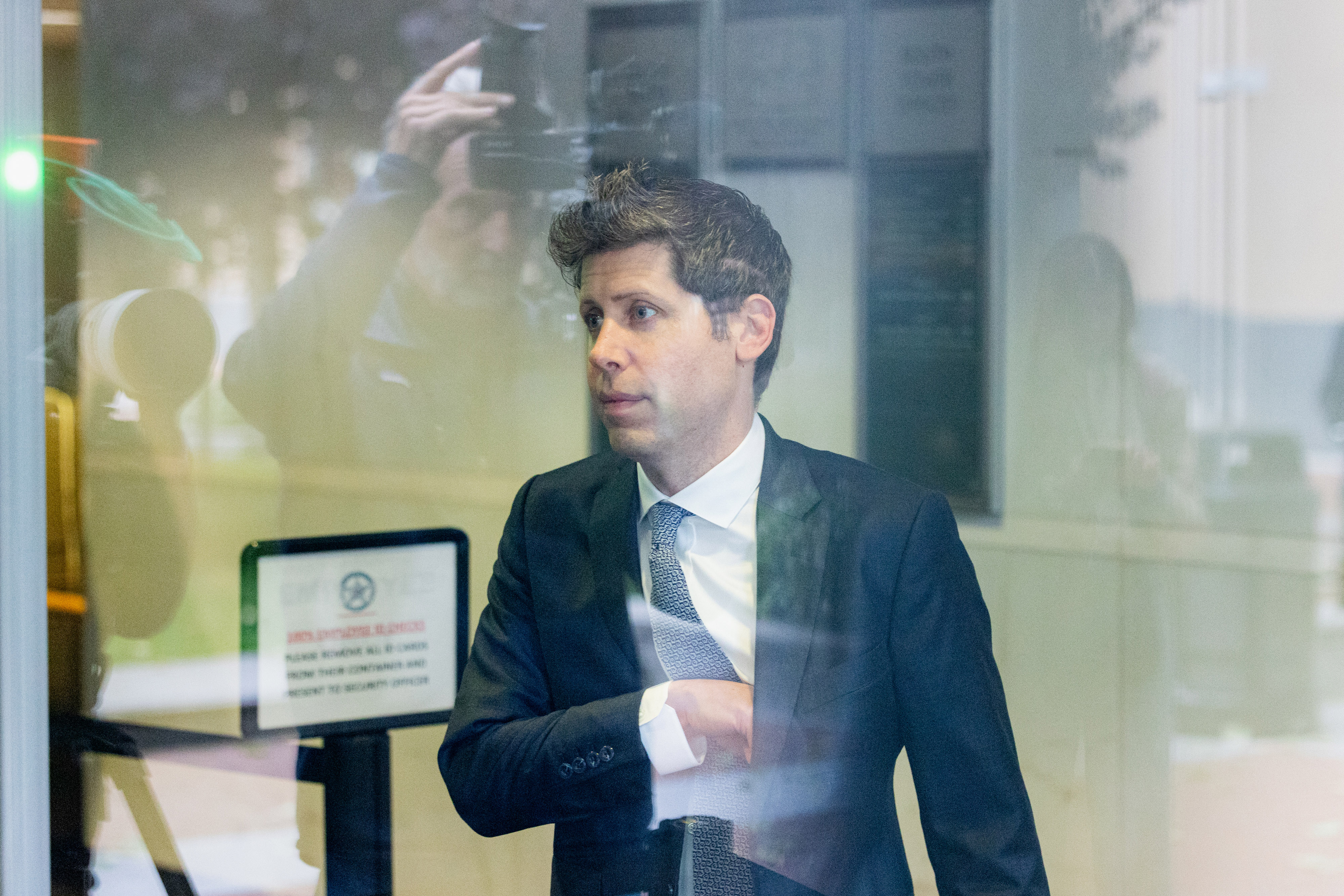
    OpenAI’s chief executive, Sam Altman, at the Ronald V. Dellums U.S. Courthouse for the “Musk v. OpenAI” trial, in Oakland, Calif., in May.JASON HENRY

    In June, Florida sued OpenAI and Altman, alleging the company released a product that addicts minors, erodes their critical thinking, and counterfeits human compassion.

    Pennsylvania should join the fight.

    But these lawsuits won’t undo the damage done. Nothing short of proving these products are safe before they reach a child will be sufficient.

    This should no longer just be a debate over shielding children from harmful content. We need to defend the baseline capacity to think, to connect, to be human. The opportunity cost for children is too steep.

    A jury can put a dollar figure on an unfulfilled life, but it can never restore what is lost. If we don’t act fast, another generation will suffer.

    AJ Ernst worked as a teacher and administrator in Philadelphia for 13 years and holds a doctorate in educational leadership from the University of Pennsylvania’s Graduate School of Education.

  • Philadelphia built a mass transit system. Now let people live next to it.

    Philadelphia built a mass transit system. Now let people live next to it.

    I grew up in the South Bronx, a short walk from the subway. I did not think of that as a privilege at the time, but it was. That train carried me to a good school, to my first job, and to internships across the city. The access I took for granted is exactly what hundreds of thousands of Philadelphians never get, not because the trains are not running, but because we have spent decades making it nearly impossible to build homes next to them.

    Bill 260517, now before City Council, begins to undo that. It would rename and expand the city’s public transit zoning restriction from 500 feet to a quarter mile around the entrances to subway stops, allow a modest number of homes near the train, trim parking requirements, and require new buildings to put shops and offices on the ground floor instead of garage doors.

    It is a sensible, overdue reform, and Council should pass it before the summer recess.

    But we should be honest about how small a step it is.

    The bill covers just 13 stations, all on the Market-Frankford Line. Most Philadelphians do not live near the El. I think about the family in the Northeast that cannot reach a steady job without a second car. I think about the retiree near Broad Street who cannot easily get to one of our region’s best hospitals. If the zoning change stops there, we will have passed a good policy and confined it to a footprint too small to reach them.

    We do not have to guess how that story ends. The Parking Reform Network, which tracks parking rules nationwide, has found that most cities that reform parking limit it to a handful of downtown blocks, blunting nearly all of the benefits, while housing reform lags behind commercial reform. The lesson is not that reform fails. It is that timid reform fails. The cities that get results match the scale of the policy to the scale of the city.

    Other states have figured this out. Last October, California enacted SB 79, State Sen. Scott Wiener’s Abundant and Affordable Homes Near Transit Act, which legalizes mid-rise housing within a half mile of major transit stops across the state’s largest urban counties.

    New Jersey’s Transit Village Initiative now includes 37 designated municipalities, with concrete results: Since 2020, Newark alone has approved nearly 6,800 housing units, far more than in the entire stretch from 2007 to 2019.

    In this photo from 2020, a construction crew works on a 290-unit transit-oriented, mixed-use affordable housing community with 7,200 square feet of nonresidential leasing space, seen to the right, in Fremont, Calif.Anda Chu / MCT

    States like Massachusetts, Colorado, and New York have done versions of the same thing. Transit-oriented housing is one of the most consequential planning movements in the country right now, and the Northeast is leading it.

    Philadelphia cannot afford to watch from the sidelines, and the stakes here run deeper than zoning. SEPTA is fighting for its financial life as state funding wavers, and every home built near a station adds riders and fare revenue at no cost to taxpayers. Every family that can live near mass transit and skip the cost of a second car keeps more of its paycheck. Building more homes doesn’t only help newcomers; it relieves pressure on the renters already here.

    This is, finally, a question of fairness. For generations, the neighborhoods cut off from fast, reliable transit have been the same ones cut off from opportunity. I know what that access made possible in my own life. Withholding it from whole sections of this city should anger us.

    Timid reform fails. The cities that get results match the scale of the policy to the scale of the city, writes the author.Alejandro A. Alvarez / Staff Photographer

    So pass Bill 260517, and pass it now.

    But do not treat 13 stations as the finish line. Council should follow this bill this fall with station-designation legislation extending the zoning change to the Broad Street Line, Regional Rail, the trolleys, and our busiest bus corridors.

    On North Broad, six fast-food drive-throughs sit directly atop subway stops on the Broad Street Line — businesses built for drivers, on land that belongs to riders. That is exactly the land transit-oriented communities are meant to put back to work.

    Philadelphia spent a century building a public transit system. The least we owe the next generation is the right to live next to it.

    Jay Arzu holds a doctorate in city and regional planning from the University of Pennsylvania. He is a housing organizer with 5th Square Advocacy and the founder of the Roosevelt Boulevard Subway Movement.

  • Reginald Streater: Philadelphia schools can use $50 million from City Council. But they still need a long-term funding solution.

    Reginald Streater: Philadelphia schools can use $50 million from City Council. But they still need a long-term funding solution.

    Amid the passionate debate about Philadelphia’s schools, one thing has been getting lost: No public school district wants a budget that requires changing people’s jobs. Behind every position is a person, a family, and years of service to students. Those decisions are difficult and are never made lightly.

    As caretakers of Philadelphia’s public schools, the Board of Education and the school district have a responsibility to look beyond this year’s budget. We have to make sure our schools remain financially stable and able to serve students not just this year, but for years to come. That is what good governance means.

    That is also why the district should stay the course with its planned reduction of some roles and the reassignment of teachers and staff, even after City Council approved a preliminary budget that includes a one-time $50 million funding increase.

    At first, that may seem confusing. If there is more money, why not keep every position? The answer is simple: One-time money should not be used to pay for permanent costs.

    A job is not a one-year expense. It comes with salary, benefits, retirement costs, and other ongoing expenses. If those costs are paid with money that exists for only one year, the district will face the same bills next year without the funds to cover them.

    Most families understand this idea. A one-time bonus at work might help pay for a new roof or replace an old refrigerator. But it would be foolish to use that bonus for a down payment on a car with a huge car note and no resources to pay it off.

    The author writes that the Board of Education is grateful for City Council’s $50 million boost — but won’t use it to fund permanent expenses.Jessica Griffin / Staff Photographer

    The same principle applies to the Board of Education and the school district. For too many years, difficult financial decisions have been delayed. Continuing to postpone them only makes the problem larger and harder to solve. Federal COVID-19 relief dollars did help the district avoid cuts, but that was a once-in-a-century time of crisis.

    That does not mean the additional funding lacks value, and we appreciate such support from City Council. It gives us a chance to address important needs that do not create permanent expenses. Those dollars can be used for building repairs, school safety improvements, technology upgrades, instructional materials, and managing staffing changes. Such spending would help improve schools today without creating a budget problem tomorrow.

    It is also important to understand what these staffing changes mean. The district’s goal is to move employees into positions where they are needed across the system whenever possible, keeping experienced staff and reducing disruption for students and schools.

    The Board of Education has a responsibility to protect the interests of both today’s and tomorrow’s students. Sometimes that means supporting new investments. Always it means advocating for more reliable funding from the city and the state. And at times it means making difficult decisions that protect the long-term financial health of the district, even when it appears there are easier choices.

    The reality is that Philadelphia’s students deserve a school system built on stable, dependable funding — not temporary fixes. One-time dollars can solve one-time problems. Permanent commitments require permanent funding.

    These decisions are not easy. But making responsible choices today is the best way to ensure our students have strong schools for years to come.

    Reginald L. Streater is the president of the Philadelphia Board of Education, to which he was elected in December 2022. He was appointed to the board in February 2021.

  • I was the first Princeton valedictorian to major in African American studies. Strangers ridiculed my selection.

    I was the first Princeton valedictorian to major in African American studies. Strangers ridiculed my selection.

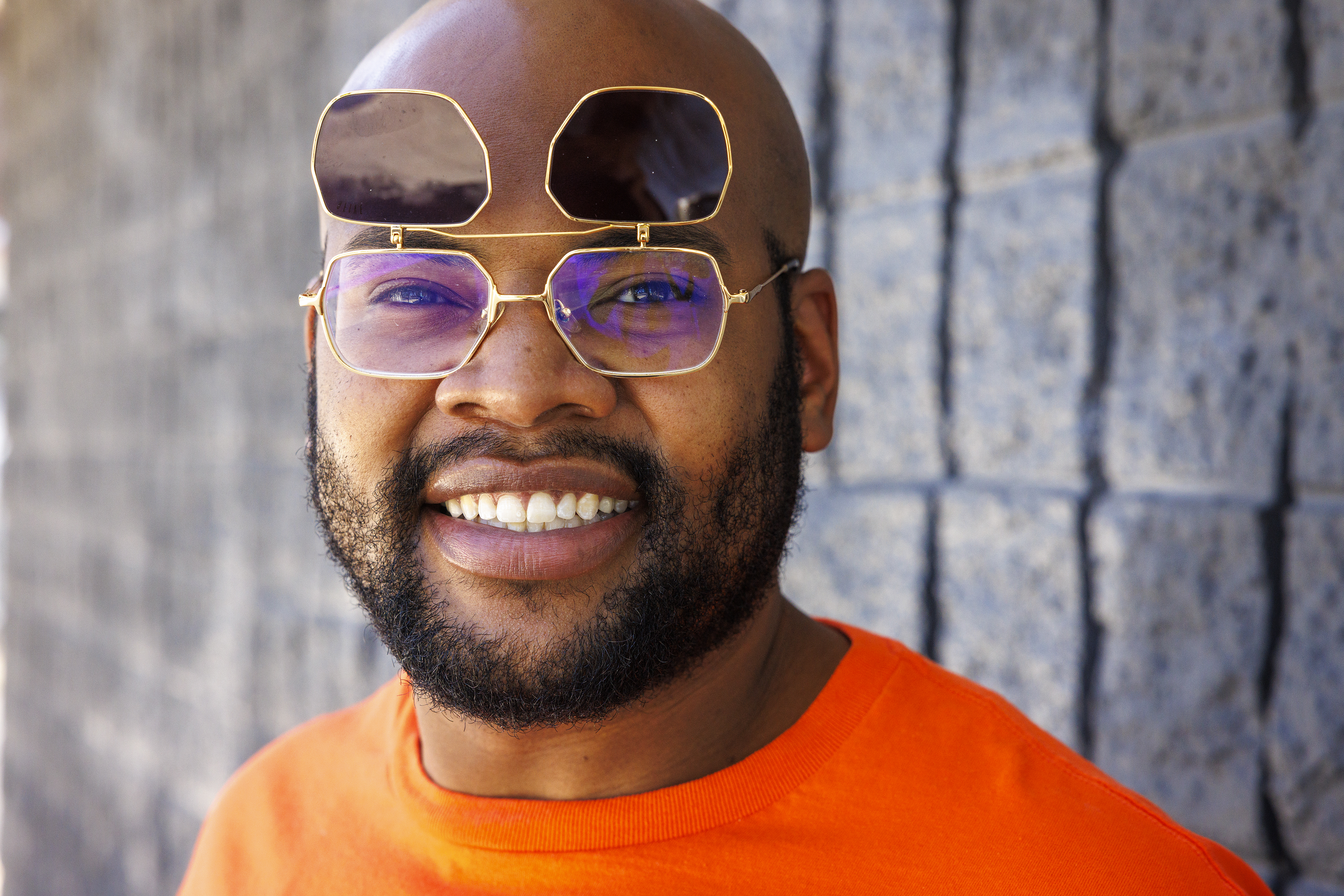
    Several weeks ago, I took the stage at Princeton University’s 2026 commencement as this year’s valedictorian. My selection marked an institutional milestone: I am the university’s first valedictorian to major in African American studies since the department’s founding in 2015. In my remarks, I emphasized the importance of the critical humanities and celebrated my classmates’ achievements.

    What I can share now, however, is that the occasion was not entirely celebratory.

    The weeks leading up to my selection had been some of the most difficult of my life, as thousands of strangers across social media platforms wrote, liked, and reposted comments ridiculing my selection. Their anger centered on my choice of major. Recapitulating virulently racist tropes about both Asian and Black communities, they mocked my Asian appearance and heritage while deriding my Black colleagues and mentors.

    Throughout my time at Princeton, I had observed similar — and sometimes much more aggressive — campaigns against my professors and peers across the field of African American studies.

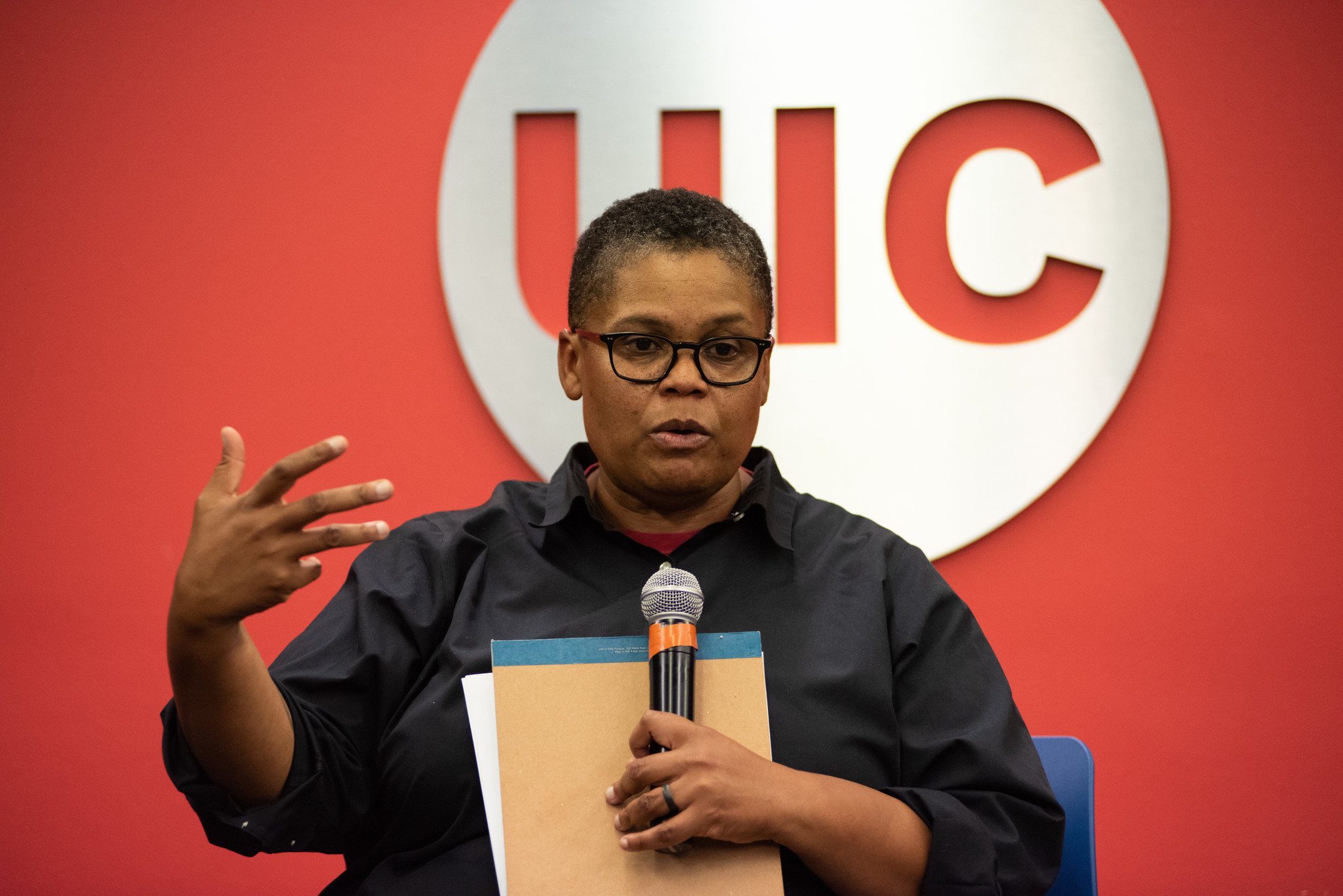
    Keeanga-Yamahtta Taylor, the Hughes-Rogers Professor of African American Studies at Princeton, author, and finalist for a 2020 Pulitzer Prize in history, is one of the African American studies professors who have faced derision and even death threats related to their work.Matthew Alan Lang / MCT

    The logic of these attacks is familiar to any student of ethnic studies, gender studies, or any of the critical disciplines deemed “radical indoctrination” by the Trump administration. African American studies, these commenters argued, lacks genuine intellectual rigor. It does not belong in the same sentence as academic excellence.

    In recent years, university administrators and faculty have claimed that the contemporary university is suffering from a crisis of academic rigor, accelerated by the prevalence of grade inflation and generative AI.

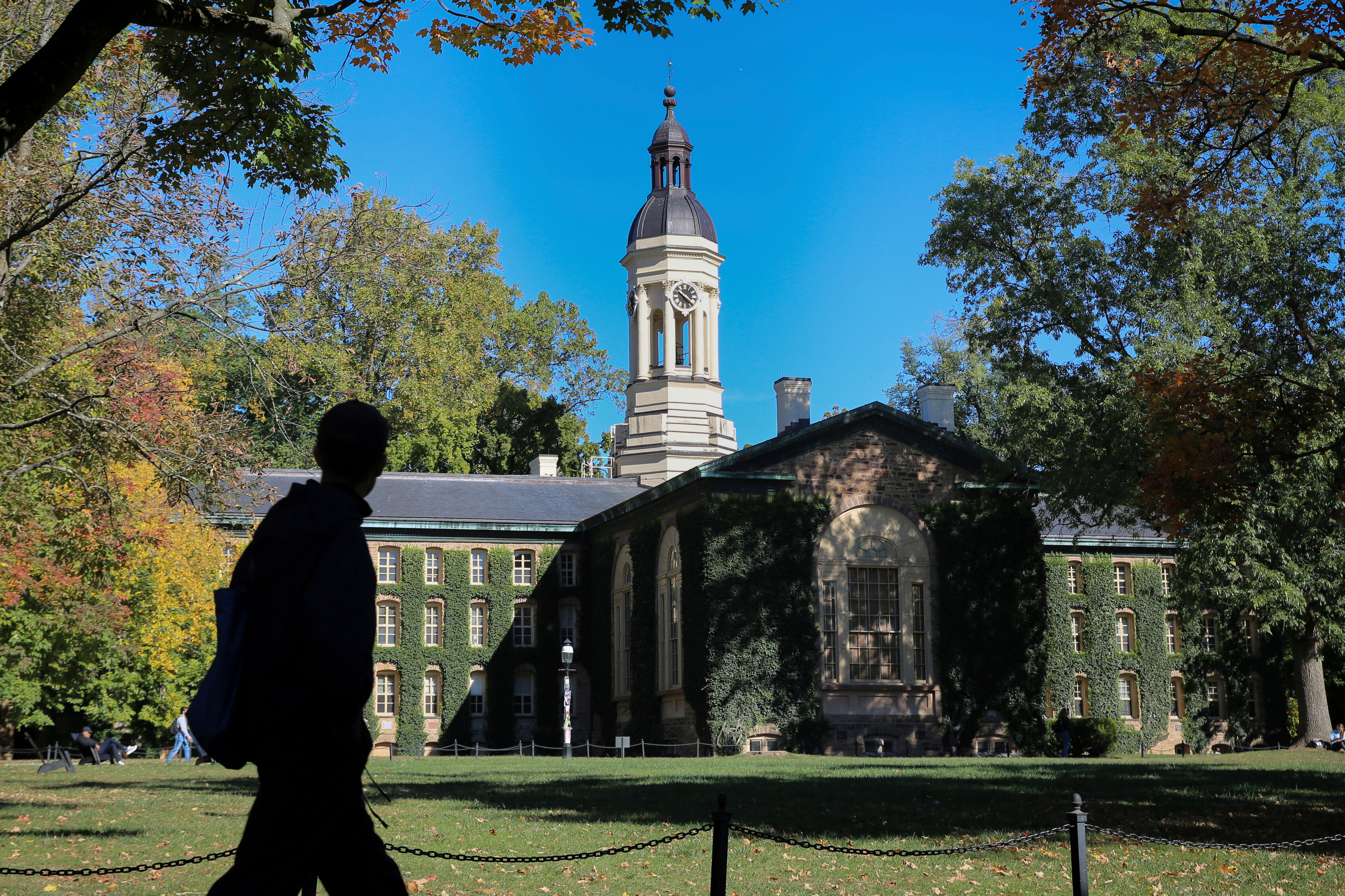
    Nassau Hall at Princeton University. Daniel Yu writes that in recent years, university administrators and faculty have claimed that the contemporary university is suffering from a crisis of academic rigor.Ted Shaffrey

    Combined with shrinking university budgets, these claims have increased the burden on disciplines like African American studies — already maligned as unserious and unscientific — to prove their intellectual seriousness to administrators, funders, politicians, and the public.

    This is the paradox of the backlash to African American studies: The field is villainized by the far-right as dangerous, radical indoctrination, while simultaneously, it is maligned for shallowness, insularity, and frivolousness.

    In rebuttal to the latter proposition, many have compellingly argued that Black studies has all the components of a rigorous academic field. Though correct, these defenses concede an assumption that deserves greater scrutiny — that rigor itself is the central criterion by which a field ought to justify its place in the university.

    Difficult and valuable are not synonymous. A challenging task is not necessarily a worthwhile one. Consider, for instance, the large introductory engineering courses at many universities, including my own alma mater. These courses are considered to be difficult, and they demand excellent technical skills.

    But technical skill is not the same as moral judgment, and such courses rarely ask students to reckon with how the skill they are developing will be used. What of the aerospace engineers who will deploy that skill in the service of defense contractors, whose problem sets will prepare them to destroy countries from afar?

    Disciplines like African American studies expand “rigor” to include forms of intellectual excellence not reducible to grades. Forget percentiles and curves — this vision of rigor requires sustained, critical engagement with power and inequality, which forces the thinker to reconsider their most fundamental assumptions about culture and society. A definition of rigor that considers the former without the latter is incomplete; it may make skilled engineers/bankers/doctors/lawyers, but perhaps not ethical ones.

    Both the rising supremacy of the quantitative disciplines in higher education and universities’ insistence on “institutional neutrality” have helped reinforce this restrictive notion of excellence, defined by technical expertise and grading distributions.

    In the process, elite universities have lost sight of their ultimate obligation — to shape not just learners but citizens, people, and leaders. Student activists recognize what their administrations cannot: that the university cannot escape our most pressing political questions, and that intellectual inquiry and civic engagement are inseparable.

    Thus, my final remark as Princeton’s 2026 valedictorian, to administrators, students, and all Americans alike: Take an African American studies class.

    Amid threats to civil liberties and free expression, growing budgetary pressure from the federal government, and endowments that continue to profit from global injustice, elite universities cannot afford to indulge a narrow definition of academic excellence or intellectual challenge.

    They must learn from the Black radical tradition that a truly rigorous education forces us not just to do but to question — and, always, to keep a more just world in our sights.

    Daniel Yu is a recent graduate of Princeton University, where he was named the 2026 valedictorian — the first from the department of African American studies.

  • A $400 million price tag for a ballroom? What if we invested in families instead?

    A $400 million price tag for a ballroom? What if we invested in families instead?

    The import of budget figures, particularly those large values contained within the federal budget, has become something to which we are numb, or worse, indifferent.

    A $1.5 trillion request for the U.S. Department of Defense, when all government expenditures total just over $7.5 trillion, is a large number and gets the attention of Congress. But the public is systematically desensitized to expenditures in the billions, and millions barely get noticed.

    This is not new; it just seems worse. “A billion here, a billion there, and pretty soon you’re talking real money” is a wry observation widely attributed to the late U.S. Sen. Everett Dirksen in the 1960s.

    But expenditures in the millions and billions are important, and they reflect important choices, even if those choices are not obvious. Joe Biden, quoting his father, said: “Don’t tell me what you value. Show me your budget — and I’ll tell you what you value.”

    An interesting thought experiment is to imagine what alternative investments could be made in place of some currently controversial choices, since budgets are not unlimited.

    Spending $100 million for a Triumphal Arch, or $400 million for a White House ballroom, and $1.776 billion for an anti-weaponization fund are choices. Dollars spent on such expenditures are dollars not available for other investments; what economists call “opportunity costs.”

    An arch may enhance the architecture of Washington, D.C. A ballroom might be desired to entertain dignitaries. And a weaponization fund, assuming Donald Trump does not permanently drop this proposal, and it is not ultimately deemed illegal, may serve certain matters of justice. But these expenditures should not be thought of in absolutes.

    They need to be weighed against other choices that could be made. What other investments cannot be made with these dollars if they are used for these three expenditures?

    At a time when the nation’s families are facing a housing crisis, and when low-income families are pressed by rising prices for the most basic necessities of life, we find it useful to consider how proposed expenditures for one initiative, if reprioritized, could positively impact our housing condition and efforts to lift people out of poverty.

    Think about these three large expenditures: the Triumphal Arch, the White House ballroom, and the anti-weaponization fund. What could the funds for these three items alternatively do to enhance housing affordability or reduce poverty?

    According to official federal reports of a measure called the aggregate income deficit, $1.776 billion distributed to each poor family in Alabama would bring their incomes above the poverty line. Alternatively, $1.776 billion could raise all Mississippians out of poverty, leaving almost $400 million.

    The average cost for a Housing Choice Voucher, a U.S. Department of Housing and Urban Development program that pays the difference between what a family could afford on rent, spending no more than 30% of their income, and the unit’s fair market rent, is approximately $1,200 per certificate per month.

    In other words, the federal government pays landlords $14,400 per year on behalf of each supported renter household.

    That $1.776 billion could pay rent to landlords for an additional 25,000 families each year for five years. Those families would not have to decide between clothes for their children, medication, food, transportation, or housing for five years into the future.

    What about $400 million for a White House ballroom? Those dollars could support almost 28,000 additional renters this year.

    Alternatively, that $400 million deployed in the state of Alaska could bring every low-income Alaskan out of poverty for three years, North Dakota for 11 years, or Delaware for nearly two years.

    In Philadelphia, there is a $10,000 grant for first-time homebuyers. Recipients will be able to live in a home they own, providing shelter and stability for their families and an opportunity to accumulate wealth for themselves and future generations. That $400 million could help 40,000 Philadelphia families become first-time homeowners. In place of the arch, $100 million would support 10,000 more families.

    Given that budgets are finite, a decision to spend money on one thing represents a choice about what you value, and importantly, those items on which you cannot invest. Sen. Dirksen would probably be shocked at some of the decisions currently being made by some of our elected officials. All of us should be.

    Ira Goldstein is a member of the National Housing Crisis Task Force and a lecturer at the University of Pennsylvania in the urban studies program. Gregory D. Squires is a research professor and professor emeritus of sociology at George Washington University and a member of the advisory committee to the Philadelphia Home Appraisal Equity Program.

  • To our high school grads: Don’t leave that Philadelphia prom energy behind

    To our high school grads: Don’t leave that Philadelphia prom energy behind

    It’s graduation season in Philadelphia and across the country. But before the caps fly and diplomas are handed out, there’s another moment that reveals just as much about who our young people are becoming: prom.

    Nobody does prom like Philadelphia.

    Here, prom isn’t just a dance. It’s a declaration. Send-offs spill onto stoops and sidewalks as families, neighbors, and whole blocks gather to celebrate.

    Polished cars, bold outfits, unforgettable entrances — it’s Philly style and excellence on full display.

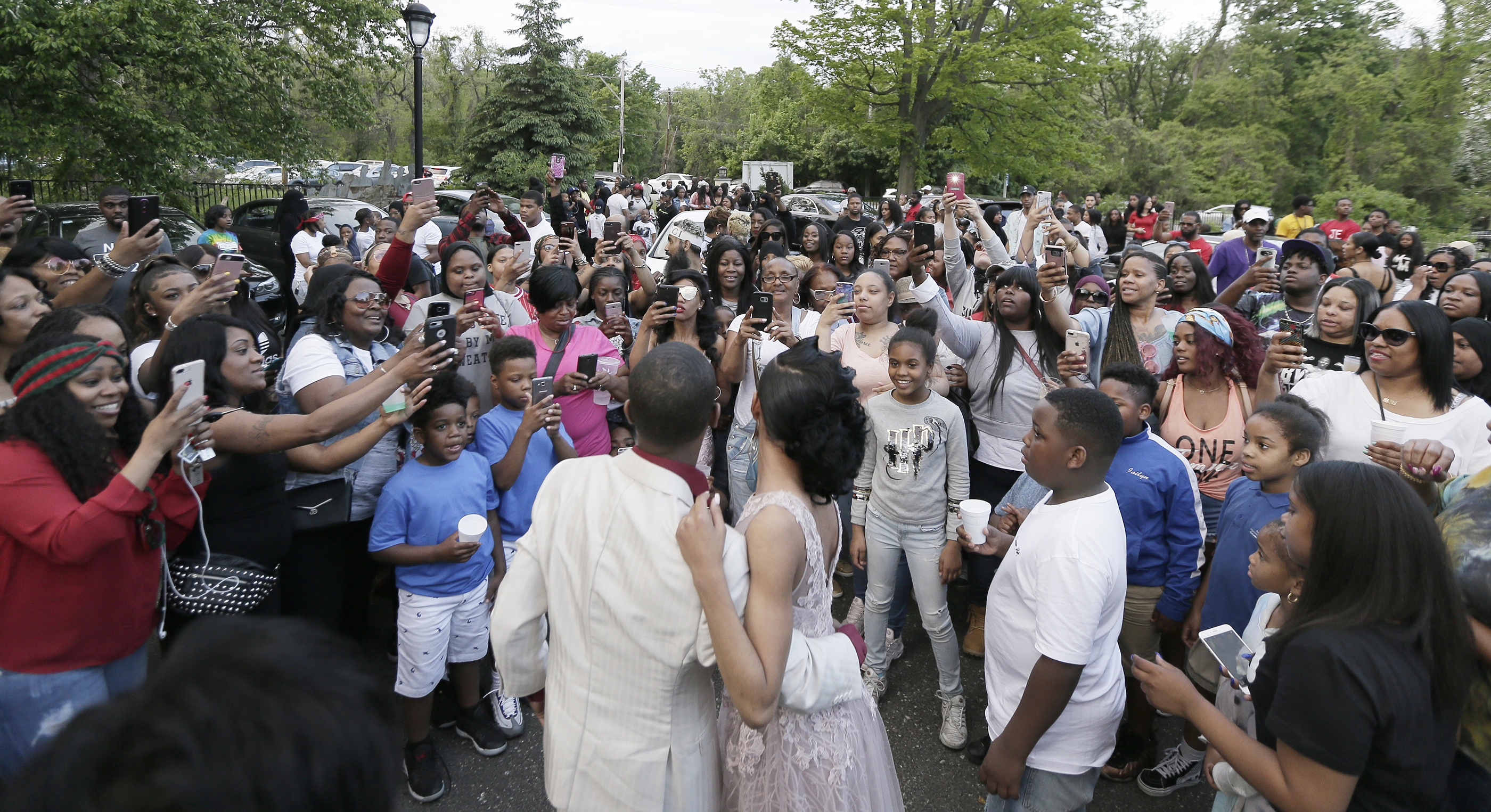
    In this photo from 2018, Saajid Barlow and Nydiyra Bryant Giles stop briefly to pose for photos as they arrive for their prom send-off at the Belmont Mansion in Philadelphia.Elizabeth Robertson / Staff Photographer

    But it’s also a moment to pause and celebrate what students have accomplished as we send them toward graduation with pride.

    Last month, my son stepped off our porch in a black embroidered Chinese-cut tuxedo he designed himself. Watching him walk into that moment, confident in who he is, reminded me of something powerful: Our young people already know how to show up boldly. They just need to carry that energy into what comes next.

    Because graduation is not just a milestone, it is a transition into a world that will not always feel as affirming as that sidewalk send-off.

    It has been a while since I have given a commencement speech, but I do have a message for this year’s graduates:

    The world you are entering will not always celebrate your arrival, recognize your brilliance, or make room for your voice.

    That means you will have to do what you did on prom night: show up anyway.

    Show up boldly in rooms where you are not expected. Show up creatively when there is no clear path. Show up as yourself, even when it would be easier to shrink.

    Carry that same confidence into every room you enter — whether it is a college classroom, a first job, a new city, or the community that raised you. Some of you will build your futures right here in Philadelphia.

    Others will carry Philadelphia with you into new cities, new campuses, new workplaces, and new communities. Wherever you go, bring the creativity, grit, compassion, and presence this city has already helped shape in you.

    And for those who stay, Philadelphia needs that energy now more than ever. We need your ideas, your leadership, your care for your neighbors, and your willingness to help build the city’s next chapter.

    We need that Philly energy.

    I know that energy matters because I carried it to the state Capitol when I served our city as a state representative, and I carry it now in my work to end homelessness as president and CEO of Project HOME. Every day, I walk into rooms where the stakes are high and the challenges are real, and I am reminded that leadership requires the same presence, courage, and authenticity our young people show on prom night.

    It takes vision when the path is uncertain, confidence when the work is hard, and the boldness to believe we can solve homelessness in our lifetime.

    Philadelphia’s prom culture teaches our youth not to wait to be seen, not to wait to lead. Instead, step forward and let the world catch up.

    Leadership is not about position. It is about participation, initiative, and showing up even while you are still figuring things out.

    It is about caring enough to act and using whatever platform you have, no matter how small it may seem, to make a difference.

    And like those prom send-offs, none of this happens alone.

    Behind every graduate is a supportive network of families, teachers, mentors, and neighbors who showed up, sacrificed, and believed in you long before this moment. That support does not disappear. It becomes something you carry with you, and something you are called to extend to others.

    That is how we build stronger communities, here in Philadelphia, or wherever your path takes you.

    So to the Class of 2026: Celebrate this moment. You earned it.

    But do not leave that prom energy behind.

    Donna Bullock is the president and CEO of Project HOME.