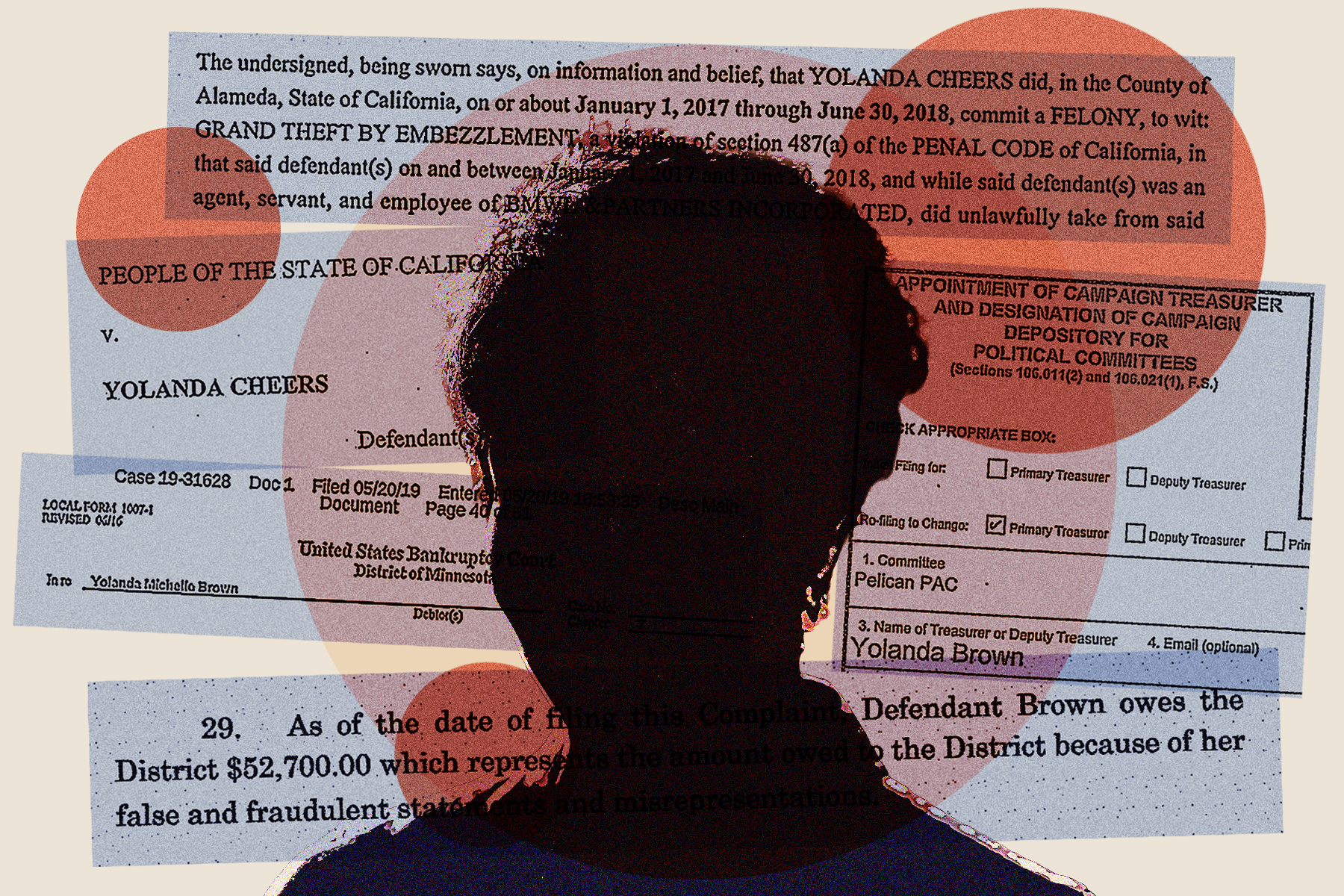
A Florida-based political consultant who once worked as the campaign treasurer for Philadelphia congressional candidate Chris Rabb was charged Friday with wire fraud after she defrauded more than 20 clients out of about $1 million, according to federal prosecutors.
Yolanda Brown was charged in federal court in Philadelphia with one count of wire fraud, according to documents unsealed Friday. She was charged by information, which typically indicates a person intends to plead guilty.
She did not have an attorney listed in court records, and attempts to reach a lawyer who previously represented her were not immediately successful.
Brown had been under scrutiny for months over allegations from campaigns in several states that she had mismanaged, embezzled, or taken unauthorized withdrawals from accounts meant to support political candidates.
And Rabb accused her earlier this year of making unauthorized withdrawals from his campaign accounts, saying he had fired her and reported the allegations to federal authorities.
State Rep. Chris Rabb greets supporters on Tuesday, July 28, 2026.Tom Gralish / Staff Photographer
While Brown worked on Rabb’s campaign in 2025 and early 2026 — identified in court documents only as “Political Campaign #1″ — prosecutors said she set up new bank accounts on which she could serve as a signatory. She then transferred $19,000 into one of those accounts, they said, and went on to steer about $6,000 into her personal bank account without Rabb’s knowledge.
In April, Rabb’s campaign said it identified about $160,000 that had been routed into the account Brown had set up. But it was not clear Friday how much of that may have been embezzled for Brown’s personal use, and it is also not uncommon for prosecutors to formally charge a more limited scope of wrongdoing if a defendant has agreed to plead guilty.
Still, in charging documents, prosecutors said Brown, who ran Brown Financial & Consulting Services Group and worked primarily with Democrats, committed her fraud against Rabb actions as part an “overall scheme” in which she defrauded about 20 clients out of more than $1 million. Prosecutors did not name the other victims, or offer details on how the other cases unfolded.
Brown has been accused of other wrongdoing in recent years.
Earlier this year, Ken Welch, the mayor of St. Petersburg, Fla., said Brown embezzled more than $200,000 from his campaign committee. Another Florida-based political consultant also accused Brown of wiring $25,000 out of PAC’s bank account.
And in 2024, Brown — who also used different surnames, including her married name, Yolanda Rumph — pleaded no contest to felony embezzlement in California, where prosecutors said she stole from two different companies, including a nonprofit. She was ordered to pay $330,000 in restitution but served no jail time.
An attorney for Brown, Khambrel Davis, told The Inquirer earlier this year that one of Brown’s employees — not Brown — had actually committed the most recent fraud in Philadelphia and Florida.
But the employee had since disappeared, Davis said, and “everyone’s just assuming [Brown] must have done this. They’re kind of putting together this narrative that she’s just this habitual thief.”
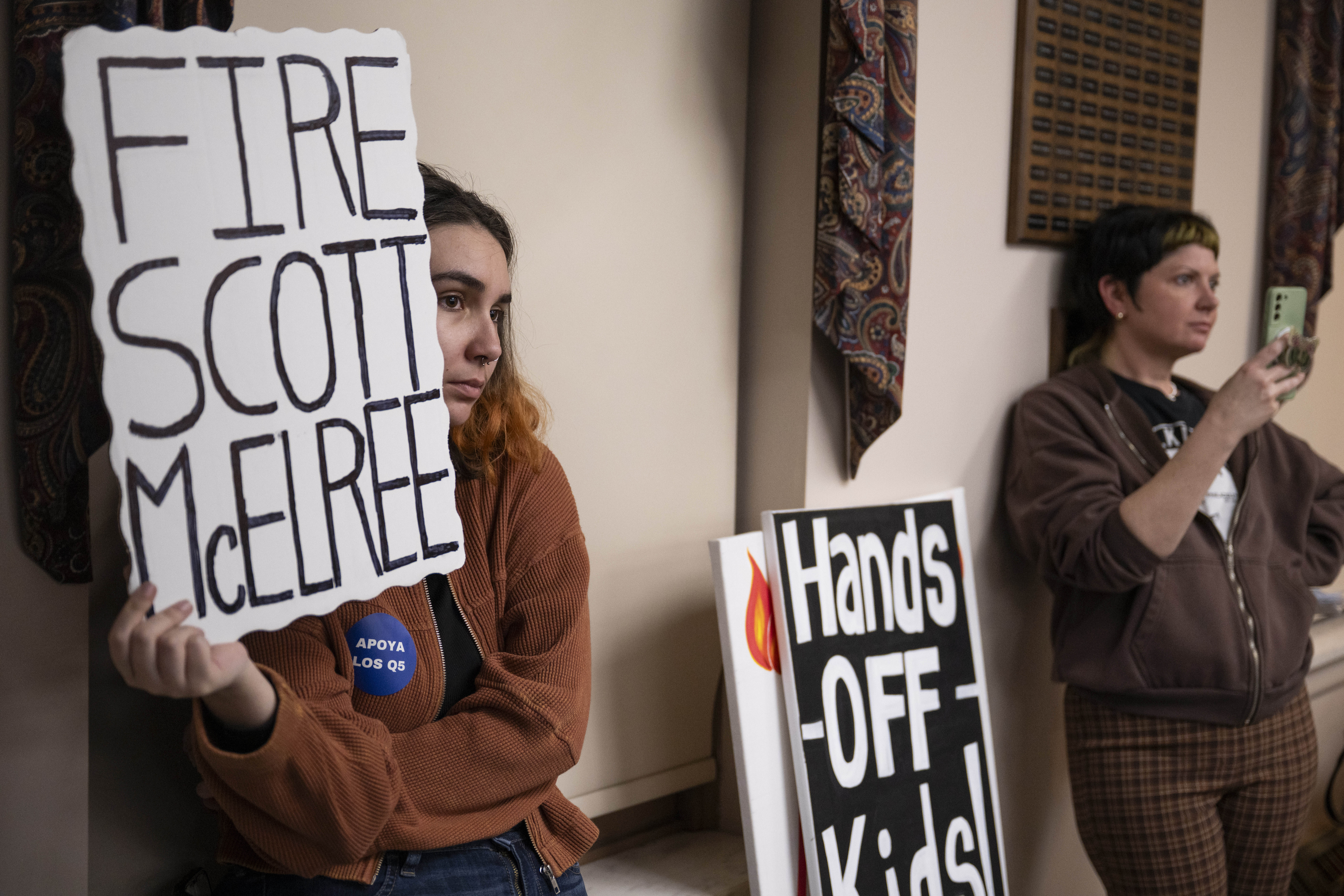
A leader of the Bucks County NAACP and a state legislator on Friday called for reforms in the Quakertown Borough Police Department, saying an investigation that cleared Police Chief Scott McElree of criminal wrongdoing for placing a teenage protester in a choke hold during a confrontation with students earlier this year should not end scrutiny of the incident.
NAACP president Adrienne King joined State Rep. Napoleon Nelson in urging Quakertown police to adopt stronger use-of-force policies to prevent a similar response in the future. Nelson, a Montgomery County Democrat, also said he plans to introduce legislation establishing statewide restrictions on choke holds and expanding the use of body-worn cameras, among other aims.
The calls for change came a week after the Bucks County District Attorney’s Office concluded its almost six-month independent investigation into a Feb. 20 brawl that broke out as students protested ICE enforcement. The investigation concluded that while McElree was the “precipitating factor” in the violence — and confirmed that he held a 15-year-old girl in a choke hold for at least eight seconds — he neither committed a crime nor violated his department’s policies.
In a 20-page report, investigators noted that Quakertown police have no policy restricting choke holds or other neck restraints and that Pennsylvania law likewise places no limits on their use. But investigators said McElree’s decision to engage with the students was “calamitous” and “led to confusion and trauma for an entire community.”
A panel of four members of the Police Chiefs’ Association of Bucks County had previously concluded that McElree had acted reasonably during the incident. On Friday, the group issued a statement saying it disagreed with investigators’ characterization of McElree’s actions as “calamitous.”
Investigators also concluded that several students continued assaulting McElree after it became apparent he was a police officer. McElree, who was 72 at the time, suffered what investigators described as “extensive and serious bodily injury,” including fractured ribs, multiple cuts, and a concussion.
On Friday, King and Nelson said Quakertown’s lack of policies governing choke holds underscored the need for reform, regardless of the district attorney’s conclusion that McElree had not acted criminally. “No criminal charges,” King said, “cannot mean no accountability.”
After George Floyd’s death at the hands of Minneapolis police in 2020, then-Bucks County District Attorney Matt Weintraub announced that all 39 law enforcement agencies in the county had committed to adopting use-of-force policies that met nationally recognized best-practice standards, including restrictions on choke holds.
But by the start of this year, King said, 13 agencies — including Quakertown’s police department — had yet to update their policies.
In a statement Friday, borough attorney Peter Nelson said the NAACP’s characterization of Quakertown’s policies was incorrect, saying that the department had adopted the proposed standards before Weintraub announced the countywide initiative. He said borough officials had reached out to the NAACP “to discuss their misunderstanding of our policies.”
Separately, the district attorney’s office said Friday that Quakertown’s police department does not currently have updated policies in place and that District Attorney Joseph Khan is urging the borough to adopt them.
Khan considers the adoption of the standards by all law enforcement agencies in the county“a matter of unfinished business” that he “is committed to helping complete,” spokesperson Manuel Gamiz said.
McElree, who also serves as the borough’s manager, did not return a phone call seeking comment Friday.
Nelson, the state representative, said the legislation he plans to introduce would include “commonsense measures to help ensure what happened” in Quakertown does not “continue to go unanswered.”
Meanwhile, the Peace Center of Bucks County plans to host four “listening circles” in Quakertown, where residents will be invited to discuss how the conflict affected their lives.
Barbara Simmons, the organization’s executive director, called the gatherings an “opportunity to cultivate empathy” in a community that has remained deeply divided since the confrontation.
The sessions are expected to begin next week, with dates, times, and locations to be posted on the center’s website.
Immigration advocates say at least 10 people have been arrested by ICE at Philadelphia International Airport since July 12, including a 68-year-old grandmother and the young babysitter of three children.
That comes amid a nationwide push by the Trump administration to increase arrests at American airports, spurring immigration attorneys to warn noncitizens with limited documentation that travel has become risky, including for those with valid work permits or pending applications for relief.
“People might not think Philly is being targeted, but we are,” said Vivian Chang, executive director of Asian Americans United, an advocacy group. “They’re trying to threaten people, trying to intimidate them — you can’t work freely, you can’t travel freely, you can’t fly.”
She said the arrests in Philadelphia include three people originally from Indonesia and others from India, Ukraine, China, Chile, and Argentina. Another person, a religious leader, was briefly taken into custody and released, she said.
Chang described the arrests in Philadelphia as especially troubling because the airport is owned and operated by the city.
She questioned why that property would not be subject to Philadelphia’s recent “ICE Out” legislation, which bars U.S. Immigration and Customs Enforcement from conducting operations on city-owned lands and bans access to city-owned spaces, absent a judicial warrant.
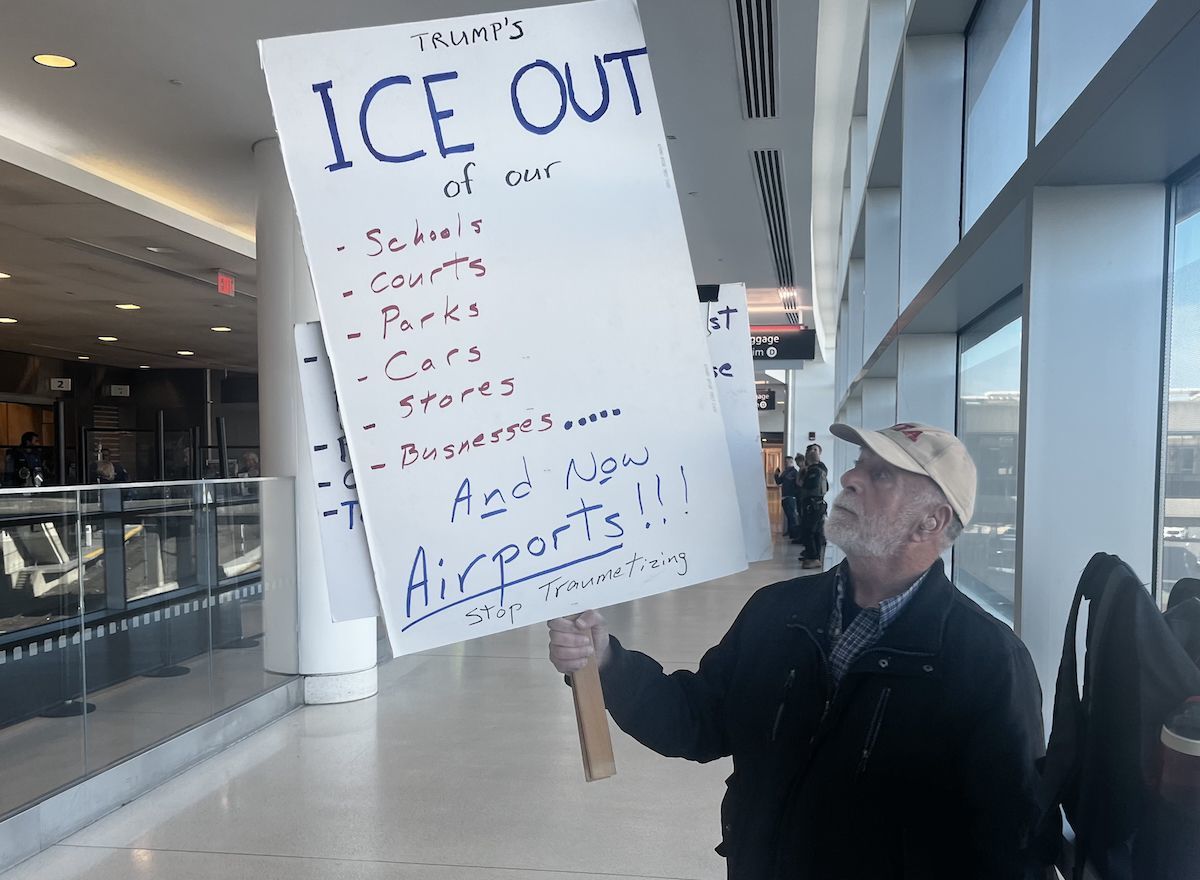
Steve Papelian, 73, drove more than an hour from Nazareth, Pa. to the Philadelphia International Airport to protest the deployment of ICE agents to international airports across the U.S. on March 24. The former school teacher believes that ICE should target criminal activity, not “moms and pops with kids,” he said.Henry Savage / Staff
Sam Scavuzzo, chief of staff for the city law department, said in a statement that “federal law enforcement access to particular areas of the airport is governed by federal law.”
A spokesperson for the Department of Homeland Security said airport arrests are occurring because the Trump administration “reversed the horrendous Biden-era policy that allowed aliens in our country illegally to jet around our country.”
“Under President Trump, DHS will no longer tolerate this. This administration is working diligently to ensure that aliens in our country illegally can no longer fly unless it is out of our country to self-deport.”
The department said “being in detention is a choice,” and the federal government is offering people who are here without permission a $2,600 payment and a free flight home.
Self-deportation can preserve the right to later come back to the U.S., absent the penalties that accompany a government deportation.
DHS said people who do not leave voluntarily “will be arrested and deported without a chance to return.”
On July 11, what started out as a fun soccer trip for a South Philadelphia babysitter ended with her being arrested and ultimately moved across the country to an ICE detention center in New Mexico.
Steven Melchiorre, 35, a health worker, said that at 7 a.m. that day he dropped off his girlfriend, Iliana Lick, 30, to fly to Kansas City. Originally from Buenos Aires, she planned to see the Argentina national team play in the World Cup.
On July 11, what started out as a fun soccer trip for a Philadelphia babysitter ended with her being arrested and ultimately moved across the country to an ICE detention center in New Mexico. Iliana Lick legally entered the U.S. in 2023, though her visa later expired. She cares for the children of two South Philadelphia families.Courtesy of Steven Melchiorre
She texted Melchiorre from inside the airport to say the line was short, then did not answer his reply.
After a while, he said, Lick phoned, crying, to say she had been arrested by ICE. She was moved from Philadelphia to the Cambria County prison, which holds prisoners for the agency in south-central Pennsylvania, and in the following days was transferred to ICE facilities in Louisiana, Texas, and New Mexico.
Late Friday afternoon, an immigration judge in New Mexico set bond for Lick at $10,000, according to her boyfriend. He immediately began working to post that bond and bring her home. It was not clear how quickly Lick might be released.
DHS said Lick was arrested during a targeted operation, having overstayed her visa.
The department noted that work authorization or a pending application for immigration relief, both of which Lick has, do not confer legal status to be in the United States.
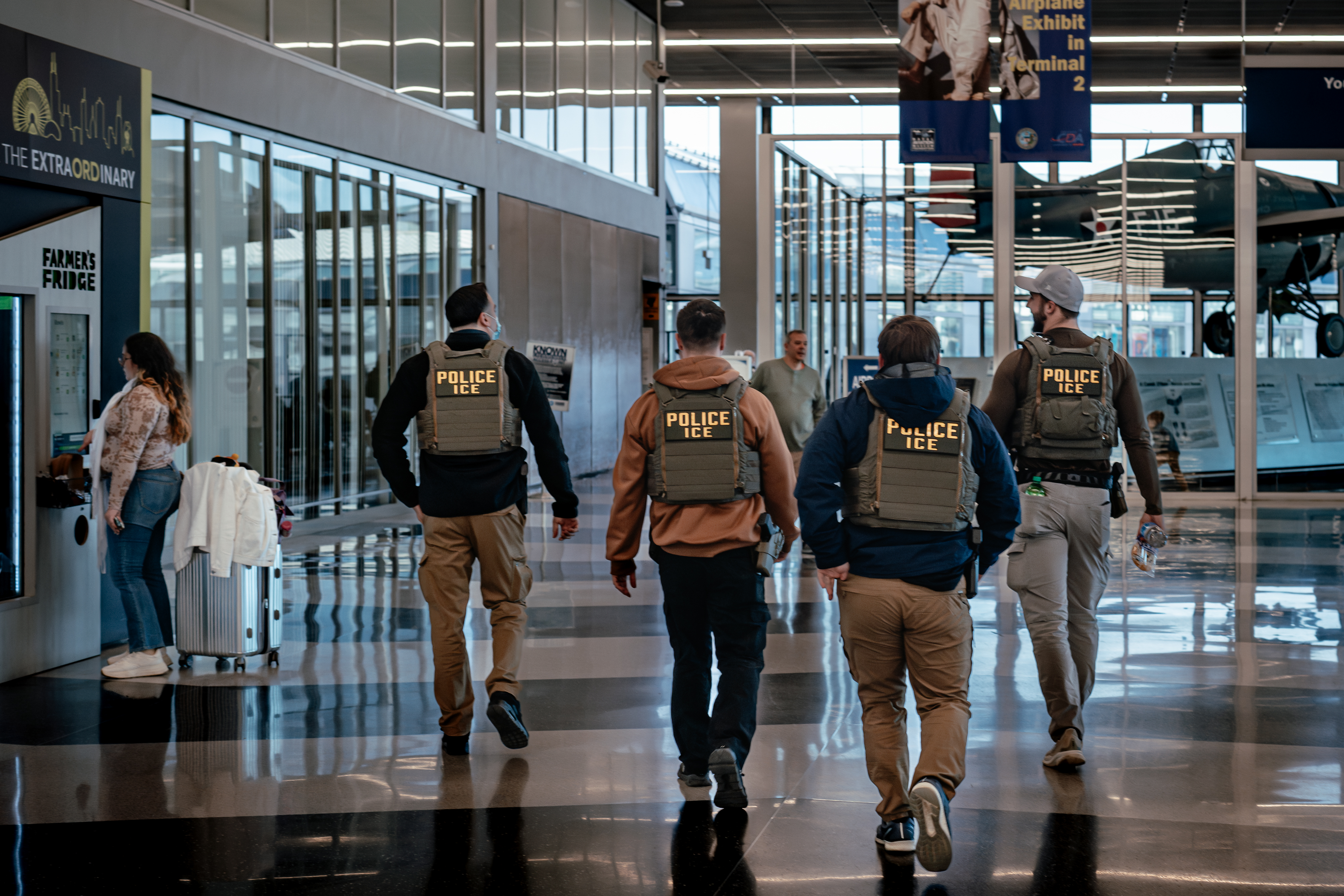
ICE began to deploy agents at U.S. airports in March, and the move was announced as a way to assist at checkpoint lines during a partial government shutdown.
The deployment quickly proved controversial, as travelers and labor unions objected, saying the agents were intimidating and lacked aviation training.
A group of federal immigration officers walk through O’Hare International Airport in Chicago on March 23, 2026. From large cities like Chicago and Las Vegas to small suburbs outside Milwaukee and San Antonio, immigrants have been picked up and detained at courthouses, ICE check-ins and traffic stops, with daily arrests doubling in the last week of June and continuing to climb.JAMIE KELTER DAVIS
Airports rank among the most sensitive public spaces in the country, traversed by millions of people, including U.S. citizens, noncitizens, and mixed-status families, California immigration lawyer Andrew Neitor wrote for the American Immigration Lawyers Association, a legal group.
The introduction of ICE agents, he said, blurs critical lines between airport security and immigration enforcement, around what authority is being exercised and by whom, and over the legal protections due to people who may be arrested.
“ICE was not intended to be omnipresent in daily civic life,” Neitor said. “Yet its footprint has expanded from courthouses to neighborhoods, workplaces, and even parking lots, shifting from targeted enforcement to visible, normalized presence.”
Last year, the Transportation Security Administration and ICE signed a memorandum of agreement that outlined how ICE would share information with TSA to identify people in whom ICE was interested, according to the memo, obtained through the Freedom of Information Act by the watchdog group American Oversight. The agreement said sharing the data would enhance national security, transportation safety, and immigration management.
On Tuesday, U.S. Rep. Rashida Tlaib of Michigan introduced a bill, the No TSA Data for ICE Act, that would bar the agencies from coordinating to conduct what her office called “a dramatic violation of privacy rights.”
The bill would ban TSA from sharing passenger names, birth dates, and other data that enable ICE to target immigrants who are in the process of changing status, including those awaiting visa extensions or who recently married U.S. citizens.
“TSA is readily offering up our immigrant residents to suffer at the hands of ICE agents so they can fulfill their daily arrest quota,” Tlaib said in a statement. “Immigrants should be able to safely fly in this country without the fear of arrest or deportation.”
Today ICE is making record numbers of arrests across the country, not only at airports but also at places that were once considered off-limits, including routine immigration check-ins.
A hat belonging to Iliana Lick sits on a table in the home she shares with her partner, Steven Melchiorre, in the Point Breeze neighborhood of Philadelphia on Tuesday, Aug. 4. Lick has remained in ICE custody since her detention at Philadelphia International Airport on July 11, 2026.Erin Blewett / For The Inquirer
In June in Philadelphia, a 36-year-old survivor of slavery who had fled Mauritania, a mostly desert land in West Africa, filed suit in federal court over the issue. He accused ICE of having unlawfully rescinded a policy that generally allowed immigrants to pursue their cases without fear of arrest.
Nationally, the rate of ICE arrests topped 1,300 a day in June, and grew again to a record 1,474 a day during the first 11 days of July, Syracuse University professor and immigration-data analyst Austin Kocher reported.
Some of those being arrested at airports had legally entered the United States, then stayed after their visas expired. That includes some, like Lick, who were seeking to legally change their immigration status while in the U.S.
Lick, now of Point Breeze, legally entered the country in 2023. She held and extended a visa, and holds work authorization and a REAL ID driver’s license, her boyfriend said. She was trying to adjust her status before her visa expired and continued to do so afterward, Melchiorre said.
Lick works taking care of three children for two South Philadelphia families.
Britni Zahodnick and her husband, Zane Schultz, have employed Lick as a babysitter for their two young children, ages 4 and 1, for more than a year. They described her as soft-spoken, kind, attentive, funny, thoughtful, and a good listener.
“She was very quickly thought of as family,” Schultz said.
Trust does not come easily for any parent preparing to place their children in another’s hands, but Lick won theirs, the couple said.
“All the things you would look for in a caretaker for your kids,” Zahodnick said.
Illiana Lick with partner Steven Melchiorre in New York City. On July 11, what started out as a fun soccer trip for a Philadelphia babysitter ended with her being arrested and ultimately moved across the country to an ICE detention center in New Mexico. Iliana Lick legally entered the U.S. in 2023, though her visa later expired. She cares for the children of two South Philadelphia families.Courtesy of Steven Melchiorre
Melchiorre acknowledged that ICE had legal authority to detain Lick. He said people should follow immigration laws — but the couple thought Lick was doing so. They did not know domestic flights were in question, having flown in the past without incident.
Melchiorre said he was surprised and frustrated by her arrest, “because Iliana has not committed any crime, hasn’t missed any fees, hasn’t missed any court dates. She wasn’t trying to dodge immigration. Being detained, it’s similar to how criminals are treated.”
AI-powered cameras on SEPTA buses and trolleys have captured about 212,000 parking and stopping violations that delay trips since automated enforcement began last year, according to the Philadelphia Parking Authority.
The median travel time of buses in the enforcement areas dropped 41 seconds in March compared with the same month last year before the cameras, SEPTA said.
“It’s not massive, but it is appreciable,” said Matthew Zapson, manager of planning programs for SEPTA.
The parking authority has issued $14.5 million in fines from May 2025 through June 30.
But violations have trended down from the high numbers recorded in May 2025, when enforcement began.
That means hefty fines seem to be nudging more drivers to avoid adding to congestion, particularly in Center City.
In just over a year, no-stopping violations in bus-camera enforcement areas were cut in half, said Gabriel Roberts, interim executive director of the PPA, while violations for blocking bus stops decreased by 27%.
“Drivers are learning, in large numbers, to not park illegally in no-stopping zones, bus lanes, and bus stops,” Roberts said.
(function(){function e(){window.addEventListener(`message`,function(e){if(e.data[`datawrapper-height`]!==void 0){var t=document.querySelectorAll(`iframe`);for(var n in e.data[`datawrapper-height`])for(var r=0,i;i=t[r];r++)if(i.contentWindow===e.source){var a=e.data[`datawrapper-height`][n]+`px`;i.style.height=a}}})}e()})();
Violations fell from 1.8 to 0.75 per camera per hour,Zapson said.
Windshield-mounted cameras, powered by artificial intelligence, on buses in Center City and West Philadelphia are scanning for violations for about 14,000 hours per month — a rate that has stayed steady, Zapson said.
“I think that is perhaps the most telling point about the success of the program,” he said.
Measuring violations per camera hour avoids the possibility that violations appear to be down only because of lower camera use.
The penalty for parking and stopping violations is $76 in Center City and $51 elsewhere.
Tickets are sent to the owners of vehicles based on evidence gathered by windshield-mounted cameras on 152 buses on 16 routes. But human parking enforcement officers have to verify violations first.
PPA, SEPTA, and the city have partnered on the program.
Buses navigating Philadelphia traffic averaged 8 mph in Center City, slower than the national average of about 14 mph. Every year, congestion in Center City causes 1.7 million hours of passenger delays and adds $15.4 million to the transit agency’s operating costs, according to a 2019 Econsult Solutions study commissioned by SEPTA.
On April 1, cameras were added to 38 trolleys in Philadelphia, making SEPTA the first transit system to use them on streetcars. Early PPA numbers show 30,856 violations for cars and trucks blocking trolley lanes and stops.
City ordinance authorizes the camera program in Center City from river to river from the northern edge of Spring Garden Street to the southern edge of South Street. Violations also can be camera-enforced on Chestnut, Walnut, and Market Streets westward to 63rd Street. The law also covers any roadway in Philadelphia that conveys trolleys.
Zapson cautioned that a variety of factors influence bus speeds, including continued growth in ridership since the pandemic, which increases the amount of time the vehicles spend at stops to load and unload people.
So, more work is needed.
“Parking on trolley tracks or in bus lanes is a recurring issue, despite having these cameras,” Zapson said. SEPTA is working with the city and PPA “to see what other policies might be available to us,” he said.
Joseph LaForte was once the charismatic head of Par Funding, a Philadelphia-based lending firm that collapsed in spectacular fashion as prosecutors said he misled investors to the tune of $400 million and resorted to brutish loan shark tactics to collect on unpaid debts.
Now, despite the fact that LaForte pleaded guilty to racketeering and wire fraud charges, a website has been set up to lobby President Donald Trump to free him from a 15½-year prison sentence — part of a campaign that describes LaForte’s prosecution as a “witch hunt.”
“Stand Up for What’s Right, Free Joe LaForte,” says a scrolling banner on the website, FreeJoeLaForte.com. The site’s homepage also prominently features several images of Trump and says the goal is to “fight for [LaForte’s] presidential pardon through activism and exposing the truth.”
Websites dedicated to overturning convictions are not unusual. But the existence of the LaForte campaign comes as Trump, in his second term, has shown a willingness to grant clemency to political allies or people he believes have been unfairly prosecuted — including those convicted of fraud. And well-connected lobbyists and lawyers have reportedly started charging defendants eye-watering sums for promises of presidential relief.
LaForte does not have an official clemency application pending with the Office of the Pardon Attorney, according to that agency’s website. But the LaForte website is clear about its intent to lobby Trump for freedom.
How the campaign came together — and whether LaForte has a role in it — is something of a mystery.
LaForte’s lawyer in his criminal case, Joseph Corazzo, said he didn’t know of the site until he was contacted by The Inquirer and said he’s had no role in any potential efforts to seek clemency from Trump for LaForte.
LaForte, meanwhile, is incarcerated at a federal prison in Fort Dix, N.J., and is not scheduled to be released until 2035.
Unidentified creators
The LaForte website, FreeJoeLaForte.com, does not say who owns or runs it. And phone messages and emails left through its contact pages in recent weeks went unanswered.
One of the calls was directed to a number associated with John Sirmans, of Fanwood, N.J. And Sirmans’ name is listed as an author on dozens of PDFs that were published on the LaForte site.
It is not clear how or if Sirmans and LaForte know each other, and Sirmans did not respond to requests for comment.
PDFs on the site list another author as “Lisa Mac.” LaForte’s wife, Lisa McElhone, was sentenced to one day in federal custody for her role in the Par Funding scandal, and the Justice Department said LaForte sometimes used the alias “Joe Mack” while working at Par Funding.
Attempts to reach McElhone — including by visiting Lacquer Lounge, the nail salon she owns in Old City — were unsuccessful.
Meanwhile, a petition on change.org — which urges people to visit FreeJoeLaForte.com — is even more forceful its views on LaForte’s case, calling his imprisonment “unlawful” and saying he is “an innocent man targeted by a weaponized justice system that bends to partisan agendas.”
But the creator of the petition, which has 40 verified signatures, is listed only as “Truth Seeker,” and attempts to reach that person through change.org were unsuccessful.
Extensive coverage
One of the more prominent sections on LaForte’s website, meanwhile, is a list of more than a dozen news articles written by Milton Allimadi, a New York-based journalist who runs an outlet called Black Star News.
On LaForte’s site, Allimadi’s stories are labeled as being part of a series “dedicated to exposing the truth and corruption involved in the wrongful persecution of Joseph LaForte.”
Allimadi said via email that he did now know who started FreeJoeLaForte.com or how the Black Star News articles ended up being highlighted there.
He said he learned of LaForte’s case after speaking with the father of an inmate housed alongside LaForte. He declined to identify the person.
Allimadi said he wrote about LaForte for Black Star News because the Par Funding founder’s story had “many interesting angles.” He said he’s never spoken to anyone associated with FreeJoeLaForte.com and was not paid by anyone connected to the site for writing or publishing his articles.
Still, he said, he didn’t mind having his work promoted by LaForte’s site because that had already led to what he said was a modest but noticeable uptick in traffic and donations to Black Star News.
“Our site’s major support comes from readers who donate … and some of his supporters who read and like the articles also definitely contributed, because there was a little spike,” Allimadi said.
Another case that Allimadi covered extensively in recent months led to a sizable legal judgment against him.
Last month, a jury in Michigan awarded more than $12 million to a doctor who said Allimadi and Black Star News targeted him with a “relentless, vindictive, and malicious online smear campaign” centering on allegations of domestic abuse and sexual assault of his ex-wife.
Allimadi said his journalism was solid, and he is trying to get the verdict thrown out.
As for LaForte, Allimadi said his coverage included references to LaForte’s history of criminal convictions, and he said it was “clear from [LaForte’s] background that he’s no saint.”
But Allimadi said he also explored angles that hadn’t received much attention as Par Funding collapsed, including by raising questions about the conduct of the Securities and Exchange Commission and the court-appointed receiver in the case, which each contributed significantly to LaForte’s downfall.
“I can see why [LaForte’s supporters] would want to post such articles on their site,” he said.
Newsroom researcher Ryan W. Briggs contributed to this article.
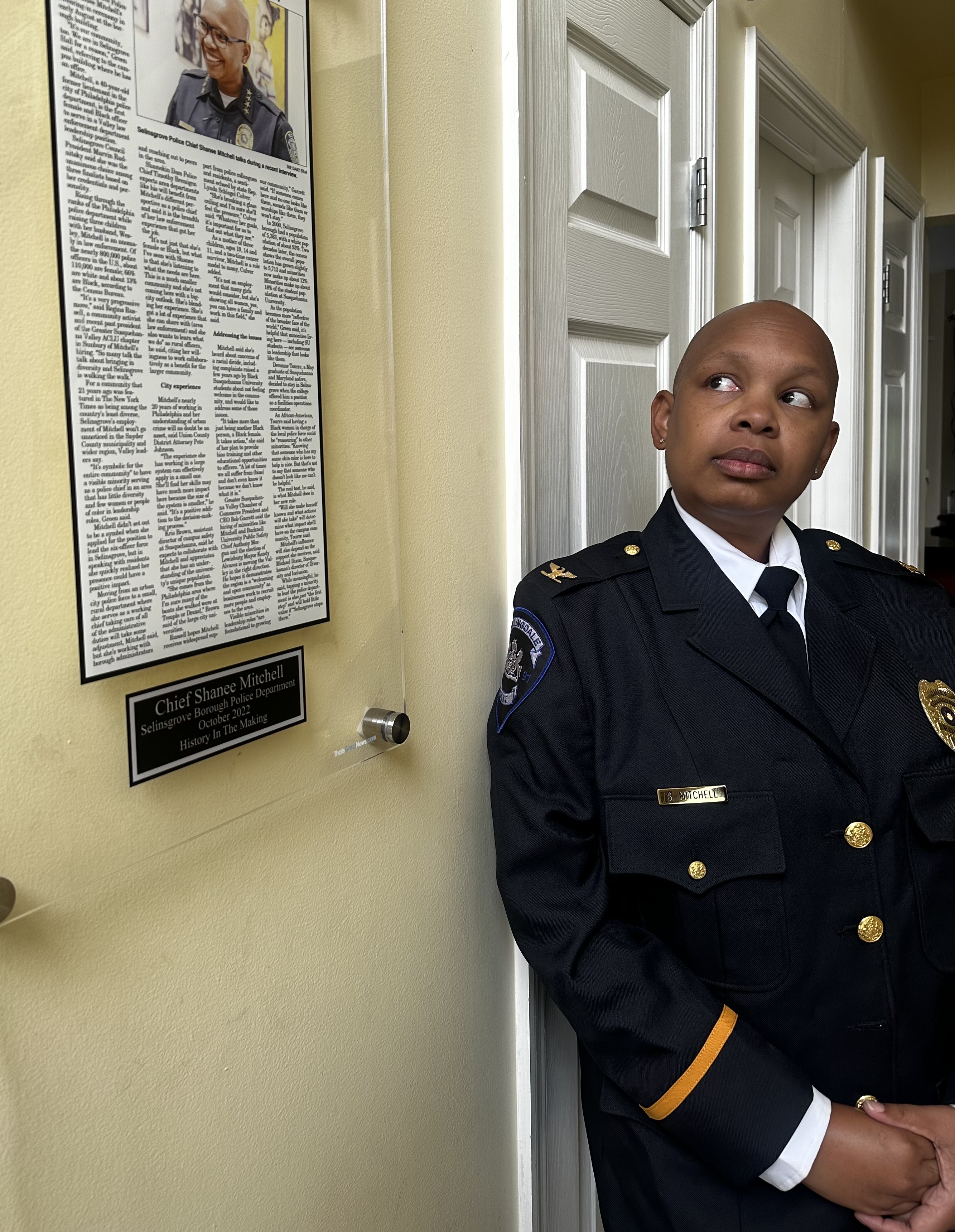
Collingdale’s police chief had her duties of office stripped away by officials in the Delaware County borough in what her lawyer described in a federal civil rights lawsuit as a racist, sexist plot to force her out of her position.
Shanee Mitchell, 44, has been on administrative leave since January, according to the lawsuit, filed this week in U.S. District Court. Officially, Mitchell has been placed on leave because of borough officials’ concerns over her not showing up for her scheduled 8 a.m.-to-4 p.m. shifts.
But her attorney, Mark Schwartz, said the reasoning for her leave is bogus: He contends his client, a Black woman, is being discriminated against because of her race and gender, sidelined by Collingdale’s borough council and mayor until her contract ends in September.
“Borough Council, the Mayor, and senior borough officials were aware of [Mitchell’s] complaints,” Schwartz wrote in the filing. “Rather than stop the interference or protect her from retaliation, borough officials, including but not limited to those named, permitted the hostile course of conduct to continue.”
In his filing, Schwartz said that Mitchell’s contract allowed her to set flexible hours, given the expectation that, as chief, she would be attending meetings and other events outside of normal business hours.
Mitchell’s lawsuit names Collingdale Mayor Donna Matteo-Spadea, as well as borough council president Felecia Coffee, borough council members Stephen Zane and Shannon Murphy, and borough manager Joseph G. Papaleo.
Collingdale solicitor Deanna Williams declined to comment on the lawsuit.
Mitchell’s leave was extended in April after borough officials told her she was the subject of a criminal investigation, but she said she was never interviewed by police and received no further details. Borough officials declined to comment on the alleged investigation for this article, and Mitchell has not been charged with any crimes.
Mitchell filed complaints about the discrimination she allegedly experienced with the federal Equal Employment Opportunity Commission and the Pennsylvania Human Relations Commission in November 2024, early in her tenure. Those reports went unanswered, Schwartz said, and Mitchell believes she was placed on leave in retaliation for them.
Schwartz said Mitchell “inherited a police department in crisis,” modernized its technology, and improved community relations in the borough of 9,000 people that has struggled with officer shortages. In 2024, shortly before Mitchell took over, Pennsylvania State Police troopers were called in to help bolster overnight patrols.
However, some local law enforcement officials have been critical of Mitchell’s tenure, particularly a public controversy that erupted over a part-time officer she chose to hire as he was being investigated for a violent road-rage incident.
Mitchell was placed on administrative leave Jan. 6, the day after the defendants named in the lawsuit took control of borough council, replacing the council members who had voted to hire her.
But the lawsuit asserts Matteo-Spadea had long wanted to terminate Mitchell, and had made offhand comments for months about how she “can’t wait until January.”
Matteo-Spadea did not return a request for comment about the allegations in the filing.
Matteo-Spadea, the lawsuit said, tried to suspend Mitchell on her first day for violating departmental policy. Among those violations was Mitchell’s refusal to wear a reflective vest and act as a crossing guard, something she felt was not her responsibility and was a deliberate attempt to demean her.
In correspondence with Mitchell, obtained by The Inquirer, Matteo-Spadea defended the crossing-guard duty, saying she had Mitchell’s predecessor, Patrick Kilroy, fill in during the officer shortage. Matteo-Spadea, in issuing Mitchell a formal reprimand for having another officer serve as crossing guard instead, said that, as mayor, she has “full charge and control of the chief and the police department.”
Matteo-Spadea also directed white, male officers not to listen to Mitchell’s orders and stymied her attempts to fill vacancies in the department’s ranks, the lawsuit said. Two officers Mitchell hired, who are Black, were fired in June during their probationary period with the department.
The officers, Jerry Christian and Terrell Howard, both wrote in complaints to the EEOC that they believed they were being retaliated against for associating with Mitchell.
But as Mitchell feuded with the mayor behind closed doors, she faced public scrutiny over one of the officers she hired. In January 2025, Kevon Darden, a part-time officer, was arrested by Pennsylvania State Police just days after joining the department for his alleged role in a road-rage incident.
Darden, 30, was charged with terroristic threats, simple assault, and related crimes for pointing a gun at a dump truck driver on April 5, 2023, while driving on the Blue Route in Ridley Township, according to the affidavit of probable cause for his arrest. His case is pending in county court.
Mitchell defended Darden’s hiring in a statement to The Inquirer. But, privately, a top law enforcement official in the county chastised her in an email, accusing her of ignoring warnings not to hire Darden because of the pending criminal charges, according to a copy of that email obtained by The Inquirer.
Law enforcement sources, who spoke on condition of anonymity to discuss personnel matters, said the controversy over Darden only deepened concerns about Mitchell’s hiring, given the manner in which she had left her previous job.
Before being hired by Collingdale, Mitchell served as the police chief in Selinsgrove, a central Pennsylvania borough about an hour north of Harrisburg. She resigned there after two years, amid what the Daily Item, a local newspaper, reported as concerns over her living situation: At the time, Mitchell lived in Pottstown, more than 100 miles away, and reported for her shifts only “sporadically,” according to the newspaper.
Schwartz, Mitchell’s attorney, called those concerns in Selinsgrove overblown, unlike the treatment he said she has received in Delaware County.
A police officer in Delaware County shot and killeda man wielding a knife early Thursday morning, according to Aldan Borough Mayor Michael Ceci.
Ceci said the shooting by an Aldan Borough police officer happened about 3:30 a.m. near South Clifton and Aldan Avenues. Aldan Borough is a town of about 4,200 people located six miles west of Philadelphia.
The officer was responding to a 911 call, Ceci said. The officer first deployed a Taser, then shot the man, who was pronounced dead at Lankenau Medical Center.
The officer was taken to Mercy Fitzgerald Hospital for “evaluation of minor injuries.”
“Per borough’s use-of-force policy, the officer is being reassigned to administrative duty, pending the completion of an investigation,” Ceci said.
An Aldan Borough police vehicle is parked outside the police station.Brett Sholtis
The Delaware County District Attorney’s Office is investigating, Ceci said.
By late Thursday morning, there were few signs of the deadly encounter in the tree-lined residential neighborhood. News crews gathered at nearby Providence Park, within eyeshot of both the police station and the house where neighbors said the shooting happened.
Longtime resident Rich Cooper said he was up late working on home renovations when he saw a police car pull up next door.
Cooper said he heard what he believed to be two gunshots in quick succession. When he stepped outside, he said, he could smell the smoke from the bullets discharging.
Cooper said he did not hear any argument or shouting prior to the gunfire. “No yelling. They pulled up, and pop, pop.”
Within minutes, the corner was swarmed with at least 14 police cars, Cooper said.
Cooper said it was not the first time police had visited the house next to his.
“I don’t know what they’re doing over there,” Cooper said.
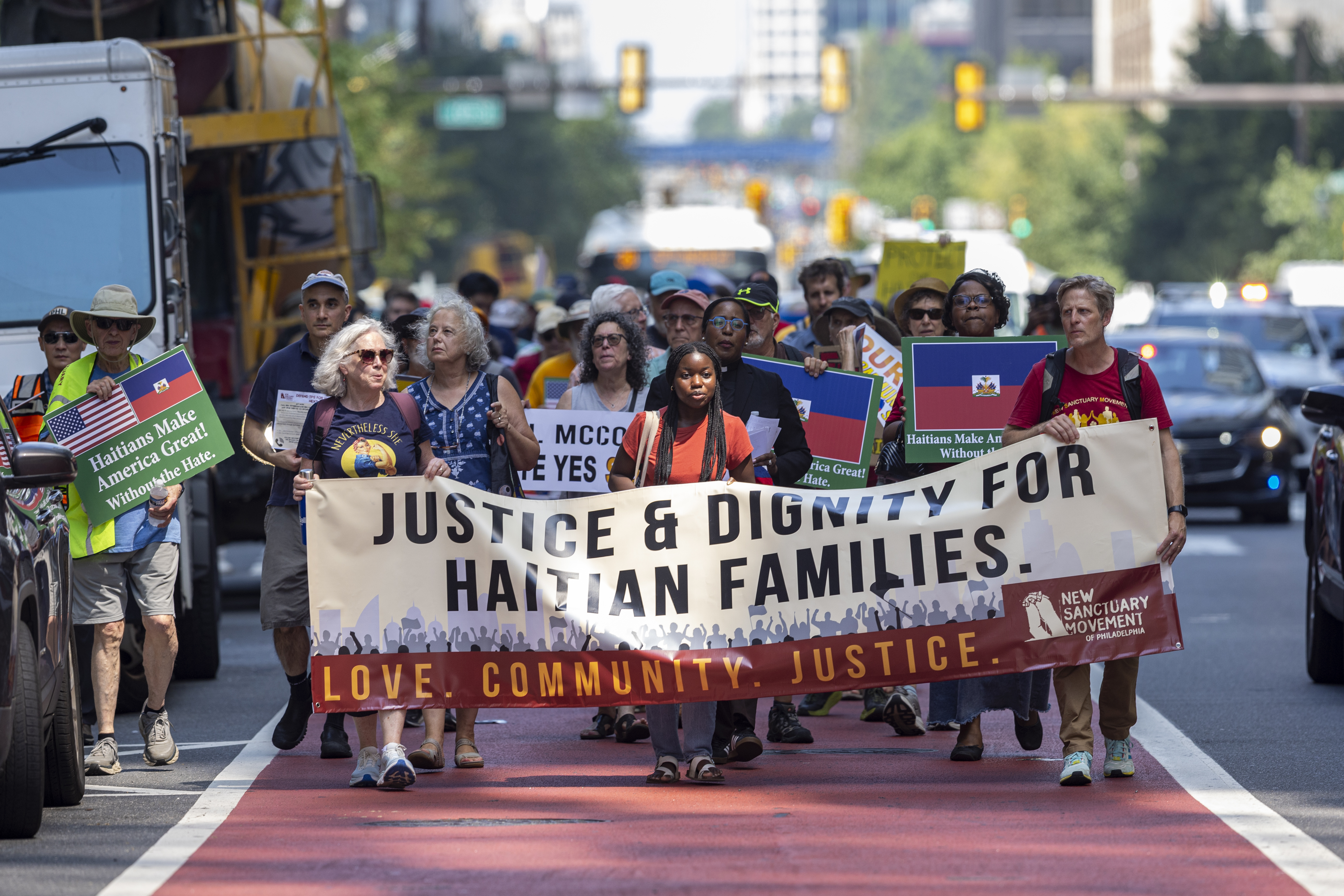
Dozens of Haitians, allies, and supporters rallied in Center City on Thursday, demanding that Pennsylvania’s U.S. senators help restore temporary protected status (TPS) for thousands now in danger of being deported to the shattered Caribbean nation.
They gathered outside the office of Republican U.S. Sen. Dave McCormick near 20th and Market Streets, then marched to the office of U.S. Sen. John Fetterman, a Democrat, near Second and Chestnut Streets.
People held up signs that said, “Our Haitian community is here to stay,” even as protections and work permits have ended for about 350,000 Haitians in the U.S. The Haitian community numbers about 11,000 in Philadelphia, and leaders say it seems everyone knows someone who had TPS or has it themselves.
Speakers said that TPS is more than an immigration status, that it is what allows neighbors, friends, and family members to live here, to work, pay taxes, and help build the country.
They called on the senators to help pass Senate Bill 4814, which would require the secretary of the Department of Homeland Security to designate Haiti for TPS through April 2029.
A spokesperson for McCormick said: “We respect everyone’s right to come together and voice their opinion. We appreciate the input.”
Efforts to reach a spokesperson for Fetterman were not immediately successful.
Pastor Kenel Stevenson said he knows of no local Haitians who have been taken into custody by U.S. Immigration and Customs Enforcement, or fitted with ankle monitors, as the ACLU says is happening elsewhere.
But the mood among his fellow Haitians is grim, he said.
“There is fear, fear of repatriation, of being returned to a place where there is no safety,” Stevenson said.
Nearly 100 people gathered before moving east toward Fetterman’s office shortly before noon, filling the breadth of Chestnut Street as police officers stopped traffic for the group to pass. Oppressive heat and humidity caused some older people to lag.
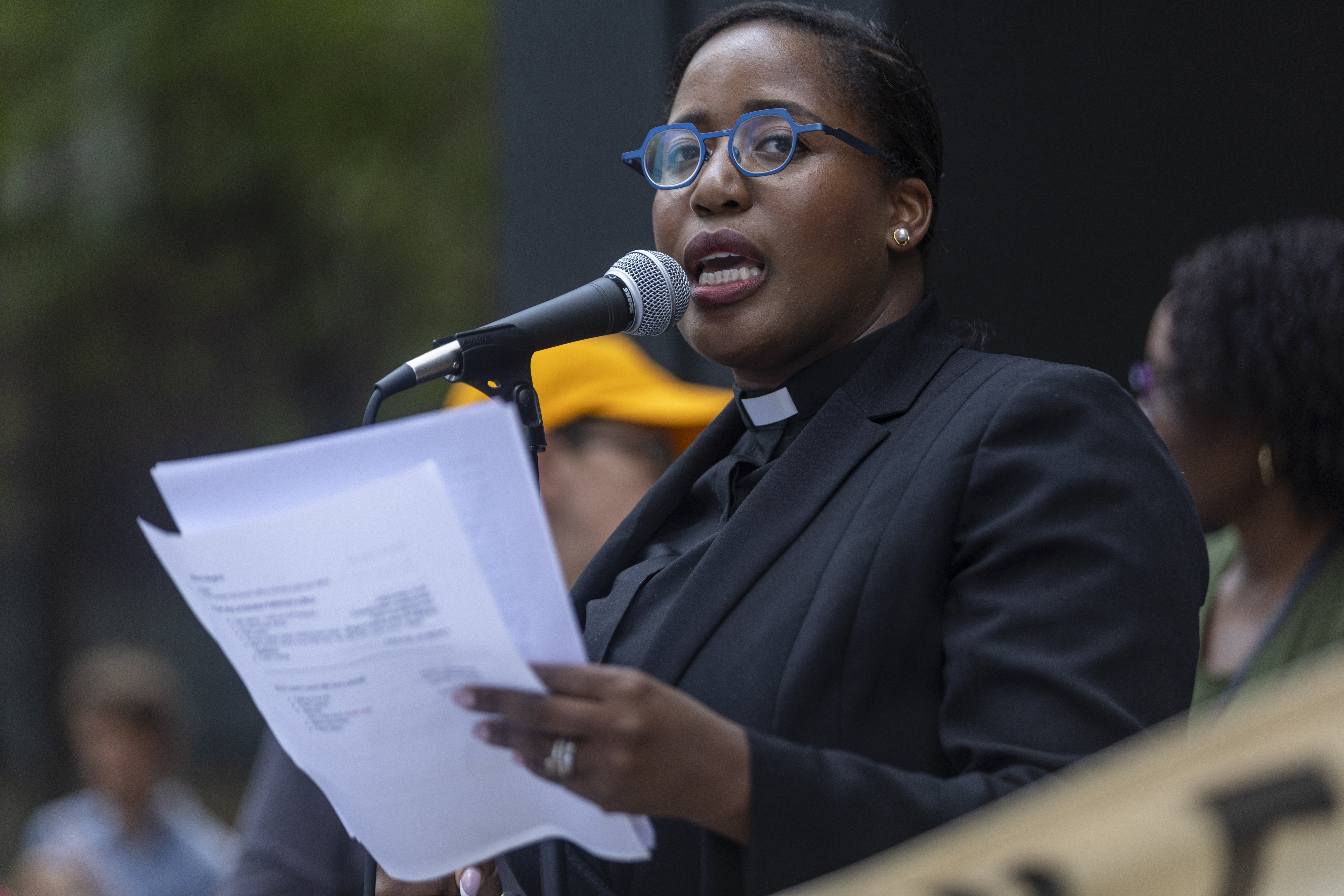
Reverend Jennifer Joseph of Zion Community Church in Delaware County addresses the crowd outside of U.S. Senator Dave McCormick’s office in Philadelphia on Thursday.Aidan T. Gallo / Staff Photographer
TPS has expired for an estimated 350,000 Haitians, ending their ability to legally work in this country and putting them at risk of deportation to a homeland riven by natural disaster and violent crime.
He searches himself to offer hope at a moment when people are desperate for some sense of tranquility.
“I had a mother called me the other day and asked if I could take custody of her child if she’s taken away,” Ulysse said.
Community leaders fear mass family separation, as Haitian nationals have married U.S. citizens and are raising American-born children.
“We are not criminals,” he said. “We have engineers, doctors, professors,” people who are eager to help and contribute.
“If people go back to Haiti, they will die, and if they stay as things are, they are in hiding, scared, and can’t leave their house,” he said, joining others outside Fetterman’s office.
Still, he said, he has not given up hope.
“America is a country of immigrants, and I believe they will stand with us,” Ulysse said. “Help us fight until the end!”
Hundreds of Haitian nationals have been told by immigration officials to appear at ICE offices to be fitted with ankle monitors, according to the ACLU.
Temporary protected status provides permission to live and work in the United States for people whose homelands are riven by war, natural disasters, epidemics, or other extraordinary circumstances.
Haiti suffered a massive earthquake in 2010 that led the Obama administration to announce that undocumented Haitian immigrants in the U.S. would be eligible for TPS. Thousands more would be welcomed over time under humanitarian programs and become eligible as Haiti grew mired in crisis ― a deadly cholera epidemic, hurricanes, the collapse of basic government functions, and the rise of armed gangs.
Reverend Katie Aikins, of West Philadelphia, prays for the Haitian people alongside faith leaders and community members before the march begins outside of U.S. Senator Dave McCormick’s office on Thursday.Aidan T. Gallo / Staff Photographer
Haitian American pastor Ketty Pointe-Jour said Thursday that her immigrant parents would not believe what is happening today.
They fled Haiti for their lives, she said, and “the U.S. opened its arms for them. The America they knew in the ’60s and ’80s is completely different from what we are seeing now.”
The Trump administration has sought to end TPS for Haiti and other nations. In June, the Supreme Court ruled that the administration could terminate temporary protected status for countries like Haiti and Syria.
More broadly, the ruling appears to make Department of Homeland Security decisions about TPS unreviewable by lower courts, creating deep uncertainty for the future. The White House has pledged to deport people who lose legal status, including those who had TPS.
Haitians are not the only population affected.
TPS is set to lapse for more than 170,000 people from El Salvador in September, and in October 100,000 from Ukraine face the same termination.
Advocates say the Trump administration’s promise of deportations will hurt families that include spouses and children who are American citizens.
What is more, immigration researchers and organizations say, the country will pay a financial price ― in lost taxes, wages, spending, and services, as large numbers of workers and dollars exit the U.S. economy.
The nation’s 1.3 million TPS holders work at higher proportions than the country as a whole, pay billions of dollars each year in federal and local taxes, and contribute to the solvency of a Social Security system from which they are unlikely to ever draw benefits.
Outside Fetterman’s office, Dottie Baumgarten said she came from her Cheltenham home to support the Haitian community. She hoped the presence of supporters helped immigrants feel less alone.
“The Haitian challenge is not just Haitians,” she said, “it’s immigrants in general, and we have to support them. We are destroying their families.”
Even as a boy in New York, he loved language, literature, and poetry. He earned a bachelor’s degree in English, took graduate classes at the University of Missouri School of Journalism, and could recite lines from Shakespeare, Wordsworth, and Frost on demand.
He was generally calm and reasonable, too, his sons said. “He didn’t get upset easily,” his son Mark said.
His vocabulary was extensive, and he could spell practically any word. So it is no surprise that he spent 50 years, from the early 1950s to his retirement in 2002, as an editor, page designer, and reporter for The Inquirer, the Bulletin, the Morning Call of Allentown, the Pottstown Mercury, the Honolulu Star-Bulletin, and the Evening Tribune in Hornell, N.Y.
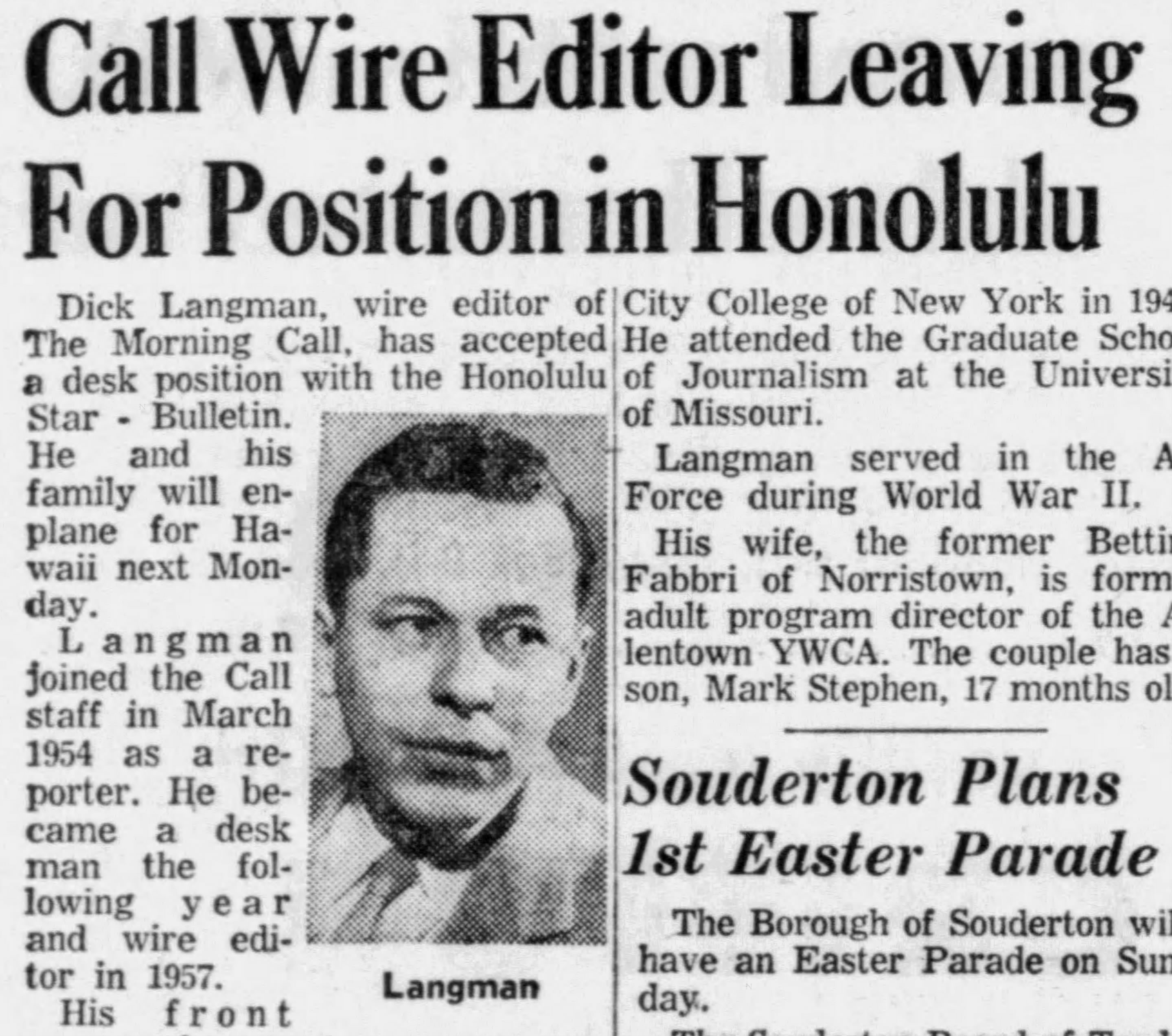
The Morning Call published this story in 1959 when Mr. Langman left to work in Hawaii.Newspapers.com
He joined The Inquirer in 1981 and worked mostly nights for 21 years as a copy editor, assistant news editor, and suburban assigning editor. Former colleagues at The Inquirer called him a “meticulous” editor, “enormously patient,” and “a man of great integrity” in online tributes.
He won an award from the old Pennsylvania Newspaper Publishers Association in 1957 for a front page he designed for the Morning Call and spent 20 years as assistant city editor and news editor at the Bulletin. “I’m glad that I had a chance to work with him,” a former Inquirer copy desk colleague said. “What a pro.” Another said: “I could not have had a better teacher.”
On Saturday, June 13, Dick Langman died of complications from pneumonia at Bryn Mawr Hospital. He was 99.
Long before he came to Philadelphia in 1961, Mr. Langman was a seasoned newspaperman. He honed his reporting skills as a writer at the Evening Tribune in New York and the Mercury in Pottstown.
Mr. Langman and his wife, Betty, married in 1954.Courtesy of the family
In January 1954, he opened a Page 1 story for the Mercury with: “From clomping around in wooden shoes in Holland to wearing modern footwear in Bechtelsville is a long way, and Mrs. LaVerne Fronheiser is glad to be home. She’s not too glad, however, because her husband had to stay in Germany, where he’s stationed with the infantry.”
On Page 1 in March 1954, he wrote: “They had need of a chaplain yesterday at borough hall. He could have served well the 50 moaners and groaners whose cars were tagged for parking violations.”
He moved on to the Morning Call and covered high school sports and other news. He left for Honolulu in 1959 and became sports editor at the Star-Bulletin. But he missed the East Coast and returned to work at the Bulletin in Philadelphia in 1961.
“Hawaii is one of the loveliest places in the world,” he told the Morning Call. But his wife, Betty, had roots in Norristown, he said, and they both got homesick.
Mr. Langman wrote this Page 1 story for the Pottstown Mercury in 1953.Newspapers.com
Earlier, after college, Mr. Langman worked briefly for the Associated Press in New York and as a statistician for what is now the Elias Sports Bureau. He enlisted in the Army after high school in 1944, went to active duty in 1945, and served until the end of World War II.
At The Inquirer, a former colleague recalled, Mr. Langman edited a story about a horse that had injured a leg. Naturally, he tried to find out which leg was hurt.
“Dick was a painstaking editor,” his former colleague said on Facebook, “and a master in getting the details right.”
Richard Langman was born Sept. 5, 1926, in New York. He graduated from Stuyvesant High School and earned a bachelor’s degree at City College of New York in 1948.
Mr. Langman enjoyed cooking and shared his favorite recipes with colleagues at The Inquirer.Dick Langman
He met Betty Fabbri, the society editor at the Mercury, and they married in 1954. The Morning Call announced their union in its Breakfast Chatter column by saying: “Best wishes to reporter Dick Langman, who walks the long mile in Norristown Sunday with Bettina.”
He and his wife had sons Mark, Peter, and Andrew, and lived in Allentown, Ardmore, and the Quadrangle retirement community in Haverford. His wife died in 2017.
Mr. Langman and his wife shared wanderlust, and they went to Russia, Austria, Hungary, Europe, and elsewhere. They visited Italy 10 times, France three times, and Cape May as often as possible.
They liked to cook together, too, and he shared his favorite recipes with colleagues at The Inquirer. At the Bulletin, he became part of the “old bulls” lunch group.
He submitted his own prewritten obituary to his funeral director long before it was needed and said: “He enjoyed classical music, poetry, mystery novels, and British mystery and comedy.” He also liked crossword puzzles, fishing, table tennis, classic movies, and duplicate bridge.
He cheered for the New York Yankees baseball team and the Green Bay Packers and Penn State football teams.
“He delighted in jokes and was a real fan of the Marx Brothers,” his son Peter said. “When we were children and a local movie theater would feature a Marx Brothers film for one night, my parents made sure that we went. Fond memories indeed.”
In addition to his sons, Mr. Langman is survived by two grandchildren and other relatives.
Services were held earlier.
Donations in his name may be made to the Lenfest Institute for Journalism, 100 S. Independence Mall West, Suite 600, Philadelphia, Pa. 19106.
The Pennsylvania Superior Court has reinstated the murder convictions of three men who were granted new trials after being imprisoned for nearly 25 years for a crime they say they did not commit.
The men, known as the “Chester Trio,” were convicted in separate trials in the 1997 beating death of 70-year-old Henrietta Nickens in her Delaware County home and are serving life in prison.
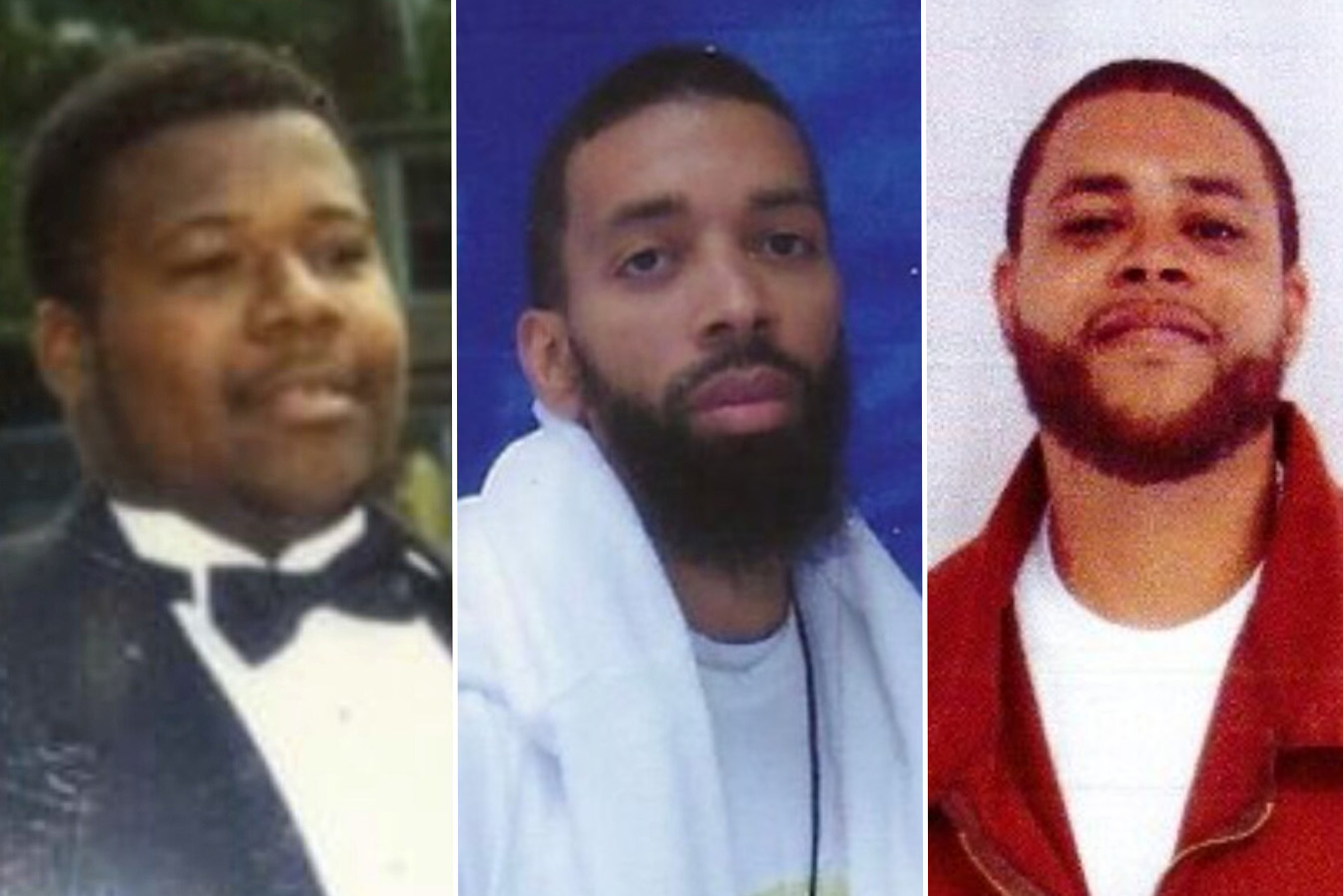
Derrick Chappell, 44, Morton Johnson, 46, and Samuel Grasty, 49, have insisted for decades that they were not responsible for the death of Nickens, whose battered body was found face down in the bedroom of her Chester home, her bed and walls stained with blood.
In 2024, a Delaware County Court judge vacated the three men’s convictions, saying newly tested DNA from the crime scene cast doubt on their culpability and might have persuaded jurors to reach a different conclusion had they been presented with that evidence at trial.
But late last month, a panel of Superior Court judges disagreed and reversed that outcome.
In a 2-1 decision, the judges said that they did not consider the evidence presented by defense lawyers to be new, and that it therefore would not have changed jurors’ minds.
Judges Maria McLaughlin and Megan Sullivan said in a 41-page opinion that the newly tested DNA — recovered from Nickens’ dress and bedsheet, a green jacket found at the scene, and items in the jacket’s pockets — did not offer any revelations because it matched an unknown DNA profile that had been presented to the jurors who decided the trio’s fate.
“This same information was previously considered by all three separate fact-finders and rejected,” the judges said of the verdicts in three trials.
During the trials, they said, jurors were told that the DNA found at the scene was not a match for any of the defendants.
And they said the newly tested DNA did not alter the argument defense lawyers made at the earlier trials that someone other than the three men had broken into Nickens’ home, raped her, and beaten her to death.
Prosecutors relied on witnesses who testified that they had overheard the men discussing their involvement with the crime.
Their star witness, 15-year-old Richard McElwee, testified that he had acted as a lookout while the men robbed Nickens of $30. He pleaded guilty to third-degree murder in exchange for his testimony and was sentenced to six to 12 years in prison.
The men’s lawyers have long contended that the prosecution’s witnesses were unreliable and that the investigation was flawed. And they emphasized the lack of a DNA match for the men.
Paul Casteleiro, legal director of the nonprofit law center Centurion Ministries and Grasty’s attorney, said he was dismayed by the court’s decision and, along with attorneys for Chappell, has filed an appeal.
“We’re going to fight this every way possible,” he said.
A spokesperson for Delaware County District Attorney Tanner Rouse said the office appreciated the Superior Court’s affirmation of the jury verdicts.
As the men continued to assert their innocence, the possibility that Nickens was raped and beaten by a single assailant was central to defense arguments during 2023 hearings in which they sought to overturn their convictions.
In presentations before Delaware County Court Judge Mary Alice Brennan, the attorneys called on forensic experts who testified that the new tests showed a sample of Nickens’ blood and semen from the unknown assailant were deposited on her bedsheet at the same time, lending credence to their theory that she had been raped and beaten by the same person.
Prosecutors rejected the contention that Nickens had been sexually assaulted, and suggested the semen found on the sheet and in her body was from an earlier consensual encounter.
Jack Stollsteimer, then the Delaware County district attorney, swiftly appealed that decision, leading to the Superior Court decision reinstating the convictions.
Defense lawyers, in turn, have appealed that decision, saying the Superior Court panel had erred. Their arguments mirrored a strongly worded dissent by Superior Court President Judge Anne Lazarus, who said she believed that the recent DNA testing constituted a new finding — and that it was exculpatory.
The evidence, she wrote, “does significantly more by excluding the petitioners from being present at all in Nickens’ home.”
But her colleagues rejected that view in the majority opinion, which was sharply critical of the lower court’s decision to overturn the men’s convictions.
That decision, they said, was based on “erroneous conclusions.”