Category: Pennsylvania News

  • Pa. lawmakers have proposed dozens of ways to fix the state’s low housing stock. They’re making a database instead.

    Pa. lawmakers have proposed dozens of ways to fix the state’s low housing stock. They’re making a database instead.

    HARRISBURG — More than one million Pennsylvania households spend over 30% of their income on housing. And over the next decade, the state’s housing crunch is slated to intensify, with estimates that Pennsylvania will have nearly 185,000 fewer new homes than it needs to keep up with projected demand.

    State legislators have pushed to address the need, introducing bills that would increase the housing supply through accelerated approval processes and lifting restrictions on new developments — and urged leaders to include those initiatives in this year’s budget negotiations.

    Gov. Josh Shapiro also put housing at the forefront of his budget address in February, asking the General Assembly to ease restrictions for rental applications and to cap costs on manufactured home increases.

    But none of the proposed policies were included in the final budget deal, passed last month. Instead, the budget included the creation of a housing database — a move some lawmakers and advocates say falls short of addressing Pennsylvania’s burgeoning housing crisis.

    “I think the budget generally left a lot of questions unaddressed. And housing, one of the top three issues in terms of the cost-of-living crisis, was one of them,” said Sen. Nikil Saval (D., Philadelphia).

    Saval was one of six senators who voted against the budget. He has since said that was because it left many key policy issues, including housing, unaddressed. Sen. Katie Muth (D., Montgomery), the only other Democratic senator to vote against the budget, has also said she believes the budget left issues like housing, rising energy costs, and affordability unanswered.

    Shapiro’s office did not respond to a request for comment.

    (function() {
    var l2 = function() {
    new pym.Parent(‘pa_housing’,
    ‘https://media.inquirer.com/storage/inquirer/projects/innovation/arcgis_iframe/pa_housing.html’);
    };
    if (typeof(pym) === ‘undefined’) {
    var h = document.getElementsByTagName(‘head’)[0],
    s = document.createElement(‘script’);
    s.type = ‘text/javascript’;
    s.src = ‘https://pym.nprapps.org/pym.v1.min.js’;
    s.onload = l2;
    h.appendChild(s);
    } else {
    l2();
    }
    })();

    The new housing database — incorporated through a bill sponsored by Saval and authored by fellow Philadelphia Democratic Sen. Vincent Hughes — will be overseen by the Pennsylvania Housing Finance Agency. Saval said it will ensure more robust data collection to provide transparency on how much affordable housing is available across the state.

    Under the new legislation, the agency will be required to create an online searchable database of all publicly financed housing that is subjected to public assistance programs. It will include anticipated termination dates on properties’ affordability restrictions and will note if the property has been granted an extension on those restrictions.

    Saval said the publicly available database will ensure lawmakers have a better idea of the state’s affordable housing stock. Much of the affordable housing in the state was created with the help of low-income tax credits that are subject to expiration dates. As termination dates on these housing units loom, with many set to expire within the next five years, Saval said, the database will keep lawmakers aware of when housing is no longer affordable and allow them to see if restrictions can be extended.

    The database will be updated annually by the PHFA, with local housing agencies submitting data every year.

    Chris Anderson, communications officer for the PHFA, wrote in an email that the database is still in the early stages of being built, but that it will not pose any significant costs to the agency and existing resources will be used to create it.

    There are no penalties if the PHFA does not update the database, and the new law does not make it mandatory for local agencies to report information to the agency. The intended audience is primarily housing advocates and organizations, as well as policymakers, Anderson said.

    Saval said the database will help lawmakers know how much affordable housing there actually is in the state.

    But he said the state budget — where legislators often pass policies in addition to the yearly spending plan — was still a missed opportunity to address Pennsylvania’s housing concerns.

    “Anytime there’s a set of budget negotiations where there’s the potential to allocate funding, or create policy that would increase the supply of housing, or address the concerns faced by renters, and anytime that opportunity is missed as it was in this budget, I think it’s a step back,” he said.

    ‘Missed opportunity’

    Carrie Rathmann, vice president of strategic partnerships for Habitat for Humanity Philadelphia, said one initiative notably absent from the final budget deal was the PA Home Preservation Program, a grant administered by the Pennsylvania Department of Community and Economic Development to provide funding for construction cost gaps and keep homeowners in their houses through repairing outdated buildings. The initiative was last funded when it was signed into the budget in 2022, but has not received funding since.

    Previously known as the Whole-Home Repairs Program, the state allocated $125 million toward the program using American Rescue Plan dollars, repairing more than 2,600 affordable homes across the state.
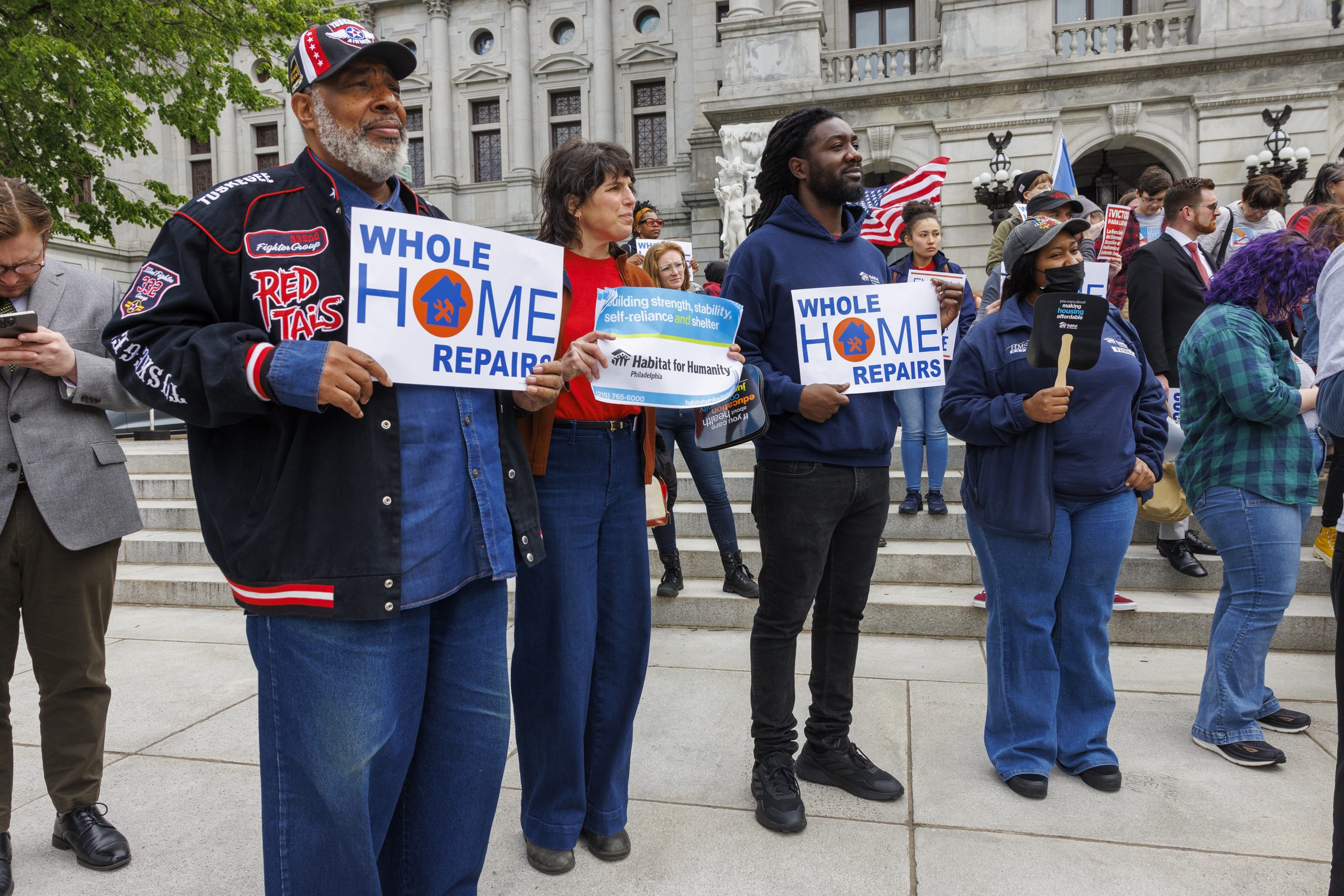
    Douglas Paige (from left), Carrie Rathmann with Habitat for Humanity, Tyron Cheeseboro, and Danielle Paige on the steps of Pennsylvania Capitol during a 2023 rally for the Whole-Home Repairs Program.Alejandro A. Alvarez / Staff Photographer

    Housing advocates have pushed for the state to renew the funding, with the Housing Alliance of Pennsylvania calling it one of the organization’s biggest priorities.

    In an email, spokespeople from the housing alliance noted that the state funding in 2022 was not enough to support the number of people that applied for it, meaning there are still people waiting to have their homes repaired.

    “The program received far more applications from qualified homeowners than available funding could support, highlighting both the scale of unmet need and the importance of preserving existing housing,” the spokespeople wrote.

    The program has not returned in a line item in the state budget since 2022. Companion bills in both chambers supporting the program have received bipartisan support — the House bill passed 122-80 — but are sitting in the Senate Urban Affairs and Housing Committee.

    “That felt like it represented a huge missed opportunity to help thousands of Pennsylvanians stay housed and to keep homeowners safe and healthy in the homes that they already own, because without that dedicated investment, this crisis will only grow,” Rathmann said.

    Habitat for Humanity is a nonprofit that does not rely on state dollars, but Rathmann said state money goes to counties and housing providers like the Philadelphia Housing Development Corp. The money helps an “ecosystem” of housing organizations in the Philadelphia area, and Habitat uses it for a portion of the organization’s work. That included the Built to Last program, an initiative spearheaded by the Philadelphia Energy Authority that inspired the statewide initiative of Whole-Home Repairs in 2022.

    Rathmann said state initiatives that increase efficiency on building houses are key to developing homes faster and cheaper, which in turn increases the housing supply and can keep people in high-quality houses. This includes incentives like building lower density “by right,” meaning property owners can build low-density housing without special approval.

    “We see every day at Habitat that that impact is real, it’s tangible, it crosses different sectors like kids can get to school and do better,” Rathmann said. “Seniors are healthier. People are healthier. People feel less stressed. They have more money in their pocket for medication and food.”

    ‘Risk aversion on all sides’

    Lawmakers on both sides of the aisle in Pennsylvania’s divided state legislature have pushed for their own housing initiatives. Bills have passed through the Democratic-controlled House or Republican Senate, but have yet to move forward in the opposing chamber.

    Democratic-backed House bills sitting in Senate committees include proposals to remove barriers to building accessory dwelling units, lift restrictions on how many unrelated people can live in one home, and seal eviction records to help tenants.

    And the Senate GOP also has a number of bills sitting in the House’s committee, like creating an accelerated approval process for new housing, or establishing a Housing Regulatory Compliance Officer.

    Beth Rementer, spokesperson for House Democrats, wrote in an email that the House has sent 22 bills to the Senate Housing Committee, while the Senate sent two in June.

    The state’s lack of housing action marks a difference from the Republican-controlled federal government. In early July, Congress sent the ROAD to Housing Act to President Donald Trump’s desk — a bill that reduces barriers to home construction and modernizes housing programs alongside other initiatives, including a pilot of Whole-Home Repairs.

    Saval attributed the Pennsylvania legislature’s inaction to a desire to pass the state budget quickly without debate on hot-button policy issues ahead of the November election, when half the Senate and all members of the House are on the ballot.

    “Essentially, there was risk aversion on all sides,” Saval said. “And, understandably, an unwillingness to get into a budget discussion that would prolong the budget negotiation process.”

    Kate Flessner, spokesperson for the Senate Republicans, said in an email that the Senate supports a number of housing initiatives, but that underlying issues lie in how the state will pay for them in light of the roughly $5 billion structural deficit.

    “As we continue working to address the state budget’s serious structural deficit, we will be primarily focused on ways we can improve housing access that do not require vast sums of taxpayer money — and there are many of them,” Flessner said.

    Natalie Javitt is an intern with the Pennsylvania Legislative Correspondents’ Association. She can be reached at natalie.javitt@gmail.com.


  • Some Montco residents are living a lie | Inquirer Greater Abington

    Some Montco residents are living a lie | Inquirer Greater Abington

    Hi, Greater Abington. 👋

    It’s nice to see you again. This week, we’re taking a look at the specifics of Bradley Cooper’s Montgomery County origin story. In other news, we look closer at the fallout of two assaults in Cheltenham High’s locker room, Abingtonians can request traffic-deterring devices on some roads, and felony rape and sexual assault charges have been dropped against a Jenkintown physician after his accuser didn’t show up to court.

    As always, we hope to hear your feedback on this newsletter. Let us know what you think by taking our survey or replying to this email.

    — Laura Smythe (greaterabington@inquirer.com)

    If someone forwarded you this email, sign up for free here.

    The great hometown debate

    Apparently Bradley Cooper has a thing for confusing home addresses. Montgomery County’s hometown hero is often said to be from Jenkintown, when in reality, he hails from Abington Township — the unincorporated community of Rydal, to be exact.

    The Oscar-nominated actor also supposedly owns a New Hope estate, though he actually lives in Solebury Township.

    Could you also be among the many Abingtonians living a lie? Many mistakenly believe they live in Jenkintown, and sometimes the appearance of a tax bill from Abington is the catalyst that tips them off.

    The Inquirer’s Jess Rohan digs into the complicated geographical maze of the area, untangling a web that involves a playbill from the 1980s, Jenkintown’s National Geographic-famous Color Day, and more U.S. postal service lore than you thought your Tuesday needed.

    Prosecutors fault Cheltenham School District for putting every football player ‘at risk’ in locker room assaults

    Four football coaches and six players have been charged in relation to two violent 2025 attacks in the school’s locker room that injured a 15-year-old student and prompted the cancellation of two football seasons. Prosecutors said coaches tried to cover up the assaults, in which multiple cleat-wearing teenagers stomped on the victim’s chest and groin, and used a broomstick to poke at his buttocks.

    The Montgomery County grand jury that recommended the charges also faulted the Cheltenham School District for a “level of incompetence” that “put every young man on the football team at risk.”

    Inquirer reporter Maddie Hanna has the latest on the locker room assaults that have rattled the Cheltenham community in recent weeks after coming into public view in vivid detail nearly one year after they took place.

    💡 Community news

    • Abington property owners can now request and weigh in on proposed traffic-deterring devices, including speed humps and roundabouts, on certain streets.
    • Felony rape and sexual assault charges were dropped against Jenkintown physician John Smyth Michel, 56, after his accuser failed to appear to his criminal trial. Michel is the founder of the currently closed Excel Medical Center, which is made up of 12 locations in the Philadelphia region.
    • The Holocaust Awareness Museum and Education Center in Elkins Park is dedicating its archives to the late Donald Wittenberg, the site’s longtime curator who died in March. Wittenberg spent decades chronicling how the Holocaust impacted folks in the Philadelphia region and educating people on how to prevent a similar occurrence in the future.
    • Neysa Adams, a former Elkins Park resident who established the Neysa Adams’ Library Fund at Reform Congregation Keneseth Israel, died recently at 104. Known as a civic and community leader, scientist, and teacher, Adams was once recognized by former Gov. Ed Rendell as a Distinguished Daughter of Pennsylvania for her “outstanding service and contributions to the Commonwealth of Pennsylvania.”
    • Drivers in Cheltenham Township can expect a daily lane closure through Friday from 9 a.m. to 3 p.m. on Church Road between Township Line Road and Route 73 due to utility adjustments. Milling will also close a lane at the same spot overnight through Friday, from 8 p.m. to 5 a.m.

    🍽️ On our plate

    🎳 Things to do

    🐦 Curtis Arboretum Bird Walks: Spend some time with nature on this mixed-terrain outing. ⏰ Friday, Aug. 7, 8-10 a.m. 💵 Free 📍 Curtis Arboretum, Wyncote

    🧶 Stitch and Chat: Make some progress on your current craft project or start a new one, and maybe make a friend along the way. ⏰ Friday, Aug. 7, 1-3 p.m. 💵 Free 📍 Roslyn Branch Library, Abington

    🥁 Stranger Things Rock: Check out the classic rock band’s return to The Drake Tavern. ⏰ Friday, Aug. 7, 7-10 p.m. 💵 Pay as you go 📍 The Drake Tavern, Jenkintown

    🎥 Flick ‘N’ Float: Bring your own float or raft to watch a movie while cooling off in the pool, or post up on the lawn. ⏰ Friday, Aug. 7, 8 p.m. 💵 $5 for members, $10 for non-members 📍 Conklin Pool, Elkins Park

    🏡 On the market

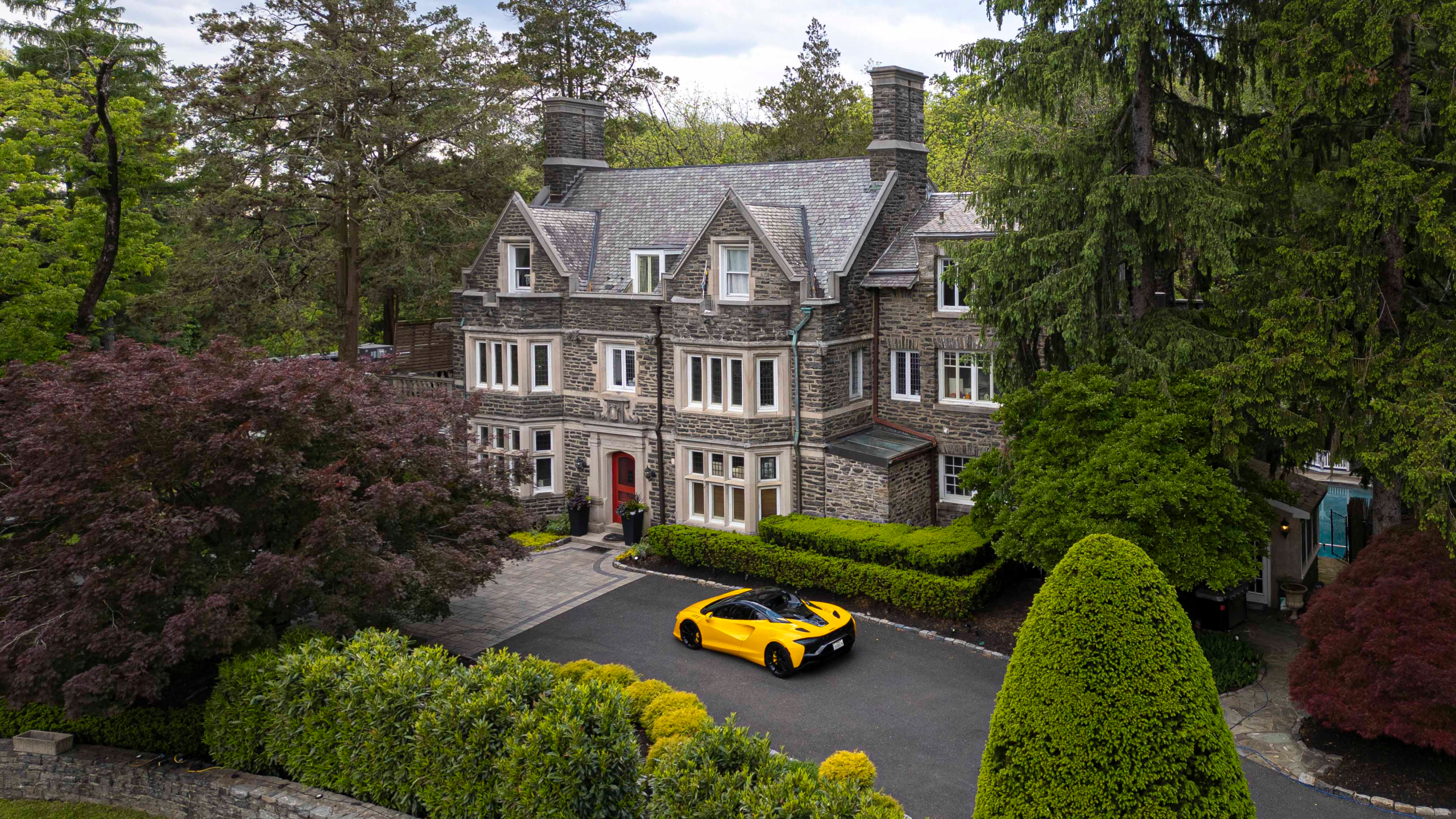
    An early 20th-century Rydal estate built with locally quarried stone

    This sprawling estate from 1904 spans more than two acres in Rydal (anyone seen Bradley Cooper lately?). Live-in carpenters carefully crafted the details in the residence, which was constructed from locally quarried stone, according to the listing.

    Inside features private au pair quarters and multiple princess suites, while the back leads to gardens, an in-ground pool, a hot tub, and large terraces.

    See more photos of the property here.

    Price: $1.695M | Size: 7,546 SF | Acreage: 2.02

    🗞️ What other Greater Abington residents are reading this week:

    By submitting your written, visual, and/or audio contributions, you agree to The Inquirer’s Terms of Use, including the grant of rights in Section 10.

    This suburban content is produced with support from the Leslie Miller and Richard Worley Foundation and The Lenfest Institute for Journalism. Editorial content is created independently of the project donors. Gifts to support The Inquirer’s high-impact journalism can be made at inquirer.com/donate. A list of Lenfest Institute donors can be found at lenfestinstitute.org/supporters.

  • Why Pennsylvania quietly repealed its 1929 midwifery law — and is now getting sued for it

    Why Pennsylvania quietly repealed its 1929 midwifery law — and is now getting sued for it

    HARRISBURG — Hidden deep in more than 600 pages of state budget documents, Pennsylvania lawmakers last month quietly repealed an unenforced 1929 law that allowed traditional midwives, the main group of midwives delivering home births, to practice.

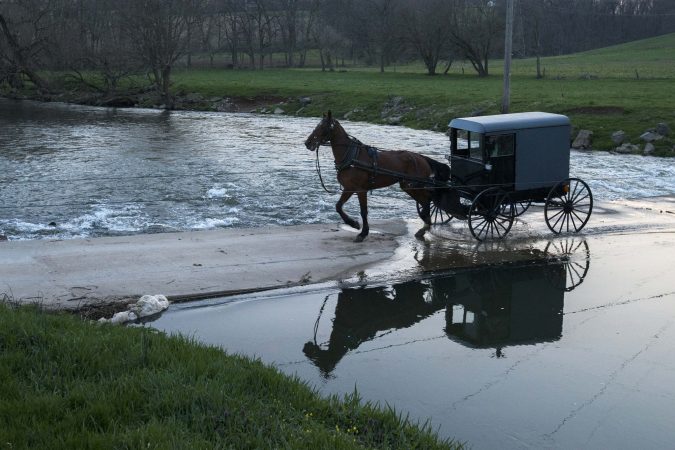
    Now, traditional midwives — who differ from midwives usually found in hospitals, are not medically trained, and often serve religious minorities like the Amish — are worried they have no legal standing to work in Pennsylvania and are challenging the repeal and a new law in state court.

    The 1929 law had been on the books for nearly a century, asking traditional midwives to submit a paper application and a $10 fee to get a state certificate. But it had not been enforced for decades, and Pennsylvania, which has one of the highest rates of home births in the nation, was counted as one of 13 states that did not regulate the practice at all.

    Meanwhile, other forms of midwifery — such as nurse midwives and certified midwives, who are medically trained and are formally affiliated with a doctor or health system — are highly regulated by the state and its medical board. But these affiliations often prevent nurse midwives and certified midwives from offering home births, as the health systems see them as possible risks for medical malpractice lawsuits.

    The practice of traditional midwifery dates back to the Old Testament and has lived on through centuries of community knowledge and traditions. It can include Amish and Mennonite midwives, who are limited in the amount of education they are allowed to receive, as well as other unlicensed midwives who say they take only low-risk pregnancies.

    Some Pennsylvania traditional midwives say their practice is more necessary than ever, citing the United States’ maternal mortality and morbidity rate and cesarean section rates that outpace most of the rest of the Western world. They see their work as more holistic and personal than the American medical system, offering more personalized care to the new parent and baby for weeks after birth, as well as an answer to maternity care deserts as more hospitals and birth centers close.

    Medically trained midwives and physicians, who receive licenses from the state, argue the practice of traditional midwifery is potentially unsafe for mothers and babies, and requires little to no oversight in comparison to their medical training and licensure.

    A new law, and legal uncertainty

    There is no state law regulating home births — which are chosen by a variety of families for different reasons, from Amish who have religious beliefs about delivering at home to Black and brown women who have felt underserved or discriminated against by the modern healthcare system. But if traditional midwives — the primary group delivering babies in home births — cannot practice, some argue, home births will become inaccessible.

    The legal fight over midwifery began earlier this year, when the General Assembly approved changes to a separate law to include another class of midwife: certified midwives, who have all the same education training as nurse midwives except the nursing degree. To receive a certification from the Pennsylvania Board of Medicine, nurse midwives and certified midwives must provide proof of education and a collaborative agreement with a physician or medical institution.

    The law, the Midwife Modernization Act, was written to protect traditional midwives’ ability to practice, its author, Sen. Rosemary Brown (R., Monroe), said in a statement.

    Kate McHugh, a nurse midwife who has worked for a decade with lawmakers on updates to midwife regulations, said stakeholders approached traditional midwives during earlier iterations of the bill to see how they would like to be regulated. The different groups of traditional midwives could not agree, so the nurse midwives and certified midwives moved forward on their own.

    But the changes to Pennsylvania’s laws created a legal gray area, some midwives argued in a lawsuit filed last month.

    An anonymous group of two traditional midwives, a nurse midwife, and an Amish man whose family utilizes traditional midwifery filed a lawsuit in a state appellate court, challenging Brown’s law as unclear about their ability to practice, and asking the state to enforce the 1929 law already on the books.

    After the lawsuit was filed, legislators repealed the 1929 law as part of an overall state budget deal, creating more uncertainty for traditional midwives, according to their amended filing. Some lawmakers said they did not know they had voted to repeal the law, as the state budget is drafted in closed-door meetings among top leaders and fast-tracked through the legislative process with little time for rank-and-file members to review what they are voting on.

    The law was repealed as part of a request by Democratic Gov. Josh Shapiro’s administration, according to a source briefed on budget conversations. The administration works closely on legal matters with Republican Attorney General Dave Sunday’s office, which is defending the state in the case. Shapiro’s office declined to comment.

    “It’s not fair the way [the budget] is done,” said Rep. Dave Zimmerman (R., Lancaster), who said he unknowingly voted in support of the bill that repealed the 1929 law in an omnibus bill. “It concerns me a little bit that we repeal something in the fiscal code rather than right up front where it’s transparent.”

    “You have people in the Amish and Mennonite community that this is what they do. We have midwives that have been doing this for 30 and 40 years, They’re probably as good as anyone else doing it, certified or not,” Zimmerman added.

    The lawsuit

    The group of traditional midwives filed the lawsuit anonymously out of fear of retribution from the state for continuing to practice, said the group’s attorney, Jonathan Goldman, of the Goldman Law Team, based in Fort Washington. The midwives spoke with The Inquirer on the condition of anonymity for the same reason.

    One of the midwives, who serves south-central Pennsylvania with a largely Amish and Mennonite clientele, said she has delivered 1,600 home births over 38 years. She had practiced traditional midwifery in other states, before similar certifications were required there. At one point, she said, she was arrested and charged with a misdemeanor for continuing to practice home births in New York.

    Unlike medically trained nurse midwives and certified midwives, traditional midwives are prohibited from practicing medicine, which could mean dispensing medication or conducting medical procedures as simple as stitches. They have historically been investigated by state boards of medicine if this is called into question, making the group even more distrustful of state oversight.

    One of the anonymous traditional midwives, who has delivered an estimated 600 births around eastern parts of Pennsylvania, said her clients are often religious and want traditional models of care, such as no lab work and one ultrasound — a very hands-off approach compared to the highly surveilled pregnancies in modern medicine.

    The midwife, who delivered four of her 10 children in the hospital before finding an interest in home births, said her faith as a born-again Christian drew her to the “completely different model of care” that does not rely on pharmaceuticals, with a comfortable home setting and few restrictions like in a hospital.

    “In the hospital, it’s a fractured system. There are several midwives and physicians, you never know who you’re going to get, who is going to be on call,” said the midwife, who works with Amish and Mennonite populations in south-central Pennsylvania. “We are the community midwives. We know the secrets, we know the stories, we know what kind of care works. We know the family intimately. And it improves outcomes because knowing them intimately and emotionally allows us to provide that kind of specialized care.”

    Sunday’s office, defending the state in the suit, said in a July 24 filing that the midwives’ claims are a “misreading and misunderstanding of the current law,” and that traditional midwives “can continue to practice as lay midwives without certificates.” Sunday’s office did not respond to a request for comment.

    The case is scheduled for a preliminary injunction hearing to block the law from going into effect on Wednesday, where Brown and other lawmakers may be called to testify and a judge is expected to rule whether current laws prevent traditional midwives from practicing.

    Outside the medical system’s framework

    Obstetricians in hospitals and birth centers routinely work with certified midwives, who have an advanced degree in midwifery, and nurse midwives, who have a nursing degree in addition to specialized midwifery training.

    “As an OB-GYN physician, I absolutely respect somebody’s right to make a medically informed decision about how they take care of themselves in their pregnancy, and who they request assistance from in birth, and where they give birth to their babies,” said Holly Cummings, an OB-GYN in Philadelphia and chair of the Pennsylvania section of the American College of Obstetrics and Gynecology, a leading physician organization. “But I do also believe a hospital or an accredited birth center is the safest place to give birth. I don’t think in the U.S. in 2026 we can currently safely, uniformly support home birth.”

    ACOG does not support traditional midwives, who can also be known as lay midwives.

    But traditional midwives maintain they should be able to continue their work outside the medical system’s framework, citing it as a religious tradition and safe practice, and hope the judge rules in their favor.

    “Pennsylvania has a rich history of midwifery,” said the midwife listed in the lawsuit who serves parts of eastern Pennsylvania. “We have some of the highest home-birth numbers in the country. … It would be sad to see Pennsylvania not acknowledge the heritage in midwifery that we have here.”

    Staff writer Sarah Gantz contributed to this article.

  • What happens when a village goes up for sale? St. Peter’s is ripe for more housing, but poses challenges.

    What happens when a village goes up for sale? St. Peter’s is ripe for more housing, but poses challenges.

    Doug Reeser first came to St. Peter’s Village as a youngster, running along the rocks at French Creek, like so many locals and tourists still do. As an adult, the charm of the quirky little village drew him and his partners to open a branch of their cidery business there three years ago.

    He’s one of many wondering what could change when the village goes up for auction in September, with more than a hundred home lots and a smattering of businesses available to the highest bidder.

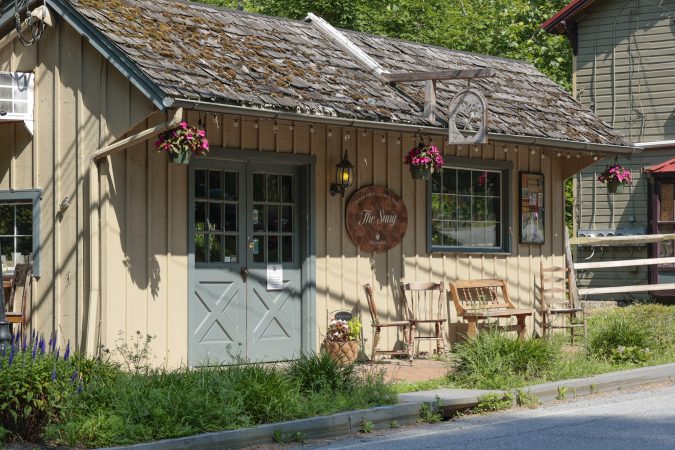
    “There’s lots of positive energy around what’s happening, so I think generally everybody would love to be able to see that continue,” said Reeser, owner of Excursion Ciders at the Snug. “I know personally we’d love to stay there. We anticipate some changes with new ownership. We hope that we can absorb them, but obviously, it’s not unlimited change that we can handle.”

    The auction, scheduled for Sept. 30 at 2 p.m. at the Desmond Hotel Malvern, will put up for sale roughly 83 acres of the historic 19th-century village that sprung up in the Gilded Age, thanks to its rich mineral resources and its proximity to the creek. It became a recreational destination, one that people are still drawn to because of its scenic location. Visitors are able to take a dip, hike the nearby trails, and enjoy the artsy downtown.

    Nestled in Warwick Township — which has a population of roughly 2,600, according to newly released estimates from the U.S. Census Bureau — the small village could see a bump in residences, if initial development visions are seen through. The land, zoned for residential and neighborhood business, offers 121 subdivided home lots for development. A commercial core — which boasts dining and retail — is composed of both privately owned businesses and leased storefronts that will be picked up by the new owner. Thirteen commercial buildings, totaling about 43,500 square feet, are included in the auction, according to the site.

    The auction site teases mixed-land use development potential “suitable for major builders, venture capitalists, historic preservationists, and entrepreneurs.” The auctioneer, Douglas Clemens, said previously they had seen thousands of messages of interest — but who ultimately purchases the property remains to be seen.

    And concepts of high- and low-density housing from the previous owner — the Piazza family, which runs the Piazza Management Co. and owns multiple Main Line car dealerships, is listed on associated parcels — haven’t exactly come to fruition, and the site could be a challenge for new owners given its rural location.

    Reeser is among the renters who would love to see current businesses stay, and some rehabilitation of the historic buildings that have suffered some neglect in recent years, he said. He doesn’t think anyone would be opposed to more foot traffic in town, but too much could tip the scales.

    “There is this rural charm there, and that is part of what the village has built its reputation on over the years,” he said. “So, if development could be done with an eye towards preservation and minimal impact, I think that would be great.”

    The 83-acre St. Peter’s Village — a historic destination in Chester County will be sold at an absolute public auction to the highest bidder in September. Steven M. Falk / For The Inquirer

    What could residential development look like?

    The property offers an opportunity for someone to develop housing to the north and east on the available land, said Matt Edmond, executive director of the Chester County Planning Commission.

    Land development plans available through the auction site previously have laid a densely populated housing development near the commercial core on roughly 36 acres. Generally, that’s a good thing, Edmond said.

    “Our villages are kind of like small towns, and when they have a walkable commercial core, you want more dense housing in and around there to support those businesses to increase foot traffic,” he said of Chester County.

    An aerial view of one proposed development — which the current owner envisioned as a densely populated townhouse, twin, and single-family neighborhood — shows several completed homes.

    Eight buildings are unfinished, Clemens said. One finished building is occupied, and the lease would move over to the new owner.

    Farther back, on roughly 45 acres, a sketch plan posted on the auction site offers larger lots for lower-density housing. A unpaved road was established ahead of building.

    In the county’s comprehensive plan, there are areas called “rural centers,” built around larger villages, Edmond said. There are similarities among those places: a commercial corridor on a main road, with streets fanning out for walkable neighborhoods. St. Peter’s could become a rural center, if the previous vision was fulfilled. The growth would be somewhat akin to Marshallton or Unionville, other Chester County villages that people enjoy visiting.

    St. Peter’s scenic, rural location offers a bit of a unique problem. Though the village isn’t far from Elverson or Pottstown, it’s still a bit out of the way. Reeser, the business owner, has found the village to be seasonal, with business bolstered by an occasional social media post. In the winter, the cidery, open on Saturdays and Sundays, is frequented by locals.

    The 83-acre Saint Peter’s Village, a historic destination in Chester County, will be sold at an absolute public auction to the highest bidder in September.Steven M. Falk / For The Inquirer

    “The whole village, by and large, is somewhat off the beaten path. It’s not really near a highway. It’s certainly not near transit. There isn’t a whole lot around it,” Edmond said. “That’s probably one reason why the current owners couldn’t quite make it work, because the market just wasn’t quite there yet to do that sort of thing in that sort of place.”

    But just because the village has had challenges with finding footing for residential development, that doesn’t mean it’s ripe for other types of development — such as a data center, other industrial sites, or even a major shopping center.

    The village is listed on the National Register of Historic Places, which doesn’t necessarily safeguard it from demolition. But it provides some protections, particularly if government funds are being used.

    Plus, its current zoning would have to be changed, and the infrastructure and conservation easements don’t “lend itself towards intense development,” Edmond added.

    “I think a lot of people are worried about that because they do see other parts of the county developing more intensely,” he said. “Every community is different, and Warwick Township is still very rural, and so it wouldn’t be surprising if a new owner tried to develop consistent with the character and the nature of Warwick, and certainly Warwick leaders would be looking for that type of development within their boundaries as well.”

    The 83-acre St. Peter’s Village, July 2026. Steven M. Falk / For The Inquirer

    Rich in natural resources

    The auction site notes the property’s “valuable subterranean mineral rights, including documented iron ore deposits, adding a rare investment dimension.” Those materials once bolstered the village’s economy, transporting its iron to Philadelphia. But it also became a place of leisure: a getaway for city workers, a majestic retreat to a scenic place.

    The village is surrounded by outdoor recreation, with state game lands adjacent to the property. French & Pickering Creeks Conservation Trust holds easements on a portion of the land. The easements are perpetual, and must be honored.

    Karl Russek, conservation director at French & Pickering Creeks Conservation Trust, anticipates the organization will be in conversation with the prospective bidders, working closely with future owners “to help them understand those limitations, and [we] are open to seeing what they have to offer and how the conservation value of the property might be improved.”

    But “much remains to be seen” for what could come to the land, he said.

    “St. Peter’s Village, and the area around it, is a very special place and has been a very special place for generations of families in this area. I took my kids down there when they were little. My peers remember spending time there when they were younger,” Russek said. “It’s a community hub in many ways, and so obviously many folks in the area are very invested in what ultimately happens, as are we as an organization.”

    Reeser hopes to see a purchaser who understands all of what makes it beloved — its natural beauty, its historic buildings, and its unique setting.

    “Change is inevitable, most likely, in this situation,” he said. “But if we could keep sort of what’s made it special alive, I think that would be great.”

    This suburban content is produced with support from the Leslie Miller and Richard Worley Foundation and The Lenfest Institute for Journalism. Editorial content is created independently of the project donors. Gifts to support The Inquirer’s high-impact journalism can be made at inquirer.com/donate. A list of Lenfest Institute donors can be found at lenfestinstitute.org/supporters.

  • Pa. health officials release new data on measles vaccinations, showing slight drops in the Philly area

    Pa. health officials release new data on measles vaccinations, showing slight drops in the Philly area

    Pennsylvania officials on Monday released a new interactive tool where parents can look up vaccination rates at their children’s schools for the 2025-26 academic year.

    The tool’s release comes after months of reporting from The Inquirer and the Pittsburgh Post-Gazette showed falling vaccination rates over the last several years in counties and individual schools around Pennsylvania.

    “At a time when misinformation and conspiracy theories are sowing distrust in longstanding medical guidance, and reversing decades of science-backed progress, it’s more important than ever that [the state health department] provide Pennsylvanians with as much accurate information as possible,” state officials said in a statement.

    The tool was launched amid an ongoing measles outbreak in Pennsylvania. So far this year, the state has seen 176 measles cases in 14 counties, with 35 new cases reported in the last week. Nearly three dozen people have been hospitalized. None were fully vaccinated against the highly contagious virus, which can infect 9 in 10 unvaccinated people exposed to it.

    In all of 2025, the state reported 16 measles cases.

    Philadelphia-area vaccination rates

    The latest data on measles, mumps, and rubella vaccination coverage in the Philadelphia area show that vaccination rates for kindergartners dropped slightly, by less than 1%, in Philadelphia and three of four suburban counties between the 2024 and 2025 school years.

    (function(){function e(){window.addEventListener(`message`,function(e){if(e.data[`datawrapper-height`]!==void 0){var t=document.querySelectorAll(`iframe`);for(var n in e.data[`datawrapper-height`])for(var r=0,i;i=t[r];r++)if(i.contentWindow===e.source){var a=e.data[`datawrapper-height`][n]+`px`;i.style.height=a}}})}e()})();

    On the county level, no Philadelphia-area counties reported vaccination rates at or above 95% for kindergartners.

    That is the “herd immunity” threshold, the rate scientists say is necessary to prevent the spread of the virus.

    Bucks County had the lowest MMR vaccination rate for kindergartners, at 93.7%, down from 94.3% the year before.

    In Chester County, vaccination rates for kindergartners held steady at 94.5% for both 2024 and 2025. Chester has confirmed 20 measles cases this year and is the only Philadelphia-area county to report cases in the current outbreak, which began in April.

    Some counties saw slight rises in vaccination rates for seventh or 12th graders, but Delaware County saw slight drops in vaccination rates across grade levels.

    The newly released data also show more parents are using exemptions to opt out of vaccination. Pennsylvania has among the most permissive vaccination exemption provisions in the country; parents can opt not to vaccinate for religious, philosophical, or medical reasons.

    Medical exemptions decreased by 7% in the Philadelphia region between 2024 and 2025, but religious exemptions jumped by 14% and philosophical exemptions increased by 19%.

    Statewide vaccination rates

    Schools are required by state law to report their vaccination rates for kindergarten, seventh, and 12th grades; more than 90% of schools complied, state officials said.

    According to the new dashboard, schools reported vaccination data from 5,943 grades. The dashboard obscures data from grades with enrollment below 20 students to protect privacy.

    Statewide, more than half of reporting kindergartens had MMR vaccination rates above the herd immunity threshold, state officials said.

    Seventh- and 12th-grade classes were more likely to report vaccination rates at or above 95%, with 74% of seventh-grade classes and 83% of 12th-grade classes reaching herd immunity, officials said.

    Staff writer Sarah Gantz contributed to this article.

  • In a ‘remarkable act of violence,’ a Delco man opened fire at a Walmart checkout, DA says

    In a ‘remarkable act of violence,’ a Delco man opened fire at a Walmart checkout, DA says

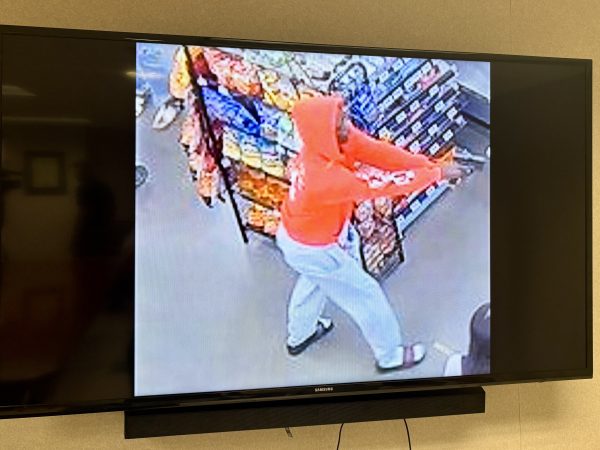
    A Clifton Heights man who fired a gun three times in a crowded Walmart, injuring a bystander, has been charged with attempted murder, Delaware County prosecutors said Monday.

    Armani Waite, 21, surrendered to police Monday afternoon, but District Attorney Tanner Rouse said investigators had identified him almost immediately after the Friday night shooting and issued a warrant for his arrest.

    Waite remained in custody Monday, in lieu of $1 million bail. His attorney, Arik Benari, did not immediately return a request for comment.

    “It is a remarkable act of violence, and it is really extraordinary that more people were not hurt by this,” Rouse said, noting that more than 30 people were standing in the store’s self-checkout area when Waite drew his gun.

    “This could have been an absolute calamity, and the truth of the matter is it’s his own ineptitude that kept this from being a whole lot worse.”

    District Attorney Tanner Rouse said Armani Waite was clearly the aggressor in Friday’s shooting, and targeted a man he had a “relatively innocuous” conversation with moments earlier.Vinny Vella / Staff

    Rouse said the shooting took place after a “relatively innocuous, relatively short” verbal dispute between Armani and another customer in the store, located on MacDade Boulevard in Glenolden.

    During the dispute, the other man lifted his shirt to show Waite he had a gun tucked into the waistband of his pants, according to the affidavit of probable cause for Waite’s arrest. When the other man turned around to leave, Waite drew his own gun and began firing, Rouse said.

    One of the bullets flew through a glass door and struck a female employee as she was standing outside the store, he said. She was treated for her injuries and is in stable condition, according to the prosecutor.

    Waite does not have a license to carry a concealed weapon, according to investigators. The man he targeted does have a concealed-carry permit, authorities said, and does not face criminal charges.

    Rouse said it was unclear what the two men were arguing about, but stressed that Waite was solely responsible for the shooting.

    “There is no basis for him to say ‘I was in fear for my life,’” Rouse said. “He was the aggressor here, plain and simple.”

    Waite dropped the gun as he fled the store, and it was later recovered by investigators. He also dropped the keys to his car, which investigators used to identify Waite and track him down, according to Rouse.

    He is scheduled to appear for a preliminary hearing on Aug. 11.

  • A Bensalem school bus aide groped a special-needs student, police said

    A Bensalem school bus aide groped a special-needs student, police said

    A school bus aide for the Bensalem Township School District groped a special-needs student and filmed the assault with his cell phone, police said Monday.

    Ali Khan, 62, was charged late last week with corruption of minors, endangering the welfare of a child, indecent assault, and related crimes after the 14-year-old girl’s parents contacted police.

    In a statement, interim Bensalem Township Superintendent Victoria Velazquez said Khan was removed from duty after the district was notified of the police investigation.

    The district is cooperating with police and has initiated an internal investigation, she said.

    Khan remained in custody, in lieu of 10% of $500,000 bail, court records show. There was no indication he had hired an attorney.

    The girl told police that Khan on Thursday touched her inner thigh while she was sitting next to him on a bus heading to Bensalem Township High school, according to the affidavit of probable cause for his arrest.

    Before the assault, she said, Khan blocked her path and forced her to take a seat on the bus next to him. He fastened her seat belt for her, the affidavit said, and while doing so put his face close enough to hers “to kiss her.”

    During the ride to her home, Khan intentionally dropped a pen and, while bending down to retrieve it, pointed his cell phone’s camera between her legs, the affidavit said.

    Surveillance footage from the bus showed that the girl closed her legs to prevent Khan from touching her, but that he pulled her legs apart to continue touching her. At one point during the assault, police said, Khan put his hands in his pants and appeared to touch himself.

  • Flood warnings are up for parts of the Philly area, with the potential for 5 inches of rain

    Flood warnings are up for parts of the Philly area, with the potential for 5 inches of rain

    For the first time since, well, Tuesday, flood warnings have been posted in the Philly region and a flash flood watch remains until 11 p.m. Monday, with a potential for up to 5 inches of rain in and around the city.

    The National Weather Service flood warnings were in effect until midafternoon for a broad area along the I-95 corridor where “slow-moving thunderstorms” had generated up to 4 inches of rain

    The Pennypack Creek in Northeast Philly jumped 1.5 feet in just 15 minutes to go above flood stage, the weather service said. At least one water rescue occurred in Montgomery County, and flooding resulted in lane closures along Route 130 in Gloucester County, the weather service reported.

    Strong storms remain possible during the day Monday, but Sarah Johnson, warning coordination meteorologist for the National Weather Service office in Mount Holly, said “the bigger threat we are concerned about is heavy rain and flash flooding.“

    While the weather service’s flood watch was in effect from 8 p.m. Sunday until 11 p.m. Monday, she cautioned that with computer models having their differences, the forecast had elements of “uncertainty.” (And when was the last time that happened?)

    Once again the atmosphere likely will be playing a version of rain roulette across the region, as it did on Tuesday, said Marc Chenard, senior branch forecaster at the federal Weather Prediction Center, in College Park, Md. Waterfall-like downpours turned the Delaware River into a shade of flowing mocha north of Philadelphia, while less than an inch fell upon the city.

    Areas of heavy rain moved through the region Sunday nigh an Monday morning. And regardless of how it all plays out this time around, “it’s definitely going to affect the morning commute” said Bill Deger, senior meteorologist with AccuWeather Inc., with rainfall rates of 1 to 2 inches an hour possible. Even if it’s not raining, he said, significant road flooding is possible.

    He said it’s likely that Philly and the surrounding area might be in the 2-to-4-inch bull’s-eye zone.

    When is likely timing for rain in the Philly region?

    “This is another setup where we have very moist air from the South,” said Deger.

    More rains were likely Monday morning, and again later in the afternoon with the approach of a cold front.

    That front could fire up strong thunderstorms, said Chenard, and it might take its good old time moving through the area.

    He added that as so often happens, the downpours “won’t be all that widespread, but where they do happen you usually get a flash flood.”

    The rains likely will shut off Monday night; however, the workweek is looking quite unsettled with shower chances every day.

    Will this end the drought in the Philadelphia area?

    While the drought warnings continue in New Jersey and Chester County, conditions have improved measurably in areas around the city, which was no longer in “severe” or “moderate” drought, in the latest interagency U.S. Drought Monitor update.

    Still, even in Philly conditions were listed as “abnormally dry” in the advisory issued Thursday, despite a July that was officially the wettest month in Philadelphia since March 2024.

    Philadelphia’s total, 7.03 inches, was 2.65 inches above normal. Over 8 inches was measured in Wilmington. However, as a testament to the randomness of summer rains, precipitation totals were significantly below normal in Atlantic City and Allentown, the weather service reported.

    And while downpours can trigger rapid rises on the local streams such as the Neshaminy Creek, in Bucks County, and the Frankford and Pennypack Creeks in Philly, they are less of a threat to the Delaware and Schuylkill Rivers, where water levels have remained relatively low.

    Those levels are the result of the longer-term dryness: July broke a 16-month streak of below-normal rainfall in Philadelphia.

    But Johnson said the region’s wetness trend has been showing some signs of staying power.

    Said Deger, “It’s been a long time coming.”

  • Police issue a warrant for a suspect in the Delco Walmart shooting

    Police issue a warrant for a suspect in the Delco Walmart shooting

    Police in Darby Township, Delaware County, have identified a suspect in a shooting at a Walmart in which an employee was injured.

    An arrest warrant has been issued for Armani Tyrell Waite, who is wanted on attempted murder, aggravated assault, reckless endangerment, and other weapons charges.

    The incident unfolded on Friday evening, after an argument broke out between two customers inside a Walmart on MacDade Boulevard in Glenolden.

    Police believe Waite opened fire inside the store, discharging more than five rounds and striking an employee in the calf.

    Officers later recovered the weapon at the scene. The employee was hospitalized and listed in stable condition.

    Public records list addresses for Waite in Southwest Philadelphia and Clifton Heights. An online resume states that he worked as a package handler for FedEx.

    Police believe Waite is armed and dangerous, and cautioned members of the public not to approach him. Individuals with information regarding his whereabouts were asked to call 911.

  • Holocaust archives were dedicated to a curator whose family story sparked a lifelong quest to preserve history

    Holocaust archives were dedicated to a curator whose family story sparked a lifelong quest to preserve history

    For decades, Donald Wittenberg spent much of his free time scrupulously documenting how the Holocaust affected people in the Philadelphia region and educating people to prevent anything like it from happening again.

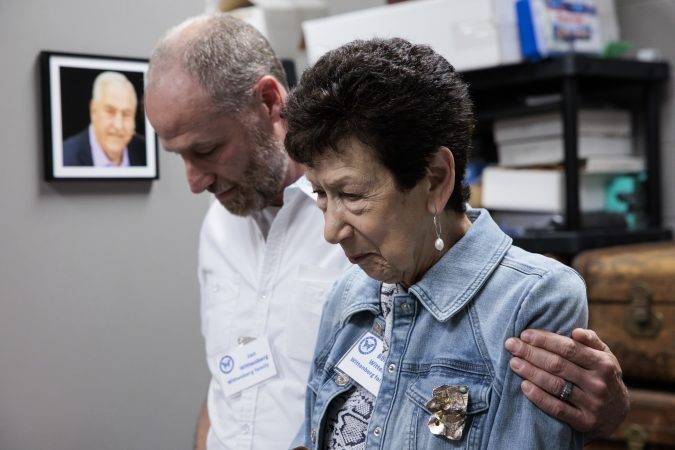
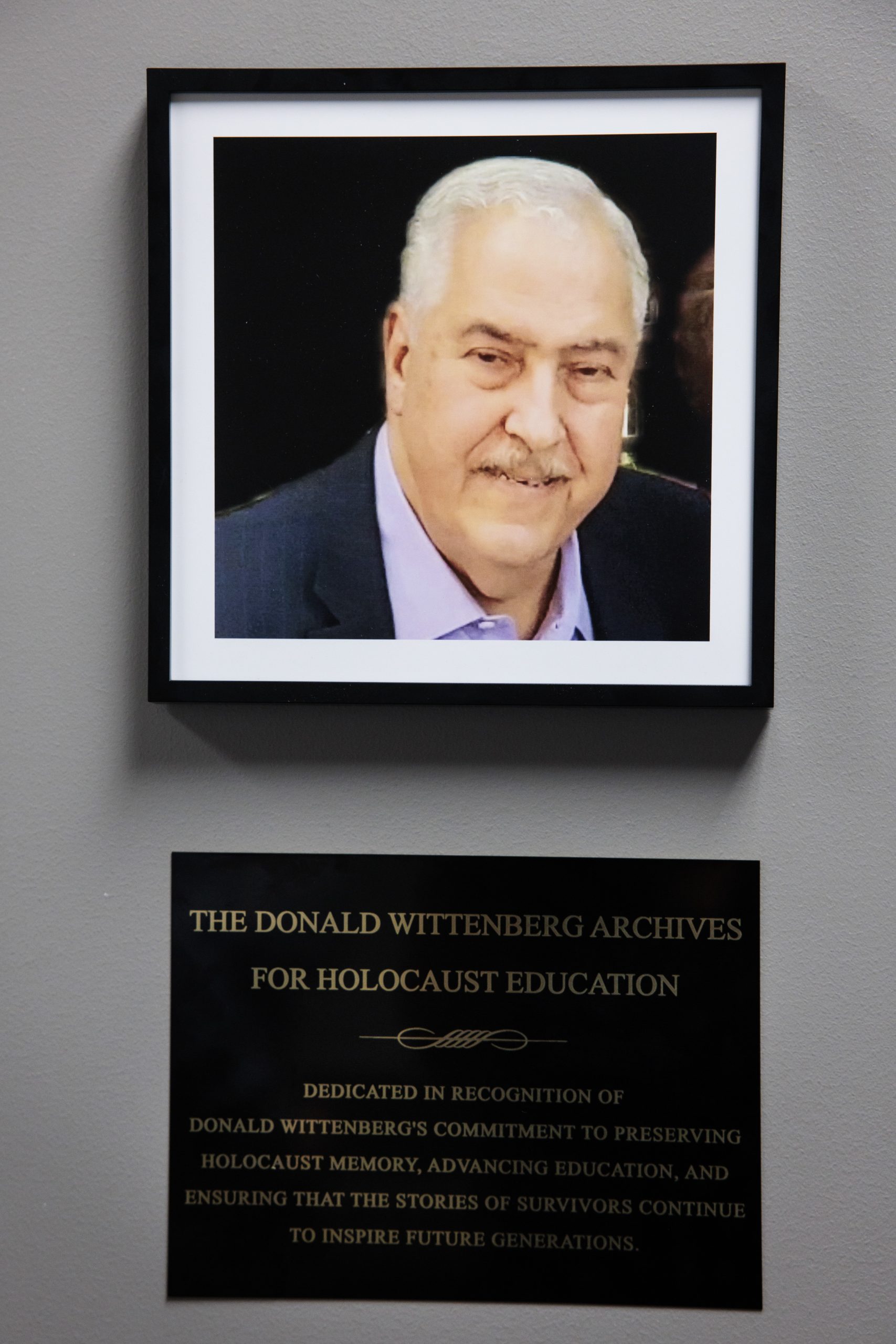
    Now, the archives of the Holocaust Awareness Museum and Education Center (HAMEC) in Elkins Park are dedicated to Wittenberg, who died in March at age 79.

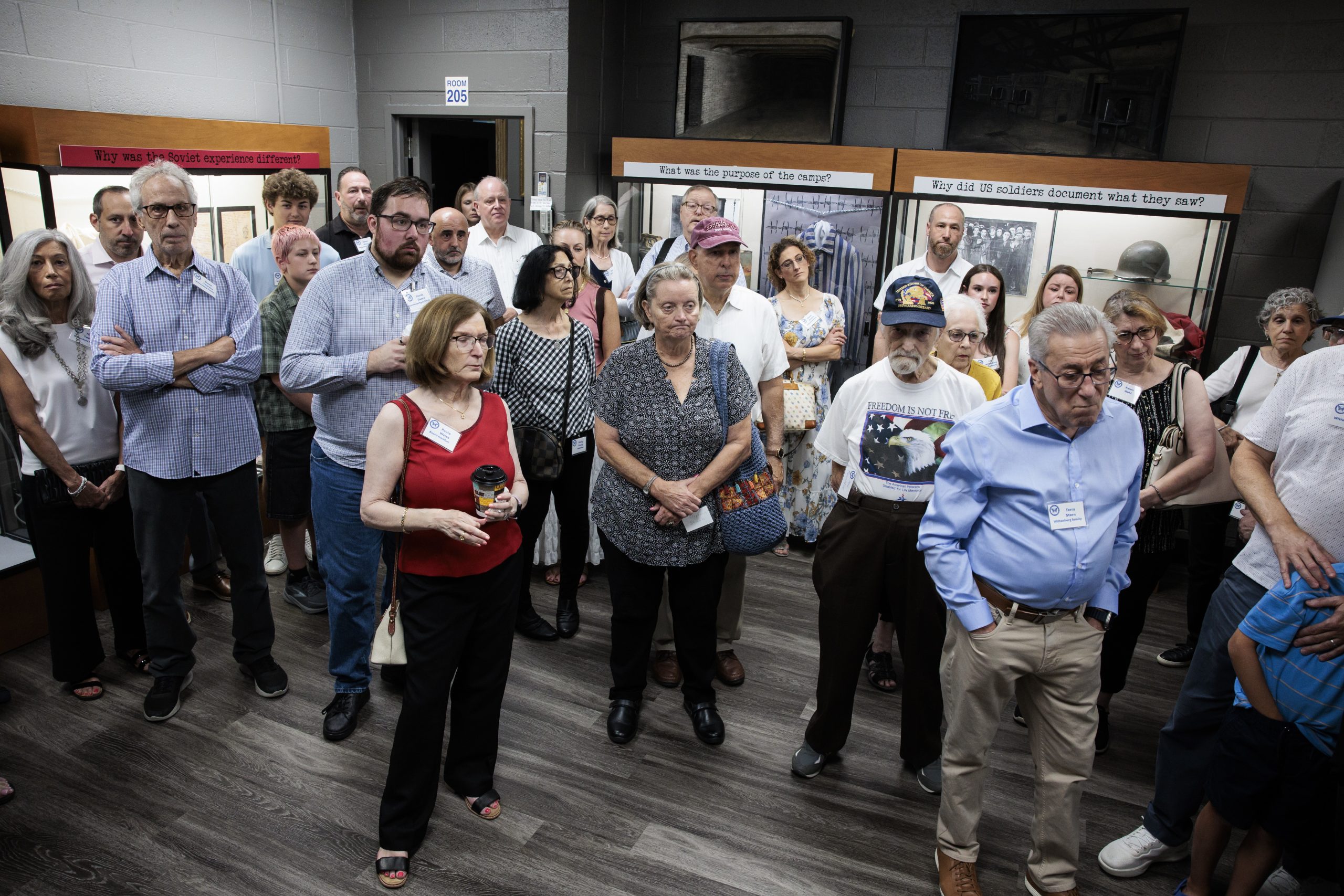
    “In these more than difficult times, Don’s efforts will go on, and we will always appreciate those efforts,” HAMEC board president Chuck Feldman said to family and friends gathered at the museum Sunday.

    Attendees listen to the dedication ceremony at the Holocaust Awareness Museum and Education Center on Sunday, Aug. 2, 2026, in Elkins Park. The Archives for Holocaust Education were dedicated in honor of longtime curator Donald Wittenberg.Monica Herndon / Staff Photographer

    Feldman estimated that with Wittenberg’s guidance, the museum and its educational programs have reached 400,000 young people in Pennsylvania and beyond.

    Feldman said he had known Wittenberg since 1970, when they were young members of the Northeast Independent Democrats, helping to elect Milton Shapp for Pennsylvania governor.

    Back then, the museum was in the basement of Yaakov Riz, who survived five years in a Soviet labor camp only to learn that 83 of his family members died in the Holocaust, Feldman said.

    Though Riz was the museum’s founder, Wittenberg — a public school teacher and administrator — helped build it into what it is today, Feldman said.

    “Don found artifacts through the local community, whose owners were looking for a respectful and impactful resting place,” Feldman said.

    Wittenberg’s wife, Bonnie, said his motivation was partly personal. On his father’s side, most of Wittenberg’s family died in the Holocaust. Wittenberg wanted to know who they were, and who may have survived.

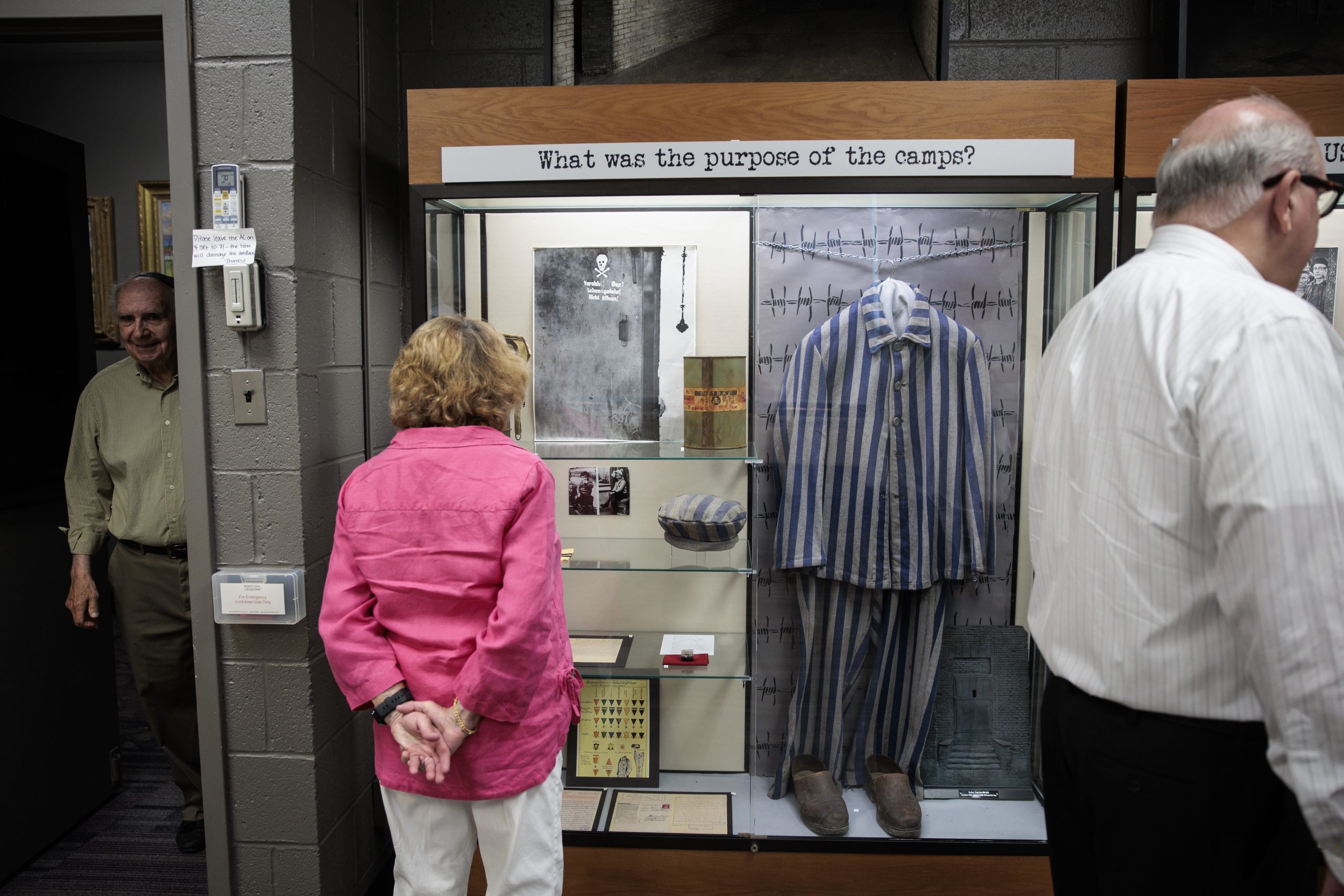
    Visitors browse the exhibits during the archives dedication ceremony at the Holocaust Awareness Museum and Education Center.Monica Herndon / Staff Photographer

    “He was like a detective. He was trying to solve mysteries,” Bonnie Wittenberg said.

    One example: Her husband became obsessed with finding where a distant relative had been buried. She wasn’t sure if he ever found out, but unanswered questions like this one often drove his research.

    This curiosity marked his conversations with the many Jewish families who over the years came to him with their own family stories. “He wanted to tell the story right,” she said.

    Joseph Wittenberg’s Army jacket worn during the liberation of the Buchenwald Concentration Camp, on display during the dedication ceremony at the Holocaust Awareness Museum and Education Center on Sunday, Aug. 2, 2026, in Elkins Park. The Archives for Holocaust Education were dedicated in honor of his son, longtime curator Donald Wittenberg.Monica Herndon / Staff Photographer

    Wittenberg’s search for his ancestors continued a journey begun by his own Hungarian-born father, Joseph Wittenberg, said Donald’s son Steven Wittenberg.

    Joseph Wittenberg served in the U.S. Army during World War II, “and when the war was over, he went back searching for his family, but he couldn’t find them,” Steven Wittenberg said.

    After Joseph died, Donald Wittenberg found personal journals and war trophies that revealed more about his family and his father’s military service, he said. He learned his father had been in Normandy on D-Day plus one and had seen combat.

    One item, a Nazi flag taken from Nuremberg’s city hall and signed by Joseph Wittenberg’s comrades in the U.S. Army 102nd Cavalry Regiment, is now on display in the museum. So is Joseph Wittenberg’s Army service coat, which Steven and his brother Jan remembered wearing when they were children.

    A photograph of Donald Wittenberg and a commemorative plaque were placed during a dedication ceremony at the Holocaust Awareness Museum and Education Center on Sunday, Aug. 2, 2026, in Elkins Park. Monica Herndon / Staff Photographer

    These objects, and the stories they tell, offer lessons for people today, Steven Wittenberg said: “The survivors are starting to pass away, and so you need to document that.”

    Donald Wittenberg carefully chose every artifact in the museum, said Jacob Dupre, a Holocaust historian who worked as Wittenberg’s assistant and who will be taking over as curator. Dupre noted that there were no images of death on display — a choice Wittenberg made.

    Wittenberg did include evidence of Nazi atrocities in the display, however. Tom Brennan of Oreland acquired a canister that once held Zyklon B, a gas used to kill people. Brennan noted that the shape of the puncture holes in the canister were the size of a standard-issue German soldier’s knife.

    Other artifacts spoke to the resilience of those imprisoned in the camps, such as a tiny six-sided die made of bread dough.

    A Nazi flag from Nurenberg during the dedication ceremony.Monica Herndon / Staff Photographer

    One poignant item, a handmade birthday card passed between two concentration camp prisoners, was translated from German to read, “Whom the stork brought in May / the sun smiled on him.”

    The poem-like text of the card, written more than 90 years ago, concluded with the lines, “Everything on Earth will change / when we’re all home again.”

    Such messages of hope and endurance, found throughout the museum, still have something to teach people today, said HAMEC CEO Fabulous Flores. The museum tracked the yearslong process from the Nazi’s hate campaign against Jews to the end of World War II.

    “We talk a lot about empathy,” Flores said. “When antisemitism is on the rise, when one group is targeted for hate, everyone is at risk.”