Category: Pennsylvania News

  • Immigration courts in Pa., N.J., and Del. issued record number of deportation orders in June

    Immigration courts in Pa., N.J., and Del. issued record number of deportation orders in June

    Immigration courts in Pennsylvania, New Jersey, and Delaware are ordering people removed from the country in numbers not seen in at least a quarter century.

    At the Philadelphia immigration court — which hears cases for most Pennsylvania and Delaware residents — orders of removal or voluntary departure rose 71%, from 1,230 in May to 2,105 in June. At New Jersey’s courts, orders rose 47%, from 2,348 to 3,446.

    The figures are the highest since at least late 1997.

    “We’re definitely seeing an increase in removal orders where we may not have seen them in the past,” said Emma Tuohy, a partner at Philadelphia’s Simon, Choi & Tuohy and a past president of the American Immigration Lawyers Association’s Philadelphia chapter. “Cases are getting more difficult to win.”

    June’s cases bring to more than 46,000 the number of removal and voluntary deportation orders courts across the three states have issued since President Donald Trump’s return to office — slightly more than the total issued over the entirety of former President Joe Biden’s term.

    (function(){function e(){window.addEventListener(`message`,function(e){if(e.data[`datawrapper-height`]!==void 0){var t=document.querySelectorAll(`iframe`);for(var n in e.data[`datawrapper-height`])for(var r=0,i;i=t[r];r++)if(i.contentWindow===e.source){var a=e.data[`datawrapper-height`][n]+`px`;i.style.height=a}}})}e()})();

    (A voluntary departure order requires an individual to leave the country but, unlike a removal order, does not legally bar them from returning.)

    Local immigration attorneys say the surge in such orders reflects the Trump administration’s success in transforming immigration courts from independent arbiters of the law into components of a larger deportation machine. Immigration judges, they say, now often work in concert with government agents and attorneys to remove the maximum number of people from the country as quickly as possible, sometimes violating the due process rights of people who find themselves caught up in the system.

    Lilah Thompson, chief of immigration in the Community Defense Unit at the Defender Association of Philadelphia, has seen the trend in her own practice.

    “The immigration judges are on the same side as ICE and DHS, which is not supposed to be the case. They’re supposed to be neutral arbiters of the law,” Thompson said. “But that is not how it actually plays out.”

    Unlike typical federal judges, immigration court judges are not independent judicial branch officials but executive branch employees within the Executive Office for Immigration Review (EOIR), the agency responsible for overseeing the nation’s immigration courts system.

    EOIR officials declined an interview request for this article. In a statement, a Department of Justice spokesperson said: “The Justice Department is restoring integrity to our immigration system by hearing cases fairly, expeditiously, and uniformly, in accordance with the law.”

    The states’ record high figures and sharp month-over-month increases match the trend nationwide, as the country saw such orders rise by a third, to nearly 87,000. Nationally, more than 960,000 of these orders have been issued since Trump returned to office.

    June’s increases reflect a steady rise in such orders since then.

    Compared with January 2025, removal and voluntary departure orders were up nearly 300% in Pennsylvania and Delaware, and more than 280% in New Jersey. Nationally, removal orders were up almost 160%.

    The data were published by the Transactional Records Access Clearinghouse (TRAC), a data gathering and research organization that regularly acquires and analyzes such data from EOIR.

    Faster cases, more deportations

    As the number of deportation orders has reached all-time highs, such orders have also come to represent the vast majority of deportation case outcomes.

    In June, 90% of Pennsylvania and Delaware cases ended with an order of removal or voluntary departure. In New Jersey, 94% did. Nationally, about 89% of cases ended with such an order.

    Since the start of Trump’s second term, more than 85% of cases have ended with such orders. Under Biden, about 44% did. About two-thirds of cases ended in a removal or voluntary departure order during Trump’s first term.

    Rosina Stambaugh, a York-based immigration attorney, pointed to the faster pace of recent deportation cases as a major factor.

    “They’re scheduling a final hearing in like two weeks. Before, we’d have at least a month to prepare,” Stambaugh said. “To prepare for a final hearing in just two weeks is insane. We used to have at least 30, sometimes 45 to 60, days to prepare for a hearing.”

    (function(){function e(){window.addEventListener(`message`,function(e){if(e.data[`datawrapper-height`]!==void 0){var t=document.querySelectorAll(`iframe`);for(var n in e.data[`datawrapper-height`])for(var r=0,i;i=t[r];r++)if(i.contentWindow===e.source){var a=e.data[`datawrapper-height`][n]+`px`;i.style.height=a}}})}e()})();

    The faster pace is in part the result of judges refusing to offer continuances, lawyers say. Before, it was ordinary for a judge to delay a hearing so an attorney had more time to prepare. That is no longer the case.

    The change follows a series of rulings from the Board of Immigration Appeals (BIA) — the highest administrative body for interpreting immigration laws. One such ruling largely prohibited judges from extending cases based on future eligibility for relief.

    Stambaugh offered a client of hers as an example.

    After the man was arrested in an ICE sweep, his fiancée, an American citizen, raced to file marriage paperwork. The couple were scheduled to get married the day after his hearing. Stambaugh asked the judge to delay issuing a ruling, as the impending marriage would have granted new grounds for protection from deportation. The judge refused and the man accepted a voluntary departure.

    Tuohy pointed to another set of BIA decisions that has sped up cases — and made them harder to win.

    Those rulings instruct judges to order someone removed before providing them with an opportunity for a full hearing of their case in some circumstances.

    “So before anyone’s even had a chance to dive into the meat of the case — to really prepare evidence and prepare for the case — the judges are predetermining that the case is without merit and [removing] them,” Tuohy said.

    More people detained while facing deportation, the vast majority with no criminal record

    The increasing number of detained individuals is another factor fueling the surge in deportations, according to lawyers.

    In June, more than 11% of people receiving orders of removal or voluntary departure in Pennsylvania, New Jersey, and Delaware were in detention. That is up from 7% in January 2025. Since Trump returned to office, about one in four people in the three states was detained, compared with about 7% during the Biden administration and 29% during Trump’s first term.

    (function(){function e(){window.addEventListener(`message`,function(e){if(e.data[`datawrapper-height`]!==void 0){var t=document.querySelectorAll(`iframe`);for(var n in e.data[`datawrapper-height`])for(var r=0,i;i=t[r];r++)if(i.contentWindow===e.source){var a=e.data[`datawrapper-height`][n]+`px`;i.style.height=a}}})}e()})();

    Stambaugh said that in the past, when Immigration and Customs Enforcement agents encountered someone without legal status who did not have a criminal record, they would usually just issue a notice to appear before a judge or even let them go after advising them to seek legal status. That has changed.

    “It is 100% that ICE officers no longer have discretion in who they can detain,” Stambaugh said. “Now, if you come in contact with ICE and you’re not a lawful permanent resident or U.S. citizen, you’re detained.”

    As more people are detained during deportation proceedings, a smaller share of them have a criminal record.

    In June, just 1% of cases in Pennsylvania, New Jersey, and Delaware ending in an order of removal or voluntary departure were brought on grounds alleging a criminal violation, matching the share nationally. The last time more than 5% of cases ending in an order of removal or voluntary departure were brought under a criminal charge was December 2024, the month before Trump took office for his second term.

    “They’re trying to remove as many people as possible, and they’re going to go for low-hanging fruit, which is individuals out in the community who are doing nothing wrong,” Thompson said, referencing collateral arrests and those that have occurred during individuals’ ICE check-ins.

    A series of BIA rulings last year have also led to a growing detained population, lawyers say. In the most consequential of those, the board prohibited immigration judges from granting bond to people who entered the country without permission — regardless of the length of time they had lived in the United States or whether they had a criminal record.

    Previously, attorneys say they had adequate time to prepare cases. That is no longer true.

    “When you have to do these cases in two weeks, you don’t really have much to work with because the main person who has to get you evidence is stuck in detention,” Stambaugh said. “That’s what makes these cases a lot harder.”

    Share of people without legal representation increasing

    People with legal representation are far more likely to avoid an order of removal or voluntary departure. In June, 73% of such individuals in Pennsylvania, New Jersey, and Delaware courts had their cases end in removal vs. 98% of those who lacked legal representation, similar to national figures and long-standing trends.

    At the same time, the share of people without legal representation has steadily climbed in recent years.

    In June, a little under 24% of individuals in deportation cases in Pennsylvania, New Jersey, and Delaware had a lawyer. That is down from about 57% in January 2025. Since Trump returned to office, about one in three people in the three states had a lawyer, as compared with about 57% during the Biden administration and 52% during Trump’s first term.

    (function(){function e(){window.addEventListener(`message`,function(e){if(e.data[`datawrapper-height`]!==void 0){var t=document.querySelectorAll(`iframe`);for(var n in e.data[`datawrapper-height`])for(var r=0,i;i=t[r];r++)if(i.contentWindow===e.source){var a=e.data[`datawrapper-height`][n]+`px`;i.style.height=a}}})}e()})();

    Thompson, of the Defender Association of Philadelphia, said several factors were at play.

    First, the demand for attorneys has increased alongside the volume of cases, swamping supply.

    Second, cases both move more quickly and are more complex, limiting the number of cases attorneys can juggle at once.

    “Our ability to take on cases is so much less now because what a case requires now is so much more,” she said.

    And unlike Thompson and her colleagues, who offer their services at no charge, private lawyers are expensive and their fees reflect the increasing complexity of cases, meaning fewer people can afford them.

    Tuohy suggested the increase in detention is likely also making it more difficult for people to afford legal services.

    “You’re not working anymore if you’re in detention, right?” Tuohy said. “So then you’re asking your family to foot the bill, and that consideration [to hire an attorney] becomes even more difficult.”

    Stambaugh suggested an additional factor: The flurry of policy changes has led to immigration courts so stacked in the government’s favor that many immigrants may regard hiring an attorney as a waste of money since they will likely face deportation no matter the strength of their case.

    She has begun advising potential clients that their best option may be to keep their money and instead accept voluntary deportation.

    “In my opinion, you’re going to have to go back [to your home country], so you might as well keep your money and go find somewhere to live,” Stambaugh said.

  • Albert James Mamary, attending physician and professor of thoracic medicine and surgery at Temple, has died at 59

    Albert James Mamary, attending physician and professor of thoracic medicine and surgery at Temple, has died at 59

    Albert James Mamary, 59, of Wynnewood, attending physician and professor of thoracic medicine and surgery at Temple University, researcher, writer, mentor, artist, outdoorsman, craftsman, and amateur bicycling champion, died Thursday, July 9, of cholangiocarcinoma at Temple University Hospital.

    A 1999 graduate of Temple’s Lewis Katz School of Medicine, Dr. Mamary spent his career at Temple and affiliated hospitals. He was an expert in pulmonary disease, transplants, and sleep disorders at the Temple Lung Center, and became program director of the Pulmonary and Critical Care Fellowship at Temple Hospital in 2006.

    He earned a master’s degree in anthropology at the College of William and Mary in Virginia and his premedical school credits at the University of Pennsylvania. In a tribute, his family said: “His education in both medicine and anthropology reflected a lifelong belief that caring for a patient required understanding not only the disease but the whole person.”

    Over more than three decades at Temple — as a student, resident, fellow, professor, and physician — Dr. Mamary treated thousands of patients, mentored hundreds of students and doctors, lectured in classrooms and at seminars, and wrote more than 60 scientific papers and textbook chapters. He was named a top doctor by Philadelphia Magazine several times and was featured in The Inquirer and on 6abc TV for his lead role in a successful double-lung transplant in 2015.

    “It’s been 120 to 145 patients, individual patients that we’ve been able to help every year,” Dr. Mamary told CBS News in 2024. “That’s really the aim here, is to add years of life to patients who otherwise wouldn’t have that opportunity.”

    Colleagues called Dr. Mamary a “physician’s physician” and noted his “amazing intelligence and clinical acumen” in tributes. Gerard J. Criner, chair of Temple’s Department of Thoracic Medicine and Surgery, said: “His patients loved him not only for his clinical skills but also for the warmth, compassion, and humanity he brought to every encounter.”

    A former patient said online: “He was a calm in the storm of my end stage disease. … The world has lost a hero.”

    A former student said: “His kindness, thorough and balanced approach to medicine, and quiet, thoughtful approach to even the most stressful emergencies reminded me of a Jedi master.”

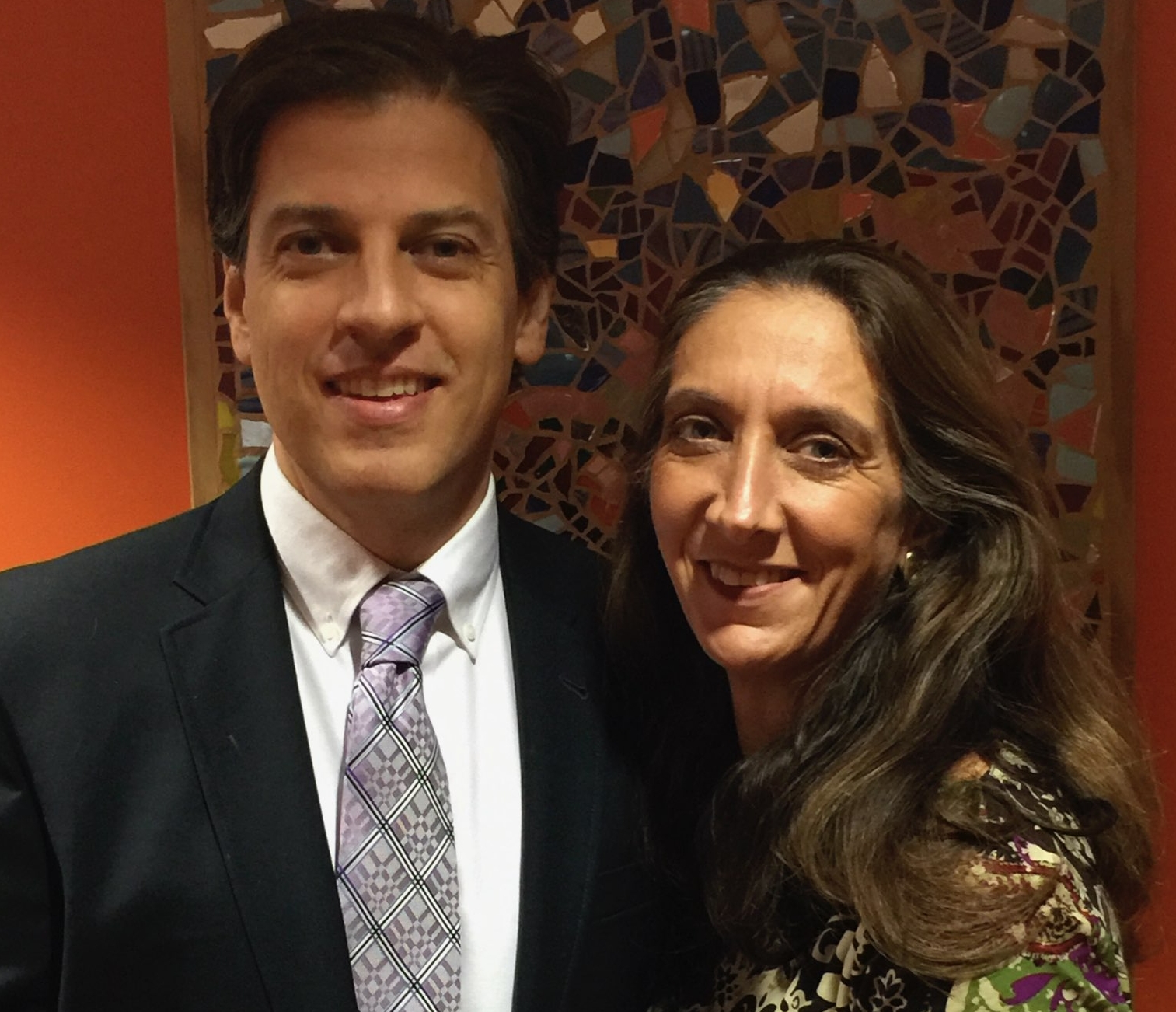
    Dr. Mamary and his wife, CeilaSue, married in 1996.Courtesy of the family

    Away from the hospital, Dr. Mamary liked to bike, hike, and camp. He built his own 18-foot mahogany canoe, walked the entire 272-mile Long Trail in Vermont, and won masters bicycling championship races.

    He also painted and sculpted, and earned a bachelor’s degree in art and psychology at Haverford College. He and his wife, CeliaSue, initiated the Shortridge Memorial Park Arboretum in Wynnewood and earned a 2024 community service award from Narberth and Lower Merion officials.

    “James brought wisdom, kindness, curiosity, and genuine joy to every moment,” his wife said.

    Albert James Mamary was born June 12, 1967, in Hempstead, N.Y. He grew up in Binghamton, N.Y., became an Eagle Scout, and was a wilderness river guide for the Boy Scouts in Maine during his college years.

    Dr. Mamary was an avid bicyclist and won masters championship races. Courtesy of the family

    He met CeliaSue Jaffe in class at Haverford, and they married in 1996 and had daughters HannahRose and LilyRuth. They lived in East Falls and Wynnewood, and he rode his bike from home to Penn and then Temple as often as he could.

    Dr. Mamary enjoyed traveling, baking, cooking, and gardening. “His specialty is fruits and vegetables, and I grow the flowers,” his wife said.

    He followed the Phillies, rescued cats and dogs, and doted on his daughters. Everybody said he was funny and silly.

    “He was curious and always learning or doing something new,” his daughter LilyRuth said. “He took joy in simple things.” His daughter HannahRose said: “Even if he wasn’t my dad I would want him as a friend because he was so interesting and so easy to talk to.”

    Dr. Mamary was a wilderness river guide for the Boy Scouts in Maine during his college years.Courtesy of the family

    Dr. Mamary was diagnosed with cholangiocarcinoma, bile duct cancer, in 2020 and treated by longtime colleagues and friends at Temple, some of whom he had mentored. “It was a profound reflection of the life he lived,” his family said, “that so many of those he had taught ultimately became his caregivers.”

    His wife said: “He was a very vibrant and adventurous person but so thoughtful, steady, and reliable. James was incredible.”

    In addition to his wife and daughters, Dr. Mamary is survived by a sister and other relatives.

    Private services were held earlier.

    Donations in his name may be made to the Albert James Mamary Memorial Fund at the Cholangiocarcinoma Foundation, 5526 West 13400 South, No. 510, Herriman, Utah 84096.

    Dr. Mamary “was a very vibrant and adventurous person but so thoughtful, steady, and reliable,” his wife said. Courtesy of the family
  • A robotic heart surgery specialist was fired by Main Line Health for blowing the whistle on complications, lawsuit says

    A robotic heart surgery specialist was fired by Main Line Health for blowing the whistle on complications, lawsuit says

    A former cardiac thoracic surgeon at one of Main Line Health’s flagship programs says in a federal lawsuit that he was fired after reporting a series of bad patient outcomes.

    Gianluca Torregrossa accuses the nonprofit hospital system in the Philadelphia suburbs of failing to thoroughly investigate a pattern of complications among the patients of another senior surgeon, including one instance that led to a heart transplant.

    The Italian physician attempted to have the cases reviewed multiple times during his tenure, which was just short of five years, but instead Torregrossa was marginalized by hospital leadership, suspended, and eventually terminated before the end of his contract, according to the suit.

    The termination caused issues with the physician’s visa, which required him to return to Italy without his wife and daughter while he got his new visa in order, according to the complaint. Torregrossa, who began working at Cleveland Clinic in June, says he also lost wages during the three-month period and his reputation suffered.

    “Cardiac surgery is a small professional field, and news of his suspension and termination spread nationally and internationally, creating questions about his professional standing despite his clinical outcomes and subsequent employment by Cleveland Clinic,” the suit says.

    Torregrossa’s attorney did not respond to a request for comment.

    The lawsuit, filed July 31 in the U.S. District Court for the Eastern District of Pennsylvania, names only Main Line Health as a defendant. The health system declined to comment on the active litigation.

    “Main Line Health’s Robotic Cardiac Vascularization Program is an important part of our commitment to providing advanced surgical care,” a spokesperson said in a statement. “The program helps ensure patients have access to specialized surgical expertise and innovative, minimally invasive treatment options close to home.”

    Torregrossa was recruited by the Montgomery County hospital system in 2021 to assist in expanding the robotic heart surgery program based at Lankenau Medical Center, the lawsuit says.

    The opportunity to join Main Line Health was lucrative. The surgeon signed a five-year contract starting at $800,000 a year, plus bonus, according to the lawsuit.

    Main Line Health is a national leader in a robotic procedure to replace a clogged artery with a new one, known as coronary artery bypass graft, which is the most commonly performed heart surgery in the United States. But at Main Line it is often performed in an uncommon way.

    The program was led by Francis Sutter, a pioneer of the advanced but controversial technique.

    Shortly after joining Main Line Health, Torregrossa became concerned about the outcomes of patients whom Sutter operated on robotically that the physician believed were preventable, the suit said.

    Torregrossa asked in 2023 for a review of seven of Sutter’s cases, the complaint says, but a team discussed them “only superficially, no meaningful follow-up was initiated, and the pattern of complications involving a single surgeon was not examined.”

    The physician continued to raise concerns over allegedly preventable complications through 2025, as well as ethical breaches in patient assignment at the program, according to the complaint.

    The Inquirer was unable to reach Sutter, who retired in July, based on publicly available records.

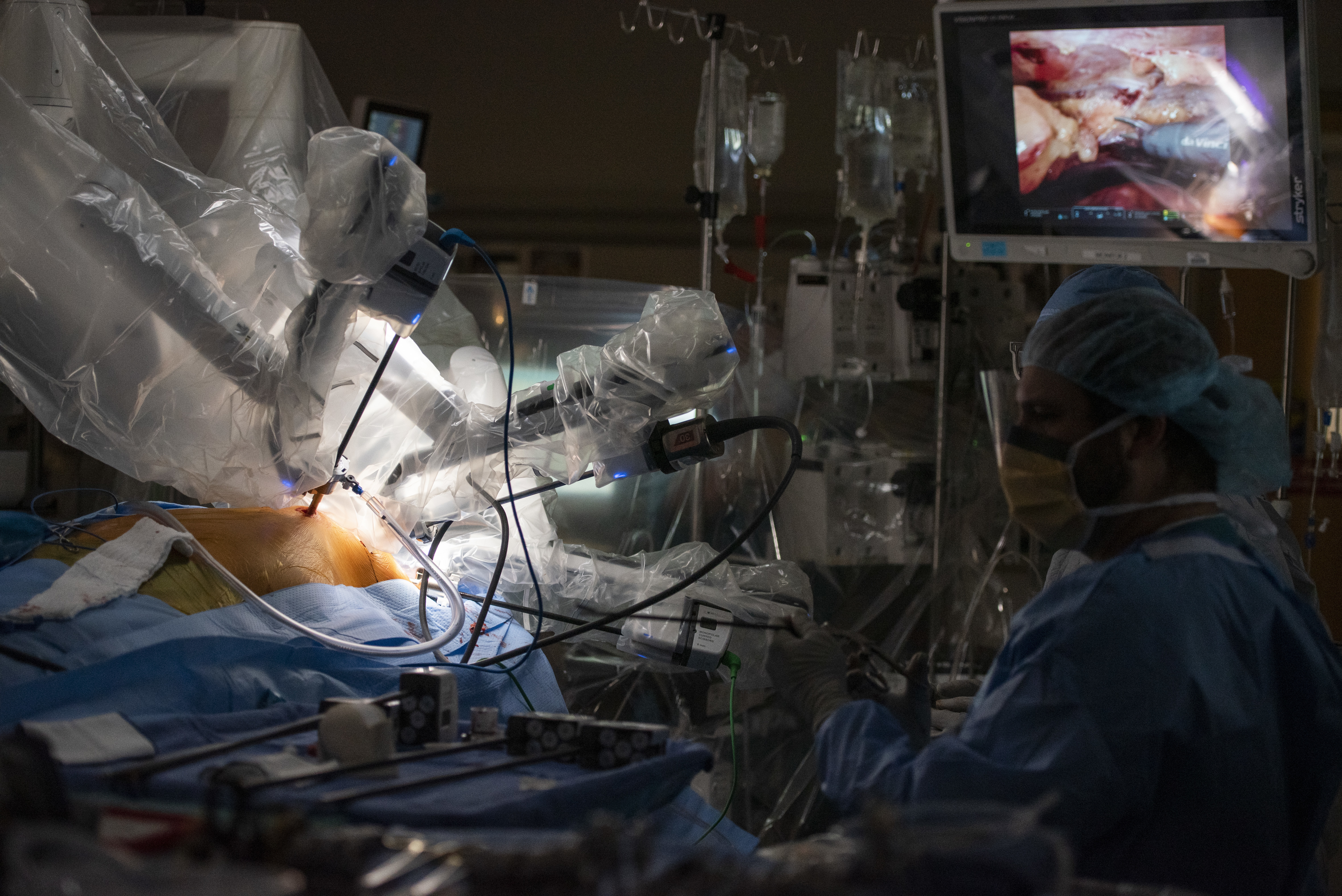
    Michael Carboine (left), physician assistant, and Jeff Roman (right), scrub nurse, watches the monitor as lead surgeon Francis Sutter moves the robotic instruments in the patient’s heart on Monday, June 26, 2023. Lankenau Hospital, part of Main Line Health, uses robotic coronary bypass surgeries at a higher percent than other hospitals.Allie Ippolito / Staff Photographer

    Following his internal reports, the suit says, Torregrossa was marginalized by leaders of the program and hospital.

    Human resources opened an investigation into Torregrossa based on a comment he had made in a brief recruitment interview, according to the complaint. The documents do not repeat the comment or provide more context to what was said.

    “That HR event reflected a broader pattern in which routine professional interactions involving Dr. Torregrossa were escalated against him, while more serious concerns involving others, like patient safety, were not meaningfully investigated,” the lawsuit says.

    In November 2025, the hospital system told Torregrossa that his contract would not be renewed past June 30, the suit says.

    Torregrossa continued to push internally for reviews, but his pleas fell on deaf ears, according to the complaint. In January, he submitted an external patient safety report to the Pennsylvania Licensing System and the Joint Commission, a hospital accreditation organization, which conducted a surprise visit to Lankenau shortly after.

    The surgeon also circulated an anonymous letter about the Sutter cases in question, the suit says without saying who were the recipients.

    Sutter’s medical license is active and Pennsylvania Department of State records show no disciplinary history. Lankenau has passed a series of Pennsylvania Department of Health inspections since January that found the hospital in compliance.

    Main Line Health placed Torregrossa on administrative leave in February and barred him from accessing the system’s hospitals and clinics. The system accused him of disparaging the health system during a presentation and engaging in unprofessional conduct.

    The lawsuit says both excuses were false and pretextual, leading to his March termination.

    The complaint accuses Main Line Health of violating the Pennsylvania whistleblower protection law and breaching his employment agreement. It asks for damages in an unspecified amount greater than $75,000.

    “Being removed from practice for approximately three months deprived him of the ability to operate, teach, proctor, maintain case volume, and continue refining a rare and demanding surgical technique,” the lawsuit says.

  • An eclipse and planet show are due Wednesday, but meteors may be the stars in Philly’s skies

    An eclipse and planet show are due Wednesday, but meteors may be the stars in Philly’s skies

    A partial eclipse will occur Wednesday, along with a planetary alignment that doesn’t happen all that often.

    For star power, however, the annual Perseids meteor shower, which will be peaking late Wednesday night and early Thursday, may outshine them both as the moon gets out of the way to prepare for its big night at the end of the month.

    The Perseids should put on quite a decent show this year for those who have access to reasonably dark skies and do not mind staying up a little late.

    These things can produce 50 to 100 meteors an hour under ultra-dark sky conditions, but you won’t see that many above light-polluted Philly.

    Above the darkness-challenged Philadelphia Museum of Art, you might be able to catch 10 an hour, said Bill Cook, NASA’s meteoroid guru at the Marshall Space Flight Center in Huntsville, Ala.

    The potential spoiler in all this would be the state of the skies, which are expected to be sunny Wednesday. But just how cloud-free they will be at night is not clear just yet, said Patrick O’Hara, meteorologist with the National Weather Service in Mount Holly.

    The weather service is calling for mostly clear skies late Wednesday night, but some clouds may roll in after midnight, and it says the forecast contains “a frustrating level of uncertainty.”

    About the eclipse

    The eclipse has been generating media attention, and it is going to be a spectacular show — if you happen to be in Greenland or Iceland or northern Spain, places that will experience the haunting magic of totality, which will occur around 1:45 p.m. Philly time.

    Locally?

    “Philly just isn’t in the right place for any good eclipse viewing this time around,” said Teddy Kareta, assistant professor of astrophysics and planetary science at Villanova University.

    Only about 8% of the sun will be blocked out at Philly’s latitude, said Dwight Dulsky, with the Bucks-Mont Astronomical Association.

    Said Kareta, “That’s a small enough change that … I don’t think I’d even notice.”

    Dulsky said the Bucks-Mont group “will be doing some safe solar viewing” of the eclipse in the marina parking lot of Nockamixon State Park, in Upper Bucks County.

    If you’re jonesing for a totality experience, NASA will be showing the whole thing live on YouTube.

    The parade of planets

    Early risers (or late stay-uppers) on Wednesday can admire a planet parade in the western sky, or at least some of its participants.

    Four planets — Jupiter, Mercury, Mars, and Saturn — will be lined up and visible to the unaided eye, said Kareta, though Jupiter and Mercury may be elusive, since they will be close to the horizon.

    The line may be slightly less orderly on the 13th, but may not look much different from the perspective of the average earthling, Kareta added.

    If you miss the planet show, Kareta advises that these things may be special but are not exactly rare. A similar alignment occurred “about a year ago,” he said.

    “As an astronomer,” he said, “I find these planetary alignments more fun and beautiful than I find them super interesting.”

    The Perseids are about to peak

    Several hours after the moon gets in the sun’s way Wednesday, it will be fortuitously out of the way for the annual Perseid meteor showers.

    As many as 50 to 100 meteors per hour may appear at their absolute peak, which this year would be in the early morning hours of Thursday.

    You would not find that absolutely dark sky anywhere around the city, but NASA’s Cook estimates that about 20 an hour might be visible over, say, Malvern. Similar numbers may appear in the open spaces of Valley Forge National Historical Park.

    Elsewhere in the great Philadelphia city-state, French Creek State Park, bordering Chester and Berks Counties, is a favorite among local sky watchers, and the prime viewing area is open all night.

    At least a few watch parties are planned, including one by the Bucks-Mont group from 8 to 11 p.m. at the Nockamixon park, Dulsky said.

    Also, the McKaig Nature Center in Upper Merion Township, Montgomery County, will be taking a busload of meteor-gazers to a clearing overlooking the McKaig Woods.

    The Perseids are so named because they appear to radiate from the constellation Perseus, but they show up all over the sky. They are the most popular among the 30 or so showers visible in the night sky annually.

    The Geminids, in December, outnumber the Perseids, but people prefer warmth with their meteor-watching. Plus, NASA reports that the Perseids are by far number one for those spectacular fireballs.

    The meteors are the result of debris from the comet Swift-Tuttle, one of the larger meteor-producing comets, having a diameter of about 15 miles.

    The earth encounters Swift-Tuttle detritus every year around this time, and those cosmic pebbles become bright streaks as they enter Earth’s atmosphere at 130,000 mph. If they’re big enough, they explode into fireballs.

    Cook says that while the moonless skies offer the ideal background, this will not be an especially prolific year for the Perseids. He said the 2028 harvest will be more abundant, when the earth passes through “a denser stream” of the comet’s sheddings.

    That once-in-a-blue-moon event

    The moon will be returning later in the month, on Aug. 31, as the second full moon of August, thus a “blue moon.” Like those planetary alignments, it is something to expect once in a blue moon.

  • Residents raise concerns over disbanding police | Inquirer Chester County

    Hi, Chester County! 👋

    As Oxford weighs the future of its police force, some residents are concerned about what those changes could mean for the borough. Also this week, a new timeline on the Boot Road bridge project is expected to have ripple effects in Downingtown, QVC has named an interim head, plus, here’s where to catch tonight’s meteor shower.

    If someone forwarded you this email, sign up for free here.

    Oxford residents are concerned about potentially losing their homegrown police force

    Residents protest against the disbanding of Oxford borough’s police department. Photo courtesy of Danny Graham

    Residents in Oxford are concerned about the future of emergency response times and municipal protections in the 5,800-person borough if council moves ahead with disbanding its police department in favor of joining a regional agency.

    That’s a decision council will make at an Aug. 17 meeting as it grapples with rising costs to maintain a century-old police force.

    For some residents, the decision feels personal. “This is a small town. These guys, all 11 of them, mean something to us. We buy them coffee. We buy them donuts. They are part of our extended family. This matters to us, and how they’re being treated matters to us,” one said.

    The Inquirer’s Brooke Schultz looks at what a regional change could mean and how the borough got to this point.

    📍 Countywide News

    • Traffic signal and safety improvements are expected in six Chester County municipalities thanks to recently awarded state funds. The largest is a nearly $640,000 grant for Tredyffrin Township to make improvements along Lancaster Avenue.
    • The region will see two celestial events — a partial solar eclipse today and the Perseid’s meteor shower, which will peak tonight — and there are several great viewing spots nearby, including Valley Forge National Historical Park and French Creek State Park. Here’s what to know.
    • Expect roadwork, including on Route 30, to cause delays, detours, and some closures throughout the county this week.

    💡 Community News

    • A 9-year-old girl who was injured in an East Goshen home shooting last week, which left one woman dead, is recovering, according to the DA’s office.
    • Downingtown Mayor Erica Deuso is calling on Gov. Josh Shapiro and other state leaders to approach the delayed Boot Road bridge replacement over Amtrak with greater urgency. The East Caln Township project is now projected to continue into next year, further snarling local traffic, emergency routes, and even some other nearby projects.
    • West Chester-based home shopping giant QVC Group has named Mike George as its interim CEO after parting ways with David Rawlinson. George previously served as president and CEO of the company.
    • Honey Brook Township has named Nancy Freenock its next township manager and secretary. An attorney by trade, Freenock previously served as the city manager for Warren and borough manager for Clarion, both in Western Pennsylvania.
    • East Vincent Township is hosting a special planning commission meeting tomorrow at 6:30 p.m. at the municipal complex and on Zoom to consider AQ Dev, LLC’s conditional use application to build 53 single-family homes at 446 Stony Run Rd.
    • West Vincent Township’s board of supervisors is slated to consider Toll Brother’s proposal to build 46 homes near South Chester Springs and Conestoga Roads at its meeting on Monday.
    • The third season of Tires, which was created by comedian Shane Gillis and is set and was partly filmed in West Chester, drops on Netflix tomorrow.
    • Spooky season may still be a couple of months away, but Spirit Halloween has already opened at a former Rite Aid on Paoli Pike in West Chester. It’ll be joined this month by one at the former Tuesday Morning space in Downingtown.
    • A new coworking space, iThrive Coworking, recently opened at 10 Leopard Rd. in Paoli.

    🍽️ On our Plate

    🎳 Things to Do

    🎙️ Sound of Summer Free Concert Series: The final show of the season features a performance by Kennett Square’s own rock band The Holy Smokers. ⏰ Wednesday, Aug. 12, 6:30-8:30 p.m. 💵 Free 📍 Anson B. Nixon Park, Kennett Square

    🎸 80’s Revolution: The band will transport attendees back a few decades, playing some of the most iconic tunes from the 1980s (leg warmers optional). ⏰ Friday, Aug. 14, 7:30 p.m. 💵 $23-$28 📍 Uptown! Knauer Performing Arts Center

    🖼️ Look Around Music and Arts Festival: Hear live music, browse works of art, see skating demonstrations, and grab a bite to eat at this festival. ⏰ Saturday, Aug. 15, noon 💵 $25 in advance, $30 at the door 📍 The Elks Lodge, West Chester

    🎶 Eagleview Summer Concert Series: Old 97’s frontman Rhett Miller headlines the next show. Local trio The MAKs will also perform. ⏰ Tuesday, Aug. 18, 7-9 p.m. 💵 Free 📍 Eagleview Town Center, Exton

    🏡 On the Market

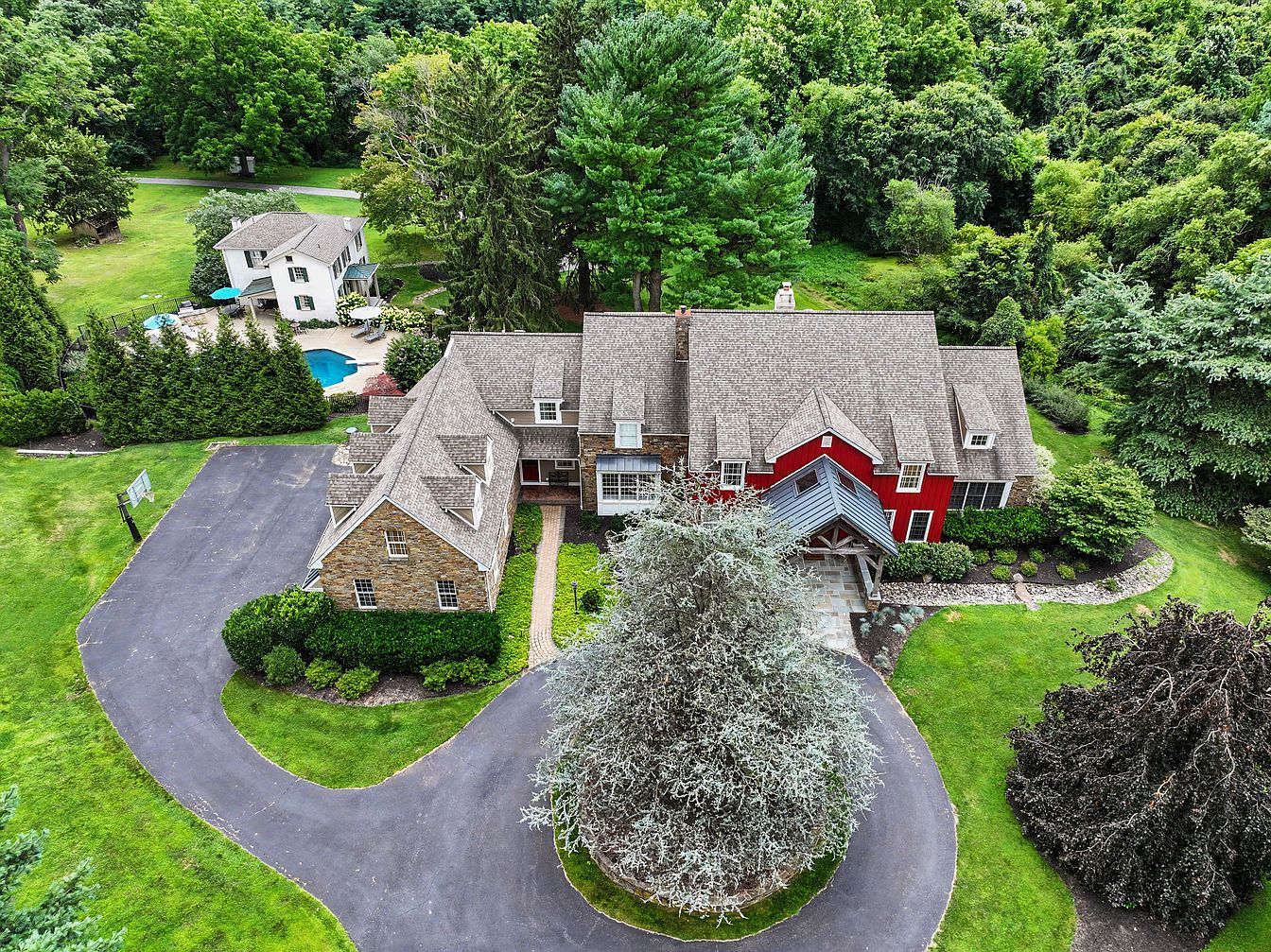
    A Kennett Square estate with a guest house and pool

    The property includes a sprawling residence, a guest house, and a pool.Next Door Photos | Courtesy of Pat McGowan/The Collective.Real Estate

    This Kennett Square property features not one but two homes, both situated on a large lot. The main six-bedroom home is a renovated and expanded mid-19th-century barn, complete with old beams, a stone fireplace, and an expansive walk-out lower level with a kitchenette. The second home, a restored 1800s farmhouse with two bedrooms, spans nearly 1,500 square feet and has its own driveway. Both overlook a pool and hot tub.

    See more photos of the property here.

    Price: $2.25M | Size: 7,402 SF | Acreage: 2.56

    🗞️ What other Chester County residents are reading this week:

    By submitting your written, visual, and/or audio contributions, you agree to The Inquirer’s Terms of Use, including the grant of rights in Section 10.

    This suburban content is produced with support from the Leslie Miller and Richard Worley Foundation and The Lenfest Institute for Journalism. Editorial content is created independently of the project donors. Gifts to support The Inquirer’s high-impact journalism can be made at inquirer.com/donate. A list of Lenfest Institute donors can be found at lenfestinstitute.org/supporters.

  • How Josh Shapiro’s early embrace of data centers is testing his high popularity in Pennsylvania

    How Josh Shapiro’s early embrace of data centers is testing his high popularity in Pennsylvania

    Gov. Josh Shapiro made a declaration in the early days of his administration: Pennsylvania is open for business.

    The move would ultimately include promises to slash bureaucratic red tape, cut permit wait times, and offer a new direct line to Shapiro’s office for major corporations hoping to set up shop in Pennsylvania.

    Pennsylvania would “move at the speed of business” and “get stuff done,” the new mottos used by his administration, he said. He’s campaigning for reelection in November on the same catchphrases, and boasting major successes like the 12-day repair of I-95 in 2023 that traditionally would have taken months to reopen as an example of how he can think outside the box to solve problems.

    What’s more: He sees delivering for residents — showing them government can actually solve problems — as the future of the national Democratic Party, while it searches for an effective message and messenger heading into the 2028 presidential primary, which he is widely expected to enter.

    It was with this same spirit last summer that Shapiro announced the largest single private sector investment in Pennsylvania history: Amazon committed $20 billion in Pennsylvania that included two data center campuses in Luzerne and Bucks Counties. Pennsylvania scored the project because of its promise to fast-track permitting and use tax breaks for the massive developments.

    “Pennsylvania’s gonna be better off. I think America’s gonna be better off, because we’re going to win the battle of AI supremacy and it’s going to be done right here in the commonwealth of Pennsylvania,” Shapiro said in an interview on CNBC’s Squawk Box on the day he announced the deal.

    Gov. Josh Shapiro announces a $20 billion investment by Amazon in Pennsylvania data centers in Salem Township and Falls Township on June 9, 2025.Commonwealth Media Services

    But in a year’s time, the politics — and public opinion on both sides of the aisle — have dramatically shifted on data center development. Shapiro’s early welcome of data centers has created an opening for criticism from his gubernatorial opponent and members of his own party.

    Yet efforts to cut red tape have proven to be slow and overblown: Only six data centers are actually under construction in Pennsylvania since the announcement, and 10 have received at least one state-level permit approval, according to Shapiro’s office. Still, Shapiro’s popularity is being evaluated by some voters and anti-data center activists on a perception that he moved too quickly and sacrificed the state’s safety in favor of Big Tech.

    “I am all about legislators and decision makers getting s— done. This version of it is reckless and it’s irresponsible and it’s not actually serving our people,” said Carrie Santoro, the executive director of progressive advocacy group Pennsylvania Stands Up who has been holding town hall meetings in communities around the state on data centers.

    As public opposition to data center development has grown over the last year, Shapiro has begun to soften his position, citing his personal evolution on the projects. He’s gone from consulting Amazon and the data center industry earlier this year to draft data center incentives, to vowing his own executive actions to curb the projects in communities that oppose them.

    “Governor Shapiro intends to use all the tools available to him to stop the dozens of speculative data center projects that do not meet community needs and Pennsylvania should expect to hear more from him on that in the coming weeks,” said Shapiro’s press secretary, Rosie Lapowsky.

    Now Shapiro, who otherwise maintains vast popularity ratings in the state, faces a vulnerability on one of voters’ top priorities as he heads into November, and a particularly sensitive concern among Democrats as he potentially vies for the party’s nomination in two years.

    A liability among some voters

    Data centers were not broadly known or understood by many until this year, as public outcry continues to grow.

    Many states, including Pennsylvania, had already begun welcoming the major projects, and some hyperscale developers plan to spend billions of dollars to build them. Pennsylvania’s General Assembly first approved a sales tax exemption for data center developments in 2021, when Shapiro’s predecessor, Democratic Gov. Tom Wolf, was still in office.

    Shapiro, for his part, initially embraced data centers as an economic opportunity for Pennsylvania, bringing union jobs for construction workers to build out the physical infrastructure for the computers running AI software. He also wanted to position Pennsylvania to inherit the most benefit from providing space for AI to operate, leading not only other states but also other countries in the race to advance new technology. He and U.S. Sen. Dave McCormick (R., Pa.) appeared together as early embracers of the technology and the massive buildings needed to power it, speaking together during McCormick’s first AI summit in Pittsburgh last summer.

    Sen. Dave McCormick shakes hands with Gov. Josh Shapiro at a panel discussing state investment and infrastructure at the Pennsylvania Energy and Innovation Summit at Carnegie Mellon University in Pittsburgh on July 15, 2025.Kaiden J. Yu / Staff Photographer

    But as communities began to push back against the rapid proliferation of data center proposals, in part to protect their water and energy resources, Shapiro adjusted.

    Shapiro, like many elected officials, has changed his positions and rhetoric on the unpopular developments. He announced his Governor’s Responsible Infrastructure Standards (GRID) as a way to incentivize developers to follow transparency and environmental requirements in order to receive tax breaks. And when the General Assembly failed to approve his GRID standards or any substantial data center restrictions, Shapiro said he’d act on his own, though it’s still unclear what that will entail.

    “You want to build a data center there? You’ve got to bring your own power; you’ve got to pay for your own power. You’ve got to be transparent with the local community — tell them who the hyperscaler is, tell them what’s going to go on there. You’ve got to have a local benefits agreement to help that community. You’ve got to protect the water sources that are used to cool off those facilities,” he said in a June interview with GZERO.

    The Democratic governor has been lauded nationally for challenging PJM Interconnection, which is the electric grid operator for Pennsylvania and 12 other states over its efforts to raise prices on ratepayers. He capped the price Pennsylvania consumers could pay through 2029, as residents fear rate hikes due to the data center boom.

    But Shapiro’s plan on data centers is too little, too late, Santoro said.

    “I saw the GRID proposal as him moving on this issue, and the thing that I am concerned about is he didn’t move enough to keep up with how much voters have moved on this issue,” she said.

    Some of those voters would agree. A Quinnipiac University poll of Pennsylvania voters, conducted in early June, found just 24% of those surveyed — and 40% of Democrats — approved of “the way Gov. Josh Shapiro is handling data centers in Pennsylvania.” It’s a stark contrast to Shapiro’s overall approval numbers, in which he’s maintained above 50% approvals — record-high favorability ratings for a first-term Pennsylvania governor.

    People sign in and head into an East Vincent Township supervisors meeting where an agenda item involved a data center proposal at the former Pennhurst state hospital grounds on Dec. 17, 2025, in Spring City, Pa. Marc Levy

    Joanna Tenney, 36, of East Vincent in Chester County, held a sign at a June rally in the state Capitol that read: “Shapiro: Amazon’s bootlicker.” A registered Democrat, she voted for him in 2022, and believes he should be held accountable for supporting data center development in Pennsylvania that led to the fast-tracking of a now-stalled 125-acre data center project near where she lives.

    She’s so fed up with Shapiro’s approach to data centers that she said will be writing in the name of her state senator, Sen. Katie Muth (D., Chester), who has been on the front lines of advocating for many state environmental issues, for governor on her November ballot. Tenney said she and a few other anti-data center advocates plan to run a write-in campaign for Muth.

    “We’ve elected somebody that we thought was going to make the right choices by us, and we don’t really see that happening,” Tenney said.

    Muth, who took office in 2018, said she would not be supporting Shapiro or “any elected official who puts the interests of Big Tech ahead of the health, safety, and future of Pennsylvania communities.”

    If Shapiro changes his stance on data centers, she would support him, Muth said. She is the prime sponsor of a bipartisan bill to place a three-year moratorium on hyperscale data center development.

    “Get right on the issue, Right your wrongs. If you can’t be on the side of science and people, my support is MIA,” she added.

    Emily VanFleet, 26, lives in Archbald in Northeastern Pennsylvania, where six data center projects are underway comprising more than 50 buildings that, when completed, will cover 14% of the town. VanFleet, who is an unaffiliated voter, said she also supported Shapiro in 2022. But because of his public support for speeding up data center development in Pennsylvania, she is “certainly not going to vote for him this upcoming election,” she said. She isn’t sure she’s going to vote at all.

    “I want Shapiro to stop being a coward,” VanFleet said in June. “I have emailed him, I have called him, I have reached out to him so many times. I have not heard back, not once. I see his videos all over social media that he has an open-door policy, but I have yet to see it.”

    (In May, Shapiro’s administration announced that one of the unpopular Archbald developments, Project Gravity, was removed from a fast-track permitting program for failing to properly engage with the community.)

    But negative attitudes toward Shapiro’s position on data centers may be limited statewide and his position is unlikely to dramatically knock down his high popularity or reelection odds: The June Quinnipiac poll found 56% of those surveyed approve of the way he is handling his job as governor overall, and recent polling shows Shapiro ahead 53% to 40% against his Republican challenger, state Treasurer Stacy Garrity.

    The data center pitfall

    Shapiro’s political opponents — both immediate and prospective — are also seizing on the issue.

    Garrity, the GOP nominee endorsed by President Donald Trump, made her first TV ad an attack on Shapiro’s support for the Amazon project and other data center developments — even as Trump himself has remained open and excited about AI and data centers.

    Garrity, of Athens in Northeastern Pennsylvania, has also led a statewide listening tour on the topic. In June, she convened one of those sessions in Hatfield with a group of commissioners, zoning planners and emergency responders to talk about how they have been impacted by data centers. She blasted Shapiro for his role in attracting Amazon and said his proposed new requirements amount to a “flip flop.”

    “Josh Shapiro has failed on this topic. He was the biggest cheerleader for data center development in Pennsylvania, until he wasn’t,” Garrity said at the June 24 meeting.

    Pennsylvania Treasurer Stacy Garrity participates in the podcast “Ruthless” during an event hosted by Americans for Prosperity, Concerned Veterans for America, and the Libre Initiative at the National Constitution Center in Philadelphia on Jan. 29. Elizabeth Robertson / Staff Photographer

    Garrity has her own mixed record on data centers.

    At the time of the Amazon announcement, Garrity called the investment “great news” that would bring “historic investment” and “create thousands of jobs.” And her current position remains unclear. She has said she opposes a statewide moratorium but wants “a pause” on development instead.

    Like Republicans running in districts that supported Trump in 2024 but oppose data centers, she appears to be attempting to find a pro-business and pro-regulation path.

    “We want to make sure data centers are an addition to the grid, not a contraction. If there’s infrastructure that needs to be added to the grid, rate payers shouldn’t be paying for it,” she said. “I’m not opposed to data centers, but we have to do them the right way, and we haven’t done it. It’s because of a lack of leadership from the government.”

    Garrity’s “long record of supporting completely unregulated data center development makes it clear that she just can’t be trusted,” said Manuel Bonder, a spokesperson for Shapiro’s campaign.

    More recently, Garrity has said she would prevent data centers construction on prime agricultural fields.

    Local government leaders said at Garrity’s campaign roundtable in June that there has been lack of guidance around issues, especially around power demand, water use, infrastructure, environmental impacts, and community compatibility.

    Kathie Doyle, a Republican on the Richland Township Board of Supervisors, said confusion around data centers have “set off a firestorm” in her community. Earlier this year, warnings of a supposed proposal for a data center in the Bucks County township circulated on social media, but turned out to be a “business park” with two buildings.

    “Our residents don’t understand that we just cannot say no,” she said. Municipalities in Pennsylvania cannot outright ban data center development.

    Santoro said Shapiro’s inconsistency is a liability that could sway some voters away from casting their ballot for him.

    “Certainly he is giving her an ‘in’ by staying on the wrong side of this,” she said.

    And it’s not just Republicans seizing on Shapiro’s position. The early reputation Shapiro earned as a champion of data centers may become a point of attack among other Democratic contenders for the presidency in 2028, too. In a veiled jab at Shapiro in June, Illinois Gov. JB Pritzker, knocked Pennsylvania on a business podcast for allowing Constellation Energy to restart Three Mile Island nuclear plant just to power Microsoft’s data centers.

    “My guess is that’s going to be a reasonably unpopular thing to have done,” Pritzker said, without noting Shapiro by name on the Prof G Markets podcast.

    Vulnerability for down-ballot Democrats

    With a $50 million campaign war chest and high approval ratings, Shapiro is widely favored to win reelection this year. But his record on data centers could prove a liability for those he’s hoping to pull along, some advocates, like Santoro, say.

    Shapiro has been staking much of his national political clout on his ability to flip four House districts in Pennsylvania for Democratic control of the U.S. House, drawing voters to the polls with his name at the top of the ticket. He’s also aiming to flip Pennsylvania’s Senate into Democratic control for the first time since 1993, giving him a Democratic trifecta in Harrisburg, as the state’s split legislature has blocked many of Democrats’ priorities from becoming law.

    Santoro predicted that could be in jeopardy “if he does not change course.”

    “Shapiro’s leadership on data centers will be the thing that costs us the first Democratic trifecta in 31 years, and I think that while he will likely win reelection with this wildly unpopular position on data centers, other elected officials and candidates will not,” she said.

    Other Democratic candidates aware of data centers’ deep unpopularity are differentiating themselves on the issue, despite remaining otherwise aligned with Shapiro. Scranton Mayor Paige Cognetti, who is running in Pennsylvania’s 8th Congressional District, released a new ad last month putting data center developers on notice.

    “Big Tech needs to pay their own way, not hide behind [nondisclosure agreements]. No tax breaks. Don’t raise our electric bills. Don’t poison our water. And hire local union labor,” she said, in the ad spot. “You can’t meet that? Then get out.”

    Cognetti’s stance isn’t vastly different from Shapiro’s — both want to end blanket tax breaks — but her rhetoric is much stronger, and she’s putting the issue at the forefront of her campaign.

    Democrats insist Republicans, including those running at the state level, don’t have the moral high ground on data centers after failing to pass through several measures that would have enacted stricter controls for their approval.

    Sam Silverman, a former congressional aide and founder of Silverman Strategy Group, a strategic communications firm focused on technology and politics, said Shapiro’s approach to data centers — proposing a plan rather than enacting a moratorium — presents a risk that could either pay off and become the model for other states, or fail to fully address all future concerns and is unpopular.

    “Shapiro is going out in front by proposing a bargain now. If the standards protect ratepayers, produce visible benefits, and hold bad actors accountable, Pennsylvania could have a model others can follow,” he said. “But because he is putting forward the deal now, he will be judged on whether it delivers.”

    Taking a risk involves trust, though. Shapiro can afford to make a big swing at one of the hottest issues in politics because voters put so much faith in him, Silverman said.

    “Most politicians do not have the amount of trust and political capital to take a risk, either,” Silverman said.

    Whether the governor is triumphant will come down to what standards go into effect and whether bad actors are held accountable, he said, “and whether Pennsylvanians believe those standards are working.”

  • Janet Klein, celebrated longtime historic preservationist and philanthropist, has died at 96

    Janet Klein, celebrated longtime historic preservationist and philanthropist, has died at 96

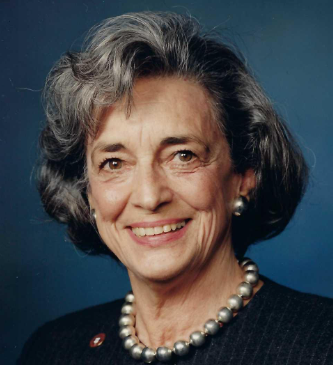
    Janet Klein, 96, of Rydal, Montgomery County, former member of the Philadelphia Historical Commission, historic program director for the Fairmount Park Commission, regional project coordinator for the National Trust for Historic Preservation, chair of the Pennsylvania Historical and Museum Commission, volunteer, and philanthropist, died Tuesday, Aug. 4, of age-associated decline at her home.

    Born in Philadelphia, Mrs. Klein earned degrees at Philadelphia High School for Girls and the University of Pennsylvania. She and her husband, Lewis, traveled the world after they married in 1952, and she told The Inquirer in 1973 that she became interested in local historic preservation after returning from abroad in 1964.

    “I felt something was lacking here,” she said. “There was no pride nor a thorough knowledge of what we really have in Philadelphia to share with visitors.”

    So she joined the Philadelphia Museum of Art’s tour guide program, rose to chair of guides for the Fairmount Park house tours, and conducted hundreds of tours for thousands of visitors to the eight historic houses in the park. “The guides,” she said in 1973, “can’t help but sense that somehow they have passed on to the visitors the continuing life of historic Philadelphia.”

    Eventually, Mrs. Klein became historic program director for the Fairmount Park Commission, was appointed to the Philadelphia Historical Commission by then-Mayor Wilson Goode in the 1980s, and served as chair of the Pennsylvania Historical and Museum Commission from 1997 to 2003. Friends called her “formidable” and compared her to the Energizer Bunny.

    Keen to spark public interest in historic sites, Mrs. Klein forged partnerships between site officials and schools, community groups, businesses, and the media. In 1997, she oversaw filmmakers as they shot scenes for the movie Beloved at the Landis Valley Museum in Manheim Township.

    She appeared often in The Inquirer and said in 1989: “We often find that people who live just around the corner from a house museum don’t know it existed.”

    At Fairmount Park, she redefined the commission’s operating procedures and enlisted students as volunteers at its public mansions. At the city historical commission, she led walking tours of Old City and helped determine the historic designation of the old Lit Bros. building, the Boyd Theatre, the Dilworth house, and other significant structures.

    This story and photo of Mrs. Klein (right) was published in The Inquirer in 1973.Newspapers.com

    With the state historical and museum commission, she erected historical markers across the state, helped designate the Art Museum as a Commonwealth Treasure in 2002, and directed the commission’s public relations, tourist promotions, and preservation efforts.

    “History doesn’t have to be dead,” she said in 1998. “Historical markers represent the people and their interests. They are a way for young people to learn about their heritage and gain a personal respect for the past.”

    She also led the Comprehensive Historic Assistance Program for the National Trust for Historic Preservation in the 1980s, helped create the Liberty Trail near Independence Hall, and directed the restoration of the first historic home in the Lukens National Historic District of Coatesville.

    She served on the board of visitors at Temple University’s Ambler campus and Klein College of Media and Communications, on the collections committee at the Union League, and as a guide at the Winterthur Museum in Delaware. She was active with the Pennsylvania Department of Conservation and Natural Resources, the Museum Council of Philadelphia, and other groups.

    This story and photo of Mrs. Klein appeared in The Inquirer in 1998.Temple University

    She was honored for her service by the Women’s Center of Montgomery County in 1999 and by the Preservation Alliance for Greater Philadelphia in 2001, and was named a Distinguished Daughter of Pennsylvania in 2000. In 2018, she earned an award for service and philanthropy from Coatesville’s National Iron and Steel Heritage Museum.

    As philanthropists, Mrs. Klein and her husband supported what became, named after them, the Klein College at Temple, the National Association of Television Program Executives, the Police Athletic League, the American Heart Association, and other organizations dedicated to education, healthcare, youth development, and social service. They created the Janet and Lew Klein Making A Difference Award for the Pennsylvania Association of Broadcasters and donated his professional papers to Temple.

    “She was an inspirational community leader,” said David Boardman, dean of Temple’s Klein College, “who inspired others through her generosity, her brilliance, and her warmth.”

    Janet Surman was born March 3, 1930. She grew up in Oak Lane and earned a bachelor’s degree at Penn.

    Mrs. Klein (left) appeared with others in 2007 to celebrate a historical marker at the corner of 9th and Christian Streets.Alejandro A. Alvarez / Staff Photographer

    She met Lewis Klein in college, and they married in 1952. They had a son, Stephen, and a daughter, Ellen, and lived in Melrose Park and Rydal. Her husband, a pioneering TV broadcaster and cofounder of Gateway Communications, died in 2019.

    Mrs. Klein and her husband traveled the world for decades and attended dozens of galas and fundraising events. She enjoyed gardening, was an avid reader, and liked to play Scrabble.

    In 1993, Inquirer columnist Clark DeLeon called her “a wonderful, funny, vivacious lady.” Temple’s Boardman said: “She was truly one of the best human beings I’ve ever had the privilege to know.”

    In addition to her children, Mrs. Klein is survived by a granddaughter, two great-grandchildren, and other relatives.

    A celebration of her life is to be held later.

    Donations in her name may be made to the Abington Police Athletic League, 1166 Old York Rd., Abington, Pa. 19001.

    Mrs. Klein grew up in Oak Lane and earned a bachelor’s degree at Penn. Courtesy of the family
  • An Upper Darby teen who killed his high school classmate is heading to state prison

    An Upper Darby teen who killed his high school classmate is heading to state prison

    When Michael Nixon pulled the trigger on the handgun he was carrying last May, he robbed Khalief Webster Jr. of his future, Webster’s family of a loving son, and the community of any semblance of safety, Webster’s mother said Tuesday in a crowded Delaware County courtroom.

    “Khalief was not just the headlines, not just the crime scene tape that haunts me through the night, not just a victim,” Talaya Shaw said of her 17-year-old son. “Khalief was a young boy growing into a young man with a heart bigger than this world could handle.”

    And Nixon, she told Judge Deborah Krull, “had no God-given right to decide when and how he left this world.”

    For killing Webster, Nixon, 18, of Upper Darby, was sentenced to 18 to 36 years in state prison. Nixon pleaded guilty to third-degree murder earlier this year for the fatal shooting, which unfolded in May 2025 as the two teens, classmates at Upper Darby High School, crossed paths on Long Lane near Pine Street.

    Emotions and tempers flared during Nixon’s hours-long sentencing, which the judge had to pause multiple times to rein in outbursts from those who filled the standing-room-only courtroom. Webster’s friends and relatives screamed to be heard, calling Nixon a coward, among other insults, and demanding justice.

    Sheriff’s deputies barred more people from entering the hearing, and had to respond to a scuffle that erupted outside the courthouse after Nixon’s sentence was handed down.

    In May 2025, Upper Darby Police Superintendent Tim Bernhardt (center) announced the arrest of Michael Nixon for the murder of Khalief Webster.Vinny Vella / Staff

    On the day of the shooting, Webster was riding a miniature dirt bike when he encountered Nixon, who had walked 25 minutes from his own neighborhood to the area, according to investigators.

    What happened next was the subject of debate during Tuesday’s hearing.

    Nixon’s attorney, Pete Manaras, said Webster asked his client if he was the “young boul” he had seen “the other day,” and got off the bike to confront him.

    The two teens, he said, knew each other and had gotten into disputes before. Nixon, fearing for his safety, shot Webster in the abdomen, Manaras said.

    But Senior Deputy Attorney General Christopher Phillips, who prosecuted the case, said Nixon was the aggressor. He was out looking for Webster, Phillips said, armed and lying in wait in an area where he knew he would encounter the other teen.

    “The public needs to be protected from people that would do such a thing on a sunny afternoon, on a beautiful May day, to a young man who didn’t see it coming,” Phillips said.

    After the shooting, Nixon fled and was recorded on a surveillance camera telling someone on a phone call that he had shot somebody in the chest, according to the affidavit of probable cause for his arrest. Nixon’s mother then picked him up and drove him away.

    Nixon addressed Webster’s family Tuesday to apologize, saying he wished he could take back what had occurred.

    “I didn’t want to kill him. I never wanted to hurt him,” Nixon said. “I was just scared and my body reacted before my mind.”

    Nixon said he encountered Webster by chance. He was carrying the gun because of previous run-ins with him, he said, and needed it for protection as he walked to a friend’s house.

    Webster grabbed at his waistband as he confronted him, Nixon said. He believed Webster was reaching for a gun and reacted.

    Nixon said he had grown up in an abusive household and that made him “perceive everything as a threat” and grow anxious when people get too close to him.

    “I’m not saying this as an excuse for my actions, because I know I deserve to be locked up for what I did,” he said. “But that doesn’t mean I don’t want to turn my life around, because I do.”

    Webster’s relatives, including his grandmother, Charlotte Webster, said that while they have not yet forgiven Nixon, they know that will come in time through their faith.

    Still, she said, the pain Nixon caused their family was devastating.

    “I believe this was a deliberate, heinous crime he committed,” she said. “He didn’t care about anything or anyone.”

  • A 224-unit senior living facility is proposed for Radnor to help address ‘a woeful lack of senior housing’

    A 224-unit senior living facility is proposed for Radnor to help address ‘a woeful lack of senior housing’

    A Gladwyne-based senior services organization is planning to build an independent living community on an estate in Radnor Township, a move the group says is necessary as demand for senior living services rises in the region.

    Waverly Senior Services presented an early proposal to Radnor Township’s planning commission on Aug. 3 for a large senior living facility at 452 S. Roberts Rd., a historic estate owned by the Haverford School.

    The proposal includes 208 multifamily housing units across 15 buildings, 16 twin homes, and a handful of administrative buildings, including a maintenance building and a welcome house.

    Waverly Senior Services, a nonprofit organization, is in the process of purchasing the 43-acre property, which the Haverford School acquired in 2022.

    Waverly operates Waverly Heights, a life care residence in Gladwyne, as well as in-home healthcare and personalized care management services.

    Tom Garvin, Waverly’s president and CEO, told the Radnor planning commission that the organization is seeing “unprecedented demand” for life care facilities as baby boomers age and their housing and care needs change.

    “There’s a woeful lack of senior housing across the country to serve that sort of bubble that’s coming in the population,” Garvin said.

    The number of U.S. residents 65 and older grew nearly five times faster than the total population between 1920 and 2020, according to the U.S. Census Bureau.

    More than 560,000 senior housing units will be needed to meet the demand for older adult housing, according to market research firm NIC MAP. Under current development rates, only 191,000 will be built.

    Waverly currently serves around 365 residents, the vast majority of whom are local, Garvin said.

    The Radnor site would primarily be home to independent living, with some additional care for residents who need it as they age in place. It will not be a skilled nursing facility.

    Waverly representatives said that they are early in the process — they will still need to finalize the land sale and secure township approval — and that it could be three to five years before shovels hit the ground. However, Garvin said, the organization felt it had to jump on the opportunity in a region where it is difficult to find open space to develop.

    “This opportunity for a piece of property that’s 43 acres, zoned institutional, in our primary market area is one we just couldn’t pass up,” he said.

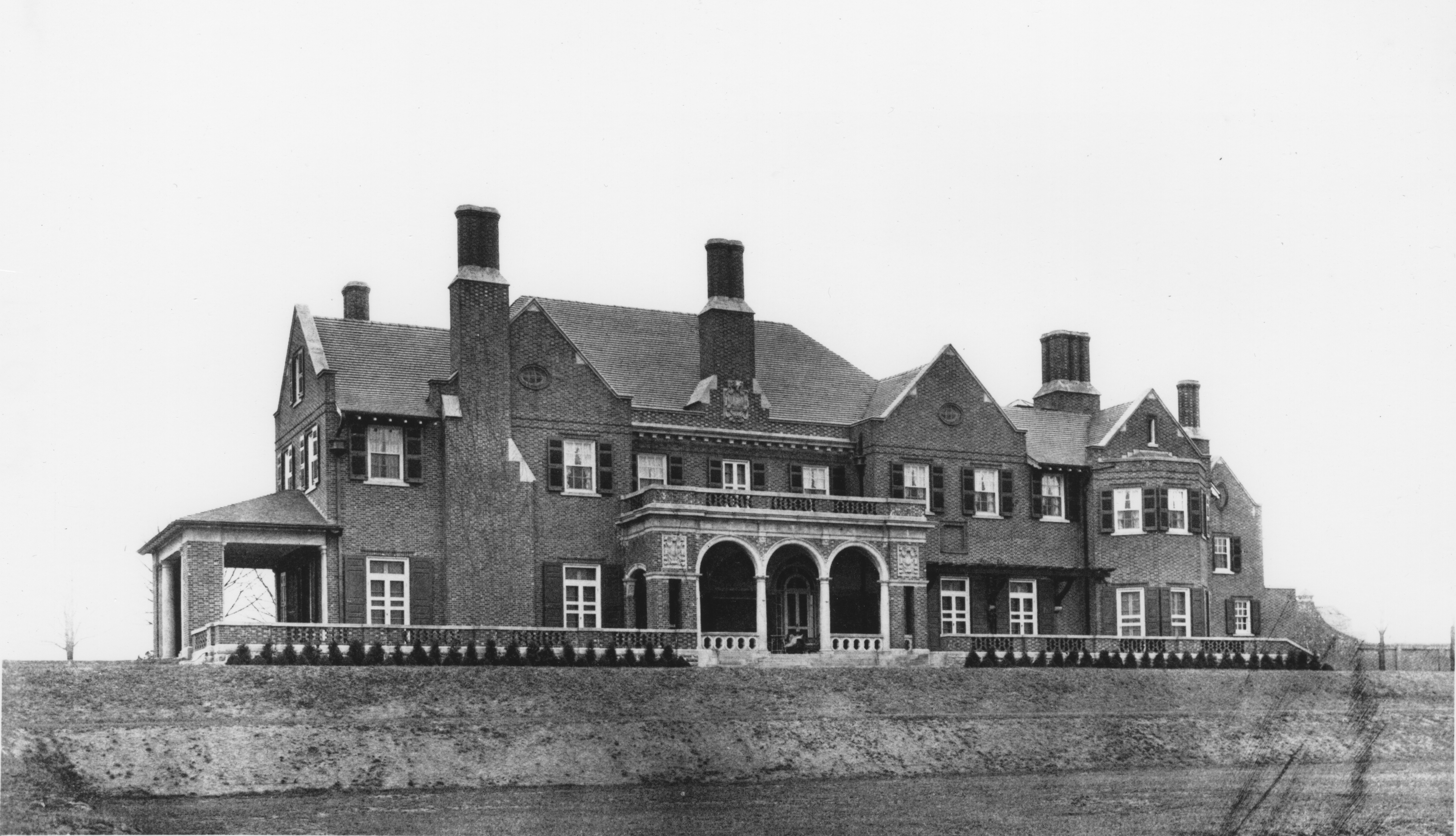
    The property is home to the Glencoe estate, built in 1907 for Thomas McKean Jr., and purchased by Samuel Robinson, founder of Acme Markets, in 1925, according to the Radnor Historical Society. In 1960, Robinson left the estate to Presbyterian Children’s Village, an orphanage run by a local Presbyterian group. The orphanage transitioned over time to become a residential treatment program for children with emotional and behavioral challenges, and in 2019 became Gemma Services after a merger with Silver Springs-Martin Luther School. Gemma Services is building a new campus in Plymouth Meeting.

    The Haverford School purchased the property in 2022 from Gemma Services for $19.88 million and said at the time that it did not have a specific plan for the site.

    Waverly’s early proposal involved retaining the historic mansion and knocking down its dormitory buildings, which are in “poor shape,” said Marc Heil, Waverly’s vice president of campus development.

    Heil said any new construction would “have that Main Line flair to it” and would not be “commercial looking.”

    Planning commission members expressed an openness to having the site developed, but raised concerns about the early plans.

    Commission member Stephen Varenhorst called the plan “chaotic” and “random” and encouraged the organization to reconsider its approach. Lane Vines, the commission’s chair, said he hoped more of the historic property could be retained.

    Residents expressed concern about increased traffic in the quiet neighborhood, stormwater management, and a potential increase in ambulance traffic, especially if an EMS station is placed on the site, a possibility.

    Waverly officials said they will submit plans to the planning commission, which will issue a recommendation to the Radnor Township commissioners, who will ultimately vote on whether to approve the project. Representatives from Waverly said the organization may also seek additional zoning relief if they pursue renovations outside of the property’s institutional zoning classification, which would require a separate approval process through the zoning hearing board.

    This suburban content is produced with support from the Leslie Miller and Richard Worley Foundation and The Lenfest Institute for Journalism. Editorial content is created independently of the project donors. Gifts to support The Inquirer’s high-impact journalism can be made at inquirer.com/donate. A list of Lenfest Institute donors can be found at lenfestinstitute.org/supporters.

  • Bucks County farm owner who fled to Belize to dodge animal abuse charges pleads guilty

    Bucks County farm owner who fled to Belize to dodge animal abuse charges pleads guilty

    A Bucks County woman who presided over squalid conditions on a Wrightstown farm and mistreated more than 100 animals in one of the worst neglect cases in county history has pleaded guilty.

    Abigail Tuttle O’Keeffe, 55, the former owner of Narrow Way Farm, entered guilty pleas to aggravated cruelty to animals, neglect of animals, and related crimes late last month. She was spared from prison by entering a diversionary program, prosecutors said Monday. O’Keeffe must attend substance-abuse and mental-health counseling, and is barred from owning animals.

    Her attorney, Josh Buchanan, declined to comment Monday.

    In August 2024, the Bucks County SPCA served a search warrant on O’Keeffe’s property after a farm manager notified the agency that a sheep had been found dead, according to the affidavit of probable cause for her arrest.

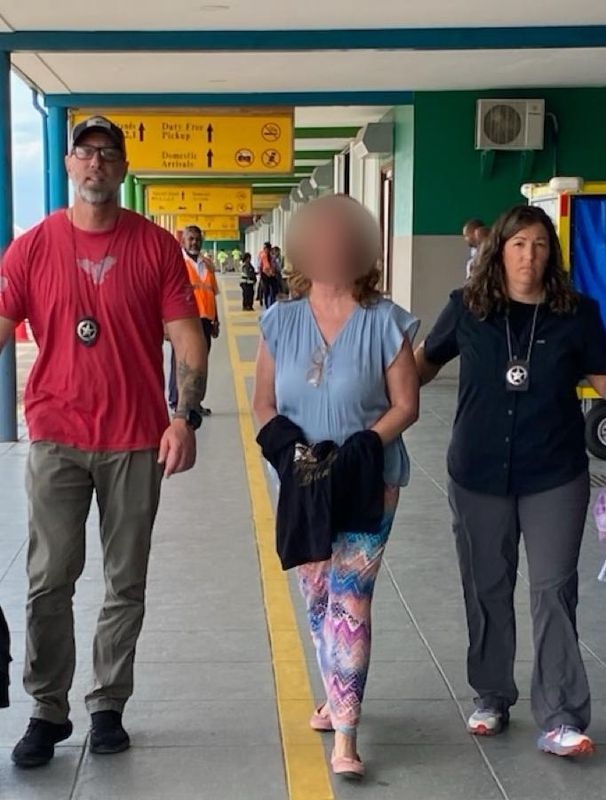
    Abigail Tuttle O’Keeffe was extradited to Bucks County in September 2025 by the U.S. Marshals Fugitive Task Force. In this photo provided by the U.S. Marshals Service, her face was obscured.U.S. Marshals Service

    Officers rescued more than 100 pigs, goats, and sheep, many suffering from infections, parasites, and other chronic medical conditions. One severely emaciated goat died while investigators were searching the property. Another one was so malnourished and riddled with parasites that it had to be euthanized after weeks of intensive care, the affidavit said.

    Volunteers at Narrow Way who spoke with The Inquirer in 2024 said O’Keeffe, who holds a doctorate in developmental psychology, did not have the skills to match her ambitions of running a working farm.

    Most of O’Keeffe’s workforce also had little to no farm experience, and the 36-acre property was in disarray, to the detriment of the livestock she kept there, according to some of those volunteers.

    In one incident, workers botched the dehorning of a calf, leaving the animal with permanent nerve damage.

    Word of the conditions at Narrow Way spread quickly: The owner of a nearby farm said O’Keeffe was not “a real, active farmer,” shied away from the work that required of her, and ran the operation like a cult, comparing her farmhands to “disciples.”

    But when local investigators came to the farm, O’Keeffe was thousands of miles away. Prosecutors said she moved to Belize, where she was arrested in April 2025 on gun charges.

    U.S. Marshals extradited her to Bucks County months later.

    Staff Writer Jesse Bunch contributed to this article.