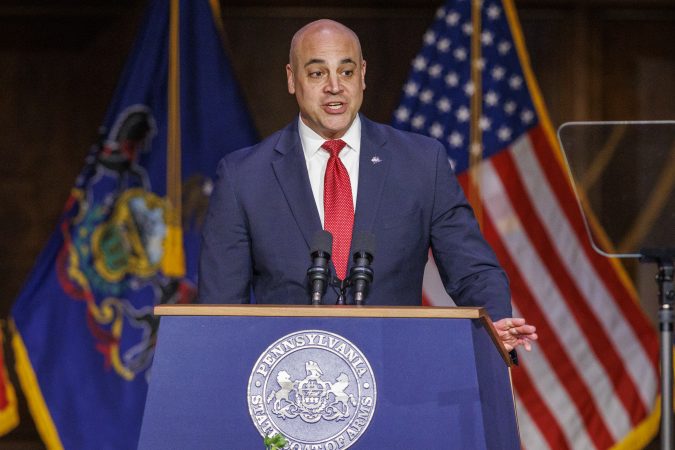
A 54-year-old Philadelphia man was convicted of leading a human trafficking ring out of his home in the city’s Lawndale section, state Attorney General Dave Sunday said Friday.
Following a one-day trial in Philadelphia, Terrance L. Jones, 54, was convicted Thursday by a judge of eight charges, Sunday said. Jones will be sentenced on Dec. 11.
Sunday said the trafficking operation generated hundreds of thousands of dollars a year and Jones employed drivers to transport the female victims to “dates.” Jones also posed as a woman to recruit sex workers, Sunday said.
Sunday said Jones ran the operation from his residence from 2012 through February 2023, luring vulnerable young women into working for the trafficking ring, then giving them drugs and forcing them to have sex with men across the region.
Multiple other people charged in the trafficking case also have been convicted, Sunday said.
“Human trafficking convictions are very challenging, and there was a long road to get to this point. I commend our partners with the Pennsylvania State Police for collaborating on a complex investigation that brought this long-running criminal enterprise to an end,” Sunday said in a statement.
Jones advertised his business, called “GFE” or “the Girlfriend Experience,” online and connected with young women in their 20s, investigators said.
Authorities learned about the ring in 2021 after a confidential informant contacted police and said they feared a friend was being trafficked.
After meeting with woman, authorities launched a three-year investigation.
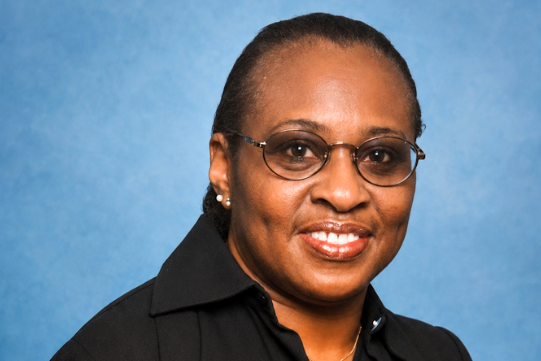
Meldoria Miles, 88, of Philadelphia, award-winning cosmetologist, longtime beauty school instructor, retired salon owner, mentor, and big sister extraordinaire, died Wednesday, Aug. 26, of heart and lung disease at Jefferson Abington Hospital.
The oldest of 11 children, Ms. Miles grew up in a two-room farm house in rural Mercer County, Kentucky. Naturally affable and supportive, she not only helped her mother with the household chores, she mentored her younger siblings, giving good advice, styling their hair, and generally making life more pleasant.
“She always helped people,” her sister, Maureen Meaux, said. “She listened to people. She was beautiful inside and out.”
After high school, Ms. Miles moved to Louisville, went to beauty school, and styled hair for clients at a salon and privately in her home. She left for Philadelphia in 1971 to work for Luster Products Inc. and became so proficient at developing, testing, selling, and demonstrating personal care products that Luster sent her to workshops, demonstrations, competitions, trade shows, and conventions across the country and around the world.
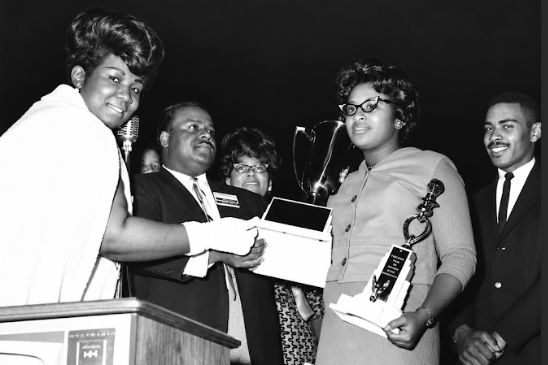
Ms. Miles was at home in her shop, El Salon, (above) and at personal care product events (center below).Courtesy of the family
She was especially skilled at matching colors with style, and anticipating ever-changing cosmetic trends. In 1971, she was named dean of technicians at Luster. She helped develop its groundbreaking hair relaxing formula in the 1980s and was named educational director in 1991.
For decades, Ms. Miles, often with her sister Maureen along as her model, traveled to cosmetology events in Canada, Europe, the Caribbean, Africa, and elsewhere. She was dynamic in front of crowds, her family said, and won competitions for her use of cosmetics and wigs, and awards for her innovation.
In 1996, she was named Philadelphia’s hair dresser of the year by the Affirm hair care line.
Ms. Miles opened her own five-seat shop, El Salon, in 1973 on East Washington Lanein West Oak Laneand managed it for 37 years. Before Philadelphia, she worked in sales and product development for two companies in Louisville.
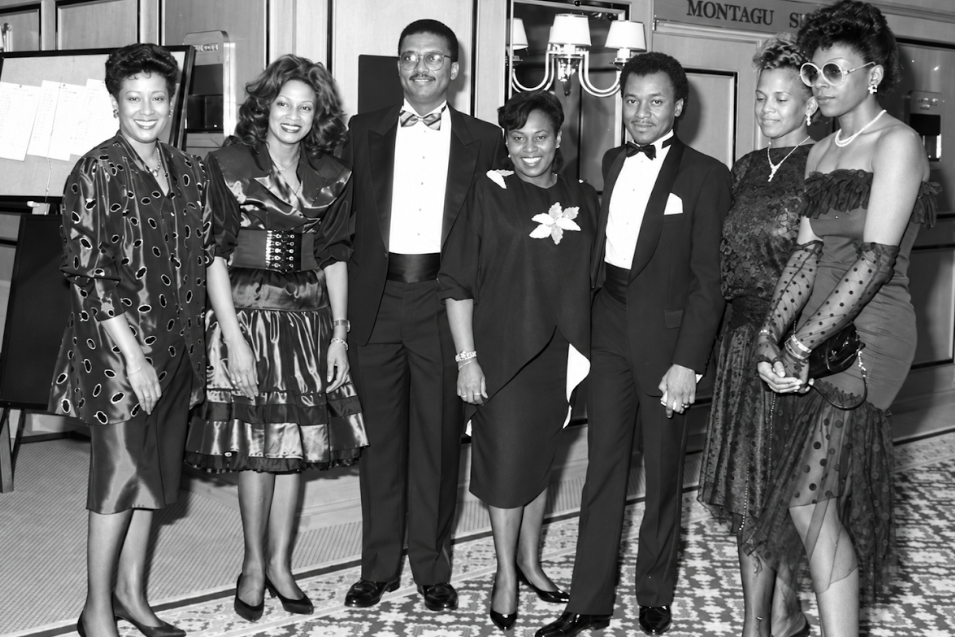
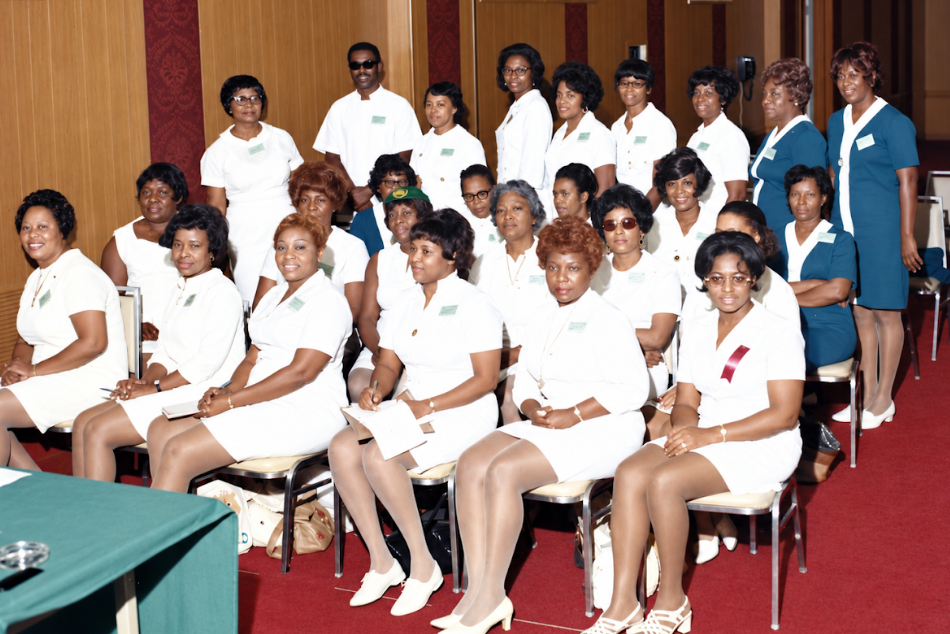
Above, Ms. Miles (front right) attended several beauty schools. Below, she (right) won several competitions for personal care skills.Courtesy of the family
In 1974, Ms. Miles earned her teaching certification at the old Wilfred Academy of Hair and Beauty in Philadelphia. She went on to teach chemical hair relaxing, manicuring, and other personal care skills for decades at Wilfred, Devine, Pearson VUE, and Gordon Phillips beauty schools in Philadelphia, the National Beauty Culture League in Washington D.C., Clairol in New York, and Pivot Point Academy in Chicago.
In addition to Wilfred, she studied at the National Beauty Culture League, Pivot Point, and Vidal Sassoon in Paris. In 1980, she took business management classes at the University of Colorado.
She was good at everything, her sister said, but “she dedicated herself to hair.”
Meldoria Louise Meaux was born Sept. 12, 1937. She moved to Louisville after high school and spent a year at the old Tucker’s Beauty & Barber School.
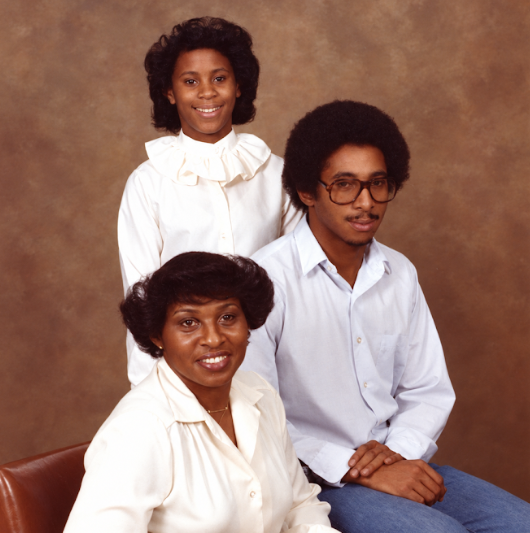
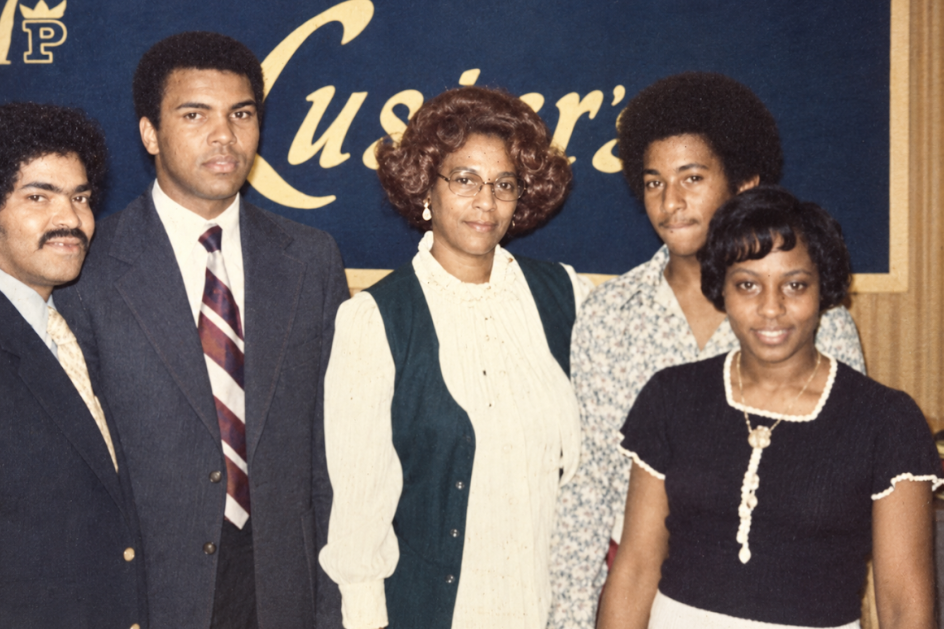
Above, Ms. Miles sits with her children. Below, she (right) stands with Muhammad Ali (second from left) and others. Courtesy of the family
She married James Miles, and they had a daughter, Lamarr, and a son, Gary. She and her husband divorced later. She married Jerome Wortham, and they divorced later.
Ms. Miles lived in West Philadelphia and Mount Airy. She was active at church, taught Sunday School, and doted on her family. “She built a life of purpose, service, and faith,” her family said in a tribute.
A friend said: “Mel was my teacher, mentor, friend, and I will miss our monthly visits and conversations.”Her daughter said: “She was the most caring, giving, positive, beautiful soul. She was effervescent. Her smile lit up the room.”
In addition to her children, Ms. Miles is survived by four grandchildren, six siblings, and other relatives. Her first husband died earlier.
Memorial services were held earlier.
Ms. Miles “built a life of purpose, service, and faith,” her family said in a tribute.Courtesy of the family
Fifty November general elections have passed “in the blink of an eye,” said Rita Lese as she was inducted into the state’s Voter Hall of Fame on Friday.
Lese has a long tradition of going to the polls, which started when she was a little girl, walking there with her parents. It felt like the “greatest thing” to go behind the curtain of the booth. That history continued as an adult, with her two daughters in tow on Election Day. Living in the same house for the last 50 years, just down the road from their polling place, she’d walk to cast her ballot in rain and sun.
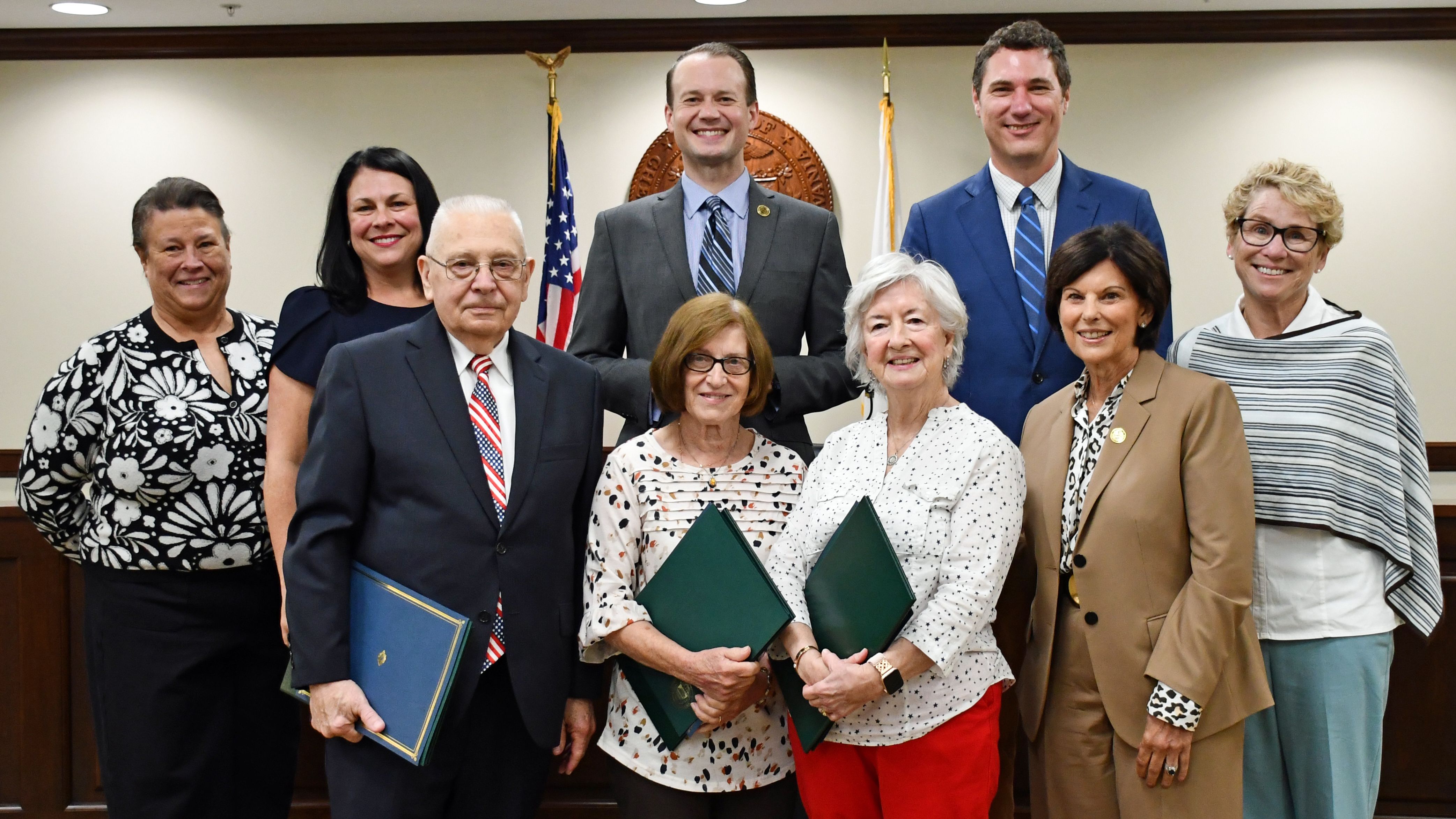
Lese, 77, was one of three Chester County residents — including her husband, Michael Lese, and Patricia Conroy — to be recognized for voting in 50 consecutive November elections during Chester County’s Board of Elections meeting Friday.
Established in 1986, the Voter Hall of Fame was formed to encourage Pennsylvania residents to cast their ballots. In the four decades since, more than 25,000 voters statewide have been inducted. Voters are recognized in each of the counties; Friday’s celebration increases Chester County’s contribution to that tally to 118, officials said.
“So there’s no excuse for the rest of us, is what you’re saying?” Josh Maxwell, the chairman of the county’s board of elections, asked Rita Lese.
It appears no.
It was a “a huge commitment and a tremendous accomplishment,” said Stephanie Reid, executive deputy secretary for the Pennsylvania Department of State.
“There had to have been some Election Days when they were ill, or they were busy with pressing work, or commitments with their children, the weather was bad, any other challenge that comes up every day in our lives that would have made going to cast their ballot inconvenient,” she said during the ceremony Friday. “Yet they persevered.”
But when Rita Lese thinks about what the suffragettes went through to secure some women’s right to vote in 1920, she can’t imagine not showing up to the polls each year; she thinks about it every year she does. Michael Lese, 78, who describes himself as an avid reader of history, said he feels similarly.
“When I read all of those sacrifices that people made so that we have the right to vote, it just instilled in me the importance of what this means,” he said.
The Leses’ civic engagement hasn’t stopped at casting their ballots, either. Rita always wanted to work the polls, but her career as a nurse made that pretty much impossible. In retirement, she thought maybe she’d have the opportunity. But Michael beat her to it: A longtime construction executive, he has spent essentially a second career at the polls. For 25 years, he has served as a clerk, a machine inspector and, for the last three, a judge of elections. He’s brought Rita in as an emergency poll worker when he’s low on poll workers.
It’s never been just about the issues for the Leses, but just the importance of showing up.
“It’s what you do,” Michael said in an interview.
“It’s what you do,” Rita echoed. “It’s a circle on the calendar, and that’s the day you vote.”
After half a century of voting, there are a few elections that stick out. The elections of presidents Jimmy Carter in 1976 and Barack Obama in 2008 felt particularly remarkable, they said. They’ve seen the evolution in voting: “from write-ins, to the styluses, to the little circles and different machines.”
With a rise in mail ballots, the crowds haven’t been the same, they said. But as their daughters are avid voters by mail ballots, they hope that participation hasn’t declined either. (In 2024, 77% of Pennsylvania’s eligible voters cast a ballot in the November election, in numbers that have dipped and grown in the last 36 years, according to state data. That year saw some of the highest participation since 1988.)
The Leses joked they’d hopefully go for another 25 years of consecutive elections.
Meanwhile, inductee Patricia Conroy, 79, came to her own civic participation a little differently. Her father, a longtime mail carrier who raised her and her four siblings basically on his own, “cared a whole lot about voting,” she said.
One Election Day, she remembers him coming home, remarking that someone told him they wouldn’t be voting: “Just imagine if everybody felt that way,” she recalls him saying.
That stayed with her.
“And so, I’ve been voting, all the time,” she said.
Elections have become a significant part of her family’s life. Two of her siblings ran for local office, and her sister is also being inducted to the Voter Hall of Fame in Philadelphia, she said.
A retired real estate agent, Conroy worked as a judge of elections, a Democratic committeeperson, and on campaigns. She also brought her sons with her to the polls. Both her and her husband — who met on the aptly patriotic Fourth of July as teenagers in 1966 — have early November birthdays. She remembers apologizing to him for missing his birthday in 1992 to celebrate President Bill Clinton’s win. (“I told him: You understand, we’re partying,” she said.)
There are other memorable elections: Gov. Josh Shapiro’s election was a highlight, she said. And some others are notable for not going her way, she said.
“Let’s just say we had a lot of laughs and a lot of tears on various election nights,” she said.
U.S. Rep. Chrissy Houlahan, a Democrat who represents Chester County, called the three “exemplars of what model citizens should be.”
“Elections and candidates have clearly changed over those 50 years,” she said. “Our country has changed, but throughout it, you have made your voice heard.”
This suburban content is produced with support from the Leslie Miller and Richard Worley Foundation and The Lenfest Institute for Journalism. Editorial content is created independently of the project donors. Gifts to support The Inquirer’s high-impact journalism can be made at inquirer.com/donate. A list of Lenfest Institute donors can be found at lenfestinstitute.org/supporters.
Tim Boyce, the former director of Emergency Services for Delaware County, was convicted Friday of assaulting and harassing two of his female employees.
Weeks later, a second set of charges was filed when another woman Boyce hired and worked with for years, said he showed her pictures of his penis, lifted up her skirt to look at her genitals and once muted a Zoom call she was part of to ask her graphic questions about sexual positions she preferred.
After about nine hours of deliberation, jurors convicted Boyce of all but one count, the simple assault charge.
Boyce was taken into custody after the verdict was read and the judge set his bail at 10% of $50,000. He will be sentenced in December.
His attorney, Andrew Edelberg, said afterward that he was disappointed with the verdict, but respected the jury‘s decision.
County officials fired Boyce shortly before the criminal charges were filed, after the first woman filed a complaint with the Equal Employment Opportunity Commission.
In his closing arguments, Edelberg told jurors that the case against his client was “botched, bungled, fumbled, messed up” by investigators who failed to find evidence corroborating the women’s allegations.
He accused prosecutors of attempting to play on jurors’ emotions with the testimony of the two women, who he said offered unreliable testimony.
“The Commonwealth wants so badly to convict Mr. Boyce, they’re desperately clinging to this story,” he said.
The women’s true intention was money, he said, referring to potential settlements from lawsuits they both have filed against the county.
But Deputy Attorney General Madelyn Abry, in her closing arguments, warned jurors not to be distracted by what she described as “filibustering by the defense.”
“Mr. Boyce is upset, he’s sad, he was devastated because he was caught, because his actions have finally caught up with him,” she said. “And they did so because of these two brave women.”
Abry told the jurors Boyce chose his victims intentionally: Both women were single mothers at the time, desperate for better-paying jobs that would provide health benefits for their families.
“I’m not making excuses because I have nothing to excuse myself for,” he said, calling the second woman’s assertions “absolutely a lie.”
He became emotional under questioning by Edelberg, saying that he checked into a rehab facility in Arizona for treatment of suicidal ideation, and later sought treatment from a second facility in Pennsylvania.
Edelberg, in his closing arguments, described Boyce as a hero who helped recover bodies from Ground Zero during the Sept. 11 attacks, and who once saved three children from a burning building as an Upper Darby firefighter.
He noted that the second woman remained friendly with Boyce after the first alleged assault, which was in 2018. And she later invited him to her wedding, he said.
“Why would you include a man who tells you these horrible, dirty jokes … and not tell anybody?” he asked jurors. “It’s the same theme, ladies and gentlemen: excuse after excuse.”
During her testimony, the woman said she waited to report the first assault, and endured the subsequent ones, because of Boyce’s authority.
“I’m nobody,” she said. “He’s the director in charge of all 911.”
The first woman testified that she sent Boyce a text message after the assault, telling him he had degraded her and made her feel like a piece of meat.
Boyce responded to that text, saying he was “sorry and not making excuses,” according to a copy of that text exchange displayed in court.
When pressed by Abry about that text, Boyce, while denying the assault, said he apologized because he believed the woman was drunk while she was texting him and attempting to “set him up.”
The auction for Chester County’s historic St. Peter’s Village — which put on offer roughly 80 acres, more than a hundred home sites, and the handful of businesses contained within the boundaries — ended before it began Wednesday.
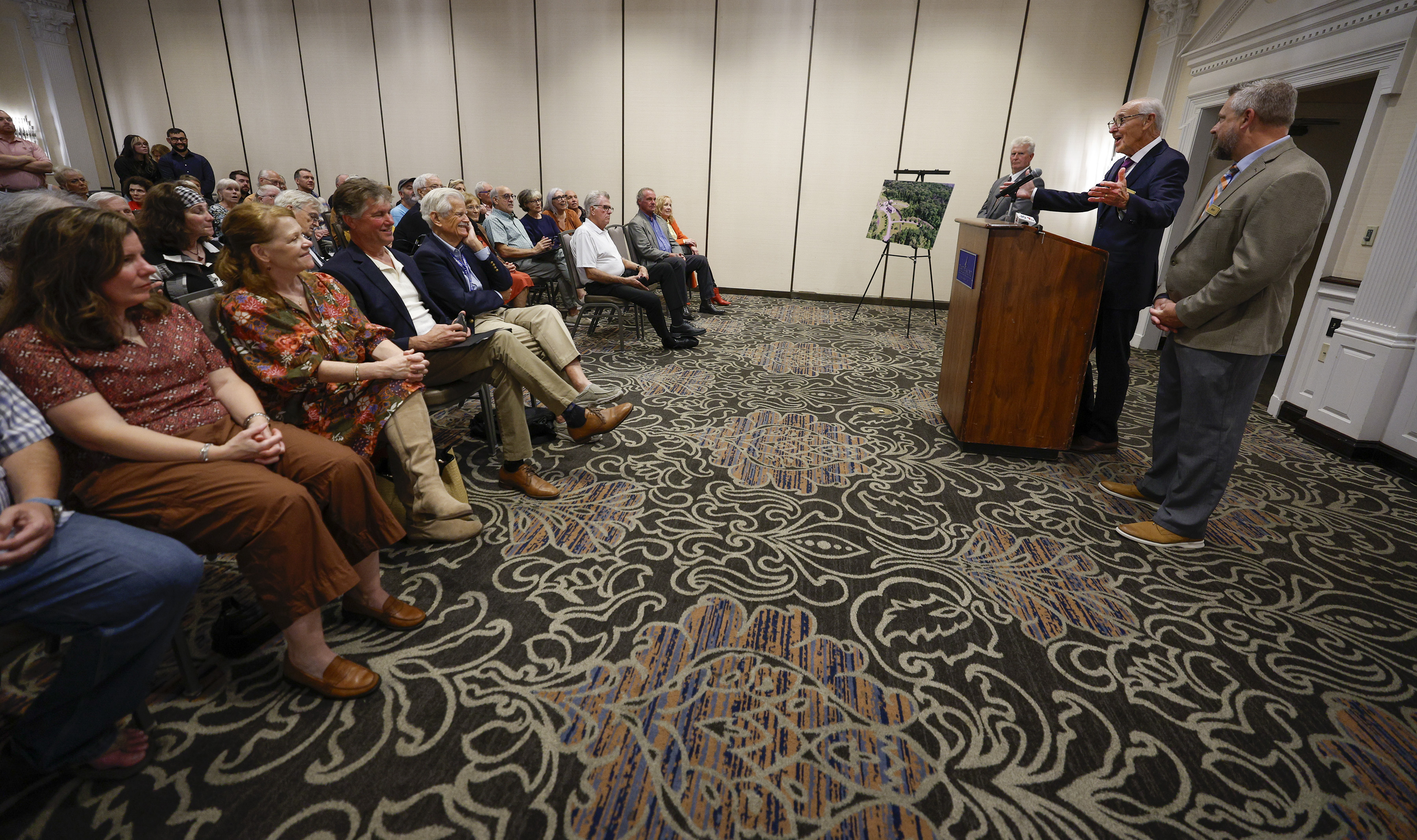
Speaking to a full house containing a large number of residents and business owners, auctioneer Doug Clemens informed attendees that it had been postponed — an announcement he acknowledged “could make you happy, maybe will make you sad.”
No date was immediately set.
A spokesperson for Piazza Management said on Friday, days after the auction, that “the auction was postponed due to technical electronic on line [sic] bidding issues and on site phone communication complications.”
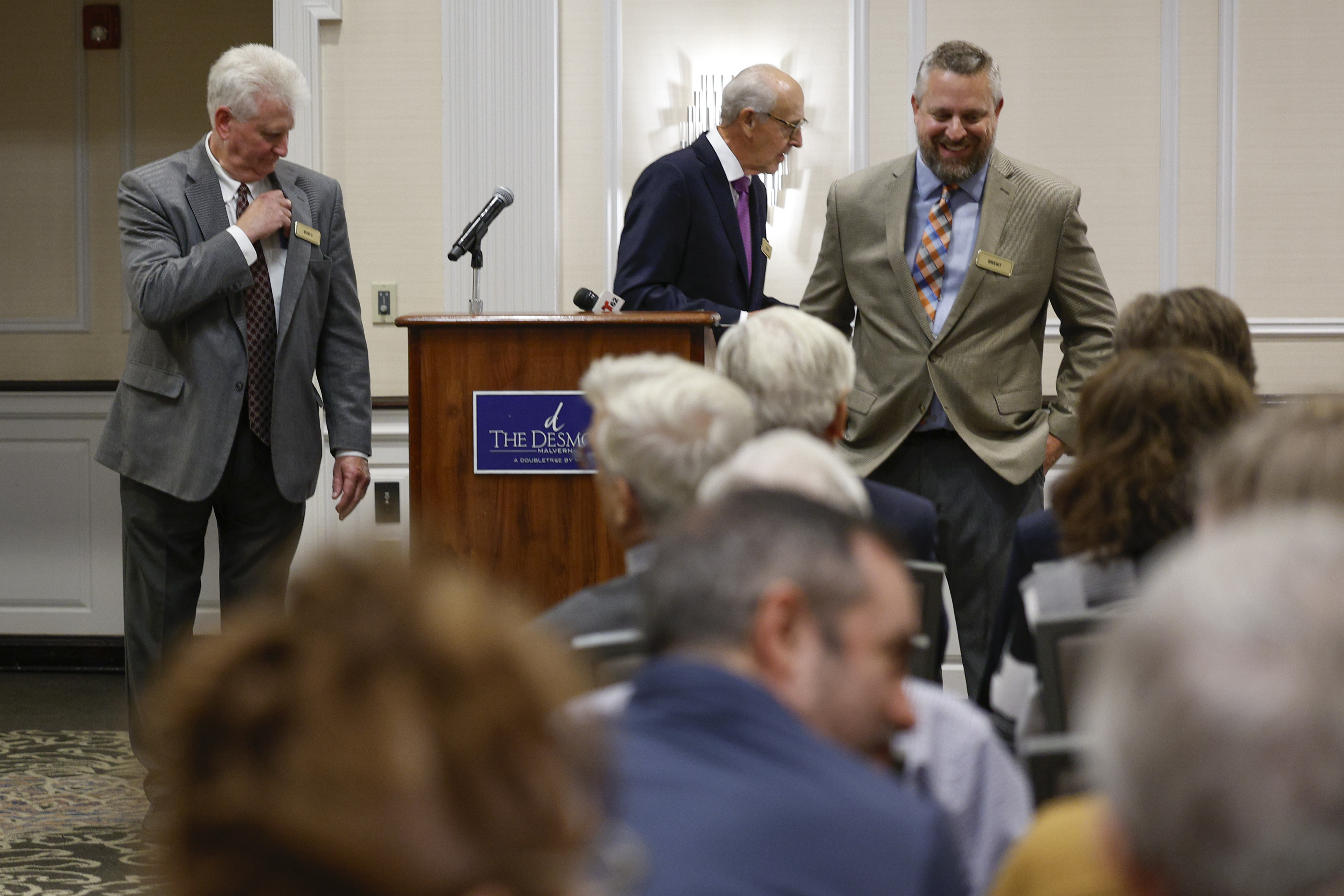
Auctioneer Doug Clemens, center, walked off after announcing that there would be no auction on Wednesday of St. Peter’s Village. The auction was held off-site at the Desmond Hotel Malvern only to find out at the last second, the auction was canceled.Steven M. Falk / For The Inquirer
It was not immediately clear how many people had shown up to bid on the property. Those interested in bidding on the land were told to bring, by a bank cashier’s check, $150,000.
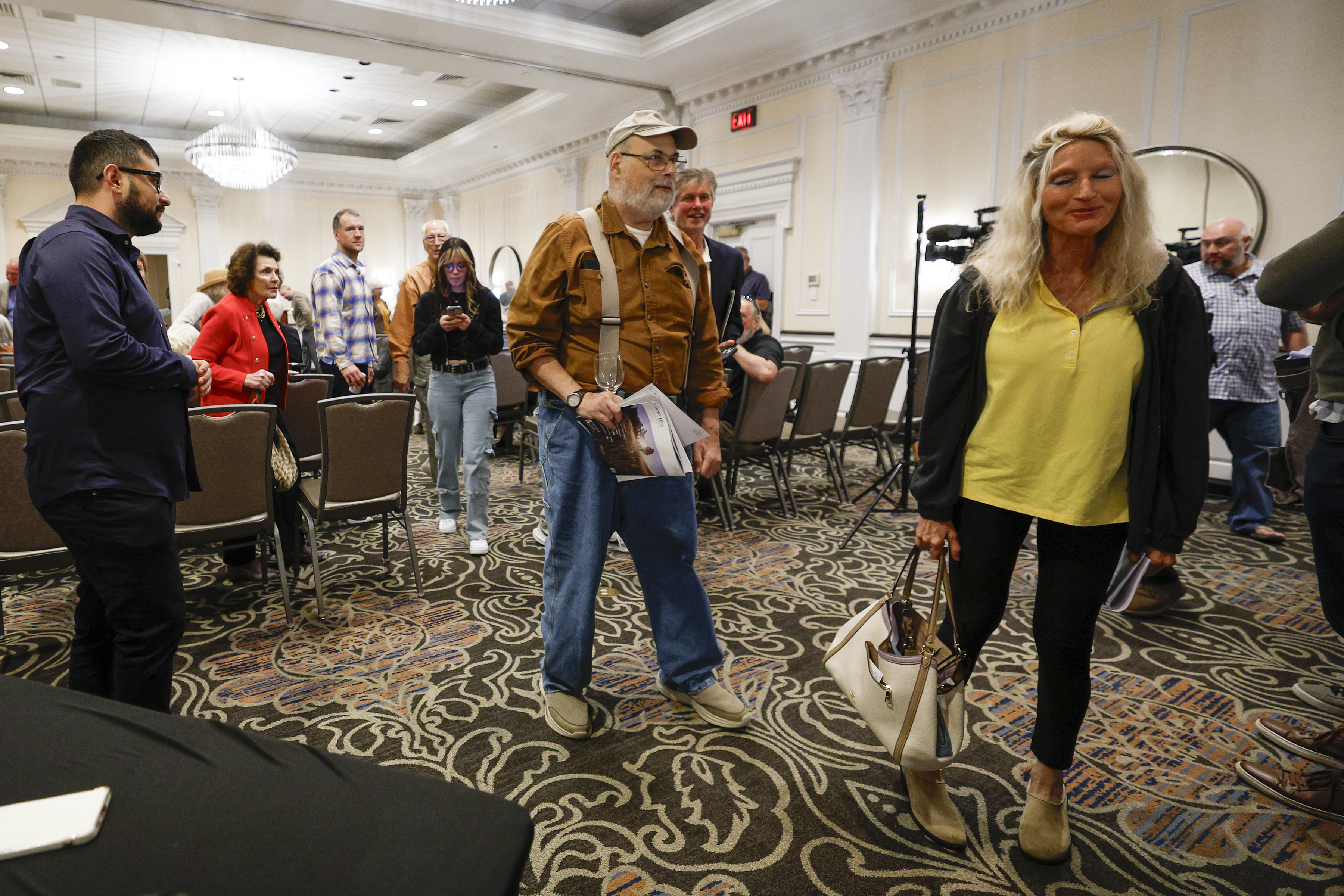
The public auction, held in Malvern, drew spectators and was a crowd of familiar faces for residents and business owners in the village. As they left the meeting room, they speculated over possible deals that could have arisen.
St. Peter’s Village, which grew around the French Creek and flourished in the Gilded Age due to its natural resources, became a place of recreation and leisure in the 1880s. Since then, it has continued to draw tourists to its quaint shops, rocky shores, and hiking trails. The village is nestled in Warwick Township, which has a population of roughly 2,600.
People walk out after the auction of St. Peter’s Village was canceled. The auction was held off-site at the Desmond Hotel Malvern only to find out at the last second, that auction was canceled.Steven M. Falk / For The Inquirer
The owners had planned two neighborhoods, totaling about 121 home sites, with a mix of densely populated housing and larger single-family homes. With the economic downturn in the early 2000s, that vision never fully materialized; several homes are unfinished. To see it through, a new buyer would have to improve the wastewater treatment plant included in the purchase.
Tom Tulley, a resident since 2009 who lives adjacent to the proposed development, has concerns about building out the land to the envisioned extent.
He has known development was inevitable, but if “they put another 150 homes with however many toilets and bathtubs and washing machines, I’m just concerned that the aquifer might not be able to support it,” he said.
Longtime business owners Christopher and Ashley Dilworth, who own Fox & Frog Apothecary, were excited that the Piazzas were set to turn it over so someone else could take the mantle and continue revitalizing the village. Christopher Dilworth acknowledged there “will be opinions on which way would be better, which way would be worse.”
But, Ashley Dilworth said, “I think all of the people in the village and everyone that came out would just be excited for anyone who had a big enough vision to move it to the next level.”
St. Peter’s Village was to be sold off to the highest bidder. The auction was held off-site at the Desmond Hotel Malvern only to find out at the last second, the auction was canceled,, September 30, 2026Steven M. Falk / For The Inquirer
It has had, over the last several years, a new life breathed into it, she said. With the help of social media, people from across the region — from New York to Delaware — have been discovering the town, which boasts everything from antique stores to modern jewelry to an antique arcade.
“People are staying in this little one-block town for a whole day,” Christopher Dilworth said. “There’s that much to do there and experience.”
Peter Melle and his wife, Melanie, who owned the bakery in town for about 15 years, were hoping to see someone pick up the project where it was left off.
“Everybody’s curious,” he said. “I think it’s a great project. … I think it’ll be a phenomenal location to build. But it’s about the money.”
Megan Reese, who lives in Malvern, has gone to St. Peter’s for a long time. She wanted to see someone purchase it who would take care of it and also “honor all the fun that’s occurring.”
“A lot of people love St. Peter’s, and it’s iconic. It’s been around for a very long time,” she said. “I really want it to be a heart project for somebody.”
This story has been updated to include a statement regarding the reason for the auction’s postponement.
This suburban content is produced with support from the Leslie Miller and Richard Worley Foundation and The Lenfest Institute for Journalism. Editorial content is created independently of the project donors. Gifts to support The Inquirer’s high-impact journalism can be made at inquirer.com/donate. A list of Lenfest Institute donors can be found at lenfestinstitute.org/supporters.
Delaware County nurse Monica Ryadi and her husband couldn’t wait to take their 3-year-old son to Disneyland, so he could meet his adored Cars movie characters — Lightning McQueen, Tow Mater, and the rest.
They didn’t get there.
The family had barely stepped off the plane at Los Angeles International Airport on Sept. 15 when they were surrounded by four or five men in street clothes who said they were ICE agents, flashed a badge, and snapped Ryadi into handcuffs.
When her husband protested, the officers threatened to arrest him and send their toddler, Luca, to child-protective services, the couple said in court filings. One officer told Ryadi she was here illegally and, “I don’t care if you are the president of the United States or a congresswoman like Ilhan Omar,” court records say.
Ryadi, 30, said she kept insisting that she was a legal immigrant.
And that’s true.
She has lived in the U.S. since she was 9, brought to this country by her parents when they fled religious persecution in Indonesia.
They entered on legal visas in 2005, and five years later were officially granted what’s called “Withholding of Removal.” That’s where an Immigration Court judge agrees that deporting someone to their homeland could get them hurt or killed.
It’s similar to asylum, the key difference being the federal government retains the right to deport someone if it can find a third country willing to take them. Withholding does not include a path to citizenship.
Traditionally, people who gained that relief were left alone.
Now that’s changed, as the Trump administration takes a new, hard view — seeing those who have Withholding, even those who have lived here for decades, as candidates for deportation. Some immigrants are held in ICE detention for months while the administration tries to find a foreign government to accept them.
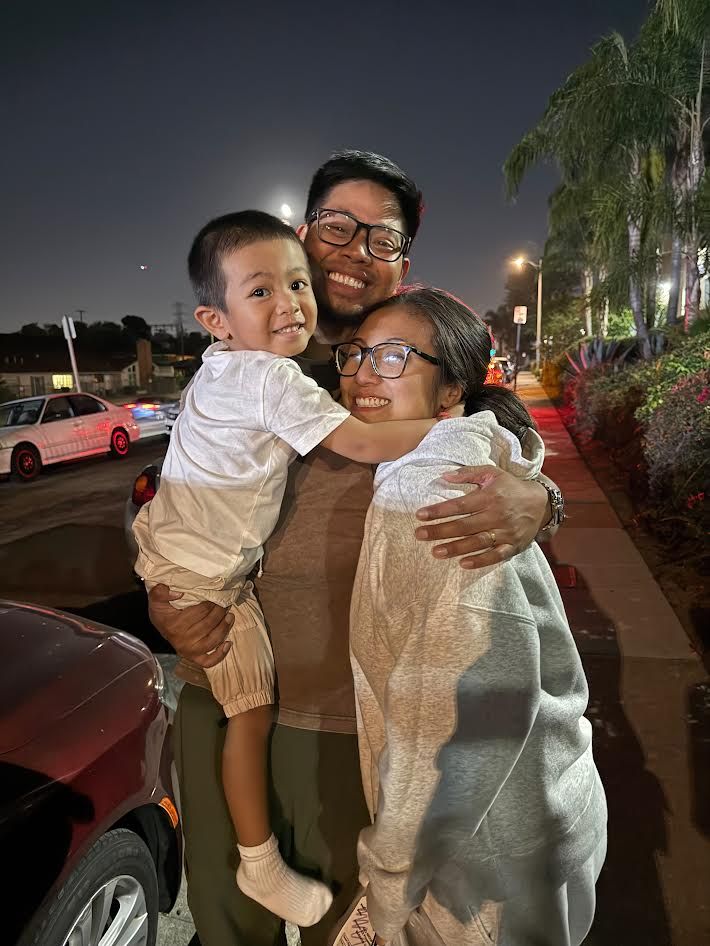
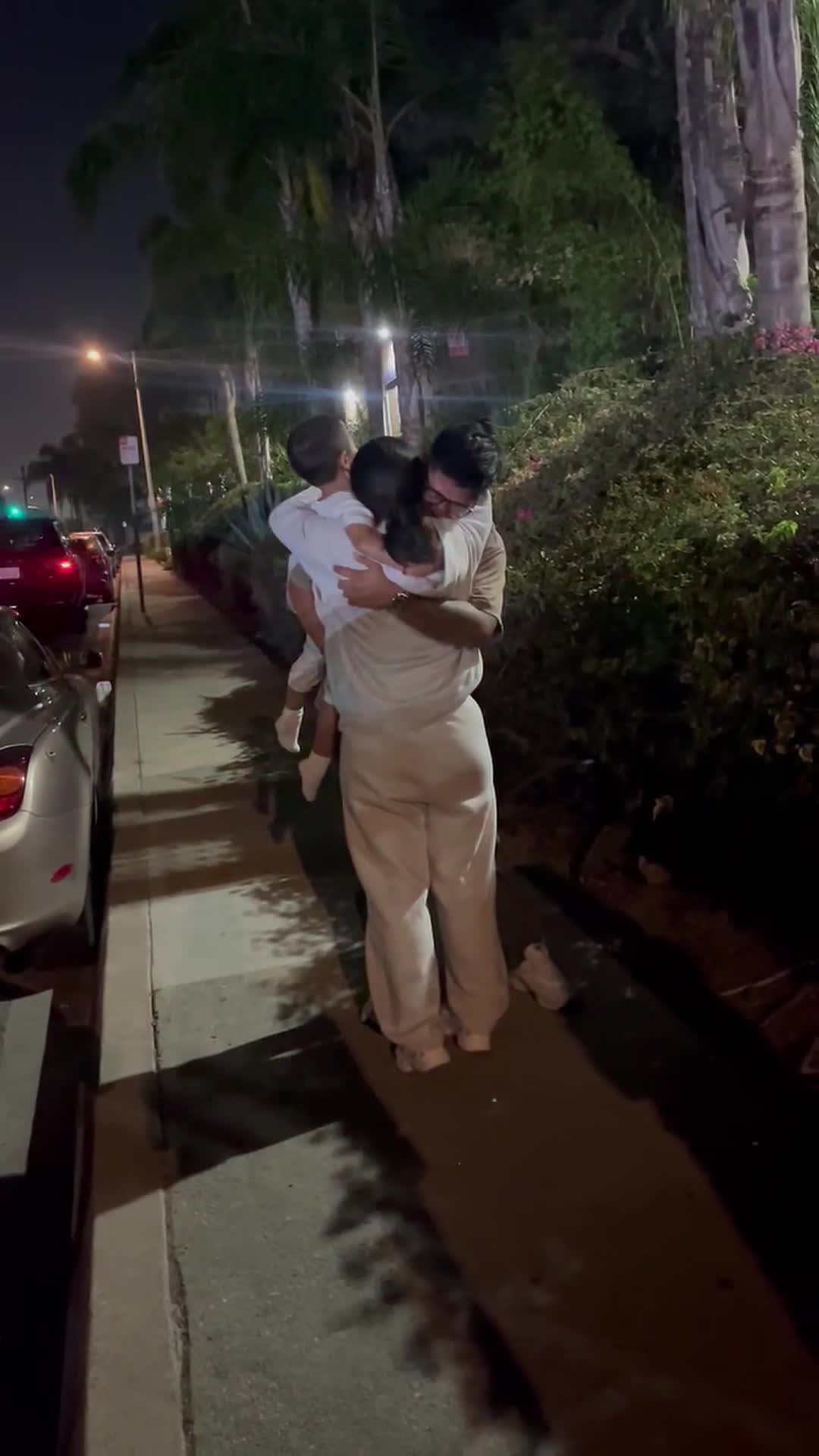
On Tuesday, after 15 days in custody at the Adelanto ICE Processing Center in California, Ryadi was ordered freed by a U.S. magistrate judge. Her husband and son flew to her immediately, and the family reunited that night, at the same Los Angeles hotel they booked when they planned to visit Disneyland.
“It’s a lot of emotions,” Ryadi said in an interview after her release. “I am still terrified, I’m still living under fear.”
At the same time, she said, “I can’t stop thinking about the other women that are in there.”
Video: A Delco nurse arrested by ICE reunites with her family
The Department of Homeland Security said in a statement that Ryadi was “an illegal alien” taken into custody “during a targeted enforcement operation at Los Angeles International Airport.”
DHS said she entered the U.S. legally in 2005 but “overstayed her welcome” in violation of immigration laws. An immigration judge issued a deportation order in 2010, DHS said, but did not note that such an order is a standard part of receiving permission to stay, work, and live in the U.S. under a grant of Withholding of Removal.
Ryadi’s husband, Steven Sary, 35, said he was overjoyed to be reunited with his wife. “But there’s still work to do,” he said. ”What’s the next step for us? We’re still living in fear.”
He tried to stay positive and supportive while Ryadi was detained, even at moments when they were both crying on the phone. He told her, “You don’t have to worry about Luca, I’m doing the best I can.”
The couple has arranged their lives around their son, setting schedules so one parent is always home with him. Ryadi works weekends at Riddle Hospital in Media, while her husband works Monday to Friday as a UPS truck driver.
The two met when they were children growing up in Philadelphia, and married in 2021.
Ryadi graduated high school from the Academy at Palumbo in the Bella Vista neighborhood, then earned an associate degree at Philadelphia Community College before obtaining her bachelor’s degree at Ohio University.
She became a nurse, she said, because she wanted to help people.
The court order that freed Ryadi came the same day that the Supreme Court ruled the Trump administration could resume the fast deportation of immigrants to countries other than their own.
The court granted the government’s emergency request to block an appeals court ruling that said the process was unlawful, because immigrants were not given sufficient opportunity to raise safety concerns.
The Supreme Court said it would hear oral arguments in the case in December, with a final ruling likely next year.
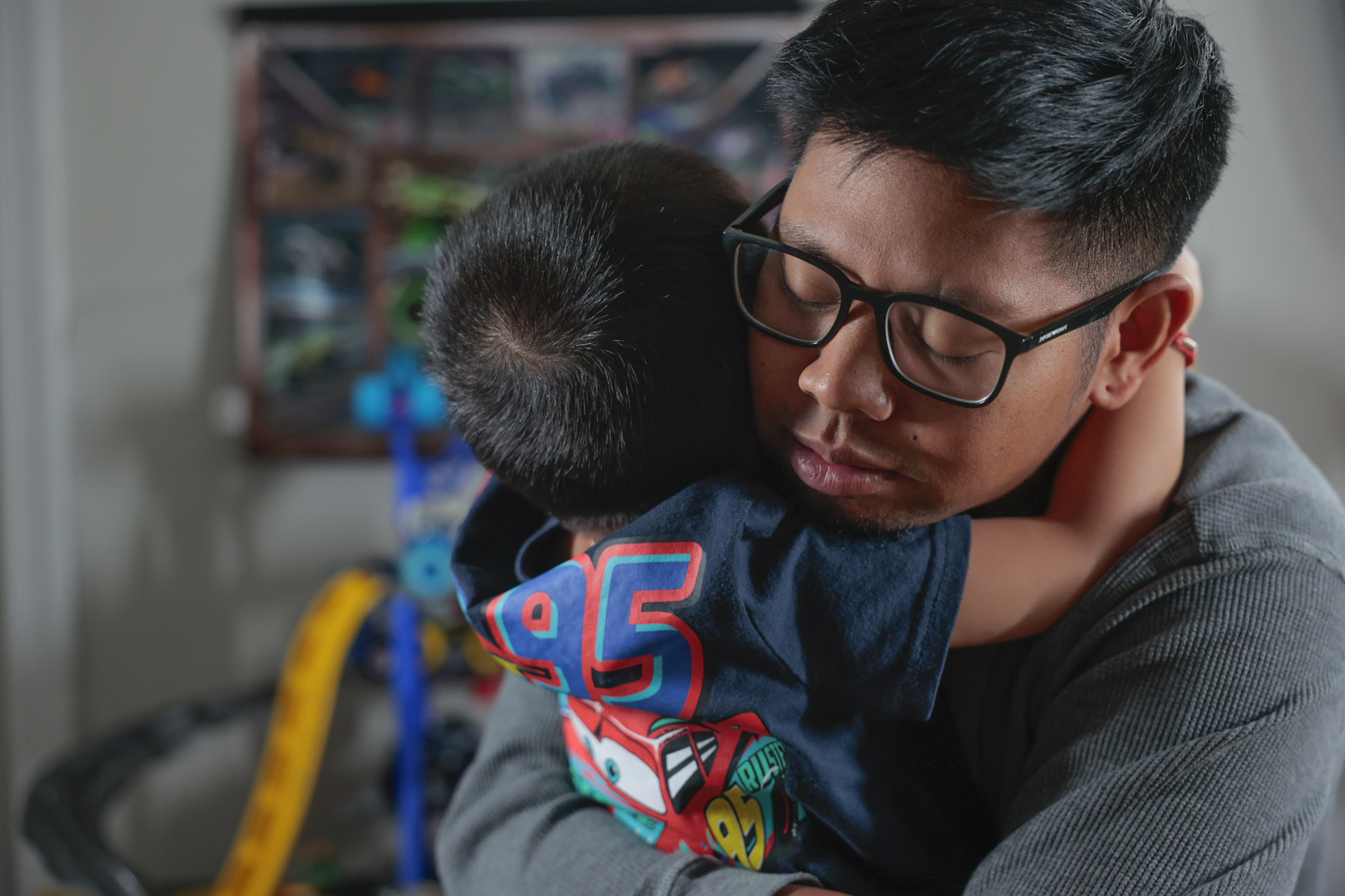
Steven Sary hugs his 3-year-old son, Luca, at their Delco home, waiting for word on his wife, who at the time was detained in California by ICE. She was detained by ICE agents after getting off a plane in Los Angeles as the family traveled to Disneyland. Steven M. Falk / For The Inquirer
“What happened to Monica should be treated as an extrajudicial kidnapping,” said Ryadi’s Philadelphia immigration attorney, Eric Rosenfeld, who is handling the case pro bono.
He noted that Ryadi is a registered nurse, the wife of an American citizen, and the parent of a son who is an American citizen — yet ICE casually told her she would be sent to an undisclosed third country.
She was never given any type of document or warrant to explain her arrest, he said. Upon release she was fitted with a GPS ankle monitor, and she knows ICE will likely try again to deport her, the attorney said.
“This is a respite. Not security,” Rosenfeld said.
As the Trump administration pursues its mass-deportation agenda, the protection offered by Withholding and similar relief “is proving to be very little protection at all,” the American Immigration Council wrote. “The Trump administration is trying to ship them out wherever it can — and keep them locked up in the meantime.”
A Philadelphia man who was arrested in July remains in detention, despite having lived legally for almost 20 years.
Mamadou Fadel Cherif of West Oak Lane was granted protection from potential political violence in his native Guinea. Now the administration wants to deport him to Ghana.
To receive Withholding of Removal, applicants must prove they were persecuted in the past or that their lives would be threatened in the future, that their home government harmed or will harm them — or failed to control others who might do so.
When that relief is granted, the immigration judge also enters a deportation order, then tells the government it cannot deport the person to their homeland. In that way the removal is “withheld.”
“We were planning to have an amazing trip with the family,” Sary said, “to see Cars Land with our son. But that changed.”
This image shows Delaware County nurse Monica Ryadi, left, in white, being arrested by ICE agents at Los Angeles International Airport on Sept. 15. She and her husband were taking their 3-year-old son to visit Disneyland.Courtesy of the family
“It felt like I was kidnapped,” Ryadi said. “I kept saying, ‘I’m legal, I’m a legal immigrant.’”
She grew up in the United States with government permission, has work authorization, a Real ID, and a Social Security number. She pays taxes. Yet she was chained wrist, ankle and waist like a criminal, she said.
Ryadi wonders if the ICE operation against her began in Philadelphia. As her family waited to board the plane, she said, a woman in a black jacket approached and made small talk.
The woman didn’t have luggage, Ryadi said, and she didn’t get on the flight. Instead, she walked away to talk to a man who also did not appear to be a passenger.
When Ryadi was released from the Adelanto detention center, 90 miles northeast of Los Angeles, immigrant-aid volunteers gave her a ride all the way to the city.
There she flew into the arms of her husband and son.
“I’m so happy to see you!” she cried.
At the hotel, the family saw people decked out in Disney attire, coming back from the theme park. Young Luca asked if they could go.
Fifteen acres of undeveloped land in Upper Darby Township face an uncertain fate as environmental groups rush to secure funding to purchase and protect the site.
Upper Darby residents and environmentalists are working to pull together $8 million to secure the purchase of the Mozino Tract, a parcel of land in Drexel Hill that, until recently, was slated to become a mixed-use housing and retail development.
Upper Darby’s council in August voted to table a proposal to rezone the land, currently zoned for residential use, to allow for a blend of single-family homes, townhouses, apartments, commercial spaces, and community gathering spots. Township staff at the meeting said they worked with the developer to create the mixed-use zoning proposal, a plan they said would help meet core township goals of increasing tax revenue and adding diverse housing options far more than an initial proposal to put 56 single-family homes on the site.
Now, developer Greg Lingo of Rockwell Development Group says he has abandoned the plans to build the mixed-use development and is giving organizers a chance to purchase the land for open space preservation.
If they can’t pull the money together, Lingo will go back to his original plan to put 56 single-family homes on the Mozino Tract, a proposal that is already permitted under the current zoning and won’t require special approvals.
As the high price tag looms, organizers say they’re confident they can find the money to keep the Mozino Tract wild.
What is the Mozino Tract?
The Mozino Tract is a 15-acre wooded parcel located between State and Township Line Roads in Drexel Hill. The land is currently owned by the Peter S. and Catherine G. Mozino Deed of Trust and is under contract to be sold to Lingo’s Rockwell Drexel LLC.
At an August meeting, Upper Darby residents packed the council chambers, urging the township to reject the plan for a mixed-use development and asking council topurchase the land to preserve it as open space. Many described spending time in the wooded area that, while not officially a public park, has been a place to commune with nature.
Amid pushback from residents, Lingo at the meeting said he would be willing to sell the property to the township, despite thinking that it would not be “a great use,” and approximated the cost of the sale at $8 million. Council unanimously tabled the zoning ordinance and voiced an openness to purchasing the property if funds could be raised.
The property’s assessed value is $446,920, according to Delaware County property records.
Lingo in an email on Sept. 15 wrote that it was immediately clear when he first met with neighbors that “they did not want any development” of the Mozino Tract, so he thought it best to work with thetownship on the mixed-use plan to “maximize open space, introduce different housing types across different price points, improve pedestrian mobility, maximize taxable income to the township and to dedicate a public park.”
Lingo’s email affirmed his commitment to Upper Darby, where he grew up, and said it was his “fault for assuming that I knew what was best” in proposing the mixed-use project.
If the environmental groups can’t find the funding to purchase the property, Lingo plans to enter into an agreement with a public or national homebuilder to build the 56 single-family homes.
Rockwell Development Group is “communicating regularly” with the environmental groups, Lingo wrote.
Organizers ‘have all confidence’ in raising funds
Bonnie Hallam, an organizer spearheading the effort to preserve the Mozino Tract, said local environmentalists “have all confidence” that they will be able to raise the $8 million.
“We really believe that this is going to be conserved, and we want the township to get on board with that,” Hallam said.
Hallam said she and other organizers submitted their first grant application on Sept. 25 to the Open Space Institute and have been in conversation with local and national funding groups, including the William Penn Foundation and the Pennsylvania Department of Conservation and Natural Resources. The group is going to start a community fundraising effort through the Foundation for Delaware County, she said.
The environmental leaders are also hoping to secure money through an open space referendum on the ballot in Delco this November. If the referendum is approved by voters, the county could spend $120 million financing land conservation projects, including “protecting natural areas from development.”
“We’re really going to work hard to secure that because we feel that the county is very much interested in this piece of property as well,” Hallam said.
Delaware County “has not had any conversations with Mr. Lingo regarding the purchase of the tract,” according to county spokesperson George Basile.
Hallam hopes Upper Darby Township will agree to be the title holder for the land, an agreement they have not made yet.
Upper Darby Township is “exploring its options right now” and “hoping for a resolution soon” regarding the Mozino Tract, public information officer Rob Ellis said in an email.
For Hallam and her co-organizers, preserving the open space — its wildlife, tall trees, and bubbling creek — is priceless. The Save The Mozino Forest group is organizing a rally on Saturday at Collenbrook Church.
“We have a really unique piece of property here that’s doing hard-working environmental services for the township,” Hallam said.
This suburban content is produced with support from the Leslie Miller and Richard Worley Foundation and The Lenfest Institute for Journalism. Editorial content is created independently of the project donors. Gifts to support The Inquirer’s high-impact journalism can be made at inquirer.com/donate. A list of Lenfest Institute donors can be found at lenfestinstitute.org/supporters.
John Baer was the son of a Harrisburg newspaperman. He literally grew up in the Pennsylvania state Capitol. And he never left.
His father, John H. Baer, was a political reporter for what is now the Patriot-News in Harrisburg, and Mr. Baer spent many Sunday afternoons hanging around the old Capitol press room while his father worked on stories. Decades later, in 1972, Mr. Baer joined the Evening News in Harrisburg as a reporter and went on to work for nearly 50 years in that same press room.
“I’m probably unique in Pennsylvania politics and journalism,” Mr. Baer said in a 2020 oral history interview for Pennsylvania State University. “I dare say there probably aren’t any who can say they worked in the same state capitol newsroom that their father did.”
In 1987, the Daily News hired Mr. Baer to cover state politics in Harrisburg. He became a political columnist for the newspaper in 2000, and his plainspoken, no-holds-barred stories later appeared in The Inquirer as well. Before he left the papers in 2019, he covered hundreds of political campaigns, conventions, and elections, and wrote about thousands of local, state, and national politicians.
Mr. Baer’s column on politics appeared in The Inquirer and Daily News from 2000 to 2019. Newspapers.com
“He was the most feared reporter in my eight years in Harrisburg,” former Gov. Ed Rendell said. “He did his work. He did his digging. He really cared about the issues.”
On Thursday, Sept. 24, Mr. Baer died of cancer at his home in New Cumberland, Pa. He was 79.
For 32 years, Mr. Baer was a hard-hitting, award-winning political reporter and columnist for The Inquirer and Daily News. He was also a columnist for PennLive and the Patriot-News, onetime public TV producer and show host, former press secretary, author, teacher, and mentor.
Many of those Mr. Baer covered in Harrisburg, Philadelphia, and Washington praised his “deep integrity” and “fierce independence,” and called him a “keen observer of Pennsylvania politics” and “a heavyweight in Pennsylvania political reporting” in online tributes. State Rep. Ben Waxman called Mr. Baer a “legendary Capitol journalist.” U.S. Rep. Dwight Evans said he was “authentic and a one-of-a-kind journalist.”
Mr. Baer told Penn State he wanted to “let people see the inside of the game in Harrisburg.” His Inquirer.com online profile reads: “John Baer has written about politics and government since 1987. Neither subject ever fails to provide him with stories of policies and politicians walking on or skirting by paths to perdition.”
In addition to covering nine Pennsylvania governors, the impeachment trial of President Bill Clinton, and the ascensions of Presidents Barack Obama and Donald Trump, Mr. Baer wrote about the execution of serial killer Gary Heidnik, the pleas for more research funding by a cancer victim, and the battle of a state policeman’s widow to receive her husband’s pension benefits.
He said some of his favorite columns were the mea culpa pieces he wrote at the end of each year that highlighted things he got wrong. “I truly just had a ball at the Daily News,” he told Penn State. “I just loved it. … I’ve always said I had no adult supervision, and it was wonderful.”
Mr. Baer joined PennLive in 2019, and his last column was published in July. “The depth and breadth of his knowledge was beyond compare,” said Amy Worden, his editor at PennLive.
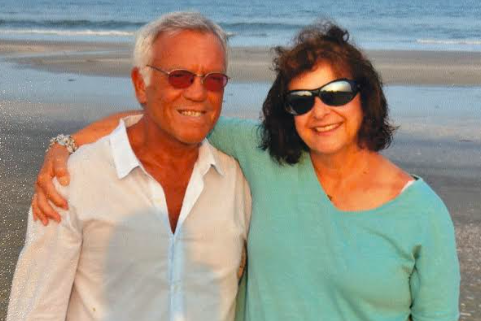
Mr. Baer and his wife, Rosemary, married in 1969.Courtesy of the family
Before the Daily News, Mr. Baer spent 14 years in total as a reporter for the Patriot-News, an award-winning public TV producer and show host for WITF in Harrisburg, and a press secretary during Lt. Gov. Bill Scranton’s unsuccessful run for governor in 1986.
He wrote freelance stories for Philadelphia Magazine and national publications. He was a frequent guest on political TV and radio shows and moderated several statewide candidate debates.
A lifelong foodie, he also reviewed Harrisburg-area restaurants for a magazine under the pseudonym “the Phantom Diner.” His book, On the Front Lines of Pennsylvania Politics,was published in 2012.
“He was so good at writing strong opinions with depth,” Paul Vigna, a retired Daily News editor, said.
Mr. Baer earned awards for his journalism and was inducted into the Pennsylvania News Media Hall of Fame in 2024. He was cofounder of the Pennsylvania Press Club and onetime president of the Pennsylvania Legislative Correspondents Association.
In tributes, colleagues praised his “sharp wit” and called him a “journalism giant,” “terrific writer,” and “mentor to many of us.” The internship program at the Pennsylvania Legislative Correspondents Association is named in his honor.
“He was an All-Star, a Hall of Famer,” Vigna said. Rendell said: “He didn’t take any BS.”
John Baer was born June 25, 1947, in Harrisburg. He graduated from Bishop McDevitt High School in 1965 and earned a bachelor’s degree in English at Mount St. Mary’s University in Maryland and a master’s degree in education later from Temple University.
He coached basketball and football teams while teaching English for three years at Trinity High School in Harrisburg after college. He married Rosemary Ruggieri in 1969, and they had sons Johnny and James.
Mr. Baer and his wife hosted many memorable Christmas parties and enjoyed road trips to Georgetown University basketball games, New York Mets baseball games, and their sons’ many sporting events. He played racquetball and tennis, and ran a marathon at 50.
He was a longtime member of St. Theresa Catholic Church in New Cumberland. “He liked interesting people and had lifelong friendships,” his family said in a tribute. “He loved his friends.”
On Facebook, colleague Diana Robinson said: “Here’s to you, John Baer. You’ll always be The Most Interesting Man in Harrisburg.”
In addition to his wife and sons, Mr. Baer is survived by three grandchildren and other relatives.
Services were held earlier.
Donations in his name may be made to Vickie’s Angel Foundation, 511 Bridge St., Box 174, New Cumberland, Pa. 17070.
All seven justices rejected District Attorney Larry Krasner’s argument that the law unconstitutionally strips the authority of an elected district attorney by granting jurisdictions to crime “within” SEPTA to a special prosecutor appointed by the Pennsylvania attorney general. But they did not unanimously agree on the reason.
The special prosecutor can investigate crimes in all counties in which SEPTA operates, but can take over cases unilaterally only in Philadelphia.
Chief Justice Debra Todd wrote in the majority opinion that the part of the special prosecutor law specific to Philadelphia serves a “legitimate state interest: promoting public safety through the protection of SEPTA employees and riders by supporting the prosecution of crimes within SEPTA, and specifically, SEPTA-related crimes in Philadelphia.”
The law responds to “public safety concerns regarding increased SEPTA-related crime in Philadelphia, and the belief that such crimes were not being sufficiently prosecuted,” Todd wrote.
State Attorney General Dave Sunday, who is authorized to appoint the special prosecutor, said the law “has paid great dividends in holding violent offenders accountable” for crimes on SEPTA.
“Our mass transit prosecutor will continue to prosecute criminals who have killed and assaulted other individuals, perpetrated acts of gun violence, and stolen SEPTA property,” Sunday said in a statement.
A spokesperson for the district attorney’s office did not return a request for comment.
The special prosecutor’s office has become more active in the last year after a slow start. The office initially hired a sole attorney and did not prosecute a case until 2025, two years after its creation. The office has since taken on a portfolio of around two dozen cases, a spokesperson for the attorney general said. Serious crime on SEPTA has trended downward, according to the agency, falling around 20% in mid-2026 compared with the same period the previous year.
Earlier this year, the special prosecutor,Michael Untermeyer, took on an assault case involving a woman accused of pepper-spraying and punching a conservative influencer during a viral confrontation on a SEPTA bus. And a representative for Sunday’soffice said the prosecutor was preparing for a homicide trial in November, and the office was recently referred a case involving an assault on a SEPTA bus driver.
The ruling is the latest in which the Supreme Court has shown willingness to take away from Krasner functions that county prosecutors traditionally havehad sole discretion over. The justices in June found that Philadelphia prosecutors had engaged in a pattern of misleading judges when seeking to overturn murder convictions, and instructed judges to notify the state attorney general’s office so it can review cases when Krasner’s office makes such requests going forward.
But the ruling on the SEPTA special prosecutor might be short-lived.
Krasner’s lawsuit called the law an “unconstitutional, radical, and unprecedented measure” amounting to a “shocking usurpation of power.”
In June, Commonwealth Court issued a 4-3 decision against Krasner, finding the law constitutional. In the majority opinion, Judge Anne E. Covey said the act “does not clearly, palpably, and plainly violate the Pennsylvania Constitution.”
In a Thursday concurring opinion, Justice David Wecht emphasized the ways the special prosecutor law was tailored to Krasner specifically.
The law disqualifies anyone who worked at the Philadelphia district attorney’s office as of roughly the beginning of Krasner’s tenure from serving as special prosecutor, the justice noted. And the measure was set to expire a year after Krasner’s second term ended (he has since won a third, which began in January).
The special prosecutor law is “tailored to hamstring Philadelphia’s thrice-elected and sitting District Attorney’s customary prerogatives relative to crime within the jurisdiction that office serves,” Wecht wrote.
“But none of that matters,” he said, because since 1951 the Pennsylvania Constitution has allowed for laws ”regulating the affairs of the City of Philadelphia.”
Nearly a dozen Philadelphia-area small-business owners stole almost $1 million in public funds by defrauding a program designed to support low-income mothers and their children, authorities said Thursday.
The businesses accused of fraud are small groceries or corner stores located throughout the city, according to the state attorney general’s office, which announced Thursday that it had charged 11 people with theft by deception, forgery, and related crimes.
Prosecutors said the business owners submitted false claims for funds through the federal food assistance program WIC, the Special Supplemental Nutrition Program for Women, Infants, and Children. The program and funds are administered by Pennsylvania’s health department.
Participating businesses are reimbursed through the state for purchasing food and infant formula, which is provided to recipients in stores using a benefits card. Prosecutors said the businesses abused their role as providers, submitting fraudulent claims for purchases — nearly 10,000 in all, they said.
Investigators reviewed thousands of receipts and audited paperwork submitted by the businesses between 2021 and 2025, finding they were “forged and fabricated,” they said.
Attorney General, Dave Sunday on March 13, 2025 in Philadelphia.Jose F. Moreno / Staff Photographer
The fraudulent claims in several cases exceeded $100,000, and almost all amounted to tens of thousands of dollars. Most of the claims were fulfilled, prosecutors said, resulting in the loss of $985,000 in public money.
The largest sum was paid to Felix Sosa, 35, of El Paisano Express Food in South Philadelphia, according to prosecutors. Sosa was reimbursed a total of $342,183 for such claims, they said, and was charged with theft and related crimes.
He was arrested Wednesday and was being held on $25,000 bail. No attorney for him was listed in court records.
Musa Barry, of Uncle Musa Grocery in Southwest Philadelphia, was charged with submitting fraudulent claims totaling $226,557. He was arrested Wednesday and has not hired an attorney.
Nearly all of the remaining business owners are accused of stealing sums in the tens of thousands.
Attorney General Dave Sunday decried the crimes in a statement Thursday, saying the business owners had “intentionally defrauded” state government for years.
Nine of the merchants have been taken into custody, Sunday said.
“This type of criminal activity doesn’t just victimize taxpayers by defrauding the government, it hurts the women and children who rely on the services programs like WIC provide,” he said.
Officials estimate about 175,000 Pennsylvanians are enrolled in the WIC program, about 36,000 of them in Philadelphia. It is available for low-income women who are pregnant or have given birth within six months (if breastfeeding, up to 12 months), as well as children under 5.
The announcement of the criminal charges comes at a challenging time for the Pennsylvania Bureau of Women, Infants, and Children.
The bureau’s director, Sally Zubairu-Cofield, resigned last week, citing “significant and ongoing workplace challenges” and barriers to leadership. She had led the office since 2022 and was appointed during the administration of former Gov. Tom Wolf.
She declined to comment Thursday.
Zubairu-Cofield wrote in her resignation letter that she had faced “multiple allegations and investigations that I understood were subsequently determined to be unfounded” during her tenure, according to Spotlight PA.
She did not elaborate on the nature of those allegations, according to the outlet.