Category: Pennsylvania News

  • Cheltenham’s got a plan for 2040 | Inquirer Greater Abington

    Hi, Greater Abington. 👋

    I hope you’ve been surviving the summer heat. This week, we dive into Cheltenham Township’s new comprehensive plan, which lays out a vision for what it could look like by 2040. We also continue to follow the ongoing turmoil in the Cheltenham School District, where elementary school parents now say they’ve flagged concerns about alleged sexual and physical incidents since October.

    Plus, a new Yemeni- and Saudi-inspired concept (with a drive-through!) opens in Willow Grove, and other news.

    — Laura Smythe (greaterabington@inquirer.com)

    P.S. Our journalists want to solve the local mysteries that keep you up at night. Submit any questions you might have about the region to Curious Greater Abington, and we’ll see if we can dig up some answers in a future story.

    If someone forwarded you this email, sign up for free here.

    Cheltenham’s plan for 2040
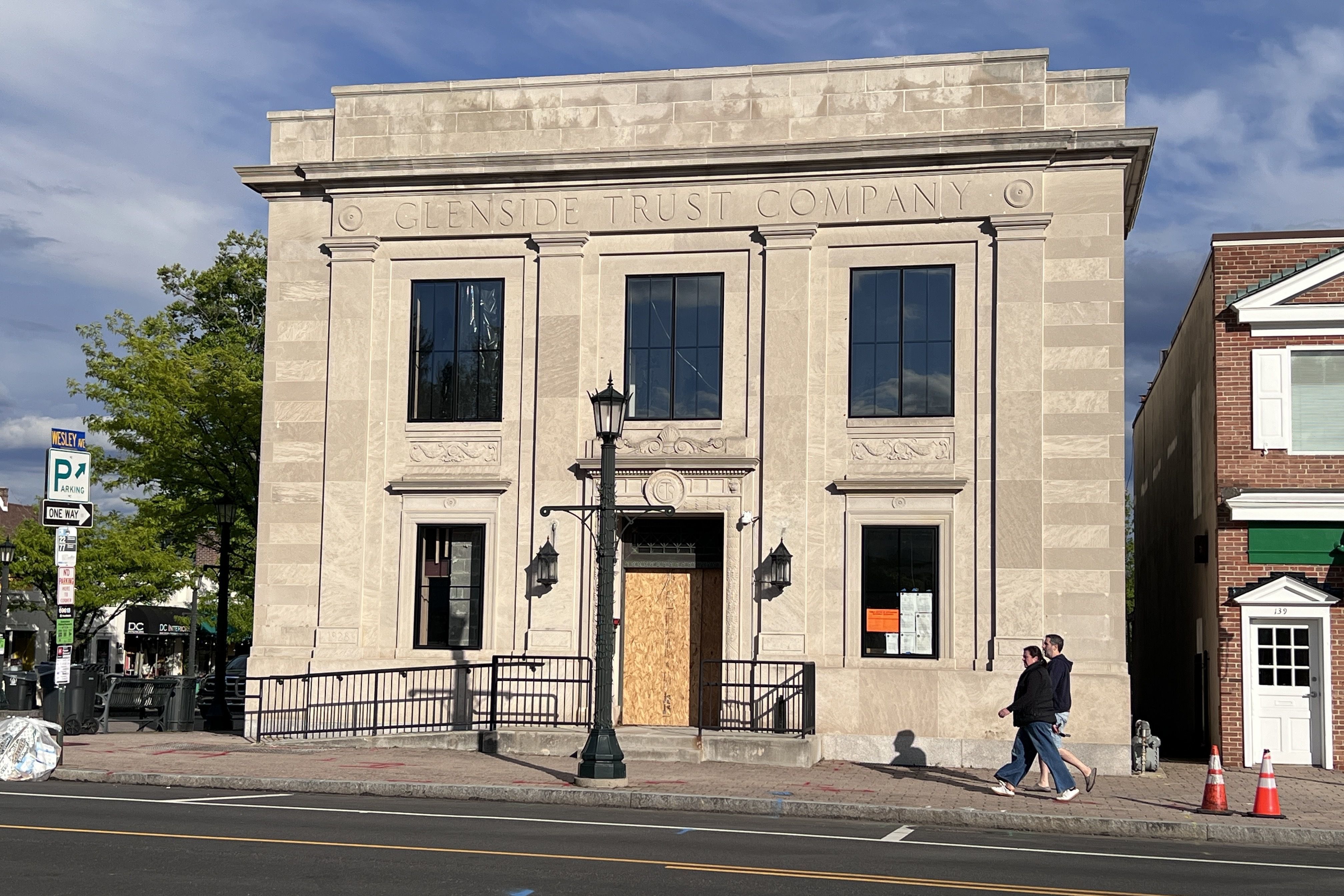
    Cheltenham Township’s new comprehensive plan lays out challenges and recommendations for homes, businesses, transportation, community services, and historical assets over the next 10 to 15 years.

    Among the dilemmas facing the township is navigating the need for more tax revenue while avoiding too big a boom of new residents. That’s because many of the large estates in Cheltenham belong to non-property-tax-paying institutions.

    The Inquirer’s Jess Rohan has all the details on the 2040 plan, including which neighborhood hubs have been identified for more development and why the township may be drawing inspiration from 1990s-era Ardmore.

    Following Cheltenham superintendent’s resignation, families say safety problems extend beyond high school

    The Cheltenham School District remains embroiled in controversy as families in the township allege safety issues aren’t confined to the high school. Here’s the latest:

    Superintendent Brian Scriven resigned last week after two violent assaults in the high school locker room led to charges against four football coaches and six players. But Cheltenham High School football families repeatedly warned against the former head coach’s hiring because of allegations that he allowed bullying to fester in his prior coaching position at Abington Senior High School.

    Cheltenham Elementary parents now say they’ve been raising concerns to administrators since last October over multiple alleged physical or sexual incidents affecting students. The district has not commented on the status of any other administrators. Its school board meets tonight.

    The Inquirer’s latest reporting on the ongoing tumult examines how the district is struggling to contain the alleged mishandling of these incidents.

    💡 Community news

    🏫 Schools briefing

    • In the wake of the fallout from the Cheltenham locker room assaults, Inquirer columnist Mike Sielski unpacks the incidents through the lens that they are yet another example of failed adult leadership in youth and high school sports.
    • University of Pennsylvania education professor Jonathan Zimmerman shares a perspective on the prevalence of hazing at institutions across the U.S. over the years.
    • Valencia Peterson, who has more than a decade of experience working in violence prevention through youth sports, pens an op-ed about how the Cheltenham incidents should prompt schools and athletic organizations nationwide to ask, “Could this happen here?”

    🍽️ On our plate

    • Mazaj, a Yemeni- and Saudi-inspired cafe slinging coffee, pastries, and za’atar-topped flatbreads and pizzas, recently opened in Willow Grove. It plans to debut a drive-through later this month.

    🎳 Things to do

    📚 Silent Book Club: At this dream event for introverts seeking new pals, get comfy with a good book and read alongside your neighbors. ⏰ Friday, Aug. 14, 4-6 p.m. 💵 Free 📍 Jenkintown Library

    🎞️ Movie Under the Moon: Take a trip back to good ‘ol 1993 with an outdoor viewing of The Sandlot projected on the big screen. ⏰ Friday, Aug. 14; movie starts at dusk 💵 Free 📍 Conway Field, Abington

    🎲 Game Night: Show off your skills or learn to play a variety of board and card games. ⏰ Monday, Aug. 17 at 6:30 p.m. 💵 Free 📍 Elkins Park Free Library

    🏡 On the market

    A cozy Colonial with character

    Inside 124 Kingston Road in Cheltenham, PA.

    Tucked away on a tree-lined street in Cheltenham, this stone-and-brick house comes complete with a fireplace, partially finished basement, and details such as exposed beams and a bay window. It has five bedrooms and four bathrooms, including a private first-floor suite with a full bathroom and separate entrance.

    See more photos of the home here.

    Price: $549,000 | Size: 3,667 SF | Acreage: 0.25

    🗞️ What other Greater Abington residents are reading this week:

    By submitting your written, visual, and/or audio contributions, you agree to The Inquirer’s Terms of Use, including the grant of rights in Section 10.

    This suburban content is produced with support from the Leslie Miller and Richard Worley Foundation and The Lenfest Institute for Journalism. Editorial content is created independently of the project donors. Gifts to support The Inquirer’s high-impact journalism can be made at inquirer.com/donate. A list of Lenfest Institute donors can be found at lenfestinstitute.org/supporters.


  • Woman’s shooting death in Chester County now believed to be suicide

    Woman’s shooting death in Chester County now believed to be suicide

    Chester County authorities believe that the shooting death of a woman in East Goshen Township on Friday was a suicide and that a 9-year-old girl also was wounded by gunfire.

    “The child who was shot continues to recover from her injuries. As we announced on Friday, this was an isolated incident and there was no threat to the general public,” the Chester County District Attorney’s Office said in a statement Monday.

    Police were dispatched just before 11 a.m. to the Summit House condominium complex on West Chester Pike for a reported shooting. Inside the unit, the officers found the woman, described only as in her 40s, dead from a single gunshot wound.

    The girl was treated at the scene by paramedics and was alert and able to speak, said Chief David Leahy of the Westtown-East Goshen Police Department.

    Police found a gun not far from the woman’s body.

    An earlier version of this article incorrectly reported that the Chester County District Attorney’s Office said the girl was struck by the same bullet that killed the woman.

  • Officials believe it was a missing Chester woman whose body was recovered from a car submerged in the Delaware

    Officials believe it was a missing Chester woman whose body was recovered from a car submerged in the Delaware

    The body believed to be that of a missing 33-year-old Chester woman was recovered Sunday from a vehicle submerged in the Delaware River, divers and family members said.

    Kortney Staples, a home healthcare nurse, was last seen by her family on July 11. She was reported missing on July 18 and since then her family has waged a tenacious public campaign to find her.

    Official confirmation that Staples has been found will be determined by the Delaware County Medical Examiner’s Office.

    “The individual’s preliminary description is consistent with that of Kortney Staples; however, formal identification is pending and will be made through the appropriate investigative and medical procedures,” Chester officials said in a statement.

    Chester police said there were no initial indications of foul play, but the investigation is ongoing.

    Chaos Divers, a volunteer sonar search-and-recovery team, reported that they found her body inside a gray Nissan Altima in the waters off Chester. Officials said the location was near Front and Norris Street, not far frome the Commodore Barry Bridge.

    The dive team said they found the car almost immediately on Sunday afternoon and they posted a photo of the license plate taken from the sunken car. The plate matches the woman’s vehicle.

    “Working in conjunction with Chester Police Department law, fire departments, Station 77 Dive and Rescue, and Rob’s Towing, Kortney and her vehicle were recovered flawlessly,” Chaos Divers posted on Facebook.

    Police said the vehicle was removed from the water around 7:45 p.m.

    “To Kortney’s family, friends, and everyone who knew and loved her, we offer our deepest and most heartfelt condolences. We hope that bringing Kortney home provides some measure of answers as her loved ones begin the incredibly difficult journey ahead,” said Chaos Divers, who are based in Illinois.

    Chester Mayor Stefan Roots called the discovery of the body “a heartbreaking development, and our entire Chester community stands with Kortney’s family and loved ones during this extraordinarily difficult time.

    Family members also said they believe that their search is over.

    “Yall no longer have to share the missing post…..it warms my heart to see my sister up & down my timeline & kno that she was much loved,” Koron Staples, Kortney’s brother, wrote on Facebook.

    Chester police urged anyone with information about what happened to Kortney Staples or her gray Nissan Altima, particularly on the days between July 5 and 18, should contact Capt. El’lan Morgan at 484-745-6662 or Emorgan223@chesterpolice.org, or Det. Astrid Cottrell at835-220-9549 or acottrell321@chesterpolice.org.

    “Even information that may appear insignificant could be helpful to the investigation,” the police department said.

    <iframe src="https://www.facebook.com/plugins/post.php?href=https%3A%2F%2Fwww.facebook.com%2FChaosdivers%2Fposts%2Fpfbid02Yb3vKTCTywg1qTjrdFFG3ufneZzJzxdKC9JXMn4kee41Acx6Jr7tQhELApR2u5h6l&show_text=true&width=500" width="500" height="811" style="border:none;overflow:hidden" scrolling="no" frameborder="0" allowfullscreen="true" allow="autoplay; clipboard-write; encrypted-media; picture-in-picture; web-share"></iframe>
  • A Lancaster County man pleaded guilty to fraud after the feds accused him of running a $400 million Ponzi scheme

    A Lancaster County man pleaded guilty to fraud after the feds accused him of running a $400 million Ponzi scheme

    A Lancaster County man pleaded guilty Monday to defrauding investors in his ATM businesses out of more than $400 million, a long-running scam that federal authorities have characterized as a Ponzi scheme.

    Daryl Heller, 56, of Lititz, was indicted last year after prosecutors said he deceived thousands of people who had invested in several businesses he owned that he used to buy and operate ATMs.

    As he sought to raise money for his firms, prosecutors said, Heller promised investors guaranteed monthly returns, which he said would be the result of operating the ATMs. And he also courted investors by using forged or fraudulent financial documents to inflate the purported health of his businesses, prosecutors said.

    Once Heller got cash infusions, prosecutors said, he used them to pay back old investors. He also spent some of the money on personal expenses or business debts.

    The scheme began to fall apart in 2023, when one of his companies, Paramount Management Group, began struggling to raise new money. Several months later, prosecutors said, Paramount stopped making payments to its older investors.

    Heller later filed for bankruptcy protection — which remains pending — and the U.S. Attorney’s Office in Philadelphia indicted him last August.

    In all, prosecutors said, Heller raised about $770 million from 2,700 people between 2017 and 2024, causing his investors to lose about $400 million. (Heller’s attorneys said Monday that they don’t agree with that number and plan to dispute it in court before he is sentenced.)

    Heller said little in court beyond responding to routine legal questions while pleading guilty to a securities fraud charge. He declined to comment after the hearing.

    U.S. District Judge Catherine Henry is scheduled to sentence Heller in December. He faces a maximum sentence of 20 years in prison.

  • How more than 3,000 Pennsylvania state government employees are using AI at work

    How more than 3,000 Pennsylvania state government employees are using AI at work

    HARRISBURG — When Pennsylvania announced plans in 2024 for a first-of-its-kind generative artificial intelligence pilot program with the tech giant OpenAI, Steve Catanese believed he was seeing a familiar pattern: the introduction of a new technology that could jeopardize the jobs of his union members.

    As president of the labor union SEIU Local 668, which represents 10,000 state workers, Catanese approached Pennsylvania officials about entering into an agreement to provide its members with job protections as the state continued to introduce AI tools.

    The state agreed to talk. And, to the pleasant surprise of Catanese, a series of back-and-forth discussions throughout that winter led to a deal. Gov. Josh Shapiro published a public letter outlining commitments to state employees amid the rising popularity of AI use, and the union reached a separate agreement with the state, establishing protections for its members.

    Across Pennsylvania’s government, more than 3,000 state employees are now using AI tools, up from the 175 who first piloted the technology. And 6,000 more are currently enrolled in training programs as a prerequisite for accessing the software. In June, Code for America — a civic tech nonprofit — recognized Pennsylvania as one of the top states for AI readiness.

    The state, which has established a Generative AI Governing Board and a series of policies regulating its AI use, has stressed that using AI tools has improved government efficiency without eliminating jobs.

    Bry Pardoe, the state’s chief information officer, said in a statement that the Shapiro administration is “focused on the safe and responsible adoption of generative AI and other AI technologies.”

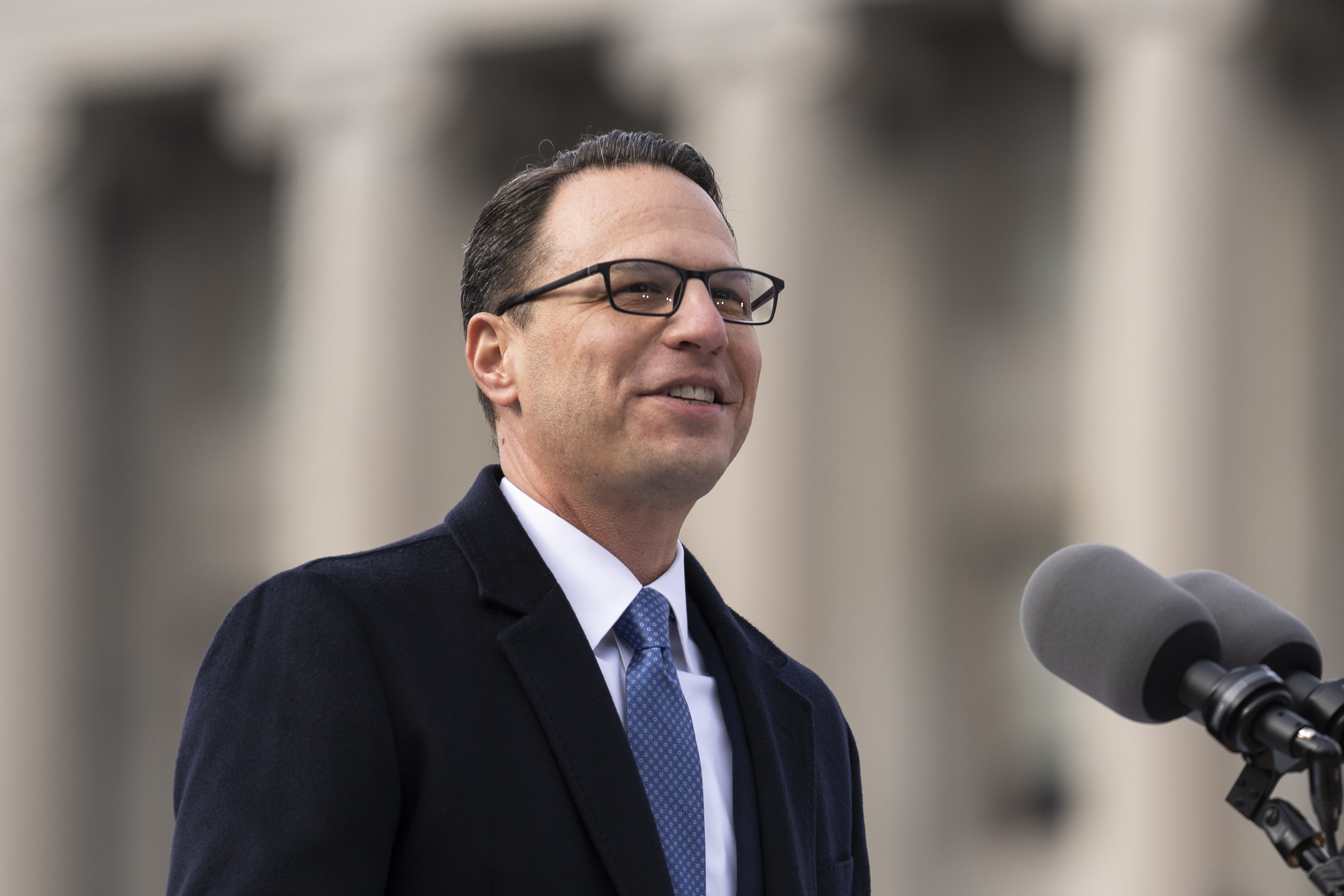
    Gov. Josh Shapiro speaks at the state Capitol in Harrisburg, Pa., Jan. 17, 2023. Pennsylvania state government would prepare to use artificial intelligence in its operations, Shapiro said Wednesday, Sept. 20, 2023, as states were increasingly trying to gauge the impact of AI and how to regulate it. Matt Rourke

    Today, Pennsylvania state employees use AI for a range of functions but focus on relatively basic tasks: deciphering handwritten clemency applications, scanning documents, and triaging customer service requests.

    Most employees access generative AI tools through no additional cost according to the Office of Administration. For the 721 employees who have access to ChatGPT Enterprise, the cost is $25 dollars per month for each user, bringing the annual cost — based on current usage — to $216,000 a year.

    Mark Fagan, a lecturer at Harvard University’s Kennedy School of Government and author of a book on how governments can use these tools, said that generative AI can serve as an important resource to deliver public services to constituents.

    “There are endless opportunities for using AI to improve the way we either provide higher quality, more efficiency, or more equity in our public services,” he said.

    But to do this best, he said, governments should first find friction points and inefficiencies in their operations and then determine if the technology can help.

    “AI is often a solution to pain, but that’s not enough,” Fagan said. “If you’re going to use AI, it should be the best solution to the problem.”

    A first-of-its-kind pilot

    In January 2024, the Shapiro administration launched a pilot program in partnership with OpenAI, the company behind the generative AI chatbot ChatGPT, to test the rollout of tools among a select group of executive agency employees.

    The program made Pennsylvania the first state in the nation to enter into an agreement with OpenAI, and also marked the first time employees within the state were permitted to use generative AI tools.

    “The pilot was designed to explore using AI tools from the perspective of Commonwealth employees; to understand when, where, and how tools could be of useful to them, where using these tools may introduce opportunities for risk, and areas where employees might need additional training or resources to be successful,” Dan Egan, a spokesperson for the Office of Administration, which has overseen the state’s AI rollout said.

    Sam Altman, OpenAI’s chief executive officer, said at the time of the rollout that the pilot “showcases Pennsylvania’s commitment to innovation” and would “provide valuable insights into how AI tools can responsibly enhance state services.”

    Open AI Chief Executive Officer Sam Altman, center, speaks at the Advancing Sustainable Development through Safe, Secure, and Trustworthy AI Event on Sept. 23, 2024, in New York. (Bryan R. Smith/Pool Photo via AP, File)Bryan R. Smith

    (OpenAI has since introduced a new model tailored specifically for government use and entered into partnerships with other states across the country. In February, Massachusetts officials announced they would make ChatGPT available to their entire 40,000 person executive branch.)

    In Pennsylvania, the pilot involved 175 employees from 14 state agencies.

    Participants, including Office of Administration employees, lawyers, and construction project managers, were equipped with access to ChatGPT Enterprise, OpenAI’s model for businesses which contains additional privacy features. Information submitted to the chatbot isn’t used to train additional models.

    Employees most commonly used ChatGPT during the pilot to assist with drafting emails or other writing.

    With access to ChatGPT, participants reported saving an average 95 minutes per day and 85% of employees said their experience was “somewhat” or “very positive.”

    During a news conference last March, Shapiro said state employees from lawyers to construction managers used the tools and found them beneficial. The pilot, the first-term Democratic governor added, allowed his administration to reduce the time needed to onboard a new employee by 30 days and to help to consolidate the number of state technology policies by 60%.

    “There are too many public officials who think they can stick their head in the sand and ignore this,” Shapiro said. “I believe we need to embrace them and we need to use it for the betterment of society and the betterment of the people we serve.”

    Protections for employees

    Shapiro, in his letter to state employees, wrote that his administration would implement AI tools with a goal of boosting productivity “not with the agenda of substituting Commonwealth employees with AI.”

    In its agreement with SEIU, the state made a commitment that AI tools will follow a “human in the loop” process in which “human workers oversee, review, and guide generative AI tool outputs to ensure accuracy, fairness, and compliance with workplace standards.”

    The agreement also affirmed the definition of a public employee as a person, something Catanese said was particularly important to his union.

    “I think right now, whether you work for the government or big business, or whatever type of entity, you want to work for an employer that actually sees in the long term there is a role for humans,” Catanese added.

    But, he is cognizant that the technology is advancing rapidly, and the union will need to remain vigilant in ensuring those human-in-the-loop protections remain in place to protect workers.

    Chinmayi Sharma, a professor of law at Fordham Law School whose research focuses on artificial intelligence, said a dissonance can exist between the draw of using AI tools and the diligence required to check their work.

    Organizations may turn to AI tools to make jobs more efficient or more accurate. But ensuring there is a human involved to check the work of those tools requires an additional level of vigilance and care, she said.

    “Are these humans in the loop being trained about AI to the point where they can identify subtle or nonobvious errors?” Sharma, whose research is generally cautionary about the use of AI, said.

    As far as he knows, Pennsylvania is the only state government at this point that has given a union collectively bargained protections around the use of AI, Catanese said.

    Within the union’s membership, perspectives on the rapidly changing technology are varied.

    “Most of our members do have some serious concerns about what it means for their future in the long term,” Catanese added.

    Other members, Catanese said, believe the tools could help lessen their workload. He said current use cases and restrictions on the types of data that can be entered into the tools means that some of those benefits aren’t yet clear.

    “Is it fully guaranteed forever? No,” Catanese said of the protections agreed to by the state. “Is it some level of protection that almost every public servant in the country doesn’t have other than our members at the state? Yes.”

    ‘A solution’

    The state’s use of AI is governed by a set of policies that are reviewed annually.

    Human involvement is required in work produced by generative AI and any use of AI tools must be disclosed if a customer is directly interfacing with them. Personally identifying, confidential and nonpublic information also can’t be submitted into AI interfaces.

    Throughout the AI rollout, the state has consulted researchers through ongoing partnerships with Carnegie Mellon University and the University of Pennsylvania. Subject matter experts from both institutions have answered questions for the state on an as-needed basis as the administration decides to implement new tools and policies.

    As the state considers future use cases, Pardoe said she wants “people to have confidence in the services they get from state government.”

    That means, she said, “being thoughtful and deliberate about where and how we choose to implement AI as a solution.”

    As AI becomes more complex, Sharma predicted that the same logic that makes AI tools attractive now will continue to apply as the technology becomes more advanced. If a government is under-resourced, temptations could exist to redirect resources away from paying human employees and toward something else.

    And, she noted that officials may be motivated to continue to adopt more tools.

    “I don’t know of a politician that’s going to enjoy coming out and saying, ‘We just put a lot of time and effort into this AI pilot, turns out we were wrong, it’s not a great thing for us to do and we are rolling it back,’” she added. “That’s a tough sell.”

    Fagan, the Harvard lecturer, believes that states with successful pilot programs, like Pennsylvania, will likely adopt the technology at a faster rate in the future.

    The important question, he said, won’t be whether more places are using these tools, or whether existing states expand the number of employees using them.

    “The question is whether it creates value or not,” he said of government AI usage. “The real value is in finding problems, finding where there is pain, and solving it.”

    Ethan Young is an intern with the Pennsylvania Legislative Correspondents’ Association. He can be reached at ethanmyoung@gmail.com.

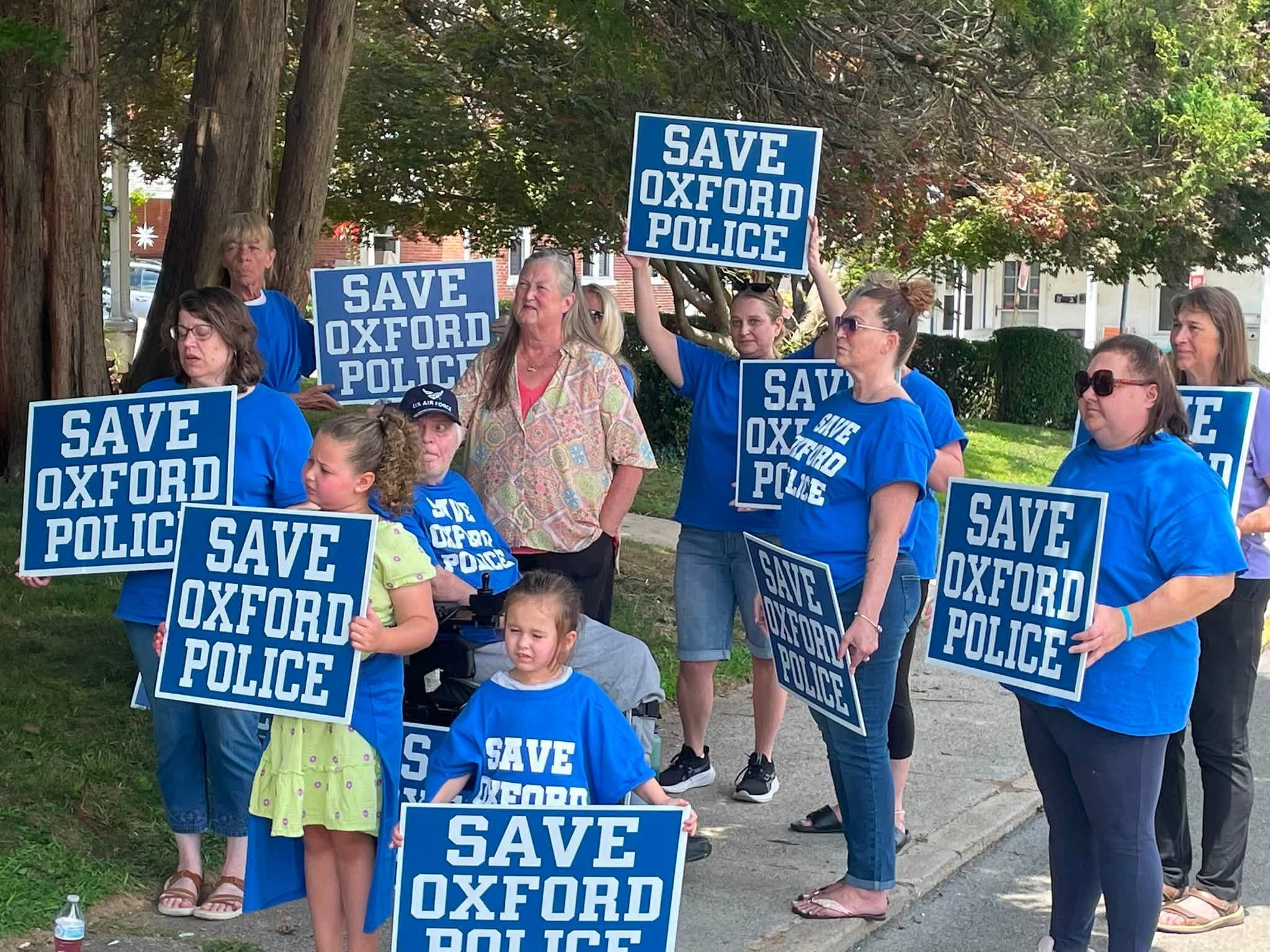
  • Oxford may soon disband its police department. The community is worried about losing its homegrown force.

    Oxford may soon disband its police department. The community is worried about losing its homegrown force.

    Oxford officials are inching closer to disbanding the borough’s century-old police department and joining a regional law enforcement agency, as increasing costs of maintaining the local force have outpaced revenue. But the plan has prompted worries from some residents.

    The seven-member borough council will review final agreements to join the Southern Chester County Regional Police Department at its Aug. 17 meeting, where officials are poised to cast their final vote to move ahead with regionalization.

    First responders represent some of the most expensive parts of a municipality’s budget, between salaries, health insurance, and pensions, as well as facilities and equipment costs. Oxford will join a smattering of other area municipalities that have moved to regionalization as a way to save money.

    But the prospect has sparked concerns in the community of roughly 5,800 people. Some fear that dissolving the borough’s department will increase emergency response times and potentially leave the municipality unprotected. And they worry about losing the officers who have grown up alongside them and understand their community. Some residents have called on the township to try to save the department by cutting costs in other ways.

    “These are people that literally would pull my kid over, give him a ticket, and ask how his dad is when he had cancer,” Oxford resident MaryAnn Riess said. “This is personal. This is a small town. These guys, all 11 of them, mean something to us. We buy them coffee. We buy them doughnuts. They are part of our extended family. This matters to us, and how they’re being treated matters to us.”

    Mayor Phil Harris does not disagree. But he says it is becoming impossible to maintain the department at its current level — let alone increase salaries or staffing.

    “We all want the same thing. I want our officers in a different uniform in our town doing the same job, with more equipment and more access to the tools they need to continue to perform at a very high level,” he said. “That’s the goal.”

    Years of deliberation

    When Oxford’s council casts its vote later this month, it will be after more than three years of studies and evaluations, the township said.

    In 2023, leadership found its police department — which consists of a police chief, 10 full-time officers, and several part-time officers — was the borough’s largest operating expense. It accounts for about half of the borough’s expenditures, with more than $2 million budgeted in 2026 for police.

    Meanwhile, the borough’s revenues were not keeping pace. Officials began exploring how they could sustainably provide public safety services long-term.

    Original fiscal forecasts were quite “bearish,” Harris said. But even when the borough performed better than earlier projections, the writing was still on the wall, he said.

    Its higher revenue was in part thanks to an influx of new homes with higher-than-expected earned income tax. But the largest indicator of why revenue rose was a 21% tax increase during the same period.

    “We’re seeing the operational and the structural imbalances continue within the police department,” he said. “We’re struggling on the operational side to be able to maintain what we currently have.”

    A July analysis from Keystone Municipal Solutions found that though Oxford’s financial status had improved, it levied the second-highest millage rate in the county, increasing by 21% since 2023, compared with the average of 12% across the county. Additional raises were seen as “counterproductive to the growth necessary for long-term fiscal stability.”

    The analysis evaluated five possible service alternatives: keeping the borough’s department, restructuring the existing department, reducing staffing and supplementing coverage with Pennsylvania State Police, relying entirely on the state police, and merging with the Southern Chester County Regional Department.

    At its July 29 meeting, the borough council voted 6-1 to authorize the council president, borough manager, mayor, and solicitor to negotiate with the regional department. They will present those agreements to the full council in August.

    If the council votes in the affirmative, the borough will join New Garden, West Grove, and Avondale in the regional department. Formed in 2017, the department employs 21 full-time officers.

    It is projected the regional department would add 12 more officers with the inclusion of Oxford. Oxford would receive 24-7 police services, with at least two officers on patrol at all times, like the current structure.

    Harris said the goal is for every officer who wants to go to the regional department to do so. But there are protections and a path for those who do not.

    Oxford is a ways further west from its partners; the borough is up to 16 miles away from them.

    To keep response times low, the borough would have a substation — though likely not in Oxford’s existing police building — with cars in the borough. Officers would start and end the clock within Oxford’s boundaries, so there would be no shift-change gaps. They hope to retain the administrative assistant and have a lieutenant stationed on duty at the substation, Monday to Friday.

    Officers would get new uniforms, the cars would be relabeled, and Oxford’s assets would become part of the regional department’s assets.

    According to the report, after an increase in costs associated with up-front transition costs in 2027, annual savings would range from $300,000 to $320,000 “before declining slightly toward the end of the projection period.” The report estimates cumulative savings through the projection period at approximately $1.4 million.

    “What you get by regionalizing is the economy of scale,” Harris said. “You get stability across those lines, and it’s predictability — and you can spread things out, and you can plan.”

    More regionalization

    The Southern Chester County Regional Department is part of a broader swell across the state of municipalities utilizing regionalized services to slash expenses, said John Brenner, executive director of the Pennsylvania Municipal League.

    You would be “hard pressed” to find a community that spends less than 50% of its budget on public safety, he said. And those costs continue to rise.

    “That puts pressure on local officials again to say, ‘OK, what is more efficient here? Is there a better way to do this?’ And I think a number of local officials throughout the state have said, ‘You know what? Regionalization might make a lot of sense,’” he said.

    It is not a perfect solution: Across the state, municipalities have joined and then withdrawn from regional services due to increasing costs under the agreement, according to the analysis by Keystone. Similarly, Kennett Square pulled out of the regional fire and emergency services commission that it had helped start after costs soared too high. It rejoined the commission earlier this year, having not found a cheaper alternative.

    In Chester County, some municipalities contract out with their neighbors’ forces. Oxford tried to embrace such a model, but its closest neighbors have relied entirely on the Pennsylvania State Police for public safety, at zero cost. Contracting Oxford’s force was an expense those communities could not take on.

    Across Chester County, more than 20 municipalities rely on the state police for full coverage. Around a dozen others use partial coverage.

    But that was not a direction Oxford wanted to go. While the state police do a “great job,” they are “not a community-based police department,” Harris said.

    “We were desirous of having a community-based police department that operates in a different model, that knows the neighbors, that knows the streets, that goes out to the festivals, that shakes the hands and goes to the schools and the nonprofits,” he said. “We felt like the [regional department] brings that model and it maintains that standard.”

    Residents are concerned

    Danny Graham grew up running around town with the men who would go on to become police officers in Oxford. There is a distinct “hometown” feeling to the force, he said. It feels like the officers know what to do, how to calm people down. And they respond almost immediately, he said, recalling an incident outside his home when they were there within 2.5 minutes.

    Oxford police responded to 4,406 calls for service in 2023, according to the most recent data in the Keystone report. A majority were for property and house checks, followed by traffic stops, medical emergencies, and more.

    Serious crime — such as larceny or violent crime — was “not prevalent,” according to the report.

    But residents worry about what regionalization will do to that community culture and speed of response.

    In response, Graham created Save Oxford Police, a Facebook group that amassed nearly 1,000 members in recent weeks. A Change.org petition calling for saving the department has accrued hundreds of signatures.

    He said he did not understand how the borough could have enough cash flow for other expenses, but would not invest in the department.

    “Something stinks in Oxford, and we’re trying to find that smell,” he said.

    He hopes that, if enough people come to the Aug. 17 meeting, they can shut the regionalization effort down by postponing the vote, with the hope something could come up in the interim to save the department.

    But, if not that, “it’s no longer Save Oxford Police. It’s Save Oxford Police Officers, because now that means more than the department itself,” he said.

    Riess, who believes the Oxford police force is a greater extended family for the borough, said that sitting out on the patio at a restaurant recently, her group watched an officer test each business door, making sure they were locked.

    “Do you really think that’s going to happen [with regional]?” she said.

    “I’ve never seen regional do that, but I haven’t seen any officers really do that. Except Oxford,” Graham said.

    This suburban content is produced with support from the Leslie Miller and Richard Worley Foundation and The Lenfest Institute for Journalism. Editorial content is created independently of the project donors. Gifts to support The Inquirer’s high-impact journalism can be made at inquirer.com/donate. A list of Lenfest Institute donors can be found at lenfestinstitute.org/supporters.
  • Pa. small towns set to get latest wave of federal funding for EV chargers

    Pa. small towns set to get latest wave of federal funding for EV chargers

    HARRISBURG — As Pennsylvania prepares to receive millions of federal dollars to build electric vehicle charging stations, the small towns that will host the devices hope they can double as tourist magnets.

    “People can let their vehicles sit for a bit and walk the stores downtown and grab food,” Steve Herman said of the vision for the devices. “They’ll serve folks who are living here but also draw in visitors.”

    Herman is transportation planning program director for SEDA-COG, an economic development organization that covers eight central Pennsylvania counties. He’s spent the past year working with chambers of commerce and community groups to explore how to make the chargers economic assets. If planned properly, he said, the stations can “draw people into our downtowns.”

    The funding is the latest wave of a $5 billion federal program created under the Biden administration to build out EV chargers across the country. A previous phase of the program placed chargers along interstates and other major roads, but this round is focused on building chargers in local communities. All told, Pennsylvania is slated to receive $171 million by the program’s end.

    In the past year, Herman has surveyed where the best locations for chargers would be, hosting in-person workshops on the program and polling residents. He even created a tool that lets people drop pins on a map to recommend locations for chargers.

    He reported his findings to the Pennsylvania Department of Transportation, which has been consulting with dozens of other local planning councils across the state in preparation for the funds.

    “Compared to Philadelphia or Pittsburgh, [there are] differences in terms of existing network and priorities,” Herman told Spotlight PA, referring to current charger access. “We already have some in university towns and hospitals and destinations like that, even some of the grocery stores. But [there’s] not as widespread availability. The community charging program will broaden that out.“

    Pennsylvania has built at least three dozen chargers so far — the most of any state in the U.S. Each charging port cost roughly $163,000.

    Clean energy and transportation experts attribute the fast deployment to PennDot, which had previously partnered with the Department of Environmental Protection to research the issue. The agency also worked directly with local gas stations to dole out grants.

    Environmental advocates view EVs as a key part of combating climate change, as the transportation industry is one of the largest sources of greenhouse gas emissions in the U.S. Over half of those emissions come from passenger cars and trucks.

    Alissa Burger, regional policy director at clean transportation industry group CALSTART, said the federal funds are “creating a foundation” for states to have basic EV charging infrastructure that will “encourage their citizens to consider switching over to a zero-emission vehicle.”

    She added: “You’re not gonna get an EV if you feel nervous about where you’re going to charge it.”

    Previously, states were on their own, Burger said. For instance, she pointed to the 2019 PennDot plan to build out EV infrastructure. That pitch proposed just four charging stations and identified only state sources for funding.

    “There was intention. I don’t think there was a lot of funding behind it,” Burger said.

    So far, Pennsylvania has already spent or plans to spend roughly $60 million of the $171 million allocated to the state. The remaining $100 million has been obligated — meaning a contract is in place to spend the funds — to the grant program that Herman of SEDA-COG is participating in, per PennDot.

    That initial commitment is important, as unobligated funds can be clawed back by federal officials when the program expires in October. The EV charging effort is among a slate of initiatives funded by the Bipartisan Infrastructure Law that the Trump administration has tried to roll back or freeze.

    In the first weeks of his second term, President Donald Trump issued an executive order to freeze funding to this and other programs within the BIL. Trump said the freeze was for the purpose of eliminating “unfair subsidies and other ill-conceived government-imposed market distortions that favor EVs over other technology.”

    As a result, the federal Department of Transportation paused funding to states. But after a suit by environmental organizations and states, including Pennsylvania, a federal judge ruled the order unconstitutional and returned the funds.

    The Federal Highway Administration also issued new guidelines for the National Electric Vehicle Infrastructure program last August, which environmental advocates said slowed down EV build-out by forcing states to resubmit their plans.

    Under the NEVI program, states get funding to grow their electric charger network. Site hosts, such as gas stations and local governments; EV charging companies; and contractors can apply for money to buy, install, and operate EV chargers. These funds can be used to pay for up to 80% of the total costs to build, replace, or upgrade a charging station.

    The first tranche of funding was released in 2021 and designated for a specific use: ensuring that there was an EV charger every fifty miles on major highways in the state, namely the Pennsylvania Turnpike. The money was aimed at building chargers for passenger vehicles.

    Pennsylvania was the first state to meet that goal, which allowed PennDot to tap the funding dedicated to setting up charging networks in less-trafficked routes. That second tranche went toward areas like Northeast Pennsylvania, Erie, and the Pittsburgh suburbs.

    The latest and final round of funds, for “community-focused EV charging projects,” is what has small towns excited.

    PennDot is still in the process of mapping out where to place chargers, working with local planning organizations like SEDA-COG to finalize locations.

    The agency is doing this work in stages, targeting different regions of the state. Officials plan to begin announcing this fall which municipalities will be awarded grants to build charging stations, and say the process of choosing locations should wrap up by next summer.

    Spotlight PA is an independent, nonpartisan, and nonprofit newsroom producing investigative and public-service journalism that holds power to account and drives positive change in Pennsylvania. Sign up for our free newsletters.

  • Delco man pleads guilty to stalking Philly TV news personality

    Delco man pleads guilty to stalking Philly TV news personality

    A Delaware County man who previously got in trouble for leaving lewd and threatening voicemails for U.S. Rep. Madeleine Dean pleaded guilty Wednesday to stalking a Philadelphia TV news personality.

    Stephen M. Cilurso, 73, of Aldan, admitted to one count of stalking by use of the mail and one count of witness tampering before U.S. District Judge Gail A. Weilheimer in Philadelphia federal court.

    U.S. Attorney David Metcalf did not identify the victim, but court records describe the target of Cilurso’s homophobic and threatening mailed letters as a TV news personality who has a spouse and children.

    Cilurso mentioned the man’s children by name in several of his threatening letters, according to the memorandum for Cilurso’s plea deal with prosecutors.

    Even after Cilurso was contacted in March by law enforcement about the harassment, he continued to send letters to the TV personality — but this time he was asking the victim to help get the criminal investigation dropped, the memo said.

    Cilurso reportedly did the same with Dean (D., Montgomery).

    He was charged in 2021 with making threatening and lewd calls to Dean’s office because she was involved with the impeachment of Donald Trump, whom he supported in 2020. At one point, he mentioned Dean’s daughter by name.

    After police began to investigate the calls, Cilurso left additional messages apologizing for his behavior and begging Dean to tell detectives to stop the investigation.

    Cilurso pleaded guilty in the Dean case and was sentenced to probation, court records show.

    In January, Cilurso was arrested for allegedly making threats to New Jersey Gov. Mikie Sherrill when she was a member of Congress.

    On Thursday, the Essex County Prosecutor’s Office confirmed that Cilurso pleaded guilty in March to one count of fourth-degree stalking in the Sherrill case. His sentence is pending.

    In the Philadelphia case, Cilurso mailed his first letter in 2019 and included homophobic comments and mentioned that he had just seen the victim with his kids.

    Cilurso continued mentioning the victim’s children in subsequent letters as well as the victim’s spouse, prosecutors said.

    He also threatened to release snakes around the victim’s home.

    “Regarding why the snake letters were mailed, the defendant stated he saw a news segment where Victim 1 revealed on the air that he is deathly afraid of snakes,” the plea memorandum said.

    “The defendant thought Victim 1’s fear of snakes was funny, so he began mailing threatening communications to Victim 1 indicating he was planning to release snakes at Victim 1’s residential property,” the memo said.

    In a September 2025 letter, Cilurso again used homophobic slurs and mentioned the victim’s spouse. At the end of the letter, according to the memo, Cilurso wrote: “I hope what happened to Charlie Kirk happens to you.”

    The victim received that letter about a week after Kirk, a conservative activist, was fatally shot on Sept. 10.

    Prosecutors said the victim felt as if his life was in imminent danger after receiving that letter and installed security cameras around his house. He also contacted Philadelphia police, who then notified the U.S. Postal Inspection Service.

    After being interviewed by law enforcement in March, Cilurso sent additional letters to the man, but was now asking for his help to stop the investigation.

    “I am the 73 year old scumbag who wrote you” the letters, Cilruso wrote, according to the memo.

    The plea memo said Cilurso begged for the victim to “help me out of this nightmare. Please ask the FBI to drop any future charges against me … I will donate a monetary amount to your favorite charity on your behalf … [D]on’t let me go to jail again and be away from my 3 remaining cats. I love my cats as you love your [children],” he wrote, again using their actual names.

    In a side note, the agents confirmed that Cilurso owned three cats.

    In another letter, Cilurso admitted that an agent had come to his house and told him to stop communicating with the victim, the memo said.

    In his last letter in March, according to the memo, Cilurso wrote: “I know that I told you that I would not write you again, but things have changed and not for the better for me.”

    Cilurso described health problems he claimed he had, and said he would take his own life and the lives of his cats rather than go back to jail, the memo said.

  • Chester County police are investigating a shooting that left a woman dead, 9-year-old girl wounded

    Chester County police are investigating a shooting that left a woman dead, 9-year-old girl wounded

    A woman was killed and 9-year-old girl was wounded in a shooting at a home in East Goshen Friday morning, according to Chester County investigators.

    Officers from the Westtown-East Goshen Police Department were dispatched just before 11 a.m. to a unit at the Summit House condominium complex on West Chester Pike for reports of a shooting, Chief David Leahy said.

    Inside the unit, the officers found a woman in her 40s dead from a single gunshot wound, he said. Authorities did not release the woman’s identity. The girl, who was also shot, was treated at the scene by paramedics, and was alert, conscious and able to speak with investigators, he said.

    Investigators found a gun not far from the woman’s body that they believe was used in the shooting.

    There was no information available on a motive or a potential suspect in the case.

    District Attorney Chris de Barrena-Sarobe said there is no threat to the public, and declined to comment further, citing the active investigation.

    “We have just as many questions as you do, and we don’t want to put out any incorrect information,” de Barrena-Sarobe said.

    He said his heart goes out to the family of the victims.

  • Commodore Barry Bridge is getting a paint job and restoration, and traffic is jammed

    Commodore Barry Bridge is getting a paint job and restoration, and traffic is jammed

    Canvas shrouds the Commodore Barry Bridge as workers blast clean and repaint the high steel trusses holding up the roadway.

    The $220 million project, expected to finish in 2028, has caused havoc this summer with commuter and Shore-bound traffic on a crucial link between Delaware and Gloucester Counties.

    Traffic is squeezed into one lane in each direction from 7 p.m. to 5 a.m., and residual morning delays have been reported. Crews sometimes also have to close lanes or temporarily stop all traffic during daytime to move equipment and materials.

    It is a major undertaking for the Delaware River Port Authority, the bistate agency that owns and runs the Commodore Barry, as well as the Walt Whitman, Ben Franklin, and Betsy Ross Bridges.

    As they move along the 13,912 feet of the bridge, industrial painting crews first sandblast layers of old paint and protective coatings that have built up over the years.

    They work from suspended platforms in enclosed spaces of canvas, with containment systems that capture the gritty material used to clean the steel, lead-based paint, and other grime.

    Although that up-in-the-air work is most visible to motorists, massive repairs are going on underneath, on the deck, and in the support structures below that, including the piers in the river.

    Crews are removing crumbling concrete and replacing it, repairing the drainage system, and installing 14,000 feet of new electrical conduits and wire, DRPA officials say.

    The rehab began in spring 2025, with replacement of the movable “zipper” barrier that separates lanes of bridge traffic. It was finished last summer.

    The bridge opened in 1974 after five years of construction.

    Earlier, people relied on ferries to cross from one state to another.

    In 1930, the Chester-Bridgeport Ferry began running, with a capacity of 60 cars per trip. Six years later, the ferry’s boats were added to the federal highway system, as moveable parts of U.S. Route 332.