Category: Pennsylvania News

  • Delco’s new emergency services director is focused on ‘sustainability’ after Crozer-Chester Medical Center’s closure

    Delco’s new emergency services director is focused on ‘sustainability’ after Crozer-Chester Medical Center’s closure

    Delaware County’s new emergency services director wants to build something sustainable.

    Gary Vinnacombe is a Delco native who has spent the last two decades overseeing EMS teams across Delaware and Chester Counties. Last month, he took the helm of Delaware County’s emergency services department, a homecoming of sorts for the longtime first responder, who got his start at Haverford’s Manoa Fire Company.

    Vinnacombe, 43, replaces interim director Ed Beebe, who oversaw Delaware County’s emergency services for 18 months after former director Timothy Boyce was charged with indecent assault, among other offenses, related to his alleged groping of a female coworker.

    Vinnacombe is taking over Delco’s emergency services apparatus at a pivotal time. The county is continuing to navigate the fallout from Crozer-Chester Medical Center’s closure, and some of its municipalities are considering emergency service mergers and cooperative authorities to fill gaps in service. Now, Vinnacombe says he’s eager to work with emergency responders across the county to build a lasting system that can serve Delco’s residents.

    A 911 dispatcher working at the Delaware County Emergency Services Center on Jan. 5, 2022. Delco native Gary Vinnacombe recently stepped up to lead the department. Thomas Hengge / Staff Photographer

    Vinnacombe grew up in Delaware County and is a 2001 graduate of Haverford High School. He holds an associate’s degree in nursing science from Delaware County Community College, a bachelor’s degree in emergency and disaster management from American Military University, and a master’s of public administration from Anna Maria College.

    Vinnacombe has worn many hats over his two-plus decades in emergency management. He joined the Manoa Fire Company as a teenager, where he rose up to become the company’s EMS captain. He spent over a decade as the deputy chief of EMS at Darby’s Mercy Fitzgerald Hospital and is a longtime adjunct faculty member at Delaware County Community College, where he teaches EMT classes, municipal police academy emergency responder training, and CPR. Most recently, Vinnacombe spent 14 years with the West Grove Fire Company in Chester County, where he was assistant chief and oversaw day-to-day operations and employee recruitment and retention. He currently lives in Chester County.

    Vinnacombe said the Crozer fallout is an “ongoing evaluation” for his department. He’s optimistic about ChristianaCare’s soon-to-open Aston and Springfield micro hospitals (the Aston facility is set to open this summer, and the Springfield facility next summer). The region’s existing hospitals have “done a fantastic job of absorbing that volume,” Vinnacombe said, and local municipalities have made a strong effort in “coming together to ensure that service continues to get delivered.”

    As the county rebuilds its emergency services, Vinnacombe said, sustainability is top of mind.

    “We can build all these great things all day long,” he said. “If we don’t have a plan or a mechanism to sustain them, it doesn’t matter what we build.”

    When asked about the push by Media, Nether Providence, Upper Providence, Rose Valley, Rutledge, and Swarthmore to create a regional EMS authority to provide advanced life-support care through an annual fee structure, Vinnacombe said he thinks “the concept of regionalization is the key to sustainability.”

    However, he added, it’s important to take a close look at the funding mechanisms for different regional service models, as “every one of them has pros and cons.”

    “I would certainly say, obviously anything that we can do to help people collaborate, or bring the right people to the table, we certainly want to,” he said.

    The emergency services director also steps into his role weeks after Delaware County unveiled a $36 million overhaul to its emergency telecommunications system, curbing years of false alarms and poor connection over its 911 radio waves.

    The difference is night and day for Vinnacombe’s first responders, he said. Now, police, fire, and EMS officials can get real-time notes from 911 calls, fortifying them with a detailed report before they even get on the scene.

    “The residents of Delaware County are in such a better space because of it,” Vinnacombe said.

    Vinnacombe’s department is preparing for a busy summer. The PGA Tour Championship, FIFA World Cup, MLB All-Star Game, and Semiquincentennial are all descending on the Philly area in the coming months, and Delaware County officials are expecting a wave of tourists — and with them, an increased need for emergency responders.

    Delco’s emergency services department is planning to support the upcoming PGA Tour at Aronimink Golf Club in Newtown Square with extra first responders, and Vinnacombe’s team has been busy filling requests for backup from municipalities.

    As he settles in, Vinnacombe is confident that Delco is “only going up.”

    “The services are only going to get better. Technology’s only going to continue to evolve,” he said. “The investments that the county has made into technology and public safety have improved the services that get delivered.”

    This suburban content is produced with support from the Leslie Miller and Richard Worley Foundation and The Lenfest Institute for Journalism. Editorial content is created independently of the project donors. Gifts to support The Inquirer’s high-impact journalism can be made at inquirer.com/donate. A list of Lenfest Institute donors can be found at lenfestinstitute.org/supporters.
  • Radnor school district is looking to enlist outside experts to prepare for future deepfake incidents

    Radnor school district is looking to enlist outside experts to prepare for future deepfake incidents

    The Radnor Township School District is preparing for a possible repeat of a so-called deepfake incident last year that targeted freshman girls, looking to enlist outside help on how to better support victims.

    At a school board policy committee meeting Tuesday, administrators presented updated regulations around bullying and harassment, including that using artificial intelligence to create or share “sexualized, indecent, demeaning or intimate content involving another person” was prohibited.

    The new rules — which follow policy changes passed last month — also say the district will consider who should be present while interviewing students, in light of a student’s age, sex, and background and the issues being investigated. Parents had complained about many aspects of the district’s handling of last year’s incident, including that girls victimized by deepfakes were interviewed alone by male administrators.

    But more changes are possible, administrators said Tuesday. Scott Hand, the district’s director of technology innovation and instructional design, said Radnor “will be engaging outside professionals beginning this summer into fall” to review its policies and practices.

    Some board members also suggested the district retain outside help to be ready for another incident.

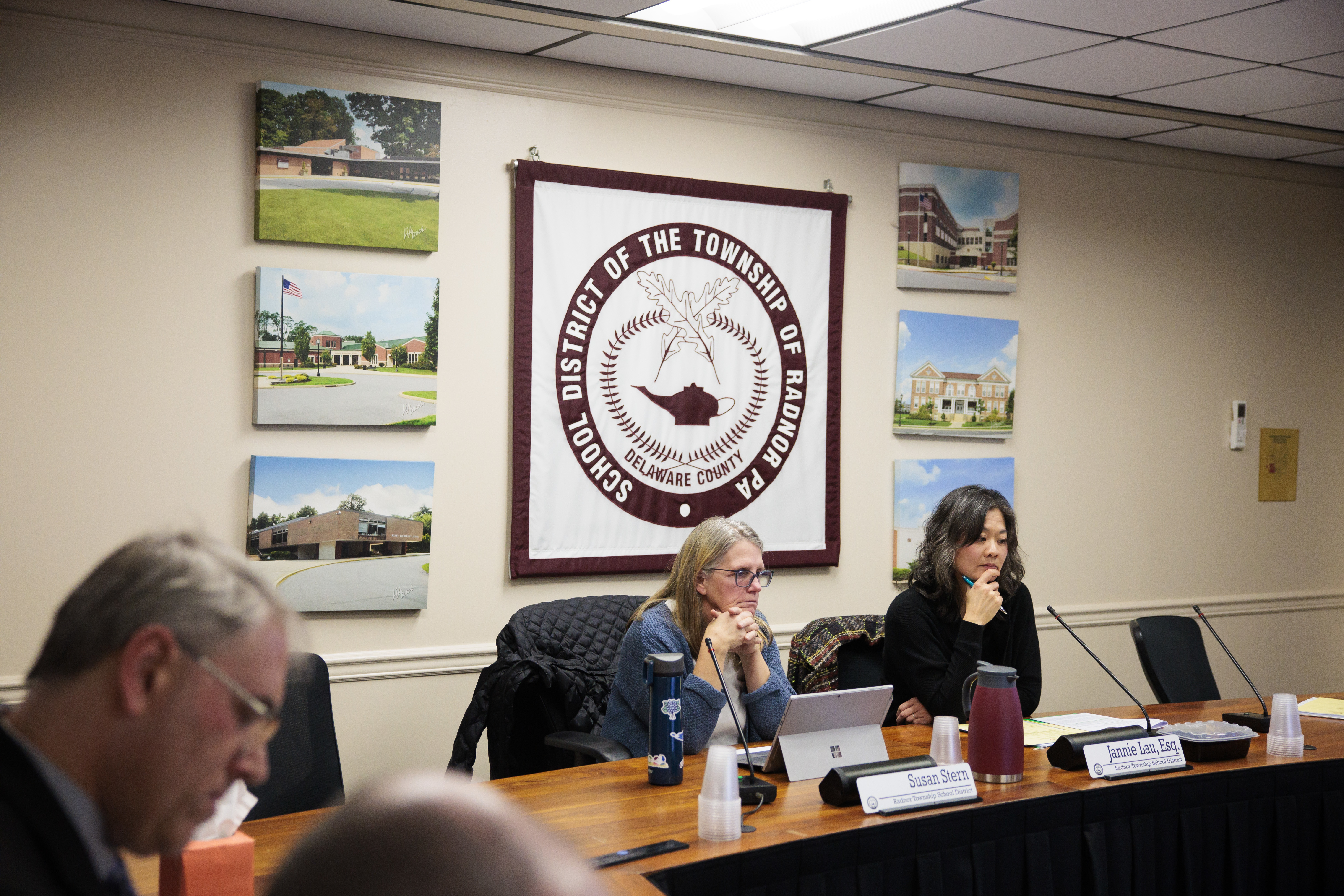
    “The statistics say, something like this will happen again,” said Susan Stern, who asked administrators to consider hiring “a resource we could have on hand.”

    “We’re going to work really hard to educate our kids that it doesn’t happen here in Radnor, but our best response is to be prepared,” Stern said.

    Schools have increasingly been forced to grapple with deepfakes as students use generative AI to manipulate photos of their peers — sometimes with tools that can convert clothed photos into naked ones. Pennsylvania has criminalized explicit AI-generated images as child sexual abuse material, and another measure advancing in Harrisburg would require schools to immediately notify law enforcement about AI incidents.

    Radnor drew intense criticism from some victims’ parents for its handling of the deepfakes, which came to light in December and resulted in a student being charged with harassment.

    District officials said no images were ever discovered. But parents said the district had failed to adequately investigate boys’ reports of pornographic videos and downplayed the incident in community messages, further harming victims.

    Parents also accused the district of failing to initiate a Title IX harassment investigation, arguing it was wrong to characterize the incident as “off-campus.”

    Radnor parents are organizing a panel discussion Thursday in King of Prussia, with deepfake victims from Radnor and Lancaster Country Day School, advocates, and state officials, including Attorney General Dave Sunday, describing risks and how schools can better respond.

    The rules presented to Radnor’s policy committee Tuesday specify that the district has authority over off-campus behavior when it “materially and substantially disrupts the operations of the school” — a common legal standard.

    Jannie Lau, the committee’s chair, said that given how online kids are, any online harassment would seem to meet that threshold.

    “That’s my takeaway — it would be extremely rare for this conduct to happen, and for us to come to the conclusion it doesn’t impact our operations,” Lau said.

    Lau said the district should consider hiring an outside law firm to conduct future Title IX investigations, to ensure more impartiality.

    “It’s just human nature — you don’t want to bite the hand that feeds you,” Lau said, noting that a district solicitor might have an interest in siding with the district, to avoid jeopardizing that relationship.

    In comments Tuesday, Audrey Greenberg, a parent of one of the victims, said she appreciated the rule changes, but that they didn’t go far enough. If a student reports AI-generated sexual content, she said, the district’s Title IX coordinator and central administrators should be notified immediately.

    She also said the description of “off-campus” behavior was too vague — saying deepfakes harm students’ attendance, friendships, and mental health — and argued that the rules wouldn’t prevent a poor administrative response.

    “It was so painful to get those emails calling the event rumors and speculation, when a crime occurred,” Greenberg said, referring to messages from Superintendent Ken Batchelor, including one that described the deepfakes as images made “to move and dance.”

    “For crying out loud, this is pornographic material,” Greenberg said.

    Stern, the board member, said earlier in the meeting that Radnor would be dealing with the fallout for a long time.

    “I don’t think that there’s anyone in this district who will ever hear the words ‘generative AI’ again, and not feel a little tug,” she said. “We had children who were harmed.”

  • Developers revert to 1.5M-square-foot data center proposal in Chesco after months of fiery opposition

    Developers revert to 1.5M-square-foot data center proposal in Chesco after months of fiery opposition

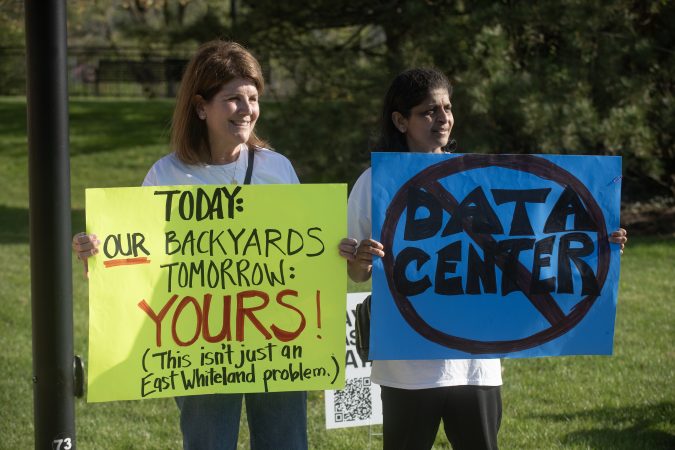
    Following months of fiery opposition from residents that saw protests and halted municipal meetings, the developers of an East Whiteland data center called their own bluff, telling the township that they will scrap their revised plans and instead build a previously approved 1.5 million-square-foot version.

    The decision takes a smaller plan, proposed last month, off the table — but it also eliminates a much bigger version that residents vehemently opposed.

    It comes after the developers — Green Fig LLC and Sentinel Data Centers — defiantly pressed the township last month to move quickly on their revised application, which, in one last-minute iteration, could have scaled back the project’s footprint significantly, by around 74% to 85%.

    Limited plans were submitted and were sent to consultants for review, officials said. The developers told the board that it was a concession they’d make only if the township’s three elected officials moved quickly on an approval.

    The board of supervisors were expected to vote on the amended project in late May, after pushing the meeting back from the end of April. The township canceled the meeting following a letter from developers on Monday withdrawing the pending application.

    In an email, Lou Colagreco, an attorney representing the developers, said that the decision to withdraw the project was partly due to the timeframe from the board, but “the larger factor was that it became obvious that no accommodation which our client offered would be acceptable.”

    “We thought that our offer to pivot to a much smaller data center together with enhanced landscaping, sound attenuation, diminished water usage and other modifications would be well received,” he said. “It became apparent to us, however, that the real issue had little to do with these factors. It was simply data center vs. no data center.

    Colagreco described the current proposal “a good plan” that developers “are anxious to build.”

    Residents considered the downsized project — smaller than one of the amended plans that would have increased square footage by roughly 60% — a win. They’re still pursuing legal action, arguing that the initial approvals have now expired.

    The project will sit on about 100 acres at 13 S. Bacton Hill Rd., on a Superfund site near a residential development and the popular Chester Valley Trail.

    It has been a winding saga for the project, which saw its first approvals back in 2018 by the zoning hearing board before receiving a final greenlight from the supervisors in 2024.

    But outrage over data centers has been growing since, sparking large attendance at local meetings in and surrounding Chester County.

    In response to pushback, developers approached the township about shrinking the site’s footprint, but the changes still didn’t appease residents. It resulted in a string of impassioned meetings and prompted the supervisors to consider undoing the zoning language that allowed the project to proceed.

    The developer has maintained that the project would be built in some capacity but argued that the newer plans would have a lower impact on the community.

    Under the original 2024 plans they said they’ll move forward with, the project — which is 1.5 million square feet across two buildings — would include antenna yards, microwave towers, and cooling towers that rely on evaporating 3 million gallons of water a day.

    “We’ve been accused of bluffing. This is not bluffing,” Sentinel Data Centers CEO Josh Rabina told the supervisors and residents in April when presenting plans to shrink the facility. “The approved plan is less desirable for us and for our customers, is less elegant and less efficient of a design, but it’s functional, it’s profitable, it’s vested, and it gives us certainty.”

  • After a man shot his girlfriend, officers shot him, Chester police say

    After a man shot his girlfriend, officers shot him, Chester police say

    A man who shot his girlfriend twice in the back on a quiet Chester street on Wednesday night later turned his gun on responding police officers, prompting them to shoot him, authorities said.

    The man and the woman — whom authorities did not identify — were in critical condition at an area hospital, Delaware County District Attorney Tanner Rouse said.

    Authorities said the man shot the woman shortly before 9 p.m. near the intersection of East Ninth and Walnut Streets. Then, Rouse said, the man opened fire on passing vehicles.

    No drivers were struck.

    When officers arrived at the scene, the man turned his weapon toward them, authorities said, and at least one officer shot him.

    Helicopter footage of the scene shows more than two dozen bullet casings littering the streets and what appears to be a parked power-washing truck riddled with bullet holes.

    A Chester Police Department spokesperson did not return a request for additional information on Thursday.

    Rouse said his office was reviewing camera footage of the incident and would “make sure we have every angle that depicts the events that transpired.” When its investigation is complete, he said, charges will be filed against the man.

    Meanwhile, he praised law enforcement for its response to the shooting.

    “I can tell you with confidence that the actions of the Chester Police Department were nothing short of lifesaving and the defendant in this case had every intention to kill anyone he could,” Rouse said.

  • The Delco 10 Miler is back with a new course and twice as many runners

    The Delco 10 Miler is back with a new course and twice as many runners

    The Delco 10 Miler race is back for what organizers hope will be a bigger and better second lap. Changes for 2026 include a revised course, more than twice the number of runners, and a faster pace requirement.

    The race will take place on Oct. 4. Registration is open. This year’s race will be capped at 2,500 runners, up from 1,200 last year. About 700 runners registered in the first 24 hours, race director Kevin Nolan said.

    While the inaugural race was largely seen as a success by race organizers and runners, Nolan said, there were still some issues to address, particularly along the route.

    Some residents and drivers passing through the area were unhappy with road closures, which cut a long swath across the county. The course‘s adjustments should mean fewer closures along main roads.

    “Logistically with all this traffic, it’s a tough race to manage,” Nolan said. “It’s tougher than the Philadelphia ones … because I’ve talked to all the race directors and they don’t have the issues that we have to deal with, with all this traffic.”

    Course changes

    The race will again start at Rose Tree Park in Upper Providence and end at Subaru Park in Chester. Last year, the race shut down parts of Route 252 and Route 320, as well as portions of Third, Fourth, and Fifth Streets in Chester, including a loop that took runners past Subaru Park before returning.

    (function() {
    var l2 = function() {
    new pym.Parent(‘delco_10_miler_2026’,
    ‘https://media.inquirer.com/storage/inquirer/projects/innovation/arcgis_iframe/delco_10_miler_2026.html’);
    };
    if (typeof(pym) === ‘undefined’) {
    var h = document.getElementsByTagName(‘head’)[0],
    s = document.createElement(‘script’);
    s.type = ‘text/javascript’;
    s.src = ‘https://pym.nprapps.org/pym.v1.min.js’;
    s.onload = l2;
    h.appendChild(s);
    } else {
    l2();
    }
    })();

    This year, runners will turn west on Rose Valley Road in Nether Providence and travel through residential streets before crossing Route 320 and heading into Chester and Widener University’s campus. The course crosses I-95 on the Melrose Avenue bridge again before heading south toward Subaru Park. The loop at the end has been eliminated.

    The new course:

    • Starts at Rose Tree Park South on Providence Road/Route 252 
    • Right on West Rose Valley Road 
    • Left on Bickmore Drive 
    • Left on Sheffield Drive 
    • Left on Georgetown Road (becomes Media Parkway) 
    • Left on Chestnut Parkway (becomes Chestnut Street) 
    • Right on East 18th Street 
    • Left on Walnut Street 
    • Left on East 14th Street 
    • Right on Melrose Avenue 
    • Right on Morton Avenue 
    • Right on East Fifth Street 
    • Left on Penn Street 
    • Right on West Third Street 
    • Right on Tillman Street 
    • Left on West Fourth Street 
    • Left on Rainey Street 
    • Ends at Union Yards at Subaru Park 

    Getting the word out

    Some residents complained to race organizers that they weren’t told ahead of time that their streets were being closed.

    “As much as you try to get the word out, there are people that don’t know,” Nolan said. “So you have to do more.”

    This year, volunteers will walk some sections of the route ahead of time to let residents know about the race and road closures, Nolan said.

    St. John Chrysostom Catholic Church in Nether Providence told the Delco Times last year that the parish was not consulted about the race, which took place on a Sunday and impacted their Mass schedule. This year’s route avoids St. John’s, as well as St. Katharine Drexel Catholic Church in Chester and some fire departments.

    Faster pace

    In another change this year, the race will have a faster pace requirement. Runners will have to maintain a minimum pace of 13 minutes, 30 seconds per mile. Last year’s minimum pace was 15 minutes per mile.

    “Police are after us to open the course up. They were pretty aggravated last year with all the walkers,” Nolan said. “You hate to kick someone off the course.”

    A few more quality-of-life improvements include more bathrooms at the start and at water stops. There will also be four staggered starts based on runner speeds.

    The race will benefit The HEADstrong Foundation, Elwyn, The Riddle HealthCare Foundation, and Delco Volunteers.

    This suburban content is produced with support from the Leslie Miller and Richard Worley Foundation and The Lenfest Institute for Journalism. Editorial content is created independently of the project donors. Gifts to support The Inquirer’s high-impact journalism can be made at inquirer.com/donate. A list of Lenfest Institute donors can be found at lenfestinstitute.org/supporters.
  • The new Delco DA talks victories, ambitions, and the importance of mentorship

    The new Delco DA talks victories, ambitions, and the importance of mentorship

    Tanner Rouse will be Delaware County’s new top law enforcement officer, but he’s not new to the work.

    Rouse will be sworn in on Jan. 5 as district attorney after his predecessor, Jack Stollsteimer, steps down to assume the county judgeship he won in November. Rouse, 42, will finish out the final two years of Stollsteimer’s term after working as his first assistant since 2020.

    In a recent interview, Rouse discussed the strides in reducing violent crime he and his colleagues have made under Stollsteimer — the first-ever Democrat to serve as district attorney in Delaware County — as well as how he plans to continue those advances.

    The short answer: Keeping the same playbook, but “putting a personal stamp on it,” as an offensive coordinator does when he takes over as head coach, said Rouse, an avid Eagles fan and ambitious Little League coach.

    A former Philadelphia prosecutor under Seth Williams, Rouse credited the lessons he learned from investigating gun violence in the city, along with the recruitment of several former colleagues he brought over the county line, with improving the way crime is prosecuted in Delaware County.

    “We have demonstrated you can reform the criminal justice system and that it doesn’t have to come at the expense of stopping violent crime,” Rouse said. “They’re not mutually exclusive.”

    Who is Tanner Rouse?

    Rouse, a Phoenixville-area native, is the son of the late Willard Rouse III, the prominent Philadelphia developer behind One and Two Liberty Place. After graduating from the University of Wisconsin and Fordham Law School, Rouse spent seven years in the Philadelphia District Attorney’s Office, prosecuting crimes in Center City and North Philadelphia.

    Rouse left the office in 2017, months before Larry Krasner took over. He practiced civil law for a time and ran an ultimately failed campaign to unseat then-State Sen. Tom McGarrigle before Stollsteimer called and offered him the first assistant job.

    At the time, Rouse said, the offer was unexpected. But, looking back, he now considers it one of the greatest opportunities of his career.

    What is Rouse most proud of from his tenure as first assistant?

    The most notable achievement of his tenure to date in the district attorney’s office, Rouse said, is the steep reduction of gun violence in Chester. Shootings are down 75% since 2020. Rouse credits community outreach efforts for that, especially through the Chester Partnership for Safe Neighborhoods program, overseen by veteran homicide prosecutor Matt Krouse, whom Rouse worked with in Philadelphia and recruited to join him in Delaware County.

    The partnership’s fundamental philosophy is a combination of focused deterrence programs Rouse helped oversee in Philadelphia that target repeat offenders, as well as community outreach efforts run by trusted neighborhood figures.

    Rouse said he never wanted to be a faceless presence in the county and made it his priority to get out and form relationships in all of the municipalities he served, visiting community meetings, block parties, and even a few pickup basketball games.

    “I don’t do this job from behind a desk,” he said, speaking in his county courthouse office. “And I think demonstrating that commitment and that care by being more present in those communities, and not just being kind of the big, scary law enforcement agency on a hill is incredibly important.”

    Rouse said he is proud of other reforms including creating a diversionary unit in the office, revamping its drug court and instituting a special “child’s court,” created by Kristen Kemp — Rouse’s chosen first assistant and an expert in special-victims’ cases — that allows young victims to testify against adult offenders in a more comfortable environment.

    The county’s jail population is down 50% as well, something Rouse says is a result of approaching prosecuting crimes in a humane, logical way.

    What are his priorities as district attorney?

    Rouse said he plans to create a similar community outreach program in Upper Darby, a community he said is “on the verge of some big things.”

    “It’s not as if we’re saying, ‘We’re coming in here to take on Upper Darby and what goes on there,’ but more of, ‘Guys, look, we’re not just the people you pick up and call when there’s a crime.’”

    He also expressed interest in creating reciprocity agreements with his counterparts in the other collar counties around Philadelphia, specifically when it comes to handling drug cases and providing treatment to the people caught up in them.

    How has his time in Philadelphia influenced his work in Delco?

    Rouse said he cut his teeth in the city working alongside veteran prosecutors, and he’s worked to bring that environment of mentorship to Delaware County.

    He said he and his more senior deputies often sit in on trials, giving feedback to younger staff members just as his mentors did for him nearly two decades ago.

    “That’s how I got better, and that’s one of the roles I most cherish here,” he said.

  • Chester woman convicted of abusing children she cared for but tortured for years

    Chester woman convicted of abusing children she cared for but tortured for years

    During the height of the COVID-19 pandemic, a home tucked away on West Eighth Street in Chester became the site of tortuous abuse for three sisters.

    The girls were beaten with bats and glassware, stabbed with knives and shattered pottery, and choked, sometimes to the point of unconsciousness. Their abuser, someone their parents trusted to care for them, carried out almost medieval punishments for perceived slights, prosecutors in Delaware County said.

    One of the victims said Anais Munoz, 22, held a curling iron to her genitals, warning her that she would only prolong the abuse if the girl screamed.

    The details of Munoz’s abuse were revealed during her two-week trial before Delaware County Court Judge John P. Capuzzi Sr., which ended late last month with her conviction for aggravated assault, endangering the welfare of a child, involuntary deviate sexual intercourse, and related crimes.

    The jurors acquitted Munoz of other counts of those crimes.

    The girl, who was 10 years old at the time, said she still bears scars from being burned with the curling iron. It was the night before Halloween in 2021, she said, and she remembers being in excruciating pain as she trick-or-treated in her neighborhood.

    To this day, wearing shorts or swimwear, she said, makes her anxious.

    “This scar wasn’t created by choice, this scar was created from a monster,” the girl, now 15, testified. “I didn’t ask for this, I didn’t ask for any of this, I didn’t ask to even be in this courtroom right now.”

    On other occasions, the girl said, Munoz would choke her with her father’s belt until her face turned blue.

    “I thought I was going to die,” she said. “I was begging her not to do it again, begging her with my everything. And she did it again.”

    Still, the girls said that, fearful of Munoz, they lied and hid the injuries from their parents. The 15-year-old girl said she wanted Munoz to like her, and compared herself to a “puppy dog” seeking affection.

    The victims’ injuries remained hidden until the fall of 2022, when Munoz burned the middle sister’s hand on a stove. Her teachers notified the county Department of Children and Youth, triggering an investigation, and Munoz was arrested months later.

    Her attorneys, James Funt and Brandi McLaughlin, cast doubt on the victims’ testimony, saying they were unreliable and had suffered psychological trauma from what they experienced.

    Funt suggested to jurors that the girls’ parents were the ones who abused them and that they were being manipulated into blaming Munoz.

    “The uncomfortable truth of this case is that everybody failed them,” the lawyer said in his closing arguments. “The teachers failed them, the CYS workers failed them, the police failed them, because clue after clue after clue revealed that what they were saying wasn’t true,” and their parents were the true culprits.

    Assistant District Attorney Danielle Gallaher rejected that assertion. She said all of the forensic evidence matches the girls’ description of abuse at the hands of Munoz.

    It was always clear, she said, who was responsible.

    “This case is about how the defendant took her anger and resentment out on children who could be manipulated and led to believe they would never been believed by anyone,” Gallaher said. “The defendant wants you to believe these kids are crazy.”

    The girl and her sisters testified that the abuse began shortly after Munoz came to live with them in 2020 and that it escalated in intensity in 2021. At the time, the girls were 7, 10, and 11.

    In addition to the physical and mental abuse, Munoz would engaged in sex acts with the children, they said.

    During some of the violent episodes, Munoz would tell the girls she was under the possession of a demon named “Jessica,” using that to explain her abusive behavior, the girls said.

    The oldest sister, now 16, said she lived in constant fear of Munoz, who sometimes would suffocate her with a pillow and body slam her into the ground.

    In one instance, she said, Munoz repeatedly struck her so hard that her body eventually went limp, and she felt as if she couldn’t move.

    Another witness, a boy who did not live in the house, said he observed some of this abuse while Munoz babysat him there. During one incident, he said, Munoz choked him until he “saw white” and bit him on his left forearm.

  • Philly sends a third of its trash to a Chester incinerator. Council members took a ‘Toxic Tour’ to get a closer look.

    Philly sends a third of its trash to a Chester incinerator. Council members took a ‘Toxic Tour’ to get a closer look.

    CHESTER — Like a Ben Franklin impersonator waving at Independence Hall and the Liberty Bell, tour guide B. Preston Lyles directed the tour group’s attention to various landmarks as they passed by.

    But instead of highlighting monuments that made locals swell with pride, Lyles was pointing to sites he said made the people of Chester get sick and die younger: power plants, an oil refinery, a sewage sludge-burning facility, and — most relevantly for Friday’s group — the Reworld trash incinerator, the destination for about a third of the rubbish collected by Philadelphia’s city government.

    “Chester City is known as one of the nation’s worst cases of environmental racism,” Lyles, an organizer for Delco Environmental Justice, told the group, referring to the concentration of polluting industries in Black and brown communities. “It is not just because the city holds the nation’s largest waste incinerator, but due to an extreme concentration of toxic industries in and adjacent to such a small city.”

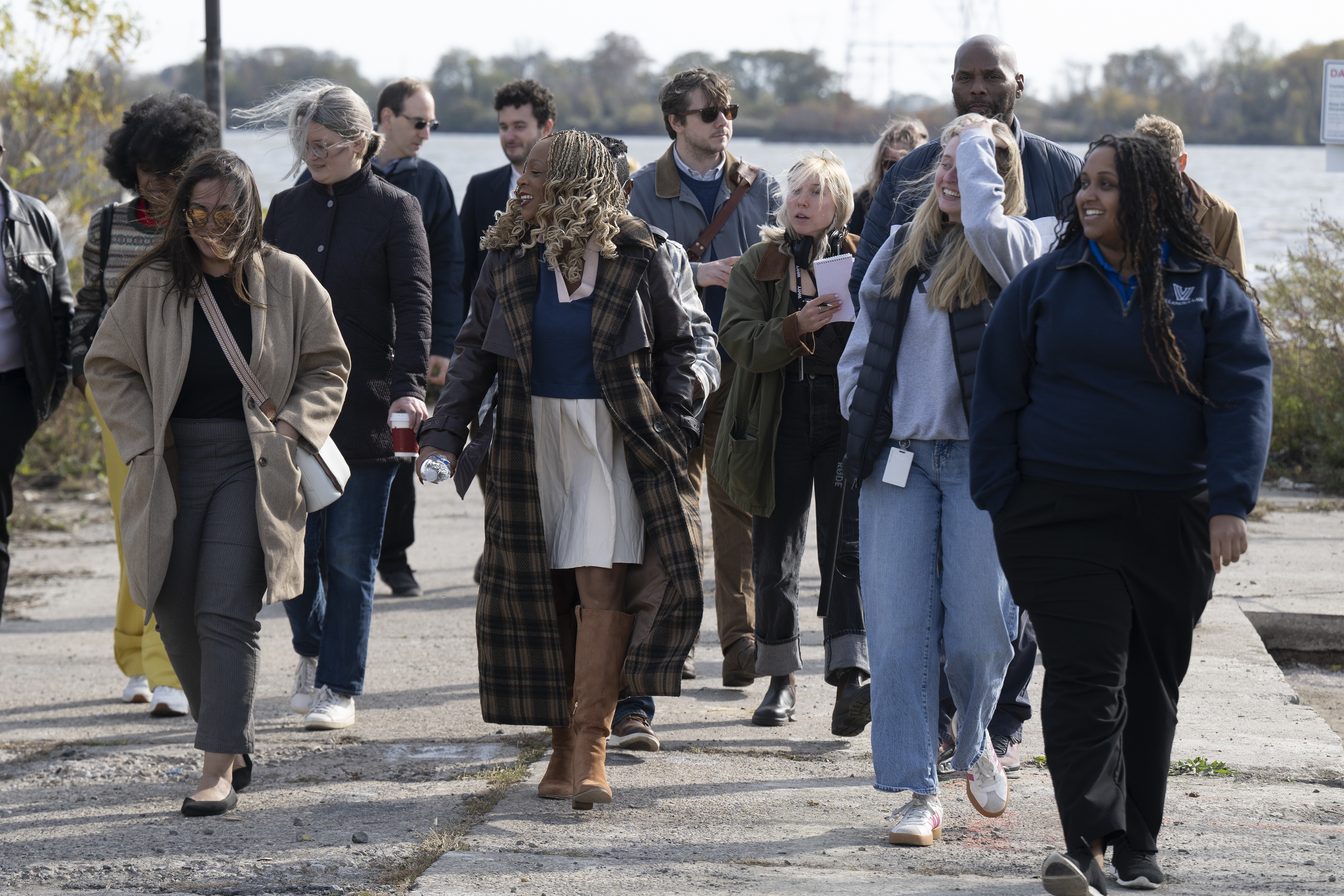
    Philadelphia City Councilmember Jamie Gauthier, who is hoping to end the city’s relationship with the Reworld incinerator, on Friday attended the Energy Justice Network’s “Toxic Tour” in and around Chester to highlight the facility’s impact on Philly’s southern neighbors.

    Philadelphia Councilmember Jamie Gauthier tours Chester to discuss her “Stop Trashing Our Air Act,” which would ban the city from incinerating waste, during a visit with lawmakers and staff in Chester, Pa., on Friday, Nov. 7, 2025.Jose F. Moreno / Staff Photographer

    “From a justice and fairness perspective, it just seems so wrong to me and so obvious,” said Gauthier, who was joined on the tour by Councilmember Kendra Brooks and staffers for other lawmakers. “Seeing the incinerator on the waterfront and all of these other dirty uses and the abandoned homes, that made me want to do this more, because it’s wrong. It’s wrong that people should be loaded down with all these toxic uses.”

    Reworld in 2024 burned more than 355,000 tons of trash collected by the city. Its contract with Philadelphia ends in June 2026.

    Gauthier has introduced a bill, the Stop Trashing Our Air Act, that would prohibit the city from incinerating trash, and Council’s Committee on the Environment, which she chairs, will likely hold a hearing on it this fall.

    Reworld spokesperson Linda Ribakusky said the company is a “leading sustainable waste solutions provider.” The Chester facility, she said, offers “a more sustainable alternative to landfilling by converting waste into renewable energy and recovering valuable metals that would otherwise be lost.”

    “The Reworld Delaware Valley facility helps reduce greenhouse gases by avoiding landfill methane and generates enough clean electricity to power more than 50,000 local homes each year,” Ribakusky said in a statement. “We are proud to be an active part of the Chester community. Working alongside local schools, nonprofits, neighbors, and community organizations, we support initiatives that create real impact.”

    ‘Now is the time’

    The Philadelphia Sanitation Department collects and disposes of about half of the city’s waste, said Michael Ewall, founder of the Philly-based Energy Justice Network. The other half is handled by private haulers hired by businesses and owners of larger residential properties.

    Under its contract, Reworld takes one-third of the municipally collected trash to the Chester incinerator, which the company says produces about 87 megawatts of electricity, enough to power 52,000 homes, while burning the waste. WM, which operates a major landfill in Bucks County’s Falls Township, takes the other two-thirds.

    When the most recent contracts were signed in 2019, the city agreed to pay roughly $65 per ton of trash to both Reworld, which was then known as Covanta, and WM, formerly Waste Management.

    Gauthier said she has had constructive conversations with Mayor Cherelle L. Parker’s administration about eliminating incineration from the city’s waste management operations, and is hopeful the city will include environmental justice concerns in its request for proposals for the new contracts.

    Parker’s office did not respond to a request for comment.

    The Chester incinerator provided a flashpoint in the 2023 mayoral election, which Parker won. During a debate, a moderator asked candidate Jeff Brown about the incinerator, prompting Brown to say, in part, “The trash has to go somewhere.”

    In a debate performance that was key to her rise and Brown’s downfall in the race, Parker was among the candidates who pounced on the soon-to-be-infamous comment.

    “That response is the same way you treat the Black and brown community,” said Parker, who ran on a campaign to turn Philly into America’s “safest, cleanest, greenest” big city.

    Top candidates for the Philadelphia mayor seat former City Council Member Cherelle Parker, left, Former City Council Member Derek Green, and businessman Jeff Brown, during a televised debate at the Temple performing arts center in Philadelphia, Pa. Tuesday, April 11, 2023.Jose F. Moreno / Staff Photographer

    During the debate, however, Parker was not asked directly if she would commit to ending the city’s contract with Reworld.

    “I was enthused to hear our mayor speak about this on the campaign trail,” Gauthier said. “I hope we all want to do the right thing. Now is the time to show that.”

    Environmental advocates contend that neither landfills nor incinerators are good for the environment and urge municipalities to focus on reducing waste in the first place. For instance, Ewall, who developed a policy platform called the Zero Waste Hierarchy, pointed out that thousands of communities now charge residents for each bag of trash just as utilities charge for each gallon of water or kilowatt of electricity.

    But for the “residuals” that do need to be collected, advocates have generally coalesced around the conclusion that incineration is more harmful than landfilling, Ewall said.

    Delaware County, which adopted a Zero Waste Plan in September, commissioned a 2021 study that found incineration was the costliest of its waste-disposal options, from both a health perspective and a financial one.

    The county determined that each ton of trash burned at the incinerator produced $234 to $337 in health and environmental costs. The impact from landfilling, meanwhile, was $144 per ton.

    ‘Reverse the environmental tragedy’

    Founded by William Penn, Chester is the oldest city in Pennsylvania. But over the last century, it has become a hub for some of the region’s least-wanted uses, including polluting manufacturers, fossil fuel facilities, a state prison, and, since the early 1990s, the incinerator. About 69% of Chester’s 33,000 residents are Black, and 31% live below the federal poverty line.

    “We hope that Philadelphia is listening in a strong way … as we attempt to reverse the environmental tragedy that has occurred here in the last 3½ decades due to the incineration of trash,” Chester Mayor Stefan Roots said Friday. “It’s an old technology, and it’s time for it to go. Especially in a community like Chester that’s looking to develop, it’s one of our biggest impediments.”

    Chester resident Zulene Mayfield, left, Philadelphia Councilmember Jamie Gauthier, right, and Chester Mayor Stefan Roots meet to discuss Gauthier’s “Stop Trashing Our Air Act,” which would ban the city from incinerating waste, during a visit with lawmakers and staff in Chester, Pa., on Friday, Nov. 7, 2025.Jose F. Moreno / Staff Photographer

    About 31% of the trash the incinerator burned in 2024 comes from Philly, with Delaware County accounting for 28% and New York City 26%.

    During the tour, Lyles explained how environmental racism can occur even if decision-makers are not consciously prejudiced against certain communities, because wealthier areas often organize to prevent polluting industries in their backyards.

    “In the late 1990s, there were about 60 proposals for new gas-fired power plants in PA. Only 16 of them were built,” he said. “Most of them faced a stiff opposition from community groups in suburban and rural areas, but those on either side of Chester went in with no organized opposition.”

    The final stop on the tour was a row of boarded-up and dilapidated homes along a railroad used for industrial purposes near the edge of the incinerator property. The homes started emptying out in the early 2000s, Ewall said, and the last was abandoned a few years ago.

    He recalled meeting one of the last residents to leave.

    “She had six grandchildren. She lived with her granddaughter, around 14, and one of the times I met her, had an oxygen tank that she would carry around with her just to be able to breathe,” Ewall said. “They just kind of disappeared one day, and I saw a boarded house.”

  • The water wars are escalating in the City of Chester’s historic bankruptcy

    The water wars are escalating in the City of Chester’s historic bankruptcy

    As it approaches its third anniversary, the City of Chester’s historic and contentious bankruptcy also may be approaching a watershed.

    In a filing Tuesday afternoon, the state-appointed bankruptcy receiver asked Commonwealth Court to rule on an issue pivotal to the city’s ability to sell water assets that are keys to Chester’s emergence from bankruptcy.

    Receiver Vijay Kapoor argued that a narrowly tailored state law passed in 2012 that wrested control of the Chester Water Authority from city government was unconstitutional.

    If the judge finds in the receiver’s favor, “It would likely resolve a lot of the legal questions,” Kapoor said.

    The water authority, which serves 46 towns in Chester and Delaware Counties and reported $51.7 million in revenues last year, is the centerpiece of the receiver’s plans of creating a regional water authority. Aqua Pennsylvania offered over $400 million for the authority four years ago. The city’s annual budget is around $65 million.

    The Environmental Protection Agency estimates that, conservatively, U.S. residents collectively spend $100 billion a year on water.

    The receiver’s office has insisted that an owner operate the water assets as a “public entity,” not beholden to stockholders.

    Kapoor said that the state law transferring control of the authority was amended at the last minute and passed without debate.

    Frank Catania, the water authority’s attorney, countered that the receiver’s office is attempting a hijacking and that the receiver and city officials are asking customers, 80% of whom are outside Chester, for a bailout.

    “It’s not like they’re losing something they had,” he said. “They never had it “

    Kapoor also asked the judge to force the authority to turn over financial documents to explain its 14% rate increase earlier this month, adding about $70 to the average annual residential bill.

    He said the authority had undertaken a costly ad campaign, presumably at ratepayers’ expense, that he said appeared to include racial overtones.

    The authority blamed the rate hikes on bankruptcy-related legal fees and lowered credit ratings.

    “We’re a water utility,” Catania said, “and we’re also fighting a war.”

    The law the receiver is challenging

    In his filing, technically a bankruptcy “plan modification,” Kapoor said the 2012 legislation was crafted specifically to refer to the Chester Water Authority and was afoul of state law.

    Rather than the five-member board appointed by the city council, it resulted in the creation of a nine-member board with only two representatives from the city and others appointed by Chester and Delaware County commissioners.

    The law applied only to an authority that serves “parts of at least two counties” and services an area ”five times larger than the incorporating municipality.”

    The authority also had to have “projects in more than two counties.” Part of the Octoraro Reservoir, from which the authority draws water, is in Lancaster County.

    When will the bankruptcy end?

    It was uncertain when the judge might rule, or when the bankruptcy — which as of the end of 2024 had cost the state $11.5 million in legal fees — might end.

    The city, which is 80% Black, has been in the state’s “distressed” status since 1995 and entered receivership in 2020.

    Kapoor’s predecessor, Michael Doweary, took it into bankruptcy in November 2022. Chester had accumulated a $48 million pension deficit and missed several years of payments.

    Kapoor has said that sale of the water assets would be critical to avoiding dramatic cuts in retirement benefits.

    Chester’s tax base has declined precipitously in the decades since the city’s wartime industrial heydays, and a casino and an incinerator are key contributors to its annual budget.

    Other cities have suffered similar economic trauma, but Chester is a rarity. Of the more than 35,000 towns in the country, only about 30 have filed for bankruptcy.

  • Chester saw one of its safest summers ever in 2025. No one died from gun violence.

    Chester saw one of its safest summers ever in 2025. No one died from gun violence.

    For five glorious Sundays this summer, there was peace in Chester.

    In places like the William Penn Homes and Chester Apartments, where children are often encouraged to stay indoors, shut away from the threat of gang violence, it was finally safe to play outside during the height of what is normally the most dangerous time of the year.

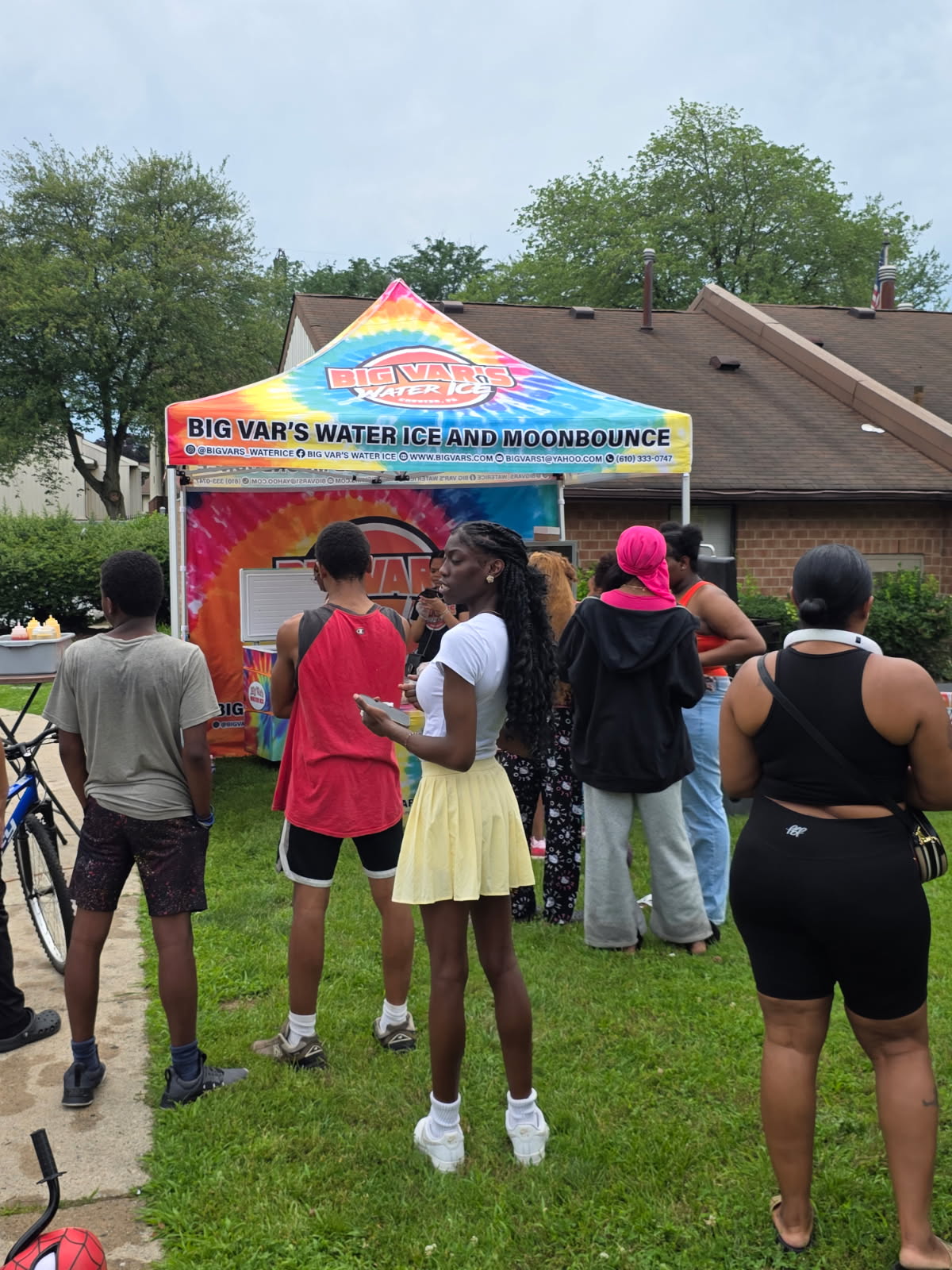
    Roving carnivals nicknamed “Sunday Fun Days” were organized and held in Delaware County’s lone city, in areas that had weathered a surge in violence in recent years. A few bounce houses, some water ice, and communities breathing sighs of relief were rewards for keeping the peace, and motivation to continue that trend.

    The parties, according to Geo Stockman, the lead gun violence interventionist with Making a Change Group, came during one of the safest summers on record in the city: Not a single fatal gunshot was fired in Chester during that time.

    It was a result that local police and county prosecutors say they have been working toward these last few years, through a combination of advocacy work and interventions by groups like Stockman’s.

    “This opened up the neighborhoods. It gave them a reason to say, ‘Let’s try something else, people are really looking out for us now, maybe we should put this down,’” Stockman said. “People are always telling people to stop doing something without offering them something in this place. So that’s what we did this summer. We offered them something in its place.”

    The block parties were a new addition to the programs offered by the Chester Partnership for Safe Neighborhoods (CPSN), an initiative launched by the Delaware County District Attorney’s Office in 2020.

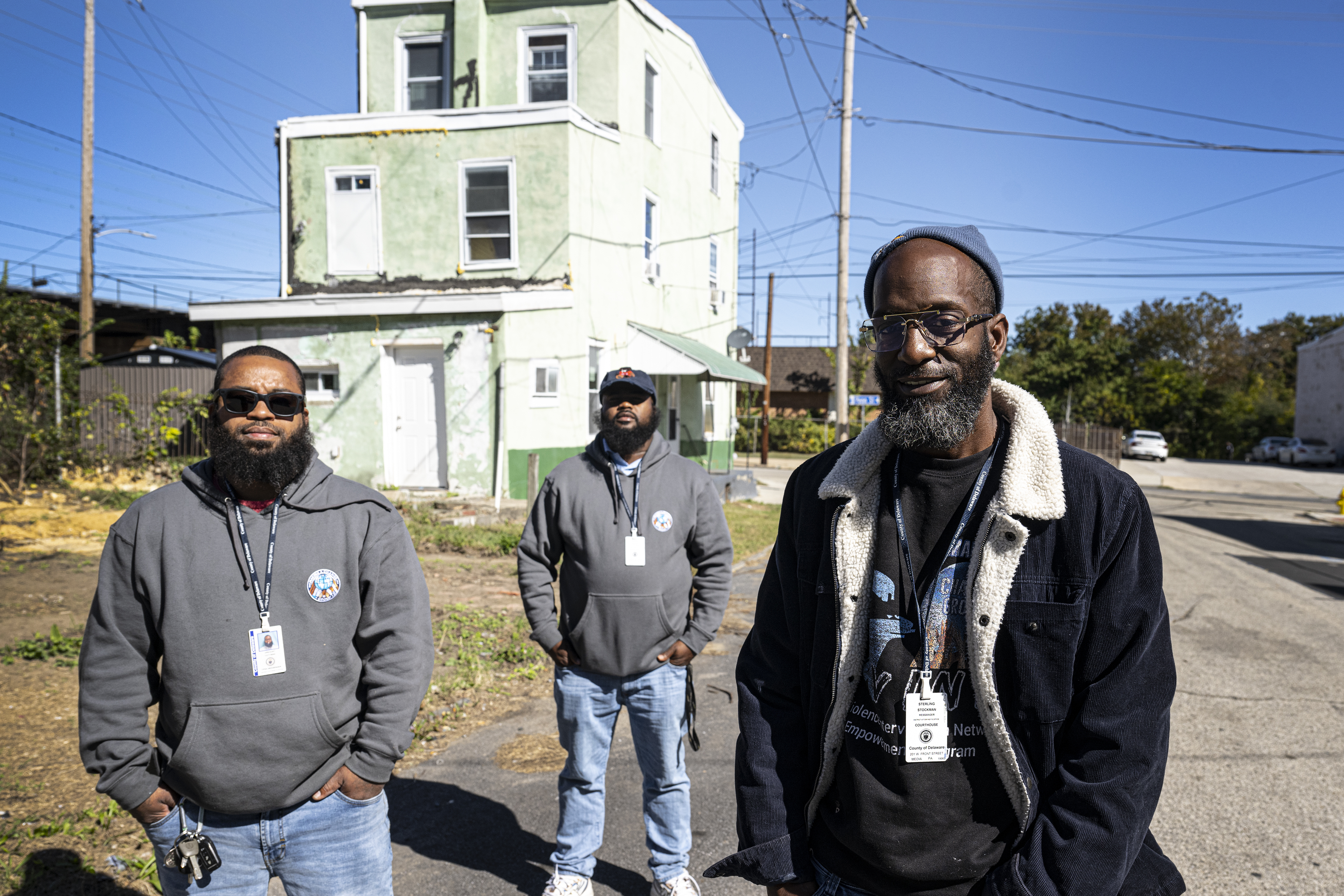
    Gregory Cottman left, Gregory Graves, center, and Geo Stockman say the Sunday Fun Day block parties sponsored by the Delaware County District Attorney’s Office served as both a reward for neighborhoods that have curbed gun violence, and an incentive to continue that trend in the years to come.Jose F. Moreno / Staff Photographer

    The program takes a holistic approach to combating gun violence, targeting teens and young adults at risk of committing crimes and offering them services, mediation, or counseling before they resort to violence.

    In its five years of operation, CPSN has seen a 65% reduction in shootings overall and a 74% reduction in fatal shootings. And since the summer, only two fatal shootings have been recorded in Chester, which prosecutors say still puts the city on pace for one of its most peaceful years on record.

    “Violence comes from a place of, of hopelessness, of despair. Just anger, resentment, and feeling like you’ve been left behind, like nobody cares,” Stockman said.

    window.addEventListener(“message”,function(a){if(void 0!==a.data[“datawrapper-height”]){var e=document.querySelectorAll(“iframe”);for(var t in a.data[“datawrapper-height”])for(var r,i=0;r=e[i];i++)if(r.contentWindow===a.source){var d=a.data[“datawrapper-height”][t]+”px”;r.style.height=d}}});

    He spoke from experience, as a lifelong Chester resident who spent time in prison for mistakes made on the streets of his hometown.

    “That’s what makes what we do so effective. Most of us want to be stopped, but nobody stops us,” he said. “Nobody takes the time to say, ‘I’m gonna be the one to calm you down.’ It really only takes somebody with a clear mind that they understand to say, ‘Nah, that ain’t it.’”

    Stockman said he and his team have successfully mediated 130 disputes between rival neighborhoods in the last two years. They settled petty arguments, usually started on social media, that were clearly heading toward a violent conclusion.

    “This is a small community, so your reputation goes further than just the neighborhood you’re from,” said Gregory “G-Code” Graves, who works with Stockman.

    Graves said the anti-violence messaging works because it’s coming from people the intended audience can identify with.

    “We’ve been through the vetting process in all these neighborhoods, so even if it’s a little hesitation at first, it doesn’t take a great deal of persuasion to get them to come to us,” Graves said. “And we come in with meaningful things that’s going to help the situation.”

    Residents of the Chester Apartments line up for water ice at a “Sunday Fun Day” block party held this summer in Chester.Courtesy Delaware County District Attorney's Office

    For District Attorney Jack Stollsteimer, those results are exactly what he envisioned when he brought CPSN to the county five years ago, building it on models used successfully in other cities, including Boston.

    And he is confident that the program will continue to thrive without him, as he runs for a county judgeship in the Nov. 4 election.

    “People have bought into the strategy. They’ve seen it work now, and they just wanna keep it going,” he said.

    Stollsteimer said making Chester safe was one of his priorities when running for district attorney in 2019. Similar programs, he said, had failed before because of a lack of buy-in from officials.

    This time was different — Mayor Stefan Roots became a fixture at the Sunday Fun Day parties.

    Roots said the weekly parties presented a rare opportunity for residents to meet the people making decisions that affect their everyday lives. And, in turn, allowed him and other officials to have open, honest dialogue with people living in communities most affected by gun violence.

    The conversation flowed naturally, he said. No pressure. No pretense.

    “This is something that’s never, never happened before,” he said. “The relationship between the city and the county is really welcome. And the results are showing themselves.”

    Roots said he lost count of how many residents came up to him at the parties to talk about their own efforts to curb violence in their neighborhoods. People, he said, who told him that the block parties, and the gun violence interventions that preceded them, were a welcome sigh of relief.

    “They told me that, sometimes, they don’t want to be ‘the man with the cape.’ They want to go on and have a life, too,” Roots said.