A man who shot his girlfriend twice in the back on a quiet Chester street on Wednesday night later turned his gun on responding police officers, prompting them to shoot him, authorities said.
The man and the woman — whom authorities did not identify — were in critical condition at an area hospital, Delaware County District Attorney Tanner Rouse said.
Authorities said the man shot the woman shortly before 9 p.m. near the intersection of East Ninth and Walnut Streets. Then, Rouse said, the man opened fire on passing vehicles.
No drivers were struck.
When officers arrived at the scene, the man turned his weapon toward them, authorities said, and at least one officer shot him.
Helicopter footage of the scene shows more than two dozen bullet casings littering the streets and what appears to be a parked power-washing truck riddled with bullet holes.
A Chester Police Department spokesperson did not return a request for additional information on Thursday.
Rouse said his office was reviewing camera footage of the incident and would “make sure we have every angle that depicts the events that transpired.” When its investigation is complete, he said, charges will be filed against the man.
Meanwhile, he praised law enforcement for its response to the shooting.
“I can tell you with confidence that the actions of the Chester Police Department were nothing short of lifesaving and the defendant in this case had every intention to kill anyone he could,” Rouse said.
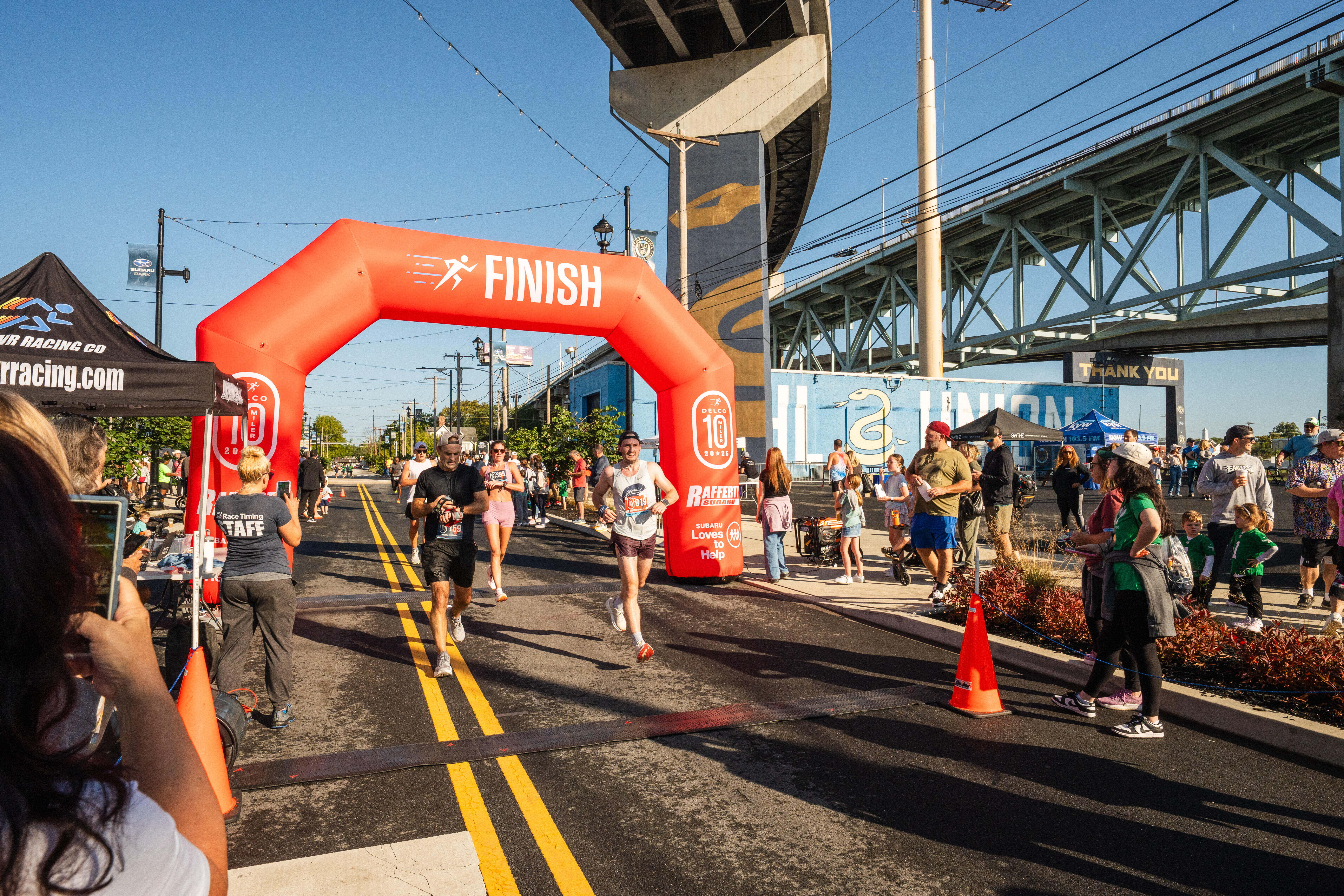
The Delco 10 Miler race is back for what organizers hope will be a bigger and better second lap. Changes for 2026 include a revised course, more than twice the number of runners, and a faster pace requirement.
The race will take place on Oct. 4. Registration is open. This year’s race will be capped at 2,500 runners, up from 1,200 last year. About 700 runners registered in the first 24 hours, race director Kevin Nolan said.
Some residents and drivers passing through the area were unhappy with road closures, which cut a long swath across the county. The course‘s adjustments should mean fewer closures along main roads.
“Logistically with all this traffic, it’s a tough race to manage,” Nolan said. “It’s tougher than the Philadelphia ones … because I’ve talked to all the race directors and they don’t have the issues that we have to deal with, with all this traffic.”
Course changes
The race will again start at Rose Tree Park in Upper Providence and end at Subaru Park in Chester. Last year, the race shut down parts of Route 252 and Route 320, as well as portions of Third, Fourth, and Fifth Streets in Chester, including a loop that took runners past Subaru Park before returning.
(function() {
var l2 = function() {
new pym.Parent(‘delco_10_miler_2026’,
‘https://media.inquirer.com/storage/inquirer/projects/innovation/arcgis_iframe/delco_10_miler_2026.html’);
};
if (typeof(pym) === ‘undefined’) {
var h = document.getElementsByTagName(‘head’)[0],
s = document.createElement(‘script’);
s.type = ‘text/javascript’;
s.src = ‘https://pym.nprapps.org/pym.v1.min.js’;
s.onload = l2;
h.appendChild(s);
} else {
l2();
}
})();
This year, runners will turn west on Rose Valley Road in Nether Providence and travel through residential streets before crossing Route 320 and heading into Chester and Widener University’s campus. The course crosses I-95 on the Melrose Avenue bridge again before heading south toward Subaru Park. The loop at the end has been eliminated.
The new course:
Starts at Rose Tree Park South on Providence Road/Route 252
Right on West Rose Valley Road
Left on Bickmore Drive
Left on Sheffield Drive
Left on Georgetown Road (becomes Media Parkway)
Left on Chestnut Parkway (becomes Chestnut Street)
Right on East 18th Street
Left on Walnut Street
Left on East 14th Street
Right on Melrose Avenue
Right on Morton Avenue
Right on East Fifth Street
Left on Penn Street
Right on West Third Street
Right on Tillman Street
Left on West Fourth Street
Left on Rainey Street
Ends at Union Yards at Subaru Park
Getting the word out
Some residents complained to race organizers that they weren’t told ahead of time that their streets were being closed.
“As much as you try to get the word out, there are people that don’t know,” Nolan said. “So you have to do more.”
This year, volunteers will walk some sections of the route ahead of time to let residents know about the race and road closures, Nolan said.
St. John Chrysostom Catholic Church in Nether Providence told the Delco Times last year that the parish was not consulted about the race, which took place on a Sunday and impacted their Mass schedule. This year’s route avoids St. John’s, as well as St. Katharine Drexel Catholic Church in Chester and some fire departments.
Faster pace
In another change this year, the race will have a faster pace requirement. Runners will have to maintain a minimum pace of 13 minutes, 30 seconds per mile. Last year’s minimum pace was 15 minutes per mile.
“Police are after us to open the course up. They were pretty aggravated last year with all the walkers,” Nolan said. “You hate to kick someone off the course.”
A few more quality-of-life improvements include more bathrooms at the start and at water stops. There will also be four staggered starts based on runner speeds.
This suburban content is produced with support from the Leslie Miller and Richard Worley Foundation and The Lenfest Institute for Journalism. Editorial content is created independently of the project donors. Gifts to support The Inquirer’s high-impact journalism can be made at inquirer.com/donate. A list of Lenfest Institute donors can be found at lenfestinstitute.org/supporters.
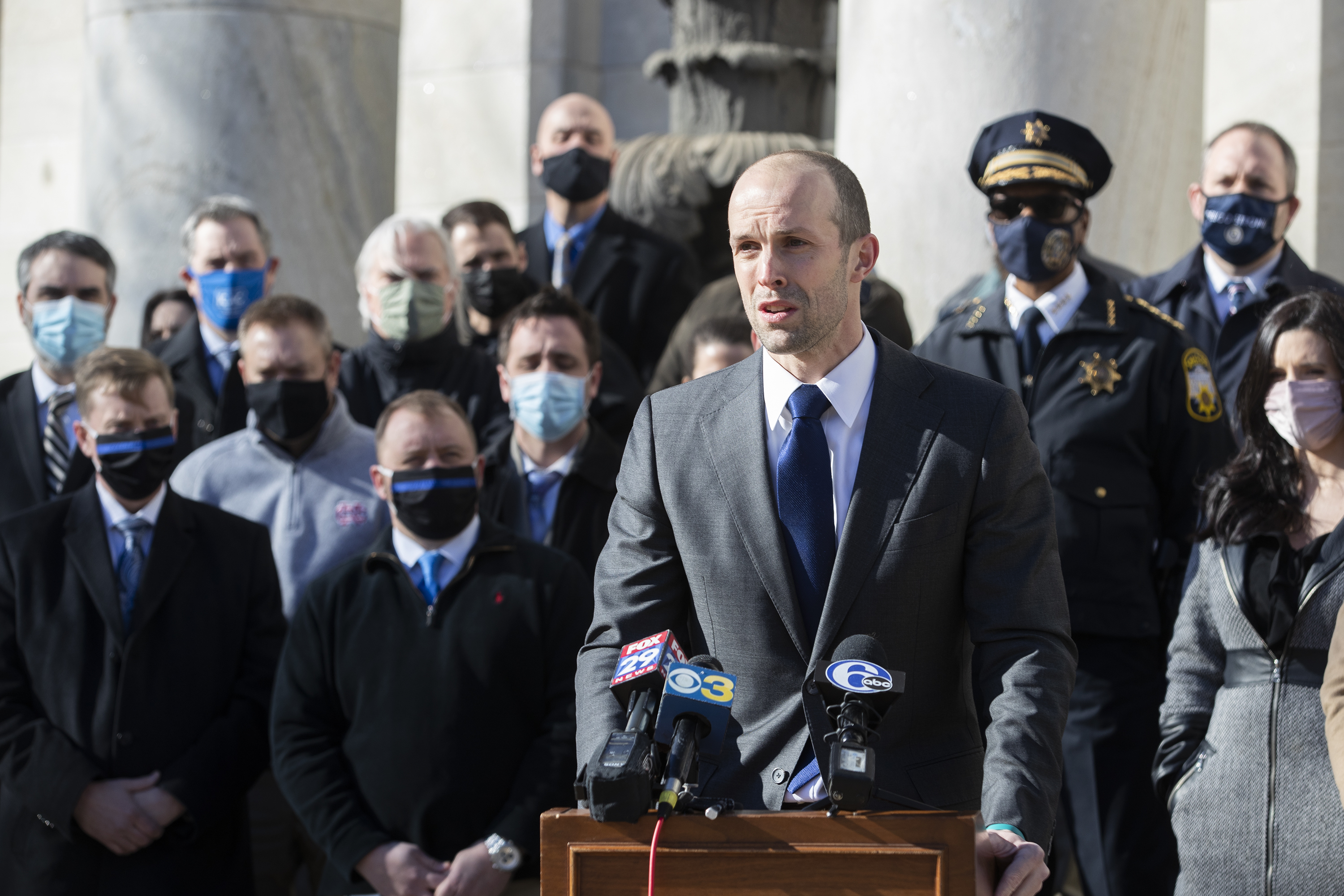
Tanner Rouse will be Delaware County’s new top law enforcement officer, but he’snot new to the work.
Rouse will be sworn in on Jan. 5 as district attorney after his predecessor, Jack Stollsteimer, steps down to assume the county judgeship he won in November. Rouse, 42, will finish out the final two years of Stollsteimer’s term after working as his first assistant since 2020.
In a recent interview, Rouse discussed the strides in reducing violent crime he and his colleagues have made under Stollsteimer — the first-ever Democrat to serve as district attorney in Delaware County — as well as how he plans to continue those advances.
The short answer: Keeping the same playbook, but “putting a personal stamp on it,” as an offensive coordinator does when he takes over as head coach, said Rouse, an avid Eagles fan and ambitious Little League coach.
A former Philadelphia prosecutor under Seth Williams, Rouse credited the lessons he learned from investigating gun violence in the city, along with the recruitment of several former colleagues he brought over the county line, withimproving the way crime is prosecuted in Delaware County.
“We have demonstrated you can reform the criminal justice system and that it doesn’t have to come at the expense of stopping violent crime,” Rouse said. “They’re not mutually exclusive.”
Who is Tanner Rouse?
Rouse, a Phoenixville-area native, is the son of the late Willard Rouse III, the prominent Philadelphia developer behind One and Two Liberty Place. After graduating from the University of Wisconsin and Fordham Law School, Rouse spent seven years in the Philadelphia District Attorney’s Office, prosecuting crimes in Center City and North Philadelphia.
Rouse left the office in 2017, months before Larry Krasner took over. He practiced civil law for a time and ran an ultimately failed campaign to unseat then-State Sen. Tom McGarrigle before Stollsteimer called and offered him the first assistant job.
At the time, Rouse said, the offer was unexpected. But, looking back, he now considers it one of the greatest opportunities of his career.
What is Rouse most proud of from his tenure as first assistant?
The most notable achievement of his tenure to date in the district attorney’s office, Rouse said, is the steep reduction of gun violence in Chester.Shootings are down 75% since 2020. Rouse credits community outreach efforts for that, especially through the Chester Partnership for Safe Neighborhoods program, overseen by veteran homicide prosecutor Matt Krouse, whom Rouse worked with in Philadelphia and recruited to join him in Delaware County.
The partnership’s fundamental philosophy is a combination of focused deterrence programs Rouse helped oversee in Philadelphia that target repeat offenders, as well as community outreach efforts run by trusted neighborhood figures.
Rouse said he never wanted to be a faceless presence in the county and made it his priority to get out and form relationships in all of the municipalities he served, visiting community meetings, block parties, and even a few pickup basketball games.
“I don’t do this job from behind a desk,” he said, speaking in his county courthouse office. “And I think demonstrating that commitment and that care by being more present in those communities, and not just being kind of the big, scary law enforcement agency on a hill is incredibly important.”
Rouse said he is proud of other reforms including creating a diversionary unit in the office, revamping its drug court and instituting a special “child’s court,” created by Kristen Kemp — Rouse’s chosen first assistant and an expert in special-victims’ cases — that allows young victims to testify against adult offenders in a more comfortable environment.
The county’s jail population is down 50% as well, something Rouse says is a result of approaching prosecuting crimes in a humane, logical way.
What are his priorities as district attorney?
Rouse said he plans to create a similar community outreach program in Upper Darby, a community he said is “on the verge of some big things.”
“It’s not as if we’re saying, ‘We’re coming in here to take on Upper Darby and what goes on there,’ but more of, ‘Guys, look, we’re not just the people you pick up and call when there’s a crime.’”
He also expressed interest in creating reciprocity agreements with his counterparts in the other collar counties around Philadelphia, specifically when it comes to handling drug cases and providing treatment to the people caught up in them.
How has his time in Philadelphia influenced his work in Delco?
Rouse said he cut his teeth in the city working alongside veteran prosecutors, and he’s worked to bring that environment of mentorship to Delaware County.
He said he and his more senior deputies often sit in on trials, giving feedback to younger staff members just as his mentors did for him nearly two decades ago.
“That’s how I got better, and that’s one of the roles I most cherish here,” he said.
One of the victims said Anais Munoz, 22, held a curling iron to her genitals, warning her that she would only prolong the abuse if the girl screamed.
The details of Munoz’s abuse were revealed during her two-week trial before Delaware County Court Judge John P. Capuzzi Sr., which ended late last month with her conviction for aggravated assault, endangering the welfare of a child, involuntary deviate sexual intercourse, and related crimes.
The jurors acquitted Munoz of other counts of those crimes.
The girl, who was 10 years old at the time, said she still bears scars from being burned with the curling iron. It was the night before Halloween in 2021, she said, and she remembers being in excruciating pain as she trick-or-treated in her neighborhood.
To this day, wearing shorts or swimwear, she said, makes her anxious.
“This scar wasn’t created by choice, this scar was created from a monster,” the girl, now 15, testified. “I didn’t ask for this, I didn’t ask for any of this, I didn’t ask to even be in this courtroom right now.”
On other occasions, the girl said, Munoz would choke her with her father’s belt until her face turned blue.
“I thought I was going to die,” she said. “I was begging her not to do it again, begging her with my everything. And she did it again.”
Still, the girls said that, fearful of Munoz, they lied and hid the injuries from their parents. The 15-year-old girl said she wanted Munoz to like her, and compared herself to a “puppy dog” seeking affection.
The victims’ injuries remained hidden until the fall of 2022, when Munoz burned the middle sister’s hand on a stove. Her teachers notified the county Department of Children and Youth, triggering an investigation, and Munoz was arrested months later.
Her attorneys, James Funt and Brandi McLaughlin, cast doubt on the victims’ testimony, saying they were unreliable and had suffered psychological trauma from what they experienced.
Funt suggested to jurors that the girls’ parents were the ones who abused them and that they were being manipulated into blaming Munoz.
“The uncomfortable truth of this case is that everybody failed them,” the lawyer said in his closing arguments. “The teachers failed them, the CYS workers failed them, the police failed them, because clue after clue after clue revealed that what they were saying wasn’t true,” and their parents were the true culprits.
Assistant District Attorney Danielle Gallaher rejected that assertion. She said all of the forensic evidence matches the girls’ description of abuse at the hands of Munoz.
It was always clear, she said, who was responsible.
“This case is about how the defendant took her anger and resentment out on children who could be manipulated and led to believe they would never been believed by anyone,” Gallaher said. “The defendant wants you to believe these kids are crazy.”
The girl and her sisters testified that the abuse began shortly after Munoz came to live with them in 2020 and that it escalated in intensity in 2021. At the time, the girls were 7, 10, and 11.
In addition to the physical and mental abuse, Munoz would engaged in sex acts with the children, they said.
During some of the violent episodes, Munoz would tell the girls she was under the possession of a demon named “Jessica,” using that to explain her abusive behavior, the girls said.
The oldest sister, now 16, said she lived in constant fear of Munoz, who sometimes would suffocate her with a pillow and body slam her into the ground.
In one instance, she said, Munoz repeatedly struck her so hard that her body eventually went limp, and she felt as if she couldn’t move.
Another witness, a boy who did not live in the house, said he observed some of this abuse while Munoz babysat him there. During one incident, he said, Munoz choked him until he “saw white” and bit him on his left forearm.
CHESTER — Like a Ben Franklin impersonator waving at Independence Hall and the Liberty Bell, tour guide B. Preston Lyles directed the tour group’s attention to various landmarks as they passed by.
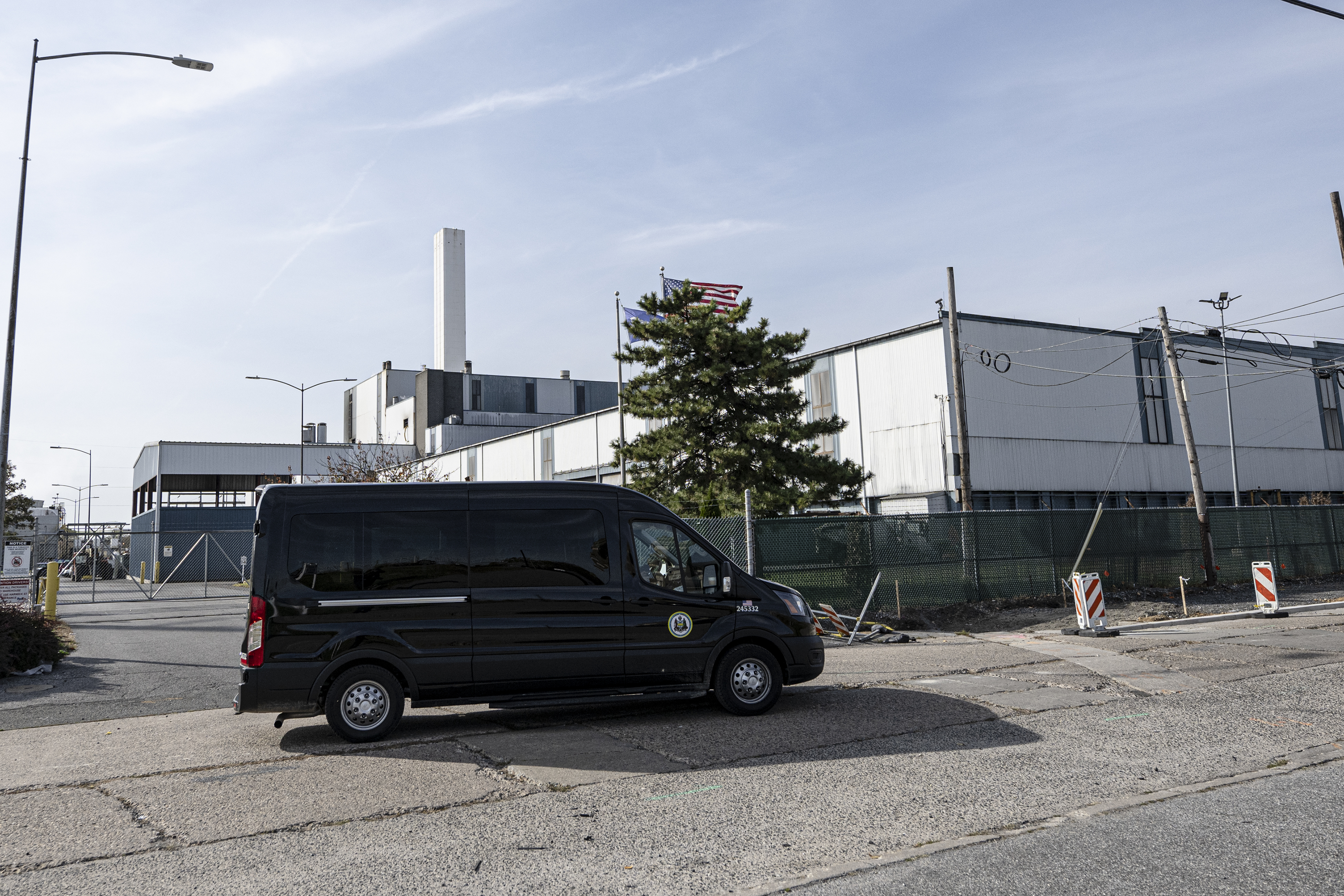
But instead of highlighting monuments that made locals swell with pride, Lyles was pointing to sites he said made thepeople of Chester get sick and die younger: power plants, an oil refinery, a sewage sludge-burning facility, and — most relevantly for Friday’s group — the Reworld trash incinerator, the destination for about a third of the rubbish collected by Philadelphia’s city government.
“Chester City is known as one of the nation’s worst cases of environmental racism,” Lyles, an organizer for Delco Environmental Justice, told the group, referring to the concentration of polluting industries in Black and brown communities. “It is not just because the city holds the nation’s largest waste incinerator, but due to an extreme concentration of toxic industries in and adjacent to such a small city.”
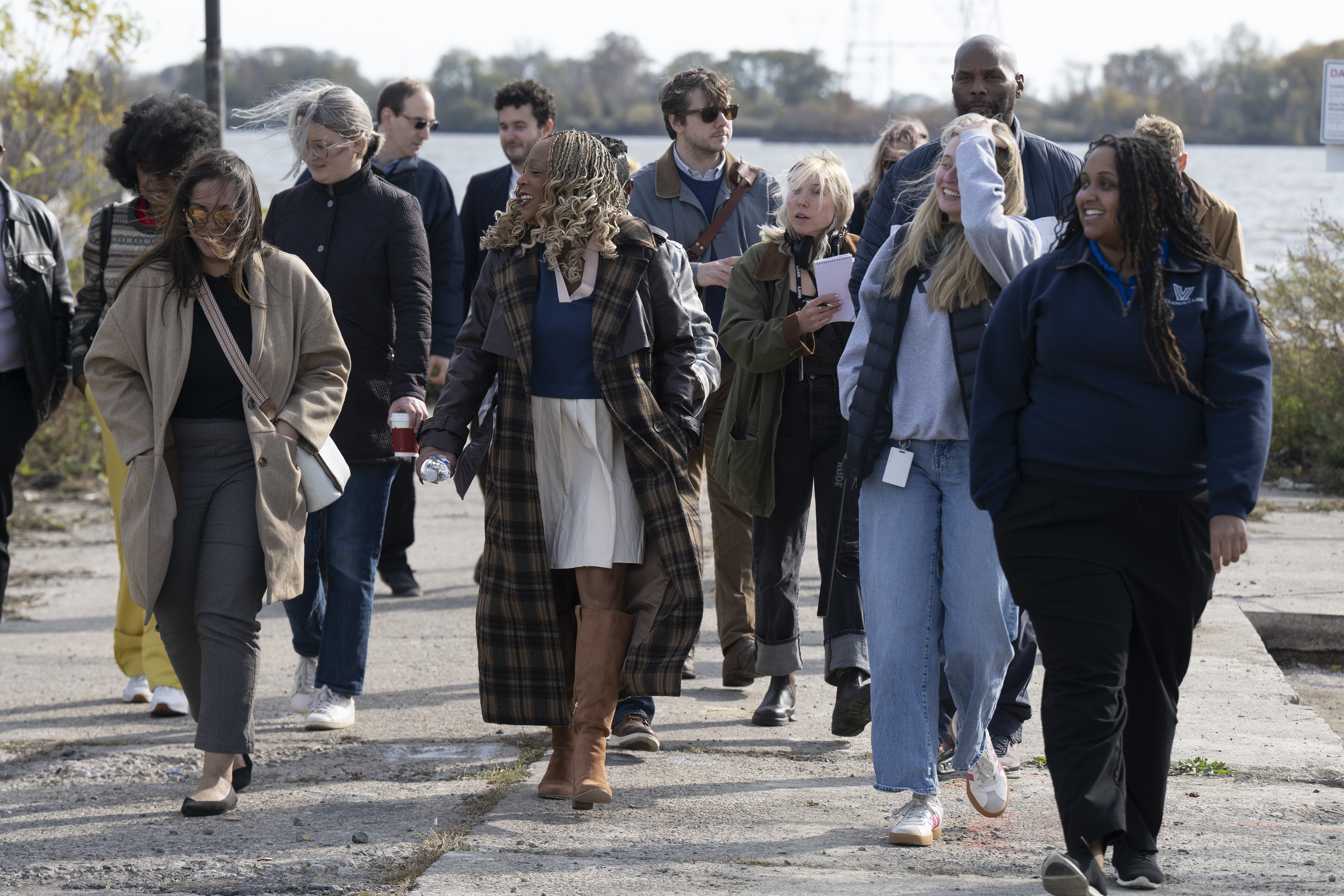
Philadelphia Councilmember Jamie Gauthier tours Chester to discuss her “Stop Trashing Our Air Act,” which would ban the city from incinerating waste, during a visit with lawmakers and staff in Chester, Pa., on Friday, Nov. 7, 2025.Jose F. Moreno / Staff Photographer
“From a justice and fairness perspective, it just seems so wrong to me and so obvious,” said Gauthier, who was joined on the tour by Councilmember Kendra Brooks and staffers for other lawmakers. “Seeing the incinerator on the waterfront and all of these other dirty uses and the abandoned homes, that made me want to do this more, because it’s wrong. It’s wrong that people should be loaded down with all these toxic uses.”
Reworld in 2024 burned more than 355,000 tons of trash collected by the city. Its contract with Philadelphia ends in June 2026.
Gauthier has introduced a bill, the Stop Trashing Our Air Act, that would prohibit the city from incinerating trash, and Council’s Committee on the Environment, which she chairs, will likely hold a hearing on it this fall.
Reworld spokesperson Linda Ribakusky said the company is a “leading sustainable waste solutions provider.” The Chester facility, she said, offers “a more sustainable alternative to landfilling by converting waste into renewable energy and recovering valuable metals that would otherwise be lost.”
“The Reworld Delaware Valley facility helps reduce greenhouse gases by avoiding landfill methane and generates enough clean electricity to power more than 50,000 local homes each year,” Ribakusky said in a statement. “We are proud to be an active part of the Chester community. Working alongside local schools, nonprofits, neighbors, and community organizations, we support initiatives that create real impact.”
‘Now is the time’
The Philadelphia Sanitation Department collects and disposes of about half of the city’s waste, said Michael Ewall, founder of the Philly-based Energy Justice Network. The other half is handled by private haulers hired by businesses and owners of larger residential properties.
Under its contract, Reworld takes one-third of the municipally collected trash to the Chester incinerator, which the company says produces about 87 megawatts of electricity, enough to power 52,000 homes, while burning the waste. WM, which operates a major landfill in Bucks County’s Falls Township, takes the other two-thirds.
When the most recent contracts were signed in 2019, the city agreed to pay roughly $65 per ton of trash to both Reworld, which was then known as Covanta, and WM, formerly Waste Management.
Gauthier said she has had constructive conversations with Mayor Cherelle L. Parker’s administration about eliminating incineration from the city’s waste management operations, and is hopeful the city will include environmental justice concerns in its request for proposals for the new contracts.
Parker’s office did not respond to a request for comment.
The Chester incinerator provided a flashpoint in the 2023 mayoral election, which Parker won. During a debate, a moderator asked candidate Jeff Brown about the incinerator, prompting Brown to say, in part, “The trash has to go somewhere.”
In a debate performance that was key to her rise and Brown’s downfall in the race, Parker was among the candidates who pounced on the soon-to-be-infamous comment.
Top candidates for the Philadelphia mayor seat former City Council Member Cherelle Parker, left, Former City Council Member Derek Green, and businessman Jeff Brown, during a televised debate at the Temple performing arts center in Philadelphia, Pa. Tuesday, April 11, 2023.Jose F. Moreno / Staff Photographer
During the debate, however, Parker was not asked directly if she would commit to ending the city’s contract with Reworld.
“I was enthused to hear our mayor speak about this on the campaign trail,” Gauthier said. “I hope we all want to do the right thing. Now is the time to show that.”
Environmental advocates contend that neither landfills nor incinerators are good for the environment and urge municipalities to focus on reducing waste in the first place. For instance, Ewall, who developed a policy platform called the Zero Waste Hierarchy, pointed out that thousands of communities now charge residents for each bag of trash just as utilities charge for each gallon of water or kilowatt of electricity.
But for the “residuals” that do need to be collected, advocates have generally coalesced around the conclusion that incineration is more harmful than landfilling, Ewall said.
Delaware County, which adopted a Zero Waste Plan in September, commissioned a 2021 study that found incineration was the costliest of its waste-disposal options, from both a health perspective and a financial one.
The county determined that each ton of trash burned at the incinerator produced $234 to $337 in health and environmental costs. The impact from landfilling, meanwhile, was $144 per ton.
‘Reverse the environmental tragedy’
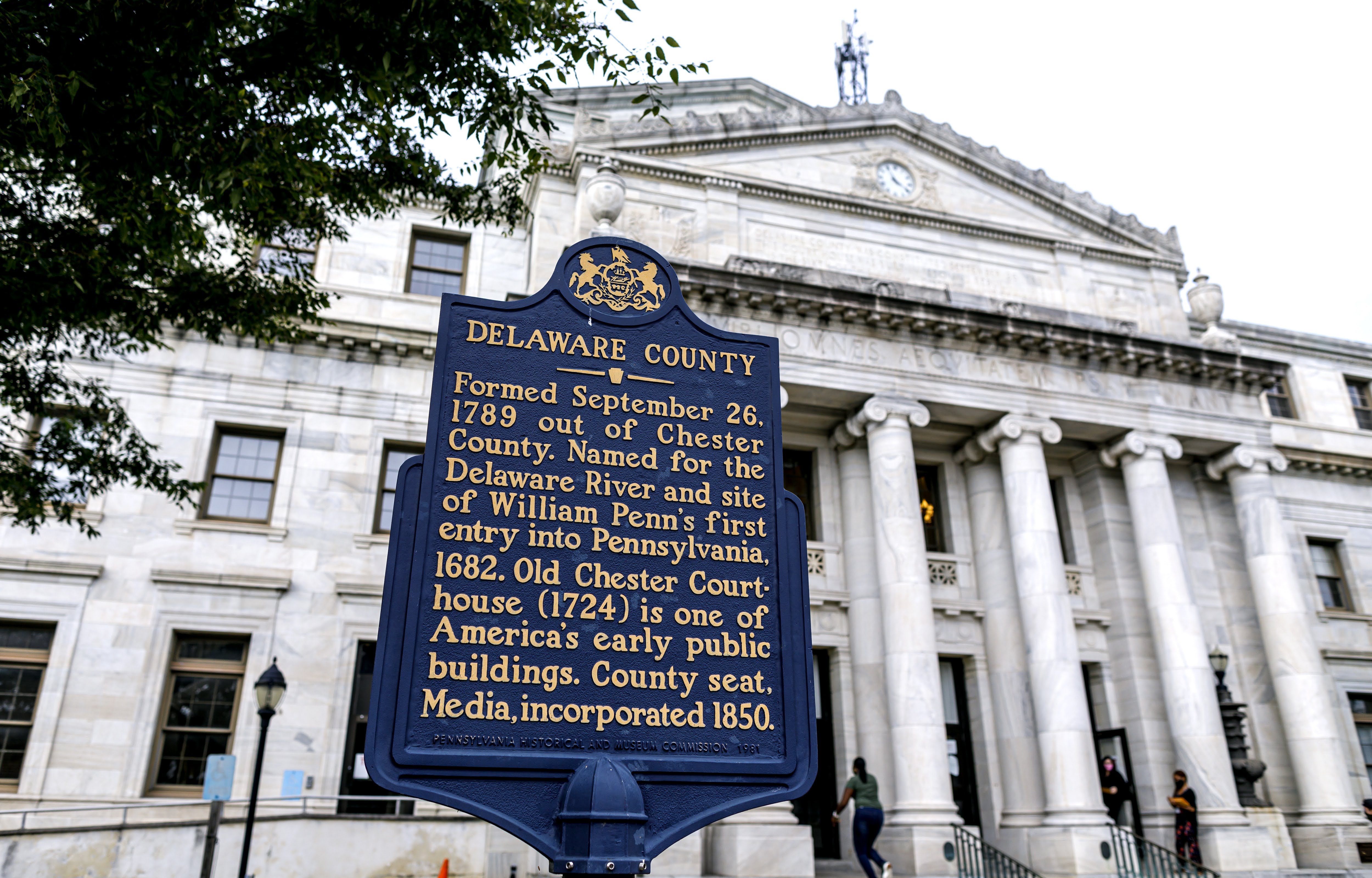
Founded by William Penn, Chester is the oldest city in Pennsylvania. But over the last century, it has become a hub for some of the region’s least-wanted uses, including polluting manufacturers, fossil fuel facilities, a state prison, and, since the early 1990s, the incinerator. About 69% of Chester’s 33,000 residents are Black, and 31% live below the federal poverty line.
“We hope that Philadelphia is listening in a strong way … as we attempt to reverse the environmental tragedy that has occurred here in the last 3½ decades due to the incineration of trash,” Chester Mayor Stefan Roots said Friday. “It’s an old technology, and it’s time for it to go. Especially in a community like Chester that’s looking to develop, it’s one of our biggest impediments.”
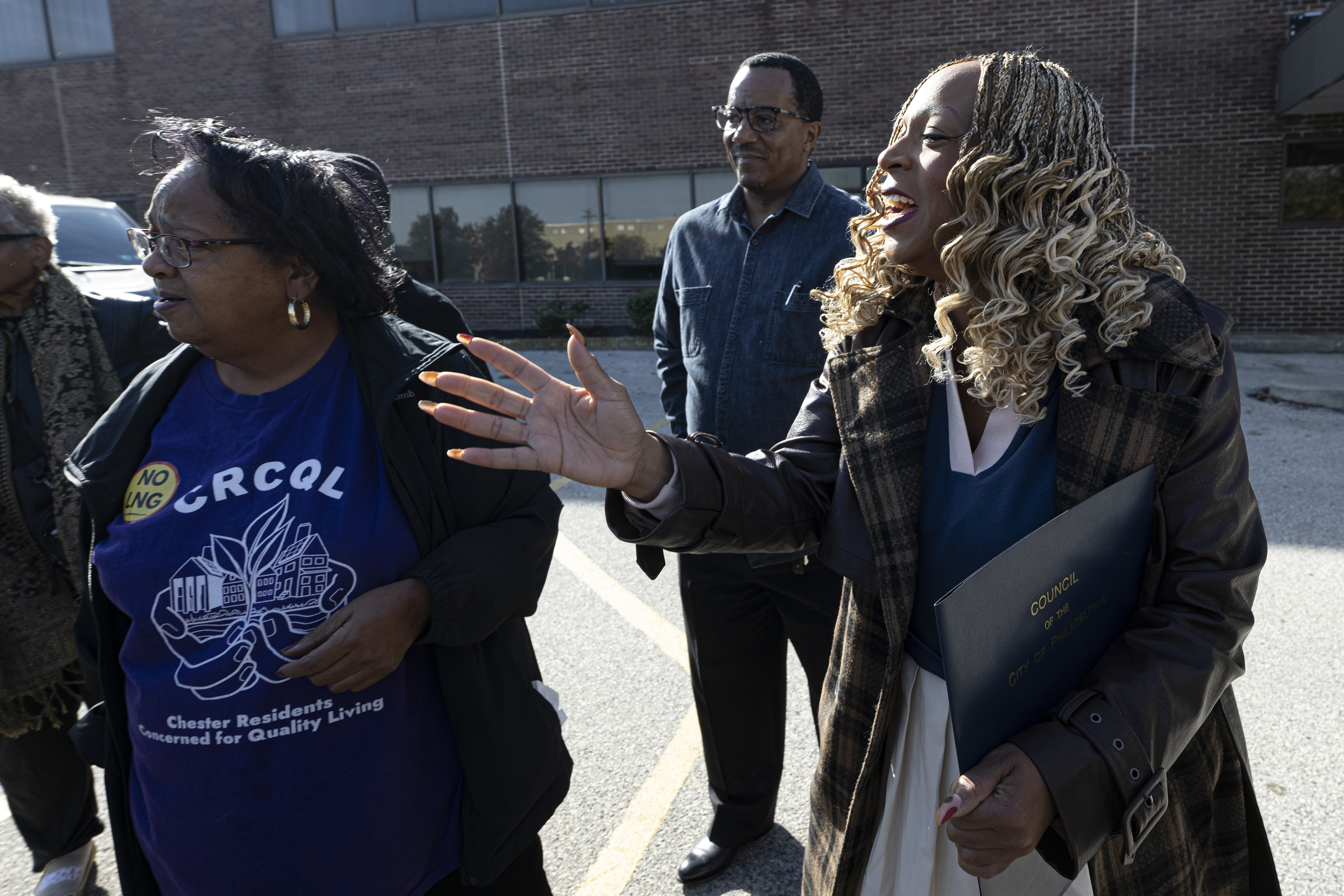
Chester resident Zulene Mayfield, left, Philadelphia Councilmember Jamie Gauthier, right, and Chester Mayor Stefan Roots meet to discuss Gauthier’s “Stop Trashing Our Air Act,” which would ban the city from incinerating waste, during a visit with lawmakers and staff in Chester, Pa., on Friday, Nov. 7, 2025.Jose F. Moreno / Staff Photographer
About 31% of the trash the incinerator burned in 2024 comes from Philly, with Delaware County accounting for 28% and New York City 26%.
During the tour, Lyles explained how environmental racism can occur even if decision-makers are not consciously prejudiced against certain communities, because wealthier areas often organize to prevent polluting industries in their backyards.
“In the late 1990s, there were about 60 proposals for new gas-fired power plants in PA. Only 16 of them were built,” he said. “Most of them faced a stiff opposition from community groups in suburban and rural areas, but those on either side of Chester went in with no organized opposition.”
The final stop on the tour was a row of boarded-up and dilapidated homes along a railroad used for industrial purposes near the edge of the incinerator property. The homes started emptying out in the early 2000s, Ewall said, and the last was abandoned a few years ago.
He recalled meeting one of the last residents to leave.
“She had six grandchildren. She lived with her granddaughter, around 14, and one of the times I met her, had an oxygen tank that she would carry around with her just to be able to breathe,” Ewall said. “They just kind of disappeared one day, and I saw a boarded house.”
As it approaches its third anniversary, the City of Chester’s historic and contentious bankruptcy also may be approaching a watershed.
In a filing Tuesday afternoon, the state-appointed bankruptcy receiver asked Commonwealth Court to rule on an issue pivotal to the city’s ability to sell water assets that are keys to Chester’s emergence from bankruptcy.
Receiver Vijay Kapoor argued that a narrowly tailored state law passed in 2012 that wrested control of the Chester Water Authority from city government was unconstitutional.
If the judge finds in the receiver’s favor, “It would likely resolve a lot of the legal questions,” Kapoor said.
The water authority, which serves 46 towns in Chester and Delaware Counties and reported $51.7 million in revenues last year, is the centerpiece of the receiver’s plans of creating a regional water authority. Aqua Pennsylvania offered over $400 million for the authority four years ago. The city’s annual budget is around $65 million.
The receiver’s office has insisted that an owner operate the water assets as a “public entity,” not beholden to stockholders.
Kapoor said that the state law transferring control of the authority was amended at the last minute and passed without debate.
Frank Catania, the water authority’s attorney, countered that the receiver’s office is attempting a hijacking and that the receiver and city officials are asking customers, 80% of whom are outside Chester, for a bailout.
“It’s not like they’re losing something they had,” he said. “They never had it “
Kapoor also asked the judge to force the authority to turn over financial documents to explain its 14% rate increase earlier this month, adding about $70 to the average annual residential bill.
He said the authority had undertaken a costly ad campaign, presumably at ratepayers’ expense, that he said appeared to include racial overtones.
The authority blamed the rate hikes on bankruptcy-related legal fees and lowered credit ratings.
“We’re a water utility,” Catania said, “and we’re also fighting a war.”
The law the receiver is challenging
In his filing, technically a bankruptcy “plan modification,” Kapoor said the 2012 legislation was crafted specifically to refer to the Chester Water Authority and was afoul of state law.
Rather than the five-member board appointed by the city council, it resulted in the creation of a nine-member board with only two representatives from the city and others appointed by Chester and Delaware County commissioners.
The law applied only to an authority that serves “parts of at least two counties” and services an area ”five times larger than the incorporating municipality.”
The authority also had to have “projects in more than two counties.” Part of the Octoraro Reservoir, from which the authority draws water, is in Lancaster County.
When will the bankruptcy end?
It was uncertain when the judge might rule, or when the bankruptcy — which as of the end of 2024 had cost the state $11.5 million in legal fees — might end.
The city, which is 80% Black, has been in the state’s “distressed” status since 1995 and entered receivership in 2020.
Kapoor’s predecessor, Michael Doweary, took it into bankruptcy in November 2022. Chester had accumulated a $48 million pension deficit and missed several years of payments.
Kapoor has said that sale of the water assets would be critical to avoiding dramatic cuts in retirement benefits.
Chester’s tax base has declined precipitously in the decades since the city’s wartime industrial heydays, and a casino and an incinerator are key contributors to its annual budget.
Other cities have suffered similar economic trauma, but Chester is a rarity. Of the more than 35,000 towns in the country, only about 30 have filed for bankruptcy.
For five glorious Sundays this summer, there was peace in Chester.
In places like the William Penn Homes and Chester Apartments, where children are often encouraged to stay indoors, shut away from the threat of gang violence, it was finally safe to play outside during the height of what is normally the most dangerous time of the year.
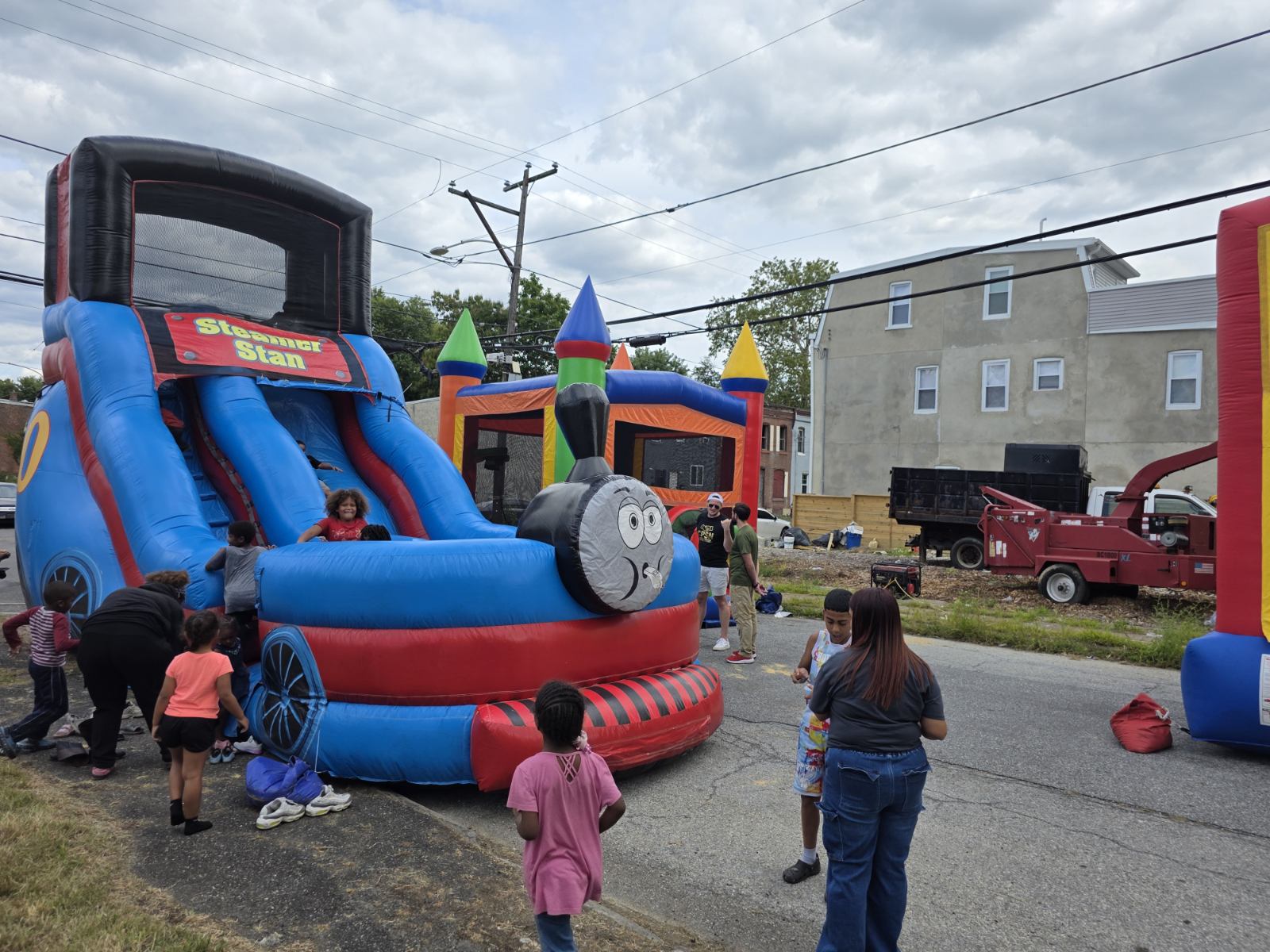
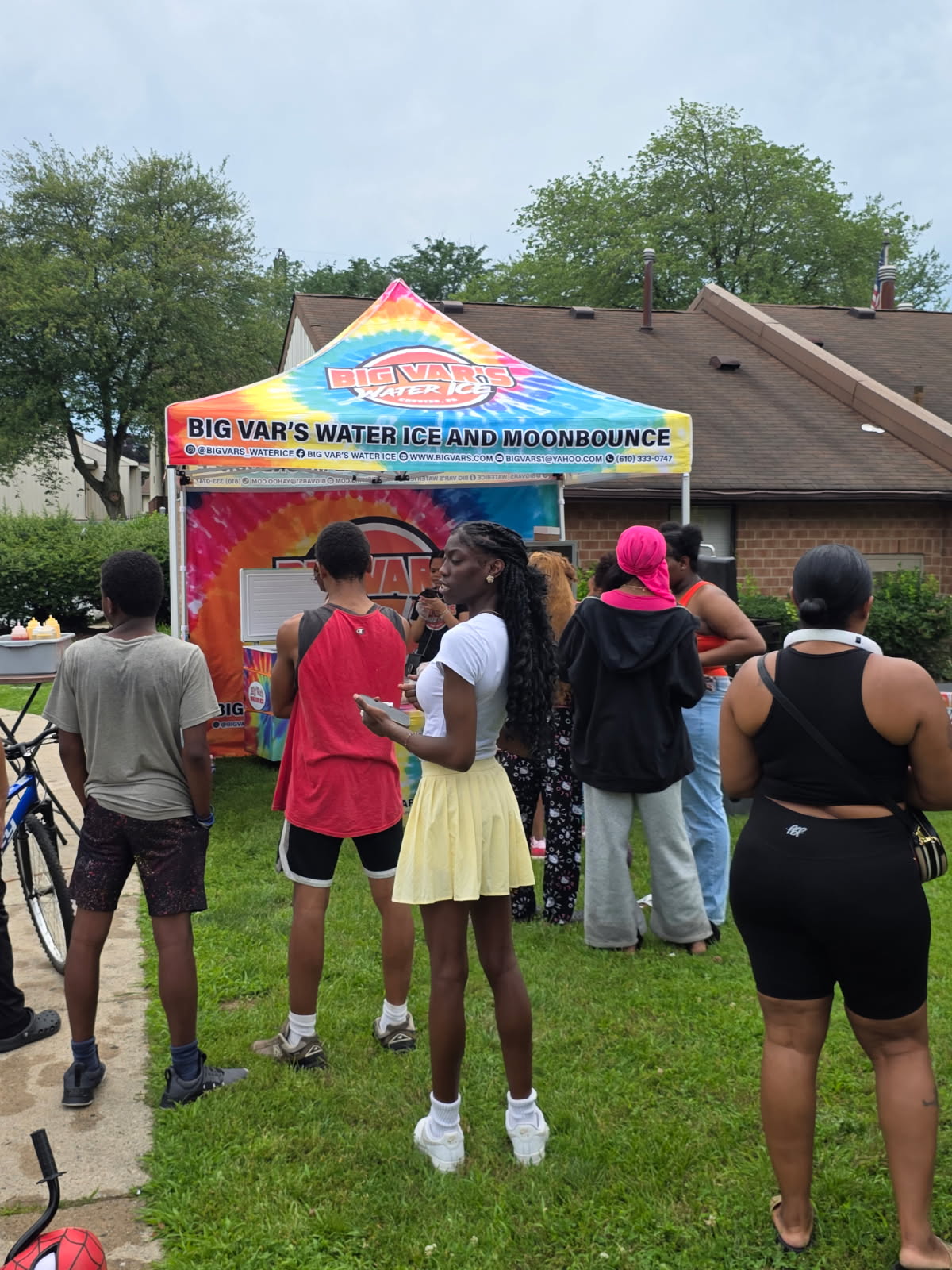
Roving carnivals nicknamed “Sunday Fun Days” were organized and held in Delaware County’s lone city, in areas that had weathered a surge in violence in recent years. A few bounce houses, some water ice, and communities breathing sighs of relief were rewards for keeping the peace, and motivation to continue that trend.
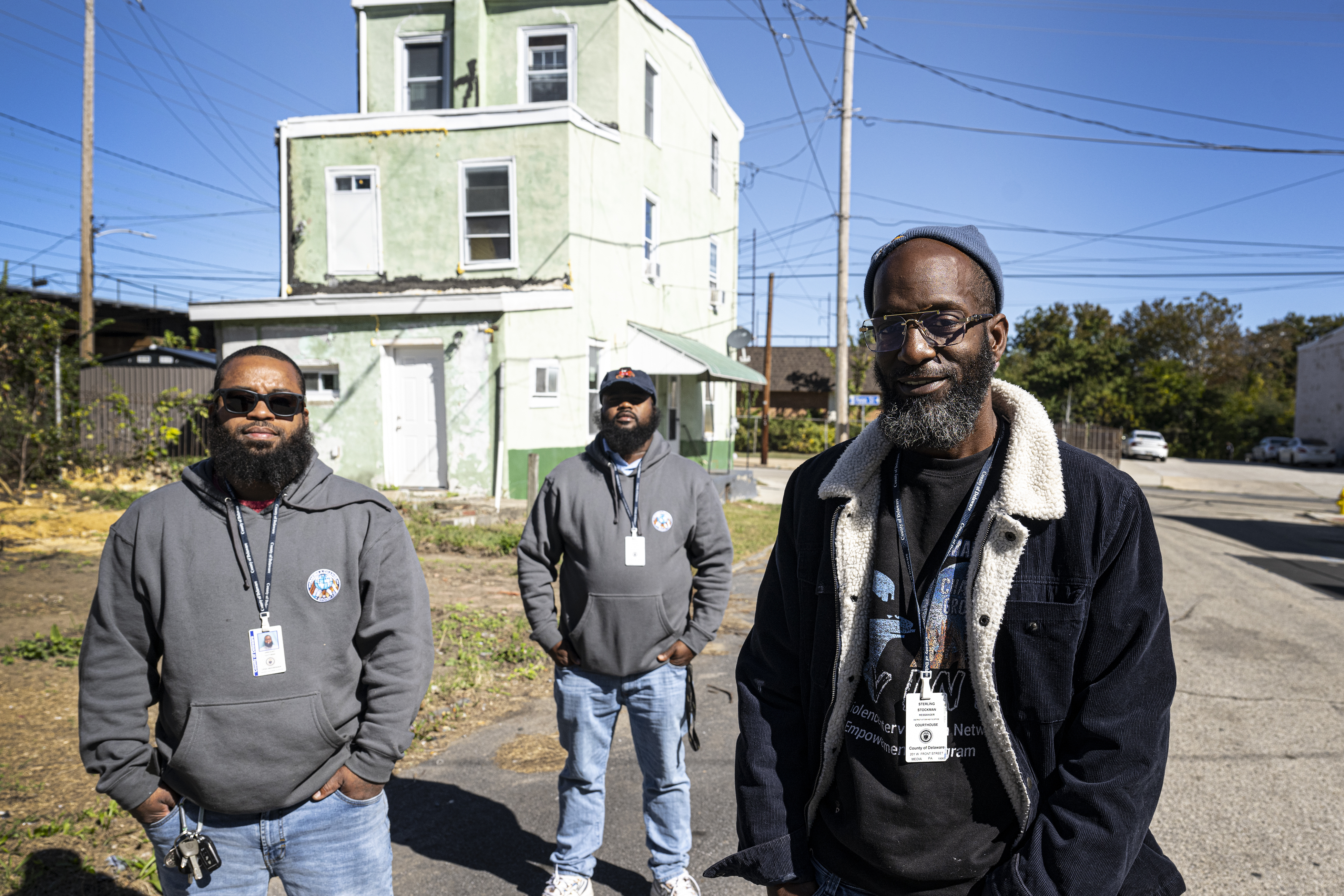
The parties, according to Geo Stockman, the lead gun violence interventionist with Making a Change Group, came during one of the safest summers on record in the city: Not a single fatal gunshot was fired in Chester during that time.
It was a result that local police and county prosecutors say they have been working toward these last few years, through a combination of advocacy work and interventions by groups like Stockman’s.
“This opened up the neighborhoods. It gave them a reason to say, ‘Let’s try something else, people are really looking out for us now, maybe we should put this down,’” Stockman said. “People are always telling people to stop doing something without offering them something in this place. So that’s what we did this summer. We offered them something in its place.”
Gregory Cottman left, Gregory Graves, center, and Geo Stockman say the Sunday Fun Day block parties sponsored by the Delaware County District Attorney’s Office served as both a reward for neighborhoods that have curbed gun violence, and an incentive to continue that trend in the years to come.Jose F. Moreno / Staff Photographer
In its five years of operation, CPSN has seen a 65% reduction in shootings overall and a 74% reduction in fatal shootings. And since the summer, only two fatal shootings have been recorded in Chester, which prosecutors say still puts the city on pace for one of its most peaceful years on record.
“Violence comes from a place of, of hopelessness, of despair. Just anger, resentment, and feeling like you’ve been left behind, like nobody cares,” Stockman said.
window.addEventListener(“message”,function(a){if(void 0!==a.data[“datawrapper-height”]){var e=document.querySelectorAll(“iframe”);for(var t in a.data[“datawrapper-height”])for(var r,i=0;r=e[i];i++)if(r.contentWindow===a.source){var d=a.data[“datawrapper-height”][t]+”px”;r.style.height=d}}});
He spoke from experience, as a lifelong Chester resident who spent time in prison for mistakes made on the streets of his hometown.
“That’s what makes what we do so effective. Most of us want to be stopped, but nobody stops us,” he said. “Nobody takes the time to say, ‘I’m gonna be the one to calm you down.’ It really only takes somebody with a clear mind that they understand to say, ‘Nah, that ain’t it.’”
Stockman said he and his team have successfully mediated 130 disputes between rival neighborhoods in the last two years. They settled petty arguments, usually started on social media, that were clearly heading toward a violent conclusion.
“This is a small community, so your reputation goes further than just the neighborhood you’re from,” said Gregory “G-Code” Graves, who works with Stockman.
Graves said the anti-violence messaging works because it’s coming from people the intended audience can identify with.
“We’ve been through the vetting process in all these neighborhoods, so even if it’s a little hesitation at first, it doesn’t take a great deal of persuasion to get them to come to us,” Graves said. “And we come in with meaningful things that’s going to help the situation.”
Residents of the Chester Apartments line up for water ice at a “Sunday Fun Day” block party held this summer in Chester.Courtesy Delaware County District Attorney's Office
For District Attorney Jack Stollsteimer, those results are exactly what he envisioned when he brought CPSN to the county five years ago, building it on models used successfully in other cities, including Boston.
And he is confident that the program will continue to thrive without him, as he runs for a county judgeship in the Nov. 4 election.
“People have bought into the strategy. They’ve seen it work now, and they just wanna keep it going,” he said.
Stollsteimer said making Chester safe was one of his priorities when running for district attorney in 2019. Similar programs, he said, had failed before because of a lack of buy-in from officials.
This time was different — Mayor Stefan Roots became a fixture at the Sunday Fun Day parties.
Roots said the weekly parties presented a rare opportunity for residents to meet the people making decisions that affect their everyday lives. And, in turn, allowed him and other officials to have open, honest dialogue with people living in communities most affected by gun violence.
The conversation flowed naturally, he said. No pressure. No pretense.
“This is something that’s never, never happened before,” he said. “The relationship between the city and the county is really welcome. And the results are showing themselves.”
Roots said he lost count of how many residents came up to him at the parties to talk about their own efforts to curb violence in their neighborhoods. People, he said, who told him that the block parties, and the gun violence interventions that preceded them, were a welcome sigh of relief.
“They told me that, sometimes, they don’t want to be ‘the man with the cape.’ They want to go on and have a life, too,” Roots said.
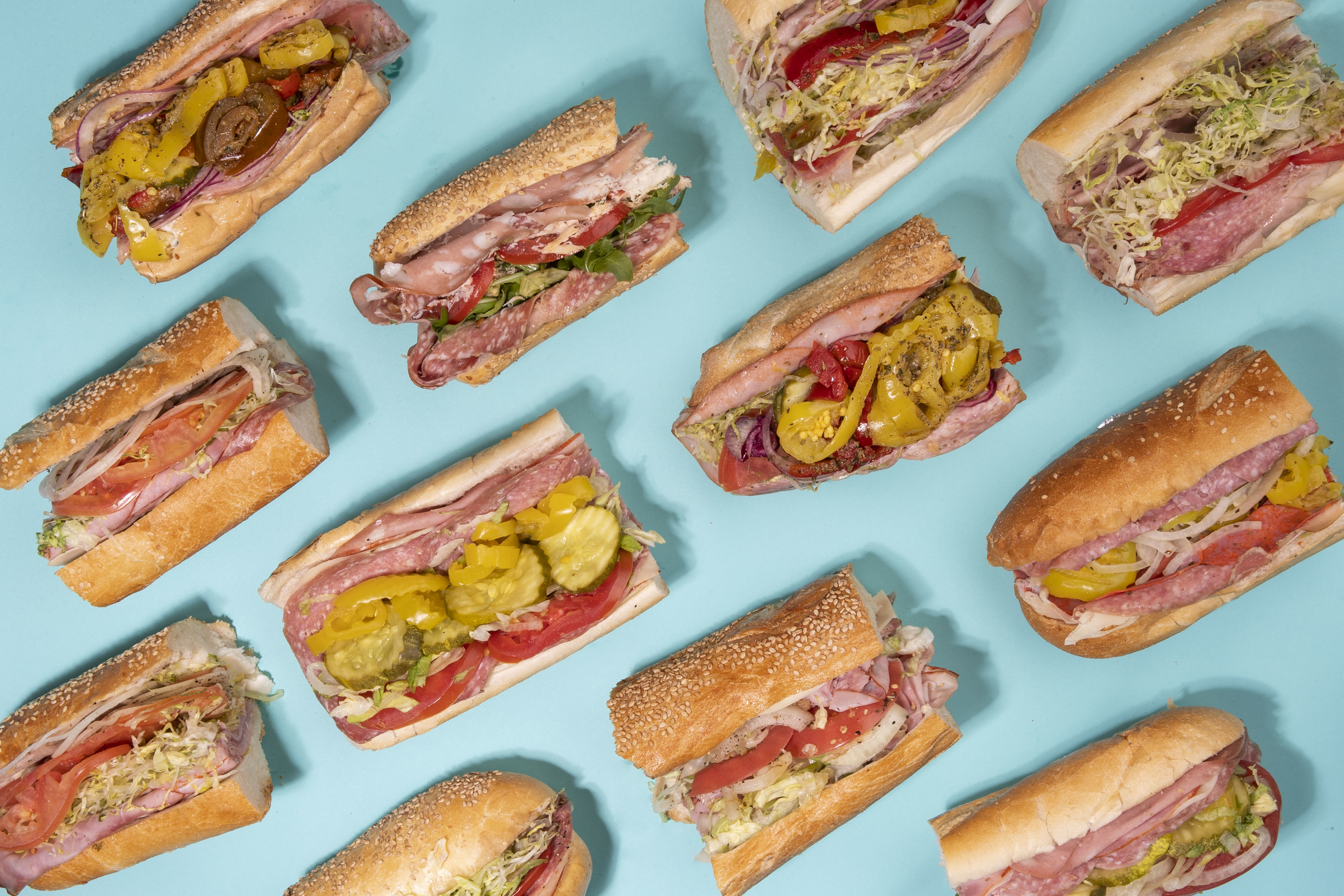
We’re talking hoagies. Not subs, or grinders, or even heroes. Hoagies. And not just any hoagie, but the Italian hoagie — the no-nonsense, regional favorite with a storied history.
So just in time for the NCAA Sweet 16, The Inquirer is launching a bracket to declare who, among the fans, serves up Philadelphia’s best Italian hoagie. Between now and April 4, the date of the NCAA final, readers will weigh in on 16 sandwiches, picked with the help of Inquirer food critic Craig LaBan.
Voting is now closed and your bracket won’t be eligible for submission to our popular vote – of which we’ll announce the winner soon! However, for fun, you can still populate the bracket below.
South
Learn more about these spots
Sweet Pepper 16
Dolores' 2Street
(1)
V
Cosmi's Deli
(4)
Angelo's Pizzeria
(2)
V
Woodrow's
(3)
Elite Ate
Needs Selection
V
Needs Selection
The Rest
Learn more about these spots
Sweet Pepper 16
T&F Farmers' Pride
(1)
V
Koch's Deli
(4)
Dattilo's Deli
(2)
V
Fink's Hoagies
(3)
Elite Ate
Needs Selection
V
Needs Selection
North
Learn more about these spots
Sweet Pepper 16
Liberty Kitchen
(1)
V
Martha
(4)
Middle Child
(2)
V
Castellino's
(3)
Elite Ate
Needs Selection
V
Needs Selection
South South
Learn more about these spots
Sweet Pepper 16
P&S Ravioli Co.
(1)
V
Pastificio Deli
(4)
Lil' Nick's Deli
(2)
V
Mi-Pals Deli
(3)
Elite Ate
Needs Selection
V
Needs Selection
Finals
Final Fourtadella
Needs Selection
V
Needs Selection
Needs Selection
V
Needs Selection
The Final Bite
Needs Selection
V
Needs Selection
We asked some of Philly’s local personalities and food critics to fill out a bracket. Here’s what they said.
Gritty
Philadelphia Flyers mascot
A “homemade” hoagie won somehow?!
Having had “more than 11, less than 2,300” hoagies throughout his lifetime, the Flyers mascot told The Inquirer that “nobody will ever make a hoagie for Gritty better than Gritty makes a hoagie for Gritty.” The fan favorite made a mockery of the 2022 bracket, added Wawa and an Ikea Italian meatball sandwich as unsolicited options. Gritty settled on a “homemade” Italian hoagie as his top pick, adding: “for me, an Italian hoagie is digestive poetry.”
Jim Kenney
Mayor of Philadelphia
Lil’ Nick’s Deli beat Angelo’s in the final
Was it any surprise that Mayor Kenney, born and bred South Philadelphian, would choose Lil’ Nick’s Deli? The final vote came down to the spot near 13th and Shunk Streets and Angelo’s at Ninth and Fitzwater Streets. In what could have been a campaign slogan for his reelection in 2019, he declared: “An Italian hoagie is the only real hoagie; never with mayo.”
Kae Lani Palmisano
Host of WHYY’s Check, Please!
Liberty Kitchen beat T&F Farmers’ Pride in the final
Palmisano knows her hoagies, having had more than 3,000 in her life — more than Gritty. “The perfect hoagie is one that is crafted intentionally,” she writes. Her winner, Liberty Kitchen, won for ingredient arrangement, featuring “360 degrees of meat.”
Craig LaBan
Inquirer Food Critic
Angelo’s Pizzeria beat Pastificio in the final
LaBan, of course, took this very seriously — he revisited all 16 shops to ensure he could give an honest and accurate bracket. He said the South South division “easily could have been [his] Final Four.” But, But, his winner came from a street slightly north of South South: On S. 9th Street in the heart of the Italian Market. After tasting Angelo’s again, he wrote, “Whoa … that fresh-baked roll! Those oregano onions! Add some tangy hot peppers for hoagie lift-off!”
Hawk Krall
Food artist and illustrator
Pastificio Deli beat Angelo’s in the final
Krall is lucky because he regularly eats hoagies for work (in order to draw or write about them). He prefers tons of shredded lettuce and stands by his South Philly go-to: Pastificio. “They are just SO CONSISTENT,” he writes, having gone to the shop for nearly two decades. He also notes that other shops (Marinucci’s, Antonio’s, and Jack’s Place) would have made it far in the bracket, proving Philly has a plethora of prime Italian hoagies.
Newsletter
Want to know who wins?
Sign up for our Let’s Eat Philly newsletter and be alerted when the polls close with the winning spot.
Descriptions: Jillian Wilson, Craig LaBan, Michael Klein, and Patricia Madej
Audience: Lauren Aguirre and Erin Gavle
South
The Rest
North
South South
Return to bracket
Dolores' 2Street (1)
Pennsport
Google Rating 4.8
Dolores 2Street’s hoagies are carefully built on seeded Sarcone’s rolls with balance, finesse, and creativity. The classic Italian is excellent, as is the Pooh Bear, named for its combo of honey turkey, honey ham, and honeyed mayo.
Angelo's Pizzeria (2)
Bella Vista
Google Rating 4.7
Angelo’s tasty sandwiches are as much a draw as its pizzas. The shop serves prosciutto-forward options in addition to an olive oil-drizzled tuna hoagie and a three-cheese sandwich ideal for those who aren’t down with meat. The ordering rules are strict: call, pick-up, and pay with cash.
Woodrow's (3)
Bella Vista
Google Rating 4.7
Woodrow’s has earned its fanbase with a spin on the Italian hoagie, which includes mortadella, fennel salami, spicy soppressata, prosciutto cotto, provolone, herb mayo, oil and vinegar, lettuce, tomato, onion, arugula, and cherry peppers on a seeded roll.
Cosmi's Deli (4)
South Philly
Google Rating 4.5
Hitting high on many best-of lists, Cosmi’s makes both meat-driven and vegetarian hoagies. The Italian and chicken cutlet hoagies are very popular.
T&F Farmers' Pride (1)
Roxborough
Google Rating 4.8
Stepping into T&F Farmers’ Pride is a welcomed step back in time. This old-schooI ltalian grocery store, in business for more than three decades, is a one-stop shop for satisfying any craving. And hey, it also has its own hoagie bracket.
Dattilo's Deli (2)
Rhawnhurst
Google Rating 4.8
Dattilo’s Deli is a mainstay source in the Rhawnhurst neighborhood of Northeast Philadelphia for hoagies, in-house mozzarella, and fresh-made sausages. Its classic Italian hoagie is one of the city’s best.
Fink's Hoagies (3)
Tacony
Google Rating 4.5
Fink’s Hoagies is loved for its original Italian hoagie, which comes smeared with olive spread and topped with sharp provolone. The deli has both traditional hoagies, such as tuna and turkey, and gourmet versions named for different parts of the Northeast.
Koch's Deli (4)
West Philly
Google Rating 4.2
West Philly’s Koch’s Deli, where Wawa is a "dirty word," has been piling the slices on thick for more than five decades. The spot serves everything from cheesesteaks to a Jewish hoagie, with corned beef, pastrami, spiced beef, kosher salami, and American cheese.
Liberty Kitchen (1)
Fishtown
Google Rating 4.9
Those who miss Salumeria in Reading Terminal can find the elusive taste of its signature balsamic dressing once again at Liberty Kitchen. The must-order here, though, is the Mortabella, a mortadella, burrata, and pistachio pesto creation that began as a collaboration with the city’s own Hoagie Dom and turned into a menu staple.
Middle Child (2)
Fishtown, Center City
Google Rating 4.8
Middle Child serves a range of sandwiches, including two excellent hoagies. The Phoagie is a vegan masterpiece of hoisin-roasted eggplant rounds layered with chili paste, crispy onions, and cilantro. The “So Long Sal” is a more traditional Italian hoagie, and its artichoke spread is a heartfelt tribute to the Reading Terminal’s bygone Salumeria.
Castellino's (3)
Fishtown
Google Rating 4.8
“We literally slice every item on a hoagie to order, so it also takes time — at least five minutes — to make one,” says Cara Jo Castellino, whose self-named corner store in Fishtown is one of the high practitioners of mindful hoagie art. Castellino’s hoagies are essentially old-soul sandwiches with smart updated twists.
Martha (4)
Kensington
Google Rating 4.5
This fun-loving Kensington gastropub has always been on the hoagie avant-garde. At Martha, there are plenty of options for vegetarians, vegans, and meat-eaters, plus wine and draft beer to wash it all down.
P&S Ravioli Co. (1)
South Philly
Google Rating 4.8
P&S may be known for its pasta, but the old-school Italian shop on Oregon Avenue is slinging out mouth-watering hoagies that give your grandmother’s spaghetti and meatballs a run for its money. Don’t sleep on the spicy Italian, with hot soppressata, sharp provolone, and hot ham capicola.
Lil' Nick's Deli (2)
South Philly
Google Rating 4.8
Craving a classic Italian hoagie? Swing by Lil’ Nick’s near 13th and Shunk, with its spicy meats, seeded roll, and well-built craftsmanship. The sandwiches with fresh cutlets, fried to order in pans behind the counter, are old-school good. Pro tip: Make it a deluxe with fresh “pro-shoot and mozz.”
Mi-Pals Deli (3)
Girard Park
Google Rating 4.6
Everyone covets a hoagie secret, that corner deli that locals know but never mention because they want it for themselves. Well, brothers Tommy and Mike Palestino made it 35 years before their South Philly corner, Mi-Pals, came to our attention. As for where they get their rolls, that is still a secret.
Pastificio Deli (4)
Packer Park
Google Rating 4.6
Veteran delis such as South Philly’s Pastificio Deli serve up the art of the hoagie in its purest, most earnest form. You can’t go wrong with this standby.