An athletic director at a Mercer County school district has been charged with loitering and prowling after he leered into the bedroom window of his neighbor’s underage daughter, Plumstead Township Police say.
Winfield “Tripp” Becker, 48, was caught on a surveillance camera Aug. 6 looking into the window, according to the affidavit of probable cause for his arrest. The victim’s mother installed that camera after an unidentified man spent months knocking on the window at night and then “fleeing the area,” the document said.
Neither Becker nor his attorney, Thomas Logan, responded to requests for comment.
Becker lives one street over from the victim in Pipersville, according to court records, and is known to the girl and her family. He was charged via summons, and has a preliminary hearing scheduled for next month.
Becker is the athletic director at Hopewell Valley Regional School District, a district north of Trenton that serves about 3,400 students. In a letter sent to parents, Superintendent Rosetta Treece, without naming Becker, said a district employee was the subject of a criminal investigation, and had been suspended until the conclusion of that investigation.
Treece said the district was working to secure temporary staffing to fill the position.
For decades, a second-degree murder conviction in Pennsylvania meant an automatic sentence of life in prison — even for people who did not kill anyone.
But in March, the Pennsylvania Supreme Court ruled that punishment unconstitutional in the case of Derek Lee, a Pittsburgh man who argued the mandatory nature of the sentence violated constitutional prohibitions against cruel punishment.
The high court gave the state legislature 120 days to devise an alternative and decide whether to apply it to those already serving the sentence.
That deadline passed without a resolution on July 24. And in early August, the high court rejected a bid by several district attorneys to give lawmakers more time.
So what happens now? Here’s what to know.
What was the maximum sentence for second-degree murder — and what is it now?
Before the ruling, the punishment was life without parole. Now there is no clear answer.
Setting criminal penalties is the legislature’s job, and lawmakers have not put in place a replacement.
The high court’s ruling did not abolish life without parole for felony murder; it only barred making the punishment automatic. A judge may still impose such a sentence, but only after weighing a defendant’s role in the crime.
The justices declined to say whether the ruling applies retroactively to people already serving those sentences, leaving that question to lawmakers, too.
How will judges sentence second-degree murder now that there’s no mandatory penalty?
With no law to guide them, judges are left to their own decisions. And without statewide guidelines, similar cases could end differently depending on the county in which a defendant is tried and on the judge who hears the case.
Philadelphia District Attorney Larry Krasner has expressed little concern about the lack of guidelines.
In an interview this week, Krasner, a Democrat who has forged a path as a progressive prosecutor, said “there’s nothing unusual” about asking judges to weigh the facts and use their discretion. “I’ve always believed that mandatory sentencing is problematic at best, usually a terrible idea, and that individual justice is what the system is supposed to be about,” he said.
But at a joint GOP policy committee meeting in Hazleton last week, several Republican prosecutors and lawmakers voiced concern about the lack of uniformity across the state.
Luzerne County District Attorney Sam Sanguedolce pointed to a case in which a defendant recently asked to plead guilty to second-degree murder.
“I can’t properly advise the defendant what the consequence might be,” Sanguedolce said. “Second [-degree murder] sounds like it’s better than first, but is it? We don’t even know.”
What happens to the people already serving life in prison?
For the nearly 1,100 people serving life for second-degree murder, nothing changes automatically.
The ruling made only one person eligible for resentencing: Lee. And even he could again receive life without parole, if a judge finds his role warrants it.
Others who wish to have their life sentences reconsidered have to go to court and ask to be resentenced. Bret Grote, a lawyer with the Abolitionist Law Center who represented Lee, said such petitions are likely to be denied by trial courts until retroactivity is settled.
Hundreds are expected to try anyway.
That flood could overwhelm courts and public defenders. Statewide, handling the cases could cost more than $34 million, the Public Defender Association of Pennsylvania estimates. In Philadelphia — home to more than 500 people currently serving such sentences — Chief Defender Keisha Hudson puts her office’s share at $40,000 per defendant, or $24 million total.
“We are going to need substantial funding,” she said last week, adding that she hopes to meet soon with city officials about how to pay for it.
Legal experts expect the question of retroactivity to reach the state Supreme Court again, either through an appeal of a lower court’s denial or a so-called King’s Bench petition asking the justices to take up the issue directly.
Lawmakers could also provide a quicker alternative by writing legislation that allows people serving second-degree murder sentences to seek parole, rather than requiring individual resentencing.
Can lawmakers still pass a fix, and what might that look like?
Lawmakers say negotiations will resume when they return in September. Each chamber has passed its own bill, but the two are far apart, with no compromise in sight.
The bill in the Republican-controlled Senate would set a 35-year mandatory minimum for most second-degree murder convictions, while keeping life without parole as an option. Current lifers would become eligible for parole after 35 years — or 20 years, if they are at least 70.
The measure in the Democratic-led House sets no mandatory minimum, instead directing the Pennsylvania Commission on Sentencing to write guidelines while keeping life without parole available. It would make current lifers parole-eligible after 30 years and add a medical parole option for the terminally ill.
Sen. Lisa Baker (R., Luzerne), who wrote the Senate proposal, said she is still hopeful that her caucus and House Democrats will reach a deal. But the parties remain far apart, she said.
“It’s difficult when you’ve got people whose priorities are no mandatory minimums for any crime,” she said. “I understand that we want to keep nonviolent first-time offenders [out of prison], give people second chances. But there needs to be accountability for these crimes.”
Few expect action before November’s midterm elections. “We can’t, unfortunately, make Harrisburg move any more quickly than they already are,” said Hudson, of the Defender Association. “And in the meantime, there are a lot of questions.”
What does all this mean for victims’ families?
Victims’ families are caught in a limbo of their own, said Melany Nelson, executive director of Northwest Victim Services, a Philadelphia nonprofit that assists crime victims.
Those whose loved ones’ killers have not been sentenced are now waiting to learn what punishment will come, and whether it will feel like justice. Those whose cases closed long ago face now the prospect of being summoned back — to a courtroom or a parole hearing — to confront the killer again and potentially watch them set free.
Nelson urged families to contact prosecutors’ offices and victim-advocate services now, rather than be caught off guard, and to weigh in with their state lawmakers.
“We do not want them to be blindsided by anything,” she said.
Correction: A previous version of this article incorrectly described what could happen to people who wish to appeal their sentences. Bret Grote, a lawyer with the Abolitionist Law Center, said such petitions are likely to be denied by trial courts until the question of whether a recent Pennsylvania Supreme Court ruling applies retroactively is settled.
Joseph Richie was born in 1942 and served as a U.S. Marine in the Vietnam War. When he died in 2017 in Delaware County, no one claimed his body, and his cremated remains sat for nearly a decade in the county medical examiner’s office.
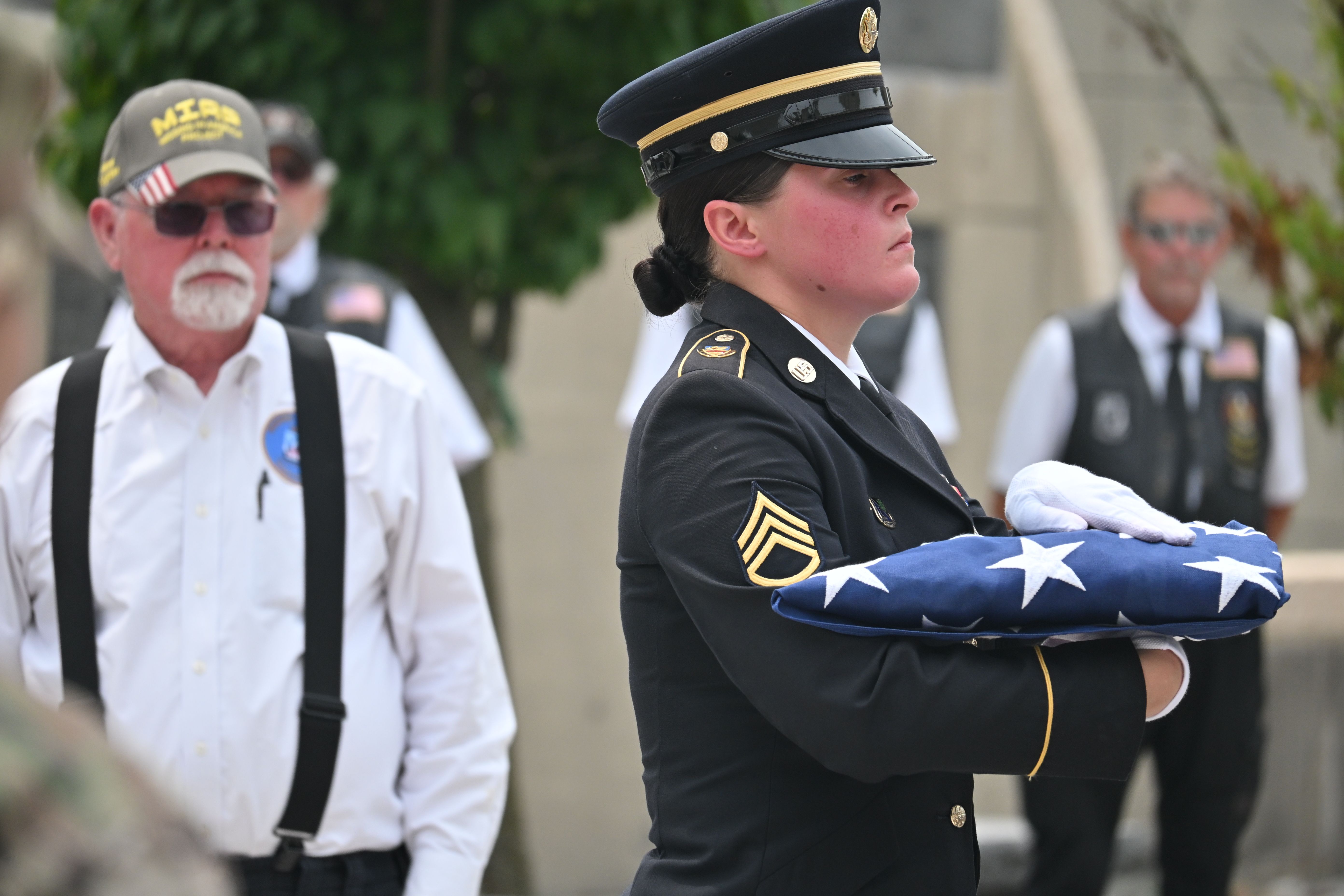
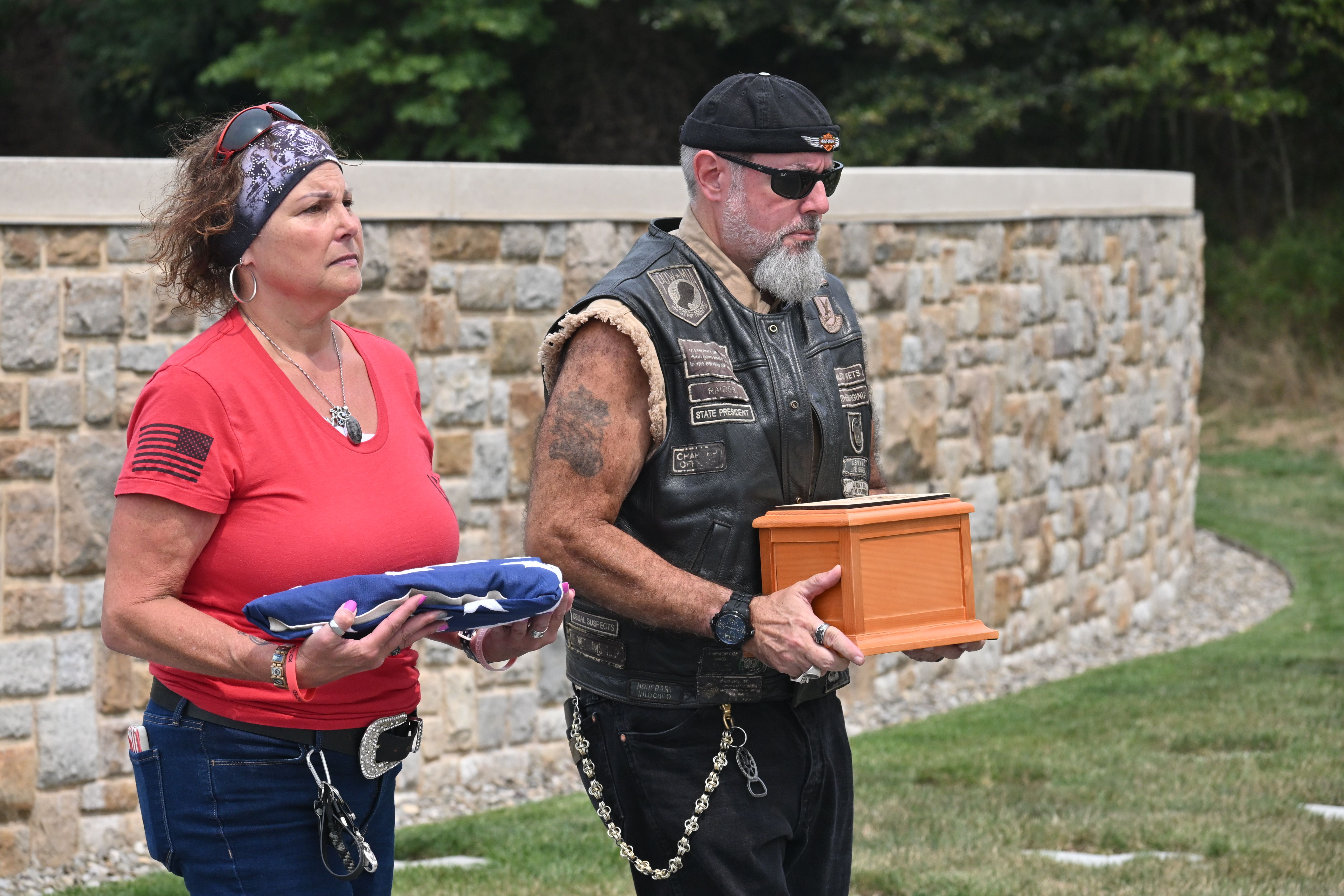
But on Friday, Richie’s ashes were taken by motorcade to a national military cemetery about two hours away. Bagpipes played as a volunteer carried his remains. A bell tolled when his name was read. Rifles fired three ceremonial volleys to honor Richie and other veterans. A flag was presented to a volunteer as a sign of gratitude. A bugler played Taps. And although the people there did not know Richie personally, they saluted him.
Richie was one of 15 military veterans from Delaware County belatedly laid to rest during the ceremony at Indiantown Gap National Cemetery, northeast of Harrisburg. Those who attended said it was a fitting honor for people who served their country in Vietnam and elsewhere, but never received a proper funeral.
“They served their country. No one claimed them. It breaks my heart,” said James Augustin, a 74-year old Army veteran who attended the ceremony. Augustin said the ceremony righted that wrong.
Many veterans qualify for military honors at their funeral. Usually, that process begins when a family requests the honors from a veterans service organization.
What made this ceremony different is that no family members were around to do that for these people, said Kathleen Kenney, a staffer in the Delaware County Medical Examiner’s Office. So she and other volunteers took on that role instead.
“My family has a military background, and I believe that everyone who has served should be laid to rest in a dignified manner,” Kenney said.
A motorcade send off for 15 veterans whose remains that came into the county’s possession as part of the Missing In America project, is seen being escorted from the Delaware County medical examiner office in Media, Pa., on Friday, Aug. 14, 2026.Tyger Williams / Staff Photographer
Kenney declined to discuss specific cases but said the county takes possession of a body when it cannot locate any living family members, or when the family declines to do so.
As a result, by the time Kenney took her current role in the medical examiner’s office in 2025, she faced a backlog of names and human remains.
“And I just said, I bet you we have some veterans here,” Kenney said.
She took the list of names and biographical information to the U.S. Department of Veterans Affairs and the National Archives, which confirmed that 15 of the people on the list had been in the military.
Kenney reached out to the Missing In America Project, a nonprofit that coordinates such veterans’ ceremonies. The organization has helped inter more than 41,000 previously unclaimed veterans, Forrest Lingenfelter, the group’s regional coordinator, said at the ceremony.
Volunteers carry a flag and the remains of a U.S. military veteran who was interred at Indiantown Gap National Cemetery Friday, Aug. 14.Brett Sholtis / Staff
Lingenfelter’s team put out the word to veterans organizations, and by Friday morning, more than a dozen vehicles and a pack of motorcycles were gathered at the Delaware County Medical Examiner’s Office in Media. With a police escort, the convoy traveled two hours west to the national cemetery.
During the ceremony, an Army sergeant sang the national anthem, the crowd sang “Amazing Grace,” and American Legion Chaplain Karis Hagen asked God to consecrate the veterans’ final resting place.
Lingenfelter, a retired Army master sergeant, read a poem from a soldier’s perspective that concluded: “I can’t forget a single name. Those men are with me still. If I don’t remember them, then I ask you, who will?”
Then Lingenfelter told the crowd: “Your presence here today answers that question. We will remember those names.”
The ceremony fell silent, other than the sound of flagpole cables clacking in the wind, as members of the military honor guard folded each veteran’s American flag 13 times — one time for each original colony.
Typically, the flag would be presented to a family member as a sign of gratitude. But Friday, volunteer LuAnn Jahnke accepted one of the flags.
Jahnke, a retired Army veteran from Wallingford, Delaware County, said she did not know exactly what these veterans went through, but she could imagine.
“Vietnam veterans lived with secret wounds, hidden wounds from their service,” Jahnke said.
Her husband, retired Army Col. Jeffery Jahnke, carried a flag for one of the dead veterans. He said Vietnam veterans were not always welcomed when they returned to the U.S.
“I tell them, welcome home,” he said.
Jimbo Ernst leads a chapter of Special Forces Brotherhood, a motorcycle club made up of former military special forces members.
He said that ceremonies like this do not just pay tribute to the dead. They also bring together other veterans.
In this case, these people are from all different branches of service and age ranges. Though there is always some rivalry between groups, they are like one big family.
“It definitely helps keep the veteran community together,” Ernst said. “When push comes to shove, we’re always here for each other.”
At left, ceremony organizers Forrest Lingenfelter and Kathleen Kenney watch as a memberof the U.S. Navy honor guard folds an American flag.Brett Sholtis / Staff
The veterans who were interred Friday will be placed in an above-ground structure for cremated remains at the cemetery known as a columbarium, Lingenfelter said. Their names and information will be on display along with a message: “You Are Not Forgotten.” Their names are:
Sgt. First Class Ronald D. Lewis Jr., U.S. Army, 1956-2024.
Spec. 5 Richard J. Catalano, U.S. Army, 1944-2022, Vietnam.
Spec. 5 Ronald C. Ramsue, U.S. Army, 1945-2023, Vietnam.
Cpl. Joseph B. Richie, U.S. Marine Corps, 1942-2017, Vietnam.
Spec. 4 Michael Y. Yellin, U.S. Army, 1941-2024, Vietnam.
Cpl. George L. Zechman, U.S. Marine Corps, 1947-2019, Vietnam.
Pfc. Francis M. Siple, U.S. Marine Corps, 1944-2024, Vietnam.
Pfc. John F. Snow, U.S. Marine Corps, 1951-2025, Vietnam.
Pfc. Samuel L. Williamson, U.S. Army, 1951-2020, Vietnam.
Airman First Class Raymond L. Vining, U.S. Air Force, 1939-2022, Vietnam.
Airman Second Class James L. Lemons, U.S. Air Force, 1942-2018.
Airman Third Class Stanley E. Kornafel, U.S. Air Force, 1940-2024.
Pvt. 2 Samuel L. Webb, U.S. Army, 1950-2023, Vietnam.
Pvt. Hayward J. Strange, U.S. Army, 1948-2025, Vietnam.
Seaman Robert J. Finkbiner, U.S. Navy, 1944-2017, Vietnam.
Cristina Hartley watched her teenage son go from refusing to say more than two lines on stage to taking on the lead role in two performances, thanks to the confidence he built through theater production nonprofit Arts and Athletics Club.
Now, Hartley, who serves on the organization’s board, is worried about what the future holds for the all-ages theater group. The nonprofit, formally founded in 2019 after starting as a high school senior project, was based for roughly four years in the Exton Square Mall, and lost its space when the mall closed its doors in June. The group has struggled to find a new home and will be forced to take a hiatus until a new location is secured.
“The arts are always the first program to be cut out of schools, and there’s always a lack of budget to have that in schools or to expand these programs in schools, and we want everybody to have access to anything art-related, whether that’s drawing or trying to sing or trying to perform,” said Hartley, who has been involved with the nonprofit for six years.
“We know that there’s a space out there. There’s a landlord out there willing to work with a small nonprofit. We just haven’t found it yet,” she said.
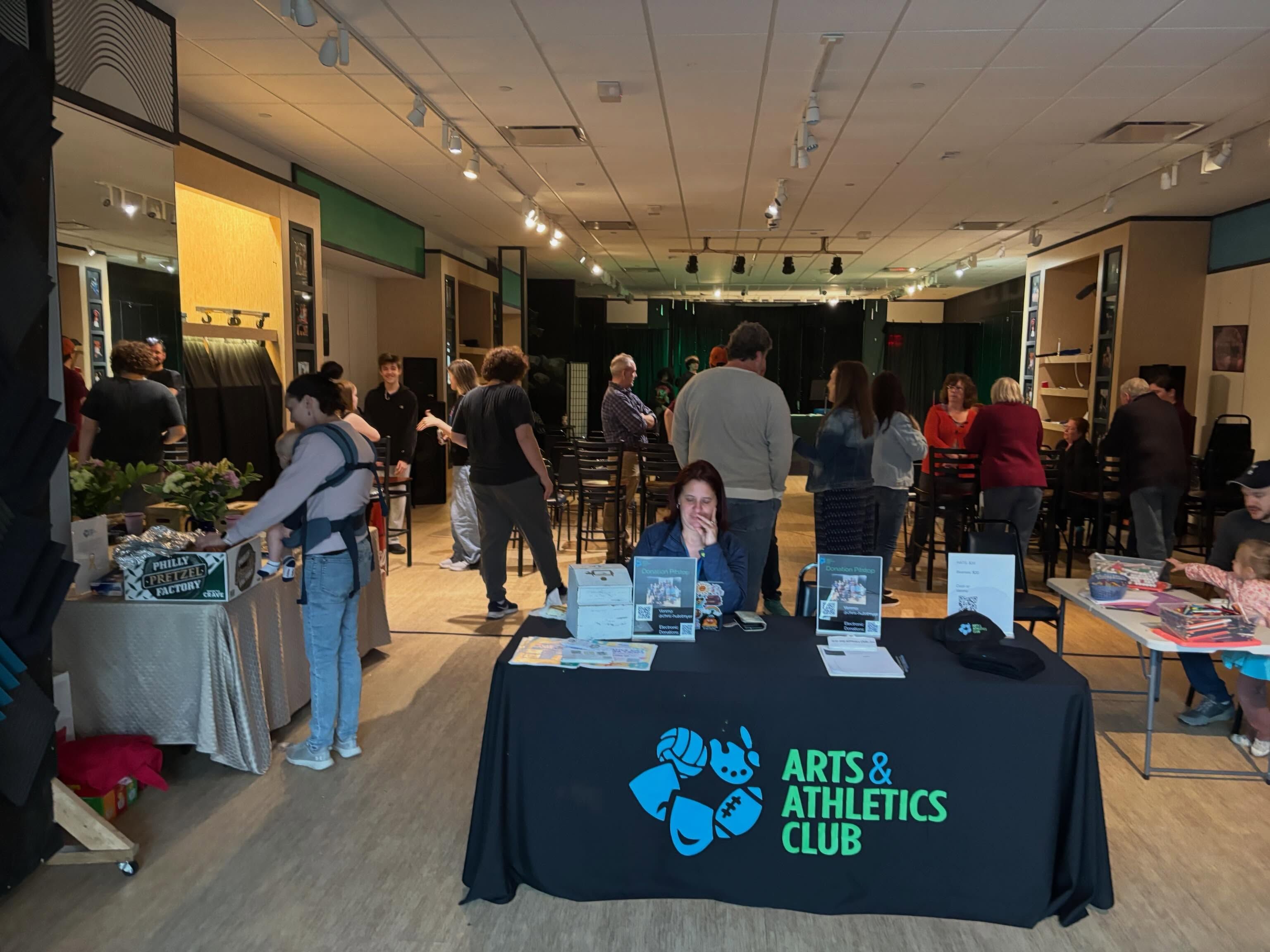
The Arts and Athletics Club’s interior at the Exton mall. Finding a space for it to hold its productions and activities has been a challenge, leaders say.Photo courtesy of Arts and Athletics Club
For years, the mall declined from traditional retail, with only a handful of stores left when it shuttered after five decades. It was Chester County’s only enclosed mall.
But even as the mall’s staples dwindled, other organizations — nonprofits, a robotics club, a fencing center, and more — occupied the space, drawing what business leaders said was significant foot traffic.
In June, those still left at the mall received notice that they would have to be out by the end of the month. For nonprofits like the Arts and Athletics Club without robust budgets to quickly relocate, the abrupt end put them in a bind.
The Arts and Athletics Club was in the midst of two productions when its leaders learned they would have to vacate, said Chris Hutelmyer, executive director. They took June to move their things out, depositing belongings in people’s garages, and started the real estate hunt in July.
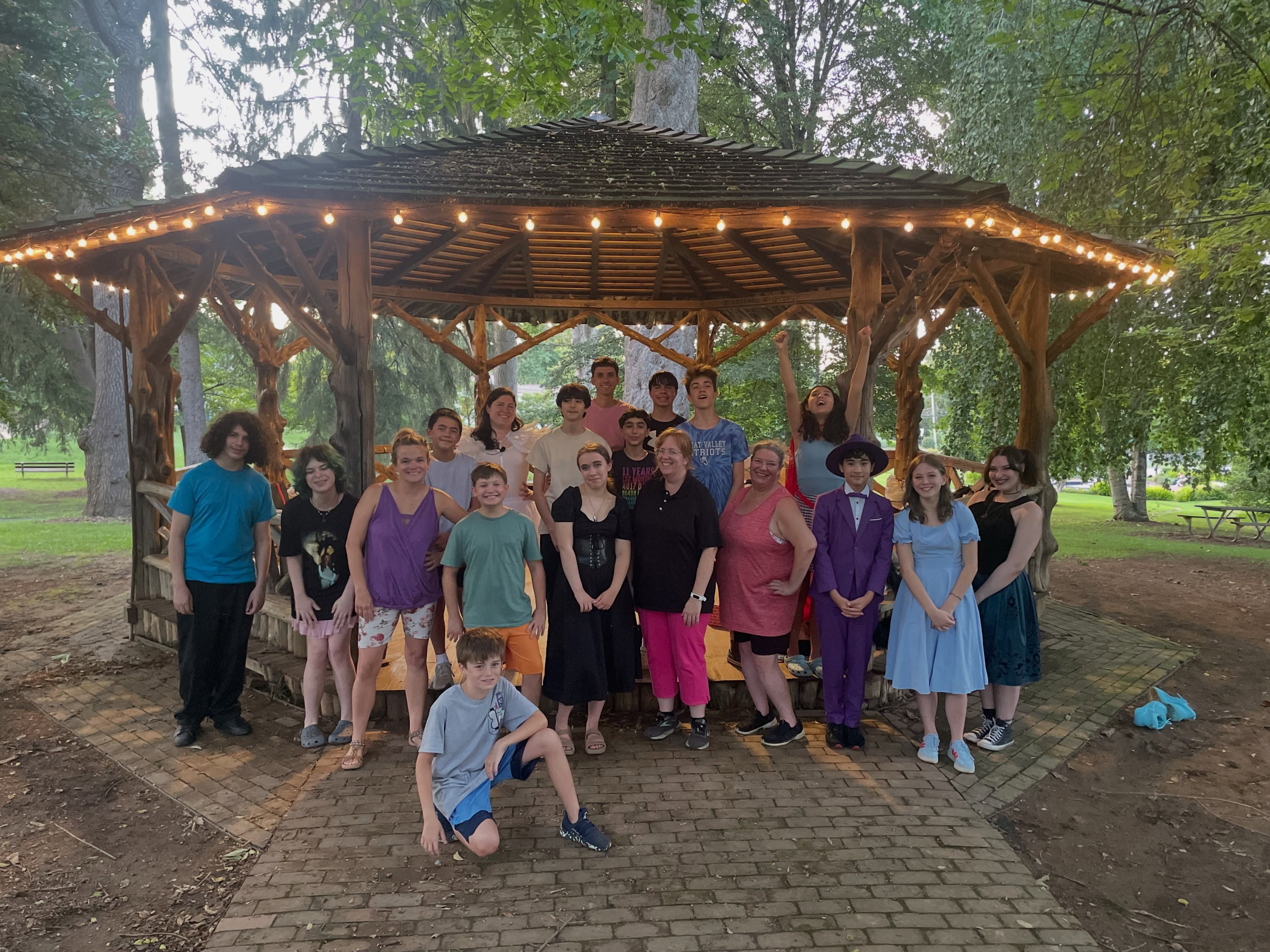
The two performances, Oh Happy Day and Twisted Tales, went on, albeit under changed circumstances, with one held in a park. After holding a summer bash Saturday, the organization will be on hiatus until it finds a space, Hutelmyer said.
The mall had been perfect for the group. An old Aéropostale served as its mini black box theater for four years. The former clothing store had no windows, which worked well for staging 10 productions each year, and it was accessible with ample parking. There were bathrooms, dressing rooms, and storage space. And it was a central location for its all-ages community, accessible from Malvern to Downingtown to Coatesville.
The cast of “Twisted Tales” poses for a photo. Arts and Athletics Club, primarily a theater production nonprofit, has struggled to find a new facility since the Exton mall’s closure in June. Its last production was held in a park, and it hasn’t been able to run a show since.Photo courtesy of Arts and Athletics Club
Trying to find a comparable space for the Arts and Athletics Club within East and West Whiteland Townships has proved difficult. But its leaders said they want to stay in the area, continuing to provide programming for participants from ages 7 to 70. The mall was the organization’s first permanent location, after performing in parks, libraries, and other community spaces.
The theater group, which offers its programming for free or little cost, has a limited budget for renting or altering a space to fit its needs. Another challenge has been finding an available location that is the right size: about 1,800 to 3,000 square feet of open space.
Group leaders have looked at retail locations, warehouses, and churches, and investigated partnering with community centers.
“We’ve been striking out pretty much everywhere that we’ve been looking,” Hutelmyer said. “It’s just been hard to find a direct match for what we need.”
It was a similar scramble for the Wardrobe, a nonprofit thrift store that accepts and sells secondhand clothing and also provides free clothes to those in need, after having to abruptly move out of the Exton mall.
Racing to find a new space to avoid laying off any employees, executive director Sherri Cole enlisted a real estate agent, she said, but struggled to find something affordable that also hit the right marks.
“Everything had to go out of the mall; it’s not like we could be like, ‘OK, we’ll go dark and we’ll move things when we find a new location,’” Cole said.
The old exterior of the Wardrobe, a clothing store that accepts donations and gives clothes to those in need for free, in Exton mall. The business will open its new location in Malvern in the fall.Photo Courtesy of The Wardrobe
By early July, the Wardrobe secured a pop-up location in the Plymouth Meeting Mall.
And this month, the nonprofit found a new, permanent home in the Lincoln Court Shopping Center in Malvern, about a 10-minute drive from the old Exton location. Cole anticipates the store will open by October.
The interior of The Wardrobe’s former Exton mall location. The nonprofit, which has called the mall home for the last few years, struggled to find a new location in Chester County after the mall shuttered in June.Photo Courtesy of The Wardrobe
Still, for both the Wardrobe and the Arts and Activities Club, it was hard to lose the Exton mall.
Out of the Wardrobe’s five locations in the Philadelphia region, the Exton mall location was its second-largest site for foot traffic and retail sales last year, Cole said.
It proved that people would still show up to a “dead” or “dying” mall if there was something they needed, Cole said. And it was meeting a need.
“There need to be spaces in the suburbs where everyone feels welcome, and often, the class divide in the suburbs is really stark,” she said. “It’s great that we’re able to find something that is still within the Exton, Malvern neighborhood where we can be providing these services, because even within the suburbs, poverty is really often overlooked.”
For Hutelmyer, still searching for somewhere for the Arts and Athletics Club to land, it was sad to see a community space like the mall go.
Housing a constellation of community organizations, the mall “wasn’t what people really expected it to be,” Hutelmyer said.
“But as it transformed into the community space, at least while we were there, it was still serving a lot of good, and I think that not being there is a big loss for the community,” he said.
This suburban content is produced with support from the Leslie Miller and Richard Worley Foundation and The Lenfest Institute for Journalism. Editorial content is created independently of the project donors. Gifts to support The Inquirer’s high-impact journalism can be made at inquirer.com/donate. A list of Lenfest Institute donors can be found at lenfestinstitute.org/supporters.
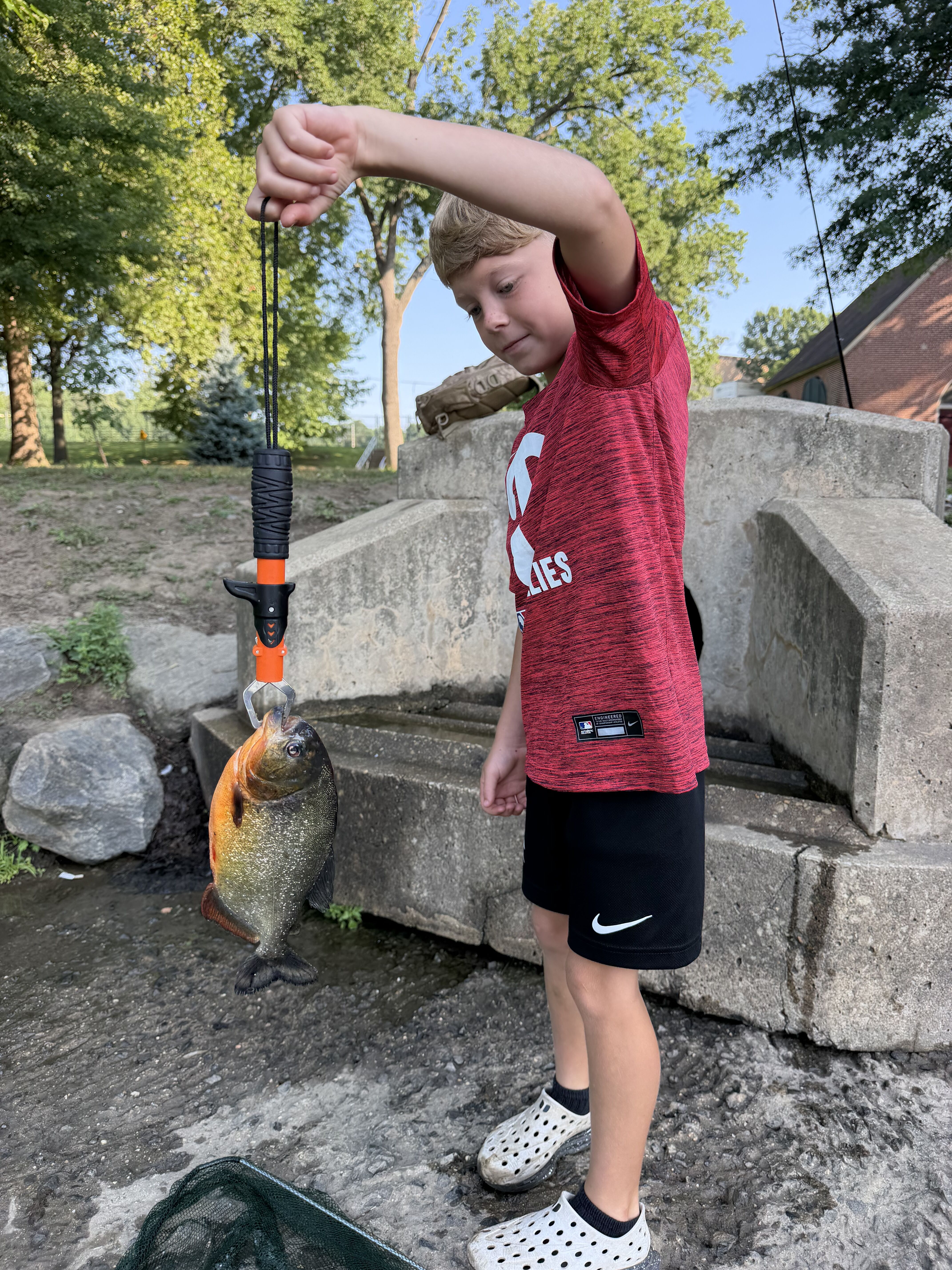
When 8-year-old angler Seamus Coffey reeled in a 2-pound, red-bellied creature with menacing teeth last weekend, he knew exactly what he had caught.
“That’s a piranha!” Mike Coffey recalled his son screaming on the banks of Ridley Park Lake.
Surely, his father thought, Seamus was mistaken — this must just be a bluegill or sunfish or a bass. A quick reverse image search confirmed Seamus’ hunch.
“No, Dad,” Seamus, who loves watching fishing videos on YouTube, insisted, “that’s a piranha.”
Pictured here, the piranha at the center of Seamus Coffey’s recent virality.Courtesy of Mike Coffey
Now, Seamus is a budding influencer and wannabe YouTuber. Brands are sending him fishing gear, according to de facto manager and agent Mike, who is fielding media requests and running a GoFundMe for filming equipment. Their new Instagram persona, @ReelTalkPiranha, bills them as the “father-and-son duo who took down the infamous Delco Piranha.”
“I understand it’s an extremely, extremely rare circumstance to catch the fish that we did, but we did not expect anything like this,” Mike Coffey said of their virality.
Seamus, meanwhile, has not quite internalized his newfound fame. His bashful TV appearances have been clipped for social media — “I’m everywhere,” Coffey recalled his son saying while scrolling on the couch — but he “doesn’t really understand how big it is.”
Saturday, Aug. 8, started as a normal day of fishing for the Coffeys. Armed with frozen shrimp, they cast their reels hoping to maybe catch a catfish. After a little more than an hour, Seamus pulled in the piranha.
Mike Parker, spokesperson for the Pennsylvania Fish and Boat Commission, said biologists visually confirmed it was a “species of piranha.” No other piranhas have been reported at the lake.
The South American tropical fish was likely a pet whose owner dumped it in the Delco lake — a crime punishable by misdemeanor charges or fines, according to Parker.
“If you have one of these exotic pets and you can no longer take care of it … you have to understand you’re responsible for that animal,” Parker warned. “Releasing it isn’t only illegal, but it’s really cruel.”
While the catch was concerning and unusual, Parker said, his agency does not believe this is a serious or ongoing threat. Frankly, he said, tropical fish cannot survive a Pennsylvania winter. (Mike Coffey said he killed the fish humanely and threw it back into the water.)
“A lot of things happen for a reason,” Coffey said. Seamus “had a lucky catch that day and it took off.”
Cheltenham’s new police chief is a longtime crisis negotiator who led one of the township’s most famous criminal investigations.
Richard Schaffer will be sworn in as Cheltenham’s new police chief next week to replace John Slavin, who is retiring after 37 years with the department. The salary range for the new chief was listed as $180,000 to $195,000 in the township’s job posting.
Schaffer has led a variety of community policing efforts in his 26 years at Cheltenham, spending more than two decades as a crisis negotiator and heading the township’s gun violence task force.
In 2024, he embedded a county mental health worker into the police department to assist in cases with behavioral health concerns.
Schaffer, who holds a master’s degree in criminal justice from St. Joseph’s University, made the case for community policing in a speech at a school board meeting this week.
The new chief takes the reins at a tumultuous time for Cheltenham School District, which has faced a range of safety concerns in recent years — most notably two alleged assaults in a high school locker room last year that led to criminal charges for four football coaches and six players.
“We have not lived up to our shared ideals. We must acknowledge the victims from recent cases, and we must promise to do things better not only for them but for future students,” Schaffer said.
“I would urge parents and the board to commit to a greater partnership with the police department.”
Some Cheltenham residents have advocated for removing a physical police presence from schools in recent years.
Schaffer pledged at the meeting to “push back on some of those who sought to drive the police from the schools.”
“Police interacting with students, faculty, and staff is a good thing,” Schaffer said. “We want to be proactive by leveraging information and our relationships to get ahead of problems.”
District spokesperson Kevin Kaufman did not answer questions Friday about the current status of security programs at Cheltenham schools.
Schaffer also led the 2005 investigation into allegations that Bill Cosby drugged and assaulted Andrea Constand at his Cheltenham home.
Although the Montgomery County district attorney declined to press charges at the time, the case was reopened in 2015, and Schaffer was eventually called to testify.
He testified in 2018 that he had believed Constand’s allegations at the time, and still did.
Cosby’s conviction was overturned in 2021 on procedural grounds.
This suburban content is produced with support from the Leslie Miller and Richard Worley Foundation and The Lenfest Institute for Journalism. Editorial content is created independently of the project donors. Gifts to support The Inquirer’s high-impact journalism can be made at inquirer.com/donate. A list of Lenfest Institute donors can be found at lenfestinstitute.org/supporters.
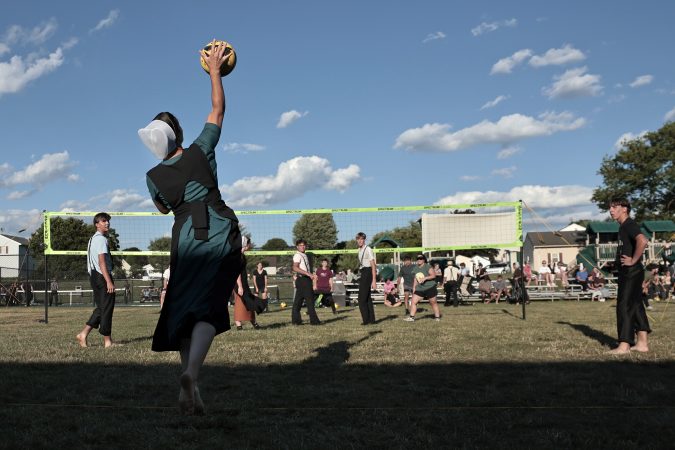
INTERCOURSE, Pa. — A young Amish woman stood barefoot in the back right corner of a grassy volleyball court, spinning a ball in her hands.
She wore a simple green dress with a black apron, and when she leapt and hammered a serve over the net with a grunt, her prayer covering looked as white as the passing clouds.
On this beautiful afternoon in late June, the coed competitors were among the hundreds of young Amish players from Pennsylvania, Ohio, and other states who converged on Intercourse Community Park, about 60 miles west of Philadelphia, in Lancaster County, for the annual volleyball tournament. Hundreds gathered around the courts in lawn chairs to watch, including Amish men with long beards alongside “English” children in sneakers and sports jerseys.
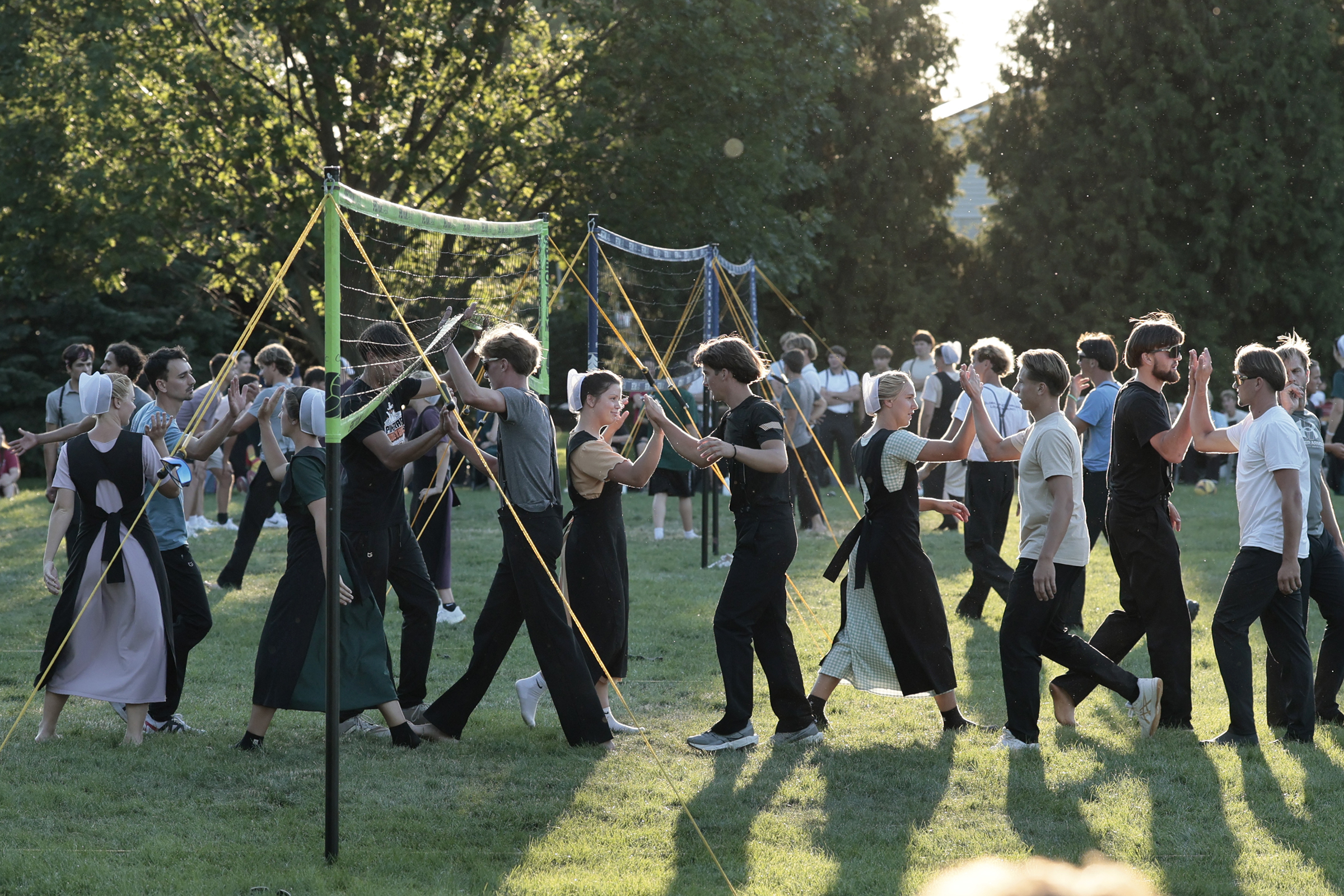
Teams high-five each other after a volleyball match during the first day of the Heritage Days Volleyball Tournament at Intercourse Community Park in Gordonville, Pa., on June 19.Elizabeth Robertson / Staff Photographer
The Amish in Pennsylvania, for reasons few could fully explain, love competitive volleyball. Some simply shrugged their shoulders when asked why. Others said they play volleyball because previous generations played too, a skill they learned just by watching, much the same as shoeing buggy horses or baking whoopie pies.
“I guess it’s just part of our culture,” said Ray Beiler, the tournament’s organizer. ”Competition-wise, though, it’s slow-pitch and volleyball, but volleyball is probably the biggest.”
The Amish also dabble in ice hockey when ponds freeze, Beiler said, and, in Indiana, they play basketball, of course. In Intercourse, the sharp pop of pickleball paddles on this Friday afternoon revealed another growing sport among the Amish.
Volleyball, it seems, has always been there, some said.
Ray Beiler updates the scores and standings during the Intercourse Heritage Days and Heritage Days Volleyball Tournament at Intercourse Community Park in Gordonville, Pa., on June 19.Elizabeth Robertson / Staff Photographer
“I grew up with it,” said competitor Irv Beiler, 18, of Christiana, Lancaster County. “It’s a team game.”
One older Amish man said he grew up playing softball, but reckoned volleyball was a new phenomenon. When asked his name, the man spoke to his wife in Pennsylvania Dutch, and declined to answer.
The Amish do have a traditional game called cornerball, or “eck balle” in Pennsylvania Dutch, that looks like a cross between baseball and dodgeball, but is played in a cow pen. According to AmishAmerica.com, the sport was originally played with homemade balls made by “wrapping a quarter-sized steel nut in twine and covering it with black tire tape.”
According to the website, eck balle is a disappearing sport.
Erik Wesner, founder of AmishAmerica.com, said the purpose of volleyball and other sports in Amish communities is mostly about socialization, not competition.
“This is a game that’s played commonly at the Sunday youth group gatherings or meetings at church members’ houses for dinner,” he said. “It’s a way for teens and young adults to interact.”
Older Amish in Intercourse didn’t know much about the rise in popularity, but, ever efficient and resourceful, said volleyball takes up little room, compared to say, soccer, and can keep a lot of children busy at a gathering.
Irv Beiler serves the ball during the Heritage Days Volleyball Tournament at Intercourse Community Park in Gordonville, Pa., on June 19.Elizabeth Robertson / Staff Photographer
John Lapp, 51, of Gap, Lancaster County, said there are “volleyball barns” in the area where the more serious players gather in the winter.
“I played softball,” he said. “Volleyball was just a sport that took hold, I suppose.”
There doesn’t appear to be much trash talk in the competitive world of Amish volleyball, unless you understand Pennsylvania Dutch, but the talent is plain as day. That makes sense, locals said, if you consider the day-to-day life of Amish youth. They’re wrangling calves, riding kick scooters, and lifting hay, building muscle and balance the whole time.
“I used to play too,” said Simon Stoltzfus. “I just can’t jump as high as I could or stay up there as long.”
Wesner said sports tend to be more prevalent in progressive Amish communities, like in Lancaster County, and less so in more conservative areas, like Mifflin and Clearfield Counties.
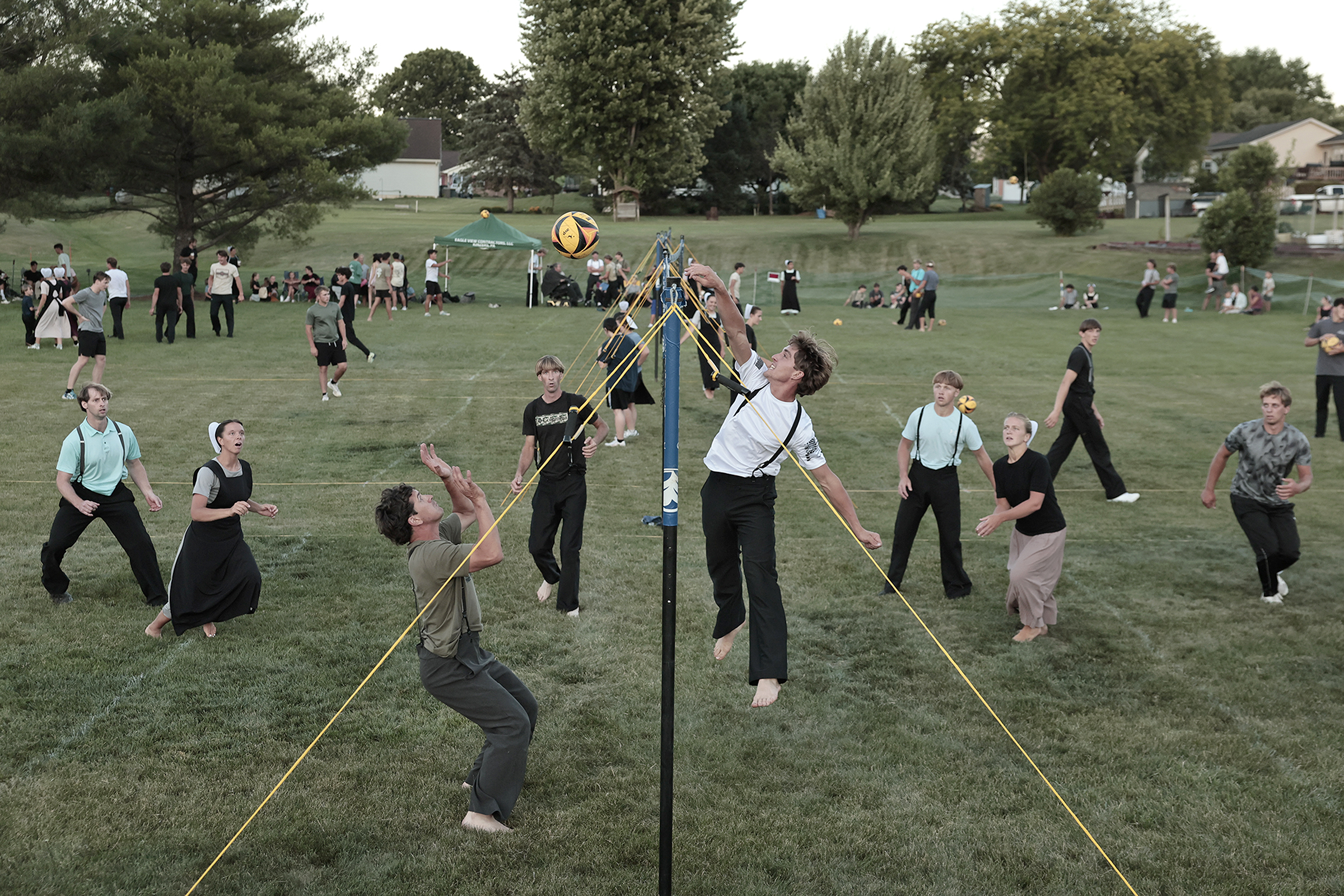
Serious play during the Heritage Days Volleyball Tournament at Intercourse Community Park in Gordonville, Pa., on June 19.Elizabeth Robertson / Staff Photographer
Last year, The Inquirer spoke to Melvin Byler, who grew up Amish in Western Pennsylvania, after he won the Professional Bull Riding event in Reading. Byler had to leave his Amish community to pursue bull riding as a profession.
“I didn’t even see bull riding until I was 14, and when I told my parents I wanted to do it, they said it was a phase,” Byler said.
Steven Nolt, an Elizabethtown College professor who has researched and written about the Amish extensively, said situations like Byler’s are rare. Ray Beiler said a college coach came to one of the Intercourse tournaments and said many of the competitors could play at higher levels, but Nolt said it’s unlikely that even the most talented volleyball players would pursue the sport more competitively.
“It would be hard to imagine,” Nolt said. “They’d be making a choice not to join the Amish.”
Chris Haley oversaw the pickleball tournament at the Intercourse Heritage Days, where there are new courts. He said the Amish quickly took up that sport, too, and some have makeshift courts at their house.
“They are talented and determined,” Haley said.
They compete in sports for the fun of it, not for the prospects of future scholarships, and, at a tournament as big as Intercourse, the socializing was front and center. Young Amish slipped off their black leather boots and Crocs for sneakers or went barefoot, dozens chatting up one another in both English and Pennsylvania Dutch.
“This tournament is most definitely for the fun of it,” said Wilmer Stoltzfus, 20.
Friends and family watch the play during the Heritage Days Volleyball Tournament at Intercourse Community Park in Gordonville, Pa., on June 19.Elizabeth Robertson / Staff Photographer
The players took big gulps from jugs of water and walked onto one of several courts spread out over several acres in the park. Some of the men wore thick, black work pants with suspenders, but others wore shorts. When one young Amish man dove for a dig and missed, his teammates rushed to help him up.
“Good job,” they said.
By Saturday night, only one net would remain, and a few thousand spectators would be crowding the court for the finals. The winners would get tall trophies housed in an exhibition room, with silver and gold volleyballs fastened to the tops.
They’d also get bragging rights until next year, maybe.
“Not bragging, no,” said Wilmer Stoltzfus. “We don’t really brag.”
Serious play during day one of the Heritage Days Volleyball Tournament at Intercourse Community Park in Gordonville, Pa., on June 19.Elizabeth Robertson / Staff Photographer
A state correctional officer in Delaware County has been charged with numerous counts related to possessing and sharing child pornography, court records show.
David Lemmon, 45, of Clifton Heights, was charged with more than 100 counts related to possessing and sharing child pornography, according to court documents. Bail was set at 10% of $100,000, which he posted on Monday.
His lawyer, Olivia Leigh Mastrangelo, declined to comment on the case Friday.
Maria A. Bivens, press secretary of the Pennsylvania Department of Corrections, said Lemmon has not reported for work since his arrest Monday.
“The Department is taking appropriate administrative action, including moving to suspend his employment, in accordance with the Department’s policy and the Governor’s Code of Conduct,” Bivens said in an email.
The Delaware County District Attorney’s Office could not be reached for comment.
Lemmon was assigned to the State Correctional Institution at Chester.
The criminal investigation began with a tip from the social media app Snapchat, NBC10 reported. Investigators questioned Lemmon at the Chester prison in June and confiscated his phone. They also searched through devices found at his home, NBC10 reported.
The Delaware County District Attorney’s Office said Friday that Aldan borough police were justified in fatally shooting a man last week.
District Attorney Tanner Rouse called the shooting a “tragedy” at a news conference Friday but said the Aldan Borough police officer who shot him was justified, “not just legally, but as a person.”
“What you will see is a young man who unfortunately seemed very intent on this outcome,” Rouse said.
The Montgomery County Coroner’s Office identified the man police shot as 23-year-old Ugochukwu Ilodigwe.
Police were responding to a “request for service” 911 call the morning of Aug. 7, Rouse said. Such calls are a public service in which residents request that police take them somewhere, Rouse said.
The DA’s office played body camera footage that showed the chaotic, deadly incident.
When the officer arrived, she was attacked and fell to the ground, video shows. Ilodigwe could be seen holding a “meat-cutting” knife in the footage, Rouse noted. He said the knife was about a foot long. Ilodigwe could be heard shouting, “shoot me, don’t shoot me” in the video.
The officer shouted “Taser, Taser, Taser!” and shot Ilodigwe with the stun gun, video shows. He fell to the ground, and she repeatedly ordered him to put his hands behind his back. Rouse pointed out that Ilodigwe could be seen reaching for the knife as he lay on the ground. He also could be heard saying he had a gun, Rouse said.
“She pleads with the decedent, pleads with him to stop. He makes no indication that he is going to relent,” Rouse said. “We have every reason to believe that he intended her grave bodily harm, life threatening bodily harm.”
Eventually, Ilodigwe got up and was shot again with the Taser. When it did not stop him, the officer shot him twice, the video shows.
The officer has been cleared to return to active duty, said Aldan borough Mayor Michael Ceci.
“This was a tragic event all around. The conclusion of this investigation doesn’t change the fact that a family has lost a loved one, and we recognize the grief they are experiencing,” Ceci said.
By Friday afternoon, Ilodiwge’s family had raised more than $4,500 for burial costs on GoFundMe. Contacted Thursday, Ilodigwe’s sister, Kenechukwu, declined to comment and did not respond to a request for comment Friday.
“I am creating this fundraiser to help my family lay my brother to rest after his sudden and heartbreaking death. He was killed recently in a situation with the police, and our lives have been changed forever,” said a post attributed to his sister, Kenechukwu Ilodigwe.
She said Ugochukwu was a “bright, giving person” who loved football, jokes, “and how big his dreams and aspirations were.”
“He had the kind of heart that could brighten anyone’s day, and he would give to someone in need even if it meant going without himself. Losing him so abruptly has left us in deep pain, and it is especially hard knowing I did not get the chance to say goodbye.”
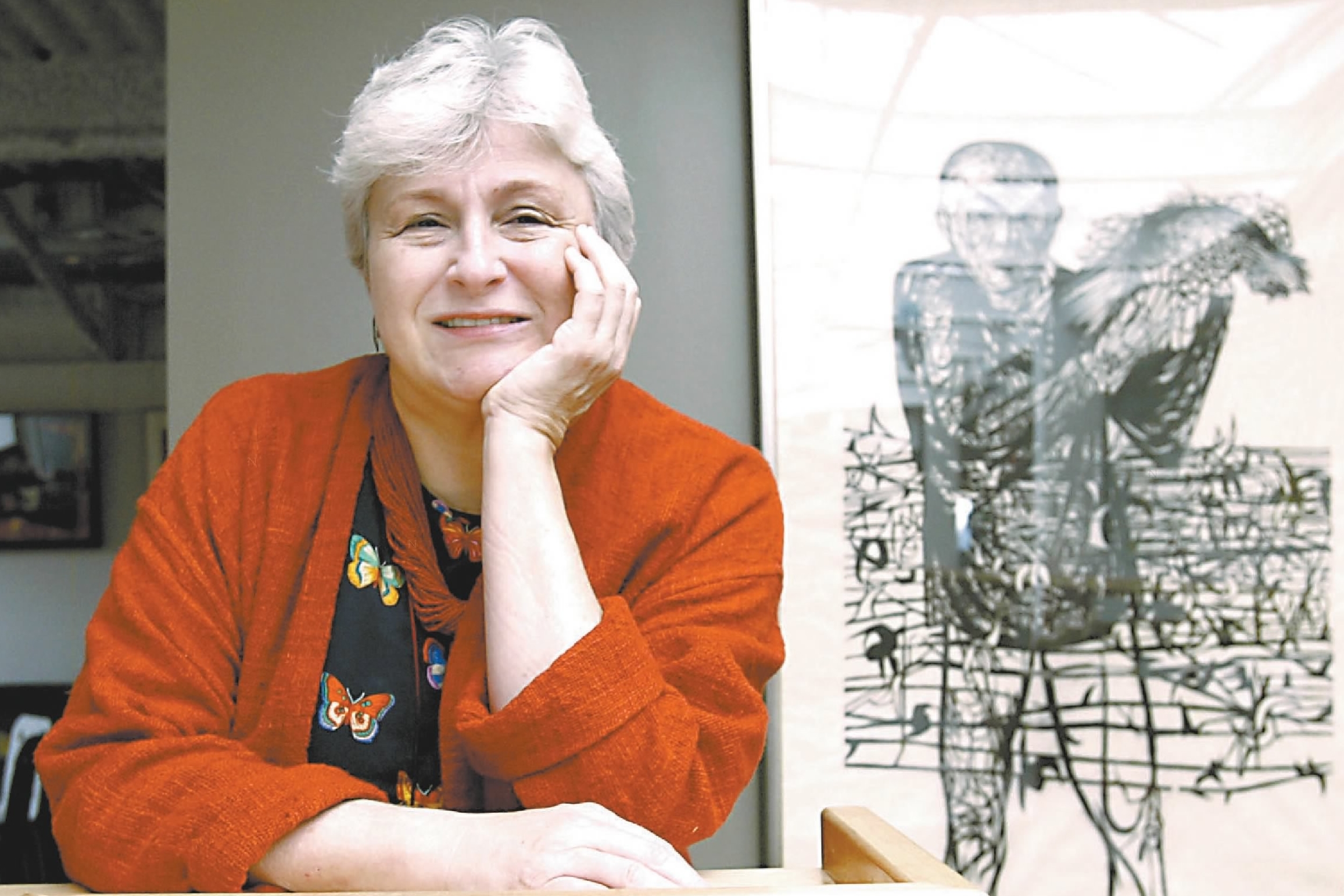
Thora Jacobson, 77, of Philadelphia, award-winning former chief executive officer at the Fleisher Art Memorial, former executive director at the Philadelphia Art Alliance, former director of design review for Mural Arts Philadelphia, former chief operating officer for Philagrafika, former chair of the Philadelphia Art Commission, onetime adjunct instructor at Drexel University, independent curator, artist, mentor, Mummers Parade judge, and much more, died suddenly Sunday, Aug. 2, at her home. The exact cause of her death has not been determined.
Born and reared in Ridley Park, Delaware County, Ms. Jacobson became interested in art education, administration, and conservation at Trinity Washington College in Washington in the 1960s. She settled in South Philadelphia after college in the 1970s and spent the next 50 years organizing, promoting, and inspiring local artists and art organizations.
“Philadelphia richly deserves to be known as a place that honors its own,” she told The Inquirer in 2006.
She joined Fleisher in 1972, rose to CEO in 1983, and left in 2006 to work over the next two decades at Philagrafika, Mural Arts Philadelphia, the Philadelphia Art Alliance, and elsewhere. During her 34 years at Fleisher, she developed its Center for Works on Paper, the Community Partnerships in the Arts program, and the Challenge series juried competition.
She also oversaw three capital campaigns and told The Inquirer that her priority was “seeing connections and possibilities between and among artists, institutions, and their constituencies.” A colleague said on Facebook: “To many of us she was Fleisher.”
John Ittmann, former curator at the Philadelphia Museum of Art, told The Inquirer in 2006: “Thora is a real firecracker. She has a wonderful type of energy that is really infectious.”
Ms. Jacobson was also chair of the Philadelphia Art Commission for a decade, interim director of operations for the Asian Arts Initiative, vice president of the Philadelphia Volunteer Lawyers for the Arts, trustee of the National Guild of Community Arts Education,member of the American Swedish Historical Museum,and, most recently, a visual arts management consultant.
Ms. Jacobson and fellow curator Warren Angle admire an exhibition at the Fleisher Art Memorial in 2002. April Saul / Staff Photographer
“Thora was kind and clear,” colleagues at Social Impact Studios said on Facebook, “but firm as she pushed us to keep tweaking things until they were as strong as they could be.”
She was an adjunct instructor at Drexel University from 2010 to 2014 and led research projects at Drexel and the University of Pennsylvania on social impacts of art in Philadelphia neighborhoods. Her first job out of college was coordinator of the student center at the Art Museum.
She curated and juried shows, and wrote forwards and essays for art books and catalogs. She drew in her spare time and judged the Mummers Parade for years.
She was featured in The Inquirer and Daily News, and appeared in the 1992 TV art documentary Monuments in Love. In 2006, she earned the Visionary Woman Award from Moore College of Art and Design, and was honored for lifetime achievement by Tri-State Artists Equity.
Ms. Jacobson, standing between Jim Straw, to the left, and Ralph Wellington to her right, earned the Visionary Woman Award from Moore College of Art & Design in 2006.Gary Horn Photography
“She’s really respected throughout the arts community in Philadelphia,” Happy Fernandez, then president of Moore, said in 2006. Anne d’Harnoncourt, then director of the Art Museum, said Ms. Jacobson’s “impact has been enormous.”
William Valerio, director and CEO of the Woodmere museum, said: “Thora was a towering figure in the arts of Philadelphia, a builder of institutions whose accomplishments are lasting.”
Thora Elizabeth Jacobson was born Feb. 19, 1949, in Ridley Park. She was the youngest of three children; her father died when she was 3. She played field hockey in high school, was fascinated by words and language, and graduated from the old Holy Child Academy in Sharon Hill.
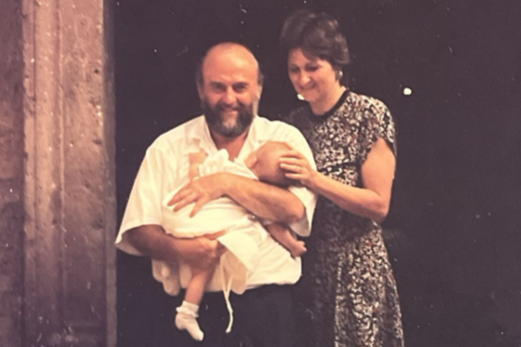
She met her husband, Antonio Sorgini, when he was taking classes at Fleisher, and they married in 1980 and had a son, Antongiulio. Her husband died in May.
Ms. Jacobson, her husband, Antonio Sorgini, and their son, Antongiulio, lived in South Philadelphia.Courtesy of the family
Ms. Jacobson was a talented seamstress and baker. She did humorous impersonations, collected art, and enjoyed working with young people.
Friends noted her “many kindnesses” and “decades-long advocacy for artists and the cultural community” in online tributes. Woodmere’s Valerio said: “She was both a strong voice and a warm friend to many.”
Her son said: “She had a sharp wit and relished cheerful banter among friends and colleagues. Above all, she took the work of mentorship very seriously.”
In addition to her son, Ms. Jacobson is survived by a sister and other relatives. A brother died earlier.
Friends noted Ms. Jacobson’s “many kindnesses” and “decades-long advocacy for artists and the cultural community.”Courtesy of the family
A celebration of her life is to be held later.
Donations in her name may be made to the Fleisher Art Memorial, 719 Catharine St., Philadelphia, Pa. 19147; and Mural Arts Philadelphia, 1727-29 Mount Vernon St., Philadelphia, Pa. 19130.
Ms. Jacobson was a talented seamstress and baker. Mark Garvin, / Philadelphia Museum of Art