Category: Pennsylvania News

  • Gov. Josh Shapiro lured companies like Chobani and Burlington with state incentives. Will it pay off for Pa.?

    Gov. Josh Shapiro lured companies like Chobani and Burlington with state incentives. Will it pay off for Pa.?

    The CEO of Chobani thought he had identified a site in the Lehigh Valley for the yogurt company’s first dairy plant in Pennsylvania.

    But challenges with wastewater and energy were holding up Hamdi Ulukaya’s plans. “And if you don’t have that solution, you kind of don’t want to touch anything,” the billionaire founder said in September.

    As Ulukaya announced a $1.2 billion investment at a new facility in Allentown — the biggest private investment in the state’s agriculture industry on record — he credited Gov. Josh Shapiro with making it happen. The state expedited permitting for the project and offered $50 million in grants and loans to support site improvements.

    “This really speaks to the leadership of this state,” Ulukaya said. “I’ve never seen anything like this.”

    As Shapiro, 53, runs for reelection in November, analysts say, deals with companies like Chobani help reinforce an image the governor has cultivated as a pro-business Democrat who is focused relentlessly on “getting stuff done.”

    “I’m competitive as hell. I wanna win every deal,” Shapiro said in September at the Chobani announcement. “For a long time, Pennsylvania wasn’t even on the field. We’re on the field now. We’re competing. We’re winning big deals like this.”

    Gov. Josh Shapiro in 2024 at the site of the Bellwether District. The 1,300-acre industrial campus in Southwest Philadelphia was previously a Sunoco oil refinery and is being redeveloped. Alejandro A. Alvarez / Staff Photographer

    And increasingly, Shapiro has tapped state subsidies to help drive economic development — landing splashy commitments such as pharma giant Eli Lilly & Co.’s plans for a $3.5 billion plant in the Lehigh Valley and discount retailer Burlington Stores’ $370 million move from South Jersey to University City.

    Since Shapiro took office in 2023, his business development team, known as BusinessPA, has spent $121.8 million per year on average to attract, retain, and grow businesses through incentives to employers, according to data the state shared with The Inquirer.

    That is more than double the $51.6 million the state invested annually on such deals from 2018 through 2022 under Gov. Tom Wolf, according to the current administration.

    Shapiro administration officials say incentives are one piece of a broader strategy to make Pennsylvania more attractive to businesses. Other key ingredients include speeding up projects, investing in industrial site improvements, and continuing to reduce the corporate tax rate.

    (function(){function e(){window.addEventListener(`message`,function(e){if(e.data[`datawrapper-height`]!==void 0){var t=document.querySelectorAll(`iframe`);for(var n in e.data[`datawrapper-height`])for(var r=0,i;i=t[r];r++)if(i.contentWindow===e.source){var a=e.data[`datawrapper-height`][n]+`px`;i.style.height=a}}})}e()})();

    Shapiro’s strategy carries some political risk, however.

    In the gubernatorial race, Shapiro is leading Republican State Treasurer Stacy Garrity by a wide margin in polls. But he is also thought to be mulling a run for president in 2028.

    Any perceived coziness with big corporations could haunt Shapiro in a Democratic primary, said Chris Borick, a political science professor at Lehigh University. Shapiro has already seen voters turn against an industry he once courted: data centers.

    “He left a trail of breadcrumbs that made that connection to the industry that he has had to walk back on this year,” Borick said.

    Garrity’s campaign has sought to highlight Shapiro’s early support for Amazon data center projects in Pennsylvania that he said would result in $20 billion in private investment. Shapiro has since sought to restrict data center development. Garrity, too, initially supported data centers publicly, but has since backtracked.

    In a statement, Garrity’s campaign said Shapiro’s economic agenda amounted to “corporate welfare.”

    A Garrity administration would “cut the red tape that is holding up progress, reduce the tax burden facing families and businesses, and hang a welcome sign — not a handout — to businesses that want to start or move to the commonwealth,” campaign spokesperson Matt Beynon said.

    For Pennsylvanians, the bigger question is whether the governor’s economic development deals will pay off in the long term.

    But evaluating the efficacy of his incentive spending could prove challenging. A state board created in 2017 to review the performance of tax credit programs and other government spending has not met since 2023, PennLive reported.

    “The right scorecard is not the size of the subsidy package or the value of the announcements,” said Bernie Gallagher, executive director of the left-leaning Keystone Research Center in Harrisburg.

    “It’s whether public dollars changed business behavior, and then produced additional family-sustaining jobs and left durable assets behind, and then delivered a measurable public value.”

    A new strategy for wooing business

    State and local governments spend tens of billions of dollars a year on incentives for businesses, research shows.

    When Shapiro took office in 2023, his team found Pennsylvania was being outspent “astronomically” by states like New York, North Carolina, Virginia, and Ohio, said Rick Siger, secretary of the Pennsylvania Department of Community and Economic Development.

    Ramping up incentives was one part of the Shapiro administration’s economic development strategy rolled out in 2024 — the state’s first new plan in nearly 20 years, according to the governor. It focused on growing five core industries: agriculture, energy, life sciences, manufacturing, and robotics and technology.

    “We didn’t have a plan for economic development in the state for a long time,” said Chellie Cameron, CEO of the Chamber of Commerce for Greater Philadelphia, who describes the road map as “significant.”

    With bipartisan support in the legislature, Shapiro launched PA SITES, an incentive program aimed at developing shovel-ready sites for businesses. Lawmakers authorized the administration to borrow $400 million to fund it. That is the program Shapiro tapped to incentivize Chobani.

    Hamdi Ulukaya, Chobani founder and CEO, announced in September that his company is investing $1.2 billion to set up a new dairy plant in Allentown. Chobani

    From 2023 through late September, Shapiro’s BusinessPA team pledged nearly $457 million in grants, loans, and tax credits to roughly 90 companies that promised to create or retain jobs in the state, according to the administration. That figure does not account for tax breaks available to certain firms located in Keystone Opportunity Zones, a program established in 1998 to promote economic development.

    The top 10 largest incentive deals — including deals with Johnson & Johnson, Eli Lilly & Co., and Chobani — accounted for 65% of the total subsidies.

    “We’ve been able to compete for some of these really large-scale deals that the state did not have the capability to compete for financially in the past,” Siger said.

    Since Shapiro took office, his administration has tallied $43 billion in planned investments and 29,000 jobs created in Pennsylvania by private-sector employers that got help from BusinessPA or other state programs.

    One hub of economic activity has been the Bellwether District, a 1,300-acre industrial campus in Southwest Philly that was previously a Sunoco oil refinery.

    View of the Bellwether District in 2023. The Bellwether District is in a Keystone Opportunity Zone, so businesses that locate there get big tax breaks.Heather Khalifa / Staff Photographer

    Canned beverage manufacturer DrinkPAK is investing $195 million in a new manufacturing facility at the district, which is in a Keystone Opportunity Zone and is being redeveloped by Chicago-based HRP Group. DrinkPAK, which also has locations in California and Texas, says it will create 174 jobs at the factory and produce billions of cans a year.

    Company executives said they evaluated sites across five states. In addition to Bellwether’s KOZ — a designation that required city and state approval — the Shapiro administration offered DrinkPAK a $2 million grant.

    “I’m going to say it really, really plainly,” said Holly Schroeder, DrinkPAK’s vice president of organizational strategy. “DrinkPAK would not be standing here in Pennsylvania without the support of the incentives the commonwealth brought to the table.”

    Jeff Hornstein, executive director of the Economy League of Greater Philadelphia, said Bellwether shows how incentives can help stimulate economic activity that would not have occurred otherwise.

    “Bellwether was a disgusting, decrepit brownfield, and through visionary leadership and a lot of money, like a lot of tax incentives, it is going to become a job node, much like the Navy Yard became,” he said. About 16,000 people now work at the Navy Yard, for employers including Urban Outfitters, Tastykake, and Jefferson Health.
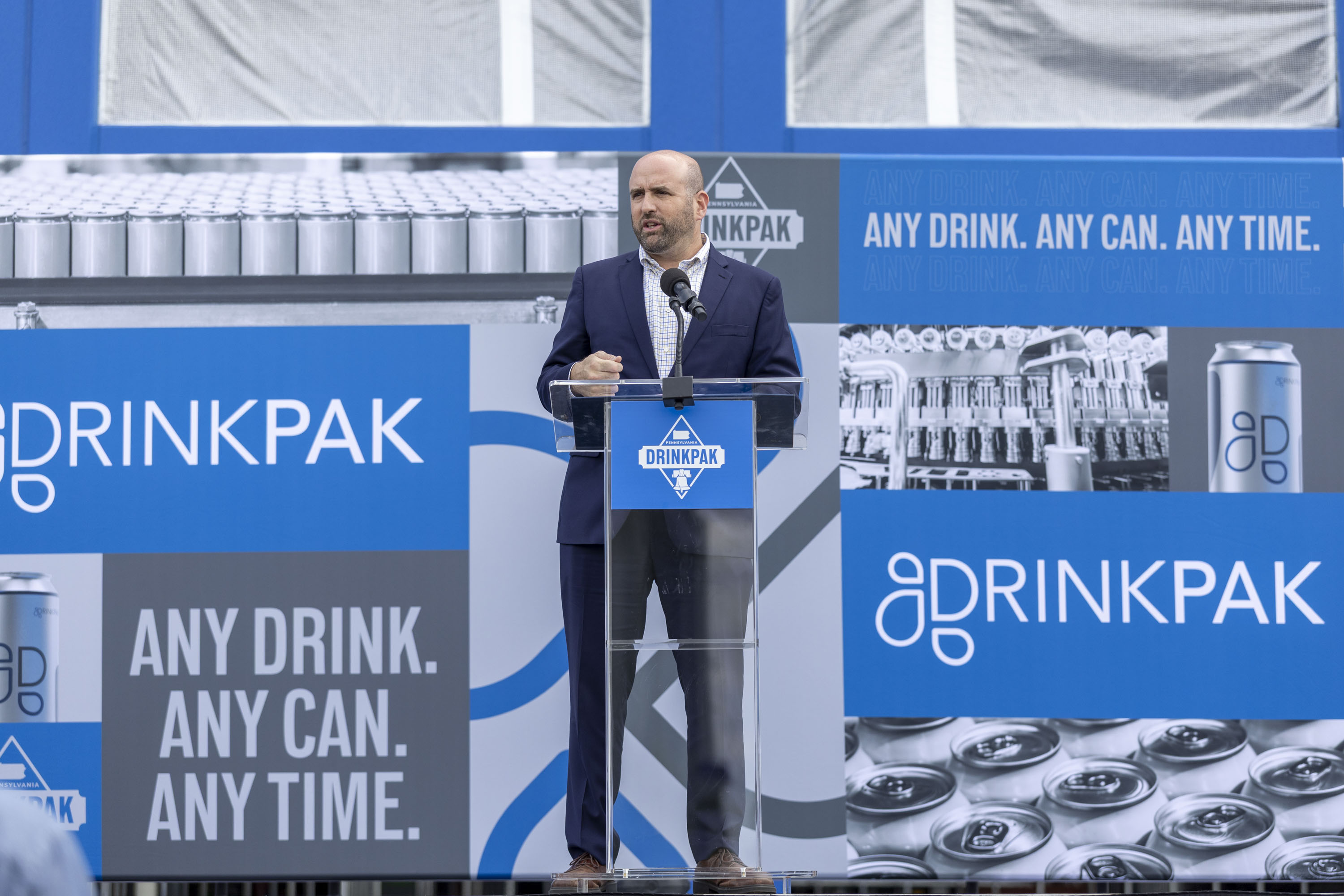
    DCED secretary Rick Siger speaks at a DrinkPAK event in late September, marking a construction milestone for the company’s new Philadelphia manufacturing facility.Tyger Williams / Staff Photographer

    But Hornstein questioned whether some of Shapiro’s incentives — like one with Burlington, which is relocating its headquarters from South Jersey to Philadelphia — will benefit the region as a whole.

    Burlington says it will relocate 1,500 existing jobs to University City and create 500 new ones. Shapiro’s team counts all of those as newly created jobs because they are new to Pennsylvania.

    “Is inducing a firm to move from one part of the region to another — is that really growth activity or is it zero sum?” said Hornstein, whose organization seeks to promote inclusive and equitable growth. “We win 2,000 jobs. Burlington County, N.J., which is in our region, loses 2,000 jobs. Is that net growth for the region, or just ‘yay Philadelphia, yay Pennsylvania’?”
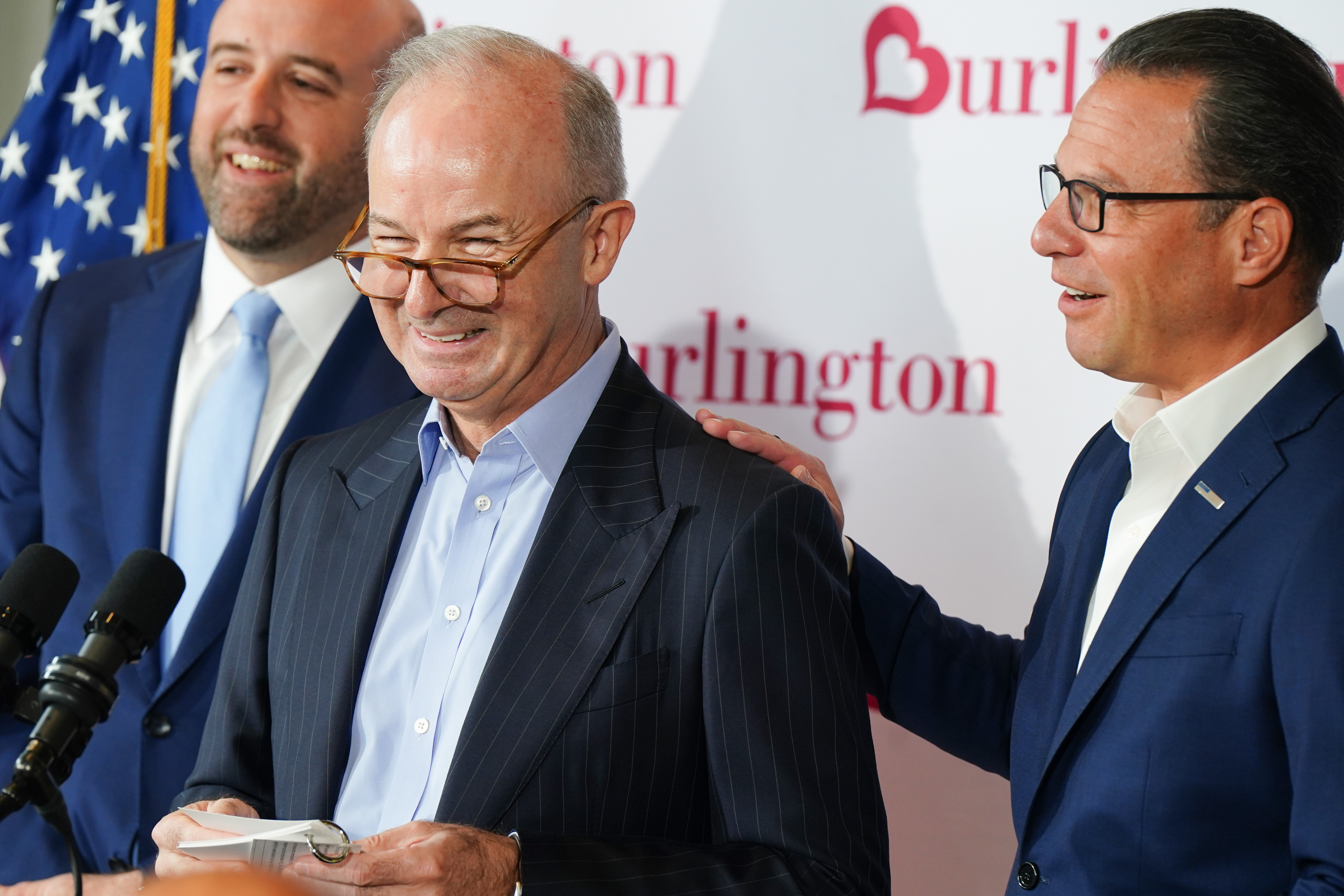
    Burlington CEO Michael O’Sullivan and Gov. Josh Shapiro at an event announcing the company’s headquarters move to Philadelphia. Burlington says it will relocate 1,500 existing jobs and create 500 new ones at the new headquarters. Jessica Griffin / Staff Photographer

    More broadly, critics say the state’s incentive programs allow politicians to pick winners and losers in the marketplace. They also note that some of the programs are also financed through borrowing, such as Pennsylvania’s Redevelopment Assistance Capital Program — the source of a $20 million grant to Burlington.

    “So taxpayers are not only funding those handouts, but they’re also paying interest on those costs, which you know, in our opinion, is kind of the worst of both worlds,” said Elizabeth Stelle, vice president of policy at the Commonwealth Foundation, a right-leaning think tank in Harrisburg.

    Who gets the jobs?

    Given the amount of money states pump into economic development, there are bound to be some losing bets. And Pennsylvania has had its fair share.

    States have been bidding against one another for firms since at least the 1970s, according to academic research, and in that era the big corporate competition featured automaker Volkswagen.

    In 1976 the German company chose to build its first U.S. plant in Southwestern Pennsylvania — enticed by $100 million in state subsidies, or about $580 million in 2026 dollars. The plant shut down a decade later.

    A 2020 academic paper that reviewed subsidy deals from 2002 to 2012 found that firm-specific incentives were associated with increased average employment in the targeted industry but were not linked to broader economic growth.

    “We spend a ton of money on these things, and it’s not obvious they’re always tied to more investment and benefits for the place rather than hollowing out the tax base,” said Owen Zidar, a coauthor of that paper and a professor of economics and public affairs at Princeton University.

    Then there’s the question of which workers get the jobs created through subsidy deals.

    “We really need to think about talent attraction and talent retention alongside business attraction,” said Jennifer Kebea, president of Campus Philly, which works to keep Philadelphia college students in the area after graduation. “Are the young people graduating from our institutions poised to take these roles?”

    Shapiro’s team says it is focused on securing good jobs for local residents.

    “We base our incentives — and whether we incentivize a deal at all — on the wages and job quality associated with those roles,” Siger, the department secretary, said.

    Jobs created under the Shapiro administration pay more than new jobs announced under the previous administration, the state says.

    “That’s the exciting part of what this governor’s been able to do. His team has been able to zero in on really good companies that want to pay good wages,” said H. Patrick Clancy, CEO of Philadelphia Works, the city’s workforce development board.

    Down the road, Clancy wonders how many of the jobs created will be retained. In other words: “Long term, did it really all pan out?”

    Urban Outfitters cofounder Dick Hayne, and Gov. Josh Shapiro gathered in June at the company headquarters in the Navy Yard, to announce that the business is adding over 1,000 jobs in the region over the next seven years. Alejandro A. Alvarez / Staff Photographer

    A 2017 law requires Pennsylvania’s Independent Fiscal Office to review each tax credit program and state agency at least once every five years, and report its findings to the Performance-Based Budget Board. Board members include four lawmakers from both parties, as well as the governor-appointed budget secretary.

    But the board has been dormant since 2023 and its members have declined to say why, according to PennLive.

    The Shapiro administration is “awaiting consensus” among board members on how to move the review process forward, a spokesperson said, adding that the panel has not provided “clear direction” to agencies.

    In the meantime, the administration continues to evaluate government programs, including tax credits, through its Resource Evaluation and Mission Alignment Project (REMAP), the spokesperson said. That project has already informed changes to some tax credits.

    Stelle, of the Commonwealth Foundation, said: “Internal reviews are one thing, but the lack of a public review of outcomes is concerning. Pennsylvania taxpayers deserve to see the impact of tax credits and agency programs. Funding should be based on outcomes, not intentions.”

    The state says it has measures in place to ensure companies receiving incentives hold up their end of the deal.

    “We have a formula that we negotiate with the company to claw back part — or, in draconian cases, all — of an incentive based on nonperformance,” Siger said.

    Since the beginning of 2023, the administration says, it has clawed back over $3.8 million from 64 businesses that failed to create or retain the jobs they promised, or otherwise broke their commitment.

    “Our goal, of course, is not to do that,” Siger said. “Our goal is to create the jobs.”

    Staff writer Joe Yerardi contributed to this article.

  • Repairing a King of Prussia sinkhole has taken 2 years. It’s a 500-million-year-old problem.

    Repairing a King of Prussia sinkhole has taken 2 years. It’s a 500-million-year-old problem.

    Among those who can’t wait for PennDot to withdraw its arsenal of drilling equipment and to finish repairing a troublesome patch of a bustling stretch of Route 202 in King of Prussia, Musa Jaffa might top the list.

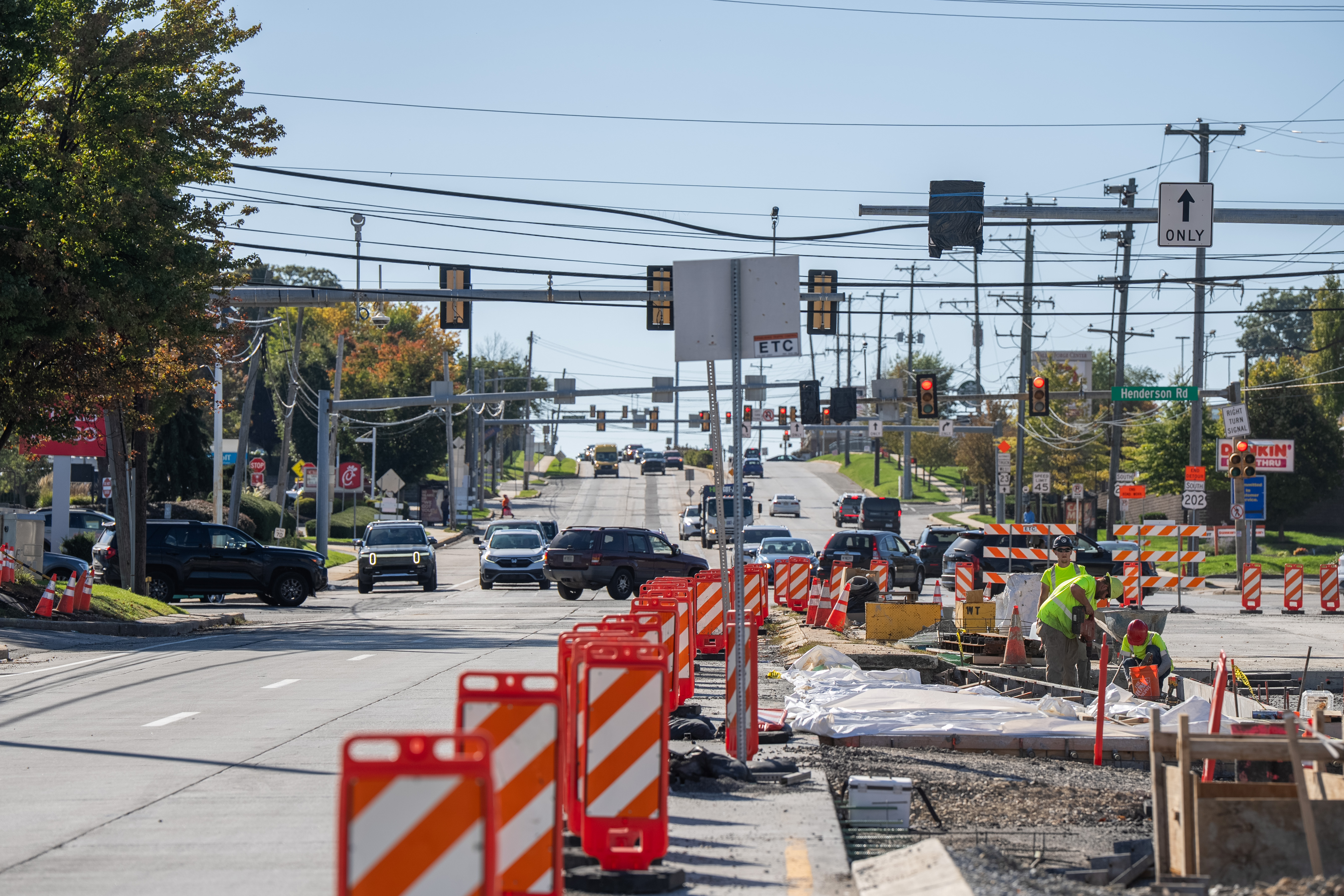
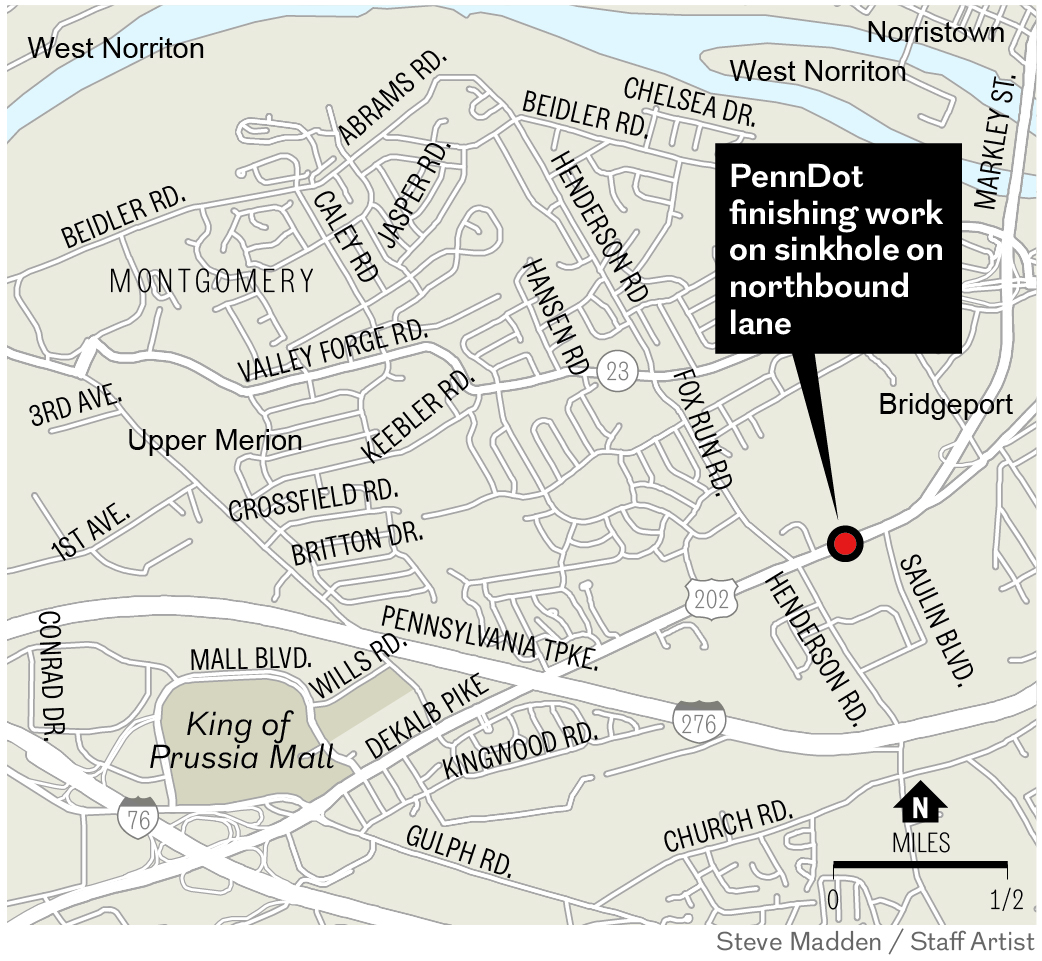
    Jaffa is manager of the Joe’s Kwik Marts and gas station fronting the southbound lanes of 202 between Henderson Road and Saulin Boulevard that have been closed while PennDot attempts to repair a sinkhole under a 120,000-square-foot surface.

    To say the least, he said, business is “slow.” He estimates daily revenues have plummeted from $16,000, to about $2,000. And the traffic complications of the two-year project have had immeasurable impacts on area businesses.

    “Everyone knows someone who is affected by it,” said Pattie Malone, director of Marian’s Attic, a nonprofit thrift store, on the other side of the highway.

    PennDot says the $22.4 million federally funded project, which involves burrowing down more than 100 feet to apply grout, should be finished by “late fall,” as in the astronomical fall. It might not be done until mid-December, an agency spokesperson said Wednesday. Route 202, or DeKalb Pike, is a critical access road for the King of Prussia Mall and scores of other businesses.

    Upper Merion Township is a commercial and commuting nexus that has experienced a remarkable economic prosperity, in large measure due to its King of Prussia core. Township population has jumped 25% since 2010. Since then the aggregate market value of real estate has more than doubled, to $8.6 billion, according to state tax data. That’s No. 2 among all the towns in Philadelphia’s neighboring Pennsylvania counties — up from No. 9 in 2010.

    Yet the township continues to fight an underground war against unpredictable sinkholes — a problem that geologists point out has been 500 million years in the making, give or take a few million.

    “It will never end,” Jaffa said.

    The Joe’s Kwik Marts on Route 202 is routinely empty on a day last week. That has been the standard since the southbound lanes have been closed.Jessica Griffin / Staff Photographer

    What is a ‘sinkhole’?

    Upper Merion happens to be in the heart of a narrow geological corridor of limestone bedrock, a “karst” formation, that extends from central Chester County across southern Montgomery County.

    (The limestone alleyway bypasses Philadelphia, whose numerous sinkholes have been the result of a variety of causes.)

    An ancient sea once covered the area now occupied by the likes of the mall and Joe’s Kwik Marts. About 500 million years ago, explained Geoff Hickman, Upper Merion’s public works director, shells and other sediment settled on the sea floor and over time mutated into the limestone and dolomite underlying the area today.

    Rain and groundwater can dissolve the limestone and create hollow pockets below the surface. That can cause the ground to collapse, creating sinkholes, a common experience in Upper Merion.

    The source of the underground water isn’t always clear, as is the case with the 202 sinkhole.

    King of Prussia is a king of sinkholes

    It’s hard to get there from here: The construction has presented challenges to those seeking access to the businesses along the closed Route 202 southbound lanes.Jessica Griffin / Staff Photographer

    About half the land in Upper Merion is situated in “high probability” zones for sinkholes, Hickman said, and the township has a lengthy history of incidents.

    In 1961, The Inquirer carried a report of “land cave-ins” in Lower and Upper Merion, “where large areas of residential property have dropped as much as 15 feet.”

    A decade later, PennDot altered the route of 202 after “a series of collapses,” Hickman said. A sinkhole as wide as 75 feet opened on 202 near Mall Boulevard in 2011.

    When the mall was undergoing an expansion, “the ground collapsed 35 times” between 2014 and 2016, he said.

    The most problematic sinkholes are those that occur in clusters, he said. “They show that the geology and drainage conditions in those areas continue to produce sinkholes.”

    The ones currently under repair, he said, “are among the most significant in township history.”

    What PennDot is doing on 202 in King of Prussia

    Map of PennDot sinkhole project in Upper MerionSteve Madden

    The repairs are a bit more complicated than a spackling operation.

    PennDot says crews are drilling hundreds of holes, some of them through solid rock and deeper than 100 feet, and injecting pressurized grout into the subsurface.

    The grout “stabilizes the ground mass beneath the roadway,” PennDot says, adding that it is a laborious and time-consuming process. It can take a minute to drill through a foot of rock.

    All this effort should “help stabilize the ground beneath the pavement,” the agency said, and that will be followed by the installation of drainage piping and reconstructing the surface.

    “We expect that this fix will be permanent,” the PennDot spokesperson said.

    The geological future of King of Prussia, and the Philly region

    Sinkholes will continue happening, but neither King of Prussia nor anyplace else around here is in danger of becoming subterranean, said Franklin Institute scientist Derrick Pitts, a geologist. Those involved in permitting are well aware of geological hazards.

    “The geology of this entire region has been extensively mapped in excruciating detail for maybe a century,“ Pitts said. “They know where the trouble spots are.”

    The resolution of the 202 trouble spot can’t come too soon for Jaffa and other merchants.

    The road is closed for only about 0.2 miles, but getting around it requires navigating a detour of nearly a mile through often-heavy traffic.

    Malone said the traffic nuisances have discouraged some people from dropping off donated items to her thrift store, operated as charity benefiting Laurel House, an anti-domestic violence advocacy group.

    Her assistant manager, Lisa Cristinzio, said the construction project has become a safety hazard for some people exiting the mall where their shop is located. Numerous crashes have occurred, she said.

    “It’s a mess,” she said.

    Assistant manager Lisa Cristinzio, at work at Marian’s Attic, a nonprofit thrift store on the northbound side of 202. Store manager Pattie Malone believes business would have been a lot better without the lane closures.Jessica Griffin / Staff Photographer

    Through it all, business have remained opened. On the closed southbound side of 202, makeshift lanes have provided access to the businesses that include a Japanese restaurant and an auto-service center.

    But Malone is convinced the construction and traffic signage have been a customer repellent for the entire area.

    “We’re doing all right,” Malone said. But, “I cannot even imagine what we would be doing if that road was open.”

  • House Minority Leader Hakeem Jeffries and Gov. Shapiro urge Bucks Democrats to get voters to the polls for Bob Harvie

    House Minority Leader Hakeem Jeffries and Gov. Shapiro urge Bucks Democrats to get voters to the polls for Bob Harvie

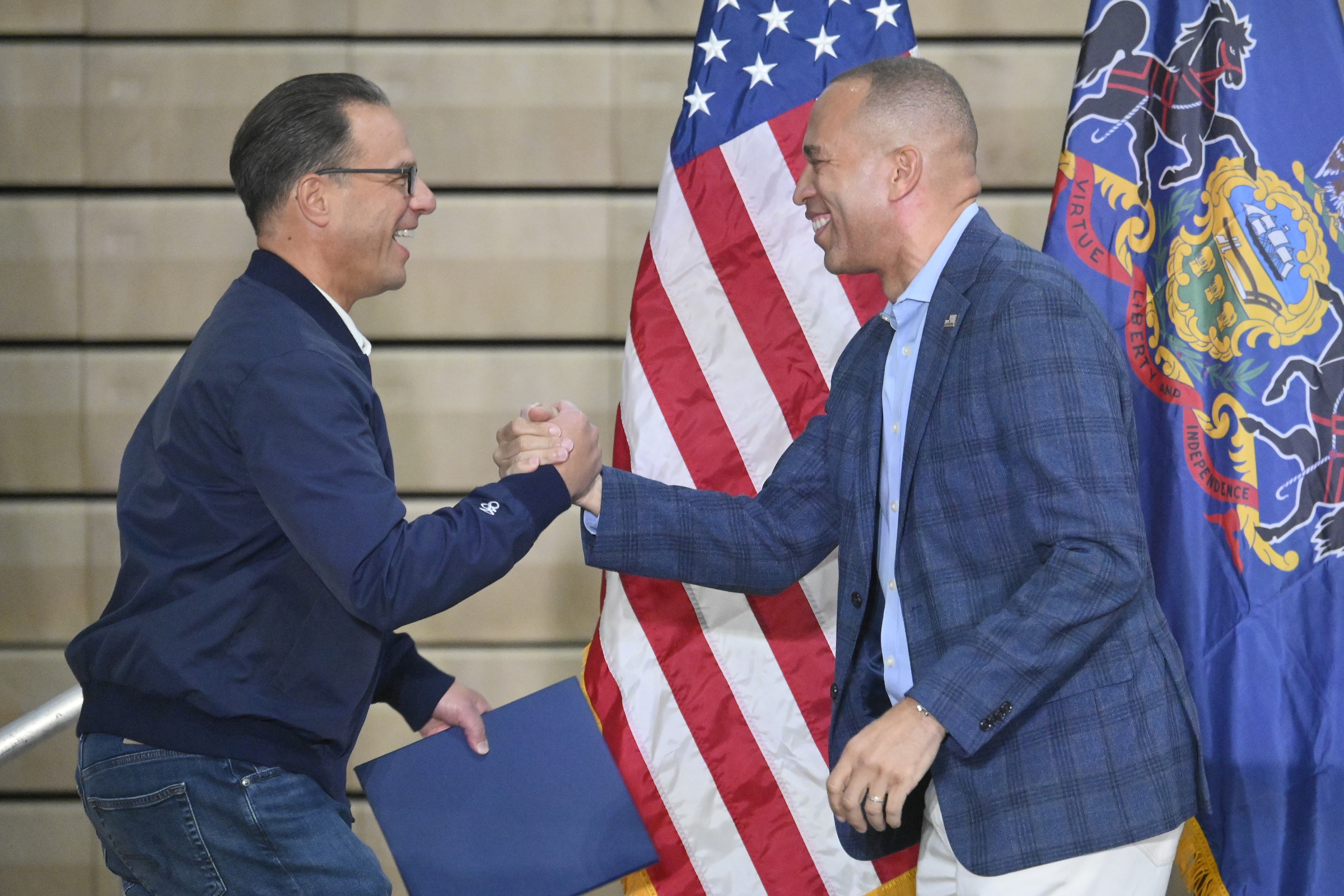
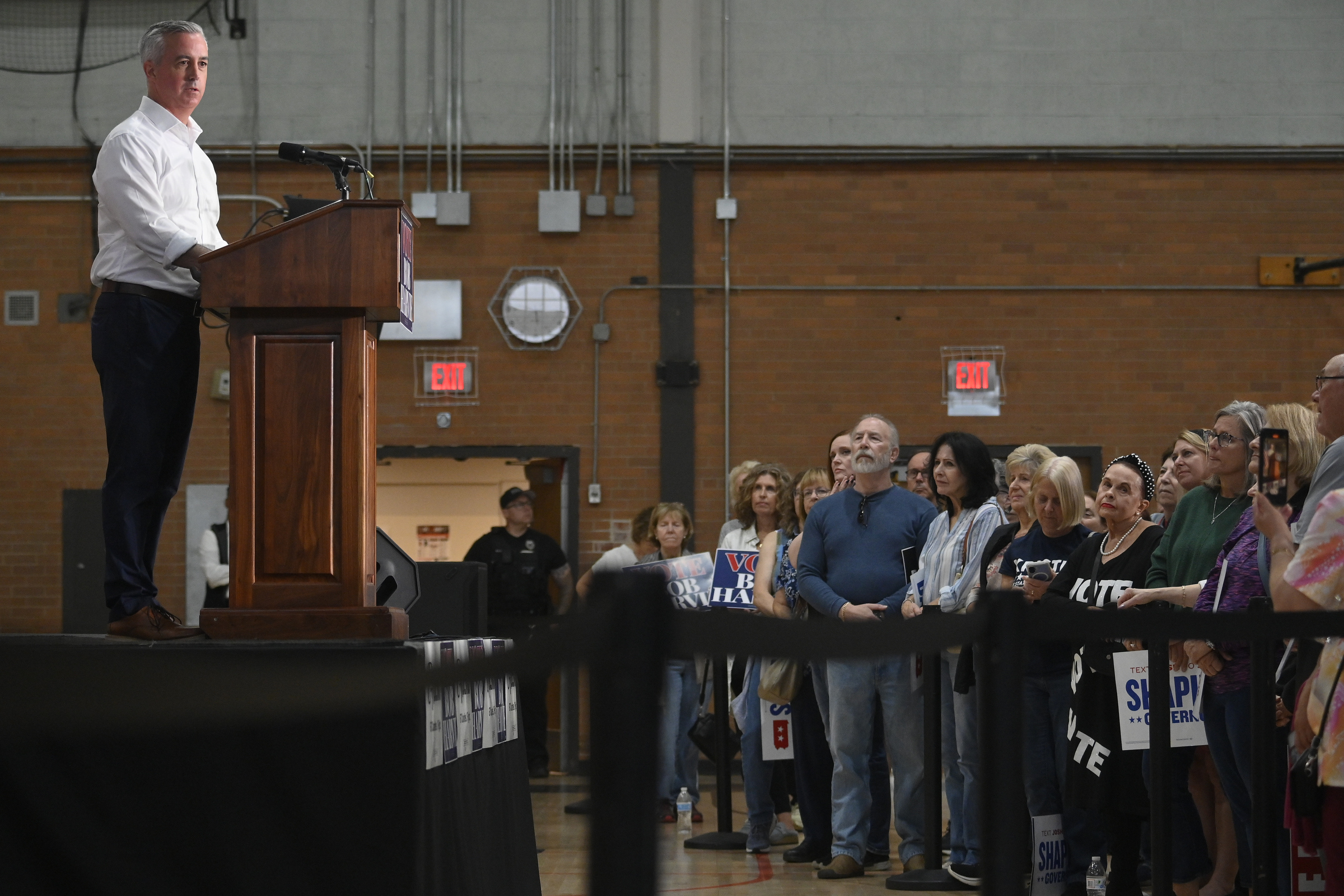
    The stakes were clear for Democrats at a Lower Makefield campaign rally Saturday, where Pennsylvania Gov. Josh Shapiro and U.S. House Minority Leader Hakeem Jeffries urged Bucks County party faithful to get voters to the polls for U.S. House candidate Bob Harvie.

    With Democrats leaning into positive polling momentum for House districts nationally, including seats once thought to be out of reach, the event inside Charles Boehm Middle School’s gym was part of a national plan to energize key swing-district voters. More than 150 people were urged on by Shapiro, Jeffries, and others.

    “We can pretty much win back the House in this state,” Jeffries said.

    Jeffries’ visit to Pennsylvania was a key stop on what he said will be a personal 15- to 20-state voter push this month. He is positioned to become speaker of the House of Representatives if the Democrats take control of the majority.

    “The commonwealth is a big swing state, and Bucks County is a big swing county,” he said.

    Shapiro said he knew some residents were at the rally because of “cruel” healthcare cuts they want overturned.

    “One of the reasons I’m here is because I know if Hakeem Jeffries is the speaker, they’ll fight to reverse those cuts and look out for our neighbors,” Shapiro said.

    Shapiro was making his second consecutive weekend trip to Bucks, following a broader countywide rally in Middletown Township last Saturday that also included a push for Harvie.

    Michelle Rumford, 57, a teacher from Levittown, came out with her mother, in part, to hear Harvie’s plans about costs. “Gas prices. Grocery prices. All prices have gone up,” she said.

    Harvie, 54, a current Bucks County commissioner, lifelong resident, and former high school social studies teacher, is running for the Bucks County-based 1st Congressional District seat. That seat is held by U.S. Rep. Brian Fitzpatrick, 52, a popular Republican who won the district in 2024 by nearly 13 points. Still, Fitzpatrick is an outlier as the sole Republican representative currently in Philadelphia’s suburbs.

    Democratic congressional candidate Bob Harvie speaks during a rally with House Democratic Leader Hakeem Jeffries and Pennsylvania Governor Josh Shapiro at Charles Boehm Middle School in Lower Makefield, Pa., on Saturday, Oct. 10, 2026.Bastiaan Slabbers/ For the Inquirer

    The race is one of at least four Pa. districts that Democrats are trying to seize from Republicans, who must defend their national House majority against a largely unpopular war with Iran, higher consumer prices, and rising interest rates.

    Harvie asked the crowd if their lives were better since Fitzpatrick got elected, “and when Donald Trump came down his gold escalator.“

    “It’s not a coincidence those two have been in office for the same time and had the impact that they’ve had on this country.”

    The Trump label is not as easy to pin on Fitzpatrick as other House Republicans. An Inquirer analysis found that since 2025, Fitzpatrick has at times shown a willingness to break from his party. While he voted with the Trump administration on 70% of bills, that was the lowest rate of any Republican member.

    Chris Gregory, 64, a Newtown resident, said he wants the Democrats to take back Congress to return to “functional normalcy.”

    ”Move things toward the center rather than extremism. Away from things like tearing down the White House,” he said.

    Politics wasn’t the only thing on rallygoers’ minds. There was a moment of silence for the two on-duty Philadelphia police officers who were shot, one fatally, and the nine victims left dead by a mass shooting in Erie, Pa.

    “Today’s been a dark day across this commonwealth,” Shapiro told the crowd before turning his speech toward the election task at hand.

    Though Fitzpatrick’s polling lead in the race has held up, the nonpartisan Cook Political Group on Friday changed its rating for this race to “lean” Republican, down from “likely” Republican.

    Pocketbook issues could play in the Democrats’ favor

    Bucks residents spend more time in their cars commuting to work than the state average and are well aware of higher gas prices. Before the United States’ attack on Iran, gas in the city and suburbs averaged $3.02 a gallon. That’s risen to $4.39 in Bucks, according to AAA Mid-Atlantic.

    Affordability was the theme of the afternoon, whether it was the prices of gasoline, diesel fuel, or ground beef.

    “We’re fighting for an affordable America,” Jeffries said.

  • 9 dead after shooting in Erie, Pa.

    9 dead after shooting in Erie, Pa.

    A shooting in a residential area of Erie, Pa., left nine people dead including two children, a pregnant woman, and the suspected shooter, authorities said.

    Erie Police Chief Rick Lorah said the 45-year-old male gunman was related to seven of the victims in Friday’s shooting, while the eighth was a friend of the pregnant woman.

    Video and audio evidence recovered by investigators showed two “distressed” women arriving at the home shortly before 5 p.m. and pounding on the door, he said. The gunman then came out and shot them before returning inside.

    Police arrived to find the two women dead outside. Inside they found the bodies of a 5-year-old boy, a 1-year-old girl, two more women, two young men, and the shooter.

    Lorah declined to discuss motive but said investigators would talk to other relatives and examine the cell phones of the women who were killed outside the home.

    “They knew something was going on at that house,” he said. “We have to figure out what that is.”

    Officers are said to have arrived within minutes of receiving an alert via ShotSpotter, a controversial gunshot detection system that relies on artificial intelligence and a network of microphones to identify gunshots. The city said in a statement that no additional shots were fired after that.

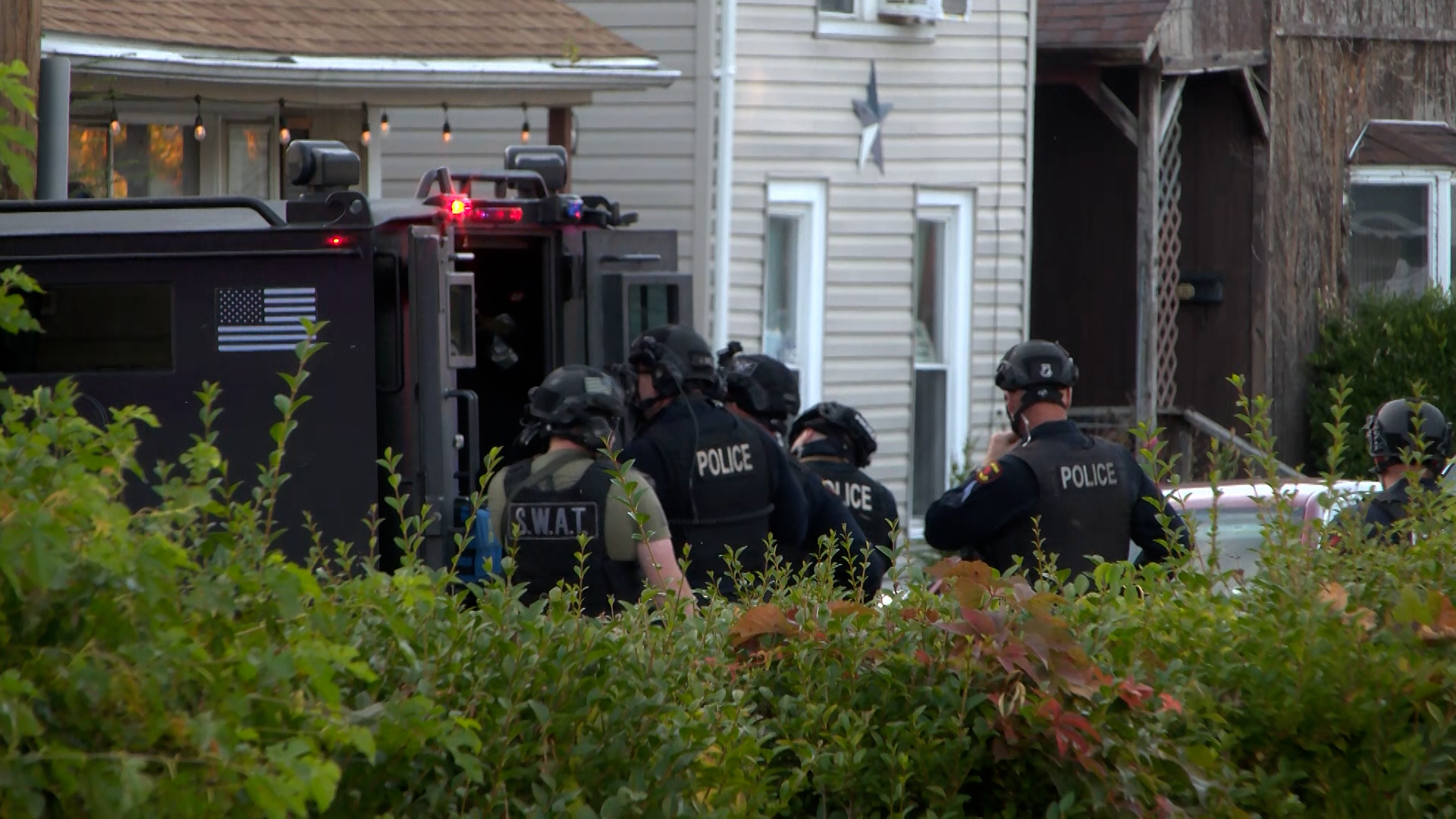
    “Sounds heard during the police response that may have been mistaken for gunfire were flash bangs associated with law enforcement’s tactical response,” the city said.

    “I have not seen anything like this in my 28-plus years,” Lorah told a local news station earlier in the day. “I’m not sure that the city of Erie has ever seen the loss of life and the devastation that we just witnessed.”

    Gov. Josh Shapiro said he offered his administration’s “full support” to Erie Mayor Daria Devlin.

    Erie is about 120 miles north of Pittsburgh.

  • A gang of ‘pedophile hunters’ extorted their targets to buy guns, fund vacations, and rent luxury cars, Montco DA says

    Caught up in the wave of vigilante “pedophile hunters,” a Philadelphia-based group lured online targets to parking lots in the city, then attacked and blackmailed them for money, investigators said Friday.

    But the group took it a step further: They leveraged the stolen money into a sprawling criminal enterprise, using it to buy guns, fund vacations in Miami and Mexico, and rent luxury cars and yachts, court documents allege.

    They named themselves “Always Running Plays,” street slang for robbing people, and ordered custom jewelry and inked tattoos on their skin with the group’s logo, authorities said.

    The gang’s six members operated their kidnapping and blackmail ring “to finance a lifestyle that cannot be supported through legitimately obtained and documented income,” investigators in Montgomery County said.

    And there was no evidence that the group’s targets had assaulted or harmed children, despite their claims, according to court records.

    ARP’s alleged ringleader, Daquine Owens, and most of his collaborators are now in custody, authorities said, charged with racketeering, robbery, kidnapping, gun violations, and related crimes.

    Owens, 29; his wife, Ajahnae, 31; and his mother, Najwa Owens, 46, face charges alongside Aysir Bond, 23, and Gregory Johnson, 25, all of Philadelphia, as well as Keith Cirwithen-Howell, 29, of Dover, Del., Montgomery County District Attorney Kevin Steele said.

    All remained in custody, unable to post bail, except for Najwa Owens, who was freed after posting $2,500, and Bond, for whom investigators have issued an arrest warrant.

    Najwa Owens’ attorney, Robert Gamburg, did not respond to a request for comment. It was unclear if the five other suspects had hired attorneys to represent them.

    Investigators say ARP came under investigation in June, when Daquine Owens, Bond, and Cirwithen-Howell posed as police officers to kidnap and extort a man outside a LongHorn Steakhouse in Lower Merion.

    The group had been messaging the man while posing as a 17-year-old girl, and arranged to meet him for a date at the steakhouse, according to the affidavit of probable cause for their arrests.

    At the restaurant, they approached the man while carrying guns and wearing tactical vests and identified themselves as members of the “8th Precinct Special Task Force,” the document said. They told the man they knew he was a pedophile, said he was under arrest, placed him in handcuffs, and forced him into their vehicle, according to the affidavit.

    The group drove the man around, then stopped at the Belmont Plateau, where his abductors offered to free him and keep quiet about his alleged crimes in exchange for money, the document said.

    The man agreed and withdrew money from a Wawa ATM at their direction, and made several bank transfers to accounts owned by Najwa Owens and another alleged ARP member, the affidavit said.

    All told, they stole more than $50,000 from the man, authorities said.

    Daquine Owens, after his arrest, told investigators it was the victim’s idea to pay them to keep them quiet about his alleged pedophilia, the affidavit said.

    But investigators said an analysis of social media accounts and cell phones belonging to the ARP members found they had followed this pattern of extortion with at least two other victims since 2021.

    In one case, they said, the group extorted an alleged pedophile for years, stealing more than $100,000 from him that bankrolled their vacations and other lavish expenses.

    Using the stolen money, the group directed Ajahnae Owens to purchase multiple guns for them since she had no criminal record.

    Her husband, who could not legally possess guns because of felony convictions for drug offenses and robbery, often posed with the guns on social media, including one firearm that police say she falsely reported stolen while renting an Airbnb in Florida.

  • Chester County high school closed Friday due to confirmed measles case

    Chester County high school closed Friday due to confirmed measles case

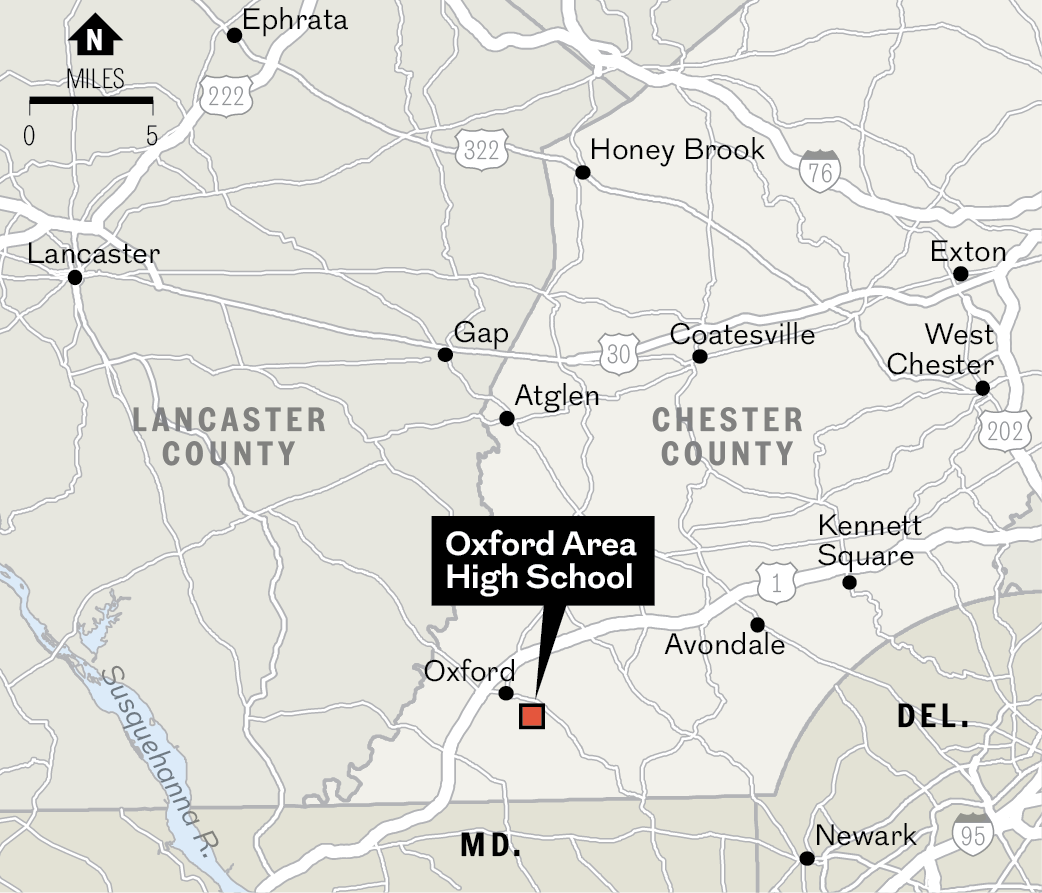
    In the latest sign of the concern over a Pennsylvania measles outbreak that is now the nation’s largest, Oxford Area High School was closed on Friday due to a confirmed measles case.

    Districts in other outbreak areas have not been closing schools as the state grapples with its worst measles outbreak in three decades, but school officials in the Chester County community west of Philadelphia made the decision after consulting with county health officials to limit the risk from the highly contagious disease.

    In a letter to the school community, Oxford Area School District Superintendent David Woods said that all students and staff who are unvaccinated, or do not have proof of their vaccination status, will be required to quarantine at home for 21 days. The school’s quarantine decision follows Pennsylvania Department of Health guidelines.

    Schools are required by state law to track and report data for all required vaccines — including the measles, mumps and rubella (MMR) vaccine — for students but not for staff.

    Chester County’s health department directed the school to verify the vaccination status of its employees, Woods said in the letter. The district made the decision to close the school Oct. 9 to complete the verification process, a county spokesperson said.

    School and county officials have not said whether the positive case involved a student, staff member, or someone else in the school community. “We recognize that situations such as this can be unsettling, especially when they involve the health of children,” Woods said in his letter.

    High school and district officials did not respond to a request for comment.

    The superintendent’s note did not say whether the school will reopen Monday or whether homecoming festivities planned for this weekend would be canceled.

    But the school district did decide that a football game, with Oxford playing at Kennett High School in Kennett Square, could go on “after taking the appropriate health and safety precautions,” officials said in a social media post.

    Pennsylvania Department of Health “generally does not recommend school closure for outbreaks of infectious diseases” as an initial response, according to published school guidance. Exposed students and staff who are unvaccinated or cannot verify their vaccination status will be instructed to stay home for 21 days, according to a health department spokesperson.

    The decision to close is ultimately made by school administrators, according to the Department of Health, which urges schools to consult with in-house medical staff and county or state health authorities.

    Chester County Health Director Jeanne Franklin applauded the district’s quick response, noting the move could prevent longer closures from widespread sickness.

    “We don’t want it to get to the point of they have to shut down because they don’t have the staff to run the school, or too many students are infected and can’t come to school,” she said.

    The county learned of the case from a health provider who treated the individual, and then contacted the school district.

    Vaccine records for students were readily available, but the school was still in the process of gathering vaccine information about staff — a step the county had urged schools to take in anticipation of the region’s outbreak reaching Chester County schools.

    The district ultimately decided it did not know the vaccination status of enough of the school’s employees to safely open the school on Friday.

    “The moment we called, they were on it,” Franklin said, adding that she “fully respected” the decision to close. As the first school in Chester County with a confirmed measles case, ”they’re going to have an abundance of caution and make sure they get it right,” she said.

    Chester County has the third-most measles cases in Pennsylvania, despite an overall measles vaccination rate just below the 95% protection scientists say is necessary to prevent the virus from spreading.

    Pennsylvania’s measles outbreak, largest in the nation this year, has sickened more than 1,100 people across more than half of the state’s counties. The state has confirmed five measles-associated deaths, the most seen in the nation in more than three decades.

    The state’s outbreak, which began in April, is centered in Lancaster County, right outside the Philadelphia region.

    Chester County is the only county in the Philadelphia region in which the virus is known to be actively circulating. The county has reported 87 cases this year, as of Friday, mostly along Chester County’s western border with Lancaster County.

    Oxford is located in the southwestern corner of Chester County.

    Another school in nearby West Grove, Technical College High School (TCHS) Pennock’s Bridge Campus, operated virtually on Friday, after the Chester County health officials notified its administrators of possible measles exposures between Sept. 30 and Oct. 2.

    A spokesperson for the campus overseen by the Chester County Intermediate Unit said the decision was made “because the staff verification process could not be completed within the time frame required by the Health Department.”

    Programs housed within its building, including the Practical Nursing Program and Early Discovery Center, were closed for the day.

    Additionally, the county on Friday warned of possible measles exposures at multiple pharmacies Oct. 4:

    • CVS located at 870 Baltimore Pike in Kennett between 10:45 a.m. and 3 p.m.
    • CVS located at 857 West Baltimore Pike in West Grove between 12:30 and 3:30 p.m.
    • Giant located at 849 Baltimore Pike in West Grove between 1 and 3:45 p.m.

    (function(){function e(){window.addEventListener(`message`,function(e){if(e.data[`datawrapper-height`]!==void 0){var t=document.querySelectorAll(`iframe`);for(var n in e.data[`datawrapper-height`])for(var r=0,i;i=t[r];r++)if(i.contentWindow===e.source){var a=e.data[`datawrapper-height`][n]+`px`;i.style.height=a}}})}e()})();

    Joe Maida, who is raising his 5-year-old granddaughter with his wife in East Nottingham, was surprised to hear the high school was shutting down for the day.

    Maida, 65, felt there was a lack of information from the district to explain its decision — such as who in the school population was infected, if officials were disinfecting, if there was an adequate “plan of attack” to reopen Monday.

    He was also surprised the high school’s varsity football team would be able to play a game Friday night.

    “I’m a bit taken aback” by the response, he said.

    But his granddaughter is vaccinated, and her elementary school was unaffected. “I’m not giving it a lot of energy,” he said. “It’s the measles. It’s not the plague,” he said.

    (function(){function e(){window.addEventListener(`message`,function(e){if(e.data[`datawrapper-height`]!==void 0){var t=document.querySelectorAll(`iframe`);for(var n in e.data[`datawrapper-height`])for(var r=0,i;i=t[r];r++)if(i.contentWindow===e.source){var a=e.data[`datawrapper-height`][n]+`px`;i.style.height=a}}})}e()})();

    School vaccination

    Chester County reported its first measles case of the outbreak at the end of June. As part of its early preparations, the county health department alerted schools before the beginning of the new school year that they would need to know the vaccine status of all staff and volunteers in the event of a positive case.

    While Chester County has an overall kindergarten measles vaccination rate just below the 95% herd immunity rate, Oxford Area High School students appear well protected.

    The school reported that all of its 303 12th graders had received the MMR vaccine in the 2025-2026 school year, the most recent year for which data is available.

    The district’s middle school, Penn’s Grove School, reported a 96.3% MMR vaccine rate among 7th graders last year.

    To better understand how school districts have been preparing for possible measles cases, The Inquirer contacted 12 Chester County districts last month, asking how they were planning and communicating with students and staff about the prospect of quarantines.

    The Oxford district, which has more than 3,000 students, did not respond, along with a number of other Chester County districts.

    Pennsylvania State Education Association, the statewide teachers’ union, declined to comment on the school closure.

    Oxford Area Education Association, which represents teachers at the high school, couldn’t immediately be reached for comment.

    School response to measles

    Measles, long considered eradicated in the United States, is resurging amid declining vaccination rates.

    In the Philadelphia region, at least 40% of kindergartens were vulnerable to an outbreak as of last school year, up from 33% the prior year, according to an Inquirer analysis of school immunization data widely used to assess community protection levels.

    Schools are required to report vaccine information for students in kindergarten, 7th grade, and 12th grade. Earlier this year, Pennsylvania’s Department of Health began making this information publicly available through a searchable database, in an effort to raise awareness of declining vaccine rates in schools.

    Health officials in neighboring Delaware and Montgomery Counties said they have similarly been advising school districts about rules for unvaccinated students and staff in the event of a positive measles case.

    Montgomery County has urged schools to review immunization records and confirm proof of immunity, and develop plans to “rapidly identify students and staff who may be at risk,” said Christina Miller, administrator of the county’s Office of Public Health.

    Delaware County’s health department said that it would offer guidance to a school with a positive measles case on how to verify immune status for students, employees, and volunteers, as well as how to identify high- or low-risk exposures at the school.

    If a case is identified in a Philadelphia school, the city’s health department said it would work with the school’s administration to determine when the person was infectious and how to protect exposed students and staff.

    Counties without a local health department rely on Pennsylvania’s Department of Health.

    Neil Ruhland, a spokesperson for the state health department, said school nurses or school leaders should contact the health department immediately if a measles exposure occurs at a school.

    Schools should review attendance records, assess where the exposure occurred, and determine the vaccination status of exposed people.

    If the department confirms a measles case and exposure at a school, it will notify families and provide guidance on what to do if they’re not vaccinated, Ruhland said. Exposed students who are vaccinated are considered immune and don’t need to do anything else.

    An exposed person who isn’t fully vaccinated will be told to quarantine at home for 21 days, whether or not they show symptoms, Ruhland said. But, if that person gets an MMR dose within 72 hours of the exposure, quarantine will be lifted, he added.

    Verifying vaccine status

    Tracking down childhood vaccine records as an adult can be challenging — many adults may have been vaccinated before medical records were widely stored online, and their long-ago pediatricians may no longer be practicing.

    People who were vaccinated in Pennsylvania after the year 2000 can search for their records in the online Pennsylvania Immunization Electronic Registry System (PIERS).

    People born before 1957 are considered immune because most children contracted the virus before the vaccine was introduced.

    Titer blood tests can check for antibodies that indicate immunity against measles, either from the vaccine or a past infection. People with low antibodies — and therefore low protection — can get a booster.

    Perhaps the fastest way to ensure you’re protected as an adult, Franklin said, is to get the MMR vaccine. The vaccine is safe to get even if you have already received it, she said.

    Inquirer staff writers Aubrey Whelan, Brooke Schultz, and Maddie Hanna contributed reporting.

  • Former President Barack Obama endorses Gov. Josh Shapiro for reelection

    Former President Barack Obama endorses Gov. Josh Shapiro for reelection

    Former President Barack Obama endorsed Gov. Josh Shapiro for reelection on Friday, commending the incumbent Democratic Pennsylvania governor for standing up to President Donald Trump and GOP leaders during his first term.

    The nod from the popular former Democratic president is the latest development in a string of campaign wins for Shapiro this week, including a new statewide poll of likely Pennsylvania voters that found he had a 25-point lead over his GOP challenger, state Treasurer Stacy Garrity.

    “Today, it’s more important than ever we elect leaders with the decency and integrity and willingness to fight back,” Obama said in the 45-second video posted to YouTube by Shapiro’s campaign. “We need leaders like Josh Shapiro.”

    Shapiro, in his capacity as governor, has sued the Trump administration frequently, including over federal funding freezes, mail-in voting restrictions, and other policies. Recently, Shapiro has publicly clashed with Trump’s Health and Human Services Secretary Robert F. Kennedy over measles-associated deaths in the state.

    Shapiro has been an outspoken supporter of Obama for nearly two decades, dating back to his first presidential run in 2008.

    In his memoir released earlier this year, Shapiro recalled being enthralled by the young U.S. senator from Illinois the first time he saw him speak in 2006 at the Keswick Theatre in Glenside at an event hosted by former Gov. Ed Rendell.

    “I don’t know if you’re going to run for president, but if you do, I am all in,” Shapiro recalled telling Obama afterward. “I want to be the first.”

    Once Obama announced his candidacy, Pennsylvania’s top Democrats largely backed Hillary Clinton. Shapiro — then a state representative — formally supported Obama alongside dozens of other Jewish leaders, asking the state’s Jewish community to support Obama because of his commitment to Israel, according to a New York Times report from the time.

    “I was really struck by Obama,” Shapiro wrote in his book, Where We Keep the Light, released in January. “I thought he was kind of a once-in-a-lifetime political figure and that I could learn something from him.”

    The two have maintained a relationship since then. The New York Times reported in 2024 that Shapiro seeks advice from Obama and that the two spend time together in person.

    In his endorsement Friday, Obama noted their long history, calling Shapiro “a friend” and “one of my earliest supporters.”

    During Shapiro’s first run for governor in 2022, Obama and then-President Joe Biden visited Temple University’s Liacouras Center in North Philadelphia for a major campaign rally for Shapiro and U.S. Sen. John Fetterman. Both Democrats went on to win.

    President Joe Biden arrives to speak at a campaign rally for Pennsylvania’s Democratic gubernatorial candidate Josh Shapiro, left, Democratic Senate candidate Lt. Gov. John Fetterman, right, and former President Barack Obama, Saturday, Nov. 5, 2022, in Philadelphia. (AP Photo/Patrick Semansky)Patrick Semansky / AP

    Obama’s most recent boost for Shapiro comes as the former president this week made endorsements in more competitive gubernatorial contests across the country, including for former Atlanta Mayor Keisha Lance Bottoms in Georgia and Milwaukee County Executive David Crowley in Wisconsin. Both of those races are open seats rated by the nonpartisan Cook Political Report as tossups, while Pennsylvania’s gubernatorial election is the only swing state ranked as “Solid Democrat.”

    Shapiro — who is widely rumored to be considering a run for president in 2028 — has been compared to Obama, particularly for his manner of speech. (As a story in The Atlantic this month noted, the two also have similar penchants for basketball and both owned dogs named Bo.)

    The comparison of their speaking styles surfaced in 2024, when Shapiro was being vetted to be then-Vice President Kamala Harris’ potential running mate and then-Republican candidate JD Vance told a podcaster that Shapiro sounds like “a really bad impression of Barack Obama.” Shapiro told reporters at the time that Obama “was probably our most gifted orator of my time, so it’s kind of a weird insult.”

    In his endorsement Friday, Obama also credited Shapiro for having “gotten stuff done for the people of Pennsylvania,” including free breakfast for public schoolchildren and protecting Pennsylvanians’ freedoms.

    “Pennsylvania, Gov. Shapiro has your back, and in this election, I’m asking you to have his,” he added.

  • 3 juveniles charged with ethnic intimidation for racist and antisemitic graffiti at Abington playground

    3 juveniles charged with ethnic intimidation for racist and antisemitic graffiti at Abington playground

    Police announced Thursday that three juveniles have been charged with ethnic intimidation for allegedly spray-painting antisemitic and racist graffiti at a Montgomery County playground.

    Last Saturday, Abington Township police received a report of vandalism throughout Weldon playground — also known as the “Cheese” playground for a sculpture that looks like Swiss cheese — at 2239 Parkdale Ave. in the Glenside section of Abington.

    “Officers discovered that suspects had spray-painted antisemitic and anti-Black remarks throughout the playground. The nature of the graffiti was particularly disturbing, as it targeted members of our community based on their race and religion,” the police department said on social media.

    The investigation led to three juvenile suspects who were identified and charged with ethnic intimidation and criminal mischief, the police said.

    No other details were released about the juveniles.

    “The Abington Township Police Department takes incidents involving hate and bias seriously,” the department said in a Facebook post. “Acts of vandalism are unacceptable under any circumstances, and hateful messages targeting individuals or groups have no place in our community. Our department remains committed to protecting the safety and dignity of every person in Abington Township.”

    In a Facebook post on Saturday, Abington School Board president Melissa Mowry called the act “craven, cowardly, and despicable.”

    According to Mowry, the school district owns the playground and partners with civic groups to maintain it as “a public resource where everyone is welcome to smile and laugh together.”

    “There is ‘No place for Hate’ of any kind in this community, but especially where all children are invited to play,” she wrote.

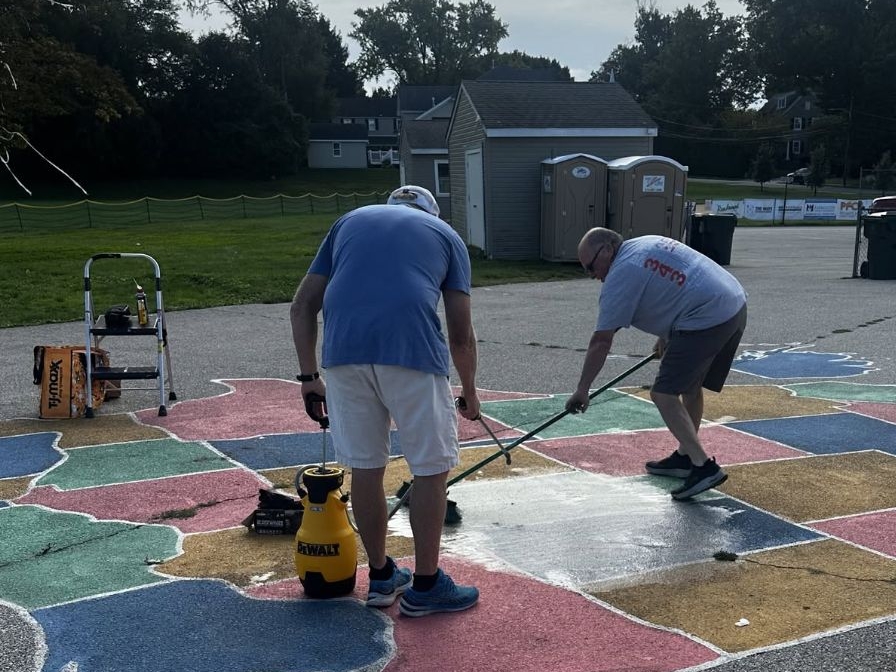
    Volunteers joined township and school district staff on Saturday morning to remove the graffiti.

    <iframe src="https://www.facebook.com/plugins/post.php?href=https%3A%2F%2Fwww.facebook.com%2FAbingtonTownshipPD%2Fposts%2Fpfbid0MV5DKtKWJX6VgcAZef1QJAN17MUfe3SYrt5jNJQkuNBwm7yQyZqCpQNJdzy7AmRpl&show_text=true&width=500" width="500" height="653" style="border:none;overflow:hidden" scrolling="no" frameborder="0" allowfullscreen="true" allow="autoplay; clipboard-write; encrypted-media; picture-in-picture; web-share"></iframe>
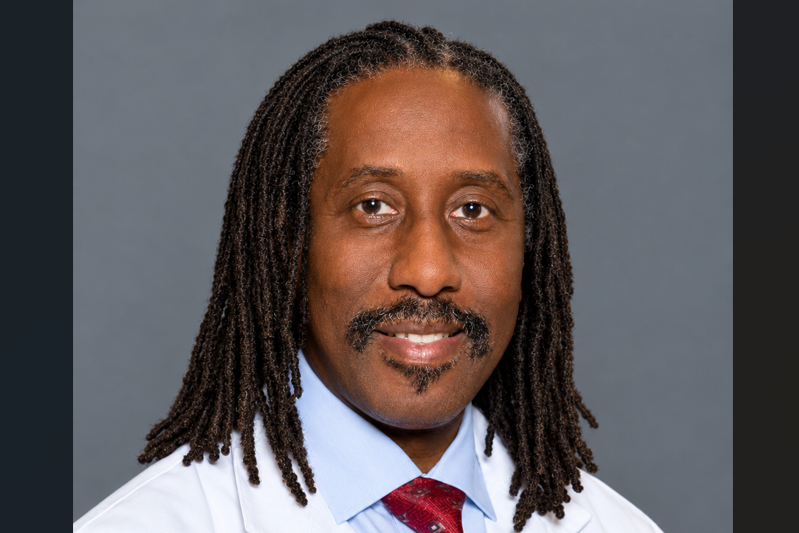
  • Bruce Mabine, retired OB-GYN physician and award-winning associate professor at Temple, has died at 76

    Bruce Mabine, retired OB-GYN physician and award-winning associate professor at Temple, has died at 76

    Bruce Mabine knew he wanted to be a doctor after he was mesmerized by an X-ray of his own hand when he was 10. So he graduated from what is now the Temple University Lewis Katz School of Medicine in 1977.

    He knew he wanted to support expectant mothers, babies, and families. So he specialized in obstetrics and gynecology, and delivered thousands of babies over his 43-year medical career.

    He knew he wanted to lift up and educate students. So he taught thousands of aspiring doctors in labs and classrooms, and mentored other health professionals for more than two decades as an associate professor at Temple.

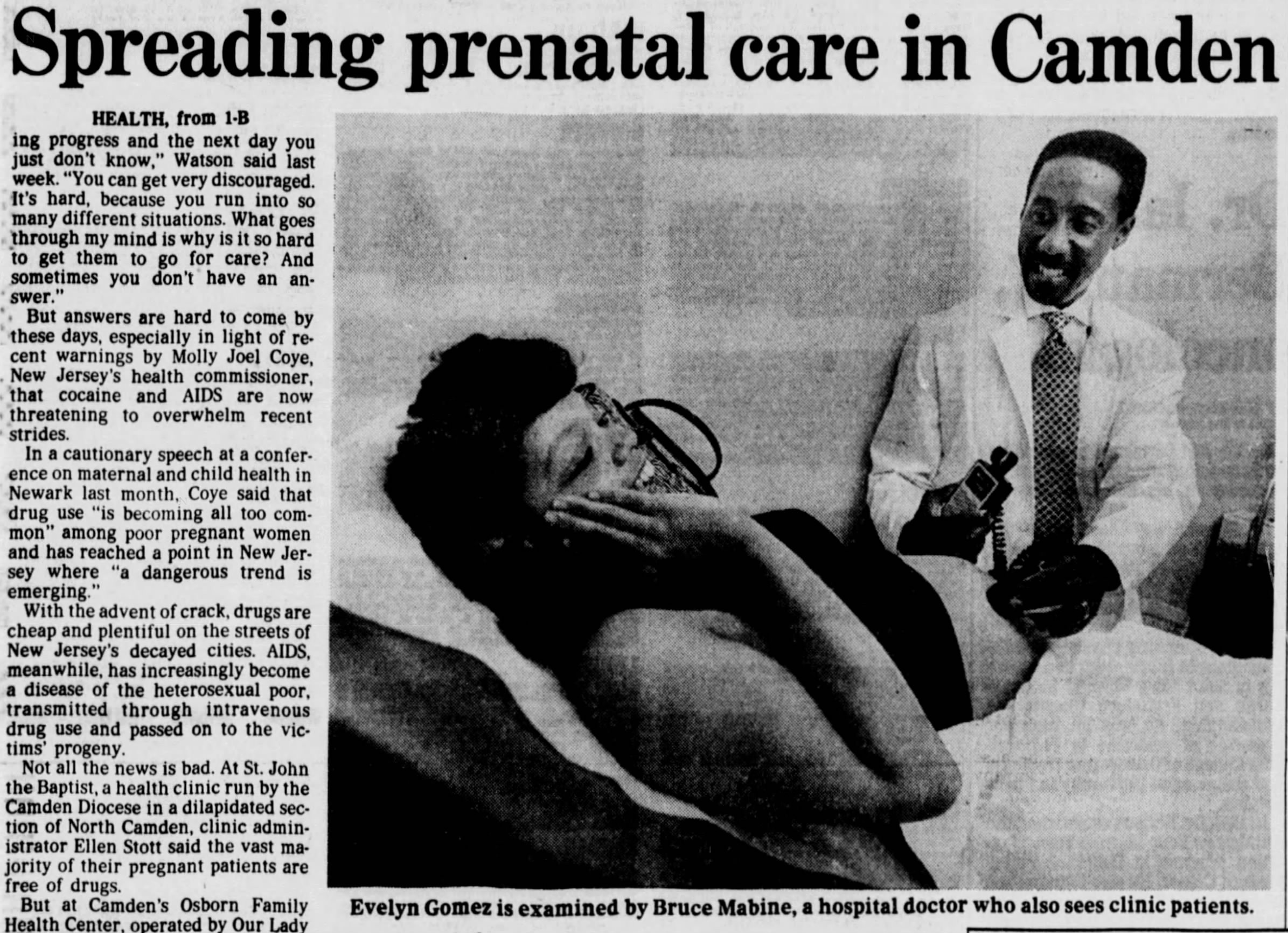
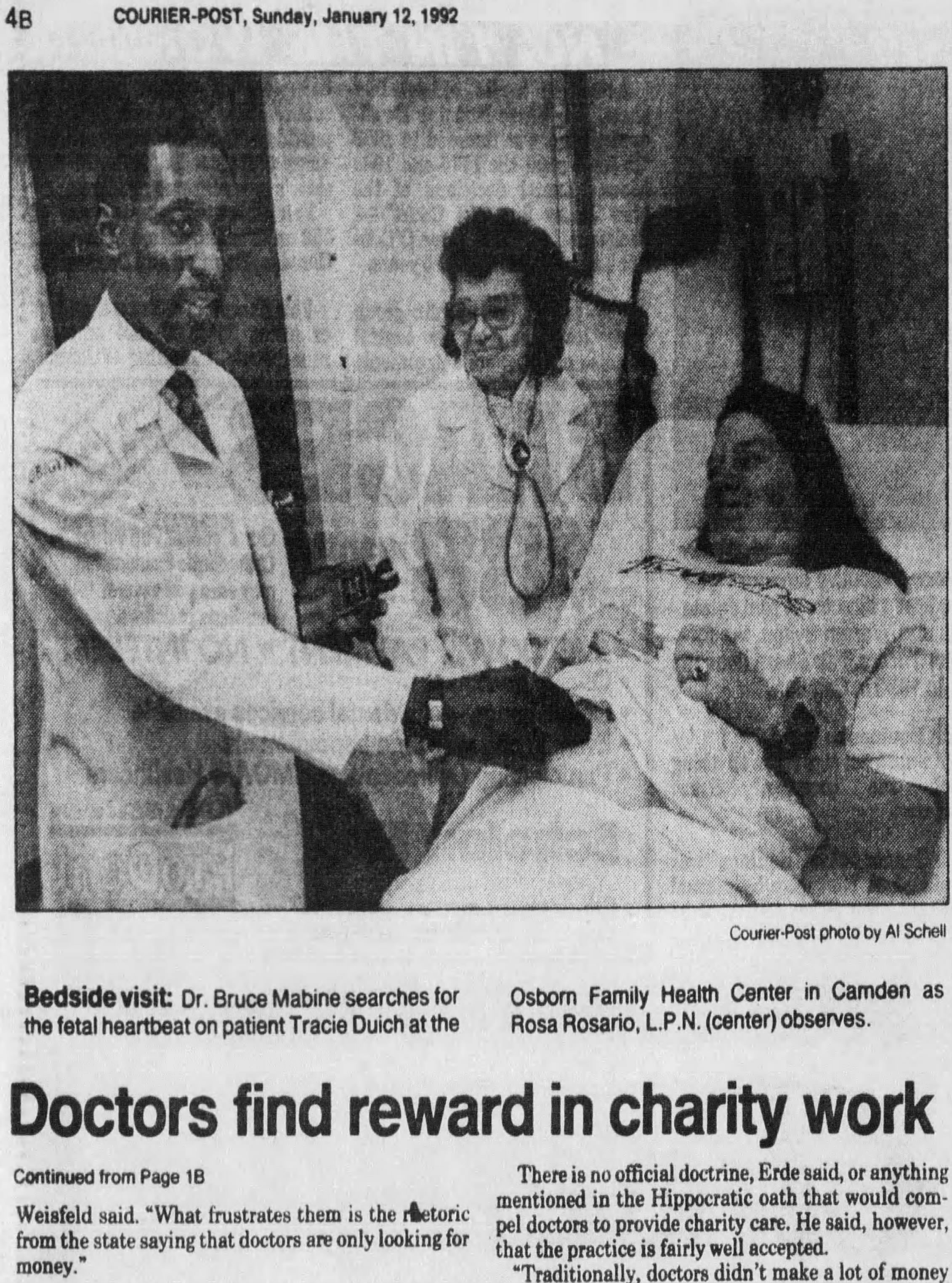
    He also volunteered at clinics, looked after individuals in need wherever they were, and worked at grueling jobs that paid more in satisfaction than money. “Money is not the only issue in life,” he told the Courier-Post of Camden in 1992. “This is a good way to strike a balance. It’s gratifying to help someone who really needs it.”

    On Monday, Oct. 5, Dr. Mabine died of cancer at his home in Philadelphia. He was 76.

    This photo and story about Dr. Mabine was published in The Inquirer in 1989.Newspapers,com

    “He cared deeply about his patients, colleagues, learners, and health equity,” said his wife, Lynda Thomas-Mabine, also a physician. “He was the kind of person whose presence left an impression long after he had left the room.”

    Born in Philadelphia, Dr. Mabine was an associate professor and director of community services for Temple’s Department of Obstetrics, Gynecology, and Reproductive Sciences from 2000 until his retirement in 2024. He worked at Temple, Episcopal, and Jeanes Hospitals, directed the physician assistants clinical rotation, and earned an excellence in teaching award in 2015 from the Association of Professors of Gynecology and Obstetrics.

    Earlier, beginning in 1981, he worked for 19 years at Our Lady of Lourdes Medical Center in Camden and was chief of the Department of Obstetrics and Gynecology at the center’s Osborn Family Health Center. He spoke Spanish and French as well as English, and went out of his way to treat expectant mothers dealing with malnutrition, drug and alcohol abuse, and other issues.

    “Bruce was a wonderful person and a great doctor,” a former colleague at Osborn said in an online tribute. Another called him a “happy, kind, and caring man.”

    This photo and story about Dr. Mabine appeared in the Courier-Post in 1992.Newspapers.com

    His concern for others was featured in The Inquirer and the Courier-Post, and he answered readers’ questions in a Courier-Post column called “The Doctor is In.” He earned a bachelor’s degree in biology at Hampton University in Virginia in 1973 and routinely recruited Hampton graduates to the Temple medical school.

    He and others also fundraised nearly $1 million to support scholarships at Hampton. One of his favorite sayings was “Do the right thing even when no one is watching, especially when no one is watching.”

    His wife said: “Bruce’s life was defined by purpose, intellect, service, and an unwavering commitment to others.”

    Bruce Junious Mabine was born Aug. 29, 1950. He grew up near the Navy Yard in South Philadelphia and was on his high school gymnastics and chess teams.

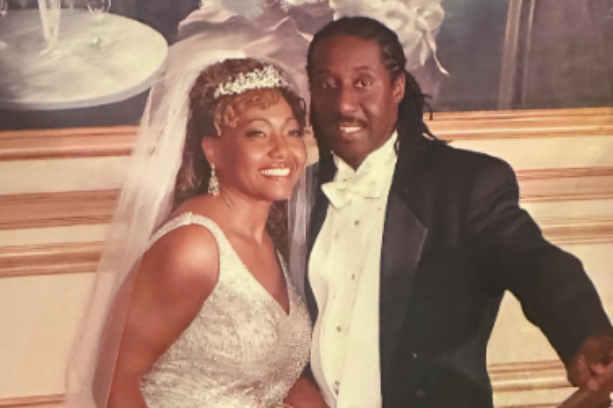
    Dr. Mabine and his wife, Lynda, married in 2006.Courtesy of the family

    His wife said he called himself a “major nerd.” She praised his “dry sense of humor” and “brilliant mind.”

    He graduated from West Philadelphia High School in 1967, became an officer for the Gamma Epsilon Theta fraternity at Hampton, and edited the minority students newsletter at Temple medical school.

    He married Gwendolyn Watts, and they had a son, Kenneth. After a divorce, he married Joanne Smith, and they had a daughter, Joanna. Joanne Mabine died in 2001.

    Dr. Mabine met Lynda Thomas at Temple, and they married in 2006, lived in Lower Gwynedd and Philadelphia, and traveled together for years on memorable trips to Paris, Hawaii, Florida, Virginia, Delaware, and elsewhere. “We built homes filled with love, warmth, laughter, family, music, and faith,” his wife said.

    Dr. Mabine “lived with purpose,” his wife said.Courtesy of the family

    Dr. Mabine enjoyed music, especially Smokey Robinson, the Delfonics, the Beatles, and Jimi Hendrix. He could hear colors and see sounds, his wife said, and he spun records as a popular disc jockey at family and social events.

    He loved peanut butter cups and was a huge Eagles fan.

    “He lived with purpose,” his wife said. “He served with integrity. He gave generously. And he loved deeply.”

    In addition to his wife and children, Dr. Mabine is survived by other relatives. A brother died earlier.

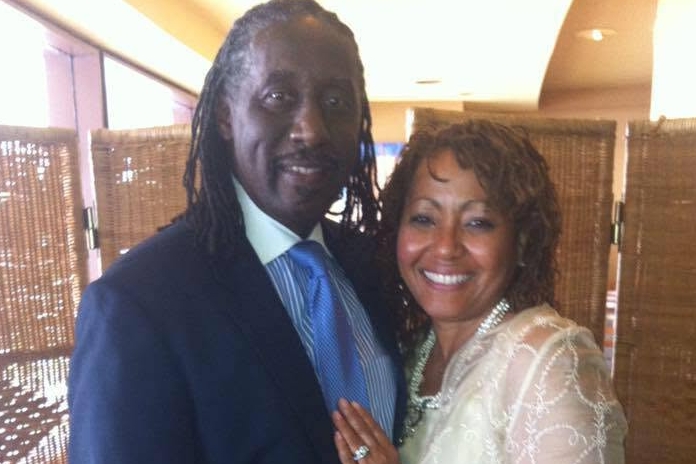
    Dr. Mabine (center) enjoyed time with his family.Courtesy of the family

    Visitation with the family is to be from 8 to 10 a.m. Saturday, Oct. 10, at Salem Baptist Church, 2741 Woodland Rd., Abington, Pa. 19001. A service is to follow.

    Donations in his name may be made to the Hampton University Ogre Phi Ogre 1 Endowed Scholarship, 100 E. Queen St., Hampton, Va. 23668.

  • A Delco man was sentenced to life in prison for planning an ambush that killed his lifelong friend

    A Delco man was sentenced to life in prison for planning an ambush that killed his lifelong friend

    In a crime that Delaware County prosecutors described as a misguided attempt at revenge, a Chester man was sentenced Thursday to life in prison without parole.

    Jesse Allen Jr., 20, was convicted of first-degree murder in July in the 2024 death of 17-year-old Zaheem Sabree, a childhood friend he had recruited to help kill another teen accused of fatally shooting a mutual friend.

    Though Allen did not fire the bullet that struck Sabree, he was found liable for his death under the legal principle of transferred intent, which holds that if a person intends to harm someone, but inadvertently harms someone else instead, that is a crime.

    And the events leading up to Sabree’s death were set in motion by Allen, according to Deputy District Attorney Matt Krouse.

    “I take no joy in asking for the sentence imposed by the court,” Krouse said after the hearing, “but hope this serves as a reminder that the Delaware County District Attorney’s Office will continue to hold responsible those driving the gun violence epidemic in our community and seek justice for victims and their families.”

    Allen was also convicted of attempted murder for the plot against the intended target, Tyjohn Walker-Jones, who killed Sabree during a shootout on 24th Street in Chester.

    For the attempted murder of Walker-Jones, Allen was sentenced to a consecutive term of 20 to 40 years in state prison.

    Allen shook his head in silence and said nothing as Delaware County Court Judge Mary Alice Brennan handed down his sentence in a courtroom filled with his family and friends.

    Walker-Jones, 18, is awaiting a trial on murder charges in the shooting that led Allen to plot against him: the killing of Sabrie “Breezy” Pierce months before Sabree’s death.

    Allen’s attorney, Brian Malloy, declined to comment Thursday.

    During Allen’s trial, he contended that prosecutors had erred in charging his client instead of Walker-Jones, who fired the fatal shot.

    But Krouse, the prosecutor, said that but for Allen’s actions, Sabree, a star football player at Chester High School and an honors student at STEM Academy, would still be alive.

    Text messages presented during Allen’s three-day trial showed that he had begun recruiting people to help kill Walker-Jones immediately after Pierce’s killing.

    “Everybody gone pay,” Allen said in one message displayed in court.

    On the day of the shooting, Allen and Sabree walked together through Walker-Jones’ neighborhood, looking for him, according to evidence presented at trial.

    After spotting him near an abandoned fast-food restaurant, they hid nearby and shot at him in a planned ambush.

    Shell casings found at the scene showed that Walker-Jones and Sabree shot at each other multiple times — Sabree with a .45-caliber pistol and Walker-Jones with a 9mm, prosecutors said. Walker-Jones and Allen then fled in opposite directions.

    Sabree was found near that scene, shot in the head. Police took him to Crozer-Chester Medical Center, where he was later pronounced dead.