Category: Pennsylvania News

  • Fired historical commission strikes out on its own | Inquirer Chester County

    Fired historical commission strikes out on its own | Inquirer Chester County

    Hi, Chester County! 👋

    After being fired, all six members of Westtown Township’s historical commission are striking out on their own. Also this week, Oxford will disband its police department, future development at a contaminated Kennett Square site could be on the horizon, plus, what to know about the mysterious drone sightings over Wallace Township.

    If someone forwarded you this email, sign up for free here.

    Axed Westtown historical commission members form their own society

    All six former members of Westtown Township’s historical commission — who were fired last month amid disagreements with local officials over historic preservation — have formed their own independent society.

    Known as the Westtown-Brandywine Historical Society, the group’s mission is to protect local buildings and history, similar to what they did before. “I feel like we’ve continued without missing a beat,” one member said, adding she was crushed when they were dismissed.

    In just a few short weeks, the group has already planned several events, including historical tours of Oakbourne Mansion and Park and a discussion about the Darlington Inn. They believe the inn should be preserved, and their stance is why they think they were let go.

    The Inquirer’s Brooke Schultz explores how the group formed so quickly and what’s ahead for them.

    📍 Countywide News

    💡 Community News

    • Oxford’s borough council voted Monday to disband its police department and join the Southern Chester County Regional Police Department and Commission amid budgetary constraints. The change will go into effect next year. The borough will hold a town hall with the regional department’s police chief tomorrow.
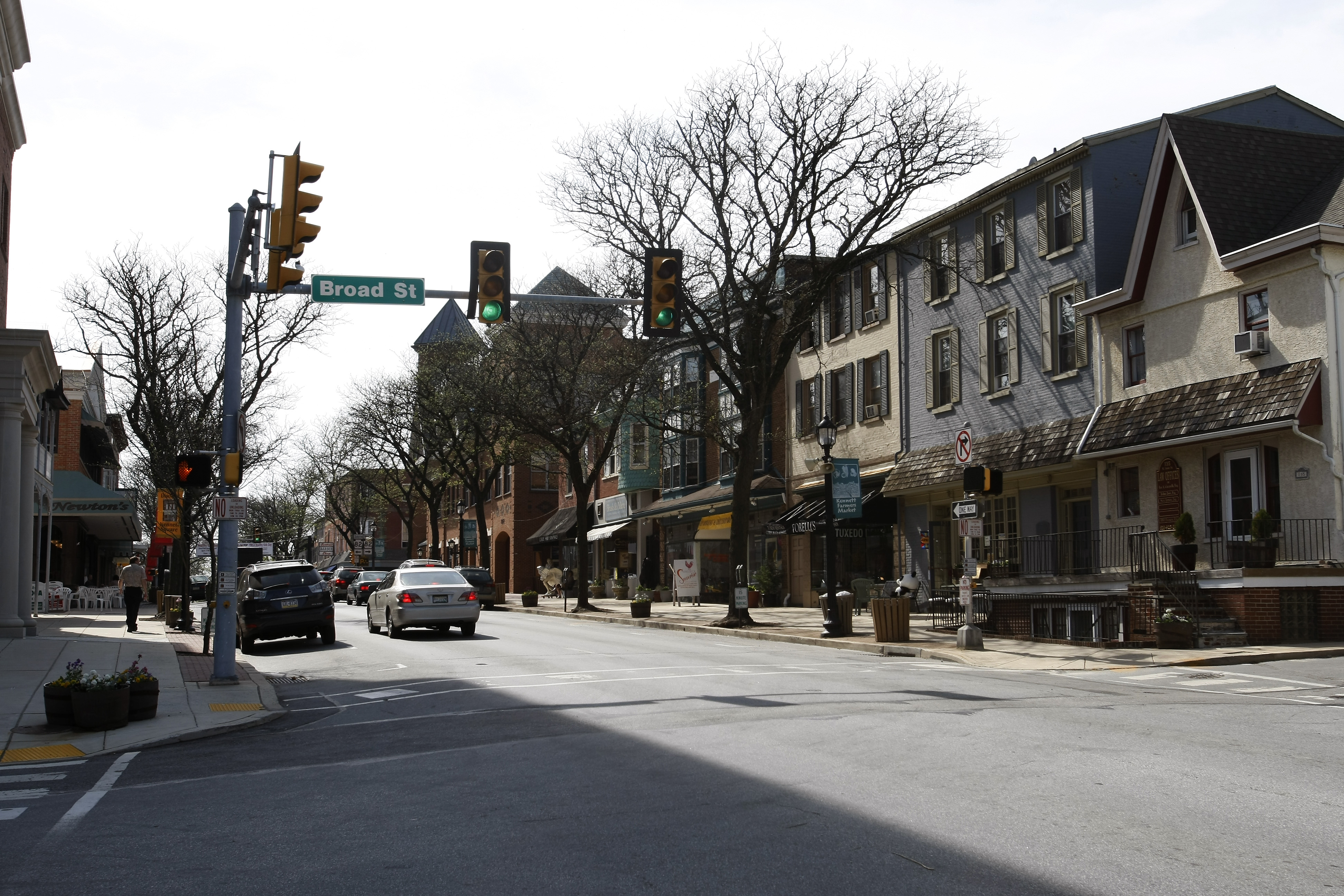
    • Kennett Square’s council moved future development at the defunct National Vulcanized Fiber site one step closer to reality this week despite pushback, agreeing to advertise an ordinance that would allow for housing and businesses at the contaminated 22-acre former industrial property.
    • With limited housing inventory and a growing population, Kennett Square has decided to cap how many short-term rentals are allowed within the borough. Current units will be grandfathered in.
    • For the past month or so, the West Brandywine Police Department has been investigating drone sightings in Wallace Township, where one has been spotted repeatedly flying over homes and roads for several hours at night. Inquirer columnist and area resident Sabrina Vourvoulias offers her take.
    • West Chester’s 12-and-under East Side Little League team has punched its ticket to the Little League World Series, which gets underway today in Williamsport, Pennsylvania. The team, representing the Mid-Atlantic region, is slated to compete Friday.
    • Several Phillies players sported one-of-a-kind cleats for last week’s Field of Dreams game in Iowa, which were created by Downingtown company NXT LVL Customs.
    • Longtime Phoenixville borough manager E. Jean Krack is planning to retire this coming spring after 18 years in the role. Council is working on plans to hire his successor.
    • Willistown Township is hosting a meeting tomorrow at 7 p.m. at General Wayne Elementary School to discuss the potential settlement agreement for Rock Hill Farm. A judge recently overturned a township ruling denying the property could be developed into luxury homes.
    • East Vincent Township’s planning commission is slated to continue discussions tomorrow at 6:30 p.m. about AQ Dev, LLC’s conditional use application to build 53 single-family homes at 446 Stony Run Rd.
    • West Brandywine Township is holding a conditional use hearing Tuesday at 7 p.m. for Imaging Associates’ and Toll Brothers’ proposed age-restricted community at 500 Hibernia Rd.
    • Nordstrom Rack is opening tomorrow at Main Street at Exton.
    • Leaves and Lore, a new fantasy-focused independent bookstore at 118 N. High St. in West Chester, is opening its doors on Saturday.

    đŸœïž On our Plate

    🎳 Things to Do

    🏒 Flyers Community Caravan: Gritty is heading to Exton as part of a multi-stop tour that also includes the team’s in-arena host and Flyers alums. ⏰ Wednesday, Aug. 19, 5:30-7:30 p.m. đŸ’” Free 📍 Miller Park, Exton

    đŸ» Summer Pop-Up Biergarten: Locust Lane Craft Brewery and Turk’s Head Wines will be pouring drinks, while food trucks Philly Hots! and Cousins Maine Lobster will dish up food. ⏰ Thursday, Aug. 20, 5-8 p.m. đŸ’” $10 in advance, $15 at the door 📍 Historic Sugartown, Malvern

    🎾 Tell Me Lies: The Fleetwood Mac tribute group will perform some of the band’s most iconic hits. ⏰ Friday, Aug. 21 and Saturday, Aug. 22, 7:30 p.m. đŸ’” $51-$61 📍 Uptown! Knauer Performing Arts Center, West Chester

    📚 Philadelphia Book Crawl: Several Chesco bookshops — Forage Books in Kennett Square, Wellington Square Bookshop in Exton, and Reads & Company in Phoenixville — are participating in the region-wide event. ⏰ Saturday, Aug. 22, times vary đŸ’” Pay as you go 📍 Locations vary

    🏡 On the Market

    A serene West Chester estate with a pool and two-story wine cellar
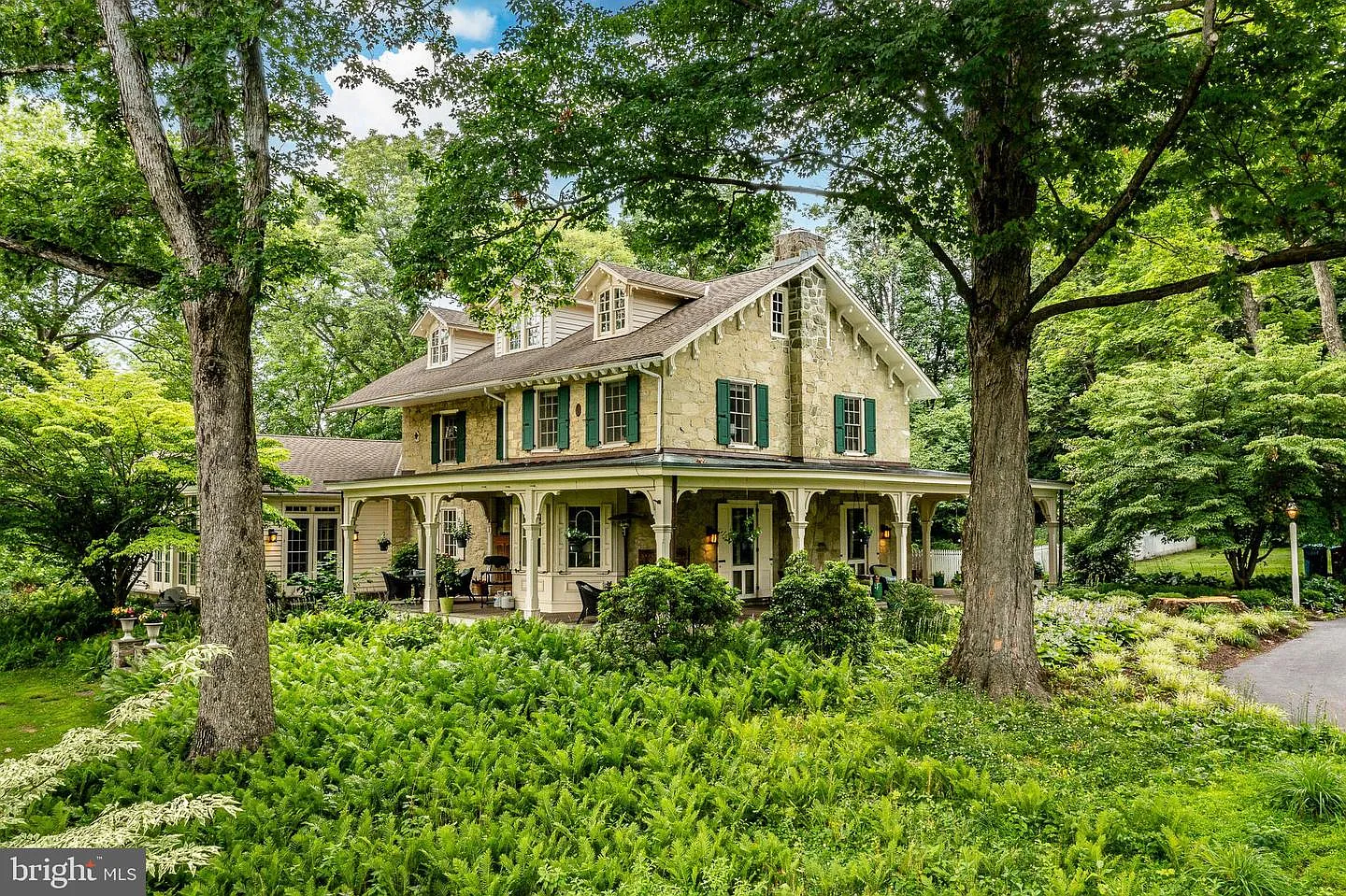
    The home sits on six acres.Virtual Vista | Courtesy of Holly Gross Group

    Built in the 1800s, this stone West Chester estate — known as Fernbank Farm, and already under contract — features a number of original architectural details. Among its most unique is a former ice house that’s been converted into a two-story wine cellar that can hold 1,500 bottles and also has a tasting room. Other features in the six-bedroom home include a library and sunroom, in addition to outdoor living spaces such as covered wraparound porches, gardens, and a heated pool.

    See more photos of the property here.

    Price: $3.3M | Size: 5,397 SF | Acreage: 6

    📈 Chester County market report

    • Median listing price: $599,900 (down $17,100 from June) 📉
    • Median sold price: $610,000 (down $18,500 from June) 📉
    • Median days on the market: 34 (up six days from June) 📈

    This Chester County market report is published on a monthly basis. Above is data for July from realtor.com.

    đŸ—žïž What other Chester County residents are reading this week:

    By submitting your written, visual, and/or audio contributions, you agree to The Inquirer’s Terms of Use, including the grant of rights in Section 10.

    This suburban content is produced with support from the Leslie Miller and Richard Worley Foundation and The Lenfest Institute for Journalism. Editorial content is created independently of the project donors. Gifts to support The Inquirer’s high-impact journalism can be made at inquirer.com/donate. A list of Lenfest Institute donors can be found at lenfestinstitute.org/supporters.

  • In a major shift, Gov. Josh Shapiro restricts data center development in Pennsylvania

    In a major shift, Gov. Josh Shapiro restricts data center development in Pennsylvania

    HARRISBURG — Gov. Josh Shapiro signed a sweeping executive order on Tuesday dramatically restricting data center development in Pennsylvania, marking a major shift from his initial embrace of the increasingly unpopular projects.

    Shapiro, a first-term Democrat running for reelection and a rumored 2028 presidential contender, had been an early champion of data center development in the state, including a $20 billion commitment from Amazon to build at least two data centers in Bucks and Luzerne Counties.

    Now he is taking a hard-line stance against the burgeoning data center industry he once courted, as proposed projects draw increasing bipartisan backlash across Pennsylvania.

    The far-reaching executive order does not include a moratorium on data center development. However, the order requires local approval for projects to receive state permits, which in effect may block many developments from moving forward.

    Shapiro used his executive powers Tuesday to push through his previously proposed Governor’s Responsible Infrastructure Development standards, which were initially pitched as voluntary incentives for data center developers to receive tax breaks, but failed to receive support from the GOP-controlled state Senate. All projects will be required to follow GRID’s environmental, economic, and transparency requirements in order to move forward.

    “I have no other choice than but to take this executive action to protect the good people of Pennsylvania from these predatory developers and from these projects that would negatively impact our communities,” Shapiro said after signing the order.

    Shapiro’s order also:

    • Removes all data center developments, including those by Amazon, from the fast-track permitting program, and no data centers will be considered for the program moving forward.
    • Requires data center projects to sign legally binding agreements to certain transparency and environmental requirements in GRID, such as water conservation standards and early and transparent public notification of proposed projects ahead of key local approvals. Companies must follow GRID guidelines to access the state’s existing sales tax break for data centers.
    • Prohibits any state agency from signing a nondisclosure agreement related to a data center project.
    • Instructs the Pennsylvania Department of Environmental Protection to publish a publicly accessible map of current permitting information for all proposed data center projects.
    • Mandates that the projects bring their own electricity generation and pay all costs associated with increased energy usage.
    • Requires a community-benefit agreement that includes promises to hire and train local employees, as well as developer investments in schools or infrastructure.
    • Underscores Pennsylvania’s unique state constitutional rights to clean air, pure water, and environmental preservation — a focus of many residents who oppose data center projects.

    ‘On notice’

    Pennsylvania has become a top target for data center projects, due to its key placement near some of the nation’s largest metropolitan areas, its energy production potential, and its vast rural areas.

    But data centers have become increasingly unpopular in the year since Shapiro championed the Amazon deal as one promising that the future of artificial intelligence “is going to run right here through the Commonwealth of Pennsylvania.”

    In a June poll conducted by Quinnipiac University, 76% of registered Pennsylvania voters said they would oppose a data center in their communities. Only 24% of voters said they approve how Shapiro is handling data centers in Pennsylvania, including 40% of Democrats — a drop from his 51% overall favorability in the same poll.

    His past support for data centers emerged as a potential liability to his reelection campaign and his 2028 prospects.

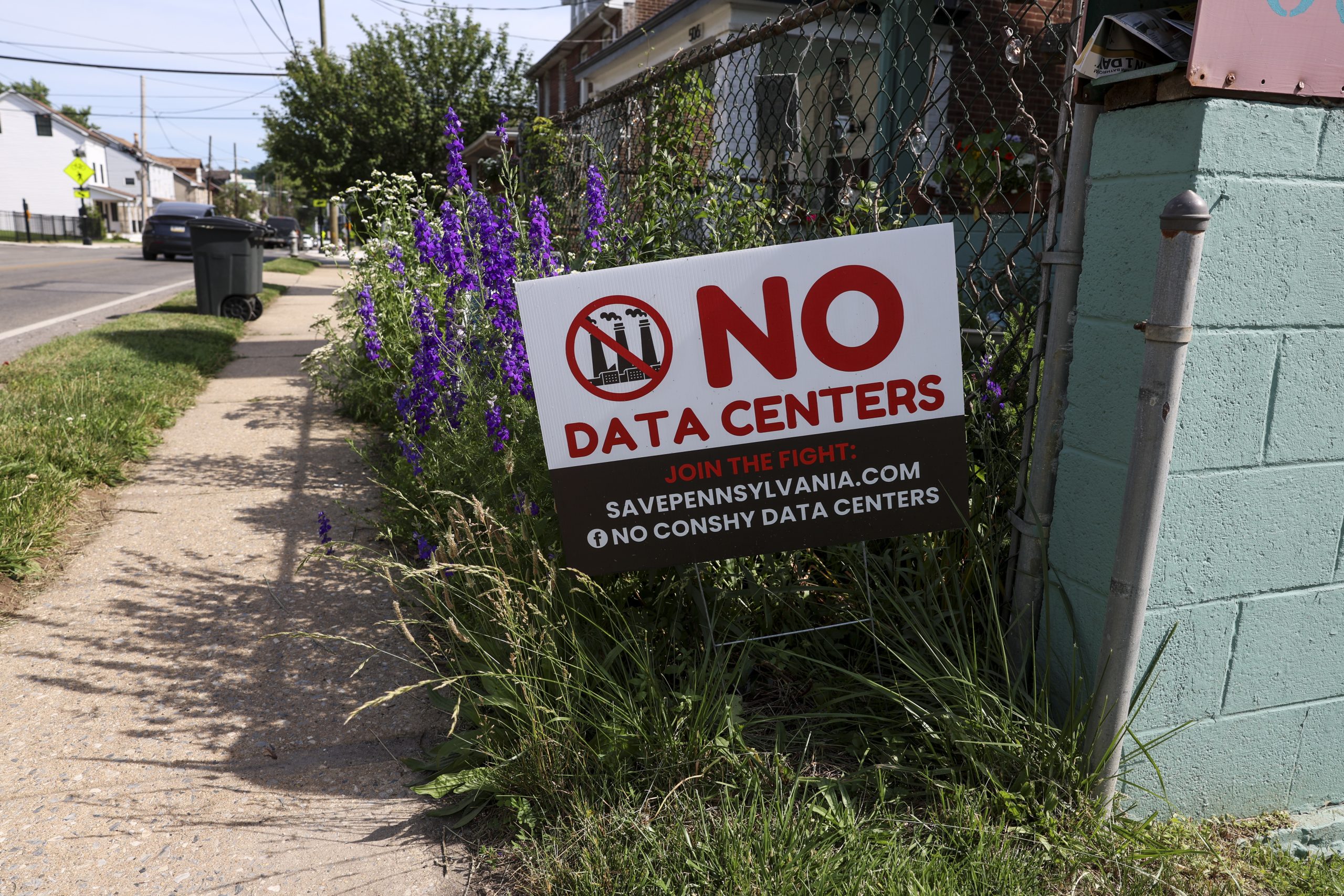
    A yard sign protests the proposed data center on New Elm Street near the Closed Cleveland-Cliffs steel mill photographed on Thursday, June 4, 2026 in Conshohocken, Pa.Monica Herndon / Staff Photographer

    Shapiro delivered remarks in Harrisburg before signing the order, touching on his visit to Archbald, a rural town in Northeastern Pennsylvania set for widespread data center development. The governor also outlined his opposition to controversial projects in Shapiro’s home county, Montgomery County, that he had recently denounced.

    “Archbald and Montco are just two examples of dozens of communities being overrun and overwhelmed by developers who don’t give a damn about us and think they can have their way,” Shapiro said. “Today, I’m formally putting them on notice.”

    Shapiro took specific issue with the more than 100 speculative projects across the state, which include some from real estate developers who are seeking building approvals without determining or disclosing the company for which they would be storing the data.

    The Data Center Coalition — the leading data center group representing Amazon, Microsoft, and other top developers — said in a statement that distinguishing between real, company-led projects and proposals is important and that rules should not be “changed midstream” for “verified and responsible data center projects.”

    “Companies have made plans, communities have prepared for economic opportunities, and workers are ready to build the next generation of digital infrastructure right here in Pennsylvania,” said Dan Diorio, the executive vice president for state policy and government affairs at the Data Center Coalition.

    Diorio previously told The Inquirer that Shapiro’s GRID standards were “extensive” compared with the 37 other states that offer sales tax exemptions.

    Shapiro’s administration appeared prepared to face legal challenges from the deep pockets of the data center industry or property developers. The order includes a severability clause, something not traditionally used in executive orders, that says if any parts of the order are “held to be invalid,” the rest of the order still stands.

    Shapiro has previously said his position on data centers has evolved. But his order Tuesday is perhaps his most dramatic shift: He has gone from consulting Amazon and the data center industry on his GRID principles earlier this year to pulling the tech giant and others from the state’s fast-track permitting program and requiring community-benefits agreements for the projects to move forward.

    Gov. Josh Shapiro signs an executive order restricting data centers in Pennsylvania during a ceremony in the Capitol in Harrisburg, Pa., Tuesday August 18, 2026.Kalim A. Bhatti / For The Inquirer

    The Amazon projects currently underway in Pennsylvania have already passed through the first phase of permitting, and will be required like all other projects to follow the requirements moving forward, a spokesperson for Shapiro said.

    An Amazon spokesperson did not respond to a request for comment Tuesday.

    There are six data center projects under construction in Pennsylvania, and 10 have received at least one state-level permit approval, Shapiro’s office previously told The Inquirer.

    Shapiro and the General Assembly have been under pressure by anti-data center activists to enact guardrails on the massive projects, with many arguing that Pennsylvania moved too quickly and sacrificed the state’s safety in favor of Big Tech. Pennsylvania lawmakers nearly unanimously supported ending the sales tax exemption for the projects, but failed to implement a measure during the spring legislative session.

    At the news conference Tuesday, Shapiro invited representatives from the Pennsylvania Association of Township Supervisors — the main group representing the local governments at the forefront of pushing for data center restrictions — in addition to advocacy groups including the Pennsylvania Utility Law Project and the National Resources Defense Council. The groups praised Shapiro’s plan.

    Though Shapiro’s order was widely lauded by Democratic state lawmakers and environmental groups, it was met with criticism from some of his detractors, including his Republican challenger for governor in November, Treasurer Stacy Garrity.

    Garrity’s first TV ad featured Shapiro’s support for data centers, and on Tuesday she said in a statement that Shapiro is “trying to gaslight the people of Pennsylvania into not believing what they’ve seen with their own eyes for the past 13 months.” (Garrity’s position on data centers has also changed since the June 2025 announcement, which she lauded at the time; she has since said Pennsylvania needs to put a “pause” on all data center development.)

    Megan McDonough, the state director for advocacy organization Food and Water Watch, said in a statement that “Shapiro knows that he’s been acting out of accordance with what Pennsylvanians actually need,” but that the order falls short.

    “Shapiro is feeling our heat because Pennsylvanians have made it impossible for him to ignore us,” she said. “The only solution to addressing AI data centers’ many woes is by placing a mandatory moratorium on all new data center development.”

  • Westtown Township fired its entire historical commission. All six members just started their own society.

    Westtown Township fired its entire historical commission. All six members just started their own society.

    Members who were fired from Westtown Township’s historical commission after disagreements with local officials over the future of a historic inn have launched an independent historical society with a mission to protect buildings and history in the area.

    The six former members of the township commission now constitute the board of the Westtown-Brandywine Historical Society, which they started within weeks of the Chester County township’s three elected supervisors’ July vote to remove all members from the commission.

    “Although it’s very disappointing to see the township operate the way that they did, it was perhaps an opportunity for us to build something even better,” said Stephen Wahrhaftig, one of the society’s founders.

    Wahrhaftig, who served on the township’s commission for four years, had been involved with other historical organizations. One, which was privately run, seemed to operate more efficiently and effectively without political oversight, he said.

    Within the new society’s first two meetings, the group had already sketched out a long list of potential events and activities, Wahrhaftig said.

    “I was crushed when we were all dismissed, sad and angry. But within two weeks, we all came back together and said, ‘OK, let’s try something new and different,’” said Christine Gunsaullus, who served on the township’s historical commission for more than a year. “I feel like we’ve continued without missing a beat.”

    The newly formed society has already teed up four events in the coming months. They plan to host a hike and historical tour of Crebilly Preserve, the 204-acre preserved open space in Westtown that was purchased by the township in 2024 to fend off residential development. Also in the works is a historical book club. In October, the society will have a table at Westtown Day — an event the commission helped found — and will give historical tours of Oakbourne Mansion and Park, where festivities are held, and have activities for children.

    And they’ll host a presentation about the Darlington Inn, the 19th century property on the Crebilly tract that the township also purchased when it sought to preserve the farm. At that talk, they’ll show “what a gem we have and why it’s important to save,” Gunsaullus said.

    That stance is the very thing that the commission members believe led to their dismissal.

    The township’s officials have said that it wasn’t the conflict over the inn that led to the members’ removal from the commission, which sits on a two-acre parcel at the corner of State Routes 202 and 926. But the dismissal came as the commission had been advocating for the township to preserve the inn, while officials have sought to offload it.

    The inn was acquired in 2024 as part of a larger battle to preserve Crebilly. It was purchased with taxpayer money separately, and the township plans to sell it off to recoup the funds it used to buy it, and to prevent ongoing maintenance costs of the property.

    The members of the now-fired historical commission had argued that the inn was worth preserving, and asked officials to include a facade easement to protect the property from being demolished for commercial construction. The supervisors declined to do so at the time, but nothing precludes them from adding it in the future.

    The historical commission was composed of volunteers, appointed by the board of supervisors, and acted as an advisory body, with no governing power. The supervisors said in July they would be reexamining the goals of the commission, and invited the fired members to reapply once that process was complete.

    Even with the abrupt parting, the new society doesn’t foresee any tension blossoming between their new organization and the township they once served. They received the OK to represent the new group at the annual Westtown Day, which they think “bodes well” for working together. The township did not immediately respond to a request for comment on the group.

    The society will offer free membership to those who want to join, and the intent broadly is to do what they accomplished with the township “but do even more and do it better and do it faster,” Gunsaullus said. That includes a newsletter, lectures, and historical tours. They’ll also be able to look broaden the scope beyond Westtown and welcome members from outside the municipality.

    Without being under the restraints of the township government, they envision they’ll be able to offer more and varied events. But like the commission, the group is made up of volunteers with the leadership composed of working architects, engineers, an author, and people with marketing expertise. Only one member is retired, making the society a labor of love, Gunsaullus said.

    “We’re very pumped up about what we’re able to accomplish now,” Wahrhaftig said.

    And they’ve seen an outpouring of support, they said.

    “The response we’ve gotten from the community, from other historical societies and commissions — everyone is supporting us, wants to know how they can help, wants to provide venues for us to continue giving talks,” Gunsaullus said. “We’re very grateful for the support we’re getting from other historical geeks in the area.”

    There are no plans to make the society a nonprofit at the moment, they said, but they aren’t sure what the future holds. They’re operating with no funding (but that’s not exactly unfamiliar; their finances were already “hilariously abysmal” under the township, Wahrhaftig noted), and may consider donations.

    But aside from money, “It takes time, passion, and creativity, and we’ve got plenty of that,” Gunsaullus said.

    This suburban content is produced with support from the Leslie Miller and Richard Worley Foundation and The Lenfest Institute for Journalism. Editorial content is created independently of the project donors. Gifts to support The Inquirer’s high-impact journalism can be made at inquirer.com/donate. A list of Lenfest Institute donors can be found at lenfestinstitute.org/supporters.

  • Kennett Square is capping Airbnbs and other short-term rentals to address housing availability

    Kennett Square is capping Airbnbs and other short-term rentals to address housing availability

    In an effort to “drastically” cut down on short-term rentals like Airbnbs, Kennett Square council passed an ordinance Monday capping the number of active units and restricting where they’re able to pop up.

    Council voted unanimously to update its ordinance, allowing for a maximum of 20 short-term rentals, and prohibiting single-family homes from turning into short-term rentals as their primary use.

    The decision comes after the borough has seen soaring population growth in recent years — an increase of 16% since 2020 — but as housing has become increasingly limited.

    Residents had decried several homes getting snapped up, only to be turned into full-time short-term rentals. The borough’s planning commission took up the issue again this year, after a first foray in 2025 didn’t go far enough, officials said previously.

    Under the new short-term rental ordinance, the existing units — roughly 22 — will be grandfathered in. But if people sell, move, or don’t maintain rental registration, that status is gone. Future rentals will only be allowed in accessory units — like garages, or guest houses — and the number of available units won’t be able to exceed 20. The property must be owner-occupied during the rental period. Pre-existing short-term rentals will lose their grandfathering status if they don’t maintain rental registration.

    “The net effect of this is to actually drastically reduce the potential number of short-term rentals,” council president Bob Norris said. “But it actually reduces the possibility and the probability of having more and more, especially in single-family homes, which we heard loud and clear was a major issue.”

    In Chester County, which saw some of the highest population growth in Pennsylvania between 2020 and 2024, the demand for housing is outpacing supply. Fewer single-family detached homes were built in 2024 than in the last several years, according to the county’s planning commission, and fewer new units were being constructed this decade compared with last.

    Meanwhile, cost is going up. In 2024, the median sales price hit $525,000 — the highest in the county’s history. That year, 331 homes sold for under $250,000, a decrease from 462 units in 2023, according to the commission. In 2025, 315 homes were sold in that range, making up just 5.3% of all sales.

    Kennett Square officials have viewed cutting down on the short-term rentals as one way to address housing availability.

    Kennett Square isn’t the only one to grapple with balancing meeting the needs of tourism with the desires of residents. West Chester similarly capped its short-term rentals at 20, and contained them to its town center. It sent cease-and-desist letters to those that weren’t in that radius, officials said previously. But in Phoenixville, short-term rentals have been meeting a need not otherwise addressed by the borough’s singular boutique hotel.

    This suburban content is produced with support from the Leslie Miller and Richard Worley Foundation and The Lenfest Institute for Journalism. Editorial content is created independently of the project donors. Gifts to support The Inquirer’s high-impact journalism can be made at inquirer.com/donate. A list of Lenfest Institute donors can be found at lenfestinstitute.org/supporters.

  • A Chester County borough will join a regional police force, dismantling its own over budgetary concerns

    A Chester County borough will join a regional police force, dismantling its own over budgetary concerns

    Oxford’s century-old police department will be disbanded, with the borough joining several other municipalities under the service of a regional law enforcement agency next year, the borough council decided during a meeting that grew contentious Monday.

    The council voted 5-2 to join the Southern Chester County Regional Police Department and Commission and approved a memorandum of understanding for the services, effective Jan. 1.

    The borough has struggled for years to keep its police force from cutting too deeply into the municipality’s budget. Though Oxford’s financial health has been stronger in recent years than had been forecast, maintaining the department without increasing taxes was becoming untenable, officials said previously.

    But the choice to cut the department has stoked fears from residents, who have designed T-shirts and lawn signs, held protests, started petitions and social media pages, and turned up at meetings to oppose the effort.

    On Monday, residents called on the council to retain the department or delay the vote. The meeting grew contentious. As people shouted from the audience, the council requested that disrupters be escorted out several times through the 1œ-hour meeting. As council members weighed their vote, attendees shouted for them to “resign now.”

    With the vote, Oxford will now join nearby municipalities New Garden, West Grove, and Avondale for service through the regional department.

    The regional department, formed in 2017, employs 21 full-time officers, who patrol and investigate, in addition to providing services like traffic safety, public outreach, and evidence management. The borough will have a seat at the table in the governance of the department.

    The memorandum stipulates that the department will add 12 new officers to serve Oxford, with a substation where officers will begin and end their shifts, according to borough officials. Two officers will be on patrol 24-7, as they currently are. Borough leaders hope to see the entirety of their 11-officer force accept positions in the regional department.

    Still, residents have worried over the loss of their homegrown force, with concerns about sluggish response times or increased crime due to the regionalization.

    Oxford police responded to about 4,400 calls for service, mostly for property and house checks, in 2023, according to the most recent data in a July analysis from Keystone Municipal Solutions.

    “What I pray to God does not happen is that I have to get a call because we didn’t have a local police department to protect our residents,” said resident Henry “Ted” Ruffenach, a funeral director. “I don’t want to get that call. If it does happen, this will be on every one of your resumes.”

    Bob McCarron, president of the Chester County Fraternal Order of Police, urged the council to consider whether giving up local control was worth regionalization.

    “It truly is a decision that, once you make it, you won’t be able to come back from,” he said.

    An attempt to table the decision — raised by council member Amanda Birdwell, who argued she had not talked to enough residents about their stance on regionalization — did not receive enough votes. She ultimately voted against regionalization, joined by council member Raul Juarez-Lara.

    “Even though people are being disrespectful and rude, we were still elected to represent them, and I feel like another reason I asked to table is because while I know we all want this to be over with, we can’t make a decision because we’re mad that people aren’t being nice to us,” she said. “That’s irresponsible.”

    But others felt it was the only sustainable way forward.

    “I truly believe that the only way to maintain policing in the Borough of Oxford 
 going forward, for my children, is regional,” council member Michael Brandt said. “We will not have a police force in less than several years at the rate things are going. I’m sorry none of you can listen to us and understand that.”

    The borough will hold a town hall with the regional department’s police chief, Joe Greenwalt, on Thursday.

    This suburban content is produced with support from the Leslie Miller and Richard Worley Foundation and The Lenfest Institute for Journalism. Editorial content is created independently of the project donors. Gifts to support The Inquirer’s high-impact journalism can be made at inquirer.com/donate. A list of Lenfest Institute donors can be found at lenfestinstitute.org/supporters.
  • The plan to turn a contaminated industrial site in Kennett Square into housing takes another step forward despite residents’ pushback

    The plan to turn a contaminated industrial site in Kennett Square into housing takes another step forward despite residents’ pushback

    Ambitions to turn a former industrial site in Kennett Square into a residential development inched closer to reality Monday — but residents still have concerns about the land’s safety after decades of contamination.

    Council voted 5-2 to advertise a change that would allow for housing and business development at the former National Vulcanized Fiber site, a long-vacant 22-acre industrial plant that ultimately contaminated the land with polychlorinated biphenyls (PCBs).

    Initial attempts to allow for redevelopment of the site stalled earlier this year, when a vote to advertise the amendment failed to garner enough support due to a vacancy and an absence on the council.

    But a revised ordinance received enough positive votes this week to be posted publicly ahead of a hearing on changing the zoning. It is an early step to possibly develop one of the last untouched pieces of Kennett Square into a mix of townhomes, apartments, and single-family attached dwellings. Under the ordinance, 15% of the units must qualify as affordable housing — with compliance restrictions, financial guarantees, and penalties if the developer does not comply — coming at a time when growth has soared in the borough but housing has become harder to come by.

    That vision, however, has been staunchly opposed by some residents, who argue that the site is unsafe for housing and have raised concerns repeatedly about contamination cleanup and whether construction could harm the health of the surrounding neighborhoods. Federal and state agencies still need to OK the cleanup before construction could begin.

    “It’s pretty clear repeatedly that the community 
 doesn’t want this big development to come in there,” resident Holly Peters said. “I guess what I don’t understand, and I would like an answer to, is why this continues to move forward. Like, what is the urgency to push this ordinance through? I mean, why don’t we just wait?”

    How did we get here?

    The site has been the subject of ongoing cleanup for roughly 40 years. NVF folded in 2007, and the property was acquired by developer Rockhopper LLC two years later, with the ambitions of turning it into housing. Officials have said that there had not been a great deal of other interest in redevelopment.

    In April, the borough planning commission had recommended an ordinance amendment that would have allowed for a mixture of affordable and market-rate residential development on the site. The ordinance set parameters around multifamily use, density standards, and affordable housing stock.

    In recent months, NVF has once more become a topic at council meetings, with the planning commission seeking guidance on how to move forward after the stalled recommendation.

    A straw poll in June showed that a majority of the board — which consists mostly of new members — favored redevelopment of the site as residential or mixed commercial use.

    In July, council members asked the planning commission to consider adding mixed-use development in the amended ordinance, which would allow retail, restaurants without drive-throughs, business offices, medical clinics, day spas and salons, and personal services.

    That got a tepid reception from Austin Coleman, a representative from the developer, in July, who told the council “we do feel strongly that it’s a residential site, and it’s a great opportunity to provide affordable housing, as well as attainable housing.”

    Ultimately, the planning commission included the commercial element in the revised ordinance. Allowing for such development does not mandate that it happen, however.

    Borough officials have seen this as an opportunity to add affordable housing stock for residents, in an increasingly expensive county and municipality. Kennett Square has seen an explosion of growth recently, with its population rising 16% in the last five years. But with it has come a squeeze, as people are getting increasingly priced out of what limited housing is available.

    What comes next?

    These are still early days. The borough will now advertise adding housing and business use alongside the industrial designation. It will then go to county leadership; after that review, it returns to the council for a public hearing. If the proposed ordinance is later approved, with the additional uses for the site, it would eventually open the door for the developer to submit an application to redevelop the parcel into housing. The process could take 18 to 36 months, officials have said.

    But before the developer could think of breaking ground, the cleanup efforts on the site must pass muster from the U.S. Environmental Protection Agency and the Pennsylvania Department of Environmental Protection.

    For decades, the site has undergone remediation and cleanup efforts, overseen by the EPA. The agency is currently accepting public comments until Aug. 28 on its intention to approve a final cleanup application for the site.

    Residents have long held concerns that the land is unsuitable for housing, and have worried that the cleanup has not gone far enough.

    “I think you’re signing a death certificate for people. Unless you get the EPA to come in and strongly suggest that the property’s OK to build on, nothing should be touched,” resident Mark Thompson said.

    Council member Michael Bertrando, who has said he would like to keep the site industrial, cast one of the dissenting votes, alongside council member Juan Tafolla.

    “Not one resident who got up at that microphone has said that they are for this project,” Bertrando said. “I mean, yes, this is an advertisement, but why are we doing this before we have any proof that the site is cleaned, it’s remediated, and the EPA hasn’t given us their report yet?”

    But for other council members, allowing for development of the long-languishing site would ensure it was actually cleaned up.

    “I’m not looking to build something that’s going to create more problems or have issues or people getting sick,” council member Amy Reigel said. “I do want that property to be developed because it’s dirty. Like if we don’t clean it up, if we don’t keep moving forward, it’s going to stay there because we don’t own the property.”

    This suburban content is produced with support from the Leslie Miller and Richard Worley Foundation and The Lenfest Institute for Journalism. Editorial content is created independently of the project donors. Gifts to support The Inquirer’s high-impact journalism can be made at inquirer.com/donate. A list of Lenfest Institute donors can be found at lenfestinstitute.org/supporters.

  • Resident sues over public pool deal | Inquirer Greater Abington

    Hi, Greater Abington. 👋

    A Cheltenham resident has filed a lawsuit against the township alleging a $4.5 million project for a new public pool complex illegally circumvented the standard bidding process. In other news, some families in the township are nervous about the school year fast approaching as the district looks to move past its football scandal.

    Plus, a new local police chief also led one of the area’s most famous criminal investigations, and more news of the week.

    — Laura Smythe (greaterabington@inquirer.com)

    P.S. We want your feedback! Tell us what you think of this newsletter by taking our survey or replying to this email.

    If someone forwarded you this email, sign up for free here.

    Cheltenham resident files lawsuit alleging township’s $4.5M pool deal breaks bidding rules

    Cheltenham Township last month made a deal with a private developer to pay up to $4.5 million for three public pools and a new 5,000-square-foot building by Ashmead Road and Front Street. But a resident filed a recent lawsuit alleging the agreement violates public bidding rules.

    The lawsuit also scrutinizes township commissioners’ arrangement to lease the land to the developer for $10 per year.

    In response to public questioning, township officials wrote in an FAQ posted last week that Cheltenham had “received estimates from multiple pool consultants indicating that constructing a comparable standalone replacement pool would cost approximately $6-8 million.”

    The Inquirer’s Jess Rohan digs into concerns about the project and where it goes from here as the lawsuit moves through Montgomery County courts.

    Cheltenham parents and students are nervous ahead of the school year

    The first Cheltenham school board meeting following charges surrounding two high school locker room assaults in 2025 was an emotional one. Officials sought to address families’ concerns last week by laying out next steps, such as new leadership and an independent review of policies.

    Despite officials’ attempts to ease frustrations, many are expressing a lack of confidence in the board’s response and whether it will be effective.

    As a result, some Cheltenham families are anxious as the new school year approaches — as does the Aug. 27 preliminary hearing for three football coaches and two players charged as adults in the scandal.

    💡 Community news

    • Cheltenham’s new police chief, Richard Schaffer, will be sworn in tomorrow night. He is a longtime crisis negotiator who previously headed the township’s gun violence task force and led the 2005 criminal investigation into Bill Cosby.
    • A 59-year-old Philadelphia man was sentenced to 25 to 50 years in state prison by a Montgomery County judge last week after fatally shooting his wife on their way home from a family party in Rockledge in February, The Inquirer’s Vinny Vella reports.
    • The first phase of SEPTA’s bus network overhaul begins on Sunday, including Route 72, a new crosstown bus running along Cheltenham Avenue.
    • Overnight paving in Cheltenham Township will close a lane on Church Road between Township Line Road and Route 73 from 8 p.m. to 5 a.m. through Friday. Milling will close a lane during the same hours on Ashbourne Road, Montgomery Avenue, and Central Avenue between Washington Lane and Route 73.

    đŸ« Schools briefing

    • Nearly 850 people responded to the recent community survey on the design for Abington’s forthcoming middle school, which faces a final step in the permitting process with the board of commissioners on Aug. 27. 
    • New cameras were installed in Cheltenham High School’s parking lot, athletic fields, and administration building, and building access procedures were updated, administrators said during the district’s first facilities committee meeting of the new school year. Both moves come in response to recommendations following an assessment conducted last school year.
    • The recently uncovered Cheltenham High School locker room assaults and student-on-student incidents at Cheltenham Elementary are linked in a longstanding, problematic culture district-wide, Inquirer columnist Mike Sielski writes. They’re also part of a larger pattern in youth and high school athletics at other schools, he argues.

    đŸœïž On our plate

    • The Pita Pocket Eatery in Cheltenham Township at 582 Cottman Ave. has permanently closed, ending its more than 14-year run.

    🎳 Things to do

    đŸ–Œïž KidFest 2026: Discover future Picassos at the annual exhibition, where young artists will show off their creative works. ⏰ Thursday, Aug. 20, 6-8 p.m. đŸ’” Free 📍 Abington Art Center

    đŸȘ„ The Cajun Sensation: Will you be tricked by New Orleans magician Michael Dardant? To find out, check out one of his Glenside shows, complete with hand mastery, improv comedy, and Cajun charm. These shows are meant for ages 16 and up. ⏰ Friday, Aug. 21 and Saturday, Aug. 22, 8 p.m. đŸ’” $35-$45 📍 House of Magic PA, Glenside

    đŸ§© Casual Puzzle Party: Put the pieces together with like-minded community members seeking a low-key way to kick off the weekend. ⏰ Saturday, Aug. 22, 10-11 a.m. đŸ’” Free 📍 Abington Free Library

    📚 Philadelphia Book Crawl: Capricorn Books in Jenkintown is participating in the region-wide event, including offering specials. ⏰ Saturday, Aug. 22, times vary đŸ’” Pay as you go 📍 Locations vary

    đŸ¶ Paint Your Pet: Bring your own food and drinks to this guided session. Email instructors a picture of your furry friend ahead of time, and they’ll sketch an outline for you. ⏰ Tuesday, Aug. 25, 6:30-9:30 p.m. đŸ’” $60 📍 Painting With a Twist, Jenkintown

    🏡 On the market

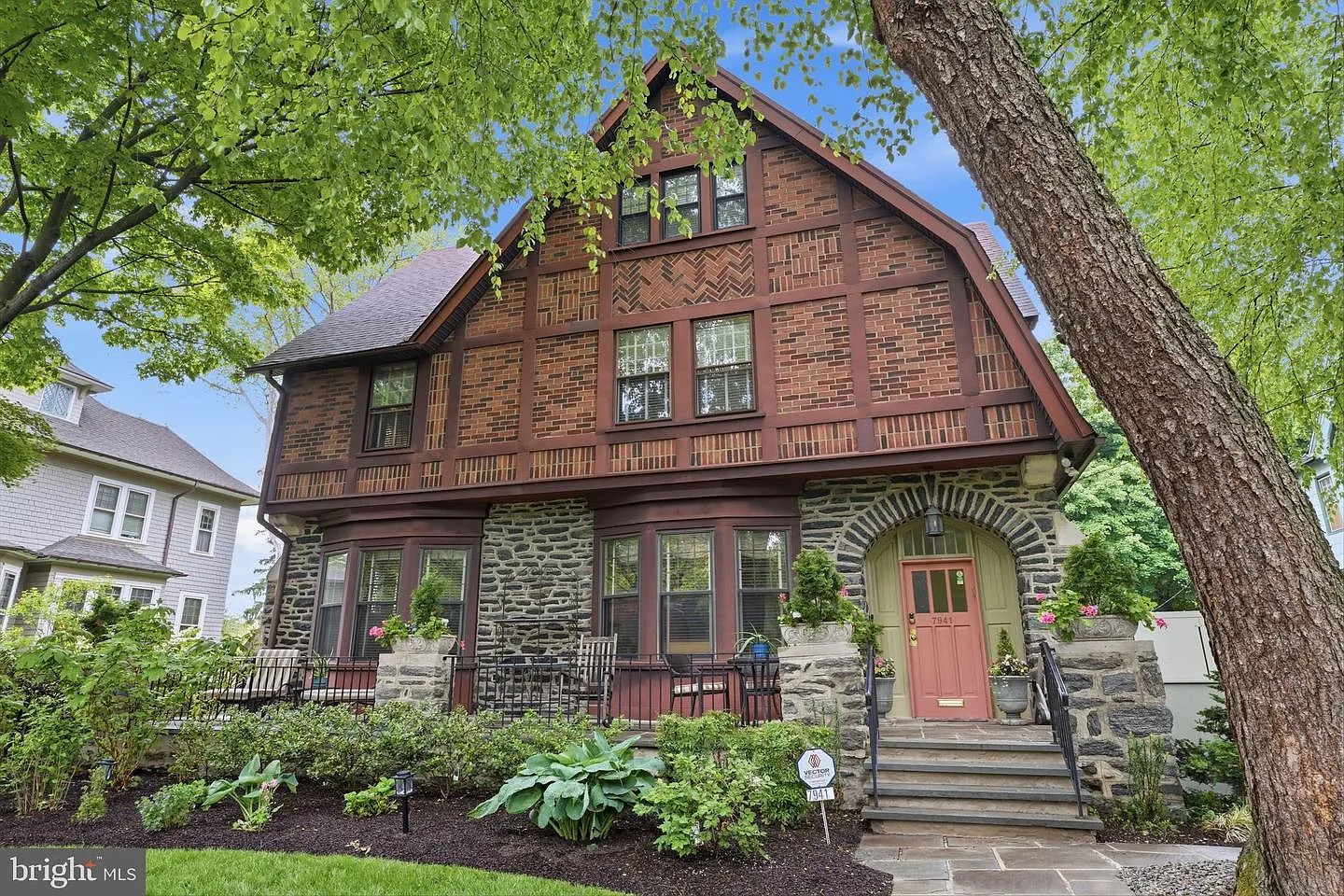
    A 20th-century Tudor with a patterned brick exterior

    The exterior of 7941 Park Ave. in Elkins Park, PA

    Step into this six-bedroom, four-bathroom Elkins Park home through an original wooden door from its 1902 build. Details throughout the house include French doors, wainscoting, custom built-in bookshelves, stained glass, and window seats. There is a chef’s kitchen equipped with double sinks, ovens, and dishwashers; an island; and both a pantry and butler’s pantry. Outside offers a front porch, rear deck, stone-edged garden beds, walking pathways, and mature trees.

    See more photos of the property here.

    Price: $739,900 | Size: 4,746 SF | Acreage: 0.23

    📈 Greater Abington market report

    Abington

    • Median listing price: $492,000 (down $7,900 from June) 📉
    • Median sold price: $525,000 (up $102,500 from June) 📈
    • Median days on the market: 36 (up seven days from June) 📈

    Jenkintown

    • Median listing price: $372,000 (same as June)
    • Median sold price: $480,000 (up $10,000 from June) 📈
    • Median days on the market: 57 (up 24 days from June) 📈

    Cheltenham

    • Median listing price: $475,000 (up $26,500 from June) 📈
    • Median sold price: $455,000 (down $15,000 from June) 📉
    • Median days on the market: 36 (up nine days from June) 📈

    This Greater Abington market report is published on a monthly basis. Above is data for July from realtor.com.

    đŸ—žïž What other Greater Abington residents are reading this week:

    By submitting your written, visual, and/or audio contributions, you agree to The Inquirer’s Terms of Use, including the grant of rights in Section 10.

    This suburban content is produced with support from the Leslie Miller and Richard Worley Foundation and The Lenfest Institute for Journalism. Editorial content is created independently of the project donors. Gifts to support The Inquirer’s high-impact journalism can be made at inquirer.com/donate. A list of Lenfest Institute donors can be found at lenfestinstitute.org/supporters.
  • 14 people have been charged in a Penn State fraternity cocaine-trafficking ring

    14 people have been charged in a Penn State fraternity cocaine-trafficking ring

    Fourteen people have been charged in a cocaine trafficking case at Pennsylvania State University, the state attorney general’s office announced Monday.

    The drug ring involved students’ purchasing large quantities of cocaine from Philadelphia and New York, cutting and packaging it at two fraternity houses, and distributing it to their classmates, prosecutors said.

    The alleged ring was active from 2023 to 2024, when all but one of the defendants were students at Penn State. The other defendant is the father of one student, and he was charged with evidence tampering and hindering law enforcement’s investigation. At least four of those charged are still students at Penn State.

    “This was a coordinated and highly profitable drug-trafficking crew revolving around two senior members of the fraternities, other fraternity brothers, and pledges,” said Attorney General Dave Sunday in a statement. “According to the evidence uncovered, cutting and packaging cocaine was, for some pledges, an indoctrination into the fraternities,”

    The State College Police Department began investigating in September 2024, and used informants to purchase drugs on several occasions, according to a criminal complaint.

    The two key suppliers for the group, Agostino Abbatiello, 24, and Thomas Robinson, 23, allegedly made regular trips to Philly and New York to acquire large quantities of cocaine. After Robinson was arrested, he told State College police he purchased cocaine from Abbatiello, including as much as one kilogram for $22,000 at a time, according to the complaint. Abbatiello eventually became known as the main dealer for cocaine on campus, it said.

    The cocaine was packaged for distribution primarily at the off-campus Delta Upsilon and Sigma Chi fraternity houses, according to the complaint. Penn State has placed Delta Upsilon on interim suspension while the university’s Office of Student Accountability and Conflict Response investigates. Sigma Chi is not a registered student organization and receives no support from Penn State, the university said in a statement.

    “We are horrified by these serious allegations against current and former students,” said Andrea Dowhower, Penn State’s vice president for student affairs. “Criminal activity, including hazing, such as this has no place at our institution, and we will cooperate with law enforcement in any way we can. We will continue to enhance our efforts around health and safety and hazing educational efforts for all our organizations.”

    Abbatiello, Robinson, and three other defendants are charged with felony conspiracy, possession with intention to manufacture or deliver a controlled substance, and other related charges. Eight defendants are charged with misdemeanor drug possession. Lawyers for Abbatiello and Robinson were not listed in court records.

    Over the past decade, Penn State’s fraternities and their hazing rituals have been a source of campus misconduct and serious legal violations. In 2024, two fraternity leaders were sentenced to two to four months in prison for their role in the 2017 death of Timothy Piazza, a 19-year old Penn State student who died following a hazing incident while pledging Beta Theta Pi.

    Piazza’s parents helped push for the successful passage of the federal “Stop Campus Hazing Act,” which requires institutions of higher education participating in federal student aid programs to report hazing incidents.

    More recently, in April, Penn State suspended one fraternity for at least four years after it investigated reports of hazing. Since 2017, the university has fully suspended five fraternities, while four others are technically suspended by the university, but continue to operate with the support of their parent organizations.

  • A Bucks County man who allegedly killed his girlfriend, abandoned her body, and fled to Honduras is charged with murder

    A Bucks County man who allegedly killed his girlfriend, abandoned her body, and fled to Honduras is charged with murder

    A Telford man has been charged with murder after, officials say, he stabbed his ex-girlfriend to death inside the apartment they shared and fled the country, hiding out in Central America for months.

    Darwin David Espinal del Cid, 27, was taken into custody during the weekend by officials in his native Honduras in the March 7 death of Maria Popol, Bucks County District Attorney Joe Khan said Monday.

    Khan, in announcing the arrest, described Popol as a loving daughter and sister who cared deeply about her family. Espinal del Cid, he said, ended her life in a heartless, violent manner and then furthered her family’s suffering by stealing her cellphone and pretending to be her, in text messages he sent them.

    Maria Popol was found dead in March by police in Telford.Courtesy of Maria Popol's family

    It was an attempt, Khan said, to throw investigators off his trail as he fled the country.

    But investigators were able to track Espinal del Cid’s movements, in part through his cellphone, according to Khan.

    “This was a place where he thought he would be safe, that he could outrun the law, that the Bucks County DA’s office and the authorities wouldn’t catch up to him,” Khan said. “And at a certain point he may have believed that he was successful, but he was wrong.”

    He remains in custody in Honduras, and is awaiting extradition to Bucks County.

    Popol’s body was found on March 15 inside a second-floor apartment on North Main Street in Telford where she previously lived with Espinal del Cid. Her parents had filed a missing person’s report two days earlier, on what would have been her 23rd birthday, Khan said.

    A neighbor, helping the family search for Popol, entered her apartment and found her.

    Her family, in a statement to The Inquirer, said she was in the process of moving to a new apartment nearby, fleeing what they described as an abusive relationship with Espinal del Cid.

    Khan said Espinal del Cid stabbing Popol in the neck with a sharp object and hid her body in a closet as she bled to death.

    Popol’s family told The Inquirer they last heard from her on March 6, after she rode in an Uber with Espinal del Cid. The two were arguing, prosecutors said, about Popol’s decision to end their relationship.

    She texted her mother and told her she was looking for a new apartment, according to the affidavit of probable cause for Epsinal del Cid’s arrest.

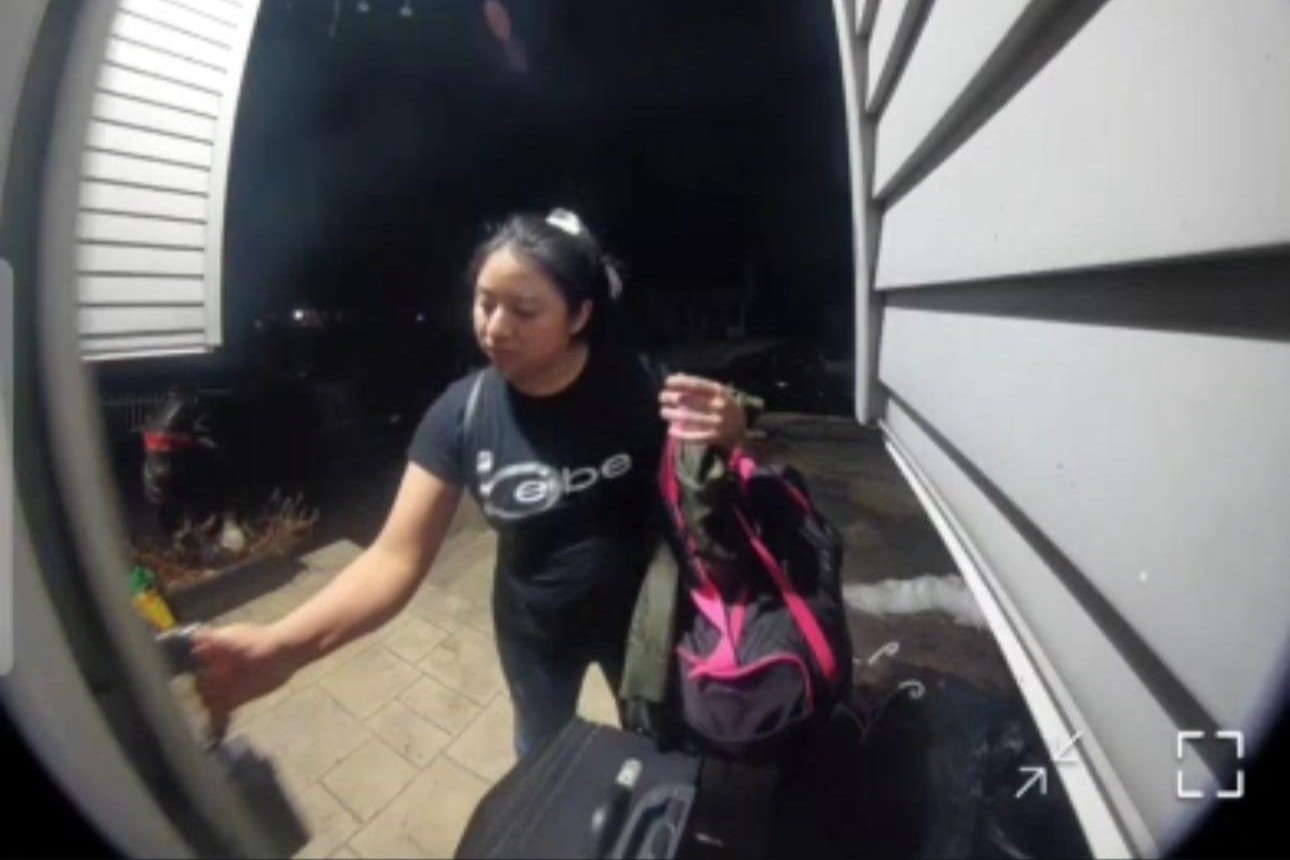
    Her brother, Ronaldo, said she was seen hours later in a video from a doorbell security camera carrying luggage while she was moving into her new apartment.

    The last time Maria Popol was seen by her family was in a doorbell camera video from March 7 at her new residence. She was found dead March 15 at her old apartment she had shared with a man, her brother said.Rolando Popol

    A witness told police that, while picking up Popol to take her to her new apartment, Espinal del Cid forced himself into the car, crying and acting hysterical, saying that he “couldn’t afford to lose her,” the affidavit said.

    When Popol returned to the apartment where she lived with Espinal del Cid, the two got into another heated argument, loud enough for neighbors to overhear, according to the affidavit.

    In the days that followed, Espinal del Cid continued to act erratically, asking his former boss for money to buy a plane ticket to Honduras, weeping openly in public and saying, “God forgive me.”

    A friend of Espinal del Cid who drove him to the airport noted he was carrying three cellphones, one of which appeared to be Popol’s, the affidavit said.

    On March 9, Espinal del Cid boarded a plane heading to Honduras by way of Florida at Philadelphia International Airport.

    The entire time, investigators said, Epsinal del Cid texted Popol’s friends and employer, asking for money in messages that they agreed were not written in her usual style of talking.

    Popol moved to Bucks County from her native Guatemala in 2023 to support her parents, who are in declining health, according to her family. She worked as a waitress at Don Leo, a Latin American restaurant not far from her apartment.

    “She had come to this country hoping for a better life,” Ronaldo Popol said, describing his sister as “very affectionate, kind, and patient.”

    Khan said Popol’s death is the latest example of fatal domestic violence in Bucks County. Since he took office in January, nearly all of the murders his office has investigated have been committed by one of the victim’s loved ones.

    “It’s the reason that we are showing this picture of [Espinal del Cid], not to glorify him, but to ask for the public’s help, because while he thought he was smarter than everyone else, the law was catching up to him and we want the public’s help,” Khan said.

  • A man who stole $1 million in cryptocurrency was sentenced to seven years in prison

    A man who stole $1 million in cryptocurrency was sentenced to seven years in prison

    A 24-year-old Portuguese man was sentenced Monday to seven years in federal prison for stealing more than $1 million in cryptocurrency from unwitting victims, including a resident of Montgomery County — crimes prosecutors said the man committed while he was associated with an international cybercrime network.

    Ruben Filipe Gabriel Martins pleaded guilty last year to wire fraud and identity-theft charges for using sophisticated phishing tactics to obtain victims’ cryptocurrency account information, then stealing their investments.

    Prosecutors said Martins committed his fraud while he was part of a group called “the Com,” a global network of people who use technology to commit a variety of crimes across the world, including extortion, theft, and even incitements of violence.

    Last year, a teen who was associated with a subset of the Com made hoax active-shooter calls targeting Villanova University and other colleges, prosecutors have said, crimes that led to massive police responses and inspired widespread panic.

    Martins, meanwhile, was associated with a subset known as “CryptoChameleon,” a group that uses a variety of deceptive tactics to obtain account information from cryptocurrency holders. In Martin’s case, prosecutors said, he pretended to be a customer support representative for Coinbase, a cryptocurrency exchange, and told his victims he could offer support for their compromised accounts — tactics he used to get into the accounts and steal the victims’ funds.

    Martins then went on to transfer the proceeds into other cryptocurrencies, prosecutors said, and ultimately spent his ill-gotten gains on luxury goods, traveling, and gambling.

    His scheme began to unravel in 2024, when prosecutors said a man from Towamencin Township told police that more than $60,000 had been stolen out of his cryptocurrency account after he’d replied to text messages and calls about its security. Authorities were ultimately able to link that activity to Martins, who was born in Portugal and went on to live in Scotland.

    Martins’ lawyer said in court documents that Martins had never intended to become “a career criminal.” But after being raised in modest circumstances — including by working in a fish factory as a teenager — Martins was introduced to a host of wealthy benefactors due to his skill in online gaming, his lawyer said, and some of those people then flew him to Paris and recruited him to participate in their digital exploitation operation.

    In court Monday, Martins apologized for his actions, saying he was in debt when he committed his crimes and viewed the scheme as a way to make “really easy money.”

    “I made a mistake when I was really down,” he said, “and I’d just like to have another chance at life.”

    But U.S. District Judge Gerald J. Pappert said it was a significant understatement to describe the crimes as a “mistake ” — saying Martins had used his computer skills and desire for money to turn himself into a “dangerous” person who stopped only when he got caught.

    “Not one thing you did in two years was a mistake,” Pappert said. “You needed money. You saw what for you was an easy way to get a lot of money. 
 And I don’t know to what extent, if at all, you ever felt bad about it, because these people were all behind a computer, and you never had to look them in the eye.”

    One of Martins’ victims has seven children, Pappert noted, and others were intelligent people who lost significant portions of their life’s savings.

    Martins is expected to be deported to Portugal once he finishes his prison sentence. But Pappert said his victims may never get over the shame and financial hardship he caused them.

    “These were horrible crimes,” Pappert said. “None of these people deserved this.”