Category: News

  • Downpours expected to return to the Philly region this weekend, with a flood watch in effect

    Downpours expected to return to the Philly region this weekend, with a flood watch in effect

    The atmosphere may be ready to engage in some regressive behavior, with August-like downpours in the weekend outlooks.

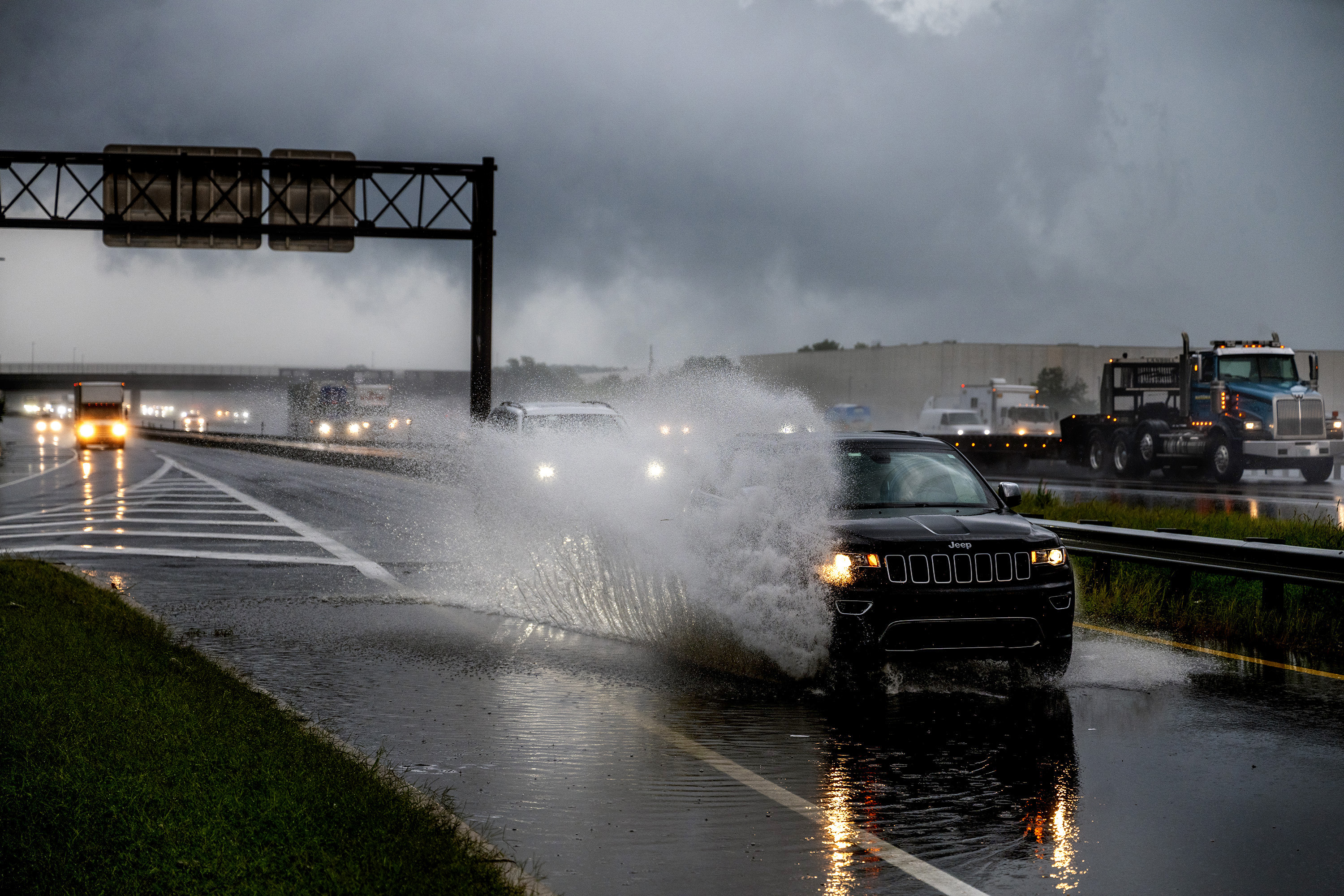
    The National Weather Service has posted a flash-flood watch in effect from 11:59 p.m. Saturday through noon Sunday for the entire region, except for Chester County, with heavy showers possible.

    “We have plenty of moisture coming up from the south,” said Frank Pereira, meteorologist with the federal Weather Prediction Center, in College Park, Md.

    The center has the I-95 urban corridor from central Virginia through Philadelphia with an enhanced probability of “excessive rainfall.”

    Widespread heavy rain amounts aren’t likely, said Pereira, but hefty totals could occur in a short period of time.

    The weather service office in Mount Holly said rainfall rates of two inches an hour would be possible.

    Fortunately, after a week’s respite from the episodic rains that so characterized July and August, setting off record numbers of flood warnings, the weather service notes that levels are low in the region’s major waterways.

    “The bigger concern with this event will be flash flooding,” the weather service said, the familiar likes of flooding along roads and near the smaller streams.

    While the downpours may evoke August, these would be a shade different in that they wouldn’t be driven by daytime heating, said Paul Fitzsimmons, meteorologist in the Mount Holly office. The sun is getting weaker, the days shorter.

    Setting off the rains would be an approaching cold front from the west and a warm front migrating northward.

    The rains could get an extra kick from very warm decks of clouds about two miles above the surface, said Pereira.

    “You have this very deep saturated warm layer,” he said. “This increases the efficiency of the rainfall,” along with producing larger raindrops.

    In any event, Saturday should be dry during the day, as should most of Sunday afternoon. On the plus side, drought conditions continue to recede.

    Is the drought officially, absolutely over in the Philly region?

    All of New Jersey remains under a state-declared drought warning; however, conditions throughout the Philadelphia region have improved immensely.

    After 16 consecutive months of below-normal precipitation in Philadelphia heading into July, the totals at Philadelphia International Airport are above normal for the year.

    In the latest interagency U.S. Drought Monitor update posted Thursday, most of the region was categorized as absolutely drought-free, a big change from just last week.

    All of Philly was drought-free. Last week, the entire city was designated as “abnormally dry” — the least-serious tier on the monitor’s scale.

    In Chester County, which had been under a state drought “warning” last month, 90% of the county was considered to be in the clear, an increase of 37% from the previous week.

    It might be time for a drought farewell party.
  • Assailants attack, steal handgun from off-duty Philadelphia police officer, authorities say

    Assailants attack, steal handgun from off-duty Philadelphia police officer, authorities say

    An off-duty Philadelphia police officer was beaten by multiple people and robbed of his gun late Thursday, police said.

    The gun — the officer’s service weapon — had not been recovered as of Friday, they said.

    The officer, whose name was not released by police, was taken to Temple University Hospital with cuts to his head and scrapes on his legs and feet. Police did not disclose his condition, but said the officer was stable Friday afternoon.

    Officer Tanya Little, a police spokesperson, said police were called to help the officer at about 11:45 p.m. Thursday on the 700 block of North 10th Street, between Brown Street and Fairmont Avenue in the West Poplar section of North Philadelphia, after the officer said he had been attacked by three people who stole his firearm.

    Little said that investigators took two people into custody for questioning, but charging information was not available.

    The investigation is ongoing, police said.

  • U.K. lawmakers vote down bill to allow assisted dying in England and Wales

    U.K. lawmakers vote down bill to allow assisted dying in England and Wales

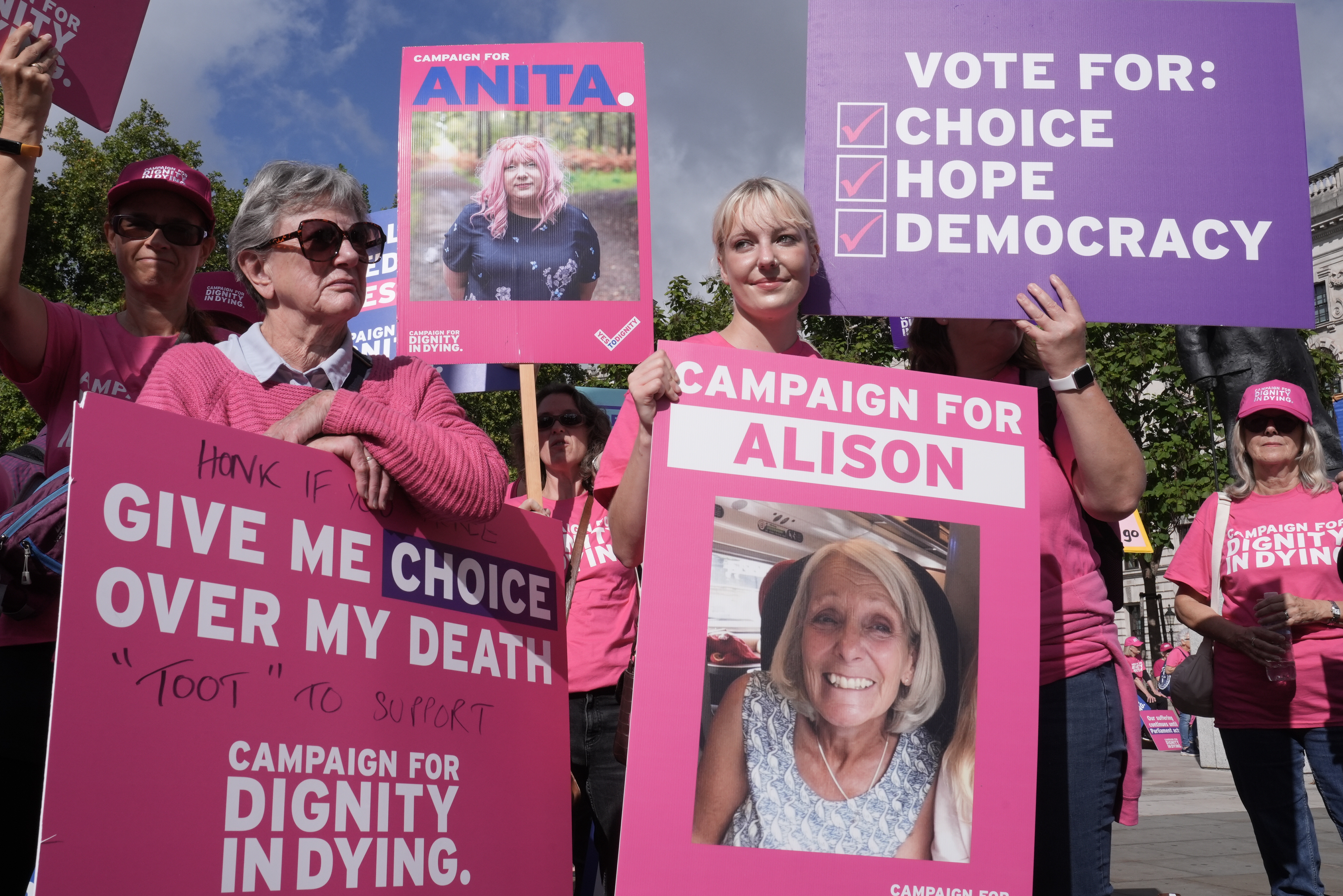
    LONDON — U.K. lawmakers on Friday voted down legislation to allow terminally ill adults in England and Wales to choose to end their lives.

    Following an impassioned four-hour debate in the elected House of Commons, the Terminally Ill Adults (End of Life) Bill was rejected 286 to 270. The outcome was somewhat surprising given that an almost identical bill had passed last year with a margin of 23 votes.

    The vote brings an end to a two-year debate in Parliament about assisted dying, during which the House of Commons had backed assisted dying on two previous occasions. Their backing wasn’t enough for it to become law because it was effectively filibustered by unelected lawmakers in the House of Lords.

    Back in the House of Commons on Friday, the bill had proposed allowing adults in England and Wales who have fewer than six months to live to apply for an assisted death subject to the approval of two doctors and an expert panel.

    Many individual lawmakers relayed their own stories both in favor of and against the proposal. The government took a neutral stance, meaning lawmakers voted according to their consciences rather than along party lines.

    One lawmaker who was among those to oppose the bill, having previously backed it, spoke about how “nightmares” prompted her to switch sides. Janet Daby said she dreamed of “dying and death” because she had not been “entirely comfortable” with her former position.

    The new U.K. leader, Prime Minister Andy Burnham, didn’t vote because he said he didn’t want to “unduly influence the debate.”

    Opponents branded the bill unsafe and unworkable, citing concerns around potential coercion of vulnerable people and a lack of safeguards for those with disabilities.

    Lawmaker and cancer surgeon Zubir Ahmed also noted uncertainty around a doctor’s prognosis.

    “I have to be honest with you,” he said. “When I am asked to prognosticate as to whether someone has six months to live or not, I am as often wrong as I am right.”

    The leader of Catholics in England and Wales, Archbishop Richard Moth, called the bill “wrong in principle” and “deeply flawed. The Church of England’s Archbishop of Canterbury, Sarah Mullally, also objected to the bill.

    Medical colleges, including the Royal College of Psychiatrists, had raised “serious concerns” about the bill, saying there were “too many unanswered questions about the safeguarding of people with mental illness.”

    Proponents of ” assisted dying ” — sometimes referred to as “assisted suicide” — had hoped it would mark the biggest change to social policy in the U.K. since abortion was partially legalized in 1967. The intention was to put an end to the practice of those near the end of their lives going to other countries, such as Switzerland, for an assisted death.

    Lauren Edwards, who reintroduced the bill to the House of Commons, said the rejection was “heartbreaking” but expressed hope that the issue will win parliamentary approval in the future.

    “Assisted dying will come in this country, as it is already doing all across the world, but not soon enough,” she said. “Parliament has dropped the ball today. It will be picked up again as it must be, because the law as it stands is simply too cruel and too unjust to be allowed to stand.”

    Other countries where assisted dying is legal include Australia, Belgium, and Spain, with regulations on qualifying criteria varying by jurisdiction.

  • Southwest Philly residents want to fight neighborhood blight, but say they need the city’s help

    Southwest Philly residents want to fight neighborhood blight, but say they need the city’s help

    It would be hard to imagine a vacant lot of abandoned cars, tires, and trash lasting long in Center City before it got taken care of. But a group of Southwest Philly residents say that’s exactly what’s happening in their neighborhood.

    Their relatively new group, the PA Solidarity Project, cataloged roughly 50 instances of blight over the spring, including abandoned cars and houses, illegal dumping, and potholes, and reported them to the city in early June. Longstanding blight is a common concern in the neighborhood, they said. But the city has only taken action on about half of those reported problems since then, the group said.

    “In other zip codes, this wouldn’t be allowed,” said Andrew Coates, 67, a block captain and Southwest Philly resident for over 30 years. He referenced a recent story by the Philadelphia Citizen, which found higher-income zip codes tend to get their 311 requests addressed more than 50% quicker than lower-income areas like Southwest Philly.

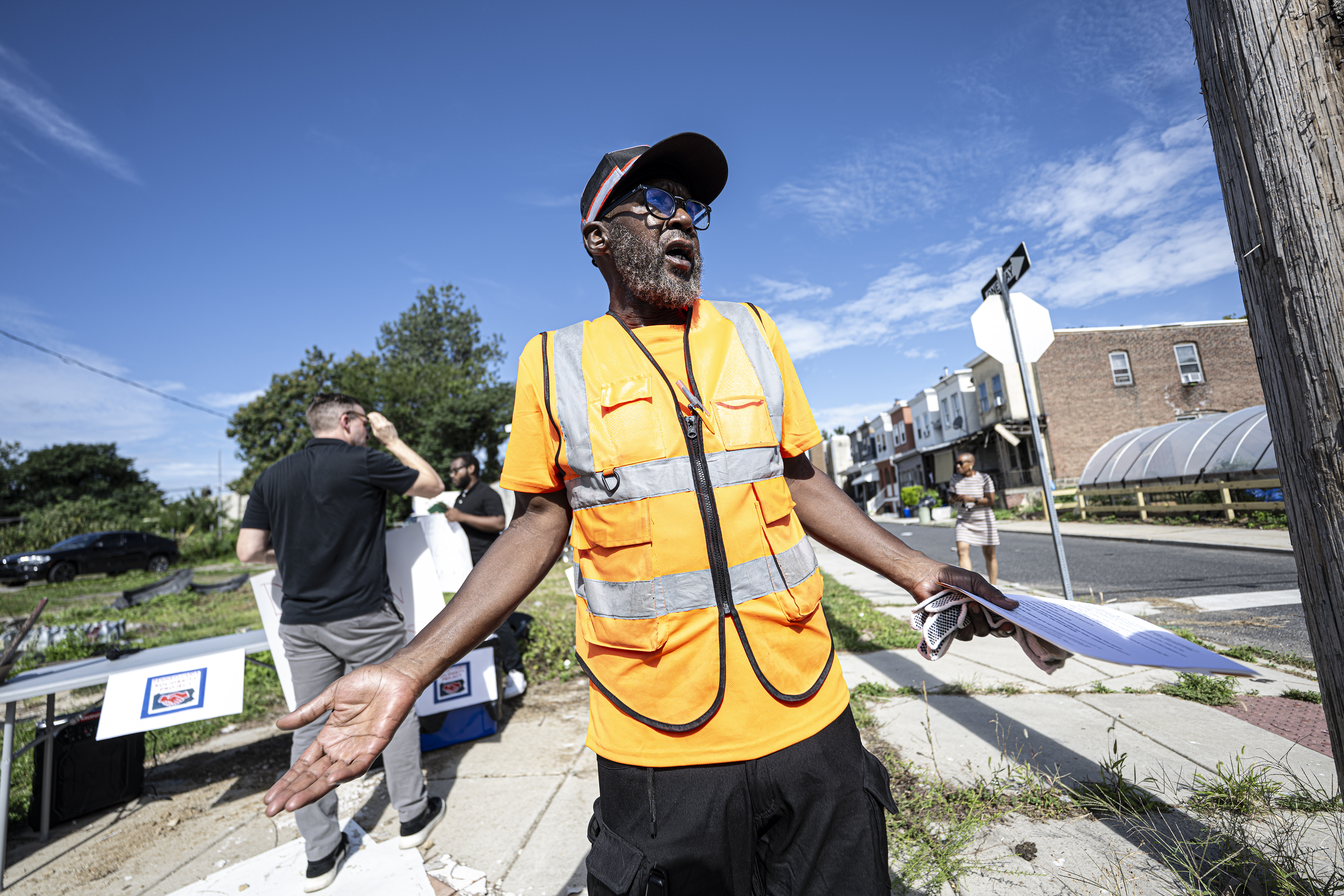
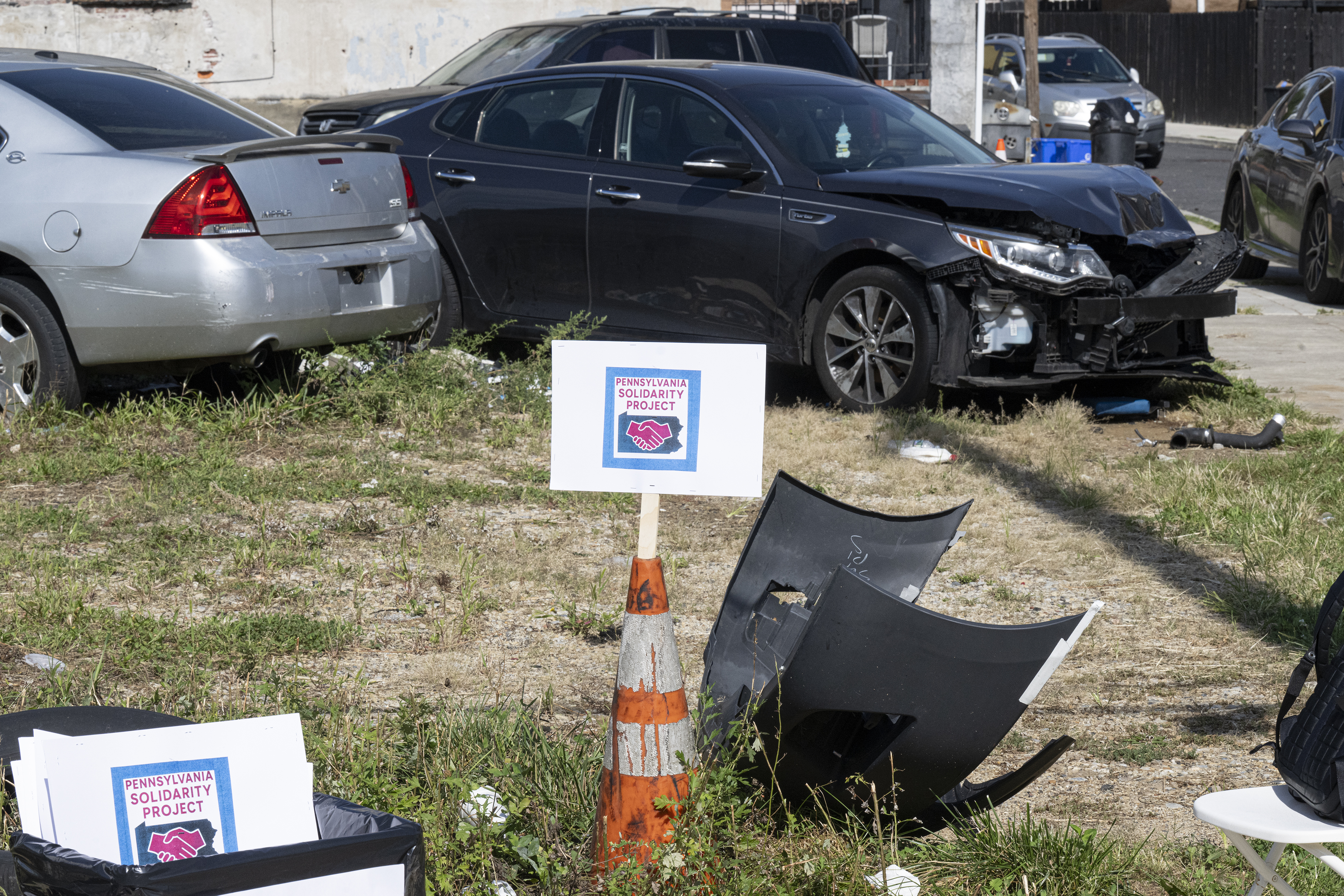
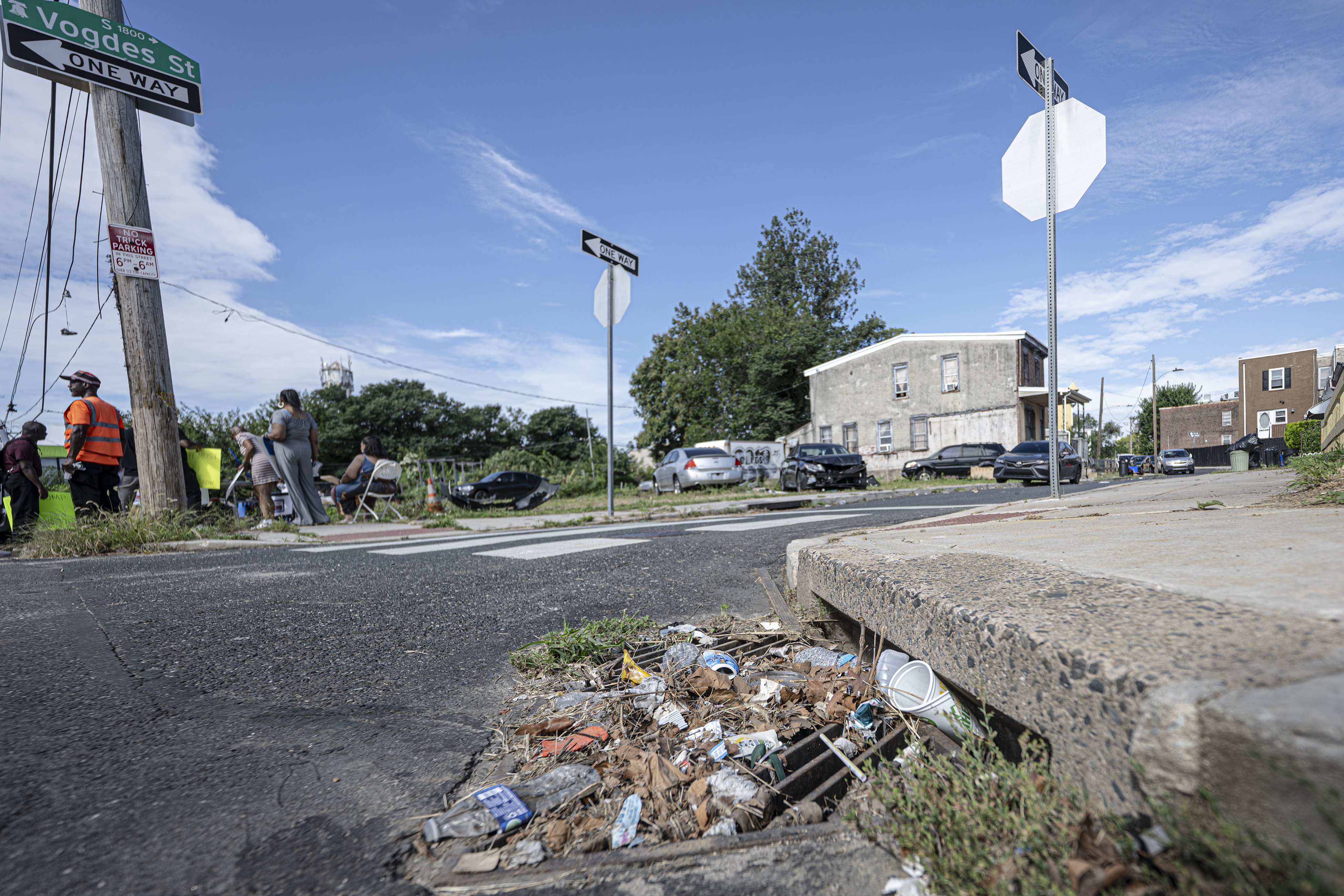
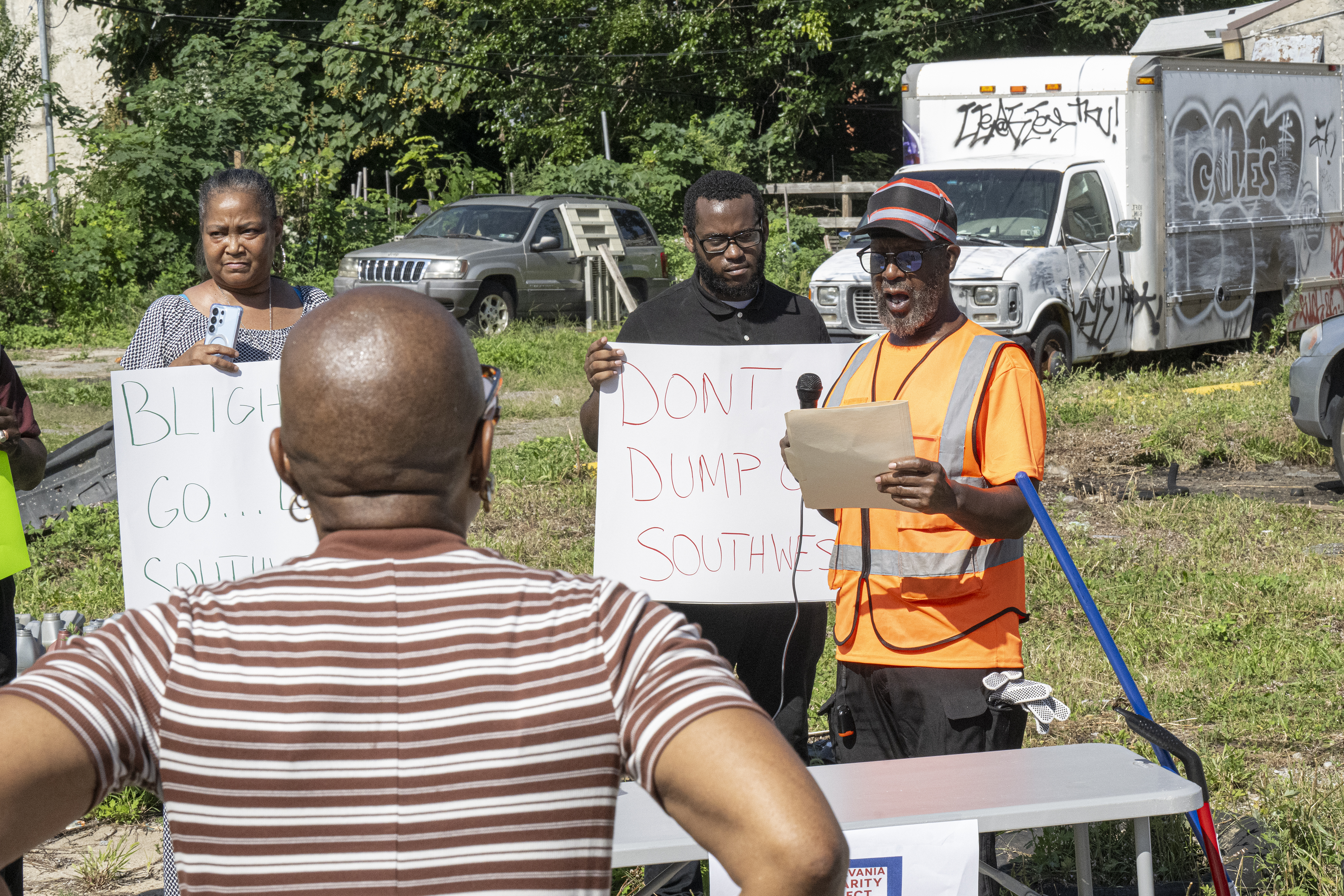
    Coates stood in front of the intersection of Paschall Avenue and South Vogdes Street on Thursday, where a vacant lot held several abandoned and busted cars, oil jugs, overgrown weeds, and other trash. He said the constant signs of blight weigh on everybody, and younger generations see them as an expected part of life in Southwest Philly.

    Abandoned cars are shown in a vacant lot Thursday, Sept. 10, 2026, in Southwest Philadelphia. Residents have been trying to get the city to address longstanding blight in their neighborhood, including abandoned cars and illegal dumping.Jose F. Moreno / Staff Photographer

    “If you’ve grown up and this is all you’ve seen, you think it’s normal,” he said. The PA Solidarity Project aims to break that perception, and said it needs the city’s help.

    “We’re resolute about this. …We want the transformation,” he said.

    ‘A lack of respect’

    The PA Solidarity Project formed last fall, and began its work by surveying Southwest Philly residents to identify common issues they could act upon together. Blight was a common response, with residents highlighting how the neglect impacted their quality of life. Several auto shops tend to be the source of the abandoned cars and illegal dumping, residents said.

    “I’m talking about what our children have to see walking down the street. …They send a message that somehow this neighborhood doesn’t much matter,” said Morgana Jackson, 60, another member.

    “Southwest Philadelphia matters,” she said.

    But residents individually had mixed results submitting requests to 311, and decided the group, which has a small core of about six residents but has gotten about a hundred involved with various activities, needed to act collectively, the organization said.

    “When residents report a problem and nothing happens …I believe that shows a lack of respect,” said Towanda Robinson, 56, a PA Solidarity Project member.

    Trash piles up near a vacant lot Thursday, Sept. 10, 2026, in Southwest Philadelphia. Residents have been trying to get the city to address longstanding blight in their neighborhood, including abandoned cars and illegal dumping.Jose F. Moreno / Staff Photographer

    The residents conducted a sweep of the neighborhood to note the most troublesome areas and examples, and presented their catalog of about 50 blight items to representatives from the city’s Neighborhood Community Action Centers program in early June. The initiative is designed to serve as hyper-local city halls in each City Council district, where residents can file complaints, receive benefits, or resolve problems with a city agency.

    Group members said they believed the city was receptive to their concerns, and were encouraged by the city’s promise at a late-June community meeting to put together an action plan for Southwest Philly.

    But since then, only about half of their cataloged requests have been addressed, and smaller but noticeable signs of neglect remain. While the residents said they appreciated the work the city has done so far, it hasn’t been enough.

    They said they are particularly frustrated since Mayor Cherelle L. Parker has spoken openly about tackling cleanliness and quality of life issues, but the push doesn’t feel like it has reached their corner of the city yet.

    City spokesperson Keisha McCarty said the Neighborhood Community Action Centers program has received reports of 16,578 issues citywide from constituents from October 2024 through August 2026, and it has resolved 94% of them. In the district that includes Southwest Philly, 92% of issues have been resolved, McCarty said.

    One explanation for the delays addressing the PA Solidarity Project’s full catalog is that a handful of the issues require coordination with the school district and with Verizon to address a wire box, according to McCarty.

    Still, “it’s disheartening,” when blight persists, Coates said.

    A Southwest Philadelphia resident and block captain, Andrew Coates, speaks about the need to clean city streets and efforts to get the city to address longstanding blight in the neighborhood, including abandoned cars and illegal dumping, during a news conference near their homes Thursday, Sept. 10, 2026, in Southwest Philadelphia.Jose F. Moreno / Staff Photographer

    On Thursday, the PA Solidarity Project held a small event in front of the Paschall and Vogdes lot to call attention to the longstanding blight, and called the city to act. The residents who spoke were adamant that they and their neighbors care about the area, and are willing to do their part to fix the problems — Coates and other residents take it upon themselves to do street cleanups in the neighborhood from time to time.

    “People do care about this and people want it addressed. But people are limited about what they can do. … They can’t do what the city does,” Coates said.

    Jackson said she and the others point out the better care other neighborhoods receive, not to argue those blocks deserve less but instead to argue every zip code deserves equal attention.

    “Because we love it, we refuse to accept the idea that blight is something we have to live with,” Jackson said.

  • Construction began on the installation of the Rocky statue atop the Art Museum steps

    Construction began on the installation of the Rocky statue atop the Art Museum steps

    Rocky Balboa started his new era at the top of the Art Museum steps Friday.

    City crews officially began the installation of the 8-foot-6-inch Rocky statue, which is slated to be completed over the next two weeks and cost roughly $150,000 to install, according to Creative Philadelphia, the city arts office behind the proposal. The statue should be fully installed by the end of September.

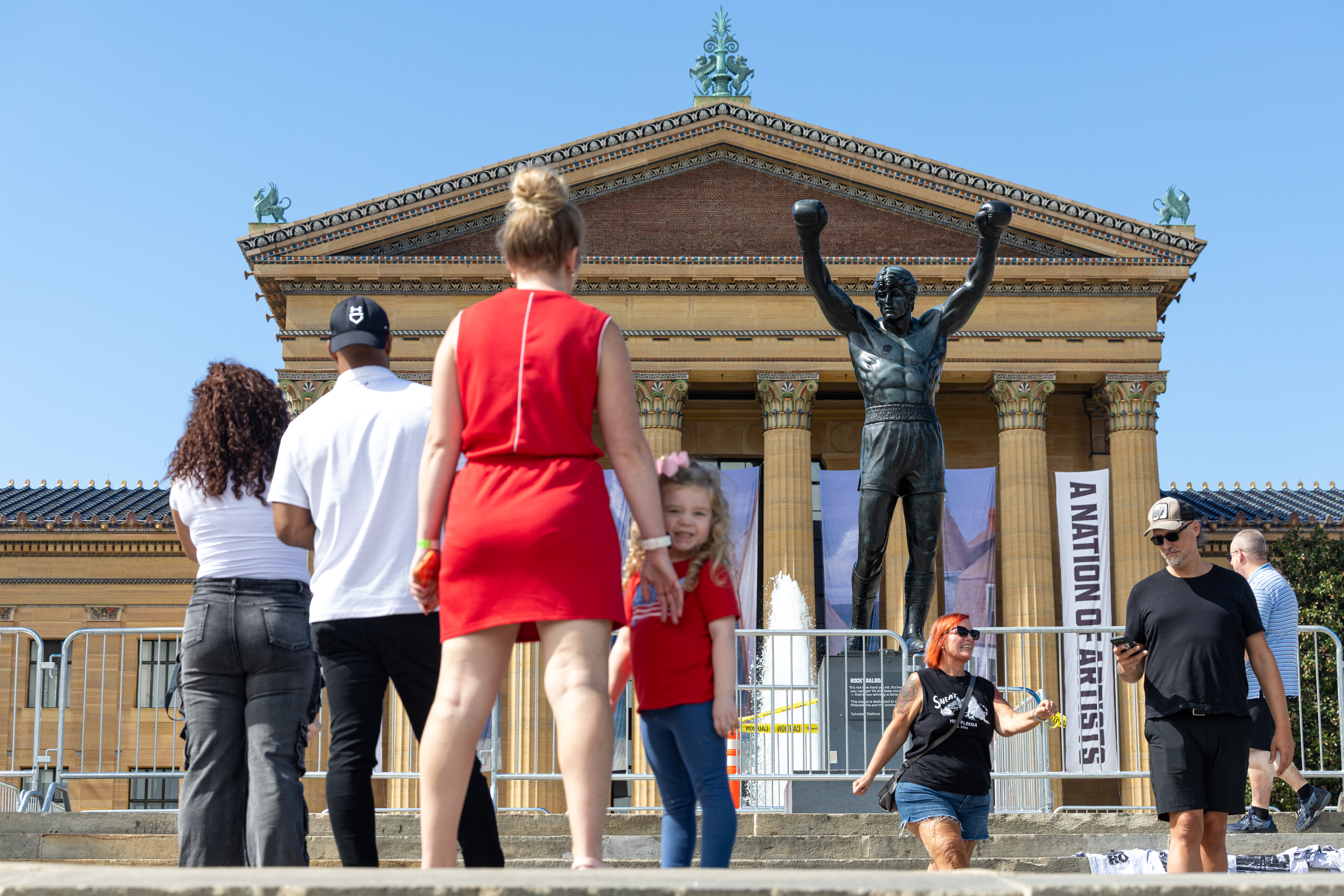
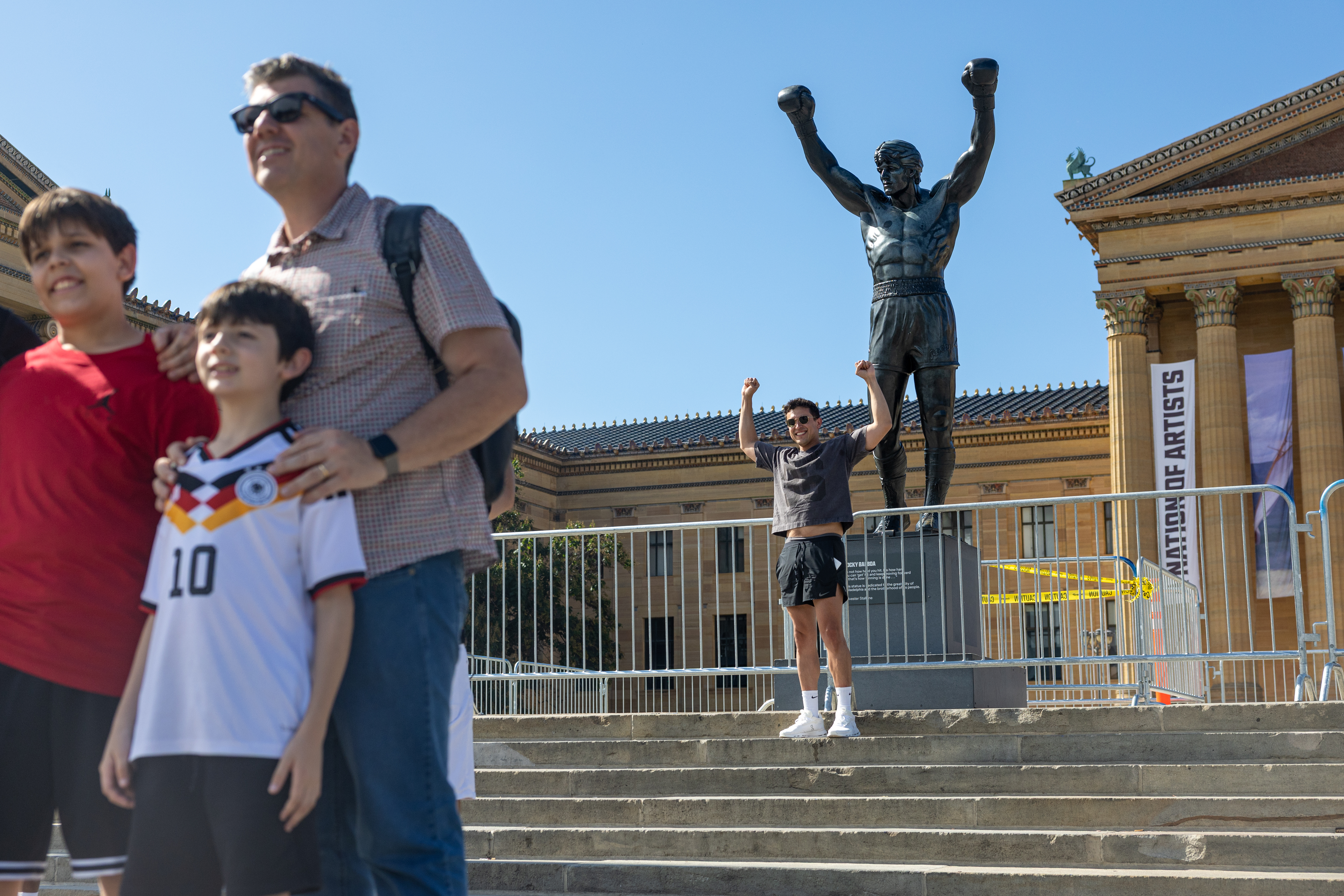
    Access to the fictional Philly boxer will be closed off to the public for the duration of the work. However, the bronze Italian Stallion will still be visible from behind barricades — tourists just won’t be able to touch him.

    Visitors take photos in front of the Rocky statue while a fence surrounds the statue before its installation begins in Philadelphia on Friday. Access to the statue at the top of the Philadelphia Museum of Art steps will be temporarily closed for the duration of the work. Rocky will remain visible throughout construction, but will be secured behind barricades limiting access.Aidan T. Gallo / Staff Photographer

    The statue, commissioned by Sylvester Stallone for Rocky III, in which it also appeared, depicts the famous moment in the first Rocky where Stallone thrusts his fists in the air as he takes in the city skyline after a rigorous training montage. An estimated four million tourists visit the statue each year to reenact the moment that inspired fans globally.

    Since 2006, the statue has sat at the bottom of the Art Museum steps. Before that, Rocky moved between the museum and the South Philly stadium complex at least six different times since the statue was originally revealed in 1981.

    Before the installation began Friday, the original statue had been housed inside the Art Museum for the exhibit “Rising Up: Rocky and the Making of Monuments” since March. The statue that welcomed fans throughout the summer and cursed World Cup teams whose fans put merch on it is from Stallone’s private collection and will be returned.

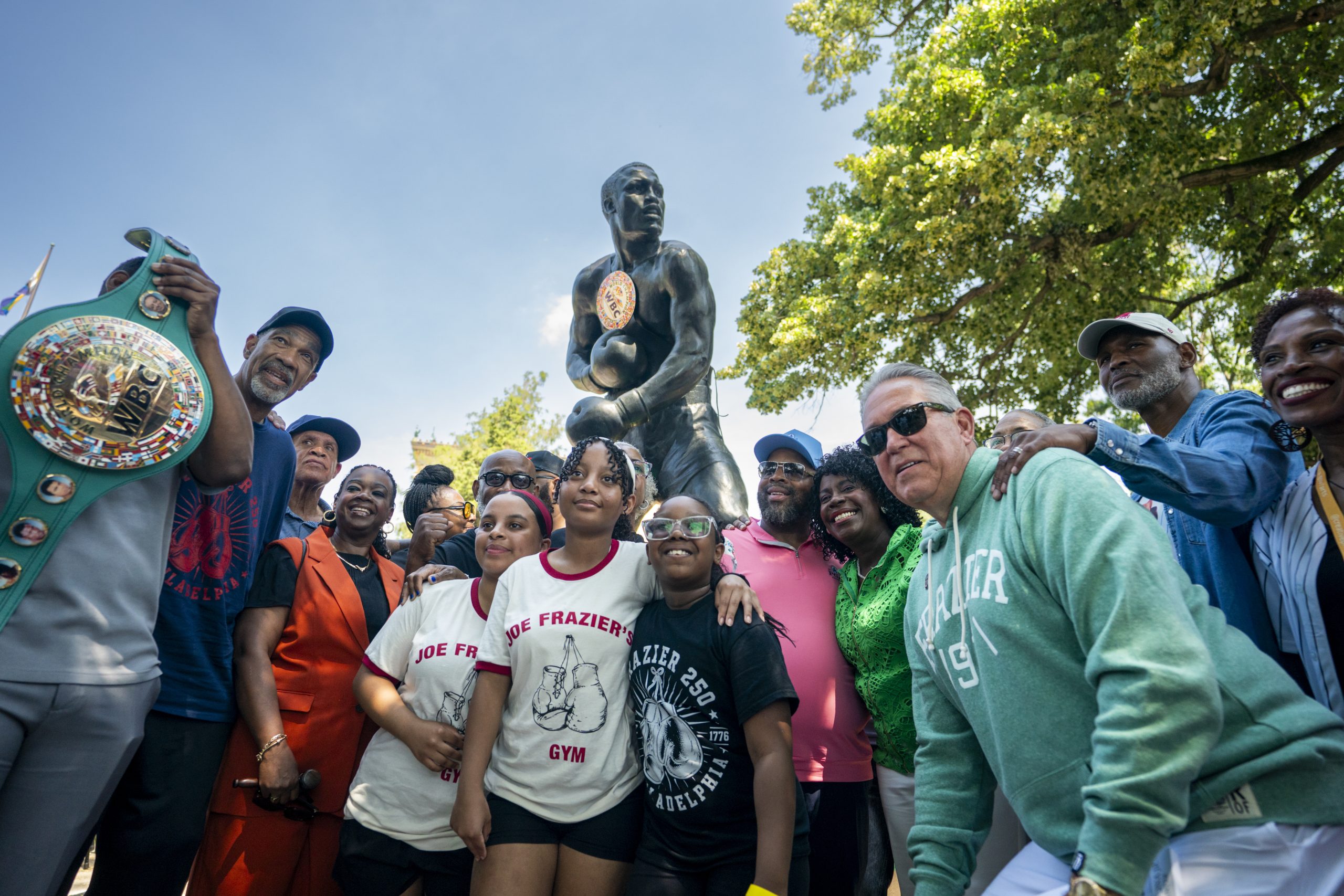
    The original statue will be placed on a pedestal around 14 feet back from the edge of the top step, next to where Rocky shoe prints are embedded into the walkway. At the bottom of the steps, where the bronze Balboa had been since 2006, now sits a statue of real-life Philly boxing legend “Smokin’” Joe Frazier.

    Mayor Cherelle L. Parker, Frazier family members, boxers, and other dignitaries unveil the new home for its statue of heavyweight boxing champion Joe Frazier on June 29. The statue is installed at the base of the steps of the Philadelphia Museum of Art where a statue of fictional boxer Rocky Balboa once stood.Jessica Kourkounis / For The Inquirer

    Placing Rocky at the top of the steps is contentious, though. In an Inquirer survey last fall, 46% of respondents said there shouldn’t be a Rocky statue at the top of the steps, but rather it should stay at the bottom where it had been for more than a decade. One out of five respondents said the city shouldn’t have a Rocky statue at all. Even when the statue was revealed more than 40 years ago, some local officials called it “unnecessarily strident.”

    Still, that doesn’t stop the millions of people who visit the Art Museum steps just for a glimpse of the bronze boxer. Soon, they’ll be doing it again at the same spot as the movie scene.

    Staff writer Nick Vadala contributed to this article.

  • For the 25th time, New York marks a shattering loss

    For the 25th time, New York marks a shattering loss

    Gordon M. Aamoth Jr.

    Edelmiro Abad.

    Marie Rose Abad.

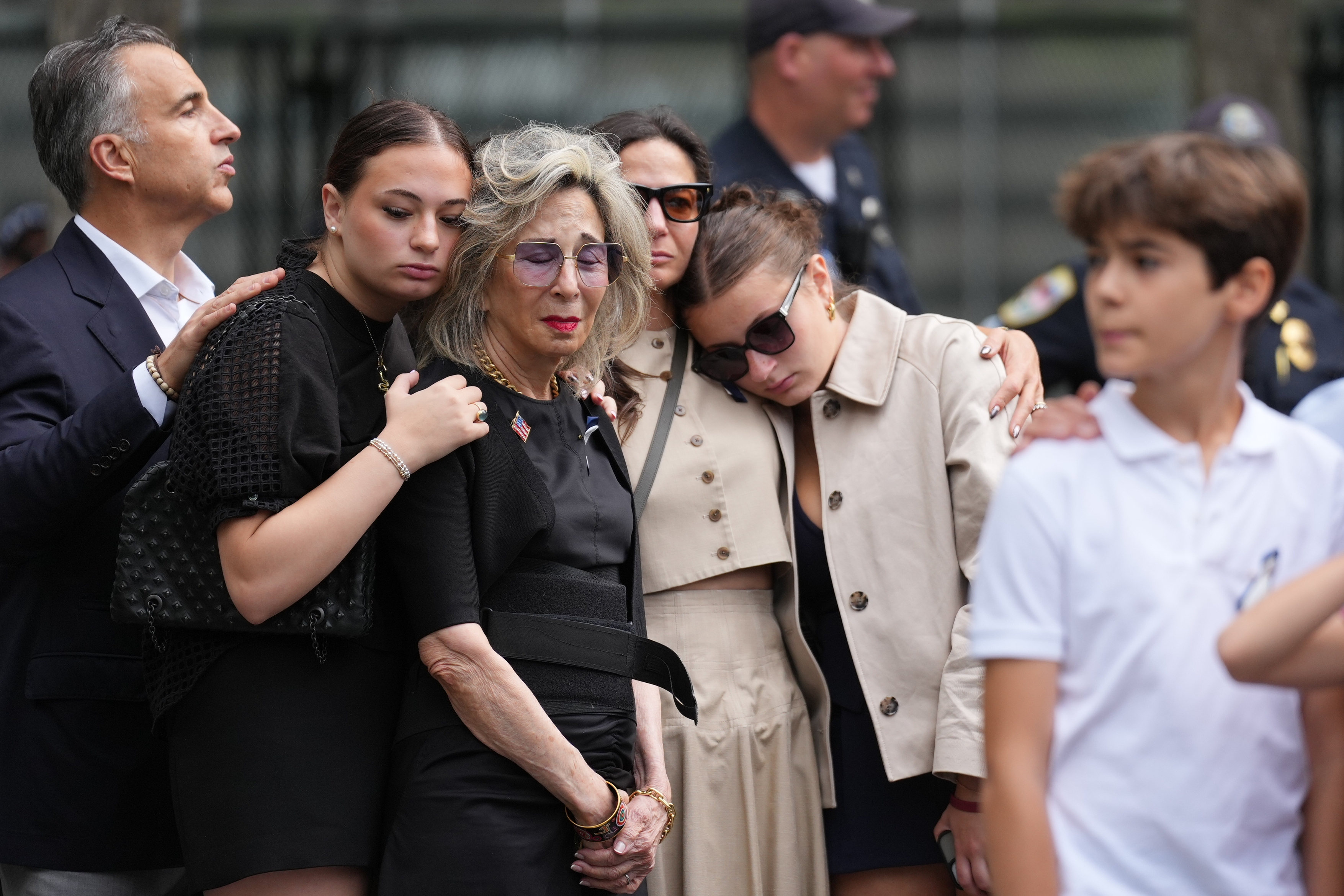
    A quarter-century after the terrorist attacks that shook New York City and the world — an ashen morning followed by years of grief and repair, rebuilding and war — dignitaries and mourners gathered once again in Lower Manhattan to read aloud the names of those killed when hijackers crashed airplanes into the World Trade Center and sent the twin towers crumbling to the ground.

    Milton G. Bustillo. Thomas M. Butler. Patrick Dennis Byrne.

    The ceremony on Friday took place beneath a canopy of swamp white oak trees between the two memorial pools where the towers once stood. The pools were designed to appear bottomless, and their cascading waters lent a whispering backdrop to the morning. Relatives held aloft photos of the dead, forever young, as children on the podium spoke directly to grandparents, aunts, and uncles they had never met.

    “My dad always talks about how wonderful you were,” one girl said after naming a lost relative. She is among the 100 million Americans born since that day.

    Some people used their turns at the microphone to criticize the federal government for continuing to work with Saudi Arabia in the years since the Sept. 11 attacks. Family members of those who died have sought to hold the kingdom responsible in federal court, claiming that its government provided support for the hijackers.

    Among them was Terry Strada, an official with 9/11 Families United, whose husband was killed in the attack. Her organization has tried for years to pursue legal action against the Saudi government. The kingdom has denied involvement.

    “It has been one betrayal after another,” Strada said from the podium. She urged the assembled elected officials to “stand with survivors, stand with Americans.”

    Later, a nephew of Lisa Marie Terry, who died in the attack, accused “the deep state” of hiding the truth. He called on President Donald Trump to “release the unredacted files that implicate Saudi Arabia, while what’s left of the victims’ families are still alive to see it.”

    Four living former presidents, from Bill Clinton to Joseph R. Biden Jr., stood silently nearby. Zohran Mamdani, the city’s first Muslim mayor, was also in attendance, despite a petition signed by thousands of people, including victims’ family members, urging him to stay away. He was joined by former Mayors Bill de Blasio, Michael Bloomberg, and — awkwardly — Rudolph Giuliani, who was in office on Sept. 11 and earlier this week said that Mamdani’s presence at the ceremony “offends me.”

    Mamdani nonetheless approached Giuliani at the ceremony. The two men shook hands, and Giuliani’s position seemed to have softened. Cameras captured him apparently telling Mamdani: “I’ll pray for you. It’s a really hard job.”

    Gov. Kathy Hochul was there, as was Gov. Mikie Sherrill of New Jersey and former Gov. George E. Pataki of New York, who had also called on Mamdani to skip the event.

    Vice President JD Vance stood in for Trump, who instead attended a ceremony at the Pentagon. In his remarks, the president talked about how Sept. 11 had changed America.

    “Twenty-five years after the attacks, we know the world will never return to the way it was at that dawn on that beautiful, peaceful Tuesday morning, 2001,” Trump said, “before the towers fell, before the Pentagon was hit, before the specter of evil, and this horrible, horrible evil came crashing into our lives.”

    In New York, as is custom, there were no speeches from elected officials, putting all the focus on the families. The names of the victims read on Friday included the six killed in the 1993 World Trade Center bombing.

    Uniformed firefighters present and past — many older now, grayer — gathered at the ceremony, at churches and, later, in the city’s barrooms, to raise glasses to their 343 fallen brothers.

    The effects of Sept. 11 played out for months, years. The Fire Department would go on to be further gutted by mass retirements of high-ranking officers. The Police Department lost 23 officers that day, and was reshaped by the introduction of new tactics, units, and equipment to fight terrorism.

    The day is a reminder of how the attacks’ long shadow has reached into many corners of life in the U.S. and beyond.

    The U.S.-led global war on terrorism included invasions of Iraq and Afghanistan — the latter Washington’s longest war — and detentions and harsh interrogation of terror suspects in an international network of secret CIA prisons. The U.S. found and killed al-Qaeda leader Osama bin Laden in Pakistan in 2011, but the accused 9/11 mastermind Khalid Sheikh Mohammed still awaits a trial 23 years after his capture.

    The attacks changed U.S. air travel, led to the creation of the Department of Homeland Security, prompted new federal surveillance and intelligence-gathering powers and banking regulations and generated ongoing debate over the balance between security and freedom.

    Sept. 11 engendered a culture of individual vigilance summed up by the slogan, ” If you see something, say something,” while a wave of patriotism propelled some Americans to join the military, fire departments and police forces.

    On Friday, there were the traditional six moments of silence, marked with the tolling of a bell: one for each of the towers struck, one for each building’s collapse, and two for the plane crashes at the Pentagon and in Shanksville, Pa.

    A seventh moment of silence was added this year to commemorate those who had died of Sept. 11-related illnesses. Mamdani’s administration this week released more than 170,000 pages of previously withheld city records about the air quality around ground zero after the attacks. The documents seem to suggest that New Yorkers were encouraged to return to the area before it was safe to do so.

    The mournful wail of bagpipes — a fixture at hundreds of Sept. 11 funerals — rang out at the start of the memorial. Elsewhere in the plaza, Yo-Yo Ma played his cello softly behind the reading of the names.

    Information from the Associated Press was used in this article.

  • More than 500,000 Russian troops killed in Ukraine, UK defense chief says

    More than 500,000 Russian troops killed in Ukraine, UK defense chief says

    KYIV, Ukraine — More than half a million Russian troops have been killed in Ukraine since the start of Moscow’s full-scale invasion in February 2022, a senior British defense official said Friday.

    The dead are part of 1.5 million Russian casualties in Ukraine, Air Chief Marshall Sir Richard Knighton, chief of the U.K’s Defense Staff, said.

    The U.K. figures roughly coincide with those published by the Ukrainian military. There was no immediate comment from Russian officials.

    Moscow’s bigger army is struggling to make headway on the battlefield. Western officials and analysts say the Russian rate of advance has slowed significantly this year.

    Russia’s armed forces have also lost an “enormous” amount of military materiel, Knighton told reporters. That includes more than 10,000 armored and protected vehicles, close to 3,000 air defense and artillery systems, and over 370 aircraft and helicopters, Knighton said.

    He didn’t say what Ukraine’s losses were.

    Neither Moscow nor Kyiv give regular updates on their battlefield losses.

    Russian drones target Kyiv gas stations

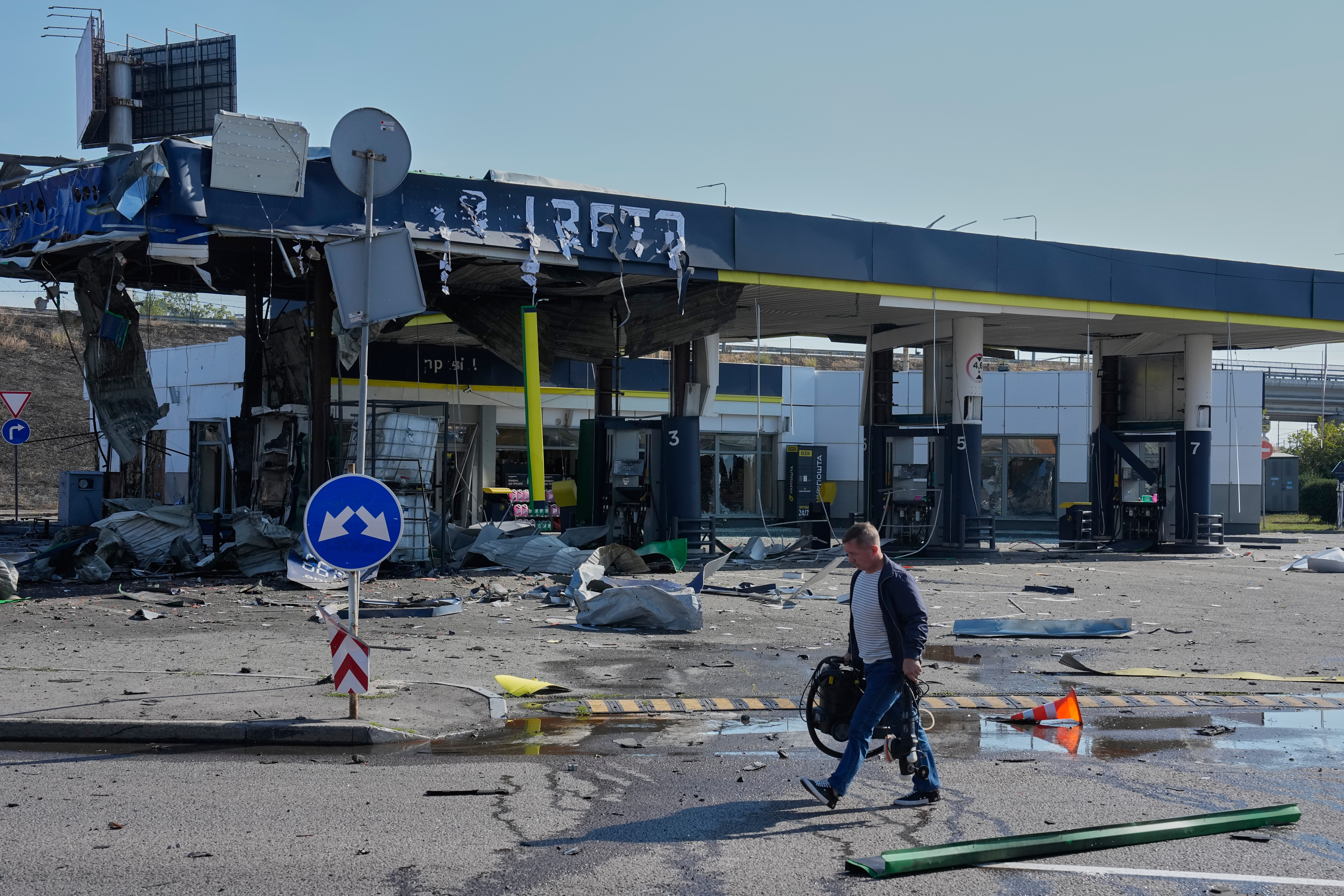
    Russian drones targeted roadside gas stations in Kyiv for a second straight day Friday, as Moscow broadened its air war in what Ukrainian officials say is an effort to rattle civilians.

    The attacks struck two Ukrnafta gas stations, killing two people and wounding six at one of them, the prosecutor’s office said.

    Russian strikes on urban gas stations have intensified in recent months, mostly in regions near the front line in eastern and southern Ukraine. It is part of a campaign to disrupt civilian life and weaken morale that has also included attacks on food distribution hubs, sporadically leaving some supermarket shelves bare in the Ukrainian capital.

    “Russia is systematically attacking places where it knows people will be spending their time going about their daily lives, seeking to maximize casualties, spread fear, and put pressure on Ukrainian society,” Foreign Minister Andrii Sybiha said on X late Thursday.

    Authorities have urged residents not to linger near gas stations and other exposed infrastructure during air raid alerts.

    Ukraine is urgently trying to improve its air defenses as Russia’s invasion stretches into its fifth year, and on Thursday won pledges of more support from Canada.

    Russian shopping mall strikes kill 5 in central Ukraine

    Pavlohrad, a city in central Ukraine, observed an official day of mourning Friday for five residents killed near shopping malls in broad daylight by Russian drones the previous day.

    The attack also wounded 67 people, Sybiha said on X.

    In the southern city of Zaporizhzhia, a 32-year-old woman and her 10-year-old son were wounded in an overnight Russian drone attack, Ukraine’s State Emergency Service said. The drones struck a nine-story apartment block and a shopping mall, it said.

    Efforts to put out the blazes were slowed by the constant threat of repeat strikes, forcing firefighters to stop working and take shelter, it added.

    In Dnipro, a city in central Ukraine, a Russian daylight attack Friday wounded 12 people, according to local officials.

    Russia says it stopped 777 Ukrainian drones

    Ukraine, meanwhile, has extended its own long-range drone campaign deep into Russia, straining air defenses across its bigger neighbor’s vast territory. On Thursday, its military reported hitting a refinery more than 1,800 miles away in Siberia as Kyiv tries to hurt Russia’s vital oil sector. Its strikes have caused fuel shortages in Russia, one of the world’s biggest energy producers.

    Russia’s oil product exports hit record lows in August, and Moscow is importing fuel from South Korea and India, the Center for Research on Energy and Clean Air said in a report.

    “Ukrainian strikes on Russia’s refining capacity have turned tables on the world’s once largest oil product exporter to see them start importing fuels, with imports surging to a record 172,000 metric tons (189,600 tons) in August — more than seven times the previous monthly high,” the Finland-registered nonprofit said Thursday.

    Ukraine launched a major barrage overnight from Thursday to Friday, with the Russian Defense Ministry saying air defenses intercepted 777 Ukrainian drones over 16 Russian regions, as well as occupied Crimea and the waters of the Azov and the Caspian seas.

    Two people were killed and three others wounded overnight in a Ukrainian drone attack on the Tula region south of Moscow, local officials said Friday.

    A Ukrainian drone strike during the night started a fire at the Saratov oil refinery in southwestern Russia, Russian independent online outlet Astra said Friday. Kyiv has repeatedly targeted that refinery, which was last hit in early August.

    Major online retailer Ozon said its logistics facility in the same city was struck and set ablaze by a Ukrainian drone, though no casualties were reported. Ozon is a competitor to Wildberries, whose facilities Ukraine has also targeted.

    Ukrainian President Volodymyr Zelensky said long-range strikes overnight hit eight Russian regions, including a business and an oil industry facility in the Saratov region.

    The attacks were “aimed at reducing Russia’s capacity to wage war,” he said on X Friday.

  • Lower Merion police request funds for a ‘first responder’ drone as anxieties about surveillance spike nationwide

    Lower Merion police request funds for a ‘first responder’ drone as anxieties about surveillance spike nationwide

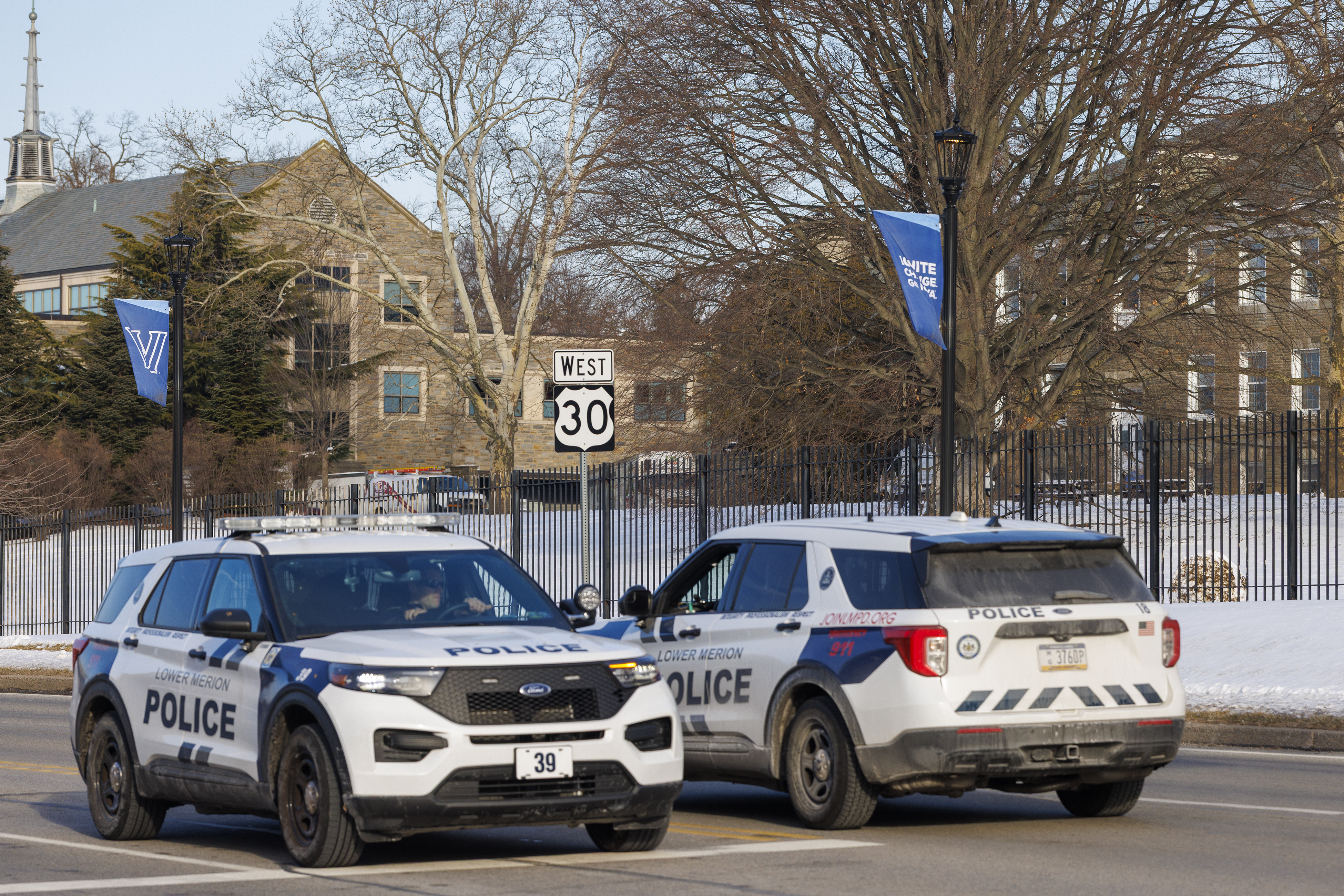
    Lower Merion’s police department has requested funds for a program that would automatically dispatch a drone to the scene of certain 911 calls.

    Andy Block, Lower Merion’s police superintendent, pitched commissioners on Axon’s Drone as First Responder program during a Wednesday budget workshop, describing the technology as a “force multiplier” for the police department that could provide officers with information before they arrive at a crime scene. The department requested $375,000 for a five-year investment in one drone.

    The proposal was met with skepticism from commissioners, many of whom expressed hesitancy about approving funding for the program without strict policies on the books, warning of “mission creep” and privacy violations as anxiety about surveillance technology balloons nationwide.

    What is the Drone as First Responder program?

    Under the program, a drone would be stationed at a dock in Lower Merion and would be automatically launched when 911 dispatchers receive reports of certain incidents, which are classified by codes. Specific codes would release the drone to the site of an incident, a process that would typically happen within 30 seconds of the call coming in, Block said. Once the drone launches, one remote operator, a police officer, would watch the live video feed and evaluate if and where resources should be sent.

    The automated drones differ from Lower Merion’s five existing drones, which require manual setup and launch by an officer once a dispatch is ordered, adding minutes of lag time, Block told commissioners at the budget workshop.

    First responder drones could help officials get ahead on burglaries, missing persons incidents, fires, and area searches, and could evaluate if police are needed at a scene without taking the time and resources to dispatch officers to every call, the police superintendent said.

    Axon, the drone manufacturer, currently provides Lower Merion’s records management system, body cameras, tasers, and in-car cameras. The township moved over to Axon’s systems in January 2025.

    Lower Merion’s police superintendent has said Axon’s automated drones would improve office response time. Alejandro A. Alvarez / Staff Photographer

    Block described recent incidences where first responder drones could have helped police officers respond more quickly and effectively, including a 2024 Meredith Road home invasion and a recent road rage incident on the Blue Route, which led to a suspect chase in Lower Merion.

    He touted the versatility of the drones, floating their potential use for other purposes, including traffic and code enforcement. The Montgomery County District Attorney’s office confirmed that Lower Merion is legally allowed to use drones for traffic enforcement.

    Bensalem launched a “drone as first responder” program earlier this year, which Block described as a model for Lower Merion, calling Bensalem’s program “very impressive.”

    Concerns over privacy

    The Drone as First Responder program was pioneered by the Chula Vista, Calif., police department, which in 2018 became the first municipal police department in the country to deploy the technology. Between 2018 and 2024, the department’s first responder drones made more than 20,000 flights.

    Since then, the technology has grown in popularity among police departments across the country, with municipalities from Washington to Kentucky signing on. A police department in Missouri said its Drone as First Responder program helped with 12 felony arrests in two months this summer.

    Police in Chula Vista have said the technology improved their response times and helped officers deescalate dangerous situations. Yet an investigation by WIRED found that the drones surveilled poorer residents far more frequently than wealthier residents, and were often dispatched for minor issues like vandalism and loud music, in addition to more serious incidents. All the while, residents who regularly encountered the drones reported “feeling constantly watched.” The Chula Vista Police Department has said its drones do not conduct random surveillance or search for suspicious activity.

    Lower Merion commissioners on Wednesday shared apprehension about the implications for residents’ privacy should automated drones begin traversing the township’s airspace.

    No official vote on the funding was taken at the budget workshop. Commissioners said they would need to see clearer policy guidelines before moving the drone into the budget.

    “Surveillance and privacy is a really big issue right now,” commissioner Maggie Harper Epstein said, adding that the program “would be a tough thing to communicate to the residents of the township.”

    Todd Sinai, the board’s president, warned that “there is a difference” between a police officer piloting a drone toward the site of a potential crime and a drone launching automatically “because someone just called something in, and it flies over the township to get to the site, recording along the way.”

    Many criticized the request to approve funding before putting policy guidelines on the books.

    “Until we see what that policy is, I would be very uncomfortable giving support to this,” commissioner Daniel Bernheim said.

    Block clarified that Lower Merion already has a drone policy in place but would need to update its code to specifically include the automated drones.

    A ‘no-brainer’ for law enforcement

    Not everyone shared concerns.

    Commissioner Charles Gregory called the drone program a “no-brainer” and said that the minutes saved with the automated devices could be the difference between life and death in extreme situations.

    Commissioner Louis Rossman said the program “is a great idea” and “just seems like the future.”

    Rossman referenced a series of residential burglaries in the township, saying the drone program may have been able to assist with apprehending offenders who have “eluded” law enforcement.

    This suburban content is produced with support from the Leslie Miller and Richard Worley Foundation and The Lenfest Institute for Journalism. Editorial content is created independently of the project donors. Gifts to support The Inquirer’s high-impact journalism can be made at inquirer.com/donate. A list of Lenfest Institute donors can be found at lenfestinstitute.org/supporters.

  • Isao Harimoto, Hiroshima survivor and a baseball star in Japan, dies at 86

    Isao Harimoto, Hiroshima survivor and a baseball star in Japan, dies at 86

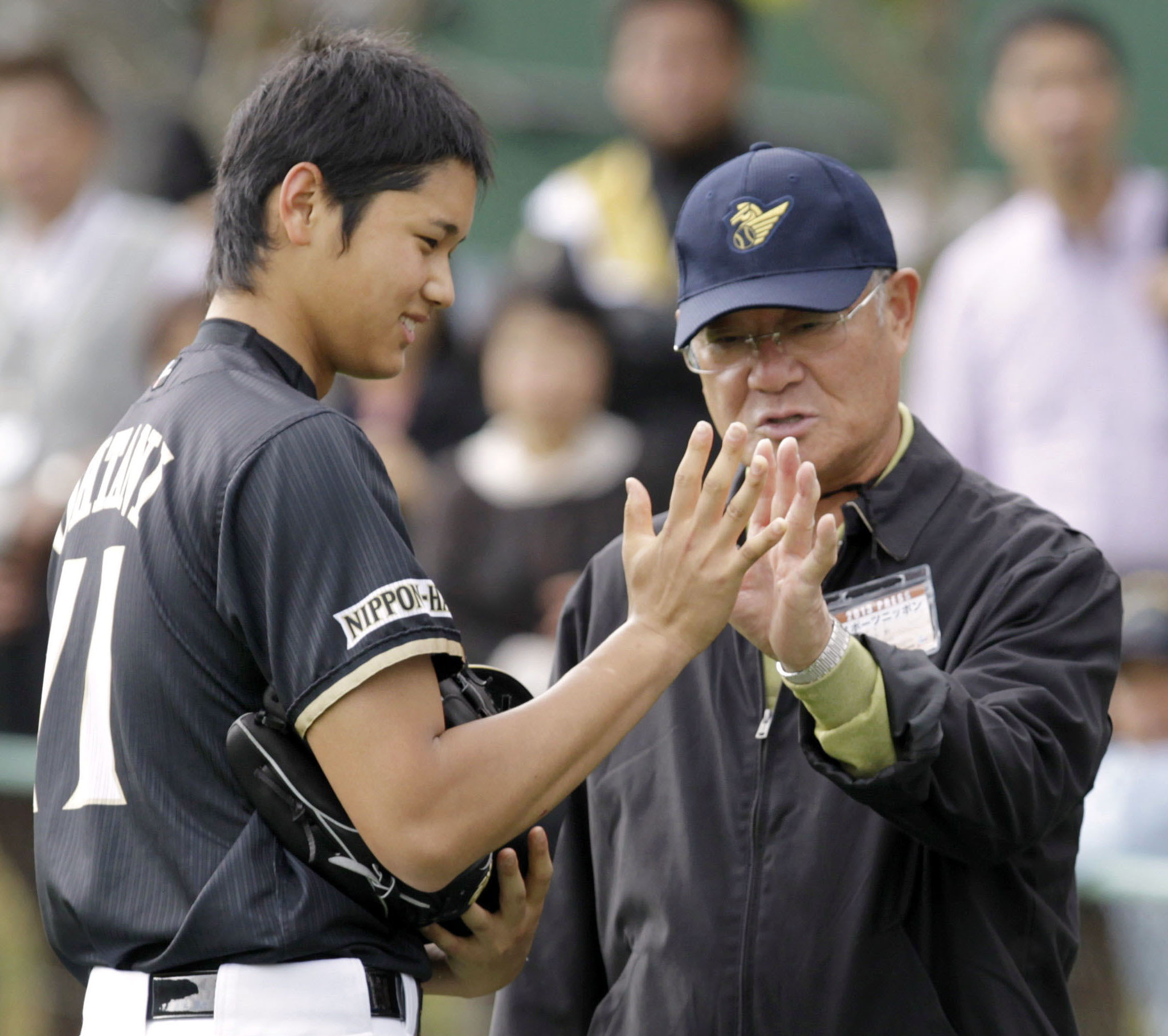
    Isao Harimoto, who survived the Hiroshima atomic bombing as a child and went on to have more hits than anyone else in the history of Japanese baseball, died Wednesday in Tokyo. He was 86.

    His death, in a hospital, was announced by the Meikyukai, or the Golden Players Club, one of Japan’s baseball halls of fame. No cause was given.

    Mr. Harimoto earned the nickname Hit Machine for collecting a record 3,085 of them in a long career than stretched from the late 1950s to the early ’80s. He won seven league batting titles.

    He was the only player to collect 3,000 hits in Japan. (Ichiro Suzuki had 4,367, but more than 3,000 came after he moved to the American major leagues.)

    But Mr. Harimoto was far from a slap hitter; 504 of those hits were home runs, putting him seventh on the all-time list for Japan. He also stole 319 bases, won an MVP award, and was an 18-time All Star.

    After his time as a player, he became an outspoken commentator on the game.

    Isao Harimoto was born on June 19, 1940, in Hiroshima, Japan, to Korean parents who had emigrated the year before. His Korean name was Jang Hun. His mother, Pak Sun Bun, was a cook and his father, Jang Sang Jeong, sold scrap metal and various secondhand items from a cart.

    Harimoto was 5 when the atomic bomb was dropped on the city, about a mile and a half from where he lived. “There was a flash and an enormous roar,” he told the Chugoku Shimbun newspaper in 2011. “The next thing I knew, my mother was shielding me and my sister, three years older, with her body, though her back was covered in blood due to flying shards of glass.”

    The event was not frequently discussed in his home. “My mother wanted to forget; I think she wanted to completely erase her memories of that day,” he told the Mainichi, a Japanese English-language newspaper, in 2020. He lost a sister, Jang Jeom Ja, in the bombing, and his mother burned all photographs of her, he said. He himself did not discuss the cataclysm publicly until well after his baseball career.

    He was proud of his Korean heritage despite being bullied for it as a child and facing prejudice during his career.

    “A lot of ethnic Koreans in Japan assimilate into Japanese society,” said Robert Whiting, author of You Gotta Have Wa (1989), the definitive book in English about Japanese baseball. “Harimoto did not. He talked about the fact that his mother never spoke Japanese in the house, and he was very proud of that fact.”

    Mr. Harimoto was also critical of other athletes in Japan with Korean backgrounds who hid their ethnicity. Only late in life did he become a Japanese citizen.

    He burned his right hand in an accident as a young child, an event that contributed to his becoming a left-handed hitter when he took up baseball in fifth grade. Despite his talent, he lost a few chances at places on top high school teams because of a reputation as a troublemaker, deserved or not.

    In 1958, he visited South Korea for the first time with a team of Korean Japanese high school students. He met his grandparents and later said he truly connected with his Korean roots for the first time.

    His rigorous, disciplined approach to batting, and an ability to consistently hit up the middle, soon brought him to the top leagues. In 1959, playing with the Tokyo-based Toei Flyers, he hit .275, good enough to be named rookie of the year. He got much better over the next two seasons, hitting .302, and then .336. He played left field, and fielding was not his strong suit, but as a hitter, he performed strongly and consistently for two decades.

    Many of the teams he played on were not among the elite in the Japan leagues. He was part of a Japan Series-winning team only once, in 1962, when his Flyers beat the Hanshin Tigers in seven games. That was also the year he was named the Pacific League’s most valuable player. (The Flyers adopted their current name, the Nippon Ham Fighters, during his time with the team.)

    Mr. Harimoto’s most spectacular season was 1970, when he hit .383 with 34 home runs and 100 RBI, all career highs.

    He was a large player by the Japan leagues’ standards at the time, listed at 5 foot 11 and 187 pounds. And he was not afraid of players, American or Japanese, who were bigger still. “If there was a brawl on the field, he was always in the middle of it,” Whiting said. “He was a scary guy; no one wanted to fight him. He wasn’t afraid to show his temper and challenge people on the field.”

    Despite Mr. Harimoto’s batting success, he never could shake a reputation in Japan for being a bit of a bad boy. He enjoyed a drink and was involved in a few fights.

    He moved on to the Yomiuri Giants in 1976 and the Lotte Orions in 1980. He retired after the 1981 season at 41.

    After his playing days were over, Harimoto became a commentator on the game with a reputation for saying what he thought. “He didn’t seem to have a filter,” Whiting said. “He was very protective of the Japanese game and critical of players who went to the States to play, thinking they should be loyal to the Japan leagues.”

    Harimoto worked for the Korea Baseball Organization and helped establish that country’s national league in 1982, though he later split with the group over slights he believed he received.

    Speaking out against nuclear weapons was also a big part of his later life. “Which is more important: protecting human lives or holding on to nuclear weapons?” he asked in the Chugoku Shimbun in 2011. “These two things are poles apart. It’s inhuman to permit the existence of weapons that can annihilate people in an instant, when they’re just trying their best to live.”

    This article originally appeared in the New York Times.

  • Prosecutor leading probe into Trump foes resigns, vows investigation will continue

    Prosecutor leading probe into Trump foes resigns, vows investigation will continue

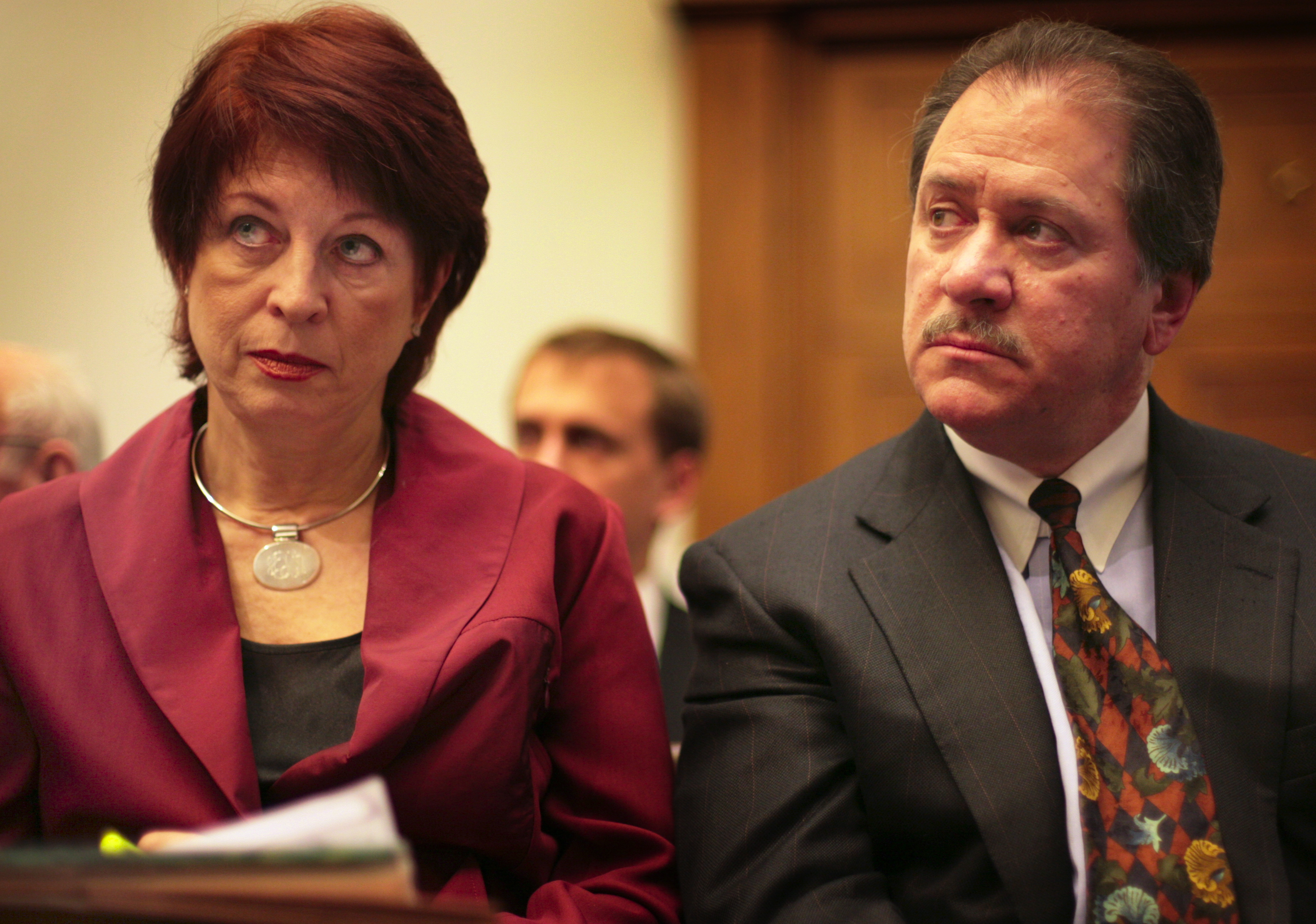
    The top prosecutor leading a wide-ranging conspiracy investigation into President Donald Trump’s political foes resigned Thursday afternoon.

    Joseph diGenova — a Trump loyalist who has pushed a baseless theory that the FBI was out to get Trump during his 2016 campaign — told the Washington Post that he has submitted his resignation papers to Attorney General Todd Blanche amid disagreements over the pace of the investigation.

    He did not elaborate on what specific disagreements led to his sudden departure at what appears to still be an early stage of the high-profile investigation.

    DiGenova’s wife, Victoria Toensing, an attorney who was brought in as part of the prosecution team alongside him, was expected to resign Friday, diGenova added.

    “It was a privilege and an honor to serve the [Justice] Department and president,” diGenova said in a brief interview, noting that the probe would continue after his departure.

    DiGenova’s departure comes as the Trump administration has put pressure on the Justice Department to prosecute the president’s political foes. Trump repeatedly expressed frustration with former Attorney General Pam Bondi’s pace — and limited success — in overseeing efforts to target his rivals.

    The president fired Bondi in April.

    DiGenova added Thursday evening in a text that he believed there was evidence to build cases in the conspiracy probe, but said “time was needed to build those cases” and “people differ on how long that should take.”

    ABC News first reported on his resignation. The Justice Department did not immediately respond to a request for comment. Toensing confirmed that she would be resigning, but declined to comment further.

    DiGenova, a former U.S. attorney for the District of Columbia, has suggested without evidence that an FBI investigation into potential ties between Russia and the 2016 Trump campaign was a hoax perpetrated to keep Trump from becoming president. He was tapped in April to lead the conspiracy investigation, among the biggest and most legally complicated that the Justice Department is pursuing as part of Trump’s vow to prosecute his political enemies.

    The investigation, which is based in Florida, hinges on an unusual and untested legal theory: that previous administrations conspired for years to violate Trump’s rights through a series of investigations, beginning with the Obama administration’s scrutiny of ties between Russia and the 2016 Trump campaign.

    The probe is looking in part at the decade-old actions of former Obama administration officials, including former director of national intelligence James R. Clapper Jr. and former CIA director John Brennan, who played significant roles in investigating the possible Russia ties.

    So far, prosecutors have issued a flurry of subpoenas but have not issued any indictments, according to people familiar with the probe, speaking on the condition of anonymity to discuss an ongoing investigation.

    DiGenova, 81, was U.S. attorney during the Reagan administration and later served as a lawyer for the Trump campaign. He was brought into the Justice Department this year specifically to work on the sprawling conspiracy investigation in Florida, landing the job after publicly lobbying for it.

    In an interview this summer on the podcast of former Trump lawyer Rudy Giuliani, diGenova claimed that Trump’s decision to fire Bondi was at least in part tied to a lack of progress on the investigation into Brennan as part of the conspiracy probe.

    “The president was ripping mad about the fact that there was no progress on the lawfare investigation in Miami,” diGenova said. He was hired weeks after Bondi’s firing.

    DiGenova took over the investigation from a career national security prosecutor in South Florida, Maria Medetis Long, who left the case after expressing discomfort with its direction, the Post previously reported.

    While diGenova headed the operations of the probe itself, it falls under the broad jurisdiction of Jason Reding Quiñones, the Senate-confirmed prosecutor who runs the U.S. attorney’s office in South Florida. DiGenova said he expects Quiñones to continue pushing forward with the inquiry.

    “I am sure he will continue the investigation vigorously,” he said.