Category: News

  • United Kingdom’s unity threatened by pact between Wales, Scotland and Northern Ireland

    United Kingdom’s unity threatened by pact between Wales, Scotland and Northern Ireland

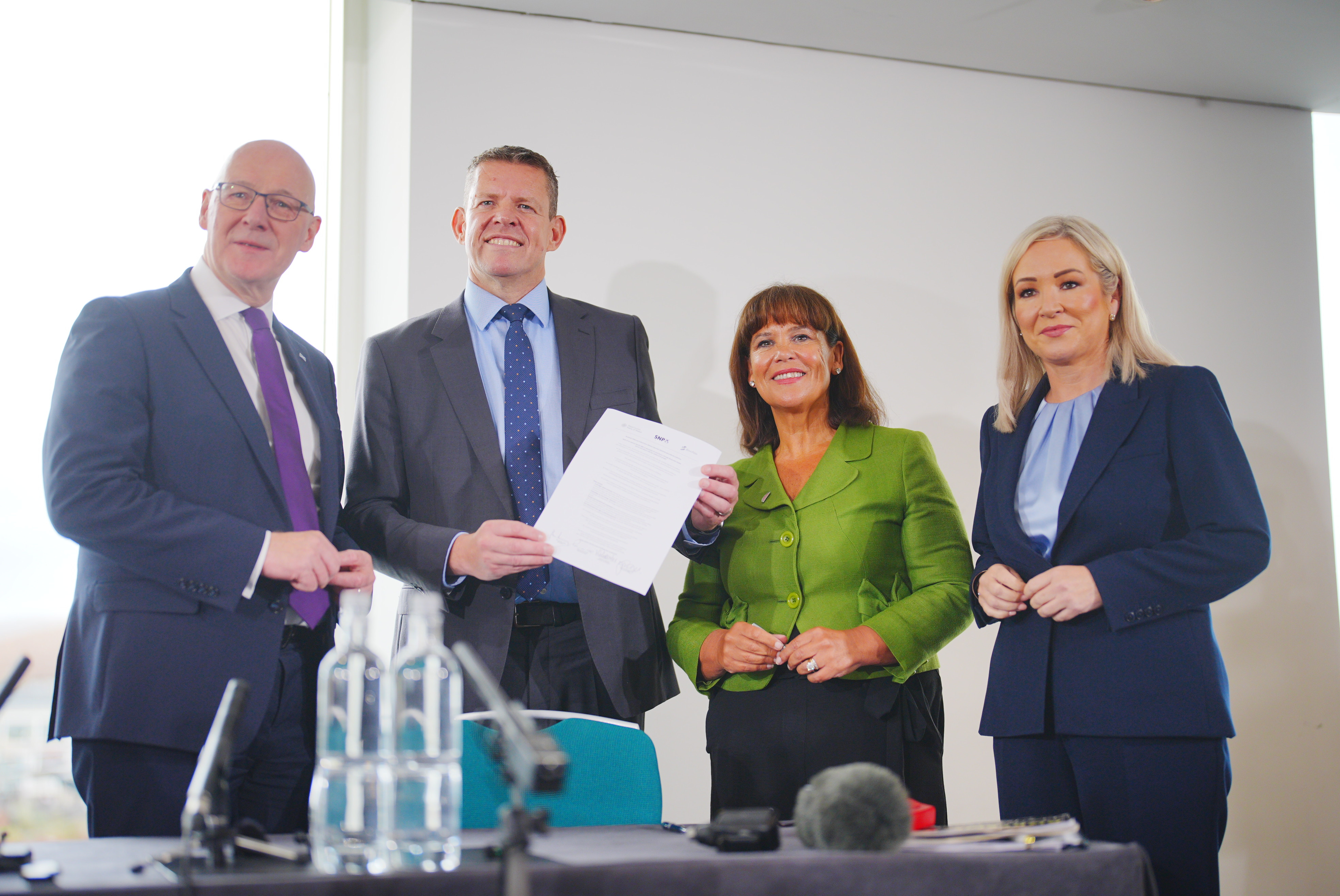
    LONDON — The leaders of Wales, Scotland, and Northern Ireland signed a pact Monday that threatens to lead to the breakup of the United Kingdom.

    The first ministers of the three semiautonomous regions of the U.K. told Prime Minister Andy Burnham and his government to prepare for constitutional change and that their future lies with the European Union.

    “For people watching across these islands — for people watching around the world — there could be no clearer sign that Westminster’s time is coming to an end,” they said in a memorandum of understanding, referring to Parliament.

    The announcement came about 48 hours after U.S. President Donald Trump waded into the waters of the politically contentious issue when he said he would ” love to see ” a reunified Ireland during a trip to visit his golf course hosting the Irish Open.

    It’s the first time the leaders of all three countries are either from pro-independence parties, or pro-unification in the case of Northern Ireland, which was partitioned and remained part of the U.K. when Ireland won independence from Britain over a century ago.

    Tensions remain despite devolution of power

    Burnham’s spokesperson brushed aside the threat and said the prime minister strongly believes in the union and was more focused on lowering the cost of living than dealing with constitutional debates.

    “The United Kingdom is at its best when people come together around our shared values and problem-solving, rather than division,” Tom Wells said.

    Nicola McEwen, director of the University of Glasgow Center for Public Policy, said the summit was symbolically important but has no legal significance.

    “I don’t see the threat to the union being bigger today than it was yesterday,” McEwen said.

    In the late 1990s, the U.K. passed legislative acts that decentralized government through the process of devolution, giving each country except England some level of policy independence and self-governance through their own parliaments. But tensions have remained with the U.K.-wide government in London, which retained control over national issues and those concerning England.

    Scotland’s John Swinney and Northern Ireland’s Michelle O’Neill called for independence referendums in their countries, while Rhun ap Iorwerth did not provide a timetable for one in Wales.

    The three leaders appeared in their political capacity, rather than their official one, possibly because O’Neill is in a power-sharing government with the Democratic Unionist Party.

    Northern Ireland’s Deputy First Minister Emma Little-Pengelly, of the DUP, accused O’Neill, of the Sinn Fein party, of “weaponizing” the role of first minister by signing the agreement.

    “I am first minister in the north of Ireland,” O’Neill replied. “This is about historic change happening all around us.”

    Scottish nationalists believe support for independence is rising

    Scotland tried unsuccessfully to break away in 2014, with voters rejecting a referendum 55% to 45%. But McEwen said support for Scottish independence has grown since Brexit, in which the U.K. formally left the European Union in January 2020, following a referendum in June 2016.

    Swinney, leader of the Scottish National Party, said he believed voters would now vote for independence if the U.K. government approved a referendum.

    Burnham told Parliament last week he would allow such a vote to be held if there was a “clear consensus” in Scotland, but later sent Swinney a letter saying a vote was “off limits.”

    The 1998 Good Friday peace accord that ended three decades of sectarian violence in Northern Ireland known as “The Troubles” requires a vote on unification if polls there indicate it would likely pass, a threshold the U.K. government says has not been met. Ireland would also have to approve the change in a referendum.

    Burnham has made devolution a major theme since taking office less than two months ago, but his focus has been on regional governments across England, a reflection of his years as mayor of Greater Manchester.

    Swinney tried to turn Burnham’s ideology to his advantage, saying his frequent talk of devolution “leads you to the logic of recognizing the right of the people of Scotland, in my case, to decide their own future.”

    Beyond any threat of departing the union, McEwen said the greatest impact of the three joining forces could be that they agreed to cooperate with each other routinely and that could help to exert more influence on the U.K. government.

    “It does keep on the agenda that question about, well, if the United Kingdom is a union based on consent, what is the pathway where it looks like that consent may no longer be there?” McEwen said. “Any U.K. government has been very reluctant to engage in that discussion.”

  • Philly officer who left man in road before a hit-and-run will be fired, police commissioner says

    Philly officer who left man in road before a hit-and-run will be fired, police commissioner says

    The Philadelphia police officer who left a 48-year-old man lying on the ground in an Olney bike lane, leaving him to be killed in a hit-and-run minutes later, has been suspended and is slated to be fired.

    Police Commissioner Kevin Bethel made the announcement Monday, noting he felt “disgusted” over how the officer responded to the man, identified as Eugene Beauford.

    “We don’t know what Mr. Beauford was suffering from,” Bethel said. “He could have had a medical condition that we just were not aware of. He could have had a mental condition that we were not aware.”

    Bethel said the officer had a duty to determine what issues Beauford was dealing with and render aid, which he did not do. Police have not publicly identified the officer, who was assigned to the 35th District and has two years on the force, as separate investigations into his response and the hit-and-run continue.

    Beauford was seen walking down the 5500 block of Rising Sun Avenue with an “unsteady gait” at around 1:40 a.m. on Aug. 27, according to police. Video shows the officer pulling his patrol car next to Beauford and engaging with him. It’s during this time that Beauford fell, lying across the bike lane and traffic lane. The officer got out of his vehicle to talk to Beauford some more, but then left him on the road.

    Minutes later, police say, a car stopped right before reaching Beauford, but another car tried to circumvent the vehicle by going into the bike lane and ended up hitting Beauford, who would die later that morning.

    Police said they were able to identify the person who hit Beauford but no charges have been filed as the investigation continues. Once the investigation is complete, it will be up to the District Attorney’s Office to levy charges.

    The incident drew condemnation from the department’s top brass. The officer who left Beauford on the road was the first from the department back on the scene after the hit-and-run was reported. He did not file the proper paperwork and did not render aid, according to police.

    Bethel would not speak as to whether the department thinks the officer attempted to “cover up” his actions, but he did say the officer violated a number of policies, including how police classify such an incident.

    The officer did speak to investigators about the case, though Bethel declined to expand on what was said.

    “What I could tell you is that what he did share did not move the needle in my decision,” he said.

  • Kennedy Center warns of bankruptcy unless Trump’s name is added

    Kennedy Center warns of bankruptcy unless Trump’s name is added

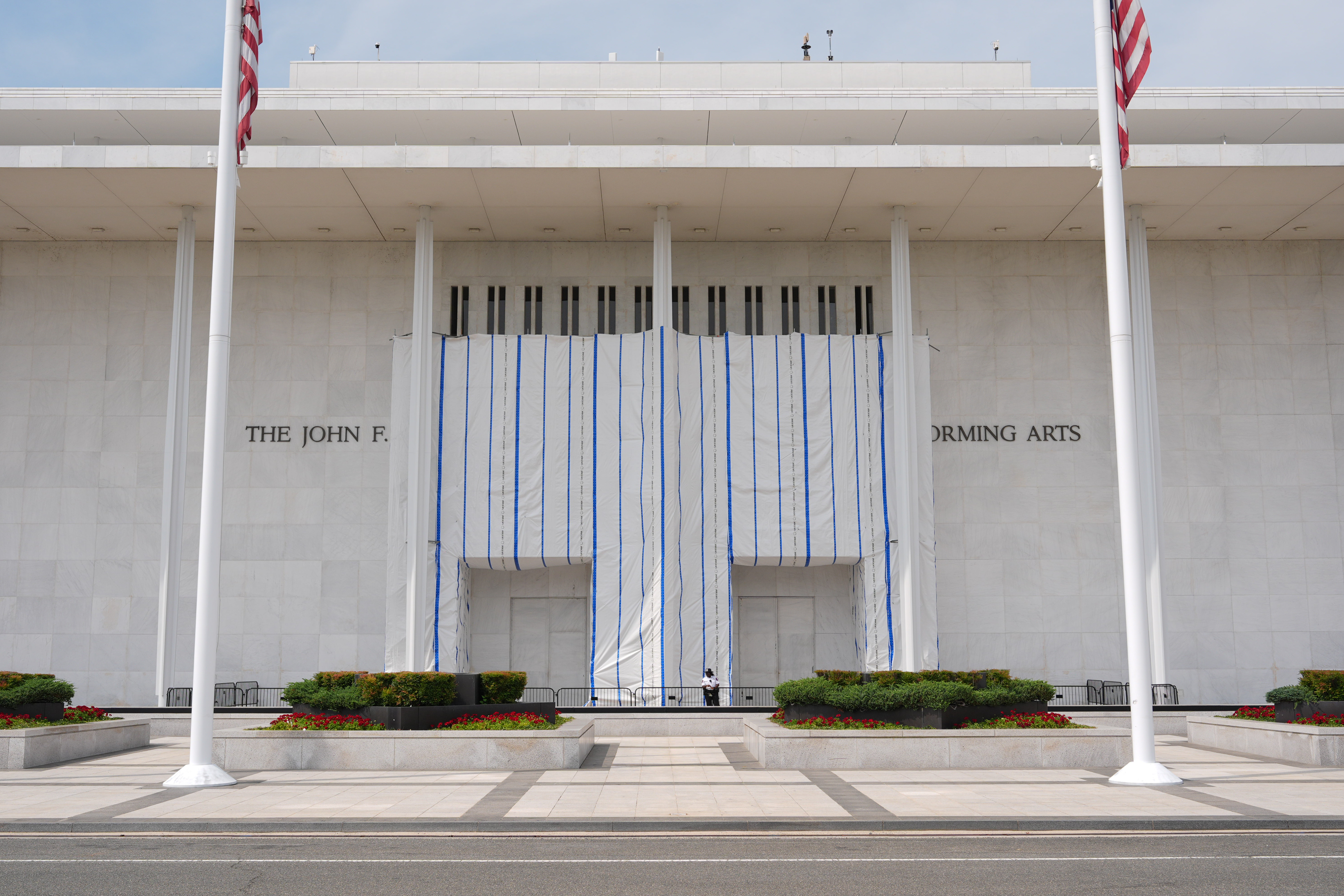
    Officials at the John F. Kennedy Center for the Performing Arts have warned in documents that the institution faces “certain fiscal collapse within weeks” unless President Donald Trump’s name is added back to the building in some fashion.

    The warning, contained in a draft resolution ahead of a board meeting scheduled for today, appears to be part of an effort by Trump-allied officials to convince a judge that the institution’s financial health hinges on placing a tribute to the president on the building’s facade.

    The judge, Christopher R. Cooper, ruled months ago that the president’s name should be removed from the building because Congress needed to have approved its renaming as the “Trump-Kennedy Center.”

    The draft resolution shared with trustees says the center is at risk of bankruptcy and of missing payroll — but that Trump has “offered to step in and raise the necessary funds” to save the center. The draft resolution presents 10 options for how to add Trump’s name below the main signage on the front of the center.

    “The board understands that without such appropriate recognition it is unlikely that President Trump will provide the fundamental oversight of the renovation of the main building and lead the fiscal rescue of the center,” the draft resolution says.

    Trump took over the Kennedy Center at the start of his second term, and the board voted last December to add his name to the building. Weeks later, Trump announced a plan to close the center for two years for a renovation project to transform what he called a “dilapidated” structure.

    In May, Cooper temporarily blocked the closure and ordered Trump’s name removed from the building.

    The center complied while pursuing an appeal. But in recent weeks, board members have moved aggressively to restore his name in an inscription beneath the building’s title.

    One option included in the draft resolution, which was first reported by the Washington Post, reads, “renovated, restored, and sustained through the generosity of President Donald J. Trump.” Another says, “renovation, oversight, and support provided by President Donald J. Trump.”

    The documents were shared days before a court hearing before Cooper. Rep. Joyce Beatty (D., Ohio), an ex officio board member whose lawsuit prompted the court’s scrutiny of the center, has objected to the center’s plans for the inscription. In court papers, her lawyers called the effort a “childish refusal” to accept the judge’s previous order.

    In a statement Sunday, Norm Eisen and Nathaniel Zelinsky, lawyers for Beatty, described the documents as “the third attempt to deface this sacred memorial and turn it into a vanity project for one man’s ego.”

    Roma Daravi, a spokesperson for the center, declined to comment on the documents.

    Paolo Zampolli, a board member and longtime Trump ally, said in a brief phone interview Sunday that the addition of the president’s name to the building was critical to the center’s financial health because “Trump attracts money.”

    “So when Trump says donate to this place, everyone will donate,” he said.

    Some donors, though, took exception to the fact that Trump’s name was added to the building and were part of an exodus of artists and audience members unwilling to associate with an increasingly politicized institution. Beatty’s lawsuit contends that decision was part of the reason the center now finds itself in a financial quandary.

    Kennedy Center officials have repeatedly blamed previous leadership for the institution’s financial problems.

    The documents shared with the board included another draft resolution that suggests the center’s main building should be closed immediately, citing a recent incident in which a section of plaster fell from the ceiling of the building’s grand foyer during a storm. Daravi has framed that event as evidence of an urgent need for the building’s closure.

    “This structural failure stems from decades of neglect and deferred maintenance by the previous leadership,” she said in a statement this month, “and there’s no justification for further delays in restoring America’s cultural center.”

    Cooper temporarily blocked the center from fully closing, but he did not prevent the staff from pursuing renovations, which have been funded by $257 million from Congress.

    Although the building has been open to the public as a memorial to Kennedy, its programming calendar has been largely bare for weeks. The National Symphony Orchestra, the center’s resident ensemble, has booked its season at other local venues. And the center’s staff has been diminished to a small fraction of what it was before Trump’s takeover.

    This article originally appeared in the New York Times.

  • A Lansdowne teen was days away from his senior year when he was killed in a shooting, police say

    A Lansdowne teen was days away from his senior year when he was killed in a shooting, police say

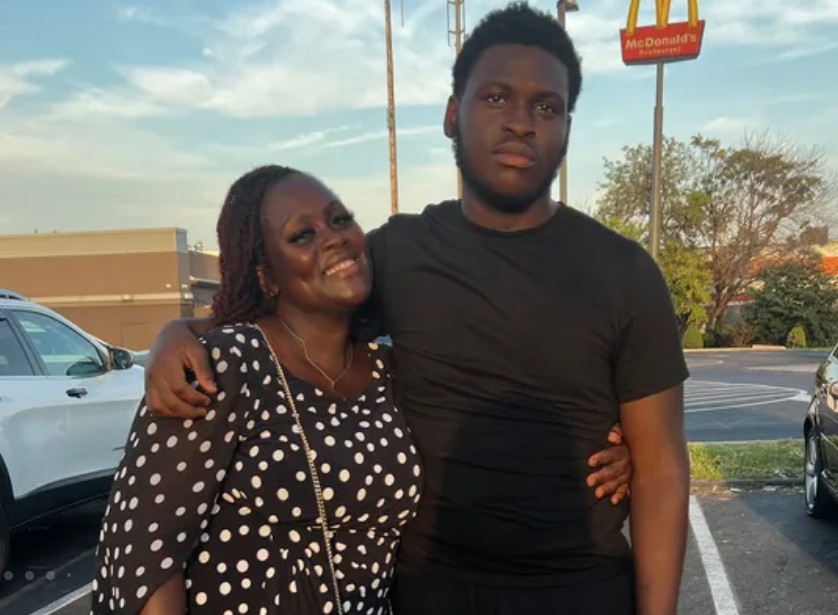
    Richard Nelson DeShield should be starting his senior year at Penn Wood High School, suiting up for football practice, and looking forward to life after graduation, his family said Monday.

    But all of that was taken from him by a gunman who shot and killed him on Sept. 8, five days after his 18th birthday, officials said.

    A Lansdowne police officer patrolling the area near North Wycombe and Blackburn Avenues saw two teens standing next to DeShield’s car as he sat inside it about 10:30 p.m., authorities said, when shots rang out.

    Struck multiple times, DeShield sped forward and crashed the vehicle. He was pronounced dead at the scene.

    The teens fled into a nearby apartment building, police said. Officers detained two people last week for questioning, but Lansdowne Police Chief Ken Rutherford said Monday that no charges have been filed, and the case remains under investigation.

    “This is a terrible tragedy,” Rutherford said. “There is no taking back the loss of a young life, and our department will work diligently to determine what happened and hold those responsible accountable.”

    DeShield was one of four children and the only son, said his older sister Christine.

    He was an avid football player throughout his preteen and teenage years, and was preparing to suit up in number 85 for his senior year as a linebacker for Penn Wood High.

    His loved ones held a vigil Sunday evening at their home in Lansdowne, releasing balloons with his football jersey number in his memory.

    “He was a good friend, good student, good son,” Christine Browne said, adding that she was helping him prepare his application to join the Army after graduation.

    DeShield’s mother, Wanita Browne, said she was too heartbroken to comment on her son’s slaying. But in a GoFundMe she started to help cover funeral costs, she described him as “a down-to-earth, friendly person who cared deeply for his friends and family.”

    The online fundraiser drew support from former coaches, teammates, and friends who expressed shock and outrage at the crime that took DeShield’s life.

    Lansdowne police ask that anyone with information about the shooting to call them at 610-623-0700.

  • States and cities sue over Trump’s policy to restrict green cards

    States and cities sue over Trump’s policy to restrict green cards

    WASHINGTON — A coalition of states and local governments sued the Trump administration Monday over what they called a “catastrophic” new policy that would make it harder for immigrants to obtain green cards if they rely on public benefits.

    The challenge, brought by two separate lawsuits, aims to block a policy set to take effect Friday. The suit filed by 22 states, including Pennsylvania, and the District of Columbia argues that the policy would hurt immigrant families by forcing them to either turn away from public assistance programs to meet their basic needs or risk being denied green cards in the future.

    It also argues it would harm states and localities by straining emergency rooms and reducing participation in food stamps, which would drain money from local businesses that depend on the federal benefits.

    “Hardworking families should not be forced to go without the support they need because they fear asking for assistance will get them deported,” Letitia James, the Democratic attorney general of New York who led the suit, said in a statement.

    Trump officials have said the policy, known as the “public charge” rule, is necessary to protect public resources and to restore “the basic principle that immigrants must be able to support themselves.” The effort is a revival of a similar policy the administration tried to impose during President Donald Trump’s first term before it was met with legal challenges and later reversed by the Biden administration.

    The policy is part of the administration’s broader effort to crack down on both legal and illegal immigration. Before the midterm elections, the Department of Homeland Security has tried to carry out its deportation campaign using quieter methods, including by pressuring noncitizens to leave the country by squeezing their access to jobs and federal programs.

    Many immigrants who do not have green cards are already ineligible for public benefits programs. But immigrant advocates fear that the rule would discourage noncitizens from using benefits programs even if they have U.S. citizen children who are legally eligible for food stamps, housing aid, and other programs.

    In Philadelphia and throughout the region, the rule, though not yet official, is nevertheless having a chilling effect, frightening parents who are legal immigrants into avoiding public benefits for their children, say advocates who work with immigrants and low-income communities.

    “It could prevent families from going to food cupboards, or keep women from accessing domestic violence shelters. The effect will be broad,” said Maripat Pileggi, an attorney with Community Legal Services in Center City.

    Federal law has long barred immigrants from obtaining green cards if they are likely to become primarily dependent on the government for subsistence. Immigration officers have historically considered the use of cash assistance programs or institutionalized long-term care, but not the use of benefits like the Supplemental Nutrition Assistance Program or Medicaid.

    The Trump administration’s policy would reverse the long-standing practice, expanding the federal programs that immigration officers can consider before determining that someone is likely to become reliant on the federal government.

    The states’ suit was brought by New York, California, Illinois, Colorado, Connecticut, Delaware, Hawaii, Maine, Maryland, Massachusetts, Michigan, Minnesota, New Jersey, New Mexico, Nevada, Oregon, Pennsylvania, Rhode Island, Vermont, Virginia, Washington, Wisconsin, and the District of Columbia.

    The second suit was led by Mayor Zohran Mamdani of New York and joined by Chicago, San Francisco, Seattle, Santa Clara County in California, and King County in Washington.

    Staff writer Alfred Lugano contributed to this article.

    This article originally appeared in the New York Times.

  • How one man’s quest for a musketeer’s bones got him locked up

    How one man’s quest for a musketeer’s bones got him locked up

    MAASTRICHT, Netherlands — Wim Dijkman was in Munich the first time I talked to him, in possibly illicit possession of three possibly ancient bones.

    The remains — two teeth, one humerus — may or may not belong to what is left of D’Artagnan, the French historical figure upon whom Alexandre Dumas based the main character in The Three Musketeers.

    They are part of a skeleton Dijkman and his friends unearthed in an old church near Maastricht, in the Netherlands, earlier this year. To the city’s dismay, they did so without permits, and largely in secret: Even church parishioners weren’t fully informed about the giant dig happening directly in front of their altar.

    By the time I reached Dijkman, in May, local officials had become aware of the excavation and had taken over. They had also, and with evident alarm, insisted upon the return of the bones that Dijkman had sent to Munich for carbon dating and DNA testing.

    “The local authority was not amused that we were digging in the church,” Dijkman, sitting in a German hotel room, admitted over the phone.

    If he felt any remorse, it was not obvious. Dijkman, a retired municipal archaeologist and museum curator, went on to say that his former colleagues are “bureaucratic civil servants” who had themselves “never discovered anything of any importance” and who now felt a “need to intervene.”

    They were after his glory, if you asked Dijkman.

    “Success has many owners, as they say in Dutch,” he said.

    Yet the investigation into whether the bones belong to Charles de Batz de Castelmore d’Artagnan, who died during the Siege of Maastricht in 1673, was about to take twists and turns that might have impressed Dumas himself.

    Within days of our conversation, Dijkman would find himself in a cell at the local police station. Within weeks, he’d be arguing in the local media that he was being framed for grave mistakes in unearthing and processing the skeleton.

    Within months, it would become clear that Dijkman and his band of mostly amateur archaeologists might well have uncovered D’Artagnan’s remains — but the town of Maastricht would allege that they may also have impaired the chances that the world will ever know whether the bones truly belong to the musketeer.

    The quest for D’Artagnan’s skeleton would prove to be a story full of power struggles, hubris, and hot heads. It continues to consume the little corner of the Netherlands, nestled between Belgium and Germany, where it has unfurled.

    Looking for a legend

    D’Artagnan, a mentor and confidant to Louis XIV and the captain-lieutenant of his Musketeers of the Guard, was most famously fictionalized in The Three Musketeers in 1844. Dumas painted him as an impulsive but daring young man who befriends Athos, Porthos, and Aramis — the titular three musketeers — before rising in rank and prominence. His central role in Dumas’ popular story cemented him as a French national legend.

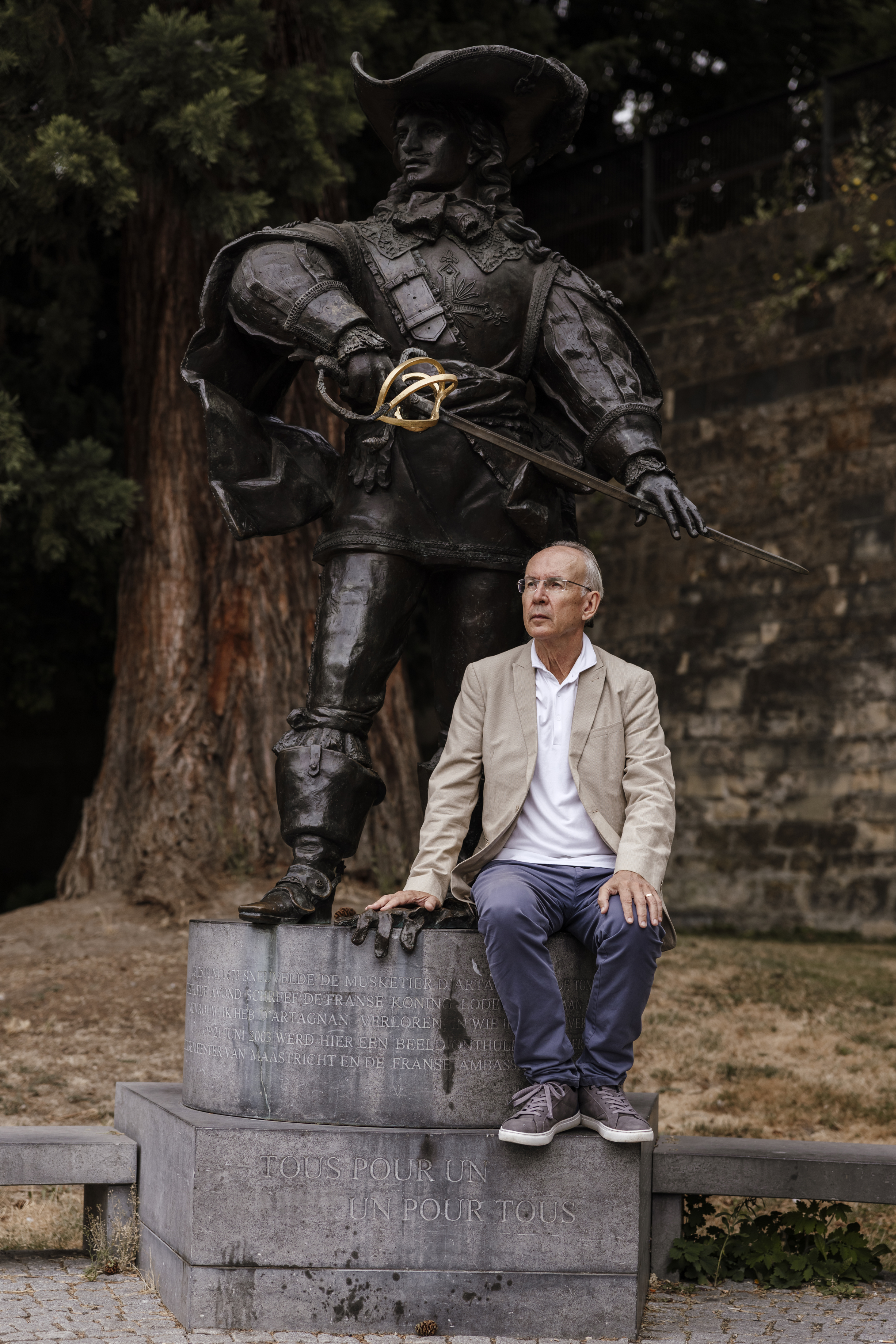
    In this part of the Netherlands, where the real D’Artagnan died, his lore is omnipresent — statues and monuments honor him, a local beer is named for him, locals point out the spot where he is said to have expired. A pop-up cocktail joint is called b’Artagnan.

    In Maastricht, finding D’Artagnan would surely make someone a hero.

    Dijkman, 70, told me — many times — that he is a scientist and not, unlike many of his local associates, a D’Artagnan obsessive. He spent most of his career working as a museum curator and archaeologist for the town of Maastricht, a place with sufficient history to employ its own team. Though he said he had been involved in excavations for human remains, they were not the primary focus of his work.

    Still, he has spent the past three decades at least a little bit obsessed with the idea of finding D’Artagnan’s.

    The notion first came to him around 2000, when he met Odile Bordaz, a French scholar who is one of the world’s foremost experts on the historical figure. She pointed out that the most enduring mystery about the French hero — one that she, his most detailed biographer, had never been able to solve — was where he was buried. Her own research pointed to a Catholic church in the village of Wolder, just outside Maastricht’s city center.

    “‘You have to find him,’” Dijkman says Bordaz told him.

    Bordaz recalled the conversation. “He said to me, ‘I’m an archaeologist, after all — perhaps one day I’ll conduct excavations to discover where D’Artagnan is buried,’” she said.

    Dijkman was busy with other projects: carbon-dating horses buried in a mass grave, exhibiting pieces of local pottery in a Japanese museum. But D’Artagnan remained on his mind. After he retired in 2022, he attended a D’Artagnan conference and got the feeling that the attendees almost expected him to find the bones, given that he was an archaeologist living in Maastricht. He felt pressure to deliver.

    “To me, it was important as a fin de carrière, as they say in French,” Dijkman said in a history museum in Maastricht, where he has lived since he was 6 years old. “An end of career.”

    Retiring also gave him room to maneuver. As part of the town, he had to have extensive approvals for projects. Now, he was a free agent with a shovel and a mission.

    ‘A treasure in the ground’

    Dijkman approached leaders of the church in Wolder, who were intrigued enough that they set up a foundation in late 2024 to fund the enterprise.

    Jos Valke, a deacon, was particularly excited.

    “I thought, when we have a treasure in the ground — if God gave us a treasure — then we should use it,” Valke said.

    If they found D’Artagnan, he thought, they could set up a museum in the church. Years of declining attendance and pricey upkeep bills had been straining the 12 Catholic parishes of Maastricht. Capitalizing on the legend of D’Artagnan might offer the financial wherewithal to help fund the whole network.

    At first, the quest was above ground and aboveboard. Dijkman and Valke began by using metal detectors to search the church, which had been reconstructed in the late 1800s over the foundations of the medieval structure.

    The men were delighted when they detected something near the front of the sanctuary, close to what they believed must have been the altar of the old church. Who but the most revered of figures would have been buried at the altar?

    The church exploration fund had only about 4,000 euros in it, though. Hiring a team of qualified archaeologists and anthropologists to dig in the hot spot would have cost about 11,400 euros, Dijkman estimated. They simply could not afford it. Nor had they consulted local authorities on whether they could dig in the structure.

    That might have been a good moment to stop.

    But “I said, Yeah, I’m on the threshold of finding him,” Dijkman said.

    The decision was made to press ahead, but quietly. In interviews, Dijkman alternated between insisting that they thought that going forward was legal because the site was on church property and done with the approval of the church board — and acknowledging that the team knew that it was tap-dancing on the edge of the official rulebook.

    “Jos Valke was aware that it was not completely legal, of course,” he said of the deacon. During interviews, Valke said he thought it was legal.

    Dijkman had other friends along to help with the dig, including Thomas Samek, a physician whose medical expertise seemed potentially beneficial. Samek was a good fit for another reason: He is a D’Artagnan impersonator, for which he dresses in full regalia and rides a shining steed.

    Valke said that while the church board approved the search, they kept it covert because they “didn’t want a fuss.” Dijkman didn’t want to publicize the dig before they knew if they had succeeded.

    Stories vary regarding how Dijkman’s crew kept the excavation a secret from church parishioners, but it clearly involved covering up the chasm so that churchgoers could traverse the site to take Holy Communion. Eventually, Valke built a wooden platform to cover the hole, pulling a faded faux-oriental rug over it before Mass on Sundays.

    The dig started slowly. The first set of stones yielded little, Valke said. But after they had pulled 75 heavy tiles out of the floor — working on Saturdays, per Dijkman; at night, per Valke — they finally found what they had been looking for.

    There were bones in the earth.

    The diggers cleared the dirt from the pit, placing it in white bags and storing it in an ornate church closet. (Valke is hoping to one day bottle it and to sell the earth that once held D’Artagnan as a way to raise proceeds for the church.)

    Before long, they had uncovered a full skeleton.

    They shot videos of Dijkman crouching in the crevasse, pulling sandy dirt away from aged vertebrae as someone else pointed an air compressor at the remains.

    Dijkman started to box up the bones in plastic packaging and transport them to his home, at times placing their plastic containers in the blue Albert Heijn plastic grocery bags that are ubiquitous in this part of Europe.

    Why not just leave the bones in situ, one might wonder? The diggers were nervous that if they left the bones in the church, the artifacts might be thrown away by cleaning staff. One wouldn’t want the janitor to toss out the mandible of one of France’s greatest war heroes.

    Who found him? And who told?

    Everything was going well until mid-February — Dijkman can pinpoint the date, because it was Carnival.

    By Valke’s account, it was around that time that the church started to hear from universities. He alleges that Dijkman had told them about the dig.

    “We thought: We want to be in charge,” Valke said, explaining that the church decided to go to the town with the find.

    Dijkman emphatically denies this. His contention? Valke saw a town archaeologist at a local watering hole, Au Mouton Blanc.

    “Jos Valke told him, ‘We have found him!’” Dijkman said.

    This still burns for two reasons: It blew their cover and, in Dijkman’s view, it misplaced the credit for the discovery. “When you say, ‘We have found him,’ you don’t say, ‘Wim has found him,’” Dijkman explained.

    Valke acknowledged that he “casually” mentioned the discovery to the archaeologist at the bar. But he said that the archaeologist didn’t really react and that “it was just drunken rambling rather than a serious conversation.”

    After hearing from the church board, local authorities swooped in to take over. On March 13, they completed the dig.

    Officials were alarmed by the state of the grave. Bone fragments in the soil were no longer in their original place — they were mixed together. Part of the skeleton was already unearthed. Pieces were missing.

    When local media interviewed Valke, he implied that stones in the church floor had been loose and that repair work had triggered the find.

    Samek, the D’Artagnan impersonator who had been present for the dig, was alarmed by this: “Jos Valke invented the story,” he said in an email. “That shocked me, because the truth is sacred to me.” (Valke and Dijkman both said that it was originally one of the town archaeologists who came up with the construction story.)

    It did not take long for finger-pointing to begin. The municipality swiftly reported the team of initial diggers, and their lack of appropriate permits, to official cultural heritage authorities.

    The church board and Valke began to suggest in media interviews that Dijkman had led them to believe that their actions were legal.

    By early summer, the town had announced that the initial dig “was not documented according to standard archaeological procedures.”

    “As a result, a significant amount of archaeological information has been irreversibly lost,” a town FAQ on the situation read.

    Visits from police

    Even after they came under scrutiny, Valke and Dijkman remained hopeful that they might soon have answers about whether the skeleton was D’Artagnan’s. Samek had taken several bones to a university in Munich for tests and DNA analysis.

    The results, they hoped, could be compared with DNA from the living relatives of the D’Artagnan family.

    But then Maastricht announced that it would view those results as null and void: “Because the origin, sampling and documentation of that material were not carried out or verified as part of the current research, it cannot serve as a reliable basis for answering the research question,” the town said in a question-and-answer sheet.

    The indignant municipal authorities asked that the original diggers and the university doing the analysis swiftly return the bones. Dijkman became concerned that the town was going to have what might be D’Artagnan’s bones mailed back from Munich. To protect the precious artifacts from the post, he decided to pick them up himself.

    When he arrived back in Maastricht, he refused to turn over the bones — in part, he said, because the town wouldn’t reimburse his travel costs. He entrusted the fragments to a “friend,” hoping that the town would pay him back.

    Plus, he wanted to retain a foothold on his project. “I thought: If you give them everything, they can keep you out of everything,” Dijkman said.

    Instead of a reimbursement check, Dijkman received a visit from several police officers, which came as a shock because he had never had trouble with the law.

    He was taken to the station and placed in a cell, he estimates for about four hours. Only after he agreed to cough up the bones — police officers took him in their car to the house of his “friend” to retrieve them — was he released. He has not been formally charged.

    Valke, too, was called into a police station for 2½ hours of questioning. Until he got the summons, he said, it had never occurred to him that he might be under scrutiny for wrongdoing.

    No easy identification

    By early summer, the town of Maastricht was emphasizing that the bones might not belong to D’Artagnan. While the skeleton is a male of roughly the right age (D’Artagnan is thought to have been about 62 when he died), carbon dating suggests the person was buried sometime between 1500 and 1900. A lot of 62-year-olds died during that span.

    An analysis by Saxion University of Applied Sciences in Deventer, Netherlands, suggested that the skeleton belonged to a man who ate a diet heavy in fish earlier in life. The town says that appears inconsistent with D’Artagnan’s upbringing, given that he was born far from a coast.

    The DNA analysis in Munich was never made public, and a new DNA analysis is being conducted on the skeleton. It is expected to be completed by the end of 2026 or early 2027.

    The town has also blasted the initial dig for making identification harder. Several of the bones jumbled together from the earlier excavation have been determined to belong to other people, according to the municipality.

    “This is a former colleague who was the first to carry out excavations,” Gilbert Soeters, one of the town archaeologists, told reporters at a news conference in July, according to Agence France-Presse. “Well, the term excavations is not quite appropriate. These were not archaeological excavations.”

    Dijkman says that the town is suggesting he messed up the dig so that it can take credit if the remains turn out to be D’Artagnan’s. Valke, meanwhile, is stressed about possible legal repercussions. Samek called the entire messy situation a “pity.”

    “It’s a shame, because Pierre-Alexandre Dumas’ motto was the Musketeer one: ‘All for one, and one for all,’” agreed Bordaz, the French scholar. “So, you know, we would have liked things to be in that spirit.”

    Still, they all share a hope that the man in the grave will indeed prove to be d’Artagnan.

    “At that time, there will be a reaction from the French authorities,” Dijkman says. “They will say: How will you continue to frame the man who found our national hero?”

    This article originally appeared in the New York Times.
  • SEPTA awarded $80 million to make three trolley stations more accessible

    SEPTA awarded $80 million to make three trolley stations more accessible

    A federal transit agency has awarded SEPTA $80 million to make three stations in the Center City trolley tunnel accessible to people with disabilities, officials said Monday.

    New elevators, raised platforms, and other improvements will make the 22nd Street, 33rd Street, and 36th Street stations fully accessible, officials said, bringing them into compliance with the Americans with Disabilities Act of 1990.

    Built in 1955, the stations are currently only accessible by stairs.

    “Ensuring that every customer can access transit service that is safe, clean and reliable is a core part of SEPTA’s mission,” SEPTA board chair Kenneth E. Lawrence Jr. said in a statement.

    Lawrence said Pennsylvania’s congressional delegation worked to secure the grant, which was made available under the Federal Transit Administration’s All Stations Accessibility Program. The program was established by the 2021 Infrastructure Investment and Jobs Act.

    SEPTA was awarded an earlier $56 million grant in 2022 through the same federal program. That funding was designated for elevators, ramps, and other enhancements at five subway stations on the Broad Street and Market-Frankford Lines. SEPTA began construction last month on one of those projects at the 11th Street Station.

    SEPTA officials said the accessibility project was part of its $2 billion plan to modernize its eight trolley lines — an initiative that includes longer vehicles that hold more passengers, new on-street stations, and proposed line extensions.

  • Trump says a smart president is all that’s needed to rein in AI

    Trump says a smart president is all that’s needed to rein in AI

    WASHINGTON — President Donald Trump on Monday rejected calls from leading artificial intelligence executives for new limits on the technology, writing on social media that the only guardrail the industry needed it already had: “a STRONG AND SMART (High IQ!) PRESIDENT.”

    Trump inserted himself into the intensifying national debate over how to handle a rapidly evolving technology that researchers and industry leaders say poses major risks like mass unemployment, a new wave of biological weapons, and autonomous warfare. The president did not address those risks directly. Instead, he questioned the sincerity of the executives who have been calling to slow the technology’s development.

    “The only control or ‘guardrails’ that AI needs is a STRONG AND SMART (High IQ!) PRESIDENT, and the U.S.A. has that, in spades!” Trump posted. “The Trump Administration has stopped AI ‘people’ from doing bad, or potentially bad, ‘things,’ like Dario (Anthropic!), who is now pretending to be a ‘perfect little angel’ — and we will continue to do so!

    “We already have tremendous CRIMINAL and REGULATORY power over these companies!” he added.

    It was not clear what authority Trump was referring to, or what actions he believes his administration has already blocked. The White House did not immediately respond to a request for comment.

    Over the weekend, Dario Amodei, the CEO of Anthropic, a leading AI company whose founders have long warned about the technology’s dangers, published an essay that called for a global slowdown of AI development. Days earlier, one of Anthropic’s researchers quit and went public over his fears about the safety of the technology.

    The Trump administration feuded with Anthropic earlier this year when the company refused to allow the Pentagon unfettered access to its AI system without the safeguards the company wanted. Trump then ordered the federal government to stop using Anthropic’s AI technology and labeled it a security risk, a designation that a federal judge later ruled was unlawful.

    Other AI chiefs have voiced their own concerns in recent days. Demis Hassabis, the chairperson of Google DeepMind; Elon Musk of SpaceX; and Sam Altman of OpenAI have all endorsed calls for a slower pace.

    Trump has spent much of his second term aligning himself with AI accelerationists who have been pushing the U.S. government to clear away obstacles to growth. He has been influenced in particular by Jensen Huang, the CEO of chipmaker Nvidia, and David Sacks, a Silicon Valley investor who played a major role in shaping the administration’s policies on AI.

    The president has embraced their arguments that imposing additional guardrails on American companies would allow China to “win” the AI race.

    Beijing, however, has its own anxieties about the technology — and they may lead to more regulation, not less. Chen Yixin, China’s security minister, recently warned that the leading AI models pose risks to the Chinese system and called for stricter government oversight.

    The Associated Press reported that in an editorial published Sunday, China’s state-run Global Times newspaper dismissed Amodei’s essay as a veiled call to “contain” China. It said that Amodei’s essay may appear on the surface to be focused on global AI security, but that it is “packed with containment provisions targeting China and is, in essence, a ‘Cold War playbook’ for the AI sector.”

    Amodei’s essay was published a few days after the FBI, National Security Agency, and Cybersecurity and Infrastructure Security Agency issued a joint cybersecurity advisory last week. That advisory said Chinese AI developers had engaged in “aggressive, malicious” efforts in extracting, or “distilling,” capabilities from some of the most advanced AI models in the U.S. like Anthropic’s Claude and OpenAI’s GPT.

    Trump and Chinese leader Xi Jinping are expected to discuss AI governance, among other topics, at a Sept. 24 meeting.

    Trump has also dismissed the domestic backlash to the industry’s growth. He claimed in his social media post Monday that widespread opposition to the building of data centers — a major political issue emerging across the United States before the midterm elections — is part of a “conspiracy” rather than the outgrowth of genuine public anxiety.

    “There is a SICK conspiracy going on against AI and Data Centers, and the only one that is happy about it is China,” the president posted. “WHOEVER WINS AI, WINS! We are leading China, and all others, and will continue to do so. Conspiracy Theorists, Treasonists, Traitors, and Leakers, BEWARE!”

    Elsewhere, governments are moving toward stricter oversight. Prime Minister Mark Carney of Canada told Bloomberg News on Monday that he favored the creation of a global “technology stability” body to oversee AI.

    “There’s a need for coordination,” Carney said in the interview. “Ultimately, a technology stability board, in our view, along the lines of the Financial Stability Board would make sense.”

  • The colonial policing roots of today’s data politics

    The colonial policing roots of today’s data politics

    Data is at the top of everyone’s mind this year: how it’s collected, where it’s stored, who can access it and how it’s used.

    The Electronic Frontier Foundation, a data rights NGO, warns in a new report that law enforcement agencies have been partnering with tech companies to collect large swaths of data on private citizens without warrants under the guise of “fighting crime” or “reducing lawlessness.” Police have been using facial recognition software, audio recording devices, automatic license-plate readers and other “dragnet” technologies to aggregate huge databases on the habits of everyday Americans.

    Watchdog organizations like the ACLU have sounded the alarm that these databases have already been weaponized against the public by organizations such as U.S. Immigration and Customs Enforcement and the U.S. Department of Homeland Security.

    One might be tempted to conclude that this is unprecedented, an outgrowth of the panopticism of the Information Age. But debates about privacy, free speech and data governance have been ongoing for centuries. These debates were especially fraught in the colonial context, where individual rights, national security and public interest were often in conflict.

    The British first established police forces in India in the late 1800s, after nearly two centuries of bloody succession conflicts. In 1857, a great rebellion almost dislodged the British from the subcontinent entirely. Initially disgruntled Indian East India Company soldiers led the rebellion against their white commanding officers in a mutiny. However, the conflict quickly spread across the subcontinent, uniting competing segments of Indian society against the British establishment. Though this rebellion didn’t succeed, it left a lasting political and psychological impact. British accounts describe a sense of helpless horror, a feeling for the first time that their place in the world was no longer secure.

    The British establishment in India believed that the rebellion occurred due to a failure of British intelligence. They had erred by trusting their Indian allies and intermediaries too freely and missed obvious rumblings of disorder. The crown took direct control of India from the East India Company and began to build a new system of governance from scratch.

    The British Raj established its first official police departments in India in 1859, modeled on the Royal Irish Constabulary. The police understood that their job was to maintain order rather than to serve the public. Most departments’ first project was to assemble official statistics and compile them into annual reports. This data, aggregated and synthesized, became the lifeblood of the Empire.

    Nowhere was this development more apparent than in the use of crime statistics. In the 1860s police forces in Northern India reported a supposed explosion in crime, perpetrated by wandering gangs, “criminal tribes” who were criminals by birth. Unlike the “ordinary” criminals of Europe who fell into crime by chance, the criminals of India were born into their “professions.”

    Officials felt that by bringing quantitative data to policing — counting and tracking crimes, where they occurred, and who committed them — allowed them to more fairly and effectively allocate resources. In truth, though, police and other officials used data to reinforce existing biases, arguing that the numbers showed that race, caste and other “biological traits” could be used to predict criminality. Hyper-policing of certain populations produced even more data “proving” that these populations committed more crimes. This decontextualized data gave the government the veneer of objectivity, while serving as the basis for many harmful and discriminatory policies.

    In 1871, the legislative assemblies of three provinces passed the Criminal Tribes Act into law. The Act defined a “criminal tribe” as a “wandering gang, community, or group of persons addicted to the commission of non-bailable offences,” a definition that targeted groups already socially disadvantaged by the caste system.

    In truth, “criminal tribes” as described by British administrators probably never existed. Instead, nomadic and semi-nomadic merchants or artisans, groups of religious mendicants, highway men (usually unemployed former soldiers), pastoralists and any other group who did not fit were all folded into the “criminal tribe” label. Unlike settled agriculturists within the dominant caste order, these groups were difficult to control due to their mobility and lack of social or economic capital. Under the law, they were criminalized and subject to extremely intrusive regimes of surveillance. The police tracked the most minute details of the lives of targeted groups: their fingerprints, their bodily measurements, their habits and their preferences.

    The impact of the state’s surveillance campaigns was that these communities lived in a state of hypervisibility. Communities complained that they were unable to live, work or travel without being disproportionately targeted by police. The increase in police interactions eventually led to a corresponding increase in arrests—which, in turn, was used to justify further surveillance and policing.

    One police officer recounted in the early 1900s that he recommended a whole nomadic community be criminalized under the Act and forcibly settled. The reason? They were reportedly adorned in silver finery while living in weatherworn tents with sparse and shabby furnishings. The only reasonable explanation, he claimed, was that the jewelry was stolen loot.

    Data gave the government the visibility and the leverage required to recruit collaborators. Police relied upon wealthy and landed (“trustworthy”) communities to identify “criminal tribes,” and recruited officers from their ranks. In return, the police offered elites protections against peasant uprisings or labor disputes. Data ownership was thus not just a privilege but a favor, doled out by the state to its allies in exchange for “good behavior.”

    Data collection and policing transformed everyday life. Community and family spaces—town squares, local government offices, playgrounds, parks, schools, shops, even streets—went from being “private” spaces, governed by the people who inhabited them, to “public” spaces subject to the control and surveillance of the state. Regular community events like food festivals, religious processions and public gatherings often felt distinctly different in the presence of police. People knew they were being watched.

    Disputes at street processions and festivities frequently became highly publicized court cases, written about in the newspapers and read aloud in coffee shops and tea stalls. In turn, groups began to use processions to garner such publicity and “make a point” in the first decades of the 20th century: “cow protection” parades by Hindu extremists to intimidate religious minorities, festivals commemorating anti-British war heroes like the Maratha King Shivaji, even protest marches by Muslims against the dissolution of the Ottoman Empire after WWI. Divisive political processions came to replace weddings, funerals and naming ceremonies that had been common in the 19th century.

    At a time when it was considered both scientifically sound and fashionable among the Western-educated class to believe that Indians were too loud and disorderly to govern themselves, public gatherings became performances to authority rather than community events. As debates raged about whether India was ready for independence in the 1920s and 1930s, communities policed themselves and each other, critiquing rituals and expressions that were too loud, too emotional, too rowdy.

    Where there were multiple communities in conflict over public spaces, police involvement caused small disagreements to escalate. In March 1925, a small fight during a religious procession in Delhi sparked communal riots across Northern India that lasted periodically until late September, causing dozens of casualties and at least six deaths.

    Made By History sponsors. FOR USE ON MADE BY HISTORY STORIES ONLY.Inquirer Staff

    Class, caste and religious divisions hardened throughout the 1930s and 1940s, leading to the segregation of formerly integrated spaces. In these ways, the British used information to divide and rule communities, to target the vulnerable, and to suppress dissent. These efforts prolonged the British presence in India for decades, until its hasty exit in 1947 after overseeing a violent and bloody partition of the subcontinent. The ghost of the Empire continues to haunt the region today.

    One critical lesson the Indian public learned during this era was that the collection of information is never neutral. Power shapes how information is collected, stored and interpreted, and information can be used and abused to protect those in power.

    Today every app, website and device contains a back door to collect and sell our information. Companies and officials tell us that these capabilities are benign, used to improve our lives and make us safer—and we believe them at our own peril.

    Niveditha (Nive) Senthilvel is a 2026-27 Fulbright-Nehru scholar and PhD Candidate in South Asian History at Boston University.

    Made by History takes readers beyond the headlines with articles written and edited by professional historians. Opinions expressed do not necessarily reflect the views of The Inquirer.

  • The Senate returns Monday. It’s not clear if McConnell will be back.

    The Senate returns Monday. It’s not clear if McConnell will be back.

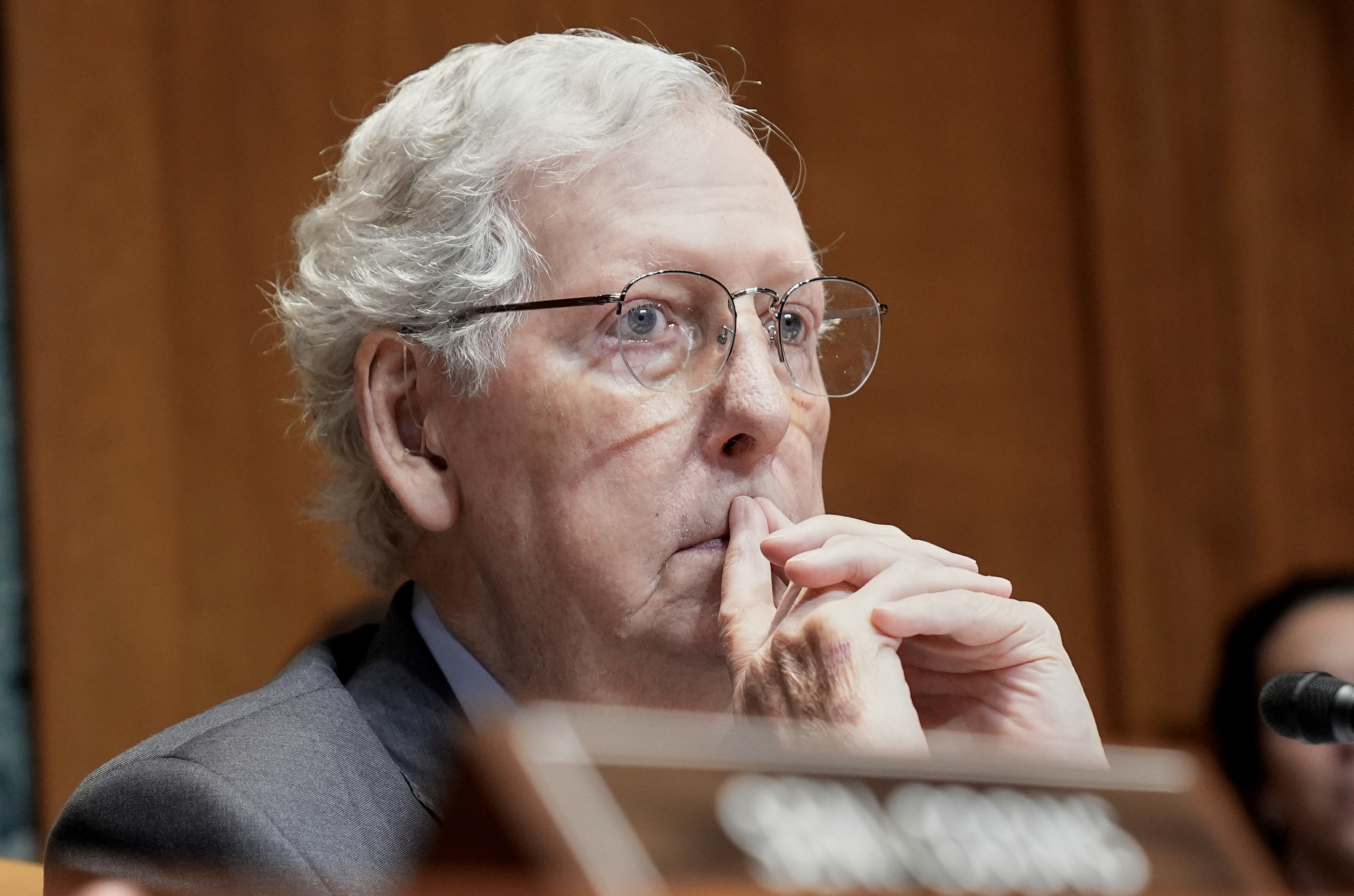
    Sen. Mitch McConnell (R-Kentucky) has not appeared in the Senate since June as he recovers from a fall that his office said he suffered at his Washington home.

    It’s unclear if he’ll be back in the chamber Monday as the Senate reconvenes after a five-week recess.

    McConnell, 84, was hospitalized June 14 following a fall at home, according to his office. He later moved to a rehabilitation center, from which he was discharged Aug. 6 to continue his recovery at home.

    Asked whether McConnell plans to return to the Capitol on Monday, David Popp, a McConnell spokesman, referred The Washington Post to McConnell’s statement last month in which he said he would “maintain an intensive regimen of physical therapy from home” during recess while continuing to work on Senate business.

    McConnell led Senate Republicans for 18 years before stepping down last year to serve out the last two years of his term as a rank-and-file senator. His term is up Jan. 3. Rep. Andy Barr, who won the Republican Senate primary in Kentucky in May, is heavily favored in the race to succeed him.

    McConnell has given no interviews and made no public appearances since his hospitalization. His office has shared two photos of him taken during his recovery, and he said in a statement in July that he did not break any bones when he fell and did not suffer a concussion, a heart attack, a stroke or a hemorrhage.

    Those details have not quelled intense speculation about his health and when he will return to the Capitol. Kentucky Gov. Andy Beshear, a Democrat, demanded in July that McConnell “provide proof of his capacity to serve, or resign.”

    McConnell is not the first senator to be away from the Senate for months while ailing or in recovery.

    Sen. John Fetterman (D-Pennsylvania) was absent for two months in 2023 while seeking treatment for depression. Sen. Dianne Feinstein (D-California) missed nearly three months of votes in the same year while battling shingles. She returned to the Senate but died months later. And Sen. John McCain (R-Arizona) did not vote during his final eight months in office before his death in 2018.

    Earlier this month, Rep. James Comer (R-Kentucky) told reporters that he expected McConnell to return when the Senate reconvened, based on conversations with McConnell’s staff. Comer said he had not spoken directly to McConnell about his plans.

    Senate Majority Leader John Thune (R-South Dakota) told KELO, a South Dakota TV station, earlier this month that he was hopeful that McConnell would return to the chamber soon.

    “We’d love to get him back to where we can have him voting in the Senate, and I hope that will happen here in the not-too-distant future,” Thune said at the time.