Category: News

  • ‘Tires’ cocreator Steve Gerben on how he became the ‘King of West Chester Golf’

    ‘Tires’ cocreator Steve Gerben on how he became the ‘King of West Chester Golf’

    While Steve Gerben is known for having cocreated one of the year’s most popular Netflix comedy series, his friends and the internet are attempting to crown him with a more ribbing title: The “King of West Chester Golf.”

    The Berwyn-born actor, comedian, and costar of Netflix’s Tires says the nickname is just a joke created by his costar and fellow Pennsylvanian Shane Gillis after Gerben “broke 80″ for the first time, scoring 79 on 18 holes of golf last year. It’s something that fewer than 10% of golfers worldwide reportedly do in their lifetime.

    “I thought I would just get my friend to start videotaping in case it happened on the 18th hole. And then I did it,” Gerben, 43, remembers with fondness. “So Shane saw that video and was making fun of it on his podcast, calling me the ‘King of West Chester Golf.’”

    Gerben’s character on Tires, Will, an anxious go-getter who sees the best in those around him, is not unlike Gerben in real life. Even when receiving praise for his golf prowess or growing television career, Gerben is more comfortable sharing credit with others and not taking the spotlight. And while he downplays his claim to the West Chester golf throne, Gerben does play golf every week in the Philadelphia region — from West Chester courses to the occasional charity event at Ardmore’s Merion Golf Club.

    As his profile has grown with the success of Tires, Gerben continues to live in West Chester, cultivating a life around golfing near home and creating a local television production alongside his best friends.

    “I can’t see myself leaving the area. I really love it here and it’s home,” he said. “Also, just given how I feel about golf, suburbs make way more sense — it’s just scratching the right itch for me.”

    It also helps that the hit show Gerben cocreated with Mechanicsburg-born Gillis and Philadelphia’s John McKeever is filmed in West Chester off East Gay Street, inside an addition to the real-life tire shop of Gerben’s father.

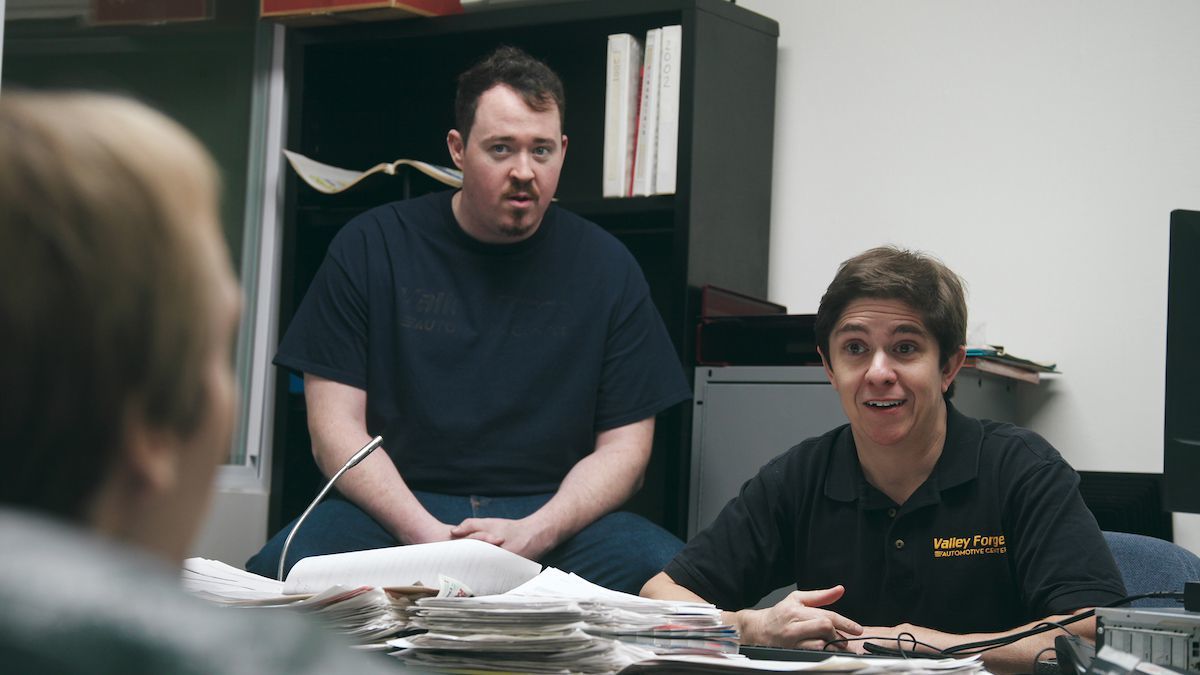
    Tires, which had its season three premiere Aug. 13, follows two cousins, Will (Gerben) and Shane (Gillis) as they run the fictional Valley Forge Automotive Center, named after the previous real-life automotive business of Gerben’s father, which was sold in 2011.

    “I remember after season one, my dad was on the boardwalk and he saw a Valley Forge Auto shirt in one of the stores, and he was just like, ‘This is insane,’ because it’s this company that he had for 20 years, and then gone, and now we brought it back in a way,” Gerben said.

    With Gerben and Gillis on screen, and McKeever as the magic behind the camera, the Tires crew navigates the world of a Pennsylvania small business, rivalries with a national tire chain, and coming to terms with life and romance in your late 30s and 40s.

    Tires was recently renewed for a fourth season. That renewal, along with the suburban life he’s created with his girlfriend and cat, has Gerben doubling down on the Philly region. One factor that now rules his life is golf, and how to keep enjoying the sport that eases his mind and boosts his confidence.

    “Playing golf is a flow state for me. I get out of a perfect golf swing what I’m sure people that meditate get out of meditation or when people feel a piece of art really speaks to them,” Gerben said.

    What started as something to do as a senior at Conestoga High School, joining the Valley Forge Golf Club for $8 after school, has grown into a passion that has seen him playing alongside Eagles players like Jason Kelce and appearing in vlog-style golfing videos with comedian Andrew Santino.

    Golf feels like meeting up with an old flame for Gerben, who essentially gave up on the pastime as he attempted to make it in the East Coast stand-up comedy circuit in the 2010s. That’s where he met Gillis and McKeever, doing open mics at the now-closed Raven Lounge and Helium Comedy Club.

    While Gillis would continue to rise in stand-up comedy, Gerben said he struggled to find footing. Yet, constants in his life were Gillis and McKeever, who reportedly were known to not take on certain projects unless Gerben could be involved.

    But one thing that always sat in Gerben’s back pocket was a script for a show based on his experience working at his father’s Valley Forge tire shop that he initially wrote nearly 15 years before Tires would premiere on Netflix in 2024. Two years later, Tires’ third season debuted in the No. 9 spot on Netflix with 2.4 million views in its opening weekend.

    The success doesn’t get to Gerben’s head, as he’s focused on enjoying life in the burbs and golfing as much as possible, he said. With golf swinging back into his life, the sport brings a chance of pace in a busy work schedule and/ allows Gerben, who has had arthritis since he was 2, to stay active.

    “I feel so unbelievably healthy because I think it’s about like a five- or six-mile walk each golf session, and you’re not even paying attention to that, given you’re doing this thing that you just absolutely love doing, and is a little bit easier on the joints,” Gerben said.

    Gerben also sees golf as a way to meet friends.

    “Golf is just a weird addiction that some people have that cuts across generational barriers because you spend so much time with people on the course who have the same passion as you,” he said.

    In the meantime, Gerben will continue flirting with the idea of starting his own golfing YouTube career, like “Bryan Bros Golf.” But until Tires is wrapped, Gerben said there would be no official online golf career on the horizon.

    Besides, if Gillis finds Gerben’s golf videos, Gerben will never hear the end of it from his best friend, he said.
  • Looking back in order to look ahead

    Looking back in order to look ahead

    I was standing next to a big sign before the start of an event this week. It had a photo of the host and the large words “America 250.” More than one person arriving wondered out loud, “Why the 250?” Or, “Isn’t that passed?”

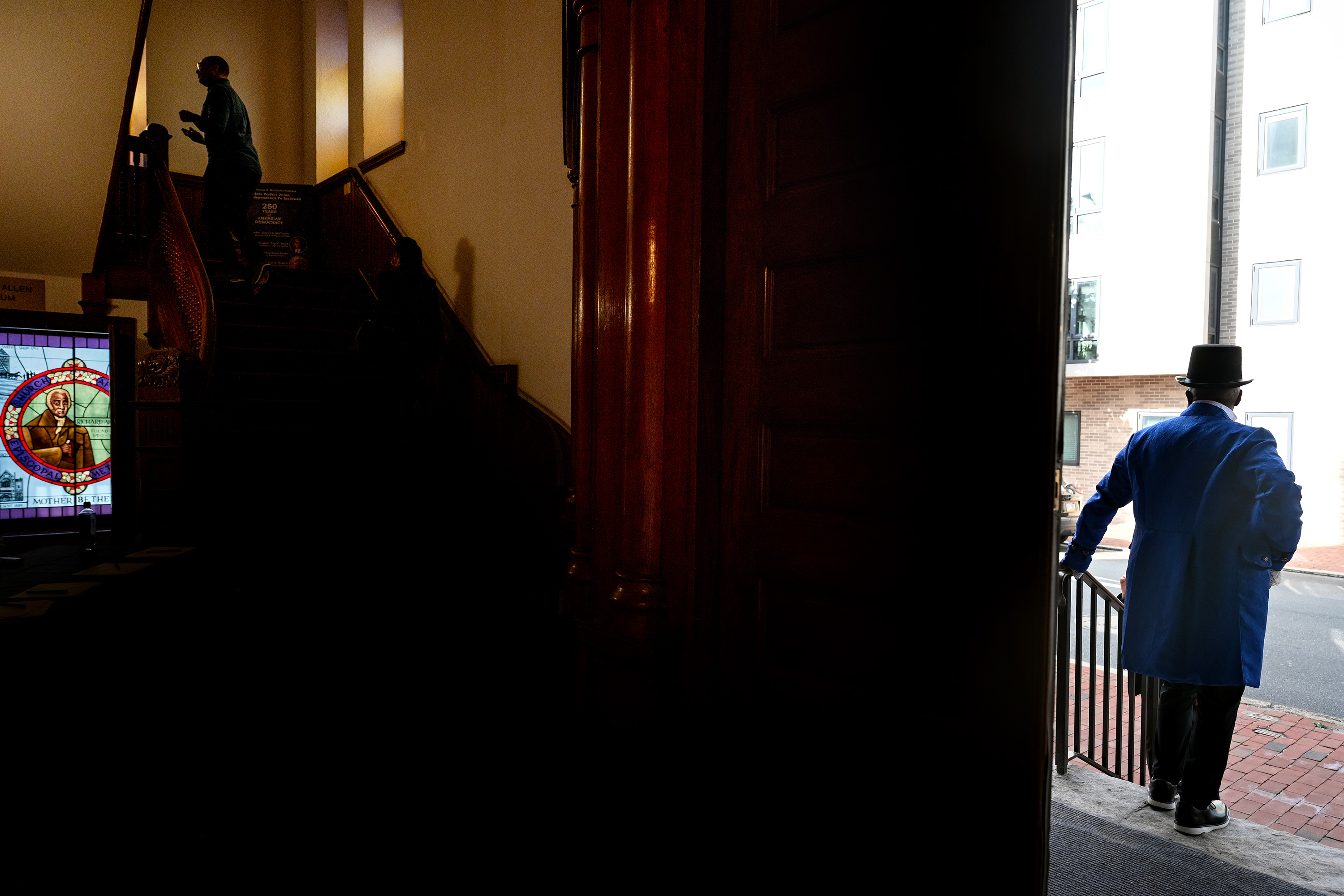
    They weren’t asking me. I was just there, inside looking out the front door, waiting for re-enactor Chris Lewis to step into a favorable position so I could make the photo above.

    The registration table was farther inside, so nobody was there to say something like, “Just because July 4 is behind us doesn’t meant we can’t continue the celebration of what was accomplished in 1776. Or we could think about what we want the next 250 years to look like.”

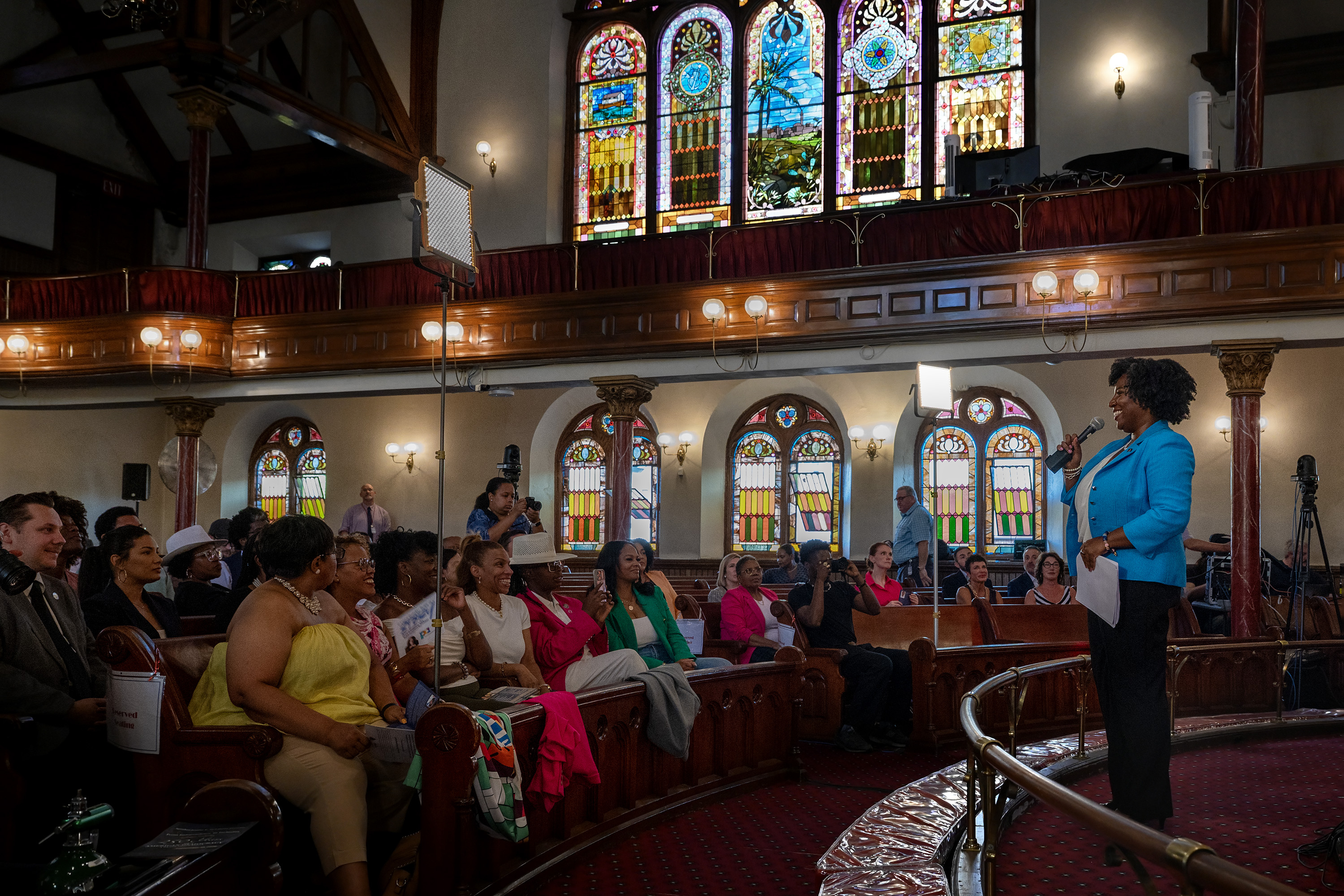
    House Speaker Joanna McClinton hosts an America 250 Conversation at Mother Bethel AME Church Thursday Sept. 10, 2026.Tom Gralish / Staff Photographer

    That’s what Pennsylvania House Speaker Joanna McClinton and three other historic statehouse speakers from Delaware, Illinois, and New York did, reflecting on America’s history while looking ahead.

    I did my own share of looking both back and forward while covering another anniversary this week. Those of us old enough to remember knew even on that day that nothing about our future would never be the same again.

    After 9/11 the flag became a symbol of shared feelings, giving people a way to express emotions that words could not.

    Sports reporter Matt Breen — a Northeast Philly native and Temple grad — writes the kind of stories I like to read, full of history and nostalgia, trivia, and tidbits. And plenty of “Only in Philadelphia” characters. Like Flag Man.

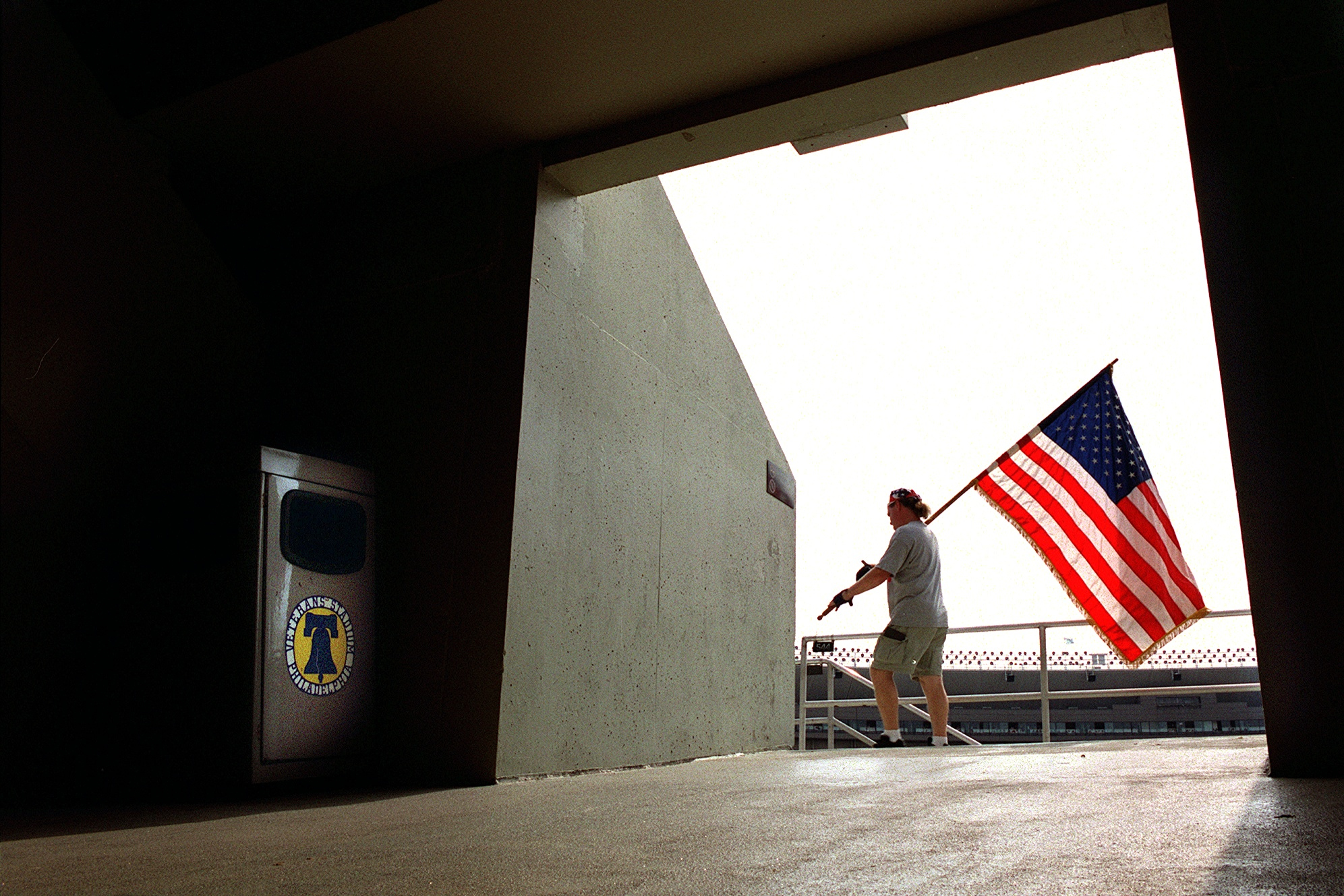
    Jim Minacci at Veterans Stadium, September, 2001.Tom Gralish / Staff Photographer

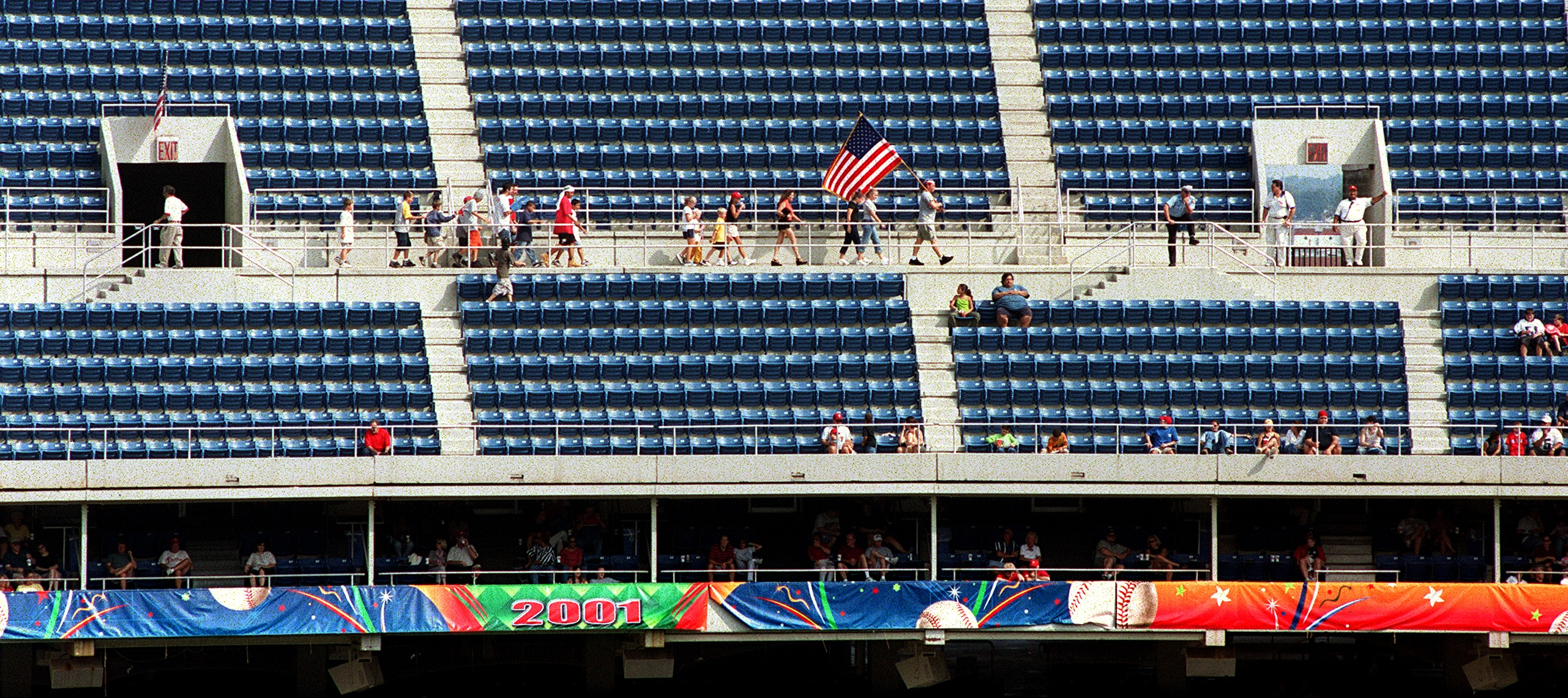
    I photographed Jim Minacci twenty-five years ago when the Phillies were back at Veterans Stadium after the season was paused following 9/11.

    He and his son walked around all the concourses carrying a large American flag — trailed like the Piped Piper by a line of kids. They did it at every home game for the rest of that season as he became a symbol of patriotism.

    Minacci still attends Phillies games and he still has the flag (but it’s too big to be allowed into Citizens Bank Park).

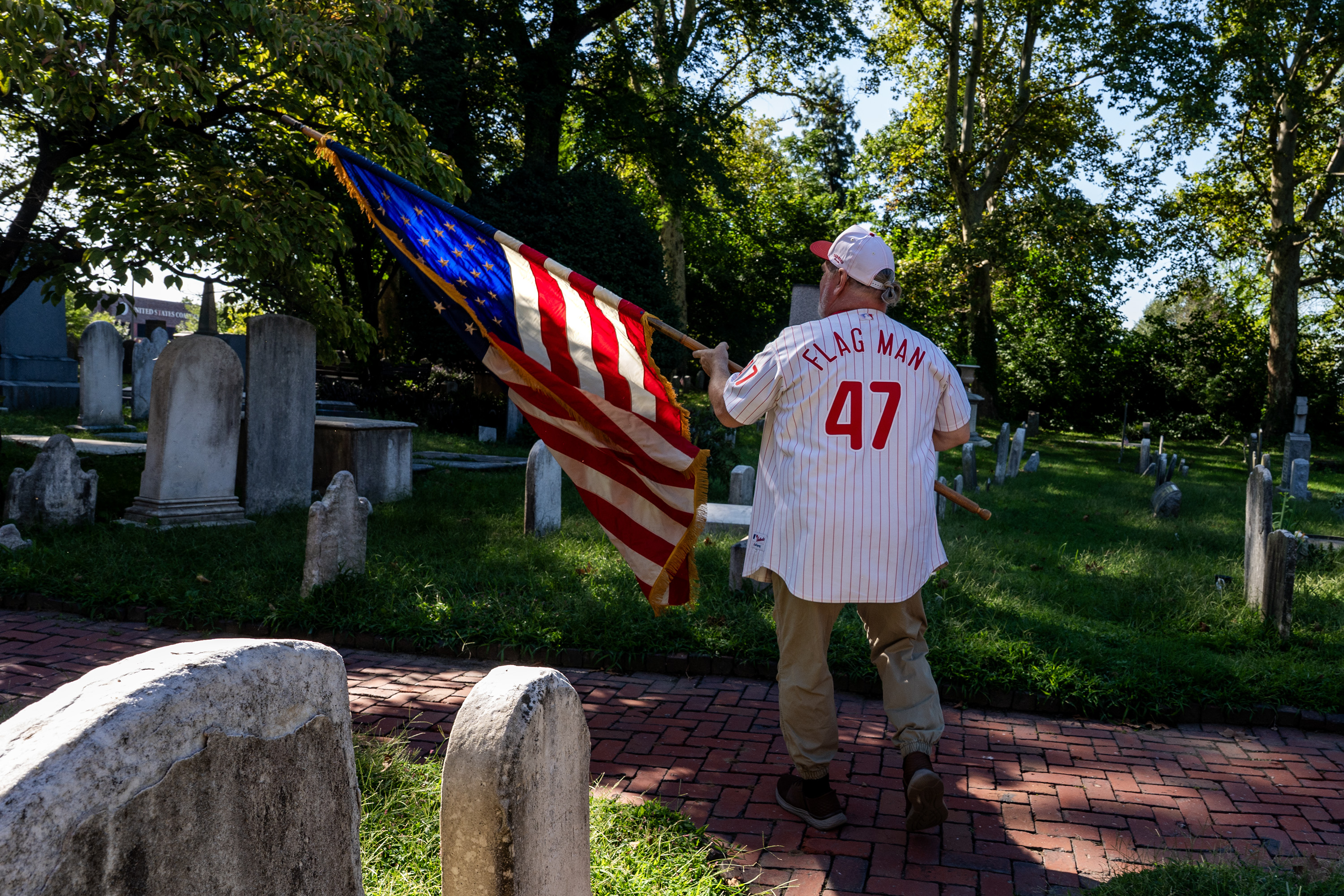
    Breen wrote about him and I made the photos at Gloria Dei (Old Swedes’) Episcopal Church, where he and his wife Paula still live and work as sextons.

    Jim Minacci at Gloria Dei Old Swedes Episcopal Church Tuesday, Sept. 8, 2026.Tom Gralish / Staff Photographer

    Surprisingly, while there have been stories about the Minaccis — and the dozens of music events they host all yearlong to raise money for the historic church — it looks like Matt is the first one to write about Flag Man since 2001.

    Looking ahead, it would be great if Americans could reclaim that feeling today, reclaim the sense of community that emerged from the tragedy (without something else terrible having to happen).

    A flag at a South Jersey home on Flag Day, June 14, 2005, tattered, torn and tarnished by time over the years after 9-11, when well-intentioned home-owners bought flags to display in the heat of patriotism. Tom Gralish / Staff Photographer

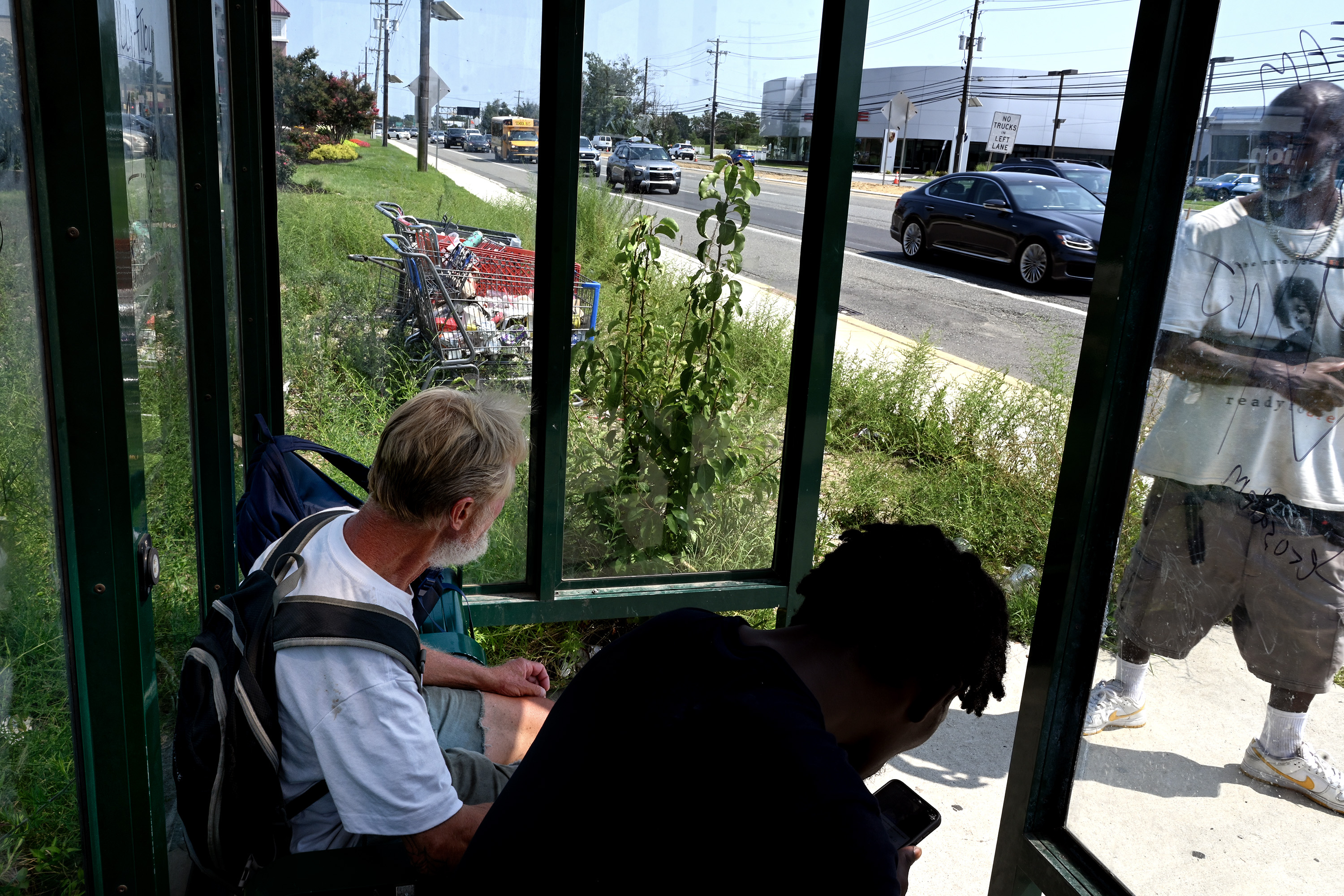
    Since 1998 a black-and-white photo has appeared every Monday in staff photographer Tom Gralish’s “Scene Through the Lens” photo column in the print editions of The Inquirer’s local news section. Here are the most recent, in color:

    » SEE MORE: Archived columns and Twenty years of a photo column.

  • The PPA gives money back, Philly has an $88 potato, and the Eagles go 12-5? | Weekly Report Card

    The PPA gives money back, Philly has an $88 potato, and the Eagles go 12-5? | Weekly Report Card

    The PPA is giving money back: A+

    Somewhere in Philadelphia, thousands of people are about to experience something they never thought possible: getting money back from the PPA.

    The Parking Authority voided 23,195 speeding tickets and is refunding $1.25 million in fines after discovering that a required speed-camera warning sign was missing from a stretch of North Broad Street. A construction crew had knocked it down, and somehow it took about three months to get a new one up.

    To be clear, the drivers were still speeding. The PPA would very much like everyone to know that. But state law requires a sign warning drivers about the camera, so the tickets had to go.

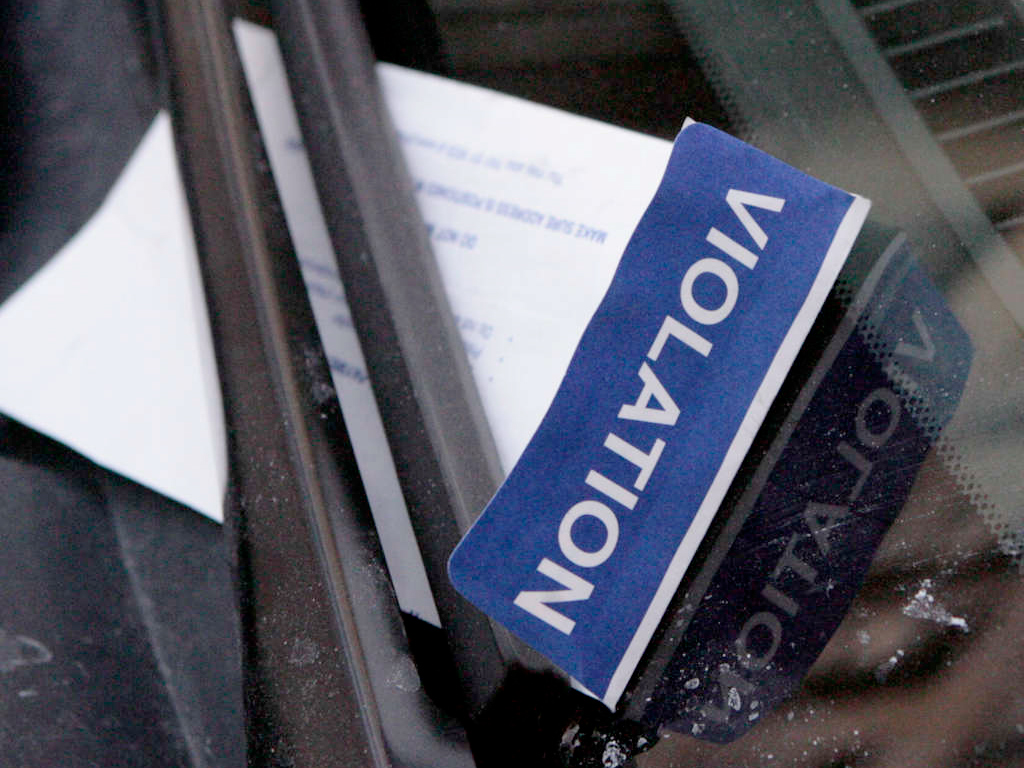
    There is something deeply satisfying about this. Philly drivers have spent generations feeding parking meters, sprinting back to expired spots and discovering orange envelopes tucked under windshield wipers. The PPA is usually where your money goes, never where it comes from.

    So check the mail, 12,214 lucky speeders. Somewhere out there is a refund from the Philadelphia Parking Authority.

    And really you should frame the check, this may never happen again.

    SEPTA bus passengers direct bus driver to drive through wet concrete
    Video: SEPTA bus passengers direct bus driver to drive through wet concrete

    Philly’s respect for construction barriers: D

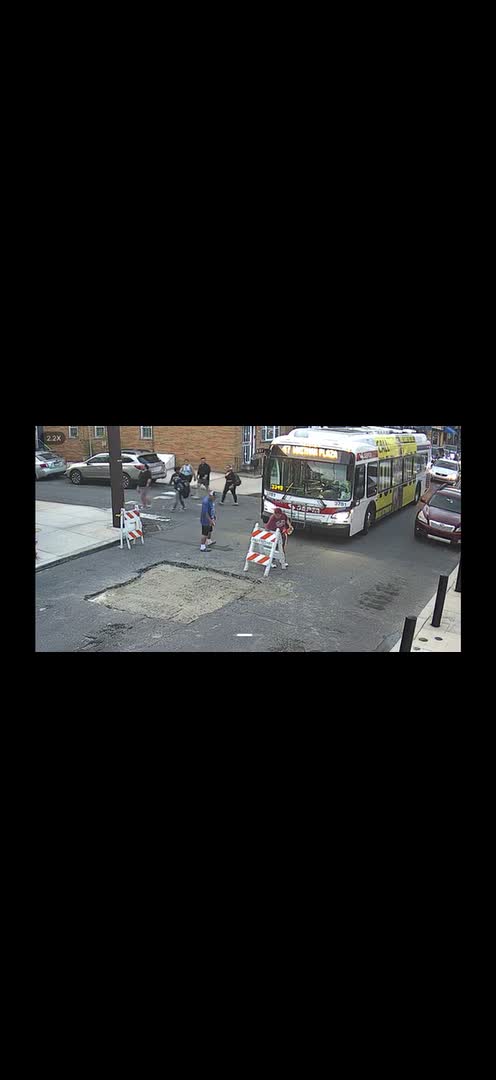
    A SEPTA bus got stuck in freshly poured concrete outside Termini Bros. last week, just two minutes after city crews finished pouring it.

    How did it get there? Two passengers hopped off the bus, moved the street-closure barricades themselves, and then helped direct the driver around the construction. Shockingly, that did not go well.

    It gets even better when you learn that the pothole-turned-sinkhole had been there for 14 months, long enough that it had started swallowing traffic cones. The city finally showed up to fix it, poured the concrete, and blocked off the street at 7:21 p.m. The 47 bus drove into it at 7:23.

    Fourteen months waiting for a repair, and it took two minutes to ruin it.

    And to once again make this story even better, it happened outside a century-old Italian bakery, the bus was covered in Top Dog Law ads, and when city workers returned the next morning to fix the fix, Joey Termini brought them cannolis.

    An updated rendering of the new Flyers arena released Thursday appears to show more women fans following backlash this week against the original rendering.Courtesy of the Flyers

    Our new sports home comes into focus: A

    We’ve known for a while that the Sixers and Flyers are getting a new arena in South Philly. Now, we finally know what the thing is supposed to look like.

    The first renderings dropped this week, and there’s plenty to like: a facade inspired by the old Spectrum, a huge outdoor plaza, food and drink pavilions, and a giant screen outside.

    But the coolest part might be seeing three teams attached to it. When the doors open in 2030, the Sixers and Flyers will be joined by Philly’s still-unnamed WNBA team, which will begin play that same year.

    Four years away suddenly feels a little more real. Now, we just need a name for the team (and, eventually, the building).

    Eagle Saquon Barkley runs the sidelines during an open Eagles practice at Lincoln Financial Field in Philadelphia on Tuesday, August 25, 2026.Elizabeth Robertson / Staff Photographer

    The Eagles go 12-5, according to science: A

    The Eagles season starts Sunday, which means this is the last beautiful moment when absolutely anything can happen. So Mike Sielski did the responsible thing and predicted all 18 weeks — mostly through song lyrics and increasingly unhinged scenarios.

    His forecast has Jalen Hurts doing the macarena on the first play of the season, Vic Fangio throwing up on a Dollywood roller coaster, Aaron Rodgers blaming a loss on Anthony Fauci and the illuminati, and Brandon Graham once again considering coming out of retirement. Somehow, amid all of this, the Eagles finish 12-5 and win the NFC East for a third straight year.

    And you know what? Wouldn’t that be great? Twelve wins, another division title, football at Christmas, and several months spent planning Sundays around the Birds again. After an offseason of roster moves, coordinator questions, and endless predictions about what this team might be, we finally get to watch actual football.

    And if we get to keep the 12-5 season, Hurts doing the macarena would just be the cherry on top.

    The baked potate loaded with lump crab au gratin and a caviar “blackout” at Mr. Edison in the Bellevue costs $88.Kiki Aranita / Staff /

    An $88 potato?!: F

    There are certain things an $88 potato should be able to do. Like maybe change your life or fix your credit. At minimum, make you briefly forget you just spent $88 on it.

    The baked potato at Mr. Edison in the Bellevue starts at an already pricey $48, stuffed with nearly half a pound of crab au gratin. Add a “blackout” of caviar and suddenly you’re sitting in front of an $88 spud.

    And according to Inquirer food writer Kiki Aranita, it wasn’t good.

    An $88 potato should be so delicious that you spend the next week becoming an annoying person who tells everyone, “OK, but you have to try the potato.” Instead, Aranita described hers as “all mush” and pointed out that better baked potatoes can be found a few blocks away for a fraction of the price.

    Caviar or no caviar, at the end of the night, it is still a potato.

    Temple’s $55 million gift disappears: F

    Less than a year ago, Temple was celebrating the largest donation in university history: $55 million from alumnus Christopher Barnett. This week, the school announced it was terminating the gift, removing Barnett’s name from its College of Public Health and other programs, and accepting his resignation from the board of trustees.

    The reason is quite a turn. Barnett’s company, ABA Centers of America, is under federal criminal investigation over allegations including money laundering and wire fraud. Investigators allege the autism-services provider improperly billed insurers, including for treatment while clients were napping or watching television. Barnett has not been charged and “strenuously denies” the allegations.

    There is a small piece of good news buried in this mess, though. Temple hadn’t gotten any of the $55 million yet, which makes it a lot easier to give the money back.

  • Man fatally shot at Nicetown shopping center

    Man fatally shot at Nicetown shopping center

    A 25-year-old man was fatally shot early Friday evening in the parking lot of a shopping center in the Nicetown section of Philadelphia, police said.

    Around 5:20 p.m., police were called to the shopping center on the 2800 block of Fox Street and transported the victim to Temple University Hospital, where he was pronounced dead at 5:48 p.m., police said.

    A Pennsylvania state constable who was working at the shopping center as a security guard told police he saw an altercation at a parked SUV and went to investigate, said Philadelphia Police Inspector D.F. Pace.

    The state constable found the man shot inside the SUV and attempted to provide aid before police arrived, Pace said.

    No arrests were reported.

  • DA’s office filing argues against overturning murder conviction in controversial case

    DA’s office filing argues against overturning murder conviction in controversial case

    A new motion filed Friday in the controversial case that has roiled Philadelphia District Attorney Larry Krasner’s office argued that a federal judge should not overturn a man’s murder conviction.

    The filing from the District Attorney’s Office — which would have to be accepted by U.S. District Judge Paul S. Diamond — was the latest development in a legal fight that has focused primarily on the conduct of lawyers in the case.

    Jean Peters-Baker and Thomas Gaeta wrote in their motion that Dennis Johnson, who was found guilty of second-degree murder in 2009 and sentenced to life in prison without parole, should not be provided relief on his multiple appellate claims. The prosecutors also argued that Johnson had not yet exhausted his remedies in state court.

    Peters-Baker, a longtime prosecutor from Missouri who previously led the prosecutor’s office in the county that includes Kansas City, was hired by Krasner’s office to handle the case as an outside attorney. Gaeta is Krasner’s civil litigation supervisor.

    On Tuesday, the Pennsylvania Attorney General’s Office said in court documents that Krasner should be barred from continuing to oversee the post-conviction case in federal court — and that his office should be kicked off the case as well.

    Prosecutors for Pennsylvania Attorney General Dave Sunday argued that drama about the Johnson case has consumed the District Attorney’s Office, and that Krasner has “placed his personal interest in protecting the office above the Commonwealth’s interest.”

    Krasner’s office said that the DA had acted in legally appropriate ways, and that his office should be allowed to continue overseeing the case.

    Krasner’s own staffers have accused him of questionable conduct in the case, including by saying he told them to “protect the office” and that they could face “consequences” if they didn’t.

    In a Tuesday filing, Gaeta wrote that Krasner had taken pains to ensure the case was handled “with competence and integrity.”

    Diamond has sought to learn more about how various attorneys connected to the case have behaved while the matter has moved through federal court.

    The case began as a routine appeal, but in recent months has led to a series of explosive accusations about the inner workings of the District Attorney’s Office.

    Several prosecutors said they advised Krasner to refer the case to the Attorney General’s Office, and Krasner allegedly responded angrily or suggested tactics they thought were legally inappropriate.

    The tactics allegedly included keeping the case in-house, potentially seeking to assign blame to a line prosecutor while protecting her supervisor, and taking steps to “protect the office” in court.

    At one point, Diamond suggested he viewed the allegations as potentially criminal, saying if they were true, they could amount to perjury, conspiracy, or obstruction of justice.

    The judge did not specify who he believed might be at fault.

  • Contractor blames its own repairs, not vandals, for Reflecting Pool failure

    Contractor blames its own repairs, not vandals, for Reflecting Pool failure

    WASHINGTON — The contractor that renovated the Lincoln Memorial Reflecting Pool has told the Trump administration that errors in its own work and flaws in the repair plan, not vandalism, caused the pool’s new blue liner to peel and break loose, according to government documents reviewed by the New York Times.

    President Donald Trump has repeatedly blamed vandals wielding knives or box cutters for damage to the pool’s “American flag blue” liner, even after the Justice Department dropped charges that it had brought against people accused of vandalizing the national landmark.

    But the documents, which have not previously been reported, make clear that the contractor, Atlantic Industrial Coatings, found problems in the design and the execution of the renovation. The documents include Atlantic’s reports to the government as well as daily progress updates from the National Park Service over the past two months.

    Atlantic blamed its own errors in a report dated Aug. 14 and then provided more detail Sept. 2, the documents show. The Justice Department, which had charged several people with vandalizing the pool in early July, began moving to dismiss the cases July 31.

    Because of “human oversight,” workers in some areas did not spray enough of the primer that made the layers of the liner stick together, Atlantic said in the documents. But the bigger problem, the company said, was that the repair plan laid out in the contract called for the layers of liner to include two chemicals that turned out to be incompatible.

    The chemical on top reached a temperature hotter than what the compound underneath could withstand, and the heat caused the bottom layer to blister and come loose, the documents show. The contractor said it had not expected that outcome because it was very uncommon to mix the two products in that way.

    The failure illustrates the consequences of the Trump administration’s rushed effort to renovate the pool this spring. In a hurry to finish the work before the nation’s 250th birthday on July 4, the government bypassed competition and gave Atlantic a no-bid contract to carry out an untested approach designed in part by the general manager of one of Trump’s golf clubs.

    The government has agreed to pay Atlantic $14.7 million for its work. The contractor has said it will repair the pool, which is under warranty, again.

    Katie Martin, a spokesperson for the Interior Department, did not directly address questions about the contractor’s findings but issued a statement that appeared to continue blaming vandals for the damage, saying that they had “repeatedly reached into the pool and ripped at the coating.”

    Martin said Atlantic was now “well on its way” to repairing the pool. She did not say when it would be refilled.

    Representatives for Atlantic did not respond to requests for comment.

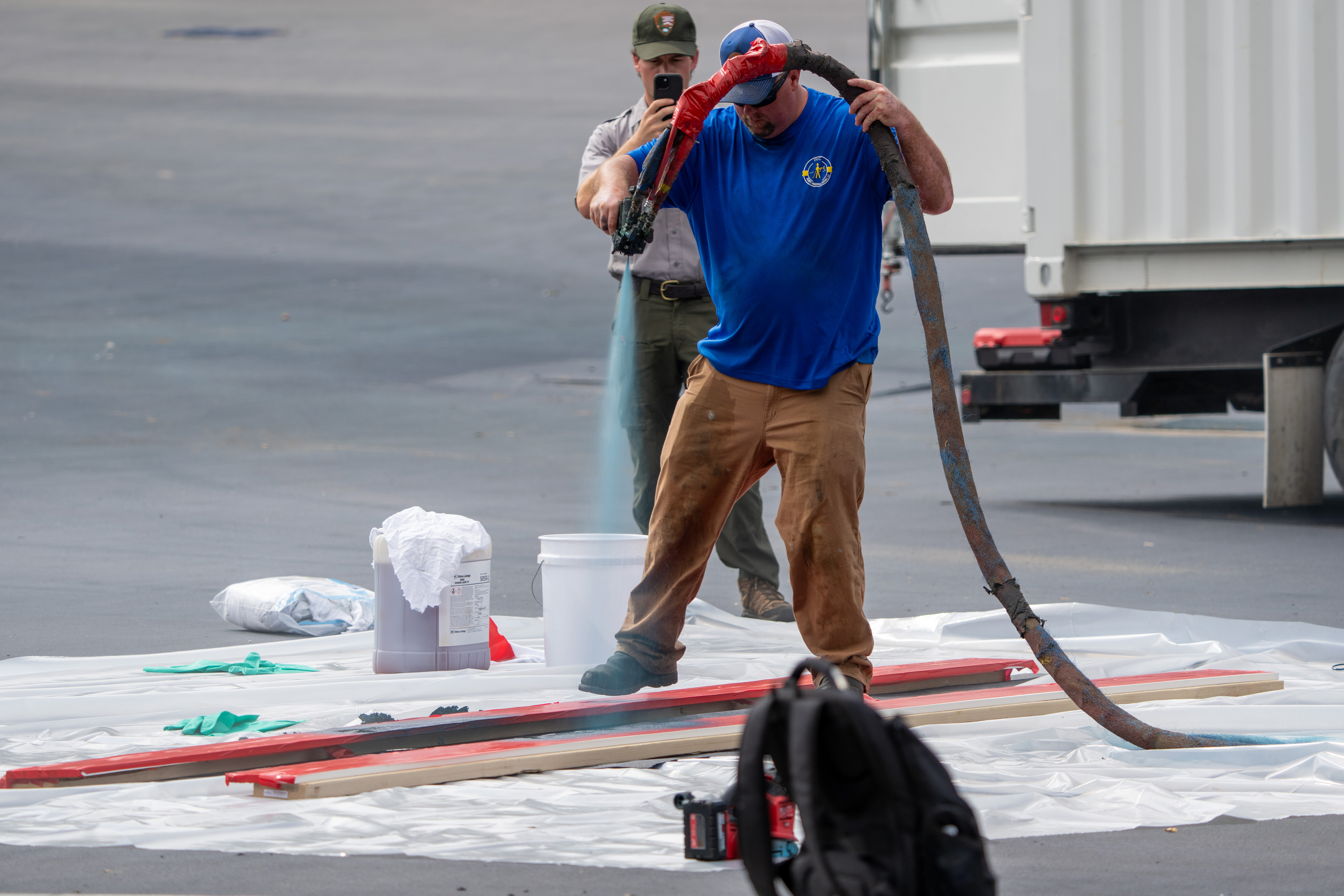
    The pool is still drained, and repairs appear to be ongoing: On Thursday, the pool was full of workers. Some were seen tearing up large strips of the blue lining, while another sprayed a new layer of coating as a man in a shirt reading “Atlantic Coating Inspection” watched.

    The documents show that, to redo the repairs, Atlantic said it would use a smaller team of workers that would be closely supervised, and that it would consult an adviser from the manufacturer of the compounds used in the liner.

    The manufacturer, Rhino Linings, did not immediately respond to a request for comment. Its CEO, Pierre Gagnon, said in a June statement that the peeling liner was “limited to isolated areas” of the pool.

    The documents also show that Atlantic did blame vandals for cuts in the caulking around the pool’s edge that National Park Service workers had previously reported to the police. But the company did not link those cuts to the peeling of the blue liner on the pool’s floor, which Trump repeatedly blamed on “sick people” wielding knives or razors.

    Federal prosecutors acted on the president’s claims on July 2, when they announced the indictment of David Hearn, a former Olympic canoeist accused of pulling up a piece of the liner, on a felony vandalism charge.

    But in a remarkable reversal a few weeks later, prosecutors sought to dismiss the charges against Hearn and three others accused of vandalizing the landmark. Jeanine Pirro, the U.S. attorney in Washington, wrote that the Interior Department had misled her staff about the extent to which the damage had stemmed from vandalism rather than a “botched installation.”

    Trump continued to blame vandals for the damage even after that, though he conceded in a social media post Aug. 9 that “there is no video or proof.”

    “There was also some contractor error done by rushing the job for a July 4th opening,” Trump said in that post. “But it was a very small area of this massive Pool, and was relatively inconsequential.”

    Trump said then that the pool would reopen “shortly.” But it remains drained a month later. The documents reviewed by the Times help explain why. They show that repairing the pool has been a challenging and involved task.

    On Aug. 13, the contractor began power-washing the pool to remove loose chunks of blue liner, according to the documents. By the end of the next day, workers had filled one large trash bag, but many more bits of liner remained stuck to the pool’s concrete slabs and would need to be removed later with razor blades, hammers, and crowbars.

    After removing the loose pieces, the documents show, Atlantic sought to reapply the blue coating, only to encounter the same problems as before: Blisters would appear under the surface, between layers of the lining. Early this month, the company concluded that the problem was the interaction between the two compounds and stopped layering the hotter one on top, the documents show.

    That reduced the blisters, the documents show. But it did not stop them completely.

    Also early this month, the contractor identified a new potential culprit: sweat. It said that a worker, wearing a protective suit under the hot Washington sun, was leaving droplets of sweat on the coating, which were then trapped when new layers were sprayed on top.

    To try to solve that problem, the documents show, the man then opened the top part of his protective suit and wrapped cloth around his head and wrists to contain the sweat. The documents reviewed by the Times do not say if that stopped the blisters.

    A National Park Service employee had notified workers Aug. 14 that Trump would be flying over the pool on Marine One that day, according to the documents. Gregory Wischer, a political appointee at the Interior Department, also visited the reflecting pool that day to personally supervise this work, the documents show.

    Wischer, a former executive at a metal processing company, originally joined the Trump administration last year to work on critical minerals policy. But he has since shifted his focus to the Reflecting Pool renovation and the president’s other pet projects in Washington.

    In March, Wischer met with David Schutzenhofer, the manager of a Trump Organization golf club in New Jersey who helped plan the pool’s renovations, according to Interior Department visitor logs. And Monday, Trump wrote on social media that Wischer had updated him on work to clean and wax statues of Italian poet Dante Alighieri and French hero Joan of Arc in a park in Northwest Washington.

    This article originally appeared in the New York Times.

  • At 17, he killed a 14-year-old outside Roxborough High — and then killed again. He faces decades in prison.

    At 17, he killed a 14-year-old outside Roxborough High — and then killed again. He faces decades in prison.

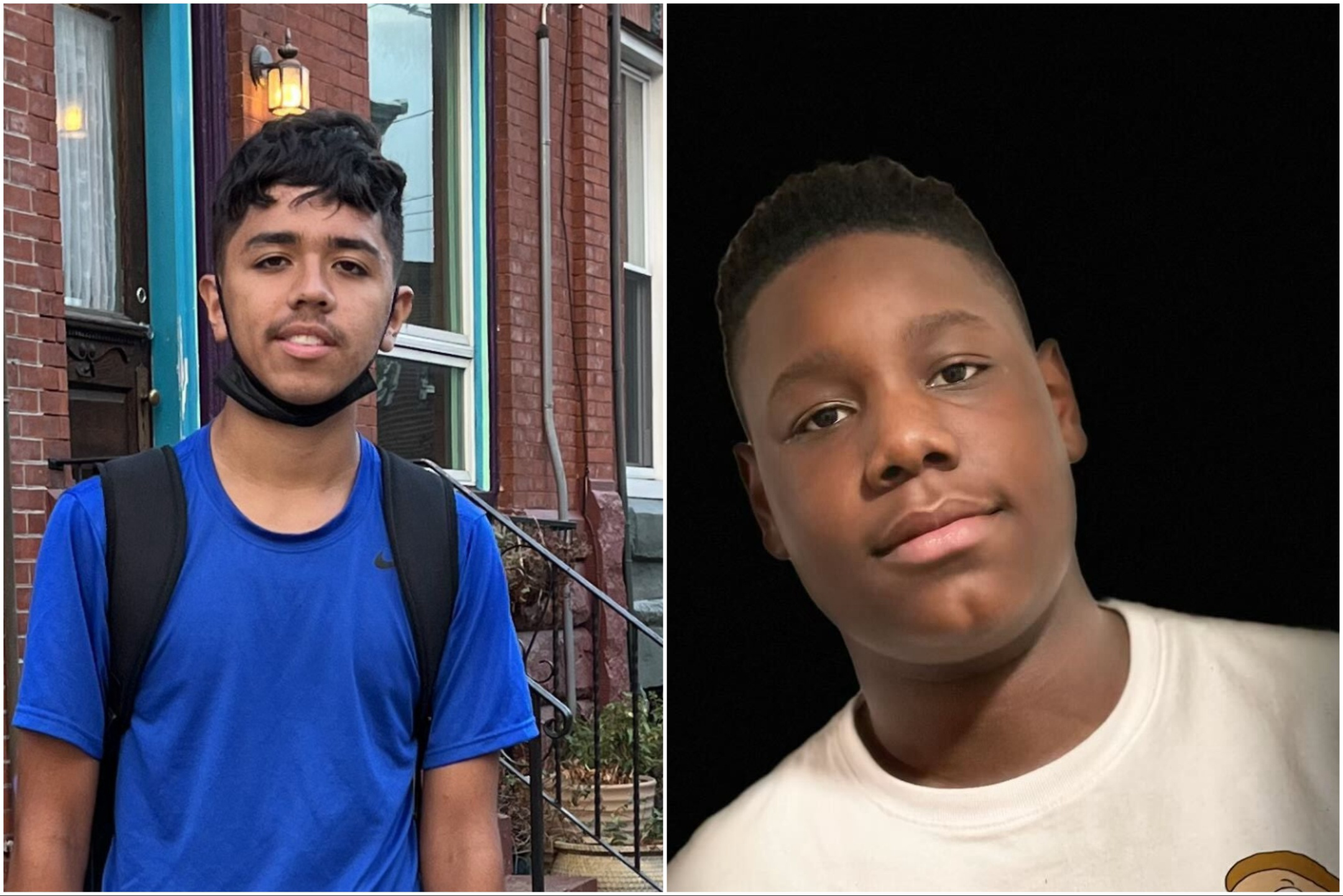
    A 21-year-old man was ordered to spend decades in prison for killing two teens in 2022 and 2023 — including firing dozens of bullets outside Roxborough High School in a shooting that left a 14-year-old dead and four other teens seriously wounded.

    Following an emotional sentencing hearing Friday, Common Pleas Court Judge J. Scott O’Keefe ordered Zaakir McClendon to serve 40 to 80 years in prison for his part in the shootings that killed Nicolas Elizalde and Nafis Betrand-Hill seven months apart.

    McClendon’s streak of violence began when he was 17. First, on Sept. 27, 2022, he and five others drove to Roxborough High School looking to shoot a teen who McClendon believed had hurt a young woman he was close to, said Assistant District Attorney Ashley Toczylowski.

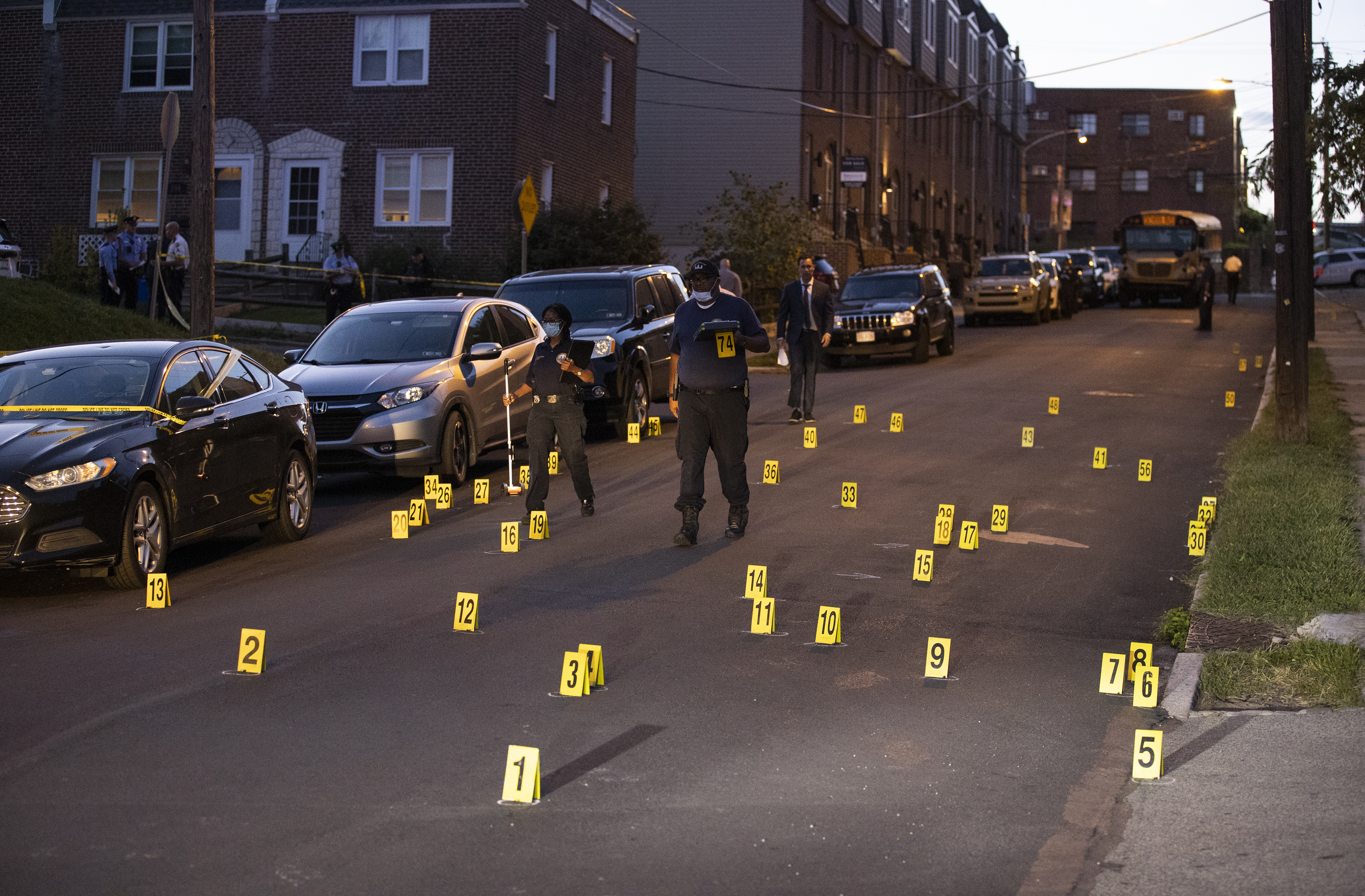
    They parked their dark green Ford Explorer outside the school’s football field, and as dozens of kids walked toward the locker room, McClendon and four others fired more than 60 shots in all directions toward the players.

    More than 60 shots were fired outside Roxborough High School on Sept. 27, 2022.Charles Fox / Staff Photographer

    Five teens were shot. Nicolas Elizalde, a junior varsity player, was struck once in the chest by a stray bullet. His mother, Meredith, ran to his side in the aftermath, and held him as he died.

    “This was a planned, coordinated mass shooting at a high school football game,” Toczylowski said. “And [McClendon] was the reason why this happened.”

    In the months after the shooting, homicide detectives identified five of the six people involved, ranging in age from 15 to 21. But McClendon remained free and unknown to police for years.

    In that time, he killed again.

    On the night of April 13, 2023, McClendon and at least two others drove to 23rd Street and West Montgomery Avenue in North Philadelphia, where they shot Nafis Betrand-Hill, 16, multiple times near his home.

    McClendon was finally charged with both killings last year, after DNA evidence linked him to each crime scene: on a fired cartridge casing recovered at Roxborough and on a blue sweatshirt worn by one of the gunman who killed Betrand-Hill.

    He pleaded guilty to both murders in April.

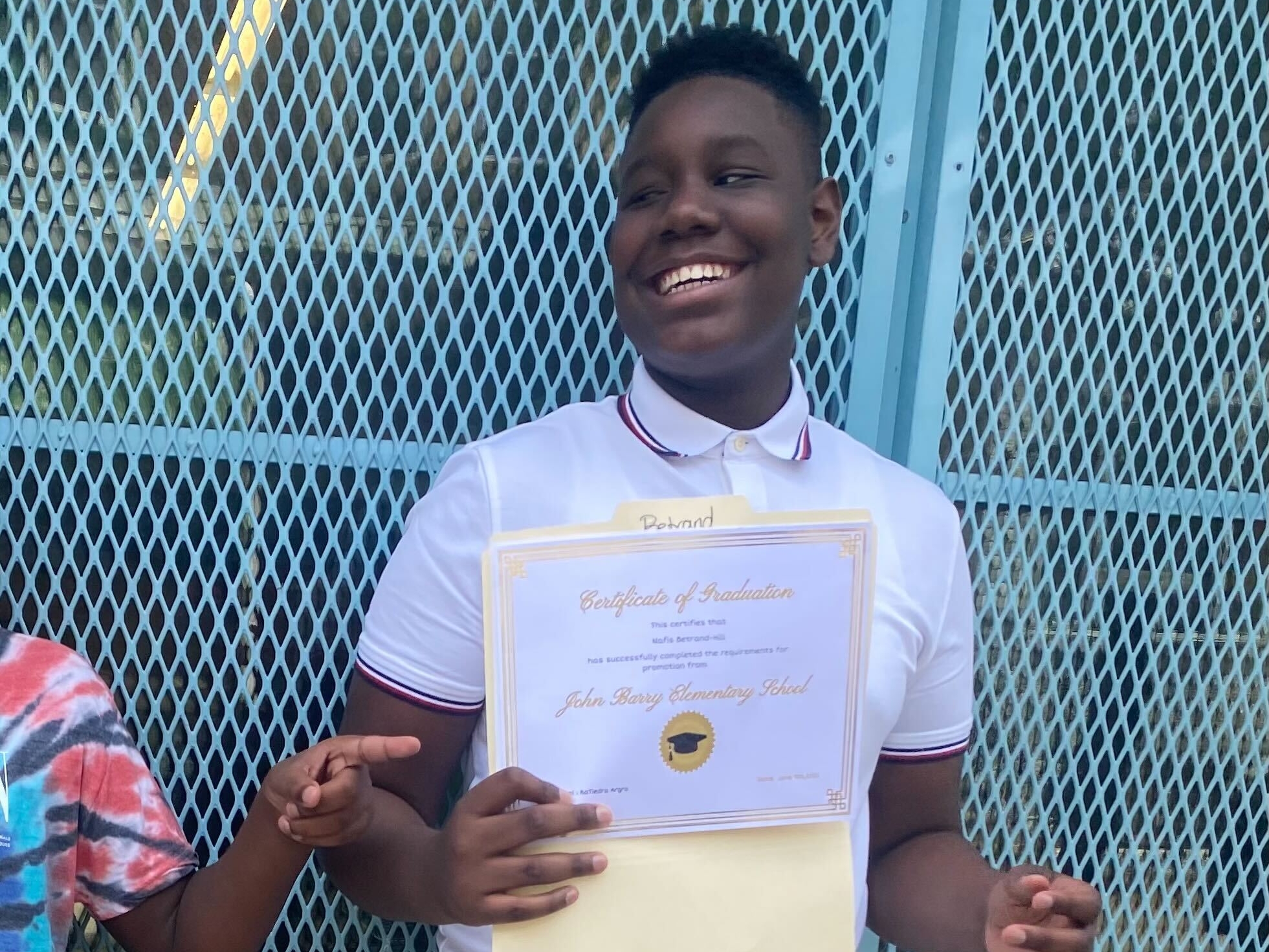
    Ashante Betrand on Friday remembered her stepson, Nafis, as full of life and joy, “a child who deserved to grow up surrounded by love.“ A sophomore at Sayre High School, he was the oldest of four brothers and three sisters. They called him ”Fisso” or “Bo.”

    Nafis Betrand-Hill, 16, was shot and killed in North Philadelphia in April 2023.Courtesy of Ashante Betrand

    Her family, she said, will never stop grieving the “many ordinary but precious moments of adulthood” that he will never experience. They still don’t understand why he was targeted, she said.

    “His life was worth more than a name, a reputation, a street,” she said, adding: “We will never stop loving him, we will never stop missing him and his light.”

    Nicolas Elizalde’s aunt and grandmother spoke next. They wanted McClendon to know about the gentle person he killed — how Nick loved rescuing animals, watching Marvel movies, playing with Legos, and swimming in the pool. He was a freshman at Walter B. Saul High, and should have been finally heading off to college this fall.

    “Did you know that, Mr. McClendon? Do you care?” Nick’s grandmother Marge LaRue asked.

    “I don’t know you, and I don’t want to,” she said. “But you brought evil to my family, and it’s ugly and it’s lonely here. We are joyless. We are empty.”

    Then, Meredith Elizalde stood up, ordering McClendon to look at her. It was the least he could do, she said, after ruining her life.

    McClendon, his small frame hunched in a wooden chair, looked toward her briefly, before turning away again as she spoke.

    When two other teens involved with the crime pleaded guilty last year, Elizalde was firm, but compassionate. She had met and spoken with each of them before their sentencings, and asked a judge to allow each of them to spend a piece of their lives free in Nick’s honor.

    But McClendon, she said Friday, mocked her family and her son’s life by running free for years after the shooting — and killing again. She said she would not ask for any leniency.

    “Did you watch my pleas on TV?” she asked. “I hope to leave this courtroom and never think of you again.”

    Meredith Elizalde at Franklin Fountain, where she and her son Nicolas used to go prior to his death, in Philadelphia, July 24, 2024.Jessica Griffin / Staff Photographer

    Finally, McClendon spoke. His actions, he said, were cowardly.

    “I was still young, your children were still young,” he said, beginning to cry. “I’m sorry. I’m mad it happened the way it did. I’m mad I even made that decision.”

    “I cannot look you in the eyes because I gotta live with what I did,” he said. “I am a menace to the community. … but I will try to be better.”

    His mother’s sobs filled the courtroom as he spoke. Moments earlier, she told the judge she’d raised her son in a loving home. He was a funny, curious child who grew up attending Catholic schools and playing sports. It didn’t make sense.

    At the judge’s sentence, she collapsed into herself.

    After the court hearing, Meredith Elizalde asked the public to remember her son and what he loved — nature, museums, learning — and to invest less in punishment for violence and more in the people, places, and institutions that can prevent it.

    “On Sept. 27, the fourth anniversary of Nick’s murder, the Academy of Natural Sciences — one of Nick’s favorite places and where he celebrated his ninth birthday — is closing its doors to the public.”

    “Think about what these places represent, where children encounter science and nature … and discover the world is bigger than them and there is a place for them in it,” she said. “We cannot punish our way into a healthy society. Prevention is investment, art, nature, community.”

    Accountability for her son’s death belongs to all Philadelphians, she said, and that means protecting the children who are still here.

    Elizalde and her family will return to the courthouse in February, when the three remaining defendants charged with her son’s death are expected to face trial.

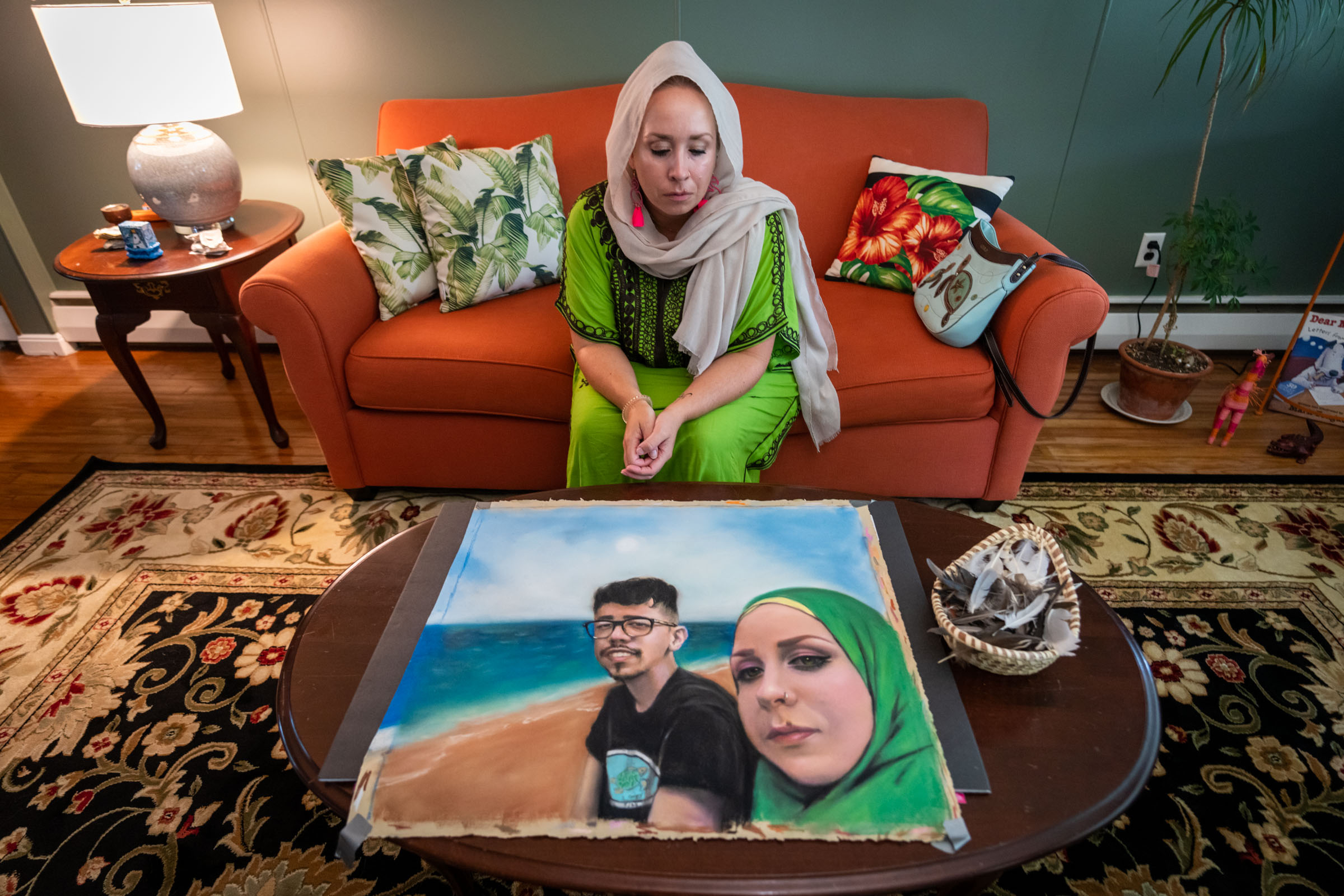
    Meredith Elizalde with a painting of her and her son Nicolas, by Laurie Cooper. Jessica Griffin / Staff Photographer
    Correction: This story has been updated to correct the spelling of the prosecutor’s name.
  • Rachel Blau DuPlessis, experimental poet, literary scholar, and Temple professor emerita, has died at 84

    Rachel Blau DuPlessis, experimental poet, literary scholar, and Temple professor emerita, has died at 84

    Rachel Blau DuPlessis, 84, of Philadelphia, experimental poet and essayist, literary scholar and critic, Temple University professor of English and creative writing emerita, mentor, artist, and world traveler, died Wednesday, Sept. 2, of respiratory failure at Penn Presbyterian Medical Center.

    Professor DuPlessis was an eclectic experimental poet who grew up in New York, lived in Swarthmore and Philadelphia for more than 50 years, and taught a variety of writing and women’s studies classes at Temple from 1974 to her retirement in 2011. She wrote hundreds of poems — she called many of them “drafts” — about feminism, modernism, connectivity, imagery, and consciousness.

    She was an expert on cultural poetics and told The Inquirer in 2002 that her poems generally reflect her “awe at the universe, grief at the barbarity of modernism, and sense of how it was to be in the world.” She enjoyed poetic wordplay, reviewers said, and tinkered freely with conventional syntax, sound, tone, and form.

    “Reading her is an adventure,” reviewer Robert Long said in The Inquirer in 1997, “and poets this adventurous must be cherished.”

    Her poems were published in more than 30 books and in several languages, and also appeared in The Inquirer, other newspapers, magazines, journals, and anthologies. In tributes, fellow poets praised her “unique combination of erudition and exuberance” and her “generosity, brilliance, expansive thinking, and attention to so many possibilities of writing and art.”

    “From what I can tell, DuPlessis doesn’t write poems so much as build them,” reviewer Andrew Ervin said in The Inquirer in 2005. “The manner in which she does that is what makes the Temple professor one of the most exciting and inventive writers of our time.”

    She told the Oxonian Review in 2015 that “being a poet is not only writing poems. It is an address to the whole apparatus of and the traditions of poetic practice.”

    A book publisher said: “She brought such intelligence, generosity, and curiosity to everything she did.” Penn professor Al Filreis told Professor DuPlessis’ husband, Robert: “It’s hard to imagine the Philly poetry world without Rachel in it.”

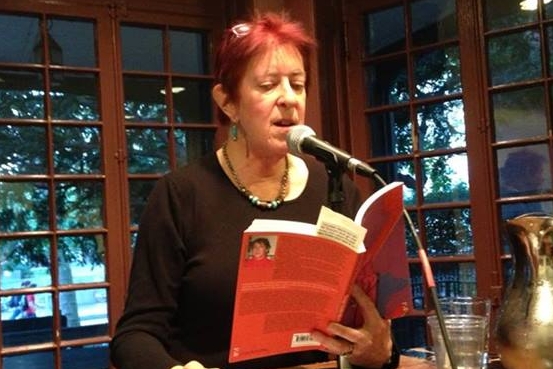
    Professor DuPlessis read her poems to people around the world. Courtesy of the family

    At Temple, Professor DuPlessis helped establish women’s studies classes and the school’s graduate program in creative writing. She mentored students and other professors, and the English department’s DuPlessis Lecture in Poetry and Poetics is named in her honor.

    “She loved being a mentor to people, to encourage them,” her husband said. “She loved being a poet and an academic. She prepared incredibly for her classes and was connected and attentive to her students.”

    Earlier, she taught briefly at what is now the College of New Jersey and Rutgers and Columbia Universities. She spent several of her research and study leaves from Temple working with students and colleagues at universities in the Netherlands, France, Belgium, and elsewhere.

    She was named a resident poet and distinguished visitor in Italy and New Zealand. She and her husband, a professor emeritus at Swarthmore College, visited every continent except Antarctica, and she spoke French and Italian as well as English.

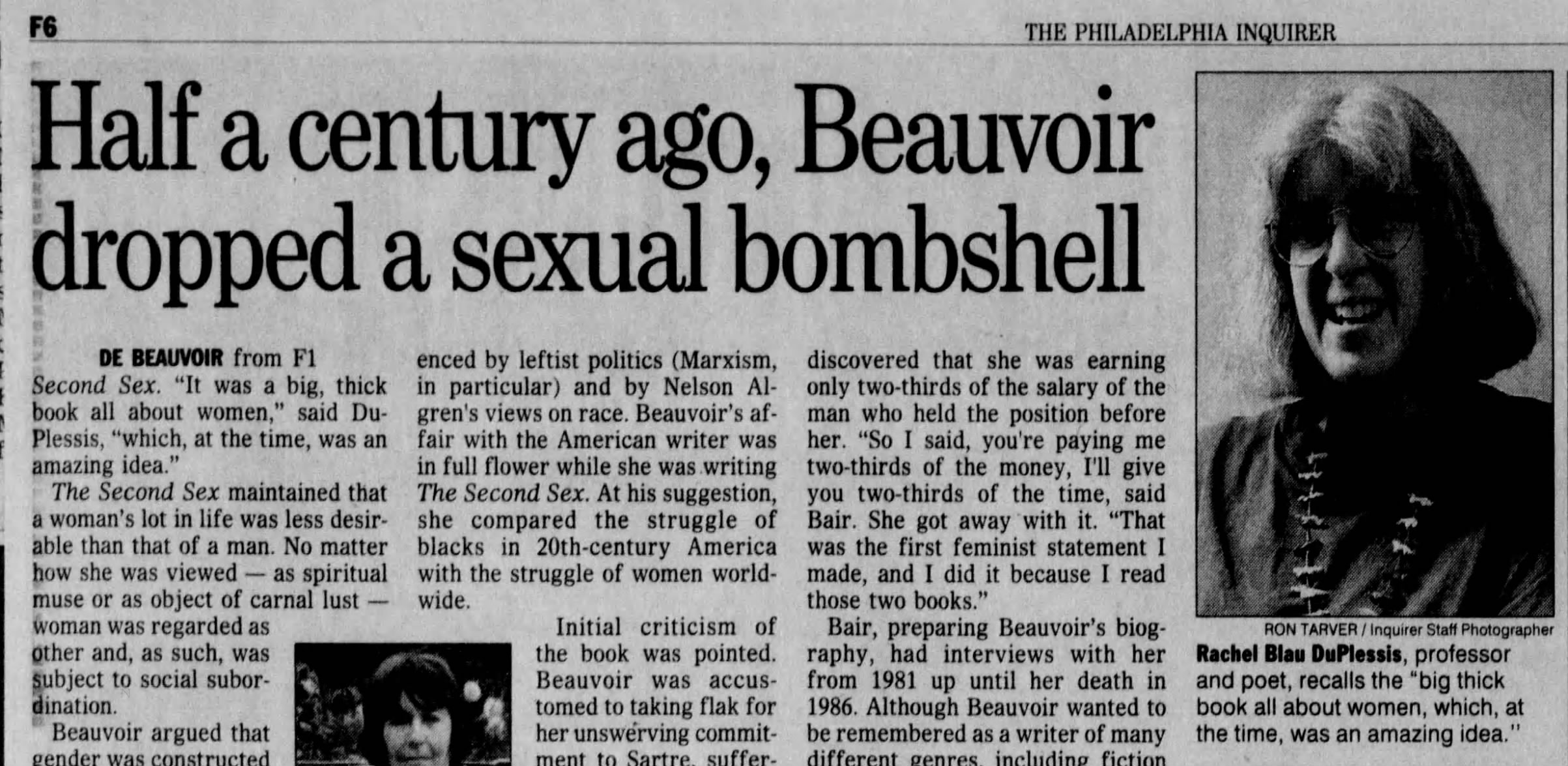
    This article featured Professor DuPlessis and appeared in The Inquirer in 1999.Newspapers.com

    She earned fellowships from the Pew Center, the Pennsylvania Council on the Arts, the National Humanities Center in North Carolina, and other groups. “She was constantly creating things,” her husband said. “She never stopped.”

    Professor DuPlessis also wrote and edited books and articles about writing and poetry, and she reviewed books for The Inquirer and other publications. She read her poems in public, was interviewed often, and earned achievement awards from Temple, the University of California in San Diego, the old Fund for Poetry, and other admirers.

    She created a comprehensive website, rachelblauduplessis.com, and made collage art that she augmented with poems. Thomas Devaney, a Philadelphia writer, called her “an important figure of American experimental poetry.”

    She told the Oxonian Review: “Poetry is an ethical practice as well as an aesthetic one. Just even thinking about what this means and how it is instantiated is a useful task.”

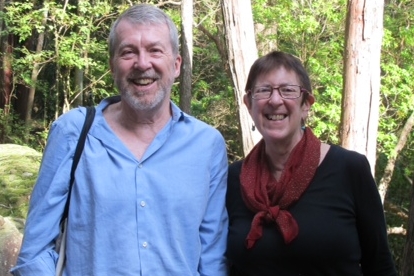
    Professor DuPlessis enjoyed time with her husband, Robert, and daughter, Kore.Courtesy of the family

    Rachel Maia Blau was born Dec. 14, 1941, in Brooklyn. She grew up in Queens and the Bronx, and earned a bachelor’s degree in English at Barnard College in New York in 1963 and a master’s degree and doctorate in English and comparative literature at Columbia in 1970.

    Her father was a professor, her mother a librarian. She met fellow Fulbright scholar Robert DuPlessis on a boat to France in 1966, and they married in 1968 and had a daughter, Kore.

    Professor DuPlessis enjoyed yoga, museums, art history, and long walks with her husband. They went to see and hear the orchestra, the opera, the ballet, and the theater.

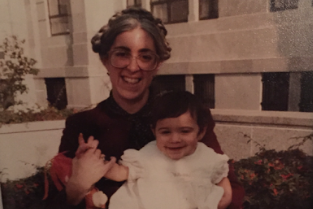
    She doted on her daughter and grandchildren. “She always read me stories and sang me songs at night before bed,” her daughter said. “I would hold on to her leg because I didn’t want her to leave.”

    Professor DuPlessis started writing poems when she was 12, she said in an interview. “She was determined, hardworking, witty, and a lot of fun,” her husband said. “She was definitely intense.”

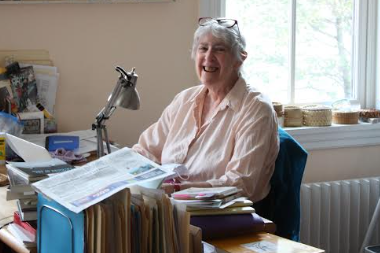
    Professor DuPlessis said she started writing poems when she was 12.Courtesy of the family

    In addition to her husband and daughter, Professor DuPlessis is survived by two grandchildren and other relatives. A sister died earlier.

    A memorial service is to be held from 1:30 to 3:30 p.m. Saturday, Oct. 17, at Temple University’s Charles Library, 1900 N. 13th St., First Floor, Philadelphia, Pa. 19122.

    Donations in her name may be made to Planned Parenthood, Online Services, Box 96771, Washington, D.C. 20090; Philabundance, 3616 S. Galloway St., Philadelphia, Pa. 19148; and the American Civil Liberties Union, 125 Broad St., 18th Floor, New York, N.Y. 10004.

  • Nicole Fusaro, missing since 2018, identified as woman who police believe Raymond Horsch killed

    Nicole Fusaro, missing since 2018, identified as woman who police believe Raymond Horsch killed

    The woman who police believe was killed by pornographer Raymond Horsch on camera has been identified by family members and law enforcement sources as Nicole Amanda Fusaro, who has been missing since July 2018.

    Fusaro was 27 when she was last seen in Kensington, and after she disappeared, her mother, Diane, combed the streets of the Philadelphia neighborhood looking for her only child. Diane died in January 2020 without answers, and Fusaro’s father, Thomas, had died in 2009. That left Fusaro’s friends and her cousin, Jonathan Halloran-Koren, to continue searching and hoping that one day she might turn up.

    Last month, investigators recovered a video on one of numerous hard drives recovered from Horsch’s decrepit Olney home while in search of clues for other missing persons linked to the property. Law enforcement sources said they believe the video shows Horsch strangling Fusaro to death.

    Nicole Fusaro was reported missing in 2018 when she was 27. Police believe she was killed by Raymond “R.C.” Horsch in his Chew Avenue home.Courtesy of Jonathan Hallo

    Police met with a member of Fusaro’s extended family several weeks ago to alert them of the discovery. Those relatives asked police not to publicly release her name. The relatives declined to speak with a reporter this week.

    Halloran-Koren, in an interview, said those relatives told him Thursday that police had visited their home in recent weeks with the news of his cousin’s death.

    He said he wants her name to be known so that she is not forgotten.

    “Hopefully more attention will be made to missing persons so this doesn’t happen again,” he said, adding that he is still seeking additional information from law enforcement.

    The police department is legally required to release the names of homicide victims, as they consistently do in a typical case. But because Fusaro’s body has not been found, the Office of the Medical Examiner has not ruled her death a homicide, creating a legal gray area.

    Police also have no suspect to charge: Horsch died last year, at the age of 82, of a lung condition.

    Sgt. Eric Gripp, a spokesperson for the police department, said the investigation into the Horsch home at 417 Chew Ave. remains extensive and ongoing. He said officials expect to provide an update to the public next week.

    “As part of that investigation, detectives have spoken with numerous family members, witnesses, and other individuals, and continue to review evidence gathered during the investigative process,” he said in a statement. “Because this is an active investigation, we are not confirming the identities of any individuals who may be connected to specific evidence or discussing information that has been shared privately with families.”

    Last month, police officials announced that they recovered photographic evidence that appeared to show two other missing women — Maribel Fresses and Gabrielle Amarando — dead inside the home.

    Fresses’ and Amarando’s bodies have also not been recovered, and the medical examiner has similarly not ruled a cause or manner of death. Their families gave the department permission to release their names.

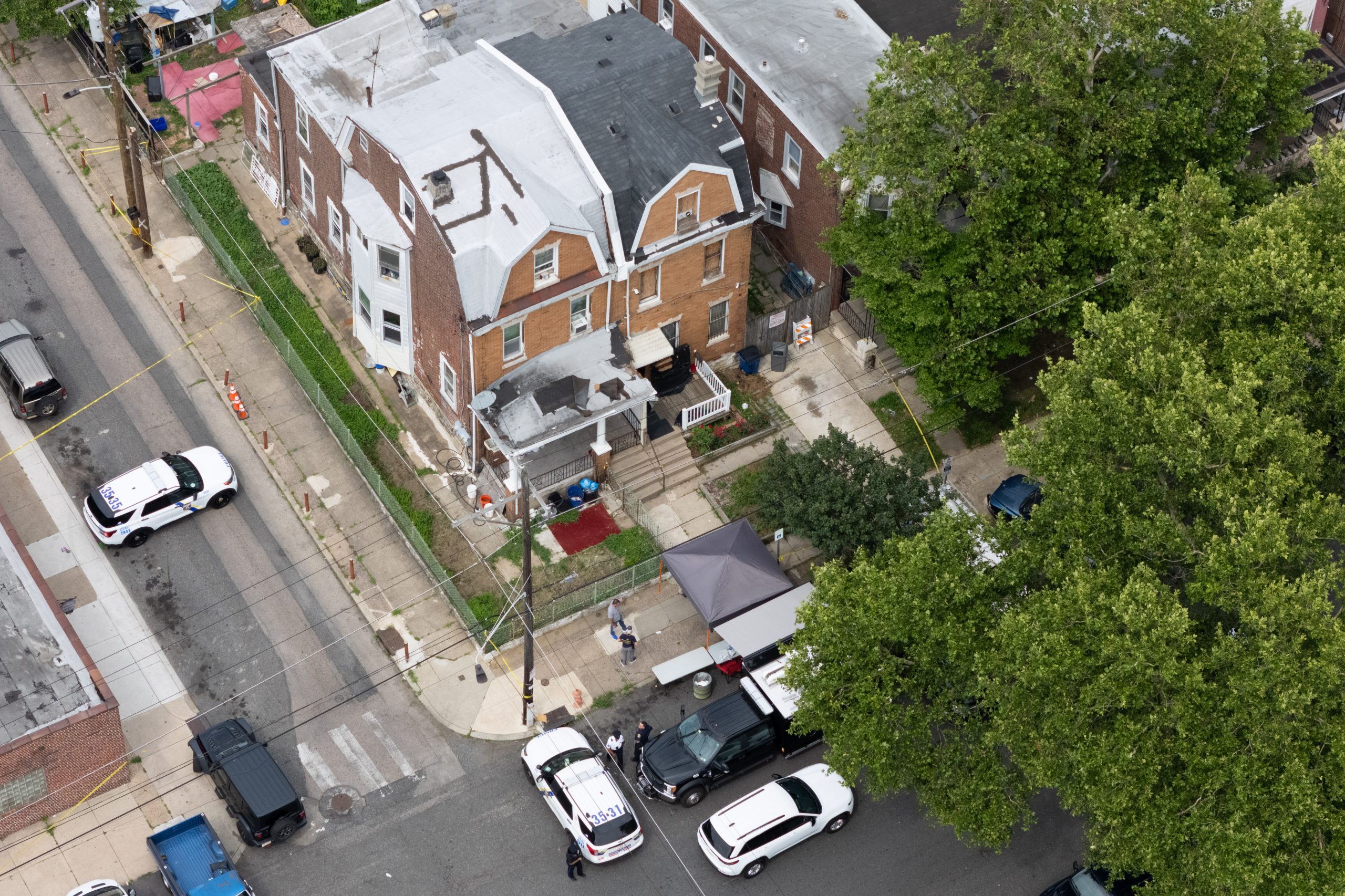
    Investigators searched the home of Eugene Albert Horsch on West Chew Avenue (grey roof) in the Onley section of Philadelphia in June 2026.Gabriel Coffey / Staff

    Fusaro is the fifth dead or missing woman to be tied to the home on Chew Avenue where Horsch lived with his son, Eugene, for decades. Raymond Horsch lured women in addiction with drugs and cash to star in his violent pornographic videos and photos.

    Halloren-Koren said he had come to terms with the reality that his cousin likely died several years ago after so much time had passed without a sighting.

    “I came to grips with that,” he said, of her death. “How it happened is something that is going to take me a little while.”

    Fusaro, who was raised in Northeast Philadelphia, attended George Washington High School, according to her Facebook page. She had dark brown hair and striking, light eyes, and was known as an outgoing young woman who enjoyed being around friends and family.

    Halloren-Koren said she was light-hearted and loved animals. As kids, he said, she enjoyed watching Vampire Diaries and listening to all types of music, from Green Day to the Notorious B.I.G.

    After Halloren-Koren moved overseas for work in 2003, he said he only saw her at sporadic family reunions. His family, he said, was splintered and scattered across the region, and Fusaro’s parents both struggled with addiction. His cousin started using drugs in her late teens, he said, and she fell deeper into addiction in her 20s before drifting into the streets of Kensington.

    When Halloran-Koren sought to reconnect with family in 2020, he learned his cousin was missing and tried to help his aunt’s friends find her, he said. He spoke to women across Kensington who knew her and heard various theories, including that she was last seen getting into a car near Kensington and Allegheny Avenues.

    He asked the women, he said, whether there were any strange men in the neighborhood, and they scoffed — this was Kensington, and there were men like that everywhere.

    But there were a few he said they mentioned: a guy who drove a van without a license plate, and a “creepy” man with the last name Horsch who picked up women on the Avenue.

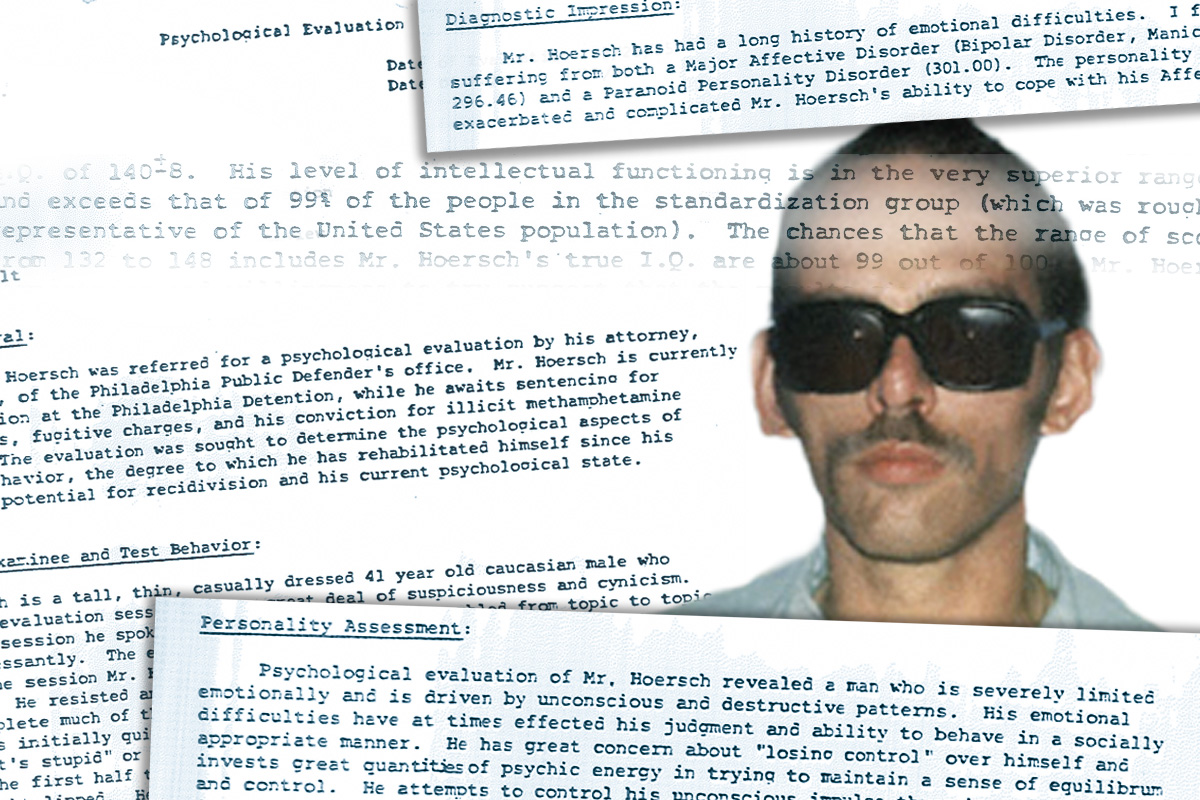
    Raymond Horsch underwent a psychological examination in 1985 with results showing an above-average intelligence, deep-rooted emotional problems, and a diagnosis of a paranoid personality disorder.John Duchneskie / Staff Illustration / Photo obtained by The Inquirer

    Horsch was known to trawl the streets of Kensington in search of sex workers, photographing some from the shadows. He’d offer to pay them in drugs and cash to be featured in his films or photos, often using drugs and in fantasies of being beaten, strangled, or killed.

    He had a lengthy criminal record for manufacturing drugs and other non-violent crimes. And while his ex-wife, Amy McHale, was last seen at his home in 2016 before she went missing, he was never charged with any crimes connected to her disappearance before he died last year.

    The investigation into his connection to the missing women began June 19, after his 44-year-old son, Eugene, was arrested near Independence Mall.

    A federal park ranger found a fake ID in the car in the name of Blair Tonzelli, another woman who was reported missing in 2023, and was last seen at Horsch’s home. Police then interviewed women who said Eugene Horsch had bragged about knowing how to use chemicals to melt bodies in his basement.

    Eugene Horsch has only been charged with illegal drug and weapons violations and has not been linked to any of the disappearances. He is currently in a federal detention center awaiting trial.

    After arresting Eugene Horsch, local and federal law enforcement searched the Horsch home, at 417 W. Chew Ave., even excavating the yard for clues to the disappearance of Tonzelli and McHale. They found drugs, guns, a 55-gallon drum and vats of liquid, as well as a mysterious letter referencing putting drug-addicted women out of their misery.

    Police also recovered dozens of hard drives that they said contained hundreds of thousands of images and videos — including some that showed several women presumably dead at the home. Investigators continue to pore over those materials to determine how far Horsch’s crimes extended and who was involved.

  • Blast shakes southern Lebanon as Israel destroys underground Hezbollah base

    Blast shakes southern Lebanon as Israel destroys underground Hezbollah base

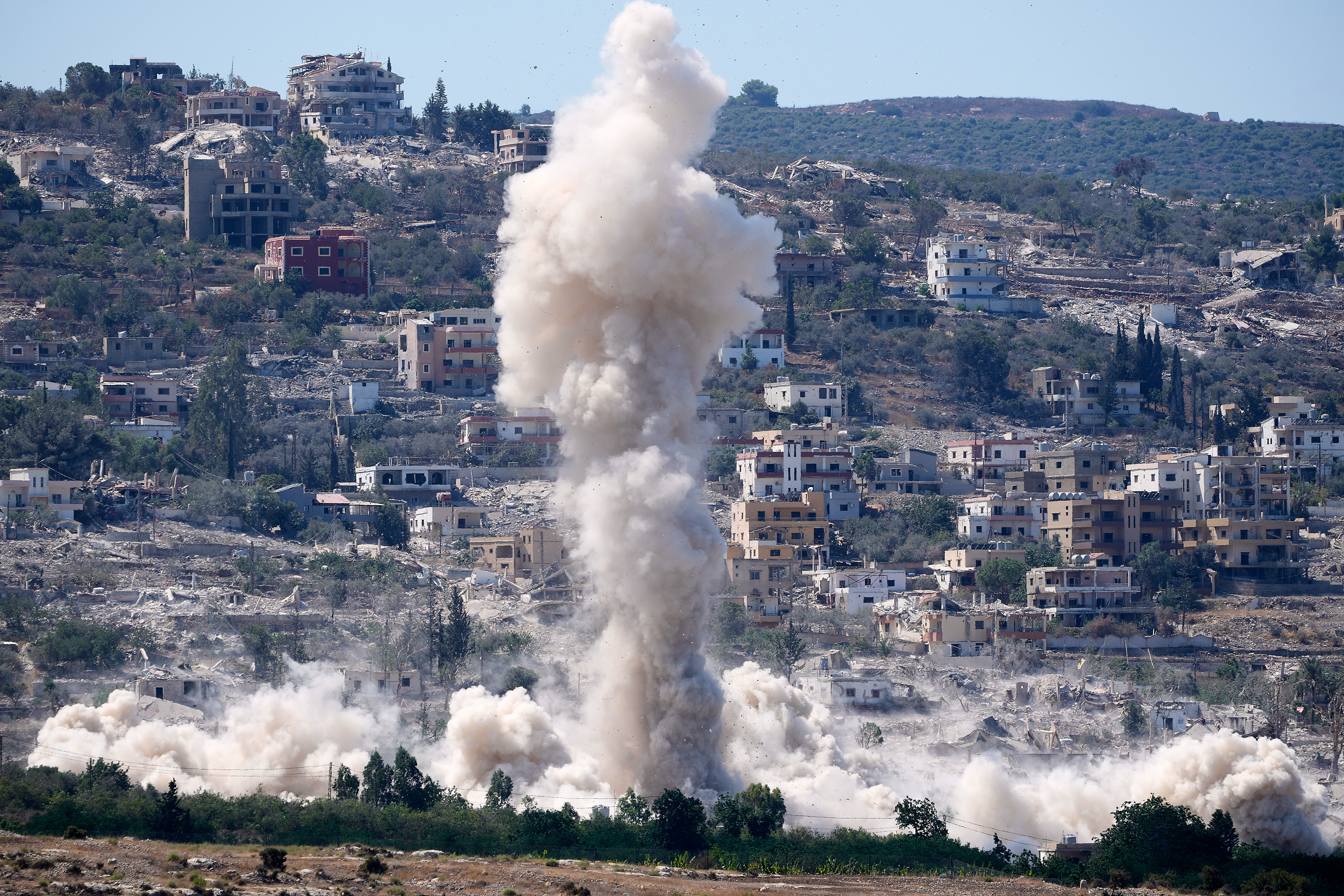
    BEIRUT — A huge explosion sent shock waves across southern Lebanon overnight, as the Israeli military said it had destroyed an underground Hezbollah base in a strategically significant area of Israel’s conflict with the Iran-backed militia.

    The blast lit up the sky with a sudden orange flash and tore through the Ali al-Taher ridge, a commanding hilltop about 6 miles from the border between Israel and Lebanon that Israeli forces captured this month.

    Lebanese and Israeli officials say Hezbollah, a Lebanese militia supported by Iran, established a major underground installation beneath the ridge. Israel says the complex had for years served as a command center for planning and launching attacks against it. The ridge overlooks much of southeastern Lebanon, including Nabatiyeh, one of the country’s largest cities.

    “The explosion caused massive sounds in Nabatiyeh,” Abbas Fakhereddine, the city’s mayor, said Friday. “We felt the buildings shake.”

    The explosion generated ground waves that were likened to an earthquake measuring 4.2 on the Richter scale, Lebanon’s National News Agency reported, citing the country’s National Center for Geophysics. Videos shared on social media showed the explosion lighting up the night late Thursday.

    The Israeli destruction of the underground base at the ridge fueled concerns among residents about a deepening Israeli military presence and an expansion of military operations in southern Lebanon. Israel has in recent days and weeks carried out strikes and widespread demolitions of buildings and civilian infrastructure across southern Lebanon, according to local officials and human rights groups.

    The Israeli military said in a statement Thursday that it had located dozens of rockets, missiles, drones, machine guns, and explosive devices inside the underground base. The complex also included a Hezbollah command center, weapons storage rooms, and living quarters, the military said.
    On Friday, Hezbollah officials disputed the significance of the ridge and accused Prime Minister Benjamin Netanyahu of Israel of exaggerating the importance of the operation for political gain before elections next month.
    A Hezbollah media official, speaking on the condition of anonymity to discuss sensitive matters, downplayed the site’s importance to the group and rejected claims that the facility contained advanced missiles or significant military infrastructure.

    Under a U.S.-brokered ceasefire agreement reached in June, Israel is expected to gradually pull its forces back from areas it occupies in southern Lebanon, with the Lebanese armed forces deploying there to establish security and enable displaced residents to return. That arrangement is closely linked to the Lebanese government’s efforts to disarm Hezbollah, a process that is likely to prove difficult, given the government’s limited ability to control the powerful militia.

    On Friday, Lebanon’s General Directorate of State Security said in a statement it was resuming government patrols and reestablishing checkpoints in Nabatiyeh, in coordination with other security agencies and the Lebanese army, to protect the city and strengthen public confidence and safety.

    Some residents of southern Lebanon, along with political and security observers, have expressed anger that Hezbollah did not hand over the ridge to the Lebanese army and security services, arguing that the group had allowed a strategic position to be lost to Israel rather than place it under Lebanese state control.

    Moustafa Bayram, a former labor minister aligned with Hezbollah, said Israel’s decision to destroy the site was “an attempt to terrorize us and escalate the war.”

    This article originally appeared in the New York Times.