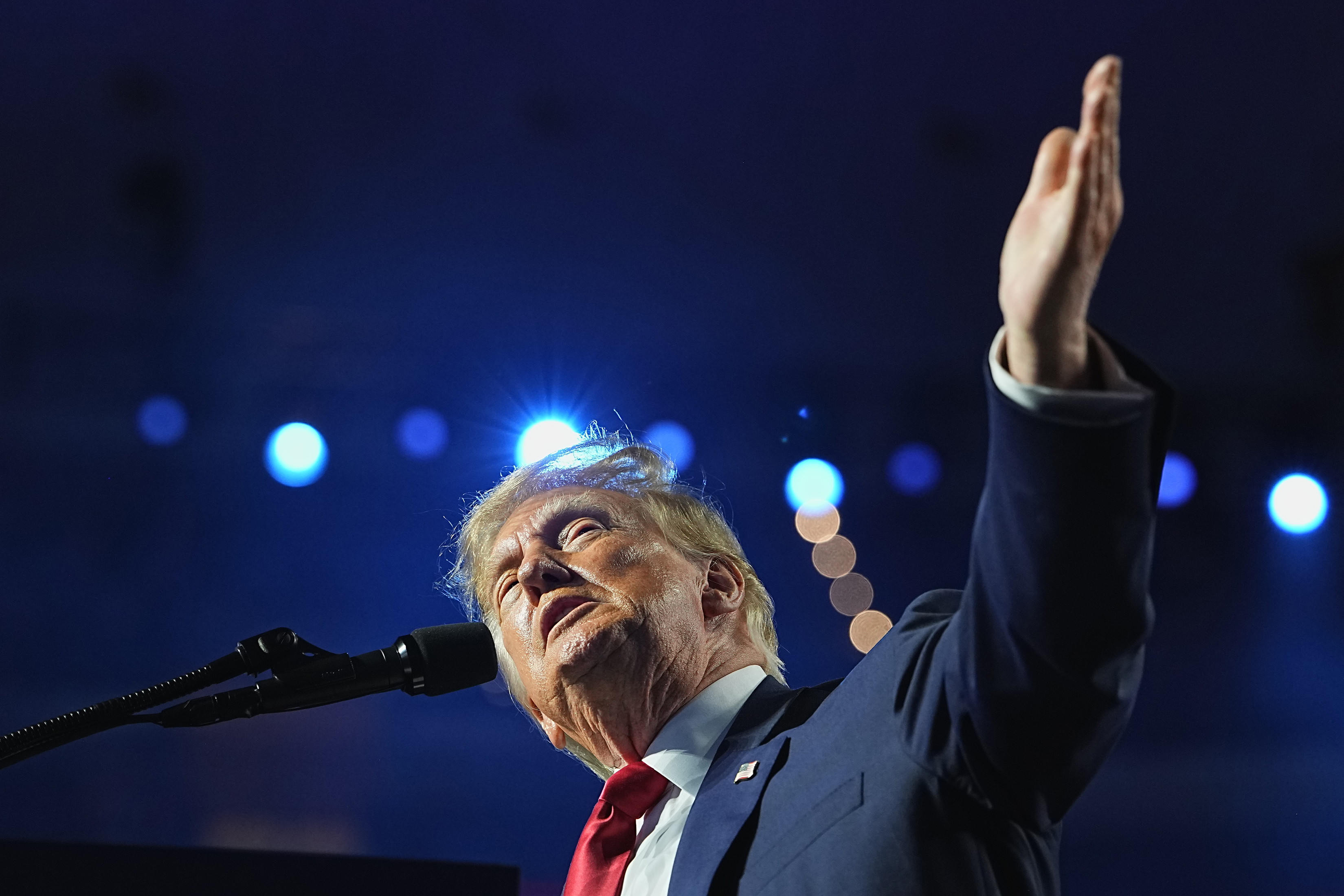
Category: News

  • Prosecutor leading probe into Trump foes resigns, vows investigation will continue

    Prosecutor leading probe into Trump foes resigns, vows investigation will continue

    The top prosecutor leading a wide-ranging conspiracy investigation into President Donald Trump’s political foes resigned Thursday afternoon.

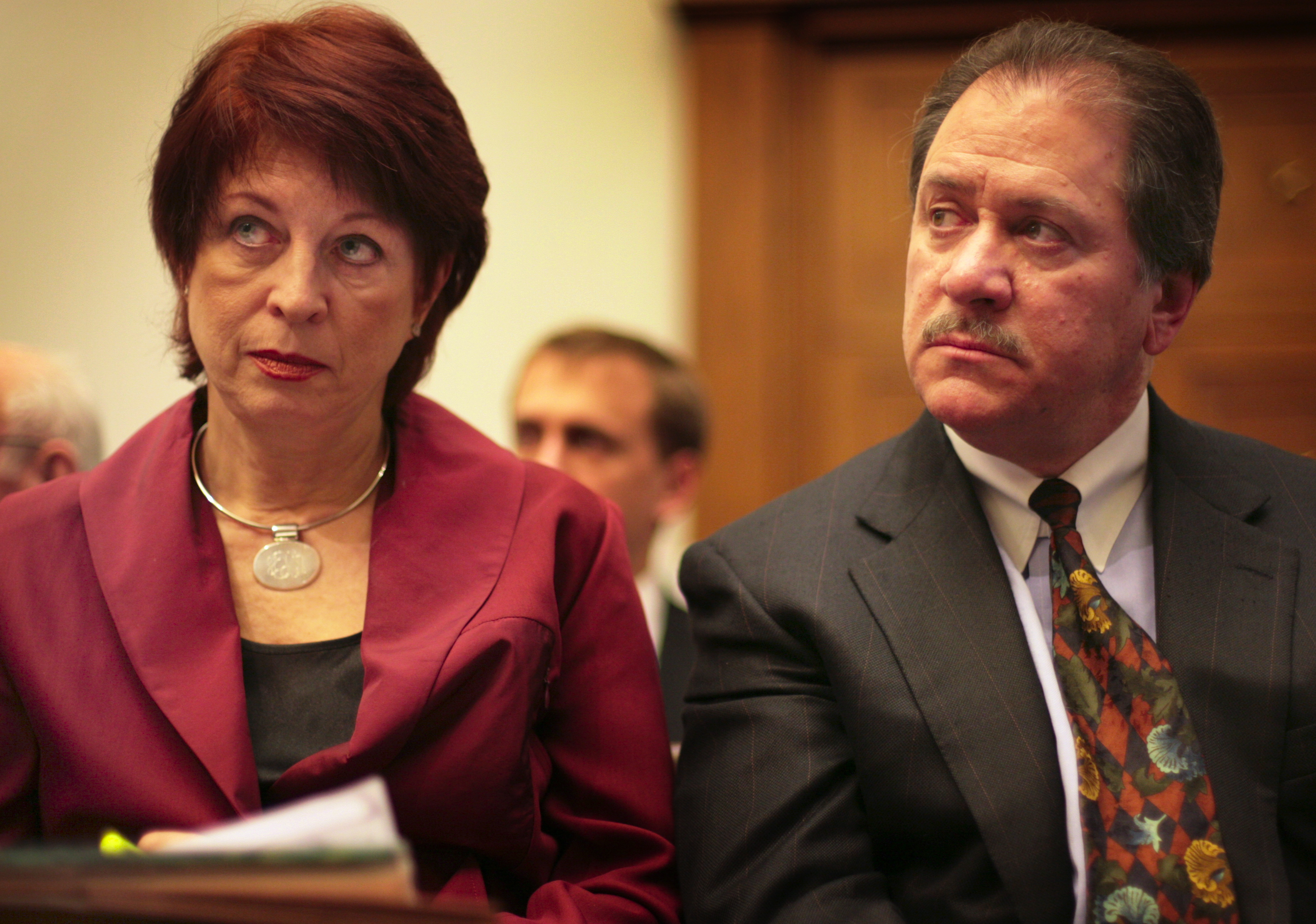
    Joseph diGenova — a Trump loyalist who has pushed a baseless theory that the FBI was out to get Trump during his 2016 campaign — told the Washington Post that he has submitted his resignation papers to Attorney General Todd Blanche amid disagreements over the pace of the investigation.

    He did not elaborate on what specific disagreements led to his sudden departure at what appears to still be an early stage of the high-profile investigation.

    DiGenova’s wife, Victoria Toensing, an attorney who was brought in as part of the prosecution team alongside him, was expected to resign Friday, diGenova added.

    “It was a privilege and an honor to serve the [Justice] Department and president,” diGenova said in a brief interview, noting that the probe would continue after his departure.

    DiGenova’s departure comes as the Trump administration has put pressure on the Justice Department to prosecute the president’s political foes. Trump repeatedly expressed frustration with former Attorney General Pam Bondi’s pace — and limited success — in overseeing efforts to target his rivals.

    The president fired Bondi in April.

    DiGenova added Thursday evening in a text that he believed there was evidence to build cases in the conspiracy probe, but said “time was needed to build those cases” and “people differ on how long that should take.”

    ABC News first reported on his resignation. The Justice Department did not immediately respond to a request for comment. Toensing confirmed that she would be resigning, but declined to comment further.

    DiGenova, a former U.S. attorney for the District of Columbia, has suggested without evidence that an FBI investigation into potential ties between Russia and the 2016 Trump campaign was a hoax perpetrated to keep Trump from becoming president. He was tapped in April to lead the conspiracy investigation, among the biggest and most legally complicated that the Justice Department is pursuing as part of Trump’s vow to prosecute his political enemies.

    The investigation, which is based in Florida, hinges on an unusual and untested legal theory: that previous administrations conspired for years to violate Trump’s rights through a series of investigations, beginning with the Obama administration’s scrutiny of ties between Russia and the 2016 Trump campaign.

    The probe is looking in part at the decade-old actions of former Obama administration officials, including former director of national intelligence James R. Clapper Jr. and former CIA director John Brennan, who played significant roles in investigating the possible Russia ties.

    So far, prosecutors have issued a flurry of subpoenas but have not issued any indictments, according to people familiar with the probe, speaking on the condition of anonymity to discuss an ongoing investigation.

    DiGenova, 81, was U.S. attorney during the Reagan administration and later served as a lawyer for the Trump campaign. He was brought into the Justice Department this year specifically to work on the sprawling conspiracy investigation in Florida, landing the job after publicly lobbying for it.

    In an interview this summer on the podcast of former Trump lawyer Rudy Giuliani, diGenova claimed that Trump’s decision to fire Bondi was at least in part tied to a lack of progress on the investigation into Brennan as part of the conspiracy probe.

    “The president was ripping mad about the fact that there was no progress on the lawfare investigation in Miami,” diGenova said. He was hired weeks after Bondi’s firing.

    DiGenova took over the investigation from a career national security prosecutor in South Florida, Maria Medetis Long, who left the case after expressing discomfort with its direction, the Post previously reported.

    While diGenova headed the operations of the probe itself, it falls under the broad jurisdiction of Jason Reding Quiñones, the Senate-confirmed prosecutor who runs the U.S. attorney’s office in South Florida. DiGenova said he expects Quiñones to continue pushing forward with the inquiry.

    “I am sure he will continue the investigation vigorously,” he said.

  • Trial remains elusive for purported mastermind accused of plotting 9/11 attacks

    Trial remains elusive for purported mastermind accused of plotting 9/11 attacks

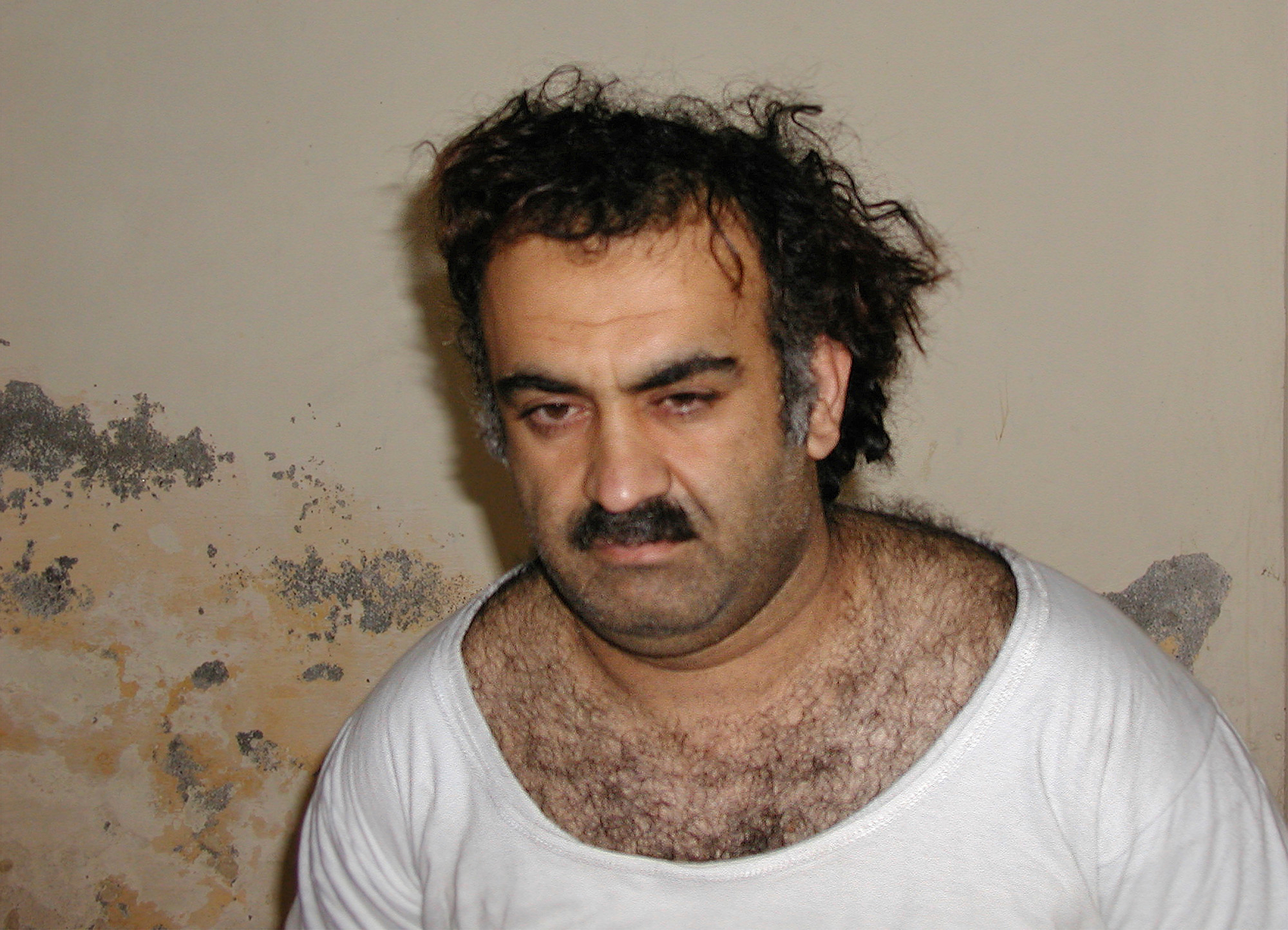
    NEW YORK — Two decades after U.S. authorities locked Khalid Sheikh Mohammed away at a military detention center in Cuba, the purported mastermind of the Sept. 11 attacks sometimes seems barely any closer to being put on trial than the day he arrived.

    A judge recently set a 2028 date for Mohammed to finally be tried before a military tribunal, but some lawyers predict it will never happen — not that year or any other year. They say the maze of legal issues that arose because Mohammed was tortured following his 2003 capture in Pakistan is too twisted to ever be straightened out.

    A fleeting bid to put him on trial in a civilian court in New York City was shouted down years ago over security concerns.

    A plea agreement that would have kept Mohammed imprisoned for life, but spared him from a possible execution, began to collapse shortly after it was announced in 2024, and finally died for good last year.

    “It’s all contaminated by politics and the lack of accountability on torture,” said Joshua Dratel, an attorney who played a part in assuring that Mohammed has proper legal representation.

    In late August, the U.S. military judge who set a June 5, 2028, trial date for Mohammed and three others charged in the Sept. 11 attacks ruled that prosecutors could not use an alleged confession he made to the FBI in 2007. Those statements were deemed tainted because Mohammed was subjected to “enhanced interrogation techniques” overseas, including the simulated drowning technique called waterboarding.

    While the ruling was a blow to the prosecution, the U.S. government decided not to appeal, in part because doing so could have further delayed a possible trial.

    Meanwhile, Mohammed remains jailed in Guantanamo Bay, where he was brought on Sept. 5, 2006, following more than three years in secret prisons in other countries.

    Victims’ families still hope a trial will happen

    Terry Strada, whose husband, Tom, died at the World Trade Center on Sept. 11, said that she and other people who lost family members still hope a trial will someday happen.

    “We very much want to see this come to an end at some point. We do want to see justice served. It’s just as important as 25 years ago,” she said.

    But Strada, the national chair of the group 9/11 Families United, also said she would rather have Mohammed rot at Guantanamo Bay indefinitely than get behind a resolution that would involve dropping the death penalty as a possibility. Strada said she worries that if Mohammed is not executed, future U.S. leaders might someday be tempted to swap him for Americans held prisoner elsewhere in the world.

    The death penalty, she said, “fits the crime and it would prevent that from ever happening. And that’s important to me.”

    Mohammed was captured in Pakistan in 2003, accused of developing and directing the 9/11 attacks, as a leader of the Islamic militant group al-Qaeda. Some of the delays in his legal proceedings have stemmed from his treatment after he fell into U.S. control. A U.S. Senate report pointed to his extended torture in CIA custody, including 183 sessions of waterboarding.

    Plans for a civilian trial were dropped

    For a time in 2009, it seemed Mohammed was headed to New York after then-Attorney General Eric Holder announced plans to try him and four other men charged in the Sept. 11 attacks in a Manhattan courthouse just blocks from the World Trade Center site.

    Then-President Barack Obama, who had pledged to close the Guantanamo detention center, said Mohammed would face “the most exacting demands of justice.”

    Almost immediately, opposition arose. Some critics predicted Mohammed would use a trial as a platform to spread hateful views of America and its allies. Others cited security concerns, saying it could again make New York a terrorist target. Former New York City Mayor Rudy Giuliani, a Republican, called the plan unwise and said it showed “a lack of concern for the rights of the public.”

    Plans for a civilian trial were dropped.

    “It was a charade in many respects,” Dratel said.

    The military tribunal system, he said, has proven itself to be a worse solution, unable to function efficiently, without a proper structure, and without fidelity to federal courts.

    “Each time you reach an impasse, no one knows what to do,” he said.

    David Raskin, a Washington lawyer now in private practice who would have led the government’s prosecution of Mohammed in New York if it hadn’t been abandoned, said in an essay published in the Washington Post on Wednesday that he is confident a civilian trial would have ended with a conviction. The military commissions, on the other hand, “became a defense lawyer’s dream,” beset by “endless litigation over their legality and procedures.”

    “I predict there will never be a completed military commission trial for Mohammed and the other Sept. 11 defendants,” he said.

  • CIA releases intelligence sent to White House before Sept. 11

    CIA releases intelligence sent to White House before Sept. 11

    WASHINGTON — Tucked at the end of a Sept. 10, 1998, intelligence report sent to President Bill Clinton’s White House was a warning about al-Qaida that more than a quarter-century later seems prescient.

    Al-Qaida, a CIA analyst wrote, “may fly an explosive-packed airplane into a U.S. city.”

    On Friday, the 25th anniversary of the Sept. 11, 2001, terrorist attacks, the CIA released 69 never-before-seen presidential intelligence briefs detailing what it had discovered about Osama bin Laden and al-Qaida in the run-up to the day.

    The release, according to agency officials, is their largest focused on the Sept. 11 attacks. The intelligence analyses that were sent directly to the president and senior policymakers are among the agency’s most closely guarded documents, and the CIA’s standard practice is to release them only after about 40 years, to ensure no sources are compromised and minimize any potential tension with allies.

    The documents do not appear to contain major new revelations, and they remain redacted to obscure the sources of the information. But the briefings provide details of what the CIA was telling Presidents Clinton and George W. Bush in the months and years before the attacks, along with an intelligence report provided in the early morning hours of Sept. 12.

    The documents released Friday reinforce the central findings of the National Commission on Terrorist Attacks Upon the United States and its 2004 report: U.S. intelligence agencies warned about al-Qaida consistently but failed to understand the scale of the attack the group had in mind.

    John Ratcliffe, the CIA director, said the documents were being released to honor the memory of those killed on Sept. 11, along with the CIA officers who subsequently gave their lives.

    “Twenty-five years ago, the 9/11 attacks struck a blow to our nation, but they did not break us,” Ratcliffe said. “Generations of CIA officers have since dedicated their careers to securing justice for our fallen Americans and ensuring al-Qaida would never again harm our country.”

    Still, the documents demonstrate that the CIA repeatedly brought to Bush and Clinton the threat posed by bin Laden to directly attack the United States.

    In a briefing Thursday, CIA analysts said that before Sept. 11, terrorist threats were not a primary focus to collect intelligence on, and reporting on bin Laden and al-Qaida was limited. Reading the old reports, the analysts said, it was clear that the agency knew al-Qaida wanted to attack America. But what that would look like, intelligence officials said, was not clear, with a large amount of noise obscuring the clues.

    Working through the newly released documents, dating from Feb. 13, 1998, to Sept. 12, 2001, various strands of threat intelligence rise to the surface and then disappear. The 1998 intelligence about the explosive-laden plane, for example, does not make another prominent appearance in the warnings given to the White House.

    The CIA analysts said it was rare that the agency could follow the full story arc of a threat or plot. Various threats come and go from the agency’s warnings.

    Part of the problem was finding ways to provide effective warnings, said a senior CIA official, who spoke on the condition that their name not be used, in keeping with the agency’s practice. As the CIA wrote more presidential-level reports on al-Qaida, there were concerns about “warning fatigue,” the CIA official said.

    A senior CIA counterterrorism analyst said collection from human sources before the attacks was “not fantastic.” The overall collection on al-Qaida, CIA officials said, was spotty.

    A small group of intelligence analysts worked on terrorism threats. But it was nothing like the priority it became on Sept. 12, 2001. As a result, there was a steady drumbeat of warnings, yet almost all were frustratingly vague.

    The idea that the intelligence community was aware of plotting around explosive-laden planes in September 1998 has been known. The commission mentions a report circulating about al-Qaida’s interest in using an airplane with explosives aboard to attack the United States, but it did not say the report reached the president.

    Bush and Clinton told the commission they understood the threat of al-Qaida, although the final report concluded that “we do not believe they fully understood just how many people al-Qaida might kill, and how soon it might do it.”

    The CIA released one document from after the fact, a “situation report” for the president sent to the White House at 4 a.m. on Sept. 12. Such updates are supposed to be factual, with minimal analysis. And despite the gravity of what happened on that day 25 years ago, the analysts wrote in their usual detached style.

    Before the attack, analysts wrote regularly about the threat, but the CIA officials acknowledged that their warnings did not capture the scope of what al-Qaida had in mind. That was in part because the reporting was not there. But the commission said this also resulted from a failure of imagination.

    The senior CIA counterterrorism analyst said the agency since Sept. 11 had come a long way and was better at “thinking outside the box.” The lesson of Sept. 11, she said, was that intelligence agencies had to think more creatively.

    Those intelligence failures, as well as the others identified by the commission such as a lack of information sharing between the CIA and FBI, led to a reorganization of the federal government’s national security structure. The Department of Homeland Security was created, bringing together various law enforcement agencies, as was the Office of the Director of National Intelligence, which works to improve collaboration among the FBI, the CIA, and other spy agencies and set analytical standards.

    The postattack reviews also changed how intelligence reports were written. The documents released Friday reflect the earlier era. Today, intelligence reports are peppered with assessments of analysts’ “confidence level,” how well-sourced a particular conclusion is. Although it is clear from the old reports that the CIA had high confidence in al-Qaida’s goal to strike the United States, and doubts about the specifics of various plots, that assessment was not made explicit for policymakers.

    Two members of the commission were allowed to review the presidential daily briefs from the time leading up to the attacks, but the agency fought against distributing them more widely. Two briefs were released amid pressure from the commission and the public.

    Jamie Gorelick, a commission member who reviewed the presidential daily briefs, said the summary of the documents that she co-wrote informed the commission’s work, although the commission was not allowed to release or quote the documents.

    These presidential briefs “are consistent with the commission’s assessment of the preattack intelligence,” said Gorelick, who served as deputy attorney general in the Clinton administration.

    Still, even if the underlying material has been well understood, the newly released documents are likely to be closely examined by historians of the intelligence agency.

    A July 1998 document, given to Clinton five weeks before al-Qaida attacked two embassies in Africa, outlined the group’s intent to attack America. That document tracked the warning repeated years later in the Aug. 6, 2001, presidential briefing released by the government under pressure from the 9/11 Commission.

    That 1998 report cited four “questionable sources” but said al-Qaida’s ambitions to strike the United States were “plausible,” given bin Laden’s comments.

    A document from Aug. 3, 1999, discussed the possibility that the intelligence being collected on al-Qaida could be a deception. That document was generated in response to questions from senior Clinton administration officials. The analysis noted that because so many potential targets came up in intelligence collection, al-Qaida could have been engaged in “a deliberate effort to mislead us.”

    “The diverse targets mentioned in the reporting, combined with a high incidence of Bin Ladin-related walk-ins, suggest a deliberate effort to mislead us,” the CIA wrote, using the government’s spelling for bin Laden.

    The commission also highlighted the intelligence community’s worries about deception, noting that Defense Secretary Donald Rumsfeld had leaned into the theory that al-Qaida was spreading misinformation that it intended to attack.

    A presidential intelligence document from July 24, 2001, appeared to describe the lull that the commission outlined in its report. The document reported that for the second time in two weeks, “an expected imminent Bin Ladin-sponsored terrorist operation has been postponed, but preparations for other near-term attacks may still be in train.”

    The intelligence report noted suspicious activity among individuals who had received a cryptic message the previous month. At the time, the collection was fuzzy. After the fact, the report looks like a missed warning.

    The last document release by the agency before the Sept. 11 attacks came on Aug. 28, 2001. That document in some ways read like a follow-up to the Aug. 6 report, potentially explaining why no attack had occurred despite the earlier warning.

    The report insisted that al-Qaida remained a threat, though it made no mention of attacks on the homeland or attacks with planes. Instead, the presidential note mentioned “assassination, kidnapping, the use of rockets, mortars and other longer-range weapons, as well as crude chemical or biological attacks.”

    The intelligence report also discussed how Qaida operations could be delayed or disrupted.

    In a final note that foreshadowed how bin Laden would ultimately be found nearly a decade later, the Aug. 28 report concluded that “inexperienced couriers or suicide bombers also make mistakes that expose plot details.”

    This article originally appeared in the New York Times.
  • The Houthi advance in Yemen raises concerns about a key shipping choke point

    The Houthi advance in Yemen raises concerns about a key shipping choke point

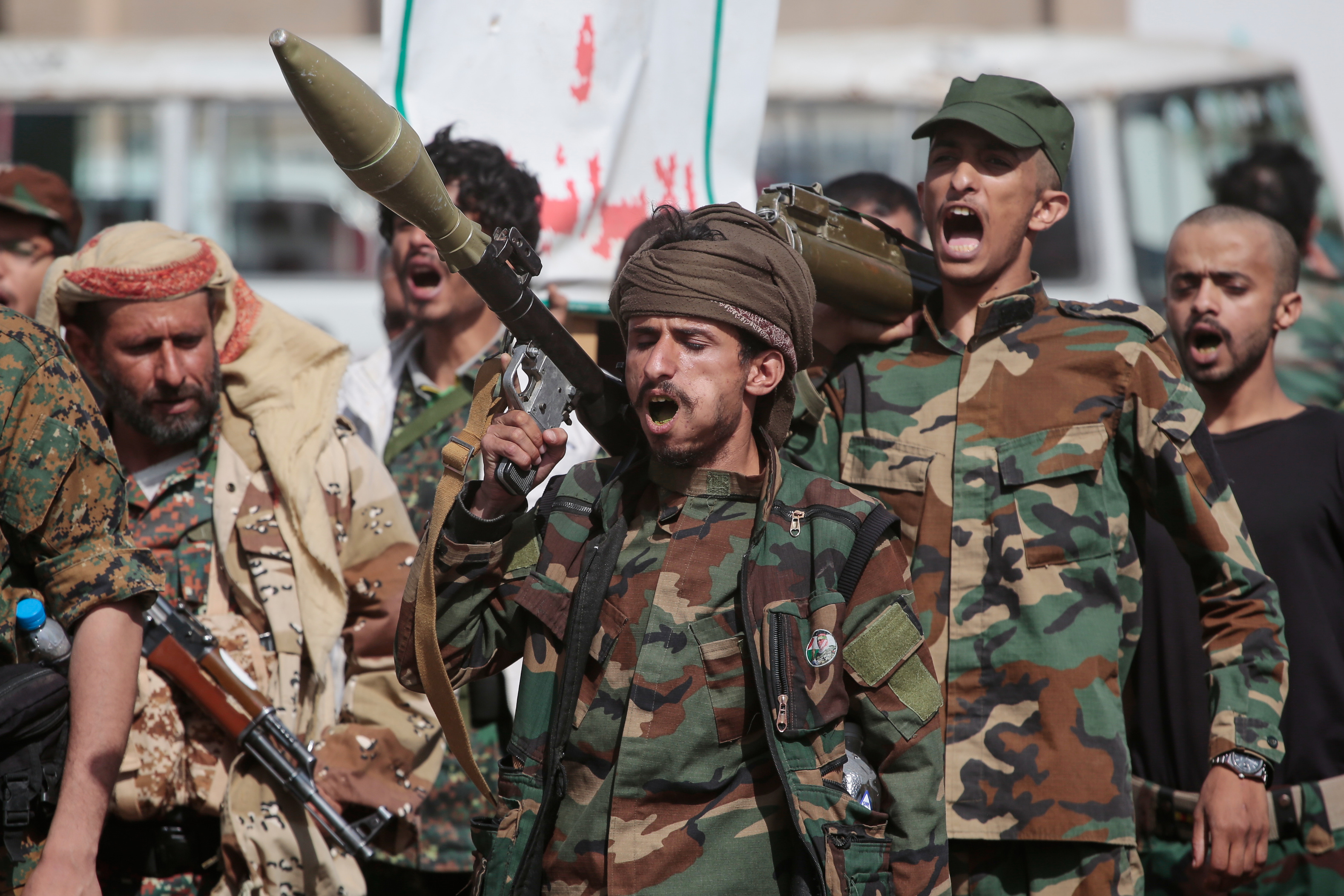
    FRANKFURT, Germany — The capture of the Red Sea port of Mokha and a strategic island by Iran-backed Houthi rebels in Yemen brings their forces to the heart of a key choke point for the global economy: the Bab el-Mandeb Strait leading out of the Red Sea.

    The Houthis took Mokha on Thursday and on Friday captured Mayun, also known as Perim, off Yemen’s coast, two officials said, in a swift advance that extends their reach near one of the world’s key commercial lanes.

    The strait had been a vital route for crude oil supplies from Saudi Arabia to Asia after shipping through the Strait of Hormuz was restricted due to threat of Iranian attack — until Houthi targeting of Saudi tankers largely ended that safety valve.

    The Houthi advance is focusing renewed attention on the Bab el-Mandeb Strait and further risks to shipping there, despite efforts by the Houthis to reassure shipowners that vessels other than those covered by their embargo on Saudi-linked shipping remain safe.

    Bab el-Mandeb was key workaround for Saudi oil exports

    The Strait of Hormuz was long the main highway for Saudi oil. But when Iran choked off most ship traffic at the Strait of Hormuz, the Saudis ramped up shipments through a pipeline running across the desert to Yanbu on the Red Sea.

    Oil loaded on tankers in Yanbu could head out of the Red Sea through the Bab el-Mandeb Strait and then east to Asia. That helped the Saudis maintain a share of their exports to customers there.

    The Red Sea route helped keep global oil prices in check, along with other improvised alternatives. In recent weeks the U.S. military has guided tankers through the Strait of Hormuz in defiance of Iranian demands that ships pass through a vetting lane near the Iranian coastline. And the United Arab Emirates has used a pipeline to Fujairah on the Gulf of Oman to skirt the Strait of Hormuz.

    Houthi attacks on shipping through the Bab el-Mandeb Strait started in late 2023 over Israel’s war in Gaza, leading many companies to abandon the route because of safety concerns. Traffic overall remains down some 60% from levels before then, although it remains a key freight route for goods moving between Asia and Europe.

    Alternate routes helped restore much of Middle East oil flows

    In August, alternative routes helped restore some two-thirds of the roughly 15 million barrels that transited Hormuz before the war. That took some of the economic pressure off the U.S. amid politically sensitive higher gas prices ahead of the midterm elections.

    However, Houthi threats have weighed heavily on Saudi oil exports in the Red Sea. In August, Red Sea oil loadings fell from 3.8 million barrels per day to 2.2 million barrels per day, according to the International Energy Agency. Overall, Saudi supply fell 2.3 million barrels per day to 6 million barrels, the lowest in three decades, according to the IEA.

    By now, “Saudi shipping has largely routed away from this risk anyway,” said Richard Meade, editor-in-chief of Lloyd’s List.

    While the Houthi advance “doesn’t change the immediate risk profile” because Saudi and Israeli shipping is already high risk, it does raise the question of whether the Houthis, who have insisted that other shipping is safe, will expand their threats if they face further attack, Meade said.

    “It puts the Houthis in a strong position to take further control if they want to,” he said.

    Meanwhile, increased attacks on shipping in the Strait of Hormuz this week have put use of the U.S. route on hold. Iran said it attacked 10 ships there Wednesday after the U.S hit five Iranian tankers.

    Suez Canal is a workaround for the workaround

    With the Houthis threatening Bab el-Mandeb, Saudi tankers have turned northwest instead of southeast from Yanbu and headed for the Suez Canal.

    Tankers that are too big to pass through the canal have offloaded oil at Ain Sokhna in Egypt to a pipeline to Sidi Kerir on the Mediterranean coast, where the oil is picked up by tanker. Some 70% of Yanbu crude exports are now heading that way, either by pipeline or by tanker, according to Lloyd’s.

    That, however, is a time-consuming and expensive workaround for customers in Asia, since ships must then transit the Mediterranean, pass the Strait of Gibraltar and sail around the Cape of Good Hope at the southern tip of Africa. The Suez route enables the Saudis to redirect as much as 3 million barrels per day.

    But that more than doubles transit time to an Asian destination like South Korea, from 24 days to 54 days, according to senior research analyst Victoria Grabenwöger at energy data firm Kpler.

    That adds to the cost, given that tankers cost tens of thousands of dollars per day to charter even in normal times, while prices have risen in some cases above $100,000 per day during the current global energy turmoil.

  • Philadelphia man convicted in killing of homeless man whose mother says she never stopped fighting for him

    Philadelphia man convicted in killing of homeless man whose mother says she never stopped fighting for him

    For the seven months he lived on Manayunk’s streets before he was shot and killed, Joshua Daywalt’s mother said she tried to persuade him to come back to the life waiting for him.

    Jennifer Daywalt, of Phoenixville, ticked off the list: She regularly brought him bottled water, chips, and other easy-to-carry snacks at the encampment he frequented. She brought reassurance, too, reminding him that his family — three sisters, one brother, and two children — loved him and wanted him back home.

    Authorities recovered Daywalt’s body from the frigid waters of the Schuylkill near Kelly Drive and Midvale Avenue on Feb. 7, 2025. A day later, a city medical examiner determined he had been shot at least once in the head, just behind his right ear, turning what had been a death investigation into a homicide.

    And on Thursday, a Philadelphia judge found Roger Gosson guilty of killing Daywalt, 35, delivering the outcome his mother said she had been advocating for since the day she learned her son was gone.

    “I need people to know that not everyone who is homeless is unloved,” Jennifer Daywalt said. “I never stopped trying. I never stopped begging. I never stopped fighting for him.”

    Gosson, 63, was convicted of third-degree murder and related crimes in Daywalt’s shooting death, following the two-day bench trial in Philadelphia Common Pleas Court.

    Gosson — a homeless man living in an intricate, multilevel setup inside a hole in the Green Lane Bridge — became detectives’ lead suspect in part because of body-worn camera footage from a patrol officer who encountered him a month before the killing. In the video, Gosson complained that “somebody [has] got to do something about” Daywalt, whom he accused of stealing from other homeless people in the area.

    Later, inside Gosson’s living space, police recovered the gun they say was used to kill Daywalt .

    Gosson’s fingerprints and DNA, however, were not found on the handgun. And without cellphones to track his movements or street cameras to capture the shooting, prosecutors’ case against Gosson was, as Assistant District Attorney Ashley Toczylowski acknowledged during her closing argument on Thursday, anything but typical.

    “But,” she said, “that doesn’t mean we don’t know what happened.”

    Judge Charles Ehrlich spent less than 10 minutes deliberating before returning a guilty verdict Thursday afternoon. Even so, a case built largely from the testimony of other homeless men created obstacles for prosecutors and, at one point, threatened to unravel before it ever reached trial.

    The witnesses had told police in the weeks after Daywalt’s body was found that Gosson confessed to the killing in a series of conversations and, in one case, a note written on a napkin that was never recovered. But on Thursday, one of those witnesses disputed his previous account, blaming a drug-induced haze for his loose lips and claiming he couldn’t recall his videotaped interview with police.

    And last month, Gosson’s trial was postponed for the fifth time after prosecutors said police had been unable to locate that same witness. The delay prompted Gosson’s defense attorney, Gina Amarillo, to ask the judge to dismiss the case, arguing that prosecutors had already taken more than the 365 days allowed by law to bring Gosson to trial.

    Ehrlich denied her motion. And to ensure the trial could begin on Thursday with the key witness, prosecutors held him in jail on a material witness warrant ahead of the court date.

    At the delayed August trial date, Detective Craig Coulter testified that he’d tried to find the homeless witness for three weeks without success, calling him “a constant moving target.”

    “It’s like trying to find a squirrel in the woods,” he said. “That’s what all the witnesses in this case have been like.”

    Amarillo argued on Thursday that prosecutors had relied on speculation to accuse Gosson of a killing for which no hard evidence had been found implicating him. Changing unreliable witness testimony, she said, was “not enough to say Mr. Gosson did this beyond a reasonable doubt.”

    “My client was hoping for a different verdict based on the evidence presented,” Amarillo said in a phone interview Thursday night. She added that they will likely appeal the judge’s verdict.

    Outside the courtroom, Jennifer Daywalt remembered her son as a “brilliant artist” who’d first picked up pencils to draw at 4, she said. He gravitated toward portraits in pencil and charcoal, often of his favorite hard-rock bands, she said.

    Before he began living on the streets of Manayunk, Daywalt left four psychiatric hospitalizations intended to stabilize him after he stopped taking medication for his diagnosed paranoid schizophrenia and multiple personality disorder, Jennifer Daywalt said. His illnesses, she guessed, may have caused him to steal. “It made him feel as if he couldn’t conform to society,” she said.

    Jennifer Daywalt said she has appealed to lawmakers to change the state’s laws on hospital commitments, and will continue to fight for mandatory holding periods and follow-ups that she believes could have saved her son.

    For now, she said: “It felt good that the judge saw what the rest of us saw. It felt like Joshua’s voice was heard.”

    Gosson is scheduled to be sentenced in December.

  • ‘You know what happens if you don’t vote’: 7 takeaways from the GOP convention

    ‘You know what happens if you don’t vote’: 7 takeaways from the GOP convention

    Vice President JD Vance was billed as the headliner of the second night of the Republican convention, but President Donald Trump stole the show.

    With a hug and a handshake, Vance exited stage right after his speech as Trump returned to the place he likes most — center stage — to make his final pitch of the convention to keep Republicans in power.

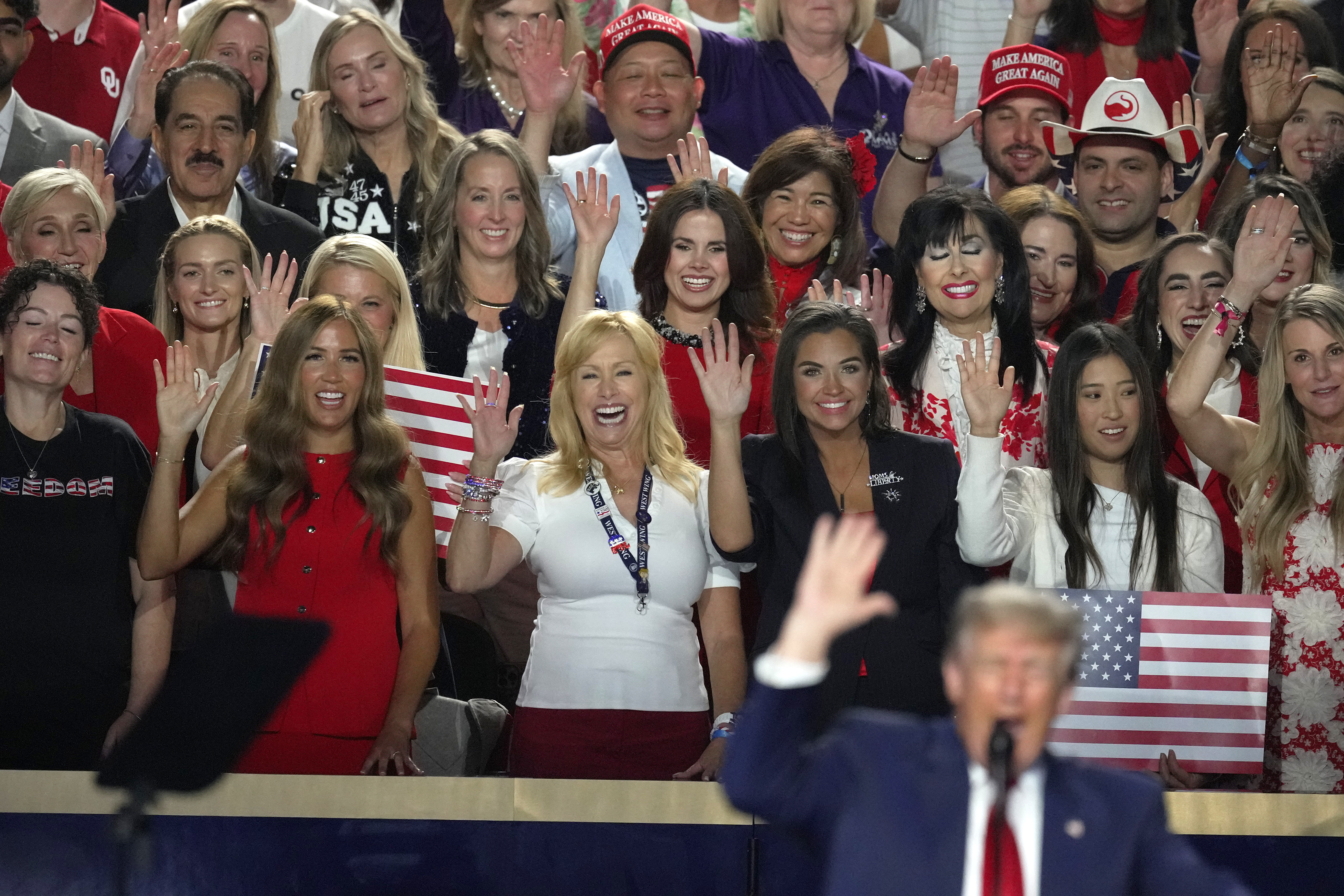
    At one point Trump asked attendees to raise their right hands and pledge to him that he would vote with their family and friends. Dutifully, they did.

    “You know what happens if you don’t vote?” Trump said. “You go to hell.”

    The two-day rally in Dallas came as Trump’s approval has sagged below 40% and Republicans fear losing control of both the House and Senate. Republicans hoped the gathering would help energize a base beleaguered by high prices and the Iran war to turn out in droves. But the two days of red meat tossed from the stage seemed unlikely to satiate independent voters whose support has flagged.

    Here are seven takeaways from the convention:

    Vance makes his 2026 (and 2028) pitch

    Vance arrived in Dallas widely considered the front-runner in the 2028 Republican presidential primary. His speech offered some early clues about how he might approach a campaign.

    Vance focused on restoring the primacy of the traditional nuclear American family, a theme he has championed in the administration. He did not mention the war in Iran, an operation he has defended publicly but raised concerns about privately. But he issued a plea for conservatives not to abandon the White House over policy.

    “Do not throw the baby out with the bathwater,” he urged.

    Vance speaks in a far more scripted political style than Trump. He caught fire with the crowd when he snapped back at a protester who interrupted his remarks by waving Palestinian and Mexican flags. “My friend, if you love Mexico so much, get your a— over there,” he said.

    But he failed to sustain the kind of enthusiasm that Trump commanded either night. Nor did he win anything beyond perfunctory praise from the president, who quickly ushered him off the stage.

    As the balloons fell, it was the president alone, along with a tenor singing. Trump is not giving up his crown quite yet.

    Trump throws an affordability Hail Mary

    Trump has called affordability — a top buzzword for Democrats this year — a “hoax.” In his speech Wednesday night, the president claimed that prices are on their way down. At the same time, he rolled out an audacious plan to address people’s concerns about costs: a massive cash giveaway.

    He branded his dubious and detail-free plan to send $5,000 to every American adult a “Trump Dividend.”

    But Trump was virtually the only one talking about it.

    A day later, the splashy $1 trillion-plus plan barely made a ripple on the convention stage.

    The president’s own son, Donald Trump Jr., didn’t so much as mention it.

    Neither did the speaker of the House.

    Neither did the vice president.

    Only Trump did.

    If the president wants the dangled cash to be a major factor in the midterms, the rest of the Republican Party didn’t use the rest of the convention to sell it.

    Republicans have a new rogues’ gallery of liberal villains

    Forget about Nancy Pelosi.

    In Dallas, Republicans made clear that the former House speaker has been dethroned from her decades-long position as the party’s favorite political villain.

    Speaker after speaker assailed Hasan Piker, a leftist online streamer, and Abdul El-Sayed, the Democratic Senate nominee in Michigan, for pushing what they described as an extreme and anti-American agenda. Their images, including Piker’s naked torso, were broadcast on the jumbotron over the stadium. Even Rep. Alexandria Ocasio-Cortez of New York, who is a frequent target of the right, got less airtime.

    At one point, Speaker Mike Johnson outlined the new rogues’ gallery of liberals — “Hasan Piker and Bernie Sanders and AOC and Abdul El-Sayed and Zohran Mamdani” — while casting the rest of the Democratic Party as squishes who would succumb to them.

    In their attacks on Piker and El-Sayed, several convention speakers embraced anti-Muslim rhetoric, including a promise popular among conservative activists to “ban Shariah law.”

    “We must stand and defeat the Islamists,” Sen. Ted Cruz of Texas said in his speech.

    GOP frames the election as common sense versus crazy

    Republicans know that Trump is unpopular. They are banking on making Democrats unpopular, too — or at least unappealing and unelectable.

    Over and over, speakers cast Democrats as out of the mainstream, frequently calling them socialists, communists, and even worse. At times they stretched the truth. Democratic socialists might have won a number of Democratic primary victories since 2024, but no serious figure in the party is promoting communism.

    “You guys are going to trigger the commies,” Donald Trump Jr., the president’s son, said at one point as the crowd chanted “USA! USA! USA!”

    Vance, in the closing of his speech, summed up the message so many had delivered before him over two days: “It’s about the party of common sense beating the party of the crazies.”

    Texas is a 2026 battleground

    Six months ago, when it first emerged that Republicans were likely to pick Dallas for this convention, it was unclear whether Texas would wind up as a top midterm battleground.

    It’s clear now.

    A parade of speakers — from the president on down — used their precious time onstage to talk about Texas’ razor-close Senate race. They sought to boost Ken Paxton, the Texas attorney general (even as Trump mocked his sartorial choices on back-to-back nights), and tear down James Talarico, the Democratic nominee. On the eve of the convention, Trump’s super political action committee had reserved $10 million in ads to help Paxton.

    “Tala-freako maybe tops the list,” Vance said of Trump’s nickname for Talarico.

    But it wasn’t just the Senate race. Republicans gerrymandered the state in 2025 to create as many as five new safely Republican House seats. But Republicans running in several of those seats appeared at the convention, seeking a boost in regions that Trump won handily.

    Was it must-see TV? Early signs suggest no

    Trump has long been known as a master of the television audience. Not this time. An average of 2.5 million people tuned in to watch his Wednesday night speech on Fox News, one of the few major TV networks that aired the remarks in full, according to preliminary figures from Nielsen. That was an average primetime audience for the network, based on the most recent quarterly statistics, and below the usual viewership for programs at that time.

    In other words, no Trump bump.

    To be fair, the president’s programming faced some steep competition. The first game of the National Football League season was on at the same time as his speech. The season’s second game was on Thursday during Vance’s and Trump’s speeches.

    Republicans make their bid to buck history

    Parties in power traditionally attempt to expand their appeal in midterm elections through targeted outreach to independent voters. That was not the strategy charted by Trump and his allies in Dallas.

    Only a handful of speakers offered any kind of outreach to moderate voters. (One of those exceptions was Rep. Mike Lawler of New York.) Far more focused their remarks on stoking fears of Shariah, transgender athletes, and Democratic candidates who were repeatedly described as communists. Again and again, Trump begged his supporters to “pretend” that he would be on the ballot — an attempt to get enough of them out to prevent the usual losses for the party in power.

    Trump and his allies are staking their chances on their ability to drive their own voters to the polls. At the top of the list are Trump loyalists who typically skip midterm elections.

    This article originally appeared in the New York Times.
  • A Pa. state lawmaker wants to turn Lake Erie into Lake Pennsylvania

    A Pa. state lawmaker wants to turn Lake Erie into Lake Pennsylvania

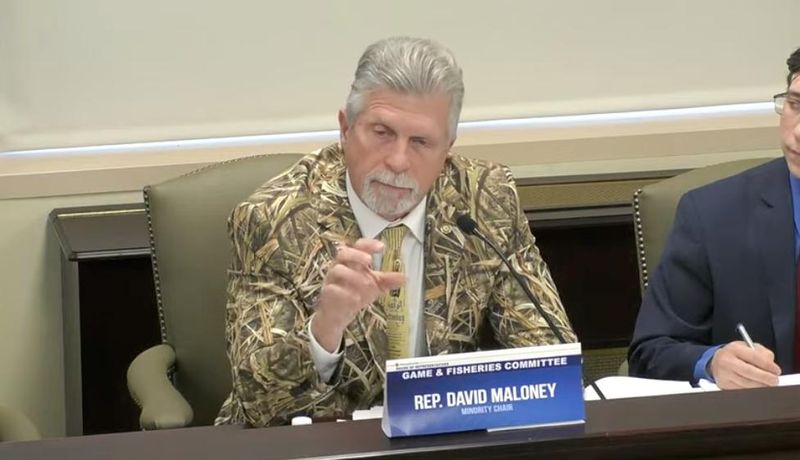
    Rep. David Maloney, a Republican who represents parts of Berks County, wants to rename Lake Erie to “Lake Pennsylvania,” arguing that the state’s only Great Lake has become increasingly important to Pennsylvania’s economy and identity.

    Maloney plans to introduce a resolution that would urge President Donald Trump, Congress, and the U.S. Secretary of the Interior to take the necessary steps to change the lake’s name, according to a recent news release.

    In a memo to fellow lawmakers, Maloney pointed to the millions of Pennsylvanians who visit nearby Presque Isle and the Erie Bluffs each year, and to tourism’s importance to Erie County. He also argued that Pennsylvania plays an outsized role in supporting the lake’s recreational fishery, despite having a small share of its shoreline. According to the Great Lakes Fishery Commission’s 2025 report, Pennsylvania stocked almost 500,000 yearling steelhead last year, or roughly 40% of all steelhead in the lake, and more than any other state or Canadian province.

    “This is Pennsylvania’s only Great Lake,” Maloney said in a post on X. “Its modern economy and identity are increasingly tied to the boaters, anglers, families and tourists who come to enjoy it.”

    “Ohio has plenty of shoreline. New York already has two Great Lakes. Canada has four others,” he said. “Pennsylvania has one. Let’s call it Lake Pennsylvania!”

    The proposal comes shortly after Trump ordered the federal government to begin calling Lake Ontario “Lake America.” Trump signed an executive order on Aug. 27 directing the Secretary of the Interior and the U.S. Board on Geographic Names to make the change in federal records.

    Maloney’s resolution has not yet been formally introduced in the Pennsylvania House.

  • Military power alone cannot keep the Strait of Hormuz open

    Military power alone cannot keep the Strait of Hormuz open

    Recently, the Strait of Hormuz has become a flashpoint in the escalating conflict between the United States and Iran, with the Trump administration alternating between military strikes and threats of further attacks amid negotiations.

    This waterway is one of the world’s most important shipping corridors. It connects Persian Gulf energy producers to global markets and carries a substantial share of the world’s energy trade. This applies further pressure on the need to keep it “open,” even as that story is far more complicated than it appears.

    The strait is more than a physical waterway. It is also an institutional and commercial corridor sustained by trust, pricing, financing, commodity markets, and insurance premiums. In a modern economy, a waterway like the Strait of Hormuz allows merchant ships to function as part of the circulatory system of global commerce. But passage requires more than the physical opening of the waterway. It also depends on whether insurers, lenders, shipowners, crews, and governments are willing to price, bear, and distribute the risks associated with the passage.

    The Trump administration is focusing primarily on one end of the problem: suppressing Iran’s ability to alter the threat landscape in the strait. Crucially, it has paid far less attention to the other end of the equation: owning, transferring, or guaranteeing the residual risk that American military forces cannot eliminate. The history of the Suez Canal crisis shows the consequences of a similar conceptual mistake. It demonstrates how military control of a strategic waterway can prove insufficient when broader risks remain unresolved.

    In 1956, Egyptian President Gamal Abdel Nasser nationalized the Suez Canal after the United States and Britain withdrew their financial support for the construction of Aswan High Dam. Nasser announced that, in the absence of external financing, canal revenues would be used to fund the project. Suez was vital for European trade and Middle Eastern oil supplies, so Britain and France saw these actions as a direct challenge to their strategic influence in the region. And so, in coordination with Israel, they took military action against Egypt to seize control of the Canal Zone. Their calculation was that if Nasser were removed and the canal returned to British and French control, then their broader geopolitical problem would be resolved.

    Militarily, this plan worked. Their forces advanced rapidly. Israel swept across the Sinai while British and French troops established air superiority and took Port Said at the northern mouth of the canal.

    Despite this success, the broader strategic goal remained beyond their reach. Britain’s military might masked a far weaker financial position. The sterling was still a major international currency, but defending its value depended on Britain’s dwindling gold and dollar reserves. American opposition to the invasion, mounting pressure on sterling, disruptions to oil supplies, and Britain’s dependence on external financial support ultimately made the operation unsustainable. As the dollar and oil reserves declined, London increasingly needed the very international financial cooperation, especially from the United States, that the invasion had put at risk.

    The crisis left both European powers, particularly Britain, politically humiliated. They had been willing to assume the military risks of invading Egypt, but they overlooked the financial, diplomatic, and alliance risks that also had to be absorbed to sustain the operation and turn their military success into durable strategic control of the canal.

    Three decades later a comparable problem surfaced in the region, but this time, the United States responded differently. In 1987, during the “Tanker War” phase of the Iran-Iraq War, Kuwait’s oil exports were increasingly threatened by repeated Iranian attacks on its tankers. With limited options, the Kuwaiti government sought protection from both the United States and the Soviet Union because neither Kuwait nor any private commercial actor could adequately absorb or manage the risk alone.

    By July of that same year, Ronald Reagan took action, but he did not rely on warships alone. Instead, he approved Operation Earnest Will, under which eleven Kuwaiti tankers were reflagged as American vessels and escorted through the Persian Gulf. This action did not eliminate Iranian mines, missiles, or the possibility of further attacks. In fact, during the first convoy, one of the reflagged tankers struck a mine. Although no one died and the tanker completed its voyage, the incident made clear that the danger remained real.

    Certainly, reflagging the vessels changed the legal and political meaning of these voyages. Sailing under American colors placed U.S. sovereignty and military credibility behind the Kuwaiti vessels. The United States did not absorb every commercial loss, but it assumed enough of the political and strategic residual risk to make continued passage more credible. Operation Earnest Will did not eliminate risk. It instead gave the residual risk a more capable owner.

    Made By History sponsors. FOR USE ON MADE BY HISTORY STORIES ONLY.Inquirer Staff

    This does not mean that the military dimension is insignificant. But military measures are not the only instruments available. Washington can also strengthen the ability of governments, private firms, and financial markets to absorb the risk that remains through tools like sovereign war-risk insurance or reinsurance, multinational risk pools, and lender guarantees. These mechanisms can help distribute, transfer, and absorb the residual risk that remains, even when real danger persists.

    The region has changed significantly since Operation Earnest Will. Through the 1990s and early 2000s, the United States established an enduring presence in the Persian Gulf while Iran increasingly relied on asymmetric capabilities to offset its conventional military disadvantage. The result is a different strategic environment with the same underlying problem. Even with a superior military presence, Iran’s asymmetric capabilities continue to inject uncertainty into the region in ways that American military power alone cannot eliminate.

    As it has done before, the United States can use military power to make Iran less capable of creating risk. But it must also make insurers, lenders, shipowners, and governments more capable of carrying the risk that will inevitably remain. Force can make passage possible, but a durable strategy for keeping Hormuz commercially open will require both.

    Oscar Blanco is a historian who teaches history and cybersecurity risk management at Miami Dade College and Florida International University. He holds a Ph.D. in history and researches U.S. foreign policy and United States relations with Latin America.

    Made by History takes readers beyond the headlines with articles written and edited by professional historians. Opinions expressed do not necessarily reflect the views of The Inquirer.

  • Trump’s grand midterm convention finale: ‘I’m a little bit tired of politics’

    Trump’s grand midterm convention finale: ‘I’m a little bit tired of politics’

    DALLAS — In 2024, President Donald Trump accepted the Republican presidential nomination by promising to “lead America back to the summit of human achievement and greatness.”

    In 2026, he closed out an unusual midterm convention organized in his honor by saying he was a little bored of politics. He seemed more interested in telling supporters to swear on something holy — which seemed to be himself — that they would go out and vote for Republican candidates in November.

    “Please raise your right hand,” Trump instructed a rowdy crowd of thousands inside a Dallas arena on Thursday evening. Many of them complied. “I pledge to the greatest president in the history of the United States that loves us so much he can’t even breathe that I will go out with my family, my friends, I will do it any way — I don’t care if I’m registered or not, I’m going to try and cheat like hell, like they do.” (Trump usually frowns on election fraud.)

    He added: “I am going to go out, and I’m going to get my friends, my family, and we are going to vote on November 3.”

    Speaking for a grand total of nearly 2 1/2 hours over two days in Texas, Trump made it very clear, onstage and in interviews, that he would be relying on the strength of his political brand to see his party through what appear to be daunting midterm elections. He would not be straying much from his comfort zone to help vulnerable Republicans. In fact, the president said Thursday evening, he was kind of over this.

    “We’re going to have a good time listening to music,” Trump said, name-checking Christopher Macchio, an opera singer who closed out the evening. “I’m getting a little bit tired of politics now.”

    Before taking the stage for the second night in Dallas, Trump was asked by Laura Ingraham of Fox News whether he intended to campaign harder than he ever had before.

    “No,” he replied bluntly. Asked by Ingraham whether or not he thought his legacy was on the line ahead of the midterm elections — “Isn’t this just as important, Mr. President?” — Trump seemed almost blasé about the possibility of Republicans losing one or both chambers of Congress. “I’ll block all their bad stuff for two years. It won’t be the same, but I’ll be a blocker, what can I tell you?”

    The whole spectacle was a window into the mindset of Trump and his advisers, who point to recent history as proof that he is capable of beating long odds through brashness, sheer will and an intense connection with his supporters. That relationship is unmatched in modern politics. During his own speech, Vice President JD Vance, the perceived front-runner for the 2028 Republican nomination, asked the crowd to chant his name because it felt “pretty cool.”

    Trump does not have to make such requests. But instead of focusing his energy on Republicans in difficult races — some of whom skipped the event completely — he directed the focus back to himself while he was in Texas. He pleaded with voters to engage in make-believe, and to “please pretend” that he was the one on the November ballot. That exercise might work against him in competitive races where the war with Iran is unpopular and where voters feel that their worries about the prices of gas and groceries are being ignored.

    He put a new twist on an old tactic by offering free money — $5,000 to every American adult — if Republicans keep control of Congress. On his first night in Dallas, he asked voters for patience: The war with Iran, he assured supporters, “will be over very shortly after the election.” All of these promises and pleas amounted to a maximalist, midterm-era version of the “in two weeks” rhetorical tool he relies on when he is under pressure, to vow that something good will happen a few news cycles down the road.

    “Food prices and almost every other item are rapidly going down,” Trump told the crowd Wednesday. “And by the way, oil will be going down as soon as we win the war with Iran, which is taking place right now. We’ll win it. We’re winning it. We control the Hormuz Strait. I think we should call the Hormuz Strait, we should call it the Trump Strait.”

    At moments, Trump almost seemed to be in conversation with himself about his endorsement style, which, in one crucial race at least, has featured a mix of insults and shrugging. On both nights, he defended the disparaging way he has talked about the appearance and character of Ken Paxton, the Texas attorney general running for a Senate seat after Trump directed primary voters to oust Sen. John Cornyn. Those voters complied and put an otherwise reliable seat into play.

    “I said, ‘I don’t really like the way he looks. I don’t like it,’” Trump said of Paxton on Wednesday. “But you know what I do like? He was the greatest attorney general in the history of Texas.”

    By Thursday, he was basically saying to hell with it: “You better do me a big, the biggest favor you’ve ever done me,” Trump told supporters as Paxton watched from the sidelines and smiled through what was at least his third humiliation ritual of the Texas event. “You’ve got to do this for me. You’ve got to pretend I’m on the ticket.”

    Again and again, Trump turned to other priorities, the most pressing of which seemed to be the crowd size in Dallas. There is a reason that political conventions are not held during the midterms. This expensive, two-day event, designed as a tribute to Trump, functioned more like a temperature check, and there were moments when interest seemed lukewarm. Rows of seats in the American Airlines Center stayed empty throughout the affair. Endangered Republicans, sensing a brush fire rather than a lit torch brightening the way forward, steered clear.

    “No empty seats! Fake news,” Trump exclaimed Thursday, spending about three minutes affirming that the busy arena was packed when it wasn’t.

    And so it went on in that vein in Texas, with little new except for a promise of free money, a pledge of allegiance gimmick, and a few glimpses of an 80-year-old president pondering a future in which he is not firmly in control.

    “I want you to remember me in four or five years when this country’s rocketing,” Trump said Wednesday, somewhere near the beginning of a meandering and nearly two-hour speech. “Remember, I’m the one that got it started.”

    By the time he was ready to depart Dallas, he didn’t seem too interested in the particulars of the future, the strength of Republican candidates or the validity of his promises. He suggested to his devoted supporters that he might be “standing with you one of these days.” But for now, he just wanted to chill out and listen to music. He sped through the last lines of a speech finale he knows by heart after a decade at the center of national politics.

    “I just want to say, we will make America great again,” Trump said dutifully. “We will make it greater than ever before.”

    Then the tenor took the stage. Red, blue, white and gold balloons began to fall from the ceiling. The president swayed to the music, lost in the moment.

    This article originally appeared in The New York Times.

  • Trump loyalist steps down from ‘grand conspiracy’ case

    Trump loyalist steps down from ‘grand conspiracy’ case

    A loyalist prosecutor handpicked by the Justice Department to lead a contentious conspiracy investigation into several of President Donald Trump’s political opponents abruptly quit his job on Thursday, according to two people familiar with the matter.

    The prosecutor, Joseph diGenova, had been in charge of what Trump’s allies have often referred to as the “grand conspiracy,” a sprawling inquiry based in the U.S. attorney’s office in South Florida that has sought to implicate federal officials who have investigated Trump in a single plot to deprive him of his rights.

    DiGenova’s resignation was the latest setback in the case that began last year and has dragged on for months. Even though members of his team have issued numerous grand jury subpoenas to federal law enforcement and intelligence officials who have sought over the past decade to hold Trump accountable in a series of criminal inquiries, diGenova had yet to obtain an indictment.

    “It was an honor and privilege to serve the president and the department,” DiGenova told CNN and CBS during phone interviews on Thursday.

    A spokesperson for the U.S. attorney’s office did not respond to a message seeking comment.

    Trump has repeatedly put pressure on prosecutors to bring criminal charges against his opponents, calling them out in private meetings and in social media posts. He has also expressed displeasure about the slow pace of the retributive investigations he has helped to set in motion.

    But time and again, Trump’s desire for vengeance and his willingness to break through the walls of independence that have traditionally separated the White House and the Justice Department have resulted in failure. Judges and grand juries have repeatedly stymied his attempts to strong arm prosecutors into bringing charges.

    Sometimes, as in the case of diGenova, prosecutors themselves have effectively reminded him that it is no simple matter to file indictments against people without real evidence or viable legal reasoning. The resignation was likely to cause consternation among far-right influencers who have long heralded the grand conspiracy case as the Trump administration’s most aggressive effort to go after the president’s critics.

    From the beginning, the influencers pushed for charges to be brought against the widest array of Democrats possible, asserting that a cabal of “deep state” operatives — led by former President Barack Obama — had worked for years to destroy Trump and deserved to be punished.

    With his move, diGenova became the second prosecutor who has either resigned or been removed from the case. The prosecutor in charge of an early phase of the investigation was forced to leave in the spring after telling her superiors that there was not sufficient evidence to bring charges against one of its first targets, John Brennan, a former CIA director who provoked Trump’s ire by helping to assemble an intelligence assessment that determined that Russia had sought to interfere in the 2016 presidential campaign.

    The grand conspiracy inquiry has long been the most fevered of the many revenge investigations that Trump has demanded the Justice Department undertake. It has involved prosecutors seeking to link disparate criminal inquiries into the president — including the Russia investigation and a separate investigation into Trump’s mishandling of classified documents — as an overarching, multiyear scheme to damage his political prospects.

    From the outset, diGenova faced an uphill battle in seeking to prove the basic theory of his case: that the various inquiries into Trump — conducted by different prosecutors and spanning nearly a decade — could be reasonably tied together in a single conspiracy. Those hurdles have led several current and former prosecutors in the office in southern Florida to wonder whether the investigation was largely a show put on to placate Trump.

    DiGenova, a former U.S. attorney from the Ronald Reagan era who had not worked as a prosecutor in nearly 40 years, took control of the case in April after his predecessor, Maria Medetis Long, was kicked off the investigation. At 81, he was an unusual choice to oversee an inquiry involving multiple targets that quickly grew to include at least a dozen prosecutors, including his wife, Victoria Toensing.

    Moreover, diGenova was a longtime ally of Trump’s who had publicly claimed that the Russia investigation was a plot by law enforcement to frame him and keep him out of the White House. DiGenova had also worked as a lawyer for Trump’s 2020 campaign, supporting his false assertions that the election that year had been rigged against him.

    While Brennan was the initial focus of the inquiry, it has also involved an effort to implicate former FBI Director James Comey, who has been charged in a separate case in North Carolina. Late last month, diGenova’s office issued a subpoena demanding testimony from one of Comey’s close confidants.

    More recently, subpoenas had been issued to federal agents who took part in the August 2022 search of Mar-a-Lago, Trump’s private club and residence in Florida, in the classified documents investigation.

    This article originally appeared in The New York Times.