Corey Regensburg’s working with a shiny chrome La Marzocco — the Cadillac of professional espresso machines. It purrs and whooshes as he pulls a double shot of espresso and sets it up for a latte tutorial. It’s well past Ox’s normal business hours, the sunset peers through the shop’s large windows and pulled-down shades.
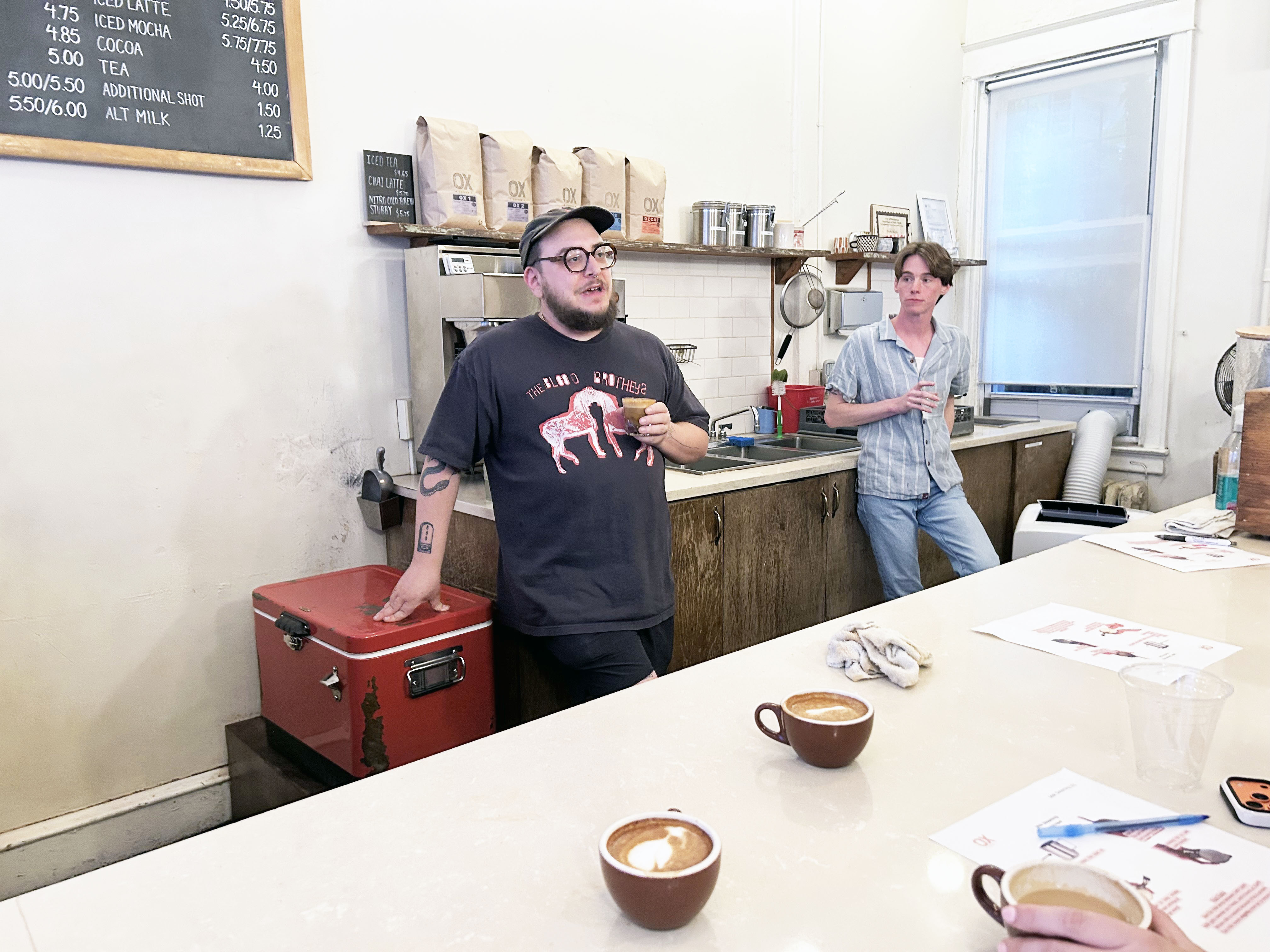
Regensburg, one of the shop’s consultants, steams milk in a frothing pitcher and demonstrates his latte pour for a crowd of four people huddled around the quartz countertop at Ox Coffee in Queen Village.
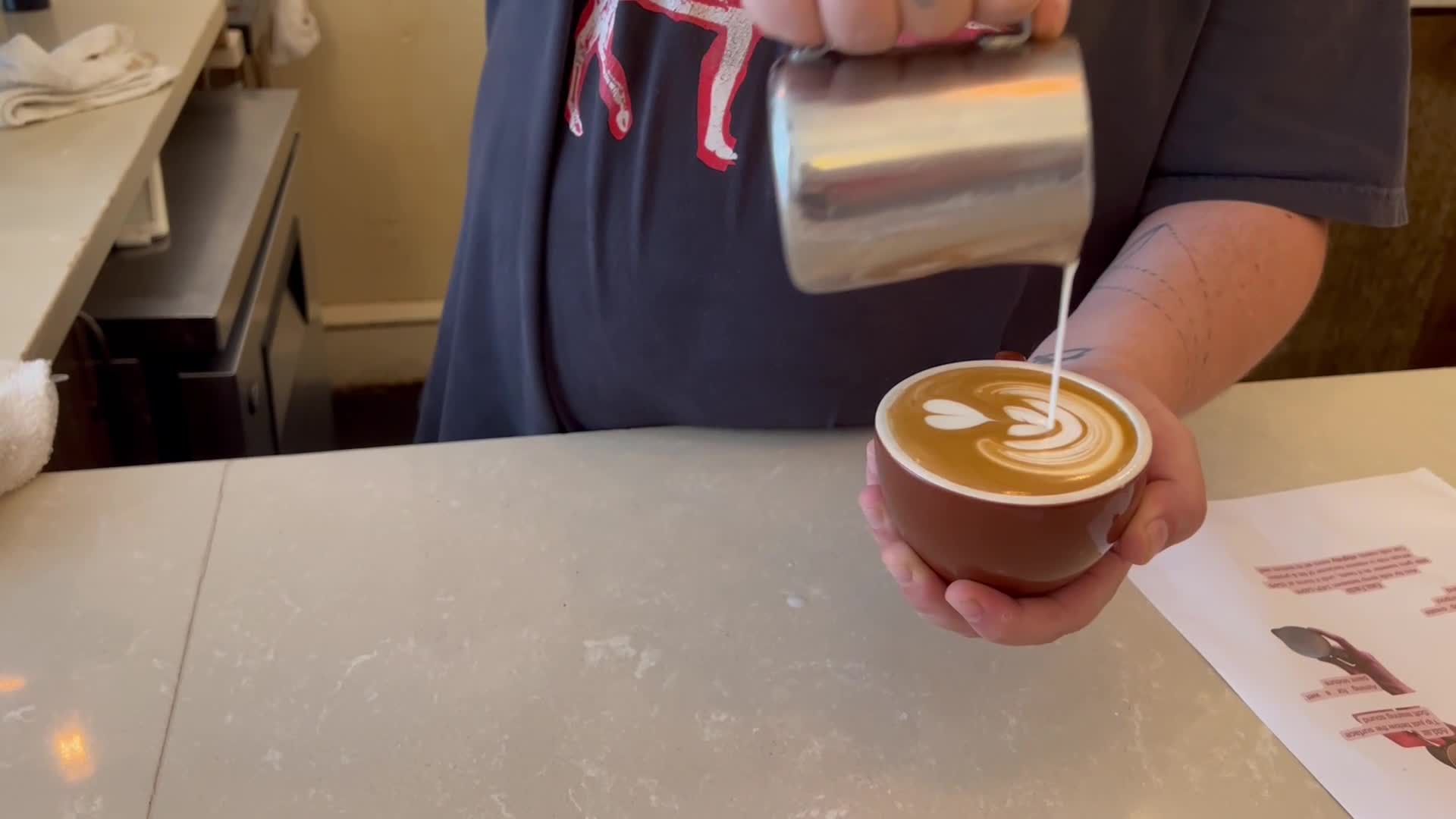
“Pencil thin,” he narrates as the milk streams into the base of the mug, sinking under the espresso’s golden layer of crema. Then, “push, push, glide,” he instructs. The result is a tulip design, finished with two dainty hearts.
The spectators at Ox aren’t new employees — they’re at-home enthusiasts, including a father-daughter duo who took the class to perfect their kitchenside almond milk lattes.
Americans are buying all types of coffee makers and brewing at home more, according to the National Coffee Association, with ownership of countertop espresso machines growing by 50% in 2025 and still on the rise in 2026. Breville Kitchen Group, especially, has seen a surge in sales among amateur espresso makers, with a range of high-end automatic and semi-automatic machines.
“COVID triggered a rise in at-home espresso,” Regensburg said. “Breville boomed like 10 times, and everyone else — from Panasonic to Ninja — hopped on.”
Industry experts say the global espresso and coffee machine market is rapidly expanding, driven by a “prosumer” movement: enthusiasts at home who crave high-end gear to make cafe-style drinks.
Now, coffee shops are leaning into the phenomenon, offering lessons to hobbyists to help master the craft.It illustrates a larger trend across the food service industry: teaching as a way to diversify revenue, build relationships with customers, and fulfill patrons’ desire to peek behind the curtain.
Across Philly, you’ll find Mighty Bread teaching croissant classes, Jezabel’s hosting empanada-making courses, the Bread Room with pizza lessons, Bloomsday with wine 101 sessions, and plenty more.
“It’s really exciting because it adds something to the dynamic besides going to eat or drink, which is wonderful but one-dimensional,” Jonathan Deutsch, director of Drexel University’s Food Lab, said.
Corey Regensburg and Leo Dowd lead a Latte Art 101 class at Ox Coffee.Emily Bloch
Leo Dowd runs Ox’s coffee class program. He says the shop has hosted about 10 classes so far on topics including espresso 101 and latte art for beginners. The classes allow everyday customers to get behind the bar and learn from the pros.
“The rise of remote and hybrid work has played a big role [in coffee classes], along with DIY culture on social media,” Cody Wood, a barista trainer at Crema Coffee in Nashville, said. Crema runs a host of classes inside a training lab at its downtown location. “Overall, it seems more people are tackling home projects, baking bread, learning to cook, trying new experiences on their own, and learning to make the best coffee at home.”
At Ox, the students take turns behind the La Marzocco — a powerhouse compared to any home espresso machine. They sheepishly tinker with the steam valve under Regensburg’s tutelage, practicing with water before moving onto whole milk.
As the milk steams, he calls out cues for students to look out for, like the sound of paper tearing and the appearance of white paint. Dowd picks out a Sonny Stitt record and puts it on in the background.
Video: Ox Coffee consultant demonstrates pouring milk in a Latte Art 101 class
Coffee shops giving away tricks of the trade — including recipes — hasn’t hurt sales, either. If anything, the rise of the at-home barista has helped them.
“Zahav’s hummus recipe is published everywhere, for instance, and it doesn’t mean that you are going to necessarily make it,” Deutsch said. “Coffee’s different because on one hand, it’s really easy to make if you know what you’re doing. But on the other hand, to do espresso drinks really beautifully, you need the right equipment. And there’s awesome home equipment like the Breville, but it’s still not the same as going to a coffee shop and having a really properly pulled, professionally done espresso.”
Wood at Crema in Nashville says the same people who take their coffee classes are also coming back to try new roasts and to talk shop.
Cody Wood demonstrates a pour at Crema in Nashville. Wood, a barista trainer, also leads Crema’s public education program.Courtesy of Crema
“My hope is that we continue to see better coffee brewed and shared in both cafes and homes,” he said. “Coffee has always been a communal experience. Everyone I know who loves making coffee loves sharing it with others.”
Coffee classes nationwide average around $100 per session. Ox’s classes cost between $95-$135 depending on the intricacy.
“That’s a lot of cups of coffee you would have to sell to get that kind of revenue,” Deutsch said.
Deutsch said this approach is wise since during regular business hours, coffee sales rely on convenience and speed.
“If you’re standing in line at 7 a.m., it’s not really a great time to ask about the sustainability of the beans and provenance and all this kind of stuff you might be curious about as a coffee nerd,” he said. “The whole idea of building a relationship with guests on a more substantive level makes sense. Also, if you go out, you’re going to spend a hundred bucks easily on a few drinks and some music. Why not educate yourself and do something entertaining that will stay with you?”
Gloria Sullivan tired and reviewed 100 Philly coffee shops for her followers. Today, she creates her own signature drinks at home. She’s shown here trying an Ice Drip Coffee with half and half and an Iced Earl Gray Tea at Vault + Vine in Philadelphia, Friday, September 1, 2023.Jessica Griffin / Staff Photographer
On social media, TikTok feeds are flooded with content creators attempting to create (or recreate) their favorite lattes and little treats at home.
Philly-based creator Gloria Sullivan — aka @_gloyoyo_ — often documents her morning coffee ritual for her more than 700,000 followers. She alternates between her Breville Bambino, a moka pot, and other methods when making her coffee.
“In the beginning, a lot of coffee creators framed their videos as ‘stop buying coffee out, make this at home instead’ and now it feels more focused on creativity, finding fun ways to make drinks at home exciting,” Sullivan said. “Making coffee is as much of a hobby as knitting or reading or baking, coupled with the fact that a lot of people want to start making content online and there’s not a super high barrier to entry for making coffee at home.”
By the end of class at Ox, half empty mugs and rags are scattered across the bar. The level of proficiency after an hour and a half varies, but every guest has managed to get their milk to skate on top of their mug of espresso.
The amateur work isn’t close to Regensburg’s tulip, but he remains encouraging.
“I know that latte art is sexy and fun and it looks good on Instagram,” he said. “But this — milk texture — is what matters. Latte art got big because it’s indicative of good milk texture.”
Dowd anticipates Ox’s coffee class schedule will ramp up this fall and winter as locals look for indoor activities.
Currently, Ox appears to be the only Philly shop offering courses. But Deutsch wouldn’t be surprised if that changes soon enough.
“I think it’s a really good idea,” he said. “The positives outweigh the risks of teaching people your secrets. I really think that’s more a mythology than a reality that’s born out.”
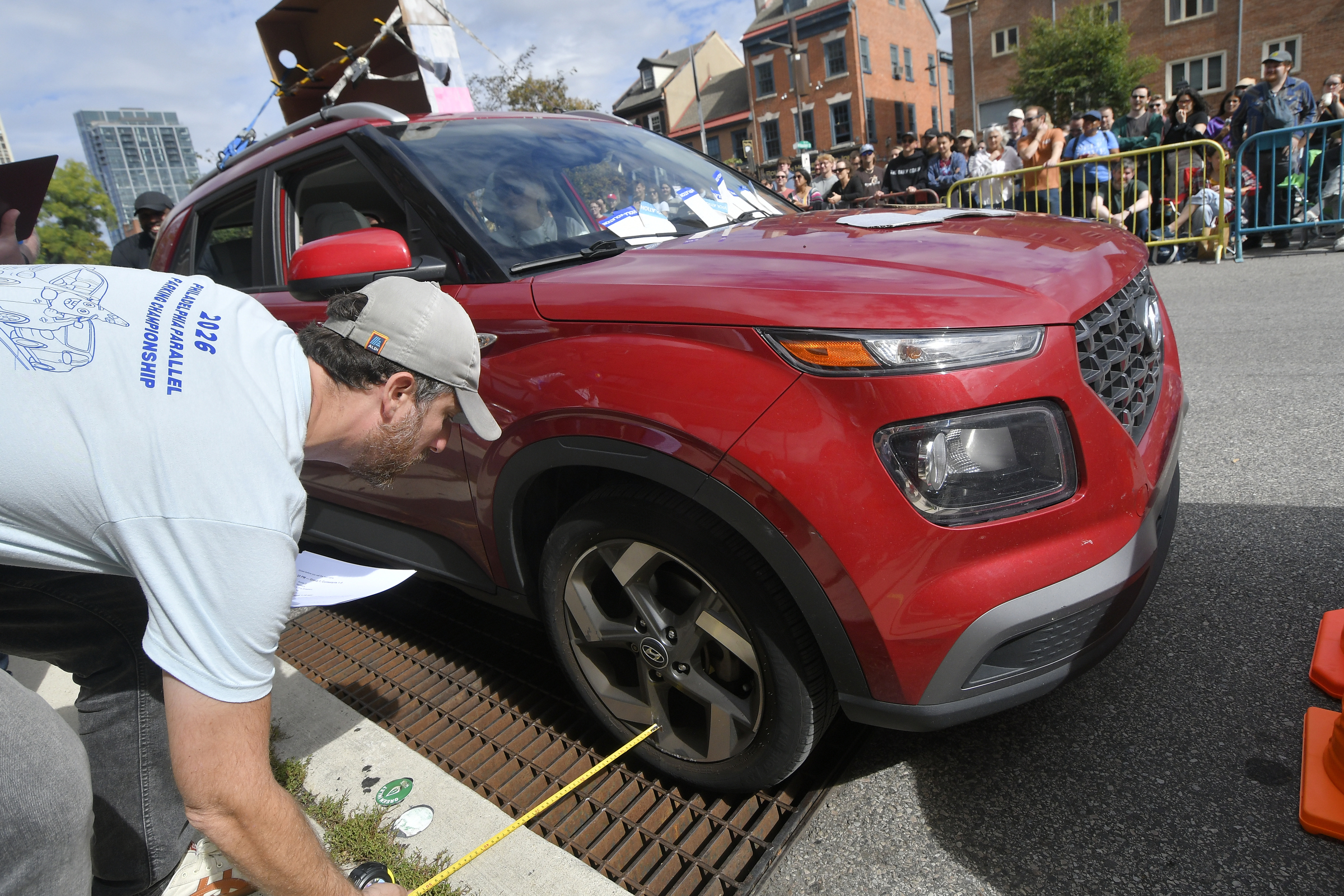
There was no curbing Philadelphians’ enthusiasm at the first Philadelphia Parallel Parking Association (PPPA) Championship at Headhouse Plaza in Society Hill on Saturday, as hundreds of revved-up spectators gathered to watch 14 competitors put themselves into a tight spot.
After several rounds, one of which involved dodging things like a spontaneous Eagles fan celebration and a snow-shoveling citizen using a folding chair for savesies, Mario “One-Shot Mar” Zucca of West Mount Airy was crowned the Best Parallel Parker in Philadelphia.
“Total bliss,” Zucca said, of the feeling that washed over him when he won the title. “It was amazing.”
Mario Zucca wins the first Parallel Parking Championship at Headhouse Plaza.Bastiaan Slabbers/ For the Inquirer
While his win had a lot to do with skill, it also had a lot to do with flair. Zucca, who is an artist and illustrator, donned a red stuntman suit and, just prior to competing in the final round, opened up the hatchback of his 2012 Mazda and out popped a bunch of balloons, including a gold “1,” which remained tied to his car as he parked. After revealing the balloons, he then ran up and down the crowd with a money gun shooting fake Philadelphia Parking Authority (PPA) traffic tickets with his nickname on it into the audience.
For winning the title, Zucca received bragging rights for a year, a trophy with a piece of a curb on it, and $76 to pay for his next parking ticket.
The crowd looks on as drivers compete in the first Parallel Parking Championship at Headhouse Plaza on Saturday.Bastiaan Slabbers/ For the Inquirer
Adam Wodka, self-appointed commissioner of the newly formed PPPA, which is not affiliated with the PPA, also made a surprise announcement at the start of the championship that the PPA had reached out to him and promised to give the top three finalists free parking in any Center City garage for the month of October.
Rounding out the finalists were LaTasha “Tasha” Hall of Northeast Philly, a heavy equipment operator who works at the Delaware River Port Authority, and Shafir “Pirate One Shot” Mondal of Norris Square, whose dad owns Mondal Driving School.
Mondal, who outfitted his car with decals from the manga series One Piece and wore a Monkey D. Luffy hat, said even though he didn’t win, the experience was worth it.
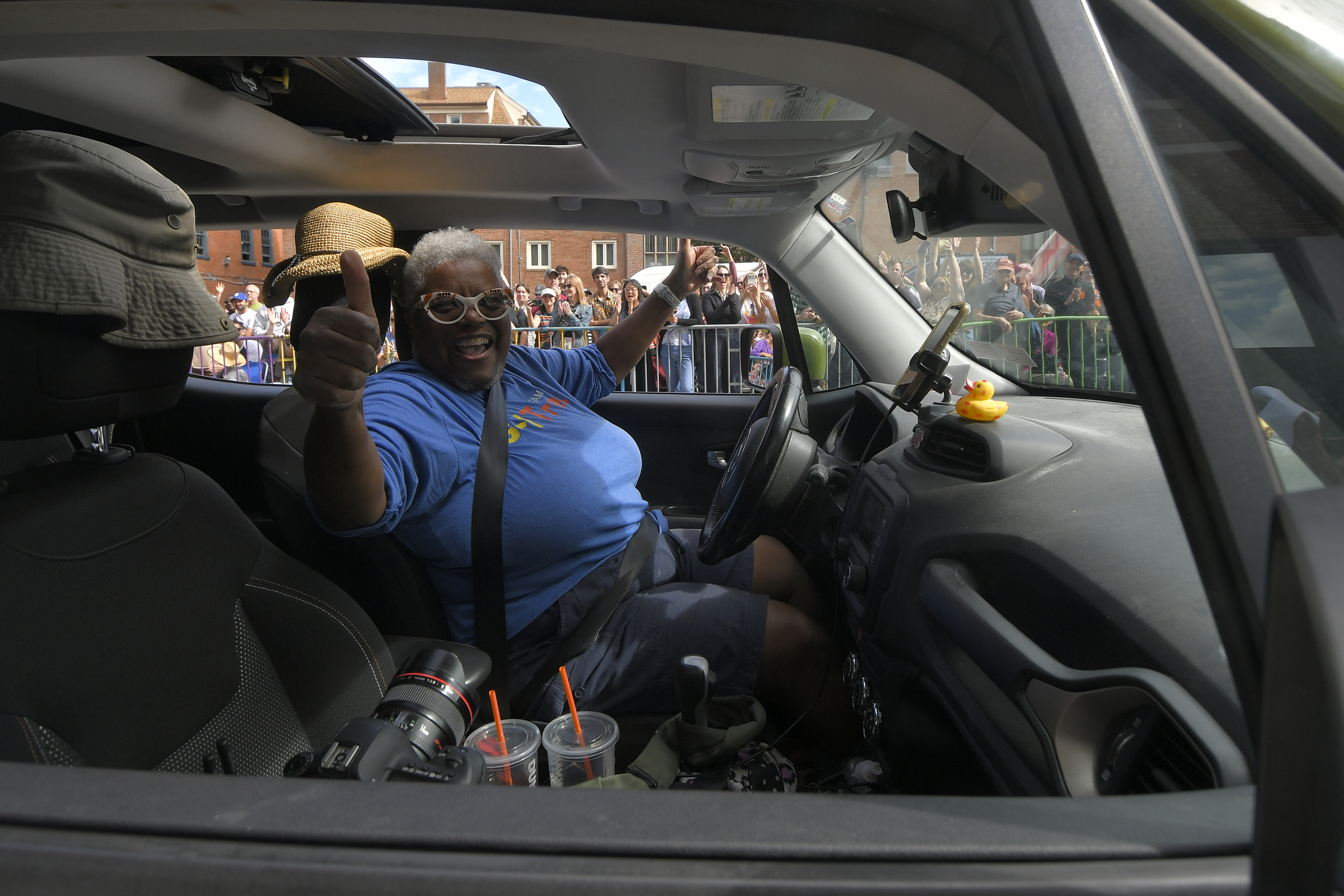
The crowd reacts as Shafir “Pirate One Shot” Mondal sticks his hands through the sunroof of his car after competing in the first Philadelphia Parallel Parking Championship at Headhouse Plaza Saturday. Bastiaan Slabbers/ For the Inquirer
“I feel great. I loved the energy that people had for parallel parking and the love they had for Philadelphians,” he said.
Nearly 900 people applied for the first PPPA Championship, which Wodka created earlier this year to promote excellence in parallel parking. Ten finalists were chosen by PPPA’s executive board, which is made up of seven of Wodka’s friends, and five were chosen by a popular vote online.
In classic Philly fashion, one of the competitors didn’t show up (he’s probably still circling the block looking for a space) and most of those who did participate didn’t use their turn signals.
Cynthia Malachi White, aka “Cynthia Strawberry,” of Mount Airy, competes in the first-ever Philadelphia Parallel Parking Championship at Headhouse Plaza on Saturday.Bastiaan Slabbers/ For the Inquirer
As DJ Elevator Machine Room pumped music about cars and emcee Marisa Magnatta and referee Rebekah Rickards pumped up the crowd, competitors faced off in their own vehicles without using their backup cameras in three separate categories:
One shot: Get closest to the curb in one attempt.
Tight squeeze: With 18 inches of clearance, park closest to the curb using the least amount of moves.
Under duress: Park as fast as you can while faced with distractions.
The tight squeeze category was definitely the most challenging, with many competitors giving more than just a light tap to the cars in front and behind them. Those vehicles were owned by Wodka and his partner, who offered them up as a sacrifice.
Under duress was a crowd-favorite category in which drivers had to try to ignore any number of things they might encounter on a Philly road, including a Mummers parade, a spontaneous fan celebration, a trash can fire, Philly Elmo and his drum line, a Ben Franklin impersonator, and, of course, a woman with a folding chair and a serious case of the savesies.
Philadelphia Parallel Parking Association Commissioner Adam Wodka measures a competitor’s distance from the curb during the PPPA Championship Saturday. Bastiaan Slabbers/ For the Inquirer
Competitors were given points based on their closeness to the curb and how many moves they made. The three judges — pub owner Fergus “Fergie” Carey, viral crossing guard Jamele Ransom, and comedian and social media influencer Betsy Kenney — were also able to hand out three points every round to whomever they chose to influence the scores. The top three scorers then went on to the final round, where the winner was chosen by the judges.
“I always say parking is made worse with an audience and this is one hell of an audience,” Carey said.
The crowd of backseat drivers came with kids, dogs, and posters, and residents around the plaza came out on their balconies and rooftops to watch the spectacle.
Philadelphia’s newest mascot also made his debut at the event. Parallel Pete is a giant orange traffic cone with fuzzy dice, rearview mirrors, and an unsettlingly anxious face.
Proceeds from a merchandise table went to Families for Safe Streets Greater Philadelphia, a program of the Bicycle Coalition of Greater Philadelphia.
The crowd reacts as a driver who has papered their windshield in parking tickets competes in the Philadelphia Parallel Parking Association Championship on Saturday at Headhouse Plaza. Bastiaan Slabbers/ For the Inquirer
While he made no promises, Wodka said he’d love nothing more than to have the championship become an annual event.
“I love the energy. I love that people had fun with it,” he said. “It’s tough out there and we all have stuff going on, so it was really great for a few hours to just celebrate and be silly and have fun.”
BRIGANTINE, N.J. — With its full moon and stacked high tides over multiple days, last week’s nor’easter left Shore towns with some of the worst flooding and erosion since Hurricane Sandy.
In dramatic fashion, the nor’easter produced some feared Shore scenarios: dunes sliced into cliffs, beaches vertically eroded, popular restaurants flooded to the point of closing altogether for the season, water lapping into ground floors, cars ruined. Days later, firefighters were responding to raging electrical fires, at least one of which was linked to a flood-soaked golf cart.
Still, the nor’easter was also a testament of what went right, a test of flood resilience tactics implemented in the 14 years since Sandy — a series of flood pumps in Brigantine, an elevated artery in Ocean City, raised homes throughout the Shore — that prevented a much worse outcome.
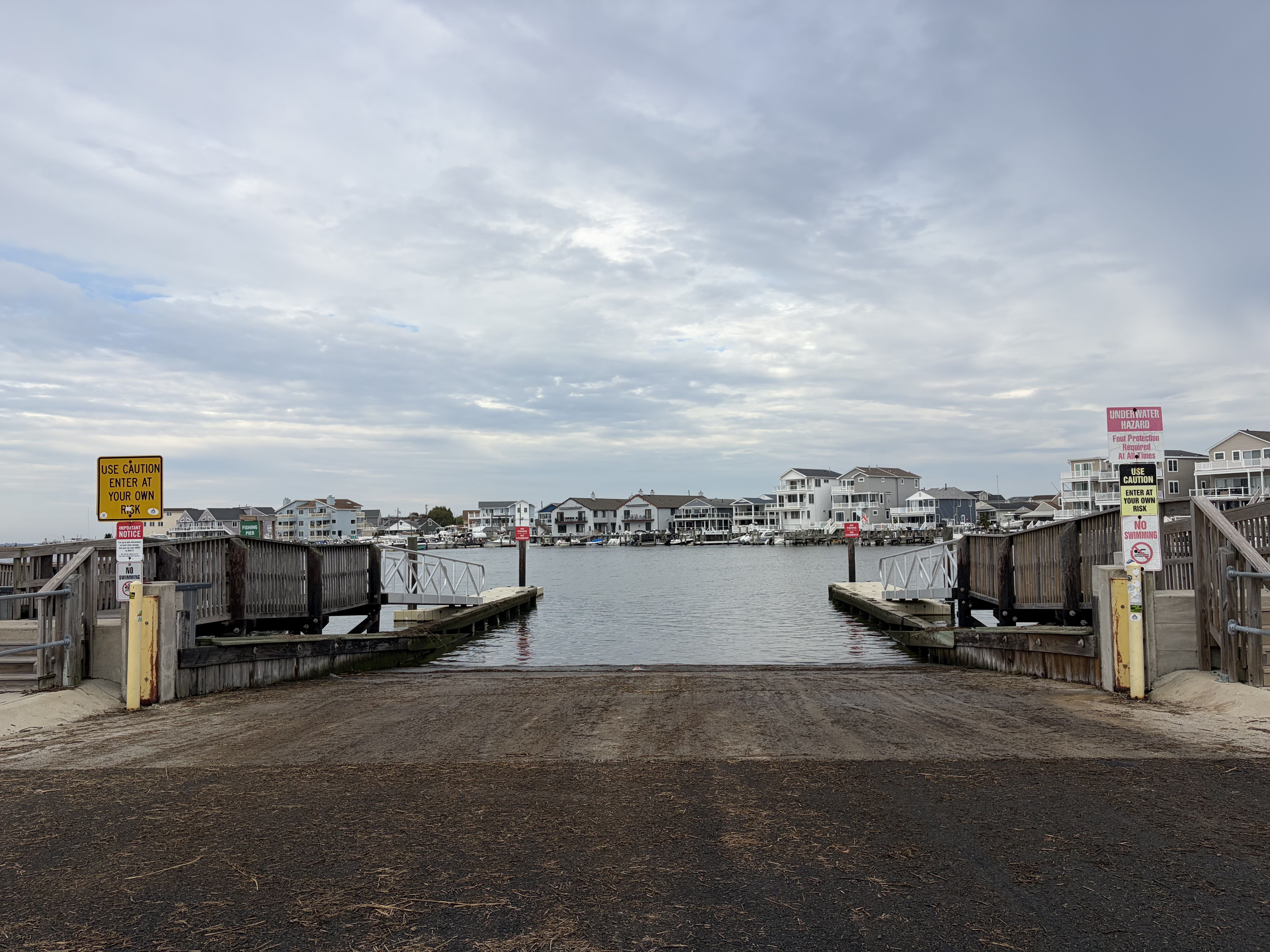
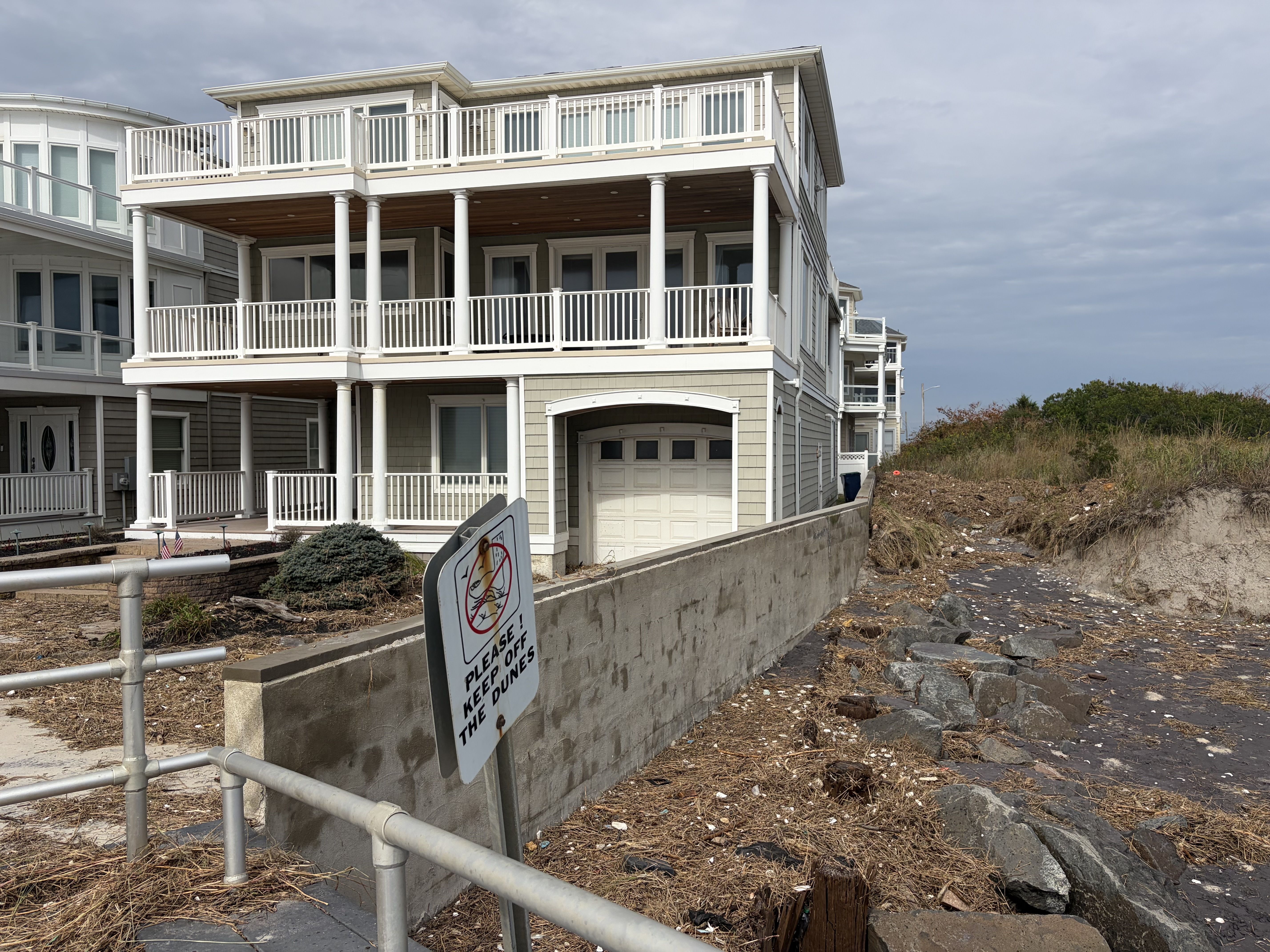
During the September 2026 nor’easter, metal floodgates were brought in to the city’s Municipal Boat Ramp by the city of Brigantine to physically block flood waters.John CunnionBrigantine’s municipal boat ramp was previously an entry way to devastating flooding. But city officials installed flood pumps and metal gates to keep the water off the island, and to drain the island between high tides.Amy S. Rosenberg / staff
‘Our girl took a beating’
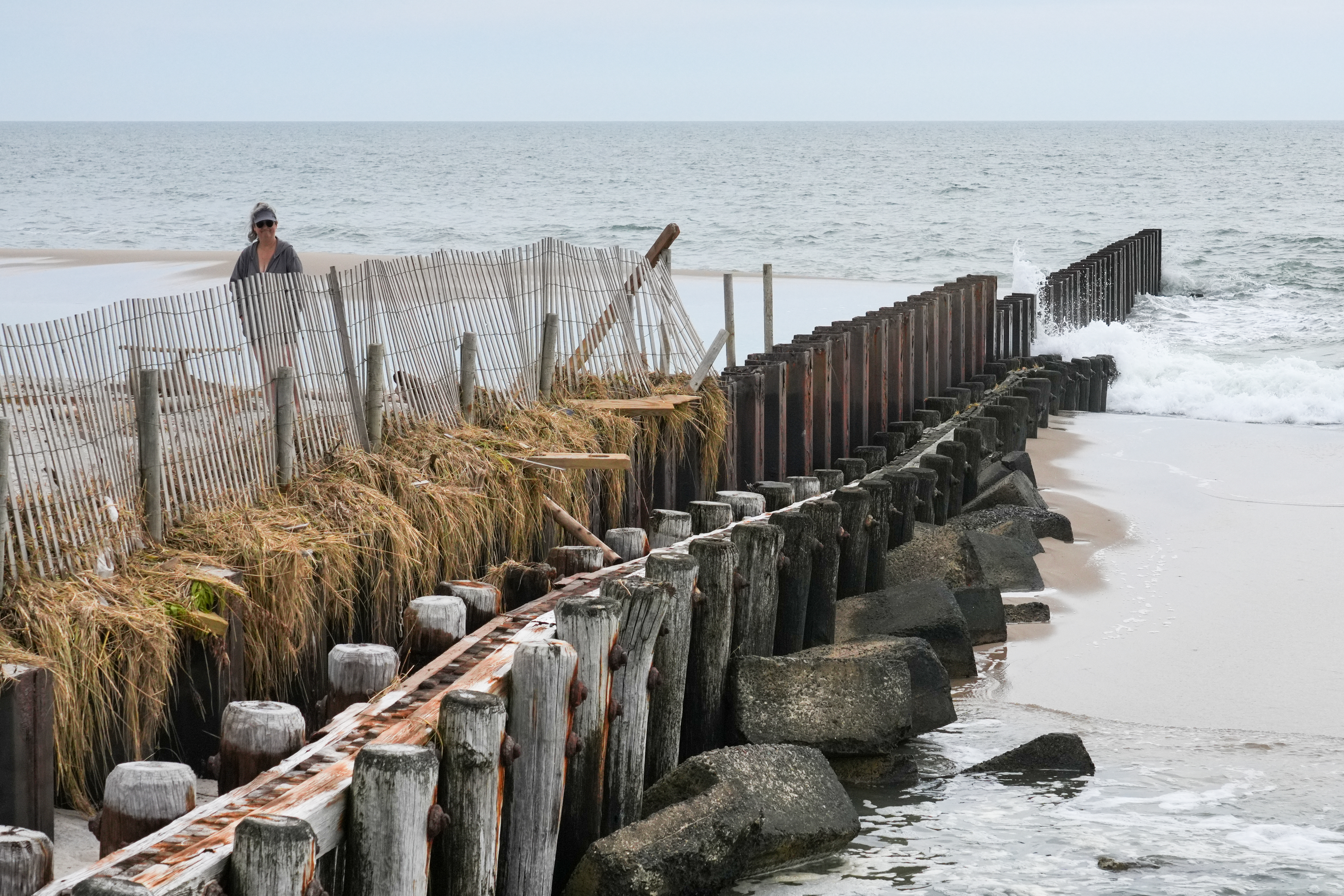
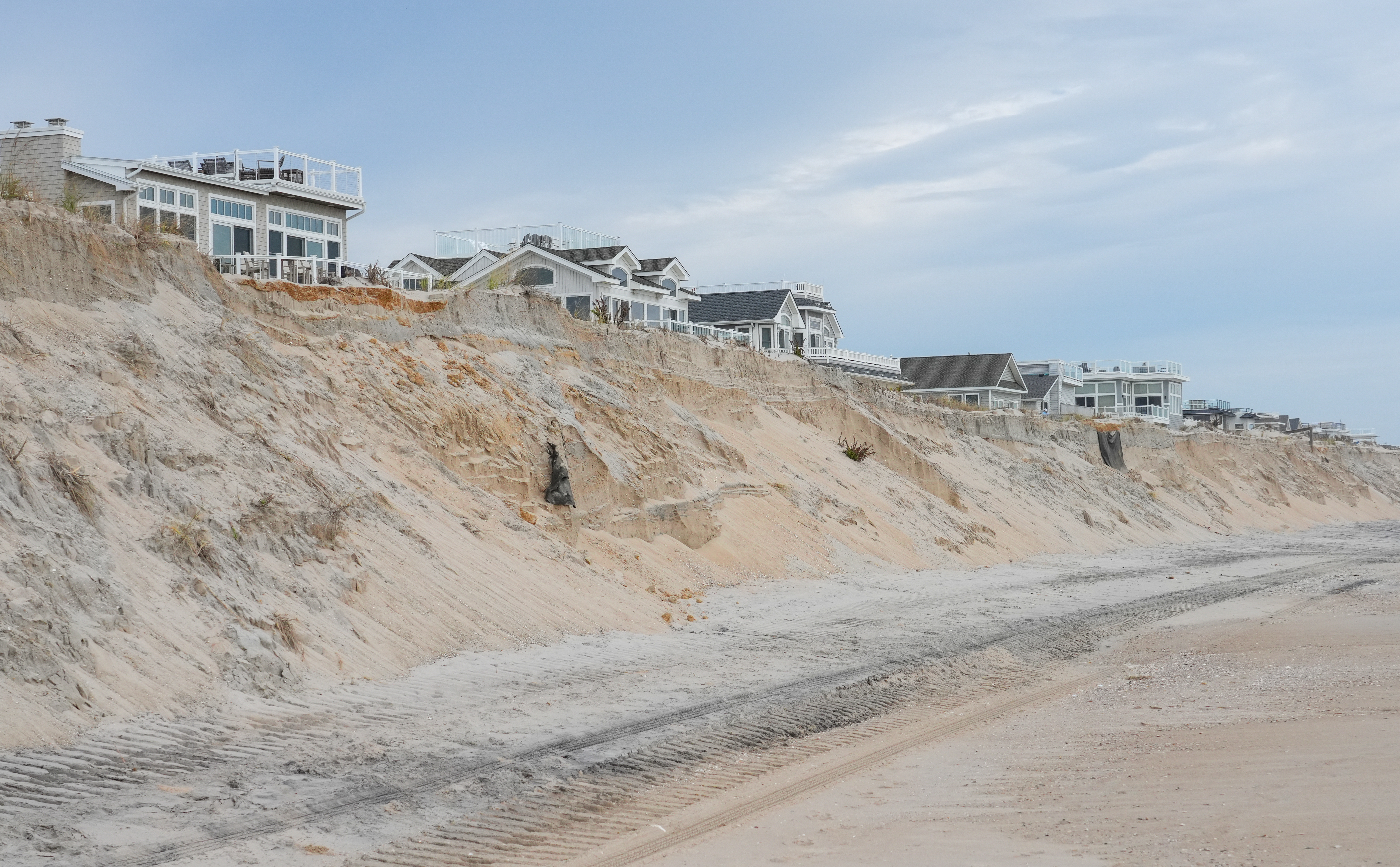
In parts of Holgate, Brigantine, Atlantic City, and North Wildwood, the storm left cliffs six feet or higher, cutting off access to the beach at multiple street ends. Vertical erosion uncovered old structures including rotting old wooden piers.
Streets in Long Beach Township, West Wildwood, and Atlantic City took on water through multiple days of high tide, damaging residential garages and other ground floor spaces.
Abby Mason, of Pottstown, looks at storm damage in Holgate on Thursday.Tim Hawk / For The Inquirer
On Sigsbee Avenue, contractor Vincent Allen of B. Grigoletto Contractors was ripping out ruined insulation and dry wall on two houses, both second homes.
He noted that since Sandy, a lot of the smaller homes had been torn down and replaced by elevated homes, where the ground floors are not, technically, living spaces. “Basically, if you lived on the bay, you got water,” he said. “This wasn’t as high as Sandy, nowhere near it.”
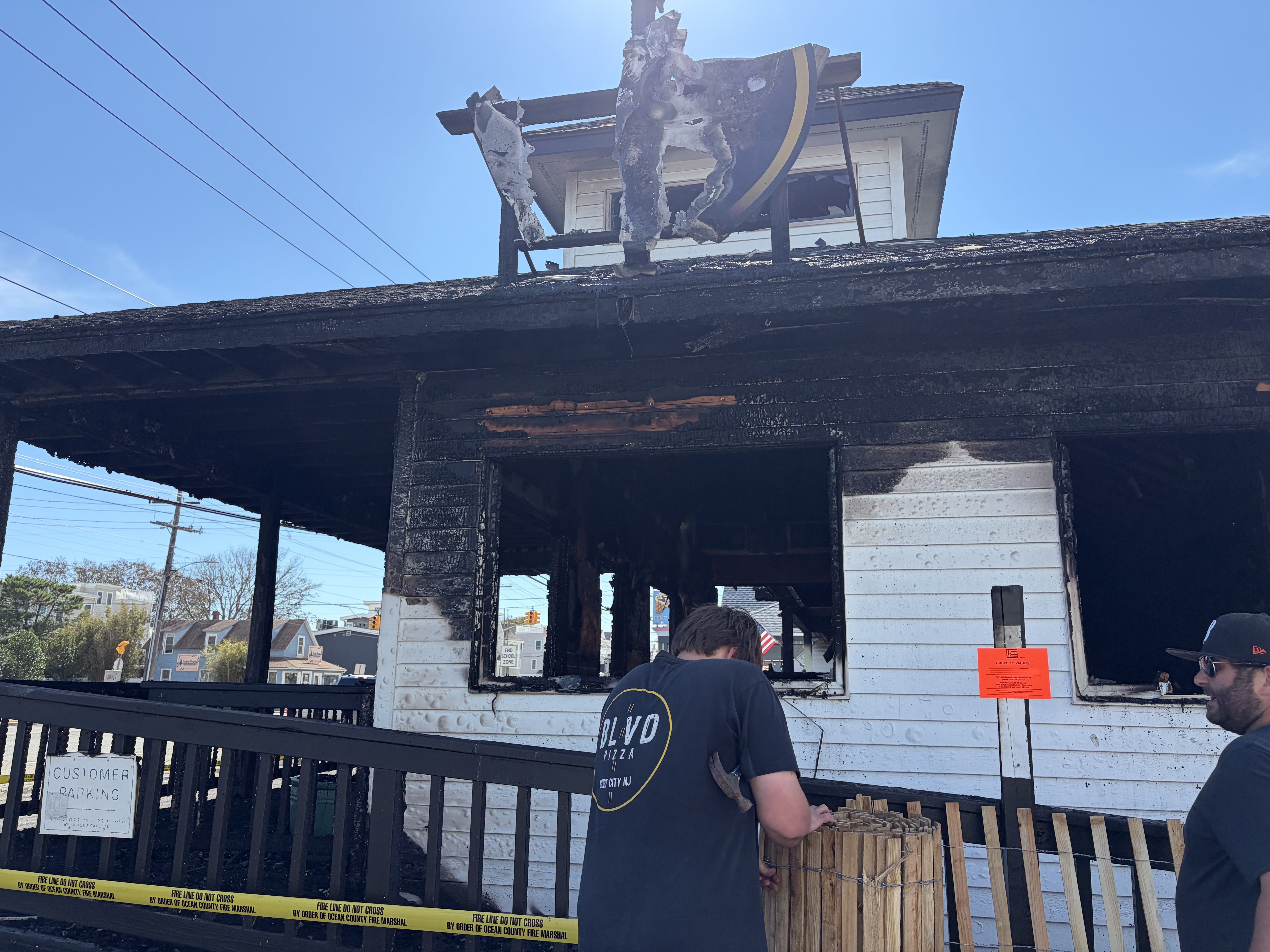
Owner Mike Franzoni at what’s left of his BLVD Pizza in Beach Haven, which was flood damaged days before a fire broke out.Amy S. Rosenberg / staff
On Long Beach Island and Atlantic City, numerous businesses were mopping up or closing early for the season after flood damage.
“We are truly sick to our stomachs, and it hurts,” Moments at Scannicchios, a restaurant on Fairmount Avenue in Atlantic City, said in a Facebook post. “In the end we will reopen.” The restaurant asked people to help out a nearby corner bodega, El Rinconcito Grocery, it said lacked similar resources.
On Long Beach Island, the ruined insides of the Dockside Diner were strewn across the front of the restaurant. “Our team, our family, is safe,” the owners wrote on Facebook. “But our old girl Dockside took a beating.”
Nearby, Mike Franzoni looked at the charred remains of BLVD Pizza’s Beach Haven location, which suffered flood damage and had a fire a few days later. Another location, in Surf City, was undamaged.
Storm damage in Holgate on Thursday.Tim Hawk / For The Inquirer
On Long Beach Island, the beloved “karaoke garage,” belonging to the family of Diane O’Donnell, 80, of Yardley, Pa., took on two feet of water, half of Sandy levels.
Last week, an Indigo Girls song was playing out of the space where Kelly Kolbjornsen and her family would recruit people to stop and sing karaoke on their way down Long Beach Boulevard.
“It’s part of having a beach house, but it’s a little overwhelming,” Kolbjornsen said.
‘A good gauge’
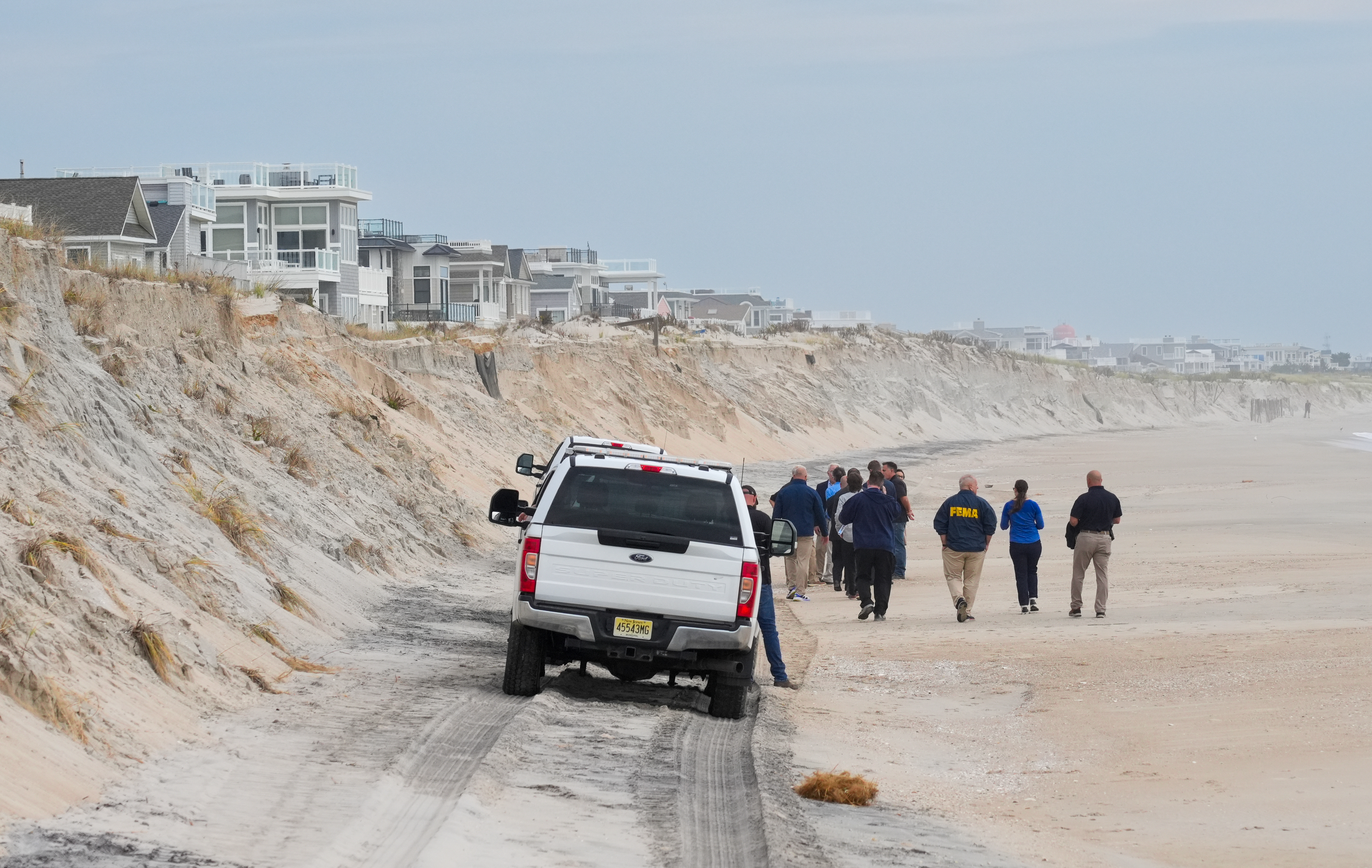
New Jersey Gov. Mikie Sherrill and U.S. Rep. Jeff Van Drew brought representatives from FEMA and the Army Corps of Engineers to focus on severe damage to ramps from Brigantine’s concrete promenade in the north end and the near breaching of a private retaining wall that was the only line of defense after surging waves destroyed dunes at the promenade’s edge.
But Mayor Vince Sera also pointed out that neighborhoods devastated during Sandy remained mostly damage-free.
“We put floodgates in before the storm came into Brigantine,” he said. “They closed all of the floodgates and prevented a lot of water from coming in. On each low tide, they let the water out to drain, and closed them again for the next high tide.
“Any water that comes into the streets, we have pumps around the island,” he said. “It pushes the water out over the bulkhead and back into the bay. It drains the island.”
Residents near those points of vulnerability took note.
“Without the pumps, it would have been horrible,” said Terri Cunnion, whose home sits on Bayshore Avenue across from the boat ramp, a major thoroughfare of flooding during Sandy (when the previous home on her lot was destroyed). “Without those gates, this block wouldn’t be.”
Through multiple high tides, last weekend’s floodwaters never got past the lip of the garage in the Cunnion’s house, whose living spaces are built 14 feet to new elevation standards.
Ocean City’s newly elevated Roosevelt Boulevard was also credited with mitigating damage from the nor’easter, staying above floodwaters and allowing an evacuation route, said Mayor Jay Gillian. The road was reconstructed so that portions were raised by 12 to 20 inches.
During Hurricane Sandy, bay waters roared right up Brigantine’s municipal boat ramp and surged across Bayshore Road, totaling houses with four feet of water.
Since the installation of eight permanent flood pumps and two portable flood buster pumps, vulnerable spots like Bayshore Drive and the neighborhood around the town’s golf course are newly fortified. In addition, bulkheads were raised.
U.S. Rep. Jeff Van Drew, together with federal, state, and local officials, tour storm damage in Holgate on Thursday.Tim Hawk / For The Inquirer
Atlantic City, similarly, installed pumps at its Atlantis Avenue station and rebuilt bulkheads in Chelsea and Chelsea Heights. It has yet to complete similar projects in its Ducktown neighborhood, which saw major flooding last weekend, leaving some businesses with tens of thousands of dollars in equipment and merchandise loss.
Van Drew pointed to other improvements since Sandy that protected utility infrastructure and homes. Homes that were elevated had ground levels that allow water to flow in and then out, he noted. He is advocating a permanent $1 billion “Coastal Trust Fund,” funded by revenue from federal offshore oil and gas leases to provide a stable source of funding for beach fills, dune restoration, and other coastal remediation.
“The good news is we’ve done a lot of good work,” Van Drew said. “We’ve hardened a lot of structures. When you look at electrical substations, in many cases, they’ve been raised. When you look at transmission lines, rather than being on wooden poles, they are now on industrial grade steel lines that are actually put on much, much stronger holes.”
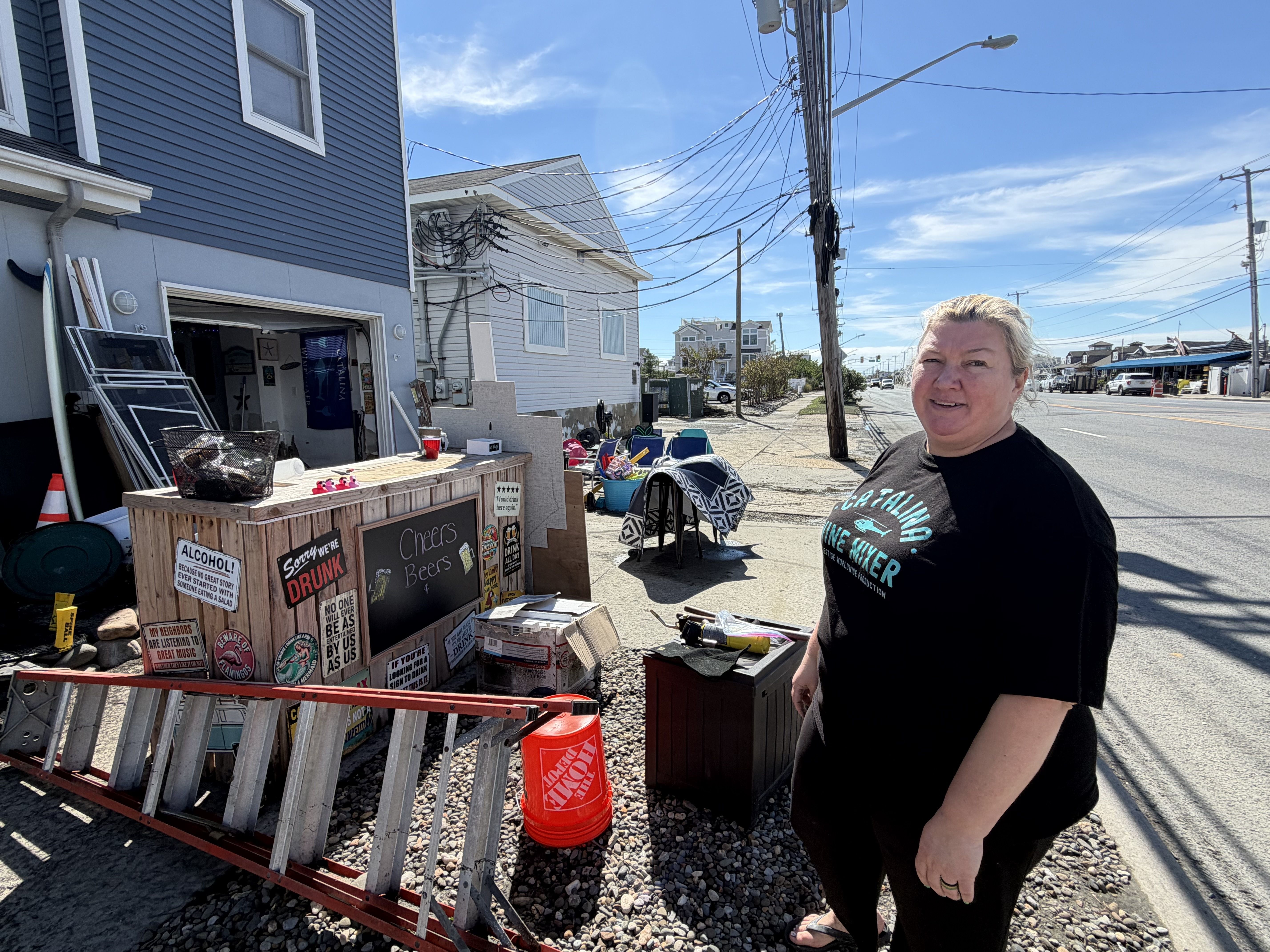
Kelly Kolbjornsen looks at the damaged bar from her garage, where she and her family recuited passers by to sing karaoke, on Wednesday, days after the nor’easter.Amy S. Rosenberg / staff
‘Sacrificial sand projects’
On an Oct. 1 tour from Long Beach Island to North Wildwood, Van Drew made the case for continued beach replenishment funding, despite the storm eating through a good chunk of the $99 million in recent beach replenishment, most recently in Sea Isle City, Strathmere, Ocean City, Avalon, and Stone Harbor.
D. Lee Forsgren, the performing assistant secretary for the Army for Civil Works, who oversees the Army Corps, made a point of calling beach replenishment projects “sacrificial sand projects.” He compared the engineered beaches to your car’s “crumple zones” that are made to take the initial beating.
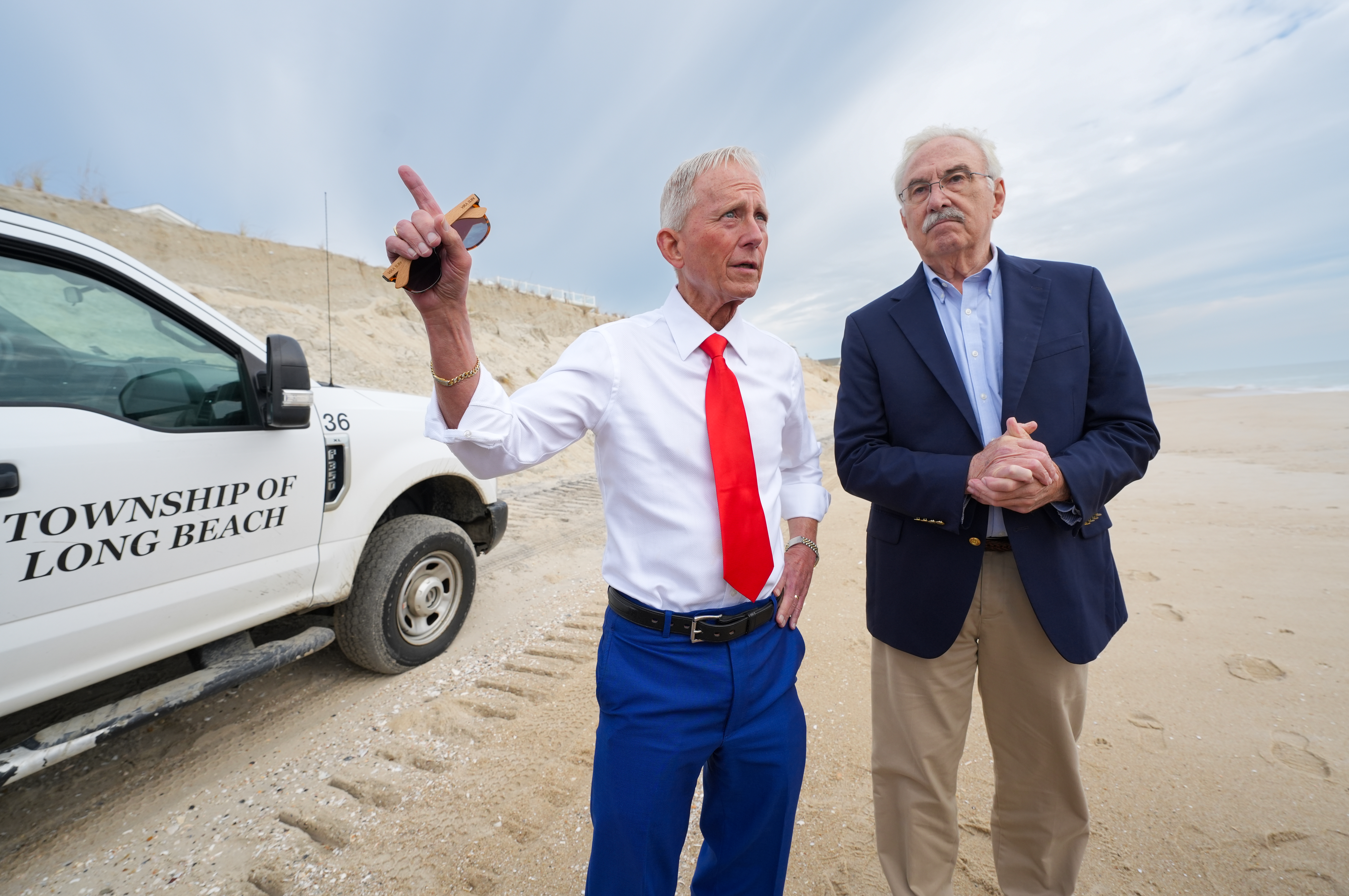
U.S. Rep. Jeff Van Drew (left) talks with Holgate Mayor Joseph H. Mancini in front of beach erosion in Holgate on Thursday.Tim Hawk / For The Inquirer
“We don’t put sand on these beaches to make them pretty beaches,” he said. “They are designed for storm damage reduction.”
Still, he cautioned Van Drew that “the best opportunity to really make progress would be with a supplemental appropriation associated with the storm because there’s not a lot of pocket change sitting around in the core budget.”
That will require a disaster declaration from Sherrill, who toured Brigantine on Tuesday.
Aside from more sand, Van Drew said the towns, state, and Army Corps were looking at funding hard structures — like jetties, groins, and seawall extensions — as ways to keep the elevated tides that accompany storms from overwhelming beaches.
A house on Brigantine’s north end belonging to Clay and Lori Goldsmid and other nearby homes were spared major damage during the recent nor’easter.Amy S. Rosenberg / staff
In Brigantine, Mayor Sera rode out the storm at the tip of the promenade, watching railings get blown off, dunes disappear, and the nearby retaining wall nearly buckle. He said city officials had compiled a list of who was in nearby homes in case of an emergency evacuation.
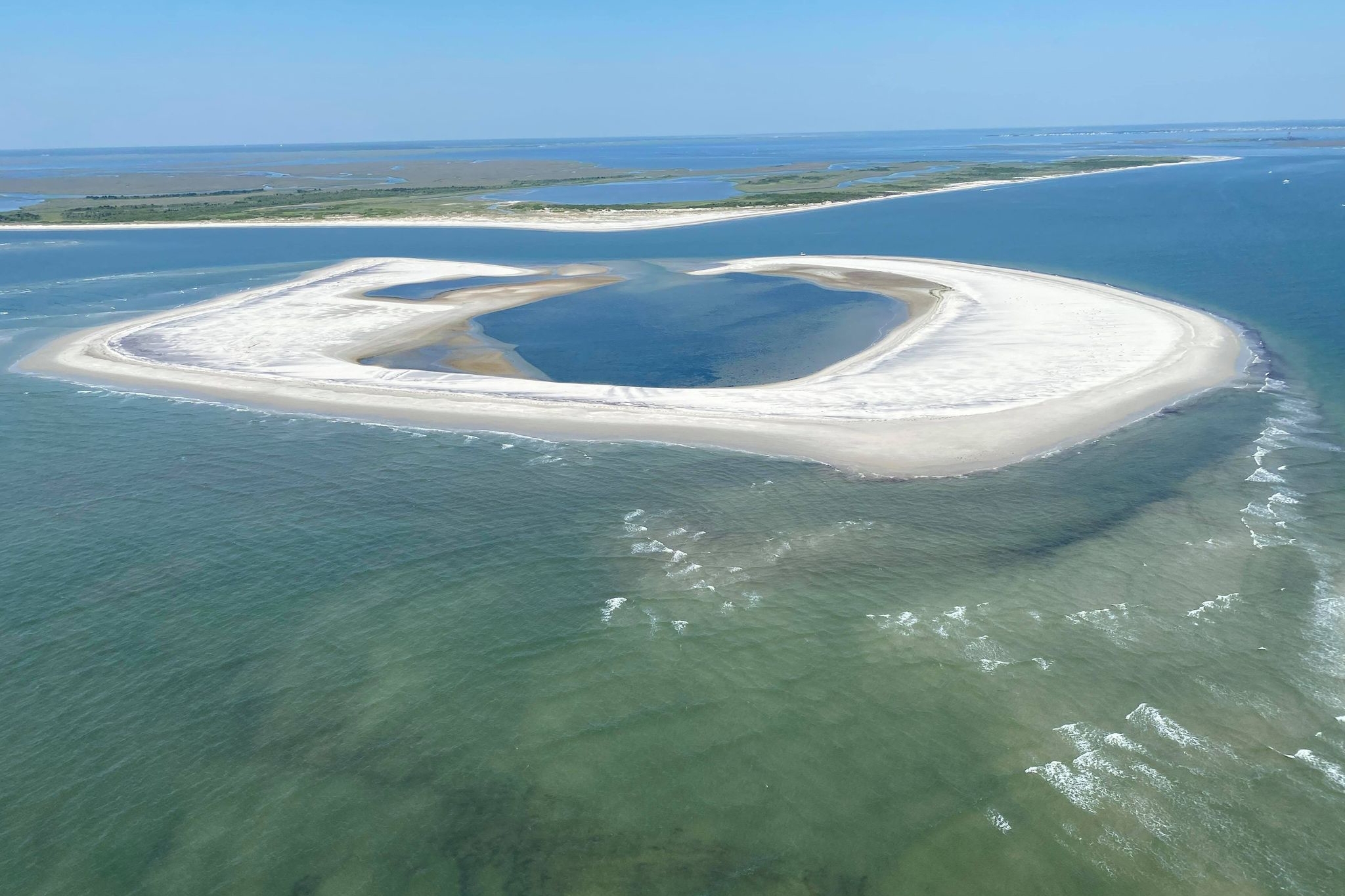
He is seeking to extend the promenade another 250 feet north, and says the state is studying whether adding hard structures to keep the sand in place will help a situation where a sandbar that has in recent years grown into what is now called Horseshoe Island is starving Brigantine of sand.
The city’s flood mitigation efforts since Sandy have resulted in a 25% discount for residents on flood insurance, he said. And he wholeheartedly recommends flood pumps and gates to other municipalities, like Ventnor, whose Ventnor Heights section was cut off at both ends by flooding for hours during high tides.
Sera and other knows the big storms will come again, probably this winter, with the El Niño warming in the equatorial Pacific.
With sea levels rising, some residents who came out to see the federal officials in Brigantine wanted to know about timelines.
“How fast is fast,” interrupted Louise Seitel, of nearby Absecon, as officials spoke of extending the seawall.
“A study is probably going to be 18 months,” Nate Barcomb, an Army Corps deputy district engineer based in Philadelphia, acknowledged.
“Government is tough,” Van Drew said.
Aerial photograph of New Jersey’s Horseshoe Island in June 2021.N.J. Department of Environmental Protection / U.S. Fish & Wildlife Service
Reynaldo Rivera had little interest in sports betting. He preferred playing slots and table games at casinos around Philadelphia, where he’d unwind a couple times a week after covering the graveyard shift as a tow truck driver.
But when the COVID-19 pandemic left most forms of indoor recreation off-limits in 2020, Rivera downloaded some sportsbook apps, and sampled their digital simulations of casino games.
He soon discovered that he had no reason to ever return to Rivers Casino on Delaware Avenue, or Parx Casino in Bensalem, to play slot machines and Ultimate Texas Hold’em.
“You open your phone,” he said, “and it’s right there.”
Occasional after-work gambling turned into constant on-the-job gambling. Rivera sat for hours in the cabin of his tow truck, the outside world dark and still, while he tapped and tapped on his phone.
Hundreds of dollars in losses became thousands. Then, tens of thousands. By this spring, he’d wagered about $2.4 million, losing $137,000.
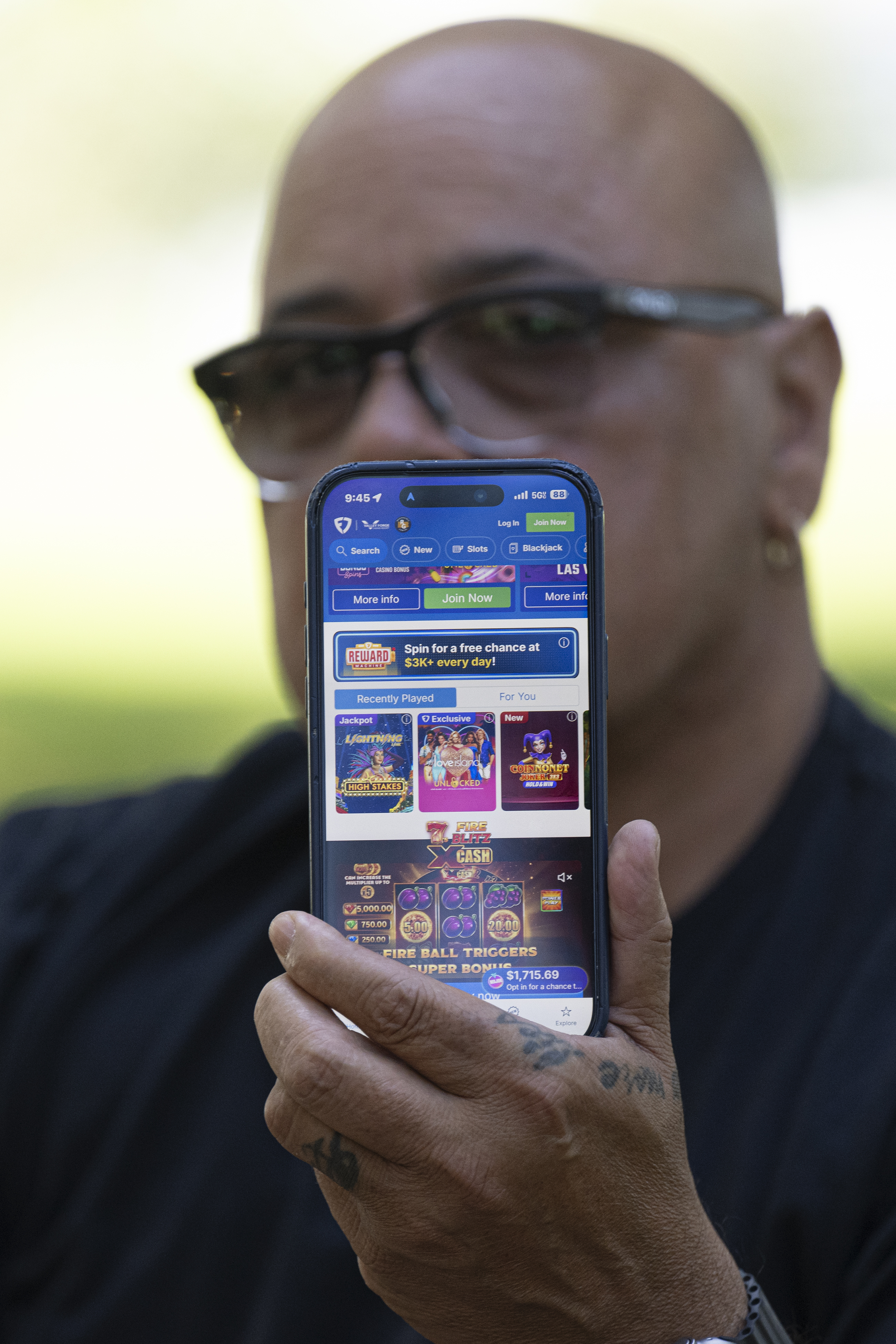
As his losses ballooned, the gambling companies made sure he knew how valuable he was to them. They granted Rivera VIP status and supplied him bonus credits and gifts, like a Peloton bike, courtesy of DraftKings.
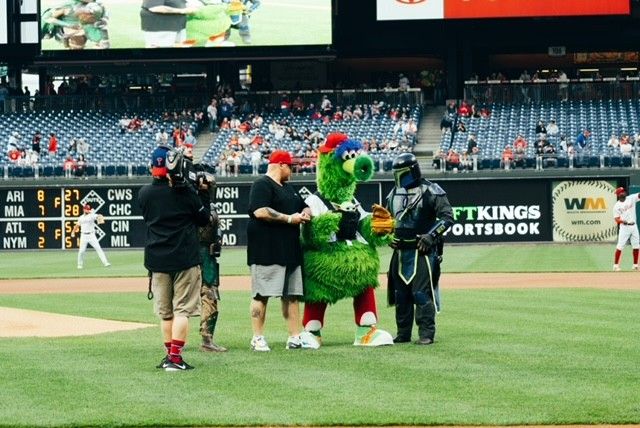
BetMGM arranged an even more remarkable reward through a sponsorship deal with the Philadelphia Phillies. On a spring evening in May 2022, Rivera was led onto the lush infield grass at Citizens Bank Park, before the Phillies played the Texas Rangers. As thousands of fans watched, Rivera tossed a ceremonial first pitch.
Yet the constant gambling and losing left Rivera feeling ashamed and foolish. He was struggling to get by, instead of living comfortably from the money he made driving a tow truck.
He just couldn’t stop.
“Listen, I don’t have a drug addiction,” Rivera, 56, said in a recent interview. “But if that’s what it feels like, that’s crazy.”
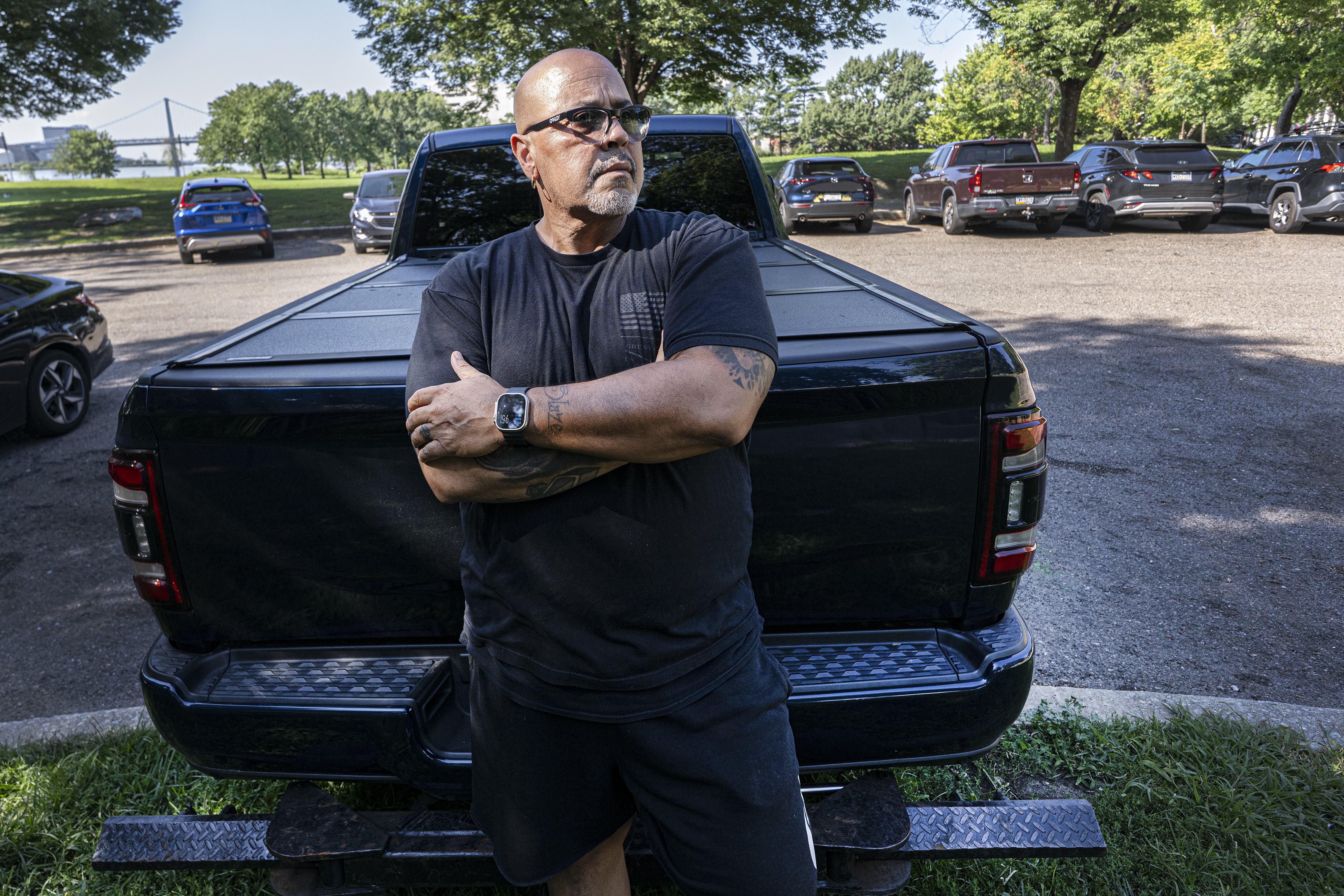
Reynaldo Rivera said he grew addicted to playing online casino games on his phone while working as an overnight tow truck driver in Philadelphia. Earlier this year, his attorney filed a lawsuit against DraftKings and FanDuel over his addiction.Jose F. Moreno / Staff PhotographerAs Rivera’s gambling losses deepened, he said companies granted him VIP status and enviable rewards, like throwing out the first pitch before a Phillies game at Citizens Bank Park in 2022. Courtesy of Reynaldo Rivera
Less than a decade ago, gamblers had to invest time and physical effort if they wanted to bet on sports or play casino games, whether it meant going to Las Vegas or Atlantic City, or meeting up with a bookie. Now, it takes only the flick of a thumb to open an app.
And it’s no longer a fringe activity that needs to be sought out. Nearly everywhere Americans look, there are advertisements about sports betting or prediction markets: billboards alongside highways, banner ads in stadiums, sponsored segments in sports broadcasts, and TV and online pitches featuring global stars-turned-well-paid ambassadors, including Philadelphia 76er LeBron James, tennis legend Maria Sharapova, and Academy Award winner Jamie Foxx.
But a corollary backlash is also taking shape, as the repercussions of nearly unlimited access to gambling have become impossible to ignore.
Lawmakers are demanding greater control over how sportsbooks and prediction markets operate, while a wave of litigation is attempting to hold those companies responsible for their customers’ addictions, echoing similar legal action that’s been taken against social media companies. (Meta agreed in August to pay up to $18 billion to settle lawsuits it faced over claims that it designed its products to be addictive to children and teens.)
The impact of the gambling industry’s skyrocketing growth might be felt more acutely in Pennsylvania than anywhere else. In March, the American Gaming Association wrote in a report that Pennsylvania had the largest online gambling market in the U.S., generating $3.46 billion in revenue in 2025 — a 27.9% increase from the year before.
Pennsylvania recorded $7.7 billion in overall gambling revenue in 2025, a sum that trailed only Nevada, according to the gaming association. Pennsylvania is also one of just eight states that have thus far legalized both online gambling and sports betting.
Philadelphia, meanwhile, is the seventh-largest commercial casino market in the country, having generated $1.4 billion in 2025, the gaming association said, and last year was the top market for online gambling advertisements.
“The casino itself has expanded basically into infinity,” said Timothy Fong, the co-director of the UCLA Gambling Studies Program, which researches gambling disorders and evidence-based addiction treatments.
While brick-and-mortar casinos have long wooed bettors with offers of free meals and hotel rooms, the modern gambling industry bears little resemblance to the neon palaces of past generations.
“If you go back in time, like 25 years ago, and you compare the differences, it’s obviously not the same world,” Fong said. “It’s not even the same universe, and it’s because gambling is frictionless right now. It takes very little effort to get bets down. And you also have a much wider array of choices of how to bet, what types of wagers are out there.”
The state’s Gaming Control Board last week published an annual overview of its regulatory activity, and reported that 30,000 people are enrolled in its self-exclusion programs, which prevent bettors with addictions from being able to legally gamble.
Researchers at Pennsylvania State University’s Criminal Justice Research Center have found that between 60% and 73% of adults in the state had engaged in some form of betting in 2025, with as much as 30% gambling online. The average age of online gamblers was 37, and more than 77% were men, with 61% identifying as white.
Overall, Penn State found that between 2.4% and 6.4% of Pennsylvanians might be problem gamblers — more than double the reported national average of 1% to 3%.
“That’s an inordinate amount of people,” said Eric Webber, a senior behavioral health therapist for Caron Treatment Centers, which offers addiction rehabilitation services in Pennsylvania, Florida, Georgia, New York, and Washington, D.C.
Webber, since 2013, has been treating people who have gambling addictions. The number of his patients — who include lawyers, executives, and college students — has climbed steadily since the U.S. Supreme Court ruled in 2018 that states could adopt their own sports betting laws.
He described one young client whose compulsions led him to coordinate a phone, laptop, and tablet to play multiple hands of blackjack simultaneously.
“I tell people this is the new epidemic,” Webber said, and Pennsylvania “is at the epicenter of it.”
Rivera is among a half dozen former customers of FanDuel and DraftKings who have recently sued the companies in Common Pleas Court of Philadelphia. Their lawsuits allege that the apps use “hyper-personalized algorithms” and loyalty programs to target “the most addicted, problem users” that make up a disproportionate chunk of the sportsbooks’ revenue.
Rivera’s lawyer, Jennifer Hoekstra, said her Pensacola, Fla.-based firm, Aylstock, Witkin, Kreis & Overholtz, has retained about 15,000 clients with similar claims, and has filed lawsuits against sportsbook operators in Delaware, Massachusetts, and New Jersey.
“FanDuel and DraftKings have created, essentially, an addiction crisis,” Hoekstra said. “They built an addictive product intentionally.”
Rivera’s attorney, Jennifer Hoekstra, said DraftKings and FanDuel banned him from their apps after he sued the companies. Rivera said he still can’t bring himself to delete the apps. Jose F. Moreno / Staff Photographer
The companies have rejected that characterization and said they offer tools that allow players to monitor and set limits on their deposits, wagering, and playing time.
FanDuel “supports and exceeds the comprehensive requirements set by Pennsylvania regulators for how we monitor customer behavior and respond to signs of harm,” a spokesperson wrote in an email.
In 2025, the company spent $158 million on responsible gaming technology, conducted 58,000 account reviews, and removed 5,700 users from FanDuel’s platform, the spokesperson said.
A DraftKings spokesperson wrote that while the company won’t comment on pending litigation, it “takes responsible engagement concerns very seriously” and has a team of more than 50 full-time employees and a chief responsible gaming officer who focus on that issue. “Responsible engagement is embedded across our business and essential to DraftKings’ long-term sustainability,” the spokesperson said.
The sportsbooks have asked judges to dismiss other lawsuits that have accused them of product liability and violating state consumer protection laws. Their attorneys have argued that FanDuel and DraftKings don’t sell an actual product, but instead offer a free app and have no obligation to protect customers from placing lawful bets, even if their gambling becomes excessive.
Shortly after Rivera’s lawsuit reached the court docket in July, DraftKings and FanDuel banned him from their apps, and the friendly VIP managers who had once texted him regularly no longer responded to his messages, his lawyer said. Yet Rivera can’t bring himself to delete the sportsbook apps from his phone. The urge to place a bet remains just under the surface, an itch he can’t scratch. Sometimes, he imagines winning back the money he’s lost.
“If I had access to them apps, I’d probably be on them,” he said. “I know I’d be on them.”
Advertisements for sports betting can now be easily found at professional sports stadiums and during broadcasts of games. Elizabeth Robertson / Staff Photographer
A bond, broken
On Sept. 23, a cluster of parents walked through the echoey halls of the Russell Senate Office Building in Washington to a small, cream-colored room. Once inside, they unspooled personal accounts of how gambling addiction had impacted their lives. Politicians and advocates listened and nodded solemnly, and discussed the urgency of a newly announced gambling reform movement.
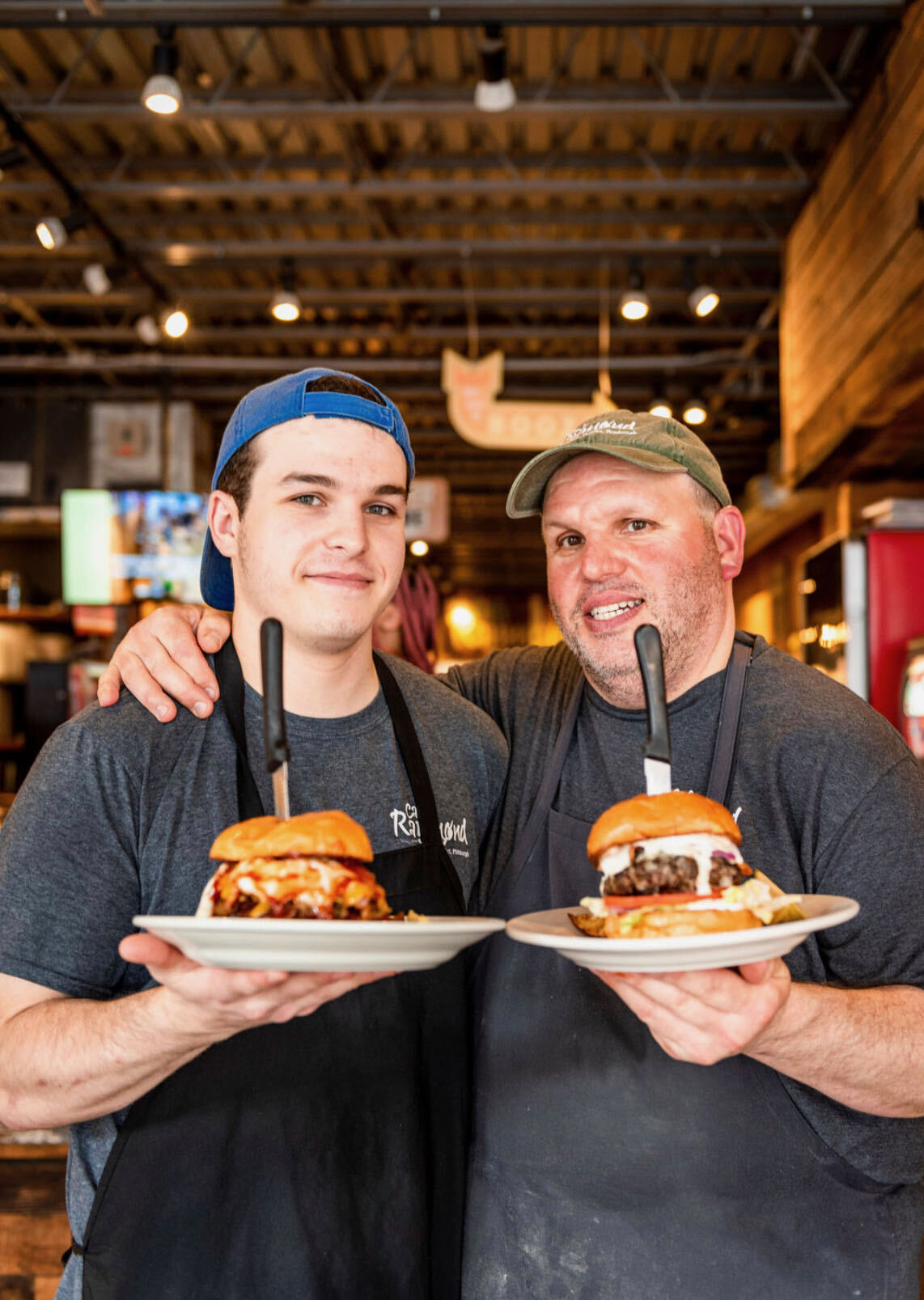
Raymond Mikesell described the inseparable bond that he shared with his son, Ray, who at the age of 4 began helping out at Cafe Raymond, the breakfast and lunch spot that Mikesell operated for 17 years in Pittsburgh, beginning in 2007. Ray became a full-time fixture in the restaurant as he grew older, whipping up blueberry ricotta pancakes in the kitchen while his father amiably chatted with customers.
By age 20, Ray had enough money to buy his own house. That picture of success was punctured when Mikesell one day received some of his son’s bank statements by mistake, and discovered that his account had been repeatedly flagged for insufficient funds.
“I said, ‘Ray, what’s going on here? You got to explain this to me,’” Mikesell recalled. “He said he was betting.”
Mikesell wanted to help his son climb out of debt. He began managing his finances, giving him an allowance, and sometimes paying his mortgage. Mikesell said he also avoided mentioning professional sports altogether, for fear that it would drive his son to place more wagers.
“Within a month, he was kicking my door down to tell me I’m ruining his life,” he said. “We all knew what it was. It was the addiction to gambling. He just wanted to bet all his money.”
Mikesell said his son spiraled deeper into addiction. He maxed out his credit cards, and his home fell into foreclosure, and then was sold at a sheriff’s sale.
Among those who had assembled in the senate room with Mikesell were U.S. Sen. Richard Blumenthal (D., Conn.) and U.S. Rep. Paul Tonko (D., N.Y.). In 2025 the lawmakers introduced the SAFE Bet Act, which would prohibit sportsbooks from marketing during live games and using artificial intelligence to inform the promotions they offer to bettors.
Blumenthal and Tonko each addressed the parents, who represented a nonprofit, Families and Friends of Gamblers, which was created with the help of the Public Health Advocacy Institute. (Lawyers for the institute in March sued FanDuel, DraftKings, and the NFL on behalf of Terry Thompson and Christopher Sage, men from the Philadelphia suburbs who developed sports gambling addictions.)
Blumenthal accused sportsbook companies and prediction markets of exploiting their customers’ compulsions.
“It drives families apart. Ruins people’s careers,” he said. “It basically decimates lives, because gambling can be an addiction. We know it’s an addiction. It’s a disease, like every addiction.”
Tonko and Blumenthal in August demanded that FanDuel end its VIP services, citing reporting from The Inquirer that revealed that a FanDuel VIP host had sent a personalized video of Phillies star Bryce Harper to Thompson, who earlier this year planned to end his life after gambling away the last of his family’s savings.
A FanDuel executive disclosed to the lawmakers in a Sept. 24 letter that the company has sent approximately 30 personalized videos from athletes and entertainers to its customers during the last two years, but said such perks are not meant to encourage betting.
In response to the congressional scrutiny, the Major League Baseball Players Association has said it would support prohibiting players from doing promotional work for gambling VIP programs.
Such measures arrived too late for Mikesell’s son.
A few days before Thanksgiving in 2024, Mikesell spoke by phone with Ray, who was still staying in his foreclosed-upon house in South Fayette. Neither knew that Allegheny County Sheriff’s Office deputies planned that day to serve Ray with an eviction notice.
When the deputies later arrived and knocked on Ray’s door, they heard a single gunshot.
Ray, 24, had died by suicide.
Mikesell later said that he didn’t believe his son had planned on taking his life — he had already packed his belongings and his two cats in his car — but might have panicked when he saw police at his property.
“We found a note in his garage,” Mikesell recalled. “It said, ‘Please take care of my cats.’”
Raymond Mikesell (right) and his son Ray (left) worked together daily at Cafe Raymond, Mikesell’s restaurant in Pittsburgh. Courtesy of Raymond Mikesell
Grief-stricken, Mikesell contacted Rep. Jason Ortitay, an Allegheny County Republican, to ask if anything could be done to address gambling addiction. Earlier this year, Ortitay introduced a bill that would prevent betting apps from being accessed within Pennsylvania schools.
“I called my wife and daughter, and we cried,” Mikesell said, his voice breaking. “Because it’s a small step in a big thing that’s going to mean a lot someday soon.”
After police closed their investigation into Ray’s suicide, investigators returned his cell phone to his parents. They discovered that a month after his death, Ray’s phone was still buzzing with promotional offers from gambling companies.
“There was one text from DraftKings,” Mikesell said, “asking him, ‘Are you betting with someone else? What’s going on?’”
Advertisements that encourage viewers to try online gambling or prediction markets have become nearly inescapable. Staff Illustration
‘The gambler’s fallacy’
Tales of tragedy and heartache like Mikesell’s have spurred other legislative and legal efforts to rein in sportsbooks and prediction markets.
Pennsylvania lawmakers are drafting legislation to ban in-game microbets and curtail VIP programs, and have introduced additional bills to prohibit consumers from using credit cards to place wagers, restrict gambling entities’ ability to send push notifications to customers, and ban insider trading on prediction markets.
The Sports Betting Alliance — a national advocacy organization whose members include FanDuel, DraftKings, BetMGM, bet365, and Fanatics — has said it would oppose legislation to eliminate microbets, and has likened VIP services to rewards that retailers like Starbucks offer to frequent customers.
New York Attorney General Letitia James has sued prediction markets Polymarket and Kalshi, accusing each of operating illegal gambling platforms. The federally regulated markets are available in 50 states, and customers can be as young as 18, while the legal gambling age remains 21.
Prediction market officials insist that their products are not gambling apps — even after recording tens of billions of dollars in sports wagers during the FIFA World Cup — but rather a financial product similar to the stock exchange.
In early September, New Jersey Attorney General Jennifer Davenport petitioned the Supreme Court to decide whether states should have the authority to regulate prediction markets as they do gambling.
Amid those legal tussles, researchers are still assessing the complex picture of addiction that has been associated with the widespread growth of online sports betting and prediction markets.
In early September, Bank of America Institute published an analysis that showed the largest share of customers who engaged in online betting in July came from lower- and middle-income households.
FanDuel’s logo can be found next to the entrance of Live! Casino & Hotel, which sits about a block north from Citizens Bank Park in South Philadelphia.Elizabeth Robertson / Staff Photographer
The institute said that median account balances of households that participated in online betting was 59% of those that did not, but didn’t include demographic or other details about those customers.
“There’s something called the gambler’s fallacy, which basically goes like this: ‘If I keep doing this, I have to win,’” said Webber, who conducts inpatient rehabilitation at Canon’s 110-acre campus in Berks County.
“From a biological standpoint, it’s a dopamine rush, so even if I’m losing, I’m getting a reward. It’s the excitement of the chance — ‘I might get this. And VIP [rewards] are going to make me feel like the man.’”
In June, researchers from West Virginia University and the University of Oviedo published a study suggesting that the legalization of sports betting could lead to a 3% increase in the annual divorce rate. “Effects emerge gradually and are driven almost entirely by online wagering,” the authors wrote. (The study, which examined state and county data from 2012 to 2024, has not yet been peer-reviewed.)
A 2025 report from the Democrat-leaning Progressive Policy Institute, meanwhile, found a 36% decrease in bankruptcies between 2019 and 2024 in states that legalized online sports betting, with “no sign of a tidal wave of bankruptcies or consumer credit downgrades.”
That same year, The Lancet Regional Health-Europe published a study that showed suicide was the leading cause of death among 6,899 patients in Norway who had a gambling disorder between 2008 and 2021.
Though those patients had a higher suicide risk than the general population, the researchers found that gambling addiction had a lower suicide risk than substance use disorders, alcohol dependence, psychotic disorders, or mood disorders.
None of that research, though, captures how easily even a new gambler’s experience can escalate from a fun diversion to a life-altering obsession.
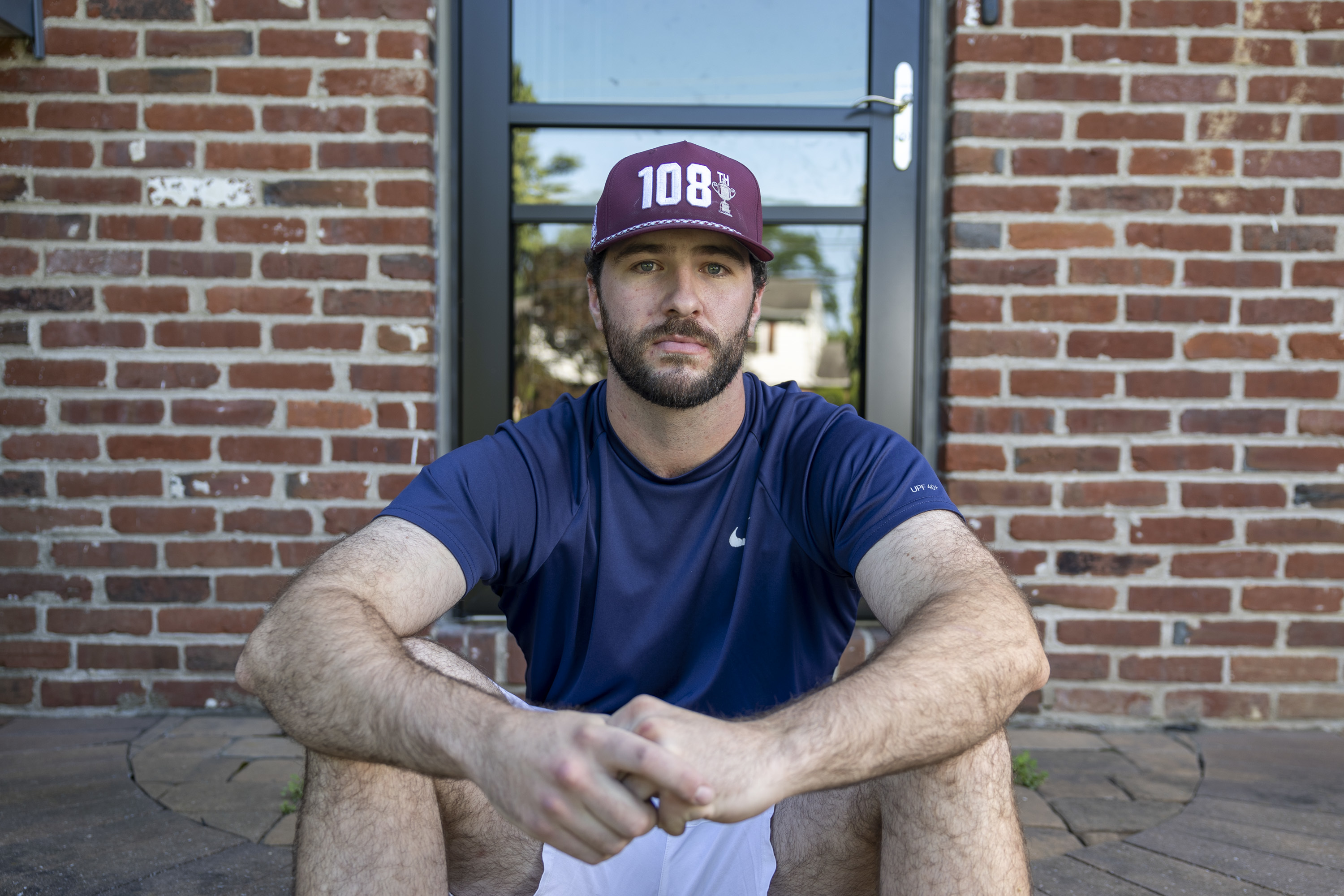
Hiding his online gambling addiction from those closest to him left John Field feeling like he was living a double life, and ultimately drove him to lose a long-term relationship. Tyger Williams / Staff Photographer
A double life
When John Field turned 21, he opened accounts with DraftKings and FanDuel, and occasionally placed football parlay bets when he hung out with friends. Eventually, he tried the apps’ casino offerings, and became hooked on slots — 20 cents a spin at first, then 50 cents, then 5 bucks, then 10 dollars.
He gambled nonstop at a warehouse job that he held in Clifton Heights, but hid this newfound compulsion from those closest to him. He felt like he was leading a double life.
“Have you ever seen the show Severance?” Field asked, referring to the Apple TV sci-fi show in which office workers live separate lives in and out of work. “It was just like that. I had to basically pretend like I was a completely different person.”
One person knew the truth: Field’s mother, Debbie. She still had access to his bank account from when he was younger and observed that Field was regularly moving money to a FanDuel account.
“It started off slow,” Debbie said, “and then every year, it got worse.”
Field recognized that he had a problem, and said he tried several times to close his FanDuel or DraftKings accounts. But then he felt a maddening urge to start gambling again.
“Every time I’d run out of money, I’d see an ad, like, ‘Deposit 50 bucks and get $500 in casino credit.’ So when I was down real bad I’d download the other apps,” Field said. “I knew they’d give me a bunch of money to start with.”
His phone eventually held apps from Fanatics, BetRivers, Borgata Online, BetMGM, Caesars Palace Online, SugarHouse, Stardust, and Bally Bet. Some weeks, he gambled away nearly his entire paycheck.
Debbie Field saw that her son’s bank account was plunging into negative figures, and accruing overdraft fees. She implored him to disclose his addiction to his longtime girlfriend. The couple had started dating when they were sophomores at Penncrest High School in Middletown, Delaware County, and were planning to get an apartment together.
“I was like, ‘John, you can’t move in with your girlfriend without telling her. You tell her, or we will,’” Debbie recalled. “He was petrified.”
Field told his girlfriend about his struggles with addiction. The couple forged ahead and moved in together in February 2025.
“I figured we got our own place, I got rent, bills, I really should probably stop this,” Field said. “And it just, again, got way worse. Because then when I lost money, I was like, ‘Holy s—, I have to pay rent, I have to get groceries.’”
He chased his losses, diverting more money into gambling apps.
After losing his apartment, Field moved in with his parents and began undergoing treatment for gambling addiction. He said he still encounters numerous daily ads for gambling on social media. Tyger Williams / Staff Photographer
By March 2025, Field needed his parents to pay his rent. Two months later, he and his girlfriend broke up. Heartbroken, he moved back in with his parents, and agreed to participate in online therapy sessions through ETHOS Treatment.
Field’s therapist, Phil Waibel, said there is so much demand for gambling addiction treatment, he now has a waiting list for his group sessions. “It’s taking the hearts and minds of young people — especially young men — at an astonishingly high rate,” he said.
Waibel has treated patients who discovered that it was difficult to escape gambling marketing and push notifications even when they attempted to quit.
“They’re seeking out even those people who have gone out of their way to block or delete contacts, to self exclude or unsubscribe from email lists,” Waibel said. “They continue to be bombarded, which would indicate a predatory or extremely offensive stance, to loop people back in as soon as possible.”
Field, 27, said he now feels like his addiction is under control. He excluded himself from all gambling activities in Pennsylvania, secured a union job with a construction company, started going to a gym, and began repairing relationships with friends and family members.
“Every aspect of my life is significantly better,” he said.
Yet gambling isn’t out of the picture entirely.
Recently, Field used Venmo to send some money to his sister, and faced a pop-up ad from a casino app that offered a $1,000 deposit match and up to 1,000 spins.
“Sign up today,” the message read.
After opening his Instagram app, he encountered ads for Charming Cat Fortunes — a slots game from PlayLive! Casino whose motto is “Stay entertained 24/7” — in addition to ads for a gold digger-themed slots game from betParx.
Field estimates that he sees nearly 20 gambling ads across various social media platforms each day. “I’d be having a good day, not thinking about it,” he said, “and then boom, you’d see an ad, and feel that little itch, and you just kind of got to get rid of it.”
He now considers the barrage of advertising to be a form of motivation.
“It’s like, ‘F— these guys.’ All they’re trying to do is shove it down my throat,” he said. “It’s just insane how inescapable it is.”
The Inquirer will continue to report on issues related to the growth of gambling addiction — among teens and adults — across Pennsylvania. If you, or someone you know, wants to speak with a reporter, please contact David Gambacorta or William Bender at dgambacorta@inquirer.com and wbender@inquirer.com
KWETHLUK, Alaska — Hard by the murky brown water of the Kuskokwim River, in a region reachable only by plane or boat, past weather-stunted willows and crude seasonal fish camps, dogs roamed muddy, rutted roads under low, dreary skies.
Here in the small village of Kwethluk in the vast tundra of southwestern Alaska, in the window of a house with unpainted sides and rotting wood steps, was a campaign placard for Mary Peltola.
“We are related,” said the man inside.
James Nicori, 77, sat in his chair and unspooled his Alaska Native connection to Peltola, the Democrat running for the Senate.
“Mary’s great-grandma and my grandpa were half sister, half brother,” Nicori said. Her mother was a girl here, Nicori said. She was a girl here.
“She understands how we struggle,” he said. “She is one of us.”
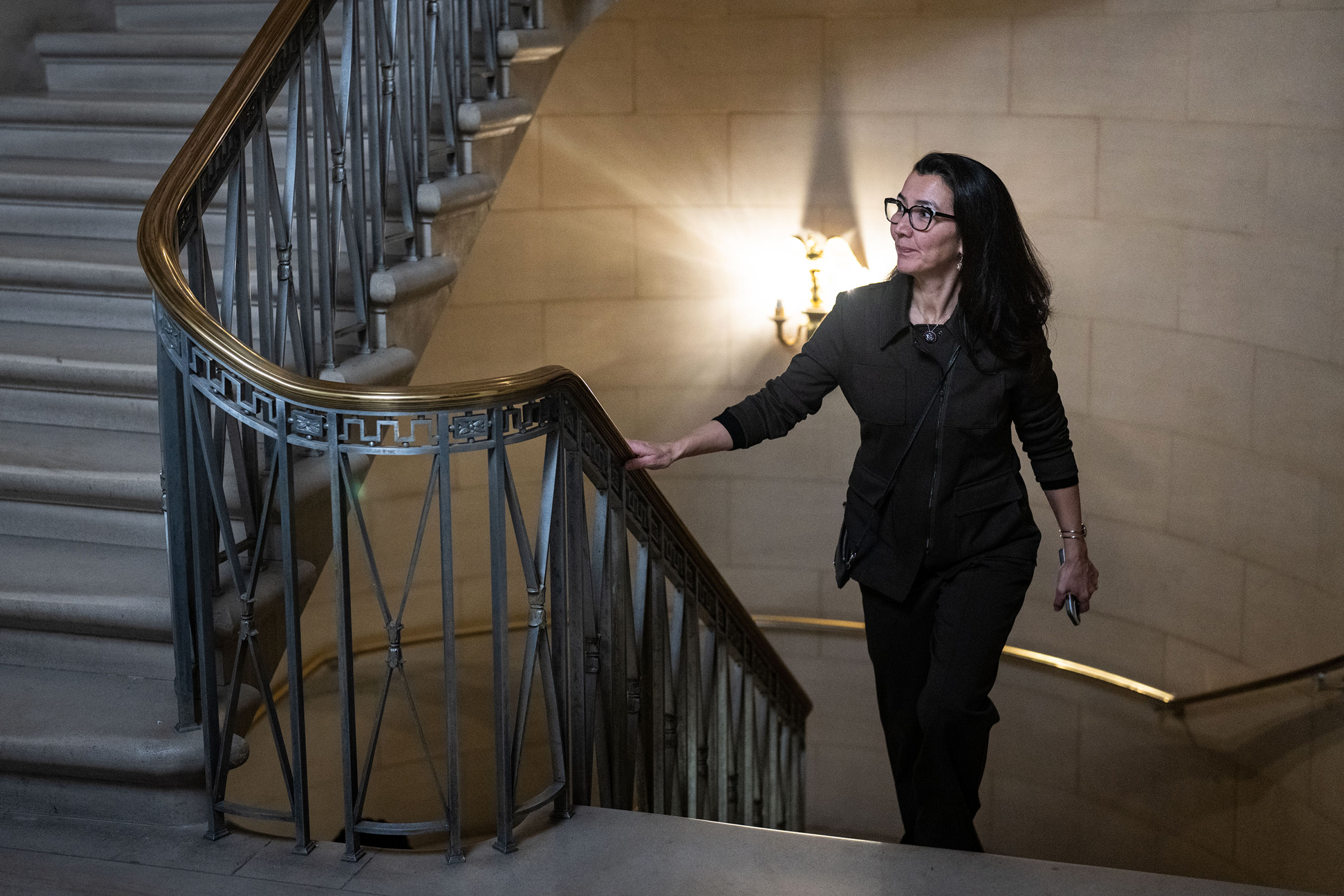
Peltola, a former member of Congress, is an uncommonly capable candidate. In Alaska, where Republicans far outnumber Democrats and independents far outnumber both, she is the rare member of her party who has proved she can win statewide. This year, she has campaigned on four-wheelers and floatplanes, in Xtratuf boots and traditional kuspuk shirts worn by the Indigenous Yup’ik people of Alaska. She has made stops in locales as isolated as an island 30-some miles from Russia, curating social media snippets while playing hard-to-get with most of the mainstream press four time zones away.
The approach has been largely effective. Peltola beat the Republican incumbent, Dan Sullivan, in the nonpartisan primary in August, and polling and fundraising suggest she could do it again in November.
But in ways that have not been aired until now, Peltola, 53, is also an uncommonly complicated candidate. Genial and unassuming in public, she can be crass and apoplectic in private. Her campaign has been marred by accounts of her outbursts that left some aides unnerved. When she served in the House, she had one of the highest staff turnover rates on Capitol Hill.
The daughter of a Yup’ik woman from Alaska and a white man from Nebraska, Peltola grew up in three villages and the port city of Bethel, population 6,000, some 70 miles upcountry from the Bering Sea. She went to three different high schools and four different colleges. She has had three husbands — two children from her first, two more from her second, three stepchildren from her third — and moved from Bethel to Juneau to Anchorage and back.
Her politics are complicated, too, reflecting the idiosyncrasies of her state: She is pro-gun, pro-oil, and pro-gas — but also pro-environment and especially pro-fish.
And she is, at root, a person whose people’s way of life is dying after decades of disruption to salmon fishing, the cascading consequences of climate change, corporate excess, and government restrictions. There are fewer fish and more limits on fishing. People smile, but grievance stews.
‘To know who you are’
On her first political campaign, she was in the womb.
In early 1973, in the special election that kick-started the congressional career of Don Young, Alaska’s longtime Republican representative, two of his most ardent aides were the expectant parents of Peltola.
Ward Sattler, a teacher and small-plane pilot from the Great Plains, was Young’s district chair. Liz Ann Andrew, “an Eskimo interpreter,” in the phrasing of a local newspaper, was an indefatigable canvasser, snowmobiling from village to village in subzero conditions.
Peltola was born 5½ months after Young won.
She grew up in Bethel, Kwethluk (with a population of roughly 500 at the time), Tuntutuliak (300), Platinum (50), and Bethel again, as her parents split up. She ate moose and seal and spent her summers on the Kuskokwim, captaining tender boats and cleaning, drying, and smoking salmon.
“She was doing the things that I would traditionally put in the male category,” one of her best friends, Ana Hoffman, said this month in Bethel. “She didn’t wait for a guy to come back up the boat. She would back up the boat.”
Peltola spent her sophomore year in high school at a boarding school in Bethlehem, Pa.; her junior year at Bethel Regional; and her senior year in Fort Collins, Colo., where her grandmother lived.
She went to the University of Northern Colorado, the University of Alaska Fairbanks, the University of Alaska Southeast, and the University of Alaska Anchorage — but never graduated.
As a college student, she was the runner-up for the Miss World Eskimo-Indian Olympics in 1993 and then crowned Miss National Congress of American Indians in 1995, performing two Yup’ik dances and wearing a wolf-hair headdress when she won.
In an article about her achievement, she said she wanted to get into politics. “I just have this fire inside me,” she told the Juneau Empire, “when I start reading these cases about Indian rights.”
She was an intern in the state Legislature in 1996. That year, at the age of 23, she ran to be a representative herself and barely lost. In 1998, the year she married for the first time, she ran again.
Then known as Mary Sattler, she campaigned for the state House as a Democrat, prioritizing would-be voters in villages. “Villagers say Sattler is a kass’amirteq, meaning someone who acts like a white person,” a reporter from the Anchorage Daily News wrote that August. Her campaign manager, who spoke better Yup’ik than she did, doubled as her interpreter.
She gave birth to a son in October, posing with him and her husband in an ad in the local newspaper, the Tundra Drums. “I will work hard to make sure our rural way of life is protected,” she wrote. “Our people need protection from outside interests determining how we hunt and live.”
She was elected that November.
“I’d explain that my mom is from Kwethluk, my dad was a schoolteacher in these villages,” Peltola said this month in Fairbanks in an interview with the New York Times.
“I think it’s important for people to know who you are,” she said, “so they understand your back story.”
‘I am made of fish’
In the 10 years she spent at the Capitol in Juneau, Peltola was chairperson of the “bush caucus,” the bipartisan group representing Alaska’s most remote regions. She worked to reduce teen alcohol abuse, stressed the importance of teaching the Yup’ik language, and appealed for more state aid for rural areas. “We’re sitting,” she told a local reporter, “on a powder keg of poverty and resentment.”
She started meetings in her office, where she served her colleagues salmon. She befriended Lisa Murkowski, then a fellow state representative, now Alaska’s other Republican senator.
“She was very sure of herself,” said Ethan Berkowitz, a former state representative and the minority leader at the time. “She’s incredibly proud of her Yup’ik heritage, but she was able to walk in both worlds.”
Along the way, too, she had another son, divorced, remarried, and had a third son and a daughter. Managing an increasingly topsy-turvy personal life, she also missed votes nearly 20% of the time, according to records — in part a result of having and caring for her kids.
She did not run for reelection in 2008. She separated from her second husband in 2009 — the same year she got together with her third.
In 2010, she helped Murkowski with her Senate campaign, and she was on the Bethel City Council from 2011 to 2013. She helped the community get a public indoor pool but missed more than a third of the votes.
Away from public office, she worked for a gold-mining project and as a lobbyist.
And the fish crisis mostly kept getting worse. The Yup’iks of the Kuskokwim couldn’t fish the way their people had fished for thousands of years. In an attempt at conservation, state and federal restrictions now determined when, how, and how much they could fish, a scenario utterly counter to their culture of subsistence, severing the rhythms of generations and upending their relationship with the river and the salmon.
In 2017, in an interview with the Associated Press, Peltola likened the state of affairs to “a family member being sick.”
That year, she became the executive director of the Kuskokwim River Inter-Tribal Fish Commission, an intermediary between Alaska Natives and the outside agencies establishing and enforcing the rules and regulations.
“Like nearly everyone raised on the Kuskokwim, I am made of fish,” she wrote in 2020 in the commission’s annual report. “Not only do I crave eating fish year-round, but by May and June, I physically feel the need to catch and process fish.”
But things were different now.
“I have had to adjust my mindset,” she wrote, “because there are fewer fish.”
And then, in 2022, the death of Rep. Don Young led to a wide-open scramble of a special election.
The day of Young’s memorial service on Capitol Hill, Murkowski got a text from Peltola, according to the book Murkowski published last year. She wanted advice. She was thinking about getting into the race, calling it “the most crowded clown car ever.”
Peltola jumped in.
“One thing led to another,” she told the Times, “and of all the unlikely circumstances …”
She won.
‘Really different values’
Murkowski worried for her.
Peltola, she thought, according to her book, was “a warm, positive, smart, and authentic Yup’ik woman.” Now she was in Washington. “I thought of her mostly as a friend and mom suddenly in the middle of the complex, high-pressure world of the House with no time to prepare,” wrote Murkowski, who declined a request to comment for this story. “I offered her my son’s room to stay in and tried to make sure she got fed.”
Peltola wore Native mukluk boots to her swearing-in, alongside her third husband, Eugene Peltola Jr., her children and his. “I am humbled and deeply honored to be the first Alaska Native elected to this body, the first woman to hold Alaska’s House seat,” she said in her first floor speech.
She won again in the regular election in November, earning a full two-year term. She joined the moderate Blue Dog caucus as well as the Western caucus — “106 Republicans,” as she said, “and me.” She was one of the most bipartisan Democrats, bucking her party on guns, border security, and oil and gas extraction.
She also missed more than 17% of the votes — significantly more than most of her peers. And her uneven temperament was an all but open secret.
“Everybody who knows anything about her, she has two things: a terrible work ethic and a terrible temper,” Art Hackney, a longtime Alaska-based Republican strategist who supports Sullivan, said in an interview this month in Anchorage.
In May of her first full year in Congress, her mother died. Four months later, she lost her husband. Eugene Peltola, 57, piloting a small plane, was hauling the antlers and meat of a moose that a group of hunters had killed. He labored to take off from their tundra site, according to the National Transportation Safety Board report, and crashed on the side of a hill in low-lying bushes and shrubs. The closest hospital was 400 miles away. One of the hunters unbuckled his lap belt and covered him in blankets. Eugene Peltola died in less than two hours.
Amid her grief, Mary Peltola lost her 2024 reelection bid, to Nick Begich, a Republican — albeit by less than 3 points in a year when President Donald Trump won Alaska by 14. She moved to Anchorage and was hired by a lobbying firm, making more than $340,000, according to a financial disclosure. Last fall, she was, briefly, a fellow at the Institute of Politics at the University of Chicago, teaching a seminar she titled “Blood Lines: What Does Being Native Even Mean?”
All the while, Sen. Chuck Schumer, the minority leader, worked to persuade her to run for the Senate. He considered her one of his top recruits.
“She is special,” said Lauren French, a Senate Majority PAC spokesperson. “She has everything that it takes to be really successful there.”
Peltola thought so, too.
“I know that there’s a tendency to say people are half something, half another,” Peltola told the Times. “But I always thought of it as double. I really had, you know, double the language, double the perspectives, really different perspectives, really different values, really different worldviews — but double. And I thought that was a huge advantage.”
Behind the scenes
All summer long, she was all over — in Alakanuk and Savoonga and Nome, in Gambell and Galena and Unalakleet, in Dutch Harbor and Fort Yukon and Tok — listening to voters in school gyms, union halls and community theaters, hugging, waving, and smiling on Facebook, Instagram, and X.
In August, though, her campaign was on its way to a primary win and simultaneously in disarray. She fired a top adviser. She fired a deputy campaign manager. She changed her campaign manager. She made headlines for distancing herself from former Vice President Kamala Harris, who had issued a fundraising appeal on her behalf.
Behind the scenes, as the Times reported last week, she could be a mercurial boss, with some former aides describing her as sometimes angry and profane. A spokesperson for the campaign denied any pattern of abusive behavior. “Like any person who has gone through multiple personal tragedies in the span of a few months, Mary sometimes struggled to deal with her grief,” a campaign spokesperson said.
Through it all, Peltola was dealing with the legal fallout from her husband’s death. She was worried about her children.
Her staff made her scarce to the mainstream press, providing scant details about where she would be campaigning. She was running what she called an “Alaska first” campaign, her staff insisted, focused on talking to Alaskans, not reporters from Washington or New York.
But on the ground, the arm’s-length strategy made more sense. During recent events in Fairbanks, Peltola didn’t sound simply off script. At times, she sounded as if she had no script.
“I’ll admit to you, every single place I go, I don’t go to the grocery store, I don’t go to the gas station, I don’t go to community events unless I have my passport,” she told a crowd that had packed a community center. She wore a blue flannel shirt and glasses with white rims. “Because early in this administration there was talk about ICE deporting Natives back to wherever it is they came from,” she said. “My mom’s family walked across the land bridge from Mongolia. …”
People laughed.
“We laugh,” she said, “at the things we’re most scared of.”
The next afternoon, at a different community center in Fairbanks, she said she had forgotten to help her 18-year-old daughter register to vote in the primary in August — but promised she would be registered for November.
She said that when she grew up in Alaska, it was “a state of abundance,” and that now “we are being starved out and nobody even cares.”
She said she wasn’t even feeling “aspirational” anymore — and just wanted to “get back to where we were in 1999.”
A few days later, at Alaska’s Senate Fisheries Debate in Kodiak, on the third anniversary of the death of her third husband, she wore salmon-shaped earrings made from the tusk of a walrus and asked moderators to repeat questions.
“Can you restate it please?”
“Say it again?”
To succeed statewide here, said John-Henry Heckendorn, an Anchorage-based Democratic strategist, a Democrat must assemble a convoluted coalition almost at odds with itself — Natives and not, rural and not, commercial fishermen and subsistence fishermen, on and on.
“Mary’s political talent,” he said, “has been her ability to inhabit those tensions.”
She inhabits those tensions because she is born of those tensions. Peltola is Alaska and Nebraska, the Yukon-Kuskokwim Delta and the Lower 48, Yup’ik collectivism and American individualism. Being “double” can be an advantage, she says, and she is not wrong. It also, though, can be a source of some untenable tug.
She is leading by a bit in polling and by a lot in fundraising, but voters in Alaska are characteristically contrarian and unpredictable. This race, say independent analysts, could go either way.
On a recent rainy, windy evening in Anchorage, at a canvassing kickoff at an Alaska Democratic Party field office, Peltola was introduced by the former president of the Alaska AFL-CIO. Peltola was wearing black Adidas and a kuspuk. She touched her face and smiled, looked out at her supporters and began her speech.
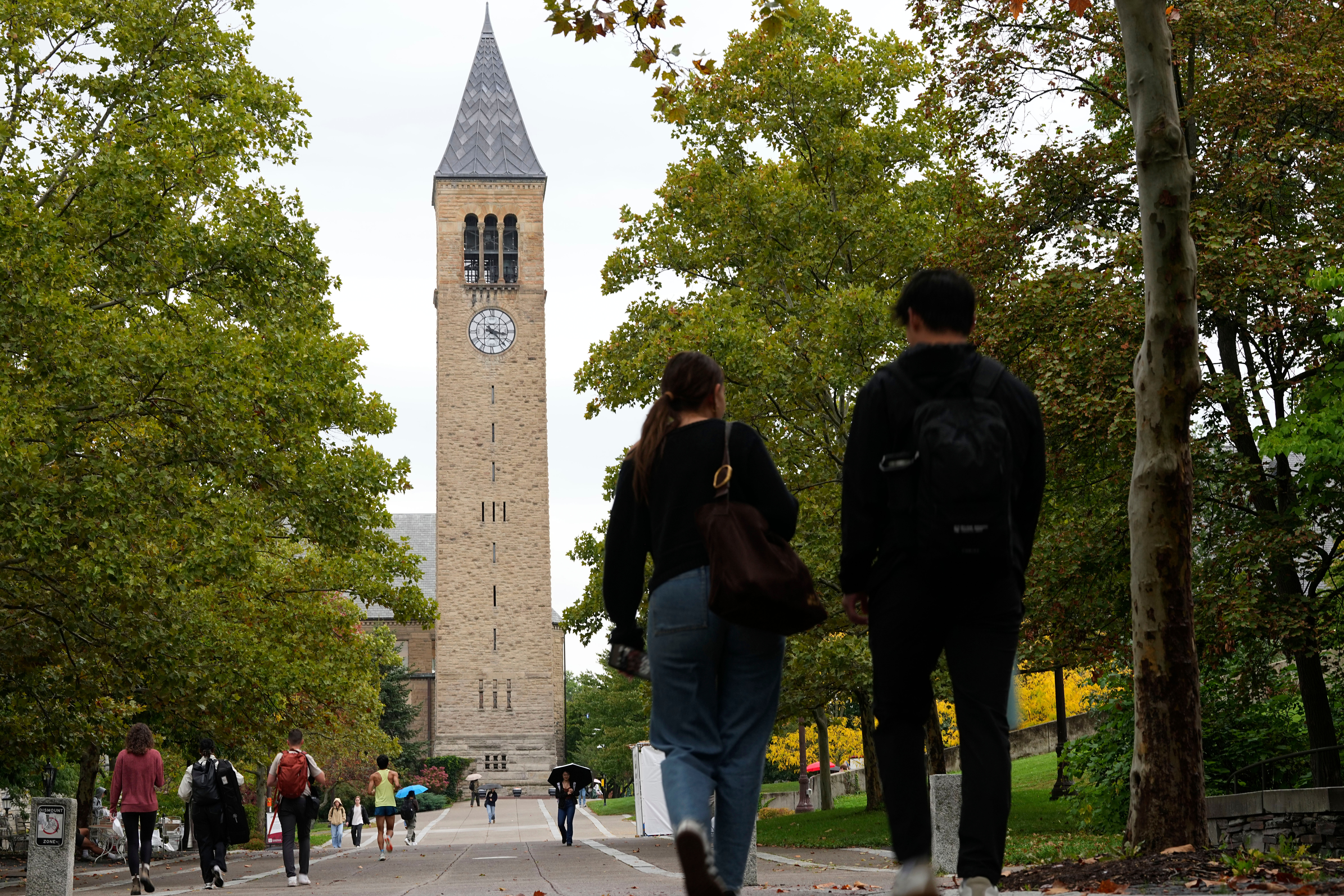
Cornell’s president called the alleged gang rape of a student at a fraternity house in 2024 “deeply disturbing” Saturday, said it would weigh on the university for years to come, and pledged greater transparency amid mounting outrage over the school’s handling of the case.
In an eight-minute video message to the Cornell community, Michael Kotlikoff described the past week as one of the most difficult in the university’s history and acknowledged troubling questions about the investigations that followed the allegations.
“My heart aches when I think of what she experienced,” Kotlikoff said. “It raises heartbreaking and troubling issues about sexual assault, dehumanization and aspects of party culture, alcohol, and drug use.”
Kotlikoff reaffirmed his commitment to supporting an independent review of Cornell’s handling of the case called for by New York Gov. Kathy Hochul and said the school’s Board of Trustees would announce details next week. He also expressed support for Hochul’s decision to turn the criminal investigation over to the state attorney general.
“I want to acknowledge something that can be difficult for an institution to say,” Kotlikoff said. “We don’t have all the answers, but we are committed to investigating and finding the answers our community deserves.”
Scrutiny has mounted in recent days over Cornell’s response to allegations that the woman was sexually assaulted by multiple fraternity members in 2024. The woman, identified in court documents as Jane Doe, has sued the university and seven former students.
During a student assembly hearing Thursday that gave students an opportunity to voice concerns and discuss proposals to improve Cornell’s response to sexual assault, several speakers called for Kotlikoff’s resignation.
Hochul, asked at a news conference Friday whether she believed Kotlikoff should resign over the university’s handling of the case, declined to take a position, saying she did not yet have enough information.
Kotlikoff acknowledged frustration that Cornell has not communicated enough, saying that has led to distrust. While citing “real legal and privacy limits” on what the university can disclose, he pledged greater transparency and more opportunities for students, parents, and others to engage with university leaders.
He also committed Cornell’s support to legislative efforts to change New York’s sexual assault laws.
The case has renewed scrutiny of a state law that makes it difficult to prosecute sexual assaults involving people who voluntarily consume alcohol or drugs, even if they became too intoxicated to consent.
Tompkins County District Attorney Matthew Van Houten cited the law in defending his initial decision not to pursue charges, saying the woman’s original statement to police described voluntary drug use and sexual activity.
Critics have long sought to close what they call the “voluntary intoxication loophole,” which distinguishes between people incapacitated by drugs administered without their consent and those who voluntarily became intoxicated. Hochul has pledged to push for changes to the law.
Kotlikoff also called for a “serious look at the role of fraternities and sororities in campus life,” saying Cornell would engage students, alumni, and others in examining how to preserve the benefits of Greek life while strengthening accountability and transparency.
“Being part of a group can never diminish individual responsibility for our own actions, for how we treat others or for speaking up when someone may be at risk,” he said.
The U.S. Coast Guard was searching Saturday for a medical transfer plane that went missing while flying from Bermuda to Boston with six people on board, officials said.
The search began after the Federal Aviation Administration issued an alert around 1:20 a.m. after losing contact with the plane, a Gulfstream G100. The search was taking place off the coast of Nantucket on Saturday, the Coast Guard said, adding that they had deployed planes, a helicopter and two boats, some sent from a station in Cape Cod, Mass.
The missing plane was operated by an Ontario-based medical evacuation company, Latitude Air Ambulance, which flies people to hospitals and offers repatriation services, according to its website.
On board the plane were two Canadian pilots, two Canadian medical staff members, and two people — including a patient — whom the plane had picked up in Bermuda, according to Clarence Togeretz, the air ambulance company’s operations manager.
The plane took off from Bermuda’s lone airport, on St. David’s Island, at 11:41 p.m. Eastern time, according to data from the website FlightAware. It appears to have been flying consistently at an altitude of 24,000 feet before descending several thousand feet around 1:05 a.m.
Aviation experts said that the reported rate of the descent was unusual.
“I would say that indicates a significant problem,” said Brad Wheeler, a retired commercial pilot who flew for nearly 40 years and has flown between New York and Bermuda.
Another expert agreed.
“It’s clear they had something going wrong because they adjusted the speed just before the drop,” said Mary Schiavo, an aviation lawyer and former inspector general for the Transportation Department. “They were responding to something.”
The plane was far north of the area known as the Bermuda Triangle, the mythical region of the Atlantic Ocean where planes and ships are said to have disappeared. Bermuda, a self-governing British territory, is home to 65,000 people and is about 780 miles from Boston.
The plane had made several trips in recent weeks, including another flight between Bermuda and Boston on Sept. 24. It had also flown several times within Canada, and made one trip from Ontario to San Francisco and back.
Recent photographs of the aircraft show it is mostly white with a black decal down the side and a red “star of life” medical symbol on the tail, as well as a Canadian flag.
The plane was manufactured in Israel in 1996, records show, and it appears to have previously been used as a private jet.
Latitude operates 10 planes, according to its website, including four Gulfstream G100s, which are typically staffed with a nurse and a respiratory therapist. The planes have ICU equipment, and some flights may also include a physician. It was unclear if the six people on board were all staff members or if the flight also included patients.
Several other medical planes have crashed in the U.S. in recent years.
One crashed in New Mexico during a short flight in May, killing four. In December, six people were killed when a Mexican navy plane crashed into Galveston Bay in Texas. And in January 2025, a medical plane crashed near the Roosevelt Mall in Northeast Philadelphia, killing all six people on board and one on the ground.
The Abington Township Police Department launched an investigation after antisemitic and racist graffiti was found spray-painted throughout the Weldon playgroundin Glenside.
“There is no place for hate in our community,” the statement said. “We stand united with our Jewish and Black communities, who were targeted by these acts.”
It’s unclear when the park was defaced, and no additional information about the incident was immediately available.
In a Facebook post, Abington School Board President Melissa Mowry called the act “craven, cowardly, and despicable.”
According to Mowry, the school district owns the playground and partners with civic groups to maintain it as “a public resource where everyone is welcome to smile and laugh together.”
“There is ‘No place for Hate’ of any kind in this community, but especially where all children are invited to play,” she wrote.
Dozens of community members on Saturday worked to remove the hateful messages, NBC10 reported.
Police are asking anyone with information to contact the department at 267-536-1100.
The head of Tennessee’s prison system is resigning, Gov. Bill Lee announced Saturday, the first major staff shake-up since Christa Pike’s stunning failed execution left her unconscious and on a ventilator at a hospital.
Frank Strada, commissioner of the Department of Correction, will step down this month, Lee said. Some of the governor’s fellow Republicans and other elected officials had been urging a change in leadership.
It was the second time since May that Tennessee has not been able to execute a prisoner who was seemingly moments away from death.
The governor also announced that former U.S. Attorney Ed Stanton would lead a review of what happened in Pike’s death chamber. Stanton previously was named to conduct a review after Lee called off a different execution in 2022; he found in that case that Tennessee had not complied with its own lethal injection process.
Strada said in a statement that resigning was “in the best interest of Tennesseans” while Stanton’s review is conducted. The state failed to execute Pike despite administering two doses of a lethal drug, pentobarbital.
Pike, now 50, was 18 when she and her boyfriend tortured and killed a classmate, Colleen Slemmer, in a jealous rage in 1995. She became one of the youngest women to be sent to death row.
Strada defends execution protocol
There was no immediate response from Pike’s lawyers for an update Saturday on her condition at a hospital. They had disclosed Friday that she was on a ventilator and unconscious in the hours following the execution attempt and that hospital staff were trying to clear the two doses of pentobarbital.
The shocking failure has left both sides of the death penalty debate demanding answers. Lee has ordered an independent review and halted any new executions. Strada said he believes the state “carried out its responsibilities in accordance with the established protocol.”
Pike’s legal team welcomed Strada’s departure but said “it does nothing to help Christa now.”
“What happened to her Wednesday reflects a systemic failure that goes far beyond any one person,” the four-lawyer team said. “We hope the governor’s call for a full, independent review will expose the profound problems within Tennessee’s entire death penalty system.”
Second failed execution since May
Pike’s attorneys said they believed problems with the IV lines caused the pentobarbital to flow into her body instead of her bloodstream.
Pike was extraordinarily cooperative with the execution team, even instructing them to “please try here, please try here” as they tried to insert lines, lawyer Randy Spivey told reporters Thursday.
In May, Tennessee stopped the execution of Tony Carruthers after staff placed an IV into his right arm but couldn’t get a secondary IV line. The governor ordered officials to wait at least a year before trying to execute him again.
Strada took over the Correction Department in January 2023 after serving as deputy director of the Arizona Department of Corrections. In late 2024, he announced that Tennessee was changing its lethal injection protocol and would use only pentobarbital.
Court filings show that Strada’s job included overseeing executions in Arizona when they resumed in 2022 following an eight-year break.
Clarence Dixon was the first that year. The medical team had trouble finding a vein to administer the lethal drugs and finally made an incision in his groin area. The process took about 25 minutes.
That same year in Arizona, medical staff preparing Frank Atwood for execution initially could not locate a vein in his right arm but inserted the IV in his right hand — at Atwood’s suggestion, said Henry Brean, an Arizona Daily Star reporter who was a witness.
Strada announced Murray Hooper’s execution by lethal injection, the third in 2022. There was an unsuccessful attempt to insert an IV line in his right arm. The IV in Hooper’s leg was inserted into his femoral artery.
“When Governor Lee hired Strada to fix execution problems in Tennessee, his problematic history of executions in Arizona was well known,” said Kit Thomas, an attorney who has represented people on Tennessee’s death row.
The Cornell allegations have recaptured the spotlight after the woman, identified only as Jane Doe, recently filed a lawsuit, roiling the Ivy League school, and renewing the national debate about colleges’ handling of sexual assaults and campus safety.
In recent weeks, those conversations have reverberated across social media, in private chats and group texts nationwide, on prime-time broadcasts, and, now, 230 miles away, in Rittenhouse Square.
On Saturday, the group of mostly young women protesters — many of whom said they had experienced sexual violence — held up signs and scribbled messages in sidewalk chalk, sharing stories of their own survival while expressing their frustration, exasperation, and collective grief. Scores of passersby, there for the weekly Rittenhouse Farmers Market, paused to listen or watch.
“I want people to be angry,” said organizer Delaney Brannon. “I want to make people who are afraid to talk about [sexual assault] uncomfortable because we need to talk about it.”
Brannon, 26, said shehas felt sick, on edge, and “in fight or flight” mode hearing about developments in the Cornellcase this week.
“There’s something about this specific case that’s so deeply disturbing and unnerving,” she said.
In September, Jane Doe sued the university, the fraternity, and seven men she alleged were involved, as well as others, claiming she was pliedwith alcohol and drugs and repeatedly assaulted. One of the men sent a crude Snapchat message inviting other fraternity brothers to join in, according to a screenshot included in the lawsuit.
At the time, Cornell launched its own investigation that resulted in some of the students being expelled or suspended, while others were ordered to write essays, according to the lawsuit. Cornell doesn’t deny that the essays were part of the punishment for some of the men but has declined to give details on how each were sanctioned.
Many at Saturday’s demonstration called the allegations — and Cornell’s response — shocking and horrifying but said they were “not surprised.” The refrain “I am Jane Doe” has become a rallying cry on social media in solidarity with Jane Doe, while also illustrating the pervasiveness of sexual violence. According to a World Health Organization report, one in three women worldwide have experienced physical or sexual violence in their lifetimes.
“This problem is not isolated — it is everywhere,” said Ray Epstein, a consent and prevention specialist who founded Student Activists Against Sexual Assault (SAASA) while a student at Temple University.
“I guarantee you even if you don’t think that you know a Jane Doe in your life, you do — you absolutely do,” she said. “It is everywhere.”
The group also voiced dismay at officials’ initial response and the lack of consequences.
“No one is held accountable — universities don’t do anything,” said Jacqueline Hill, a Temple student and SAASA’s marketing director. “When they know they can get away with it, they’re going to keep doing it.”
To Hill and others, “actual accountability” is the only effective deterrent. Attendee AJ McCormick, 26, added: “Silence is how systems like this survive.”
Jo Buyske, a third-generation Cornellian woman, said drinking and Greek Life was central to the school’s culture when she was a student. Seeing Jane Doe’s allegations, she’s “sure that exact thing happened while I was there.”
“I’m horrified, I’m embarrassed,” Buyske, 66, said of her alma mater, asking, “Where are the grown-ups? The university is the grown-up in absentia.”
Brannon, the organizer, was surprised at Saturday’s showing, saying she expected to be — and was willing to be — standing alone. For some, the turnout was encouraging but bittersweet.
“I’m so sorry that we all relate,” Brannon said.
Epstein added, “I hope we can find some form of hope in how many people are rallying now.”