Category: News

  • After 9/11, Islamophobia shaped a generation of Muslim New Yorkers

    After 9/11, Islamophobia shaped a generation of Muslim New Yorkers

    NEW YORK — Once-friendly neighbors started to keep their distance. Undercover police officers began to monitor community events. And passersby would give them dirty looks on the street, and sometimes harass them, when they left home in hijabs or other religious garb.

    Many American Muslims have faced a quarter-century of suspicion and hostility since the Sept. 11 attacks, which reshaped life for all Americans.

    In New York, a generation of Muslim New Yorkers responded to the Islamophobia by organizing their communities. Mosques hosted makeshift legal clinics. Small businesses became hubs in a citywide civil rights network. Muslims of different racial, ethnic and linguistic backgrounds formed alliances the city had not seen before.

    Their political organizing helped, years later, to elect the city’s first Muslim mayor, Zohran Mamdani. But anti-Muslim prejudice endures, echoing the Islamophobia that arose in the earliest days after Sept. 11.

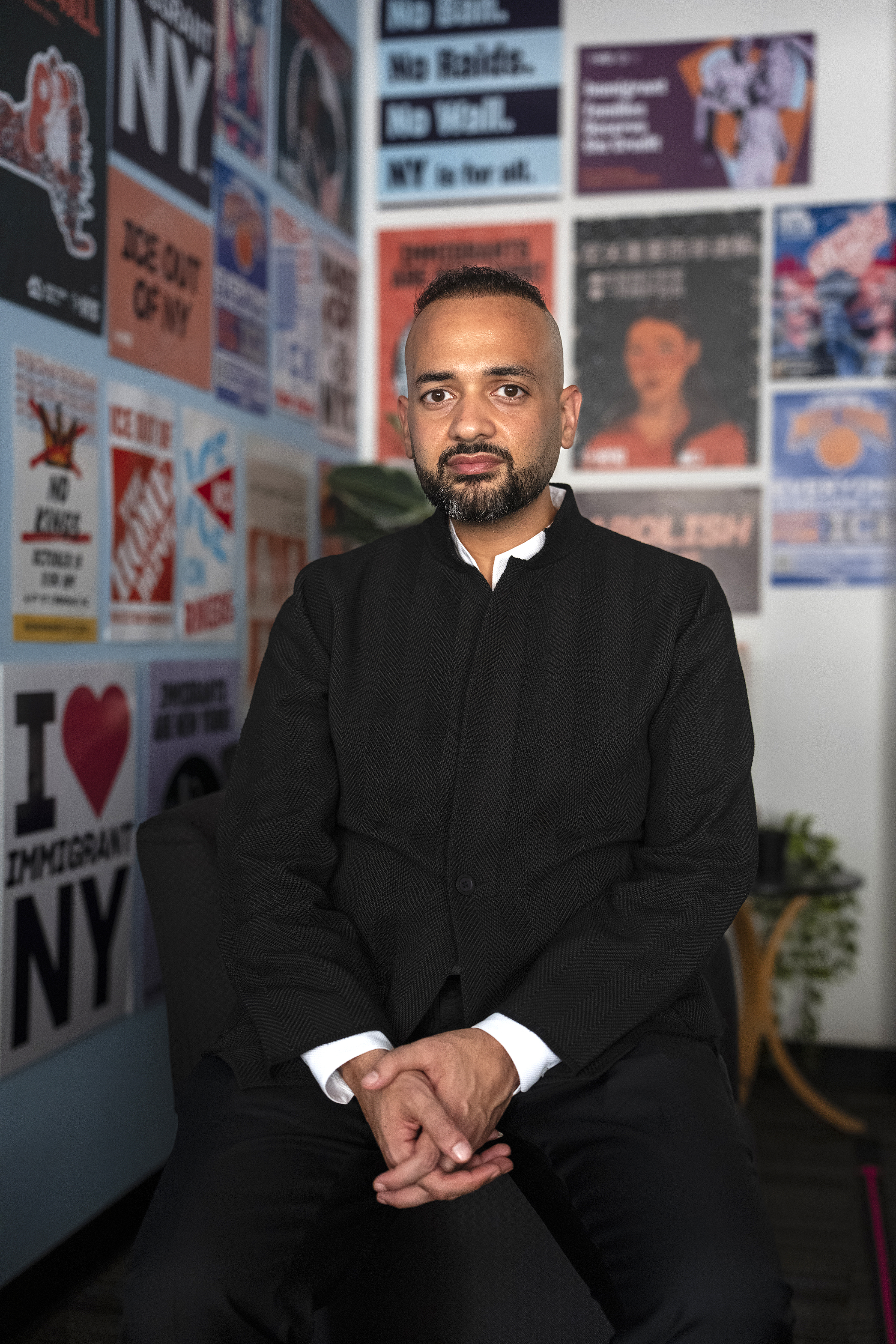
    Murad Awawdeh was 14 in September 2001. The post-9/11 backlash, and the grassroots response of his friends and neighbors, led him to trade his biochemistry studies — and his mother’s American dream of having a doctor in the family — for a career in civil rights.

    “I think that day belongs to everyone who lived it and what came after belongs to a smaller group of us,” said Awawdeh, 39, who is now the president and chief executive of the New York Immigration Coalition and a confidant of Mamdani. “That part of the story this country still has not told itself honestly.”

    The Sept. 11 attacks left many Muslim American communities scarred by heavy-handed law enforcement tactics and the suspicion, if not outright hostility, of classmates, co-workers, elected officials and cable news commentators who blamed all Muslims for the terrorism they, too, had experienced that day. That experience spurred many to take political action.

    “If you look at prior to 9/11, for the most part, Muslim Americans were not politically involved,” said Afaf Nasher, the executive director of the New York chapter of the Council on American-Islamic Relations. But, she added, “When you’re pushed against the wall, you’re either going to run in fear or you’re going to push back, and political empowerment was certainly one way that we are pushing back.”

    The ascent of Mamdani has turned New York into perhaps the most prominent example of American Muslim success in the post-9/11 world. But the history of the city since the attacks has also highlighted the many challenges that Muslims in the United States continue to face.

    Those include a history of police surveillance, backlash faced by high-profile Muslims in politics or the arts, and attacks on Islamic religious expression, including the construction of mosques and the wearing of religious clothing such as hijabs. Those biases have also affected followers of other faiths, in particular observant Sikh men, whose turbans are often mistaken for a form of Islamic dress.

    Such sentiments have compounded in many ways since the start of the war in the Gaza Strip, which most Muslim Americans have vigorously opposed. Opponents of that war have been accused of terrorist sympathies, and some, including Columbia University protester Mahmoud Khalil, have been arrested and threatened with deportation for their advocacy. That has led some Muslims to say the war in Gaza has created an environment akin to the months and years after Sept. 11, when Muslim Americans feared that they could be marked as terrorist sympathizers for speaking out against the war on terror.

    After Sept. 11, many Muslims in New York found themselves under covert police surveillance. Asad Dandia, 33, a public historian, was a plaintiff in a 2013 class-action lawsuit against the Police Department over its surveillance of the city’s Muslim neighborhoods, a program that was assisted by the CIA.

    He had come under police surveillance after starting a charity as a teenager to feed poor families in his neighborhood. The police spying program was exposed in 2011 and caused a public uproar that led to its ending by 2018 after a series of legal settlements and other initiatives.

    Today, Dandia is the official historian of the borough of Brooklyn and an informal adviser to Mamdani. One of his lawyers in the 2013 lawsuit, Ramzi Kassem, is the mayor’s chief legal counsel.

    “We went in the span of 10 years from suing the government to being the government,” Dandia said. “And I think that is a classic and quintessential New York and American story.”

    Mamdani is one of several Muslims who have become prominent in American public life in recent years. Others include Reps. Ilhan Omar and Rashida Tlaib, Michigan Senate candidate Abdul El-Sayed, Academy Award-winning actor Mahershala Ali, model Bella Hadid, and comedians Ramy Youssef and Hasan Minhaj.

    “Muslim America now has a greater cultural footprint, more institutional power and a lot more support from allies, comrades and friends all throughout the country,” Dandia said. “Now when people think of Muslim America, they have names and faces they can point to.”

    But despite these successes, many challenges remain. Mamdani, who was 9 on Sept. 11, has said the Islamophobic backlash to the attack lingered and “became a fact of life.”

    According to a Pew Research Center survey conducted this year, 43% of American adults said Muslims are less patriotic than other Americans, and 42% said Muslim Americans are having a negative impact on the country. When asked to explain their views, respondents often cited the Sept. 11 attacks.

    By some measures, the survey showed that public attitudes toward Islam were more negative now than they were immediately after the attacks. In March 2002, 25% of American adults said Islam was more likely than other religions to encourage violence, but that number rose to 51% in the survey conducted this year.

    Those views have become highly polarized, with Republicans expressing far more negative views of Islam than Democrats, a change from after the attacks when supporters of both parties held similar views. Today, anti-Muslim sentiments have surged anew in some parts of the country with almost every election cycle.

    Donald Trump campaigned for president in 2016 on a pledge to bar immigrants from Muslim countries and has restricted immigration from those nations and others that he views negatively during both his first and second administrations. In his second term, Trump has cracked down on students and universities over protests against the war in Gaza, portraying student demonstrators as supporters of terrorism and equating their arguments with antisemitic hate speech.

    That has included the arrest of young Muslim activists, including Khalil at Columbia and Rumeysa Ozturk, who helped write an opinion piece critical of Israel for the student newspaper at Tufts University.

    Kambiz GhaneaBassiri, a professor of religion and politics at Washington University in St. Louis, said the embrace of Islamophobia by the Trump administration posed a serious threat to Muslim Americans. But for Americans who are skeptical or critical of Trump, it may have also helped to undermine anti-Muslim arguments.

    “People forget now the degree to which Islamophobia was not something that was just on the right but was present on both sides,” GhaneaBassiri said.

    As an example of the reaction to Trump’s policies, he pointed to protests at airports against the president’s immigration restrictions in 2017 as a moment that “kind of shocked” some Muslim activists and organizations. They had become accustomed to pushing for their rights with few allies and little positive coverage in the news media, but the airport protests were filled with non-Muslims.

    “Before that moment, if they criticized the state, their loyalty was always questioned by people on both the right and the left,” GhaneaBassiri said.

    But in New York, Mamdani’s election has shown the resilience of anti-Muslim suspicion in both parties.

    During last year’s mayoral campaign, Mamdani was accused of supporting terrorism by critics in both parties, including the campaign of former Gov. Andrew Cuomo, his main rival in the race, and Sen. Kirsten Gillibrand, who apologized after she falsely claimed in an interview that he had made “references to global jihad.”

    The hate is nothing new to the mayor’s allies. Shahana Hanif, who in 2021 was the first Muslim woman elected to the New York City Council, was in elementary school when the attacks took place. She came of age as American policy and cultural attitudes shifted against the nation’s Muslims.

    At age 10, she wrote a letter to President George W. Bush asking him to put a stop to the hate that seemed to engulf so much of the country. For Hanif, a Bangladeshi native of Brooklyn, it was an early form of organizing that helped inform her political career decades later.

    “Seeing the injustice my community experienced” propelled her into progressive political organizing, Hanif said. “I can’t take away the Muslim part of it and just say, ‘Oh, no, this is only happening to us because we’re Bangladeshi immigrants,’ or ‘This is only happening to us because I’m a daughter of immigrants or I’m a woman of color,’” she said. “That association of being Muslim is certainly part of it.”

    New York’s Muslim political and civil rights leaders said they also saw opportunities to keep building on their post-9/11 organizing work.

    Nasher, the executive director of CAIR, said that her group and others like it saw their efforts as an outgrowth of the discrimination they faced and a way to guard against its happening to others.

    “That’s not just because we’re Muslim — it’s because we’re American,” she said. “And you would think that as our fellow Americans, people would want every American to be politically engaged.”

    This article originally appeared in The New York Times.
  • ‘You know what happens if you don’t vote’: 7 takeaways from the GOP convention

    ‘You know what happens if you don’t vote’: 7 takeaways from the GOP convention

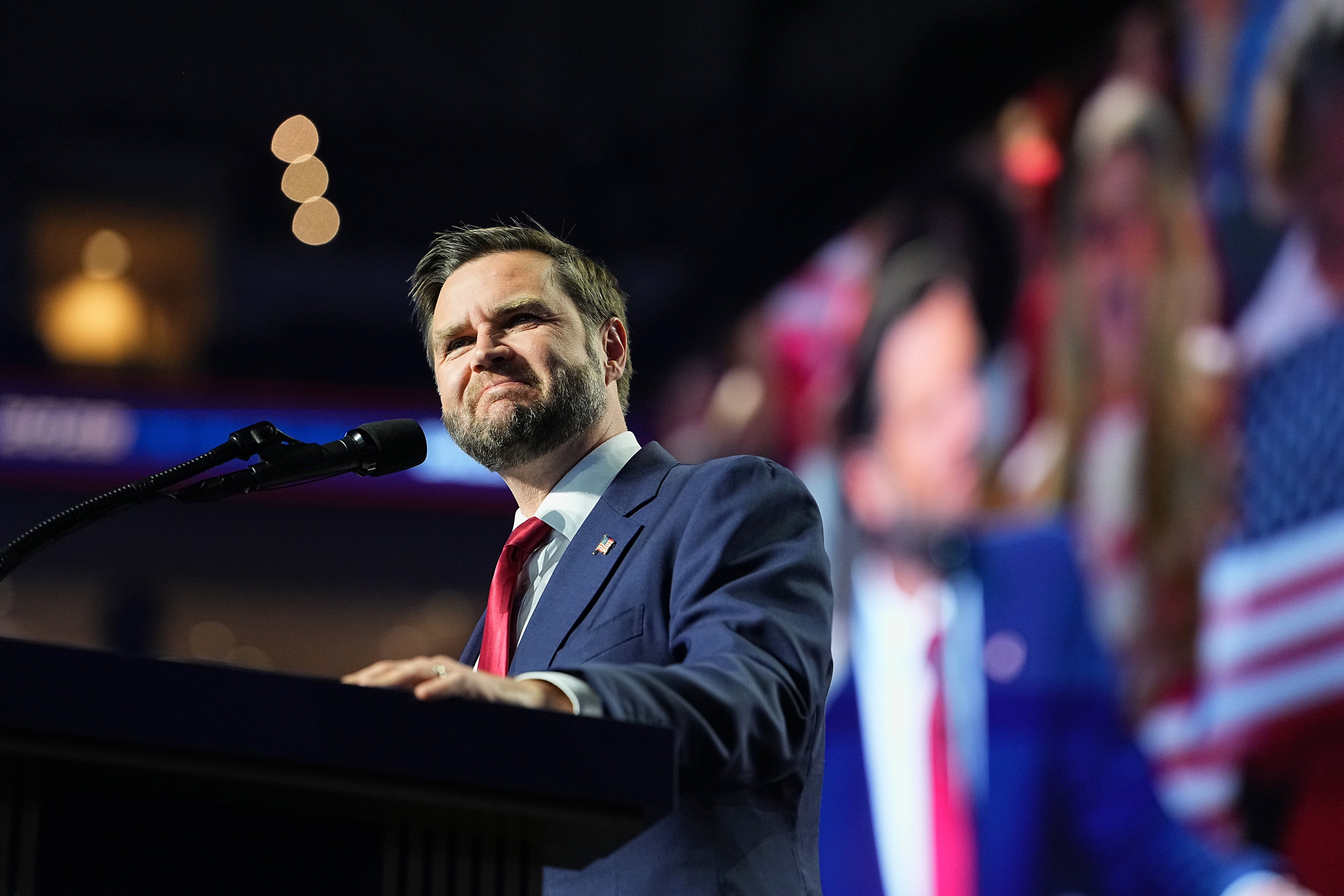
    Vice President JD Vance was billed as the headliner of the second night of the Republican convention, but President Donald Trump stole the show.

    With a hug and a handshake, Vance exited stage right after his speech as Trump returned to the place he likes most — center stage — to make his final pitch of the convention to keep Republicans in power.

    At one point Trump asked attendees to raise their right hands and pledge to him that he would vote with their family and friends. Dutifully, they did.

    “You know what happens if you don’t vote?” Trump said. “You go to hell.”

    The two-day rally in Dallas came as Trump’s approval has sagged below 40% and Republicans fear losing control of both the House and Senate. Republicans hoped the gathering would help energize a base beleaguered by high prices and the Iran war to turn out in droves. But the two days of red meat tossed from the stage seemed unlikely to satiate independent voters whose support has flagged.

    Here are seven takeaways from the convention:

    Vance makes his 2026 (and 2028) pitch

    Vance arrived in Dallas widely considered the front-runner in the 2028 Republican presidential primary. His speech offered some early clues about how he might approach a campaign.

    Vance focused on restoring the primacy of the traditional nuclear American family, a theme he has championed in the administration. He did not mention the war in Iran, an operation he has defended publicly but raised concerns about privately. But he issued a plea for conservatives not to abandon the White House over policy.

    “Do not throw the baby out with the bathwater,” he urged.

    Vance speaks in a far more scripted political style than Trump. He caught fire with the crowd when he snapped back at a protester who interrupted his remarks by waving Palestinian and Mexican flags. “My friend, if you love Mexico so much, get your ass over there,” he said.

    But he failed to sustain the kind of enthusiasm that Trump commanded either night. Nor did he win anything beyond perfunctory praise from the president, who quickly ushered him off the stage.

    As the balloons fell, it was the president alone, along with a tenor singing. Trump is not giving up his crown quite yet.

    Trump throws an affordability Hail Mary

    Trump has called affordability — a top buzzword for Democrats this year — a “hoax.” In his speech Wednesday night, the president claimed that prices are on their way down. At the same time, he rolled out an audacious plan to address people’s concerns about costs: a massive cash giveaway.

    He branded his dubious and detail-free plan to send $5,000 to every American adult a “Trump Dividend.”

    But Trump was virtually the only one talking about it.

    A day later, the splashy $1 trillion-plus plan barely made a ripple on the convention stage.

    The president’s own son, Donald Trump Jr., didn’t so much as mention it.

    Neither did the speaker of the House.

    Neither did the vice president.

    Only Trump did.

    If the president wants the dangled cash to be a major factor in the midterms, the rest of the Republican Party didn’t use the rest of the convention to sell it.

    Republicans have a new rogues’ gallery of liberal villains

    Forget about Nancy Pelosi.

    In Dallas, Republicans made clear that the former House speaker has been dethroned from her decades-long position as the party’s favorite political villain.

    Speaker after speaker assailed Hasan Piker, a leftist online streamer, and Abdul El-Sayed, the Democratic Senate nominee in Michigan, for pushing what they described as an extreme and anti-American agenda. Their images, including Piker’s naked torso, were broadcast on the jumbotron over the stadium. Even Rep. Alexandria Ocasio-Cortez of New York, who is a frequent target of the right, got less airtime.

    At one point, Speaker Mike Johnson outlined the new rogues’ gallery of liberals — “Hasan Piker and Bernie Sanders and AOC and Abdul El-Sayed and Zohran Mamdani” — while casting the rest of the Democratic Party as squishes who would succumb to them.

    In their attacks on Piker and El-Sayed, several convention speakers embraced anti-Muslim rhetoric, including a promise popular among conservative activists to “ban Shariah law.”

    “We must stand and defeat the Islamists,” Sen. Ted Cruz of Texas said in his speech.

    GOP frames the election as common sense versus crazy

    Republicans know that Trump is unpopular. They are banking on making Democrats unpopular, too — or at least unappealing and unelectable.

    Over and over, speakers cast Democrats as out of the mainstream, frequently calling them socialists, communists and even worse. At times they stretched the truth. Democratic socialists might have won a number of Democratic primary victories since 2024, but no serious figure in the party is promoting communism.

    “You guys are going to trigger the commies,” Donald Trump Jr., the president’s son, said at one point as the crowd chanted “USA! USA! USA!”

    Vance, in the closing of his speech, summed up the message so many had delivered before him over two days: “It’s about the party of common sense beating the party of the crazies.”

    Texas is a 2026 battleground

    Six months ago, when it first emerged that Republicans were likely to pick Dallas for this convention, it was unclear whether Texas would wind up as a top midterm battleground.

    It’s clear now.

    A parade of speakers — from the president on down — used their precious time onstage to talk about Texas’ razor-close Senate race. They sought to boost Ken Paxton, the Texas attorney general (even as Trump mocked his sartorial choices on back-to-back nights), and tear down James Talarico, the Democratic nominee. On the eve of the convention, Trump’s super political action committee had reserved $10 million in ads to help Paxton.

    “Tala-freako maybe tops the list,” Vance said of Trump’s nickname for Talarico.

    But it wasn’t just the Senate race. Republicans gerrymandered the state in 2025 to create as many as five new safely Republican House seats. But Republicans running in several of those seats appeared at the convention, seeking a boost in regions that Trump won handily.

    Was it must-see TV? Early signs suggest no

    Trump has long been known as a master of the television audience. Not this time. An average of 2.5 million people tuned in to watch his Wednesday night speech on Fox News, one of the few major TV networks that aired the remarks in full, according to preliminary figures from Nielsen. That was an average primetime audience for the network, based on the most recent quarterly statistics, and below the usual viewership for programs at that time.

    In other words, no Trump bump.

    To be fair, the president’s programming faced some steep competition. The first game of the National Football League season was on at the same time as his speech. The season’s second game was on Thursday during Vance’s and Trump’s speeches.

    Republicans make their bid to buck history

    Parties in power traditionally attempt to expand their appeal in midterm elections through targeted outreach to independent voters. That was not the strategy charted by Trump and his allies in Dallas.

    Only a handful of speakers offered any kind of outreach to moderate voters (one of those exceptions was Rep. Mike Lawler of New York). Far more focused their remarks on stoking fears of Shariah, transgender athletes and Democratic candidates who were repeatedly described as communists. Again and again, Trump begged his supporters to “pretend” that he would be on the ballot — an attempt to get enough of them out to prevent the usual losses for the party in power.

    Trump and his allies are staking their chances on their ability to drive their own voters to the polls. At the top of the list are Trump loyalists who typically skip midterm elections.

    This article originally appeared in The New York Times.
  • Saudi airstrikes hit Yemen’s rebel-held Mokha airport as Houthis take an island near a key strait

    Saudi airstrikes hit Yemen’s rebel-held Mokha airport as Houthis take an island near a key strait

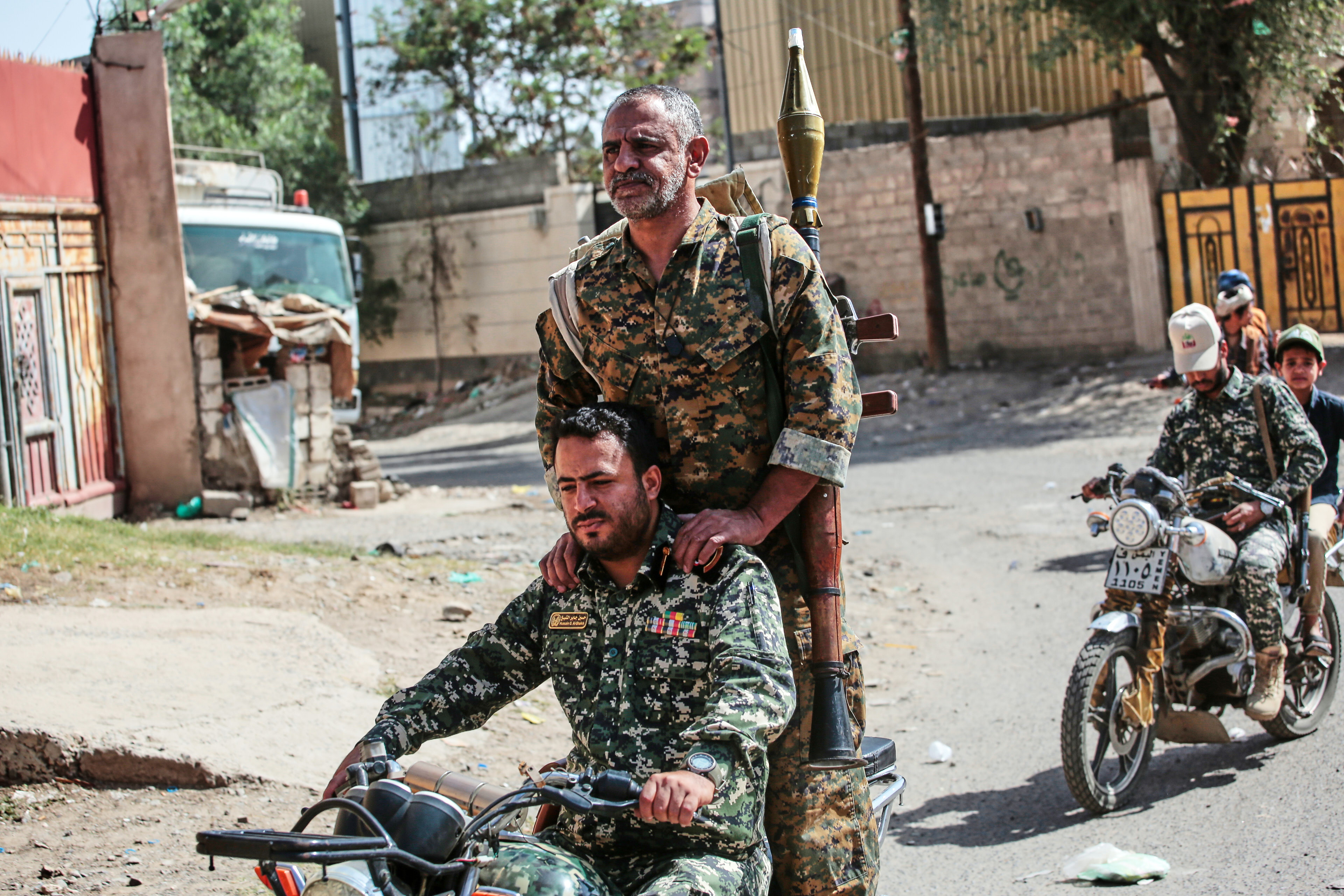
    CAIRO — Yemen ‘s Iranian-backed Houthi rebels captured a strategic island in the Bab el-Mandeb Strait at the entrance of the Red Sea, two officials said Friday in a swift advance that further threatens Saudi oil exports through one of the world’s key commercial lanes.

    Saudi Arabia responded with airstrikes against the airport in the key port city of Mokha that the Houthis seized on Thursday, a Houthi broadcaster said. There was no immediate report of damage or deaths.

    The capture of Mayun, a tiny, barren volcanic island in the strait, was confirmed by a senior military official with Yemen’s internationally recognized government and by a Houthi official. Both spoke on condition of anonymity because they were not authorized to talk to journalists.

    The island, also known as Perim, is about 3.5 kilometers (2 miles) off Yemen’s west coast.

    The strait is a key alternative to the Iran-choked Strait of Hormuz. But there is “no need for international concern,” Hazam al-Assad, a member of the rebels’ political bureau, told The Associated Press, saying they are responding to Saudi aggression, and “our forces have a bank of big important targets” in case Riyadh keeps up the strikes.

    Earlier Friday, Iran’s government called for an end to Saudi Arabia’s blockade of Yemen, throwing its support behind its ally, the Houthis. In its first statement since the rebels entered the port, Iran’s Foreign Ministry also called for a return to negotiations between Saudi Arabia and the Houthis.

    There was no immediate Saudi comment on Friday.

    The rebels’ capture of Mokha, overlooking tanker routes out of the Red Sea, could boost Iran’s strategy of driving up world oil and gas prices to pressure the United States, experts say. It also raises concerns of a new front opening after more than six months of war in the region – one in which Saudi Arabia is forced to respond.

    Experts say the developments in Yemen could give Tehran more leverage in any negotiations with the U.S. On Wednesday, the spokesperson for Iran’s powerful Revolutionary Guard called for any negotiated settlement with the U.S. to include Yemen, the first explicit reference to that front.

    Events threaten a key Strait of Hormuz alternative

    The Houthis’ entry into Mokha on Thursday was their biggest territorial gain in years against their Saudi-backed Yemeni opponents. It brought them within 50 miles (80 kilometers) of the Bab el-Mandeb, a strait that has become an important alternative for global shipping as Iran targets vessels in the Strait of Hormuz.

    A senior military official with Yemen’s internationally recognized government told the AP they were stunned that the Saudi air force didn’t strike the Houthis earlier, as they were advancing on Mokha. He assessed that Saudi Arabia didn’t get a green light from the U.S. to embark on a large-scale air campaign.

    The official, who spoke on condition of anonymity because he wasn’t allowed to speak to the media, also blamed “lack of coordination” between Yemen’s army and allied forces, saying it gave the Houthis “a priceless opportunity.”

    The Houthis had already attacked Saudi shipping in the Bab el-Mandeb and Red Sea since declaring a blockade there in July, as well as oil infrastructure inside Saudi Arabia. The Houthis said it was in response to the kingdom’s blockade of Houthi-held parts of Yemen, in place for years.

    New disruption to the waterway could mean trouble for all shipping and for the price of crude oil, which has now soared again. Saudi Arabia has increasingly relied on the Red Sea and Bab el-Mandeb to export its crude since Iran has been targeting vessels in the Strait of Hormuz. About 12% of the world’s goods are typically shipped through the strait.

    Shipping through the Bab al-Mandeb had fallen by about 60% since the Houthis began attacking some ships there in late 2023 while expressing solidarity with Palestinians in Gaza. Shipping increased this year as Saudi Arabia sought alternatives to the Strait of Hormuz, but renewed Houthi threats have “curtailed” that activity, according to Lloyd’s List Intelligence.

    Saudi Arabia, which earlier this week said it had always offered “opportunities for negotiation,” also has said it has the right to defend itself in response to the Houthis’ blockade. The foreign ministers of Iran and Saudi Arabia spoke Thursday about diplomatic efforts to “restore stability” to the region, Iran’s Foreign Minister Abbas Araghchi said on social media.

    The fighting risks a return to civil war

    In a statement released Friday, the National Defense Council of Yemen’s Saudi-backed and internationally recognized government on Thursday strongly condemned the Houthis’ renewed attacks on Saudi Arabia.

    The council also acknowledged that Yemen’s government is on the front line of freedom of navigation, and called for international support as the Houthis swept along the Red Sea coast toward the Bab el-Mandeb.

    The escalating fighting threatens to end a fragile truce that had largely halted Yemen’s civil war since 2022.

    At stake are the 40 million people in the Arab world’s poorest country who fear a return to the conflict that killed 150,000 and brought many others to the brink of famine.

    The surge in fighting in the past week has sent over 46,000 people fleeing, and “overnight, large numbers of people were reportedly seen leaving Mokha with their belongings,” the U.N. migration agency said Friday.

    The Houthis have been at war with Yemen’s government since 2014, when the rebels swept from their mountainous heartland and seized much of northern and central Yemen, and the capital of Sanaa. Saudi Arabia entered the war the following year on behalf of the government.

  • For more than 20 years, Josh Shapiro has worn the same pin to remember the lives lost on 9/11

    For more than 20 years, Josh Shapiro has worn the same pin to remember the lives lost on 9/11

    HARRISBURG — For more than two decades, Gov. Josh Shapiro has worn it almost every day.

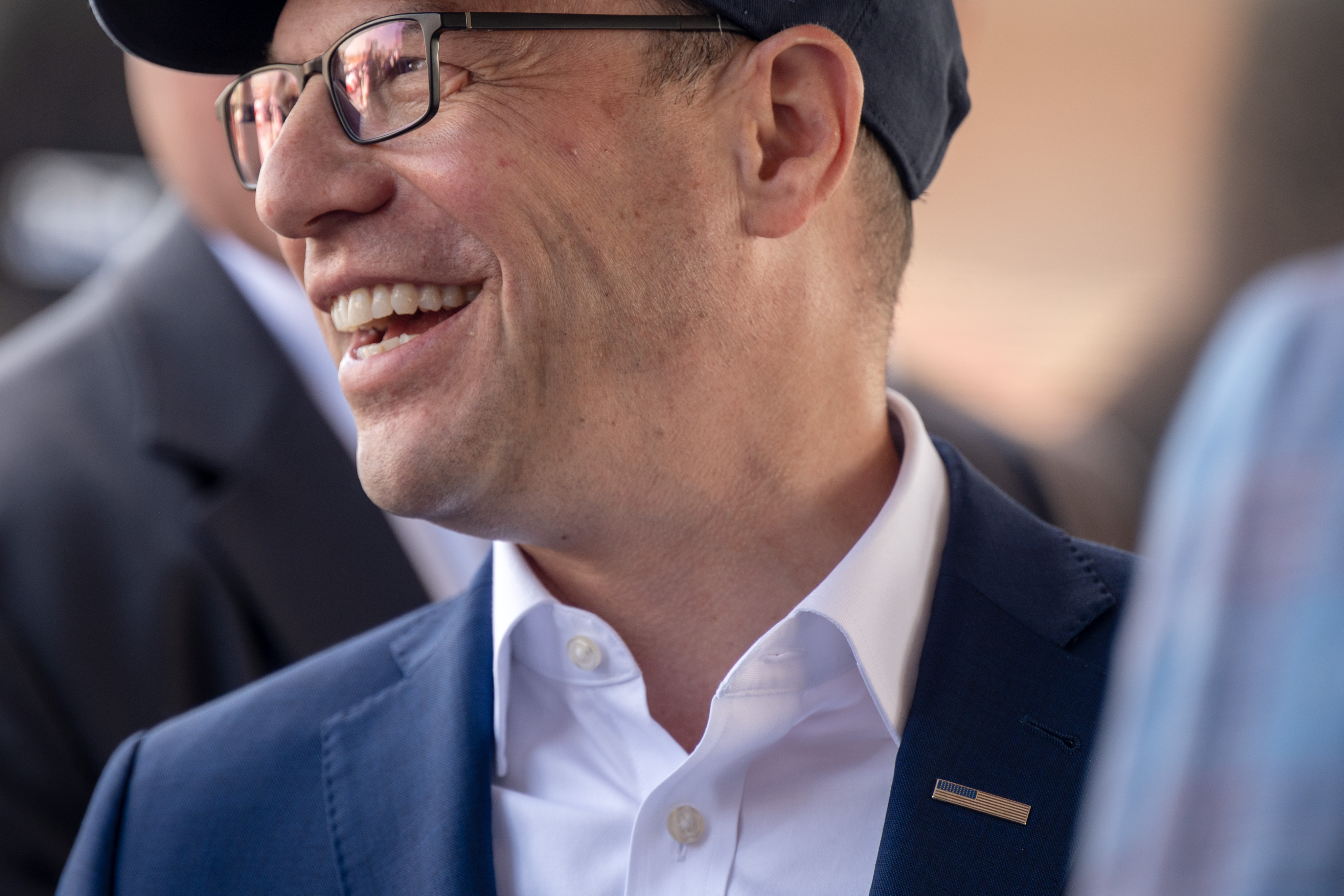
    The small, thin accessory affixed to his lapel — a compressed version of the 50 stars and 13 stripes — may require one to squint to see. But it carries significant meaning to the Democratic governor, with an origin story that began on Sept. 11, 2001, when Shapiro was a young staffer on Capitol Hill.

    Shapiro was working in Washington when he experienced the pain and confusion of the deadliest terrorist attack in the nation’s history, he said in a June interview.

    He was just steps away from the U.S. Capitol building in then-U.S. Rep. Joe Hoeffel’s office, where he served as chief of staff, when he watched as the Today show anchors announced a plane had hit the World Trade Center. And then another.

    He realized, like thousands of Americans, that the nation was under attack — with Washington as a potential target. Less than an hour later, Shapiro said, he saw the smoke coming from the Pentagon. Staff were given mixed signals on whether to evacuate before ultimately being told to hunker down in legislative buildings until the situation was clear, he said.

    When Shapiro arrived on Capitol Hill the next day, a woman who worked in the Capitol gift shop was giving out American flag pins to anyone who passed by — the “typical gift shop” pin depicting a waving flag that President George W. Bush and other politicians began to wear in the aftermath of the 9/11 attacks, he said.

    The pin became a part of Shapiro’s daily business uniform. He wore it every day, even after he left D.C. and began working at a law firm in Montgomery County while preparing to run for state representative — his first foray into elected office and the start of a decades-long career.

    When Shapiro was knocking on doors for his 2004 run for the state House, a veteran in Glenside told him his gift shop pin wasn’t cutting it. The veteran gave Shapiro a nicer one: an image of the American flag in a thin, metal bar.

    “And I’ve worn it basically every day since,” Shapiro said in June ahead of his appearance at a special session of the U.S. House at Independence Hall to commemorate America’s founding 250 years ago. Widely rumored to be a future presidential contender, Shapiro often talks about his pride in America and its ideals, and his fears that the country is becoming too divided and straying from the founders’ aspirations.

    “I am a proud, patriotic American,” he said, referencing his pin. “I don’t think patriotism belongs to one party. I don’t think it should ever be partisan.”

    Over the years, Shapiro has made slight changes to the flag accessory; he shaved down the pin stem and made it into a magnet.

    “It was destroying my suits,” he added.

    He said he once lost the pin when it fell off a jacket that he had hung up on a plane.

    “I freaked out. I literally freaked out,” he said.

    He said he and the flight attendant were on their hands and knees trying to find it in the plane’s closet. They found the pin, but never found the backing, which was replaced much more easily.

    “I found the most important thing, and I just got another magnet,” he said.

    Shapiro will appear at the Flight 93 Memorial near Shanksville, Pa., alongside members of President Donald Trump’s administration, including U.S. Interior Secretary Doug Burgum, for a service on Friday to commemorate the 25th anniversary of the attacks, in which more than 2,900 people were killed.

    United Airlines Flight 93, a San Francisco-bound passenger plane flying out of Newark, was hijacked on Sept. 11, 2001. It was believed to be headed to the White House or U.S. Capitol, near where Shapiro was working at the time — before its 40 passengers attempted to retake control and crashed the aircraft in a field near Shanksville.

  • How South Philly’s full-block light displays work

    How South Philly’s full-block light displays work

    The twinkling of colorful lights can make everything feel more vibrant — like the Miracle on South 13th Street display during Christmas.

    For some South Philadelphia blocks, however, holiday lights are not enough: They light up the night all year round.

    Wondering about the blocks with iconic lights strung across the street, a reader asked Curious Philly, The Inquirer’s forum for questions about the city: “How does one get the decorative street lights and who looks after them?”

    » ASK US: Have something you’re wondering about the Philly region? Submit your Curious Philly question here.

    For many residents, the lights had inhabited the streets before they even moved in, so the answer is not straightforward. But it seems to fall on block captains and rely on the neighbors agreeing and paying the bill.

    Anthony Scola III, 66, remembers when the decorative lights were set up on his block, the 1600 block of South 13th Street. He was 6 years old and his father, Anthony Scola II, was part of the neighborhood group that organized putting them up, he said.

    At first, Scola said, neighbors wanted the holiday lights only on the trees, then around their homes, and soon the light show continued to grow.

    He doesn’t remember the organizing process, or how the adults got the lights, and with his 94-year-old father recently dying, that part of neighborhood history remains untold.

    But, as he pointed to the tree outside, Scola showed how the lights connect through a window to an outlet inside his home. Most of the lights are on year-round, he said, but Christmas lights are not lit until the Saturday after Thanksgiving.

    If the lights are affecting his electric bill, he said, he hasn’t noticed it.

    At the end of the block, Julia Morrison and her husband, Michael Edmonds, are settling into the neighborhood. The couple moved in over the summer, after having lived around the corner for six years.

    “We always thought the lights were owned by the city, but the neighbors told us that everyone has to pay for the cost,” Edmonds said.

    According to Peco, how the string light displays are paid for depends on the specific installation and location.

    Some connections go directly into homes, and the cost comes out directly in each homeowner or resident’s electric bill. Other displays, however, can be paid for through a separate account specifically for the lights. Then that account gets billed instead of each individual neighbor with lights connected to their home.

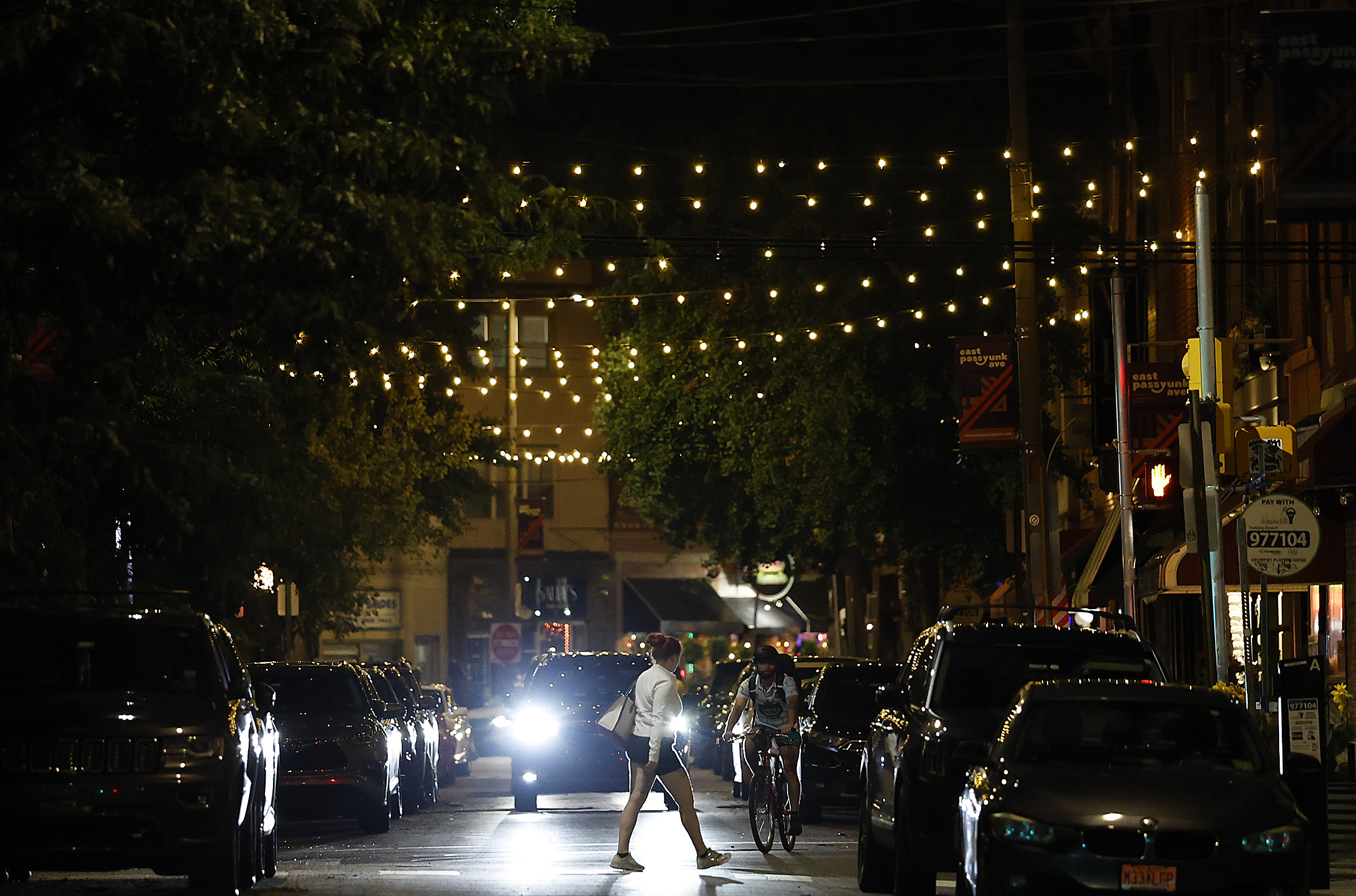
    Lights string across the street along East Passyunk in South Philadelphia on Thursday, Sept. 3, 2026.Yong Kim / Staff Photographer

    The couple is not sure how much the bill will be for the year-round lights. They are hoping to find out more after Thanksgiving, when everyone in the block comes out to set up the Christmas lights.

    Whatever the cost, they said, it is worth it for the effect on the block.

    “It brings the people together, and it’s just cheer,” Morrison said. “It brings the community street together, makes people feel closer.”

    On the 1200 block of Wolf Street, tiny blue, yellow, and red light bulbs dance in the wind on a zigzag above the street.

    They have been there for as long as Maryann Mooney, 69, remembers.

    “When I was a kid, it was magical to see the lights,” Mooney said.

    Over the years, she said, the tradition shrank to only putting big lighting displays out for Christmas, but small light fixtures remain all year round.

    She has moved away from the block but works at a hair salon in the area, and the lights continue to make her feel like “the block is alive,” she said.

    Karen Farrell, the salon owner, said the block captain comes to collect the money for the light bill, usually in December. He also is in charge of replacing any broken bulbs throughout the year, she said.

    “Last year they asked for $35,” Farrell said. “I like it. I think it is pretty. It makes it festive.”

    On the 2700 block of South Smedley Street, blue, red, and white lights hang from every house. They put up Christmas lights, too, but these ones are up all year long.

    Ryan Schubert, 31, moved to the block in 2022. The house, he said, belonged to his wife’s grandmother, so the lights hanging from his front porch preceded their ownership.

    Schubert does not know when exactly the lights arrived, but he keeps a postcard from 1991 that already features the lights across the home’s porch.

    “Right now, they are red, white, and blue for the Fourth of July, but the light bulb colors are changed depending on the occasion,” Schubert said.

    As far as Schubert knows, the block captain is in charge of changing the bulbs and asking neighbors for collaboration to pay the bill.

    “We chip in once a year. It’s not a requirement, and it’s a pretty cool time,” Schubert said.

    The most he has contributed is $100, but he has also given $20, he said.

    According to Peco, neighbors looking to set up an additional account for this type of lights can contact customer service for information through an online form or by calling 1-800-494-4000.

    “The Christmas display can be a little annoying because lots of people come, but I love it and it’s worth it because everyone seems happy,” Schubert said. “The all-year lights feel unique to our street, but to be honest I’m so used to big displays that I don’t even pay much attention or register the little ones.”

  • Philly 9/11 responders inhaled a ‘witch’s brew’ of toxic dust. Now they’re sick with deadly diseases.

    Philly 9/11 responders inhaled a ‘witch’s brew’ of toxic dust. Now they’re sick with deadly diseases.

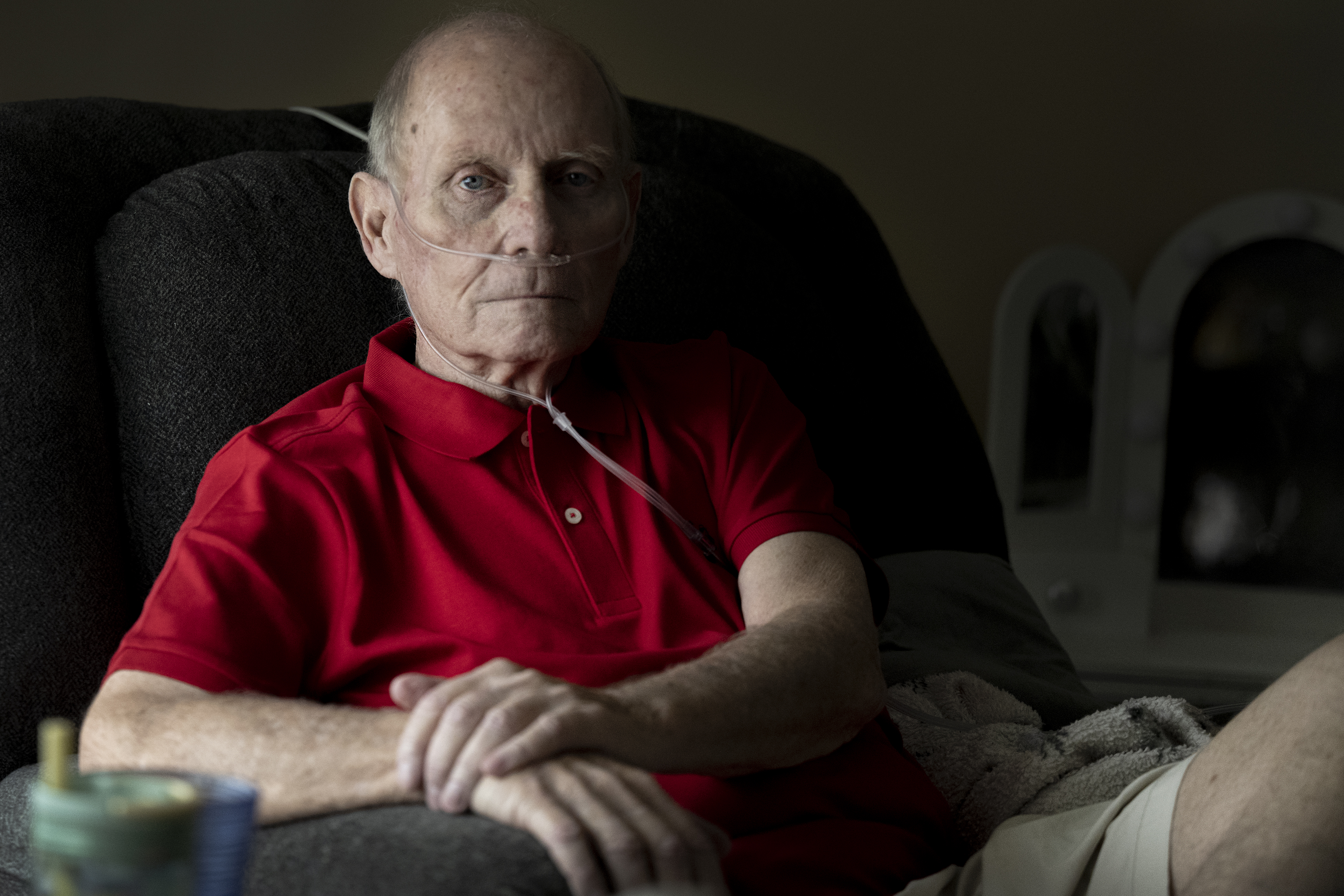
    Retired Philadelphia Police Capt. Mark Fisher gets winded and lightheaded while emptying the dishwasher or pushing his gas-powered lawnmower, his lungs forever scarred by the ankle-deep ash that he trudged through at ground zero.

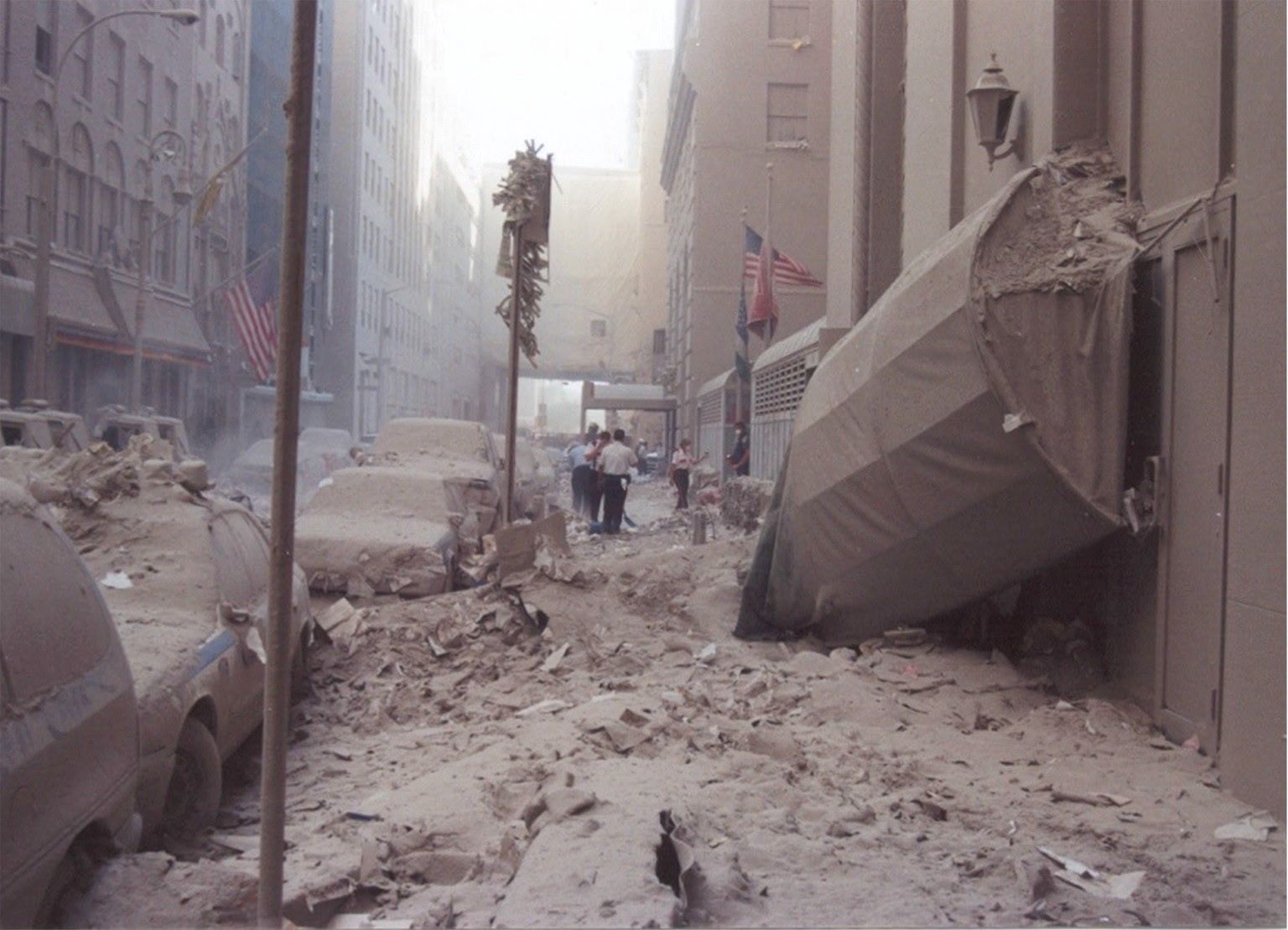
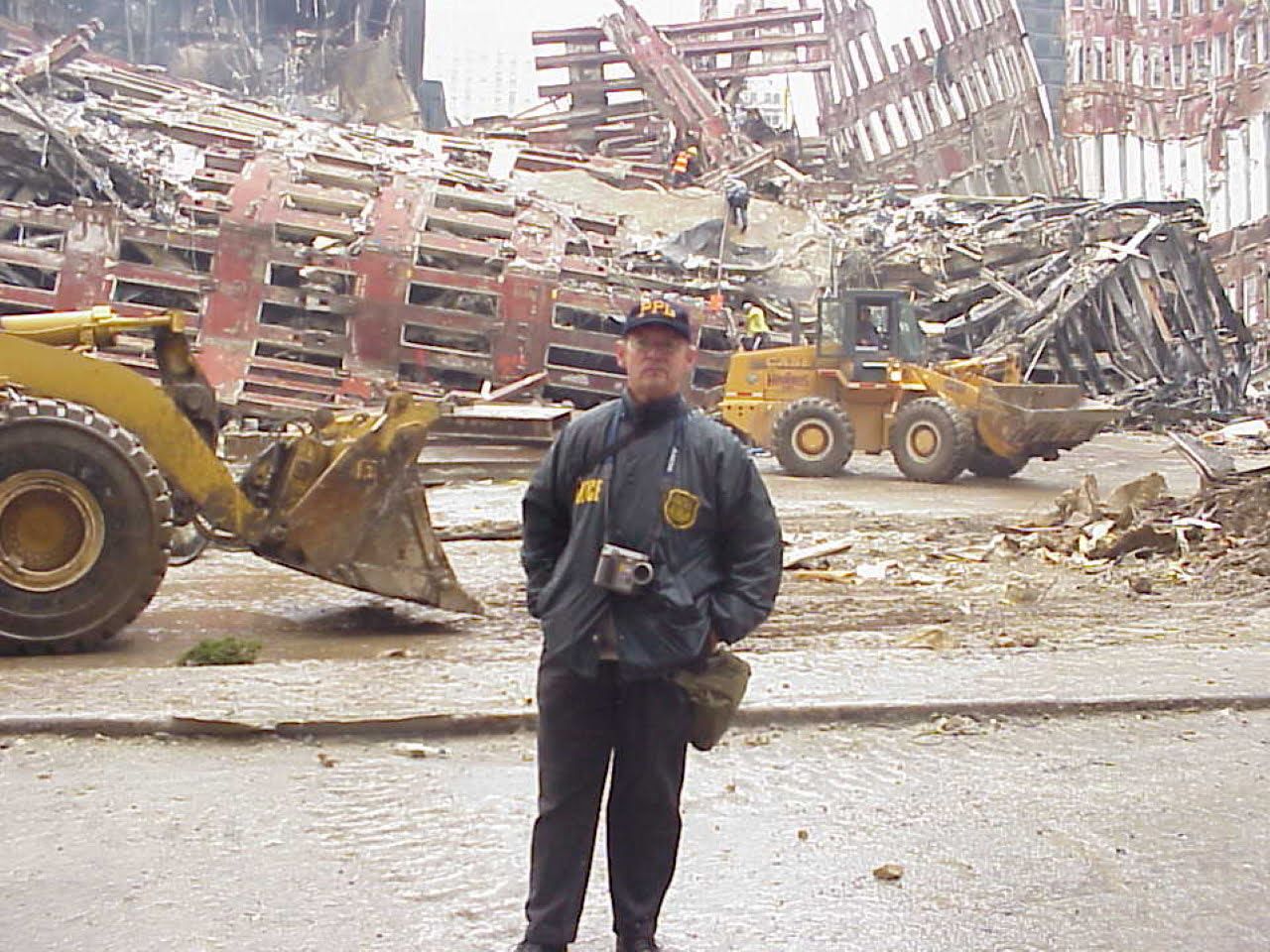
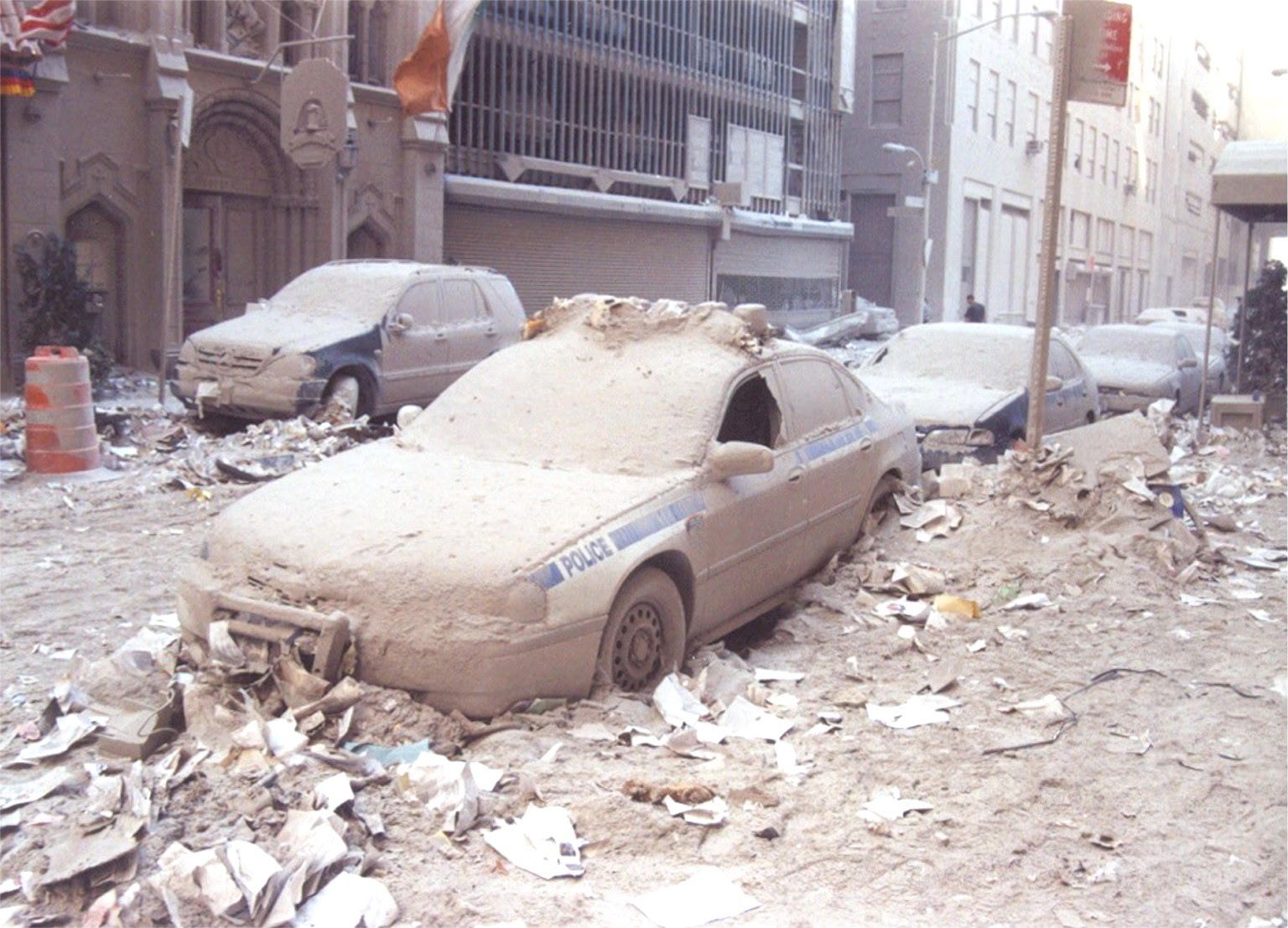
    When Fisher arrived at the nation’s worst crime scene, two days after the Sept. 11, 2001, terrorist attacks, each step he took kicked up a powdery plume, coating his tan work boots. Dense smoke from fires burning beneath the rubble of the World Trade Center site stung his eyes and clogged his lungs.

    Then a lieutenant in charge of the Philadelphia department’s crime scene unit, Fisher scoured the wreckage for nearly two weeks. He helped recover the lifeless body of a firefighter crushed under concrete. A torso. The severed arm of a businessman.

    The coughing fits started about a year later. Then, about six years after 9/11, a chest X-ray revealed a thick, hardened fluid around his lungs, making it difficult to breathe. He developed severe pulmonary disease linked to exposure to toxins.

    Fisher, 69, needs a double lung transplant soon, his doctors say, that at best will extend his life by five to seven years. His deteriorating health shows how grossly federal and local health officials underestimated the environmental hazards.

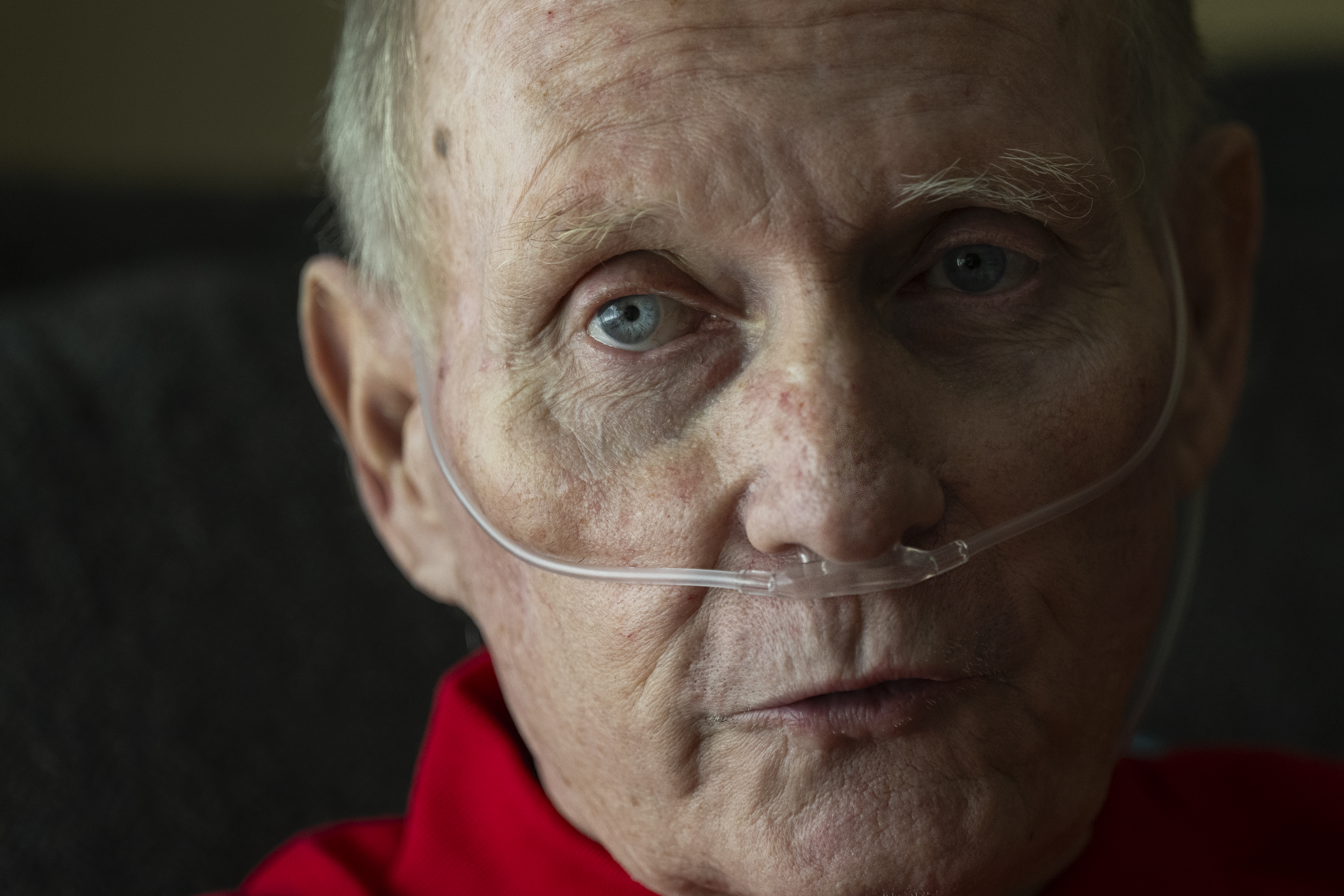
    “I can’t breathe worth a darn. My lungs just aren’t going to last,” Fisher said, as he sat in his Northeast Philadelphia home with oxygen prongs in his nostrils and a heating pad against his back.

    “Everything aches,” he rasped, coughing relentlessly.

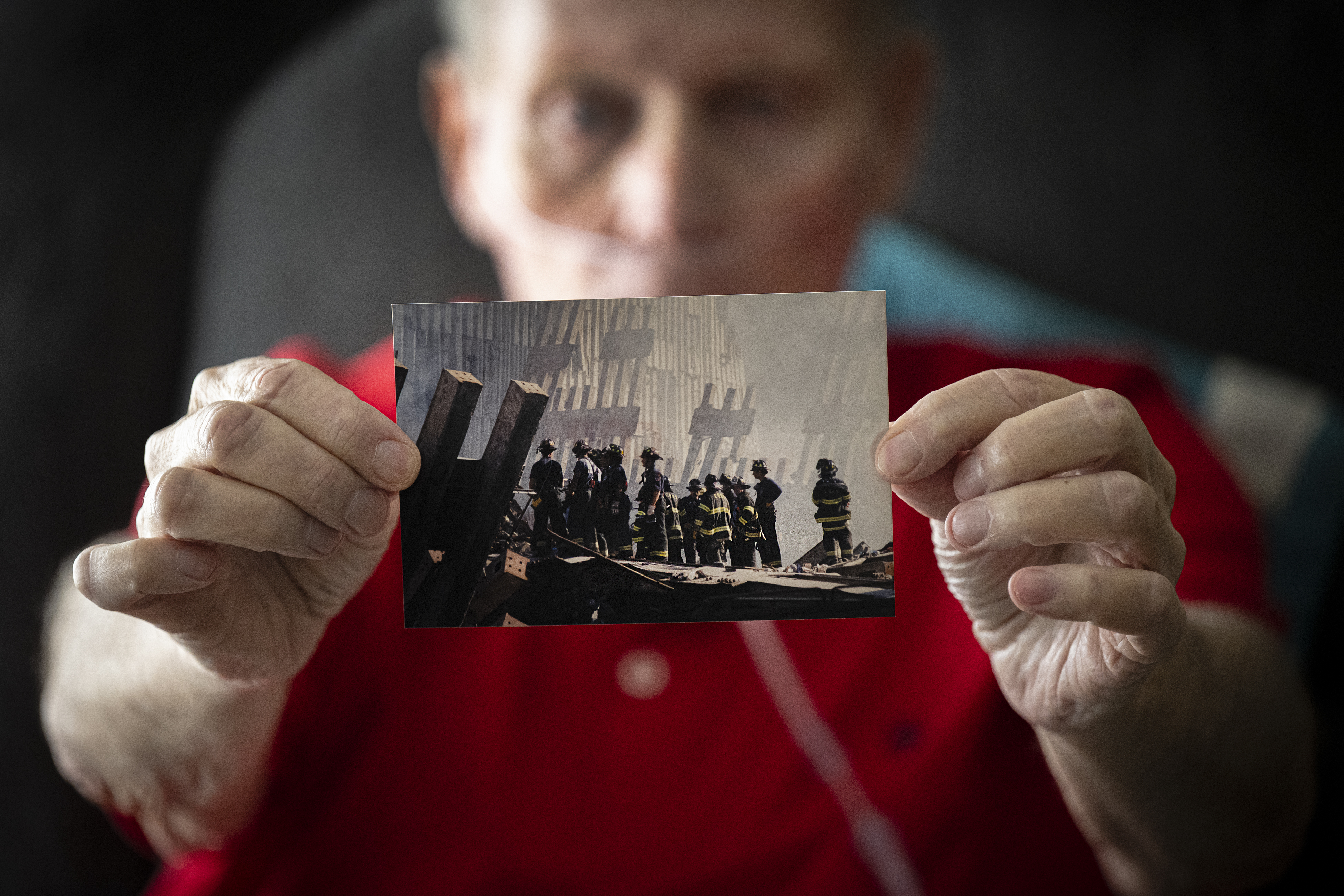
    Retired Philadelphia Police Captain Mark Fisher, 69, shows a photograph he took while working as a crime scene investigator at ground zero.Jose F. Moreno / Staff Photographer

    Fisher is among roughly 145,000 responders and survivors getting treated through the federally funded World Trade Center Health Program. They are afflicted by everything from respiratory and digestive diseases to mental health disorders and early-onset dementia.

    Cancer is the fastest-growing diagnosis, now that enough years have passed for tumors and other abnormalities to emerge, soaring from about 3,200 cases to more than 57,000 within the last 11 years.

    Most of the toxic dust — as deep as snow drifts in spots — formed when the concrete floor slabs of the 110-story towers collapsed on top of one another in quick succession. The wreckage, known as “The Pile,” contained more than 350 chemicals and mineral agents: potassium hydroxide in concrete, calcium sulfate in wallboard, jet fuel, asbestos, glass insulation fibers, heavy metals — all finely ground and aerosolized.

    “It was such a mixture of stuff, like a witch’s brew,” said Iris Udasin, a Rutgers Health doctor who treats 9/11 responders and studies the long-term health effects of the attack.

    The alkaline alone in “the cement from all these buildings was toxic in and of itself,” she said. “It basically burned holes in people’s noses and made them more likely to absorb other chemicals and gases that were in the air.”

    While at ground zero, then-Philadelphia Police Sgt. Greg Masi took photos of the dust and debris. When Masi started wheezing and coughing a few years later, he thought, “I’m just getting old. I didn’t want to believe that the days I was there affected me,” he said. He’s since been diagnosed with asthma, lung nodules, and a type of blood cancer linked to breathing toxic dust. Courtesy of Greg Masi

    From WTC cough to lifelong disease

    Udasin directs the WTC Health Program at Rutgers University in Piscataway, N.J. — one of six clinics created nationally to treat 9/11 responders.

    When it opened in 2003, Udasin mostly treated responders for what she calls “World Trade Center cough,” a dry and persistent hacking that improved with asthma medication.

    Now their cases are far more complicated and life-threatening, often requiring referrals to medical specialists, from pulmonologists to oncologists.

    Udasin can name many of the roughly 3,000 responders she treats annually by their faces alone. She prefers to relay test results, both good and bad, to patients herself, rather than delegate.

    On a recent morning, she escorted an older man from an exam room to the clinic’s lobby and asked: “Do you want me to call you with the results? If you are going to be scared, I can have somebody else call you with the results.”

    Her patients, hailed as heroes after 9/11, could not have anticipated how working at ground zero would impact their long-term health.

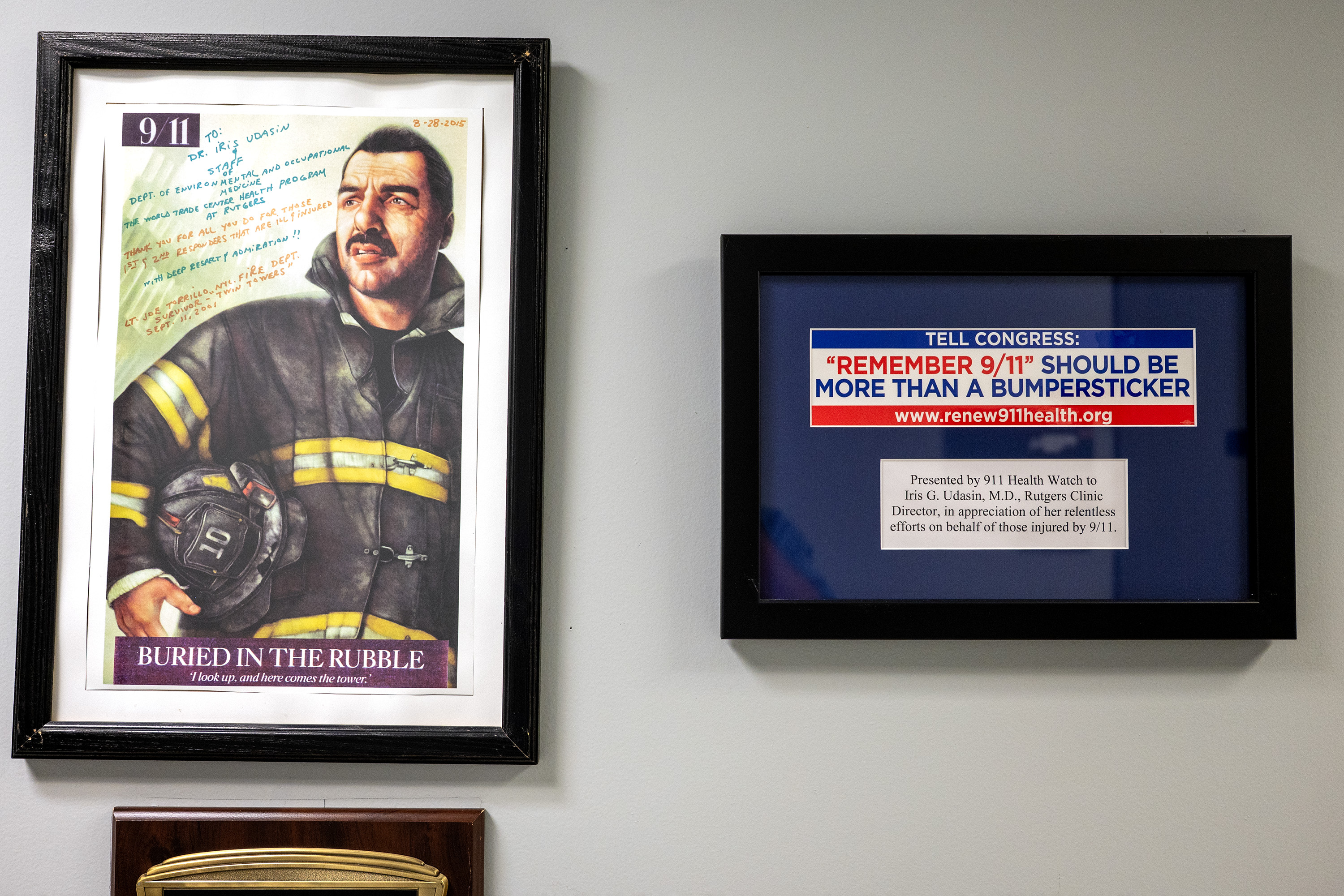
    A plaque (right) presented to Iris Udasin, medical director of the World Trade Center Health Program at Rutgers University, hangs on the wall of the patient waiting room. Udasin’s federally funded clinic provides medical monitoring and free treatment to 9/11 responders. Tom Gralish / Staff Photographer

    Local and federal officials initially minimized the environmental health hazards. Christine Todd Whitman, who was the head of the Environmental Protection Agency under President George W. Bush, infamously assured the public within days of the attack that the air around the WTC was “safe to breathe.”

    However, a 2003 report by the EPA’s inspector general concluded that the agency “did not have sufficient data and analyses to make such a blanket statement.”

    “The [EPA] scientists did the best they could with the data that they had and with the knowledge they had at the time,” said Whitman, who had previously served as New Jersey governor.

    “It’s a case of you don’t know what you don’t know,” Whitman added in an interview with The Inquirer late last month.

    Whitman said her agency did urge responders on “The Pile” to wear protective gear, preferably respirators. The EPA distributed masks, but many refused to wear them, she said.

    In hindsight, she said, the masks were not protective enough. Responders are now paying “the price” of breathing toxic air: “It sickens me to say it,” Whitman said.

    The Rutgers program grew out of early alarms about air quality hazards, of which details are still emerging. On Tuesday, New York City officials publicly released a trove of documents revealing that toxins lingered in the air for months after the attacks.

    Medical monitoring and free healthcare for responders continue to evolve as the responder population ages.

    The Rutgers site recently added on-site neuropsychological testing after researchers at Stony Brook University in New York found increased rates of dementia among 9/11 responders. Responders with more exposure to toxins had higher rates of early-onset dementia compared with those with fewer exposures.

    Researchers evaluated more than 5,000 WTC responders, with an average age of 53 at the start of the eight-year study.

    “As this population ages, we are seeing increasing concerns related to memory, attention, and executive functioning, sometimes at ages when the responders themselves are surprised to be experiencing them,” said Jodi Streich, mental health director at Rutgers’ WTC Health Program.

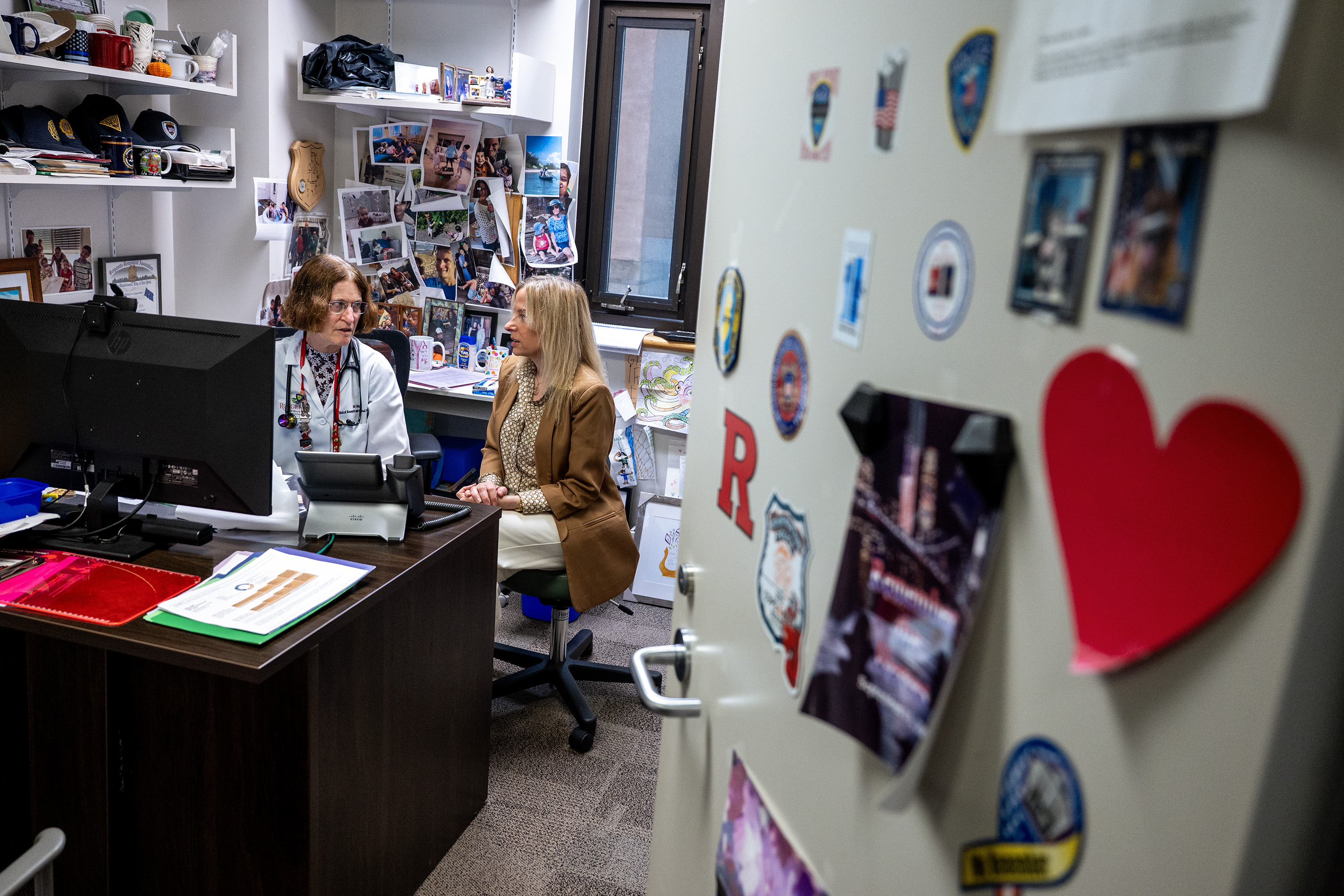
    Iris Udasin, medical director, and Jodi Streich (right) mental health director, of the World Trade Center Health Program at Rutgers University sit together in Udasin’s office. They treat responders with WTC-related illnesses at the medical clinic, which is funded by the National Institute for Occupational Safety and Health (NIOSH) within the Centers for Disease Control (CDC). Tom Gralish / Staff Photographer

    A stubborn and spreading blood cancer

    Udasin’s clinic currently treats 1,177 cancer patients. Research shows that 9/11 responders suffer from thyroid, prostate, lung, and blood cancers at higher rates than the general population.

    “The question is: Are certain cancers higher because we looked for them, or are they higher because they’re really higher?” Udasin said. “We really don’t know the answer to that, but my job is to treat everybody.”

    In 2023, Udasin successfully lobbied to have gynecologic cancers, including uterine, included on the list of WTC-related conditions.

    Philadelphia Police Department Sgt. Greg Masi at ground zero just days after the twin towers fell. Then-Police Commissioner John Timoney dispatched Masi to New York City because of his expertise in radio communications. He’s developed asthma, lung nodules and T-cell lymphoma from breathing in toxic fumes and dust.Courtesy of Greg Masi

    Greg Masi, 71, a retired Philadelphia police sergeant from the Northeast, was diagnosed with a form of blood cancer known as T-cell lymphoma in 2019.

    First, red bumps appeared on his left arm. A scaly rash has since spread over much of his body, killing hair follicles. His oncologists worry the cancer will find “a road map” into his organs.

    Light therapy and topical medications did not work. Chemo and radiation would be a last resort. Since there is no cure, the goal is to slow it down.

    Masi, an expert in radio communications, can still hear the horns that blared each time responders thought they found someone still alive beneath the rubble at ground zero, or to signal an imminent structural collapse.

    The dust that caked cars and blanketed fire escapes struck him as a mere nuisance.

    “We figured it was just dust, like dirt,” Masi said. “We had no idea it had harmful toxins in it.”

    An avid runner and marathoner, Masi developed bad chest colds with wheezing about five years after Sept. 11. He was later diagnosed with asthma and nodules on his lungs, both common afflictions among responders.

    He recently learned that one nodule has doubled in size, and doctors plan to monitor it for signs of cancer.

    Then-Philadelphia Police Department Sgt. Greg Masi captured photos of the dust during his time at ground zero. Masi and three other department staffers have been diagnosed with WTC-related illnesses from breathing in deadly dust.Courtesy of Greg Masi

    Mental health toll still mounting

    Multiple diagnoses are commonly seen in 9/11 responders. Frank Geffre Jr., a retired firefighter from Central Jersey, has asthma, two types of cancer, and post-traumatic stress disorder.

    In 2013, surgeons removed a “grapefruit-sized tumor” and parts of his colon and stomach to treat his stage-four colon cancer. Two years later, he learned the cancer had spread to his rectum.

    After more than a decade of chemotherapy and radiation, his cancer is in remission. He credits Udasin, his primary care doctor, with saving his life.

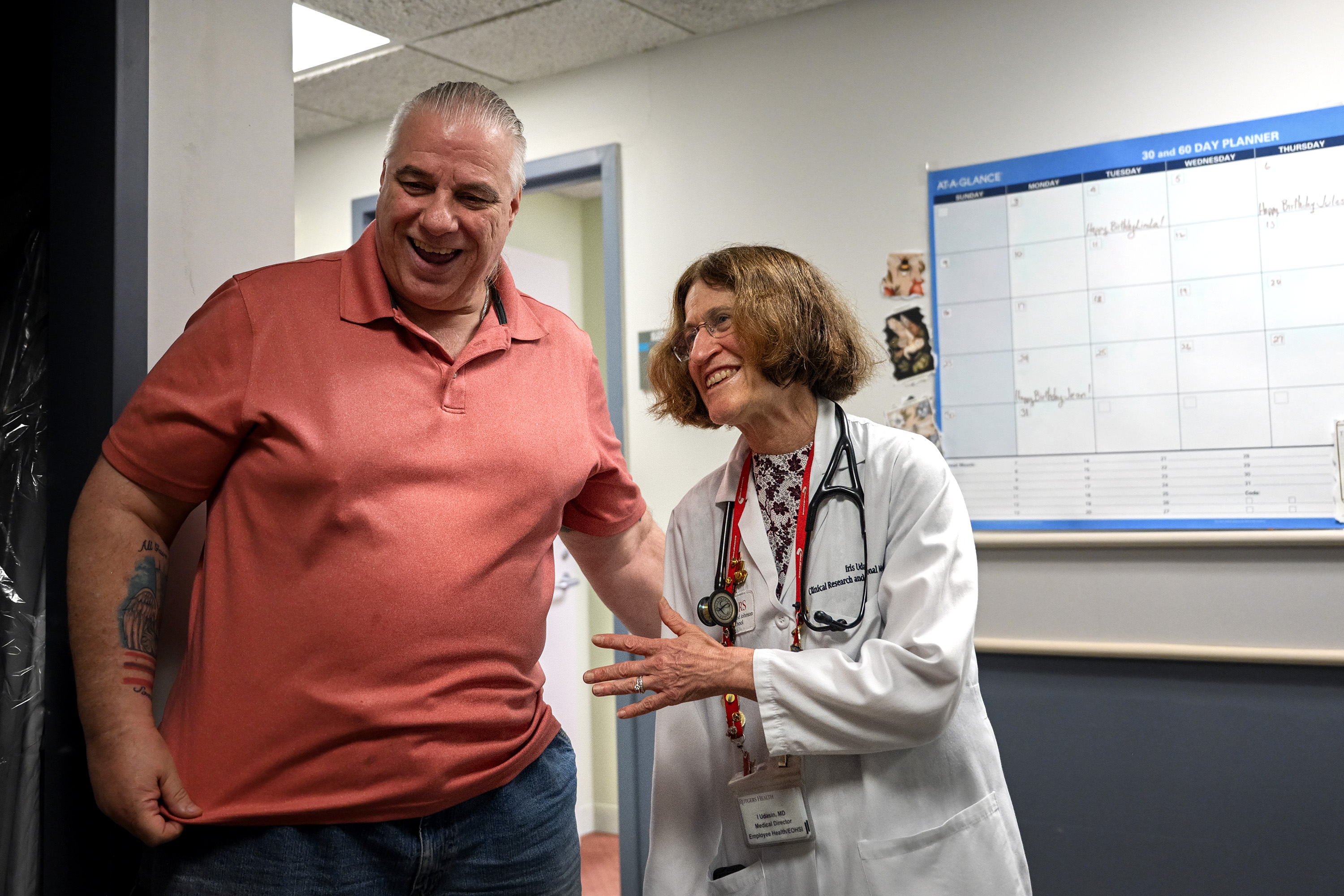
    Retired Piscataway firefighter Frank Geffre Jr. shares a laugh with Iris Udasin, medical director at the World Trade Center Health Program at Rutgers University. Geffre credits Udasin and her team at Rutgers with saving his life after he was diagnosed with colon and rectal cancer. “Dr. Udasin is like the quarterback of the team,” he said.Tom Gralish / Staff Photographer

    He sees a psychiatrist and a therapist for PTSD, which he finds especially hard to manage as Sept. 11 approaches each year. He lies awake after a recurring nightmare in which he is trapped in Manhattan with his family amid a terrorist attack, and he can’t get them out.

    After the first plane struck on 9/11, Geffre and five other firefighters from Fire District No. 3 in Piscataway were immediately dispatched. His team got to ground zero shortly after the second tower violently pancaked.

    “It was dark as can be, even though it was daylight. You had smoke clouds so thick you couldn’t even see your hand in front of your face,” Geffre said. “The dust was so thick it was like you had two foot of snow the night before.”

    He initially wore respiratory gear, but the oxygen tank ran out as he worked nonstop over the first 30 hours. He saved roughly a dozen people after putting out fires that were blocking their exit from the burning buildings within the World Trade Center complex.

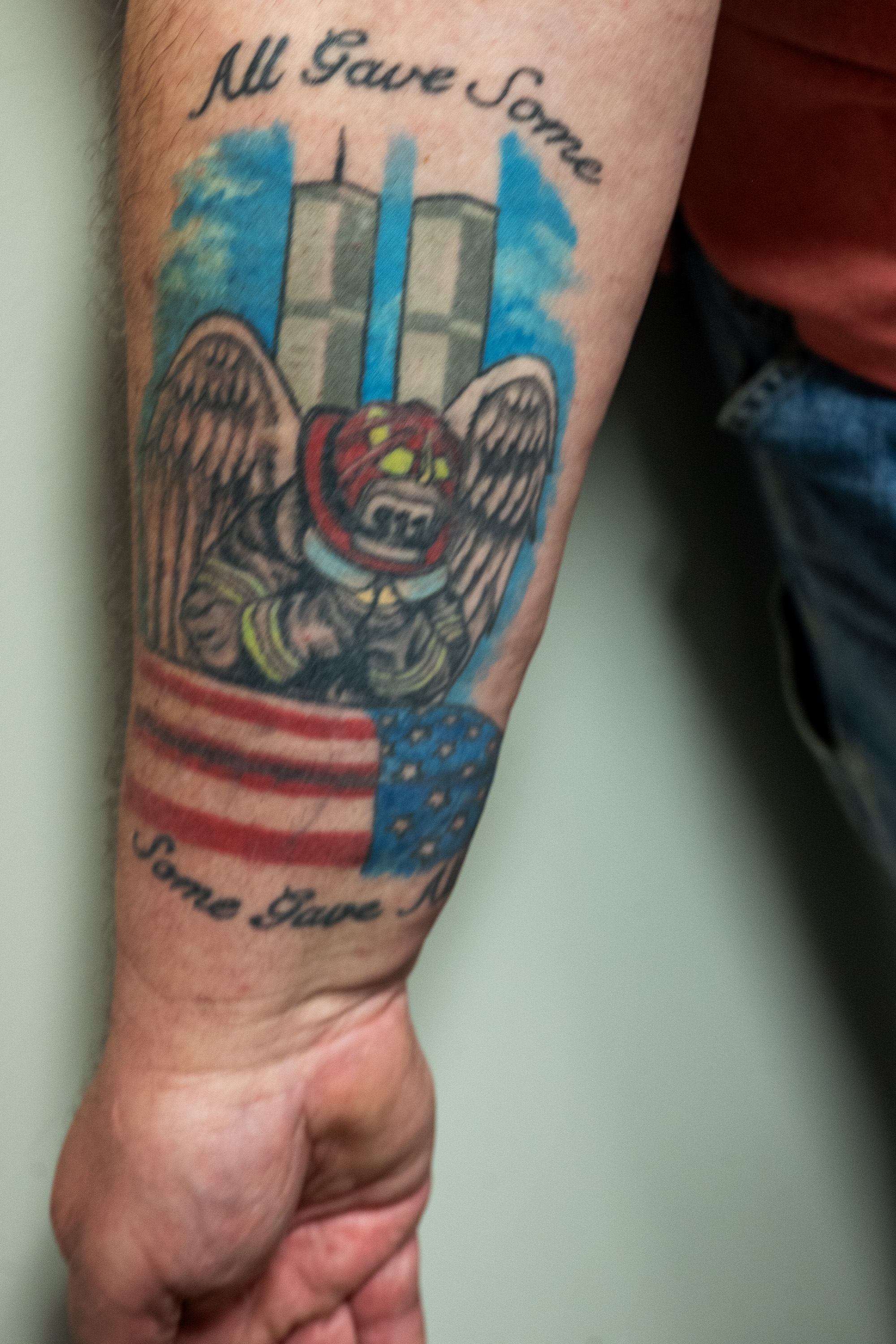
    Retired firefighter Frank Geffre Jr. displays his 9-11 tattoo – “All Gave Some – Some Gave All” – during an appointment at the World Trade Center Health Program at Rutgers University. He designed the tattoo from a photo of himself splashing water on his face to rinse off dust and debris from ground zero. His wife said he looked like he was praying in the photo.Tom Gralish / Staff Photographer

    He vividly recalls finding a brown dress shoe with a foot still in it. A blue polyester suit jacket with a torso seared to its lining. A wristwatch. A ring.

    In all, he worked The Pile for 20 days, smearing Vicks VapoRub under his nose to cope with the “unforgettable, unbearably horrid smell of burning human flesh,” he said.

    Now he can’t use the menthol and eucalyptus goo for his bouts of sinusitis, because the scent stirs bad memories.

    “It feels like it was yesterday and a lifetime ago,” Geffre said. “The ‘Never Forget’ vow is not for first responders. We won’t ever forget. It’s embedded in us.”

    He is ever-vigilant, prone to panic attacks. He avoids movie theaters and other places with crowds. “Too many variables,” he said.

    He has a second home in Florida but drives back and forth. He won’t get on a plane. “I get paranoid that somebody on the plane is going to hijack it,” he said.

    Two of the five firefighters with him on Sept. 11 have since died of cancer. He keeps in touch with four of the people he helped out of burning buildings. One committed suicide in recent years.

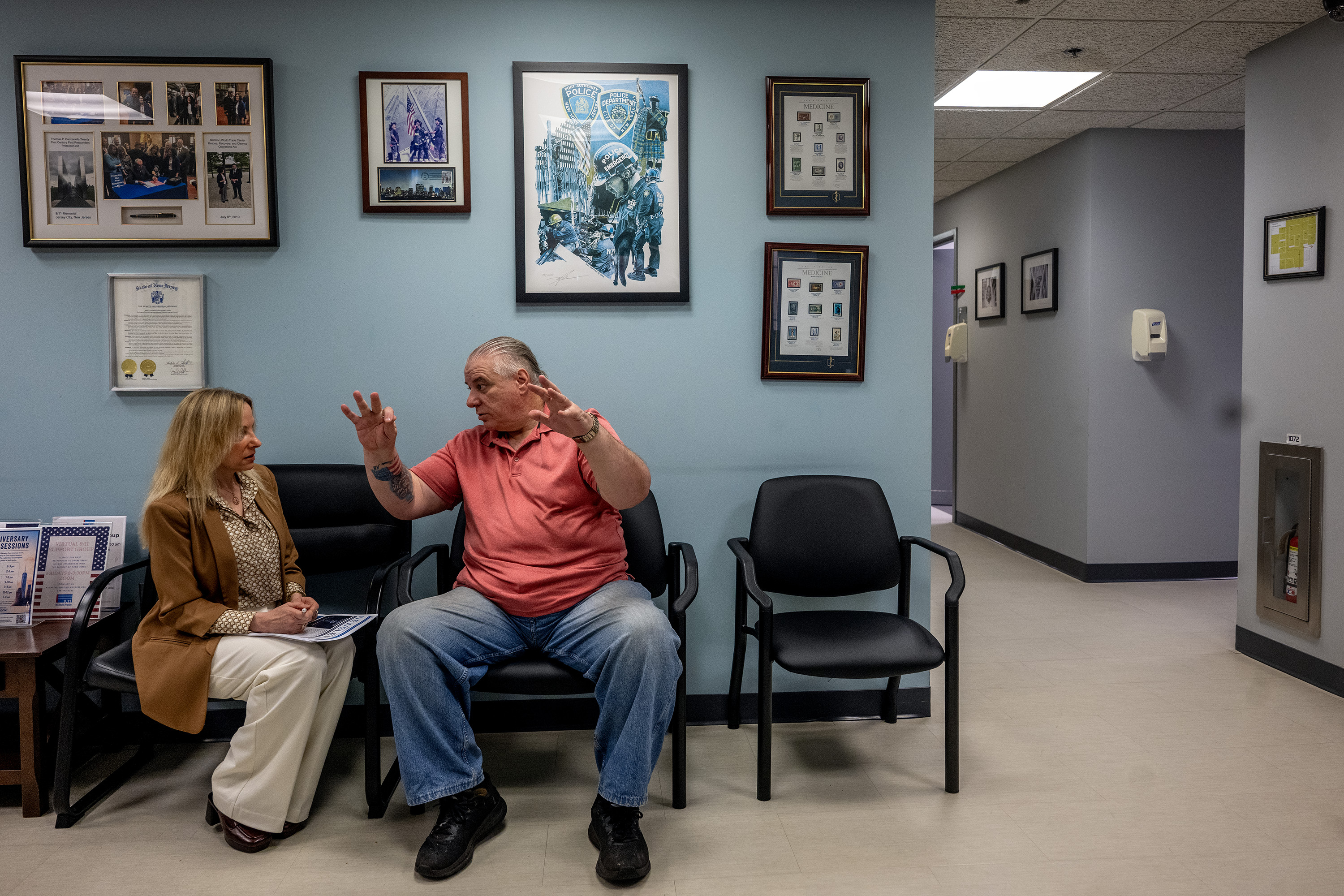
    Retired firefighter Frank Geffre Jr. talks with Jodi Streich (left), mental health director of the World Trade Center Health Program at Rutgers University. Rutgers is one of six federally funded health clinics that monitors and treats 9/11 responders, as the health impacts continue 25 years later. The patient waiting room at the Rutgers clinic is adorned with photos of responders. Tom Gralish / Staff Photographer

    Geffre, enrolled in the Rutgers program since its start, gets his mental healthcare through the clinic, which has seen a significant increase in demand for these services.

    As more responders become ill or die from 9/11-related diseases, some have developed “heightened anxiety and vigilance about their own health,” Streich said.

    Having more unstructured time in retirement, along with the loss of job identity and camaraderie, can be detrimental for mental health, she said.

    “Things that we once buried — they come fully alive during retirement,” Streich said, adding that the support group she runs for retirees is now the most widely attended after the cancer support group.

    Emergency responders who had felt too embarrassed or ashamed to seek help while working — because they feared being seen as weak — are coming in for the first time. Many are unable to eat or sleep, Streich said.

    “We see them when they are at rock bottom,” Streich said. “They’ll come in and say, ‘I’m ready to talk about what I’ve been holding in for 25 years.’”

    ‘Exhaustion, desperation and heartache’

    When asked if he regrets being dispatched to ground zero, Mark Fisher is emphatic: “Absolutely not.”

    But he is tormented by images of people standing outside makeshift morgues with photos of their missing loved ones.

    Fisher recalls becoming so distraught that a Red Cross volunteer pulled apart two tables piled with fresh clothes for responders to reach and embrace him.

    “She hugged me for the longest time,” Fisher recalled, blowing air through his lips to steady his breathing and control tears. “I’m an Irish Catholic, so I wear my heart on my sleeve and face. I just had that look of exhaustion, desperation, and heartache.”

    These days, he feels exhausted both emotionally and physically as his lung disease progresses. Fisher spent most of this summer in the hospital with a kidney infection that required two surgeries.

    Five days after he got out of the hospital, his gall bladder became infected. “If I die, I want to die in a Catholic hospital,” he told his wife. Doctors removed his gall bladder in July.

    The once-burly cop is rail-thin. He’s lost 35 pounds.

    Inside their Northeast Philadelphia home, Sue Fisher (right) talks about the day she learned her husband, Mark Fisher, would need a double lung transplant. The couple’s 3-year-old granddaughter, Morgan Elizabeth Fisher, sits between them. Mark Fisher needs to use a portable oxygen tank to take walks with Morgan. Jose F. Moreno / Staff Photographer

    Fisher’s priority right now is spending time with his wife and former sweetheart at Archbishop Ryan High School, and making sure she will be in decent financial shape when he dies.

    Fisher, Masi, and two other responders from the Philadelphia Police Department are seeking written assurances from the city that if they die from their World Trade Center-related illnesses, their families will receive line-of-duty death benefits.

    The status would enable their spouses to collect their full pensions, rather than half.

    City officials said their families can apply to the Philadelphia Board of Pensions and Retirement, which would review each case individually after death.

    Sue Fisher tries not to cry in front of her husband of 42 years; she’ll do it behind the shed in their backyard or on a walk with their golden retriever, Bentley.

    He wants to delay as long as possible a double lung transplant, for which the survival rate is about five to seven years. “If they say that’s all he’s got, I’ll take it,” Sue Fisher said. “It’s better than him suffering the way he is.”

    At night, she lies awake listening for the sound of Fisher’s breathing. Sometimes, she fears he has stopped. Then she nudges him with her toe until he stirs.

    Retired Philadelphia Police Captain Mark Fisher wants the city’s word that if he dies of lung disease from his time at ground zero, his wife will get line-of-duty death benefits. City officials have said that his wife can apply to the pension board after he dies. Jose F. Moreno / Staff Photographer
  • Cheltenham’s new manager wants to fix aging amenities while ‘holding the line’ on taxes

    Cheltenham’s new manager wants to fix aging amenities while ‘holding the line’ on taxes

    Jonathan Altshul started this week as the new manager of Cheltenham, an ethnically and economically diverse township of about 38,000 people divided into historic neighborhoods like Elkins Park, Wyncote, and Laverock.

    As he gets down to work on the township’s biggest priorities, including revamping facilities and boosting the tax base, Altshul wants to hear from them all, he said in an interview.

    “That’s what we sign up for as municipal managers,” said Altshul, who will receive an annual salary of $225,000. “How do you get people with different viewpoints, different walks of life, to come to the table?”

    It is a skill he mastered growing up as one of seven kids, Altshul said — “trying to make sure your voice is heard while respecting there’s also six others of you in the house.”

    One of his first priorities is improving Cheltenham’s facilities — some of which are century-old relics of the township’s past as a playground for the wealthy.

    “We are facing aging facilities and aging infrastructure,” Altshul said, and part of his job will be addressing that to attract new residents and businesses.

    He hopes to do so while “holding the line on tax increases as much as possible,” Altshul said. Cheltenham residents — who are the most property tax-burdened in Montgomery County — “have high expectations about the services that they receive, so there’s not, generally speaking, a whole lot of fat to cut.”

    In tackling the building challenges, Altshul’s penchant for hard conversations may be crucial. Township officials in recent years have discussed the possibility of closing facilities, raising worries from some residents in neighborhoods that stand to lose amenities.

    Two community centers — La Mott and Rowland — have been largely closed to the public for several years, and renovation plans have been confirmed only for La Mott.

    Adding to Cheltenham’s infrastructure challenges is the tax base itself. The township has less commercial space than nearby towns, but a larger proportion of institutional land, according to its recent comprehensive plan. Institutional land typically includes churches, universities, and hospitals that may not pay property taxes.

    Encouraging those entities to pay fees in lieu of property taxes may be part of the solution, Altshul said. He plans to take a pragmatic approach.

    “There are no silver bullets with public finances,” Altshul said. “It’s just listening and rolling up sleeves, getting your hands dirty, and thinking through problems.”

    It is the kind of work that led Altshul to public administration in the first place: He got a graduate degree in public policy and finance, taking federal and county-level government jobs in the Washington area before moving to Chester County to work in local government.

    His last job stint — two years as a suburban township manager — took him back to his native Connecticut while he helped his widowed father with a life transition, but his “heart is in the Delaware Valley,” Altshul said. “I raised my kids here.”

    That is why he takes seriously the emotional and financial investments Cheltenham residents have also made, Altshul said:

    “We’re talking about home.”

    This suburban content is produced with support from the Leslie Miller and Richard Worley Foundation and The Lenfest Institute for Journalism. Editorial content is created independently of the project donors. Gifts to support The Inquirer’s high-impact journalism can be made at inquirer.com/donate. A list of Lenfest Institute donors can be found at lenfestinstitute.org/supporters.

  • 2 men charged with rape of student at Eastern University in Delaware County

    2 men charged with rape of student at Eastern University in Delaware County

    Two men have been charged in the sexual assault of a student at Eastern University inside a dorm room earlier this year, Delaware County District Attorney Tanner Rouse announced Thursday.

    Dontae Williams, who turns 20 on Friday, and Chase Thompson, 19, surrendered to Radnor Township police on Thursday to face charges of rape of unconscious person and related offenses. Bail was set at $150,000 unsecured for both men.

    The assaults allegedly occurred in the Kea Hall residence of Naeem Turner, a friend of the victim, Rouse said. Turner was issued a summons to appear in court on three counts of invasion of privacy for allegedly recording video of the victim.

    Robert C. Keller, a lawyer representing Williams, said his client “has been cooperating since the beginning.”

    Keller said he will review the criminal case against Williams and pursue an appropriate defense.

    No lawyers could be identified Thursday evening for the other two men.

    Eastern University, a private Christian institution located in St. Davids, said in an emailed statement Thursday evening:

    “Student safety remains our highest priority. Sexual assault is not tolerated at Eastern University. The university took this incident very seriously, acting swiftly and fully cooperating with the Radnor Police Department throughout their investigation.”

    Eastern University continued: “We are grieved by this situation and the impact it has had on those involved. As a Christian university, we are committed to the safety and well-being of our students.”

    The university said Naeem Turner was no longer enrolled at Eastern.

    On Feb. 1, Radnor Township police responded to Eastern University for a report of a rape, Rouse said. The officers met with the student, who said that after a night out drinking, she reached out to Turner, her friend.

    Turner said he had cousins visiting his dorm room, but she could come over, the police criminal complaint said.

    The student, who already was intoxicated, arrived at Turner’s residence and was given tequila to drink, the complaint said. The student then said she fell asleep.

    She was then allegedly sexually assaulted by Williams and Thompson, the complaint said.

    Investigators collected DNA evidence that matched both men, the complaint said.

    Turner had recorded video of himself engaged in sexual activity with the student, and twice the victim is seen pushing the phone camera away and indicating that she did not want to be recorded, the complaint said.

    Turner, who was not charged with rape or any other assaults, said he had consensual sex with the victim, the complaint said.

    The student said she did not remember having consensual sex with Turner and that she did not consent to being recorded, the complaint said.

    Turner later allegedly sent two video clips to a contact on his phone, the complaint said.

    “This incident is an appalling violation of a person’s safety, dignity, and trust,” Rouse said in statement.

    “No one should ever have to fear being sexually assaulted by someone they know, and especially not by someone they consider a friend. It can be frightening to come forward after an experience like this, and we commend the victim for having the courage to report what happened,” Rouse said.

    “Sexual violence is never acceptable, and my heart goes out to a young woman that will live with this trauma for the rest of her life. No one should have to fear that someone they trust will violate their safety or boundaries. There will be accountability,” Rouse said.

  • The push to remove lead pipes is on. Thousands of water systems still don’t know where theirs are

    The push to remove lead pipes is on. Thousands of water systems still don’t know where theirs are

    Kathryn Pilgrim knew the century-old Victorian she bought in Dunkirk, New York, came with old plumbing. She replaced pipes she suspected of containing lead and later installed a kitchen filter designed to remove heavy metals.

    But six years after buying the house, she still can’t be sure that her tap water is lead-free because she doesn’t know what material was used for the pipe that runs under her front yard and connects to the city water supply. Dunkirk is nearly two years behind schedule on an inventory that would give Pilgrim and other residents that information.

    Dunkirk, which supplies water to about 5,000 homes and businesses, is one of more than 1,300 public water systems cited by the U.S. Environmental Protection Agency for failing to meet an October 2024 deadline to hand in an inventory of the water lines that could be leaching the heavy metal into Americans’ drinking water, an Associated Press analysis of the agency’s enforcement data shows.

    Roughly 6,300 water systems serving 3.8 million Americans have still not submitted a required list of how many lead service lines remain in use.

    Those inventories are critical for cities to replace all lead pipes by an upcoming 10-year deadline. Failing to document the lines also means residents won’t know if their homes have a potential source of lead exposure.

    Pilgrim, a special education teacher who has fostered teenagers, had been educated on the dangers of lead, especially in paint. The colon cancer survivor’s concerns extended to her drinking water.

    “I just thought there was some stuff in the water that might not be great,” she said.

    Officials with the city of Dunkirk did not respond to requests for comment.

    Lead pipes are abundant across New York and many communities around the country with older infrastructure. The city of Buffalo’s data shows 45% of its service lines — which connect homes and businesses to the water supply — are made of lead, the third-highest rate of any major city. The city of Fredonia, which neighbors Dunkirk, reported 28%.

    Lead is a priority under Trump administration

    Lead is a neurotoxin that can stunt children’s development, lower IQ scores, and increase blood pressure in adults. Roughly 4 million homes and businesses are still connected to water utilities via lead pipes, according to the EPA’s latest estimate.

    How much lead is entering the building depends on factors like the water chemistry and the pipe’s condition, but lead service lines remain the most significant source of the heavy metal, according to the EPA.

    The EPA has touted its work on lead lines as a key environmental win. About three-quarters of the drinking water enforcement orders issued by the EPA since President Donald Trump’s return to office were related to missing inventories.

    Most water systems with missing inventories are small — 84% provide drinking water to fewer than 500 people, the AP analysis shows. Many are small housing developments, mobile home parks, or schools.

    The EPA said it turned to enforcement only after efforts to help water systems comply were unsuccessful. Utilities need the inventories to prepare for a 2027 deadline requiring most drinking water providers to replace their lead lines within 10 years, the agency said. The Trump administration has also defended that aggressive deadline, enacted under Biden, in court.

    Rob Hayes, a senior director with Environmental Advocates of New York, said it is a rare environmental regulation the Trump administration has not sought to scrap.

    “It speaks to the universal popularity of getting lead out of drinking water,” he said.

    Inventories are not easy

    About 3,500 water systems reported they don’t know what their service lines are made of. One in five service lines nationwide were reported as having unknown materials.

    Many utilities are racing to identify unknown pipes by next year, when they must begin replacing them.

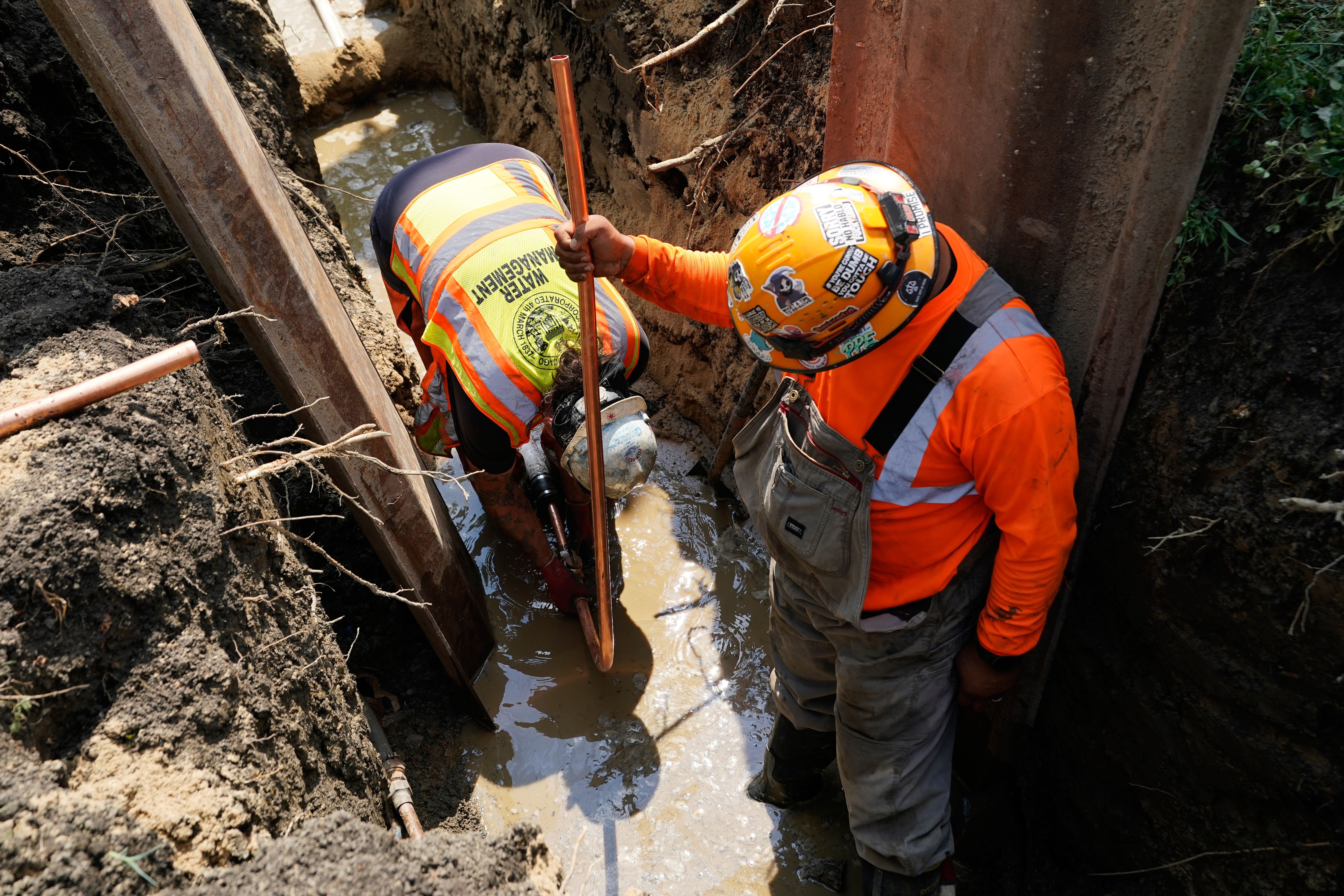
    In Chicago, home to the most lead lines of any city in the country, crews are working block-by-block, digging up the pipes that branch off from the utility’s main line. The city still doesn’t know the material of close to one in 10 service lines. So in those cases, crews may have to excavate them to check the material, said Patrick Schwer, the city’s water quality director.

    “We are digging through every single piece of information that we have associated with every single service line trying to find any indications of the material,” he said. “We’re scouring millions of work orders, trying to pull at little threads of information.”

    Lead pipes for public water date as far back as the late 1800s and were prevalent all the way to the 1950s. Lead was a preferred material at the time because it was resistant to corrosion, and as a result, the original lines remain in use decades later.

    Chicago advises residents with unknown lines to assume they are made of lead if their building predates 1986, when it was banned under the U.S. Safe Drinking Water Act.

    Records of the installations were often lost, incomplete, or illegible. Lapses in recordkeeping have made it difficult for some utilities to complete their inventories, said Joshua Klainberg, senior vice president with the New York League of Conservation Voters.

    Still, Klainberg said, leaving residents in the dark about whether they should take precautions by not submitting an inventory at all is “unforgivable.” Even an incomplete inventory can alert people they may have a lead service line, allowing them to take precautions such as running the tap, using filters — the highest-quality of which can remove most lead — and cooking only with cold water, he said.

    Limited funds for replacements

    For utilities, not knowing what is in the ground will carry an even stiffer consequence beginning in 2027. Starting then, they are required to replace 10% of lead water pipes each year, usually with copper or plastic pipes. But lines made of unidentified materials will be included in that target, said Erica Galante-Johnson, a lead policy analyst with the Environmental Policy Innovation Center.

    “The more unknowns, the more lines a system needs to replace every year,” Galante-Johnson said.

    And each replacement is expensive, usually costing between $8,000 and $15,000, according to EPIC.

    In Chicago’s case, “the city is actively going after every single dollar that we can,” from the federal and state governments, Schwer said. The city still needs to replace about 393,000 lead service lines.

    Most funding for identifying and replacing lead pipes comes from the 2021 bipartisan infrastructure law, with states distributing it. This is the final year of dedicated federal funding for lead projects, though previously allocated money will continue flowing to communities.

    Water systems without an inventory will fall even further behind as national efforts shift toward replacements, Hayes said.

    “If they can’t even get an inventory together, how the heck are they going to get the resources and the manpower and the kind of coordination between governments together to actually get workers out on the street and dig these pipes out of the ground?” he said.

  • Flyers update arena rendering after fans say women were left out of the first version

    Flyers update arena rendering after fans say women were left out of the first version

    The Sixers and Flyers released the first public renderings of their new arena, which is scheduled to open in 2030, earlier this week.

    Two images, which were created by Populous, the global design firm responsible for the arena’s conception, showed fans attending basketball and hockey games in the new state-of-the-art digs. But some fans say the Flyers’ rendering was missing one key detail: female fans. What ensued was a Where’s Waldo? level of analysis by people on the internet. The Flyers have since updated the rendering.

    The original Sixers rendering had a handful of what appeared to be female-presenting fans, wearing crossbody purses over their jerseys, with long hairstyles and ponytails. The Flyers version was more ambiguous. There appeared to be some women sitting toward the top of the image, in clusters across the stairs, but none wearing Flyers gear.

    A Populous spokesperson said the company accepted responsibility for the oversight and worked quickly to update the rendering as soon as it became aware of the issue.

    “The website now reflects the updated image,” the spokesperson said.

    Camille Barrière was one of the initial critics who pointed out the apparent lack of women via an X post. Barrière, who lives in Paris, studied architecture and is pursuing her master’s degree in media design at the School of Design Nantes Atlantique, with a focus on the delegitimization of women and non-male sports fans.

    When the renderings came out, Barrière said online that it was “new source material” for her thesis. Her post has been viewed nearly 200,000 times on X and has since spread to other social media platforms, particularly Reddit and Instagram among women’s sports pages.

    Some fans worry the lack of visibly female fans in the original rendering was more than an innocent mistake and is actually indicative of the male-centric way sports fandoms are still stereotypically viewed. Others say it’s not that serious and this much intense dialogue based off a rendering is laughable.

    “As a woman, I’m hyper aware of the amount of men in public spaces, and it’s for that reason that the image struck me. I continued searching and couldn’t find a single woman in Flyers gear in that picture,” Barrière told The Inquirer.

    Creating architectural renderings is not one size fits all and the process can vary considerably, but the final product can help represent the future of a space and who it belongs to, says Rashida Ng, an architecture professor at the University of Pennsylvania’s Stuart Weitzman School of Design.

    “I wouldn’t presume to know how or why the particular Flyers image was produced, or suggest that the omission was intentional,” she said. “But something can be unintentional and still be meaningful. If an image of a major public venue inadvertently leaves out a substantial part of the public, I think it’s worth asking how that happened.”

    The Gist and Togethxr, two popular women-founded sports media brands, called out the original renderings on Instagram. Reports show women are one of the fastest-growing audiences in sports.

    “They’re buying season tickets, filling arenas, creating fan communities, and shaping sports culture across every major league. The future of sports already includes women,” the Gist wrote in its post. “The renderings should too.”

    Ng says she sees the rendering debacle as a “teachable moment.”

    “Design is not neutral. The spaces we create — and the images we use to imagine and communicate them — both reflect and shape ideas about who belongs, who is welcome, and whose experiences matter,” she said. “That doesn’t mean every design decision or omission is intentional, but it does mean that designers have a responsibility to think critically about the worlds their work helps to envision.”

    Thursday morning, the Flyers updated the rendering on its website with a new version, one that added many new visibly female fans.

    As for Barrière, she’s shocked that a non-fan’s observation from across the world sparked discussion.

    “If my silly tweet that was just meant for my 40 followers can initiate a discussion on the issue, then I’m all for it,” she said. “I think inclusivity in hockey spaces, whether online or in real life, still has a long way to go, and calling out the teams directly is one of the ways we can help move the conversation forward in a positive direction.”

    And thinking about those women fans is particularly pertinent for the new arena — it’s also the future home of Philadelphia’s new WNBA franchise.