Voters in Clementon this week overwhelmingly rejected a $13.5 million school bond question that would have raised property taxes, while a $76 million referendum in Cinnaminson was too close to call.
If approved, the Clementon bond would have been used to build an early childhood center for preschoolers. The measure, according to officials, would have added about $243 annually to the tax bill for a home assessed at the borough average of $115,178.
Meanwhile, the outcome of Tuesday’s special election in Cinnaminson — the largest bond referendum in the district’s history — was too close to call, Burlington County election officials said.
Preliminary results indicate the school bond issue appears to be heading for defeat, officials said. There were 1,632 votes against the proposal and 1,610 in favor, with mail ballots and provisional ballots still being verified and counted, elections officials said. A final count is expected at the end of the month.
The Cinnaminson proposal, which included two questions, would add about $560 annually on a home assessed at the township average of $236,538, according to officials. The funds would be used for improvement projects, classroom additions, HVAC upgrades, new water fountains, and renovated bathrooms.
The first question had to pass for voters to consider a second question. However, the second question was defeated, 1,808-1,491.
Cinnaminson Township Public Schools Superintendent Stephen Cappello has said the district would regroup and figure out next steps if voters rejected the bond questions. Taxpayers are still paying down a 2014 referendum that added about $238 annually to local property taxes.
“The election numbers and the voter response will ultimately drive whether the Board seeks a future referendum,” Cappello said in a statement.
Tuesday was one of five times during the year that school boards may ask voters to approve a bond issue or special question. They are typically used to pay for projects districts cannot readily fund through their annual general operating budgets.
A renovation project to a beloved library should be easy win for a local politician. But plans to rehab the Cecil B. Moore Library have been anything but a win for Councilmember Jeffery Young Jr.
Young and representatives from the Philadelphia Capital Program Office and the Free Library of Philadelphia gave further details on the $2 million in renovations planned for the North Philly library at a community meeting Tuesday. An additional $8 million previously raised and allocated for the project will remain unused for now.
Construction is expected to begin in October on what city officials are calling phase one of a larger project. The initial phasewill include a new accessible building entrance, restrooms, and elevator; HVAC replacement; a new fire-alarm system and water heater; and safety improvements to building exits, they said.
The building at 2320 Cecil B. Moore Ave. will be closed during construction, which is expected to last about six months. During the closure, some limited programming will be available at the nearby MLK Recreation Center at 2101 Cecil B. Moore Ave., according to the Free Library’s neighborhood library services division chief, Joel Nichols.
Other library programming at MLK or elsewhere is under consideration, he said, but it remains unclear whether Cecil B. Moore will have a dedicated satellite branch.
The plan did not go over well with the roughly 100 community members who came for Tuesday’s meeting at MLK Recreation Center. They and other supporters of the library have long been frustrated by how Young has wielded his power of councilmanic prerogative to delay the project for years while pursuing alternative ideas for the site, and has resisted spending the full $10 million that has been raised.
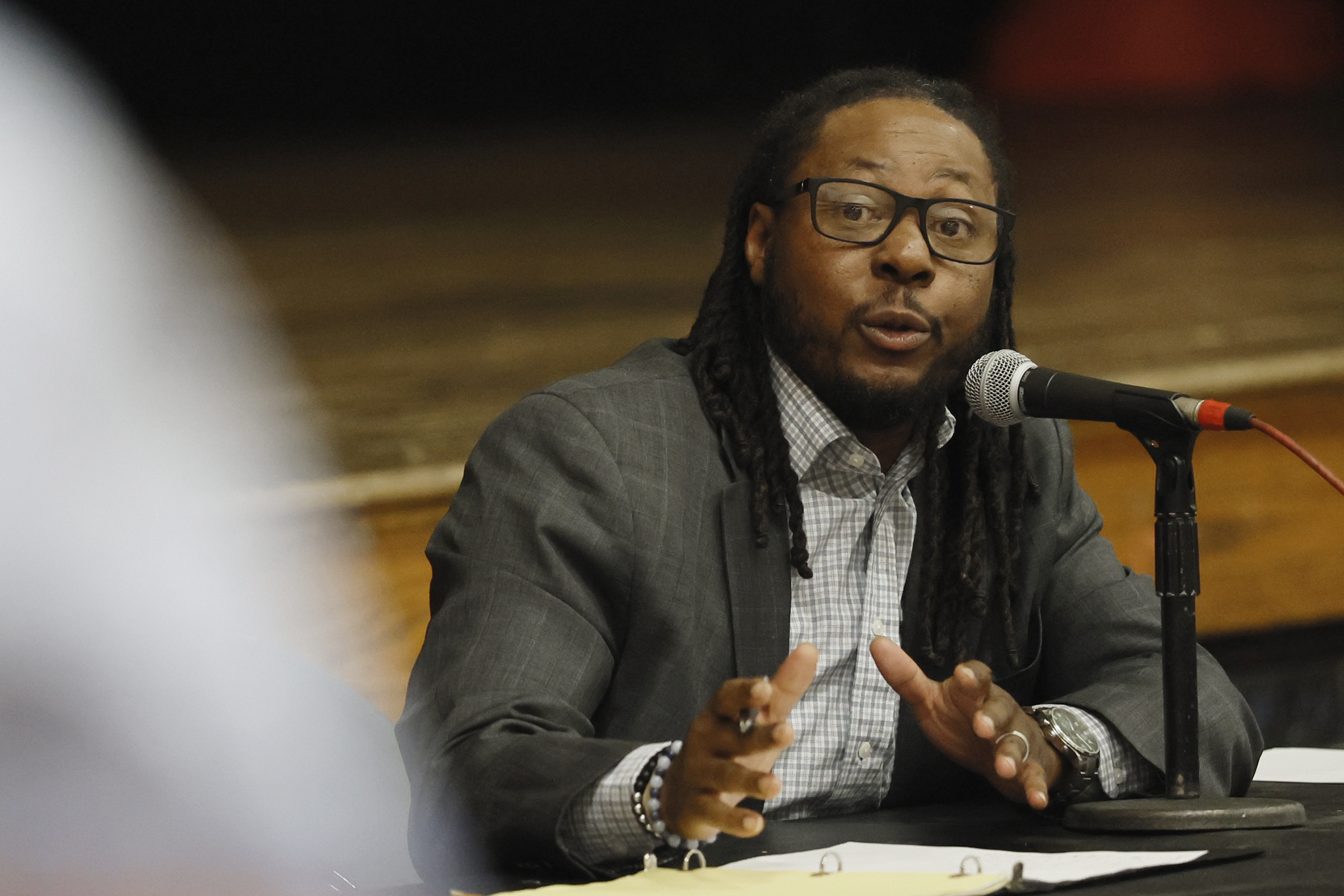
Councilman Jeffery Young Jr. responds to a question from a member of the public during a community meeting, hosted by the councilman and capital projects, at the MLK Recreation Center in Philadelphia on Tuesday, September 15, 2026. The meeting centered on the councilmember’s plans for renovating the Cecil B. Moore library.Elizabeth Robertson / Staff Photographer
Young’s responses to their questions did not ease that frustration, as he and capital program office representatives could not provide details about future project phases, citing the need for more community feedback. Throughout the event, residents chanted at Young to release the full funds and yelled back and shook musical instruments while he gave answers. Some held up signs referencing his forthcoming reelection campaign, which spelled out “one term.”
“At what point have you received enough community engagement that you can listen to the community?” asked Allyce Estremera, a Brewerytown resident.
Lack of community input
In a presentation, officials highlighted the library’saging infrastructure and the urgent need for the foundational and safety improvements in their plan. The Cecil B. Moore Library, which opened in 1962, still has its original restrooms and an HVAC system from 1994, they said. The building has been “plagued by deferred maintenance,” said the library system’s deputy director of property management, Ty Dupass.
In his opening remarks, Young acknowledged the role the library has played in the community for generations, and said the renovations would “bring this building back to life.”
Community members have not voiced opposition to renovations included in the first phase. However, residents have been asking Young and the city to proceed with a more comprehensive $5.3 million renovation plan put forth through the city’s Rebuild initiative, which was slated to begin construction in 2024 and could have been completed by now had it begun on schedule. The Rebuild plan would have included the phase one renovations, as well as a dedicated teen space, new flooring, additional computers, exterior upgrades, and more.
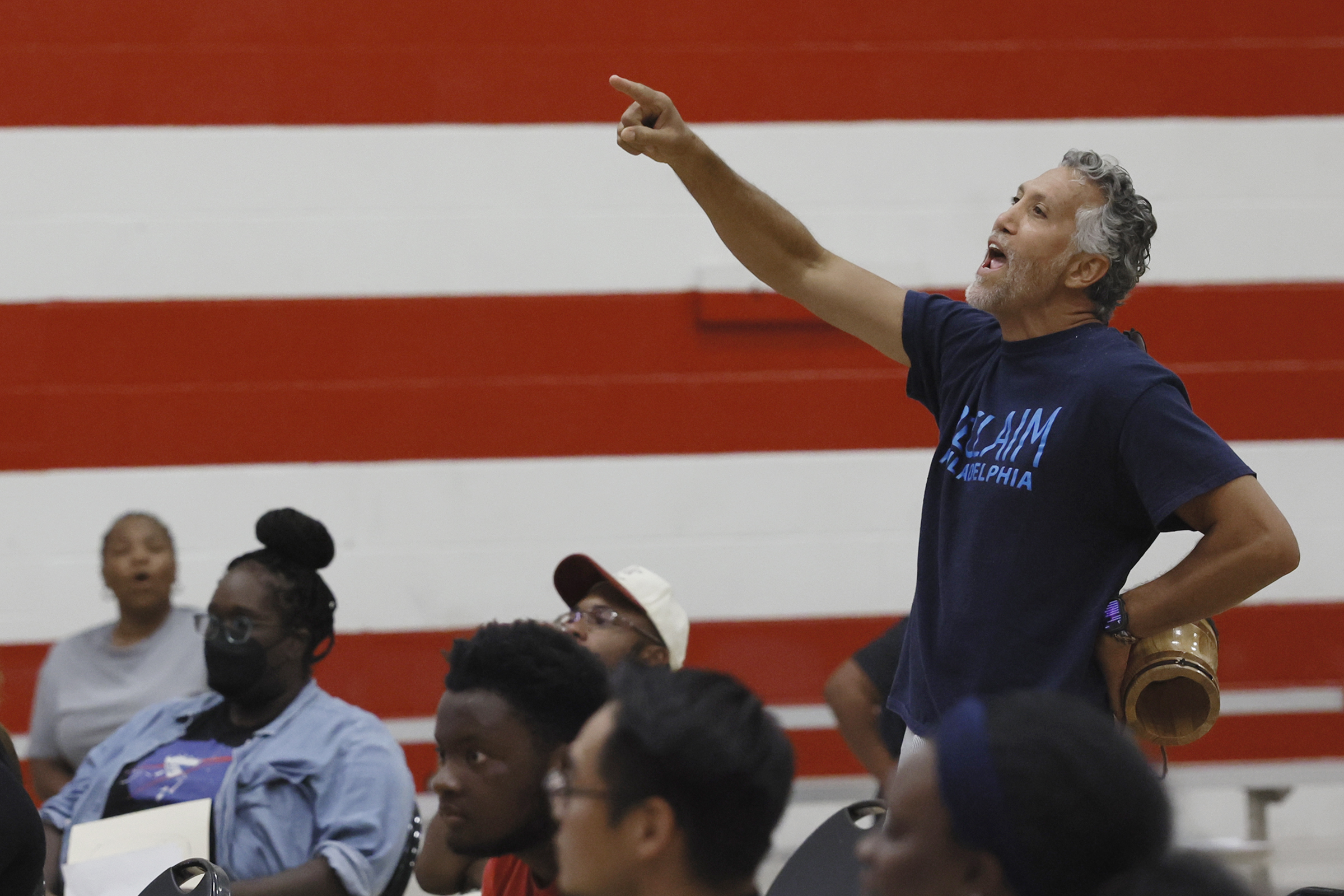
Catherine Martin, a AFSCME DC47 Local 2186 member and library worker holds her “Where’s the $8 million” sign during a community meeting, hosted by Councilman Jeffery Young Jr and capital projects, at the MLK Recreation Center in Philadelphia on Tuesday, September 15, 2026. The meeting centered on the councilmember’s plans for renovating the Cecil B. Moore library.Elizabeth Robertson / Staff Photographer
But once Young replaced outgoing Council President Darrell L. Clarke in 2024, he secured an additional $5 million from the city’s capital budget and paused the project. At various points, Young has offered larger development proposals for the library, including a new building or a hybrid space that includes a library and affordable housing. While the housing proposal has been dropped, Young said Tuesday the current library footprint was too small to accommodate the 21st-century features the community deserves.
Young’s spokesperson, Yumeno Young, and Philadelphia Capital Program Office representatives said the remaining $8 million raised for the project remains committed to the library in its current location.
“Leadership is built on trust. And where is the trust? Because they’re not earning it,” said Emily Dumas, 38, who said she does not trust the $8 million would actually go to the current library building.
Nikol Ligon, 56, said she believed Young and the city ought to release the full funding for a wider renovation, and does not like that the Council member seems to have first and last say on a project that means so much to the community.
And Neferteri Raynor, 24, signed up this summer for a community advisory group Young’s office organized to gather feedback, but the group has held no meetings so far.
“We would love to have a level of certainty and transparency,” she said.
Neferteri Raynor asks questions during a community meeting, hosted by Councilman Jeffery Young Jr and capital projects, at the MLK Recreation Center in Philadelphia on Tuesday, September 15, 2026. The meeting centered on the councilmember’s plans for renovating the Cecil B. Moore library.Elizabeth Robertson / Staff Photographer
Election preview
Yumeno Young said an assessment may be conducted to determine what additional amenities and renovations could be constructed in the future, given the library’s current footprint, but it is unclear if or when that would happen.
The convoluted planning and decision-making confused State Sen. Sharif Street (D., Philadelphia), who spoke at the meeting in support of the residents.
“I don’t understand any of the process that was said today. … We need to come back with a better plan,” he said.
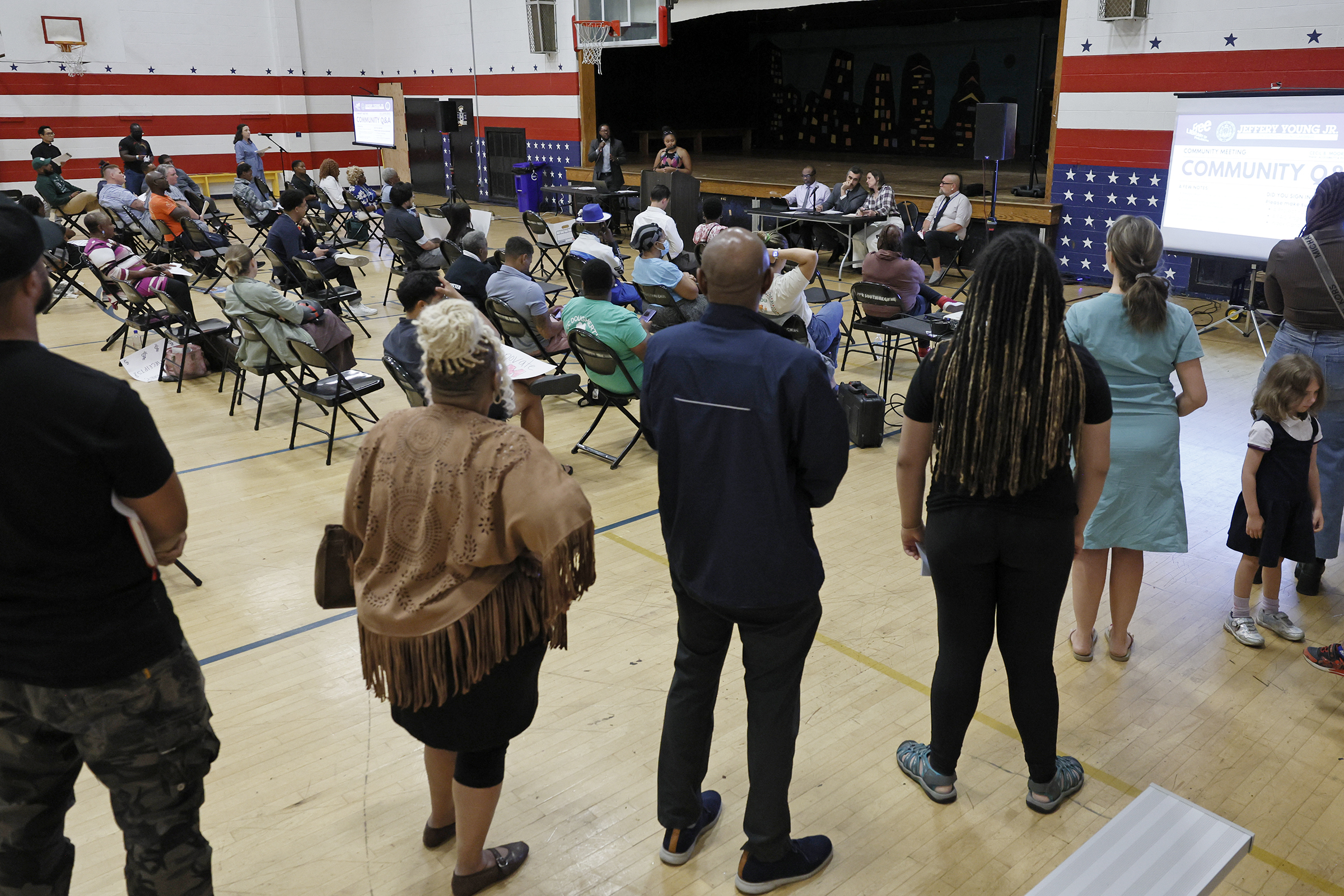
Members of the public line up for a chance to speak at the community meeting, hosted by Councilman Jeffery Young Jr and capital projects, at the MLK Recreation Center in Philadelphia on Tuesday, September 15, 2026. The meeting centered on the councilmember’s plans for renovating the Cecil B. Moore library.Elizabeth Robertson / Staff Photographer
Young largely deferred questions to his spokesperson or the capital program office representatives, and said “we are working on this as a team” when residents implored him to speak more.
Andcommunity members said they were often left more confused by his answers. Siobhan Neitzel, the Brewerytown Sharswood Neighborhood Coalition colead of youth and education, said it felt as if Young was passing accountability onto others.
Some residents brought up the timing of the initial renovations, which are scheduled to be completed shortly before Young, considered the most vulnerable Council member, is on the primary ballot for reelection in May. The residents swore to use the library saga against Young.
While library staff have said they were told by capital program staff the renovation timing was related to Young’s reelection, Young denied there was any connection.
At points during the meeting, Young appeared to get frustrated. He said his goal is to find the best uses for taxpayer money.
“Your voices will be included in the process. … I’m not going to do anything just to do it,” Young said.
Still in her 20s and possessed of a curious eye and sensitive spirit, Annie Dillard set out beneath the trees along Tinker Creek in southwestern Virginia and emerged with a best-selling book that made her one of the most honored and beloved writers of her time.
Pilgrim at Tinker Creek, published in 1974, won the Pulitzer Prize and made Ms. Dillard something more than a literary celebrity: She was viewed as a bard of the environment, a 20th century Henry David Thoreau, a youthful sibyl of the wildwoods, a visionary whose shimmering prose offered glimpses of the eternal.
Ms. Dillard, who went on to write well-received novels, memoirs, essays, and poems, and was awarded the National Humanities Medal in 2015, died Tuesday at her home in Wellfleet, Mass. She was 81. Her death was confirmed by writer Maggie Nelson, her literary executor.
Pilgrim at Tinker Creek seemed to be an almost perfect embodiment of its times: an eager embrace of the natural world, a work of mystical, even sensuous prose, and the spiritual autobiography of a questing soul.
“I am no scientist but a poet and a walker with a background in theology and a penchant for quirky facts,” Ms. Dillard wrote. “I walk out; I see some event that would otherwise be utterly missed and lost, or something sees me, some enormous power that brushes me with its clean wing, and I resound like a beaten bell.”
Her model was Thoreau, who chronicled a year spent in a cabin in his 19th century literary classic Walden, which became a lodestar for students and nature lovers of the 1960s. Ms. Dillard similarly wrote about a single year — winter to winter — at Tinker Creek, giving the impression that she was isolated deep in the Blue Ridge Mountains of southwestern Virginia.
In reality, Tinker Creek flowed through the suburbs of Roanoke, where Ms. Dillard lived at the time with her first husband. When she recorded her musings on nature, she was seldom out of range of houses, highways, and other fixtures of modern life.
“I didn’t say, ‘I walked by the suburban brick houses,’” she told the Atlantic in 2015. “I didn’t obscure anything, I just left it out.”
Yet her descriptions of the stones, trees, insects, and slippery creatures she found there — and her responses to them — suggested a pristine state leading to meditation, even prayer.
“A reader’s heart must go out to a young writer with a sense of wonder so fearless and unbridled,” novelist Eudora Welty wrote in the New York Times. “There is an ambition about her book that I like, one that is deeper than the ambition to declare wonder aloud. It is the ambition to feel.”
Ms. Dillard openly invoked a sense of the divine as she explored the world above her head and beneath her feet, but her depiction of nature went far deeper than sunshine and birdsong.
“Evolution loves death more than it loves you or me,” she wrote in Pilgrim.
In one of the book’s most celebrated passages, Ms. Dillard described the death of a Tinker Creek frog, attacked by a giant water bug:
“As I looked at him, he slowly crumpled and began to sag. The spirit vanished from his eyes as if snuffed. His skin emptied and drooped; his very skull seemed to collapse and settle like a kicked tent … I gaped bewildered, appalled. An oval shadow hung in the water behind the drained frog; then the shadow glided away. The frog skin bag started to sink.”
Earlier writers, including Aldo Leopold, Rachel Carson, and Henry Beston, had described the workings of nature with perception and skill, but Ms. Dillard brought a new sensibility to the art.
She evoked the ecstasy of saints as she described her search “through the peach orchards of summer, in the forests of fall” for a tree burning with light. When she found such a tree, she described it almost as a moment of seduction: “It was less like seeing than like being for the first time seen, knocked breathless by a powerful glance.”
Soon after winning the Pulitzer for nonfiction in 1975, Ms. Dillard moved from Virginia to an island in Puget Sound in Washington state. She published another slender meditation on nature and faith, Holy the Firm, in 1977. Two years later, she settled in Middletown, Conn., where she lived for many years while teaching at Wesleyan University.
In the 1980s, she published Teaching a Stone to Talk, a collection of essays built around travel and science; Living by Fiction, a work of literary criticism; and Encounters With Chinese Writers, based in part on a visit to China with a cultural exchange program.
Her acclaimed 1987 memoir, An American Childhood, described her Pittsburgh childhood, her intellectual and spiritual growth, her curiosity about the natural world, and her sometimes-strained relations with her socially prominent but idiosyncratic parents. Her father once quit his job to pilot a boat downriver to New Orleans to visit Dixieland jazz clubs. Her mother had a wicked gift for practical jokes, sometimes answering wrong numbers by handing the telephone to another person and giving the instruction, “Here, take this, your name is Cecile.”
“Our family was on the lunatic fringe,” Ms. Dillard once said.
From the time Pilgrim was published, her books were never out of print and were often collected in omnibus volumes. Other nonfiction writers of the 1970s and 1980s, including Tom Wolfe, Joan Didion, and Hunter S. Thompson, became renowned for their extravagant prose or personal styles, but their work relied primarily on the outward-looking conventions of journalism.
Ms. Dillard’s vision, by contrast, was more internal. Like Wolfe and other writers first known for their nonfiction, she began to experiment with fiction and in 1992 published her first novel, The Living, a multigenerational saga about the 19th century settlement of the Northwest.
She published a collection of essays, For the Time Being, in 1999. Another novel, The Maytrees, about the marital struggles of a couple on Cape Cod, appeared in 2007. Ms. Dillard then turned to painting and, except for a 2016 book of reprinted essays, fell silent as a writer.
“One of the few things I know about writing,” she wrote in her 1989 book The Writing Life, “is this: spend it all, shoot it, play it, lose it, all, right away, every time. Do not hoard what seems good for a later place in the book, or for another book; give it, give it all, give it now. The impulse to save something good for a better place is the signal to spend it now.”
Affluent upbringing
The oldest of three daughters, she was born Meta Ann Doak in Pittsburgh on April 30, 1945. A great-great-grandfather had founded the bathroom-products company American Standard, and she grew up in affluent circumstances.
She attended private schools, played baseball, and developed an early fascination with natural history. She also became a dedicated reader, documenting the thousands of books she read since 1964.
An admitted rebel as a teenager, she was suspended from school for smoking. (She was a heavy smoker throughout her life, even when communing with nature.)
Partly to “smooth off her rough edges,” her parents sent her to what is now Hollins University, a women’s college in southwestern Virginia. After her second year, she married her creative writing professor, poet Richard Dillard.
After graduating in 1967, she received a master’s degree in English from Hollins in 1968, then stayed for several years in Roanoke, reading about nature and theology and exploring the nearby mountains and streams. She composed much of Pilgrim at Tinker Creek in the Hollins library.
At first, Ms. Dillard wrote poetry, publishing her first collection, Tickets for a Prayer Wheel, in 1974, just before Pilgrim.
“My poetry, unfortunately, is no good,” she told the Washington Post in 1987. “There’s nothing in the language that poetry can do that prose can’t do much better — discursive writing, reasoning, information as symbol, narrative — all those things that poetry has forbidden itself.”
Her first marriage ended in divorce, as did her second, to anthropologist Gary Clevidence. In 1988, she married Robert D. Richardson, the author of biographies of Thoreau and Ralph Waldo Emerson. He died in 2020.
Survivors include a child from her second marriage, Cody-Rose Clevidence; four stepdaughters, Carin and Shelly Clevidence, and Anne and Lissa Richardson; and two sisters.
In later years, Ms. Dillard told interviewers she could not write any better than she had when she was younger. She spent her time painting and reading at her homes in Massachusetts and Key West, Fla.
“Why are we reading,” she observed in The Writing Life, “if not in hope that the writer will magnify and dramatize our days, will illuminate and inspire us with wisdom, courage and the possibility of meaningfulness, and will press upon our minds the deepest mysteries, so we may feel again their majesty and power?”
WASHINGTON — Senate Democrats on Tuesday blocked legislation to create a new regulatory framework for cryptocurrency, stalling an industry-backed effort to place new guardrails around digital assets after demanding more limits on President Donald Trump’s investments.
The 49-50 vote on whether to move forward with the legislation was a pivotal election-year test for the $2.3 trillion cryptocurrency market as the industry has pushed aggressively for a uniform set of rules. The Senate debate came as cryptocurrency companies have become a major political force, and as Trump has amassed significant wealth in crypto while in office.
While some Democrats are friendly toward the industry and support the idea of regulation, they have been adamant that the bill include strong ethics safeguards to prevent the president and his family from enriching themselves while he’s in office. The opposition appears to have only solidified two months before the midterm elections, despite significant donations that crypto groups have given to some Democrats in recent years. In the end, no Democrats supported it.
“Let’s make sure that we do not pass a crypto bill that will let Donald Trump continue to rake in billions of dollars in crypto profits while working families across this country struggle to deal with higher prices and an economy that gets worse by the day,” said Massachusetts Sen. Elizabeth Warren, the top Democrat on the Senate Banking Committee.
Several Democrats who have been supportive of the bill aside from the ethics concerns said they were still open to negotiating.
Virginia Sen. Mark Warner said he still wants regulation of the crypto industry, but “we cannot pass landmark legislation governing this industry while allowing the president of the United States to personally profit from it.”
The White House indicated Tuesday that it would now turn to agencies to implement parts of their crypto agenda and warned that the failed vote would continue to stifle financial innovation domestically while it flourishes abroad.
“The full cost of today’s result may not be known for years to come, but this much is clear: It increases the risk that the standards that global financial markets adhere to in the future will be those of Brussels or Beijing, rather than Washington and New York,” Patrick Witt, the White House’s crypto adviser, said.
Trump agrees to some changes as Democrats push back
As Democrats made clear they would block the bill, Trump agreed to some concessions on ethics, including new restrictions on federal elected officials from issuing digital assets like the presidential meme coins he and his wife Melania launched before he took office for his second term. He agreed to new concessions Sunday, such as additional powers for state attorneys general that Democrats had sought to enforce the crypto measures.
Those concessions were not enough for Democrats, who sent a counteroffer late Monday to expand the ethics provision but were not able to strike a final deal. Among other issues, they said the bill still needed stricter enforcement and a requirement for Trump or any future president to divest if holdings reach a certain value.
“Instead of spending their time twisting themselves into knots to appease President Trump, Republicans should have worked more closely with Senate Democrats to craft a bill that could pass with strong ethics provisions,” said Arizona Sen. Ruben Gallego, who was involved in last-minute talks with GOP senators on the bill.
Republicans needed Democratic support to win the 60 votes necessary to move forward on the bill in the 53-47 Senate.
North Carolina Sen. Thom Tillis, a Republican who worked with Gallego to strengthen the ethics provision, said before the vote that he was pleased with Trump’s latest concessions.
“We’re so close,” Tillis said. “It’s just a shame to not take this opportunity.”
Trump has amassed big crypto profits
Trump’s family has raked in big profits in the crypto sector since he was reelected, including the meme coin, announced the day before Trump took office. Top investors were invited to a private reception with the president.
Trump’s family also has a controlling stake in World Liberty Financial, a crypto firm co-founded with the president’s special envoy Steve Witkoff. Trump reported more than $500 million in revenue from World Liberty Financial sales of crypto products, including “governance tokens,” in his annual disclosure report filed with the Office of Government Ethics. That is a significant share of the more than $1.4 billion that the president reported from crypto businesses last year.
A measure enacted into law last year regulating stablecoins, a type of cryptocurrency, barred members of Congress and their families from profiting off them, but it did not extend to Trump or his family.
Legislation aims to give crypto firms legal certainty
Republicans who have been working on the legislation for more than a year say it could now stall indefinitely. The House and Senate will be out of session during October and before the elections, and the dynamics could significantly shift if Democrats win back the majorities of the House or Senate, or both, in November.
Republican Sen. Cynthia Lummis of Wyoming, a lead sponsor of the bill, said beforehand that a no vote means ”opposing real ethics reforms on politicians’ personal investments, handing American leadership in digital assets to our foreign competitors, and leaving Americans with zero protections in the digital asset markets.”
Supporters say the legislation aims to give the industry more legal certainty and protect consumers by creating a broad set of guardrails and regulatory requirements, including better enforcement to prevent bad actors and protections to prevent a market collapse.
As talks continued Tuesday morning, Lummis posted on X that it was “now or never for the Clarity Act,” referring to the bill’s name.
“The time for negotiating is over,” she wrote.
Crypto cash has flooded campaigns
Opponents, mostly Democrats, say the bill is a giveaway to the industry as crypto companies have become generous donors to candidates in both parties around the country.
“It’s no secret that they are seeking to ram a bill through Congress based upon not the merits of the bill, but the threat that they will spend even more money in elections against people who vote against it,” said Democratic Sen. Chris Murphy of Connecticut.
In 2024, the crypto industry spent more than $130 million in congressional races, including $40 million in Ohio and $10 million each in Arizona and Michigan.
“DC received a clear message that being anti-crypto is a good way to end your career, as it doesn’t represent the will of the voters,” Brian Armstrong, the CEO of Coinbase, the nation’s largest crypto exchange, wrote in a social media post the day after the 2024 election.
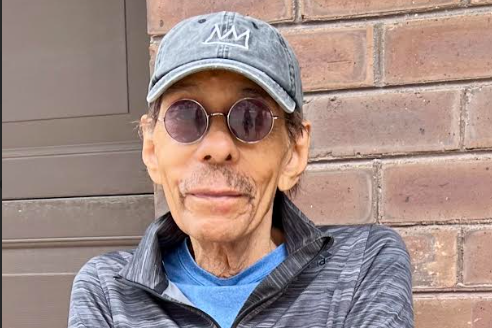
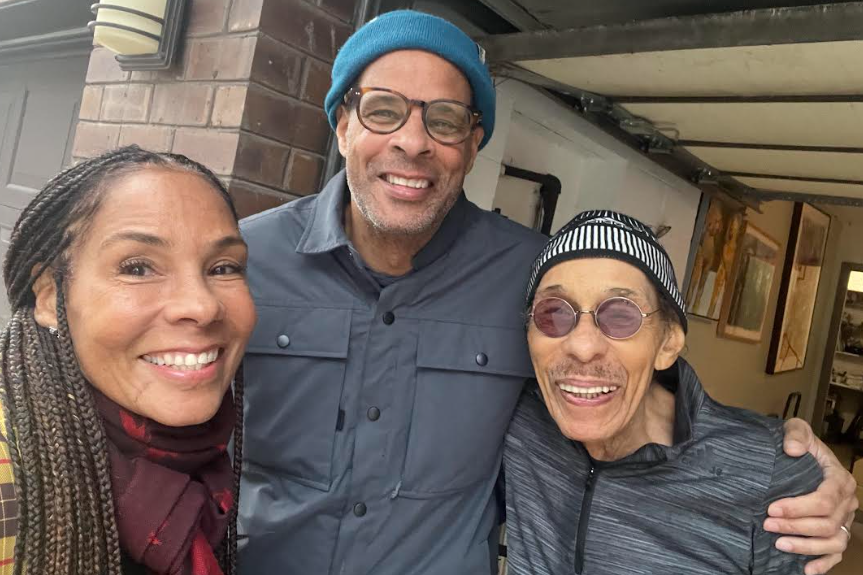
William Johnson Jr., 95, of Philadelphia, a former Army dentist in France who later practiced for more than 40 years in Northwest Philadelphia, and a star distance runner at Norristown Area High School, the Penn Relays, and elsewhere, died Wednesday, Aug. 26, of congestive heart failure at his home near the Philadelphia Museum of Art.
Dr. Johnson grew up in Norristown, was part of his high school’s meet-winning mile and two-mile relay teams, and enlisted in the Army after graduating from New York University in the 1950s. His mother, Mary, wanted him to be a doctor. So, after she died when he was 6, he went on to earn a dental degree at Meharry Medical College in Nashville.
He spent five years as an Army dentist in France in the 1960s, reveled in the sophisticated social and cultural atmosphere in Paris at the time, and set up his own practice in the 1970s for what he saw were underserved communities around Chew Avenue and Slocum Street. He and his family lived above the first-floor office, and his son, Bill, and daughter, Jacqueline, both worked with him for a time.
“When we were young, he would tell us to stop running when he had patients,” his daughter said. His son processed X-rays and did other chores in the back room. “On Saturdays,” he said, “the office would be full of people of color. That’s how much he was needed.”
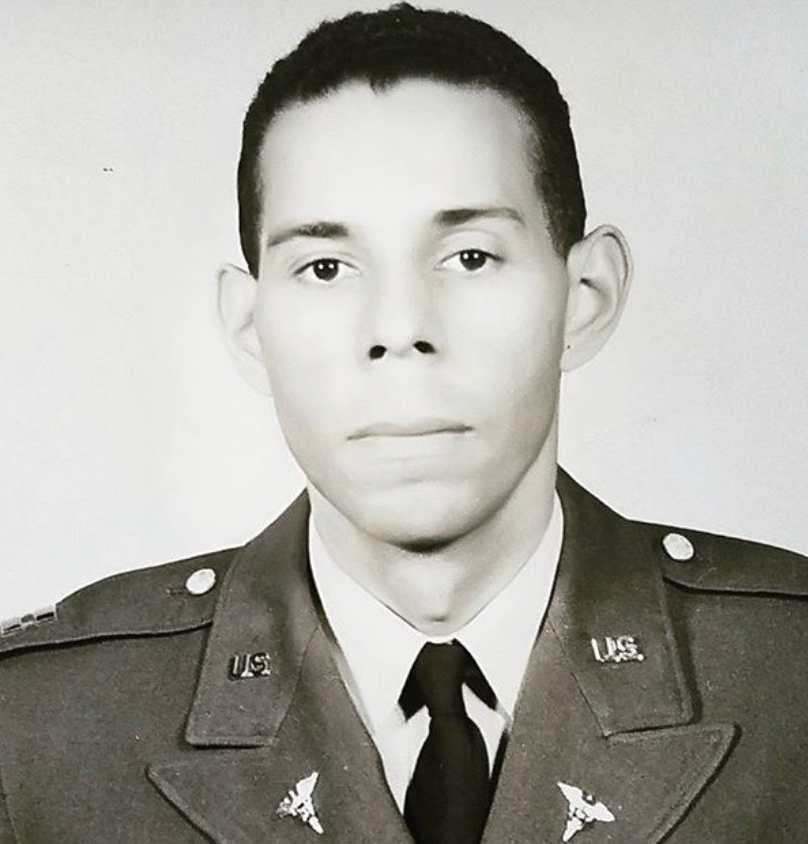
Dr. Johnson was an Army dentist in France. Courtesy of the family
Dr. Johnson finally retired in 2014, at 83. Even then, his wife, Liz, said, “his loyal patients were reluctant to see him retire.”
Away from his patients, Dr. Johnson was a dedicated runner who rarely missed a daily workout. Wednesdays were half days at the office, so he saved his most grueling runs of the week for then.
“He wore a ski mask sometimes when it was cold,” his son said, “and when he was done it would be covered with ice.”
He won mile relay, two-mile relay, and other long distance races in high school in the 1940s, ran for the college team at NYU, and later finished first in masters division races at the Penn Relays. He was a longtime member of the Freedom Striders running club and most often ran in the lead pack in the Broad Street Run and other big road races.
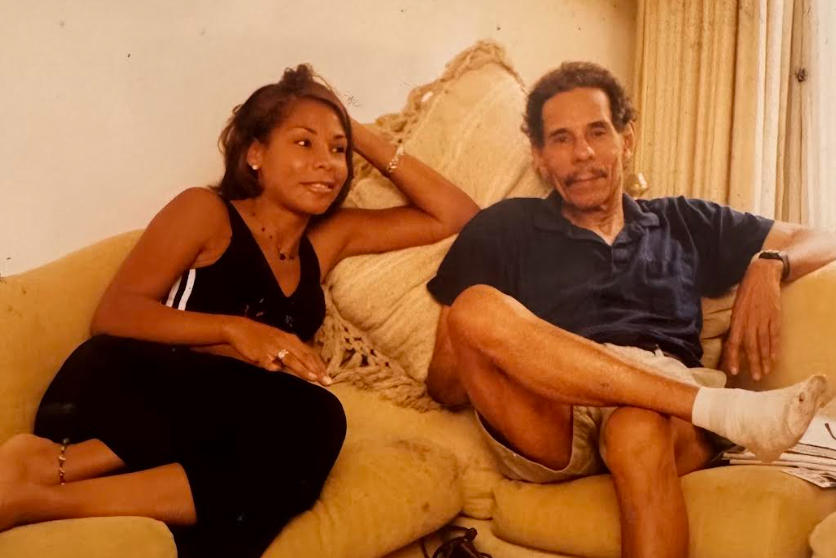
Dr. Johnson (right) doted on his daughter, Jacqueline, and son, Bill.Courtesy of the family
He was also an amateur historian who loved to hash over stories about the old days in Philadelphia and Norristown. “He was analytical and liked to laugh,” his son said. “He was a model for me about the value of hard work and being humble.”
William Johnson Jr. was born Feb. 24, 1931, in Norristown. He lived with his father, William Sr., sister Jean, and brother Eddie after his mother died, and developed what his children called a “deep sense of family, independence, and faith.”
He played football as well as track in high school, joined the Alpha Phi Alpha fraternity at NYU, and worked in the New York garment district to make money. He enlisted in the Army after graduation to attend dental school.
He met Susie Jeffries in Tennessee while at Meharry, and they married, lived in Orléans, France, and moved to Philadelphia after he left the Army. They had two children. They divorced later.
Dr. Johnson and his wife, Liz, were both dedicated runners. Courtesy of the family
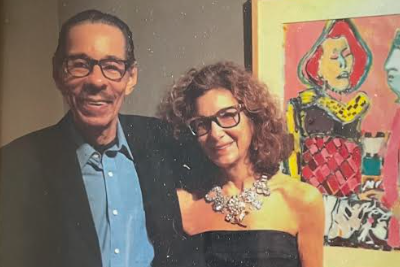
In the 1990s, Dr. Johnson moved to the Art Museum area and married Liz Goldberg, also a dedicated runner. He and his wife traveled the world together, and she called him “an exuberant and colorful spirit” who “brought energy and joy to those around him.”
Dr. Johnson was interested in fashion, especially Ralph Lauren, and he and his daughter shopped together frequently. He liked music, French food, art shows, and gardening.
His son said: “A lot of people have told me: ‘Your dad was the best.’”
In addition to his wife, children, and former wife, Dr. Johnson is survived by four grandchildren and other relatives. His sister and brother died earlier.
Private services were held earlier.
Donations in his name may be made to Meharry Medical College, 1005 Dr. D.B. Todd Jr. Blvd., Nashville, Tenn. 37208.
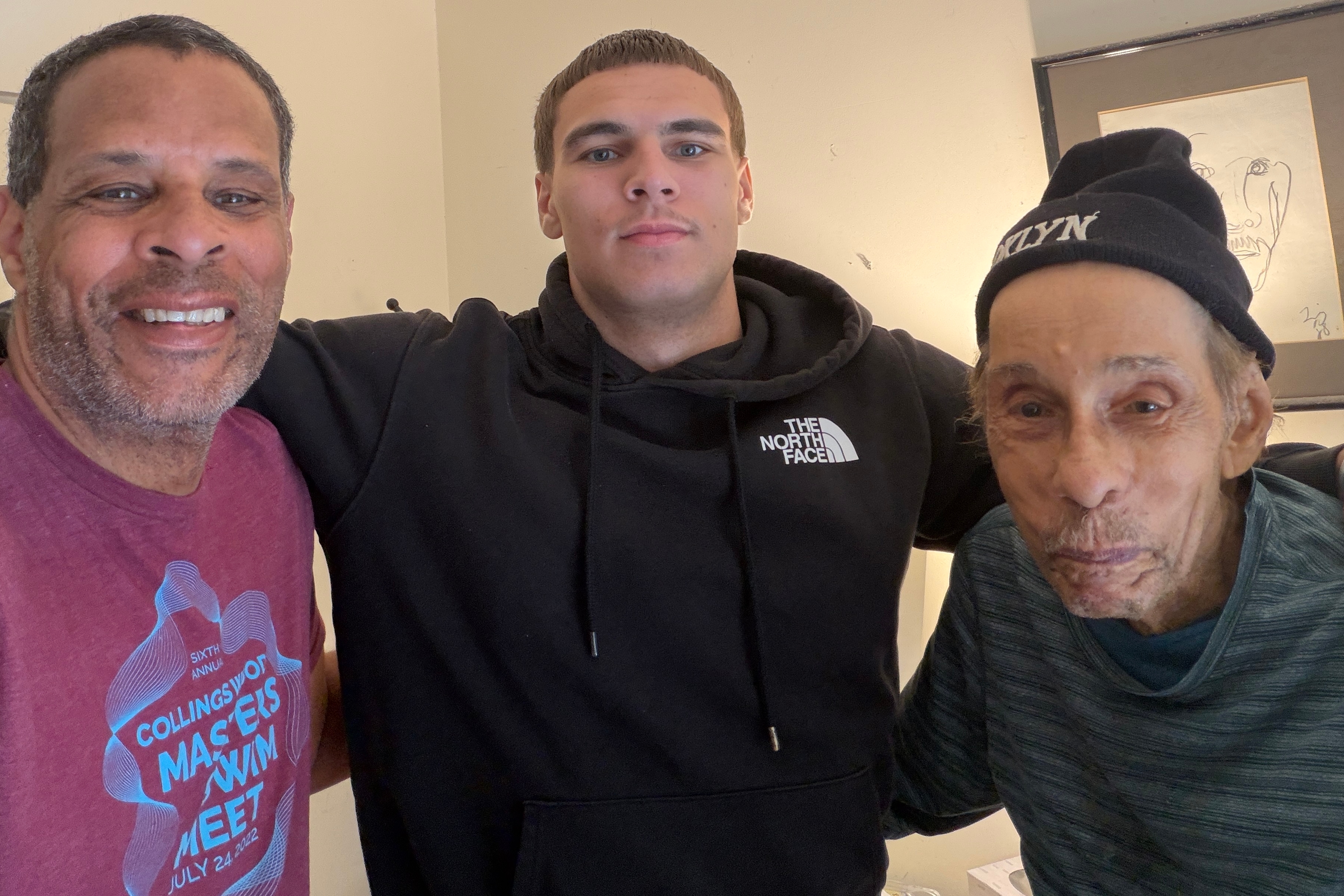
Dr. Johnson, right above and below, enjoyed time with his family. Courtesy of the family
JOHANNESBURG — The Trump administration imposed visa restrictions on selected South Africans on Tuesday and warned that it could take further punitive actions if South African leaders did not address President Donald Trump’s concerns over what he sees as discrimination against white people.
The visa policy expands the administration’s efforts to punish South Africa since Trump last year accused the government of seizing land from Afrikaners, a white South African minority, and allowing them to be killed in what he has labeled genocide. Claims of genocide against white South Africans are widely acknowledged as false, and President Cyril Ramaphosa has said Trump’s policies toward South Africa are racist.
The visa restrictions will prevent selected individuals from entering the United States. Under law, the government is not allowed to publicly disclose who is affected.
In a statement, Secretary of State Marco Rubio said the United States remained “gravely concerned about racially motivated crime and government-sponsored discrimination occurring against the Afrikaners and other minority populations in South Africa.”
He said the restrictions would target South Africans involved in race-based discrimination, those responsible for a law that enables the government to seize land without compensation, and those who incite violence against racial minorities.
In a statement, South Africa’s foreign minister, Ronald Lamola, said Washington’s unilateral action “once again aligns with the misrepresentation of South Africa’s domestic policy by fringe groups.” He called on the United States to respect South Africa’s sovereignty on handling domestic issues.
The policy was announced less than three weeks after Ramaphosa met with the U.S. ambassador, Leo Brent Bozell III. The South African government described the engagement as “an opportunity to strengthen and recalibrate” the relationship between the countries.
In a social media post Wednesday, Bozell said he had “attempted time and again to express” that South Africa could face severe consequences if it did not take action on the administration’s demands, which include exempting American companies from Black ownership requirements and rolling back a land expropriation law.
“This visa restriction policy is only the first step in a series of escalatory measures that will show America’s firm resolve in this matter,” Bozell wrote.
The U.S. move was the latest sign of the deteriorating relationship between the United States and South Africa.
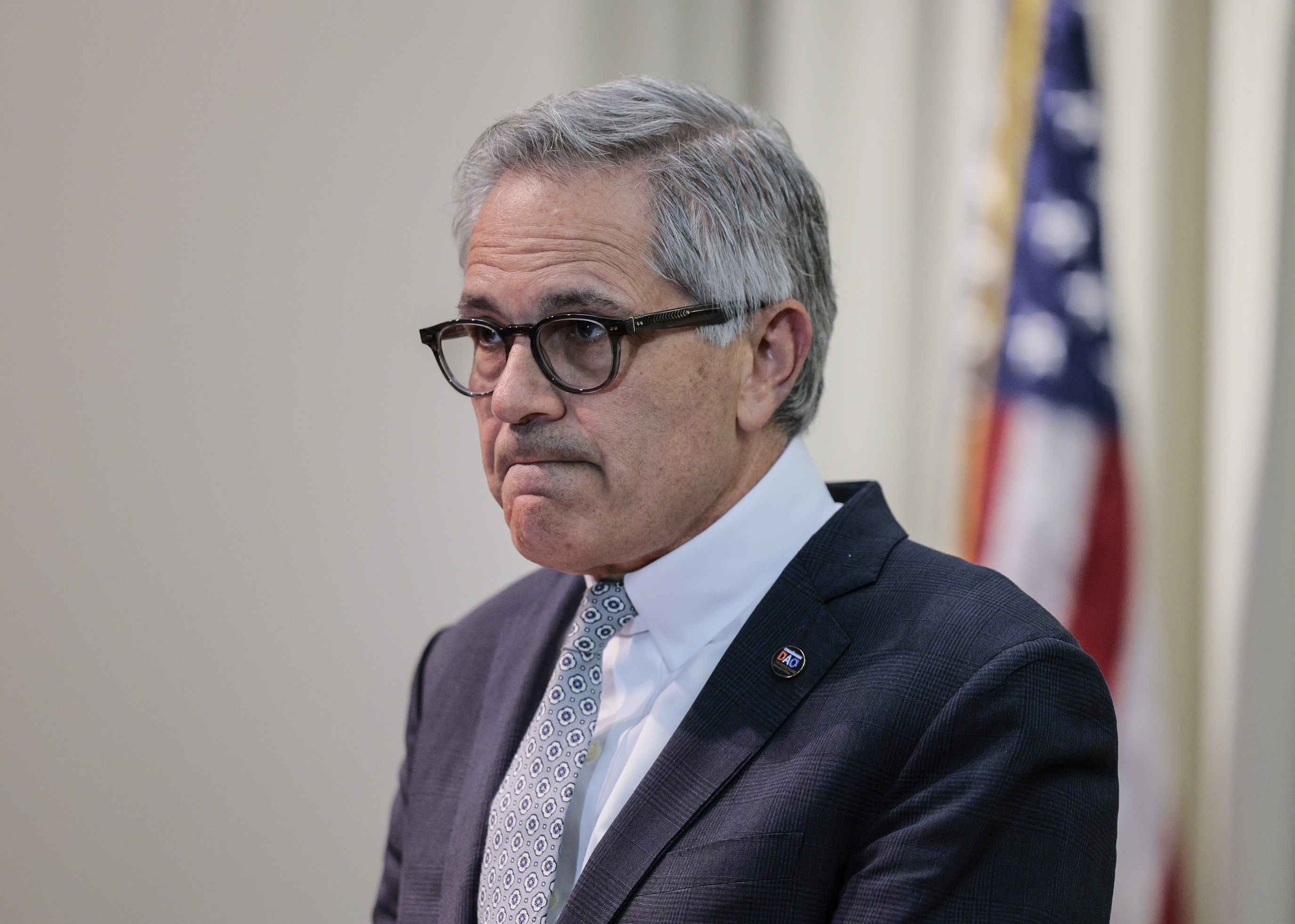
The stunning remarks by U.S. District Judge Paul S. Diamond — that Krasner may be guilty of conspiracy or obstruction of justice, and that federal prosecutors should investigate — triggered uncertainty over the future of one of the city’s top elected officials, who is a nationally recognized leader of the progressive prosecutor movement.
Legal experts said Diamond’s decision to refer actions by Krasner and one of his supervisors to the U.S. Attorney’s Office would almost certainly lead to an inquiry of some kind. But the fate of any possible probe into Krasner not only was difficult to predict, they said, but could take months or longer to determine.
Political repercussions could arise as well.
While Krasner’s Republican enemies reiterated their long-held disdain for the reform-oriented prosecutor, no elected Democrats immediately came to his defense. And some Democrats in the city have quietly begun discussing potential contingency plans if Krasner is forced from office before the end of his third term in 2030.
Krasner, for his part, has denied wrongdoing, and said in a statement that he planned to appeal Diamond’s ruling, in which the judge also disqualified Krasner and a lawyer in his office, Matthew Stiegler, from participating in the underlying case — a matter in which a man is seeking to have his murder conviction overturned.
Here is a recap of what led to Diamond’s scathing filing, and what might be next for Krasner.
What happened in the underlying case?
The case at issue began in 2015, when Dennis Johnson — found guilty in 2009 of second-degree murder — filed a petition in federal court seeking to have his conviction overturned.
For years, the district attorney’s office opposed Johnson’s bid for relief. But in 2022, then-Assistant District Attorney Jaclyn Mason filed a brief reversing course and agreeing that his trial counsel had been ineffective.
This spring, while preparing for a hearing before Diamond about the case, Mason said, she reached out to new supervisors in the law division: Katherine Ernst, Steven Wildberger, David Napiorski, and Peter Andrews. And Ernst said when she reviewed Mason’s brief, she discovered it contained “significant errors,” and the supervisors decided they needed to try to withdraw it.
Mason thought they were setting her up to take the blame, so she quit. And in her resignation letter, she said that Stiegler — her onetime boss — had forced her to file a faulty brief and that she would not lie or mislead the court to protect him.
After that, the supervisors testified, Stiegler proposed an unusual path forward, effectively suggesting they find a way to cast Mason as a “rogue” prosecutor prone to making mistakes.
Stiegler also shared his proposal with Krasner, the supervisors said, and the district attorney told them he thought it was a “really good idea.”
But the supervisors rejected it, they said. Wildberger told Diamond he found the notion “tremendously inappropriate.”
From internal disagreements to potential crimes
Krasner ultimately did agree to let the supervisors try to withdraw Mason’s brief. But he and the supervisors then got into heated arguments about whether to refer the case to state prosecutors — something the supervisors thought was appropriate because of the internal drama consuming their office.
As the referral debate raged on, the supervisors said, Krasner told them the case needed to stay in-house so someone could “protect the office” and “control the proceedings.” He also threatened “consequences” if any of them told Diamond about their discussions — which they took to mean being fired.
Diamond, in his memorandum, said threatening people’s jobs when they are trying to tell the truth to a judge could amount to obstruction of justice, as could attempting to conceal the truth about Stiegler’s role in the drafting of Mason’s brief.
He also said Krasner’s attempts to work with Stiegler to create a false narrative about Mason could amount to conspiracy.
And while the judge said he found the supervisors and Mason to have testified credibly, he said Stiegler may have committed perjury, calling his testimony “often contradictory, evasive, or outright dishonest.”
Will Krasner actually face charges?
For those reasons, Diamond said, he sent the case to the U.S. Attorney’s Office to investigate if Krasner or Stiegler should be charged.
Diamond, as a judge, does not have the power to prosecute the case himself. And how or if prosecutors decide to proceed remains an open question — and one that might remain unclear for some time.
Legal experts said it is rare, though not unprecedented, for judges to refer potential wrongdoing to prosecutors. And any time that happens, they said, prosecutors take it seriously — reviewing any materials the judge disclosed, deliberating paths forward, and potentially empaneling a grand jury to begin calling witnesses.
Still, full criminal investigations often take months or years to conduct. And such probes — conducted in secret — can go in unexpected directions. Sometimes that might mean a broader discovery of wrongdoing than was initially expected. Other times, investigations can close without charges.
Also unclear is whether the local U.S. Attorney’s Office would oversee any potential investigation into Krasner — or if staffers from elsewhere in the Justice Department might be called on to handle it, since Philadelphia-based federal prosecutors often work on cases with lawyers in Krasner’s office.
A spokesperson for the U.S. Attorney’s Office declined to comment on Diamond’s memorandum.
Krasner has made no secret of his antipathy for President Donald Trump, and Trump, in his second term, has been unabashed about asking the Justice Department to prosecute political foes. It was not clear how or if that might influence prosecutors’ course of action in this case.
Whatever might happen, experts said, one thing was generally clear: A referral from a federal judge targeting an elected district attorney was practically unheard of.
“I really cannot think of an equivalent situation,” said Lauren Ouziel, a Temple University Beasley Law School professor and former federal prosecutor.
Michael Levy, who worked as a federal prosecutor in Philadelphia for nearly 40 years before retiring in 2019, said: “For a judge to do this, it’s really unusual.”
Could Krasner face other consequences?
Even if Krasner and Stiegler are not criminally charged, they could still face additional consequences.
If the case is referred to the federal court’s disciplinary committee, for example, a panel of judges could seek to determine whether any of the prosecutors involved behaved in a way that would warrant a suspension or disbarment from practicing in federal court.
That would likely be detrimental to Stiegler, who has spent much of his career working on federal cases. But it would be even more problematic for Krasner — and could raise questions about whether he could continue to serve as the city’s district attorney.
Still, similar to any criminal investigation, the disciplinary process — which is largely confidential — would also likely be lengthy. When some of Krasner’s deputies were disbarred or suspended in federal court in 2025, those outcomes came about three years after a federal judge said he was sending the case out for a disciplinary review.
Diamond did not specify if he was referring the matter to the region’s chief federal judge, the first step in a potential disciplinary inquiry. Legal experts said prosecutors — if they investigate — would likely prefer to have their probe take precedent over any potential disciplinary proceeding.
Will there be political fallout?
Outside of the legal realm, Krasner, a Democrat, has faced political attempts to oust him before.
In 2022, the Republican-led Pennsylvania House voted to impeach Krasner, saying he had not adequately enforced state laws and, by extension, had contributed to the city’s gun violence crisis.
State Rep. Martina White, a Republican from Northeast Philadelphia who led the impeachment drive against Krasner, on Wednesday called for him to resign, saying in a statement that “Philadelphia needs a reliable DA, not a defendant-in-waiting.”
Few top Democrats defended Krasner.
Mayor Cherelle L. Parker declined to comment this week, as did City Council President Kenyatta Johnson, who supported Krasner’s bid for reelection last year.
Some activists on the progressive left said they still support Krasner and see Diamond’s referral as politically motivated. Diamond was appointed by former President George W. Bush, a Republican, in 2004.
“This is unfortunately a continuation of the right’s assault on DA Krasner and the policies that he’s implemented,” said Robert Saleem Holbrook, executive director of the progressive political group Straight Ahead. “This is a judge using an internal conflict in the office to further the objective of removing Krasner from office.”
Krasner has proved politically resilient over the years, winning three terms despite the impeachment drive and opposition from elected officials in his own party, said Sergio Cea, political director of the progressive group Reclaim Philadelphia.
Krasner, he said, is “like Teflon.”
“He is somebody that has consistently, without the Democratic establishment support, won primary after primary,” he said. “And that is because he is wildly popular with Philly voters who are tired of status quo district attorneys who are more focused on filling jails than achieving justice.”
A ‘devastating’ environment
Krasner, meanwhile, is not in the office this week, according to people familiar with his whereabouts. First he was on a recruiting trip in Washington, they said, then he was headed on a pre-planned personal trip to Ireland.
Inside the office Wednesday, staffers said they were sharing feelings of dismay and fatigue from years of upheaval and political headlines under Krasner’s leadership. Several prosecutors, who spoke on the condition of anonymity to speak candidly about a sensitive matter, said they have endured the impeachment saga, mass firings, and the departure of veteran staffers.
And although some said Diamond’s ruling was not entirely surprising — the judge had signaled at a previous hearing that he might refer the matter to federal prosecutors — they also anticipated that any investigation could stretch on for months or even years.
One longtime prosecutor called the allegations “devastating” and said the reputation of the office “has been reduced to rubble.”
Lindenwold School 4, located at 900 E. Gibbsboro Rd., was closed Wednesday due to a fire on the building’s roof, which the Lindenwold Fire Department found to be accidental. At the time, the school’s evening facilities staff and a construction crew were on site, but no injuries were reported, officials said.
The school’s telephone and public address systems were disabled after the fire, and officials are still working to make sure the communication systems work and the building is safe and smoke-free, the district said in a statement Wednesday.
As the district assesses the damage, students will return to learning Thursday online, and remote learning will continue at least until Monday. Students will have to attend school on Oct. 12, previously an in-service day, as a makeup day, and the school’s open house will be rescheduled.
Parents and guardians can go to School 4’s bus loop on Thursday, either between 10 a.m. and 4 p.m. or from 6 to 7 p.m., to pick up their children’s Chromebooks and other materials.
Families with School 4 students can also pick up five days’ worth of food on Monday from 10 a.m. to 1 p.m. to make up for the loss of in-person meals.
The family of slain conservative activist Charlie Kirk has accused the Utah university where he was killed last year of “stunning” security failures that made him an easy target for a rooftop assassin.
In a legal notice filed this month, lawyers for Kirk’s wife, parents, and children said Utah Valley University did not have a written security plan or hold a security briefing before Kirk arrived for an open-air debate last September that drew a crowd of thousands.
They also said the university’s police chief had failed to address concerns raised by Turning Point USA, the conservative activist group founded by Kirk, about how easily people could climb onto the rooftops that overlook the sunken plaza where he was shot.
The accusations came in a “notice of claim” that lawyers for the Kirk family sent to the state of Utah earlier this month and made public Wednesday. Kirk’s family has not yet sued, but the notice is a potential precursor to a wrongful-death lawsuit against the public university or the state.
“His murder was entirely preventable,” Brett Parkinson, a lawyer for the Kirk family, said in a statement.
In a statement Tuesday, Utah Valley University said its “focus remains on supporting our campus community” but declined to comment further on the notice. It is conducting its own review of security surrounding the shooting.
Kirk, one of the country’s most influential and visible conservative activists, made Utah Valley University in Orem the first stop of his “American Comeback” tour of college campuses. About 3,000 people showed up on Sept. 10, 2025, to see him debate political opponents on a sunny afternoon.
He was just minutes into the event and answering an audience member’s question when he was shot in the neck by a gunman perched on a rooftop about 400 feet away.
In the legal notice, lawyers for Kirk’s family said the university’s security decisions “ultimately rendered Mr. Kirk helpless to the rooftop shooter in an assassination that could have been avoided.”
According to the notice, a Turning Point USA official texted Jeff Long, the university police chief, before the event to relay concerns from a Turning Point campus chapter about students’ ability to take staircases to building rooftops.
“It would be nice to either have it controlled access or allow one of my guys to be there as well. If possible,” a Turning Point official texted Long, according to the legal notice.
Kirk’s lawyers say Long responded, “I got you covered.”
Lawyers for the Kirk family argued in the legal notice that the university should have been on alert for a rooftop sniper after a would-be assassin fired at President Donald Trump in 2024 from a roof outside a rally in Butler, Pa.
Surveillance videos and testimony from investigators suggest that Tyler J. Robinson, the 23-year-old man charged with aggravated murder in Kirk’s killing, encountered virtually no obstacles or resistance on his way to the roof. Robinson, who could face the death penalty, has pleaded not guilty.
Surveillance videos from the morning of the shooting captured the gunman as he walked to a railing on the roof of a campus building and then left. When he returned later, he “crawled to a sniper perch” along the edge of the roof, took aim at Kirk, and fired, according to a legal filing by prosecutors.
The legal claim filed by Kirk’s family said the university did not fly drones or monitor its surveillance cameras in real time during the event — actions that might have spotted the gunman.
It also says that despite Kirk’s fame and the size of the crowd, the university only had six officers on duty that day and did not ask police in Orem or nearby Provo for help until after the fatal shot was fired.
The case of Eugene Albert Horsch has captured national attention after he was arrested at what seemed like a routine traffic stop near Independence Mall.
And for weeks, it has only gotten stranger.
story continues after advertisement
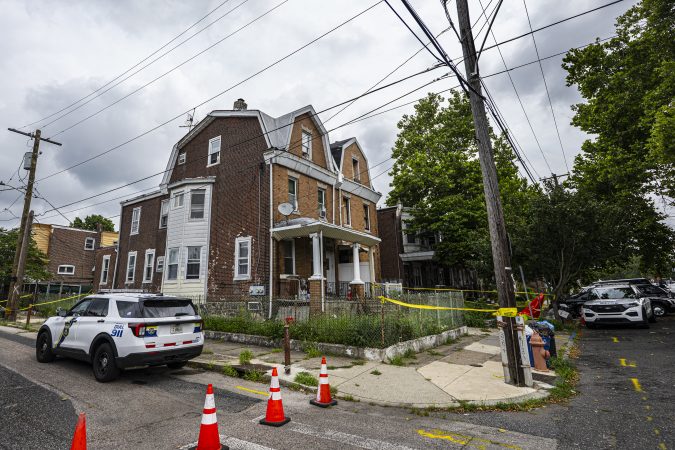
Police say they believe that at least three women were killed in Horsch's Olney home — a dilapidated, mysterious property at the center of the investigation. Horsch, 44, remains in federal custody on illegal gun possession and related charges, and has not been charged with any violent crimes.
For weeks, federal and local authorities have been searching his house on the 400 block of West Chew Avenue, turning up mountains of bizarre evidence. At least two other women connected to Horsch and his late father, Raymond "R.C." Horsch, were last heard from at the property.
Unknown chemicals, falsified law enforcement credentials, urns, and disturbing writings have been uncovered in the home since searches began two months ago. Answers into what exactly was going on there, however, remain elusive as the investigation continues.
Horsch's initial arrest in the case came after what started as a routine traffic stop near Independence Mall. A U.S. park ranger saw Horsch's black BMW stopped on Sixth Street in a restricted area, and approached the vehicle to speak with the driver.
The ranger, police said, heard a woman in the vehicle say, "You're going to hurt me." She then produced an ID identifying herself as Blair Tonzelli, a 38-year-old woman who was reported missing in February 2023 — an alias the passenger said she used because of open warrants for her arrest, sources told The Inquirer.
Police searched Horsch's vehicle, and recovered two firearms with obliterated serial numbers, along with cocaine, fentanyl, and marijuana, according to an affidavit. Police, sources said, also found a fake U.S. Drug Enforcement badge with Horsch's photo on it next to the name "Eugene Frederick Steiner," as well as switchblade knives, a cattle prod, and a collapsible baton.
Horsch was arrested and charged with illegal gun possession and drug crimes, and was held on $500,000 bail at Curran-Fromhold Correctional Facility. Federal drug enforcement officers, with assistance from Philadelphia police, began searching his Olney home that day.
Eugene Albert Horsch, 44, of Philadelphia.Courtesy of Philadelphia police
story continues after advertisement
June 26
Searching the Chew Avenue house
After a week of searching, investigators had uncovered a trove of bizarre items. Among them, Inspector Raymond Evers later said, were a home lab in the basement, a marijuana grow operation valued at about $280,000, and a number of containers filled with an unknown oily substance.
Investigators also found an illegal gun, a fake FBI badge with Horsch's photo, five urns containing what police believe are cremated human remains, bottles of liquid investigators could not immediately identify, and a 55-gallon drum with water lines leading to a hole in the ground, according to an affidavit. Additionally, the search revealed bank cards in Tonzelli's name, and an unsigned handwritten document that referenced serial killer Ted Bundy, among other items.
“We just don’t know what he’s doing, if he’s producing something, if he’s making something, if he’s irrigating something," said Deputy Police Commissioner Frank Vanore at the time. "We don’t know."
As the search continued, suspicions were renewed about Horsch's late father, Raymond Horsch, who died last year. The elder Horsch's ex-wife, Amy McHale, was reported missing in 2016, and, like Tonzelli, was last heard from at the Chew Avenue house. Police, however, said that it was too early to say whether any of the evidence recovered would reveal anything related to Tonzelli or McHale.
“This is much ado about nothing,” said Horsch’s attorney, Jerome Brown, of the missing persons investigation at the time. "They're barking up the wrong tree."
Investigators search the home of Eugene Albert Horsch on West Chew Avenue in Olney on June 26.Gabriel Coffey / Staff
June 30
Horsch held in federal custody
Horsch was arraigned on a federal firearms charge in connection with his June 19 arrest. Previously, city prosecutors charged him in the case, but with the federal charge, Horsch would be unable to post bail and would remain detained until trial.
During an appearance in federal court, Horsch spoke little beyond responses to routine legal questions.
“We believe Mr Horsch is innocent," Brown, Horsch's attorney, said in July.
July 22
Excavation at Horsch's home
In the month that federal and local authorities had been examining Horsch's house, investigators used a number of tools, including canine teams from the New Jersey State Police. But by late July, the focus turned to what was beneath the property.
Authorities announced they would unearth a pipe under the house, and examine it for "any evidence that may be present," said Philadelphia police spokesperson Sgt. Eric Gripp. That pipe, Evers later said, was a sewer line.
On the day of the excavation, investigators began digging early, tearing through a small, overgrown garden, as well as the sidewalk and street in front of the property. In the late morning, investigators, with assistance from the Philadelphia Water Department, pulled a piece of pipe from the ground and took it to be examined.
Workers and police investigators excavate a pipe at the home of Eugene Albert Horsch on West Chew Avenue on July 22.Jose F. Moreno / Staff Photographer
Days later, Evers said, more than 20 containers of an unknown substance found in the house were delivered to a lab in Chicago for testing and analysis.
Early August
Two new victims identified
During the search of Horsch's home, investigators discovered about 50 hard drives and other electronic devices, and sent them to the Regional Computer Forensic Lab. In total, those devices contained more than 60,000 images, 70,000 videos, and 10,000 pages of writings and drawings.
In early August, during the search of a hard drive, investigators found what Evers described as images and video of "what appeared to be two deceased females." Those women have been identified as Maribel Fresses, who was 27 when she went missing in February 2018, and Gabrielle Amarando, who was 22 when she went missing in September 2012.
Neither woman had previously been linked to the case, but police believe they were killed inside the Horschs’ Olney home. Investigators, however, had not recovered human remains in the home, Evers said. Police are trying to determine when the women died. They have stopped short of blaming either Horsch.
Evers added that after reviewing the photos and video, the Philadelphia Office of the Medical Examiner said that "if the images and the video are real and not altered in any way," the women were dead.
Gabrielle Amarando, (left) missing since 2012 and Maribel Fresses, 27, reported missing in 2018. Police believe they were killed inside the Olney home.Obtained by The Inquirer
Horsch had been in federal custody for more than a month at this time following his arrest in June. Neither Horsch nor his attorney appeared in court during the hearing where Assistant District Attorney Alyssa Amoroso withdrew the charges.
Hours before a news conference announcing the new developments, authorities contacted the women's families, Evers said. The "graphic and dark" depictions of what appeared to be their dead bodies, he added, seemed to confirm their deaths.
Ricardo Fresses, 61, said that deep down, he knew his daughter Maribel Fresses was dead.
“She called me every day. Absolutely every day she called me, and one day she stopped calling me,” he said. “And as the years went by I knew she was gone.“
Lora Timmons, Amarando’s stepmother, said she was devastated by the news.
”I always hoped I’d see her again," she said. “I didn’t want to think the worst.”
Because their bodies had not been found, the medical examiner's office cannot declare the two women dead. Authorities expect a "protracted" investigation, Evers said, and any declaration of their deaths would likely have to go through Orphans' Court.
In total, Evers said, authorities had served more than 95 search warrants on the property to discover an "astonishing" amount of evidence. Investigators, he added, had only reviewed about 5% of the digital materials, and it was not yet clear when the women died.
“Eugene lived there. He lived there for a long time. His dad lived there for a long time,” Evers said.
Inspector Raymond Evers speaks during an Aug. 12 news conference.Jessica Griffin / Staff Photographer
Aug. 28
Fifth missing woman linked to Olney house
As investigators continued to review digital evidence from the home on Chew Avenue, they found what they believed was video footage showing Raymond "R.C." Horsch killing a woman on camera, law enforcement sources said.
The footage, which police found on a hard drive inside Horsch's house in Olney, appeared to show the older Horsch strangling the woman at his home. Police did not disclose the woman's identity, but notified a relative, the sources said.
Investigators had not recovered the woman's body, and it was unclear when the footage was taken. But with the video's discovery, the woman became the fifth known missing person tied to the Chew Avenue property.
Sources told The Inquirer that police expected the number of missing women connected to the home to grow as the investigation continued.
An unidentified woman in what appears to be Raymond "R.C." Horsch's home on Chew Avenue in Olney. The image is among several photographs in his book "Eroto: To The Prurient Interest,” Volumes I & II.Obtained by The Inquirer
Sept. 11
Latest victim publicly identified
Family members identified the fifth missing woman tied to the Chew Avenue house as Nicole Amanda Fusaro, who had been missing since July 2018.
Fusaro was 27 when she went missing, and was last seen in Kensington. She was raised in Northeast Philadelphia, and attended George Washington High School, according to her Facebook page. A family member told The Inquirer that Fusaro's parents both struggled with addiction, and that she began using drugs in her late teens before drifting to Kensington.
Investigators previously recovered a video on a hard drive taken from Horsch’s home while in search of clues for other missing persons linked to the property. Law enforcement sources said they believed the video shows the older Horsch strangling Fusaro to death.
“Hopefully more attention will be made to missing persons so this doesn’t happen again,” said Jonathan Halloran-Koren, Fuscaro's cousin.
Nicole Fusaro was reported missing in 2018 when she was 27. Police believe she was killed by Raymond "R.C." Horsch in his Chew Avenue home.Courtesy of Jonathan Hallo
Sept. 16
Seven dead or missing women linked to Olney house
The number of dead or missing people linked to Horsch's Olney home increased to seven after investigators recovered images that appeared to show two more women dead inside the property, Deputy Police Commissioner Frank Vanore said.
Among the images, Vanore added, were photos that showed a 25-year-old woman unconscious inside the home with injuries on her body. Vanore declined to identify the woman at her family's request.
Additional images showed another woman who appeared to be dead inside the property, and investigators have not yet identified her. She appeared to be in her mid-20s, Vanore said.
In total, investigators identified 58 people in digital evidence collected from the home, Vanore said. Of those, 16 were located and interviewed by police, and 25 others were located but not yet interviewed.
FBI Philadelphia Special Agent in Charge Wayne Jacobs (center) looks to Deputy Police Commissioner Frank Vanore (left) during a press conference.Elizabeth Robertson / Staff Photographer
Staff Contributors
Reporting: Nick Vadala, Max Marin, Ellie Rushing, Barbara Laker, and Ryan W. Briggs
Editing: Molly Eichel, Dan Rubin
Copy Editing: Brian Leighton
(()=>{var Q=(e,t)=>()=>(t||e((t={exports:{}}).exports,t),t.exports);var A=Q(r=>{var X={0:”Jan.”,1:”Feb.”,2:”March”,3:”April”,4:”May”,5:”June”,6:”July”,7:”Aug.”,8:”Sept.”,9:”Oct.”,10:”Nov.”,11:”Dec.”};function L(e){return e===void 0&&(e=new Date),X[e.getMonth()]}var ee={0:”Jan”,1:”Feb”,2:”Mar”,3:”Apr”,4:”May”,5:”Jun”,6:”Jul”,7:”Aug”,8:”Sep”,9:”Oct”,10:”Nov”,11:”Dec”};function b(e){return e===void 0&&(e=new Date),ee[e.getMonth()]}function s(e){return e==null}function T(e){return typeof e==”number”&&isFinite(e)}function f(e){return T(e)&&Math.floor(e)===e}var te=[“one”,”two”,”three”,”four”,”five”,”six”,”seven”,”eight”,”nine”],ne=[“million”,”billion”,”trillion”,”quadrillion”,”quintillion”,”sextillion”,”septillion”,”octillion”,”nonillion”,”decillion”],S=[“th”,”st”,”nd”,”rd”,”th”,”th”,”th”,”th”,”th”,”th”],oe=[11,12,13];function M(e){if(s(e))return””;var t=+e;return f(t)?oe.indexOf(t%100)>-1?S[0]:S[t%10]:””}var ie=[“first”,”second”,”third”,”fourth”,”fifth”,”sixth”,”seventh”,”eighth”,”ninth”],re=new RegExp(/s+([^s]*)s*$/);r.apdate=function(e){return e===void 0&&(e=new Date),L(e)+” “+e.getDate()+”, “+e.getFullYear()},r.apdatetab=function(e){return e===void 0&&(e=new Date),b(e)+” “+e.getDate()+”, “+e.getFullYear()},r.apmonth=L,r.apmonthtab=b,r.apnumber=function(e){if(s(e))return””;var t=+e;return f(t)?t=10?e.toString():te[t-1]:e.toString()},r.aptime=function(e){e===void 0&&(e=new Date);var t,n,o=e.getHours(),i=e.getMinutes(),u=i===0;if(u){if(o===0)return”midnight”;if(o===12)return”noon”}return o0?o:12):(t=”p.m.”,n=o===12?o:o-12),u?n+” “+t:n+”:”+(i<10?"0"+i:i)+" "+t},r.capfirst=function(e){if(s(e))return"";var t=String(e);return""+t.charAt(0).toUpperCase()+t.slice(1)},r.intcomma=function(e){if(s(e))return"";var t,n=+e;return T(n)?((t=n.toString().split("."))[0]=t[0].replace(/B(?=(d{3})+(?!d))/g,","),t.join(".")):e.toString()},r.intword=function(e){if(s(e))return"";var t=+e;if(!f(t))return e.toString();var n=Math.abs(t);if(n<1e6)return e.toString();var o=Math.ceil(Math.log(n+1)/Math.LN10)-1,i=o-o%3,u=t/Math.pow(10,i);return(u=Math.round(10*u)/10)+" "+ne[Math.floor(i/3)-2]},r.ordinal=function(e,t){if(t===void 0&&(t=!1),s(e))return"";var n=+e;return f(n)?t&&n/Android|webOS|iPhone|iPad|iPod|BlackBerry|IEMobile|Opera Mini/i.test(navigator.userAgent);var g=(e,t=null,n=null)=>{n||(n=document.querySelector(“head”));let o=document.createElement(“script”);o.type=”text/javascript”,o.src=e,t&&(o.onload=t),n.appendChild(o)},q=()=>(window.PMNdataLayer?.[0]!==void 0&&window.PMNdataLayer[0])?.analytics?.user?.state===”Subscribed”,k=()=>{let t=(window.PMNdataLayer?.[0]!==void 0&&window.PMNdataLayer[0])?.analytics?.user?.state;return window.location.host.includes(“zzz-systest”)||window.location.host.includes(“pmn.arcpublishing.com”)||window.location.host.includes(“stage.fusion.inquirer.com”)||typeof t>”u”},j=()=>{let t=(window.PMNdataLayer?.[0]!==void 0&&window.PMNdataLayer[0])?.analytics?.user?.hasAdsFreeReading;return!!(t&&t==1)},v=()=>window.location.host.includes(“localhost”);var se=()=>{j()&&document.querySelectorAll(“.js-adbox”).forEach(t=>{t.classList.add(“is-hidden”)})},H={init:()=>{se()}};var a,y=!1,ae=()=>{a=document.querySelector(“.js-appendix”)},C=()=>{let e=document.querySelector(“.js-appendix-static-content”),t=e.querySelector(“.js-appendix-static-items”).getBoundingClientRect().height;e.classList.remove(“is-collapsed”),e.style.maxHeight=t+”px”},B=()=>{a.classList.contains(“js-appendix-sticky”)&&(a.getBoundingClientRect().top{y=document.querySelector(“.js-appendix-static-content”).getBoundingClientRect().bottom{y&&document.querySelector(“body”).classList.toggle(“is-open-appendix”)},ce=()=>{window.addEventListener(“scroll”,()=>{B(),D()}),window.addEventListener(“resize”,()=>{B(),D()}),document.querySelector(“.js-appendix”).addEventListener(“click”,()=>{P()}),document.querySelectorAll(“.js-appendix-expand-static”).forEach(e=>{e.addEventListener(“click”,()=>{C(),window.addEventListener(“resize”,()=>{C()})})}),document.querySelectorAll(“.js-appendix-link”).forEach(e=>{e.addEventListener(“click”,()=>{P()})})},N={init:()=>{ae(),ce()}};var m,le=(e,t)=>{m=m||window.PMNdataLayer,m?m.push({event:”misc_event”,eventAction:e,eventLabel:t}):window.location.hostname.includes(“localhost”)?console.log(“Analytics event:”,e,t,”(not actually being sent due to localhost)”):console.log(“Failed to push analytics event”,e,t)},I={event:(e,t)=>{le(e,t)}};var de=()=>{document.querySelectorAll(“.js-card-show-more”).forEach(e=>{e.addEventListener(“click”,()=>{ue(e)})})},ue=e=>{let t=e.closest(“.js-card”),n=t.querySelector(“.js-card-body”),i=n.querySelector(“.js-card-body-content”).getBoundingClientRect().height;t.classList.remove(“is-collapsed”),n.style.maxHeight=i+”px”,setTimeout(()=>{n.style.maxHeight=”none”},1e3),I.event(“expand_card”,`${t.dataset.id}`)},F={init:()=>{de()}};var c,$,pe=()=>{c=document.getElementById(“js-inno-toast”)},fe=e=>{if(!c)return;c.innerHTML=e,c.classList.add(“is-active”);let t=()=>{c.addEventListener(“transitionend”,me,{once:!0}),c.classList.remove(“is-active”)};clearTimeout($),$=setTimeout(t,5e3)},me=()=>{c.innerHTML=””},l={init:()=>{pe()},showToast:fe};var h,z=!1,he=async()=>new Promise(e=>{setTimeout(()=>{console.log(“simulating createShareLink for localhost”),e(“https://inquirer.com/interactives”),ge()},100)}),ge=()=>{let e=document.querySelector(“.js-gift-toast-receiver”);!e||!(e instanceof HTMLElement)||setTimeout(()=>{let t=e?.querySelector(“span”);t&&(t.innerHTML=”Gift link copied to clipboard“)},20)},ve=()=>{let e=window.services?.createShareLink;e&&(h=e),v()&&(h=he),h&&we()},ye=async e=>{let t=”text/plain”,n=async()=>{try{return await h(window.location.pathname)}catch{e.dataset.state=”error”,l.showToast(“Hmm, we couldn’t generate a gift link…”)}},o=new ClipboardItem({[t]:n()});await navigator.clipboard.write([o]).catch(i=>{console.log(i),l.showToast(“Couldn’t copy to clipboard, try again?”),e.dataset.state=”error”}),l.showToast(“Gift link copied to clipboard!”),e.dataset.state=”complete”},we=()=>{document.querySelectorAll(“.js-gift”).forEach(t=>{(q()||v()||k())&&t.classList.add(“is-available”)}),document.querySelectorAll(“.js-gift-button”).forEach(t=>{t instanceof HTMLButtonElement&&t.addEventListener(“click”,()=>{t.classList.contains(“disabled”)||(t.dataset.state=”loading”,z=!0,ye(t),setTimeout(()=>{t.dataset.state=”ready”},2e3))})});let e=document.querySelector(“.js-gift-toast-receiver”);!e||!(e instanceof HTMLElement)||xe(e)},xe=e=>{new MutationObserver(n=>{for(let o of n){let i=[…o.addedNodes].at(0);if(!(i instanceof HTMLElement))return;z&&l.showToast(i.outerHTML)}}).observe(e,{subtree:!0,childList:!0})},O={init:()=>{ve()}};var Le=()=>{window.addEventListener(“message”,e=>{if(e.data[“datawrapper-height”]){let t=e.data[“datawrapper-height”];for(let n in t)document.querySelector(`#datawrapper-chart-${n}`).setAttribute(“height”,t[n])}})},be=()=>{document.querySelectorAll(“.js-datawrapper-graphic”).forEach(e=>{g(`https://datawrapper.dwcdn.net/${e.dataset.id}/embed.js`,null,e)})},Se=()=>{window.addEventListener(“message”,e=>{let t=e.data;document.querySelectorAll(`iframe[src*=”${t.id}”]`).forEach(o=>{o.style.height=`${t.height}px`})},!1)},Me=()=>{document.querySelectorAll(“.js-pym-graphic”).forEach(e=>{if(typeof window{new window.pym.Parent(e.id,e.dataset.iframe)};typeof window.pym>”u”?g(“https://pym.nprapps.org/pym.v1.min.js”,t):t()}})},R={init:()=>{Le(),be(),Me(),Se()}};var p,Te=()=>{document.querySelectorAll(“.js-hover”).forEach(e=>{e.addEventListener(“click”,()=>{J(e)}),e.addEventListener(“mouseenter”,()=>{J(e)}),e.addEventListener(“mouseout”,()=>{V(e)})}),window.addEventListener(“scroll”,()=>{p!==null&&Ae()})},Ae=()=>{(p>window.scrollY+100||p{V(e)})},J=e=>{e.classList.add(“is-visible”),p=window.scrollY},V=e=>{e.classList.remove(“is-visible”),p=null},G={init:()=>{Te()}};var Ee=()=>{},W={init:()=>{Ee()}};var d,w,x=!0,qe=()=>{d=document.querySelectorAll(“.js-video-autoplay”)},ke=()=>{window.addEventListener(“resize”,()=>{Y()}),window.addEventListener(“scroll”,()=>{Y()}),d.forEach(e=>{e.addEventListener(“volumechange”,t=>{e.muted!==x&&!E()&&(x=e.muted,je())})})},Y=()=>{let e;d.forEach((t,n)=>{let o=t.getBoundingClientRect(),i=o.height/2;o.y-i&&(e=t)}),e!==w&&(w=e,d.forEach(t=>{t.pause()}),e?e.play():w=null)},je=()=>{d.forEach(e=>{e.muted=x})},_={init:()=>{qe(),d&&ke()}};var U={init:()=>{H.init?.(),N.init?.(),F.init?.(),O.init?.(),R.init?.(),G.init?.(),W.init?.(),_.init?.(),l.init?.()}};var He=()=>{},Z={init:()=>{He()}};var Ce=document.querySelector(“.js-inno”),K=()=>{U.init(),Z.init()};Ce?K():new MutationObserver((t,n)=>{if(document.querySelector(“.js-inno”)){n.disconnect(),K();return}}).observe(document,{attributes:!0,childList:!0,subtree:!0});})();