Category: News

  • At least 21 dead in Gaza after building collapse, officials say

    At least 21 dead in Gaza after building collapse, officials say

    A war-damaged building in the Gaza Strip collapsed Wednesday, killing at least 21 people, including children, and trapping many more beneath the wreckage, according to local officials.

    The incident shines a light on the perilous conditions in Gaza after the devastating war that followed the Hamas-led attacks on Israel on Oct. 7, 2023. Officials have warned that many more damaged buildings are at risk of collapse. The lack of progress on reconstruction has forced residents to choose between living in seriously compromised buildings or in tents.

    Dozens of people were living in the Saada residential building in Gaza City when it caved in around 2 a.m. local time, according to the Civil Defense rescue service, which is part of the Hamas-run Interior Ministry in Gaza.

    The officials added that the building had previously been hit by an Israeli strike, though it was unclear when. The Israeli military did not respond to a request for comment.

    Search-and-rescue teams pulled survivors from the wreckage Wednesday morning as they searched for missing residents.

    “We can see people still trapped under the rubble,” said Raed al-Dahshan, director of Civil Defense in the Gaza City area. “We’re doing everything we can to extract them.”

    Al-Dahshan said authorities in Gaza had warned residents that the building was unstable, but that many did not leave because they did not want to be displaced and potentially end up in worse conditions. He added that there were roughly 70 buildings in the Gaza City area at risk of collapse.

    Humanitarian groups warned that there could be more such deaths in the coming months.

    “With the heavy rains and winds of winter approaching, the risk of damaged buildings collapsing will only increase, putting more lives in danger,” Pat Griffiths, a spokesperson for the International Committee of the Red Cross, said by telephone from Gaza.

    “Choosing between life in a tent — with little privacy or space and exposed to harsh weather — or a building that is damaged and at risk of collapse, just to have a roof over one’s head, is not a choice any family should have to make.”

    The deadly collapse underscores the devastation across Gaza after years of war, which has left entire neighborhoods in ruins. Much of Gaza’s population was displaced by the conflict, and many are now living in damaged buildings.

    After a U.S.-brokered ceasefire agreement was reached in October 2025, Palestinians had hoped that Israel would allow a significant amount of heavy machinery and construction materials into Gaza to begin the long process of removing rubble and rebuilding the territory. Thousands of bodies from the war are still beneath the rubble across Gaza, according to local officials. On Tuesday, the United Nations human rights chief called for international investigators to be allowed into the enclave to recover the remains of Palestinians from beneath damaged buildings.

    Efforts by President Donald Trump’s Board of Peace and regional mediators to advance the ceasefire and pave the way for reconstruction have stalled. Israel has continued to target the territory, despite international pressure to halt its attacks there.

    On Tuesday, an Israeli strike killed a Civil Defense worker and a teenager, according to an official in the rescue service. The Israeli military said it had been targeting Hamas militants, and that the attack was under review.

    The International Committee of the Red Cross and Egyptian-backed rescue teams assisted local emergency crews Wednesday in their search for survivors of the building collapse.

    In a statement, Ramiz Alakbarov, the U.N. humanitarian coordinator for the occupied Palestinian territory, urged international authorities to allow heavy equipment into Gaza to assist in search-and-rescue operations, along with humanitarian aid.

    “Every possible effort must be made to save lives, protect people from further harm and provide families with safer places to live,” he said. “Every minute counts.”

    This article originally appeared in the New York Times.

  • A murder-suicide in Pennsauken involved a brother and sister, police say

    A murder-suicide in Pennsauken involved a brother and sister, police say

    A brother and sister died Wednesday in what investigators are calling a murder-suicide at a Pennsauken home, according to the Camden County Prosecutor’s Office.

    Janet Camacho, 59, was found on the front steps of the home at 4400 Bethel Avenue with a gunshot wound around 9 a.m., after police responded to reports of a shooting. Police were also told, investigators said, that a male suspect armed with a handgun was at the residence.

    Camacho was taken to Cooper University Hospital, where she was pronounced dead.

    About 10:37 a.m., police found Camacho’s brother, Daniel Lopez, 60, dead inside the house with a self-inflicted gunshot wound.

    Both siblings were Pennsauken residents, but investigators did not say whether either lived at the home where the shooting occurred.

    The investigation is ongoing.

  • Federal Reserve hikes key rate for 1st time in 3 years, defying Trump demands for a cut

    Federal Reserve hikes key rate for 1st time in 3 years, defying Trump demands for a cut

    WASHINGTON — The Federal Reserve raised its benchmark interest rate Wednesday for the first time since 2023 in an effort to quell stubbornly-high inflation and the central bank also signaled that another rate hike could occur later this year.

    The quarter-point increase lifts the Fed’s key rate to about 3.9% and, over time, could result in higher borrowing costs for mortgages, auto loans, and credit cards. In a set of quarterly projections, the Fed also signaled that its rate-setting committee expects to hike rates a second time to 4.1%.

    The move comes as Americans are already struggling with high costs for groceries, gas, and housing. Affordability has taken on a leading role in the upcoming midterm elections, just seven weeks away.

    In a news conference following the Fed’s announcement, Chair Kevin Warsh emphasized that the economy has shown signs of gathering speed since the central bank decided to keep rates unchanged in late July. Inflation has also remained stubbornly above the Fed’s 2% target and he noted that there is little sign it is cooling.

    “The plain fact is that inflation is too high and has been for too long,” Warsh said. “We must be confident that underlying inflation is moving to our objective clearly and at sufficient speed. Today the FOMC decided that this standard has not been satisfied,” he added, referring to the policy-setting Federal Open Market Committee, an arm of the Fed.

    “Warsh’s tough talk around inflation in the post-meeting press conference suggested that he may be pushing for higher rates in meetings to come,” said Preston Caldwell, chief U.S. economist at Morningstar.

    Warsh also said renewed combat between the U.S. and Iran, which has driven up gas prices, also convinced Fed officials to support rate hikes.

    “There’s no hiding from hotspots around the world,” he said.

    Warsh noted that other central banks are hiking interest rates, in response to global turmoil and higher gas prices. The European Central Bank raised its key rate last week, and the Bank of Japan is expected to do the same Sept. 18.

    The Fed next meets in late October and most economists expect officials will keep rates unchanged then because it is just a week before the midterm elections. But Wall Street analysts now see a rate hike by December as a near certainty, according to futures prices.

    Also late Wednesday, the yield, or interest rate, on the 2-year Treasury rose to 4.74% from 4.67%, another sign investors expect the Fed to potentially lift rates further.

    Since taking the lead at the Fed in May, Warsh has said the Fed is firmly committed to taming inflation, and that policymakers would take their cues from the data to determine if inflation was going in the right direction.

    The rate hike marks a turnaround for Warsh, who was appointed by President Donald Trump. Warsh often suggested last year when under consideration by Trump that the Fed could reduce its key rate, echoing the president’s call for lower borrowing costs.

    And in April, when Warsh’s nomination was under consideration by the Senate Banking Committee, Trump said in a television interview that he would be disappointed if Warsh didn’t cut rates. On the same day, however, Warsh told the committee he did not promise Trump he would cut rates and said he would be “an independent actor” as Fed chair.

    Yet the ongoing disruptions from the Iran war, which have pushed up average gas prices more than 7% from just a month ago, threaten to spread through the economy and keep broader inflation stubbornly high. An inflation report last week showed core prices, which exclude food and energy, accelerated a bit in August.

    According to the Fed’s preferred measure, inflation was 3.7% in July compared with a year ago, up from 2.3% in April 2025, just before Trump unveiled sweeping tariffs. Core inflation, which excludes the volatile food and energy categories, was 3.3% in July, the latest data available, up from 3% just before the Iran war and far above the Fed’s target.

    Fed policymakers unanimously supported the rate hike, compared with late July when the central bank kept rates steady and three officials dissented in favor of higher rates. Sixteen of the eighteen Fed policymakers who submitted growth and interest rate projections penciled in at least one further rate hike this year, with four supporting two more increases.

    Earlier Wednesday, the government said retail sales jumped 1.2% in August from the previous month, a sign that consumers are still spending at healthy levels despite sentiment surveys that indicate Americans remain gloomy about the economy. Strong spending is a sign that interest rates at current levels aren’t necessarily restricting the economy and cooling inflation.

    “While uncertainty remains elevated owing, in part, to geopolitical developments, domestic spending has been resilient,” the Fed said, a likely reference to ongoing consumer spending and strong investment in AI data centers by large technology companies.

    Higher inflation isn’t all about gas prices. Ongoing investment in AI has driven up prices for computer chips and other electronic gear, adding to overall inflation. Tariffs may still be elevating some costs, such as appliances, which jumped in price last month.

    Trump harshly criticized Warsh’s predecessor, Jerome Powell, for not cutting rates quickly enough. His Justice Department even launched a criminal investigation into Powell over brief testimony he delivered to Congress last year, though that probe was eventually dropped.

    When asked Wednesday how the president might react to the rate increase, Warsh said, “I’ve got nothing for you on a discussion with the president.”

    Trump again called for lower interest rates in a social media post late Wednesday, but didn’t comment on the Fed’s action. On Sunday, Kevin Hassett, Trump’s top economic adviser, was asked in an interview with Fox News how Trump might react to a rate hike.

    “I’m sure he’s not going to be super happy about it, but he will defend the independence of Kevin Warsh above all,” Hassett said.

    Warsh might also have a measure of protection from the fact that his father-in-law is Ronald Lauder, a friend of Trump’s and a billionaire donor to his campaigns.

  • Nicole Saphier, Trump’s 3rd surgeon general pick, faces Senate questions over her vaccine stance

    Nicole Saphier, Trump’s 3rd surgeon general pick, faces Senate questions over her vaccine stance

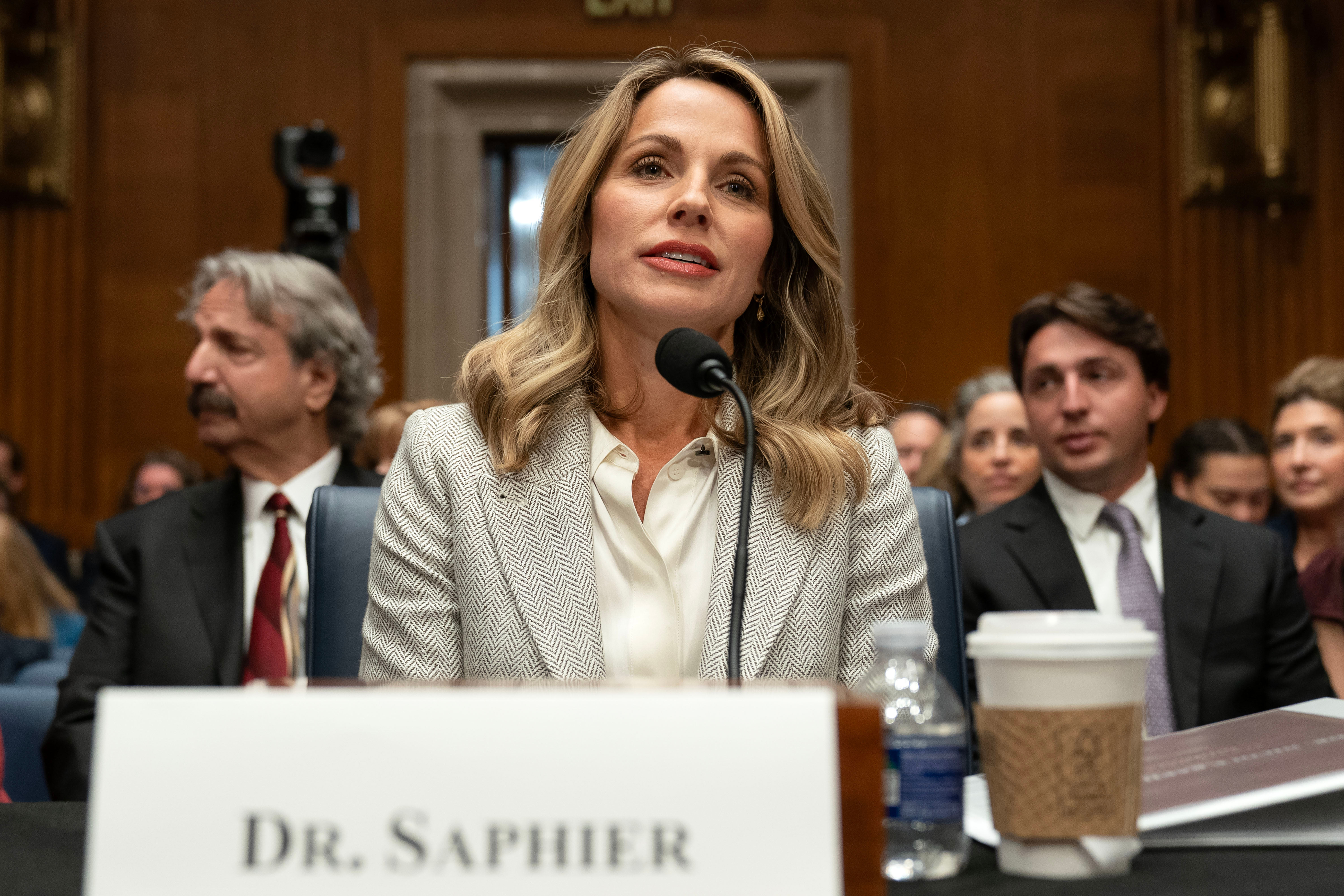
    WASHINGTON — Nicole Saphier, President Donald Trump’s third surgeon general nominee, was grilled at her confirmation hearing Wednesday about her stance on childhood vaccines, voicing support for immunization as she seeks to serve in an administration that has moved to make sweeping changes to vaccine guidance.

    Saphier, a radiologist and former Fox News Channel contributor, faced tough questioning about her views on the safety of childhood vaccines by Republican Sen. Bill Cassidy, who pressed her to declare whether she believed there was a link between vaccines and autism — which widespread scientific consensus has concluded doesn’t exist, yet which the Trump administration has repeatedly pushed to revisit.

    “I do not believe childhood vaccines cause autism,” Saphier said. She also said, “The MMR vaccine is our greatest tool for combating measles,” in response to a question by Cassidy over whether parents should give children that shot, which stands for measles, mumps, and rubella, and which the president recently ordered be spaced out.

    She suggested support for vaccines as a critical tool to fight infection and said she appreciated the administration’s attempts to address questions and concerns among “the vaccine hesitant people,” which Cassidy countered was only creating more confusion. Cassidy pushed her to speak with clarity on some of her answers on vaccines, which she repeatedly presented as a belief rather than a known scientific fact.

    Saphier is nominated for a position that carries limited policymaking power but serves as a loud megaphone as the nation’s top communicator to Americans on public health issues.

    Health and Human Services Secretary Robert F. Kennedy Jr. and Trump have both suggested that childhood vaccines, such as MMR, may play a role in causing autism. Evidence from decades of studies and real-world use of vaccines have proven there is no link between vaccines and autism.

    The administration has taken steps to upend the nation’s vaccine guidance — many of them since halted by a judge — including downsizing the childhood immunization schedule. Medical groups and doctors have warned that the changes could stoke vaccine hesitancy.

    Saphier is Trump’s third pick for surgeon general

    Saphier is Trump’s newest pick after entrepreneur and wellness influencer Casey Means saw her path forward stall in the Senate over her background and vaccine views. Trump withdrew his first nominee, Fox News medical contributor Janette Nesheiwat, after questions arose about her academic credentials. The position has been vacant throughout Trump’s second term.

    Like Means, who is a close Kennedy ally, Saphier has questioned whether every child needs to get the hepatitis B vaccine at birth, a longtime recommendation that the Trump administration has been trying to weaken. On Wednesday, she said the universal birth dose of hepatitis B was safe and effective.

    An author and podcaster who previously hosted her own show, Wellness Unmasked with Dr. Nicole Saphier, Saphier frequently commented on the Trump administration’s approach to health, often positively. She also used the phrase “Make America Healthy Again” years before Kennedy popularized it. It was the title of a 2020 book she wrote that criticized the government’s handling of healthcare and the Affordable Care Act.

    While being supportive of the Trump administration at large, Saphier has, however, disagreed with Trump and Kennedy on some issues, telling the Associated Press last fall that Trump’s cautions to pregnant women who take Tylenol were oversimplistic and “patronizing.”

    Last year, she decried the administration’s long-anticipated first attempt at a MAHA report, which cited some studies that didn’t exist, calling it “pretty embarrassing.” She said Kennedy’s firing of his first CDC director, Susan Monarez, after less than a month on the job was “a mess.”

    “When we keep hearing radical transparency and we’re going to regain trust, I can tell you these shenanigans are taking us farther away from that mission,” Saphier said on her podcast. On Wednesday, she said she promised to restore public trust if confirmed.

    At the start of the Senate health committee hearing, Cassidy noted the “serious health issues” facing the country, highlighting Kennedy’s efforts to scale back vaccine guidance at a time when the U.S. is enduring its worst year for measles in decades.

    “That is going to be a terrible legacy for this administration,” Cassidy said, telling Saphier and other nominees appearing alongside her at the hearing that he hoped they would restore confidence in public health.

    Cassidy, who was defeated by a Trump-backed challenger in his Republican primary earlier this year, then criticized what he called “irresponsible” health policy leadership.

    During lawmakers’ questioning, Saphier was also asked whether she would follow unlawful orders by the president or Kennedy — she said she would follow the law — and was tested on her knowledge of the medication mifepristone, which is used to manage miscarriages and abortions.

    It was not immediately clear when the committee planned to vote on whether to advance Saphier, who would still need a vote by the full Senate to be confirmed.

    Also facing lawmakers’ questions Wednesday was Chris Klomp, chief counselor of the Health and Human Services Department, who has been nominated to serve as Kennedy’s second-in-command. Timothy Westlake, chief of staff at the Substance Abuse and Mental Health Services Administration who is seeking confirmation to be assistant secretary for mental health and substance use, was also questioned.

    Saphier says she would divest from some holdings

    Saphier is director of breast imaging at Memorial Sloan Kettering Monmouth, according to her profile on the New York-based institution’s website. She has a doctor of medicine degree from Ross University School of Medicine in Barbados along with fellowships at the Mayo Clinic, the profile said.

    Her latest ethics filing, dated Sept. 7, shows holdings with various healthcare and insurance firms, as well as processed food companies, like Coca-Cola, Yum Brands, the Hershey Co., and cigarette maker Philip Morris.

    Before entering politics and throughout his tenure at the health department, Kennedy has criticized big pharmaceutical companies and insurance firms for alleged corruption and decried ultraprocessed foods as contributing to a nationwide chronic disease crisis.

    Additionally, Saphier owns DropRx, a firm that produces controversial, unregulated tinctures — concentrated liquid extracts promoting focus and calm — that contain ingredients, including kava kava root, described by the FDA as potentially causing severe liver injury.

    Her filing says she will resign from her position with DropRx and Empower MD LLC, which owns DropRx, if she is confirmed.

    She states in the document that she would partially or fully divest from holdings that would present a conflict to serving as surgeon general.

  • Osprey chicks are starving at the Jersey Shore, study says

    Osprey chicks are starving at the Jersey Shore, study says

    An icon of Jersey Shore waterways is in peril, according to a Stockton University study.

    The osprey, a raptor that feeds primarily on fish, was reclassified from “threatened” to “stable” by New Jersey’s Department of Environmental Protection’s Fish and Wildlife agency, but a recent study by Atlantic County University, whose mascot is the osprey, found staggering declines along the Mullica River and Great Bay.

    Biology students and instructors at the school monitored 27 osprey nests along the Mullica River and Great Bay this year and discovered that chicks were surviving at a dismal rate. During the first survey, in May, the team counted 54 eggs and three chicks. During the final survey, last month, there were nine fledged chicks, an 85% loss.

    Melanie Schroer, a biology instructor at the school, said the study’s results were alarming.

    “The broader context here is that osprey nest productivity is declining. Nesting success has taken a huge hit, not only in my little part of the world, but also New Jersey and much of the East Coast, and so, of course, everyone wants to figure out what’s going on,” Schroer said in a statement. “This population has been recovering for 50 years, and it’s been doing great, and then just the last handful of years, not so much anymore.”

    Last year, the Conserve Wildlife Foundation of New Jersey found that osprey nest productivity had its steepest decline in decades, with 57% of active nests failing to produce any young.

    Both studies mentioned fluctuations in food sources, particularly the Atlantic menhaden, also known as “bunker,” as a potential issue for the empty nests. Shroer, of Stockton, said researchers noticed that adult ospreys were bringing more flounder to their nests as opposed to menhaden, their typical food source. Menhaden, Schroer said, pack more calories.

    “So they’re putting in more work and bringing back fewer calories, fewer resources for their young,” she said.

    Menhaden are considered a “keystone species,” vital to a slew of food chains up and down the East Coast, feeding everything from whales, to game fish, to coastal birds like osprey. Commercial fishing harvests vast quantities of menhaden for animal feed and human supplements, particularly in the Chesapeake Bay. Advocates of the Chesapeake are calling for as much as a 50% reduction in menhaden harvests.

    Last year, when New Jersey reclassified ospreys as stable, officials noted how pesticides had decimated populations, with only 50 nests statewide in the 1970s. Those numbers had rebounded to 800 by 2023.

    Schroer said Stockton’s study reveals a questionable future, however, as those adults age out.

    “There are still many adults in the ecosystem, ” she said, “but if the nest productivity declines as it has been in the last couple years, there won’t be enough young birds to replace the older ones and sustain the population.”

  • Battle with Trump is sending Canada into the arms of the EU

    Battle with Trump is sending Canada into the arms of the EU

    BRUSSELS — Locked in a trade war with President Donald Trump and pivoting away from the United States, Canada is seeking stronger ties in Europe and Asia as a shield against Washington’s volatility.

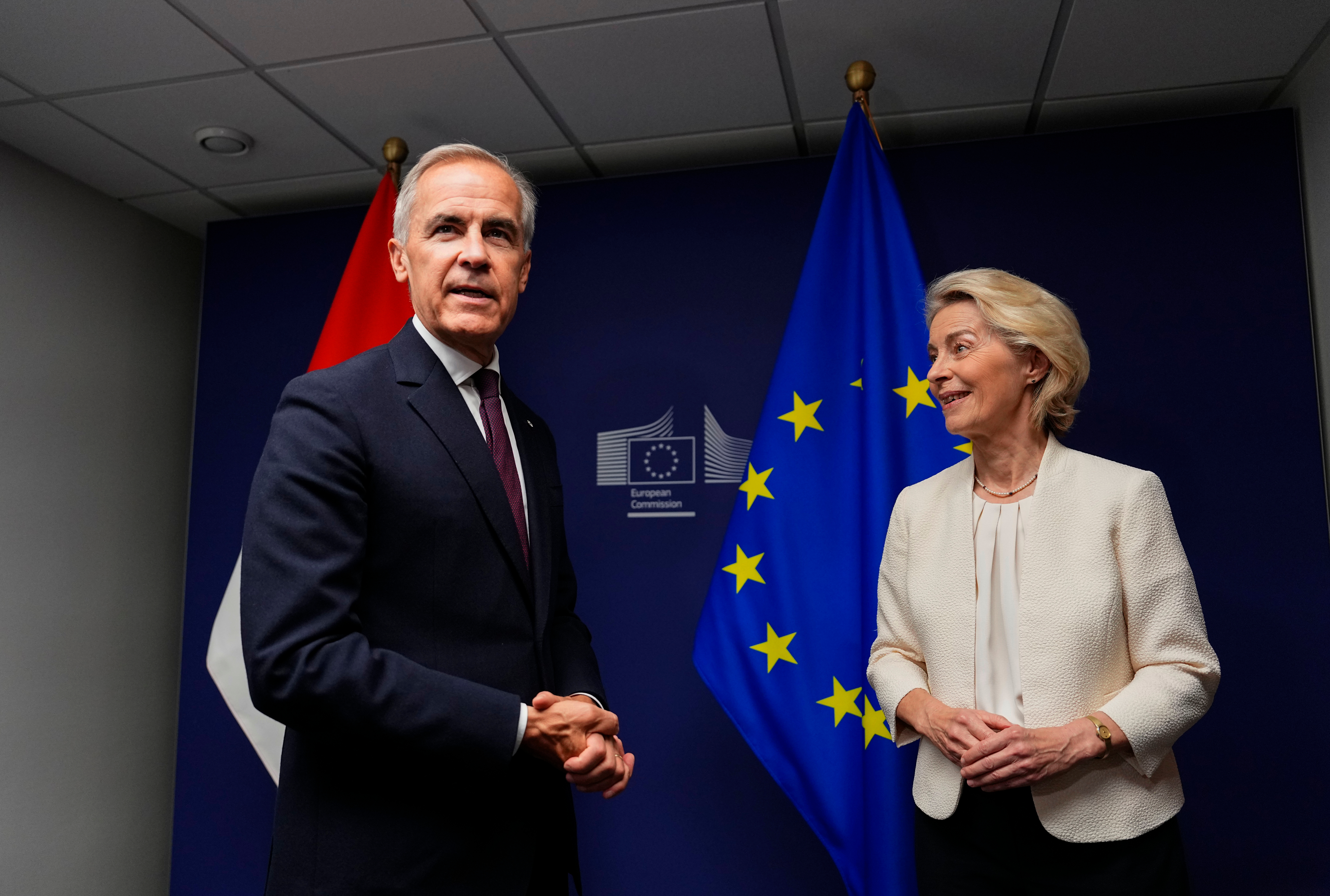
    On Wednesday, sitting as a guest of honor inside the European Parliament, Canadian Prime Minister Mark Carney received an unprecedented offer: European Commission President Ursula von der Leyen said she wants to make Canada the first “associate member” of the 27-nation bloc.

    “We want to bring the relationship with Canada to the highest level possible,” she said in her annual State of the Union address.

    The declaration at the Parliament in Strasbourg, France, received a standing ovation from European lawmakers and from Carney.

    The offer, which would see two longtime U.S. partners expand their alliance from trade to security, highlights the extent to which Trump is redefining alliances.

    The president’s foreign policy gyrations, including threats to take Greenland from NATO ally Denmark, have triggered a reckoning among Washington’s traditional friends about their relationship with the United States.

    Amid the standoff with Trump on tariffs, Canada has pursued a thaw in ties with China including new trade deals. Beijing has praised Ottawa for walking away from talks rather than caving to Trump’s demands, and this month, China and Canada revived a dialogue on military issues after an eight-year break.

    Ahead of his trip to Europe this week, Carney said he wanted a “unique alliance” with the EU, including on energy and critical minerals, to help safeguard Canada against economic coercion. “The world’s more dangerous and divided, and friends need to stick together in these times,” he said.

    European leaders have echoed Canada’s bid to strengthen ties.

    “Dear Mark, I said we must urgently reimagine our partnerships,” von der Leyen said in her speech. “So, I would like to work with you on opening the door for Canada to be the first associate member of the European Union.”

    Von der Leyen described the move as “not against anyone else, but for our common strength.”

    Yet America’s jilted allies are having once-unthinkable conversations about whether Washington could abandon or even turn against them, and are working to limit their dependence.

    European leaders have vowed to take responsibility for their defenses as the U.S. shifts resources away and have rushed to close ranks with allies including Britain and Canada.

    A new arrangement with Canada could involve visa-free work for Canadians in the 27 nations of the EU, said two European diplomats, speaking on the condition of anonymity to discuss sensitive diplomacy. Talks could include further reducing trade barriers and boosting joint arms production, they said.

    Carney said Tuesday that visa-free opportunities are “one aspect of the discussion.”

    In facing Trump’s tariffs and rhetoric about annexing Canada, Carney has cast himself as a leader who can rally together “middle powers” to protect their interests.

    Trump has leveled personal attacks against Carney since trade talks between the North American neighbors collapsed last month. Carney retaliated against U.S. tariffs after rejecting U.S. demands that he said would undermine Canada’s sovereignty.

    “What Carney has been saying to Europe, to Latin America, to Asia, is that now’s the time to stand up to Donald Trump,” said Fen Hampson, a professor of international affairs at Carleton University in Ottawa. “That’s his message: We’re going to stand up, and if you guys have any guts, you’ll do the same thing.”

    Carney, who has described Canada as “the most European non-European country,” has found a receptive audience in Europe. He is scheduled to give a speech at the European Parliament today.

    But while European nations similarly stared down the barrel of Trump’s threats, EU leaders ultimately tabled retaliatory measures and agreed to a trade deal with higher tariffs to prevent a spiraling confrontation.

    Valérie Hayer, a French lawmaker who leads a centrist faction in the European Parliament, told Carney on Wednesday that he has “shown what to do in the face of Trump: Refuse to compromise … speak the language of power.”

    “Canada is welcome in the European Union because we share the same values and our interests align,” Hayer added. “So let’s go further.”

    Von der Leyen, who heads the EU executive branch, did not offer details on how associate membership for Canada would work or when it might occur.

    Instead, she used her speech to tout plans for a deeper partnership on economic security, energy, and technology, as well as in the Arctic. “We see the world with the same eyes,” von der Leyen said.

    She said the two would build on their existing free trade agreement and “integrate” their defense industries.

    Canada last year sent some 70% of its exports to the United States, which is also the E.U.’s largest export market for goods. Canada and Europe have sought access to new markets via deals with other trade partners, including in Latin America and Asia, amid Chinese competition and U.S. pressure.

    Trade between the EU and Canada stood around $150 billion last year, while the U.S. and Canada traded more than $850 billion.

    The EU and Canada, which have long sheltered under U.S. military guarantees, have pledged to ramp up their defenses and collaborate on upgrading their weapons industries. Like Canada, most EU countries are also members of the U.S.-led NATO alliance.

    Canada this year became the first non-European country to join the E.U.’s 150-billion-euro loan program for joint weapons procurement, giving Canadian arms manufacturers access.

    In a separate announcement this week, the European Parliament also said it plans to open a satellite office in Ottawa.

    The status of associate member, proposed by von der Leyen, does not exist in the European Union, which oversees trade policy for its 27 member states and operates a single economic market based on the free movement of goods and people.

    Creating such a category could complicate the EU setup with other nations such as Britain or Norway, and also potentially the membership bids of countries eager to join, such as Ukraine.

    Joining the EU can be a yearslong ordeal that requires thorny negotiations and legislative changes. Several nations on the continent have long been waiting in line, and the EU typically has not been flexible about membership rules.

    Earlier this week, commenting on a Wall Street Journal report about EU associate membership, Carney said that Canada was “not looking to become a member” of the EU but was seeking an enhanced alliance.

    “We share the same values,” Carney told ​reporters in Toronto. “We have the same priorities and we have very ⁠complementary strengths.”

    Hampson said the key question is how the new relationship “is actually defined” and whether “it is just a new bow tied around existing agreements.”

    “But if it does involve a much deeper and broader relationship than what we have now,” he added, “it will be significant.”

  • Centenarians living in Japan exceed 100,000 for the first time

    Centenarians living in Japan exceed 100,000 for the first time

    TOKYO — The number of people aged 100 or older in Japan surpassed a record 100,000 this year, the latest government figures show, underscoring the country’s rapidly aging and declining population.

    The Health and Welfare Ministry statistics released Tuesday show Japan now has 107,677 centenarians, up 7,914 from the previous year and exceeding the 100,000 mark for the first time. Nearly 88% of them are women.

    Kyoto resident Fuyo Kishimoto was recently recognized as the oldest Japanese woman at age 114. Japan’s oldest male is 112-year-old Hikaru Kato from Kumamoto in southern Japan.

    The figures were released to mark this year’s Sept. 15 Respect the Aged day, when healthy and active centenarians are honored by the government with a letter from Prime Minister Sanae Takaichi and a silver sake cup.

    “I’m very pleased that many people are living a long, healthy and active lives,” Health Minister Kenichiro Ueno told reporters Tuesday, citing progress in medical technology, healthy lifestyle, and diet as contributing factors.

    Ueno noted the importance of maintaining a sustainable social security system as the population continues to age and decline.

    Many younger people, however, are not optimistic about their future.

    The National Institute of Population and Social Security Research last week released the results of a survey indicating more than 20% of both men and women who are single and aged between 18 and 34 have no intention of ever marrying, with nearly half saying they see no benefit in marriage.

    Ueno acknowledged the reasons for marriage reluctance among young people include the high costs of raising and educating children and the mental and physical burden on working parents. He said the government will continue addressing their concerns and attempt to turn around problems related to Japan’s aging population and dwindling births.

    Japan’s drastic population decline is inevitable, experts say, noting the country’s total fertility rate dropped to a record low 1.14 in 2025, far below the 2.1 children needed to be born to each Japanese woman to maintain the current population.

    Japan’s total population during the 2020 census stood at 126 million, almost 30% of which were 65 or older. Experts estimate there will be a decline to 87 million by 2070 with nearly 40% aged 65 or older, according to the national institute.

    There were 153 people aged 100 or older in Japan when centenarian surveys began in 1963. They exceeded 1,000 in 1981 and surpassed 10,000 in 1998, according to the Health and Welfare Ministry.

  • A federal judge believes DA Larry Krasner may have broken the law, and he referred the case to the U.S. Attorney’s Office

    A federal judge believes DA Larry Krasner may have broken the law, and he referred the case to the U.S. Attorney’s Office

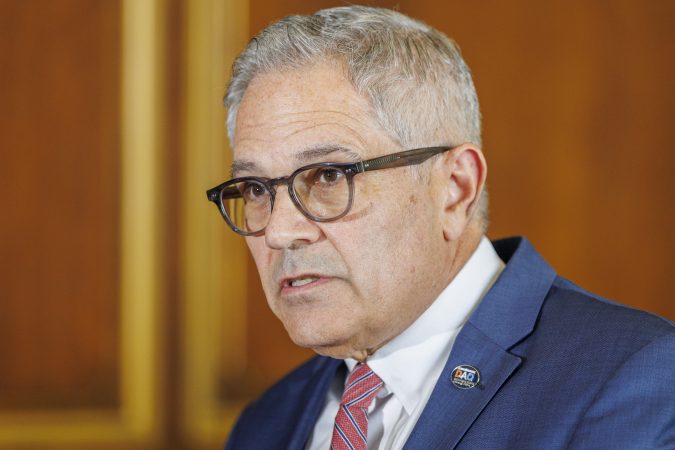
    A federal judge said Tuesday that District Attorney Larry Krasner may have broken the law while overseeing a contentious post-conviction case, and he said he referred the matter to the U.S. Attorney’s Office to investigate whether Krasner should be charged with crimes including conspiracy or obstruction of justice.

    U.S. District Judge Paul S. Diamond made those stunning statements in a memorandum in which he also ruled that Krasner and one of his top supervisors, Matthew Stiegler, could no longer participate in the case — a matter in which a man is seeking to have his murder conviction overturned.

    Diamond wrote that over the last several months, as he conducted hearings to learn more about how attorneys in the district attorney’s office handled that case, testimony from some of Krasner’s staffers revealed actions by Krasner and Stiegler that Diamond called “troubling,” “disturbing” — and potentially illegal.

    Those actions, he wrote, included pressuring other staffers to take steps to protect Stiegler and blame one of his subordinates, urging staffers to lie to Diamond in court, and threatening “consequences” for those who did not follow Krasner’s orders.

    “I have thus reluctantly concluded that Philadelphia’s highest law enforcement official and one of his top assistants may have violated the law,” Diamond wrote. “In these circumstances, with the issuance of this Memorandum, I refer the DAO, Mr. Krasner, and Stiegler to this District’s United States Attorney’s Office for investigation and other appropriate action.”

    In a statement Tuesday, Krasner said, “I respectfully and vigorously disagree” with Diamond’s findings, adding: “I look forward to appealing to the higher court as soon as the law allows.” He said he could not comment further because the case is pending.

    Stiegler did not respond to a request for comment. A spokesperson for the U.S. Attorney’s Office declined to comment. That office would have to determine whether to open an investigation or file charges. Diamond, as a judge, cannot do so himself.

    The filing was the latest explosive development in the case, which is centered on Dennis Johnson’s 2009 conviction for second-degree murder. Johnson has been fighting to have that conviction overturned, and the matter before Diamond began years ago as a routine petition in federal court.

    But in recent months, the case has led to a series of unusual revelations about the inner workings of the district attorney’s office as various lawyers have worked on aspects of the case. And it comes as Krasner’s office has faced increasing scrutiny over the way it has acted in other murder appeals — including a forceful opinion from the Pennsylvania Supreme Court, which said Krasner’s office had misled judges so frequently and flagrantly in such matters that state prosecutors must now review instances when his office says a conviction should be overturned.

    Diamond, in his filing Tuesday, said the assertions in his courtroom — made primarily by members of Krasner’s staff — were not only proof of significant internal disagreements about Johnson’s case, but also “evidence of possible criminal wrongdoing by Mr. Krasner and Stiegler.”

    Contentious internal discussions

    The origins of the controversy began to take shape in 2022.

    That year, after the district attorney’s office had spent years opposing Johnson’s bid for freedom, then-Assistant District Attorney Jaclyn Mason filed a brief changing course.

    In her filing, Mason agreed with Johnson’s lawyers that his trial counsel had been ineffective. She also said the office had discovered additional problems with the case while reviewing it again, and she recommended that Johnson’s conviction be overturned.

    A federal magistrate — relying on Mason’s brief — agreed, but Diamond was the judge with the power to accept or reject the recommendations. And this spring, he scheduled an evidentiary hearing to evaluate some of the evidence before deciding how to proceed.

    That led to a series of contentious developments within the district attorney’s office, prosecutors have since testified.

    First, Mason’s supervisors in the law division reviewed her brief and found a series of what they called “material misstatements.” They decided they needed to try to withdraw Mason’s filing and apologize to Diamond for the mistakes.

    They asked Mason to sign on to the filing with them, but she declined and resigned instead. She has since said she filed her brief only because Stiegler pressured her to do so, and she thought her supervisors, in preparing an apology, were angling to make her a scapegoat on Stiegler’s behalf.

    During testimony before Diamond in recent months, her supervisors said that was not true. But the supervisors — Katherine Ernst, Steven Wildberger, David Napiorski, and Peter Andrews — said Stiegler and, eventually, Krasner did try to persuade them to direct blame toward Mason.

    Potential crimes?

    In the supervisors’ telling, Stiegler asked them to review every case Mason had handled to find other errors in her work. That way, Stiegler suggested, Mason could be painted before Diamond as a “rogue” prosecutor who was routinely making mistakes in problematic filings.

    Krasner echoed that potential course of action, and even described it as a “good idea,” the supervisors testified.

    Diamond said those actions were “troubling.” He wrote that Krasner “did not simply learn of the Stiegler proposal; he urged the Law Division supervisors — who serve at Mr. Krasner’s pleasure — to implement it and to present a false narrative to the Court.”

    And Stiegler, he said, was “urging the DAO to present the Court with a false account to shield himself.” Diamond said that he found all of Stiegler’s testimony “contradictory, evasive, or outright dishonest” and that Stiegler may have committed perjury while on the stand.

    In addition, Diamond said, as internal discussions continued about how to proceed in the case, Krasner repeatedly rejected requests by the law division supervisors to refer it to the attorney general’s office. The supervisors generally agreed that was the appropriate course because the inner-office drama surrounding the matter was hampering their ability to handle it properly.

    But Krasner, they testified, was vehemently opposed — in part because of his disdain for people who worked in the attorney general’s office. And during some meetings, they said, Krasner said he wanted to “protect the office”; expressed opposition to telling Diamond about the referral deliberations; and said they would face “consequences” if they did so, which they took to mean being fired.

    Diamond, in his memorandum, said such a threat “could amount to obstruction of justice.” And he said the efforts by Krasner and Stiegler to present a false narrative to the court “might amount to conspiracy.”

    It was not immediately clear Tuesday if federal prosecutors would agree with Diamond’s assessment, or if they would seek to empanel a grand jury to evaluate it.

    Johnson’s petition, meanwhile, remains on hold. Diamond said the district attorney’s office could continue to handle the case moving forward, but it was not clear who might do so.

    All of the law division supervisors have already recused themselves, and Diamond said Tuesday that neither Krasner nor Stiegler could have any role in the matter. He also said he also would not allow an outside attorney selected by Krasner to handle the matter on his behalf.

  • Two teens were injured in a possible drive-by shooting in North Philly

    Two teens were injured in a possible drive-by shooting in North Philly

    Two teenagers were wounded Tuesday night in North Philadelphia in what may have been a drive-by shooting, police said.

    The 18-year-old and 17-year-old, both male, were found on the 1800 block of North Woodstock Street about 10:30 p.m., when police responded to a report of a shooting in the area.

    Chief Inspector Scott Small told reporters one of the victims told officers he believed the incident was a drive-by shooting. Police recovered at least 17 spent shell casings.

    The 18-year-old suffered a gunshot wound to the right side of his abdomen, and the 17-year-old was grazed above his right hip. Both were transported by police to Temple University Hospital and were placed in stable condition.

    Police said they did not have a motive for the shooting or a description of any suspects, and detectives are requesting anyone with information to call the department’s anonymous tip line at 215-686-TIPS (8477).

    Earlier this year, according to Philadelphia City Controller’s Office data, another nonfatal shooting occurred on the 1800 block of North Woodstock Street involving an 18-year-old male.

    There have been 124 homicides in Philadelphia this year, a 20% decrease from 2025 for the year to date.

    While Philadelphians navigated one of the city’s deadliest years just three years ago, the homicide rate has dropped to a level not experienced since the 1960s.

  • Saudi Arabia calls attempted attack on Mecca a ‘red line’ as Iran-backed Houthis deny they did it

    Saudi Arabia calls attempted attack on Mecca a ‘red line’ as Iran-backed Houthis deny they did it

    CAIRO — Saudi Arabia accused Yemen’s Iran-backed Houthi rebels of trying to attack Islam’s holiest city, as the region responded with condemnation Wednesday but no sign of military support. The kingdom, a key U.S. ally, declared Mecca a “red line” as it slid deeper into the new front of the Iran war.

    With the world’s biggest oil exporter under fire from the rebels backed by the Saudis’ regional adversary, the kingdom needs a safe outlet for its crude as well as military assistance. There’s no clear path to either.

    A crucial Saudi pipeline has been shut down, reportedly for weeks, after an attack by Iranian-backed militias in Iraq. The Houthis have been targeting infrastructure in the kingdom and its shipping on the Red Sea, where they have seized several islands in the Bab el-Mandeb Strait. And Iran is still targeting ships in the Strait of Hormuz. Oil prices remain above $100 a barrel.

    The Houthis denied firing drones toward Mecca, about 1,100 kilometers (680 miles) from Yemen’s border. The Saudis said they intercepted and destroyed the drone before it entered the airspace over the birthplace of the Prophet Muhammad.

    Turkey and Pakistan say the Saudis haven’t asked for help

    The attacks are the first test of a new defense pact among Saudi Arabia, NATO member Turkey and nuclear power Pakistan. But officials from Turkey and Pakistan told The Associated Press they have not received a Saudi request for support in response to the Houthis’ escalation.

    The Turkish official said efforts to “institutionalize” the alliance need to be completed before the pact becomes operational. The officials spoke on condition of anonymity because they were not authorized to speak publicly on the issue.

    Amid the condemnation of the attempted attack on Mecca, Pakistani Prime Minister Shehbaz Sharif said his country and the Saudis stand “unwaveringly, shoulder to shoulder.” Turkey’s foreign minister expressed solidarity and said no country can “remain indifferent,” state-run Anadolu Agency reported.

    Criticism also came from the Organization of Islamic Cooperation, representing over 57 Muslim states, which said the attempt violates the “sanctity of holy sites.”

    This was the second attempted attack by the Houthis against Mecca after the rebels fired a ballistic missile toward the city in 2017, according to Col. Turki al-Maliki, spokesperson for the Saudi-led military coalition fighting the rebels.

    Houthis claim shooting down an F-15 fighter jet

    Later Wednesday, the rebels claimed, without offering evidence, that they shot down an F-15 fighter jet operated by the Saudi-led coalition over Yemen’s central province of Marib.

    Houthi military spokesperson Brig. Gen. Yahya Saree didn’t say when it occurred, and The Associated Press could not independently verify the claim. The rebels at times take days to claim attacks.

    Spokespeople for the Saudi-led coalition and the Saudi government didn’t immediately respond to a request for comment.

    For now, the US is staying out of the fight

    The United States has sold billions of dollars in weapons to Saudi Arabia and has committed to providing training and other support to protect the kingdom, but top U.S. officials in recent days have indicated a lack of desire to get involved in the conflict.

    “The Houthis called us, and they don’t want to fight with us,” U.S. President Donald Trump said Saturday, adding that the rebels appear focused on the Saudis.

    Vice President JD Vance on Monday said Washington had been in “constant contact” with the Saudis and had been “engaged in direct conversations with the Houthis themselves,” calling it “a very fluid and dynamic thing” to be monitored.

    On the ground, forces with Yemen’s internationally recognized government have said they are regrouping to combat the Houthis after fleeing the rebels’ advance. But those forces are a collection of armed groups with varying aims.

    The number of Yemeni civilians fleeing the fighting in the Arab world’s poorest country soared once again to over 100,000 people, the International Organization for Migration said, as fears grow over a return to civil war.

    Iran’s top diplomat is in China

    While Saudi Arabia appeared to face the choice of pursuing diplomacy or taking the fight to the Houthis, the top diplomat for rival Iran was in China, the biggest buyer of Iranian oil.

    Chinese Foreign Minister Wang Yi called on the U.S. and Iran to exercise restraint and reopen the Strait of Hormuz as soon as possible, and expressed China’s concern about the spread of the fighting to Yemen and the Red Sea, according to China’s Foreign Ministry.

    Iran’s Foreign Minister Abbas Araghchi said in a statement after the meeting that Tehran seeks “the restoration of calm to the region and friendly and peaceful relations with our neighbors.”

    “In this regard we have begun dialogue with the countries of the region,” he added.

    China has avoided direct involvement in the war, but President Xi Jinping at the BRICS summit in New Delhi over the weekend again offered Beijing’s help in ending it.

    Oil flows through the Strait of Hormuz have recovered somewhat as tankers risk using a route near Oman on the other side of the waterway, with guidance from U.S. forces. Estimates vary because ships can turn off location systems but range from 5 million to 7 million barrels per day on average.

    That’s less than half the amount before the war began with U.S. and Israeli strikes on Iran on Feb. 28.