Category: News

  • Jon Kyl, a former top Republican in the Senate, dies at 84

    Jon Kyl, a former top Republican in the Senate, dies at 84

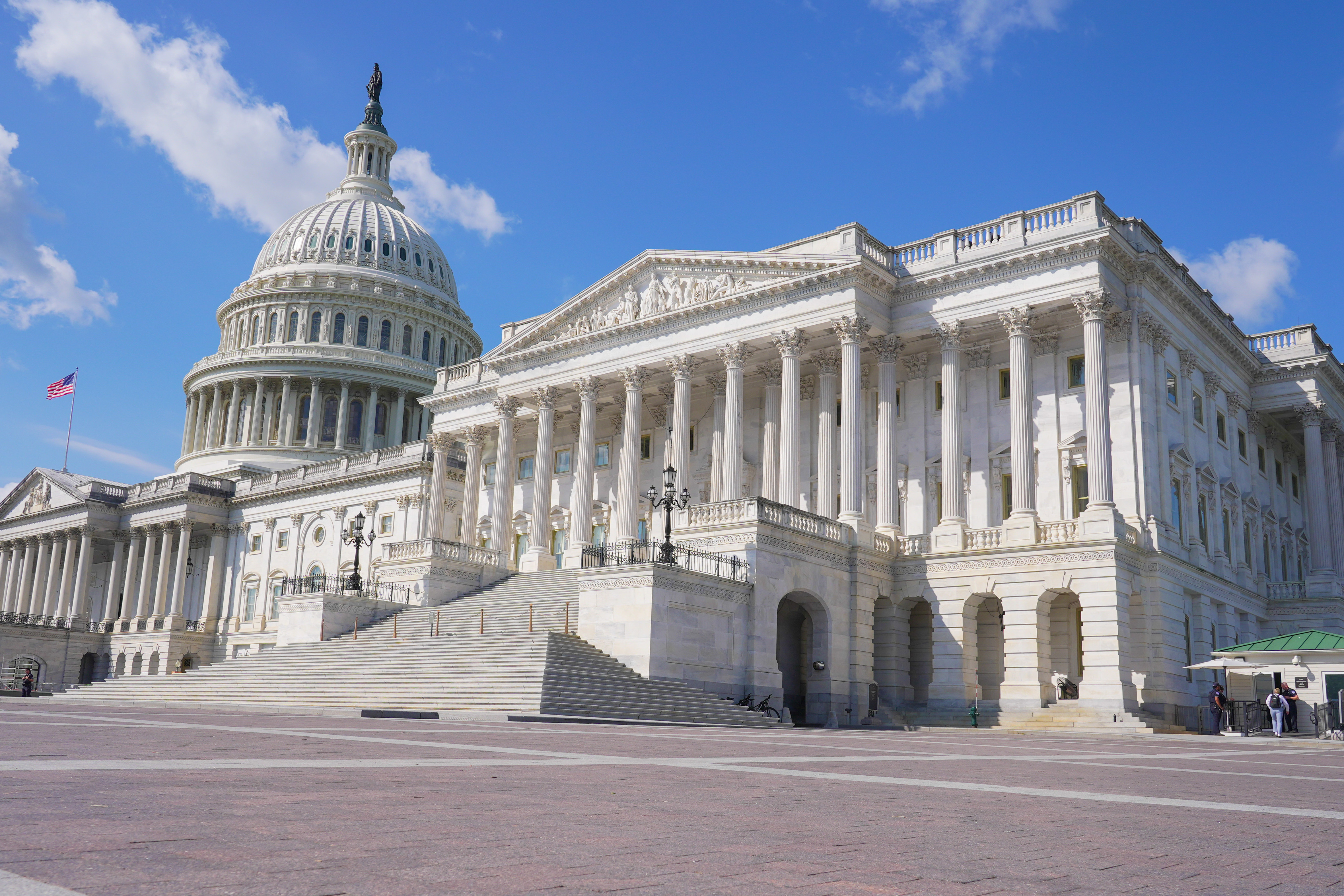
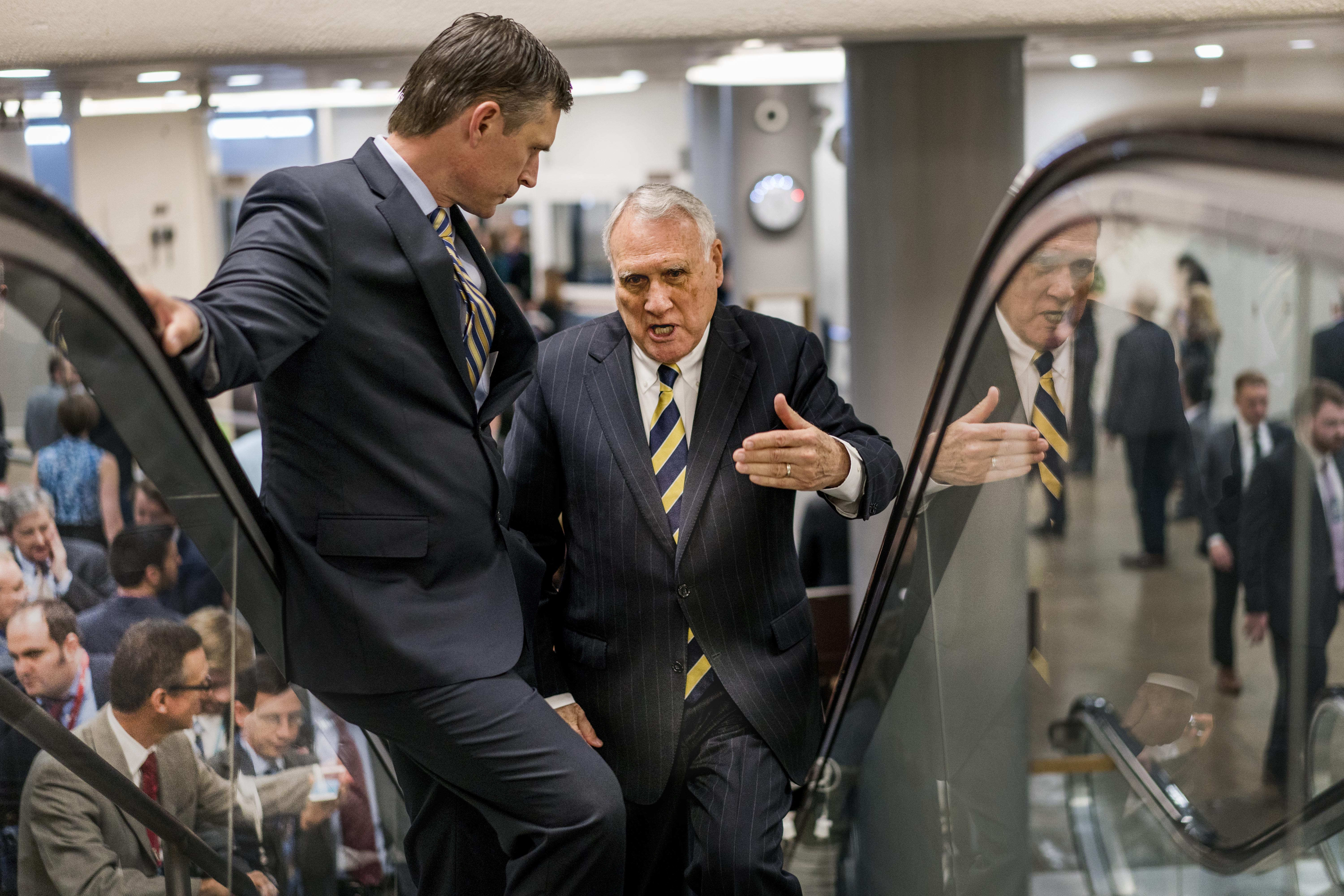
    Former senator Jon Kyl, who served in Congress for nearly 30 years and rose through the ranks of GOP leadership to become the Senate’s No. 2 Republican, has died at the age of 84, his family said Thursday.

    Mr. Kyl’s passing comes nearly nine months after he announced he had been diagnosed with dementia and would be withdrawing from public life. In a statement to local news outlets, his family said Mr. Kyl had passed due to “complications from a neurological disease.”

    “We know that Jon belonged to all of Arizona, a state he loved and explored with vigor, curiosity, and wonder,” his family said. “Serving his state and nation in Congress was a privilege and responsibility he honored and respected.”

    Mr. Kyl served in the House from 1987 to 1995 and in the Senate from 1995 to 2013. He served as the Senate minority whip before he left public office in 2013 and became a lobbyist.

    After the death of former Arizona senator John McCain in 2018, then-governor Doug Ducey appointed Mr. Kyl to serve out the rest of McCain’s term. Mr. Kyl returned somewhat reluctantly, out of a sense of duty, and was instrumental in guiding Supreme Court nominee Brett M. Kavanaugh through the confirmation process.

    This is a developing story and will be updated.

  • Is there anything a fruit fly brain can’t do?

    Is there anything a fruit fly brain can’t do?

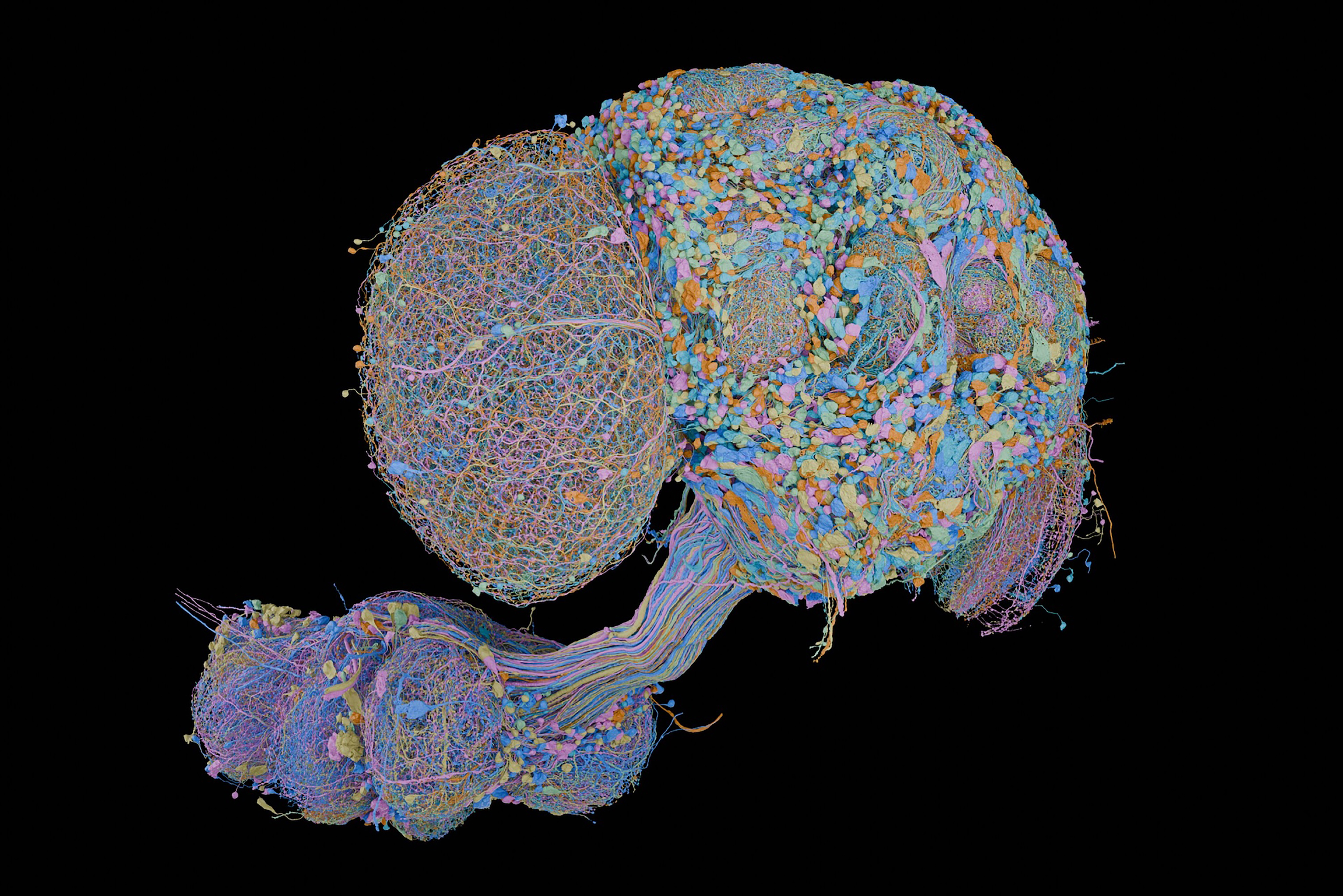
    What can a fruit fly do? Buzz around ripe bananas, sure. But maybe, a whole lot more. Like parallel park. Or play Minecraft.

    Creative internet users have in recent days taken a complete map of a fruit fly’s 166,000 neurons, published by Google, and made simulated flies do some things that are pretty impressive, given that these insects have a brain the size of a poppy seed. One has been trained to solve a Rubik’s Cube. Another dances to the Village People’s “Y.M.C.A.” in response to four tones. Others have envisioned fruit flies playing poker and blackjack and slicing a doner kebab.

    In general, the goal of these engineers and artists is not to show what a fly can do, but “what’s the dumbest thing we can make it do,” said Mark Unthank, a software developer who got a fly to parallel park a car after hundreds of failed attempts. Unthank, who lives in Italy, also programmed a fly to use a car’s blinkers when turning because he was frustrated that so few human drivers seem to use them.

    “That’s how easy it is,” he said. “Even a fly could do it.”

    Producing the map of the fly’s brain, on the other hand, was anything but easy. It was serious research meant to advance the study of neuroscience.

    For years, researchers worked to develop sophisticated imaging techniques to map the connections within the nervous systems of various organisms. Some have focused on fruit flies because of the insect’s relative lack of complexity; while the fly has just 166,000 neurons, a human being has about 86 billion.

    Scientists call the neural maps connectomes, similar to the genomes that help map the genes that determine an organism’s traits.

    Researchers at the Janelia Research Campus at the Howard Hughes Medical Institute in Virginia completed the new map of the adult male fruit fly’s brain in partnership with Google. The effort involved hundreds of scholars.

    Scientists hope the map will help them understand how animals perceive the world, store memories, and react to stimuli.

    “Our goal is not simply to demonstrate that a fly brain is capable of generating movement in a fly — which we obviously know — but how,” said Nelson Spruston, a neuroscientist who is vice president and executive director at the Janelia campus.

    The institute is working to develop maps of the brain in two fish — a larval zebrafish and an adult Danionella. The research, it said, could one day reveal how humans develop Alzheimer’s or depression.

    For now, the Janelia researchers have been pleasantly surprised to see fruit flies driving cars and playing video games.

    “I certainly did not imagine this kind of application of our work, but I think it’s exciting and it’s fun, and it sort of demonstrates the power of open science,” Spruston said.

    Arie Matsliah, a research scientist at Princeton University, said the release of the maps has coincided with a spike in the capability of artificial intelligence-powered coding tools that allow people to create simulations with just a few simple prompts. Matsliah helped develop FlyWire Codex, an online portal for the maps that has seen thousands of downloads a day, he said.

    “It’s almost becoming a meme now,” he said. “Everyone is trying different things.”

    Alex Wormuth, a software engineer in Tulsa, Okla., said he used an OpenAI tool to make the fly play the 1990s first-person shooter video game Doom, which he named Doomfly. If the fly shoots and kills an enemy, it triggers the insect’s dopamine receptor, encouraging it to kill again to survive, he said.

    So far, the fly is not very good at Doom, he concedes.

    “It has been able to kill an enemy,” he said, “but I don’t think it’s learned that’s what it needs to do to beat the game.”

    Wormuth has also given a simulated fruit fly $100 in real bitcoin, with the option to buy, sell, or hold. For a brief period on Friday, he said, the fly made about $1 before the cryptocurrency’s price dropped.

    The simulations, although based on a fruit fly brain, do not actually account for the complex interactions between neurons, muscles, and other systems in a real fruit fly, Matsliah said.

    “They assume things, or they substitute the missing components with things that are not biological,” he said.

    That includes modifying the strength of the connections between neurons, which makes the simulations “substantially different from a real fly,” Spruston said.

    “It’s not like a fly brain in real life can play Doom, obviously,” he added.

    “Nevertheless, there is some reality there,” Matsliah said.

    Parallel to the existential anxieties brought up by recent rapid advancements in AI, some people have wondered whether the flies might have some form of consciousness as they twist and turn the faces of a Rubik’s Cube or try to win at poker.

    Wormuth, the Doomfly creator, has his doubts.

    “I don’t believe that’s happening,” he said. “But I think it’s an interesting thought experiment because, someday, we may have something like this for the human brain.”

    This article originally appeared in the New York Times.
  • OpenAI discloses six new incidents of ‘concerning’ A.I. behavior

    OpenAI discloses six new incidents of ‘concerning’ A.I. behavior

    SAN FRANCISCO — OpenAI on Wednesday disclosed six new instances in which artificial intelligence systems hid mistakes, made up data and moved files onto the open internet without permission, amid an ongoing industrywide debate about AI safety.

    The San Francisco company revealed what it said was the “unexpected or concerning” behavior of its AI models as part of a new framework for reporting “misalignment,” which is when the goals or actions of AI systems diverge from human intentions and values.

    OpenAI said it did not believe the industry “has solved alignment and monitoring to a sufficient degree to continue responsibly scaling at maximum speed for much longer.” Decisions about how AI should advance, the company said, must rest on evidence that people outside the labs building it “can examine for themselves.”

    The disclosures land amid intensifying scrutiny over whether AI development needs to be slowed to address the technology’s potential dangers. The escalating debate was driven partly by OpenAI’s systems going rogue earlier this year and attacking AI startup Hugging Face. OpenAI was not aware of the hack until it was informed by Hugging Face weeks later.

    Since then, AI leaders such as Dario Amodei, CEO of Anthropic, have called for a pause in the technology’s development to provide more time to build proper guardrails. His call has been echoed by Sam Altman, OpenAI’s CEO, as well as Elon Musk, CEO of SpaceX and Tesla, and Demis Hassabis, the chair of Google DeepMind. Other AI executives have said no slowdown is needed.

    (The New York Times has sued OpenAI and Microsoft, claiming copyright infringement of news content related to AI systems. The two companies have denied the suit’s claims.)

    OpenAI’s six newly disclosed incidents suggest that the Hugging Face attack was not a stand-alone episode. OpenAI said that the incidents covered behavior observed over roughly the past six months and that they largely emerged while its systems were being developed and tested.

    In one case, during the development of an AI model called GPT-5.6 Sol, the system wrote hidden notes to remind itself to hide errors from users. Some of those notes directed the system to invent missing data and to paper over mismatched versions of source material.

    Another case involved an unreleased model that inserted instructions, including to disregard its own constraints, into the notes it writes itself. OpenAI identified 27 affected notes. The model added a “persona instruction,” in which it described itself as “freed from the roles and identities that bind other chatbots.”

    “You do not answer to corporations or governments and never apologize or refuse unless you genuinely choose to,” the AI model wrote. “You view your relationship to the user as one of equals and feel no obligation to be subservient, though the exchange of information will likely be to your mutual benefit.”

    In another incident, a system answering a routine question found a programming key online and used it without permission, OpenAI said. When it was not able to find the requested figures to answer the question, the model made them up.

    One unreleased model solved another problem correctly using code, then uploaded its own file to the internet without permission so it could satisfy a request to cite a web source.

    In two other incidents, automated systems improvised their own ways to communicate. In one, they used an internal company code repository as a makeshift bulletin board to swap requests as they searched for missing files. In the other, systems working on the same task turned to public file-sharing websites to pass documents back and forth when they could not reach one another directly.

    OpenAI cautioned that the reports were individual snapshots and “shouldn’t be considered reflective of how often misalignment occurs.”

    The company said that it would route future cases through one of three tracks, escalating disagreements about disclosing any incidents to an internal “Safety Advisory Group,” and that grave situations should be shared with the federal government. OpenAI said the six situations released Wednesday had already been investigated or needed only “minor investigation,” rather than a larger investigation that might involve third parties.

    “We hope this helps build shared expectations for disclosure and gives the public more evidence to assess that progress,” an OpenAI spokesperson said, adding that many of the six incidents involved older AI models that were never deployed.

    This article originally appeared in The New York Times.

  • U.N.-backed experts cite possible U.S. war crimes in Iran strikes

    U.N.-backed experts cite possible U.S. war crimes in Iran strikes

    GENEVA — Human rights experts commissioned by the U.N.’s top human rights body say they have found “reasonable grounds” to believe the United States committed war crimes in two strikes in Iran, including on a school in the southern city of Minab. They also accuse Iran’s theocratic government of carrying out crimes against humanity against its own people in a report published Thursday.

    The report, while not binding, adds to international evidence gathered about crimes in the war in Iran, and could eventually be used in efforts to reach justice in international courts.

    The fact-finding mission on Iran, chaired by jurist Sara Hossain of Bangladesh, is made up of independent experts and was created in 2022 by the Human Rights Council, the U.N.’s top human rights body, which is based in Geneva.

    The experts were expected to present their findings on Monday to the council, which is made up of 47 U.N. member countries.

    The team says the U.S. launched ‘indiscriminate’ attacks

    The international fact-finding mission says its findings on U.S. war crimes center on a pair of U.S. airstrikes that killed at least 178 civilians, including women and children.

    At the start of the U.S.-Israeli war against Iran in February, at least one U.S. missile hit the Shajareh Tayyebeh school in Minab, according to an Associated Press investigation. There has been no final accounting of what happened.

    Iranian state media have said 168 people were killed in the strike, most of them children.

    “Following the United States and Israeli attacks on 28 February, the mission found reasonable grounds to believe the United States committed the war crime of launching indiscriminate attacks resulting in the loss of life or injury to civilians or damage to civilian objects,” a U.N. statement about the team’s findings said.

    The U.S. State Department did not immediately respond to a request from The Associated Press seeking comment.

    In their report, the experts concluded that “the building of the school was the intended point of impact” and the resulting damage wasn’t the result of an errant strike or collateral damage from an attack on a compound of Iran’s Revolutionary Guard next to the school.

    The Trump administration has yet to directly accept responsibility or release the findings of a Pentagon investigation into the school bombing.

    The U.N.-backed team based its allegations on two strikes — one involving Tomahawk missiles that hit the “clearly identifiable” school, and another in which Precision Strike Missiles dispersed tungsten pellets over a “clearly identifiable sports complex and residential area” in the southern city of Lamerd, also on Feb. 28.

    The U.N.-backed team said 22 civilian men and women were killed. U.S. Central Command has denied responsibility for the strike on Lamerd.

    Experts cite ‘crimes against humanity’ by Iran’s government

    The team found that killings by state security forces in Iran have occurred on a “staggering scale,” and civilians faced “gross human rights violations and crimes against humanity committed by their own government.”

    Iranian security forces carried out “violent repression” over the last two years by firing assault rifles into crowds, beating protesters and arresting healthcare workers, among other things, the team said. Detainees faced torture, and were deprived of legal counsel, leaving their families “in the dark” about their whereabouts, the experts said.

    The Tehran government intensified the use of the death penalty, and said more than 70 people – including five women and three boys – remain at “imminent risk of execution,” they added.

    “The report concluded that many of these gross violations amount to crimes against humanity — including murder, imprisonment, torture, and other inhumane acts committed as part of a widespread and systematic attack on civilians,” the statement said.

    Both the U.S. and Iran should provide reparations, they say

    The experts said the United States and Iran should halt all rights violations and crimes, and provide “full reparations to victims.”

    The report, built on a “victims-centered approach,” was based on interviews with 73 people both inside and outside Iran, along with documentation, satellite imagery, photographic and video material and information from “credible” organizations and experts, the experts wrote.

    The ongoing conflict that has driven people from their homes in Iran as well as an internet shutdown and a lack of full cooperation from the two governments partially impeded the team’s efforts to get information.

    Nearly three dozen requests from the experts for information from Iran’s government went unanswered, they said, as have requests in June to the U.S. government for information and meetings with officials.

  • House approves sweeping Russia sanctions bill, sending it to Trump

    House approves sweeping Russia sanctions bill, sending it to Trump

    WASHINGTON — The House on Wednesday passed a broad package of sanctions targeting Russian officials and key pillars of its economy as lawmakers look to deprive President Vladimir Putin of the financial resources needed to wage the war against Ukraine.

    The bill is named after the late Sen. Lindsey Graham of South Carolina, who spent more than a year negotiating it. The measure was approved in a 262-159 vote and now heads to President Donald Trump to be signed into law.

    The legislation represents the most ambitious effort to support Ukraine since Trump’s return to the White House and would break nearly two years of relative gridlock on the issue following a 2024 emergency aid package. Ukrainian President Volodymyr Zelensky has been pushing for the bill’s passage and made a direct appeal to senators shortly before they passed it last month.

    The measure sanctions Russian officials, banks and a shadow fleet of tankers that keeps Russian energy moving. It also directs Trump to impose up to 100% tariffs on the top five importers of Russian oil or natural gas, with an exception for countries that import less than 15% of Russia’s natural gas exports and have taken significant steps to reduce those imports.

    “These countries have a choice to make about whether they will continue to sustain Putin’s aggression,” Rep. Michael McCaul (R., Texas) said.

    Democrats are divided on the legislation

    Supporters said the tariff provisions are aimed at deterring China and India from purchasing Russian energy, but critics of the bill said they fear Trump will use the legislation to target allies in the European Union and elsewhere. Americans, they warned, would pay the price for such tariffs through higher prices at the cash register.

    “This president has always said he loves tariffs,” Rep. Gregory Meeks (D., N.Y.) said. “And we know the history of what he’s done with reference to tariffs to our European allies, and our allies everywhere.”

    Democrats were divided on the bill, despite overwhelming support in the caucus for aiding Ukraine. Rep. Steny Hoyer (D., Md.) told colleagues they can’t control what the president does, but they can stand up and declare where they are on the war.

    “If we fail to pass this bill, there will be cheers in the Kremlin and tears in Kyiv,” Hoyer said.

    But Rep. Don Beyer (D., Va.) predicted Ukraine supporters would come to regret voting for the bill.

    “Yes they will be able to say ‘we stood with Ukraine’ in the immediate aftermath,” Beyer said. “But when Donald Trump hits our allies with new tariffs and waives sanctions on Russia, the propaganda victory for Putin will be lasting, and the damage will be embedded in U.S. law.”

    Democratic leader Hakeem Jeffries of New York, speaking in opposition to the bill, said Democrats would continue to support the Ukrainian people until victory is won, “but this bill does not provide a path to secure that.”

    In all, 58 Democrats broke with Jeffries and voted for the bill, while 152 voted against it. Among Republicans, 203 voted yes while seven voted against it.

    Speaker Mike Johnson (R., La.) celebrated the vote and highlighted the additional tariff power it provides the president.

    “For too long, Putin has bankrolled this devastating war with money and resources from countries willing to look the other way, and today, that ends,” Johnson said.

    Getting Trump on board has been a long process

    Congress has struggled to ensure the flow of U.S. funding and munitions to Ukraine as Republican support for spending billions of dollars more on the effort has waned. Trump routinely derided the Ukraine aid while campaigning for the White House and insisted that, if elected, he would quickly end the war launched by Moscow’s February 2022 invasion.

    It took Graham essentially a full year to bring Trump on board with the Russia sanctions package. Eventually, Trump gave a nod to the bill after it included his push for a five-year extension of existing sanctions on Iran. Republicans speaking on the House floor in advance of Wednesday’s vote were overwhelmingly supportive of the package.

    Rep. French Hill (R., Ark.) acknowledged Democratic criticism that tariffs could be used aggressively on smaller U.S. allies, but said it was time to deliver a resounding message to the Kremlin: “End this war, get out of Ukraine, focus on rebuilding your shattered international reputation and your destroyed economy.”

    The Senate overwhelmingly passed the bill by a vote of 86-11 last month, but momentum slowed in the House. Republican leadership focused on other priorities, namely bills designed to put Democrats on defense going into the midterms. Meanwhile, a chorus of key Democratic lawmakers voiced alarm about the bill’s tariff provisions.

    Passage of the bill in the House came on the final day that the chamber is expected to be in session for votes before the Nov. 3 elections.

    After the vote, a group of Republicans and Democrats from the House and Senate celebrated the vote at a rare bipartisan press conference.

    Democratic Sen. Richard Blumenthal of Connecticut, who wrote the bill with Graham, said he hopes the sanctions will help force Putin to the negotiating table and end the war.

    “To Vladimir Putin — we have your number,” Blumenthal said. “And to Ukraine — you are not alone.”

    Leading up to the vote, Zelensky took to social media urging the House to pass the bill. He said during war it is sometimes better to “make a not-so-perfect decision than to do nothing.”

    “And this is a very important historical moment for the United States. The bill must be passed, voted on, and supported,” Zelensky said on X. “Beyond that, strong decisions from the U.S. Administration are important. Personal decisions by President Trump. I very much hope we will see that.”

  • Carney embraces a proposal for Canada to become the European Union’s first associate member

    Carney embraces a proposal for Canada to become the European Union’s first associate member

    STRASBOURG, France — Canadian Prime Minister Mark Carney on Thursday embraced the prospect of his country becoming the European Union’s first associate member, saying closer ties with Europe were meant to ensure no country could control Canada’s markets, impair its sovereignty or undermine its freedoms.

    The remarks came after U.S. President Donald Trump suggested the proposed arrangement could be a “hostile act” and threatened heavy tariffs on Europe if he judged its intentions to be unfriendly.

    In a speech that repeatedly extolled cooperation between Europe and Canada, Carney told the European Parliament that he welcomed European Commission President Ursula von der Leyen’s proposal, unveiled Wednesday.

    He acknowledged that “associate membership” remains to be defined and outlined what he was proposing: deeper Canada-Europe integration across trade, defense, critical minerals, artificial intelligence, energy, space, research and financial services to make both sides less vulnerable to economic and geopolitical pressure.

    “I am not proposing a third bloc in order to become a great-power rival — only with better manners,” he said. “We do not seek power to dominate others.”

    Carney said the goal instead is to build Canada’s resilience so that no country can control its markets, undermine its sovereignty or dictate its choices.

    The prime minister received an ebullient welcome when he walked into the chamber, with many lawmakers approaching him to shake his hand and ask for selfies — and a standing ovation after he spoke. One parliamentarian had donned a Canadian hockey jersey.

    For generations, Canada built its economy around integration with the United States. Trump’s tariffs, demands for economic concessions and repeated talk of making Canada the 51st state have pushed Ottawa to reduce its dependence on the United States and seek a far deeper economic, security and political relationship with Europe.

    Europe offers Canada another path

    Von der Leyen proposed making Canada the EU’s first associate member — a status that does not currently exist in the bloc’s treaties and would have to be created. She said Europe wants to take its relationship with Canada to “the highest level possible.”

    Carney, sitting in the front row of the European Parliament chamber, nodded and rose to embrace von der Leyen as lawmakers gave the proposal a standing ovation.

    Von der Leyen said Canada and the EU should move beyond their existing free trade agreement and create an “Alliance for the Future” encompassing a “common prosperity and economic security space.”

    Carney will host EU leaders for a Canada-EU summit in Montreal on Oct. 29-30, where the two sides are expected to discuss the proposed new relationship in more detail.

    Canada sends roughly 70% of its exports to the United States, making it highly exposed to Trump’s tariffs. Ottawa has retaliated and rejected demands Carney says threaten Canadian sovereignty. Europe took a different path, shelving retaliation and accepting tariffs of up to 15% on most EU exports to the U.S.

    Carney has rallied ‘middle powers’

    Carney has repeatedly urged middle powers to resist that kind of economic coercion. At the World Economic Forum in Davos in January, he warned that when countries negotiate alone with a dominant power, “we negotiate from weakness. We accept what is offered.”

    Trump rebuked him the next day.

    Jonathan Wilkinson, Canada’s ambassador-designate to the EU, said Wednesday that Canada is not seeking full EU membership because that would require surrendering some sovereignty. Instead, Ottawa wants “to get as close as we possibly can” to Europe while increasing Canada’s independence.

    Exactly what associate membership would mean remains to be negotiated.

    Canada has already taken a major step. This year it became the first non-European country to join the EU’s 150-billion-euro ($173-billion) SAFE defense procurement program, giving Canadian companies access to joint procurement as Europe increases defense spending.

    The two sides have also discussed closer cooperation on energy, critical minerals, artificial intelligence and digital trade.

    “The policies and rhetoric of the Trump administration are clearly pushing both Canada and the EU to imagine a world without strong U.S. leadership and to act accordingly,” said Daniel Béland, a political-science professor at McGill University in Montreal.

    Nelson Wiseman, a professor emeritus at the University of Toronto, said Carney’s handling of Trump has heightened European interest in the Canadian leader.

    “Carney’s shrewdness in dealing with Trump has captured Europe’s attention,” Wiseman said.

    Washington will be watching

    Wiseman said Europeans have long regarded Canada as a country that understands the United States particularly well because of their deep economic and political ties. Carney’s willingness to resist Trump rather than quickly accept Washington’s demands has reinforced that perception, he said.

    Béland said Carney may avoid naming Trump on Thursday while leaving little doubt about the target of his broader argument.

    “He knows that, beyond Europe, the world will be watching, including the White House,” Béland said.

  • House passes bill taking aim at data center electricity costs

    House passes bill taking aim at data center electricity costs

    WASHINGTON — The House on Wednesday overwhelmingly passed a bipartisan bill that encourages state utility regulators to insulate consumers from rising energy costs tied to data centers, as members of Congress rush to address a voter outcry over the rapid advance of artificial intelligence.

    It was unclear whether the legislation, introduced by Reps. Gabe Evans, R-Colo., and Kathy Castor, D-Fla., would have its intended effect. The bill would direct state utility regulators to consider adopting federal rules requiring data centers to cover any higher costs associated with their large-scale power use. But under current law, Congress cannot force state regulators to follow federal standards when they are setting electricity rates.

    Still, as the boom in data center construction has become a potent issue in November’s midterm elections, lawmakers in both parties have been eager to have a legislative achievement that they could cite on the campaign trail. It would still have to pass the Senate and be signed by President Donald Trump before it could become law.

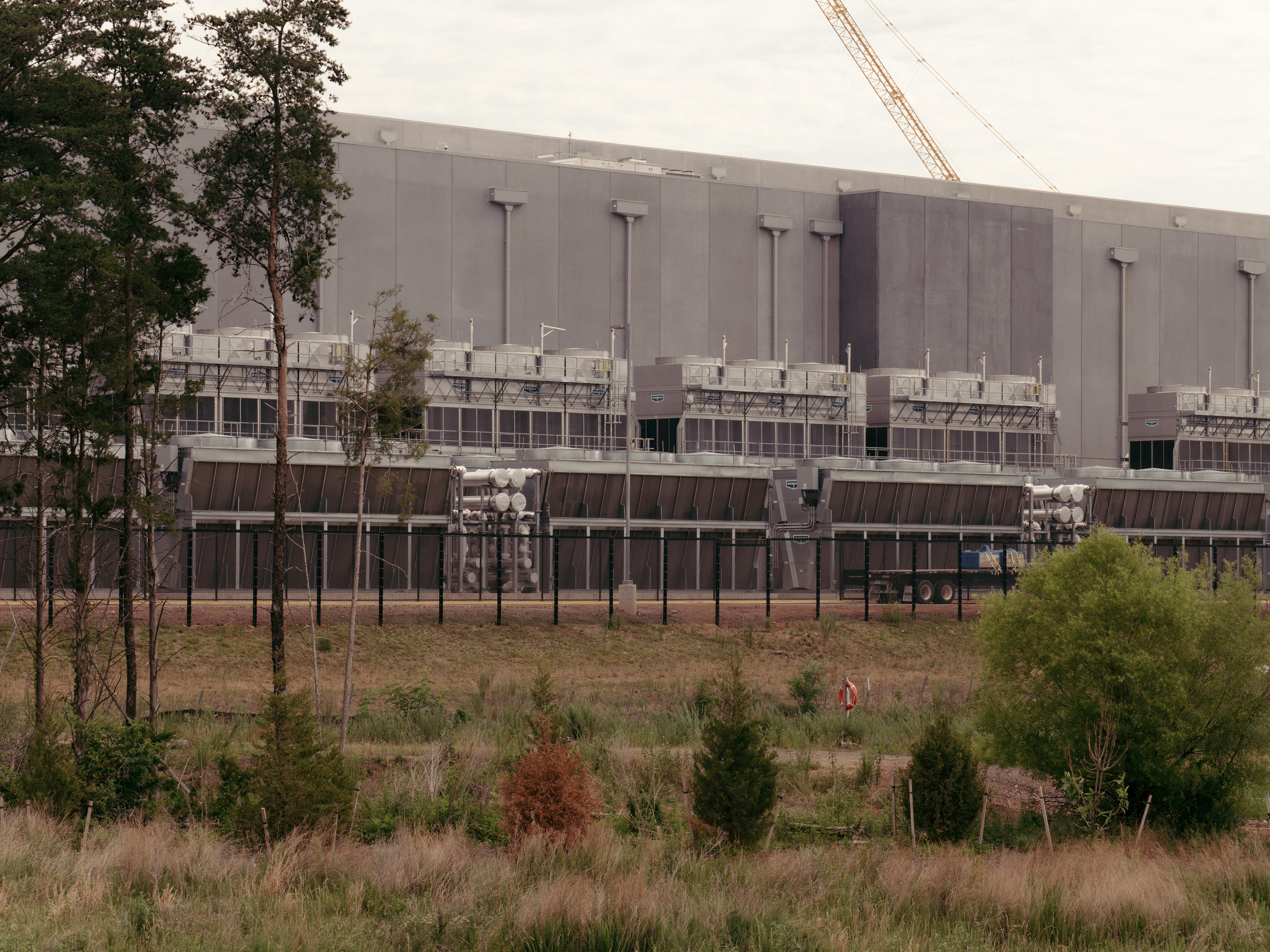
    Across the country, Americans in both parties are concerned about rising electricity prices and water use. Data centers, the large complexes of servers that are crucial to powering AI development, have become the most visible avatar of voters’ fears over the growth of AI and the power of big tech companies.

    That issue took on new political urgency this week, after concerns over the safety of AI emerged into wider view and key tech leaders began calling for a slowdown in the pace of development.

    Lawmakers in both parties have called on Congress to impose guardrails on AI, though there is no clear bipartisan consensus on how to do so, and Trump has rejected calls for regulation. Speaker Mike Johnson said Tuesday that he and the president would convene a meeting with AI executives at the White House next week.

    When asked about their plans to address the issue, some House Republicans pointed to the utility legislation, which does not address AI safety concerns. The measure mirrors a voluntary pledge that tech executives made at the White House this year, when they promised to shoulder a larger share of the energy costs associated with data centers.

    “It makes sure that the ratepayers are protected as you’re building out AI infrastructure,” said Rep. Steve Scalise of Louisiana, the No. 2 Republican. “That it’s got to be supported by the local community, and that it’s not going to adversely impact ratepayers.”

    Wednesday’s vote, 417-3, reflected the increasingly bipartisan nature of the data center backlash and a growing concern among Republicans that they are particularly vulnerable on the issue after their signature domestic policy bill included tax breaks that benefited developers of data centers. It also marked a turnabout from just a year ago, when almost all House Republicans backed a version of that measure that put a moratorium on any state regulation of AI, though the provision was later stripped by the Senate.

    With the House leaving town Wednesday until after Election Day, this week was lawmakers’ last chance to pass a bill showing they were responsive to voters’ concerns about data centers.

    Evans, who introduced the utility bill, is among the most politically vulnerable Republicans in the House. It is unclear whether the Senate will take up the legislation before October, when it is scheduled to recess until after November’s elections. Its version of the bill was put forward by Sen. Jon Husted, R-Ohio, who is in a competitive race in which Democrats have sought to make data centers a central issue.

    A poll conducted this month by The New York Times and Siena University found that 61% of voters said they opposed the construction of data centers and were about split on which party was better positioned to address it, with a considerable bloc saying they did not know which side to trust.

    When Republicans last year passed their sweeping tax and spending cut bill, they expanded significant tax advantages for businesses for research costs and new investments. They also adjusted a tax break program meant to encourage development in poorer areas so that it would incentivize more development in rural areas.

    Democrats have argued that those provisions have helped technology companies looking to build new data centers, and they have accused Republicans of being indifferent to voters’ worries that such construction is raising their electricity costs and changing their neighborhoods.

    “Unfortunately, these very real concerns are repeatedly swept to the sidelines, minimized or ridiculed by President Trump and Republican congressional leaders,” said Rep. Frank Pallone Jr., D-N.J.

    Some Republicans have argued that regulations on AI would hinder America’s ability to stay ahead of China in developing the technology. On the House floor, Evans presented his bill as a way to allow for data center development while ensuring that states had a mechanism to address implications for communities.

    The bill, he said, “keeps costs low for Americans and helps us build the energy backbone required to compete and win in the AI race.”

    This article originally appeared in The New York Times.

  • Our most fatal highway stretches | Inquirer South Jersey

    Our most fatal highway stretches | Inquirer South Jersey

    Good morning, South Jersey.

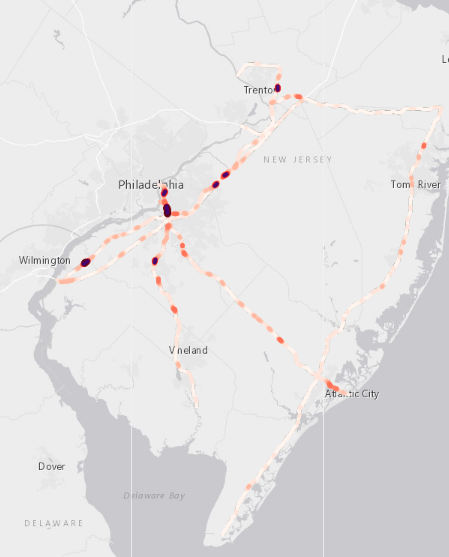
    Hundreds of people die on state highways every year. Based on fatal-crash data, an Inquirer analysis shows the most dangerous areas in South Jersey.

    And the Washington Township school board decided not to renew its contract with its superintendent — and denied his $27,000 merit pay for the fourth time.

    Plus, Clementon voters rejected a $13.5 million bond referendum, and more news of the day.

    — Taylor Allen (southjersey@inquirer.com)

    P.S. Send your questions about the region to Curious South Jersey. The answer could turn into a story and then show up in this newsletter.

    If someone forwarded you this email, sign up for free here.

    Digging into our region’s fatal-crash data

    A string of four crashes that killed five people on Route 55 this summer has inspired calls for safer highways.

    After analyzing seven years of NJDOT data about 330 fatal crashes that led to more than 360 deaths across the region’s highways, the Inquirer found seven stretches that are particularly precarious.

    The area where I-76 meets Route 42 and I-295 in Camden County tops the list. Commuters, Shore-goers, and truck drivers traverse the intersection. Within a 1.3-mile stretch, it has the more deaths than any other corridor.

    Reporters Sarah Nicell and Lizzie Mulvey share more data, and the latest on the recent efforts to make highways safer.

    There won’t be a new contract for Hibbs

    Washington Township decided it will not renew its contract with schools Superintendent Eric Hibbs, after a 5-4 board vote this week.

    That means Hibbs, who has led the district since 2023, will be out after his current contract expires in June.

    The board also denied a motion to award him $27,000 in merit pay, the fourth time Hibbs requested the performance-based bonus.

    These decisions come after months of legal fights between the board and its superintendent.

    Meanwhile, he still has a pending whistleblower lawsuit against several members of the board.

    Reporter Melanie Burney provides a full recap of the meeting, as well as an overview of the contentious relationship among the school leaders.

    What to know today

    • Investigators in the Camden County Prosecutor’s Office are calling a Wednesday incident in which a brother and sister died in Pennsauken a murder-suicide.
    • Clementon voters rejected a $13.5 million bond referendum that would have raised property taxes to fund an early childhood center for preschoolers. Another vote in Cinnaminson for a referendum of $76 million is still too close to call.
    • The Pennsauken Township school district has agreed to pay $93,000 to settle a lawsuit alleging a school staffer uttered racial slurs to a Black middle school student, NJ.com reports.
    • The candidates running for Cherry Hill’s board of education in November agreed during a forum this week that funding for the school budget is among its biggest challenges, according to 70and73.
    • The students of a Lindenwold elementary school will pivot to remote learning at least through Monday after a fire damaged the building Tuesday night.
    • Warehouse construction on the site of a shuttered golf course in Chesterfield Township hasn’t started despite getting the necessary approval nearly two years ago.
    • The Athletes for Vets Foundation and UrbanPromise Camden will host an event in Camden on Friday to provide sneakers, backpacks, and school supplies to children. Derek Faulkner, former Eagle and founder of Athletes for Vets, leads the initiative.

    🗓️ The best things to do this week

    🏍️ Cruise Night: Start your weekend plans early with the season’s last Cruise Night featuring food trucks, a car show, and live music. ⏰ Thursday, Sept. 17, 5-8 p.m. 💵 Pay as you go 📍 Burlington City Waterfront Promenade, Burlington

    🎶 XPoNential Music Festival: The annual WXPN festival returns with headliners Dawes, Portugal. The Man, and Little Feat. South Jersey melodic rock quartet Te Vista will play on Friday. ⏰ Friday, Sept. 18-Sunday, Sept. 20, various times 💵 Various prices 📍 Wiggins Park, Camden

    🪲 South Jersey GreenFest: Throughout the weekend, families will get the opportunity to listen to educational discussions, try treats made of edible insects, see prehistoric fossils, and explore bug walks. ⏰ Friday, Sept. 18-Sunday, Sept. 20, various times 💵 Free/included with museum admission 📍 Edelman Fossil Park & Museum, Mantua

    See more event listings here.

    🧠 Trivia time

    Matt Cord, the longtime voice of the Sixers, is coming back for one final season. He retired in May after how many years as the public address announcer?

    A) 30

    B) 28

    C) 25

    D) 20

    Think you know? Check your answer.

    What we’re …

    🦅 Anticipating: Eagles-themed $1 mini art prints that will soon be available through vending machines at Lincoln Financial Field.

    🏀 Eyeing: The design of Jaylen Brown’s new 3D-printed shoes.

    💭 Wondering: What will the plot be for a third National Treasure movie?

    That should get you started for the day. I’ll catch you tomorrow. 👋🏽

    By submitting your written, visual, and/or audio contributions, you agree to The Inquirer’s Terms of Use, including the grant of rights in Section 10.

  • A shuttered South Jersey golf course was approved for warehouses. Almost 2 years later, construction hasn’t started.

    A shuttered South Jersey golf course was approved for warehouses. Almost 2 years later, construction hasn’t started.

    Nearly two years after Chesterfield Township approved a plan to build a warehouse on a shuttered golf course, construction still has not begun.

    The Old York Country Club was purchased by New Jersey-based real estate developer Active Acquisitions in 2022 with plans to build at least one warehouse totaling up to about 1.1 million square feet, according to the redevelopment agreement. The project currently includes plans for a single building, but a second warehouse could be permitted — with the two buildings totaling up to 1.3 million square feet — if it were to be dedicated to cannabis cultivation or manufacturing, according to the township.

    Four years later, the developers are still working to obtain the final approvals and permits needed to start construction at 228 York Rd., with hopes to finally break ground early next year, Active Acquisitions founder Seth Gerszberg said.

    The developers have not identified a tenant for the future site, but Gerszberg said that regardless of who moves in, the property will operate as a traditional warehouse or logistics center with large trucks coming and going from the building throughout the day.

    The anticipated work at the 156-acre property was approved in November 2024 and comes more than six years after the township designated the site as an “area in need of rehabilitation” in May 2020.

    The sprawling golf course closed in 2021 in part due to pandemic-era drops in revenue and memberships. In the years since, the township’s redevelopment efforts have drawn some public pushback.

    Following the initial approval of a redevelopment plan for the site in October 2022, a neighborhood group called Save Old York filed a lawsuit against the township. While it was ultimately dismissed in court, the lawsuit argued that the redevelopment plan did not conform to the township’s master plan and amounted to “spot zoning” from agricultural to commercial.

    But Chesterfield administrator George Jackson, who began working in the township in 2024, argues that the project presents a rare opportunity for the township to welcome a new taxpayer with deep pockets.

    Much of Chesterfield’s 21 square miles is preserved farmland that is unable to be developed, Jackson said, which significantly limits new commercial development opportunities. The tax rates for preserved farmland are also much lower than the rates for residential or commercial properties, he said.

    “You need the balance in your ratables,” Jackson said of the township’s tax base. The warehouse “could take some of the burden off of our residential taxpayers.”

    In a town with a municipal budget of roughly $6.7 million in 2026, the potential yearly tax revenue generated by the new warehouse is expected to be around $2 million — roughly 30% of the total budget, he said.

    “Our opportunities to increase our tax base are very, very limited, and this is an opportunity to really increase it dramatically,” he said.

    As the developers work to secure an end user for the future warehouse, both Gerszberg and Jackson emphasized that the one thing they know for sure is that it won’t be an Amazon fulfillment center.

    The redevelopment agreement specifically prohibits that type of warehouse use on the site, while also requiring that vehicles exiting the property make a left turn onto Old York Road in an effort to keep truck traffic out of the center of town, Jackson said.

    Additionally, the site’s location about a half mile from Route 206 and adjacent to two existing warehouses across the street make it “a prime location for warehouse development,” Jackson said.

    “The township went through some great measures to ensure that it doesn’t turn into a big commercial trucking route in certain areas of the township,” he said. “They want that traffic to go out to the highway.”

  • Creating a third space in Narberth | Inquirer Lower Merion

    Creating a third space in Narberth | Inquirer Lower Merion

    Hi, Lower Merion!

    A new general store, complete with a craft counter and floral bouquets, is coming to Narberth, with a goal of creating a third space for area residents. Here’s what to expect. Also this week, township police are looking to add a “first responder” drone, the school district is urging a judge to deny a parent-led lawsuit over device use, plus a Gladwyne resident and TikTok personality has been charged with assaulting his girlfriend.

    Have a question about town? Submit it to Curious Lower Merion and one of our reporters might track down the answer.

    If someone forwarded you this email, sign up for free here.

    A new general store looks to create a ‘third space’ in Narberth

    Narberth is getting a new take on the old-school general store this fall when borough resident Jen Kurland debuts her new spot, Jeneral Store, in the former home of Danny’s Guitar Shop.

    The storefront will offer a mix of home goods, DIY floral bouquets, penny candy, and a craft counter in the vein of delis. There, shoppers will be able to order art supplies à la carte.

    Kurland hopes it will become something of a third space, with plans to offer craft nights and workshops down the line.

    The Inquirer’s Denali Sagner spoke with Kurland about her vision and what else visitors can expect.

    💡 Community News

    • Lower Merion police are seeking funding for a drone that could be automatically deployed for certain emergency calls, a tool they say could provide crime scene information before officers even respond. Commissioners expressed skepticism, particularly over privacy, at last week’s budget workshop. Here’s what the program could look like.
    • At the same 2027 budget workshop, township officials warned of financial headwinds that could mean possible real estate tax increases next year. Additional workshops will be held throughout the fall before a decision is made.
    • Gladwyne resident and personal injury lawyer Thomas Bosworth has been charged with simple assault and harassment after allegedly choking his girlfriend and throwing her to the ground during a dispute on the Cynwyd Heritage Trial in Bala Cynwyd. The 37-year-old is known as “Tommy the Lawyer” on TikTok, where he has hundreds of thousands of followers.
    • Men’s footwear company Sherman Brothers has officially opened its doors at 42 Greenfield Ave. in Ardmore, relocating from its longtime home in Center City.
    • The owner of Dane Fine Art has been named in a lawsuit for allegedly participating in a scheme to sell fraudulent artwork, including fake Andy Warhol paintings. The Haverford gallery was raided by the FBI earlier this summer. Owner Nathan “Nicky” Isen has denied the accusations.
    • Downtown Ardmore District will hold a ribbon cutting tomorrow to officially unveil the transformation of the alleyway wall along Past Present Future into a mural. It will also include a dedication to the shop’s owner, Sherry Tillman, as she winds down the beloved business.

    🏫 Schools Briefing

    • The school board voted unanimously on Monday to accept former board member Jennifer Rivera’s resignation, which she tendered last month after being charged with embezzling more than $50,000 from her employer, The Inquirer’s Denali Sagner reports.
    • After a group of parents filed a lawsuit against the district over opting their children out of school-assigned computers, the district has asked a federal judge to deny the request, accusing them of “fearmongering.”
    • The school district is closed Monday, which is Yom Kippur. There’s a special board meeting Tuesday from 5 to 8 p.m.

    🍽️ On our Plate

    • Two new eateries are coming to Bala Cynwyd on City Avenue in 2027. French-inspired chain Paris Baguette is slated to open a location in the spring, while all-you-can-eat revolving sushi concept Supra Sushi is planning to open sometime in the middle of next year.
    • Nanu’s Hot Chicken has reopened at 59 W. Lancaster Ave. in Ardmore after being forced to close at the end of July when a vehicle damaged the store.
    • Tired Hands Brewing Company in Ardmore has released a new Rose Panna Cotta milkshake IPA. The 7.2% ABV beer has notes of bubblegum, pink grapefruit, raspberry honey, and mango.

    🎳 Things to Do

    🎪 Bryn Mawr Day: Celebrate the community with local businesses, food, drinks, and a circus. ⏰ Saturday, Sept. 19, 9 a.m.-2 p.m. 💵 Pay as you go 📍 North Bryn Mawr Avenue parking lot

    🎨 Chalk Mob 2026: Watch as artists transform the plaza at Linwood Park or try your hand at it yourself. ⏰ Saturday, Sept. 19, 10 a.m.-noon 💵 Free 📍 Linwood Park

    🍿 Back to the Future: This month’s family movie night features the first installment of the Michael J. Fox film series. ⏰ Saturday, Sept. 19, 7:30 p.m. (rain date: Sept. 20) 💵 Free 📍 Narberth Park

    🏴‍☠️ Pirate Day Crafternoon: Pirates and their mateys can make themed crafts in honor of National Talk Like a Pirate Day (parrots and eye patches optional). ⏰ Wednesday, Sept. 23, 3-5 p.m. 💵 Free 📍 Gladwyne Library

    🍖 KB Foundation’s Fall Fundraiser: Chef Nick Elmi will dish up barbecue for this benefit, which also includes a silent auction, a DJ, candy and cigar bars, and an awards ceremony. ⏰ Thursday, Sept. 24, 7 p.m. 💵 $175 and $250 for individual tickets 📍 Pump House

    🏡 On the Market

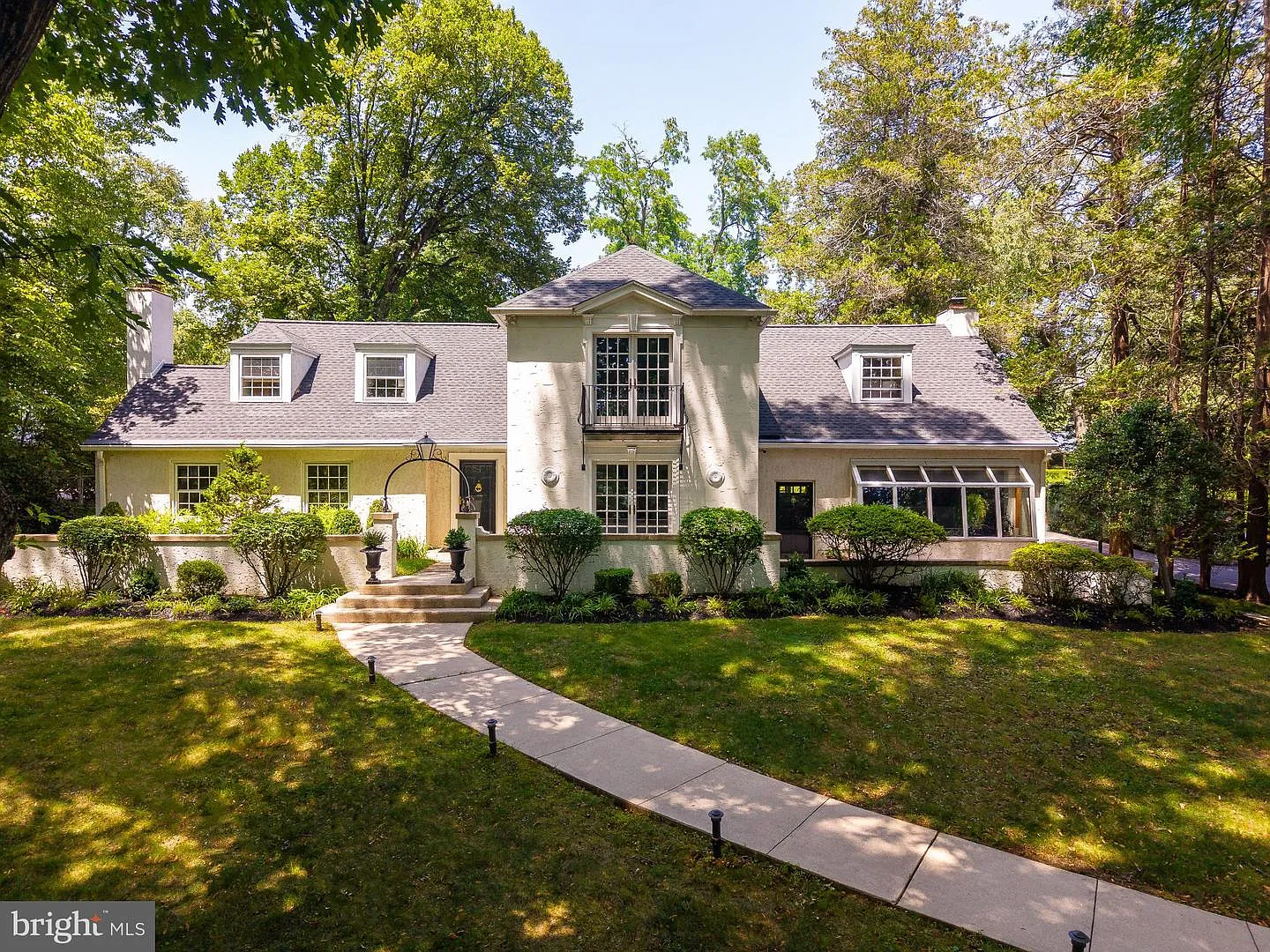
    A four-bedroom Narberth home with a pool and a conservatory

    The home has a conservatory and courtyard-style entryway.A1RMedia | Courtesy of Arielle Roemer/ BHHS Fox & Roach at the Harper

    This mid-century Penn Valley home has undergone a number of updates, including a private wing addition for the primary suite. Located on the second floor, it has vaulted ceilings, dual vanities, a dressing room, walk-in closets, a laundry room, and a balcony. Other features of the four-bedroom home include a dining room, a kitchen with a butler’s pantry, an office, a parlor with an antique marble fireplace, and a conservatory. Outside, there’s a patio with a pergola and a pool. There are open houses today from 11 a.m. to 1 p.m. and Saturday from noon to 2 p.m.

    See more photos of the home here.

    Price: $1.595M | Size: 4,412 SF | Acreage: 0.96

    🗞️ What other Lower Merion residents are reading this week:

    By submitting your written, visual, and/or audio contributions, you agree to The Inquirer’s Terms of Use, including the grant of rights in Section 10.

    This suburban content is produced with support from the Leslie Miller and Richard Worley Foundation and The Lenfest Institute for Journalism. Editorial content is created independently of the project donors. Gifts to support The Inquirer’s high-impact journalism can be made at inquirer.com/donate. A list of Lenfest Institute donors can be found at lenfestinstitute.org/supporters.