Category: News

  • Change in human trafficking policy could make some minors easier to deport

    Change in human trafficking policy could make some minors easier to deport

    The Trump administration has ordered caregivers for migrant children to stop reporting human trafficking concerns directly to the office created to help victims, a change that critics say could make some vulnerable minors easier to deport.

    The directive, in a Sept. 10 memo reviewed by the Associated Press, could mean that some victims would be denied services and face tougher odds of obtaining asylum and visas allowing them to stay in the United States.

    “This is going to harm children,” said Jean Bruggeman, co-executive director of Freedom Network USA, a coalition that advocates for human trafficking survivors. “This makes it more likely they will be deported before they get the services they need and put back into harm’s way.”

    The order added another plank to the Trump administration’s hard-line immigration agenda that has forged the most restrictive policies toward immigrants in more than a generation. Some of those efforts have been stopped by courts but many others have taken root.

    The memo said the change would “streamline the reporting, tracking, and referral of trafficking-related concerns.” An administration statement said the change was an effort to reduce the high number of claims that did not rise to the level of criminal human trafficking but nonetheless triggered the award of benefits and relief.

    But Democratic Sen. Ron Wyden of Oregon said the change requires children and their advocates to report human trafficking to the same agency that is holding them in custody. “This move to sideline human trafficking experts is more evidence that the Trump administration will deport kids to score political points rather than actually protect them,” he said.

    Office has helped thousands of trafficking victims

    The change applies to 1,800 children who are in federal custody after arriving in the United States without parents or being arrested with parents who were not legally present, and others who have been released but remain under supervision.

    Under longstanding policy, caregivers are required to conduct an initial screening of unaccompanied children for potential labor or sex trafficking within five days of admission to a facility or shelter. If they suspect the child is a victim, they have been required within 24 hours to notify the Office of Trafficking in Persons, which was created in 2015 to prevent human trafficking and protect victims.

    If the office certifies the claim, the minors become eligible for a program that gives them greater freedom by allowing them to move out of short-term housing, placing them in foster care, and allowing them to attend public school. It does not protect them from deportation immediately, but they can use the determination to pursue visas for victims of trafficking or asylum claims. It also grants eligibility for nutrition, housing, and other public benefits once they are released from federal custody.

    Thousands of unaccompanied minors have benefited from the office’s determinations. They are particularly susceptible to labor and sex trafficking, including in their home countries, on their way to the U.S., and after they arrive, and that’s why Congress has given them protections, Bruggeman said.

    Administration says change will target improper claims

    Under the change ordered last week by the administration, federal employees and care providers were told to no longer report labor and sex trafficking claims involving the minors to the Office on Trafficking in Persons.

    Instead, the memo said those claims should be submitted only to the Office of Refugee Resettlement, which oversees the housing of unaccompanied minors. That office will now investigate the claims and decide which ones should be forwarded to the Office on Trafficking in Persons for further review, the memo said, warning that providers “must respond promptly to requests for information.”

    In a statement, the Office of Refugee Resettlement said the change was driven by a review last year that found 95% of more than 9,000 reports “were determined not to be viable trafficking leads” for criminal investigators.

    “The vast majority of the reports detailed instances of alleged abuse or neglect, not forced labor or commercial sex as defined in human trafficking statutes,” the statement said.

    Even so, 58% of reports from shelter employees and case managers qualified for trafficking-related benefits. The change in reporting will “strengthen integrity, reduce improper referrals, reduce fraud, and ensure that children who may have experienced trafficking receive immediate support,” the statement said.

    Former official questions rationale

    Jen Smyers, who served as deputy director of the Office of Refugee Resettlement during the Biden administration, said the claim that the change will streamline reporting is questionable. She said ORR already gets the human trafficking reports but has no special expertise in evaluating them, unlike the office created for that purpose.

    The fear is that legitimate claims will get delayed or missed during the new layer of review, and career employees will face political pressure to refer fewer cases, she said.

    “It’s the opposite of streamlining,” Smyers said.

    Smyers noted the change comes after what she called an “onslaught” of Trump administration policies that have undermined the ability of unaccompanied minors to gain legal status, including making it harder to leave federal custody, arresting sponsors in the middle of the release process, and cutting their legal representation.

    “What they are trying to do is deport as many as possible. What interferes with deporting children is if they are eligible for protections Congress has given them,” she said.


  • Police find more photos of women who appear dead in pornographer R.C. Horsch’s home, bringing the number of missing to 7

    Police find more photos of women who appear dead in pornographer R.C. Horsch’s home, bringing the number of missing to 7

    Police have recovered images they believe show two additional women dead inside the residence of the late Raymond “R.C.” Horsch, officials said Wednesday — bringing the total number of dead or missing women linked to the violent pornographer’s Olney twin home to seven.

    The discovery marked the latest turn in a sprawling local and federal investigation into the drug, sex, and porn operation Horsch ran out of his home. Horsch left behind a digital archive of more than a million photos and videos that detectives now believe shows a mix of real and staged violence — as well as potential killings.

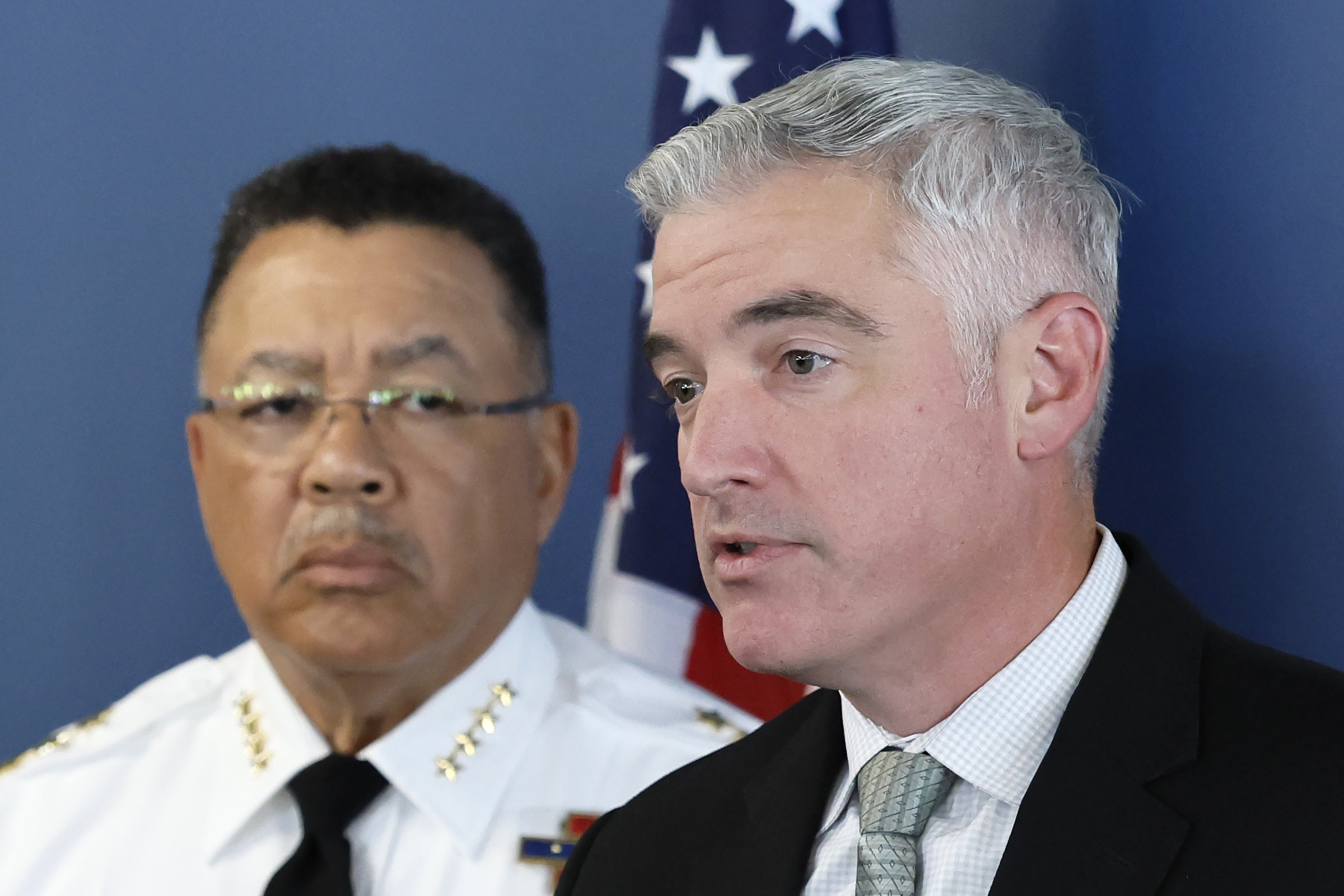
    During a news conference Wednesday, Deputy Police Commissioner Frank Vanore said investigators recovered photos that showed a 25-year-old woman unconscious, with visible injuries, inside the Chew Avenue home where Horsch and his son, Eugene, lived for decades.

    The woman, who was from Philadelphia, had not been reported missing, police said. Vanore declined to identify her at the request of her family.

    Detectives also recovered images showing another woman lifeless with injuries. Investigators have not yet been able to identify her, Vanore said, but she appeared to be in her mid-20s.

    Nicole Fusaro was reported missing in 2018 when she was 27. Police believe she was killed by Raymond “R.C.” Horsch in his Chew Avenue home.Courtesy of Jonathan Hallo

    Vanore also confirmed that police recovered a video that appeared to show Horsch strangling a woman. Horsch used two cameras — one mounted in the room, and another that he held — to film the assault, he said. In the video, he said, the woman used drugs before Horsch gave her money and handcuffed her to the bed. He was naked and tightened a zip tie around her neck until she became unconscious, Vanore said.

    That woman has been identified by a family member as Nicole Fusaro, who went missing in 2018 at the age of 27.

    Police last month also announced they recovered images that appeared to show two women dead inside the home: Maribel Fresses, who was 27 when she was reported missing in February 2018, and Gabrielle Amarando, who went missing in September 2012 at the age of 22.

    Vanore said the metadata of those images shows both were photographed in 2017.

    Police have not recovered any human remains.

    Gabrielle Amarando, (left) missing since 2012 and Maribel Fresses, 27, reported missing in 2018. Police believe they were killed inside the Olney home.Obtained by The Inquirer

    Horsch died last year at age 82 of lung issues.

    Special Agent Wayne Jacobs, of the FBI in Philadelphia, said federal agents have been assisting city homicide detectives in downloading and sorting through the excessive amount of digital evidence. So far, he said, they have reviewed about 30% of the existing materials.

    “The objective here is thoroughness, not simply speed,” he said.

    Vanore said investigators have identified 58 people in the images and videos they have reviewed. Of those, five women appeared to be dead.

    There are 10 other women who subsequently died of an overdose elsewhere, he said. Police have interviewed 16 people who are still alive, he said. They are still working to track down 25 others.

    The investigation has been protracted, in part because Horsch spent decades producing pornography that often focused on the brutalization of women in addiction — producing photos and videos for books, movies, and his website that featured women in various staged scenarios, including being drowned, shot, and strangled.

    “Some of this is playacting, and some of it we believe could be real,” Vanore said. “But we’re not there yet. We don’t want to end our investigation before it even — we’re not even in the middle of it. There’s a lot more to unpack.”

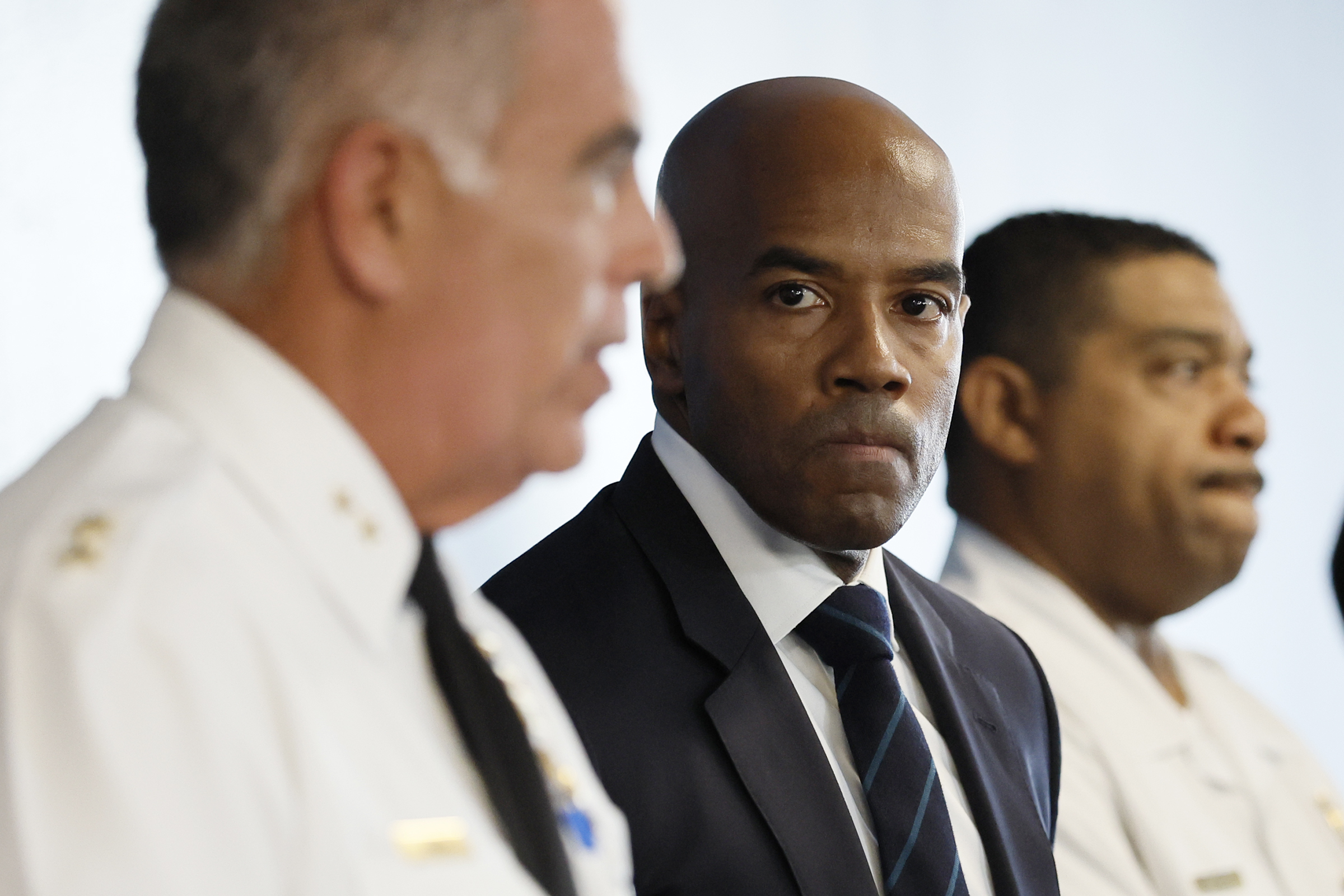
    Police Commissioner Kevin Bethel (left) looks on as Ryan Gallagher, of the forensics lab, speaks Wednesday.Elizabeth Robertson / Staff Photographer

    Police Commissioner Kevin Bethel also counseled patience. A large team of detectives, he said, was diligently and carefully reviewing the materials and working to ensure any identified victims and their families are handled with care.

    “We have a duty to those families who are all concerned about whether their loved one lost their lives in that house, or maybe somewhere else,” he said. “And so we’re going to take the time, we’re going to put the effort in. We’re going to do all the things that we have at our disposal.”

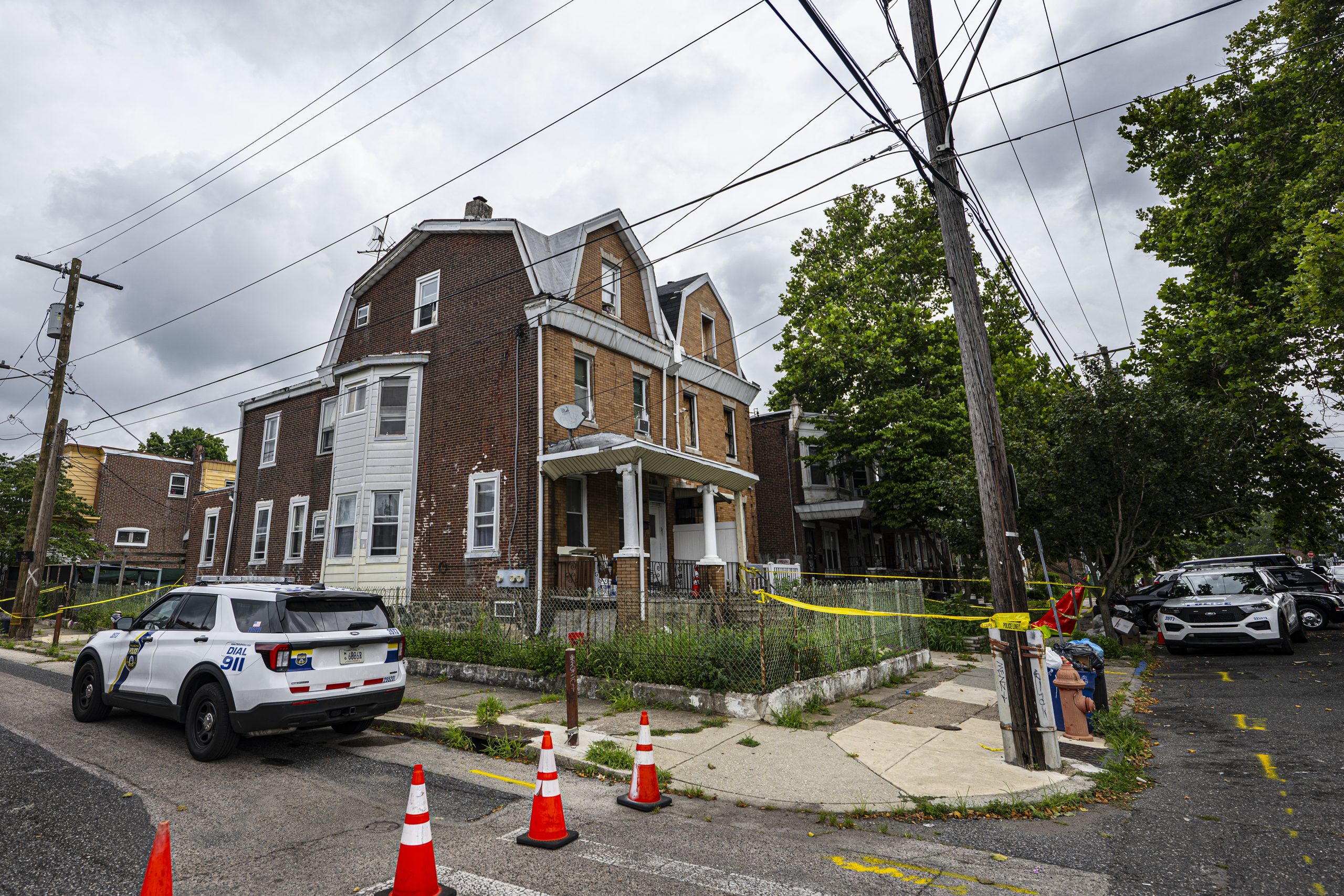
    Police started searching the home of Raymond Horsch, and his son Eugene, at 417 Chew Ave. in June. Jose F. Moreno / Staff Photographer

    Police will search the home again

    Police started looking into Horsch and his son, Eugene, in June, after a car stop near Independence Hall.

    A U.S. park ranger encountered Eugene Horsch and a woman inside his black BMW on June 19, police said. When the officers questioned them, the woman produced a fake ID in the name of Blair Tonzelli, a woman who had been missing since 2023. Police searched the car and found two guns, drugs, a cattle prod, and a phony federal drug enforcement badge.

    Local and federal law enforcement spent weeks searching the home on Chew Avenue and found additional drugs and weapons, as well as a basement holding vats of mysterious fluids and a 55-gallon drum leading to a water line.

    Police also recovered five urns containing cremated remains. Ryan Gallagher, the police department’s assistant director of forensics, said authorities now believe those urns hold the ashes of Raymond Horsch, his sister, and a friend. Investigators are still working to identify the other two, he said.

    Tests for DNA and of the chemicals in the basement remain ongoing.

    FBI Philadelphia Special Agent in Charge Wayne Jacobs (center) looks to Deputy Police Commissioner Frank Vanore (left) during a press conference, regarding the Raymond “RC” Horsch case, at the Philadelphia Police Headquarters on Wednesday, September 16, 2026.Elizabeth Robertson / Staff Photographer

    The case expanded when investigators learned Raymond Horsch’s ex-wife, Amy McHale, had been reported missing in 2016, and was also last seen at the home.

    Police then excavated the yard of the home in search of physical evidence linked to the missing women.

    Vanore said investigators have not recovered any digital evidence as to the whereabouts of Tonzelli or McHale.

    Eugene Horsch, 44, remains in federal custody on drug and gun charges. Vanore said investigators have not found evidence that connects him to the dead or missing women.

    Bethel said police intend to return to the Chew Avenue home in the coming weeks to recover additional materials, and will meet with neighbors.

    Staff writer Barbara Laker contributed to this article.

  • House holds billionaire Leon Black in contempt of Congress over Epstein investigation

    House holds billionaire Leon Black in contempt of Congress over Epstein investigation

    WASHINGTON — The House approved a resolution Wednesday holding billionaire Leon Black in contempt of Congress, referring the matter to the Department of Justice after he defied the Oversight Committee’s subpoenas in its investigation into disgraced financier Jeffrey Epstein.

    The action was swift, and without a formal vote, and now leaves it to the Justice Department to decide whether to seek criminal prosecution. Black has refused to respond to the subpoenas’ requests to appear and to turn over any potential nondisclosure agreements involving the investigation into Epstein.

    Republicans and Democrats from the Oversight Committee joined in a bipartisan effort to advance the resolution.

    “No one is above the law,” Rep. James Comer (R., Ky.), the Oversight Committee chairperson, said in a statement. “We will continue to seek transparency for the American people and justice for survivors in our investigation of the federal government’s handling of the Jeffrey Epstein and Ghislaine Maxwell criminal cases.”

    California Rep. Robert Garcia, the panel’s top Democrat, called the vote “an important step towards justice and accountability.”

    Black’s lawyers have denounced the Oversight Committee’s pursuit of the former head of a private equity firm as an abuse of congressional power. They said he “had no knowledge of any of Epstein’s heinous conduct.”

    “The Committee has continued to insist on looking for information that does not exist,” attorneys Susan Estrich and Aaron Cutler said in a statement.

    They called the action “politically motivated” and have sued the committee and asked the Office of Congressional Conduct to open a probe into Comer’s tactics.

    “This an outrageous action that ignores the facts and the truth about Mr. Black,” they said.

    Epstein investigation churns in Congress

    Black is the latest among several prominent figures, including Bill Clinton and Bill Gates, who have been asked to appear as part of the Oversight Committee’s long-running probe of Epstein. Survivors of Epstein’s alleged sexual abuse have told personal stories of being young women in a trafficking enterprise organized by Epstein and his colleague Maxwell.

    In June, Black did appear for a voluntary interview at the committee. Lawmakers said later that he refused to answer their questions about the nondisclosure agreements.

    The committee issued two subpoenas seeking to compel Black to produce the NDAs and to appear for a deposition July 16. The committee said it had accommodated Black’s request to delay the deposition to Sept. 3, but he refused to appear.

    On Tuesday the Oversight Committee voted unanimously to approve the contempt recommendation, sending it to the full House.

    Black co-founded the private equity firm Apollo Global Management and stepped down in 2021 during the fallout over his ties to Epstein.

    Lawmakers have alleged that Black paid Epstein $180 million during their yearslong relationship.

    A 2021 review commissioned by Apollo found that Black paid Epstein $158 million from 2012 to 2017, after Epstein pleaded guilty in 2008 to soliciting prostitution from a minor. The review said the payments were for “bona fide tax, estate planning, and other related services.”

  • Sudan gold mine collapse kills at least 82 people with many more missing

    Sudan gold mine collapse kills at least 82 people with many more missing

    SHENDI, Sudan — The death toll from the collapse of an informal gold mine in a remote area of Sudan has risen to 82, according to local officials and activists, as rescuers struggled on Wednesday to search for the missing with limited equipment.

    It’s the latest tragedy in a nation mired in a devastating war.

    Survivors said that the collapse happened at the al-Zara gold mine, in Nuhud, a town in West Kordofan province, which is controlled by the paramilitary Rapid Support Forces, or RSF. The group has been fighting against the Sudanese military for more than three years.

    Suleiman Abu Hmeida, a member of the Emergency Response Rooms, said that rescuers had pulled out 82 bodies by Wednesday afternoon. “But dozens remain unaccounted for,” Abu Hmeida told the Associated Press.

    The Emergency Response Rooms is a grassroots network that monitors the conflict and provides support for communities across war-torn Sudan.

    A local administration official also said that 82 bodies were recovered.

    The official said that the collapse began on Sunday in one of the mine shafts and spread to the other interconnected shafts. He said that only one privately owned forklift is available for the rescue efforts, complicating the search for survivors.

    The official spoke on condition of anonymity because he wasn’t authorized to speak to the media.

    “The collapse is massive and the situation is very dire,” Khairal-Sayed Gabara, one of the survivors, told the AP when reached by phone. He said that the machinery needed to remove the collapsed soil and rubble wasn’t available.

    “We do not have the machinery to lift dirt and stones and search for survivors at depths of more than 30 meters (around 100 feet),” he said. “There were dozens of people working in the mine.”

    The al-Zara gold mine is one of thousands of small-scale and informal mines scattered across Sudan, which has been engulfed in a war that has at times pushed parts of the country into famine.

    Despite Sudan being a major gold producer, deadly mine collapses aren’t uncommon in a country where safety standards aren’t widely applied. A 2023 collapse killed 14 miners and one in 2021 claimed 38 lives.

    Al-Amin Suliman, another survivor, said that 60 bodies had been recovered as of Wednesday morning.

    “There are still people stuck inside,” he said.

    The Sudan Doctors Network, a medical group tracking the war in Sudan, reported earlier that 67 bodies were pulled from the rubble, predicting that the death toll could increase as rescuers continued their search. The group said that the mine — an informal site that employs unregulated workers — lacked basic safety and protective measures.

    Earlier, survivors reached by phone and the physicians network said that the tragedy took place on Tuesday evening.

    The Kordofan Observatory monitoring group said that at least 70 miners were killed or missing at the site, which stretches around a half-mile across a wide swath of fragile, sandy soil. It described the miners as unregulated and informal workers.

    Large quantities of gold have been smuggled out of the country to finance the RSF, which controls gold-producing areas in the Darfur and Kordofan regions, according to experts commissioned by the United Nations.

    Sudan plunged into an all-out war in April 2023 as fighting erupted between the RSF and the Sudanese military in the country.

    The conflict has killed at least 59,000 people, according to Armed Conflict Location & Event Data, a monitoring group. Aid organizations say that the figure is an undercount, and the true number could be many times higher.

  • Lawmaker requests emergency hearing as Kennedy Center remains closed

    Lawmaker requests emergency hearing as Kennedy Center remains closed

    The Kennedy Center’s decision to immediately close its doors for roughly two years of repairs is facing a new legal challenge Wednesday, escalating the fight over President Donald Trump’s transformation of the national cultural institution.

    Rep. Joyce Beatty (D., Ohio), a Kennedy Center trustee who has repeatedly challenged Trump’s transformation of the institution in court, filed a motion requesting an emergency hearing so center officials can explain the closure despite a federal judge’s instructions hours earlier that he needed to approve it.

    “It seems Defendants may be violating the ‘clear and unambiguous order of the Court,’” lawyers Nathaniel Zelinsky and Norm Eisen wrote in the emergency motion.

    The challenge puts the question of the Kennedy Center’s physical future back before U.S. District Judge Christopher Cooper barely 24 hours after he blocked another attempt to put Trump’s name on the building. It also escalates a legal battle that has come to encompass nearly every element of Trump’s transformation of the national cultural institution: its name, its finances, the condition of its aging building, and now whether its doors can remain closed while its Trump-appointed leadership pursues a roughly $250 million renovation.

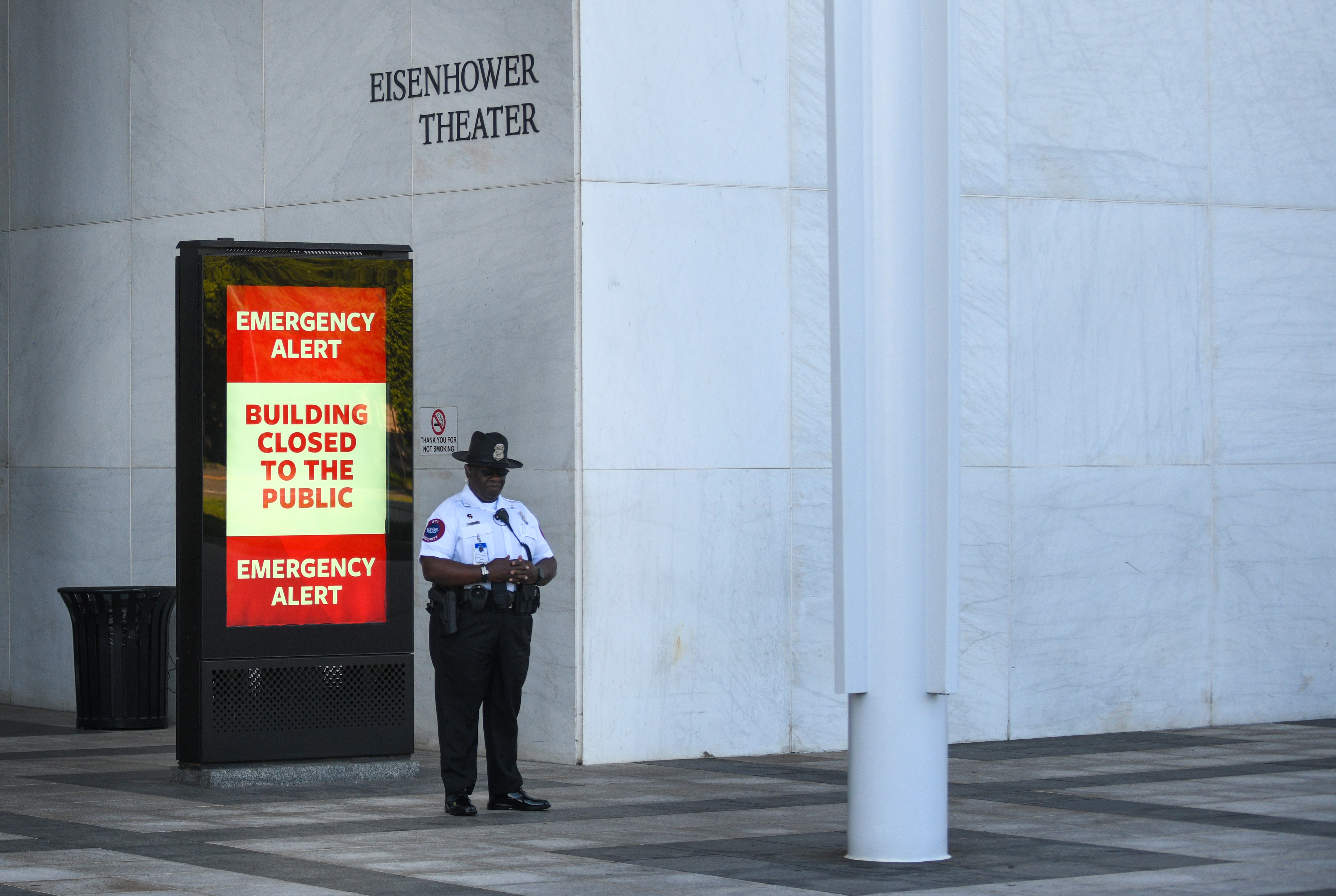
    The center remained closed Wednesday after trustees voted Tuesday afternoon to shutter its main building “forthwith.” At about 4:30 p.m. Tuesday, a message played over the center’s speakers announcing the closure and security guards escorted visitors out through the Hall of Nations. By about 6 p.m., all of the doors were locked.

    On Wednesday, fencing went up around the main building and security guards continued to turn away visitors.

    The Kennedy Center did not immediately respond to a request for comment on the motion.

    The closure came hours after Cooper addressed the issue in court Tuesday morning. Although the proceeding was largely intended to deal with scheduling in Beatty’s lawsuit, the judge confronted a rapidly changing situation: Center management had recommended an immediate shutdown after a section of ceiling plaster fell about 60 feet into the Grand Foyer during a Sept. 4 storm, and trustees were preparing to vote on the proposal later Tuesday.

    The proposed closure carried particular significance because Cooper had already blocked an earlier version of it.

    In May, Cooper overturned a March board resolution to close the building, finding that trustees had acted on insufficient information and failed to adequately consider the consequences. But he did not prohibit the center from ever closing. Instead, while his order remains in place, he left trustees free to reconsider the issue after conducting a more thorough review.

    Trustees returned to the question in August and approved a roughly two-year shutdown. On Tuesday, they went further, voting to make the closure immediate.

    Center officials say new evidence made the acceleration necessary. During the Sept. 4 storm, according to the center, a roughly 4-by-5-foot section of plaster broke loose from the Grand Foyer ceiling. No one was injured. Inspectors subsequently found at least seven other areas with visible water-related deterioration.

    Management has cited those findings, along with water intrusion into electrical areas, deteriorating parking-garage steel, and aging mechanical and theatrical systems, in arguing that the building cannot safely remain occupied during construction. Center spokesperson Roma Daravi said Tuesday that the board had demonstrated “a clear prioritization of safety above all else.”

    Beatty’s lawyers have challenged that characterization. In a filing Monday, they said Delta Consulting Group, which reviewed the center’s renovation plans, had expressly disclaimed concluding that the building was “unsafe for continued occupancy.” They have accused center leaders of using long-standing maintenance problems to justify a closure the Trump-led board already wanted.

    Tuesday’s court hearing also produced a decisive ruling in a separate part of Beatty’s case. Cooper barred trustees from carrying out their Aug. 13 plan to add an inscription reading “Restored and Renovated by President Donald J. Trump” to the facade and rename the grounds “President Donald J. Trump Plaza.”

    “Simply put, Defendants cannot install memorials for President Trump or anyone or anything else at the Kennedy Center without Congress’s blessing,” Cooper wrote, reiterating his May conclusion that Congress reserved the national memorial for honoring President John F. Kennedy.

    Hours later, Trump tied the renovation directly to that legal fight. He said the building would close immediately but that construction “cannot begin until such time as the D.C. Circuit rules on the Board’s approved name.” If the center ultimately loses the naming dispute, including at the Supreme Court, Trump said, “the Reconstruction and the Renovation of The Kennedy Center will not take place.”

    That leaves the Kennedy Center in an unusual position: Its main building is closed because trustees say an immediate shutdown is necessary for safety and renovation work, while the board chairperson says that renovation may never proceed if the center loses the name dispute.

  • Washington Township school board won’t renew embattled superintendent’s contract

    Washington Township school board won’t renew embattled superintendent’s contract

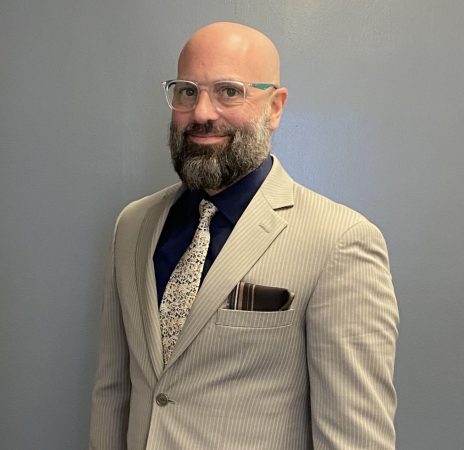
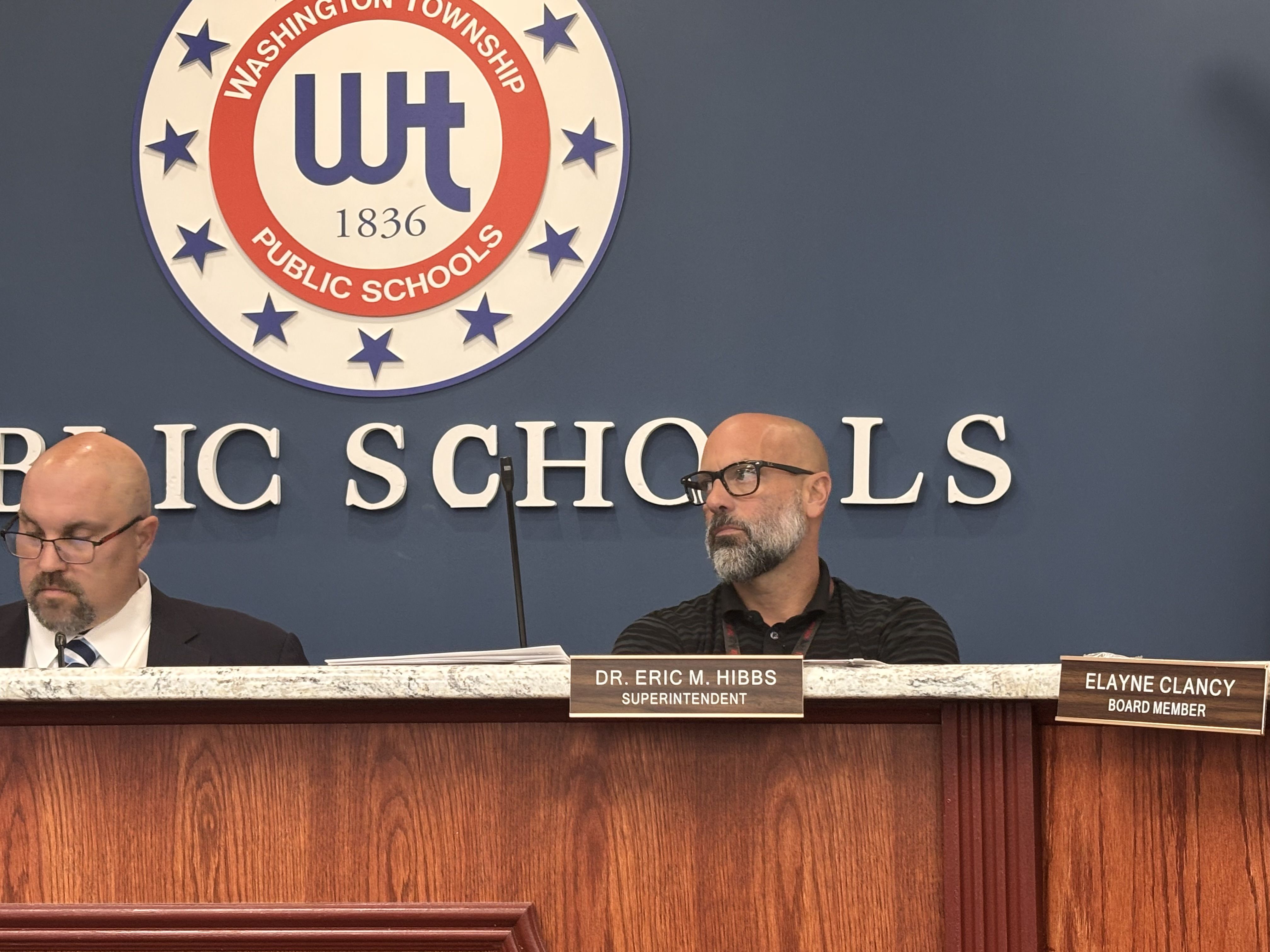
    After months of legal wrangling, the Washington Township school board has decided to part company with embattled Superintendent Eric Hibbs.

    The bitterly divided board voted 5-4 at a sometimes contentious meeting Tuesday night not to renew Hibbs’ four-year contract when it expires in June. Hibbs has been the South Jersey district’s chief since 2023.

    Before the vote during a three-hour meeting, Hibbs read an impassioned statement defending his tumultuous tenure in the district. He cited millions of cost savings, the largest pre-K expansion project in the district’s history, and facility upgrades.

    The Washington Township school board voted not to renew the district’s contract with Superintendent Eric Hibbs.Melanie Burney

    “The question that you should just be ready to answer is why. Just why?” Hibbs told the board. “I have tried every day to lead this district with integrity, accountability, and unwavering commitment to its students.”

    Board president Pat Blome declined to comment on next steps for the district. She voted in favor of the motion to serve Hibbs with notice that his contract would not be renewed.

    “This is a very emotional night for everybody tonight,” Blome said before casting the deciding vote. “But I feel it’s in the best interest of the district for me to vote yes.”

    Five favorable votes are needed to adopt measures concerning the superintendent. The board has been divided by infighting and has not been able to agree on other matters involving Hibbs.

    A motion to award Hibbs $27,000 in merit pay for the 2024-25 school year was defeated 5-4 Tuesday night. It was the fourth time that Hibbs has requested the bonus pay for performance.

    Hibbs has said he met four of the five goals approved by the board and listed with his contract. He earned $220,375 during the 2023-24 school year, putting him among the highest-paid superintendents in South Jersey.

    According to his contract, Hibbs is entitled to an annual merit bonus of up to 14.99% of his salary if he meets the goals, which were set by a previous board.

    Hibbs’ goals include completing Google training presentations, taking online professional development courses, and beefing up security processes.

    He received $25,000 in merit pay for similar goals for the 2023-24 school year, according to district records obtained by The Inquirer under New Jersey’s Open Public Records Act.

    Board member Scott Laliberte said a special committee composed of three board members without conflicts who discussed Hibbs’ request believed he had met the merit pay requirements.

    “You did a great job and I appreciate all of your efforts. And you did all of that with the board fighting you on the majority of the way,” Laliberte told Hibbs.

    Laliberte and the two other special committee members resigned Tuesday night. Laliberte expressed frustration that their recommendations were not followed.

    The board had until December to notify Hibbs if his contract would not be renewed; otherwise, the contract would automatically renew for four years.

    The board also rejected Hibbs’ five proposed merit goals for the 2026-27 school year. It agreed to allow Hibbs to carry over up to 20 unused vacation days.

    The proposed goals were not made public Tuesday. Board member Julie Kozempel said she voted against them because she believed that “they were for things that a superintendent should already be doing.”

    The decision to end ties with Hibbs was just the latest legal showdown between Hibbs and the board. He has a pending whistleblower lawsuit against several board members.

    The nine-member board made few public comments Tuesday because of procedural rules. Six members were barred from commenting because they have a conflict of interest with Hibbs, whom they had suspended last year until he was reinstated by a judge.

    In order to vote, the board had to invoke a rarely used “doctrine of necessity” because it otherwise would not have had a quorum. The six members either have family members who work for the district or are named defendants in Hibbs’ lawsuit against the district.

    The doctrine of necessity allowed the conflicted board members to participate in the vote. But they were barred from any deliberations in executive session or public discussions.

    Hibbs has been at odds with the board since last year, when local teachers union leaders filed a complaint against him with the New Jersey School Ethics Commission alleging that the superintendent provided preferential treatment to a board member’s relative by changing a failing grade in September 2023.

    The board suspended Hibbs in March 2025 and hired a conflict lawyer to investigate the allegations. Hibbs was eventually cleared of any wrongdoing and reinstated after a judge found that the board had violated the Open Public Meetings Act when it suspended him.

    In his own ethics complaint, Hibbs accused Kozempel and board member Elayne Clancy of not following procedures when the board hired an insurance carrier in 2021, prior to his tenure as superintendent.

    “I am proud that when I believed something needed to be said, I had the courage to say it,” Hibbs said Tuesday night.

    Hibbs filed a whistleblower lawsuit in May 2025, alleging his suspension was in retaliation for raising questions about the insurance contract. He alleged that the selection procedure was “procedurally flawed.”

    In other business, the board agreed to reinstate the work schedule for nursing assistants whose hours were reduced because of budget cutbacks. Hibbs and business administrator Janine Wechter said the district will likely face a budget shortfall next year and cannot afford the additional expense.

    “We can’t consistently adopt a budget and then turn around and change it. It’s alarming,” Wechter said.

  • Trump’s arch will harm historic sites but must proceed, federal officials say

    Trump’s arch will harm historic sites but must proceed, federal officials say

    Federal officials acknowledge that President Donald Trump’s planned triumphal arch will unavoidably harm historic sites if built as planned, but they say the project must move forward, according to a National Park Service document and emails obtained by the Washington Post.

    Trump’s 250-foot-tall proposed arch would be built in Memorial Circle, a traffic roundabout tucked inside Washington’s boundaries near Arlington National Cemetery. Historic preservationists, veterans groups, and others have called on the administration to shrink the monument’s planned size or build it elsewhere, warning that the towering structure would overshadow the cemetery, interrupt the solemn corridor that was intended between the cemetery and the Lincoln Memorial, and create other disruptions.

    National Park Service officials agree that the arch would adversely affect the cemetery, the Lincoln Memorial, and several dozen other historic sites.

    The “adverse effects cannot be fully avoided,” Park Service officials wrote in a document circulated Tuesday and obtained by the Washington Post. But, they said, the project cannot be constructed somewhere else because “the proposed location at Memorial Circle is central to the undertaking,” according to the NPS document.

    The document is a proposed agreement that the administration wants local historic-preservation officers to sign on to as part of a federally required process to offer feedback on the project.

    The NPS proposal says that since the harms cannot be avoided, federal officials would pursue efforts that they contend would mitigate the arch’s impact, such as creating new signs and webpages to explain the project to the public.

    Officials also said they would manage construction to reduce interference with burials at the cemetery and document the current landscape before construction begins.

    “NPS recognizes that Memorial Circle is located within a highly sensitive historic and commemorative landscape and that the Undertaking’s location contributes to adverse effects to historic properties whose significance is associated with setting, design, feeling, association, spatial organization, circulation, and contributing views and vistas,” the proposed agreement says.

    Tammy Stidham, a senior NPS official, asked the preservationists, local historic preservation officers, and other groups to review and sign the agreement by 12 p.m. on Monday, according to an email obtained by the Post. Their assent would help conclude the administration’s required consultations under the National Historic Preservation Act and expedite the process of securing final approval for the arch.

    Stidham said last week that the administration hopes to submit the project for approval from the National Capital Planning Commission, a review panel that oversees federal construction projects, as soon as November.

    Stidham and spokespeople for the Interior Department, which oversees NPS, did not immediately respond to questions about the proposed agreement.

    Trump has said that the arch should be the tallest in the world and be specifically 250 feet high to mark the nation’s 250th anniversary, which was celebrated this year. The president and his deputies have also asserted that the arch must be built in Memorial Circle because lawmakers a century ago authorized a somewhat similar project that was never built there.

    “The Triumphal Arch in Memorial Circle is going to be one of the most iconic landmarks not only in Washington, D.C., but throughout the world,” White House spokesperson Davis Ingle said in a statement. “It will enhance the visitor experience at Arlington National Cemetery for veterans, the families of the fallen, and all Americans alike, serving as a visual reminder of the noble sacrifices borne by so many American heroes throughout our 250 year history so we can enjoy our freedoms today.”

    Local historic preservationists have said that the administration’s timeline to wind down public input and begin building the arch is overly aggressive. They also criticized the proposed agreement, saying it falls short under federal requirements that the administration must avoid or minimize the harms of a project, rather than just mitigate those harms.

    “This is not consistent with NPS practice, NPS regulations, or the intent of the National Historic Preservation Act,” Rebecca Miller, executive director of the DC Preservation League, wrote Tuesday to Stidham, other federal officials, and colleagues at preservation organizations. Miller also called for the administration to continue its efforts to consult with local preservationists about alternative approaches to building the arch. The email was shared with The Post.

    NPS officials previously said that they have explored changes to the arch proposal.

    “We looked at a smaller arch height. We considered a relocation of the project altogether,” Stidham said at a meeting with preservationists last week, according to audio posted online by NPS. “It was determined that the options would either create a greater impact on historic properties or would not meet the undertaking’s location-dependent purpose need.”

    Federal officials also say they would create several webpages, including one devoted to triumphal arches, to help explain the significance of Trump’s project.

    “The webpage would address the origins and use of triumphal arches in different historical and cultural contexts, their association with military victory, civic identity, national celebration, and public memory, and how the proposed Arch relates to or differs from those traditions,” according to the NPS document obtained by the Post.

    Historic preservationists say that the proposed mitigations are insufficient and that officials should slow their process.

    “The administration is being very transparent in their overt hostility to public input and the regulatory process and the result will be to permanently disfigure one of the nation’s most revered and richly symbolic cultural landscapes,” Charles Birnbaum, founder of the Cultural Landscape Foundation, a local advocacy and education organization, said in a statement.

    If the local preservation officers refuse to sign the agreement, it could trigger a process overseen by the Advisory Council on Historic Preservation, a federal agency led by Trump officials, to address disputes under federal preservation law. The administration does not need the preservationists’ consent to move forward.

    The Advisory Council on Historic Preservation declined to comment Wednesday.

  • Candidates at Cherry Hill’s school board forum say paying for the budget is the greatest headache

    Candidates at Cherry Hill’s school board forum say paying for the budget is the greatest headache

    The Cherry Hill school budget, and the uncertainty of state funding, are among the greatest challenges facing the district, candidates for the Board of Education agreed at a forum on Tuesday evening.

    Academic performance, special education needs, and communicating to stakeholders also were cited as concerns by candidates running for three open board seats in the November election.

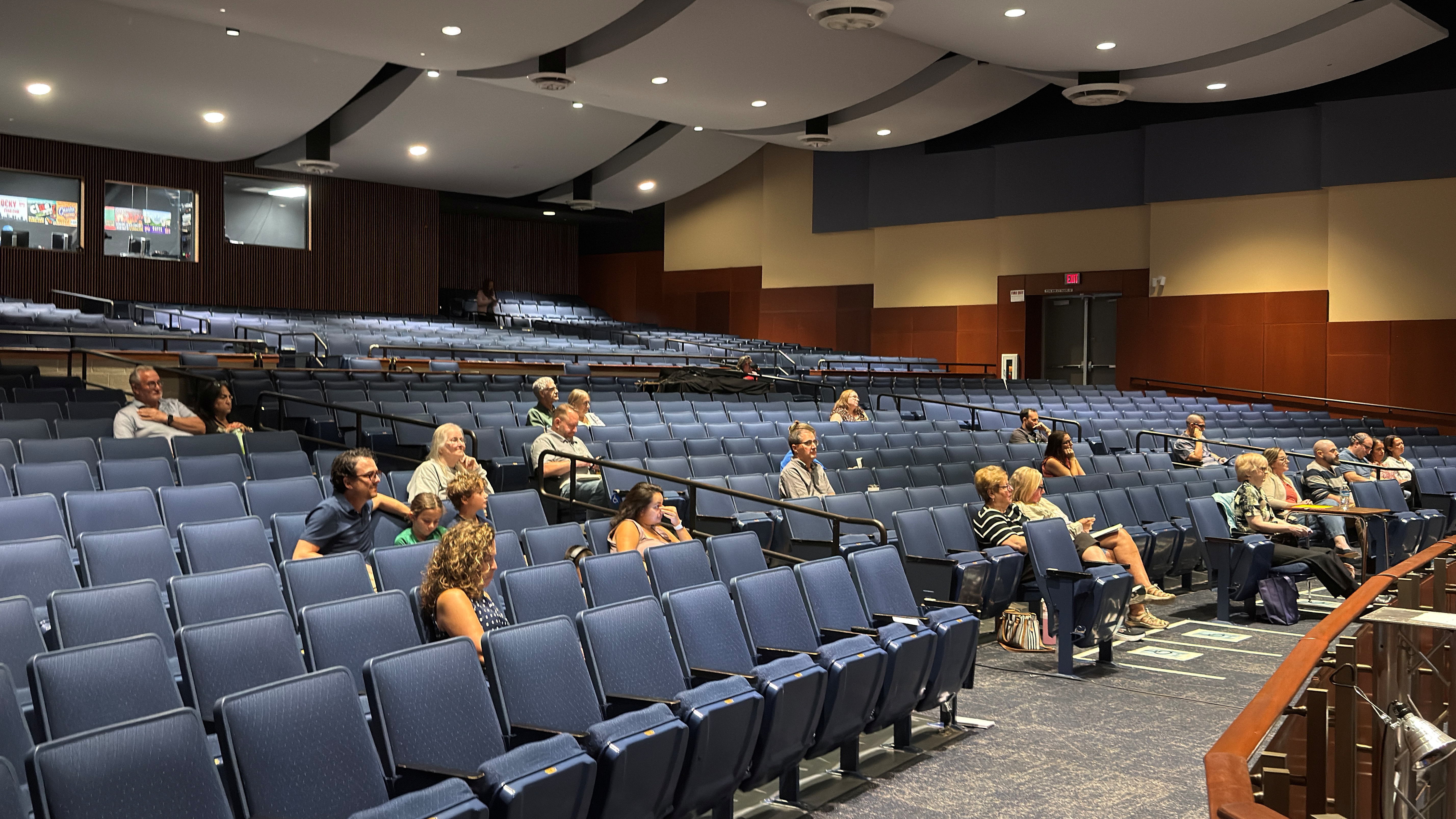
    Seven out of eight candidates spent two hours making statements and answering questions in the cordial forum moderated by the League of Women Voters and hosted by the Cherry Hill Zone PTA at Cherry Hill High School West. One candidate could not make the event because of a work emergency, but his statement was read by the forum moderator. The in-person audience was small. The event also was livestreamed.

    Money to pay for education in the future weighed heavily on each of the candidates.

    “Every year, we’re trying to figure out how to maintain excellence with less and less and less,” incumbent candidate Renee Cherfane said.

    The other incumbent running for reelection, Melissa Manzano, said the budget and state funding formula is “something that is really stressful to the community of Cherry Hill, to our teachers, to our community members and even trickles down to the students sometimes.”

    None of the candidates offered solutions, with some pointing to the August announcement by Gov. Mikie Sherrill that directs the state Department of Education to pull together stakeholders in search of answers and “overhaul New Jersey’s school funding system.”

    Cherry Hill leaders long have maintained the district does not get its fair share of aid. Adding to the problem is the uncertainty of the level of state aid year to year.

    Candidate Steven Redfearn agreed the number one issue is funding, but he does not anticipate quick fixes from the Sherrill initiative.

    That puts the focus on the district budget.

    “I’m not going to wish and hope that funding can be solved within the next year with the task force, but my best guess would be we’re probably looking at … potentially going through a budget again this year and waiting for those solutions to the funding formula next year,” he said.

    “Funding and the budget, I think, are of course the number one challenge that we’re facing, and that’s going to require a lot of creativity, coalition building, perseverance, because it’s not an issue that is going to be easily or quickly solved,” candidate Darby Malvey said.

    But money is not the only challenge facing the district, the candidates said.

    “Our second most-pressing issue of late seems to be the status of our special ed programs and how we’re running them and delivering services because we have too many parents coming to the mic telling us we don’t have something,” said candidate Anne Einhorn, referring to the public comment sessions at school board meetings.

    Candidate Harold “Hal” Melleby Jr. said he was concerned about the decline in enrollment at Cherry Hill High School West. “I’m also very concerned about the academic program and standardized test scores, which have declined,” he added.

    Like Melleby, candidate Ineda “Corrien” Elmore-Stratton said that among her top three issues was “academic achievement and the achievement gap that continues to grow and needs to consistently be addressed.”

    Joseph Lynch could not attend the forum because of an emergency at his workplace. The League of Women Voters moderator read a statement from him.

    Residents “deserve understandable budgets, earlier disclosure of financial challenges, careful oversight of contracts and transparent reporting on bond projects and associated costs,” Lynch wrote. “Special education requires particular accountability,” he added.

    70and73.com is a hyperlocal news site focused on South Jersey, including the communities of Cherry Hill, Evesham, Mount Laurel, Voorhees, Medford, Medford Lakes, and Moorestown.

  • Trump administration outlines plan for signs outside Smithsonian museum

    Trump administration outlines plan for signs outside Smithsonian museum

    President Donald Trump remains determined to install warning signs outside the Smithsonian’s National Museum of American History to alert the public that the institution, in his view, does not accurately present U.S. history.

    In letters to two senators, the Interior Department outlined a plan for 12 temporary signs to be installed at a total cost of $84,000. The letters did not specify the dimensions or language of the signs, which were originally ordered in July, but it went into considerable detail about the kind of information they plan to convey.

    In the letter to Sen. Lisa Murkowski (R., Alaska), dated Sept. 3, Doug Burgum, the interior secretary, said he was responding to questions about Trump’s March 2025 executive order, “Restoring Truth and Sanity to American History.” The order described a “revisionist movement” across the country that it said “seeks to undermine the remarkable achievements of the United States by casting its founding principles and historical milestones in a negative light.”

    Americans should enter the National Museum of American History “with relevant information about the curators’ interpretation of history and their stated goal of changing the viewpoints of visitors,” said the letter, which was earlier reported in the Atlantic on Tuesday. Instead, the letter argued, the museum and Smithsonian’s leaders “have altered the museum’s role from accurately and coherently telling America’s story to using the museum as a tool to advance personal, radical ideologies.”

    “We believe the public should enter the museum fully equipped with the information needed,” the letter said, “to evaluate whether to invest their time viewing these exhibits and programming.”

    The museum’s director, Anthea M. Hartig, has contested the thrust of a July 4 White House report that accused her of “radical activist ideology” and the museum of undermining “faith in American institutions.”

    Although the letter said the language of the signs had not been finalized and gave no installation timeline, it described some of the topics they were intended to address, all of which had been outlined in the White House report.

    For example, the letter said the signs should “ensure parents bringing young children to the museum are equipped to protect the well-being of their children” regarding exhibits that “present ideological viewpoints inconsistent with biology, including ideologies that sex is not binary, that biological men can be women, and that biological men should be permitted to compete in women’s sports.”

    Burgum’s letter said a copy had also been sent to Sen. Jeff Merkley (D., Ore.).

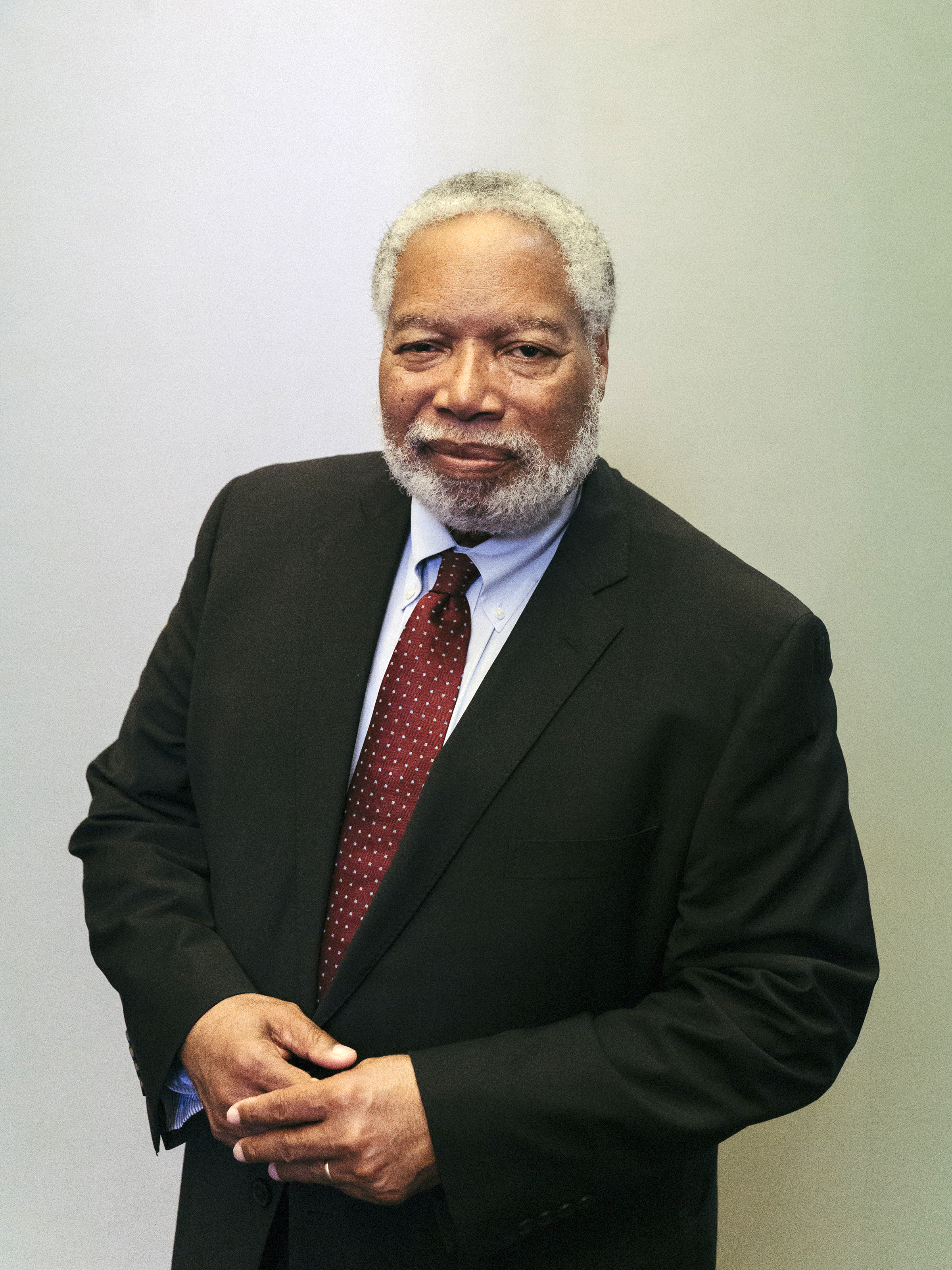
    In laying out a case for the signs, the letter was particularly critical of the Smithsonian’s secretary, Lonnie Bunch III, who announced his resignation last week.

    “Visitors should be aware of Smithsonian Secretary Lonnie Bunch’s history of invidious discrimination and anti-white animus,” the letter said, citing a 2000 essay in which Bunch “described the museum profession as ‘awash in whiteness’; wrote that ‘the real issue is not money but the monochromatic nature of our institutions’; and stated, ‘until we change the tint and tone of our workforce, we are just dancing around the edges of our greatest failure.’”

    Bunch and the Smithsonian did not immediately respond to requests for comment.

    Mike Gonzalez, a senior fellow at the conservative Heritage Foundation who has written critically about the Smithsonian, welcomed progress on the signage in an interview. “It is in the interest of transparency that museum visitors be warned in advance of the ideological baggage that the Smithsonian leadership has heaved on these exhibits,” he said.

    The letter also took aim at Hartig. “It is disheartening,” the letter said, that “Hartig has stated that history is ‘a prime tool of social justice’; that she views one of her roles as connecting ‘research and scholarship to activism and advocacy.’”

    Trump originally ordered the signs just days after Republican legislators grilled Hartig in two congressional hearings, where she was accused of teaching “national self-loathing.”

    Hartig, in those hearings, insisted that the report “does not fairly or accurately characterize the full body of work at the museum” while acknowledging that “there is always room for improvement.”

    “When historians talk about reframing a traditional narrative, we don’t mean erasing it,” she continued. “We mean adding the evidence, the voices, the objects that earlier tellings left out so that more Americans can see themselves reflected in the national story.”

    This article originally appeared in the New York Times.

  • Philly attorney and TikTok influencer ‘Tommy the Lawyer’ charged with assaulting his girlfriend

    Philly attorney and TikTok influencer ‘Tommy the Lawyer’ charged with assaulting his girlfriend

    A prominent Center City personal injury lawyer, known for his active TikTok account, choked his girlfriend and threw her to the ground during a dispute on a walking path in Lower Merion, according to police.

    Thomas Bosworth, 37, has been charged with simple assault and harassment in connection with the Sept. 3 incident. He was released on $15,000 unsecured bail.

    Bosworth, a resident of Gladwyne, did not respond to a request for comment. His attorney, Michael van der Veen, said in a statement that Bosworth “is presumed innocent, maintains his innocence and has full confidence in the courts.”

    Bosworth, known to his 327,000 followers on TikTok as “Tommy The Lawyer,” gained prominence in 2022, when he won a $19.7 million verdict in a medical malpractice case as a 33-year-old attorney at Kline & Specter.

    In the years since, he has opened his own law firm amid accusations from his former employer that he poached its clients and sanctions for his behavior from a federal judge.

    Meanwhile, he has expanded his social media following through videos that give advice on everyday goods from his vantage point as a personal injury lawyer and the context for high-profile lawsuits he litigates.

    On the day of the Lower Merion assault, four people told police they saw Bosworth attacking a woman on a section of the Cynwyd Heritage Trail behind Union Avenue in Bala Cynwyd, according to the affidavit of probable cause for his arrest. After choking the woman, the witnesses said, he threw her into bushes along the path, then walked away as she screamed.

    The witnesses also said the woman slapped Bosworth and threw rocks at him while on the ground next to the trail, according to the affidavit.

    Officers responding to the call found the woman with “redness on her cheeks and discoloration of the skin around her neck,” the document said. She told the officers she had fallen, and declined to speak with them further, as did Bosworth.

    Witnesses later told police they overheard the couple arguing about Bosworth’s alleged infidelity, and the dispute escalated when the woman mentioned a text thread from his secretary he had deleted.

    The assault took place in front of the couple’s newborn daughter, who was with them in a stroller, the affidavit said.

    A judge ruled that attorney Tom Bosworth could keep displaying two TikTok videos critical of Penn Medicine, including the one from which this image is taken, in which he alleges that the health system’s radiology department is understaffed.

    Bosworth’s arrest was not the first time in recent years that he has been the subject of scrutiny.

    His separation from Kline & Specter in 2022 led to an ugly court dispute between the prestigious firm’s partners and their former young associate.

    Tom Kline and Shanin Specter accused Bosworth of poaching clients, which he denied, and in return accused his former bosses of defamation. The parties reached a settlement in 2024 but have returned to court multiple times since, accusing each other of violating the agreement.

    Kline and Specter are not the only ones who took issue with Bosworth’s conduct in the courtroom or online.

    In 2023, Penn Medicine asked a Philadelphia judge to order Bosworth to stop posting on social media about a medical malpractice case he filed against the health system, saying he misrepresented facts and “poisoned” the potential jury pool. The judge sided with Bosworth.

    That same year, a federal judge sanctioned Bosworth for “misconduct” during four expert depositions in a product liability case, saying the lawyer was “rude, demeaning, and obnoxious” to a female defense attorney.

    And last week, the Pennsylvania Superior Court called Bosworth’s conduct in the courtroom “deplorable” even as it upheld the $19.7 million verdict he won while at Kline & Specter.

    Bosworth had been accused of repeatedly ignoring the instructions of a Philadelphia Common Pleas Court judge during a medical malpractice trial in an attempt to inflame the jury.

    On LinkedIn, less than two weeks after the alleged assault, Bosworth wrote about the decision to uphold the verdict without noting the admonishment.

    “The courtroom is one of the only places left in our democracy where the everyday person can hold to task wrongdoers, no matter how rich powerful,” he said.

    Bosworth is scheduled to appear for a preliminary hearing in the assault case Oct. 6.