President Donald Trump’s new Federal Reserve chair, Kevin Warsh, previously argued that the Fed had room to cut interest rates, a message that made him attractive to a president who has long viewed cuts as a top priority.
Only weeks into his role as chair, Warsh is confronting rekindled inflation that may eventually force him to do the opposite on rates, defying President Donald Trump, to exercise the Fed’s strongest tool to fight inflation.
This week’s consumer price index showed inflation topping 4 percent on an annual basis for the first time in three years. The hot inflation report landed about a week before Warsh chairs his first regularly scheduled policy meeting and one that could set the early terms of his tenure. And the news follows a stronger-than-expected jobs report reflecting resilience in the labor market, the other part of economy the Fed watches.
The Fed is designed to operate independently of the White House, setting interest rates based on its best assessment of the economy rather than short-term political pressure. That independence has long been considered a cornerstone of the central bank’s credibility — and a source of tension with some presidents, especially Trump, who wants dramatically lower borrowing costs.
“A critical test for Warsh in the early going will be whether he delivers the cuts Trump so strenuously demanded,” said David Wilcox, an economist at Bloomberg Economics and the Peterson Institute for International Economics. “Depending on how economic circumstances unfold, Warsh and his colleagues may be put in the difficult position of having to defy Trump by not delivering rate cuts and conceivably even hiking them.”
The logic behind a potential rate increase is straightforward: With the economy running hot, punctuated by the surprisingly solid jobs market, higher interest rates would raise borrowing costs on an array of loans, cooling demand and preventing the economy from overheating. It is the Fed’s classic role, in the words of a former chair, to take away the punch bowl just as the party gets going. The question is whether Warsh will pull that lever, and when.
The Fed is almost certain to hold rates steady at its meeting next week. But investors increasingly predict the central bank will move toward higher rates before the end of the year.
The Fed’s short-term benchmark rate ripples through the financial system, shaping what millions of Americans pay for mortgages, car loans and other forms of borrowing. The Fed doesn’t directly set those interest rates, though it does influence them.
Warsh is unlikely to telegraph his next move, and he may in fact begin a shift toward communicating less about his projections about the economy. One subtle move: He may cut language in the Fed’s policy statement that has suggested a rate cut is more likely than a rate increase. That change alone would reflect a meaningful shift for the financial markets that closely parse every word emanating from the central bank.
Some Fed officials have signaled growing impatience with the hope that inflation will simply fade on its own. Cleveland Fed President Beth Hammack said last week it “may soon be appropriate to act” on inflation — language widely read as a signal she could push for a rate hike this summer. Dallas Fed President Lorie Logan has also indicated openness to higher rates.
Vincent Reinhart, a former Fed official who spent years drafting the Fed policy statements, said he thinks Warsh can navigate the politics without ever getting to a hike — at least for now. By stripping out existing language in its post-meeting statements that has signaled a bias toward rate cuts, Warsh can satisfy the inflation “hawks” on his committee.
“There is a practical political benefit from cutting out the guidance,” said Reinhart, now at BNY Investments. “It makes the target you put on your back smaller.”
Warsh can also signal he is an agent of change simply by reworking the post-meeting statement that has accumulated decades of boilerplate language that adds little value and takes up a big chunk of the document, Reinhart added.
At his White House swearing-in ceremony last month, Warsh pledged to lead a “reform-oriented Federal Reserve.” He has yet to comment publicly on interest-rate policy. Warsh has since tapped two conservative policy veterans as interim advisers, one of whom helped write the chapter on overhauling the Fed in the conservative Project 2025 blueprint.
Trump said he wanted Warsh to be “totally independent,” while adding what he hopes that independence will yield. “You get the interest rates down, everybody’s going to be very, very happy,” he said after Warsh’s swearing-in ceremony. Asked on NBC’s “Meet the Press” whether he would support a rate increase, Trump said he wanted Warsh to “do whatever he wants.” Then he added, “We should actually lower interest rates.”
Veteran Fed watchers say Trump misunderstands how monetary policy actually works. The president tends to think of interest rates the way a real estate developer would, from the borrower’s side, rather than as a macroeconomic tool. If Warsh were to cut rates now, longer-term rates set by the market would likely rise in response, as investors demand higher returns in anticipation of higher inflation. That pushes up mortgage rates and undermines the very relief Trump craves. The bond market, already in a sour mood, would punish the move.
The inflation toll is showing up in the data. Consumer sentiment has fallen to its lowest level on record, while inflation expectations remain elevated and are moving in the wrong direction.
Though inflation has been fueled by successive supply and energy shocks, compounded by fiscal stimulus, it’s the Fed that now has a credibility problem: It is the institution specifically charged with price stability, and inflation has remained above target for more than five years, said Diane Swonk, chief economist at the accounting and consulting firm KPMG. She projects the Fed will raise rates twice this year.
“At the end of the day, the Fed’s job is to make sure that does not continue,” she said.
NEW YORK (AP) — On hot afternoons, DeAnna Brandon’s three dogs zag around while she splashes in a backyard kiddie pool with her grandkids. These are the moments the 48-year-old blood cancer survivor cherishes — and wonders if she’ll get to have in the years to come.
Brandon, who lives in Rockwell, North Carolina, is worried that new Medicaid work requirements starting next year could jeopardize her health coverage. She had expected to qualify for a medical frailty exemption, but new guidance introduced by President Donald Trump’s administration last week has thrown that into question.
The interim final rule released by the Centers for Medicare and Medicaid Services means being sick with extreme exhaustion and memory challenges related to her treatments may not be enough for Brandon to evade the new work requirements. She’ll have to attest and later prove that those symptoms “significantly impair” her ability to fulfill the new mandates.
If the government doesn’t accept her case, she could lose her coverage — and the twice-monthly maintenance chemotherapy that keeps her multiple myeloma in remission. Working is “outside of the realm of possibility for me,” she said in an interview.
“I was always a push-through-it person — you know, ‘Oh, you’re tired. Push through,’” Brandon said. “It’s hard to explain to people you can’t push through it.”
Health analysts have sounded the alarm about the Republican Trump administration’s newest guidance, which differs from what states had been expecting. Experts said it will put more Americans at risk of losing their health insurance and force states to scramble in their already harried efforts to implement the changes on time.
“This will mean more paperwork for Medicaid patients — specifically for the sickest Medicaid patients,” said Adrianna McIntyre, a professor at Harvard University’s school of public health. That, she said, “is going to push in the direction of more people needlessly losing coverage.”
Medical frailty rules may mean paperwork nightmares for sick people
The new Medicaid restrictions were part of Trump’s big tax and policy law in 2025. The change affects those covered through an expansion, which most states chose to make, that gave more lower-income people access to the government’s safety net healthcare program.
Expansion enrollees aged 19 to 64 will have to show that they work or do community service at least 80 hours a month or are in school at least half the time. There are exceptions for those considered medically frail or in addiction treatment programs, among others.
Last week’s announcement from CMS caught states off guard with a new definition of medical frailty. The law had said medically frail people include those who have substance use disorders, disabilities or serious medical conditions. But the CMS rule last week went further, saying someone’s condition must “significantly impair” their ability to work, volunteer or attend school at the rates required in the law for them to be granted an exemption.
In 2027 and once in 2028, the patient can attest that they meet this definition. But when they try to renew coverage in 2028, they’ll need to prove it.
Advocates said it’s unclear what kind of documentation could prove that point. They said doctor notes may be required — something some providers don’t feel comfortable writing. Medicaid enrollees fighting disease may carry the bureaucratic burden.
Brandon, who tried to prove she couldn’t work to access disability benefits during her active cancer treatment and failed, said she’s worried about the hoops she and other patients may need to jump through.
“It’s not that easy — you may have to go through four doctors,” Brandon said. “If you’re already battling an illness like this, you don’t have the physical or the mental or the emotional energy to do that all the time.”
States and advocates are confused by the government’s approach
States have been planning to use Medicaid claims data and other data sources to automatically exempt eligible enrollees whenever possible.
CMS Administrator Dr. Mehmet Oz on a call with reporters last week endorsed that approach, saying he hoped most people would be helped “without ever having to talk to anybody.”
Asked to clarify how the rule should be implemented, CMS told The Associated Press in an emailed statement that the agency “chose not to allow states to categorically exclude individuals from work requirements based solely on a diagnosis or condition type.” For renewal in 2028, it said, “verification through claims data or other documentation will generally be required.”
But state Medicaid officials and consultants said Medicaid claims data doesn’t prove someone is significantly impaired from working, and they don’t know of any existing data that does. That has left them confused about how to honor the government’s rule.
“States are going to be asked to make a determination using information that doesn’t exist in their systems,” said Kinda Serafi, a partner at the consulting firm Manatt Health who is working with states to make the changes.
One state, Nebraska, started the new Medicaid work requirements ahead of schedule. But it used diagnostic codes to identify people who are medically frail, and it therefore will likely have to rework its system, said Sarah Maresh, healthcare access program director at the advocacy group Nebraska Appleseed.
Maresh said she was concerned doctors in the rural state who are already reluctant to take Medicaid patients may decide to stop.
“They’re already drowning in paperwork, so to require them to do an additional step of certifying whether someone is able to work, I think is concerning,” she said.
Preparing for the Jan. 1 kickoff of the new policies is an immense and expensive task. A $200 million federal allotment is flowing to states to help, and CMS has partnered with technology companies to provide free and discounted services, but the tab for the additional technology requirements and more staff is likely to exceed $1 billion, according to an AP analysis. That extra cost will be borne by a mix of federal and state tax dollars.
Republicans say the rules will save Medicaid for those who need it most
Republicans promoting the new rules say they are commonsense measures to eliminate government freeloading and preserve benefits for people who need them most. Oz last week, citing a report by the conservative American Enterprise Institute think tank, said able-bodied people on Medicaid spend an average of 6.1 hours a day “watching TV or just hanging out.”
“This is a concern, not a criticism,” he said. “Work requirements are going to turn this around, we hope.”
But current enrollees who don’t meet the work requirement threshold said that’s a misrepresentation of their experience.
Mids Meinberg, a 42-year-old freelance writer from New Jersey who lives with chronic depression and diabetes, said that even with his health issues, he’s proud to have found a meaningful career. But his conditions make him unable to work 80 hours a month. He said he thinks there are many people with disabilities who are “too disabled to work but not disabled enough for the state to think they can’t work.”
Brandon, in North Carolina, said she wants the government to understand that she’s “not just sitting around wasting time or being a drain on society.”
“I’m pouring into my grandchildren,” she said. “We’re valuable, and we can still contribute to our communities even if it’s not working.”
With the FIFA World Cup approaching, some may hope for a new chapter of “sports diplomacy” to relieve tensions between the countries. When South Africa’s national football team takes the field this summer, it marks Bafana Bafana’s first World Cup appearance in 16 years. But U.S. visa policies initially threatened South Africa’s ability to travel. At nearly every turn, the Trump administration is sending a clear message: it is hostile to a Black-led South Africa and sympathetic to its white minority. The domestic politics of race and white supremacy, long an undertone of U.S.-South African ties, animate the current bilateral relationship.
The Trump administration’s embrace of white South Africans and the tensions with the African National Congress (ANC), the liberation movement-turned-political party that currently governs South Africa as part of a coalition, are not without historical precedent. Throughout the Cold War, Washington maintained close ties with apartheid South Africa’s white minority regime. Race was always part of the equation, but it was camouflaged in the language of anticommunism and strategic interest. Today, with the Cold War long over, racial politics are more exposed.
From the early years of the Cold War, anti-Communism and race were entangled features of the U.S.-South African relationship. For Washington, South Africa’s white minority government was a reliable ally: rich in strategically important natural resources, home to a crucial shipping route and a bulwark against the Soviet Union in southern Africa.
This relationship continued despite the formal consolidation of apartheid in 1948. The Afrikaner-led National Party systematically implemented apartheid, a draconian patchwork of racial segregation policies that stripped Black South Africans of their land and citizenship while blunting Black mobility. Despite this odious lack of democracy, Washington actively encouraged friendly relations with the white-minority-ruled South Africa. Cold War objectives overpowered moral arguments against apartheid.
But the Cold War also shaped racial politics in unexpected ways. Just as Washington tolerated apartheid abroad, it was contending with its own system of racial segregation under Jim Crow. The Cold War created a powerful incentive for the United States to manage its image on race at home and abroad. The Soviet Union eagerly broadcast U.S. racial violence to newly decolonizing nations across Africa and Asia, undermining U.S. claims to lead the free world. This exposed Washington’s liability and motivated federal policymakers, becoming a key driver of civil rights victories and landmark decisions, such as school desegregation.
These dynamics had the potential to threaten U.S. support for South Africa. After all, how could the self-proclaimed leader of the free world maintain its alliance with a government built on white supremacy? The answer, for most of the Cold War, was to turn a blind eye. And in the early Cold War years, domestic pressure campaigns to halt support for apartheid South Africa faced charges of communist subversion, severely blunting their impact and reach. While the Cold War opened the door to domestic civil rights gains, its politics in the early years also stymied avenues of resistance that could force Washington’s hand.
Yet cracks eventually began to show. The rising tide of decolonization further exposed the hypocrisy of U.S. support for South Africa. In 1960 alone, 17 African nations gained independence from European colonial rule. Another turning point was the 1960 Sharpeville massacre, in which South African police killed 69 Black protesters, shocking international opinion and placing the evils of the apartheid state on full display. In turn, African leaders frequently criticized apartheid at the United Nations, placing Washington on the defensive. South Africa faced mounting international isolation, and Washington had to decide between its Cold War alliance with white-led South Africa on the one hand and its credibility with the decolonizing world on the other.
The Nixon and Ford administrations resolved that tension by drawing Washington ever closer to South Africa’s white minority in the 1970s. Even as demands mounted from groups like the Congressional Black Caucus and the blossoming anti-apartheid movement for mandatory economic sanctions and a formal severing of U.S. ties to the regime, Washington remained steadfast. They concluded that gradual, constructive change, which they claimed to desire, could only come from white South Africans themselves not from U.S. pressure. It was an argument that conveniently absolved Washington of any responsibility to pressure Pretoria—and revealed U.S. policymakers’ views that Black South Africans were not credible leaders of their own liberation. Washington’s continued support became more exposed when, in 1974, South Africa was expelled from the United Nations General Assembly.
Following the June 1976 Soweto massacre, where South African police killed over a hundred protesting students, international opinion grew more outraged, adding urgency to calls for sanctions.Winds of change arrived, albeit briefly, when the Carter administration initially took an aggressive approach to apartheid, aligning U.S. foreign policy with an interest in promoting human rights abroad.That agenda changed in the 1980s. President Reagan rejected calls for economic sanctions, instead endorsing “constructive engagement,” the argument that crippling the South African economy would hurt rather than liberate Black South Africans. Critics such as Desmond Tutu rejected this logic, arguing that Black South Africans had repeatedly called for sanctions. The U.S. Congress was also unconvinced. On October 2, 1986, a bipartisan majority overrode Reagan’s veto of the Comprehensive Anti-Apartheid Act, imposing economic sanctions and severing Washington’s formal ties to the regime.
Made By History sponsors. FOR USE ON MADE BY HISTORY STORIES ONLY.Inquirer Staff
Following decades of pressure, South Africa held its first multiracial elections in April 1994, bringing the ANC and Nelson Mandela to power. Washington warmly welcomed a democratic South Africa, which it now saw as a model for a peaceful transition to majority rule. In a post-Cold War world, the strategic rationale for supporting white South Africa largely disappeared; the U.S. no longer needed its defense against Soviet expansion.
But the Trump administration’s hostile stance today is a signal that the Cold War relationship with South Africa was never purely animated by military necessity; a willingness to accept white minority rule undergirded the U.S.-South African relationship and was consistently reflected in policy. Now, those racial politics have become far more visible. The “white genocide” myth, Afrikaner refugee exception and hostility toward South African diplomats are driven by racial politics and a consistent willingness to privilege the concerns of South Africa’s white minority, unmediated by Cold War necessity.
Whether or not the U.S.-South African relationship can be improved remains to be seen. Sport, which often reaches audiences that diplomacy cannot, also serves as a potential arena for reconciliation. The history of democratic South Africa suggests that sport has, more than once, progressed more rapidly than politics. The 1995 Rugby World Cup was perhaps the most celebrated example, when Mandela used the tournament to signal reconciliation, a moment immortalized in the Clint Eastwood film Invictus.
South Africa’s first participation in the World Cup since it hosted in 2010, on American soil no less, symbolizes that potential. And yet, until Washington reckons with the racial politics driving its relationship with South Africa, both past and present, the World Cup is more likely to highlight the divide than to heal it.
Mattie Webb, PhD, is an assistant professor of history at the Virginia Military Institute (VMI) and a Nonresident Fellow with the Institute for Global Affairs at Eurasia Group.
Made by History takes readers beyond the headlines with articles written and edited by professional historians. Opinions expressed do not necessarily reflect the views of The Inquirer.
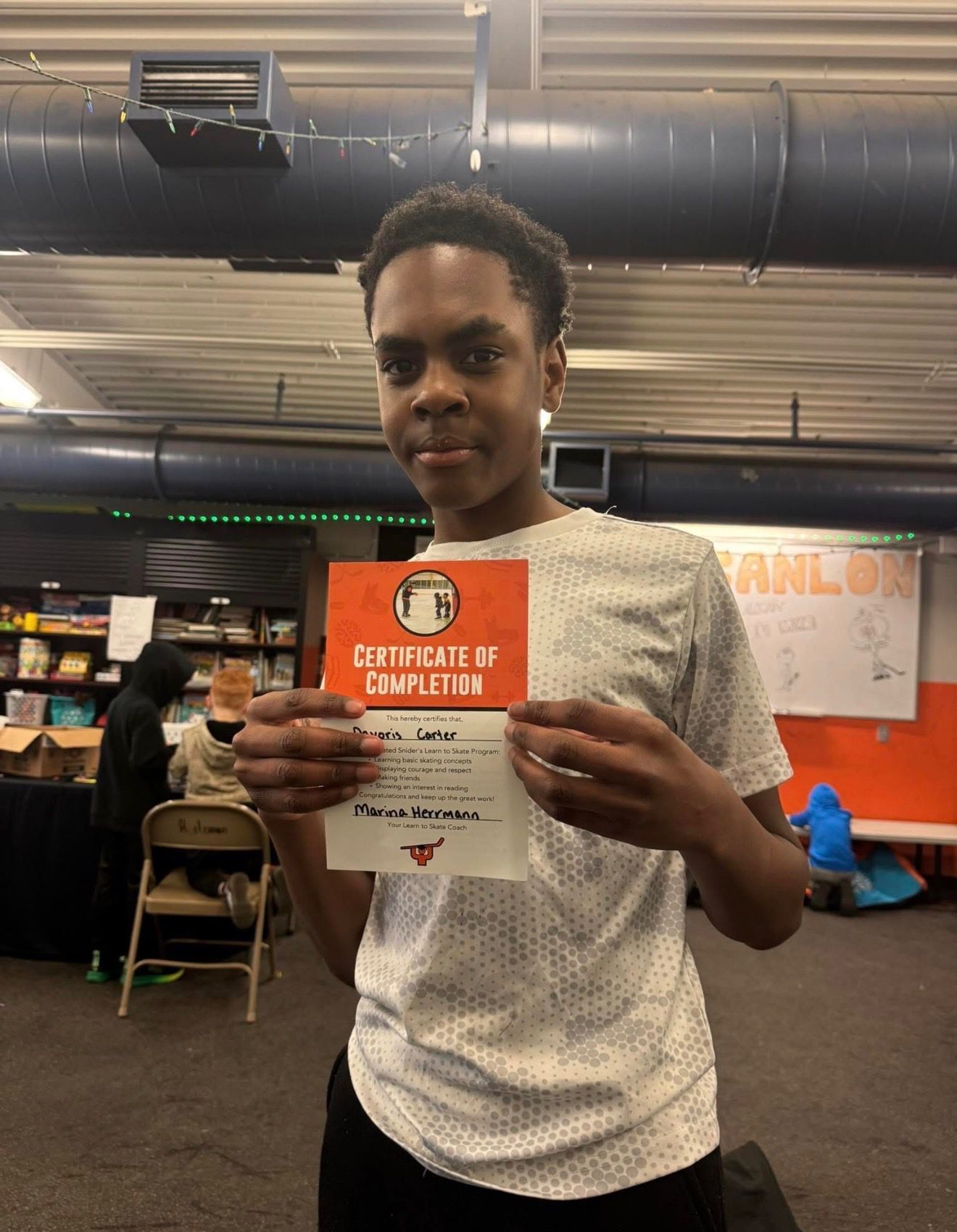
The body of a Philadelphia teenager who vanished earlier this month while swimming in the ocean at the Jersey Shore has been recovered, the Wildwood Police Department said.
Davoris Carter III, 14, was on a class trip to Wildwood when he disappeared on the afternoon of June 1. Carter’s body was found Tuesday near the U.S. Coast Guard Training Center in Cape May, and a forensic analysis confirmed it was that of the missing teen.
“Our sincere condolences are with the juvenile victim’s friends and family during this very difficult time,” Wildwood police said in a statement.
Shyara Hill, Carter’s mother, told The Inquirer her son and other special-needs students traveled to the beach with school staffers to celebrate graduating eighth grade from Delta School in Philadelphia.
Davoris Carter was recently accepted into the Philadelphia Police Department’s “Explorer Cadet” program, according to his mother. Courtesy of the family
There were no lifeguards at the beach when the students entered the ocean, and around 1:30 p.m. on June 1, police responded to several swimmers in distress. Officials said three were rescued, but Carter disappeared.
Delta School did not respond to a request for comment. The school’s director of education told NBC10 last week school officials were cooperating with the investigation and that the class trip was “appropriately supervised with the right number of staff members.”
The school said in a message posted on its website: “Delta School is heartbroken over the recent loss of student Davoris Carter III. As we navigate this difficult time, we continue to hold Davoris, his family, and every member of our school community in our thoughts and prayers.”
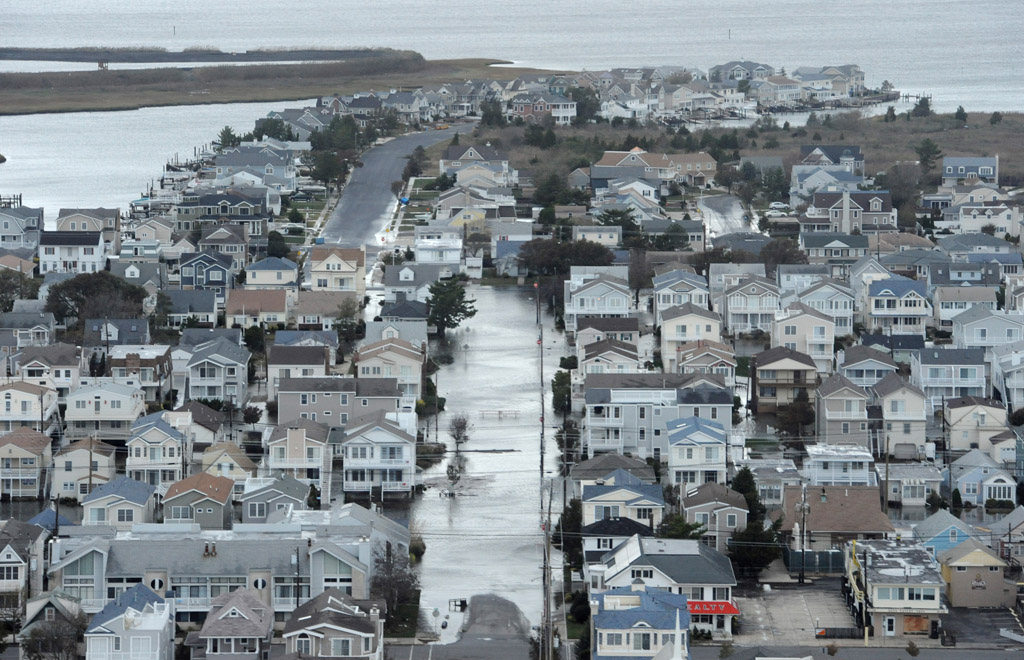
In Sea Isle City this week, the U.S. Army Corps of Engineers was hard at work on a last-minute-funded beach replenishment project. The project will go into the summer, which is going to annoy everyone. From there, the Army Corps will head to Avalon and Stone Harbor. Ocean City is also being replenished on its north end. Together, the projects will cost $56.9 million, with about 5 million total cubic yards of sand being dredged from the ocean and brought to the beaches, the Army Corps says.
The urgency of the beach replenishment was at odds with Gov. Mikie Sherrill’s recent one-year delay for new rules that would require new homes, and those being substantially improved, to be built 4 feet above current FEMA elevation standards in expanded state flood and coastal zones. That’s on top of earlier FEMA requirements that caused houses rebuilt after Hurricane Sandy to be raised, in some cases by 14 feet, to better guard against damage from increasing flooding.
The regulations, known as the Resilient Environments and Landscape (REAL) rules, were adopted on the last day of Gov. Phil Murphy’s term and set to go into effect July 20, over objections from builders, business groups, and elected officials. The decision to wait a year was denounced by environmentalists.
“There is no more time to lose,” said Anjuli Ramos-Busot, citing sunny day flooding down the Shore. “New Jerseyans are at risk, property is at risk.”
In other news, Margate has a favorite son in the NBA finals: Knicks superstarJalen Brunson, who according to property records and local scuttlebutt, likes to pop into Aversa’s for a turkey hoagie, tool to the Wawa in a golf cart, play mini golf, and visit his spacious new-construction $7 million home a block from the beach. Earlier this spring, while the Knicks were making quick work of the Sixers, Steve & Cookie’s hosted a dinner for Brunson and his teammates, and there have been past sightings at local basketball courts.
My colleague Alex Coffey, meanwhile, writes that another Nova Knick, Mikal Bridges, made his mom’s predictions come true with a Shore house in Avalon.
📮 Do you want to see new building rules for Shore flood zones? Did the proposed rules go too far or is that what’s needed to deal with sea level rise?
Let me know what you think by replying to this email, and I’ll include the most interesting responses in a future newsletter. (See below for your thoughts on who gets to be a local.)
Have ideas or news tips about the Shore or this newsletter? Send them to me here.
⛈️ Beaches were packed last weekend with the hot weather, and the steamy weather will continue this weekend.
⛯ Is Wildwood’s Pacific Avenue getting some love? The folks at the new Lighthouse Kitchen and Cafe are all in.
🍩 Federal Donuts opened a store at the Hard Rock Hotel and Casino in Atlantic City.
Shore snapshot
Art the Clown, the mascot from Spirit Halloween and the “Terrifier” movies, made an appearance on the Wildwood boardwalk on June 5, 2026.Amy S. Rosenberg / staff
Your thoughts on: Who’s a local
There were plenty of opinions about who gets to call themselves a local, and how long the process takes. (Is there a tribunal in the back of Robert’s in Margate where such decisions are made?)
Here’s a sampling:
Susan Wessel: I am a transplant to the Jersey shore myself. Born and raised in Philly. I have never and will never consider myself a local even though through the past 43 years I’ve lived in Barnegat, Manahawkin, Brant Beach and Galloway.
Tom DeAngelo: I live & work in North Cape May for 36 years. My native Cape May friends say I can call myself “A local” but never “a native.” My 3 children were born in Philly. All my grand kids are born here. Native? Local? It’s all very confusing!!!
Brian Steiner: As far as I’m concerned, anyone who pays property taxes is a local. PS… We should get free beach tags.
Mary DeCotiis: I am truly from the shore. I was born at Fitkin Hospital in Neptune, now Jersey Shore University Medical Center, in 1956. I have lived in Belmar, 2 blocks from the beach my entire life. Soon I will have lived at the shore for 70 years. Can’t get any more local than that! I plan to remain here until the day I pass away and move on to the Ocean in the sky!!!
🧠 Trivia time
Soccer’s U.S. Men’s National Team member Brenden Aaronson was married in this Jersey Shore town at the base of a causeway bridge. Was it:
A. Rio Grande (outside of Wildwood).
B. Manahawkin (outside of LBI)
C. Cape May Court House (outside of Stone Harbor).
Our trusty Shore Line group chat followers had a lot of thoughts this week about beach flags. (Join the conversation!)
We asked: Should political flags be allowed on the beach? Are any flags acceptable?
Here’s a sampling:
Political flags are not my thing, but people are free to express themselves. Honestly, it’s the beach and everyone should be chilling. Live and let live regardless.
My humble opinion about political flags on the beach is…ABSOLUTELY NOT!! I go to the beach to relax, not to discuss politics, religion or any other issues our country may have. PLEASE… NO FLAGS!!
I’m a Phillies fan but flags on a beach infringe on the space of others.
My husband I grew up on opposite sides of the state. It’s all about togetherness, never divisiveness. That’s why we made our own Steagles flag from a t-shirt and printed heat transfer.
A reader sent us this homemade combination Steelers-Eagles flag to fly on the beach in the spirit of togetherness. The topic of flags on the beach is a controversial one.Provided
Hmm. Not sure about that one. Have a Shore etiquette question you’d like to see us tackle? Please reply to this email.
Your Shore memory: A hurricane and a ham
John Judge of Ocean City writes:
The first we hear of the Great Atlantic Hurricane of 1944 was when a massive ocean wave crashed into the second floor of our Long Beach Island rental.
The war time government had banned coastal weather forecasts lest German U-BOATS prowling the Jersey Coast take advantage of meteorological data. My parents and four-year-old me survived but the storm reduced the house to driftwood.
Also not surviving was my father’s salt-water swamped 1930s Pontiac. While dad was sad to lose a hard-to-come-by car during wartime scarcity, mom was madder to lose a ham bought with hard to come by ration stamps.
Send us your Shore memory! In 200 words, tell us how the Shore taps into something deep for you, and we will publish them in this space during the summer.
Staff writer Ryan W. Briggs contributed to this newsletter.
By submitting your written, visual, and/or audio contributions, you agree to The Inquirer’s Terms of Use, including the grant of rights in Section 10.
Noel and Lindsay Carota at their home, where they have lived since 1990. Allie Ippolito / For The Inquirer
When Lindsay and Noel Carota moved into their five-bedroom Georgian revival Merion Station home in 1990, they set about making it their own.
Today, the house is a riot of colors and textures and full of whimsical touches that start at the entrance. There, visitors are greeted by a brass-frog knocker on a purple door. Inside, there are plenty more frogs — something Lindsay began collecting at 21.
Rooms are painted in watercolor hues of blues, pinks, greens, yellows, and purples, including the dining room, which has swirls of pink on its ceiling and floral fabric wallpaper with matching drapes.
Sherry Tillman has operated Past Present Future for 50 years. Tyger Williams / Staff Photographer
After 50 years in business, the last 30 or so in Ardmore, Sherry Tillman is getting ready to retire and will soon close beloved shop Past Present Future.
Located at 15 Lancaster Ave., the store became a popular spot to shop for an array of goods, from trinket boxes to figurines to tarot cards. While she hasn’t set an official closing date, Tillman has begun discounting her inventory as she winds down, with plans to later sell the building itself.
Popular Villanova University student watering hole Kelly’s Taproomis being investigated by the Pennsylvania Bureau of Liquor Control Enforcement for alleged violations including noise, open containers, and disorderly conduct. But the owners say it’s the latest development in a decades-long battle with local officials and residents. The Inquirer’s Denali Sagner has the details.
Some 32,000 Main Line Health patients insured by UnitedHealthcare could face service interruptions and providers going out of network if the insurer and the health system, which owns Bryn Mawr Hospital and Lankenau Medical Center, don’t reach a deal by June 30. The two organizations are currently in negotiations.
The community is mourning the death of Wynnewood native and local public relations maven Nina G. Zucker, who died last week at the age of 69. A Lower Merion High School alum, Zucker was the founder and president of her eponymous firm, Nina Zucker Associates, where she worked on public relations and marketing campaigns for clients ranging from musicians, actors, artists, and athletes to governments and nonprofits.
The township is hosting a public meeting on Tuesday along with Amtrak about the railroad’s plans to upgrade the power systems on the Bryn Mawr to Paoli segment of its Harrisburg line. The meeting will take place from 6 to 8 p.m. at the township building. You can also attend virtually.
The latest edition of Inquirer series “How I Bought This House” takes us just over the township border to Wynnefield, where a 38-year-old accountant purchased a new-construction townhouse for $499,000. Heather Ong prioritized a move-in ready spot that was quiet and had outdoor space for her dog, Lilly, landing on a neighborhood that gave her “a bigger bang” for her buck.
A Wynnewood family got a surprise visit from the Phillie Phanatic and a makeover for their yard earlier this week when the team partnered with swing set company King Swings. The gift, which included a garden upgrade and a new doghouse, comes in the wake of the family losing their father to a rare disease. (6abc)
🏫 Schools Briefing
Lower Merion School District is considering a policy that would help reduce screen time for its youngest learners, including no longer assigning laptops and iPads to kindergartners, first graders, and second graders. There would also be changes to how technology is used for third- through sixth-grade students. The Inquirer’s Maddie Hanna lays out the details and explains why some parents still don’t think the policy goes far enough.
Lower Merion’s school board is slated to meet Monday to approve its final budget for the 2026-27 school year, which calls for a 3.5% property tax hike. There’s also a facilities and purchasing committee meeting this morning.
The class of 2026 graduated last week in ceremonies at Villanova University’s Finneran Pavilion. Lower Merion High School graduated 415 seniors and Harriton High School graduated 300 seniors.
Final exams begin today for high school students. There are a number of end-of-year events, including Cynwyd Elementary’s fourth grade “glow up” party this evening, Black Rock’s “Royal Jubilee” tomorrow, and eighth-grade promotion ceremonies on Monday and Tuesday. There are also fourth-grade promotion ceremonies on Tuesday and Wednesday. Wednesday is the last day of classes for this school year. See the district’s full calendar here.
🍽️ On our Plate
With summer right around the corner, farmers markets are in full swing. Luckily there are a few nearby, including the Bryn Mawr Farmers Market, the Lancaster County Farmers Market in Wayne, and for those who don’t mind crossing the river, the Pretzel Park Farmers Market in Manayunk. The Inquirer’s Hira Qureshi has rounded up two dozen spots to check out.
🎳 Things to Do
🎶 Bryn Mawr Twilight Concerts: Folk and blues singer Tom Rush headlines this week’s show. ⏰ Friday, June 12, 7 p.m. 💵 $25.88, free for kids 12 and under 📍 Bryn Mawr Gazebo
💃 The Rock and Roll Playhouse: The kid-friendly outfit will perform Taylor Swift tunes. ⏰ Saturday, June 13, 11:45 a.m. 💵 $20.44, free for kids under 1 📍 Ardmore Music Hall
🎵 Music in the Park: The summer concert series kicks off with a performance by local party band The Percolators. ⏰ Wednesday, June 17, 7 p.m. 💵 Free 📍 Narberth Park gazebo
☀️ Summer Solstice: Ahead of the longest day of the year, celebrate the season with a wine garden, kids activities, food, music, and a bonfire. ⏰ Thursday, June 18, 6:30-9 p.m. 💵 $35 per family 📍 Riverbend Environmental Education Center
An aerial view of the property, which has a pool and back garden.Patrick Steven Boyhan II/Alcove Media | Courtesy of Adam Ferst/Compass
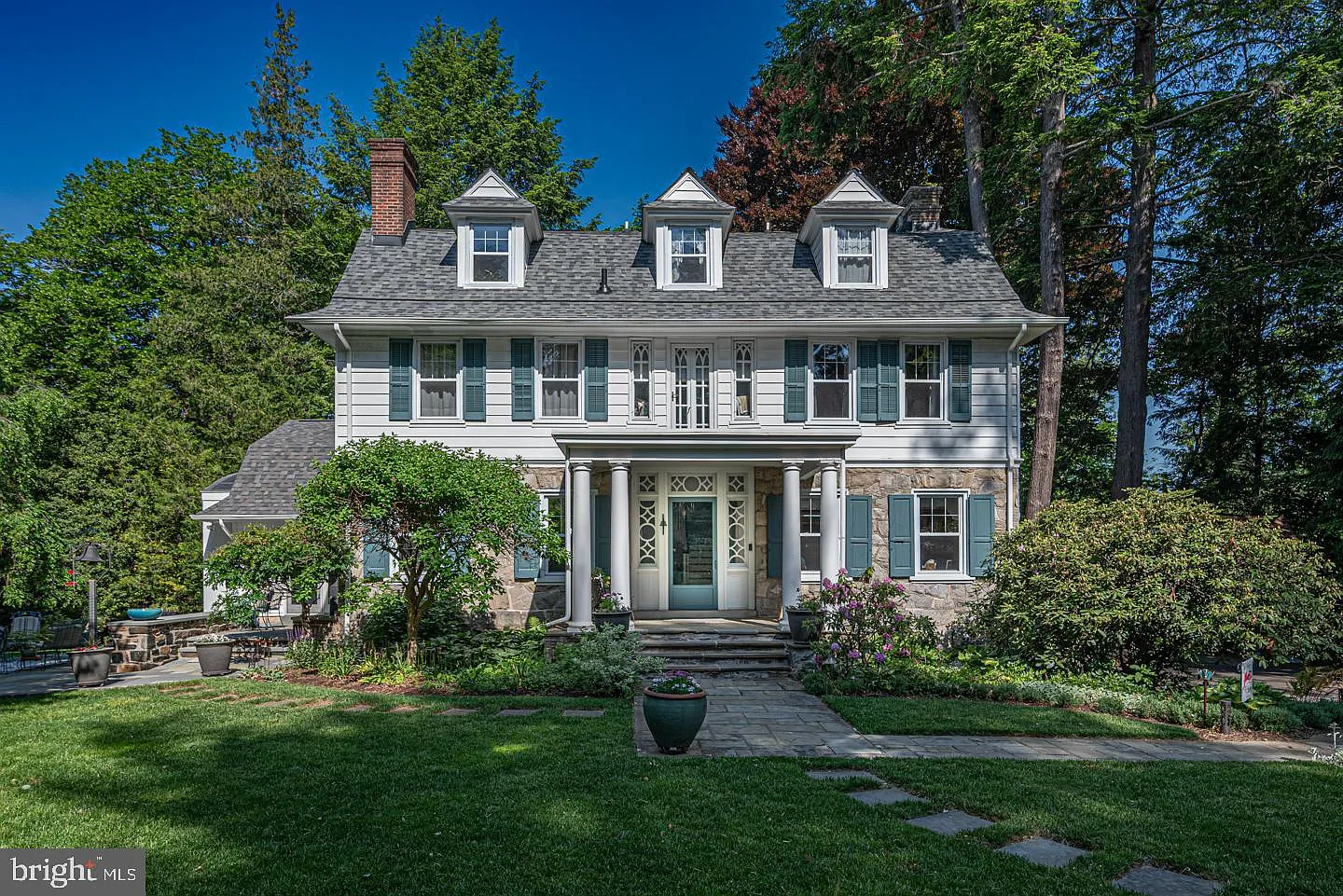
Built in 1943, this Penn Valley home exudes Old World charm from its stone exterior to the intricate moldings inside. The Colonial has both living and family rooms, both with their own fireplaces, an updated kitchen, and five bedrooms, in addition to a rec room. It also features a patio that opens onto a pool and a circular garden that branches off to a shed. There’s an open house Saturday from 11 a.m. to 1:30 p.m.
By submitting your written, visual, and/or audio contributions, you agree to The Inquirer’s Terms of Use, including the grant of rights in Section 10.
This suburban content is produced with support from the Leslie Miller and Richard Worley Foundation and The Lenfest Institute for Journalism. Editorial content is created independently of the project donors. Gifts to support The Inquirer’s high-impact journalism can be made at inquirer.com/donate. A list of Lenfest Institute donors can be found at lenfestinstitute.org/supporters.
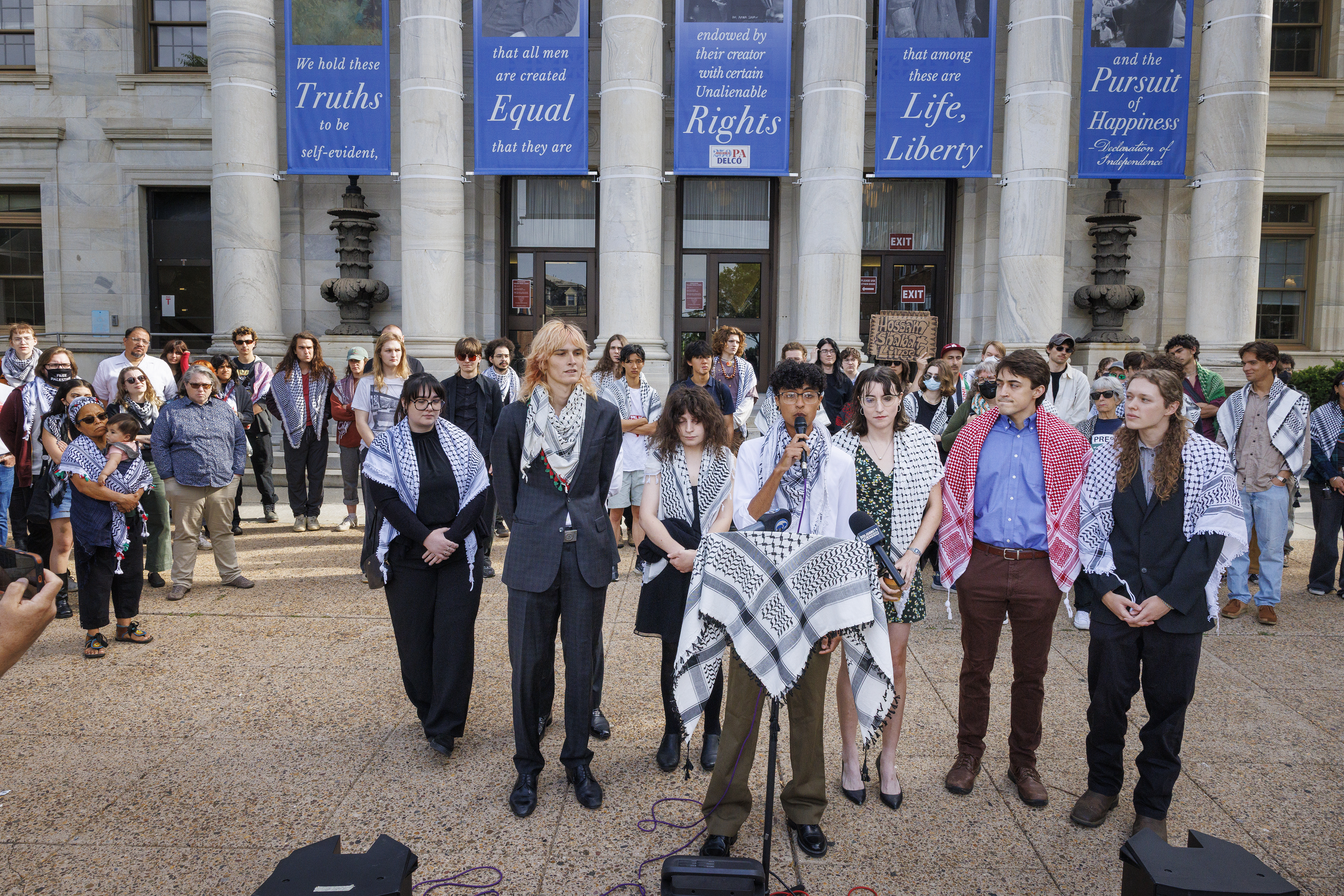
Swarthmore College student Jace Boland, one of nine protesters facing charges, speaks at a news conference Tuesday outside the Delaware County Courthouse. Alejandro A. Alvarez / Staff Photographer
The Delaware County district attorney plans to maintain charges brought against nine pro-Palestinian protesters arrested last spring on Swarthmore College’s campus.
The protesters, mostly unaffiliated with the school save for a current and former student, called the charges “absurd” at a press conference earlier this week, asking the DA to drop the charges.
District Attorney Tanner Rouse said the group had been offered the chance to plead to a lesser, summary offense, which they refused.
A lawyer for the protesters has filed for a motion to dismiss, which will be argued on June 22, ahead of what could be their trial if it moves forward.
Fans of the Delaware County-set HBO crime drama Task can now own a small piece of the show thanks to Thrift & Thrive. The Drexel Hill shop, previously known as Nana’s Attic, received a truckload of items last week including furniture and apparel used on set.
Upper Providence Township-based healthcare and life sciences on-demand delivery company American Expediting Logistics is laying off all 86 of its employees after ceasing operations last week. The company cited reduced spending in the industry and “ongoing pressures across the transportation sector.”
Some 32,000 Main Line Health patients insured by UnitedHealthcare could face service interruptions and providers going out of network if the insurer and the health system, which owns Riddle Hospital in Middletown Township, don’t reach a deal by June 30. The two organizations are currently in negotiations.
Delaware County launched a new mobile health initiative last week known as Wellness on Wheels. The 33-foot-long RV will offer healthcare services such as vaccines, blood pressure readings, and prostate cancer screenings at county health events. Organizations will also be able to request it for other community events.
Heads up for drivers: Aqua Pennsylvania is scheduled to begin monthslong construction on a $1.2 million water main project Tuesday on North Orange Street between Kirk Lane and West 5th Street in Media and Upper Providence Township. Work will take place weekdays from 9 a.m. to 3 p.m. with the project slated for completion in November.
Speaking of road closures, the Media 5 Mile Race returns tomorrow and will cause closures on impacted roads from about 4 to 9 p.m., including parking restrictions. The sold-out race kicks off at 7 p.m.
Sunday is the last day for Pepper Lee Boutique and Gina the Jewelry Lady at their Glen Mills location at 818 Baltimore Pike. The stores will reopen above the Country Deli at 1176 N. Middletown Rd. in Media on July 2.
🏫 Schools Briefing
Wallingford-Swarthmore School District is weighing additional layoffs amid its budget crunch, in addition to reevaluating class sizes, Superintendent Russell Johnston said Tuesday at a school board finance committee meeting. The Inquirer’s Maddie Hanna has the latest on WSSD’s financial woes.
Also in WSSD, tomorrow is the last day of school. There’s an eighth-grade bridge crossing this morning and a school board meeting Monday evening. See the district’s full calendar here.
In Rose Tree Media School District, today is the last day of afternoon kindergarten for Media Elementary. It’s also the eighth-grade recognition ceremony at Springton Lake. Tomorrow is the last day of school, when there will be early dismissals and fifth-grade clap-outs. There’s a school board meeting this evening. See the district’s full calendar here.
Tomorrow is the deadline for RTMSD families to complete the 2026-27 transportation survey, letting the district know what students will or won’t ride the bus next school year.
🍽️ On our Plate
Looking for a place to dine with your pup this summer? White Dog Cafe and Terrain Cafe, both in Glen Mills, offer dog-friendly dining. (Main Line Today)
🎳 Things to Do
🍦 Ice Cream Social: Grab a scoop of ice cream and a bite to eat from food trucks in celebration of the last day of school. There will also be live music and face painting. ⏰ Thursday, June 11, 5-9 p.m. 💵 Pay as you go 📍 Swarthmore town center
🎶 Rose Tree Summer Concert Festival: This year’s concert series kicks off with a performance by the Delaware County Symphony on Wednesday, followed by the Fabulous Greaseband next Thursday, Philly Gumbo next Friday, the Rose Tree Pops next Saturday, and the Jersey Beach Boys next Sunday. ⏰ Wednesday, June 17-Sunday, June 21, 7:30 p.m. 💵 Free 📍 Rose Tree Park, Media
The home was built in 1904 and spans just over 4,000 square feet.Radiq Corporation | Courtesy of Gary Scheivert/BHHS Fox & Roach-Media
Built in the early 20th century, this stately Colonial in Upper Providence Township blends historic and modern elements like a stone exterior and portico that harken to the past, while a renovated kitchen is thoroughly 21st century. It features quartz countertops and stainless steel appliances and looks onto a family room with rounded windows and a fireplace. The home has five bedrooms, with the third floor dedicated to the primary suite, complete with a walk-in closet and dressing room. Outside, there are multiple slate patios as well as a meandering water feature that ends in a small pond. There’s an open house Sunday from noon to 2 p.m.
By submitting your written, visual, and/or audio contributions, you agree to The Inquirer’s Terms of Use, including the grant of rights in Section 10.
This suburban content is produced with support from the Leslie Miller and Richard Worley Foundation and The Lenfest Institute for Journalism. Editorial content is created independently of the project donors. Gifts to support The Inquirer’s high-impact journalism can be made at inquirer.com/donate. A list of Lenfest Institute donors can be found at lenfestinstitute.org/supporters.
Philadelphia is slated to have an abundance of block parties and street festivals this summer after the city encouraged neighborhoods to join celebrations of the nation’s 250th with their own events, even offering financial support for hosting through various grants.
But some organizers who responded to the calls are learning there is a limit on so-called festival street closure permits for events between June 11 and July 18: essentially, the duration of World Cup, July Fourth, and MLB All-Star Game events.
Katie Hanford, executive director of the East Passyunk Avenue Business Improvement District, learned of the change in May. The group submitted three festival street closure applications, two for World Cup watch parties and one for 250th festivities, and the Philadelphia Office of Special Events denied them “due to City resource constraints.”
“The city government, in this case the Commerce Department, is literally trying to give communities money to host events and yet the city is also, on the other hand, denying the ability to host events,” said Hanford, who applied for the 2026 Neighborhood Celebration Grants Fund, which had $1 million for such events.
Pride on Passyunk, an event put on by businesses last year, was also denied a “festival street closure” permit for June 14 because it fell during what the special events office called a several-week “blackout” period in an email regarding the application. June 14 is the first World Cup game in Philadelphia, among other high-profile events.
The city, however, did not publicly announce any limits on event permits, nor did the Philadelphia Office of Special Events address the blackout dates when The Inquirer asked.
Though these events plan to move forward as “sidewalk activations” that organizers say will be no less fun, frustration remains over an already complicated permitting process, made more difficult by what organizers argue has been confusing messaging from the city.
First, there is the city’s classification of neighborhood block parties, for which permit applications are submitted to the Philadelphia Streets Department and reviewed by the police department. These permits are filed by residents aiming to throw a birthday party or other small celebration.
But if the event is hosted by businesses or located in a commercial corridor, even if it spans only a block, organizers must file festival street closure applications, which the Philadelphia Office of Special Events reviews.
So even though the East Passyunk Avenue Business Improvement District planned to throw block parties, organizers say the city directed them to apply for a festival street closure, only to receive a denial.
Randi Kampen and Lex Fanelli, organizers of Pride on Passyunk, said their event permit was approved, but they never officially heard back about the separate street closure application. A Philadelphia Office of Special Events email obtained by The Inquirer told the business improvement district the Pride event would be denied because of issues with the date.
“Please understand, we have denied other events that fall within these blacked out dates too,” the email said, encouraging the group to apply for a date later in the summer or fall.
The message was of little comfort to Kampen and Fanelli.
“The blackout dates are because the city is not prepared for the FIFA stuff happening, and that’s not our fault,” Kampen said.
The 2026 summer festivities have only added another consideration to the process.
Even so, people like Hanford say if city resources were going to be strained for the several-week span, they wish they had been alerted sooner instead of encouraged to put on events.
Number of events affected remains unclear
The city special events office did not immediately say how many festival street closure applications were denied for June 11 through July 18.
Still, the city is slated to host plenty of block parties during that window.
The Philadelphia Police Department has received 241 applications for block parties between June 11 and July 20, and recommended approval for 219, according to Sgt. Eric Gripp. The denial recommendations were unrelated to major city events, he said.
But the police department flagged four dates to the special events office where World Cup games and 250th festivities would create staffing constraints for additional events requiring festival street closure permits — June 19, June 27, July 3, and July 4.
“As Philadelphia prepares to host several major events this summer, including FIFA World Cup-related activities and other large-scale celebrations, the police department will continue balancing those public safety responsibilities while supporting community events whenever operationally feasible,” Gripp said.
Separately, the special events office said June 14 was “a heavy commitment of resources” for public safety partners because of a slew of events, including the first World Cup match in Philly, the FIFA fan festival, Odunde Festival, Flag Day, events at Independence National Historical Park, and events at Franklin Square Park. The city said it also has to consider and prepare for any potential protests.
For now, Pride on Passyunk is moving forward, as are the three events planned by the East Passyunk Avenue Business Improvement District.
Hanford said the business improvement district has been working with Councilmember Mark Squilla to potentially appeal the permit decisions, but time is running out.
A June 19 event aimed to air the Brazil-Haiti match on the Juneteenth holidayand a June 27 block party was to show Croatia vs. Ghana. Those events call for screen setups and barricades that require coordination with third parties.
Squilla’s office brokered a meeting between the business improvement district and the special events office on Wednesday, and is optimistic a compromise would lead to at least some permits being approved, according to Squilla’s chief of staff, Anne Kelly King.
“Hopefully we’ll come to a resolution that’ll work for everybody. We don’t want to compromise safety, and that’s really center to it,” she said.
Hanford said regardless of the outcome, East Passyunk would still host World Cup block parties.
“The sidewalks will be lined with activations, food and drink specials, and places to watch the game,” she said. “We will be out here celebrating how South Philly always does — with joy in the streets, supporting small businesses, and going hard for sports.”
After a tragic and unprecedented spike in officer deaths, Philadelphia’s police union made an emotional plea for help: Its charitable organization was running low on funds and struggling to give fallen officers the respectful burials they deserved.
City officials stepped up, agreeing in 2014 to significantly boost how much they would pay to cover funeral expenses. Since then, for each officer who died in the line of duty, the city has contributed up to $75,000 in tax dollars, up from $15,000.
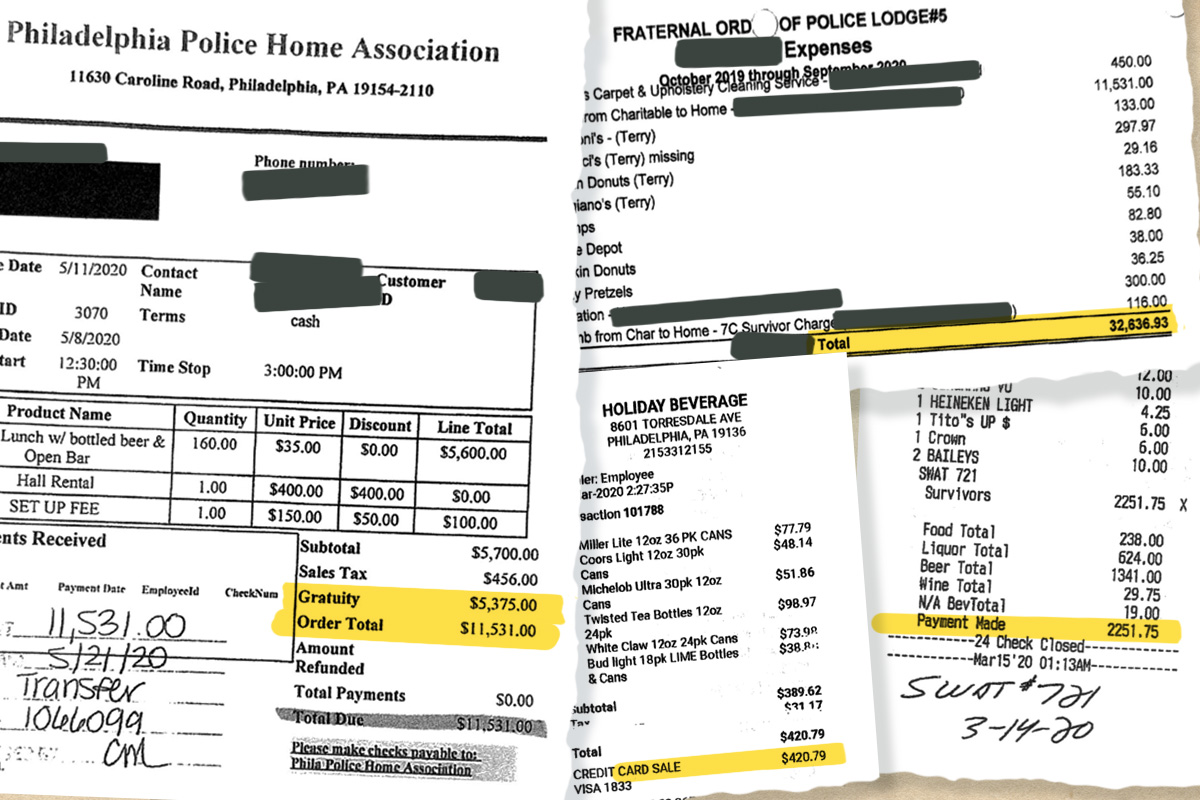
But an Inquirer investigation found that the Fraternal Order of Police Lodge 5 has billed the city for an array of expenses that are far outside the scope of funeral home and cemetery costs. The union has asked to be reimbursed tens of thousands of dollars for bar and restaurant tabs, alcohol, catering costs, car repairs, carpet and upholstery cleaning, socks and underwear, garbage bags, and paper towels.
The FOP has submitted receipts from businesses such as Target, Home Depot, Walmart, Acme, 7-Eleven, and CVS that include no explanation for why they qualify as funeral expenses.
The union has also forwarded monthly statements of corporate credit cards held by various members of the FOP leadership team, circling bill totals mostly for restaurants, bars, and beer stores. Other reimbursement requests lack any receipt or itemized breakdown, or are simply requests for cash, making it practically impossible to judge their merits at face value.
Records show the FOP has billed the city for food and alcohol for at least eight events at its own bar, 7C Lounge, located within the union’s 50,000-square-foot headquarters in Northeast Philadelphia.
One of the 7C events resulted in a $5,700 bill, plus an additional $5,375 for a “gratuity.”
And in one handwritten memo, an FOP official asked the city to reimburse the union $3,500 in cash for a survivor’s family, with no explanation except that it was “per John McNesby,” then the FOP’s president.
Current FOP president Roosevelt Poplar and McNesby, who served as the union’s president for 16 years before stepping down in 2023, did not respond to requests for comment.
FOP Lodge 5 President Roosevelt Poplar, left, in a portrait next to John McNesby, right, who at the time led the union on Sept. 4, 2019.Charles Fox / Staff Photographer
The city’s $75,000 contributions for officer funeral expenses, which have not been previously reported, prompt new questions about the FOP’s Survivors’ Fund, the union’s charitable organization that raises money to pay for funerals and support the families of officers who were killed or seriously injured in the line of duty.
A 2025 Inquirer investigation found that the FOP reported spending hundreds of thousands of dollars on “funerals and special events” in years when no officers died in the line of duty, and that its expenditures and cash donations had been loosely documented and were difficult to track.
The Inquirer sought further insight by examining more than 1,000 pages of invoices, bills, emails, and other documents obtained in Right-to-Know requests for public records concerning 17 police line-of-duty deaths since 2014. Eight of the deaths were attributed to COVID-19.
The FOP publicly criticized The Inquirer for requesting the records.
The city’s risk management team is primarily responsible for deciding which costs the city should reimburse. A third-party administrator, with expertise in workers’ compensation laws, offers guidance.
Emails, memos, and copies of checks show the city has covered the bulk of the FOP’s requests, although in almost every case, the city’s documents do not indicate which specific reimbursement requests were approved. An FOP request for $1,870 to cover two bar tabs and pipes and drums after a dinner is the only explicit denial in the records.
Mayor Cherelle L. Parker and Sharolyn Murphy, the city’s risk manager, declined to be interviewed.
The Inquirer sent Murphy and Parker’s office a list of the FOP’s expenses that did not appear to be directly related to funeral costs. In an email response, Murphy said that the city did not reimburse the FOP for the 7C event with the $5,375 gratuity and that the city does not reimburse for alcohol. She did not include explanations for the other expenses.
Barry Scott, who headed risk management for 21 years before retiring in 2024, said the city would deny beer runs and State Store bills, but would approve restaurant bills if they appeared to be tied to a funeral.
“Frequently the bills were not specific enough that it was difficult to discern whether or not there was alcohol involved,” he said. “We tried to make the best decision that we could with regard to how we approached the particular bill and the funeral-relatedness of the expense. Where we did not feel we had sufficient justification or documentation in order to make a determination, we would not pay the bill.”
Barry Scott, the city’s risk manager for 21 years until retiring in 2024, in his office in November 2021.Tyger Williams / Staff Photographer
Scott acknowledged that once the city increased its maximum contribution, the FOP started asking for more and more expenses to be reimbursed.
“It’s hard to know exactly what happened and why we saw such a precipitous increase in invoices from the FOP,” he said. “But the sharp increase to $75,000 did leave an opportunity for it to be abused.”
Separate from the city’s contribution, the FOP’s Survivors’ Fund raises money by hosting benefits, often at the 7C Lounge, in which it charges around $45 a person in cash at the door for food, soda, and beer. Most attendees donate money, participate in raffles or auctions, or buy memorial T-shirts.
McNesby has previously described himself as the “Santa Claus” of the Survivors’ Fund, which exists not just to pay for funerals but also for when “families request help with their houses, or issues with their cars,” he told The Inquirer in 2023.
Meanwhile, the FOP’s arrangement with the city does not appear to be widely understood, and rank-and-file cops may assume that the Survivors’ Fund takes care of funerals and assorted costs for families of officers killed in the line of duty.
The Inquirer interviewed a dozen active and retired police officers about the city’s financial contribution in the wake of an officer’s death, and all said they did not know the city was paying as much as $75,000. Half said they believed the city covers some of the funeral costs, while the FOP pays for luncheons and bar tabs. The other six said they had no idea the city contributed anything.
“It was always my understanding that the FOP, through its Survivors’ Fund, paid for any and all funeral expenses for an officer killed in the line of duty,” said a retired veteran with more than 30 years on the job, who was granted anonymity in order to speak openly.
“The fact that the fund deals in cash and is untraceable is extremely disturbing,” the retired officer added. “There is no accounting of any kind as to how these funds are distributed.”
‘Public money requires public eyes’
The FOP’s contract with the city calls for the union to be reimbursed for “reasonable and necessary funeral expenses.”
There is no clarification on what would qualify under either standard, and it does not explain how reimbursement requests will be processed. The records the city provided seem to reflect a haphazard system in which the FOP submits incomplete expenses to the Philadelphia Office of Risk Management and then follows up by email several times to ask when payment could be expected.
Murphy wrote that although there is not a list of allowed expenses, the city typically will not cover luxury caskets, large floral arrangements, catering or reception costs, and travel expenses for family members.
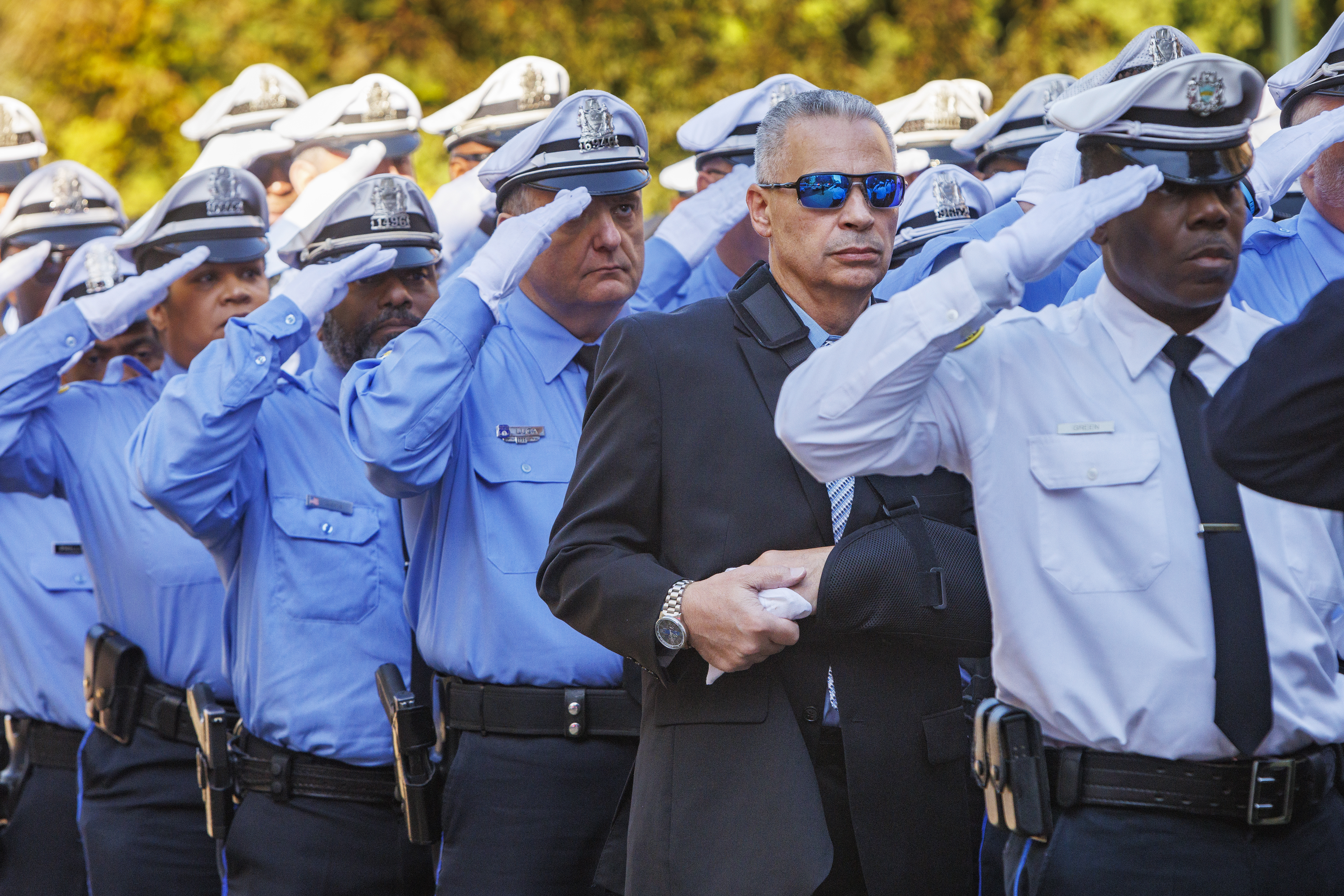
Officer Raul Ortiz, in suit, was with Officer Richard Mendez when Mendez was fatally shot at Philadelphia International Airport while attempting to stop a car theft. Ortiz was shot in the arm. The funeral for Mendez was held on October 24, 2023.Alejandro A. Alvarez / Staff Photographer
Experts say both the FOP and the city should have clear policies for which expenses are considered funeral-related, what documentation is required, and who should have authority to approve reimbursements.
“Public money requires public eyes,” said Andrew McGinley, vice president of policy for the Committee of Seventy, a civic leadership organization that works to promote effective and ethical government. “We want the union to be able to support families who are grieving and provide whatever support they can in this horrible, tragic circumstance. But that doesn’t mean we shouldn’t also make sure that the public money spent is accountable and appropriate.”
McGinley suggested the city’s controller’s office or City Council require proper recordkeeping. “As stewards of public dollars, we have to be able to ensure that the money is being spent for things that it’s allocated for, and right now it doesn’t sound like we’re able to track it.”
Joseph H. Thompson, a former federal prosecutor who served as acting U.S. attorney for the district of Minnesota until 2025, said tax dollars require transparency and extra scrutiny, particularly when public confidence is strained.
“Those entrusted with public resources, especially in law enforcement, must remain above not only impropriety, but even the appearance of it,” he said.
The money that the FOP receives from the city is not required to be itemized — or even mentioned — in federal tax filings, making it even more difficult to reconcile the money moving in and out of the Survivors’ Fund.
For example, Police Officers Richard Mendez and Jaime Roman were shot to death in 2023 and 2024, respectively. The city paid for both funerals, totaling nearly $76,000. The FOP submitted to the city additional expenses of more than $20,000, including a catering bill and two bar tabs, one of which was at 7C Lounge.
But in federal tax documents that cover that time frame, both FOP Lodge 5 and its Survivors’ Fund reported spending a total of $745,000 for funerals, memorials and events, or help for survivors.
In 2024, 10 years after the city bumped its funeral expense contribution for the police to $75,000, the union representing Philadelphia firefighters reached a similar agreement. (There are no reimbursement requests from firefighters because none have died in the line of duty since. But roughly the same number of police officers and firefighters have lost their lives in the line of duty over the last decade.)
Unlike the FOP, the International Association of Fire Fighters, Local 22, does not act as a go-between to handle the city’s money. The Philadelphia Fire Department, not the union, sends the funeral home and cemetery bills to the city’s risk management office, which then reimburses the vendors directly.
The union has previously contributed $5,000 of its own funds to the family of a deceased firefighter to help cover the costs of a memorial reception and meal, according to Tommy McKiernan, Local 22’s first vice president.
Going forward, he said, he would submit that bill to the city so the family did not have to pay out of pocket.
“Our intent is to keep the cost to the family as minimal as possible,” McKiernan said.
Unanswered questions
On March 13, 2020, members of the Philadelphia Police Department’s SWAT team climbed a flight of stairs to the second floor of a stash house crammed with guns and drugs on Bridge Street in Frankford to serve a murder warrant.
A gang member fired a semiautomatic assault rifle 16 times through a bedroom door, striking Cpl. James O’Connor IV in the neck and arm.
O’Connor, a 23-year veteran and married father of two, was declared dead at the hospital not long after at the age of 46. It was a tragedy that was amplified due to his family’s multigenerational roots in law enforcement: His father was a police officer, his son is a current officer, and his cousin was a homicide detective. O’Connor was posthumously promoted to sergeant and awarded the department’s Medal of Honor, a Purple Heart, and the Medal of Valor.
Because of the COVID pandemic, his funeral was delayed for eight weeks, and a limited number of people were permitted inside Our Lady of Calvary Church for the memorial. Most mourners had to sit on opposite ends of the pews, and all had to wear masks.
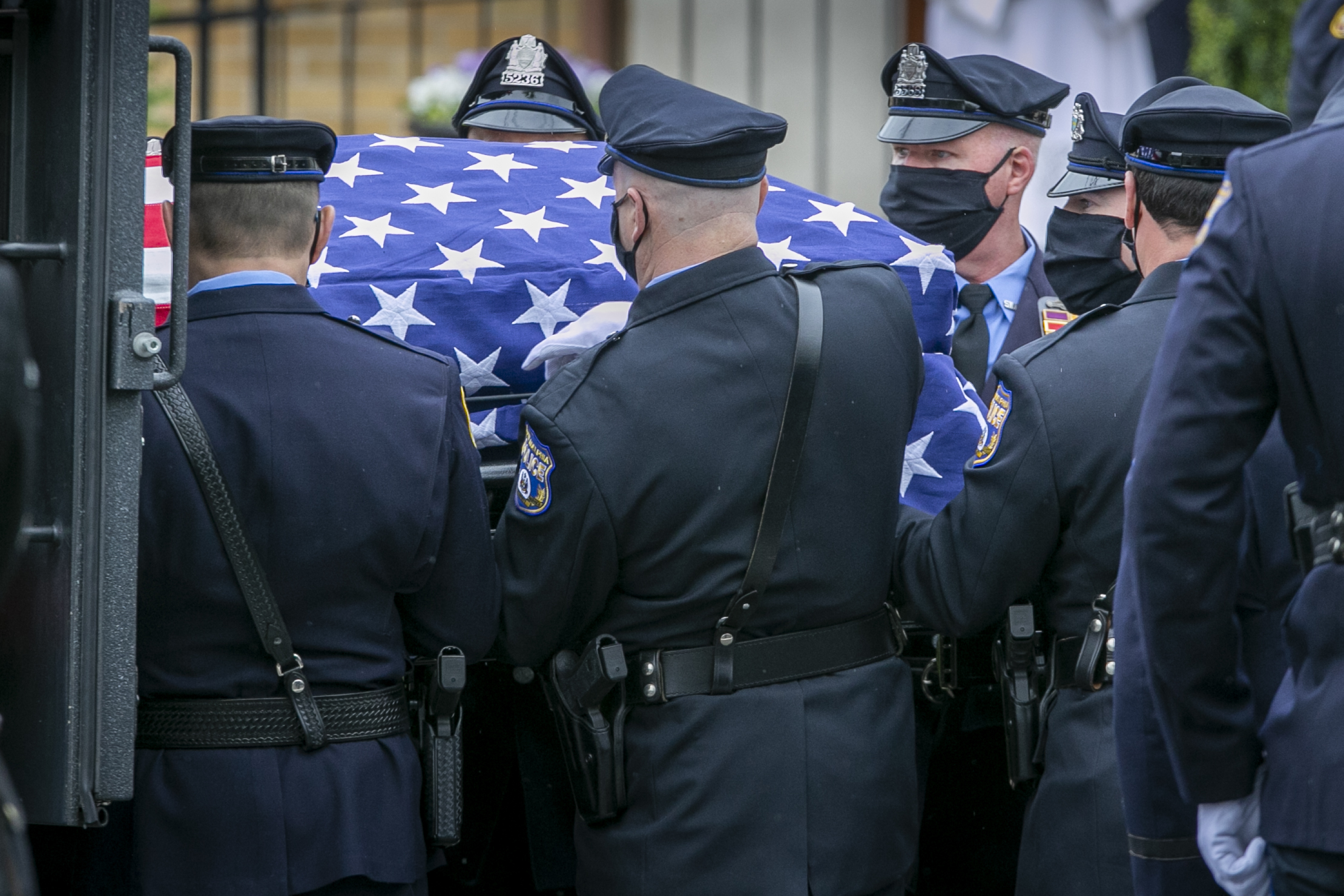
Pallbearers place the body of Cpl. James O’Connor IV in the back of an armored vehicle named after him. The funeral for O’Connor, who was killed in March 2020, was held at Our Lady of Calvary Church in Philadelphia on May 8, 2020. ALEJANDRO A. ALVAREZ / Staff PhotographerAlejandro A. Alvarez / Staff Photographer
“The city has not, and the city will not, forget Cpl. James O’Connor,” then-Mayor Jim Kenney said at the funeral ceremony. “We won’t forget the sacrifices he made, or the sacrifices your family has made.”
The city reimbursed the FOP $30,075 to cover O’Connor’s funeral home and cemetery costs.
But additional requests for money kept coming in, totaling 108 pages.
The city had imposed restrictions on restaurants and bars, limiting them to takeout and delivery service to prevent the spread of COVID. After the funeral, the FOP held a 2½-hour lunch for O’Connor at its own bar.
The FOP billed the city for $5,700 worth of bottled beer, an open bar, and food for 160 people at the 7C Lounge, then added a 94% gratuity, for a total bill of more than $11,500.
The one-page reimbursement document for the luncheon does not include an itemized receipt and describes the terms of the lunch as “cash.” At the bottom of the page is a typed request: “Please make checks payable to: Phila Police Home Association,” the charitable organization that manages the 7C Lounge.
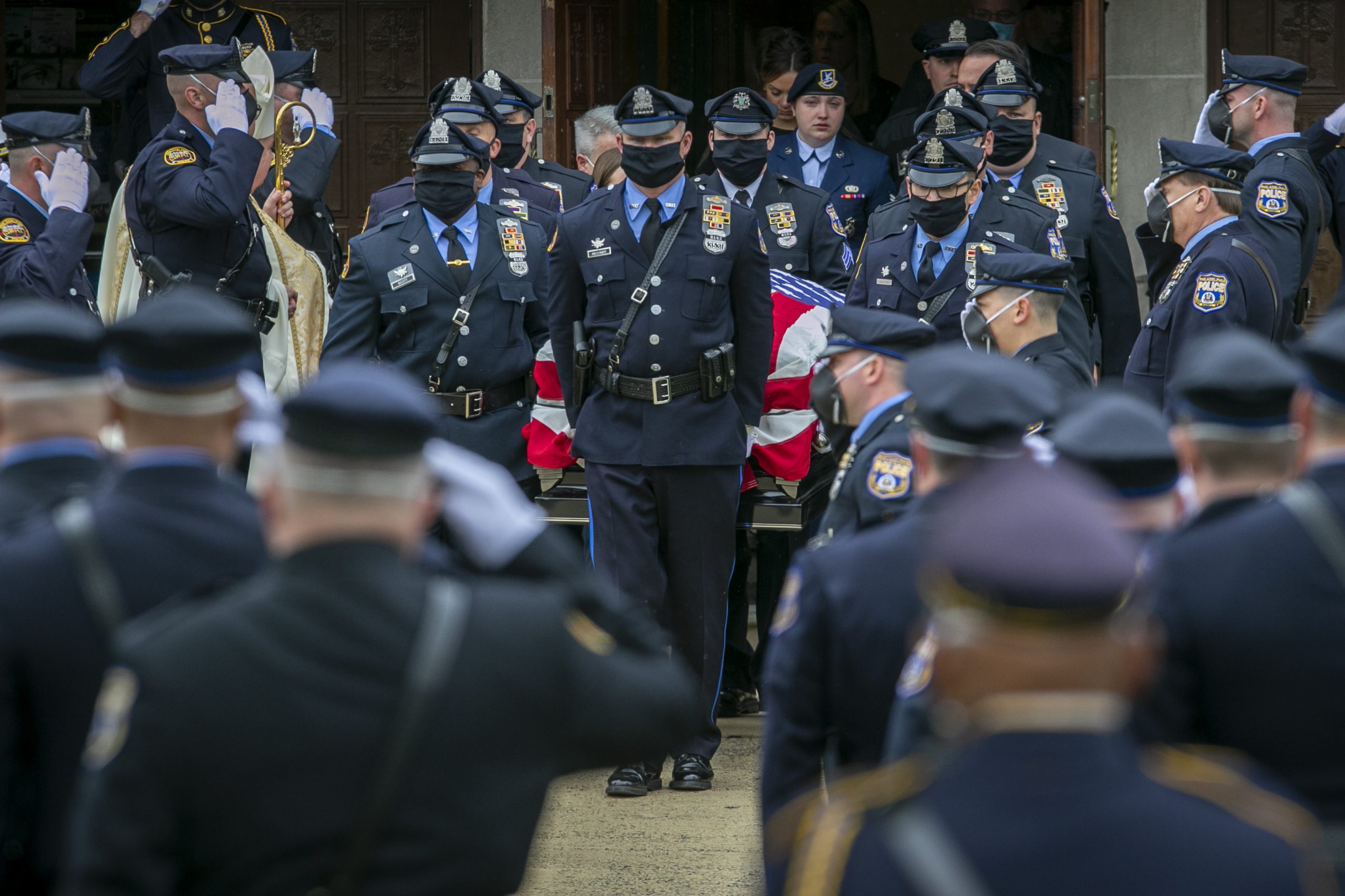
The body of slain Philly Police Cpl. James O’Connor IV leaves Our Lady of Calvary Church in Philadelphia on May 8, 2020. Cpl. O’Connor was killed in the line of duty. ALEJANDRO A. ALVAREZ / Staff PhotographerAlejandro A. Alvarez / Staff Photographer
Although the records do not indicate it, Murphy said the city did not reimburse the FOP for the O’Connor luncheon.
Additional reimbursement requests included more than $1,600 at beer distributors, $450 for carpet and upholstery cleaning, and a $2,375 invoice from Dunphy Ford to make repairs on a F150 truck.
The records also include a handwritten note on FOP pension chairman Michael Shellenberger’s stationary that requests “$3,500 in cash given to Mrs. O’Connor per [then FOP president] John McNesby.” The records include no further explanation.
In July 2020, an FOP treasurer sent then-Deputy Mayor Richard Lazer a $32,600 reimbursement request for “expenses associated with services provided and caring for the O’Connor family during their mourning.” The amount was separate from the previous bill for funeral costs.
The city approved $20,256 of that amount and sent a check to the FOP’s Survivors’ Fund. The documents do not indicate which specific expenses the city approved and denied.
One tragedy after another
Beginning in 2006, Philadelphia police suffered through a brutal three-year stretch.
Seven officers were killed in the line of duty, more than in any other law enforcement agency in the country during that 33-month span. Five were shot to death. The other two were struck and killed by other drivers while in their patrol cars.
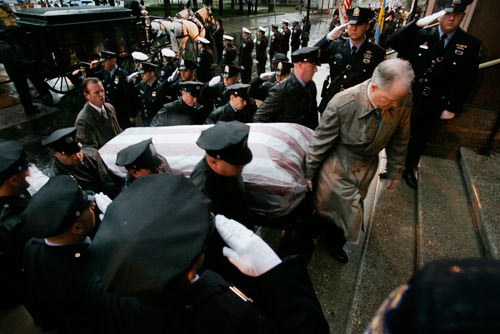
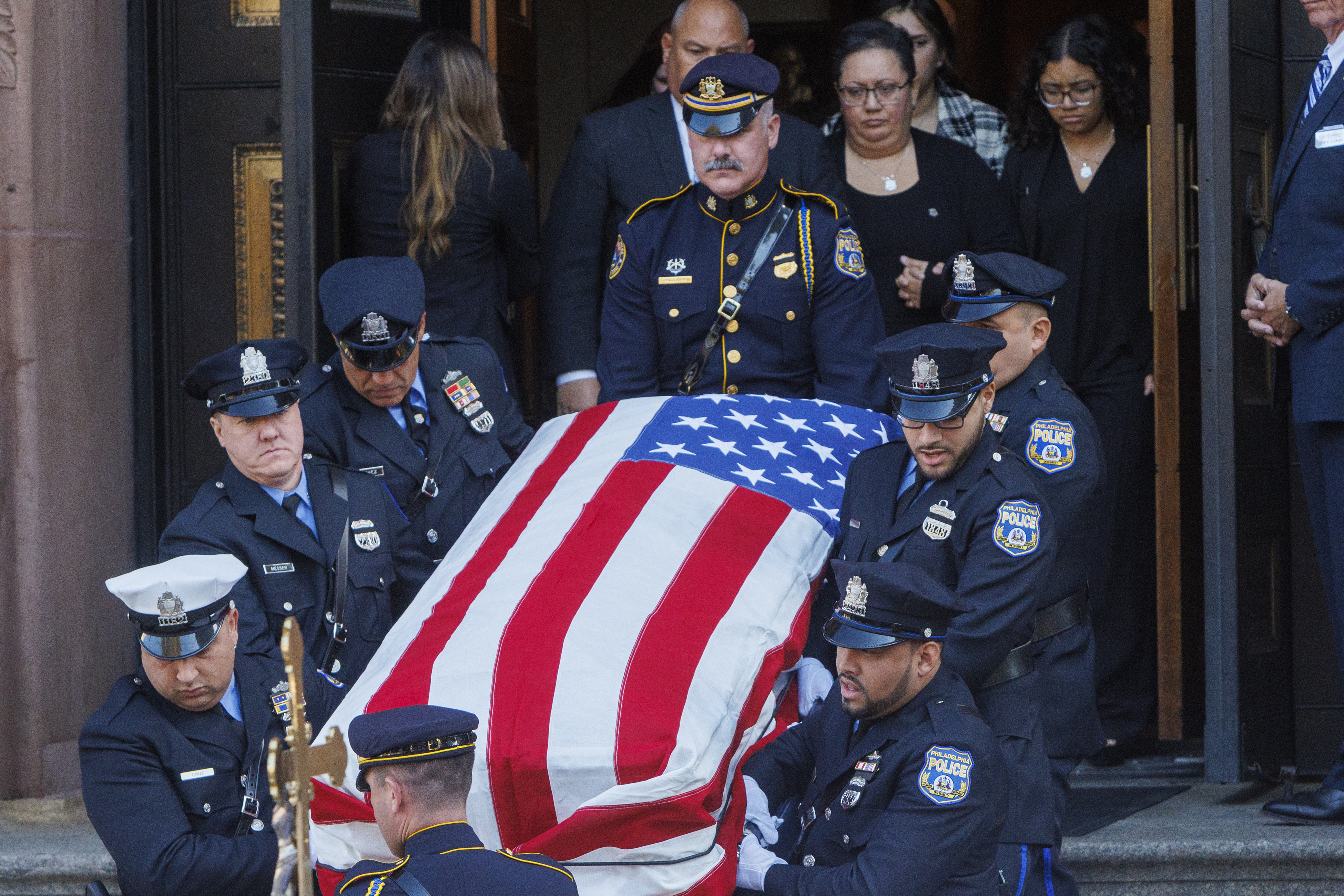
The tragic ritual of honoring fallen officers became too familiar. Hundreds of police officers in dress blues and glossy black shoes, their white-gloved hands raised in salute as the flag-draped coffin is hoisted into the church. Motorcades of blue- and red-flashing squad cars and motorcycles escorted the funeral procession to the cemetery.
At the grave site, Taps is played on a bugle and then “Amazing Grace” on bagpipes. The flag on the coffin is neatly folded and given to the widow. And a police radio calls out the officer’s name and badge number for the last time, acknowledging a job well done.
The body of Sgt. Stephen Liczbinski, who was killed in the line of duty, is carried into the Cathedral Basilica of Saints Peter and Paul in Philadelphia on May 9, 2008. Alejandro A. Alvarez / Staff Photographer
The city paid for all seven funerals, totaling almost $200,000, exceeding the $15,000 limit for each at the time, according to city records.
But by 2008, McNesby and other FOP leaders said the Survivors’ Fund was seriously depleted. FOP vice president John McGrody told The Inquirer that the fund may be called on to spend up to $50,000 for each burial, meals for the bereaved, and school expenses for the fallen officer’s children. These expenses can occur even in years when no officer has died.
The spate of fatalities paved the way for the city to honor the FOP’s request for help during contract negotiations. A three-member panel — one person appointed by the city, one by the union, and the other from the American Arbitration Association — agreed to contribute more taxpayer money toward the cost of burying fallen officers, beginning in 2014.
“At that point it was much easier to go into excess just because there was so much money potentially on the table,” Scott said. “But at some point when we reach the $75,000 number, I think we are beyond what is absolutely directly related to the funeral of the officers.”
If Scott and his staffers had questions, their point person at the FOP was Terry Reid, a member of the union’s executive board and its disability coordinator.
Records show she sent the majority of the emails and requests for reimbursement to the city, as well as American Express charges for food establishments ranging from Dunkin’ Donuts to Maggiano’s. A nearly $300 reimbursement request for the restaurant Santucci’s that Reid sent in 2020 includes the notation “missing,” presumably indicating there was no receipt.
In July 2023, McNesby fired Reid when the family of a late police officer alleged that she had borrowed at least $20,000 from the officer’s widow and then ignored the woman’s requests to be repaid.
Reid did not respond to requests for comment.
City officials balk
In most cases, the records are unclear as to which specific items the city denied. A few, however, spell them out.
The FOP sent the city a list of expenses after the death of Mendez, who was a 22-year veteran when he was killed in 2023 while interrupting a car theft at Philadelphia International Airport.
Pallbearers carry the body of Officer Richard Mendez out of the Cathedral Basilica of Saints Peter and Paul on Tuesday, October 24, 2023. Mendez was shot and killed at the Philadelphia Airport.Alejandro A. Alvarez / Staff Photographer
The reimbursement requests were not for the funeral home, which was covered in a separate invoice for $33,576.
The list included payment for two 60-passenger buses, food, catering, ceremonial pipes and drums, two bar tabs, and the cost to detail three cars. The total amount was nearly $21,000.
This time, city officials balked.
In an October 2024 email, Raashida Fleetwood, Philadelphia’s risk management counsel and employee disability manager, wrote to PMA Management Corp, a third-party company the city paid to help manage claims for workers injured or killed, explaining what the city declined.
“Here is the updated expense sheet,” she wrote. “We are not paying for Bar Tab- $667.00, Pipes and Drums after dinner- $839.44 or Bar Tab- $363.60.”
PMA issued a check on behalf of the city to the FOP’s Survivors’ Fund for $18,651, about $1,900 less than what the FOP had requested.
The COVID pandemic created an additional complication in that it required city officials to determine whether an officer who died of COVID had gotten sick while at work. That would make it a line-of-duty death and entitle the officer’s family to additional benefits.
Risk management officials determined that in a single year, six officers who succumbed to the virus had contracted it on the job, including Officer Vladimir Nikolaev Maleev, 39, who died Aug. 6, 2021.
A native of Karlovo, Bulgaria, Maleev had come to America at the age of 19, and his parents and extended family wanted his remains flown home. The FOP asked the city to pay the $7,115 bill for the international flight. The city agreed.
When Officer Tab T. Ali — a former Marine and a 25-year veteran of the department — died in November 2020 from COVID complications, his aunt paid $7,056 to the funeral home. The city reimbursed her.
The FOP subsequently forwarded an additional invoice totaling $6,708 for Ali’s headstone and foundation. Emails between city risk management officials and PMA questioned whether this should be covered.
“Have we paid up to $75k already,” the city’s employee disability manager wrote. “If not, you can process for payment.”
“Not even close. We only paid $7056.00. We get the additional payment processed. Grand total increases to $13,764.00,” a PMA regional claims supervisor replied.
The most recent Philadelphia police officer to die in the line of duty was Highway Patrol Officer Andy Chan, 55, a married father of three. He died in December, almost seven years after he was struck while riding his motorcycle in Northeast Philadelphia.
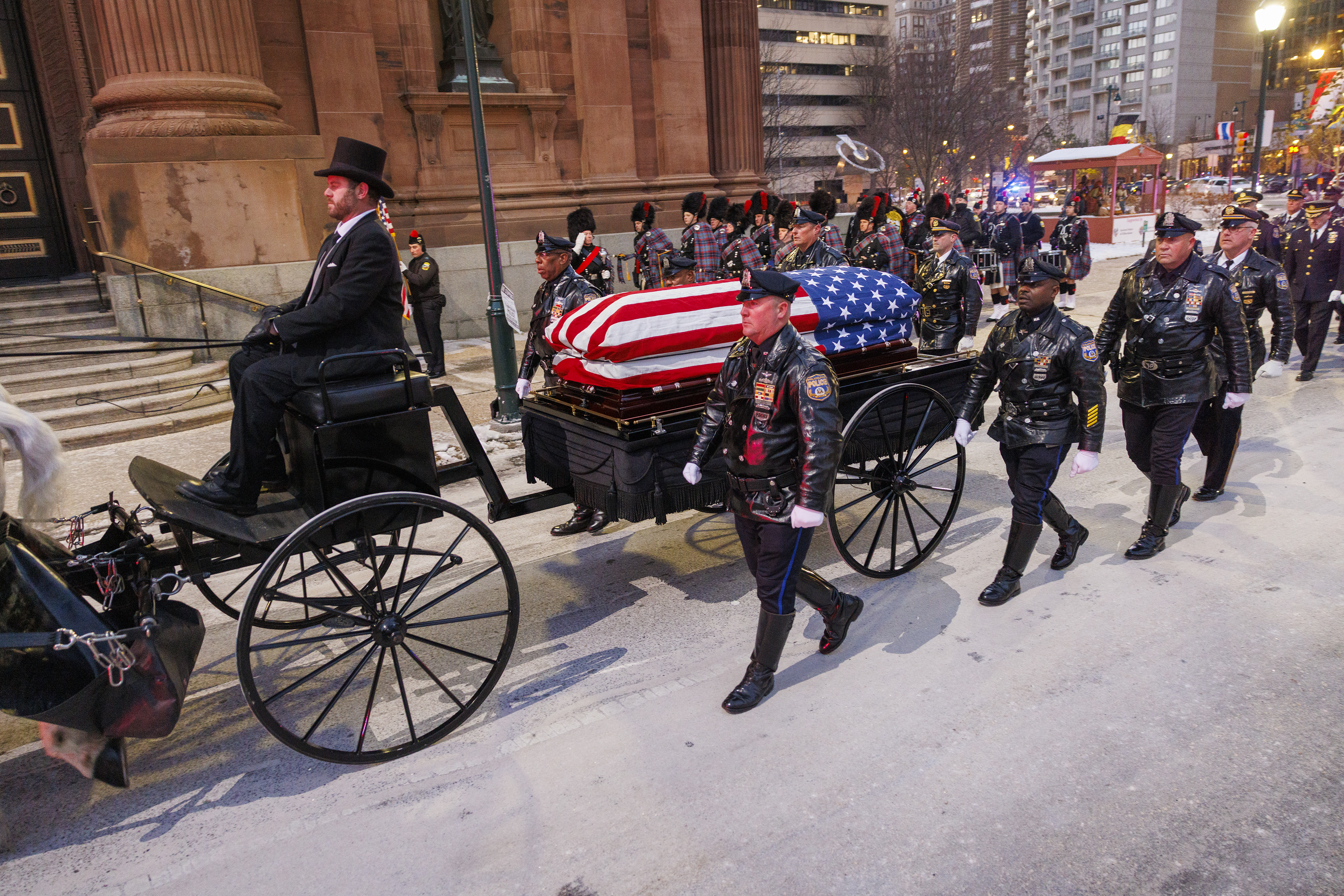
On Dec. 16, a horse-drawn carriage took Chan’s body in a cherrywood coffin draped in an American flag to the Cathedral Basilica of SS. Peter and Paul in Philadelphia. Officers towed Chan’s motorcycle, still bearing his name, in the procession.
The funeral caisson for Philadelphia Highway Patrol Officer Andy Chan arriving at the Cathedral Basilica Saints Peter and Paul on December 16, 2025. Chan died six years after a driver struck his patrol motorcycle. Alejandro A. Alvarez / Staff Photographer
On that frigid, windy Tuesday, hundreds of police officers joined city leaders to memorialize the man who had wanted to be a cop since childhood.
By the time of Chan’s death, The Inquirer had already filed Right-to-Know requests with the city asking for records of city payments or reimbursements to FOP Lodge 5 for all funeral-related expenses for officers killed in the line of duty. FOP leadership publicly criticized the records request on social media, contending that The Inquirer was seeking “private financial information” to “put a price tag on our heroes.”
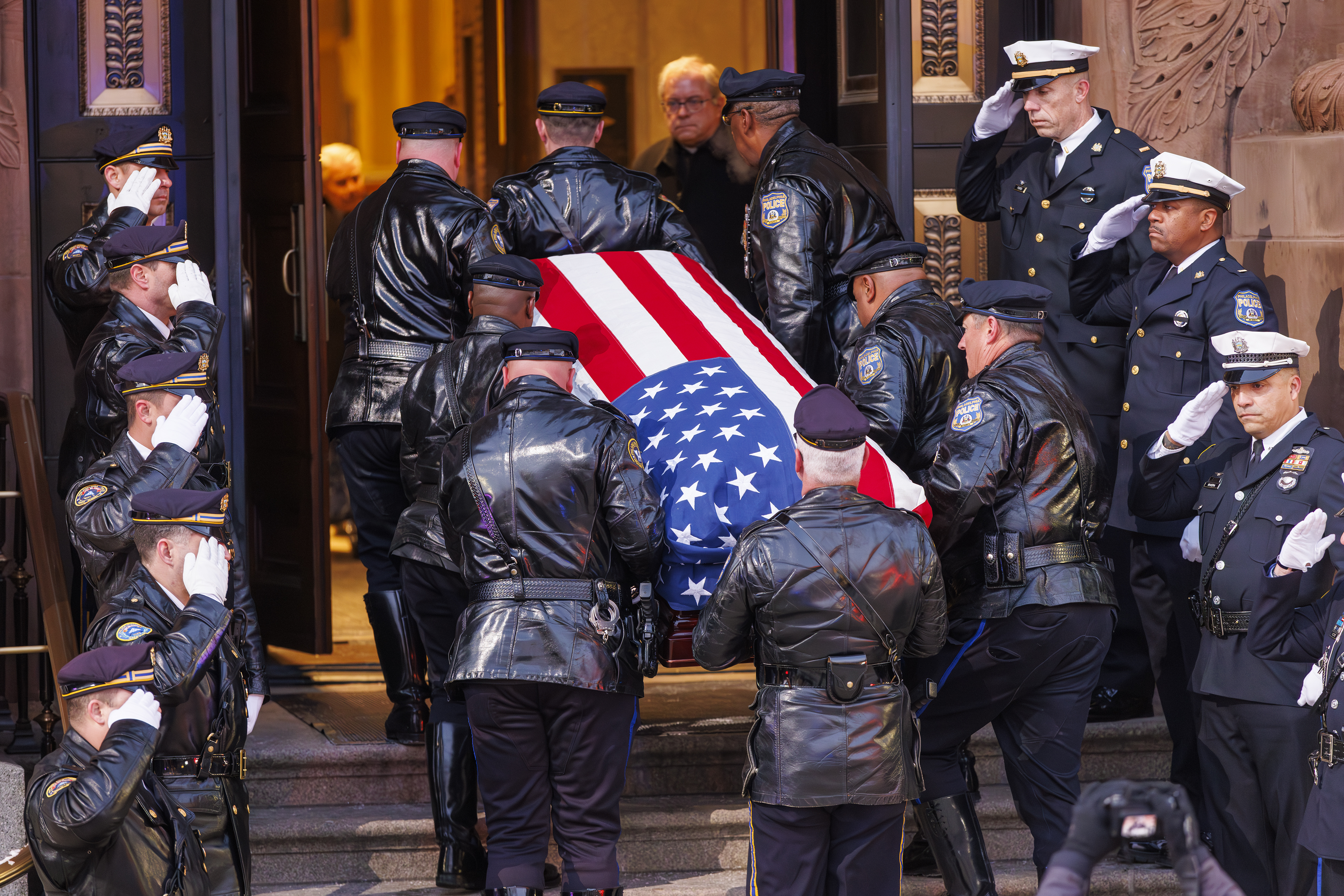
The body of Philadelphia Highway Patrol Officer Andy Chan arriving at the Cathedral Basilica Saints Peter and Paul on December 16, 2025.Alejandro A. Alvarez / Staff Photographer
The reimbursement requests for Chan’s funeral show the FOP was unusually restrained.
The city received two documents, this time from the Philadelphia Police Department instead of the FOP: a bill for the funeral home and one for the carriage service. The total was $48,983.
The FOP did not submit any invoice, bill, or credit card statement for items unrelated to a funeral.
The eve of the World Cup was also the night before some Philadelphia bars could stay open until 4 a.m., according to a bill signed by Gov. Josh Shapiro in March.
But thanks to a sneaky provision in the bill, most establishments interested in a later last call weren’t yet eligible to do so — and in some instances won’t be until after July 4.
As of Wednesday evening, just 17 establishments were approved by the Pennsylvania Liquor Control Board to stay open until 4 a.m. for the duration of the World Cup, according to a list on the PLCB’s website. By Thursday morning the PLCB approved six more establishments, according to their website.
They represent roughly a third of the 65 Philly businesses that applied to the PLCB for approval, with the majority on the PLCB’s list marked as “in review” as of Thursday. The PLCB cancelled six applications due to ineligibility.
The PLCB started approving applications for extended hours on Wednesday, spokesperson Shawn Kelly told The Inquirer over email, and they will continue on a rolling basis. The last day applications will be accepted is June 19, Kelly said.
Establishments in the first wave of approvals include the strip clubs Sin City, Club Risque, and Cheerleaders; Rittenhouse Square sports bar Lucy; nightclubs Woody’s and Concourse Dance Bar; South Philly’s Live Casino! and bowling alley South Bowl, among others.
(function(){function e(){window.addEventListener(`message`,function(e){if(e.data[`datawrapper-height`]!==void 0){var t=document.querySelectorAll(`iframe`);for(var n in e.data[`datawrapper-height`])for(var r=0,i;i=t[r];r++)if(i.contentWindow===e.source){var a=e.data[`datawrapper-height`][n]+`px`;i.style.height=a}}})}e()})();
The permit process has caused confusion for some local bar owners, who said the delay in approvals have placed their World Cup plans on hold.
Rittenhouse Square jazz and billiards bar Cellar Dog applied for a permit to stay open until 4 a.m. on May 11, according to the PLCB’s records, and did not receive a permit until Thursday morning.
Owner Alfonzo Luna feared the last-minute notice would threw a wrench in the bar’s World Cup festivities. “We submitted everything right and on time, and we were just waiting,” he said on Wednesday night, prior to receiving approval. “I’m sure it’s a lot on [the PLCB’s] end, but for us it’s just frustrating to wait around because it puts a hold on any sort of marketing or operation changes that we that we need to make.”
The performance space at Cellar Dog Philly, which has yet to be approved for a permit to stay open until 4 a.m. during the 2026 World Cup.Spencer Starnes
How is this process supposed to work?
The permits are part of legislation introduced by Pennsylvania state senators Sen. Joe Picozzi and Sen. Vincent Hughes and signed into law by Gov. Josh Shapiro in March that would enable establishments in Philadelphia to stay open until 4 a.m. from June 11 to July 19, which covers all World Cup matches, Semiquincentennial celebrations, and the MLB All-Star game at Citizen’s Bank Park.
The thinking was that establishments should be able to stay open later to serve an influx of tourists looking to catch late night World Cup matches. In practice, however, many bar owners told The Inquirer that juice of late night hours isn’t worth the squeeze, between higher insurance premiums, an uncertain return on investment, and navigating bureaucracy.
Late night permits are available to all hotels, breweries, distilleries with liquor licenses in Philadelphia City limits. To initiate the application process, establishments must first have paid $250 to the City of Philadelphia’s Dept. of Commerce and completed the Liberty Bell Safe Certification Program, a one-day safety and compliance training.
A view of the Sports & Social sports bar at Live! Casino and Hotel in South Philadelphia. The casino has been approved for a permit to extend bar hours until 4 a.m. during the 2026 World Cup.(Courtesy of Live! Philadelphia)
Then, establishments must apply for a $500 permit from the PLCB, which would enable them to stay open until 4 a.m. through July 19. To be approved, applicants can’t have any pending licensing, inspection, or fiscal objections associated with their business. The City of Philadelphia can also protest applications filed with the PLCB, Kelly said, and can request a permit be revoked at any time.
Also baked into the process: A “30 day hold mandated by law,” Kelly said, that gives the PLCB “no discretion to approve or issue” permits less than 30 days after an application is received.
In other words, if a bar applied on June 4 to be open until 4 a.m., the earliest they could be approved would be July 4, giving them a little over two weeks to take advantage of extended hours. The PLCB decided to hold off on issuing permits earlier to prevent establishments from using them illegally, said Kelly
To be open late for the World Cup’s entirety, Kelly said, a business would’ve had to apply by May 11. “The PLCB conducts a full and complete investigation of every application it receives. There is no set timetable for that review,” said Kelly. “If an applicant submitted all required documentation — and filed in time — they will receive the Philadelphia 250 permit for the full period.”
Popular sports bar Cavanaugh’s Rittenhouse applied for a permit on May 21, according to PLCB records, meaning the earliest they could stay open late is June 21. Director of Operations Mike Anderson said the delay, while frustrating, isn’t a big deal.
The bar at Cavanaugh’s Rittenhouse, which has yet to have their permit approved for extended hours during the 2026 World Cup.MICHAEL KLEIN / Staff
The bar had only planned to exercise the 4 a.m. privileges on a case-by-case basis, said Anderson, when vibes at the bar are high. “I didn’t want to be left out if everyone else was doing it,” he said. “It could be the thing you tell stories about.”
The permit process was “easy enough,” said Anderson, whose sole gripe is “the lack of guidance.”
“I am guessing that we will eventually be approved or denied,” Anderson went on. “To be honest, it doesn’t really matter if we get approved. If we get denied, I wish I could reclaim my costs.”
Some bar owners, however, are just grateful everything got done in time . Four of FCM Hospitality’s properties — Concourse, Craft Hall, Dolphin Tavern, and the sports bar Lucy’s — are among the first wave of businesses approved for extended hour. Owner Avram Hornik said the process “couldn’t have gone better than it had.”
The PLCB and the city “are building the plane as they fly it,” he said. “It’s really hard to do something new … but I think the city and the state did an excellent job to make this happen.”
This story was updated on Thursday. Staff reporter Michael Klein contributed to this article.