A judge has barred the Philadelphia School District from continuing nonrenewal proceedings against a city charter — for now.
Philadelphia Common Pleas Court Judge Damaris Garcia ordered Tuesday that the school board cannot move forward with a nonrenewal vote for Philadelphia Montessori Charter, which sued the district last month. That vote would have been the first step on a road to possible closure.
Garcia said the district was barred from “proceeding with charter nonrenewal proceedings against Philadelphia Montessori Charter School, pending further order of the court.”
Garcia set a hearing on the matter for July 27.
Philadelphia Montessori‘s lawsuit claims the district violated state charter law with “shifting standards, inconsistent methodologies, and procedures that do not provide fair notice or a neutral adjudicative structure.”
Mark Seiberling, a lawyer forPhiladelphia Montessori, had asked the court to prohibit action on any charter renewals and nonrenewals, not just Montessori’s.
Votes have not been scheduled or taken for either school’s nonrenewal.
A nonrenewal vote does not mean a school closes; it instead triggers a hearing, with witnesses and evidence. The hearing officer would then recommend renewal or nonrenewal, and the board would take another vote.
The nonrenewal process, if triggered, typically takes at least a year, and schools remain open while it plays out.
The Philadelphia District Attorney’s Office is attempting to withdraw a recommendation it made in federal court that a man’s murder conviction should be overturned, saying the prosecutors who oversaw that request did so by filing court documents that were “not supported by the record” or “legally erroneous.”
The about-face, made in a motion filed last week, represents a striking reversal of a posture that could have led a judge to wipe out a guilty verdict in a deadly shooting.
The filing was all the more unusual because the prosecutors who signed it named the colleagues who they said had made “material misstatements” about witness testimony in the case, and took a position the office no longer supports. Prosecutors now believe the conviction should be upheld.
“The Commonwealth respectfully requests leave to withdraw its prior response and apologizes to the Court for the errors,” said the new motion, which was signed by four prosecutors: David Napiorski, Steven Wildberger, Peter Andrews, and Katherine Ernst.
The filing was submitted Friday, just months after a panel of federal judges took the rare step of voting to ban another prosecutor in the district attorney’s office from practicing in federal court — one of the most serious penalties a lawyer can face. In that case, the judges accused the lawyer, Paul George, of being “misleading and dishonest” while seeking to overturn an inmate’s death sentence, and they were extremely critical of what they called George’s repeated misrepresentations on behalf of his office, saying the conduct threatened the integrity of the legal system.
“Lies like those George told … are even more problematic when asking a federal court to disturb a state-court conviction,” the judges wrote in a sternly worded opinion.
One of the judges involved in that disciplinary decision, U.S. District Judge Paul S. Diamond, is the person who will now have to decide what to do with accusations of misstatements in the most recent case. An evidentiary hearing is scheduled for next month.
Diamond had initially ordered that hearing to learn more about the strength of the evidence against Dennis Johnson, who was convicted of second-degree murder in the 2007 killing of Kenyatta Smith outside a corner store in North Philadelphia.
It was not clear whether Diamond would follow through with his plan to hear witness testimony about Johnson’s role in the crime — or if he might use the hearing to instead ask prosecutors how and why their office had urged him and a federal magistrate judge to undo a conviction based on assertions they now say were wrong.
The assistant district attorney who signed that original request, Jaclyn Mason, resigned on June 2, according to court documents. She declined to comment.
Her supervisor in 2022, when she filed the request, was Matthew Stiegler, who has since become the chief of the office’s Conviction Integrity Unit. He did not respond to a request for comment.
A spokesperson for District Attorney Larry Krasner did not respond to questions about the situation or the office’s change of heart.
A flawed conviction?
The crime for which Johnson was convicted occurred on Aug. 17, 2007, when Smith was fatally shot while being robbed outside a convenience store near 30th Street and Lehigh Avenue, court documents say.
Several witnesses identified Johnson as the shooter, and he was convicted of second-degree murder and sentenced to life in prison.
Johnson appealed his conviction and said his lawyer had been ineffective for failing to object to a detective’s testimony that a witness who did not testify, and who could not be cross-examined, had also identified Johnson as the shooter.
In 2022, Mason — then assigned to the district attorney’s Federal Litigation Unit — agreed, writing in court documents that the detective’s testimony was improper and had “tipped the scales” toward a conviction.
She also said the office had discovered problems or inconsistencies with testimony from other key witnesses, and asked a federal magistrate judge to recommend that the conviction be thrown out.
“The case against Johnson was not overwhelming from the outset and his counsel was constitutionally ineffective,” Mason wrote. “The post-trial investigation unearthed additional factors that highlight weaknesses in the prosecution and confirm a low level of confidence in the outcome of Johnson’s trial.”
The magistrate, Judge Lynne A. Sitarski, agreed with Mason and recommended that Johnson’s conviction be overturned. Still, her decision was not binding.
Diamond, the district court judge, was the one with the power to reverse Johnson’s conviction. And he did not seem inclined to accept the assertions made in Mason’s briefing.
‘Material misstatements’ in court documents
Last month, Diamond scheduled an evidentiary hearing at which he ordered all of the witnesses who testified against Johnson to take the stand in his courtroom and testify again.
Prosecutors from the district attorney’s Law Division said they then began working with Mason to prepare for the proceeding. But as they did, they said in their motion, they discovered that Mason’s filings “contained material misstatements” about the case.
Most of the issues concerned ways in which they said Mason characterized witness testimony at trial. In one example, prosecutors said, Mason wrote that a key eyewitness “did not visually identify Johnson” as the shooter while on the witness stand.
But the trial transcript shows that the witness did so “repeatedly,” prosecutors said, and the witness also said he had “known Johnson for at least five or six years.”
That issue and several others led the Law Division staffers to conclude that the office’s earlier filing seeking to undo the conviction was flawed — and they also concluded that the case against Johnson was stronger than Mason contended, and that “relief on Johnson’s claim was not warranted.”
It remains unclear what Diamond might do in the case, or how it might affect any of the lawyers involved.
Johnson’s fate is also unclear. One of his lawyers, Nilam Sanghvi of the Pennsylvania Innocence Project, said she and her colleagues will continue advocating for his freedom.
“We believe in Dennis Johnson’s innocence, and that Magistrate Judge Sitarski’s recommendation that Dennis receive habeas relief based on the violation of his constitutional rights is thorough and well-reasoned,” Sanghvi said.
The evidentiary hearing currently remains scheduled to take place in July.
Forecasters predict it could feel like 100 degrees on Thursday.
“While the district has made significant progress toward ensuring our schools are adequately cooled in order to provide safe and comfortable learning environments, there are still a number of schools with inadequate cooling systems,“ Deputy Superintendent Oz Hill said in a letter to families and staff.
The 52 schools, and early childhood programs located inside them, will all close early, and any after-school activities at those schools are canceled.
Schools’ dismissal times vary based on their start times.
While Thursday is district students’ last day of classes for the 2025-26 school year, staff are expected to report to work Friday.
David Briscoe, a journalist for the Associated Press who chronicled the collapse of dictatorship and the rebirth of democracy during a dramatic period of upheaval in the Philippines, has died, his family said. He was 82.
Mr. Briscoe died Sunday at an assisted living facility in Kapolei, Hawaii, said his wife, Leonor Briscoe. He was diagnosed in April with amyloidosis, a disorder in which protein buildup can lead to organ damage.
In a career spanning decades and continents, Mr. Briscoe brought a reporter’s curiosity to his native Utah, to Washington and to Hawaii. But it was his perch in Manila that put him at the center of his biggest story.
Taking the helm as bureau chief in 1980, Mr. Briscoe charted the waning years of Ferdinand Marcos’ authoritarian regime and the turmoil unleashed by the assassination of opposition leader Benigno Aquino Jr. He and his staff fanned out across the country in chartered planes, rented jeeps, and, at least once, a horse-drawn cart. They covered a relentless stretch of investigations, hearings and a presidential campaign so improbable it seemed scripted, with a reluctant widow thrust by tragedy to the forefront of a democratic movement.
That thrilling conclusion, with Corazon Aquino ascending to the presidency and Marcos dramatically driven into exile, would stay with Mr. Briscoe forever. He recalled searing images “of nuns kneeling in front of military tanks” and “soldiers and civilians crying in each other’s arms.”
“I expect to witness or cover no greater event in my life,” he wrote in AP World, an in-house magazine, in 1986, recounting his coverage of the upheaval.
A love affair with the Philippines
David Chesley Briscoe was born July 30, 1943, in Salt Lake City, Utah, to a union steward father and a homemaker mother who raised her two sons in the Church of Jesus Christ of Latter-day Saints. He grew interested in journalism at the University of Utah, writing for the student paper and eventually getting hired at the Deseret News, where editors handed him obituary assignments and pieces on standout local students.
After two years there, Mr. Briscoe signed up for the Peace Corps and was assigned to Paracale, and then Naga City, in the Philippines, where he taught English. For a young man who had scarcely left Utah in his youth, every corner seemed to be a revelation, of water buffalo shimmering from mud baths and children running down dirt roads.
He was smitten with his new home. When his Peace Corps tour ended, Mr. Briscoe bristled at the idea of leaving. He found work at a local newspaper, and while staffing an event in which Marcos was to speak, he met the former Leonor Aureus, editor of a rival paper. The two were soon walking down an aisle they lined with copies of The Naga Times and the Bicol Mail.
A dramatic revolution unfolds
Mr. Briscoe was hired by the AP in Manila in 1970, covering a deadly earthquake that rocked the capital, an assassination attempt on Pope Paul VI and the hijacking of a plane. By the next year, though, AP said he’d have to spend some time working in the U.S. He returned to Salt Lake, hoping fate might someday bring him back to the Philippines.
In his hometown, he found ties with his faith were fraying. His wife says he was disciplined by the church after discussing its exclusion of Black men from its priesthood in a class he taught. Mr. Briscoe opposed the ban. The church later lifted the restriction.
He also found himself at odds with the church over a three-part series he wrote with a colleague, Bill Beecham, examining its intricate web of business interests and tithing by its members that the reporters estimated brought in more than $1 billion a year. No Utah newspaper dared to run the stories, the pair said.
Mr. Briscoe spent nine years in Salt Lake before his bosses dangled a chance to return to Manila as bureau chief. He rushed to phone his wife with the news.
“Noree, are you sitting down?” she remembered him asking.
From Washington back to the Pacific
After his six-year stint running the AP’s office in the Philippines, Mr. Briscoe moved in 1986 to Washington, where he focused on international affairs. He was bureau chief in Honolulu from 2001 until retiring in 2009.
There, dressed in aloha shirts and bathed in a tropical sun, Mr. Briscoe could again call a Pacific island home. He spoke of being “halfway back.”
To his final days, he cherished his time in the Philippines. As the end neared, his family gathered around him and prayed. He grabbed his wife’s hand, told her he loved her, and asked her to let him go.
The family plans to hire a boat and scatter Mr. Briscoe’s ashes in the waters of the Pacific, hoping the currents take his remains back to his adopted home.
“The land that David learned to love,” his wife said, “and where he met the love of his life.”
Graham Platner’s primary victory in Maine sends Democrats barreling into one of this year’s most important Senate contests with a rush of insurgent energy but gnawing uncertainty about the withering Republican scrutiny to come.
His decisive victory offered a vivid display of the deep Democratic desire for a new generation of leaders, suggesting that many primary voters in Maine embraced his populist economic message and working-class appeal.
Yet in nominating Platner, Democrats are making an enormous bet in their quest to regain control of the Senate, staking their chances in a crucial race on an untested and scandal-plagued oysterman.
Maine is a linchpin of both parties’ midterm strategies. With Republicans holding 53 seats in the Senate, Democrats will have to defend all the seats they hold and flip four more to win control in November. For months, party leaders have believed their most likely path ran through North Carolina, Ohio, Alaska, and especially Maine — the only state of the four that voted against President Donald Trump in 2024.
But Platner’s controversy-filled ascent to the Democratic nomination has complicated those plans, leaving some strategists worried that the party may need to win in deep-red Iowa or Texas to offset a loss in Maine.
Supporters of Graham Platner celebrate in Blue Hill, Maine, after he won the Democratic nomination for the Senate on Tuesday night.Sophie Park
Even with many Maine liberals excited about his candidacy, the road ahead for Platner remains difficult.
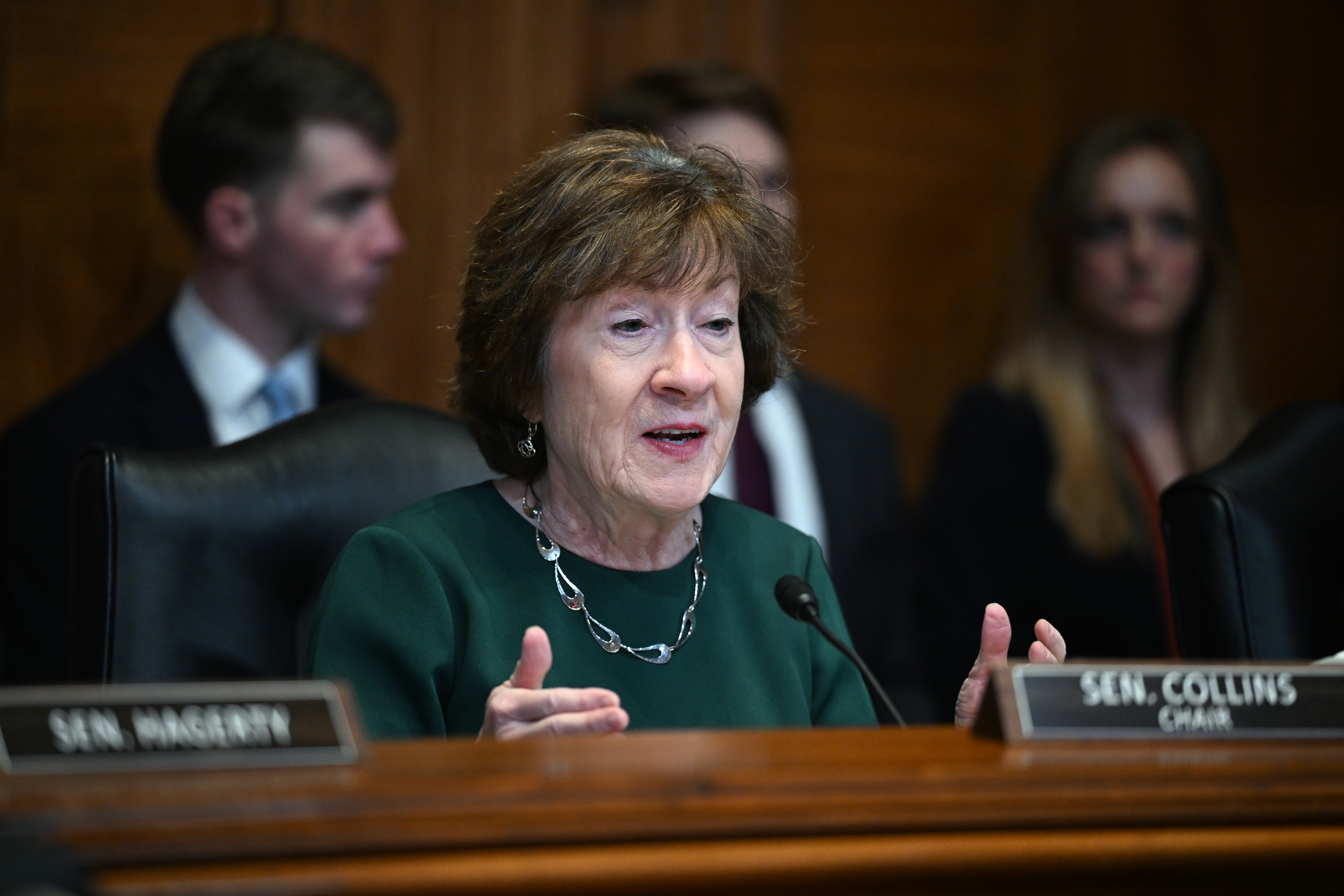
He is facing Sen. Susan Collins, a powerful moderate Republican legislator with a three-decade record of winning over the female voters, who make up a majority of the Maine electorate.
He must pivot from being a left-wing insurgent — Sen. Bernie Sanders (Ind., Vt.) has been one of his fiercest champions — to winning over general-election voters in Maine.
And he must dispel the concerns of the nearly 30% of primary voters who, according to incomplete results Tuesday night, cast ballots for other Democratic candidates.
Those efforts began with his victory speech Tuesday night.
“If you believe as I do that we can change our politics and change our country, then you must also believe that people can change,” he told supporters in rural Blue Hill, where he was born. “Every day, I wake up and I try to be a little better and a little bit kinder than I was the day before.”
Collins, who is widely seen as the most vulnerable Republican incumbent, faces her own considerable challenges. She must outrun the difficult national political environment for Republicans, with Trump’s approval ratings sagging amid an unpopular war with Iran that has driven up gas prices and inflation. And she must convince voters eager for generational change and new leadership that she remains fit for a sixth term at age 73.
Platner sought to remind voters of those liabilities in his victory speech, lacing into Collins with scathing attacks intended to tie her to the Trump administration.
Sen. Susan Collins (R., Maine) has a long history of winning tough elections, but she must persuade voters eager for generational change that she remains fit for a sixth term at age 73.Kenny Holston
“The truth is, Susan Collins doesn’t serve us,” he said. “She serves Donald Trump.”
For their part, Republicans have already signaled that they plan a flood of advertising focused on Platner’s character, with the party’s main super political action committee lashing him as “untrustworthy, unhinged and unfit for Maine.”
On Tuesday evening, the Republican Senate campaign arm released a digital ad contrasting the two candidates, accompanied by a news release featuring eight bullet points highlighting Platner’s controversial past conduct and statements.
“Susan Collins doesn’t have a Nazi tattoo,” a narrator states in the ad, a reference to a tattoo Platner had that was widely recognized as an SS symbol. (He later had it covered up.)
Collins’ moderate image poses an additional obstacle for Platner, Republican strategists say, because she presents as an acceptable alternative for voters who dislike Trump but are unsure about Platner.
“If Susan Collins were Ted Cruz, this would be a different conversation, but Susan Collins is the most moderate member of the Senate,” said Brad Todd, a veteran Republican strategist. “Susan Collins is the best cross-party-appeal candidate Republicans have fielded anywhere in the last 10 years.”
But progressive leaders quickly heralded Platner’s victory as more evidence that voters across the ideological spectrum wanted the opposite of Collins: a populist fighter who will challenge the political establishment.
“This shows that the candidate’s stance on the genocide in Gaza, on opposing foreign wars, and on taking on the billionaire and donor class matters far more than imperfections in their own personal life,” said Rep. Ro Khanna (D., Calif.), who has emerged as one of Platner’s most vocal supporters. “The country and Democratic Party are looking for candidates who are willing to challenge the broken status quo.”
But while many Democrats like the idea of a combative working-class candidate, they’re worried that Platner’s baggage will be fodder for Republican ad makers for weeks and months to come.
Platner has been dogged by controversies including the tattoo, his yearslong trail of inflammatory online posts and revelations of explicit text messages he sent to women while he was married.
In recent days, some Democratic elected officials have voiced their worries about the latest allegations against Platner, which included reporting from the New York Times that several women he dated said that he had engaged in unsettling and, in at least one case, physically threatening behavior.
From the campaign trail to private meetings with senators, Platner has repeatedly promised that there is no more damaging information to come out about him.
Some moderate Democrats are voicing their skepticism.
As voters cast their ballots Tuesday, Rep. Josh Gottheimer, a moderate Democrat from New Jersey, called on Platner to exit the race so Democrats could replace him with a stronger candidate before the fall.
“Ultimately, it may be just clear that he can’t win,” Gottheimer said. “And if you believe we have to win, which most Democrats do, then I think the writing’s on the wall already.” He added, “What’s already come out, there’s plenty to disqualify him.”
In a gauzy video released by his campaign Tuesday, Platner sat with his wife in waders, shucked oysters and encouraged his supporters to cast ballots in the primary.
He added an assessment of the past few weeks that could also sum up the months to come.
“This whole thing as you can probably tell: brutal,” he said.
Philadelphia’s chief public defender warned this week that the city’s indigent defense system will begin scaling back services next month unless City Council approves additional funding for the Defender Association of Philadelphia.
In an email sent Tuesday to judges, City Council members, and Mayor Cherelle L. Parker, Chief Defender Keisha Hudson said the agency would reduce or withdraw from several programs beginning July 1 if lawmakers on Thursday adopt the mayor’s proposed budget as is.
The planned changes include ending representation at expungement hearings and reducing participation in specialty courts and programs, including Neighborhood Wellness Court and the Accelerated Misdemeanor Program, according to the email.
Hudson said the Defender Association would also stop staffing emergency bail hearings, a practice she credited with helping to significantly reduce the city’s jail population.
The warning escalates a monthslong dispute over funding for the Defender Association, which has argued that its expenses and responsibilities have expanded without a corresponding increase in city support.
Despite that growth, Hudson said in an interview, the Defender Association is the only major criminal justice stakeholder that would receive no additional money under Parker’s proposed budget. That decision “felt very much personal and political,” she said.
A spokesperson for Parker did not respond to a request for comment Wednesday.
Parker’s proposed budget allocates $69 million to the Defender Association for the coming fiscal year, unchanged from its current funding level. Hudson had sought about $5 million more, saying the bulk of the money was needed to cover rising labor costs — including contractual obligations to unionized attorneys and staff — and higher rent, insurance, and technology expenses.
The disparity had left the agency facing “difficult decisions” about what services it can continue to provide, Hudson said. “There are human and financial costs to us not being in certain spaces,” she said.
Hudson wrote in the email that additional reductions could follow in the coming months, including in Veterans Court, Treatment Court, and other tasks that are not constitutionally required — such as representing people at preliminary arraignments.
A spokesperson for the courts did not respond to a request for comment on the cutbacks’ potential impact.
A written statement by UAW Local 5502, which represents public defenders, immigration attorneys, and child advocates at the Defender Association, said this was the third year in a row that funding for the agency had remained flat — which it called “a funding decrease when accounting for record-high inflation.”
The announcement came as other criminal justice agencies also made final appeals for funding before City Council’s scheduled vote on the budget Thursday.
On Monday, District Attorney Larry Krasner publicly urged Parker to provide additional funding for his office, delivering a letter to the mayor requesting $5.6 million beyond the amount included in the proposed budget. Krasner said the money would support shooting investigations, domestic violence prosecutions, victim services, and other public safety initiatives.
Parker has allocated $62.4 million to the district attorney’s office — about $3 million more than last year.
Parker’s proposed budget would spend roughly $7 billion next fiscal year, with major investments in housing, public safety, and other priorities. City officials have cited financial constraints and uncertainty about future revenue as they weigh competing requests for additional funding.
Vincent Thompson, a spokesperson for City Council President Kenyatta Johnson, said that Council members had advocated for the Defender Association’s funding priorities during budget negotiations but that “any additional funding increases must be agreed upon through the budget negotiation process.”
Last Thursday, after City Council rejected a series of tax increases the mayor had proposed, Parker told a reporter that the association’s request was among several funding priorities her administration weighed with Council members “to do the best we could with what we had.”
MOGADISHU, Somalia — A leading soccer referee from Somalia who was denied entry to the United States for the World Cup tournament was warmly received by a crowd of supporters and officials on Wednesday as he arrived home.
Omar Artan, who was named as Africa’s best male referee in 2025, said he plans to be at the next World Cup and urged Somali youth to be proud of their country.
Artan was set to be the first referee from Somalia to officiate at a World Cup after making FIFA’s final list for the tournament.
He was denied entry to the U.S. at Miami International Airport on Saturday over unspecified “vetting concerns,” U.S. Customs and Border Protection said in a statement, without giving details of the concerns. FIFA subsequently cut him from the tournament’s referee list.
Artan was issued a visa to travel to the U.S. last week, according to the Somalia Embassy in Kenya, which processed it. The U.S. is co-hosting the tournament with Mexico and Canada, and Artan was due to meet up with other World Cup referees at their training base in Miami.
Arriving in the capital, Mogadishu, he thanked the Somali government and public as well as FIFA for their support.
“I promise you, God willing, that I will attend the next one,” he said as hundreds of supporters at the airport waved Somali flags. “I want the Somali public to take comfort in this and remain confident.”
Later on Wednesday, thousands of soccer fans packed the stadium in Mogadishu for a welcome ceremony for Artan, with patriotic songs echoing through the arena as supporters waved the nation’s flag and cheered him on.
Prime Minister Hamza Abdi Barre also hosted Artan, writing in a post on X that the referee had “already won the hearts of millions and secured his place in history.”
“He devoted himself to ensuring that football was decided by merit, yet fate denied him the stage he so richly deserved,” Barre said.
The U.S.’s highly unusual move to deny a FIFA-appointed match official permission to enter a World Cup host country drew outrage across the world and raised questions among some fans about America’s capacity to host the competition.
Somalia is one of nearly 40 countries subject to new travel restrictions under the Trump administration’s crackdown on immigration.
On Wednesday, the United Nations’ top human rights official called for a “massive rethink” of immigration policies especially in the United States around the World Cup.
Hundreds of supporters, government officials and members of Somalia’s football community gathered hours before Artan arrived at Aden Adde International Airport.
As he disembarked, supporters waving Somali flags crowded around him before draping him in the flag.
He was then escorted by police officers to the airport’s VIP terminal, where he was welcomed by Somalia’s sports minister and other dignitaries, and spoke to journalists.
“It is up to all of us to defend the Somali name,” Artan said. “Somalia belongs to us, whether it is in a bad state or a good state. That flag belongs to us, and that passport belongs to us.”
In a country where decades of war and the rise of the al-Qaeda-linked al-Shabab extremist group have limited the potential of many in Somalia, Artan’s denial brought disappointment but reminded people what is possible if they chase their dreams.
Artan’s expected milestone at this year’s World Cup “stands no matter what,” the World Health Organization Director-General Tedros Adhanom Ghebreyesus — from neighboring Ethiopia — wrote Tuesday on X. “You reached the summit of your profession and inspired a generation back home just by getting there, and being kept off the pitch you earned doesn’t change that.”
The Wallingford-Swarthmore School District is planning to reevaluate class sizes next school year, and layoffs are a possibility if the district cannot trim its budget in other ways, its superintendent said at a meeting Tuesday.
The district will also look at which classes have the smallest enrollments, Johnston said, and might “scale back” on certain offerings.
Johnston said cuts would be necessary. Otherwise, Wallingford-Swarthmore would be on pace to use more than 30% of its reserves to balance the budget, he said.
Here is what the superintendent said about possible cuts coming to the affluent district:
Of the projected $6 million growth in the district’s $106 million budget next year, nearly $4 million is coming from salaries and benefits for the district’s 541 employees, officials said.
Laying out options for cutting those costs, Johnston — who became superintendent last year — said the district could offer staff an incentive to retire early, though he was not sure whether that would generate enough savings.
The district will also evaluate whether it needs to fill positions that become vacant as someone retires or resigns, Johnston said.
“If we do have to invoke layoffs,” Johnston said, the savings likely will not be as great as by reducing staff through attrition, because more junior and less costly employees will be laid off due to union seniority protections.
Board members voiced concern about rising benefits costs in particular: Prescription costs for district employees are projected to grow by 50% next year, a $1.8 million increase.
Johnston, who noted that benefits are part of a collective bargaining agreement that does not expire until 2028, said the district was in “ongoing dialogue” with its teachers union.
Bigger class sizes, fewer offerings
Johnston said the district would be looking “hard at class size and enrollment” as it tries to find areas to cut.
While the district has an “amazing array” of offerings for students, it could ”perhaps scale back where we don’t have enrollment to justify that,” Johnston said.
He did not offer specifics but said the district would perform a class size analysis at the start of the coming school year.
Reduced capital projects
District officials indicated Tuesday they intend to move forward with a reduced scope for the planned Strath Haven High School renovation — down from $99 million to less than $70 million — with a focus on fixes to keep the building “safe, warm, and dry,” and fewer interior renovations.
The district will also look to cut back other aspects of its capital plan, which board members said would reduce a $1.5 million increase in debt service projected for next year.
Parental concerns
Some parents have started to raise concerns about the budget cuts.
Lindsay Doyle, whose children attend Nether Providence Elementary, said she was dismayed to learn that class sizes at her children’s school would be increasing in fourth and fifth grades due to the district not filling two teaching positions.
Doyle, who said class sizes would grow from about 20 students to 26 or 27, is worried that core instruction will suffer.
“It’s no longer about administrative inefficiencies and discretionary spending,” Doyle said. “When I see we’re now cutting back on teachers, that’s when I’m like, red flag.”
TOLEDO, Ohio — Police in Ohio were searching for a 20-year-old man in connection with a shooting between two rival groups that wounded 12 people at a crowded neighborhood festival, while authorities asked for help identifying a person they called a “second shooter.”
Ka Nye Taylor is wanted on 11 counts of felonious assault, the Toledo Police Department said Wednesday, four days after the shooting in a park filled with event tents, a music stage, and food trucks.
Police on Wednesday released a photo of a second male suspect dressed in all black at the festival. Phone numbers for Taylor or his family members were not immediately available or found in online directories.
The shooting erupted after someone was tackled and assaulted at the festival, leading one person to open fire and a second to respond with more gunshots, Toledo Police Chief Michael Troendle said at a news conference Tuesday.
Three of the 12 people shot were involved in the altercation, authorities said, while the rest were bystanders. The wounded ranged in age from teenagers to one person in their 60s. All but three had been released from the hospital by Tuesday.
The police chief and other city officials praised officers and good Samaritans who quickly helped the victims.
“We saw strangers who were shocked and frightened by the violence they just saw, they jumped into action,” said Chief of Fire and Rescue Allison Armstrong. “They helped others by placing tourniquets, dressing wounds, applying pressure and comforting those victims until additional help could arrive.”
Half the victims arrived at hospitals with tourniquets applied by either police or bystanders, Armstrong said.
Hundreds of people were at the Old West End Festival, an annual two-day celebration in Toledo’s historic district that covers several city blocks and features live music, vendors, and home tours.
The remainder of the festival was canceled Sunday. Organizers said it would not have been “compassionate, responsible or possible” to continue through he weekend.
A 45-year-old mother of four was beaten to death with a brick in North Philadelphia on Sunday, according to police.
Keisha Furlow was found in a rear alley on North Opal Street around 6:15 a.m. that morning by first responders, who pronounced her dead at the scene.
Furlow had suffered severe lacerations to her face, police said. Officers found two bloodied bricks on the ground near the woman’s body and believe they were used in the attack,which occurred around 2 a.m.
Investigators are searching for two people they believe are responsible for the attack, according to a law enforcement source who was not authorized to speak publicly given the ongoing nature of the investigation.
One of the attackers, captured on surveillance footage, appears to kick Furlow and beat her repeatedly with a brick, according to the source.
Investigators believe both assailants fled with Furlow’s purse after the attack. The department released an image of one of the suspects, a man, on Wednesday afternoon.
Furlow is a resident of the 2700 block of North Opal Street, according to police.
No arrests have been made, and homicide detectives continue to investigate.