As it approaches its third anniversary, the City of Chester’s historic and contentious bankruptcy also may be approaching a watershed.
In a filing Tuesday afternoon, the state-appointed bankruptcy receiver asked Commonwealth Court to rule on an issue pivotal to the city’s ability to sell water assets that are keys to Chester’s emergence from bankruptcy.
Receiver Vijay Kapoor argued that a narrowly tailored state law passed in 2012 that wrested control of the Chester Water Authority from city government was unconstitutional.
If the judge finds in the receiver’s favor, “It would likely resolve a lot of the legal questions,” Kapoor said.
The water authority, which serves 46 towns in Chester and Delaware Counties and reported $51.7 million in revenues last year, is the centerpiece of the receiver’s plans of creating a regional water authority. Aqua Pennsylvania offered over $400 million for the authority four years ago. The city’s annual budget is around $65 million.
The receiver’s office has insisted that an owner operate the water assets as a “public entity,” not beholden to stockholders.
Kapoor said that the state law transferring control of the authority was amended at the last minute and passed without debate.
Frank Catania, the water authority’s attorney, countered that the receiver’s office is attempting a hijacking and that the receiver and city officials are asking customers, 80% of whom are outside Chester, for a bailout.
“It’s not like they’re losing something they had,” he said. “They never had it “
Kapoor also asked the judge to force the authority to turn over financial documents to explain its 14% rate increase earlier this month, adding about $70 to the average annual residential bill.
He said the authority had undertaken a costly ad campaign, presumably at ratepayers’ expense, that he said appeared to include racial overtones.
The authority blamed the rate hikes on bankruptcy-related legal fees and lowered credit ratings.
“We’re a water utility,” Catania said, “and we’re also fighting a war.”
The law the receiver is challenging
In his filing, technically a bankruptcy “plan modification,” Kapoor said the 2012 legislation was crafted specifically to refer to the Chester Water Authority and was afoul of state law.
Rather than the five-member board appointed by the city council, it resulted in the creation of a nine-member board with only two representatives from the city and others appointed by Chester and Delaware County commissioners.
The law applied only to an authority that serves “parts of at least two counties” and services an area ”five times larger than the incorporating municipality.”
The authority also had to have “projects in more than two counties.” Part of the Octoraro Reservoir, from which the authority draws water, is in Lancaster County.
When will the bankruptcy end?
It was uncertain when the judge might rule, or when the bankruptcy — which as of the end of 2024 had cost the state $11.5 million in legal fees — might end.
The city, which is 80% Black, has been in the state’s “distressed” status since 1995 and entered receivership in 2020.
Kapoor’s predecessor, Michael Doweary, took it into bankruptcy in November 2022. Chester had accumulated a $48 million pension deficit and missed several years of payments.
Kapoor has said that sale of the water assets would be critical to avoiding dramatic cuts in retirement benefits.
Chester’s tax base has declined precipitously in the decades since the city’s wartime industrial heydays, and a casino and an incinerator are key contributors to its annual budget.
Other cities have suffered similar economic trauma, but Chester is a rarity. Of the more than 35,000 towns in the country, only about 30 have filed for bankruptcy.
For five glorious Sundays this summer, there was peace in Chester.
In places like the William Penn Homes and Chester Apartments, where children are often encouraged to stay indoors, shut away from the threat of gang violence, it was finally safe to play outside during the height of what is normally the most dangerous time of the year.
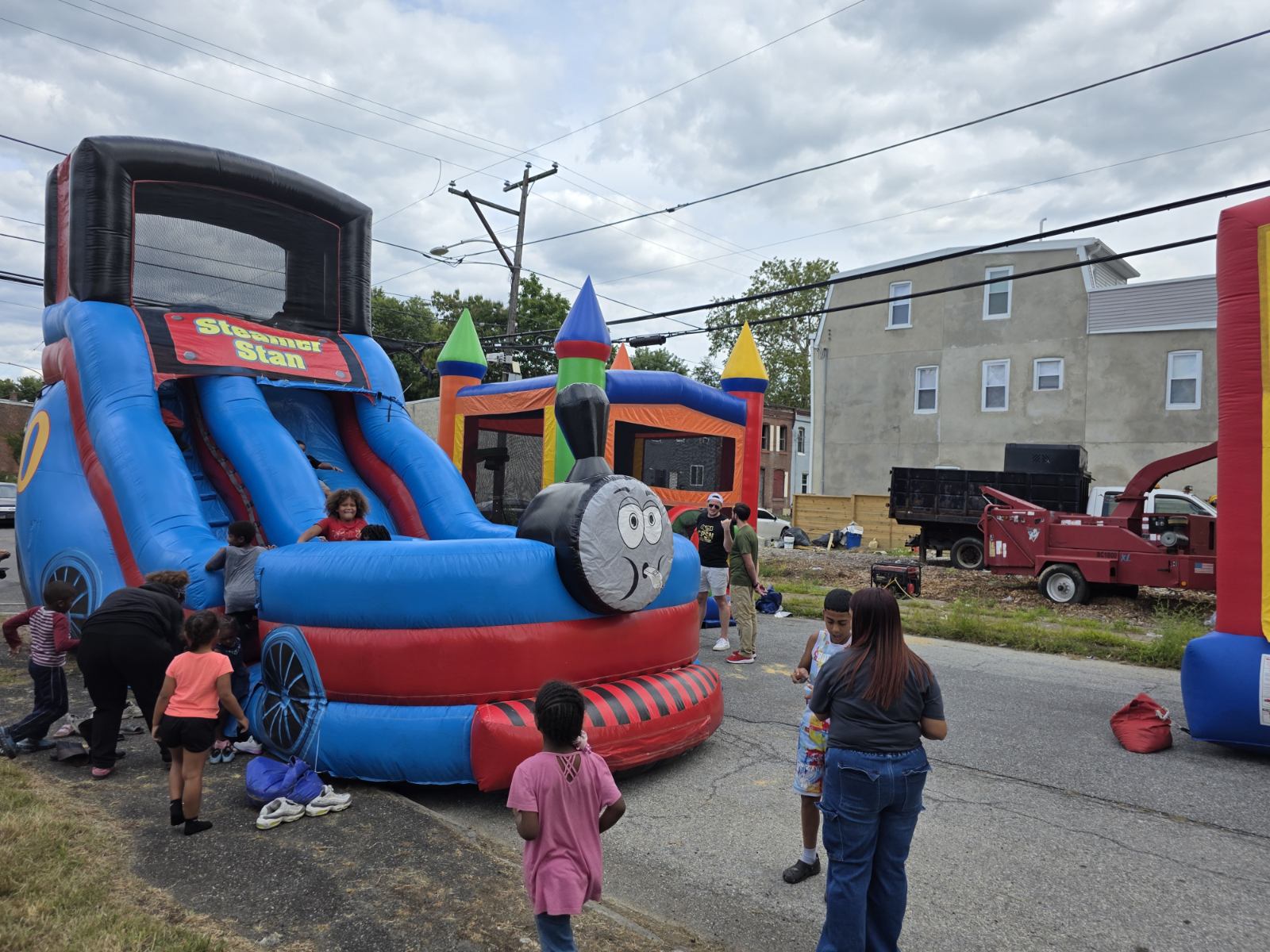
Roving carnivals nicknamed “Sunday Fun Days” were organized and held in Delaware County’s lone city, in areas that had weathered a surge in violence in recent years. A few bounce houses, some water ice, and communities breathing sighs of relief were rewards for keeping the peace, and motivation to continue that trend.
The parties, according to Geo Stockman, the lead gun violence interventionist with Making a Change Group, came during one of the safest summers on record in the city: Not a single fatal gunshot was fired in Chester during that time.
It was a result that local police and county prosecutors say they have been working toward these last few years, through a combination of advocacy work and interventions by groups like Stockman’s.
“This opened up the neighborhoods. It gave them a reason to say, ‘Let’s try something else, people are really looking out for us now, maybe we should put this down,’” Stockman said. “People are always telling people to stop doing something without offering them something in this place. So that’s what we did this summer. We offered them something in its place.”
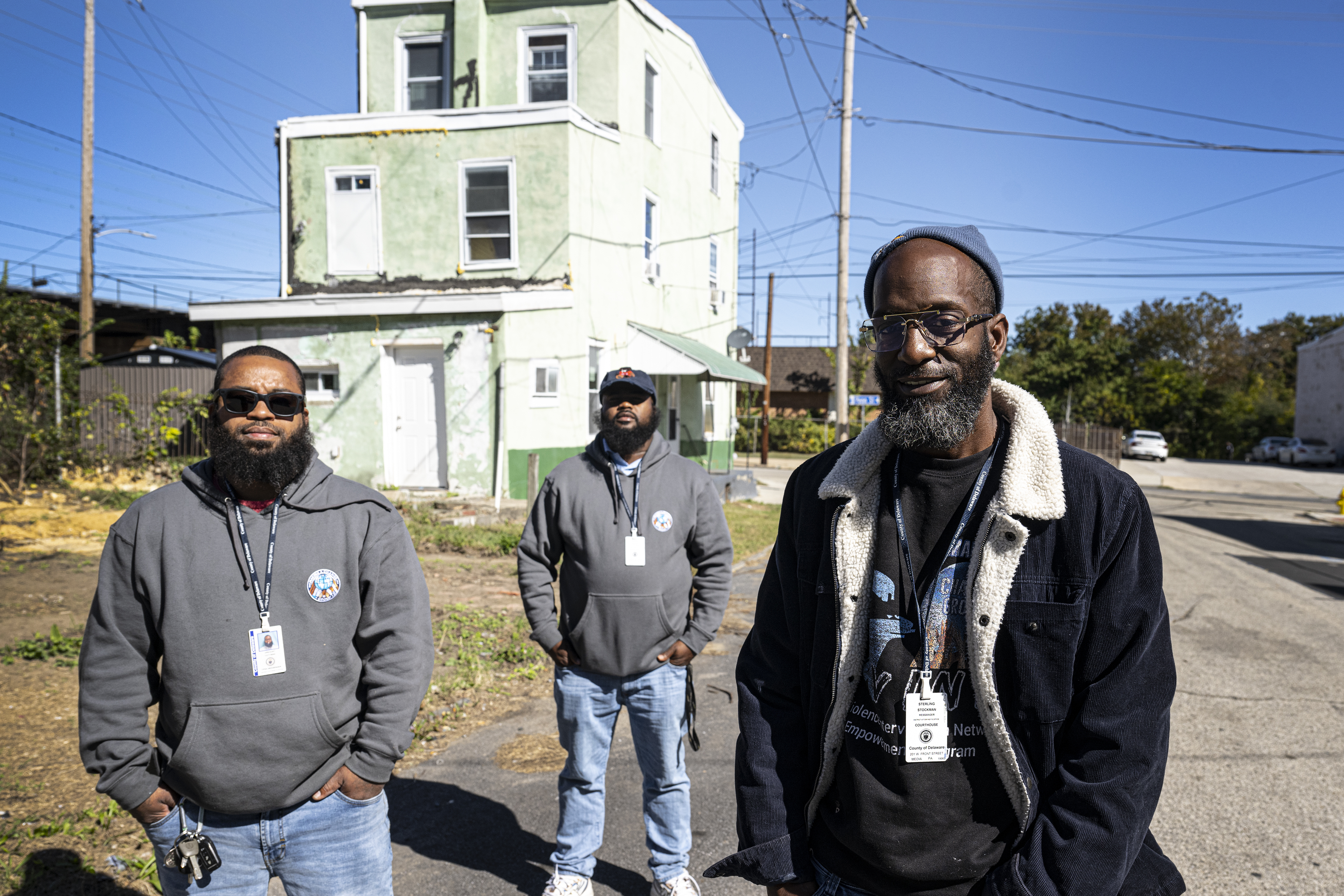
Gregory Cottman left, Gregory Graves, center, and Geo Stockman say the Sunday Fun Day block parties sponsored by the Delaware County District Attorney’s Office served as both a reward for neighborhoods that have curbed gun violence, and an incentive to continue that trend in the years to come.Jose F. Moreno / Staff Photographer
In its five years of operation, CPSN has seen a 65% reduction in shootings overall and a 74% reduction in fatal shootings. And since the summer, only two fatal shootings have been recorded in Chester, which prosecutors say still puts the city on pace for one of its most peaceful years on record.
“Violence comes from a place of, of hopelessness, of despair. Just anger, resentment, and feeling like you’ve been left behind, like nobody cares,” Stockman said.
window.addEventListener(“message”,function(a){if(void 0!==a.data[“datawrapper-height”]){var e=document.querySelectorAll(“iframe”);for(var t in a.data[“datawrapper-height”])for(var r,i=0;r=e[i];i++)if(r.contentWindow===a.source){var d=a.data[“datawrapper-height”][t]+”px”;r.style.height=d}}});
He spoke from experience, as a lifelong Chester resident who spent time in prison for mistakes made on the streets of his hometown.
“That’s what makes what we do so effective. Most of us want to be stopped, but nobody stops us,” he said. “Nobody takes the time to say, ‘I’m gonna be the one to calm you down.’ It really only takes somebody with a clear mind that they understand to say, ‘Nah, that ain’t it.’”
Stockman said he and his team have successfully mediated 130 disputes between rival neighborhoods in the last two years. They settled petty arguments, usually started on social media, that were clearly heading toward a violent conclusion.
“This is a small community, so your reputation goes further than just the neighborhood you’re from,” said Gregory “G-Code” Graves, who works with Stockman.
Graves said the anti-violence messaging works because it’s coming from people the intended audience can identify with.
“We’ve been through the vetting process in all these neighborhoods, so even if it’s a little hesitation at first, it doesn’t take a great deal of persuasion to get them to come to us,” Graves said. “And we come in with meaningful things that’s going to help the situation.”
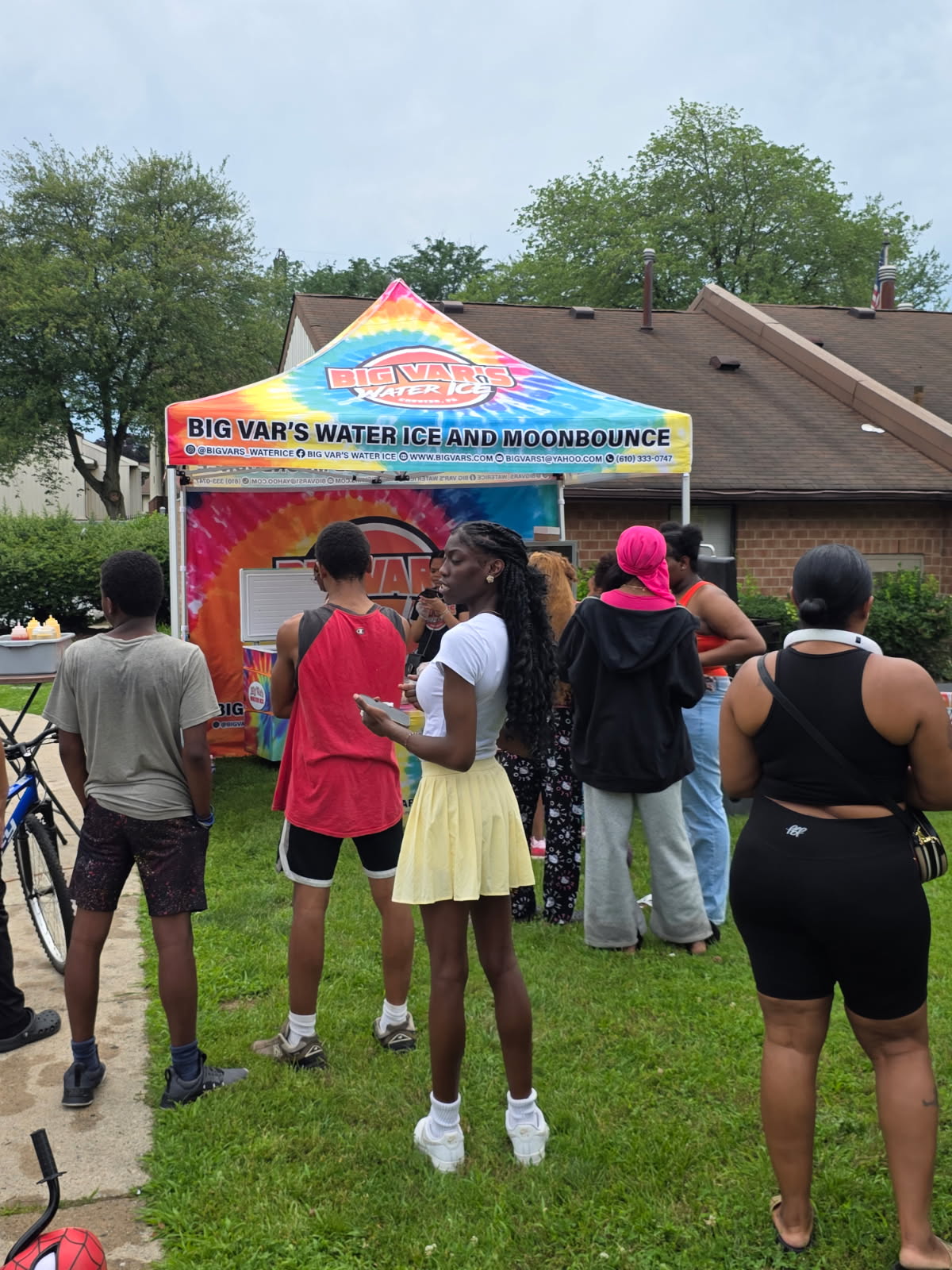
Residents of the Chester Apartments line up for water ice at a “Sunday Fun Day” block party held this summer in Chester.Courtesy Delaware County District Attorney's Office
For District Attorney Jack Stollsteimer, those results are exactly what he envisioned when he brought CPSN to the county five years ago, building it on models used successfully in other cities, including Boston.
And he is confident that the program will continue to thrive without him, as he runs for a county judgeship in the Nov. 4 election.
“People have bought into the strategy. They’ve seen it work now, and they just wanna keep it going,” he said.
Stollsteimer said making Chester safe was one of his priorities when running for district attorney in 2019. Similar programs, he said, had failed before because of a lack of buy-in from officials.
This time was different — Mayor Stefan Roots became a fixture at the Sunday Fun Day parties.
Roots said the weekly parties presented a rare opportunity for residents to meet the people making decisions that affect their everyday lives. And, in turn, allowed him and other officials to have open, honest dialogue with people living in communities most affected by gun violence.
The conversation flowed naturally, he said. No pressure. No pretense.
“This is something that’s never, never happened before,” he said. “The relationship between the city and the county is really welcome. And the results are showing themselves.”
Roots said he lost count of how many residents came up to him at the parties to talk about their own efforts to curb violence in their neighborhoods. People, he said, who told him that the block parties, and the gun violence interventions that preceded them, were a welcome sigh of relief.
“They told me that, sometimes, they don’t want to be ‘the man with the cape.’ They want to go on and have a life, too,” Roots said.
For more than quarter century, Greta Greenberger ended her tours of Philadelphia City Hall at the tower, just below the bronze buckled shoes of William Penn (1892), the shady colossus that Alexander Milne Calder sculpted.
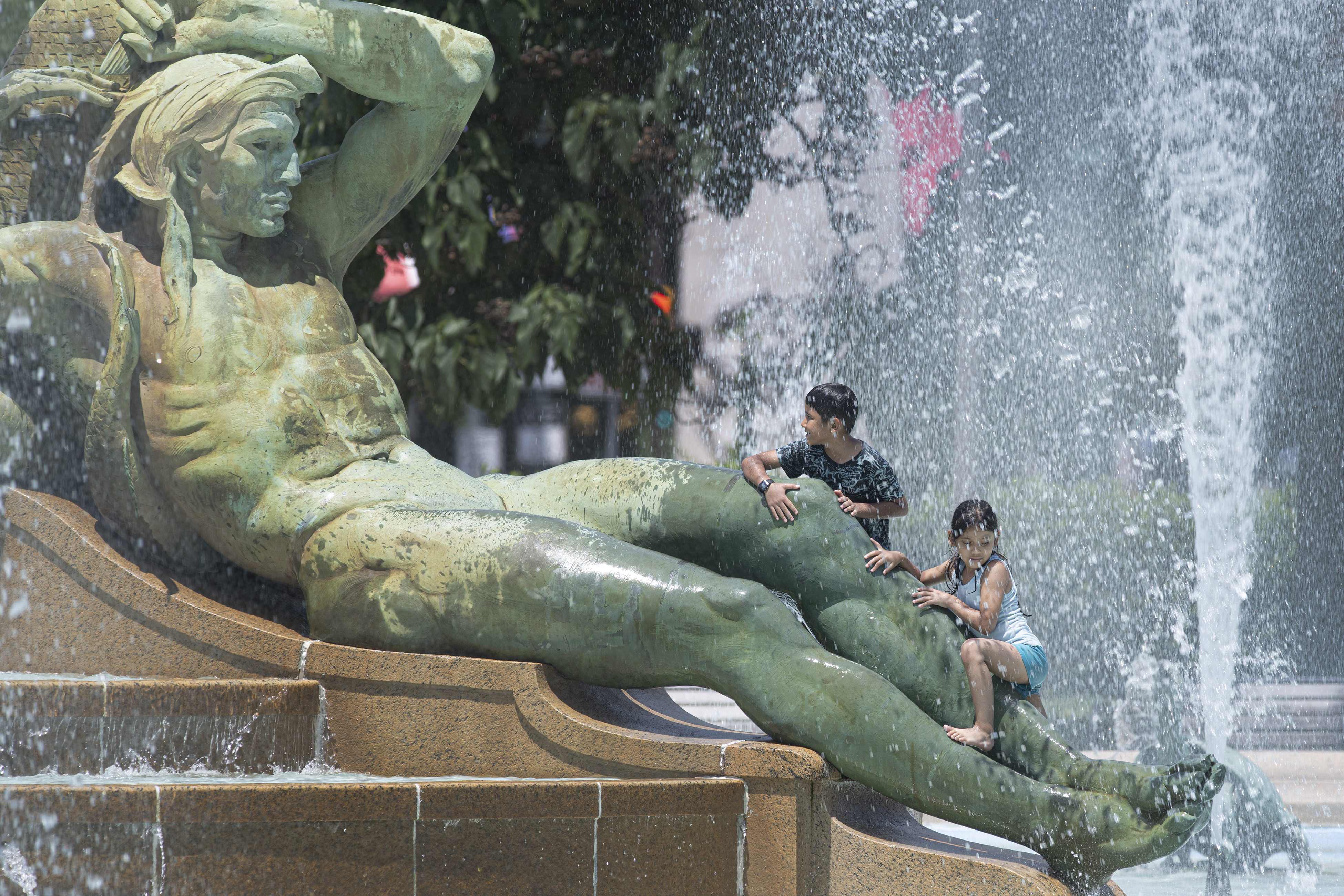
From there, she’d point up the Parkway to Logan Square, where on hot days children sneak into The Fountain of Three Rivers (1924), created by Calder’s son, Alexander Stirling Calder, to honor the Schuylkill, the Delaware, and the Wissahickon.
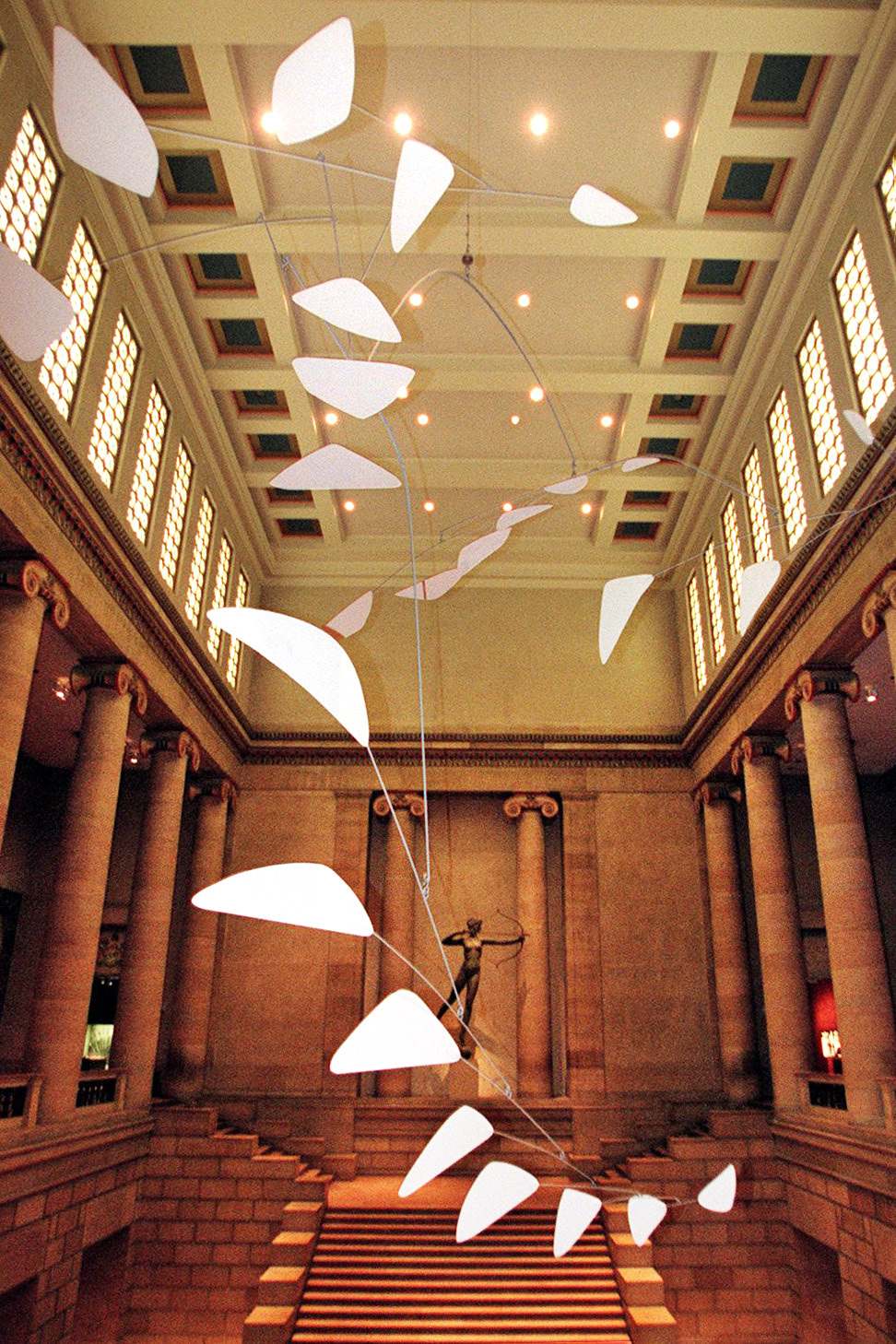
She’d finish her lesson at the Philadelphia Art Museum, where an unearthly, white mobile, Ghost (1964), designed by the third generation of Alexander Calders, Sandy, sways ever so slightly in the Great Stair Hall.
“Sometimes, I’d refer to this as ‘The Father, the Son and the Holy Ghost,’” she says. “It tells such a wonderful story.”
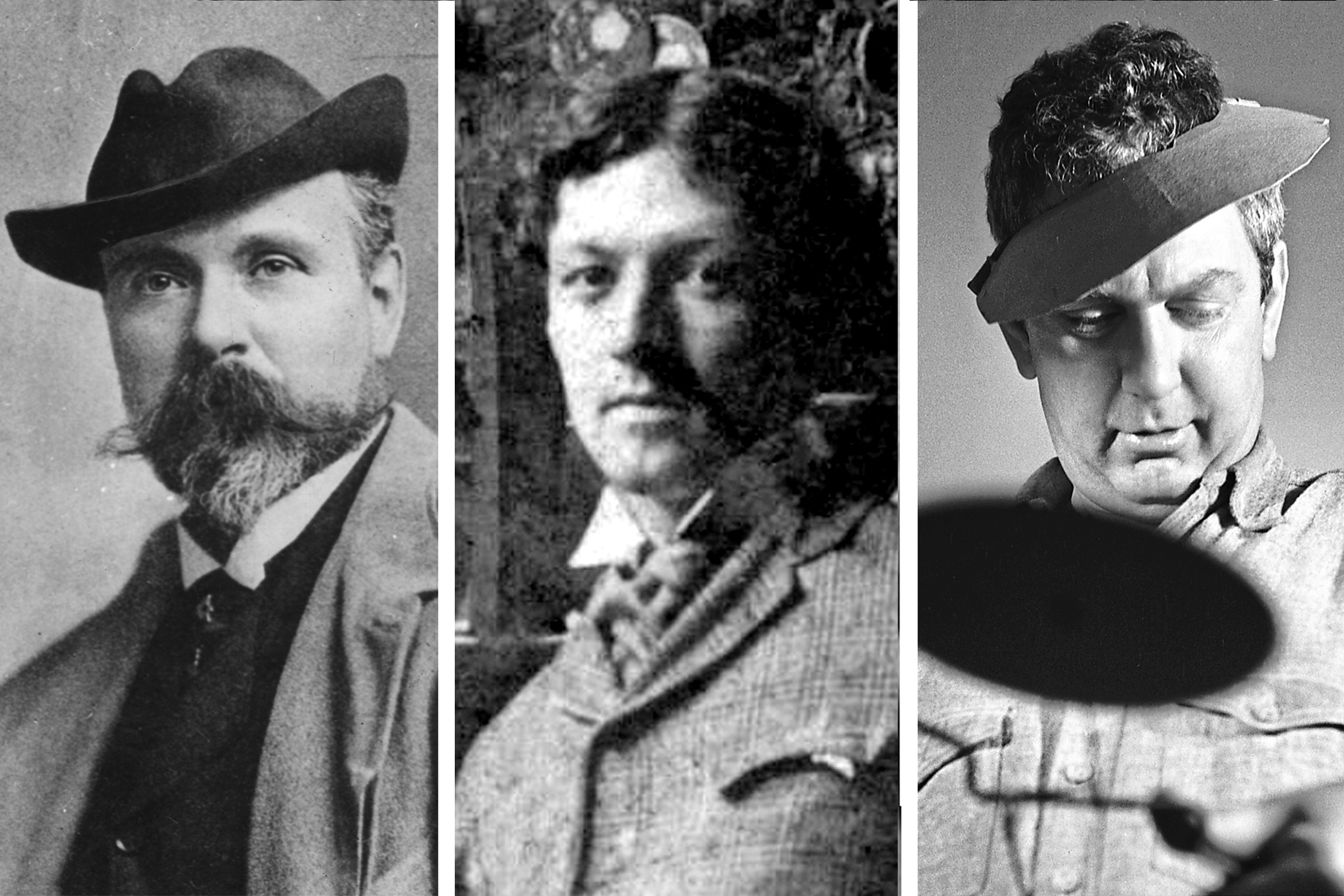
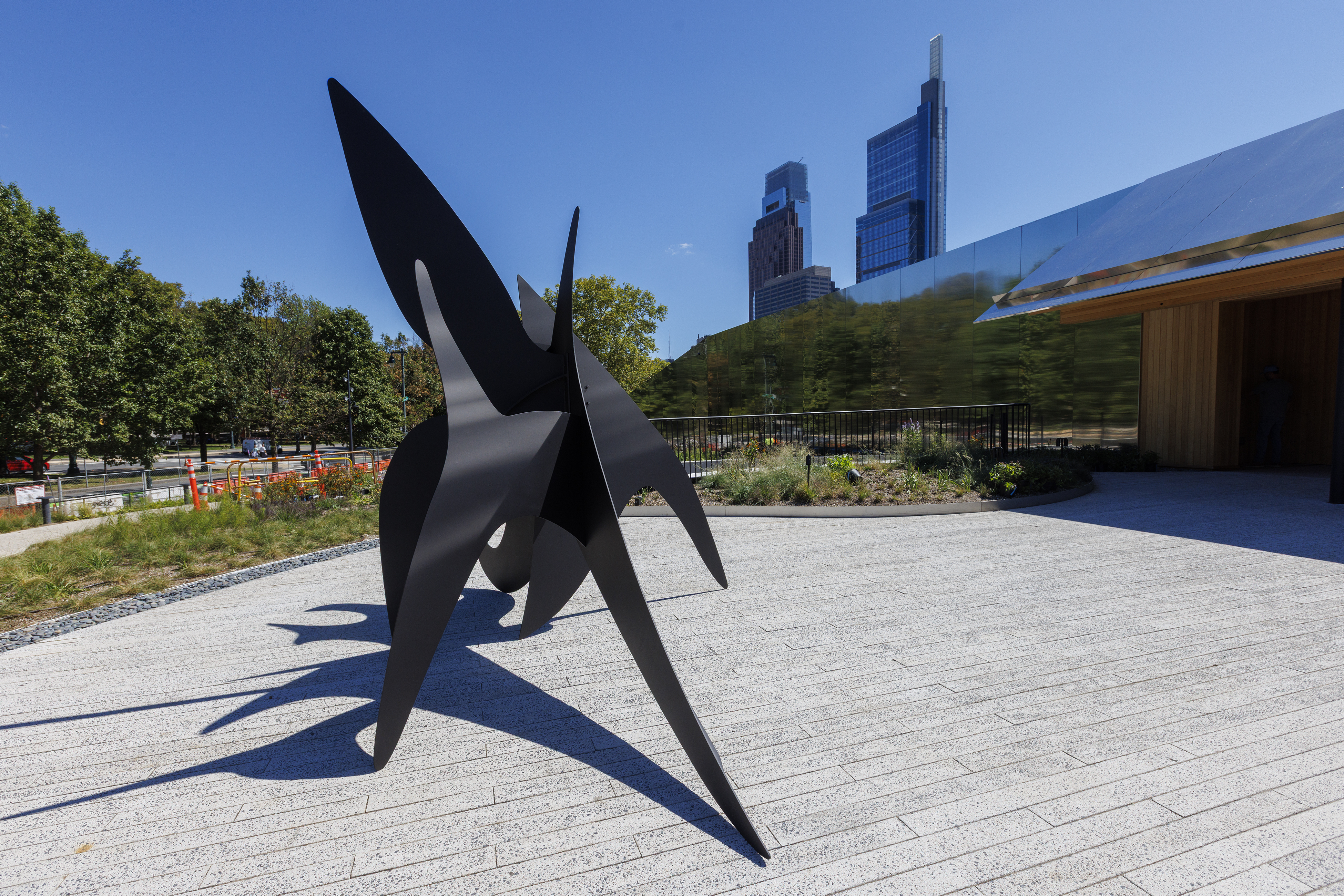
That story will be easier to tell now, with the opening of Calder Gardens at 21st Street and the Ben Franklin Parkway. The Gardens, focused on the work of the youngest Calder, known asSandy, brings another opportunity to celebrate the family dynasty’s in Philadelphia: three sculptors named Alexander Calder who have shaped the look of the city and beyond.
Exterior of the new Calder Gardens on the Ben Franklin Parkway.Alejandro A. Alvarez / Staff Photographer
“The Calder family is incredibly important to Philadelphia,” said Anna O. Marley, the former chief curator at the Pennsylvania Academy of Fine Arts (PAFA), where so many Calders studied. “They tell us so much about what it means to be an artist in the United States and how an American artistic identity was created in Philadelphia.”
And their work here offers “a pocket history of art,” in the view of Kathleen A. Foster, the Art Museum’s senior curator of American art.
“Between the three of them, you really go from the academic realism of the grandfather through kind of shift into Art Deco and modernism in the `20s with Stirling Calder, and then all the way into modern forms, completely abstract shapes and bright colors.”
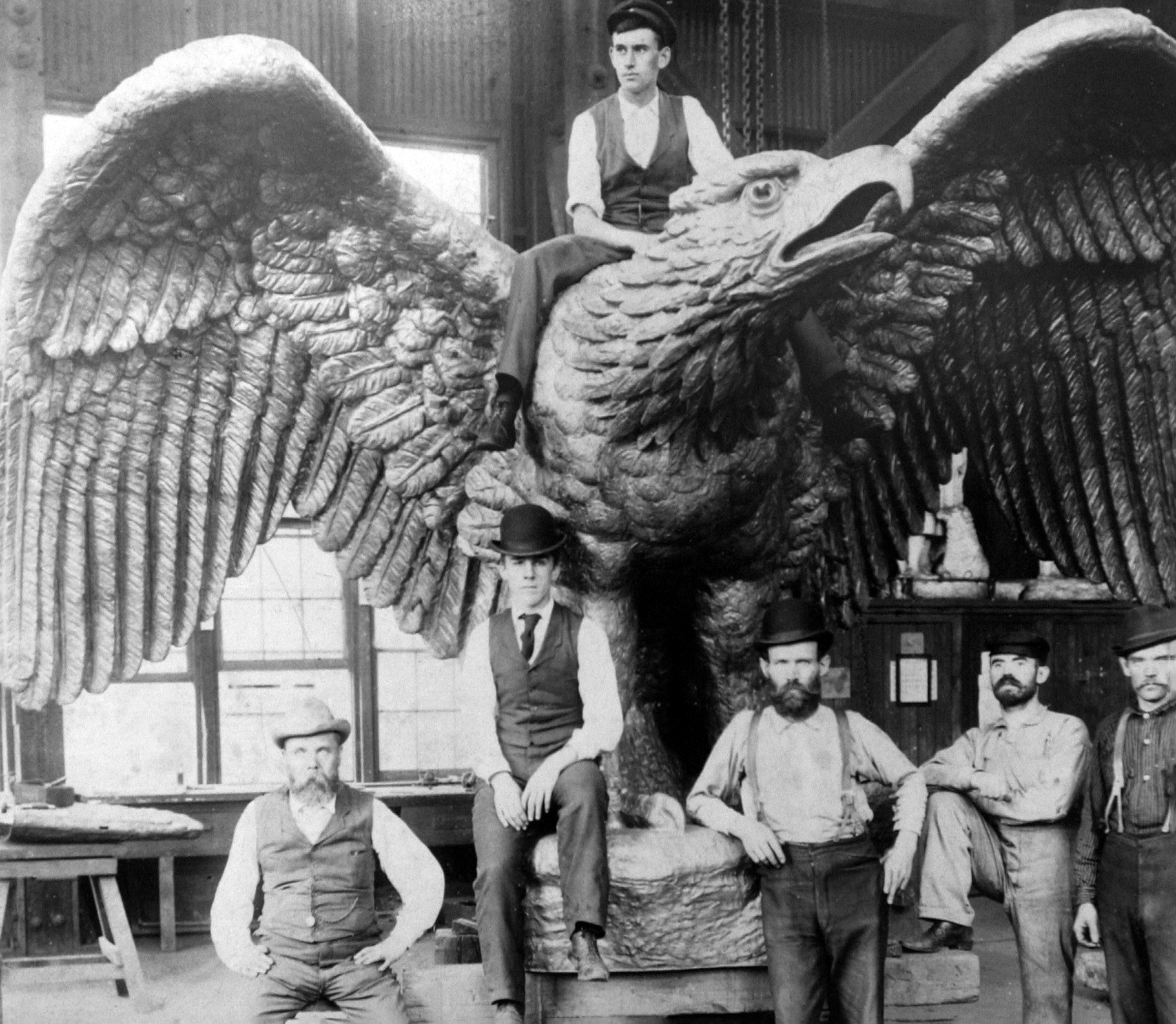
A photograph of workers and an Alexander Milne Calder eagle sculpture before installation around 1894, on display in the tower at City Hall. Calder created the statue of William Penn atop Philadelphia City Hall — and over 250 other works of sculpture on the exterior and interior of the building — from 1871-1901.Inquirer archives
‘One of the greatest’
The Philadelphia that Alexander Milne Calder, a Scottish stonecutter’s son from Aberdeen, first saw in 1868 was sorely in need of a makeover. The sprawling metropolis was known for building big things like ships and rail engines and a wealth of small manufacturers that earned it the nickname “Workshop of the World.”
It was also filthy.
“It’s clear that there is no future for a city that is just increasingly based on its industrial might, on the dirt-producing, noise-producing, the squalor,“ says David Brownlee, emeritus professor of the history of art at the University of Pennsylvania.
The boundaries of Fairmount Park had just been established the year before and plans would soon begin for a giant celebration of the country’s 100th birthday, the 1876 Centennial, which would show the world the city’s cultural achievements. The Benjamin Franklin Parkway was unfolding, a broad boulevard lined by art and leading to what Brownlee calls “one of the greatest monumental ensembles of sculpture ever created.”
That would be City Hall, the émigré Calder’s workplace for 22 years as he presided over the creation of more than 250 sculptures from his first floor office in the building’s southwest corner — and the towering figure of the colony’s founder.
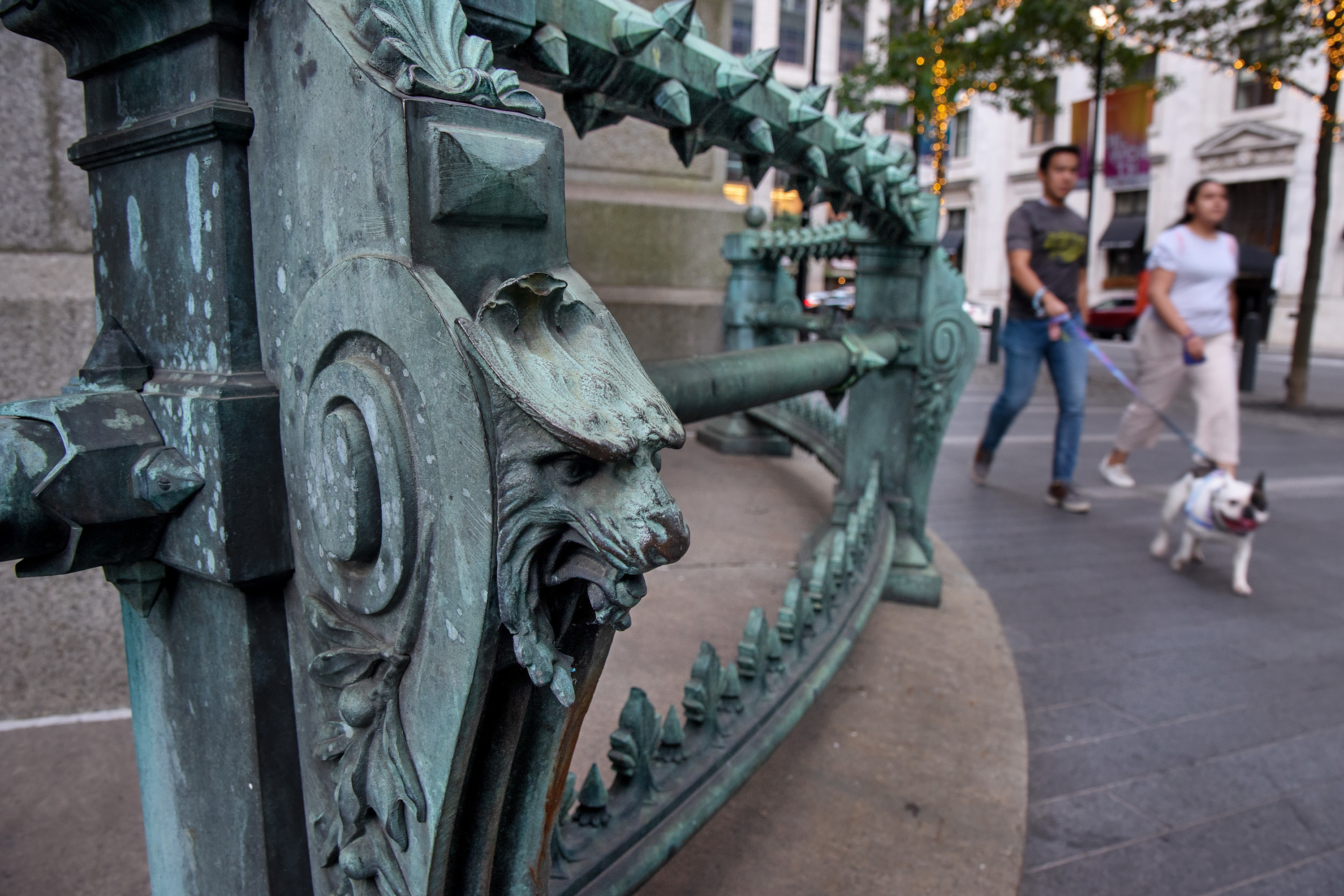
There were once almost 150 small lion heads on the ornate bronze spiked railing that surrounds City Hall. They, like most of the statuary on the building — including the big one of William Penn — were designed by Alexander Milne Calder. Less than two dozen of the lions remain after 100 years. TOM GRALISH / Staff Photographer
Calder had worked at the Royal Academy in Edinburgh and on the Albert Memorial in London before sailing to America. He stopped in New York, but chose Philadelphia, armed with a letter of introduction to the city’s most eminent sculptor, Joseph A. Bailly, and to the scion of a monument business, William Struthers. Calder was 22.
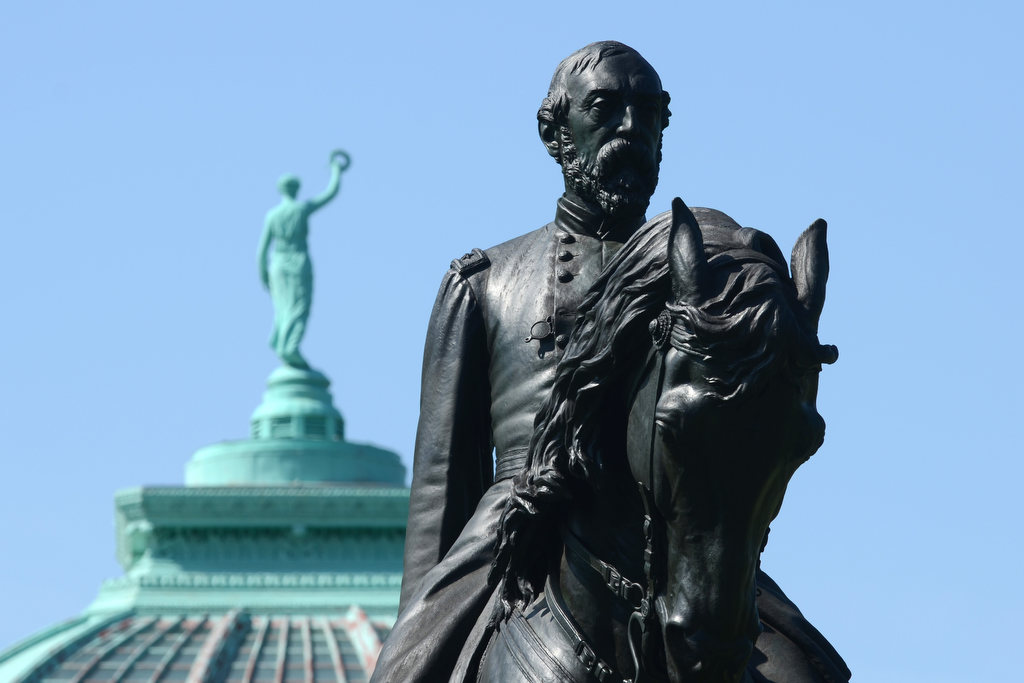
He registered that year at Pennsylvania Academy of the Fine Arts, the nation’s first art school and museum, and studied “antiques,” drawing from plaster casts of classic sculptures. It was not long before Calder won a prized commission over one of his instructors, to sculpt the likeness of Major Gen. George G. Meade atop his horse, Baldy. Meade, who’d defeated Robert E. Lee at Gettysburg, later designed many of the paths and drives of Fairmount Park. His statue stands now behind the Please Touch Museum on Lansdowne Drive.
Alexander Milne Calder’s Meade Equestrian Monument in the rear of Memorial Hall. It was cast using captured Confederate cannon for the bronze. Calder rendered Gen. Meade reining in his horse at a moment of crisis during battle.
When Greenberger gives tours of City Hall — though retired, she still volunteers one day a week — she likes to start in the north portico, where one can sample his expansive vision. Look up to the south, and there are Africans, surrounded by tobacco leaves, a lion. To the east, people from China, Japan, India, and an Asian elephant. West are the Native Americans and pioneers, and a bear. And north is Europe, people from Germany, England, France, maple leaves, and cattle. (She isn’t sure why cattle.)
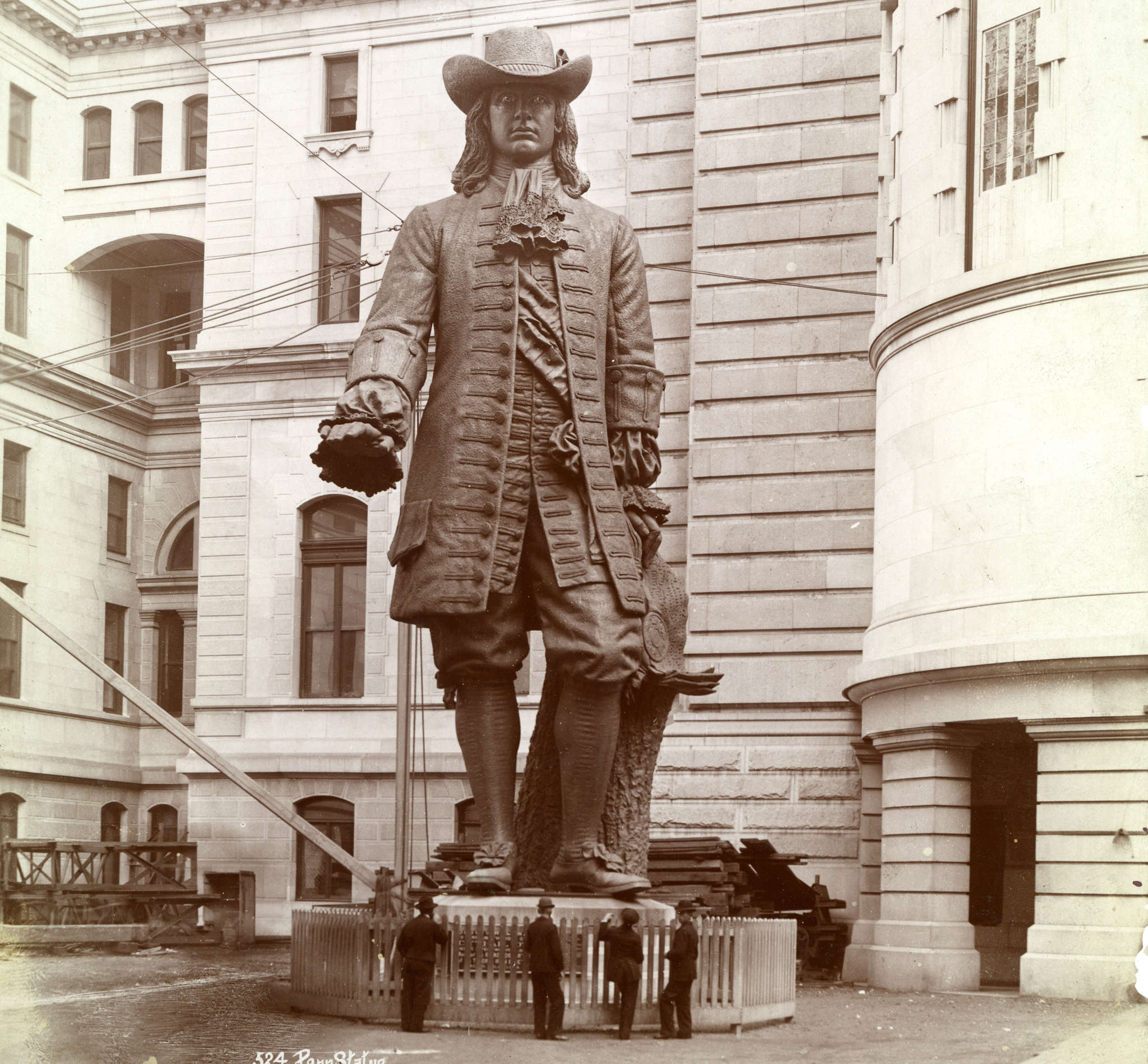
Calder started on the Penn sculpture in 1886. The iconic figure, now visible from miles away, was the fourth version of the colony’s founder that the sculptor created. Calder’s models were one-tenth the size of the 37-foot high statue. His goal, according to an article at the time in The Inquirer, was to create “William Penn as he is known to Philadelphians; not a theoretical one or a fine English gentleman.”
The William Penn statue on display in the City Hall courtyard in 1893, the year before it was hoisted, bit by bit, to the top.Historical Society of Pennsylvania
Four teams of horses drew massive plaster sections of the statue up Broad Street to the Tacony Iron & Metal Works. It wasn’t until Thanksgiving 1894 that the head was lifted onto the statue atop the tower, completing Calder’s colossus.
He was not happy with the result.
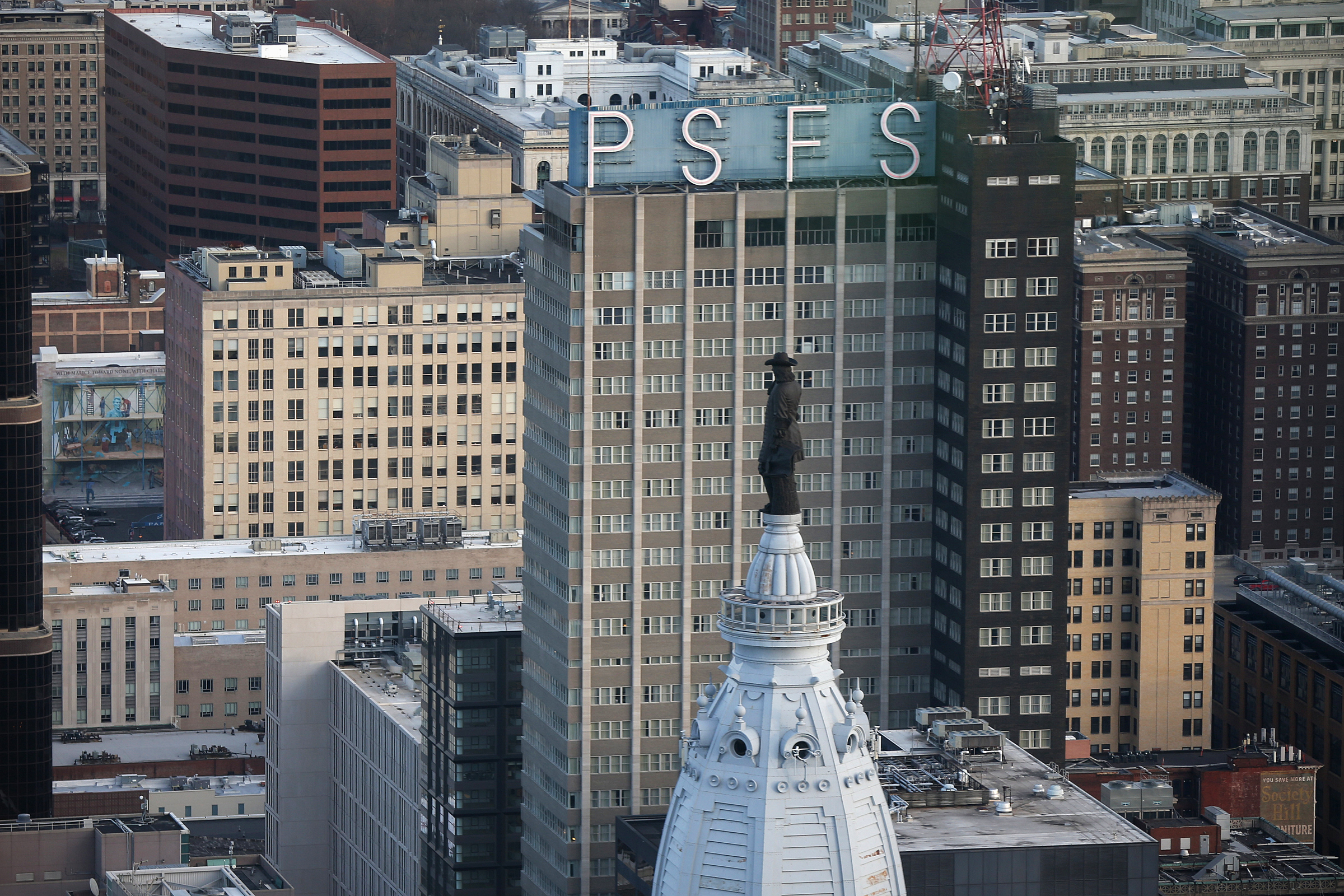
For most of the day, William Penn’s face is shadowed. That was not the artist’s intent. Calder had wanted Penn facing south, where the sun would light his youthful face and the intricate detail of his garb would be visible for all to admire.
But members of the Public Buildings Commission wanted Penn facing northeast, toward Penn Treaty Park, the site of the 1683 peace agreement with the Lenni-Lenape.
In a letter quoted in the Dec. 14, 1894 Inquirer, Calder wrote “I think that you will agree that is very disappointing from every point of view.”
Calder’s William Penn statue atop City Hall as seen from the Comcast Technology Center in Center City.TIM TAI / Staff Photographer
While Calder lived in a number of homes around the city — a home at 2020 Bainbridge St. and a studio at 337 Broad — when he registered at PAFA, the address listed was 1903 N. Park Ave., now on Temple’s campus. Decades later, his granddaughter, Margaret Calder Hayes, would remember the North Philadelphia house as “gloomy” — four floors with Empire furniture, a long dark hallway leading to a parlor where children were not welcome unaccompanied.
Calder had met his wife, Margaret Stirling, soon after his arrival in Philadelphia and married her after a brief courtship.
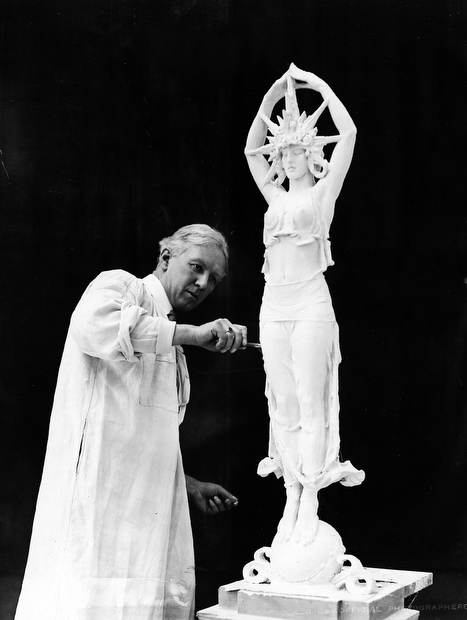
Three of their sons would study at PAFA and become artists — Ralph Milne Calder, and Norman Day Calder, and Alexander Stirling Calder. But it was “Stirling,” the eldest who left the biggest mark on Philadelphia.
A portrait of A. Stirling Calder.
‘An idealist, somewhat withdrawn’
In a remembrance kept in the PAFA archives, Alexander Stirling Calder describes art as a fallback. Ever since he was 6 and saw the great Edwin Booth play Hamlet, Stirling Calder wanted to be an actor. But he was too shy. In 1885, he enrolled in art classes at the academy’s new building at Broad and Cherry, and years later recalled the first criticism of his teacher, the artist Thomas Eakins: “Attack all of your difficulties at once.” Eakins urged sculptors to paint, painters to sculpt, and to dissect cadavers to learn anatomy.
After studying at the École des Beaux-Arts in Paris, he returned home and won a commission to immortalize Samuel Gross with a statue that first stood on the National Mall in Washington, D.C. (It’s since been moved to the Center City campus of Thomas Jefferson University). At 25, he married a fellow PAFA student, Nanette Lederer, a painter.
To the critic Malcolm Cowley, Stirling Calder was “an idealist, somewhat withdrawn, wholly impractical, creating symbolic figures while brooding on the cruelty of nature.”
Foster says that looking at the allegorical figures in Logan Square’s Swann Fountain, you can see how Stirling inherited his father’s traditions.
Children cool off at the Swann Memorial Fountain in 2023.Jose F. Moreno/ Staff Photographer
“But the figures have a kind of sleek, modern simplicity to them,” she said. “They’re more stylized. So by the 1920s the Swann Fountain represents a kind of moving from the academic past into a more expressive and abstract style.”
The fence came off the Swann Fountain on a hot July day in 1924. The next evening, 10,000 revelers danced to tangos from a police band. Not everyone was pleased — some wondering if the average Philadelphian would grasp the significance of all that Calder had created.
He was unbothered.
“The meaning of works of art is just as mysterious as life itself. It can be explained in many ways by people of different philosophies. …,” he was quoted in the Evening Bulletin as saying. “There are lots of things in life we do not understand; art is no exception.”
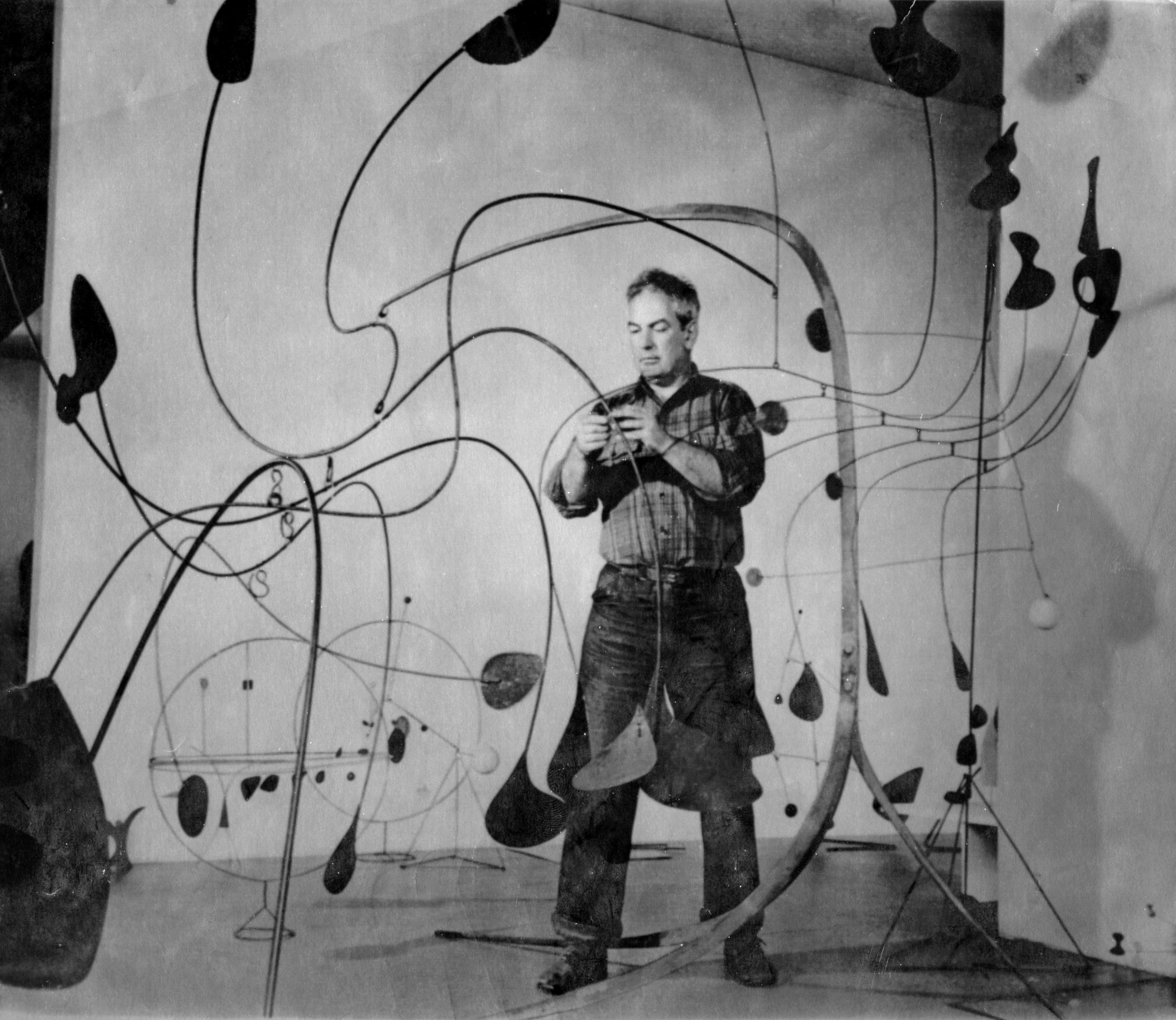
Alexander “Sandy” Calder installs his “Big Spider” mobile at New York’s Museum of Modern Art in 1943.The Evening Bulletin / Temple Urban Archives
‘A big child’
In his autobiography, Sandy Calder included a photograph of the sprawling mansion in Philadelphia where he says he was born. He called the place Lawnton. In 1898 when Calder was born, Lawnton was a neighborhood in East Oak Lane, served by the Reading Line and lined with grand homes where the wealthy went to escape the summer heat.
It’s unlikely Calder was born there. David Brownlee has dug into the mystery of the third and most famous Calder’s birthplace. While his family doctor lived in Lawnton, and it is possible that his mother delivered her son nearby, more likely, he was born near the edge of the growing city, at 1203 East Washington Lane in Germantown. City records showed that Stirling Calder rented that country place, while the family still owned a home on North Park Avenue.
In Margaret Calder Hayes’ memoir, she described how Sandy, two years younger, went to school in Buster Brown suits his mother had sewn and by 8 had built a Noah’s Ark of animals. He enrolled in Germantown Academy, when it was still in the city, but left at age 9 before moving to Croton-on-Hudson, N.Y.
“We love to claim him, but he only went to school here as a child,” Foster said of the youngest Calder’s time in Philadelphia.
Yet in some ways, he’s the essence of the city he was born in: practical, playful, unpretentious, no pushover.
He worked as a fireman on a steamer bound for San Francisco, spent a year keeping time in a Washington state logging camp. Trained as an mechanical engineer, he moved to New York City at age 25 to paint.
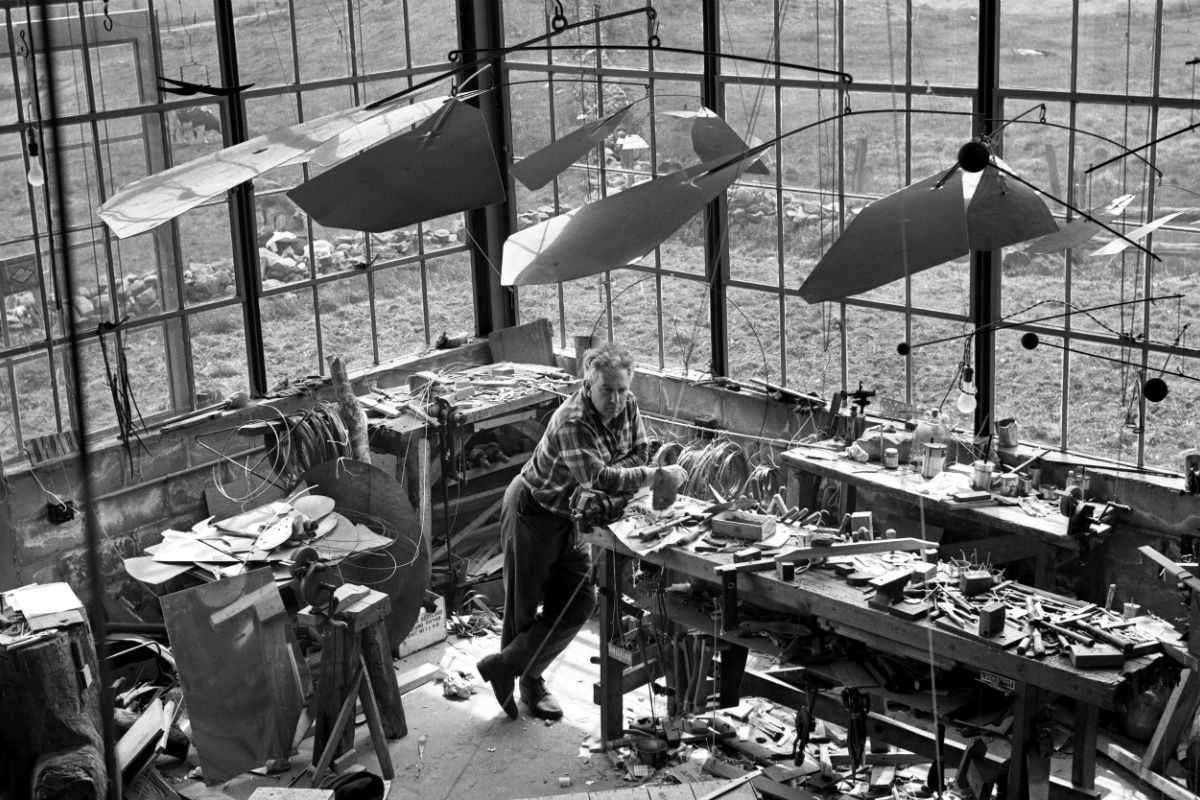
Calder with Mobile in his Roxbury, Ct., studio in 1941.Herbert Matter
He is known as a 20th century modernist, the artist who put sculpture in motion.
After visiting Calder’s Paris studio in 1931 and marveling at his sculptures that relied on little motors, Marcel Duchamp coined the word “mobiles” for these kinetic marvels.
Parisians took to him, while they scoffed at other American artists. Cowley, in an introduction to Hayes’ Three Alexander Calders had a theory:
”Of course his work in itself, continually inventive, playful, and enchanting, was his ticket of admission.” But Sandy and his wife Louisa, “a beauty,” Cowley wrote, entertained generously and simply. Calder was in the tradition of the Noble Savage, “who disregards social conventions and judges everything by his instinctive standards.”
“A big child,” as his friend the playwright Arthur Miller once put it.
Sandy Calder created Ghost in 1964 for a retrospective at the Guggenheim in New York City, that included 400 examples of his mobiles, stabiles, toys, jewelry, carvings, tapestries, etc. The Art Museum bought the 34-foot-long showpiece a year later and brought it to the city of his birth.
Ghost, in the Great Stair Hall at the Philadelphia Museum of Art (now, Philadelphia Art Museum). It was created to hang in the center of the Guggenheim Museum in New York for Calder’s exhibition there in 1964.Steven M. Falk / Staff Photographer
“It’s a colossal example of the mobile and it’s majestic,” Foster said. “When it moves, it’s just breathtaking, because it, it almost moves like a giant dinosaur or something. In other words, it’s got long spines and fins, and it moves very slowly and grandly in the air currents in the Great Stair Hall. … It’s delightful.”
“When every baby has a mobile hanging over their crib, you don’t think about Calder as being the genesis of this. I think he would be delighted to know that … because he was such a child at heart. He managed to keep that imagination.”
Now, Philadelphia will be home to an institution that celebrates that imagination. It’s a fitting homecoming for an artist whose life and legacy was so shaped by his family, who in turn both shaped and were shaped by Philadelphia.
The weight of a name
Tú Huynh was working at the National Gallery of Art in Washington, D.C., when he told a job applicant to look for him under the giant Calder mobile that hangs in the East Building.
That was in 1997. The applicant,Kaleo Bird, landed the job — and later, his heart. Three years later they moved as a couple to Philadelphia, where she started grad school. Soon they married.
In 2008, when their son was born, they didn’t take long to decide on a first name:
Calder.
He’s now 17, a senior at Penn Charter School.
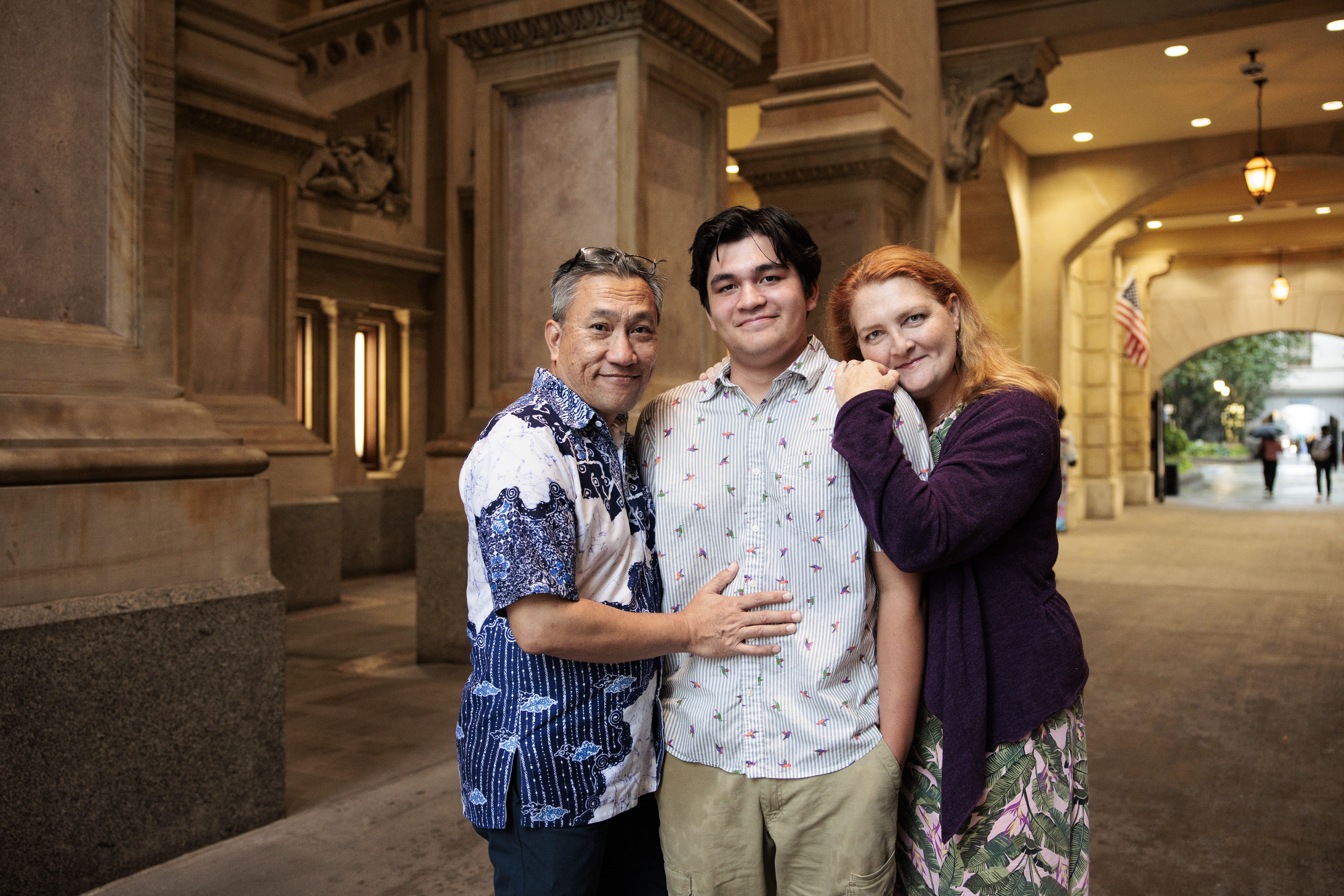
Tú Huynh, Calder Huynh, 17, and Kaleo Bird at Philadelphia City Hall where more than 250 of Alexander Milne Calder’s sculptures adorn the building, topped by his statue of William Penn. Monica Herndon / Staff Photographer
“I have yet to meet anyone my age who knows who the whole Calder family was, which is a shame because I feel they’ve had such an impact here, particularly with City Hall,” said the teen. “So many people think Ben Franklin is atop City Hall and don’t know anything about these beautiful sculptures.”
His father now runs the Art in City Hall program.
“I tell people that the true art of City Hall belongs to Alexander Milne Calder,” says Tú Huynh. “This was his Sistine Chapel. There are over 250 sculptures, leafs, busts all over this building. And that’s an homage to his ideal of what this city, state and country is supposed to be about. And he doesn’t sugarcoat anything. There are enslaved Africans, Indigenous populations, Europeans. It tells you the folks who’ve contributed to this extraordinary country.”
Calder Huynh says he feels the weight of his name — in a way that the two generations named after Alexander Milne Calder must have felt.
He paints, draws in charcoal, creates his own comic books — exploring themes with super heroes and Westerns, always with an eye on his father’s works that line the walls of their home.
“Naming me after them is such a big thing to put on someone. For me, it is a weight that Alexander Sandy Calder must have felt. A weight to achieve and create something that differs from what his family members had created, which is kind of cool. … Put something in this world that hasn’t been done yet.”
“The Magic of Calder Gardens” is produced with support from Lisa D. Kabnick and John H. McFadden. Editorial content is created independently of the project’s donors.
To support The Inquirer’s High-Impact Journalism Fund, visit Inquirer.com/giving
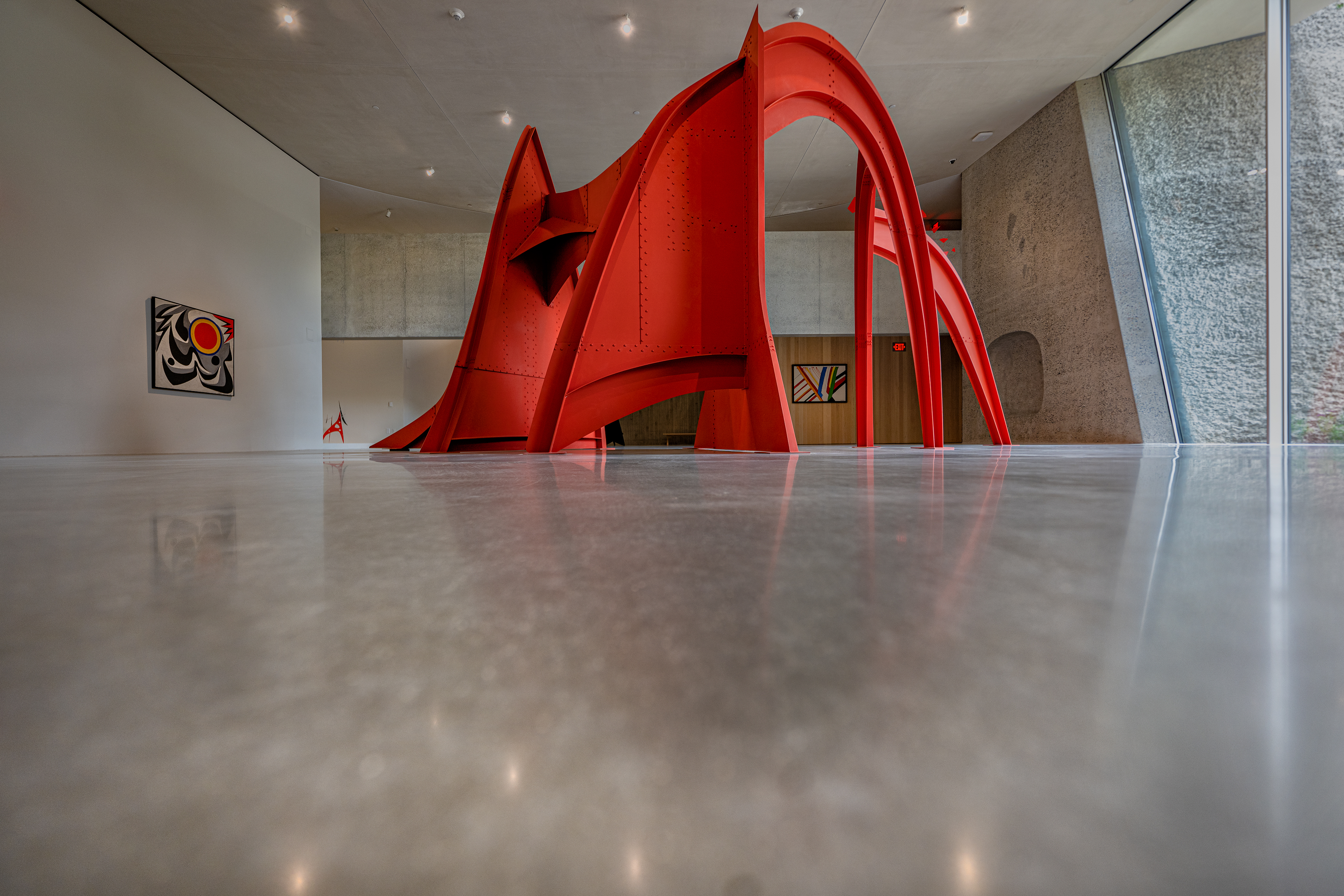
Jerusalem Stabile II, 1976 by Alexander Calder is shown on display at the Calder Museum in Philadelphia.Jose F. Moreno / Staff Photographer
By the afternoon of Sept. 11, 1968, the hostility had faded.
Neither the Rev. Dr. Martin Luther King Jr. nor Cecil B. Moore was making rousing speechesoutside Girard College’s wrought-iron front gates.
No human barricade of police officers blocked the entrance, and no civil rights groups marched through North Philadelphia.
After a brutal fight to desegregate the private boarding school, which started with an intense seven-month demonstration and then spent years tied up in the court system, the color barrier was pierced without protest.
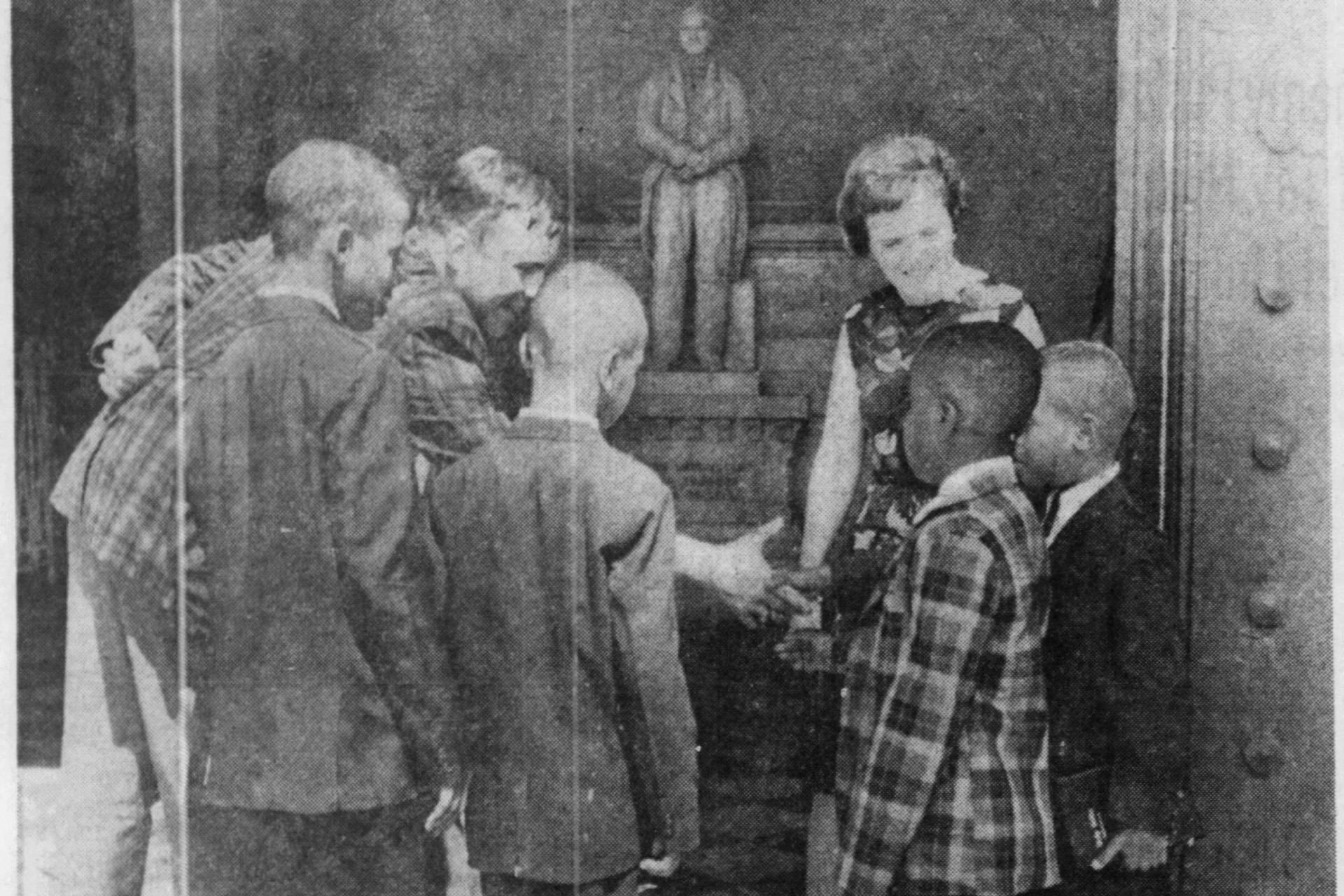
Four little boys, dressed in suits and ties and carrying their favorite board games, walked to the front door of marble-faced Founder’s Hall at 21st Street and College Avenue, and reported for their first day of second grade.
Mothers and grandmothers and siblings accompanied each child, and a gaggle of photographers and reporters attempting to capture the otherwise-calm moment circled each family.
“Nice place,” 11-year-old William Lenzy Dade told The Inquirer, “I didn’t expect it.”
The school was the brainchild of French merchant Stephen Girard, a childless entrepreneur who amassed an immense wealth in Philadelphia in the aftermath of the American Revolution. Upon his death in 1831, he set aside a then-fortune of $2 million to start a boarding school for “poor, white, male orphans.” The school opened in 1848, and offered a premium education at no cost to select students whose families had a single guardian.
By the 1960s, the campus’ imposing stone walls became a metaphorical obstacle to the enclosed white-columned buildings. Moore, then the Philadelphia NAACP president, led the charge and a lawsuit to force Girard to desegregate. In 1965, the animosity escalated into sometimes-violent confrontations with police. But demonstrators continued undaunted, singing and chanting and marching so those four boys could be the first Black students admitted to the private school.
Owen Gowans III was 7 when he walked through those gates in his bright, green-and-brown plaid jacket, the last of the four to arrive.
“Are you nervous?” a reporter asked.
He just shook his head.
In 2015, as part of an anniversary celebration of the school’s integration, Gowans found the words.
“I’m just humbled by what transpired,” he told The Inquirer. “I’m appreciative to the people who put up with beatings and bad words so people like me could go to school here.”