Category: News

  • Ms. Rachel goes to Washington, carrying letters from children in ICE custody

    Ms. Rachel goes to Washington, carrying letters from children in ICE custody

    WASHINGTON — Rachel Griffin Accurso — Ms. Rachel, to her millions of followers — made her first visit to Capitol Hill on Tuesday afternoon, wearing a bubblegum-pink linen suit and wheeling a black suitcase filled with stapled packets of handwritten letters and drawings. They were the words and artwork of children, all of whom have been — or remain — in the custody of U.S. Immigration and Customs Enforcement at the nation’s only family immigration detention center.

    “I cry a lot,” read one letter from a 7-year-old boy held at the Dilley Immigration Processing Center in South Texas. “I want to get out of here.” Among the illustrations were portraits of crying faces, families standing together behind bars and a red house that a 9-year-old child longed to return to. Accurso clutched one packet in her hand, ready to offer it to the first lawmaker she encountered.

    She had come with a plan: Over a brief two-day visit to Washington, she wanted to deliver the letters and drawings to members of Congress and tell them about the children she’d met. Her goal was to urge every official she spoke with — Democrats and Republicans alike — to end family detention and reunite the children and parents who had been separated by ICE enforcement.

    Sen. Andy Kim (D., N.J.) holds the letter of a child detained at the Dilley Immigration Processing Center in southern Texas. Maxine Wallace

    It was a new foray into the political realm for the early-childhood educator, who became the reigning star of children’s media with her wildly popular educational videos on YouTube and Netflix. Through her adult-facing social media platforms, Accurso has also emerged as a powerful advocate for vulnerable young people around the world, making headlines — and sometimes drawing backlash — for speaking out on behalf of children in Gaza, Sudan, and other humanitarian crisis zones.

    Now her efforts include children closer to home. Over the past few months, Accurso has become an increasingly prominent voice in the debate over family immigration detention and the mounting concerns about conditions at the Dilley detention center. She has spoken directly to 10 families there via video calls, she said, and has publicly shared clips from several of those conversations with her 5 million Instagram followers. Accurso helped launch a petition to close the Dilley facility that has more than 324,000 signatures, including dozens of celebrities (Ben Stiller, Ayo Edebiri, Cynthia Nixon, and John Legend are among the many signatories). She also shared an open letter addressed to CoreCivic, the private prison contractor that has operated Dilley since its Obama-era construction in 2014: “What we have to agree on is not harming children,” she wrote.

    When Accurso arrived on Capitol Hill along with her husband, Aron Accurso, they were welcomed by Sen. Andy Kim (D., N.J.). He offered them a brief tour through the Capitol, noting that the Senate had voted just days before to approve $70 billion in funding for President Donald Trump’s immigration enforcement agencies. “When you’re talking about this,” he said, nodding to the packet in Accurso’s hand, “what’s funding this? That’s what’s happening in this building.” As they spoke, the House was preparing to vote on the same funding package.
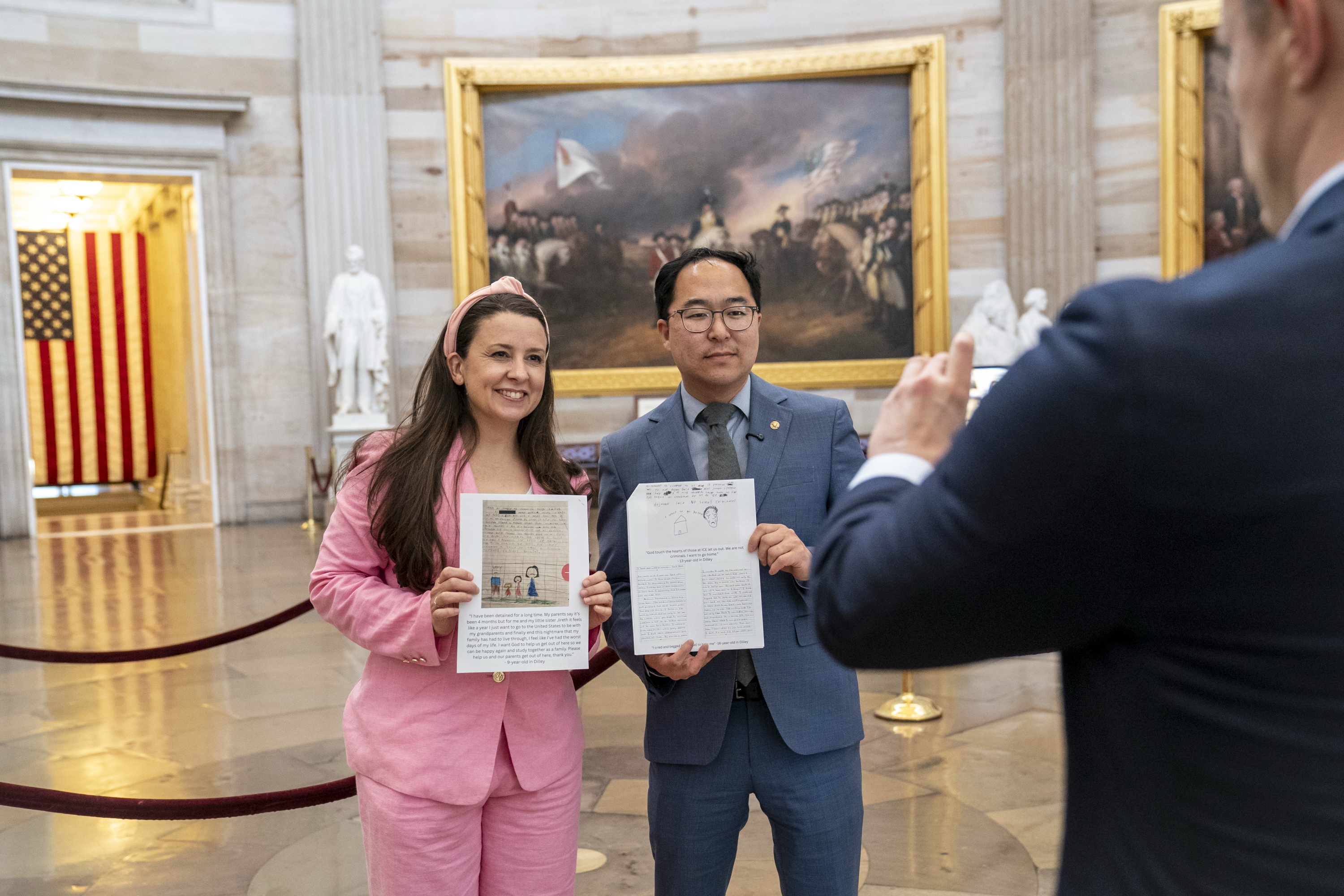
    Accurso and Kim in the Capitol Rotunda on Tuesday.Maxine Wallace

    Accurso and Kim posed for photos and filmed a brief video together in the Capitol Rotunda, then parted ways before she headed to the Hart Senate Office Building.

    She was stopped repeatedly by enthusiastic interns and staff members who asked for selfies to show their own children, or their nieces and nephews. “What’s their name?” Accurso always asked, before deftly switching the phone setting to record a personalized video for each child: Hi, Ava! Hi, Maeve! Hi, Hugh!

    Then she would steer the conversation toward the names of other children — some she had spoken with personally, and others whose circumstances were recounted to her by lawyers, advocates and journalists working with families at the Dilley facility. There was Amalia, an 18-month-old who suffered a near-fatal health crisis while in ICE custody at Dilley; Deiver, a 9-year-old who missed his friends at school and wanted to participate in the state spelling bee; Guri, a 12-year-old who has been detained with his family since February and has experienced chronic blood in his stool for months.

    Accurso poses for a group photo with some staff from the office of Sen. Jeff Merkley (D., Ore.) on Tuesday. Maxine Wallace

    Accurso was greeted with joyful shouts of recognition in the office of Sen. Jeff Merkley (D., Ore.). She left a packet with the staff of Sen. John Cornyn (R., Texas) and noted that they seemed friendly. She walked into the office of Sen. Lisa Murkowski (R., Alaska) with a cheerful, lilting “Hi, friends!” and the staff member’s subsequent gasp — “Oh my gosh!” — was audible down the hall.

    “Well, I hope this works,” Accurso said, as the clock ticked to a quarter past 6 and it became clear that most of the offices were now closed. She had visited 10.

    So she headed for the exit and learned the news as she was leaving: Minutes before, the House had narrowly passed the $70 billion funding package — including $38 billion for ICE enforcement and $26 billion for the Border Patrol. The vote paved the way for the agencies to build a detention system and pursue what Trump had pledged would be the largest mass-deportation operation in the country’s history.
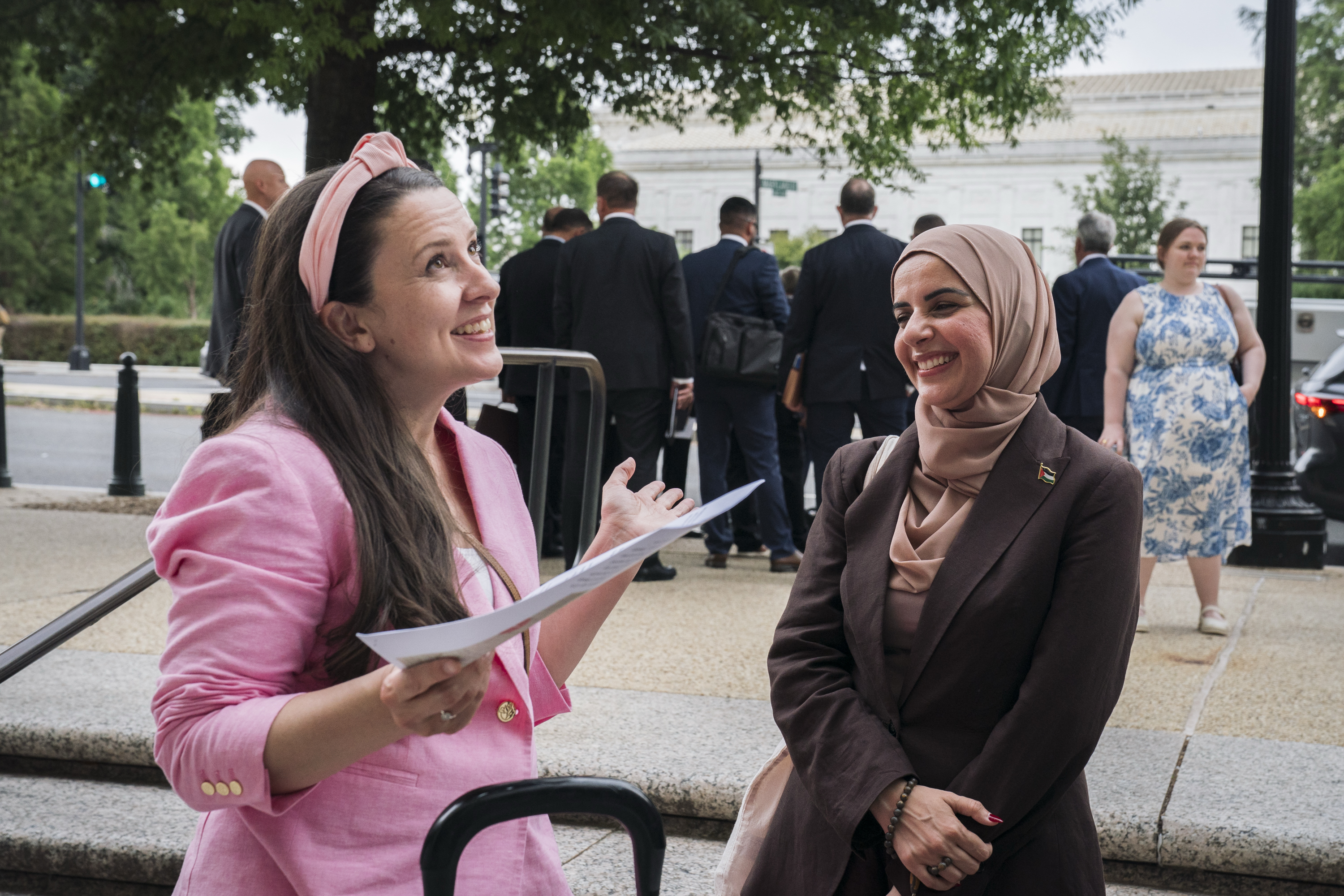
    Accurso on Tuesday outside the Hart Senate Office Building with Leqaa Kordia, a Palestinian woman detained for a year amid a Trump administration crackdown on protesters last spring.Maxine Wallace

    The day before she took the train to Washington from her home in New York, Accurso visited children and families at a hospitality tent set up by volunteers outside Delaney Hall, an immigration detention center in New Jersey where demonstrators and law enforcement have clashed in recent weeks.

    Accurso delivered toys and art supplies to the tent and, with the families there, sang a song written by the Peace Poets along with children detained at Dilley: “I’ll sing from here and you sing from there, together we’ll sing down the walls everywhere.”

    She spoke with a 13-year-old girl who described what it felt like to have only brief visits with her father, a truck driver who has lived in the United States for 20 years and supports his wife and three children, the youngest of whom has complex special needs.

    “We went to go and visit my dad, and it was really sad,” the teen told Accurso, who wiped away tears as she listened. “He looked like a prisoner. But I knew in my heart that he shouldn’t be in there.”

    Earlier this year, as she read more about the children being swept up in ICE enforcement operations, Accurso said, she began contacting legal experts, advocates, and journalists on the ground in Texas who detailed alarming conditions at the facility and helped connect her to families detained together there.

    Those parents described children who were deteriorating physically and mentally; several kids said the water in the facility made them feel ill. Autistic children were suffering in particular, Accurso said; one nonverbal 5-year-old named Gael had not had a bowel movement in nine days and had begun hitting himself in distress. Families told her that their children couldn’t sleep because the lights were on all night.

    She felt haunted by those conversations, Accurso said later, in an interview with the Washington Post: “I kept thinking, ‘How is this happening?’”

    Several children and teens who were included on Accurso’s social media platforms were subsequently released from detainment, including Gael; Deiver, the 9-year-old who begged to go to the state spelling bee; and Olivia Mabiala Andre, a 19-year-old asylum seeker and nursing student. Accurso posted about her gratitude and relief in those moments, but she said she is acutely aware of how many children remain behind, including those who don’t feel safe speaking publicly about what’s happening to their families.

    As of early June, about 320 people were at the Dilley center, including nearly 90 children, according to Faisal Al-Juburi, co-CEO of the Texas-based nonprofit Refugee and Immigrant Center for Education and Legal Services (RAICES). In the past year, he said, RAICES has documented roughly 1,500 medical concerns from families held at Dilley.

    Accurso has highlighted concerns voiced by medical experts: In April, responding to mounting reports of dangerous conditions for children at the Dilley center — including unsafe water, the spread of measles, delayed medical care and declining mental health — the American Academy of Pediatrics requested urgent access to the facility, reiterating that “no time in detention is appropriate for a child.”

    A spokesperson for CoreCivic said in an emailed statement that its facilities are safe, and noted that while some lighting is on during overnight hours, “lighting over sleeping areas is turned off during sleeping hours.”

    The spokesperson referred to a statement by Kristen Dauss, the company’s vice president and chief medical officer: “The children and their families at DIPC receive care that is clinically rigorous, federally overseen and delivered with dignity.” Dauss added that children receive clean water from the same regularly tested municipal source that supplies local drinking water, appropriate nutrition and hygiene supplies.

    Dauss echoed those points in a recent response to Accurso’s letter to CoreCivic. In a separate emailed statement, a spokesperson for the Department of Homeland Security echoed that families at Dilley are provided appropriate living conditions and medical care.

    When Accurso talks to people about the firsthand accounts she has heard, “they’re shocked,” she said. “Why don’t people know? But I also feel like I didn’t know the extent of what was happening, either. We have to get the information out.”

    This underscores the value of Accurso’s work and platform, said Elora Mukherjee, an attorney who represents numerous families detained at Dilley and serves as director of the Immigrants’ Rights Clinic at Columbia Law School. With her vast audience, Accurso represents a different way to inform people, beyond the reach of mainstream media: “Overwhelmingly, the American public still does not realize that, as a nation, we are imprisoning babies, toddlers and children who have done nothing wrong,” she said. “Sustained attention on cruelty against children is critically important.”

    Al-Juburi noted that although the country’s current immigration policy represents “generations-long, systemic issues that need to be addressed, fundamentally, by our legislative branch,” there is a meaningful impact when prominent people raise their voices.

    Culture often shifts before the law does, he said: “We will not see policy change until the public demands it. And that is what gives me hope when people like Ms. Rachel turn their spotlight onto a cause like this.”

    The sun was falling through mottled clouds as Accurso left the Hart Building and wheeled her suitcase down Constitution Avenue toward the Capitol. She wanted to record a video there for the children detained at Dilley and the ones waiting in the tent outside Delaney Hall. She would tell them that she’d brought their letters and their artwork to the place where decisions about their future were made. “I have your words right here,” she would say into her phone camera, holding the stapled packet close to her chest. “I’m always going to stand with you.”

    But when she arrived at the building, she first took a moment to sit quietly on the empty steps. The House’s vote, and its ramifications, were at the forefront of her mind. She felt a heavy sense of sorrow and defeat, she said.

    She adjusted her knotted pink headband and looked up toward the towering dome, bathed in the softening light of dusk. She thought about how young people often stop her — more than a dozen had done so just in the past few hours — to thank her and urge her to keep going. The next day, she would come back and meet with more elected officials in the House. She would make sure that all 535 packets of letters and drawings were delivered to every member of Congress. She would keep telling the stories of the children she’d met.

    “I’ll never stop trying, for them,” she said. “I can’t say, ‘I’m just one person, so I’m not going to make a difference.’ What if everyone said that?”

  • FDA’s e-cigarette authorization: Fruity vapes not significantly better than tobacco ones

    WASHINGTON — Fruit-flavored e-cigarettes recently authorized by the Food and Drug Administration were not significantly better at helping smokers quit than tobacco-flavored e-cigarettes, according to a new memo that’s likely to stir more questions about the agency’s decision.

    The FDA last month gave its first OK to fruit-flavored vapes — essentially endorsing them as a less-harmful alternative to traditional cigarettes. The decision came despite the agency’s longstanding position that such flavors appeal to children and must show extra health benefits to warrant approval for adults.

    Health groups and Washington lawmakers quickly condemned the decision and have called for an explanation.

    A six-page FDA memo released this week provides more details about the agency’s rationale. In it, FDA regulators appear to sidestep previous statements about the risks of sweet vaping flavors while acknowledging shortcomings in the data submitted by vape manufacturer Glas Inc.

    To meet federal standards, companies must show that their products benefit public health. In practice, that means demonstrating that their vapes help adult smokers switch or quit cigarettes, while not attracting underage use by teens.

    Smokers who tried Glas vapes were much more likely to completely switch from cigarettes over the course of a three-month study, according to the memo.

    But the data did not show “statistically significant differences” between adults using the company’s mango and blueberry flavors and those using a tobacco-flavored e-cigarette.

    That means the new vapes failed to meet the same bar as a handful of other flavored products previously sanctioned by the FDA, including menthol-flavored vapes from Juul and NJOY. Those companies showed that adults who used menthol were significantly more likely to cut down or quit cigarettes compared with those vaping tobacco flavors.

    Elsewhere, FDA regulators explained that the Glas flavored vapes “did not have to demonstrate added adult benefit,” because young people were unlikely to use them. Glas requires users to unlock each e-cigarette with an age-verifying cellphone app.

    The agency’s authorization also runs counter to recent FDA guidelines advising companies that fruit and dessert flavors would have to meet “a high evidentiary burden” for adult use, given their risks to children. Tobacco-flavored products are not popular with teens and generally face lower regulatory hurdles at the FDA.

    The FDA document is also unusual in its brevity.

    Previous FDA memos on new vaping products typically run dozens of pages. For example, last year’s document authorizing Juul’s menthol e-cigarettes was more than 90 pages and included detailed scientific data from research involving 50,000 people.

    The short memo on Glas does not include key details, such as how many smokers the firm studied.

    Previously, the FDA almost always posted such memos immediately after announcing an authorization. The document on Glas appeared on the agency’s website more than a month after regulators OK’d the products.

    The agency has faced questions from members of Congress about the decision. Last month, 10 Democratic senators sent a letter to the agency requesting more information about the authorization, calling it a “shortsighted and reckless decision.”

    The application from Glas, which also included menthol and tobacco-flavored vapes, followed a winding path to authorization. The small, Los Angeles-based company submitted a marketing request to the FDA in 2021.

    In February, FDA scientists authorized several of the flavors. But that decision was blocked by a senior official reporting to then-FDA Commissioner Marty Makary, according to internal memos later released by the agency.

    The mango- and blueberry-flavored products were finally OK’d during Makary’s last full week leading the agency. He resigned the post after months of criticisms from industry stakeholders, including tobacco companies that have lobbied President Donald Trump’s Republican White House for looser regulations on vaping flavors.

    A spokesperson for the company could not immediately provide comment when reached Thursday morning.

  • A Havertown native is giving historic $112.6 million to Drexel, months after his record gift to St. Joe’s Prep

    A Havertown native is giving historic $112.6 million to Drexel, months after his record gift to St. Joe’s Prep

    Drexel University has received a $112.6 million gift — the largest in its history by more than double — to establish its new college of engineering and computing, renovate space in two buildings to foster programs within it, and provide more scholarships.

    The gift comes from the Howley Foundation, a Cleveland-based philanthropic group whose mission, according to its website, is “to create social and economic mobility and improve lives” through “quality educational opportunities.”

    The foundation is headed by billionaire W. Nicholas “Nick” Howley, a 1975 Drexel graduate, his wife, Lorie, and their daughter Meg Howley, a 2010 Drexel graduate. Nick Howley, who got his degree in mechanical engineering, is the cofounder and board chairman of TransDigm Group Inc., a Cleveland-based aerospace parts manufacturer.

    The same foundation in April gave a $74 million gift to St. Joseph’s Preparatory School, also Howley’s alma mater, which school officials believe was the biggest donation ever given to a U.S. Catholic high school.

    W. Nicholas “Nick” Howley and his wife Lorie have given $112.6 million to Drexel University through their foundation.Courtesy of Drexel University

    The new school, which will be Drexel’s largest, will be named for the Howley family. It will be made up of the School of Engineering, School of Computer and Information Sciences, and School of Biomedical Engineering and Science, which merged earlier this year as part of a consolidation and academic overhaul.

    Drexel made the announcement Thursday morning, with commencement scheduled for later in the day at the West Philadelphia university. It was the first major gift to come to the university under president Antonio Merlo, who took over last July.

    Drexel’s previous largest gift, $50 million, came from Thomas R. Kline in 2014 to name its law school.

    “This investment is a powerful affirmation of Drexel’s strength and leadership in fields where innovation and impact are deeply intertwined,” Merlo said in a news release. “It will not only bring excitement and a new look to our campus, but it will also provide generations of students with access to state-of-the-art facilities, as well as set them on course for a transformational educational experience at Drexel.”

    The gift also comes as the university has been aiming to reduce a deficit, making some operational changes, and considering changing its relationship with the Academy of Natural Sciences. The school said in April it would end the year with a $20 million deficit. Drexel is projected to continue to run deficits through fiscal year 2028, according to a report from Moody’s, which downgraded the school’s rating earlier this year. And last fall, Drexel experienced a 19% drop in the size of its freshman class.

    But Merlo in a message to campus last week said the university has seen a 16% increase in students indicating they will attend next fall. And the university is preparing to launch its “renewed curriculum” and change to semester calendar.

    A rendering the exterior of the Howley Family Immersive Learning Center at Drexel UniversityCourtesy of Drexel University

    “I am filled with optimism about what lies ahead for our students and our institution,” Merlo wrote.

    About $76 million of the Howleys’ gift will fund programs and scholarships for talented students from certain schools, primarily in Philadelphia and Cleveland, who enroll at Drexel, regardless of their financial circumstances.

    Roughy $36 million will fund about 55,000 square feet of classroom, lab, and other learning spaces in Drexel buildings along Market Street and JFK Boulevard. That includes more than 45,000 square feet in Drexel’s 3101 Market St. facility that will become the Howley Family Immersive Learning Center and include a robotics facility, a flight simulator, a jet engine lab, a soil and concrete analysis lab, and wet labs for chemical engineering, materials science, and cell and gene therapy education.

    The remaining 10,000 square feet will become the Walter N. Howley Jr. Innovation garage, named after Nick Howley’s father, who got his bachelor’s degree in commerce and engineering from Drexel in 1951. The space at 32nd and Market Streets will feature work in bays by engineering and computing student organizations, the school said. Students, the university said, will be able to build race cars, electric vehicles, and scale airplanes, as well as rockets, steel bridges, and concrete canoes to enter in national competitions.

    Construction will begin on both spaces in spring 2027, the school said.

    “I am proud to support Drexel’s mission as a global leader in experiential education,” Howley said in a news release. “The university’s model provides a true return on investment for all students who earn a Drexel degree and I believe it is the best way to encourage upward social and economic mobility.

    “The combination of its academic rigor and co-op program make Drexel’s a unique educational experience that goes farther than any other university in propelling its graduates toward their career objectives.”

    In addition to his role at TransDigm Group Inc., Howley, who grew up in Havertown and now lives in Ohio, is a founder and cochair of Perimeter Solutions, which provides industrial products and services in areas including firefighting materials, lubricant additives, electronic components, and medical devices. Howley, who also has an MBA from Harvard Business School and is a member of Drexel’s board of trustees, previously donated $15 million to Drexel for scholarships.

    Lorie Howley, who got her degrees in ornamental horticulture and communication arts from Cornell University, worked as an educator at Longwood Gardens for 15 years. She is cofounder of the Howley Foundation and is on its board of directors.

    The Howleys’ daughter Meg, who got a master’s degree in psychology from Drexel, is executive director for the foundation’s Philadelphia operations. She got her undergraduate degree in psychology from Hobart and William Smith Colleges, and a master’s in school psychology and educational specialist certification from Rowan University.

    Part of the gift will be used to create an endowment for the new college to help it attract students and faculty. The college will enroll about 5,000 students in more than 60 undergraduate and graduate degree programs, including its new undergraduate degree in artificial intelligence and machine learning.

  • Bennett L. Aaron, longtime attorney and honorary trustee of the Jewish Federation of Greater Philadelphia, has died at 92

    Bennett L. Aaron, longtime attorney and honorary trustee of the Jewish Federation of Greater Philadelphia, has died at 92

    Bennett L. Aaron, 92, of Bryn Mawr, longtime Philadelphia attorney, honorary trustee of the Jewish Federation of Greater Philadelphia, former president of the Federation of Jewish Agencies of Greater Philadelphia, board member for the Jewish Agency for Israel, onetime chair of the United Israel Appeal, mentor, volunteer, and world traveler, died Monday, June 1, of age-associated decline at Beaumont at Bryn Mawr retirement community.

    Born in Brooklyn, Mr. Aaron earned his law degree at Columbia Law School in New York in 1957, moved to Philadelphia, and spent the next six decades, until his semi-retirement in 2019, focusing on estate planning, gift taxation, probate, and trust law at Cohen, Shapiro, Polisher, Shiekman & Cohen and, later, Pepper Hamilton law firms.

    His clients included principals at Pocono Raceway and the Rite Aid Corp., and colleagues praised his ability to engage through both professional and personal connections. “He understood that estate planning was not merely about documents and tax strategy,” his family said in a tribute, “but about values, legacy, and protecting treasured family succession plans.”

    His son Steve said: “He was a superior listener and problem solver. That was his superpower.”

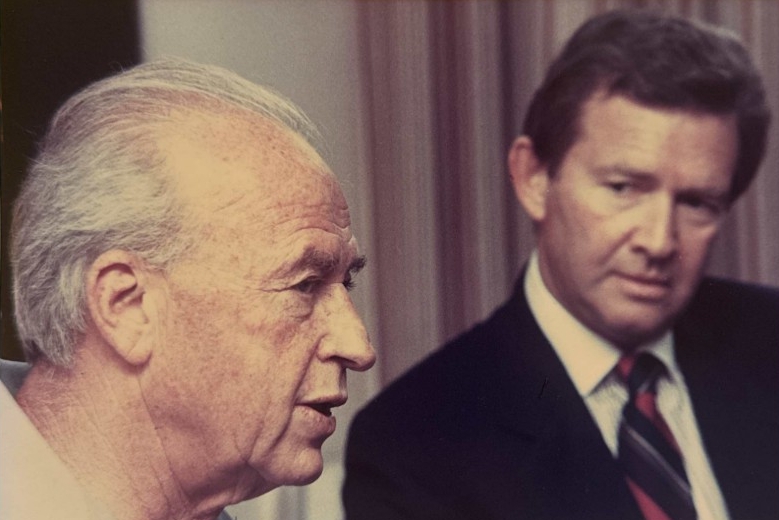
    Mr. Aaron (right) listens to Yitzhak Rabin, former primer minister of Israel.Courtesy of the family

    Mr. Aaron was friendly and energetic, his family said, and he excelled at collaborating through phone conversations and face-to-face encounters. He rarely micromanaged big contracts, colleagues said, but was available if something extra was needed.

    He mentored young lawyers and talked frequently with former Gov. Ed Rendell, former Sens. Arlen Specter and Bob Casey, and other government officials. Colleagues called him “a tremendous community leader and visionary” and “the smartest, warmest, most terrific guy” in online tributes.

    One colleague said: “It was easy to see the positive impact he had on those around him.”

    The son of a New York rabbi, Mr. Aaron was a prolific fundraiser and the local public face of Jewish philanthropy for decades. He served as president of the Federation of Jewish Agencies of Greater Philadelphia from 1983 to 1987, as chair of the United Israel Appeal for the United Jewish Appeal, as chief volunteer officer for the Jewish Federations of North America, and in other roles.

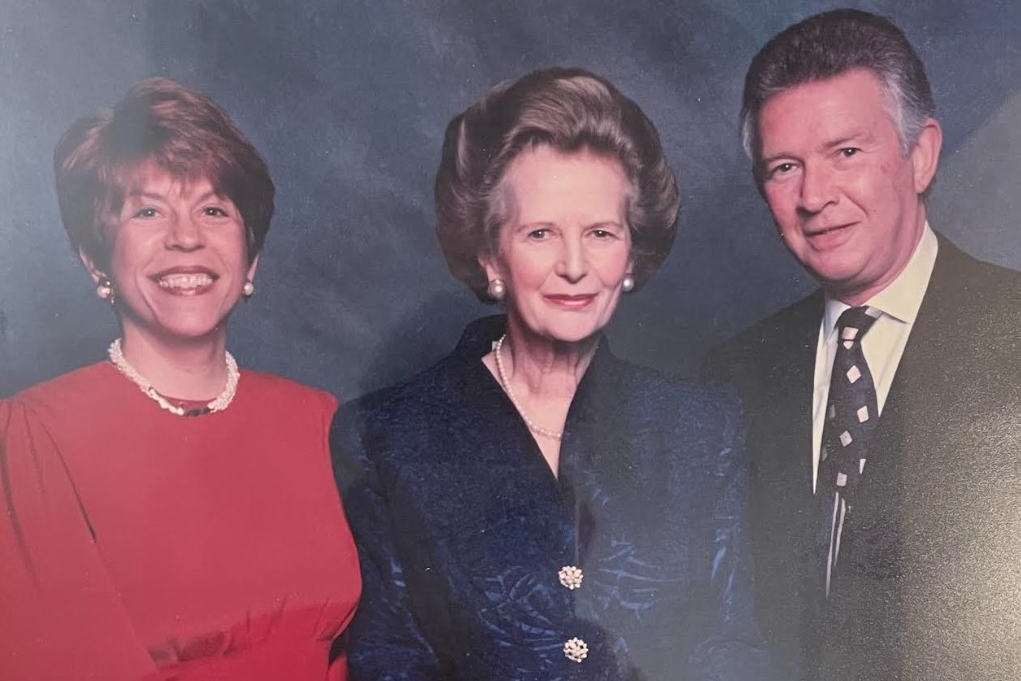
    Mr. Aaron and his wife, Carol (left), met Margaret Thatcher, former prime minister of the United Kingdom, on their travels.Courtesy of the family

    He was adept at balancing assets and liabilities for the nonprofit agencies. He oversaw record-breaking fundraising campaigns in Philadelphia and helped other leaders determine the direction of international Jewish philanthropy.

    His 10-hour fundraising phone-athon at the Civic Center in 1986 drew more than 2,400 volunteer callers and raised a then-record $2.4 million in pledges to the United Jewish Appeal. “We have no trouble getting more than enough volunteers for this,” Mr. Aaron told The Inquirer. “People look forward to coming here all year. There’s camaraderie and plenty of fun.”

    Colleagues at the Jewish Agency for Israel called him “an inspiration to many” and “a true mensch whose character, integrity, and warmth will be greatly missed.”

    Mr. Aaron traveled to Israel often and met with former Prime Minister Yitzhak Rabin, former U.K. Prime Minister Margaret Thatcher, and other leaders. “He worked tirelessly to foster understanding and solidarity between his Philadelphia community and Israel,” his family said. “He leaves behind a legacy of integrity, service, and enduring impact on the city he came to cherish and the causes that defined his life.”

    Mr. Aaron and his wife, Carol, married in 1955.Courtesy of the family

    Bennett Louis Aaron was born Oct. 2, 1933. He and his older brother, Joseph, shared a tiny bedroom, played stickball after school, and cheered for the old Brooklyn Dodgers baseball team.

    He graduated from high school at 16 and earned a bachelor’s degree at Columbia University in 1954 and a master’s degree in taxation at New York University School of Law in 1966.

    He met Carol Perlmann in 1953 at the Pennsylvania summer camp his parents owned, and they married in 1955. They lived in Merion and Bala Cynwyd before moving to Beaumont, and reared daughters Marjorie and Roberta, and sons Morrie and Steve. His daughter Roberta died in 2003.

    Mr. Aaron was an avid tennis player. He had season tickets to Eagles games and traveled with his wife to four Olympic Games.

    Mr. Aaron (right) was close with his sons Morrie (left) and Steve.Courtesy of the family

    He cherished his family, everyone said, and he and his wife toured the world together. He was dapper and debonair. He liked to explore downtown city streets between meetings and answer the phone with “Hello there.”

    “He set the standard for hard work and integrity,” his son Morrie said, “always coupled with kindness, compassion, and generosity.”

    “He was the definition of a gentle man,” his son Steve said. His family said: “His was a life lived fully, purposefully, and with a really, really big heart.”

    In addition to his wife, children, and brother, Mr. Aaron is survived by eight grandchildren and other relatives.

    Mr. Aaron “was the definition of a gentle man,” his son Steve said.Courtesy of the family

    Services were held earlier.

    Donations in his name may be made to Penn State Hillel, 180 S. Garner St., State College, Pa. 16801; and the Jewish Federation of Greater Philadelphia, 2 Commerce Square, 2001 Market St., Suite 2300, Philadelphia, Pa. 19103.

  • Philly feds charge two with running a cryptocurrency money laundering scheme that tried to conceal nearly $400 million

    Two men living in the Republic of Georgia have been charged by federal authorities in Philadelphia with running an international money laundering scheme that tried to use cryptocurrency exchanges to mask the source of nearly $400 million, prosecutors said Thursday — including at least $20 million that came directly from accounts associated with illicit actors on the dark web.

    Igorevich Tkachuk, 37, of Ukraine, and Alexander Vladimirovich Ledenev, 25, of Russia, were arrested Wednesday in Georgia, where both live in the coastal city of Batumi, according to U.S. Attorney David Metcalf. Prosecutors will seek to extradite them to Philadelphia to face money laundering charges.

    Metcalf said the two men were part of an organization that dubbed itself “AudiA6.” The group had two primary functions, prosecutors said: managing a cybercrime forum known as Dark2Web, where users could strike deals to commit crimes against targets for money, and running a cryptocurrency-based money laundering service, through which users could have their virtual currency “mixed” into different streams that would make the origins harder for authorities to trace.

    Prosecutors said Dark2Web was an online forum that allowed users to discuss deals about committing crimes.Court filings, U.S. Attorney's Office

    Over the last five years, prosecutors said in a criminal complaint, AudiA6 received $389 million from customers to launder, which the group would “mix” in exchange for a commission fee.

    About $20 million of those deposits came from accounts prosecutors said were known for committing illicit activity, including groups that perpetuated ransomware attacks or people who were known to have received stolen funds online. Millions more appeared tied to similarly suspicious groups through indirect transactions, they said.

    Over the course of the scheme, prosecutors said, AudiA6 received at least $10 million in profit. The group would often charge higher commission fees for smaller transactions.

    According to the complaint, federal authorities conducted six undercover transactions with AudiA6 between December 2022 and May 2026. In each, the document said, agents said in messages — typically in Russian — that they wanted to exchange “dirty” digital currency, such as Bitcoin, and AudiA6 took the funds, “mixed” them, and returned the washed proceeds, minus a commission.

    In one case this April, an agent in Philadelphia sent a message to the AudiA6 exchange saying: “is [Bitcoin] from scam OK? Stolen bitcoin…”

    According to the complaint, the person running the exchange replied: “don’t care.”

    AudiA6 then mixed about $5,000, the complaint said, keeping a fee of about $300.

    A few weeks later, the document said, an agent in Philadelphia reached out to the exchange again and asked about laundering proceeds from selling cocaine online.

    “Is it ok or are the risks too high?” the agent asked, according to the complaint.

    “Everything like that needs to go through a mixer,” the operator wrote back, before laundering about $5,100 worth of bitcoin and keeping $400 as a fee.

    Despite AudiA6’s promises to customers that the mixed transactions would make funds untraceable, investigators said, the group “was not actually sending and receiving from distinct, unconnected sources.”

    “Instead,” they said, “transactions could be directly traced through exchange records.”

    Neither Tkachuk nor Ledenev had attorneys listed in court records Thursday.

    Each could face up to 20 years in prison if convicted, prosecutors said.

  • El Niño has formed officially, and it likely will be one of the strongest on record

    El Niño has formed officially, and it likely will be one of the strongest on record

    El Niño has formed officially and it is likely to become one of the strongest on record, with potentially profound impacts on the hurricane season and the U.S. winter, government meteorologists announced Thursday.

    As it matures during the summer and fall, it is likely to hold down the numbers of Atlantic tropical storms. And while it is impossible to predict what it might mean for winter around here, some of Philly’s strangest winters have coincided with El Niño.

    Scientists with the National Oceanic and Atmospheric Administration see a 63% likelihood that this El Niño will qualify as “very strong” and rank among the elite of the last 75 years.

    El Niños occur every two to seven years as part of a natural process as east-to-west trade winds that push water into the western Pacific slacken and massive amounts of warm water move eastward.

    In the key El Niño region of the central Pacific, sea-surface temperatures over a 2.4 million-square-mile area become anomalously warm. In this instance, NOAA says, the temperatures may end up being 3.5 degrees Fahrenheit higher than normal.

    All that warm water interacts with the overlying atmosphere to disrupt weather-bearing winds worldwide.

    The naming has been attributed to Peruvian fishers who lamented the effects of the warmth on the anchovy catch. They called it a Spanish term for the Christ child, since this tended to happen around Christmastime.

    El Niño and the hurricane season

    El Niño’s impacts can be enormously disruptive, but it’s possible that residents of the Caribbean, Atlantic, and Gulf coasts will catch a break.

    The phenomenon can have a dampening effect on hurricanes.

    One well-documented effect of the warming is that it generates powerful upper-air winds from the west that can have shearing effects on incipient tropical storms in the Atlantic, thousands of miles away.

    On Wednesday, Philip Klotzbach, a researcher at Colorado State University, which developed the prototype for those seasonal hurricane outlooks, reduced the storm numbers in his forecast and is now calling for only five hurricanes. The average is seven.

    Some of the quietest Atlantic hurricane seasons on record have occurred during strong El Niño years.

    El Niño and the Philadelphia winter

    Strangeness is no stranger to Philadelphia winters, but strong El Niños have coincided with extremes of snow — in both directions.

    In 1972-73, for example, no measurable snow fell in Philadelphia, and only 0.8 inches accumulated in the 1997-98 winter. Philly was hit with a 21.3-inch blizzard in February 1983 and a 2-footer in January 2016, both during high-end El Niño years.

    Unfortunately, in the short term, El Niño isn’t going to be doing anything about this heat and humidity.

  • FIFA’s yearslong effort to woo Trump culminates with the World Cup

    FIFA’s yearslong effort to woo Trump culminates with the World Cup

    For the past year, FIFA, the governing body of international soccer, has leased an office on the 17th floor of New York’s Trump Tower that has sat all but empty. The rent goes to President Trump’s family business, but soccer officials say the space sits largely idle.

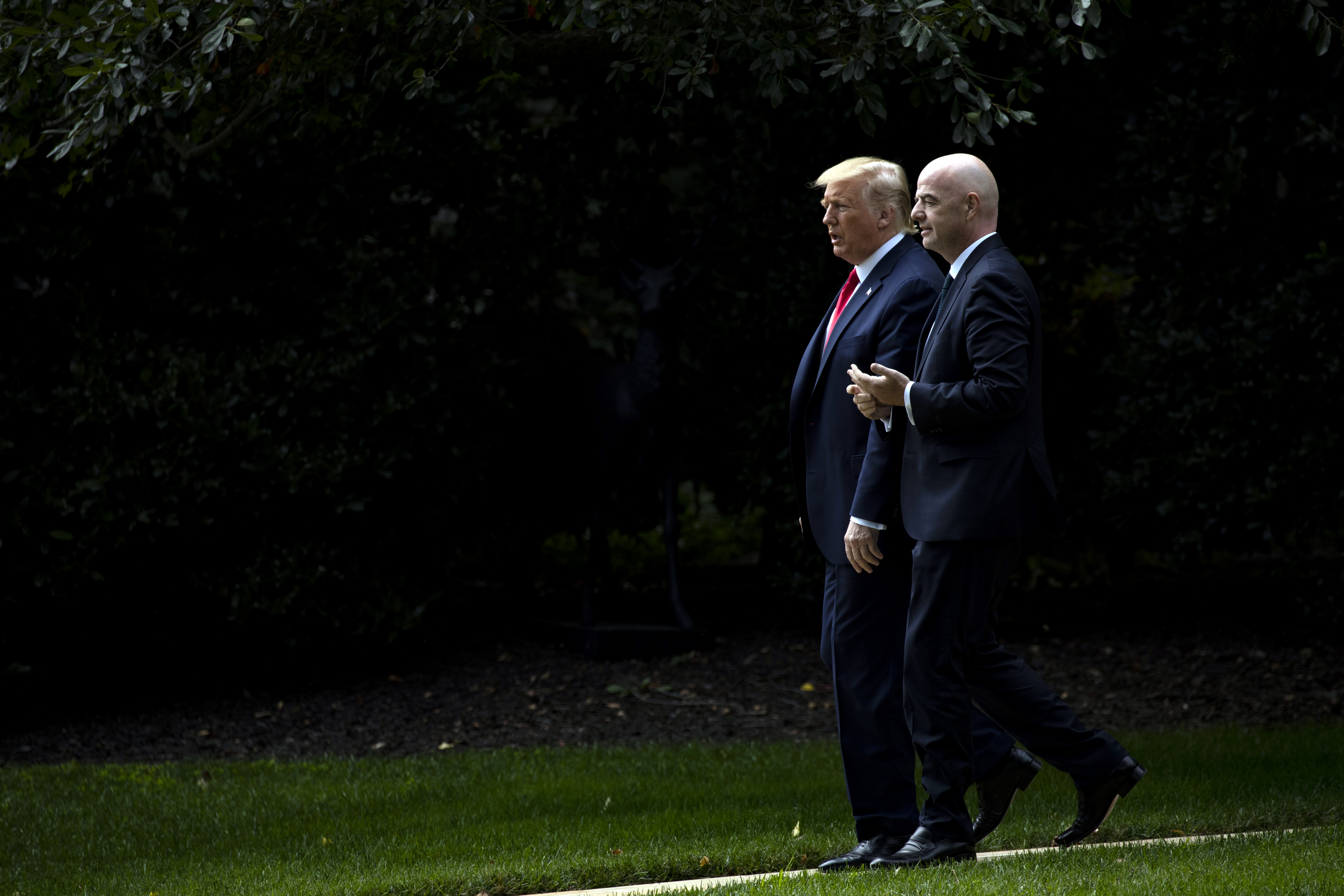
    Paying rent to the Trumps was the choice of Gianni Infantino, FIFA’s president, who has made being close to Trump a top priority. He has lavished the president with praise, trophies and a medal. He has made pilgrimages to Mar-a-Lago, the Trump National Doral golf club and even the “Melania” documentary premiere.

    Infantino has publicly boosted the president through impeachments and plummeting poll numbers.

    It was all in service, Infantino’s supporters say, of ensuring that the World Cup, which begins this week, goes off without a hitch. Trump could disrupt the games in any number of ways. Infantino, allies say, is handling a volatile president who responds to praise and gifts.

    “He’s straightforward in terms of what you need to do to manage the relationship,” said Majed Al Sahib, a soccer official from Saudi Arabia who said that Infantino was being pragmatic.

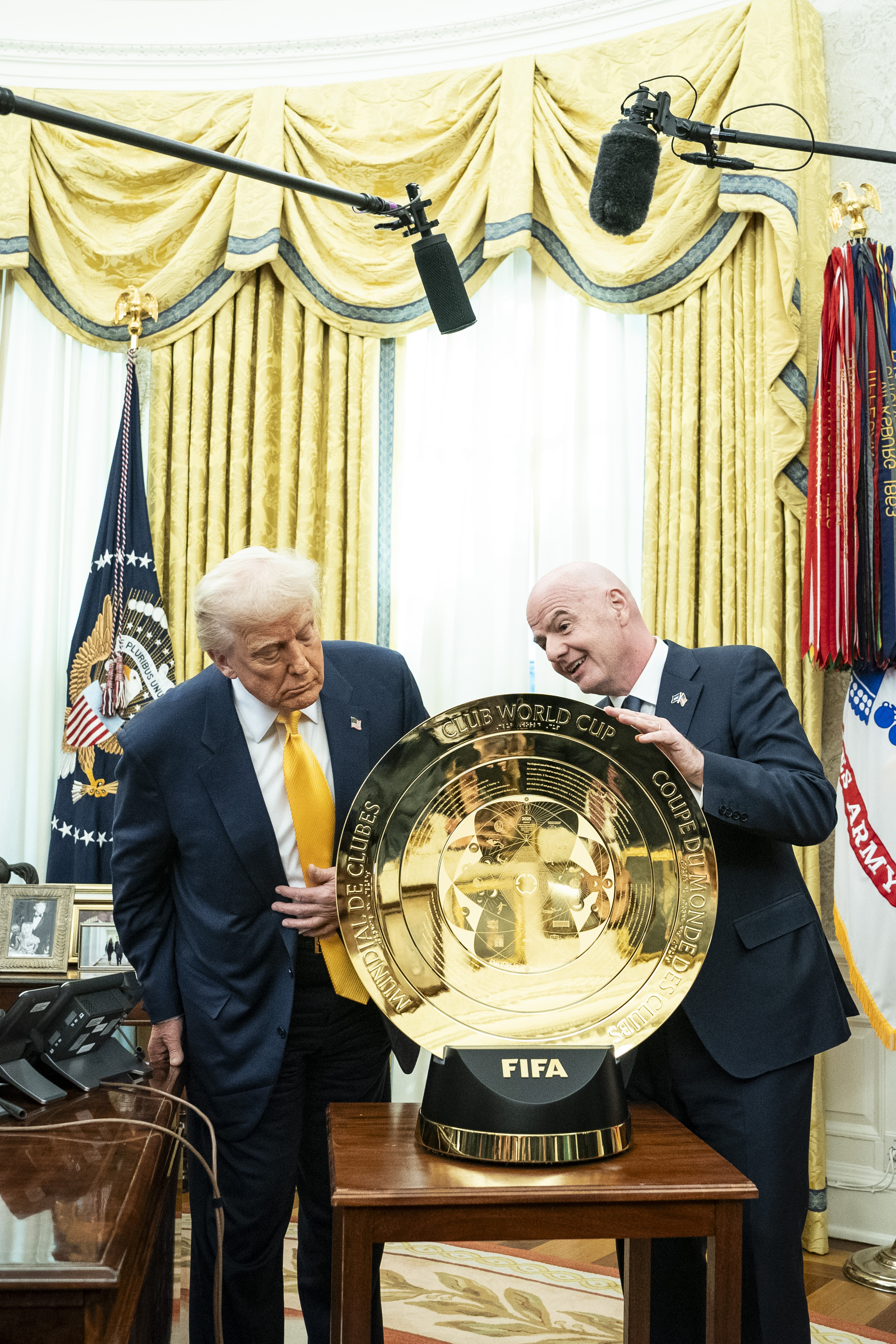
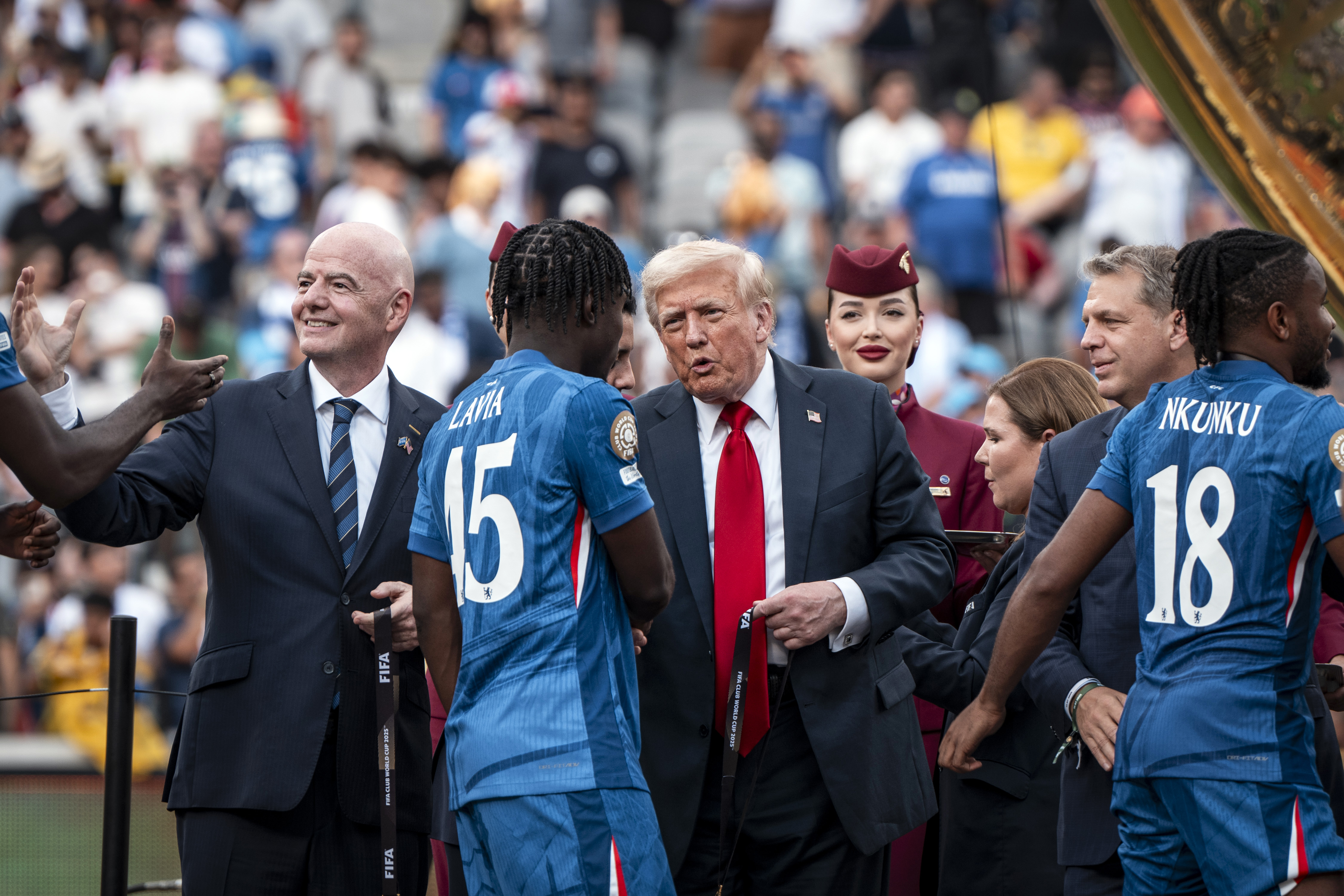
    President Trump and Gianni Infantino at the White House in 2025 with a trophy intended for the winner of the Club World Cup competition. Trump kept it, and FIFA commissioned another.Haiyun Jiang / The New York Times

    FIFA officials are clear about what they want from the World Cup. They want a higher profile in the United States and more growth in the world’s biggest consumer market. They also want to shed the reputation for corruption and cartoonish excess that led to Justice Department prosecutions.

    Infantino failed to woo the Biden administration, former government officials said. But he found a receptive ear in Trump, who calls him “the king of soccer.” A decade ago, soccer executives were terrified to travel to the United States, fearing they’d be arrested. Now, Infantino is an Oval Office regular.

    Infantino presided over the previous two World Cups, in Russia and Qatar, and drew criticism for cozying up to autocrats in both countries. His amity with Trump has him once again defending his way of operating in what is supposed to be a politically neutral position.

    “I think it is absolutely crucial for the success of a World Cup to have a close relationship with the president, with the government,” Infantino said last year. “I have a lot of friends.”

    This World Cup will be a test of whether that friendship pays off.

    Infantino and President Trump onstage during the Club World Cup final in New Jersey last year.Haiyun Jiang / The New York Times

    A top FIFA official says he believes there is an unofficial understanding that the authorities will not conduct immigration enforcement outside of stadiums. (A FIFA spokesman denied any deal and said enforcement was up to the government. The Department of Homeland Security did not address the question.)

    The Justice Department also recently dismissed long-running criminal charges as part of its FIFA investigation. Prosecutors said the case “doesn’t fit within the administration’s priorities.”

    And Trump seemed to defer to Infantino this spring on allowing Iranian players to come to the United States. “If Gianni said it,” the president said, “I’m OK.”

    Still, Trump undercut Infantino recently by criticizing the high cost of tickets. And whatever reassurances may have been made on immigration, support staff for Iran’s national team was denied visas, along with a Somali referee.

    Infantino’s coziness with the president also appears to be influencing FIFA in Trump-like ways that could outlast the tournament.

    FIFA is exploring hotel deals that would license its name just as the Trump family has long done, according to three people familiar with the discussions. He has also expressed interest in launching a FIFA cryptocurrency, just as the Trumps have done.

    A FIFA spokesman said the organization was paying “market rent” in Trump Tower and that the office would be used during the World Cup.

    Inside FIFA, many officials privately question whether this has all been in service of Infantino himself. He has accompanied Trump on state visits, sat center stage at the inauguration and has attended diplomatic events.

    What does any of that, his critics ask, have to do with soccer?

    Infantino declined to be interviewed. His yearslong campaign to curry favor with Trump, and the hand-wringing it has prompted, was described in dozens of interviews with FIFA insiders and others close to the two men. Some spoke on condition of anonymity to describe private conversations.

    “Infantino thinks he’s the leader in the relationship,” said Sepp Blatter, the former FIFA president whose ouster at the height of the corruption scandal paved the way for Infantino’s ascension. “But nobody can lead Trump.”

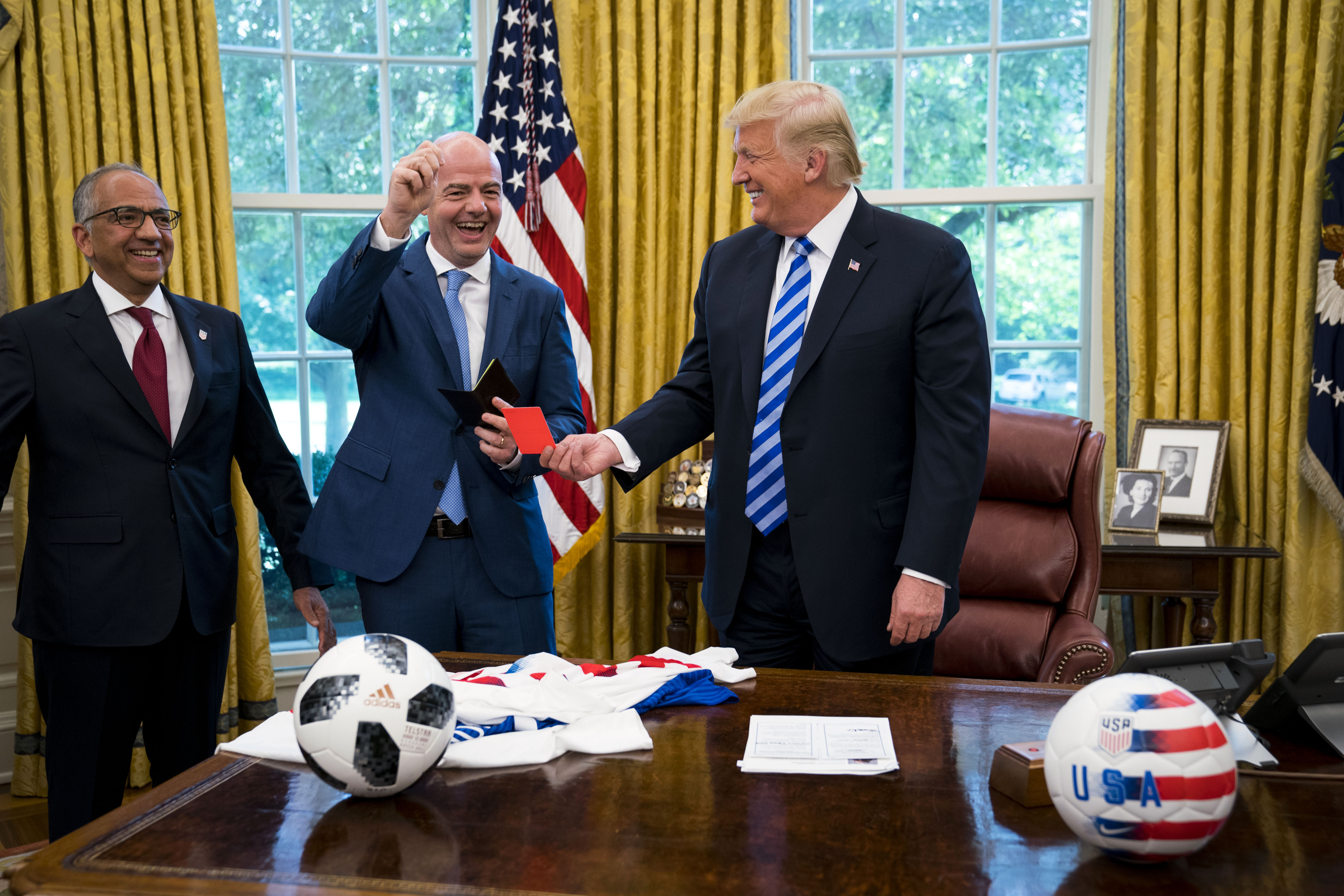
    Infantino meets with Trump for the first time in the Oval Office and jokes about penalty cards.Doug Mills / The New York Times

    The first meeting

    The men first met in the Oval Office in the summer of 2018. The United States had just won the right, along with Canada and Mexico, to host the World Cup, and the mood was celebratory.

    “You’re pretty famous, right?” Trump asked. “Pretty important and pretty famous.”

    “Yeah,” Infantino replied. “It looks like it.”

    Infantino, a lawyer and the son of an Italian immigrant who worked on Switzerland’s railways, had secured the FIFA presidency the same year that Trump was elected.

    In that first White House meeting, he presented the president with a Trump jersey and a set of penalty cards that the men joked could be used on the news media.

    “You are part of the FIFA team now,” Infantino said.

    It was a remarkable turnabout. Three years earlier, the Justice Department had unveiled an indictment detailing corruption in world soccer. Major brands did not renew their sponsorship deals, and the organization suffered financial losses.

    But if Infantino was eager to welcome the president onto FIFA’s team, he quickly found himself on the Trump Team — a pretty important, pretty famous endorser of a president in the middle of an impeachment inquiry.

    “Gianni, we’re going to have to extend my second term,” Trump said on the South Lawn in September 2019, as Infantino smiled beside him.

    Months later, as lawmakers debated charges of obstruction and abuse of power against Trump, Infantino praised him before business leaders in Davos, Switzerland.

    “You might wonder why the president of FIFA is introducing the president of the United States of America,” Infantino said. He joked that it had been suggested that the two of them might be the most important people in attendance.

    Soon, Infantino was back at the White House, this time as an unusual guest for the signing of the Abraham Accords, which established diplomatic ties between Israel and some Arab nations. He also arranged a “courtesy visit” with the attorney general, who was overseeing the FIFA cases.

    “I am fully convinced,” Infantino said after that meeting, “that the credibility and reputation of FIFA is being restored at the highest level.”

    Then came the 2020 election, and Infantino’s fortunes changed.

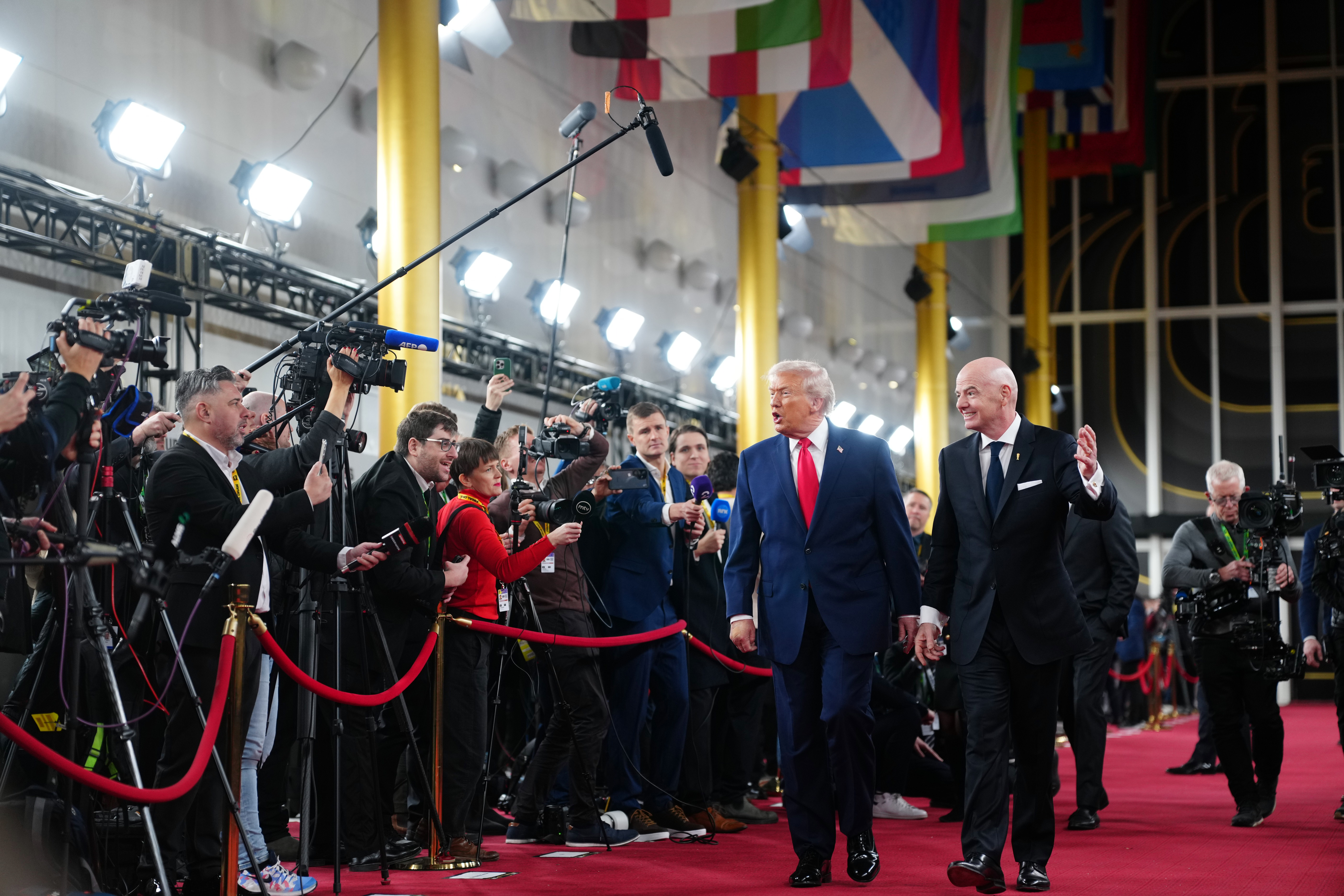
    President Trump and Infantino attended the World Cup draw at the John F. Kennedy Center for the Performing Arts last December. FIFA had planned to have the event in Las Vegas but moved it to Washington.Tierney L. Cross / The New York Times

    A chilly reception, and then a thaw

    President Joseph R. Biden Jr. proved to be less welcoming to FIFA than his predecessor. There were no Oval Office greetings.

    Administration officials said they had been wary of getting too close to a scandal-tainted organization. They saw no benefit in putting the president alongside Infantino.

    “There was definitely a hands-off, keep-them-at-a-distance approach at the White House,” said Caitlin Durkovich, a former National Security Council official who helped oversee World Cup planning. She said FIFA repeatedly tried to arrange meetings with top officials.

    In interviews, FIFA officials said that Infantino had been trying to raise FIFA’s profile. More practically, they said, he wanted people, when they Googled “FIFA,” to find anything but stories about bribery and kickbacks.

    But even an attempt to meet formally with Secretary of State Antony J. Blinken at the 2022 World Cup in Qatar fell flat, according to three people familiar with FIFA’s efforts to arrange a meeting. Infantino’s few interactions with American officials were mostly perfunctory and private, like a half-hour meeting with the national security adviser to address security and visa wait times.

    So when Trump won re-election in 2024, there was an opportunity to build on Infantino’s foundation. And Trump seemed eager to pick up where they had left off.

    Days before Trump’s second inauguration, the men convened at Mar-a-Lago, the president’s private club in South Florida, and flashed thumbs-up signs for a photo that Infantino posted to Instagram.

    Trump thanked him by name at a victory rally. And Infantino had an elevated seat behind Trump at the inauguration.

    Infantino eagerly promoted all of it, sounding at times like Trump’s campaign partner. “Together we will make not only America great again, but also the entire world,” he said.

    Infantino, it seemed, had achieved everything he wanted: accolades, endorsements and a World Cup task force, proposed by Infantino himself, that gave FIFA a formal place among Trump’s inner circle.

    But soon it was clear that such closeness had drawbacks.

    ‘Private political interests’

    When the world’s top soccer officials gathered in Paraguay for their annual meeting in May 2025, Infantino was on the other side of the globe, tagging along on Trump’s state visit to Persian Gulf countries.

    The trip had little to do with soccer, and when he finally arrived at the FIFA meeting, he was several hours late. European soccer officials walked out, protesting his prioritization of “private political interests.”

    “I felt that I needed to be there to represent football and all of you,” Infantino told them.

    It was then that behind-the-scenes grumbles exploded into view. FIFA is an unusual amalgam of 211 countries and territories, each with its own politics. Infantino’s closeness to Trump had impressed some constituencies and alienated others.

    “It’s a matter of priorities, and at that moment Trump was the priority for Infantino,” said David Goldblatt, author of “The Ball Is Round: A Global History of Football.”

    But Infantino was undeterred.

    One of his signature innovations was a 32-team tournament for the world’s best professional teams: the Club World Cup. But when he plugged the event from the Oval Office, he suddenly credited Trump as a co-creator. (After Trump kept the original Tiffany & Company trophy, FIFA presented the winners with another.)

    Then, on the eve of the tournament, U.S. Customs and Border Protection announced that agents would be “suited and booted ready to provide security for the first round of games.”

    Tournament officials panicked, terrified that immigration agents would arrest fans, according to three people who participated in planning discussions. Such a spectacle could deter attendance at the 2026 World Cup and potentially lead to a global backlash against FIFA.

    By then, Infantino was living in Miami, in the president’s orbit. His advisers strategized about asking Trump for a moratorium on immigration actions, both during the club matches and the World Cup.

    While no one close to either man has indicated what, exactly, they discussed privately, FIFA officials said that Infantino pressed the immigration matter. Whether for that reason or not, the government’s social media post was removed and ICE raids never materialized.

    Soccer officials said they believed there was a similar understanding for the World Cup. But, as is often the case with Trump, nobody can say for sure.

    The Department of Homeland Security, which oversees Immigration and Customs Enforcement, did not acknowledge any such agreement.

    “U.S. Customs and Border Protection, in coordination with D.H.S. and other agencies, is dedicated to ensuring the safety and success of the FIFA World Cup,” a D.H.S. spokesperson said.

    By some measures, the club tournament represented a win for Infantino’s strategy. He got an Oval Office platform, Ivanka Trump participated in the draw, immigration agents stayed away, and Trump attended the final match.

    But it was also a reminder that when there is a limelight, Trump often seizes it for himself.

    Appearing onstage after the final whistle, Trump lingered longer than planned, upending meticulous choreography, confusing the winning team and standing squarely before the cameras during the trophy presentation. FIFA and Secret Service officials were alarmed, and fireworks were delayed because of the president’s presence.

    It went viral, with Trump basking in FIFA’s moment.

    The FIFA Peace Prize awarded to President Trump. The trophy, co-produced by a FIFA employee’s father, was spontaneously sourced from miscellany in FIFA’s possession.Tierney L. Cross / The New York Times

    The FIFA Peace Prize

    Oval Office visits are now routine for Infantino.

    “Always happy to be here, at home, if I can say that,” he said last year.

    “You are home,” Trump replied.

    When Trump assembled dignitaries and business titans for a state dinner for Crown Prince Mohammed bin Salman of Saudi Arabia, Infantino was there.

    “I think we should all support what he’s doing,” Infantino said at a business conference in Miami. “Because I think it’s looking pretty good.”

    Infantino has sought to capitalize on access to Trump allies. Under his watch, FIFA discussed with former Treasury Secretary Steven Mnuchin an investment in a streaming service, according to a senior FIFA official. Nothing materialized, only because the venture was put on hold, according to a person who was part of the talks.

    More recently, FIFA has explored hotel licensing deals with a prominent South Florida developer who is poised to develop the waterfront opposite Mar-a-Lago.

    Infantino also lobbied for Trump to be awarded the Nobel Peace Prize, which the president has craved. When the award went to the Venezuelan politician María Corina Machado, Infantino had an idea.

    Three weeks after the Nobel announcement, senior FIFA officials were told that Infantino wanted to announce a peace prize of his own. How long, they asked, did they have to work out the details — the criteria, for example, or the makeup of the nomination committee? Those questions went unanswered.

    Some of the most senior officials were told straightaway whom the first honoree would be, according to a person with direct knowledge of the plans, who learned about the prize and its recipient on the same day.

    FIFA did not have time to consider what its prize would look like. But luckily, the father of an employee was a sculptor, and FIFA had in its collection of miscellany a miniature version of one of his pieces, according to two soccer officials. The trophy was in hand.

    The FIFA Peace Prize was announced Nov. 5, with the award to be bestowed at the World Cup tournament draw a month later.

    FIFA had planned to have that event in Las Vegas. But Paolo Zampolli, a longtime Trump ally serving as a presidential envoy, encouraged Infantino to reconsider.

    “To move the president of the United States is a big process,” he recalled saying. Last-minute events might prevent a trip to Las Vegas, he said, but a local venue would better assure his attendance. “You know how important FIFA is for us,” Zampolli added. (FIFA said Zampolli had no influence over the choice.)

    Infantino moved the event to the John F. Kennedy Center for the Performing Arts in Washington, teasing that the site might be called the Trump-Kennedy Center. Trump attended and, to nobody’s surprise, was the first recipient of the FIFA Peace Prize. He received a certificate, a medal and the repurposed trophy.

    Trump called it “truly one of the great honors of my life.”

    The award angered many soccer officials, who said that it had embarrassed FIFA and cast the organization as partisan.

    Lise Klaveness, the president of Norway’s soccer federation and a human rights lawyer, said the prize breached FIFA’s rules on political neutrality. She announced that Norway would back an ethics complaint against Infantino.

    Ms. Klaveness said in an interview that she recognized that FIFA needed “friendly relations” with the governments hosting World Cup games. But she said there needed to be “checks and balances,” to keep FIFA from being used for political purposes.

    Infantino, though, has worn his friendship with the president on his sleeve. And his head. At one public meeting, world leaders and delegates were given red “USA” baseball caps. Infantino happily donned his, emblazoned with the numbers 45-47, signifying the Trump presidencies.

    This winter, as Infantino marked a decade in the job, he celebrated with a party at a Four Seasons hotel in Miami. Ivanka Trump and her husband, Jared Kushner, attended.

    The celebration carried into spring, when Infantino announced at a soccer meeting in Vancouver that he would run for a third term. He argued that the organization had repaired its reputation and played a slide show that included Trump.

    “We have definitely come a long way these last 10 years,” he told soccer officials. FIFA, he said, was now “sitting at the top tables, in every aspect.”

    This article originally appeared in The New York Times.

  • The war in Ukraine has now gone on longer than World War I

    The war in Ukraine has now gone on longer than World War I

    The war in Ukraine has often been compared to World War I for its brutal infantry assaults and heavy casualties. Yet the idea that it could, by any measure, surpass a conflict so long and bloody that French soldiers hoped it would be “the last of the last” once seemed unthinkable.

    That is just what happened on Thursday. The war in Ukraine — which reached 1,569 days, or more than four years and three months — has now outlasted World War I.

    When President Vladimir Putin of Russia sent his troops into Ukraine in February 2022, he believed the country would fall within days. After Ukraine pushed the Russians back and the conflict settled into a war of attrition, even many of those fighting could not imagine it would last this long.

    “I thought maybe two or three years, and then politicians will find some kind of consensus,” said a Ukrainian soldier who, for security reasons, gave only his call sign, France, a nod to his time in the French Foreign Legion.

    But the war has raged on, and, with peace talks stalled, it shows no sign of ending soon. Polls suggest that about half of Ukrainians believe it will not end before next year, which would push it closer to another threshold: the duration of World War II, which lasted six years. And there are many Ukrainians who would argue that the current war really began in 2014 when Russian troops seized Crimea.

    Historians caution that drawing parallels with the two world wars has limits. The global scale of those conflicts, involving many theaters and armies, makes comparisons about casualties and firepower difficult. Ukraine did not exist as a country during World War I.

    Still, the war in Ukraine, like World War I, is likely to rank among the most consequential conflicts in modern European history, said Yaroslav Hrytsak, a Ukrainian historian. Both wars transformed Europe’s geopolitics by reshaping military alliances and driving a defense buildup not seen in decades.

    Military analysts also note that both conflicts reshaped the nature of warfare through the introduction of new technologies — planes and tanks a century ago; drones across the air, sea and land today. In both cases, the advances made war only more brutal for humans.

    “In many respects, this war in Ukraine is the one that most closely resembles World War I,” said Michel Goya, a former French colonel and a military historian.

    The comparison begins with the opening phase of both wars. In 1914, the Germans launched a rapid offensive toward Paris in the hope of securing a swift victory. Russian forces had the same objective when they raced toward Kyiv, Ukraine’s capital, in 2022. In both cases, the attackers came close to their target but were ultimately driven back.

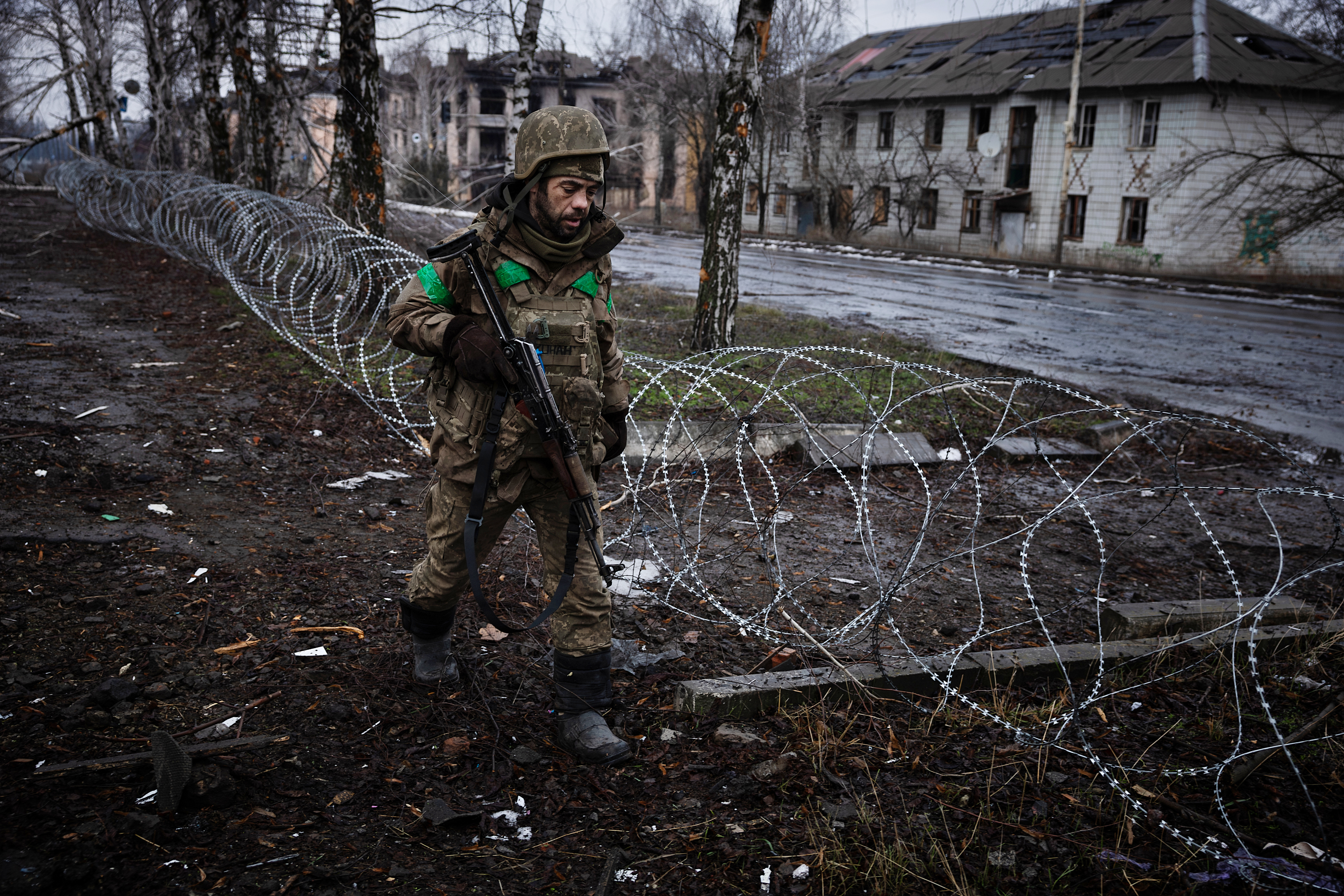
    Eventually, both wars settled into mostly static fighting along a largely frozen front. When soldiers on the Ukrainian battlefield hunkered down in trenches and bunkers in late 2022, historians described it as a return to World War I-style trench warfare.

    Scenes from the trenches of eastern Ukraine closely echoed those in northern France a century earlier. Ukrainian and Russian troops were often separated by just a few hundred yards, sometimes close enough to see one another. Assaults began with artillery barrages to pin down the opponent, followed by the storming of enemy trenches by infantry squads.

    “In general, when the front freezes, you’re back to World War I,” Goya said.

    In both wars, he added, it was the intensity of firepower, mainly artillery, that forced armies to turn to trenches. “You bury yourself to protect yourself,” he said.

    That calculus later changed in Ukraine with the introduction of a new class of weapon: drones. Networks of open trenches were rendered unsafe as drones monitored the battlefield around the clock and struck with greater precision than artillery shells.

    Now, Ukrainian soldiers say, survival depends on going smaller and deeper. Instead of sprawling trench systems, troops shelter in dugouts housing no more than a handful of soldiers. Such bunkers are small enough to be difficult to spot from the sky and deep enough to withstand strikes. A soldier operating on his own will often dig a position barely larger than a foxhole.

    In a recent interview near Ukraine’s southern front, a Ukrainian commander, who also only gave his call sign, Sour, for security reasons, recalled how his troops had to storm a well-fortified Russian dugout four times before forcing the soldier inside to surrender. The dugout had right-angled corners reinforced with metal sheets designed to absorb an explosive shock wave, he said.

    The commander, who leads the 5th Center of the International Legion, part of Ukraine’s military intelligence forces, said he took the captured Russian soldier to his unit’s training ground and asked him to dig a similar position so he could study how it was built.

    “In this environment, the people who dig survive longer and stay safer,” France, the Ukrainian soldier, said.

    As drones have come to dominate the battlefield, World War I-style opposing trench networks, separated by a narrow buffer zone, have given way to a miles-wide contested combat area scattered with dugouts. In this “kill zone,” any movement is quickly targeted by drones.

    Large-scale troop assaults of the kind seen a century ago have become all but impossible under the constant gaze of drones. Such assaults have been replaced with attacks by just one or two soldiers.

    Tanks, first introduced in 1916, were still a feared weapon in the first years of the war in Ukraine. They are rarely used now because their size makes them easy targets for drones, though some tanks have been retrofitted with protective metal cages that turn them into “Mad Max”-style vehicles.

    While the battlefield today bears less and less resemblance to that of a century ago, the scale of the destruction looks remarkably similar.

    In Ukrainian command posts near the front, live footage from reconnaissance drones shows scenes reminiscent of World War I battlefields: splintered trees, ruined houses, and fields pockmarked by shell craters.

    Casualties are difficult to compare, given the difference in scale between the two wars. A century ago, millions of soldiers were sent into battle across multiple fronts in Europe. Today, the forces involved number in the hundreds of thousands. Roughly 9 million to 11 million soldiers died in World War I, compared with about half a million in Ukraine so far.

    Still, military analysts and officials, including Adm. Pierre Vandier, who holds the post of Supreme Allied Commander Transformation in NATO, say drones have made the Ukrainian battlefield lethal at levels comparable to World War I. Vandier made the comparison after a study trip to Ukraine this spring.

    A mother cries at the coffin of her son Oleh Borovyk, a Ukrainian serviceman who was killed in fighting with Russian forces near Pokrovsk, during his funeral ceremony in Boiarka, Ukraine, on Dec. 3, 2025. Evgeniy Maloletka

    So grinding is the fighting in Ukraine that Russian advances have at times been slower than those in some of World War I’s most deadlocked battles.

    Russia’s offensive on Pokrovsk, an eastern Ukrainian city it recently fully captured, progressed at an average pace of about 75 yards per day, slower than in the bloody Battle of the Somme during World War I, according to an analysis by the Center for Strategic and International Studies, a Washington-based think tank.

    The question now is whether either side can break the deadlock.

    In World War I, the Allies prevailed by combining economic pressure on Germany through a tight naval blockade with military pressure through relentless offensives.

    Ukraine’s strategy to end the war carries some echoes of that approach.

    Drone strikes on Russia’s oil assets, the backbone of its economy, are designed to curb Moscow’s ability to finance its war effort. Kyiv lacks the manpower to replicate the offensives of World War I, but it has flooded the battlefield with small attack drones in the hope of inflicting unsustainable losses on the Russian army.

    “This is World War I, but with drones,” Hrytsak, the historian, said.

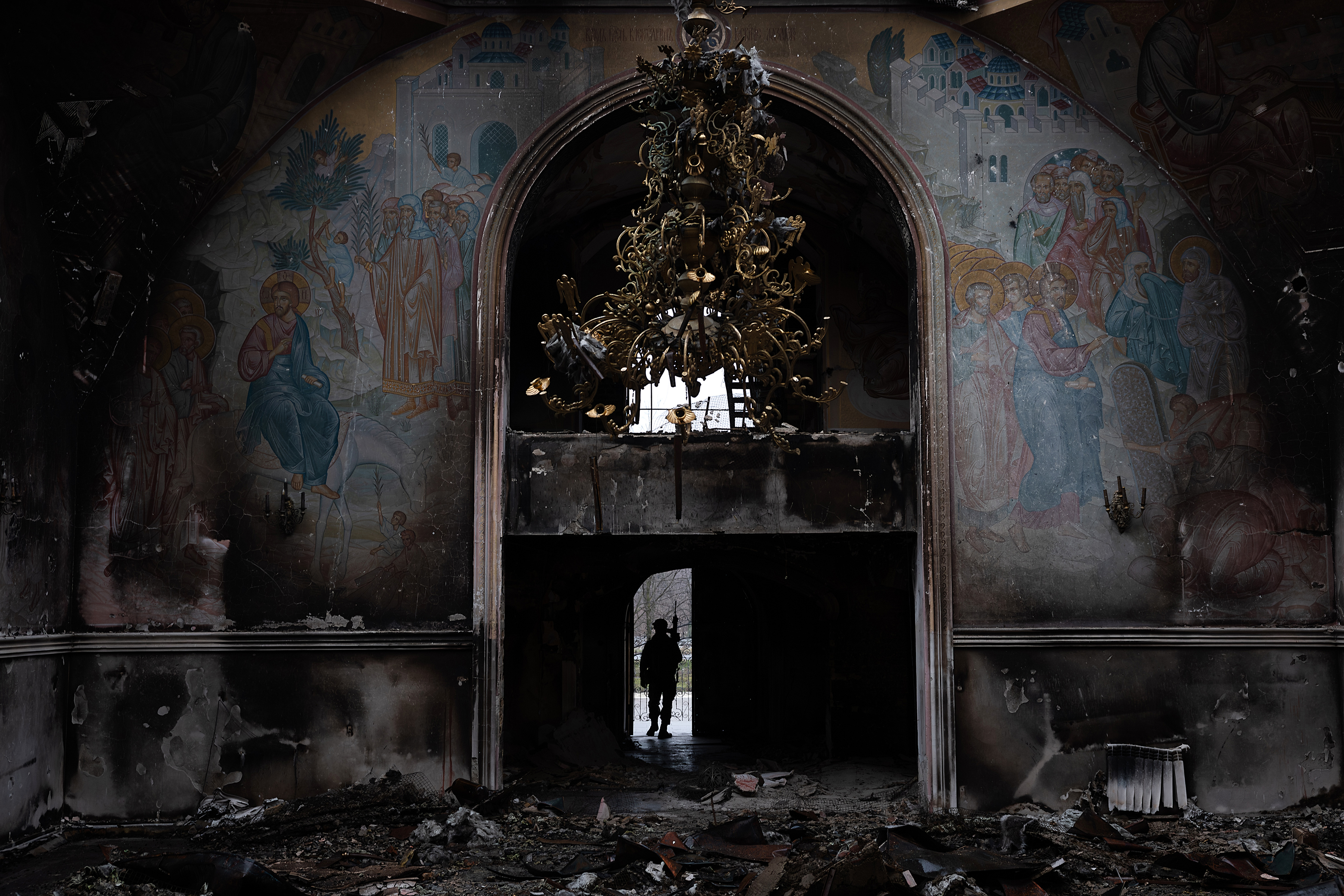
    A Ukrainian soldier is seen through the door of a destroyed church in Kostiantynivka, Ukraine, on Jan. 8.Tyler Hicks

    This article originally appeared in The New York Times.

  • Oceans are warming, but scientists are concerned about this cold blob

    As the planet warms, it’s becoming increasingly rare to see cooler than average conditions across vast stretches of the ocean, particularly as an expected super El Niño scorches parts of the Pacific.

    But right now, an expansive area of well below-average ocean temperatures exists in the North Atlantic, to the east of Newfoundland. There, unusually cool waters have lingered for the last year.

    This patch of cool water is occurring in one of the few areas where the ocean hasn’t warmed in recent decades — and where scientists are closely monitoring for changes in the Atlantic meridional overturning circulation (AMOC).

    The AMOC, which extends deep into the Atlantic Ocean, is a vital current that carries heat northward from the tropics toward the pole and plays a critical role in the climate around Greenland, Iceland and northern Europe. If the cold blob persists for years, it could eventually cool the climate in these places — and signal this key current is weakening. Should it collapse, a massive cooling could occur in the Northern Hemisphere, while it warms in the south; sea levels could rise in some areas and seasons could flip in others.

    As this conveyer belt of warm, salty water reaches the North Atlantic, it loses heat to the cold air above, becoming denser and sinking into the deep ocean. But as ice in the Arctic melts, introducing more freshwater into the sea, it becomes harder for the water to sink, potentially slowing down the current.

    Scientists have been monitoring the current’s behavior in the Irminger Sea, south of Greenland, where the U.S. National Science Foundation recently announced that it is dismantling its ocean monitoring equipment.

    In Iceland, a collapse of the AMOC is considered a national security risk, since it would send winter temperatures plunging to minus-50 degrees Fahrenheit.

    Recently published research from a team led by Stefan Rahmstorf of the Potsdam Institute concluded that “the strong evidence for a weakening AMOC is a serious concern for society and policy” and that it requires “urgent attention.” However, other research published last year found no evidence of long-term weakening, but that it was still expected to slow some in the future.

    There’s high confidence that the AMOC is weakening according to the U.N. Intergovernmental Panel on Climate Change. The IPCC has indicated, with medium confidence, that it will not abruptly collapse before 2100.

    But what about the recent cold blob? Does it offer a sign of AMOC’s eventual collapse or can it be explained by a combination of forces?

    Over the last week, the current cold blob has trended on social media, raising fresh concerns about the status of AMOC.

    While stormy and windy weather in the North Atlantic have enhanced the cold blob this year, those factors don’t immediately describe why it has remained there for a year straight.

    Other natural climate patterns, such as the Atlantic Multidecadal Oscillation (AMO), have affected the ocean’s conveyer belt. When the AMO is in its positive phase, waters warm in the North Atlantic. The opposite is generally true when it’s in its negative phase.

    From mid-2023 to mid-2025, when the AMO was predominantly in its positive phase, the cold blob disappeared for extended periods. But when it became negative in mid-2026, the cold blob returned.

    Based on this, a mix of climate forces — including human-driven warming as well as natural variability — appear to be contributing to the current conditions. And climate models predict that the cold blob could linger for the rest of the year — and possibly expand and become more frigid.

    What the current cold blob means for the future state of AMOC is uncertain, but models stop short of signaling widespread cooling across western Europe, Iceland or Greenland — the doomsday scenario that has so far been the stuff of movies.

  • Trump sees 22 medical specialists, appearing to set new bar for presidents

    For George H.W. Bush’s first medical checkup as president in 1989, he was seen by five specialists, the White House said at the time. His son George W. Bush was seen by 12 in his first presidential checkup, White House officials said a dozen years later.

    President Donald Trump appears to have set a new bar: 22 medical specialists assessed him as part of his latest checkup, according to a medical report recently released by the White House.

    That figure is nearly double the number of specialists who assessed Trump for his past medical checkups as president, according to a review of publicly available statements by Trump’s doctors.

    The figure also represents the most medical specialists to assess a president for a single visit, based on a review of public statements and records, prompting questions from outside physicians who said they were already skeptical of the White House’s disclosures around the nearly 80-year-old Trump’s health.

    “It is an extraordinary number,” said Jonathan Reiner, a longtime cardiologist for former vice president Dick Cheney. “What specialties do they represent? Why so many?”

    White House officials said that the number was commensurate with the need to perform a “complete and preventive evaluation” of the president. Sean Barbabella, the president’s physician, said the assessment found that Trump was in “excellent health.”

    “The involvement of multiple specialists reflects a comprehensive, multidisciplinary evaluation consistent with best practices for executive-level medical care,” the White House said in a statement.

    A White House official said that physicians affiliated with Harvard University, Duke University and other prominent institutions helped perform the evaluation. The official also said that some generalist physicians were included in the administration’s count of 22 specialists.

    “We have nothing to hide,” the official said.

    The White House has often declined to answer specific questions about Trump’s medical assessments, such as what prompted the president to undergo a second physical exam at Walter Reed National Military Medical Center last year. Presidents usually make one annual trip unless they have an urgent condition. Nearly three months after the visit, and after initially telling reporters that he had undergone an MRI exam, Trump and the White House clarified that the president had received a CT scan as part of his assessment.

    Trump’s medical reports also no longer include a common hair-loss prevention drug that his physicians said he routinely used during his first term in office. White House officials have declined to comment on Trump’s past use of the drug, finasteride, and whether he had stopped taking it.

    The scrutiny of Trump’s health comes amid broader questions about the fitness of the current president and his predecessor, Joe Biden, to serve as commander in chief. Biden, who was 82 when he left office, and Trump, who turns 80 on June 14, are the two oldest men to serve as president.

    Karine Jean-Pierre, who served as Biden’s press secretary, said at a February 2024 press briefing that a team of “20 doctors” participated in Biden’s medical evaluation at Walter Reed that year.

    Past administrations have often elected not to disclose the specific number of specialists who consult on the president’s medical evaluations, which are traditionally performed at Walter Reed.

    Presidents are not required to disclose their health records, although lawmakers in both parties have called for more checks on chief executives, such as creating an independent commission that could assess the president’s health.

    But publicly available records and statements indicate that the number of specialists reviewing presidential health appears to have ballooned.

    The five specialists involved in President George H.W. Bush’s checkup in May 1989 included an ophthalmologist, a urologist, a dermatologist and two allergists — White House officials said at the time. The 65-year-old Bush then saw eight specialists the following year, including a radiologist, cardiologist, and rheumatologist, the White House said.

    His son, President George W. Bush, saw 12 specialists for his 2001 checkup, White House officials said then.

    As questions swirled about Trump’s fitness during his first year in office, Ronny Jackson, who served as Trump’s physician during his first term and is now a Republican member of Congress from Texas, arranged 13 specialists to see the president, he wrote in his memoir.

    “I didn’t do this physical by myself; I was assisted by an entire committee of top-of-the-line specialty doctors at Walter Reed, including ones who specialized in dermatology, orthopedics, gastroenterology, ophthalmology, urology, pulmonary medicine, otolaryngology, and cardiology,” Jackson wrote in his book, Holding the Line.

    “The cardiologist did his heart exam. The pulmonologist did his lung exam and pulmonary function testing, the dermatologist did his skin exam, and so on.”

    Trump saw 11 specialists for his 2019 checkup and 14 specialists for his checkup last year, according to past medical reports released by the White House.