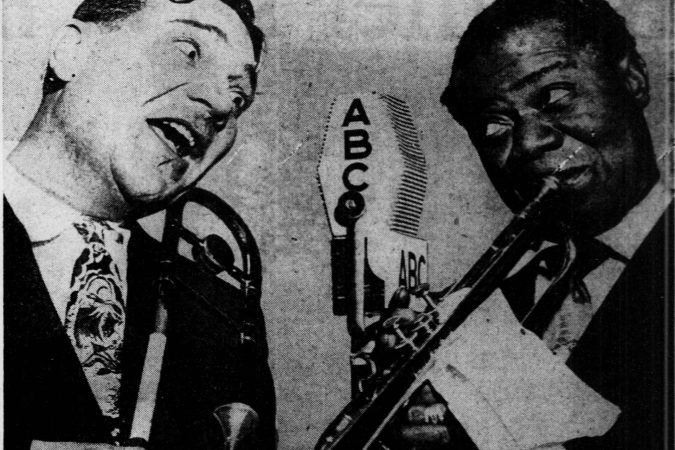
Before Jay-Z at the Roots Picnic or Bad Bunny at Made in America, there was Louis Armstrong at the Philadelphia Music Festival.
Before there was the American Idol competition, there was Philly’s “Voices of Tomorrow.”
Shortly after Germany surrendered, but a few months before Japan followed suit, Philadelphia put on its first true citywide music festival.
In 1945, the city held its inaugural festival, creating an event leaders claimed was for the kids and a distraction from war, and a celebration of Philly’s robust music scene. It also made use of a large stadium during the slower summer months post-World War II.
By 1949, the city was on its fifth event, and the festival had proved to be an opportunity to raise money and spirits.
‘Symposium of the arts’
On Friday night, June 10, 1949, the city’s festival held its fifth iteration.
The Inquirer, which sponsored the event, called it a “symposium of the arts.”
“On a magnificent June night with a great golden moon peeping over the rim of Municipal Stadium, an exited and delighted throng of 80,000 people, largest crowd ever to attend a cultural event in this city, roared their applause last night for the star-studded fifth annual Philadelphia Music Festival,” The Inquirer reported the following day.
The paper said the total eclipsed the previous year’s attendance of 72,000, with acts like jazz legend Armstrong, violinist Jeanne Mitchell, and pianist and vocal improvisationalist Alec Templeton.
These performances included local acts from area high schools, bugle corps, and marching bands.
‘Voices of Tomorrow’
In its annual “Voices of Tomorrow” contest, four young singers rose above a field of more than 2,000 competitors, singing in opera and “other fields” hinting at what was coming in the following decade. Competitors would sing in front of the crowd, which would choose the four winners by applause.
And the nearly four-hour event closed with the playing of “The Star-Spangled Banner.”
Municipal Stadium, which was opened in 1926 for the Sesquicentennial, would be named after John F. Kennedy in the 1960s, and would close in 1992.
The city’s 11th annual music festival in 1955 was its last until the 1960s brought the Philadelphia Folk Festival, Beatlemania, and a cultural revolution.
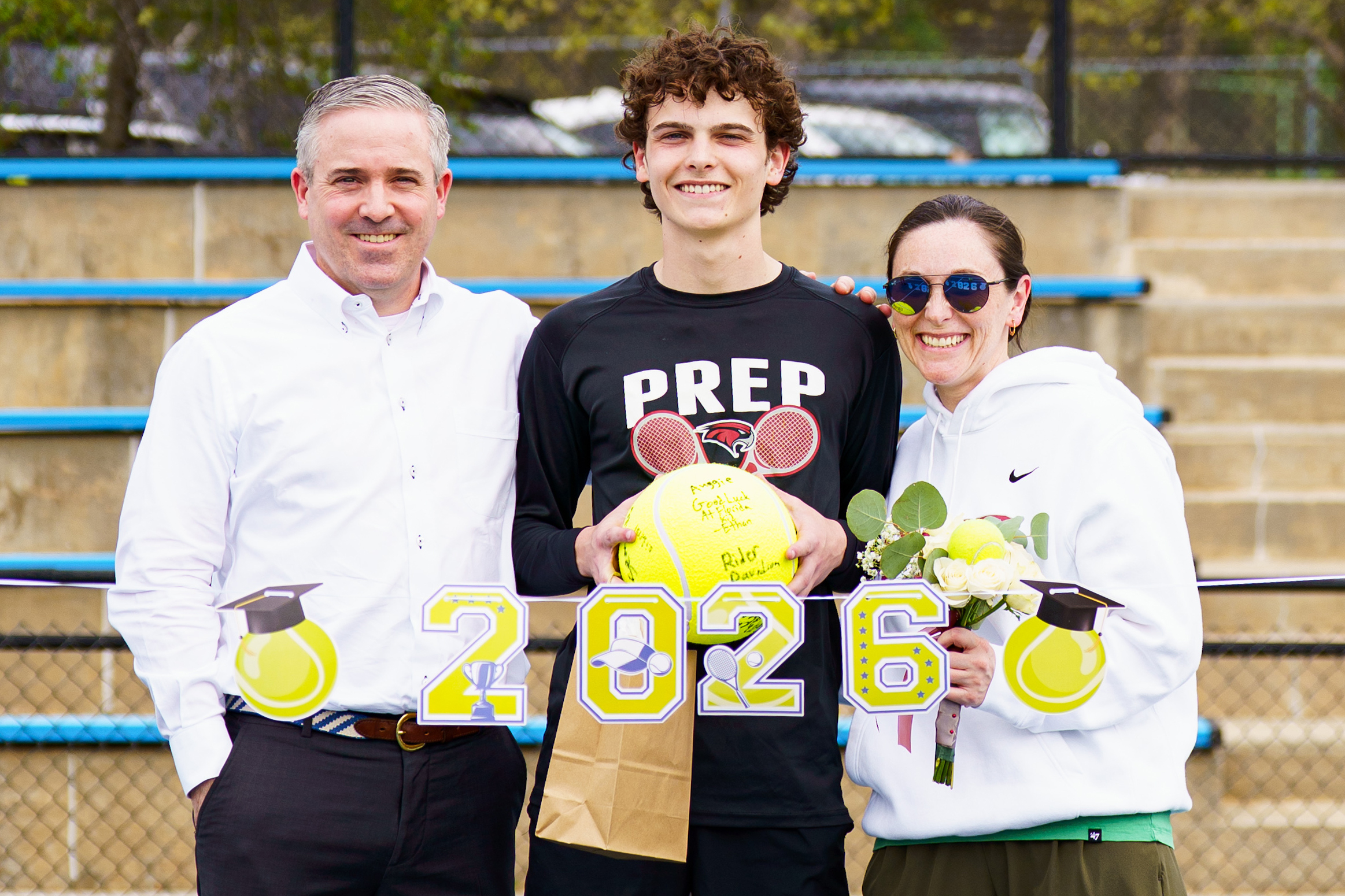
As graduating seniors at St. Joseph’s Preparatory School prepared for college, summer jobs, and other hallmarks of young adulthood this spring, 17-year-old Shawn Rinnier was focused on a simpler goal.
He hoped to muster the physical strength to walk across the graduation stage to collect his diploma.
That’s because the Bryn Mawr teenager is recovering from a traumatic brain injury that his parents say he suffered during an assault at a late-night party in Wissahickon Valley Park last month.
The attack knocked him unconscious, they said, and he has since experienced poor memory, fatigue, delayed vision, balance issues, and numbness in the right side of his body.
Now, in addition to caring for their son during what they expect to be a lengthy recovery, the Rinniers are seeking accountability for the people who assaulted their son.
“Nobody will talk at this point, and it just seems like people are trying to protect themselves, protect their friends,” said his mother, Susan Rinnier. “There’s some young adults that have a lot on the line here.”
Alongside investigators with the Philadelphia Police Department, Rinnier’s parents are working to piece together the events of the May 10 “tiki party” in the woods near Chestnut Hill, where they say about 250 teenagers had gathered before the evening turned physical.
Rinnier’s brain injury has left him with little recollection of what happened, said his father, Shawn Rinnier Sr., leaving his parents to look for clues after being sent photos and videosof the assault that partygoers took on their cell phones.
That night, students from a nearby Philadelphia private school as well as those from schools in the suburbs gathered for the party, which had been promoted on social media, Shawn Rinnier Sr. said.
He did not name the schools, deferring comment on those details to investigators.
The videos, Susan Rinnier said, show young people growing increasingly aggressive and eventually fighting.
“A couple fights broke out where the video evidence is showing that the other students were the aggressors” in the assault of her son, Susan Rinnier said.
“Some kids are on the sidelines yelling and chanting ‘punch on him’ and riling things up,” she said. “Our son, kind of scared, turns around and starts walking out of the event. The group follows him for about a second or so. That’s all we can see.”
A woman driving home in Chestnut Hill that night discovered Rinnier lying in the street around midnight and called 911, his father said. Shawn Rinnier Sr. later spoke to the woman, who told him “hundreds” of people had been fleeing through the woods with flashlights.
The parents did not recognize the young people involved in the assault, and they continue to communicate with detectives who told them they are interviewing people who may be involved.
A spokesperson for the police department did not return requests for comment on the investigation.
Rinnier was rushed to Jefferson Einstein Philadelphia Hospital and put on a ventilator, his parents said, and doctors later determined that his traumatic brain injury was moderate to severe.
“When he finally awoke, he was suffering from poor memory, couldn’t follow instructions, was confused, acting impulsive,” his mother said. The teen then moved to a rehabilitation unit at Bryn Mawr Hospital, where he continues to recover, she said.
The violent events of that spring night were life-altering, Rinnier’s parents said.
Their son, a tennis player, was preparing to attend the University of Florida on a scholarship this fall, they said. Those plans are now on hold.
Instead, the teen is taking part in an extensive outpatient rehab program, and his parents are working to have his enrollment deferred to 2027, when they hope he will be well enough to attend school.
Making sure that Rinnier took part in graduation at St. Joe’s last month was a more readily attainable goal, his parents said, and they were determined that he would achieve it.
Susan Rinnier was pleased to see that he was able to walk across the stage on May 31, even if he soon grew fatigued and experienced numbness in his legs after the ceremony, she said.
The Rinniers’ next hope is that police will find and charge their son’s attackers. Meanwhile, they continue to scan social media for additional photos and videos that may offer a better view of the incident.
“We owe it to Shawn to continue to move this forward any possible way we can, to get to the bottom of this,” his father said. “That’s our job as parents, and we’re not gonna stop.”
Walmart is raising the stakes in the high-speed delivery war with Amazon, with part of this latest battle playing out in Philadelphia.
Wing, the first company to offer commercial drone delivery to homes in the United States, announced this week that it will expand its partnership with Walmart to bring drone service to seven new cities, including the City of Brotherly Love, sometime in 2027.
A Walmart spokesperson said there was no timeline for when the drones would come online in Philadelphia, nor did the company say which of the city’s five stores would get the service. Even so, Philadelphia’s inclusion in Walmart’s drone program would be the first for the Northeast, part of a plan to bring drone delivery to 270 stores.
“Expanding into new markets with Wing allows us to provide an innovative delivery option for customers, utilizing our vast store network to make everyday shopping and fulfilling last-minute needs just a little bit easier,” said Greg Cathey, Walmart’s senior vice president of eCommerce fulfillment transformation in the U.S, in a statement.
The move, according to industry observers, would intensify the competition with Amazon, which has been feverishly working to offer increasingly faster deliveries to consumers through a mix of human couriers and drones. While Amazon has been testing out drone delivery since 2016, the competition lies not in who has the better machines, but in who can deliver goods faster.
Walmart, which launched its pilot that began in 2021, has used Atlanta and Dallas-Fort Worth as a testing grounds for its drones.
Just last month, the e-commerce giant launched “Amazon Now,” a 30-minute-or-less (human) delivery service in Philadelphia, also available in Atlanta, Dallas-Fort Worth, and Seattle.
Early Walmart reports tout an average delivery time of 23 minutes with their drones.
“I think [the drone expansion] is signaling that Walmart feels that they are ready to reduce the delivery time,” said Subodha Kumar, founding director of the Center for Business Analytics and Disruptive Technologies at Temple University’s Fox School of Business.
“They are going to put a lot of pressure on Amazon.”
While Amazon is seen as the gold standard for e-commerce logistics and had a head start experimenting with drones, its under-60-minute delivery through “Prime Air” has been primarily deployed in suburban areas. Part of the challenge for Amazon is that its fulfillment centers are far from customers.
Walmart has the advantage of being much closer to its customers, said Kumar, calling plans to introduce drones a significant development in the wars for faster deliveries.
“For Walmart, the drone makes even more sense because drones are limited in their distance and what they can carry,” said Kumar, adding the retailer has the advantage of having its stores much closer to their customers.
For its part, Walmart has billed the machines as a fast way to get last-minute items. The Wing drones will deliver up to eight miles from a location that offers the service and carry up to 2.1 pounds, according to the company’s website.
The company has said some of the most popular items for this kind of delivery include medicine, fruit, eggs, ice cream, baby formula, and pet food.
People can place orders on the Walmart app and their delivery will be lowered on a tether in front of their home, driveway, or backyard. Deliveries will be free for a limited time to Walmart+ members, according to the company website, or $19.99 for nonmembers.
“Our work with Walmart has shown that drone delivery isn’t just a novelty, it’s a service many customers count on multiple times per week,” said Heather Rivera, Wing’s chief business officer, in a statement.
Drones are currently carrying out deliveries in select cities in Texas, North Carolina, and Georgia. In addition to Philadelphia, Memphis, New Orleans, Phoenix, Salt Lake City, San Diego, and the San Francisco Bay Area are part of the expansion.
Kumar said the new technology demonstrates there’s an appetite for faster deliveries on the consumer side and a service with no human interaction.
In that way, the drones are similar to Uber Eats’ autonomous delivery bots, which were introduced in March to a mixed response. While many appreciate the convenience, others have lamented the sight of cuboids blocking the sidewalks. Lawmakers have already expressed concerns over the technology moving too fast and suggested restrictions. Waymo, the autonomous vehicles, have spurred similar conversations in Philadelphia.
In its expansion announcement, Wing said both companies plan to work closely with local leaders and community members, sharing information about the machines.
Kumar said the drones will likely bring a whole new set of public concerns over airspace traffic and safety.
“It will bring new issues that we don’t know the answers to yet,” he said.
Think you know your news? There’s only one way to find out. Welcome back to our weekly News Quiz — a quick way to see if your reading habits are sinking in and to put your local news knowledge to the test.
Question 1 of 10
Philly is opening a “hospitality hub” for visitors this summer along the Benjamin Franklin Parkway. What is the hub’s main feature?
CorrectIncorrect. XX% of other readers got this question right.
On Tuesday, the city opened four new “hospitality hub” restrooms along the Parkway to welcome and accommodate the many visitors expected in Philadelphia over the next two months. Each of the restroom trailers has four genderless stalls and an adjacent port-a-potty for individuals who cannot make it up the restroom steps. Each stall has a sink, soap, paper towels, and “air care” to keep it smelling fresh. There are also water refill stations.
Question 2 of 10
On her podcast, Good Hang, Amy Poehler spoke to West Philly-bred Colman Domingo and told him all about how she was once cursed out at this Philly spot:
CorrectIncorrect. XX% of other readers got this question right.
Poehler told Domingo that the only time she’d been called “a c-word” to her face was at the Philadelphia International Airport alongside Tina Fey. Her offense? Turning down an autograph flipper. Fey brushed off the interaction, telling Poehler at the time, “Welcome to Philly.”
story continues after advertisement
Question 3 of 10
American Airlines has permanently removed all future flights from Philadelphia to the capital of this country. Until now, the airline’s flight there held the title of the longest-ever flight departing from Philadelphia International Airport.
CorrectIncorrect. XX% of other readers got this question right.
The airline’s flight to Doha, the capital of Qatar, held the title of the longest-ever flight departing from Philadelphia International Airport (PHL), 14½ hours covering approximately 6,800 miles. The cut route follows a late February decision that suspended all Philadelphia-Doha flights until 2027, because of the flare in regional hostilities.
Question 4 of 10
Nihonbashi Philly, a well-known cheesesteak shop and unofficial Philadelphia embassy in Tokyo, posted on Instagram that it would need to switch up its default cheese offerings, citing a shortage across Japanese Costcos. What kind of cheese has gone missing in Japan?
CorrectIncorrect. XX% of other readers got this question right.
“American cheese is all gone from Japan,” read Nihonbashi Philly’s frustrated post to Instagram on May 30. The restaurant would be using Whiz and provolone only, going forward. Cooper Sharp has never been available in Tokyo. An orange-hued American cheese that resembled Kraft Singles has been discontinued from Costco’s inventory, the company said.
Question 5 of 10
The Tony Awards were hosted Sunday by this Doylestown native:
CorrectIncorrect. XX% of other readers got this question right.
Suspended from the rafters, Pink joked about feeling underqualified to host the awards ceremony because she’s never appeared on Broadway. But actor Neil Patrick Harris assured the Bucks County native that she would excel as her entertaining, acrobatic self: “Listen, you’re Pink, you’re singular, you’re the best.” Then she went on to belt “Lady Marmalade” with some of Broadway’s best performers and fit right in.
Subscribe to The Philadelphia Inquirer
Our reporting is directly supported by reader subscriptions. If you want more journalism like this story, please subscribe today.
Olney High School stands to lose 17 staff because of Philadelphia School District budget cuts — perhaps the deepest cuts of any school in the district. At the Class of 2026’s graduation ceremony, a group of students protested the cuts by doing the following:
CorrectIncorrect. XX% of other readers got this question right.
As the class valedictorian spoke, several students behind her unfurled signs: “A school is its people” and “Don’t rip away our teachers and counselors.” The audience applauded. Valedictorian Iamdra Peguero was part of a small group that met with school board president Reginald Streater at the school Monday, imploring him to find a way to stop the budget cuts coming Olney’s way.
Question 7 of 10
Which coach with Philly ties made Time’s inaugural list of the most influential people in sports?
CorrectIncorrect. XX% of other readers got this question right.
Dawn Staley made the list. The longtime South Carolina women’s basketball coach grew up in North Philly and graduated from Dobbins Tech in 1988 before playing collegiately at Virginia.
Question 8 of 10
Designer Sheila Bridges has drawn on her Black American Wynnefield childhood to create "the Philadelphia Collection," the 14-piece collection of kitchen and serving ware, available exclusively where?
CorrectIncorrect. XX% of other readers got this question right.
The Philadelphia Collection dropped Monday exclusively on Walmart.com. Prices for the limited-edition collection range from $12.76 for a pitcher to $19.76 for a set of four melamine dinner plates. The 76 cents in the pricing was intentional.
Question 9 of 10
Cultural influencer Reuben "Big Rube" Harley is suing a Philly-based company, saying they failed to pay him for promoting their products. What was Big Rube known for promoting?
CorrectIncorrect. XX% of other readers got this question right.
A.J. Brown reportedly left a message on the wall of Eagles’ facility. What did it say?
CorrectIncorrect. XX% of other readers got this question right.
Less than 24 hours after his trade to New England, Brown stopped into the Eagles’ facility after the deal to pick up a few items, say his goodbyes, and leave a parting message on the wall. Throughout the Jefferson Health Training Complex, the team has life-size photos of franchise greats lining the walls. Underneath his picture alongside other Eagles Pro Bowlers, Brown reportedly wrote: “The best to ever play here. Always open.”
Your Results
You have skipped .
You scored XX out of 10.
The average reader scored XX out of 10
Seems like you’ve been skimming more than reading there, buddy. There’s always next week.
You’ve read some articles (or made some educated guesses) but we wouldn’t come to you first for our local news recaps. Better luck next week!
Do you work here? You’re a local news stan with the latest updates on Philly happenings. Your friends definitely ask you for summaries on what’s going on and it shows.
Prosecutors have dismissed at least 24 firearms cases after defense lawyers challenged the legality of stops conducted by two Philadelphia police officers who they say systematically targeted Black men for unlawful searches.
Lawyers with the Defender Association of Philadelphia say former partners August Gershwin and John Lee initiated hundreds of pedestrian investigations in Northwest Philadelphia without sufficient legal justification — ordering Black men to submit to searches during interactions that were supposed to be voluntary, delaying activation of body-worn cameras until after stops were underway, and rarely documenting investigations unless they yielded illegal guns or contraband.
The allegations come more than a decade after Philadelphia entered into a federal consent decree aimed at curbing unconstitutional stop-and-frisk practices. The agreement requires officers to document investigative stops for review by independent monitors and encourages police to handle low-level violations through so-called mere encounters — voluntary interactions with officers in which people are free to ignore questions and walk away.
The lawyers contend that Gershwin and Lee exploited that distinction, routinely detaining people without the legal justification required for a stop while avoiding the scrutiny those interactions would otherwise receive.
Their review, detailed in recent court filings, has prompted prosecutors to abandon dozens of cases tied to the officers, while the fate of dozens more remains uncertain.
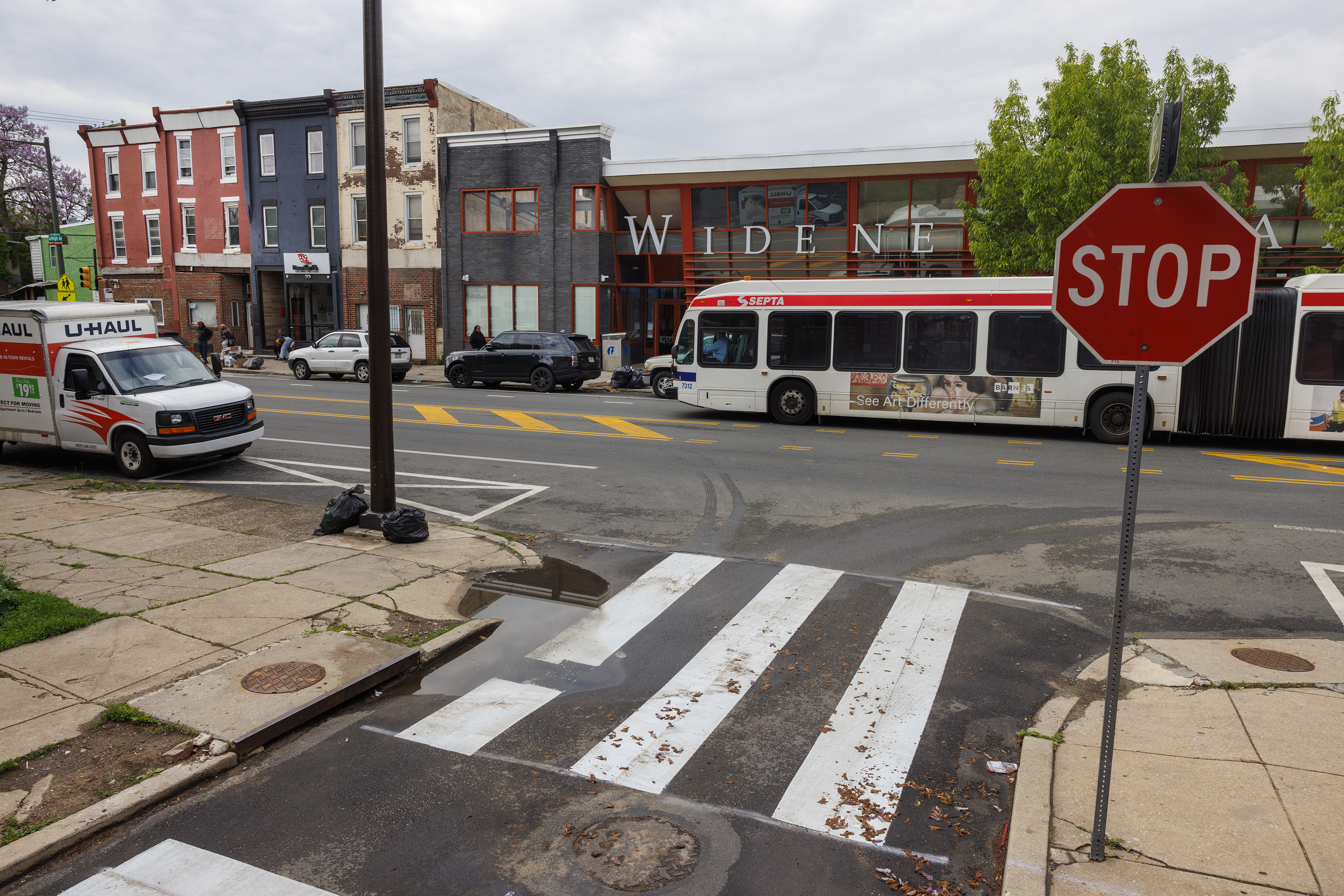
The dismissals began with the case of Namir Mack, charged with firearms offenses and evading arrest after a March 2025 stop by Gershwin and Lee led to the recovery of an illegal handgun.
According to court filings, the officers stopped Mack as he walked along West Erie Avenue. Body-worn camera footage showed Mack lifting the back of his sweatshirt after the officers ordered him to expose his waist.
Mack then ran. During a brief chase, he was struck by an SUV on Hunting Park Avenue, and officers recovered a handgun. A supervisor’s body-worn camera footage captured the aftermath.
“What is this?” Sgt. Christopher Bloom asked. “A mere encounter turned into a foot pursuit?”
Defender Association lawyers characterized the pattern of conduct discovered in their review as deeply concerning.
The officers’ actions were “flying in the face of everything that’s supposed to be happening with this march toward more equitable policing in Philadelphia,” said Michael Mellon, who, along with Paula Sen, leads the association’s police accountability unit and conducted the review.
Efforts to reach Lee, who left the department last November, were unsuccessful. Gershwin directed inquiries to his supervisor, who declined to comment.
The police department declined to comment on the dismissed cases and the Defender Association’s findings.
Police Commissioner Kevin J. Bethel declined an interview request, and police union leaders did not respond to requests for comment.
The district attorney’s office, too, declined to comment.
Police spokesperson Sgt. Eric Gripp said that pedestrian stops must be based on something more than a “hunch,” and that “the mere presence of a firearm” or “a person being in a particular area does not, standing alone, automatically justify a detention or frisk.”
Department policy also requires officers to activate body-worn cameras at the outset of investigative stops. But the lawyers found that in every reviewed stop for which footage was available, the officers activated their cameras only after the interaction had begun, obscuring the moments most critical to determining whether the stop was lawful and whether citizens had voluntarily complied with police requests.
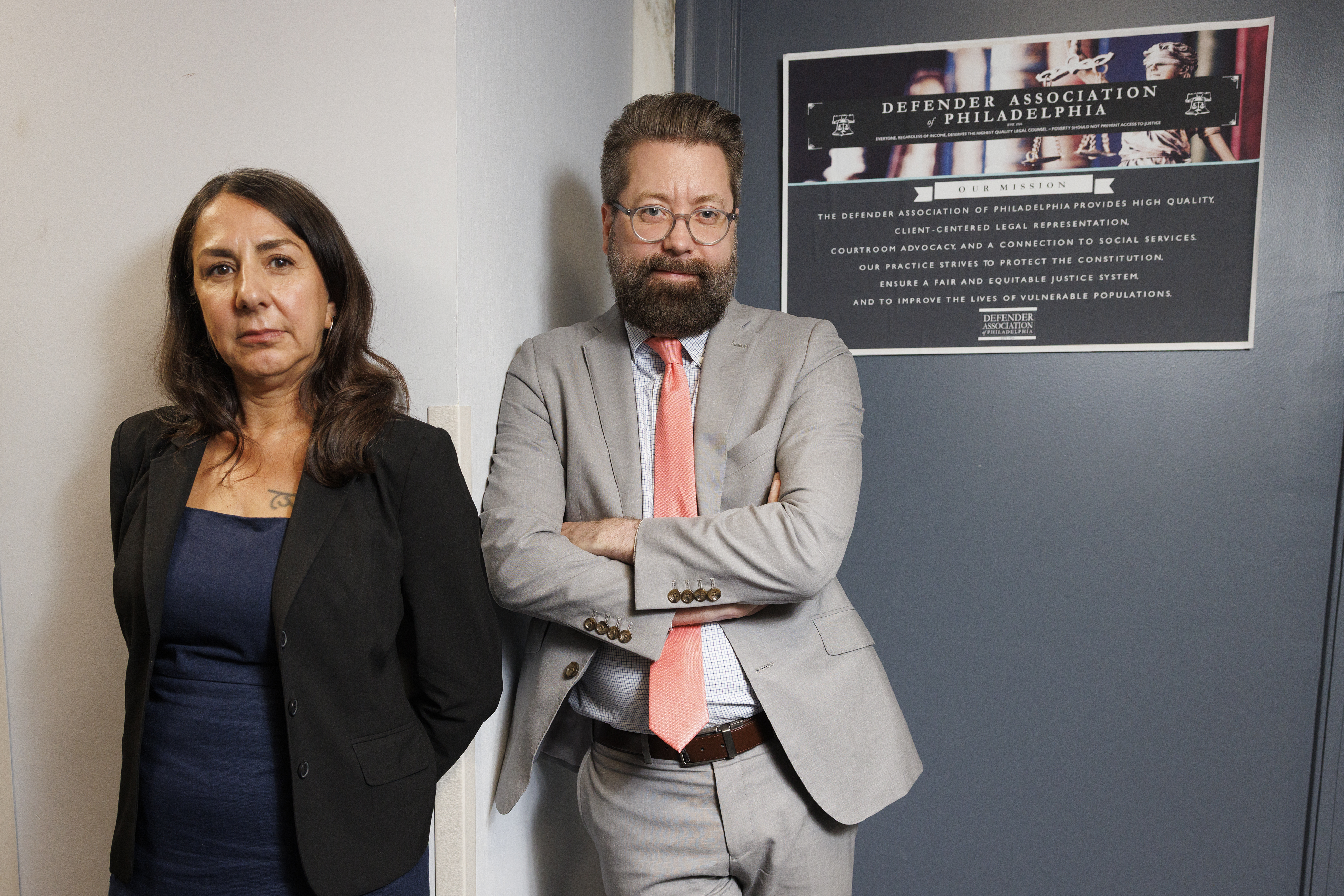
Paula Sen and Mike Mellon, who lead the police accountability unit of the Defender Association of Philadelphia, at their offices.Alejandro A. Alvarez / Staff Photographer
According to the lawyers’ legal filings, the department sustained at least three investigations for body-worn camera violations against both Gershwin and Lee during the two-year period reviewed by attorneys.
Of the nearly 500 pedestrian interactions reviewed by Mellon and Sen, only 130 were documented as investigative stops. The officers recorded an additional 320 as mere encounters.
After reviewing body-worn camera footage, police paperwork, and other materials, the lawyers concluded that 277 of the interactions described as mere encounters should have been classified as investigative stops and subjected to consent-decree review. Of those, 218 involved weapons license investigations. None resulted in the recovery of an illegal firearm.
The lawyers also found that all but one of the nearly 500 people the officers stopped during the review period were Black. All but two were men.
<div data-analytics-viewport="autotune" data-analytics-label="stops-06-11-26" id="stops-06-11-26__graphic" data-iframe-fallback="https://media.inquirer.com/storage/inquirer/ai2html/stops-06-11-26/fallback-mobile.jpg" data-iframe-fallback-width="350" data-iframe-fallback-height="1062" data-iframe="https://media.inquirer.com/storage/inquirer/ai2html/stops-06-11-26/index.html" data-iframe-height="1038" data-iframe-resizable></div> <script type="text/javascript">(function() { var l = function() { new pym.Parent( 'stops-06-11-26__graphic', 'https://media.inquirer.com/storage/inquirer/ai2html/stops-06-11-26/index.html'); }; if(typeof(pym) === 'undefined') { var h = document.getElementsByTagName('head')[0], s = document.createElement('script'); s.type = 'text/javascript'; s.src = 'https://pym.nprapps.org/pym.v1.min.js'; s.onload = l; h.appendChild(s); } else { l(); } })(); </script>
In one encounter classified as voluntary, body-worn camera footage showed Gershwin asking to search a man’s bag outside a beer deli. When a woman in the group objected, Gershwin searched the bag anyway before walking away, having found nothing.
In another supposedly voluntary encounter, Gershwin warned two teenage boys that if they did not lift their shirts, “we’re gonna cuff you.” Neither teen was found to have a weapon.
“They know they don’t have reasonable suspicion,” Sen said, “so they’re simply not documenting them.”
Gripp said the department’s internal affairs bureau conducted six investigations involving Gershwin and four involving Lee related to pedestrian stops and searches. Two allegations against Gershwin were sustained, he said, and none of the cases against Lee was sustained.
David Rudovsky, a civil rights lawyer who helped secure the consent decree, said he is “concerned that at least some officers in the department are doing an end run around the consent decree.”
Rudovsky said he plans to press the department to investigate Gershwin, Lee, and other officers who appear in body-worn camera footage reviewed by defense attorneys.
“If we’re not satisfied,” he said, “ultimately we can seek relief from the court.”
The Citizens Police Oversight Commission also said it plans to analyze department data on mere encounters and conduct audits as a result of the Defender Association’s findings and complaints from residents.
While most active cases handled by the Defender Association have been dismissed, Mellon and Sen estimate that an additional 30 to 40 cases involve private defense attorneys. They said they next plan to press the district attorney’s office to review closed cases tied to the officers’ arrests and broaden their analysis to other officers.
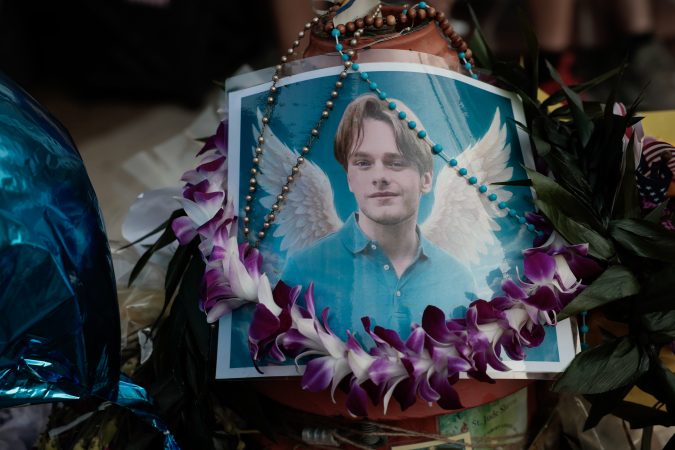
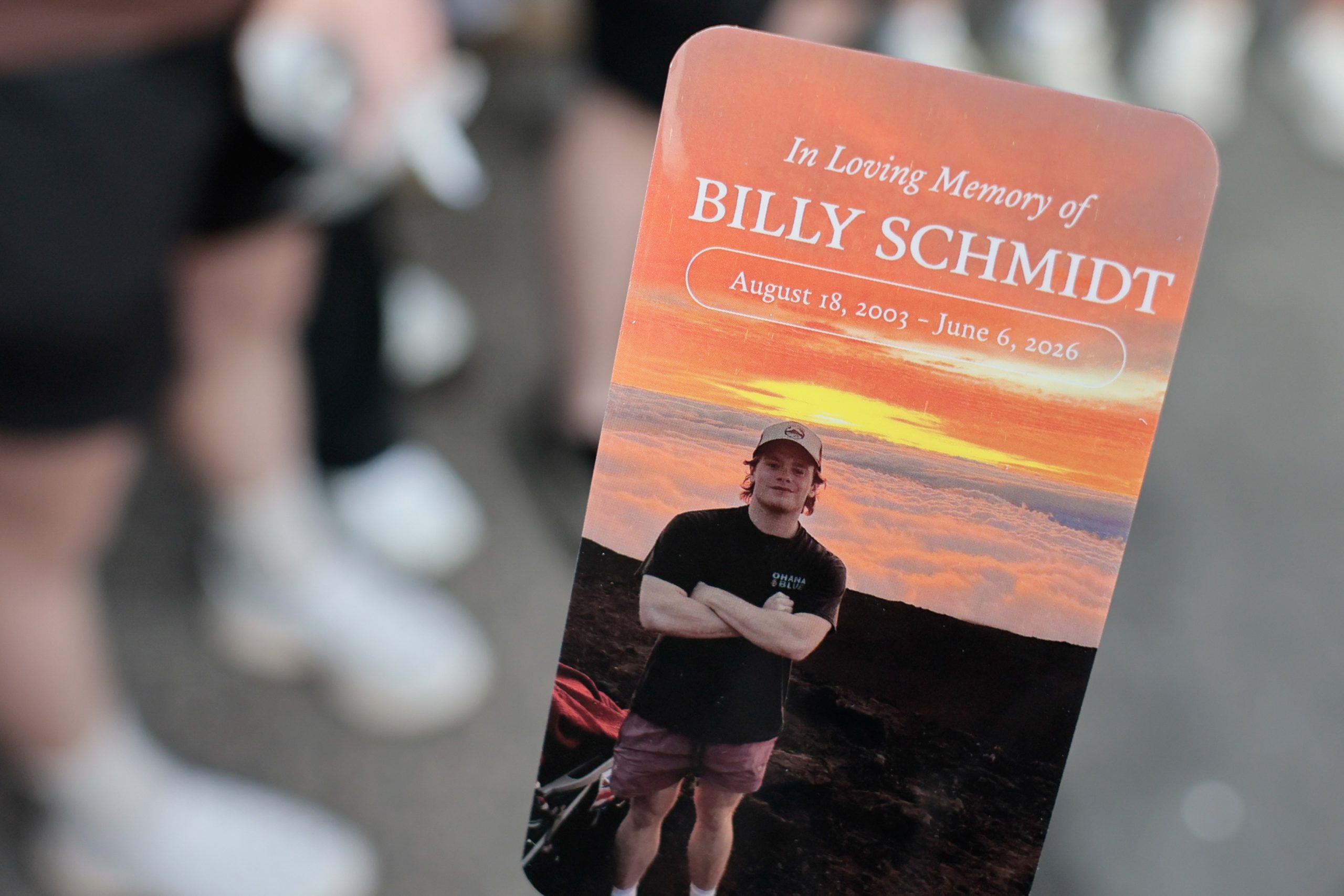
Family and friends gathered in South Philadelphia Thursday night to mourn William Schmidt, a Penn State student they all knew simply as “Billy.”
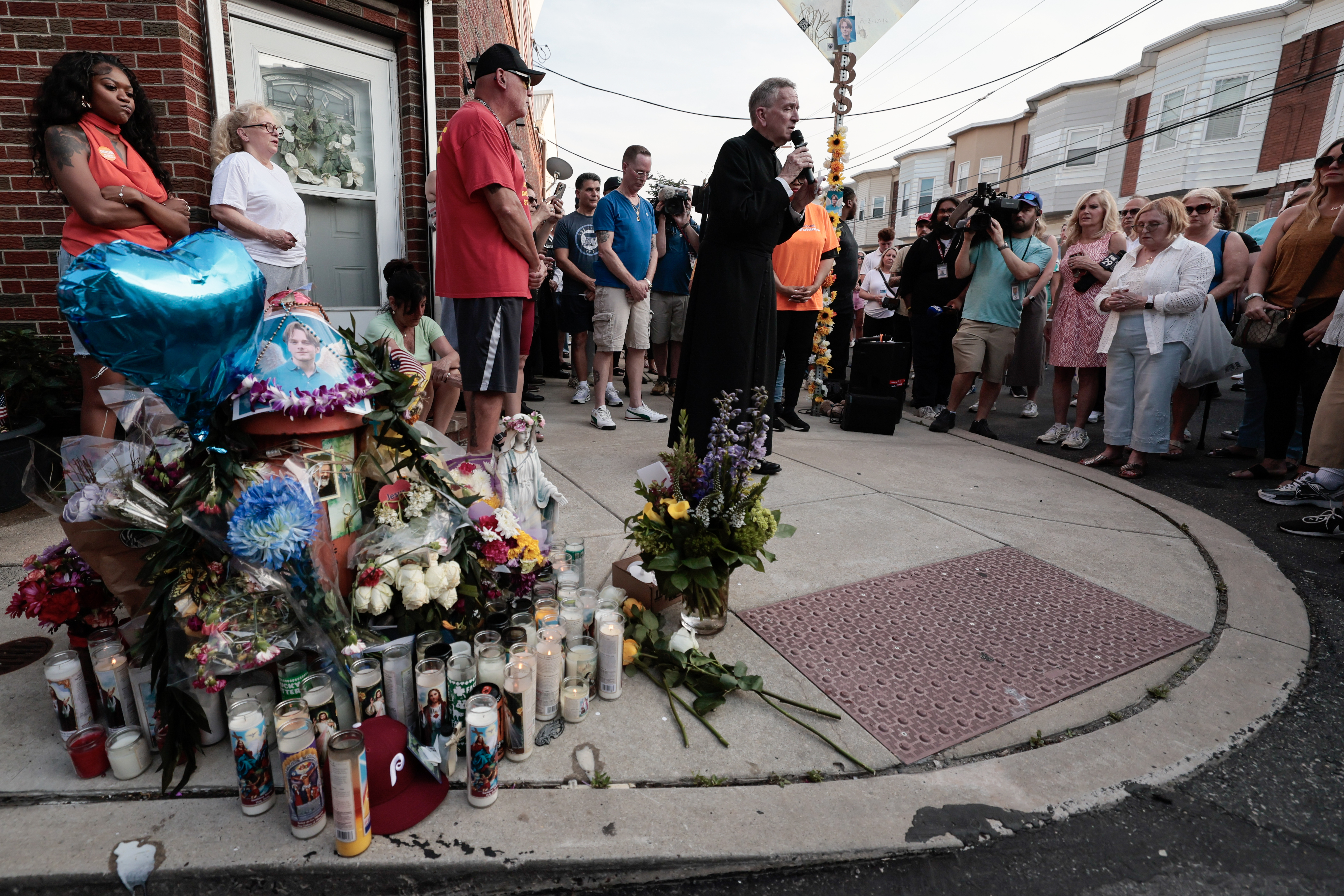
Spanning three blocks, loved ones and neighbors sang songs and held back tears on the corner of 20th and Durfor Streets, where a memorial to Schmidt near a fire hydrant where he was shot and killed was covered by candles, flowers, and balloons.
“He was my son, my best friend,” William Schmidt, Billy’s father, said, holding back tears. “How am I supposed to watch the Eagles play without him now? I am heartbroken without him.”
Father Kelly speaks at a vigil in memory of South Philly shooting victim Billy Schmidt Thursday, June 11, 2026, in South Philadelphia.Elizabeth Robertson / Staff Photographer
Trying to find comfort in the outpouring of love surrounding his son’s memorial, Schmidt said the crowd was a testament to Billy’s life and how good a person he was. But it’s not enough to outweigh a father’s pain.
“I’m thrilled he had such a great group of friends. He was a very candid person who never bothered anyone,” Schmidt said. “But I don’t have my son.”
One of those friends, Gino Russo, can’t even remember life without Billy, whom he’d known since kindergarten.
“Every time you call him, he was there,” Russo said. “Billy never let anyone down. I never saw him walk into a room not smiling and making sure everyone is smiling around him.”
Anna, Billy’s sister, called him “my best friend + best brother in one” in a message on a poster featuring lots of memories and a heart made with pictures of the siblings.
“Being your sister is the biggest honor,” she wrote. “Spending every Eagles game with you was so much fun, and you will always be watching the games with me now.”
Video captured on a home surveillance camera obtained and broadcast by 6abc shows a man wearing a hoodie throwing a cell phone down Durfor Street. Schmidt appeared to be chasing him and another man, who shot the Penn State student in the chest as he turned the corner.
Schmidt was pronounced dead at Penn Presbyterian Medical Center a short time later.
“This is senseless,” Councilmember Kenyatta Johnson told the crowd standing beside Schmidt’s father and sister, who held each other tightly.
William Schmidt was studying digital journalism and media at Penn State’s online campus.Elizabeth Robertson / Staff Photographer
Schmidt was a fourth-semester student studying digital journalism and media at the Penn State World Campus, the university’s online campus. Schmidt’s father told 6abc he was shocked his son chased the two men to retrieve his phone, which was found under a car on Durfor Street and turned over to police.
Philadelphia police are still trying to identify the two suspects, who were also captured in security footage both approaching the scene and fleeing the area following the shooting.
One suspect was wearing a light gray custom designed “KONFUSED” brand hooded sweatshirt. The other was wearing dark clothing and a light gray camouflage face mask, which he removed following the shooting.
Anyone with information is asked to call the homicide unit at 215-686-3334, or submit an anonymous tip by calling or texting 215-686-TIPS (8477). The city offers a $20,000 reward for information that leads to an arrest and conviction.
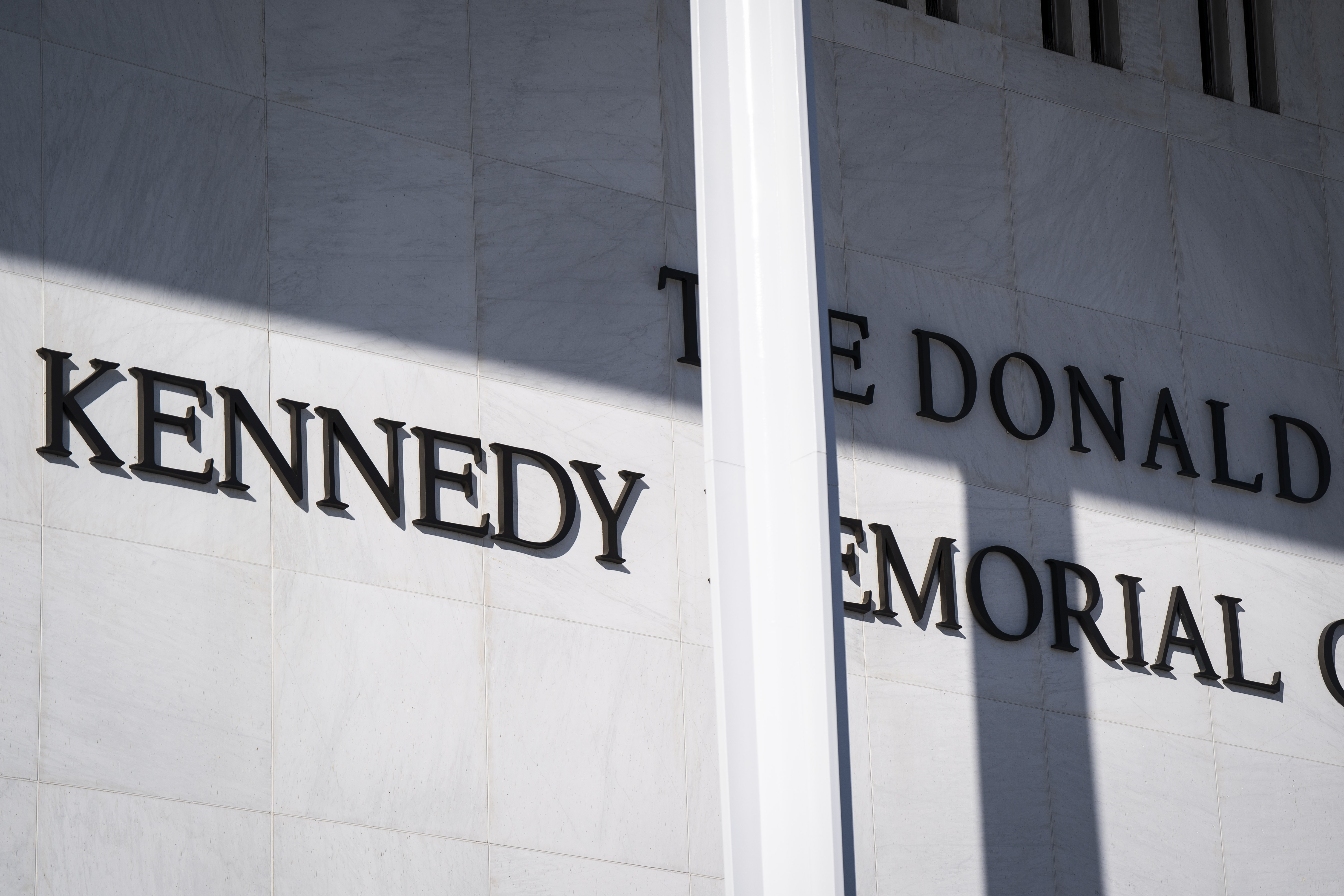
The Kennedy Center’s board plans to fight a federal judge’s order to remove President Donald Trump’s name from the performing arts center.
The center’s trustees on Thursday voted to seek a last-minute stay of U.S. District Judge Christopher Cooper’s directive to take Trump’s name off the center’s exterior by Friday as they appeal his ruling that renaming the center was illegal, according to a meeting attendee and someone briefed by a meeting attendee, who both spoke on the condition of anonymity for fear of retribution.
The board’s decision came a day before Cooper’s deadline for the center to remove Trump’s name from its building and branding, part of a ruling in which the judge also granted a request from Rep. Joyce Beatty (D., Ohio) to temporarily block steps toward a planned two-year shutdown.
Cooper’s order, the most significant legal blow yet to Trump’s effort to remake the Kennedy Center, found that the board exceeded its authority in December when it voted to rename the venue “The Donald J. Trump and The John F. Kennedy Memorial Center for the Performing Arts.” Congress gave the center its name, Cooper wrote, and only Congress can change it.
In February, Trump announced that he planned to close the center for two years starting in early July. The closure was necessary, he said, to make roughly $250 million in renovations, a decision that blindsided staff, artists, and even some trustees. The board — stacked with loyalists who elected Trump chairman after he purged his predecessors’ appointees in February 2025 — voted in March to approve the closure. The center’s executive director, Matt Floca, testified in April that the building’s deterioration is so severe that staying open during construction would be “irresponsible,” citing failing roof panels and water seeping into electrical vaults.
But Cooper ruled that the closure decision was made rashly, without the board weighing enough information about the potential harms. He did not bar trustees from ever shuttering the building, leaving the door open for the board to reconsider whether it should “come to this decision anew after independently balancing its multiple obligations to the Center in a prudent fashion.” The center’s general counsel highlighted that language last week in a memo to staff, noting that the court did not require the center to stay open during renovations or present any particular programming.
The center has so far signaled that it will comply. In last week’s memo, the general counsel’s office ordered employees to erase all references to Trump from official materials, starting immediately with email signatures, letterhead, and other documents, followed by signs, brochures, ID cards, and the building’s exterior by Friday’s court-ordered deadline. On Monday, the center erased Trump’s name from its website and YouTube page, and by Thursday, it had done the same with its Facebook, LinkedIn, and X accounts.
“We are complying with the court’s order while evaluating all legal options to preserve this revitalization and recognize President Trump’s leadership,” spokeswoman Roma Daravi said.
Late Thursday afternoon, the center’s Instagram account was still branded “The Trump Kennedy Center,” and the president’s name remained emblazoned across the building’s facade.
Hours after Cooper’s rulings, Trump lashed out at the judge and suggested he would abandon his involvement in the Kennedy Center altogether. In social media posts after the ruling, the president insisted that the building must close for renovations to proceed safely and said that unless he was “free to do what I do better than anyone else,” he had no interest in continuing. Trump said he had instructed the Commerce Department to arrange a “full and complete transfer” of the institution to Congress, a proposal that puzzled lawmakers and legal observers, since federal law vests management of the center in its board of trustees.
Last week, Trump appeared to walk that back. When asked on Friday how he wanted to be involved at the center, Trump said, “The same way it is.”
“I’m the chairman, so we’ll just keep it going,” he told reporters aboard Air Force One.
On Wednesday, a White House official said the president will remain engaged in the center’s affairs as administration officials devise plans to fix “the facility’s major issues.” The White House contested the notion that Cooper’s rulings were a “defeat” for Trump.
SAN JUAN, Puerto Rico — The U.S. government on Thursday announced sanctions against Cuba’s state-owned oil and gas company in a move some experts say will only deepen the island’s crises and hit vulnerable Cubans the hardest.
Secretary of State Marco Rubio asserted that key assets of the company, known as Cupet, were “unlawfully expropriated from American owners years ago.”
He also accused Cuba’s government of weaponizing energy.
“While the Cuban people have suffered fuel shortages and blackouts because of decades of under-investment in critical infrastructure, Cuba’s Communist leaders have diverted energy resources to line their own pockets,” Rubio said in a statement.
He further noted, without providing evidence, that Cuban officials “resell countless barrels of scarce energy on the secondary market, hoarding energy supplies for its military, intelligence and repressive forces, and rationing energy as a tool of social control.”
Bruno Rodríguez, Cuba’s foreign affairs minister, pushed back against Rubio’s comments in a post on X.
“The U.S. Secretary of State, driven by ambitions of conquest, presidential aspirations, and the vindictive sentiments of the elitist clique that propelled his political career, is now further tightening the economic and energy blockade against Cuba,” he wrote. “To justify this, he doesn’t resort to excuses prepared by his State Department, but rather to the usual vulgar lies, the most aggressive, ignorant, and rabid rhetoric among Cuba’s enemies.”
Cuba’s government has previously said that sanctions punish all Cubans and are aimed at strangling the economy to destabilize both the government and its people.
Cupet’s fuel sales to the public are almost nonexistent and are currently rationed.
William LeoGrande, an expert on Cuba at the American University in the United States, said the latest U.S. measure seems like an effort to block any major oil shipments.
“It appears that they’re all in on strangling the Cuban economy,” he said. “Their policy is a contradiction. They claim they don’t want to create a humanitarian crisis, although that’s exactly what they’re doing.”
‘Risk of triggering mass migration’
Ricardo Herrero, a Cuban economist based in the U.S. and executive director of the Cuba Study Group, a nonpartisan organization based in Washington, D.C., said he was “genuinely vexed” by the move.
“How are private importers supposed to store diesel and get it into vehicles without using CUPET facilities?,” he wrote on X. “This undermines what, until this morning, had been a humanitarian priority for the US. Either something much bigger is afoot, or we’ve entered the ‘indiscriminate cruelty’ phase of this policy.”
It’s unclear whether Cupet has any assets in the U.S., although it’s unlikely, LeoGrande said.
He said he could understand the logic of the measure to decentralize the government and strengthen and empower the private sector by enabling it to sell gasoline to state enterprises, or force those enterprises to move toward privatization so they could be oil recipients.
“Now, the Cubans are not going to privatize Cupet in the hope that might work and that somehow the U.S. might allow oil to go through in that way,” LeoGrande said.
He noted that most private businesses in Cuba are small and don’t have the infrastructure to land an oil tanker, unload the product and distribute it.
“They’re running a huge risk of triggering mass migration,” he said of the U.S. government.
Rubio said in a statement that all property or interests of Cupet located in the U.S. or in possession or control of U.S. people are blocked.
“President Trump wants a new future for the Cuban people with greater economic and political freedom and opportunity,” Rubio wrote on X. “Until then, we will continue to target the Communist regime’s ability to leverage its energy trade to further its corrupt agenda and violently repress the Cuban people.”
Cuba is already struggling under a decades-old embargo and a lack of petroleum as the U.S. keeps pushing for a change in its economic and political model.
Power outages — already common given the economic and energetic crisis gripping the island for the past five years — have only intensified since U.S. President Donald Trump threatened tariffs in late January on any country that sells or provides oil to Cuba.
Both countries have acknowledged that they’ve held talks, but the scope of them is unknown.
Meanwhile, Trump has been threatening military action in Cuba ever since the U.S. military invaded Venezuela and arrested former President Nicolás Maduro.
Last Thursday, Trump said Cuba has “sort of collapsed” and said “we’re going to handle that as soon as we’ve finished” military operations in Iran.
WASHINGTON — President Donald Trump said Thursday that he plans to nominate Jay Clayton, the U.S. attorney for the Southern District of New York and a former Securities and Exchange Commission chairman, as director of national intelligence.
Trump announced the nomination on social media amid pressure from Congress to name a permanent replacement for Tulsi Gabbard, who announced her resignation last month. Trump faced intense pushback over his decision to name Bill Pulte, head of the Federal Housing Finance Agency, as acting director. The job oversees the coordination of 18 intelligence agencies.
The resulting uproar led to a standoff in Congress after Democrats said they would refuse to renew foreign intelligence powers unless Trump pulled Pulte’s nomination and named a permanent nominee.
“Few people anywhere in the Legal Community are respected at the level of Jay,” Trump wrote. “I encourage the United States Senate to confirm Jay as soon as possible.”
Speaking later Thursday in the Oval Office, Trump said he still plans to keep Pulte in the role “for a little while” after earlier saying he wants Pulte to downsize the office. He called Clayton an “incredible talent” and said, “Nobody has better credentials.”
As the U.S. attorney in Manhattan, Clayton oversees the most prestigious of the Justice Department’s prosecution offices, with a vast portfolio ranging from terrorism and espionage cases to security fraud and public corruption.
He took over from interim U.S. Attorney Danielle Sassoon, who resigned in February after refusing to carry out orders from the Justice Department to drop corruption charges against Mayor Eric Adams. The case was eventually dropped after prosecutors from Washington submitted a request to a judge.
Republicans hope to move quickly on nomination
The Senate Intelligence Committee plans to hold a confirmation hearing for Clayton on Wednesday, according to a person who requested anonymity to discuss it ahead of an official notice.
Senate Majority Leader John Thune (R., S.D.) told reporters that the Senate hopes to receive Clayton’s nomination paperwork from the White House as soon as Thursday. “We will move quickly,” he said.
Democrats are holding up the renewal of a key surveillance law, the Foreign Intelligence Surveillance Act, in protest of Trump’s decision to temporarily tap Pulte. They say they won’t support an extension of the law, which expires at midnight Friday, until Trump withdraws Pulte’s appointment.
Trump previously said Pulte would take over on June 19. It is unclear whether the Senate could move quickly enough to confirm Clayton before that date.
“I don’t know what realistic is, but we’re gonna probe the limits of it,” Thune said.
Connecticut Rep. Jim Himes, the top Democrat on the House Intelligence Committee, said that he has “known and respected” Clayton for decades and that if Trump had named him as the DNI nominee last week, “lots of pain might have been avoided.”
“His intelligence, temperament and deep commitment to public service will make him a terrific DNI,” Himes said.
Asked about Clayton’s nomination, Senate Democratic Leader Chuck Schumer said, “Pulte has to go.”
“He cannot be in the DNI role,” Schumer said. “It’s too important.”
Trump’s pick has led SDNY during a tumultuous period
Clayton navigated his way through a 14-month tenure in the Southern District of New York without clashing with the federal judges in the busiest court in the nation, unlike his counterparts in upstate New York and New Jersey. After his interim term expired after 120 days, the judges of the Southern District appointed him as U.S. attorney.
Clayton was sworn in April 2025 on the same day three prosecutors resigned, saying they felt pressured to admit wrongdoing or regret about prosecuting the case against Adams.
Then, weeks later, the office had to withstand controversy over the Trump administration’s firing of one of its most respected and successful prosecutors, Maurene Comey. She claims she was fired because of Trump’s dislike of her father, former FBI Director James Comey.
Under Clayton, the Manhattan U.S. Attorney’s Office facilitated the unsealing of thousands of pages of court records from the prosecutions of Jeffrey Epstein and Ghislaine Maxwell — documents that were made public as part of the Justice Department’s release of records related to the late sex offender and his longtime confidant.
Clayton filed documents with the court explaining the process the government followed in releasing the materials.
Clayton has also overseen the prosecution of former Venezuelan President Nicolás Maduro and Maduro’s wife, Cilia Flores, on drug trafficking charges.
Clayton has overseen cases involving national security threats
Several recent terrorism cases brought by Clayton’s office touch on the global threats and influences that he’ll be navigating if confirmed as director of national intelligence.
They include the May arrest of Mohammad Baqer Saad Dawood al-Saadi, an Iraqi and Iranian citizen accused of plotting 20 attacks in Europe and Canada and planning to attack a Manhattan synagogue and Jewish centers in Los Angeles and Scottsdale, Ariz., in retaliation for the U.S. war on Iran.
“There are foreign nations and terrorist organizations that see our success as a threat. A threat that they want eliminated,” Clayton said at a recent press briefing. “That is a stark truth.”
“And don’t take my word for it,” he added. “Take their words and their actions. When your enemies tell you something, and when they act, you should know that they mean it.”
The first Trump administration tried in June 2020 to install Clayton, then the chairman of the SEC, as U.S. attorney in Manhattan, but backed down and instead allowed Deputy U.S. Attorney Audrey Strauss to serve in the post. The reversal came after then-U. S. Attorney Geoffrey S. Berman agreed to step down, following assurances that probes into Trump allies would not be disrupted and that Strauss could lead the office.
At the time, the office was looking into dealings by Rudy Giuliani, who was serving as Trump’s personal attorney, and was also investigating the actions of a state-owned Turkish bank.
Dawaun Lewis, 30, has been charged with murder, robbery, and related crimes in the death of 45-year-old Keisha Furlow, police said. He was taken into custody Thursday after being arrested by Highway Patrol officers near his home on West Girard Avenue.
First responders discovered Furlow, a mother of four, in an alley near her North Opal Street home in North Philadelphia early Sunday morning, according to police.
Her face had been badly injured, and investigators believe two bloodied bricks found near her body had been used in her slaying hours before, around 2 a.m.
Furlow was pronounced dead at the scene, and medical examiners determined she died from blunt force trauma.
Investigators said they reviewed surveillance footage showing a person kicking Furlow and beating her head with a brick. That person and another individual fled with Furlow’s purse before ditching it nearby, they said.
There was no word if police have any information about the second attacker. The investigation is continuing.