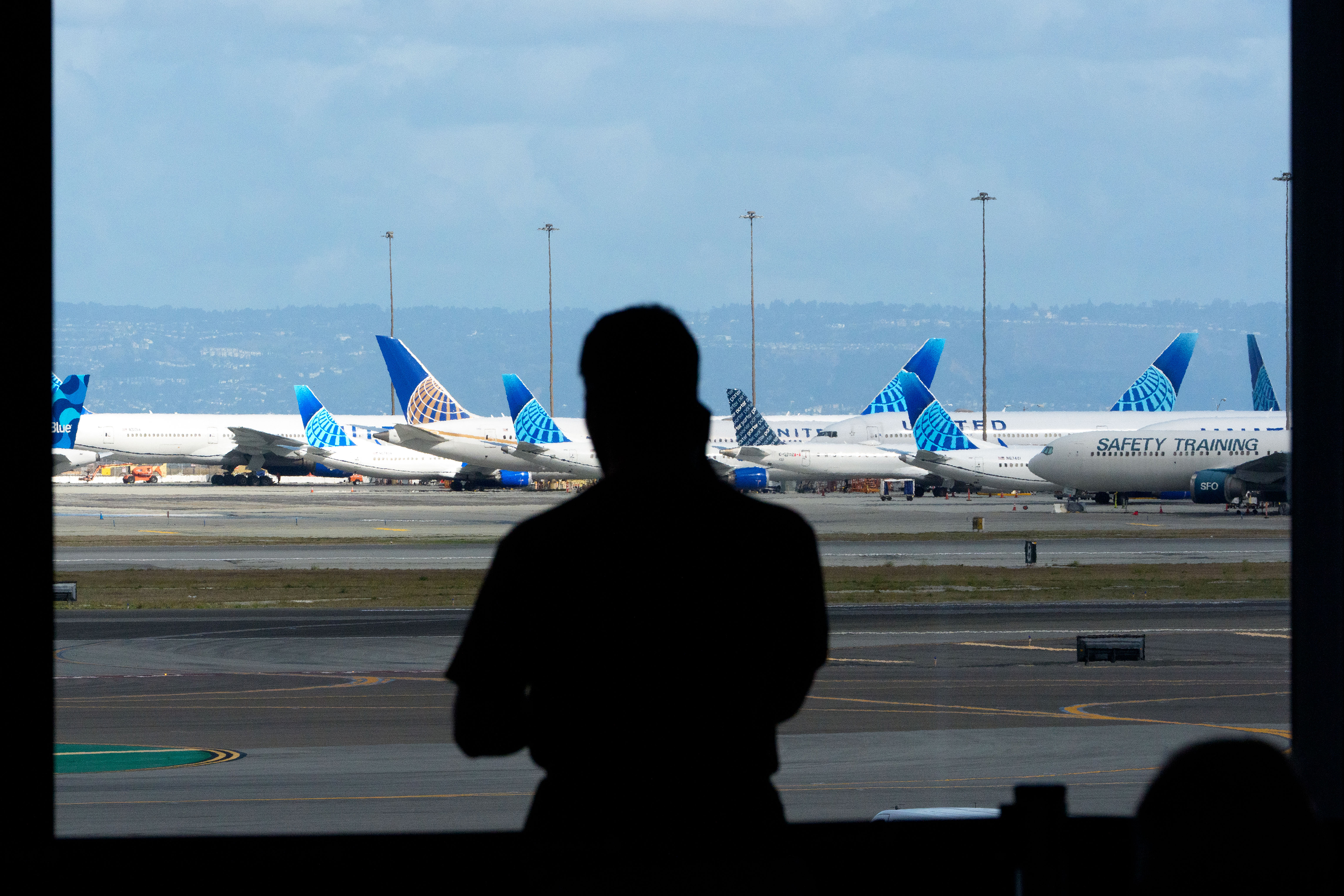
Philadelphia International Airport returned to a more typical pace of delays and cancellations on Monday following Friday’s nationwide ground stoppage issued by the Federal Aviation Administration.
There were 74 delays and 11 cancellations at PHL as of 11 a.m., according to flight tracker FlightAware, which “is a little higher than normal,” said PHL spokesperson Christine Ottow.
“We have many days with zero or one cancellation, then occasional days where a weather event here or somewhere in the country may cause a spike of cancellations,” Ottow said.
A nationwide ground stop was issued Friday afternoon due to the FAA’s air traffic system becoming overloaded after routine upgrades in parts of the country. This led the FAA to issue the ground stop, which cascaded throughout the country, bringing 25,000 delays and nearly 10,000 cancellations nationwide Friday.
Delays continued into the weekend at PHL, which saw more than 200 flight cancellations and delays on Saturday, with 249 delays and 83 cancellations Sunday, according to FlightAware.
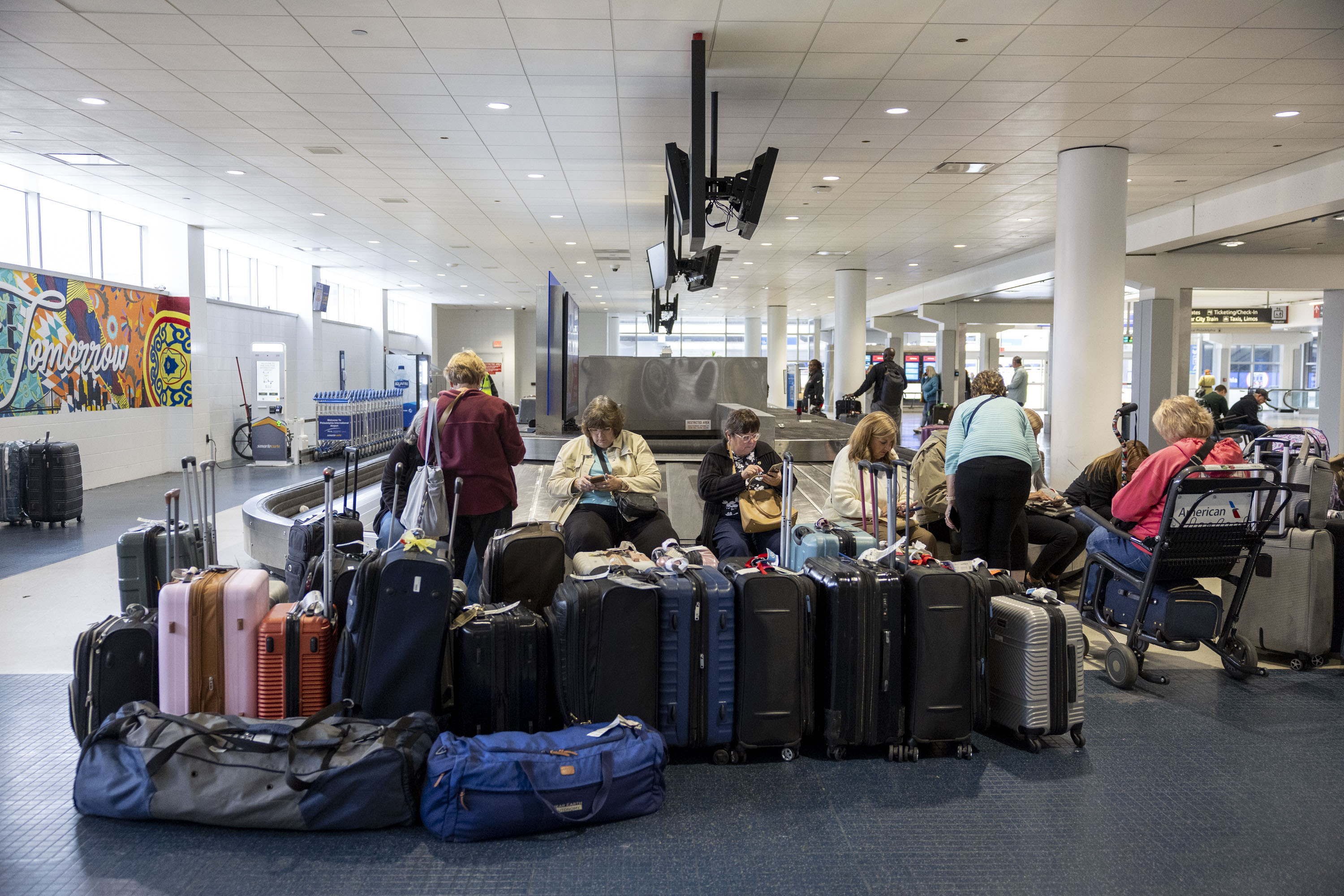
A group of 10 retired teachers from Sellersville Elementary are stuck waiting on a few pieces of luggage Saturday after their flight to Turks and Caicos was canceled at Philadelphia International Airport.Tyger Williams / Staff Photographer
With Monday morning’s more typical delay and cancellation levels, Ottow said it’s comparable to similar days in November, such as Nov. 2, which saw eight cancellations, or Nov. 6, with 13 cancellations. When the region experienced a tornado and hailstorm the day before the ground stop, there were 91 cancellations.
FAA officials are still investigating the exact cause of Friday’s ground stop, but said they believe routine wiring and router upgrades to the FAA’s air traffic control system in Arkansas and Texas overwhelmed what Transportation Secretary Sean Duffy called an “incredibly old telecommunication system.”
While the router was being replaced and switched from copper wire to fiber optic, the router began flooding other routers throughout the national air traffic control system, transportation officials said.
“We had over 1,000 connection attempts every four to five seconds. And what that did was give us issues with our communication with airplanes, and it also caused some disruption with our radar feeds.”
In its quest to relocate the Academy of Natural Sciences of Drexel University’s priceless collection out of Philadelphia, the Academy contacted 15 natural history museums in the United States as well as the Natural History Museum Abu Dhabi, according to confidential minutes from a September 2025 Academy board of trustees meeting.
Museums in Pittsburgh, New York, and Cleveland were the only ones in the U.S. to express interest, said the document submitted to City Council by Drexel Monday as part of its testimony.
“Cleveland is currently the only viable partner, willing to move quickly without funding concerns,” the document said. “Cleveland has stated they are ‘all in,’” Scott Cooper, former Academy CEO, told the board at a September 2025 meeting.
The meeting minutes were part of Drexel’s supplemental materials given to City Council, whose hearing Monday was the second investigating thelate September shutdown of the Academy museum.
The Academy of Natural Sciences of Drexel Universityalso explored a complete retooling of the Academy that would have turned it into a Freshwater Institute and would have “uniquely integrate[d] ANS’s irreplaceable assets — two centuries of biodiversity collections and archives, field ecology expertise, and scientific credibility — with cutting-edge genomic capabilities,” according to a detailed report on the potential revamping dated September 2025 that Drexel also submitted to Council.
The report, however, noted “a fundamental financial reality: that ANS’s apparent assets — $74 million in endowments, the 1900 Parkway building, and world-class collections — cannot be readily monetized due to inter alialegal restrictions, market constraints, and professional ethics considerations.”
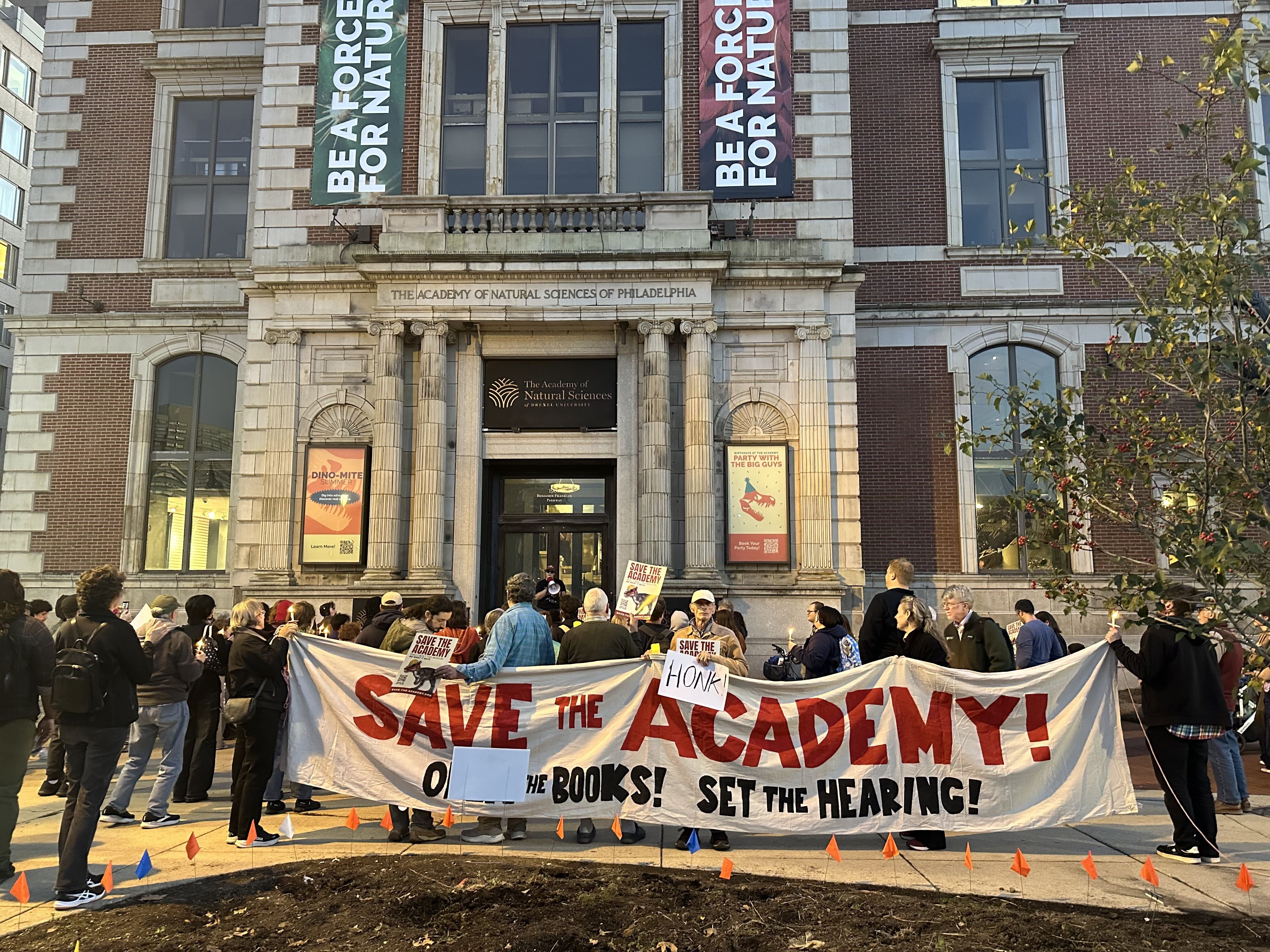
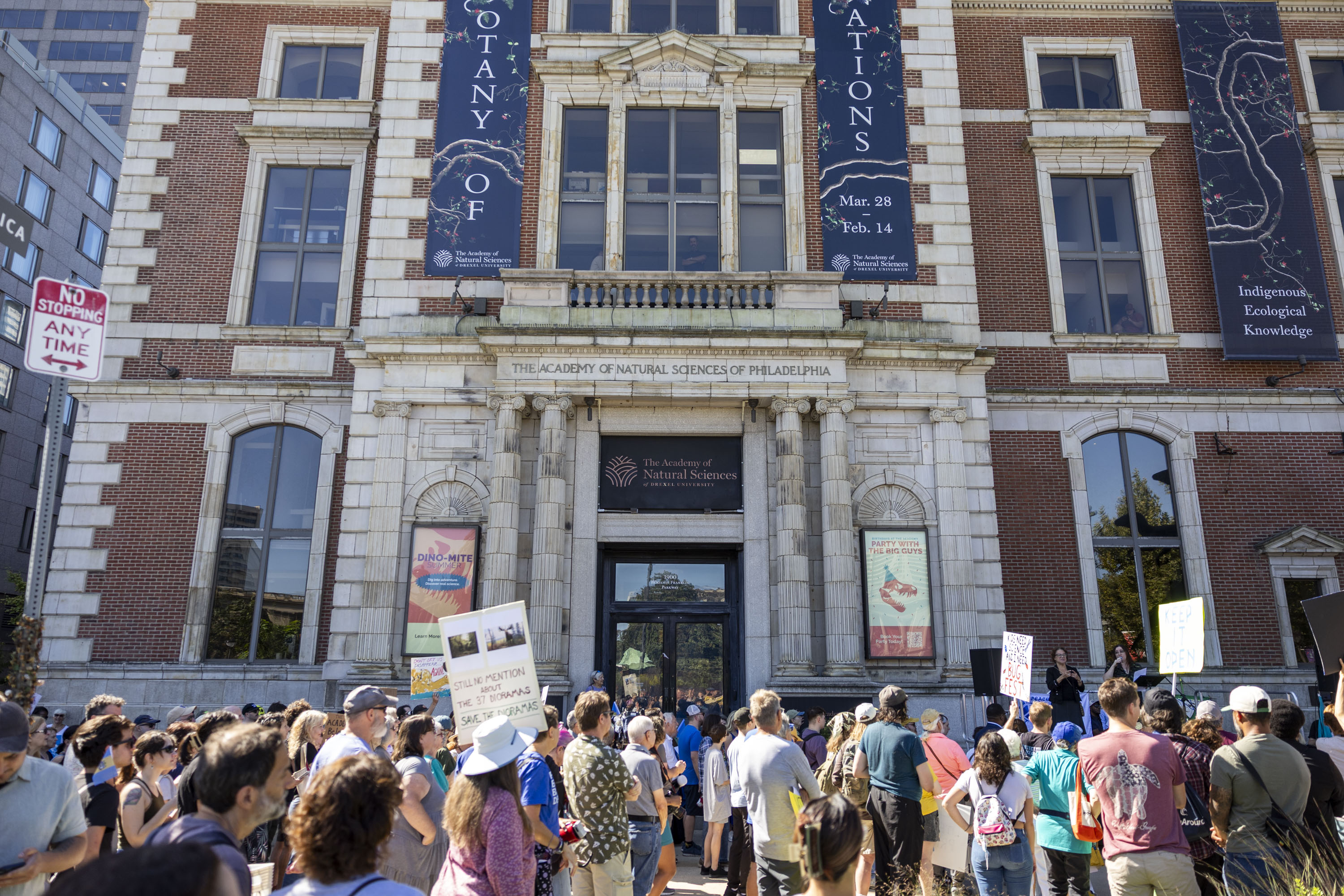
A rally outside the Academy of Natural Sciences of Drexel University in September protesting the museum’s closure.Tyger Williams / Staff Photographer
Only the “international option” — a partnership with the Abu Dhabi museum in the United Arab Emirates — would have achieved “financial sustainability through complete partner funding and elimination of collection storage costs.”
One Academy board member, John Smith, noted that the attorney general and Orphans Court “will significantly influence Academy options.” He believed an Abu Dhabi transfer would be too heavily contested for approval, according to the Sept. 18, 2025, meeting minutes.
Neither the Freshwater Institute nor the Abu Dhabi, or Cleveland partnership materialized. The Cleveland and Abu Dhabi solutions were part of “staff explorations,” said Academy board chair Suzanne Biemiller. “They never developed as real options and were never presented to, voted on, or advocated for by the board.”
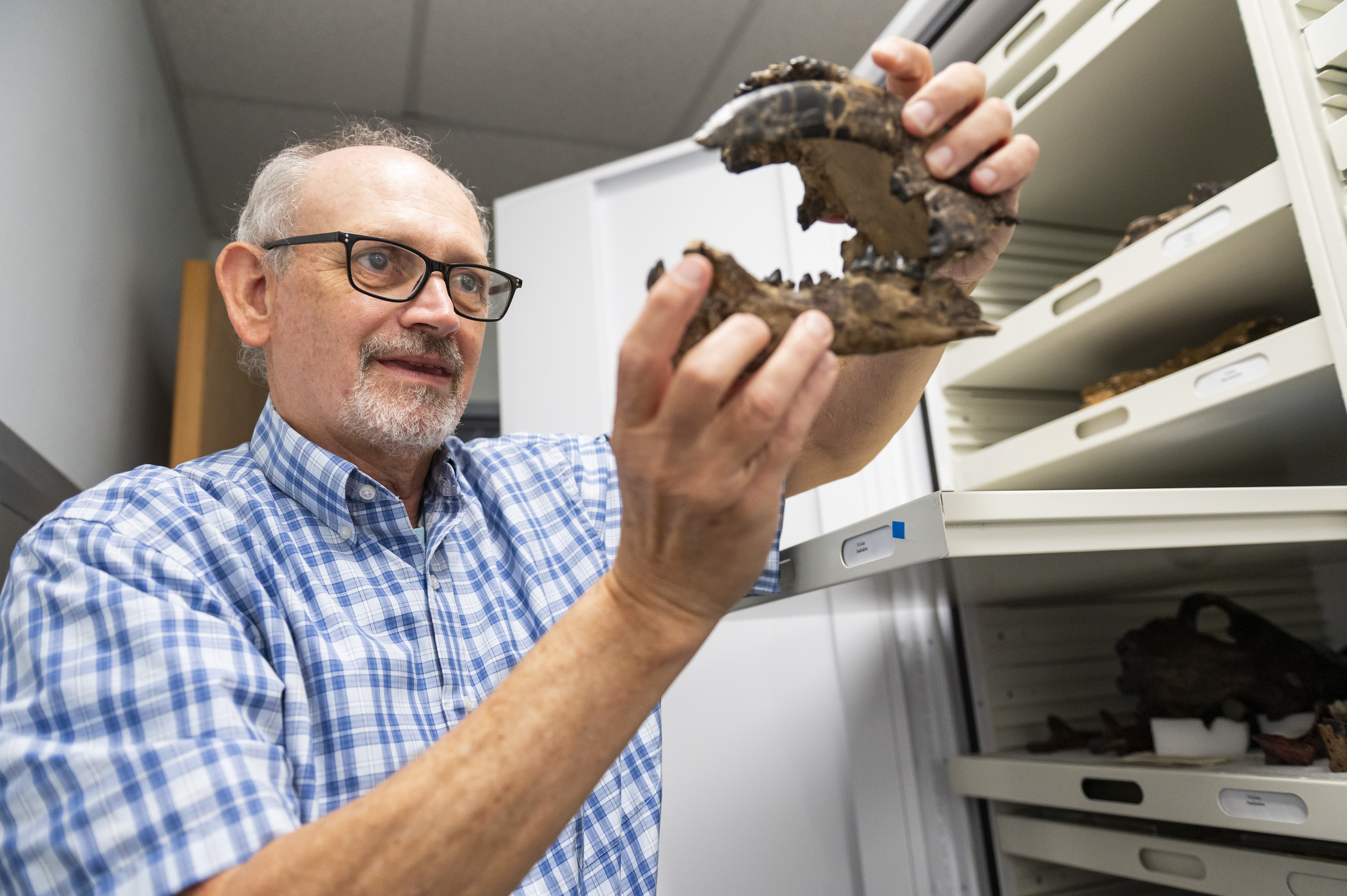
Ned Gilmore, collection manager for vertebrate paleontology, holds up the mouth of a Smilodon gracilis in the collection of the Academy of Natural Sciences of Drexel University, in August.Allie Ippolito / For The Inquirer
Some Academy objects moved to Abu Dhabi anyway
But that wasn’t the end of the matter. The Academy did make an unusually large loan of specimens to the Abu Dhabi museum — at least 2,000 objects, and perhaps closer to 3,500, according to a source close to the project who did not want to be named because they were not authorized to speak on the matter.
“We routinely lend specimens from our collections to other institutions for research projects and specific exhibitions but have never done so on that scale,” Robert McCracken Peck, curator of art and artifacts and senior fellow emeritus of the Academy of Natural Sciences of Drexel University, told The Inquirer recently.
The objects are still at the Abu Dhabi museum, as part of a three-year loan arrangement.
The Academy’s Robert McCracken PeckELIZABETH ROBERTSON / Staff Photographer
‘Highest risk’ but ‘most financially viable’
That loan happened in spite of the earlier option of moving the entire collection to the Abu Dhabi museum being deemed to hold “significant political risk.” But “their investment level (full digitization and AI-first research platform) would be unmatched,” the document said. This option, the document said, is the “most financially viable,” though “carries highest risk.”
Cooper “acknowledged the complexity of conducting business in the Middle East, describing it as time-consuming and frustrating,” according to the minutes. Drexel president Antonio Merlo, who was present at the meeting, also expressed skepticism, having had experience worked in Abu Dhabi when he worked for New York University.
Merlo was worried about the “political optics” and “implications for Drexel,” according to the minutes.
At a May 2025 Academy board meeting attended by Peter Kjaergaard, executive director of the Natural History Museum Abu Dhabi, Cooper called the potential Abu Dhabi deal a “a partnership … that could see the relocation of the Academy’s collections to NHMAD for an extended period.”
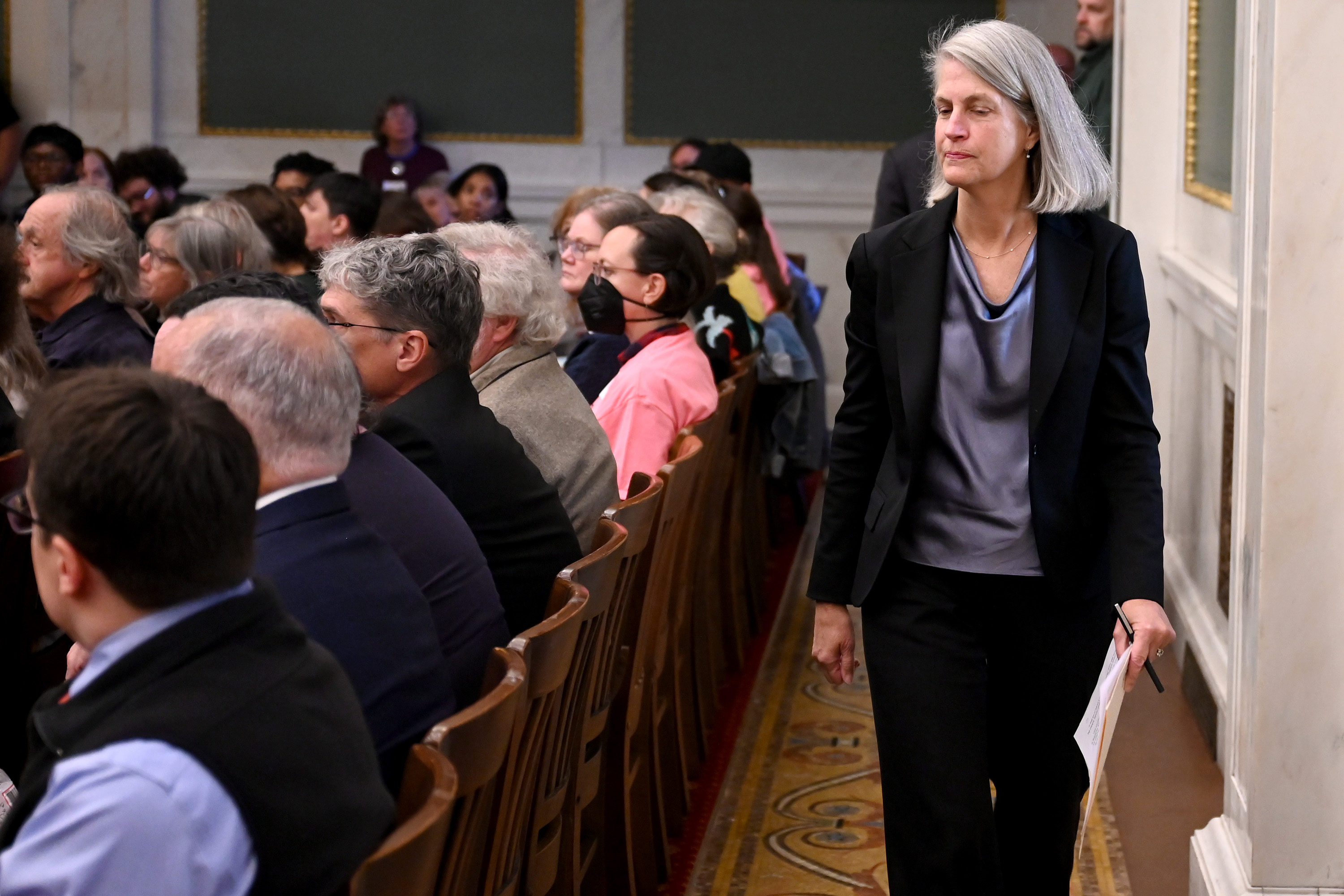
Academy of Natural Sciences of Drexel University board chair Suzanne Biemiller steps forward to testify at a City Council hearing Oct. 26 on the closure of the museum.Tom Gralish / Staff Photographer
Biemiller at the September meeting “emphasized the need for thorough discussion,” according to the minutes, “noting that paths to success are narrow with no certain outcomes.”
The meeting concluded with the following “action items”: Establish feasibility of campus collections move and 1900 Parkway building sale; secure letters of intent from Abu Dhabi and Cleveland by the end of November; and obtain a legal opinion on the likelihood of each option’s approval.
But none of the options ever came to pass, and Drexel and the Academy remain atan impasse over the Academy’s future.
During that September 2025 meeting, a question was asked about splitting the collection among multiple partners. Cooper said the preference would be to keep it together “to preserve the Academy’s legacy,” but that splitting was possible.
At the meeting, Merlo made clear that Drexel “cannot currently afford activities that do not directly support student education,” according to the minutes. “The Academy must sustain itself like every other Drexel unit.”
He suggested moving the collection to Drexel’s campus.
What specimens were sent to Abu Dhabi?
The Philadelphia specimens now in the United Arab Emirates at the Natural History Museum Abu Dhabi — a 377,000-square-foot museum that opened last November as part of the city’s ambitious museum district — include fish, mammals, and more.
Academy leaders say the items are there on a three-year loan agreement, and are then set to return to Philadelphia. The arrangement was seen as the start of a potential deeper relationship between the Academy and Abu Dhabi museum, according to an Academy source.
“There were ideas about other ways to partner with the newest museum and oldest museum, and Drexel, and research, and other avenues within our mission,” said the source, who asked not to be identified because they were not authorized to speak. Talks “didn’t get any further than the lending.”
A potential sale was “never on the table,” the source said.
Abu Dhabi’s natural history museum is the latest addition to a collection of museums in the Saadiyat Cultural District, which includes the Zayed National Museum and Louvre Abu Dhabi. Guggenheim Abu Dhabi, designed by architect Frank Gehry, has announced an opening for this December.
Attempts to reach the natural history museum were not successful. Phillip Manning, director of science at the Natural History Museum Abu Dhabi, said he would forward an Inquirer request to speak to him to the communications team at the museum. A spokesperson, Dan Leach, did not respond to subsequent emails in the past month from The Inquirer.
Drexel spokesperson Britt Faulstick declined to share details of the loan agreement. More than 50,000 items from the Academy are currently out on loan to more than 120 institutions, he said.
Asked whether conversations between the Academy and the Smithsonian, the American Museum of Natural History in New York, and the Cleveland Museum of Natural History were over potential mergers, deaccessioning of the collection, or to replace Drexel as a partner for the museum, Faulstick said:
“As part of the work to explore a sustainable future for the Academy, the Academy leadership had conversations with a number of peer institutions about potential opportunities for collaboration. Those conversations were exploratory and did not advance beyond the discussion stage or result in any formal agreements.”
When Anthropic goes public on Wall Street, the new pressure to deliver profits will test a commitment it has made since its founding: to prioritize humanity’s benefit as it develops artificial intelligence.
The San Francisco startup, which plans an initial public offering this month, has sketched out a governance structure that it says will protect the company’s broader mission against the pull of financial interests. But the mechanisms it describes give the company wide leeway to decide how to measure whether it’s benefiting society, experts say.
Like its rival OpenAI, Anthropic is a public benefit corporation, a legal designation used by companies that pledge to balance shareholder interests with the public good. How that will play out for companies worth potentially trillions of dollars is uncharted territory.
“I think then the real test emerges if and when the question of public benefit becomes costly” — or when the public benefit comes into conflict with making a profit, said Sarah Kreps, a professor and director of Cornell University’s Tech Policy Institute.
In its regulatory filings, Anthropic pledges to pursue long-term benefits of humanity through the responsible development of advanced AI. “We strive to help bring humanity safely into an era where transformative AI exerts tremendous and potentially decisive influence over a broad range of human undertakings,” the company said. Anthropic also has pledged at least 5% of its stock to a “public benefit” fund and its founders have committed to donate 80% of their wealth.
A pledge to do good is baked into corporate structure
Other tech companies have pledged to do good including Google, which prominently featured its then-motto, “Don’t Be Evil,” in its investor prospectus when it went public in 2004. But the words were not legally binding, and critics have accused the tech giant of leaving them behind.
Elon Musk’s takeover of Twitter in 2022 shows how the conflict between profit and public good might play out in real life, said Stavros Gadinis, a law professor at UC Berkeley School of Law.
“Let’s say that Twitter’s directors felt that Elon was the wrong guy to police the public square because they didn’t trust him, they didn’t like him, they didn’t think he’d be fair, whatever it was,” Gadinis said. “But he made them an offer that was so high compared to what their advisors told them the company was really worth that it would be against their fiduciary duties to not sell to Elon. This is the situation that the public benefit charter is trying to avoid.”
Had Twitter been a public benefit corporation, it could have been required to consider factors beyond maximizing shareholder value when selling the company.
There aren’t many public benefit corporations whose shares are publicly traded and they are all much smaller than Anthropic and OpenAI. They include the eyewear company Warby Parker, the insurance company Lemonade and software developer Veeva Systems, which had a conventional corporate structure when it went public in 2013 and converted to a public benefit corporation in 2021.
Anthropic’s idealistic ambitions for how it develops AI could run up against competitive pressure, such as from China, Kreps said.
Anthropic and OpenAI’s models have gone from answering almost any question, even if it was dangerous, to becoming much more circumspect. But as they face more competition, including from open-source Chinese models that likely will tell you whatever you want, she said, “will they start to rethink some of those guardrails? And what happens then?”
The setup generally is not preferred by shareholders because it gives more power to the company’s board than it does to shareholders.
Whatever a company decides as its public benefit mission, it will likely be much more difficult to measure than profits. That’s particularly true for AI companies, whose leaders have exalted AI as the solution to many of humanity’s problems — from curing cancer to creating economic prosperity.
“There are these echo chambers, the Silicon Valley bubble where they really think that what they’re doing is for the good of humanity,” Kreps said. And someone immersed in that environment, she added, might not even ask the right questions or understand how “public benefit” should be measured.
A trust aims to hold Anthropic accountable
A Long-Term Benefit Trust created by Anthropic is intended to operate as an independent body of trustees with expertise in AI safety, national security, public policy, and social enterprise.
Through a special Class T common stock, the trust “generally has the authority to elect and remove” Class T directors, who together will constitute a majority of Anthropic’s board of directors, according to the IPO filing. The Class T common stock is a single share that allows the five trustees to vote as a unit. It has no economic rights — meaning they get to vote but they don’t see any financial benefit or losses from the share and can’t sell it.
“The LTBT’s arrangements are designed to minimize the LTBT’s and the Trustees’ exposure to our financial performance and grant the Trustees sufficient independence to ensure we are striking this balance appropriately,” the filing said.
Three of the company’s board directors are elected by the trust directly, and another three are elected by other shareholders, which include the company founders with a 50.1% voting majority. A seventh director, with a potentially tie-breaking vote, is nominated by the trust and the holders of the Class T shares, but cannot be appointed or removed without consent from the board’s nominating committee, which is expected to be controlled by the founders.
Effectively, the trust can only hold Anthropic accountable on issues such as AI safety and the company’s broader mission up to a point, Gadinis said.
The trust “cannot determine the everyday decisions of these directors or the management of the company,” he said. ”If they disagree, they will have to go through the effort of removing directors, and they may not be able to remove a majority.”
As a public company, Anthropic also will be required to report finances and generally be more transparent than a privately held one. Many public companies dealing with AI, including Google and Microsoft, regularly update the public on efforts to develop AI responsibly.
The incentive for transparency could be as powerful as other mechanisms set up in Anthropic’s corporate structure, Gadinis said.
“I do think that by being public, we are going to get a lot more information, because a lot of people are going to be asking questions, and companies will be responding to these questions. Not only because they’re required by security laws, but also because they want to build this kind of trust with the investing community,” he said.
When Brian Gralnick walks his daughter in a stroller through Melrose Park, he carries garden shears to fend off the foliage.
“I’m not going to push my daughter into a rose bush,” Gralnick said.
Cheltenham’s sidewalk code enforcement is complaint-based, officials said, meaning the township addresses violations when residents point them out.
Gralnick, a 47-year-old lifelong Elkins Park resident,has taken matters into his own hands: trimming shrubs that block his path.
He’s also a frequent filer of sidewalk complaints to the township.
“I could do a dozen on a weekend, easily,” Gralnick said. “It’s just around accessibility issues, though.”
Brian Gralnick talks about the remaining width of the sidewalk as vegetation grows into the walkable space on Park Avenue behind the Samuel A. Green House in Elkins Park on Nov. 4.Monica Herndon / Staff Photographer
For years, he’s talked to township officials about sidewalk obstructions, emails show. He even once offered a tour of his route through Melrose Park, Gralnick said, but the problem persists.
“The hedges have shown tremendous growth,” he said of one property. “Code enforcement, less so.”
Homeowners typically pick fast-growing species for their hedges, which require trimming multiple times per year, said Kai Jones, the owner of Jones Lawn & Landscape in Wyndmoor.
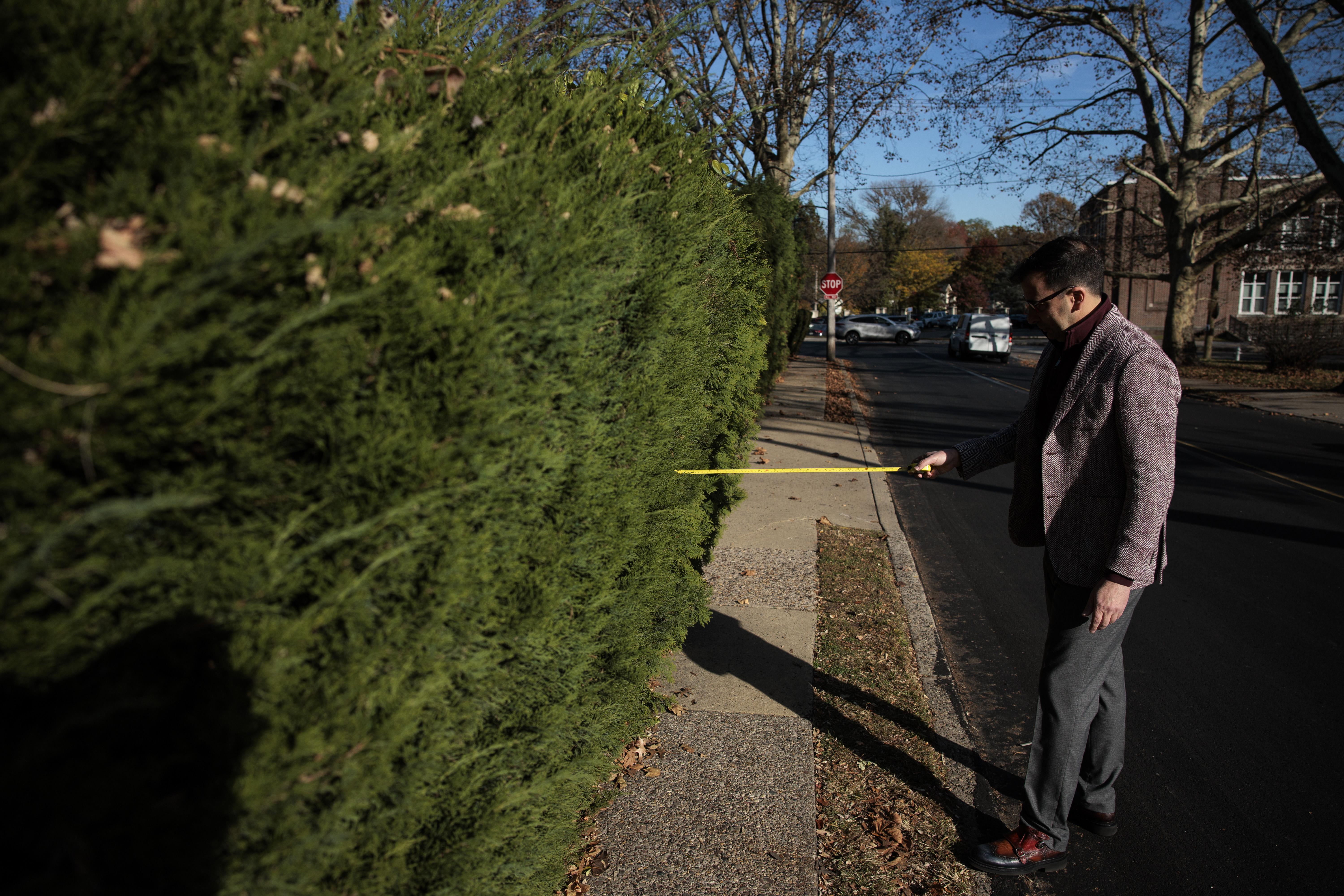
Several residents mentioned this stretch of High School Road, pictured here on Nov. 12, as an example of sidewalks made nearly impassable by foliage.Jess Rohan
As an inner-ring suburb, Cheltenham has shrubs that are over 50 years old, longtime residents said.
Gralnick said his focus on accessibility began not with his children but with seniors, when he worked in Pennsylvania’s Department of Aging.
“If my kids’ 18-inch-wide stroller cannot safely fit on the sidewalk, how is someone using a walker or a wheelchair … supposed to navigate it?” he said.
How Cheltenham polices sidewalks
The township code prohibits vegetation that obstructs “normal passage” on sidewalks.
When the township receives a complaint, Scott Lynch, head of building and codes and the fire marshal, or another inspector typically visits the site within one business day.
Then, Cheltenham sends a courtesy letter, rather than a violation notice, Lynch said, because it’s the most effective way to get responses from residents. “Eighty-five percent of the time, we get cooperation just with a courtesy letter,” he said.
If the resident doesn’t respond to the letter within three days, Cheltenham issues a violation notice. After 10 days, Cheltenham can file a citation with a local court, which can decide to fine the property owner up to $600 per day, Lynch said. In some cases, the township does the workand charges the property owner.
“Sometimes, this looks to other residents like no action is being taken, while really there’s a process (albeit frustrating) playing out behind the scenes,” township spokesperson Lauren Walter wrote in an email.
At times, Cheltenham opts not to penalize residents who are in touch with the township and either can’t afford to work on their properties or are otherwise vulnerable, Lynch said.
Repeated trimming issues test the limits of the township’s complaint-based approach, Lynch said: If a resident cuts their bushes back from the sidewalk, they have addressed the code violation. Cheltenham can’t tell homeowners to cut the foliage further onto their own property to make the trim last longer.
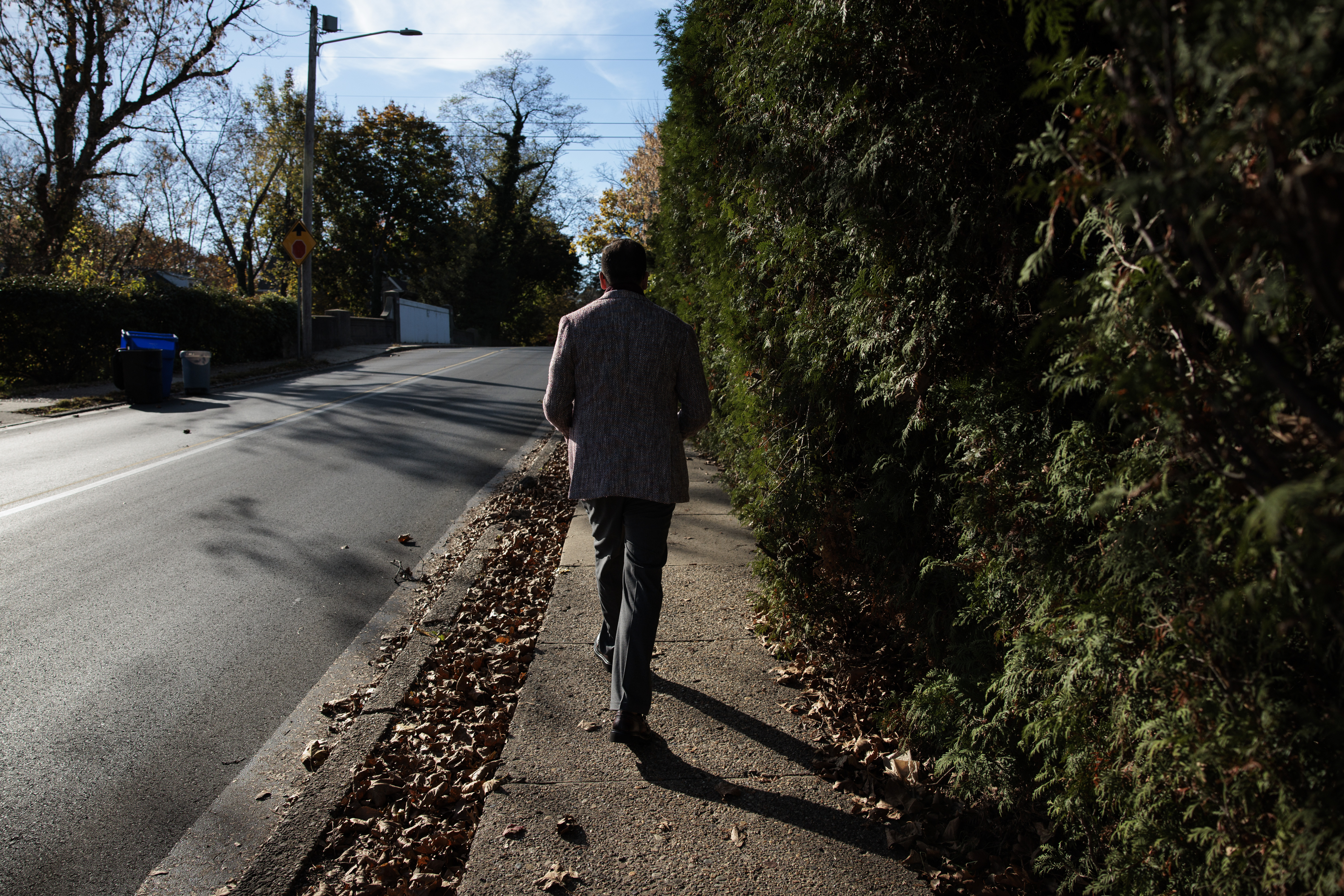
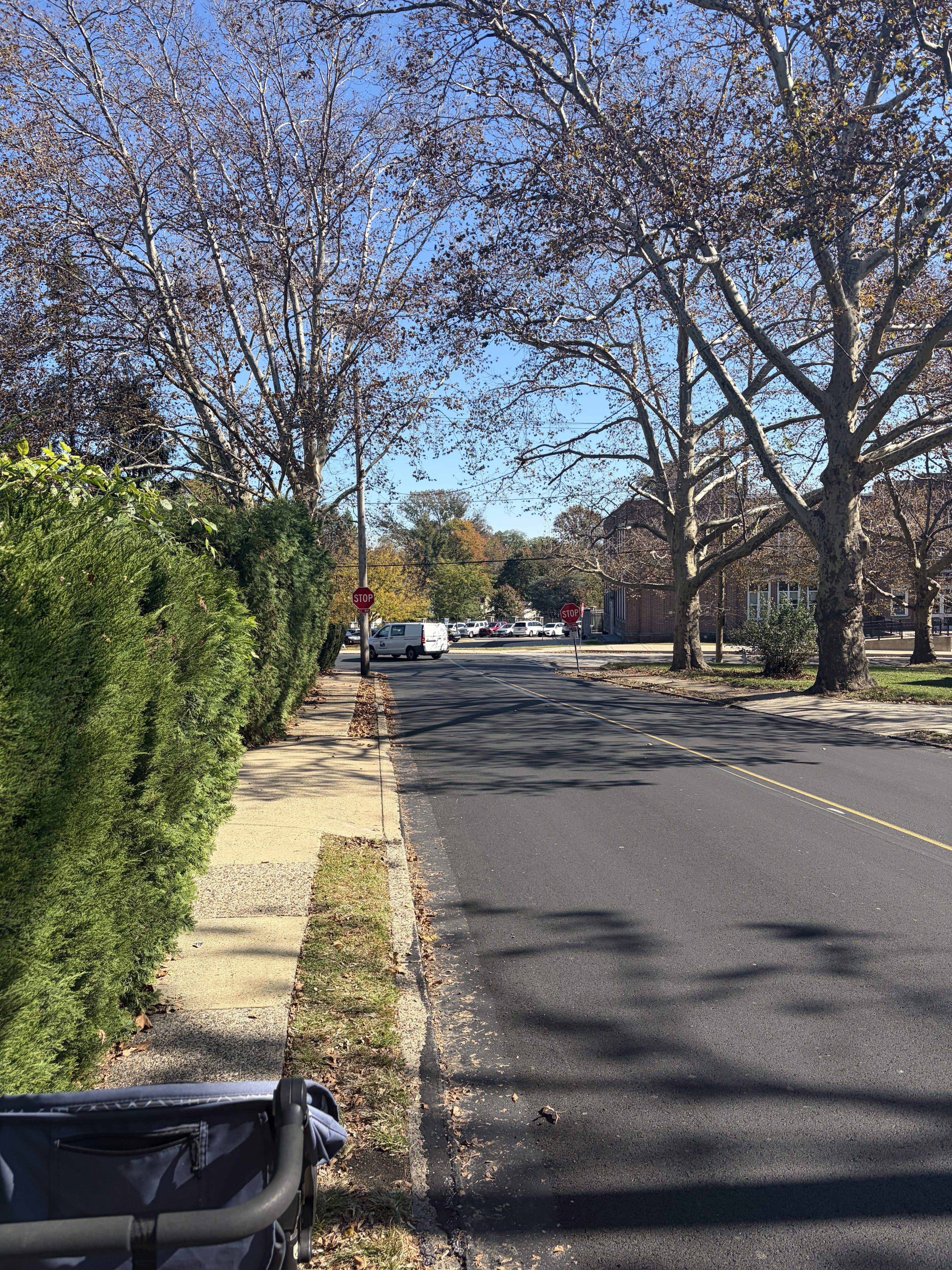
But some sidewalks are chronically blocked, residents said. On an afternoon in late October, pedestrians heading to Myers Elementary School from Union Avenue used foliage-narrowed sidewalks on one side that made it difficult to push a stroller or pass someone without stepping onto the grass. Google Maps images show the sidewalk encroached by the same bush in April 2025.
“Most of these houses, the hedges look neat,” Gralnick said. “The township needs to understand that neatly trimmed vegetation is not the same as an accessible, walkable sidewalk.”
Brian Gralnick walks along the sidewalk on Union Avenue near Montgomery Avenue on Nov. 4.Monica Herndon / Staff Photographer
Cheltenham employees do visual inspections to confirm hedge work has been completed, Lynch said, which may or may not include leaving their vehicles, depending on what they can see from behind the wheel.
“Inspectors need to get out of their cars and actually walk,” Gralnick said.
Shrubbery encroached on the sidewalk on Union Avenue approaching Montgomery Avenue on Oct. 23.Jess Rohan
Some sidewalks are uneven and narrow
Cheltenham wants residents to walk more and use mass transit, according to the township’s comprehensive plan.
But several Elkins Park-area residents who walk said they use the street to avoid uneven slabs.
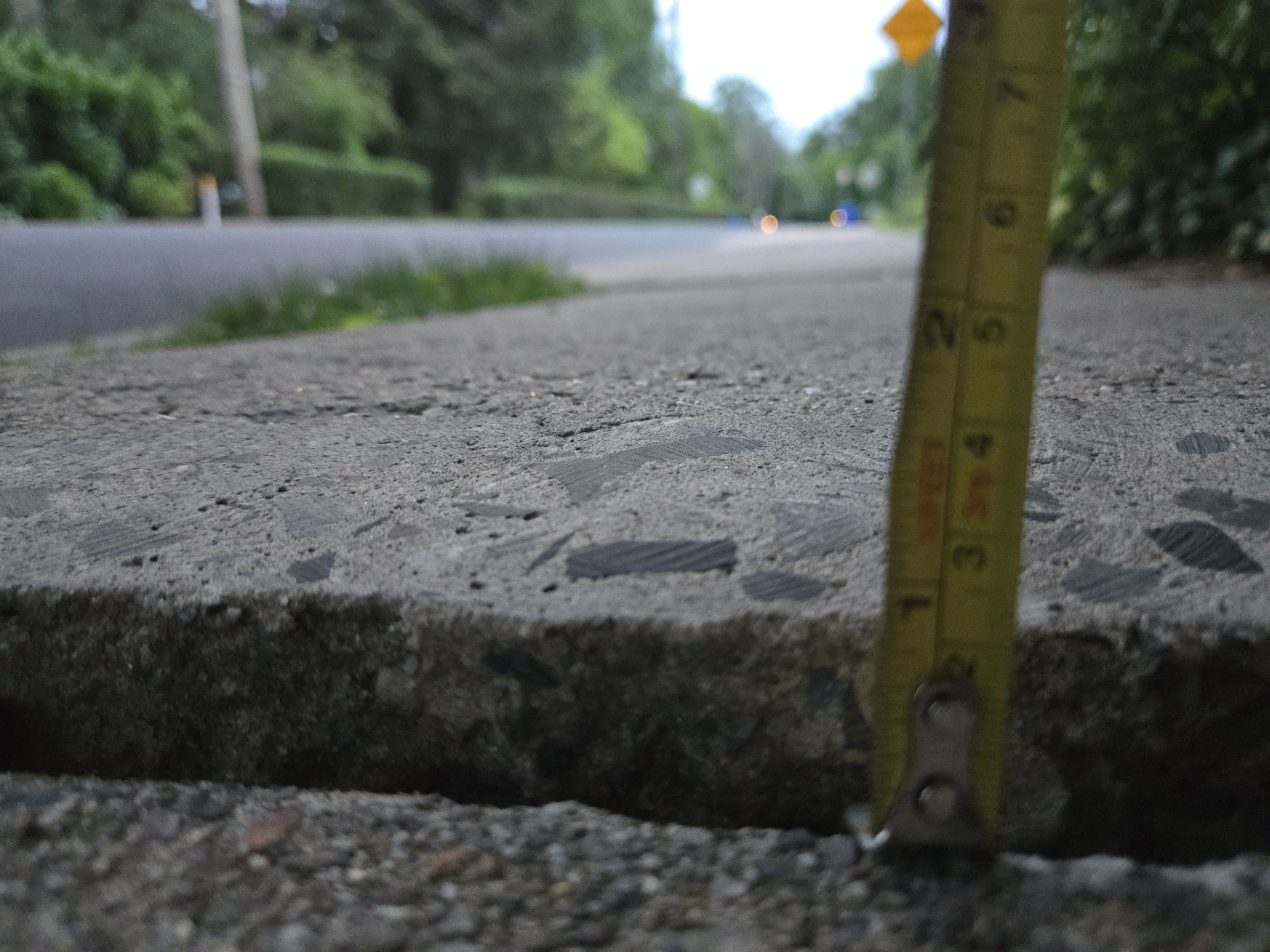
Brian Gralnick took a photo of a sidewalk with a .8-inch height difference and sent it to township officials in June.Brian Gralnick
“I often walk in the street as the pavement is better,” said Gennel Williams, 43, a Cheltenham resident for more than five years. “My mom also took a tumble on the uneven sidewalks a few years back and now refuses to walk outside during the winter.”
Lauren Siegel, 66, is a long-distance runner. She prefers the risk of car traffic, “because the sidewalks are such a tripping hazard.”
For some, the issue is relative. Molly Wernick, 38, who recently moved back to the township from Point Breeze, said the sidewalks in her area are better than in South Philly. “What I’m dealing with now is like, smooth sailing,” she said.
Meanwhile, Gralnick’s frustration has driven him to write Aerosmith-inspired poetry.
“Living on the hedge — Where the stroller meets the street,” Gralnick wrote in a ditty he shared with The Inquirer. “Living on the hedge — No room for wheels or feet.”
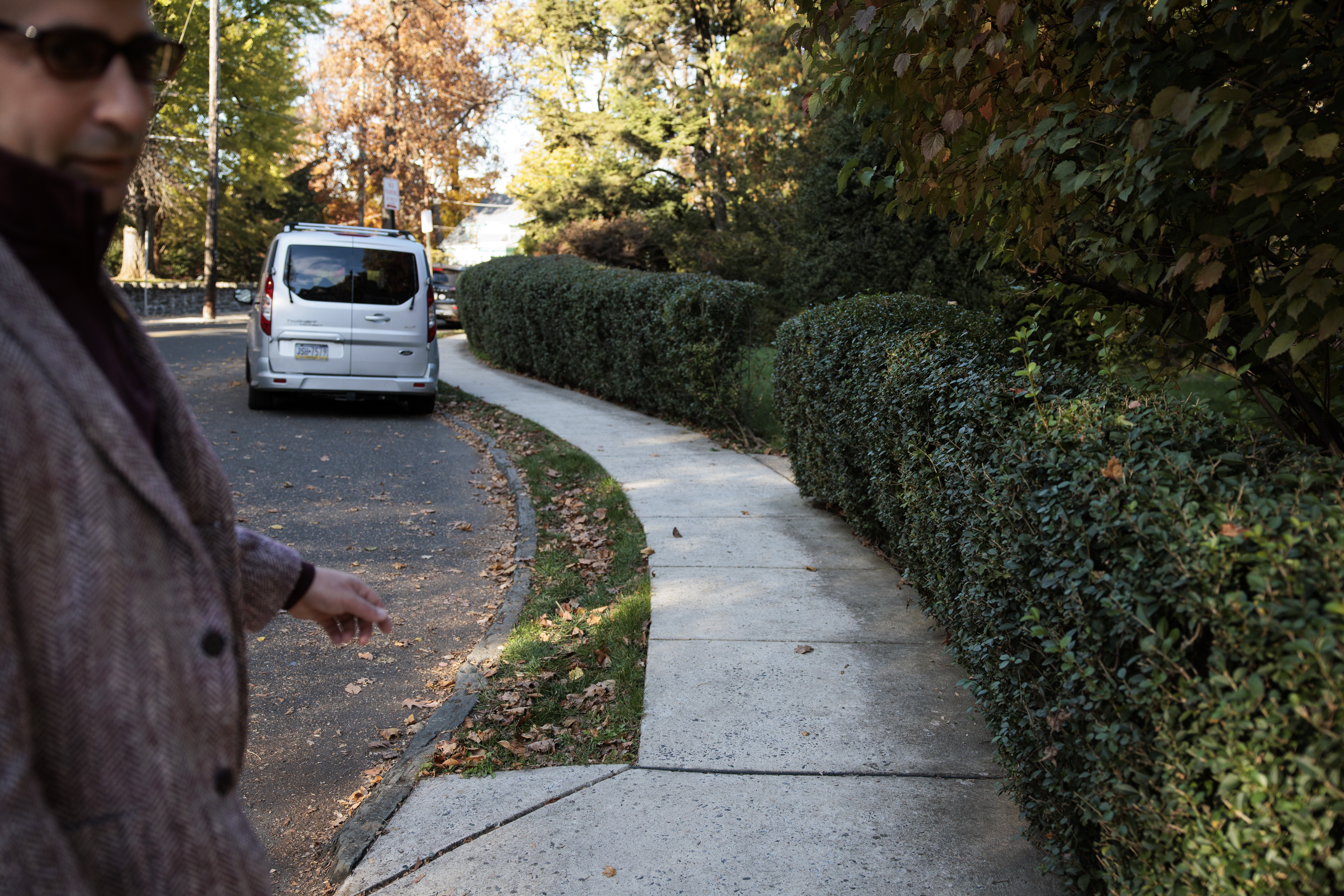
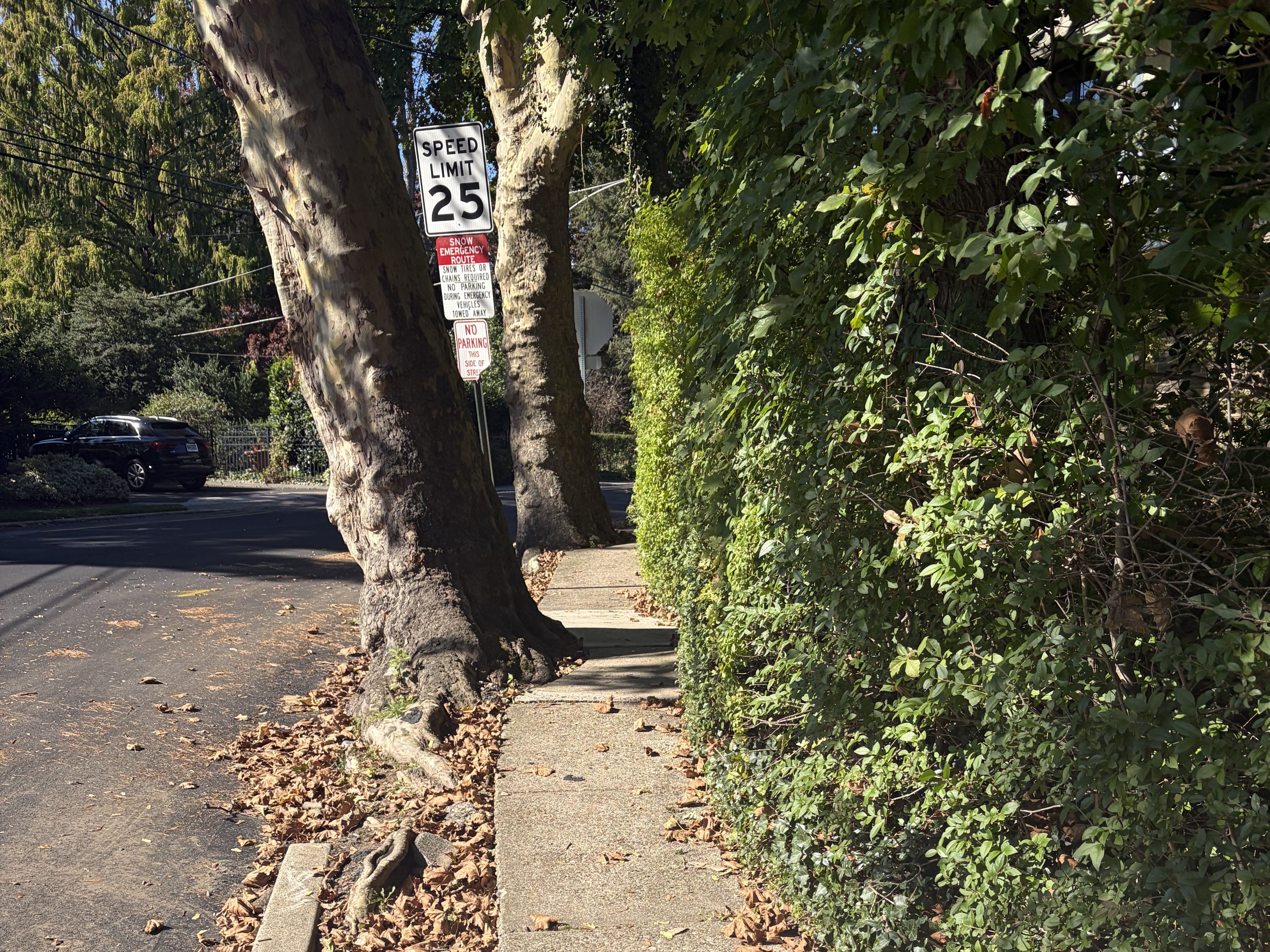
One sidewalk, on Spring Avenue, is hemmed in by two large trees on one side and a hedge on the other.
A sidewalk on Spring Avenue in Melrose Park is hemmed in by trees on one side and a hedge on the other.Jess Rohan
“We get complaints every spring from people about that,” Lynch said.
After The Inquirer contacted the township for this story, Lynch said Cheltenham is looking at the Spring Avenue property again.
The township will also revisit the hedge issue by Union Avenue, Lynch said.
This suburban content is produced with support from the Leslie Miller and Richard Worley Foundation and The Lenfest Institute for Journalism. Editorial content is created independently of the project donors. Gifts to support The Inquirer’s high-impact journalism can be made at inquirer.com/donate. A list of Lenfest Institute donors can be found at lenfestinstitute.org/supporters.
On Sept. 24, the Catholic Church beatified Fulton Sheen, leaving him one step from sainthood. Many Americans remember Sheen as a television bishop in the 1950s, the host of Life Is Worth Living.
While television made Sheen a recognizable face, his radio broadcasts from the 1940s would sound especially familiar today. They captured the moment when conservative Catholics and evangelical Protestants, long rivals, began to fear secularism more than each other — and the first hints of the rise of the contemporary religious right.
Most accounts cite the 1970s as the moment when these two religious groups joined together politically, and most credit fights over the Equal Rights Amendment, abortion and gay rights for bringing Catholic and evangelical activists into common cause.
However, the growing alliance between the two religious groups could already be heard a generation earlier, in the 1940s, on Sheen’s radio show The Catholic Hour and fundamentalist preacher Charles Fuller’s Old Fashioned Revival Hour.
The two radio programs sounded nothing alike. Sheen’s Catholic choirs sang Latin motets while Fuller’s quartet sang evangelical gospel songs.
But from their radio pulpits, both men named the same enemies: communism abroad and secularism at home. What’s equally important, neither man attacked the other’s faith on the air. This approach helped enable a political alliance across denominational lines that represented a significant break from the past.
Anti-Catholic suspicion ran deep during the early 20th century.
In 1922, for example, Oregon voters, urged on by the Ku Klux Klan, approved a law requiring children to attend public schools, a direct blow to Catholic education. (The Supreme Court struck it down in 1925.)
At the root of such laws was Protestant suspicion that Catholics were not loyal Americans. Many Protestants believed that Catholics owed their first loyalty to the pope, a foreign ruler, and saw the millions of Catholic immigrants from Ireland, Italy and Eastern Europe as a threat to the nation.
Even so, the groups shared some political causes and concerns.
Yet, the Southern Baptist Convention refused to join their push, despite its fierce anti-Catholicism. Fewer Catholic immigrants lived in the South, so white Southern Baptists did not share Northern Protestants’ fear of being outnumbered, and they rejected the social gospel reform movement that led liberal churches to back birth control. By the mid-1930s, Southern Baptist and Southern Presbyterian writers openly remarked on the new, narrow alliance with the Catholic Church.
Radio gave both evangelicals and Catholics a new way to promote their faith, and despite ongoing tensions between them, after the Second World War, Catholic and evangelical broadcasters joined together in their hatred of communism and secularism.
On Jan. 26, 1947, for example, after a Brooklyn choir finished a dirgelike motet, Sheen stepped to the microphone. His sermon, “Signs of Our Times,” opened a series on what he called “the question of communism.” He juxtaposed brothers in Christ against comrades in anti-Christ and quoted the German poet Heinrich Heine as saying “the future smells of Russian leather, blood, godlessness, and many whippings.”
In the same sermon, Sheen warned against the loss of a belief in God — which could trigger societal decline. “If there is no heaven there is no hell, if there is no hell there is no sin, if there is no sin there is no judge, and if there is no judgment then evil is good and good is evil.” The warning was clear: godless communism posed a mortal threat.
These weren’t unusual warnings for Sheen; his political messages were explicit, and he urged action from his listeners. On Easter Sunday 1948, for example, ahead of Italy’s April election, the monsignor asked listeners to write to friends in Italy. “If Italy goes communistic on the eighteenth of April,” he warned, “it is possible that the head of the Christian world may be beaten by a hammer and the heart of the Christian world pierced by a sickle.”
Made By History sponsors. FOR USE ON MADE BY HISTORY STORIES ONLY.Inquirer Staff
With so much at stake, Sheen knew that Catholics couldn’t afford doctrinal disputes with other Christians. He closed “Signs of Our Times” by asking Protestants and Catholics, as well as Jews, to “strike together for [the] moral betterment of the world.” In a print piece in 1948, he observed that the three faiths “may not be able to meet in the same pew,” but they could all join together “on our knees.”
Those who didn’t believe in God, not members of other religions, were the enemy. Sheen’s audience was predominantly Catholic, but his message reached for allies well beyond the Church. Sheen’s appeal to Jews reflected a popular postwar ideal of a “Judeo-Christian” America united against communism.
While Catholic listeners tuned their radios to Sheen, millions of evangelicals tuned in to Fuller’s Old Fashioned Revival Hour. Fuller built his broadcasts on nostalgia. The program’s very name promised listeners the faith of an earlier America.
Fuller preached live from the Municipal Auditorium in Long Beach, Calif., often before crowds of more than 5,000. At his peak in the 1940s, he was heard on more than 400 stations, and he claimed 20 million listeners each Sunday night.
Every broadcast opened with the gospel hymn “Jesus Saves.” Fuller connected hymns to ideas of family and friendship. In one 1947 show, for example, he dedicated “What a Friend We Have in Jesus” “for all the grandmothers sitting by the radio in rocking chairs” and “Sweet Hour of Prayer” “for the lonely hearts.”
Although Fuller’s musicians sang familiar gospel hymns that listeners could join and Sheen’s trained choirs sang in Latin — the language of the Mass — both preachers broadcast a similar political message.
Critically, Fuller was just as willing to set aside doctrinal disputes as his Catholic radio counterpart. Most fundamentalists of the period did not count Catholics among those “in Christ,” but Fuller kept such questions off the air. “We are allied with no denomination,” he told listeners in 1937.
Old religious conflicts undoubtedly lingered. For instance, in 1949, Paul Blanshard’s best-selling American Freedom and Catholic Power attacked the Church by likening the Vatican to the Kremlin. Fuller’s broadcasts, however, avoided such bromides and kept the focus on non-believers and the gospel.
Meanwhile, Sheen moved to television in 1951, joining Protestant evangelists such as Billy Graham in using the new medium to speak out against communism.
While Sheen and Fuller differed sharply in theology and style, they shared a common message and purpose: to honor the Christian traditions that they feared were in jeopardy. Their music served that purpose, too. Juxtaposed against the potential catastrophe of a Godless future, both the 16th century motets on Sheen’s program and the gospel hymns featured by Fuller offered the sounds of a comforting Christian past.
By the 1970s, this approach had become the playbook for the emerging religious right, when, for instance, Catholic activist Phyllis Schlafly and evangelical singer Anita Bryant led parallel battles against the ERA and gay rights. Schlafly emphasized common beliefs and enemies. She urged her followers to put doctrinal differences aside and focus on what they agreed upon.
Today, communism, secularism and liberal ideas about gender and sexuality still serve as a rallying cry on the political right — causes that bring together conservative evangelicals and Catholics. In June 2026, President Donald Trump told a Faith and Freedom Coalition audience of evangelicals and Catholics in Washington that “these ruthless communists will attack all religions, but in particular Christianity.”
Yet, while many see this as a legacy of the work done by architects of the religious right in the 1970s like Schlafly, Bryant and evangelical preacher Jerry Falwell, it’s also a continuation of the coalition that could already be heard on Sheen’s and Fuller’s broadcasts. The roots of the alliance are much deeper, which helps to explain why it is so durable.
It rests on shared enemies, and those enemies can shift — from communism to the ERA and gay rights to secularism — without the coalition having to change. Catholics and evangelicals still rarely meet in the same pew, but they have stood on the same side of the culture wars for nearly 80 years.
Chase Castle is a music historian and a Kluge Fellow at the Library of Congress. His first book, The Gospel in Black and White: Race and Popular Culture in American Hymns, is under contract with the University of North Carolina Press.
Made by History takes readers beyond the headlines with articles written and edited by professional historians. Opinions expressed do not necessarily reflect the views of The Inquirer.
Thousands of flights were halted for hours on Friday after officials issued a rare nationwide ground stop, creating a cascade of delays and cancellations that continued over the weekend.
Government officials blamed the disarray on a router in Arkansas that sent a flood of data into the Federal Aviation Administration’s system after an upgrade. Workers also noticed a second unspecified issue at another complex in Texas.
Officials shut down the airspace out of an abundance of caution as the network became “unpredictable and unreliable,” said Michael McCormick, a professor at Embry-Riddle Aeronautical University in Daytona Beach, Fla.
“It was a smart decision to actually decide to ground stop all air departures,” he said.
On Sunday, authorities were still working to determine an exact cause for the communications network failure that prompted officials to issue the ground stop.
Here’s what we know about what could have caused the domino effect at airports.
What happened on Friday?
Transportation Secretary Sean Duffy said Sunday that the cascade of failures began during a routine router upgrade at a radio facility in El Dorado, Ark. Workers felt that the station was remote enough to work on without causing undue harm, which turned out not to be the case.
Across the country, the Federal Aviation Administration has slowly been modernizing its antiquated copper-wire-based system to fiber optic cable, which was what workers were upgrading in Arkansas at the time of the network crash.
Agency officials also noticed a second unspecified issue at a radar facility in Amarillo, Texas, that had been upgraded weeks before.
Officials took the two facilities offline shortly afterward, but each had already pinged the communications network hundreds of times per second, overwhelming an antiquated system. That prompted failures in other parts of the air traffic communications network, prompting officials to issue the ground stop.
What is an FAA router?
The FAA uses tens of thousands of routers to operate its communications network. Those routers, called switches, are typically larger and industrial grade, designed to withstand harsh environments, McCormick said.
The routers used by the FAA were made by Cisco Systems and Juniper Networks, a company purchased by Hewlett Packard Enterprise last year. The agency said it had been gradually replacing older Cisco routers with newer Juniper ones.
The routers in the FAA’s communications system process much more data than the household internet routers that many Americans are familiar with. The government routers run on a closed, private network to prevent cyberattacks, and they have to be able to interpret and process radar data, flight plans, and audio and transmit the information to the right places.
Aviation experts said it was likely that when the new router came online in Arkansas, the device began to send so much information that it overwhelmed the older equipment, which could not respond fast enough. That led to a cascade of issues.
“Now you have multiple parts of the old system that are running much faster than they ever ran,” said R. John Hansman, a professor of aeronautics and astronautics at the Massachusetts Institute of Technology. “You never had this problem, because you never had all of the elements running at that max speed.”
Can the FAA prevent this from happening again?
Friday’s crisis has raised concerns about the durability and the lack of backups in the nation’s air traffic infrastructure, since a failure at one small facility was enough to bring down the entire network.
“The idea that you would have a single router take down a national network is just not plausible,” said Robert W. Mann Jr., who founded an airline analysis and consulting firm. He expressed skepticism about the Transportation Department’s explanation.
He added, “What we really have here is a demonstration that what we knew a decade ago was problematic done at small scale is really, really problematic done at nationwide scale.”
Duffy and other government officials were quick to blame the country’s aging air traffic system for the breakdown, arguing that Congress needed to allot more funding for urgently needed updates.
They also pointed fingers at the FAA’s contractor, L3Harris. L3Harris owns the telecommunications network and was performing the system upgrade, which also involved replacing old copper wiring with modern fiber optic cables.
Officials are still trying to determine if the communications failure was caused by a faulty part or an error on the part of the contractor.
L3Harris said in a statement that it was cooperating with the investigation.
Experts cautioned that rushing the upgrades to the decades-old system posed new risks, as the legacy communications network still needs to run while the new one is being installed and then thoroughly tested.
Perhaps, they suggested, the hardware and software changes could be done during a night shift rather than during peak flying hours.
The enrollment of new international students at U.S. universities dropped once again this fall, fueled by deep uncertainty about visas and job prospects.
A survey released Monday found that new international student enrollment plunged by 15%, a figure that was particularly worrisome for higher education executives following a precipitous 18% decrease last year.
Including preexisting students, international student enrollment declined 9% this fall, according to the survey, adding to last year’s drop of 3%.
For years, U.S. colleges and universities had attracted growing numbers of international students, who often paid full tuition, indirectly subsidizing tuition for domestic students. But President Donald Trump’s crackdown on immigrants, which has occasionally swept up foreign students, along with confusing visa policies and a trade war with China, one of the top suppliers of international students, have stoked fears that the United States is no longer a welcoming place to study.
Ted Mitchell, president of the American Council on Education, a large education trade organization, characterized the combined two-year downturn as “likely historic,” noting that international students had been a growth sector for higher education.
He pointed to departures among international students who were already enrolled as a worrying sign. “These are people who’ve already started, and they’ve said, ‘No, the risk is too high. I’m not going back,’” Mitchell said.
To make up for lost revenue, universities across the country have cut budgets, shuttered programs, and laid off employees. The University of North Texas said it was eliminating or merging about 70 academic programs, citing a decline in international students. Pennsylvania State University partly blamed a drop in international enrollment for a recent belt-tightening. And Boston University, which laid off employees last year, said that a drop in international students is contributing to financial pressures.
The fall 2026 data, based on a survey of more than 800 universities, was released by the Institute of International Education.
The organization also released its annual Open Doors report, a detailed and more comprehensive look at international enrollment for the 2025-26 school year. The IIE, a nonprofit group, is affiliated with the State Department.
A separate analysis by a group that promotes international education, NAFSA: Association of International Educators, said that this fall’s decline would cost the U.S. economy 31,000 jobs and $2.4 billion in revenue.
Despite the declines, the United States remained the top destination for international students, with more than 1 million enrolled last school year.
The report from IIE showed variations among the types of students coming, however. Graduate students, who make up the largest segment of international students, declined by 13% last year, driven by a drop in students pursuing master’s degrees.
A New York Times analysis of more recent student visa data collected across all institutions by the U.S. Department of Homeland Security shows that those trends appear to have continued this year. The number of visas held by students seeking master’s degrees dropped 15% year over year, according to the Times analysis. The number of visas held by students seeking bachelor’s degrees was roughly the same this October versus last, and the number held by international students pursuing doctoral degrees was up about 6%.
Many international students once viewed a U.S. college degree as a way into careers with U.S. companies. But some now fear that a U.S. diploma no longer provides such a guarantee, as the Trump administration restricts long-term stays and work visas.
Elena Li, a Michigan State University student, said that many of her Chinese friends had decided against coming to the United States to study because they worried about securing visas to stay and work after graduation.
“I think the main reasons have been a lot of changes in immigration policies,” said Li, a sophomore from Wuxi, China, who is studying supply chain management.
At Michigan State, overall international enrollment is down 10% this fall, according to university data.
Some students whose visas have expired are remaining in the United States for fear that, if they go home to renew them, they won’t be readmitted, according to Scarlett Geng, a Michigan State sophomore from Beijing.
“They want to complete their degrees,” she said.
Geng, a communications major, said that new restrictions that the Trump administration was placing on a program called curricular practical training, a type of internship, were creating additional anxiety.
“It means it will be much harder for us to find a job in the United States,” she said.
WASHINGTON — For months, Democrats on the campaign trail hammered President Donald Trump’s unpopular tariffs, arguing that the taxes on imports drive up prices for American families already frustrated by the high cost of living.
James Talarico, a Democrat running for a U.S. Senate seat in Texas, blamed Trump’s tariff on Mexican tomatoes for pushing up the price of a popular appetizer: “Chips and salsa,” he said, “are sacred in Texas.”
Targeting tariffs proved to be a winning message nationwide, contributing to the Democrats’ stunning gains in the Nov. 3 midterm elections. And in Texas? Talarico became the first Democrat elected to the Senate from the state since 1988.
“Americans don’t like tariffs,″ said Scott Lincicome at the Cato Institute’s Center for Trade Policy Studies. ”They connect them to the cost of living.″
But when the Democrats take full control of Congress, they are likely to find that reversing Trump’s tariffs won’t be easy.
The president will still have power to veto any legislation that repeals his import taxes or reins in his legal authority to impose them. And it’s unclear — probably doubtful — that enough Republicans would defy Trump and join Democrats in overriding his veto.
Moreover, Democrats themselves are divided over trade policy. Some want to move back toward low-tariff trade policies that Trump demolished. Other Democrats want to see the United States continue using tariffs to fight other countries’ unfair trade policies and to sanction U.S. adversaries such as China.
“There’s going to be a big debate over what should the Democrats’ tariff and trade policy be,” said Ryan Majerus, a former U.S. trade official during Trump’s first term and in the Biden administration. ”It can’t just be: We don’t like what Trump’s doing.”
Complicating matters is the fact that Trump’s tariffs are delivering significant amounts of revenue to the U.S. Treasury — nearly $370 billion in the last two budget years — at a time when the federal government is sitting on a staggering $40 trillion in debt.
Democrats have “just been elected to come in and address concerns about affordability,” said Sally Laing, former chief trade counsel for the Senate Finance Committee and now a partner at the law firm Akin Gump. “It’s not as easy as people may think.”
Trump’s tariffs pinched family budgets
The U.S. Constitution gives the power to levy taxes — including tariffs — to Congress. But over the years, lawmakers have relinquished tariff-setting authority to the president.
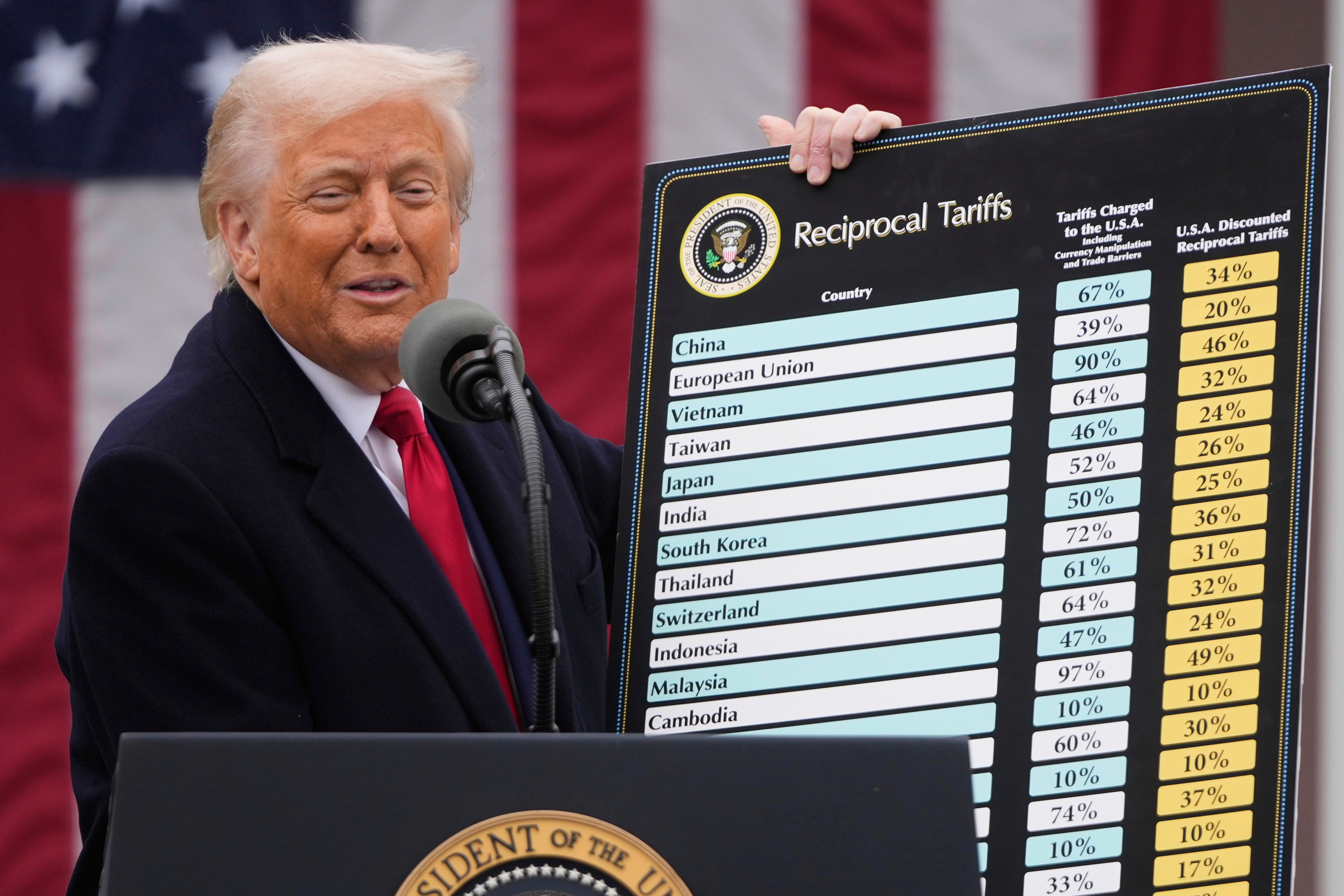
Trump swept into the vacuum. In his first term, he started a trade war with China and slapped taxes on steel and aluminum imports, saying they posed a threat to U.S. national security. All that was just a warmup for his second term. Although the Supreme Court rejected his most ambitious tariffs in February, he has still managed to build a high protective wall around the U.S. economy, sometimes relying on the expansive use of the legal authority Congress gave up.
His use of tariffs also has proven erratic. Last year, for instance, he suddenly imposed a 50% tariff on Brazil because its government had prosecuted his friend, former Brazilian president Jair Bolsonaro. (The Supreme Court decision struck down that tariff, among others.)
“Trade policy has sort of gone off the rails and has lost a strategic focus,” said Inu Manak, senior fellow at the Peterson Institute for International Economics. “Now, we’re just using tariffs as a blunt cudgel instead of addressing real challenges.”
Trump’s tariff frenzy has lifted the average U.S. tariff from around 2.5% when he returned to the White House in January 2025 to 11.2% now, according to Yale University’s Budget Lab. Tariffs are paid by importers in the United States. And they often pass along the burden to consumers via higher prices. Yale’s Budget Lab estimates that tariffs cost the average U.S. household about $900 a year.
That burden comes at a time when elevated inflation is already pinching family budgets, even more so because Trump’s war with Iran has driven up gasoline prices.
But the Republicans who controlled Congress did nothing to reassert their authority and push back against the president’s aggressive use of tariffs.
Voters largely turned against Trump’s tariffs as they voted in the midterm elections. About two-thirds of U.S. voters said Trump’s tariffs had hurt the national economy or the economy in their area, while only about 2 in 10 said they’d helped, according to The AP Voter Poll, a survey of more than 100,000 midterm voters. Voters who saw a negative impact from the tariffs overwhelmingly supported the Democratic candidate in their local U.S. House race.
Trump, meanwhile, remains committed to his protectionist agenda.
“President Trump will never waver from putting Americans and America First, whether in trade negotiations or through an economic agenda of tax cuts and deregulation,” White House spokesman Matthew Middleton said in response to questions from The Associated Press.
Democrats must round up Republican votes to repeal Trump tariffs
As they campaigned this fall, Democrats vowed to cancel some Trump tariffs and curb his legal authority to impose others. Their proposals include repealing the tariffs he levied in July on 60 U.S. trading partners for allegedly failing to do enough to crack down on trade in products made by forced labor. Another would require Congress to approve his tariffs.
Turning their ideas into law will require overcoming a daunting obstacle: Trump’s veto power. Overriding a presidential veto requires a two-thirds majority in both houses of Congress. Even if Democrats win all the congressional races that are still undecided this year, they won’t have enough votes to override a Trump veto on their own. They will need Republican support.
Can they get it? Their resounding midterms victory makes “a veto-proof vote more possible,” said Majerus, the former trade official and now a partner at King & Spalding. “Are Republicans willing to break with Trump? I’m still skeptical.”
Oregon Sen. Ron Wyden, the top Democrat on the Senate Finance Committee, sees one issue that could draw Republican support: ending the 50% tariffs that Trump imposed in August on $20 billion worth of Canadian imports.
“That’s what we’re focused on, figuring out a way to beat Trump and his veto,” said Wyden, who will be Senate Finance chair when the Democrats take over.
The levies damaged relations with America’s neighbor and longstanding ally, drew retaliatory tariffs from Ottawa and hurt U.S. companies that depend on trade with Canada. “The Canadian tariffs, these tariffs on our allies, are wildly unpopular,” Laing said.
Gallert Global Group, a food importer based in Elizabeth, New Jersey, is contending with Trump tariffs on Canadian cheese.
“We are paying millions of dollars in additional costs and tariffs to maintain our distribution and have our products on the shelf,” said co-CEO Thomas Gellert. “We’re absorbing that today. It’s not sustainable for our business.″ The company, represented by the libertarian advocacy group Liberty Justice Center, has sued the Trump administration over the Canada tariffs.
Furor over the Canada tariffs contributed to longtime Republican Sen. Susan Collins’ loss in Maine — even after Trump exempted products from the levies to aid her reelection bid.
Republicans, Wyden said, face a choice: They can “help lower costs for American families or they can continue to defend Trump’s tariffs and make clear whose side they’re on.”
The airline ground stop that wreaked havoc on travel since Friday was not related to the FAA’s new, $875 million AI-powered system the agency is rolling out to help predict problems in the sky, according to government officials and the artificial intelligence company behind the technology.
But the timing of the ground stop, so close to the national rollout of the Federal Aviation Administration’s SMART system, has raised questions about what the system does, its benefits and risks compared with the existing human system and what guardrails there are to address potential problems.
Officials say no connection to ground stop
The SMART system is based in a single location near Washington where a team of experts analyzes flight schedules, weather forecasts and hundreds of other streams of data. Then that office sends recommendations to the FAA’s command center, which relays them to air traffic controllers across the country for consideration.
Homeland Security Secretary Markwayne Mullin said Friday there’s no indication the communications issues that caused the ground stop are linked to the new computer system, and the top officials at the Transportation Department and FAA reiterated that Saturday.
The startup that designed the system, Air Space Intelligence, or ASI, said the ground stop wasn’t caused by “the SMART system, any product of ASI or our integration with FAA and ATC.”
But lawmakers and outside groups raised questions about the SMART system before Friday’s ground stop. Last month, House Democrats sent a letter to the U.S. Government Accountability Office requesting an audit of the new software, raising concerns about safety and guardrails.
“Concerningly, the nation’s front line aviation safety workforce apparently had little to no input into SMART’s development and have received limited training and information during the current deployment process,” the Oct. 13 letter said. “The use of artificial intelligence within SMART has rightfully raised serious questions about its reliability and safety benefits, particularly on its potential to interfere with decision-making by experienced air traffic controllers or to hallucinate safety-critical information.”
SMART, however, is not — at least not yet — set up for AI to be in charge of flight control. Rather, it is making recommendations to humans who do so.
What is the SMART system?
Transportation Secretary Sean Duffy and FAA Administrator Bryan Bedford unveiled the system in September, calling it a “cutting-edge tool that centralizes 200 data streams — including weather patterns, flight paths, traffic flow, and controller staffing metrics — into one platform.” SMART stands for Strategic Management of Airspace, Routes and Trajectories.
The system’s AI-supported engine synthesizes the data systems and shows a “comprehensive visualization” of where planes are going, how much traffic the system can handle and where congestion or weather could cause problems, according to the announcement. The idea is for specialists to then use the platform to fix problems before they arise.
The FAA says that during the initial test of the system in the Washington area this fall, the system helped reroute 180 flights and saved an average of 10 minutes and 80 gallons of fuel per flight by diverting around weather or other issues. The agency said that one flight cut 42 minutes off its trip from Tampa, Florida, to Dallas thanks to the system’s recommendations.
So SMART was expanded for use nationwide on Nov. 10 for the airspace of all 22 air traffic control centers. That was three days before the ground stop.
According to a government fact sheet on the tool, SMART can predict where air traffic is headed and identify other routes before an area becomes too congested. The system can also help reopen restricted airspace faster and better manage airport arrivals.
SMART is also supposed to help with weather-related issues faster.
Currently, the FAA blocks off portions of airspace affected by weather as “large, rectangular boxes,” according to the fact sheet, which doesn’t reflect how weather actually looks, with quick-moving thunderstorms and storm systems that are “often irregular in shape, with narrow gaps or corridors that aircraft could safely fly through.”
To help with this, SMART gives the FAA and airspace operators a “clearer picture of how weather will affect air traffic over time,” allowing air traffic controllers to plan around storms and use available airspace instead of unnecessarily shutting down large areas.
No other country has a working AI air traffic tool like the SMART system, according to Michael McCormick, a former FAA airspace manager and an associate professor at Embry-Riddle Aeronautical University. Eurocontrol, the European air traffic authority, has a system in testing and several manufacturers are prototyping similar tools.
Concerns around relying on AI
While government officials and ASI, the company behind SMART, have stressed that its AI system is designed to assist humans and not run flight control, its deployment has raised concerns about relying on artificial intelligence when human lives are at stake, given that even the most advanced models are prone to hallucinations — when models fabricate false information and present it as fact.
Mike O’Donnell, a former top FAA official who worked for the agency for 17 years and now does aviation safety consulting work, said the agency “has got to make sure that this is just a tool in the toolbox and not the actual machine that’s doing the work.”
The FAA, he said, “cannot afford to be wrong on this.”
“It’s good to use it with the proper guardrails and backstops to ensure that they’re not giving wrong information to controllers based on what (AI) has come up with,” O’Donnell said. “There’s got to be a way to verify and validate what it’s doing to make sure that it’s not the wrong information.”
He cautioned against putting too much trust in AI “until we know for sure that it’s proven itself time and time again. And that’s going to take a while.”
The AI system’s launch comes amid a longstanding shortage of air traffic controllers around the country. The National Air Traffic Controllers Association has been raising concerns about this for more than a decade, telling Congress in 2015 that the shortage was at a crisis level. It said then that the FAA had missed its hiring targets for five years in a row. The union represents about 14,000 controllers, roughly 3,000 of them trainees. That said, experts say no AI system can replace the human air traffic controllers who spend years training for this highly demanding and stressful job.
In an October interview with NPR, ASI co-founder and CEO Phillip Buckendorf said the SMART tool is designed for traffic managers who manage the entire U.S. airspace.
“The AI does the math, the AI does the computation,” Buckendorf told NPR, but it’s ultimately up to the human operator whether to take the system’s recommendation. “They make the decision, they are the decider, they are the judge.”
At 3 Winding Way in Mount Holly, a mail carrier found a note taped to the front door that read “9-1-1 inside” next to two frowning faces with x’s for eyes earlier this month.
According to a source, police discovered three adults dead inside the single-story story home: William Monk, 64; Randolph Monk, 69; and Rosalind Monk, 71.
The cause and manner of the death are under investigation, but officials say there is no active threat in the community.
Still, the discovery has made the quiet neighborhood uneasy.
The sixth graders at Benjamin Banneker Charter School on its Westampton and Willingboro campuses have a new requirement.
They must learn how to play chess by the end of the school year. They get an opportunity to practice twice a week while taking a break from classes.
According to principal Richard L. Wilson Jr., the goal is to encourage critical thinking and to eventually improve test scores. There’s no grades for the class but teachers monitor students’ performance to gauge their skill level and to see how well they’re learning the game.
Cooper Norcross Health wants to add a 10-story hospital with 110 beds for patients to continue its $3 billion expansion in Camden. Developers are scheduled to go before the city’s planning board today seeking approval.
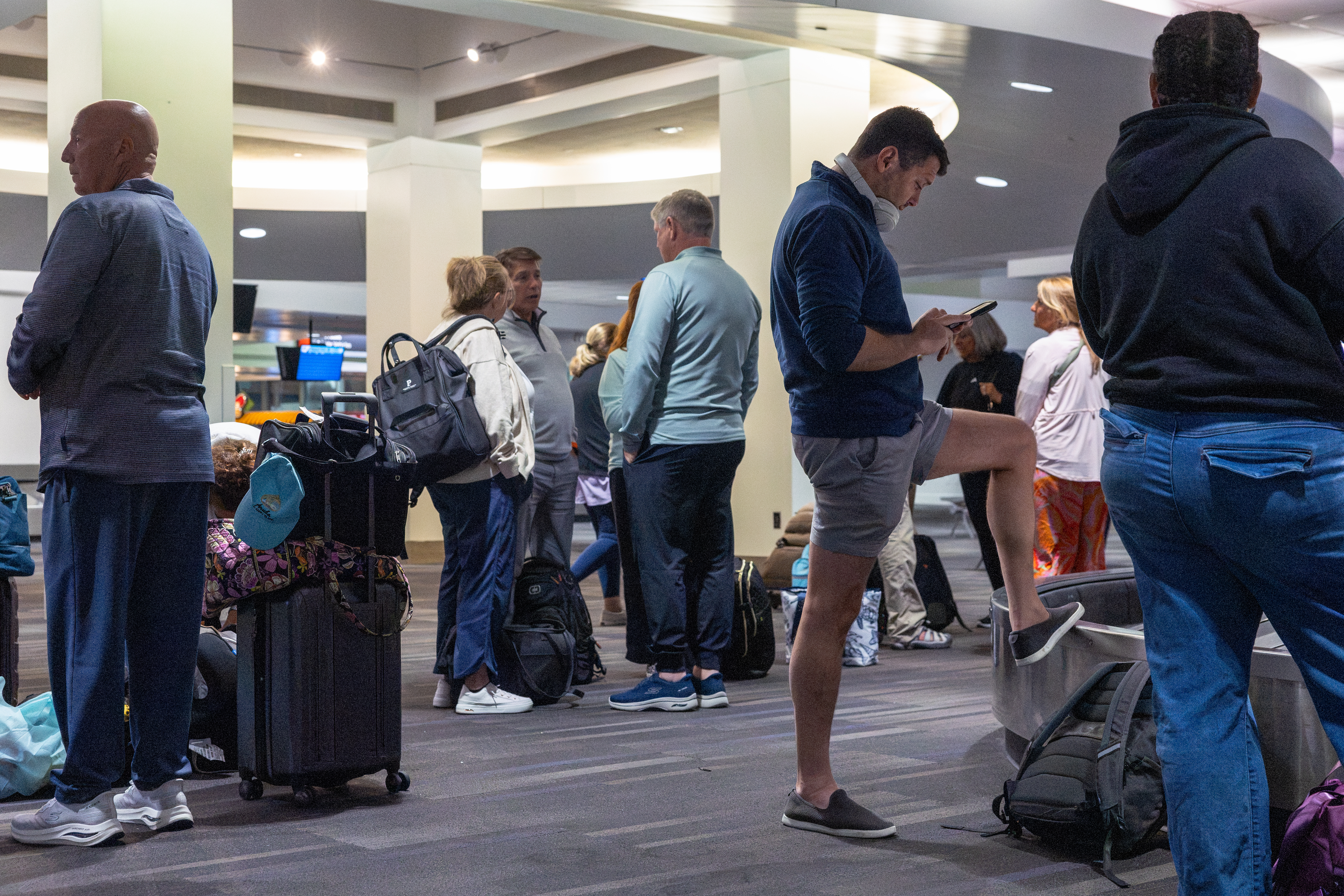
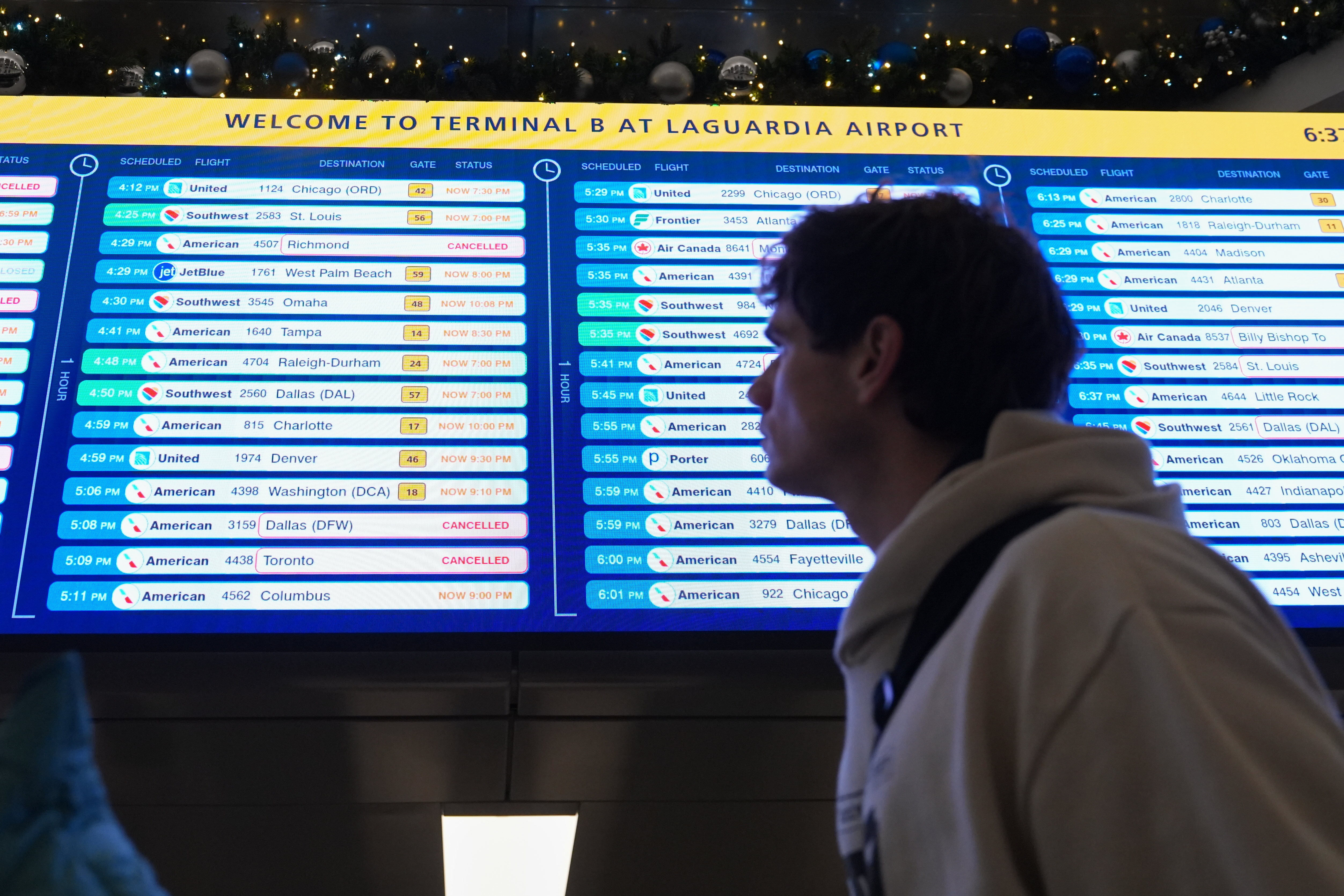
A wave of flight delays and cancellations continued into Sunday at the Philadelphia International Airport, two days after the nationwide ground stop.
Christopher Y. Shin, a Harvard University senior from Cherry Hill, was awarded a Rhode scholarship, the institution announced Saturday. When he starts at Oxford next fall, he will pursue two masters: one in modeling for global health and the other in genomic medicine.
According to officials, the Tacony-Palmyra Bridge was able to reopen on Thursday evening to pedestrian and vehicle traffic after a passing ship hit it and caused minor damage.
The National Weather Service confirmed a rare November tornado in Chesterfield on Thursday that traveled 1.5 miles and damaged three buildings.
Former Villanova football player and Phillie Matt Szczur retired from baseball to build his second career as an artist. He paints in his Cape May studio.
🧠Trivia time
Notre Dame basketball player Hannah Hidalgo is from Merchantville.
But she attended Paul VI High School, which is in which town?
Fall decorations line Medford’s Main Street.Taylor Allen
The above image was from a late autumn evening from last month. Downtown Medford is incredibly charming.
What does your community look like? What South Jersey memory would you like to share? Submit a photo and/or a brief description for a chance to be featured in the Monday edition of this newsletter.