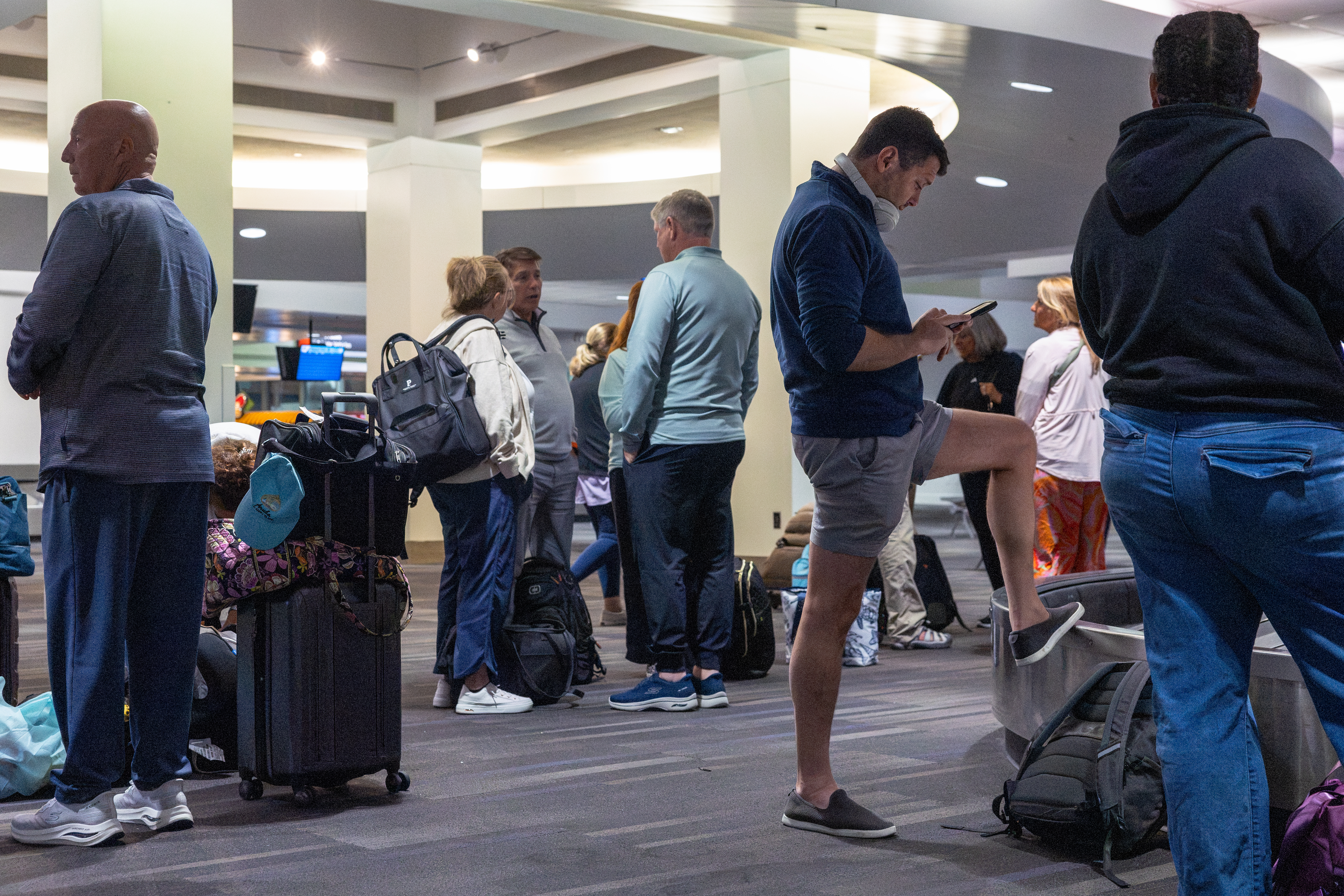
Philadelphia International Airport returned to a more typical pace of delays and cancellations on Monday following Friday’s nationwide ground stoppage issued by the Federal Aviation Administration.
There were 74 delays and 11 cancellations at PHL as of 11 a.m., according to flight tracker FlightAware, which “is a little higher than normal,” said PHL spokesperson Christine Ottow.
“We have many days with zero or one cancellation, then occasional days where a weather event here or somewhere in the country may cause a spike of cancellations,” Ottow said.
A nationwide ground stop was issued Friday afternoon due to the FAA’s air traffic system becoming overloaded after routine upgrades in parts of the country. This led the FAA to issue the ground stop, which cascaded throughout the country, bringing 25,000 delays and nearly 10,000 cancellations nationwide Friday.
Delays continued into the weekend at PHL, which saw more than 200 flight cancellations and delays on Saturday, with 249 delays and 83 cancellations Sunday, according to FlightAware.
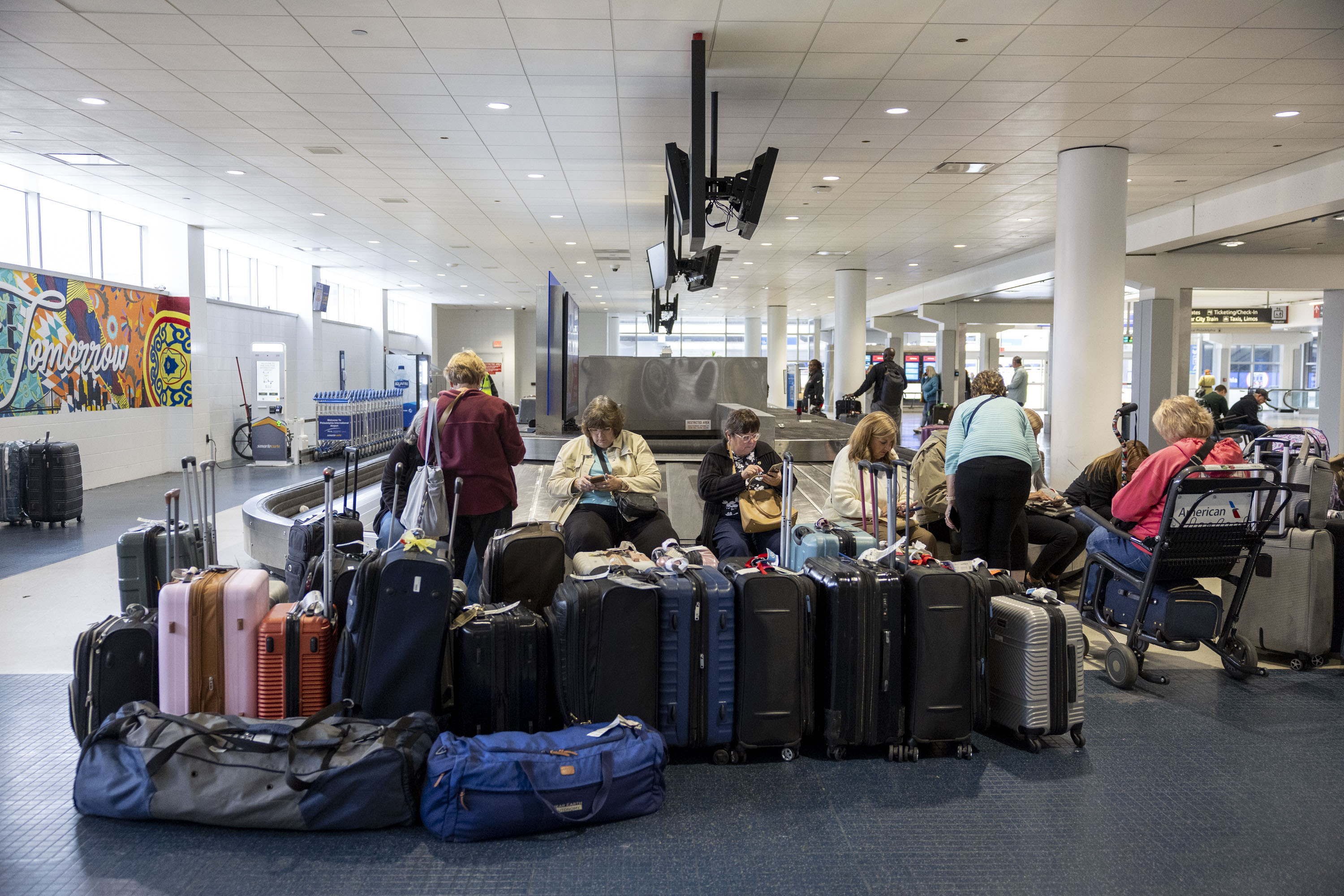
With Monday morning’s more typical delay and cancellation levels, Ottow said it’s comparable to similar days in November, such as Nov. 2, which saw eight cancellations, or Nov. 6, with 13 cancellations. When the region experienced a tornado and hailstorm the day before the ground stop, there were 91 cancellations.
FAA officials are still investigating the exact cause of Friday’s ground stop, but said they believe routine wiring and router upgrades to the FAA’s air traffic control system in Arkansas and Texas overwhelmed what Transportation Secretary Sean Duffy called an “incredibly old telecommunication system.”
While the router was being replaced and switched from copper wire to fiber optic, the router began flooding other routers throughout the national air traffic control system, transportation officials said.
“We had over 1,000 connection attempts every four to five seconds. And what that did was give us issues with our communication with airplanes, and it also caused some disruption with our radar feeds.”
Officials said that Friday’s ground stop was not in connection with the rollout of the FAA’s new AI-powered flight prediction software, the SMART system.
Leave a Reply