Category: News

  • Ospreys are disappearing along the East Coast. Scientists think they know why.

    Ospreys are disappearing along the East Coast. Scientists think they know why.

    Bryan Watts has spent more than three decades watching ospreys reclaim the Chesapeake Bay, returning each spring from South America to crowd its tidal rivers and creeks, shorelines, channel markers, and nesting platforms. The William & Mary biologist followed their recovery from the DDT era as the bay became home to the world’s largest breeding population of ospreys.

    Now one of America’s great wildlife recoveries is coming undone. Across the Chesapeake this year, Watts and his colleagues at William & Mary’s Center for Conservation Biology recorded the worst osprey breeding season they have ever documented. Researchers working these waters have found chicks emaciated and starving in their nests.

    A starving osprey chick can seem almost weightless — its breastbone sharp beneath feathers, its body too small for the nest around it. Three summers ago, Watts spent 3½ hours checking 81 nests on Mobjack Bay: empty nest after empty nest, with just three chicks at the end. Seeing a dead chick still gets to him, but what really stops him is absence. Watts drove home, he said, “with a sick feeling that something is clearly not right.”

    The warning sign is no longer confined to the Chesapeake. Last week, Watts and his colleagues released the first picture of the 2026 breeding season up and down the East Coast: 2,886 osprey pairs in 65 study areas across 10 Atlantic states. Only 28% of saltwater study areas produced enough young to maintain their populations, compared with 93% of freshwater areas. The deficits extend from the Chesapeake through Delaware and New Jersey to Long Island and southern New England.

    At the center of that widening crisis is a fish most Americans would hardly recognize. Atlantic menhaden are silver, oily, and generally less than a foot long. Rich in fat and calories, they are the principal prey of Chesapeake ospreys and the nucleus of a food web extending far beyond the bay, including the fish humans do eat. Striped bass, bluefish, whales, and seabirds feed on them; Maine lobstermen put them in traps.

    A fight over menhaden has brought together an unlikely — and increasingly vocal — coalition. Recreational anglers want menhaden in the water for the striped bass and other game fish that eat them. Charter captains need those predators to make a living. Lobstermen need menhaden for bait. Conservation groups want enough left for ospreys and other wildlife.

    What remains uncertain is why menhaden aren’t there when birds and fishermen need them. Scientists are looking at several possible explanations, including commercial harvest and changing water conditions. Timing may matter, too: Osprey food demand has typically peaked from mid-May through mid-July, while in some recent years large numbers of menhaden haven’t arrived until weeks later.

    But a growing number of critics have begun to focus on Omega Protein, which runs the Atlantic Coast’s last remaining menhaden reduction plant, located in Reedville, Va. The state receives about three-quarters of the entire Atlantic Coast menhaden quota, and roughly 90% of its share goes to the reduction fishery supplying Omega.

    At the Reedville plant, menhaden are processed on an industrial scale into fishmeal, fish oil, and other products. Its exclusive supplier, Ocean Harvesters, caught nearly 300 million pounds of Atlantic menhaden for the plant in 2024. That scale alone has made the fleet impossible to ignore in the debate over how many menhaden are being left for everything else that eats them.

    Steve Atkinson, chairperson of the Virginia Saltwater Sportfishing Association, argues there are no longer enough menhaden in the bay to support both industrial reduction fishing at its current level and a healthy ecosystem. Members of his group are seeing fewer schools of menhaden and catching fewer game fish, which is why they support cutting the bay harvest cap in half in the meantime. “We need action now, not five years from now,” he said.

    Omega and Ocean Harvesters reject that conclusion, saying scientists have not established that their harvest causes local shortages or osprey failures. That dispute — over a fish neither side fully controls, eaten by a bird neither side can feed — is at the heart of the fight.

    Ben Landry, vice president of public affairs for Ocean Fleet Services, the parent company of Ocean Harvesters, said in a statement that blaming osprey starvation on the menhaden fishery is “an oversimplified explanation for a complex ecological issue.” Water conditions, other prey, predators, and habitat change all contributed to the birds’ decline, he added.

    Watts himself describes the evidence as a strong association, not proof that commercial harvest caused the nesting failures.

    Regardless of the exact cause, scientists have documented major shifts within the Chesapeake. In saltier waters, where ospreys depend most heavily on menhaden, 81% of nesting pairs failed to raise a single chick in 2026. Across those waters, four nesting pairs produced, on average, just one chick among them — far short of the rate needed to sustain the population. In fresher reaches, where ospreys can turn to catfish and gizzard shad, pairs produced enough young to sustain their numbers.

    The food reaching the nests has changed, too. At some Chesapeake nests, Watts found, ospreys are bringing home menhaden more than 80% less often today than they did in the 1980s.

    Anglers coastwide are seeing their own version of that shift. For 26 years, Chris Newsome made his living guiding fishermen on the Chesapeake from Virginia’s Middle Peninsula. A biologist by training, Newsome knows there will always be pockets of fish somewhere. What has disappeared, he said, is the ability to count on finding them. The good fishing comes in stretches that are “shorter and shorter and shorter.” For a charter captain, he said, what’s needed is “predictability.” This year, after what he called “the worst fishing in my lifetime,” Newsome closed his business and put his boats up for sale.

    Fishermen up and down the Atlantic Coast describe the same increasingly uneven pattern: One community can be surrounded by menhaden, also called pogies or bunker, but more fishermen cite long stretches between sightings where they once reliably found them.

    Off Virginia, spotter pilots search from the air for the dark stain of a menhaden school. Seine boats encircle the fish with massive purse-seine nets, close the bottom like a drawstring and pump the catch aboard larger vessels, including Ocean Harvesters’ new $9 million, 165-foot Tangier Sound. The fleet can also follow migrating menhaden north into federal waters, sometimes as far as New Jersey.

    Reedville is the survivor of a once-sprawling industry. At its peak, more than 20 processing factories operated from Maine to Florida. As stocks contracted and states imposed restrictions, the plants disappeared; by 2006, Reedville was the only one left.

    The corporate arrangement behind that fleet is unusual. Cooke, the Canadian seafood conglomerate that bought Omega for nearly $500 million in 2017, is constrained by a federal law that allows a fishing vessel to be owned by a company only if U.S. citizens own and control at least 75% of the company. Ocean Harvesters is 80% owned by Seth Dunlop, a U.S. citizen, Cooke employee, and nephew of Cooke CEO Glenn Cooke; Omega owns 20%.

    Most of the catch is reduced into fishmeal, fish oil, and concentrated products rather than sold as food for people. Before Cooke took Omega private, federal filings identified Nestlé Purina PetCare as one of Omega’s biggest customers. Some Blue Buffalo and Purina pet foods list menhaden fish meal or oil among their ingredients, though the labels do not identify suppliers. Landry said in an email that most of Omega’s fishmeal and oil is sold domestically, including into pet food markets.

    Most of Omega’s sales are domestic, with about 17% going overseas last year, according to Landry. Omega markets a concentrated menhaden product as an “attractant” for aquaculture feed pellets, and trade records reviewed for this story show its products shipped to Honduras, Indonesia, and Vietnam. That rankles fishermen who see menhaden becoming harder to count on at home.

    A menhaden left swimming is hard to value. But some of that hidden worth can be measured. A June 2026 study commissioned by the Theodore Roosevelt Conservation Partnership, an advocacy group, estimated that East Coast anglers spent $804 million in 2025 on trips using menhaden as bait, chum, or scent. The estimate combines a survey of 1,316 anglers with federal fishing and spending data. For comparison, Omega says its combined Atlantic and Gulf operations generate about $300 million in annual sales, and Omega and Ocean Harvesters say their Virginia operations directly employ about 260 people.

    Balancing those demands falls largely to the Atlantic States Marine Fisheries Commission, a 15-state body that manages menhaden along the coast. It classifies Atlantic menhaden as “not overfished” and says overfishing — fishing above the established threshold — is not occurring. But that is a coastwide finding. ASMFC says its assessment cannot tell whether menhaden are abundant enough in a smaller area such as the Chesapeake Bay.

    Last year, the commission lowered its estimate of the menhaden population after revising a key estimate in its assessment: how many menhaden die of natural causes each year. ASMFC stressed that the change reflected a better understanding of the fish, not a decline in their numbers.

    Jerald Ault and Jiangang Luo, University of Miami scientists whose reanalysis prompted that revision, now say even the revised estimate may be too high. “If natural mortality is set too high,” Ault said in a university statement, “the population can appear able to support more fishing than its biology allows.” ASMFC reviewed an earlier version of their analysis but not the final peer-reviewed paper.

    The lack of definitive science has become an argument against tighter limits. Yet Virginia lawmakers have spent years failing to fund the research that could provide it.

    In 2023, the General Assembly ordered the Virginia Institute of Marine Science to draw up a research plan for menhaden. Scientists, conservationists, anglers, and industry representatives agreed on nine research priorities, including abundance and localized depletion.

    But in each legislative session since, bills to fund that research repeatedly stalled. In 2026 alone, three different proposals failed to advance during the session: one to fund research aimed at understanding menhaden abundance in the bay, another to temporarily halt industrial fishing there, and a third to limit when and how the fleet could fish.

    Omega says it never opposed the research. But a letter its lobbyist sent to Virginia lawmakers last year proposed replacing the full study with a two-year pilot or deferring it until 2026. Landry said that officials at the company believed full funding was no longer available by then and that the study as written was not scientifically sound research.

    “The industry is now using that delay in definitive science as an excuse to stall new limits,” Chris Moore, the Chesapeake Bay Foundation’s Virginia executive director, said in an email. “The alarm bells in the bay keep getting worse. It’s mind-boggling.”

    Landry, however, said the industry has helped fund preliminary research, given Virginia Institute of Marine Science researchers access to its vessels and “supported the research appropriation included in Virginia’s current budget.”

    After the legislation failed again this year, Virginia Gov. Abigail Spanberger kept the research alive through the state budget, and Virginia provided $2 million over two years for the Virginia Institute of Marine Science to begin the work. Meanwhile, the commission is now considering changes to the Chesapeake reduction cap ranging from no cut to a 50% reduction.

    Omega and Ocean Harvesters oppose a 50% cut to the bay harvest, and Landry noted that regulators classify menhaden as “not overfished,” adding that tighter Chesapeake limits aren’t justified “without a demonstrated biological need.”

    The fight extends to Louisiana, where Omega operates alongside Daybrook Fisheries, another menhaden-processing company. After three net failures spilled an estimated 850,000 fish in 2023, lawmakers strengthened tracking, enforcement, and reporting. But a 2026 bill to move the fleet farther offshore and reduce other species caught with menhaden failed.

    Back on the Chesapeake, the numbers keep getting worse. In the saltier reaches where ospreys depend most on menhaden, the birds’ reproduction has fallen for three straight years. If that continues, Watts projects the bay’s osprey population could fall by roughly half within a decade.

    By September, the Chesapeake begins to empty of ospreys. The adults leave first; the young follow later, migrating alone, sometimes thousands of miles south. Those that survive will return next spring to the same rivers, the same navigation markers, sometimes the same nests.

    For generations, that journey has ended with the same promise. They came home to the Chesapeake, circled above the water and hunted.

    There were fish here.

  • Mississippi’s hard history, a search for justice, and the strange death of Nolan Wells

    Mississippi’s hard history, a search for justice, and the strange death of Nolan Wells

    I was angry when I learned that a grand jury found no cause for criminal charges in the death of Nolan Wells, a Black teenager who died after a July 4 boat trip to an island in Mississippi with a group of white friends.

    The facts surrounding the case were strange from the time Wells went missing. His friends said the 18-year-old wanted to stay on Horn Island to talk to a girl, so they left without him, and Wells left his phone on the boat. Days later, when Wells’ body was found floating in the waters off the island, Jackson County sheriff officials declared that no foul play was suspected.

    Then, just days after the grand jury concluded Wells’ death was “consistent with drowning,” Wells’ family released details from the official autopsy report from the Mississippi medical examiner. The autopsy indicated that there was no water in the lungs, stomach, or throat of Wells, which begs the question: How does one drown without ingesting water?

    That troubling question, along with a history that includes countless lynchings, the murder of Emmett Till, and the murder of voting rights activist Medgar Evers, demands a deeper investigation. Yet I know, in that secret place where my ancestral memory lives, that the investigation might never take place.

    Wells’ family did all they could to find the truth. They hired attorney Benjamin Crump, sued social media companies for cell phone records, and hired an independent pathologist to conduct a second autopsy after the Mississippi medical examiner performed the initial postmortem. Wells’ friends were mostly silent, but the internet was not. Observers retreated to their familiar corners — left and right, progressive and conservative, bigoted and anti-racist. Our opinions of the case tended to be shaped by our long-held views and lived experience.

    Perhaps that’s why, when Jackson County District Attorney Angel Myers McIlrath promised to conduct a fair and thorough investigation, I was skeptical. Then, when she announced that she would convene a grand jury, I was hopeless.

    I had already watched police officers walk away unscathed after a conservative attorney general in Kentucky convened a grand jury in the shooting death of Breonna Taylor. I remembered a grand jury refusing to indict Officer Darren Wilson after he killed unarmed teen Michael Brown in Ferguson, Mo.

    Because grand juries operate in secret and only view the evidence presented to them by the prosecutor, the outcome is heavily influenced by the prosecutor. I believe that’s why we don’t see criminal charges in cases like the tragic death of Nolan Wells.

    Just as my ancestral memory calls out to me and screams for racial justice, the history of Mississippi calls out to the current power structure and demands white supremacy.

    That’s why, after closed-door proceedings and a state autopsy report that was never fully released, after unexplained blunt force trauma to the back of Wells’ head and body, after the family received the body without the neck structures, the grand jury could conclude Wells likely drowned.

    It’s why the district attorney could release a redacted grand jury report, never share all the evidence, and scold the public for questioning whether race played a role in Wells’ death.

    “What I cannot accept, what I cannot ignore, is that false narratives that Nolan’s death was somehow racially motivated, and that this is a case of another young Black man denied justice by a racist, corrupt system, were perpetuated and allowed to spread,” McIlrath said in a video explaining the grand jury’s decision. “There is not a shred of evidence to support these narratives.”

    Perhaps the DA can’t accept what she framed as false narratives, but how can we know they’re false? The grand jury operated in secret, then released a report with some of the details blacked out. There was no preliminary hearing, no public airing of evidence, and no real attempt to answer the family’s ongoing questions about what happened to their son.

    There is only one thing that I know to be true in the death of Nolan Wells, and his mother, Christine Wonsley, gave voice to it in the wake of the grand jury’s findings.

    “Last night was a reminder that our son’s life does not matter to those who hold positions that are supposed to serve and protect the public,” Wonsley said.

    It breaks my heart that she’s right.

    Editor’s note: An earlier version of this column misstated the location of the island that had been visited by Nolan Wells; it was Horn Island. It also incorrectly noted that Wells’ organs were removed before his body was released to his family; the organs were included with the rest of his remains.

  • Lenora D. Wolfgang, French professor emeritus at Lehigh University and literary scholar, has died at 91

    Lenora D. Wolfgang, French professor emeritus at Lehigh University and literary scholar, has died at 91

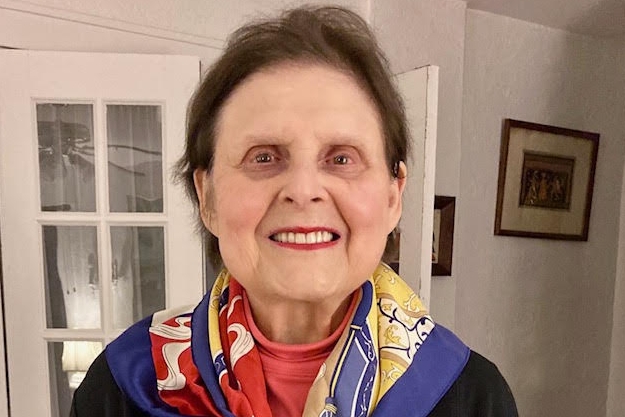
    Lenora D. Wolfgang, 91, of Philadelphia, French professor emeritus at Lehigh University, literary researcher, author, teacher, mentor, and artist, died Thursday, May 14, of heart failure at her home near the Philadelphia Museum of Art.

    Professor Wolfgang, or, as many of her Lehigh students and colleagues called her, Madame Wolfgang, planned to study art in Paris after high school and live as a painter. But, she told her family, she became so enthralled by the French language at Philadelphia High School for Girls that she curbed her art aspirations, earned three degrees in French at the University of Pennsylvania, and taught French and French literature at Lehigh for 26 years.

    Inspired by professors at Penn, she became an expert in medieval French language and literature, and her doctoral dissertation and first book were an analysis of an 800-verse prologue to a 13th-century French poem. She studied in France on a Fulbright Scholarship in 1956 and ’57, and in Spain on a grant from the American Council of Learned Societies in 1978.

    She wrote two books on French poetry, served research fellowships with the National Endowment for the Humanities in the 1980s and ’90s, and earned a grant from the American Philosophical Society in 1981 to transcribe manuscripts at the National Library in Paris. In 1990, reviewers at Penn’s French Forum journal said her second book, also on 13th-century French poetry, “provides the modern scholar with a standard text and thorough apparatus that will serve current and future generations well.”

    This photo and story about Professor Wolfgang appeared in the Morning Call of Allentown in 1984.Newspapers.com

    She belonged to many academic language and literature organizations, and was a student adviser and faculty committee member at Lehigh. In tributes, former colleagues called her “a true mentor” and “a real mensch.” One said: “It was clear that I had an ally in Lenora and that she wanted me to succeed.”

    A former student said she was “a good friend and sounding board” in a 2025 interview with the Lehigh alumni relations department. “She was always ready to help, share her knowledge,” a former colleague said, “and always did it with tact and unselfishness.”

    Professor Wolfgang earned bachelor’s and master’s degrees, and a doctorate in French at Penn. She taught French classes at Temple and Rutgers Universities, Penn, and high schools in Philadelphia before joining Lehigh’s Department of Modern Languages and Literature in 1980.

    She commuted three hours round trip to Lehigh, in Bethlehem, Pa., from West Philadelphia three days a week and was promoted from assistant professor to associate professor in 1986, then to full professor in 1989. She retired from Lehigh in 2006.

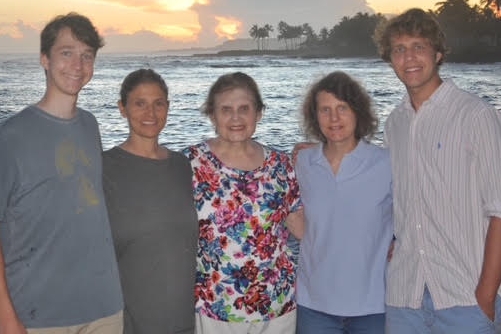
    Professor Wolfgang (center) traveled the world and enjoyed hosting dinner parties with family, friends, and academic colleagues. Courtesy of the family

    After Lehigh, Professor Wolfgang taught continuing education classes about French playwright Molière and other topics to adults at the Osher Lifelong Learning Institute at Temple. After the COVID-19 pandemic lockdown ended, she returned to the institute briefly as a student.

    Professor Wolfgang was adept at painting as a girl in West Philadelphia and won several art competitions, and later showed her photography at Penn’s Faculty Club. “She was a natural talent,” her family said in a tribute.

    Lenora Divida Poden was born Sept. 25, 1934, in Philadelphia. Her parents emigrated from Poland and Romania, and her mother left the family when Professor Wolfgang was in junior high school.

    She and her father had to hide their Jewish heritage and alter their last name to minimize antisemitic attacks. “Yet Lenora overcame these challenges,” her family said, “excelled academically, and rose to the top of her academic field.”

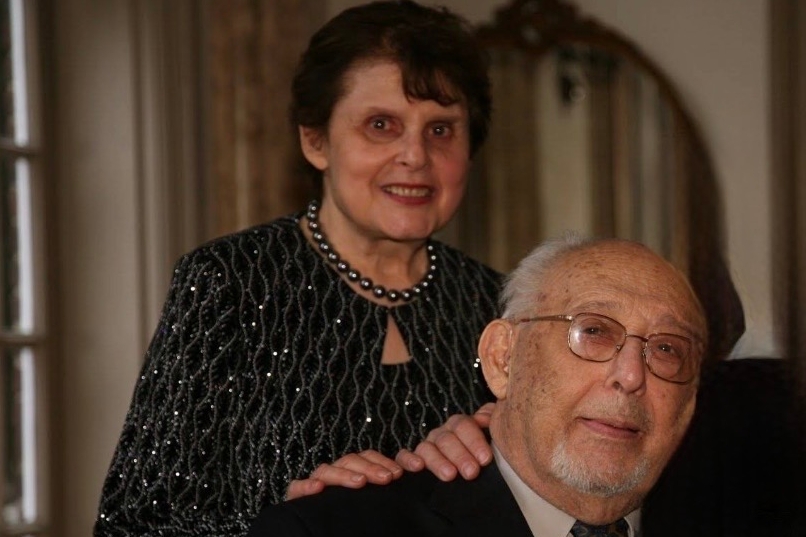
    Professor Wolfgang married her first husband, Marvin Wolfgang (above), in 1957, and her second husband, Leon Salganicoff (below), in 2010.Courtesy of the family

    An exceptional student, she was valedictorian of both her 1952 senior high school class at Girls’ High and her 1956 senior undergraduate class at Penn’s College for Women. She married Marvin Wolfgang, a professor at Penn, in 1957, and they had daughters Karen and Nina, and lived in University City.

    In 1977, The Inquirer featured their house in a photo spread about its French-inspired Gothic style of architecture. Professor Wolfgang said: “Perhaps that is one reason I feel so very much at home.”

    After her husband died in 1998, she married Leon Salganicoff, a professor emeritus at Temple, in 2010. He died in 2011.

    Professor Wolfgang was an avid reader. She traveled the world, listened to classical music, and enjoyed hosting dinner parties with friends and academic colleagues.

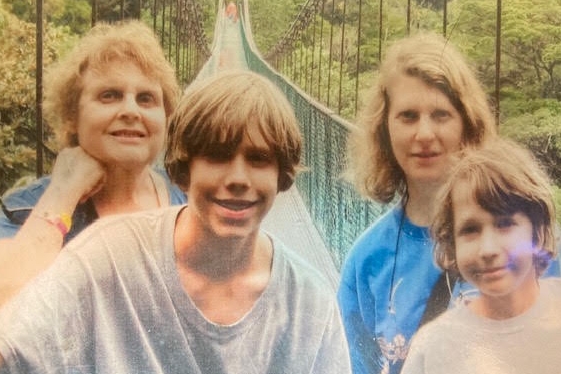
    Professor Wolfgang (left) doted on her family and sent personalized birthday cards. Courtesy of the family

    She almost went to law school in the 1970s before gaining her full-time teaching position at Lehigh. She doted on her family, sent personalized birthday cards, and kept in touch with teachers, colleagues, former students, and friends even after they parted.

    “She was brilliant,” a longtime friend said in a tribute, “and she was fun.” Her family said: “Everyone loved her.”

    In addition to her daughters, Professor Wolfgang is survived by two grandsons, a great-grandson, and other relatives. A brother died earlier.

    A private celebration of her life was held earlier.

    Donations in her name may be made to the Philadelphia Yearly Meeting of the Religious Society of Friends, Box 72077, Philadelphia, Pa. 19176.

    Professor Wolfgang “was brilliant,” a longtime friend said in a tribute, “and she was fun.”Courtesy of the family
  • NYT writer practiced her principles with her daughter’s schooling

    NYT writer practiced her principles with her daughter’s schooling

    My parents were big supporters of public education.

    Teaching was their life’s work. They spent almost their entire careers in the District of Columbia Public Schools system. However, they chose to send my four siblings and me to Catholic schools through grade 12. They sacrificed almost everything to do it. Many of their educator friends made similar choices.

    My husband’s mother made a similar pick. He still recalls how out of place he felt after his mom — also a schoolteacher — enrolled him in an expensive, predominantly white boarding school in New England when he was just 11. Last year, during one of his school reunions, I walked around and marveled at the beauty of the campus.

    At the same time, though, the thought of him dressed in his little blazer and being so far away in Massachusetts makes my heart ache for the adolescent version of him. Not that he regrets it. It put him on the path to Princeton University.

    Like many other middle-class families, our parents faced a difficult decision: send us to our neighborhood schools with all of their problems, or identify the best possible educational opportunity for us elsewhere.

    Add in a bunch of other variables that Black students in predominantly white private schools often still face — including social isolation and subtle discrimination — and the decision becomes even more difficult.

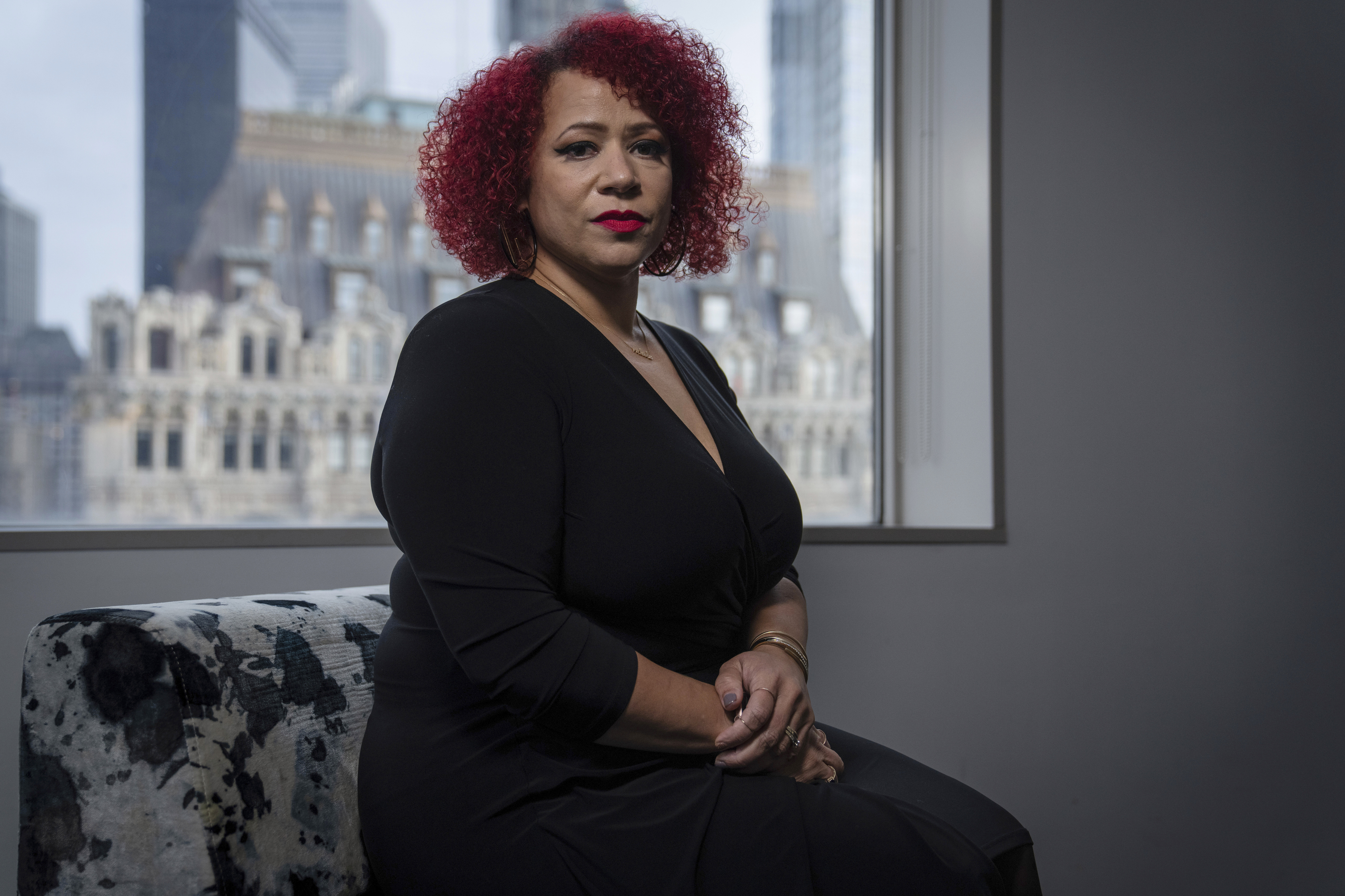
    I’ve been thinking a lot about the choices Black parents have to make for their children after reading Nikole Hannah-Jones’ essay in the New York Times about what her family went through getting her daughter educated in New York City public schools.

    The Pulitzer Prize winner, who founded the 1619 Project, could have afforded to send her daughter to the most exclusive school in the city. Instead, she enrolled her only child in a segregated, high-poverty public elementary school in Brooklyn across from a public-housing project.

    Because she and her husband were well-off financially, Hannah-Jones naively thought they could use their resources and networks to help the school thrive. It was a decision based “on the collective good and not just our individual advantage,” she wrote.

    She acknowledged that her decision returned to haunt her years later when her daughter was in middle school and confronted her, saying, “So you had money to send me to one of the best schools, and you chose not to?”

    Gulp.

    As Hannah-Jones noted in a response to a reader comment about the article, teenagers have a way of humbling us.

    In the piece, Hannah-Jones delves deep into why she made the choice that, she eventually concludes, was a mistake.

    “Najya deserved better. They all did. But she was mine. This girl, my only child, looked to me to protect her, to give her what she needed to thrive. And I had not chosen her.”

    It was a stunning admission.

    Not to mention brave.

    When it comes to choosing schools, there aren’t always suitable options, especially for socially conscious Black parents like Hannah-Jones. People sometimes find themselves having to make a no-win choice the way she did.

    “Which struggle are we asking our children to bear? Stay in the neighborhood school and risk being underserved; leave for a more selective or whiter school and risk isolation, racism, and the message that the children left behind are not worth saving,” Sharif El-Mekki, CEO of the Philly-based Center for Black Educator Development, told me in an email.

    Hannah-Jones’ daughter, Najya, now attends a selective, predominantly white and Asian public high school. Hannah-Jones wrote she is better off academically, but racism is a factor. “My daughter had never been part of a minority in a school, and now she sat in classrooms where some classmates casually tossed around racial slurs as if it were cool.”

    Najya also has regular homework assignments, which was something she wasn’t used to. She hadn’t learned to study on her own. Her grades faltered. Her parents hired an algebra tutor and learned that their student “had huge gaps in many of the building blocks of math that she should have learned in elementary school, like mastery of long division and fractions.”

    Eventually, Najya was able to get her footing and started getting A’s and B’s again.

    I reached out to Shanée Garner, executive director of Lift Every Voice Philly, a grassroots, Black-led parent organization, who pointed out, “The most heartbreaking aspect of [her] story is how clearly it reveals a trap any of us can fall into: Believing that being right, or having access and influence, is enough.”

    She added, “There is no perch high enough and no argument brilliant enough to produce the seismic and enduring shifts our public systems require.”

    Public education needs widespread systemic reforms to better serve diverse populations.

    That’s where critics should be directing their outrage — not at Hannah-Jones for the choice she made about schooling her daughter, a decision that was rooted, as others have noted, in an attempt to live out her principles. Some people are mad at the wrong things. As Hannah-Jones noted, Najya will be fine. She “has learned resilience,” her mother told a reader online.

    But what about all of the children enrolled in schools that don’t adequately serve them? They must not be ignored. Their schooling matters, too.

    When it comes to those often-forgotten students, we already know where Hannah-Jones stands on the principles of equity, fairness, and equal educational opportunities. What about the rest of us?

  • At every turn, Trump’s ideas for aiding U.S. consumers run into resistance

    At every turn, Trump’s ideas for aiding U.S. consumers run into resistance

    First came a proposal to permit tariff-free beef imports, but that immediately angered America’s farmers and ranchers.

    Then came a plan to ban exports of domestic diesel fuel, but that met with pushback from major oil companies.

    In between, President Donald Trump pitched the idea of simply cutting $5,000 checks to adult Americans frustrated, polls show, by high food and gas prices — if the GOP maintains control of Congress. But that idea, too, has come under fire, even from some Republican lawmakers concerned about the potential hit to the budget deficit.

    With just five weeks until Election Day, the White House has thrown out multiple ideas for combating persistent inflation, which has outpaced wage growth. But experts say it is unclear whether Trump can execute any policy that would placate inflation-weary voters and help the GOP maintain control of Congress.

    “These are symptoms of panic in the administration about problems that they have in part created,” said David Wessel, director of the Hutchins Center on Fiscal and Monetary Policy at the Brookings Institution.

    Inflation has been running over the Federal Reserve’s target rate since 2021, but an array of Trump policies have fed the problem, economists say. Trump’s decision to join Israel in going to war with Iran has disrupted the global oil supply, leading to elevated energy rates. His tariffs have produced higher prices for some imported goods. And his administration’s immigration crackdown has made low-cost labor harder to find, keeping price pressures on domestic companies high.

    Consumer frustration is reflected in polling. The gap has steadily widened between voters who approve of and disapprove of Trump’s performance as president, and 73 percent of Americans said they disapprove of Trump’s handling of the economy in a recent poll conducted by SSRS for CNN. Only 27 percent approved — his lowest approval rating on the issue ever recorded by the survey.

    Against that backdrop, Trump has floated a parade of ideas for cutting prices.

    “President Trump pledged to lower costs and raise real wages for everyday Americans, and the Administration continues to rigorously evaluate every option on the table to deliver,” White House spokesman Kush Desai said in a statement.

    On top of the political hurdles, however, these policies have been “small in the grand scheme of things … if they’re helpful at all,” said Mark Zandi, chief economist at Moody’s Analytics. “So it’s not like it’s moving the dial on the affordability crisis.”

    Douglas Holtz-Eakin, president of the American Action Forum, a conservative-leaning think tank, said it’s not uncommon for politicians to try to bring down prices in the run-up to elections, especially when their party’s control of Washington is at risk.

    President Joe Biden did the same ahead of the 2022 midterms, notably by calling for a federal gas tax holiday and releasing millions of barrels of oil from the nation’s Strategic Petroleum Reserve in an effort to bring down sky-high gas prices.

    “This whack-a-mole with particular prices is something the Biden guys tried,” said Holtz-Eakin, who was a senior economic adviser to President George W. Bush and the 2008 presidential campaign of then-Sen. John McCain (R-Arizona). “It doesn’t solve the economic problem, and it doesn’t seem particularly politically successful.”

    For Trump, time is running out, said Rebecca Patterson, a senior fellow at the Council on Foreign Relations.

    The U.S. economy is so big and so complex that improving affordability “is simply not something anyone can do in a month,” Patterson said. “Actions taken today might help in the medium and longer term. But between now and the election, the best you can hope for is that voters appreciate that you’re trying.”

    One idea the administration has executed is buying back Treasury bonds. But so far, the payoff has been minimal.

    In part because of the competition for cash from massive private-sector spending on artificial intelligence, investors are demanding higher interest rates for Treasury bonds. Higher bond yields, in turn, raise interest rates for consumer loans such as mortgages. The average 30-year fixed mortgage rate hit 7 percent last week for the first time since January 2025.

    In August, Treasury Secretary Scott Bessent announced he would intervene in the bond market by buying back longer-term Treasury bonds to try to slow the rise in yields. That has not yet worked in bringing down yields, though Bessent contended in a recent congressional hearing that it is nonetheless a success because “we then proceeded to have the two most successful Treasury auctions that we’ve had in 20 years.”

    While Bessent was wrestling with the bond market, Trump decided to tackle meat prices.

    In late August, the president signed a proclamation that rolled back tariffs on foreign beef trimmings for 90 days in an effort to boost imports and lower ground beef prices, which have risen almost 25 percent since the beginning of Trump’s second term.

    But that drew rare pushback from farm-state Republicans, including Sen. Chuck Grassley (Iowa), Sen. Pete Ricketts (Nebraska), Sen. Roger Marshall (Kansas) and Rep. Ashley Hinson (Iowa), who is running in a competitive Senate election in her state.

    The lawmakers argued that a flood of cheap foreign beef would undermine American farmers and ranchers, who are already struggling with high fuel, grain and fertilizer prices due to the Iran war and other factors.

    Trump issued a follow-up executive order aimed at helping ranchers, and the Agriculture Department announced new policies aimed at supporting American beef producers. The administration is now reportedly considering reversing course on beef imports — though the White House has denied that.

    Then came the Republican midterm convention in Dallas, where Trump made his biggest pitch yet: If Republicans keep both the House and Senate on Nov. 3, Trump said he would give every adult American a $5,000 dividend to spend within the United States.

    Some Republican lawmakers applauded the idea, but others were skeptical, saying the checks not only could exacerbate inflation but also could increase historically large budget deficits. The proposal could cost more than $1 trillion at a time when concern is growing about the nation’s outsize debt, which recently surpassed $40 trillion.

    Public interest groups blasted the idea; Lisa Gilbert, co-president of the left-leaning consumer watchdog Public Citizen, called it an “explicit and desperate attempt to buy votes.”

    And voters largely have not been swayed: A YouGov poll released earlier this month found that 64 percent of U.S. adults felt they would probably or definitely not receive the dividend if Republicans were to win the election.

    So far, there have been few signs of interest on Capitol Hill, where lawmakers would have to draft legislation to authorize the checks and vote to approve it.

    Last week, after diesel prices hit a record high, Trump and Bessent announced a new idea for tackling soaring fuel prices: a ban on diesel exports. Their theory was that a ban would boost the diesel supply for American consumers, lowering the price at the pump.

    Several Republican candidates in competitive congressional races supported the idea. But major oil companies and Energy Secretary Chris Wright objected, arguing that such a policy would incentivize companies to lower diesel production, which would further raise fuel prices.

    By midweek, the fate of the diesel export ban, too, seemed uncertain: Wright said any new limits on diesel exports were likely to be voluntary.

    Scott Clement contributed to this report.

  • 5 British nationals arrested over suspected attack at a U.S.-operated air force base released on bail

    5 British nationals arrested over suspected attack at a U.S.-operated air force base released on bail

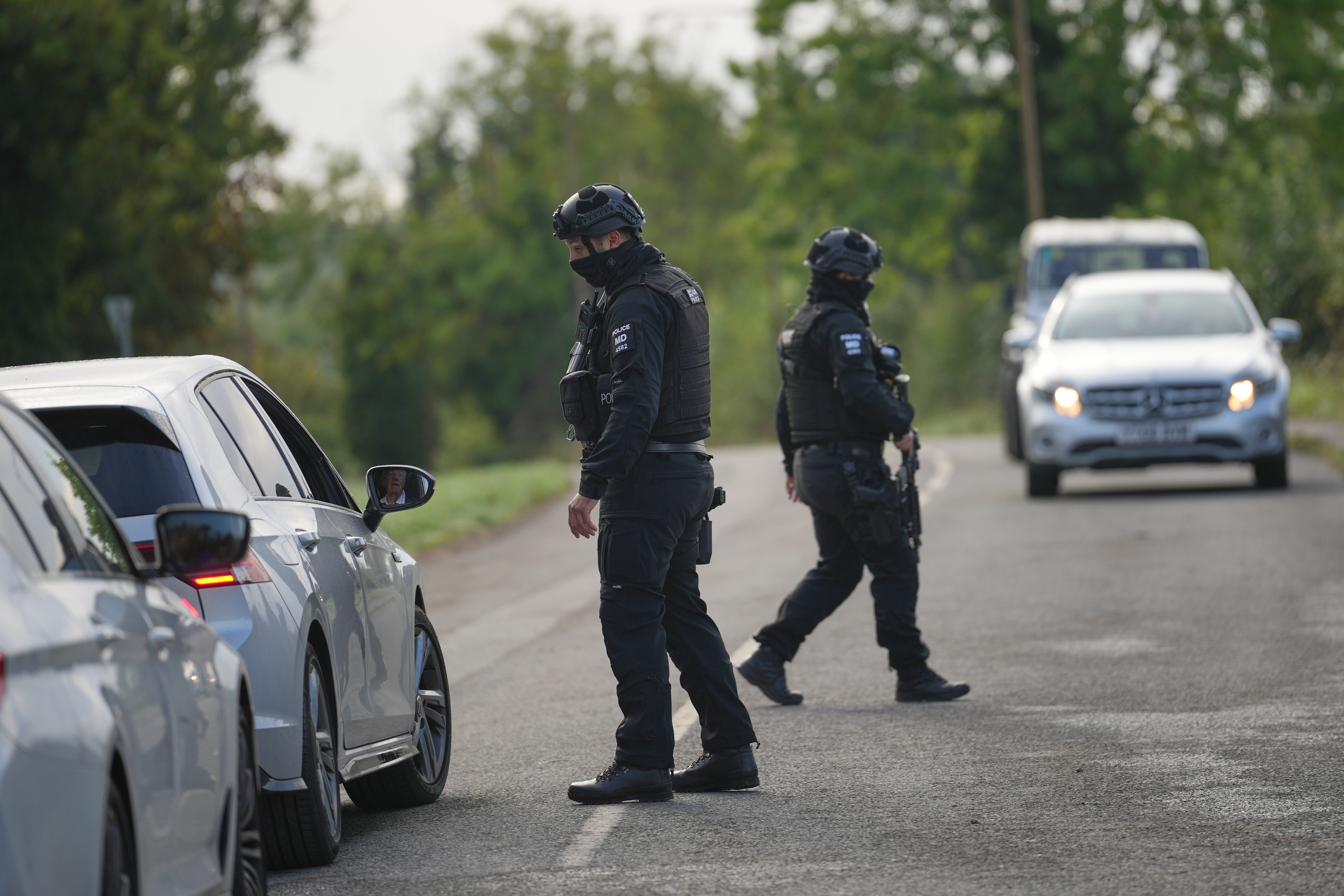
    FAIRFORD, England — Five young British men arrested on explosives and terror charges near a U.S.-operated air force base in England were released on bail Monday, and counterterror detectives said they were investigating “multiple lines of inquiry,” including whether there is a link to Iran.

    The men were detained early Sunday after three vans were spotted in the countryside near RAF Fairford, a U.K.-owned base that has been used by American bombers during decades of conflicts in the Middle East, including this year’s war with Iran.

    Investigators haven’t concluded whether the incident was state-backed. They are investigating a possible link to Iran, Russia, or nonstate militant groups. RAF Fairford has also been the focus of protests by anti-war campaigners.

    The five suspects, who haven’t been named, were initially held over suspected explosives offenses, and later also arrested on suspicion of preparing an act of terrorism. Police said the men are all British nationals from London and in their 20s.

    Britain’s national news agency, PA, reported without citing sources that police had not found viable explosives. Announcing that the suspects had been bailed, the head of U.K. Counter Terrorism Policing, Laurence Taylor, said that the suspects face stringent conditions and “absolutely remain under investigation.”

    Taylor said lines of inquiry include that the suspected offenses were committed by “proxies or individuals, either knowingly or unknowingly, working on behalf of a foreign state.”

    Iran denied involvement. The Iranian Embassy in London said that it “categorically rejects and strongly condemns the recent unfounded and malicious speculations” about the incident.

    Residents were evacuated from 85 homes in the village of Whelford near the base on Sunday, and army bomb-disposal experts used a robot to examine three white vans. The villagers were allowed to return home late Monday afternoon, though a cordon remained around the three vehicles, police said.

    Prime Minister Andy Burnham chaired a meeting of the government’s COBRA emergency committee on Monday “to make sure we have the full picture” of the incident, he said.

    Arrests came after reports of suspicious vehicles

    It was unclear whether the arrested men had been on security services’ radar. Local residents described seeing heightened security around RAF Fairford in recent days, with heavy vehicles parked across entrance gates.

    U.S. President Donald Trump said the suspects had been detained following cooperation between the U.S. and Britain, and had been “under view” for some time. Police, however, said the arrests were triggered by a late-night call about “suspicious vehicles” near the base.

    A local farmer said she called police after seeing three oddly parked vans as she drove home late Saturday night, and that nearby she came across “a large group of men,” some with their faces covered. She said they scattered when they saw her vehicle.

    She declined to be identified to protect her identity because she was describing what she saw as potential security lapses.

    British Defense Secretary Wes Streeting said the farmer “did exactly the right thing” by calling police but only had “a partial view” of the operation.

    The arrests came at a time of heightened tensions around the threat from hostile states, with British intelligence services saying Russia and Iran have both used proxies to commit crimes on U.K. soil. In March, officials said the number of national security cases involving activity by hostile states, including Iran, increased by 50% in the six months to December 2025.

    Iran has been linked to a series of attacks in Europe

    Britain didn’t join the U.S. and Israel in the Iran war, which began on Feb. 28, and initially denied Trump’s request to use bases in the U.K. to strike Iran. But then Prime Minister Keir Starmer agreed in March to let the U.S. use bases in Britain for what he called “defensive” operations against Iran’s missiles and their launch sites following Iranian attacks on U.K. interests and Britain’s allies in the Gulf.

    American B-1 and B-52 bombers have taken off from Fairford, 100 miles west of London, for operations during the Iran conflict.

    Iran has said that it considers any base used to attack its territory a legitimate target.

    British security officials say proxies linked to Iran have been behind a string of arsons and other attacks in the U.K. and other countries, many of them targeting the Jewish community and intended to sow fear. They have previously warned that Tehran could expand its targets in the U.K. if conflicts in the Middle East continue.

    Several people also have been charged with plotting to commit arson in the U.K. on behalf of Russia-linked groups.

    U.K. Foreign Secretary Ed Miliband said Monday that the incident is a “reminder of the threats our country faces.”

    Miliband met Iranian Foreign Minister Abbas Araghchi at the United Nations in New York last week and told him that “Britain will not tolerate intimidation, threats, or hostile activity on U.K. soil,” according to a U.K. readout of the conversation.

    U.S. Air Force says personnel remain vigilant

    The U.S. Air Force said that its personnel on the base “remain vigilant,” but “for operational security reasons we will not discuss specific force protection measures.”

    The U.S. Embassy in London has warned Americans in Britain to be cautious and mindful of their personal security.

    Trump said that authorities had the suspects “under view for a long time and we got them.”

    “It was an amazing job. We had them under investigation. They were looking to do big damage to our fort. And working with the British worked out great,” he told reporters in Chicago on Sunday.

  • Pope Leo leans into statesman role, urging peace in an era of renewed war

    Pope Leo leans into statesman role, urging peace in an era of renewed war

    METZ, France — Pope Leo XIV capped a four-day trip to France in the intellectual birthplace of the European Union, heralding its success at “tearing down walls that were dividing it” and leaning into his role not only as spiritual leader of 1.4 billion Catholics but as an increasingly influential statesman.

    In back-to-back addresses delivered symbolically in a conference center named after Robert Schuman, the late French foreign minister who was a founding father of the European Union — and now a candidate for Catholic sainthood — Leo struck what has become his trademark: a balanced tone on hot-button issues like migration that seem to leave interpretation to the beholder.

    He was less equivocal on religious freedom, the importance of international law and multilateralism, and his deep distaste for invoking God’s name for the purpose of war. Leo spoke in a part of Europe — near the once violently disputed border with Germany — where Schuman championed continental integration as a binder of lasting peace.

    At a time when President Donald Trump has pressed NATO allies into ramping up military spending, Leo acknowledged that “the search for peace in Europe, as throughout the world, must not be confused with a naive form of pacifism.” But he also warned against “the illusion that rearmament is the answer.”

    During tours of Africa and Spain in April and June, Leo — who initially seemed uneasy with fame — emerged as a confident and emotive spiritual leader capable of moving throngs.

    During his trip to secular France, the U.S.-born pope did just that in Paris, Lourdes and Metz, including drawing 800,000 faithful for an outdoor Mass on Saturday, the largest crowd in the capital since France’s World Cup victory in 2018. The night before, Leo, the 71-year old leader of a two-millennia-old faith, managed to easily pack a stadium with 80,000 roaring youth.

    Yet more than on some of his other trips, a different pope was also on display in France: Leo as an emerging elder statesmen.

    “We’re now dealing with a pope I’d describe more as a diplomat,” said Claude Dargent, a Paris-based expert on religion and politics.

    Leo is also being seen by some as the pope that many believe the cardinals who elected him had hoped for — a plain-talking, Chicago-born counterweight in an era of unbridled American power.

    In April, when President Trump openly criticized the pope as “WEAK on Crime, and terrible for Foreign Policy,” Leo appeared unbowed, saying he had “no fear.” But he has since sought to lower the tone and refrained from fanning the flames of a feud with the White House.

    Instead, he has taken to challenging the notion of “might-is-right,” and offering an alternative world where kindness, generosity and, above all, human dignity hold sway.

    He calls it our “common humanity.”

    Days after Trump skewered the United Nations and spoke of victors taking spoils, Leo addressed UNESCO — the UN’s cultural agency in Paris — to rousing applause. He spoke of the horror of war and the glory of peace. He reiterated the risks of artificial intelligence, as he did in his first major Encyclical, raising red flags at a time when Trump has defended its breakneck advancement.

    At a time when Venezuela is under the thumb of Washington, and Moscow is waging war in Ukraine, Leo condemned the quest for “domination” and the rise of modern “neocolonies” of powerful nations. In France, where nationalist Marine Le Pen is polling first in next year’s presidential election, Leo warned of creeping authoritarianism in the free world.

    “A truly free society does not impose uniformity but protects the diversity of consciences, preventing authoritarian tendencies and promoting an ethical dialogue that enriches the social fabric,” Leo said.

    In Metz, he doubled down on a point for which the White House has taken him to task: his claim that “God’s name” can never be used to “justify violence or oppression.” He reiterated his fears over the erosion of international law.

    “International law and multilateralism emphasize the genuine equality of States in their relations and constitute the best antidote to the desire for domination, which lies at the root of every conflict,” Leo said. “Today, relations between individuals and States are becoming increasingly uncivilized. The value of keeping one’s word is dismissed; instead, people boast of lies and deceit.”

    He spoke of a new European transformation through waves of migration. He reiterated earlier backing for legal pathways, and improving conditions in origin countries to inhibit migration. But he also called for integrating newcomers as if they were “part of one’s own family” and offering them opportunities.

    French President Emmanuel Macron, who was at the speech in Metz, had invited leaders from the E.U.’s other 26 member nations, though few appeared to have accepted. The prime minister and grand Duke and Duchess of Luxemburg attended, as did the head of a German state, Anke Rehlinger, minister-president of Saarland, the Élysée Palace said.

    The crowds in France, though perhaps slightly more reserved than those in neighboring Spain, were often young. In Paris, a smattering of nonbelievers joined the faithful in cheering the pope. At a university event in central Paris on Saturday, three young men — none Catholic or even religious — whooped for Leo, fanboying over a pope that one of them described as the American the world “needs.”

    “For us in France, it is important that we have an American saying these things, you know, an American with a wonderful message of peace who speaks so many languages, and who, you know, is speaking this truth when we have the insanity of Trump,” said Robin Pitrat-Demurger, 21, a Paris political science major.

    “I am here because I want to hear him and see him,” Pitrat-Demurger continued. “But also because I am happy to hear an American say these things, and to know that other Americans might listen to him because he is one of them.”

    As is customary in papal trips, there was pageantry, especially when Leo became the first pope to view the restored Notre Dame Cathedral following its devastating 2019 fire. He joined a high procession dressed in gleaming white and gold. As incense swirled and thunderous organ music played, he venerated a relic said to be the crown of thorns at the crucifixion of Jesus.

    In Lourdes, he comforted the sick and elderly who seek miraculous cures in a city where a 19th century miller’s daughter is said to have witnessed apparitions of the Virgin Mary. He said Mass for 150,000 pilgrims, and later met individually and collectively with seven carefully selected victims of abuse by clergy. Several of the victims praised Leo after the exchange.

    At an event at a hospital, rows of disabled people in rickshaw-like wheelchairs hung hopefully on the pope’s words, some of them in tears.

    MAGA influencers have dubbed Leo the “woke pope,” but in France, if anything, he was seen as the opposite, at least on social issues.

    In Paris, he spoke up for conservative Catholic principles not always popular in secular France, taking aim at surrogacy and the country’s recently passed euthanasia law — calling it an industry built around “arranging one’s own death.”

    He did so in a manner that was described by some in the French press as astutely aware of French identity and self-perception. Perhaps it was genetic. Leo spoke fondly of his familial roots in Normandy and Béarn.

    “He said some things that he doesn’t like in France and I feel like it’s important, because a pope can’t always have a speech everyone agrees with, but he does it in a gentle way,” Zoe le Barzic, a history major at the Catholic University of Paris who came to hear Leo. “There is so much division right now. I don’t think he wants to add to it. He is being very diplomatic.”

    Yet Leo has not shied away from all comments on American politics, albeit treading lightly and seemingly going there only when pressed by the media.

    Asked on the papal flight to Paris about Trump’s decision to ban CNN and other news outlets from the White House, Leo told reporters: “I’m very happy that here, you are all welcome. And good ​coverage. I ⁠think it’s very important that we have it all ​the way around for everyone.”

  • Tom Kean Jr. backs Trump on Iran and tariffs, if not local issues

    Tom Kean Jr. backs Trump on Iran and tariffs, if not local issues

    Rep. Thomas Kean Jr., a New Jersey Republican in a tight reelection battle, sought to distance himself slightly from President Donald Trump on Sunday as his Democratic opponent, Rebecca Bennett, pelted him with reminders of his years of loyalty to the unpopular president.

    Kean began his opening comments during a debate in Rahway, New Jersey, by stating that he was willing to stand up to Trump’s efforts to strip funding from a critical Hudson River rail tunnel. “I will make sure that I counter anybody who gets in my way, including this president,” he said.

    And for the first time, Kean clearly stated his opposition to the Trump administration’s plan to convert a warehouse in Roxbury, New Jersey, into an Immigration and Customs Enforcement detention center.

    He also said he opposed Trump’s decision to change the name of Lake Ontario to “Lake America.” On key issues such as the war in Iran and the president’s tariffs, however, he maintained strong support for Trump’s policies.

    “The president is justifiably using that to reduce costs for consumers,” Kean said of the tariffs.

    His seat in New Jersey’s 7th Congressional District, which has seesawed between the two parties three times since 2018, is considered a prime pickup opportunity for Democrats as they try to retake control of Congress in November.

    On Friday, in a sign of the volatility of the contest, The Cook Political Report shifted the race from “toss-up” to “leans” Democratic, despite the Republican Party’s 16,600-voter registration edge. An independent poll taken this month showed Kean trailing Bennett, a former Navy helicopter pilot.

    Groups aligned with the Republican Party are pumping millions of dollars into the race. Kean and his Republican allies have booked $17.4 million in advertising, far outpacing Democrats’ $4.9 million, according to AdImpact, an ad analytics firms.

    Sunday’s debate was the first time that Kean, 58, had subjected himself to extensive public questioning since being absent from Congress for nearly four months while being treated for what he has said was depression. The first question Kean was asked dealt with the lack of information he shared while hospitalized and missing from Congress from March through June.

    “Nobody can plan a medical emergency,” he said. “And that was a medical emergency.”

    Neither the debate’s moderators nor Bennett pressed him for additional details about his treatment or his fitness to continue to hold office for a third term.

    “I’m glad that you got access to the care that you need,” Bennett said, “and I wish you a continued speedy recovery.”

    Kean — the son and namesake of a former New Jersey governor — has never been known as a graceful speaker, even after 25 years as a politician. But he appeared confident Sunday as he parried for 90 minutes with Bennett. His wife, father and twin brother sat in the front row behind the moderators.

    He stressed his experience and his unconditional support for Israel, noting that he would support sending U.S. troops to defend the country, if needed. He also tried to depict Bennett, a first-time candidate, as a puppet of the Democratic Party.

    “You have not heard my opponent once tonight differ from the average Democratic member of Congress, who always votes the party line,” he said.

    Bennett, 39, focused on Kean’s support for Trump’s policies, including his vote to slash Medicaid funding, as she worked to present him as out of touch with his constituents’ concerns.

    She repeatedly mentioned his active stock portfolio and the trades he signed off on while absent from Congress, as well as the fact that he had not put his assets in a blind trust when he entered Congress, as he had promised to do. (Kean’s lawyer has said that doing so would preclude him from also taking “principled and pragmatic stands” against investing with foreign adversaries and selling American stocks short.) Bennett said she had sold all of her individual stocks before the race — although she refused, when pressed, to disclose the value of those sales or her net worth.

    Bennett also spoke forcefully about the need to end the war in Iran.

    “Any time we are going to put American service members in harm’s way, there needs to be a clear motivation, a clear objective and a clear exit strategy,” she said. “And we have not seen any of that from this administration.”

    She repeatedly linked the war to the high price of gas as she stressed her goal of bringing down costs if elected. “The reason that we are seeing this increase in our gas prices,” she said, “is because of this unnecessary war.”

    The two did share a moment of bipartisan agreement when asked about pineapple on pizza.

    “I find that perfectly acceptable,” Kean said.

    “I’ll eat it,” Bennett said. “But I wouldn’t put it on there myself.”

    After the debate, the challenger lingered to take questions from reporters. Bennett said that if Kean opposes Trump’s efforts to block funding for the Hudson River tunnel, which is known as Gateway, he hasn’t been effective.

    “Donald Trump has tried to hold up the funding for the Gateway tunnel,” she said, “and Tom Kean Jr. has been unable to do anything to make sure we’re actually going to get the funding back.”

    Minutes after the debate ended, Kean quickly exited through a side back door, flanked by family members and aides.

    He ignored a question about his differences with Trump as he climbed into a silver sport utility vehicle that was waiting for him near the exit.

    This article originally appeared in The New York Times.

  • Collingswood’s overworked firefighters | Inquirer South Jersey

    Collingswood’s overworked firefighters | Inquirer South Jersey

    Good morning, South Jersey.

    After spending $40,000 on a private study, Collingswood’s commissioners are split on whether privatization is the answer to help its understaffed fire department.

    And Gov. Mikie Sherrill has limited time to find a new lieutenant governor after Dale Caldwell’s resignation on Friday.

    Plus, the weekend’s nor’easter caused dozens of evacuations and rescues down the Shore, and more news of the day.

    — Taylor Allen (southjersey@inquirer.com)

    If someone forwarded you this email, sign up for free here.

    Deciding how to help Collingswood’s overworked firefighters

    With only 19 employees, the Collingswood Fire Department is spread pretty thin.

    It’s responsible for emergency medical transport services, as well as fire emergencies across the entire borough and parts of Haddon Township.

    The borough’s board of commissioners spent $40,000 on a study that told them to privatize ambulance services, but a previous lawsuit voided a contract when they tried to do just that with a vote last December.

    If Collingswood wants to try again, the municipality wouldn’t be the first to outsource ambulance services: Camden uses Cooper Health, Gloucester City uses Virtua Health, and Gloucester Township and Pine Hill both use Inspira Health.

    Privatizing could be more cost-effective and give firefighters more breathing room to respond to emergencies, but not everyone is convinced.

    The Inquirer’s Sarah Nicell breaks down the factors at play.

    Replacing Caldwell

    Gov. Mikie Sherrill has about six weeks to find a new lieutenant governor.

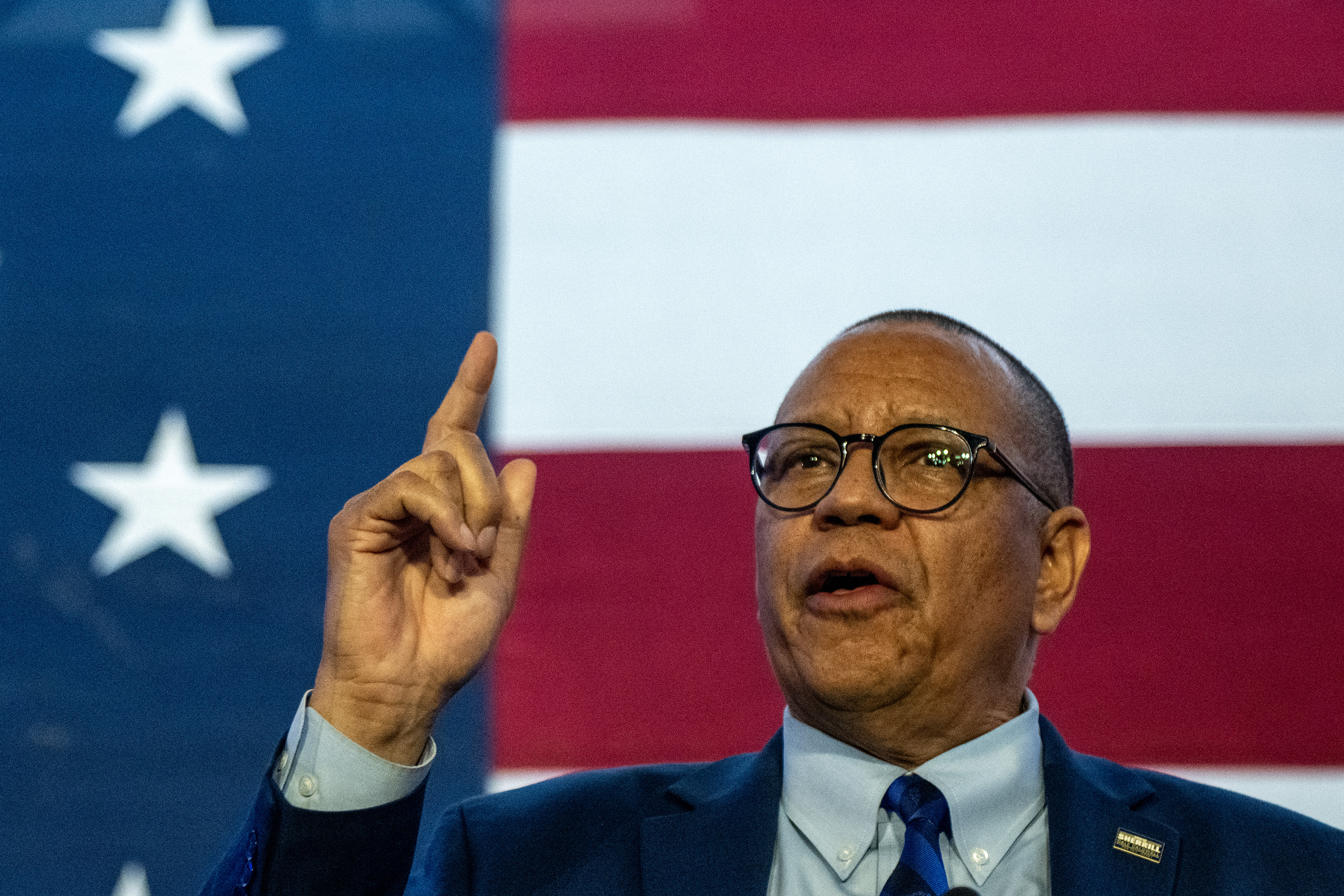
    Dale Caldwell stepped down from his position after investigators found “credible evidence” of sexual harassment.

    With the midterm elections coming up in November, Sherrill has already tapped Acting Comptroller Shirley Emehelu to be the state’s top election official as secretary of state on an acting basis. Before his resignation, Caldwell was also fulfilling that role.

    Assemblymember Balivir Singh proposed Burlington County Democrat State. Sen. Troy Singleton as an ideal fit for the governor’s second-in-command.

    Road crews have already started taking off Caldwell’s name from state signs on I-95 as the fallout continues.

    Reporter Aliya Schneider has the story.

    What to know today

    🧠 Trivia time

    Which band performed at the Freedom Mortgage Pavilion in Camden last night?

    A) Gorillaz

    B) AC/DC

    C) Twenty One Pilots

    D) Low Cut Connie

    Think you know? Check your answer.

    What we’re …

    📚 Building: Our fall reading list.

    🦅 Reviewing: Our roundup of last week’s best sports photos.

    🦖 Mourning: The Academy of Natural Sciences’ museum. Sunday was the final day.

    📬 Your South Jersey view

    A Saturday morning view of the Camden County Boathouse from across the Cooper River in Pennsauken.Taylor Allen

    Despite the rainy weekend, I spent my Saturday morning walking along Cooper River in Pennsauken. The Camden County Boathouse is beautiful regardless of the weather.

    What does your community look like? What South Jersey memory would you like to share? Submit a photo and/or a brief description for a chance to be featured in the Monday edition of this newsletter.

    🗞️ What other South Jersey residents are reading

    Thank you for starting your week with The Inquirer. Let’s make it a great one.

    By submitting your written, visual, and/or audio contributions, you agree to The Inquirer’s Terms of Use, including the grant of rights in Section 10.

  • Collingswood could privatize ambulance services to help overworked firefighters

    Collingswood could privatize ambulance services to help overworked firefighters

    At least one Collingswood commissioner is eager to move forward with privatizing the borough’s ambulance services after a $40,000 study said it would help its understaffed fire department.

    Amy Henderson Riley, a member of Collingswood’s three-person board of commissioners, said the borough should follow through on its plan to outsource ambulance transports that started, and abruptly ended, last year after fellow Commissioner Jim Maley sued the borough over alleged ethics violations.

    “What I aim to do, at least in the short-term, is privatization,” Henderson Riley said last week. “That’s not to say it’s a long-term solution. We’re not looking to sell out to the hospital system. We’re looking to cut costs for residents pulled in every direction.”

    In December, Henderson Riley and Mayor Daniela Solano-Ward, also a commissioner, voted to approve a one-year contract with Virtua Health to use the hospital system’s ambulance services.

    The deal, at no direct cost to the borough, would have allowed Virtua to bill patients who ride an ambulance. Collingswood made about $407,000 from ambulance billing last year, according to its 2026 budget, and it is unclear exactly how much they spent to keep the EMS program running.

    EMS is currently handled by Collingswood’s 19-person fire team, which also manages fire emergencies across the 14,000-resident borough and parts of Haddon Township.

    The Virtua contract was voided when Maley, who voted against the agreement, sued, alleging that Solano-Ward’s vote was a conflict of interest because her husband works for Virtua. The borough settled the lawsuit and agreed that Solano-Ward should recuse herself from future EMS matters.

    If Collingswood tries to outsource ambulance transport again, it would not be the first local municipality to successfully privatize EMS, according to Collingswood Fire Chief Geoffrey Joyce. For instance, Camden uses Cooper Health ambulances, Gloucester Township and Pine Hill each use Inspira Health, and Gloucester City uses Virtua.

    The commissioners have not moved toward privatizing again since the borough settled Maley’s lawsuit in January. Henderson Riley said it would take time to put together a request to send out to bid, which would need to be reviewed by lawyers first.

    With Maley still not sold on privatizing and Solano-Ward’s vote out of the running, the path toward privatization might be difficult. Commissioners do not reconvene until Oct. 5, and Henderson Riley said Thursday she was not sure how a vote would work for EMS without the mayor able to pitch in.

    Plus, key officials think there is a better option for Collingswood’s firefighters that could take years to develop.

    An overworked fire department

    Collingswood contracted Manitou, a private public safety consulting firm, in June to conduct a four-month study examining whether the borough should privatize ambulance services or hire more firefighters to give the department some relief.

    Borough officials have expressed concern that the fire department, which has lost all its part-timers in recent years and responds to about 4,000 annual calls, lacks the capacity to respond with a safe, and mentally well, team of firefighters.

    The study, presented at a public meeting on Sept. 8, was a condition of settling Maley’s lawsuit. The combined cost of legal fees and the study was about $70,000 in taxpayer funds, according to Henderson Riley.

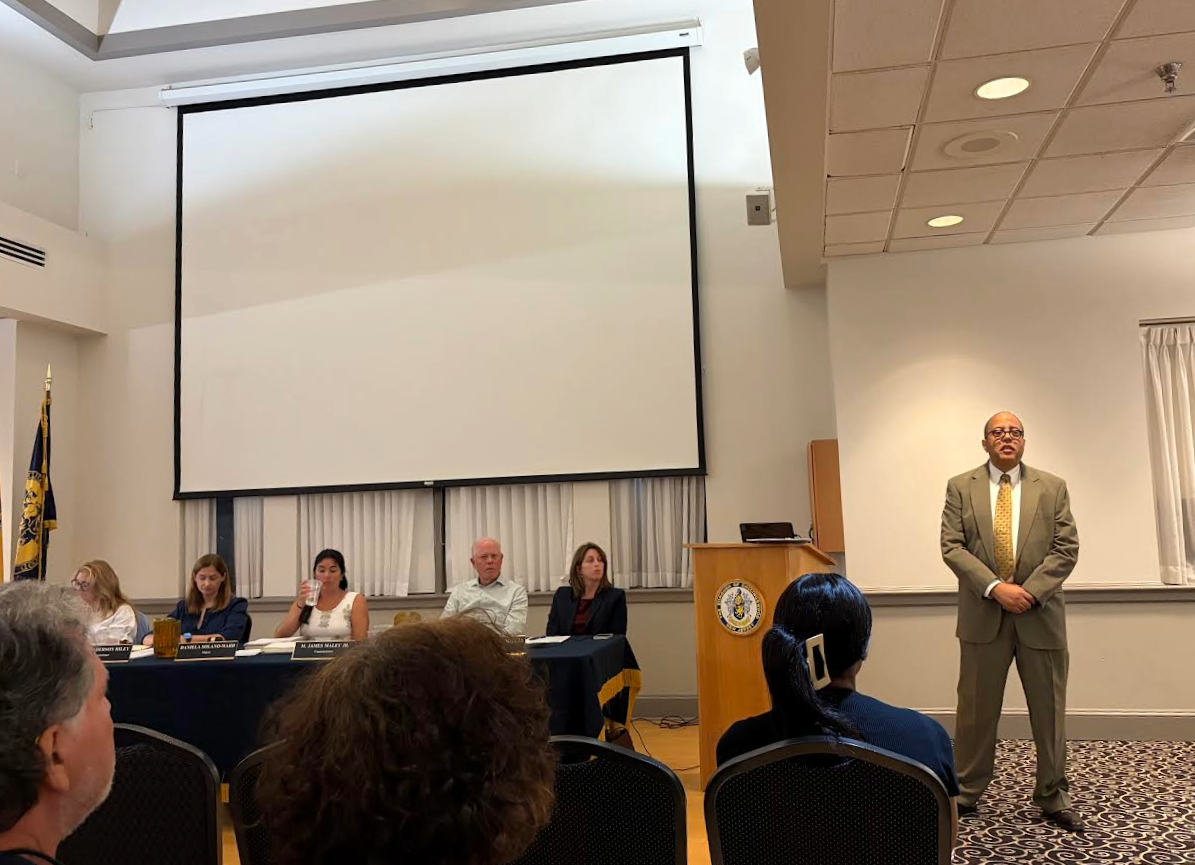
    Charles Jennings, a principal at Manitou, said at the meeting that having no part-time staff has led to an increase in hours for firefighters, and 80% of surveyed staff said they are working too much overtime. Firefighters also reported that the “trajectory of [the] job is getting worse.” Nearly half of current employees said they are considering leaving the Collingswood Fire Department.

    Jennings said privatizing would bring the borough improvements, including cutting costs, more training time for firefighters, and a more competitive workplace. He said outsourcing would make it less likely that firefighters end up with too few staff on an engine to safely respond to emergencies.

    The alternative option — hiring three more firefighters — would cost Collingswood $350,000 and would not fix the understaffing issue when personnel call out, Jennings said.

    Joyce, the fire chief, said he has seen the department change significantly over his 24-year career. His hiring in 2002 was part of Collingswood’s effort to take over EMS from a private contractor. The borough had privatized after struggling to respond to emergencies on its own.

    Growing responsibilities for firefighters have left the community in need of help again, he noted.

    “If at the start of my career you told me I would one day have to receive training on weapons of mass destruction, active shooter threat response, and all of the other facets of emergency response that this career now demands aside from response to fires, I would have never believed you,” Joyce said in an email.

    ‘The most equitable solution’

    With a long list of fire departments across Camden County’s 37 municipalities, Jennings said, the area is “ripe” for consolidation.

    That, too, is Joyce’s ideal outcome. He calls regionalization, which would bring nearby fire departments under one, larger roof, “the most equitable solution.”

    “My dream is that irrespective of whatever zip code you live in, or the wealth or lack thereof in your community, as a resident you should know that when you call 911 that the emergency services are going to arrive quickly and fix whatever your problem is efficiently without delay,” Joyce said.

    Other departments in the Philly area have made moves to regionalize their fire and ambulance services in recent months, including in Kennett Square and Delaware County.

    Solano-Ward, who became a commissioner in May 2025 alongside Henderson Riley, said that strategy would reduce expenses, but it would take a lot of time.

    It took Haddon Heights 20 years to regionalize among three municipalities, she said. Plus, there is no guarantee that Collingswood would not get the short end of the stick.

    “Everyone loves the idea as long as our staff remain, [and] our house is the main house. But guess what?” Solano-Ward said. “We can’t all have that.”

    Henderson Riley, though, said regionalization could happen sooner than people think. She said she is in early talks with officials from three other nearby municipalities, which she declined to name, with interest in consolidation. As healthcare and other affiliated costs rise, she said, Collingswood has to move outside the box.

    “If you’re interested in joining us, talk to us,” she said. “Let’s have everybody at the table together.”

    ‘I don’t think it’s a good idea’

    Maley, who voted with his fellow commissioners to authorize a request for private ambulance proposals last September, said he wants the borough to keep control of its EMS services and has spoken out against privatization.

    Earlier this month, he voiced concerns about losing the revenue that the medical services bring in annually.

    “I don’t think it’s a good idea that a company that’s very interested in the bottom line would run our EMS,” Maley said at the public meeting.

    Henderson Riley said Thursday that the financial impact is more complicated. By privatizing, Collingswood would not have to pay more than $150,000 in overtime wages for its firefighters, or pay a third-party provider more than $30,000 to handle ambulance billing, as it does now. The borough could also sell some of its EMS equipment, Henderson Riley said, and preserve the mental health of overworked employees along the way.

    “These men and their mental health are critical,” she said.

    Maley also said the study’s results should have been delayed due to “an internal investigation” into a fire incident in Collingswood this year.

    Maley, Henderson Riley, and Joyce declined to give details on the investigation, but the borough approved Andrea Wyatt, a municipal lawyer based in Toms River, as special counsel to investigate back in June.

    The Retrospect news organization reported that the incident in question occurred in April, when the department did not have enough staff to transport a 63-year-old injured resident to the hospital and handle a house fire at the same time.

    Henderson Riley said last week that the investigation has “nothing to do” with Jennings’ work, and she doesn’t know why Maley would delay the results based on the investigation.

    Maley declined to explain his thought process until the investigation concludes.

    Some attendees spoke out against the delay in privatizing at the public meeting. Donna Helmes, a Collingswood resident, said it is disappointing that taxpayers paid for an outside source to tell officials to do the same thing they had already voted for with Virtua.

    “I am not wealthy. I don’t want to raise my taxes any more, but I feel like these people will run into my house when it’s on fire to save me and my family, so I want them to be as well-resourced as possible,” Helmes said. “And I think we could have done this last year. It’s very upsetting that we’re still arguing this.”