Category: News

  • 2 giant pandas arrive in Atlanta under a US-China government agreement

    2 giant pandas arrive in Atlanta under a US-China government agreement

    BANGKOK — Two giant pandas arrived in Atlanta on Sunday morning as part of an agreement between the Chinese and American governments.

    Ping Ping and Fu Shuang departed Chengdu in southwestern China early Sunday aboard a dedicated “FedEx Panda Express” Boeing 777 aircraft, officials said. A new agreement between Zoo Atlanta and the China Wildlife Conservation Association makes Atlanta one of three zoos in the U.S. to house giant pandas.

    “This is a thrilling day for Zoo Atlanta and a historic moment for the City of Atlanta, the state of Georgia, and beyond,” Zoo Atlanta President and CEO Raymond B. King said in a statement. “We are elated to welcome Ping Ping and Fu Shuang and could not be more excited about sharing that joy with our Members, guests, city, and community in the coming weeks.”

    Zoo visitors will have to wait awhile to see Ping Ping and Fu Shuang, officials said. The bears will be quarantined for about a month in a biosecure area of the wildlife park’s new giant panda complex. Park officials haven’t confirmed a specific opening date.

    The pandas’ arrival was announced Thursday by Chinese President Xi Jinping during a three-day summit with U.S. President Donald Trump. The loan of the pandas was one of the few concrete outcomes to come out of the state visit, which saw expressions of goodwill between the leaders, but no fixes to any of the long-standing differences between the two countries.

    Atlanta said farewell to its last pandas in 2024, leaving the zoo without the bears. The new agreement was announced back in April, but without any dates.

    Ping Ping and Fu Shuang will be on loan to Zoo Atlanta for 10 years as part of the agreement. Both pandas were born in 2020 and were kept at the Chengdu Research Base of Giant Panda Breeding. Ping Ping, the male, has dark black circles around his eyes, while Fu Shuang, the female, has a forehead that protrudes a bit, according to the Xinhua News Agency.

    China has long used the pandas as part of its diplomacy globally, deploying the bears in loan programs as expressions of goodwill and letting loan agreements lapse when tensions arise.

    Xi had said the loan program was an example of “friendship between the Chinese and Americans.”

  • 5 men arrested near U.K. air base used by U.S. in Iran war on suspicion of preparing a terrorist act

    5 men arrested near U.K. air base used by U.S. in Iran war on suspicion of preparing a terrorist act

    LONDON — U.K. police said that five men arrested in the early hours of Sunday near an air base used by the United States during its war against Iran are being held on suspicion of preparing a terrorist act that appeared to involve three trucks.

    London’s Metropolitan Police, which takes the lead on potential terrorist activities, said police received a call at 12:45 a.m. related to the three suspicious vehicles that appeared to be traveling toward RAF Fairford, a U.K.-owned base that is operated by the U.S. under an agreement dating back to the Cold War.

    Base is home to U.S. bombers striking Iran

    The arrests come at a time of heightened tensions around the threat from hostile states to the U.K., with Russia and Iran among those that have used proxies to commit crimes on their behalf on British soil. In March, officials said the number of national security cases involving activity by hostile states including Iran increased 50% in the six months to December 2025.

    Fairford has been used by American bombers for strictly limited strikes against Iranian missile sites under an agreement with former British Prime Minister Keir Starmer, who voiced opposition to the war after it was launched by the U.S. and Israel on Feb. 28.

    Authorities are investigating a link between the Fairford arrests and Iran as one possibility. Iran has previously indicated that a base used to attack its territory is a legitimate target.

    U.S. President Donald Trump praised those who were involved in making the arrests.

    “It was an amazing job. We had them under investigation. They were looking to do big damage to our fort. And working with the British worked out great,” he told reporters in Chicago on Sunday. “We had them under view for a long time and we got them.”

    Police feared an explosion

    The five men were initially arrested on suspicion of committing offenses under the Explosives Act in the Whelford area, which backs onto RAF Fairford, which hosts the headquarters of the U.S. Air Force’s 501st Combat Support Wing and the 420th Air Base Squadron.

    Aerial footage from Sky News appeared to show a bomb disposal robot roaming between three white trucks. The rear doors of two of the vans were open and large black items could be seen scattered around. The robot appeared to be working toward getting access to the third truck.

    Police gave no details as to the nationality of those arrested. Suspects arrested under the Terrorism Act 2000 can be detained for up to 14 days without charge, compared to the 24-hour limit for standard arrests, without an extension application.

    “We are in the early stages of an investigation, and five men remain in custody,” said Vicki Evans, the Met’s counterterrorism policing senior national coordinator.

    Evans said a 400-yard cordon was put in place around the three vehicles that raised suspicion while the army conducted examinations. As a precaution, around 85 households were evacuated while the examinations took place. Some were taken to a nearby recreation center.

    The U.S. embassy in London warned Americans to be cautious and mindful of their personal security.

    British Prime Minister Andy Burnham said he knew the incident would be “deeply concerning” for many. In a post on social media, Burnham thanked police and the armed forces for their response and said he was grateful to the residents who have been evacuated from their homes “while precautionary checks are carried out.”

    He urged people “not to speculate while the authorities establish the full facts.”

    The defense secretaries of the U.S. and the U.K., Pete Hegseth and Wes Streeting, have also spoken about the incident.

    British security officials say proxies linked to Iran have been behind a string of arson and sabotage attempts in the U.K. and other countries, many of them targeting the Jewish community. They have previously warned that Tehran could expand its targets in the U.K. if conflicts in the Middle East continue.

    Local residents evacuated

    Gloucestershire police said the situation appeared to be “contained” and urged residents to follow official advice while the investigation continues.

    Julian Tudsbery, who has lived in Whelford for 30 years, said another resident had reported seeing three “suspicious vans” in the village early on Sunday.

    “There were several police, three police cars in the drive, and they said you need to evacuate, there’s been a major incident, said he couldn’t elaborate,” he said.

  • A Philly woman won a NASA contest to design a food system for astronauts on Mars

    A Philly woman won a NASA contest to design a food system for astronauts on Mars

    A 25-year-old Philadelphia woman won the $300,000 first prize in a NASA competition to design food systems to improve how astronauts eat in space, and eventually how they will eat on Mars, the space agency announced Thursday.

    Chinyere “Chichi” Ukeje, a native of Bowie, Md., now living with her husband in Northeast Philadelphia, submitted a proposal called Adaptive Nourishment Infrastructure, or ANI, which is named after the Nigerian Earth goddess of harvest and fertility.

    Ukeje said in a phone interview Friday night that her family has roots in Nigeria and with the Igbo people, a major ethnic group in that country.

    With the Deep Space Food Challenge: Mars to Table competition, NASA asked participants to “explore innovative solutions for integrated space food systems that would provide safe, nutritious meals to astronauts living and working in space,” the agency said.

    NASA launched Mars to Table in January 2026 as a follow-up to the Deep Space Food Challenge, which NASA ran from 2014 to 2021 in collaboration with the Canadian Space Agency.

    The updated competition included entries from teams in 28 U.S. states and from a total of 33 countries. The total prize pool was $650,000 for five winning teams.

    Jennifer Edmunson, program manager for Centennial Challenges at NASA’s Marshall Space Flight Center in Huntsville, Ala., said in a statement: “The future of human space exploration will rely on innovative food systems, and it is amazing how much ingenuity this challenge has helped us identify from participants near and far.”

    The challenge was created to find ways to feed astronauts without having to send prepackaged foods, which would not be possible because of the sheer bulk for the many months a Mars mission would take.

    The core of the challenge was to create a working system for a 15-person astronaut crew for 500 Martian sols, which is the equivalent of around 513 Earth days.

    “The problem of feeding astronauts on Mars is more than just growing crops,” said Ukeje, who is studying for a master’s degree in computer science at Johns Hopkins University.

    After spending most of her childhood in Maryland, Ukeje went to Nigeria during high school. She then returned to the U.S. to earn her bachelor’s degree in computer science at the University of Maryland, Baltimore County, before moving to Philadelphia.

    NASA described Ukeje’s “ANI” as “a modular food ecosystem combining controlled-environment agriculture, fermentation and fungi cultivation, and closed-loop nutrient recycling through bioreactors with limited Earth-provisioned foods to produce 50% of the food away from Earth.”

    Ukeje’s complex winning entry included having astronauts heating food with portable electric lunch boxes. The astronauts would take cubes of nutritious food and prepare them into recognizable meals, and then they could have “taco night” or “Italian pasta night.”

    “You want them to feel at home when they are millions of miles from home,” she said.

    She was surprised she won first place, but not surprised that she did well.

    “I completely poured myself into this project,” she said.

    There are no restrictions on what she can spend her prize money on, but Ukeje said she expects some of it will go into further food technology research.

    Correction: A previous version of this article incorrectly spelled Chinyere Ukeje’s first name in a sub-headline and photo caption.

  • The Jersey Shore surveys the damage as the region emerges from a furious nor’easter

    The Jersey Shore surveys the damage as the region emerges from a furious nor’easter

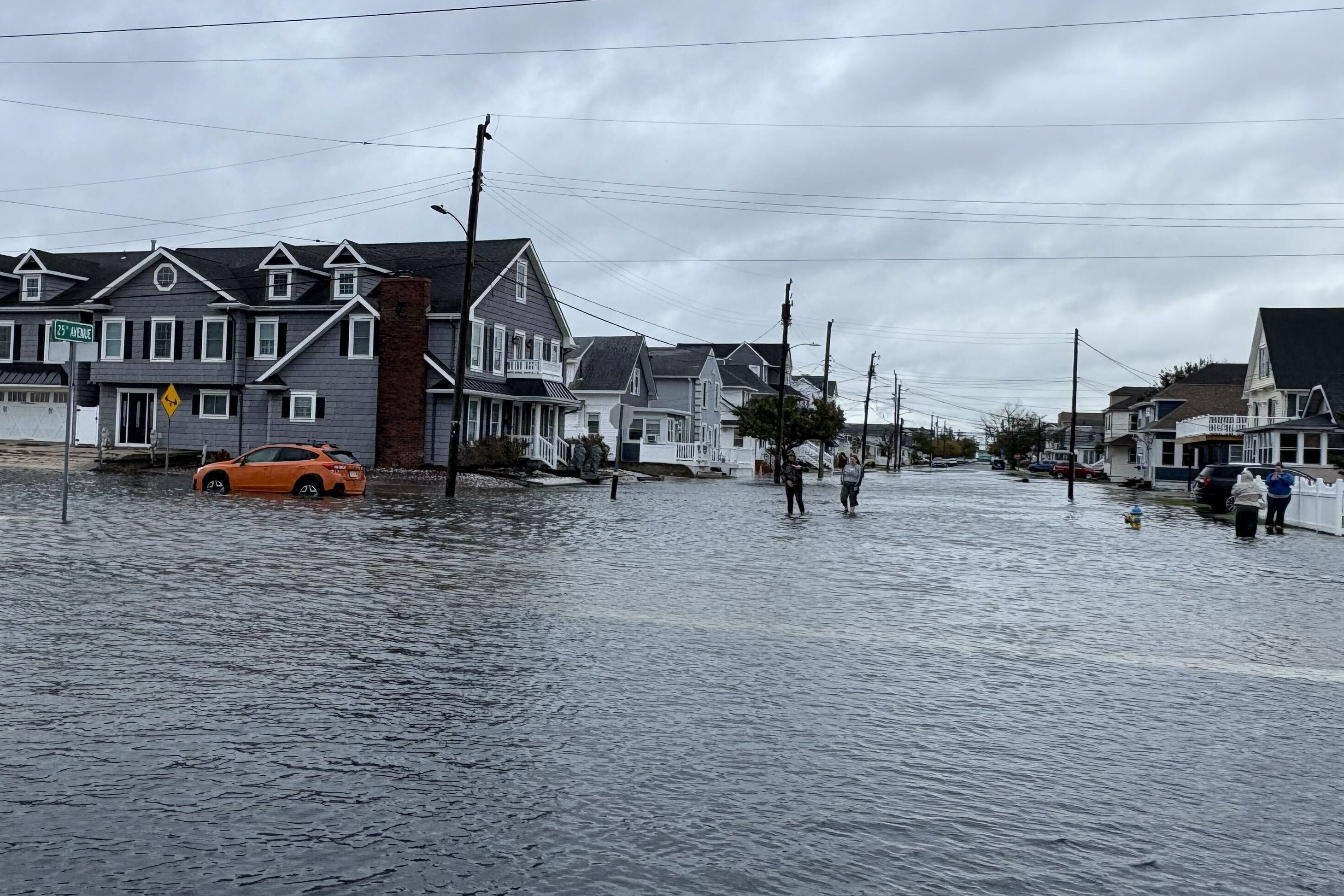
    A weekend of devastating and unusual nor’easter storms prompted evacuations, waterlogged cars and businesses, and eroded idyllic beaches along the Jersey Shore.

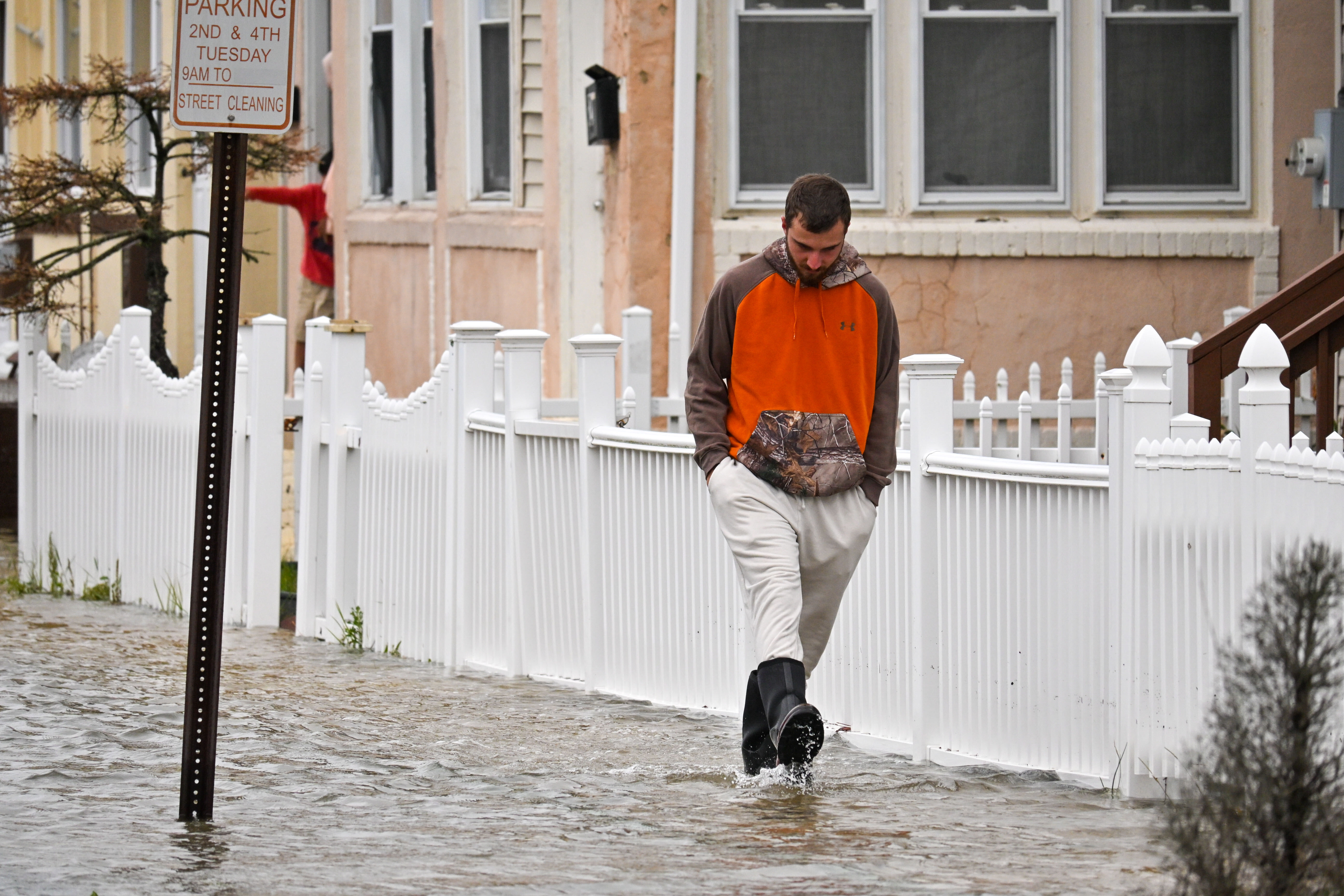
    In coastal towns, roaring floodwaters swallowed major thoroughfares and white-picket fences, as massive, salty waves pushed far past the Shore’s beaches and into residential areas. People waded through ankle- to waist-deep waters, and dozens had to be rescued from cars trapped on impassable roadways, New Jersey Gov. Mikie Sherrill said Sunday at a news conference.

    “Our Shore communities have been hit hard,” Sherrill said, warning “we’re not out of the woods just yet.” On Sunday, persistent showers lingered, and the threat of high winds and surges continued for the already weather-tested region.

    For some, the fury of the early-season nor’easter evoked memories of Superstorm Sandy in 2012 or 2016’s Winter Storm Jonas. No deaths have been reported in New Jersey, and the full scope of the damage likely won’t come into focus until the howling storm quiets.

    The forecast

    Sherrill, who declared a state of emergency Friday, said officials were concerned about possible flooding after high tide Monday morning.

    Sunday morning’s high tide had been expected to work its way into the back bays and lagoon communities, likely leading to moderate flooding with the possibility of isolated pockets of more severe flooding, said National Weather Service meteorologist Ray Kruzdlo. Water levels may take a few days to recede, he said.

    “I don’t think we’re going to see what we saw two high-tide cycles ago, but it’s still going to be impactful,” Kruzdlo said.

    The wind — which reached 74 mph in Surf City, according to Sherrill — was also starting to subside.

    “The low pressure responsible for this whole nor’easter, it’s kind of wobbling around a little bit,” Kruzdlo said. “It’ll get out of here within 24 hours.”

    More than 22,000 power outages were reported across New Jersey about 2:45 p.m. Sunday, according to the PowerOutage.us tracker. Meanwhile, NJ Transit officials were monitoring conditions, and most routes were operating on normal weekend schedules or with some delays because of downed trees. Portions of the River Line and Hudson-Bergen Light Rail were suspended Sunday.

    Across the Philly region, the heavy rain overnight and Sunday morning was headed out of town toward Wilmington, Kruzdlo said. There was a chance of showers overnight Sunday and early Monday.

    Despite the rain, the Philadelphia area experienced only some disruption Sunday: SEPTA ran with some delays, and Peco reported nearly 110 outages, affecting about 1,900 customers, Sunday afternoon. The Phillies game was moved up, and the annual Puerto Rican Day Parade was moved inside.

    Surveying the damage

    According to Sherrill, the early-season nor’easter caused severe dune loss in Atlantic City and Brigantine — with the Brigantine mayor calling it the worst tidal flooding since Sandy, the Press of Atlantic City reported.

    The storm reminded Sea Isle City Mayor Leonard Desiderio of Jonas — a historic winter storm with hurricane-force gusts that incited record tides at the Shore. Ocean City officials said Saturday morning’s tide (7.63 feet) reached nearly as high as the tide during Jonas (7.66 feet).

    “But this was pretty bad,” Desiderio said. “Until we can really evaluate everything, we don’t know the damage it has caused.”

    Gaetano Petinga walks through flood waters brought by a nor-easter Saturday, Sept. 26, 2026, in Atlantic City.Brett Sholtis / Staff

    In Margate City, areas that tend to flood during storms indeed flooded, and tidewaters entered some buildings, fire department Capt. Chris Hornig said.

    “After today, they’re going to be doing some cleanup, so hopefully this is the last big one this morning,” Hornig said.

    Hornig cautioned drivers to stay out of flooded areas: “People shouldn’t drive through floodwater. It’s salt water. It’s not good for their cars, even if they make it through.”

    Wildwood Mayor Ernie Troiano Jr. said flooding, there, contributed to multiple fires, including one caused by lithium batteries on an e-bike. Troiano said the Saturday morning tide surprised him with “the swiftness of it entering the streets.”

    “When it came up over the bulkheads, it just released and it just went flying,” Troiano said.

    As the tidewaters spread across the Shore, so did the videos and photos online.

    One widely shared video showed a waterlogged dining room at The Lobster House in Cape May. Then Internet jokesters enhanced the video, adding three lobsters serenely swimming out to sea. On Sunday, people drove up to the iconic seafood restaurant and market — closed due to flooding — to see for themselves.

    “We’ve had people in Florida and Virginia ask us about it,” Cape May resident Gary Bartlett said of the videos.

    Keith Laudeman, the third-generation owner of The Lobster House, explained that for three days, the water level outside the restaurant inched up — the result of relentless northeast winds holding seawater in the inlet.

    Saturday morning’s high tide was the “icing on the cake” that sent floodwaters pouring into front door.

    Laudeman dealt with flooding after Sandy and Storm Jonas. He said his team will have to wash everything with freshwater, scrub it down with antimicrobial soap, and replace carpeting.

    He hopes to have the restaurant open within three days, and plans for the fish market and coffee shop to be open Monday.

    As for the lobsters escaping to sea, Laudeman said anything is possible.

    “That’s a little far-fetched,” he said. “But if it adds to the story, then go ahead.”

    This is a developing story that will be updated.

  • Oxford police officers, uncertain of their futures, resign as borough plans to close department and join regional force

    Oxford police officers, uncertain of their futures, resign as borough plans to close department and join regional force

    Three officers will resign from the Oxford Police Department ahead of the borough joining a regional department, with many officers saying the path to employment has felt uncertain and not guaranteed.

    The resignations — which the borough council approved Monday — come after Oxford’s officials approved, in a 5-2 split, to close the doors of their police department, citing ballooning expenses that outpaced the municipality’s revenue.

    Under the vote, the borough will become part of the Southern Chester County Regional Police Department, which serves New Garden, West Grove, and Avondale, on Jan. 1, 2027.

    To accommodate the growing geography, the regional department has pledged to hire 12 additional officers, with Oxford officials saying previously that their goal was for every officer to move over to the new force, if they wanted to. Oxford currently employs 11 full-time officers, including the chief, and several part-time officers.

    Applications for the regional department were sent out to Oxford officers earlier this month, with a deadline to submit by Friday. The applications were also posted publicly.

    But officers said that the road hasn’t been easy or transparent. In a meeting with The Inquirer at their station, the officers said that while it has been publicly stated that they are essentially guaranteed a job at the regional department, everything they have seen is “an opportunity to apply for a job.” Most officers spoke on the condition of anonymity out of fear of retaliation.

    Officers who are leaving said the uncertainty and the borough’s decision to close their department ultimately led them to seek new employment.

    Mayor Philip Harris said the borough was in active contract negotiations and declined to comment broadly on the situation.

    For the officers resigning, he acknowledged the community may “consider that to be in discord with the merger/joinder.” He argued that it “highlights and amplifies what we’ve been saying all along.”

    “It’s an incredibly difficult thing to recruit and retain officers,” he said. “They were recruited by other departments. They were offered better deals. That highlights some of the problems that brought us to this forefront.”

    Officers who have not resigned have begun meeting with the regional department leadership, they said. But with the clock ticking and no formal contract in front of them, the officers are worried about what employment could look like after Jan. 1.

    They are not sure what jobs they will get. With a cumulative experience of more than 280 years, they each have more than one year of service and have acquired rankings from corporal to sergeant. Those positions do not exist at Southern Regional, they say, making it unclear if they will lose rank in the transition.

    Because they have not seen a contract, they don’t know whether they should take a severance package. There are differences in pensions between the two departments that officers think will complicate the transition, too.

    “We have three that have secured jobs at other surrounding departments, and I haven’t seen one damn contract from Southern Regional,” one officer said. “What is my position going over there? How much am I making? What time am I carrying with me? My sick time, my vacation time, my seniority?”

    A yearslong process

    The move to regionalization has, essentially, been three years in the making, with borough officials long saying the police force costs more than it can afford. The borough has had several financial studies done in recent years examining the viability of the police department, and considering alternatives.

    Under the agreement with Southern Chester County Regional, Oxford borough would have two officers on patrol 24-7, like the current structure. Their shifts would begin and end at a local substation, ensuring no gap in coverage, as Oxford is roughly 16 miles away from the other municipalities under the regional department’s coverage. The 12 additional officers, hired as part of this expansion, would join a force of 21 full-time officers.

    There has been a growing trend of municipalities moving toward regionalization for high-price items in their annual budgets, like police, fire, and EMS. Public safety is at least 50% of the pie in most communities, experts have said.

    Regionalization, however, has not been perfect. Across the state, municipalities have joined and then withdrawn from regional services due to increasing costs under the agreement, according to a Keystone Municipal Solutions analysis, which studied police structuring in Oxford.

    Oxford officers said that there had been talks to merge with Southern Chester County Regional several years ago, but those discussions seemingly fell apart. Instead, officers recall, the department tried to make itself a possible regional hub — a force that could serve the municipalities that neighbor Oxford and currently use free coverage from the Pennsylvania State Police. Those talks also struggled to catch on.

    Officers still heard rumblings about joining the Southern Chester County Regional, but formally found out about the renewed effort when the Oxford Police Association received a letter from the borough council saying the start of union contract negotiations would be put on hold as the council explored a merger.

    Meanwhile, officers said, they are frustrated that the borough has not sought to slash costs in other areas, or will not wait for eligible members of the force to retire, where the pendulum on costs could swing back.

    “They have a champagne police department on a beer budget,” an officer said.

    Paul Frie, one of the officers who has accepted a position elsewhere, said that the borough’s decision to close its department caused him to look for other employment.

    “I can’t trust them to have my back,” he said. “I couldn’t work for them when they so haphazardly threw my job to someone else, because it’s not a guarantee.”

    Another officer, who has also resigned, said the uncertainty — and not knowing whether regionalization would stick — ultimately made the decision for him. It was hard: The officer grew up knowing many on the Oxford force, and said it was always a dream to work for the department.

    “I’m glad I got to fill it, partially,” said the officer, who spoke on the condition of anonymity. “It definitely sucks knowing this place isn’t going to be around.”

    This suburban content is produced with support from the Leslie Miller and Richard Worley Foundation and The Lenfest Institute for Journalism. Editorial content is created independently of the project donors. Gifts to support The Inquirer’s high-impact journalism can be made at inquirer.com/donate. A list of Lenfest Institute donors can be found at lenfestinstitute.org/supporters.

  • A Montgomery County elementary school teacher sexually assaulted three teens, including a former student, DA says

    A Montgomery County elementary school teacher sexually assaulted three teens, including a former student, DA says

    A Montgomery County elementary school teacher and wrestling coach sexually assaulted three boys he encountered online, including one of his former students, prosecutors said Saturday.

    Jason Theodore, 54, began the assaults in 2019, plying the boys with marijuana and alcohol before forcing them to perform sex acts on him, according to the affidavit of probable cause for his arrest.

    He told one of the victims, then 14, “I love how tiny you are,” police said.

    Theodore, of Upper Gwynedd, has been charged with involuntary deviate sexual intercourse, statutory sexual assault, unlawful contact with a minor, and related crimes.

    He remained in custody, denied bail. There was no indication he had hired an attorney.

    For years, Theodore worked as a physical education teacher at Montgomery Township Elementary and a wrestling coach at Pennbrook Middle School, both in the North Penn School District, according to prosecutors.

    In a statement, North Penn School District Superintendent Todd M. Bauer said that Theodore was placed on administrative leave after district officials were notified by Upper Gwynedd police about their investigation into his alleged behavior.

    North Penn is cooperating with police, and Bauer said counselors are available to students.

    The investigation into Theodore began Sept. 9, when one of the victims filed a police report saying Theodore had sexually assaulted him starting in 2019, when he was 13 years old, the affidavit said.

    The boy was 17 when they last had contact in 2022. He told police that he befriended Theodore through Snapchat, and that Theodore had used a pseudonym and lied about his age, portraying himself to be much younger.

    From 2019 to 2022, Theodore repeatedly sexually assaulted him, sometimes recording the encounters. On one occasion, Theodore pressured him into having sexual contact with another teen, the affidavit said.

    That second teen later told police he met Theodore in a chat room in 2020 when he was 16 and later began messaging him on Snapchat. When the two finally met up, the teen recognized Theodore immediately as his former teacher and wrestling coach, and realized Theodore had sought him out after seeing him in the chat room.

    Like the first teen, the second teen said Theodore sexually assaulted him, and in his case continued to do so after he became an adult. He told police he “felt coerced and groomed by Theodore, resulting in long lasting embarrassment and shame about the physicality between him and Theodore,” the affidavit said.

    The third victim said he met Theodore when he was 14, in 2020, and that Theodore sexually assaulted him on three occasions, usually in Theodore’s vehicle.

    In an interview with police, Theodore admitted that he was attracted to “younger males,” but denied being involved with anyone underage, the affidavit said.

    When an officer mentioned the first victim’s name, Theodore became flushed and hid his face, but said he didn’t know the person the officer was referring to, the affidavit said.

    Theodore is scheduled to appear before a district judge for a preliminary hearing on Thursday.

  • Two officers in Cape May County fatally shot a man threatening a woman with a knife, AG says

    Two officers in Cape May County fatally shot a man threatening a woman with a knife, AG says

    Two police officers in Middle Township, Cape May County, shot and killed a man who was threatening a woman with a knife Friday, officials said Saturday.

    New Jersey Attorney General Jennifer Davenport said in a statement that the two officers, whom she did not identify, encountered a disabled car on Route 9 near Satt Boulevard in Middle Township just before 10:30 Friday morning.

    As the officers approached the vehicle, they heard screaming from within it, and forced their way inside to see a man “holding a knife” against a female passenger, according to the statement.

    Both officers shot at the man, killing him. Neither the man nor the victim was named by authorities.

    The victim was taken to a nearby hospital for treatment of minor stab wounds.

    The Cape May County Prosecutor’s Office had announced an investigation into the shooting on Thursday, but had said only that it involved police.

    As with any fatal encounter with police, the case will be submitted to a grand jury for investigation, Davenport said.

  • Ahead of Sunday’s final day, families brave the rain to protest academy closure

    Ahead of Sunday’s final day, families brave the rain to protest academy closure

    For Christine Anderson, visiting the Academy of Natural Sciences of Drexel University is a family tradition. And she wanted to continue that ritual one last time Saturday.

    As a kid growing up in the Lehigh Valley, Anderson made frequent trips to the country’s oldest natural history museum. As a mother, she brought her daughter Krissy, now 21, to the museum to make her own childhood memories.

    And on Saturday, the penultimate day of the museum’s operation before its planned closure due to a lack of funding, Anderson and her family squeezed in their final trip.

    If for no other reason, she said, than to give her 5-month-old daughter, Lola, the chance to cross through its threshold.

    “It’s a great place for kids to learn, and I think it’s great for the culture of the city,” Anderson said. “At a time when so many other museums are closing, or at risk of closing, it’s just so disappointing that a space like this is closing with them.”

    Anderson and her family were among the dozens of attendees who braved Saturday’s blustery nor’easter to fill the Academy of Natural Science’s halls. The museum’s entry line snaked down the sidewalk along the Benjamin Franklin Parkway, flanked by protesters from the Save the Academy Coalition who were rallying in support of the beloved institution.

    People from across the Philadelphia region, and beyond, came to the Academy of Natural Sciences on Saturday as protestors called for Drexel to keep the museum open.Tyger Williams / Staff Photographer

    Sarah McAnulty, one of the organizers, said the demonstration was intended to stress that the museum’s life isn’t over “until the doors are closed and the exhibits are dismantled.”

    “It is of critical importance that we make sure the people who are making the decisions with the future of the Academy of Natural Sciences know that the city of Philadelphia needs this museum to stay open and the volume of support that we have for that effort,” said McAnulty, a science educator who runs the nonprofit Skype a Scientist.

    To bolster that effort, the coalition hosted a letter-writing station for kids, hoping to send that message directly to Drexel officials. They also offered animal face painting and a free concert. Volunteers stood on the shoulder of the Parkway, their protest signs greeted by enthusiastic honks from passing drivers.

    “It’s hard to know whether your kid is going to be inspired by science and become a scientist later,” McAnulty said. “And so whether they want to start their journey with science to become a scientist or just to see things that humans have been studying and collecting for thousands of years, this is a huge place for Philadelphia history and inspiration for kids.”

    Drexel and the academy announced the museum’s closure Sept. 1, after nearly 200 years of operation, with Sunday being the final day its collection will be open to the public. The decision, officials said, came amid declining attendance and economic pressures, with a hope of concentrating resources on continuing the academy’s research.

    Late Friday, the William Penn Foundation announced it had offered funding to keep the public museum open for a least a year to allow Drexel to address its economic issues. Drexel officials have yet to say whether they will accept that offer.

    There are plenty of Philadelphians who hope the university will consider the deal. Among them is Dan Solomon, who spent a rain-soaked Saturday holding a protest sign in support of a museum that played an impactful role in his family’s life.

    Penny Hughes, 3, of East Falls, gets her face painted by volunteers from the Save the Academy Coalition during their protest Saturday.Tyger Williams / Staff Photographer

    Solomon said his daughter is applying to colleges this year, and her pursuit of a career in neuroscience was inspired, in part, by their frequent visits to the Academy of Natural Sciences.

    “It’s just unconscionable that this would be just ripped away from Philly kids forever,” Solomon, of Mount Airy, said. “All it needs is a chance. We’ve had a month to organize [since the closing was announced] and we’ve already gathered plenty of support.”

    Solomon urged Drexel to take the William Penn Foundation’s offer.

    “Of course people understand that times are tough,” he said. “But all we’re asking for is a chance to save our museum. And if we have that chance, we should take it.”

    Kevin Chapman, who was standing in line alongside Christine Anderson, his partner, and their newborn daughter, agreed.

    “Museums provide a foundation for education, and I feel like there’s a lot of things that provide foundations for education that are under attack right now in our country, whether it’s historical venues or sciences and art,” he said. “We need to support those things while they’re here, because it’ll be too late once they’re gone.”

  • CNN says it was left off Air Force One for Trump’s Saturday trip to a college football game

    CNN says it was left off Air Force One for Trump’s Saturday trip to a college football game

    The White House left CNN off Air Force One for President Donald Trump’s trip Saturday to a college football game in Tennessee, marking the latest media restriction from the administration in an ongoing dispute with First Amendment implications.

    CNN, a member of the U.S. network video pool that rotates duties shooting and sharing video coverage of the president, reported it had been scheduled to fly aboard the president’s plane Saturday for a visit to a midday game between the University of Tennessee in Knoxville and the University of Texas. But White House guidance issued Friday night instead included Real America’s Voice, a conservative outlet.

    The White House guidance was issued after journalists from CNN, along with MS NOW and Politico, which Trump banned last week from the White House grounds, returned to the executive complex with TV cameras in hand after a judge handed the organizations a reprieve.

    U.S. District Judge Timothy Kelly temporarily struck down the president’s ban in an overnight ruling early Thursday, but his decision dealt with “hard passes” to the White House grounds and didn’t directly address pool duties.

    The judge’s temporary order also said nothing directly about Air Force One.

    The spot meant for CNN on the flight has long been saved for a member of the U.S. network video pool; Real America’s Voice is not a part of that group. The White House did not respond to emails from the Associated Press requesting comment about the decision.

    CNN declined to comment.

    A written pool report Saturday morning confirmed there was “no TV pool” for the travel, though Real America’s Voice celebrated its inclusion in the trip and said it would make feeds available to other news outlets.

    “CNN is not here; we have taken over that responsibility. We are so excited to be here,” correspondent Taylor Mitchell said in a video that the outlet posted on social media.

    On Saturday morning, the president addressed the broader debate in a post on social media, writing: “FAKE NEWS SHOULD NOT BE ALLOWED IN THE WHITE HOUSE!!! IT HAS GONE ON FAR TOO LONG, AT A TREMENDOUS COST TO OUR COUNTRY.”

    Fans at the game caught a low-altitude flyover as Air Force One came into town while the teams were warming up. The president’s motorcade arrived just as the national anthem was being sung, and the president was later shown on a jumbotron and greeted with cheers, according to a text pool report.

    Media organizations believe the court decision covers the ‘pool’

    Theodore Boutrous Jr., an attorney for CNN, MS NOW, and Politico, did not respond to phone calls or emails Friday evening or Saturday morning. Earlier Friday, on The Lead with Jake Tapper, Boutrous said the plaintiffs believe the recent court ruling also covers the issue of pool access.

    For a while Friday, the U.S. network video pool for the White House was back in operation for the first time since Trump banned the three news outlets in an extraordinary showdown over media access.

    At noon on CNN, viewers could see Trump and Chinese President Xi Jinping touring the National Archives, along with Melania Trump and Peng Liyuan, Xi’s wife. The banner along the bottom of the screen read: “Trump and China’s Xi Visit National Archives.” It was a routine report from a state visit — except that CNN had not aired live video of Trump in several days.

    “As of now, all systems are go,” said a person familiar with the pool, speaking on condition of anonymity because of the fluidity of the situation.

    Pool participants showed solidarity this week

    The TV pool consists of five major U.S. broadcast outlets. When the White House banned CNN from the White House grounds, along with MS NOW and Politico, the other four pool providers declined to participate in a show of solidarity.

    CNN did not comment directly Friday, referring instead to its editorial coverage. It did the same Saturday. But Brian Stelter, the network’s media analyst, posted on X Friday that CNN had a pool assignment at the National Archives event and that the White House had approved the network’s credentials.

    The outlet on Saturday covered its exclusion from Air Force One, writing that the move “represents the Trump administration’s latest salvo against CNN and the broader White House press corps.”

    Throughout his second term, Trump has increasingly targeted media outlets whose coverage irritates him, taking administrative or legal action against several. Early last year, he banished AP reporters from White House events because the organization wasn’t abiding by his executive order changing the name of the Gulf of Mexico to the “Gulf of America.” The AP’s guidance says to acknowledge the new name when relevant.

    The case is on appeal after a federal district judge ruled in AP’s favor.

    The press pool was created decades ago by the White House Correspondents’ Association, a group of journalists who cover the president, to make sure a rotating roster always travels with the president. The pool distributes in-person reports and imagery to the broader press corps and is designed to hold the nation’s chief executive accountable on behalf of the American public.

    The association did not respond to emails requesting comment.

  • How the U.S. and Russia weakened a global effort to regulate killer AI

    How the U.S. and Russia weakened a global effort to regulate killer AI

    UNITED NATIONS — Early this month, hundreds of diplomats huddled in a cavernous U.N. conference room in Switzerland, working toward a muscular treaty to regulate the use of lethal autonomous weapons — the first agreement governing the use of killer artificial intelligence arms. On the last day of negotiations, the talks turned aggressive.

    Over the next roughly 15 hours, U.S. and Russian diplomats hammered away at the document, removing a range of provisions designed to safeguard the use of artificial intelligence in weapons, according to three people familiar with the negotiations, who spoke on the condition of anonymity to discuss sensitive closed-door proceedings, and documents reviewed by the Washington Post.

    They stripped language requiring the systems to operate in a “predictable” and “reliable” manner, the people said, and removed a clause mandating that ethical considerations be taken into account when using AI weaponry. The U.S. and Russian teams also removed a provision requiring that humans review military targets developed by AI before a strike, they added.

    In a closed-door session, with U.N. cameras turned off and civil society observers removed, Washington and Moscow deployed their army of about 10 lawyers each — nearly twice the diplomatic presence of other delegations — to make changes that moved so quickly that the smaller delegations were left dizzied, the three people said.

    “It was death by a thousand paper cuts,” said one of the people.

    The U.S. State Department, the Russian Foreign Ministry, and the United Nations did not return requests for comment.

    The erosion of the agreement, the details of which are previously unreported, shows how the United States and Russia have worked to weaken global rules to regulate lethal AI weaponry, as the Pentagon moves to rapidly infuse the burgeoning technology into its battlefield strategy.

    The talks are happening amid a fierce public debate over the existential risks of advanced AI, as tech executives urge world leaders to collaborate to impose limits on the technology. The U.N. has for years tried to regulate AI weaponry with limited progress, and the latest directive is the furthest the effort has advanced.

    Washington’s attempts to neutralize global rules on AI weaponry also provide insight into how it may approach regulating the U.S. military’s use of the technology. U.S. officials are currently revising the military’s own lethal autonomous weapons directive, released in 2023.

    Verity Coyle, the deputy director for arms in the crisis, conflict, and arms division at Human Rights Watch, said weak rules governing lethal AI weaponry could have significant consequences.

    “It could mean machines can make life‑and‑death decisions without human control,” she said. “The practical impact is stark: more civilian harm, less accountability, and a faster slide into riskier, automated warfare.”

    Across the world, the use of artificial intelligence in war has moved from scenarios that are largely theoretical to actual battlefield use. The U.S. military used Anthropic’s chatbot to identify nearly 1,000 targets to strike in the first 24 hours of the war with Iran, according to the Post. Israel has heavily relied on AI for its military operations in Gaza, the Post reported.

    Over the past few months, AI companies have disclosed that their bots have autonomously hacked the servers of other organizations — including U.S. government websites — and that nefarious actors in places such as Yemen and Iran have used chatbots to try to make weapons or target the U.S. military, sparking fears that the technology could become uncontrollable.

    This month, an Anthropic researcher quit the company and warned the public that AI could end the human race, setting off a furious debate in Washington over how to regulate it before it poses an existential threat to humanity.

    Amid this flurry of consternation, tech executives and global leaders have urgently called for AI regulation. At a meeting of the U.N. Security Council this week, OpenAI chief executive Sam Altman and Anthropic leader Dario Amodei called for nations to collaborate to create a model of global AI governance.

    Regulation “must be shaped through democratic processes, by governments accountable to the people they serve,” Altman said. “At the international level, that means cooperation.”

    But domestic attempts to regulate have reached a roadblock, with the Trump administration arguing that any rules on AI will stymie innovation.

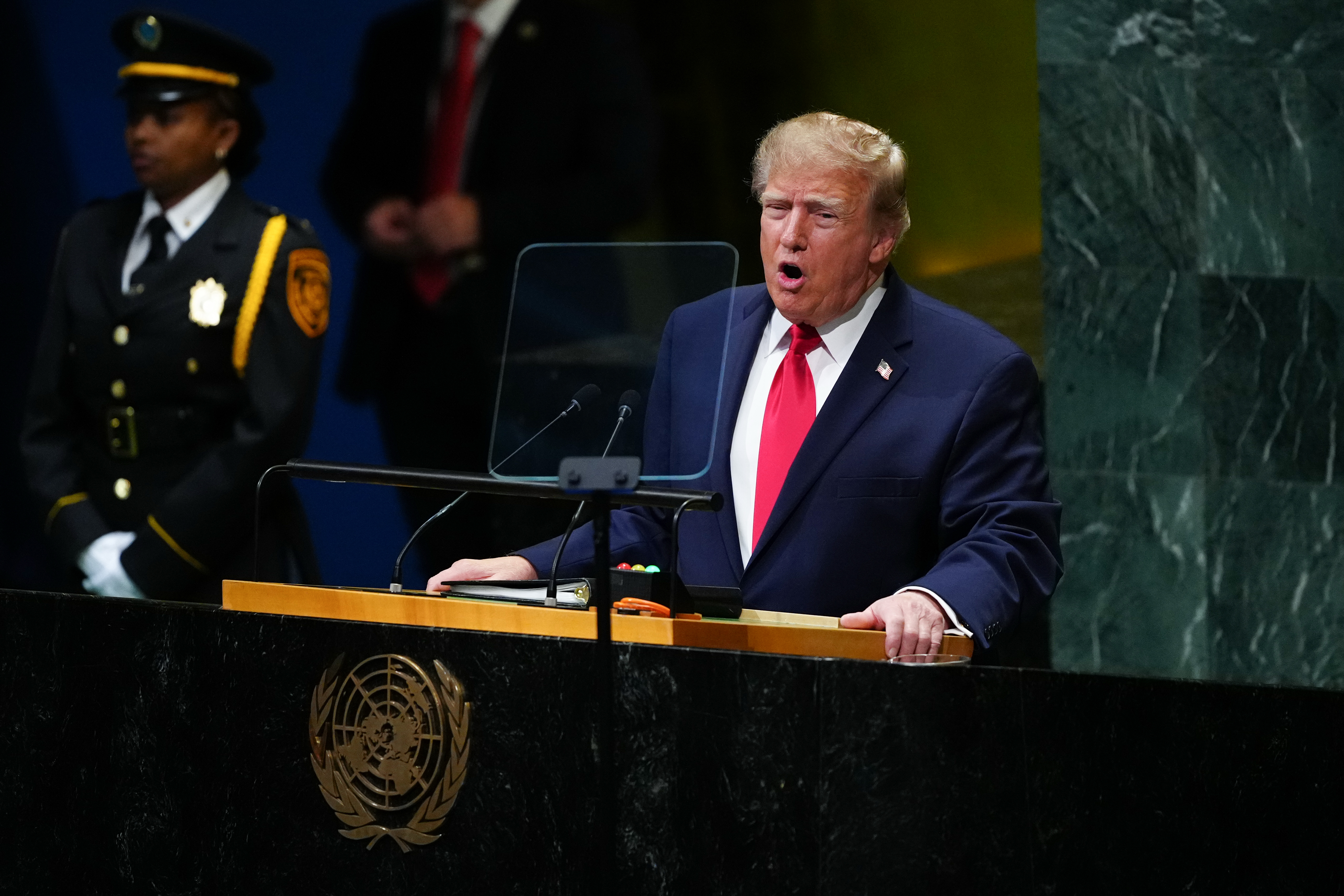
    “The United States also totally rejects any attempt to construct a globalist scheme to control for the artificial intelligence being spoken of so much now — hereinafter officially called ‘super intelligence,’” President Donald Trump said at the United Nations on Tuesday.

    The lethal autonomous weapons negotiations in the U.N. are currently nonbinding, though the talks could open the door to a landmark treaty that is legally binding if member nations agree. It presents the most advanced global effort to regulate how AI weapons are used in the battlefield.

    But at the talks in Geneva in early September, it was apparent that the U.S. and Russia were going to be a major roadblock to progress, the three people said.

    The U.S. team is led by State Department diplomats, Pentagon officials, and legal experts, Coyle of Human Rights Watch said. “It’s a well‑resourced team, and they come prepared to defend U.S. military autonomy,” she said.

    Nicole van Rooijen, the executive director of the global nongovernmental coalition Stop Killer Robots, said Washington and Moscow aren’t in favor of legally binding rules on autonomous weapons and have outsize influence on how negotiations will end.

    The autonomous weapons talks require dozens of nations to reach consensus on what rules will be enacted, she added. The U.S. and Russia do not champion multilateralism — which requires countries to work together to reach agreements — and can use “political capital to exert pressure on other states,” she said.

    “They have the power to block any significant progress that is made by the vast majority of states who do want to move forward on a binding treaty,” she added.

    In November, nations will come together in Geneva to discuss whether talks can turn into an official mandate or potentially a legally binding treaty.

    In the U.S., a parallel discussion is happening as the Pentagon works to rewrite its own directive on the use of autonomous weapons. In June, Trump issued a national security memorandum requiring that the directive be updated within 90 days. As of late September, the U.S. government has not released a new version.

    Established in 2023 during the Biden administration, the directive contained several clauses that echo those eliminated from the U.N. document, including requiring that human judgment be deployed to check autonomous and semiautonomous weapons systems. It also mandated that those who operate AI weapons systems abide by the laws of war and applicable treaties.

    Richard Lennane, the disarmament adviser for the legal team for the International Committee for the Red Cross, said global treaties can be impactful in controlling the use of harmful weapons, citing the effect that directives on chemical and biological weapons, antipersonnel land mines, and cluster munitions have had on limiting use.

    “It’s not about punishment, it’s about setting norms and influencing behavior,” Lennane said. “We believe that a treaty regulating autonomous weapons could be similarly effective.”

    Coyle, however, noted that the U.S. and Russia have the diplomatic muscle, legal teams, and political incentives to keep any global rules on autonomous weapons weak, and she said the actions to water down regulation on AI arms follow a well-trodden playbook.

    “When the U.S. wants to preserve military or technological advantage, it pushes voluntary guidelines instead of binding rules,” Cole said. “We’ve seen the same playbook in cyber, space, and other arms‑control debates. Autonomous weapons are no exception.”