Category: News

  • Kentucky governor demands that McConnell prove he is fit to serve or resign

    Kentucky governor demands that McConnell prove he is fit to serve or resign

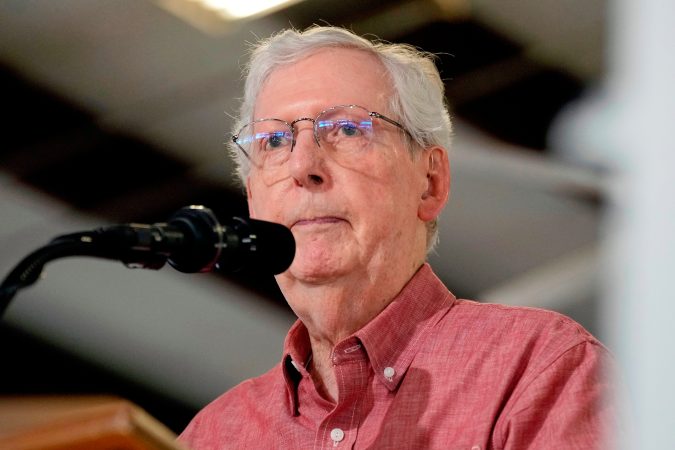
    WASHINGTON — Kentucky Gov. Andy Beshear, a rising national figure in the Democratic Party, is calling on the state’s Republican Sen. Mitch McConnell to either prove that he is fit to continue serving after his lengthy hospital stay or resign from office.

    Beshear made the demand in a letter after McConnell’s office said Monday that the 84-year-old senator had not yet been medically cleared to leave the rehabilitation facility where he has been undergoing physical therapy. The office said he would miss a major Kentucky political event and upcoming Senate votes. McConnell was hospitalized June 14 and disclosed weeks later that it was the result of a fall.

    Beshear, who is widely viewed as a potential presidential candidate in 2028, first urged McConnell in early July to release more information about his condition after weeks of public silence. His letter Tuesday marked a significant escalation.

    “I am calling on you to directly and verbally address the people of Kentucky and provide proof of your capacity to serve, or resign,” Beshear wrote to McConnell.

    Beshear also sent a letter to Senate Majority Leader John Thune, urging him to investigate McConnell’s condition if the senator does not demonstrate that he is capable of continuing to serve.

    McConnell and Thune’s offices did not provide comment on the letter.

    McConnell, who led Senate Republicans for nearly two decades, has long guarded his personal life. Since he was hospitalized last month, his office has issued major updates on July 12 and July 27, each accompanied by a single photograph.

    But public scrutiny of aging elected officials has intensified after several recent health episodes and deaths in office, including the deaths of California Sen. Dianne Feinstein in 2023 and South Carolina Sen. Lindsey Graham earlier this month, as well as President Joe Biden’s decision not to seek reelection after concerns about his age and health became a dominant political issue.

    In the absence of regular public updates from McConnell himself, speculation about his condition has grown online.

    “All of this speculation and even this letter could have been avoided with a minimal amount of transparency,” Beshear wrote to Thune.

  • Joe Biden interviews with memoir ghostwriter reveal him discussing sensitive information

    Joe Biden interviews with memoir ghostwriter reveal him discussing sensitive information

    Newly released audio tapes, disclosed by a conservative activist group, appear to show Joe Biden sharing classified information with a biographer and sometimes claiming memory lapses during interviews that occurred before his election to the presidency in 2020.

    About three hours of audio and 117 pages of transcripts — with many redactions — were released by the Oversight Project, an arm of the Heritage Foundation, after Biden lost a prolonged legal fight to keep his conversations with his memoir ghostwriter, Mark Lewis Zwonitzer, private.

    “They didn’t even know I had this,” Biden told Zwonitzer in October 2016, near the end of his second term as Barack Obama’s vice president, as he talked about sensitive foreign policy matters handled by the administration.

    In one 2017 session, after Biden had left the West Wing and before he’d launched his own presidential campaign, he appeared to admit retaining classified information from his time as vice president.

    “I just found all the classified stuff downstairs,” Biden said. “I wrote the President a handwritten 40-page memorandum arguing against deploying additional troops to Iraq — I mean, to Afghanistan on the grounds that it wouldn’t matter, that the day we left would be like the day before we arrived.”

    The potentially classified information itself is redacted in both the audio and transcripts that the Oversight Project released.

    The right-wing group first sued to obtain the tapes after Special Counsel Robert Hur decided in 2024 not to charge Biden for how he handled classified information. Biden cooperated with Hur’s inquiry and told the special prosecutor during his presidency that he did not intentionally mishandle any classified material.

    Hur, who obtained the tapes as part of his inquiry, said in announcing his decision that he believed a jury would find Biden a sympathetic figure because of his age and what Hur described as a “poor memory” — a statement that became a flashpoint in public debate about Biden’s age and fitness for the presidency.

    Biden was 74 when the interviews began. He was 81 and seeking reelection when Hur released his report in early 2024, though Biden later ended his campaign for a second term after a halting debate performance against Republican Donald Trump.

    The tapes contain instances of Biden being unable to recall some dates and details of topics he was discussing with Zwonitzer. Biden also showed a command of many details, recalling meetings and details of conversations referenced in the notes he shared.

    At the Oversight Project, vice president of litigation Jeff Clark insisted the tapes prove Biden’s decline.

    “The tapes have always belonged to the American People, the Oversight Project just delivered them to their rightful owner,” Clark said in a statement. “The knowledge of his deterioration was well-established.”

    A Biden spokesperson blasted the release as politically motivated.

    “President Biden’s conversations for a book a decade ago that discussed his late son are private, and were provided to the Department of Justice on the express condition they stay that way,” said TJ Ducklo. “Reversing course and making them public is just the latest example of this Administration weaponizing the DOJ for political retribution.”

    Biden initially sued to stop the Department of Justice from releasing the material, claiming the conversations were private. But he dropped his suit after a divided panel of appeals court judges rejected his bid. Biden could have petitioned the Supreme Court to intervene or asked for a rehearing by the full U.S. Court of Appeals for the District of Columbia Circuit.

    In a 2-1 ruling, a three-judge panel from the circuit court found a “substantial” public interest in disclosing the material.

  • Asylum seekers could be sent directly to deportation under new federal rule

    Asylum seekers could be sent directly to deportation under new federal rule

    The Trump administration launched a plan Tuesday to channel hundreds of thousands of asylum seekers directly into deportation proceedings, a change that some attorneys said could lead to people being removed from the United States without a hearing.

    Trump officials introduced a rule designed to reduce the 1.4 million asylum cases pending in U.S. Citizenship and Immigration Services, the Department of Homeland Security agency that processes immigration applications, by nearly a third. The rule took effect immediately, before the public could weigh in.

    In the past, asylum seekers who entered the U.S. legally or were never charged with an immigration violation had the opportunity to apply for refuge in an office before a trained asylum officer. The officer could refer them to immigration court for removal proceedings if they were rejected, or allow them to continue proceedings and potentially get on a path to obtaining U.S. citizenship.

    Under the new rule, officials say as many as 444,724 cases could be transferred directly to one of the Justice Department’s immigration judges. Trump officials have empowered judges to dismiss certain cases without a hearing, so attorneys say it is possible that many asylum seekers will be deported without a chance to be heard.

    Trump officials said in a statement that the rule is necessary because the asylum system is facing a “crisis.”

    “For far too long the asylum system has been exploited for purposes of delay and work authorization, not legitimate claims of protection,” USCIS Director Joseph B. Edlow said in a statement. “America’s asylum system exists to protect individuals who genuinely fear persecution and this rule will help ensure that resources are directed to the timely adjudication of those claims instead of to those seeking to use the system as a loophole.”

    The measure is the latest means through which the Trump administration has sought to transform the asylum system. President Donald Trump, in one of his first acts in office, barred asylum seekers’ entry into the United States by declaring an “invasion” at the U.S.-Mexico border.

    He has also targeted those who are already living inside the U.S., including hundreds of thousands of people who probably arrived legally and followed the rules to apply for asylum.

    Trump officials are preparing to terminate work permits for Haitians and Syrians in the coming days after the Supreme Court enabled officials to allow their temporary protected status to expire. If those immigrants also applied for asylum and their cases are referred to the courts, lawyers say, the threat of deportation could be imminent.

    “It’s all part of a plan to take legal people and make them illegal,” said Ira Kurzban, one of the attorneys who represented Haitians in the case that went to the Supreme Court. “That’s what they’ve essentially done.”

    The United States is a signatory to the 1967 United Nations protocol on refugees, which prohibits member countries from expelling immigrants to nations where they face serious threats to their lives.

    Trump officials, Kurzban said, are betraying that principle and turning the asylum system into “a joke.”

    “At a 30,000-foot level it sure looks like a deportation machine,” he said.

    Trump officials argue that smugglers have exploited the U.S. asylum system, flooding it with weak applications so that immigrants may live and work legally in the United States as their cases drag through the system.

    Asylum creates a path to U.S. permanent residency and, eventually, citizenship. To be eligible, applicants must show that they face persecution in their homeland based on their race, religion, nationality, political opinion, or another trait that makes them a specific target. They also must pass background checks and apply within one year of arrival.

    The more than 400,000 pending asylum cases before USCIS that could be sent to deportation proceedings largely involve individuals who filed for refuge after being in the United States for more than a year, officials said in announcing the rule.

    Federal law says asylum seekers must apply within a year of arriving, and officials contend that most late applicants referred to immigration judges in the past few years have been ineligible for an exception to that requirement.

    Advocates for immigrants have long argued that people fleeing for their lives are not well versed in the intricacies and deadlines of U.S. immigration laws, and note that the immigration courts do not assign them public defenders. Sometimes bona fide applications are filed late, they say, and federal law allows judges to overlook that in extraordinary cases.

    Though the new rule took effect immediately Tuesday, USCIS said it will accept public comments and later issue a final rule with its responses.

  • Betye Saar, artist who shattered stereotypes of Black women, dies at 99

    Betye Saar, artist who shattered stereotypes of Black women, dies at 99

    Betye Saar, who scoured flea markets for ordinary items – clocks and window frames, plastic dolls, miniature ships and masks — from which she crafted works of art that explored and exploded images of Black women in America, died Sunday in Los Angeles. She was 99 and would have celebrated her 100th birthday on Thursday.

    Her death was announced by Roberts Projects, the Los Angeles gallery that represented her.

    Ms. Saar, a lifelong Californian, was 93 when she became an art world star in 2019. That year, the Museum of Modern Art in New York and the Los Angeles County Museum of Art mounted simultaneous exhibitions of her work. Reviewing the Los Angeles show in The Washington Post, art critic Sebastian Smee wrote that her “modestly scaled assemblages address racism and female labor with excoriating intensity and moody finesse. But they also vibrate with spiritual yearning.”

    By then, she had been an artist for more than 50 years. In interviews, Ms. Saar described the assassination of the Rev. Martin Luther King Jr. in 1968 as the event that politicized her and gave her work purpose. “I was a mother with young children,” she told the New York Times. “I couldn’t walk in protest, but I did have a weapon, and that was art.”

    She began collecting likenesses of Aunt Jemima, Uncle Tom, Little Black Sambo and other caricatures that she described as “Black derogatory images.” She incorporated them into collages and assemblages, transforming the scavenged items into statements of political and social protest.

    The most famous of those works was “The Liberation of Aunt Jemima” (1972), in which she depicted the apron-wearing “mammy” with one hand holding a broom and the other a gun.

    “It’s like they abolished slavery but they kept Black people in the kitchen as Mammy jars,” Ms. Saar told the Los Angeles Times. “I had this Aunt Jemima, and I wanted to put a rifle and a grenade under her skirts. I wanted to empower her. I wanted to make her a warrior.”

    Ms. Saar worked in a variety of media, but her assemblages — collections of objects she found on the street or at swap meets — attracted the most notice. She was inspired by a 1967 visit to the Pasadena Art Museum (now the Norton Simon Museum), where she saw assembled works by a master of the form, Joseph Cornell. Ms. Saar said she recalled thinking: “Hey, I can do that. I’ve got all this fantastic stuff.”

    Some of her pieces told stories, and some didn’t. “I prefer it when they don’t tell a story so the viewer can invent their own,” she told the New York Times. Some assemblages displayed materials that belonged to Ms. Saar’s female ancestors, who were African American, Irish, and American Indian. Others referenced events in her life. In “Black Girl’s Window” (1969), a Halloween skeleton, alluding to her father’s death when she was 5, accompanies Ms. Saar’s self-portrait, among other images.

    Still others were overtly political. In his review of the Los Angeles exhibition, Smee focused on an assemblage called “The Edge of Ethics,” from 2010.

    A dark green birdcage contains an armless black figurine chained to a glass bottle and standing on outsize bird’s feet. Smee called the work “a masterpiece,” and he observed that “it makes a bald statement about slavery and incarceration.” He added, “It is more succinct, more poignant and more pressingly urgent than a roomful of research papers, a month of Sunday sermons, a year of news reports.”

    Ms. Saar’s work often referred to such religious traditions as shamanism and voodoo, as well as astrology, palmistry, phrenology and tarot. In a 1977 documentary about Ms. Saar, Los Angeles-based artist John Outterbridge, remarking on her interest in ancient beliefs, said, “She could be a daughter to one of the pharaohs.”

    Betye Irene Brown was born in Los Angeles on July 30, 1926. Around the time of her father’s death, her family moved in with relatives in Pasadena. She spent summers with her paternal grandparents in the Watts neighborhood of Los Angeles, where she watched the construction of Simon Rodia’s Watts Towers, a major work of architectural sculpture.

    Ms. Saar said Rodia, an Italian immigrant, influenced her by his use of broken dishes, seashells, rusty tools, even corn cobs that he pressed into cement, creating an art of assemblage and presaging her own eclecticism.

    At the University of California at Los Angeles, she majored in interior design. “Being from a minority family,” she told the Los Angeles Times, “I never thought about being an artist. But I could tell people how to buy curtains.”

    After graduating in 1949, she created a greeting card line and founded an enamelware business. She started graduate school in graphic design, but an encounter with printmaking changed her trajectory. The form was “liberating,” she told the Los Angeles Times. “It gave me the freedom to experiment.” She began creating color etchings, ink drawings, and intaglio prints.

    In 1952, while in graduate school, she married Richard Saar, a ceramicist. They soon had three daughters: Tracye Saar-Cavanaugh, now a writer, and Alison and Lezley Saar, both artists. In 1962, the family moved to L.A.’s bohemian Laurel Canyon, where Ms. Saar continued to live after she and her husband divorced.

    In addition to her daughters, survivors include six grandchildren.

    During a 1970 trip to Chicago, Ms. Saar studied the African artifacts in the basement of the Field Museum. From then on, many of her works incorporated objects and artworks from Africa.

    In 1974, she received a grant from the National Endowment for the Arts. It made her feel “like an artist for the first time,” she said. “Before I was just making stuff.” A year later, she was the subject of a small exhibition at the Whitney Museum of American Art in New York.

    Although she mostly avoided art world disputes, Ms. Saar led a letter-writing campaign in 1997 to protest the awarding of a MacArthur “genius grant” to Kara Walker, an African American artist whose silhouetted images included depictions of enslaved people as participants in debauchery with their masters.

    In an interview for the PBS series “I’ll Make Me a World,” Ms. Saar called Walker’s work “sort of revolting and negative and a form of betrayal to the slaves, particularly women and children, and that it was basically for the amusement and the investment of the White art establishment.”

    She subsequently explained to the International Review of African American Art: “Here we are at the end of the millennium seeing work that is very sexist and derogatory. … The trend today is to be as nasty as you want to be: TV, Rodman, rap. … There is no personal integrity. … Aunt Jemima is back with a vengeance.”

    But mostly, when she had something to say, Ms. Saar did so through her art. In her later years, her assemblages sometimes grew into room-size installations. “I’m basically a recycler,” she told the New York Times. “I’m a person who walks looking down, because you can find lots of great things on the ground.”

  • South Jersey police officer will not be charged for killing a man with a knife

    South Jersey police officer will not be charged for killing a man with a knife

    A Haddon Township police officer will not be criminally charged for killing a man armed with a knife while responding to a reported burglary in 2024.

    A state grand jury voted Monday not to file charges against Officer Luke Falkenberg in the shooting death of Keith Edelin, 46, of Pennsauken. The grand jury finished deliberating on Monday after reviewing body-worn camera footage, 911 calls, and witness testimony, among other evidence.

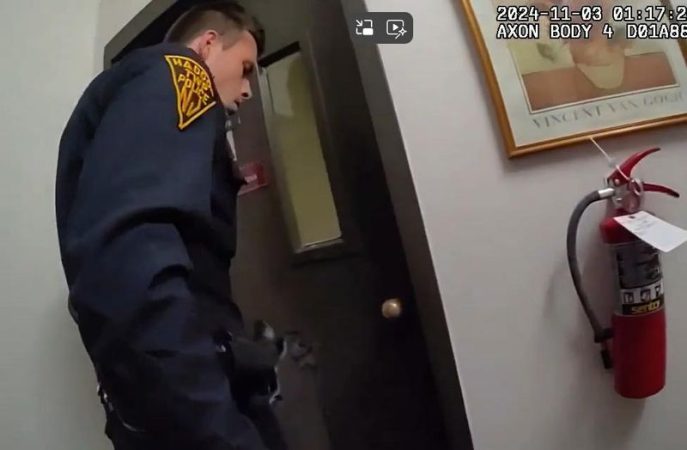
    On Nov. 3, 2024, at 1:07 a.m., Falkenberg and three other township officers responded to a 911 call for an attempted burglary at an apartment complex on West Crystal Lake Avenue in the township’s Westmont section.

    In the released audio of the 911 call, a woman told the call taker that an unidentified man opened the door to her apartment. The woman said she closed it, but the man was still in the hallway.

    Upon arriving, Falkenberg and another officer found trails of blood in the lobby, elevator, and hallway carpets. As the two officers entered the apartment complex stairwell, they encountered Edelin on the top landing armed with a knife, prosecutors said.

    According to video captured by police body-worn cameras, Falkenberg and his partner spoke with Edelin for two minutes, including several commands from Falkenberg to Edelin to “drop the knife.”

    “You’re hurt, let us help you,” Falkenberg can be heard saying in the footage released by the New Jersey Attorney General’s Office of Public Integrity and Accountability (OPIA). “Listen, man, I just want to help you. OK? That’s all I’m trying to do.”

    Eventually, Edelin advanced down the stairs toward Falkenberg, who was standing a few feet from Edelin. Falkenberg then fired his handgun four times, striking Edelin. Medical personnel took Edelin to Cooper University Hospital, where he was pronounced dead one hour later.

    The New Jersey Attorney General’s Office is required to conduct investigations into a person’s death that occurs during law enforcement encounters. These investigations must be presented to a grand jury to determine if criminal charges should be filed against an officer in question.

    According to the attorney general’s office, the investigation is still ongoing and no further information is available.

    Staff writer Robert Moran contributed to this article.

  • Waymo, now being tested in Philly, has a safer track record than people, new study says

    Waymo, now being tested in Philly, has a safer track record than people, new study says

    Buckle up, Philly, because new research suggests what could be the rise of the machines — at least on area roads.

    A new study by the nonprofit Insurance Institute for Highway Safety (IIHS) reveals that Waymo’s fully autonomous vehicles are significantly less likely to be involved in traffic collisions than human drivers.

    The paper indicates that the self-driving vehicles of Alphabet Inc.’s robotaxi service, which is testing the service in the city, are not only safer, but much safer than humans.

    “The results provide further evidence that Waymo’s current L4 vehicles have lower crash involvement rates than human drivers,” the authors stated.

    Such findings could help lessen fears around the vehicles, which are already ubiquitous in California and headed that way in some other states.

    Philadelphia was not part of the study, but Waymo has been testing vehicles in the city without yet offering riderless service.

    “We welcome this new research from IIHS, which confirms our previous peer-reviewed analyses and reinforces the significant safety benefits of the Waymo Driver,” Waymo spokesperson Ethan Teicher said in an emailed statement.

    Teicher called the study “an important contribution to a growing body of research on AV [autonomous vehicle] safety data” and said more high-quality data like it would help build public trust.

    The study’s findings

    The authors found that the highly automated Level 4 (L4) vehicles operating without a human driver had a police-reportable crash rate 68% lower than human drivers in comparable areas.

    The research also looked specifically at crashes resulting in injuries. Autonomous vehicles performed even better, boasting an 81% lower injury crash rate compared against the human benchmark.

    Data indicate that Waymo vehicles were rarely instigators in collisions.

    To draw their conclusions, the authors analyzed 736 autonomous vehicle crash reports submitted to the National Highway Traffic Safety Administration (NHTSA) between July 2021 and December 2024.

    They found that the autonomous vehicles’ rate of rear-ending another vehicle was 91% lower than that of human drivers, and their rate of being rear-ended was 40% lower.

    Furthermore, they were involved in 85% fewer single-vehicle crashes per mile traveled.

    The IIHS, which conducted the study, is an independent, nonprofit scientific and educational organization, with the goal of reducing deaths, injuries, and property damage from motor vehicle crashes.

    The same organization has been performing crash tests on regular vehicles since the 1990s to rate their safety.

    Comparing the safety of robotaxis to human drivers has historically been difficult because of differences in how crashes are reported. Federal regulations require automated vehicle operators to report even the most minor incidents, such as scraping an undercarriage or hitting small road debris.

    In contrast, human drivers typically only report crashes that meet state damage thresholds — often $1,000 — or involve injuries, and even then, over half human crashes go unreported.

    To overcome that bias, IIHS researchers manually evaluated the descriptions of property damage and injuries. They estimated whether a “reasonable person” would have called the police.

    The study found that 78% of the reported automated vehicle incidents were too minor to meet typical police-reporting standards.

    Researchers then compared the adjusted crash data from Waymo — which voluntarily publishes its autonomous mileage — against police-reported human crash data from California, Arizona, and Texas. The analysis covered approximately 50 million miles of Waymo driverless operation and 222 billion human-driven miles.

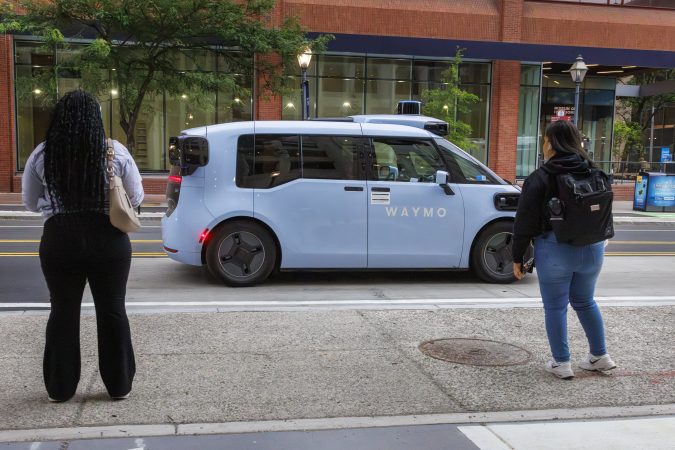
    A Waymo car navigates North Broad Street in Philadelphia in May.Elizabeth Robertson / Staff Photographer

    The study’s limitations

    Despite the promising safety record, the researchers acknowledged several limitations.

    First, Waymo did not operate its driverless vehicles on interstates or freeways during the study period, environments that account for 22% of human drivers’ police-reported crashes.

    Second, because autonomous vehicles often drive empty, fewer humans are exposed to injury risk during collisions, which can artificially lower the overall injury rate.

    As self-driving fleets continue their rapid expansion, the study’s authors warn that manually reading crash narratives is an unsustainable method for monitoring public safety.

    The study only looked at Waymo, not other self-driving vehicles. Waymo is the largest such company to offer robotaxis, but Tesla is also testing driverless vehicles.

    The IIHS is calling for a standardized, national reporting system for automated vehicle crashes and mileage, arguing that streamlined data are essential for accurate and timely safety evaluations.

    Waymo said it supports an industry-standard reporting system that would include air bag deployments and an injury scale.

    When will Waymo be available in Philly?

    Despite the limitations, the study could reassure Philadelphians hesitant to ride in an autonomous vehicle.

    Waymo slowly began introducing the vehicles last summer, but they were driven manually by specialists in the most complicated to navigate parts of the city. They fanned out at all hours across various neighborhoods.

    In December, Waymo began autonomous testing in the city but still with a specialist behind the wheel with permission from PennDot.

    Teicher, the company spokesman, said Tuesday that Waymo is still currently testing. The next step would be to operate fully autonomously with employee-passengers, he said.

    If the feedback is positive, Waymo would be ready to begin taking on public riders.

    However, the company has declined to discuss timing and still needs regulatory approval to carry passengers in Pennsylvania.

    The robotaxi service has received intense local political scrutiny.

    The Inquirer reported in May that some City Council members and a coalition of religious leaders, labor unions, and rideshare drivers urged PennDot to halt Waymo until safety and job-loss concerns were addressed.

    Philly does not have the power to directly regulate Waymo.

  • Cherry Hill joins a growing list of South Jersey municipalities to formally ban large-scale data centers

    Cherry Hill joins a growing list of South Jersey municipalities to formally ban large-scale data centers

    Cherry Hill just became the latest municipality in New Jersey to formally ban the development of large-scale data centers.

    The township council unanimously passed an ordinance Monday night that lists data centers as a non-permitted land use within the township’s borders.

    “We don’t think that Cherry Hill should be a guinea pig,” Cherry Hill Mayor David Fleisher said after the council meeting. “So while the technology is evolving, we wanted to be proactive and make sure that we eliminated a problem before it became one.”

    The ordinance also clarifies the difference between the now-forbidden data centers used for artificial intelligence or cloud storage and the small server rooms used by standalone businesses for file storage, which will still be permitted.

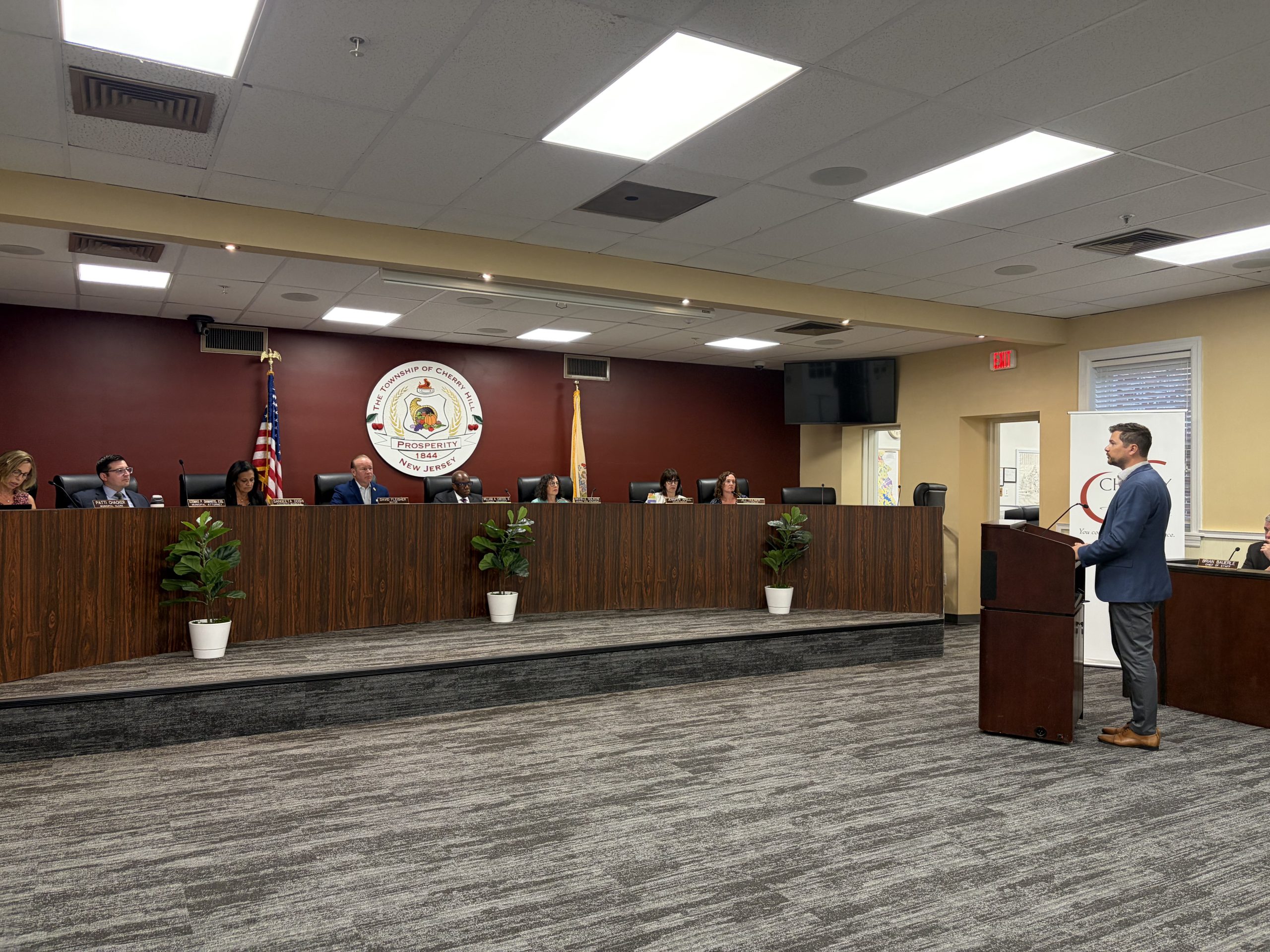
    Certified planner Christopher Dochney presents information about an ordinance banning data centers to the Cherry Hill Township Council on July 27, 2026.Lacey Latch

    The move is consistent with the goals outlined in Cherry Hill’s master plan, said Christopher Dochney, a certified city planner who worked with the township on the ordinance.

    This includes “maintaining Cherry Hill as a garden suburb, maintaining a desirable visual environment and attractive community, and wanting to preserve natural resources,” he said.

    It also aligns with the economic development portion of the plan, he said, which prioritizes job creation, job retention, and “providing an economic boon to the residents of Cherry Hill.”

    “[Data centers] consume a lot of land, they use a lot of water, they take up a lot of energy, and they also tend to be very big, ugly buildings,” Dochney said. “Things that are all directly inconsistent and contradictory to the stated goals of your master plan.”

    For a data center to be built in the future, a developer would need a land-use variance from the township’s zoning board — generally the most difficult land-use approval to obtain, he said.

    Up to this point, no data center developers have approached the township, “and we wanted to keep it that way,” Fleisher said.

    “As you see in some other towns, by the time an application is submitted, legally it might be too late,” he said. “And we didn’t want to find ourselves in that position.”

    Data center pushback in South Jersey

    Cherry Hill, the most populous municipality in Camden County, is the latest of a growing number of South Jersey towns to pass similar bans as debate around data centers continues across the country.

    This month, Burlington County’s Mansfield and Chesterfield Townships also approved bans after Medford Township did the same a month prior. Millville in Cumberland County banned large-scale data centers in May after promotions for a new 66-acre “Millville Energy & Data Center Campus” circulated online.

    Meanwhile, a massive data center in Vineland is set for completion by the end of the year.

    In Gloucester County, a real estate developer is suing Monroe Township for $300 million after the municipality issued a ban on data centers and subsequently denied its plans to build a 1 million-square-foot data center and a warehouse.

    With the restrictions on data centers now in place in Cherry Hill, Fleisher said he is not worried about potential legal action against the township.

    “We were very cautious to be very thoughtful and methodical about how we were going to address this,” he said. “We made sure we had the appropriate professionals go through the right process and have all the accurate information on the record before we took formal action.”

  • A desert town may run out of water. Others could face the same fate.

    A desert town may run out of water. Others could face the same fate.

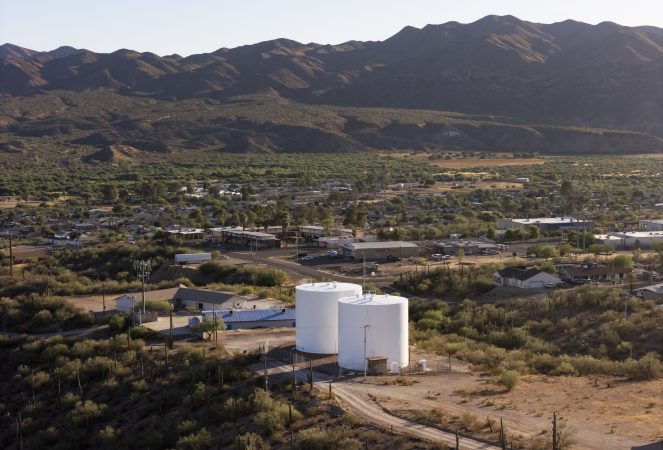
    KEARNY, Ariz. — Mayor Curtis Stacy starts every morning checking two websites that tell him how much he needs to worry about water.

    One site tells him about the reservoir that supplies his tiny desert town — it’s effectively empty. The other site tells him if the town gets additional water that other communities with more senior rights aren’t using; right now, the answer is yes.

    But Stacy tries to remind Kearny’s roughly 2,000 residents that they could easily tip back into crisis mode, just like this spring. In newsletters, he underscores that fragility with no fewer than 20 exclamation points. If other communities call for more water, they will have to cut back again.

    “!!!!!!!!!!THIS SITUATION IS ALMOST CERTAINLY TEMPORARY!!!!!!!!!!” he wrote in one bulletin posted on the Kearny Facebook page and taped up and down the glass doors of the town office.

    Kearny is an extreme example of the water crunch facing communities across the West as states and cities stare down a future of “megadrought” and fight over scarce resources. An unusually dry winter this year left the Southwest parched, with not enough water for everyone laying claim to it. In the complex web of water rights that govern how that short supply is distributed, the tiny town of Kearny comes last.

    Other cities around the West could face similar challenges and cutbacks. The federal government is set to release a plan for the shrinking supply of Colorado River water this summer that could force dramatic cuts.

    The plan, part of which the Bureau of Reclamation described in an Environmental Impact Statement early on Friday morning, comes at a time of escalating crisis for the Colorado River, a crucial water source for seven states, 30 Native tribes and a swath of northwestern Mexico.

    Arizona, California, and Nevada will be required to curb their use of the water from the Colorado River by a combined 20% over the next two years — and could ultimately face even larger cuts, according to three officials familiar with negotiations over a long-awaited federal plan to rescue the depleted waterway.

    Kearny is not directly affected by the Colorado River negotiations, officials say, but its dilemma shows how dwindling resources — and water-rights rules that can feel arbitrary to those most affected — can upend daily life.

    Kearny usually uses about 280 acre-feet of water a year; this year, it was allocated 77 acre-feet (one acre-foot supplies about three homes annually). Town officials realized they were on track to run out of water in July.

    The crisis forced steep reductions in water use and now hangs over the town’s future, testing residents’ ability to adapt to shortage. It has also consumed much of Stacy’s final year in charge, giving him new gray hairs and new worries about his hometown, a community where everyone knows everyone and where you can get ahold of the mayor by walking into his office.

    Stacy thought he had seen Kearny’s worst crisis in 2024, when a wildfire blazed toward the edge of town. He ran from house to house getting people out while embers blew above their heads. But the water shortage has been, in many ways, worse.

    “It’s like a slow death,” Stacy said, “instead of an actual emergency happening right in front of your eyes where you can actually help.”

    The town tried to prepare residents late last year for what was coming. In a Dec. 29 letter, officials warned that the reservoir fed by their primary water source, the Gila River, was running low.

    The first question in the FAQ section was, “What happens if our allotment is zero?”

    Answer: “Severe restrictions will be imposed.”

    Light snowfall had left the reservoir, San Carlos Lake, at about 1% of its capacity, and Kearny’s rights to that small supply were “junior” to other communities under the complicated water-rights system laid out by a court in 1935, before the town was founded.

    Soon, Kearny was on track to run out of water by midsummer.

    “For years, they’ve been telling us that cutbacks were coming,” said Eric Armenta, Kearny’s public works director. “But it never did come until now. And it came drastically.”

    In late March, Kearny imposed “Level 5″ restrictions on water — the most stringent possible. A declaration of emergency told residents they could use water only for the essentials; the mayor went door to door to convey the situation’s gravity. There would be no washing of cars, no kiddie pools, and no watering of grass. Even the Little League field would go dry.

    “Laundry — wear it a second or even third day,” the mayor advised in another bulletin days later. “Bathing/Showers — no better time to connect with your significant other.”

    “What is the Town doing about this?” he wrote in the next note. “This emergency is our entire focus.”

    By the end of April, the message was sinking in and the town was using 30% less water. But when relief came later in the spring, town leaders were torn.

    The authority that oversaw river rights had given Kearny extra water, but only because those with higher priority were not requesting water. The moment that changed, Kearny would need to cut back again.

    The town council voted to go back to “Level 1” restrictions, which meant cutbacks were optional. “Flush, shower, keep the trees alive, launder your clothes, live a normal life again,” the mayor wrote.

    Not everyone thought the reprieve was a good idea. “We knew exactly what was going to happen — people were just going to use it freely,” said Armenta, the public works director.

    Kearny was not yet in the clear.

    Bits of grass around town were starting to turn green again in early July, but mostly the yards were still parched. Public works supervisor Jake Acton looked away when he drove by the Little League field — still dead and brown.

    Kearny officials were no longer worried about running out of water in the short term, but their broader challenge lingered.

    Fourth of July fireworks were canceled due to “dry conditions and limited water”; fire damage aside, Kearny could not afford the thousands of gallons it might take to put out a wildfire. And some officials worried news of their water woes would scare away businesses, scare away homeowners, and make it even harder to recruit teachers.

    Armenta stopped by an old rehabilitated well set to start pumping in a matter of weeks. No one knew how much it would produce until it started functioning, and they were trying not to get their hopes up.

    “We want above 50 gallons per minute,” Armenta said over the roar of a machine clearing sand and debris. “Below that, it’s a waste of time.”

    Armenta was spending some 90 hours a week, he said, on the public works job — a position he took early this year because he knew the city was headed for trouble. He did it because his family is here, and he doesn’t want to leave.

    “My mom still lives here. My sister lives here. I want to live here,” he said. “My kids, I want them to be able to always come back to Kearny.”

    At the bar across the street from the Little League field, people wondered when the monsoon season would bring some real rain. But everyone thought the town would get through the water crisis. When Kathy Taft asked her friend Dave Olsen if the town was “really going to run out of water,” Olsen answered without hesitation.

    “No,” he said. “I just don’t see that happening.”

    The well, when it began operating in mid-July, was a letdown. At 40 gallons a minute, it would cover only a fraction of the town’s need.

    San Carlos Lake, meanwhile, remains close to empty. The lake closed to the public in June after it grew so dry that -— in the words of the local recreation department — “approximately 100% of the fish population” died.

    Now the mayor was worrying about 2027. If the lake didn’t recover, Kearny’s apportionment of river water next year could be zero.

    “We got 77 [acre-feet] this year and we were able to stretch that,” Stacy said. “You can’t stretch zero.”

    What then? There were still other avenues to try. Hydrologists were looking for well sites farther out; a local mining company could give Kearny some of its water. Wastewater could be put back into the ground and reused.

    And the monsoon rains were picking up. Away on a trip to Minnesota, Stacy watched with interest as a flood watch went into effect for much of the Gila River Basin, which includes Kearny.

    With some strong storms, the town’s fortunes could change again.
  • The Philly region is under a flood watch Tuesday and Wednesday with strong storms expected

    The Philly region is under a flood watch Tuesday and Wednesday with strong storms expected

    With over a half-foot of rain measured already, what has been Philadelphia’s wettest month since March 2024 is very likely to become significantly wetter.

    The National Weather Service has posted a flash flood watch effective from 8 a.m. Tuesday until 2 p.m. Wednesday for rain totals up to 3 inches, with downpours of 1 to 2 inches an hour possible.

    The national Storm Prediction Center on Tuesday morning listed a 15% chance of severe storms, those with wind gusts approaching 60 mph, for the entire region, with an outside shot of tornadoes. The Weather Prediction Center has a 40% chance of flooding downpours.

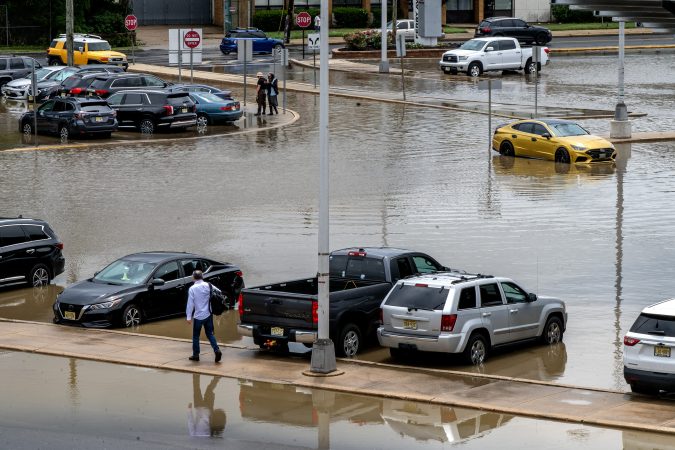
    Some appetizers — localized downpours — popped up Monday afternoon, prompting flood warnings for Philly and neighboring sections of Montgomery County, and parts of Gloucester and Atlantic Counties in New Jersey.

    Floodwaters swamped downtown Hammonton, Atlantic County, with “numerous” cars stranded on the roads, the weather service reported. The Pennypack Creek in Northeast Philly crested above “minor” flood stage.

    Moth-ball-size hail pelted Chestnut Hill, and hail twice that size was sighted in Williamstown, Gloucester County, and in the vicinity of Washington Crossing State Park on the Jersey side of the Delaware River.

    Storm coverage on Tuesday is expected to be far more extensive, and potentially more disruptive, with a “few tornadoes” possible, the weather service warned.

    Storm activity is likely to linger into Wednesday, said Mike Lee, meteorologist in the weather service’s Mount Holly office, with more showers in the forecasts for Thursday.

    What time the storms will arrive in Philly

    Late July still is very much the lottery-ball season for damaging downpours, and that again likely will be very much in evidence this week. Rainfall totals in the last 30 days have ranged from 137% of normal in Gloucester County to 79% of normal in Montgomery County, according to the Middle Atlantic River Forecast Center.

    Thunderstorms are possible as early as midmorning, but expect “repeated rounds” during the afternoon, said Matt Benz, senior meteorologist with AccuWeather Inc.

    The highest probability for severe storms, those with wind gusts near 60 mph, would be in South Jersey and Delaware, although they could nose into Philly, said the weather service’s Lee.

    The storms could continue well into the night, and additional rains are expected Wednesday afternoon.

    The rain totals again are likely to vary widely; however, a general 1 to 2 inches is expected across the region.

    Whatever happened to the drought?

    It hasn’t gone anywhere — yet.

    All of New Jersey and Chester County remain under state-declared drought warnings. In the latest interagency U.S. Drought Monitor update, conditions in the entire region remain from “abnormally dry” to severe drought.

    All that may change by week’s end.

    Through Sunday, officially 6.37 inches of rain habr been measured at Philadelphia International Airport this month. That is the highest monthly precipitation total since March 2024.

    July’s rains have ended a run of 16 straight months of below-normal precipitation in Philly.

    Said Benz: “It’s an old saying that all droughts end on a flood. That’s kind of what we’re seeing right now.”

  • Lawmakers mourn Lindsey Graham ahead of his funeral at Washington National Cathedral

    Lawmakers mourn Lindsey Graham ahead of his funeral at Washington National Cathedral

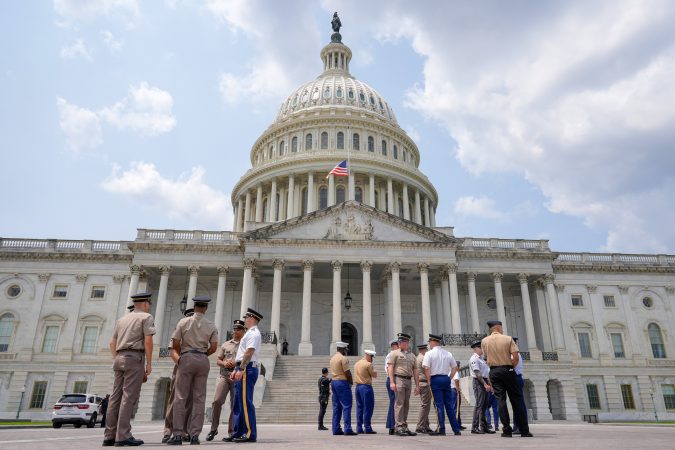
    The body of Sen. Lindsey Graham (R-South Carolina) arrived at the Capitol in Washington on Tuesday morning following his sudden death on July 11, as lawmakers from both parties gathered to commemorate his life.

    The ceremony in the Capitol Rotunda kicks off two days of mourning for Graham, who died at 71 after three decades in Congress, including more than 23 years in the Senate. A team of military body bearers brought his body into the Capitol in recognition of Graham’s service in the Air Force.

    A funeral service at which President Donald Trump is set to speak is scheduled Tuesday afternoon at Washington National Cathedral.

    Fox News host Sean Hannity and Emillie Roberts, one of Graham’s nieces, are also expected to speak at the funeral. Tony Perkins, a politically involved pastor who leads the Family Research Council; Marjorie Dannenfelser, a prominent antiabortion activist; and the Rev. Franklin Graham are scheduled to give readings.

    A second funeral service will be held Wednesday in Columbia, South Carolina, with a procession from the State House to First Baptist Church. Graham will be buried in a private ceremony in Pickens County.

    The Senate is preparing to take up legislation that Graham had championed to impose new sanctions on Russia and its allies to help Ukraine in its war effort. Graham worked for more than a year to pass the bill and announced the day before he died that the White House had agreed to support it.

    Sen. Darline Graham (R-South Carolina), Graham’s sister, whom South Carolina Gov. Henry McMaster (R) appointed to replace Graham in the Senate, introduced a revised version of the bill with Sen. Richard Blumenthal (D-Connecticut) days after taking office. The Senate is set Tuesday evening to take the first procedural vote on the legislation, renamed the Lindsey O. Graham Sanctioning Russia Act of 2026.

    Graham’s funeral also coincides with Tuesday’s filing deadline in the Republican primary for his Senate seat.

    Darline Graham, whom Trump has endorsed, is running for the seat, along with Reps. Ralph Norman and Russell Fry; former South Carolina governor Mark Sanford; and Mark Lynch, a businessman whom Graham defeated in the Republican primary in June, among others.

    Graham was the first sitting senator to die to since Dianne Feinstein, the California Democrat who died in 2023. Feinstein was 90 and had been ailing.

    Graham was a singular figure in the Senate. He was willing to work with Democrats even as he forged a close relationship with Trump. He was the Senate’s most aggressive foreign policy hawk, pushing Trump to take a harder line on Iran and Russia – but he won the respect of Democrats who vehemently disagreed with him.

    “I had a million disagreements with Lindsey on these very issues, but I kind of valued the fact that he always placed a real importance on the role of America in the world,” Sen. Tim Kaine (D-Virginia), a leading critic of the war in Iran that Graham strongly supported, told reporters Monday. “Fewer and fewer senators take that on as part of their job description.”