Category: News

  • More than 2,000 of N.J.’s ‘noncitizen voters’ could actually be citizens, Gov. Sherrill says

    More than 2,000 of N.J.’s ‘noncitizen voters’ could actually be citizens, Gov. Sherrill says

    About 2,000 New Jersey voters identified last week as noncitizens could actually be citizens after all, Gov. Mikie Sherrill said Tuesday, a week after her disclosure of a voter registration glitch put the state at the center of a heated national debate over election security.

    Sherrill announced last week that approximately 6,600 noncitizens had been registered to vote ahead of the 2024 election due to a software glitch with the New Jersey Motor Vehicle Commission’s automatic voter registration program. She said fewer than 400 of those people had voted and there is no evidence that they affected the results of any election. The finding came in the midst of a political fight over President Donald Trump’s claims of widespread voter fraud, including by noncitizens, and his aggressive push for an overhaul of the country’s election system.

    The first-term governor said Tuesday that the New Jersey Department of State’s Division of Elections has begun a process to remove more than 4,500 individuals who were registered because of the software error, but that the rest of the registrations will be referred to county election officials for further review “to ensure that any lawfully registered voters are not being disenfranchised.”

    “We are taking this extra step because our initial review indicates that a number of these individuals may be citizens,” she said in a statement. “That has been the case in other states where clerical and administrative voter registration errors have occurred, and we’re determined to get this right.”

    Her office announced the discovery a little more than one hour after celebrating New Jersey’s new John R. Lewis Voter Empowerment Act, which Sherrill signed July 2. Lewis was a civil rights leader who represented Georgia in Congress from 1987 until his death in 2020.

    The law, which is based on a federal proposal that former President Joe Biden unsuccessfully tried to pass, promotes equal opportunity to voting and voter outreach to communities that do not speak English proficiently, and prohibits intimidation, deception, violence, or restraint of voters or election workers.

    The law lays out a process for individuals who want to file a complaint over voting rights and requires public hearings for redistricting.

    If jurisdictions have a history of discrimination, the law requires approval from the attorney general before they can make changes to their election administration. It also gives the attorney general authority to enforce the law through litigation, investigations, and studies, and by representing the public in federal court.

    “Here in New Jersey, if your rights are violated, you have a right of action,” Sherrill said at Union Baptist Church in Trenton.

    Sherrill said New Jersey is the 10th state to enact the model, but the first to do so since an April Supreme Court ruling that weakened part of the Voting Rights Act as the court’s conservative majority ruled against a majority-Black district in Louisiana.

    Supporters of the bill said they had been advocating for it for four years in New Jersey.

    Sherrill’s Tuesday celebration at the church shows the governor is not shying away from the issue of voting rights even as the state becomes a talking point for Republicans who want enact new national restrictions — including requiring voters to provide proof of citizenship to register with documents like a birth certificate or passport.

    Sherrill opposes the national legislation, known as the SAVE America Act, which has been championed by Trump as a way to make elections more secure but which opponents warn could make it tougher to vote for millions of Americans.

    “Trump has only one concern: winning at any cost, and he’s willing to put the right to vote at risk,” Sherrill said Tuesday. “There’s no line he won’t cross, no rule he won’t break, no norm he won’t violate. But we will not stand idly by.”

    The former member of Congress will likely continue to have a role in the debate as Republicans ramp up their advocacy ahead of November’s midterm elections.

    U.S. Rep. Jeff Van Drew, a South Jersey Republican who was elected as a Democrat in 2018 before vowing his loyalty to Trump a year later, led a public letter with other House Republicans calling on Sherrill to answer a series of questions about the noncitizen voting issue. He questioned how she knows it was “just a software glitch and not a nefarious act.”

    Van Drew, who chairs the House Judiciary Subcommittee on Oversight, said he plans to hold hearings over the issue and is “absolutely exploring” the possibility of subpoenas, Politico reported.

    On Tuesday, Sherrill said Van Drew “has a very sordid history as far as elections go.” She said Van Drew’s campaign had hired a political operative who was a “known ballot harvester” — referring to Craig Callaway, who worked on Van Drew’s 2022 bid.

    Callaway, a former Atlantic City Council president, had previously served prison time for blackmail and bribes when Van Drew’s campaign hired him. In 2025 under former U.S. Attorney Alina Habba, Callaway pleaded guilty in connection with fraudulent mail-in ballots during the 2022 election, but Van Drew said he was not aware of any illegal activity and was not accused of wrongdoing.

    Sherrill said her administration hired the CSG law firm to conduct an independent investigation into the voting registration glitch. One of the firm’s main partners, Jeffrey Chiesa, served as attorney general under former Republican Gov. Chris Christie, who later appointed him to the Senate.

    “We have a bipartisan, independent investigation going on right now because we have nothing to hide,” Sherrill said.

  • Trump meets separately with Zelensky, Netanyahu at White House

    Trump meets separately with Zelensky, Netanyahu at White House

    WASHINGTON — President Donald Trump held separate meetings Tuesday at the White House with Ukrainian President Volodymyr Zelensky and Israeli Prime Minister Benjamin Netanyahu. After each of the closed-door talks, the administration signaled a warming of the sometimes fraught U.S. relations with those nations.

    Trump and Zelensky met ahead of Sen. Lindsey Graham’s funeral, with the two leaders discussing ways for Ukraine to produce its own powerful weapons and “other ideas that could help” in its ongoing war against Russia.

    The sit-down in the Oval Office, which was closed to the media, followed a consequential meeting at the NATO summit earlier this month in Ankara, Turkey, where Trump announced that the U.S. will give Ukraine a license to make Patriot defense systems — a long-running request from Kyiv to counter Russian missile attacks.

    Taken together, those meetings underscore how much the U.S. president, once a major skeptic of continued assistance to Kyiv, has warmed to Zelensky as Ukraine continues to withstand the Russian barrage more than four years after Moscow’s invasion in 2022. The Ukrainian leader, whose relationship with Trump in his second term was marked early on by a raucous White House visit in which he was denigrated for being ungracious, has worked to court the Republican administration while relying on both likely and unlikely allies in Trump’s orbit to exert their influence with the president.

    The ongoing conflict in the Middle East, which has consumed much of the Trump administration’s focus this year, has also become gradually entwined with Ukraine, with Ukraine firing on at least one Iranian vessel in the Caspian Sea over the weekend while Zelensky asserts that Russia has been offering satellite imagery of U.S. bases in the Persian Gulf to Iran.

    In a post on social media after the meeting, Zelensky thanked Trump for the “good meeting” and the Republican administration’s efforts to aid Kyiv in the long-running war.

    “The President and I discussed licenses for Patriot interceptor production and several other ideas that could help,” said Zelenskyy, who also noted that he offered condolences to Trump for the death of Graham, a close ally of Ukraine. “We also spoke about diplomacy — it’s important that the diplomatic process be reinvigorated.”

    White House press secretary Karoline Leavitt said both the Zelensky meeting and a separate, later sit-down with Netanyahu were “positive and productive.”

    First meeting of U.S., Israel leaders since start of Iran war

    Netanyahu and Trump met at the White House on Tuesday for the first time since they launched a joint war against Iran, offering a chance for Netanyahu to smooth out strains in their relationship.

    The closed-door meeting lasted nearly an hour and a half. The White House did not immediately offer more details.

    Despite signs of tension between the two ahead of the sitdown, Netanyahu was effusive afterward and called it “excellent” in a post on his Instagram profile.

    “When I say excellent, I don’t mean it in a superficial way,” Netanyahu said in Hebrew. “A conversation with full partnership, with mutual support, with an understanding of the common goal of ensuring that Iran does not have nuclear weapons, and other goals as well. One of the best conversations I’ve had with the President of the United States, our friend Donald Trump.”

    The meeting comes as both leaders face growing pressures at home. Netanyahu is up for reelection and is embattled in part because of his deteriorating relationship with Trump. Trump is under pressure to end an unpopular war that has wreaked economic havoc and driven prices higher ahead of midterm elections this November.

    Netanyahu, who wanted to continue the fighting in Iran and against its ally, Hezbollah, in Lebanon, has been sidelined as Trump sought a deal with Tehran. His visit to the White House this week comes as the disagreements with Trump and Vice President JD Vance have burst into the open over the war in Iran and more.

    “The Americans are making it clear to the Israelis they are the ones who are running the war,” Israeli journalist and political analyst Amit Segal wrote Monday in the daily newspaper, Israel Hayom. “It is clear to everyone that Israel has been put in the back seat.”

    Near the White House where the public was able to gather near fencing, a small group of protesters chanted, “Netanyahu, you’re a tyrant” and “Bibi, you’re not welcome here,” referencing the prime minister’s nickname.

    The two leaders planned to discuss the framework agreement the U.S. and Israel signed with Lebanon over the Israel-Hezbollah war and the expansion of the Abraham Accords, according to a White House official, who spoke on condition of anonymity to preview the meeting.

    “We have a little difference,” Trump said Monday when asked by reporters if he and Netanyahu were on the same page on Iran. “But pretty close, yeah.”

    Meetings reflect Graham’s influence

    In a Fox News Channel interview Tuesday, Trump recalled Graham’s hawkishness and said the Republican South Carolina senator’s support for Ukraine never wavered. Trump said Graham had suggested it was time to make a deal with Iran but had no similar suggestion for the Russia-Ukraine war.

    “Ukraine, he’s very militant about,” Trump said on Fox & Friends. “I mean, Lindsey liked war, to be honest with you.”

    Ahead of the meeting, Zelensky warned that Russia has been aiding Iran as the war persists by capturing satellite imagery of U.S. bases in the Gulf region that later appear in Iran. The Ukrainian president also asserted that there was a “clear correlation” between Russia’s images and subsequent Iranian strikes.

    Iran is a key ally of Russia in its war against Ukraine and has helped Moscow build up its drone expertise.

    But on Monday, Trump downplayed any impact of potential Russian assistance for Iran, even as he said he would raise the matter with Russian President Vladimir Putin.

    “I don’t think they’ve been doing it, certainly not at a high level,” Trump told reporters on Air Force One as he traveled to Michigan. “And if they have, it has been very un-impactful.”

    On the Caspian Sea attack, the foreign ministers of Iran and Ukraine spoke about the matter, according to statements posted on social media Tuesday. Ukrainian Foreign Minister Andrii Sybiha called the conversation “frank” and said Ukraine’s focus is “solely at defending our country from Russian aggression and never intended to target civilian vessels or people.”

    Iran has said at least one sailor was killed in the attack. For his part, Iranian Foreign Minister Abbas Araghchi said Iran is also not seeking escalation but “made clear any attack on our citizens or interests is unacceptable” and “there must be restitution for losses.”

    Republican leadership is hoping to advance Graham’s sanctions legislation this week, although the Senate is juggling several other priorities before lawmakers leave Washington for their August recess.

    The bill has dozens of backers from both major political parties and is seen as the main policy tribute to Graham, who died unexpectedly this month from a tear in his aorta. It imposes tariffs on goods from the world’s top five purchasers of Russia oil or natural gas, including China and India.

  • France orders 4,000 more evacuated as fires displace a third of a million across southwest Europe

    France orders 4,000 more evacuated as fires displace a third of a million across southwest Europe

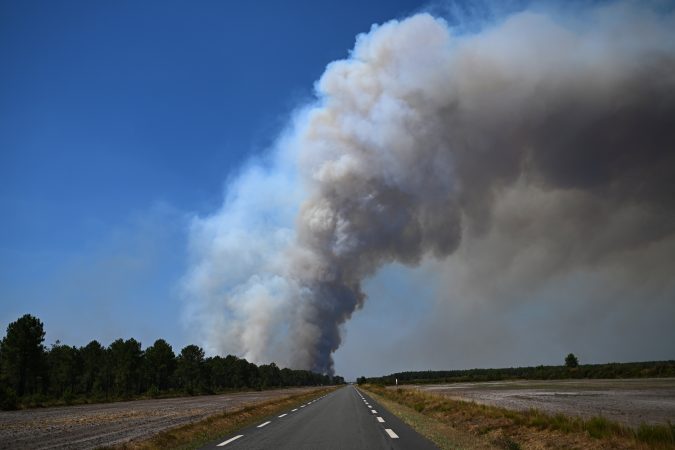
    LEGE-CAP FERRET, France — French authorities ordered 4,000 more people evacuated from tourist sites along its Atlantic coast on Tuesday, widening what may be France’s largest peacetime evacuation as returning heat threatened firefighters’ fragile hold on a vast wildfire west of Bordeaux.

    Fresh flames erupted later Tuesday near Grand Crohot, a popular Atlantic beach on the Lège-Cap-Ferret peninsula, local authorities said. A fleet of 23 planes and helicopters — up from 18 — dropped water and fire retardant as crews fought to keep the renewed flames from spreading.

    “The situation remains complicated. That’s clear. We’re not out of the woods,” Gironde prefect Sophie Brocas said.

    She said that about 60,000 residents who were evacuated as a precaution from Le Haillan and parts of Mérignac and Eysines outside Bordeaux’s ring road could return on Tuesday. No fires had broken out in the three areas, but residents were told to keep their mobile phones on and emergency bags packed.

    The opposing movements — thousands ordered out of coastal resorts while those returning told to be on the alert — underscored how precarious the fire’s hold remained.

    Across France and Spain, roughly 330,000 people have been driven from homes and vacation sites by huge wildfires. Spain braced for its fourth heat wave of the summer, with several blazes still burning out of control, including the largest in its recorded history.

    Even so, Spanish authorities began lifting evacuation and stay-at-home orders for thousands of people after firefighters made progress overnight.

    The Gironde fire has burned an area four times the size of Paris and forced 220,000 people to evacuate. Interior Minister Laurent Nuñez has said it is “very likely” the largest civilian evacuation operation carried out in the country outside war.

    Evacuations don’t deter some vacationers

    The precautionary evacuation order covered campsites, holiday villages, tourist residences, and leisure parks around the resort of Lacanau, Gironde regional authorities said.

    “We are at a point of fragility,” Eric Brocardi, spokesperson for France’s national firefighters federation, told the BFMTV broadcast network Tuesday. “We will continue attacking this fire despite the forecast rise in temperatures.”

    Even as nearby homes burned and authorities urged tourists to stay away, one family told Le Parisien newspaper it had gone ahead with its trip rather than forfeit a 4,000-euro ($4,558) holiday, while another group debated abandoning a vacation that had cost 650 euros ($741) each.

    A fire making its own weather

    At its most violent, the Gironde blaze created a gargantuan black thundercloud, electrified and lit from within. It generated lightning, violent winds, and new fires beyond the original front. The phenomenon, known as a pyrocumulonimbus cloud, was the first recorded in France.

    France’s national weather service placed Gironde under a yellow heat warning beginning at midday Tuesday, forecasting inland temperatures of 91 to 95 F.

    More than 448 square miles have burned across France this year, according to the Interior Ministry.

    Europe is the world’s fastest-warming continent, heating at more than twice the global average, according to the European Union’s Copernicus climate service. Western Europe recorded its hottest June on record, with extreme heat and widespread dryness contributing to the spread and intensification of fires in France and Spain, Copernicus said.

    Crews defend homes and cut firebreaks

    In Le Porge alone, west of Bordeaux, the municipal government said about 150 homes were destroyed.

    Officials warned that smoldering vegetation, rising temperatures and falling humidity could produce fresh outbreaks along the fire’s vast perimeter.

    Military engineers and forest-fire prevention crews resumed cutting firebreaks early Tuesday. Authorities said crews had completed 64 miles of firebreaks.

    At least 110 firefighters have been injured, the prefecture said.

    Thousands return as second fire stops advancing

    In Landes, about 15,000 evacuees — roughly half of those displaced here — were allowed home after a separate wildfire stopped advancing.

    “The fire is fixed, which is good news in the Landes,” French President Emmanuel Macron said Monday evening. Regional authorities said that meant its advance had stopped and no new outbreaks had been reported.

    Those allowed back included residents of Sanguinet, Parentis-en-Born, Biscarrosse’s aviation village, and a large campground. Several other neighborhoods remained inaccessible.

    Authorities warned that the Landes fire was not extinguished. Residual hot spots, wind, and drought could cause flare-ups, and surveillance and damping-down operations were expected to continue for days or weeks.

    Thousands begin returning in Spain

    Spanish firefighters made progress Tuesday, and authorities began lifting evacuation orders for at least 20,000 of the 79,000 people forced to flee over the weekend.

    Francisco Martín, the central government’s representative in the Madrid region, said orders would be lifted in 10 towns, allowing about 20,000 evacuees to return home and ending stay-at-home orders for another 14,000 people.

    Residents of some villages in Ávila were also being allowed home, though authorities did not specify how many. Another 6,000 people could return after a smaller fire near Toledo was brought under control, while several thousand more went home in Castellón.

    Hundreds of firefighters backed by military emergency brigades and water-dropping aircraft continued battling several major wildfires.

    Smoke from the fires reached Madrid in recent days. Emergency services said residents in central and eastern districts could smell smoke and ash.

    Spanish Interior Minister Fernando Grande-Marlaska said Tuesday that nonstop work through the night left him “reasonably positive,” though officials warned that crews had only a brief window before extreme heat returned.

    Spain’s national weather service said the country was bracing for its fourth heat wave of the summer, with temperatures expected to exceed 104 F in some areas.

    The government declared a national emergency over the fires.

    At least 13 people have died in wildfires in Spain this year, making 2026 one of the country’s deadliest fire seasons in decades.

    “I’ve been living in San Martín de Valdeiglesias for 20 years and I never thought I would see this,” said Estella Costales, an evacuated resident staying at a temporary shelter in Brunete, near Madrid. “It’s unfortunate, but I never thought I would see such destruction.”

    Surroundings of Madrid remain at risk

    The greatest concern was two large fires that had at times come close to merging into a single blaze in wooded hills about an hour’s drive west of Madrid.

    A fire in hilly, rural terrain in Ávila, west of Madrid, has become Spain’s largest on record, scorching more than 193 square miles, the government said.

    Local weather services in Ávila also shared images Tuesday of what they described as a pyrocumulonimbus cloud over the blaze. Spain has seen these fire-generated thunderstorms form at least twice during wildfires in recent years.

    “Look at how the valley is burned. Look at the houses, the people,” said David Gonzalez, a 48-year-old gardener who used his van to deliver supplies to firefighters in Ávila.

    “We are feeling a lot of anger and helplessness. It’s something inhuman,” he said.

    Fires have burned 590 square miles this year in Spain, Ecology Minister Sara Aagesen said.

    Spanish Prime Minister Pedro Sánchez has called for a national pact to fight wildfires, saying climate change is making them worse.

  • Tornado that carved a path of destruction in Wisconsin stayed on the ground for more than 20 minutes

    Tornado that carved a path of destruction in Wisconsin stayed on the ground for more than 20 minutes

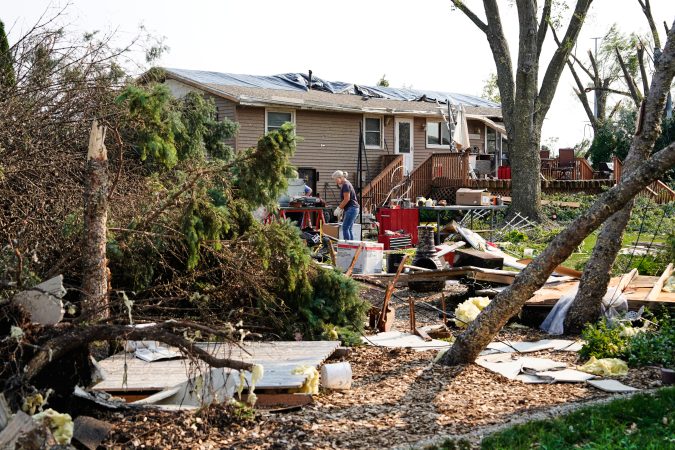
    MADISON, Wis. (AP) — First responders searched damaged homes and buildings on Tuesday for possible victims of a powerful tornado that carved a path of destruction through several northeastern Wisconsin communities.

    The twister touched down in the Fox Cities region, which includes Appleton, Menasha and Neenah, at around 1 p.m. Monday and remained on the ground for more than 20 minutes as it cut a roughly 12-mile path of destruction through an area, the National Weather Service reported. It was nearly a mile (1.6 kilometers) across at its widest, and it destroyed homes and businesses, flipped cars and knocked down rows of power lines in the region, which is roughly 100 miles (160 kilometers) northwest of Milwaukee.

    The timing — it blew in when most people were awake and after warnings had been issued — could be why there have been no reported deaths, authorities said.

    “I think what helped us was it was during the week,” Menasha Police Chief Matt Albrecht said at a news conference Tuesday. “Everybody was at work. It was the middle of the day. Most people were not at home and at their place of employment.”

    Authorities said a number of people were injured and treated at hospitals, but they didn’t know exactly how many or how seriously.

    “The depth of the tornado and its impact is incredible, devastating. We’re really still at the assessment stage,” Winnebago County Executive Gordon Hintz told reporters.

    Gov. Tony Evers declared a state of emergency for the affected areas.

    As chain saws roared in the background, Appleton Mayor Jake Woodford said a number of neighborhoods were “truly devastated.” Like elsewhere in the region, electricity lines were tangled around broken trees, making power restoration a slow, risky process.

    More than 14,000 customers in Winnebago and Outagamie counties were still without power Tuesday afternoon, about 1,000 fewer than earlier in the day, according to PowerOutage.us. It could be several days before power is restored.

    Shelters were opened for displaced residents. A boil water advisory was issued for part of a water system in Fox Crossing that lost pressure.

    It was a relatively powerful twister

    The twister was spun off by a large storm system that moved through the Great Lakes, fueled by a buildup of heat and humidity, the weather service said.

    Weather service officials were assessing the damage Tuesday, said Roy Eckberg, an agency meteorologist.

    “To get that kind of tornado is pretty rare in northeast Wisconsin, but they do happen from time to time,” he said, adding that it was unusual that the twister moved southward instead of to the east or northeast.

    Preliminary data indicates it was an EF3 tornado, the weather service said, stronger than the EF2 estimate they made Monday.

    Residents describe terrifying moments

    Heather Schroeder said she heard cracking and popping all around her as the twister tore apart a laundromat, bakery and tavern along a street corner in Menasha.

    Rescue workers pulled someone out of one of the buildings and it wasn’t clear if they had survived, said Schroeder, who works nearby. Cars were turned upside-down, and there was a gas leak at the laundromat, she said.

    “There’s nothing left,” Schroeder said.

    Aerial video Tuesday showed homes in Menasha without roofs or that had been completely hollowed out.

    Greg Van Driest was working in downtown Appleton when the sky got as dark as night.

    “The word we all were using was ‘ominous,’” he said. “It’s like, ‘Whoa, look at that.’ … You looked outside and you thought it was three in the morning, it was that dark.”

    Hintz, the Winnebago County executive, said he received multiple reports of buildings destroyed and vehicles overturned. All storm warnings that could be made ahead of time to get people to safety were activated, he said.

    “Obviously when you look at the damage, Mother Nature doesn’t really care,” he said.

    ___

    Mayes-Osterman reported from Chicago and Seewer from Toledo, Ohio. Dave Collins in Hartford, Connecticut; Christopher L. Keller in Albuquerque, New Mexico; Laura Turbay in Little Rock, Arkansas; Sophie Bates in Jackson, Mississippi; Hannah Schoenbaum in Salt Lake City; and Michael R. Sisak in New York contributed to this report.

  • A 7.1 magnitude quake hits Japan’s southern Kyushu island and dozens are injured or missing

    A 7.1 magnitude quake hits Japan’s southern Kyushu island and dozens are injured or missing

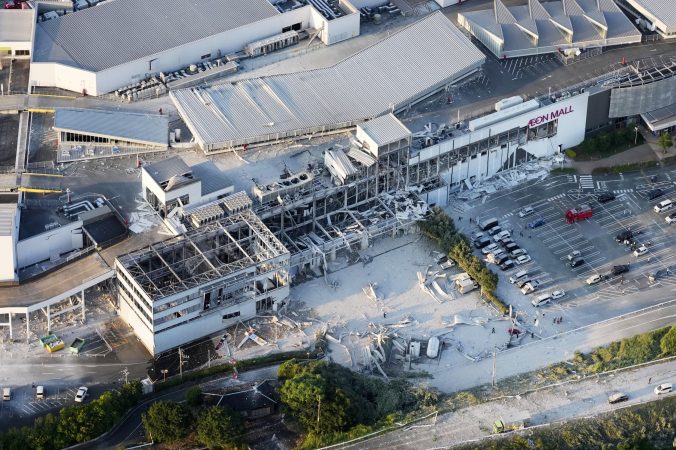
    TOKYO — A 7.1 magnitude earthquake shook Japan ‘s southern main island of Kyushu on Tuesday, leaving dozens of people injured or missing after part of a shopping center and a huge chimney at a paper factory collapsed, officials said. A tsunami advisory was issued but quickly lifted.

    There were fears that at least two people were dead.

    In Kashima Town, the quake collapsed the second floor of the Aeon Mall shopping center, trapping an unknown number of people there, according to the fire department in the prefectural capital of Kumamoto. Japan’s NHK national television said the collapse came after an explosion, believed to have been triggered by a gas leak at the building.

    Four people were pulled out with injuries and taken to a hospital, while 10 others were unaccounted for, the Kumamoto prefectural emergency response team said. It said the extent of the damage was still being investigated as the search and rescue effort continued.

    A 35-year-old male shopkeeper told Japan’s Asahi newspaper that he fled the building after the quake alert, and heard an explosion sounding like a bomb blast about an hour later. When he turned around, he saw enormous white smoke billowing from the mall.

    A female employee at the mall told Japanese broadcaster TBS television that she and her colleagues smelled gas when they returned to their shops after helping customers to evacuate out of the building, then heard the explosion.

    A man interviewed by Yomiuri newspaper said that his friend who works at the mall was missing, and he was praying for those who are unaccounted for to be safely rescued.

    At the Nippon Paper Industries Co.’s Yatsushiro factory, where a chimney collapsed and the building was damaged, 11 people were trapped underneath the debris, the Kumamoto emergency team said. Two of them were later found without vital signs, while the conditions of nine others were unknown, the team said.

    The Fire and Disaster Management Agency said more than 260,000 people were advised to evacuate, most of them in Kumamoto prefecture, but also in the neighboring Nagasaki prefecture.

    The affected area is about 900 kilometers (540 miles) southwest of Tokyo, the country’s capital.

    A tsunami advisory for the Ariake and Yatsushiro Seas on the western coasts of Kumamoto prefecture and three neighboring prefectures was lifted within two hours, the Japan Meteorological Agency said.

    Japan’s Prime Minister Sanae Takaichi told journalists that there were reports of damage to roads, bridges and buildings, as well as blackouts and fires, though details were unclear.

    The Fire and Disaster Management Agency said major public facilities or infrastructure were not damaged. Japan’s Nuclear Regulation Authority said no abnormalities were found at three nearby nuclear power plants. Kumamoto police have received more than 100 emergency calls following the quake, NHK said.

    Kyodo News said a hospital in the city of Yatsushiro took in about 40 people with injuries and about 50 others were taken to a hospital in Kumamoto city.

    The quake also affected a number of major manufacturers in Kyushu.

    Toyota Motor Corp. said it has suspended the operations at three of its factories in Kyushu in part because of safety issues, and that they will reopen on Wednesday. Toyota said there were no reports of injuries to people or damage at the plants, though the company was still assessing the situation.

    Honda Motor Co. and Nippon Paper also suspended operations, and Yamato Transport Co. has also stopped delivery services in and out of Kumamoto, the Nikkei business daily said.

    Shinkansen bullet trains and local trains in Kyushu were suspended for safety checks, and the runway at Aso Kumamoto Airport was closed, with “no prospect of resuming operations” anytime soon, according to a notice on the airport’s website. There were no details.

    The Japanese Defense Ministry said it dispatched military aircraft to the area to assess the situation.

    A train derailed and fell on its side at Yatsushiro station, and stone walls were damaged at Kumamoto Castle, a main tourist destination that was badly damaged in the 2016 quake and is still being repaired, Kyodo said.

    “The shaking reminded me of the Kumamoto quake (10 years ago) and I was frightened,” said Hiroki Shimoda, an official at Mifune town hall, who saw roof tiles of nearby homes crash to the ground. Kumamoto was hit with a deadly quake in 2016 that killed at least 50 people.

    Shinji Kiyomoto with the Japan Meteorological Agency urged residents to be cautious over the next two to three days.

    U.N. Secretary-General António Guterres’ deputy spokesperson extended sympathy to those in danger and the people of Japan.

    “Our hearts go out to the people affected by this earthquake,” said Farhan Haq, the deputy spokesperson. “The national authorities are leading the response, but we stand ready to support if needed.”

  • Judge rules singer D4vd must stand trial in killing of 14-year-old Celeste Rivas Hernandez

    Judge rules singer D4vd must stand trial in killing of 14-year-old Celeste Rivas Hernandez

    LOS ANGELES — A judge ruled Monday that there is enough evidence to put D4vd on trial in the killing and dismemberment of 14-year-old Celeste Rivas Hernandez, who authorities said had threatened to expose their relationship and crater the indie-pop singer’s rising career just a few days before his debut album dropped.

    “i will end ur career and ur life,” she told him in a text message sent the night before her death.

    Los Angeles Judge Charlaine Olmedo decided that evidence presented during a preliminary hearing provided probable cause for a trial on charges of murder, continuous sexual abuse of a child under 14, and unlawful mutilation of human remains.

    The dark and disturbing details presented over five days brought tears, gasps, and horror to the courtroom. The evidence included grisly autopsy photos, explicit descriptions and depictions of sexual abuse, and a stark picture of the final texts she sent minutes before she died and her phone went permanently silent.

    The ruling was a major step in the 10-month investigation and prosecution of D4vd that began when the dismembered and decomposing body of a girl was found in the trunk of his Tesla in the Hollywood Hills in September while he was on tour.

    D4vd shows no emotion as decision is read, and now heads to trial

    D4vd, the 21-year-old whose legal name is David Burke, showed no emotion when the judge issued her ruling, watching calmly and intently in his orange jail clothes and glasses as he had throughout the proceedings.

    He has pleaded not guilty. His lawyers argued that the murder evidence was insufficient, but did not argue against the other two charges. They declined to comment outside court.

    Prosecutors argued that the evidence was overwhelming.

    “Based on the mountains of evidence presented,” Deputy District Attorney Beth Silverman said, “all of the allegations have been proved way beyond the standard required.”

    Los Angeles District Attorney Nathan Hochman said outside court that prosecutors presented only a “small fraction” of the evidence they have. They are still weighing whether to seek the death penalty, but Burke is eligible for it after Olmedo also found probable cause for lying in wait, killing for financial gain, and killing a potential witness, special circumstances in a crime that allow for a death sentence.

    Olmedo ordered that Burke continue to be held without bail. An arraignment is to be held on Aug. 31, and a trial could happen as soon as 60 days later.

    The last night of Celeste Rivas Hernandez

    Before the decision, prosecutors gave a moment-by-moment account of Rivas Hernandez’s last night.

    As she neared his Hollywood home shortly after 10 p.m. on April 23, 2025, in an Uber he had sent to pick her up, she sent her final text: “girly pop i’m almost there open ur door if ur home.”

    Prosecutors allege Burke stabbed her to death when she came through the door.

    The night before, the two argued via text about his relationship with a woman. She sent him an angry and profanity-riddled text saying she will tell her dad so many lies about him and that she would “end ur career and ur life.” She had sent several similar messages around the same time.

    Prosecutors said that Burke met Rivas Hernandez when she was 11, and began sexually abusing her when she was 13 and he was 18. A year before her death, the pair also exchanged messages about how she had become pregnant — she assured him the baby was his — and that she had an abortion.

    During the preliminary hearing, prosecutors introduced photos of the two of them kissing and lying in bed. The pictures showed that she had “David” tattooed in red ink on a finger — one of two that had been cut off when her body was found.

    Prosecutors said they have records showing Burke ordered chain saws and wading pools that he used to dismember her body in his garage, and that her DNA was found there on blood stains.

    They said he then drove around for weeks and even months with the body in his trunk before the seemingly abandoned Tesla was towed from the Hollywood Hills.

    Defense argues there’s insufficient evidence for murder

    The defense argued that the evidence didn’t show the kind of malice that was required for murder.

    “There’s no evidence that Mr. Burke harbored a deliberate intent to kill Miss Hernandez,” said Burke’s attorney, Marilyn Bednarski.

    She said the communications between Burke and Rivas Hernandez showed “no threat, no evidence of a history of violence” and that he had “the opposite of homicidal malice” toward her.

    She argued that a medical examiner ruling that her death was a homicide from two puncture wounds was too vague and inconclusive to be evidence of murder. The defense did not directly give an alternative theory on how she died and isn’t required to.

    The defense also established that she had asked seven times to come to see him in the days before her death, and he reluctantly agreed only after she demanded it, and that she had threatened to kill Burke and to mutilate him.

    Silverman told the judge that “the defense tried numerous times throughout these proceedings to dirty up the victim” despite her being a child.

    Farrell, the detective, also said under defense questioning that the parents of both Burke and Rivas Hernandez knew about their relationship, that he had attended church with members of her family, and that her parents had given their consent for her to go to London with him for a week.

    Patrick Steinfeld, an attorney for Rivas Hernandez’s family, said after the hearing that they were “horrified that the defense attorneys brought up evidence to put the blame on a 14-year-old girl.”

    Her parents sat in the front row through most of the hearing, but sat out some of the more graphic parts and left in the middle of the sexual testimony after her mother began crying.

    D4vd’s career was reaching new heights at time of killing

    D4vd (pronounced “David”) became an online musical phenomenon as a teen with a blend of indie rock, R&B, and lo-fi pop. He had huge followings on TikTok, Soundcloud, and Spotify, where his top songs, including his 2022 breakthrough “Romantic Homicide,” have more than a billion plays.

    In 2024 he played the Coachella music festival and released his first full-length album, Withered, two days after authorities say Rivas Hernandez was killed.

  • Ex-Olympian charged with damaging Reflecting Pool sees ‘irregularities’ in grand jury proceedings

    Ex-Olympian charged with damaging Reflecting Pool sees ‘irregularities’ in grand jury proceedings

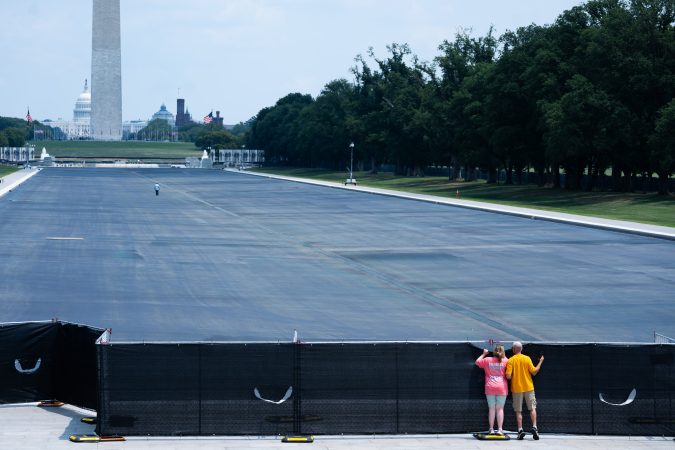
    WASHINGTON — A former Olympian charged with deliberately damaging the Lincoln Memorial Reflecting Pool is seeking access to all of the closed-door testimony that led to his indictment, pointing to “irregularities” in those grand jury proceedings.

    In a court filing Monday, David Hearn’s attorneys requested an order for the government to turn over a complete transcript of all grand jury proceedings. They also want prosecutors to disclose the legal instructions they gave to grand jurors about the elements of Hearn’s alleged crime.

    Hearn pleaded not guilty earlier this month to one felony count of property destruction and has a trial scheduled to start Sept. 28 in D.C. Superior Court. The charge, which carries a maximum prison sentence of 10 years upon conviction, accuses Hearn of causing at least $1,000 in damage to the pool.

    But his lawyers question whether prosecutors properly presented the grand jury with adequate evidence to support the amount of damage alleged in Hearn’s indictment. A National Park Service official testified that the pool already was damaged before Hearn allegedly touched it, couldn’t quantify any damage attributable to Hearn and said the same repairs would have been required regardless of his conduct, defense attorneys said.

    “The witness’s testimony established that the pool had substantial preexisting damage requiring repair before any alleged conduct by Mr. Hearn,” his lawyers wrote. “According to the witness, the pool was leaking more than one million gallons of water per week; its expansion joints had exceeded their service life; and the liner already contained a rip.”

    Hearn’s attorneys are basing those arguments on their limited review of grand jury testimony. They want court-ordered access to all the proceedings.

    A spokesperson for U.S. Attorney Jeanine Pirro’s office in Washington didn’t immediately respond to an email seeking comment on Hearn’s arguments.

    Hearn previously asked the court to dismiss the case, which stems from the troubled multimillion-dollar renovation project championed by President Donald Trump. His attorneys argued the government has failed to properly preserve important physical evidence from the Reflecting Pool.

    Trump, a Republican, has claimed that vandals have damaged the pool, but administration critics attribute the problems to shoddy repair work. During a speech Monday at General Motors in Michigan, Trump claimed a “sick” person cut the liner in the pool but said the attraction is receiving treatment.

    “It’s in the hospital now, but it’s going to get better very soon,” Trump said. “It’s almost ready to open.”

    Hearn and his supporters claim his prosecution is a politically motivated attempt by the Trump administration to deflect blame and scapegoat others.

    Hearn told The Associated Press he was detained by National Guard troops and U.S. Park Police for five hours after stopping by the pool during a bike ride on June 19. He said he reached in to examine the pool’s newly peeled coating and briefly touched a chunk attached to the side of the pool, but said he obeyed a park worker who told him to let go of it.

    Hearn, 67, of Bethesda, Maryland, competed in three Summer Olympics, earning his best finish, ninth, at the 1996 Atlanta Olympic Games, the U.S. Olympic and Paralympic Committee says on its website.

    At least three other people have been charged in the same court with misdemeanors for allegedly removing pieces of paint from the pool.

  • 15-year-old arrested at Seattle food festival shooting was armed with a ghost gun, police say

    15-year-old arrested at Seattle food festival shooting was armed with a ghost gun, police say

    SEATTLE — The 15-year-old arrested after a shootout at a food festival near Seattle’s Space Needle over the weekend was armed with a ghost gun with an extended magazine, police said Tuesday.

    Police Chief Shon Barnes told a news conference that the weapon was a 9 mm gun from Polymer80 — a now-defunct company that was once a leading manufacturer of ghost gun parts.

    Investigators also recovered two other weapons and 14 shell casings that had been fired by weapons of two different calibers, he said.

    Shooting killed 3 people and injured 4, including a toddler

    The shooting in the waning hours of the three-day Bite of Seattle festival left three people dead, including a 19-year-old gunman, and at least four people injured, including a toddler. Authorities say they believe the violence was gang-related, and they are reviewing any available surveillance video and interviewing victims and witnesses in an effort to identify others who may have been involved.

    An eighth person with a possible gunshot wound checked themself into a Seattle hospital after the shooting, but checked out before investigators could conduct an interview, Barnes said. Legal obstacles have prevented detectives from obtaining the patient’s identity, he added. It’s unclear if the injury was related to the festival shooting or whether the person might have been involved in it, but Barnes asked for the person to come forward and speak with investigators.

    Ghost guns lack serial numbers law enforcement can use to trace them

    Ghost guns are privately made — often homemade — firearms that lack serial numbers used to trace them. They have often been purchased without a background check. Law enforcement officials say ghost guns, including those made with 3D printers, have been used in violent crimes across the U.S.

    Lawsuits and state-level bans eventually pushed Polymer80 out of business in 2024, and last year, the U.S. Supreme Court upheld a rule adopted under former President Joe Biden requiring companies to treat gun kits like other firearms by adding serial numbers, running background checks, and verifying that buyers are 21 or older.

    The weapon the 15-year-old had been shooting when he surrendered to police was equipped with an extended 33-round magazine, Barnes said. The magazine still had 19 rounds in it.

    At the scene Sunday night, police also recovered a 9 mm handgun that they do not believe was used in the shooting.

    And on Monday, as food vendors were allowed to return to the area to clean up and collect their equipment, a third weapon was discovered: a Glock 45 model 9 mm with a switch allowing it to fire fully automatically, Barnes said. Police believe that gun was fired during the shooting. It had an extended 40-round magazine, with 21 rounds remaining in it.

    Police believe there were at least 3 shooters

    In a document filed in juvenile court in Seattle on Monday, police said they believed there were at least three shooters: the 15-year-old, an acquaintance who died at the scene, and “at least one other unknown suspect.” Authorities had earlier said they believed there were two.

    A judge on Monday ordered the 15-year-old to be held in juvenile detention for investigation of assault and firearms charges pending further hearings. The King County prosecutor’s office said it expected to receive the case from police on Wednesday for a charging decision. Hong Tran, a public defender assigned to the teen’s case, declined to comment in an email to the Associated Press on Tuesday.

    The King County Medical Examiner’s Office on Monday identified the dead as Carlos Israel Sanchez Villalba, 44; Ashley Whitehead, 56; and Junior Cee Niko Semo, 19.

    Victims remembered as a kind man, and a ‘free spirit’

    Villalba was a husband and father of three known for his kindness and willingness to help others, according to a GoFundMe campaign launched Monday to help his family with funeral expenses. He died from a gunshot wound to his torso, while Whitehead died from a gunshot to her pelvis, and Semo died from multiple gunshot wounds, according to the medical examiner’s office.

    Whitehead had just moved to Washington from Alabama a year ago and was enjoying the festival with one of her adult daughters when she was shot, her cousin Michelle Whitehead told the Associated Press. She was taken to the hospital and died in surgery, she said.

    Ashley Whitehead adored her two adult daughters, and also loved nature and arts and crafts, her cousin said.

    “I would consider her just a free spirit. She had the best sense of humor, the best gorgeous smile,” she said.

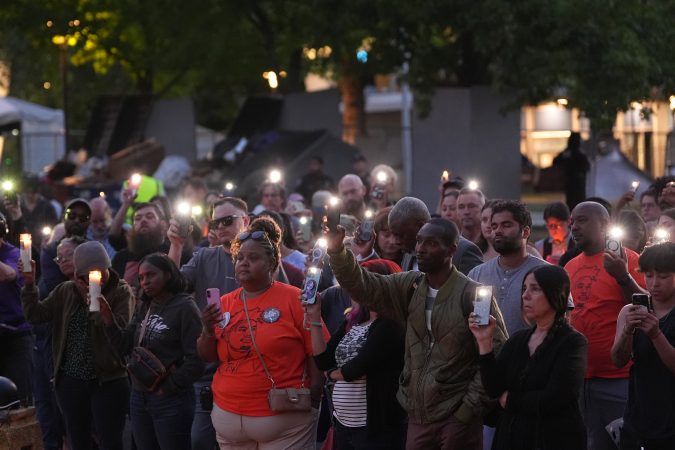
    During a vigil Monday night at the center, Michelle Whitehead stood among dozens of others with a sign that said “Whitehead Strong” as the group held a moment of silence and raised up flashlights on their phones to honor those that had been killed. Candles and flowers were arranged around them.

    The four wounded included a 2-year-old boy, two men, ages 23 and 27, and a woman, 39, all of whom were discharged, a hospital spokesperson said.

    One of the victims was walking a bicycle when struck, the court document said. The toddler was with his mother.

  • Zelensky has a ‘good meeting’ with Trump at the White House as he seeks more cooperation with U.S.

    Zelensky has a ‘good meeting’ with Trump at the White House as he seeks more cooperation with U.S.

    WASHINGTON — President Donald Trump and Ukrainian President Volodymyr Zelensky met Tuesday ahead of Sen. Lindsey Graham’s funeral, with the two leaders discussing ways for Ukraine to produce its own powerful weapons and “other ideas that could help” in its ongoing war against Russia.

    The sit-down in the Oval Office, which was closed to the media, followed a consequential meeting at the NATO summit earlier this month in Ankara, Turkey, where Trump announced that the U.S. will give Ukraine a license to make Patriot defense systems — a long-running request from Kyiv to counter Russian missile attacks.

    In a post on social media after the meeting, Zelensky thanked Trump for the “good meeting” and the Republican administration’s efforts to aid Kyiv in the long-running war, which began more than four years ago when Russia invaded Ukraine.

    “The President and I discussed licenses for Patriot interceptor production and several other ideas that could help,” said Zelensky, who also noted that he offered condolences to Trump for the death of Graham, a close ally. “We also spoke about diplomacy – it’s important that the diplomatic process be reinvigorated.”

    White House press secretary Karoline Leavitt said both the Zelensky meeting and a separate, later sit-down with Israeli Prime Minister Benjamin Netanyahu were “positive and productive.”

    Trump welcomed Zelensky to the White House as the Ukrainian leader traveled to Washington to honor Graham, whose final act as a public official was visiting Kyiv and securing an agreement on a package of sanctions that seek to punish countries that purchase Russian oil, gas, and other exports.

    In a Fox News Channel interview on Tuesday, Trump recalled Graham’s hawkishness and said the Republican South Carolina senator’s support for Ukraine never wavered. Trump said Graham had suggested it was time to make a deal with Iran but had no similar suggestion for the Russia-Ukraine war.

    “Ukraine, he’s very militant about,” Trump said on Fox & Friends. “I mean, Lindsey liked war, to be honest with you.”

    The Trump administration’s embrace of Zelensky comes as a far-right activist with the U.S. president’s ear had a recent, widely publicized change of heart on Russia’s war against Ukraine.

    Laura Loomer, known primarily for her incendiary social media posts and her influence with Trump, has been traveling through Ukraine, witnessing Moscow’s barrage firsthand, and interviewing Zelensky while admitting she was “bamboozled by Russian propaganda.”

    Loomer said she spoke to Trump after she met with Zelensky in Ukraine last week and she expects to meet with the U.S. president once she returns from her trip.

    “It’s looking good for Ukraine, right?” Loomer said during an interview with the Associated Press. “Going into this meeting next week at the Oval Office is looking pretty good.”

    Ahead of the meeting, Zelensky also warned that Russia has been aiding Iran as the war persists by capturing satellite imagery of U.S. bases in the Gulf region that later appear in Iran. The Ukrainian president also asserted that there was a “clear correlation” between Russia’s images and subsequent Iranian strikes.

    “The purpose is clear,” Zelensky said earlier this month. “None of us in the world should turn a blind eye to one very simple fact: Evil always seeks ways to make things worse and spread further.”

    But on Monday, Trump downplayed any impact of potential Russian assistance for Iran.

    “I don’t think they’ve been doing it, certainly not at a high level,” Trump told reporters on Air Force One as he traveled to Michigan. “And if they have, it has been very un-impactful.”

    Still, he said he would raise the issue with Russian President Vladimir Putin.

    Zelensky has a busy itinerary during his latest visit to Washington. Besides his White House meeting, Zelensky was to head to the Capitol to meet with senators on Tuesday evening after Graham’s funeral at Washington National Cathedral, according to a person with knowledge of the meeting who was not authorized to discuss it publicly and spoke on the condition of anonymity.

    Republican leadership is hoping to advance Graham’s sanctions legislation this week, although the Senate is juggling several other priorities before lawmakers leave Washington for their August recess.

    The bill has dozens of backers from both major political parties and is seen as the main policy tribute to Graham, who died unexpectedly this month from a tear in his aorta. It imposes tariffs on goods from the world’s top five purchasers of Russia oil or natural gas, including China and India.

    The legislation also includes sanctions against Putin; senior Russian political and military leaders; and Russian financial institutions and energy projects.

  • Lawmakers seek ban on using campaign funds to fight sexual harassment claims

    Lawmakers seek ban on using campaign funds to fight sexual harassment claims

    Federal politicians would be barred from using campaign contributions to fight or settle sexual misconduct allegations under a bill announced Tuesday by two House members from opposite sides of the political spectrum.

    The proposal, from Reps. Ro Khanna (D-California) and Anna Paulina Luna (R-Florida), aims to further shape the debate over how Congress should move forward from a spate of sexual misconduct scandals this spring, which prompted the creation of a bipartisan working group to revise the policies protecting Capitol Hill staffers. Both Khanna and Luna have been active on the issue.

    Khanna said politicians would behave better if they had to rely on their own financial resources when they get into trouble rather than being able to dip into campaign accounts or legal-defense funds.

    “That creates this culture of impunity where people think they’re untouchable,” Khanna said in an interview.

    “There’s such a power asymmetry,” he said, because of “the extraordinary legal advantage that elected officials have.”

    The progressive Khanna came into national prominence last fall as he helped force the release of federal investigative files related to financier and sex offender Jeffrey Epstein, over the objections of President Donald Trump.

    Khanna is collaborating on the bill with the conservative Luna, one of several Republican women lawmakers who have begun demanding more consequences for alleged sexual misconduct by their colleagues. She led the charge in April against Sen. Ruben Gallego (D-Arizona), filing a complaint with the Senate that was dismissed last month with no findings that he violated federal law or broke Senate rules.

    The bill would prohibit elected officials and candidates for federal office from using campaign donations or a legal-defense fund to cover legal fees related to claims of sexual assault, sexual abuse or sexual harassment. If they are not held liable, they could be reimbursed for expenses.

    Luna said the proposed change is overdue and would serve as a “massive deterrent” amid a culture of sexual misconduct on Capitol Hill that has gotten out of hand.

    “It is not what the Founding Fathers intended for members of Congress,” she said. “It’s a perversion of the system.”

    The proposal would also make campaign contributions off-limits for paying settlements or court-ordered judgments for sexual misconduct claims, as well as for private investigators and other research into the accusers.

    Khanna said that politicians would still be able to tap into their savings to defend themselves like most other Americans but that they should not be allowed to fundraise for what frequently amounts to public relations activities more than actual legal work.

    “In most of the cases, they’re being used to smear survivors,” he said.

    The bill emerged from conversations with activists supporting women who have come forward in recent months with accusations of sexual misconduct by politicians, including former congressman Eric Swalwell (D-California).

    In April, the San Francisco Chronicle spoke to a former Swalwell staffer who said he sexually assaulted her. CNN reported more allegations of inappropriate behavior, and a second woman accused Swalwell of raping her. He has categorically denied the allegations of sexual misconduct, calling them a political hit job, though he acknowledged some “mistakes in judgment.”

    Swalwell dropped out of the race for California governor and then resigned from office within days. But he has since spent $50,000 from an old congressional campaign account, as well as hundreds of thousands from contributions to his gubernatorial bid, on prominent defense attorney Sara Azari. Her firm hired a private investigator to look into the allegations, according to NOTUS.

    “Many of those women were forced back into hiding, and this ordeal is still not over for them,” said Cheyenne Hunt, an influencer who worked with some of the accusers and subsequently launched the advocacy group Reckoning Action.

    That’s retaliation, Hunt said, and a “bad-faith use” of campaign funds.

    “No donor gives to a campaign thinking, ‘Yes, I want my money to go toward harassing a survivor,’” she said. “This truly feels like such a no-brainer.”

    Despite bipartisan support for the bill, its prospects are uncertain. Congress has struggled to pass major legislative priorities this year, and only two months of floor time remain for the rest of the session.

    Other ideas for improving how Capitol Hill handles sexual misconduct complaints are also circulating. A group that says it represents more than 1,500 congressional staffers released a letter this month calling to expand legal representation for employees, make independent investigations easier to trigger, and provide more time to file workplace claims.

    With the blessing of congressional leadership, the Republican and Democratic women’s caucuses united in the spring to develop recommendations for making Congress a safer work environment. Their proposed solutions are forthcoming.

    House Speaker Mike Johnson (R-Louisiana) recently said he would support banning lawmakers from having sexual relationships with any congressional staffers, not just their own subordinates.