Category: News

  • Keith A. Morrison, celebrated artist and former Temple dean, has died at 84

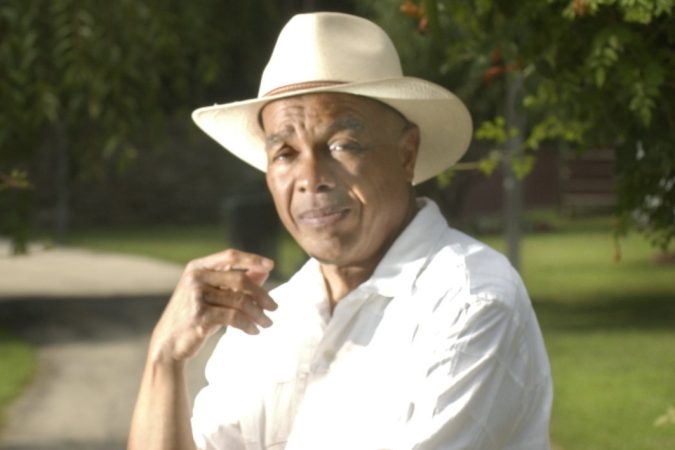
    Keith A. Morrison, celebrated artist and former Temple dean, has died at 84

    Keith A. Morrison, 84, of Meadowbrook, Montgomery County, celebrated artist, professor of painting emeritus and former dean at Temple University’s Tyler School of Art and Architecture, curator, critic, consultant, writer, and lecturer, died Monday, June 1, of cancer at Fox Chase Cancer Center.

    Born in Jamaica, Dean Morrison left the Caribbean island for the School of the Art Institute of Chicago when he was 17 and earned bachelor’s and master’s degrees in fine arts and art education. He went on to teach college art classes in Nashville, Chicago, and College Park, Md., and, in addition to Temple, serve as dean at San Francisco State University, the University of Maryland, and the old San Francisco Art Institute.

    He was the first Black academic dean of art in a predominantly white American school in 1993 at the San Francisco Art Institute and joined Temple as dean of its art school in 2005. He became a professor of painting at Temple in 2008 and retired in 2018 as professor emeritus.

    As head of the Temple art school for three years, Dean Morrison hired staff, expanded degree programs, and coordinated popular activities with the school’s affiliated art programs in Europe and Japan. In an online tribute, former colleagues at Temple called him a “dedicated advocate for artists and arts organizations.”

    Earlier, he was associate dean of architecture and art at the University of Illinois, art department chair at DePaul University in Chicago, and associate professor of art at Fisk University in Nashville. He lectured around the world and was a visiting scholar at Sichuan Fine Arts Institute in China and the University of Michigan.

    “He was very serious, very thinking,” said his wife, Susan C. Alunan. “People said he was present and insightful, even life-changing.”

    As an artist, Dean Morrison was inspired by his Afro-Caribbean heritage, his childhood memories of lush Jamaican landscapes, and his multicultural experiences in Europe, Cuba, Mexico, and elsewhere. He worked in watercolors, oils, acrylic, and prints, and created memorable abstract, figurative, and surreal images.

    Many of his paintings feature landscapes, people, plants, and animals, often including Scout, his African gray parrot. His images, he told colleagues, were “more intuitive than intellectualized.”
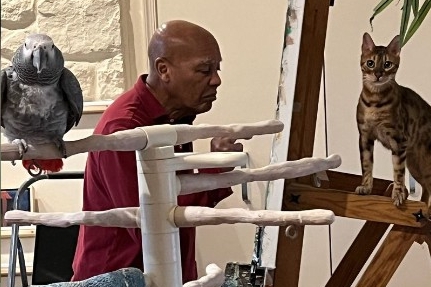
    Dean Morrison worked most often at his home studio in Meadowbrook. His parrot, Scout (left), sometimes appeared in his work. Susan C. Alunan

    Friends and colleagues called his paintings “unique and moving” and “magical in content and accessible by all who encounter them.” Allan Edmunds, founder of Brandywine Workshop and Archives, said on Facebook: “His art connects and shares hidden stories and myths that helped shape his creative vision of multiculturalism as a global reality.”

    Dean Morrison’s work appears on the covers of books and magazines, and in hundreds of solo and group shows around the world. It resides in collections at the Philadelphia Museum of Art, the Pennsylvania Academy of the Fine Arts, the National Gallery of Art and the Smithsonian American Art Museum in Washington, and other galleries.

    Colleagues at the David C. Driskell Center at the University of Maryland said in a tribute: “Morrison’s vivid, imaginative paintings — filled with brilliant color, history, mythology, and fantasy — speak to African diasporic experience as well as Morrison’s unique sense of humor and narrative composition.”

    As a writer, he pioneered Pan-African art criticism and was, in his own words, a Black critic “interested in art from a Black person’s perspective.” He was a visiting editor at the New Art Examiner in Chicago, and his reviews, interviews, and general observations appeared in the Washington Post, museum catalogs, and other publications.

    His book Art in Washington and Its Afro-American Presence: 1940-1970 was published in 1985 and serves as a text at art schools. In 2004, Renée Ater wrote a 128-page monograph called Keith Morrison.

    As a curator, Dean Morrison supervised exhibitions in the United States, Jamaica, and Cuba. He represented the United States and Jamaica at international art exhibitions, and was active with Brandywine Workshop and the Washington Project for the Arts.

    He earned lifetime achievement awards from Howard University and Brandywine Workshop, and was named a Jamaican Commander in the Order of Distinction in 2017 for “outstanding and important services to Jamaica.”

    “My mood is always happy,” Dean Morrison said in a 2008 interview with the University of Delaware’s UDaily. “You can paint anything you want. It does not have to be because you yourself feel that way.”


    This is Dean Morrison’s “In the Rivers of Babylon.”Keith A. Morrison
    This is Dean Morrison’s “Scenes From Childhood.”Keith A. Morrison

    Keith Anthony Morrison was born May 20, 1942, in Linstead, Jamaica. He ran track in high school and took drawing classes at the Jamaica School of Arts and Crafts.

    He learned about the School of the Art Institute of Chicago after high school and worked as a disc jockey and sound effects man for a Jamaican radio station to earn money to travel to the United States. He earned his bachelor’s degree at the University of Chicago in 1963 and his master’s degree at the Art Institute of Chicago in 1965.

    He had a son, Ron, a daughter, Melinda, and, after a divorce, married Alunan in 2003 and welcomed her children into his family. His daughter and former wife died earlier.

    Dean Morrison studied Aristotle and earned a Fulbright Senior Scholar grant. He enjoyed classical music and jazz, and he and his wife traveled the world together.
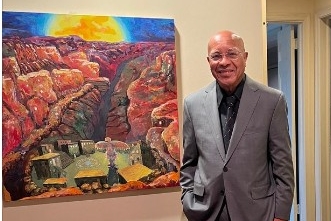
    Dean Morrison “had a great imagination and sense of humor,” his wife said.Susan C. Alunan

    He played tennis and ran, and lived in Chicago, Washington, and San Francisco before settling in Meadowbrook. “He had a great imagination and sense of humor,” his wife said. “He was a fun guy.”

    In addition to his wife and son, Dean Morrison is survived by a brother and other relatives.

    A celebration of his life is to be held later. Brandywine Workshop and Archives has scheduled a showing of his work from 6 to 8 p.m. on Thursday, Aug. 6.
  • Teen gets life without parole for killing 4 at Georgia’s Apalachee High School

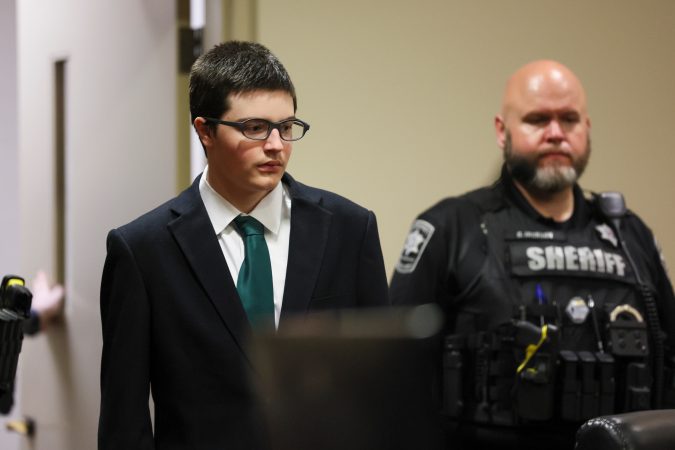
    Teen gets life without parole for killing 4 at Georgia’s Apalachee High School

    A judge on Tuesday sentenced a teenager who killed two students and two teachers in a shooting at Apalachee High School in Georgia to serve life in prison without the possibility of parole, calling his crimes “deliberate, contemplated evil.”

    Colt Gray, 16, had pleaded guilty Friday to 55 counts, including murder, in the Sept. 4, 2024, shooting at the school about 45 miles northeast of Atlanta.

    Barrow County Superior Court Judge Nicholas Primm handed down the sentence after hearing from family members of those killed and victims, as well as investigators, Gray’s grandmother, and a forensic psychologist who had evaluated Gray.

    Murder carries a mandatory sentence of life in prison in Georgia, so the only decision Barrow County Superior Court Judge Nicholas Primm had to make was whether Gray should ever be eligible for parole. He decided the teen should never be allowed out.

    “You do not seem to be tormented by what you did. You seem to relish following in the footsteps of the murderers you idolize. You aren’t wracked with guilt. You’re proud of yourself,” Primm said.

    “We’ve seen no evidence he has any ability to develop a conscience or any ability ever to fully value human life,” District Attorney Brad Smith had said during his closing argument, insisting that Gray “cannot be in society.”

    Defense attorney W. Charlton Allen told the judge his client was “not irretrievably broken.” Allowing him the possibility of parole would give him “an opportunity of hope,” Allen said, adding that a lack of hope “takes away the ability for him to change.”

    The victims got the sentence they asked for

    “This is not a happy day. This is a relief day, I would say,” Smith told reporters after the sentencing, adding that he hoped his team had “done honor” to the victims and their loved ones.

    Teachers Richard “Ricky” Aspinwall, 39, and Cristina Irimie, 53, and students Mason Schermerhorn and Christian Angulo, both 14, died in the shooting. Another teacher and eight more students were wounded, seven of them hit by gunfire.

    Victims of the shooting and family members of those killed conveyed their anger and grief to Primm on Friday, almost all of them asking him not to allow the possibility of parole.

    Shayna Aspinwall, the wife of math teacher and football coach Richard Aspinwall, described “a life sentence of grief and trauma for those left behind.”

    Investigators say Gray aspired to be a mass shooter

    Investigators testified during the three-day sentencing hearing that Gray idolized mass shooters, talking about them online with other members of the “true crime community,” a group of young people online who are fascinated with such attacks. Gray had chatted online about gaining notoriety through a school shooting.

    Prosecutors played recordings of phone conversations Gray had with his mother, Marcee Gray, from a youth detention center in the months after the shooting. During those calls, he directed his mother to look up what people were saying about him online. He was excited when she described “fan art” drawings depicting him or comments people made about him and the attention he was getting online.

    Gray had the “mental wherewithal” to mimic details of other mass killings on the day of the shooting, Smith said. He placed those “Easter eggs,” anticipating that they would be mentioned in court one day and would perpetuate his fame, the prosecutor said.

    “The shooting was not the culmination of the plan. The shooting was just one of the steps of the plan. The plan was ultimate and lifelong fame inside of the TCC,” Smith said, referencing the “true crime community.”

    Gray’s grandmother says he needed help

    “Colt got less stability than he needed, which made him even more vulnerable,” Allen, the defense attorney, argued. He said his client got wrapped up in an online community where he found the acceptance he craved but wasn’t getting at home.

    Gray’s maternal grandmother, Debbie Polhamus, testified that the teen had a troubled childhood and that his parents failed him. Her grandson had grown “highly agitated and aggressive” in the weeks before the shooting, she said, adding that she had urged his parents to get him some help but they didn’t follow through.

    “I tried to help Colt because nobody else was helping him,” she said.

    Polhamus said she visits her grandson once a week at a youth detention center and that he has improved enormously with treatment and medication. She said her grandson has been doing a lot of reading and wants to study to get a GED diploma.

    “I’d like to see him have a chance at some point to prove himself,” Polhamus said.

    Gray was put in foster care while in detention because his father was in prison and there were concerns about his mother’s contact with him. Candice Broce, director of the state Division of Family & Children Services and commissioner of the Georgia Department of Human Services, managed his case.

    Broce testified that Gray appeared to show improvement. After Marcee Gray was barred from speaking with her son by a July 2025 no-contact order and he started taking medication, staff at the youth detention center told Broce it “changed him essentially into a different child,” she said.

    The judge acknowledged that Gray had been failed by his parents, his extended family, and, to a certain extent, society.

    “But that failure does not absolve you from who you chose to idolize, worship, and become,” Primm told Gray.

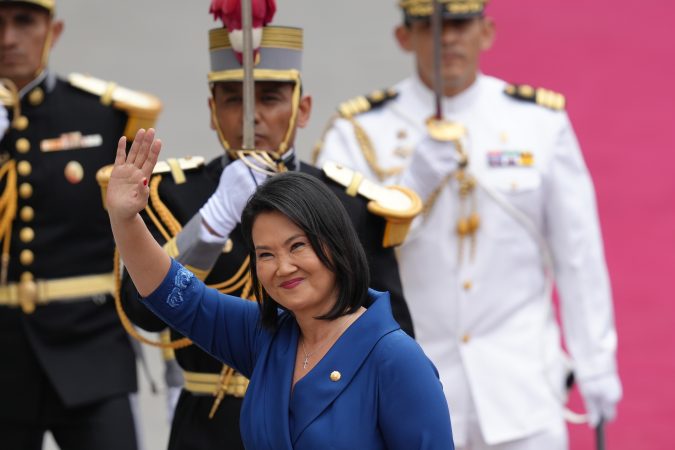
  • Keiko Fujimori is inaugurated as Peru’s president following a narrow election victory

    Keiko Fujimori is inaugurated as Peru’s president following a narrow election victory

    LIMA, Peru — Conservative leader Keiko Fujimori was sworn in as Peru’s president on Tuesday after winning the June presidential runoff by a margin of fewer than 50,000 votes, a victory that confirmed a regional shift in South America toward the conservative wing.

    With the ceremony, Fujimori, a four-time presidential candidate and leader of Peru’s largest political party, takes office as the country’s ninth president in a decade. The 51-year-old is hoping to stabilize Peru’s turbulent politics, reduce crime, and boost economic growth.

    Over the past decade, only three of Peru’s presidents have been elected by popular vote. The rest have come into office after their predecessors resigned or were removed by congress amid protests or corruption scandals.

    Fujimori’s Popular Force party and its main ally, Popular Renovation, will hold half the senate seats once the new legislature is installed, making it harder for opposing legislators to attempt to remove her as president.

    An incoming president with a political past, promises for the future

    Fujimori centered her campaign around promises to improve security in a nation where extortion rackets have become a significant problem. She has also promised to develop infrastructure by making it easier for government agencies to form partnerships with private investors.

    She is the daughter of former President Alberto Fujimori, who led the country in the 1990s and stabilized its economy while defeating terror groups, but was later imprisoned for human rights abuses committed under his rule by the Peruvian military as his government took an authoritarian turn. He was pardoned in December 2023 and died in September the following year.

    During her campaign, Keiko Fujimori pledged to fight crime with an “iron fist,” implementing some policies adopted by Salvadorean President Nayib Bukele, and also to build a megaprison modeled after the notorious Cecot penitentiary in El Salvador.

    To guarantee judges their safety, she has said she will implement reforms to enable them to hide their identities as they oversee criminal trials.

    She also said on Tuesday she would reorganize social services to fight malnutrition in rural communities and announced a 15% increase in the nation’s minimum wage.

    Fujimori said that the nation’s military will “temporarily” lead security operations in crime afflicted areas. And she also said she will focus on preparing the South American nation for the latest onset of El Niño, a weather pattern that warms ocean temperatures and often leads to flooding along Peru’s coast.

    “My goal is not only to administer the state,” Fujimori said. “My main objective is to narrow the enormous social deficit that affects millions of Peruvians.”

    Opposition leaders remember those killed in protests

    Opposition leaders have asked Fujimori’s incoming government to reverse a series of laws approved by Peru’s last legislature, which critics say weaken efforts to fight organized crime.

    The laws eliminate preventive arrests and stop prosecutors from processing political parties involved in corruption under the same statutes as criminal groups. The laws also make it harder for police to confiscate the goods of criminal groups.

    Opposition leaders are also asking the incoming government to create a commission to investigate the deaths of 50 civilians during anti-government protests in late 2022 and early 2023 following the removal of former President Pedro Castillo.

    During Fujimori’s swearing-in ceremony, some opposition lawmakers protested outside the parliament in Lima, Peru’s capital, holding photos of people killed during the protests. Relatives of the dead have said they do not recognize Fujimori as president and that they are protesting her inauguration.

    Fujimori will lead a deeply polarized country

    Fujimori was widely backed by voters in Peru’s capital and along the Pacific coast, but voters in the highlands, where there is a larger Indigenous population, overwhelmingly supported left-wing candidate Roberto Sanchez, an ally of Castillo.

    Sanchez challenged the election results, arguing there were irregularities in how votes were counted at Peruvian consulates abroad, but electoral authorities dismissed his complaints.

    Despite the political friction, Peru continues to be one of the most stable economies in Latin America. Its central bank has long kept the benchmark interest rate below 5%, and the government is known for a conservative approach toward public spending.

    But critics point out a growing gap in living standards between coastal areas and communities in the Andean highlands.

    Fujimori’s June election victory, along with those of Abelardo de la Espriella in Colombia and José Antonio Kast in Chile, underscored South America’s shift toward the conservative wing, a stark contrast from the panorama of a few decades ago when left-wing leaders such as Hugo Chávez in Venezuela or the current Brazilian president Luiz Inácio Lula da Silva emerged.

    Conservatives have won seven major presidential elections in Latin America in the past few years, most of them since the January 2025 inauguration of U.S. President Donald Trump, in a winning streak propelled by concerns over crime, immigration, and slow economic growth.

  • Prosecutor drops rape charges against a prominent Philadelphia doctor

    Prosecutor drops rape charges against a prominent Philadelphia doctor

    A prosecutor dropped felony rape and sexual assault charges against Philadelphia-area doctor John Smyth Michel on Tuesday after his accuser failed to appear at his criminal trial.

    The woman’s testimony against Michel, the former medical director of Excel Medical Center, was key because the case lacked physical evidence. The then-38-year-old patient from Northeast Philadelphia had claimed Michel raped her during a 2024 office visit.

    Michel’s criminal defense lawyer, Andrew Gay Jr., told jurors the sex was a “terrible” mistake but consensual.

    “As terrible of a decision as it could have been for a physician to make,” Gay said during his opening statement Monday on the trial’s first day, “it was an entirely consensual act between two adults.”

    Gay declined to comment on Michel’s behalf after Common Pleas Court Judge Chesley Lightsey dismissed the case at the prosecutor’s request.

    “This case is done,” Lightsey declared before excusing the jury empaneled at the city’s Criminal Justice Center.

    The stakes were high for the 56-year-old doctor from Jenkintown on two fronts: He faced up to 20 years in prison on the rape charge alone and loss of his medical license, if convicted.

    Under state law, doctors convicted of sexual offenses are prohibited from being licensed and practicing medicine.

    The Pennsylvania State Board of Osteopathic Medicine, which regulates and oversees licensure of osteopathic doctors like Michel, suspended his license last year after he apologized for having sex with a patient — a violation of state licensure laws. As of Tuesday, his license remained suspended, according to a state spokesperson.

    Excel Medical Center, which Michel founded, is currently closed, Gay said. The center was composed of 12 locations in the Philadelphia region, with more than 200 employees and about 20,000 patients.

    In a letter to the medical board last year, Michel described the October 2024 sex with the patient as a “lapse in judgment” for which he is “profoundly contrite.”

    “I fully acknowledge that I crossed a professional boundary,” Michel wrote to board members last year. “I recognize that boundaries are not only a legal and ethical obligation but a critical element of safe, respectful, and therapeutic care. I make no excuses for my actions.”

    Claims of rape

    The patient, identified in police records by the initials “D.R.,” had accused Michel of kissing her during a May 2024 exam at his East Mount Airy office on Stenton Avenue. She told him “no,” left the office, and did not report the kissing incident.

    About five months later, she went to an appointment at Michel’s North Philadelphia office on West Diamond Street. During the Oct. 14, 2024, visit, she said, Michel raped her with such force that her head banged twice against the exam room wall. She pushed him off her and fell to the ground crying, according to criminal court records.

    In early November 2024, she told her husband what had happened and subsequently filed a police report, records show.

    Late last year, a second woman accused Michel of sexual abuse. The woman had worked for Michel as a medical assistant from 2015 to 2019 at his East Mount Airy office and at a location in Germantown on Chelten Avenue.

    The former employee claimed that beginning in 2018, Michel touched her breasts over her clothing on multiple occasions while she was working in the office. He additionally groped her vagina over her clothing before she quit in 2019, according to a document filed in court last year by the Philadelphia District Attorney’s Office.

    Prosecutors never charged him in connection with those accusations, but argued the former employee’s claims bolstered their patient rape case, given there were no witnesses. Gay, Michel’s lawyer, had declined to comment after the second woman came forward.

    A no-show witness

    In the patient’s case, Philadelphia police arrested Michel in February 2025 after prosecutors charged him with three felonies — rape, sexual assault, and involuntary deviate sexual intercourse — and two misdemeanors — indecent exposure and assault. He was released on bail.

    Assistant District Attorney Allison Christian dropped all but the rape and sexual assault charges prior to the trial. Michel pleaded not guilty.

    The former patient had been scheduled to testify on Tuesday morning. Christian told the judge that she had spoken with her the night before. She sounded “very emotional” and seemed to be having a “nervous breakdown,” but said she would testify, Christian said.

    “I’ve been calling her since 8:15 a.m. this morning every 15 minutes,” Christian said. “I haven’t heard from her.

    “I’m not going to issue a bench warrant for a rape victim,” she said before dropping the charges.

    A path to practicing medicine

    Prior to the patient’s accusations, Michel had no criminal complaints and no disciplinary history against his medical license, state records show.

    Michel agreed to be disciplined by the board of osteopathic medicine for violating a state law prohibiting sexual misconduct, according to a June 2025 agreement.

    The discipline included a $4,000 civil penalty and an indefinite suspension of his medical license for a minimum of 24 months, followed by probation, according to a spokesperson for the Pennsylvania Department of State, which oversees licensing boards.

    While Michel is on probation, a chaperone must be physically present when he treats female patients and a separate monitor must oversee his practice. Michel also must complete in-person classes on physician-patient boundaries and 15 hours of continuing education on ethics, the disciplinary agreement says.

    The state spokesperson on Tuesday said the board will reinstate Michel’s license to “non-suspended, probationary status” once he has met the agreement’s reinstatement conditions.

  • Havertown man charged with sending racist, threatening voicemails to Delco sheriff

    Havertown man charged with sending racist, threatening voicemails to Delco sheriff

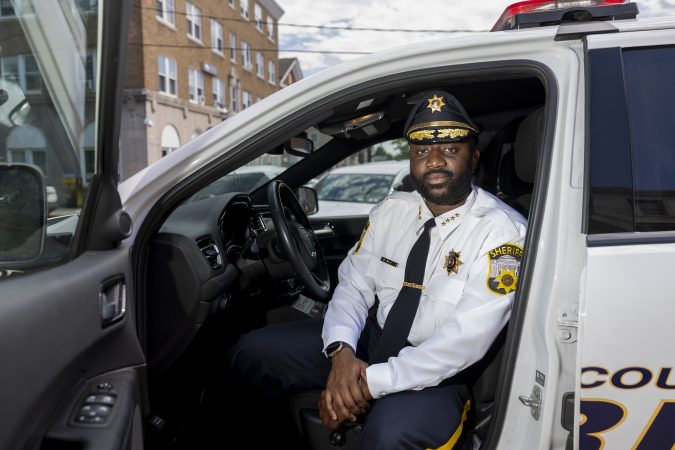
    A Havertown man was charged Tuesday with terroristic threats, ethnic intimidation, and related crimes after prosecutors said he left racist, threatening voicemails for the Delaware County sheriff.

    Sean Keenan, 40, made 15 calls earlier this month to the sheriff’s office in a 24-hour period, according to the affidavit of probable cause for his arrest. Keenan left two voicemails, during which he used a racial slur to refer to Sheriff Siddiq Kamara, who is Black, threatened to hunt him down, and called for “death to Islam.” Kamara is a Muslim whose family came to Delaware County from their native Liberia.

    Keenan was released on $100,000 unsecured bond. There was no indication he had hired an attorney. Keenan did not return a request for comment.

    In announcing the charges, Delaware County District Attorney Tanner Rouse said Keenan’s words were “vile, disgusting, and completely unacceptable.”

    “There is a time when language crosses the line into criminal behavior, and that is exactly what we have here,” Rouse said. “Threats of violence, most especially racially motivated violence, have no place in Delaware County, regardless of who the intended victim may be.”

    Kamara, in a statement last week, said that he welcomes criticism as a public official, but that threats of violence cross the line.

    Investigators said they used phone records to trace the numbers that made the call to two phones registered to Keenan, according to the affidavit. One of those numbers called 911 in February to report a car crash, and a recording of the caller’s voice matched Keenan’s.

    After serving a search warrant on Keenan’s personal and work-issued cell phones, detectives found evidence that he had left the voicemails on July 18 and July 19, the affidavit said. In an interview with police, Keenan admitted to leaving the voicemails, the document said.

    He is scheduled to appear before a district judge for a preliminary hearing on Aug. 7.

  • Russia closes window for dissent as Ukraine’s attacks stir public dismay

    Russia closes window for dissent as Ukraine’s attacks stir public dismay

    The Kremlin has initiated a new crackdown on anti-war voices ahead of Russia’s parliamentary elections in September, barring candidates from running if they show any sign of opposing the bloody, expensive, and increasingly unpopular military operation in Ukraine.

    While repression of political opposition forces is nothing new in President Vladimir Putin’s Russia, the new clampdown is jarring because for a moment this spring, it seemed like a rare window had opened for dissent, as the authorities appeared to create a pressure-release valve for growing dissatisfaction over the war.

    But with the government coming under increasing pressure over Ukraine’s relentless drone strikes and the growing toll on the economy, including an acute fuel crisis, hard-liners in the Kremlin and the security services are gaining the upper hand and have pushed successfully for more repressive measures.

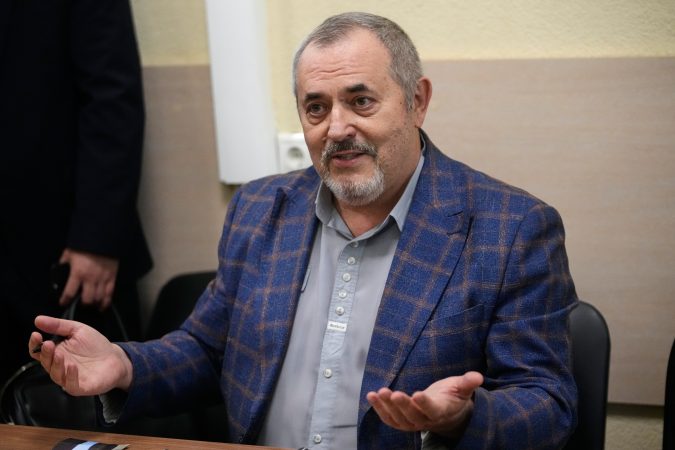
    In recent weeks, the liberal-leaning Yabloko Party, which is attempting to campaign under the slogan “For Peace and Freedom” — a pointed counter to Putin’s unyielding push for conquest — has come under increasing pressure across the country. Meanwhile, Russia’s most prominent anti-war politician, Boris Nadezhdin, who sought to run as an independent, has been barred from the campaign.

    Authorities in St. Petersburg last week refused to register Yabloko for the local parliamentary elections, and more than a dozen of its candidates have been barred from federal and regional elections over accusations they displayed alleged “extremist symbols” such as posting photos online of the late opposition leader Alexei Navalny.

    The Russian authorities “are not going to give any platform to people with anti-war views in the election,” said Andrei Kolesnikov, an independent political analyst in Moscow. “There is now not one noticeable voice against the war.”

    Recent challenges to Yabloko’s registration in several regions over claims of incorrect paperwork could lead to Yabloko being barred overall from the federal election, analysts say — a move that could strengthen United Russia, the ruling party that controls the parliament and has long backed Putin.

    Kremlin spokesman Dmitry Peskov denied the government was targeting anti-war voices, and said individuals were being punished for “violations of the law.”

    “Those who break the law are under pressure and those who don’t break it freely speak their opinion,” Peskov told The Washington Post. “I wouldn’t even call Yabloko a party. It’s no more than a cell,” he added.

    In spring, however, the atmosphere seemed very different. A video posted by social media influencer Viktoriya Bonya lambasting the government’s botched handling of internet restrictions and other problems went viral, forcing the Kremlin to respond.

    A former Kremlin lawyer, Ilya Remeslo, openly branded Putin a war criminal and a thief — but after a brief incarceration in a psychiatric hospital was somehow released and allowed to continue his tirade. More recently in June, German Gref, the head of Russia’s biggest state bank, broke ranks by publicly saying everyone wanted the war to end as soon as possible.

    Remeslo, whose open stance against the war had been seen as representing a divide in the upper reaches of the Kremlin, has since been quietly arrested, accused of spreading allegedly false information about the Russian military — a charge that carries a prison sentence of up to 10 years. He is now being held in a Moscow psychiatric facility, the Serbsky Institute, notorious for its incarceration of political prisoners, according to Remeslo’s lawyer, Sergei Badamshin.

    Forces in the Kremlin decided to put an end to the public dissent, Nadezhdin, the independent anti-war candidate, told The Post in an interview after he was briefly detained and fined for displaying alleged “extremist symbols” — for sharing a link to a video containing an image of Navalny, who died in prison in 2024.

    On July 10, the Justice Ministry declared Nadezhdin a foreign agent, a move that barred him from public office, and he was prohibited from leaving the country.

    “People trust Putin and United Russia less and less because the war has come to them,” Nadezhdin said. “Every day, warehouses and oil bases are exploding. People are dying. And in this situation they are trying to get rid of the most visible political actors like me and Yabloko, who speak against the war and for peace and freedom.”

    Nadezhdin, who won popularity on an anti-war platform in the 2024 presidential elections until the authorities refused to register him as a candidate, said he was now withdrawing completely from opposition politics because it had become impossible.

    In the weeks since public dissatisfaction spilled into the open, Putin’s popularity ratings continued to fall.

    On July 17, a state pollster, the Public Opinion Foundation, recorded the biggest one-week drop in Putin’s approval rating since Russia’s full-scale invasion began in February 2022, a decline of five percentage points to 66%.

    Putin’s falling ratings have been exacerbated by Ukraine’s campaign of long-range drone strikes on Russian oil facilities that have caused widespread fuel shortages and price hikes across the country and potentially pose a threat to this year’s harvest. His declining popularity has raised the stakes in the parliamentary elections, analysts and opposition politicians said.

    “More and more people don’t understand if the authorities at least have a plan about how to exit the situation with the war, and whether all these sacrifices and losses being wrought on Russian society and the economy are justified,” said Tatiana Stanovaya, a senior fellow at the Carnegie Russia Eurasia Center.

    “2026 is a turning point,” she added. “In the first four years of the war people lived in the understanding that the authorities know what they’re doing. Now they don’t know what to expect from tomorrow and there is the feeling that the situation is getting out of control while the authorities don’t have a plan.”

    “Everyone is living from day to day,” Stanovaya said, “while Putin seems far removed from reality.”

    The Kremlin can remove perceived opposition voices at will, and is widely expected to retain a tight grip on the election.

    Still, the gloomy backdrop appears to have forced the Kremlin to reassess what would constitute a win, especially amid persistent public anxiety that the government is planning a new military conscription effort after the election.

    Officials now forecast United Russia could win with 45% of the vote, Russian independent news outlet Meduza reported, down from a previous official prediction of 55%.

    In the Kremlin, officials are still divided over how to handle the increasingly thorny situation, according to Nadezhdin and Mikhail Khodorkovsky, a former Russian oil tycoon who is now a leading opposition figure living in exile in London.

    The recent arrest of Remeslo is a sign that Russia’s Federal Security Service is strengthening its hand against more progressive forces in the Kremlin who had supported figures like Remeslo, Khodorkovsky said.

    “In Putin’s circle a discussion is going on about what to do,” Nadezhdin said. “The [security services] are just trying to repress everyone … And the other part of the administration is trying to somehow work … and get some kind of acceptable result at the election. But it is becoming more and more difficult.”

    In recent weeks, at least 14 members of Yabloko have been barred from running over accusations that they displayed alleged “extremist symbols,” and the party’s registration is being challenged in several regions over claims of incorrect paperwork. The Federal Election Commission has yet to register Yabloko’s list of candidates.

    In addition, at least four members of the Communist Party have been barred from running over charges they posted “extremist symbols.”

    With little sign of renewed peace negotiations, some Russian officials appear to hope that the political situation in Kyiv will deteriorate first, Khodorkovsky said.

    Ukrainian President Volodymyr Zelensky last week ordered a far-reaching government shake-up, including the dismissal of the defense minister, the prime minister and the commander in chief of the armed forces.

    “They are counting on political destabilization in Kyiv,” Khodorkovsky said of hawks in the Kremlin.

    As Russia ramps up ballistic missile strikes on Ukrainian infrastructure in response to Ukraine’s drone campaign, the impact on Ukraine is becoming ever more worrying, one senior Ukrainian official said, speaking on the condition of anonymity to discuss sensitive matters.

    “Of course the Russians suffer a lot,” this official said. “But we suffer the same and on an even bigger scale and what will happen in the winter, no one can say.”

  • Lindsey Graham eulogized as an ‘American original’ with global reach

    Lindsey Graham eulogized as an ‘American original’ with global reach

    WASHINGTON — Sen. Lindsey Graham, the son of pool hall owners who rose to become one of his generation’s more influential U.S. politicians at home and abroad, was eulogized Tuesday as “a true American original” during memorial services in Washington.

    Graham’s flag-draped casket arrived for a tribute at the U.S. Capitol, where the Republican served for more than 30 years as an indefatigable dealmaker who talked and laughed and badgered his colleagues into action. Later, President Donald Trump joined foreign leaders at Washington National Cathedral, a testament to Graham’s stature on the global stage.

    Trump called Graham “a giant of the United States Senate, a true American original who left us much too soon.”

    In mostly prepared remarks, the president described his onetime presidential rival turned ally as “the first person to make you laugh and one of the last people that you’ve really ever wanted to fight.”

    Trump told the story of how he had publicly disclosed Graham’s cell phone number on the campaign trail, reciting the number in the cathedral, but said the senator had the last laugh because “Lindsey did not stop calling me for the next 10 years.”

    Among those gathered were Israel’s Benjamin Netanyahu and Ukraine’s Volodymyr Zelensky, leaders of two countries fighting separate wars, a nod to Graham’s role as a foremost believer in the power of the U.S. and its military to intervene in the world’s problems. Fox News’ Sean Hannity, in his remarks, said Graham would have been moved that they both made the long journeys to attend.

    Trump cabinet officials, including Secretary of State Marco Rubio and Defense Secretary Pete Hegseth, Supreme Court Justice Brett Kavanaugh, and current and former senators and lawmakers joined in the pews, as did Graham’s sister, now-Sen. Darline Graham, who was appointed by South Carolina’s governor to fill the remainder of her brother’s term.

    It was the start of two days of services, with burial Wednesday in Graham’s home state of South Carolina. Joint Base Charleston will be renamed in his honor, the White House said. Graham died suddenly on July 11 at his home in Washington of a likely aortic tear, according to preliminary findings. He had just returned from a whirlwind trip to a NATO summit in Turkey, where he celebrated his birthday, and a visit to Ukraine. He was 71.

    A place of honor for a ‘swashbuckling’ senator

    During the morning service in the Capitol Rotunda, Vice President JD Vance described Graham as a man of “swashbuckling” stature — “who swashbuckled into the Senate” with his suit jacket open — and was impossible not to like.

    “Lindsey was a towering figure,” Senate Majority Leader John Thune said, choking back tears during his remarks.

    First elected to Congress in the 1994 Republican revolt that swept the GOP to power, Graham was part of a new era of conservatives to take their seats in the House — and among the first Republicans from his Southern state since Reconstruction.

    He quickly rose to prominence as a manager in Democrat Bill Clinton’s presidential impeachment, and he was elected to the Senate in the 2002 election. There, he formed an alliance with Sen. John McCain, a Republican from Arizona, and Sen. Joe Lieberman, an independent from Connecticut, in what would become the “three amigos,” globe-trotting the world focused on national security issues.

    Vance recalled how he argued with Graham over the senator’s staunch support for aid to Ukraine, which has divided the GOP, but praised his legacy, saying Kavanaugh “would not be on the Supreme Court” were it not for Graham’s “fierce advocacy” during the confirmation hearing.

    For decades, Graham had been at the center of the action — a member of virtually every bipartisan gang in Congress — with a relentless ability to adapt to political realities, particularly when it came to Trump.

    One by one, many of Graham’s colleagues said their goodbyes in the Rotunda. Sen. Katie Britt (R., Ala.) placed both hands on his casket and then placed her hand on her heart. Sen. Tammy Duckworth (D., Ill.) saluted from her wheelchair. Former Sen. Richard Burr (R., N.C.) bowed and delivered a brief kiss, and Sen. John Kennedy (R., La.) gave a fist bump.

    The ‘Trump whisperer’ had one last mission: Russia sanctions

    Perhaps nowhere was Graham’s political dexterity on display more as when he navigated his on-again, off-again relationship with Trump.

    Graham had denounced Trump as a “unfit for office” during the 2016 presidential campaign, but over time he had become what senators called the “Trump whisperer,” someone even world leaders relied on to understand the president.

    Days before his death, Graham had won Trump’s support for a long-fought bipartisan proposal to impose sanctions on Russia over the war in Ukraine.

    Senators were scheduled later Tuesday to take a first procedural vote on the sanctions package, in Graham’s honor. Zelensky was expected to be on hand and meet with senators in the evening.

    Graham’s champions and potential successors

    At the Washington cathedral, a roster of socially conservative and anti-abortion leaders gave readings, including Tony Perkins of the Family Research Council, Marjorie Jones Dannenfelser of Susan B. Anthony Pro-Life America, and the Reverend William Franklin Graham III.

    When Hannity said how important Darline Graham and her family had been to the senator, she put her hand over her heart in response.

    Lindsey Graham never married, but he helped support his younger sister after both of his parents died while he was at college and then starting law school. He became the guardian for Darline, who was then 13, and he later in life often extolled the benefits of Social Security that helped keep them financially afloat.

    Darline Graham is now running in a potentially crowded primary field for the fall election. The filing period for the special primary election closes Tuesday, with voting set for Aug. 11.

    Graham went on to serve as a judge advocate general in the Air Force, and remained a reserve or National Guard member for decades. In the Senate, he briefly switched back to active status to help advise the Air Force during the Iraq War and was awarded the Bronze Star medal for service in 2014 before formally retiring as a colonel in 2015.

  • Insurers propose 17% average rate increase for Pennie health plans in 2027

    Insurers propose 17% average rate increase for Pennie health plans in 2027

    Insurers are asking for double-digit increases to health plans sold on Pennsylvania’s Affordable Care Act marketplace, Pennie, in 2027.

    Insurers have requested an average increase of 17% for plans sold to individuals and families through Pennie. They are asking to raise the premium price of plans sold to small businesses by an average of 11.5%, according to rate requests released last week by the Pennsylvania Insurance Department.

    The proposed rates are not final. A public comment period is open through Aug. 22, and insurance administrators expect to release final rates this fall.

    Pennsylvania Insurance Commissioner Michael Humphreys said in a statement that the rates were “higher than we’d hoped.”

    New Jersey has not released 2027 rate requests for its ACA marketplace, Get Covered NJ.

    In their rate proposals, Pennsylvania insurers said they needed to charge more to account for the rising cost of medical services and prescription drugs, and a shift in who is buying health insurance and how sick they are. Insurers are required by law to spend 80% of the money they collect through premiums on healthcare for members.

    “Addressing rising healthcare costs requires a shared commitment across the healthcare system, and we will continue working with providers and other partners to help keep quality care within reach for the people we serve,” Independence Blue Cross, which has proposed a 14% average premium increase, said in a statement.

    The proposed increases for 2027 come on top of massive price hikes in ACA marketplaces this year, when a critical financial incentive program was eliminated. The cost of a Pennie health plan more than doubled for many in 2026 and 177,000 people have dropped coverage as a result.

    Advocates worry that another price increase will cause even more people to drop coverage, which could further raise costs.

    “If these proposed rates take effect, even more Pennsylvanians are likely to be priced out of coverage,” Antoinette Kraus, executive director of the Pennsylvania Health Access Network, which helps people enroll in coverage, said in a statement.

    Rising costs and premium prices

    A major factor that affects the cost of insurance is who the plan will cover — how healthy or sick they are, and how much the plan will need to spend on their care.

    Healthy young adults who have few healthcare expenses typically help balance the higher cost of insuring older adults who may have multiple chronic conditions.

    But young adults — many buying insurance on their own for the first time — can be highly sensitive to cost. They have been among those dropping out of ACA plans at the greatest rates after Congress failed to renew a financial incentive program that ensured no one paid more than 8.5% of their income on insurance.

    About a third of adults who dropped out of Pennie health plans so far this year were under age 34, according to state data.

    “They’re the ones looking at the cost and saying, ‘Well I’m pretty healthy right now, I’m going to take the gamble,’” said Devon Trolley, Pennie’s executive director.

    People with ongoing medical needs are more likely to stick with their plan, despite cost increases.

    Pennie’s 2027 enrollment period will run Nov. 1 through Jan. 15.

    Lawmakers have not shown signs of bringing back the enhanced tax credits, which were introduced in 2021 and had been renewed annually since.

    Income-based tax credits that are part of the ACA are still available. People remain eligible for these tax credits if they earn up to 400% of the federal poverty level — about $62,600 a year for an individual or $128,600 for a family of four.

  • Jersey Shore-set comedy ‘Wildwood’ in development at FX from ‘Derry Girls’ creator

    Jersey Shore-set comedy ‘Wildwood’ in development at FX from ‘Derry Girls’ creator

    A new comedy set at the Jersey Shore is in the works from Irish writer Lisa McGee, the creator behind the hilarious hit show Derry Girls.

    Called Wildwood, the series will follow a group of college girls visiting New Jersey from Ireland in the summer of 2000 with “no money, no visas, no plan, no clue,” according to Deadline.

    McGee’s Derry Girls became a whopping international hit after first airing on Britain’s Channel 4 in 2018 and later landing on Netflix.

    It follows a group of messy, raunchy, and zany teens — including Bridgerton star Nicola Coughlan — at an all-girls Catholic school in the 1990s during the Troubles conflict in Northern Ireland.

    A still from “Derry Girls.” (Netflix)Netflix / MCT

    The show was a semi-autobiographical story for McGee, who grew up in Derry and writes irreverent, cheeky young characters that make audiences cringe, cry, and laugh out loud. Her most recent project was the comical murder mystery How to Get to Heaven From Belfast, which premiered on Netflix in February.

    Described as a “spiritual successor” to Derry Girls, Wildwood marks McGee’s first U.S.-based project. It will be developed with 20th Television and FX following a reportedly competitive bidding process. McGee will serve as creator and executive producer.

    It’s not yet clear whether Wildwood will film in the eponymous beach town where it’s set, but FX — the longtime home of It’s Always Sunny in Philadelphia — is certainly no stranger to the region.

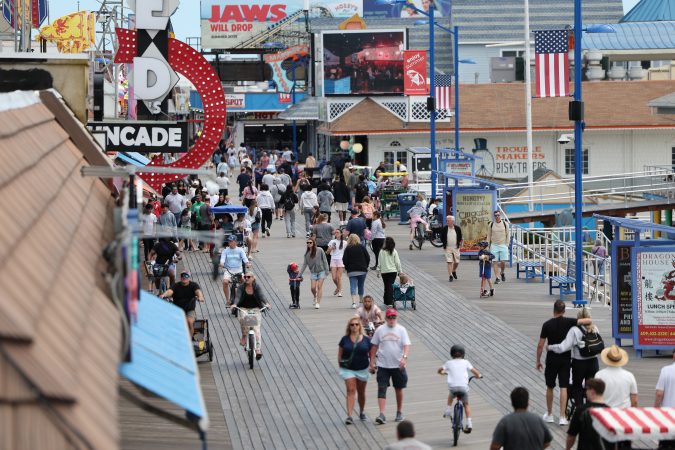
    The Jersey Shore remains a favorite for TV and film productions in recent years, from The Four Seasons (Ocean Grove and Point Pleasant) to Springsteen: Deliver Me from Nowhere (Asbury Park) to A Complete Unknown (Cape May).

  • City Council is pushing the Philly school board to come back to the negotiating table on school closings

    City Council is pushing the Philly school board to come back to the negotiating table on school closings

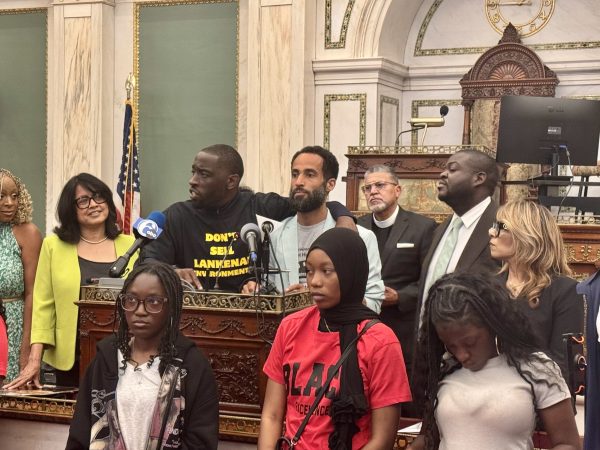
    City Council on Tuesday renewed its call for officials to amend their plan to shut 17 Philadelphia schools, saying it had been more than a month since talks broke down over removing schools from the closing list.

    “We’re here to basically beg the school board to come back to the negotiating table, and let’s come up with a plan that we can work with,” City Councilmember Isaiah Thomas said at a news conference at City Hall.

    He was joined by six other Council members — Anthony Phillips, Jamie Gauthier, Curtis Jones Jr., Quetcy Lozada, Nina Ahmed, and Mark Squilla.

    The board voted April 30 on a $3 billion blueprint that would close 17 schools and modernize 169. The plan — which is $2 billion short of being fully funded — was largely unpopular with the public, but is necessary, district officials said, to accelerate achievement and solve for 70,000 empty seats, a vast stable of aging buildings, and a chronically underfunded system.

    Council technically has no say in the plan — the school board is the sole decider. But Council controls roughly half of the district’s budget, and some members have expressed frustration that they have not had more input on major decisions like closings.

    Council members, led by Thomas, had attempted to body-block the plan, shutting down the meeting at which the school board voted it through. A large contingent of Council vowed to vote against the reappointment of any school board member who supported the closings. Some also said they think it is time to explore changing how school board members are appointed.

    Councilmember Isaiah Thomas, along with members of council, speaks at the school closing vote, in the School District Building, in Philadelphia, April 30, 2026.Jessica Griffin / Staff Photographer

    Jones said Tuesday that “we have tools in our tool belt that we will use” if the board does not budge on school closings.

    Jones said he wanted Council to move forward with legislation to bring in an authority like the Pennsylvania Intergovernmental Cooperation Agency, an independent body that provides oversight of the city’s finances, to supervise the district.

    Vincent Thompson, a spokesperson for Council President Kenyatta Johnson, said that Johnson was “still in discussions about this issue” and that he would have more information in the coming days.

    Thomas also said lawsuits over the facilities plan are possible, though he suggested advocacy organizations, not Council, could bring the suits.

    Delise Williams, a Democratic committeeperson who has been active in the fight to keep Parkway Northwest High School for Peace and Justice open, has already filed a lawsuit, saying she has concerns about student safety.

    At one point toward the end of the school year, the board was negotiating making changes to the closing list with Council, said Thomas and Phillips, the chair and vice chair of Council’s Education Committee. Those talks broke off abruptly, Thomas said.

    Council members have voiced particularly strenuous objections to the closure of Lankenau High in Roxborough, the city’s environmental sciences magnet, plus Paul Robeson High in West Philadelphia and Overbrook Elementary.

    Reginald Streater, the school board president, suggested in a statement Tuesday that negotiations with Council were a nonstarter.

    “For transparency and fairness to impacted school communities, any conversations regarding the board’s April 30th resolution on the Facilities Master Plan’s implementation must occur through the formal transition planning process,” Streater said in the statement. “The board values City Council’s partnership and remains committed to engaging stakeholders throughout the plan’s implementation. As the process moves forward, the board will continue reviewing community feedback and the district’s recommendations when making any decisions.”

    Monique Braxton, a school district spokesperson, emphasized the modernization projects planned and the academic advancements projected.

    “We understand the passion surrounding this matter, and we look forward to being collaborative partners in this process,” Braxton said. “As we begin the transition planning process, we will continue to work closely with students, families, staff, elected officials, community members, and the board of education to ensure every transition is thoughtful, transparent, and centered on student success.”

    Technically, the board’s April vote does not actually close schools; rather, it was a vote to begin the closure process, which officials said could change as circumstances change.

    Pennsylvania public school code requires formal closure hearings to be held at least three months before any closures. The first closures are scheduled to happen in 2027; the 2026-27 year has been designated a planning year for transitions.

    Superintendent Tony B. Watlington Sr. named Shakeera Warthen-Canty, a veteran district administrator, to lead the transition office.