Category: News

  • Nancy Mace’s thrashing in South Carolina governor’s race caps a rough downfall

    Nancy Mace’s thrashing in South Carolina governor’s race caps a rough downfall

    Rep. Nancy Mace’s trouncing in Tuesday’s South Carolina gubernatorial primary dealt a blunt defeat to a once rising GOP star, a politician who had basked in national attention during her dramatic political transformation.

    Mace had real political talent and promise, but her downfall and isolation followed years of brazen political opportunism, a hunger for media attention at any cost, rejecting advisers’ counsel and turning on many allies, more than a dozen former aides, colleagues and supporters in both South Carolina and Washington said in interviews.

    She finished fifth in the contest, according to unofficial returns, solidly losing even her own home county and district.

    Mace arrived in Congress after flipping a Charleston-area district in 2020 and built a reputation as a moderate who appealed to swing voters. She voted to codify same-sex marriage rights, called herself “pro transgender rights” and urged her party to “meet in the middle” with Democrats on abortion. By last year, Mace had begun repeatedly mocking transgender people as “trannies” and disparaged gay relationships on social media. In recent days, Mace suggested a Republican opponent in the governor’s race came from “a slum in India.”
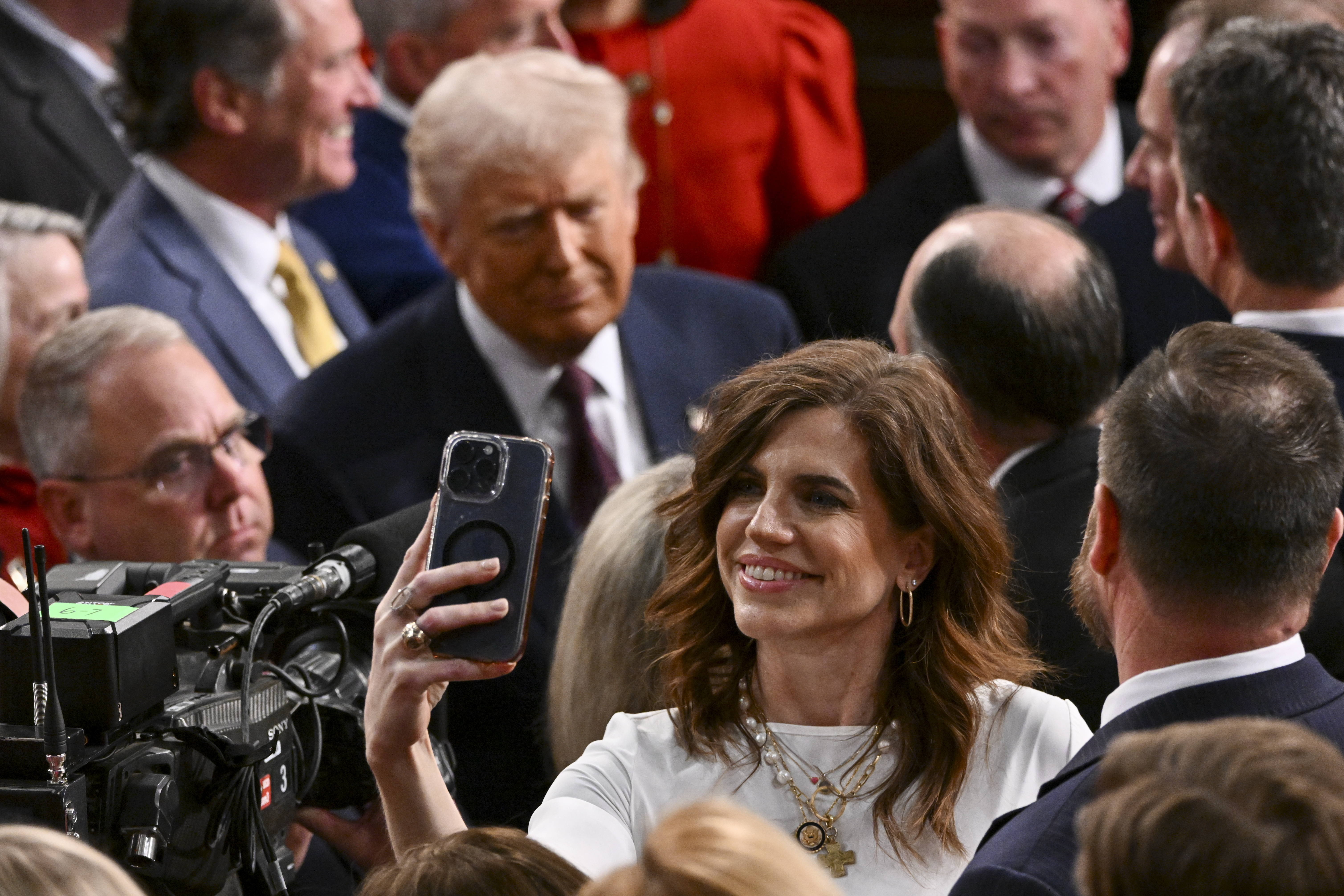
    Rep. Nancy Mace (R., S.C.) takes a selfie as President Donald Trump leaves the chamber after addressing a joint session of Congress on March 4, 2025. Ricky Carioti

    Her relationship with President Donald Trump was similarly mercurial. She distanced herself from him soon after taking office, survived his attempt to oust her in 2022, rebranded herself as a MAGA warrior, defied Trump on the Epstein files and sought his endorsement in the governor’s race, only to watch him back a rival. No high-profile Republican endorsed her campaign.

    The spectacle of Mace’s transformation often unfolded on the cameras she gravitated toward in television interviews, selfie videos posted on social media and dramatic exchanges in committee hearings. Her public appearances grew increasingly combative and bizarre.

    “The only thing I hope is she gets the help she needs,” former Republican House speaker Kevin McCarthy told the Washington Post, saying he watched as her “political and personal life unraveled” in recent years.

    Mace, whom McCarthy had helped to unseat Democrat Joe Cunningham in 2020, cast an unexpected vote for his ouster as speaker in 2023, joining right-wing hard-liners and Democrats as she abruptly turned on him. She later walked around the Capitol wearing a large scarlet “A” on her shirt, because she said she had been “demonized” for that vote.

    “I helped her win. But I just watched her change along the way,” said McCarthy, who supported an unsuccessful primary challenge to Mace in 2024. “Some people warned when she was an early candidate, ‘Watch out, she’s not all there.’ I didn’t.”

    Former staff said Mace embraced stories about her being a “caucus of one” on a “lonely political island.”

    Mace and her campaign did not return requests for comment. She previously accused her former staff of mismanaging money and spying on her, and has dismissed criticism that she is overly focused on getting attention.

    “I will always be grateful for the people of South Carolina who trusted me, fought with me, and refused to look the other way,” Mace posted on social media after her loss Tuesday evening. “This isn’t the end of the fight. It’s just the end of this chapter.”

    Public outbursts

    Mace raised eyebrows in Washington year after year for drawing attention to herself, such as wearing an arm sling after accusing a foster care activist of “trans violence” during a handshake — having him arrested on assault charges only for prosecutors to drop the case. Her behavior in the months preceding her gubernatorial run became even more confounding to those observing it.

    In the throes of her split from her ex-fiancé, Mace in February 2025 spoke on the House floor for nearly an hour, accusing him and three other men of rape and other sex crimes, which the men denied. During a congressional hearing on surveillance months later, she showed a “naked silhouette” photo of herself, saying it was taken without her consent.

    In April 2025, Mace posted a video she took at a makeup store where she repeatedly cursed out a constituent who asked when she planned to host her next town hall.

    A week and a half later, Mace confronted her nephew John Mace McGrath as he sat next to local elected officials during Vice President JD Vance‘s visit to a steel plant in Huger, S.C. She stood over him and pointed her finger in his face as she upbraided him for accepting an endorsement in a local party chairman race from state Attorney General Alan Wilson, whom she had also criticized during her lengthy House floor speech and would later run against her for governor.

    “You f— up taking Alan’s endorsement, and you’re going to pay for that someday,” Mace said to the 26-year-old, according to two people who witnessed the May 1, 2025, scene, which has not previously been reported. The people spoke on the condition of anonymity, saying they did not want to attract any additional wrath from Mace.

    After conceding Tuesday, Mace endorsed Wilson in the gubernatorial runoff, despite repeatedly accusing him in the last year of being a “pedophile protector.”

    The highest-profile eruption took place in October, when officials at Charleston airport reported that Mace had berated airport staff and police after a misunderstanding about her security escort preferences. A police report of the encounter described an expletive-laced tirade where she called airport police “f— incompetent.”

    Mace is seen speaking with an officer during the confrontation at the Charleston International Airport.

    Dozens of local elected officials in her district signed a letter condemning her behavior, and the state’s Republican senators, Tim Scott and Lindsey Graham, criticized her actions. Mace refused to apologize, threatening to sue the airport for defamation and claiming the incident report had been “fabricated.”

    “People can say she’s crazy, but they’re still talking about her,” said Austin McCubbin, Mace’s former political adviser who resigned in December after disagreements about campaign decisions and compensation. “It’s kind of one of those things where just so long as you spell my name correctly, that’s all that matters.”

    Shifting political persona

    Days after the former state lawmaker entered Congress, Mace criticized Trump in the aftermath of the Jan. 6, 2021, attack on the Capitol, saying she did not believe he had a future in the Republican Party.

    As the insurrection unfolded, Mace told aides she wanted to go out and get punched by rioters “so she could get on TV,” Natalie Johnson, her communications director at the time, told the Post. But Mace months later decided to pare back criticisms of Trump after a poll she commissioned showed they were unpopular in her district, Johnson said.

    “I don’t know of anybody who puts their finger in the wind and tries to see which way it’s blowing more than Nancy Mace,” said Justin Evans, a longtime GOP political operative in the state who supported her state House run and now works for Pam Evette, the Trump-endorsed candidate who placed first in Tuesday’s gubernatorial primary. “She was a good-looking, talented communicator, had the social media following, had all the ingredients that a successful candidate should have. It’s just her moral compass was completely missing.”
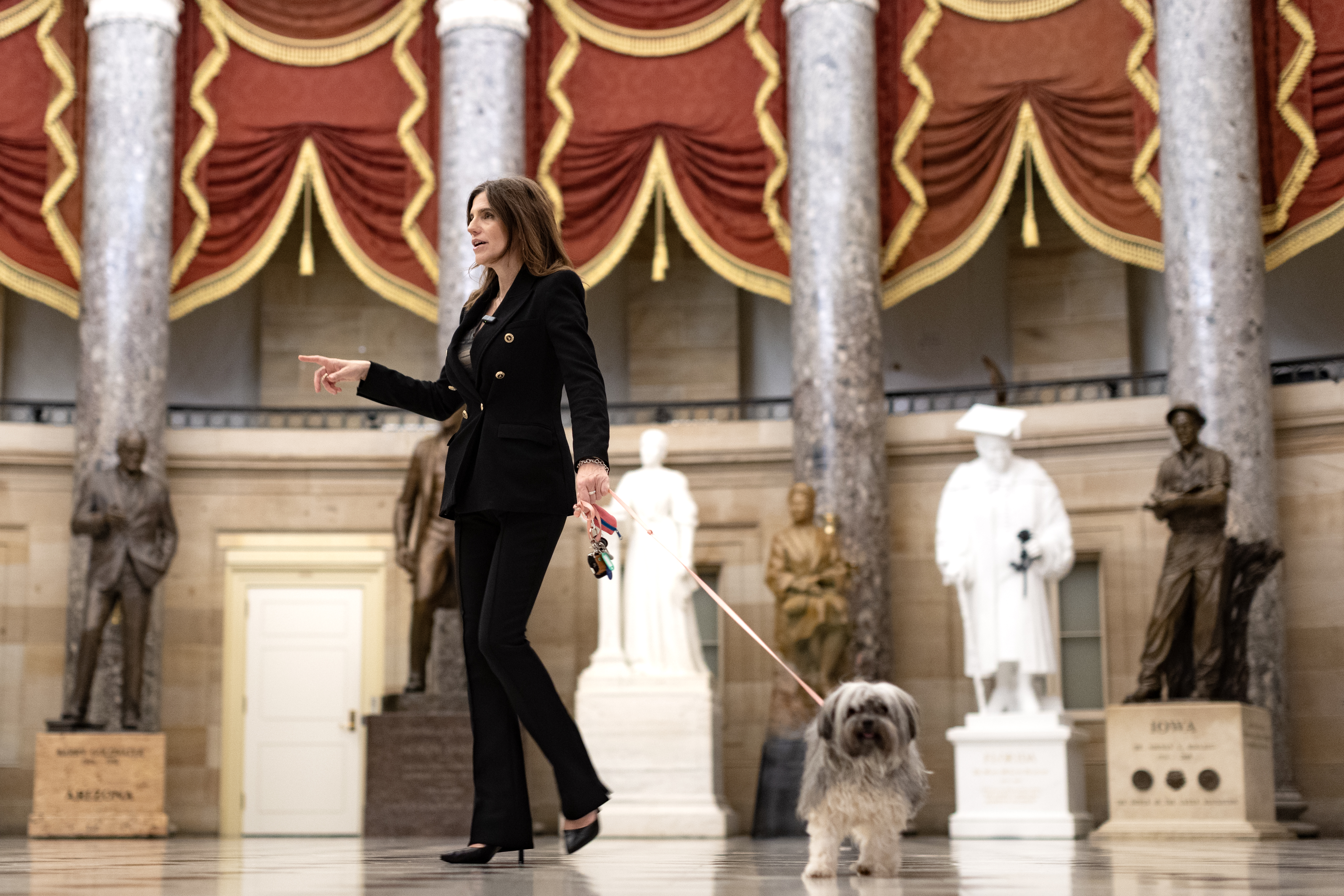
    Mace walks with a dog through Statuary Hall near the House chamber on July 5. Tom Brenner

    Soon after entering office, Mace had shown herself to be a powerful force in politics who told a compelling backstory. A rape survivor at 16 and high school dropout who once worked as a Waffle House waitress, she became the first woman to graduate from The Citadel.

    CJ Westfall, chairman of the Dorchester County Republican Party who worked on Mace’s 2022 general election campaign, described her as inspiring and hardworking. He credited her win that year to Republicans believing she was an “independent voice,” despite Trump’s opposition.

    Since then, Westfall said her penchant for drama became clear and described her as a “crybully” who liked to provoke controversy and then “play the victim” when someone pushed back.

    After her defeat, Mace said she challenged the powerful even if it cost her politically.

    “Every vote I cast, every hearing I called, every fight I picked — it was always for you,” she wrote in a social media post. “I’ve seen what happens when good people stay quiet. And I’ve seen what happens when they don’t. I would choose the latter every single time.”

    Strained alliances in Congress

    Soon after Mace’s vote to oust McCarthy in fall 2023, Rep. Don Bacon (R., Neb.) greeted several of Mace’s congressional staff eating lunch at the Rayburn cafeteria and asked who they worked for.

    “I used to really like her,” Bacon replied. “Not anymore. We can’t work with her.”

    He told the Post he got along with her during her early time in the House, but her vote to push the speaker out “was a tough pill for many of us to swallow.”

    At times, Mace allied with liberal Democrats including Reps. Ro Khanna of California and Jamie Raskin of Maryland.

    “She would interact with Democrats in a way very few Republicans do, because she has sided with victims of sexual violence and sexual harassment,” Raskin said. “A lot of the people on the GOP side want to quickly brush those subjects under the rug, and Nancy, in her more freethinking, uninhibited moments, is willing to side with Democrats.”

    Mace and Khanna, who had founded a joint caucus focusing on affordable child care, largely stopped their joint appearances after Mace fixated on transgender people. Mace introduced a resolution to ban transgender women from using women’s restrooms in the Capitol, in response to the 2024 election of Rep. Sarah McBride (D., Del.) as the first openly transgender member.

    Mace, however, signed on to a successful petition last year by Khanna and Rep. Thomas Massie (R., Ky.) to release federal investigation files related to convicted sex offender Jeffrey Epstein.

    She said she wanted justice for Epstein’s victims, even though Trump initially opposed the release of the files. But Mace’s decision surprised her own dwindling team of aides because she was bent on getting the president’s endorsement for her gubernatorial run.

    Wooing Trump

    A few days before Mace announced her run for governor in August 2025, she tried calling Trump to give him a heads-up. She left a voicemail for the president, who later texted her with well wishes, according to a person familiar with their communication who spoke on the condition of anonymity to discuss private conversations. But Mace panicked when Trump also passed along two polls that showed her struggling in a hypothetical race. Mace commissioned her own poll days later that showed her leading the field and with the highest name recognition.

    Mace sent the poll to the president, who then posted it to Truth Social that month without comment — which political operatives said lent credibility to her nascent campaign.

    In the final days of the race, Mace repeatedly said her support for releasing the Epstein files was the reason Trump did not endorse her. The president did not publicly criticize her for supporting the effort.

    Mace’s congressional office frequently shed staff, some of whom she forced out, while others resigned citing difficult work conditions. At one point, in a three-month span after her McCarthy vote, her entire nine-member staff had turned over.
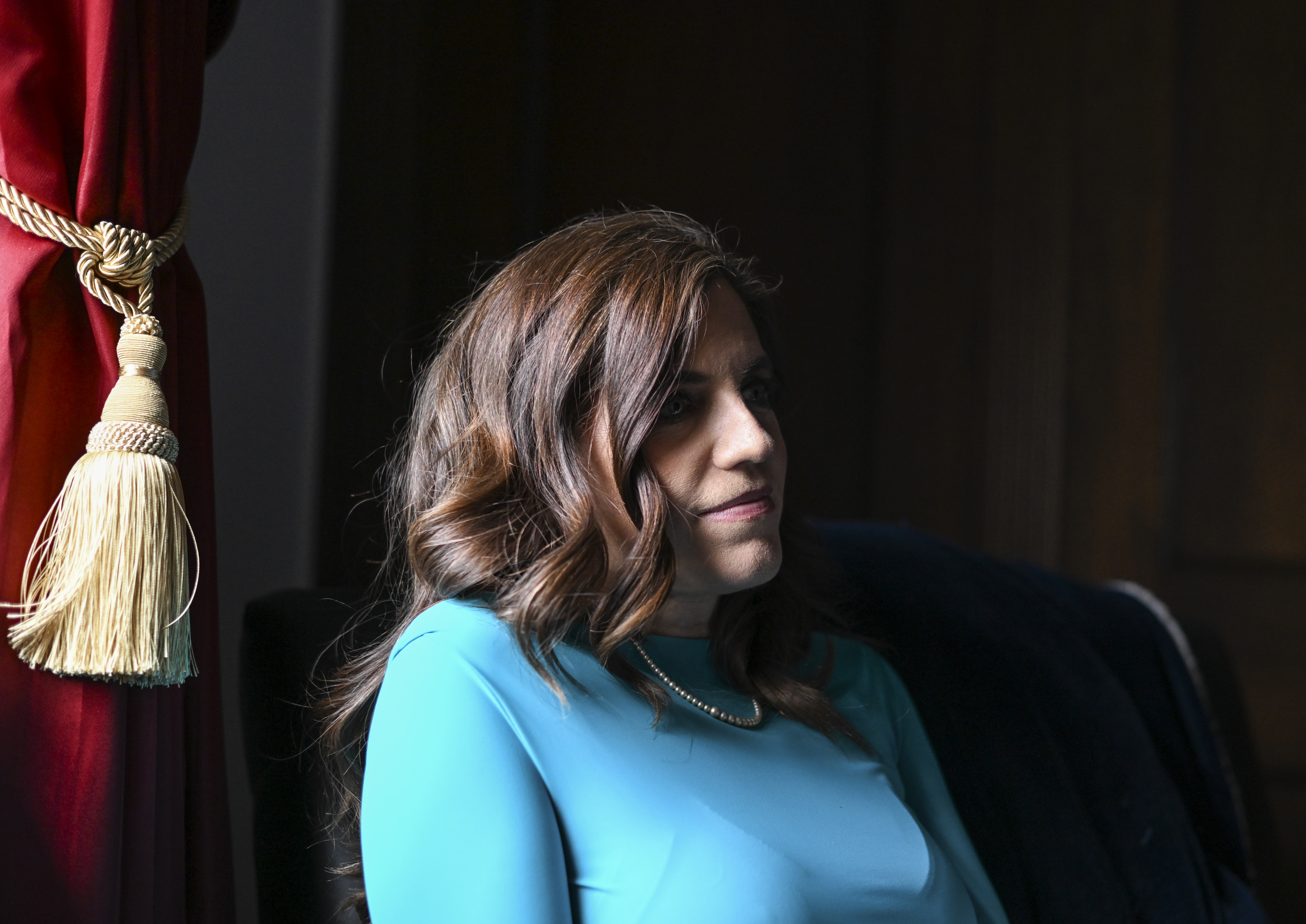
    Mace during a staff meeting at her congressional office on April 25, 2023.Ricky Carioti

    Mace also struggled to maintain political allies. She spoke of her love for former governor Nikki Haley, who backed Mace in the difficult 2022 reelection primary. But Mace went silent the next year when Haley sought her endorsement in her 2024 presidential run, and proceeded to blast Haley while campaigning for Trump.

    “I don’t think Nancy Mace has ever seen a bridge in her life that she hasn’t burned down,” said Will Hampson, one of her former communications directors.

    Hampson said his former boss was self aware that she was on an island. But he’s not sure if she recognizes she put herself there.

    “She was her own best weapon,” he said, “and own worst enemy.”
  • The mysterious fight that partially blinded America’s ‘most strenuous’ president

    The mysterious fight that partially blinded America’s ‘most strenuous’ president

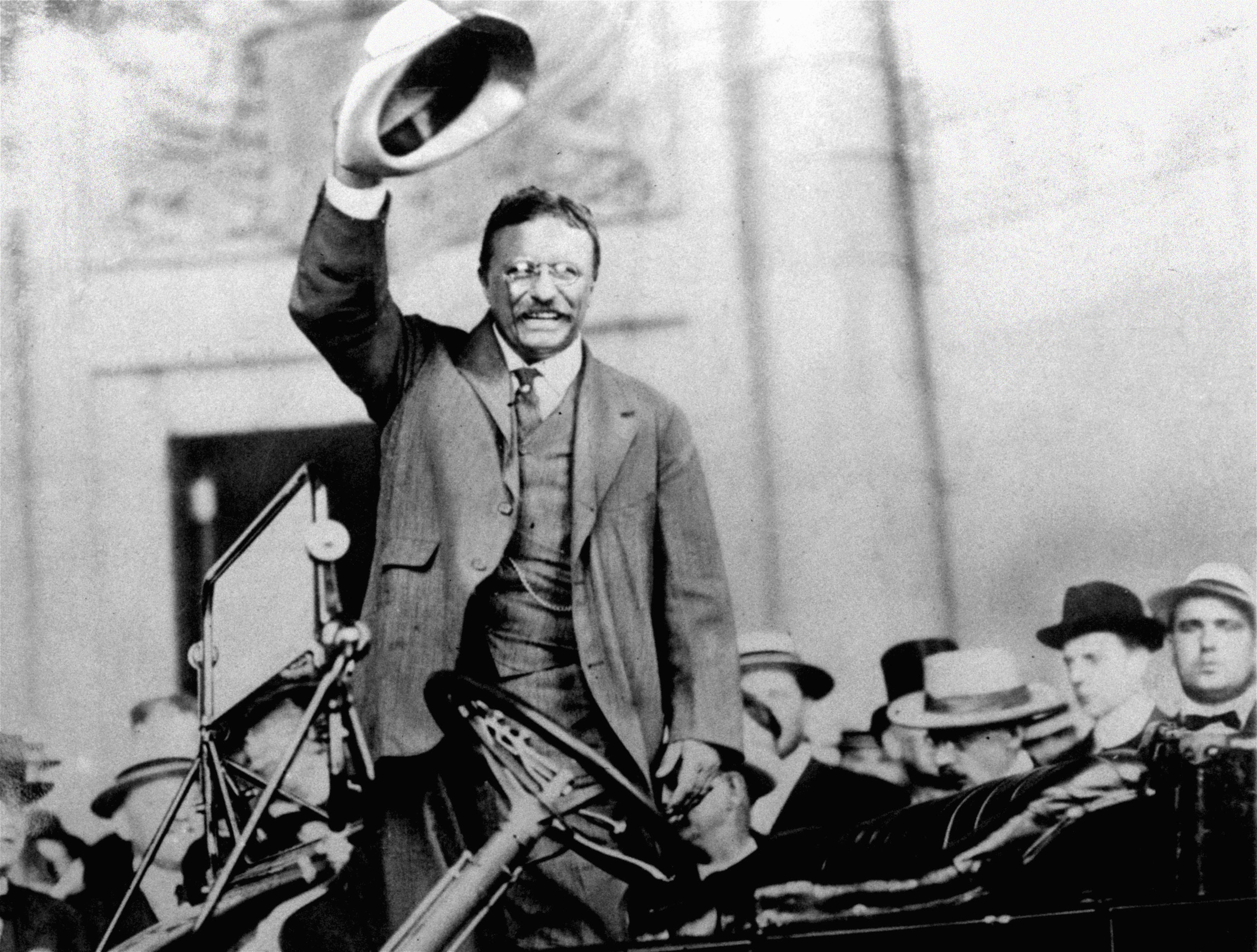
    For most of Theodore Roosevelt’s presidency, he kept a secret. He was partially blind in his left eye.

    It was only when he was out of office that he revealed the injury and how it came about: During a boxing match. In the White House.

    Today, the White House plans to host UFC Freedom 250, as part of the celebrations honoring the semiquincentennial anniversary of American independence. Fourteen fighters will pound each other in seven separate bouts in a 5,000-seat arena that has been erected on the South Lawn.

    Democratic lawmakers have widely criticized the planned event. A new lawsuit filed last weekend by the anti-corruption group Public Integrity Project on behalf of two plaintiffs is attempting to stop the event, claiming the plan is “deeply corrupt” and enriches President Donald Trump’s allies.

    It will not be the first time the White House has served as a fighting arena. Last time, it was set against the backdrop of a presidency also marked by controversy over razing sections of the executive mansion.

    During his roughly 7½ years in office, Roosevelt frequently invited aides, friends, and even professional athletes to the executive mansion to engage in all manner of sportsmanlike battery and barbarity. He was also frequently injured during these sporting matches.

    But the damage to his left eye is believed to have occurred while boxing one of his military aides.

    According to a 96-year-old letter sent from renowned ophthalmologist William H. Wilmer to Roosevelt’s biographer, Henry F. Pringle, Roosevelt was seen by Wilmer for the eye injury on Dec. 12, 1904. A transcript of Wilmer’s original letter, found in a Harvard University archive, details the approximate timing and extent of Roosevelt’s injury.

    “At that time the President gave a history of having noticed for a while a dimness before the left eye after wrestling, and the further history that about two weeks ago, he was struck in the left eye while boxing,” the letter reads. “Since that time, he had noticed black spots before the eye. At first it seemed rather central and blurred the vision, but, now, it seems to have moved about two inches to the left … Examination at the time showed a few spots of hemorrhage in the retina of the left eye and some floating opacities in the vitreous.”

    Roosevelt was told to take a break from “his very vigorous exercises” or else he might completely lose vision in the eye, according to the letter. The president protested, however, because he had already scheduled a jiu-jitsu match for 8 a.m., boxing at noon, a sport called “singlestick” involving wooden swords after that, then a long walk or horse ride in the afternoon. The doctor ultimately prevailed, and Roosevelt took his rest.

    While Wilmer claims that the hemorrhage in Roosevelt’s eye healed, he later developed a cataract “reducing vision in the left eye to perception of light” — perhaps a result of the injury, Wilmer wrote.

    Only a handful of people learned about Roosevelt’s medical condition at the time. The truth did not become public knowledge until October of 1917, after Roosevelt quietly checked himself in at a health camp in Stamford, Conn.

    By that point it had been over eight years since the end of his presidency, but it wasn’t long before reporters discovered him. “The colonel is what is technically described as a ‘patient,’” reported the Springfield Daily News. “There is absolutely nothing the matter with him, except the extent of his girth.” In more polite terms, Roosevelt was there to lose some weight.

    During his two terms as commander in chief, Roosevelt had dazzled the country with his relentless exercise regime. But at 58, after years of political setbacks, America’s “most strenuous citizen” — as he was playfully called in the press — was feeling depleted and bloated.

    Historian Michael Cullinane, co-director of the Theodore Roosevelt Center, said that Roosevelt was stuck at home on the political sidelines during World War I. “He’s writing ferociously for journals and magazines about the war, and he’s very sedentary,” Cullinane said. “And so, what he realizes is that, if he doesn’t look after himself, he’s liable to have a heart attack or some weight-related illness.”

    The health camp offered a rapid weight-loss program. And by the end, Roosevelt had lost 14 pounds, slimming down to 215. He gathered a group of reporters to witness the results. It was there, reminiscing about the glory years of his exercise routine, that he revealed the bombshell.

    “The last boxing I did was in Washington. I boxed with my aides most of the time, but one day a young captain of artillery came along and broke some blood vessels in my left eye. I have never been able to see out of it since, although I don’t believe many people knew it.”

    When pressed for more details by reporters, Roosevelt refused. “There is to be nothing more to say about the matter,” he said.

    The mystery captivated newspapers. “Who hit the Colonel in the eye?” asked the Philadelphia Inquirer. There was no shortage of suspects. Roosevelt made it a regular habit of boxing with all sorts of White House visitors during his presidency.

    “Every day, he built into his routine, some amount of exercise. And the people who exercise with him wound up being the ones who then had access to power,” Cullinane said.

    Reporters scrambled to discover the identity of “the young captain of artillery” who had delivered the fateful blow. Within days they had uncovered their suspect: Col. Dan T. Moore, a cousin of the first lady Edith Roosevelt.

    “I was one of the military aides at the White House in 1904 and 1905,” Moore confessed to the Evening Star. “The colonel and I boxed four or five times a week, I guess.”

    Roosevelt’s injury had been such a secret, it had even been kept from Moore.

    “I never knew the colonel had lost the sight of one eye in a glove bout until I read that interview the other day,” Moore told the Evening Star. “And I certainly do hate to think I was responsible for it.”

    Cullinane said it was kept secret to protect Roosevelt’s modesty. “I mean, health issues, it’s no different now as then,” he said.

    Roosevelt didn’t seem to have any hard feelings, which Cullinane credits to his sportsmanship. But this also wasn’t a fluke. Roosevelt was constantly getting himself injured as president. According to newspapers, he had almost had the same eye poked out the year prior, in fact, while fencing at the White House.

    The rapier of his sparing partner, Gen. Leonard Wood, thrust through Roosevelt’s mask, narrowly missing his eye and leaving a serious bruise on his forehead. Then, just a week later, Roosevelt’s right wrist was severely injured in a singlestick match, again against Wood. “Such a collection of scars as that borne by President Roosevelt was never owned by an American Chief Executive before. He is the ‘most wounded’ President of the United States,” the Boston Post declared.

    One mystery surrounding the injury to Roosevelt’s eye is pinpointing where the match occurred on the White House grounds. While newspaper accounts refer to a “gymnasium,” the White House Historical Association, which tracks these sorts of things, has no record of such a designated facility existing in 1904.

    The White House underwent a massive renovation during Roosevelt’s tenure. After a century of different presidents and first ladies redecorating random rooms, the Roosevelts decided the whole house needed an overhaul.

    “The decor was like a mix of like a Gilded Age, Victorian hotel, and steamboat gothic,” said Matthew Costello, chief education officer at the White House Historical Association. “When you see the photographs post-1902 renovation, I would argue, you see a White House that is much more recognizable to us today.”

    Both the West Wing and East Wing were built during Roosevelt’s renovation, and many of the mansion’s iconic spaces were transformed. Not everyone was happy, though.

    Among the most unpopular parts in the renovation plan: tearing down the enormous 45-year-old greenhouses on the west side of the mansion to make room for the new West Wing and turning the East Room into a state dining room, which would also function as a “handsome ballroom,” according to the Marion Star.

    “Criticism of all these alterations are frequent and various,” wrote the Chattanooga News. “Many shake their heads, as though something were ‘rotten in the state,’ and mournfully talk of the desecration of the old mansion where Jefferson, Madison … and all the other noble executive chiefs were wont to keep ward over the nation’s destinies as they sat in stately communion.”

    But Roosevelt’s “desecration” of the White House didn’t stop there. The venerated Cabinet Room, where for decades former presidents like Ulysses S. Grant had consulted with their top advisers, was rumored to have been converted into Roosevelt’s “department of physical culture.”

    After the renovations were complete, Roosevelt was leading a group of guests on a tour of the second floor, taking pains to point out everything he had kept intact, when they arrived at the old Cabinet Room. “When the door was opened, ‘Presto change!’” the St. Louis Globe-Democrat reported: “All the guests rubbed their eyes. Before them were floor mats, shields, boxing gloves, wire masks, fencing gloves, padded vests, swords and foils, single sticks and other athletic paraphernalia.”

    An unnamed White House official dismissed the rumor in the Times Herald. “It all depends on what you think is necessary to make up a gymnasium,” the official said. “If you require trapezes, and parallel bars, and flying rings, and all sorts of apparatus for exercising the muscles you would never be satisfied with the old Cabinet room for that purpose; for those things are not there. But if the President wants to singlestick there, I suppose he can find room enough, just as in any other of the rooms in the house.”

    He might have injured his eye in that room — or not. According to historical accounts, it would appear Roosevelt was fighting all over the White House. There are stories of him wrestling and fencing in the basement, practicing jiu-jitsu in the library and boxing in the attic. The whole house served as his gymnasium.

    Last month, the White House began erecting the UFC “octagon” fighting arena on the South Lawn.

    Every president makes the White House their own to some extent. While the White House has long been a sacred symbol of American democracy, it is also a private home, and the history of the mansion is filled with these personal touches from past presidents, some more controversial than others, Costello said.

    “There’s been tree houses, jungle gyms, swing sets, victory gardens, tennis courts, basketball courts, swimming pools, putting greens, Hoover ball — that was a big popular game during Herbert Hoover’s presidency,” he said. “But to the best of my knowledge, no octagons.”

  • Can NASA really land astronauts on the moon by 2028?

    Can NASA really land astronauts on the moon by 2028?

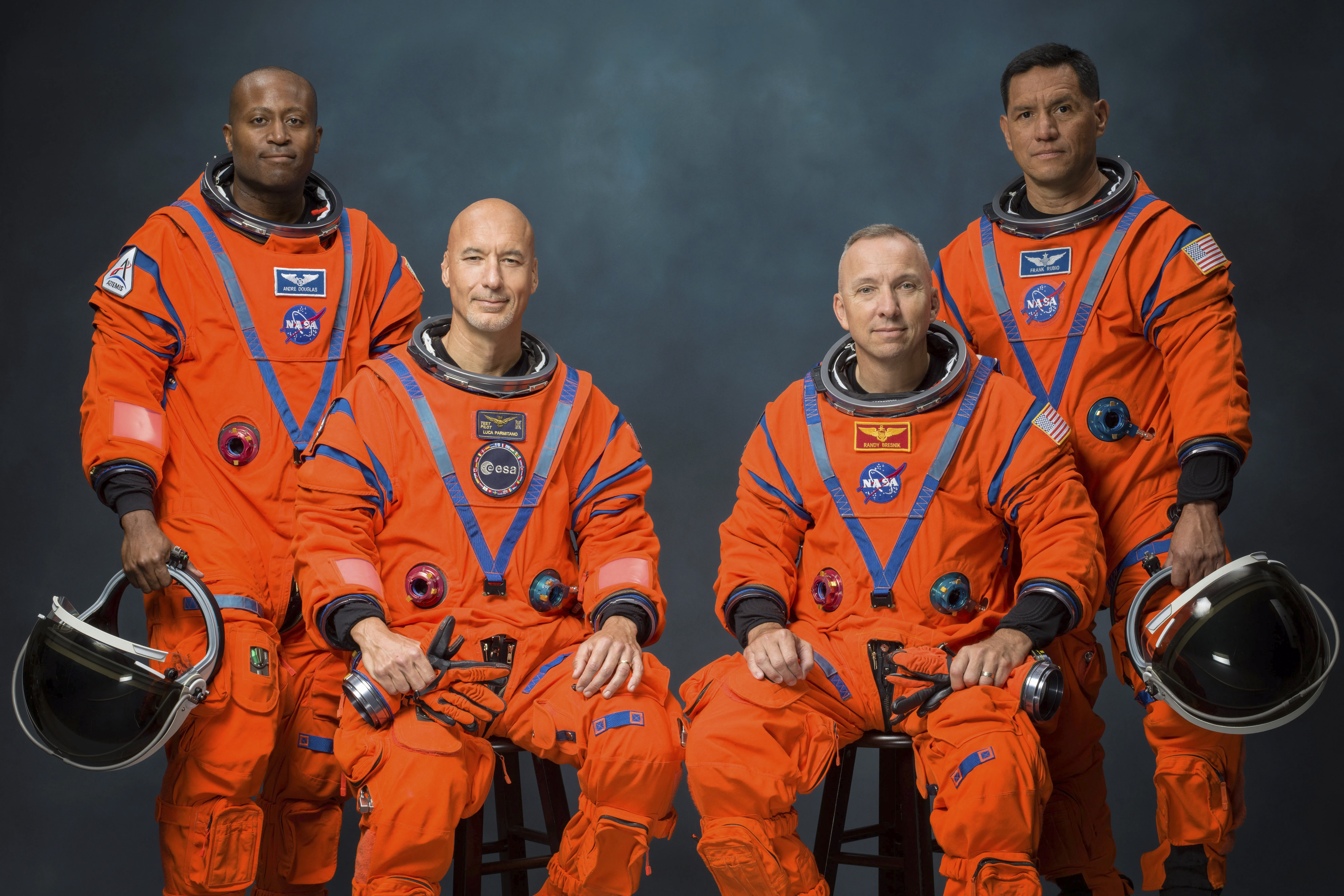
    NASA hopes 2028 will be the year for a crewed moon landing, an ambition that mirrors President Donald Trump’s goal to return humanity to the lunar surface before the end of his second term. Meeting that timeline depends on the success of the Artemis III mission, which is supposed to launch in mid-2027.

    During the announcement Tuesday of the Artemis III astronauts, who will fly in low-Earth orbit as a test mission for NASA’s broader moon program, the agency focused on ramping up excitement for the upcoming mission. But little was offered about whether NASA could still meet its moon landing goal.

    In a media briefing directly following the event, however, Jared Isaacman, the NASA administrator, shared that the agency is “extremely confident” in meeting that goal and that it would be transparent with any updates.

    “We’re going to return to the moon before the end of 2028,” Isaacman said. “Just watch along.”

    Experts were hopeful that NASA could still make it back to the moon, but also expressed skepticism about the feasibility of doing so by 2028. “I think me and most people would say it’s not a realistic date,” said Casey Dreier, chief of space policy at the Planetary Society.

    In April, NASA proved with its Artemis II mission that it could use its giant Space Launch System rocket, coupled with the Orion spacecraft, to send humans to lunar orbit. But NASA is relying on two private companies, SpaceX and Blue Origin, to provide landing vehicles for future missions that will transfer astronauts from orbit to the moon’s surface, and then back.

    According to Dreier, this will let NASA go to the moon at a much lower cost than during the Apollo era — but also means that the agency’s lunar aspirations are largely at the whims of two billionaires, Elon Musk and Jeff Bezos.

    “That’s a lot of power and hope that you place in just two people to provide a capability that is actually essential to a national goal,” he said. “NASA is a passive witness to its fate.”

    Neither SpaceX nor Blue Origin have completed development of a lunar lander. Nor are the rockets that are supposed to get those landers to the moon ready to go: SpaceX’s Starship has suffered repeated failures during test flights, and Blue Origin’s New Glenn exploded and damaged the company’s only launchpad in May.

    Those circumstances could very well delay NASA’s goal of a lunar landing in 2028. External factors, like bad weather or government shutdowns, could also affect that timeline.

    “It is unrealistic,” Phil McAlister, the former director of NASA’s commercial space division, wrote in an email. “At the same time, I’m not going to say it is impossible.”

    Clayton Swope, the deputy director of the Aerospace Security Project at the Center for Strategic and International Studies in Washington, echoed that sentiment. “It’s looking increasingly likely that the answer is no,” he said, referring to the possibility of a 2028 moon landing. “But there is still a chance for a Hail Mary play.”

    Landing on the moon has always been difficult, even for uncrewed missions. In 2023, Russia attempted its first lunar landing attempt since the 1970s, but the spacecraft crashed into the surface. A Japanese spacecraft carrying two rovers landed upside down on the moon in 2024. Intuitive Machines, a private company based in Houston, landed a vehicle that tipped on its side last year.

    China has been particularly successful with moon landings. It deployed rovers on the lunar surface in 2013 and 2019, and returned samples of moon dust from the near side in 2020 and the far side in 2024. The nation plans to land humans on the moon by 2030.

    According to Swope, beating China to the moon is one reason for NASA to pursue a 2028 lunar landing; economic growth and commercial development are others.

    “Yet space remains more than just that,” he said, adding that a sustained lunar presence is a step toward building a better future for generations to come. “We go to the moon, and then beyond, as part of the journey to realize that vision.”

    This article originally appeared in the New York Times.

  • As war reshaped the World Cup, Iran’s team found an unlikely home in Mexico

    As war reshaped the World Cup, Iran’s team found an unlikely home in Mexico

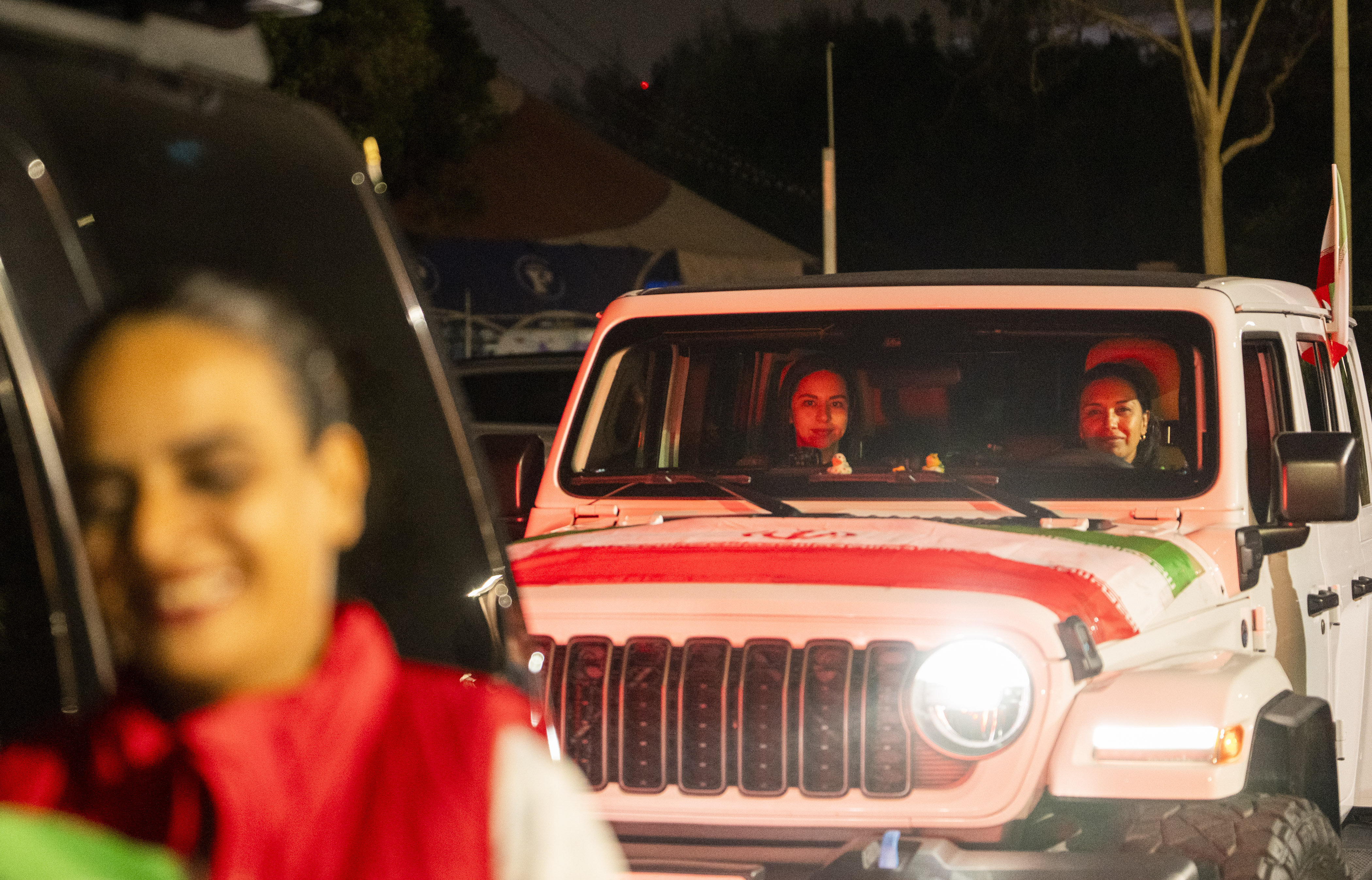
    TIJUANA, Mexico — The three SUVs pulled into the gas station parking lot, one after the other, Iranian flags taped onto the hoods and fluttering from the windows.

    It was barely 4 a.m. The city’s nightclubs were closing, and the streets were dark. But this caravan had hatched a plan to stake out a national soccer team they never imagined they would see in person, and especially not here. So 4 a.m. at the gas station it was.

    Like so many in Tijuana, the Iranian national soccer team was never supposed to end up here. They originally had planned to spend the month across the border, in Tucson, preparing to play their World Cup matches in Los Angeles and Seattle.

    But for the first time in World Cup history, a host country is at war with one of the tournament’s contenders. FIFA, global soccer’s governing body, with tensions high and uncertainty about whether the team would even be allowed into the U.S., sought an alternative.

    Co-host Mexico agreed to house them, with President Claudia Sheinbaum telling reporters that FIFA had asked for help because the “United States does not want the Iranian team staying overnight in the country.” Organizers opted for Tijuana, a border city close enough to the U.S. matches, with a stadium where the team could practice and a local government eager to welcome them.

    The fans meet outside a convenience store at 4 a.m. in Tijuana. Stuart Palley

    Now Sadegh Galavi and his relatives were piled into these SUVs, hoping to welcome their national team to the city that adopted his family. They knew what the world thinks of Tijuana, the dangerous, gritty border city from the movies, a hub for drug smugglers, and a cheap destination for Americans seeking parties and sex.

    But they knew Tijuana as something different: a transient, multicultural city that embraces migrants and misfits, offering creole schools for Haitian children whose families are stranded there, and welcoming Sadegh and his wife four years ago when they knew no Spanish and not much more English.

    It was just the place for a global soccer tournament, they thought, an unlikely but ideal refuge for their home team.

    Sadegh and his friends spent the past two weeks working to convince the Iranian Embassy and team that Tijuana is safe. Now the team was minutes away from landing at Tijuana International Airport.

    He had slept barely an hour, anxiously tracking the team’s flight, worried he might miss his chance to greet them. The jerseys ordered on Amazon hadn’t arrived on time, but the Iranian Embassy sent replacements at the last minute. The ambassador asked Sadegh’s wife, Maryam Asidi, to take photos and videos of the fans at the airport, to show Iranians back home that Tijuana isn’t as dangerous as they might fear.

    “Hi brother, yes, please,” Sadegh said, answering his phone as he pulled into the airport. Military and police forces surrounded the airport’s entrances. The players must be landing soon, he thought.

    He pulled over, hopped out of the car and power-walked toward the flight arrivals, waving his small Iranian flag.

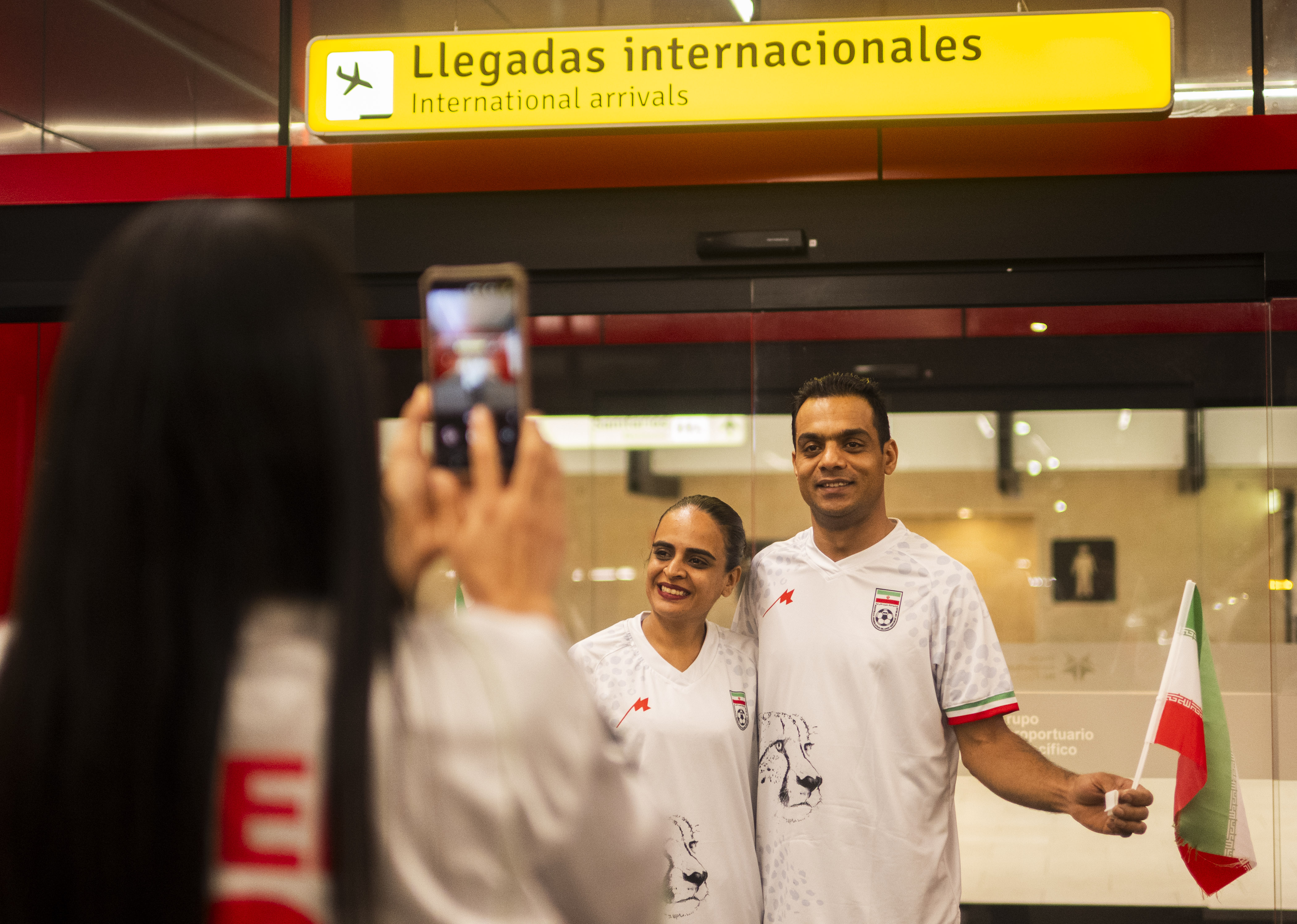
    Maryam and Sadegh Galavi pose at Tijuana International Airport on Sunday, while waiting for the arrival of the Iranian men’s soccer team. Stuart Palley

    A divisive team

    Known affectionately as Team Melli, Iran’s national team was near-universally loved in Iran for decades.

    “There was absolute mania around Team Melli,” said Arash Azizi, an Iranian author and historian who recalled celebrations breaking out in the streets in Iran after the team qualified for the 1998 World Cup. “It was one of the most trusted, beloved institutions in Iran across political differences,” he said.

    But after years of government mismanagement and repeated, brutal crackdowns on civilian protesters, many Iranians began to see even their national soccer team as an extension of the country’s leadership.

    During the 2022 World Cup, in Qatar, Iran was engulfed by nationwide “Women, Life, Freedom” protests, and its men’s national team faced criticism for not vocally supporting the protesters. The team stood silently during Iran’s national anthem, but some fans were unsatisfied. Social media videos showed Iranians honking horns and setting off fireworks after their team’s 1-0 loss to the United States, which they viewed as a symbolic defeat for the regime.

    Then, this March, the Iranian women’s team came under criticism from pro-government media outlets for standing silently during the national anthem, after reports that Iranian security forces had killed thousands of people in a violent January crackdown on protests.

    Australia granted six players and a staff member humanitarian visas, citing concerns they would be persecuted for failing to sing along. Eventually, five of the team members withdrew their claims and were welcomed back to Iran with an elaborate ceremony.

    Then came the war, which threw the men’s team’s season into chaos. Most play in domestic Iranian leagues whose games were suspended Feb. 28. A friendly, scheduled to be played in Arizona, was canceled. President Donald Trump, in a Truth Social post, said the Iranian team was “welcome” to play in the World Cup but advised them against it “for their own life and safety.”

    Just days before the team was scheduled to travel to Mexico, it still hadn’t received its U.S. visas. Earlier this month, the players learned their visas had been approved, but visa applications for 15 members of the team’s support staff had been rejected.

    In an interview with the Washington Post in Tijuana, Iran’s ambassador to Mexico said the 15 people included trainers, managers, a media director, a security leader and a delegate from the Foreign Ministry. He accused the United States of failing to follow FIFA rules.

    On Tuesday, Iran’s soccer federation said the ticket allocation for Iranian fans had been revoked, in an “unexpected move.” FIFA requires that participating federations be allocated 8% of ticket capacity, so fans can purchase entry to their team’s games.

    “From my perspective, politics needs to be separate from sports,” Abolfazl Pasandideh, the Iranian ambassador, said through his translator in Tijuana. “And if in this case they want to mix the two, it has to be the other way around. Politics must be at the service of sports.”

    But to some in Tijuana’s small Iranian community — the ambassador puts it at 20 or so, in a city of over 2 million people — politics are inherent to Iranian soccer.

    Iranian Pedram Maymand, a Tijuana resident, in the city’s center on Sunday.Stuart Palley

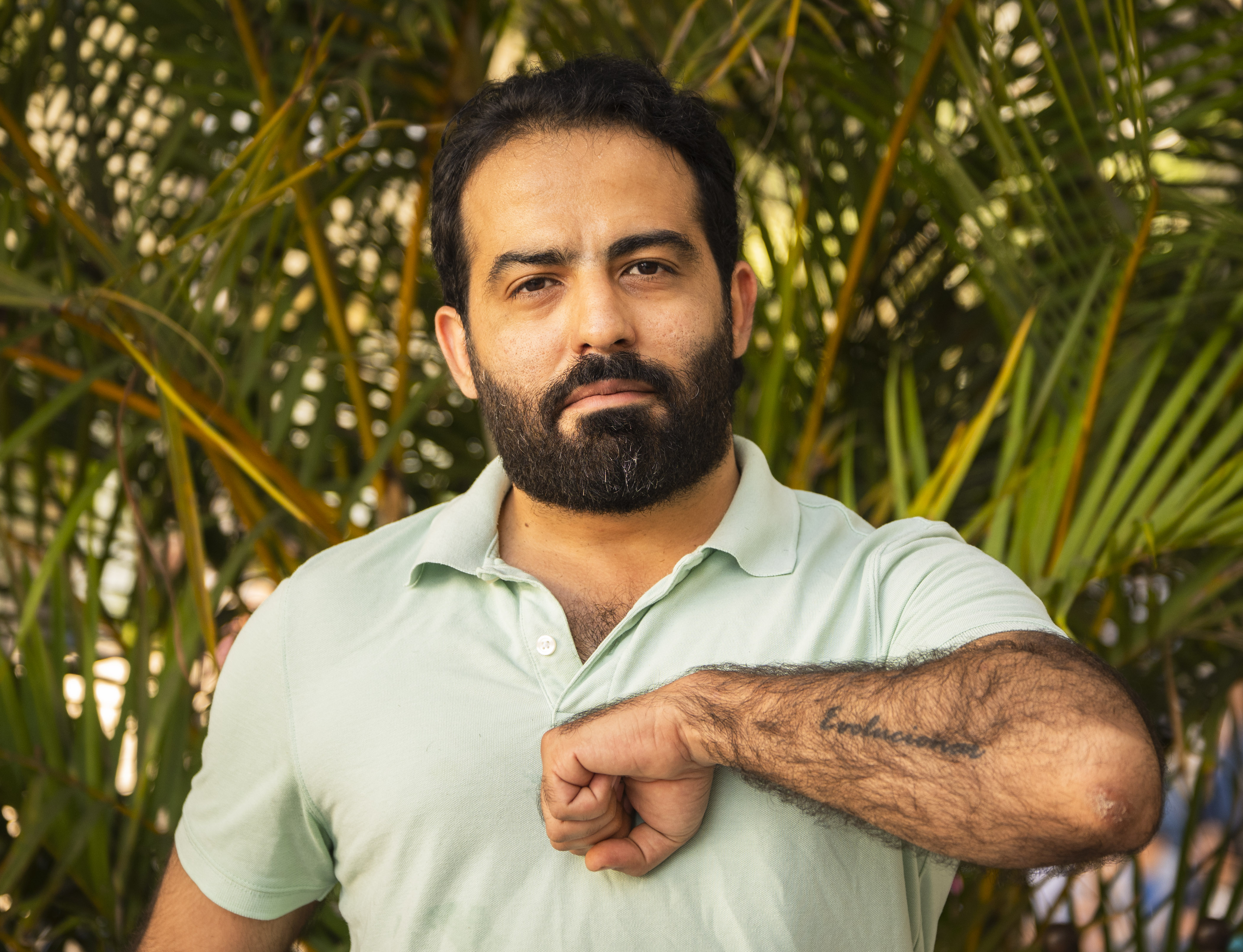
    “For the team to come here while the country is grieving … I don’t think that celebrating the football team right now is appropriate,” said Pedram Maymand, 31, who moved to Tijuana from Fresno, Calif., when his student visa expired after graduation about five years ago. “They’re representing the government that is killing our people.”

    If he could meet the players, he would want to send them a message, he said: “Have you any shame?”

    Sadegh understands the complex feelings. But to him, Team Melli is still a symbol of national pride, of a country he chose to leave but that remains a core part of who he is.

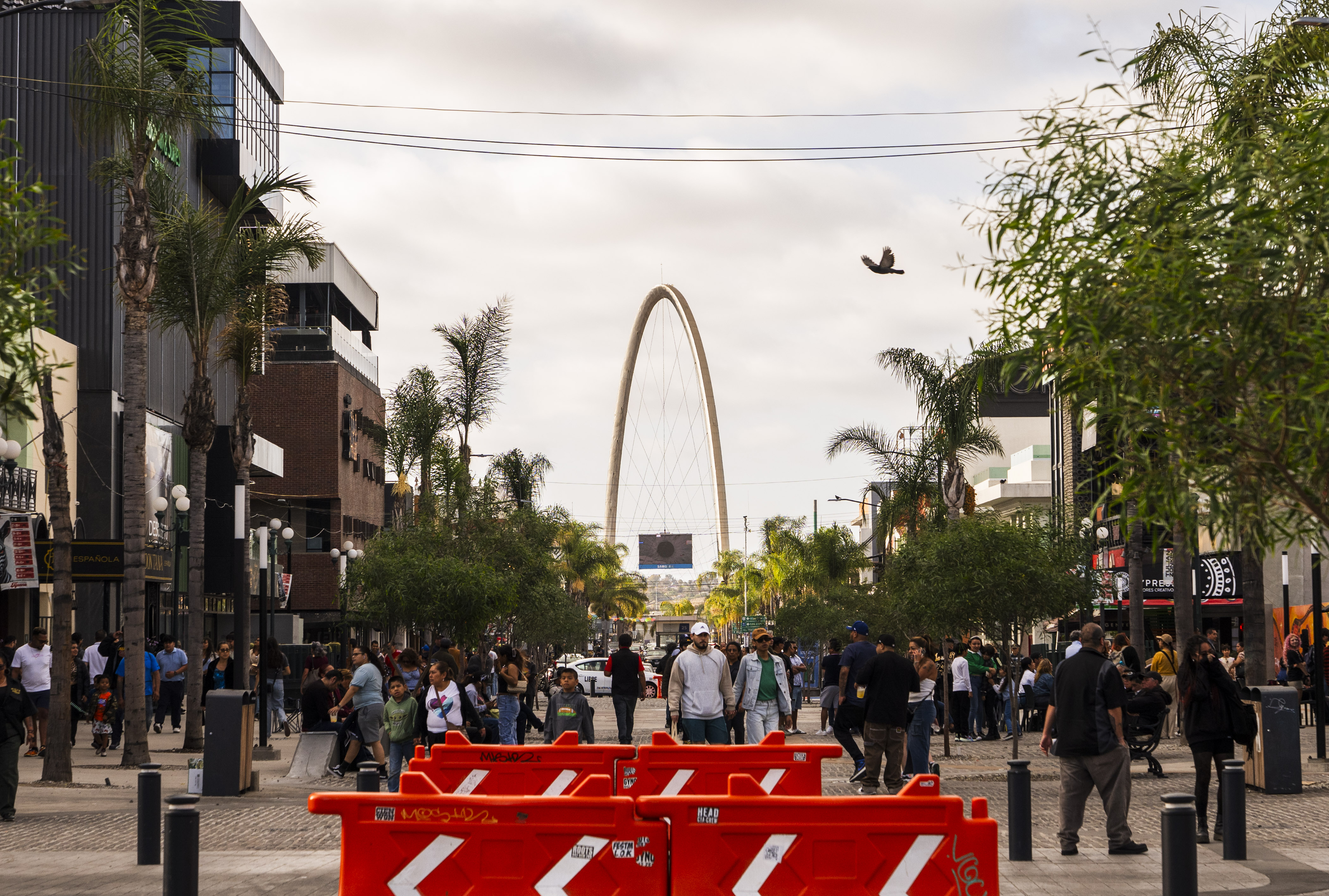
    People walk near the Tijuana Friendship Arch. Stuart Palley

    How Tijuana became home

    Sadegh’s family’s path to Tijuana, like the stories of many in this city, began with a romance across borders and cultures.

    About 50 years ago, Maryam said, her father visited San Diego as part of the Iranian military. He fell in love with a Mexican woman, who eventually gave birth to their son.

    Maryam grew up hearing about the half brother she had never met, who lived in the faraway city of Tijuana. But she didn’t believe the story until her half brother came to visit Iran for the first time when he was in his 20s, and she was 13.

    Many years later, after marrying Sadegh, Maryam decided to visit her brother’s city, not knowing anything about Tijuana’s reputation. Within two weeks, they had decided to stay.

    “Here, you never feel you are from another country,” Maryam said. “This country makes you feel good. … And as a woman, you are more free.”

    She shed her hijab, a head covering that is mandatory for women in Iran. Within weeks of leaving the Islamic republic, where drinking is banned, Sadegh tried mezcal for the first time. The music coursing through Tijuana’s streets on Friday and Saturday nights made Maryam feel alive.

    Maryam and Sedagh Galavi at their home in Tijuana. Stuart Palley

    They longed for their family and for home, but they soon began finding the other Iranians. One day Sadegh saw a car parked on the side of a road with vanity plates: “Tehran.” He left a note on the windshield with his phone number; the car‘s owner is now his friend and boss, at a car-restoration business in town.

    Sadegh and Maryam gave birth to a Mexican son, Sepehr, whose middle name, Mayahuel, was a reference to an Aztec god. “We want him to feel he’s from here,” Maryam said.

    When her mother died unexpectedly of a heart attack last year, Maryam fell into a deep depression and returned to Iran for a long visit with her 9-month-old son. The trip coincided with the U.S.-backed Israeli attacks on Iran, and she had to flee the country by land. As soon as she landed back in Mexico, she was moved by the strangers who offered to help carry her suitcase.

    She worried her grief would taint the city for her. Instead, Tijuana pulled her out of it. This was the place where she wanted to raise her son, she decided. The couple bought a house in Tijuana and began applying for Mexican citizenship.

    Then, with the World Cup on the horizon and the war raging, rumors started circulating: Their country’s team needed a home.

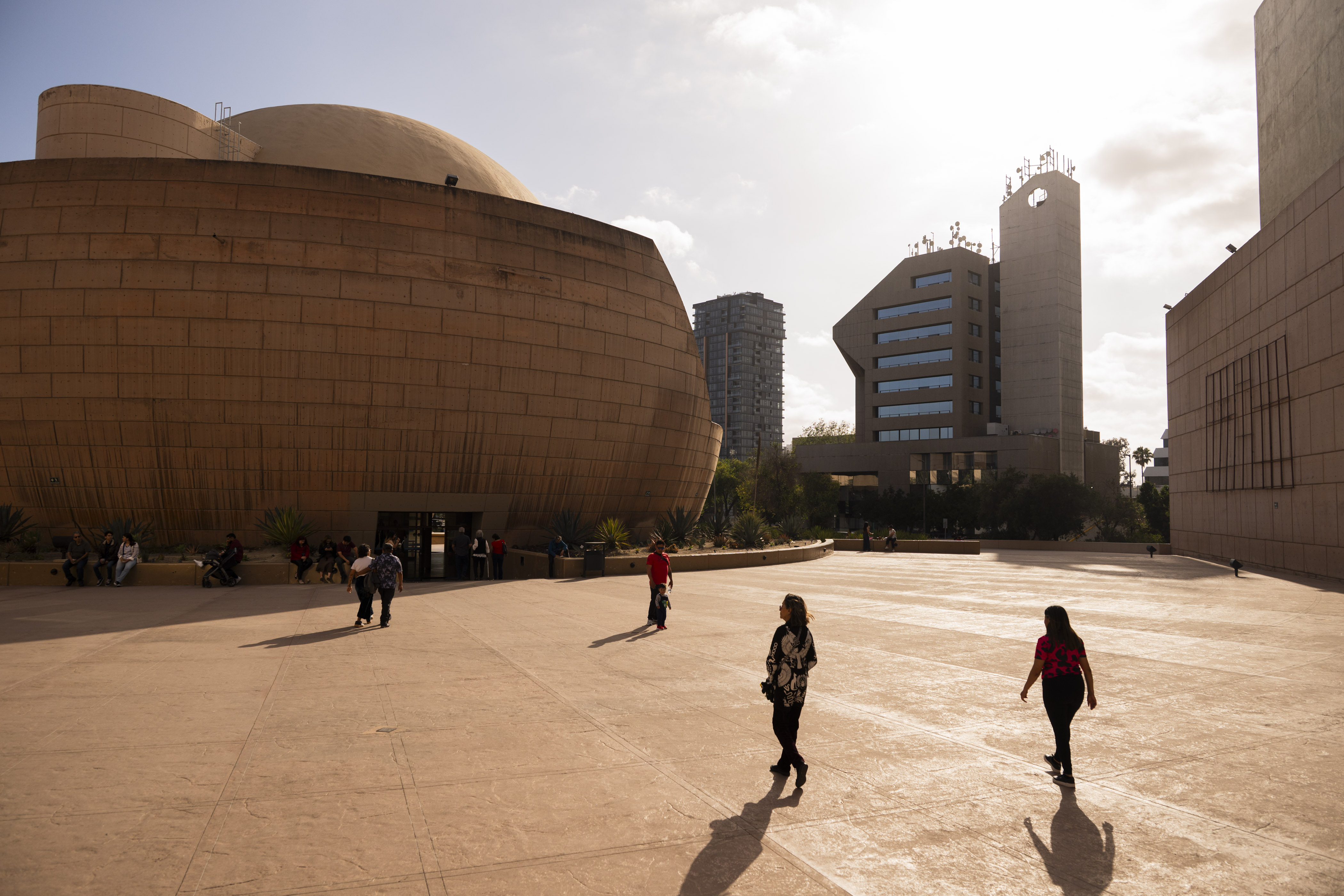
    People exit the Tijuana Cultural Center this week. Stuart Palley

    ‘I am in my country’

    Late last month, FIFA announced the team was heading to Tijuana.

    Sadegh could hardly believe it. When Iranian news outlets raised concerns about security, he began messaging the players directly on Instagram to tell them about the city he loves and assure them they would be safe. He knew he would never get a response but kept typing anyway.

    His boss and friend, Dara Makoipour, met with the Iranian ambassador and showed him around the city — to the stadium, to the restaurant known as the origin of the Caesar salad. Local tourism and Chamber of Commerce officials were eager to use this as a chance to change Tijuana’s reputation and put it on a global stage.

    Sadegh started a WhatsApp group with his small circle of Iranian and Iranian Mexican family and friends in Tijuana, and they came up with a plan to welcome them at the airport for their 1:30 a.m. arrival. When the flight was delayed to 5 a.m., some in the group pulled out.

    But his small family caravan had powered through, and now they were gathered in international arrivals, surrounded by heavily armed Mexican national guard troops, trying to scope out where they might be able to catch the team.

    They walked around a security roadblock to a group of reporters and a handful of other fans from across the San Diego area.

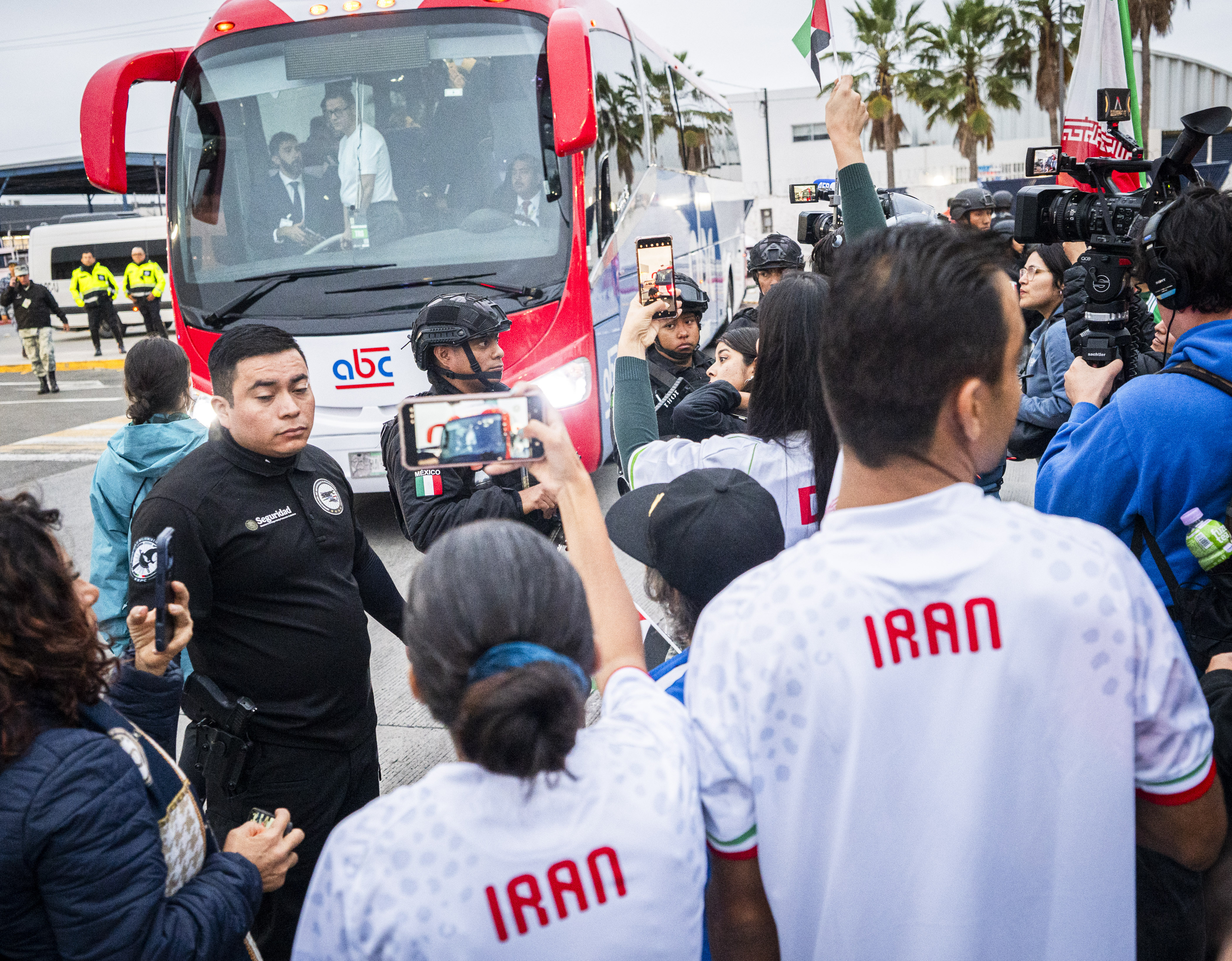
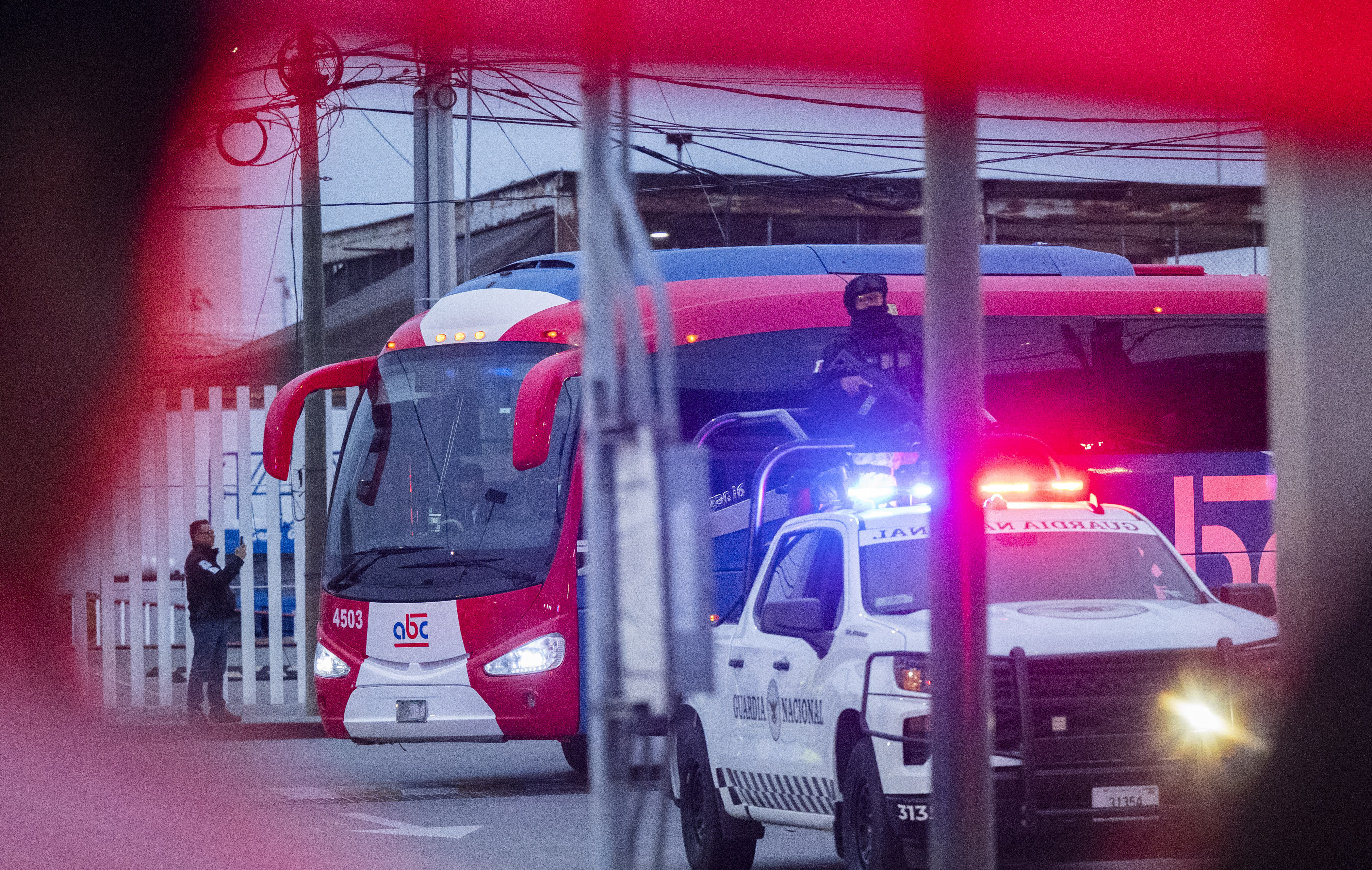
    Suddenly the team bus approached with a military escort. The small crowd cheered, raising their flags and chanting the name of one of the players. A team representative briefly rolled down the window and waved straight toward Sadegh.

    “Merci,” the Iranian representative said with a smile.

    The Iranian team’s bus departs a secure area of the Tijuana airport.Stuart Palley

    Sadegh, his heart racing, accidentally spoke to them in English, calling out, “welcome!” He had forgotten he could speak to them in Farsi.

    “Bienvenidos!” his Mexican relatives shouted.

    Reporters surrounded the couple to ask them how they felt. Maryam beamed.

    “I think now I am in my country,” she said.

    The team later circulated a photo, taken from the bus on their arrival that morning, of Sadegh waving his flag. He proudly shared it on Instagram, writing in English and Farsi that “the Iranian national team belongs to all Iranians,” regardless of their beliefs, religion or political stance.

    “Welcome to Tijuana,” he wrote.

  • Mayor Parker responds to the police use of force during Philly’s Pride celebration

    Mayor Cherelle L. Parker says she is looking for answers after Philadelphia police arrested 15 people at a Pride celebration in the Gayborhood on Sunday that drew anger from community members over police use of force.

    “I know that members of our LGBTQ+ community are hurting, frustrated, and looking for answers. … I want everyone to know that I hear you, I see you, and my Administration is taking your concerns seriously,” Parker said on social media Tuesday evening.

    Images and videos spread across social media of police using crowd control tactics to disperse Pride-goers in the neighborhood, in what some considered to be an outsize and aggressive law enforcement presence.

    In one image shared on X, a police officer on a motorcycle appears to push against a woman’s chest, and, in a separate photo, another officer pushes the same woman against a storefront security door while arresting her.

    Other videos posted on social media showed police on horseback dispersing young people from a sidewalk, as well as officers physically struggling with a man outside the gay bar Woody’s. Another clip shows a row of police officers — two of them wearing face coverings — forming a line to clear a barricaded Gayborhood street while officers on motorbikes rode along the sidewalks.

    On Wednesday, Sgt. Eric Gripp, a spokesperson for the police department, said that officials had identified five officers who wore face coverings during the enforcement, and that those officers had violated department policy by doing so.

    The department is still working to determine what type of corrective action will be taken depending on the outcome of an internal investigation, he said.

    On Tuesday, Parker said she and some of her top staff, Director of LGBTQ+ Affairs Tito Valdes, and Philadelphia Police Commissioner Kevin Bethel had met to “review the information available to us and discuss next steps.”

    “In the days ahead, we will meet with community leaders as part of that effort. As we move forward, we must reject the notion that public safety and accountability are mutually exclusive,” Parker said in the statement posted to social media.

    Commanding officers at the scene gave orders to disperse crowds, according to Gripp, the police spokesperson.

    The crowd control tactics used on Sunday drew ire from local elected officials like City Councilmember Rue Landau, who said she has been in talks with city departments and police to understand why PPD used this strategy. “Police brutality has no place at Pride,” Landau said.

    People wait to enter the Philly Pride Festival at 21st Street on the Ben Franklin Parkway on Sunday.Monica Herndon / Staff Photographer

    A different Pride this year

    This year’s Pride looked different from that of earlier years. Usually, Philadelphia Pride celebrations and parades occur within the Gayborhood in Center City, east of Broad Street. But this year Philly Pride 365 and the city moved the parade and festival to the Benjamin Franklin Parkway because of security concerns over crowd sizes that had grown to more than 150,000 people, among other reasons, festival organizers said.

    The festival portion of Pride also asked attendees to pay $10 to enter an event that for years had been free to attend.

    Before and after the official celebrations ended, Pride-goers gathered in the Gayborhood, patronizing bars and spilling into the streets — a common practice during the celebration. But guests were surprised to find that several Gayborhood blocks around 13th and Walnut Streets were blocked with metal barricades, limiting crowds to sidewalks, said Joshua Stokem, a New Jersey resident who regularly attends the city’s Pride celebrations.

    Stokem said the layout caused large groups to pack into the corridors outside bars and restaurants and, in his view, created confusion and exacerbated some of the issues attendees had with police.

    On Sunday, police had 600 officers assigned to Pride celebrations with around 150 officers in the Gayborhood monitoring festivities, Bethel said.

    “By all accounts, [it was] a successful event attended and enjoyed by thousands of people. As crowd sizes increased in the Gayborhood, officers responded to a growing number of public safety concerns, including fights, disorderly behavior, blocked roadways, and the challenges associated with safely managing large crowds in a confined area,” he said in the statement.

    Bethel said the department had expected the Parkway celebration to gradually transition to the Gayborhood event, but that did not happen.

    Instead, he said, two separate gatherings were essentially happening at once, creating a situation that was “challenging to manage safely” and led to the decision to clear parts of the neighborhood.

    “That decision was not made in any way, shape, or form because people were celebrating Pride,” he said.

    Most of the arrests during Sunday’s event were for disorderly conduct, according to Bethel, while one person was charged with aggravated assault of a police officer.

  • To stop Hezbollah, Trump must prevent Israel from creating another Gaza in Lebanon

    Early Tuesday morning, President Donald Trump claimed, yet again, that a peace deal with Iran could be closed “in two or three days.” This was the 38th time since a U.S.-Iran ceasefire in April that he predicted a deal was around the corner.

    But never mind.

    By later Tuesday, Israel was heavily bombing the historic city of Tyre in southern Lebanon, despite Trump’s earlier, profanity-laden demand to Prime Minister Benjamin “Bibi” Netanyahu to stop such attacks.

    Yet, Bibi seems determined to occupy southern Lebanon, drive out its population, and raze its villages and towns in an effort to finally stop Iran’s Shiite proxy militia Hezbollah from firing into northern Israel. Meantime, Tehran insists there will be no deal on opening the Strait of Hormuz, and no nuclear talks before ending Israel’s attacks on Hezbollah.

    So Lebanon has become the new flashpoint of the conflict. Events there will be more critical to the outcome of the Iran war, I believe, than the limited U.S. military strike on Iran in retaliation for the shootdown of a U.S. helicopter near the Strait of Hormuz.

    Why so? For me, Lebanon provokes a painful case of déjà vu, because I spent two years as a foreign correspondent covering the 1982 Israeli invasion of Lebanon, and watched it give birth to Hezbollah, unnecessarily. I watched Israel — and the United States — make mistakes they are repeating today, which will trap both of them in a self-induced Iran quagmire.

    I reported that Israel (and the Reagan administration) learned the hard way that defeating an ideological movement cannot be done by military pressure alone, but must involve winning over the local population. And that includes offering hope that they can gain more from rejecting the ideologues, despite the risk that is involved, especially if those abusive ideologues have already alienated them deeply.

    Based in Beirut, at the legendary Commodore Hotel, I used to make regular trips to southern Lebanon, a poor Shiite region that was neglected by Sunni and Christian Lebanese leaders who deprived it of resources.

    And many Shiites resented the tens of thousands of Palestinian refugees who fled or were driven out of Palestine in 1947-49 during Israel’s war for independence. Although the refugees lived in shantytown camps, they received lots of international aid, including education, hospitals, and jobs.

    In Sidon and Tyre, I met with numerous middle-class Shiites who had emigrated to West Africa to earn money and returned to build homes and small businesses. Many were members of the strongest Shiite political movement in that region, known as Amal (or Hope), and led by Nabih Berri, which agitated for more government help for their region.

    They resented the growing power of the Palestine Liberation Organization, based in the camps and nearby cities, which, according to my sources, treated the Palestinians unfairly.

    When Israel invaded southern Lebanon in 1982, I was told by Amal leaders that they were not displeased at Israel’s effort to eject the PLO, but wanted the war to end as soon as possible.

    They were worried about a new group called Hezbollah, backed by Iran, that was emerging to fight the occupation. Berri wanted the Israeli military and government to negotiate directly with Amal leaders. He pledged they would protect the border with Israel and cooperate in preventing any Hezbollahis from attacking across the boundary.

    Instead, Israel chose to ally with a Christian leader, Bachir Gemayel, who was soon assassinated by a member of the Syrian Socialist Nationalist Party, an ally of Iran. No peace deal with Lebanon was signed.

    With Iran’s help, Hezbollah grew into the most powerful military and political force in Lebanon, far more powerful and better armed than the Lebanese army, with the more moderate Amal reduced to a secondary force. Israel remained in south Lebanon as an occupying power until 2000, immersed in a quagmire that took the lives of innumerable soldiers and embittered thousands more.

    Fast-forward to today. Most Lebanese are fed up with Hezbollah, which dragged Lebanon into the Gaza war by attacking Israel in sympathy with Hamas. Syria has a new government, which is hostile to Iran and Hezbollah. Moderate Sunni Arab leaders in the region feel the same. So do many Shiite leaders in southern Lebanon, where Hezbollah was based, and from which Israel has now driven out much of the population. (Longtime survivor Berri is currently the speaker of the Lebanese parliament.)

    And Lebanon, for the first time in decades, has a president, Joseph Aoun, who is willing to stand up to Hezbollah, negotiate directly with Israel, and try to replace Hezbollah with the Lebanese army, which is too weak to do so without external help.

    Instead, choosing to rely on force, Israel has been trying to make southern Lebanon into another Gaza, razing villages and towns to the ground, and making it impossible for the population to return. This can only lead to another occupation quagmire for Israel, just like 1982-2000. It will only restore Hezbollah’s credibility and assist Iran.

    This threat was summed up acutely by Ehud Barak, the former Israeli prime minister, who finally withdrew Israeli troops from Lebanon in 2000.

    “To eradicate Hezbollah,” he wrote in Haaretz, “we would need to occupy all of Lebanon, which is simply unrealistic. The only way to disarm the organization is through a diplomatic process in coordination with the governments of Lebanon, the U.S. and others of the region.”

    In addition, France, Gulf Arab countries, along with Jordan and Egypt, might contribute to policing the south and the border with Israel. (Forget about U.N. peacekeepers who failed miserably for decades.) “Anyone, without a plan like that,” Barak continued, “is destined to sink into the Lebanese quagmire and spill years of blood without results. We’ve already been there, done that, and believe me, it is not easy to get out of it.”

    The mistake Netanyahu made, and Trump endorsed when both attacked Iran in February, was to assume that force alone could resolve the Iran problem. This has left POTUS on the back foot, still dreaming he can get Iran to surrender without any concessions.

    After Trump’s mistaken handling of the Iran war, it will be tremendously difficult to devise any deal with Iran that doesn’t leave its leaders strategically stronger than they were before the war started, although the economic price Iran has paid may inspire a domestic revolution after the fighting ends. But if POTUS doesn’t want to join Israel in a Lebanon quagmire and end any prospects of opening the Strait of Hormuz, he had better find negotiators who know a bit of Lebanese history.

    Once more, there is a small chance to save Lebanon from Iran’s clutches and end the rule of its Hezbollah proxies. But that chance will die if Israel insists on dispossessing one million Lebanese Shiites and subjecting them to horrors such as those Netanyahu permitted in Gaza.

    Trump claims he can control Bibi. He failed wretchedly (and he never really tried) in Gaza. The test now is in Lebanon.

  • The infectious diseases that experts worry could spread during the World Cup

    The infectious diseases that experts worry could spread during the World Cup

    When millions of soccer fans descend on North America this month for the 2026 FIFA World Cup, they will bring more than team jerseys and national pride.

    They will also bring the microbes that travel with people.

    Public health officials have spent years preparing for the tournament, which is expected to draw visitors from more than 100 countries to the United States, Canada, and Mexico. Although diseases such as Ebola and hantavirus have been in the headlines, public health experts say the diseases most likely to show up in clinics, emergency departments or urgent care centers are likely to be less exotic.

    Instead, their top concerns include measles, dengue, respiratory viruses, and sexually transmitted infections that are already circulating. These diseases are likely to spread more easily as fans crowd into airports, hotels, stadiums, and festivals.

    “Measles is what I’m most worried about,” said Krutika Kuppalli, an infectious diseases physician and associate professor at UT Southwestern Medical Center in Dallas.

    Texas will host 16 World Cup matches in 2026 — more than any other state — with nine matches in the Dallas-Arlington area and seven in Houston. Dallas will host more matches than any other World Cup venue, including a semifinal. The first U.S. match is Friday, in Los Angeles, when the U.S. faces off against Paraguay.

    Measles: A highly contagious virus meets a global mass gathering

    Measles is the most contagious vaccine-preventable viral infection in the world. It can linger in the air for up to two hours after an infected person leaves a room and can spread rapidly among people who lack immunity. A traveler infected with measles could expose hundreds of people in airports, hotels, public transportation systems, restaurants, and stadiums before realizing they are sick.

    The concern comes amid a resurgence of measles in parts of the Americas and elsewhere around the world. Health officials have attributed many recent outbreaks in the U.S. and elsewhere to declining vaccination rates and disruptions to routine immunization programs during and after the coronavirus pandemic.

    “Measles is in many parts of the world, not just the United States, and all it takes is a small pocket to spread like wildfire,” said Katelyn Jetelina, a California epidemiologist who writes a weekly newsletter about public health and infectious diseases.

    The U.S. has already recorded nearly 2,000 measles cases this year, continuing a resurgence that has alarmed public health officials.

    South Carolina’s massive outbreak of 997 cases, mostly among unvaccinated children, was the largest outbreak since measles was eliminated from the U.S. more than a quarter century ago.

    Dengue: A tropical disease that has become a hemispheric concern

    Puerto Rico has recently experienced major dengue activity, and local transmission has periodically been detected in several U.S. states.

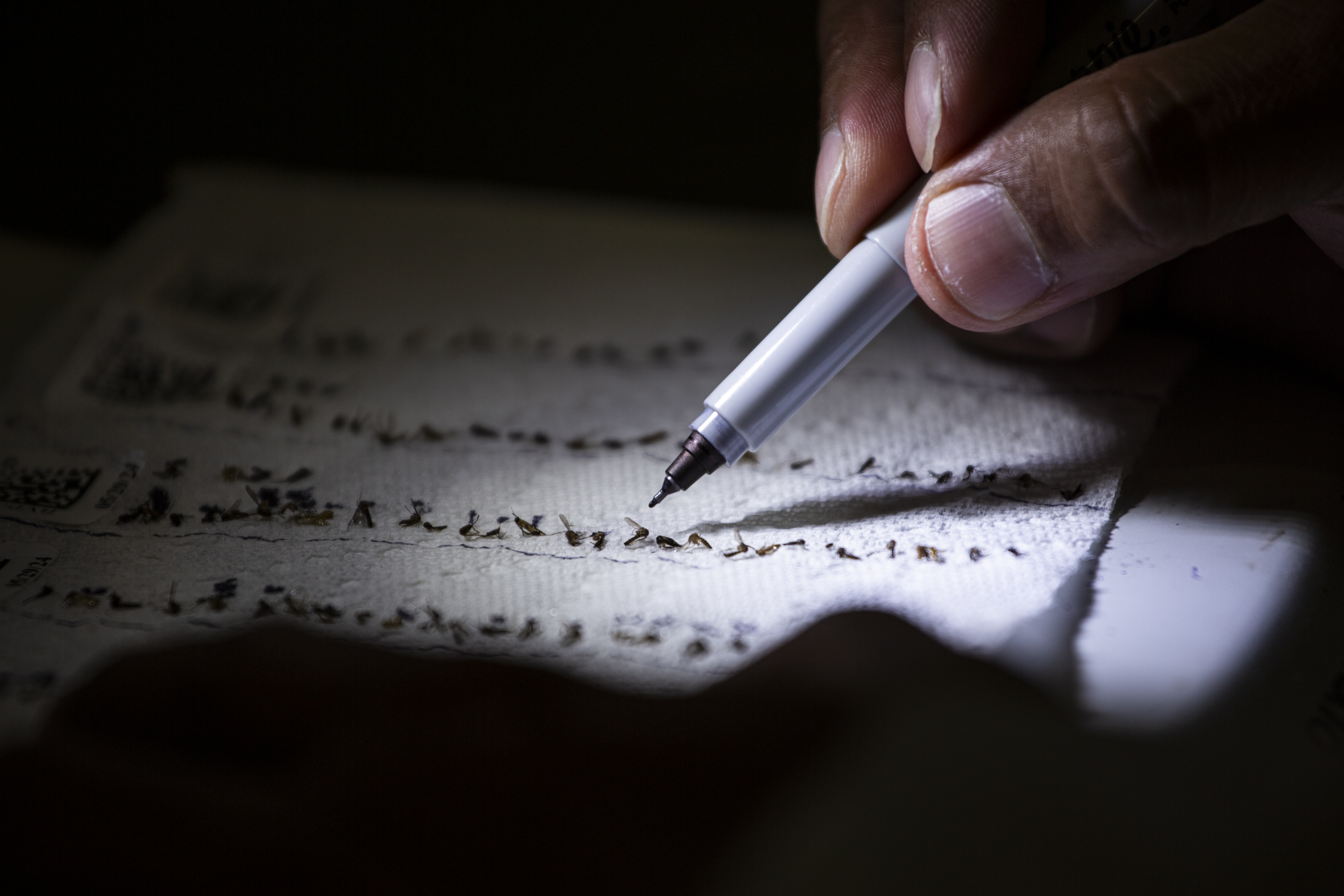
    The mosquitoes capable of spreading dengue — Aedes aegypti and Aedes albopictus — are already established in many parts of the country.

    Public health experts worry that some visitors carrying the virus could arrive in communities where the right mosquitoes are already present, creating opportunities for local transmission. Matches will be played during peak mosquito season in many host cities, including Miami, Houston, Dallas, and Los Angeles.

    Kuppalli said vector-borne diseases are a particular concern in Texas, where clinicians may need to consider not only dengue, but chikungunya, oropouche (also known as sloth fever) and even malaria in travelers arriving from regions where those diseases are circulating.

    “I think all of those vector-borne diseases would be fair game,” Kuppalli said.

    COVID-19: Among the respiratory viruses that haven’t disappeared

    Although COVID-19 no longer dominates public life the way it once did, public health and infectious-disease experts say they will be closely monitoring respiratory illnesses during the tournament.

    Current levels of COVID-19 remain low in the U.S., but experts point out that there has been a summer wave every year since 2019.

    Experts say they will be on the lookout not only for COVID-19, but also influenza, RSV and other respiratory pathogens.

    Why experts are also watching sexually transmitted infections

    Sexually transmitted infections are a recurring concern during major sporting events and mass gatherings because large numbers of visitors, nightlife activity and temporary social networks can increase opportunities for sexual contact.

    Experts do not view STIs as an acute outbreak threat in the same way as measles or dengue, but they remain part of public health planning efforts.

    What about Ebola and other high-profile diseases?

    The public risk for Ebola remains low because the virus spreads through direct contact with bodily fluids. The 2014 World Cup in Brazil coincided with the West Africa Ebola outbreak in 2014-2016, the largest Ebola outbreak in history. And there was no outbreak during that World Cup.

    Kuppalli said one concern is that heightened attention to Ebola could lead clinicians to overfocus on a patient’s country or continent of origin rather than taking a careful travel and exposure history. Someone with fever who has traveled from Africa, she said, should not automatically be assumed to pose an Ebola risk. Clinicians need to ask where the person has been, when they were there, what symptoms they have and what exposures they may have had.

    How officials plan to spot problems before they spread

    The CDC has expanded disease surveillance efforts in host states and is working with local health departments, hospitals, and emergency medical services to improve preparedness and response capabilities, officials said. The agency has also provided technical assistance to some host cities and is supporting training and coordination related to infectious-disease threats.

    Federal officials say they are paying particular attention to diseases that could be imported through international travel, including measles and dengue.

    With more World Cup matches than any other state, Texas is taking an unusually proactive approach to infectious-disease preparedness.

    Kuppalli and other infectious-disease specialists have partnered with the state health department to establish a round-the-clock consultation hotline that will connect the state’s clinicians with experts in travel-related and emerging infections. The service will be available to healthcare providers across Texas and to medical staff working with World Cup teams seeking guidance on suspected infections tied to the tournament.

    Kuppalli, one of the hotline’s medical directors, said the hotline will be staffed by 15 to 20 adult and pediatric infectious-disease specialists within the University of Texas health system. The hotline is designed to give real-time guidance to clinicians who may not regularly evaluate rare or travel-associated infections.

    That kind of support may be especially important in Texas, where patients may show up not only at major academic medical centers but also at community hospitals, emergency departments and urgent care clinics spread across a large state.

    To help monitor for any concerns from afar, one of the more unusual preparedness efforts is not being run by a government agency at all.

    Georgetown University in Washington, D.C., and MedStar Health, one of the largest healthcare providers in the Washington metropolitan region, have established a Health Security Operations Center that will function as an independent hub for monitoring infectious-disease threats during the tournament.

    The center, which became operational June 1, is pulling together information about emerging health threats from wastewater surveillance, hospitalization data, international disease alerts and reports from host cities, according to Rebecca Katz, who heads the operation. She is director of Georgetown’s Center for Global Health Science and Security.

    Public health experts say wastewater surveillance can sometimes detect pathogens days before health officials see corresponding increases in diagnoses at clinics, emergency departments or hospitals.

    The center plans to issue daily public situation reports throughout the World Cup and provide alerts if significant health risks are detected. It also plans to monitor disease activity in host cities and in countries sending large numbers of travelers to the tournament.

    For June 9, the report notes growing measles outbreaks in the U.S., Canada and Mexico. The location of these surging outbreaks overlaps with the base camp and match locations of multiple teams, the report said. Pennsylvania is dealing with a large measles outbreak centered in Lancaster County, about 75 miles west of Philadelphia, one of the World Cup’s U.S. host cities. Côte d’Ivoire, or Ivory Coast, has its base camp in nearby Chester.

  • Rep. Donald Norcross’ union contract bill passes in House, bucking Republican leaders

    Rep. Donald Norcross’ union contract bill passes in House, bucking Republican leaders

    WASHINGTON — The House on Tuesday approved a Democratic bill aiming to fast-track contract negotiations between employers and newly created unions, after 20 Republicans defied their leaders to force it to the floor and push it to passage.

    The measure, which passed on a 230-193 vote, faces a slim chance in the Senate and would be all but certain to be vetoed by President Donald Trump even if it were to reach his desk. Still, the vote was the latest reflection of Speaker Mike Johnson’s weak hold on his narrow majority, whose members have steered around him time and again and teamed with Democrats to win passage of legislation that he has toiled to block.

    On Tuesday, a sizable bloc of Republicans, including several from competitive districts who are slogging through tough reelection fights, joined with Democrats to push through a pro-union bill. It would impose an initial 90-day deadline on contract negotiations for new unions and their employers, along with paths to mediation and arbitration if the parties reach an impasse.

    Rep. Donald Norcross (D., N.J.), the sponsor of the bill, said he had written it to speed up workplace contract negotiations so that employers could not drag them out in the hopes of undercutting workers’ leverage.

    “Union busting is illegal, and it’s wrong and it has been for generations,” Norcross said. “But with the dirty tactics of indefinite delays, many employers are working relentlessly to kill their employees’ unions.”

    While several Republicans supported the legislation from the outset, party leaders declined to act on it. So Norcross turned to a procedural maneuver known as a discharge petition, which allows lawmakers to circumvent House leaders and force a bill to the floor if a majority of members sign on in support.

    Seven GOP lawmakers did so and even more joined Democrats on Tuesday, in voting in favor of the legislation. Among the Republicans who banded together with Democrats to force action on the measure, several are seeking reelection in competitive districts, including Reps. Mike Lawler of New York, and Brian Fitzpatrick and Rob Bresnahan Jr. of Pennsylvania. Another, Rep. Don Bacon, who represents a center-leaning district in Nebraska, is retiring.

    Some other swing-district Republicans joined them Tuesday night in backing the bill, including Reps. Derrick Van Orden of Wisconsin and Maria Elvira Salazar of Florida.

    Historically, discharge petitions have rarely been successful, but this Congress has been an exception, as Johnson has been unable to stop Republicans from straying from the party line on a wide variety of issues. Democrats successfully employed the tactic to win passage of legislation directing the Justice Department to release files related to convicted sex offender Jeffrey Epstein, which became law, as well as another labor-related bill aimed at overturning Trump’s executive order stripping federal workers’ union protections, which has stalled in the Senate. Last week, they used it to win approval of a bill with new aid for Ukraine that also would impose new sanctions against Russia, defying both Johnson and Trump.

    The trend reflects growing frustration among Republicans toward Johnson and party leaders as the midterm elections loom. Before the vote, Fitzpatrick wrote on social media that the tactic had succeeded so many times only because Republican leaders were shirking their responsibilities by blocking popular policies.

    “A successful discharge petition is clear and direct evidence of a poorly managed House Floor — because it demonstrates that the will of the majority of the People is being thwarted by the privileged few,” he wrote.

    The vast majority of House Republicans on Tuesday opposed the bill. Rep. Tim Walberg (R., Mich.) described the legislation as “a massive expansion of Washington’s power over American workers and job creators.”

    “It is the latest attempt to put workers under the thumb of federal bureaucrats,” Walberg said.

    This article originally appeared in The New York Times.

  • Game on in Maine: 3 takeaways from Tuesday’s primary election results

    Game on in Maine: 3 takeaways from Tuesday’s primary election results

    Graham Platner, a military veteran and first-time candidate whose populist message resonated with voters in Maine, prevailed over the state’s governor to win the Democratic primary for Senate on Tuesday. Now, he will face Sen. Susan Collins, a vulnerable Republican incumbent, in one of the most consequential races in the country this fall.

    Platner’s campaign has survived a series of scandals about his personal life, which Republicans began highlighting within minutes of his victory. And he used his speech Tuesday night to cast Collins as a tool of a political establishment that has let Maine down.

    In other primaries on Tuesday, Democrats in Nevada picked Aaron Ford, the state attorney general, to oppose Gov. Joe Lombardo, solidifying the matchup in a competitive governor’s race in a key swing state. And Republicans in South Carolina showed their loyalty to President Donald Trump, supporting his preferred candidates in races for Senate and governor.

    Here are three takeaways from the night of primaries.

    Amid a barrage of scandals, Platner sought to shift to the fall

    Platner, a Marine veteran who owns a small oyster farm, has been hampered for most of his campaign by scandal, including old, unearthed social media posts in which he made offensive comments about women and rape, and a tattoo resembling a Nazi symbol that he has since covered with new ink. The latest controversy came last week, when three women who had dated him told The New York Times that he had engaged in unsettling behavior toward them.

    On Tuesday, Platner attempted to shift the focus to his general-election matchup with Collins, a battle-tested incumbent, while also acknowledging his stumbles. In a fiery speech, he said that members of the political establishment “keep looking for that one story, that one headline, that one moment in my life that they can define the campaign by.”

    He added: “In trying so hard to understand me, they failed to understand that this is not about me at all. This is a movement about us, about the far too many, working far too hard and struggling far too much.”

    Still, nearly 30% of primary voters cast ballots for other Democratic candidates, according to incomplete results early Wednesday, despite that fact that his main opponent, Gov. Janet Mills, had suspended her campaign. That suggested that some Mainers remained skeptical of him, and left him with the challenge of persuading voters in the general election that Collins’ shortcomings were greater than his.

    In his effort to pivot, Platner blasted the moderate image Collins has cultivated, describing her as “only bipartisan when it doesn’t matter” and saying she had failed to protect abortion rights.

    “If you are an independent voice, why do you vote with Donald Trump 95% of the time?” he said, addressing his opponent directly. “If you’re so bipartisan, why are you the deciding vote to put Brett Kavanaugh on the Supreme Court?”

    Trump’s candidates advanced or were leading

    Trump’s backing is usually the gold standard in a Republican primary, all but guaranteeing victory. His record suffered a rare blemish last week when the candidate he backed in the Iowa governor’s race lost the Republican primary.

    On Tuesday, Trump returned to form, with candidates he supported winning their races, advancing to runoffs or leading challengers in races yet to be called. In South Carolina’s crowded Republican primary for governor, Lt. Gov. Pamela Evette, backed by Trump, led the field and advanced to a runoff with Alan Wilson, the state attorney general, who was close behind.

    In Nevada, two of three House candidates the president backed — Carrie Buck and Marty O’Donnell — won their primaries. The third was too close to call early Wednesday.

    Finally, in North Dakota, Rep. Julie Fedorchak easily fended off a primary challenge with help from Trump’s nod.

    Lindsey Graham avoided the embarrassment of a runoff

    Graham, an outspoken Republican who once clashed fiercely with Trump before becoming a staunch ally, has never been beloved by the MAGA base. He faced a serious Republican challenger, Mark Lynch, and a real chance that he could have been forced into a runoff by failing to earn more than 50% of the vote.

    But Graham, too, had Trump’s backing, and he managed to avoid that embarrassing outcome. After his campaign and allied groups raised and spent millions on his reelection bid, Graham posted a strong enough showing among South Carolina primary voters to earn a spot on the November ballot. In a deep-red state, Graham will be overwhelmingly favored to win another six years in the Senate.

    This article originally appeared in The New York Times.

  • Plenty of Philly hotel rooms and Airbnbs still available days before FIFA World Cup kickoff

    Plenty of Philly hotel rooms and Airbnbs still available days before FIFA World Cup kickoff

    To Ed Grose, the FIFA World Cup is not looking like a bust for Philly-area hotels.

    Yet the president of the Greater Philadelphia Hotel Association said the matches, which start Sunday and end July 4, have not brought booming business.

    “It hasn’t delivered what we thought it would in terms of hotel rooms,” Grose said Monday.

    Some of Center City’s 14,500 hotel rooms remain available on game days and game-day eves, he said, though he declined to provide an estimated occupancy rate.

    Grose’s assessment — based on conversations with local hoteliers, he said — exemplifies the tourism uncertainty that remains just days before kickoff.

    Philadelphia has raised about $140 million in public and private funding to host the World Cup, according to Front Office Sports, and officials are heavily marketing the six South Philly games and other fan events across the city.

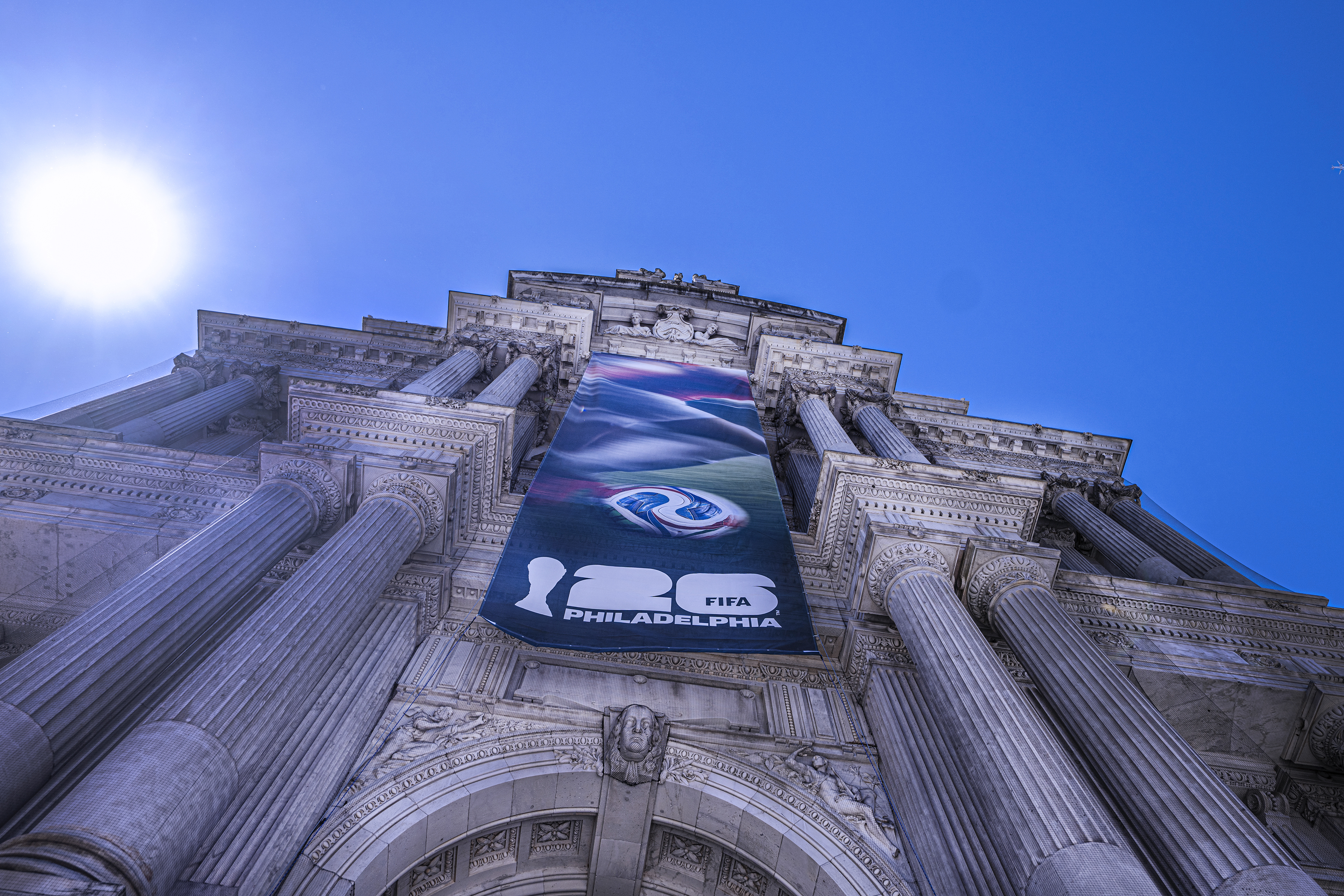
    A FIFA World Cup banner hangs from an entrance of Philadelphia City Hall, as seen on June 3.Jose F. Moreno / Staff Photographer

    Yet some soccer fans have said they’re avoiding World Cup matches due to a bevy of factors, including high ticket prices, expensive airfare, frustrations over FIFA’s business practices, and concerns among international fans about entering the U.S. due to the Trump administration’s immigration policies. On average, international tourists stay longer and spend more money than domestic travelers.

    There are other signs that lofty World Cup projections — which included FIFA’s broad promise of tens of billions of dollars in total economic impact — may not come to fruition.

    The Wall Street Journal reported Monday that every U.S. host city except San Francisco was seeing hotel occupancy of 40% or less, citing a recent CoStar report. Host cities in Mexico and Canada saw slightly better hotel occupancy, though still under 50%, according to the Journal.

    In Philadelphia, Google Travel searches show abundant hotel vacancies at prices under $300 or even $200 a night on some match days.

    The region’s short-term rental market has seen some last-minute demand, with about 60% of local Airbnbs and Vrbos set to be occupied on game days and game-day eves, according to AirDNA, which analyzes the platforms’ booking data. In early May, fewer than half available rentals were booked on those days.

    The inside of a South Philadelphia Airbnb was shown in early May, as its owner waited for last-minute World Cup bookings.Joe Lamberti / For The Inquirer

    As of Monday, World Cup demand has helped drive a 15% year-over-year increase in the number of Philly-area bookings and an 8% increase in occupancy on game days and game-day eves, said Bram Gallagher, AirDNA’s director of economics and forecasting.

    Those figures place Philly “right in the middle” of the World Cup markets, he said.

    “Some places are doing very, very well and some places are seeing marginal benefits,” Gallagher said, noting that Mexican markets are doubling demand. “In Philly, Boston, Atlanta, we’re seeing respectable gains.”

    Airbnb, which has partnered with FIFA, is still predicting that the World Cup will be “the biggest hosting event in Airbnb’s history — surpassing the 2024 Olympic and Paralympic Games in Paris,” according to a company statement, which noted “meaningful excitement for the tournament,” including among first-time guests.

    Some Philly Airbnb hosts still wait for World Cup guests

    Jenica Jones outside her South Philly Airbnb in early May. As of Tuesday, she said she has only gotten two World Cup bookings for a total of three nights.Joe Lamberti / For The Inquirer

    Jenica Jones received her first World Cup booking last month, after being included in an Inquirer article about low short-term rental demand during the tournament.

    A guest from the Dominican Republican reserved Jones’ South Philly rowhouse for two nights in June, Jones said, and the host was hopeful that World Cup demand would finally pick up.

    It hasn’t.

    The 42-year-old said she got just one other booking for a single night.

    Her Airbnb has a perfect 5-star rating, sleeps seven people, and is less than three miles from Lincoln Financial Field, the site of Philly’s six World Cup matches.

    The app’s dynamic-pricing tool had initially suggested she list the property for about $900 a night during the World Cup. Since then, she has dropped prices and offered discounts on some nights to entice soccer fans, she said.

    “I was predicting being full the entire month of June,” Jones said Tuesday. “They’re just not coming in as I expected.”

    “My schedule was booked more last year,” she said. As of Tuesday, she even had availability July 4, when the city is hosting a World Cup match and an Independence Day concert for America’s 250th birthday.

    Can World Cup fans get last-minute deals in Philly?

    The Live! Casino Hotel Philadelphia (at left) is located in the stadium complex. As of Tuesday, it still had rooms available at high prices for some World Cup matches.Elizabeth Robertson / Staff Photographer

    Despite the sluggish demand, last-minute planners shouldn’t count on scoring World Cup deals in the Philly region, according to hotel and short-term-rental experts.

    Gallagher, of AirDNA, said the most affordable Airbnb and Vrbo properties were the first ones to book up during the tournament. But individual hosts like Jones may choose to lower prices if their homes remain unbooked.

    Grose, of the Greater Philadelphia Hotel Association, said guests will pay higher rates on average during the World Cup than they would on a normal summer day.

    Yet on Sunday and three of the other five match days, many Center City hotels appeared to have rooms available for about $300 or less per night, as of Tuesday, according to Google Travel. Prices skewed higher and availability seemed more limited on the holiday nights of Friday, June 19, and Saturday, July 4, though rooms were still available across the city, including at the few hotels near the stadiums in South Philly.

    Grose said he remains optimistic about the coming weeks, which includes not only the World Cup and America’s 250th birthday celebration, but also the MLB All-Star Game in July.

    “Overall, the summer is still going to be a good summer for us,” he said.