Category: News

  • Pete Hegseth is resurrecting a brand of military masculinity that dominated debates a century ago

    Pete Hegseth is resurrecting a brand of military masculinity that dominated debates a century ago

    On July 15, Defense Secretary Pete Hegseth announced that his department will test all military personnel over the age of 30 for low testosterone. In his video posted on X, he explained the move in terms of military dominance. It would give U.S. soldiers an “edge of lethality” and ensure they “have the biological foundation” to maximize their performance.

    This decision ties into larger concerns on the political right about the need to foster manhood, emphasizing aggression and physical strength. Testosterone has long served as a cultural marker of traditional masculinity, so it’s not surprising that Hegseth would focus on the hormone. After all, he’s performed pull ups on camera and issued a DOD-HHS fitness challenge with Secretary Robert F. Kennedy Jr.

    Yet, Hegseth’s move isn’t just a reflection of his personal priorities for the military. It’s also part of a long history of rhetoric about American manhood in military medicine that has elevated traditional ideas about masculinity and aimed to exclude gay men and women from military service. Indeed, dating back to the late 19th century, decisions about U.S. soldiers’ health have exposed fierce debates over definitions of American manhood.

    At the dawn of the 20th century, disagreements over imperialism dominated American politics. Proponents of American expansionism, like Sen. Albert J. Beveridge (R-Ind.), wanted to see the U.S. acquire territories in the Caribbean and the Pacific.

    Worries about manhood and the health of military personnel were at the core of these debates. Many Americans linked military power to the male body and, in turn, the inability or unwillingness to fight or govern “dependents” to boyhood. Champions of imperialism like Beveridge associated the physical strength of enlisted men as synonymous with the strength of the nation, and they framed territorial acquisitions as a way for the U.S. to demonstrate its manliness to other nations.

    Even anti-imperialists, who opposed territorial expansion, worried about American manhood. One of their main arguments against acquiring the Philippines was that it would degrade both individual and national manhood. They feared an imperial project in the Pacific would mean American soldiers would succumb to drunkenness and venereal infections in the tropics.

    Army officers, for their part, argued that the military could improve the nation’s men. During the 19th century, many people had seen military service as debasing partly because low pay and harsh punishments meant those who joined the Army were men on the margins of society with few alternatives. But now, medical officers explained, through efficient military hygiene, soldiers would become better citizens as they learned discipline, cleanliness and order.

    The imperialists won the foreign policy debate. After the Spanish-American War of 1898, Spain relinquished all claims on Cuba and the U.S. gained sovereignty over Puerto Rico, Guam and the Philippine Islands. Yet, that didn’t end the contest over manhood.

    In fact, once the U.S. took over these lands and sent military personnel abroad, concerns over soldiers’ behavior and masculinity only intensified.

    Gendered rhetoric saturated debates about whether enlisted men’s consumption of alcohol would improve or harm their health. Purity Reformers cheered the passage of legislation that ended the sale of alcohol at the army canteen. They saw drunkenness as unmanly. Additionally, inebriated men contracted sexually transmitted infections (STIs) at higher rates, which, the reformers believed, emasculated soldiers by rendering their bodies weak and infertile.

    Military medical officers who opposed the anti-canteen law feminized their male political opponents, complaining that these “abstinence ladies” were trying to tell officers how to run the army.

    These debates became especially intense over the Philippines, which U.S. troops oversaw in the years after the war. The problem was, by 1907, roughly one in three enlisted men serving in the Philippines had an STI. For those who saw the experience of military service not only as a place to prove one’s manhood but also to improve it, these rates of infection posed a problem that was at once medical and gendered.

    In response, the U.S. military followed in the footsteps of European colonizers and launched a system of regulated prostitution whereby medical officers inspected women who sold sex to soldiers, sent them to a designated hospital if they found signs of infection and, otherwise wrote “free from disease” on their inspection booklets. The Army thus sanctioned a manhood marked by heterosexual sex with Asian women in a colonized territory.

    When reports of this approach hit the anti-imperialist and temperance press in America, however, the public outcry pressured political and military leaders to stop the most visible aspects of this program. Progressive Era reformers fiercely opposed what they saw as government-run prostitution. They decried the sexual double standard that punished women suspected of selling sex but did nothing to stop either the men profiting from women’s sexual labor nor the male consumers. They also challenged claims that men had to have sex with women in order to be healthy.

    Made By History sponsors. FOR USE ON MADE BY HISTORY STORIES ONLY.Inquirer Staff

    While the efforts to regulate prostitution didn’t completely abate, the military also launched a push to divert enlisted men in the Philippines away from sex and the risk of STIs, especially by creating alternative avenues for recreation. Military authorities built boxing rings and established baseball diamonds to fill men’s leisure time with traditionally masculine physical activities marked by aggression, strength and speed.

    By the time the U.S. joined the First World War in 1917, social reformers had formed the American Social Hygiene Association to fight prostitution and stop the spread of STIs. Many occupied positions of leadership in the Army, and a definition of military masculinity based on restraint held political sway.

    General John J. Pershing, for example, who led the American Expeditionary Force, declared the French maisons tolérées off-limits to his soldiers. The military also enacted strict protocols requiring men who admitted to sexual activity with women in France to report to prophylaxis stations immediately following “exposure” to prevent the spread of disease.

    At the same time, Raymond B. Fosdick, a Progressive reformer, served as chairman of the Commission on Training Camp Activities (CTCA) overseeing educational and recreational programming for enlisted men. He promoted competitive sports as crucial to ensuring soldiers’ health. Fosdick claimed, “it does not do any good in dealing with red-blooded young men merely to erect a series of verboten signs along the roadside; you must have something positive for them to do.”

    As in the Philippines, U.S. troops constructed arenas for boxing and wrestling, along with football and baseball fields at camps in France. In 1917, the Army released Fit to Fight, an educational film for soldiers. The film’s hero Billy Hale was a former college quarterback who refused contact with prostitutes, embodying the ideal of strength in chastity.

    It was a vivid example of how military leaders tried to frame the combination of athletic pursuits and sexual restraint as the key to healthy manhood and military success. They also argued that living up to this ideal was a necessity so that soldiers could become husbands and fathers after the war.

    As reformers and officers openly discussed manhood and soldiers’ health they simultaneously painted a bleak portrait of womanhood. They saw women near training camps as sexual predators with dangerous intentions and as the locus of disease. Meanwhile, women at “home” had a purity that needed protection from soldiers who had worked elsewhere. In neither case were women “fit to fight.”

    A full century later, testosterone testing is resurrecting many of the stereotypes that saturated these debates. It paints a picture of soldiers as masculine and virile in a way that excludes openly gay men and women. And this is coming only a decade after all combat jobs opened to women and 15 years after the end of Don’t Ask Don’t Tell, which had required gay and lesbian soldiers to hide their sexual orientation. Additionally, it links the health of male soldiers — through their sex drives and sexual activities — to the bodies of women.

    Hegseth’s emphasis on testosterone follows on the heels of striking women from promotions lists in both the Army and Navy. Testosterone testing, in tandem with this move, as well as Hegseth’s criticisms of women in combat roles and his aversion to openly gay men in the military, bolsters a manhood that reserves power for cisgender, heterosexual men and relegates women to roles with less authority.

    Experts have pointed out the decision’s departure from evidence-based medicine. Testosterone levels are actually poor indicators of actual strength. But the decision nevertheless has political purchase thanks to longstanding images about what constitutes the ideal soldier.

    Pamela Maddock is an affiliate of the History Department at the University of Sydney and is working on a book, “Access to Women: Sex, Race, and Disease in the U.S. Army, 1853-1919,” that examines the U.S. Army’s management of sexually transmitted infections in different geographic contexts outside the US. She teaches at the Williston-Northampton School.

    Made by History takes readers beyond the headlines with articles written and edited by professional historians. Opinions expressed do not necessarily reflect the views of The Inquirer.


  • A Craig LaBan pizza pick in Cherry Hill | Inquirer South Jersey

    A Craig LaBan pizza pick in Cherry Hill | Inquirer South Jersey

    Good morning, South Jersey. Don’t pack away your rain jacket yet. The region is still under a flood watch with more showers expected.

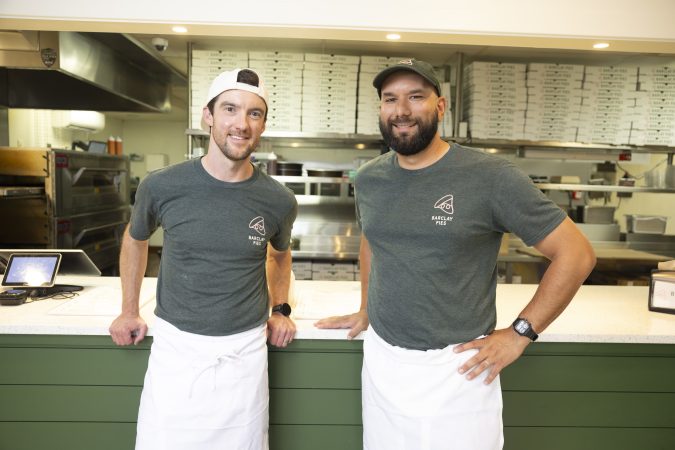
    Inquirer food critic Craig LaBan visited Barclay Pies in Cherry Hill and found a new standard of gluten-free pizza in the region.

    And speaking of Cherry Hill, the township banned large-scale data centers, becoming the latest South Jersey municipality to send a clear message to potential developers.

    Plus, Gov. Mikie Sherrill shared Tuesday that about 2,000 registered voters who were identified last week as noncitizens may actually be citizens after all, and more news of the day.

    — Taylor Allen (southjersey@inquirer.com)

    P.S. If you like what we’re doing — or see room for improvement — take our survey. We want your thoughts so we can better serve you and remain your trusted source for South Jersey news.

    If someone forwarded you this email, sign up for free here.

    Craig LaBan’s gluten-free pizza standard

    There’s a reason Barclay Pies in Cherry Hill generates a lot of buzz among the gluten-free community, according to our food critic, Craig LaBan.

    The owners worked for nine months to create the crust for its gluten-free pies. LaBan explains that the pizza has a bit of cornmeal for the bottom crunch, a frico cheese band around the edges, and a pan-based format that helps to prevent cross-contamination.

    Barclay Pies sells both standard and gluten-free pies, and the latter now accounts for a third of the pizzas they sell.

    “There’s a market need for a pizzeria that was truly inclusive,” co-owner Thomas “TJ” Hunton said.

    Read on for the full review.

    Cherry Hill’s data center ban

    It’s official: No large-scale data centers can come to Cherry Hill.

    The township council voted unanimously this week to list data centers as a non-permitted land use within its borders, as debate around artificial intelligence technology continues nationwide.

    “We don’t think that Cherry Hill should be a guinea pig,” Cherry Hill Mayor David Fleisher said. “So while the technology is evolving, we wanted to be proactive and make sure that we eliminated a problem before it became one.”

    If a developer wanted to build one in the future, they would have to get a land-use variance from the zoning board. And according to a city planner who worked on the ordinance, it’s one of the hardest approvals to get.

    So far, no data center developers have approached the township.

    Reporter Lacey Latch has the story.

    What to know today

    • About 2,000 of the 6,600 New Jersey registered voters who were identified as noncitizens could be citizens after all, Gov. Sherrill said on Tuesday. The news comes a week after her disclosure that a software glitch registered thousands of noncitizens to vote ahead of the 2024 election.
    • A state grand jury voted not to file criminal charges on Monday against a Haddon Township police officer in connection to the fatal shooting of a Pennsauken man while responding to a reported burglary in 2024.
    • Due to this week’s predicted storms, the scheduled maintenance of the Tacony-Palmyra Bridge that was supposed to close to vehicle traffic Tuesday night into Wednesday has now been postponed to begin Monday, Aug. 3, at 9 p.m. and conclude Tuesday, Aug. 4, at 5 a.m.
    • The Burlington County Library System on Wednesday is launching a “StoryWalk,” an interactive attraction that features reading stations that display pages of an illustrated children’s book. The stations are built around the playground at Riverton Memorial Park.
    • Four Green Cats Cafe in Mount Laurel announced an expansion coming later this year to a second location under construction in Haddonfield. Owner Nadia Vasa told New Jersey Voyager it will be called The Grand Salon, with a full commercial kitchen to serve authentic Czech dishes and room to host a cultural program.

    🧠 Trivia time

    The Freedom Mortgage Pavilion in Camden has had several name changes since the venue opened in 1995. Which of the below was its shortest-lived name?

    A) Tweeter Center

    B) BB&T Pavilion

    C) Susquehanna Bank Center

    D) Waterfront Music Pavilion

    Think you know? Check your answer.

    What we’re…

    🥖 Craving: Fresh bread from Dulce Artisanal Pastry in Collingswood.

    🎤 Playing: 76 Seconds with Boyz II Men.

    🏀 Running: The numbers to see how likely it is for the Sixers to clinch a championship with their revamped roster (thank you, LeBron).

    🧩 Unscramble the anagram

    Hint: 🎓 The Prof

    INTRAVENOUS WIRY

    Email us if you know the answer. We’ll select a reader at random to shout out here. Cheers to Dan Tureck, who solved last Wednesday’s anagram: Rancocas Creek. It’s Burlington County’s largest interior river.

    🏡 On the market

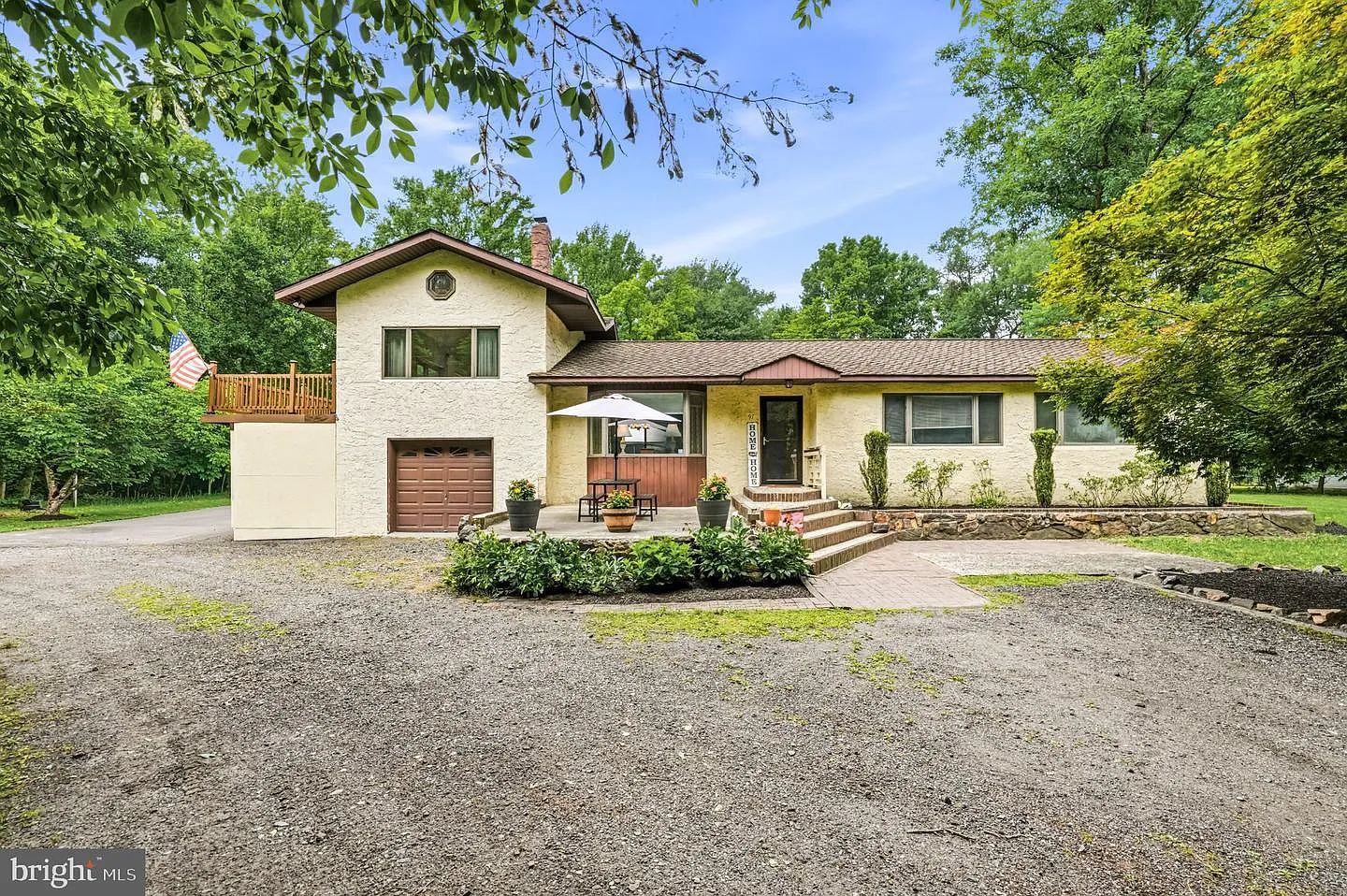
    A private Medford home with a large backyard deck

    Sitting on almost five acres, this Medford home has hardwood floors, a modern kitchen with an exposed brick wall, four bedrooms, two bathrooms, a living room, and a family room.

    Outside, there’s space for gardening, a deck for entertaining, and an above-ground pool. Catch an open house this Sunday from noon to 2 p.m.

    See more photos of the property here.

    Price: $539,999 | Size: 1,836 SF |Acreage: 4.89

    Congrats on making it halfway through the week! 🎉 Let’s do this again tomorrow.

    By submitting your written, visual, and/or audio contributions, you agree to The Inquirer’s Terms of Use, including the grant of rights in Section 10.

  • ICE wants to deport a Philly man who has lived legally in the U.S. for 20 years. He fled Guinea after being jailed by the government.

    ICE wants to deport a Philly man who has lived legally in the U.S. for 20 years. He fled Guinea after being jailed by the government.

    Abdoulaye Cherif was asleep when his phone rang that morning, and he answered only because the display showed the call was coming from a prison.

    He was shocked to hear the voice of his father, who was supposed to be at work, driving for Uber.

    Mamadou Fadel Cherif told his son he had been arrested by ICE as he left the family home in West Oak Lane. He said he needed his son to break the news to his mother, because she would be devastated to hear it over the phone.

    Cherif, 21, called his mom at work and told her she needed to come home.

    Now, two weeks after that July 13 morning, “we’re all scrambling,” Cherif said in an interview. “A piece of us is missing.”

    Fadel Cherif, 56, never expected to be arrested by ICE. He lives legally in the United States, having been granted Withholding of Removal almost 20 years ago.

    That status allows him to stay and work, and bars the government from deporting him to his homeland, the West Africa nation of Guinea, where the U.S. government agrees he could be harmed or killed over politics.

    His status, however, does not shield him from being sent to a third country, if ICE can find a nation willing to accept him.

    Those kinds of third-country deportations are difficult for the agency to achieve. But recent ICE guidance tells agents that when immigrants with Withholding of Removal or Convention Against Torture protections report for check-ins, officers should consider the viability of their removal and if they should be detained in the meantime.

    Advocacy groups and immigration lawyers say the Trump administration is increasingly arresting and detaining migrants who have been granted withholding, keeping them in custody while it pursues removal to a third country. Last year, an Iranian immigrant who had fled the regime spent nearly six months in detention before a federal judge ordered his release.

    Officials with U.S. Immigration and Customs Enforcement, who did not initially respond to queries, said Tuesday that they were working on a response to questions about the case.

    (function(){function e(){window.addEventListener(`message`,function(e){if(e.data[`datawrapper-height`]!==void 0){var t=document.querySelectorAll(`iframe`);for(var n in e.data[`datawrapper-height`])for(var r=0,i;i=t[r];r++)if(i.contentWindow===e.source){var a=e.data[`datawrapper-height`][n]+`px`;i.style.height=a}}})}e()})();

    Philadelphia immigration attorney Ricky Palladino, who represents Fadel Cherif, said there is no reason for ICE to detain him. He has no criminal record. He has legal authorization to work, a Social Security number, and a driver’s license.

    Palladino filed a petition in federal court that seeks Fadel Cherif’s immediate release, arguing that he has been denied due process under the law.

    In nearly 20 years, the filing says, no government official has suggested that Fadel Cherif’s deportation was “even remotely likely.” And it says that ICE can return someone with his status to custody only if, on account of changed circumstances, the agency finds “a significant likelihood that the alien may be removed in the reasonably foreseeable future.”

    Immigration attorney Ricky Palladino with Palladino, Isbell & Casazza, LLC, at his office on Walnut Street in Center City Philadelphia in 2022.Alejandro A. Alvarez / Staff Photographer

    Palladino said in an interview that Fadel Cherif is the main support for his wife, who has legal permanent residency, also known as a green card, and for their four American-born sons, including Abdoulaye, a Marines reservist.

    In Guinea, a nation of 12 million people that is roughly twice the size of Pennsylvania, Fadel Cherif was jailed by the government after protesting the results of his country’s 1998 presidential election, which was marred by irregularities. He later fled in fear of being rearrested, using a document that showed a different Guinean identity to enter the United States in New York in November 2003.

    For years he has worked in dining services at La Salle College High School, the private Catholic boys school in Montgomery County, and also drives for Uber.

    Matt Beck, director of dining services for CulinArt at the school, was upset to learn of the arrest, describing Fadel Cherif as an extremely hard worker.

    “He’s a good guy,” Beck said. “The students here love him. And so does the staff.”

    Fadel Cherif’s detention comes as ICE is arresting record numbers of immigrants. In one five-day span this month, the agency detained more than 10,000 people across the country, the New York Times reported.

    The rate of ICE arrests topped 1,300 a day in June ― and grew again to a record 1,474 a day during the first 11 days of July, Syracuse University professor and immigration-data analyst Austin Kocher reported last week.

    “ICE has been touting record high arrest numbers this summer ― and they are not wrong,” Kocher wrote in an analysis.

    The ICE directive issued shortly after President Donald Trump took office meant that people with Withholding of Removal could be detained, noted the Catholic Legal Immigration Network Inc., even if they had no criminal record and had been reporting to ICE for years without incident.

    “Given the increased pressure that ICE has been under to meet quotas for arrests, detentions, and deportations,” the network wrote, “it is not surprising that the agency is focused on those who already have removal orders as being easy targets.”

    Fadel Cherif was denied asylum when he could not prove that he had filed within a year of entering the United States.

    To receive Withholding of Removal, applicants must prove that they were persecuted in the past or that their lives would be threatened in the future, that the government harmed or will harm them ― or failed to control others who might do so. And they must show that moving to a different part of their country would not provide safety.

    Withholding offers fewer benefits than asylum, which includes a path to citizenship and allows people to seek to have their spouses and children join them in the United States.

    When Withholding of Removal is granted, the immigration judge also enters a deportation order, then tells the government it cannot deport the person to their homeland. In that way the removal is “withheld.”

    People with that status cannot leave the United States without triggering deportation, have no path to citizenship, and cannot petition to bring family members to this country.

    While the U.S. government may try, deporting people with withholding to a third country is difficult to accomplish. Nations that willingly accept their own citizens can be disinclined to accept other foreign nationals.

    The Migration Policy Institute estimates that during its first year back in office, the Trump administration carried out about 15,000 removals to third countries, a fraction of the total 396,000 deportations.

    Deportations of those who have Withholding of Removal are even more rare, according to the Amica Center for Immigrant Rights in Washington. The center says it is pointless to detain those people while attempting to deport them. If ICE were to release a foreign national and later identify an appropriate third nation, it could simply detain them again.

    Abdoulaye Cherif near his West Oak Lane home on July 23. His father, Mamadou Fadel Cherif, was arrested by ICE and has been detained for weeks.Yong Kim / Staff Photographer

    Fadel Cherif remains in custody at the Moshannon Valley Processing Center, the ICE facility in central Pennsylvania.

    “My brothers, they need their dad in their life,” said his eldest son, Ahmad, 22, noting that the youngest brothers are 13 and 15. “It’s very important for my dad to be here.”

    Abdoulaye Cherif said his father told him that on that morning, he demanded that the ICE agents show him an arrest warrant signed by a judge. Instead, he said, the officers presented an agency-issued detainer.

    Today, he said, the family is surviving financially on savings. Emotionally, they struggle without their father.

    “He’s like the glue,” Abdoulaye Cherif said. “He directs us, he leads us, he’s the dad. He’s been worried about the situation at home, making sure we get all the bills paid on time.”

    Inquirer staff writer Abraham Gutman contributed to this article.

  • Abingtonians can now request anti-speeding devices on certain streets. Will yours be one of them?

    Abingtonians can now request anti-speeding devices on certain streets. Will yours be one of them?

    Neck-downs, chicanes, bulb-outs: They sound like threats from a 1930s mobster, but all three are traffic-slowing techniques that could soon arrive on your Abington street.

    The township will now allow residents to request traffic-calming measures under a new policy approved last week that requires traffic studies and majority approval from nearby property owners.

    The new petition policy adds to over a decade of efforts to curb speeding in Abington, which was the first town outside of Philadelphia to begin installing red-light cameras in 2014. Abington police have said they saw a resurgence in violations after the department limited in-person traffic stops during the pandemic.

    Which streets can get traffic calmers?

    To qualify for a traffic-calmer application, a street has to average between 500 and 6,000 vehicles per day on three weekdays in a row and cannot be a major artery or an emergency route. Private roads and alleys aren’t eligible, either, and the road has to be at least 500 feet long.

    There are other criteria too, depending on why the traffic-calming tool is needed.

    If the issue is speeding, only roads where three-day traffic studies show that over 15% of drivers are going more than 10 miles above the speed limit will qualify.

    If cut-through traffic on a sleepy street is the problem, the traffic volume has to exceed the expected level under a formula the township uses, either as a daily average or at its peak.

    Who decides which roads get bumps?

    There are two ways a road can be evaluated for traffic calmers under Abington’s new policy: a property owner’s petition, or the township manager’s request.

    If the manager requests it and a traffic study shows the road meets the criteria, property owners “directly adjacent” to the proposed traffic calmers will get at least 30 days’ notice of the proposal, the traffic data for that road will be posted on the township website, and there will be a two-week public comment period on the plan.

    If a property owner submits their road, the police will do a traffic study and ensure it meets the criteria, and then get approval from the township manager to proceed with a petition for approval from local residents. The property owner who filed the request has to get signatures from 60% of the directly affected home and business owners supporting the measure within 90 days.

    If approved, the property owner would then pass around a second petition to get 60% to 70% approval from a larger group of affected residents for the specific traffic-calming device and its planned location within 90 days.

    Ticketable speeding not as common as some Abingtonians think, traffic studies show

    The traffic study alone may stop many proposals in their tracks, based on similar studies the township already does when residents complain about speeding.

    Most studies on the township’s website from 2025 and 2026, spurred by complaints, found very few enforceable speeding infractions.

    For example, an October 2025 study at the 500 block of Montgomery Avenue where the speed limit is 25 mph found zero enforceable speeding violations. The average driver was going 18 mph, with 85% going 21 mph or slower.

    Many of the dismissed complaints were for roads posted at 25 mph, where going just 9 mph over is 136% of the speed limit.

    But some complaints do reflect frequent, enforceable speeding violations: An August 2025 study of the 300 block of Shelmire Street next to Lawnview Cemetery found an average speed of 31 mph in the 25 mph zone, and about 10% of passing vehicles met the criteria for enforcement. The police department planned to add speed enforcement on that block, according to the report.

    “Most of our residential streets tend to have 25 mph speed limits,” said Sgt. Michael Coughlin, the traffic safety officer who introduced the new policy at last week’s commissioners’ meeting. “In our experience, people tend to be a little more concerned about speeds where they live, which helps explain some of the complaints.”

    What traffic devices could Abington add?

    The traffic-calming measures mentioned in the policy include speed humps, roundabouts, road narrowing (called neck-outs), bulb-outs (extended curbs), and chicanes, which create artificial curves in the road with deflectors.

    A chicane, or artificial curve, at Charlotte Motor Speedway in Concord, N.C., in 2018. AP

    But there are downsides to some devices, township officials have noted at public meetings: Residents might win speed humps on their street, only to realize they now hear the sound of tires thunking over bumps thousands of times per day.

    This suburban content is produced with support from the Leslie Miller and Richard Worley Foundation and The Lenfest Institute for Journalism. Editorial content is created independently of the project donors. Gifts to support The Inquirer’s high-impact journalism can be made at inquirer.com/donate. A list of Lenfest Institute donors can be found at lenfestinstitute.org/supporters.

  • What’s next for the East Whiteland data center site | Inquirer Chester County

    What’s next for the East Whiteland data center site | Inquirer Chester County

    Hi, Chester County! 👋

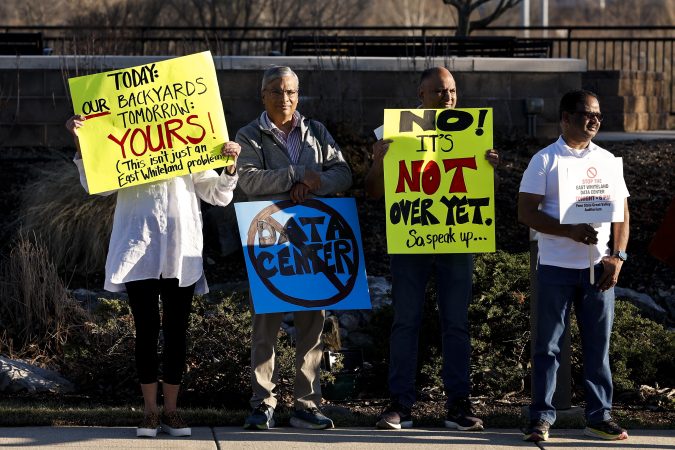
    There’s been a lot of push and pull as developers look to move ahead with a data center on a former Superfund site in East Whiteland Township. We break down the proposals and what comes next. Also this week, local mushroom farmers are at odds over a national policy, two county school districts are among the area’s highest spenders on athletics, plus, a Kennett Square couple used a Longwood Gardens fountain show for their gender reveal.

    If someone forwarded you this email, sign up for free here.

    Everything you need to know about the East Whiteland data center development

    A developer is looking to build a data center on a Superfund site. Jose F. Moreno / Staff Photographer

    Like the plumes of dust rising from the site of what soon could become a data center in East Whiteland Township, concern rose in Malvern Hunt resident Kelly Donia as construction vehicles moved about it last month.

    While the township has issued a stop-work order to assess the safety of the former Cyprus Foote Mineral Co. property, now a Superfund site, neighbors continue to express concern over the potential environmental impacts.

    The Inquirer’s Frank Kummer and Brooke Schultz explain where things stand and what could come next.

    📍 Countywide News

    💡 Community News

    • A Kennett Square couple recently celebrated their wedding and the birth of their child, revealing the gender during a custom fountain show at their reception at Longwood Gardens.
    • Phoenixville native and former Olympian Tyler Nase has been named the next head coach of women’s rowing at the University of Pennsylvania.
    • Longtime Vanguard Group executive and Chester Springs resident Gerry O’Reilly died suddenly last month. He was a former Irish Olympian and Villanova University Hall of Famer.
    • Oxford’s borough council is hosting a special meeting tonight at 7 p.m. to continue discussions about the future of its police department, with a possible vote on the table. The meeting will also be live streamed.
    • Franklin Township’s board of supervisors is holding a meeting Monday at 7 p.m. to discuss the future planned merger of the Avondale and West Grove Fire Companies, including their combined budget and interim governance agreement. Virtual attendees can also join via Zoom.
    • The Coatesville VA Medical Center will undergo a number of updates after receiving funds from Veterans Health Administration, including renovations to two buildings and a new roof on another.
    • East Goshen Township is launching a five-month composting pilot program in August for 50 households.
    • Penn Township is hosting a ribbon cutting today from 10 a.m. to noon for its new fitness court at Penn Township Park.
    • Phoenixville women’s boutique Refinery has expanded to a second location at 117 E. King St. in Malvern.
    • Ducklings Early Learning Center is expanding to Elverson, with its new location set to debut Monday. There’s a sneak peek event today from 4 to 7 p.m. Located at 4987 N. Twin Valley Rd., Ducklings Early Learning Center offers daycare and preschool programming.

    🏫 Schools Briefing

    • West Chester Area School District had a 28% participation rate for student athletics during the 2024-25 school year, putting it among the highest in the region. Along with the Phoenixville Area School District, it spent over $1,100 per high school student on athletics, The Inquirer’s Maddie Hanna reports.
    • Coatesville Area School District has named Jennifer Becker assistant principal of Rainbow Elementary School.
    • Octorara Area School District has named Angela Regrut principal of Octorara Primary Learning Center.
    • The West Chester school district has appointed a supervisor of strategic initiatives and district partnerships. Katie Walker will begin in the newly created role in August.

    🍽️ On our Plate

    • Goodness Bowls, which serves smoothies, bowls, juices, salads, and wraps, opened its newest location last week at 5 Paoli Plaza in Paoli.
    • A new ramen and Hawaiian barbecue spot opened recently in West Chester. Located at 124 E. Market St., Momoyama also serves fried noodles and rice, steamed buns, and dumplings.
    • Origami Asian Fusion recently opened in Exton. The BYOB serves sushi and Chinese dishes.

    🎳 Things to Do

    🎙️ Sound of Summer Free Concert Series: Wide-ranging cover band The Late Ambitions, which plays everything from the ‘50s to today, will perform. ⏰ Wednesday, July 29, 6:30-8:30 p.m. 💵 Free 📍 Anson B. Nixon Park, Kennett Square

    🛍️ Phoenixville Vintage Fest: Browse vintage goods and listen to live music at this two-day event. ⏰ Saturday, Aug. 1 and Sunday, Aug. 2, 9 a.m.-4 p.m. 💵 Pay as you go 📍 Main and Bridge Streets parking lot, Phoenixville

    🎆 Uwchlan Township Community Day: This celebration includes live music, food trucks, and kids activities followed by fireworks. ⏰ Saturday, Aug. 1, 4-9 p.m. 💵 Pay as you go 📍 Lionville Park, Exton

    🎀 Legally Blonde The Musical: See a musical adaptation of the iconic Reese Witherspoon movie. ⏰ Thursday, July 30-Saturday, Aug. 1, times vary 💵 $20-$28 📍 Uptown! Knauer Performing Arts Center, West Chester

    🇺🇸 Drone Show: Catch a patriotic drone show over West Chester. ⏰ Sunday, Aug. 2, 9 p.m. 💵 Free 📍 Downtown West Chester

    🏡 On the Market

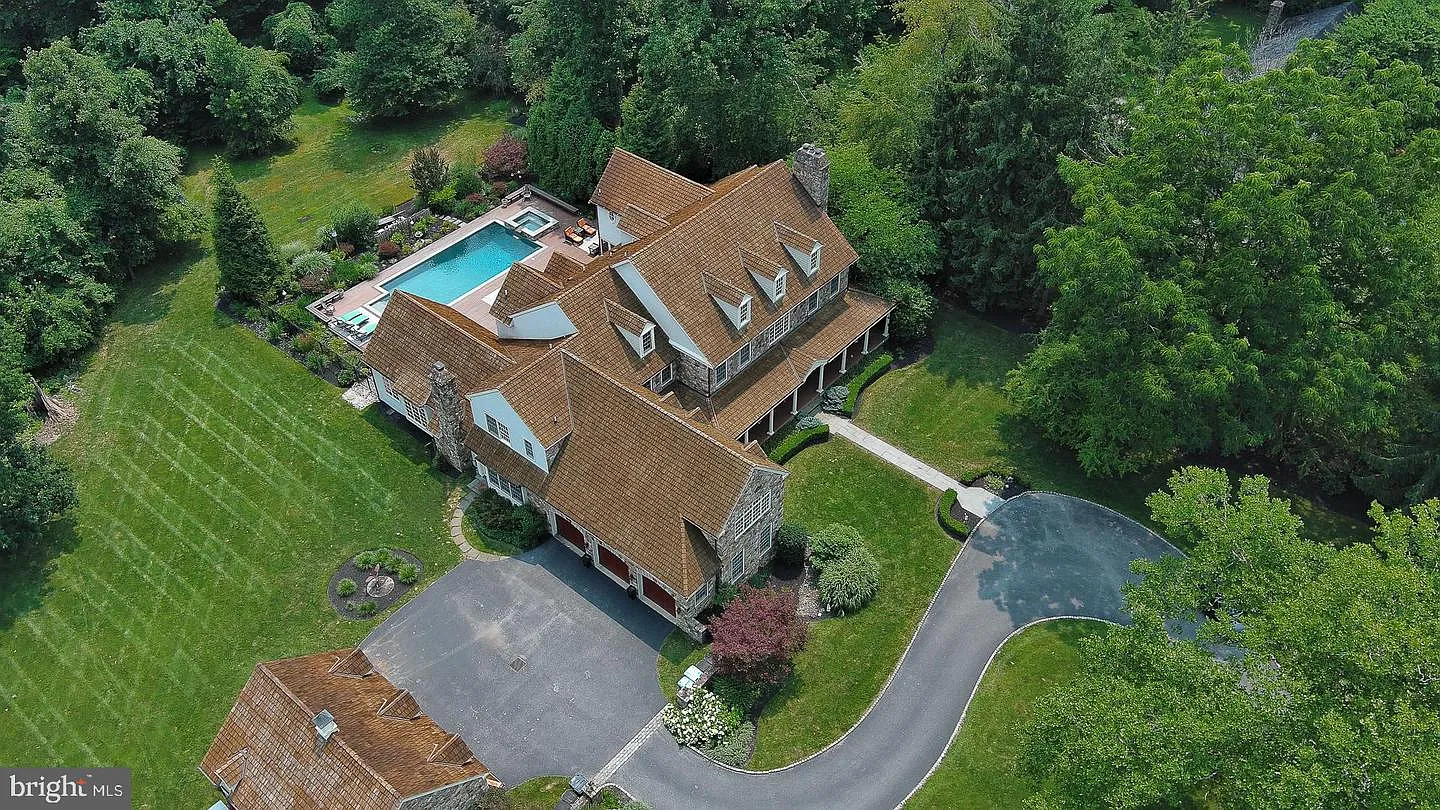
    An elegant six-bedroom Berwyn estate with a pool and spa

    An aerial view of the home, which has a pool, spa, and detached garage.David Ocenas | Courtesy of Michael and Maribeth McConnell/Berkshire Hathaway Fox & Roach Realtors

    Thanks to a classic design, this stone estate looks historic but has all the trappings of a modern home. Some of its features include a kitchen with high-end appliances and an oversized island, a butler’s pantry, and a family room with vaulted ceilings. The home has six bedrooms, including a primary suite with a fireplace and two walk-in closets. There’s also plenty of outdoor living space thanks to a three-season room, a large deck with a fireplace, and a pool and spa. There’s an open house tomorrow from 2 to 4 p.m.

    See more photos of the property here.

    Price: $3.195M | Size: 9,339 SF | Acreage: 1.91

    🗞️ What other Chester County residents are reading this week:

    By submitting your written, visual, and/or audio contributions, you agree to The Inquirer’s Terms of Use, including the grant of rights in Section 10.

    This suburban content is produced with support from the Leslie Miller and Richard Worley Foundation and The Lenfest Institute for Journalism. Editorial content is created independently of the project donors. Gifts to support The Inquirer’s high-impact journalism can be made at inquirer.com/donate. A list of Lenfest Institute donors can be found at lenfestinstitute.org/supporters.

  • Craig LaBan reviews Barclay Pies | Inquirer Cherry Hill

    Craig LaBan reviews Barclay Pies | Inquirer Cherry Hill

    Hello, Cherry Hill! 👋

    Finding a good gluten-free pizza can be a challenge, but Barclay Pies has risen to it, according to Inquirer food critic Craig LaBan. Also this week, the township has banned large-scale data centers, the former chief baking officer at Classic Cake is opening a nearby cake shop, plus, the latest on roadwork throughout the township.

    If someone forwarded you this email, sign up for free here.

    Barclay Pies sets a new standard for gluten-free pizza

    A gluten-free pepperoni pizza at Barclay Pies. Tyger Williams / Staff Photographer

    Gluten-free pies that don’t look like cardboard circles and mozzarella sticks that are safe for non-gluten-eaters to enjoy? Barclay Pies is serving up versions of both that are far tastier than many of their contemporaries, according to Inquirer food critic Craig LaBan.

    He recently reviewed the roughly year-old Marlton Pike pizza joint and he’s not the only one impressed by the shop’s high-hydration crusts dusted with cornmeal. The shop has gained buzz among the gluten-free community, so much so that gluten-free pies make up about a third of all Barclay’s orders.

    Here’s what LaBan liked about the Detroit-style offerings and how they stack up to their gluten-filled counterparts.

    💡 Community News

    • In case you missed it, large-scale data centers have been banned from being developed in Cherry Hill after township council voted on a zoning ordinance amendment at Monday’s meeting. The Inquirer’s Lacey Latch has the details.
    • The former site of Roma Bank at 1951 Route 70 East could soon become a medical office complex. The developer will go before the planning board on Monday for variance approval for a 6,000-square-foot space for up to two tenants.
    • Roadwork continues on Kenilworth Avenue, and Haddonfield-Berlin, Kresson, Springdale, and Old Orchard Roads, causing closures, detours, and delays. Here’s the latest.
    • After months of searching, Chabad of Cherry Hill West has found a new home in an office building on Chapel Avenue, near AMC Theatres, Philadelphia Jewish Exponent reports.
    • The township mailed tax bills for the second half of 2026 last week and has extended the grace period until Aug. 19.

    🏫 Schools Briefing

    • Kwame Morton is the second-highest paid superintendent in Camden County, according to state budget data for 2025-26. He had a base salary of $242,925, putting him behind Winslow Township’s superintendent and ahead of Camden City’s. That figure ranks 91st statewide, according to the Courier Post.

    🍽️ On our Plate

    • Al DiBartolo, the former chief baking officer at Classic Cake on Evesham Road, is opening his own 900-square-foot bakery within Del Buono’s Pastry Shop, which is set to debut in Haddon Township late next month. DiBartolo’s Kakery will have grab-and-go cakes, as well as custom and wedding cakes.
    • Quickway Japanese Hibachi opened this week at Ellisburg Shopping Center. The eatery serves bento boxes, sushi, poke, and hibachi dishes.

    🎳 Things to Do

    🕺 80s and 90s Party: Throwback hip hop and R&B tunes will dominate this dance party. ⏰ Saturday, Aug. 1, 6-10 p.m. 💵 $24.71 📍 Vera

    🎧 Cherry Hill Record Riot: Browse dozens of tables of albums. ⏰ Sunday, Aug. 2, 10 a.m.-4 p.m. 💵 Prices vary 📍 Holiday Inn Philadelphia-Cherry Hill

    🫧 Mr. Foamtastic Foam Party: Kids can play in suds outside the library. ⏰ Tuesday, Aug. 4, 2-3 p.m. (Rain date: Aug. 7) 💵 Free 📍 Cherry Hill Public Library

    🚓 National Night Out: The community event will feature demonstrations, food, games, and music. ⏰ Tuesday, Aug. 4, 6-8:30 p.m. 💵 Free 📍 Croft Farm

    🗓️ Looking for more things to do? Check out our guide to ongoing South Jersey events.

    🏡 On the Market

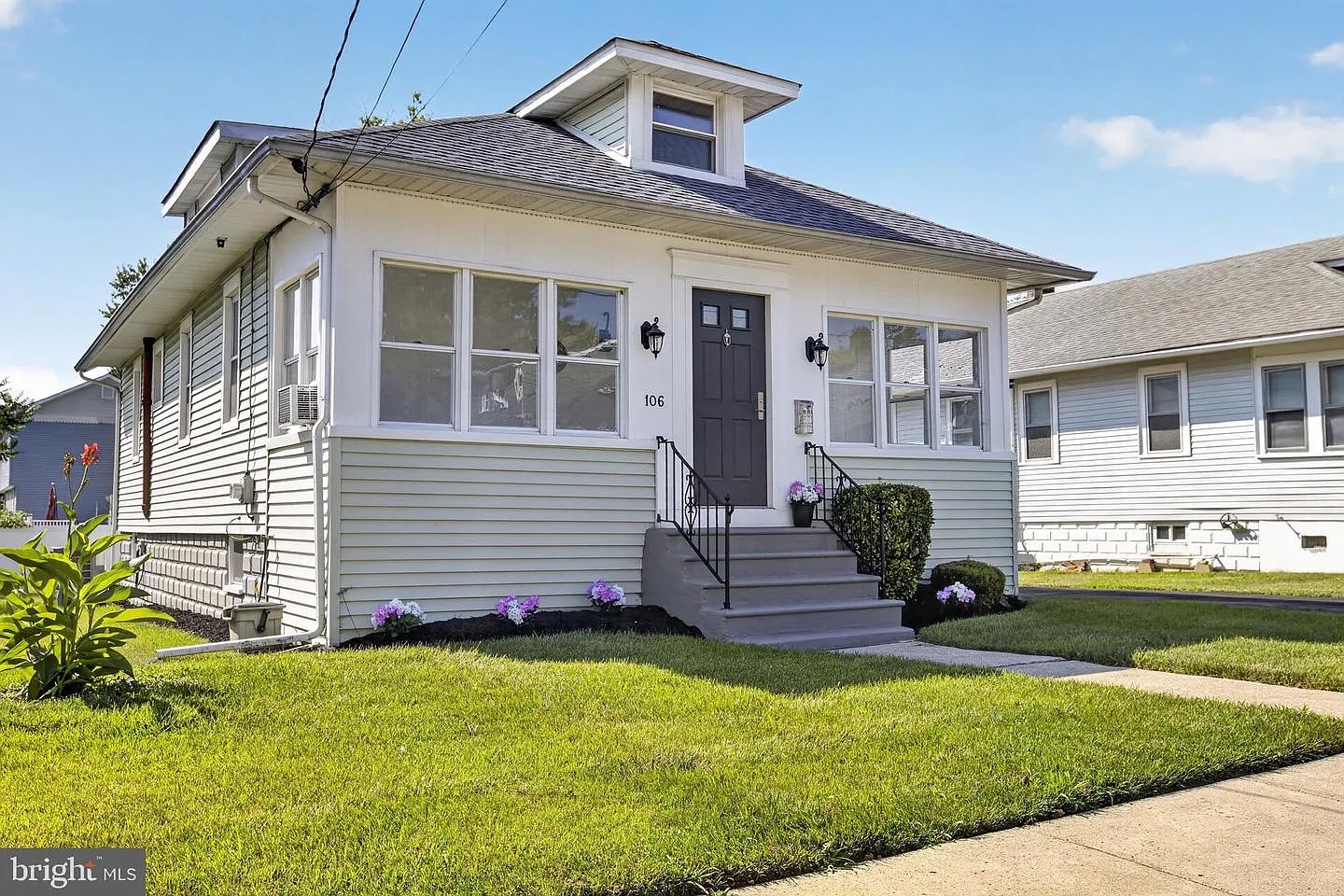
    An updated century-old bungalow

    The exterior of 106 Linderman Ave. in Cherry Hill, New Jersey.
    The exterior of 106 Linderman Ave. in Cherry Hill, New Jersey.Tory Schroff, Keller Williams Realty – Moorestown

    Built in 1926, this three-bedroom, two-bathroom home in the Barlow neighborhood has been recently updated and features two spaces to connect to the outdoors. In the front, there’s an enclosed porch, while out back, a deck leads to the yard and a detached two-car garage.

    See more photos of the home here.

    Price: $389,900 | Size: 1,500 SF | Acreage: 0.14

    🗞️ What other Cherry Hill residents are reading this week:

    By submitting your written, visual, and/or audio contributions, you agree to The Inquirer’s Terms of Use, including the grant of rights in Section 10.

    This suburban content is produced with support from the Leslie Miller and Richard Worley Foundation and The Lenfest Institute for Journalism. Editorial content is created independently of the project donors. Gifts to support The Inquirer’s high-impact journalism can be made at inquirer.com/donate. A list of Lenfest Institute donors can be found at lenfestinstitute.org/supporters.

  • Strong storms prompt tornado and flood warnings in the Philly region

    Strong storms prompt tornado and flood warnings in the Philly region

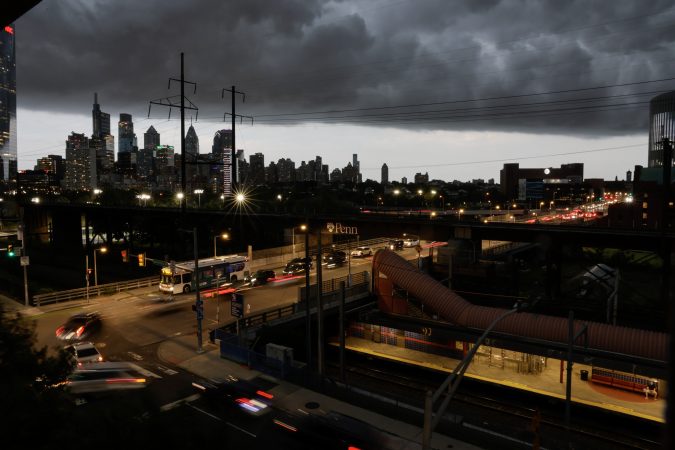
    With the atmosphere behaving like a shaken bottle of champagne, potent storms crossed the Philly region Tuesday night, prompting tornado and flood warnings.

    The National Weather Service issued tornado warnings for parts of Chester and Delaware Counties and northern Delaware. The warning area included Chester city and Wilmington, where a funnel cloud reportedly was sighted, the weather service said.

    It was not yet known if any twisters had touched down.

    The federal Storm Prediction Center, which issued the general twister advisory, also had the entire region under a severe thunderstorm watch until 10 p.m.

    The weather service also had posted numerous flash-flood and severe-storm warnings. The agency posted a report of “multiple” homes flooded in West Brandywine Township, Chester County,

    Rainfall this summer has been maddeningly capricious, but this time it appeared that the entire region is going to win some share of the rain lottery proceeds, wanted or not.

    “I think this is the type of setup where everyone is going to get rain,” said Marc Chernard, senior branch forecasters with the federal Weather Prediction Center, in College Park, Md. The center had Philadelphia and its neighboring counties targeted for “excessive rainfall” potential.

    The National Weather Service Office in Mount Holly has a flash-flood watch in effect until 2 p.m. Wednesday, with a general 1 to 3 inches expected across the region.

    For flood potential, what would matter would be the rainfall rates, and it’s possible the skies could wring out localized amounts of 3 inches an hour, said Chernard.

    Storms could be quite potent, said Patrick O’Hara, meteorologist at the Mount Holly office. The weather service warned that a “few tornadoes” are possible.

    “Some of the stuff in Delmarva, South Jersey, maybe even Philadelphia, may be spinning.” said O’Hara. “Welcome to July weather in Philadelphia.”

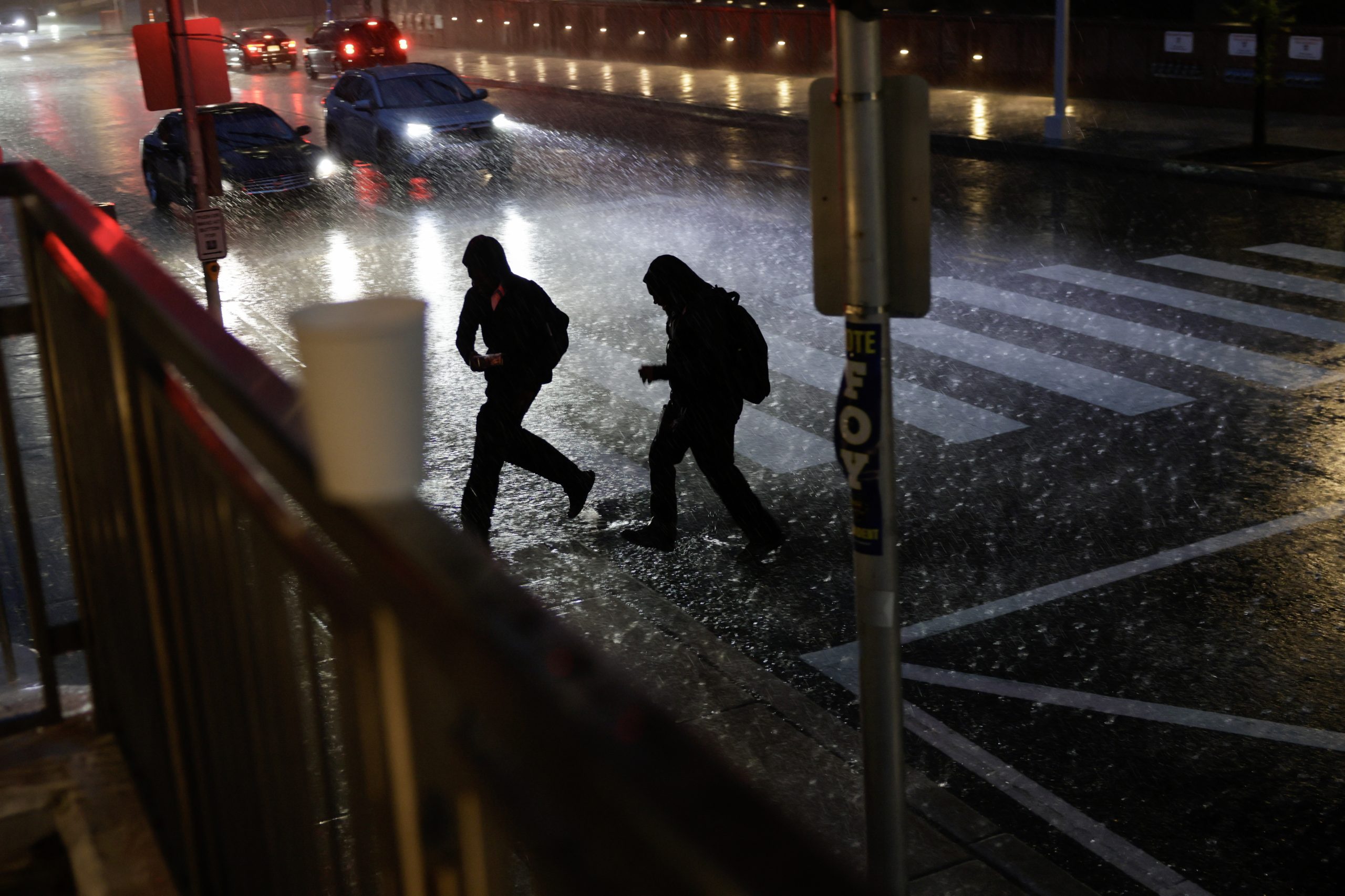
    People caught in the heavy rain storm as they cross the street in Philadelphia Tuesday, July 28, 2026, in University City.Elizabeth Robertson / Staff Photographer

    The likeliest time for strong storms in the Philly region

    An early batch of strong storms is likely to miss Philly and most of the afternoon may be rain-free, but a second round late in the day into the evening won’t, O’Hara said, with a round of soaking downpours likely.

    “That will be just torrents,” he said. He expected the heaviest of the rains to appear around 6 or 7 p.m.

    Said Chernard, “It could be a lot of rain that comes around quickly.”

    The system triggering the rain is something of a hybrid, born of a pattern more common to the cooler weather of fall and spring when temperature contrasts in the atmosphere are sharper, O’Hara said.

    “We have a situation where we have summertime heat and humidity, but almost out-of-season dynamics,” he said.

    Whatever the cause, the storms could have “significant impacts,” said Chernard.

    Chernard said he expected the worst of the rains to move out of the region later Tuesday night; however, the shut-off time remains uncertain.

    Showers could return Wednesday night.

    The flood potential

    After months of below-normal precipitation leading up to a July that has been the wettest month since March 2024, “base” stream levels are relatively low, said O’Hara.

    And neither the Delaware nor Schuylkill Rivers are in imminent danger of sloshing over.

    However, rain rates of 2 or 3 inches of hour are enough to generate flash flooding along streams. During a localized downpour on Monday, Pennypack Creeks in the Northeast rose to minor flood stage.

    Heavy rains flooded downtown streets and swamped cars in Hammonton, Atlantic County.

    How much for Philly?

    With July thunderstorms it isn’t simply a question of how much for Philly, but how much for South Philly, Center City, Germantown, or Fox Chase.

    Even though everyone might get rain, the heaviest rains will be concentrated, said Chernard.

    What is almost certain is that some places are going to get a soaking.

    At least no smoke is in the forecast.

  • American Airlines says technology outage temporarily halted flights

    American Airlines says technology outage temporarily halted flights

    American Airlines said Tuesday night that flights were temporarily halted because of a “technology issue” but have begun to resume.

    “A technology issue briefly impacted connectivity for some of our systems on Tuesday evening,” the airline posted on social media.

    “Systems are coming back online now and flights are departing again. We put a temporary ground stop in place while our teams worked to resolve the issue. We apologize to our customers for the inconvenience,” the airline said.

    American Airlines is the busiest carrier at Philadelphia International Airport.

  • Ro Khanna, a potential presidential contender in 2028, joins Chris Rabb in Philly as he pitches a ‘Progressive New Deal’

    Ro Khanna, a potential presidential contender in 2028, joins Chris Rabb in Philly as he pitches a ‘Progressive New Deal’

    Two months after winning a primary to likely become the first democratic socialist representing Philadelphia in Congress, State Rep. Chris Rabb on Tuesday joined forces in the city with U.S. Rep. Ro Khanna, a California progressive kicking off a week of events across the state as he considers running for president in 2028.

    The like-minded Democrats share a similar progressive platform, and Khanna endorsed Rabb ahead of the competitive primary to replace U.S. Rep. Dwight Evans (D., Philadelphia) in May.

    In a sign that the alliance might continue when Rabb enters Congress in January — and potentially beyond as the party considers its options for the next presidential race — the two kicked off Khanna’s statewide tour Tuesday in Philadelphia.

    Khanna, a Bucks County native who has represented parts of the Bay Area since 2017, is pitching a “Progressive New Deal,” invoking President Franklin D. Roosevelt’s platform, which led to the creation of Social Security and other programs.

    The California lawmaker called for the U.S. to end military aid to Israel and recognize Palestinian statehood as the war in Gaza nears its third year. And he called for progressive economic reforms and the tackling of corruption, which Khanna framed around the case of notorious sex offender Jeffrey Epstein and his associations with the rich and powerful.

    “I believe we need a ‘New Deal’ for the 21st century,” Khanna said. “We’re going to have people like Chris [Rabb] and others that are building that momentum. We need bold progressive Democrats: morality on foreign policy, morality on [Jeffrey] Epstein, and a bold economic vision to make this country work not just for the few but for all of us.”

    Khanna is among a slate of Democrats who have branded their platform as “New Economic Patriotism” with a focus on affordability and corruption issues during the first two years of President Donald Trump’s second term.

    Rabb, a five-term state lawmaker from East Mount Airy who ran an unabashedly progressive campaign, has said he is eager to join allies in Congress after the November election, in which he faces no Republican opponent to represent about half of Philadelphia.

    On Tuesday with Khanna, he outlined some of the platform that helped propel him to defeat a pair of more centrist candidates, and that he hopes to carry to Capitol Hill.

    “The issues we’re talking about resonate with a lot of people when you remove the labels,” Rabb said. “Medicare for All. You know, universal childcare. Federal jobs guarantee. No more endless wars. Acknowledging the genocide [in the war between Israel and Gaza].”

    At the Philadelphia City Institute library in Center City, where about 50 people listened and asked questions, Khanna spoke of his upbringing and how he watched people around him struggle after the closure of the Fairless Works steel factory in 2001.

    “My values were shaped in Bucks County,” said Khanna, who has described his week of events in Pennsylvania as a homecoming. “It’s shaped who I am. And I think Bucks County is a symbol for America.”

    But he sees the current anxiety and frustration of achieving the American dream. “I really want to offer a vision about how we can have the economic prosperity,” he said.

    Now, Khanna said, he represents the district that houses Silicon Valley and holds one-third of the nation’s wealth. He said he hopes his advocacy there to tax the billionaires who live in his district helps people all the way to Pennsylvania.

    “We’re in a second Gilded Age,” Khanna said. “I’m saying tax the billionaires in my district and in California so we can pay for free healthcare, so we can have free childcare in this country, so that we can have free college in this country.”

    His itinerary this week included two planned stops in Philadelphia and others across the state, including a Thursday event in Pittsburgh with U.S. Rep. Chris Deluzio, a potential primary challenger to Democratic Sen. John Fetterman in 2028 who shares Khanna’s economic platform.

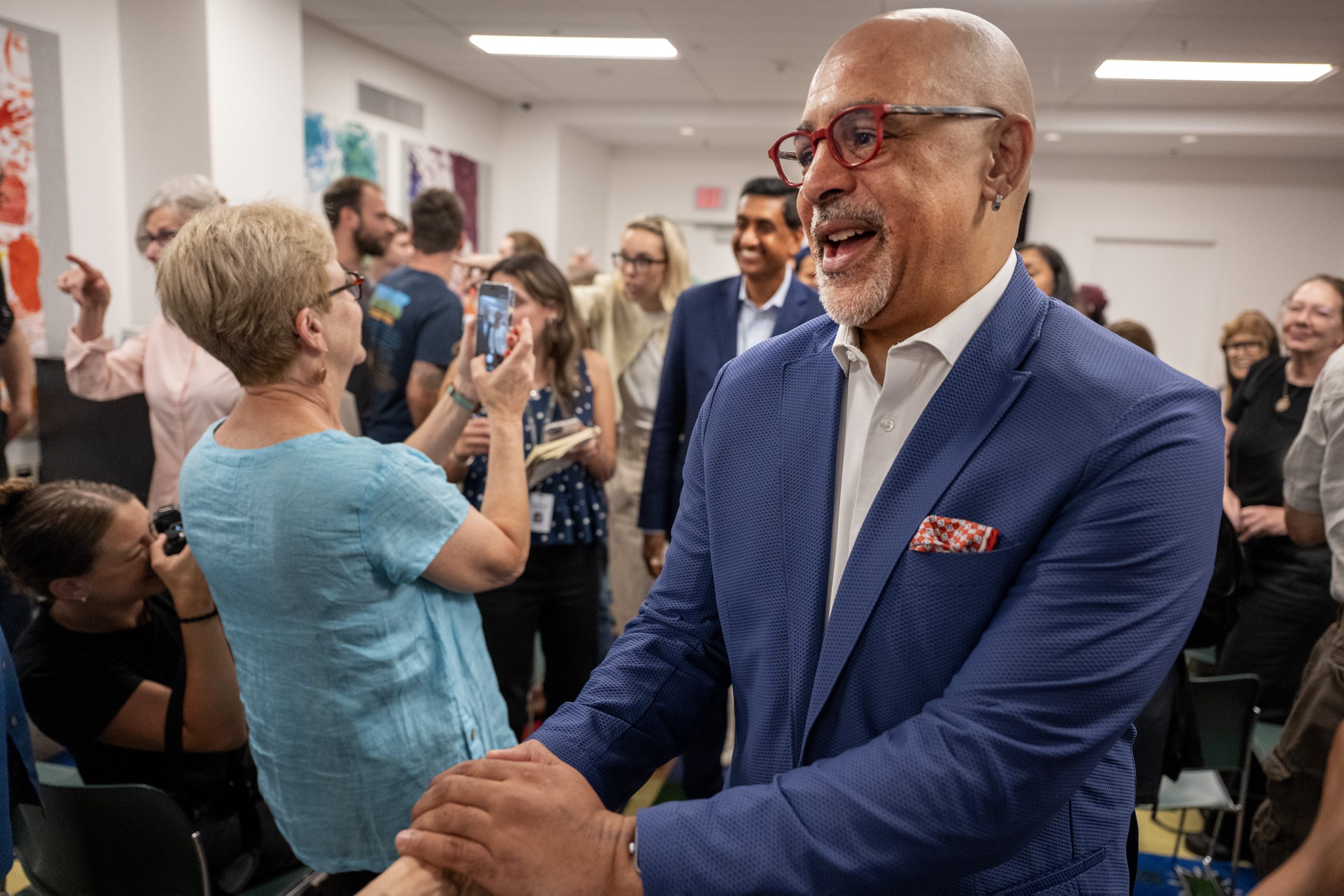
    State Rep. Chris Rabb greets supporters after appearing with U.S. Rep. Ro Khanna (rear) at the City Institute Library on Rittenhouse Square.Tom Gralish / Staff Photographer

    Rabb has advocated for a similar economic populism, including universal basic income and the Green New Deal.

    Since the primary, Rabb has both campaigned for other similar candidates and visited Washington, where he appeared on stage with Deluzio in June to discuss the surging left — a theme expounded upon again Tuesday.

    Several democratic socialists have won congressional primaries this year in blue districts, including Claire Valdez and Darializa Avila Chevalier in New York. Rabb endorsed them, as well as Melat Kiros, who beat 30-year incumbent U.S. Rep. Diana DeGette in a Colorado primary.

    Rabb said he would want to see a viable progressive candidate in the 2028 presidential election, but he did not specifically endorse Khanna, who could be among several such candidates in a crowded field.

    U.S. Rep. Alexandria Ocasio-Cortez (D., N.Y.), who also campaigned for Rabb in May, and Pennsylvania Gov. Josh Shapiro, who has had a frosty relationship with him, are also expected to be among the contenders for the nomination.

    “It’s coming up in a moment where there’s extraordinary organizing among folks who are very, very concerned about where we’re going as a nation, and the extent to which we can rely on conventional Democrats to deliver the type of justice and the result we seek,” Rabb said.

  • U.S. military says it thwarted an Iranian missile attack on American troops

    U.S. military says it thwarted an Iranian missile attack on American troops

    WASHINGTON — Iran has launched multiple ballistic missiles at American forces in the Middle East, shattering a brief pause in fighting as mediators tried to get both sides back to negotiations, the U.S. military said on Tuesday.

    All Iranian missiles were successfully intercepted, U.S. Central Command said on social media, adding that U.S. forces “remain vigilant and at a high state of readiness.”

    Saudi Arabia said Tuesday that it shot down drones fired by Iran-backed militias in Iraq for a second day, while Iran-backed Houthi rebels in Yemen claimed to have forced a Saudi oil tanker to turn around as part of their self-styled blockade of the kingdom.

    The attacks underscored lingering tensions despite a period of calm between the United States and Iran.

    The Saudi Defense Ministry said in a statement that air defenses intercepted and destroyed several drones that had attempted to target petroleum facilities in the nation’s eastern region. It said the attacks were “once again launched from Iraqi territory and carried out by Iran-affiliated terrorist militias.”

    Iraqi Prime Minister Ali al-Zaidi ordered security agencies to investigate after the Saudis alleged a similar attack on Monday. The Iraqi military said in a statement that Iraq is committed to “preventing Iraqi territory from being used as a route or launching point for any attack targeting brotherly or friendly countries.”

    The Iraqi militias have denied any role in the drone attacks. The Islamic Resistance in Iraq, an umbrella group of Iran-backed armed groups, called the Saudi claims “fabrications” and implied that Monday’s attacks were carried out by the Houthis, who had themselves claimed to have attacked Saudi oil facilities.

    Meanwhile, the Houthis claim to have fired missiles at the Saudi oil tanker NCC Ghazal, forcing it to turn back. Last week, they announced a blockade of Saudi shipping, putting another key Middle Eastern waterway — through the Bab el-Mandeb strait leading to the Red Sea — at risk.

    The United Kingdom Maritime Trade Operations Center said a tanker reported hearing explosions while traveling in the southern Red Sea. It did not name the tanker but said the crew and vessel were safe.

    The rebels fired on at least one Saudi tanker in the Red Sea last week.

    Iran and the U.S. paused their fighting over the weekend, though tensions remain high even as officials said mediators achieved progress in getting the two sides back to negotiations.

    Iran said Tuesday that U.S. strikes during an earlier period of escalation destroyed an airport and a marine control tower, and caused damage to 12 bridges and two tunnels, among other infrastructure.

    The U.S. military said at the time that it had struck numerous military targets in response to Iranian attacks on ships in the Strait of Hormuz. Iran retaliated with missile and drone attacks on Arab countries hosting U.S. forces.