The Senate confirmed Jay Clayton as the director of national intelligence Tuesday, ending the tenure of Bill Pulte, a housing official and Trump loyalist, who held the role for more than a month.
The 51-to-47 vote was more partisan than expected after Trump nominated Clayton in June. Many Democrats initially welcomed the pick and signaled they would support him.
But their attitude changed after Clayton’s July confirmation hearing, where multiple Democrats pressed him to acknowledge that Joe Biden won the 2020 presidential election. Clayton repeatedly said that Biden had been “certified” as the victor but declined to answer the question directly.
The question became a flash point for Democrats concerned about President Donald Trump’s use of the intelligence community to further his baseless claims that the 2020 election was rigged.
Clayton previously served as the U.S. attorney for the Southern District of New York and chaired the Securities and Exchange Commission during the first Trump administration.
His background has been less controversial than that of Pulte, who used his time leading the Federal Housing Finance Agency to further allegations of mortgage fraud against Trump’s perceived political enemies. But some Democrats have still argued that Clayton, like Pulte, lacks the national security experience required by law for the position.
The director of national intelligence oversees the 18 agencies that span the U.S. intelligence community. Lawmakers established the role after the 9/11 terrorist attacks to try to prevent future lapses in intelligence sharing and interagency coordination.
Pulte used his five weeks as acting intelligence chief to cut positions in the Office of the Director of National Intelligence, fulfilling Trump’s desire to vastly reduce its size. Since June 1, The Washington Post has reported, he has eliminated about 200 jobs within the ODNI.
Pulte said in a posting on X on Tuesday that he had conducted “a 5th and Near Final Round of TERMINATIONS, an approximately 30% Staff Reduction from Weeks Ago.” ODNI has shrunk from around 2,000 people at the start of Trump’s second term to less than 1,300. The workforce’s precise size is classified.
Clayton will take over an organization that has endured near nonstop upheaval in recent weeks, since the departure of former DNI Tulsi Gabbard in mid-June. Morale is low, former senior intelligence officials have said, noting they fear that ODNI’s recent politicized leadership and the firing of veteran analysts have discouraged independent analysis that clashes with White House narratives.
Clayton’s confirmation could unlock a deal to renew Section 702 of the Foreign Intelligence Surveillance Act, a warrantless spy program that lapsed for the first time in June after Democrats protested Pulte’s temporary appointment and voted down the legislation. Civil libertarians and privacy advocates have long opposed the tool, arguing it needs firmer guardrails to protect American citizens from government surveillance.
Lawmakers from both parties had sought to accelerate Clayton’s confirmation hearing in June to avoid having Pulte ever step into the acting director role. Trump abruptly canceled the previously scheduled session only hours before it was set to begin, instructing Clayton not to appear.
The president instead called on the Senate to pass a voting restrictions bill and threatened to blockade future legislation without it. The Senate has not yet done so.
Philadelphia’s former chief diversity, equity, and inclusion officer has said before that Mayor Cherelle L. Parker and top administration officials scapegoated her after she reported sexual harassment in City Hall and then fired her “unjustly.”
But in an explosive new lawsuit filed in federal court in Philadelphia this week, that officer, Brandee Anderson, claimed her termination was part of a coordinated effort to “suppress” or rebrand diversity work and came as a top Parker administration official made derisive comments about other DEI leaders.
She claimed Parker — a centrist Democrat who is Black and the city’s first female mayor — said in 2025 that she “did not care about Ms. Anderson’s ‘DEI ideology,’ only minority business.”
And she alleged in the lawsuit that the mayor threatened to remove any administration official who expressed dissenting views, telling a gathering of senior officials that no one “has a right to have an opinion about where we are going.”
The suit, filed Monday in U.S. District Court for the Eastern District of Pennsylvania, seeks unspecified damages and payment of lost wages as a result of her firing. Parker is named as a defendant, as are Deputy Mayor Vanessa Garrett Harley, Inspector General Alexander DeSantis, and communications director Joe Grace. Anderson claimed DeSantis and Grace defamed and retaliated against her in statements to the media after her firing.
Anderson served as Parker’s chief DEI officer beginning in 2024, advising the mayor and administration on matters such as workforce diversity, community engagement, equitable budgeting, and minority business opportunities. She also oversaw offices that serve LGBTQ+ residents and people with disabilities.
She was fired in 2025 after Tyrell Brown, then the director of the Philadelphia Office of LGBTQ+ Affairs, reported to Anderson that they had received a “semi-nude” photo from a senior administration official. Anderson says in the lawsuit that she was fired days after elevating the matter to Garrett Harley and human resources officials.
It was also the second time this month that a former Parker administration official accused senior administration members of fostering a toxic work environment.
Shania Bennett, the former director of the Philadelphia Office of Youth Engagement, last week posted on social media that working for the city was “the worst experience of [her] life” and that she had quit her job after “unprofessional harassment.”
Bennett could not be reached for comment.
‘Stand down’ on DEI matters
Anderson, an attorney who founded a firm that creates anti-racist trainings, was hired in October 2024 to lead the city’s DEI efforts. In the lawsuit, she alleges that Parker officials undermined her authority from the outset.
She claimed Parker forbade her from contacting members of City Council with whom she had existing relationships. And she said Garrett Harley, one of Parker’s most senior officials, told her and other DEI leaders to “stand down” if they expressed dissenting views, saying “if you can’t align with the mayor’s strategy, DEI may not be the job for you.”
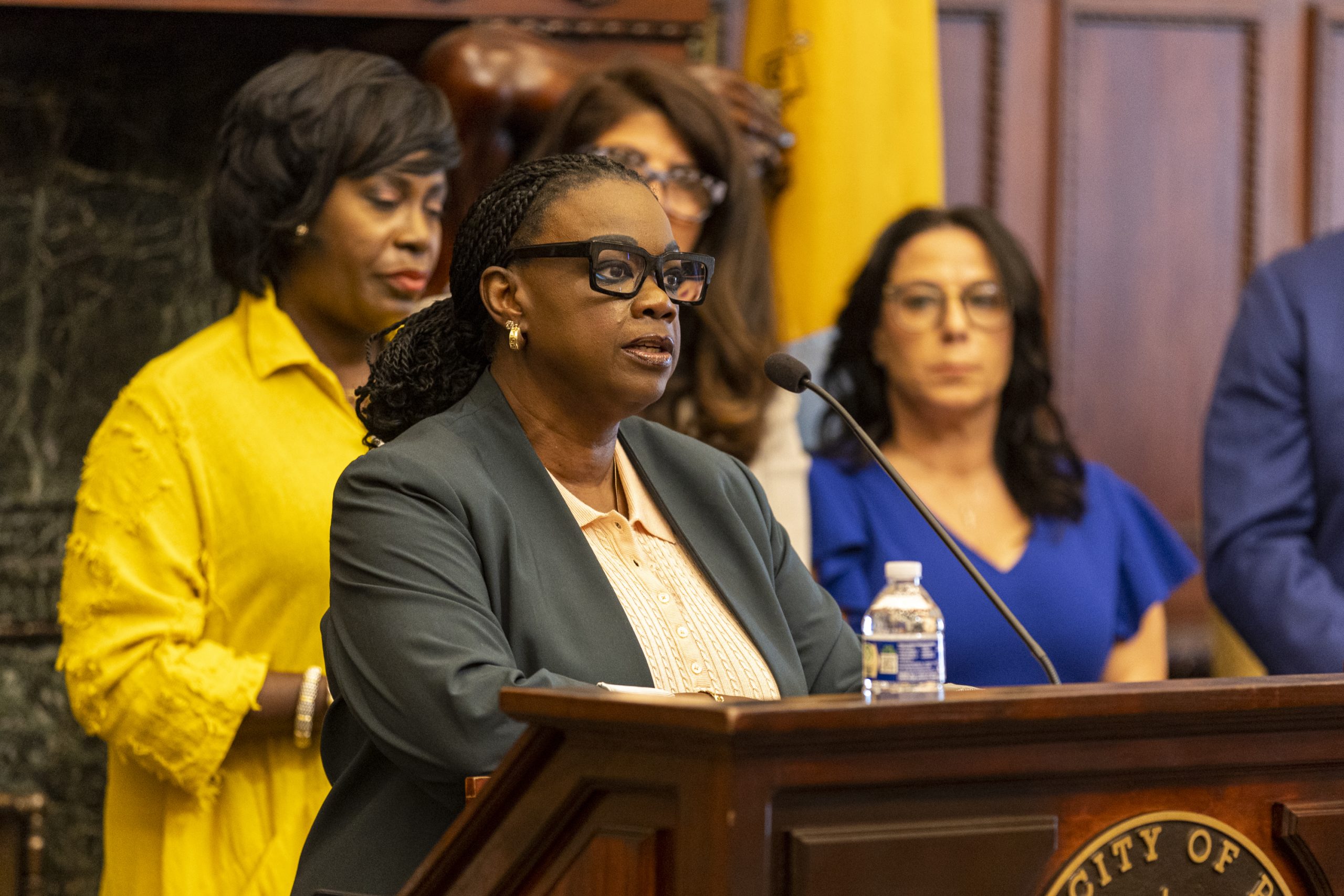
Deputy Mayor Vanessa Garrett Harley speaks during a news conference in Philadelphia, Pa., in June 2024.Tyger Williams / Staff Photographer
Anderson also claimed Garrett Harley made discriminatory comments about a transgender official, Celena Morrison-McLean, former director of the Philadelphia Office of LGBTQ+ Affairs, who reported to Anderson. Garrett Harley, the lawsuit alleges, instructed Anderson to “document Celena [Morrison-McLean] out,” or create a paper trail leading to her dismissal.
According to the lawsuit, the deputy mayor also mocked Morrison-McLean during a meeting with several other officials, saying she used a “deep male tone” to intimidate staff.
She is now a consultant, according to her LinkedIn profile. She could not be reached for comment.
Celena Morrison-McLean reads a statement with Darius McLean (rear) Thursday, Mar. 7, 2024. The married LGBTQ leaders were arrested during a contentious traffic stop over the weekend.Tom Gralish / Staff Photographer
Anderson said in the lawsuit that Garrett Harley also made comments to her in early 2025 that she saw as fostering a hostile work environment. She claims she disclosed to Garrett Harley that she was the victim of rape and asked for time off to attend a hearing in the criminal case against her alleged assailant.
“Ms. Garrett-Harley responded,” the lawsuit says, “by questioning how one woman could rape another.”
In a separate instance, Garrett Harley also instructed Anderson to delete emails documenting dangers to children in the city’s care, according to the lawsuit. The lawsuit did not elaborate on the content of the emails.
Harassment report and press fallout
Brown was appointed in March 2025 to succeed Morrison-McLean as the city’s director of LGBTQ+ affairs. In July 2025, Brown reported to Anderson that Christopher Dailey, then a deputy chief of staff in the mayor’s office, had sent them a sexual image on a cruising app.
At the time, Anderson said Brown told her they did not feel harassed by the photo, partly because it was not clear whether Dailey knew to whom he had sent the image, which included Dailey’s face. Brown’s profile was anonymous, Anderson said, but the app used geolocation, meaning that users would have known they were contacting someone in or near City Hall.
Anderson elevated Brown’s report to human resources roughly a week later, the complaint says, leading DeSantis, the city’s inspector general, to launch an investigation.
By July 22, Anderson was fired. DeSantis has said Anderson never possessed the photo, but allowed Brown to display it while another employee besides Anderson, their supervisor, was in the room. That decision, DeSantis said, constituted a violation of the city’s sexual harassment policy.
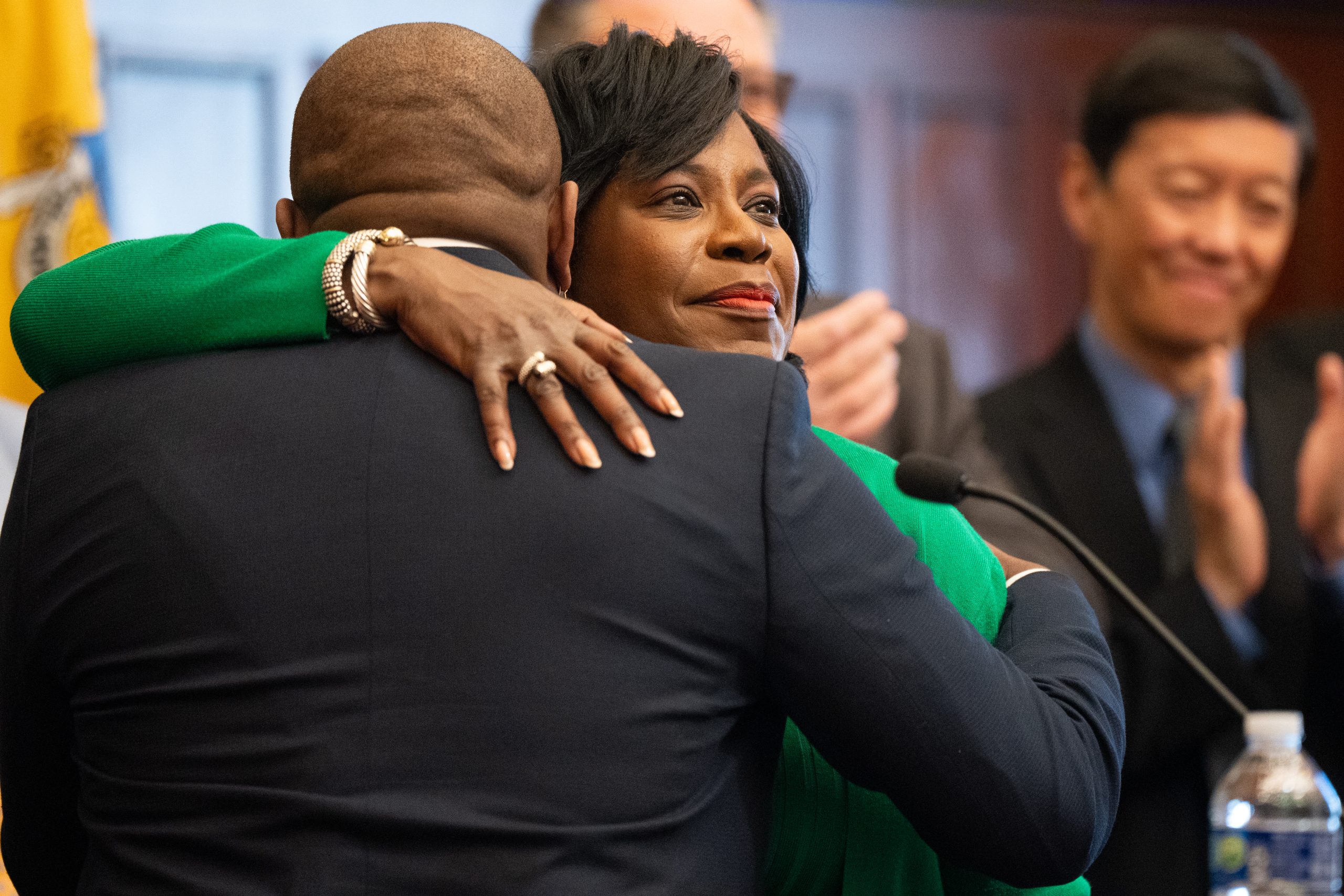
Mayor Cherelle Parker, right, hugs Tyrell Brown, left, the new Director of LGBTQ+ Affairs, during a press conference to announce new appointments, at City Hall, in Philadelphia, March 21, 2025.Jessica Griffin / Staff Photographer
Anderson’s lawsuit claims racial discrimination, noting that Dailey, who is white, was not fired, but was instead moved to a new role in a different office. Brown and Anderson are both Black.
Brown could not be reached for comment.
Additionally, Anderson claimed that Parker, DeSantis, and Grace each made “false and defamatory” statements in the media after she was fired.
She cited a July 2025 Inquirer article in which Grace said Anderson’s allegations about the reason for her termination included “outright misstatements of fact.”
The lawsuit also mentioned an interview with iHeart Radio’s WDAS 105.3 FM that DeSantis participated in last year about the firings, during which he said that Anderson had “mishandled the photograph” and “did something wrong.”
Anderson, in the lawsuit, said those statements were false.
WASHINGTON — Federal officials involved in the prosecution of James Comey misled judges, submitted false statements and withheld key facts during the course of the investigation, according to new defense filings that seek the dismissal of a case charging the former FBI director with threatening President Donald Trump on social media.
Lawyers for Comey made the allegations of misconduct in motions filed late Tuesday that also call the case a vindictive and selective prosecution, request access to transcripts of grand jury proceedings to expose what they say are “irregularities” in how the indictment was secured, and describe “unlawful” surveillance of Comey by the Secret Service.
“Ample objective evidence — much of which comes directly from government officials’ own public statements and admissions — establishes that the President’s animus toward Mr. Comey led to this vindictive and selective prosecution,” Comey’s lawyers wrote in one of the filings.
A picture of seashells on the beach
Comey was charged in April with threatening Trump through a photo he posted on Instagram a year earlier depicting seashells he said he found on the beach in North Carolina in the numerical arrangement of “86 47.”
The Justice Department has said the photo constituted a threat against Trump, the 47th president. Comey deleted the post shortly after he put it up, saying he did not know that anyone interpreted the numbers as a call to violence. His lawyers have said that the slogan has long meant to “get rid of” or “eject” and has been featured on thousands of items sold online and regularly displayed at protests.
Defense lawyers say investigators who tried to prove that Comey intended a physical threat, or knew that the number “86” suggested violence, repeatedly came up empty but withheld that from federal magistrates as they applied for warrants to search the digital accounts of Comey and his wife.
For instance, the FBI searched an internal database of information about open and closed investigations for any indication of an association between Comey and the term “86” but found inconclusive results. An FBI agent also requested a review of the FBI file for the case against reputed mobster John Gambino, which Comey worked on as a young prosecutor, but found no references to the term “86.”
Investigators also interviewed a key government cooperator in the case, Salvatore Gravano, who said he did not recall ever discussing the term “86” with Comey or hearing it in connection with the trial.
“Evidence obtained during discovery supports at least a substantial preliminary showing that the affidavits submitted in support of two of the search warrants contained intentionally false statements and material omissions, and that those defects vitiate any conceivable showing of probable cause,” Comey’s lawyers wrote.
Defense lawyers say case is rooted in Trump’s personal animus
In addition, defense lawyers say the warrant applications distort statements made to investigators by a person who knew Comey but has been now estranged from him for years.
The person, whose name is not revealed in the court filings, is described in the affidavit as saying that they immediately perceived Comey’s post to have a violent meaning. But investigators omitted from the affidavit that the person had said their initial impression was that “86” referred to being “out of something on the menu” and only later concluded that it could be understood as a call to violence.
The person said that view was influenced by having listened to an episode of Rudy Giuliani’s online show in which the Trump loyalist claimed that Comey had worked on mob cases as a prosecutor in which mafia members used “86” to mean “kill.” But the FBI’s own investigation determined Giuliani’s claims to be untrue, defense lawyers said.
The seashells case against Comey was the second in months targeting the ex-FBI director, a long-running Trump foe whom the president over the years has called a “corrupt piece of garbage” and other epithets.
An earlier case in Virginia accusing Comey of lying to Congress was dismissed in November after a judge concluded that the prosecutor who charged him and another Trump adversary, New York Attorney General Letitia James, was illegally appointed to the job.
Comey’s lawyers describe the prosecutions as rooted in Trump’s own personal animus, with the Secret Service closely coordinating with the Justice Department and with Trump, who received frequent updates on Air Force One.
As Comey returned to Washington with his wife to be interviewed by law enforcement about his post, Secret Service agents were directed to conduct “unlawful” electronic surveillance, “including as they stopped to visit the grave of their deceased son,” his lawyers said. The surveillance had been requested by a senior Justice Department official.
Comey was the FBI director when Trump took office in 2017, having been appointed by then-President Barack Obama and serving before that as a senior Justice Department official in President George W. Bush’s administration. Trump fired Comey in May 2017 during an FBI investigation into potential ties between Russia and Trump’s presidential campaign. The men have been openly at odds ever since.
The Justice Department will have an opportunity to respond to the defense filings. The department has not elaborated on any evidence of intent the government has. But acting Attorney General Todd Blanche said earlier this year that prosecutors in every case prove intent with “witnesses, with documents, with the defendant himself to the extent it’s appropriate.”
“And that’s how we’ll prove intent in this case,” Blanche said in April, shortly after he was elevated to lead the department after Pam Bondi’s ouster.
A guard at a federal prison in Fort Dix, Burlington County, had a lengthy sexual relationship with a prisoner and sometimes paid other inmates to act as lookouts while the two had sex in an office, according to federal authorities.
Jordan Pensak of North Brunswick was charged this week with sexual abuse of a person in custody, court records show.
Pensak’s relationship with the prisoner — whom authorities did not identify — began after she started working on his unit in 2024, according to a criminal complaint. A witness reported the pair’s suspected encounters to law enforcement, the complaint said, saying Pensak and the man had sex “multiple times” in an office as the paid lookouts stood nearby and watched for other corrections officers.
Investigators found more than 100 sexually explicit photos and messages that Pensak and the prisoner shared on Instagram and on cell phones the man apparently possessed while behind bars, the complaint said.
At times, the document said, Pensak was overt in the messages about her relationship with the prisoner, writing in a January message to an unidentified recipient that she had been in the relationship “for the past year” and that she didn’t intend to end it.
A month later, the complaint said, when someone else asked Pensak if she knew she could be criminally charged and go to jail for her actions, she wrote back: “Yes I know.”
Pensak also sent messages to people earlier this year in which she detailed a pregnancy scare, the complaint said. At one point, she said that if she were pregnant, the baby would be a different race than her husband, and that it “ain’t good for this investigation.”
A spokesperson for the Bureau of Prisons declined to comment on the allegations against Pensak, but did say Pensak had been placed on administrative leave.
Attempts to reach Pensak’s lawyer for comment Wednesday were not immediately successful.
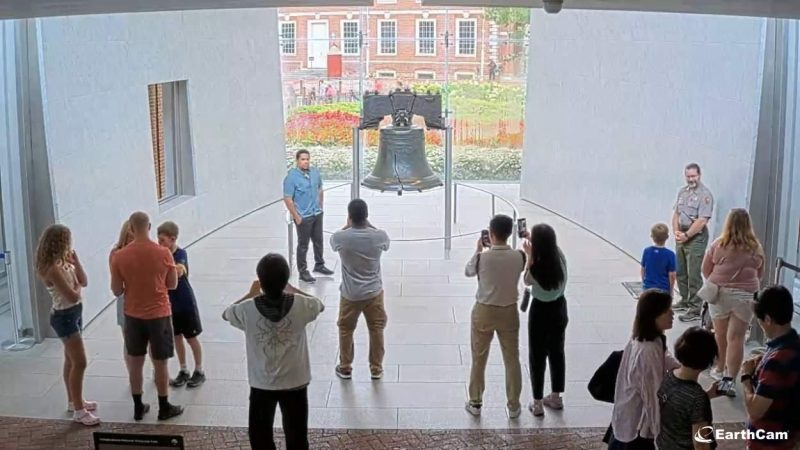
Strangers took photos of families in front of the Liberty Bell, as others took close-up photos of the iconic symbol of U.S. independence.
A little boy in blue shorts and curly hair ran up to the bell to point out the crack. A National Park Service staffer looked at his watch. It was almost closing time at the Liberty Bell Center and the crowd began to dwindle as 5 p.m. approached Tuesday.
The boy posed next to a little girl for the last photo of the day, and the room cleared.
The bell received a reprieve from visitors until 9 a.m. Wednesday, when it all started back up again.
These moments were captured by a new camera that transmits a 24-7 live stream of the Liberty Bell on EarthCam, a website that live streams various iconic sites around the world.
“At Independence National Historical Park, the livestream provides the public with a real-time virtual view of one of the nation’s most iconic historic sites, expanding public access and engagement,” said a spokesperson for Independence National Historical Park in a statement.
The Eagles Super Bowl parade down the Benjamin Franklin Parkway as captured by EarthCam from the Franklin Institute. February 14, 2025.EarthCam
The camera pointing at the Revolutionary-era relic was set up ahead of the United States’ 250th anniversary celebration earlier this month, and adds to the website’s collection of iconic travel destinations that includes Times Square in New York City, the Temple Bar in Dublin, and the crosswalk at Abbey Road, London. There is also a camera streaming Andy Warhol’s grave in Bethel Park, Pa., outside Pittsburgh.
The streams, while an effort to increase access to historic sites, also raise questions for surveillance experts and are part of a growing number of live streams in public places.
“The general trend of video surveillance [is] becoming pretty ubiquitous in common public spaces and across cities,” said Jake Laperruque, deputy director of the Security and Surveillance Project at the nonprofit Center for Democracy and Technology.
EarthCam, a New Jersey-based web-camera technology company, installed the Liberty Bell camera and live stream as part of a donation of 250 cameras for the United States’ 250th birthday.
“Taking people to that park and showing that view is amazing,” said Brian Cury, EarthCam’s founder and CEO.
The Liberty Bell camhasracked up more than a quarter million streams since it was installed about a month ago, Cury said, including 80,000 virtual visits on July Fourth.
Cury said EarthCam donated the camera to the National Park Service at no cost. The company streams from national parksthroughout the country, including the Flight 93 National Memorial in the Shanksville, Pa., area.
The streams are a way to bring iconic sites to people in a way that is more compelling than a photo, Cury said. And hopefully, he said, they can entice people to step outside.
“There are lots of kids that should get out of the house and go explore our amazing country,” the CEO said. “But they are online.”
Visitors to the EarthCam website can view the live stream, a video archive of the last 24 hours, and a collection of still images from previous days since the camera has been installed (a “hall of fame” of sorts, Cury says.)
Still images from recent days show the bell at night, families visiting, and groups gathering in front of the bell for photos.
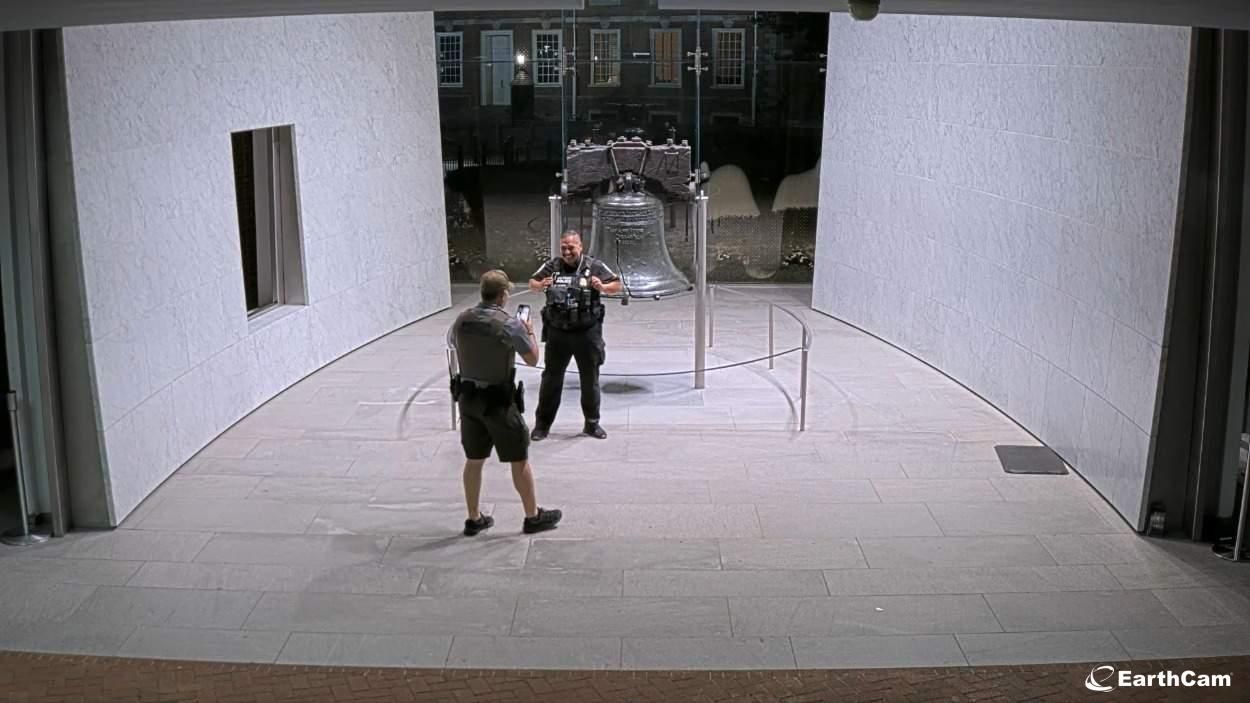
Also on the “hall of fame”: a park ranger taking a photo of a law enforcement officer in a black uniform posing in front of the bell after hours.
A law enforcement officer poses in front of the Liberty Bell after hours.EarthCam
Some surveillance experts say the archive raises privacy concerns, especially because people are identifiable in the image.
“The longer those pictures are kept, the more it makes me uneasy,” said Rachel Levinson-Waldman, director of the Brennan Center for Justice’s Liberty and National Security Program.
“The more it’s susceptible to even a private company just collecting those pictures and using them for some other purpose,” she said. “Or just people scrolling through and seeing the pictures for who knows what purposes people might use them.”
There is no information posted at the site about the live stream, but a security sign at the center’s entrance advises: “video surveillance in effect.” Online, the live stream is advertised via a small link at the top of the National Park Service’s Liberty Bell web page.
EarthCam does not place cameras in private locations where people have an expectation of privacy, Cury said. And the camera itself — on the wall in front of the bell — is not hidden, he said. Visitors, the CEO said, view the camera as an attraction.
“When you are looking at a lot of our cameras,” Cury said, “people are standing in front of them and waving.”
Schools in at least three states will be equipped with drones this year that can zoom through halls, smash windows, and pepper-spray active shooters if teachers report a threat.
At least nine schools — three in Florida, five in Georgia, and one in Colorado — will have storage boxes that house the plastic, nonlethal aircraft made by Austin-based Mithril Defense. The drones, which can be activated by teachers, are capable of reaching a shooter within 15 seconds.
The aircraft are designed to distract their targets by flashing strobes, blaring sirens, spraying them with pepper gel, or ramming into them at 60 mph.
“Once I get the drones on you, you just can’t escape them,” said Bill King, a retired Navy SEAL and Mithril Defense co-founder.
The programs continue a wave of spending on high-tech security on campuses — a multibillion dollar industry fueled by threat of school shootings. Nearly 400,000 students have experienced gun violence at school since the 1999 attack at Columbine High School in Colorado, according to a Washington Post tracker, which has recorded 435 shootings over that period.
Deltona High School, a public school just north of Orlando, with about 1,700 students, became the first campus to install the system at the end of last school year. Two more Florida schools — Boyd H. Anderson High School near Fort Lauderdale and Godby High School in Tallahassee — were also tapped by the state to complete the $557,000 pilot spearheaded by state legislators.
Five schools in Georgia will also test the drone systems after state legislators there approved a roughly $500,000 pilot program with Mithril Defense. The state has not finalized the schools that will participate, but Mithril said the systems will come online during the upcoming school year.
Georgia state Rep. Matt Dubnik (R), chairperson of the House appropriations education subcommittee, said the technology could protect schools that don’t have resource officers on campus. The pilot will be tested in schools with and without the officers, he said.
“I’m a believer in the technology,” Dubnik said, adding that hundreds of other state legislators agreed when they voted to pass the budget, which included the funding for the program.
And in Colorado, John Adams Academy — a public charter school in Sterling Ranch for students in kindergarten through grade 12 — will self-fund a drone program for its inaugural year.
Teachers will have an app or classroom panic buttons to summon the drones. Mithril Defense’s professional drone pilots can then fly them remotely.
The drones have been tested in simulations but never by a shooting.
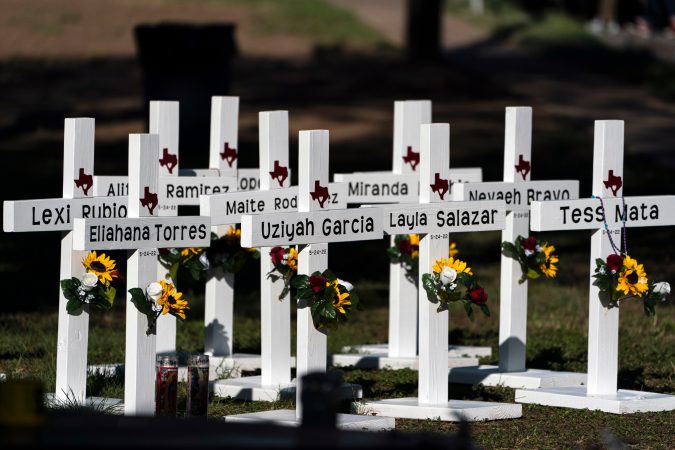
Justin Marston, Mithril’s founder and CEO, said the massacre at an elementary school in Uvalde, Texas, where 19 students and two teachers were killed in 2022 as law enforcement waited over an hour to enter the classroom, inspired the project.
When he learned of the Russian and Ukrainian military forces using cheap drones to attack each other, Marston said he figured a nonlethal version might have saved lives in Uvalde.
“The first 120 seconds are incredibly critical, because that’s when most of the shooting happens,” Marston said.
While the drones could be activated any time, they’re meant specifically for potentially lethal situations. The drones wouldn’t break up a schoolyard fight, Marston said. But if one of the students pulled a knife, they could.
Schools across the country have embraced a range of defense technologies from artificial intelligence-powered cameras to weapons detectors amid the threat of campus shootings. But some say military-grade equipment, like Mithril’s drones, don’t belong on campuses packed with children.
School security consultants have, for years, cast doubt on high-tech solutions to school shootings, arguing that low-tech measures, like simply locking external doors, are just as effective.
Curtis Lavarello, who leads the School Safety Advocacy Council, a security consultancy firm, said he worried that Mithril’s drones might accidentally target a fleeing student instead of a shooter. Or that remote pilots, in a split-second decision, might mistake a law enforcement officer for a shooter, especially if teachers initiate a false alarm.
“It’s almost like where gaming and school safety collide,” Lavarello said. “I have some really serious reservations about the deployment of drones in schools.”
Mithril isn’t the first company to attempt to place anti-shooter drones in school. In 2022, Axon Enterprise halted development of taser-equipped drones after a mass resignation of its ethics board, which worried that the devices would stun innocent students or be abused by hackers.
Jaclyn Corin, who survived the 2018 Marjory Stoneman Douglas High School shooting in Parkland, Florida, that killed 17, said she’d prefer to see officials prioritize policies that help prevent gun violence instead of responding to it.
“School districts have finite budgets and limited attention,” said Corin, executive director and co-founder of March for Our Lives, a youth-led organization advocating for strict gun control. “If we spend significant resources on technologies designed to respond after shooting begins, we have to ask what we’re not investing in instead.”
Nicole Lawrence said she found out from a local TV news story that her child’s Atlanta-area high school was solicited by Georgia to host Mithril’s drones this year. (District officials said they do not yet have specific plans for installing the devices.) Lawrence said she’s unsure whether the drones will be effective but is willing to give them a chance.
“I’ve put $100,000 toward worse things,” Lawrence said.
Florida plans to review the number of violent incidents at the schools and measure response times to threats. The state will also survey parents, students, and staff about whether they feel safer under the pepper-spraying, window-smashing devices.
As the drones sat in Deltona High School this summer awaiting their first action, the state approved another $564,000 for the following school year.
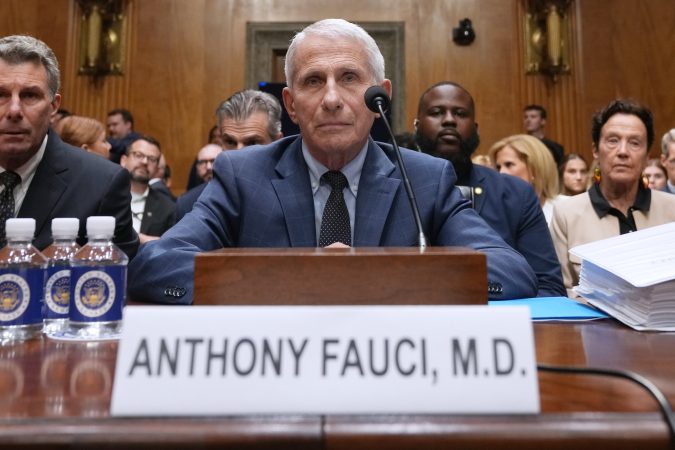
WASHINGTON — Dr. Anthony Fauci on Wednesday repeatedly invoked the Fifth Amendment and declined to answer dozens of questions from senators in a Republican-led committee hearing about his handling of the COVID-19 pandemic.
The decision, at least for now, shielded Fauci from answering questions that could expose him to accusations of lying under oath. Though he received a pardon in early 2025 from Democratic President Joe Biden, some Republicans pursuing a yearslong campaign for his arrest had suggested he could still face charges for any perjury committed during Wednesday’s hearing.
The scientist, who helped lead the nation’s COVID-19 response, was subpoenaed to testify under oath by Republican Sen. Rand Paul of Kentucky, who has long had an antagonistic relationship with Fauci.
In response to angry, sometimes mocking, questions from Republican senators, Fauci declined to answer more than 100 times, injecting new drama into partisan divides that have festered for years about the origins and handling of the pandemic. Fauci himself has become a polarizing figure, even receiving death threats that prompted him to seek security.
In his opening statement, Fauci said Paul has an “obvious obsession with calling for my prosecution.”
“The only conclusion I can reach is that the sole reason he is calling me before this committee is to get me to say something, anything, that could vindicate his repeated public pledges that I end up, in his words, quote, behind bars, unquote,” Fauci said, adding that while it pained him to do so, he was following his attorney’s advice by taking the Fifth.
Republicans accuse Fauci of lying
In the combative hearing, Paul and other Republicans accused Fauci of lying in earlier testimony about the origins of the coronavirus, something the longtime National Institutes of Health scientist has forcefully denied. Democrats called the hearing a politically motivated attempt at entrapping Fauci and praised the scientist for his work during the pandemic.
With Fauci declining to answer questions throughout, Paul dominated the approximately three-hour hearing, listing a litany of accusations and detailed questions.
“Today will be the capstone to Anthony Fauci’s 40 years of abuse of power at NIH,” Paul said. “History will judge, but the facts as we now know them paint a sordid tale of dishonesty, misjudgment and ultimately the hubris, the likes of which the world has never seen.”
In one heated moment of the hearing, Paul ejected Fauci attorney David Schertler from the room after he tried to speak without being recognized. In a statement, Schertler said the removal was “outrageous and demonstrates the completely biased and baseless nature of this proceeding.” In another statement, he called Paul’s accusations about Fauci “false and disgraceful.”
Democratic senators praised Fauci and said he didn’t deserve the treatment he was getting.
“This hearing is designed to entrap you,” said Sen. Maggie Hassan of New Hampshire.
Paul has long argued Fauci should be criminally investigated based on his belief that the scientist was dishonest in previous testimony to Congress.
The senator announced late in the hearing that the committee would vote next week on whether to hold Fauci in contempt for declining to answer questions. He did not say whether he would push for a criminal contempt referral to federal prosecutors or another charge. He also raised questions about whether Fauci’s pardon affects his eligibility for Fifth Amendment protections.
Paul released some of Fauci’s diary
Leading up to the hearing, Paul released more than 1,000 pages of Fauci’s personal diary covering the pandemic years. Pointing to some notes about early efforts at understanding how the virus emerged, Paul said on social media that what Fauci “wrote privately and what he told the country are two different stories.”
Some of the diary entries — including Fauci’s uncertainty in the pandemic’s earliest days as scientists around the world raced to understand the new virus and how best to curb it before vaccines could be created — already were reflected in a 2024 memoir and in interviews at the time.
But they have nonetheless drawn attention from people who blame Fauci for mask mandates, school closures, and other policies they believe infringed on their rights as hundreds of thousands of people were dying.
Earlier Wednesday, President Donald Trump wrote on social media that he stopped relying on Fauci over the course of the pandemic because he felt the scientist made bad decisions on masks, shutdowns, and other issues.
Health Secretary Robert F. Kennedy Jr., a longtime anti-vaccine activist before entering public office, said on social media that his department found the diary entries in government property and gave them to the committee.
Dozens of disease experts defend Fauci
Scientists also scrambled to Fauci’s defense ahead of the unusual hearing — the second time he has been back before Congress to discuss pandemic origins since leaving the government in 2022. While the COVID-19 pandemic introduced him to millions of Americans, he talked the nation through numerous outbreaks over decades, including HIV, Ebola, and the 2001 anthrax attacks, while advising seven presidents.
In a public letter, more than 150 infectious-disease experts and other scientists wrote that “no credible evidence has been produced to support these absurd charges” and that they are “urging our elected representatives in Congress stop these witch-hunts.”
Among topics discussed at Wednesday’s hearing was whether NIH-funded research in China may have played a role in how the pandemic started.
Many scientists believe the virus most likely emerged in nature and jumped from animals to people, coming to light when it spread at a wildlife market in the Chinese city of Wuhan. There’s no new scientific information supporting that the virus might instead have leaked from a laboratory, a theory Paul champions. A GOP-led subcommittee that studied the question in 2024 did not find any evidence linking Fauci to wrongdoing.
Fauci has long said publicly that he was open to both theories but that there’s more evidence supporting COVID-19’s natural origins.
Republicans also have accused Fauci of lying about whether his agency funded what’s known as gain of function research — the practice of enhancing a virus in a lab to study its potential real-world impact — at a lab in Wuhan.
The NIH for years gave grants to a New York nonprofit called EcoHealth Alliance, which used some of the funds to work with a Chinese lab studying coronaviruses commonly carried by bats. But the definition of gain of function covers both general research and especially risky experiments to enhance the ability of potential pandemic viruses to spread or cause severe disease in humans. Fauci has previously stressed he was using the risky experiment definition and that “it would be molecularly impossible” for those bat virus experiments to have turned into the pandemic virus.
Trump, a Republican, last year paused some federally funded gain of function research, and on Tuesday his administration announced new rules to tighten oversight.
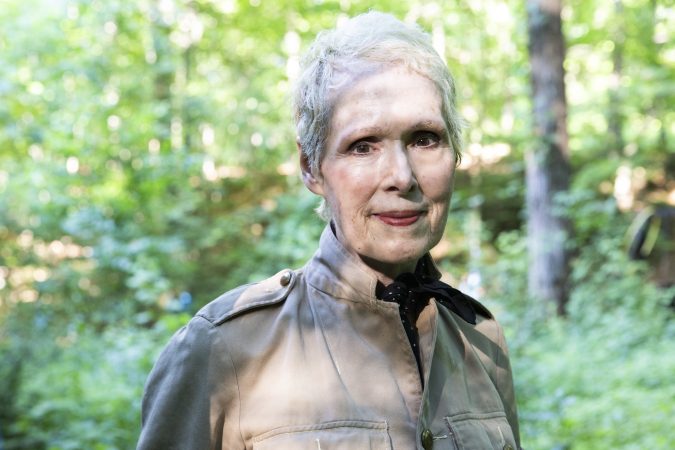
President Donald Trump asked the Supreme Court on Tuesday to overturn an $83 million judgment against him for defaming advice columnist E. Jean Carroll, who accused him of sexually assaulting her decades ago.
Trump’s attorneys asserted in court filings that the Supreme Court’s 2024 decision granting presidents sweeping immunity for actions taken in office shields him from liability in the high-profile case.
“This is the first case in our Nation’s history in which a court has imposed damages liability on a President for his conduct in office,” the attorneys wrote.
Separately, the Justice Department petitioned the high court Tuesday to allow the federal government to replace Trump as the defendant in the case.
Should the justices permit the swap, it would potentially clear the way for the Trump administration to ask for the massive judgment to be voided because the federal government cannot be sued for defamation. Lower courts have denied similar requests by the agency.
Justice officials argue that the United States should be substituted as the defendant under a law that grants federal employees some immunity from civil damages for actions taken within the scope of their employment.
They said that some of the comments at issue in Carroll’s defamation claim occurred during Trump’s first presidency.
“Absent this Court’s intervention, the sitting President is facing nearly a hundred million dollars of personal liability for conduct that was well within the scope of his federal office,” the Justice Department wrote. “That alone deserves this Court’s attention.”
Trump’s and Carroll’s attorneys declined to comment on the appeal Tuesday night.
A Manhattan jury awarded Carroll the money in 2024, following a civil trial in which she testified that Trump attacked her in a dressing room at the Bergdorf Goodman department store in Manhattan in the mid-1990s. Trump denies the allegations.
Carroll first went public with the claims in 2019, prompting angry rebukes by Trump. Trump said the allegation that he had sexually assaulted Carroll was a “complete con job,” a “Hoax” and a “Scam” concocted to sell her memoir.
At other points, he said she was too unattractive for him to take an interest in her and accused her of lying. The comments prompted years of threats and attacks against Carroll by Trump’s supporters.
An appeals court panel upheld the $83.3 million verdict in September and denied Trump’s request in April for the full court to rehear the case. The moves paved the way for Trump’s appeal to the Supreme Court.
In November, Trump appealed to the Supreme Court a $5 million verdict in a separate defamation case Carroll brought against the president.
The jury found Trump liable for sexually abusing and defaming Carroll. In June, the Supreme Court let stand that verdict against Trump.
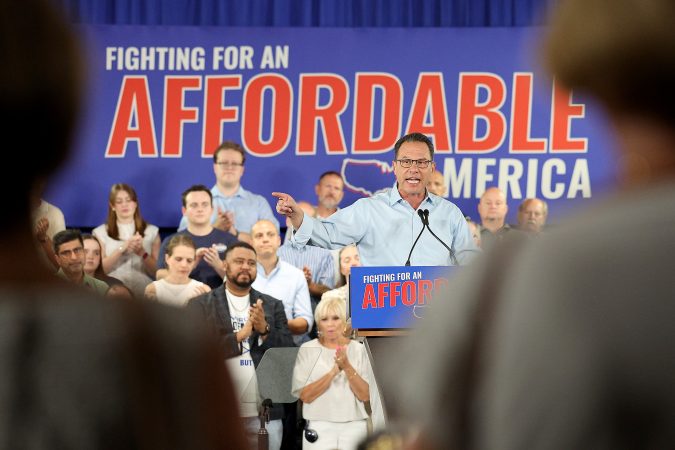
BETHLEHEM — It was not by happenstance that House Minority Leader Hakeem Jeffries (D-New York) chose a union hall here in the Lehigh Valley to launch the final 100-day sprint toward the midterm election. “This is ground zero for the battle to control Congress,” the speaker-in-waiting declared.
The same could be said for the centrality of this state — and this election — to the presidential aspirations of a Democrat who shared the stage Sunday with Jeffries: Pennsylvania Gov. Josh Shapiro.
Were the popular governor to run nationally in 2028, and the current assumption is he will, what happens in his crucial state in November could be a compelling argument not only for his electability but for his ability to carry others over the finish line.
This year, Pennsylvania holds four of the House races that Democrats consider to be among their top opportunities for flipping Republican-held seats. That’s more competitive races than in any other state, according to the House Democrats’ campaign operation.
President Donald Trump carried three of those districts in 2024. But in the 2022 gubernatorial election, Shapiro, then the state’s attorney general, won all four by double digits against a far-right opponent.
“Pennsylvania is always the ultimate swing state, the state that kind of decides it all,” Shapiro, who is running for a second term, said in an interview. “And so it is not a stretch to imagine if we win these races here, that’ll create a Democratic majority in the U.S. House.”
Shapiro is a heavy favorite against the Republican gubernatorial nominee, State Treasurer Stacy Garrity. He has raised more than $50 million to run up the score, and create an updraft that could help candidates lower on the ballot.
He has also had a hand in who those candidates are. Shapiro endorsed the Democratic candidates in all four of Pennsylvania’s most hotly contested congressional districts in their primaries. One of them, Bob Brooks, spent 20 years as a firefighter in Bethlehem and was Shapiro’s pick in a hard-fought primary to take on Republican incumbent Ryan Mackenzie. In 2024, Mackenzie beat Democratic Rep. Susan Wild by one percentage point.
As he prepared to introduce Shapiro here on Sunday, Brooks emphasized his background as an outsider who can relate to the pressures that ordinary people are under: “I have to be honest. Running for Congress was not on my Bingo card. I’m not a politician. Far from it, actually. I’m a regular working person, like so many of the faces that I see in this room.”
Meanwhile, Keystone State Democrats are also hoping to flip the state senate, where Republicans have a 27-23 majority, while also maintaining their narrow hold on the House. If they can do it, they would be looking at their first unified hold on state government in more than three decades.
Shapiro has pledged he would use that power to raise the minimum wage to $15 an hour, from its current $7.25; fund mass transit; build more housing and codify abortion rights into state law.
All of which could be rolled into a national message, the outlines of which became apparent as the governor talked about his agenda. “We all need to do our part to stop the chaos and cruelty and corruption of Donald Trump,” he said, “and that’s going to require us here at the state level having a trifecta so that we can pass policies that help the people of Pennsylvania while Trump is hurting them.”
Having seen his state vote twice for Trump, in 2016 and 2024, Shapiro is working to build up the Democratic infrastructure. He recently unveiled a multimillion-dollar effort that party officials say is the largest coordinated midterm operation in the state’s history. It boasts having opened 27 offices across the state and hiring nearly 100 full-time organizers.
The governor has also addressed one of the more worrisome trends for Pennsylvania Democrats: Their voter registration advantage over Republicans had dropped precipitously over recent election cycles.
Between 2020 and 2024, the registration gap between the two parties had fallen by more than half, to 325,000 Democrats from 686,000 Republicans. It was a warning sign that Trump was going to win the state and its 19 electoral votes.
This year, with the midterms approaching, the numbers are starting to turn around; Democrats have added nearly 25,500 to the registration rolls, while Republican numbers have dropped by more than 4,500, according to voter registration data analyzed by PennLive.com.
Retooling and professionalizing the party is a project that Shapiro began almost a year ago, he said, and now, “I’m investing millions of dollars in helping elevate other Democrats on the ballot, spending my time campaigning for people like Bob Brooks and others.”
If all of this works as he hopes, it might be the foundation for a presidential campaign. Unknowable at this point, however, is whether the Democratic base in 2028 will be looking for a Mr. Fix-It whose appeal stretches across party lines, or will move further leftward in its fury at the establishment.
Shapiro insists — as presidential candidates nearly always do at this stage of the game — that none of this is his concern at the moment.
“What I’m focused on are these midterms,” which in Pennsylvania “will be decided on a razor’s edge,“ Shapiro said. “Folks are fed up and angry and frustrated. The best way to demonstrate that, the best way to show that we’re against what Trump is doing, is to show up and vote in record numbers.”
Medicare drug coverage premiums are expected to rise in 2027 after the Trump administration said Tuesday it would end a temporary subsidy that reduced monthly premiums by an average of $16.
But it’s not yet clear how much they’ll increase, or whether they will increase for all Medicare beneficiaries.
The loss of the subsidy does not translate directly to how much premiums will rise, because companies that sell Medicare Part D drug coverage take into account many factors when setting rates.
The cost to the government of the subsidy was $3.6 billion in 2026, according to KFF, a nonpartisan health policy organization. About 25 million people enrolled in Part D plans in 2026, up from 23 million two years ago.
“It’s certainly possible that without this enhanced financial support in place for 2027, some Medicare beneficiaries enrolled in [Part D plans] could face relatively steep premium increases for drug coverage next year,” said Juliette Cubanski, director of KFF’s program on Medicare policy.
Insurance companies received notice of the move late Tuesday and were examining the impact. Expected Medicare Part D rates for 2027 will be publicly announced in September.
“We are closely reviewing today’s announcement. At a time of sharply rising prescription drug costs, health plans are focused on keeping Part D coverage and benefits as affordable as possible for seniors,” said Chris Bond, spokesman for AHIP, the insurance industry’s Washington trade group.
The average estimated monthly Part D premium in 2026 was $34.50, according to the National Council on Aging. Part D premiums were already four times higher than the $8 average premium under Medicare Advantage, the privatized version of Medicare. Cubanski said higher Part D premiums in Part D in 2027 could accelerate beneficiary enrollment in the privatized plans.
The Department of Health and Human Services, which oversees the Center for Medicare and Medicaid Services, did not respond Tuesday night to a question about the amount of expected increases.
CMS said it ended the subsidy, which was intended to stabilize premiums after the agency made changes to the benefits, because “plan sponsors had sufficient experience” under the new program to support their cost assumptions.
UnitedHealthcare, which offers Part D plans, said loss of the subsidy was not unexpected. “We are committed to working with CMS, ensuring seniors have access to affordable prescription medicines,” UnitedHealthcare spokesman Eric Hausman said.