Category: News

  • ‘Swarthmore 9’ protesters urge Delco DA to drop trespassing case tied to pro-Palestinian encampment

    ‘Swarthmore 9’ protesters urge Delco DA to drop trespassing case tied to pro-Palestinian encampment

    Nine protesters arrested last year at a pro-Palestinian encampment at Swarthmore College said Tuesday that they had done nothing wrong and have no intention of pleading guilty to the trespassing charges they face.

    “We affirm that we are guilty of nothing because it is always right to rebel against genocide,” Jace Boland, a junior at the college, said at a news conference on the steps of the Delaware County Courthouse.

    Boland was joined by his eight codefendants and a small crowd of supporters in urging prosecutors to drop what they described as “absurd criminal charges.”

    The so-called Swarthmore 9 were arrested and briefly detained on the college’s campus in May 2025 when officers from surrounding police departments dismantled their encampment protesting the war in Gaza and Swarthmore’s contract with a company that does business with the Israeli government.

    Of the nine people arrested, only Boland is a student at the college. Another, Brendan Cook, is a former student who was suspended for participating in an earlier protest in 2024, but the rest are not affiliated with Swarthmore, according to school officials.

    Members of the group — Boland, Cook, Jonathan Britt, Mara Helen Cahill, Daria C. Dressler, Thomas Falcone, Colin Buckley Malcarney, Riley J. McManus, and Andrew Thomas — have all been charged with trespassing, a third-degree misdemeanor.

    Their attorney, Marni Jo Snyder, has filed a motion to dismiss the case that will be argued before Delaware County Court Judge Dominic Pileggi on June 22, a week before the group’s scheduled trial.

    District Attorney Tanner Rouse said Tuesday that prosecutors had offered the group the chance to plead to a lesser, summary offense, which Rouse described as “akin to an ‘open container’ or noise violation ticket.”

    “That they want to proceed to trial as charged is absolutely their right, but so is it the commonwealth’s right to protect the interests of private citizens and institutions that do not have to abide every random person who has an issue parking on their front lawn,” Rouse said. “Private property owners have a right to say ‘please leave’ when the time comes.

    “If their concern is a criminal charge or exposure to judicial punishment, there is and always has been an easy off-ramp available to them,” he added. “They have chosen not to take it.”

    Jace Boland said Tuesday that he and his co-defendants “are guilty of nothing because it is always right to rebel against genocide.”Alejandro A. Alvarez / Staff Photographer

    At Tuesday’s news conference, Swarthmore professor Mark Wallace said he supports the protesters and believes the college betrayed the ideals on which it was founded by having them arrested.

    “How can students who live and work on a campus be charged with trespassing there while applying what they’re learning in the real world?” he asked. “Colleges should be places where large, uncomfortable questions are asked and struggled over.”

    A spokesperson for Swarthmore did not immediately respond to a request for comment Tuesday.

    Previously, the college, in a statement, echoed what Rouse said Tuesday — that county prosecutors had offered to reduce the charges in the case to a summary offense if the defendants pleaded guilty, but they declined.

    Boland said he and the others charged would not plead guilty, fearful that doing so would discourage future activism.

    “If the college can deploy state violence to protect its interests without consequence, there is no telling what levels of repression future generations of student activists will face,” Boland said. “Swarthmore College cannot continue to benefit from its reputation as a liberal arts institution that encourages activism while simultaneously crushing dissent.”

    Swarthmore Borough police arrested the group in May 2025 after issuing multiple warnings to members of an encampment that had formed outside Swarthmore’s Trotter Hall.

    The encampment, which protesters referred to as the Hossam Shabat Liberation Zone in honor of a journalist killed in an Israeli drone strike, was formed to demanded that Swarthmore end its IT support contract with Cisco, which also holds contracts with the Israeli government.

    Swarthmore College professor Mark Wallace spoke at Tuesday’s news conference in support of the nine protesters arrested at the school last year.Alejandro A. Alvarez / Staff Photographer

    Swarthmore College president Valerie Smith wrote in a letter last year that members of the Liberation Zone created their enclosure using campus property and had vandalized other parts of campus with incendiary graffiti.

    Smith wrote that she “unequivocally condemn[ed]” the group’s actions and said that law enforcement officials, including the FBI, told her to dismantle the encampment as soon as possible.

    “I urge these protesters to pursue a less divisive approach to expressing their views — one that aligns with not just the College’s policies, but with the mutual respect, compassion, and care that all in our community deserve,” Smith wrote in the letter.

    Days before the protesters were arrested, campus police forcibly took back some of the items they had taken to build the encampment, and issued disbandment orders to people they found within it.

    On the day police came to clear out the encampment, they gave protesters a 10-minute warning to vacate the property.

    The protesters refused to leave, sitting with their arms interlocked, according to video of the arrests posted by the Swarthmore chapter of Students for Justice in Palestine.

    All nine of the protesters charged in the case were detained briefly and released on unsecured bail.

  • Lower Merion is advancing a policy to eliminate iPads and laptops for K-2 students

    The Lower Merion school board plans to stop assigning personal laptops and iPads to kindergartners, first graders, and second graders after facing intense pushback from parents who say kids are getting too much screen time in school.

    Members of the school board’s policy committee announced the plan during a meeting Monday, along with other proposed limits on technology use. Under policy changes going before the full school board for review next week, third and fourth graders would use electronic devices stored on carts in classrooms, while fifth and sixth graders would be permitted, but not required, to bring devices home.

    “This is a huge movement forward,” said the board’s president, Kerry Sautner, describing revisions made to the proposed technology policy in response to community feedback.

    But parents who have accused the district of overusing educational technology said the proposed changes did not go far enough — leaving too much room for interpretation around when technology should be used, and failing to adequately restrict kids’ access to inappropriate websites.

    Some parents also expressed anger that the board is moving forward with repealing the current technology policy, which contains language accommodating families who opt out of district-issued devices.

    “You are removing the escape hatch,” said David Smyth, a parent from Merion Station, who said the district had produced no data supporting its use of technology. “You know that ed tech is failing, it’s suboptimal, and you don’t want to be embarrassed.”

    Here is what to know about the tech debate in Lower Merion, the board’s latest policy proposal, and what happens next:

    Lower Merion at the center of ed tech backlash

    As backlash to technology in schools has spread across the region and nationally, Lower Merion has become an epicenter of parental opposition.

    At meetings this spring, dozens of parents have voiced concerns about weakened attention spans and classroom distractions, and expressed fear that the quality of their kids’ education is declining as a result.

    More than 800 parents have signed a petition asking for the right to opt out of one-to-one devices, according to parent organizers in Pencils Over Pixels. The group, which started a GoFundMe campaign, has distributed lawn signs and enlisted a public relations firm as part of its advocacy efforts.

    But district officials have repeatedly said that the technology policy’s language is dated, stemming from when Lower Merion first introduced one-to-one devices, and that it is not possible for families to opt out.

    Instead, the board has been reworking the technology policy to address when and how devices should be used in classrooms.

    A revised policy after meetings with parents

    The latest policy proposal outlines guidelines for technology use at different grade levels, rolling back one-to-one devices for Lower Merion’s youngest students.

    “Technology shall not be used for routine classroom instruction in these grades,” the policy says. “Any use shall be minimal, highly structured, and limited to specific educational purposes such as diagnostic testing or for teacher-directed, whole-class demonstration, visual display, or state testing preparation.” (Pennsylvania’s standardized tests, which start in grade 3, are required to be administered on computers.)

    In grades 3-4, the policy says, students “shall have supervised, teacher-directed access to technology resources” that stay in classrooms, while in grades 5-6, students will be permitted to bring their devices home, but not allowed to use them between classes or at lunch.

    The policy describes students in grades 7-8 and 9-12 as having increased responsibility for independent technology use, but says devices should be used only for school-related work.

    The policy changes are “meaningful responses” to community feedback, said Anna Shurak, the chair of the board’s policy committee, who said board members had met with concerned families.

    But some parents said the policy — which says teachers should use technology “only when doing so serves a clear educational purpose” — would not adequately limit an overreliance on screens in classrooms.

    “The verbiage of this policy is very carefully crafted to say nothing,” said Eleanor Stanford, a parent and a writing professor at Bryn Mawr College, who also questioned why the district was still “dragging its feet” on imposing a bell-to-bell ban on cell phones in its high schools, even as legislation advances in Harrisburg to do so. (Shurak said the district would fully ban cell phones in 2027-28.)

    Parent Matthew Posey quoted the policy’s language that technology belongs in the classroom when it “genuinely amplifies human curiosity.”

    “Did Albert Einstein need Kahoot or iReady?” Posey said, referring to two educational technology programs. “Is this a public policy document, or a corporate marketing brochure?”

    Some parents also questioned proposed administrative regulations that include suggested time ranges for technology use by grade level. In grades K-4, the guidelines are less than 30 minutes a day; by high school, they increase to less than 120 minutes a day.

    Calculating the high school upper limit as about 40% of daily instructional time, “to me, that’s way, way too high,” said Sam Handlin, a parent and a professor at Swarthmore College. He said the only way teachers would approach that time limit was either by using technology “as a babysitting device” or letting students take notes on computers, “which is just a recipe for distraction.”

    Shurak did not comment on the time frames specifically but told Handlin the administrative regulations still need to be revised.

    When will changes take effect?

    The committee endorsed sending the revised technology policy to the full board for review next week, along with a recommendation to repeal the current technology policy.

    While the board may repeal the current policy at next week’s meeting, the new policy would need to be considered a second time to before it could go into effect.

    The goal is to have the new policy in place in August, Shurak said. She said the board would be directing administrators to implement changes in time for the coming school year.

    Board member Jason Herman, a member of the policy committee, said some of the new policy’s language should be revised to limit “ambiguity and subjectiveness.” He also questioned why the district could not move to a content filtering model where only certain websites were permitted for students to access, rather than restricting sites after problems are reported.

    Officials did not address questions around content filtering Monday, or calls from the Pencils Over Pixels group for the release of district contracts with educational technology companies and a technology advisory board that would include parents.

    Sautner said the board had more work to do, including around technology questions related to the district’s curriculum.

    But “we cannot micromanage” administrators through policy language, she said.

    Some expressed concern that the board could overreact in response to anti-tech opposition.

    “Banning technology isn’t going to be the way to ensure that our kids critically think,” said Emma Benn, who urged the board to “take a step back” before passing a new policy. “This world is a technology-driven world, and we need to make sure our children can function within it.”

  • Three Philly hospitals among 500 warned by Trump administration to provide more price information or face fines

    WASHINGTON — The Trump administration has warned more than 500 hospitals that they are failing to provide the public with basic pricing information — arguing that the lack of disclosure is keeping healthcare costs higher than they should be.

    The Associated Press obtained exclusively the list of hospitals that since April have either received letters of warning or requests to submit plans to provide transparent pricing. Failing to comply with the warnings comes with penalties as high as $2 million annually for each recipient that doesn’t create a plan to post clear pricing data.

    The letters are meant to fix a fundamental problem that patients, employers and insurers might not know ahead of time the cost of blood work, an imaging test or another form of treatment, and as a result pay more than they should have. AP has posted the list of hospitals that have received letters.

    The list includes three hospitals in Philadelphia: Fox Chase Cancer Center, Friends Hospital, and St. Christopher’s Hospital for Children. Other hospitals in the region that received letters were Phoenixville Hospital, Pottstown Hospital, and Reading Hospital, all owned by Tower Health, which also is a joint owner of St. Christopher’s children’s hospital.

    Christiana Hospital in former President Joe Biden’s home state of Delaware received a warning letter. Rockford Center in Newark, Del., was also on the list.

    A senior administration official who requested anonymity to provide the list said that President Donald Trump plans to tighten enforcement of price transparency standards made possible by a 2019 executive order signed by Trump. More hospitals are likely to receive letters regarding the absence of pricing data, the official said.

    The warnings are the latest example of Trump leaning into the message that his administration is fixing the problem of healthcare expenses that can drain a family budget. It’s a calculated pitch ahead of the November midterms at a time when affordability is a top concern for voters. But Trump is also vulnerable on this particular issue, as his administration allowed subsidies to lapse for people buying insurance through the 2010 Affordable Care Act, widely known as Obamacare.

    Just 29% of U.S. adults approved of Trump’s healthcare policies according to the most recent survey on the issue by The Associated Press-NORC Center for Public Affairs Research. The president fared slightly worse on that issue in the December survey than on the economy, immigration or his management of the federal government.

    The push for price transparency could have a particular impact on Republican strongholds like Texas, Florida, Indiana, Alabama and Louisiana, which are among the states with the highest count of hospitals that have not provided adequate information on the costs of medical services.

    Texas had 42 hospitals that received warnings, more than any other state. Baptist Medical Center in San Antonio, Texas, among the state’s largest hospitals with 1,585 beds, received a letter, as did the University of Texas MD Anderson Cancer Center in Houston.

    Missouri-based Ascension, one of the country’s largest hospital systems, had 13 hospitals in multiple states that received letters. The Republican state of Indiana had 34 hospitals that received letters, nearly as many as the 38 in Democratic-led California, even though California has five times more people than Indiana.

    The letters reflect two competing philosophies between Republicans and Democrats over how to handle the ballooning expense of healthcare, which is also a growing risk for the federal government’s own balance sheet.

    Biden’s team put more emphasis on record enrollment in Obamacare programs that increased the percentage of people with health insurance. Biden also signed a bill that allowed the government to begin negotiating prices for some Medicare drugs directly with pharmaceutical companies. That program, which has continued into Trump’s second administration, has helped knock down the list prices of some of Medicare’s costliest drugs.

    The Trump administration, by contrast, has focused more on trying to find ways to provide details on pricing — such as promoting the TrumpRx site for prescription drugs — betting that doing so will lead to better and more efficient spending on healthcare as the data gets crunched.

    Critics have said Trump’s negotiated prices on prescription drugs might not produce genuine savings for many Americans with insurance, while the administration has estimated savings in excess of $500 billion over 10 years.

    With the various lists of hospital prices, the administration wants providers to make it easier to access the files and to ensure the information in them is legitimate, instead of being based on estimates or omitting numbers for key procedures.

    The House Committee on Energy and Commerce has a hearing planned for Wednesday on price transparency.

    “Transparency is the foundation of a healthcare system that rewards competition based on cost and quality,” Shawn Gremminger, CEO of the National Alliance of Healthcare Purchaser Coalitions, plans to say in his prepared remarks.

  • In Trump’s second term, fewer seats for women at the table

    In Trump’s second term, fewer seats for women at the table

    Nearly 10 years after their first bilateral meeting inside Beijing’s Great Hall of the People, President Donald Trump and Chinese President Xi Jinping again gathered last month for discussions about U.S.-China relations.

    Much had changed over the preceding decade. Wars had broken out in Europe and the Middle East, shifting global alliances; the coronavirus pandemic had killed millions around the world and transformed the global economy; and at the table in Beijing, the makeup of aides and advisers sitting alongside each leader for the high-level talks was visibly different.

    Images from Trump’s meeting with Xi in 2017 show Trump sitting alongside a large group of senior U.S. officials, including three women. Xi’s staff at the table also included a woman.

    During their most recent meeting inside the same room in May, every U.S. and Chinese official at the table was a man.

    The all-male delegation exemplifies a broader trend within the Trump administration’s hiring practices for senior executive branch roles that require Senate approval. Data reviewed by the Washington Post shows that Trump has selected fewer women to serve in these senior roles than during the same period of his first term. There also has been a historic amount of turnover among women in Trump’s cabinet.

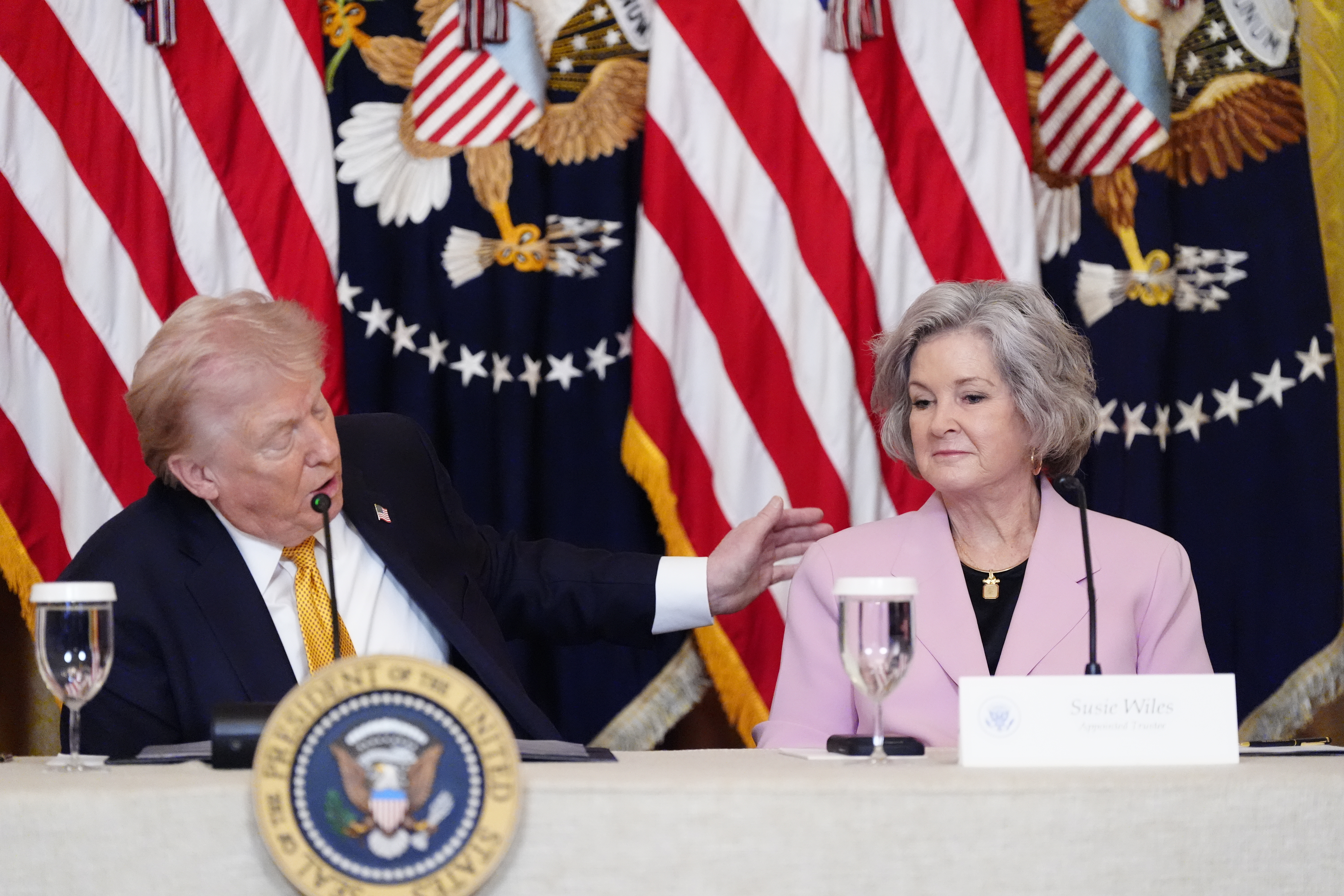
    The Trump White House has expressed pride in the fact that some key senior staff have been the first women to hold certain titles, including Susie Wiles as chief of staff, and defended the president’s hiring choices in a statement to the Post.

    “President Trump has assembled the greatest Administration in history, selecting each member of his incredible team based on one criterion: their ability to deliver for the American people,” Taylor Rogers, a White House spokesperson, said in a statement. “Unlike the identity-politics-obsessed Democrats, the President judges individuals on merit and qualifications, not immutable characteristics.”

    Lower rate of female political appointees

    According to the Partnership for Public Service, a nonprofit that says it aims to build a better government and a stronger democracy, Trump’s Senate-confirmed appointees are made up of the smallest percentage of women of any administration since George W. Bush.

    A PPS political appointee tracker, launched with the Post in 2016, monitors appointments to roughly 800 executive branch positions, a portion of more than 1,300 positions that require Senate confirmation. It includes all full-time, civilian positions in the executive branch that require Senate confirmation except for judges, marshals, and U.S. attorneys. (Military appointments and part-time positions requiring Senate confirmation are not included.)

    When excluding ambassadors and holdovers from previous administrations, PPS data show that so far in this administration, about a year and four months in, 14.53% of all nominees or Senate-confirmed political appointees — 51 out of 351 total roles — are women.

    At this point in President Joe Biden’s term, women had been nominated for 199 out of 379 roles, comprising 52.5% of appointees. And at this point in Trump’s first term, women had been nominated or announced for 41 of 173 of those roles, comprising 23.7% of appointees.

    Heather Higgins, CEO of the conservative nonprofit Independent Women’s Voice, told the Post that “the confirmation gantlet falls hardest on conservative women who can expect their families, faith, and reputations to be put through the wood chipper.”

    “Plenty of enormously talented women make the entirely rational choice to serve the country some other way,” she added. “That’s not a deficit of ambition but a market signal that women don’t necessarily see politics as the only or best lane for influence. And looking at the life of those in those roles, which is no picnic, I’d say that that’s a testament to the groundedness and judgment of women on the right.”

    But Max Stier, the president and CEO of the Partnership for Public Service, expressed concerns about the trend.

    “The evidence is clear that drawing on people with different backgrounds creates a higher-performing organization,” Stier said in a statement. “At the end of the day, our government needs leadership that reflects the diversity of the American people in order to understand and best serve them.”

    Turnover in Trump’s cabinet

    The first female cabinet member was Frances Perkins, who served as secretary of labor from 1933 through 1945. But it wasn’t until the 1970s under President Jimmy Carter that more than one woman was part of the president’s cabinet at the same time.

    Trump selected nine women to serve in his cabinet or in cabinet-level positions at the start of his second term. One of those cabinet-rank members, White House chief of staff Susie Wiles, does not require Senate confirmation. Another pick, Elise Stefanik, withdrew her nomination as U.S. ambassador to the United Nations.

    Among Trump’s presidential predecessors, only Biden successfully nominated more women to serve in his cabinet toward the start of his presidency.

    But nearly a year and a half into Trump’s second term, every departure from his cabinet has been a woman. And more female cabinet and cabinet-level officials have left their positions during this term than at this point in any previous presidential administration, according to an internal count by the Post based on a list of female cabinet members through U.S. history collected by the Rutgers University Center for American Women and Politics.

    Most recently, Tulsi Gabbard announced last month that she would step down as the director of National Intelligence effective June 30. Along with Gabbard, Attorney General Pam Bondi, Labor Secretary Lori Chavez-DeRemer, and Homeland Security Secretary Kristi L. Noem all have left the cabinet. A man was chosen to replace each of them.

    Fewer Republican women running for federal office

    The start of Trump’s second presidency also marked the first Congress since 2011 in which the number of women serving in the House and Senate declined, due to a decline in Republican women. While Democrats set a record by sending 110 female lawmakers to the House and Senate at the start of 2025, Republicans elected 40, according to data from CAWP. The number of Republican women in the House and Senate hit record or near-record levels after the 2022 midterm elections.

    There’s also been a decline in Republican women running for federal office, according to data from the Center for American Women and Politics at Rutgers. Republican women as a percentage of Senate and House candidates reached their peak in 2022.

    A record-setting 38 women filed as Republican Senate candidates in 2022. The number of candidates dropped to 21 in 2024 and has risen slightly to 27 candidates filing to run in 2026.

    Similarly, the number of Republican women registering to run for House seats hit a peak in 2022 with 261. That number dropped to 166 in 2024. So far in 2026, the number of female Republican candidates filing to run for House seats has declined further to 155 candidates.

    “Republican women are underrepresented across the board, across states, even when we look at them as a percentage of their own caucus in highly Republican states,” said Kelly Dittmar, director of research and CAWP scholar at Rutgers. “This change in a Republican administration is consistent with what we have seen before: When Republicans are in office, when they hold a state legislature, the majority party — we know that almost always there are going to be fewer women.”

    Public polling suggests that waning female representation in Washington may not be seen as much of a problem for many Republicans.

    A 2023 Pew Research study found that 5% of Republicans and Republican leaners say it is extremely or very important to them that the U.S. elects a woman as president in their lifetime. Among Democrats, 31% said it was extremely or very important. Republican women were also about twice as likely as Republican men to say there are too few women in high political offices in the country.

    “It’s odd to assume that women are succeeding only if they’re found in government rosters. That’s a surprisingly narrow definition of success,” Higgins, the Independent Women’s Voice CEO, said. “One of the lessons of the last several decades is that women don’t all want the same things, don’t make the same choices, and shouldn’t be expected to. Equality means respecting those choices, not treating every statistical difference as evidence that something has gone wrong.”

  • Pentagon labels tech giant Alibaba and electric car maker BYD as aiding Chinese military

    WASHINGTON — The Pentagon has added several prominent Chinese businesses, including the tech giant Alibaba, electric car maker BYD and search engine Baidu, to its list of Chinese military companies, preventing them from getting U.S. defense contracts.

    The list, updated and published Monday by the Pentagon, now sanctions well-known, non-state-owned Chinese companies that are not traditionally considered to be in the defense or security sector. It reflects growing wariness of Beijing’s strategy of tapping the strength of non-state businesses for military purposes.

    Created in 2021 by a congressional mandate, the list seeks to identify Chinese companies that the Pentagon considers to have links to the Chinese military — not only those directly controlled by the Chinese military and security forces but also those contributing to the country’s defense industrial base.

    When updating the list last year, the Pentagon said the Chinese military sought to acquire advanced technologies and expertise developed by Chinese companies, universities and research programs that “appear to be civilian entities.”

    The Chinese Embassy on Monday accused the U.S. of “overstretching the concept of national security and making discriminatory lists to go after Chinese companies.” It said Chinese companies observe the laws and regulations of the countries where they do business. “The U.S. should stop its wrong practice and create a fair, just and non-discriminatory environment for Chinese companies,” the embassy said in a statement.

    Alibaba, BYD and Baidu said there is no basis for including them on the list. “Alibaba is not a Chinese military company nor part of any military-civil fusion strategy,” a statement from the leading e-commerce company said. Baidu, which has expanded into artificial intelligence and self-driving taxis, said the suggestion that it is a military company is “entirely baseless.”

    BYD said in a statement it is “not a military enterprise” and that the determination “seriously contradicts the facts.” It also said it “will actively safeguard its legitimate rights and interests through all feasible administrative and legal means.”

    This year’s list has grown to 188 Chinese entities, up from last year’s roughly 130 named by the Pentagon. It already had covered companies such as DJI, a major maker of consumer drones. While a company on the list can still do business in the U.S., it faces reputational damage and could be subject to more restrictions.

    After the Pentagon released the updated list, the House Select Committee on the Chinese Communist Party called it “a warning to American businesses, all levels of government, and the American people.” It said the companies on the list that are traded publicly on U.S. exchanges should be delisted and no American company should do business with those on the list, “otherwise they are enabling China’s military ascendance.”

    In naming Alibaba, the Pentagon said the tech giant helps boost China’s defense industrial base because it is affiliated with the country’s Ministry of Industry and Information Technology. Alibaba is traded on the New York Stock Exchange.

    The Pentagon said BYD and Baidu are affiliated with the same ministry, which oversees China’s technology and industrial policies. BYD is dominant in the global electric vehicle market, and President Donald Trump said in January that he would welcome Chinese carmakers such as BYD if they built plants in the U.S. and hired American workers.

    However, a number of U.S. lawmakers have said they will seek a ban on Chinese electric vehicles.

    Another addition is the Chinese robotics company Unitree, whose dancing robots impressed Simon Cowell on NBC’s “America’s Got Talent.” The Pentagon said the company “knowingly received assistance” from the Chinese government through its designation as a small or medium-sized company that is highly innovative, highly competitive globally and critical to the country’s supply chain. Unitree did not immediately respond to a request for comment.

  • Gov. Mikie Sherrill says ICE detention center visit was strictly limited

    Gov. Mikie Sherrill says ICE detention center visit was strictly limited

    Gov. Mikie Sherrill of New Jersey on Monday was allowed to visit Delaney Hall, a detention center in Newark that has drawn protests for two weeks after immigrants inside complained about inhumane living conditions.

    Sherrill described the visit as closely controlled and limited, and she said she was not permitted to meet with or speak directly with detainees.

    “That is unacceptable,” Sherrill said in a prepared statement.

    Sherrill, a Democrat, said she would continue to ask for a more thorough inspection of the center, including a visit by the state’s Department of Health. New Jersey’s attorney general has sued the center’s operator, Geo Group, which is one of the largest private prison operators in the United States. The attorney general is asking that state health inspectors be given full access to the facility.

    Fights between demonstrators and detention center employees have erupted since last month at the front gates of Delaney Hall, with violent clashes common in the early morning hours. Demonstrators had blocked vehicles trying to leave the center, and in late May, heavily armed federal agents with U.S. Immigration and Customs Enforcement had responded with pepper spray and pepper balls.

    In a statement, Homeland Security Secretary Markwayne Mullin said his department had granted Sherrill access to the federally run facility despite the fact she is not a federally elected official. Mullin said prisons operated by New Jersey were run more poorly than Delaney Hall.

    “Gov. Sherrill won’t tell you: New Jersey state prisons face systemic health code violations,” Mullin said. “I’d encourage Gov. Sherrill to focus on her own backyard, and put the safety of her own constituents above illegal aliens.”

    During an appearance on “Fox & Friends” on Monday, Tom Homan, President Donald Trump’s top border adviser, criticized the demonstrators and argued that detainees inside Delaney Hall were treated and fed well, contrary to claims that many have made about rotten food and dirty bathrooms.

    Homan also said federal officials would send more federal agents to New York, vowing to push back against new restrictions approved by Gov. Kathy Hochul against federal immigration operations in the state. The recently passed legislation bars agents from wearing masks during immigration operations, allows agents to be sued for constitutional violations, and prohibits agents from searching “sensitive locations” such as hospitals and schools without a warrant signed by a judge.

    Homan suggested that local officials were endangering the public by refusing to help facilitate the arrests of migrants.

    “I made her a promise — you are going to see more ICE agents than you have ever seen in New York City,” Homan said on “Fox & Friends.” “It’s coming.”

    Hochul said Homan’s threat directly contradicted what Trump had said to her in a room full of fellow governors. Trump, Hochul said, had told her that the federal government would not deploy a crackdown where it was not welcome.

    “If they come here and go throughout New York state with a surge in ICE, there won’t be a Republican standing in this state,” Hochul said to a group of reporters. “Americans have had enough with the overreach of ICE.”

    Asked about Hochul’s account of her interaction with Trump, the White House said, “Any criminal illegal alien living any place in the United States is subject to removal.”

    In a social media post on Monday, New York City Mayor Zohran Mamdani criticized Homan’s threat.

    “We will not allow ICE or anyone else to sow fear in our communities,” Mamdani said. “We will stand proudly with our immigrant neighbors and reject these attacks for what they are: an attempt to divide us.”

    This article originally appeared in The New York Times.

  • U.S. says it has begun strikes against Iran following crash of Army Apache helicopter off Oman coast

    DUBAI, United Arab Emirates — The U.S. military said Tuesday that it carried out strikes on Iran following the crash of an Army helicopter near the Strait of Hormuz that President Donald Trump blamed on the Islamic Republic.

    U.S. Central Command said on social media that the strikes would be “a proportional response to unjustified Iranian aggression.” Iranian state media reported that explosions were heard on Qeshm Island in the Strait of Hormuz, a critical shipping lane that Iran has effectively closed during the war, before saying that the wave of American attacks in the south has “subsided.”

    Trump said earlier in a social media post that Iran had shot down the aircraft while it was on patrol over the strait and declared that the U.S. “must, of necessity, respond to this attack.” Iran’s top diplomat said foreign military forces near the country’s territory “are at constant risk.”

    The downing of the helicopter and the resulting strikes by the U.S. military further strained a two-month ceasefire a day after Iran and Israel exchanged fire for the first time since the fragile truce took effect. Iranian state television said Tuesday that the Israeli attacks killed at least two members of the country’s air-defense units.

    Since the U.S. and Israel began striking Iran on Feb. 28, the war has shaken the global economy, driven up energy prices around the world, and made many basics, including food, more expensive.

    Officials have been unable to turn the April ceasefire into a deal to permanently end the conflict, particularly as Israel intensifies and expands its military campaign in Lebanon against the Iranian-backed militia Hezbollah.

    U.S. helicopter collided with Iranian drone, official says

    The Army AH-64 Apache attack helicopter went down after colliding with an Iranian drone, according to a U.S. official, who spoke on condition of anonymity to discuss an ongoing investigation.

    It wasn’t clear whether the collision was intentional, and official statements only said the crash is under investigation. CNN, CBS News, and other outlets earlier reported the collision.

    In the first known operation of its kind by the American military, a drone boat rescued the two aviators who were aboard the Apache attack helicopter when it went down near the critical shipping lane that Iran has effectively closed during its war with the U.S. and Israel.

    Trump said in a social media post that military officials told him “the Iranians shot down one of our highly sophisticated Apache Helicopters.” Both service members “are safe and uninjured,” he added.

    “Nevertheless, the United States must, of necessity, respond to this attack,” Trump wrote.

    Soon after Trump made his accusation, Iranian Foreign Minister Seyed Abbas Araghchi said in a social media post that the strait is “thousands of miles away from U.S. shores.”

    “Foreign forces in proximity to our territory are at constant risk on account of their own human errors, plain accidents, or potentially being caught in crossfire,” Araghchi wrote. “To reduce risk, best solution is for them to leave.”

    The downing of the helicopter further strained a two-month ceasefire a day after Iran and Israel exchanged fire for the first time since the fragile truce took effect. Iranian state television said Tuesday that the Israeli attacks killed at least two members of the country’s air-defense units.

    Since the U.S. and Israel began striking Iran on Feb. 28, the war has shaken the global economy, driven up energy prices around the world, and made many basics, including food, more expensive.

    Officials have been unable to turn the April ceasefire into a deal to permanently end the conflict, particularly as Israel intensifies and expands its military campaign in Lebanon against the Iranian-backed militia Hezbollah.

    Army crew members picked up by drone boat

    The Army aviators were rescued at 3:30 a.m. local time Tuesday, about two hours after their helicopter went down during a patrol off the coast of Oman, U.S. Central Command said.

    The U.S. service members were spotted and picked up by a drone boat that took them to another location on the water, where they were picked up by a helicopter, said Capt. Tim Hawkins, a spokesperson for U.S. Central Command. Hawkins initially said the drone took the two to shore, and he did not elaborate on the updated timeline.

    It was the first known drone rescue at sea by the U.S. military, Hawkins said.

    AH-64 Apache helicopters have been a key asset for the American military as it enforces a blockade on Iranian crude oil shipments and tankers, seeking to pressure Tehran into a deal. The helicopters have also been used by the United Arab Emirates to shoot down Iranian drones.

    The drone used to perform the rescue was a 24-foot vessel called a Corsair, Hawkins said. It’s manufactured by Saronic Technologies.

    The drone was assigned to the Navy’s Task Force 59, established in 2021 as the Navy’s first uncrewed and artificial intelligence unit that focuses on maritime security in the Middle East, including the Strait of Hormuz and the Suez Canal.

    Trump insists an Iran deal is coming

    Before he accused Iran of downing the U.S. helicopter, Trump had expressed renewed optimism over negotiations with Iran.

    “We have a good chance” of signing a deal in “two or three days,” Trump said late Monday. But he did not provide any details on why there was reason for new optimism. In the two months since the U.S. and Iran agreed to an initial ceasefire, Trump has repeatedly predicted that a deal is near.

    “We’re very close to having a very, very good, strong, powerful deal,” the president said.

    Mediators, led predominantly by Pakistan, have been trying for weeks to get a deal across the line. However, both Iran and the U.S. have taken hard-line positions.

    The U.S. wants to see Iran give up its stockpile of highly enriched uranium, which is believed to be entombed in the aftermath of American airstrikes that happened during the 12-day war in 2025. But Iran is refusing that and demanding relief from sanctions. It also wants the release of frozen assets even before a final agreement is in place, something rejected by Trump.

    Before Trump’s comments on negotiations, Qalibaf said Monday that Trump’s remarks so far on a possible deal “contradicted the agreed-upon sections,” showing that the U.S. is “neither seeking a ceasefire nor dialogue.”

    The continued fighting between Israel and Hezbollah is still a top Iranian priority as well. Lebanon’s army chief, Gen. Rodolphe Haykal, traveled to Pakistan on Tuesday. There, he met Pakistan’s army chief, Field Marshal Asim Munir, who has been a key figure in the Iran-U.S. talks.

    Haykal’s visit comes as Lebanon’s government takes an increasingly hard line on Hezbollah but remains unable to disarm the powerful militia. Hezbollah thanked Iran on Tuesday for attacking Israel “in defense of our Lebanese people,” suggesting that Lebanon’s government should take this opportunity to improve relations with Tehran.

    Israel issues a warning for Tyre, Lebanon

    Meanwhile, the Israeli military issued an evacuation warning for Lebanon’s southern port city of Tyre, including the Christian quarter, which has so far been spared from airstrikes on the city.

    Last week, Israel warned the Christian neighborhoods in Tyre that it believed Hezbollah members were among them. Many Lebanese Shiite Muslims fled to those areas as Israeli strikes hammered the Mediterranean coastal area over the past two weeks.

    After last week’s warning, the Lebanese army deployed to the Christian district of Tyre in an effort to prevent Israeli attacks there and to show that Hezbollah has no armed presence in the area. But Avichay Adraee, the Israeli military’s Arabic-language spokesperson, posted on X on Monday that the Israeli military “will have to act against their terrorist activities in the neighborhood soon.”

  • ‘The Secret Lives of Mormon Wives’ shines a light on the complex history of Mormon women

    ‘The Secret Lives of Mormon Wives’ shines a light on the complex history of Mormon women

    To the surprise of many, Hulu’s The Secret Lives of Mormon Wives (SLOMW) has met raging success, with Season 5 being filmed for release this fall. ABC cast SLOMW star Taylor Frankie Paul as the most recent lead of The Bachelorette, and two castmembers of Mormon Wives in its recent, widely viewed season of Dancing with the Stars. SLOMW’s Whitney Leavitt also headlined a record-breaking run in a Broadway production of Chicago.

    To a degree not seen since Mitt Romney’s presidential bid, or the smash hit musical The Book of Mormon, it seems like Mormons are having a moment. But notably, this moment belongs to Mormon women.

    Most Americans know very little about Mormon women, and what is known is often based on sensational stories about narrowly circumscribed gender roles and stereotypes about polygamy. The women of Secret Lives of Mormon Wives challenge these assumptions, projecting an image of influence, ambition, and agency that sits uneasily alongside popular assumptions about Mormon womanhood. As SLOMW reflects, there have been times in Mormon history when women have exercised substantial power and influence, often drawing on core doctrines that emphasize equality. Yet, Mormon women have also seen their opportunities revoked or diminished in tandem with political and cultural moments in the U.S. at large.

    Members of the faith credit Joseph Smith, Jr. as the prophet who formally established the Church of Jesus Christ of Latter-day Saints—commonly known as the Mormon Church—in 1830. At this time, the rights of women in the U.S. were broadly restricted. In most cases, women could not vote or run for political office, and married women were legally barred from owning property or keeping their own wages.

    Early Mormon history suggests possible openings for women’s power in the church and in doctrine. For one, the LDS Church recognized a feminine divine, taught about by Joseph Smith in the 1830s and 1840s. Some scholars have suggested that in the 1840s when Smith developed temple liturgies in LDS temples, he incorporated “elements that suggest he viewed women as holders of a form of priesthood.” This vision of ordained women was not realized, yet they held spiritual roles: women prophesied, performed blessings, and participated in their own rituals of “washing and anointing” before giving birth.

    In 1842, Smith’s first wife Emma Smith and others established the Relief Society, a women-only organization to “seek out and relieve the distressed.” It provided a platform for women to serve in church leadership capacities, fundraise and manage their own budgets, and publicly speak about religion. The confidence and community organizing skills Mormon women gained through the Relief Society set the stage for their entry into national political life.

    At the turn of the 20th century, Mormon women carried that same organizational energy into the women’s suffrage movement. White women in Utah were the first in the nation to vote in 1870, 50 years before the passage of the 19th Amendment. Initially, women’s suffrage in Utah was directly tied to the common practice of plural marriage—Mormon women believed they could use their vote to support polygamy and show that they were not “oppressed, helpless, and enslaved” as anti-polygamists claimed. Relief Society leaders developed education programs about the political process and civic engagement and sent Utah delegates to represent them at national suffrage conventions.

    The Relief Society that had been first established in the early 19th century became a key source of Mormon women’s activism, especially around voting rights, operating independently and managing its own funds. Emmeline B. Wells, one of Utah’s national suffrage delegates, served as Relief Society president and simultaneously edited the Relief Society magazine the Woman’s Exponent. Writing in a Relief Society handbook, Wells argued that “woman must be instrumental in bringing about the restoration of the equality which existed when the world was created.”

    However, Wells’ release from service as Relief Society president in 1921, “marked the beginnings of decades of declining institutional power for Mormon women,” as scholars of Mormon feminism have argued. Facing suspicion from other Christians, LDS church leaders emphasized alignment with conservative American values at mid-century, defining women primarily as mothers and homemakers rather than as independent spiritual practitioners as they had been in the early years of the church.

    Revised Church policies reflected this shift. Women’s blessings that began in Joseph Smith’s time ended in 1946. In 1954, motherhood was redefined as the counterpart to men’s priesthood, validating women’s exclusion from the priesthood. By 1967, women were no longer allowed to pray in weekly congregational Sacrament Meetings. And in 1970, the Relief Society lost financial independence to the male-run Church under the Priesthood Correlation program.

    Efforts to constrain women in narrowly defined roles grew in tandem with postwar national trends. Following World War II, cultural pressures mounted for working women to return to domestic life, with marriage, motherhood, and homemaking recast as women’s primary obligations—a retrenchment that would spur new feminist movements in the 1960s and 1970s.

    By the early 1970s, when Congress moved to pass the Equal Rights Amendment—which would have upheld equality regardless of sex—the Mormon Church funded an effort to ensure its defeat. It organized speakers and published oppositions to it in official LDS communications. Many women supported the Church’s anti-ERA stance, concerned that the amendment might expand abortion access and LGTBQ rights—policies that in their view went against LDS principles.

    Alternatively, some Mormon women believed the church’s progressive doctrine regarding women and their own advocacy for women’s educational and political advancements were closely aligned with the aims of the ERA. Sonia Johnson, a fifth generation Mormon and feminist activist, formed the “Mormons for ERA” group. They protested the church‘s anti-ERA position, notably chaining themselves to the gates of the Seattle Temple Open House in 1980, while urging Americans to bar missionaries from their homes until the church changed course.

    Johnson testified to a Senate subcommittee regarding Mormon theology and the ERA. But she was officially excommunicated from the church in 1979 for “spreading false doctrine and working against both the teachings of the Church of Jesus Christ of Latter-day Saints and its leaders.”

    Made By History sponsors. FOR USE ON MADE BY HISTORY STORIES ONLY.Inquirer Staff

    The church and its membership continue to battle between changing with the times and hewing to traditionalism, with advancements and setbacks on both fronts.

    For example, the priesthood and temple ban on members with African ancestry was lifted in 1978, the BYU’s Women Research Institute began organizing a women’s conference in 1984, temple marriage ceremony language changed for women from “obeying their husbands” to “hearkening their husbands” in 1990, and Chieko Okazaki became the first woman of color appointed to the General Relief Society Presidency also in 1990.

    Yet, the church also deepened its commitment to rigid gender hierarchy. In 1995, President Gordon B. Hinckley declared that God’s commandment to “multiply and replenish the earth remains in force,” sex should explicitly be between a lawfully wedded man and woman, children are entitled to be born “within the bonds of matrimony,” and that God divinely wants fathers to “preside over” their families and mothers are “primarily responsible” for nurturing their children. Hinckley’s declaration provided religious justification to keep women out of formal employment, focusing instead on maternal, homemaking, child-rearing responsibilities.

    In a surprising move, the Church lowered the missionary age for women from 21 to 19 in 2012, more than doubling the number of women serving missions. While service remains optional for women, the policy change gave young women more access to similar spiritual training and church leadership opportunities predominantly accessed by men while serving a full-time mission before fulfilling their duties as wives and mothers. That a single policy change could so dramatically reshape women’s participation reveals just how much institutional gatekeeping, rather than women’s desire or capacity, had long determined the boundaries of their religious lives.

    Although discredited by Church officials,The Secret Lives of Mormon Wives may be expressing a form of power and independence that Mormon doctrine claims to support—but which the institution struggles to grant in practice. Mormon women are not flat, oppressed, one-dimensional characters. SLOMW highlights this dichotomy for global audiences—with messaging coming directly from the women themselves rather than from the patriarchal and tightly controlled organization.

    Mallory Hutchings-Tryon is an educator and historian at the University of Washington whose work sits at the intersection of gender equality, education policy, and religious autonomy.

    Made by History takes readers beyond the headlines with articles written and edited by professional historians. Opinions expressed do not necessarily reflect the views of The Inquirer.

  • Punch Buggy Brewing’s new Chester County taproom will open this week

    Punch Buggy Brewing’s new Chester County taproom will open this week

    Punch Buggy Brewing Company is bringing its artisan brewery to the suburbs, with its second location opening in Spring City later this week.

    “I think it’s going to be fun to see [the business] grow and thrive with the growing of Spring City right now, and the growing of the beer community,” owner Patrick Coyne said.

    The brewery’s latest endeavor, which has been about a year in the making, will open its doors at its new Main Street location on Saturday. And Coyne, 42, is no stranger to the Chester County borough: He and his family moved there five years ago, and Punch Buggy has been a presence at the farmer’s market for more than two years, learning what the crowd likes and wants.

    In North Philadelphia, where the brewery’s first location opened seven years ago on American Street, it’s “all IPAs all the time; lagers also,” Coyne said. But Spring City’s crowds are appreciating Punch Buggy’s sours and dark beers more than their Philly counterparts, Coyne said.

    The brewery released a Spring City Lager last year — its can featured local landmarks — to announce their venture into the suburbs.

    Over the past year, they have renovated an old hardware store for the brewery, refinishing its old pub-style floors, working with a local woodworker to build a live-edge wood bar, and “just adding our own little flair to every little piece,” Coyne said.

    Deezy’s Famous Cheesesteaks will join the brewery to serve food. The space will have three large TVs for sports fans and a small stage to host local musicians, like during their popular Friday music nights in Philly.

    “Piece by piece, the whole thing coming together has been pretty cool,” he said.

    Expansion has come with its challenges, Coyne said. They’re increasing the canning of their IPAs, lagers, sours, saisons, and more. They’ve paused distribution temporarily, to make sure they have enough beer at both locations and while they get a sense of demand.

    Punch Buggy Brewing is no stranger to Spring City, as owner Patrick Coyne lives there with his family. His wife runs the flower shop next to their Main Street location.John McGuire

    Coyne is looking forward to being “part of the beginning for Spring City,” where the population grew by more than 11% over the past five years.

    “It’s definitely an up-and-coming city,” he said. “There’s things opening every couple weeks, it feels like.”

    It doesn’t hurt that the new spot is near Coyne’s home, and next to his wife’s flower shop, Wild Blooms Florals. It’ll join a swath of new businesses that have come to the area in recent months — including Tuned Up Brewing on the same block, as well as The Gem, a speakeasy, plus more robust public parking.

    “People from in town could just walk and hit three places right now,” Coyne said. “People from out of town can come and they can park and they can go to three spots and spend a whole night there in Spring City.”

    This suburban content is produced with support from the Leslie Miller and Richard Worley Foundation and The Lenfest Institute for Journalism. Editorial content is created independently of the project donors. Gifts to support The Inquirer’s high-impact journalism can be made at inquirer.com/donate. A list of Lenfest Institute donors can be found at lenfestinstitute.org/supporters.

  • America’s 250th birthday hits differently with Trump in the White House

    America’s 250th birthday hits differently with Trump in the White House

    It wasn’t always like this. I’m old enough to remember the Bicentennial celebration back in 1976. After being struck by the trifecta of the Civil Rights Movement, the Vietnam War, and Watergate, it felt as if the country was moving forward.

    I lived in the nation’s capital, the epicenter of America’s Bicentennial celebration. Practically everything had a Bicentennial theme. Even the fire hydrants were painted red, white, and blue. I spent much of that hot, humid summer attending free Bicentennial-themed events such as the Smithsonian Institution’s Folklife Festival and the July Fourth fireworks display.

    At our house in Brookland in northeast Washington, D.C., my parents hosted their annual backyard BBQ with the usual Southern favorites. My dad, a Korean War veteran, proudly hung the American flag from our front porch. Patriotism wasn’t code for MAGA back then. Political affiliation didn’t matter as much. Americans celebrated the nation’s 200th birthday together.

    Those were happy times.

    I shudder to think about what this year’s celebration of America’s 250th anniversary in Washington will be like with President Donald Trump living in the White House.

    It’s so like him to have created Freedom 250 instead of allowing America250, which had been created by Congress an entire decade earlier, to go it alone.

    But that’s how it is with him. Trump is going to Trump. That’s why he’s furious about having his name ordered removed from the Kennedy Center for the Performing Arts.

    It’s also why his scowling face appears on commemorative U.S. passports, National Park Service passes, and gold coins made specially for the 250th anniversary.

    It’s not enough for him to have large banners featuring his image hanging from various government office buildings — he’d love it if he could get his mean mug on $250 bills, as well.

    Trump wants to make America’s 250th birthday party about him, too.

    Take what happened after musical artists started dropping out of a series of concerts after learning it wouldn’t be the nonpartisan event they expected. The president went on Truth Social and trashed the performers, and also floated the idea of hosting a giant MAGA rally instead — featuring none other than himself.

    “We should have a giant MAKE AMERICA GREAT AGAIN RALLY, for 250, instead of having overpriced singers, who nobody wants to hear, whose music is boring, and yet who do nothing but complain,” Trump posted, adding, “Cancel it.”

    Cue the fireworks! Finally, the president and I agree on something. He’s right about canceling the musical performances. But in my opinion, he didn’t go far enough. Trump should cancel all of the Freedom 250 events, which have been billed as nonpartisan but were actually organized by a group formed by Trump.

    At this great age, America deserves better than a president who has installed a massive red, white, and blue cage on the South Lawn of the White House for a UFC fight on Sunday, June 14, the day of his 80th birthday.

    It’s problematic enough that America’s Founding Fathers were too sexist and racist to include equal rights for women, African Americans, and Native Americans in the Constitution, but fast-forward to today, and we have the griftiest of grifters in the Oval Office.

    Trump has finagled it so that the IRS is “forever barred and precluded” from auditing Trump, his family, and the Trump Organization’s taxes prior to May as part of a deal to settle his $10 billion suit against the Internal Revenue Service.

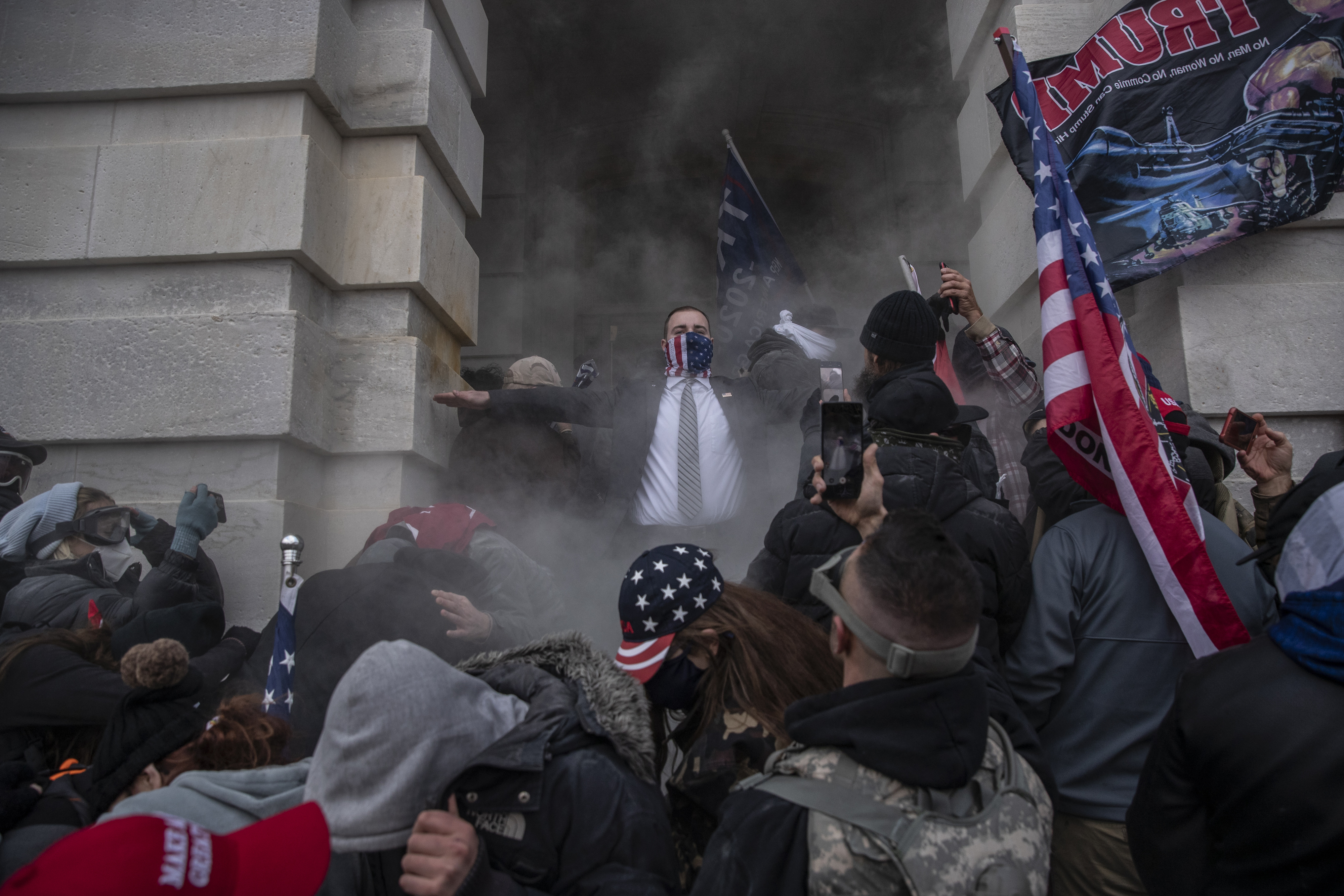
    And if the courts don’t permanently block it, Trump intends to create a $1.776 billon slush fund using taxpayer money that could be used to compensate rioters who stormed the U.S. Capitol on Jan. 6, 2021, among other things.

    Demonstrators storm and breach the US Capitol building in Washington on Jan. 6, 2021. Victor J. Blue

    Meanwhile, migrants are being systematically rounded up, denied basic human rights, and packed into squalid detention centers such as Delaney Hall in Newark, N.J., and America is engaged in an intractable and unprovoked war with Iran that has sent gas prices and the cost of living skyrocketing for all of us.

    Trump is focused on the wrong things: his daily stock trades, building a $400 million ballroom at the White House, rehabbing the Reflecting Pool, erecting a giant arch in D.C., and adding a promenade onto the Lincoln Memorial.

    Instead of helping heal the country’s divisions and bring Americans together, the president does whatever is best for him.

    His leadership has put America in a sunken place, and that’s nothing to celebrate.