Category: News

  • Ex-Comcast employee was hit in the face with a pie and tied to a chair for low sales, lawsuit says

    Ex-Comcast employee was hit in the face with a pie and tied to a chair for low sales, lawsuit says

    Sales low? You might get a pie to the face.

    That’s what a former Comcast retail employee says would happen, according to a new lawsuit filed against the Philadelphia-headquartered company.

    David Figueroa, a former employee at a retail location in Connecticut, alleges a store manager subjected workers to hazing and assault, forcing him to quit within a month of employment. That treatment included a monthly ritual where an employee was tied to a chair and smashed in the face with a cream pie. The antics were also videotaped.

    Comcast, the $125 billion-a-year media and communications giant, operates hundreds of retail stores nationwide. The stores act as point-of-sales locations for Xfinity products, including internet and TV products. They also offer equipment swaps and general customer support.

    “The Company has zero tolerance for harassment, humiliation, or any behavior that compromises a respectful and safe workplace,” Comcast spokesperson John Demming said in a statement. “This matter is in litigation so we will not comment on the specific allegations, other than to say that we disagree with the claims in the complaint and its characterization of the alleged events, and intend to fully respond through the legal process.”

    According to a lawsuit filed on behalf of Figueroa against Comcast, he was hired as a retail sales consultant in February at a retail location in Plainville, Conn., about 15 minutes outside of Hartford.

    But Figueroa said he was quickly rattled by his direct supervisor, the store’s manager, for her treatment of the staff. That store manager is not named as a defendant in the lawsuit. Demming declined to comment on the manager’s current employment status, citing personnel matters.

    The lawsuit says the store’s manager tracked employee sales metrics on a whiteboard in the back office that all employees could see. In the corner of that whiteboard, employees’ names were correlated to an emoji. The employee with the lowest monthly sales was listed next to an upset-looking emoji with a pie on its face, according to photos included in court documents.

    “[The chart] identified the employees who either had been recently assaulted or were scheduled to be assaulted in this way,” the lawsuit says.

    On Feb. 25, Figueroa witnessed a coworker being tied to the chair and assaulted in the face with a pie. The store manager “ordered, was present for, and videotaped this assault, as did the Plaintiff and other coworkers,” the lawsuit says. The coworker who struck the tied-up employee “had better sales results” and was ordered “to assault his poorer performing co-worker, in front of his peers,” the suit says.

    Figueroa’s coworkers showed him a video of another pieing incident where the assistant sales manager was hit in the face with a pie because of a poor survey score from a customer, according to the lawsuit.

    He attempted to report the incident to the store’s regional manager, who instructed Figueroa to send a text message documenting his concerns. According to the lawsuit, the regional manager “never responded” to Figueroa’s complaints about the store’s “hostile and violent work environment,” leading to his resignation.

    The Plainville retail location could not be reached for comment.

    Figueroa “suffered a pervasive and ongoing fear of being subjected to management-condoned assaults and public humiliation in the workplace,” the lawsuit says. Now, he’s suing Comcast for damages, including past and future financial, emotional, and reputational harm caused by the incident, along with court fees.

    It’s not the first time Comcast has found itself in a lawsuit involving a former employee. As reported on by The Inquirer, several past lawsuits waged by former employees have touched on hostile work environments at different Comcast stores, facilities, and call centers.

    The company reported lower profits last week, citing drops in domestic residential broadband customers in the second quarter.

  • Fed leaves interest rate unchanged but with 3 dissents as Warsh praises ‘good family fight’

    Fed leaves interest rate unchanged but with 3 dissents as Warsh praises ‘good family fight’

    WASHINGTON — The Federal Reserve left its key interest rate unchanged Wednesday, although three officials dissented in favor of higher rates as the central bank wrestles with how to deal with persistently high inflation.

    The Fed’s rate-setting committee reached its decision after two days of deliberations, marking the fifth straight meeting at which the benchmark rate was kept at around 3.6%.

    Some economists and Wall Street analysts had predicted the Fed would hike its rate by a quarter point. But while the decision to stand pat could be seen as good news for consumers, they might not feel much relief with the average credit card rate still near 20% and mortgage rates the highest since last August.

    Inflation has been stuck above the central bank’s 2% target for more than five years. The Iran war has generated uncertainty over the economic outlook and has driven energy prices higher, intensifying inflationary pressure and creating a quandary for Fed policymakers. In addition, the vast amounts of money being spent by technology companies on artificial intelligence are both driving manufacturing and have resulted in increased prices for items such as computer chips and electricity. President Donald Trump’s tariffs on foreign goods are also adding to inflation pressures.

    The three officials who dissented — Beth Hammack, president of the Federal Reserve Bank of Cleveland; Neel Kashkari, president of the Minneapolis Fed; and Lorie Logan, president of the Dallas Fed — had previously called for or signaled that they would be open to raising rates to combat high prices.

    “The dissents send a clear message: The Fed is not yet convinced the inflation battle has been won,’’ said Seema Shah, chief global strategist at Principal Asset Management.

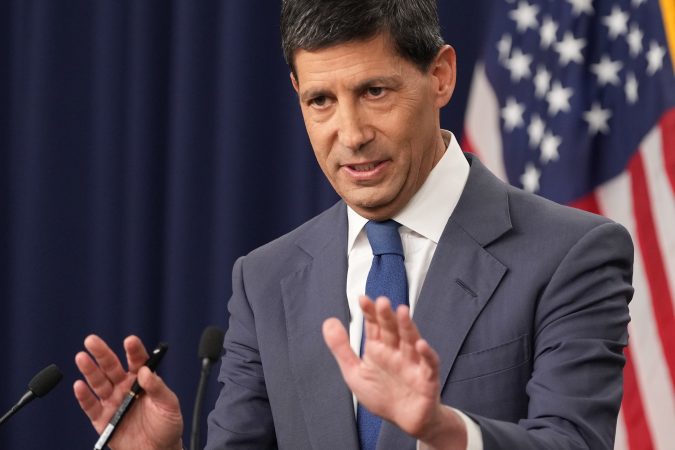
    At a news conference following the rate decision, Fed Chair Kevin Warsh reiterated the Fed’s commitment to combating inflation. At the same time, Warsh said, “We have no magic wand. This isn’t something we’re going to be able to carry out in days or weeks.”

    Warsh said he welcomed vigorous debate at the committee meeting. “I asked for a good family fight and I got one,’’ he told reporters at a news conference.

    Warsh, who was appointed by President Donald Trump, has sought to bring a number of changes to the Fed including giving financial markets fewer signals about the Fed’s thinking on interest rates. He said he believed that reticence was a factor in the bond market pushing up yields in the past few weeks as it weighed new economic data. The yield on the 10-year Treasury has risen from around 4.50% in mid-June to 4.64% just ahead of the Fed’s rate decision.

    The market is “learning to play the ball and not the referee,” Warsh said.

    Coming into Wednesday, traders on Wall Street saw a 33% chance the Fed would issue a rate hike, although most expected policymakers to hold off, reluctant to risk disrupting financial markets. But they give a 55% chance of a rate hike in September, according to data from CME.

    Trump, who had persistently pressured the Fed to cut rates, voiced support for Warsh. “He’s fantastic. He’s a brilliant guy. Smart. I know he’d love to see lower interest rates, but he’s got a board and it’s a political board and they want to keep rates up,” Trump told reporters.

    Fed officials likely want to see more economic data before changing the benchmark rate. On Thursday, the Commerce Department delivers the first look at April-June economic growth and it will also publish the Fed’s preferred inflation measure — the personal consumption expenditures (PCE) price index — for June.

    Adding uncertainty to the Fed’s decision-making process is the rising violence in Iran. The price of oil briefly blasted past $100 a barrel last week on intensifying fighting. It’s since settled down on hopes the United States and Iran can find some way to reduce tensions.

    Yet early Wednesday, Jordan intercepted missiles launched from Iran early just hours after the U.S. military said it knocked down another Iranian barrage launched against American forces in the Middle East, ending a brief pause in fighting.

    After the U.S. and Israel attacks on Feb. 28, Iran shut down the Strait of Hormuz — through which a fifth of the world’s oil and natural gas pass. That caused the greatest disruption in oil supplies in history and sent energy prices surging. They’ve since bobbed up and down depending on the ever-changing state of the conflict and negotiations to de-escalate it, but the average cost for a barrel is $10 to $15 more today than it was at this point last year.

    Inflation has exceeded the Fed’s 2% target since early 2021 when the U.S. economy overheated as it roared back from COVID-19 lockdowns. Inflation peaked at just over 9% in mid-2022 and began to drop in the face of 11 rate hikes by the Fed in 2022 and 2023. But progress has more or less stalled.

    So-called core inflation — which excludes volatile food and energy prices — cooled in June, partly because apartment rents aren’t rising as fast as they had been. And a temporary drop in gasoline prices last month also helped contain overall inflation.

    But several Fed policymakers have been arguing that the Fed will have to raise rates to return inflation to the 2% target.

    “Sternly staring at inflation until it melts before our withering gaze is not an option,’’ Christopher Waller, an influential member of the Fed’s governing board, said in a speech this month.

  • Southern Europe burns as 3 firefighters die and France battles blaze 4 times the size of Paris

    Southern Europe burns as 3 firefighters die and France battles blaze 4 times the size of Paris

    LEGE-CAP FERRET, France — An uncontained wildfire four times the size of Paris threatened to surge again in southwest France on Wednesday — as three firefighters died in Greece and crews across southern Europe confronted a punishing mix of heat, drought, and strong winds.

    The deaths on Crete brought a fatal new dimension to a wildfire emergency stretching from the Atlantic coast to the eastern Mediterranean. At the peak of the evacuations, a third of a million people were driven from homes and vacation sites in France and Spain.

    In France’s Gironde region, the country’s biggest blaze had not spread during a calm night, authorities said. But as temperatures approached 104 F Wednesday afternoon and winds strengthened, the reprieve threatened to be short-lived.

    The landscape was so combustible that investigators believe routine brush-clearing work near a high-voltage line may have sparked the inferno, even though the work appeared to comply with regulations.

    At the command center in Lège, firefighters bent over maps spread across a car hood, tracking three danger zones: northern Cap-Ferret; the wooded corridor around Marcheprime, Cestas, and Saint-Jean-d’Illac; and a military site near Martignas, where a major outbreak forced a large deployment.

    Both firefighters and residents mobilize

    More than 2,200 firefighters and over 20 aircraft remained mobilized, backed by crews from across France and European partners.

    “We strike quickly and strike hard at any new smoke emissions,” Gironde fire commander Matthieu Jomain said.

    Beyond the command center, civilians were trying to hold the line themselves. At Souge, volunteers flooded the edges of dirt tracks while a local digger driver plowed through still-burning soil, trying to keep flames from crossing back when the expected west wind arrived. In Lacanau, residents pumped water from a lake into tanks headed for hot spots and firefighters’ cisterns.

    “If one day the fire starts in our neck of the woods, I know very well that all the people here would do the same for us,” said Flavien Dubuch, 33, who drove from Saint-Émilion with his father to help.

    Hottest day this week

    The advance of major fires in the Landes and Var regions has been halted. That left Gironde as France’s biggest remaining wildfire battle, Interior Minister Laurent Nuñez said.

    The Gironde fire forced 220,000 people to flee at the peak of the crisis. Tens of thousands have since been allowed home, but authorities warned that the danger had not passed.

    Extreme heat strips moisture from vegetation and drives down humidity, turning grasses, brush and forest litter into faster-burning fuel.

    Investigators believe contractors working near a high-voltage line for power-grid operator Enedis ignited the blaze while using a brush-cutting machine, Bordeaux prosecutor Renaud Gaudeul said.

    Météo-France said Wednesday would be the hottest and driest day of the week, with elevated wildfire danger across every region of France. Drought now covers mainland France and Corsica, with soils nearing the record dryness reached in August 2022.

    Smoke from the Gironde and Landes fires also pushed particulate pollution higher across both departments, regional air-quality monitors said.

    More evacuations ordered in France

    Gironde authorities ordered 4,000 more people out of tourist sites along the Atlantic coast on Tuesday, widening what may be France’s largest peacetime evacuation.

    “The situation remains complicated. That’s clear. We’re not out of the woods,” said Gironde prefect Sophie Brocas, who also authorized 60,000 evacuees to return to three Bordeaux suburbs untouched by fire.

    The opposing movements — thousands ordered out of coastal resorts as others returned with mobile phones on and emergency bags packed — captured how precarious the situation remains.

    The disruption was spreading beyond the burn zone into Bordeaux’s peak tourism season.

    Edouard le Grix de la Salle, who runs Château du Grand Verdus with his brother, said official appeals to avoid the region threatened its wine-tourism trade. “How did they not think about protecting that sector?” he told The Associated Press.

    At one point the Gironde blaze created a black thundercloud, electrified and lit from within, that generated lightning, violent winds and new fires beyond the original front. The pyrocumulonimbus was the first recorded in France.

    Fire in Greece turns deadly for firefighters

    Two firefighters died Wednesday while battling a wildfire in the Rethymno region of Crete, Greece’s fire department said. They were among about 125 firefighters confronting flames fanned by strong winds, with four helicopters and four water-dropping planes deployed.

    The circumstances of their deaths were not immediately clear. The department said they died “in the line of duty to protect the lives and property of citizens and the natural environment.”

    A third firefighter also died Wednesday outside the fire perimeter, after tackling a separate blaze in Greece’s southern Peloponnese region.

    Tens of thousands return home in Spain

    At the height of the crisis, roughly 330,000 people were driven from homes and vacation sites across France and Spain.

    Tens of thousands of people began returning home in central Spain after firefighters made progress around Madrid and Ávila. Evacuation orders were lifted for about 20,000 people in the Madrid region, while stay-at-home restrictions ended for another 14,000.

    But 10,000 people remain under evacuation orders in Castellón, where a fire was still out of control as Spain braced for its fourth heat wave of the summer.

    More than 1,160 square kilometers (448 square miles) have burned across France this year, according to the Interior Ministry.

    Europe is the world’s fastest-warming continent, warming at more than twice the global average, according to the European Union’s Copernicus climate service. Western Europe recorded its hottest June on record, with extreme heat and widespread dryness contributing to the spread and intensification of fires in France and Spain, Copernicus said.

  • Switch to new digital tablets in N.J. prisons prompts civil rights lawsuit

    Switch to new digital tablets in N.J. prisons prompts civil rights lawsuit

    A man incarcerated in a New Jersey prison has sued the state in a bid to block corrections officials from forcing prisoners to surrender personal electronic tablets they purchased to message loved ones, listen to music, and access other digital content.

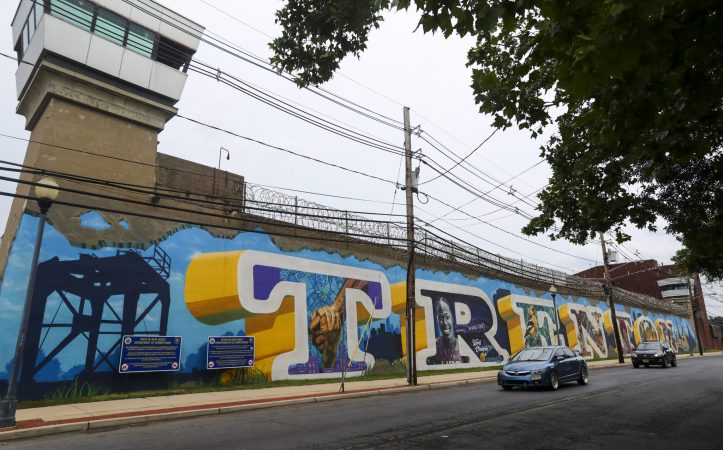
    Alonzo Hill, who has been incarcerated at New Jersey State Prison in Trenton since 1990, filed a civil rights complaint last week asking a federal judge to allow inmates to keep the handheld devices and their content — or require the state to reimburse people what they paid for them.

    The dispute comes as the state Department of Corrections switches to a new provider, ViaPath Technologies, to meet the communications needs of the 13,000 people in state custody.

    JPay had supplied such services since 2014, with people purchasing tablets and paying one-time fees for content they downloaded for use in their cells and recreation areas. The ViaPath tablets, in contrast, are considered loaners that are provided for free but require users to continuously pay for content in a subscription model. ViaPath users in New Jersey prisons also face high restitution fees for damaging tablets and new limits on tablet use outside of cells.

    Inmates bought the JPay tablets and content with the understanding they were “owned property without limitations,” Hill wrote. Yet corrections officials are requiring people to turn them in for disposal or send them home, gave incarcerated people no opportunity to chime in on the changes, and ignored his inquiries and grievances over it, he added.

    That’s a violation of the 14th Amendment, which says that no state shall deprive people of property without due process of law, he charged. Hill is director of his prison’s Inmate Legal Association, a nonprofit in which jailhouse lawyers help other incarcerated people with their court filings and disciplinary matters.

    “Many inmates utilize these tablets and content (at no additional cost) multiple times each day to relieve stress and anxieties of prison life,” Hill wrote. “State inmates were led to believe that if they didn’t violate JPay’s terms or NJDOC’s rules regarding the e-tablets, the chargers and content, that they could purchase and retain both throughout their sentences.”

    He also objected to the “exponential cost increases” he suspects users will face under ViaPath, noting that many inmates make less than $2 a day for prison jobs — and some make nothing, such as those held in disciplinary units.

    Corrections officials also have failed to guarantee that family photos downloaded and digital content purchased through JPay will transfer to the new ViaPath tablets, he added. They told people in custody that JPay tablets not sent home or surrendered for disposal will be considered contraband subject to confiscation, with their owners facing discipline, Hill said.

    Chris Greeder, a Department of Corrections spokesman, declined to comment on the lawsuit.

    But he said in an email that the department, JPay, and ViaPath have “reached an agreement allowing digital assets, including music, emails, photos, and related attachments, to be transferred to the new platform.”

    Eight of the state’s nine adult prisons have transitioned to ViaPath since March, with 9,500 people now using the new tablets, Greeder added. New Jersey State Prison’s switch is scheduled for the week of Aug. 10, he said. The department’s contract with JPay was set to expire this Friday, so officials negotiated a 90-day extension so people incarcerated in Trenton can continue using JPay services, he added.

    Officials switched vendors because ViaPath offers “a modern communications system” at a lower cost than JPay, Greeder said.

    Phone calls, money transfers, electronic messages, and video visits through ViaPath were cheaper than similar services through JPay, according to contracts and price sheets the New Jersey Monitor reviewed in May. It was tough to compare prices for music, movies, games, and such content, though, because those are pay-as-you-go services under ViaPath and outright purchases under JPay.

    The Department of Corrections is “committed to providing incarcerated individuals with safe, secure, reliable communication services” that allow them to communicate with family and loved ones, Greeder said in an email.

    Critics, though, have accused ViaPath of predatory pricing because of its pricing structure, service fees, and other practices, with people incarcerated in Nevada prisons boycotting use of ViaPath tablets earlier this year. The Virginia-based company also has racked up more than 600 complaints in the past three years with the Better Business Bureau and averages one star (out of five) in 87 reviews on its website, with many people complaining about costs and customer service. (JPay fared only marginally better on the watchdog site, with 368 complaints over the same time period and 27 reviews averaging 1.2 stars.)

    Ronald Allen, who’s also incarcerated in Trenton, filed a statement supporting Hill’s lawsuit, voicing an additional concern. He said people make inquiries and file grievances through their JPay tablets, which connect to kiosks in each prison where people download content and communicate both inside and outside the prison via a restricted, surveilled intranet. He has stored all the inquiries and grievances he’s made in the past decade on his JPay tablet, he wrote.

    “Without the kiosks, no accurate, reliable records of inquiries or grievances will exist,” Allen wrote.

    Greeder said officials are working with the vendors to acquire historical records of inquiries and grievances.

    Hill accuses state officials of deliberate indifference and is seeking a court order that would allow inmates to keep their JPay tablets, require the state to transfer all JPay content to the new ViaPath tablets, or reimburse people for content officials can’t or won’t transfer over. People in New Jersey prisons have spent between $1.5 million and $3.2 million each year over the past decade on JPay services, according to data the New Jersey Monitor obtained from the Department of Corrections last spring.

    Hill also is asking the judge to appoint an attorney to represent him in court and award damages of $7,500 per defendant.

    The lawsuit names as defendants ViaPath Technologies, Gov. Mikie Sherrill, Corrections Commissioner Victoria Kuhn, and New Jersey State Prison administrators Jeffrey Crothers and Douglas Stark.

    Spokespeople for Sherrill and ViaPath did not respond to requests for comment.

    This story originally appeared on New Jersey Monitor.

  • ‘Once’ Oscar winner and Irish musician Glen Hansard dies in motorcycle crash

    ‘Once’ Oscar winner and Irish musician Glen Hansard dies in motorcycle crash

    LONDON — Irish singer-songwriter Glen Hansard, who won an Academy Award for the 2007 film Once, died in a motorcycle crash on the outskirts of Dublin early Wednesday, his management said. He was 56.

    ATC Management told broadcaster RTE that Mr. Hansard’s family was “deeply shocked and heartbroken.”

    News of his death brought tributes from fellow musicians including Bruce Springsteen, who said on Instagram he was “heartbroken” at the loss of “a great musician, a good friend and a generous and gracious man.”

    Irish police said a man in his 50s died in single-vehicle motorcycle crash in Lucan, on the western outskirts of the Irish capital, before 4:30 a.m. Wednesday. The man, who they did not name, was treated at the scene but pronounced dead a short time later.

    Mr. Hansard combined acting and a musical career. He played a member of a Dublin soul band in the hit 1991 movie The Commitments and won an Oscar in 2008 for the song “Falling Slowly,” which he co-wrote for the indie musical Once with co-star Markéta Irglová.

    Once, a love story about two struggling musicians, was later adapted for Broadway, again with songs by Mr. Hansard and Irglová. It won eight Tony Awards in 2012, including best musical.

    Mr. Hansard was long-serving front man for rock band The Frames, half of rock duo The Swell Season with Irglová, and released solo albums including Didn’t He Ramble, which was nominated for a Grammy for Best Folk Album in 2016.

    Ireland’s President Catherine Connolly said he was one of Ireland’s great singer-songwriters.

    “Glen was one of the vital driving influences of the Irish music world, bringing people together in the sharing of live music,” Connolly said. ”He will be sorely missed by all who knew him or experienced his work.”

    Actor-comedian Chris O’Dowd said Mr. Hansard’s “energizing melodies and soulful, searching voice made the tough times more manageable, the stagnant times more beautiful, and the joyful times even more memorable.”

    Mr. Hansard started out as a busker on the streets of Dublin. He became famous for leading the Christmas Eve busk outside Dublin’s Gaiety Theatre, where members of the public gathered to see famous Irish musicians perform in aid of a homelessness charity.

    Former Irish president Michael D. Higgins said Mr. Hansard was a “wonderful musician and performer” who also “placed great emphasis throughout his life to the importance of tackling the problems of society.”

    At the funeral of The Pogues frontman Shane MacGowan in 2023, Mr. Hansard performed a rousing version of The Pogues’ song “Fairytale Of New York” with Irish singer Lisa O’Neill that had the congregation dancing in the aisles of the church.

    Mr. Hansard is survived by his wife, Finnish poet Maire Saaritsa, and their 3-year-old son, Christy.

  • Trump administration seeks $10 million more for Freedom 250 events

    Trump administration seeks $10 million more for Freedom 250 events

    The Trump administration is asking Congress for an additional $10 million to cover costs related to Freedom 250 events recently held on the National Mall, including a prayer event, a fair and a fireworks show.

    Sen. Jeff Merkley (D, Ore.), the top Democrat on the Senate Appropriations subcommittee that oversees funding for the Mall, said an earlier request from the administration was presented to Congress last week as part of a broader request for short-term funding across the government. That request, which asked for an unspecified amount of funding “to recoup costs associated with support of events celebrating America’s Semiquincentennial,” prompted questions about why the additional funds were needed, Merkley said.

    In a briefing with Merkley’s office, Interior Department staff said that the money was needed to cover routine National Park Service costs incurred during the Rededicate 250 prayer event, the Great American State Fair, and the July Fourth Salute to America, according to Merkley.

    Those events were organized by Freedom 250, a public-private partnership launched by the White House in December to mark the nation’s 250th anniversary. The group — which has partly supplanted a bipartisan group created by Congress a decade ago to help coordinate anniversary events – has organized initiatives and projects shaped by President Donald Trump, such as the July Fourth fireworks show that Trump pledged would be the largest in history. The Great American State Fair, a 16-day event extolled by the president, was beset by poor weather and saw periods of strikingly low attendance.

    Asked about the funding request, the Interior Department told The Washington Post on Wednesday that the extra funding was needed to help address security needs, citing recent threats against high-profile events such as the UFC event held outside the White House and the attempted shooting at the White House correspondents’ dinner.

    “Given the elevated security threats against high-profile events in Washington, D.C. …an elevated security posture was needed to ensure the safety of the public at these events. This funding would help address the expenditures associated with the elevated security posture,” the department wrote in an email.

    Merkley on Wednesday wrote to Interior Secretary Doug Burgum, asking how past funds set aside for Freedom 250 had been spent, in a letter shared with The Post. The One Big Beautiful Bill, which Republicans passed last summer without Democratic votes, set aside $150 million for the Interior Department for events and activities related to the semiquincentennial.

    Much of that funding has been redirected to Freedom 250, which has also solicited donors and received financial support from major corporations.

    “It is unacceptable to ask the American people to bail out Freedom 250,” Merkley wrote, asking for more details on why the administration was requesting the funds and how past money had been spent. “Congress already appropriated $150 million — without bipartisan input — with the administration promising that private donors would help finance the rest.”

  • Cherry Hill’s Brio Italian Grille is closed. For real this time.

    Cherry Hill’s Brio Italian Grille is closed. For real this time.

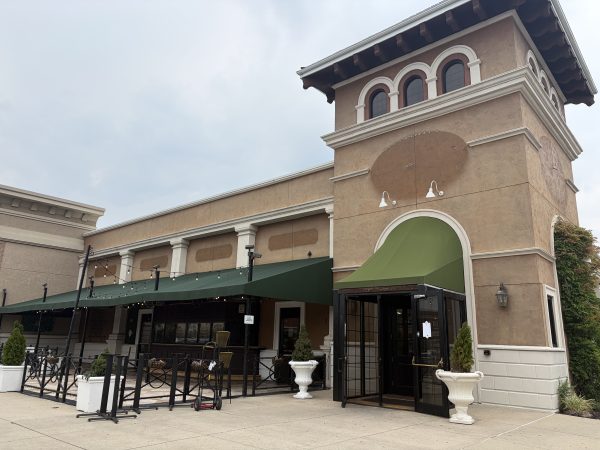
    The signage is down and the furniture and appliances were on their way out of Cherry Hill’s Brio Italian Grille on Tuesday after the restaurant permanently shut its doors.

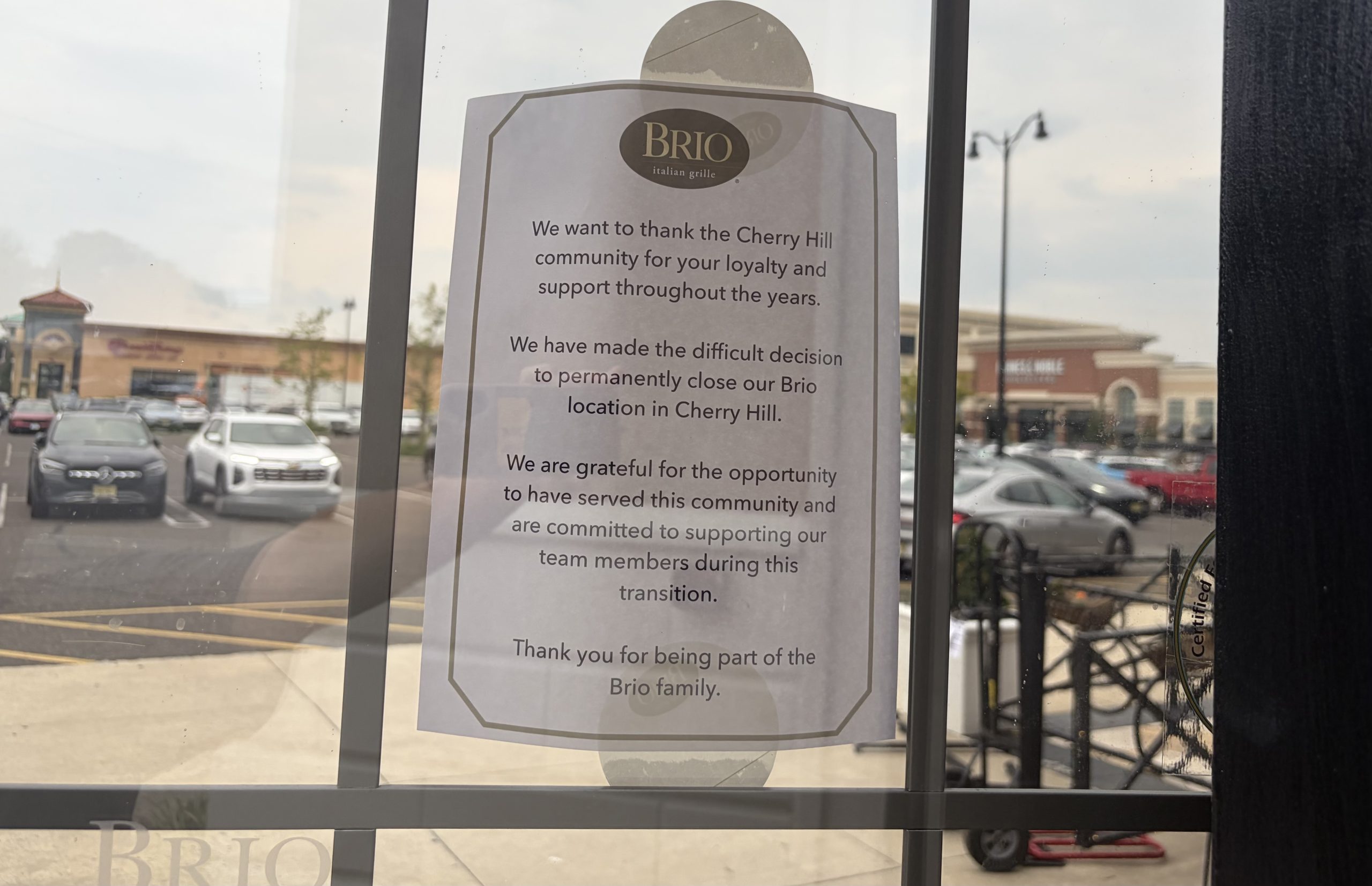
    “We have made the difficult decision to permanently close our Brio location in Cherry Hill,” a sign posted to the restaurant’s entrance reads. “We are grateful for the opportunity to have served this community and are committed to supporting our team members during this transition.”

    A sign posted to the entrance of Brio Italian Grille in Cherry Hill announces the permanent closure of the restaurant on July 28, 2026.Lacey Latch

    Calls to the restaurant went unanswered Tuesday and the location had been removed from the Brio Italian Grille website.

    The closure comes less than two months after staff at the restaurant emphasized that the doors were still open amid rumors of a potential closure.

    The other Brio Italian Grille location in Marlton closed in May, less than a year after the chain’s parent company filed for bankruptcy for the second time in five years.

    South Jersey residents interested in a visit to the Italian restaurant will now have to travel more than 200 miles to the nearest location, in Connecticut.

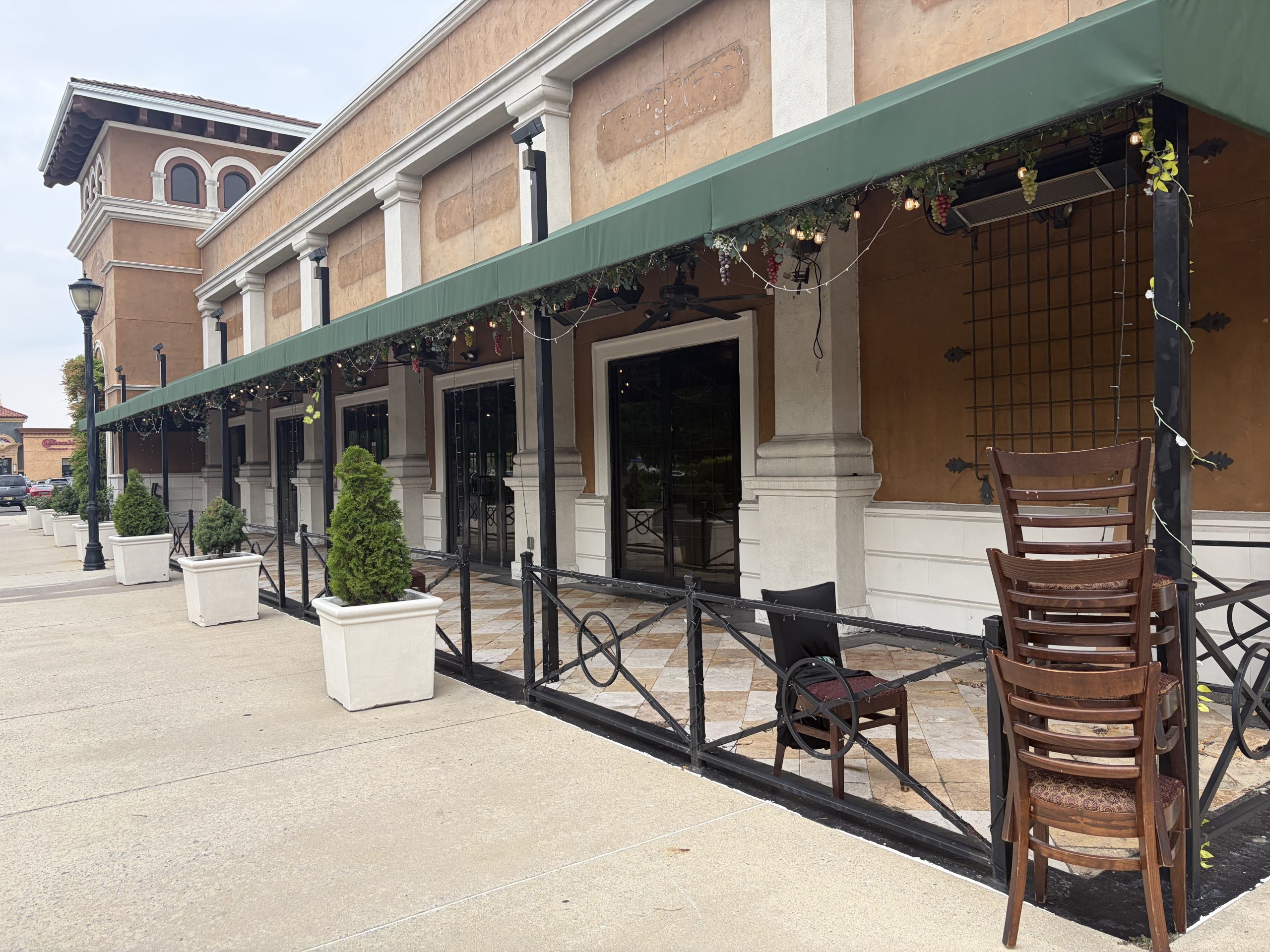
    The patio at Brio Italian Grille in Cherry Hill was cleared of all furniture save for some stacks of chairs on July 28, 2026 after the restaurant’s sudden closure.Lacey Latch

    Is Fogo de Chão moving in?

    As rumors of closure swirled last month, so, too, did rumors that Fogo de Chão Brazilian Steakhouse would move into the space.

    42 Freeway, a publication covering development in South Jersey, first reported the news in May, followed by NJ.com, which cited project plans filed by Fogo de Chão and the owners of the Towne Place shopping center to the Cherry Hill Township Zoning Board of Adjustment in April.

    Those plans propose a remodeled restaurant with 296 seats, and the required zoning permits for the conversion to the steakhouse have already been issued, Cherry Hill Township attorney Cosmas Diamantis previously told The Inquirer.

    Staff were at Cherry Hill’s Brio Italian Grille on July 28, 2026 clearing out the restaurant following the sudden closure.Lacey Latch

    Now, with Brio closed, it is still unclear if the steakhouse plans to lease the property.

    A spokesperson for Fogo de Chão declined to comment on the matter last month and again on Tuesday.

    Joe Morris, an executive for M&M Realty Partners, which owns the landlord entity that manages Towne Place tenants, previously said that the chain has inquired about joining the Cherry Hill retail center for more than a decade. Morris did not respond to requests for comment this week.

    “I can absolutely tell you, if Brio gives their space back, Fogo is 100% a tenant we would be interested in speaking with,” Morris said last month amid the first round of closure rumors.

  • Police recover stolen Dodge Charger Hellcat used in fatal hit-and-run of 29-year-old woman

    Police recover stolen Dodge Charger Hellcat used in fatal hit-and-run of 29-year-old woman

    Police recovered a vehicle on Tuesday believed to have been used in a fatal hit-and-run earlier this week.

    Deputy Police Commissioner Frank Vanore said Wednesday that investigators found a black Dodge Charger Hellcat, a high-performance version of the standard Charger, in Upper Darby on Tuesday. Investigators also learned the vehicle had been stolen around an hour before its driver fatally struck Talyia Bernice Nesmith, 29, on Monday morning.

    On Monday, just after 3 a.m., Nesmith exited a rideshare vehicle on the 7200 block of Elmwood Avenue in the Eastwick section of Southwest Philadelphia. As she attempted to cross the street, someone driving a black Dodge Charger Hellcat struck her at a high rate of speed, police said.

    Nesmith was struck with so much force that she was thrown into the rear of a nearby unoccupied parked car. After striking Nesmith, police said, the driver of the Dodge continued east, striking another parked car before fleeing.

    Police responded to the scene at 3:30 a.m. for reports of a multi-vehicle crash involving a pedestrian. Philadelphia Fire Department medics took Nesmith to Penn Presbyterian Medical Center, where she was pronounced dead at 4:05 a.m.

    In the hours following the crash, investigators in Northwest Philadelphia found a report of a stolen 2019 black Dodge Charger Hellcat, a similar model to the one involved in the hit-and-run, Vanore said. Officers began tracking where the vehicle traveled after the theft and were able to identify the car in the area of the fatal hit-and-run.

    Following that lead, investigators were able to further track the Hellcat into Delaware County. Vanore said that officers notified Delaware County law enforcement agencies of the vehicle they were looking for Tuesday, and that by 5 p.m., officers had recovered a 2019 black Dodge Charger Hellcat in a residential area of Upper Darby at Broadway and Oak Avenues. The vehicle will be processed for forensic evidence.

    Police did not identify a suspect in the stolen vehicle or the hit-and-run, and no one is in custody. Investigators are combing through video evidence of the car theft and recovery and the fatal hit-and-run to identify a suspect, but are continuing to ask the public for any information.

    “We still ask that anybody from the public who may know anything about this theft, who may know who was operating that Dodge Hellcat, we’re urging them to call us at our tip line or in our crash investigation division,” Vanore said.

    Anyone with information can submit an anonymous tip by calling the police department’s tip line at 215-686-TIPS (8477). Tips can also be submitted electronically at phillypolice.com/tips.

    (function(){function e(){window.addEventListener(`message`,function(e){if(e.data[`datawrapper-height`]!==void 0){var t=document.querySelectorAll(`iframe`);for(var n in e.data[`datawrapper-height`])for(var r=0,i;i=t[r];r++)if(i.contentWindow===e.source){var a=e.data[`datawrapper-height`][n]+`px`;i.style.height=a}}})}e()})();

    The number of hit-and-run crashes, like the one that killed Nesmith, has fallen in Eastwick in recent years, according to Pennsylvania Department of Transportation data. There were nine hit-and-runs in 2025, down from 15 in 2023. But since 2019, nearly 100 hit-and-run crashes occurred in the neighborhood, resulting in 84 people injured and four deaths.

  • Iran launches renewed missile attacks as U.S. and Saudis strike Tehran-backed militias in Iraq

    Iran launches renewed missile attacks as U.S. and Saudis strike Tehran-backed militias in Iraq

    CAIRO — Iran launched a barrage of missiles at American forces in the Middle East early Wednesday as the U.S. partnered with Saudi Arabia to strike Tehran-backed militias in neighboring Iraq, killing at least 20 fighters.

    Six Iranian advisers were also killed in the U.S.-Saudi strike, two Iraqi militia officials told the Associated Press. They spoke on condition of anonymity because they were not authorized to comment publicly.

    The flare-up on multiple fronts, after several days of relative calm, raised the risk of a return to all-out war. It also underscored the difficulty of winding down a five-month conflict that has jolted the world economy and is unpopular among Americans. The fighting was also likely to add to concerns that the U.S. is further drawing down already diminished stockpiles of sophisticated munitions needed to defend its bases and allies.

    Meanwhile, a Fox News reporter said in an on-air segment that he spoke with President Donald Trump who, using a series of vulgarities, told him the U.S. will hit back hard in response to the Iranian attacks.

    Saudi Arabia had accused the Iraqi militias of firing drones against its oil facilities over the past two days. An umbrella group of Iraqi militias initially denied the allegations, while another Iran-backed group — the Houthi rebels in Yemen — said they had attacked Saudi energy facilities as part of a separate but related conflict.

    Before the latest eruption, mediators had expressed optimism about bringing the U.S. and Iran back to the negotiating table. An interim agreement collapsed in recent weeks over renewed fighting in the Strait of Hormuz, a crucial waterway for global energy supplies that Iranian attacks have again effectively closed.

    A regional official said mediators are “still trying with both sides” to restore calm and get the ceasefire back on track. He gave no details on whether progress was being made and spoke on condition of anonymity to discuss the closed-door diplomacy.

    The renewed hostilities sent oil prices spiking. Brent crude, the international standard, jumped 3.1% to $84.58 a barrel.

    Jordan intercepts missiles and US strikes militias in Iraq

    Iran’s paramilitary Revolutionary Guard said it fired ballistic missiles at Jordan’s Muwaffaq Salti Air Base, a key U.S. military hub for the region, in a statement carried by the state-run IRNA news agency.

    Jordan’s military said five Iranian missiles had been intercepted and destroyed. There were no immediate reports of casualties or damage.

    The U.S. military later announced that American and Saudi fighter aircraft had struck multiple logistics and weapons sites in eastern Iraq in response to the alleged drone attacks on Saudi Arabia. The Saudi Defense Ministry warned that it “does not seek escalation but will respond to any aggression.”

    The Popular Mobilization Forces, a coalition of primarily Shiite, Iran-backed armed groups that is officially under the command of the Iraqi military, said at least 20 fighters were killed and 32 others wounded in the overnight strikes.

    Those groups joined the fight against the Islamic State group after it seized large sections of Iraq in 2014. The Iraqi government later designated it as an “independent military formation” within the armed forces, but the militias have significant autonomy, and some have attacked U.S. facilities.

    The office of Iraqi President Nizar Amidi condemned Wednesday’s U.S.-Saudi airstrikes, calling them “an unacceptable attack and a blatant violation of Iraq’s sovereignty, targeting its official security institutions.”

    Iraq’s National Security Council also condemned the strikes, saying in a statement that they had been carried out “while the Iraqi government was in contact with relevant parties to investigate and address all the concerns raised by the Saudi and American sides.” It said “a number of innocent people” had been killed and wounded.

    A visit to Saudi Arabia by Iraqi Prime Minister Ali al-Zaidi that had been scheduled for Thursday was postponed indefinitely, said two Iraqi government officials on condition of anonymity because they were not authorized to comment publicly.

    Attacks on Saudi oil facilities could worsen global energy crisis

    Saudi Arabia is also locked in a renewed conflict with the Houthis. The rebels have declared a blockade of Saudi shipping that could choke off another crucial Middle East trade route, the Bab el-Mandeb strait from the Red Sea into the Gulf of Aden.

    On Monday, the Houthis said they had launched drones targeting oil facilities used to transport oil across Saudi Arabia to the Red Sea port city of Yanbu, a key bypass for Saudi exports blocked by Iran’s chokehold on the Strait of Hormuz.

    The rebels said their attack was in response to a Saudi drone they said had breached Yemen’s airspace.

    Planet Labs satellite imagery from Monday analyzed by The Associated Press showed damage to Saudi Aramco’s Abqaiq oil-processing facility. The massive facility is capable of processing approximately 7 million barrels of crude oil per day.

    In 2019, attacks on Abqaiq claimed by the Houthis disrupted production of 5.7 million barrels per day, spiking global oil prices and demonstrating the vulnerability of Saudi oil facilities to missile and drone attacks.

    Separately, a regional official said an oil refinery in Jazan, on Saudi Arabia’s Red Sea coast, has temporarily shut down due to “relatively significant” damage from a Houthi attack on Saturday. The official, who was not authorized to brief journalists and spoke on condition of anonymity, said it would take several days to be repaired. The refinery produces 400,000 barrels per day.

    The Texas-based IIR Energy consultancy said the refinery was tentatively expected to restart on Aug. 15.

    Iran rejects Oman proposal for managing Strait of Hormuz

    The Strait of Hormuz has been a major flashpoint in the conflict. Iran’s deputy foreign minister said his country rejected a proposal by Oman, which lies on the other side of the strait, to jointly manage ship traffic.

    In an interview with Iran’s state-run television, Kazem Gharibabadi said Oman’s proposal included dividing the strait into two routes, each allowing the transit of half the shipping through the waterway.

    Iran offered a counterproposal with a temporary plan for transit of vessels through its territorial waters, he said, adding that Tehran’s policy is for the strait “never to return to its prewar situation,” when ships moved freely.

  • Rescuers search for survivors after a 7.1 quake kills 18 in southwestern Japan

    Rescuers search for survivors after a 7.1 quake kills 18 in southwestern Japan

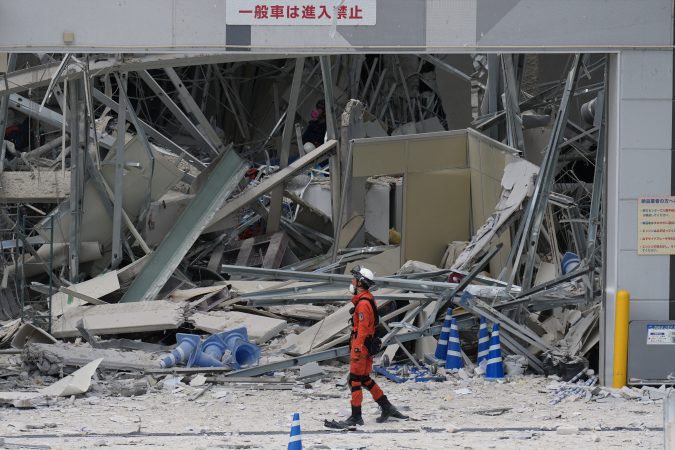
    KUMAMOTO, Japan — Soldiers and emergency workers combed through a badly damaged shopping mall and collapsed houses looking for trapped survivors Wednesday after a powerful earthquake that killed at least 18 people, including a foreigner, in southwestern Japan.

    The magnitude 7.1 earthquake that hit a day earlier in the Kumamoto area on the southern main island of Kyushu also left at least 62 people injured, six of them seriously, the prefectural government said. The tally has been steadily growing, fanning fears it may continue to rise.

    Some of the most serious damage was at the Aeon Mall shopping center in the town of Kashima, which was bustling with thousands of people when the quake happened. The company said some 3,000 customers were evacuated to a parking lot before a gas explosion happened in another part of the mall, where some people were still working.

    Fumika Ono was shopping at a mall with her older sister when the ground shook so fiercely she lost her balance and ducked. Children began screaming and goods scattered on the floor.

    The 19-year-old was among the crowd of shoppers who managed to escape safely.

    The sweltering weather heightened worries about the survivors as rescuers braved the heat. It remained unclear how many people might still be missing.

    The mall’s second floor collapsed, trapping people. Witnesses said the explosion shook the area as much as the quake.

    Three people remained missing, while four deaths were confirmed at the mall site, according to Aeon President Akio Yoshida.

    “We take it seriously that an explosion happened and precious lives were lost,” Yoshida told a news conference in Kumamoto, where he bowed deeply along with two other executives.

    Japanese media footage of the mall showed that part of the ceiling had caved in, and metal pieces and other debris were scattered about as helmeted and masked rescue workers searched the area.

    Kiyoshi Matsunaga, 74, who lives in the mall’s neighborhood and was at a supermarket just a few blocks away, said Tuesday’s quake reminded him of a deadly quake 10 years ago that hit Kumamoto and killed 50 people.

    He stopped in his tracks when the shaking began while he was pushing his cart toward a cash register. Things scattered from the shelves. He could not move, he recalled.

    “I was frightened,” he said.

    Japan is one of the most quake-prone nations in the world.

    In the Nuyamazu district, a pair of temple gates at a 16th-century Buddhist temple collapsed. They had just been repaired five years ago.

    Yuki Kiyozumi, deputy chief priest at the temple, recalled how she had to crawl on the floor because the shaking was so violent. She had just returned home from a meeting and was about to feed her cat.

    “I don’t even know if or how we can rebuild them again,” she said, while cleaning up damaged ornaments and furniture.

    In nearby Yatsushiro, a chimney collapse at a Nippon Paper Industries factory killed five people while seven others were rescued from the debris, according to the Kumamoto prefectural government disaster team.

    Four people were still believed to be trapped there, it said.

    In the first reported death of a foreign national, a Vietnamese technical intern was killed after a crane fell on him at a factory where he worked, according to the Vietnamese government. He had arrived in Japan in January. Seven other Vietnamese technical interns at the factory evacuated safely

    Separately, a Vietnamese woman married to one of the workers was injured when a wall collapsed and was being treated at a hospital.

    Nearly 34,900 homes were still without electricity and some 15,000 homes without running water, Kumamoto officials said. More than 8,800 people left their homes to stay in over 400 shelters, where power sources were being added to provide air conditioning.

    Aerial police footage showed some homes in residential areas were completely flattened, including a few that crumbled into a nearby river.

    Japan’s Self Defense Forces joined rescue workers in the search and rescue operations. Hundreds of professionals were helping with the effort, including firefighters from Taiwan.

    “There are people who are still waiting to be rescued, and it’s a race against time,” Prime Minister Sanae Takaichi said. “We will go all out to find and rescue as many people as we can.”

    Takaichi said the government was preparing to deliver food and other necessities to hard-hit areas. She also offered her condolences to the victims and sympathy to their relatives, while urging those affected by the quake to take care of themselves under the hot weather.

    Bullet train services remained suspended. Although operations at Aso Kumamoto Airport resumed Wednesday, some airlines canceled flights as a precautionary measure.