Category: News

  • Storm warnings have been outdoing the actual storms in the Philly area

    Storm warnings have been outdoing the actual storms in the Philly area

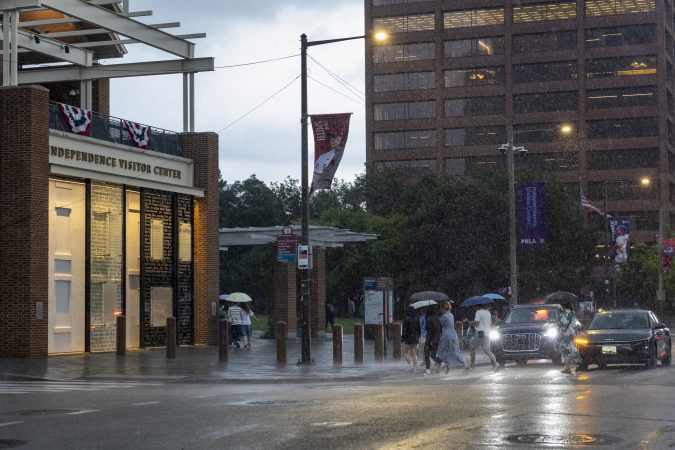
    The smartphone alerts and the battery of weather watches and warnings were chilling. But they failed to capture what actually happened in the immediate Philadelphia area.

    As it turned out Tuesday, not all that much happened, beyond a beneficial rainfall, some flashbulb lightning, and wind gusts that officially did not get past 34 mph. Heavy rains hammered Upper Bucks County, but around Philly, creeks behaved and flooding reports were isolated, even as damaging storms struck to the north and south of the region.

    As so often occurs with summer thunderstorm outbreaks — not to mention winter storms — we learned science is playing catch-up with the atmosphere. That was evident Tuesday night, and if you feel as though you’ve seen this movie before, the forecasts and the outcomes were similar on July 18 and 21.

    And expect recurrences — and surprise storms — even if the climate stops changing.

    The atmosphere still is jealously guarding some of its most important secrets, said Bill Bunting, deputy director of the federal Storm Prediction Center, the national house of mayhem in Norman, Okla., that is responsible for all the severe-storm and tornado watches.

    In his 40-plus years in the storm-forecasting business, Bunting said, “I have seen remarkable progress, but we’re nowhere near perfection. In the end, the science has its limitations.”

    About the Tuesday night storms

    Life is unfair, and that works both ways. The Philly region has had its share of storm ambushes historically, and as for what did not happen in and around the city Tuesday, “we’ll consider that a much more fortunate outcome than what could have been,” said Mike Lee, meteorologist at the National Weather Service office in Mount Holly.

    The outcome was similar to that of July 18 and July 21, when the menu of threats — wind, possible floods and tornadoes, lightning — was about the same. The gusts on the 18th did not get above 35 mph at Philadelphia International Airport, and they did not get above 30 mph on the 21st.

    Bunting said this week’s storms were particularly problematical meteorologically. “The wind fields were quite strong” in the upper atmosphere, he said. “That environment was not one to mess around with.”

    It was as though the system had wandered in from a different season, when cooler temperatures create sharp temperature contrasts that drive storm development, Lee’s colleague Patrick O’Hara said.

    At 12:50 p.m., the storm center had seen enough to issue a broad-brush severe-thunderstorm watch that covered a huge swath of the Mid-Atlantic region, including much of Pennsylvania and all of New Jersey and Delaware.

    A tornado watch followed a few hours later.

    The Mount Holly office issued two tornado warnings for the Philly area — including one covering Wilmington and Chester City.

    However, the two twisters verified by the Mount Holly office occurred in Talbot County, Md.

    The heaviest rains — in some cases over 4 inches in Quakertown — mostly were confined well to the north of Philly. Officially, 0.72 inches of rain was measured at PHL.

    Wind-damage and flooding reports around the Philly area were sparse, although Bunting advised it can take days following a storm to get an accurate assessment of impacts.

    The future of thunderstorm forecasting

    Bunting suggested that complaints about forecast accuracy could be viewed as forms of flattery, since they well from the public’s expectations that, in turn, well from advances in forecasting.

    In 1985, Bunting recalled, he was working with one computer-model output that he received via a fax machine, and observation tools primitive by today’s standards.

    But forecasting the development and movement of thunderstorms remains one of the great challenges of meteorology, and it is inevitable that storms are not going to materialize in some areas that are under a storm watch.

    “You don’t now exactly where those storms will organize into a cluster, or fast-moving line segment,” he said. “So you have to put larger areas on notice.”

    A wild card in any cluster or line of storms would be renegade, isolated storms, the kind that are apt to spin up a tornado, Bunting said.

    For any given storm, he said, “until it forms in a larger area with similar conditions, it’s hard to pinpoint the risk.”

    What would it take to pinpoint the risks? Improved understanding of storm physics, improved remote-sensing capabilities, and more powerful models, Bunting said.

    “It is not a trivial challenge,” he said. “The decisions are not going to be perfect.”

    That is not necessarily a bad development, he added.

    “Sometimes I wonder what it would be like if we knew what the weather would be in great detail, weeks and months advance,” he said. “It seems to me it would get kind of old.”

  • Worker was ‘impaled’ by blow torch while dismantling an old crane at EMR Camden

    Worker was ‘impaled’ by blow torch while dismantling an old crane at EMR Camden

    A worker at EMR was impaled by a blow torch while taking apart a crane for scrap metal, according to Camden Fire Department incident reports.

    Camden County had confirmed that a worker at the scrap metal plant had been transported to the hospital after suffering life-threatening injuries less than two weeks ago on July 18. The man remains in the hospital in stable condition and conscious.

    The incident took place less than a week after the company announced its phased reopening after a string of fires. A judge had allowed EMR to resume operations after the company sued the city of Camden for suspending its operations.

    Fire department documents obtained by The Inquirer through a public records request reveal that worker was injured while dismantling a crane.

    He was on a stretcher with “what appeared to be a large Oxy-Acetylene blowtorch handle impaled into his left bicep and into his torso,” when Camden City Fire Department Battalion Chief Ezequiel Tirado arrived on the scene to respond to a burn victim, according to his report.

    Another worker who could not speak English had cuts on his face, and blood and mud on his hands, according to Tirado’s report. They spoke in Spanish, and the man said he was hurt but declined to be brought to the hospital, stating that he’s an undocumented worker.

    “I told him, ‘Don’t worry about that. Let’s get you some help,’” Tirado wrote. “He stared at me then ran away.”

    He was later found at the hospital, Tirado said.

    William Scott, the night time operations manager for EMR, said he did not know what caused the workers’ injuries, according to Tirado’s report. Scott said they were using a cutting torch to cut an old crane for scrap metal.

    Tirado described the site of the incident as “very dark with no lighting equipment” and lots of debris. He said emergency responders set up lighting and discovered a pool of blood near the crane and under a lift.

    Camden County spokesperson Dan Keashen said Wednesday that the now-stabilized man who was impaled with the blow torch was transported to the hospital in critical condition. He said the county police department is still investigating the incident.

    Joe Balzano, the CEO of EMR, said on the phone Wednesday that the workers were subcontractors hired to demolish an old crane and not employees of EMR.

    He said the injured worker is “a very hardworking nice man, unfortunately who was involved in a workplace injury.”

    “We’re just glad that he’s doing well,” the CEO said. “It’s unfortunate, heavy industry situations have, you know, unfortunate accidents … we just hope he does continues to progress well.”

  • ‘She killed the kids!’ 911 call from Lindsay Clancy’s husband brings tears to the courtroom

    ‘She killed the kids!’ 911 call from Lindsay Clancy’s husband brings tears to the courtroom

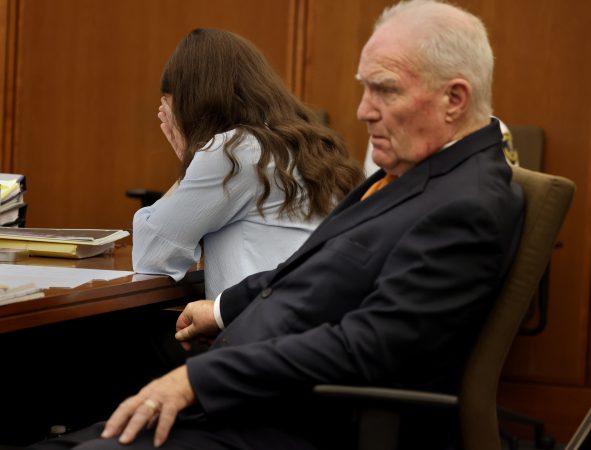
    PLYMOUTH, Mass. — Lindsay Clancy sobbed in court Wednesday as jurors listened to the anguished 911 call her then-husband made after returning from an errand to find she’d strangled their three children in their Massachusetts home.

    On the roughly 7-minute recording, Patrick Clancy can be heard speaking with his wife upon finding her badly injured and bleeding in their yard, after she jumped from the home’s second-story window.

    “Look at me,” he says. “Say my name.”

    He then tells the dispatcher he’s going to check on the children. Moments later, he howls and cries after finding them in the basement. The confused dispatcher repeatedly asks what happened.

    “She killed the kids!” he yells.

    Three years after their deaths, the murder trial has centered on Lindsay Clancy’s mental state at the time. Her lawyers will seek to prove she had postpregnancy psychosis, a rare mental illness linked to the stress, sleep deprivation and hormonal changes that follow childbirth.

    Prosecutors say Clancy, a former labor and delivery nurse at Massachusetts General Hospital, acted intentionally and is criminally responsible for the deaths of 3-year-old Dawson, 5-year-old Cora, and 8-month-old Callan in January 2023.

    ___

    EDITOR’S NOTE: If you or someone you know needs help, the national suicide and crisis lifeline in the U.S. is available by calling or texting 988. There is also an online chat at 988lifeline.org

    ___

    Her lawyer said in opening arguments Monday that she had bipolar disorder, and that antidepressants prescribed after the birth of her third child worsened her condition. On the day of the killings, Lindsay Clancy said she heard a voice telling her, “This is your last chance. Kill the children so you can kill yourself,” according to her lawyer.

    If convicted of murder, she faces life in prison without parole. If found not guilty due to a lack of criminal responsibility, she would be committed to a state mental health facility.

    Patrick Clancy has said in interviews that he forgives his ex-wife, whom he viewed as ill rather than evil. The trial marks the first time he has seen Lindsay Casey since the killings.

    A husband’s emotional testimony and a chilling 911 call

    Patrick Clancy testified Wednesday that his last image of Dawson was of the boy sitting on the couch, eating chicken nuggets and green beans. Lindsay Clancy had asked her husband to make a quick trip for takeout food and medication at a pharmacy for Cora. Prosecutors say this was an excuse to get him out of the house.

    Jurors were shown surveillance video from the pharmacy of Patrick Clancy on the phone with his wife, asking a question about the medicine.

    “She was pretty quiet. It sounded like she was busy,” he testified Wednesday. “I remember hanging up thinking she was probably in the middle of giving baths or something like that.”

    Returning home, it was unusually silent. He called out to his family.

    When no one answered, he searched the children’s rooms and the bathroom, again thinking they might be in the tub, before finding blood throughout the main bedroom and a window open.

    Injured but conscious, Lindsay Clancy told him she’d tried to kill herself and that the kids were in the basement, without saying they were dead. He didn’t realize he was still on the phone with 911 as he ran downstairs to find each had been strangled with exercise bands.

    Lindsay Clancy’s parents, seated in the front of the court, also cried as the call was played. Patrick had already left the room after finishing his testimony.

    Jurors were shown the clothes each child had been wearing, with a prosecutor pulling the items from clear plastic evidence bags: pajamas and a pink robe for Cora; a nightshirt and dinosaur underwear for Dawson; a red onesie decorated with snowflakes for Callan.

    The trial will hinge on Lindsay Clancy’s mental state

    Patrick Clancy testified Monday about his wife’s deteriorating mental health in the months before the killings, including her telling him about intrusive thoughts of harming the children and of suicide.

    Lindsay Clancy had sought care from experts in postpartum mood disorders, was put on multiple psychiatric medications, and when nothing worked, checked in to a psychiatric hospital. She killed the children 19 days after she was discharged.

    No one ever told Patrick Clancy his wife shouldn’t be alone with the children, he testified Wednesday. “I didn’t know what psychosis was until after this happened.”

    Clancy and her ex-husband accuse her medical providers of failing to properly diagnose, treat and monitor her, according to lawsuits filed earlier this year.

    On cross-examination, Clancy’s attorney, Kevin Reddington, aimed to demonstrate she took her medications and closely tracked her declining mental health. He introduced daily, handwritten notes she took of her medicines and her mood, including repeatedly writing “horrible thoughts.” She also had a book and fact sheet on postpartum anxiety and a chart where she tracked her mood.

    Reddington also got Patrick Clancy to acknowledge that many of her medical appointments starting in the summer of 2022 were with nurse practitioners and on Zoom calls lasting only 20 minutes. They also went through multiple medications she was prescribed, including Seroquel — an antipsychotic medication for which doctors increased her dosage in December.

    “The idea was that it would help with sleep, but she didn’t get better. She got worse,” Patrick Clancy said.

  • Blanche nomination at risk of delay as senator seeks assurances on Trump settlement

    Blanche nomination at risk of delay as senator seeks assurances on Trump settlement

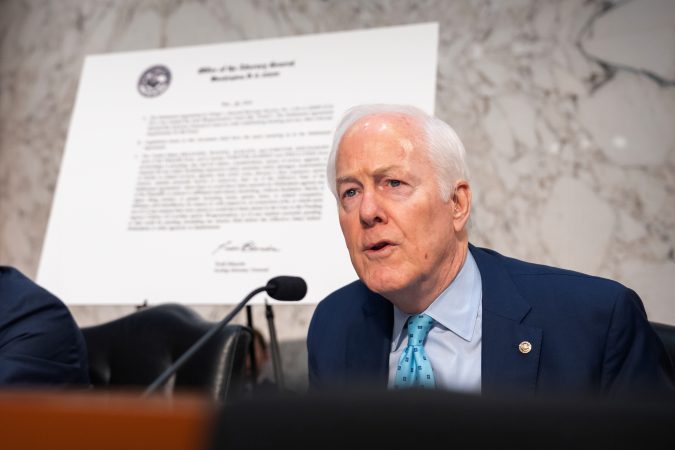
    WASHINGTON — A planned vote to move forward with Todd Blanche’s nomination for attorney general appeared in doubt Wednesday as a key Republican senator demanded more assurances from the Justice Department about the settlement of President Donald Trump’s lawsuit against the Internal Revenue Service.

    GOP Sen. John Cornyn, a crucial swing vote, called off a scheduled Wednesday meeting with Blanche, who has been serving as acting attorney general since Pam Bondi’s firing in April. Cornyn told reporters that the Justice Department has not adequately addressed in writing his concerns about the settlement that afforded Trump and members of his family protection from tax audits.

    The dispute threatened to upend plans for the Senate Judiciary Committee to vote Thursday on whether to advance Blanche’s nomination to the full Senate. Another Republican on the committee, Thom Tillis of North Carolina, has backed Cornyn’s position, and just one Republican holdout could sink Blanche’s prospects.

    “They know what they need to do but they simply refuse to do it,” Cornyn, who lost the Texas Republican primary in May, said of the Justice Department.

    At the center of the fight is the settlement of Trump’s $10 billion lawsuit against the IRS that included a deal to drop tax claims against the president and a now-scrapped plan to create a $1.776 billion “Anti-Weaponization Fund” to compensate people who believe they were wronged by the Justice Department. The Justice Department said in June that it was no longer moving forward with the “Anti-Weaponization Fund” amid bipartisan outrage but officials have said the audit immunity agreement remains in place.

    Trump on Wednesday downplayed any concerns about Blanche’s path to confirmation, calling his attorney general pick and former personal attorney “outstanding.”

    “Maybe John Cornyn’s upset with me because I didn’t endorse him,” Trump told reporters in response to questions about the senator’s demands.

    Texas Attorney General Ken Paxton won the state’s Republican nomination for the U.S. Senate, easily defeating Cornyn. Trump had endorsed Paxton.

    Some lawmakers have raised concerns that the fund could be resurrected absent a commitment in writing from the Trump administration that it is dead, especially since Trump has expressed continued support for the idea. Blanche had previously resisted requests for a formal written retraction, though he told senators at his confirmation hearing earlier this month that the administration would be willing to help craft legislation to bar the creation of the fund.

    Cornyn has also demanded clarification from the Justice Department on the scope of the tax immunity deal. He has pressed the administration to modify that piece of the settlement to make clear that it covers only existing audits and does not protect the president from examination of future tax filings.

    “We’re been trying to help them get to a conclusion here and they won’t let us. It’s befuddling to me,” Cornyn said.

    A person familiar with the matter said the Justice Department provided Cornyn’s office with a written proposal seeking to address his concerns around the audit immunity agreement and the fund. The person spoke on the condition of anonymity to talk about sensitive discussions surrounding Blanche’s confirmation.

    The settlement resulting from Trump’s lawsuit over his leaked tax returns has drawn intense scrutiny both in Congress and in court. The judge handling the case said in a scathing ruling earlier this month that Trump had effectively engaged in self-dealing through the lawsuit and that she was troubled Blanche had signed the settlement, given his prior representation of Trump.

    Blanche has said he disagrees “with the judge’s insinuations” about him.

  • The EPA halted a study on gas stoves and asthma. But even partial results were striking.

    The EPA halted a study on gas stoves and asthma. But even partial results were striking.

    Paul Moore’s house is old. It was built around 1900 as a hunting lodge near where Cleveland would develop, and his grandparents bought the home around 50 years later, converting it over the years into a three-bedroom ranch that included what Moore called an “old school” gas stove.

    When he moved into the house in 2020 with his wife and six children, Moore already had debilitating asthma. He got winded walking up hills and couldn’t play basketball with his children. He slept poorly and couldn’t hold steady employment, instead doing odd jobs like fixing neighbors’ cars and houses. He was hospitalized multiple times with severe asthma attacks and almost died from being unable to breathe.

    “My asthma was a real hindrance at the time. And I couldn’t figure out why, you know?” Moore said. “Just couldn’t pinpoint one thing or another. Was it me? Is it something going on with my body? Is it something else?”

    It turned out that researchers at Case Western Reserve University in Cleveland and a local hospital network were studying asthma sufferers like Moore. He signed up to have his gas stove swapped out for an electric one in June 2025. That research would end up providing vital evidence on gas stoves’ health impacts, amid fierce debate between fossil fuel advocates and climate change activists.

    Moore said without the study, he has no clue how long it would have taken him to save the money to change it himself. The researchers spent an average of about $10,000 per household, as many old homes needed to be completely rewired to handle the larger electrical load of an induction stove.

    What Moore didn’t know is that he would be one of the last people to get a new stove as part of that work.

    Ash Sehgal, a Case Western medical professor who led the study, had received an $18 million grant from the Environmental Protection Agency in December 2024 to replace the stoves in 1,200 homes of asthma sufferers in the Cleveland and Akron, Ohio, areas. A month before Moore’s stove was replaced, Sehgal received a letter stating that the grant had been terminated.

    It was one of thousands cut short after President Donald Trump took office and launched aggressive efforts to reduce government spending.

    But unlike many others forced to halt their research, Sehgal and his co-authors released their study anyway, publishing it in the Journal of Allergy and Clinical Immunology in Practice this month with a fraction of the intended sample size. Still, removing the gas stoves relieved the participants’ asthma so much that the results were clear even with only 85 of them, according to two scientists who reviewed the methodology but were not involved in the study.

    “What really surprised me is that the improvement in the asthma symptoms was similar to or even larger than the improvement in asthma symptoms that’s reported in clinical trials of commonly used asthma medications,” Sehgal said.

    Participants recorded far fewer asthma attacks, emergency room visits and missed days of work after the stove was removed, and levels of nitrogen dioxide in their kitchens plummeted by 70 percent.

    “They were able to see some important results, even with the grant getting canceled, even with the sample size being less than a tenth of what they’d intended,” said Julian Marshall, an environmental engineering professor at the University of Washington.

    “It’s also an actionable finding. People who have asthma would want to know, ‘What can I do about this?’” he added. “This is a major problem facing thousands and thousands of people across the U.S.”

    Sehgal said that while it can help to replace gas stoves that exacerbate symptoms, it is not a cure for asthma. Asthma sufferers still need to work with a doctor, take their medications and avoid triggers like pollen and cigarette smoke.

    Rob Jackson, an environmental scientist at Stanford University who was not involved in the research, said many studies on indoor air pollution from gas stoves rely on models to estimate the impact on people’s health, whereas this study makes real-life observations.

    “It’s important because the extent to which indoor air pollution from stoves harms people’s health is still debated in state houses, federally, in courtrooms, and so every piece of the puzzle, even if it’s only 85 individuals, strengthens that story,” he said.

    In recent years, conservatives have championed gas stoves and fought Biden-era policies that sought to reduce the use of fossil fuels driving climate change. Trump has championed fossil fuel development, seeking to boost the oil and gas industry by rolling back environmental protections and opening new areas to exploration.

    Politicizing science

    Scientists have lamented the loss of federal funding following the Trump administration’s dramatic cuts last year to grants across the government, including those awarded by the National Institutes for Health and Centers for Disease Control and Prevention.

    The EPA has terminated $28.5 billion in grants, according to Grant Witness, a tracking project, with much of that money intended to focus on helping communities respond to climate change or reduce pollution. That included funding projects that installed rooftop solar or sealed up houses against wildfire smoke, as well as scientific studies that had real-life applications, like evaluating the replacement of gas stoves.

    The agency closed the Office of Environmental Justice and External Civil Rights, which awarded Sehgal’s grant, amid its broader purge of programs related to climate change, environmental justice and diversity, equity and inclusion.

    Despite court challenges, including a district judge ruling earlier this month that the cancellations were illegal, many researchers were forced to end their studies early.

    EPA spokesperson Brigit Hirsch said in an email that the agency’s internal scientists continue to conduct vital research.

    “EPA’s core mission is protecting human health and the environment, and at the Trump EPA, gold-standard science supported by our excellent career scientists is happening like never before to ensure clean air, land, and water for all Americans,” she said.

    The cancellation of the gas stoves research grant “seems to be a political decision, not necessarily based on science-based or public health priorities,” said Darya Minovi, a public health researcher at the Union of Concerned Scientists, an advocacy group.

    The administration is looking to expand its ability to shape scientific funding, she said. The White House’s Office of Management and Budget proposed a new regulation in late May that would demand grants across the federal government align with the president’s policy priorities or face cancellation.

    While presidents often set the general direction of agencies by appointing their leadership, Minovi said this new policy would give the president more control over decisions typically made by staffers at institutions such as the NIH.

    “This is really making it government-wide policy to politicize grant-making that should not be subject to the whims of a president, but really should be decided on scientific merit,” she said.

    What was lost

    Based on the results that were published, Sehgal can estimate how much damage halting the study caused. If 1,100 more households had participated as originally planned, it would have resulted in 900 people with better-controlled asthma and 84 fewer people who would go to the emergency room or be hospitalized.

    Many of those people probably don’t even realize the connection between their asthma and their gas stove, said Angela Bland, a 38-year-old stay-at-home mom in Akron who also participated in the study. She said the impact of replacing her stove was almost immediate, and she didn’t feel her throat closing up as much while cooking.

    “It was kind of heartbreaking because I was like here’s something that can really help people and get information out there to help people, and they cut it so quick,” she said.

    Similar to Bland, Moore said he quickly felt the impact of removing his gas stove.

    “It was just like, ‘Huh, I feel a little bit better. It’s not like how it used to be.’ It was a slow realization over the first week,” he said.

    He remembers waking up to his daughter cooking, smelling the food and feeling good for once, so much so that his family noticed.

    “They felt the difference. It was a magical moment,” Moore said.

    After his health improved, Moore found a new job locating gas lines so that major construction projects don’t rupture them.

    “There’s a whole lot of people out there probably feeling just like how I felt,” he said. “A lot more people deserve to feel good when they cook or when they eat or when they are able to sit down with their families.”

  • Russia accuses Telegram CEO Pavel Durov of aiding terrorism in its latest digital crackdown

    Russia accuses Telegram CEO Pavel Durov of aiding terrorism in its latest digital crackdown

    Russian authorities said Wednesday they had charged Pavel Durov, the founder and CEO of the popular messaging app Telegram, with aiding terrorism, the latest step by the Kremlin to bring the internet and digital communications under its control.

    The charges against the Russian-born Durov, who lives abroad, came as authorities have sought to restrict the use of Telegram as part of a widespread crackdown on online freedom that followed Moscow’s full-scale invasion of Ukraine in 2022.

    The Federal Security Service, or FSB, said in a statement it had accused Telegram’s administration of failing to remove “numerous channels, chats and bots” allegedly used by “Ukrainian intelligence agencies, terrorist and extremist organizations to prepare and coordinate acts of sabotage and terrorism, mass murder, and cyber fraud” in Russia, which resulted in “numerous human casualties.”

    The FSB accused Ukrainian security services of using a popular dating chatbot on Telegram to lure and recruit Russians for “sabotage and terrorist activities,” and said 46 users of the chatbot, from 12 to 22 years old, have been detained in Russia over the past year for assaulting law enforcement officers, arson and other acts.

    It also said it was adding the name of the 41-year-old billionaire to international wanted lists.

    Durov had said earlier this year that Russian authorities opened a criminal investigation against him, and he accused them of fabricating pretexts to restrict access to Telegram as part of an attempt to “suppress the right to privacy and free speech.”

    If convicted, he could face up to life in prison in Russia.

    Telegram, which boasts of more than 1 billion users worldwide, did not respond to a request for comment. Its official website links to an account on X that on Wednesday posted am image of Durov raising a middle finger to the camera.

    Telegram’s website says that the company is based in Dubai and that Durov, who holds dual citizenship in France and the United Arab Emirates, lives there, too.

    Russia has sought to censor the internet

    Under President Vladimir Putin, Russian authorities have engaged in multipronged efforts to rein in the internet, adopting restrictive laws and banning websites and platforms that don’t comply and focused on improving technology to monitor and manipulate online traffic.

    Popular social media platforms, such as Facebook, Instagram and X, have been banned in Russia; YouTube has been throttled; popular messaging apps, such as Signal and Viber, have been blocked, and the most popular ones — WhatsApp and Telegram — have been restricted.

    Russia’s popular Facebook-like social media platform Vkontakte, founded by Durov long before he launched Telegram, had come under the control of Kremlin-friendly companies. Russia tried to block Telegram between 2018-20 but failed.

    While it’s still possible to circumvent some of the restrictions by using virtual private network services, many of them are routinely blocked, too.

    At the same time, Russia actively promotes what it calls a “national” messaging app known as MAX, which critics say could be used for surveillance. The platform is touted as a one-stop shop for messaging, getting online government services, making payments and other activities. It openly says it will share user data with authorities upon request, and experts also say it doesn’t use end-to-end encryption.

    The Telegram restrictions have elicited widespread discontent in Russia, and this year activists in multiple regions tried to organize protests against it, but authorities quashed nearly all their attempts.

    Military bloggers also have denounced the crackdown, arguing the app is an indispensable communications tool for Russian troops in Ukraine and for activists running crowdfunding campaigns to help Moscow’s forces.

    The government initially promised not to restrict Telegram on the battlefield, but a different message later came from the Kremlin. At a meeting with Putin for International Women’s Day, a servicewoman called Telegram “an adversarial communications tool” and agreed with him when he said that “the use of communications systems that are not ours, not under our control, poses a danger to personnel” in battle.

    Despite the restrictions, multiple Russian officials still use Telegram and regularly update their “channels” — its term for blogs — on the platform. The Kremlin’s Telegram page had more than 284,000 followers as of Wednesday.

    Durov was arrested in France in 2024

    In 2024, Durov was arrested in Paris amid allegations that his platform was being used for illicit activity, including drug trafficking and the distribution of images of child sexual abuse. French authorities handed him preliminary charges for allegedly allowing criminal activity on the platform. In March 2025, Durov said he had returned to Dubai after spending “several months” in France.

    The Kremlin at the time criticized the French authorities for their move against Durov as selective. Putin’s spokesman Dmitry Peskov said at the time that “yes, indeed, terrorists use Telegram. But terrorists also use cars. Why aren’t they arresting the CEO of Renault or Citroen?”

    Peskov didn’t respond to a request for comment on what made Russian authorities change their position.

    The Paris prosecutor’s office told The Associated Press that Durov remains under formal investigation, facing an array of potential charges for alleged criminal activities linked to Telegram. French investigators have questioned him repeatedly, most recently this month, the office said in written comments Wednesday.

    Russia is accused of using Telegram as a recruitment tool

    Russia itself has faced accusations of using Telegram coordinate and recruit people to carry out acts of arson and sabotage in Ukraine and across Europe. In the U.K., a British man was recruited, likely by Russian military intelligence, on the platform to organize a plot in 2024 to set fire to a warehouse in London containing satellite equipment for Ukraine. He was also asked to kidnap a pro-Ukrainian exiled Russian billionaire living in London.

    Dutch teenagers were arrested in the Netherlands in September after being contacted by Russian hackers on Telegram who wanted them to map Wi-Fi networks in The Hague. The city is the location of many sensitive organizations, including the International Criminal Court — which has issued an arrest warrant for Putin — as well as the Organization for the Prohibition of Chemical Weapons and Europol which helps European countries fight international crime.

    Moscow has repeatedly denied involvement in acts of sabotage in Europe.

  • Trump’s attacks on mail balloting and concerns over delays turn midterms spotlight on Postal Service

    Trump’s attacks on mail balloting and concerns over delays turn midterms spotlight on Postal Service

    Roughly six weeks before the first midterm ballots are mailed out, the U.S. Postal Service is emerging as a pivotal player in an election season that will determine control of Congress.

    President Donald Trump is seeking greater control over mail balloting through an executive order while a change to how the agency processes mail is leading to criticism that it’s failing to deliver ballots on time.

    Democratic officials have raised concerns over the past week about how quickly the Postal Service will process ballots after tens of thousands of them in California and hundreds in Wisconsin arrived at local election offices too late to be counted in elections earlier this year. The top election offices in Kansas and Michigan are urging voters who want to cast their ballots early to avoid the mail and instead drop them off in person.

    The Postal Service replied to those concerns by saying it remains “committed to fulfilling our role in the electoral process.”

    “We provide a secure, efficient, and effective way for citizens to participate when policymakers decide to use mail as part of their elections,” it said in a statement Tuesday.

    Trump’s order puts more focus on mail ballots

    The Postal Service faced similar questions about mail delivery in 2024, but the scrutiny this year is heightened because of an executive order Trump issued in March that seeks to create a national voter list to guide the Postal Service in deciding who gets a mail ballot.

    The order has sparked multiple lawsuits and federal court orders, leading to a case now before the U.S. Supreme Court in which the administration is asking the justices to allow it to impose its restrictions on mail balloting.

    Trump has lied for years about voter fraud to try to explain away his loss to Democrat Joe Biden in 2020, and mail balloting is a favorite target, even though he has used the method himself. During a recent stop in Michigan, he falsely characterized mail balloting as “inherently corrupt” and added, “Hopefully there will be no mail-in ballots.”

    A 2025 report from the research group Brookings identified about four cases of fraud for every 10 million mail ballots cast.

    Despite Trump’s attacks, the method remains popular with voters of both major parties. In 2024, nearly 30% of U.S. voters cast their ballots by mail, according to federal data. In Michigan, where competitive U.S. House and Senate races could help determine the balance of power in Congress, the state said it has sent out more than 2 million absentee ballots for the state’s Aug. 4 primary.

    “We want to keep vote by mail. We want to protect it. We want to expand it,” said Jonathan Smith, president of the 200,000-member American Postal Workers Union, which launched a campaign in April promoting it and is opposed to turning the Postal Service into an election administrator. “Why? Because it works.”

    Legal battles intensify over Trump’s order

    The Postal Service proposed a rule in June in line with Trump’s executive order that would create a national list of eligible voters, based on databases kept by other federal agencies. Only those on the list would be eligible to receive mail ballots.

    Democratic officials in nearly two dozen states filed a federal lawsuit in Massachusetts. A federal judge there blocked Trump’s order last month, and an appeals court upheld that ruling, prompting Trump’s appeal to the Supreme Court. But the appeals court for the District of Columbia refused Tuesday to block the order in a separate case, calling a legal challenge premature.

    Democratic senators and governors have written to the Postal Service urging it to abandon efforts to implement Trump’s order.

    “Donald Trump has shown he’ll stop at nothing to meddle in our upcoming elections,” Wisconsin Sen. Tammy Baldwin said in a statement to The Associated Press. ”At best, this new push will exacerbate already severe delays for mail-in voters and at worst, it will stop eligible Americans from casting their ballots.”

    In a letter to Democratic senators earlier this month, the heads of the Postal Service said they were abiding by the court rulings that had halted the executive order. But Smith, of the postal workers union, told the AP on Tuesday that USPS information technology staffers who are union members are working on a planned portal for the list of eligible voters “behind the scenes.”

    The Postal Service declined to respond to Smith’s statements and said it could not comment about whether it’s moving forward with work related to Trump’s order because of the litigation.

    The postal workers’ union opposes the plan for a portal, a national list of eligible voters and using that list to determine who can receive a mail ballot. Smith said it shouldn’t be postal workers’ responsibility “to decide who can vote and who can’t vote.”

    A plan to consolidate mail processing centers upsets officials

    The Postal Service has been under financial stress for years and has been consolidating mail processing into fewer regional centers. Mail travels an average of 139 miles to reach one and sometimes 500 miles, according to a recent Brookings report.

    In January, a group of mostly Democratic senators said it was concerned about a decision to end twice-daily mail dispatches from local post offices to regional processing centers. The result is that mail arriving after the only daily dispatch would go out the next day.

    California officials said the change was a factor in the state rejecting more than 148,000 ballots from its June primary, with 63% of them arriving too late despite a seven-day grace period. Officials worried that some ballots were postmarked at processing facilities the day after they were dropped off at a post office, possibly invalidating them. Wisconsin officials also said hundreds of ballots from an election in April arrived late.

    The Postal Service said postmarks generally are being applied with automated equipment at processing centers, “in the same manner and to the same extent as before.” It said someone who wants to make sure their ballot envelope gets a timely postmark can get a free one applied by a postal worker.

    A report on the 2024 election by the USPS Office of Inspector General said the Postal Service handled more than 59 million pieces of ballot mail from Sept. 1 to Nov. 15 that year and that 97.3% arrived on time.

    Some state election officials advise voters to avoid the mail

    The Michigan secretary of state’s office is advising voters to hand-deliver ballots to their local clerk’s office or a drop box.

    “We’ve seen these issues over a number of election cycles now — they’re always concerning, and that’s why we’ve put out that guidance,” said Deputy Secretary of State Aghogho Edevbie.

    The Postal Service said its Michigan centers are not seeing processing delays.

    In Kansas, concerns about late ballot deliveries in the state’s 2024 primary election prompted a quip on the social platform X from Secretary of State Scott Schwab, a Republican: “The Pony Express is more efficient at this point.” Asked his view now, spokesperson Whitney Tempel said Schwab still believes “keeping your ballot out of the hands of the federal government is best.”

    Jamie Shew, a Democrat elected to oversee elections in Douglas County, home to the main University of Kansas campus, said his office is trying to change voters’ perceptions.

    “I think voters are used to, you can drop it off on Friday and we’re going to receive it by Election Day,” Shew said Tuesday. “That’s just not the reality.”

    California’s state budget includes $10 million for social media campaigns and other efforts to discourage last-minute ballot mailings.

    And the Postal Service said it hasn’t changed its own longstanding advice for voters: They should get their ballots in the mail at least a week before their state’s deadline for receiving them.

  • This Lebanese couple is among those returning to shattered homes under US-brokered deal with Israel

    This Lebanese couple is among those returning to shattered homes under US-brokered deal with Israel

    ZAWTAR AL-GHARBIEH, Lebanon — Mahasen Faqih and her husband returned this week to their village in southern Lebanon, digging through the debris of their home in search of their belongings, as part of the U.S.-brokered “pilot zones” agreement in which Israel agreed to withdraw in exchange for the disarmament of the Iran-backed Hezbollah militant group.

    The couple fled north shortly after the start of the latest Israel-Hezbollah war, in early March. Now, their home in Zawtar al-Gharbieh — one of three zones where Israel agreed to turn over control to the Lebanese army — is among homes so damaged that they’re unlivable. But Faqih said they’ve vowed to stay, settling inside the large grocery shop that they own in the village as they wait to have their home demolished and rebuilt.

    “Zawtar is our small homeland, and we are very happy,” Faqih, 58, said. “We will sleep here to tell the Israelis that we will stay in our land and will not leave it, no matter what happens.”

    A week after the Lebanese army took control, only about 15 families have returned, according to Mayor Abed Ezzeldine, who says nearly half the village’s 500 homes have been destroyed and many others damaged.

    Hezbollah is strongly opposed to the initial deal reached between Israel and Lebanon — which remain technically in a state of war since Israel’s establishment in 1948 — and to the direct talks between the nations, ongoing for nearly three months.

    The latest Israel-Hezbollah war began March 2, when the Lebanese militant group fired rockets into Israel two days after Israel and the U.S. launched their war on Iran. Israel has since invaded Lebanon and occupied dozens of villages in the south along its border.

    Under the deal, Israeli forces are supposed to withdraw from some occupied areas of southern Lebanon. But the location of the initial pilot zones generated some controversy in Lebanon. Israeli troops weren’t present in most of the areas, raising questions about how a withdrawal could happen. In Zawtar al-Gharbieh, it’s unclear whether troops were on the ground. But they were in adjacent areas, and the village was under heavy fire, preventing civilian residents and the Lebanese army from entering until last week.

    The Israeli military has destroyed 24 centuries-old villages and 15,000 to 20,000 houses in Lebanon, Israeli Defense Minister Israel Katz told a TV station Tuesday. He said Israeli troops control 270 square miles of southern Lebanon and “are preventing raids on the communities.”

    Residents return to damaged or destroyed homes in Zawtar al-Gharbieh

    On Tuesday, as Faqih sifted through debris, she was able to recover only nine plates from the kitchen. That room and the main sitting room were knocked out, with the ceiling partially collapsed. On the home’s other side, an Israeli strike left a hole in the main bedroom’s ceiling.

    “We are gathering what remains of what we have collected over 45 years,” Faqih said, noting that she’d already sold $20,000 in jewelry to repair the home from damage in the 2024 Israel-Hezbollah war — something she can no longer afford. She hopes the government will help them rebuild.

    Mayor Ezzeldine said Zawtar al-Gharbieh is “disaster-stricken.”

    “You can see some homes standing, but they are not suitable for living and cannot be renovated,” he said. The municipality is doing its best to bring water by tanker trucks to residents who return, he said, and he hopes about 100 families will be in the village by week’s end.

    Lebanese army bulldozers were clearing debris from the village’s streets. In the main square, trucks with mounted machine guns were parked near a partially destroyed blue-domed mosque. About 100 yards away, an armored personnel carrier blocked a road leading to the adjacent village of Zawtar al-Sharqiyah, which is fully occupied by Israeli troops.

    During The Associated Press team’s visit Tuesday to Zawtar al-Gharbieh, three strong explosions occurred in occupied areas, and brown smoke billowed.

    More Lebanon-Israel talks scheduled

    In his comments Tuesday to Channel 14, an ultranationalist station in Israel, Defense Minister Katz said that in the 24 villages destroyed in Lebanon, “there were Shiites who acted as enemies on behalf of Hezbollah and threatened our borders, our residents, and constantly carried out provocations.”

    “Not house by house, not incrimination — all these villages, their destruction has been completed,” he said.

    His comments and the return of some residents to the pilot zone come as technical teams from Lebanon and Israel are scheduled to hold another round of talks in Rome over three days starting Aug. 4.

    In Beirut, a Lebanese foreign ministry official said the talks will focus on finding other pilot zones to be handed over by Israel’s military to the Lebanese side. The official spoke on condition of anonymity in line with regulations.

    But in Zawtar al-Gharbieh, mayor Ezzeldine said he wouldn’t call the pilot zone successful so far. Israeli troops are still stationed nearby, with drones continuously flying over the village, he said, adding that only the Lebanese army’s presence is reassuring residents.

    Faqih said that her family does not feel secure and that if Israel expands the pilot zones by a village every couple of months, it will take years “for it to withdraw and for the south to be liberated.”

    “We don’t have safety, not even 1%,” she said. “I am not happy with the situation at all.”

  • Federal judge dismisses Trump administration’s lawsuit seeking New Jersey voter records

    Federal judge dismisses Trump administration’s lawsuit seeking New Jersey voter records

    A federal judge on Wednesday dismissed a lawsuit from President Donald Trump’s administration that sought New Jersey’s unredacted voter files.

    The case — one of more than two dozen lawsuits filed by the Trump administration against states ahead of the midterm election — predates New Jersey’s recent disclosure that thousands of noncitizens had been registered to vote in 2023 and 2024 due to a glitch in the motor vehicle system.

    The Justice Department attempted to use that news as leverage in the case, but it was unsuccessful.

    U.S. District Judge Zahid N. Quraishi ruled the department did not have the authority to compel New Jersey to hand over its unredacted records.

    “The Constitution’s architects chose to delegate election administration to the states, recognizing local governments have the deepest understanding of their constituents’ circumstances,” Quraishi wrote in the ruling, which granted New Jersey’s motion to dismiss the lawsuit.

    Quraishi has become the 18th U.S. District Court judge to rule against the Trump administration on the issue, according to data from the Brennan Center for Justice.

    The Trump administration will likely appeal the case, as the president and his allies have made election security a focal point ahead of the November midterms. It is mounting an appeal in a similar case in Pennsylvania.

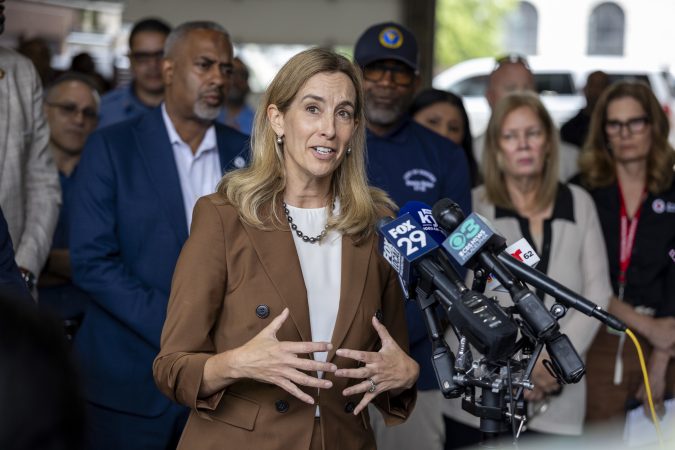
    The ruling in the state’s favor came a day after New Jersey Gov. Mikie Sherrill formally told the Justice Department she would not release personal information about noncitizen voters who had been mistakenly added to the state’s voter rolls ahead of the 2024 election.

    Sherrill announced last week that about 6,600 noncitizens had been registered to vote due to a glitch in the automatic voter registration system at the New Jersey Motor Vehicle Commission. She said fewer than 400 had cast ballots and there was no evidence they had affected election results.

    On Tuesday, she said the New Jersey Department of State had begun removing 4,500 voters from the rolls. But there is a chance the rest could actually be citizens, so counties will review those about 2,000 individuals to ensure no eligible voters are disenfranchised, she said.

    Following Sherrill’s disclosure last week, Assistant U.S. Attorney General Harmeet Dhillon requested the full names, dates of birth, nationalities, and home addresses of the individuals who were erroneously registered, as well as additional information about the noncitizens who voted, within a week.

    Sherrill had publicly indicated she would not hand over the data, but her letter Tuesday put it on the books.

    The Justice Department’s request has no legal basis, Sherrill said in a Tuesday letter to Dhillon, and sharing “extensive personal information about thousands of New Jersey residents” is limited by state and federal privacy laws.

    “Here and always, I remain committed to protecting New Jerseyans’ personally identifying information,” Sherrill wrote, reiterating her stance from the previous week, when she cited concerns about federal data breaches under Trump.

    In response to Sherrill’s rebuffing, Dhillon said the Justice Department’s request was rooted in the legal authority to “keep ineligible voters off its rolls” and vowed to obtain the information “through all legal means!”

    Sherrill’s “refusal to cooperate with federal law enforcement does nothing to protect law-abiding NJ voters,” Dhillon said on X.

    Sherrill on Tuesday criticized the Trump administration for “weaponizing the government against individuals that disagree with them.”

    She pointed to an issue during her campaign last year in which the federal government provided personal information about her that should have been redacted, like her Social Security number, to an ally of her Republican opponent. The National Personnel Records Center director apologized at the time and called it a rare error, but Sherrill claims her data were “weaponized” against her.

    Sherrill has not shied away from the issue of voter access in New Jersey as it becomes a national talking point in the debate over election security after last week’s revelation that thousands of people had been improperly added to the voter rolls when applying for driver’s licenses and identification cards.

    On Tuesday, she championed a new law, the John R. Lewis Voter Empowerment Act, that offers a slew of policies meant to increase voter participation.

    The erroneous registrations took place between June 2023 and June 2024 under former Gov. Phil Murphy’s administration due to a software glitch in New Jersey’s motor vehicle system, which processes the automatic registration when citizens obtain an ID or a license unless they decline.

    Even though they checked “no” when asked if they were a U.S. citizen, the noncitizens were registered anyway.

    Sherrill pointed a finger at her predecessor but a spokesperson for Murphy said the former governor had “no knowledge” of the glitch.

    U.S. Rep. Jeff Van Drew, a South Jersey Republican, said he planned to hold hearings over the issue and called on Sherrill to answer a slate of questions.

    Sherrill said Tuesday that her administration had hired a law firm to conduct an independent bipartisan investigation. One of the firm’s main partners worked under former Republican Gov. Chris Christie as attorney general and was later appointed by Christie to the Senate, she noted, saying “we have nothing to hide.”

    Christie said in a post on X that Sherrill “made the right choice tapping my former AG Jeff Chiesa to lead the independent investigation into New Jersey’s voter rolls.”

    “Jeff won’t hide anything from the public,” he said. “You can count on it.”

    But the New Jersey GOP questioned Wednesday why Sherrill would not comply with the Justice Department if she “has nothing to hide.”

    “She ran on transparency and accountability,” the party said in a post online. “Apparently, those were campaign promises that expired the moment she was sworn in.”

    Republicans have seized on the noncitizen voter registrations to make the case for the SAVE America Act, which would require proof of citizenship like a passport or birth certificate to register to vote.

  • Akira Suwa, award-winning photojournalist at The Inquirer, has died at 84

    Akira Suwa, award-winning photojournalist at The Inquirer, has died at 84

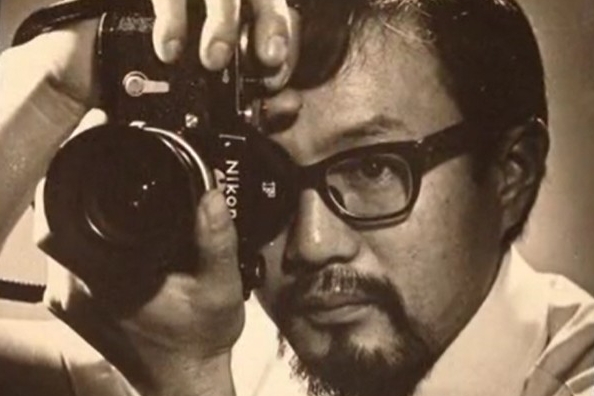
    Akira Suwa, 84, of Laurel Springs, Camden County, award-winning longtime photojournalist at The Inquirer, mentor, and lifelong green-thumb gardener, died Tuesday, July 14, of complications from dementia at his home.

    Born in what is now South Korea and reared in Japan, Mr. Suwa came to the United States for good in 1967 as a landscape designer and amateur photographer. When a landscaping job at a Florida garden center dried up, he polished his photography skills and, from 1969 to his retirement in 2014, worked as an award-winning staff photographer at the Tampa Tribune, the St. Petersburg Times, the Palm Beach Post, and The Inquirer.

    He joined The Inquirer in 1977 and, for 37 years, provided readers with thousands of illustrative, dramatic, stylish, and emotion-evoking photos from assignments around Philadelphia, South Jersey, and the world. He took poignant photos after the Three Mile Island nuclear accident, the fall of the Berlin Wall in Germany, and the Sept. 11 terrorist attacks, and during Operation Desert Storm in Saudi Arabia and the 1998 Winter Olympic Games in Japan.

    He sent back tragic and heroic images of conflict and despair from Libya and Brazil. He photographed drug traffickers in Colombia and was detained by authorities in China.

    Before the Inquirer, Mr. Suwa took photographs for the Palm Beach Post, the St. Petersburg Times, and the Tampa Tribune.Courtesy of the family

    Locally, he photographed athletes celebrating and commiserating, politicians and celebrities walking and waving, fashion models on runways, and restaurant specialties on tables. Former Inquirer colleagues called him a “brilliant photojournalist” and a “funny, engaging and terrific colleague” on Facebook.

    One former colleague said: “Akira told thousands of great stories with his camera.” His family said in a tribute: “Akira believed every story was worth telling.”

    Before the Inquirer, Mr. Suwa took photographs on all kinds of assignments for the Palm Beach Post, the St. Petersburg Times, and the Tampa Tribune. His father was an avid amateur photographer back in Japan, and Mr. Suwa honed his own emerging photo skills at nights and on weekends in Florida before joining the Tribune in 1969.

    He won several awards from the National Press Photographers Association and was named the 1973 Florida Newspaper Photographer of the Year by the University of Florida. He mentored young photographers and students, and one former student said: “He taught me so much about making the best photos possible.”

    Mr. Suwa photographed his wife, Deborah, often.Courtesy of the family

    Away from the lens, Mr. Suwa enjoyed tending his backyard garden in South Jersey, watching the birds flit about the feeders, and chasing the squirrels away. His mother was a serious gardener in Japan, and he studied agriculture in California as an exchange student while earning a degree at Tokyo Agricultural University in 1966.

    In 1964, he took a year off from college to work as a busser in the Japan pavilion at the World’s Fair in New York. “I fell in love with America, especially New York City,” Mr. Suwa wrote in an autobiography he shared with his family. “I was young and motivated to do something different from my peers back in Japan.”

    Akira Suwa was born Dec. 22, 1941, in what was then Taegu, Korea. He and his family fled Korea for Japan as refugees after World War II, and he grew up mainly in Osaka.

    He never formally studied photography, but his innate camera skills got him a job with a photo studio in Florida in the late 1960s.

    Mr. Suwa photographed these Mummers in 1978. Akira Suwa / Staff Photographer

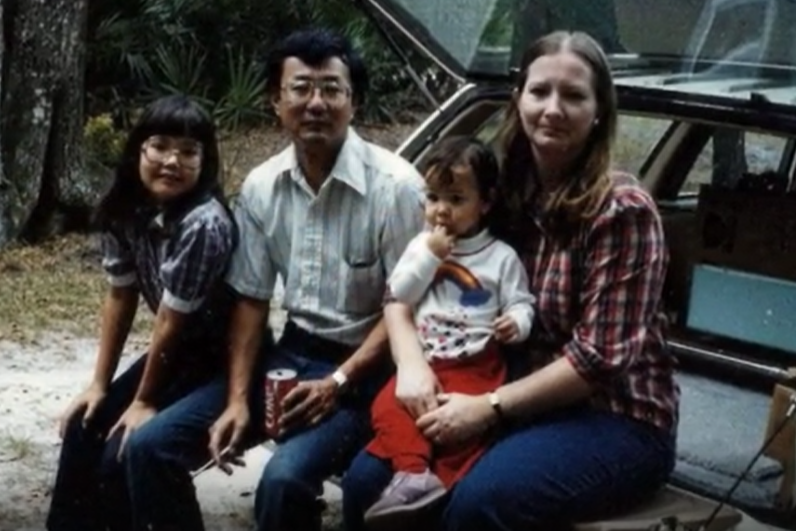
    He met Deborah Carter through a mutual friend at the studio, and he took her to see the musical Hello, Dolly! on their first date. She was smitten, she said, and they married in 1969, and had daughters Jasmine and Keiko.

    They settled in Laurel Springs when he joined The Inquirer and traveled to Japan several times to visit family and friends. “We enjoyed the best of both cultures,” his wife said.

    Mr. Suwa listened to jazz and built his own home computers. He liked to play pranks on the girls, his daughter Keiko said, but was simultaneously warm, serious, and practical. “If there was a job to do,” she said, “he would get it done.”

    His daughter Jasmine said: “He was forthright, sincere, and full of integrity.”

    Mr. Suwa and his family traveled to visit family in Florida and Japan. Courtesy of the family

    He doted on his wife and their grandchildren, and his family praised “his sharp eye, his mischievous sense of humor, and his devotion to his family.” His wife said: “He had my back and was as honest as the day is long.”

    Friends called him “the kindest person,” “wonderful and enormously talented,” and “a caring person to everyone.” He was interviewed by Photo Lounge in 2022 and said: “I just take pictures, and I like people.”

    His wife said: “He was my human, my person, my guy.”

    In addition to his wife and daughters, Mr. Suwa is survived by two grandchildren and other relatives. A brother died earlier.

    Visitation with the family is to be from 1 to 3 p.m. Saturday, Aug. 1, at Gardner Funeral Home, 126 S. Black Horse Pike, Runnemede, N.J. 08078.

    Donations in his name may be made to the Committee to Protect Journalists, Box 2675, New York, N.Y. 10108; and the Animal Welfare Association, 509 Centennial Blvd., Voorhees, N.J. 08043.