One day after Gov. Mikie Sherrill refused to turn over information about the thousands of noncitizens who were mistakenly registered to vote to the U.S. Department of Justice, a federal judge dismissed a lawsuit from President Donald Trump’s administration to obtain the state’s unredacted voter records.
A U.S. District judge ruled Wednesday that the Department of Justice does not have the authority to force New Jersey to give up its unredacted records.
The DOJ tried to use as leverage New Jersey’s disclosure last week that thousands of noncitizens were mistakenly registered to vote because of a software glitch in the motor vehicle system. It didn’t work.
The federal case predates last week’s news, and the ruling came one day after Sherrill formally told the DOJ that she would not release personal information about the noncitizens who were improperly registered.
What’s next? The Trump administration will likely appeal the case.
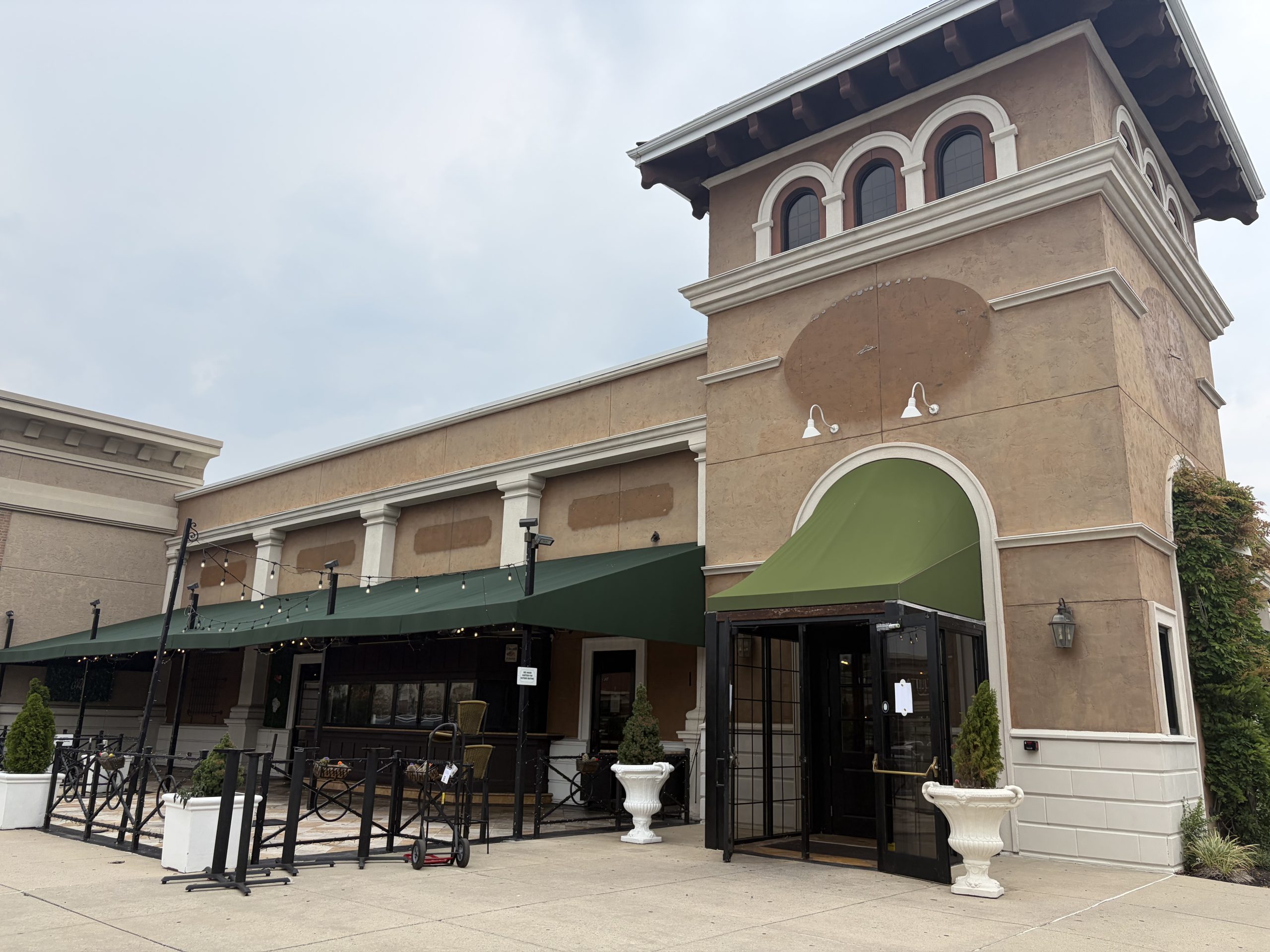
It’s pretty empty inside the building that was the Brio Italian Grille in Cherry Hill.
A sign on the restaurant entrance reads: “We have made the difficult decision to permanently close our Brio location in Cherry Hill. We are grateful for the opportunity to have served this community and are committed to supporting our team members during this transition.”
The abrupt closure comes after staff emphasized that it was still open as recently as last month. Rumors about the restaurant shutting its doors have been swirling since May.
A guard at a federal prison in Fort Dix had a sexual relationship with a prisoner for about a year, according to federal authorities. She was charged this week with sexual abuse of a person in custody.
A Camden man was arrested after a K-9 dog found a phone allegedly used to solicit explicit photos from a 7-year-old girl, according to Camden County Prosecutor Grace C. MacAuley.
An incarcerated man in Trenton is suing the state to block corrections officials from forcing prisoners to give up their purchased tablet electronics. The civil rights lawsuit comes after the state Department of Corrections switched communications tech providers. The new company does not allow prisoners to buy tablets outright and instead provides loaners for free, but requires a subscription model to use their content, New Jersey Monitor reports.
Award-winning former Inquirer photojournalist Akira Suwa of Laurel Springs, 84, died at his home this month due to complications from dementia. In addition to his photography, he is known for his mentorship, as well as his lifelong love of gardening.
🎄 Oaklyn Final Fridays: This monthly street festival features food, live music, and a variety of vendors. This upcoming Friday, get in the festive spirit and celebrate a belated Christmas in July. ⏰ Friday, July 31, 4:30-9 p.m. 💵 Pay as you go 📍 West Clinton Avenue, Oaklyn
🎤 Friday Night Live Music at Wenonah Lake:Hear from musical acts Lost Art, Arthur Herrmann, and Nonsense Maneuver. ⏰ Friday, July 31, 5 p.m 💵 $8 (cash only), free with membership 📍 North Jefferson Avenue and West Maple Street, Wenonah
🕺 80s and 90s Party:Indulge in nostalgia with throwback hip hop and R&B music and dance the night away. ⏰ Saturday, Aug. 1, 6-10 p.m. 💵 $24.71 📍 Vera, Cherry Hill
📚 Reading: University of Pennsylvania professor Emily Wilson’s translation of The Odyssey after her scathing review of Christopher Nolan’s film adaptation.
The State Board of Medicine recently revoked the medical license of Bryn Mawr psychiatrist Amy Mazza MacIntyre.Julia Duarte / Staff Illustration,
Bryn Mawr psychiatrist Amy Mazza MacIntyre, whose practice is on Lancaster Avenue, has had her medical license revoked after a state investigation found she had sex with a young patient for years while prescribing him powerful psychiatric drugs.
The former patient, who attended Lower Merion High School and is now 39 years old, breached a nondisclosure clause in a previous settlement by discussing the case with authorities “for the good of the public interest.”
“This is not acceptable and she needs to be held accountable,” he told The Inquirer’s Wendy Ruderman.
John Goncher recently opened a brick-and-mortar space for Wild Yeast Bakehouse, which he initially launched in his Rosemont home. Tyger Williams / Staff Photographer
Last year when John Goncher’s Rosemont living room had become overrun by sourdough loaves, he knew it was time to reassess his burgeoning bread business: “I said to my wife, ‘It either has to contract or it has to really grow.’”
Goncher opted for the latter and recently debuted a brick-and-mortar for Wild Yeast Bakehouse in Wayne.
His new storefront in the Eagle Village Shops was designed by the same team who renovated his family’s home and maintains a living room vibe, while dramatically upping capacity.
Nearby Merion Golf Club’s East course is the second-best private golf course in Pennsylvania, according to a recent ranking from Golfweek. Several nearby courses, including Aronimink, also made the list.
🍽️ On our Plate
After a yearlong renovation, 333 Belrose is back up and running in neighboring Radnor. The Inquirer’s Michael Klein recently paid a visit to the Main Line staple to take a peek at its fresh “country house” aesthetic and approachable fare.
Mark your calendars: Pomelo Rooftop Terrace, the rooftop bar at the recently opened Brandywine hotel in Radnor, is debuting Aug. 8.
Nanu’s Hot Chicken in Ardmore is temporarily closed after a car crash resulted in damage to the storefront.
🎳 Things to Do
🎭 Hamilton: Catch a film screening of the original Broadway hit, complete with a singalong ahead of time. Registration is required. ⏰ Thursday, July 30, 5-8:30 p.m. 💵 Free 📍 Ludington Library
🎶 Bryn Mawr Twilight Concerts: Hear Americana duo Larry Campbell and Teresa Williams perform. ⏰ Friday, July 31, 7 p.m. 💵 $25.88, free for kids 12 and under 📍 Bryn Mawr Gazebo
🥖 Hands on Challah Bake: Learn the basics of making this braided bread or get a refresher on it. ⏰ Thursday, Aug. 6, 11 a.m.-12:30 p.m. 💵 $10 📍 Kaiserman JCC
The home has three bedrooms and three bathrooms.Realtour Pilot | Courtesy of Matt Tallent/Keller Williams Main Line
Situated near South Ardmore Park, this three-bedroom Wynnewood home has been updated over the years, including with a three-story addition. Among the highlights is a bright and airy primary suite with vaulted ceilings, multiple skylights, and lots of windows. The space also has a walk-in closet and a bathroom with a tub. There are three upcoming open houses: tonight from 5:30 to 7:30 p.m., tomorrow from 5 to 7 p.m., and Saturday from 11 a.m. to 1 p.m.
By submitting your written, visual, and/or audio contributions, you agree to The Inquirer’s Terms of Use, including the grant of rights in Section 10.
This suburban content is produced with support from the Leslie Miller and Richard Worley Foundation and The Lenfest Institute for Journalism. Editorial content is created independently of the project donors. Gifts to support The Inquirer’s high-impact journalism can be made at inquirer.com/donate. A list of Lenfest Institute donors can be found at lenfestinstitute.org/supporters.
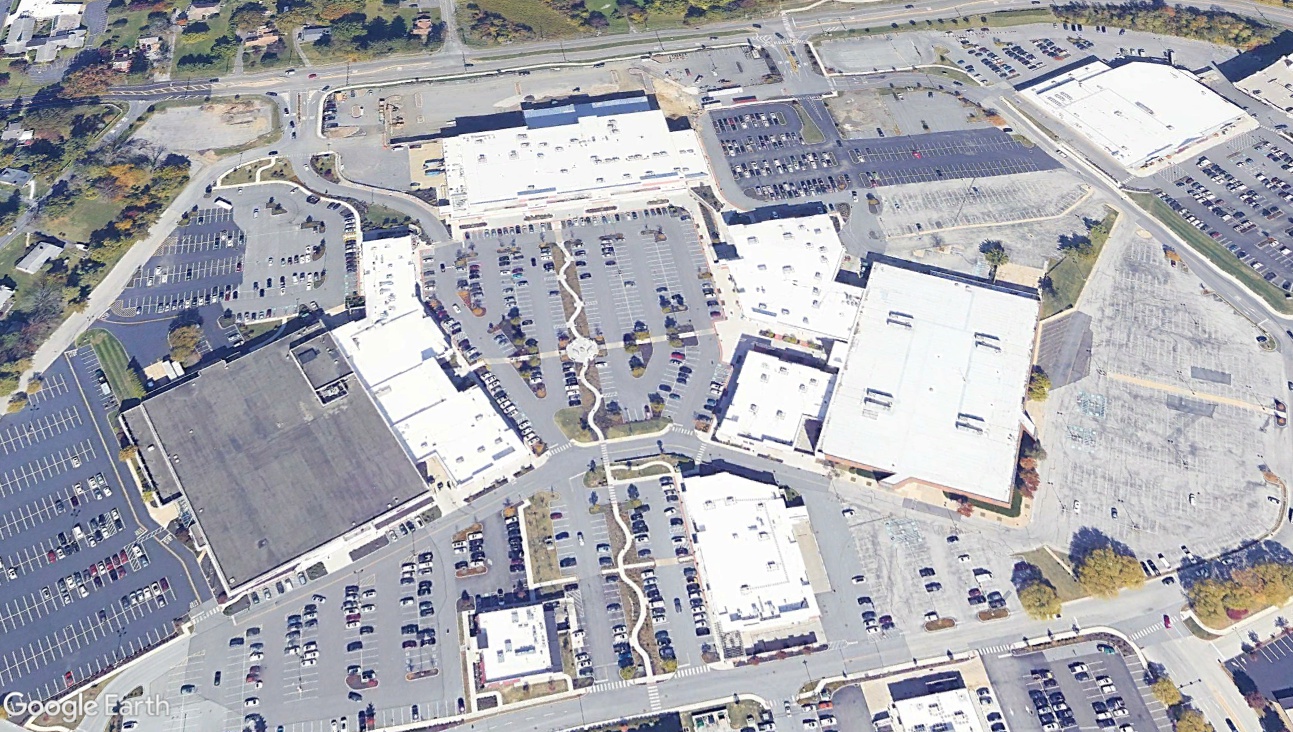
The former Granite Run Mall has undergone a massive transformation in the past decade to turn it into a mixed-use town center. Google Earth
A regular at Granite Run Mall growing up, Delaware County native Mike Fenn is a little saddened about the state of former malls throughout the region. After all, many hardly resemble what they did in their heyday.
That’s the case for Middletown Township’s former mainstay, which closed in 2015 amid declining store occupancy. But it soon got new life when developer BET Investments began a more than $100 million effort to transform the hulking space into a mixed-use town center now known as the Promenade at Granite Run.
Today it consists of luxury apartments, stores, restaurants, and a medical facility, with retail nearly fully leased and apartments not far behind, BET president Michael Markman said.
More mosquitoes capable of spreading West Nile virus were recently detected in surrounding communities, including Ridley and Springfield Townships. The Pennsylvania Department of Environmental Protection conducted controlled spraying last week and reminded residents to reduce standing water on their properties.
Heads up for drivers: Roadwork will close the southbound I-476 ramp to Baltimore Pike from Saturday at 9 p.m. until Monday at 5 a.m. In Middletown Township, Darlington Road will be closed between Old Forge and Valley Roads from 8 a.m. to 5 p.m. through Friday. Expect paving today and tomorrow on select roads in Swarthmore. And in Aston Township, Pennell Road will be closed between Old Pennell Road and Glendale Boulevard Monday through next Thursday from 7 a.m. to 4 p.m.
Tomorrow is the last day to provide feedback on PennDot’s draft planning and environmental linkages study for its Routes 352 and 1 roadway improvements project.
Nonprofit Well Rooted has launched a new housing initiative geared toward young adults aging out of foster care. Ardmore-based Well Rooted Housing has partnered with Media home goods store Chosen Tweed to open two furnished apartments in the borough, which will be used by two individuals for the next year. The organization is also providing supportive services like mentorship, financial literacy, and trauma-informed mental health resources.
🏫 Schools Briefing
The Wallingford-Swarthmore School District had a 30% participation rate for student athletics during the 2024-25 school year, putting it among the highest in the region.
🍽️ On our Plate
In addition to the tote, consumers could score a Wawa-themed charm and a T-shirt. Wawa
Delco-based Wawa recently teamed up with Lands’ End to create a limited-edition mini tote just big enough for lunch. Known as the Shorti Tote (naturally), the bag cost $39.95 and sold out online when it debuted last week.
🎳 Things to Do
🎶 Rose Tree Summer Concert Festival: Echoes of Laurel Canyon, which performs a wide range of American throwback covers, kicks things off tonight. Tomorrow, cover band FuseBox performs, followed by Prince tribute Controversy on Saturday, and the Merion Concert Band on Sunday. Reggae Thunder will perform Jamaican-style music on Wednesday. ⏰ Thursday, July 30-Wednesday, Aug. 5, 7:30 p.m. 💵 Free 📍 Rose Tree Park, Media
🔥 Summer Fireside: There will be food trucks, fire pits, and marshmallows at this evening event. ⏰ Friday, July 31, 5-8 p.m. 💵 Admission is free for members and $10-$18 for non-members📍 Tyler Arboretum, Media
🍿 Movie Night: Catch an outdoor screening of 1984 classic The Karate Kid. ⏰ Saturday, Aug. 1, around 8 p.m. 💵 Free 📍 Media Borough Hall lawn
🗞️ What other Greater Media residents are reading this week:
By submitting your written, visual, and/or audio contributions, you agree to The Inquirer’s Terms of Use, including the grant of rights in Section 10.
This suburban content is produced with support from the Leslie Miller and Richard Worley Foundation and The Lenfest Institute for Journalism. Editorial content is created independently of the project donors. Gifts to support The Inquirer’s high-impact journalism can be made at inquirer.com/donate. A list of Lenfest Institute donors can be found at lenfestinstitute.org/supporters.
AVALON, N.J. — For Three and One singer and guitarist Gus Thompson, 25, the music died on Dune Drive shortly after 8 p.m. on Friday, July 17.
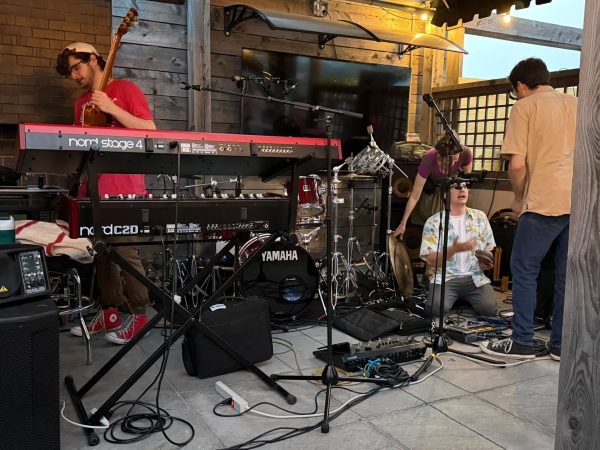
“We noticed the police out front,” the band’s front man said in a phone interview, recalling the night at Avalon’s new bar and restaurant with a patio for live music and other events. “Our set was ending very soon, so we didn’t think much of it. The owner said we’re being shut down. He said no more music.”
The band was scheduled to play until 10 p.m., and had finished the early set with Thompson’s original song “No Idea,” but Avalon’s restrictions on Gully’s and all other bars in town prohibit any outdoor music after 8 p.m.
Out in the crowd, Kate Nunan was incensed. At 8:36 p.m., she posted a picture of the band breaking down its setup in the Facebook Group Seven Mile Shenanigans, and wrote, “WTH is wrong with Avalon??? Shutting down a band at 8:30 because of a noise complaint??”
The outrage has only grown, spilling over into a July 22 council meeting, with residents expressing concern that Avalon, long a place of late nights and live music, but now increasingly a place of private clubs and multimillion-dollar houses, was in danger of losing its small businesses and essential character.
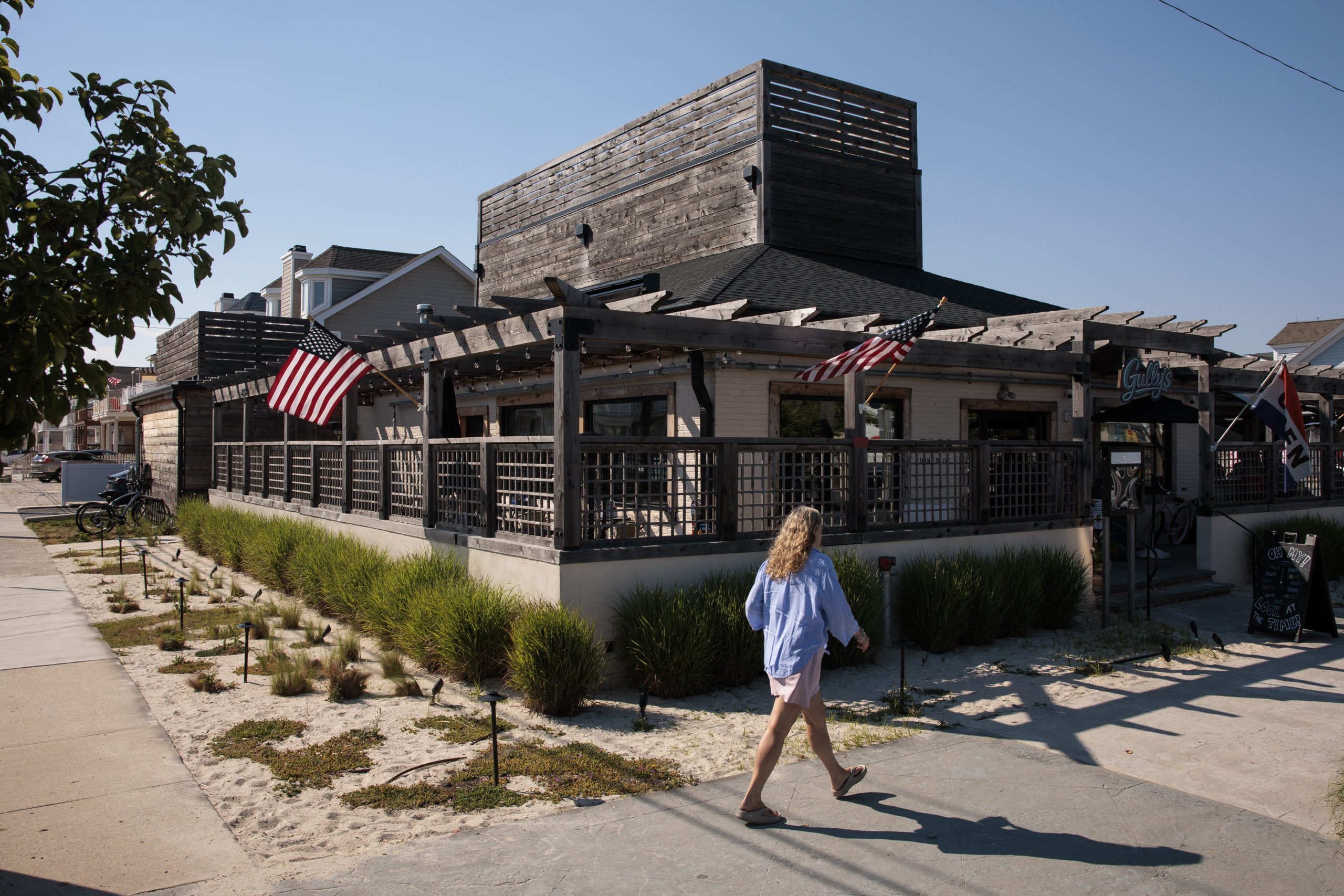
Gully’s has appealed the special conditions of Avalon’s liquor license to the state’s Division of Alcoholic Beverage Control, saying the ban on outdoor music after 8 p.m. is “arbitrary, capricious and unreasonable.”
At the council meeting, locals like Merri Jones, who said she was a second-generation graduate of Avalon Elementary, stuck up for Gully’s, which replaced the Black Cactus restaurant with a restaurant touting “old school beachy vibes.” (Inquirer restaurant critic Craig LaBan praised its “clothesline of candied bacon.“)
The hanging candied bacon served over grits and Gully’s blooming potato on Wednesday, June 17, 2026, in Avalon, N.J.Monica Herndon / Staff Photographer
“They’re a breath of fresh air,” she told the council, which had been cautioned by Nicole Curio, the municipal solicitor, not to respond to comments about Gully’s since the liquor license restrictions were now a legal action with the state ABC, a division of the Office of the Attorney General.
“It’s just a couple more hours to let them make their money,” she said. “We support it. A lot of locals do as well.”
But neighbors on the 100 block of 27th Street, which has Gully’s at one end and Wawa on the other, and regularly idling 18-wheelers making deliveries to both, pleaded their case about the noise from Gully’s, including the amplified music and games like its Monday Minnow Races announced over a loudspeaker.
Larry Hayes said he lives 450 feet from Gully’s, but the sound is causing an “unreasonable disruptive intrusion into our quiet enjoyment of our home.” The Avalon noise ordinance restricts any amplified sound that’s audible more than 50 feet away, he noted.
The patio at Gully’s on Wednesday, June 17, 2026, in Avalon, N.J.Monica Herndon / Staff Photographer
“We want to be good neighbors,” said neighbor Matt Tumasz. “We love the idea that there’s a family restaurant. But when you have a five-piece band playing and blasting music, and speakers that are 15 feet in the air, it’s just a little bit out of control.”
Gully’s owner Beth Pearce did not respond to several messages from The Inquirer.
On Facebook, Pearce posted: “From the beginning, our goal has been simple: to create a place where neighbors, families, visitors, and friends can come together and make memories.
“We have tremendous respect for the role of our local officials,” she wrote. “We remain committed to working collaboratively, being good neighbors, and contributing positively to our community.”
At the council meeting, she noted that several council members had patronized Gully’s with their families (and one admitted to being a fan during the council meeting).
“The hope is we’re going to elevate all businesses,” Pearce said. She pledged to try to “figure out what the appropriate sound level is.”
The exterior of Gully’s on Wednesday, June 17, 2026, in Avalon, N.J.Monica Herndon / Staff Photographer
“I think we can find something where we can thrive together,” she said. “All we’re asking for is the same conditions as similar businesses within the district.”
In an email, Avalon administrator Scott Wahl noted that the special conditions that permit outdoor music only between noon and 8 p.m. were adopted in June by council and apply to all seven holders of liquor licenses in Avalon, including the Union League, which took over the Whitebrier last year.
Still, Wahl said, “I believe the Borough Council will attempt to revisit the issue to balance the interests of the business community and the residential community.
“I think it’s fair to say both sides want to figure this out collaboratively,” he said.
Three and One will be back at Gully’s this Friday. Thompson said the owners initially assured them the usual 6 p.m. to 10 p.m. gig would be fine but have since asked them to play from 4 p.m. to 8 p.m.
A Main Line psychiatrist has lost her medical license after a state investigation found she had sex with a young patient for years, all while prescribing him a revolving mix of up to 12 medications, including highly addictive psychotropic drugs, without proper evaluations.
Amy Mazza MacIntyre, a child, adolescent, and adult psychiatrist in Bryn Mawr, started treating a then-17-year-old cancer survivor in 2004 when he was a senior at Lower Merion High School.
MacIntyre first had sex with him in February 2011, when he was 24 years old. She stopped billing him for treatment around the same time, though she continued to take patient notes for another 2½ years. She continued prescribing him powerful psychiatric drugs while having sex with him through mid-2017, according to an investigation by the Pennsylvania State Board of Medicine.
The board revoked her medical license in May, finding she had engaged in sexual misconduct and inappropriate prescribing in violation of state medical licensing laws. She is appealing the disciplinary board’s decision, which followed lawsuits between MacIntyre and the patient, Justin Kopicki, in civil courts.
The board’s investigation — based partly on emails, texts, and voicemail messages that MacIntyre sent Kopicki — revealed that she gave him a $5,000 saxophone and a Cartier watch, hired him to work in her office, proposed marriage to him, told him she miscarried his baby, sent him naked selfies, and took him on trips, including to Turks and Caicos and Walt Disney World.
Kopicki, who is now 39, said in an interview that MacIntyre had “groomed” and manipulated him while prescribing “really large quantities” of stimulants and benzodiazepines, including “Xanax and Klonopin mixed together.”
“If I refused to go away on a trip with her, or I refused to see her, or I wanted to break up with her, she would refuse to prescribe antianxiety medications until I saw her again,” Kopicki said.
She also prescribed medications to his mother and father, although they were not her patients, the board found.
The board’s revocation order refers to Kopicki by his initials, but he gave The Inquirer permission to use his name.
MacIntyre, 52, did not return calls and emails from a reporter. Her lawyer, Gary Samms, said he advised her to decline comment.
“Dr. MacIntyre is an excellent, caring and compassionate physician,” Samms wrote in an email last week. “The board decision is being appealed to the Commonwealth Court where we believe we will be victorious.”
The board revoked her license on May 28 and ordered her to “immediately cease practicing medicine.”
“By engaging in a sexual relationship with a patient while continuing to prescribe medications without appropriate evaluation or oversight, [MacIntyre] compromised the safeguards that protect patients from harm and undermined confidence in the medical profession,” the board wrote in its revocation order.
A woman who answered the phone at MacIntyre’s Lancaster Avenue office late last week said she was still practicing but unavailable to speak with a reporter. MacIntyre did not reply to a voicemail message asking whether she was still treating patients. Samms did not reply to a follow-up email on the subject.
Earlier this month, the state board rejected her emergency request to staythe revocation of her licensepending her appeal. She plans to argue her case before a judge on Thursday, Commonwealth Court records show.
‘Shifting explanations’
MacIntyre admitted to sexual misconduct and violating medical licensing laws on three other counts: immoral and unprofessional conduct involving a patient; failure to maintain complete medical records; and fraudulent, reckless, or negligent practice.
During the disciplinary proceedings, MacIntyre had only disputed claims that she engaged inimproper prescribing. However, she argued for lighter discipline, such as probation, on all counts.
She testified at a state hearing last year that she had been fearful of Kopicki and felt “trapped.” She said the sex was not consensual, but coerced, and that she had feared for her safety and that of her family.
She said she had repeatedly tried to get a protection-from-abuse court order against the patient but did not qualify for one. (Such proceedings are not public record).
The board rejected her arguments, citing a lack of evidence to support her “claims of coercion,” “shifting explanations,” and inexcusable actions.
MacIntyrealso cited “personal stressors,” including “family losses, the birth of a child, and her mother’s decline due to early dementia,” the report states.
While treating Kopicki, she introduced him to her young daughter and was married, state and court records show.
After contact with Kopicki ended in 2017, she said, she went to therapy to address her “understanding of appropriate boundaries.”
She also limited her interactions with patients to mostly medication management rather than therapy. And she had not violated any regulations for the last decade, she said, arguing for less severe discipline.
Kopicki said he provided the state with “thousands of text messages,” dating back to 2011, showing she aggressively pursued him and used medication to control him.
“She put it in writing so it was extremely difficult for her to be like, `It was him. He’s the aggressor,’” Kopicki said.
Her lawyer,Samms, said he believed MacIntyre’s appeal of the board’s revocation order to the Commonwealth Court will prevail.
“There are numerous issues and contested facts that support the doctor’s position,” Samms wrote in an email, declining to comment further due to the appeal.
First treatment, then sex
Diagnosed with leukemia at age 4, Kopicki receivedchemotherapy treatments at Children’s Hospital of Philadelphia until age 7, when the cancer went into remission. In high school, he became depressed and anxious. His mother thought his mental health problems stemmed from his cancer historyand contacted CHOP, which referred the family to MacIntyre. Then 31, the psychiatrist was considered “relatable to a younger patient,” Kopicki said.
The board’s order described how her initial therapeutic care morphed into inappropriate sexual contact:
MacIntyre diagnosed Kopicki with anxiety and agoraphobia at his initial appointment in 2004. She thought he also might have obsessive-compulsive disorder. She started him on medication.
In 2010, his treatment sessions with MacIntyre “became focused on [Kopicki’s] sexual activity.”
In early 2011, Kopicki, then 24, expressed feelings for her in an email; the relationship seemed to be crossing professional lines. He was unsure if he should continue treatment with her.
MacIntyre, then 37, wrote him back, saying she “was sorry if he felt it was best not to meet” and to “let her know if he wanted to be back in touch.”
During a session a few days later, she told him she “wanted to climb on top on him” and did so, kissing him, the board’s order says.
They had sex for the first time at his father’s house in early February 2011, and she continued to formally treat him through June 2013, writing patient notes in his medical record, according to the board’s investigation.
She kept a log of medications she prescribed him through March 2014 and continued prescribing into 2017, the board found.
When Kopicki tried to cut ties with MacIntyre, he said in the interview, she would change or increase his medications, saying his “mood is out of control.”
“I trusted her,” he said. “When she was like, ‘You need X, Y, and Z medication,’ I put trust in her.”
Kopicki said she became very involved with his family, attending dinners and events, including his mother’s wedding in California. She also prescribed medications to his parents.
In spring 2017, MacIntyre showed up at Kopicki’s father’s house, yelling and demanding to speak with Kopicki. His father called 911, the board found.
Kopicki cut off all communication with MacIntyre in July 2017.
‘Not acceptable’
Kopicki said he first complained about MacIntyre to the state medical board in 2017, shortly before filing a medical malpractice lawsuit against her in Montgomery County Court.
His lawyers advised him not to cooperate with the state while the case was in litigation. The state dropped his complaint, he said.
MacIntyre settled the case with Kopicki in 2020 for an undisclosed amount.
After the settlement, Kopicki said, he again complained to the board in 2021.
Later that year, MacIntyre sued Kopicki in civil court for breaching a nondisclosure clause in their settlement agreement that prevented him from discussing her actions with authorities.
In January, a judge ordered Kopicki to pay MacIntyre $25,000 for violating the agreement, court records show.
Kopicki, who is now in law school in Oregon, said he intentionally violated the agreement “for the good of the public interest.”
“This is not acceptable and she needs to be held accountable,” Kopicki said.
In the early 1800s, Philadelphia’s loose cohort of natural scientists became obsessed with learning all they could about the plants and animal species of the New World.
They shipped dried specimens to Britain for naturalists to identify and catalog. And when the American naturalists discovered a new species, the Brits named it and took the credit for the findings in their medical journals.
When the Crown enacted trade restrictions in 1807 — ultimately leading to the War of 1812 — American botanists, herbologists, and entomologists had enough with Britain’s interference.
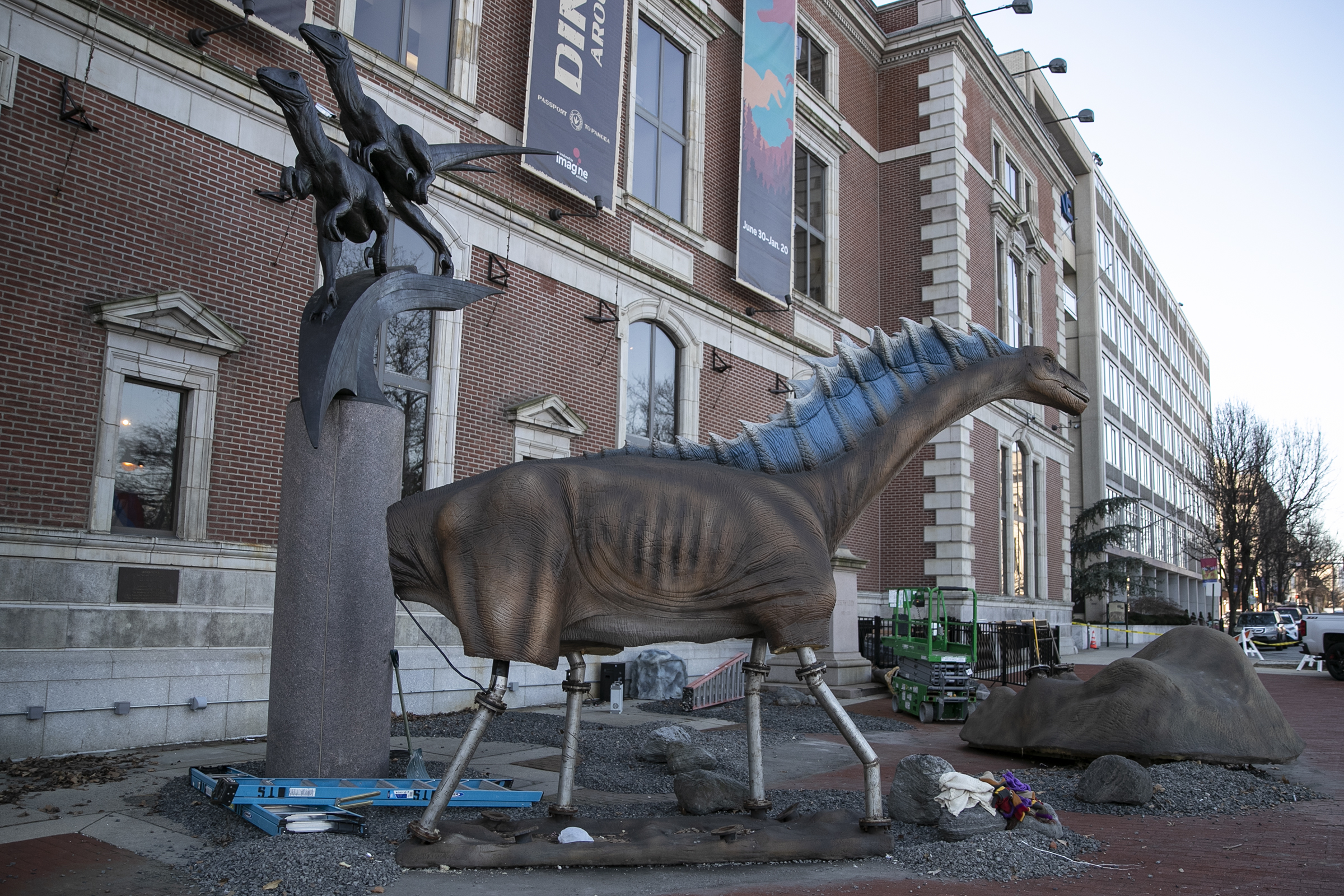
Artist Ibi Padrón Venegas’ Academy of Natural Sciences No. 1 translates his ideas of daydreams, everyday sensations, and the curiosity that comes with playing with science for his sculpture.Ibi Padrón Venegas for Colibrí Workshop
Six Philadelphia gentlemen and amateur naturalists — Gerard Troost, Nicholas S. Parmentier, Camillus MacMahon Mann, Jacob Gilliams, John Shinn Jr., and John Speakman — held a meeting Jan. 12, 1812, in Speakman’s Old City apothecary. Their goal: to map out a plan to be recognized as scientific experts on what grew on their own soil.
The Philadelphia Historic District will celebrate the academy’s beginnings at its Ben Franklin Parkway home on Saturday from 11 a.m. to 1 p.m. The party, or “Firstival,” is part of a series of yearlong fetes honoring events, places, and organizations with Philly roots in honor of America’s 250th birthday.
“Americans were doing the research and risking their lives to cull these specimens,” said Robert M. Peck, curator of artifacts and senior fellow emeritus at the Academy of Natural Sciences of Drexel University.
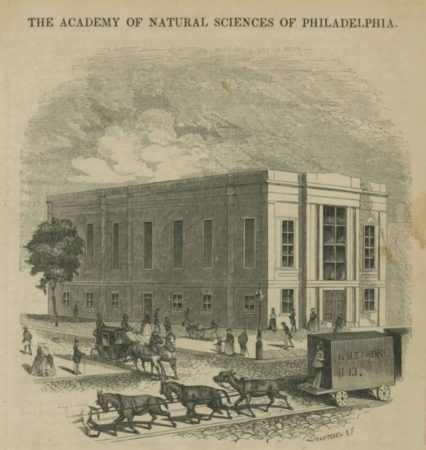
The Academy of Natural Sciences’ current home at 1900 Benjamin Franklin Parkway. This building opened in 1876 for the Centennial and stands through present day.Courtesy of the Journal of the Academy of Natural Sciences of Philadelphia
Thomas Say is listed as the seventh founder, though he didn’t attend the first meetings, Peck said. Still, Say is the most famous of the early members as he is the father of American entomology and conchology.
The academy was a private club in the beginning, opening its nature collections to the public in 1828 when it was housed at the Swedenborgian Church at 12th and Sansom.
By the mid-19th century, the academy was as important in Philadelphia’s science and education circles as Ben Franklin’s highbrow American Philosophical Society. In 1849, the society transferred Thomas Jefferson’s fossil collection to the academy, where it remains today. During the mid-19th century, the academy acquired the bird skins from John James Audubon’s collection, and the pressed plants gathered by explorers Meriwether Lewis and William Clark.
In 1868, the academy made paleontology history when Benjamin Waterhouse unveiled a 15-foot-tall complete dinosaur skeleton of Hadrosaurus foulkiibuilt from the bones of the plant-eating dinosaur excavated in Haddonfield 10 years before.
Samples of the Academy of Natural Sciences’ robust dinosaur collection as photographed in 2020. Courtesy of the Academy of Natural Sciences of Drexel University
“Before then, people didn’t understand what dinosaurs really were, how they really looked,” Peck said. “This is the first time the world had ever seen what a dinosaur really looked like and it shaped how we still see them today.”
In 1876, the academy moved to its present building on the Parkway, where, exactly 100 years later, the Please Touch Museum opened its 2,200-square-foot pilot. (It is now located in Memorial Hall on the Centennial campus in West Philadelphia.)
The academy went on to become a home base for scientists who study a wide range of climate-related topics, from global warming in Mongolia to avian bird flu in Vietnam.
The Academy of Natural Sciences in June 2020. HEATHER KHALIFA / Staff Photographer
In 2011, the Academy of Natural Sciences became a subsidiary of Drexel University, retaining its own board and legal status as a separate nonprofit organization. In April, The Inquirer reported Drexel was in discussions to sever ties with the academy unless it agreed to grant Drexel its building, endowment, and significant collections.
This week’s “Firstival” is Saturday, Aug. 1, 11 a.m.-1 p.m. at the Academy of Natural Sciences of Drexel University, 1900 Benjamin Franklin Parkway.
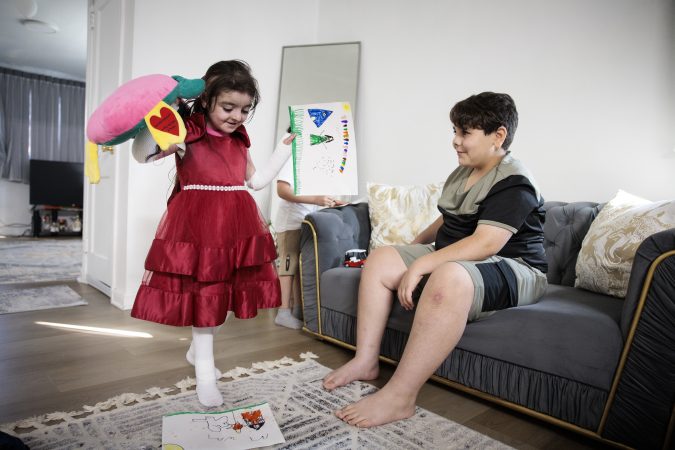
A small garden stands outside the two-story Northeast Philadelphia home where Fatima Alsalih Alti Keli and Waled Keli live with their three children. Inside, their 8-year-olddaughter, Abeer Janna Keli, sits on the couch drawing pictures with her two brothers, her small arms carefully wrapped in bandages to protect her fragile skin. The ordinary domestic scene would have seemed nearly impossible before the family immigrated to the United States from Turkey, after the civil war in Syria had prompted both parents to flee.
Over the last two years, the family’s future has been radically transformed in Philadelphia with the help of specialized treatment for Abeer. And yet, the resettlement process by which they were granted visas is threatened: When the family applied for resettlement in the United States around 2020, the annual refugee admission cap was set to 18,000. The cap this year is set to 7,500, the lowest in U.S. history.
Alti Keli, 28, and Keli, 30, had known each other through their families in Syria, but they married after both had fled to Turkey and started their family there. Once in Turkey, they applied to move to seek medical treatment for Abeer, a process that took about five years.
Abeer was born with epidermolysis bullosa, a rare genetic disorder that causes the skin to blister and tear from minor friction. Children with the condition are often described as having “butterfly skin.” Before the family came to the United States, Abeer had little access to specialized medical care. She struggled to eat because of sores in her mouth, relied on a wheelchair, and spent much of her time asleep.
“She was like a ghost,” her mothersaidin Arabic through a translator.
The family applied to immigrate through the United Nations High Commissioner for Refugees in 2020 on the basis of receiving treatment for Abeer’s disease and were connected with Children’s Hospital of Philadelphia, where Abeer still receives treatment. When they arrived in Philadelphia in July 2024, they went directly to CHOP, where Abeer stayed for 12 days before she could go home.Two years after the move, the Kelis have settled into their lives in Philadelphia.
“Now that she is here, she is talking, walking, and is happy going to school,”Alti Keli said, smiling through tears. “Her doctors saved her life.”
They moved to their predominantly Arab neighborhood after first living in Southwest Philadelphia. Struggling with the language barrier and the job search, they were feeling isolated there. The friction of daily life was a real struggle as the family balanced learning English, taking their daughter to medical appointments, finding employment, and coordinating schooling for Abeer and her brothers — Abdul Rahman, now 10, and Mahmoud, now 6.
For example, they were flabbergasted when their water bill spiked from $50 to $500 a month. Realizing their toilet was leaking, they struggled to communicate with their landlord. Those struggles have eased. In their new neighborhood, their children can easily walk to school and have made friends who share their Arab heritage. With the help of English classes, phone translators, and a refugee-support organization, the family has been able to build a comfortable life.
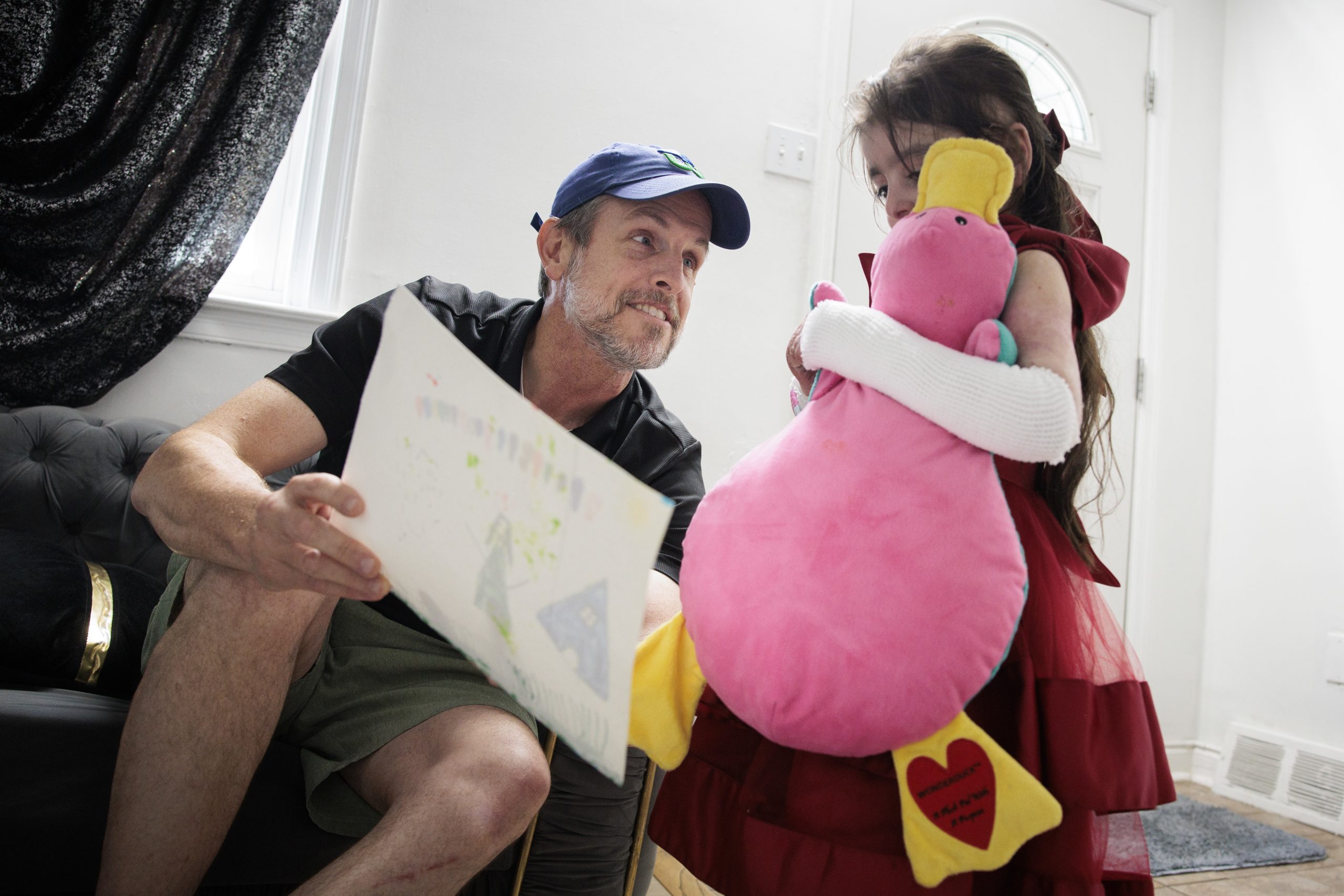
Volunteer Dan McVay talks with Abeer Keli, 8, about her drawing at her home on Wednesday, July 22, 2026 in Philadelphia. The Refugee Empowerment Support Team (REST) works with refugee families in Philly.Monica Herndon / Staff Photographer
The Refugee Empowerment Support Team (REST) helped the family confront the logistical challenges of moving to a new country. Efforts by President DonaldTrump’s administration to curb immigration have affected not only the number of refugees allowed into the country, but also the kind of help they receive while they are here. After the administration threatened to close resettlement offices in 2025 and froze federal funding, many of the offices shut down and laid off employees. Provisions in the One Big Beautiful Bill Act limited refugees’ access to government services like Medicaid, Medicare, and SNAP benefits.
REST has filled in those gaps by helping to connect refugees with employers, assisting with transportation to medical appointments, and dealing with other logistical challenges. Dan McVay, a leader with REST, said more refugees are now contacting the organization directly through Facebook, asking for help finding jobs and accessing services.
“There is no money for refugees already in the country,” McVay said.
Alti Keli, however, is “very happy with the challenge” of adjusting to life in a new country. While she takes care of the children, herhusband works in landscaping at a golf course. He also loves to garden at home and has filled the front of the house with potted plants and flowers.
McVay describes the family as very welcoming, often serving guests tea or coffee and homemade sweets.
Before the family moved to the United States, the Kelis fled to Turkey from Syria in 2014, where they married and had their three children. Alti Keli’s face contorts while describing her life in Syria, where she lost her father and four siblings, during the civil war: “It was like a nightmare.”
The family had to keep moving and did not have access to shelter, food, or even potable water.
“We had to drink dirty water,” Alti Keli said. In Turkey, life was better, but Abeer could not get the specialized care she needed.
(left to right) Abdul Rahman Keli, 10, Mahmoud Keli, 6, Walid Keli, and Abeer Keli, 8, posed for a portrait at their home on Wednesday, July 22, 2026 in Philadelphia. The Refugee Empowerment Support Team (REST) works with refugee families in Philly.Monica Herndon / Staff Photographer
A United Nations spokesperson described the situation in Syria during 2013 as “a complete meltdown of humanity,” as Bashar Assad’s Russian-backed regime tried to recapture rebel-held territory. During the war, civilians were subject to chemical warfare, indiscriminate bombing attacks, and systematic torture and execution by the Assad regime.
Moving to Philadelphia was “the first step of hope,” Alti Keli said, a step that has been realized now that her daughter is doing well. “I came here for hope,” she says. “What else can I ask for?”
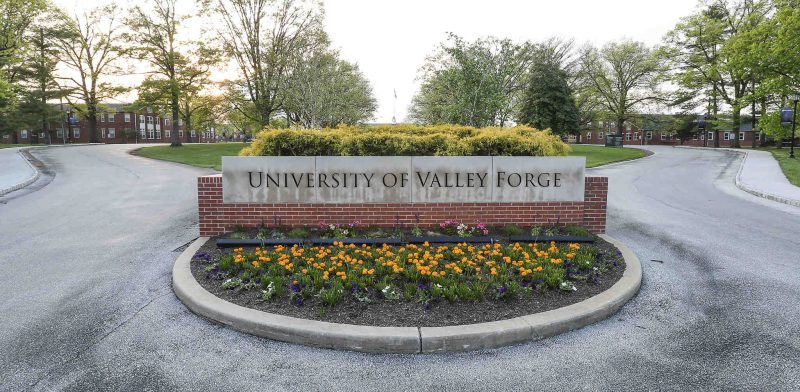
The University of Valley Forge, a small private Christian institution in Chester County, on Wednesday announced that it would suspend operations at the end of its summer 2026 semester.
The Charlestown Township-based college — which enrolls 589 students, according to the National Center for Education Statistics — has been facing the possible loss of its accreditation by the Middle States Commission on Higher Education.
Middle States last month issued its most serious warning — “show cause” — to the small Christian college that prepares students for leadership in the church and the world. It cited concerns about finances, planning, and governance.
Colleges need accreditation to keep their students eligible for financial aid.
The University of Valley Forge recently said on its website that it planned to charge $41,020 in tuition, fees, and room and board for next academic school year, which was scheduled to start Aug. 30.
“After much prayer, careful consideration, and consultation, the Board of Trustees of the University of Valley Forge has made the difficult and painful decision to suspend academic operations at the conclusion of the Summer 2026 semester,” the board said in a statement.
“This decision follows extensive efforts to address the University’s financial challenges, pursue strategic partnerships, and identify sustainable paths forward. These challenges have been well documented over several decades and were reflected in the recent action of the Middle States Commission on Higher Education, which placed the University on Show Cause status,” the board said.
“After careful assessment of the University’s financial realities, the Board concluded that it could not continue academic operations responsibly beyond the Summer 2026 semester,” the board said.
“To our students, we are deeply sorry. We understand that this announcement disrupts your lives, your plans, and your sense of stability, and we are grieving for you and with you,” the board said.
“Please know that until the very last moment, we had significant reason to believe there was a sustainable path forward. However, that path did not materialize in time,” the board said.
Four Cheltenham High School football coaches and six players have been charged in connection with two assaults in the school’s locker room that injured a 15-year-old player and led to the cancellation of two football seasons, Montgomery County prosecutors said Wednesday.
In two violent assaults, District Attorney Kevin Steele said, multiple football players attacked a sophomore on the team, stomped on his chest and groin while wearing cleats, and used a broomstick to poke at his buttocks.
“The assaults on this victim were not typical goofing around by teammates, or horseplay, as some of the coaches in this case called it,” Steele said at a news conference Wednesday. “They were crimes.”
After the attacks, which took place last August and September, Steele said, coaches tried to cover them up.
Head coach Terence Tolbert, 55; associate head coach Darian McFadden, 42; assistant coach Benjamin Johnson III, 45; and volunteer coach Ralph Burnley, 60, have been charged with endangering the welfare of a child and conspiracy. The coaches are no longer with the district.
Two football players, Isaiah Simpson, and Josiah Peeler, both 18, have been charged as adults — Simpson with conspiracy to commit aggravated assault, simple assault, reckless endangerment, and related crimes for his role in the September assault, and Peeler with false swearing for being untruthful to police. The two were 18, Steele said, when the crimes they are charged with took place.
The four other players have been charged as juveniles, and were not identified by prosecutors or named in court records. Two of them face charges of conspiracy to commit aggravated assault and related crimes, because authorities say they took part in the attacks. The other two players are charged with false swearing.
Tolbert, McFadden, Johnson, and Peeler were released on $5,000 unsecured bail. The two other adults had not been arraigned as of Wednesday afternoon. Only two of the defendants, Johnson and Peeler, had attorneys listed in court records.
Johnson’s attorney, Richard J. Fuschino, said his client “has been humiliated by what occurred and absolutely had nothing to do with it.”
“I do believe there is a cover-up, and I absolutely do not believe Benjamin Johnson had anything to do with it,” he said. “In fact, quite the opposite: He went out of the way to cooperate with every investigator.”
Peeler’s attorney, Jessica Mann, did not respond to a request for comment. Attempts to reach the other defendants were not successful Wednesday.
Cheltenham Superintendent Brian Scriven said Wednesday that the district appreciated prosecutors’ work on the case and the filing of criminal charges. “While no legal outcome can erase the harm that was experienced,” he said, “we appreciate that after nearly a year, charges have been announced and those responsible are being held accountable through the criminal justice system.”
Prosecutors say coaches wanted incident ‘kept quiet’
Steele said the charges followed a grand jury investigation in which witnesses described two violent assaults.
The coaches are criminally liable for the assaults, Steele said, because, while they were not present, they learned of the September incident and encouraged the victim not to tell his parents.
Montgomery County District Attorney Kevin Steele at a press conference Wednesday.Tom Gralish / Staff Photographer
Privately, the coaches sent incriminating text messages to one another, Steele said, expressing concern that the incident “has to be handled and kept quiet.”
McFadden, the former assistant coach, wrote “if this gets out we are [expletive]. They will cancel the whole season,” according to the grand jury presentment.
The assaults occurred Aug. 15, after a preseason practice, and Sept. 3, Steele said. He said video footage of the August incident showed several students restraining the victim, while another student poked at his legs and buttocks with a broomstick.
Players are laughing and yelling in the video, and “at least one player is chanting, ‘broomstick him,’” Steele said.
A football player who witnessed the assault, but is not charged in the case, told the grand jury that the use of a broomstick was an apparent reference to a TikTok video featuring a Meek Mill song with the lyrics “broomstick all in his butt, tell him take that,” according to the grand jury presentment.
Steele said there was no evidence that it constituted sexual assault.
Players didn’t take the incidents seriously
Several football players who testified before the grand jury characterized the behavior as “horseplay” and said they did not take it that seriously. Others said the victim had a difficult relationship with his teammates and was viewed by them as “someone who did not follow the rules during practices.”
The Sept. 3 assault, witnesses said, happened after the teen took a pair of shoulder pads from another player’s locker after misplacing his own, an infraction for which the entire team had to do extra conditioning as punishment.
Steele said that investigators did not have a video of the Sept. 3 assault but that multiple players, including Simpson and two of the juvenile defendants, kicked and stomped the victim.
The teen reported told investigators that his teammates were “trying to poke him in the butt with the broomstick,” and that they made contact with his buttocks, Steele said. He said the assault broke up when school buses arrived, and teammates left to board them.
Burnley, one of the coaches, drove the victim home after the attack, and the teen broke down in tears, telling the assistant coach he had been jumped by teammates, the district attorney said.
Burnley then texted coaches in a group chat and called Tolbert, Steele said. McFadden and Tolbert called the teen and “told him not to tell his mother about the incident because they would handle it,” Steele said.
He said the coaches were deliberate and calculating in their decision not to report the assault.
‘Serious concerns about the response’
The incident came to light four days later, when the teen’s mother said he told her he had been jumped by teammates and had pain in his genitals. She said she took her son to an urgent care center and texted the high school’s assistant principal, who called her later that day.
A front view of Cheltenham High School in Wyncote.Tom Gralish / Staff Photographer
The teen did not tell his mom that his teammates used a broomstick in the attack. He was embarrassed and reluctant to share that detail, the mother said in an interview with The Inquirer in which she spoke on the condition of anonymity to protect the identity of her son.
She said her son told her that his teammates had tried “to mess with his manhood.”
She learned about the broomstick later in September, when Cheltenham Township police called to tell her that someone had called Pennsylvania’s Safe2Say hotline to anonymously report that students had used a broomstick during the attack, according to the teen’s lawyers, Alan Yatvin and Gabrielle Turley.
Sometime in October, the district obtained a video that had been circulating in the community and depicted an assault of the student with a broomstick, the lawyers said.
Investigators initially believed that footage was from the Sept. 3 assault. It was discovered during grand jury testimony in January that the assault was from August, prosecutors said. The teen, who said he was not shown the video until this spring, also identified it as being from August, revealing for the first time that he had been assaulted more than once, according to the lawyers.
“Our client and his family are grateful to the Montgomery County District Attorney’s Office, law enforcement investigators, and the grand jury for their careful and thorough work in bringing these deeply troubling events to light and pursuing charges,” Yatvin said in a statement Wednesday. He added that the grand jury investigation “also raises serious concerns about the response by some within the Cheltenham High School community.”
The district faulted inadequate supervision in the locker room, “a failure to prioritize student safety” by coaches and volunteers, and “a toxic and negative culture” within the football program.
District officials have said a Title IX investigation, required by law when sexual assault or harassment is alleged, is ongoing.
Scriven, the superintendent, said in a statement Wednesday that “every report brought to the district’s attention was addressed based on the information available at the time.” He noted that law enforcement and the grand jury had the power to issue search warrants and compel testimony, which “brought information to light.”
In April, the district approved separation agreements with Tolbert and McFadden. Officials say none of the coaches from last season is still affiliated with the district.
The victim, who switched to virtual school after being harassed by peers after the attacks, has continued to struggle, according to his mother. She said he avoids going outside because he fears being taunted about what happened.
During Wednesday’s news conference, Steele criticized the school district and said it had failed the victim.
In its report, the grand jurors noted that they — not the school district’s Title IX investigator — discovered that two separate assaults had taken place.
“I believe the Cheltenham School District has taken the position that they don’t want police in their schools or school resource officers, and so it’s on them to address these issues,” Steele said. “So the grand jury took care of what the school did not.”
Montgomery County District Attorney Kevin Steele arrives at a press conference Wednesday to announce multiple charges in connection with two assaults in a Cheltenham High School locker room.Tom Gralish / Staff Photographer
In addition to recommending criminal charges against the players and coaches involved in the case, the grand jury filed a separate report calling for a change in state law that would require teachers and coaches to report incidents of hazing as a form of child abuse.
“While the school district claims to ‘protect and prioritize safety and well being,’ their actions in this case say otherwise,” the grand jury report said. “The administration carried out three school-led investigations that were so flawed they failed to even identify that two separate instances of hazing occurred in the locker room.”
News researcher Ryan W. Briggs contributed to this article.
A 36-year-old Camden man was charged with soliciting sexually explicit photos from a 7-year-old girl after a specially trained K-9 dog found the phone the man allegedly used to message the victim, Camden County Prosecutor Grace C. MacAulay said Wednesday.
Elmer Lao was arrested on July 22 after a search was conducted at his residence and the phone was discovered in his bedroom by a K-9 dog named Rookie, who is trained to detect electronic devices, MacAulay said.
Lao was charged with second-degree attempted manufacturing of child sexual abuse material and third-degree endangering the welfare of a child. He was being held at the Camden County Correctional Facility pending a detention hearing, MacAulay said.
On July 20, the special victims and high-tech crimes units of the prosecutor’s office began the investigation after the 7-year-old girl disclosed that a man had begun sending her messages on TikTok and by text message, MacAulay said.
Investigators determined that Lao allegedly engaged in messaging conversations with the girl, whom he knew to be 7 years old, MacAulay said.
Lao allegedly sent nude videos of himself to the girl and requested that the girl send nude photos of herself in return, MacAulay said.
“Predators often use social media and messaging apps to target children, making parental involvement more important than ever,” MacAulay said in a statement.
“I urge every parent to regularly monitor their child’s messages on TikTok and other social media platforms and to have ongoing conversations about online safety and the risks of communicating with strangers,” MacAulay said.
Anyone with information that could be helpful to the investigation can contact Detective Jessica Minniti of the Camden County Prosecutor’s Office Special Victims Unit at 856-225-8537. Tips may also be sent to CAMDEN.TIPS.