Category: News

  • Former Sharon Hill police officer sentenced to state prison for raping, sexually assaulting three children

    Former Sharon Hill police officer sentenced to state prison for raping, sexually assaulting three children

    A former Sharon Hill Police officer was sentenced to nine-to-20 years in state prison after admitting he raped and sexually assaulted three children, one as young as 9.

    Tyler Humphreys, 24, pleaded guilty in March to rape, corruption of minors, involuntary deviant sexual intercourse, and related crimes in connection with the assaults, which took place between 2014 and 2022.

    The sentence was handed down by Chester County Court Judge Annalisa Sondergaard during a lengthy hearing Wednesday evening. As a condition of his sentence, Humphreys, of Malvern, is barred from contacting any of the victims or their families.

    His attorney, Elliot Marc Cohen, did not immediately return a request for comment Thursday.

    During the hearing, the mother of one of the victims described how Humphreys betrayed the trust afforded him as a public servant and had torn their family apart.

    Humphreys was hired as a Sharon Hill police officer in September 2023, three months before he was arrested.

    The borough fired Humphreys shortly after the charges were filed by prosecutors in Chester County. During his brief stint with the department, Humphreys worked as a school resource officer, but Sharon Hill officials have said there were no allegations that he had committed any crimes during his tenure with the department.

    Investigators said they received a report in November 2023 about the rape, which occurred the previous December at a home in Charlestown Township, according to the affidavit of probable cause for Humphreys’ arrest.

    The victim, then 15, told police Humphreys served her alcohol until she was drunk, then carried her to a bedroom and raped her as she was “in and out of consciousness, the affidavit said. Humphreys was 20 at the time.

    Another victim later told police about a second incident that also occurred in December 2022.

    The woman, then 19, told police she woke up next to Humphreys in bed, and felt sharp pain in her genitals, according to the affidavit. Earlier, she said, Humphreys had urged her to take over-the-counter medication in a dosage that far exceeded what was recommended. When she confronted him about the pain she felt, he denied any wrongdoing, the affidavit said.

    She also told investigators that Humphreys sexually assaulted her, groped her and exposed himself a number of times between 2014 and 2018, starting when she was 11 and he was 12, according to the affidavit.

    Humphreys was also charged with — and admitted to — the sexual assault of a 9-year-old boy that took place when Humphreys was 12.

  • Johnny Doc will remain in prison after a judge again denied his request to be released on house arrest

    Johnny Doc will remain in prison after a judge again denied his request to be released on house arrest

    Convicted former Philadelphia labor leader John Dougherty will remain in prison after a federal judge again denied Dougherty’s request to be released on house arrest to provide care for his gravely ill wife.

    U.S. District Judge Jeffrey L. Schmehl wrote in a memorandum filed Thursday that Dougherty and his lawyers had failed to demonstrate that he was the only person who could provide adequate care for his wife, Cecelia, who for years has suffered from a debilitating brain injury.

    In addition, Schmehl wrote, Dougherty did not sufficiently specify when a trust fund established to support his wife’s care would run out of money. Those factors, coupled with the “minimal amount of time” Dougherty has served in his six-year sentence, Schmehl wrote, “do not weigh sufficiently in favor of relief.”

    The decision was a blow to Dougherty, 66, who for months has been contending in court documents and in testimony before Schmehl that his wife’s condition has significantly worsened while he has been imprisoned, and that if he is not released to care for her, she will likely die.

    Dougherty’s attorney, George Bochetto, said in an interview Thursday that he was “deeply, gravely disappointed” by the ruling, and that he disagreed they had not shown the acute nature of the emergency that should qualify Dougherty for release.

    “I thought the evidentiary hearing we had in front of Judge Schmehl was extraordinary, and it left no doubt in anybody’s mind” about the merits of Dougherty’s petition, Bochetto said.

    The ruling followed another rejection in Dougherty’s ongoing bid for freedom. Earlier this month, President Donald Trump denied Dougherty’s request for a commutation, a legal avenue that could have cut Dougherty’s prison term short.

    Schmehl, in his memorandum, did say that Dougherty could file a renewed motion in the future, “should the facts materially change.”

    Bochetto said he would not wait that long. He was already working on his notice of appeal to the U.S. Court of Appeals for the Third Circuit, he said, and he intended to ask the court to consider the case on an emergency basis.

    “This is why God invented appellate courts,” Bochetto said.

    Dougherty was sentenced in 2024 to six years in prison after being convicted in separate bribery and embezzlement trials that centered on actions he took while serving as the head of his politically powerful union, Local 98 of the International Brotherhood of Electrical Workers.

    But last year, Dougherty — known colloquially as Johnny Doc — filed emergency motions asking Schmehl to allow him to serve the remainder of his prison term on house arrest so he could be his wife’s primary caregiver.

    In his first request, filed in the summer, Dougherty said that the trust fund established to pay for her care was about to run out of money, and that his daughters and other relatives were unable to provide the kind of around-the-clock assistance she needed.

    Then, in December, he filed another motion, saying the situation had become more dire after the death of his father-in-law, who had been serving as the primary caregiver in his absence.

    Prosecutors opposed Dougherty’s requests, saying that although they were sympathetic to his wife’s plight, they did not believe he had served enough of his sentence to merit release.

    And in January, Schmehl denied Dougherty’s request, writing that he, too, recognized the significant health challenges, but that they did “not outweigh, at this point in time, the need for punishment that has been adjudged.”

    Bochetto appealed that ruling. And in May, Schmehl held an evidentiary hearing to learn more.

    At the hearing, Dougherty took the stand for more than an hour, and occasionally choked back tears as he described his wife’s myriad complications and detailed the efforts he had made in prison to help her, including by sending her dozens of letters and using all of his allotted monthly phone minutes to call her.

    But prosecutors argued that Dougherty and his relatives had not sufficiently looked into alternative care arrangements that might be covered by Medicaid or other insurance. And they said that while many families across the country could benefit from having an incarcerated defendant released to help care for their relatives, Dougherty had not shown that he was the only person who could do so for his wife.

    Schmehl, in his order, said that Dougherty’s wife is being cared for by private nurses and her two daughters, and that “neither party suggests that her current care is inadequate.” Beyond that, the judge said, Dougherty did not sufficiently specify when her trust fund would run out of money and did not adequately explain what would happen once it did.

    The ruling will leave Dougherty, for now, to serve out the remainder of his term, which he is serving at a federal prison in Lewisburg, Pa. His projected release date is in June 2029, according to the Bureau of Prisons website.

  • Doctor killed in Southwest Philly was driving for DoorDash to support wife’s medical career, family says

    Doctor killed in Southwest Philly was driving for DoorDash to support wife’s medical career, family says

    For Minara Rahman and her husband, a move to Philadelphia was supposed to be a fresh start.

    She and Md Mahfuzul Haque met while attending medical school in their native Bangladesh in 2000, married soon after, and remained nearly inseparable for 21 years, most of them spent in Canada.

    Their love story came to a tragic conclusion early this month when Haque, a 43-year-old doctor who was driving for DoorDash to support Rahman’s optometry career, was shot and killed during a robbery outside a Southwest Philadelphia home.

    It was one of at least three shootings involving delivery drivers in the city this summer.

    Last week, prosecutors charged 15-year-old Zakah Johnson with murder, robbery, and related crimes in connection with the killing, and police are looking for two other people they believe are involved.

    “I still can’t believe it,” said Rahman, 43. “I’m crying, I’m mourning, I’m in grief, but I’m still not believing he’s not with me.”

    Philadelphia had only recently become home for Rahman, Haque, and their 14-year-old son.

    In 2023, the family moved from Vancouver, where much of Haque’s extended family lives, as Rahman began her studies at Drexel University’s optometry school, she said.

    She and Haque had both been practicing physicians in Bangladesh and worked in the healthcare industry in Canada, where they moved in 2011 after receiving skilled immigration visas.

    In Philadelphia, Rahman saw the opportunity to get an American medical license and earn enough to support her family.

    Haque, she said, sacrificed his own professional ambitions to support that move, doing odd jobs and driving for DoorDash to earn money while she completed school.

    Rahman graduated from Drexel last year and began practical training while the family worked to extend their U.S. visas. Part of her work involved conducting eye exams for police and security guards, she said.

    “It was me who wanted to do something more, and he always supported me,” Rahman said of her husband. “Without him, it would have been impossible.”

    A photo of Md Mahfuzul Haque.Minara Rahman

    Though Rahman worried that Philadelphia could be dangerous, she said, she and Haque believed that life in the United States would offer their family safety and security.

    She no longer thinks so.

    Just days after Haque’s killing, police made an arrest in a separate homicide case involving a food delivery driver. They accused a 14-year-old Queen Village teen of luring the man, Anshul Kuncha, to an abandoned North Philadelphia rowhouse, where he was found dead with a gunshot wound to the head.

    And on Tuesday, police said, a 31-year-old delivery driver was shot in the hand after getting into an argument with two women in Northern Liberties. He was placed in stable condition at a nearby hospital.

    Since the July 7 shooting of Haque, Rahman has been in touch with police seeking to gather more information about her husband’s killing.

    Officers responded to the 1000 block of South Ithan Street in the city’s Kingsessing neighborhood around 9:30 that evening to find Haque on the ground with a gunshot wound to the head.

    His car was still running, investigators said, and a bag of delivery food was found nearby. They soon identified three suspects, masked men wearing dark clothing.

    Johnson, of East Mount Airy, was charged with murder in Haque’s killing last Friday while he was in custody in connection with an unrelated crime. He is being held in prison without bail.

    The teen is expected to appear in court for a preliminary hearing on Aug. 10.

    Rahman said she was struck by the fact that the gunman who police say took her husband’s life is so young — just a year older than her own son.

    “I can’t imagine any boy like my son’s age treating anybody else like that,” she said. “I have no idea what they were thinking — what was their motive, and how did they get that firearm that easily?”

    Haque was buried in Vancouver, where Rahman and her son moved to be near his extended family, and she has abandoned her pursuit of a medical career in the United States.

    In an interview, she spoke sorrowfully of plans abandoned: a family trip to Florida, an Atlantic City wedding anniversary celebration set for the last week of July.

    And each day, Rahman said, she struggles with nagging worry that by moving her family to Philadelphia for her career, she was somehow responsible for her husband’s death.

    The only thing she wants now is justice.

    “We both did counseling for tons of patients,” Rahman said, recalling the years of challenging medical work caring for people at their worst moments.

    “Now I’m in that situation,” she said. “I can’t take it anymore, and I need help.”

  • A nonfunctioning grenade was thrown into a Feltonville home. The bomb squad safely removed it.

    A nonfunctioning grenade was thrown into a Feltonville home early Thursday morning, according to the Philadelphia Police Department. The home was evacuated and no one was injured.

    Police responded to the 400 block of West Courtland Street at 1:59 a.m. for reports that a grenade had been thrown into a residence. The home was cleared, and the Philadelphia Police Bomb Disposal Unit arrived at the scene around 3:35 a.m. to safely secure the device.

    Following an examination, bomb squad officers determined the device to be nonexplosive, or inert, and posed no danger to the public.

    Anyone with information about this incident is asked to call the Philadelphia Police Department’s tip line at 215-686-TIPS (8477).

  • How views on Trump’s handling of Iran have shifted, according to a new AP-NORC poll

    How views on Trump’s handling of Iran have shifted, according to a new AP-NORC poll

    WASHINGTON — Most Americans say the war in Iran has not been worth fighting, and President Donald Trump’s approval rating on Iran has fallen slightly since last month, according to a new AP-NORC poll.

    The results are a stark repudiation of the Republican president’s approach to the conflict, which has dragged on far longer than he originally predicted.

    About two-thirds of U.S. adults say the war with Iran, which began Feb. 28, has not been worthwhile, according to the new poll from The Associated Press-NORC Center for Public Affairs Research. That includes the vast majority of Democrats and independents, as well as about 37% of Republicans.

    The poll was conducted July 23-27, as the U.S. and Iran paused attacks following a nearly two-week escalation in the war. During the escalation, the U.S. targeted Iranian military and commercial sites while Iran attacked U.S. military facilities in the Middle East, resulting in additional deaths of American service members. Since the war began, 18 U.S. service members have been killed, but the Trump administration has sought to revise those numbers.

    The survey reinforces how unpopular the Iran war has become at home, a potential problem for congressional Republicans up for reelection in November who have defended Trump’s military actions. Just 28% of U.S. adults now approve of how Trump is handling Iran, a slight decline from 34% last month. Even Republicans appear to be increasingly unhappy with the prolonged conflict. Roughly 61% of Republicans approve of how Trump is handling Iran, an apparent decline from 71% in June. The margin of sampling error for Republicans is 6 points, so the decline is considered slight, but it’s still noteworthy given Republicans’ much higher approval of how Trump is handling the presidency overall.

    Trump’s overall approval rating is at 33%, slightly below where he stood at this point in his first term and similar to where former President Joe Biden stood about one and a half years into his presidency, when inflation peaked.

    Robert McClary, a 52-year-old Republican from Sugar Grove, Ohio, is skeptical the war could be brought to an easy conclusion and disapproves of Trump’s handling of it. McClary voted for the president once, in 2016, but recalls that during the last election, Trump campaigned on not starting new wars in the Middle East.

    “I don’t have any trust in this administration at all and to why they brought us into this war, why they’re putting our soldiers at risk again,” he said.

    The findings also indicate that most Americans’ goals for the conflict may not be aligned with Trump, who has repeatedly said the war was launched to keep a nuclear weapon out of Iran’s hands. While about two-thirds of U.S. adults say it’s “extremely” or “very” important to keep Iran from gaining a nuclear weapon — with Republicans especially likely to say this — even more Americans say it’s highly important for the U.S. to keep gasoline prices low or negotiate a permanent ceasefire with Iran.

    McClary added: “I really don’t know what you can do now. I mean, you’ve kind of gotten yourself buried into this mess.”

    Relatively few want military action against Iran to continue

    There’s little appetite among Americans for a prolonged conflict.

    Only about 2 in 10 U.S. adults want to continue military action in Iran, while about 3 in 10 say the U.S. should pause military action and seek a renewed ceasefire through negotiations. About 2 in 10 want to completely stop military action in Iran and roughly one-quarter don’t know enough to say.

    About half of Republicans say the U.S. should continue military action against Iran, particularly those who identify as “very conservative.” Republicans who identify as MAGA — part of Trump’s Make America Great Again movement — are much likelier than non-MAGA Republicans to say the war should continue. Non-MAGA Republicans are more likely to want a ceasefire or a complete halt to the military action.

    Jennifer Norton, a 71-year-old Republican from Crossville, Tennessee, supports military action in Iran but has been displeased to see prices rising for things like beef roasts and hamburgers. Norton lives on a “modest income,” and things are getting expensive.

    “I am getting a little impatient, but when I start to dwell on that for a minute, I remember Mr. President Trump is a brilliant businessman,” she said. “He can’t tell us exactly what he’s doing, but I trust that he’s doing something. I mean, he is doing fine.”

    Independents and Democrats are more likely than Republicans to want to stop military action against Iran immediately, although about 3 in 10 Republicans want either a pause or complete stop to military action.

    Ryan Sloan, a 39-year-old Republican in Lakeland, Florida, has come to disapprove of the conflict in Iran recently because he wants a better explanation from the Trump administration about why the war intensified in late July.

    “Let’s face it, not everybody’s going to be happy with him,” Sloan said. “I just wish I’d have had more transparency about why things were going on the way they were.”

    Most say it’s important to keep gas prices down

    Many Americans continue to be concerned about the pocketbook impact of the Iran war. About 7 in 10 U.S. adults — 72% — say it’s “extremely” or “very” important for the U.S. to prevent domestic oil and gas prices from rising, up slightly from 67% in March.

    Oil topped $100 a barrel last week, ending a brief period of lower prices when hostilities between the U.S. and Iran eased in June. Gas prices rose above $4 per gallon on average, and the elevated fuel price is hitting consumers in other ways, too. Inflation cooled last month but remains elevated, and consumer spending has slowed, with signs that Americans are taking advantage of sales and other incentives.

    There are also indications that fluctuating gasoline prices are an increasingly big problem for many Americans. About 4 in 10 say the cost of gas for their car is a “major source” of stress in their life right now, compared with about 3 in 10 in February.

    Mikal Baker, a 47-year-old political independent in Sandy Springs, Georgia, disapproves of the war in Iran and is frustrated by the effect on gas prices.

    “I don’t see the benefit. I don’t see the total benefit of the American citizen for this war,” he said. But Baker is skeptical it will ever come to an end. “I can’t say it will ever be over with.”

    Some Americans may be hoping that gasoline prices could stabilize or go down. About 4 in 10 U.S. adults are “extremely” or “very” concerned about being able to afford gas in the next few months, down slightly from 45% in March.

    Republicans prioritize keeping Iran from obtaining a nuclear weapon

    Even as most Americans prioritize keeping gas prices from rising, a similar share say it’s “extremely” or “very” important to negotiate a permanent ceasefire with Iran.

    About 7 in 10 Americans say it’s “extremely” or “very” important for the U.S. to reach a ceasefire agreement, slightly higher than the roughly two-thirds who say it’s at least “very” important to prevent Iran from obtaining a nuclear weapon. That’s also well above the 4 in 10 who say it’s “extremely” or “very” important to prevent Iran from threatening Israel.

    Early in the conflict, Trump said the United States’ primary objectives were to degrade Iran’s military capability, eliminate their Navy and Air Force, keep them from gaining nuclear weapons and protect U.S. allies in the region.

    Republicans, in particular, say it’s highly important to keep Iran from obtaining a nuclear weapon. About 8 in 10 say this is at least “very” important, compared with roughly 7 in 10 who say that about preventing oil and gas prices from rising and negotiating a permanent ceasefire with Iran.

    Sloan, the Florida Republican, believes it’s important to keep Iran from gaining a nuclear weapon, adding: “We are most definitely their number one targets once they do have nuclear capabilities.”

  • 5 takeaways from the Senate hearing where Fauci refused to answer questions

    5 takeaways from the Senate hearing where Fauci refused to answer questions

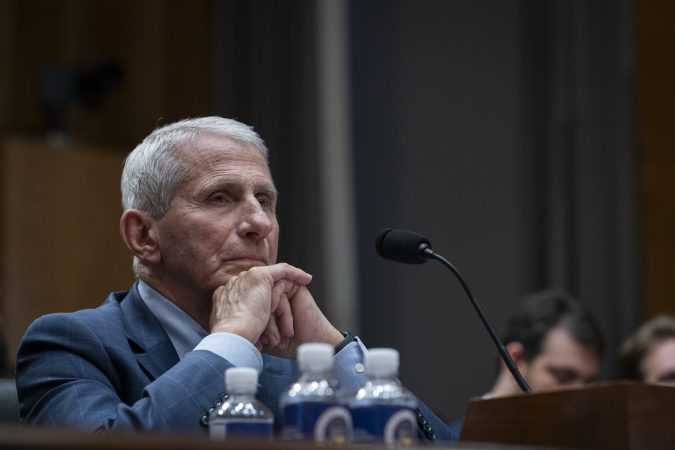
    For almost three hours Wednesday, Republican senators grilled Anthony S. Fauci with dozens of questions at a hearing focused on the origins of the covid-19 pandemic and whether Fauci previously lied under oath to Congress. Again and again, the 85-year-old former government scientist gave the same response.

    “On the advice of counsel, I respectfully decline to answer based upon my rights under the Fifth Amendment to the Constitution,” Fauci said. He delivered variations of that answer more than 100 times.

    Fauci was subpoenaed to appear before the Senate’s government oversight committee by its chairman, Sen. Rand Paul (R-Kentucky), who has spent years alleging that Fauci participated in a cover-up of the possible origins of the covid-19 pandemic. Paul has also blamed Fauci for inadvertently sparking the pandemic – noting that Fauci’s agency previously funded coronavirus research in Wuhan, China, where the outbreak was first detected in late 2019 – and has called for him to be put in prison.

    Fauci has denied the allegations in repeated appearances before Congress, most recently in a combative 2024 hearing. Infectious-disease experts have also insisted to Paul and other Republicans that while Fauci’s former agency, the National Institutes of Health, funded virus research in Wuhan, the work could not have caused the pandemic.

    Fauci said Wednesday that he refused to testify because he believed Paul was seeking to wrongly trap him.

    “The only conclusion I can reach is that the sole reason he is calling me before this committee is to get me to say something – anything – that could vindicate his repeated public pledges that I end up, in his words, ‘behind bars,’” Fauci said, before announcing his plan to invoke the Fifth Amendment.

    Here are five takeaways from the hearing.

    Republicans tore into Fauci

    Senate Republicans did not miss their chance to lace into Fauci. They inquired. They mocked. They goaded. At times, they flat-out insulted. Beyond asking about covid-19’s origins, senators accused Fauci of mishandling pandemic guidance and accused him of using his growing profile during the pandemic for personal benefit.

    Paul, a longtime adversary of Fauci, was visibly frustrated with Fauci’s nonanswers. Paul warned the former official that it was against the law to obstruct an investigation and threatened “repercussions” for Fauci’s unresponsiveness. When Fauci’s attorney, David Schertler, asked to make a comment, a back-and-forth led to Paul removing the lawyer from the room.

    It was the first of many tense moments.

    “Nothing says honesty like taking the Fifth, huh, Doc,” Sen. Josh Hawley (R-Missouri) said, leaning forward in his seat. The senator grew heated in his questioning, raising his voice and pointing with both hands as he accused Fauci of enriching himself.

    A Hawley staffer propped up an image of a magazine cover for which Fauci posed in September 2020. “You became a narcissist and a megalomaniac and a liar,” Hawley said.

    Fauci leaned forward, looking down at the table in front of him, hands fidgeting in his lap, glancing up occasionally at the senators accosting him.

    At one point, Sen. Bernie Moreno (R-Ohio) asked audience members to stand up if they had disagreed with or been harmed by policies such as mask requirements and school closures. More than a dozen stood. Moreno asked Fauci to turn around and look at them. Fauci turned to confer with his lawyers, then faced forward again.

    Sen. James Lankford (R-Oklahoma) adopted a warmer tone toward Fauci than his colleagues did. “I know you’re invoking your Fifth Amendment right, which you have the right to be able to do constitutionally,” he said. “Thanks for coming to be a part of this.”

    Democrats defended Fauci – mostly

    Democrats portrayed Fauci as a hero and said the GOP attacks were baseless. They also criticized Republicans for attacking public health officials like Fauci while supporting the Trump administration’s cuts to public health research and funding.

    Sen. Gary Peters (Michigan), the committee’s top Democrat, called Paul’s efforts biased. “One-sided investigations designed to validate predetermined conclusions do not serve the American people,” Peters said.

    Fauci and other public health officials have saved lives, said Sen. Richard Blumenthal (D-Connecticut). “Today, we are demeaning and degrading their lifesaving service,” he added.

    One Democrat struck a different note.

    Sen. John Fetterman (D-Pennsylvania) was not going to attack Fauci, he said, but he wouldn’t defend him, either. Instead, Fetterman shared a regret: that the lab-leak theory came to be seen by some as a right-wing conspiracy theory, preventing people like himself from taking it seriously.

    “I hope … the next time our nation’s facing something like this, we are not … as I might have been, blinded by the partisan idea that maybe the truth might come from a side that’s different than you are,” Fetterman said.

    The hearing shows how divisions have calcified

    Wednesday was the latest example in a years-long trend: Congressional lawmakers have been unable to work together on a probe of the pandemic’s origins.

    A House investigation of the government’s pandemic response began in early 2023 with the top Republican and Democrat pledging to work together. It descended into partisan bickering and dueling reports about what the investigation found, and whether Fauci was personally culpable.

    In the Senate, a bipartisan plan to set up a commission investigating the nation’s covid response repeatedly stalled out. Democrats have accused Republicans of promoting conspiracy theories about Fauci’s role and other aspects of the response, while GOP officials say liberals and the media have not been sufficiently transparent about mistakes that government officials made.

    Paul, particularly, has long vowed to hold Fauci accountable for his “crimes” – a claim that Fauci and his allies say made it impossible to cooperate with him Wednesday.

    Paul’s threat to hold Fauci in contempt raises new legal questions

    The chairman said his committee plans to hold a vote next week on whether Fauci was in contempt of Congress. But he and his colleagues acknowledged legal uncertainty about how to proceed, complicated by President Joe Biden’s preemptive pardon for Fauci before Biden left office.

    Lankford asked Paul if there is guidance on whether Fauci could be held in contempt for refusing to answer questions after making an opening statement. Lankford noted a 2013 episode in the House in which an IRS official made an opening statement and then invoked her Fifth Amendment right to not answer questions about whether her agency had wrongly targeted conservative groups. The GOP-led House concluded that the official had waived her Fifth Amendment rights by making an opening statement, and she was ultimately found in contempt.

    “Are we dealing with the same issue here?” Lankford asked.

    Paul said that was among the legal questions lawmakers would consider. He added that the courts may need to settle whether, with “a presidential pardon that offers you complete immunity, you can still claim that you need protection” in a congressional hearing.

    “Dr. Fauci isn’t liable for anything as long as he tells the truth,” Paul added.

    Some past congressional witnesses have also repeatedly pleaded the Fifth. Martin Shkreli, a controversial pharmaceutical investor, refused to answer questions in front of a House Oversight Committee hearing in 2016, annoying lawmakers with his smirking. While lawmakers discussed holding Shkreli in contempt of Congress, they ultimately did not.

    Regina Wallace-Jones, the head of the Democratic fundraising engine ActBlue, also repeatedly invoked the Fifth Amendment during a congressional hearing last month in which Republicans pressed her on the platform’s process for vetting foreign donations.

    “It is the only reasonable response to a proceeding that from the beginning has been about harassing a political opponent’s fundraising platform, not genuine oversight,” she wrote in The Washington Post.

    House Republicans have threatened to hold ActBlue in contempt.

    Evolving perceptions of Fauci

    Fauci was initially seen as a unifying figure, particularly in the early days of the pandemic as Americans looked for answers – and the highly visible doctor provided them in TV interviews, podcast appearances and other forums.

    About 8 in 10 Americans in April 2020 said they trusted Fauci to provide reliable information on the pandemic, including similar shares of Republicans and Democrats, according to polling by KFF, a nonpartisan health care research and polling organization. But within two years, only about 5 in 10 Americans had trust in Fauci, a decline driven by plunging GOP support: Just one-quarter of Republicans said they trusted the doctor, according to KFF.

    Some of that was fueled by relentless criticism of Fauci in conservative media, which blamed him for pandemic policies that were increasingly viewed as too harsh. It was also driven by President Donald Trump, who empowered Fauci in early 2020 and followed his advice on imposing shutdowns and other measures, before distancing himself from the doctor later that year and repeatedly criticizing his guidance.

    “I didn’t mind him, I didn’t find him to be bad personally, as a person,” Trump told “Fox & Friends” on Tuesday. “But I didn’t agree with what he was saying or what he was doing.”

    Fauci has previously said that Trump soured on him as the pandemic stretched on and the 2020 presidential election drew closer, with Trump telling the scientist to be more optimistic about the virus’s risks in his media appearances.

    Fauci still retains more trust than some current leaders.

    Fifty-four percent of Americans in February said they were confident that Fauci had provided the public with trustworthy medical information, according to a February poll by the Annenberg Public Policy Center of the University of Pennsylvania. That exceeded the level of trust in current Health Secretary Robert F. Kennedy Jr., who was at 38 percent.

  • Congo says the death toll in fastest-growing Ebola outbreak has passed 1,500

    Congo says the death toll in fastest-growing Ebola outbreak has passed 1,500

    BUNIA, Congo — Ebola has killed more than 1,500 people in eastern Congo in the fastest-growing outbreak of the disease, data released Thursday showed, marking a 50% increase in around a week as the emergency continues to outpace response efforts.

    As of Tuesday, 3,442 cases had been recorded, with 1,521 deaths, according to the latest government update. The sharp rise since last week partly reflects a backlog of cases and deaths that had not yet been confirmed or recorded, the Africa Centers for Disease Control and Prevention said Thursday.

    The outbreak, declared on May 15, has been linked to the Bundibugyo virus, for which there are no approved vaccines or treatments. Delays in contact tracing, difficulties accessing affected areas, mistrust from communities, and violence by armed groups and some residents have hampered the response, the Africa CDC said.

    The outbreak is mostly concentrated in eastern Congo’s remote Ituri province, which accounts for nearly 90% of cases, but there have been others confirmed in five provinces, including one of the country’s largest cities, Kisangani.

    Neighboring Uganda declared itself free of Ebola on Tuesday following the discharge of the country’s last patient in mid-June.

    Ebola is rare, but highly contagious and can be contracted via bodily fluids such as vomit, blood, or semen. The disease it causes is severe and often fatal.

    Africa CDC Director-General Jean Kaseya said Thursday that 63% of confirmed deaths in the last two weeks occurred outside of treatment centers.

    Kaseya said this is largely due to the “unsafe handling of infected bodies” by residents. Traditional burial practices in some communities involve touching the bodies of the deceased, which can be highly contagious.

    The restrictions that health authorities have placed on such funerals, along with widespread misinformation asserting that the deadly virus isn’t real, have angered some residents and led to attacks on health facilities.

    In Ituri’s Nyakunde health zone, international partners supporting the Ebola response had to temporarily relocate after a July 15 attack on a hospital and a treatment center, sparked by a patient’s death.

    Officials say the relocation of these partners, including Africa CDC and Mercy Corps, has disrupted surveillance, contact tracing, and supplies.

    Désiré Duabo, chief medical officer for the health zone, said foreign aid groups and agencies had provided much of the supplies, equipment, and operational support, and warned that the small stocks left are “almost depleted.”

    Attacks such as the one in Nyakunde are causing anxiety among health workers and making it difficult for them to carry out their duties, said Pierre Akilimali, the Ebola response incident manager at the National Public Health Institute of the Democratic Republic of the Congo.

    “They are working amidst risks of infection as well as risks to their personal safety,” he said.

    Local health officials say security has since stabilized and are urging partners to return, with Africa CDC saying teams could redeploy as soon as next week.

    The latest outbreak has killed more people at a quicker rate than any previous outbreak, including in 2014-2016 when 28,000 cases were reported, of which over 11,000 people died. That outbreak took about eight months to reach 1,000 deaths.

    The World Health Organization says the global risk of spread remains low because Ebola does not travel through the air, making it much harder to spread than respiratory viruses. Cases detected outside the affected region have so far been quickly identified and contained without leading to sustained transmission, the agency said.

    In Congo, however, the risk of the spread remains “very high,” according to the WHO.

  • The border can’t block air pollution — but environmental diplomacy can

    The border can’t block air pollution — but environmental diplomacy can

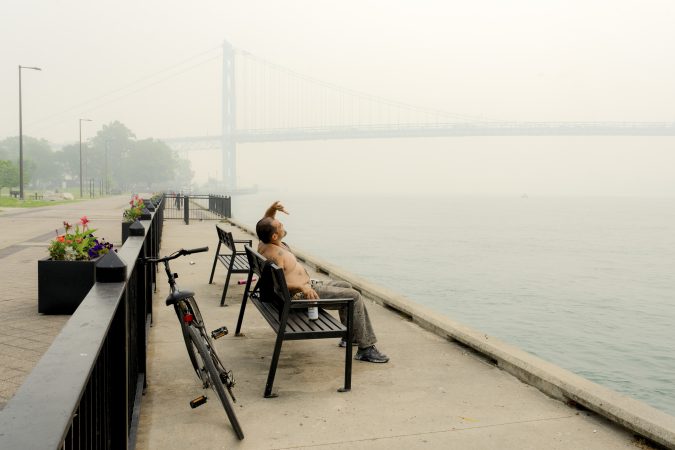
    In July, Republican candidates in Michigan were lining up to excoriate Canada for the wildfire smoke wafting across the international border. “They MUST PAY and PUT OUT the fires!” wrote gubernatorial candidate John James on X, after declaring he would introduce legislation to impose sanctions on the neighbors to the north. Other politicians made similar claims about how they would deal with Canada. Meanwhile, Donald Trump moved to impose new tariffs on Canada in response.

    Such political posturing shows little understanding of the actual situation. For example, it overlooks the fact that the scale and magnitude of these fires is surely linked to climate change, which the United States is arguably doing less to combat under the Trump administration than any other industrial nation in the world.

    This is not the first time the two countries have dealt with cross-border air pollution. However, in the Great Lakes-St. Lawrence region historically, it was more often American emissions that were afflicting Canada.

    By the mid-20th century, air pollution across the Michigan-Ontario border in the St. Clair-Detroit River corridor was raising significant concerns. At the request of both nations, the International Joint Commission (IJC), which had been created by the 1909 Boundary Waters Treaty, formed a joint St. Clair-Detroit Air Pollution Board in the 1960s to investigate the precise sources of air pollution in this region.

    In a 1971 report, this board found that sulfur dioxide and particulate matter from Detroit’s auto and steel industries were crossing over to Windsor, Ontario. Along the St. Clair River, the joint board reported that Sarnia’s Chemical Valley south of the city, which had already developed into an enormous petrochemical complex that befouled both air and water, was the main pollution culprit. Certainly some of the poisons drifted into Michigan, though the board determined that the primary victims were in Ontario. The IJC duly recommended that the two federal governments create pollution boards and establish national air quality standards.

    A similar dynamic played out in other transboundary air disputes between Ontario and adjoining U.S. states, with both sides (though more often the United States) found to be the culprit. Ontario Hydro built a large coal-fired power station at Atikokan in the northwest part of the province that threatened cherished recreational areas across the border, such as the Boundary Waters Canoe Area Wilderness in Minnesota. In another instance, the Reynolds aluminum smelter in Massena, N.Y., was accused of contaminating the nearby binational Mohawk community, including the parts in Canadian territory.

    Over time, the air quality issues stemming from these specific sources mostly either fell off the public’s radar or became subsumed within wider debates about acid rain and national air quality agreements (such as the 1970 Clean Air Act). Indeed, by the 1980s acid rain dominated not only the Canada-U.S. environmental relationship, but general bilateral relations.

    Acidified precipitation is created when sulfur and nitrogen oxides (SO2 and NOx) emissions, often from coal plants, are transported through the atmosphere and transformed into sulfuric and nitric acids. This acid rain fell onto terrestrial and aquatic environments where it had a range of short- and long-term negative consequences. Melting acidic winter snows produce an “acid shock” in streams during the spring run-off, for example, which is predictably bad for aquatic species.

    While both countries generated pollution that fell in the other’s territory, acid rain originating in the United States and descending to earth in Ontario was the biggest problem. Ongoing bilateral studies established that 70%-80% of it came from the United States. That acid rain affected cottage country north of Toronto — where many of the country’s elite have vacation homes — helps explain why this problem gained so much public traction.

    But the two countries could not agree on solutions, such as the need for emission limitations and controls. As the primary contributor, the United States would have had to bear the brunt of any necessary changes, and the Reagan administration was ideologically opposed to any environmentally motivated regulations on economic activity. Washington stalled the talks, calling for more research.

    The United States proved more amenable to addressing the problem after George H.W. Bush entered the White House in 1989. Negotiations began on what would emerge as the 1991 Canada-United States Air Quality Agreement (AQA), which permanently capped emissions at approximately 13.3 million tons by 2010 in the United States and 3.2 million tons in Canada. While the United States would not make any legal commitments to reduce emissions in Canadian territory, it did pledge to follow the requirements of its recently updated Clean Air Act, which reduced the emissions that created acid rain.

    Made By History sponsorsInquirer Staff

    Ultimately, the results of the 1991 Air Quality Agreement were mixed. SO2 emissions did go down by almost 70%. Granted, this decrease probably had more to do with domestic regulations and technological changes on both sides of the border. In the long run, neither country has fully followed through on its commitments.

    The AQA also created a framework that could incorporate other air pollution issues, such as particulate matter and ozone. In that vein, Canada and the United States signed an “Ozone Annex” to the Air Quality Agreement in 2000. There was also a different type of ozone problem — the hole in the ozone layer — involving Canada and the United States; both were adherents to the 1987 Montreal Protocol on Substances that Deplete the Ozone Layer, considered by many to be the most successful global environmental treaty ever.

    To be sure, the United States and Canada have had the world’s most consequential environmental and energy relationship over at least the last century. No two nations have exchanged resources and collectively modified ecosystems on the same scale — which, by extension, has created harmony in wider U.S.-Canada relations and established many important precedents for international environmental law and governance. Yet, both countries are also petro states and climate villains, with their societies and economies organized around deeply unsustainable industrial practices and consumption patterns.

    The amity that has long characterized U.S.-Canada relations has been eroding with Trump at the helm. And this recent strife about transborder smoke is representative of the ways that breakdowns in U.S.-Canada environmental and energy relations can undermine the rest of the relationship.

    Daniel Macfarlane is professor in the School of Environment, Geography, and Sustainability at Western Michigan University and the author or coeditor of six books, including “Natural Allies: Environment, Energy, and the History of US-Canada Relations.”

    Made By History takes readers beyond the headlines with articles written and edited by professional historians. Opinions expressed do not necessarily reflect the views of The Inquirer.

  • Lawmakers will investigate Iranian attack that killed 6 U.S. troops

    Lawmakers will investigate Iranian attack that killed 6 U.S. troops

    Democratic lawmakers announced Thursday that they are opening an investigation into the Iranian drone strike that killed six U.S. service members in Kuwait earlier this year, citing doubts over the objectivity of the military’s internal review of the attack.

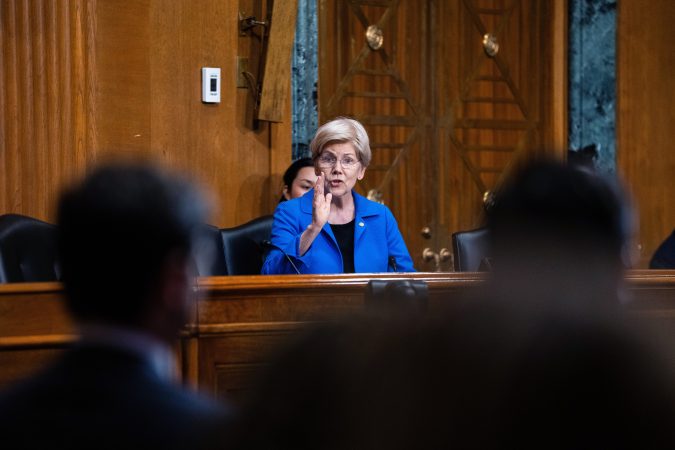
    In a letter to Defense Secretary Pete Hegseth, Sen. Elizabeth Warren (D., Mass.) and Rep. Pat Ryan (D., N.Y.) — along with almost a dozen other House and Senate Democrats — cited recent reporting by the Washington Post and other media outlets scrutinizing the March 1 strike, saying they want answers to whether the military had adequate protections in place before the attack and whether the troops received proper medical care afterward.

    “The need for this investigation goes beyond the Shuaiba attack — it’s about taking accountability and protecting our service members,” Ryan, an Army and Iraq War veteran, said in a statement to the Post. He was referring to Port Shuaiba, the facility along the Persian Gulf where the deadly strike occurred. “It’s our job as members of Congress to force [Hegseth] to give us real answers and make sure something like this never happens again.”

    Reached for comment, the Pentagon did not address whether it would cooperate with lawmakers’ investigation, saying in a brief statement that “as with all Congressional correspondence, we will respond directly to the sender.”

    It was just the second day of Operation Epic Fury, the name the Trump administration has given the conflict, when an Iranian Shahed drone crashed into the center of an Army operations center at Port Shuaiba. Dozens of service members were injured in the attack along with the six who died.

    In the months since, survivors have alleged that military leaders failed to take appropriate action after being warned the facility lacked adequate defenses. Some have said, too, that troops wounded in the strike faced considerable difficulty obtaining treatment.

    Military officials have contested both assertions.

    As the Post reported this month, several soldiers who were at Port Shuaiba have said they doubt the Army’s internal review will hold anyone accountable. Citing a U.S. official familiar with the review, the Post also reported that the initial findings did not assign fault for the attack or address any punitive action.

    The Army has shared its findings with the families of some of the fallen service members but has not released that information publicly.

    In their letter to Hegseth, lawmakers questioned the seriousness and independence of the Army’s internal review, citing other reporting by the Post that revealed the task was assigned initially to a midgrade officer within the affected unit instead of an outside investigator.

    The matter was later elevated to a more senior officer at U.S. Army Central, the affected unit’s parent command. Outside observers have said they were skeptical of the move, noting that it still left the review to be overseen by personnel in the same chain of command.

    The lack of an independent investigator, coupled with new concerns about the Pentagon’s transparency and recordkeeping, raise questions about “whether investigations into service member casualty incidents will be conducted objectively,” Warren wrote in the letter.

    Citing Democrats’ concerns about the Defense Department’s “failures to provide service members that sustained injuries in this war with adequate care and its inability to honestly and openly inform the American people about the consequences of this war,” the lawmakers have chosen to pursue answers on their own, the letter says.

    They requested a response from the Pentagon by Aug. 12.

  • 🎸 Gully’s vs. Avalon Boro | Down the Shore

    🎸 Gully’s vs. Avalon Boro | Down the Shore

    “More boring by a mile?” That was the assessment of one Facebook user after Avalon shut down a live music gig at Gully’s by the band Three and One, shortly after 8 p.m. on July 17.

    Someone complained about the noise, and Avalon police arrived on Dune Drive outside Gully’s, the lively new bar and restaurant that serves a Craig LaBan-approved “clothesline of candied bacon that dangles over a tasty plate of grits.”

    There was a flurry of outrage on Facebook and at a recent council meeting, along with despair over the state of the upscale town’s vibe, echoing last year’s angst over the Union League’s purchase of the Whitebrier.

    Neighbors on 27th Street, meanwhile, tried to explain they weren’t against Gully’s — or even live music — but that the noise from the outdoor patio, either from live bands or amplified games like the Monday minnow races, were a “disruptive intrusion,” up and down the block.

    It turns out that all of Avalon’s liquor licenses contain a special condition that permits outdoor music between noon and 8 p.m. Gully’s is now appealing that restriction through the state Division of Alcoholic Beverage Control, arguing that it’s arbitrary and capricious, and an abuse of Avalon’s discretion. The town has indicated it wants to be reasonable and figure out a solution. One council member spoke of his love for Gully’s and said, “We do appreciate your business and what you’ve done there.”

    I wrote about the Gully’s vs. Avalon controversy here.

    Have a listen to Three and One here, or check them out again this Friday at Gully’s, with a new daytime slot: 4 p.m. to 8 p.m.

    📮 Do you think it’s reasonable for Avalon to limit outdoor music at bars to between noon and 8 p.m.? Or should businesses be given more leeway to thrive during the summer? How much say should people who live near commercial establishments have, especially during the summer? Let me know what you think by replying to this email, and I’ll include your most interesting responses in a future newsletter.

    Have ideas or news tips, memories or pet peeves about the Shore? Send them to me here.

    🫨 It’s been another crazy week of storms, but the weekend looks decent.

    — Amy S. Rosenberg (Follow me @amysrosenberg, on Instagram at @amysrosenberg. 📧 Email me here.)

    If someone forwarded you this email, sign up for free here.

    Sign up for our text group, The Shore Line.

    Shore talk

    🔥 A fire and flooding at Ocean Casino shut down gambling operations for a day.

    💃🏼 Shakira closed out her World Cup Tour in Atlantic City.

    👑 LeBron James merch is already available down the Shore.

    🏄🏻‍♀️ Dept. of History: How surfing came to the Jersey Shore.

    ⚾ We miss Splash, the mascot. A look back at Surf Stadium.

    🚨 Wildwood Crest lifeguard’s vehicle hits beachgoer.

    🇮🇪 Derry Girls creator’s next project will be about a group of Irish girls who come to Wildwood.

    What to eat/What to do

    🎨 The 25th annual Art of Surfing is Saturday on the Ocean City boardwalk.

    🎭 Pretty Woman: The Musical is at Surflight Theatre on Long Beach Island.

    🎡 The St. Francis Festival of the Sea is on Brant Beach.

    📖 Reed’s Farm is hosting a book group Saturday morning. The book is The Someday Garden by Ashley Poston.

    👩🏻‍🍳 Why cook? Hire Instagram-famous private chef Keegan McManus. Or order delicious meal prep from Ventnor’s Chef G.

    🎥 Check out The Odyssey on the A.C. Boardwalk at Tropicana’s IMAX Theatre.

    Shore snapshot

    The band Three and One packs up at Gully’s in Avalon shortly after 8 p.m. July 17, 2026, after a noise complaint. The liquor licenses issued by Avalon to bars prohibits live music after 8 p.m., but Gully’s has appealed that restriction to the state N.J. Division of Alcoholic Beverage Control. The band was scheduled to play until 10 p.m.Kate Nunan

    🧠 Trivia time

    Lots of love for the Bongo Room, which was the Avalon bar that closed 39 years ago this summer and featured the Greaseband on Sunday nights. Betsy Strittmatter was first with the answer.

    This week:

    This legendary Ventnor ice cream and water ice shop’s recipes — particularly its black cherry water ice — continue on in another location, the North Beach Creamery.

    Are the recipes originally from:

    A. Custard’s Last Stand

    B. Springer’s

    C. Willow’s Way

    D. Mento’s

    If you think you know the answer, email us here. First one gets a shout-out.

    More of your thoughts on: Sea Isle and the changing Shore

    In response to my story about changes and upscaling in Sea Isle City, Down the Shore reader Nancy Bucher came to the Shore town’s defense.

    As a retiree I find it magical to live here year round. Sea Isle truly is a City for All Seasons! Yes, people sold their quaint cottages and they are now replaced by 6 bedroom homes. But is that so bad? Large extended families get to enjoy a taste of beach life for a week or two, families get to bond, cousins get to play together and we all happily co-exist. Yes, some people have beautiful multimillion dollar homes …. but is that so bad? Our restaurants and shops stay prosperous and our town is thriving. Sure, we need more parking, but if people are honest, it is mainly in the busy summer season. We need more trees? Look around people, there are new young trees planted every year and right now the Crepe myrtles are blooming beautifully. Personally I applaud the growth and embrace the change and credit our community leaders for keeping our shoreline pristine and our beaches replenished!

    Reader Joseph Higgins brings us back down to earth.

    All of the shore towns are out pricing blue collar workers. My parents bought a trailer for $30,000 in 2000 outside of Wildwood Crest in Shawcrest. The land rental fees have climbed from $3,000 to $7,900 per year. The trailer next door is currently listed for $275,000 with land rental fees of $11,400. The working man’s shore vacation spot is quickly disappearing.

    Ask Down the Shore:

    We put the dress code question to our Shore Line text group (still time to join us here). There was a deluge of responses!

    Here’s a quick sample:

    “Down the shore everything’s alright.” Sure it’s OK to wear beach attire (not sandy though, and do brush ur hair 😉)”

    “I don’t care how much money you have. Make an effort, for the sake of the restaurant staff and other guests, to put on clean shorts and a polo for men and a cute cover up/sundress for women. If you can’t do that, then there’s always takeout.”

    “Some people, when they come to the beach, lose or abandon their sense of propriety. Decent, casual attire respects the restaurant and other diners.”

    Your Shore memory

    My sampling of Ocean City pizza triggered this memory from Susan Carlbaugh.

    As a Roxborough girl who lives in Baltimore now, reading your tribute to pizza on Ocean City’s boardwalk hit every nostalgia button possible! In my teen years, our friend ran the rides in Wonderland and that saved our cash for the rest of the night including the slice of pizza. Life was good!

    We knew it as “Mack” & Manco’s and it was always a stop on our night on the boardwalk. After waiting for my Grandma to get out of the Music Pier’s nightly performance, and before we left the ‘boards, it included a nightcap of fresh-squeezed orange juice from Litterer’s!

    Alex’s was our Roxborough home pizza shop. I can smell all of them right now. You are bringing tears to my eyes!

    Thanks Susan! You never know what will trigger a touching memory. There’s still time to send us your Shore memory, pizza or otherwise! Tell us how the Shore taps into something deep for you, and we will publish them in this space.


    By submitting your written, visual, and/or audio contributions, you agree to The Inquirer’s Terms of Use, including the grant of rights in Section 10.