Category: News

  • Five South Jersey municipalities agree to settlement in class-action lawsuit over vacant property fees

    Five South Jersey municipalities agree to settlement in class-action lawsuit over vacant property fees

    Five Camden County towns could owe some current and former property owners more than half a million dollars collectively as part of a proposed settlement in a class-action lawsuit involving vacant and abandoned properties.

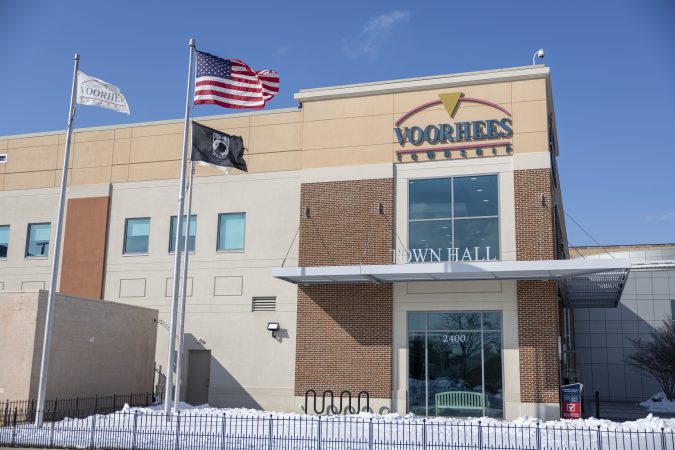
    The case alleges that the vacant and abandoned property registration programs previously operated in Barrington, Bellmawr, Runnemede, Voorhees, and Gloucester Township violated New Jersey law. These programs were in place largely to prevent blight by funding the town’s upkeep of vacant properties, but the suit alleges that for a time, the towns were collecting fees unlawfully.

    Many of the property owners who were forced to pay fees to these programs had never actually abandoned or vacated their homes, the suit alleges, and the towns unlawfully earned a revenue from these fees as a result.

    The settlement proposes a fund of about $545,600. The amount contributed by each town varies based on the total amount collected through program fees, said Stephen DeNittis, an attorney representing plaintiffs in the case.

    Here is how much each town will have to pay if the settlement is approved:

    • Gloucester Township: $280,000
    • Runnemede Borough: $111,300
    • Voorhees Township: $94,120.43
    • Bellmawr Borough: $33,932.50
    • Barrington Borough: $26,271.57

    Because it is a class-action lawsuit, the proposed settlement still needs to be approved by a court, DeNittis said.

    A hearing is scheduled for Aug. 14, and if preliminary approval is granted, notices will be sent out within 30 days informing other potential claimants of the case and providing instructions on how to file a claim if they paid into their town’s vacant property program between 2018 and 2022.

    Claimants can file for a simple refund of $200, or they could receive 60% of the total amount they paid into the program if they can provide sufficient documentation and proof of payment, DeNittis said.

    As part of the settlement, the towns do not admit any liability or wrongdoing.

    Officials with both Voorhees Township and Runnemede Borough independently declined to comment on the case, saying they do not publicly discuss litigation. The other municipalities named in the lawsuit did not respond to a request for comment.

    Assuming the court grants preliminary approval of the settlement in August, DeNittis said, a final approval hearing will likely be held later this fall.

  • Senate committee advances nomination of Erica Schwartz to be Trump’s CDC director

    Senate committee advances nomination of Erica Schwartz to be Trump’s CDC director

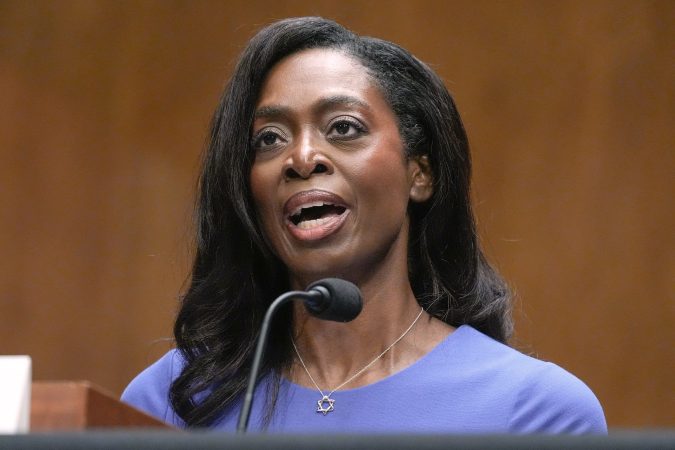
    NEW YORK — A Senate committee on Thursday advanced Erica Schwartz’s nomination to be director of the nation’s top public health agency, setting aside concerns that she will not stand up to political meddling.

    If confirmed by the full Senate, the 54-year-old would become the 22nd director of the Atlanta-based Centers for Disease Control and Prevention, which is charged with protecting Americans from preventable health threats. Her resume includes medical and law degrees, a stint as deputy surgeon general, and a leadership position at the U.S. Coast Guard.

    Schwartz appeared to be on shaky ground after a hearing before the Senate Health, Education, Labor, and Pensions Committee this month. The chairperson, Sen. Bill Cassidy (R.,La.), and others questioned whether she would be willing to stand up to Republican President Donald Trump’s health secretary, Robert F. Kennedy Jr., if he ordered CDC to do something that was unsupported by science and good public health practice.

    But when the committee met last week, Cassidy said he had spoken with Schwartz after that hearing and to others who knew her.

    “I’m confident that she knows what she is doing and will stand against those who do not,” said Cassidy, whose support was necessary for the nomination to go forward.

    The committee’s near party-line vote Thursday moved Schwartz’s nomination ahead.

    Among those who opposed her was Sen. Bernie Sanders, a Vermont independent.

    “The issue at hand is not complicated,” Sanders said last week. ”Will we have people in the Trump administration who have the guts to stand up to people who are anti-science and into conspiracy theories?”

    The CDC has faced more than a year of unrest

    The CDC has been in turmoil since Trump returned to office last year.

    Largely due to layoffs and resignations, the agency has lost 3,000-plus employees, more than one-quarter of its workforce. Morale has plummeted as a succession of mostly temporary leaders have come and gone. The front office has been staffed by political appointees with little or no training in medicine or public health.

    When Schwartz was nominated in April, public health experts were cautiously optimistic, citing her background. They also noted she was the choice of Trump and not Kennedy, a leading voice in the anti-vaccine movement before he was tapped to oversee the CDC and other federal health agencies.

    Kennedy had promised not to change the nation’s vaccination schedule but later attempted a substantial rewrite of vaccine recommendations for kids. Some of those efforts were put on hold this year by a federal judge.

    Kennedy’s actions have rankled Cassidy, a physician who initially expressed doubts about Kennedy as Trump’s pick to be health secretary. Cassidy ultimately signed off on Kennedy after the nominee promised not to change the nation’s childhood vaccine recommendations.

    Public health groups seek reassurance

    At Schwartz’s hearing, Cassidy and some other senators asked her what she would do if Kennedy or other political appointees instructed the CDC to make changes that were not supported by science. Schwartz pledged to “never betray the science,” but she repeatedly declined to dissent from some of the actions Kennedy has taken.

    The National Public Health Coalition, an organization of former and current CDC workers, was not reassured by her responses and said senators should require specific written commitments from Schwartz on scientific independence, evidence-based vaccine policy, conflicts of interest, and other issues.

    “The public needed to hear clear commitments about how she would protect CDC guidance from political pressure,” the group said in a statement. “Too often, her stated commitments were incomplete, vague, or missing.”

    At the hearing, Schwartz said she was unaware that CDC programs that worked to prevent smoking and promote vaccinations had been curtailed. She declined to commit to taking down a CDC website that suggests a link between childhood vaccines and autism. She said she had not seen it, though she agreed existing medical evidence has not found a link.

    Last week, Cassidy said that “as a sign of good faith” officials at the Department of Health and Human Services had modified the page. But this week, it continued to argue that “vaccines do not cause autism” is not an evidence-based claim, despite numerous studies that have found no such link.

    Georges Benjamin, executive director of the American Public Health Association, interpreted Schwartz’s performance as someone trying to please different factions. He disagreed with how she answered several questions, but continued to support her nomination.

    Schwartz is qualified, might be able to rebuild the CDC’s depleted command structure, and could start to rebuild public trust in the agency by focusing on bipartisan concerns such as foodborne disease outbreaks, he said in a recent interview.

    Daniel Jernigan, a former top CDC official who resigned in August, echoed that.

    If Schwartz is not confirmed, “it will mean a continued rudderless journey for CDC,” he said.

    For Kennedy, “having to start over is probably what he wants — many more months with no one stopping him from pursuing the same anti-science and anti-vaccine efforts he has been pursuing,” Jernigan said.

    The CDC has had several leaders under Trump

    Schwartz was the third Trump nominee for the office in the past 18 months.

    The first was a former Florida congressman, David Weldon. His Senate hearing in March 2025 was canceled an hour before it was to begin. Weldon said at the time that he had been told not enough senators were willing to vote for him.

    The White House then moved on to Susan Monarez, who had been serving as the CDC’s acting director. Monarez was confirmed by the Senate, but she was ousted in less than a month. Trump administration officials said she was not aligned with the president’s agenda so they terminated her.

    Since then there have been a series of HHS officials as acting CDC director.

    The committee also advanced a controversial health nominee

    The CDC position is one of a number of leadership vacancies among federal health agencies, including surgeon general and commissioner of the Food and Drug Administration.

    Also unfilled is the job of assistant health secretary for preparedness and response. That official oversees preparations and response to public health emergencies and disasters and is involved in decisions about funding next-generation vaccines against pandemic flu or other infectious disease threats.

    Trump wants Sean Kaufman in that post, and the Senate committee on Thursday approved the nomination by a party-line vote.

    In LinkedIn postings, Kaufman has made comments cheered by vaccine skeptics, arguing against hepatitis B vaccinations for newborns and saying he served as an expert witness to advocate for people who refused the COVID-19 vaccine. He also supported a Trump administration decision last year to cancel projects to develop vaccines using mRNA technology.

    “Mr. Kaufman has said some pretty stupid things and irresponsible things regarding immunization,” Cassidy said.

    But Cassidy said he spoke to HHS officials and was assured that personnel changes are being made at the department to provide “better oversight to ensure that science, not ideology, is driving decision-making.”

    Cassidy also said he has been assured that if Kaufman is confirmed, “he will not be involved in vaccine policy and nor will he be the ultimate decision-maker on certain issues.”

    Sanders, who voted against Kaufman, said: “I think the American people are owed better than what President Trump has nominated.”

  • In a reversal, New Jersey now says Pennsylvania residents should register their e-bikes in New Jersey if visiting

    In a reversal, New Jersey now says Pennsylvania residents should register their e-bikes in New Jersey if visiting

    Pennsylvanian e-bikers headed to the Shore, get ready for your appointment with New Jersey’s Motor Vehicle Commission.

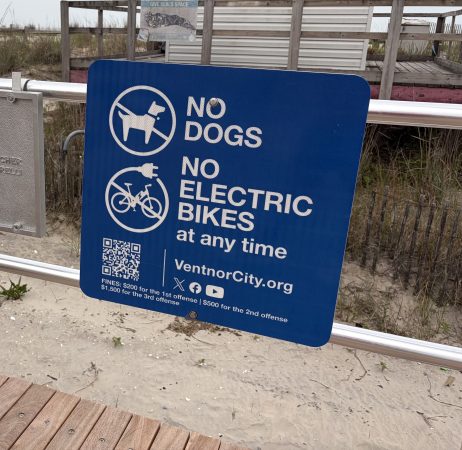
    In a reversal, the state agency now says out-of-state residents should register their e-bikes in New Jersey in order to legally ride them in New Jersey.

    Earlier, MVC spokesperson William Connolly said New Jersey would not be registering out-of-state e-bikes and that visitors should follow the law in their home states.

    But now the MVC says that because New Jersey is the only state that requires e-bikes to be registered, out-of-state e-bikers should follow New Jersey’s law.

    That means out-of-state riders need to make an appointment at the MVC when they visit, which starts by filling out a registration form.

    Connolly says as of July 28, New Jersey had issued 9,410 e-bike registrations; of those, 182 were for out-of-state residents.

    “MVC is now offering to register e-bikes for out-of-state residents so that they can lawfully ride their bikes in NJ,” Connolly said in a statement e-mailed to the Inquirer.

    ”Out-of-state visitors who are sixteen or older can also rent a low-speed e-bike from rental companies operating under a contract with a local government, which is an exception to the registration requirement under the e-bike law.”

    Properly registered e-bikes will display a sticker issued by the MVC.

    The law has caused confusion among riders, bike-shop owners, and law enforcement since its adoption in January. After a six-month grace period, the state went into enforcement mode July 19.

    The law requires all riders to wear helmets, forbids riders under the age of 15, and requires insurance for higher-speed classified electric bikes. The classification for basic e-bikes is for pedal-assisted electric bicycles with a maximum speed of 20 mph.

    Out-of-state riders without a driver’s license are not permitted to ride an e-bike in New Jersey, according to the Motor Vehicle Commission, which has been embroiled in a national controversy since it was revealed that thousands of non-U.S. citizens were automatically registered to vote while obtaining driver’s licenses in New Jersey.

    For non-New Jersey e-bikers, the process for e-bike registration will be the same as for residents, but out-of-staters can use out-of-state proof of identification and register the e-bike with an out-of-state address.

  • Trump’s support for Graham’s sister stirs GOP backlash in South Carolina

    Trump’s support for Graham’s sister stirs GOP backlash in South Carolina

    President Donald Trump has put his weight behind Sen. Darline Graham in her bid to succeed her late brother, Lindsey Graham, for a full term. But rather than embracing the president’s endorsed candidate in a whirlwind election less than two weeks away, influential conservative activists in South Carolina say they’re not swayed.

    Trump’s conservative base could again reject one of his chosen candidates this year — as they did in South Carolina’s GOP gubernatorial primary in June — as his supporters question whether the president is acting with their top priorities in mind.

    “People are going to be independently minded in this, and I don’t think that Trump is the end all, be all that he used to be,” said CJ Westfall, chairperson of the Dorchester County Republican Party.

    Many conservative activists say they aren’t sold on Graham because of her lack of a political record, besides her public support for her brother.

    Trump initially called for Graham to be appointed to serve the remaining six months of her brother’s term, then quickly backed her after she unexpectedly decided to seek a full term. A dozen GOP candidates filed to run in the Aug. 11 primary election before this week’s deadline. They include Reps. Ralph Norman and Russell Fry, who have conservative voting records in Congress, and former governor Mark Sanford.

    The crowded special election is expected to go to an Aug. 25 runoff. And runoff elections, Westfall said, “typically bring out the hard core of the hard core.”

    Even national Republican operatives sympathetic to Darline Graham, and who were aligned with her brother, are privately conceding that her odds of success in the primary race appear slim.

    In interviews, more than a dozen South Carolina Republican operatives and activists described three issues working against Graham: She had never held office and is little-known across the state, despite her brother’s high profile. Her association with her brother could have downsides in a primary; Lindsey Graham had struggled to please many in Trump’s MAGA-aligned base in recent years because of his hawkishness and willingness to work with Democrats, and he had spent $20 million to fend off a primary challenge this year from the right. And some are simply irked that Trump wants to hand off a coveted six-year term to someone based on family ties, rather than a proven conservative record.

    Chad Walldorf, a longtime Republican donor and activist in South Carolina, said he respects Darline Graham’s long career as an advocate in the state for people with disabilities.

    “But it’s just hard for that to suddenly translate into a six-year Senate term in a month,” Walldorf said. “And that’s the leap voters are being asked to make.”

    Graham, who previously led South Carolina’s Commission for the Blind, has taken steps to demonstrate her conservative bona fides since she was sworn in two weeks ago. She has worked to pass legislation that her brother championed to sanction Russia, and she has announced support for bills to defend gun rights, oppose abortion, support law enforcement, and limit birthright citizenship.

    In an interview with Sean Hannity on Fox News, she suggested she would focus more on domestic policy than the national security issues her brother emphasized. Darline Graham also endorsed Trump’s demand on Monday that Senate Majority Leader John Thune (R., S.D.) keep senators in Washington until they approve the Save America Act, a voting bill that Trump has pressured Thune for months to pass.

    Following Lindsey Graham’s funerals this week, Darline Graham planned to resume campaigning Thursday, seeking to portray herself as more conservative than her brother, according to a person familiar with her campaign, who spoke on the condition of anonymity to discuss strategy.

    “Darline is really in for a dogfight,” said one Republican official working on Senate races, who spoke on the condition of anonymity because they were not authorized to discuss the matter publicly. The person said private polling has not shown Graham pulling significantly ahead in the crowded field. The national official — like many in South Carolina conservative political circles — said they do not expect Graham to win the runoff election, given her limited time to introduce herself to voters.

    Randy Page, executive vice president of the socially conservative Palmetto Family Council, cited the low 10% turnout in the party’s June runoff election as he predicted lower participation in the special Senate primary and even lower turnout for a special runoff. Page said that such small electorates tend to favor someone who, “frankly, is known as a movement conservative.”

    Norman, who has name recognition and a statewide campaign operation after finishing third in the GOP primary for governor, is widely considered to be the favorite for the nomination. Trump intended to endorse Fry for the six-year term, until Graham decided she wanted to run, according to two people with knowledge of Trump’s decision who spoke on the condition of anonymity to discuss private deliberations.

    Norman has secured the endorsements of conservative Republican Sens. Rick Scott (Fla.) and Mike Lee (Utah), along with upstate sheriffs, while Fry has the backing of 40 Republican state legislators. Rep. William Timmons (R., S.C.) has endorsed Graham.

    While Graham has received endorsements from several Republican Senate colleagues, she has yet to secure the public backing of two key Senate leaders — Sen. Tim Scott (R., S.C.), who chairs the National Republican Senatorial Committee, the Senate GOP’s campaign operation, and Thune. Much of Lindsey Graham’s remaining campaign cash will be transferred to the NRSC to be spent on behalf of his sister, according to a person with knowledge of the arrangement who spoke on the condition of anonymity because they were not authorized to discuss it publicly. But the person said those funds will be limited and probably well under $1 million.

    Some grassroots conservative activists in the state have noted that Darline Graham, according to election records, did not cast a vote in the 2024 presidential primary. South Carolina is a key early state in the process of determining a party’s presidential nominee, and Trump defeated a former governor, Nikki Haley, in that primary election.

    The White House did not respond to a request for comment, including on whether Trump intends to travel to South Carolina to campaign for Graham.

    Trump was forced to issue a co-endorsement in the state’s June gubernatorial primary runoff to avoid a political loss after his first pick, Lt. Gov. Pam Evette, failed to gain the support of the majority of his base. Her opponent, state Attorney General Alan Wilson, who came in second behind Evette in the primary, ultimately consolidated supporters of the other Republican candidates in the race and won the runoff by 37 percentage points.

    Evette’s loss followed similar rejections of Trump-endorsed primary candidates by Republican voters in the Georgia and Iowa governor’s races, as well as outrage from Trump’s base this spring after he was reported to be considering endorsing the reelection of Sen. John Cornyn (R., Texas). Trump ultimately abandoned the plan to endorse Cornyn — whom he had once labeled a “RINO,” or a Republican in name only — instead putting his 11th-hour support behind MAGA candidate Ken Paxton, the state’s attorney general.

    “Trump’s endorsements haven’t always been correct in the voters’ eyes,” said Mark Lynch, Graham’s main primary challenger this spring, who is again running to succeed him. “We’re not going to have a coronation in this state and elect Darline as the queen, underneath the king, Lindsey.”

  • Neysa Adams, pioneering civic and community leader, scientist, and teacher, has died at 104

    Neysa Adams, pioneering civic and community leader, scientist, and teacher, has died at 104

    Neysa Adams, 104, of Philadelphia, 1971 chair of the local United Fund women’s committee, former president of the Rebecca Gratz Club, onetime vice president of the women’s council for the Federation of Jewish Agencies, former associate trustee at the University of Pennsylvania, scientist, high school teacher, investment adviser, and philanthropist, died Friday, June 26, of heart disease at the Hearth at Drexel.

    Born and reared in Philadelphia, Mrs. Adams graduated from Olney High School and lived over the years in East Oak Lane, Germantown, and Elkins Park. She earned a degree in biochemistry with honors at Penn, did scientific research for a time, and taught English and history for two years at Philadelphia High School for Girls.

    Smart, friendly, and energetic, she joined the Philadelphia United Fund volunteer speakers bureau in 1963, became active with the fund’s public relations committee, schools committee, and women’s committee, and organized many community fundraising campaigns. In 1971, she told The Inquirer she had a “deep feeling for community work.”

    Mrs. Adams also served on the board at what is now Penn’s School of Social Policy and Practice and was active with the Emergency Aid of Pennsylvania Foundation, the National Conference on Social Welfare, and state and federal women’s advisory commissions. In 2003, then-Gov. Ed Rendell recognized her as a Distinguished Daughter of Pennsylvania for her “outstanding service and contributions to the Commonwealth of Pennsylvania.”

    As a philanthropist, Mrs. Adams and her husband, Arlin, were cochairs of Penn’s Harrison Society for fundraising recognition, and they established, among other endowments, the Arlin and Neysa Adams Lectureship and the Neysa and Arlin Adams Prize for excellence in prelaw studies at Temple University. Her husband died in 2015, and she donated his papers to the archives at Penn Carey Law School in 2017 and later funded its Arlin M. Adams Lecture in Law, Religion, and the First Amendment.

    “Everything good in my life came from him,” Mrs. Adams said in a 2024 online profile by the Hearth at Drexel.

    She also established Neysa Adams’ Library Fund at Reform Congregation Keneseth Israel in Elkins Park. Friends called Mrs. Adams “wonderful,” “outstanding,” and “one of life’s brightest lights” in tributes.

    One friend said: “Neysa was one of the kind.”

    This story about Mrs. Adams appeared in The Inquirer in 1971.Newspapers.com

    Neysa Norma Cristol was born Aug. 7, 1921. She met Arlin Adams in high school, and they married in 1942 while he was on leave from the Navy. They had daughters Carol, Judy, and Jane. Her daughter Jane died in 2017.

    Mrs. Adams and her husband, a state secretary of public welfare and longtime federal judge, traveled the world, mostly through his work, and she met a queen, a pope, several U.S. presidents, and other international notables. “Her resilience, intellectual curiosity, and dedication to serving others stand as a testament to a life well lived,” friends at the Hearth at Drexel said in 2024.

    She was active at Keneseth Israel, enjoyed cooking, and was an avid reader. She also worked as an investment adviser.

    She was featured on 6abc TV last August on her 104th birthday and said: “Get those things that make you happy. Enjoy them while you can.”

    Mrs.Adams and husband, Arlin, married in 1942 while he was on leave from the Navy.Courtesy of the family

    Her daughter Carol said: “She was outgoing and had lots of friends. It seemed like she knew everyone in Philadelphia.”

    In addition to her daughters, Mrs. Adams is survived by four grandchildren, one great-grandson, and other relatives. A sister and a brother died earlier.

    A celebration of her life is to be at 11 a.m. Friday, Aug. 7, at Reform Congregation Keneseth Israel, 8339 Old York Rd., Elkins Park, Pa. 19027.

    Donations in her name may be made to the University of Pennsylvania, Box 71332, Philadelphia, Pa. 19176; and Susquehanna University, 514 University Ave., Selinsgrove, Pa. 17870.

    Mrs. Adams (second from right) doted on her husband and three daughters. Courtesy of the family
    “It seemed like she knew everyone in Philadelphia,” said Mrs. Adams’ daughter Carol (left). Courtesy of the family
  • Disney hits back as Trump administration targets 6abc’s TV license

    Disney hits back as Trump administration targets 6abc’s TV license

    Disney has come out swinging in its defense of 6abc and seven other owned-and-operated ABC TV stations the Trump administration is threatening to take off the air.

    In a new filing Thursday, Disney claims President Donald Trump is using the Federal Communications Commission to go after the local stations’ broadcast licenses in “retaliation” for comments made by ABC late-night host Jimmy Kimmel.

    “There is no question why the commission is singling out these eight stations: Each is owned by ABC, and the administration has openly and repeatedly called for the revocation of ABC’s licenses, because it dislikes the content and viewpoints expressed on ABC network programs,” Disney wrote.

    The FCC did not address Disney’s criticism, but in a statement a spokesperson said the agency “is going to hold broadcasters accountable to the full extent of the law.”

    In April, the FCC ordered an unprecedented early review of the broadcast license for 6abc and the seven other stations shortly after Trump called for Kimmel to be fired over a joke he made involving first lady Melania Trump. Disney called the early review “extraordinary” and an attempt at censorship.

    “The retaliation against ABC is a signal to every media company in the country: accommodate the administration’s view of what news coverage should look like or pay the price,” Disney wrote.

    The FCC has said the review stems from an earlier investigation into diversity, equity, and inclusion initiatives at Disney, citing “the agency’s prohibition on unlawful discrimination.” The agency is conducting a similar investigation of Comcast, which owns NBC.

    FCC chairman Brendan Carr also said the agency would include in its review the network’s decision not to air Trump’s prime-time address on election security earlier this month, in which the president repeated the baseless claim he won the 2020 election, despite losing to former President Joe Biden.

    “I think that’s something that broadcasters should be carrying,” Carr said.

    NBC also passed on carrying the speech live, while some local Fox affiliates picked up cable coverage from Fox News. CBS aired Trump’s address, but broadcast networks are not required to preempt their programming when the president addresses the nation.

    Could the Trump administration really take 6abc off the air?

    Rick Williams anchors 6abc’s 11 p.m. edition of “Action News.” 6ABC

    The short answer is yes, but experts say it would be a messy, complicated battle that could take years, a process likely extending beyond the end of Trump’s second term in office.

    6abc’s current broadcast license, renewed in 2023, runs through 2030. The FCC’s next step would be a referral for an official hearing, which could take place as early as next month.

    So far, the FCC has not presented evidence 6abc or the other seven ABC stations owned by Disney have violated any public interest requirements.

    “The FCC has spent the last 18 months searching for some pretext for revoking the Stations’ licenses,” Disney wrote. “The commission has found none, because the Stations easily meet the standard for license renewal — which under the law means that the Commission cannot revoke their licenses or order a hearing on their renewal applications.”

    The last time the FCC revoked a TV station’s broadcast license was in 1987, when RKO General Inc. lost its licenses in Boston, New York, and Los Angeles because of business misconduct.

    If the FCC does move to revoke all eight of ABC’s local broadcast licenses, the case would be decided by an administrative law judge, according to the FCC’s website. Even then, the decision would be subject to appeals to the full commission and federal courts.

    6abc going dark would be ‘a significant loss to the Philadelphia region’

    6abc’s “Action News” has been the city’s most-watched local news program for decades. Tom Gralish / Staff Photographer

    Last month, 6abc called on viewers to weigh in on the early review of its broadcast license and support the station. That public comment period ended Wednesday, with over 152,000 people sounding off on the FCC’s move.

    Responders overwhelmingly supported the station, according to an analysis of public comments posted to the FCC’s website, with 6abc widely praised for its local news coverage.

    U.S. Rep. Brian Fitzpatrick (R., Pa.), who represents Bucks County, called on the FCC to give 6abc “full and fair consideration” on its early license renewal, calling the station “an important part of our region’s public safety, cohesion, and civic life.”

    Among the organizations weighing in was the Philadelphia Zoo, which called 6abc a “steady, trusted presence in this community for decades.”

    “The loss of 6ABC would be a significant loss to the Philadelphia region and to organizations like ours that rely on the station’s local news, weather, and community coverage to reach the public,” Jo-Elle Mogerman, the Philadelphia Zoo’s president and CEO, wrote in a letter to the FCC.

    The Philadelphia Police Foundation called 6abc an “indispensable partner” and “vital contributor” to the quality of life across the city, praising the station’s support of police officers, first responders, and Philly children.

    “The loss of 6ABC broadcasting would deeply impact the Philadelphia region, removing a trusted journalistic voice and a critical pillar of support that local nonprofits and public safety organizations rely upon,” the organization wrote.

    Local residents were also overwhelmingly against removing 6abc from the air. Faith Paffett-Lugassy cited 6abc’s coverage of weather events and emergency information, pointing to Action News’ live coverage during severe thunderstorms that swept through the Philadelphia region earlier this month.

    “ABC stayed on the news channel the entire time until a tornado watch was finally canceled,” Paffett-Lugassy wrote. “ABC is my favorite channel to watch, please don’t take it off the air.”

    Bucks County resident Donald O’Keefe is not a cable TV subscriber, and said he relies on 6abc’s broadcast signal for local news and weather updates. According to O’Keefe, taking the station off the air “would directly compromise the public safety and awareness of Lower Makefield Township” and deprive residents of “critical safety warnings.”

    Others, like David DeGrace, looked beyond Action News to all the other programming on ABC that would be unavailable if the FCC followed through on its threat.

    “Don’t take away my Jeopardy!” DeGrace wrote. “This is ridiculous.”

  • Hope dwindles for rescue in southwestern Japan quake as death toll climbs to 25

    Hope dwindles for rescue in southwestern Japan quake as death toll climbs to 25

    KUMAMOTO, Japan — Residents in southwestern Japan camped in gyms and vehicles Thursday, stocked up on water, and tried to get back to normal two days after a powerful quake set off an explosion at a mall, toppled a factory chimney, and flattened homes in a disaster that killed at least 25 people.

    Time was running out to find survivors, as rescuers continued to work in the Kumamoto area on Japan ‘s southern main island of Kyushu, where the magnitude 7.1 earthquake hit Tuesday. The number of people missing was unclear.

    Of the deaths given in the latest tally, 25 have been confirmed as related to the disaster, but there were nine more deaths under investigation as likely to be connected, the Kumamoto prefectural government said. The quake left at least 86 people injured, five of them seriously, it said.

    Survivors spoke about desperately pulling family members out of the wreckage. Some had suffered injuries and were rushed to the hospital.

    Thousands of people spent another night at evacuation centers set up throughout the area in gymnasiums and other big spaces. Some homes were still without water or electricity, while other people were simply afraid to go back.

    Nearly 19,000 homes were still without electricity and more than 9,000 people were staying in the roughly 400 shelters, where power sources were being added to provide air-conditioning.

    Concerns were growing about illness, including from the sweltering heat. The Ministry of Environment sent out a heatstroke alert for the Kumamoto area, with temperatures rising above 91 F Thursday.

    Some evacuees sleep in cars

    In the town of Hikawa, one of the hardest-hit areas in Kumamoto, many residents are without water or electricity, or both, and some were staying inside their vehicles in parks, at the town hall parking lot, or outside their homes. More than 800 structures of the town of about 4,500 households were destroyed or damaged, officials said.

    At the front entrance of the town hall, officials delivered bottled water and packaged instant rice, while the Ground Self-Defense Force service members came with a trolley to provide fresh water.

    Hirokazu Sato, a nurse, whose house was destroyed, is staying in his passenger car at the town hall parking lot with his wife and three children, because he worries that his 1-year-old baby could be a nuisance to others if they take shelter at an evacuation center.

    “I can’t sleep sitting in the car, so sometimes I go out for a walk during the night,” Sato says. “I hope the town will provide temporary housing soon.”

    Yoshiaki Nakashima, a 66-year-old resident who came with two bottles and his beloved pet dog to get water, said he is staying in a car because of his reluctance to stay at one of the three evacuation centers in the area. He also said he doesn’t want to sleep at home because aftershocks made him feel uneasy.

    “It’s difficult to turn over while sleeping in a car,” he said, but added that living at a shelter is even more difficult.

    Akiko Inazaki, another resident in her 30s, is living in a tent set up in the yard of her home, which has been without water and electricity since the quake. Inazaki, who also came to get water, said she will use it little by little.

    “Fresh water is so valuable,” she said. Inazaki said she drank so little that she almost had a heatstroke.

    Risks of heatstroke are a major concern among officials.

    Yutaka Kobayashi, a doctor dispatched from central Japan’s Aichi prefecture, said he was touring evacuation centers Thursday to assess the condition of evacuees, especially elderly people and those with injuries as they cope with a harsh environment.

    “We have to make sure elderly people are not developing heatstrokes or dehydration,” he said in Hikawa.

    While the town parking lot was nearly packed the first night, some residents have moved to three public schools where air-conditioning is running, Hikawa officials said.

    A town official, Yuzuru Tamura, said they are starting to run out of emergency food supplies, such as canned bread and instant rice.

    Emergency personnel search for missing people

    The most serious damage was at the Aeon Mall shopping center in the town of Kashima, which was bustling with thousands of people when the quake struck in the late afternoon.

    The company said some 3,000 customers were evacuated to a parking lot before the explosion happened in another part of the mall, where some people were still working. The mall’s second floor collapsed, trapping people.

    On Thursday, seven people were confirmed to have died at the mall site among the 12 people pulled out of the wreckage, according to Kumamoto authorities.

    In the Yatsushiro area, where a chimney collapsed at a Nippon Paper Industries factory, 10 people were rescued, but eight others died, and one remained missing, the Kumamoto prefectural disaster team said.

    Footage provided by the Japanese government and military showed rescue workers drilling through the collapsed parts of the building in an attempt to get to anyone who may still be trapped inside.

    Prime Minister Sanae Takaichi told reporters the central government will take a lead role in coordinating the various rescue efforts. Restoring electricity, gas, and water to stricken areas while providing a supply of fresh water is key, she said.

    “The needs on the ground are constantly changing. To put to rest the people’s feelings of uncertainty, we will do all that needs to be done,” she said.

  • East Whiteland officials allow work to resume on data center planned for Superfund site

    East Whiteland officials allow work to resume on data center planned for Superfund site

    Work has resumed on a 1.5 million-square-foot data center in East Whiteland after developers were told to stop early construction this month while the township reviewed its soil and health safety plans.

    Township officials issued a permit that includes “many conditions related to soil monitoring and reporting, dust control, and protection of the remedy for the Superfund site,” they said in a statement Wednesday.

    Development began again on Wednesday, said Lou Colagreco, an attorney representing the developers, Green Fig LLC and Sentinel Data Centers.

    Earlier this month, township officials told the developer to stop work “until greater clarity is provided with respect to the ongoing review” of the soil and health and safety plans. The stoppage came amid increased scrutiny from residents, who have fears about the impact of the data center being built upon the former Cyprus Foote Mineral Co., which contaminated the land with chemicals such as lithium, arsenic, and hexavalent chromium.

    On Wednesday, the township said in a statement posted online that it had issued a permit regarding erosion and sedimentation control.

    “The Township and its inspectors will also be maintaining a regular presence at the site to oversee implementation of the permit conditions,” the township’s statement said.

    The permit allows for “earth-moving activities.” The developers will still need to secure construction permits for things like pouring concrete for footings, or foundations. But they can move dirt and dig via these permits, East Whiteland Township Manager Steve Brown said.

    But there’s still an open question of the scope of the project. After months of seeking to change the proposal earlier this year — an effort that sparked renewed and resounding community opposition — the developers had said they would move ahead with previously approved plans which would be composed of two buildings roughly 772,000 square feet each and use 3 million gallons of water daily to cool it.

    The developers came back before the township this month, intending to change the design again, saying the revised proposal would use less water. It could also possibly scale down the overall footprint of the data center, from 1.5 million square feet to a total of 536,000 square feet.

    The township’s three elected officials ultimately tabled the matter at their July 8 meeting, saying they needed more information. The board’s next scheduled meeting is Aug. 19.

    “The only issue before the Supervisors is whether the data center will use air chilled coolers to conserve water or whether water chilled units will be utilized,” Colagreco said in an email. “In either event, Sentinel is proceeding with development.”

    This suburban content is produced with support from the Leslie Miller and Richard Worley Foundation and The Lenfest Institute for Journalism. Editorial content is created independently of the project donors. Gifts to support The Inquirer’s high-impact journalism can be made at inquirer.com/donate. A list of Lenfest Institute donors can be found at lenfestinstitute.org/supporters.

  • Trump says he may pull Blanche’s attorney general nomination until dissenting senators leave office

    Trump says he may pull Blanche’s attorney general nomination until dissenting senators leave office

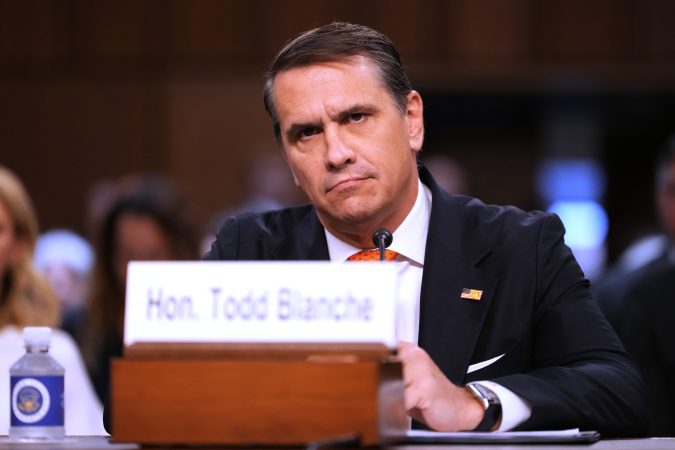
    President Donald Trump suggested Thursday that he might withdraw Todd Blanche’s nomination to become attorney general until next year amid a standoff with two Republican senators who are demanding concessions from the administration in exchange for their votes.

    Sens. John Cornyn (Texas) and Thom Tillis (N.C.) have called for changes, in writing, to the controversial deal the Justice Department struck earlier this year to resolve a lawsuit Trump filed against the IRS. Despite days of negotiations with the Justice Department, an agreement appeared far from likely.

    In a social media post Thursday, Trump called out the senators, both of whom are set to leave their elected positions at the end of the year, and suggested their resistance to supporting Blanche stemmed from Trump’s refusal to back them for reelection.

    “John Cornyn, of Texas, and Thom Tillis, of North Carolina, both of whom I refused to Endorse, and whose political careers have been ended by my action, are refusing to vote for this Great Nominee,” Trump wrote.

    He added: “I have no objection to temporarily withdrawing Todd’s name, if they do not do the right thing, and putting him back after Cornyn and Tillis are out of office.”

    If Trump follows through on that threat, Blanche could remain the head of the Justice Department on an acting basis for the foreseeable future.

    Still, the fact that two senators from the president’s own party had brought Trump to consider such a move signified the extent to which Republican lawmakers are showing an increased willingness to buck the president’s demands as his popularity falls and the midterms approach.

    Cornyn lost his bid for reelection in May after the president endorsed his primary opponent, Texas Attorney General Ken Paxton. Tillis opted not to seek reelection this year after a dispute with Trump. Since then, both senators have opposed the president on occasion, but their stand on Blanche’s nomination is the most significant break so far.

    Despite Trump’s pronouncement, there is no guarantee that Blanche’s path to nomination would become easier if the president waits for the senators to leave office. Analysts from both sides expect Democrats to make gains in the midterm elections, potentially retaking one or both chambers of Congress.

    Responding to Trump’s threat Thursday, Cornyn shot back with a social media post of his own saying the president “is mistaken if he believes concerns about the provisions in his tax lawsuit settlement are limited to me and Senator Tillis.”

    “This is not just a problem with just Thom Tillis and me — we just happen to be on the front lines on the Judiciary Committee,” Cornyn later told reporters. “I think there’s a serious question whether — if this goes unresolved — whether he could ever get confirmed. And I think that’s too bad, because I think he’s basically a good guy.”

    “After the midterms, who knows who’s going to be the next United States senator from North Carolina or Texas?” Cornyn said.

    Earlier in the day, the senator dismissed the notion that his and Tillis’ position stems from hostility to Trump. “This is about making sure that we maintain the integrity of our justice system and fairness for everybody involved,” Cornyn said.

    That back-and-forth came hours after Sen. Chuck Grassley (R., Iowa), chairperson of the Senate Judiciary Committee, was forced to postpone a committee vote on Blanche’s nomination that had been scheduled for Thursday morning or risk a losing outcome.

    Republicans enjoy a 12-10 advantage on the Judiciary Committee, including Sen. Darline Graham of South Carolina, who recently replaced her late brother, Sen. Lindsey Graham. Either Cornyn or Tillis voting against Blanche would be enough to force a tie, stalling the nomination before it could reach the Senate floor. “No” votes from both senators would kill the nomination in committee.

    “Chairman Grassley works to set President Trump’s nominees up for success in committee, not failure,” Grassley’s office said of the decision to postpone the vote.

    Cornyn and Tillis are demanding changes to two aspects of the Justice Department’s deal with Trump, which resolved the lawsuit the president had filed against the IRS over the leak of his tax returns to the media.

    They want Blanche to codify in writing his public pledge that the administration will not move forward with the “Anti-Weaponization Fund,” a nearly $1.8 billion payout fund to compensate people who claim they are victims of politically motivated prosecutions.

    They are also seeking to limit a separate provision that offered Trump, his family members, and their businesses protection from past tax claims — a potentially lucrative benefit for a president who has often complained of burdensome IRS audits. That aspect of the deal has led to accusations of corruption and self-dealing.

    The federal judge who oversaw Trump’s lawsuit recently denounced it as an improper attempt to “manipulate” the court process. She said it was not a legitimate legal dispute between two independent parties, given that both sides ultimately reported to Trump, but rather a pretext to come up with a questionable deal, which was reached without court approval.

    Blanche has said he did not play a direct role in overseeing the negotiations between the Justice Department and Trump’s legal team. However, his signature is the only one that appears on the documents relating to the deal’s tax provisions.

    Cornyn, among other things, wants the administration to clarify in writing that those protections do not apply to the Trump family’s future actions.

    Neither side is offering specifics on the status of their ongoing negotiations, but talks continued into Thursday morning, with the Justice Department and the senators swapping proposals and counteroffers.

    A Justice Department official, speaking on the condition of anonymity to share details on the talks, said the department had sent a new proposal to Cornyn and Tillis late Wednesday.

    “The Department has been in regular communication with Committee members for weeks, and we look forward to continuing to work productively with Senators to address any concerns,” the department said in a statement.

    Cornyn sent a proposal of his own Thursday morning but told reporters that he had not heard back and had no scheduled meetings or calls with White House or Justice Department officials.

    Trump is generally not inclined to make concessions to lawmakers who he thinks are not on his side, said one Trump adviser, speaking on the condition of anonymity to discuss the president’s mindset. Trump does not think he needs Senate Republicans as much as they think he does, the adviser added.

    Cornyn suggested that the $1.8 billion payout fund was no longer the main source of the impasse. Instead, he said, the latest hang-up involved the senators’ requested revisions to the part of the deal containing tax protections for Trump.

    Tillis said separately that Trump’s threat to withdraw Blanche’s nomination rather than formally rescind the payout fund casts doubt on Blanche’s promise that the fund is dead.

    “It doesn’t add up,” Tillis told reporters. “It suggests to me that there’s at least one or two people in the White House that wanted to have this latent capability for future use.”

    Both senators blamed the White House, not Blanche, for the impasse.

    “I’m happy to solve the problem,” Cornyn said. “I thought we had solved it last night. … I think as far as Blanche and the Department of Justice, we were pretty much on the same page. But then when the president got wind of it, he wasn’t.”

  • A shrinking weapons stockpile is testing the Pentagon’s sweeping new strategy

    A shrinking weapons stockpile is testing the Pentagon’s sweeping new strategy

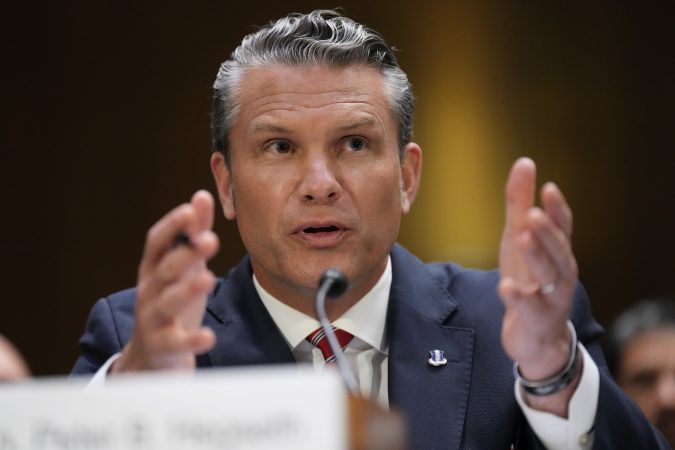
    In a late-June meeting with more than a dozen of the nation’s top defense technology firms, Defense Secretary Pete Hegseth had an urgent message: The Pentagon needed their help to rapidly replenish America’s weapons arsenal.

    Outside the room, the United States was mired in a conflict with Iran that was rapidly depleting U.S. stocks of missiles and interceptors. According to three people familiar with the meeting, some of whom spoke on the condition of anonymity to discuss sensitive information, Hegseth told executives that their companies would be critical to restocking the nation’s supplies.

    The meeting, several details of which were previously unreported, underscores a pivotal shift in the U.S. defense industry. With the Iran war consuming vast quantities of precision munitions and relying less on ground troops or drone warfare, the Pentagon is leaning on venture-backed startups to solve one of its most pressing problems: rebuilding America’s weapons stockpiles at speed.

    The meeting was filled with the Pentagon’s top brass, including Steve Feinberg, the deputy defense secretary; Emil Michael, the undersecretary of defense for research and engineering; and Michael Duffey, the Pentagon’s top acquisitions official.

    Leading defense tech firms were summoned, including AI-aircraft software company Shield AI, the autonomous weapons firm Anduril, cruise missile startup CoAspire, and low-cost munitions maker Castelion. Some details of the meeting were previously reported by Breaking Defense.

    In many ways, this is the moment Silicon Valley’s defense entrepreneurs have said they were made for — to be cheaper, quicker, and more nimble to the needs of the U.S. fighting force than legacy multibillion-dollar defense contractors.

    They represent a sharp departure from established firms, which have far more experience managing clunky government acquisition processes and billions of dollars in capital to spend producing weapons en masse and lobbying lawmakers, but can move more slowly, especially in creating new supplies featuring cutting-edge technology, including artificial intelligence.

    The urgent need for new weapons is a major test for the Trump administration, which has turbocharged its relationship with Silicon Valley and made collaboration with startups a core part of its weapons acquisition process. The conflict, according to industry experts, may reveal whether newcomers can deal with the challenging realities of providing weapons at scale, overcoming antiquated contracting processes and congressional gridlock.

    Hegseth focused on these hurdles at the gathering, asking each executive what obstacles stood in the way of producing more weapons, according to the people. Several pointed to slow Pentagon contracting processes and the difficulty startups face securing enough up-front financing to fund large production runs and expensive research and development.

    It’s unclear, however, whether the industry’s newest entrants can scale quickly enough to meet the Pentagon’s demands.

    “It’s one thing to build … it’s another thing to then mass produce,” said Jerry McGinn, the director of the Center for the Industrial Base at the Center for Strategic and International Studies. “Can they deliver?”

    Acting Pentagon press secretary Joel Valdez said in a statement to the Washington Post that the Defense Department is “transforming how the Department fights, buys, and builds” its weapons “to ensure we rapidly deliver critical technology to the warfighter at scale.” He added that the department “will harness the creativity and drive of American innovators, clear bureaucratic blockers, and put our acquisition system on a wartime footing to deliver tangible solutions to the Joint Force.”

    Anduril and Shield AI did not reply to a request for comment.

    ‘Begging to be unleashed’

    In the second Trump administration, the Pentagon has made it increasingly clear that Silicon Valley will be essential in creating cheaper, smarter, and smaller weapons to reshape how the U.S. fights war.

    The Defense Department’s top leadership has become stuffed with former Silicon Valley executives, bringing their startup ethos to the Pentagon to transform the military.

    Speaking in November at the National War College in Washington, Hegseth outlined his vision to overhaul the Pentagon’s acquisition process in partnership with U.S. industry to ensure it can operate on a wartime footing.

    “American industry and its innovative spirit are begging to be unleashed to solve our most complex and dangerous warfighting problems,” he said. “We need to get out of our own way, out of your way and enter into real partnership with you rather than overprescribe and decelerate your natural progress.”

    Approximately 10,000 new defense tech companies have entered the market since 2024, according to a July report by CSIS. Nontraditional companies outside of legacy defense contractors received more than $120 billion in contract obligations in the 2025 fiscal year.

    But one of the Pentagon’s most urgent needs is munitions. The war with Iran has sharply depleted U.S. stockpiles, with CSIS estimating Monday that inventory of Patriot interceptors has fallen from 2,200 before the war to fewer than 827, and THAAD missiles from 452 to fewer than 278.

    It could take three or more years to replenish the supply of THAAD and Patriot missile defense systems to what it was before the Iran war, according to a CSIS analysis in May, putting the U.S. at increased risk of service members dying and military assets abroad becoming damaged due to weakened defenses. Precision strike and joint air-to-surface missiles may take several months to a year to replace, according to the analysis.

    The Defense Department is aiming to fill this gap by turning to tech companies that make low-cost munitions. The Pentagon’s fiscal 2027 budget calls for nearly half of all of its munitions to be low-cost, with that share rising to 70% by fiscal 2031, CSIS analyzed.

    This mindset has filtered into current agreements. In May, the Pentagon announced several multiyear arrangements with defense tech companies, including Anduril, Castelion, CoAspire, Leidos, and Zone 5, to “aggressively expand” the U.S. military’s strike capabilities and purchase their low-cost missiles.

    The goal, according to the announcement, is to procure 10,000 low-cost cruise missiles in three years, starting in 2027. The Defense Department has also said it will issue a contract to Castelion to purchase a minimum of 500 of its low-cost hypersonic missiles — called Blackbeard — annually with a desire to buy up to 12,000 over five years if the technology receives proper testing accreditations.

    McGinn of CSIS said the demand will expose the industry to the realities of making weapons in real time. The startups have shown they can build the technology at low cost, he said, but now they have to prove their products are up to Pentagon standards, while navigating the whims of Congress, which appropriates defense spending.

    Doug Denneny, the founder and chief executive of cruise missile startup CoAspire, said startups face a challenge beyond mastering technological advancements.

    “That is the direct messaging that we receive from the Department of War,” he said, using the Trump administration’s preferred name for the Defense Department. “‘Great that you’ve got this great technology. … We get it. We believe it. You’ve demonstrated it. You’ve proven your capability. Now you have to manage your supply chain, and now you have to produce at scale. Otherwise, it’s not worth the investment.’”

    “The importance of that has been emphasized to me personally by senior leadership in the Pentagon,” he added.

    The rush to expand weapons production could also overwhelm the subcontractors that supply critical components, creating bottlenecks across the defense supply chain, Denneny said.

    Bryon Hargis, co-founder and chief executive of Castelion, said the Pentagon’s reliance on startups carries enormous pressure. His company’s Blackbeard hypersonic missile could cost about $500,000 each — far below the roughly $5 million price tag of comparable weapons v but scaling production to meet military demand remains the challenge.

    “I feel the weight of … everything that we still have yet to do and to build out,” he said, adding that making good on supply promises is “going to be just tremendous amounts of pain over the next years.”

    He noted that the partnership is “an honor, but it’s a great responsibility. Like I feel we have to deliver.”