Category: News

  • Trump denied New Jersey’s request for FEMA aid after a blizzard. Andy Kim is worried it’s about politics.

    Trump denied New Jersey’s request for FEMA aid after a blizzard. Andy Kim is worried it’s about politics.

    Sen. Andy Kim wants to get to the bottom of why President Donald Trump rejected New Jersey’s request for FEMA aid over a record-breaking snowstorm earlier this year.

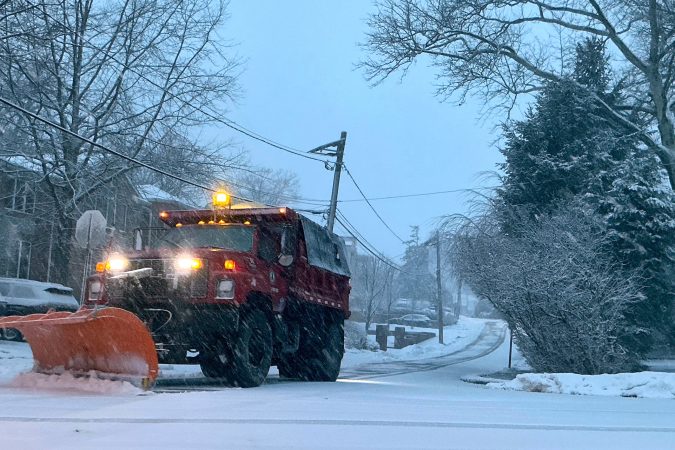
    Winter Storm Hernando, a massive blizzard, hit New Jersey and other Northeastern states hard in February. New Jersey submitted an $84 million disaster request after tallying the damage in the weeks that followed.

    The Federal Emergency Management Agency (FEMA) this month rejected New Jersey’s request as part of $227 million in disaster aid requests from four Democratic-led states that were denied, Politico reported Wednesday.

    The decision came from Trump after regional FEMA offices and the National Oceanic and Atmospheric Administration (NOAA) determined that the states met the required thresholds to receive aid, according to the report, which cited a former FEMA official calling the move to override the agencies unconventional.

    Kim said in an interview Thursday that Americans need “absolute assurance” that FEMA decisions won’t be based on “the whims of the president.”

    ”I think we should all just declaratively be able to say that partisan politics does not belong in disaster response … I would hope that every single public servant, from the White House to FEMA to the Capitol, believes that,” he said.

    Sen. Andy Kim speaks with Naimah Rutling, executive chef at Cathedral Kitchen in Camden, N.J., during a visit this month. Tyger Williams / Staff Photographer

    The South Jersey Democrat is the ranking member on the subcommittee that oversees FEMA, the federal agency responsible for doling out aid to communities hit by disaster.

    The president must declare a disaster in order for states to access FEMA aid — and the same goes for individual assistance. Democrats have in recent weeks raised concerns that Trump has penalized blue states in these decisions.

    A 16-page NOAA report indicated snowfall records in seven counties in the state, and a 12-page spreadsheet developed by FEMA and New Jersey documented the $84.4 million in costs, which were primarily for snow removal, Politico reported.

    The National Weather Service reported blizzards in several counties, including in Southeast Burlington County and other parts of South Jersey. The blizzard caused disruptions to the region such as thousands going without power, school closures, and transit disruptions.

    Sean Higgins, a spokesperson for New Jersey Gov. Mikie Sherrill, said the state’s request included costs incurred by the state’s municipalities and counties. He said Sherrill’s administration will appeal the denial.

    “Without that aid, our local governments will be stuck with the costs of an unprecedented snowstorm that didn’t care about political boundaries … Governor Sherrill will continue to fight for every dime that New Jerseyans are owed, regardless of political party,” Higgins said in a statement.

    FEMA’s cost threshold for public assistance for New Jersey is about $18 million, according to the New Jersey Office of Emergency Management, far below the assessed damage from the storm.

    FEMA did not respond to an inquiry about the rejection on Thursday, but Kim said the agency said it disagreed that New Jersey met the threshold.

    White House spokesperson Abigail Jackson has told news outlets that Trump is ensuring FEMA aid is used “to supplement — not substitute” states’ “obligation to respond to and recover from disasters.”

    The South Jersey senator said he has “concerns” that the rejection was political but he can’t say for sure.

    “I understand that you know, the federal government’s not supposed to cover everything for everything, but … this was a situation of record snowfall in wide swaths of New Jersey and, frankly, across the country,” Kim said.

    If the state’s appeal isn’t successful, Kim said he has “more tools in my toolbox to try to get my state the funding they deserve” but declined to share what those would be, saying it’s part of a “broader negotiation.”

    President Donald Trump speaks in the Oval Office of the White House Wednesday, July 29, 2026, in Washington. (AP Photo/Julia Demaree Nikhinson)Julia Demaree Nikhinson

    The White House has maintained that Trump’s rejections have not been political. But Kim and other Democrats have cited a March Politico report that found Trump’s second administration rejected disaster aid for Democratic-run states at the highest rate in the 47 years that FEMA has existed.

    The rejections underscore bigger questions of the future of FEMA. Trump previously called for the dismantling of FEMA before changing course, but his advisers have recommended an overhaul of the agency that would put more responsibility on states, NPR reported.

    Trump has also caused concern among Democrats for withholding FEMA’s Homeland Security grants from states that do not comply with his administration’s requests for unredacted voter data, including New Jersey and Pennsylvania.

    New Jersey was also hit hard by flooding earlier this month and Sherrill said she believes the state would likely qualify for FEMA aid.

    Joseph Walsh, a spokesperson for the New Jersey Office of Emergency Management, said New Jersey is still in the process of “collecting and validating” the assessed flood damage. Once that’s complete, the state will decide on whether to submit a request.

    Kim said he is trying to clarify and codify FEMA’s role and work with a bipartisan group of legislators on the issue.

    “Every single state is prone to some type of disaster, and so I just don’t want a situation where we’re pitting the states against each other … I hope we can all agree that we want to be there for each other in their time of need,” he said.

  • Atlantic City lifeguard is charged with attempting to lure an underage girl who was actually an undercover detective

    Atlantic City lifeguard is charged with attempting to lure an underage girl who was actually an undercover detective

    An Atlantic City lifeguard has been charged with attempting to pay for sex with who he believed to be an underage girl but who turned out to be an undercover detective, the Camden County Prosecutor’s Office said Thursday.

    Stephen M. Pagnoni, of Egg Harbor Township, was arrested this week and was being held at the Camden County Correctional Facility pending a detention hearing, Camden County Prosecutor Grace C. MacAulay said.

    Pagnoni, who has worked for the Atlantic City Beach Patrol for around 20 years, was suspended from his position, MacAulay said.

    On Tuesday, Pagnoni allegedly began communicating online with a person he believed was a 15-year-old girl, but who was in fact a detective with the Camden County Prosecutor’s Office High Tech Crimes Unit, MacAulay said.

    During the conversation, Pagnoni allegedly arranged to meet the supposed teen girl at a park in Cherry Hill for sex in exchange for money, MacAulay said.

    After he arrived at the location, MacAulay said, Pagnoni was taken into custody by Cherry Hill police and members of the prosecutor’s office.

    Pagnoni was charged with first-degree attempted manufacturing of child sexual abuse material, second-degree attempting to lure a child, second-degree attempted sexual assault of a minor, second-degree attempted prostitution with a minor, and related offenses.

    In an emailed statement, the Atlantic City Department of Public Safety said it was aware of the criminal charges against Pagnoni.

    “Based upon those charges, the lifeguard has been suspended from duty pending the outcome of the criminal investigation. The department will continue to monitor the investigation and will take any additional administrative action that may be appropriate as the matter proceeds,” the agency said.

    Anyone with information that could be helpful to the investigation can contact Sgt. John Cochran of the Camden County Prosecutor’s Office High Tech Crimes Unit at 856-225-8826. Tips may also be sent to CAMDEN.TIPS.

  • The Trump administration is ending a Medicare drug subsidy program. Here’s how it could affect costs

    The Trump administration is ending a Medicare drug subsidy program. Here’s how it could affect costs

    NEW YORK — Millions of older adults on Medicare prescription drug coverage could face steeper monthly costs in 2027, after the Trump administration concludes a temporary subsidy program that has helped offset premiums for the past two years.

    The Centers for Medicare & Medicaid Services this week announced it would wrap up the program, which was initially implemented by the Biden administration in 2024 to lower patients’ Medicare Part D prescription drug costs in response to effects of the 2022 Inflation Reduction Act.

    While federal officials insist the financial impact on Medicare beneficiaries will be minimal, the decision opens the Republican-led administration to potential political consequences in a high-stakes midterm election year. Voters have identified cost of living as a top concern, and many older adults, who tend to vote in high numbers, are on fixed incomes where every dollar counts. The roughly 25 million Americans with Medicare Part D plans will find out about their 2027 rates in the fall, when they are casting ballots in November’s elections.

    Democrats slammed CMS’s move as part of a pattern of federal attacks on healthcare affordability, alongside federal Medicaid cuts and the expiration of Affordable Care Act subsidies that had reduced premium costs for working-age Americans in that program.

    “The Trump administration is actively raising prescription drug costs for 25 million seniors,” Senate Minority Leader Chuck Schumer wrote on X in response to the news, which was first reported by the Wall Street Journal. “Heartless, cruel, and completely by choice.”

    CMS Administrator Mehmet Oz on Tuesday said ending the subsidy program would prevent billions of taxpayer dollars from being funneled to insurance companies. It cost the agency an estimated $3.6 billion in 2026.

    He said most Medicare beneficiaries would see less than a $10-per-month increase, and some would even see lower premiums than beforehand.

    “Every Medicare beneficiary still has access to low-cost plans, and we will continue to lower prescription drug prices for every American patient, from more MFN deals to our policy giving seniors access to GLP-1s for $50 a month,” he wrote on social media.

    The federal government also negotiates directly with pharmaceutical companies to lower the prices of some of the most expensive drugs in Medicare, through a program created by Congress in 2022.

    This week’s decision has no impact on the out-of-pocket cap that limits the amount that older adults with standalone Medicare drug coverage spend on their prescription drugs over the course of a year. That was set at $2,100 in 2026 and is projected to rise to $2,400 for 2027.

    Part D beneficiaries paid an average of $36 a month this year for their prescription drug premiums with the subsidies in place, according to the healthcare research nonprofit KFF. The subsidies offset the average premium by $16 in 2026, according to the federal Medicare Payment Advisory Commission (MedPAC).

    It’s not yet known how many Americans the change will effect, or how much more they’ll pay. Older Americans have the opportunity to shop for plans each year, and prices vary widely between them. CMS has said it will release information about next year’s premiums in September.

    Juliette Cubanski, vice president and director of the program on Medicare policy at KFF, said the price increases may be marginal for some consumers but impactful for others when combined with higher prices in other areas, like groceries, gas, and housing.

    “What’s going to matter most for consumers is how much more or less they have to pay at the end of a month, and how much they have left after the bills are paid,” she said. “This could just make it more challenging for some people to make that math work.”

  • The FBI searched a Haverford Township art gallery

    The FBI searched a Haverford Township art gallery

    A Haverford Township art gallery reopened Thursday after the FBI searched the business on Wednesday.

    The FBI conducted “court-authorized law enforcement activity” on Wednesday morning at Dane Fine Art, a gallery at 2320 Haverford Rd., Sofia Kettler, a spokesperson for the FBI’s Philadelphia field office, confirmed Thursday.

    Dane Fine Art is a “premier dealer of limited edition and unique works of art” that buys, sells, and auctions prints and original works from artists like Andy Warhol, Jean-Michel Basquiat, and Keith Haring, according to its website.

    According to reports from Philadelphia Magazine, Dane Fine Art’s windows and doors were covered with brown paper on Wednesday morning as FBI agents entered and exited the building and handled art. Two agents said they were executing a search warrant, the magazine reported.

    Kettler declined to share details about the operation.

    Dane Fine Art was open for business on Thursday morning, and there were no visible signs that federal law enforcement had been there a day earlier. A gallery employee said the FBI left around 7 p.m. on Wednesday and had not returned. Another employee said that the gallery was represented by lawyers and that they had “no comment.” Both employees declined to identify themselves, with the second employee explaining they were not authorized to speak about the matter.

    Dane Fine Art owns more than 95% of the pieces it sells or auctions, which differentiates it from many galleries that act as an intermediary between collectors and buyers, according to its website. The business has been open for more than 45 years, its website says.

    The business is registered to a residential address associated with Nathan “Nicky” Isen, a prominent Philadelphia art dealer who pleaded guilty to money laundering in 2015.

    The website of Isen’s gallery, I. Brewster & Co., now redirects users to Dane Fine Art.

    A message left for a phone number affiliated with Isen was not immediately returned.

    Staff writer Chris Palmer contributed to this article.

    This suburban content is produced with support from the Leslie Miller and Richard Worley Foundation and The Lenfest Institute for Journalism. Editorial content is created independently of the project donors. Gifts to support The Inquirer’s high-impact journalism can be made at inquirer.com/donate. A list of Lenfest Institute donors can be found at lenfestinstitute.org/supporters.

  • Investigation revealed ‘devastating’ reports of sexual misconduct at school supported by Epstein

    Investigation revealed ‘devastating’ reports of sexual misconduct at school supported by Epstein

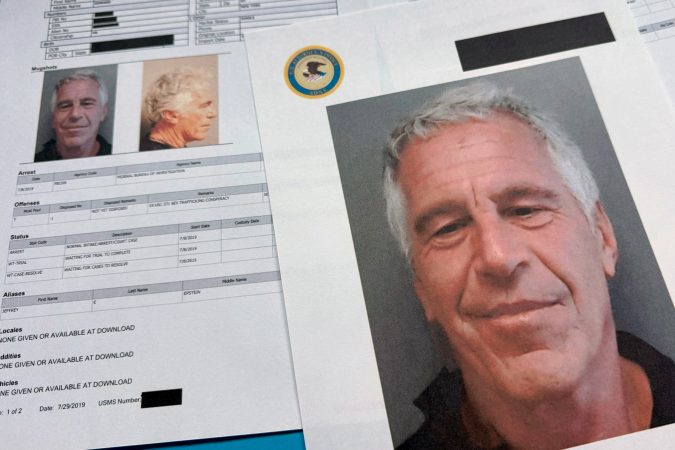
    DETROIT — Two people who attended a prestigious Michigan fine arts school reported conduct of a sexual nature by Jeffrey Epstein, a major donor, according to an investigation that also uncovered dozens of allegations spanning decades against nearly 50 other people.

    Interlochen Center for the Arts operates a summer camp and performing arts school that draws students from around the world. It hired a law firm in 2024 to investigate reports of sexual abuse by faculty and staff. Subsequently, it expanded the work to include information about Epstein, the 66-year-old financier who killed himself in jail in 2019.

    Interlochen removed Epstein’s name from a lodge after he was convicted of sex offenses in Florida in 2008. The building, renamed the Green Lake Lodge, was recently demolished after the U.S. Justice Department released millions of pages about him that had been compiled over the years.

    Sanghavi Law Office says it collected 70 accounts from alumni alleging “physical conduct of a sexual nature” by 47 faculty and staff members affiliated with Interlochen from the 1950s through the 2010s, most before 2000.

    “The information gathered during this investigation is, simply, devastating,” the 97-page report says, noting that alumni reported grooming, flirting, sexual touching, and sex.

    Interlochen said it has provided names of people accused of misconduct to Grand Traverse County authorities in northern Michigan to determine what steps, if any, might be taken. None are currently employed there, and more than a third are dead.

    “We are deeply sorry for the harm experienced by members of our community and extend our apologies to those impacted by abuse at Interlochen,” president Trey Devey and board chair Barrett Rollins said in a letter to the community posted online.

    “While the vast majority of the incidents described in the investigation took place many decades ago, and reports of abuse at Interlochen have significantly decreased over the past 25 years, the passage of time does not diminish the experiences of our alumni,” they said. “Sexual abuse committed by an adult in a position of power or trust against a student is wrong, then and now.”

    Interlochen today “is fundamentally different from the institution described in this report,” Devey and Rollins wrote, with comprehensive safety policies and a changed culture.

    Epstein, who played the bassoon, was an Interlochen camper in 1967. He donated more than $400,000 to the school between 1990 and 2003.

    Two women told investigators that Epstein engaged in conduct of a sexual nature with them, one of them at the Interlochen lodge that bore his name.

    He brushed against her body “over her clothes, in a manner in which he indicated was accidental,” according to the report.

    Epstein also paid for her to visit him in New York while she was a student. She said “every time he was ‘handsy’ with her, she would freeze until he would stop,” the report states.

    The other woman said she gave Epstein a massage at his home, according to the report, and he may have asked her to remove her top. She never had any further contact with Epstein or his girlfriend, Ghislaine Maxwell.

    Outside of the school investigation, at least two Interlochen alumnae made allegations of grooming and abuse against Epstein and Maxwell, according to federal records and media reports. Their identities were not made public.

    One testified against Maxwell in 2021 when she was convicted of sex trafficking. It’s unclear whether those women spoke to the law firm hired for the Interlochen investigation.

  • Russian strikes across Ukraine kill 10 and NATO scrambles jets after a missile falls in Poland

    Russian strikes across Ukraine kill 10 and NATO scrambles jets after a missile falls in Poland

    KYIV, Ukraine — A Russian ballistic missile and drone barrage across Ukraine overnight killed at least 10 civilians, including children, and injured more than 50 others, officials said Thursday, and NATO scrambled its warplanes after one of the missiles crossed the country’s western border into Poland.

    The blitz expanded Russia’s almost daily bombardment of Ukrainian cities, including the capital of Kyiv where tens of thousands spent the night sheltering in subway stations, as Moscow apparently looked to exploit Kyiv’s critical shortage of Western-supplied anti-ballistic missile defenses.

    NATO said a Russian missile entered Polish airspace during the onslaught and landed in a rural area. It caused no injuries or damage but could deepen tensions between the military alliance and Moscow, as wary European countries fear the 4-year-old war could spill into their territory.

    NATO Secretary-General Mark Rutte called it “yet another reckless act by Russia and a dangerous consequence of its war against Ukraine.”

    Polish Prime Minister Donald Tusk said it was “a very serious incident,” but added: “There are absolutely no reasons to believe that Poland was the target.”

    Russia’s barrage struck areas of Ukraine where weapons are believed to be stored and manufactured. Ukrainian long-range drones and missiles have battered Russia’s oil sector, causing a fuel crisis.

    The attack came two days after Ukrainian President Volodymyr Zelensky met with U.S. President Donald Trump and representatives of American defense companies as he pleads for swifter and bigger deliveries of Patriot air defense systems to stop Russia’s ballistic missiles.

    The Iran war has drained stockpiles of the U.S.-made interceptors. Trump has promised to grant Ukraine licenses to build its own Patriots, but production could take many months.

    “Given the critical shortage of air defense missiles from our partners, our warriors are accomplishing truly incredible things, demonstrating a very high level of professionalism,” Zelensky said on social media.

    “This Russian terror once again proves that protection against the Russian missile threat is the most important task when it comes to saving the lives of our people,” he said.

    Russia says it targeted military sites

    Zelensky said at least 10 Ukrainian regions were attacked, with dozens of homes, businesses, and infrastructure facilities destroyed or damaged.

    Russia launched more than 70 missiles, a significant number of them ballistic missiles, he said, and over 280 attack drones, of which more than 260 were intercepted.

    The Russian Defense Ministry said it targeted Ukrainian air bases, arms factories and military telecommunications and logistics facilities, including drone factories and storage depots, as well as plants for missiles, aircraft repairs, electronics, and chemicals.

    In the Dnipropetrovsk region, the Russian attack killed six people and wounded 10, said Oleksandr Hanzha, head of the regional military administration, in a post on Telegram. Children were among the dead — a 6-year-old girl and boys aged 11 and 17 in the area of Kryvyi Rih, Zelensky’s hometown, Hanzha added.

    The children’s parents were killed in the same attack, but two more children were pulled alive from the rubble, Zelensky said.

    “It was an ordinary home, blown (to) smithereens by a ballistic missile,” he said on X.

    In Kyiv, Russian forces struck the capital with ballistic missiles, killing a 31-year-old man and wounding two others, the National Police press service said.

    More than 56,000 people sheltered in Kyiv’s subway stations overnight, according to the Facebook post from the metro system.

    A cruise missile attack struck the western city of Lviv, killing one person and wounding over 30, including children aged 6, 13, and 15, said Maksym Kozytskyi, head of the Lviv regional military administration.

    In the Poltava region, a drone hit warehouses, killing one person, said regional military head Vitalii Diakivnych.

    Closer to the front line, which comes under almost daily attack, Russian forces dropped three glide bombs on an industrial zone in the southern city of Kherson, killing a 56-year-old man, local officials said.

    Poland says fragments indicate a Russian cruise missile

    A Russian Kh-101 cruise missile crossed into Poland overnight, violating NATO airspace, Ukrainian Foreign Minister Andrii Sybiha said on X, calling it a clear demonstration that strengthening Ukraine’s air defenses would also guarantee wider European security.

    Responding to the missile alert, NATO forces in Poland scrambled two fighter jets, an attack helicopter, and two other aircraft, and activated ground defenses, said Col. Michael O’Donnell, the spokesperson for the alliance’s military command in Belgium.

    The missile quickly disappeared from radar, the Polish Armed Forces said. A helicopter flew to its last known location, where the crew discovered a probable impact site in a farming area in Lublin province, the command said.

    Investigators found fragments indicating that the object was a Kh-101 missile, Polish news agency PAP reported.

    Tusk had met with Zelensky in Lublin on Wednesday to discuss defense issues.

    NATO military commander Gen. Alexus G. Grynkewich told Poland’s Defense Chief Gen. Wiesław Kukułan the military alliance “will continue to take all necessary measures to defend NATO territory,” O’Donnell said.

    Ukraine hits more depots of major Russian online retailer

    Meanwhile, Russia’s Defense Ministry said air defenses downed 258 Ukrainian drones overnight.

    A depot belonging to Wildberries online retailer was set ablaze in Russia’s Penza region southeast of Moscow, in the latest strike on the company’s warehouses, Penza Gov. Oleg Melnichenko said.

    Four people were injured and 200 workers were evacuated, he said, adding that about 100 firefighters were deployed.

    Wildberries also reported its warehouse in Sarapul in the Udmurtia region, more than 600 miles from Ukraine, was struck by a Ukrainian drone and set ablaze. It said the workers had been safely evacuated.

    The Russian online news outlet Astra reported that another Wildberries depot in the Perm region in the Urals was also set ablaze by a Ukrainian drone strike. Regional authorities reported a Ukrainian drone attack but didn’t give information about the damage.

    Thursday’s attacks on Wildberries warehouses brought to 14 the number of the retailer’s depots struck by Ukrainian drones in under two weeks. Ukraine accuses Wildberries of supplying goods that can be used by the Russian military.

    Ukrainian drone units destroyed four more vessels belonging to Russia’s shadow fleet of sanctions-busting tankers, bringing the total to 205 since the operation began July 6, Robert Brovdi, commander of the Unmanned Systems Forces, said on his Telegram channel.

  • As France tames wildfire and lets 84,000 evacuees go home, blazes flare across Europe

    As France tames wildfire and lets 84,000 evacuees go home, blazes flare across Europe

    LEGE-CAP FERRET, France — France gave the go-ahead Thursday for 84,000 evacuees forced out by a monster wildfire to return home, the strongest sign yet that firefighters are turning the corner in a grueling battle against flames that have burned an area four times the size of Paris. But blazes flared elsewhere across Europe and actor George Clooney said he’d evacuated his French home because of a nearby wildfire.

    Europe is sweltering under an exceptionally hot and arid summer, creating tinderbox conditions for unprecedented fires that have flared from the Atlantic coast to the eastern Mediterranean and forced hundreds of thousands of people to evacuate homes and vacation spots.

    Firefighters battled flames in the United Kingdom, Spain, Germany, Greece, and Turkey on Thursday and were tamping down smoldering forests in southwest France where 224,000 people had been forced to flee. Romania shut down both reactors at its Cernavoda nuclear power plant due to low water levels in the Danube River used to cool them.

    Hollywood star George Clooney wrote to his local mayor that his family evacuated the southeastern French town where they’ve settled and that “we have no idea whether our beautiful home makes it through this terrible moment.” Clooney’s publicist Guido Gotz shared the message to Brignoles Mayor Didier Brémond with the Associated Press.

    Clooney wrote that he and his wife Amal, a human rights lawyer, were committed to the town and that, whatever happens, “we’ll be part of making it whole.”

    The fire near Brignoles, in the Var region, flared Wednesday, forcing 700 people to evacuate, the mayor’s office said. It said they were allowed back Thursday once the fire was tamed.

    Returnees in France clear away ash

    In the Bordeaux region of southwest France, wildfire evacuees streamed back to nine localities that authorities now deem safe after round-the-clock combat with the huge fire that ignited last week. Returnees included 50-year-old Sanachit Pho Ne Keo and his wife, relieved to discover that apart from black ash on an outside terrace, their home in Martignas-sur-Jalle wasn’t damaged.

    “Everything seems OK and it’s a good feeling!” he said.

    “The fire was pretty close, the last smoking embers are still close,” he added. “But we could’ve expected worse.”

    Regional health authorities recommended that returnees wear gloves and face masks as they clean up and wash children’s toys and pets’ feeding bowls and paws. France’s public health agency reported that call-out doctors and hospital emergency wards in Bordeaux had seen a spike in cases involving asthma sufferers last weekend when the raging wildfire was still spewing choking smoke clouds.

    “It’s the first somewhat optimistic day,” said Sophie Brocas, prefect of Bordeaux’s Gironde region who gave the go-ahead for nearly two-thirds of the 224,000 evacuees to go home, including 60,000 allowed back to three Bordeaux suburbs on Tuesday.

    Still, returnees were told to keep phones on and pack bags in case they have to be evacuated again.

    The A63 highway south of Bordeaux also was reopened, clearing a major artery for road traffic with Spain and vacationers as France enters its peak August holiday period.

    “Our feeling is that we’re getting back to the path of a normal life,” Brocas said Thursday evening.

    Fire still smoking but not spreading

    Gironde authorities said the blaze is no longer growing beyond the 162 square miles already affected — an area four times that of Paris.

    Capitalizing on the shift of momentum, police water cannons usually used for riot control are being added to the effort to extinguish embers and flare-ups, involving 3,300 firefighters and two dozen planes and helicopters dumping water and retardants, French Interior Minister Laurent Nuñez said.

    More aid came from other countries, with Luxembourg, Slovakia, Latvia, Germany, and Serbia sending fire crews, adding to aircraft and other assistance provided by other countries, and Ukraine also offering help, Nuñez said.

    Crews using heavy diggers continued ripping up trees and bushes to carve barriers of land between woodlands that burned and those that didn’t, boxing in the blaze with firebreaks — now exceeding a total of 80 miles through the forests.

    Emergency crews also set fires deliberately to burn away scrub that could fuel the wildfire.

    “If we light a fire here, we know that our fire will move toward the incoming fire. So we’re not taking much of a risk,” said Lt. Col. Jérôme Jallet, overseeing a burn.

    A heat wave — France’s fourth of the year — gave way Thursday to cooler weather, higher humidity, and even a little rain, helping the effort.

    Tinderbox conditions across southern Europe

    Successive heatwaves have created tinder-dry conditions across swaths of southern Europe and whack-a-mole emergencies for fire crews, with blazes flaring as others are extinguished.

    Greece was tackling large fires on the islands of Crete, Paros, and Andros, a day after three firefighters died.

    In Spain, firefighters fought blazes in northwestern Zamora and eastern Castellón, after making progress against infernos in the Madrid region and Ávila that prompted the government to declare a national fire emergency for the first time.

    At the peak of evacuations, a third of a million people were driven from homes and vacation sites in France and Spain.

    In France, two firefighters suffered light injuries battling a woodlands blaze in the eastern Burgundy region and four were injured in the southern Var region on a fire brought under control with a dozen planes and helicopters dropping water and retardant, authorities said.

    In Germany, firefighters using drones and helicopters battled an Alpine forest fire near the Austrian border, the dpa news agency reported.

    On a heath of birch trees, heather, and wildlife in Suffolk, east England, wind-whipped flames burned across an area the size of 140 soccer pitches and forced hundreds of people to evacuate homes, vacation cottages, and a mobile home park, fire services said. New U.K. Prime Minister Andy Burnham called it “a very serious incident.” The southern half of the U.K. is suffering drought.

    In Turkey, firefighters and aircraft battled forest fires in four western provinces, including tourist areas Mugla and Antalya.

  • Urban League report says Trump administration is harming Black Americans’ chances at American Dream

    Urban League report says Trump administration is harming Black Americans’ chances at American Dream

    WASHINGTON — The American Dream may not be dead for many Black Americans, but it is further away than at any point since the Civil Rights Movement, warns a report by the National Urban League.

    Released on Thursday, the annual “State of Black America” report grimly describes Black Americans‘ economic and political prospects as having worsened due to policy changes from President Donald Trump’s administration, according to a copy obtained by the Associated Press.

    The report contends that the challenges it highlights for Black communities are warning signs for the prosperity of all Americans.

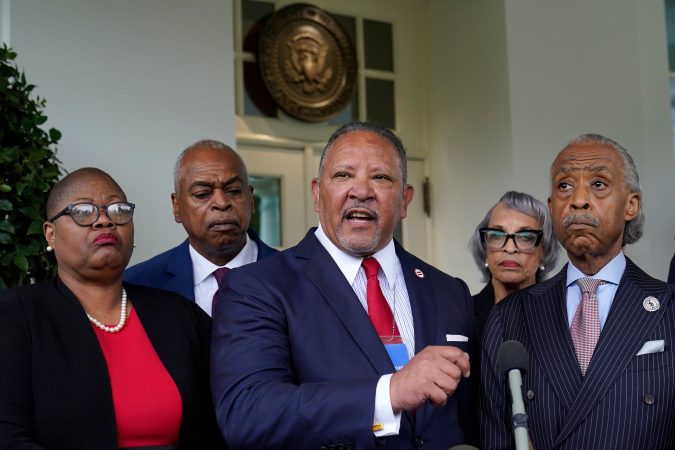
    “It may be the focus is us, but the impact is not just us,” said Marc Morial, president and CEO of the National Urban League. “While they have targeted and focused on Black Americans, these attacks are going to impact broadly working Americans, poor Americans, aspirational middle-class Americans, and this is what this report points to.”

    Tracing the arc of American history, the Urban League describes Black Americans’ struggle for emancipation from slavery and equal economic and political rights as a gruesome but optimistic part of the American story.

    Now, the report says, the Trump administration is at odds with the goals and achievements of the Civil Rights Movement, citing the overhaul of the Justice Department’s Civil Rights Division and the Equal Employment Opportunity Commission, as well as the president’s focus on overhauling voting laws through the Safeguard American Voter Eligibility Act, as examples of rollbacks of long-sought civil rights policies.

    The report’s authors offer policy and strategy recommendations for civil rights groups aiming to combat the Trump administration.

    “The civil rights community must consolidate its legal resistance and turn courtroom wins into durable policy,” the report says. “The movement must build economic infrastructure that doesn’t depend on the goodwill of any one administration.”

    Reached for comment on Thursday, White House spokesperson Allison Schuster said Trump was elected with a mandate to change the very policies that the Urban League contends are eroding real opportunity for Black Americans.

    “(Diversity, equity, and inclusion) ran rampant during the Biden administration, and Americans ultimately paid the price for these destructive policies with a restricted labor pool, higher operational costs, and workforce inefficiencies,” Schuster said. ”The Trump administration will always promote equal treatment under the law for every American.”

    Report contributors include a potential Democratic presidential contender

    This year’s report includes contributions from members of Congress, and policy and legal experts, as well as some media personalities.

    U.S. Senators Angela Alsobrooks, Lisa Blunt Rochester, and Raphael Warnock all contributed to the report, as well as Maryland Gov. Wes Moore and Baltimore Mayor Brandon Scott. Minneapolis Mayor Jacob Frey contributed a video message to the report.

    Moore, who is widely viewed as a potential 2028 presidential contender, submitted an essay focused on closing the racial wealth gap and Black Americans’ history of economic advancement in the face of adversity.

    “With wisdom and grit, my mom was able to lift me and my family to a higher rung on the economic ladder. But too often wisdom and grit aren’t enough,” Moore wrote.

    He later called closing the racial wealth gap “a matter of moral clarity” but cautioned that “government alone cannot close the racial wealth gap. It’s going to take all of us,” referencing the private sector and civil society.

    Report blasts ‘economic assault’ on Black Americans

    Whether corporate America and major nonprofits are still willing to participate is an open question. The report condemns the Trump administration’s efforts to roll back diversity initiatives and economic advancement projects in the private sector, and expresses frustration with companies that cooperated with an “economic assault” on Americans, especially Black Americans.

    “This has been a campaign of coercion and oppression directed at these institutions who have been out here working hard to, if you will, change America,” Morial said. “The important thing about companies is that every company has not bent the knee. Some may have done some cosmetic changes. Some have been in full and complete retreat.”

    The DEI rollbacks are a jarring reversal for the Urban League, which held sway in the Biden White House on economic and social policies. The report lauds President Joe Biden’s administration for signing a sweeping COVID-19 stimulus package, as well as laws supporting minority small businesses and a bipartisan infrastructure bill.

    “Not every promise was kept, and the current administration is pushing to roll our wins back, but these wins serve as a blueprint for what is possible through sustained advocacy and a clear vision,” the authors write. The agenda, the Urban League declares, was “the most consequential federal investments in Black America since the Great Society.”

    The organization and its civil rights allies now find themselves in a strikingly different political environment under the Trump administration.

    “Looking at our current political landscape, the calls for racial healing and righting of this nation’s wrongs in the aftermath of the murder of George Floyd feel like a fever dream,” the report reads.

    But the study also acknowledges that Black Americans have overcome more dire and discriminatory moments.

    Latest Black America report is the Urban League’s 50th edition

    The Urban League’s inaugural 1976 report on the state of Black America was described by the New York Times at the time as “a profoundly depressing document” that laid out the persistent disparities between the economic outlooks of Black and white Americans, a decade after the Civil Rights Movement’s crowning achievements were signed into law.

    The report was established as a response to that year’s State of the Union address by President Gerald R. Ford and the Democratic response, neither of which mentioned the economic outlooks for Black Americans. The report offered policy recommendations on crime, education, housing, social services, and general economic policy.

    “It is a document that does not attempt to cover up the seriousness of the situation Black people find themselves in,” the authors wrote at the time. Several of its recommendations were later taken up by President Jimmy Carter, who was elected to the White House months after the report’s release.

    This year’s 50th anniversary document echoes the frustration found in the inaugural report. While Morial acknowledged that the Urban League’s assessments may lead to pessimism, he urged Americans concerned about civil rights and economic progress to respond at the ballot box and with their pocketbooks.

    “We cannot be dejected. We cannot be cynical. We must act,” Morial said. “We have to fight to make sure that those that are really trying to kill the essence of the American dream don’t win.”

  • Temple raised a record $214 million in the last fiscal year. Some of the money will support students during a budget crunch

    Temple raised a record $214 million in the last fiscal year. Some of the money will support students during a budget crunch

    Temple University, which faces a budget deficit and challenging financial headwinds, received a record amount of donations in the last fiscal year, putting the institution ahead of its fundraising goals in the first full year under the leadership of a new president.

    The North Philadelphia school received $214 million in donations in fiscal year 2026, more than 60% greater than the prior year’s annual fundraising total and well ahead of its goal of $160 million.

    Included in that total and achieved during president John Fry’s tenure are major donations, including the single largest gift the school has received, $55 million from university trustee Christopher Barnett to rename the College of Public Health, and a substantial but undisclosed amount from Jane Creamer Sullivan to establish a new honors college, which will enroll students beginning in fall 2027.

    They were among 38 donors who gave $1 million or more to the university, up from 24 the year before.

    Fry in an interview credited a new fundraising chief, a strategic plan with clear fundraising goals, and the involvement of deans and other senior leaders in the fundraising process at Temple, which enrolls 33,000 students across its U.S. and international campuses.

    “The difference from where we were in late ’24 to today is kind of night and day,“ Fry said. ”Our priorities as an institution are clearer. … We have a lot of engagement from our deans and senior leadership and trustees, and I think we’re developing a much more disciplined approach to donor relationships.”

    The increased fundraising comes at a pivotal time for Temple, allowing it to invest in academics and student supports while also coping with a budget crunch. The university laid off about 40 employees earlier this month as part of an effort to close what now stands as a $25.5 million deficit in the 2026-27 budget.

    Fry noted that the school cannot use donor funds to plug the deficit because they are restricted, but said the money allows the school to continue to invest.

    “The philanthropy that we’re able to to garner right now allows us to address priorities that we wouldn’t be able to address otherwise,” Fry said.

    The Barnett gift, for example, has helped create an “essential needs hub” to help support students who are struggling with financial and other needs.

    Next for the university is the public launch of what is likely to be a $1.5 billion fundraising campaign kicking off in the next two years and concluding in 2034, when the school celebrates its 150th anniversary. Temple already has raised $340 million during the quiet phase of that campaign, including the $214 million raised in the last fiscal year.

    “This is no declaration of victory,” Fry said. “I think it’s a declaration of progress. … It’s a good, strong start.”

    A renewed focus on alumni giving

    Fry identified fundraising as an area for reform at Temple almost as soon as he arrived, saying that a school of Temple’s stature with more than 380,000 living alumni — more than half of whom live and work in the region — should be raising more than it was.

    He said at the time there was no reason that Temple should not be in the same league as schools such as the University of Delaware, which had announced a gift in excess of $71 million. Pennsylvania State University, which has more than twice the enrollment of Temple, announced earlier this month that it had raised $662.7 million in 2025-26.

    The university’s previous fundraising record was $133 million in fiscal year 2025, and prior to Fry’s arrival in November 2024, Temple raised about $95 million annually on average from 2014 to 2024, the school said.

    Fry hired Al Checcio, who previously led fundraising at the University of Southern California and Fordham University, to assess the university’s fundraising operation. Checcio had previously assisted Fry with fundraising at Drexel when Fry led that university, and he had worked at Temple in the 1990s under the late president Peter Liacouras.

    Impressed with Checcio’s assessment, Fry appointed him as interim fundraising leader in March 2025 and in September named him senior vice president for institutional advancement.

    “I’ve always felt that the Temple alumni base was so untapped,” Checcio said. “They have a lot of pride in the institution, but maybe not as much pride in how the university has interacted with them.”

    To bolster success, Checcio said, fundraising had to become a university-wide priority, with deans, healthcare leaders, and other university leaders all playing a role. It takes vision, leadership, and relationship-building, he said.

    That is all happening, including visits by Fry to donors around the world, and donors are reacting positively, Checcio said in an interview.

    “We’re communicating clearly what our vision for the university is, and we’re doing a lot of work tying institutional priorities into donor interests,“ he said. ”We’re very pleased with our early progress. We think it’s a real sign of things to come.”

    He said the university has the potential to continue raising more than $200 million annually or even more.

    “We think we have a really, really high ceiling,” he said.

    Among other large gifts from alumni in 2025-26 were $5 million from Richard and Amy Oller to the law school and $3 million from investment adviser and author Joslyn G. Ewart to endow the dean’s post for the Center for the Performing and Cinematic Arts.

    Fry said both gifts met several goals in the strategic plan.

    The Oller gift “promotes student success because it has scholarships and fellowships and experiential learning opportunities embedded in it,” he said. “It also strengthens faculty excellence by supporting an endowed chair and monies for bringing distinguished scholars to campus.”

  • Appeals court rejects the Trump administration’s expansion of mandatory detention for immigrants

    Appeals court rejects the Trump administration’s expansion of mandatory detention for immigrants

    The Trump administration cannot deny immigrants detained inside the United States a chance for release on bond, a federal appeals court ruled Thursday.

    The 2-1 decision by the San Francisco-based 9th U.S. Circuit Court of Appeals, with a judge appointed by President Donald Trump in the majority, deepened a split between federal appeals courts over the administration’s mandatory detention policy.

    Four other appeals courts have also rejected it, while the Fifth Circuit in New Orleans and Eighth Circuit in St. Louis have sided with the Trump administration.

    The expanding circuit split increases the likelihood that the U.S. Supreme Court will eventually take up the issue.

    An email to the U.S. Department of Homeland Security for comment was not immediately returned.

    Under previous administrations, most noncitizens without a criminal record who were arrested inside the U.S. were allowed to seek a bond hearing while their immigration cases were pending. Mandatory detention was generally reserved for people arrested at the border.

    Last July, immigration officials issued guidance expanding mandatory detention to immigrants in the U.S. interior. The move — part of the administration’s mass deportation campaign — prompted a deluge of federal lawsuits by immigrants seeking release from custody.

    Some federal judges who ordered bond hearings blasted the administration for repeatedly violating their orders.

    The Trump administration has argued that Congress changed immigration law in 1996 to allow mandatory detention beyond the border, but previous administrations didn’t enforce that provision.

    Writing for the majority in Thursday’s ruling, 9th U.S. Circuit Judge Daniel Bress rejected that argument.

    “Although no reading of the complicated and interrelated textual provisions at issue here is without some shortcomings, the historical understanding of the statute is the better one,” Bress, a Trump appointee, wrote.

    He was joined by Judge M. Margaret McKeown, who was appointed by President Bill Clinton.

    Judge Carlos Bea, who was appointed by President George W. Bush, dissented, saying the text and purpose of an amendment Congress approved in 1996 support the Trump administration’s reading.