Category: Nation & World

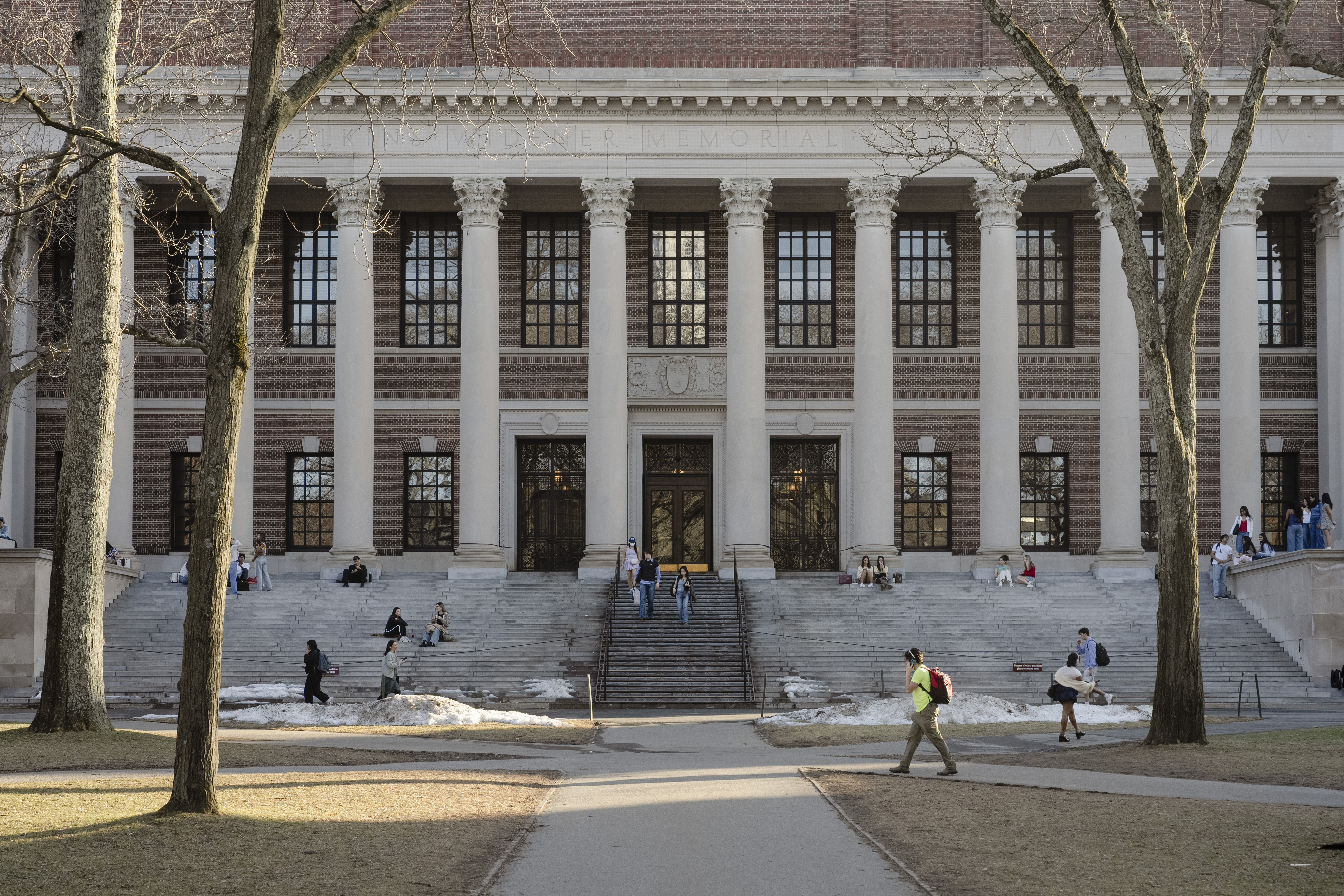
  • How Harvard’s epic fight with Trump is costing the university

    How Harvard’s epic fight with Trump is costing the university

    One of Harvard University’s biggest federal funding streams is down sharply, according to a New York Times analysis of government data.

    The declines have persisted even after a federal judge forced the Trump administration to reverse drastic cuts to the university last year.

    The funding, from the National Institutes of Health, currently lags about 18% behind the average pace of grants during the Biden administration, the analysis shows.

    Last year, Harvard successfully sued the Trump administration, after the government announced it had frozen more than $2.2 billion in 2025, from multiple federal agencies.

    But unlike then, when Trump officials made a public spectacle out of announcing the cuts, the NIH is mainly delaying, reducing, or rejecting grant requests, often leaving researchers and university leaders in the dark about what is happening.

    The reduction appears to be the latest front in the Trump administration’s on-again, off-again war with Harvard and other elite universities. It is a new, more subtle tactic that is harder to fight in court, but that could be just as damaging if cuts and uncertainty build.

    The Trump administration has targeted a number of the nation’s elite universities, accusing them of tolerating antisemitism and pursuing racial diversity in ways that flout the law, among other criticisms. Harvard — the country’s wealthiest university — has been one of the most frequent targets of federal officials.

    As the Trump administration has pulled multiple levers to try to bring Harvard and other schools to heel, Harvard has often pushed back. It was the first institution to sue the Trump administration, has won in court on a number of occasions, and has not reached a settlement with the federal government, as other prominent schools have done.

    Now, however, the university faces cuts that may be harder to counter. Last September, a judge ruled that the administration had improperly cut off funding to Harvard when it ended all of its grants in 2025, finding that the government had violated Harvard’s First Amendment rights.

    But in the ruling, the judge suggested that there were lawful means the government could pursue if it wanted to restrict Harvard’s money, should it choose to.

    That is what is happening.

    Through June 30 of this fiscal year, which began Oct. 1, the NIH provided Harvard 309 awards worth a total of $200 million. The amount is down from an average of roughly 440 awards worth $246 million for the same nine-month period in 2021-2024, according to the latest data available.

    Harvard is still one of the largest recipients of NIH funding, though it is far behind the top grantees such as Johns Hopkins, the University of Michigan, and Yale University. Other major research universities have also seen reductions in NIH funding.

    Though NIH support has slowed compared with the Biden years, the 2026 awards are outpacing last year, when Harvard’s funding was frozen. By the same point in 2025, NIH funding to Harvard was stalled at 201 grants worth $94 million.

    In recent months, Harvard’s individual schools have laid off staff. The leadership of the university’s largest division, the Faculty of Arts and Sciences, reported in an email to the division on Aug. 14 that 165 of its staff positions had been eliminated in a layoff and restructuring. The job cuts were aimed at reducing a major deficit.

    Carrie Barbash, an organizer and former president of the Harvard Union of Clerical and Technical Workers, said the final number of layoffs may change as some staff members whose jobs were eliminated consider moving into some newly designed roles.

    The current grant slowdown is not taking place evenly across Harvard. The university’s Chan School of Public Health is heavily dependent on NIH funds and has seen nearly 25% less in grant funding this year, compared with the average amount from 2021 to 2024.

    The NIH has obligated $67 million across 63 awards to Chan through June of this fiscal year; the 2021-24 average for the same time period was $90 million across more than 100 awards.

    Nancy Krieger, a professor of social epidemiology at the Chan School, said that fallout from the funding slowdown goes beyond individual projects that lost grants. More than a year of federal cuts — and legal fights over the reductions — have “shaken any sense of stability as to whether the federal government is a reliable funder,” she said.

    The school is already cutting back, with layoffs and reductions in the number of slots for Ph.D. students. “It’s not just that you lost funding, it’s that you’re reducing the size of the cohort for the next generation of researchers that you’re training,” Krieger said. “What is the knowledge lost? And what are the myriad ripple effects for the economies of the cities and towns that depend on universities as major employers?”

    Harvard has also won some rounds in its fight with the administration. Harvard’s court victories protected much of its grant money and its ability to host international students.

    A federal judge on Aug. 13 dismissed a Trump administration lawsuit against Harvard that had accused the school of tolerating antisemitism and sought the ability to deny it grants.

    Harvard’s endowment continues to ride the stock market to record highs, and the university’s steadfastness under pressure has inspired supporters and alumni who do not want it to yield to President Donald Trump.

    While Yale is in talks to perhaps become the next elite school to settle with the administration, Harvard continues to hold out. Harvard is not believed to be engaged in any serious settlement talks at this time.

    “Harvard is fighting for principles, both legal and constitutional, and doing so on behalf of the entire system of colleges and universities,” said Lee Bollinger, the former president of Columbia University. “We should all be grateful.”

    Yet, as Bollinger noted, “any litigant will inevitably pay a high price.”

    The administration has pushed the fight to Harvard on several fronts. The university is still engaged in other litigation and appeals with the Trump administration; a loss in any major case could be devastating.

    The Trump administration continues to open fresh battles. The government is proposing new budget rules that would give the administration’s political appointees more power over grants.

    White House spokesperson Liz Huston blamed the ongoing battles between the university and the administration on Harvard’s “stubborn commitment to unlawfully discriminating on the basis of race and failing to properly protect its students.”

    “Unless Harvard comes to the table in good faith, the Trump administration will continue pursuing every available legal avenue to enforce federal civil rights laws,” she said.

    Facing the uncertainty caused by lawsuits, grant slowdowns, and other pressures from the administration, Harvard and other schools are likely to continue to retrench, said Tom Gerety, a former president of Amherst College.

    “The main thing you do in uncertainty is hunker down and say, ‘What cuts can we make right now?’” he said, noting that research universities are already trimming back on Ph.D. programs.

    Tighter research budgets will mean scientists are more likely to seek jobs outside the United States, he said, while those still at American schools may be less likely to take the unconventional big swings in their research that can lead to scientific breakthroughs.

    “This is going to hurt,” Gerety said, “and it’s going to hurt a lot more in 10 years than it does now.”

    The government has pursued appeals of federal court rulings that went Harvard’s way last year.

    The two sides, as well as a number of outside parties, filed briefs this summer over last fall’s decision in the funding case. The government is also appealing a June 2025 court decision blocking the administration’s effort to stop Harvard from hosting international students. Oral arguments in that case are scheduled for October.

  • Supreme Court chief justice allows work on Trump’s $400M White House ballroom to continue for now

    Supreme Court chief justice allows work on Trump’s $400M White House ballroom to continue for now

    WASHINGTON— Chief Justice John Roberts on Friday allowed the White House to continue construction on President Donald Trump’s $400 million ballroom project for now, as the Supreme Court considers the Trump administration’s emergency request to intervene in lawsuits over the project.

    The temporary order came hours before lower-court rulings would have forced a halt to aboveground construction of the project because Trump didn’t get congressional approval.

    It will remain in place until the Supreme Court issues a more durable decision, though the one-page document does not detail Roberts’ reasoning or indicate when another ruling will be handed down. Roberts signed the order because he oversees emergency appeals of cases filed in the capital.

    Ballroom case tests limits of presidential power

    The case is coming before the nation’s highest court as Trump, a Republican, exercises unparalleled assertions of presidential power and increasingly seeks to mold the capital in his own image.

    The administration has argued that the president has total authority to renovate the White House and other federal buildings as he sees fit and that the ballroom project must be completed due to national security concerns.

    When Trump first announced the plans for a new ballroom, he did not emphasize national security. He said the project would be funded by private donations, including from himself.

    The National Trust for Historic Preservation argues that Trump has no unilateral authority to undertake the work, which has included demolishing the East Wing. Lawyers for the preservation group accused the White House of trying to “outrun the courts” by accelerating construction.

    A spokesperson for the trust said Friday that the order from Roberts is not a final decision and the group is awaiting further action. The full Supreme Court will likely weigh in next on whether construction can continue for the potentially long duration of the lawsuit.

    Trump said his administration is grateful for Friday’s decision, writing in a social media post that the project is “under budget and ahead of schedule.”

    While litigation plays out, the ballroom is going up quickly

    The Trump administration says 65% of the work has already been completed on the planned 90,000-square-foot ballroom, where the East Wing stood before the president ordered its demolition.

    Crews are working 20 hours a day, seven days a week, on the project, where about $200 million in private donations has been spent or committed, according to court documents filed by the Justice Department.

    The work has proceeded against the backdrop of the litigation winding through the courts.

    In April, a district court judge ordered a stop to the aboveground construction of the planned ballroom. That ruling was briefly suspended, then upheld by an appeals court panel. U.S. District Judge Richard Leon in Washington allowed work to continue only belowground on bunkers and military installations. Leon was nominated by President George W. Bush, a Republican.

    Leon’s decision was upheld by an appeals court panel, as two judges appointed by Democratic presidents found the project was for Congress to decide and “not a matter for Executive self-help.” A third judge, appointed by Trump, found that the preservationist group challenging the project had no legal standing to sue.

    Solicitor General D. John Sauer picked up on that argument, calling the decision halting the work “extraordinary and unlawful.” He said the completion of the project was “vitally required by national security.”

    The Trump administration has scored a series of victories on the Supreme Court’s emergency docket, though the justices have ruled against some of the president’s signature policies after fuller review.

  • Trump administration moves to strip bar association’s power to accredit law schools

    Trump administration moves to strip bar association’s power to accredit law schools

    The Trump administration’s ongoing feud with the American Bar Association has come to a head, as the Education Department threatens to strip the organization of its power to oversee law school programs across the country.

    Career staffers at the department recently recommended the ABA lose the federal recognition needed to operate as an accreditor. In a report made public Friday, staffers at the department said the ABA, which accredits nearly 200 law schools, had failed to keep both sides of its house “separate and independent,” undermining its effectiveness as an accreditor.

    The association is both an accreditor for law schools and a trade group for legal professionals. As an accreditor, ABA oversees the quality of law school education and determines whether law schools not affiliated with a university can accept federal student aid.

    President Donald Trump and other Republican lawmakers have accused the ABA of having a liberal bias and promoting diversity, equity, and inclusion, pushing a political agenda in law schools. Conservatives have also criticized the ABA, which has accredited law schools since 1952, for having a monopoly on oversight of law school education.

    The Education Department declined to comment.

    David Barker, assistant secretary for postsecondary education, told the Wall Street Journal, which first reported the recommendation, “We have said many times that accreditation, in general, operates like a cartel. When there’s no competition, accreditors feel free to inject their own political preferences, their own ideologies into the work that they do.”

    The ABA’s accreditation council chairperson, Melissa Hart, told the Washington Post the council is confident it complies with the Education Department’s requirements for accreditors and federal laws.

    “The outcomes produced by Council-accredited law schools are unmatched, and we continue the important work of accrediting law schools as our recognition process proceeds,” she said in a statement.

    The Education Department last approved the association to accredit law schools in 2021, a five-year designation that is up for review next month.

    The federal government relies on accreditors, little-known but powerful organizations, to deem colleges worthy to participate in the federal student aid program and to review educational quality.

    The report comes as the Trump administration seeks to reshape college accreditation, a system it has accused of being captured by liberal politics. The Education Department has proposed regulations to encourage intellectual diversity and increase competition among accreditors. The proposed rule also calls on accreditors and trade associations to be separate to prevent conflicts of interest.

    Tensions have simmered between the ABA and the Trump administration on multiple fronts, including in court. Top Justice Department officials have repeatedly taken aim at the legal group.

    Then-Attorney General Pam Bondi wrote to the ABA last year that the group was biased in favor of Democrats and said the administration would not allow it to help vet judicial nominees.

    Also last year, Todd Blanche — then the Justice Department’s No. 2 official, who has since replaced Bondi as attorney general — said that the agency would no longer pay for its employees to travel to the ABA’s events or allow them to even attend such functions.

    The ABA has also sued the administration, including in a case challenging Trump’s campaign to crack down on prominent law firms.

    Trump issued executive orders last year taking aim at several firms that had hired his perceived enemies or took on cases he disliked. Four of the firms that were targeted sued to fight those orders, and all of them won court orders blocking Trump’s sanctions.

    The ABA filed its own lawsuit challenging Trump’s actions, saying it had to act to protect its members “and the rule of law itself.” The case is ongoing, and a judge earlier this year rejected the Trump administration’s effort to have the lawsuit thrown out.

    An independent advisory board will meet next month to consider the Education Department’s recommendation and decide the ABA’s fate as an accreditor. A senior Education Department official will then weigh in.

    “We look forward to the opportunity to address any misconceptions and clarify the record at our upcoming hearing,” Hart said. “We’re confident the Council will address any concerns the Department may have at that hearing.”

    If the advisory board votes that the government should withdraw its recognition of the ABA as an accreditor and that decision is upheld by a senior department official, the ABA can then appeal to Education Secretary Linda McMahon.

    If McMahon denies the appeal, law schools affiliated with a university could use their school’s accreditor, while unaffiliated schools will have to find a new accreditor.

  • Trump threatens suit over report he doesn’t like, aiming to intimidate a critic

    Trump threatens suit over report he doesn’t like, aiming to intimidate a critic

    President Donald Trump has opened a new front in his campaign to intimidate political foes, threatening a prominent liberal think tank with a $5 billion defamation lawsuit over a report concluding that his deployment of the National Guard to cities across the country has had little effect on reducing violent crime.

    The threats against the think tank, the Center for American Progress, were Trump’s latest effort to use the legal system to punish critics for voicing unflattering facts and opinions generally protected by the First Amendment. And while it is unclear how far any suit the president might ultimately file would get in court, it could force the organization to spend money fighting it off and make it even more of a target of his allies and supporters.

    On Monday, one of Trump’s personal lawyers, Alejandro Brito, wrote a letter to the center warning that he would file the suit if the group did not fully retract the report, which was published on its website July 13. The letter, viewed by the New York Times, was addressed to the group’s president and CEO, Neera Tanden, a longtime Democratic official who served as a senior adviser to President Joe Biden, and to several of its board members.

    Brito claimed that the report about the National Guard was full of malicious and false statements. He gave Tanden and members of her board until 5 p.m. Friday to retract it and apologize to Trump.

    Tanden pushed back, saying in a statement that the center would “neither cower nor bend in the face” of legal action. She also defended the report, asserting that while its findings might have been “inconvenient to the Trump administration,” they were “grounded in rigorous, evidence-based research and analysis.”

    “This threatened lawsuit’s attack on facts and evidence is baseless,” she added. “A fundamental protection of the First Amendment is to allow for the publication of facts and analysis that is contrary to the arguments and claims of any administration. A lawsuit is a transparent attempt to silence us.”

    Trump has often lashed out at scholars and commentators for reproaching or critiquing him in the news media. Since winning reelection, he has filed a flurry of lawsuits against news organizations like the BBC and the Times, claiming they defamed him. He has even filed suit against the Des Moines Register, arguing that a poll the paper published before the 2024 election indicating that he would lose the vote in Iowa amounted to consumer fraud and election interference.

    (The Times has filed its own suits against the administration, including two seeking increased access for its reporters at the Pentagon.)

    The president has repeatedly claimed that his administration is the most transparent in U.S. history. But he and his aides have used lawsuits and executive actions to go after law firms, universities, and television networks. They have also used criminal tactics such as search warrants and grand jury subpoenas in an effort to pry loose sensitive information from reporters.

    Many of these efforts have faltered once they reached court and faced judicial scrutiny. Brito himself has filed multiple failed suits on behalf of Trump. Last month, a federal judge in Florida referred Brito for potential disciplinary proceedings after ruling that a suit he filed for the president against the IRS amounted to an improper exercise in self-dealing.

    The Center for American Progress report accused Trump of seeking to take credit for a nationwide decline in violent crime that began before he returned to the White House. The report determined that there was “no evidence” that the National Guard deployments had affected the crime rate, adding that they were poised to cost taxpayers more than $1.7 billion if they continued through the end of 2026.

    The report asserted that the “primary goal” of the deployments was “never to stop crime.” Instead, it said they amounted to “a dangerous power grab by the Trump administration.”

    The team that put the report together used an analysis based on homicide, violent crime, and gun victimization data in cities where the National Guard was deployed — Washington, Los Angeles, and Memphis, Tenn. — over the period from January 2023 to this February.

    “This approach was employed to identify any statistical changes in crime trends associated with the deployment of the National Guard in specific cities,” its authors wrote.

    Trump referred to the report on social media last week after watching a television segment about the report, which he described as “another Radical Left SCAM.” In the post, he threatened to sue the center and several of its funders, including liberal financier George Soros, who has long served as a boogeyman for the administration.

    A week later, Brito’s letter arrived at the center, saying that the president would sue if Tanden and her colleagues did not retract the report, issue an apology, and give Trump unspecified financial compensation.

    The letter ended with an all-caps salutation: “PLEASE GOVERN YOURSELVES ACCORDINGLY.”

    On Friday, a lawyer for the center fired back in a letter of his own, deriding Trump’s accusations that he had been defamed.

    “This is utterly absurd,” the lawyer, Kevin H. Metz, wrote to Brito. “Truth is not and cannot be defamation.”

    Metz went on to say that the center welcomed the opportunity to make its case in court and receive more information on the National Guard deployments through the process of discovery.

    Other think tanks of various political stripes have rallied to the center’s side.

    “Independent organizations across the ideological spectrum must be free to express their analysis and opinions, and to challenge those in power without fear of political retaliation or legal intimidation,” said Peter Goettler, president and CEO of the libertarian Cato Institute. “Disagreements on matters of policy should be settled through open inquiry, evidence, and debate — not threats designed to silence criticism.”

    This article originally appeared in the New York Times.

  • Court cuts $50M judgment against Infowars’ Alex Jones over falsely labeling Newtown killings a hoax

    Court cuts $50M judgment against Infowars’ Alex Jones over falsely labeling Newtown killings a hoax

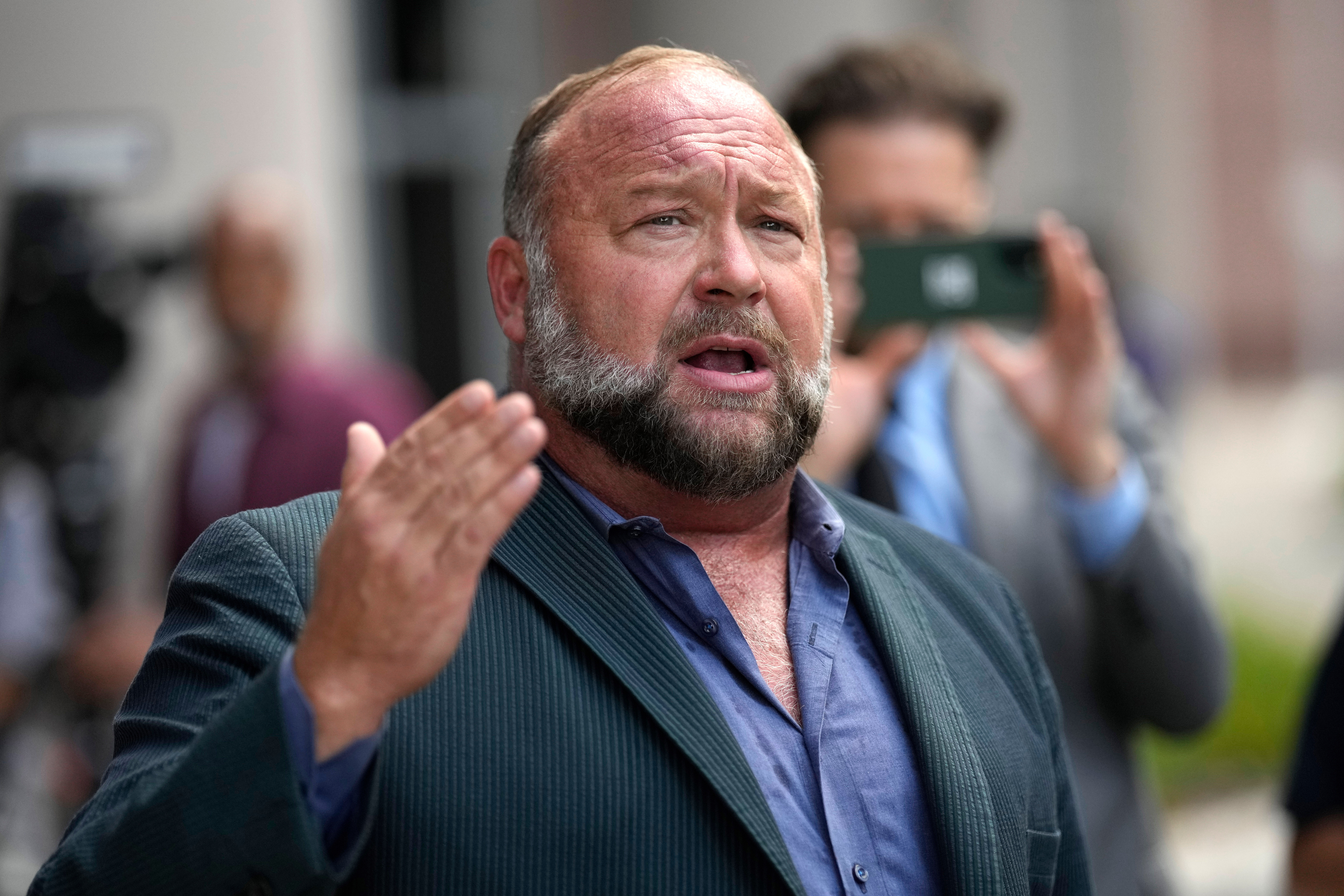
    AUSTIN, Texas — A Texas court on Friday slashed a $50 million judgment to $1.5 million against Infowars founder Alex Jones after he falsely claimed the 2012 Sandy Hook elementary school mass shooting was a hoax.

    The ruling does not affect a $1.25 billion judgment against Jones in Connecticut, but is a legal victory for him after he and his company, Free Speech Systems, were found liable for damages for claiming the mass shooting didn’t happen.

    Despite the multiple financial judgments against him in Connecticut and Texas, Jones has yet to make any payments as he appeals the amounts and the attempt to liquidate his company.

    The unanimous opinion by the Texas Third Court of Appeals found that Sandy Hook parents Neil Heslin and Scarlett Lewis did not show evidence that harassment inflamed by Jones’ hoax claims rose to a level that would allow them to exceed the state’s $750,000 cap on damages for each plaintiff.

    Heslin and Lewis’s 6-year-old son Jesse Lewis was among 20 children and six educators killed in the attack in Newtown, Conn. The lawsuit and the 2022 verdict against Jones marked the first time he was held financially liable for peddling lies about the massacre, claiming it was faked by the government to tighten gun laws.

    Jones, who portrayed the lawsuit as an attack on his First Amendment rights, conceded during the trial that the attack was “100% real” and that he was wrong to have lied about it.

    However, on his streaming show Friday, he called the Texas ruling “a gigantic victory for the First Amendment,” and said he will continue to appeal the case to the state Supreme Court to get the remaining damages thrown out.

    “I got lawyers who are good constitutional lawyers and they are not backing down,” Jones said.

    Mark Bankston, an attorney for Heslin and Lewis in Texas, shrugged off the appeals court ruling as “irrelevant” given that Jones still faces massive financial judgments.

    “The families care not at all about this irrelevant ruling which affects only two of the 19 claims they all share. Jones still faces over a billion dollars of liability, so this changes absolutely nothing. All it does it highlight the absurdity of Texas law,” Bankston said.

    Heslin and Lewis told jurors in the case that an apology wouldn’t suffice and called on them to make Jones pay for the years of suffering he has put them and other Sandy Hook families through.

    Jones’ trial attorney Andino Reynal had said immediately after the verdict that Jones would appeal the damages amount, and predicted it would be reduced to $1.5 million.

    Jones and his company have filed for bankruptcy, and those legal proceedings continue. The satirical website the Onion also moved to take over Jones’ Infowars platforms and turn his bullhorn of conspiracy theories into parody sites.

    Jones gave up the Infowars brand in April and moved to a new location, switching his shows to new websites and posting them on his personal X account. The Onion, meanwhile, has set up its own Infowars webpage on its website, running videos of shows parodying Jones.

  • CIA staff exodus leaves new retirees waiting months for benefits

    CIA staff exodus leaves new retirees waiting months for benefits

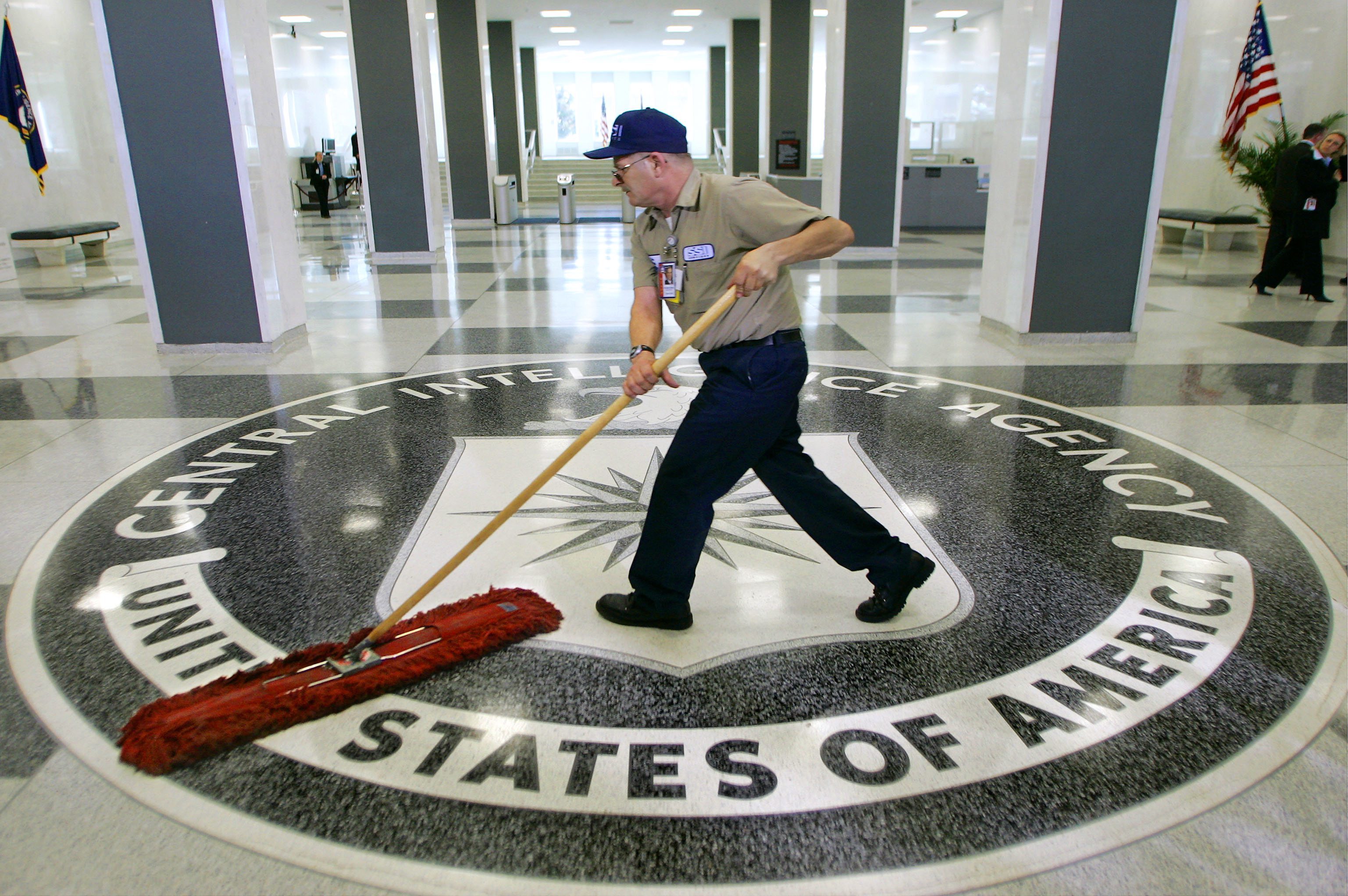
    A historic wave of departures at the CIA and deep cutbacks at the Office of Personnel Management are swamping the spy agency’s retirement system, leaving former spies with monthslong waits to get their first pension check, according to former intelligence officials and internal agency messages.

    While precise numbers are classified, current and former officials say the pace of retirements and resignations from the CIA outstrips anything in recent memory. They are being fueled in part by President Donald Trump’s push to shrink the federal government, including deferred resignations offered to workers last year.

    The CIA, in a recent note to alumni, acknowledged the problem and pleaded for patience.

    “The Retirement Branch is currently processing an unprecedented number of retirement cases, and is working diligently around the clock to expedite these cases,” the note said. “We appreciate your understanding and patience as we navigate this challenging period. Rest assured that our team is committed to processing your annuity payments as efficiently as possible.”

    It gave retirees two toll-free numbers to call if more than six months had passed since they’d received their final paycheck.

    One former official said she recently spoke to a colleague who retired in March and had just received their first, partial retirement check.

    “The question is how do you pay for your mortgage, and how do you pay for your kids’ college,” the former official said.

    As CIA workers prepare to retire, they are eligible to take a one-week, in-house seminar called “Horizons” that is meant to help them navigate life outside the spy agency’s cloistered halls — like how to prepare a job-hunting resumé that doesn’t disclose classified information.

    Lately, those in the seminar are being told they may not see their first full retirement check for up to nine months, or longer, after they depart the CIA’s headquarters in Langley, Va.

    The retirement crush mirrors trends across the federal government, where, data show, there are unprecedented numbers of people leaving, creating lengthy delays in retirees receiving their benefits. Last year, there were more than 330,000 departures, most of which were voluntary.

    The situation is particularly poignant at the CIA, where officers often serve in danger zones, rarely receive public recognition and share a culture of not complaining publicly outside the spy agency’s walls.

    CIA officers who until recently recruited agents, prepared classified reports on world crises or developed high-tech espionage tools are feeling the squeeze, said the former officials, who spoke on the condition of anonymity to discuss internal CIA dynamics.

    “If military retirees were told they had to wait a year or more for earned pension benefits, Washington would be apoplectic. Intelligence officers serve in the shadows, and their discretion should not become a shield for institutional failure,” said a former senior U.S. intelligence official familiar with the issue.

    “If agency and congressional leaders were not aware of this problem before, they are now,” he said.

    In response to the crunch, the CIA has surged personnel to the Retirement Branch, including people with experience with that work.

    “CIA is committed to ensuring that retired officers who dedicated their careers to our mission receive their hard-earned benefits as quickly as possible,” a CIA spokesperson said in response to questions from the Post.

    “Under Director [John] Ratcliffe, CIA is focused on returning the Agency to its mission of recruiting spies, and recently hired our largest class of operations officers in two decades,” the spokesperson said in a statement.

    President Donald Trump and CIA Director John Ratcliffe at Camp David last month.Nathan Howard

    The size of the CIA’s workforce and the number of employees who have left since the start of Trump’s second term are classified. Overall, the CIA workforce was believed to be about 22,000 in early 2025, U.S. officials said. Many hundreds of people — perhaps more than 1,000 — have since left, one of the former officials estimated.

    Some former officials describe the agency’s downsizing as the largest since the CIA was significantly cut back in the early 1990s, following the collapse of the Soviet Union and the end of the Cold War.

    In May 2025, the Trump administration told Congress it planned to reduce the CIA workforce by 1,200 over several years, mostly through attrition and reduced hiring. Agency workers were among the tens of thousands of federal employees who took a deferred resignation package the Trump administration offered to shrink the government’s ranks. Others simply decided it was time to leave.

    Administrators responsible for processing retirement requests are among those who have left, worsening the crunch, said two former intelligence officials.

    Sen. Mark Warner (D., Va.), the vice chair of the Senate Intelligence Committee, speaks to reporters on June 11.J. Scott Applewhite

    “The men and women of the CIA protect our country and make Americans safer every day, often without any acknowledgment or recognition,” said Sen. Mark Warner of Virginia, the top Democrat on the Senate Intelligence Committee. “The least our government can do is ensure they receive the benefits they deserve when they decide to leave.”

    “Again and again, this administration has mistreated our public servants, including those in the CIA. And whether it’s incompetence or disrespect that is creating the delay, the administration needs to figure out how to fix it,” Warner said.

    Some CIA officers have pulled back their retirement requests because they can’t afford to go long periods without being paid, one of the former officials said. Others are falling back on savings or taking out second mortgages to cover the gap.

    “Start looking now, hoard cash, plan for a longer period of time” before receiving retirement pay, said a retired CIA official who left last fall. “More thoughtfully and aggressively pursue jobs before you leave.”

    The official said it took four to five months before he was paid for unused annual leave — a sum that can be substantial for some retirees — and another month after that before he saw his first retirement check.

    The CIA has a tradition of treating its retirees well, former officials said. Among the reasons: Angry ex-employees with heads full of secrets are a target for adversary intelligence services. “We are creating a massive [counterintelligence] risk,” said the official who left last fall.

    Like other federal officials, former CIA officers are banned from taking certain jobs for a set period after retirement, such as lobbying on issues they handled while in government or working for foreign governments.

    CIA retirement packages are initially handled within the agency, which can take several months. Retirees are given an estimate of what their benefits will be.

    Many factors can complicate the process. Departing officials may have served undercover, using a different identity; spent time in the U.S. military or at another intelligence agency; or have a spouse who also worked at the CIA.

    Once completed, the packages are transmitted to the Office of Personnel Management, the government’s human resources agency. Before the cases are finalized, OPM issues interim payments to retirees that are typically 60 to 80% of their eventual checks. The government eventually makes up the difference.

    John Hatton, staff vice president of policy and programs at the National Active and Retired Federal Employees Association, said there is no legal recourse for retirees who want to get their benefits sooner, and the government will not owe interest for delayed payments.

    “It’s a tough situation,” he said.

    The OPM’s workforce declined by a third, from just over 3,000 in fiscal year 2024 to 1,980 in fiscal 2026, according to the agency’s data. Though the OPM expanded the main office responsible for retirement services to handle the wave of departures, the team still shrank by 16%, according to the U.S. Government Accountability Office.

    OPM data show it is taking longer on average for the agency to process retirement claims, from 79 days in October 2025 to 109 days in July.

  • Congo to receive 70,000 doses of Ervebo Ebola vaccine, which has been effective in past outbreaks

    Congo to receive 70,000 doses of Ervebo Ebola vaccine, which has been effective in past outbreaks

    BUNIA, Congo — Congo will receive 70,000 doses of the Ervebo vaccine, which has been effective in past Ebola outbreaks, the World Health Organization and partners said Thursday, announcing a step seen as a major boost to efforts to contain what officials have described as the fastest Ebola outbreak in history.

    The Ervebo vaccine is licensed for use against Ebola virus, one of the viruses that cause Ebola disease, but not for Bundibugyo virus, which is responsible for the current outbreak which has so far killed 2,476 people out of the 5,208 confirmed cases

    WHO said in a statement that while it’s not known whether Ervebo may protect against the Bundibugyo virus, “early laboratory and animal data suggest it may provide some protection.”

    The allocation includes 20,000 doses for a Phase 3 clinical trial to understand the impact of the vaccine on the Bundibugyo virus, the agency said. The remaining 50,000 doses will be used for front-line and health workers as recommended by WHO experts.

    The outbreak raging in six provinces in eastern Congo has infected and killed more people at a greater speed than any other Ebola outbreak in history, and is spreading about three times faster compared to the 2014-2016 outbreak across West Africa — the deadliest Ebola outbreak on record with more than 11,000 deaths.

    The International Coordinating Group on Vaccine Provision, which includes WHO and other partners, said the doses will be released immediately following a request from Congo’s government.

    WHO Director-General Tedros Adhanom Ghebreyesus called the approval “an important example of global solidarity in action.” He said the agency and its partners remain committed to supporting strengthened surveillance, rapid detection, quality care, community engagement and vaccination efforts to bring the outbreak under control.

    The lack of approved vaccines or treatments for the rare Bundibugyo virus has been a major issue for responders. Most new cases have been reported outside of the people being monitored, showing the virus continues to spread faster than efforts to track it. That has been a key contributor to the recorded deaths.

    The case fatality rate so far is 47.5% although it is far worse in some places where response efforts are more challenging, such as in North Kivu province where the fatality rate is up to 70%.

    Experts believe the virus began spreading from the mining town of Mongbwalu as early as February, months before authorities declared the outbreak on May 15.

  • A Russian missile and drone barrage kills at least 16 in Ukraine’s Kyiv region

    A Russian missile and drone barrage kills at least 16 in Ukraine’s Kyiv region

    KYIV, Ukraine — Russia pounded the Ukrainian capital of Kyiv and the surrounding region with scores of missiles and drones in a nighttime aerial attack that lasted for hours and killed at least 16 people, officials said Thursday.

    Moscow’s forces have in recent months intensified their ballistic missile attacks on Kyiv, exploiting Ukraine’s chronic shortage of U.S.-made Patriot air defense interceptors, the sole weapon in its arsenal able to shoot down the missiles.

    Large-scale Russian missile strikes have become a regular occurrence this summer. Just over two weeks ago, a Russian attack on Kyiv and its surrounding region killed 17 people, and nine were killed in the city two days before that. The United Nations said last week that Kyiv was one of the hardest hit cities in July, with at least 54 civilians killed and 202 injured.

    At the same time, Ukraine has shifted the war onto Russian soil through long-range drone strikes on oil facilities that have caused fuel shortages across the country. It has also unsettled the Russian public by striking warehouses of Wildberries, the country’s biggest online retailer.

    Zelensky repeats his appeals for more air defense

    President Volodymyr Zelensky has pleaded for countries to send more Patriot interceptors for defense, but international stockpiles are low amid the Iran war and Kyiv’s more than four-year fight against Russia’s all-out invasion.

    Russia’s overnight barrage also included cruise missiles and jet-powered drones that further strain air defenses, Ukraine’s air force said.

    Explosions boomed across Kyiv in the dark, but the air force said hits were recorded at 28 locations across the country. Emergency services said 15 people were killed in the capital, with another death in the wider Kyiv region. About 40 people were wounded, Zelensky said, as air raid warnings lasted until after dawn.

    More than 38,000 people, including over 2,000 children, sheltered in Kyiv’s subway stations overnight, the system’s operator said.

    “It was a massive attack,” Zelensky said on social media, adding that Russia “had been preparing [it] for a long time, combining different types of ballistic missiles, cruise missiles and drones, aiming to cause as much damage as possible to civilian infrastructure.”

    The Russian Defense Ministry said it struck a Kyiv industrial site manufacturing components for Flamingo cruise missiles. Sites involved in the production and storage of drones, an ammunition depot and a logistics center were also hit, it said.

    Russia is able to produce more than 200 cruise and ballistic missiles per month, Ukraine’s intelligence agency told news outlet Ukrainska Pravda in comments published Thursday. It has stockpiled more than 1,100 cruise missiles and about 130 Iskander-M ballistic missiles, as well as hundreds of missiles of other types, the agency was quoted as saying.

    It was not possible to independently verify the report, and Russian officials do not routinely answer questions about the country’s arsenal.

    Ukraine says it struck more Russian oil facilities

    Russia and Ukraine have battered each other with drones and missiles as their armies struggle to gain the upper hand on the 780-mile front line.

    Ukraine’s General Staff said its forces struck an oil refinery in Nizhnekamsk, in Russia’s Tatarstan region, starting a fire, and the Tamanneftegaz oil terminal in Volna, in Russia’s Krasnodar region, where there was also a blaze. Ukraine has hit both facilities in recent months as part of its campaign to disrupt Russia’s vital oil industry.

    Tatarstan leader Rustam Minnikhanov confirmed there had been a “massive attack” in the region, state news agency Tass reported, citing his press service. Many of the drones targeted Nizhnekamsk’s Zakamsk economic area, disrupting production at industrial sites and damaging residential buildings, Tass quoted him as saying.

    The Russian Defense Ministry said air defenses shot down 726 drones overnight over a number of Russian regions, annexed Crimea and the Black and Azov seas, in one of Ukraine’s biggest aerial attacks of the war.

    Ukraine’s neighbors are on alert

    Russia’s relentless onslaught has spooked other European countries, especially those bordering Ukraine, which fear spreading attacks from Moscow.

    Amid the attack on Kyiv, the Polish Armed Forces Operational Command activated its military aviation operations, ground-based air defense systems and radar reconnaissance. Polish and other NATO military aircraft were deployed to monitor its airspace, Polish news agency PAP reported.

    Romania’s Defense Ministry said an unidentified drone crashed and burned in an uninhabited area near the Ukrainian border. Two Spanish F-18 jets, deployed on a policing mission in Romania, were scrambled overnight to monitor a group of “air targets” near the border, the ministry said.

    In addition, two Romanian F-16 fighter jets were deployed to destroy a naval drone seen near a major Black Sea gas project, Romania’s acting Defense Minister Radu Miruta said.

    Moldova’s Defense Ministry also said its airspace was breached by at least one drone.

    Russia “is increasingly testing the resolve of NATO and its partners, violating the sovereignty of neighboring states and deliberately expanding the risks posed by its war far beyond Ukraine,” Ukrainian Foreign Minister Andrii Sybiha said on social media.

    European Commission President Ursula von der Leyen saw a broad threat to the European Union. “An escalating campaign of threats is underway, unsettling our citizens and seeking to divide our Union,” she said on X.

    Explosions shatter windows and screams fill the air

    Russia’s overnight strikes hit 12 locations across Kyiv’s Darnytskyi, Sviatoshynskyi and Solomianskyi districts, damaging 30 apartment blocks, a school, a children’s hospital and a kindergarten, Zelensky said.

    Larysa Bondaruk, 60, sat on the ground, holding her cat, Chanel, which had been rescued by firefighters. With tears in her eyes, she said her neighbor’s grandson had been trapped by the rubble and died. Her apartment was badly damaged.

    “A rocket hit the roof. It was incredibly loud. Immediately, debris and doors were blown out. There were columns of smoke, columns of fire, screams, crying and despair,” she said. “Two people were killed in our building, but the rescuers responded quickly and professionally. I am grateful to them for that.”

    In Solomianskyi district, the top two floors of a nine-story residential building were destroyed and fires broke out on other floors. People were also trapped in two residential buildings and a school shelter.

  • Texas Gov. Greg Abbott takes aim at Muslim washing stations in airports

    Texas Gov. Greg Abbott takes aim at Muslim washing stations in airports

    HOUSTON — For years, travelers passing through Texas’ two biggest airports have had access to small washing stations for a ritual called wudu, in which Muslims clean their hands, arms, head and feet before the five daily prayers.

    Such facilities have become more common in states with the largest Muslim populations, including Texas, where on Wednesday travelers and others popped in and out of washing stations at Houston’s George Bush Intercontinental Airport. The tiled wudu room sits along an airport hall just past a vending machine, with a small sign showing a draped person kneeling.

    Public wudu stations are also open at places including the University of Minnesota, the University of Michigan, LaGuardia Airport in New York, and O’Hare International Airport in Chicago.

    Now, amid rising attacks on Muslims by Republican elected officials, Texas Gov. Greg Abbott is making the stations a target. He sent a letter Friday to the heads of the Houston airport and Dallas-Fort Worth International Airport that said facilities aimed at serving one religious group are discriminatory against everyone else.

    Abbott said he has asked the U.S. Department of Transportation to investigate both airports and warned that his office is “reviewing all grants to any local governmental entities involved in these schemes.”

    Later that day, DFW announced it had scrapped plans to add additional washing stations in men’s and women’s restrooms that are available to passersby outside the security perimeter.

    Airport spokesman Heath Montgomery wrote in an email that officials “determined the originally anticipated benefit may not be achieved” if the stations were built.

    Asked if the decision was a response to Abbott’s letter, Montgomery said it was made before the letter was issued, but that airport officials “were aware of his and other public officials’ emerging concerns.”

    Muslim leaders and experts in religious liberties rejected Abbott’s claim that the facilities would discriminate against non-Muslims. Several said opposition to the washing stations is the latest example of GOP leaders, perhaps most visibly in Texas, railing against Islam.

    “If there is one thing all religious liberty scholars and advocates across the ideological spectrum have agreed on, it is that the Free Exercise Clause forbids government discrimination because of religion,” Steven T. Collis, a University of Texas at Austin law professor, said in an email. “Although Gov. Abbott’s letter characterized what the airports were providing as discriminating in favor of Muslims, this newest saga is actually part of a much broader pattern of state officials targeting Muslims and trying to make Texas an inhospitable place for them.”

    Asma Uddin, a constitutional law scholar who writes about Islam in America, said the Supreme Court has long ruled that neutrality “does not mean that every religion gets treated exactly equally; it means the government cannot coerce, endorse, or exclude based on religious identity.”

    The experts noted a range of public services targeted to specific groups, from kosher food served at airports to special low-sensory hours at museums or parks for autistic people. The public-private Texas waterpark chain Hawaiian Falls has hosted events for Christians including “Modesty Matters” and mass baptisms. President Donald Trump this summer hosted a massive evangelical Christian worship event on the National Mall in D.C.

    “We can choose to be coy about it and pretend like there are actually sophisticated ideas or sincere concerns here about discrimination, religious encroachment, public safety or spending,” said Imam Omar Suleiman, who leads the think tank Yaqeen Institute outside Dallas. “Or we can embrace the fact that bigotry toward Muslims is alive and well and being fanned, funded and fueled to increase, in Texas and across the country. And people like Governor Abbott are at the center of that phenomenon.”

    Abbott’s office declined to comment Wednesday, referring The Washington Post to social media posts in which he repeated his claim that the washing stations were religious discrimination.

    The office also noted a Sunday interview on Fox News in which Abbott was asked why he opposes the stations but supports a new state law mandating the posting of a Protestant version of the Ten Commandments in every classroom.

    Abbott called the two things “apples and oranges.” The biblical commandments, he said, were part of Texas history all the way up until “who we are today,” while “other faiths” don’t have “the same applications over the course of history of the state of Texas and hence don’t need to be recognized.”

    Suleiman, who uses airport wudu stations when he’s traveling, called the washing facilities an important part of making Muslims comfortable and described Abbott’s letter as part of a movement looking to curtail that group’s religious freedoms.

    “Putting one’s foot in the nasty sink of a public restroom — often trying to carefully ensure that no part of the body touches some yucky bathroom surface while balancing on one leg — isn’t really something Muslims are thrilled to be doing,” he said.

    There are about 4.6 million Muslims in the United States and about 313,000 in Texas, according to the World Population Review. Muslims have become more visible in American public life in recent years, with milestones including the election of Mayor Zohran Mamdani (D) in New York and the Michigan Democratic primary win of Abdul El-Sayed, who would become the nation’s first Muslim U.S. senator if he defeats his Republican opponent this fall.

    At the same time, anti-Muslim sentiment has become more public and more pointed.

    “The blatant and mainstreaming of Islamophobia is worse than after [the Sept. 11, 2001, attacks],” said Haris Tarin, vice president of the Muslim Public Affairs Council, an advocacy group that focuses on policies of interest to U.S. Muslims.

    Trump, who has declined to condemn anti-Islam comments from members of his party, last week described Democratic candidates in the midterm elections as “jihadists.” Earlier this month, Rep. Nancy Mace (R, South Carolina) said “every single Muslim holding public office in America is a Trojan horse.”

    The growth of Muslim communities in Texas is impossible to miss.

    The Houston area is now home to Texas’s largest Muslim community, with more than 200 mosques and Islamic centers. The Muslim population in the Dallas-Fort Worth area doubled in a decade, and Muslim state lawmakers represent suburban districts in both the Dallas and Houston metro areas.

    Houston Mayor John Whitmire released a statement in response to Abbott’s letter saying 22 percent of all international travelers departing from Terminal D — where the wudu station is — are flying on airlines based in Muslim-majority countries. “IAH is a global gateway,” Whitmire wrote. “The ablution room was created in response to passenger requests and serves a practical need.”

    Abbott, who is running for reelection, and Attorney General Ken Paxton — a Trump ally who is waging a competitive race for the Senate — have both embraced Islamophobic rhetoric on the campaign trail.

    Last year, Abbott designated the Council on American-Islamic Relations, a Muslim civil rights and advocacy organization, as a foreign terrorist group. He and Paxton fought to revoke the group’s nonprofit status, a move that CAIR has challenged in court.

    Abbott has also led GOP efforts to block a residential development planned around a large mosque complex in the Dallas area.

    Texas officials denied Islamic schools access to the state voucher program until a judge ordered them not to. At the Texas GOP convention in Houston in June, Republicans added to their platform a provision banning “sharia,” or Islamic law, even though sharia law does not apply under U.S. civil law.

    At the airport in Houston on Wednesday, people came in and out of the wudu rooms ahead of Dhuhr, the midday prayers. A man and woman wearing airport employee tags — she also wore a blue head scarf — slipped into their respective rooms shortly before 1:30 p.m. A mother and her teenage son, traveling home to Toronto after visiting family, said ablution stations are common in Canada.

    Ubaid Mian, who manages several airport restaurants, said he uses the prayer and wudu rooms multiple times each day.

    “The airport is a place where everybody travels. Diversity should be appreciated,” he said, shaking his head at the controversy. Texas “has so many people here who have so many different beliefs. There’s no harm in it. It should be respected.”

    Mian said he would be back at the wudu room to prepare for evening prayer before heading home.

  • Why one highway exploded this summer — and why many more are at risk

    Why one highway exploded this summer — and why many more are at risk

    It was another sizzling summer day in late July, with temperatures nearing 100 degrees, when one of the main roads cutting through Greenville, Texas, finally just gave up.

    The stretch of U.S. Highway 69 kept expanding in the extreme heat until it exploded, creating a sharp, two-foot-tall ramp where it broke at the pavement joint. Most of the traffic in this Dallas exurb drove around it.

    But then a black pickup hit the ramp going about 30 mph, sending the truck airborne, Dukes of Hazzard-style, flying several feet in the air and slamming down on its front tires.

    “Oh, my God!” an onlooker said, as the scene was being recorded. “That’s crazy!”

    It was a dramatic example of what has been playing out repeatedly this summer along the nation’s roadways, railroad tracks and bridges: Intense heat is causing surfaces to expand to the point that they break.

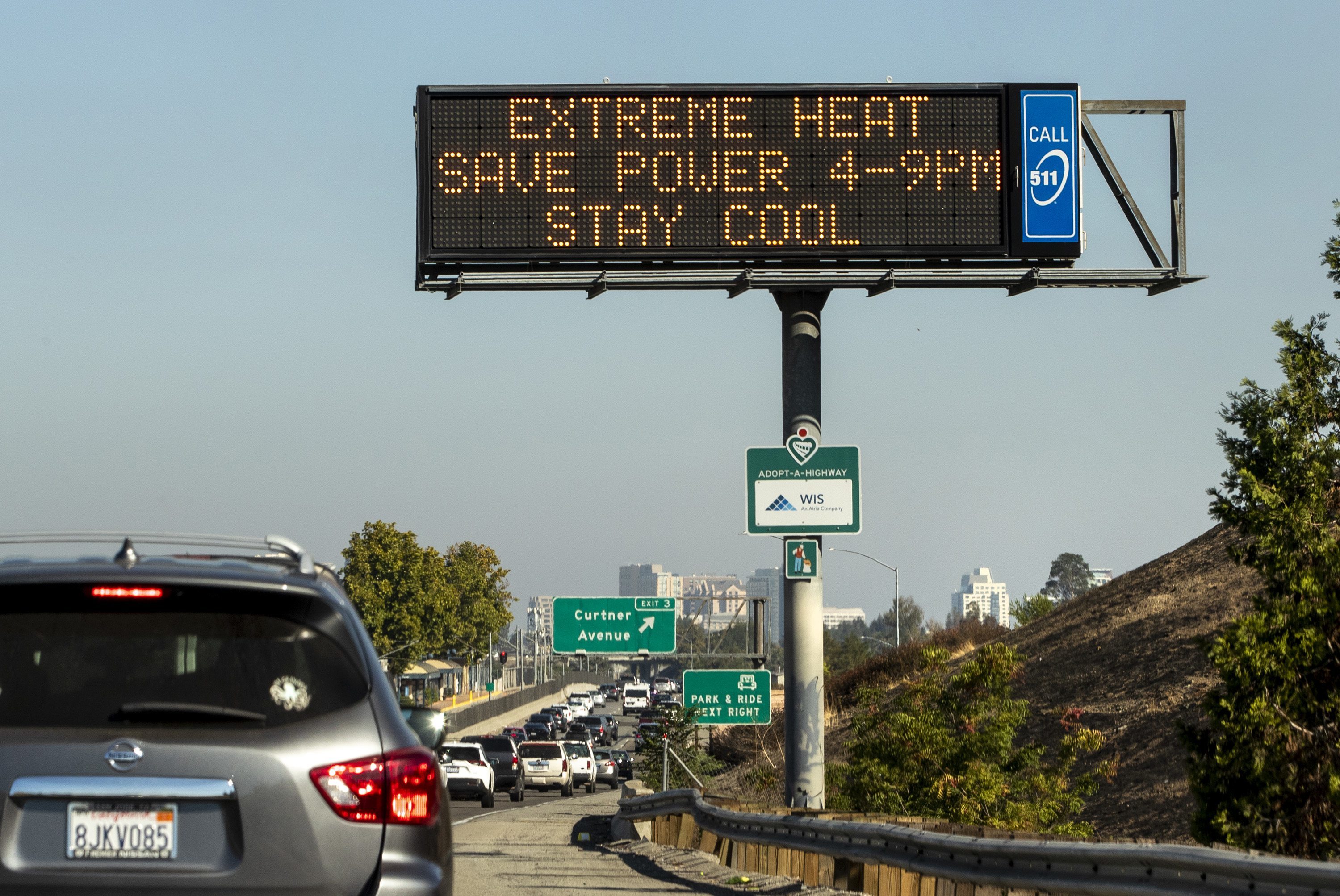
    The failures illustrate how the nation’s transportation networks, built for a different era, increasingly struggle to handle hotter modern-day summers. And this summer has been brutal. July, federal scientists have said, was the single hottest month on record in the contiguous United States.

    Heat waves melt asphalt into goo. Train tracks twist. Overhead power lines sag. Concrete snaps into pieces in what are known as “blowups” — the technical term for what the Pennsylvania Department of Transportation defines as “a heave in a concrete or brick pavement caused by pavement expansion from excessive heat.”

    The entire state of Wisconsin was cautioned earlier this summer to “watch for pavement buckles.” A blowup last month closed part of Interstate 97 near Severna Park, Maryland, clogging traffic for a quick repair and then for three straight nights. Interstate 49 in Shreveport, Louisiana, was also shut for hours while crews raced to deal with a blowup. After a bike path next to U.S. 36 buckled, officials in Boulder County, Colorado, warned residents to prepare for more.

    “You start seeing them in early summer, and then they surge as the heat builds,” said David North, a district engineer with Louisiana’s transportation department.

    Blowups, he said, are “unpredictable and instant.”

    In New Jersey, a vertical-lift bridge over the Point Pleasant Canal has been forced to close to boat traffic four different times this summer — on June 11, June 30, July 14 and Aug. 7 — because unrelenting heat kept cooking bridge components and preventing the span from moving.

    The bridge, which opened in 1972, was built for a different climate.

    State officials now “are working with our consultants to see if there can be any modifications made to mitigate these issues,” Steve Schapiro of the New Jersey Department of Transportation said in a statement.

    In Wisconsin, the rate of pavement buckling had been increasing over the last decade, with higher temperatures partly to blame, according to a 2022 state report.

    The Federal Highway Administration in 2023 warned against relying on historical climate records when designing new roads and suggested looking instead to predictive climate models.

    “I do think there is a recognition that [road] specifications and standards are static, but weather patterns are changing,” said Shane Underwood, an engineering professor at North Carolina State University and president of the Academy of Pavement Science and Engineering.

    He was the lead author on a 2017 paper that warned that failing to change methods “significantly threatens” the nation’s roads.

    Underwood said he’s seen some progress. He pointed to an online tool developed by federal officials that uses site-specific climate data to help engineers select the correct blend of binders for asphalt pavement. Roads in Arizona, for example, need to be stiffer than those in Minnesota to survive the high temperatures.

    The regional recipes for new roads have changed over the years, like how the U.S. Agriculture Department updated its plant hardiness zone map to account for warm-weather plants surviving farther north these days.

    Road engineers also are experimenting with other ways to protect the nation’s infrastructure.

    “It’s really taken off in the last 10 to 20 years,” said Kim Roddis, professor emerita of civil and environmental engineering at George Washington University.

    Some asphalt roads — which can soften like chocolate chip cookies — are now dusted with plastic polymers for better rigidity, Roddis said.

    Several cities have tested out what is essentially white asphalt, to reflect more heat. San Antonio, Phoenix and Los Angeles have launched “cool pavement” pilot programs.

    New Jersey has stopped building concrete roads with asphalt on top due to hotter temperatures, calling it an outdated design, Schapiro said. Next year, it plans to repair concrete pavement slabs along 11 miles of Interstate 287, in part to get ahead of potential future blowups caused by the heat.

    Railroads are struggling with hotter days, too.

    Metal tracks can bend in extreme summer heat, creating what’s known as a “sun kink” as rails exert force against the ties. That can cause trains to derail.

    Train operators have responded by stepping up rail inspections and going slower during heat waves.

    Washington’s Metro uses “heat ride” inspections to look for rails reaching 135 degrees, the trigger for speed restrictions. Amtrak runs into the problem so often that it offers an explainer page on its website so customers understand why trains might run slower during heat waves.

    In February, a trade group for public transit agencies issued new guidelines “to improve its resilience to climate hazards,” with ideas such as replacing wood ties with concrete ones.

    Union Pacific, one of the nation’s largest freight railroads, said this summer it was spraying white paint on its rail network in some places to cool the metal, borrowing a page from European railroads.

    In Greenville, that flying pickup truck was not the first time extreme summer heat caused problems on U.S. Highway 69.

    Just three weeks earlier and 10 miles away, a different section of the highway also succumbed to the heat when the asphalt pavement softened and vehicles pulled up the roadway in chunks.

    It was a mess. But it was no match for what was to come.

    The viral video of the pavement blowup was the talk of the town, said Greenville spokesman Daniel Starks.

    “I was shocked,” he said. “You don’t ever want your road buckling — and definitely not like that.”